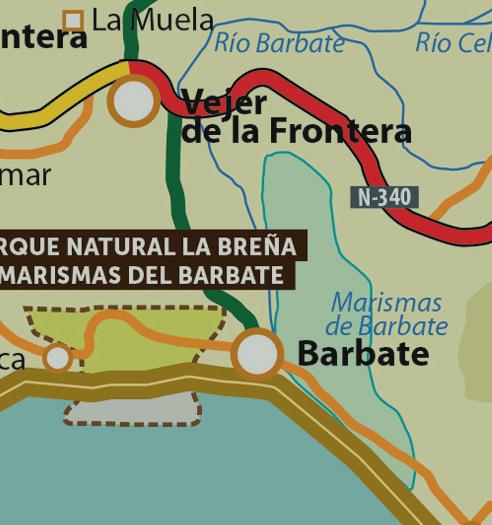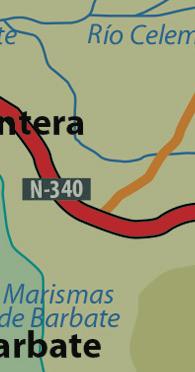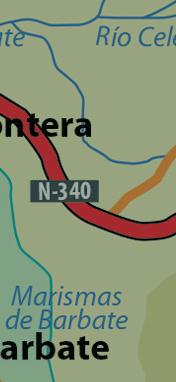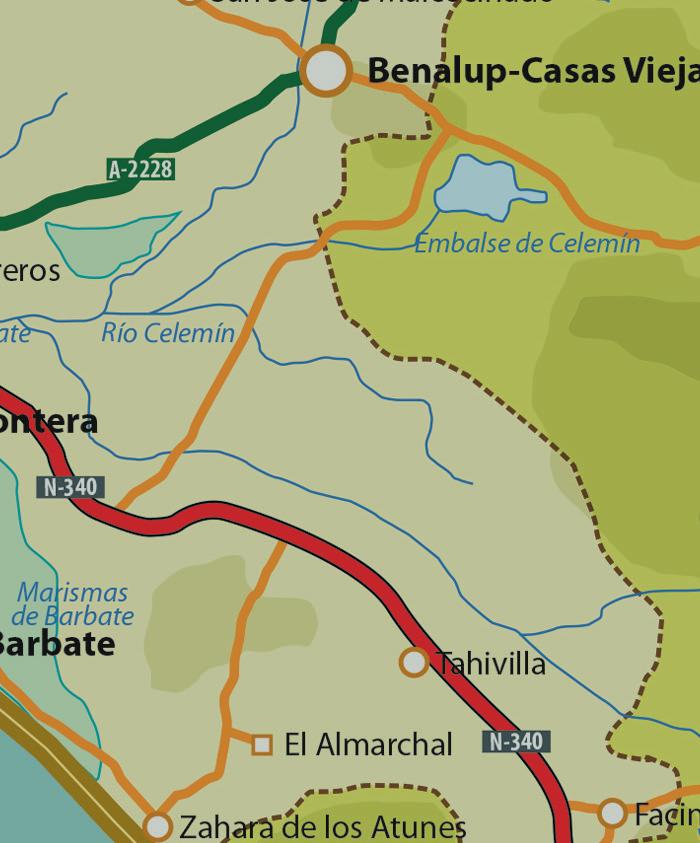
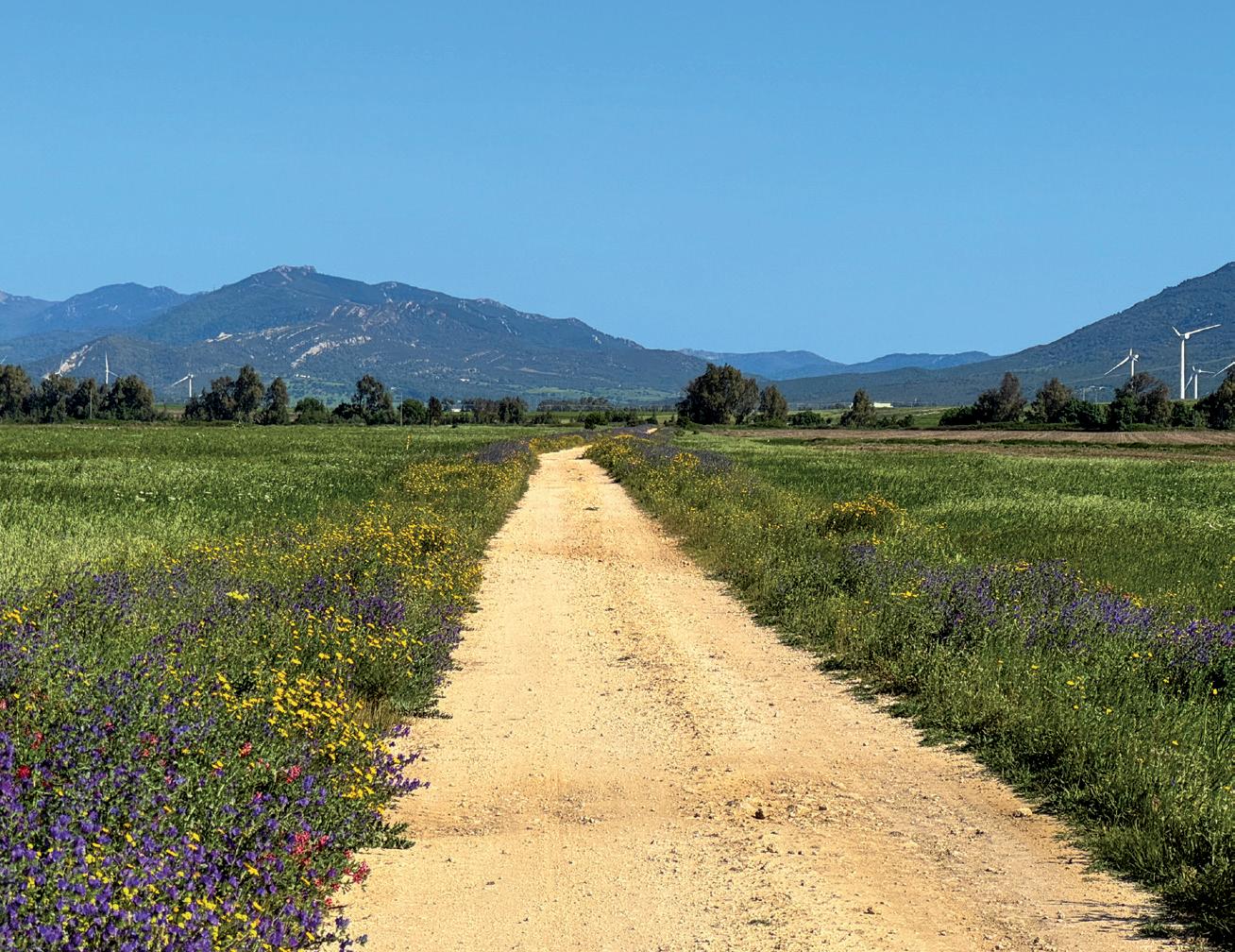
Once one of the largest wetlands in Europe, today it is an agricultural area of outstanding ornithological importance. Its significance lies in the combination of canals, rice fields and grasslands that attract thousands of birds throughout the year. In winter, the main spectacle is provided by the Common Cranes which use the area as a roosting and feeding ground.
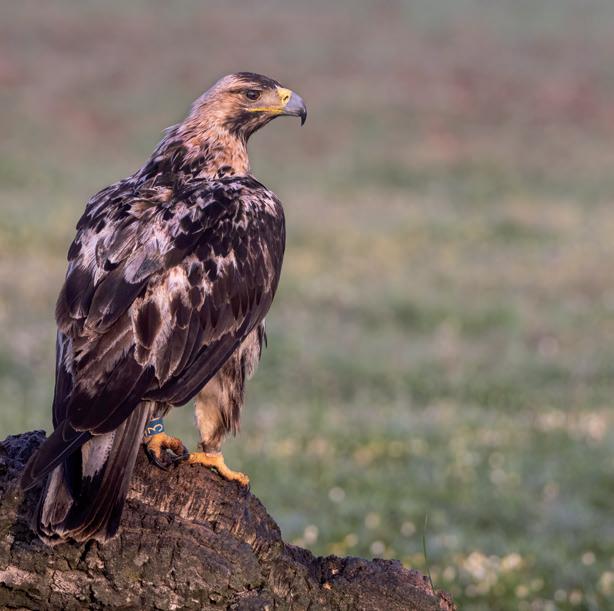
It is also the best place in Cádiz for observing birds of prey: the Iberian Imperial Eagle the Black-Winged Kite and the Montagu’s Harrier are regular residents. During the migratory passages, a large number of waders find a vital refuge here.
• Trails: The trail is followed mainly by car, along the central track that runs alongside the Main Canal (36.2415, -5.8342) and the Collector with frequent stops to explore the surroundings with binoculars and a telescope. Key spots include Pericón Bridge, La Mediana Estate and Benalup Rice Fields (36.2652, -5.8361).
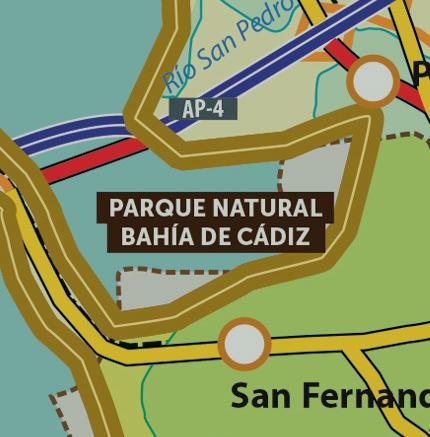
7. Bahía de Cádiz Natural Park
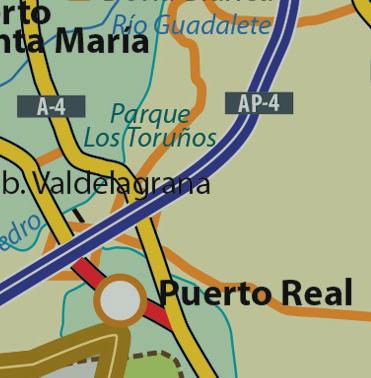
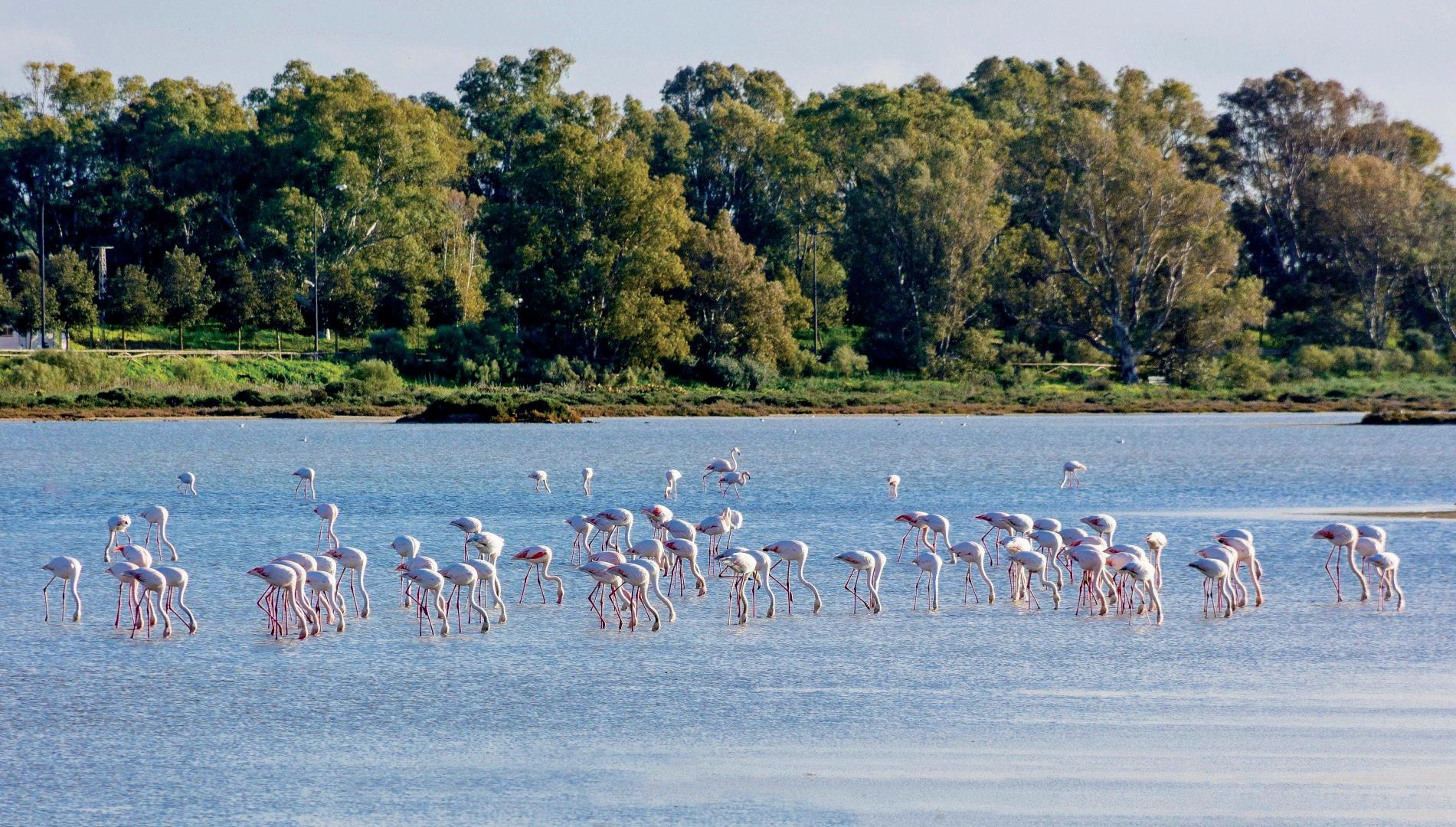
This protected area encompasses a complex labyrinth of channels, abandoned salt pans and tidal mudflats. In the northern sector, the Pinar de la Algaida and Los Toruños are excellent for observing resident and migratory passerines. This area is home to colonies of ittle Terns in summer. In the southern sector, the Sendero Tres Amigos – Río Arillo and Carboneros Salt Flats offer one of the best communities of waders in the province, including the Eurasian Curlew and the Eurasian Whimbrel It is also an important wintering site for the Osprey, which uses the salt flat posts as vantage points, and for the Common Flamingo
• Trails: Los Toruños Park (36.5724, -6.2162) can be explored on foot and offers the chance to observe a mix of woodland and marshland birds. The Río Arillo trail (36.4573, -6.2313) features several viewing points overlooking the salt flats, as do the Carboneros Salt Flats (36.3895, -6.1830).
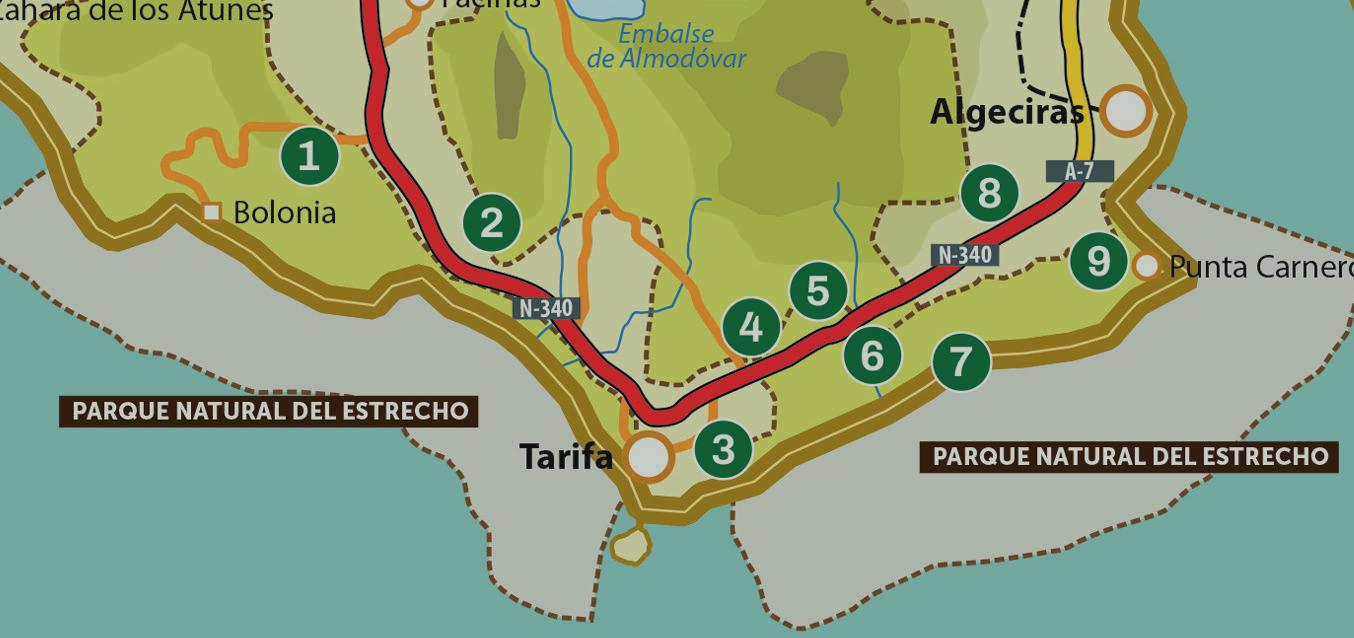
2. El Estrecho Natural Park
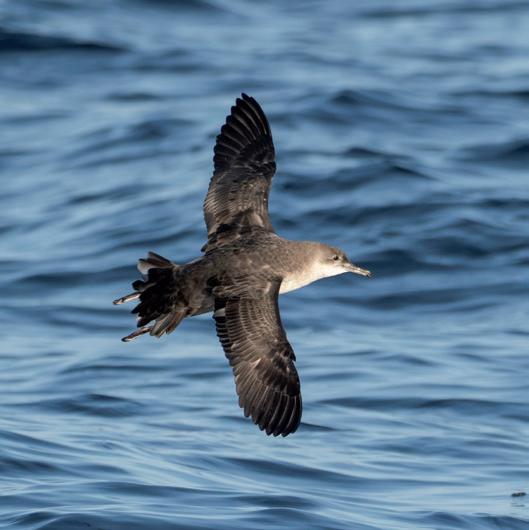
This is one of the world’s most important birdwatching sites, acting as a natural funnel through which millions of birds cross the sea to Africa. During migration periods (February–May and July–November), the sky fills with Black Kites, Booted Eagles, Short-Toed Eagles and White Storks On the coast, Los Lances Natural Area is a sanctuary for coastal birds such as the Sanderling and the Kentish Plover The Isla de las Palomas and the cliffs of the Sierra de la Plata offer opportunities to spot seabirds including the Mediterranean Shearwater and the Balearic Shearwater
• Trails: The observation points at Cazalla (36.0331, -5.5771) and Algarrobo (36.0903, -5.4841) are particularly noteworthy for the passage of birds of prey during post-breeding migration. For pre-breeding migration, Punta Carnero (36.0761, -5.4291) is one of the best spots when the westerly wind is blowing. On foot, the path along Bolonia Beach (36.0881, -5.7743) offers views of the ancient Roman city of Baelo Claudia and the Sierra de la Plata.
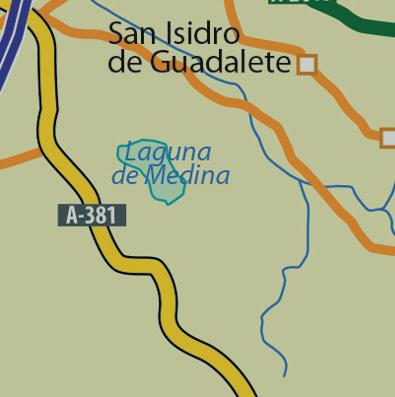
3. Laguna de Medina and Endorheic Lagoons
Medina Lagoon is the largest in the province and is a key site for the breeding of endangered waterbirds. The dense vegetation around the lagoon is home to the White-Headed Duck, a diving duck with an unmistakable blue bill, and the Moroccan Coot a critically endangered species in Spain, distinguished by the red bumps on its head. In winter, the surface of the water is covered with Tufted Ducks, Gadwalls and Shovelers Meanwhile, Zorrilla Lagoon offers a more seasonal habitat where it is possible to see the Great Reed Warbler and the Great Crested Grebe when the water levels are optimal.
• Trails: There is a signposted trail with observation points at Laguna de Medina (36.6135, -6.0585) and an observation point for Laguna de Zorrilla (36.8671, -5.8649).
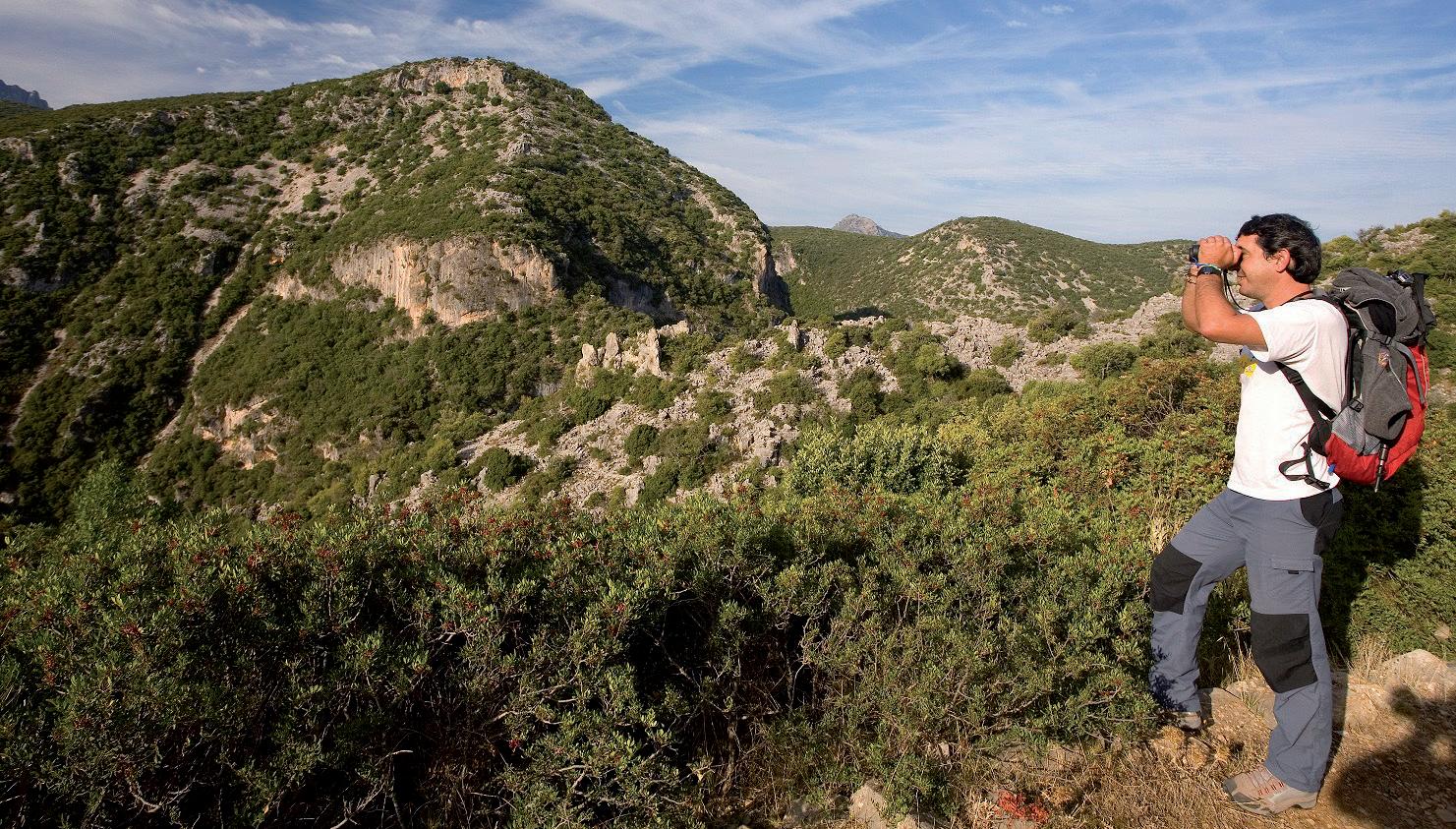
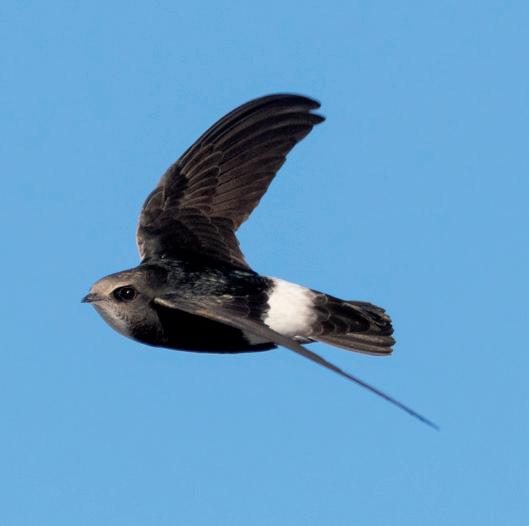
the Crested Tit species typical of well-preserved forest environments. In addition, the extremely rare Cape Swift breeds on the rocky outcrops in the area.
• Trails and birdwatching: The Ojén Valley is accessible by bike and offers one of the best holm oak forests in the park (36.2097, -5.5435). The viewpoint overlooking the Barbate reservoir is an excellent spot for sighting birds of prey through a telescope (36.3810, -5.7424).
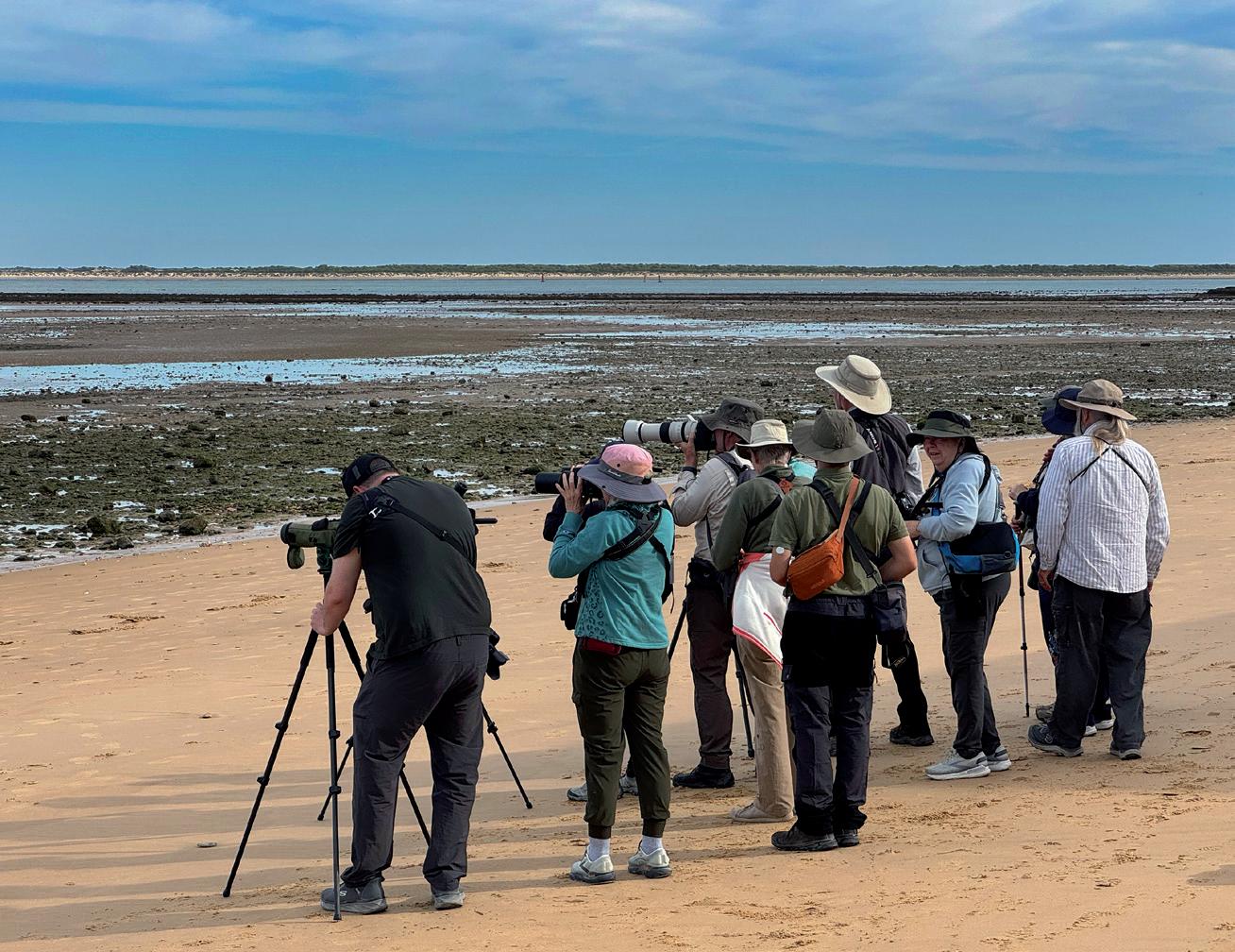
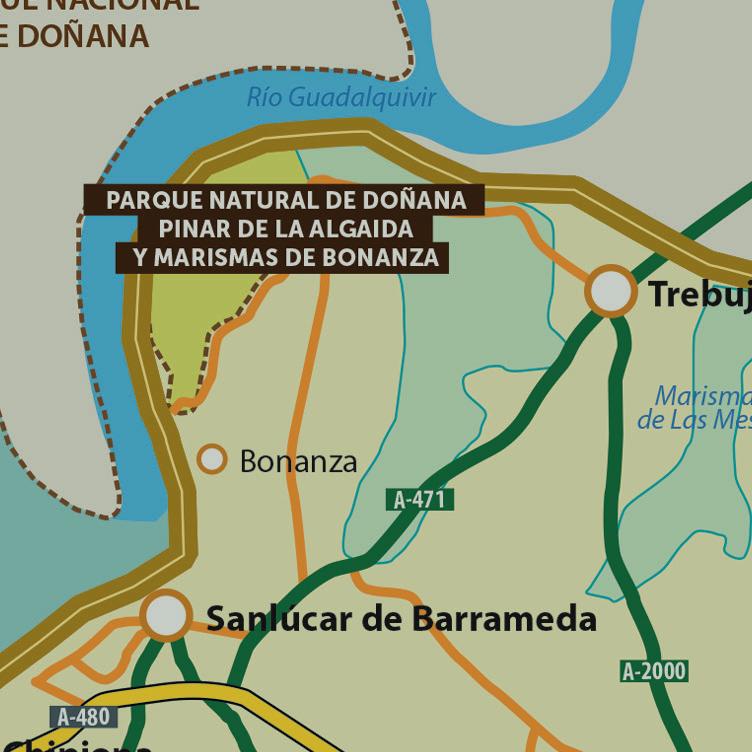
4. Doñana Natural Park and Trebujena Marshes
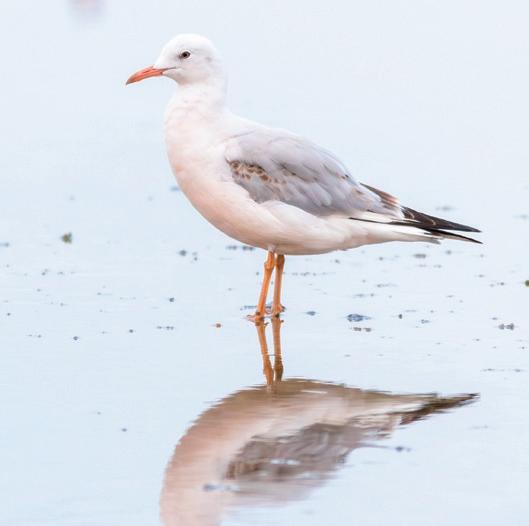
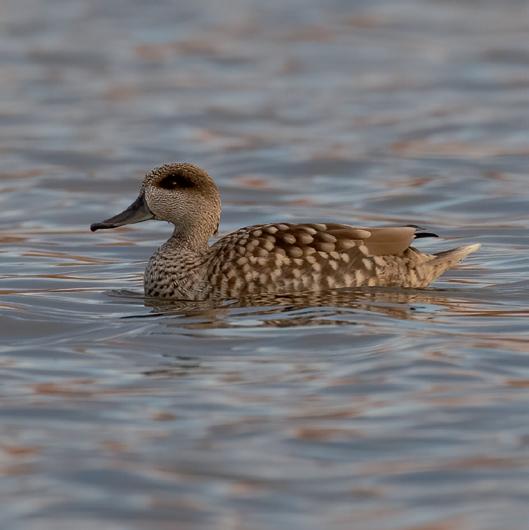
The Cadiz side of Doñana is a mosaic of salt flats, pine forests and marshes. Laguna del Tarelo is home to one of the area’s most important breeding colonies, featuring Spoonbills and Little Bitterns The Bonanza Salt Flats are teeming with life all year round, hosting thousands of Avocets, Flamingos and Slender-Billed Gulls In the Trebujena Marshes the landscape shifts to ancient estuaries and plains where the Marbled Teal (one of Europe’s rarest waterfowl) and the Marsh Harrier find one of their last refuges.
• Trails: We recommend exploring the Bonanza Salt Flats (36.8246, -6.3376) and visiting Tarelo Lagoon (36.8471, -6.3177). Access to Trebujena Marshes (36.8922, -6.2296) and Codo de la Esparraguera is via the village of Trebujena (36.8728, -6.1817).
Even in urban and surrounding areas, the Province of Cádiz surprises with areas of high biodiversity that serve as an oasis for birds. Some of the best spots are listed below:
• Costa Ballena (36.6958, -6.4106) and Montijo (36.7610, -6.4004) are some of the best places in Chipiona and Sanlúcar de Barrameda for observing seabirds and waders.
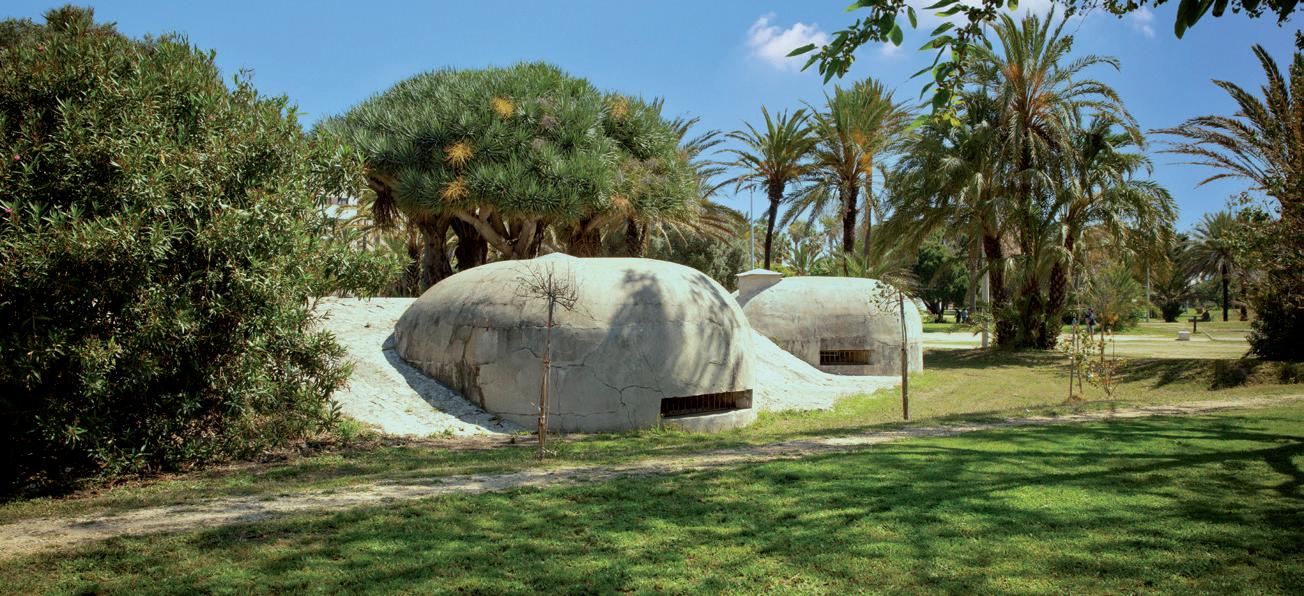
In the city of Cádiz itself, there are several urban parks that can be excellent during the migratory season. Celestino Mutis Park (36.5247, -6.2770) is one of the best examples, where it is not uncommon to spot a Wryneck or a Blackcap at the right time of year.
In Jerez Laguna de Torrox (36.6637, -6.1457) is an example of an urban adaptation where the Ruddy Shelduck and the Little Grebe coexist.
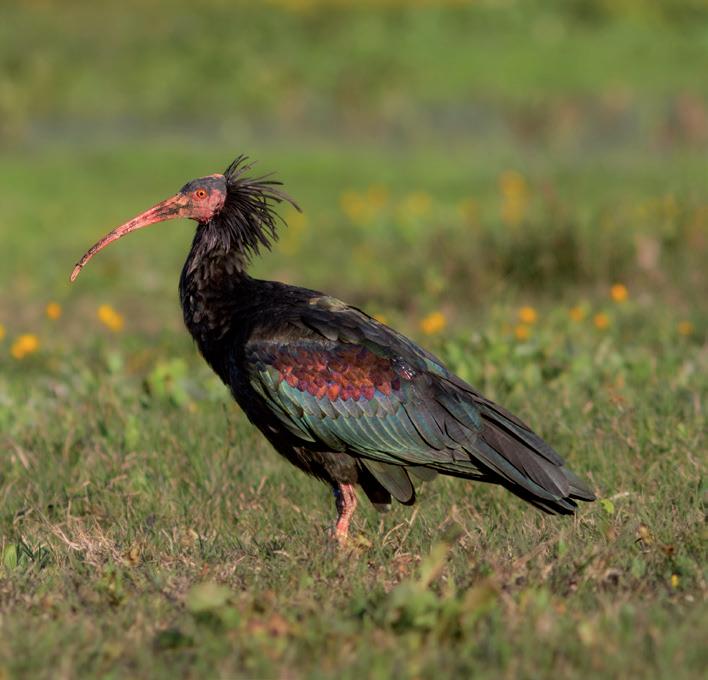
In Conil Castilnovo Beach (36.2623, -6.0846) is one of the few stretches of unspoilt coastline where the Stone Curlew can still be seen, and there is the great attraction of spotting the Northern Bald Ibis
5. La Breña Natural Park and Barbate Marshes
This park combines a marine ecosystem, coastal cliffs, a stone pine forest and an intertidal marsh. It is known for being home to one of the few colonies of Northern Bald Ibises in the area, an endangered species that has been successfully reintroduced and can be seen feeding in the fields surrounding the marsh. The cliffs, over 100 metres high, are home to nesting Peregrine Falcons and Yellow-Legged Gulls. The recently restored Barbate River marshes are an excellent spot for observing Ospreys in winter, as well as numerous waders such as the Dunlin and the Little Ringed Plover
• Trails: The Marshes Trail is easy to follow and offers good opportunities to see waders (36.2419, -5.9493). For the Northern Bald Ibis the Barca de Vejer observatory, built by the Cádiz Natural History Society, is the best
and
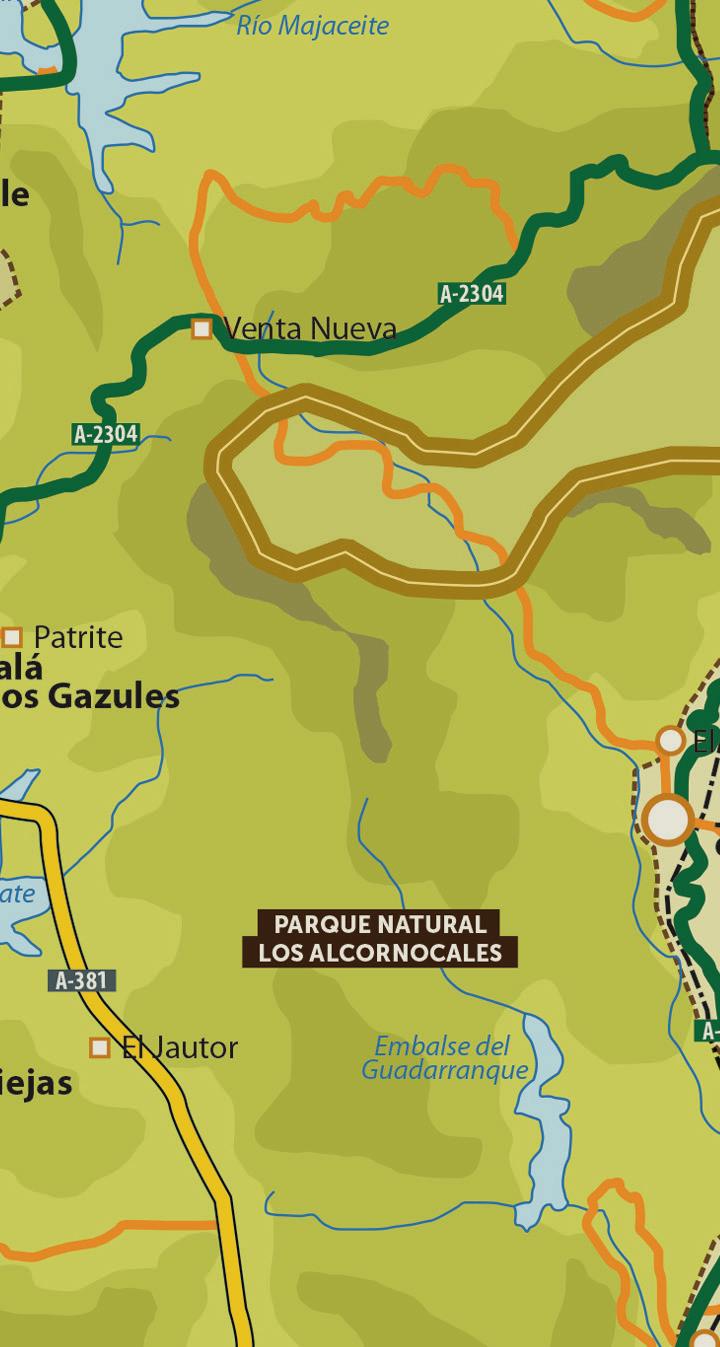
8. Los Alcornocales Natural Park
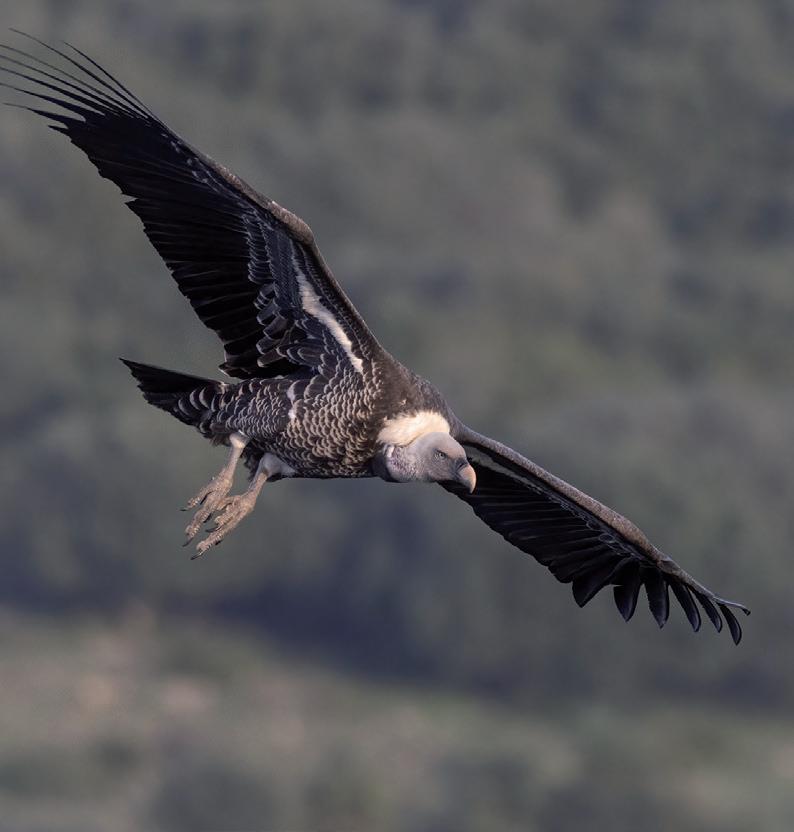
Considered the last ‘forest’ on the European mainland, this park is notable for its dense woodlands and deep, humid valleys known as ‘canutos’. It is a paradise for large birds of prey; from the Mirador del Pantano de Barbate viewpoint, it is easy to spot large numbers of Griffon Vultures and with a bit of luck, Bonelli’s Eagles In the Ojén Valley, the post-breeding migration can be massive, with thousands of gliding birds taking advantage of the thermal winds. Deep within the forest, the silence is broken by the song of the Eurasian nuthatch, the Great Spotted Woodpecker and
9. Sierra de Grazalema Natural Park
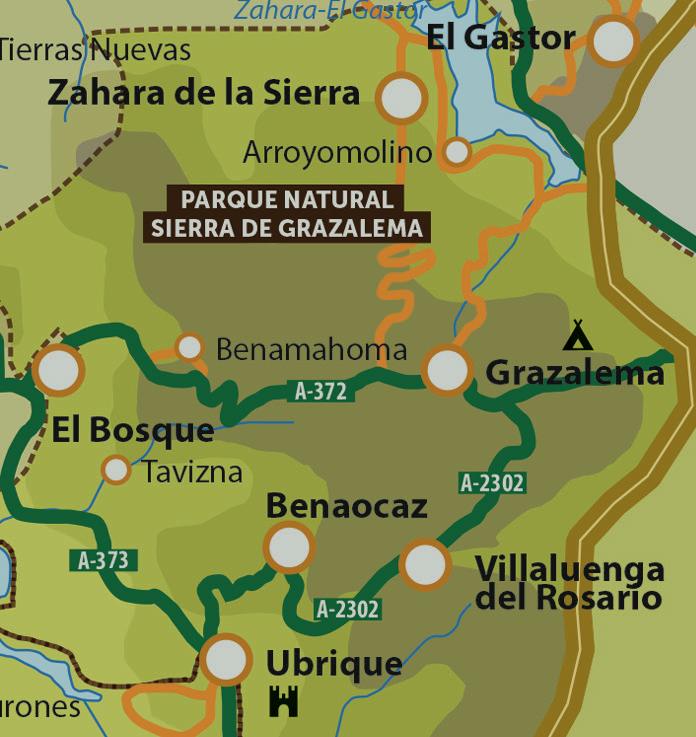
The Sierra de Grazalema, which has the highest rainfall in the Iberian Peninsula, offers a limestone mountain habitat. These mountains are home to a good variety of rock-dwelling species. On the peaks of Puerto del Boyar and along the Puerto de las Presillas trail, you may spot the Red-Backed Shrike and the Black Wheatear El Pinsapar a forest of prehistoric fir trees, is a refuge for specialist birds such as the Firecrest and the Crested Tit Winter is a good time to visit Puerto de las Palomas in search of alpine species, such as the White-Winged Blackbird and the Alpine Accentor
• Trails and birdwatching: Puerto de las Palomas (36.7876, -5.3767) offers the chance to spot high-altitude birds from the car park itself, although to make the most of the area, it is best to walk along the designated path to Cerro de Coros. To access the trail to Puerto de las Presillas, start from Puerto del Boyar (36.7556, -5.3949).
• Princess Sofia Park (36.1577, -5.3452) in La Línea acts as a ‘magnet’ for exhausted small migratory birds, serving as a mecca for spotting rarities such as the Pygmy Bunting and Hodgson’s Pipit
The mouth of the River Guadiaro (36.2810, -5.2801) and the Laguna de las Camelias (36.2936, -5.2736) in Sotogrande are freshwater enclaves by the sea that attract the Little Bittern and the Water Rail
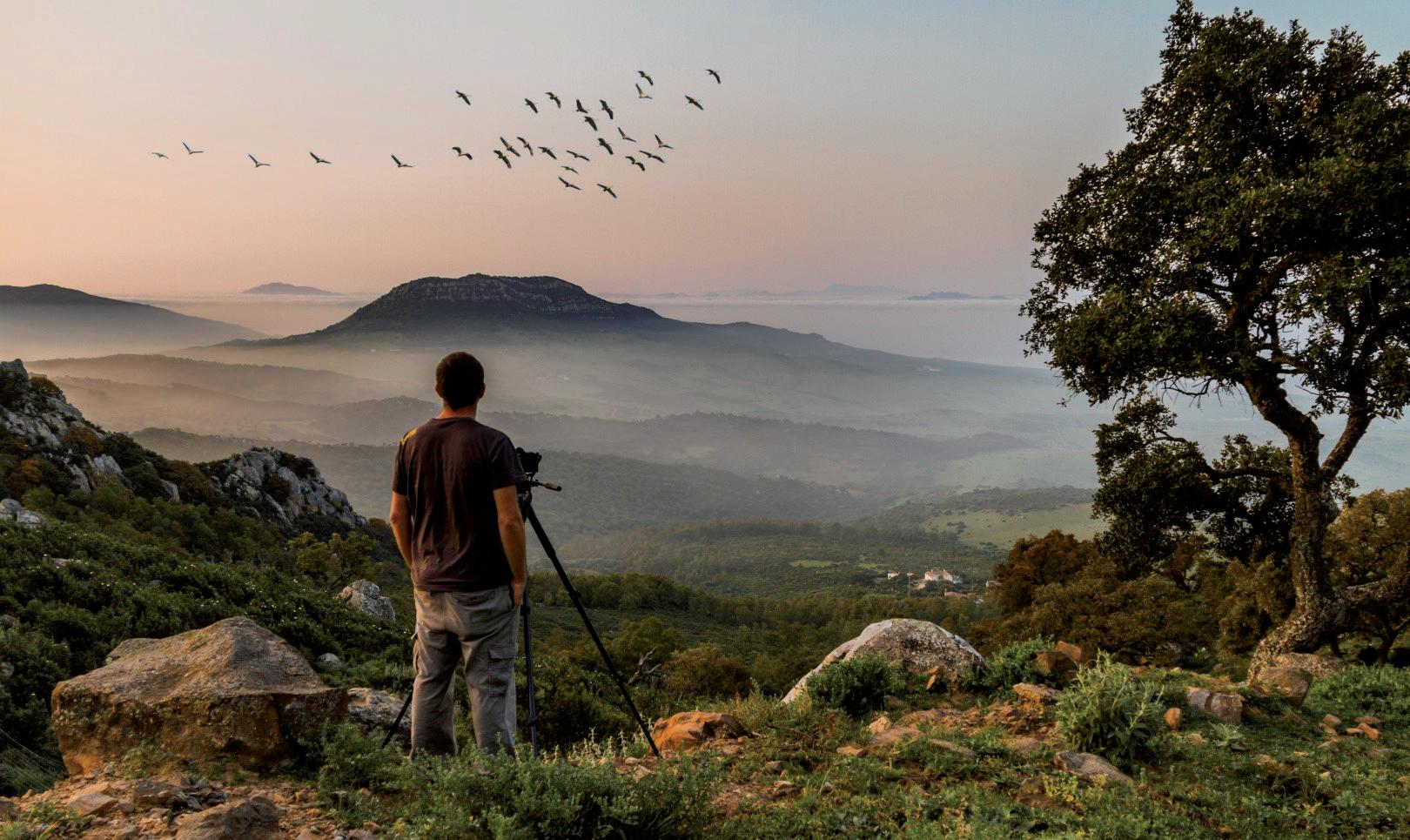
The phenomenon of migration in the Strait of Gibraltar is one of the most impressive natural spectacles in Europe. Gliding birds, including birds of prey and storks, avoid crossing large bodies of water as they rely on
currents to
The
14 kilometres separating Africa and Europe turn the Strait into a natural ‘funnel’ through which millions of birds pass each year.
This migratory movement is divided into two main periods:
• Pre-breeding Migration: Between February and May, birds return from their wintering grounds in Africa to breed in Europe. The light, the green fields and the spring blossoms create a spectacular backdrop for enjoying the return of these species.
• Post-breeding migration: From July to November, adult birds and this year’s young set off on their journey south. This is the period when the greatest number of birds can be observed, with skies that may literally be covered by thousands of kites, eagles and storks in a single day.
Wind is a determining factor in the crossing: with light or moderate winds, the birds take the opportunity to cross the Strait, whilst strong winds, especially from the east, tend to
List of Birdwatching Tourism Companies based in the province of Cádiz
Birding Tarifa | AT/CA/00276
Jerez de la Frontera
T.: +34 650 461 041 birdingtarifa.es
Birding The Strait AT/CA/00311
Tarifa
T.: +34 699 470 467 birdingthestrait.com
Inglorious Bustards AT/CA/00416
Tarifa
T.: +34 665 945 992 · ingloriousbustards.com
Estrecho Natura EC/CA/00021
Algeciras
T.: +34 644 763 952 estrechonatura.com
Turmares-Tarifa EC/CA/00024
Tarifa
T.: +34 956 680 741 turmares.com
Aviturismo.es EC/CA/00025
Chiclana de la Frontera
T.: +34 637 372 755 aviturismo.org
Oxyura Birdwatching EC/CA/00027
Sanlúcar de Barrameda
T.: +34 667 586 844 oxyurabirdwatching.com
ders. The defining geographical feature is the Strait of Gibraltar. With just over 14 kilometres separating the continents, it acts as a natural funnel for migratory routes. Today, the Tarifa area is recognised worldwide for hosting the largest concentrations of soaring birds in the Western Palearctic, making the province a permanent observatory of the migratory flow between Europe and Africa.
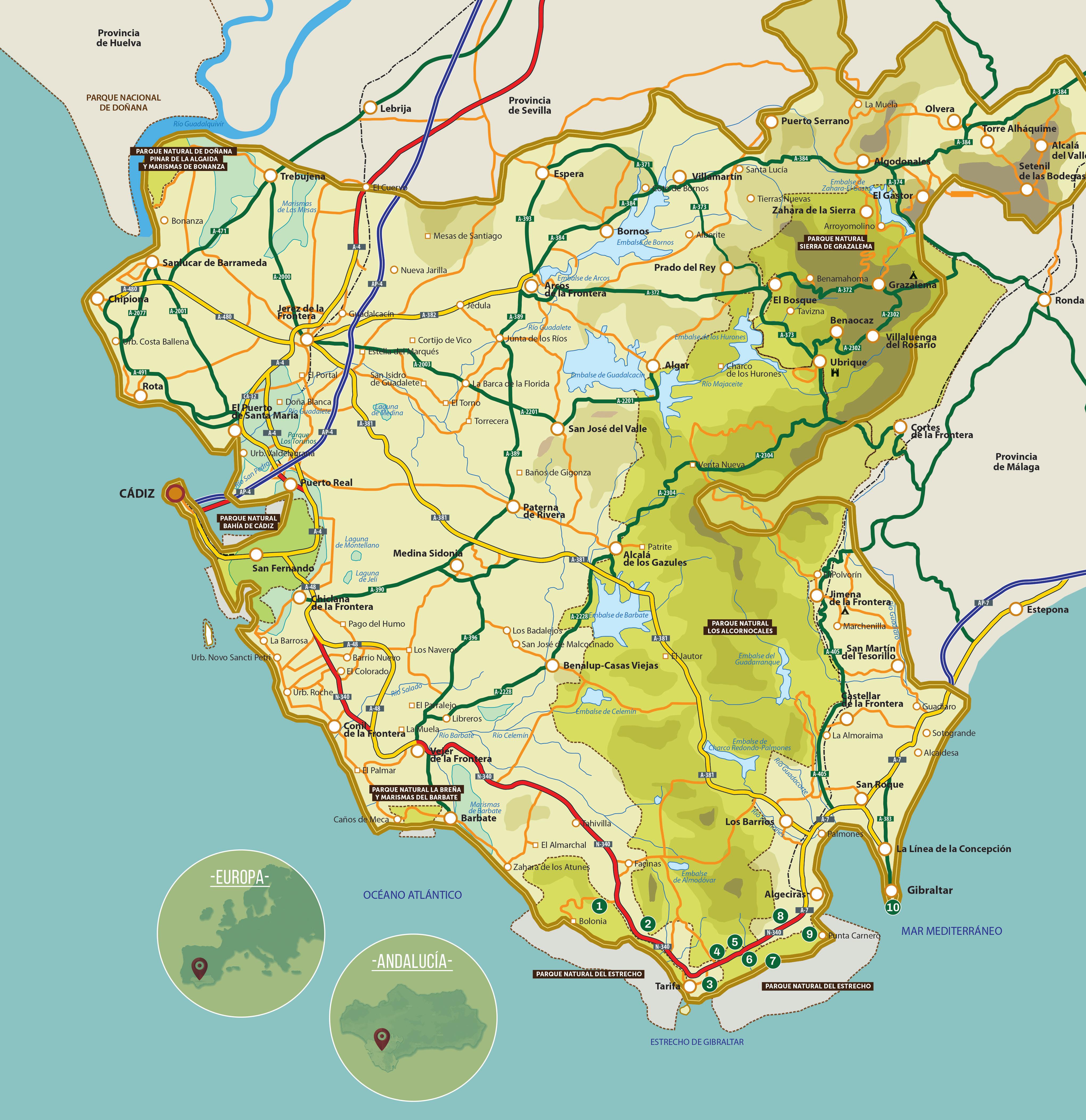
Most important birdwatching areas in the province of Cádiz
1. La Janda Lagoon: Pericón, Main Canal and Collector, Celemín, Benalup Rice Fields, La Mediana Estate, La Haba, Aciscar, Pasada de la Tejada, Poblado Varelo. Latitude: 36.2610, Longitude: -5.8262
2. El Estrecho Natural Park: Los Lances Nature Reserve. Latitude: 36.0340, Longitude: -5.6241 Isla de Las Palomas, La Caleta, Paseo Marítimo, Pueblo. Latitude: 36.0086, Longitude: -5.6068 Bolonia Beach and Sierra de la Plata. Latitude: 36.0879, Longitude: -5.7727
3. Medina Lagoon: Latitude: 36.6134, Longitude: -6.0583 and other endorheic lagoons: El Puerto de Santa María Endorheic Complex. Latitude: 36.6438, Longitude: -6.2320 Espera Endorheic Complex: Zorrilla Lagoon. Latitude: 36.8689, Longitude: -5.8640 Taraje Lagoon. Latitude: 36.5361, Longitude: -6.0574
4. Doñana Natural Park: Tarelo Lagoon, Bonanza Salt Flats and Lagoons, Martín Miguel Lagoons, La Algaida Pine Forest, Los Albardones. Latitude: 36.8369, Longitude: -6.3431 and Trebujena Marshes: Codo de la Esparraguera, Adventus Marsh, Manego Estuaries, Albur Sluice. Latitude: 36.8939, Longitude: -6.2601
5. La Breña Natural Park and Barbate Marshes: El Cañillo, Barbate Estuary, Marshes Trail and Barca de Vejer. Latitude: 36.2126, Longitude: -5.9148
6. Cetina Marshes and Dehesa de Las Yeguas: Latitude: 36.5660, Longitude: -6.1457
7. Bahía de Cádiz Natural Park (North): Pinar de la Algaida, Los Toruños Park, La Esperanza Salt Flats (restricted access), Mouth of the River San Pedro. Latitude: 36.5393, Longitude: -6.2188, Bay of Cádiz (South): Carboneros Salt Pan, Tres Amigos-Río Arillo Trail, Santa María de Jesús Salt Pan, Dolores Salt Pan. Latitude: 36.2708, Longitude: -6.0874
8. Los Alcornocales Natural Park: Barbate Reservoir Viewpoint. Latitude: 36.3814, Longitude: -5.7424, Ojén Valley. Latitude: 36.1497, Longitude: -5.5848
9. Sierra de Grazalema: Puerto de Las Palomas and del Boyar, Pinsapar. Latitude: 36.7700, Longitude: -5.3806
10. Urban and peri-urban parks in Cádiz, including: Chipiona and Costa Ballena: Los Lagos Park and Beach. Latitude: 36.6963, Longitude: -6.4105
Port and Beach of Montijo: Latitude: 36.7609, Longitude: -6.4090
Torrejón Estuary and Park: Latitude: 36.1696, Longitude: -5.4433
La Línea: Princesa Sofía Park. Latitude: 36.1580, Longitude: -5.3450
El Puerto de Santa María: Guadalete Park. Latitude: 36.6098, Longitude: -6.2066
Jerez de la Frontera: Torrox Lagoon. Latitude: 36.6653, Longitude: -6.1515
Estuary and mouth of the River Guadiaro and Sotogrande Beach: Latitude: 36.2815, Longitude: -5.2802
Sotogrande: Las Camelias Lagoon. Latitude: 36.2941, Longitude: 5.2730
Conil de la Frontera: Castilnovo Beach, mouth of the River Salado. Latitude: 36.2707, Longitude: -6.0875 and Mangueta Beach. Latitude: 36.2061, Longitude: -6.0541