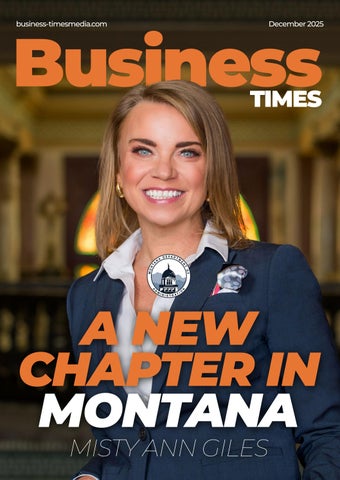

A NEW CHAPTER IN MONTANA MISTY
ANN GILES


EDITOR’S
FOREWORD
As the year draws to a close, our December edition celebrates the spirit of achievement, resilience, and innovation that has defined 2025. This issue shines a spotlight on leaders, companies, and industries that are not only adapting to change but shaping it, from sustainable practices and energy transitions to groundbreaking business strategies and community impact.
The stories within these pages reflect the dedication, creativity, and forward-thinking vision that inspire progress. From pioneering executives to companies setting new standards for operational excellence and social responsibility, this edition offers insights that will empower and inform your own journey into the year ahead.
December is also a time for reflection, gratitude, and celebration. While we honour the successes of the past year, we also look for-
ward to the opportunities that await in 2026. It’s a season to appreciate the power of collaboration, innovation, and the human spirit that drives meaningful change.
From all of us at Business Times Media Group we wish you a joyful holiday season and a prosperous, inspiring New Year. May this edition spark ideas, motivation, and a renewed sense of purpose for the journey ahead. We would like to extend our heartfelt thanks to all the companies and executives who participated throughout the year. Your insights, achievements, and openness have made this publication possible and continue to inspire our readers across industries.
Enjoy the issue!
The Business Times Media Group Team
If you have a business story you wish to share in Business Times Magazine, please contact our Head of Production via production@ business-timesmedia.com



CONTRIBUTORS
MALVERN KANDEMWA Director of Strategic Partnerships
HOWARD BARCLAY Chief Project Director
EMILY SMITH Senior Project Director
EDWARD KAYS
Project Director
JAMES HENNESSEY
Project Director
SAMUEL JOHNSON Social Media Manager
MIKE ASHLEY Head of Finance & Accounts
ANN QUINN Head of Production
MICHELLE DUNCAN Editor in Chief
EDGARDO MONROE Graphic Design









TOP 10 MOST POWERFUL WOMEN IN LEADERSHIP
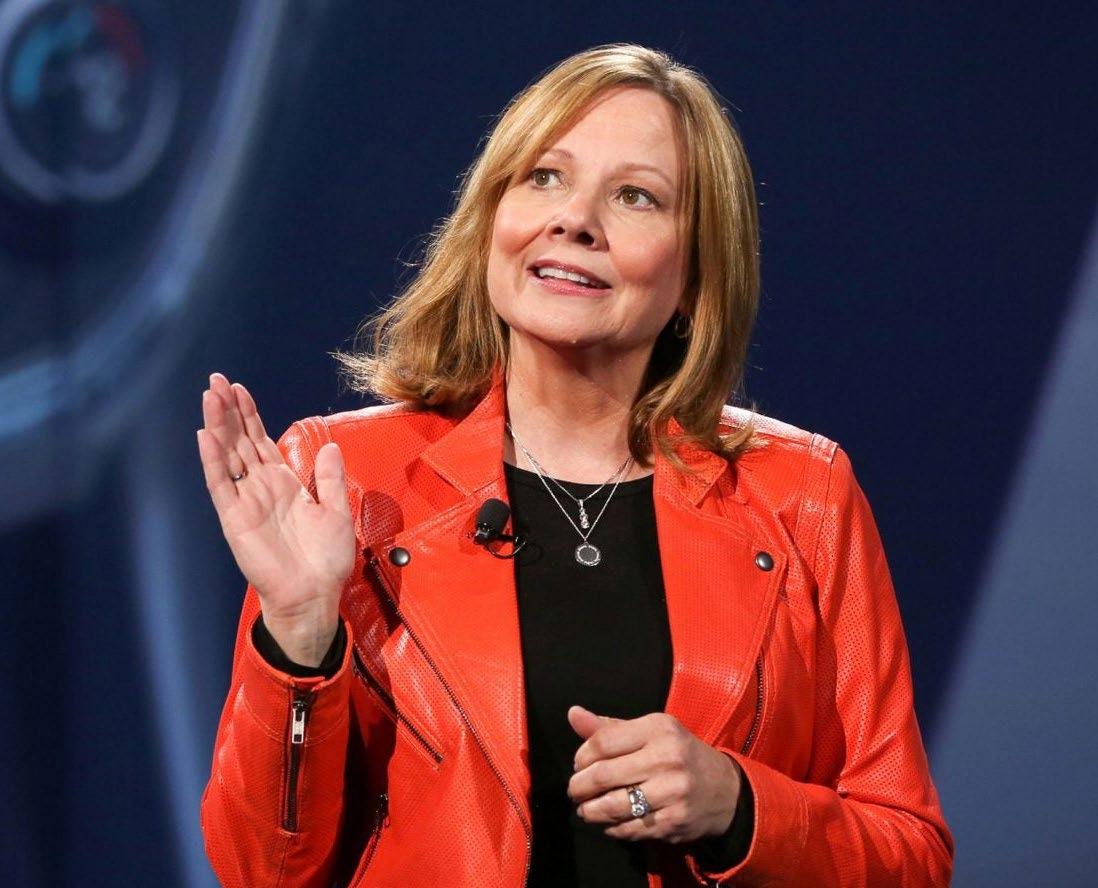
MARY BARRA, CHAIR AND CEO GENERAL MOTORS
Mary Barra has faced many crises since she was named CEO in 2014: a COVID-induced supply-chain disaster; an unprecedented autoworker strike; a high-profile robotaxi accident. The GM lifer has reliably steered the company through all of them. But it may be President Trump’s trade agenda that puts her leadership to the ultimate test. In April, Trump’s sweeping tariff regime plunged the auto industry into disarray. Thus far, Barra has managed to placate Wall Street, al-
though shares were down a modest 4% as of mid-May amid the tariff uncertainty. Her ability to navigate turmoil, and her influence as chief of one of the world’s biggest companies, help place her at No. 1 on this list for the second year in a row and fifth time overall. GM posted record revenue in 2024, up 9% year over year. The company has also reached new milestones doubling U.S. market share of its electric vehicles and seeing increased demand for its Chevrolet, Cadillac, and Buick brands. Like many of her MPW CEO peers, Barra is adjusting to adapt to new and disruptive policy priorities.
Project by: Malvern Kandemwa
Words by: Michelle Duncan
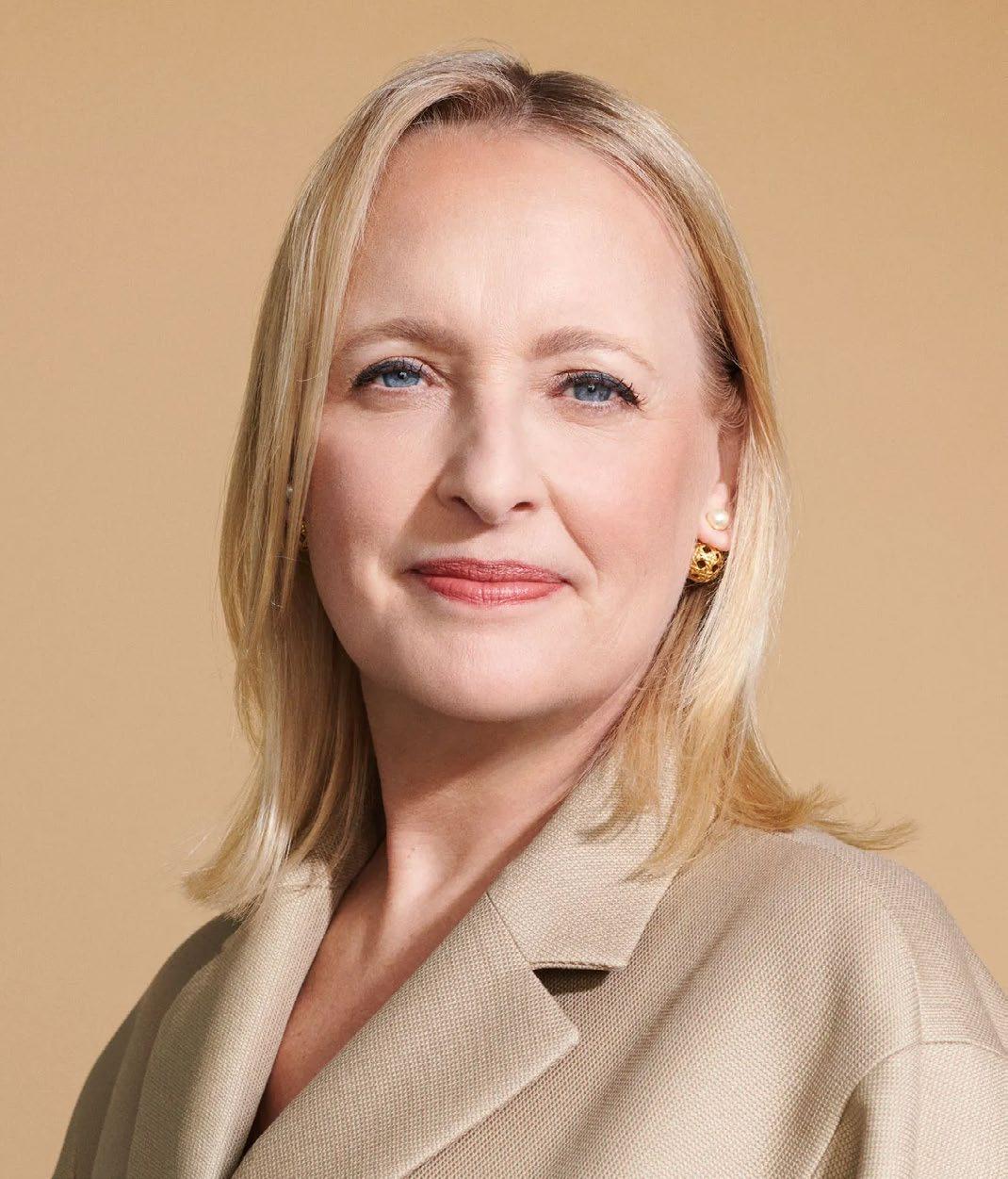
JULIE SWEET, CHAIR AND CEO ACCENTURE
Julie Sweet runs one of the only 5% of Fortune Global 500 companies helmed by a woman leader and none of those has more employees than Accenture’s 800,000-plus. The sheer size of the tech-centric professional services giant makes it more impressive that Sweet sees agility and moving as signature achievements of her tenure. Case in point: Within a week of President Trump revealing his aggressive tariff schedule in April, Accenture held webinars with 900 clients around the world. Part of the goal, Sweet said, was to show clients that fast pivots are possible at any scale. In February, Sweet shared news of a breast cancer diagnosis, her second in 11 years. Sweet made a point of discussing her illness with employees, partly to let them know they will get the support they need through life’s hardest moments.
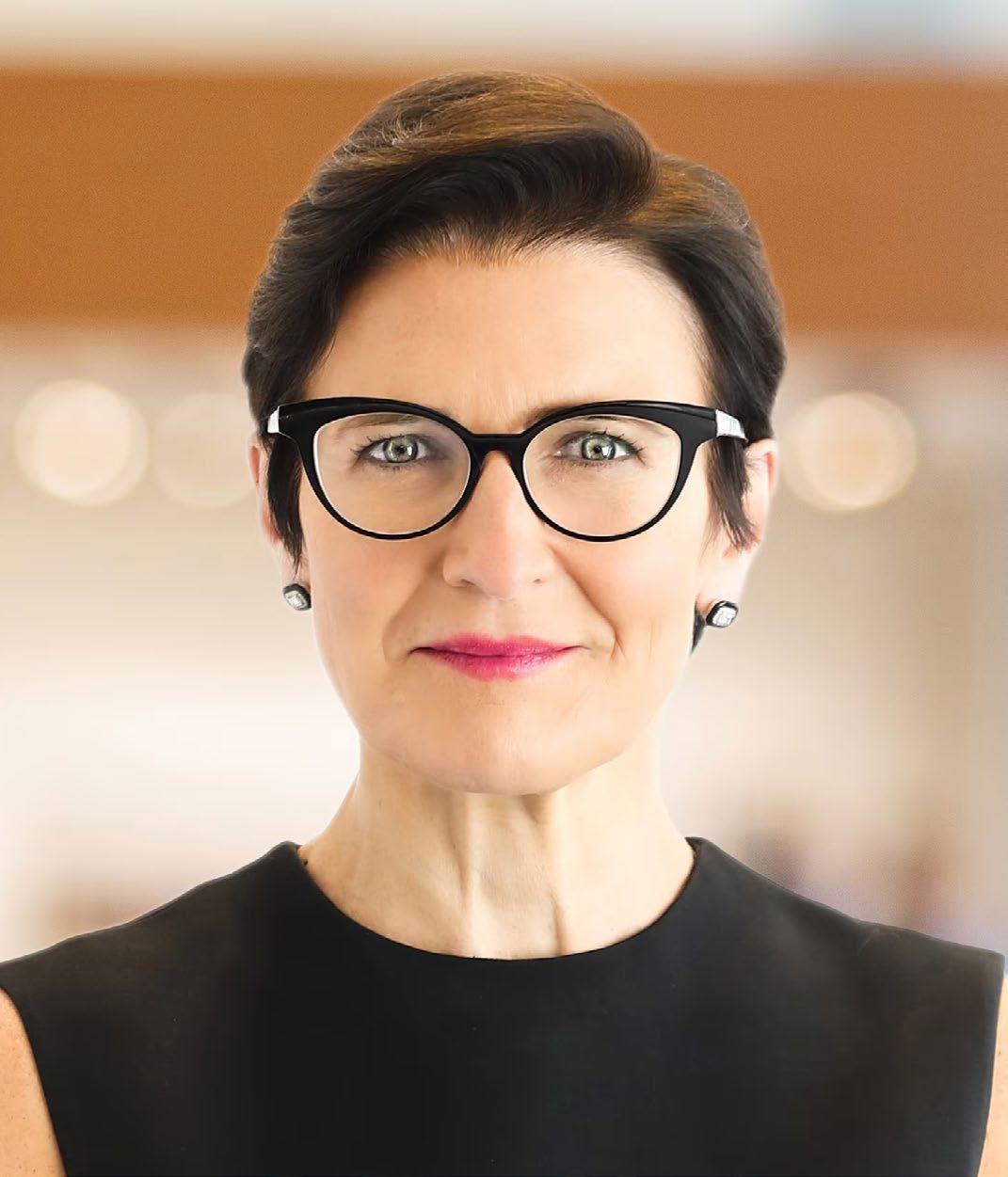
JANE FRASER, CEO CITIGROUP
Tasked with cleaning up the U.S.’s third-largest bank, Jane Fraser has been leading Citigroup’s revamp since she took the reins as CEO in 2021, focusing on slimming operations and modernizing tech. Though the multiyear strategy has a way to go, Fraser, still Wall Street’s sole female CEO and a 20-year veteran at the bank, is making progress. The past few months have seen major wins including completing the spinoff of Citi’s Mexican consumer bank in December, a crucial piece of Fraser’s simplification efforts. Revenue rose across all five of the bank’s core business lines in the fourth quarter of 2024, and net income rose from $9.2 billion in 2023 to $12.7 billion in 2024. Those stronger-than-expected results enabled a $20 billion stock-buyback plan in early 2025 that sent shares soaring to their highest level in more than three years. Fraser’s double-digit-percentage pay bump earlier this year suggests that other decision-makers are happy with where she’s leading the firm thus far.

LISA SU, CHAIR AND CEO AMD
Now in her 11th year as CEO of chipmaker AMD, Lisa Su is navigating the fallout from U.S. export controls tied to the ongoing trade tensions with China. Despite beating earnings estimates in the first quarter of 2025, the company took a financial hit, including $800 million in costs related to U.S. restrictions on exporting some of its AI chips. AMD also projected approximately $700 million in lost revenue for the current quarter and a total of $1.5 billion through the end of its fiscal year due to the controls. Still, the company widely seen as Nvidia’s top rival in the AI chip race stays a formidable player. AMD’s revenue has risen an average of 31% a year since 2019. And in more than a decade at the helm, Su, who started her career in engineering, has helped AMD get back on track by reinvigorating its focus on high-performance AI products.

ANA BOTÍN, EXECUTIVE CHAIR SANTANDER
Ana Botín has been the executive chair of Banco Santander, Europe’s most valuable bank, for over a decade. The Spaniard started her banking career in New York before being tasked with expanding Santander’s Latin America operations. Her leadership of the bank has been marked by growth globally, particularly in the U.S. Botín has also homed in on the company’s technology focus within consumer banking. The Spanish lender achieved a hat trick of record earnings, delivering a 2024 profit of €12.5 billion, up 14% year over year. Santander now has over 170 million customers, outsizing banks like JPMorgan Chase and Bank of America by that measure. The 65-year-old Botín sits on the board of the Coca-Cola Company and the advisory board of the Massachusetts Institute of Technology.

TAN SU SHAN, CEO AND DIRECTOR DBS GROUP
For all her many accomplishments, Tan Su Shan may be best known in the Singaporean banking world for one thing: bringing a Bloomberg terminal into the hospital when she was giving birth in 1999. Tan is the first woman to lead DBS, Southeast Asia’s largest bank. She spent over 15 years at DBS, having joined after stints at Morgan Stanley and Citi. Before becoming CEO in March, Tan led DBS’s institutional banking division and has helped expand its businesses in consumer banking, wealth management, and international banking.
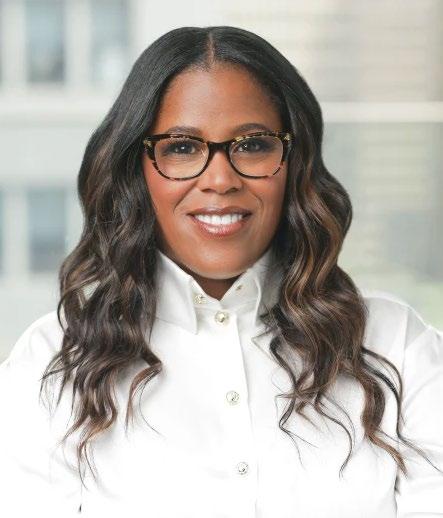
THASUNDA BROWN DUCKETT, PRESIDENT AND CEO TIAA
With career stops at JPMorgan Chase and Fannie Mae before becoming CEO of TIAA in 2021, Thasunda Brown Duckett has decades of experience in the financial industry, which she is now using to advocate for greater gender equality and everyday retirement savers. One of two Black women CEOs in the Fortune 500, Duckett has been tasked with righting the ship at the retirement services provider, which has faced significant challenges in the past few years as more of its core customers, teachers and other nonprofit workers—opt for alternative retirement investment options. TIAA’s assets under management did increase last year, from $1.28 trillion in 2023 to $1.4 trillion by December 2024, but the company reported a net loss of $1.9 billion. Over the past few years, Duckett has overseen the expansion of both the company’s client pool moving beyond 403(b) accounts to corporate 401(k)s and product offerings, and the company’s revenues grew slightly to about $47 billion in 2024.

MARTA ORTEGA, CHAIR INDITEX
Marta Ortega is the youngest daughter of Amancio Ortega Gaona, founder and majority shareholder of Inditex and one of the richest people on the planet. Based in A Coruña, Spain, Ortega has built her entire career within the Inditex Group, which owns the Zara, Bershka, and Massimo Dutti retail chains, among others and has been climbing its ranks since 2007. After graduating in international business from Regent’s University London, the heiress started out as a sales assistant in Zara and Bershka stores. The now 41-year-old has been a member of the Amancio Ortega Foundation Board of Trustees since 2015 and was promoted to chair of Inditex in 2022. Since then, the fashion behemoth has gone from strength to strength, and Ortega has proved any “nepo baby” naysayers wrong. Despite increasing competition from online Chinese fast fashion retailers like Shein, Inditex continues to do well. Sales grew 7.5% and hit €38.6 billion in 2024.
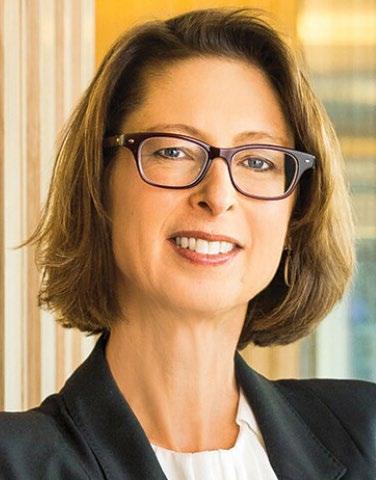
ABIGAIL JOHNSON, CHAIRMAN AND CEO FIDELITY INVESTMENTS
In a decade as Fidelity’s leader, Johnson has expanded her family-owned financial empire, pushing further into private markets and alternative investments like cryptocurrency. Fidelity is $5.9 trillion in discretionary assets under management in 2024 a $1 trillion jump from 2023 puts it behind only BlackRock and Vanguard. Much of Fidelity’s success is owed to retail offerings like its brokerage, wealth advisory, and 401(k) services, business lines Johnson has nurtured. She has now appeared on Fortune’s MPW list 25 times, more than any other executive.

MENG WANZHOU, DEPUTY CHAIR, ROTATING CHAIR, CFO HUAWEI
Meng Wanzhou, daughter of company founder Ren Zhengfei, is Huawei’s CFO and, alongside deputy chair Eric Xu, one of its rotating chairs. Meng’s terms as chair have coincided with the release of Huawei’s new iPhone-beating smartphones. Huawei is now part of China’s chip plans as Washington tries to limit China’s access to foreign-made semiconductors. Nvidia now considers Huawei a “strategic competitor.” Tech self-sufficiency has been good business for Huawei: The company reported $118 billion in revenue for 2024, close to its 2020 record.
DANGOTE EXTENDS CONTINENTAL DOMINANCE, SEALS $1BN INVESTMENT IN ZIMBABWE
Project by: Malvern Kandemwa
Words by: Michelle Duncan
Nigeria’s Dangote Group has signed a transformative investment agreement with the Zimbabwean government, committing at least US$1bn to major projects spanning energy, infrastructure and industrial production. The deal, one of the largest private-sector commitments in Zimbabwe in recent years, was finalised on 12 November 2026 following a meeting in Harare between Dangote
Group founder and CEO Aliko Dangote and President Emmerson Mnangagwa.
The wide-ranging investment package includes a major cement plant, extensive power-generation facilities and a large-scale pipeline to transport petroleum products. Dangote confirmed that the pipeline project—which will be over 2000km long—will run from

Namibia’s Walvis Bay, through Botswana, to Bulawayo. It will be supported by a new fuel storage hub in Walvis Bay, aimed at reducing Southern Africa’s reliance on fuel imports from Europe and Asia.
In addition to cement and energy ventures, the agreement also covers fertiliser production, positioning Zimbabwe as a regional industrial hub. “The broader
investment is in the hundreds of millions of dollars, maybe even more than a billion… really it will be over a billion because of the pipeline,” Dangote said.
A spokesperson for President Mnangagwa said the pipeline could significantly lower fuel import costs and help reshape Zimbabwe’s production structure. The deal marks a major boost for the country’s economic reform
agenda and signals deepening engagement between the Dangote Group and Southern Africa’s industrial sector.
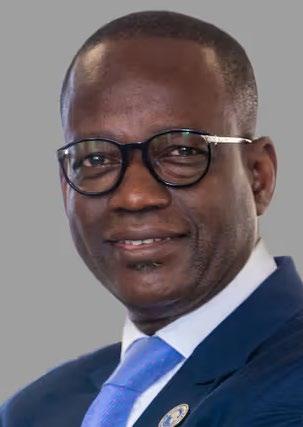

MEET THE CEO DRIVING A €100 MILLION PLAN FOR A SINGLE DIGITAL MARKET ACROSS AFRICA
Project
by:
Malvern Kandemwa
Words by: Michelle Duncan
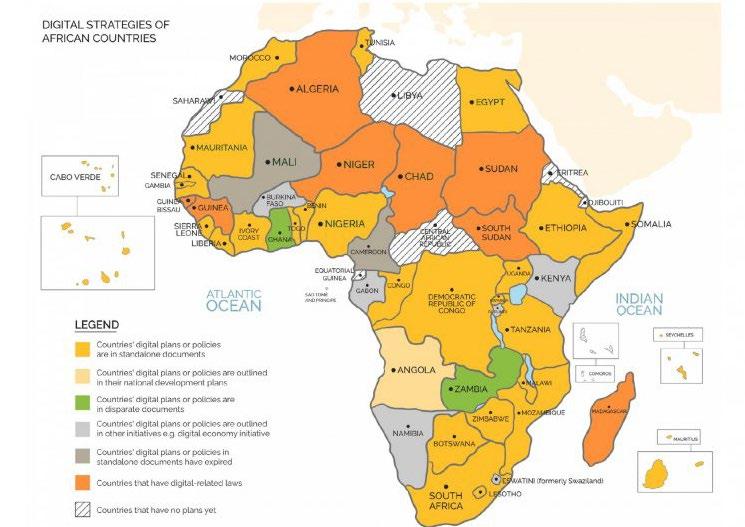
Many tech initiatives in Africa focus on short-term gains or importing solutions from abroad. Lacina Koné, CEO of Smart Africa, is taking a different approach. With a €100 million plan to create a single digital market across the continent, he is uniting more than 40 countries under a bold vision: to turn Africa into a hub of homegrown digital innovation, where startups can scale, talent stays, and data is owned locally.
When seven African heads of state gathered in 2013, Kagame of Rwanda, Museveni of Uganda,
Kenyatta of Kenya, Ali Bongo of Gabon, Salva Kiir of South Sudan, Ibrahim Boubacar Keïta of Mali, and Blaise Compaoré of Burkina Faso, they were united by a stark realisation: Africa risked being left behind in the next industrial revolution.
Their solution was ambitious yet clear — Smart Africa, an alliance designed to accelerate digital transformation and create a single digital market for the continent.
Today, the initiative is steered by Lacina Koné, appointed CEO in
2019, whose leadership has expanded the alliance from seven countries to over 40, with programs spanning policy harmonisation, digital infrastructure, and innovation funding.
Funding is the heartbeat of any tech ecosystem, and Africa is no exception. The continent has raised billions to support its startups, numbers that sound impressive to the ear, yet remain small compared to the global tides of capital that shape Silicon Valley and Shenzhen.
So far this year, startups across the continent have raised $2.8 billion (January to August), matching the total raised in 2024, according to Briter Intelligence. But for Lacina Koné, funding figures are both inspiring and sobering.
While it is proof that African innovation is vibrant, it is also a reminder that the continent must create the right conditions for venture capital, risk-taking, and long-term investment if its tech ecosystem is to scale.
To address this, the Smart Africa Fund was launched as a flagship program of the alliance, initially supported with €100 million and managed by Bamboo Capital Partners.
The governments of Côte d’Ivoire and Luxembourg acted as anchor sponsors, each contributing €10 million to the fund’s first-loss tranche, providing confidence to other investors and helping the fund move toward its target.
The fund focuses on investing in businesses that leverage scalable, sustainable, technology-led solutions, particularly those that create growth opportunities for underserved communities across Africa.
He hopes the commitments from initial investors will inspire other countries to join and help reach the full €100 million goal.
Together with complementary initiatives like the Smart Africa Startup Act, these efforts form the backbone of Smart Africa’s plan to establish a single digital market by 2030.

MONTANA DEPARTMENT ADMINISTRATION

MONTANA DEPARTMENT OF ADMINISTRATION

MISTY ANN GILES
EFFICIENCY AND PEOPLE-FIRST LEADERSHIP IN MONTANA

Project by: Malvern Kandemwa
Words by: Michelle Duncan
Misty Ann Giles is the Chief Operating Officer and Director of the Montana Department of Administration, a pivotal role in overseeing the administrative functions of Montana’s state government. Her leadership changed a wide range of vital operations, in-
cluding agency support, fiscal management, facilities, human resources, and information technology, with a focus on enterprise modernization and efficiency.
A FORTUITOUS START IN PUBLIC SERVICE
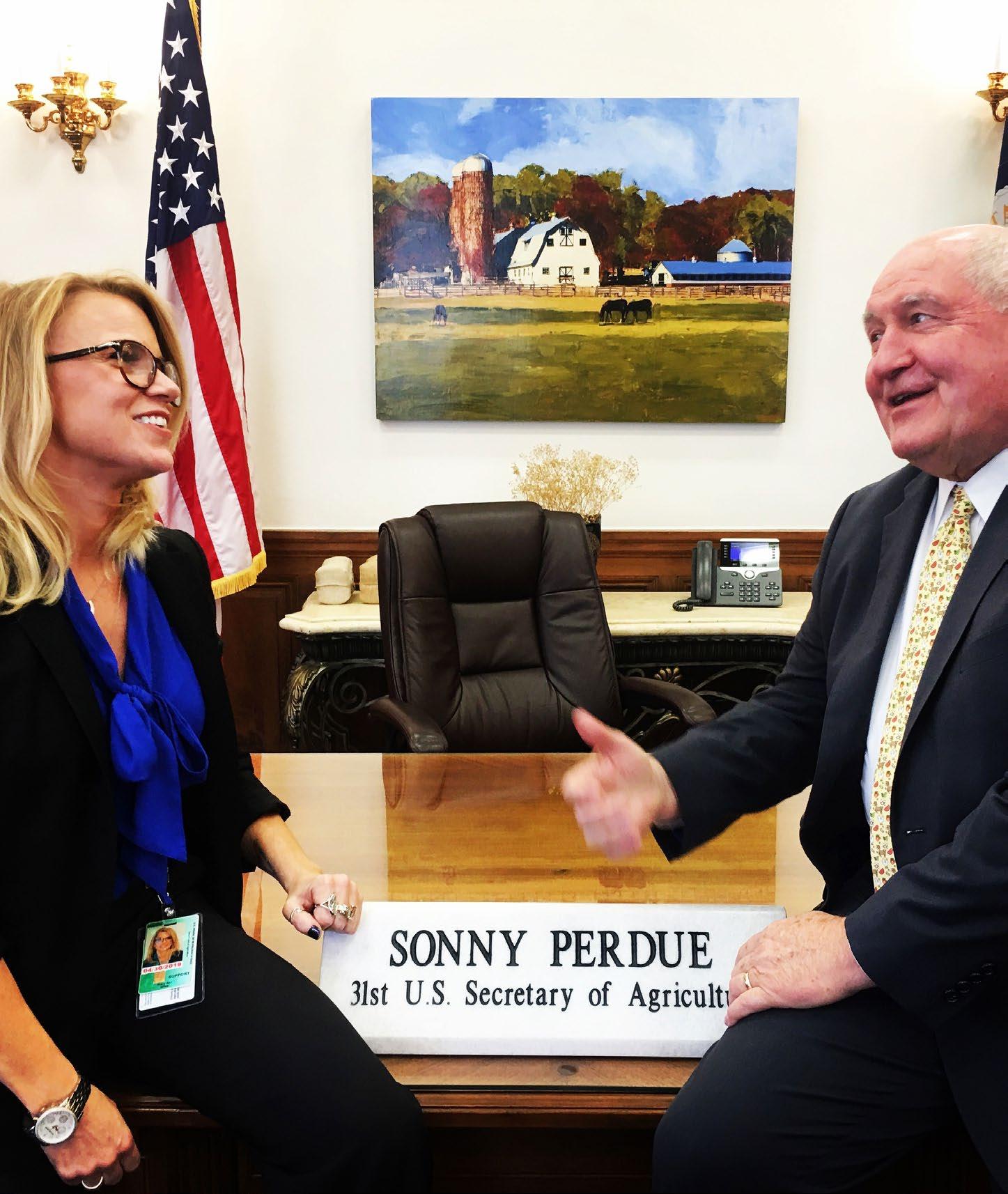
Misty Ann Giles’s journey into politics began unexpectedly in 2006, while she was pursuing her graduate studies at the University of Georgia. Sonny Perdue
brought Giles onto his team as he was seeking a second term after making history in his first term as Georgia’s first Republican governor in more than 130 years. Though his first win was historic, Perdue knew seeking a second term would be a tough climb.
The then 23-year-old Giles was a dynamic young operative, achieving several key campaign victories that contributed to Perdue’s re-election with nearly 60% of the
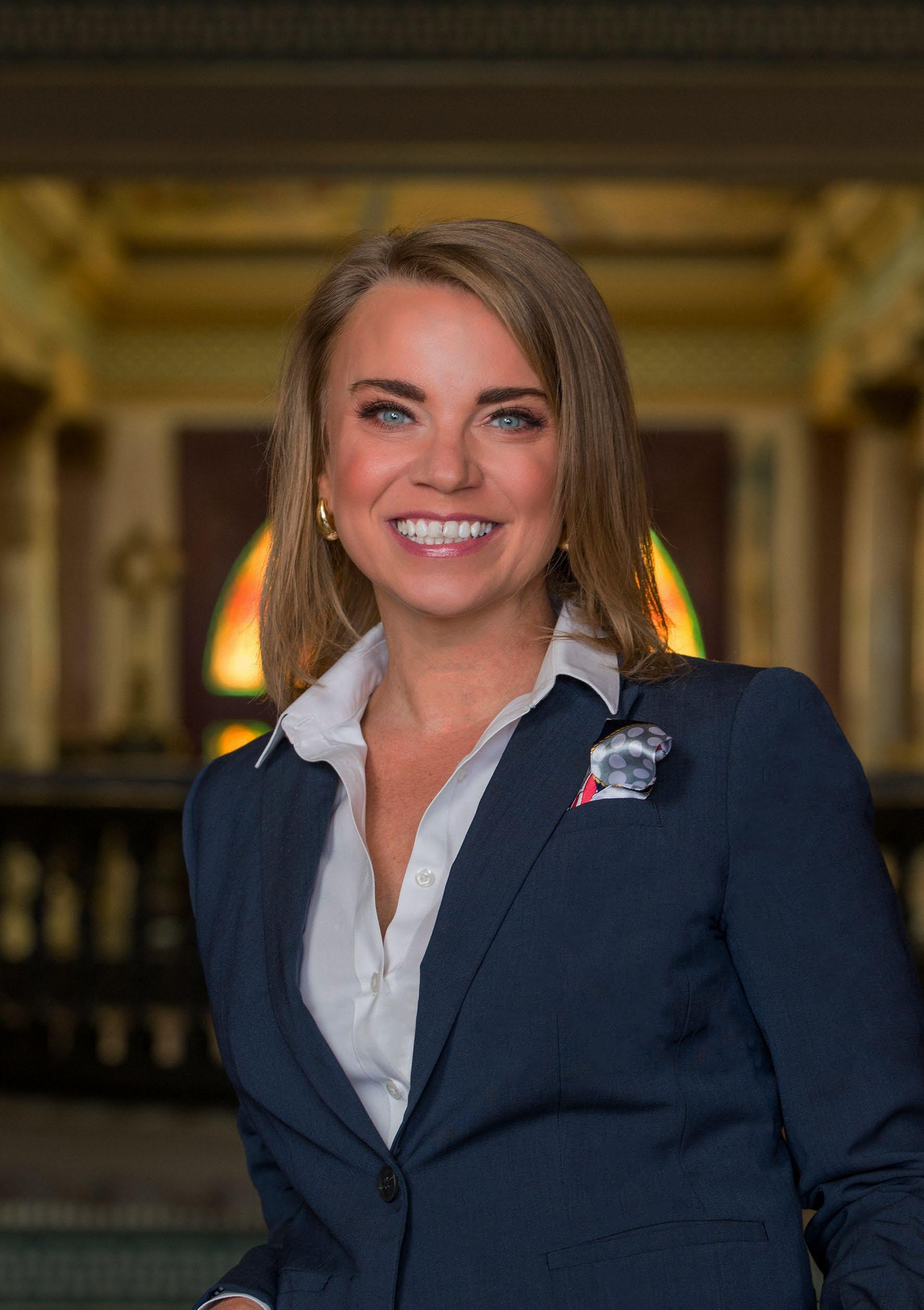
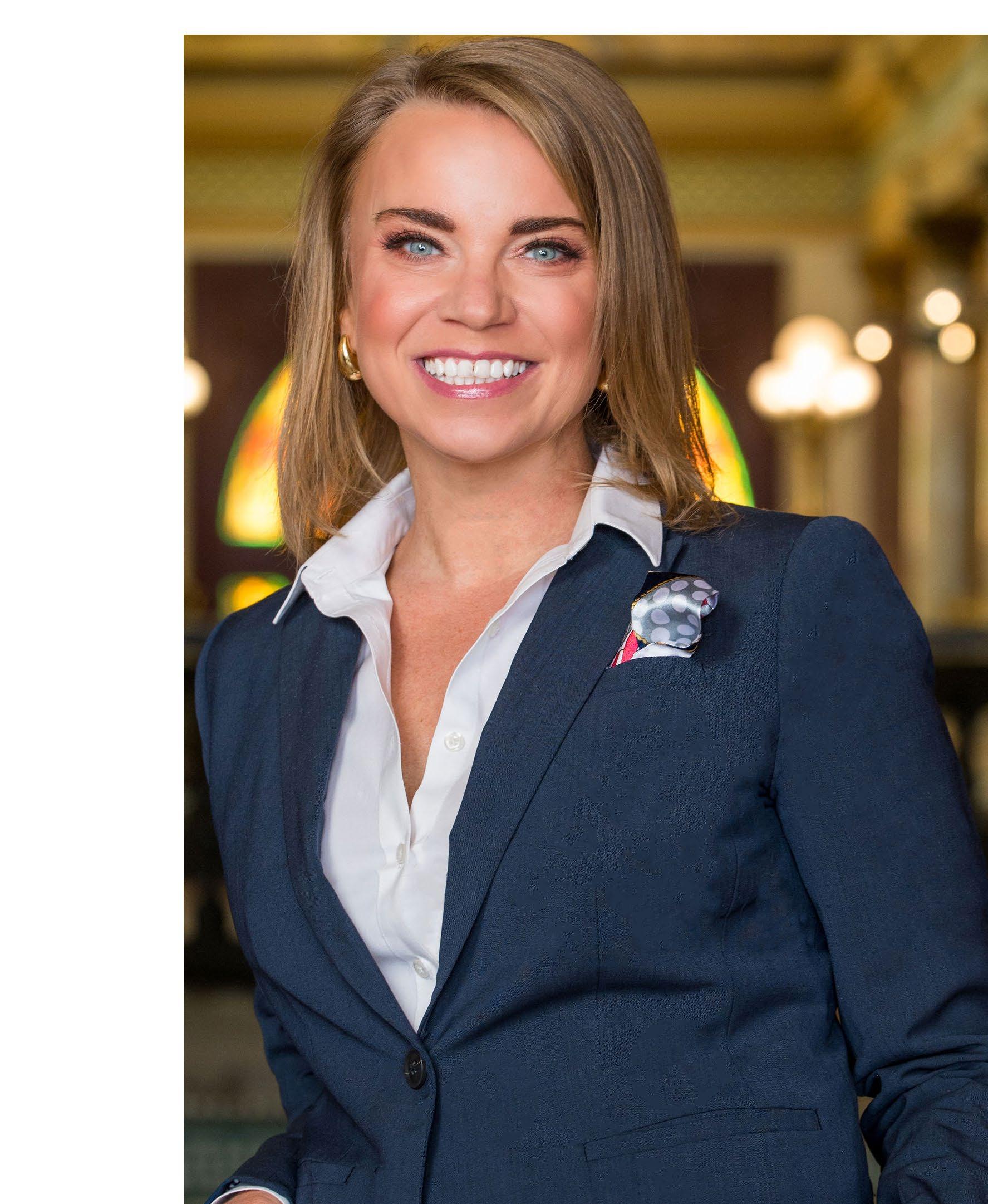
Misty Ann Giles, COO and Director, Montana Department of Administration
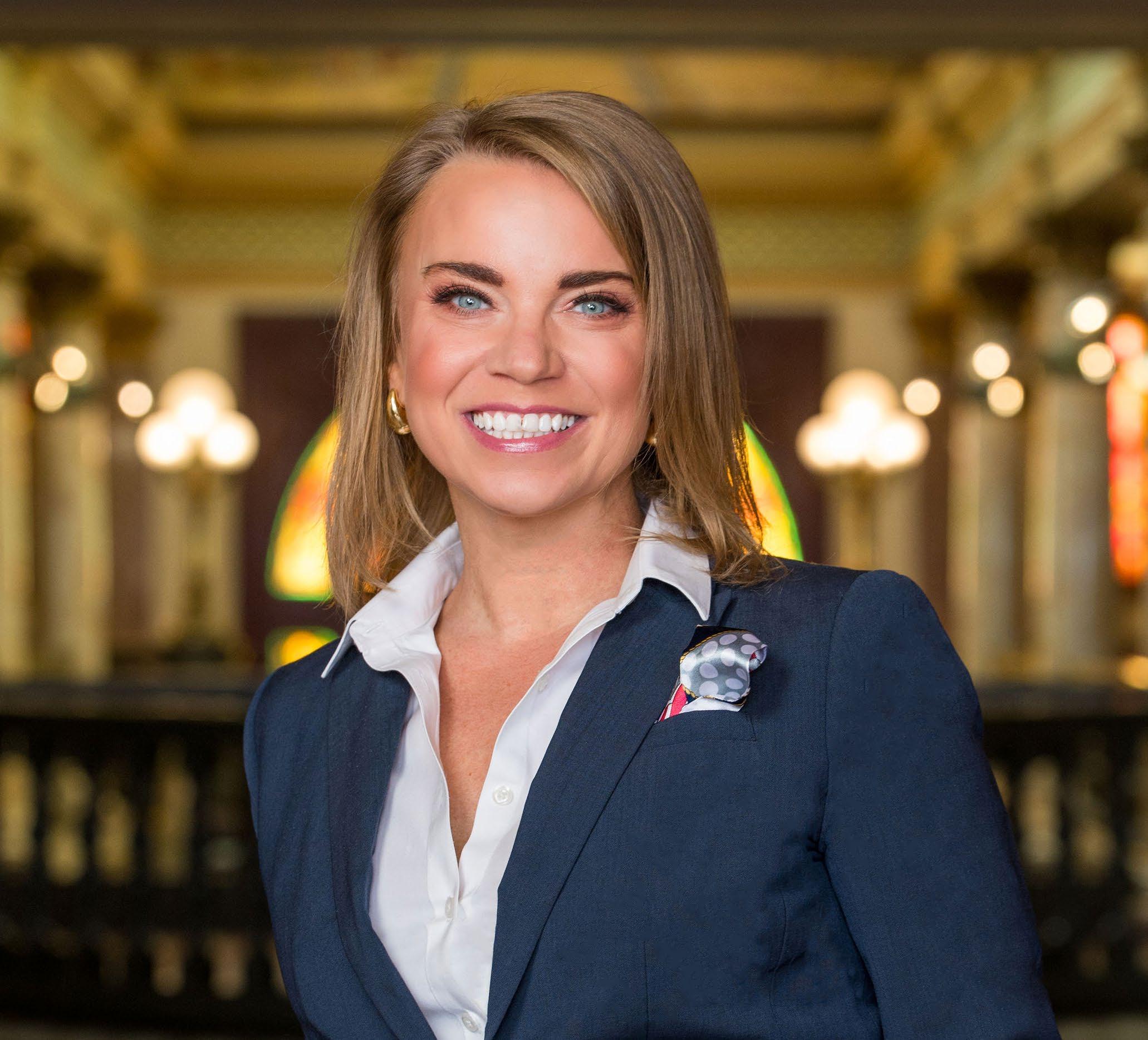
vote, marking the start of her long and impactful career in government and public administration.
“I oversaw campaign operations across 25 counties where we weren’t expected to perform well – they were primarily Democratic and basically home to our opponent. We ultimately secured victories in 17 of them,” Giles recalls.
Her early success on the campaign trail opened doors to pub-
lic administration. “I was soon offered a position as a policy advisor overseeing criminal justice, public safety, and general government issues. Suddenly, I found myself responsible for coordinating across 14 state agencies,” she says.
RAPID RISE THROUGH LEADERSHIP
Giles’s meteoric rise continued thanks to a leadership philosophy
that emphasized mentorship and talent development. “Sonny believed strongly in hiring young talent and developing them into capable leaders, and there I was, given a chance to prove myself,” she reflects. “Before long, I was serving as a division budget director, overseeing 45 agencies with a combined budget and appropriations portfolio of more than US$2.5 billion. Drawing on insights from my master’s thesis, I proposed a comprehensive
criminal justice reform initiative and went on to lead the drafting of the new legislative package.”
It marked the start of an extraordinary public service career that, 18 years later, culminated in her appointment to lead Montana’s Department of Administration; while also serving as the state’s first-ever Chief Operating Officer, a position specially created for her by Governor Greg Gianforte.
Misty Giles is often described as a change agent in governmental management. Her prior roles and appointments emphasize process improvements, modernization, efficiency, and customer service. She has brought an emphasis on streamlining operations, reducing red tape, and improving how outward-facing and internal government services function. The framing of her role suggests balancing modernization with the responsible management of public resources.
FROM LAW SCHOOL TO WASHINGTON, D.C.
Trump administration, invited Giles to join him in Washington.
“BEFORE LONG, I WAS SERVING AS A DIVISION BUDGET DIRECTOR, OVERSEEING 45 AGENCIES WITH A COMBINED BUDGET AND APPROPRIATIONS PORTFOLIO OF MORE THAN US$2.5 BILLION. DRAWING ON INSIGHTS FROM MY MASTER’S THESIS, I PROPOSED A COMPREHENSIVE CRIMINAL JUSTICE REFORM INITIATIVE AND WENT ON TO LEAD THE DRAFTING OF THE NEW LEGISLATIVE PACKAGE.”
Giles’s ascent to leadership has included several unexpected pivots. One of the first came when she chose to leave politics and attend law school in San Diego, where she was the first parttime student to serve as Editor-in-Chief of The San Diego Law Review while attending as a part-time teaching assistant.
Just as she neared graduation, destiny called again. Former Governor Sonny Perdue, now serving as U.S. Secretary of Agriculture under the
“He asked me to join his team as a senior advisor on a range of policy issues,” Giles recalls. She later transitioned to Rural Development at the USDA as Chief of Staff, overseeing 500 offices and 5,500 employees nationwide, managing a US$250 billion budget.
“During my tenure, I led 31 organizational realignments over two years, restructuring the entire Agency,” she says. A monumental undertaking that highlighted her operational precision and strategic vision.
Built for government. Built for outcomes.

Learn more at cgi.com/us/en-us/cgi-advantage
PARTNER FOCUS:
CGI
At CGI, we are honored to be a close strategic partner to the State of Montana during a time of bold transformation and forward-thinking leadership. Guided by the department’s commitment to purposeful modernization, the state has embraced initiatives that streamline operations, empower its workforce, and enhance services for citizens. Our collaboration with the Department of Administration has supported key initiatives in digital infrastructure, hybrid work strategies, and operational efficiency.
One of the most impactful examples of this partnership is our work with the Montana Department of Transportation (MDT) to implement the Statewide Transportation Accounting and Reporting System (STARS). This modern financial platform replaces aging and highly customized systems with a comprehensive, modern and purpose-built platform that has proven successful in numerous other state DOTs. STARS is designed to streamline financial processing, increase automation, strengthen auditing capabilities, and improve usability across MDT’s accounting functions. Through this initiative, CGI is help-
ing MDT achieve greater transparency, efficiency, and long-term operational resilience.
This partnership goes beyond technology—it is about shared vision and trust. The department’s data-driven decision making and inclusive leadership style has cultivated an environment where innovation thrives. We are proud to contribute to Montana’s journey toward a more agile, citizen-focused government. Together, we are building a model for how public-private collaboration can deliver lasting impact and set new standards for excellence in state government.
A NEW CHAPTER IN MONTANA
“I was actually recruited into the role I have now,” Giles recalls. “I didn’t know Governor Gianforte or anyone on his team at the time, but I received an unexpected message inviting me to meet with him. Initially, I declined because I already had another position lined up, but they encouraged me to at least have a conversation.”
That meeting proved pivotal. “I was immediately drawn to his vision for government,” she explains. “He shares my belief that the government should operate with the efficiency and accountability of a business, and he was looking for someone who truly understood how all the moving
parts fit together.”
After several meetings in Washington, D.C., Governor Gianforte was so impressed by Giles’s ability and vision that he created a new position specifically for her, appointing her not only as Director of Administration, but also as Montana’s first-ever Chief Operating Officer.
DRIVING TRANSFORMATION ACROSS STATE GOVERNMENT
“We’ve had a very ambitious agenda over the past four years,” Giles explains. “Our focus has been on implementing data-driven solutions, drawing on best practices, and working in many ways to more efficient-
ly function as one state rather than siloed agencies.”
Under her leadership, the department has conducted a comprehensive review and modernization of the state’s workspace portfolio. This process included interviewing more than 100 managers and thousands of employees and analysing over 350 job classifications to improve operational alignment.
“We developed a standardized approach to hybrid work,” she says, “and then conducted a full assessment of our 93,000 square meters of leased office space. By improving that footprint, we secured more than US$60 million to modernize Montana’s state workplaces.”

Giles also partnered with Civic Initiatives to improve procurement efficiency and maximize taxpayer value. Meanwhile, she leads the state’s US$938 million ConnectMT broadband program, a major infrastructure effort expanding high-speed internet access to underserved communities. Twenty-five percent of Montana’s population currently experiences limited connectivity.
Beyond modernizing systems and infrastructure, Giles has placed a strong emphasis on people and culture. She quickly recognized that many state em-
ployees felt stuck in roles with limited career progression.
“A lot of these individuals are great at what they do,” she explains. “We’re working to create real career pathways for an upward trajectory in government, not just jobs, so employees can continue to grow in their careers.”
Managing that transformation across 12 departments and 14,000 employees is no small task. “It’s a challenge to align everyone under a shared vision,” she admits. “But there’s genuine excitement about creating new opportuni-
ties and focusing on what is possible in the future.”
Giles’s work in Montana is reshaping how the state government improves data-driven decision-making, empowers the workforce, and pursues a sharp vision for modernization. But her most significant contribution has been how state employees use these practices to deliver value and connection to the citizens they serve.
As she proved during her early campaign days in Georgia, Misty Ann Giles has an innate ability

to inspire confidence and rally teams around a shared mission. With two decades of experience in government operations, her leadership blends strategic discipline with a deep respect for people and process.
ACE HARDWARE INTERNATIONAL

HARDWARE INTERNATIONAL

ACE HARDWARE INTERNATIONAL: BUILDING SUCCESS THROUGH INNOVATION AND SERVICE

Project by: Malvern Kandemwa
Words by: Michelle Duncan
Ace Hardware, the world’s largest retailer-owned hardware cooperative, marked the opening of its 105th new store in 2022. To support this rapid growth, Ace continues to expand its distribution network, bringing more inventory closer to its growing number of stores and customers. Over the next five years, the company plans to add 4.4 million square feet of distribution capacity through three new warehouses—building on the
more than 2.5 million square feet added over the past four years. Ace runs more than 5,600 locally owned hardware stores in all 50 states and 70 countries, with global sales topping $20 billion. Ace’s unique cooperative business model offers local entrepreneurs not only the ability to become owners of their local store operation, but also one of a limited number of shareholders of Ace Hardware Corporation.
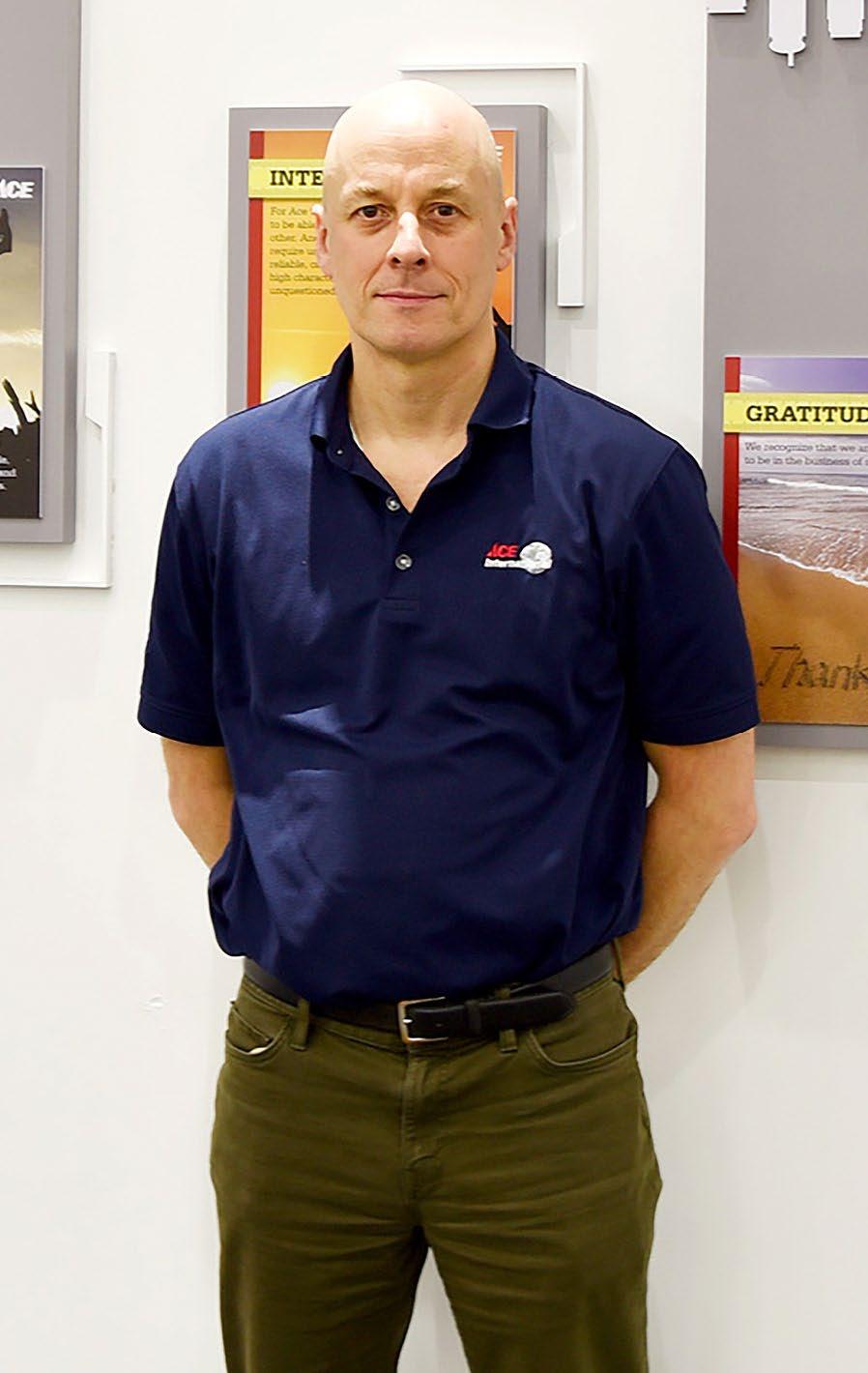
In the world of procurement and sourcing across Asia, the name Gavin Thomson carries significant weight. As Global Sourcing Director at Ace Hardware International, he has earned a for-
midable reputation for driving transformation, streamlining processes, and fostering longterm supplier partnerships.
Thomson’s experience with prominent publicly listed companies such as Li & Fung provided him with a deep understanding of global sourcing markets. It also connected him with a network of respected leaders across diverse industries. “From the highest levels to the most junior employees, everyone respects a leader who is open and transparent,” he says. “People come to work every day and give their best. If they feel information is being hidden or presented in a way that isn’t entirely truthful, it under-
mines both the integrity and motivation of the organization.
“That’s why I always strive to be upfront with my team about what’s really happening—it builds trust and loyalty.”
With over 20 years of experience, Thomson has seen business turnarounds, bankruptcies, industrial action, and even riots, giving him a wealth of knowledge to draw upon.
His time at large organizations taught him the critical importance of keeping departments aligned.
“In every sizable business I’ve worked in, you end up with competing agendas and silos,” he explains. “The leaders I truly admire can create a common goal across functions so that everyone says, ‘That’s a goal we all want to achieve.’”
Since joining Ace Hardware just over three years ago, Thomson has faced no shortage of challenges. The COVID-19 pandemic, for example, delayed his move from Hong Kong to his Shanghai base by six months.
“Getting to know both the team and the product range was a real challenge,” Thomson recalls. “Like many businesses at the time, we weren’t ready for remote work. No Teams, no Slack, no Zoom—nothing was digitized.
“At first, building relationships with people I’d never met in person, and learning a completely different product category and market, was tough.”
But the disruption brought unexpected benefits. Thomson says it accelerated the growth of Ace Hardware’s sourcing officers.
“The top performers stepped up, reaching a level of competence that earned the trust of our overseas buyers. By empowering these teams, they became the drivers of business and product development,” he says.
“Without visitors or monthly in-person support, our people had to develop their own skills— finding products and understanding exactly what buyers wanted. It was a real test, and they rose to it.”
IN EVERY SIZABLE BUSINESS I’VE WORKED IN, YOU END UP WITH COMPETING AGENDAS AND SILOS. THE LEADERS I TRULY ADMIRE CAN CREATE A COMMON GOAL ACROSS FUNCTIONS SO THAT EVERYONE SAYS “THAT’S A GOAL WE ALL WANT TO ACHIEVE!”


With strong sourcing teams in place, Thomson can now focus on Ace Hardware’s global sourcing strategy for the next three to six years.
“We’re concentrating on developing key partnerships in countries we see as strategically important, not just because of tariffs,” he explains.
“Geographic expansion is a major focus, and we need to ensure we have the resources in each market. That means confirming that if we source from these countries, the infrastructure is in place to meet our product standards, factories stay compliant, and our teams are equipped to address any issues that arise.”
According to Thomson, the biggest headaches in global sourcing often come from dishonesty. “In over 20 years working in China, I’ve dealt with vendors who just weren’t truthful,” he recalls.
“They’d hide problems in their factories or do not show shutdowns, creating a ripple effect that damages long-term relationships and forces us to scramble for alternatives.
“But then there are suppliers who are upfront about challenges—whether it’s issues with their own suppliers or government regulations. Our response is always, ‘Thank you for your honesty; now let’s solve this together.’
“Business relationships, like personal ones, thrive on cooperation. Openness builds trust; a lack of it can quickly destroy it.”

BEALLS,

BEALLS, INC

BEALLS INC REINVENTING AMERICA THROUGH HERITAGE & INNOVATION

Project by: Malvern Kandemwa
Words by: Michelle Duncan
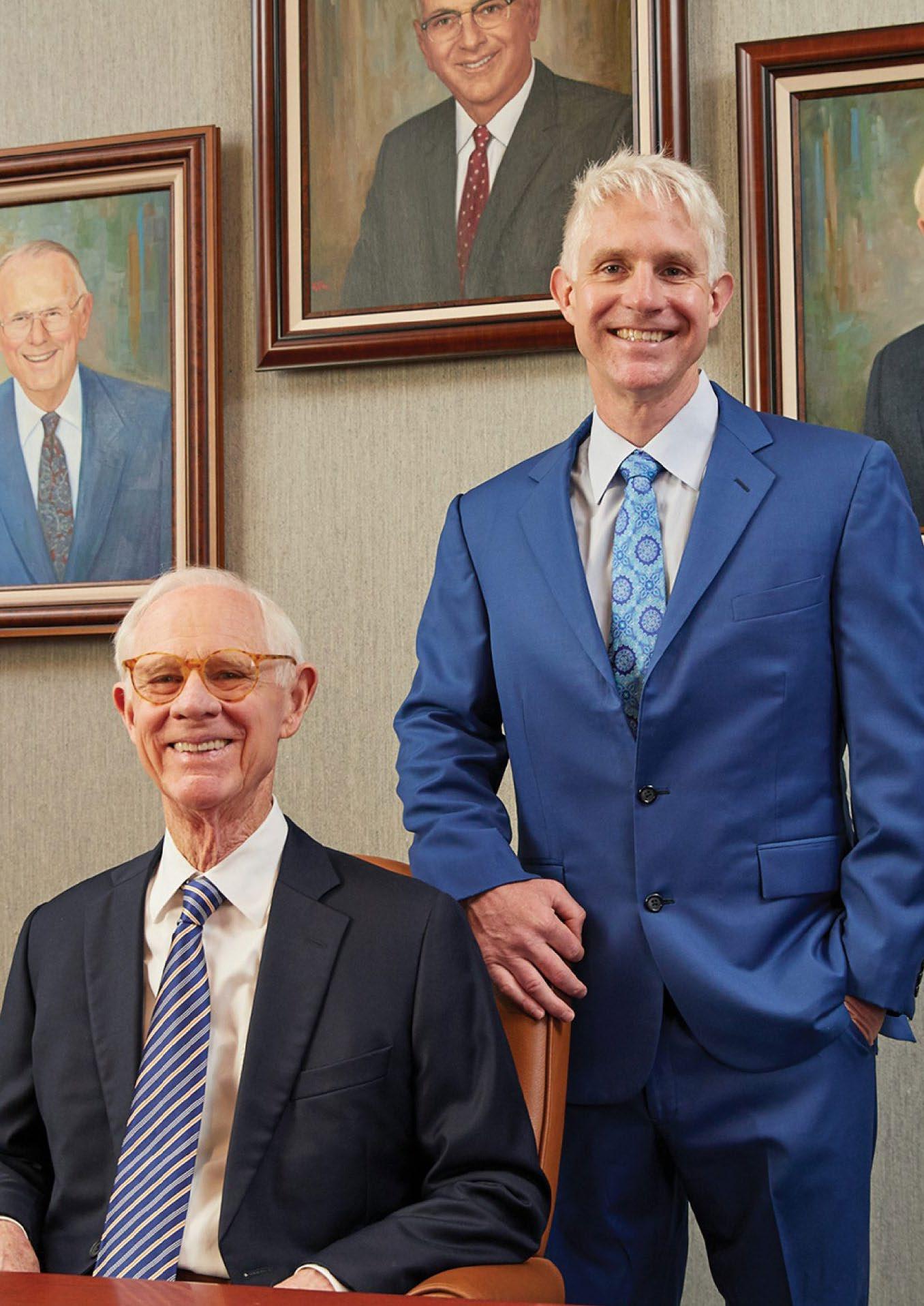
Bealls has experienced a remarkable transformation over the past two years, and under the leadership of CEO Matt Beall, the company is now strategically positioned for sustained and healthy growth. With a legacy spanning over a century and a network of more than 500 stores across the
United States, Bealls stands as a testament to enduring success in American retail. Yet, with such a rich heritage comes the ongoing challenge of remaining relevant and innovative — a challenge that CEO Matt Beall is embracing with energy, vision, and determination.
Appointed to the top role in 2019, Matt is the fourth generation of Bealls. Born and raised in Florida, Matt Beall graduated from the University of Florida in 2001
before heading to Manhattan, where he began his professional career and completed his MBA. Despite finding success in the fast-paced world of New York business, he ultimately chose to return home and join the family enterprise in a buying role. Since then, he has worked his way through every side of the company, gaining firsthand experience across all areas of operations, a journey that has shaped his deep understanding of Bealls’ business from the ground up.

Matt Beall is steering the company through one of its most ambitious growth phases yet, with plans to add 100 new stores across the Bealls Outlet and Burkes Outlet retail chains. In Florida, Georgia, and Arizona, the stores run under the Bealls Outlet banner, while in the other 20 states they are known as Burkes Outlet. Once they secured the national rights to the Bealls name from Stage Stores, it gave them green light to move forward with the rebranding. As a result, the 68 Bealls department stores in Florida were renamed Bealls Florida,
highlighting their local roots and distinguishing them from national department store chains.
The rebranding also created a stronger connection between the brick-and-mortar stores and Bealls’ online platform, beallsflorida.com, which has been serving customers since the 1990s, early in the eCommerce era.
A major turning point came with the acquisition of bankrupt rival Stage Stores’ distribution center and intellectual property, which granted Bealls the exclusive na-
tional rights to the Bealls name. Matt believes this strategic move will not only end brand confusion but also unlock new growth opportunities as the company expands both its eCommerce capabilities and physical store footprint nationwide.
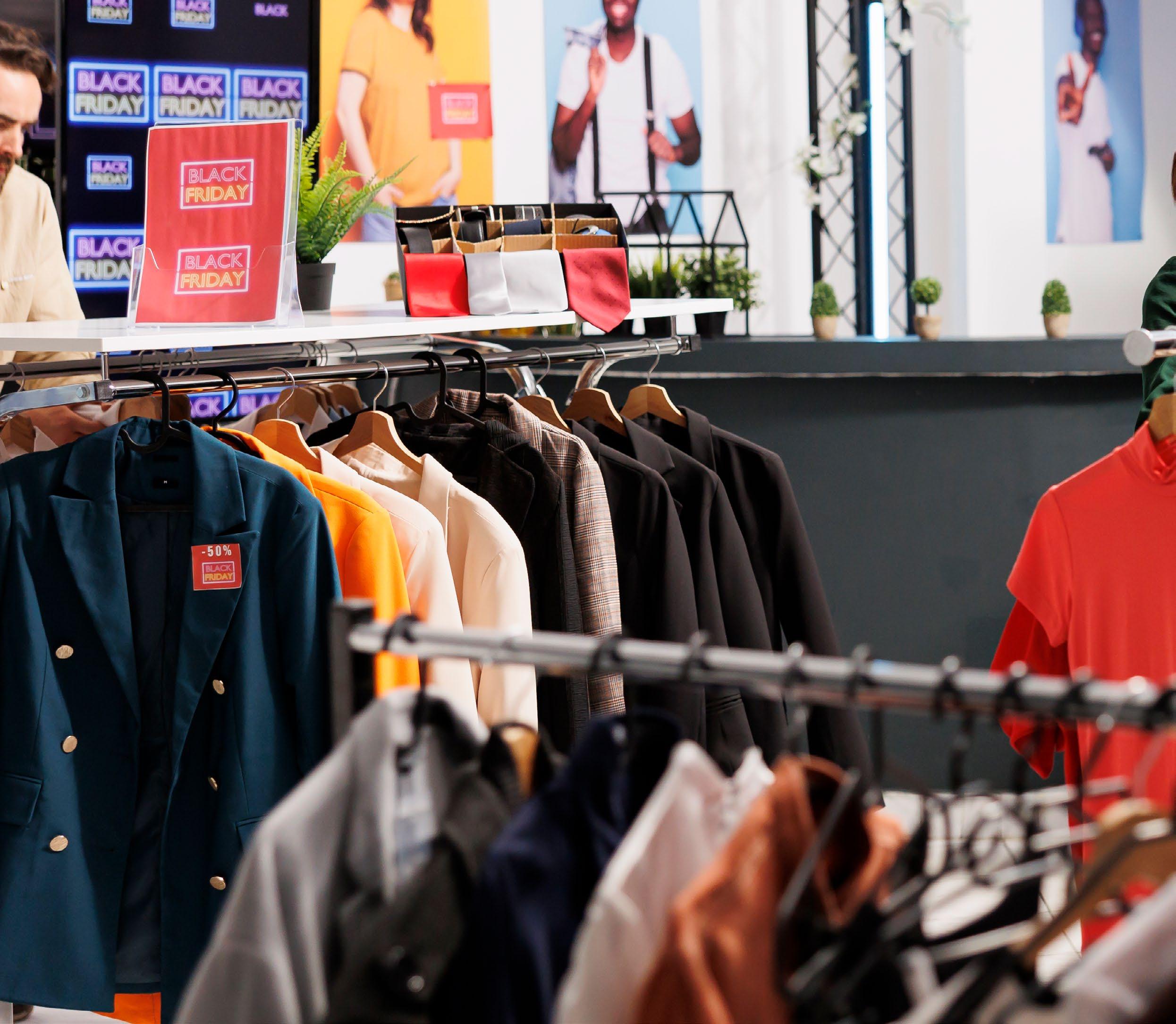
Bealls is making bold moves beyond expansion and rebranding. A newly revamped loyalty program launched, designed to deepen customer engagement and strengthen relationships. While the company has long offered a loyalty club, this latest

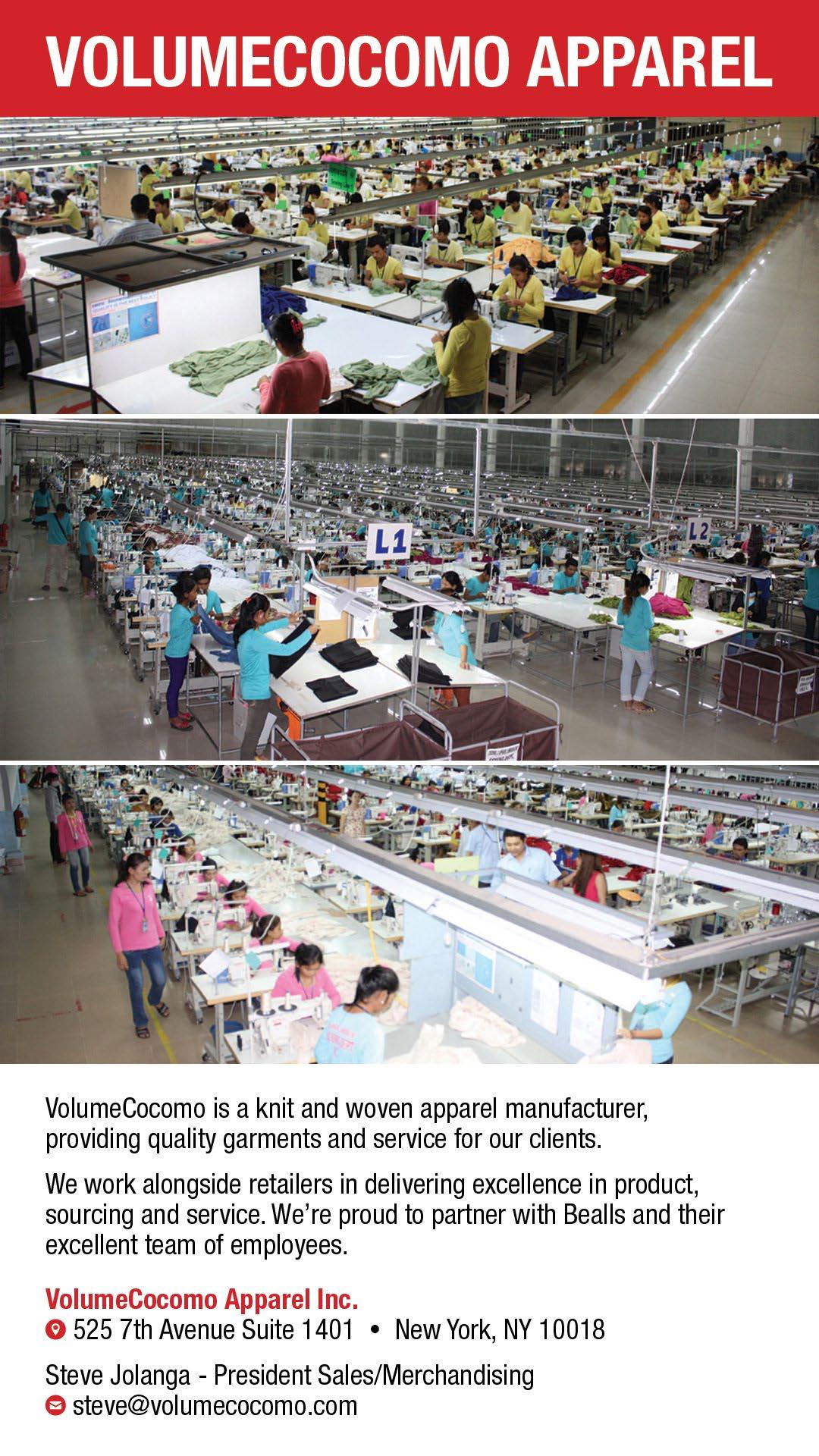
version is a dramatic shift in approach and benefits. Going back at least a couple of decades before, they offered extra discounts on specific days: 10 percent off for Bealls on Monday, and 10 percent off for Bealls Florida on Tuesday. As they grow into a national retailer, they want to offer best pricing every day of the week, so guests do not have to plan their shopping around a specific day. This ensures they can enjoy the full Bealls experience anytime, without limitations.
Rather than trying to drive traffic through loyalty promotions, Beall’s aim is to instead assure customers they can come into a bealls store and find excellent value and an excellent selection of merchandise every day. Nearly, 9 in 10 Bealls customers are part of its loyalty program—a hefty investment that pays off by keeping shoppers coming back. Now, rewards last a full 12 months instead of just 60 days, giving customers more time to enjoy the benefits at both Bealls and Bealls Florida.
NEARLY 9 IN 10 BEALLS CUSTOMERS ARE PART OF ITS LOYALTY PROGRAM - A HEFTY INVESTMENT THAT PAYS OFF BY KEEPING SHOPPERS COMING BACK

Having weathered the pandemic more successfully than many, and moving straight into two strong years, Beall clearly knows how to confront a crisis head-on. Yet while the experience assessed his mettle, it also reshaped his approach to leadership.
“Today, it’s about being authentic,” he explains. “We have seven core values at our company, and authenticity is one of them.” He goes on to list the others: acceptance, accountability, compassion, empowerment, openness,
and transparency.
Beall not only strives for authenticity in his own work but also fosters it across the Bealls team. He admits, however, that this is not always easy, noting that discovering “your true self” can take a lifetime.
On another core value, acceptance, Beall emphasizes that a good leader must avoid resistance.
“You want people to acknowledge the reality of a situation and then channel their energy into finding solutions, rather than wasting it on resistance or nega-
tivity,” he explains. This unconventional perspective on leadership extends to Bealls’ approach to accountability. Moving beyond the traditional ideas of punctuality and reliability, he describes accountability more as a “mental state” than a checklist of behaviours.
A fully engaged leadership team is vital, but Beall points to one tool as truly decisive: capital. “This is a financial business—numbers matter. Preserving cash lets you navigate tough times,” he explains. That strategy kept Bealls afloat during

pandemic shutdowns, while competitors like Stage Stores folded under pressure. “We weren’t leveraged at all. Having cash on hand allowed us to pay employees, cover bills, and keep products moving. Being financially prepared dramatically increases your chances of survival,” Beall says.
Bealls hasn’t always had the luxury of stability. During the Great Depression, founder Robert M. Beall hit rock bottom, losing the company to the bank.
“He spent the next 10 years claw-
ing the company back from the local bank he had borrowed from,” Beall recalls. And he did—proving that grit and determination can outlast even the harshest trials.
“That struggle instilled a lifelong lesson in fiscal responsibility: avoid debt, save wisely, and be prepared for tough times. It’s a principle that continues to shape our company today.”
It’s a legacy that inspires every member of the Bealls team, family or not, and with a new chapter unfolding now, the story promises to be as bold and eventful as any before.
PICA GROUP

PICA GROUP

PICA GROUP: TRANSFORMING STRATA MANAGEMENT WITH INNOVATION AND EXPERTISE
Project by: Malvern Kandemwa
Words by: Michelle Duncan
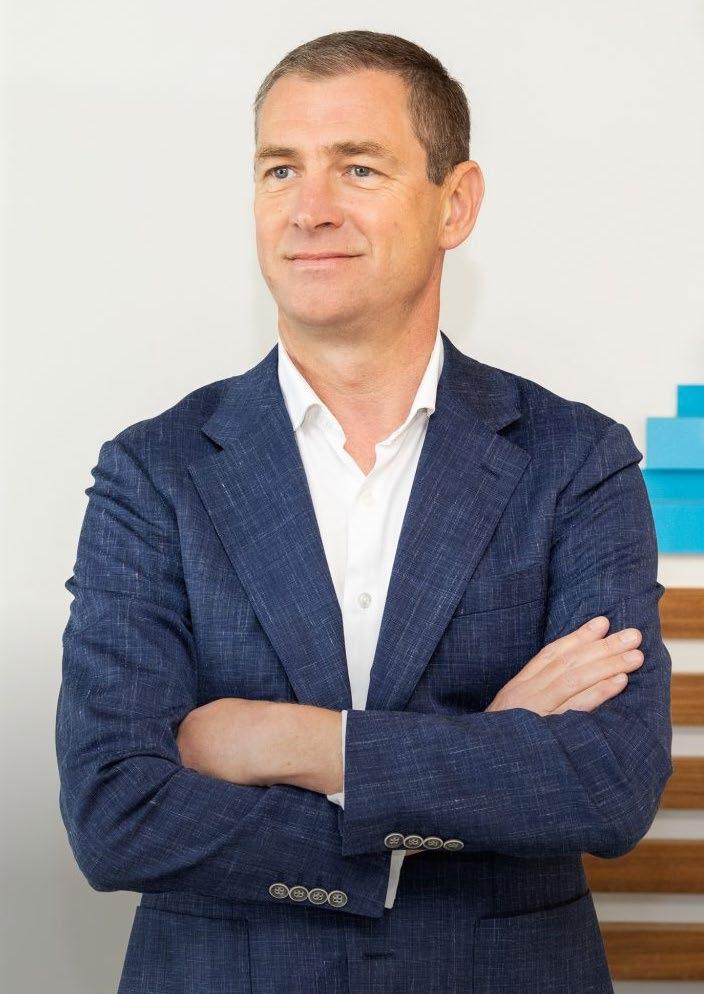
Just when Bobby Lehane thought he was stepping away, fate and PICA Group brought him back into the world of strata management. Now, as CEO, Lehane and his team are putting passion and dedication at the heart of the industry. During his time away, Lehane allowed himself to be guided by purpose, immersing in charity work. Yet a persistent sense of something missing lingered.
“I enjoyed the freedom at first, and some of the not-for-profit work I did was deeply fulfilling, but it wasn’t enough,” he admits.
“After about 18 months, I realized I was missing what I truly do— leading and transforming organizations, shaping and building, tackling intellectual and emotional challenges. Most of all, I missed the human connection.”
Fate, with its ever-sharp sense of irony, intervened at the funeral of a former CEO of PICA Group, Australia’s leading property services provider.
“He was a wonderful man, and at his funeral I was surrounded by so many people from the strata community,” Lehane recalls. “Strangely, it felt like I’d found my people.”
Soon after, by sheer coincidence, the role of PICA Group CEO became available—and Lehane felt compelled to apply.
“It was a rigorous selection process, but fortunately, I was successful.”
After taking the reins at PICA Group in January 2023, Lehane drew on his experience with the organization to assess both the opportunities and challenges ahead.
“With over 30 branches, it’s the largest strata management company in Australia by a significant margin,” he says. “It’s twice the size of the next competitor.”
That scale brought with it a large team, multiple strong brands, an extensive customer base—and a fair share of internal bureaucracy.
“There were expenses in the business that were simply not sustainable,” he admits. “If the
only way to solve problems is by throwing people at them, you’ve got an even bigger problem.”
Aware of the expectations on him, Lehane wasted no time in acting.
“We conducted a diagnostic of the situation, which clearly highlighted the strengths, weaknesses, opportunities, and threats,” he says. “From there, we began developing a strategy to address them. While PICA Group is a much larger business than CHU, the challenges were remarkably similar.”
The strategy came together quickly, setting the course for PICA Group over the past 12 months.
“The strategy itself is simple. We decided to tackle complexity and expenses through simplification. We’d provide the best tools and support for our people and customers, and streamline processes through automation,” he explains.
Once the PICA Group house was in order, with all key metrics moving in the right direction, Lehane and his team turned their focus to growing the business further.
“That part has really only started to come to fruition in the last few months,” he says. “Many early decisions and actions take time to show their impact.”
While some changes at PICA Group may deliver immediate results, Lehane emphasizes that many will unfold over the coming years. Automation and AI are central to growth, but always with the goal of easing the workload for the company’s people.
“We’re not turning into robot hotels,” he insists. “There are mundane tasks that need doing, and automation frees our strata managers to focus on building relationships.”
He acknowledges the journey ahead. “There’s no such thing as instant gratification; it doesn’t all happen in one year,” he notes.










With the strategy well underway, Lehane says PICA Group stays focused on its ambition to excel for its people, customers, communities, and owners.
The company has collaborated closely with partners and industry peers to deliver the best outcomes for clients. These include strata insurance broker Body Corporate Brokers, CHU Underwriting Agencies, Whitbread Insurance Brokers, commercial law firm Chambers Russell Lawyers, and repairs and maintenance specialist The Scotia Group.
“Given the scale of the business, we can’t do everything ourselves. We rely heavily on our partners,
and they’ve been a crucial part of the solution,” he notes.
“We foster and value these relationships, built on honesty and transparency. If you’re hiding things from your partners, it’s probably not an ideal relationship. It’s a work in progress, but they stay a key part of our success.”
Taken together, PICA Group represents more than seven decades of accumulated strata management expertise.
“We have more strata management professionals and experience than any other company in the country, and over 75 years, we’ve

built up our capability, resources, and knowledge,” Lehane says.
“We manage everything from the smallest duplex to the largest high-rise. That scale is phenomenal, but it also enables us to negotiate exceptional outcomes for our customers with our partners and others.”
PICA Group has also put systems in place to ensure continuous service.
“If staff are on holiday, we’re still there for our customers because we have such depth of talent that we can step in when needed. That makes a real difference.”


Established in 1948, PICA Group runs branches across Australia. Each branch not only supports its local community but also benefits from the backing of PICA Group’s ownership through a range of support services.
“One owner is a Japanese property management company, and the other is an Irish fintech,” Lehane explains. “This allows us to adopt innovations from both shareholders.”
Over the past year, PICA Group has made significant strides in its use of AI, while its ESG initiatives are also guided by its parent companies.
“It’s a huge advantage to leverage a far deeper pool of resources than we could as a purely standalone Australian company.”
The breadth of resources and expertise at PICA Group makes it a formidable presence in the strata management industry.
“We work very closely with the Strata Community Association on many of the sector’s challenges,” Lehane says.
“We’ve dedicated significant resources to the SCA, and I believe we’re the single largest source of funding through our memberships.”
Much of that support, Lehane notes, is aimed at helping smaller competitors who may lack resources, underscoring PICA Group’s commitment to the industry beyond short-term gain.
“Given our size and relationships, we often take the initiative ourselves. We work directly with the industry, including insurance providers, to advocate on behalf of both our clients and the sector as a whole,” he adds.
Lehane’s authenticity forms a cornerstone of his leadership style, honed over the course of his career. “Every role I’ve undertaken,
every experience, has prepared me for what I do today,” he says.
“I think my tech background has been instrumental in shaping PICA Group’s future direction. It’s a huge advantage that isn’t quite common in the industry.”
He stresses that experience cannot be taught. “If I walk into a meeting and I’m the smartest person in the room, something’s wrong. What I bring is the benefit of insights developed through years of experience and situational learning.”
IT’S A HUGE ADVANTAGE TO LEVERAGE A FAR DEEPER POOL OF RESOURCES THAN WE COULD AS A PURELY STAND-ALONE AUSTRALIAN COMPANY.

Confronted with what he saw as existential threats and a pressing sense of urgency upon joining PICA Group, Lehane spent his first six months tackling challenges head-on. Once the immediate pressures eased, he shifted his approach.
“That’s when we began building trust among our people, and confidence in the future started to grow,” he recalls.
“I transitioned to a more inclusive and collaborative style, creating an environment where people can reach their full potential. That’s where I feel most comfortable.”
This approach included dedicating time for company-wide oneon-one meetings. “I’ve visited every branch and spoken with everyone. I make time for those conversations,” he says.
“We cover operational matters, but also personal issues, career development, and strategies for specific challenges. I enjoy mentoring and supporting the team to achieve their goals.”


SINGAPORE AERO ENGINE SERVICES
SINGAPORE ENGINE SERVICES


RESILIENCE, PRECISION AND PARTNERSHIP
INSIDE SAESL’S ROLE AS A GLOBAL AVIATION POWERHOUSE
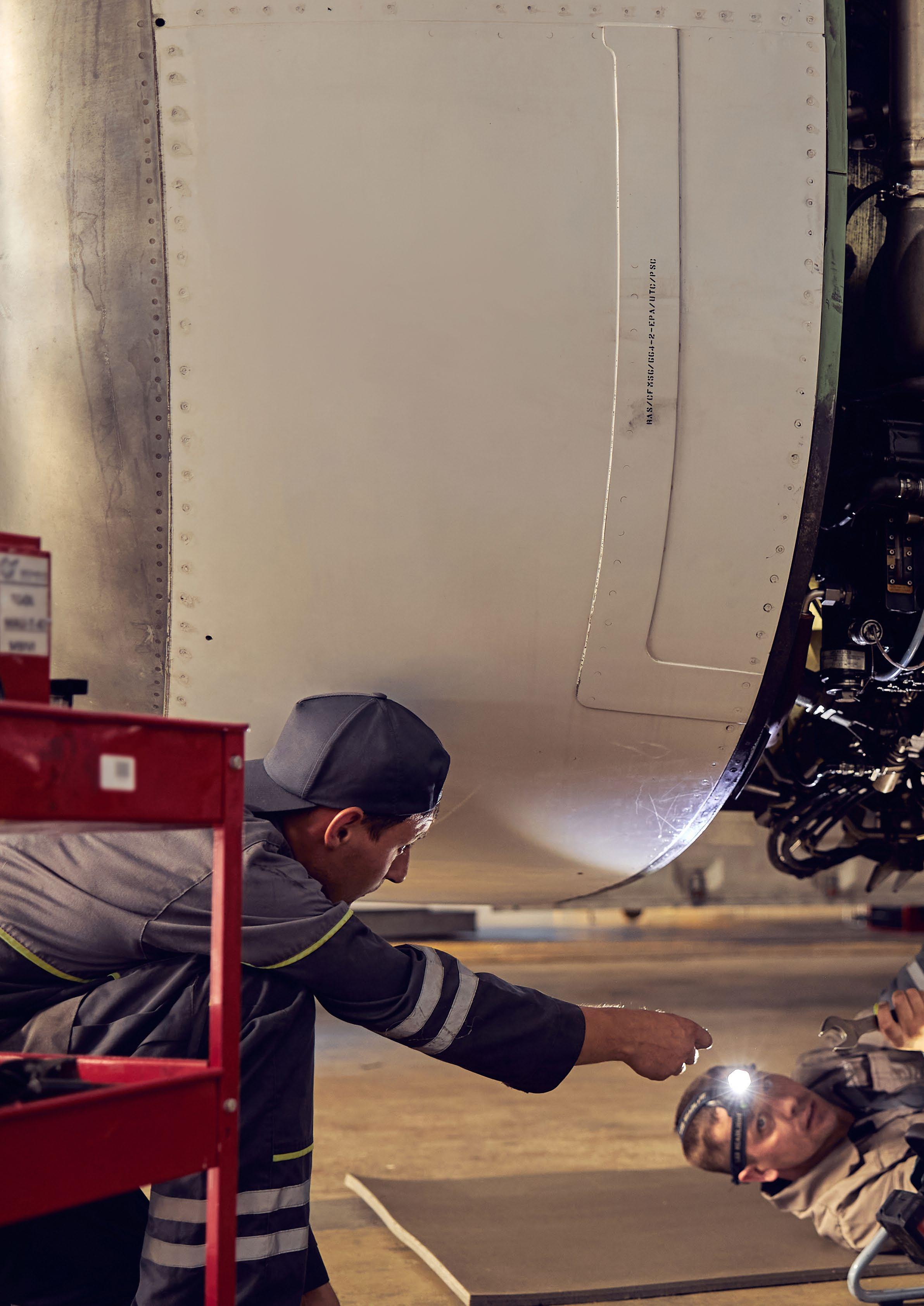
Singapore Aero Engine Services Limited (SAESL) is a joint venture between Rolls-Royce and SIA Engineering Company, specializing in the maintenance, repair, and overhaul (MRO) of Rolls-Royce Trent engines. SAESL began operations in 2001 and has grown their capability to support the full series of Trent family engines globally within a few years. SAESL is now an integral part of the Rolls-Royce aftermarket services. Its excellent state-of-the-
Project by: Malvern Kandemwa
Words by: Michelle Duncan
art facility is designed to turn around 320 engines annually. In addition, the new engine test facility can conduct full engine tests on all Trent engines.
Rolls-Royce has appointed SAESL as the first Trent 900 Centre of Excellence (CoE). SAESL also has the capability to repair and overhaul the Trent 1000 engine. For the uninitiated, the Rolls-Royce Trent is a family of high-bypass turbofans that service the Airbus
A330, A340, A350 and A380, and the Boeing 777 and 787 Dreamliner. In addition, SAESL has been selected to be the lead MRO facility for the Trent XWB engine. They are a Rolls-Royce certified Gold Centre of Excellence for the repair of Rolls-Royce aero engine components, specializing in the repair and overhaul of Rolls-Royce Trent & RB211 Nozzle Guide Vanes and Compressor Stators using state-of-the-art technology.
Its current CEO is Chris Pattinson, who took over leadership in 2025 after a lengthy career at RollsRoyce. He spent over 17 years at Rolls-Royce, holding various senior leadership positions. He was the Senior Vice President - Large Engine Manufacturing Operations, Civil Aerospace, where he led a multi-year transformation of engine assembly and test activities. With his engineering background and factory/assembly experience at Rolls-Royce, Pattinson brings a strong focus on optimising manufacturing, assembly and test operations—areas critical for SAESL’s MRO business. His move to SAESL signals a strategic push for deeper operational excellence, global
engine-MRO growth, and closer alignment with the Asia-Pacific aerospace market.
Since inception, SAESL has seen significant growth and continued expansion to their facilities and capabilities. The partnership between Rolls-Royce and Singapore Airlines marked a significant turning point for both companies and for Singapore’s aerospace landscape. When Rolls-Royce secured a landmark deal to supply Trent 800 engines for Singapore Airlines’ Boeing 777 fleet, the agreement also included a commitment to set up local maintenance, repair and overhaul (MRO) capabilities.

Initially, this collaboration was focused almost entirely on supporting Singapore Airlines’ operations. However, over time, the partnership evolved and expanded far beyond its original scope—transforming into the world’s largest Rolls-Royce engine overhaul facility.
SINCE INCEPTION,
SAESL HAS SEEN SIGNIFICANT GROWTH AND CONTINUED EXPANSION TO THEIR FACILITIES AND CAPABILITIES.


Schenck RoTec Singapore




Today, Singapore Aero Engine Services Limited (SAESL) stands as a Trent Centre of Excellence and the world’s largest Trent engine MRO provider, serving airlines across six continents. The facility has the capability to service and overhaul every member of the Trent engine family, including the Trent 700, 800, 900, 1000, XWB and 7000.
SAESL has played a critical role in supporting Rolls-Royce’s global fleet, most notably during the Trent 1000 crisis in 2016, when cracks were discovered in intermediate-pressure turbine blades powering Boeing 787 Dreamliners. At the time, as many as 44 aircraft were grounded while inspections and repairs were conducted worldwide.
To mitigate disruption and restore customer confidence, RollsRoyce ramped up capacity across its MRO network—investing heavily in new tooling, advanced equipment, and added skilled personnel. SAESL was instrumental in these recovery efforts, working around the clock to return engines to service. Thanks to that global effort, the fleet recovery was successfully completed by mid-2020, reaffirming SAESL’s reputation as a trusted cornerstone of Rolls-Royce’s global service network.
It is no surprise that Singapore Aero Engine Services Limited (SAESL) was not immune to the turbulence caused by the COVID-19 pandemic. With hundreds of aircraft grounded across the globe from early 2020, the company experienced a sharp
decline in engine overhauls and maintenance activity.
However, as an essential service provider appointed by the Singapore government, SAESL was able to maintain operations under strict health and safety measures. The company quickly adapted its workplace protocols to protect employees while keeping essential repair lines running—particularly to clear the significant backlog of Trent 1000 engines awaiting overhaul.
Under normal conditions, a Trent engine typically completes 4,000–5,000 flight cycles, or five years of service, before requiring maintenance. During the pandemic, many of these engines were grounded short of their flight limits, but as global travel has rebounded, demand for overhaul services has returned rapidly.
Today, SAESL supports 38 airlines across the Asia–Pacific region, while also serving carriers in South America and Europe. As the largest contributor to RollsRoyce’s global MRO network, SAESL plays a pivotal role in the manufacturer’s “large engine” segment. Rolls-Royce runs several other major facilities—such as its shop in Germany focused on European operations—but SAESL stays the heart of the company’s Asia–Pacific servicing capability.
With the capacity to repair and overhaul around 300 engines annually, each needing up to 9,000 man-hours and as many as 700 skilled employees, SAESL’s operations are vast and complex. Airlines typically manage fleet con-



tinuity during overhauls by using spare or leased engines from Rolls-Royce, ensuring minimal disruption to flight schedules.
A standout feature of the SAESL campus is its ultramodern test bed, a US$60 million facility integral to the company’s operations. Once an engine overhaul is complete, it’s wheeled just 30 meters to the test facility for performance verification. The test bed itself is a feat of engineering—approximately 70 meters
long, 25 meters wide, and 20 meters high, built with 1.5 meters of reinforced concrete and multiple sound-dampening layers to prevent noise pollution. Despite the enormous power generated during tests, the surrounding area stays remarkably quiet.
Singapore’s role as a global aviation and MRO hub further strengthens SAESL’s position. The city-state is home to over 130 aerospace organizations employing more than 21,000
people, with 85% of these companies involved in aircraft maintenance and repair. This dense ecosystem of expertise underpins SAESL’s operations and fuels its ongoing success.
Recognizing that long-term, local partnerships are crucial to sustaining its high standards of engineering excellence, SAESL has built strong relationships with key partners, including Professional Engineering, CK Shipping, Jebsen & Jessen, Transtherm, Ichisa

Engineering, and Dedienne Aerospace Singapore. These partnerships are deeply integrated into SAESL’s processes—companies like Professional Engineering and Dedienne, for instance, provide critical support in tooling, fixturing, and other precision stages of engine maintenance.
Through its resilience, technical mastery, and collaborative ecosystem, SAESL has not only weathered the storms of the pandemic but emerged even
stronger, reaffirming its reputation as one of the world’s premier centers of excellence in aero engine services.
TURNER INDUSTRIES
TURNER INDUSTRIES



LEADING WITH VISION STEPHEN TOUPS’ STRATEGIC APPROACH AT TURNER INDUSTRIES
Project by: Malvern Kandemwa
Words by: Michelle Duncan
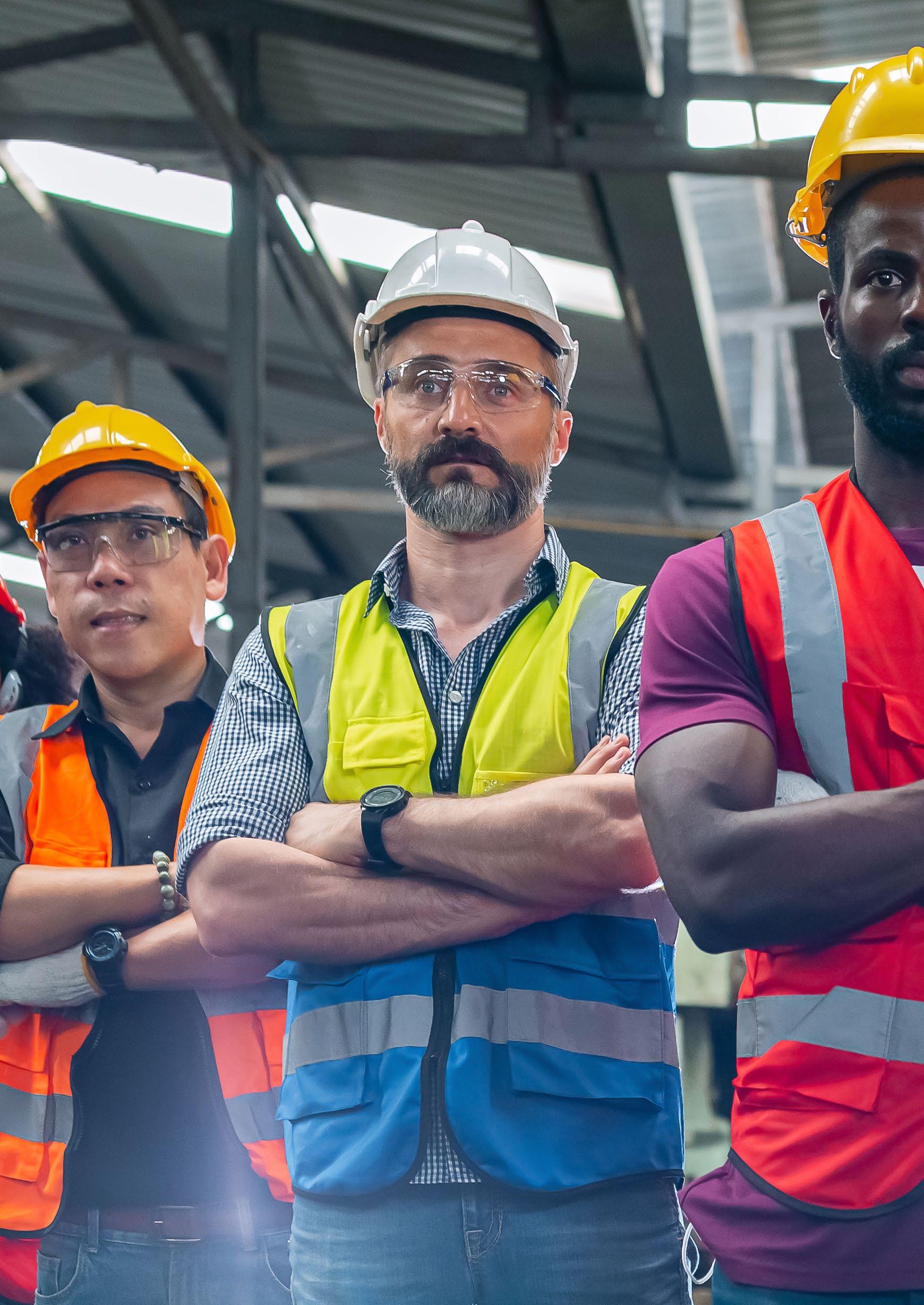
Turner Industries is a prominent provider of industrial construction, maintenance, and environmental services primarily serving the energy, chemical, refinery, and manufacturing sectors. Known for its comprehensive capabilities and strong safety culture, Turner Industries has established itself as a trusted partner for complex industrial projects across the United States. Founded in 1965 and headquartered in Baton Rouge, Louisiana, Turner Industries has grown significantly over the decades, expanding its operations through a combination of organic growth and strategic acquisitions. The company serves a diverse
range of clients, including major oil and gas companies, refineries, petrochemical plants, and manufacturing facilities.
A significant part of Turner’s business is providing planned and unplanned maintenance services, including turnaround support for refineries and chemical plants. Turnarounds involve comprehensive shutdowns for inspections, repairs, and upgrades, requiring meticulous planning, safety adherence, and coordination to minimize downtime and ensure operational safety. Turner provides specialized mechanical services such as pipe fabrication and installation, equipment erection, pressure vessel work, and piping systems. Their skilled workforce is equipped to manage complex mechanical tasks critical to plant operation and in-
tegrity. The company offers electrical systems installation, wiring, instrumentation, and control systems integration. These technical services are essential for automation, safety systems, and operational efficiency.
Turner Industries builds and maintains some of America’s largest and most complex industrial projects. But CEO Stephen Toups says it’s the people and a culture prioritizing safety, integrity and family that form the foundation of the company. Stephen Toups has delivered hands-on leadership since taking on the role of President at Turner Industries in 2019 and later stepping into the CEO position in 2021. He emphasizes empowering his employees by removing obstacles in their way and fostering team collaboration, preferring to guide rather than dictate.

“I don’t like to frame it as people working for me,” Toups says. “I work alongside these men and women. We all share the privilege of working together.”
A 27-year veteran of Turner Industries, Toups highlights the company’s workforce as its greatest asset, a distinguishing factor in the competitive construction sector.
“It’s the people who make Turner Industries,” he explains. “Every day, they’re out building plants, maintaining facilities, inspecting pipelines, fabricating pipes and modules. I am continually in awe of what our people accomplish and create each day.”
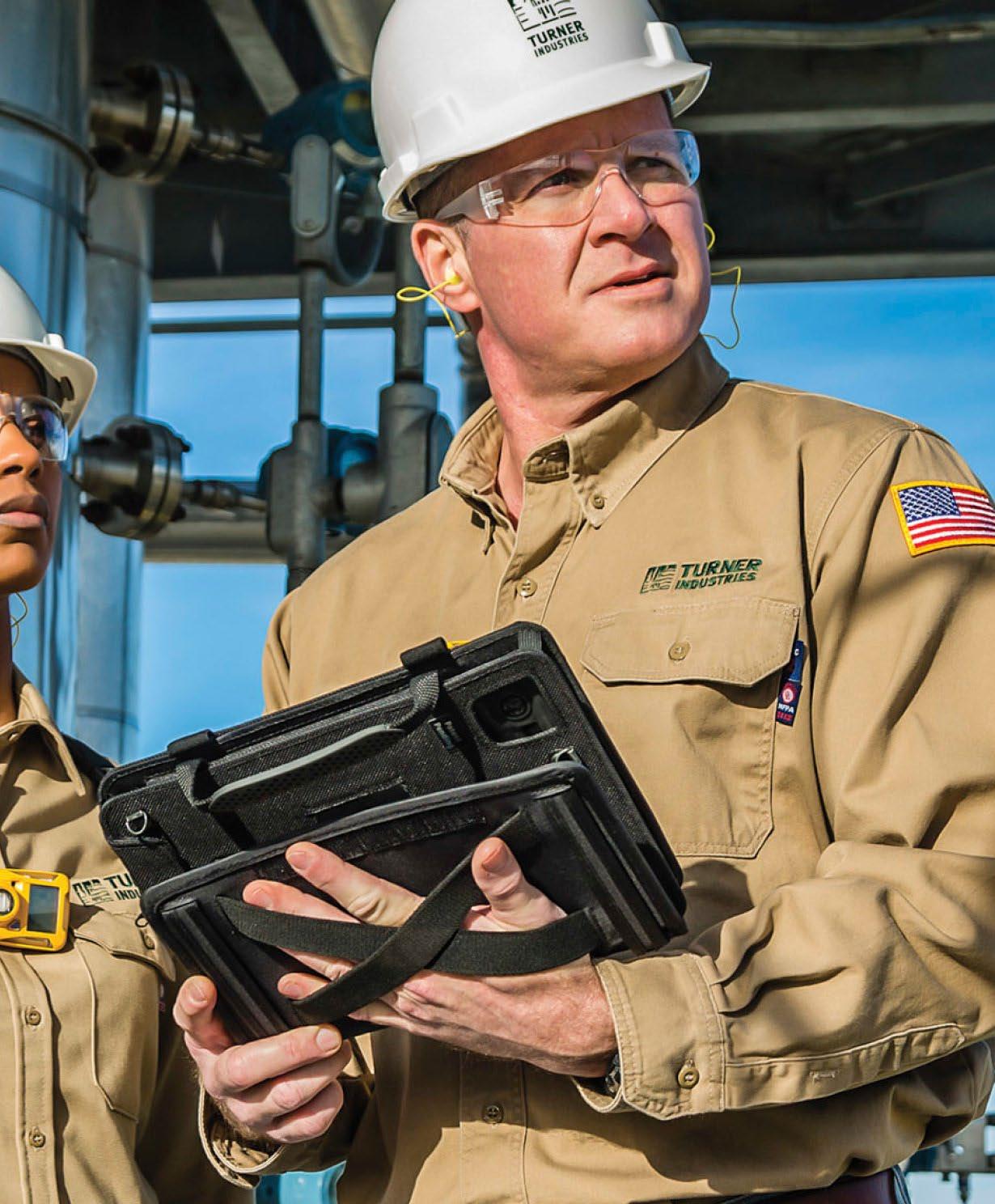
Toups actively works to empower employees every day. At Turner Industries, safety is a core value, reinforced through daily safety meetings and giving every employee the authority to halt work if conditions become unsafe.
The company also prioritizes family, with Toups describing Turner Industries as “one big family.”
“If you ask Turner employees, they also know our priorities: God, family, and Turner,” he says. “Everybody knows that. I guess that’s a benefit of being a privately held company.”
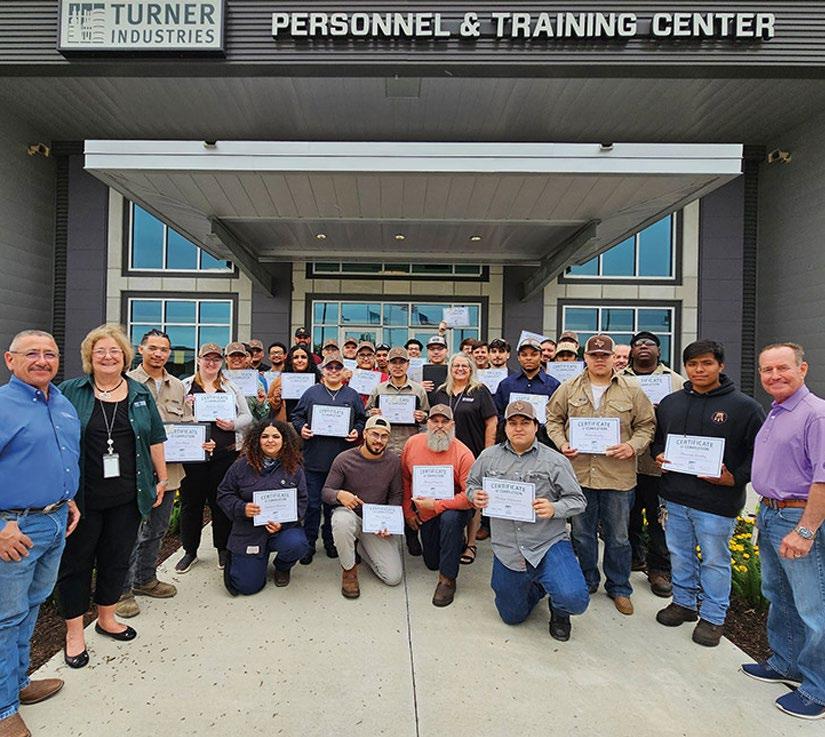
The company’s culture strongly supports employee retention. Toups notes that craft professionals on Turner Industries worksites average 11 years with the company an exceptional figure in the construction sector while managers average more than 20 years.
“We want our employees to be safe. We want them to enjoy what they do. We want them to go home just like they got to work,” he says, encapsulating the company’s approach to workplace cul-


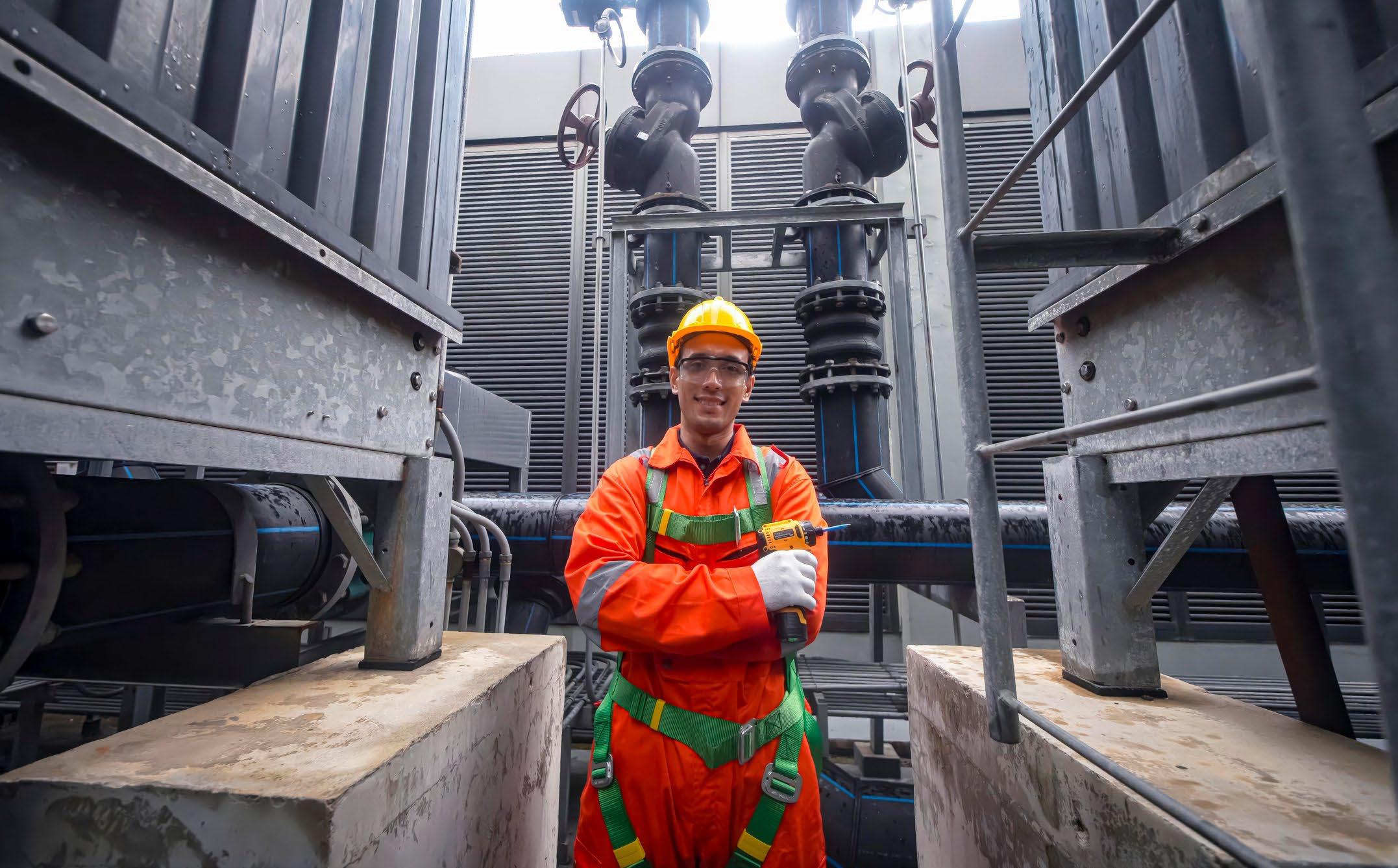
ture. Turner Industries is widely recognized for executing heavy construction projects across the industrial, energy, and natural resource sectors, as well as providing maintenance, turnarounds, pipe and module fabrication, and specialized transportation services.
“We provide the support required for our customers to produce the fuel, energy, and materials necessary for life as we all know it today,” Toups explains.
This customer support is constantly evolving. Since Toups assumed leadership at Turner Industries, the company has continued helping clients meet the world’s growing energy demands while simultaneously striving to minimize environmental impact.
Even as the energy transition accelerates, Toups sees opportunities and has positioned Turner Industries to continue providing construction, maintenance, and specialty services to clients pursuing their climate goals.
“We build and maintain large industrial manufacturing facilities. When those facilities pivot to biodiesel, sustainable aviation fuel, wind, solar, or other technologies, we will be there with them,” he says. “Our role is to support our clients as they navigate whatever energy transition they pursue.”
While enthusiastic about the opportunities in clean energy, Toups stays optimistic about traditional energy sources, noting that Turner Industries is involved in processing one out of every
five barrels of oil in the United States.
“What we need to do is continue supporting the industry’s efforts toward more sustainable processes. I think the industry is heading in that direction,” he adds.
WE BUILD AND MAINTAIN LARGE INDUSTRIAL MANUFACTURING FACILITIES. WHEN THOSE FACILITIES PIVOT TO BIODIESEL, SUSTAINABLE AVIATION FUEL, WIND, SOLAR, OR OTHER TECHNOLOGIES, WE WILL BE THERE WITH THEM
Like any major construction company, Turner Industries relies heavily on its suppliers and subcontractors. One of its trusted partners is MSA –The Safety Company, a global leader in safety equipment for industrial workers.
Turner collaborates closely with its vendors to ensure their long-term viability, a challenge in the construction sector. “We want competitive pricing, and we want amazing service,” Toups explains. “That means we’ve got to give them the opportunity to make a profit.”
Toups is also a strong advocate for open communication both with employees and vendors. During the COVID-19 pandemic, when supply chains were severely disrupted, clients could rely on Turner Industries’ staff to listen and respond to their challenges.
“We listened to the clients and collaborated closely with our vendors,” Toups recalls.
He says this approach reflects his southern Louisiana upbringing, where problems are often solved over a shared meal.
“I believe any conflict can be resolved when you can sit down across from somebody, break bread, and talk through the problem,” he adds.

LICORES GUATEMALA

LICORES DE GUATEMALA

DISTILLING EXCELLENCE THE GLOBAL LEGACY OF LICORES DE GUATEMALA
Project
by:
Malvern Kandemwa
Words
by:
Michelle Duncan
Licores de Guatemala has long elevated the name of its homeland on the global stage through the export of premium spirits renowned for their exceptional quality and artisanry. Each of its brands reflects decades of expertise, becoming an enduring symbol of Guatemalan tradition and excellence. At home, its celebrated rums and aguardientes have become synonymous with special occasions, representing over 80 years of mastery that now reaches connoisseurs in more than 25 countries.
In 2013, the company achieved a major milestone when “Ron de Guatemala” was granted a Designation of Origin, a recognition
that honours not only the fertile land where the sugarcane is grown but also the superior materials and meticulous aging processes that define its products.
Further cementing its reputation, Industria Licorera Quezalteca, part of the Licores de Guatemala family, earned the Exporter of the Year award in 2020, a testament to the company’s commitment to quality, sustainability and competitiveness.
“Licores de Guatemala is currently at a pivotal stage after five consecutive years of growth and profitability across all its production units,” says Luis Ibáñez Guillén, General Manager of Licores de Guatemala.
Luis Ibáñez Guillén brings a wealth of international experience and academic excellence to his leadership at Licores de Gua-
temala. An industrial engineer and public accountant by training, Ibáñez completed his studies in Peru, where he also earned an MBA from ESAN University Business School (Escuela de Administración de Negocios para Graduados). Currently pursuing a Doctorate at the University of Seville in Spain, he continues to strengthen his expertise in global business management and innovation.
Beyond his formal education, Ibáñez has enriched his strategic and leadership acumen through specialized programs at the Marketing Society in London and INCAE Business School in Costa Rica, two institutions known for cultivating top-tier executives in Latin America and beyond.
Over a 25-year career in the alcoholic beverage industry, Ibáñez has held leadership roles across

Argentina, Ecuador, Panama, Peru and Guatemala, building a deep understanding of regional markets, trade strategies and brand development. His core expertise lies in business strategy and innovation, particularly in driving transformation and growth within established companies.
Under his direction, Licores de Guatemala continues to balance its proud heritage with forward-looking initiatives—expanding its global reach, enhancing sustainability practices and reinforcing Guatemala’s reputation as a producer of world-class spirits.
AN INTEGRATED OPERATION BUILT FOR EXCELLENCE
Licores de Guatemala operates with the strength of a fully integrated value chain, ensuring control and quality at every stage of production. From sugar cane plantations to bottling and global distribution, the company’s end-to-end structure enables unmatched consistency and artisanry in every product it delivers.
Its operations begin with the cultivation of sugar cane, followed by processing at its own sugar mill, before moving to ultramodern distilleries and aging centres, where time and tradition combine to create exceptional rums and spirits. The company also manages packaging
factories, a dedicated domestic distribution network, and first-tier international partners, ensuring that Licores de Guatemala’s brands reach consumers across the world.
Complementing its production and export activities is a division specializing in imported premium liquors, allowing the company to offer a diverse portfolio of world-class beverages.
To strengthen its connection with local consumers, Licores de Guatemala operates Casa del Ron, its exclusive retail chain, with multiple locations across the country. Through this seamless integration of production, distribution, and retail, the company ensures that quality, heritage and innovation remain at the heart of every bottle.



High-Performance Gases for Critical Industries
For over a century, we have delivered high-purity medical and industrial gases that protect lives and support essential industries across the region.
Since 1925, we have been the oxygen of Central America and the Caribbean.


A RICH PORTFOLIO
OF ICONIC AND VERSATILE BRANDS
Licores de Guatemala boasts a diverse portfolio of premium beverages, spanning rums, aguardientes, gin, RTDs, hard seltzers, and imported brands. Each brand is carefully crafted with its own personality, appealing to distinct market niches while keeping the company’s signature quality and heritage.
RUMS
Ron XL: Distilled four times and aged in oak casks for at least one year, this rum is perfect for cocktails and popular among young adults. Available in pineapple/coconut, lemon/cucumber, berries, and apple flavours.
Ron Venado: Offered in multiple alcohol strengths, this rum is celebrated for its versatility and mixability.
AGUARDIENTES
Aguardiente Venado: A traditional favourite in central Guatemala, aged for a year and known for its intense flavour profile. A cinna-
mon-flavoured version has recently been introduced.
Quezalteca: The company’s flagship brand, deeply rooted in Guatemalan culture. With various flavours tailored to Central American tastes, it transcends social classes and age groups, offering a democratic consumption experience.
AGED RUMS
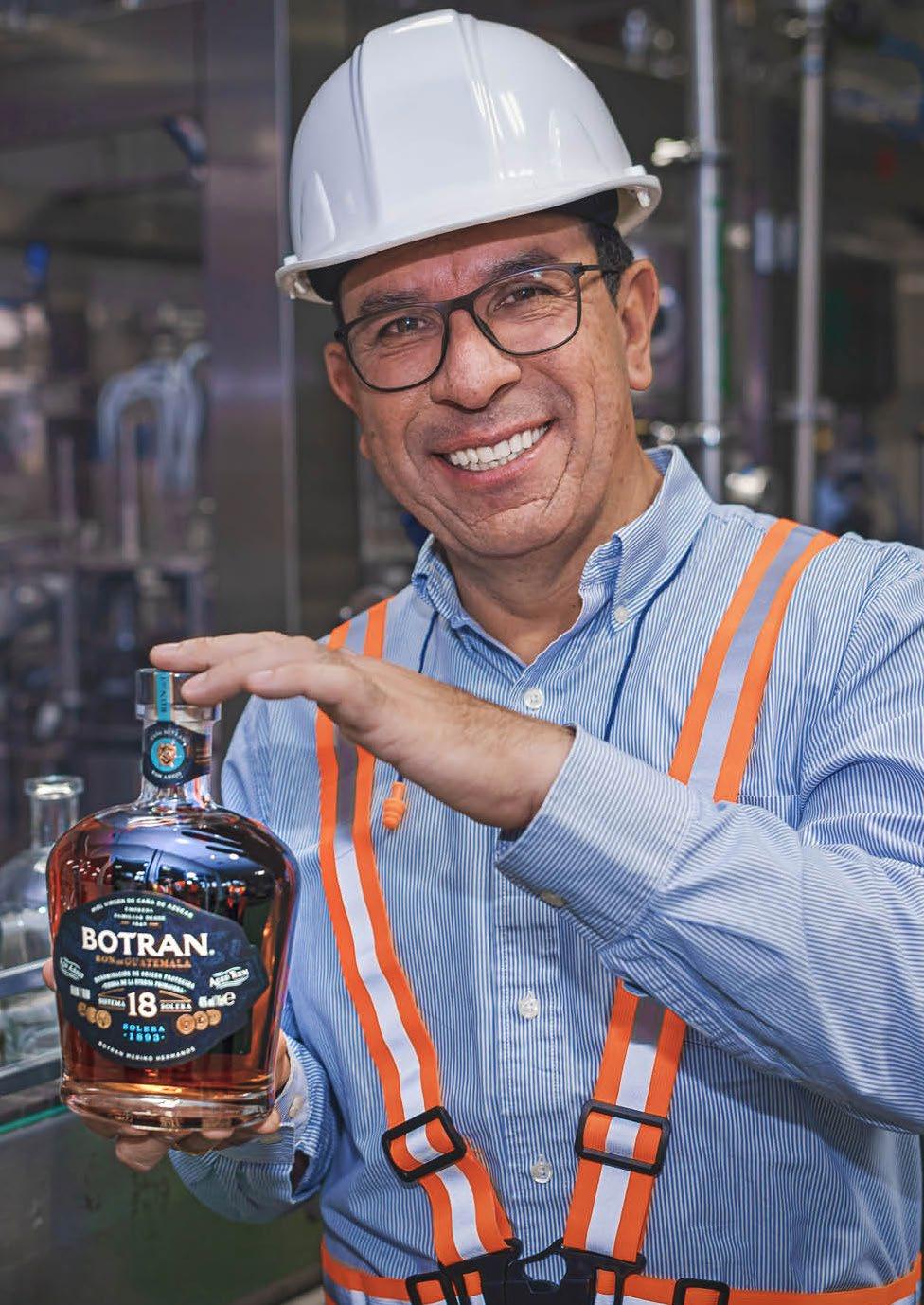
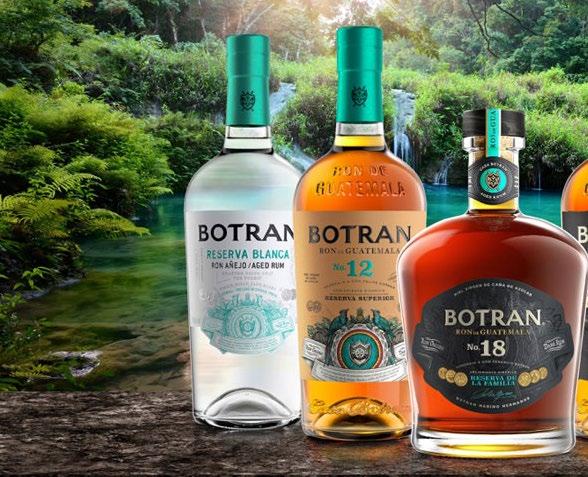
Ron Botrán: Crafted from raw honey obtained during the first pressing of sugar cane from the Retalhuleu region, this rum is recognized globally for its rich production process.
Ron Colonial: Produced in Antigua, one of the earliest cities founded in the Americas, this rum is created through the maceration of plums, raisins, and vanilla.
Ron Zacapa Centenario: Often regarded as the world’s best rum, Zacapa is distinguished by its high-altitude aging, unique soil and climate conditions, and exceptional distillation methods.
GIN
Xibal: Crafted with Mesoamerican herbs native to Central America, Xibal blends traditional gin flavours with regional botanical notes for a distinct taste experience.
RTDS AND HARD SELTZERS
Licores de Guatemala has embraced modern beverage trends with low-alcohol, low-calorie options such as Cubata, VIP, OBIT, Mangiatto, Xibal, and Kick, catering to various occasions and consumer preferences with a variety of flavours.
The company also stands for international premium brands, including Viña San Pedro, Casa Orendain, Tito’s, Pernod Ricard, E & J Gallo Winery, PradoRey, and Segura Viudas, using its commercial and brand development ability to promote these labels in the region.
With this extensive and well-positioned portfolio, Licores de Guatemala continues to balance tradition with innovation, ensuring its presence stays strong both domestically and in over 25 international markets.
INNOVATION AND BRAND EVOLUTION: LICORES DE GUATEMALA LEADING THE WAY
Licores de Guatemala has long combined heritage artisanry with a forward-thinking approach to brand creation, continuously evolving its portfolio to meet changing market demands. The company uses decades of experience in producing high-quality liquors while embracing innova-
tion to offer both domestic and international markets an average of 25 new products annually. These include new flavours, brands, packaging designs, and product formats, ensuring the company stays ahead of trends.
“We have converted the company into a lean organization to respond to the faster and faster changes in the markets,” notes Luis Ibáñez Guillén, General Manager at Licores de Guatemala.
Among its recent innovations are high-impact products such as:
• Ron Botrán Creole Apple Fusion, Botrán Vintage Wine Cask, Botrán Guatemalan Oak
Cinnamon Flavoured Venado, Zacapa Royal
• Ron XL in combinations like XL Sour Blast and XL Pineapple/Coconut
• Xibal Gin & Tonic, Xibal Equinox

• Flavoured Quezalteca varieties: Blackberry, Guatemalan Mango, Pepita Orange, Pineapple
• Ready-to-drink beverages: Mangiatto, XL Kick, and Quezalteca Chispuda
Beyond the beverage market, the company expanded into medicinal alcohol production with Alkoh during the COVID-19 pandemic, contributing to public health efforts.
To keep a complete operational ecosystem, Licores de Guatemala manages its own retail network through Casa del Ron, with locations across the country. These outlets have been modernized and reshaped to provide a unique, immersive consumer experience.
Recognizing the shift to e-commerce, accelerated by the pandemic, the company has also invested in digital sales channels, ensuring accessibility for consumers nationwide and abroad.
WE HAVE CONVERTED THE COMPANY INTO A LEAN ORGANIZATION TO RESPOND TO THE FASTER AND FASTER CHANGES IN THE MARKETS.
STRATEGIC SUPPLIER PARTNERSHIPS
Licores de Guatemala’s operations are supported by carefully segmented suppliers, aligned with each stage of production and commercialization:
Agricultural suppliers provide high-quality, environmentally friendly fertilizers and soil management solutions for best sugar cane growth.
Packaging suppliers deliver glass containers, lids, and labels designed to keep quality and aesthetic appeal.
Specialized partners contribute to key areas such as flavouring, aromas, and natural scents, ensuring the unique identity of every product.
Through continuous innovation, strategic supplier partnerships, and a strong retail and e-commerce presence, Licores de Guatemala reinforces its position as a leading global spirit producer, blending tradition with modern market responsiveness.
SUSTAINABLE OPERATIONS AT LICORES DE GUATEMALA: A COMMITMENT TO QUALITY AND RESPONSIBILITY
Licores de Guatemala has made sustainability a central pillar of its operations, integrating environmentally responsible practices across every stage of production. Strategic investments have enabled the company to reduce fossil fuel use, improve processes, and implement clean technologies, earning it the ISCC Plus (International Sustainability and Carbon Certification). This certification verifies the company’s entire production chain, from sugar cane plantations and mills to distilleries, aging and packaging centres, and visitor experience facilities.
By embedding sustainability into its operations, Licores de Guatemala ensures that Guatemalan rum meets global standards not only for quality but also for environmental stewardship and respect for human rights.
In May 2021, the company achieved the Neutral Carbon certification from SGS, fulfilling ISO Standard 14064:2006. Remarkably, this certification was earned by cutting its own carbon footprint without buying external carbon credits, relying instead on an internal mitigation inventory exceeding 1,850M to offset greenhouse gas emissions.
Licores de Guatemala also emphasizes responsible consumption through consumer-focused
initiatives such as the “Tranquilo Camilo” campaign, which promotes moderate alcohol consumption in an engaging and approachable way.
Through these measures, the company proves that sustainability and premium quality can coexist, reinforcing its reputation as a global leader in the spirits industry while caring for both the environment and society.
The primary goals for Licores de Guatemala centre on sustaining the impressive growth the company has achieved in recent years while ensuring that this progress stays durable over time.
Having successfully positioned its brands across Guatemala and Central America, the company now aims to expand into new international markets, using its formidable reputation for quality, innovation, and sustainable practices. This expansion strategy is designed to complement organic growth, allowing Licores de Guatemala to broaden its global footprint while keeping the excellence and heritage that have defined its success for decades.
By combining brand strength, operational efficiency, and market diversification, Licores de Guatemala continues to chart a path toward long-term sustainability and international recognition.


PRODUCTOS ALIMENTICIOS

PRODUCTOS ALIMENTICIOS


PRODUCTOS ALIMENTICIOS
BUILDING A SNACK EMPIRE
HOW DIANA IS REINVENTING CONSUMER
FAVOURITES ACROSS CENTRAL AMERICA
Project by: Malvern Kandemwa
Words by: Michelle Duncan
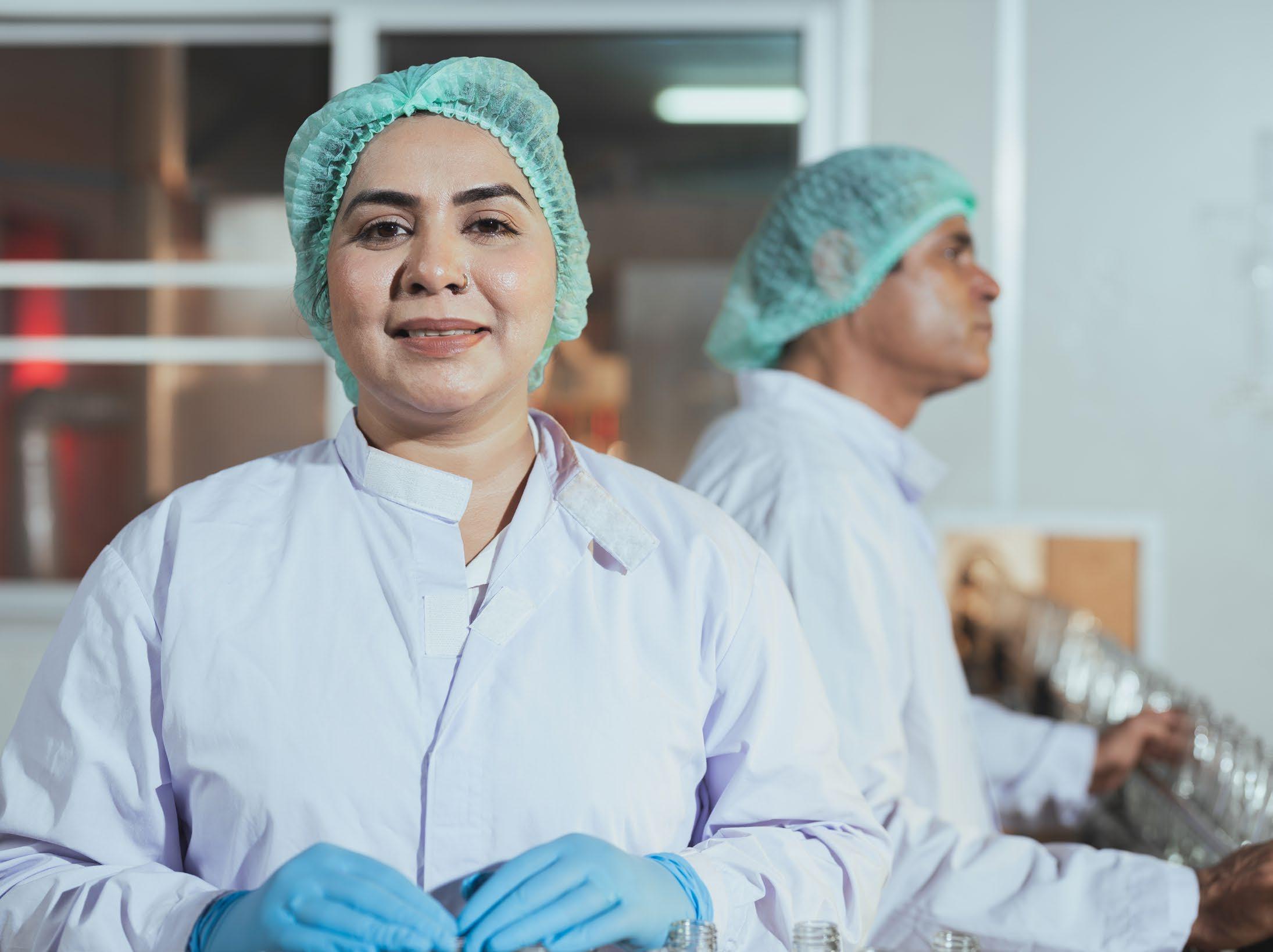
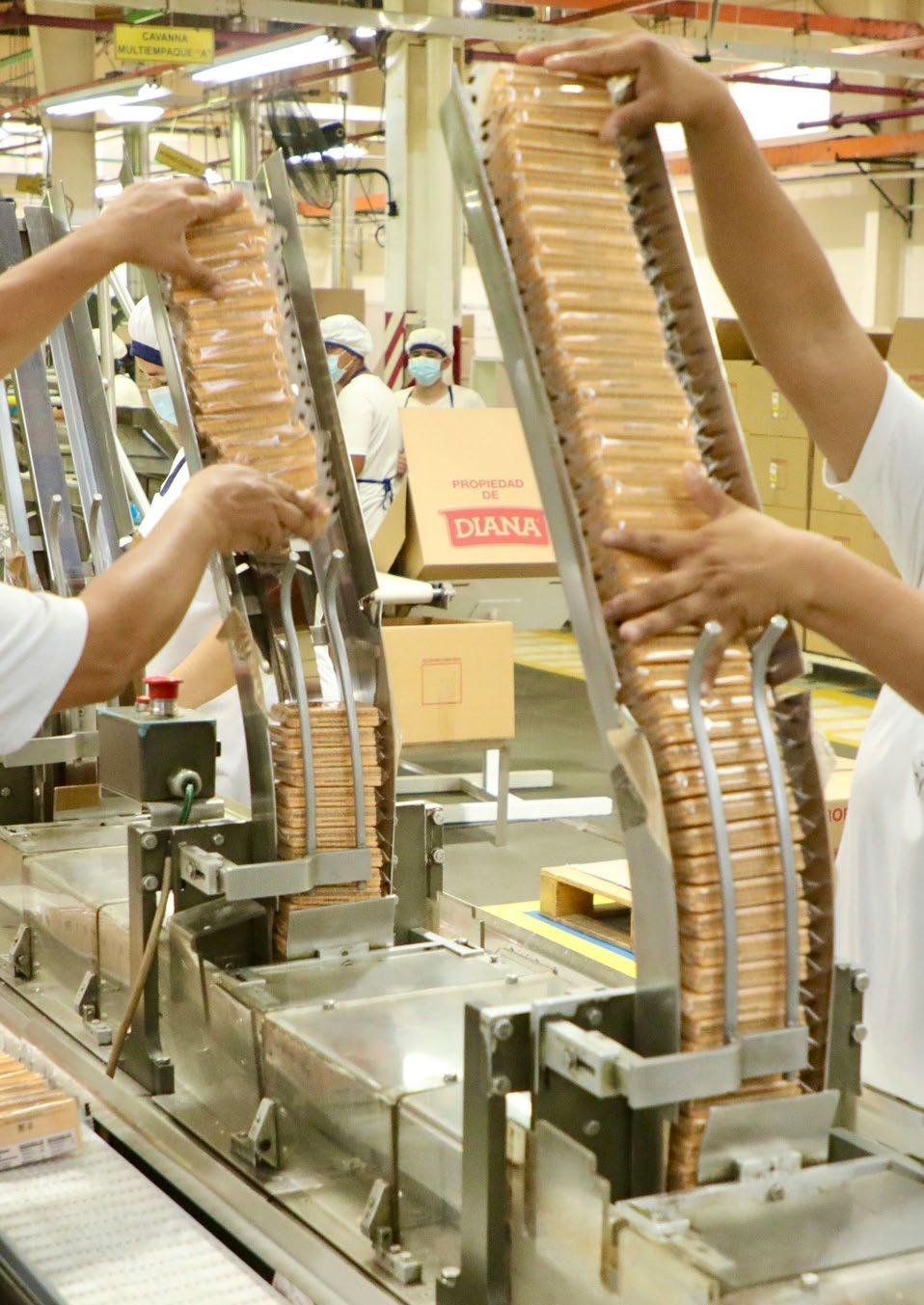
For more than six decades, Productos Alimenticios Diana has been one of Central America’s most beloved and recognizable food companies. Known for its irresistible snacks and deep-rooted commitment to local communities, Diana has grown into a regional powerhouse without ever losing sight
of the values that built its reputation: quality, innovation and a genuine connection with the people it serves.
Founded in El Salvador, Diana quickly became part of everyday life across the region. Its snack corn chips, plantain chips, nuts, seeds, sweets, and more became synonymous with family gatherings, street celebrations and the flavours of home. Today, the company’s products are sold and enjoyed not just in Central America, but
internationally, expanding the footprint of a brand that continues to prioritize authenticity in every recipe.
What sets Diana apart is its ability to stay deeply connected to its cultural roots. Each product is thoughtfully crafted to reflect the tastes, preferences and traditions of the Central American consumer. This local-centric approach has helped Diana keep its status as both a nostalgic favourite and a modern brand that evolves with each generation.
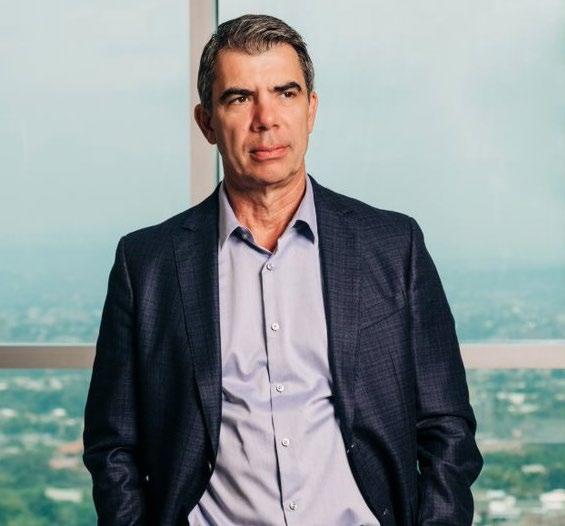
As CEO of Productos Alimenticios Diana, Armando Mendiola leadership is with a balance of strategic clarity, cultural sensitivity and relentless commitment to consumer wellbeing. Under his direction, Diana has accelerated its evolution from a regional snack icon into a modern, innovation-driven powerhouse that stays deeply connected to the communities it serves. With over two decades at PepsiCo, where he oversaw US$1.5 billion in sales across Mexico and Latin America, Armando Mendiola brings both regional insight and global experience to his role as CEO of Productos Alimenticios Diana.
“What drew me to Diana was the convergence of three opportunities,” he explains. “The chance to build a legacy rooted in purpose, to transform the company’s operating model and culture to strengthen regional leadership, and to collaborate with shareholders committed to creating meaningful employment and supporting community development.”
Under his leadership, Diana is poised not only to compete with global giants but to redefine success through innovation, culture, and social impact in Central America.
“My biggest opportunity is to prepare Diana to lead the market as it will exist in the future, not as it does today. I measure my success by the legacy I can leave, and this is my chance to build a legacy that everyone at Diana can be proud of.”
Like many great companies, Diana had humble beginnings. In 1951, Don Max Olano and Don Pablo Tesak started making handcrafted snacks in their garage in San Salvador. By the end of the decade, they had set up a distribution network across El Salvador and expanded their candy, cookies, and salted peanut prod-


Armando Mendiola, CEO, Productos Alimenticios
ucts into Honduras, Guatemala, Belize, Nicaragua, Costa Rica, and the United States.
Today, beloved products such as Elotitos, Alboroto, Churritos, and Baby are distributed across Central and North America. “Diana was born with a very clear purpose: to be a leading company with high growth, of course, but also to work alongside society to promote the wellbeing of Central
American families,” Armando explains.
From the beginning, understanding the DNA that made millions of people recognize and love Diana’s brands and products was a priority. “This understanding became the vision and direction for our most important areas of development and transformation,” he continues.
Armando draws on this purpose to guide two key strategies: sustaining growth and accelerating expansion both within and beyond the region and creating value and wellbeing for local communities by generating both direct and indirect employment. At the same time, he faces the challenge of adapting these strategies to a changing business environment.
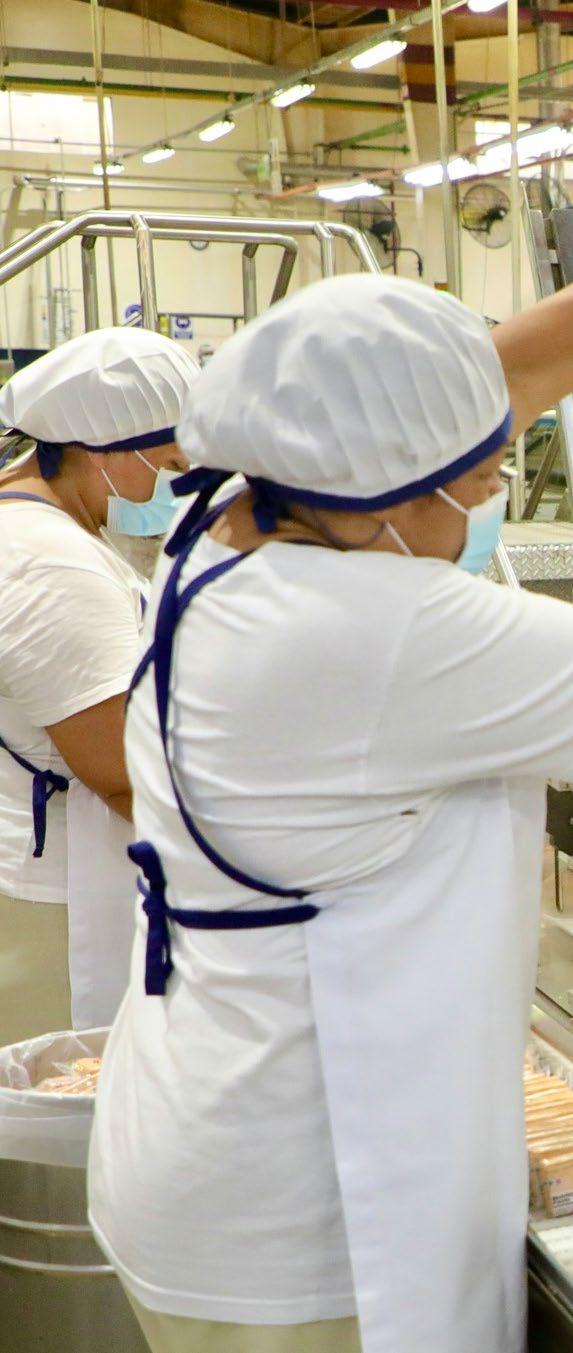
“Previously, Diana’s approach was simply to produce more,” he says, noting that the company now produces 65,000 tonnes of food annually. “Today, the focus is on efficiency, responsible resource use, and minimizing impact on our people, community, and environment. It’s about the quality we want to create dignified and meaningful jobs.”
Where Diana once had a competitive edge through direct distribution, the company now aims to deliver superior service, standing out by listening to and advising accounts and exceeding expectations at the point of sale.
This vision drives a transformation that, while preserving the essence of the business, projects Diana into the future winning new consumers daily and reinforcing community support through social responsibility and sustainable practices.
KAMLOOPS EXPLORATION GROUP

KAMLOOPS EXPLORATION GROUP


UNEARTHING THE FUTURE
HOW THE KAMLOOPS EXPLORATION GROUP IS INSPIRING THE NEXT GENERATION OF GEOSCIENTISTS
Project by: Malvern Kandemwa
Words by: Michelle Duncan
In the heart of British Columbia’s interior, the Kamloops Exploration Group (KEG) has spent more than four decades cultivating curiosity, education, and collaboration within Canada’s vibrant geoscience and mining community. What began as a small collective of exploration professionals in the late 1970s has evolved into a dy-
namic, education-driven organization inspiring students, industry professionals, and the public to better understand the role geoscience plays in society.
KEG’s roots are deeply embedded in Kamloops’ rich geological history and its proximity to some of Canada’s most productive mining regions. But the organization’s true impact lies beyond minerals; it’s about people and learning. From its start, KEG has championed education as the foundation for sustainable industry growth.
In a sector defined by discovery and transformation, Jane McCaw the President of the Kamloops Exploration Group stands out not just for her geological expertise, but for her unwavering commitment to education, collaboration, and community. As a driving force behind the Kamloops Exploration Group (KEG), McCaw has helped shape an organization that embodies both scientific curiosity and social responsibility, one that continues to inspire the next generation of geoscientists and strengthen the ties between industry and the public.
Jane McCaw, President, Kamloops Exploration Group
Jane McCaw’s leadership is defined by a lifelong passion for geology and a belief in the power of education to shape sustainable progress. Her career, which spans years of fieldwork, project management, and community engagement, has given her a deep understanding of both the technical and human sides of exploration.
Under her leadership, KEG has still been true to its founding mission to promote geoscience through education and awareness while evolving to meet the changing needs of the industry. McCaw has been instrumental in ensuring that KEG’s programs, from its flagship annual conference to its school outreach initiatives, remain inclusive, forward-thinking, and accessible to all. Every year, KEG organizes school programs, public lectures, and community events that bring geology to life. Its flagship initiative, the KEG An-
nual Conference, attracts geoscientists, engineers, and students from across Canada. The event not only highlights innovative exploration technologies but also provides a platform for knowledge sharing and mentorship between seasoned industry veterans and emerging professionals.
KEG’s outreach efforts extend well beyond conference halls. Its Education Committee runs programs for schools across the Thompson-Okanagan region, delivering direct learning experiences designed to ignite students’ curiosity about earth sciences.
The School Outreach Program brings real rock samples, maps, and field tools into classrooms, giving students an authentic taste of geological discovery. Volunteers, many of whom are professional geologists or mining engineers, share their passion and subjective experiences, bridging

the gap between textbook theory and real-world application.
Meanwhile, the KEG Bursary and Scholarship Program supports post-secondary students pursuing geoscience-related studies. These awards not only ease financial burdens but also encourage young scientists to remain engaged with the local community and its thriving exploration sector.

SPARKING INTEREST IN THE NEXT GENERATION
At the heart of McCaw’s vision is the belief that the future of exploration lies in the hands of young scientists. She has championed programs that connect students with professionals, encourage STEM education, and celebrate curiosity.
Through initiatives like KEG’s bursary and scholarship programs, McCaw has ensured that financial support reaches promising students pursu-
ing post-secondary studies in earth sciences. Meanwhile, her emphasis on direct learning from classroom demonstrations to field excursions helps students experience the excitement of geology firsthand.
“Our goal isn’t just to teach geology,” McCaw often emphasizes, “but to help young people see how geoscience impacts everything from technology to sustainability. When they understand that, they start to see their place in shaping the future.”
McCaw also believes that trust and transparency are essential for the mining and exploration sectors to thrive. Under her guidance, KEG has deepened its engagement with the public, ensuring that people understand how responsible exploration supports communities, economies, and the environment.
Through events like KEG Mining Day and the Annual Lecture Series, McCaw has made geoscience approachable and relevant. By

inviting families, educators, and local leaders to take part, she has helped demystify an industry that too often runs behind the scenes.
Her collaborative approach has also strengthened partnerships with government agencies, academic institutions, and private organizations ensuring KEG stays a respected voice in both scientific and civic circles.
COLLABORATION AND INNOVATION IN A CHANGING INDUSTRY
In an era of rapid change and increasing complexity, the mining and exploration sector finds itself at a pivotal crossroads. Global demand for minerals critical to clean energy, advanced manufacturing, and digital infrastructure is growing exponentially. Yet, this demand comes with an equally
urgent call for sustainability, transparency, and social responsibility.
In this dynamic environment, collaboration and innovation have become the twin engines driving progress and organizations like the Kamloops Exploration Group (KEG) are playing a vital role in fostering both. The exploration industry today is not what it was a decade ago. Advances in technology, evolving regulatory frameworks, and heightened public awareness about environmental and social impacts have reshaped the landscape. Companies are expected to not only find and extract resources efficiently but also to minimize ecological footprints, build community trust, and work transparently.
As KEG Chair Jane McCaw explains, “The future of exploration depends on our ability to think
differently to collaborate across disciplines, to innovate responsibly, and to connect our work with the broader societal good.” Collaboration, McCaw believes, is the foundation of sustainable progress. The days of isolated operations and siloed expertise are over; success now requires shared knowledge and collective problem-solving.
Through its conferences, workshops, and outreach programs, KEG provides a platform where industry professionals, researchers, government agencies, and students can engage in open dialogue. These interactions not only generate innovative ideas but also strengthen the relationships that make innovation possible.
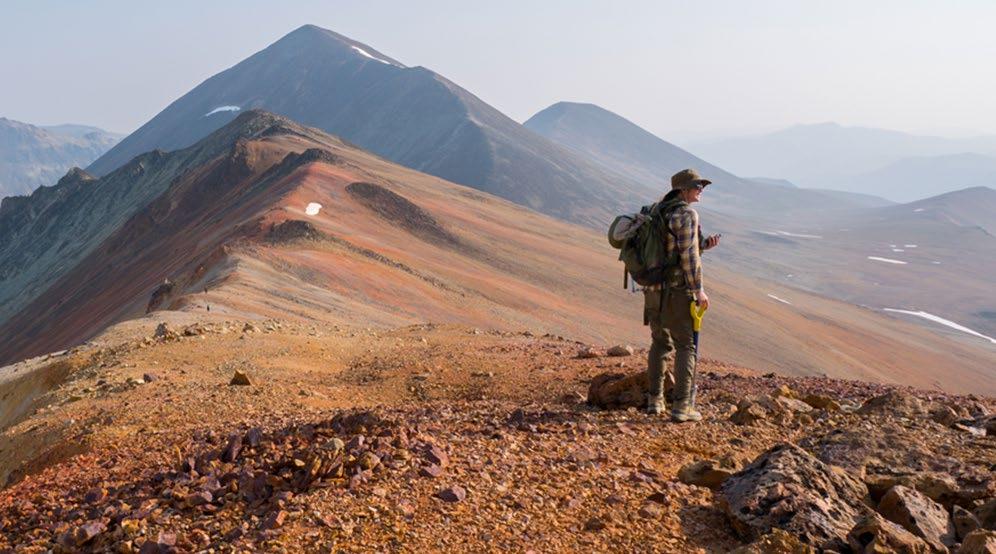
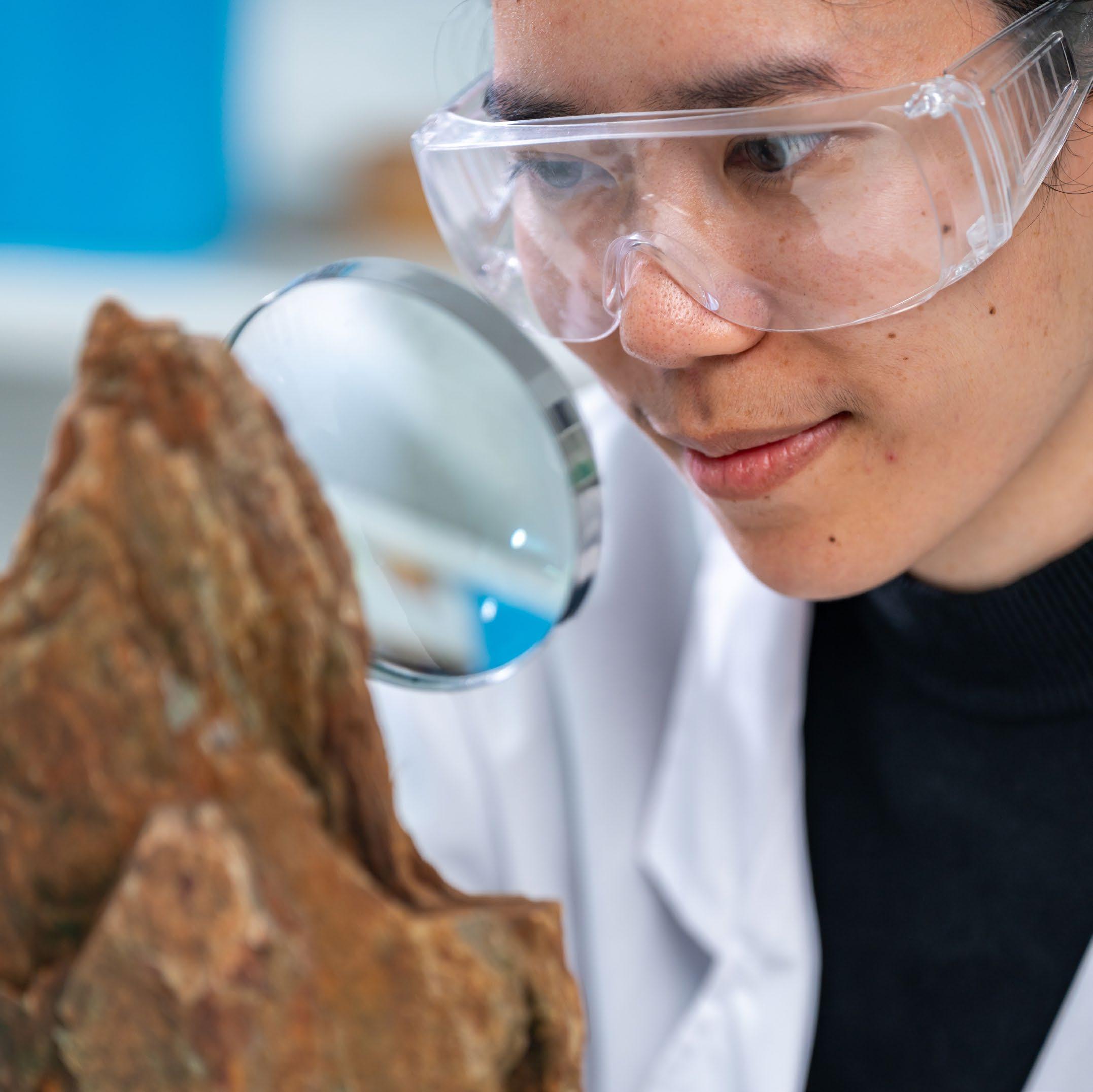
INNOVATION AS A MINDSET
Innovation in geoscience is no longer limited to new drilling techniques or advanced data analytics; it’s about transforming how the industry works at every level. Digital tools such as AI-driven exploration modelling, remote sensing, and data inte-
gration platforms are revolutionizing how resources are discovered and managed. Meanwhile, advances in geospatial analysis and real-time monitoring are improving both efficiency and environmental safety.
Yet, McCaw points out that innovation is not solely technological. It’s also cultural and strategic —
about fostering open-mindedness, encouraging experimentation, and rethinking traditional business models.
“The most successful companies are those that embrace curiosity,” she explains. “At KEG, we want to instil that same mindset in the next generation of geoscientists — that innovation

isn’t just about tools, it’s about attitude.”
Collaboration also means inclusion ensuring that diverse voices are represented in shaping the future of the industry. KEG’s efforts to promote diversity and gender equity in geoscience mirror a broader shift within the sector. When people from diverse backgrounds and disciplines collaborate, innovative ideas appear, leading to more resilient and sustainable solutions. Transparency and inclusivity, once considered optional, are now recognized as key drivers of both innovation and trust.
As the Kamloops Exploration Group continues to champion education, dialogue, and discovery, it also sets a benchmark for what true collaboration in a changing industry can look like. Through its annual conference, community engagement programs, and partnerships across academia and industry, KEG proves that innovation doesn’t happen in isolation; it happens when people work side by side, united by a shared purpose.
In the end, collaboration and innovation are not just strategies for survival, they are the building blocks of a sustainable future for exploration.


GREENBRIER COMPANIES

GREENBRIER COMPANIES

DRIVING THE FUTURE OF RAIL
HOW THE GREENBRIER COMPANIES ARE POWERING SUSTAINABLE FREIGHT
Project by: Malvern Kandemwa
Words by: Michelle Duncan
As global supply chains shift toward a more sustainable future, few industries have more potential to reduce emissions and improve efficiency than freight rail. At the forefront of this evolution stands The Greenbrier Companies, one of the world’s leading manufacturers and service providers for freight rail equipment. Headquartered in Lake Oswego, Oregon, Greenbrier stands at the
forefront of the global freight transportation industry. With a network of wholly owned subsidiaries and joint ventures, the company designs, manufactures, and markets freight railcars and marine barges across North America, Europe, and Brazil, delivering solutions that keep goods moving efficiently and sustainably around the world.
Greenbrier doesn’t just build railcars, it manages them end-toend. The company oversees a fleet of 445,000 railcars, providing management, regulatory compliance, and leasing services to rail-
roads and private owners alike. Through its Wheels, Repair & Parts business unit, Greenbrier is a leader in railcar wheel services, refurbishment, repair, and retrofitting, ensuring that equipment stays safe, dependable, and efficient throughout its lifecycle. Its special-purpose subsidiary, GBX Leasing (GBXL), manages a portfolio of leased railcars sourced primarily from Greenbrier’s manufacturing operations. Combined, Greenbrier and GBXL operate a lease fleet of nearly 12,500 railcars, offering flexible, scalable solutions to meet the evolving demands of freight transportation customers.

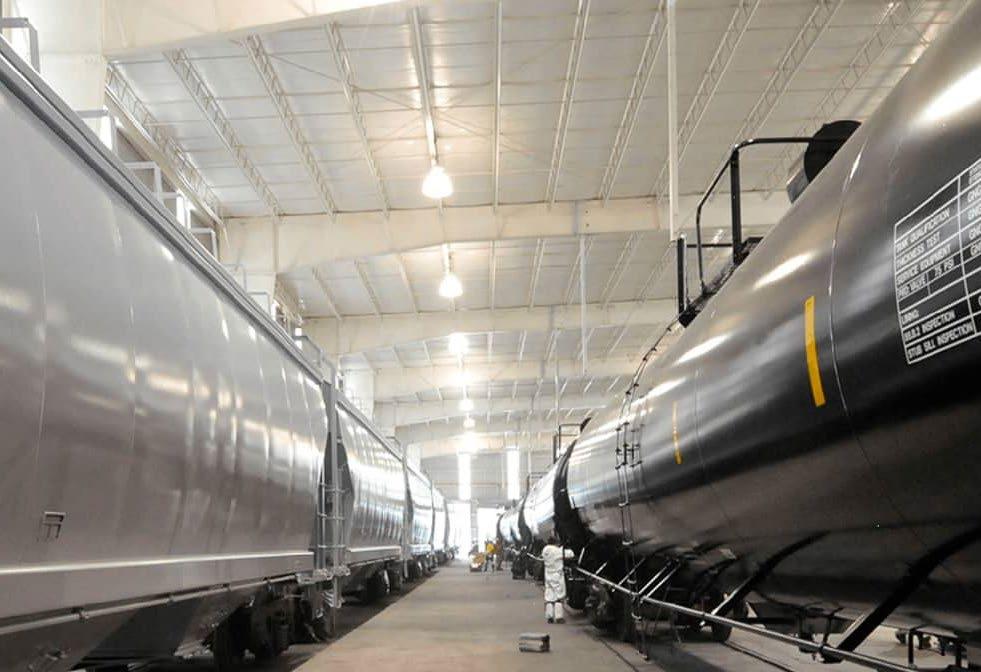
INNOVATION MEETS SUSTAINABILITY
Sustainability is at the heart of Greenbrier’s operations. From lightweight, fuel-efficient railcar designs to remanufacturing and refurbishment programs that extend asset lifecycles, the company is committed to reducing environmental impact while supporting customers’ efficiency goals. Every innovation is designed to maximize payload, minimize emissions, and streamline operations, reflecting Greenbrier’s vision of a smarter, greener freight industry.
Greenbrier’s international footprint allows it to combine global ability with local knowledge. Whether supplying railcars in
North America, Europe, or Brazil, or managing complex lease and maintenance programs, the company delivers consistent quality and reliability, positioning itself as a trusted partner for freight operators worldwide.
“Our goal is to provide solutions that help our customers succeed, while advancing the sustainability and efficiency of the global freight network,” says CEO Lorie Tekorius.
In its global operations, Greenbrier has also committed to reducing greenhouse gas emissions, improving water and energy use, and sourcing responsibly. Its 2024 Environmental, Social and Governance (ESG) report highlights progress toward reducing
waste, improving safety metrics, and increasing renewable energy usage at its facilities. With decades of experience, a commitment to innovation, and a focus on sustainable growth, Greenbrier continues to lead the way in freight transportation, powering industries, and economies across the globe.
Under the leadership of CEO and President Lorie L. Tekorius, Greenbrier is reshaping the way the industry thinks about sustainability not just in the products it builds, but in the systems that support them. When Lorie Tekorius joined Greenbrier 25 years ago, few could have predicted the transformative mark she would leave on the multinational freight railcar and marine barge manufacturer. To-
WILLIAMS
HAYWARD
PROTECTIVE COATINGS INC.
For over 40 years, Williams Hayward Protective Coatings has been proud to work alongside The Greenbrier Companies, sharing a commitment to sustainability, environmental stewardship, reducing emissions and hazardous waste, and creating safer and cleaner working environments across railcar coating operations and the communities in which its facilities operate.
WHPC has been a pioneer in waterborne low-VOC coatings within the rail industry since the 1950s, with the development of the first water-based, nonflammable, and nonhazardous latex primers SAFETY COAT™️ for ALCO Locomotive in Schenectady, NY, before the term “sustainability” gained widespread use. The company’s early focus on reducing emissions, minimizing hazardous waste, and improving working conditions reflected a practical belief that responsible manufacturing and longterm coating durability go hand in hand. Greenbrier has consistently demonstrated a similar outlook in its own operations, emphasizing continuous improvement, environmental awareness, and the well-being of the people working within its facilities. This shared approach has allowed the two companies to make a meaningful environmental impact together and maintain a working relationship that has lasted for decades, grounded in a shared vision of responsible manufacturing.
The relationship between WHPC and Greenbrier began in the 1980s, during a period when Greenbrier companies were expanding their roles within the railcar manufacturing and service sectors. WHPC was well established at the time, with approvals for its solvent and early water-based rail coatings with all major railroads and many car leasing companies—common customers to both organizations— making for a natural collaboration.
The years that followed in the late 1980s saw policy changes regarding industrial environmental impact. The Clean Air Act Amendments of 1990, alongside the evolving OSHA guidelines, brought significant progress in environmental and workplace safety expectations across industrial settings. These changes increased attention on air quality, hazardous emissions, and day-to-day working conditions inside coating and finishing environments, reinforcing the need for coating systems that could perform while reducing environmental and operator exposure concerns.
WHPC had already been working with the major railroads and Trailer Train Corporation (now TTX) to lower and eliminate VOC emissions in their rail coating systems, in anticipation of these regulatory shifts. As a result, WHPC was well-positioned as the industry began adopting coating systems that enhanced durability while significantly reducing environmental impact. As Greenbrier continued to expand its manufacturing and service footprint, WHPC’s coating systems became a consistent part of the railcar finishing process, supported by familiarity between teams, dayto-day application experience, joint customer satisfaction, and a shared commitment to responsible manufacturing.
WHPC is a family-owned company with roots extending back more than 100 years in protective coatings. From its early years, the company focused on developing coating systems that balance durability with practical, everyday usability in industrial environments. The introduction of waterborne coatings in the mid-20th century reflected WHPC’s long-standing interest in cleaner, safer workplaces well before environmental expectations became standard across the industry. Today, WHPC operates manufacturing facilities in the U.S. and EU and provides technical support to customers in the U.S., Mexico, Canada, the U.K., and the EU. This steady, long-term approach has shaped how WHPC
works and contributes directly to its relationship with Greenbrier, where familiarity, consistency, and shared outlook continue to support ongoing collaboration.
WHPC coating systems support both Greenbrier’s railcar manufacturing and ongoing maintenance and repair operations. The company supplies low- and zero-VOC coatings in both water- and solvent-based media, along with high-performance epoxies, polyurethanes, and acrylic/ vinyl/rubber coating systems designed for durability in general and severely corrosive service environments. These systems are selected for long service life and predictable performance in varying climates and operating conditions, helping reduce the frequency of recoating and maintenance cycles. This approach aligns with Greenbrier’s focus on building and maintaining railcars that are dependable, safe, and designed with sustainability in mind, while extending the longevity of its own and its customers’ rail fleet assets.
As Greenbrier continues to grow under the leadership of Lorie L. Tekorius and advances its focus on sustainability and operational responsibility, WHPC looks forward to continuing its support of these efforts.
Wayne E. Kurcz, President & CEO, Williams Hayward Protective Coatings, says, “The relationship remains grounded in steady progress and a long-term view of how manufacturing can support safer, cleaner, and more sustainable rail operations worldwide.”
ZERO HAZARDOUS WASTE GENERATION
NOT FLAMMABLE, TOXIC, OR HAZARDOUS
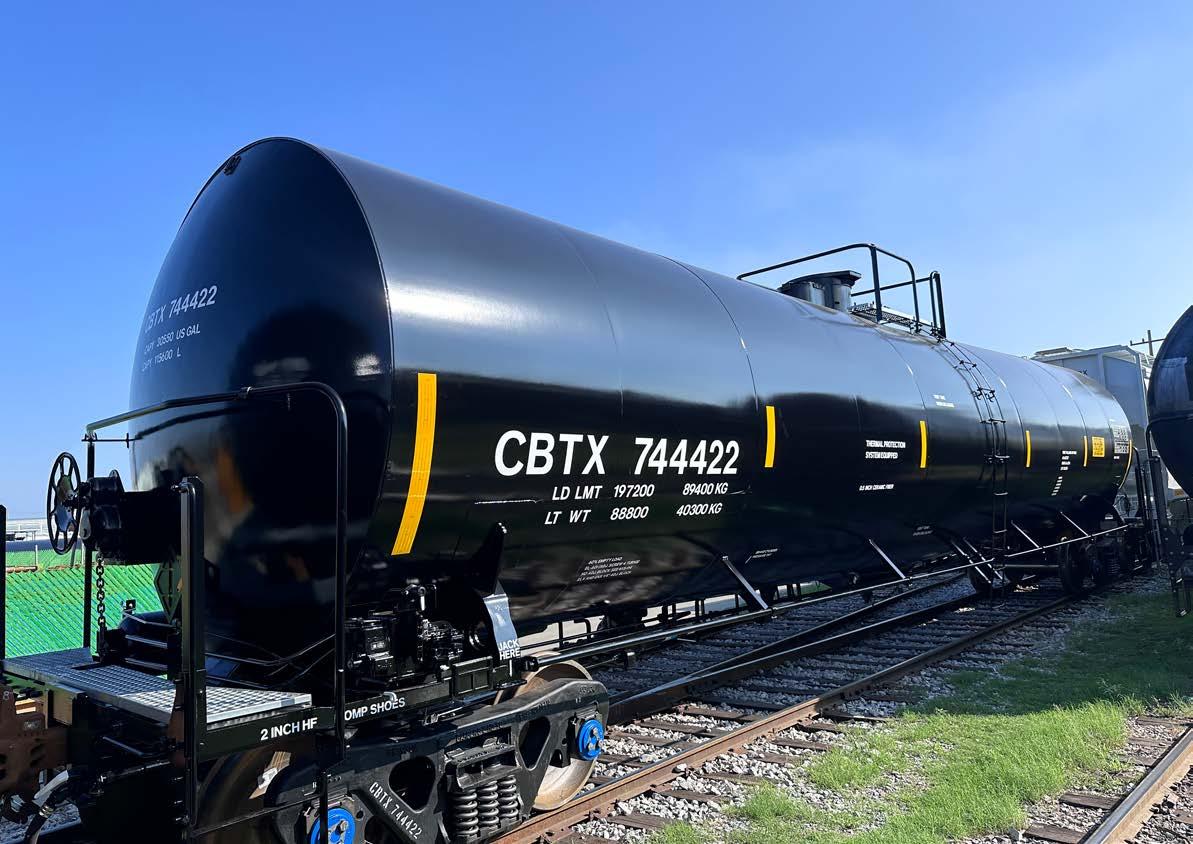
75-100% REDUCTION IN VOC EMMISSIONS
Coatings That Shape for Industry and

day, she stands as a trailblazer: the first woman in company history to serve as Chief Operating Officer, President, and CEO, guiding Greenbrier to become one of North America’s two largest freight railcar manufacturers.
Her leadership style combines strategic foresight with a deep commitment to people. Tekorius has overseen two large-scale acquisitions, global expansion, and the integration of thousands of employees, all while keeping the company’s culture of safety, innovation, and operational excellence. “Every decision we make must support both the business and our people,” she explains.
CHAMPIONING TALENT AND INCLUSION
Tekorius’ impact goes beyond operations. As COO, she launched Greenbrier’s first-ever mentoring and internship programs, alongside a company-wide training strategy designed to nurture talent across the organization. Her advocacy for inclusion and mentorship has earned her recognition in the broader business community: she was a featured speaker at Portland’s Mentoring Mondays, and delivered the keynote at the League of Railway Women conference, sharing insights on cultivating the next generation of leaders in a traditionally male-dominated industry.
“Creating an inclusive and engaging workplace isn’t just the right thing to do, it drives innovation and empowers our people to achieve more than they thought possible,” Tekorius says.
A VISION THAT EXTENDS BEYOND BUSINESS
Tekorius also leads Greenbrier’s community-giving strategy, which has contributed $1 million to local organizations. One highlight came in 2017, when she directed the company’s largest single charitable gift $400,000 to Providence Heart Institute’s Play Smart program, providing free heart screenings for youth. This partnership not only promotes healthier communities but also engages employees in meaningful volunteer and advocacy opportunities.
Under Tekorius’ guidance, Greenbrier is not only expanding globally but is also embracing sustainable manufacturing practices, energy-efficient designs, and circular economy initiatives. By integrating sustainability into every side of its operations from railcar production to refurbishment programs the company is redefining what it means to be a responsible leader in freight transportation. Founded in 1981, The Greenbrier Companies has long been a major player in the global freight rail sector, producing railcars, marine barges, and providing integrated services including leasing, management, and repair. But as the climate crisis and global logistics challenges redefine what is expected from transportation leaders, Greenbrier has committed itself to being part of the solution.
“Rail is already one of the most efficient ways to move goods, but we want to make it smarter, cleaner, and more sustainable,”
she says. “Our responsibility is to our customers, our employees, and the communities we serve today and for generations to come.”
With a legacy of strategic growth, employee empowerment, and community impact, Lorie Tekrius exemplifies the kind of visionary leadership that not only drives business success but transforms an entire industry.

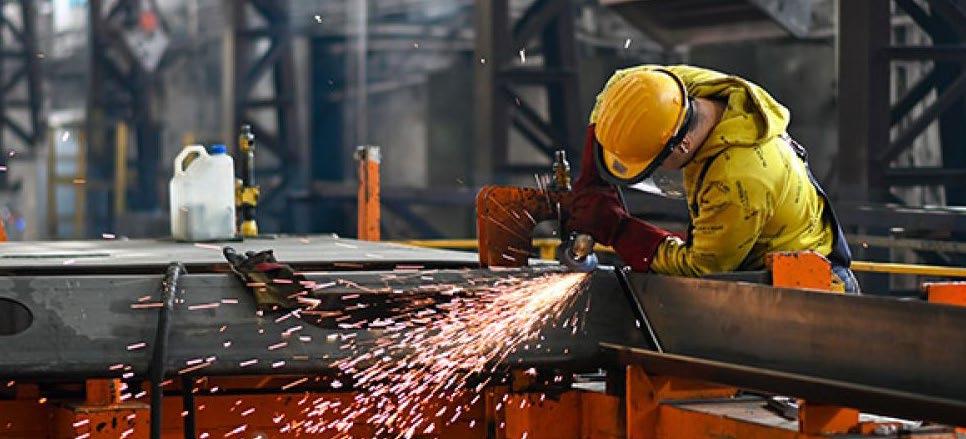
DESIGNING THE NEXT GENERATION OF RAILCARS
As industries pivot toward cleaner supply chains, rail is gaining renewed attention as a sustainable freight solution and Greenbrier is helping to lead that movement. Through continuous innovation, responsible manufacturing and a longterm commitment to sustainability, The Greenbrier Companies is ensuring that rail stays the backbone of efficient, low-carbon transportation.
“Freight rail has always been the most sustainable way to move goods,” the company emphasizes. “Our role is to make it even better, cleaner, safer, and smarter for generations to come.”
Beyond production efficiency, Greenbrier’s greatest sustainability impact comes from its design philosophy. Its new generations of railcars are built to be lighter, more durable, and more fuel-efficient, reducing emissions over decades of service. The company also leads in modular and manufacturable designs, allowing equipment to be upgraded rather than replaced, extending life cycles and reducing waste. Through advanced data analytics and engineering, Greenbrier helps customers choose configurations that maximize payload efficiency and reduce empty miles, further minimizing fuel consumption across networks.
Tekorius and her leadership team see a world where freight customers are under mounting pressure to decarbonize. Greenbrier is stepping in as a strategic partner, not just a supplier. Its leasing and management divisions collaborate with operators to improve asset use, while the company’s maintenance services keep equipment running at best efficiency.

“As our customers transition to lower-carbon operations, we’re helping them with both the technology and the strategy to get there,” Tekorius says. “That’s what true partnership looks like in the age of sustainability.”
CIRCULAR ECONOMY AND LIFECYCLE RESPONSIBILITY
One of Greenbrier’s most forward-thinking initiatives lies in railcar recycling and refurbishment. Instead of scrapping retired equipment, the company dismantles and reuses key components, reducing waste and carbon intensity. Its facilities specialize in remanufacturing railcars, effectively giving them a second life and saving significant material and energy compared to new builds. This closedloop approach aligns with the company’s broader circular economy goals — where end-of-life products become the raw material for future innovation. From decarbonized manufacturing and digitalized operations to recycled railcars and resilient supply chains, The Greenbrier Companies is proving that freight can be both profitable and sustainable. It is a transformation powered by innovation, partnership and purpose and a leader determined to keep the company on track toward a greener future.