CREDIT UNION CALAMITY | TOP DOCTORS | UNC AD’S SPORTING VIEW
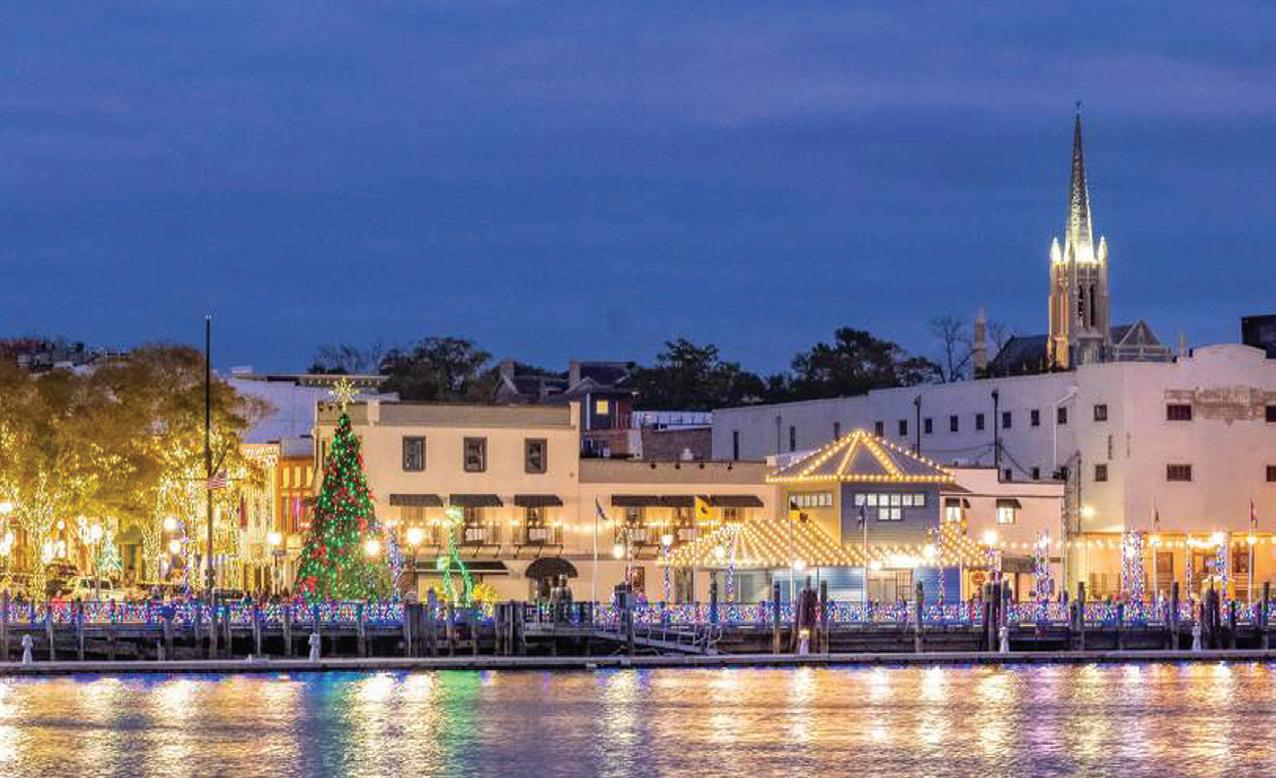
Hans Westermark’s artistry draws national attention to Wilmington’s Apple Annie’s Bake Shop, one of this year’s BNC Small Business of the Year honorees.
4 UP FRONT
6 POWER LIST INTERVIEW
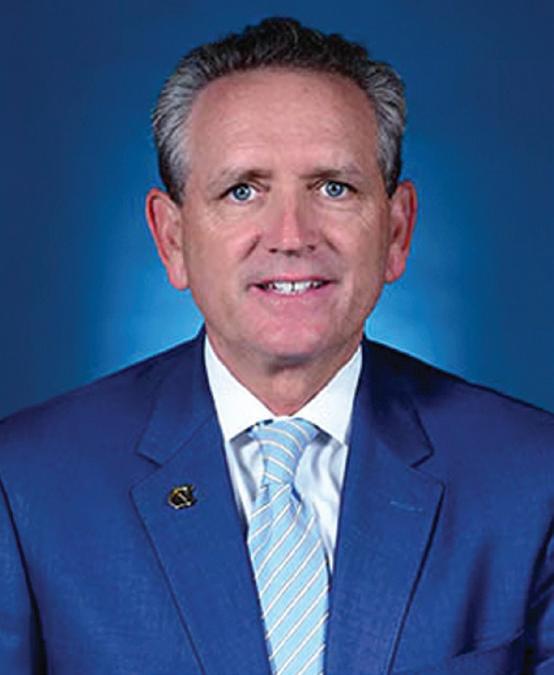
UNC Chapel Hill Athletic Director
Bubba Cunningham discusses possible solutions to the problems facing collegiate sports in the age of the transfer portal and NIL.
8 NC TREND
Raleigh’s PayBright thrives at keeping payment channels open; Sanford Hallmark store owner stays cheerful amid a 67-year relationship with greeting card company; PGA adds to N.C.’s golf standing with new stop in Asheville; Private equity groups show strong appetite for Charlotte companies.
18 POINT TAKEN
A nonprofit leader helps fellow veterans who struggle after their service.
76 BRICK + MORTAR
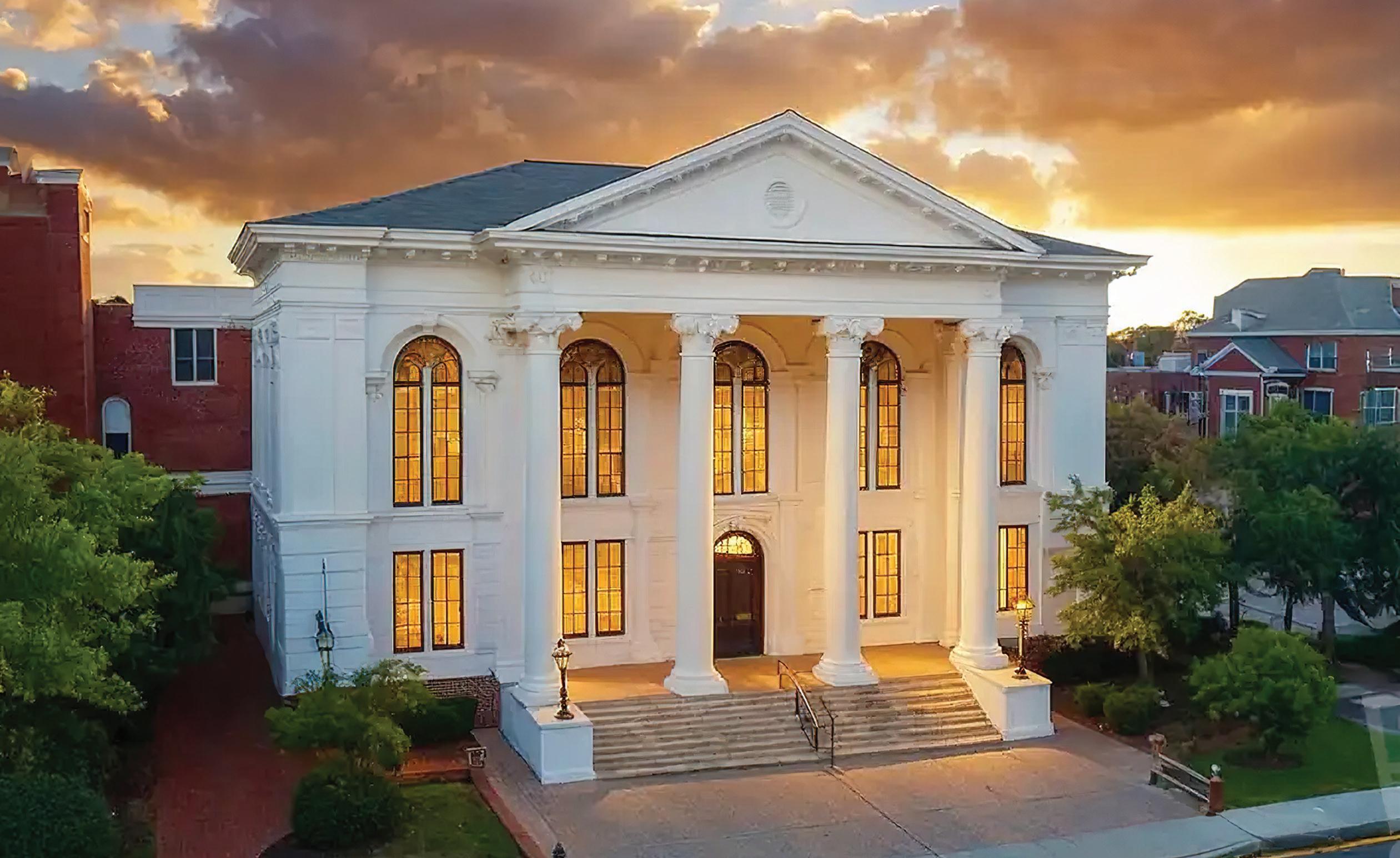
Wilmington’s Thalian Hall, one of the oldest community theater venues in the U.S., is receiving a $25 million makeover to remain a community gathering post.
64
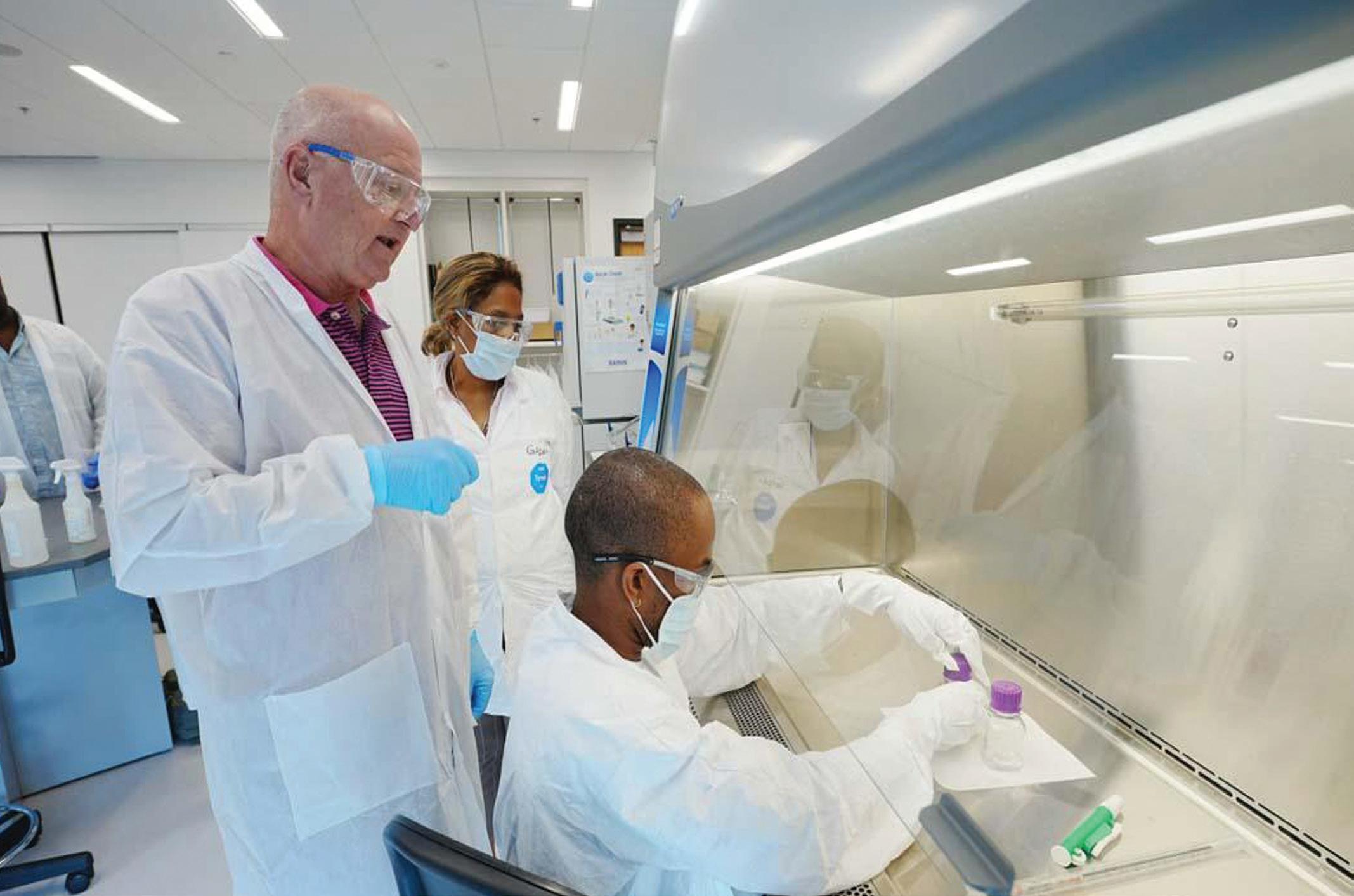
RESEARCH: LIFE SCIENCES
Workforce training, shovel-ready sites, falling corporate tax rates and transportation connections support the state’s growth in a future economy less reliant on legacy manufacturing products.
68
COMMUNITY CLOSE UP: WAKE COUNTY
The state’s most populous county leverages wins in the life sciences and technology sectors to create a diverse industrial base. National attention for the county’s quality of life is also paying off.
COVER STORY
SMALL BUSINESSES OF THE YEAR
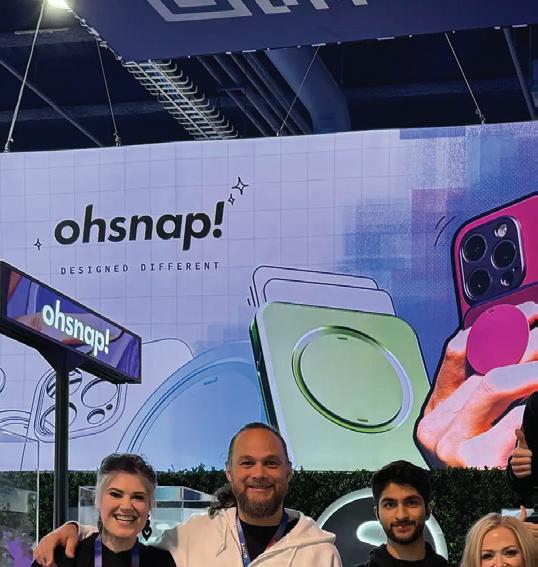
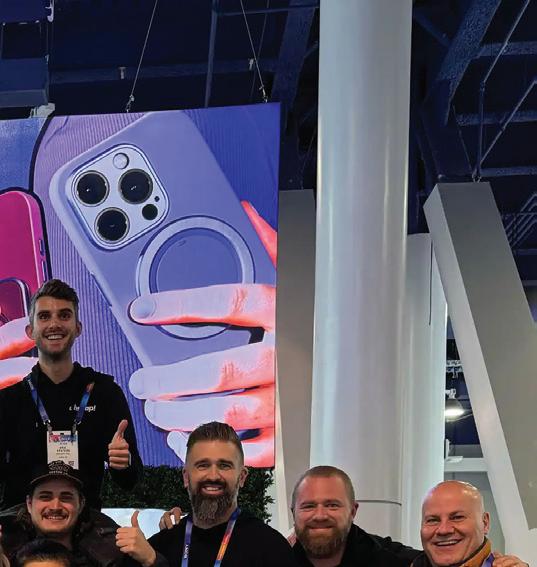
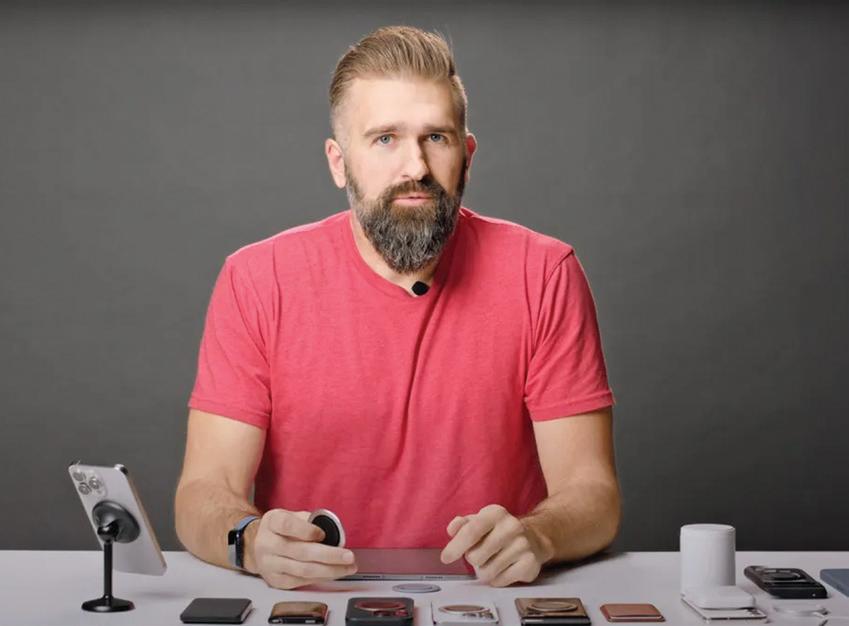
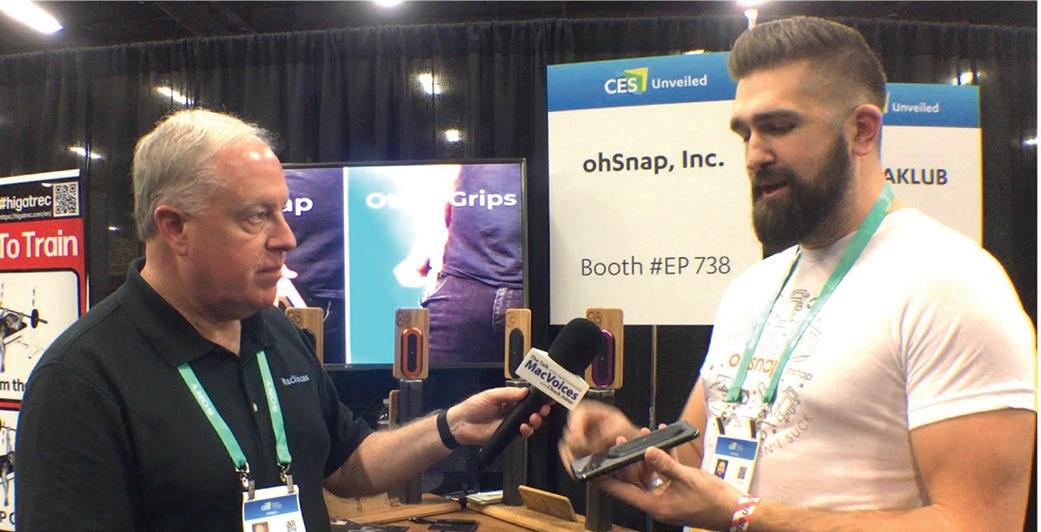
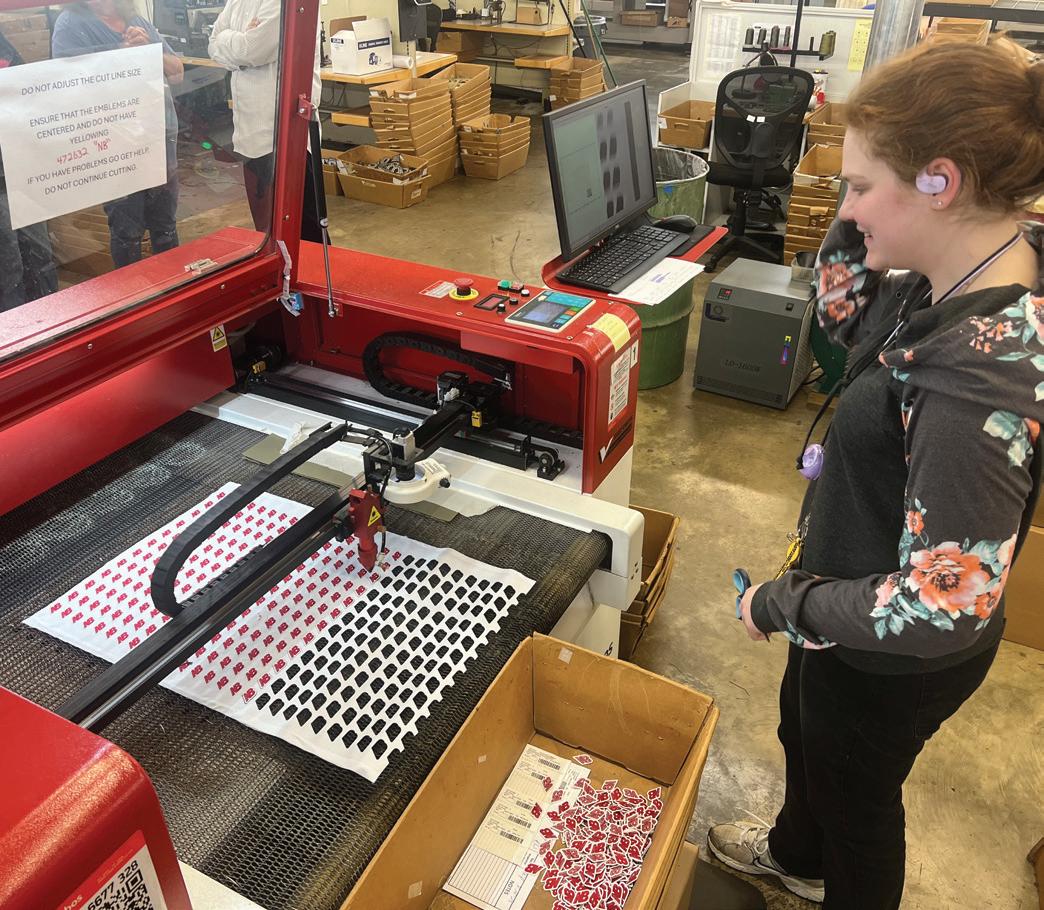
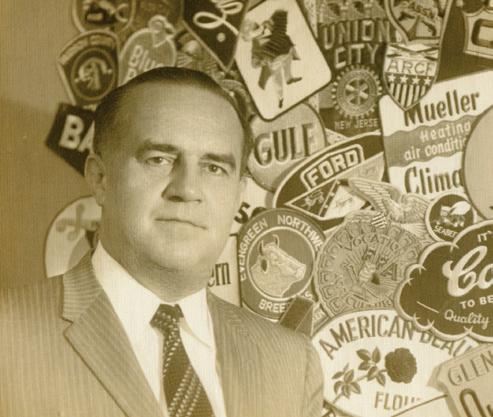
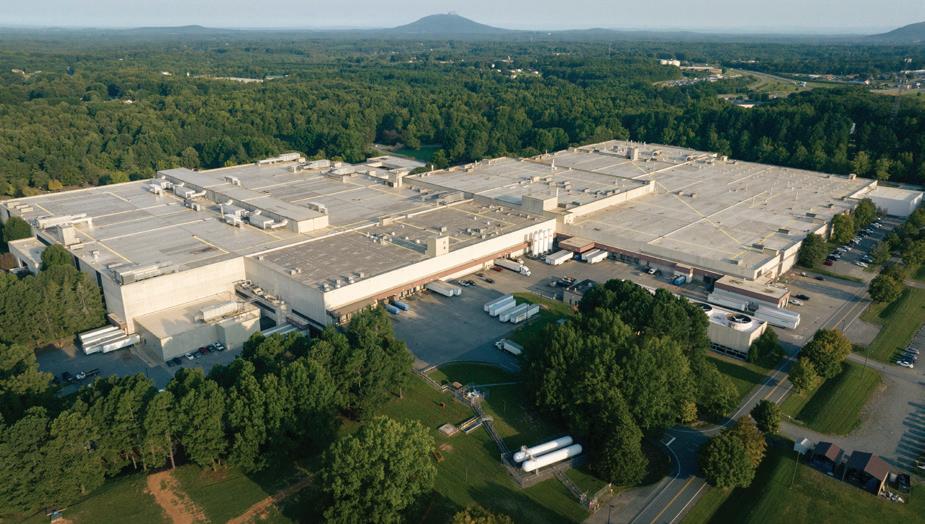
The 2025 winners include a Wilmington bakery, a Buncombe County patchmaker for the U.S. military and NASA and a Wake County designer of phone accessories.
BY CHRIS BURRITT AND KEVIN ELLIS
LESS SMOKE
Tobacco giant Reynolds marks its 150th year amid a shift from cigarettes to nicotine pouches and vaping products.
BY DAVID MILDENBERG
TRANSITION TURBULENCE
The launch of Civic Federal Credit Union is marred by a difficult breakup with its longtime partner SECU.
BY CHRIS BURRITT
TOP DOCTORS
A report on the state’s most respected doctors in 65 specialties as selected by their peers.
BY BUSINESS NC
UP FRONT Ben Kinney
EXIT SIDESHOW
La st month, my wife and I visited Nashville for a few days and enjoyed a lot of good food and music. It’s a long drive to and from Charlotte, though. As we made our way home, we stopped for gas and food at the famous travel-center chain Buc-ee's in Tennessee. T here is one opening in 2027 in Mebane in Alamance County, so I thought it would be cool to get a look at what’s coming. A few thoughts: It was easy to get gas. There are plenty of pumps available — which isn’t always the case at other similar places (you hear me, Sheetz?).
It’s obvious that it’s based in Texas. It's not just a convenience store, it’s like an Incredible Hulk-mutant version of a 7-11, barbecue joint, Cracker Barrel and ACE Hardware. It’s massive and has practically everything one would need (and then some): stuffed animals, firewood, grills, Christmas ornaments …
A nd the food: There is a lot of meat. There is a huge brisket station with a staff serving sandwiches and chanting something about hot brisket coming up every 10 minutes or so. There is an entire wall of beef jerky with more dried meat than a wagon train heading west in 1873 would ever need. There's also a lot of candy, baked goods and other delectables that would put any Circle K to shame.
A nd lots of clean bathrooms. This is a big one, and probably a big factor in their success. I heard that the only time there is a big line for them is while they are being cleaned.
T he employees are very attentive. I witnessed this firsthand as I was walking with a hot club sandwich, big cookie and a soda, my mouth agape and staring in bewilderment at the scene, when my drink spilled. Instantly, some dude with a headset approached and reported the mishap faster than a stage manager during a costume malfunction at the Super Bowl. Immediately, someone arrived with a mop and went to work.
T here are a lot of grannies there, and they dig it. They were whooping it up, smiling and buying, baby! This reminded me of our annual Southern Christmas Show here in Charlotte. I’ll bet if you yell, “Meemaw” in there, a good half of heads would turn …
T he bottom line: Buc-ee’s is big and bold and a bit overwhelming for me, but I don’t doubt it will be a major success when it opens here. ■
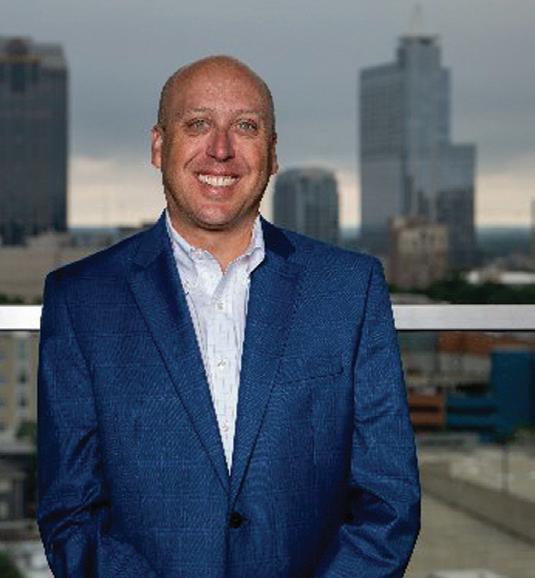
Contact Ben Kinney at bkinney@businessnc.com.
VOLUME 45, NO. 12
PUBLISHER
Ben Kinney bkinney@businessnc.com
EDITOR David Mildenberg dmildenberg@businessnc.com
MANAGING EDITOR Kevin Ellis kellis@businessnc.com
ASSOCIATE EDITORS Ray Gronberg rgronberg@businessnc.com
Cathy Martin cmartin@businessnc.com
CONTRIBUTING WRITERS Dan Barkin, Chris Burritt, Bill Horner III, Brad King, Tucker Mitchell, Lori D. Roberts Wiggins
CREATIVE DIRECTOR Cathy Swaney cswaney@businessnc.com
GRAPHIC DESIGNER Lauren Ellis
MARKETING COORDINATOR Jennifer Ware jware@businessnc.com
EVENT DIRECTOR Norwood Teague nteague@businessnc.com
ADVERTISING SALES
ACCOUNT DIRECTOR Melanie Weaver Lynch, eastern N.C. 919-855-9380 mweaver@businessnc.com
ACCOUNT MANAGER Anne Brundage, western N.C. abrundage@businessnc.com
CIRCULATION: 818-286-3106
EDITORIAL: 704-523-6987
REPRINTS: circulation@businessnc.com
OWNERS Jack Andrews, Frank Daniels III, David Woronoff, in memoriam Frank Daniels Jr.
PUBLISHED BY Old North State Magazines LLC
PRESIDENT David Woronoff BUSINESSNC.COM
Buc-ee's co-founder and CEO Arch "Beaver" Aplin III
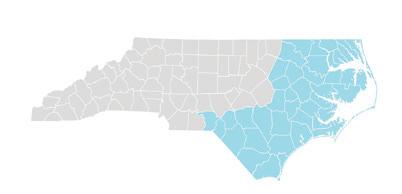
Shop Small. Give Big. Support Eastern North Carolina. This holiday season, every local purchase tells a story.
From the coast to the countryside, Eastern North Carolina comes alive during the holidays. Twinkling lights line our historic downtowns, friendly shop owners greet you by name, and the aroma of freshly baked treats drifts from local cafés. It’s a season that reminds us of what makes our region so special, community, connection, and the people behind every small business.
When you shop local, you’re not just buying a gift, you’re investing in your neighbors. You’re helping a familyowned restaurant grow, a young entrepreneur thrives, and a local artisan continue their craft. Every dollar spent here stays here, strengthening the economy and enriching the places we proudly call home.
Small businesses are the heart of our 29 counties, they employ our friends and family, sponsor our kids’ sports teams, and keep our main streets vibrant. By choosing local this holiday season, you help Eastern North Carolina shine brighter for everyone.
So, whether you’re exploring a holiday market in Kinston, grabbing muscadine at the Duplin Winery, or picking up peanuts in Bertie County, remember that your holiday shopping can make a lasting difference.
For more information, visit shoplocal.org and search North Carolina and Gottobenc.com.
NCEAST.ORG
BUBBA CUNNINGHAM
A SPORTING LIFE
UNC Chapel Hill Athletics Director Bubba Cunningham joined High Point University President Nido Qubein in the Power List interview, a partnership for discussions with influential leaders. The interview was edited for clarity.
You’ve had a great, great journey and a great, great experience. What is it that troubles you the most about sports today?
I’ve worked at four different schools, two public, two private, two regional, two national. So I’ve gotten a lot of different experiences. What concerns me is that we’re starting to lose sight of what we’re about. As an intercollegiate athletic entity, it’s always been about creating opportunities for students to come to campus, get a great education and play the sport that they love.
But the acceleration of the commercial activity in sport has really changed the dynamic. Particularly in football and basketball, we have to really recenter ourselves and say, what does it look like in 10 years, and how do we get there? We’ve been off track for about five years now.
What do you mean by commercial activity?
Television is driving conference affiliation and it drives what time you play and determines what day you play. The commercial activity is driving the revenue up. The media contracts are greater than they’ve ever been. Salaries are greater than they’ve ever been. Facilities are
Bubba Cunningham has been the athletics director at UNC Chapel Hill since 2011, overseeing 21 head coaches. He is shifting to a senior adviser role in July as the university seeks his successor. During his tenure, UNC has won 24 national titles, including the men’s basketball championship in 2017. More than $225 million has been invested in capital improvements during his tenure, which has included three strategic plans. Before arriving in North Carolina, he was the AD at the University of Tulsa for six years and Ball State University for three years. He earned bachelor’s and MBA degrees from the University of Notre Dame.
better than they’ve ever been. Services to students are better. But that has created other challenges that we didn’t anticipate. The students want to move more freely. They want a transfer portal. They want NIL activities. All of that has an impact on the individual students and their academic life.
How does a coach build a sense of teamwork and cohesion when he or she has an enormous amount of movement due to the portal and NIL offers?
It’s probably the biggest challenge we have in college. Athletics today is trying to build a culture within your team that kids will stay in. Athletics is hard, school is hard. But when it gets hard, they leave and go somewhere else where it’s an easier opportunity for them.
It used to be you would come and you’d sit on the bench or you didn’t play at all. And you get to play a little bit more as a sophomore and junior. Senior year you would start. That doesn’t happen anymore. If you don’t come in and start right away, you’re thinking, there’s another opportunity somewhere else. The instant gratification is a challenge.
Some athletes are given some significant dollar offers by universities. How would faculty and administrators think about a basketball player or football player making significantly higher income than they do?
We have some student-athletes across the country that are making a lot more than the faculty members. It’s a challenge that I think we have to really wrestle with.
I would never in my wildest dreams think that we’d have to go to Congress to try to help solve our problem. But ultimately, I do think we’re going to need some assistance from Congress. We are losing every single lawsuit relative to antitrust, and that means that we can’t have any rules that aren’t challenged. So I think we’re going to have to get some limited antitrust protection.
Ultimately, and this may be heresy, but I think at some point we’re going to have to get to collective bargaining for football and basketball, if not everybody else.
You mean like a union?
It’s a little bit more like a glorified independent contractor because
LIST INTERVIEW with Nido Qubein
independent contractors obviously can select when they would participate. The job in college athletics would be a little bit different. But I think we want to make sure that student-athletes remain students primarily, but have the ability to collectively bargain.
So we could put some limits on the transfer portal, limits on eligibility, limits on some of the benefits they receive. But then compensate them if you negotiate for that.
What are you the proudest of in your tenure at Carolina?
Our coaches and our student-athletes, they’re just fabulous. There’s nothing more inspiring to see than these young, energetic, enthusiastic, positive students. And they were attracted to the institution by our coaches. You go to a coaches meeting, and you swell with pride for the success that they’ve had and the mentorship.
And then when they come back to campus, they realize what a great experience it was, though when they’re here, they think it’s so hard and tough. They come back and say, ‘This was the best four years of my life.’ So that’s what makes it very inspiring.
For sports fans like me, it seems complex and complicated for Carolina to be playing Stanford on both shores of the U.S.A. Where is this going?
Conference affiliation has been driven by media rights, and so people have moved out of the regionalism of conferences, which is how they were designed.
I think we’ll see the pendulum swing back a little bit. The NCAA has already changed its governance structure to be more sport-specific. You’ll see greater alignment between the NCAA and the national governing bodies.
If Carolina plays another big school, the viewership is going to be higher. Therefore, the revenue from advertising is larger, right?
We just had a conference meeting yesterday and we were given the new television numbers. The states of California and Texas are now in-market for the ACC Network because we have schools there. The monthly subscription rate for ESPN is significantly higher when you’re in-market versus out of market.
So that raised the level of commercial activity. The universities all receive the benefit from adding Stanford and Cal [to the ACC.] The problem is Stanford and Cal have to travel to the East Coast for volleyball, soccer and wrestling. And it’s a hardship on our studentathletes. I think the focus has to return to the student-athlete, what’s best for them.
How do you balance the cost and benefits of athletics?
Most schools at the NCAA level are heavily subsidized by the institution. When I went to Ball State, there was about a $17 million budget, and we generated about $4 million a year in revenue. When I first got there, I was thinking about why we have an athletic program, and what’s important about athletics to make this place better?
I came up with the mission for intercollegiate athletics at Ball State. We’re here to enhance the educational experience of all students. It wasn’t the 300 that played sports. It was for everybody. You wear the logos. You wear the gear. You’re proud to be associated with your school. If our athletic program doesn’t make the school better, we shouldn’t have it. I feel the exact same way about North Carolina.
Suppose I’m playing basketball and I say I’ll come to your school, but I need X dollars because three other schools want me. Where is this going to end?
There are three things that we need to do. If I look out 10 years, we have to have an intercollegiate athletic system that’s legally defensible. We can’t get sued by every single state because somebody wants to play six years instead of four, or somebody wants to say junior college doesn’t count. Every lawsuit we have about limiting a student’s ability to do something, we get sued and we lose. We need Congress to say you have a limited antitrust exemption so you don’t get sued all the time.
Then I think it has to be financially viable. Not only do we have rising revenue, but our costs are going through the roof. If we can collectively bargain, then I think we have a chance to keep our costs somewhat in check. We also will be able to limit the number of transfers, and we’ll be able to limit the compensation, maybe for coaches as well as student-athletes.
Third, we have to make sure that we stay educationally based. We always want to stay connected to the university. I don’t think we want to just license our brand to a minor league team and let them play in our stadiums. We have to come to a consensus. Right now, everyone’s trying to leverage each other and try to get to a different position.
What other challenges keep you up at night?
Giving kids an opportunity to go to college is something that I’ve always really valued. My dad was a first-generation college student. He joined the Marines so that he could go to school on the GI Bill. I have two sisters and a brother. And he said, the greatest gift I can give you is education.
I really want to continue to find ways for kids to go to college and get a scholarship and get a great education. Athletics provides that incredible opportunity. So that’s what keeps me up at night. How do I ensure that other kids get an opportunity to do what my dad was able to do and provide for us?
You’ve been with Carolina for 15 years, and you’re going to stay and help the chancellor strategically. When you look at a team that isn’t doing well, what are the parameters to decide if you keep or change the coach?
You want to continue to have a dialogue with the coach. You want to make sure they know where they stand. I ask our coaches to give me three goals in six different areas.
I want a competitive goal, an academic goal, a financial goal, a compliance goal, a student-athlete service goal and a student-athlete experience goal. Six different areas depending on the sport, but it is based on the resources that we provide them. I evaluate them differently based on those different areas.
The life of an AD has ups and downs. If teams are doing well, you’re on top of the world. If it goes the other way, you catch a lot of grief for it. How do you deal with that?
You have to be around, like the Student-Athlete Advisory Committee meeting tonight that I’ll be at. You have to be in the locker room. You have to be on the sideline. You have to show support for your coaches and your student-athletes, win or lose.
But part of the struggle is you’re going to lose. You’re going to get knocked down. Do you get back up? Do you quit all of those things, all those lessons you learn in sports? They’re great for life and they’re good for all of us. Because if you don’t lose, you don’t have the jubilation of winning.
The greatest excitement I’ve seen was when our women’s fencing team won the ACC championship [in 2018.] Nobody in the arena thought we should have won. It was our coach’s 51st year. I still get chills thinking about it. It’s why you do what we do. ■
PAYOFF PITCH
By Tucker Mitchell
Dustin Magaziner’s cell phone rang one day this fall.
e caller was the director of agent experience at PayBright, the Raleigh-based payment processing company the 33-year-old Magaziner founded while he was in college.
It seems one of the almost 1,000 agents who sell PayBright’s services wasn’t happy.
e reason, of course, was money. e company had o ered a promotion: Agents who submitted certain deals by the last day of a month, would receive a bonus. e aggrieved agent had sent his deals through on the rst day of the month, or a day late.
“Now, our promo was very clear,” says Magaziner, “I think anyone would say, looking at (the materials), ‘no you’re not entitled to this.’ But he thought he was entitled to the money, and you know, sometimes it’s just better to keep things copacetic. Our agents are our customers.”
at scenario helps explain much of the company’s success in the crowded, but lucrative payments processing eld, the CEO says. e business has more than 15,000 retail customers nationally, 55 employees and this year surpassed $100 million in residuals paid to its agents.
Much more growth seems likely. Paid residuals, which he says are the best barometer for the company’s overall performance, are expected to double in the next two years. More commerce these days requires “point of sale” (or POS in industry jargon) technology that enables payment processing at online and brick-and-mortar retail sites. Industry analysts expect the POS marketplace to triple revenues by 2030 to the $30 billion to $45 billion range.
Payment processing companies facilitate transactions between customers and businesses, connecting credit card and other
A Raleigh company gains momentum in a critical niche of everyday commerce.
payment channels to the appropriate recipient.
Payment processor sales agents receive a tiny percentage of the transaction, on top of the percentage charged by credit card companies. Multiplied by millions of transactions, it can be a lucrative business.
PayBright is a small-to-midsize player in an industry dominated by giants such as Square, which is owned by Oakland, Calif.-based Block, and Ottawa, Canada-based Shopify. e industry has consolidated signi cantly, leaving various companies like PayBright that are larger than a mom-and-pop but not a giant.
As a di erentiator, PayBright hires independent agents and provides them with access to more than two dozen POS products. Meanwhile, the industry leaders employ agents who only sell their own systems.
Having an arsenal of varied products is a clear advantage, Magaziner says. It’s also how he got into the business.
DRIVE TO THRIVE
Magaziner, who says his family is lled with “serial entrepreneurs,” attended Furman University in Greenville, South Carolina, earning a bachelor’s degree in 2015. He never imagined his college free time as eating Cheetos on the couch while playing video games. Instead, he landed a job selling credit-card machines for a Greenville POS dealer.
e advent of chip readers in the early 2010s created sudden market demand. Magaziner hustled around Greenville, coldcalling for accounts and having reasonable success. But his work for several industry players wasn’t a great experience.
“What I learned is that these companies weren’t o ering that much. It was basically, ‘here’s a merchant application. Here’s how you sign up a business with us. Good luck.’”
FIGURE IT OUT
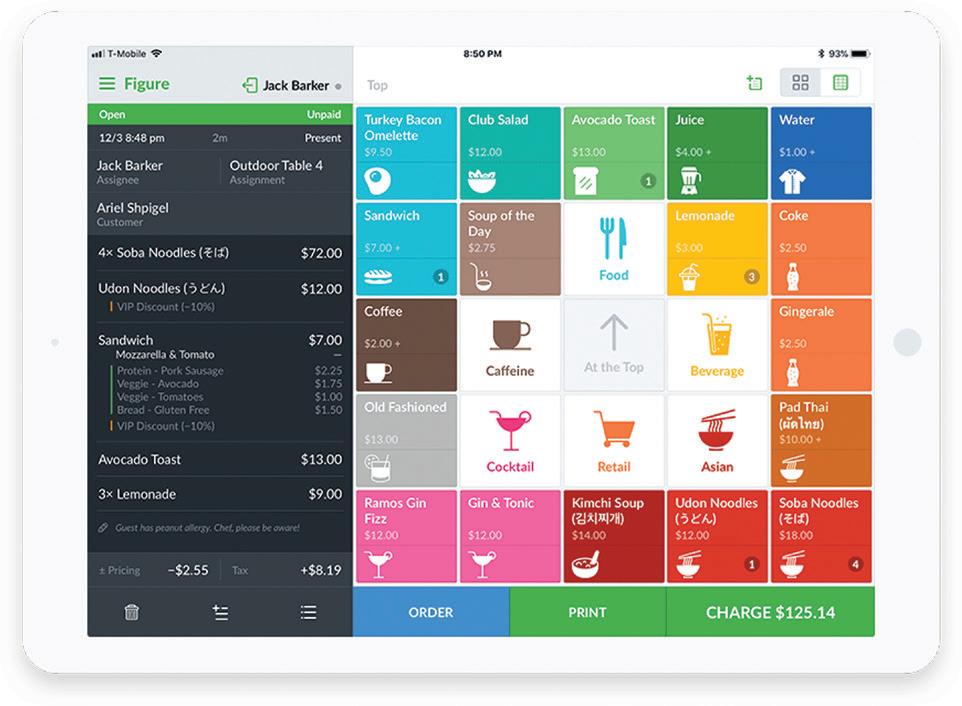
In March, PayBright invested in Figure, a New York-based mobile payment so ware company that specializes in restaurant POS systems. Restaurants make up about a quarter of PayBright’s client base, more than any other vertical.
e investment gave PayBright an exclusive with a competitive system in a key industry, and augments its agent’s abilities to nd solutions in other industries.
Jin Woo Park, the founder and CEO of Figure, expects “to achieve 500%-plus growth in year over year partnership sales,” according to a press release.
Magaziner routinely sends his personal calendar to PayBright’s vendors, so they can sit in on video meetings where he discusses products, trends, and strategies. At one time, he said each PayBright sales partner had his cell phone number.
“I’m not quite sure that is still true. I wish it was, but it’s not as easy with a larger business.”
Magaziner thought there was a better way, so he formed PayBright in 2012.
PayBright is not a technology company, but the rst step in empowering its agents is making sure that they have solid payment process so ware systems to sell.
A signi cant number of the company’s sta ers work on the “POS Desk,” which focuses on meeting the agents’ technology needs. e desk sta solves problems, conducts demos, and helps integrate POS products with a client’s other systems. e latter approach is rare in the payment processing industry, says Magaziner.
“An agent might walk into a grocery store, where all these systems are in place,” says Magaziner. “Can he come up with a (POS) solution that will tie into what they’re already using for inventory and so forth? Can (the company) integrate without having to switch anything? e bigger the business, the more expensive and costly it becomes to change POS or hardware. But, they might be willing to work with us if we can make that work.”
Most payment processing companies don’t want to get involved in the time-consuming process of technical integration, he says. So if a sales agent asks for help, the typical answer is no.
“ at’s a bad idea because it puts all on the agent’s shoulders. at’s not helpful for anyone,” he says.
While 35 of the company’s employees work in Raleigh, Magaziner’s senior sta includes people who live in Atlanta, Houston and Montreal.
PayBright has a happy problem of struggling to keep up with inquiries from potential new sales partners, Magaziner says. Most agents work on their own, or are part of small teams that have intimate knowledge of an industry.
“(Landing new agents) is the secret sauce for us,” he adds. Magaziner says his company is attractive to potential buyers, but the prospect of a sale is not his ambition.
“I’m entrenched in this industry,” he says. “ ere will be a lot of changes in the years ahead: Will crypto play a role, A.I., etcetera. But I think all that is just an opportunity. And we’re in a good position. PayBright has no debt, no external investors. And, hey, I’m 33. So retirement, and so forth, it’s not on my mind right now.” ■
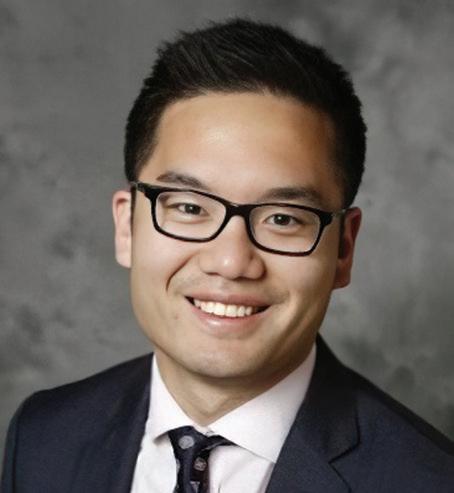
▲ Dustin Magaziner, CEO and founder of PayBright
▲ PayBright invested in New York-based Figure, which provides payment software used by restaurants.
▲ Jin Woo Park, Figure CEO
LEGENDARY LOYALITY
The career of a Sanford retailer makes for a Hallmark-style, heartwarming tale.
By Bill Horner III
Joe Purce carved time out of his 89th birthday to take a kind of inventory, looking around, reflecting, making notes.
He wasn’t reminiscing. Purce was reconciling, examining spreadsheets, cost-of-sales reports, and trying his darndest (without success) to re-hang sandals that had fallen from a display rack at his Kathryn’s Hallmark store in Sanford.
Besides working full time as he nears nonagenarian status, he recently celebrated the 67th anniversary of his connection to the greeting-card behemoth.
His doctor warned him not to quit during a routine exam. “‘Well, yeah, we’ve had a good visit, and you’re looking OK and all that,’” his physician told him. “And he said, ‘But that one thing you talked to me about, about getting rid of the store … With your personality, I don’t want you selling, because the first thing is that you’re going to get lazy. And then you’re going to trip and fall, and then you’re going to break something — and then you’ll be gone.’”
Purce laughs at the recollection. “Hey, Gerry,” he told his doctor. “Be a little more direct, would you please?”
FAR FROM FIFTH AVENUE
Purce’s past 27 Hallmark years have been in Sanford. It’s a lifetime away from Fifth Avenue in New York City in December 1958, when the 22-year-old Iona College graduate got a job stocking Hallmark merchandise at R.H. Macy & Co.’s flagship store in Herald Square.
Hallmark sold greeting cards, gift wrap and note paper, as it does today. Eighteen-year-old J.C. Hall founded the business in 1910 by hawking postcards out of shoeboxes around Kansas City, Missouri. Its 1,130-plus Hallmark Gold Crown retail stores are
▲ Joe Purce has owned Kathryn’s Hallmark in Sanford since 1998.
now part of a diversified company, including Crayola markers and the Hallmark cable TV channels. Descendants of J.C. Hall still own the business.
Hallmark’s product diversification gave Purce an opportunity. He left Macy’s in 1970 to help open the Hallmark Gallery store, also on Fifth Avenue, becoming its retail manager. One December day, exhausted from a holiday crush, he dropped into the men’s restroom. Hallmark’s founder was there, too.
“Who are you, young man?” the elderly Hall asked, then asked Purce to help carry his bags to the Plaza Hotel. Purce accepted the assignment, and with Hall thus cornered, picked the older man’s brain about Hallmark’s success and philosophy.
Purce leveraged those insights in 1974 after acquiring the Hallmark store in Woodbridge, New Jersey, seeking to “try to do something on my own, rather than working for a corporation.”
Throughout the ‘70s and ‘80s, Purce owned, then eventually sold, a dozen Hallmark retail shops.
By 1990, ready for a change, he took a departure, selling “Precious Moments” collectibles to Hallmark stores and other retailers around New England.
A ‘JOE PURCE STORE’
In 1998, the company’s national credit manager, a friend of Purce’s, told him that Hallmark’s store in Sanford was for sale. Ready for a more temperate climate, Purce bought the business, naming it after a granddaughter. He expanded the space and the product line. In 2020, the store moved to the Spring Lane Galleria off U.S. 1 in a space covering 12,000 square feet, or about four times the size of most Hallmark stores, he says.
‘DO I ENJOY IT? YEAH.’
These days, as he has since the beginning in Sanford, Purce rises around 6, has breakfast, then typically arrives at Kathryn’s Hallmark by 7:30. He completes a few set-up tasks and plans his day. He’ll scoot out around 9 to grab himself a second coffee and orders of oatmeal for himself and his wife Pat from McDonald’s (“second breakfast,” he calls it), then heads back to the store, which opens at 10 a.m.
He splits time between inventory-related tasks and reviewing reports in his windowless office and roaming the floor, where he’s gregarious in greeting familiar customers and fastidious about displays. He leaves by 4 p.m. Lunch, if he eats at all, might be an apple. He’ll unwind with a beer at the nearby Camelback brewpub, then head home for dinner with Pat.
At first, about 75% of his revenue came from Hallmark lines. After adding Pandora jewelry, Vera Bradley handbags and products from about 150 vendors, now about a quarter of store revenue is Hallmark-related. He calls his $1 million inventory “a Joe Purce store.”
“They’re not a franchise,” he says of Hallmark’s retail business. “They’re just a label, but they control who gets that label … This store is much bigger than the average Hallmark store, so therefore you’ve got to fill it.”
Replenishing inventory from so many vendors, and seeing what is selling and anticipating what might sell better, is both Purce’s work and nemesis.
“If we have too much inventory, we’ve got a problem,” he says. “And if we have too little, we have a problem. You can’t do business from an empty cart, but if it’s too full, we can’t pay our bills.”
“Do I enjoy it? Yeah,” Purce says. “Is it fatiguing at my age? Yes. I don’t think there are too many people this age, who’ll be hitting 90 next year, that would keep doing this.”
He admits he doesn’t “have the killer instinct, the drive” he did in his early days. Computerized inventory systems frustrate him, keeping him from time on the floor.
But he has few regrets. And a goal: to eventually sell to the right buyer. Then, ask for a job.
“If they want me here, I could be out front, or back in the office,” he says. “Whatever it might be. I’m like a lump sitting back in the office.”
What would J.C. Hall say if he walked into Kathryn’s Hallmark to see Purce still at it, 67 years later?
“Very loyal, son,” Purce says. “Very loyal.” ■
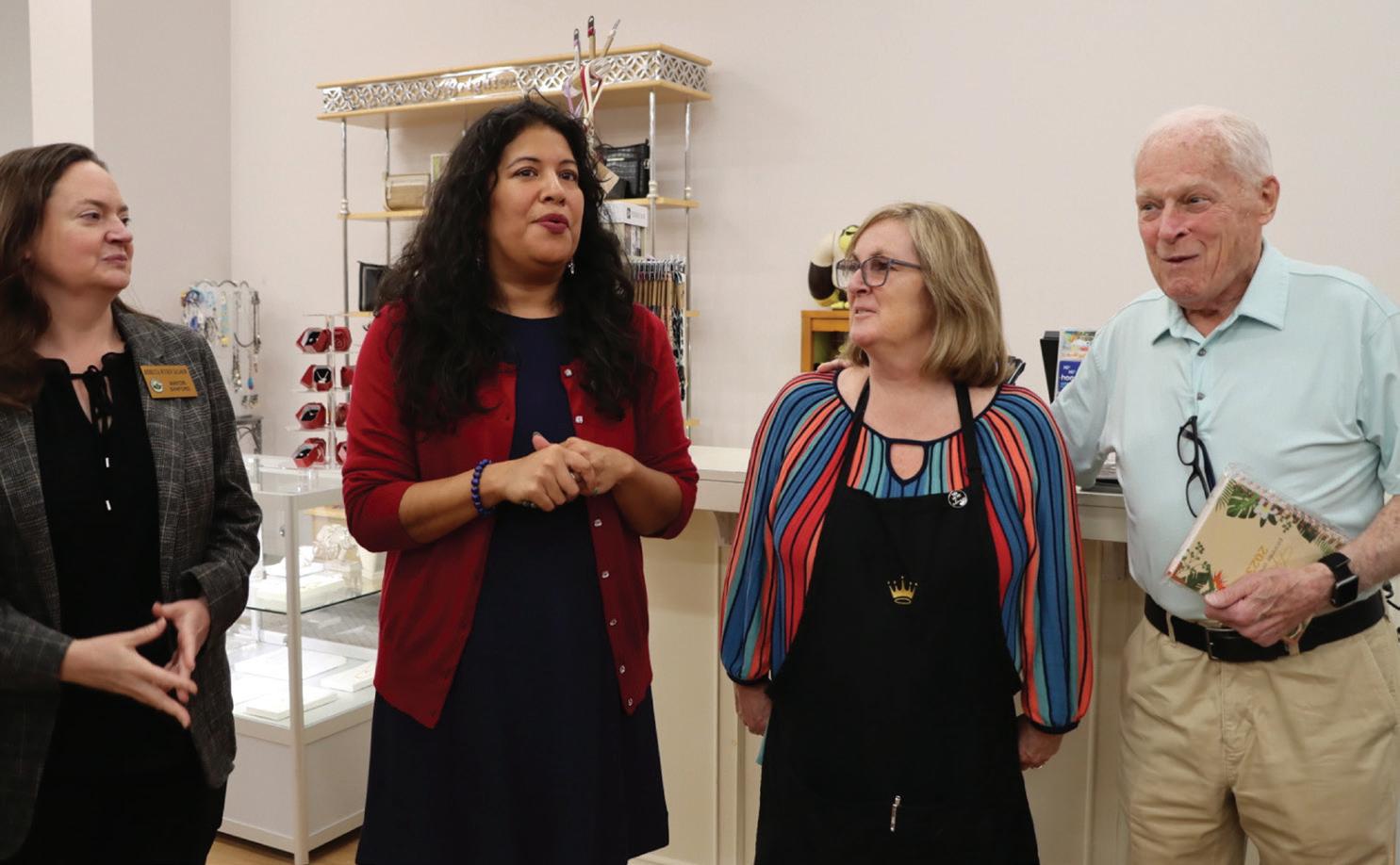
▲ Purce and his store manager, Susan Bradley (second from right), hosted a Moore County Chamber of Commerce event. Attendees including Southern Pines Mayor Rebecca Salmon (far left) and chamber director Susan Gomez.
TEEING OFF
North Carolina lands its third PGA Tour event of 2026, striking a big opportunity for Buncombe County.
By Kevin Ellis and Brad King
When the PGA Tour returns to Asheville next fall for the first time in more than 80 years, the Blue Ridge Mountains will find themselves on golf’s map during one of the Tour’s most consequential stretches.
The Biltmore Championship in Asheville will be held Sept. 17–20 at The Cliffs at Walnut Cove. A four-year agreement between the PGA Tour, Biltmore Estate and Explore Asheville has attracted a FedExCup Fall event at a point in the schedule where players compete to retain Tour cards, secure exemptions and qualify for the significant tournaments in the following year.
“We look forward to building a partnership that spotlights the strength and beauty of the area and its community,” says Tyler Dennis, the PGA Tour’s chief competitions officer.
The late-September placement is strategic. Under the tour’s current format, the top 70 players from the FedExCup regular season qualify for the playoffs, then the top 50 advance to the BMW Championship, and the top 30 reach the season-ending Tour Championship, which is held in late August. Players ranked from about 70th to 150th then use the FedExCup Fall events to improve or secure status and to earn pathways into the following season’s so-called “Signature Events.”
Biltmore Championship will be a proving ground for rising players, though it may not attract the tour’s top performers. Many tend to take breaks in the fall after a season that runs from January to August.
Tour executives have spent the past two years rethinking the autumn schedule, seeking destinations that offer strong tourism appeal, elite golf facilities and the infrastructure to host a televised event. Once viewed as a low-profile stretch, the seven-event FedEx Cup Fall gives those outside the top tier of the FedEx Cup standings a chance to play their way into better rankings and additional starts the following year.
The Asheville tournament purse is expected to be in the $8 million to $9 million range, similar to other FedExCup Fall events, according to industry sources. That doesn’t match the $20 million purses of “Signature Events” such as Charlotte’s Truist Championship, which is set for May 7-10. But it should attract a competitive field of motivated players.
Placing an event in Asheville also showcases one of North Carolina’s most desirable destinations. Television coverage will include Golf Channel, PGA TOUR LIVE on ESPN+, and SiriusXM, showcasing the region for a global audience.
The announcement was made about a year after Tropical
Storm Helene brought historic flooding and landslides to western North Carolina. Local leaders frame the event as an economic catalyst and a civic point of pride. Visitor spending in Buncombe County declined more than 10% in 2024 to $2.65 billion, which officials blamed mostly on Hurricane Helene’s impact.
“Bringing a world-class golf tournament to the mountains of North Carolina creates an opportunity to make a positive, enduring impact on our community and economy,” said Mark Hemphill, Biltmore’s chief marketing officer.
Explore Asheville president and CEO Vic Isley added that the event is expected to draw more than 100 players, thousands of spectators, and generate millions of dollars for area businesses, along with a charitable impact.
The Buncombe County Tourism Development Authority, which runs Explore Asheville, has an annual budget of about $26 million, the largest in North Carolina. Laws require that two-thirds of the money goes for promotion and one-third for capital projects. Funding comes from a 6% occupancy tax paid by overnight visitors in Buncombe. An 11-member volunteer board oversees the group.
The Cliffs at Walnut Cove development is in Arden, just south of Asheville. The 7,167-yard, par-72 course was designed by Jack Nicklaus and opened in 2005 in the foothills of Pisgah National Forest. It’s one of seven private communities in The Cliffs portfolio, owned since 2019 by the Charlotte-based South Street Partners investment firm.
Asheville’s connection to professional golf dates back more than a century. The Asheville Open launched in the early 1920s, and the city’s Land of the Sky Open appeared on the PGA Tour schedule from 1939-42. Ben Hogan won the final three editions, including his first individual Tour title in 1940.
With the Biltmore Championship, North Carolina becomes the fourth state, with California, Texas and Florida, to host three annual PGA Tour stops. In addition to the Truist, the Wyndham Championship is planned for Aug. 6-9 at Sedgefield Country Club in Greensboro.
Also, the PGA Tour has a “second headquarters” in Pinehurst, where a series of major men’s and women’s tournaments are planned over the next decade.
Aligning with Biltmore, which is America’s largest privately owned home and a global tourism attraction, lends the event credibility and regional resonance. The home is owned by the descendants of George Vanderbilt, who opened his residence in 1895. The Biltmore Company operates the estate, along with other hotels and real estate holdings in Asheville, and is led by Bill Cecil Jr., a great-grandson of George Vanderbilt.■
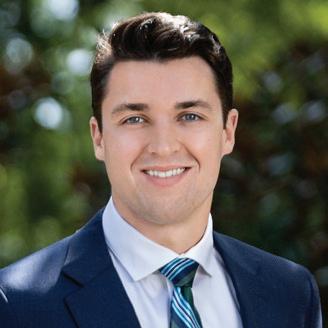
▲ Mark Hemphill, chief marketing officer of Biltmore
Cliffs at Walnut Cove is about seven miles northeast of Asheville Regional Airport.
Primer for North Carolina Creditors Navigating the Bankruptcy System
by Thomas Wolff and Jameson Doub
The Bankruptcy Code is complex and difficult to navigate. But when used properly, it can help creditors to minimize losses when a customer files bankruptcy.
For North Carolina businesses, from small manufacturing companies in the East to growing tech firms in the Research Triangle, understanding trade secrets has never been more critical.
What Does the Bankruptcy Filing Mean?
The Bankruptcy system serves three basic purposes: It (i) provides a single forum to deal with the assets and liabilities of an insolvent debtor, (ii) provides the honest, but unfortunate, debtor with a "fresh start," and (iii) if a debtor chooses to reorganize its debts, it provides a process for saving and preserving the going-concern value of a business.
Bankruptcy has different chapters depending on the debtor's objectives. Chapter 7 is liquidation. A trustee is appointed to take control of and sell the debtor's property. Typically, the Customer's assets will be surrendered to those creditors holding security interests sold by the trustee to generate proceeds for distribution to creditors. Individuals or businesses may file Chapter 7, but only individuals can obtain a discharge of their debts.
Chapter 13 is available to individuals only. In a Chapter 13, the debtor keeps his or her assets and proposes a threeto five-year payment plan. Depending on several factors, including the debtor's income and available assets and whether you are a secured or unsecured creditor, recovery can vary. Similar to Chapter 7, Chapter 13 has a trustee, but their role is to be a monitor and conduit for distributing plan payments to creditors.
Chapter 11 bankruptcy is a reorganization proceeding available to businesses and wealthier individuals whose debt levels exceed the less burdensome Chapter 13 requirements. Similar to Chapter 13 cases, the Customer will file a plan of reorganization outlining the Customer's proposal to modify and repay debts. However, in Chapter 11, creditors generally take a more active role in the proceeding and plan approval process to ensure that their rights are preserved and not adversely affected by the Customer's proposed plan. Once a plan has been approved by the Bankruptcy Court, payments are made pursuant to its terms.
The Automatic Stay
Immediately upon the Customer's bankruptcy filing, a substantial impact on a creditor's ability to exercise its rights is imposed.
The "automatic stay" provision of the Bankruptcy Code stops creditors from virtually any collection activity against the Customer, providing the Customer with room to reorganize its debts without the threat of collection actions from their creditors.
Any action to collect an unpaid debt from the Customer or to recover property now under the protection of the Bankruptcy Court is considered a violation of the stay. Actions to obtain or enforce a lien on property of the bankruptcy estate are also prohibited. Further, a "co-debtor stay" may also prevent efforts to collect from individuals jointly liable with the Customer on that debt, even if they have not filed their own bankruptcy case.
In light of the automatic stay, proceeding with great caution is of the utmost importance, as penalties can result in sanctions against the creditor, including payment of fines, the Customer's attorneys' fees, and/or the creditor losing rights in the bankruptcy case itself. If you receive notice that the Customer has filed for bankruptcy protection, quickly seek the assistance of knowledgeable legal counsel to minimize your exposure.
Payment Rights and Other Remedies
If relief from the automatic stay is granted by the Bankruptcy Court, creditors may proceed with taking certain actions prohibited at the outset of the case. For example, a creditor may secure relief to recover collateral or proceed with a suit against the debtor or a non-filing individual.
If goods were sold to the Customer on credit within 45 days preceding the bankruptcy filing, you may be able to reclaim the goods from the Customer. You may also be entitled to an administrative claim for the value of any goods sold to Customer in the 20 days immediately preceding the bankruptcy filing. To avail yourself of these options, formalities and procedures must be strictly followed, and quickly, to avoid expiration of your rights.
Some debts may be "non-dischargeable." If the creditor can show some exception to the general rule (e.g., debts incurred through fraud, larceny, or embezzlement), the Customer will remain responsible for repayment at the conclusion of the proceeding. Again, there are strict burdens and time requirements for non-discharge claims, so creditors should discuss with their legal counsel to preserve their rights.
Finally, you can also file a Proof of Claim with the Bankruptcy Court evidencing the debt owed to you by the Customer. This option similarly imposes strict burdens and deadlines on filing requirements. Acting early is advisable, ensuring your claim is recognized, and you are kept abreast of the status of the bankruptcy proceeding. Filing a Proof of Claim does not guarantee recovery but does preserve a right to payment in the case.
Every bankruptcy filing is different, and the underlying facts will impact your rights and influence your overall collection strategy. Proactively seek guidance on proper pre-bankruptcy loss mitigation efforts and understand that all risks of loss cannot be avoided. If a customer does file bankruptcy, act carefully, but quickly to meet deadlines, preserve rights, mitigate losses, and receive payment during the life of the case. The most effective way to do so is by seeking competent legal counsel experienced in navigating the complex and intricate bankruptcy system.
Jameson A.E. Doub
jadoub@wardandsmith.com 252.215.4019
Thomas C. Wolff
tcw@wardandsmith.com 919.277.9127
wardandsmith.com
This article is not intended to give, and should not be relied upon for, legal advice in any particular circumstance or fact situation. No action should be taken in reliance upon the information contained in this article without obtaining the advice of an attorney.
PRIVATE MATTERS
Two powerful Charlotte public companies are selling after years of listless stock market performance.
By Kevin Ellis and David Mildenberg
Two prominent Charlotte public companies have been taken over in recent months by private equity groups, continuing a trend that shows no sign of slowing down.
Both Brighthouse Financial and Premier were profitable companies with businesses tied to baby boomers. Brighthouse is a leading seller of annuities and life insurance products, while Premier aims for efficiencies in the healthcare sector, where spending is dominated by an aging population.
Neither company’s results impressed investors after many years on the public markets, making them targets for PE groups that expect to unlock value missed by others.
In early November, New York-based Aquarian Capital announced it would buy Charlotte-based Brighthouse Financial for $4.1 billion. The 1,400-employee company began trading on Nasdaq in August 2017 following its spinoff from insurance giant MetLife. Its stock opened more than eight years ago at about $65, while the Aquarian deal proposes a $70 per share payout.
Shares traded for less than $30 for much of 2020, amid the pandemic. But it has mostly been in the $40 to $50 range since then.
In September, healthcare service provider Premier agreed to be sold to Menlo Park, California-based Patient Square Capital for $28.25 per share, or $2.6 billion. That compares with Premier’s IPO price of $27 in 2013.
Premier is among the largest alliances of hospitals, nursing homes, surgery centers and other healthcare sites that buy billions of dollars of supplies annually. It has added other services over the years to help those providers cut costs and improve patient care.
The company’s shares reached a record high of $45 in 2018, but slumped over the past two years, trading for less than $25 during that period.
BRIGHTHOUSE’S STORY
Brighthouse is a large and well-capitalized company. It has 2 million customers, assets of $243 billion and solid reports from A.M. Best and the other credit rating agencies. CEO Eric Steigerwalt has led the company since the 2017 spinoff and will remain in charge, Aquarian said when the sale was announced.
But the company reported fluctuating results. It posted net income after dilution of $286 million last year, after reporting a $1.2 billion loss in 2023 and gains of $3.8 billion in 2022 and $1.5 billion in 2021. It also bought back more than 40% of its shares between 2018 and 2025, reducing the float to about 62 million shares.
It marks one of the largest recent acquisitions of a U.S. publicly traded insurer and underscores private equity’s growing appetite for life and annuity platforms, according to Private Equity Wire.
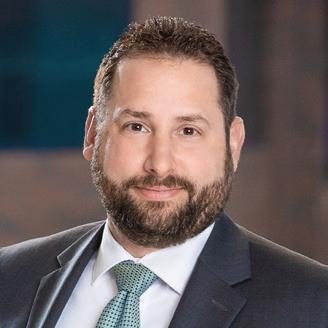
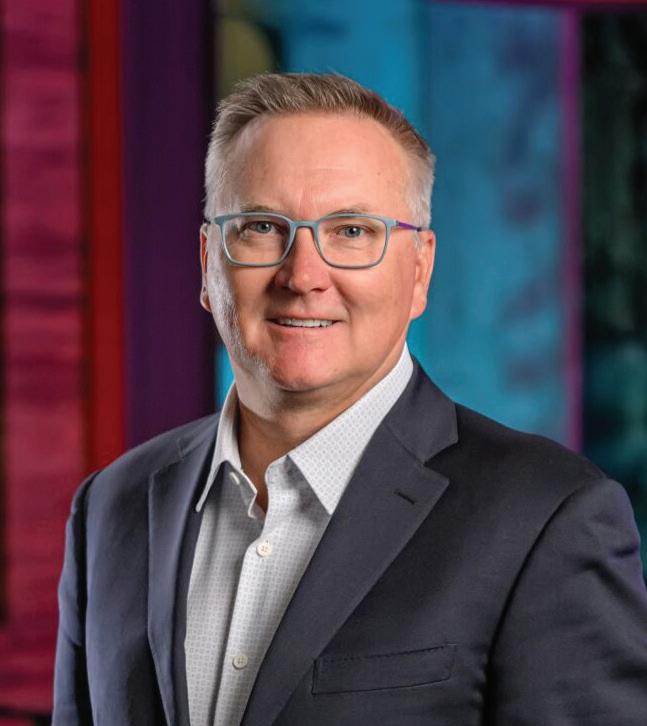
Eric Steigerwalt
Aquarian said Brighthouse Financial will operate as a standalone entity, keep its name and remain headquartered in Charlotte’s Ballantyne area. “This transformative transaction marks an exciting new chapter for Brighthouse Financial and is the culmination of a process initiated by our board of directors earlier this year,” Steigerwalt said in a release. He has received annual compensation averaging $10 million over the past three years.
Founded in 2017, New York-based Aquarian Capital has approximately $25.6 billion in assets under management with 35 investments. It is backed by New York City-based RedBird Capital Partners and Abu Dhabi state fund Mubadala.
The deal requires shareholder and regulatory approvals.
“The acquisition of Brighthouse Financial aligns perfectly with our strategic focus on the United States retirement market, which represents a significant and growing opportunity,” said Rudy Sahay, founder and managing partner of Aquarian Capital. “We plan to preserve Brighthouse Financial’s disciplined and thoughtful approach to distribution, products and services while accelerating its strategy through continued investment and customer focus.”
PREMIER’S STORY
Premier was formed through the 1996 merger of Charlottebased SunHealth Alliance, Chicago-based Premier Health Alliance and San Diego-based American Healthcare. It has 2,700 employees and, like Brighthouse, is based in the Ballantyne office park in south Charlotte. Its mission has been to help providers become more efficient and control soaring healthcare costs.
Premier’s member owners, primarily hospitals, had voting control of the company’s shares until a 2020 restructuring. Now, the biggest owners are investment giants BlackRock and Vanguard Group, which own 14.6% and 12.6% of Premier shares, according to its 2024 proxy statement.
The company’s shares reached a record high of $45 in 2018, but slumped over the past two years, trading for less than $25 during that period.
Premier’s net income from continuing operations totaled $62 million in its June 30 fiscal year, down from $117 million in 2024 and a peak of $598 million in 2020. Revenue was $1 billion last year, declining from a record $1.7 billion in 2021.
The sale followed “careful consideration of a wide range of strategic alternatives in recent years,” Chairman Richard Statuto said in a release.
“We believe this transaction is in the best interests of Premier and its stockholders and, upon closing, will deliver immediate and certain value to our stockholders, while simultaneously providing the company with access to additional capital that can accelerate the support and services provided to members and other customers during this critical time in healthcare,” he says.
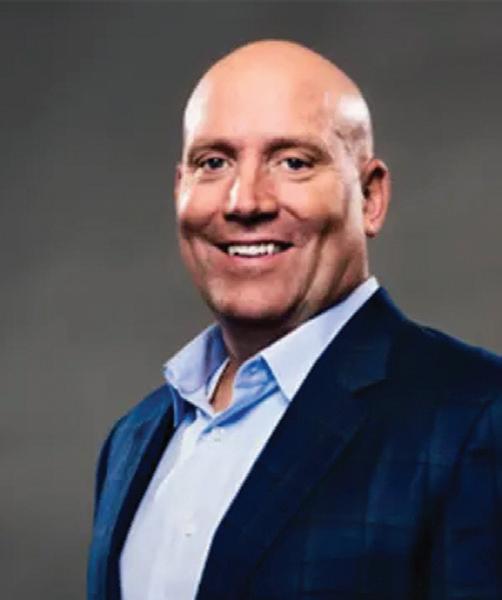
CEO Michael Alkire joined the company in 2003 and became chief operating officer in 2013. In 2021, he succeeded Susan Devore, who had been CEO for 12 years. Alkire’s annual compensation has averaged $9.2 million over the past three years.
Patient Square Capital invests in healthcare and has more than $14 billion of assets under management. Earlier this year, the company bought St. Paul, Minnesota-based dental and animal health supply company Patterson for $2.6 billion.
“We have long admired Premier as an innovator of essential services and products to its members, which are leading institutions and providers in the U.S. healthcare system,” Patient Square Founding Partner Neel Varshney said in a release. “Our team sees tremendous opportunity for Premier to continue growing its differentiated portfolio in supply chain services, data and technology offerings, and consulting solutions that deliver value to patients.”■
Michael Alkire
SOLIDER STATESMAN
A big-hearted nonprofit leader helps inspire struggling veterans.
In October, I was invited to a lunch at a downtown Raleigh hotel for the Veterans Life Center, which is in Butner, next to the state mental health complex. I was not familiar with the VLC, despite writing about the military and veterans for the last seven years.
There are a lot of veterans groups in North Carolina, with 95,000 active-duty service members and more than 600,000 veterans living here.
The invitation showed that the NC Chamber’s CEO, Gary Salamido, would be participating in the event. Speakers included U.S. Sen. Thom Tillis and Gov. Josh Stein, which got my attention.
The lunch was the kickoff of the center’s two-year initiative to connect veterans with North Carolina’s business community, funded by a $750,000-grant from the U.S. Department of Labor. The focus would be getting veterans about to leave the military into the SkillBridge Program, which is a Department of Defense program that places service members with employers at no cost to the business, for up to six months. The service members continue to receive military pay. It is a smart program intended to get transitioning veterans into good careers.
But I felt like there was more to this story than the SkillBridge initiative. I went to Butner to learn more, and about John Turner, the center’s founder and executive director.
His single-minded effort after combat in Iraq to help veterans in trouble is the reason we were at the lunch. Over the past 15 years, he has impressed many influential folks who have helped turn his vision into a 50-room residential facility, which opened in 2020.
TURNER’S JOURNEY
The vast majority of veterans are not homeless, dealing with addiction, or in jail. But enough are, and folks want to help them. Turner’s idea was to go beyond stabilizing them, to helping them achieve success.
He is a big, gregarious fellow who grew up in Indiana. Neither of his parents graduated college; their goal was that their children would do so.
But Turner was not headed for college in the early ‘90s. By his own description, he was “not a great high school student.” He told me his story while we were sitting in a spacious conference room at the VLC, a 40,000-squarefoot facility that cost about $8 million. Much of the funding came from a $7.8 million federal Housing and Urban Development grant.
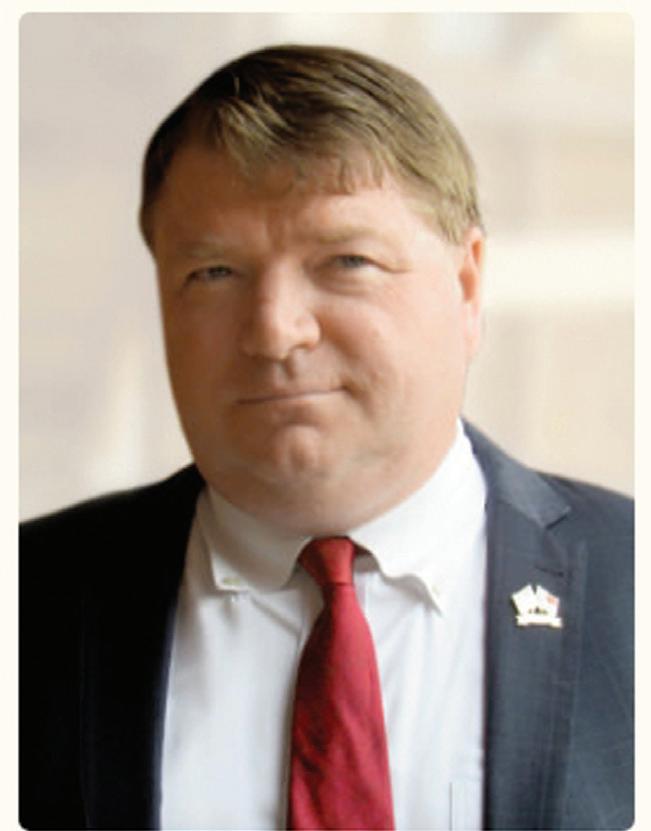
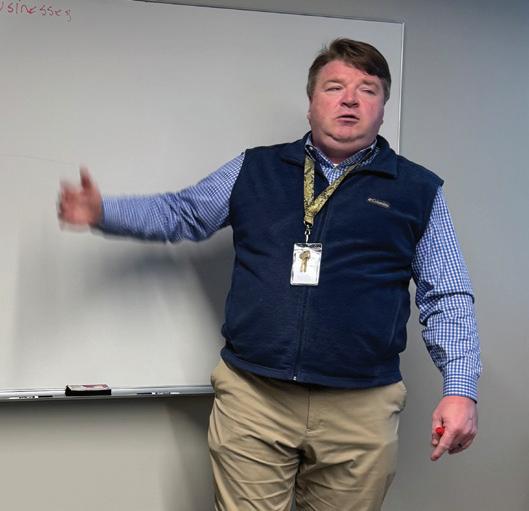
John Turner
“If you would go back and ask any high school teacher I had, ‘Who do you think created a multi- million-dollar innovative non-profit with the support of U.S. senators and a governor?’ I don’t think my name would have been at the top of their list.”
Turner joined the Coast Guard, serving from 1992 to 1996. Then he went to college, graduating from Purdue and, eventually, gained an Army commission through ROTC. “I lost my focus on ROTC and was suspended from the program,” he says. Turner had more work to do at Fort Lewis in Washington state to finish up ROTC. “My life is full of struggles, resiliency, resolve, achievement,” he explains.
When he joined the Army in early 2003, the U.S. was preparing to invade Iraq, and in 2005, Turner deployed to Mosul with the 172nd Stryker Brigade Combat Team.
This is from a 20-year-old story in the Los Angeles Times, written by war correspondent Robert Kaplan:
Throughout Iraq, young Army and Marine captains have become veritable mayors of micro-regions, meeting with local sheiks, setting up waste-removal programs to employ young men, dealing with complaints about cuts in electricity and so on. They have learned to arbitrate tribal politics, to speak articulately and to sit through endless speeches without losing patience.
I watched Lt. John Turner of Indianapolis get up on his knees from a carpet while sipping tea with a former neighborhood mukhtar and plead softly: “Sir, I am willing to die for a country that is not my own. So will you resume your position as mukhtar? Brave men must stand forward. Iraq’s wealth is not oil but its civilization. Trust me by the projects I bring, not by my words.”
Turner, a D student in high school, got straightened out as an enlisted man in the Coast Guard before earning a degree from Purdue and becoming an Army officer. He is one of what Col. Michael Shields, commander of the 172nd Stryker Brigade Combat Team in Mosul, calls his “young soldier-statesmen.”
Is it any wonder that when Turner got out of the Army as a captain in 2007, he wanted to do something substantial?
‘I’VE GOT THIS PLAN’
While working in South and North Carolina for John McCain’s unsuccessful 2012 presidential campaign, Turner made influential Republican friends, particularly in the Raleigh area. He was practically broke, doing sales with side catering gigs. No matter.
He had an idea for a nonprofit that would build a residential facility for veterans needing many services to get on their feet: training, healthcare, spiritual guidance, financial literacy.
He got invited to speak at a Wake County Republican club, hoping to collect the $1,200 needed to create a 501(c)(3). He raised $1,400. An attendee that night was then-N.C. Rep. Marilyn Avila, who wrote a check and connected him to Thom Tillis, who had just become speaker of the N.C. House.
At the October luncheon, Tillis recalled the meeting.
“Marilyn Avila knew this guy that wanted to talk about some veterans project. And so we scheduled it in my office and in comes Marilyn and John Turner. He says, ‘I’ve got this plan, this plan for a Veterans Life Center.’ He’s going through the whole thing. When he got finished I said, ‘John, you’ve got an idea. You don’t have a plan. I think it’s a very compelling idea, but I’m an execution guy. Now, put some meat on the bones and get back in touch with me. We’ll see what we can do to help.’”
And Turner did. Tillis proved instrumental in getting the federal grant. “Without him,” says Turner, “that didn’t happen.”
CARRYING PEOPLE
There is a short video on the Veterans Life Center website that describes the experience of Kyle Harris, an Army veteran of Iraq who turned to drugs to cope with memories of combat. Five years ago, he was homeless, suffering from PTSD, in trouble with the law and estranged from his family.
“He was here two years,” says Turner. “He came to us on a judicial deferment program. He left here a Dallas Herring award winner.”
The Herring award goes to an outstanding student in the NC Community College System. Harris won it for his work as a student in Vance-Granville Community College’s Automotive Systems Technology program. The award is given to the student who best embodies Herring’s philosophy of “taking people where they are and carrying them as far as they can go.”
Which is also a good way to describe the Veterans Life Center. ■
Veteran journalist Dan Barkin writes the NC Military Report newsletter for Business NC. He can be reached at dbarkin53@gmail.com.
Kyle Harris
CHARLOTTE
CHARLOTTE
Jeld-Wen Holding will cut 850 jobs, or about 11% of its North American and corporate workforce, by year’s end as part of a major restructuring. The door and window manufacturer employs 279 people in its headquarters city, 200 in North Wilkesboro and 235 in Statesville.
Counter, a restaurant led by chef Sam Hart, earned North Carolina’s first Michelin Star as the guide expanded to the American South. Counter also received a Green Star for sustainability, joined by Asheville’s Luminosa. Bib Gourmand nods went to Raleigh’s Mala Pata and Sam Jones BBQ, among others statewide.
Solstice Advanced Materials completed its spin-off from Honeywell. Solstice is headquartered in Morris Plains, New Jersey, where Honeywell had its headquarters until 2018. Solstice has 4,000 employees and 24 manufacturing sites and will focus on HVAC,
semiconductor manufacturing, data center thermal management, nuclear energy and life sciences.
Walmart filed plans for its first drone delivery site, partnering with Wing to deliver groceries, meals and medicine within six miles of its North Tryon Street store. The project expands a program operating in Texas and Arkansas.
Johnson & Wales University had its largest incoming class since 2018, with 568 students, and its most total enrollment since 2020, with 1,298. The higher enrollment comes before next fall’s launch of a program that will award a 90-credit-hour bachelor’s degree in hospitality management.
San Francisco-based SoFi Technologies will expand its East Coast presence with an office in the Ballantyne area, where it plans to add 225 jobs by 2030. The new jobs will pay on average $108,436. The jobs include loan officers, loan processors, underwriters, chief experience analysts and sales and management teams.
Pacific Life plans to invest $12.3 million and will create 301 jobs, paying an average wage of $176,250. The Newport Beach,
California-based company secured an 11-year, 68,000-square-foot lease at the Queensbridge Collective building in the South End area. Full occupancy is expected in 2028.
Los Angeles–based Mesa West Capital bought The Towers at SouthPark for $158.8 million in a foreclosure bid. The 430,000-square-foot twin office towers were previously owned by Crestlight Capital, which defaulted on a $167.8 million loan. The property is 77% leased following a recent $20 million renovation.
Forbes valued the Charlotte Hornets at $3.8 billion, a 15% increase from 2024. NBA franchise values rose 21% overall. The jump follows the $245 million Spectrum Center renovation and a new $76 billion media rights deal, boosting revenue by 39%.
Charlotte Magazine, which has been published by various owners for nearly 60 years, is shutting down. It’s owned by Augusta, Georgia-based Morris Communications. It has similar publications in the Georgia cities of Athens, Augusta and Savannah.
Albemarle will sell a 51% stake in its Ketjen refining catalyst business to KPS Capital Partners and divest its 50% stake in the Eurecat joint venture with Axens. The two
deals, expected to close in early 2026, will yield about $660 million in pre-tax proceeds.
Twelve faith organizations, including The Park Ministries, New Hope Baptist, and St. Mark’s UMC, will build affordable housing on 88 acres of underused land through the city’s Faith in Housing initiative. Supported by $430,000 in city funding and Enterprise Community Partners, the program will add mixedincome, senior and supportive housing.
Next Glass acquired local software startup Ekos, combining two of the beverage industry’s leading technology platforms. The deal, backed by Boston private equity firm PSG, consolidates both companies’ teams at The Refinery building, creating a 120-employee hub and expanding Next Glass’ reach to 75 countries.
CHARLOTTE
Scout Motors will invest about $207 million and create 1,200 jobs to relocate its headquarters from northern Virginia. The new jobs will pay on average $172,878 a year, about twice the current average wage in Mecklenburg County. The Volkswagen-backed company has a $2 billion electric vehicle plant under construction in South Carolina and expects to be producing trucks and SUVs by late 2027.
Power systems manufacturer Schweitzer Engineering Laboratories will build a 50,000-square-foot office and manufacturing building near its Center Park Drive site, part of a $90 million, three-state expansion. The $15 million project will enhance SEL’s panels and enclosures operations, adding 370,000 square feet of new space nationwide by 2027.
Truist, the nation’s ninth-largest banking company, will require its employees to work onsite five days a week, starting Jan. 5. Truist’s investment bank has had a full-time, in-office requirement since last fall, while most other workers have been expected to be in the office at least four days a week. More than 3,000 of Truist’s 40,000 employees work in the metro area.
BOILING SPRINGS
Gardner-Webb University removed the interim from Nate Evans’ title and named him the 14th president of the private Baptistaffiliated university. The Air Force veteran has worked at Gardner-Webb since 2020 and had been the interim president since February after William Downs became president of Campbell University.
HICKORY
Sherrill Furniture debuted a line of modular, freestanding storage cabinets aimed at designers and homeowners seeking customizable, American-made options. The line offers flexible configurations, quick lead times and prices roughly half those of custom built-ins.
HUNTERSVILLE
Houston-based Hines paid $274.4 million for the Birkdale Village retail and residential development. The 673,000-square-foot mixed-use open-air center had been owned in a joint venture by Atlanta-based Jamestown and Nuveen, a Chicago-based subsidiary of the TIAA investment firm. Birkdale Village’s retail is 99% leased and includes Apple, Arhaus, Kendra Scott, Lilly Pulitzer and Lululemon. It also has 320 multifamily units that are 97% leased.
MCADENVILLE
New Jersey-based Mannington Mills will close the carpet manufacturing plant it acquired in 2020 from Pharr Yarns at the end of the year, putting 296 people out of work. The town of fewer than 1,000 residents has transformed itself into Christmas Town USA each holiday season since 1956, a tradition that began with the help of Pharr Yarns.
ROCKINGHAM
Amazon began construction on its $10 billion data center campus that’s expected to employ 500 workers in Richmond County over the next five years. The campus will ultimately feature 20 buildings, each spanning approximately 200,000 to 225,000 square feet, across nearly 800 acres.
EAST
BLADENBORO
Toronto-based fiberglass rebar supplier MST Rebar plans to invest more than $15.5 million and create 83 jobs to establish its first U.S. facility. MST Rebar designs, engineers and manufactures fiberglass composite material for industrial construction projects, including North Carolina’s Alligator River Bridge on U.S. 64 in Tyrell and Dare counties.
CAROLINA BEACH
Bobby Nivens, longtime owner of Britt’s Donuts on the boardwalk, died Oct. 14 at age 86. Nivens bought the iconic shop in 1974 from founder H.L. Britt after working there as a teen. Known for its warm glazed doughnuts and loyal customers, Britt’s has operated since 1939 as a summer staple for generations.
FAYETTEVILLE
Methodist University has received preliminary accreditation for its Cape Fear
NC TREND ››› Statewide
Valley Health School of Medicine, allowing recruitment for its inaugural 64-student class starting in July. Leaders say North Carolina’s fifth medical school will address the region’s physician shortage, boost the economy by $72 million annually and create 850 jobs.
Lansing Melbourne Group of Fort Lauderdale, Florida, expects to spend $70 million on a 124-unit, seven-story apartment building and a 119-room five-story hotel on top of a city-owned garage. At 12 stories, it will be the city’s tallest building. Construction is expected to begin in June and be completed in May 2028.
Fayetteville Technical Community College received its largest donation in the college’s history, a $2 million donation from Cape Fear Valley Health. The money will go toward advancing healthcare education. The nonprofit healthcare provider operates eight hospitals in a six-county area.
GREENVILLE
Vietnam-based Boviet Solar started interior construction on a second phase of its $300 million manufacturing complex, where it expects to employ 1,300 workers. That is 400 more than previously planned. The expanded facility will boost U.S. production of photovoltaic cells, with completion expected in the second half of 2026.
GREENVILLE
YouTube star Jimmy Donaldson, also known as MrBeast, is seeking a trademark for a financial services app providing services such as cryptocurrency, investment banking and a credit card. The trademark filing aligns with a 2025 fundraising pitch that outlined plans by the YouTuber to expand into financial technology, targeting MrBeast’s audience of hundreds of millions.
KINSTON
North Carolina Global TransPark Economic Development Region named Trey Cash its chief operating officer. Cash had been the economic development director for Greene County since 2022, and added Lenoir County’s efforts to his duties in July 2023. Greene, Lenoir and Wayne counties will now use the regional agency as the lead economic recruitment agency.
Stockholm, Sweden-based Electrolux will invest $26.8 million to expand its plant and add 74 jobs to expand its dishwashing manufacturing capabilities over the next two years. The company employs more than 500 and has been operating in Lenoir County since 1989. The new jobs will pay an average wage of $48,807, close to the county’s average of $48,683.
LELAND
Novant Health and Columbus Regional filed separate proposals to build hospitals about seven miles apart along U.S. 74 near the Brunswick-Columbus County line. Each plans a 30-bed facility aimed at easing crowding at Novant’s Wilmington hospital. Columbus Regional wants to build a $215 million, 30-bed hospital. Novant’s proposal is for a $20-bed, $251 million structure.
ROCKY MOUNT
Edgecombe County commissioners approved a zoning amendment allowing data centers in industrial zones, enabling Energy Storage Solutions to advance a proposed
$19.2 billion data center and energy storage project at the Kingsboro megasite. The Robersonville-based firm expects to create as many as 1,000 jobs and begin construction early next year.
SNOW HILL
Los Angeles-based Judco Manufacturing plans to invest $5.3 million and create 60 jobs in moving its headquarters and research and development operations into a 50,000-squarefoot building that has been vacant since 2024. The company makes electromechanical switches for the automotive industry, such as for seat adjustments, and bulb sockets for auto interior lighting. Average annual wages will be about $44,001, versus the Greene County average of about $39,700.
WILMINGTON
Vantaca, which provides software to manage community associations, received $300 million from Boston-based private equity group Cove Hill Partners, which officials say puts the company’s valuation at $1.25 billion. Vantaca employs 300 and has been on the Inc. 5000 list of fastest-growing private companies for five straight years.
Live Oak Bank reported $25.6 million in third-quarter net income and a $24 million pre-tax gain from selling its stake in fintech firm Apiture to Kentucky-based CSI. Assets rose to $14.67 billion, up 16% year over year, as new loans hit $1.65 billion and deposits grew by $696 million.
Starway Village, a 278-unit development billed as North Carolina’s largest affordable housing complex, opened on the former Starway Flea Market site. It’s already drawn 452 applicants.
Cyber Advisors, a Minnesota IT and cybersecurity firm, acquired Infranet Technologies Group, which employs 40 workers across offices at its headquarters and in Raleigh, Rocky Mount and Richmond, Virginia. Infranet CEO Michael Chittum said the deal expands client reach and services.
All staff will be retained as integration proceeds under the Cyber Advisors brand.
At UNC Wilmington’s Shellfish Research Hatchery, scientists are breeding disease-resistant oyster lines to combat mass die-offs that have devastated North Carolina shellfish farms. The research aims to bolster the state’s $20 million-a-year mariculture industry by developing resilient local oyster strains that can withstand climate, salinity and disease pressures.
Tech giant Intuit acquired the assets and team of startup Raleon, founded in 2022 by nCino veterans to improve email marketing efficiency. Raleon’s technology will be integrated into Intuit’s Mailchimp platform.
Amazon is investing in two new facilities at Pender Commerce Park — a 3-millionsquare-foot robotics fulfillment center, which will create about 1,000 jobs by late 2026, and a smaller 142,000-square-foot delivery station, adding 100 more. Both projects are under construction.
CareHome Health Solutions, creator of a medication-dispensing device likened to a “Keurig for pills,” was named one of NC Tech Association’s top 10 startups to watch. Founder AJ Trelease designed the system to help seniors manage daily medications. medications.
TRIAD
GREENSBORO
Qorvo agreed to be acquired by Irvine, California-based Skyworks Solution, pending shareholder and regulatory approval. The deal unites companies that provide radio-frequency chips to Apple and other smartphone manufacturers. The deal values the combined companies at about $22 billion, including $9.5 billion for Qorvo. Skyworks
CEO Phil Brace is slated to be CEO, while Qorvo CEO Bob Bruggeworth will join the board of directors. Qorvo was formed by the 2015 merger of RF Micro Devices and Oregon-based TriQuint Semiconductor.
HIGH POINT
High Point University added 10 master’s degree programs to the tuition-free graduate school program. The university began offering free master’s programs in communications and leadership in the fall of 2020 to benefit students who endured the disruptions of the pandemic. Incoming freshmen next fall will be eligible for the expanded program.
KERNERSVILLE
Modular Closets Multifamily, a New Jersey-based maker of customizable closet and storage systems, will open a $30 million manufacturing facility at a former R.J. Reynolds Tobacco warehouse site, creating at least 100 jobs. The company plans 50 hires by early 2026 to anchor its Southeast expansion.
MOUNT AIRY
Insteel Industries expects to invest $20 million in 2026 to expand product offerings and lower production costs after completing two acquisitions. CEO H.O. Woltz said nonresidential construction demand remains strong, offsetting weak housing markets, and anticipates “reasonably robust” business conditions heading into 2026.
TRIANGLE
APEX
New York-based RXR broke ground on Summit House, the first apartments in the long-awaited Veridea development. The two, five-story buildings will feature 291 units on the 1,100-acre “mini-city” site. Veridea’s broader plan includes homes, retail, industry
and a $2 billion Duke-UNC children’s hospital.
BURLINGTON
Supermarket chain Food Lion’s parent company Ahold Delhaize USA plans to invest $860 million in a distribution center that will create 500 jobs over the next eight years. Construction on the new facility is expected to begin next year, with an anticipated start of operations in 2029.
CARY
North Carolina will provide as much as $6.8 million over four years to keep The Soccer Tournament at WakeMed Soccer Park through 2029. The event drew 51,730 fans in 2025, generating nearly $24 million in local economic impact.
Epic Games and Google agreed to settle their five-year legal battle over Android app store practices. The proposed deal, pending court approval, would lower Google’s app transaction fees to 9% to 20% and expand competition by allowing third-party app stores. The Fortnite operator had accused Google of being an illegal monopoly.
CHAPEL HILL
UNC Chapel Hill generated nearly $8 billion in economic impact across the state last fiscal year, officials say. That included $4.17 billion in direct impact, with the balance tied to indirect and induced economic activity, according to the university’s annual Innovation and Economic Impact report. Research expenditures topped $1.55 billion, pushing UNC into the top 10 of research institutions by annual expenditures.
DURHAM
BioCryst Pharmaceuticals, one of the state’s most valuable publicly traded pharma companies, plans to buy Boston-based Astria Therapeutics for $700 million to bolster its treatments for people suffering from a rare swelling disease. BioCryst agreed to acquire
NC TREND ››› Statewide
shares of Astria for $8.55 in cash and 0.59 shares of BioCryst common stock. The deal is expected to close in the first quarter of 2026.
Vulcan Elements raised more than $1 billion in federal and private funding to potentially launch the nation’s first large-scale rare-earth magnet factory in North Carolina. The startup received a $620 million federal loan, $100 million in Commerce incentives and $550 million in private capital for the project.
Durham Housing Authority and Development Ventures will partner on a $90 million project that’s expected to bring 252 affordable apartments to a long-vacant 20-acre lot. Construction on the Villages of Hayti is expected to finish by 2027. City Council approved a $44 million taxexempt bond to launch the project.
ELON
Florida philanthropists Hal and Marjorie Roberts made a “once-in-a-generation” donation to Elon University to create a private elementary school for children with dyslexia. Elon plans to start offering classes for third- and fourth-grade dyslexic students next fall, then add a 30,000-square-foot permanent building in 2028, and expand to first through sixth grade.
GARNER
Gregory Poole Equipment, the 74-yearold Caterpillar dealer founded in Raleigh, will move its headquarters to a new 130-acre campus here. The $36 million property will house a facility expected to add 500 jobs over five years. The company employs 1,500 people across 27 locations in three states.
RALEIGH
Following its $850 million buyout by Las Vegas–based Light & Wonder, Greenvillefounded Grover Charitable Gaming has moved its headquarters to 26,000 square
feet at the downtown One Glenwood building. The unit, which generated $135 million in 2024 revenue, will anchor Light & Wonder’s growing charitable gaming operations.
Cranfill Sumner named April Bogard Pinder as the first CEO of the 80-lawyer firm. It will be the first firm in the Southeast to appoint a CEO from outside its partnership, Cranfill Summer says. The firm has other offices in Charlotte, Wilmington and Washington, D.C.
First Citizens Bank plans to acquire 138 branches in 11 states as it assumes $5.7 billion in deposit liabilities and buys about $1.1 billion in loans from Chicago’s BMO Bank, a Bank of Montreal subsidiary. The deal represents a national push for the largest U.S. family-controlled bank, which now has 500 branches. The new branches are located in the Midwest, the Great Plains and western U.S.
SWEPSONVILLE
Honda North Carolina Manufacturing will invest $7.7 million and create 18 jobs at its only Honda ATV production site in North America. Honda came to the Alamance County town in 1984 with small engine manufacturing and lawnmower assembly. Its approximately 600 employees now make ATVs.
WEST
ASHEVILLE
Solar power company Pine Gate Renewables filed for bankruptcy and announced it could eliminate its remaining 223 jobs in January unless it finds a buyer. The company reported $4.4 billion
in debt with just $8.5 million in cash before receiving $412 million in bridge financing in October. The company blames high interest rates and the Trump administration’s disdain for renewable energy projects for making business more difficult. It had already laid off about 500 workers in October.
Construction is underway on the longplanned $2 billion I-26 Connector, which NCDOT officials call the largest project in North Carolina history. Four segments will rebuild the I-240 corridor, add new bridges, ramps, and greenways, and expand bike and pedestrian paths. Completion is targeted for October 2031.
Mission Hospital, UNC Health, Novant Health and AdventHealth have each submitted state applications to add acute care beds in Buncombe County, triggering a competitive certificate of need review. Proposals range from UNC’s $711 million new hospital to Mission’s $198.5 million expansion, with a public hearing set for Dec. 16.
CHIMNEY ROCK
Asheville-based Carolina Climbers Coalition and Boulder, Colorado-based Access Fund, joined together to purchase 17 acres in Lower Ghost Town, an area described as “one of North Carolina’s most iconic climbing areas.” They plan to open the area to the public by spring 2026, a move seen as a win for North Carolina’s outdoor economy.
HENDERSONVILLE
Michigan-based BorgWarner plans to invest $74.9 million to create 193 jobs to build a 220,000-square-foot manufacturing facility for a new product for the automotive industry. The company, which has had operations in nearby Arden since the late 1970s, makes transmission and engine parts, as well as battery systems, with its largest customers being Ford and Volkswagen.■
SMALL BUSINESSES. BIG IMPACT.
A bakery, a patch maker and a designer of phone accessories take the crown of small business champions.
By Kevin Ellis
For 30 years, Business North Carolina has selected Small Business of the Year winners, and for good reason. We’re a state of small businesses in both the number of businesses and the percentage of workers employed by small businesses.
Those numbers are reflected in the state’s growth. From 1998 to 2022, small business employment in North Carolina grew by 19.1%, compared with a national growth rate of 13.1%. From March 2023 to March 2024, North Carolina added a net 58,732 jobs, with small businesses contributing 90% (52,820 jobs) of that total, according to the U.S. Small Business Administration. The SBA defines those with fewer than 500 employees as small businesses.
Business North Carolina received dozens of nominations for this award. Selecting a few winners from such a list is always a challenge. Thousands of small business owners and employees diligently work to serve their customers and support their communities.
Three businesses topped the judges' list.
Apple Annie’s Bake Shop has been a local favorite in Wilmington for 40 years. The 36 employees bake breads and desserts for area restaurants like Taste of Italy and Gnome Nom Nom Deli, while also having a retail store and e-commerce segment. Cakes are king at the bakery, where a decorator has 1 million followers across social media. It’s veteran-owned, like 7.3% of the state’s small businesses.
A-B Emblem is a third-generation business located on a small hill off U.S. Business 19 in Weaverville in Buncombe County. The company has about 90 employees. Last year, A-B Emblem made about 2 million patches there for the U.S. military. Another highprofile customer is NASA.
Ohsnap is a Wake County business of 20 employees that designs and sells premium phone accessories. It believes edgy marketing helps it stick out in a crowded field. The company represents Dale Backus’ second eight-figure North Carolina success story before turning 40, his current age. He bypassed college and is part of the Financial Independence, Retire Early (FIRE) movement. He wants to move on by age 45. He is the first BNC small business honoree to have earned $600,000 making a
BY THE NUMBERS
1.1 million - Small businesses in N.C.
1.8 million - Employees who work for a small business in N.C.
44.2% - N.C. employees working for a small business
99.6% - Small business share of all businesses in North Carolina
19.1% - Growth in small business employment in NC between 1998-2022
Source: U.S Small Business Administration / North Carolina’s 2025 Small Business Profile (Small business defined as 500 or fewer employees by SBA.)
zany commercial promoting Doritos.
This year's contest had three judges. Bruce Tyler is a founder of Weldon Mills, which produced its first bourbon in 2020 and was a Small Business of the Year winner in 2024. Byron Hicks has been state director of the Small Business and Technology Development Center since 2021. The SBTDC is administered by NC State University in partnership with the U.S. Small Business Administration. David Woronoff is president of Old North State Magazines, which owns Business North Carolina magazine.
The judges considered creativity, community impact, persistence and other factors in making the selection. The business had to be in operation for at least five years and have fewer than 100 employees.
The goal of this feature is to honor smaller businesses that form the backbone of the state's economy. Duke Energy is this year's sponsor.
“It is always an honor to read stories about our great small businesses in North Carolina,” says Hicks. “There are stories about resilience, overcoming economic and disaster challenges, growth and success.”
FOUNDER
WELDON MILLS
WELDON
STATE DIRECTOR
SMALL BUSINESS AND TECHNOLOGY
DEVELOPMENT CENTER
RALEIGH
DAVID WORONOFF
PRESIDENT
OLD NORTH STATE MAGAZINES
SOUTHERN PINES
BRUCE TYLER
BYRON HICKS
RSWEET TREATS
By Kevin Ellis
ob Cooley didn’t buy Apple Annie’s Bake Shop until 2013, but he had a much longer connection with its previous owner. In mid-1985, before Cooley entered the U.S. Military Academy, his mother bought him a cake for a send-off party from the popular Chester’s Bakery near his home in northern New Jersey.
Fast forward 25 years, and Cooley had moved to Wilmington, where he discovered Apple Annie’s Bake Shop, a Kerr Avenue staple that immediately reminded him of home. Over time, he and its owner, Frank Longordo, learned of their similar roots.
“We started talking and I put it together and I said, ‘You’re not Frank from the Chester Bakery?’ And he said, ‘How do you know that?’”
Longordo then produced an old Polaroid photo of Cooley’s West Point cake. “It’s one of those small-world stories that you really can’t make up,” says Cooley.
Longordo had moved to Wilmington and opened Apple Annie’s in 1985. When he died in 2011, his son, Gary, was living in Florida and planned to close the business. Cooley urged him to reconsider.
“Gary asked me, ‘Do you know how to run a bakery?’” says Cooley. “And I said, ‘No, but I love to eat and I know business.’”
That was 12-and-a half years ago, says Cooley, who went on to open The Wine Sampler just down the street with family members as partners. He also co-founded Nuream, a mattress and sleep innovation company.
A Wilmington bakery keeps things fresh to keep customers coming back.
Cooley spent several years in the Army after graduating from West Point and then joined the Army Reserves in 1995, retiring in 2022 as a brigadier general, his last assignment as chief of staff of the Army Reserve Command at Fort Bragg.
Cooley says his Army Reserve experience gave him time for the bakery and his military career.
“We really made a promise to Frank and Gary that we would change none of the things that were incredible, the recipes, the people, the style, and we would just continue to grow it,” says Cooley. Cooley remains active with Apple Annie’s operations, but in the last few years brought on Frank Lewis as general manager and Cora Foley as director of operations.
“Despite being a small business, this is a very complex business,” says Foley, noting Apple Annies makes 500 products from scratch and has both retail and wholesale customers.
The business produces about $2 million in annual revenue, including 70% from retail customers at the shop. About 28% comes from selling breads and desserts to Wilmingtonarea restaurants, with the balance from e-commerce. His plan is to boost the latter channel. Cakes are the biggest seller.
“We can't ship everything obviously, but we can ship pies. We can ship some of our cakes, we can ship cheesecakes,” says Cooley. “It's really amazing when somebody says they're a third-generation fan of Apple Annie’s, but they live in Minneapolis, and they ask if we can send their mom her favorite cake, and she lives in Denver.”
Rob Cooley
Apple Annie’s has been in the same central business district since its launch 40 years ago. There’s no seating area, but its tasty treats have built a loyal following. Foley says she asked for a job in 2018 after tasting a cheese danish.
The recipes matter, she says.
“We have icings and fillings galore that we make. We make custard, we make chocolate custard, we make whipped cream from house. We make a Swiss meringue buttercream from scratch, so it's a really light and airy and fluffy and not a too sweet buttercream, versus the American-style buttercream, which is just powdered sugar and butter.”
Apple Annie’s opens at 8 a.m. Monday through Saturday, and an hour later on Sundays. But the bakers show up at 3 a.m., preparing the rolls and desserts for wholesale customers, while giving cakes time to cool so decorators can apply icing.
Most customers don’t understand what it takes to have a display case of cookies or brownies ready first thing in the morning, she says. “The next time you visit a bakery, you should ask what goes into it.”
Baker workers get a workout. “When I’m hiring for production, and bread specifically, I tell people it is construction-type manual labor in the middle of the night. You will lift a thousand pounds of flour by the end of your shift and that’s every day,” Foley says.
To keeps things fresh, Apple Annies offers its “flavor of the moment,” she says. “That’s where either the baker’s feeling inspired or a flavor is trending. Or maybe we had a little extra chocolate mousse, so we decided to make a special cupcake.”
Sometimes the staff asks customers for recommendations. “We all have our favorites and we all just kind of yell it out,” she says.
The loyal following and word-of-mouth keeps Apple Annie’s growing, adds Cooley.
“If you want to buy a hundred cookies for a dollar you can go down the street or somewhere else. But if you want something handcrafted, using the freshest ingredients, products made with passion and by artisans then you know Apple’s is where you go." ■
APPLE ANNIE'S BAKERY
OWNER Rob Cooley
LOCATION Wilmington
NUMBER OF EMPLOYEES 36 YEAR FOUNDED 1985
CREAM OF THE CROP
Apple Annie’s cake decorator acquires 1 million social media followers by ‘accident.’
After 35 years of decorating cakes, Hans Westermark has grown accustomed to people lingering inside Apple Annie’s Bake Shop to admire his work. But it's social media where he's become a star, with about 1 million online followers across TikTok, Instagram and Facebook regularly watching his work.
About 1 million online followers across TikTok, Instagram and Facebook regularly watch Westermark at work.
“Some people call me the Bob Ross of cakes,” says Westermark, “because a lot of time it looks like I’m painting on the cake, but with buttercream.”
Westermark says he doesn’t feel like the late “Joy of Painting” star, who achieved fame for painting landscapes on PBS. But he has fun even while unsure of how he attracted such an audience.
He started several years ago by posting a few videos. He thought he had hit his stride when one attracted 8,000 views.
A breakthrough came when he filmed himself writing on a cake. He asked his son if the post might reach 10,000 views. The next morning, it had 350,000 views, on its way to 7 million.
“I started getting noticed, so I kept posting,” he says.
He’s always been a bit shy in front of an audience, but has grown used to thousands watching his live demonstrations on Saturdays. His record video attracted 43.8 million views.
People want to see his next offering, he says. He decorates about 100 cakes a week, including about 30 on Saturdays. A cake big enough to feed a dozen people with standard icing and flowers costs about $136. Add a 3D car made of icing and the price can increase by $100. Cakes are the store’s biggest seller.
“About 80% of what I do is the same thing. It can feel mundane,” he says. “But the other 20% of my job is unpredictable. It gives me an outlet to be creative.”
Westermark lacks any formal training in cake decorating. He started cleaning pans at Harris Teeter while a senior at Hoggard High School, before moving to Apple Annie’s. He started working full time there the day after his 1991 high school graduation, arriving at 6 a.m.
Sometimes people will recognize him around town, although his hands get more screen time than his face. People from as far away as England have stopped by Apple Annie’s to meet him.
“One woman told me, ‘I met Martha Stewart and this is way better,’” he says. “That was quite a compliment.” ■
SNAP TO ATTENTION
Edgy promotion of a phone accessory poises an Apex company for success.
By Chris Burritt
OhSnap CEO Dale Backus spent his teen years in Cary as “your classic nerd with glasses in his room, tinkering on computers his whole life.”
All of that screen time paid off. After graduating from high school, Backus, 40, skipped college and followed his curiosity. “Being a sort of technologist and tinkerer, I was constantly building things in the basement,” he says.
Backus teamed up with friend Wes Phillips to start a film production studio. Starting with cold calls, the pair created spots for car dealerships and other local businesses. Backus then spotted a Frito-Lay ad on the internet promoting a competition for homemade commercials about its Doritos chips. At the last minute, he entered the contest.
While on rollerblades, Backus filmed the 30-second “Live the Flavor,” a boy-meets-girl slapstick spot filmed in the Waverly Place shopping center in Cary. While driving, a man is opening a bag of Doritos with his teeth when he spots a woman (Backus’ wife Cori) carrying her own bag of chips. With eyes glued to her, he rear-ends a car and crushes the bag of chips between his face and the steering wheel. As the woman rushes to his aid, she narrowly misses getting run over by an approaching vehicle. Then she trips, slamming her face into the side of the man’s car. She’s on the pavement surrounded by fiery orange chips strewn from the bag.
Two years later, another commercial — this one featuring a dog using its shock collar to outwit a man for his bag of chips — won a prize of $600,000. It enabled Backus and Phillips to start SmallHD, the maker of high-definition monitors attached to cameras of professional filmmakers. They sold the company to British conglomerate Vitec Group in 2014.
Backus joined the company, now called Videndum, but departed when he realized his entrepreneurial
bent clashed with the conservative approach of the publicly traded company. “They were very stringent on letting us take risks and take bets on things that wouldn't have immediate payoff,” he says. “It was always chasing the quarterly numbers.”
GETTING A GRIP
Pondering his next step, Backus made a personal pact: he’d only design, make and sell products he actually uses. During a visit to CES, the annual Las Vegas trade show of the Consumer Technology Association, he spotted what he believed was an emerging category of accessories: grips affixed to the back of phones.
Depending upon the design, users hold the circular component with a finger or two, giving them a tighter grip on their phones. The grips allow phones to be propped up for tabletop viewing.
“The products are simple, but they've got high-scale potential, big-volume potential,” Backus says. “Phones are going to continue getting bigger and more expensive and therefore justify a product like this more and more.”
With his share of proceeds from the sale of SmallHD five years earlier, Backus started OhSnap in 2019. He believed he could create more innovative products than established players such as Boulder, Colorado-based PopSockets and pump out edgy, in-your-face marketing to win sales from phone users in their teens, 20s and 30s.
“Phone accessories that don’t suck” became OhSnap’s tagline. It explains Backus’ belief that “today in the marketing landscape, especially in a commoditized market like phone accessories, you have to stand out. What holds people's attention is sometimes just being a little bit edgy and humorous and a little self-deprecating.”
OhSnap plans to spend about $8 million on marketing this year, according to Backus. For every $1 spent on marketing, the company generates $3.50 in sales.
Dale Backus
Phone accessories compete in a global market generating annual sales of hundreds of billions of dollars. “The vast majority of that revenue is from brands that don't really market,” he says. “If we can make a name for ourselves through slick marketing that gets people to pay attention for more than five seconds, then we can leverage that success into then growing our channel.”
Since 2020, OhSnap has generated cumulative revenue of about $55 million. Backus projects sales of about $23 million this year, an increase of 35% year over year. He predicts 2026 will be a breakout year, with a doubling of sales. That would put OhSnap on a trajectory for a sale, possibly in 2028, that would allow Backus to stop working before turning 45.
The pace at which OhSnap boosts sales and profits will dictate the timing of the company’s possible sale, the CEO says.
“You want to sell at a point where you're still in this upward trend, but before the knee of the curve, before you start to flatten out a plateau,” he says.
“I want to see how next year goes and if we can hit our goals, then I’ll probably keep going through 2027 and maybe in ‘28 we can start looking to exit at that point,” he says. “I don’t have a crystal ball. I don't know, but the idea is to sell at some point.”
COMMAND AND CONTROL
A sale depends partly on whether Backus is still having fun. He’s having a blast right now, gearing up for the introduction of MCON, a mobile game controller for smartphones. It’s a new category for OhSnap and a big contributor to sales projections. Backus predicts an additional lift from other new and established accessories, international expansion and wider distribution at retailers such as Best Buy and Target.
“The past couple of years have really been sort of buildup years,” the CEO says. “I think 2026 is really where the rubber's going to meet
OHSNAP
OWNER Dale Backus
LOCATION Apex
NUMBER OF EMPLOYEES 20
YEAR FOUNDED 2019
the road for us as we roll out MCON, expand our retail presence, expand globally and add product lines. We're starting to scale for the first time in pretty much every category. This is where you start to see some compounding effects occur with more products, more channels, more regions.’’
If this sounds like a whirlwind scenario, that’s how Backus’s mind works. He connects the various aspects of his 20-employee company — design, sales, finance, distribution, the Chinese supply chain and marketing — in seamless, rapid-fire succession that mimics the inner workings of the phones around which he’s built OhSnap.
The company generates three-fourths of sales online, the rest in stores, Backus says. That mix is headed toward 50/50 as it expands into more brick-and-mortar locations and gains shelf space. A Target display reset is giving OhSnap more space after the No. 2 discount retailer “took $1.5 million in product from us,” he says.
OhSnap competes against rivals including PopSockets, which generally charges lower prices. OhSnap wallets holding one to eight cards were priced on Target’s website at $80 to $100 in midNovember.
Backus touts the advantages of his grip, such as a thinner profile and continual innovations such as stronger magnetism for sticking “your phone to your refrigerator or gym equipment or anything steel.”
“We developed a product that’s expensive for the category, but it's also very unique for the category in the sense of what it does,” he says. Even so, “there's absolutely an argument that we're pricing ourselves out of a large portion of the market.”
As a result, the company is going to offer grips costing less starting next year. Plans also call for the introduction of the MCON game console before the holidays.
“We’re launching that product into the world,” says Backus, listing western Europe, Australia, Japan and South Korea as destinations for the game console and grips.
As MCON neared mass production this fall, Backus focused on testing the console’s software. He splits his time between brainstorming, designing and testing products, filming videos and CEO duties such as finances, HR and “chasing the next fire.”
Finding success in business depends on “so many factors and a lot of them you can't control,” says Backus, who doesn't have a conventional education. “But the one thing you can control and the thing that moves the needle the most is the people that you surround yourself with.
“That's the core of what business is — finding great people you align with and have a good work ethic and are smart and can figure things out,” he says.
“If you can put yourself in a room with enough of those people, you'll find success because inevitably any business is going to require pivoting, adapting and moving quickly.” ■
PATCH WORK
ABy Kevin Ellis
-B Emblem's decades of experience making patches for the U.S. military branches didn’t prepare it for the 2019 launch of Space Force, the first new branch of the armed services in 73 years.
Gen. John “Jay” Raymond, the first chief of Space Operations, didn’t want an embroidered patch. Rather, he requested a patch made from a PVC-like, rubbery material, says Andrew Nagle, coCEO of the Weaverville company.
“What he neglected to realize, there was no domestic industry base for PVC patches. It was all made in China,” says Nagle. “So, in the middle of COVID, we bought machinery, didn’t know what we were doing, and taught ourselves how to make these PVC patches for Space Force.
“Fortunately, there aren’t a lot of guardians. There’s less than 10,000.”
Space Force needed A-B Emblem and its predecessor company because of the Berry Amendment, which since 1941 has required that the military buy American-made clothing and textiles. Yarns, fibers, fabrics and components must also be made in the U.S.
For decades, the law has undergirded A-B Emblem, which gets its fabric from Greensboro-based Burlington Industries and yarn from Fil-Tec in Pennsylvania.
About 95% of A-B Emblem’s output at its Buncombe County plant involves making embroidered patches and other insignia for the armed forces.
Over the last 10 years, A-B Emblem has fulfilled about $11 million worth of Department of Defense contracts. Last year, it made about 2 million patches for the U.S. armed forces, says Nagle.
The company’s other high-profile client, NASA, has been a customer since 1963, when A-B Emblem manufactured the space agency’s iconic “meatball” logo patch.
A-B Emblem has been the exclusive patch maker for the National Aeronautics
and Space Administration since the 1970s and its products have flown into space with astronauts aboard the Apollo vehicles, Space Shuttles, Expedition and more recently, NASA SpaceX Dragon Missions. Several astronauts have toured the plant over the years and then made subsequent visits to area schools.
Henry Conrad founded the business in 1941 near the Hudson River in West New York, New Jersey. He moved the company in 1963 to a small hill in Weaverville, a town of fewer than 5,000 residents about 10 miles north of Asheville.
Nagle is married to Henry Conrad’s granddaughter, Lisbeth, and has been with the company since 1991. It now reports about $20 million in annual revenue, including its other operations, consisting of a plant in Mexico that opened in 1996 and another in China that launched in 2005.
The two foreign operations employ about 100 workers each and act as separate businesses. Patches made for state and local public safety groups, associations and private sector companies make up about 70% of the business, with work for the U.S. government accounting for the balance.
MADE IN THE USA
Production workers in Weaverville earn an average of about $21 an hour, or $43,680 a year for a 40-hour work schedule. That’s more than $11,000 less than the current average wage in Buncombe County of $55,416.
The days of workers leaving farms to take manufacturing jobs ended in Buncombe County years ago, says Nagle. Major local employers such as aerospace companies Pratt & Whitney and GE Aerospace now pay much more than the area’s current average wage, and more than A-B Emblem can afford, he says.
“There’s more jobs in western North Carolina than there are people looking for jobs, so that poses our biggest challenge here.”
The company computerized most of its machinery in the 1990s, but some tasks remain arduous. On a recent visit, two women were
A specialty in embroidery, along with a patriotic streak, has sustained a multigenerational Weaverville business.
Paul Conrad and Andrew Nagle
stationed at sewing machines putting the finishing touches on an American flag that will adorn a military uniform.
Their hands move fast, and they’ll complete about 300 patches every hour. “That’s the hardest job in the plant,” says Nagle. At another work station, Nagle’s niece, Gracie Franzi, learns about the business on the production floor, manning a laser that cuts out the familiar “NB” logo for the Boston-based sportswear company New Balance.
“I love New Balance,” says Nagle. “You can buy a tennis shoe from New Balance, 100% made in China for around 100 bucks. And you can buy a tennis shoe made by New Balance, 100% made in the United States for $300.
“I have a pair of $300 running shoes. I don’t wear them very often, but I want to support New Balance.”
FOREIGN PRODUCTS AND TARIFFS
Most of the commercial patches, including those made for police and public safety organizations, come from the family’s businesses in Mexico and China. A notable exception is the Missouri State Highway Patrol, which wants its patches made in America.
Workers at the plant near Mexico City make about $4 an hour, while those at the Chinese site earn about $3 an hour. U.S. officials and humanitarian organizations have criticized the Chinese government for poor working conditions and, in some cases, human trafficking. But the Nagle family says their workers in China have a positive quality of life and are allowed to return to their homes daily, rather than sleep in cramped dormitories.
“When you go to the factory, you ask, ‘How are we treating
A-B EMBLEM
OWNERS Andrew Nagle, Lisbeth Conrad Nagle and Paul Conrad
LOCATION Weaverville
NUMBER OF EMPLOYEES 92
YEAR FOUNDED 1941
you,’” says Nagle. “The majority of textile workers are women, right? Do you treat them like you want to? Would you be proud to take your mother into that factory?”
Those questions are important. “I look at everybody and appreciate each person,” he says. “Everybody is an important part, an integral part in making this.”
Tariffs imposed by the Trump administration have hurt China, he adds. To truly level the playing field would require 700% tariffs on textiles, Nagle contends, pointing to the pay differential between U.S. and Chinese workers.
“We don't necessarily make a ton of money in what we make in China. We sell it at a cheaper price. We don't make it in China and sell it at a domestic price, right? That wouldn't work,” he says.
To be sure, things would be easier if all the patches were made in the U.S., says Nagle. “Does the American consumer really care?” asks Nagle. “The simple answer is no. We shop with our wallets.”
The military spending that supports the North Carolina plant fluctuates, with a down period in sales a few years back forcing the company to reduce its factory payroll to about 20 workers. Sales from the Mexico and Chinese plants helped sustain the company during that slow time.
“We're meeting the needs of the customers with each of the different factories we have,” says Lisbeth Nagle. “I love the way it's developed because I think it's made us a really stable company, having the capacity here, the capacity in China, the capacity in Mexico, for the different needs.
THIRD GENERATION
The company is proud of the family heritage that began when Albin Wunderlich started an embroidery business in 1892 in the small town of Oelsnitz, Germany. Wunderlich’s grandson, Henry Conrad, left Germany in 1929, arriving in Hoboken, New Jersey, on Christmas Eve with $4.68 in his pocket. It was the beginning of the Great Depression.
A dozen years later, Henry started Conrad Embroidery, then a decade later, in 1951, he founded company, A-B Emblem, incorporating the first initial of his children’s names, Annerose and Bernhard. Conrad moved south when corrupt New Jersey officials sought kickbacks, the family says.
Conrad considered several locations in South Carolina before settling on Buncombe County, though he received no incentives. He was impressed that town officials pledged not to bother him, his family says.
At 84, Bernie Conrad still serves as a consultant for the family business. Nagle and Bernie’s son, Paul Conrad, have been co-CEOs since 2017. Lisbeth rejoined the company about five years ago, and several third-generation members also work there.
“We want to leave the company stronger for the next generation,” says Lisbeth Nagle. She finds inspiration daily as she walks past her grandfather’s photograph in the business office.
“I say, ‘Opa (German for grandfather), I hope we make you proud.’” ■
Henry Conrad
Turning a new leaf
As it celebrates a major anniversary, Reynolds American pledges its smokeless push portends “A Better Tomorrow.”
BY DAVID MILDENBERG
Reynolds American may or may not be the most impactful company in the history of North Carolina commerce. After 150 years in business, it surely is the most resilient.
Its success is made possible by virtue of tobacco, unquestionably the most important product in the state’s history. “If it hadn’t been for tobacco, North Carolina would be West Virginia,” says Gene Hoots, a retired Reynolds executive and the world’s foremost living authority on the company’s history. “I don’t know what our state would have done without it.”
Started in Forsyth County by Richard Joshua Reynolds in 1875, Reynolds American is now part of British American Tobacco, or BAT Group, which operates in about 180 nations.
As it has since its inception, Reynolds is adapting to
changing consumer demands. This time, the shift involves new products gradually gaining importance as the core business of cigarettes, which has defined Reynolds since the early 20th century, slowly fades away.
The business story of Reynolds’ 150 years and the changing world of marketing tobacco and nicotine is compelling. The company enabled Business North Carolina to interview Wade Huckabee, its key strategic planner, for this story. Reynolds’ importance to the economies of North Carolina and Winston-Salem — and that resiliency — is notable.
Since 1875, it has survived government antitrust investigations, condemnation over the health impact of its principal product, parochial leadership that missed some huge opportunities and a 1980s-era CEO whose selfindulgence and golden parachute earned global infamy.
Courtesy Tom Gray N.S. Tobacco Collection
Before discussing the business, though, it’s important to start with the human side. The long-term benefits of tobacco have touched millions of North Carolinians, most notably Duke University, Wake Forest University, their renowned healthcare operations, Duke Endowment, Reynolds-backed foundations and the sturdy factories left behind for office and condo developers in downtown Winston-Salem.
Then there are the histories of thousands of North Carolina farm families, who benefited from the federal tobacco allotment program started in 1938. Hoots’ family in Yadkin County was one of them, relying on a farm of fewer than 10 acres, growing the world’s most profitable legal crop.
“The allotment allowed small farmers to survive through the Depression until the late 20th century,” he says. “Otherwise, my family would have gone to California and been characters in a Steinbeck novel. Where would people have found employment in North Carolina, especially in eastern North Carolina, which became the heartland because they had big, flat fields?” The company still buys from 700 growers, many in N.C.
Like many human stories, however, there’s also a tragic element. No other legal product has done more harm than cigarette smoking, Dr. Dana Carroll, an epidemiologist who leads the Masonic Cancer Center at the University of Minnesota, told a Minnesota Public Radio podcast in November. Chronic tobacco use is the leading preventable cause of 18 cancer types, heart and pulmonary disease and premature death in the U.S., according to the center’s website.
Those affected by smoking’s impact include Huckabee, who without invitation listed three close family members who died of smoking-related illnesses.
Those experiences naturally made him question whether he should work for Reynolds when he was offered a job as vice president of strategy and planning in 2016. At the time, he was a senior executive at Keurig Dr Pepper in Dallas, but he also knew a lot about Reynolds, because he had previously worked in strategy and investor relations roles at Hanesbrands in Winston-Salem.
A top Reynolds executive, Debra Crew, told Huckabee about her own thought process as she moved to Reynolds in 2014, following posts at PepsiCo, Mars, Nestle and Kraft. She later became CEO.
“She was incredibly eloquent and offered a great deal of personal conviction for what this industry was really all about,” he says. “Once I got on the ground, I got to know everyone and things like that only continued to dispel the misperceptions I had, certainly of Reynolds within the industry, but the industry in general.”
Huckabee, who is now senior vice president of strategy and transformation, is referring to company and industry efforts to shift away from traditional cigarettes. He notes that the smokers in his family didn’t have the option of “viable compelling products” that may have extended their longevity.
Cigarettes remain the profit engine stoking BAT and its global rivals because more than 1.2 billion people still smoke. But the industry says its long-term success relies on shifting those folks to vaping, pouches, e-cigarettes and other products that medical researchers generally agree are much less harmful.
“I think that we're in a new era and that the new categories that are available today, at least the ones manufactured, marketed and sold by the responsible industry, are going to be the destination for this consumer landscape,” Huckabee says.
▲ Wade Huckabee
Storied past
To be sure, Reynolds and other Big Tobacco companies have been seeking that new destination for decades. Richard Reynolds’ business went public on the New York Stock Exchange in 1922, four years after the founder had died of pancreatic cancer. Over the next six decades, it emerged as a business powerhouse, based on the popularity of its Camel brand, which was introduced in 1913, and the Winston filtered cigarette and Salem menthol brand, which followed in 1954 and 1956, respectively.
The latter marketing innovations were led by John Whittaker, who joined the company in 1913, became president in 1948 and then board chairman in 1952. Hoots credits him as the company’s most influential executive, after R.J. Reynolds.
“He brought the company into the modern age,” Hoots says, citing progressive labor practices such as integrating Reynolds’ factories and adding profit-sharing plans that made its employees the state’s highest-paid manufacturing workers. Union organizing efforts were rebuffed when management noted that the company was paying more than rival Philip Morris and other unionized operations.
Whitaker was also a huge fan of his hometown, a view shared by other senior company leaders. In 1964, Reynolds was the only one among the 60 largest U.S. public companies to be headquartered in the South, based on revenue, according to
▲ R.J. Reynolds used this "little red factory" as his first processing plant in Winston-Salem in the 1890s.
▲ R.J. Reynolds left his family's Virginia tobacco farm in 1875 to start his own business in what was then called Salem. The town incorporated as Winston-Salem in 1913.
Courtesy of R.J. Reynolds Tobacco Company
Courtesy of R.J. Reynolds Tobacco Company
"Camel City," an exhibit on Reynolds' history at the Reynolda House Museum of Modern Art.
As a result, Winston-Salem became a prominent business center. Wachovia emerged as a major Southeast bank, and Womble Carlyle Sandridge & Rice developed into the state’s largest law firm. At its peak, Reynolds employed more than 23,000 in the Winston-Salem area.
Its leaders’ parochial nature also meant Reynolds didn’t press for international expansion like its main, Richmond, Virginia-based rival. “The company largely missed out on the international market, which Philip Morris capitalized on with the Marlboro brand. They ate our lunch,” Hoots says.
In his view, several Reynolds senior executives following Whittaker “didn’t have an abiding faith in tobacco. Some
left RJR in 1989 with a severance package topping $50 million.
The bottom line, Hoots says, is that the non-tobacco businesses were sold for a cumulative loss that equated to $1 billion, for a negative 2% annual return over 20 years.
Meanwhile, the core tobacco business remained extremely profitable. In 1999, RJR Nabisco sold Reynolds’ global tobacco business for $8 billion to Japan Tobacco and broke into separate food and cigarette companies. Reynolds returned as a public company based in Winston-Salem.
In 2004, Reynolds American was created by the merger of Reynolds and the U.S. operations of BAT, which gained a 42% stake in the company. In 2017, BAT bought the balance of the Winston-Salem enterprise for $49 billion.
of them were even embarrassed by it because it had a sort of country, down-home Grand Ole Opry image,” he says.
They decided the company needed to diversify, overlooking that few products have ever been as lucrative as cigarettes.
From the mid-’60s through 1985, the renamed R.J. Reynolds Industries spent $19 billion on non-tobacco businesses including Sea-Land Service, Del Monte, Heublein, Canada Dry and others, Hoots says. The icing came in the 1985 purchase of Nabisco Brands, the subsequent headquarters move to Atlanta, and the $25 billion leveraged buyout by Kohlberg, Kravis, Roberts & Co. in 1988.
Books and TV miniseries have covered this period in intimate detail, including casting RJR Nabisco CEO Ross Johnson as among the most controversial CEOs in U.S. history. Infamous for his description of Winston-Salem as “bucolic,” he
introduced its
brand in 1913, picking the name in part because it used Turkish tobacco. It remained the company's top-selling brand until 2012, when it was surpassed by Pall Mall
▲This is a 1940s-era photo of Reynolds' Winston-Salem operation. Reynolds
Camel
Courtesy of Forsyth County Public Library
New categories
It’s been more than a quarter century since the 1998 Master Settlement Agreement, in which the major tobacco companies agreed to pay $206 billion to 46 states to cover healthcare costs associated with smoking. North Carolina’s share is $4.57 billion, with the money used to fund state government and support the Golden LEAF Foundation, which mostly promotes economic development in areas that once relied heavily on tobacco.
The industry took a big financial hit, but survived with the stipulation that it would stop advertising targeted at youth and end NASCAR and other sports sponsorships. The settlement also funded a $1.5 billion anti-smoking campaign that is credited with helping reduce the percentage of Americans who smoke from 24% in 1998 to 11.6% in 2022, according to American Lung Association research. The goal is to push that number to less than 5%.
Reynolds' cigarette business, which the company calls "combustibles," enjoys extraordinary profitability compared with most consumer products. It provides the multibillion dollars needed for what the company says is a complete transformation of its business.
“It's hard for people to reconcile,” Huckabee notes. “But, yes, we have this [traditional] business that is a large business, and has a very large consumer base. What that business provides is the resources by which we can invest in new products and do other things to accelerate that smokefree vision.”
The investment in new categories is paying off for North Carolina, with Reynolds investing $200 million in Triad-area manufacturing plants, mainly for transitioning to smokeless products. It has added about 500 jobs over the past two years and now employs more than 2,000 in the region. This fall, the company set up a worker-training program with Forsyth Tech Community College.
“You think of tobacco as old school, but Reynolds is a forward-thinking company that really cares about North Carolina and Winston-Salem,” says Mark Owens, CEO of the Greater Winston-Salem Inc. business-promotion group.
The change hasn’t come as fast as expected, however. In 2018, BAT said the new categories would have revenue of 5 billion British pounds by 2025. Instead, the number is expected to be around 3.65 billion pounds, or less than 20% of BAT's revenue. CEO Tadeu Marroco's current ambition is to have more than 50% of revenue from smokeless products by 2035.
BAT Group
Source: Morningstar
Philip Morris has had more success, with about 40% of its revenue coming from smokeless products, largely due to its IQOS brand of smoke-free “tobacco-warming” products that include a charger and pen-like holder. BAT has a competitive brand, Glo, that is not sold in the U.S.
In the vapor and oral categories, however, Reynolds is much stronger, industry analysts say. (Vaping refers to inhaling an aerosol on a device shaped like a pen, while oral mainly means dropping a small nicotine-laden pouch in one’s mouth.)
The Vuse vape brand was introduced in 2014 and has jockeyed for industry leadership with with San Francisco-based Juul. In recent years, however, Vuse’s sales slid because many consumers are opting for what Reynolds calls “illicit” vapes and hemp-derived CBD products that aren’t as tightly regulated. “It doesn't go much further for a lot of consumers than if it's for sale, and I'm able to buy it right, then it must be a legal product,” Huckabee says. “There are all sorts of unscrupulous people around the world that are happy to make a product just because they think consumers will buy it.”
Many vaping product sales occur at the countless shops that have popped up in recent years in states such as North Carolina, where lawmakers haven’t agreed on how to regulate the products. In November, the congressional bill that reopened the government included new restrictions on CBDrelated products, slated to take effect in late 2026.
Reynolds is pressing federal regulators to block illegal vape products from entering the U.S. They also want states to adopt directories of accepted products and to block the sale of flavored vape juices targeted at younger consumers. In states where more restrictive laws have passed, Vuse’s volume is growing significantly, company officials say.
The national Vapor Technology Association, which represents many smaller companies, believes Big Tobacco is making false claims about its competitors, hoping to diminish their marketplace success, Executive Director Tony Abboud says. The industry should unite to promote vaping as a safer alternative to smoking cigarettes, an emerging public health consensus, he adds.
Velo velocity
Reynolds is impressing investors with its Velo nicotine pouches, which it calls “the fastest-growing brand in the fastestgrowing segment” in the industry. About 135,000 U.S. stores carry the products, reflecting its unrivaled distribution system. Velo competes with Philip Morris’ Zyn brand, which is also growing fast. Neither contains tobacco like traditional chewing tobacco, or snuff.
In the U.S., Velo’s growth has “gone exponential in terms of its consumer awareness adoption and overall use,” Huckabee says. “Consumers like the nicotine experience and getting the stimulation they are seeking. But they are not burning anything, not creating ash or an odor that can fill up rooms or a car.”
Because the pouches are discreet and portable, the stigma of smoking goes away, he says. "Nicotine pouches are probably the safest way to consume nicotine, with vapes being second," Robert Kennedy Jr., secretary of Health and Human Services, said earlier this year. "But the thing we really want to get away from are cigarettes."
Reynolds’ goal of “transforming tobacco” is gaining momentum because its products are becoming more compelling to smokers, Huckabee says. Couple its distribution network with improving AI technology, and Reynolds “essentially knows what people are buying whenever they are buying it, how much they are willing to pay for all of these things — it’s a massive amount of information.”
Even with all of that data, Huckabee is convinced that consumer tastes outpace corporate plans and regulation. “You can’t force consumer behavior,” he says.
Investors are showing confidence that Reynolds can make the smokeless transition in a lucrative way. BAT shares have gained more than 50% in the past year, through mid-November.
That positive momentum is evident in the city made famous by Richard Reynolds as his company takes a more active role in local affairs, says chamber leader Owens. “When you walk around the city, you see employees with Reynolds badges who are engaged. There’s an energy and vibrancy right at play in the community that wasn’t necessarily the case four or five years ago. They are not just looking back on this 150th year, but looking forward.”■
Civic Affairs
Unanticipated complaints, rising costs and losses engulf a $4 billion N.C. credit union.
By Chris Burritt
Mergers of financial institutions may be as common as sweet tea and breakfast biscuits in North Carolina, but that doesn’t mean the deals’ executions are simple.
The latest example is this summer’s troubled transition involving a trio of Raleigh-based credit unions. The upshot is that the emergent Civic Federal Credit Union is reporting significant financial losses and mounting levels of soured loans. It has lost 10% of its members in a matter of months.
Since opening in 1983, the Local Government Federal Credit Union has been joined at the hip of the State Employees’ Credit Union of North Carolina, or SECU, which grew into a $50 billion institution. Amid pressure from banks, courts ruled SECU couldn’t accept city and county employees as members, so a separate arrangement was developed. Local Government grew into a $4 billion asset institution, ranking fourth-largest among the state’s credit unions.
SECU provided back office support and kept track of members’ account information, in return for an annual fee that has approached $40 million annually in recent years. Under the arrangement, Local Government members could use SECU offices when they need to do some banking.
Starting several years ago, Local Government leadership concluded that separating from SECU into a more independent organization made sense. Saving the SECU fee was a key benefit, overriding the end of member access to its branchees. Local Government also developed a new affiliate, Civic Federal Credit Union, which opened in 2018 as an online-only operation that also makes small business loans, unlike SECU or Local Government.
After years of preparation, accounts of more than 400,000 Local Government members transferred on June 3, which was called “Civic Day.” That’s when the proverbial stuff hit the fan.
About 500,000 complaints about various account issues overwhelmed Civic’s customer-service hotline, with wait times
Civic Federal Credit Union
CEO Dwayne Naylor and Smithfield Mayor Andy Moore are advocates of Civic's transformation. (below) Retired Burlington city official Aaron Noble Jr. chairs the Civic board.
sometimes exceeding three hours. Confused, scared and angry members asked CEO Dwayne Naylor and his team why they hadn’t received new debit and credit cards in the mail.
Long lines of customers showed up at the 11 offices across North Carolina that Civic had set up in the past two years in anticipation of the merger. Civic originally planned to operate without branches, but officials adapted after hearing from members.
Meanwhile, thousands of Civic members asked why their credit scores had suddenly declined after the merger date.
Partly due to the chaos, Civic reports its membership count has declined 10%, while posting a $75 million net loss during the first nine months this year.
“The best thing about the last 130 days is we don’t have to live it again,’’ Naylor, 65, says. “And the members don’t, either.’’
He is fighting back from the unexpectedly rough start. He envisions building an organization with an array of online services to compete in the increasingly digital financial world.
“As these fintechs continue to take over and drive down costs in the commodity banking market, it’s where financial services is going,’’ says Nayor, whose family moved to Goldsboro when he was a teenager.“ You have to have a different model. We're carving out differentiation.’’
That model included Civic’s decision to pay some of the highest CD rates of any N.C. financial institution, including some offers in the 5% range for one-year maturities. It’s a strategy similar to other online-oriented enterprises such as Ally Financial, Live Oak Bank and Sofi Financial.
When members’ calls to Civic’s hotline soared, Naylor and other managers joined 50 employees assigned to help with the transition, along with 500 employees of a contract call center.
“We were expecting 15,000 calls and 500,000 came in,’’ the CEO says. “When I'd get a member on the phone, I'd go, `We are horrible. What can I do to help you?’’’
OUT OF CONTROL?
What caused the undelivered cards and inaccurate credit scores is in dispute. Naylor and Civic board Chair Aaron Noble say the problems originated with SECU. Noble is a retired human resources director for the city of Burlington.
Civic’s leadership concluded “some things out of our control made it very difficult for our members,” the CEO says.
For starters, the addresses of about 35,000 Local Government members were inaccurate, Naylor says. Those members didn’t receive new Civic debit and credit cards, disrupting their ability to bank. In response, Civic spent more than $1 million overnighting cards to correct addresses, he says.
“We did have problems with some of the data that we got from State Employees’ Credit Union,’’ Noble says. “There were some incorrect addresses, incorrect phone numbers, which led to the improper mailing of credit and debit cards.’’
SECU also provided inaccurate demographic information about some members, Naylor adds. In some cases, that impeded efforts to authenticate member identities, which was required to allow folks to start banking with Civic.
Some members calling the hotline were told, “I'm sorry, that's not your birthday. We cannot authenticate you,’’ Naylor says. “Can you imagine? I would've been going nuts.’’
Another snafu involved SECU’s inaccurate classifications of 180,000 Local Government loans as paid off, Naylor says. They emerged as new loans at Civic, dinging the credit reports of borrowers.
“It's not a payoff, but it was reported as a payoff,’’ Naylor says. “When the file came over from State Employees’, it was wrong. It looked like new credit, and as soon as we reported it to the credit bureaus, every credit score dropped overnight. State Employees’ did the last reporting.’’
Once Civic informed the credit rating agencies about the errors, it took them 45 days “to finally clean that up,” he says.
CIVIC FAST FACTS
Assets
$3.5 billion
Loans and leases
$3.1 billion
Residential property loans
Vehicle loans
$413 million
$2 billion
Net loan charge-o s $37.4 million
Shares and deposits
$2.8 billion
Net worth $283 million
Net loss (Jan. 1 - Sept. 30) $75.4 million
Members (Sept. 30) -366,134
Source: National Credit Union Service Organization
SECU wasn’t aware of the problems identified by Naylor and Noble until Business North Carolina asked questions about them in October, says spokeswoman Sandra Jones.
“At five months post-transition, this is the first we have heard that credit reporting of consumer loans or SECU’s provision of (Local Government) member addresses are in any way related to Civic’s service issues,’’ Jones says in an email.
“The teams from both organizations worked together on the transition plan, and while SECU offered guidance and recommendations, we respected (Local Government/Civic’s) leadership decisions on how all transition processes would be handled,” Jones says.
Leading up to the transition, SECU gave Local Government/Civic a file containing members’ addresses, she says. Aside from sending debit and credit cards, Civic sent mailings about the merger to members as part of its campaign.
In cases of returned mail, Civic “would have had the opportunity to update their address records based on mail returned to them,’’ Jones says.
In preparation for reporting to the credit bureaus, SECU and Local Government/Civic reviewed the data multiple times, according to Jones. She acknowledged that on June 4, SECU was “notified of an issue’’ related to the submission of the final file a day earlier.
Two days later, she says, SECU “resubmitted the information to the credit bureaus … which corrected any inaccuracies that were contained” in the original submission.
When the transition concluded, Civic “had sole control over their members’ experience and the infrastructure it would use to provide service,” Jones says. “SECU could no longer offer services or service-related support as these accounts were no longer on our systems.”
CONFUSING TIMES
The blowback from members waiting for cards and stunned by lower credit scores was fast and furious, Naylor says. In addition to overwhelming Civic’s hotline, members reported miscues to the Better Business Bureau and reporters, prompting stories on TV stations in Greenville and Charlotte.
As complaints mounted during the summer, Civic sought to allay confusion among its members.
“Waiting time will get better — soon,” Naylor said in a message to members in July. “We are working on call wait times and card activation. This transition is challenging for both members and staff.”
The deluge of complaints interfered with Civic’s handling of calls from members with problems unrelated to cards and credit scores, according to the CEO.
Hotline delays were maddening to members such as Tom Downing, an Asheville employee who lost online access to his credit card during the transfer of accounts.
“My credit card just disappeared,” Downing says, leading to about 10 hotline calls, with some waits exceeding an hour, before he was able to make a payment. “It's fundamentally wrong for them to say you’re going to have access to your money and then you don’t.”
Downing considered switching financial institutions, but is giving Civic “a second chance. They pledge that they’re going to do better,’’ he says.
Others have been less forgiving. Civic’s membership tumbled from 405,040 as of March 31 to 366,134 as of Sept. 30. Naylor cites reasons other than customer service glitches for the decline.
Some members don’t want to lose access to SECU’s 275-branch network, despite a desire for more online tools. “I hate to lose any member, but if they believe they've got to go in that branch three days a week and they're in a rural community, then that's fine,” the CEO says.
Some Local Government members were surprised they’d been shifted to Civic, even after the credit union had publicized the transition for months on social media, TV and billboards, gasoline pump messages and letters, emails and texts to members.
Others were wary of the change, according to Barry Overman, who retired as deputy chief of the Elizabeth City Fire Department in 2019 and is executive director of the N.C. State Firefighters’ Association in Raleigh.
“Why are they doing this? Why are they changing their name? What am I going to do if I don’t have a drive-through?” were typical questions Overman fielded from firefighters. As a 30-year Local Government member who is on Civic’s fire advisory board, he urged doubters to “just hang on” during the transition.
“When you’ve been with a company for so long, and now you divorce from it, there’s expected to be complications,’’ says Overman, 56. After learning how to use Civic’s digital tools, such as depositing checks with his cellphone, he says, “the transition has been a beautiful thing.”
Those are encouraging words for Civic’s leadership who say they’re moving past the early glitches and focusing on helping members transition to the mostly online platform.
“So much happened that we have not been able to focus on improving the member experience,’’ Naylor says. “But now that's all we're doing.”
“I wish we did have all 400,000 of our members that we brought over, but we knew the online model would not suit everyone,” says Noble, the board chair.
Despite the rough start, Civic’s leadership retains the backing of its board, according to Noble. “Our staff has done an outstanding job,” he says. “They stepped up, working overtime and triple time. Overall, while there have been some issues that we need to clean up, I think it’s gone very well.”
Naylor has frontline staff to about 150. "Civic is still on firm financial footing," Noble says. “While we have lost some members and some members have withdrawn their funds, we’ve still got about 90% of our members who are still with us.”
Civic remains classified as "well capitalized" with a net worth ratio topping 8%, of assets, Naylor says.
Rising expenses related to the merger are contributing to widening quarterly losses, though increasing numbers of soured loans are also a factor. Civic reported a net loss of $75 million for the first nine months of the year, including a $42 million loss in the most recent quarter. That compares with combined losses of nearly $17 million in the previous two years.”
The credit union is also dealing with $211 million of loans that were at least 60 days delinquent as of Sept. 30. That is nearly 7% of its total loan pool of $3.09 billion. Delinquent rates of less than 1% are common at most banks and credit unions.
"Our members in general have lessor means,” Naylor says, noting Civic is a Certified Development Financial Institution, or CDFI, with a commitment to lend to people with modest incomes and net worth. It doesn't expect late-payment ratios to match other financial institutions, though 7% is higher than its historic rate, he says.
“The delinquency is moving down and will continue to do so,” Naylor says, noting that Civic changed its collections structure and payments systems this year. “It is higher than anticipated, but we are spending more time in solving the members’ problems.”
Civic is making investments for future success and has no plans for legal action related to the transition. "This bold move wasn't made for this year. It was made for the next 40 years," the CEO says. ■
(June 30, 2025)
CAROLINA’S
North Carolina’s most respected doctors in 65 specialties are presented in this annual report. Those cited were selected by their peers with a goal of saluting the state’s leading medical practitioners.
Methodology & disclaimer: This report was produced by DataJoe Research, a software & research company specializing in data collection & verification. the Lakewood, Colorado - based company conducts various nominations across the United States on behalf of publishers. To create the “Top Doctors” list, DataJoe Research facilitated an online peer - voting process, also referencing government sources.
DataJoe then tallied the votes per category for each doctor to isolate the top nominees in each category. After collecting nominations & additional information, DataJoe checked & confirmed that each published winner had a current, active license status with the state regulatory board. If we were not able to find evidence of a doctor’s current, active registration with the state regulatory board, that doctor was excluded from the list.
In addition, any doctor who has been disciplined, up to the time frame of our review process for an infraction by the state regulatory board, was excluded from the list. Finally, DataJoe presented the tallied result to the magazine for its final review & adjustments.
We recognize that there are many good doctors who are not shown in this representation. This is only a sampling of the huge array of talented professionals within the region. Inclusion in the list is based on the opinions of responding doctors in the region & the results of our research campaign. We take time & energy to ensure fair voting, although we understand that the results of this survey nomination are not an objective metric.
We certainly do not discount the fact that many good & effective doctors may not appear on the list. DataJoe uses best practices & exercises great care in assembling content for this list. DataJoe does not warrant that the data contained within the list is complete or accurate. DataJoe does not assume, & hereby disclaims, any liability to any person for any loss or damage caused by errors or omissions herein, whether such errors or omissions result from negligence, accident or any other cause. All rights reserved. No commercial use of the information in this list may be made without written permission from DataJoe.
For research/methodology questions, contact the research team at surveys@datajoe.com.
ALLERGY IMMUNOLOGY
S. Nicole Chadha Carolina Asthma & Allergy Center PA Charlotte
Caroline Bennett Hobbs
Atrium Health Allergy Asthma & Immunology Charlotte
Mildred Kwan UNC Faculty Physicians Center Chapel Hill
Diane Krane Laber Allergy Partners of the Piedmont Pinehurst
J. Gray Norris Carolina Asthma & Allergy Center Charlotte
Vandana K. Patel Carolina Asthma & Allergy Center Gastonia
Ekta Shah Atrium Health Allergy Asthma & Immunology Charlotte
ANESTHESIOLOGY
Terrence Kelburn Allen Duke University Hospital Durham
Kathryn C. Chance SCA Health Charlotte Surgery CenterWendover Charlotte
Jenny A. Dhingra Scope Anesthesia of North Carolina Charlotte
Troy C. Gingerich Southeast Pain & Spine Care Charlotte
Ashraf S. Habib Duke Birthing Center Durham
Brent Holway
SCA Health - Charlotte Surgery Center Wendover Charlotte
Freeman R. Jackson Providence Anesthesiology Associates Charlotte
Raza Khan Atrium Health Pineville Pain Management Charlotte
Marley B. Lawrence
ECAA Anesthesia Specialists - WakeMed North Raleigh Surgery Center Raleigh
Lindsay Lewis Mid - Carolina Obstetrics & Gynecology Raleigh
Abigail H. Melnick Duke Birthing Center Durham
Thomas Mulford Outpatient Surgery Center of Asheville Asheville
Lindsey A. Nelson Medstream Asheville
Katherine Nicholas
ECAA Anesthesia Specialists - CaroMont Outpatient Surgery Gastonia
Matthew L. Oldroyd FirstHealth Interventional Pain Medicine Pinehurst
Jeffrey Plotkin Scope Anesthesia of North Carolina Charlotte
Atrium Health Musculoskeletal Institute Sports Medicine Charlotte
Nathaniel Thomas Jablecki UNC Health - Pardee Fletcher Medical Associates Asheville
Laura J. Lintner
Robert H. Lutz
Atrium Health WFB Family MedicinePiedmont Plaza Winston-Salem
Atrium Health Musculoskeletal Institute Sports Medicine Davidson
Gary E. Means Pinehurst Surgical Clinic Southern Pines
Christopher Michael Miles Atrium Health WFB Orthopaedics & Sports Medicine Winston-Salem
Matthew E. Ravish Atrium Health WFB Pediatric Orthopaedics Winston-Salem
Michael Patrick Shea EmergeOrtho Asheville
Tom Starnes Carolina Hand & Sports Medicine Asheville
SURGICAL ONCOLOGY
Meghan R. Forster Atrium Health Levine Cancer Institute Charlotte
Lori Gentile Novant Health Cancer Institute Charlotte
Lejla Hadzikadic Gusic Atrium Health Levine Cancer Institute (Breast & Surgical Oncology) Charlotte
Joshua Hill Atrium Health Levine Cancer Institute Charlotte
Marissa M.
Howard - McNatt Atrium Health WFB the Breast Care Center Winston-Salem
David Iannitti Atrium Health Levine Cancer Institute Charlotte
Lawrence Kim UNC Hospitals Adult Oncology Clinics Chapel Hill
Nicholas Latchana Novant Health Cancer Institute Charlotte
Edward A. Levine
Atrium Health WFB Comprehensive Cancer Center Winston-Salem
Amelia Merrill Novant Health Cancer Institute Charlotte
Zvonimir Milas Atrium Health Levine Cancer Institute Charlotte
David W. Ollila UNC Hospitals Adult Oncology Clinics Chapel Hill
Jonathan Salo Atrium Health Levine Cancer Institute Charlotte
Deba Sarma Atrium Health Levine Cancer Institute Charlotte
Perry Shen Atrium Health WFB Comprehensive Cancer Center Winston-Salem
Malcolm Hart Squires Atrium Health Levine Cancer Institute Charlotte
Karen B. Stitzenberg UNC Hospitals Adult Oncology Clinics Chapel Hill
Peter Smith Turk Novant Health Cancer Institute Charlotte
Amy E. Voci Atrium Health Levine Cancer Institute Charlotte
Konstantinos
Votanopoulos Atrium Health WFB Comprehensive Cancer Center Winston-Salem
Richard L White Atrium Health Levine Cancer Institute Charlotte
THORACIC SURGERY
Trevor C. Upham WakeMed Heart & Vascular Raleigh
UROLOGY
Anthony Atala
Atrium Health WFB Pediatric UrologyCharlois Winston-Salem
Gopal H. Badlani Atrium Health WFB Urology Winston-Salem
Jennifer Ballinger Pinehurst Surgical Clinic Pinehurst
Michael B. Burris Asheville Urological Associates Asheville
Peter Clark Atrium Health Levine Cancer Institute Charlotte
Manish N. Damani Urology Specialists of the Carolinas PLLC Charlotte
Ronald L. Davis Atrium Health WFB Urology Winston-Salem
Joseph James Fantony Duke university School of Medicine Durham
Jacques P. Ganem Urology Specialists of the Carolinas PLLC Charlotte
Manlio Adam Goetzl Pinehurst Surgical Clinic Pinehurst
Greg L. Griewe Pinehurst Surgical Clinic Pinehurst
UROLOGY
Greg L. Griewe Pinehurst Surgical Clinic Pinehurst
H. Brooks Hooper Asheville Urological Associates Asheville
Michael Kennelly Atrium Health Women's Care Urogynecology & Pelvic Surgery Charlotte
David Konstandt Carolina Urology Partners PLLC Huntersville
Catherine Ann Matthews Wake Forest Health Science Winston-Salem
John R. Michalak Pinehurst Surgical Clinic Pinehurst
Candace Yvonne Parker - Autry
Atrium Health WFB Female Pelvic Health Services Winston-Salem
Stewart Polsky Carolina Urology Partners PLLC Huntersville
Stephen Riggs Atrium Health Levine Cancer Institute Charlotte
Angela Schang Atrium Health Urology Kenilworth Charlotte
Josh P. Sesek Pinehurst Surgical Clinic Pinehurst
Richard W. Sutherland UNC Hospitals Children's Specialty Clinic Chapel Hill
Blair Townsend Urology Specialists of the Carolinas Charlotte
Ralph N. Vick Urology Specialists of the Carolinas PLLC Huntersville
VASCULAR SURGERY
Frank R. Arko
Atrium Health Sanger Heart & Vascular Institute Charlotte
Clinton K. Atkinson Pinehurst Surgical Clinic Pinehurst
Jason S. Burgess Surgical Specialists of Charlotte PA Charlotte
Ellen Dillavou WakeMed Heart Center Raleigh
Matthew S. Edwards
Matthew P. Goldman
Justin Hurie
Atrium Health WFB Vascular & Endovascular Surgery - Janeway Tower Winston-Salem
Atrium Health WFB Vascular & Endovascular Surgery - Janeway Tower Winston-Salem
Atrium Health WFB Health Vascular & Endovascular Surgery Winston-Salem
Ashish Kumar Jain Novant Health Heart & Vascular Institute Charlotte
Douglas MacMillan Carolina Vascular Asheville
Robert Bobby Mendes UNC - Rex Vascular Specialists Raleigh
Erin H. Murphy
Atrium Health Sanger Heart & Vascular Institute Venous & Lymphatic Pineville Charlotte
William B. Newton Iredell Vascular Center Statesville
Jacek Paszkowiak WakeMed Heart & Vascular Cary
Gabriela A. Velazquez
Atrium Health WFB Vascular & Endovascular Surgery - Janeway Tower Winston-Salem
Paul A. Vieta Pinehurst Surgical Clinic Pinehurst
COMMUNITY EFFORT
Collaboration, from customizing workforce training to preparing shovel-ready sites, has nourished North Carolina’s life-sciences industry for more than 40 years. New programs ensure that support will continue into the future.
Fujifilm Biosciences opened one of North America’s largest commercial-scale cell culture factories in September. The more than $3 billion investment measures 1 million square feet and will employ 750 people by year’s end. It’s expected to add 300,000 square feet when it reaches capacity in 2028 and employ 1,400 by 2031. “North Carolina is creating the future of biotech, and Fujifilm is an industry leader,” Gov. Josh Stein said at the ribbon cutting. “This overall project will grow our state’s economy by $4.7 billion over the next decade.”
Growth was a pillar of Research Triangle Park’s master plan in 1984, when state leaders began investing in the state’s future economy. Traditional manufacturing — tobacco products, textiles and furniture — was declining. “North Carolina’s leaders realized that genetic engineering and other new technologies from bioscience research labs had enormous potential,” says Mark Phillips, N.C. Biotechnology Center vice president of statewide operations and executive director of its eastern regional office in Greenville. “They also knew that technology could transform some of North Carolina’s largest industries, notably agriculture and medicine.”
Southern Industrial Constructors helps companies build new locations and expansions in Wake County.
Fujifilm is the latest in a steady stream of life-sciences companies that have invested in North Carolina. More than 840 of these companies do business here and employ 75,000 people, according to N.C. Biotechnology Center. Include the 2,500 businesses that support this industry, and employment swells to 225,000 statewide. Growing the industry, which made more than $10 billion in investments last year alone, is a community effort.
North Carolina’s biomanufacturing corridor stretches from Winston-Salem’s Innovation Quarter, which is home to more than 90 companies and 3,600 employees, to the BioPharma Cresent, which arcs through Edgecombe, Johnston, Nash, Pitt and Wilson counties. The latter has been called one of the East Coast’s largest biopharma manufacturing concentrations. It employs more than 10,000 people and continues to grow. Six projects, representing more than $6.2 billion in investments, were announced last year.
Scott Ralls is president of Wake Technical Community College. It’s his latest post in a career with the N.C. Community College System that stretches nearly three decades. He has watched the biotechnology industry grow during that time, and he says its recent spurt is the culmination of years of hard work and investment. Those efforts have built a business-friendly environment that’s filled with shovel-ready sites, a falling corporate tax, and rail, road and air connections to consumers around the world. And there’s plenty of mechanics in place to ensure companies have the workforce they need to succeed.
Left: Fujifilm Diosynth Biotechnologies BioProcess Innovation Center in Research Triangle Park serves as the company’s office and research headquarters. It recently invested $3 billion in nearby Holly Springs, where it operates one of the largest commercial-scale cell culture factories in North America.
Below: Wake Tech President Scott Ralls says the N.C. Community College System plays an important role in creating, preparing and updating workforces for many industries, including life sciences. Those efforts ensure economic prosperity statewide.
Wake Tech serves about 75,000 students across its eight campuses. “One of the things the community colleges and universities attempt to do is to keep scaling to support our new and existing industries,” Ralls says. “Today, we have four times the number of students in biotechnology programs than we did four years ago and a myriad programs we didn’t have before.”
Ralls and his team train, upskill and reskill workers. That’s done through traditional courses and training tuned to each company’s exact needs. The college partnered with CSL Seqirus, Fujifilm and Eli Lilly, for example, to create the country’s first eight-month program for training advanced maintenance technicians. And it collaborates with Amgen to provide training programs for its recent
$1.5 billion investment in Holly Springs. Amgen also sponsors a co-laboratory at Wake Tech’s RTP campus, where technologists and industry professionals collaborate on innovations.
The community college system’s customized workforce training is available to existing businesses, too, and it’s often offered before the first dirt is turned for new locations and expansions. “We actually get involved with proposals when companies begin making the decisions about when to locate here,” Ralls says. NCEdge, for example, develops training solutions that address the participating company’s immediate challenges and prepare it for the future.
Collaborations between companies and colleges are becoming more common. “We have established a brand-new Lilly Center for Science and Technology, and next August we’re opening Fujifilm Hall on our new campus in Apex,” Ralls says. “Our biopharma partners work with us on apprenticeship programs, and that wasn’t happening four years ago.”
Partnerships across the 58-college system increase capacity. Wake Tech and Durham Technical Community College launched RTP Bio. It unifies the talent pipeline for the industry. “We have this notion that our economic development partners are part of an ecosystem,” Ralls says. “But to me, it is really a community. I’m very close with my colleagues at other community colleges, NC State University and our industry partners, and it feels like we’re all building it together.”
Wake Tech’s Lilly Science and Technology Center’s 66,000 square feet are tuned to biotechnology instruction. It has classrooms, offices, science suite with an aseptic clean room and collaboration spaces.
North Carolina is home to one of the largest concentrations of biologics and pharmaceutical manufacturers in the world.
With nearly 34,000 employees at 108 biopharma manufacturing sites, North Carolina is home to some of the largest biopharma companies in the world, a diverse workforce and startup companies that are at the forefront of today’s most innovative technologies. The state’s extensive training programs deliver skilled talent to global leaders, including Baxter, Biogen, Lilly, Grifols, Merck, Novo Nordisk, Novonesis, Pfizer, CSL Sequirus and Thermo Fisher Scientific.
CREATING A WAKE
Business deals and a growing population have been Wake County’s calling cards. But its ability to leverage those into bigger economic wins is bringing it more attention now.
Wake County is known for many things. It’s North Carolina’s most populous county — more than 1.3 million people live within its 857 square miles, and Wake County Economic Development says 49 more move there every day. It’s the country’s third largest life-sciences hub with more than 650 companies, which employ about 49,000 people. And its 12 municipalities have the country’s fourth most technology jobs — 73,800 — thanks to companies such as Epic Games, IBM and Lenovo.
More than 1,000 cleantech companies, which add sustainability and efficiency to the use of natural resources, have made the Research Triangle Region, which includes Wake County, an international hub. They join more than 300 advanced manufacturers; John Deere, Cisco, ABB and others contributed more than $2 billion to the gross regional product in 2024. And
at the industrial parks that dot Wake’s landscape, there are a variety of other businesses, including technology, professional services and finance.
Wake’s diverse industries share more than an address. They’re growing, too. Thirty-three announcements — $4.5 billion worth of investments and 11,738 new jobs in total — were made by new or expanding companies in the Research Triangle Region from Oct. 1, 2024, through July 31. They included Genetech, whose $700 million factory in Holly Springs will make obesity treatments and other medicines. It’s expected to open in 2029 and create 400 jobs. And North Carolina Children’s Health chose Apex for its new freestanding pediatric hospital. A partnership between UNC Health and Duke Health, the 500-bed hospital is expected to open in 2030 and create 8,000 jobs.
Michael Haley, Wake County Economic Development executive director and Greater Raleigh Chamber of Commerce senior vice president, calls Wake County’s growth over the last few decades remarkable. “As part of the famed Research Triangle Region, we’re all about access — access to talent and technology, access to fastgrowing markets and access to a jaw-dropping network of resources designed to help people and companies prosper,” he says. And those efforts are attracting attention.
Michael Haley
#1
Raleigh Ranks the #1 Metro for New College Grads
ADP
#1
Wake County Tops Business Facilities Annual Rankings Report
Business Facilities 2025 Metro Rankings
UNDERSCORING THE URBAN COMPONENT
A recent House Beautiful magazine article labeled Raleigh a “secondary city.” The city’s Economic Development Director Kyle Touchstone takes exception to that. “We looked at that and said, ‘secondary city?’ We aren’t New York, Chicago or Los Angeles, but we’ve always been a city that’s punched above our weight class,” he says. “When we compete for new business, we’re competing with those larger cities, like Dallas, New York, Boston, and we’ve always been able to succeed in those recruitments. We have amazing talent coming out of our colleges, and we have the quality of life. People can have a house with a yard. They can access parks easily and still have those tech jobs and finance jobs. That’s what makes us a hotspot. People want to be here.”
Ensuring the City of Oaks offers the amenities that people and businesses want, Greater Raleigh Chamber of Commerce develops a comprehensive economic development strategy every five years. It’s called EDGE. Future opportunities, current circumstances and past successes, such as recruiting the NHL’s Carolina Hurricanes, reopening Fayetteville Street, and $6.1 billion in new capital investments and almost 34,000 jobs since 2010, are used to write them. EDGE 7, which launched in September 2024, focuses on creating an ecosystem in which people, communities and companies can thrive. Its co-chairs are Dr. Barbara Griffith, Duke Raleigh Hospital president, and Kevin McLaughlin, Duke Energy vice president of government affairs and external relations. “We have an amazing group of companies that invest in our work and support economic development,” Haley says.
#1
Raleigh is the Best Performing City
The Milken Institute
Raleigh is a busy place. It’s home to the State Capitol, Legislative Building, Governor’s Mansion and 3.5 million square feet of government office space. Within 1 mile of downtown’s center are 20,000 residents, 43,300 employees, and almost 300 restaurants and bars. And the welcome mat is rolled out for about 21 million visitors annually.
According to Downtown Raleigh Alliance’s Q2 2025 market report, there are 12 downtown projects underway that will total 953 residential units, 204 hotel rooms and 13,595 square feet of retail space. An additional 39 projects have been proposed or planned, which would add 7,250 residential units, 1,412 hotel rooms, 368,392 square feet of office space and 257,450 square feet of retail space.
Highline Glenwood’s 37 stories, filled with luxury apartments and retail space, will be Raleigh’s tallest residential
tower when it opens in 2028. It’s part of The Creamery, a residentialretail-commercial project that intends to “bring together restaurateurs, entrepreneurs, influencers and connoisseurs.” Construction will get underway on a 28-story Omni hotel next year, and city hall will move into a new 20-story tower. “It will change the skyline,” Touchstone says. “We’re growing up. We have to grow up and become more dense to support the people and all the amenities that make this a great quality of life.”
Raleigh is home to several mixeduse developments. “We have these developments that are driving so much of our business recruitment, especially for offices,” Touchstone says. “It’s a live-work-play [place] where you can walk out of the office, walk home, walk to any type of food option, retail or fitness. It’s the five-minute life.” North Hills, which opened two decades ago, may be the best-known, and its evolution from the site of the first enclosed mall between Atlanta and
Washington, D.C., continues. One North Hills Tower is home to the U.S. headquarters of JTI Liggett, the country’s fourth-largest tobacco company, and the building welcomed Weatherby Healthcare’s hub and 150 jobs, and a $5.8 million, 200-job expansion by Jewelers Mutual Group in October.
Artillery shells were made at Raleigh Iron Works during World War I, but the site near the intersection of U.S. 401 and Interstate 440 is a mixed-use development now. Swiss luxury watchmaker Audemars Piguet announced it was investing $22 million there in late 2023. Its 63,000-squarefoot service center was expected to create 105 jobs. “I think there’s been a shift nationwide with what are the things that workers are wanting. Everything is easily accessible on their lunch break, like shopping, a quick run to the gym, and there’s an extra level of public safety in these spaces,” Touchstone says. “And when the Bus Rapid Transit [four county corridors] is completed and underway [by spring], they can go anywhere in one stop.”
SUSTAINING SMALLTOWN OPTIONS
Wake County isn’t all big city living. “One of the most important aspects of Wake County’s success are the municipalities, because each is different and has its own feel,” Haley says. “That means options for both businesses and families. Everyone can find that place that best suits them. From urban condos to multifamily to single family homes to a rural setting, you can find it here.”
Knightdale is east of Raleigh and counts more than 20,000 residents. Its recently updated strategic plan details where they see themselves now and where they want to be in the future. “Safe, active and healthy, connected and inclusive, sustainable and organizational excellence serve as the foundations,” it reads. And Wendell, which uses the slogan “Small Town, Big Charm,” was awarded $500,000 in state funding in July. The money will be used for paved paths and hiking trails at its Buffalo Creek Greenway project.
Rolesville, like Knightdale and Wendell, is holding fast to its smalltown roots. “We’re a bedroom community for Raleigh, but we still have all our amenities,” says Rolesville Economic Development Director Mical McFarland. “We’re tucked away enough to have that small town character.”
Located 17 miles northeast of Raleigh, Rolesville’s population is growing. It’s 12,358, according to the U.S. Census Bureau, up from 6,275 in 2015 and 995 in 2000. But it has put the brakes on some development: U.S. 401 was rerouted along a bypass south of town in 2016. That kept vehicles from whisking away its Main Street’s atmosphere — small businesses, boutique shops and sit-down restaurants. New crosswalks, medians, planters and natural features add to its sense of place. “The town is investing millions of dollars along Main Street to create a walkable, downtown destination for residents, visitors and businesses,” McFarland says. “The
Swiss luxury watchmaker Audemars Piguet announced it was opening a $22 million service center at mixed-use development Raleigh Iron Works in late 2023.
$23 million Main Street Project is a realization of the vision established by the town to create a genuine downtown experience, promoting safety, walkability, bike-ability and an engaging business climate along Main Street. We are also in the process of designing and building a new Town Campus that will feature a brand new public library, police station, fire station, town hall and community center.”
In a Business View magazine article last year, Rolesville Mayor Ronnie Currin said the town’s isolated location north of the Neuse River helps retain characteristics of a quaint community by limiting development. “We’re trying to keep the small-town charm that a lot of people like,” he said. “So, in doing that, we’re trying to keep our streets small. We’re not planning for major highways and those types of things. We’re planning
for maybe three-lane roads and smaller roads, a lot of walkability, a lot of biking.”
Rolesville is growing both older and younger. More housing communities are targeting people age 55 and older. The town Parks and Recreation Department is developing The Farm Park. The 116-acre site will feature baseball, softball and multipurpose fields, indoor and outdoor event spaces, dog park and agritourism components. Phase One construction has been allocated $12 million.
Healthcare is expanding in Rolesville. WakeMed Health is planning a 32,000-square-foot campus, which will include outpatient services and an emergency room. Work on the $53.8 million project is expected to begin next year. “Our region is very economically strong,” Currin said in Business View. “Wake County is now the largest county in North Carolina. Just being a part of that sets the framework of being able to have a good economic landscape here in town.”
WakeMed Health is building a $53.8 million campus in Rolesville. It will offer outpatient services and an emergency room.
A variety of sporting and cultural events, including concerts at Red Hat Amphitheater in Raleigh, provide residents with plenty to do. Points of pride, they continue to play an important part in Wake County’s success.
FILLING TO-DO LISTS
Wake County is more than a popular place to work and live. “Sports and entertainment are certainly part of the special sauce,” Haley says. “This community continues to invest in the cultural assets that create such a wonderful home.”
In addition to several NCAA Division 1 programs, Wake County is home to professional sports franchises. NC Courage competes in the National Women’s Soccer League and plays at First Horizon Stadium at WakeMed Soccer Park in Cary, and the NHL’s Carolina Hurricanes skate at Raleigh’s Lenovo Center. The arena, which also hosts NC State University basketball
and concerts, is undergoing a $300 million renovation, and the Hurricanes’ lease has been extended through 2044.
Hurricanes Owner Tom Dundon is preparing to pursue the next available Major League Baseball expansion team. He has been granted access to about 80 acres surrounding Lenovo Center, which is targeted for mixed-use development. A potential ballfield site is adjacent to the property. “I think there’s very much of an effort to get baseball,” Touchstone says. “When you look at North Carolina, you have the NFL, the NBA; Raleigh has the NHL and … what’s missing? Raleigh and North Carolina are ready and prepared, and that means everything from having a fan base to media to really fitting what Major League
Baseball is looking for. I’m excited to see what [Tom] can do from an ownership perspective. Having an MLB team in the capital city kind of feels right.”
Raleigh has four outdoor amphitheaters — Red Hat Amphitheater, Coastal Credit Union Music Park at Walnut Creek, North Carolina Museum of Art’s outdoor theater and Koka Booth Amphitheatre — and several museums, many with free admission. The arts base has garnered it the nickname “Smithsonian of the South.” Touchstone says culture plays into Wake County’s quality of place. “We also have bluegrass acts coming from all over, the North Carolina Symphony, the North Carolina Opera and Carolina Ballet,” he says. “We’ve been able to attract big names and national acts.”
INVESTING IN EDUCATION
Education is important in Wake County. Nearly 60% of its residents hold a bachelor’s or higher degree. It’s home to eight colleges and universities. “We offer something for everyone,” Touchstone says. “I had the honor of serving on the board of trustees for William Peace University in downtown; and we have Meredith, which is a women’s college; and Shaw, which is one of the oldest HBCUs; and Campbell and NC State and Wake Tech, they’re all powerhouses. Every one of these works together, partners together, and they really provide a unique educational experience.”
North Carolina’s largest community college is in Wake County. About 75,000 students study on Wake Technical Community College’s eight campuses. It offers more than 850 non-degree programs and more than 250 degree programs and transfer
options. “What they provide with certificates and associate degrees for people who go on to work toward their bachelor’s, it’s phenomenal,” Touchstone says. It also offers free customized workforce training to new and expanding companies.
Haley agrees. “Our education and higher education ecosystem is one of the most comprehensive in the nation — from the 15th largest public school system in the United States to the largest [community] college in North Carolina in Wake Tech to three Tier 1 research universities,” he says. “All those advantages don’t matter if you don’t have a high quality of life, one that attracts and retains top talent.”
NC State is a leader in data, biomedical engineering, science and medicine research. Its Woodson Hall project will house its Integrative Sciences Initiative, bringing together students, faculty and researchers to
focus on interdisciplinary molecular innovation, molecular science, and commercialization and industry collaborations. The $180 million investment will include research labs, classrooms and café across its five floors. The state legislature is contributing $90 million toward it.
NC State launched The Bezos Center for Sustainable Protein last year. It advances the science, technology, workforce readiness and societal awareness about the biomanufacturing of plant-based, cell-cultivated and fermentation-made alternative proteins. “If you only know one thing about the center, know this: We are focused on providing food security for future generations and investigating the environmental impacts of protein production,” says Bill Aimutis, NC Food Innovation Lab executive director and Bezos Center co-director and chief operating officer.
PREPARING FOR WHAT’S NEXT
Wake County may be best known for its ability to land big business deals and attract residents. But it’s true talent may be leveraging those wins for further growth.
One Wake County company familiar with the process of construction, plant maintenance, millwright services, electrical and steel, and concrete work is Southern Industrial Constructors. It has worked on projects in many industries, including pharmaceutical and biotechnology, aerospace, automotive, microelectronics and fiber optics. “Over the past six decades, Southern Industrial Constructors has
earned a reputation for high quality industrial construction and plant maintenance,” says Mike St. Louis, vice president of operations. “Our multi-craft shop self-performs a broad scope of services, including rigging, machinery moving and installation, electrical construction, plant expansions and more. SIC is headquartered in Raleigh and has had the opportunity to work with some of the region’s leading manufacturing and pharmaceutical plants. As Wake County continues to grow, SIC is proud to play a role in building and supporting its thriving industrial base.”
Touchstone says Wake’s continued growth attracts attention. “We are a county of 1.3 million, and we’re
really showing up on the radars more than we were previously,” he says. “Every time we make a big business announcement, other counties look at us. We’re creating world-class spaces where companies can locate. And we have those hubs of fun, with sports, the colleges and all the amenities around those spaces. If you want a younger workforce in your city, you have to have the fun factor. So, we develop those, we have our college graduates, and we get to have the jobs of the future.”
Haley says there’s more on the way for Wake County. “We are a community of ‘what’s next,’ the next big innovation, the next exciting company growing, the next start-up that will change the world,” he says. “The story of Wake County is still being written!” ■
— Kathy Blake is a writer from eastern North Carolina.
Southern Industrial Constructors helps companies build new locations and expansions in Wake County.
A STAGE THAT NEVER GOES DARK
Thalian Hall, Wilmington’s historic community theater building, is undergoing a $25 million expansion.
Long before “mixed-use” became part of the real estate industry’s lexicon, Wilmington’s historic Thalian Hall has fit the bill since its completion in 1858. It’s the only surviving theater designed by architect John Montague Trimble, and is named after a theatrical group whose members say started productions in the Port City in 1788.
One of the oldest continuously operating theaters in America, Thalian Hall is a living cultural landmark of 19th-century North Carolina. In 2007, state lawmakers designated it as the Community Theatre of the state of North Carolina.
The building has doubled for more than a century as a multipurpose facility for Wilmington city government and as its cultural hub. Now, Thalian Hall is undergoing a $25 million expansion, following the relocation of the city’s administrative offices to the Skyline Center building, which was purchased from Thermo Fisher Scientific for $68 million in 2023.
Plans call for turning Thalian Hall’s former City Hall offices into a new theater, café, martini bar and recording studio. The building
is operated by the nonprofit Thalian Hall Center for Performing Arts, which has a staff of 26 and revenue of $2 million in 2023, according to a tax filing.
Opening night in 1858 reportedly attracted 1,000 people, then about 10% of Wilmington’s population. Over ensuing decades, Thalian Hall hosted global celebrities such as Buffalo Bill Cody and his Wild West show; vaudeville singer Lillian Russell; actor Maurice Barrymore, great-grandfather of Drew Barrymore; and composer John Philip Sousa. Famed speakers who took the stage included abolitionist Frederick Douglass and British author Oscar Wilde. It became the community’s gathering place for meetings, recitals, graduations, birthday parties, exhibitions and even roller skating. Honoring its deep civic roots, residents rejected suggestions to demolish Thalian Hall in the 1930s and ‘40s.
Instead, the space underwent major restorations in the early ‘70s and ‘80s that added modern performance technology, while preserving its ornate 19th-century charm. Now, the hall’s three venues host more than 500 events each year. ■