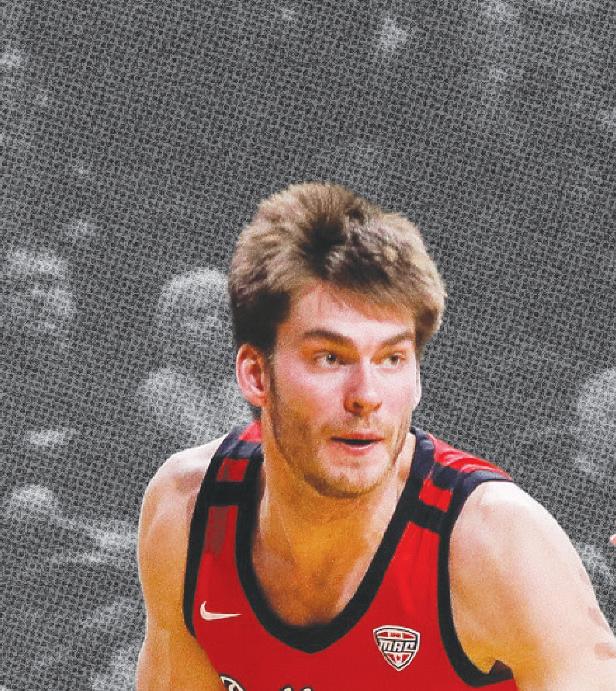
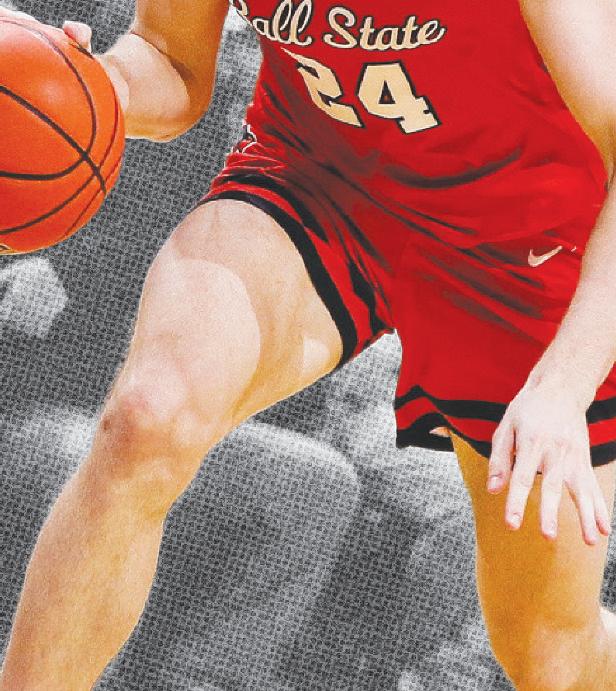
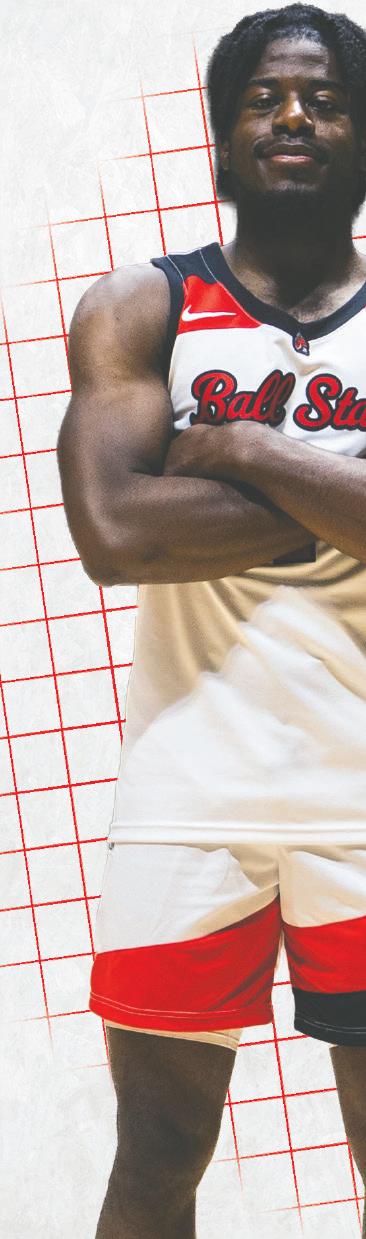
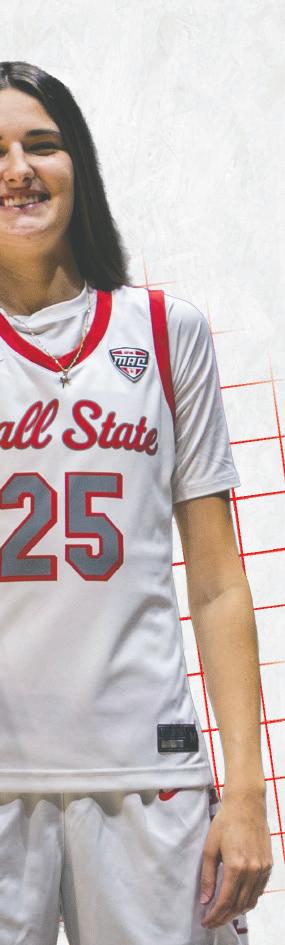
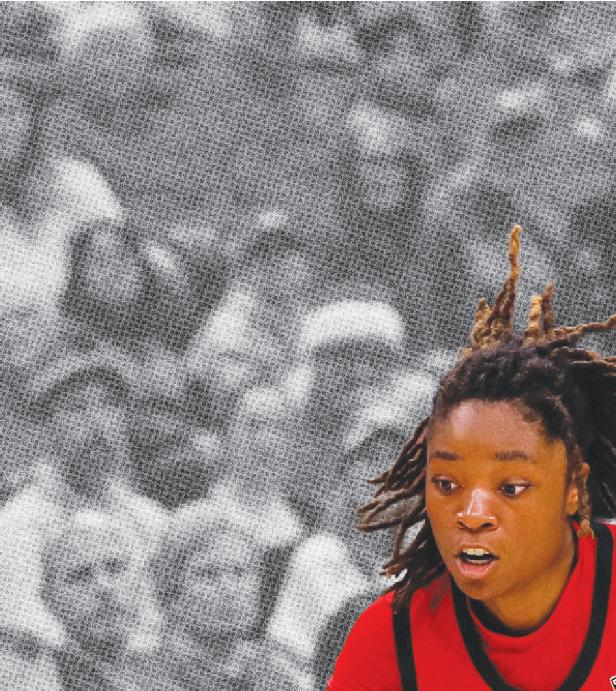
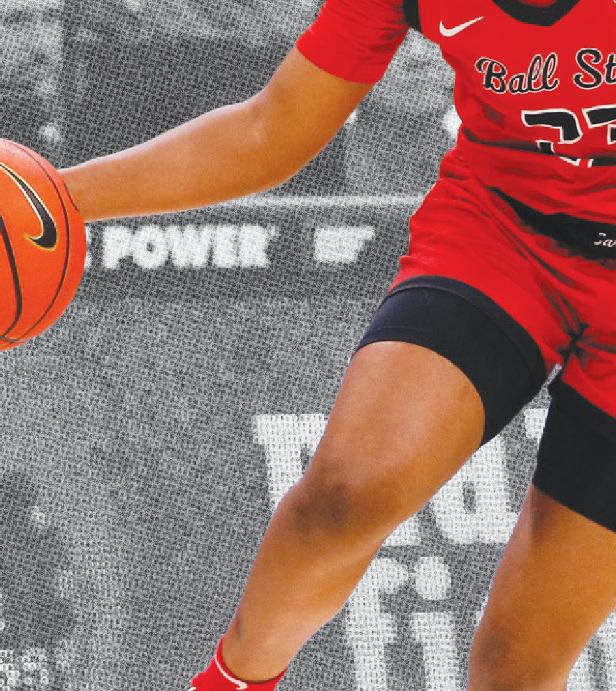
The Cardinals shoot for success in their upcoming seasons. 08 Fort Wayne-based musician, Noah Sties, exclusive Q&A. 11
13
JESSICA BERGFORS, DN ILLUSTRATION
ISABELLA KEMPER, DN
SHELBY ANDERSON, DN
BallStateDailyNews.com
VOL. 105 ISSUE: 11
CONTACT THE DN
Newsroom: 765-285-8245
Editor: 765-285-8249, editor@bsudailynews.com
EDITORIAL BOARD
Meghan Braddy, Editor-in-chief
Andrew Berger, Digital
Managing Editor
Shelby Anderson, Co-News
Editor
Linnea Sundquist, Co-News
Editor
Kyle Stout, Sports Editor
Trinity Rea, Associate Sports
Editor
Katherine Hill, Lifestyles Editor, Jayden Vaughn, Opinion Editor
Charlotte Jons, Associate
Opinion Editor
Channing Matha, Copy Editor
Isabella Kemper, Multimedia
Editor
Jessica Bergfors, Visual Editor
Brenden Rowan, Social Media
Editor
Corey Ohlenkamp, Adviser
The Ball State Daily News (USPS-144-360), the Ball State student newspaper, is published Thursdays during the academic year except for during semester and summer breaks. The Daily News is supported in part by an allocation from the General Fund of the university and is available free to students at various campus locations.
Call 765-285-8134 between 9 a.m. and 3 p.m. Mon. -Fri. Subscription rates: $45 for one year. POSTMASTER: Send address changes to Daily News, AJ278, Ball State University, Muncie, IN 47306
JOIN THE DAILY NEWS
Stop by room 278 in the Art and Journalism Building. All undergraduate majors accepted and no prior experience is necessary.
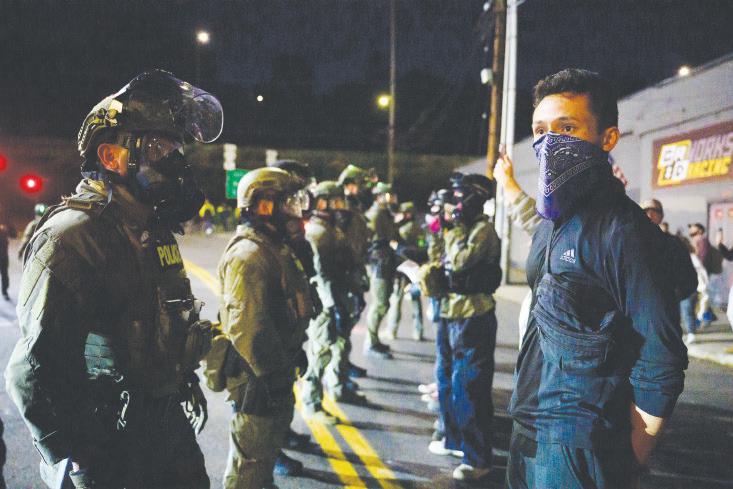
Trump’s Portland troop deployment allowed for now by court
The full U.S. appeals court in San Francisco voted on whether to reconsider President Donald Trump to deploy troops to Portland, Oregon, as of now, according to Tribune News Service (TNS), even after the objection of state and local leaders. The ruling has been decided over a three-judge panel, with the panel landing on a 2-1 decision. Two judges who sided with the administration were both appointed by Trump, while the third was an appointee of former President Bill Clinton, calling for a larger panel of her colleagues to revisit the ruling through an en banc review, according to TNS.
CORRECTION
The Ball State Daily News is committed to providing accurate news to the community. In the event we need to correct inaccurate information, you will find that printed here.
To submit a correction, email editor@bsudailynews.com.
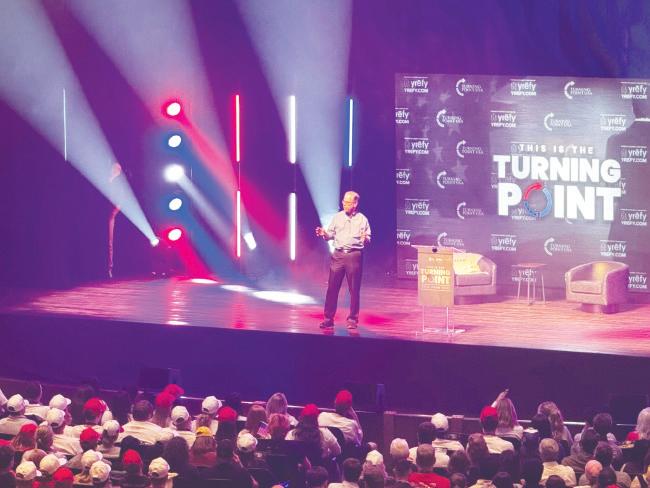
Braun rallies students at Turning Point USA event at IU
Oct. 21: Gov. Mike Braun provided a warmup at Indiana University for Turning Point USA event last Tuesday, Oct. 21, according to Indiana Capital Chronicle (ICC). The event was sold out and apart of the group’s “American Comeback Tour,” with thousands of participants attending the event. Along with Gov. Braun, former Fox News host Tucker Carlson was an attendee at the event as well, who headlined founder Charlie Kirk’s assassination last month. During Braun’s address, he spoke about risks he took during his career, as well as his decision to leave Washington to become a governor, according to ICC.
MAC Women’s Basketball preseason poll
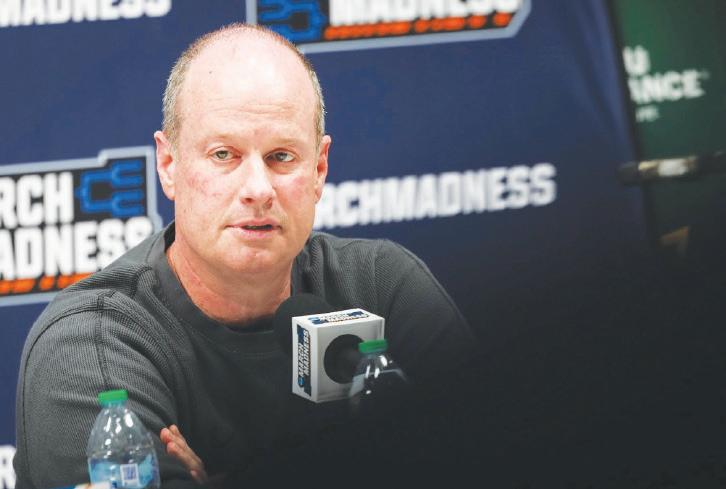
The Ball State Women’s Basketball team has been picked fourth in the 2025-26 Mid-American Conference (MAC) preseason poll. Kent State, Toledo and UMass placed first, second and third. The Cardinals are looking to keep momentum after a historic season under 14th-year Head Coach Brady Sallee, which saw the team advance to the first round of the NCAA Tournament for just the second time in program history. Ball State returns four of the players from the MAC championship squad and welcomes seven true freshmen and two transfer students. Ball State Women’s Basketball will hold its home and season opener Oct. 29 at Worthen Arena, where the Cardinals are set to take on Indiana University
MATHIEU LEWIS-ROLLAND/TNS
JAN MURPHY/TNS
ANDREW BERGER, DN
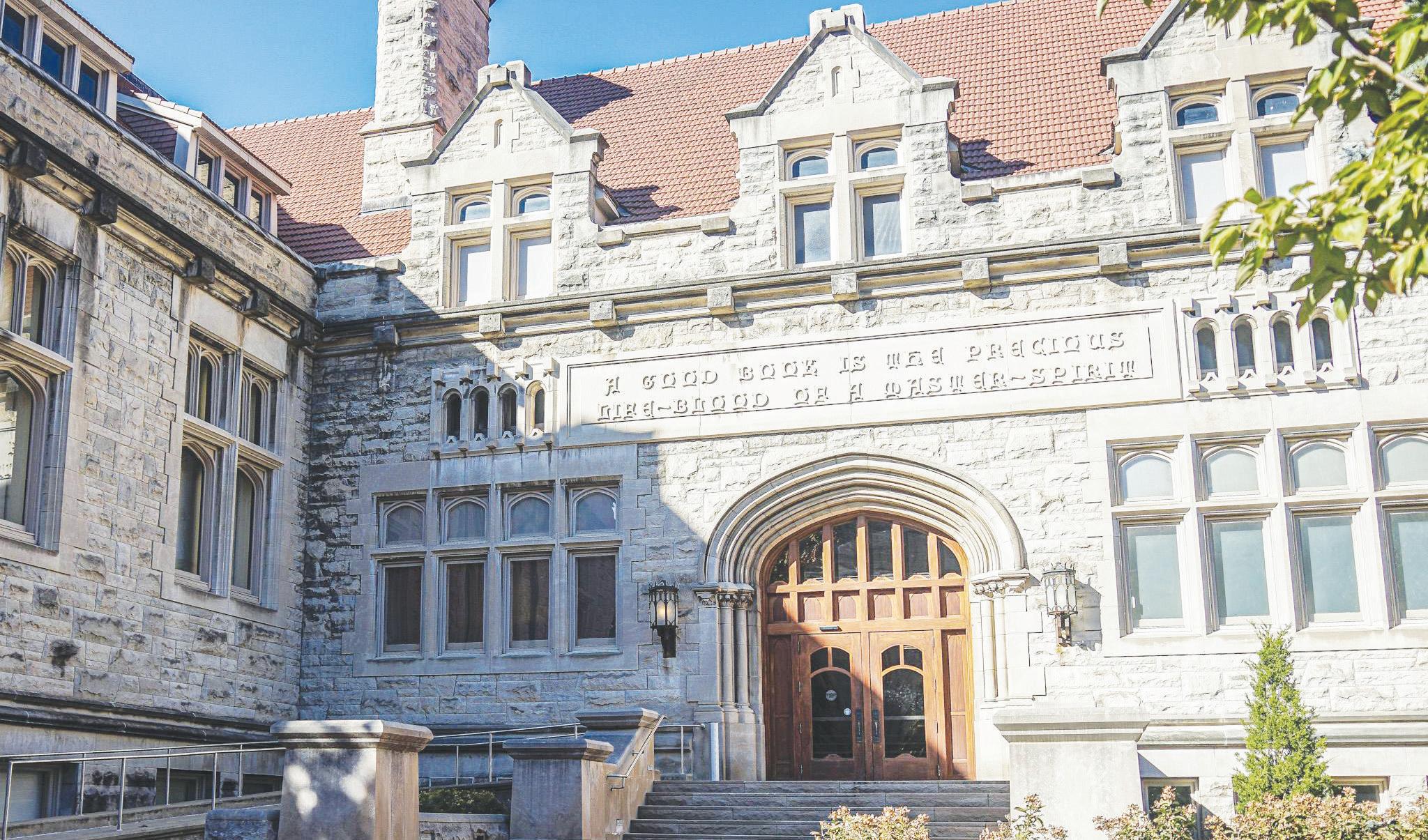
Indiana University’s Franklin Hall, which houses the Media School and the Indiana Student Daily newsroom, is photographed Oct. 20, 2024 in Bloomington, Ind. IU has a 100-year-old journalism program.
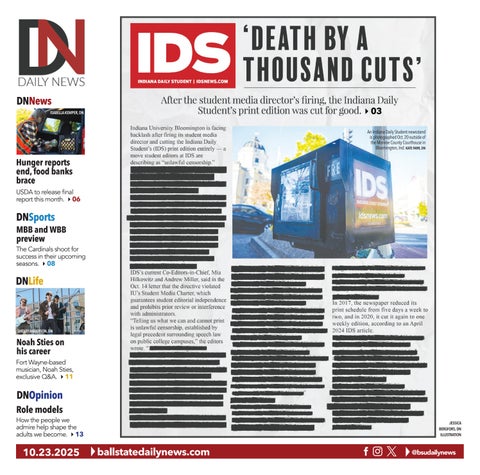
IU Bloomington’s Media School accused of censoring student newspaper
After the student media director’s firing, the Indiana Daily Student’s print edition was cut for good.
Meghan Braddy Editor-in-chief
Indiana University (IU) Bloomington is facing backlash after firing its student media director and cutting the Indiana Daily Student’s (IDS) print edition entirely — a move student editors at IDS are describing as “unlawful censorship.”
The controversy stems from an Oct. 14 decision by the IU Media School to terminate Director of Student Media Jim Rodenbush, who refused an administrative order to prevent IDS from printing news in its Oct. 16 homecoming special edition, according to an Oct. 14 letter from the IDS editors. The directive instructed IDS to publish “nothing but information about homecoming — no other news at all, and particularly no traditional frontpage news coverage,” according to an Oct. 7 email from Rodenbush that he relayed from The Media School to the editors.
IDS’s current co-editors-in-chief, Mia Hilkowitz and Andrew Miller, said in the Oct. 14 letter that the directive violated IU’s Student Media Charter, which guarantees student editorial independence and prohibits prior review or interference with administrators.
“Telling us what we can and cannot print is
unlawful censorship, established by legal precedent surrounding speech law on public college campuses,” the editors wrote. “Administrators ignored Rodenbush, who said he would not tell us what to print or not print in our paper.”
According to the same Oct. 14 letter, IDS said Ron McFall, assistant dean of strategy and administration at The Media School, asked during a Sept. 25 meeting discussing the issue, “How do we frame that, you know, in a way that’s not seen as censorship?”
After reviewing the directive and alerting his staff, Rodenbush then responded in an Oct. 9 meeting with Media School Dean David Tolchinsky, saying, “Any type of attempt on my end to censor or manipulate any content from a student media outlet is literally against the law. This is First Amendment stuff.”
Administrators fired Rodenbush and cut the print edition for good just days later.
So how did this happen? How did the IDS — a paper with more than 150 years of history — reach this point?
Well, “The IDS’s financial struggles has been a death by a thousand cuts,” according to an April 2024 letter from the IDS editors, which explains that the paper has been “forced to decrease professional
staff, reduce the number of papers printed weekly and abandon opportunities to make money.”
Financial troubles
According to The Herald-Times, financial issues at IDS go back to 2017, when former Director of Student Media Ron Johnson was forced to resign because of concerns over the publication’s growing deficit. However, despite Rodenbush’s hiring in May 2018, IDS still faced cuts in its print operations.
In 2017, the newspaper reduced its print schedule from five days a week to two, and in 2020, it cut it again to one weekly edition, according to an April 2024 IDS article.
The article explained multiple reasons for these cuts, stating, “Despite receiving advertising revenues and alumni donations, it’s not enough to stem the bleeding from a national shift in the advertising industry and audience interaction.”
IDS also reported calculations Rodenbush had made, confirming that “people and print made up around 88 percent of expenses,” making it difficult to balance the paper’s budget while maintaining staff pay and production costs.
Then, in a January 2021 joint statement, Shanahan and Rodenbush acknowledged the IDS’s ongoing financial problems and outlined a short-
term plan to help stabilize the publication.
“The Media School, the Indiana Daily Student and the Office of the Provost have worked together to find viable solutions to the ongoing financial problems at the IDS,” they said. “All parties involved are committed to the continuing existence of the publication, as well as to its editorial independence and the quality of its journalism.”
The agreement allowed IDS to continue operating at a deficit for three years starting in the 2021-22 fiscal year, with any remaining deficit still reached about $300,000, according to the April 2024 article.
In January 2021, the IDS co-editors-in-chief at the time published a letter warning that the paper would run out of money by the end of that spring semester, citing declining advertising revenue and donations.
The financial concerns then resurfaced again in February 2023, when then-Editor-in-Chief Helen Rummel wrote a letter discussing the poor communication between IDS leadership and university officials. She said that more than two years into the three-year deficit period, the IDS, The Media School and the Office of the Provost had met only once and that the deficit was nearing $500,000. Over time, that debt accumulated to nearly $1 million, made possible by The Media School
KATE FARR, DN
Obviously, telling us to do that is a content-based decision that lies in my hands and in the hands of my coeditor-in-chief, Andrew Miller, not The Media School, not administrators.”
- MIA HILKOWITZ, IDS co-editor-in-chief
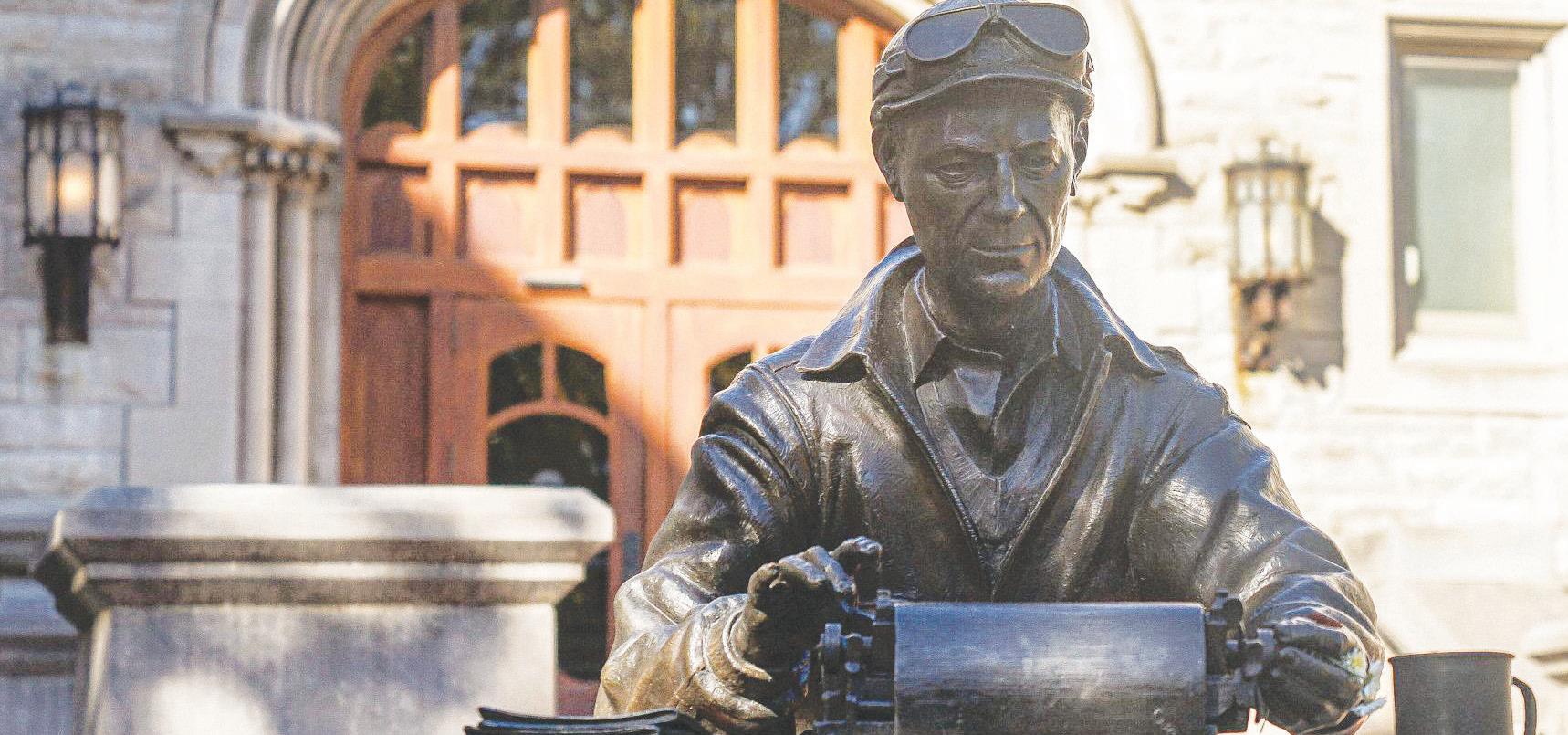
The statue of Ernie Pyle, Pulitzer Prize-winning journalist and Indiana University alumnus, is photographed Oct. 20, 2024 at the entrance of Franklin Hall, which houses Indiana University’s Media School in Bloomington, Ind. The Media School was established in 2014 and houses the Indiana Daily Student newsroom.
allowing the publication to operate at that deficit for three consecutive years.
The newsroom had also reported a negative cash balance of $894,550, as the paper only generated $673,304 in revenue during the 2023 fiscal year, according to the April 2024 article.
IU develops student media action plan
According to a July 2024 letter from the IDS editors, The Media School announced it had covered the newsroom’s nearly $1 million deficit through a $926,779.01 transfer from the Office of the Provost.
Tolchinsky said the move reflected “a strong commitment to student media” and would be paired with a five-year plan to ensure “solid financial footing” while prioritizing student well-being.
However, the IDS editors wrote that IU’s increased financial involvement poses risks to their editorial independence as a student-led publication, which previously received money from advertising and donations.
The editors claimed that administrators were treating the paper “as a business, rather than a learning lab,” and that decisions about budget and structure were being made without student input after Tolchinsky refused to meet with IDS editors to discuss the new plan.
Despite those concerns, The Media School’s leadership said that editorial control would stay with students. According to the April 2024 letter from the editors, Journalism Director Gerry Lanosga, who chaired the Student Media Committee, said the newspaper’s independence is still a “given.”
That five-year proposal, later published as the
“Action plan for student media at IU,” also sought to unify the Indiana Daily Student, IU student television (IUSTV), and WIUX student radio under one umbrella organization. The plan stated that this change would “realize efficiencies through shared business operations and increased potential for multiplatform revenue generation.”
However, a key provision of the plan called for further cuts to IDS’s print operations.
“First, there will be a strategic reduction in the IDS print edition beginning in the spring semester of 2025,” the plan stated. “While the weekly edition will be suspended, we will maintain plans for existing special editions regularly published during the academic year.”
The plan further explained the reasoning behind this decision, which is that “preserving these high-revenue issues will yield a net savings (print expense reduction will outweigh lost revenue from weekly editions) and will enable student media to continue to provide numerous and substantial opportunities for students to learn and practice essential design and other skills associated with the print operation.”
The directive to restrict news
The new student media action plan later served as justification for IU’s directive to restrict print content, as publishing any news other than homecoming coverage violated what IU deemed a “special edition” under the plan. However, the plan never specifies what type of content constitutes a “special edition.”
In an interview with the Daily News, Hilkowitz made this connection, stating that the directive showed a misunderstanding of how the paper’s
special editions had always worked.
“What The Media School didn’t really understand is that the way our special editions have always been printed is that we have our regular paper, and then inserted into it is the special edition,” she said. “And so that’s kind of how it has always been done. That’s how it [was] done before the student [media action] plan. So when they said, ‘printing special editions,’ we continued printing like this.”
Hilkowitz said they printed special editions that way all last semester, and it was just this semester that The Media School “had an issue with it.”
“Obviously, telling us to do that is a contentbased decision that lies in my hands and in the hands of my co-editor-in-chief, Andrew Miller, not the media school, not administrators,” she said.
The Herald-Times reported that during the spring 2025 semester, Rodenbush had conversations with Media School Associate Dean Galen Clavio, who told him that administrators were frustrated that the IDS continued to include news content in its special print editions.
After Rodenbush refused to enforce the directive to restrict news for the homecoming special edition, he received a termination letter on Oct. 14, citing his “lack of leadership and ability to work in alignment with the university’s direction for the student media plan,” further stating that it was “unacceptable.”
When IDS editors asked The Media School to rescind the order restricting its homecoming content, they claimed the school responded by cutting print entirely on Oct. 15.
“Our next edition, part of volume 158 in our 158th year of publication, was set to go out
Thursday,” the editors wrote in an Oct. 15 letter. When approached for comment, IDS reported that Tolchinsky had “no substantial response to questions surrounding Rodenbush’s termination or cutting IDS print entirely.”
IU Bloomington Chancellor David Reingold defended the move, saying, “To be clear, the campus’s decision concerns the medium of distribution, not editorial content. All editorial decisions have and will continue to rest solely with the leadership of IDS and all IU student media. We uphold the right of student journalists to pursue stories freely and without interference.”
Hilkowitz said The Media School argued it was a “business decision,” but IDS editors rejected that explanation.
“Now, that’s a really irrational argument, because, I mean, if they were actually familiar with our product, they would know that this is how it has always worked,” she said.
Hilkowitz explained that The Media School misunderstood what drew readers to IDS in the first place.
“When [people are] walking by our newsstands, they’re not walking by saying, ‘Oh, I really want to pick up the homecoming guide.’ Quite frankly, they don’t really give a f*** about that,” she said. “They’re looking at it because they’re seeing stories calling out administrators and calling out bad things happening at the university. They don’t care about the homecoming guide.”
She said the move ignored both how the IDS reaches its audience and the financial realities of student media.
KATE FARR, DN
IDS
Continued from Page 04
“They weren’t actually bringing in any people who knew about the situation and what would happen. They didn’t bring in people who said, ‘Hey, we have advertisers lined up already. You’re going to cost us tons of revenue,’ or ‘We have delivery drivers already hired, ready to go. That’s going to cost us more money.’”
She explained that IDS has a very high pickup rate in the Bloomington community, with many people there depending on the free news it provides, and that The Media School is now “cutting out a major part of [IDS’s] audience in the community.”
While Hilkowitz cannot confirm whether The Media School’s decisions were an attempt to censor the paper or simply a misunderstanding of its operations, she still called the justification “irrational and misguided.”
According to an Oct. 21 statement from the Reporters Committee for Freedom of the Press, committee attorney Kris Cundiff agreed with this sentiment, claiming that The Media School’s actions were “ill-advised, unconstitutional, and appear to be aimed at suppressing core press and speech rights.”
Cundiff even wrote a letter to IDS leaders on behalf of Miller and Hilkowitz Oct. 20, stating that the firing of Rodenbush and the decision to cut print entirely are a violation of the First Amendment.
“Public bodies may not retaliate against individuals for engaging in First Amendmentprotected speech — including expressing disagreement with a decision by the government, as the IDS did here,” he wrote.
In the letter, he also disputed the claim that it was a financial decision, arguing that even if money were a factor, administrators are not entitled to control the IDS’s journalistic decisions.
IDS’s Student Media Charter, approved by IU trustees in 1969, states that “student media
operating under its provisions are declared limited public forums where final content decisions and responsibility rest with duly appointed student editors and managers.”
The same rule of thumb applies to student media outlets at Ball State, as they are all studentrun publications with editors who make the final call on what is being published.
Ball State’s Dean of the College of Communication, Information, and Media, Kristen McCauliff, said in a statement via email, “Student media at Ball State still receives significant support from both the university and the College of Communication, Information, and Media. The publications and outlets found in our Unified Media Lab are important to our academic mission as well as fulfilling our commitment to the local community.”
What’s next
journalists must stand together,” and featured columns from both IDS and Exponent editors who condemned IU’s actions.
Building on that message, the Daily News, in collaboration with the College Heights Herald and several other student publications, contributed to a statewide editorial Oct. 20 advocating for the protection of student press freedom.
When [people are] walking by our newsstands, they’re not walking by saying, ‘Oh, I really want to pick up the homecoming guide.’ Quite frankly, they don’t really give a f*** about that.
- MIA HILKOWITZ, IDS Co-Editor-in-Chief
Though Clavio said a search for a new director is coming, The Media School has not yet announced a permanent replacement for Rodenbush, nor has the institution made any indication to reverse its decision to cut print entirely. Still, Tolchinsky announced that he is forming a task force to make recommendations on ensuring the “editorial independence and financial sustainability” of IU student media, according to an Oct. 20 press release from The Media School.
On Oct. 17, Purdue University’s student newspaper, The Exponent, delivered 3,000 copies of a solidarity-themed edition across IU’s campus in support of IDS, according to the HeraldTimes. The cover of the edition read, “We student
In an email to student media leaders and faculty, Tolchinsky said he expects to appoint the group by Nov. 3 and that it will deliver recommendations early in the spring 2026 semester, according to an Oct. 20 IDS article.
In an effort to push back against The Media School’s decisions, Cundiff will be representing
Miller and Hilkowitz, as the Reporters Committee for Freedom of the Press has also requested a meeting with IU leaders “to discuss a path forward that will restore [IDS’s] editorial independence.”
However, the Student Publications Alumni Association Board did meet with Tolchinsky Oct. 20, according to a Facebook post from the IU Alumni Association. During the meeting, it was confirmed that Reingold made the offcial decision to cancel print production for good.
During the meeting, alumni expressed concerns about the IDS’s editorial independence and urged the university to reaffirm its commitment to protecting IDS from administrative interference.
“We also are concerned about why the university would cut future print editions when those are a direct way for the IDS to raise revenue. Therefore, we called for a clear statement from the university on why this was done without student input and an explanation of how that move does not constitute interference or violate the long-standing agreement protecting IDS editorial independence,” the board wrote.
According to the post, the alumni association called for written guarantees to uphold the Student Media Charter and the appointment of a new student media director. They encouraged Tolchinsky to include alumni in future discussions about the sustainability of IDS’s finances and editorial independence, as well.
Meanwhile, Hilkowitz said IDS will continue publishing content online and pushing it out through its various social media platforms.
Even though it is not on newsstands, people can still find IDS’s Oct. 16 printed homecoming special edition online, as it’s currently published as an eEdition on IDS’s Issuu page.
Contact Meghan Braddy via email at meghan. braddy@bsu.edu or on X @meghan_braddy.
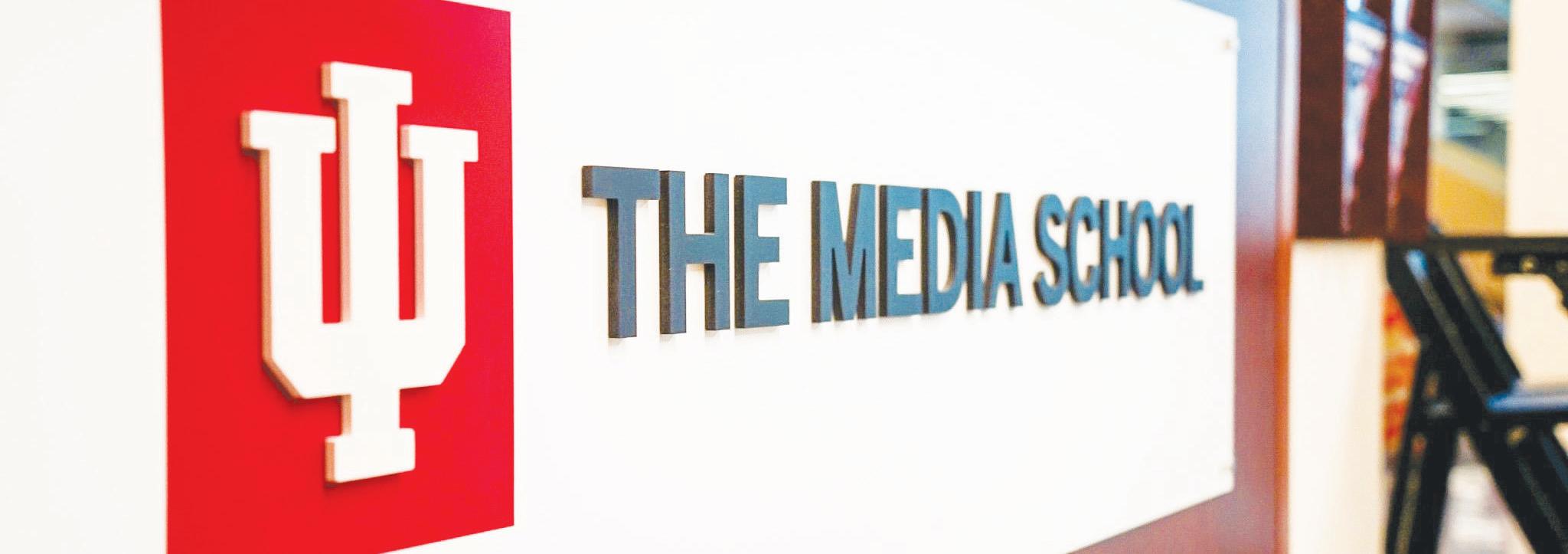
An Indiana University “The Media School” plaque is photographed Oct. 20, 2024 in Bloomington, Ind. The Media School is home to more than 20 student organizations and media outlets, including the Indiana Daily Student. KATE FARR, DN
Feeding the Gap Feeding the gap
After the U.S. Department of Agriculture terminated its Household Food Security Reports, what can food banks in Delaware County expect?
Shelby Anderson Co-News Editor
Delaware County has a 17.8 percent food insecurity rate, according to Curehunger, meaning around 20,000 people struggle with food insecurity within the county.
That is the second-highest food insecurity rate for a county in East Central Indiana, with a total population of 112,109 people. To help feed those struggling with food insecurity, some food banks in Delaware County have relied on Household Food Security Reports from the U.S. Department of Agriculture (USDA) to provide insight for those who struggle with putting food on the table.
However, on Oct. 22, the USDA released its final food security report, and no additional reports
will be released for the time being, according to the Food Research and Action Center (FRAC).
According to a Sept. 22 article from National Public Radio, this is because the USDA, under the administration of President Donald Trump, ended the reports due to them being “redundant, costly, politicized and extraneous.”
Before this, the food security study had been around for 30 years, starting in the 1980s when the first report was released as part of the “Community Childhood Hunger Identification Project” (CCHIP). From there, it inspired the USDA and the Census Bureau to include food security questions in national surveys, according to FRAC.
Ever since 1997, the report has been released annually, making it the “gold standard” to understand the struggle that millions of families face to put food on the table, according to FRAC.
In 2025, the USDA released a Sept. 20 report announcing the “termination” of future Household Food Security Reports.
The statement explained how the Clinton administration initially created the food security reports as a way to support the increase of Supplemental Nutrition Assistance Program (SNAP) benefits and eligibility, but the USDA recently stated that the reports had “failed to present anything more than subjective, liberal fodder.”
However, according to FRAC, “the most recent cuts to SNAP … will undoubtedly deepen food insecurity, [and] without annual data, it will be far easier for that reality to be ignored or dismissed.”
So what does this termination of Household Food Security Reports mean for food banks in Delaware County?
The effect on food banks
One food bank in Delaware County that will be affected by this is Second Harvest Food Bank of East Central Indiana. Bekah Clawson, CEO and president, voiced her disappointment with the official cancellation of the Household Food Security Reports via email.
Clawson said she found out the news when she received two emails, one from the state office of Feeding Indiana’s Hungry and another from Feeding America.
Feeling “disheartened,” Clawson explained how these reports contained findings from the Current Population Survey Food Security Supplement, which has been administered annually since 1995, and were used to help understand the effectiveness of federal food programs.
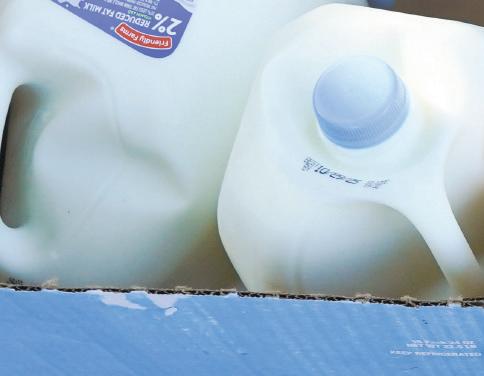
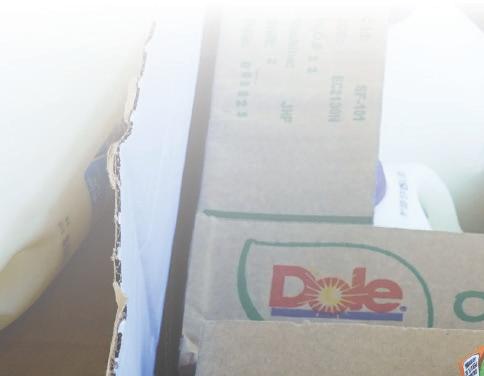
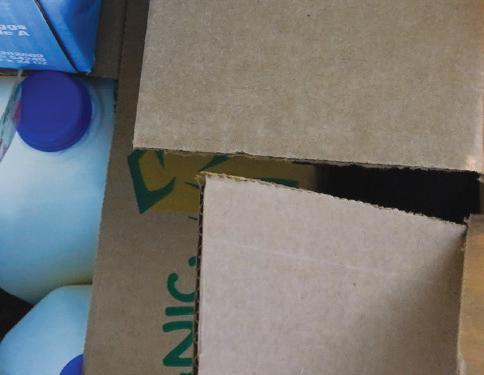
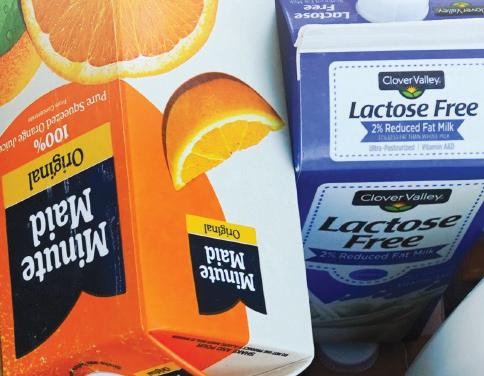
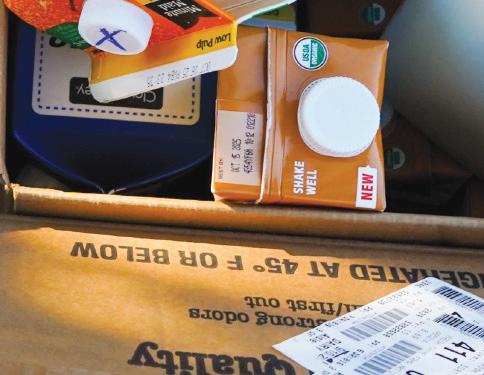
Food sits ready to be given to neighbors by Second Harvest volunteers Oct. 21 at Callaway Park.
ISABELLA KEMPER, DN
Second Harvest Food Bank of East Central Indiana will be affected by the cancellation of those reports because the Household Food Security Survey has been a long “foundational tool” that has been used for understanding hunger in Delaware County.
However, while Second Harvest Food Bank of East Central Indiana will be affected, other food banks such as Muncie Mission and The Salvation Army will not be.
Vice President of Community Engagement at Muncie Mission, Leigh Edwards, shared that since they do not receive federal funding for their food, they are not affected in that way. Still, one way the cancellation of the reports could impact them is the ability to pinpoint food deserts.
According to the Food Empowerment Project, food deserts are “geographic areas where residents’ access to affordable, healthy food options (especially fresh fruits and vegetables) is restricted or nonexistent due to the absence of grocery stores within convenient traveling distance.”
Due to this, Edwards thinks the cancellation of the food security reports will have an “indirect impact” on the community, since it makes it harder to see where food insecurity is most prevalent.
Similarly, Major Kathleen Pinkston said the Salvation Army will not be affected by the report cancellation since they no longer require all income and expenses to receive assistance.
However, while this branch is not affected, Pinkston said that other branches of the Salvation Army will be affected since they do rely on the USDA guidelines.
She also mentioned how the absence of this survey will now leave “a gap” with national data that will need to be filled.
“There are some families that come [out and] may not be as in need as others are, and so it might be a little bit more of a challenge to determine each
year without that particular report coming out,” Pinkston said.
With this news, Clawson said she is concerned about the reliability of alternative ways of measuring food insecurity now that there will no longer be food security reports from the USDA.
She now worries that people will question potential alternative methods or view them as untrue, even if they are developed “scientifically”
assistance reaches those facing hunger.”
Despite this, the survey ending on Oct. 22 still eliminates key data input for Feeding America to communicate who is experiencing food insecurity.
“The reports have served as the key data input for Feeding America to communicate who is experiencing food insecurity in the U.S. and for estimating local food insecurity and insights around food budgets through the annual Map
“It can be really, really hard to stay afloat and make sure your family has a place to stay, or even enough food to feed them. So [food banks] helped tremendously.”
-
VIVIENNE FREEMAN, Ball State student
and “holistic[ally]” since everyone had relied on the Household Food Security Reports for so long.
For example, Clawson explained how, in the absence of USDA’s food security reports, food banks can now rely on Feeding America, as the organization will “remain committed to measuring food insecurity” in communities and work with the state and federal partners “to ensure critical food
the Meal Gap study that our food bank and all the other 199 Feeding America Food Banks around the country rely on,” Clawson said.
For those interested in helping communities struggling with food insecurity, Clawson encourages individuals to reach out to policymakers to encourage them to support data that can allow people to help and understand food insecurity better.
The community effect
Ball State student Vivienne Freeman has volunteered at a food bank, but also used one when she was younger. To Freeman, relying on food banks made life easier for herself and her family.
“It can be really, really hard to stay afloat and make sure your family has a place to stay, or even enough food to feed them. So [food banks] helped tremendously,” she said.
She shared how many other families use food banks as well in order not to worry about a lack of food, especially those living paycheck to paycheck.
“Food banks have helped my family tremendously, because [they have] helped keep a roof over our head[s] without having to worry about how much money we’re spending on food,” Freeman said.
In her experience, Freeman said that losing access to the Household Food Security Reports will most likely affect the people who rely on food banks, as well as the food banks themselves.
After she saw the USDA statement about the termination of the reports, she described feeling “not great,” wondering how the food banks would be able to figure out who is suffering from food insecurity in those communities.
For the lawmakers who decided to end the hunger study, Freeman wants them to “imagine themselves in other people’s shoes, because if they don’t see a problem with it, it really means that they can’t see a problem with it.”
She said she wants lawmakers to “open their eyes” and see the world around them, and not just the people around them, so they can realize the potential impact the termination of the Household Food Security Reports will have on so many families.
Contact Shelby Anderson via email at sanderson9@bsu.edu.
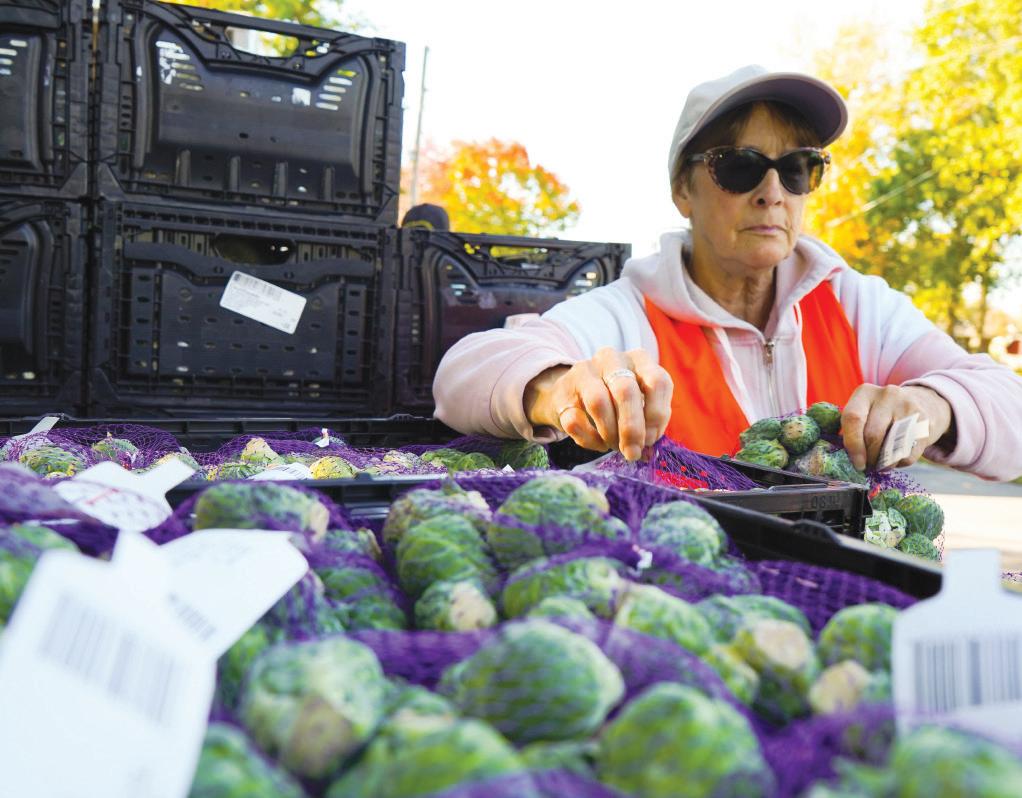
Second Harvest volunteer grabs food out of the crates to load into a neighbor’s car Oct. 22 at Callaway Park. ISABELLA KEMPER, DN
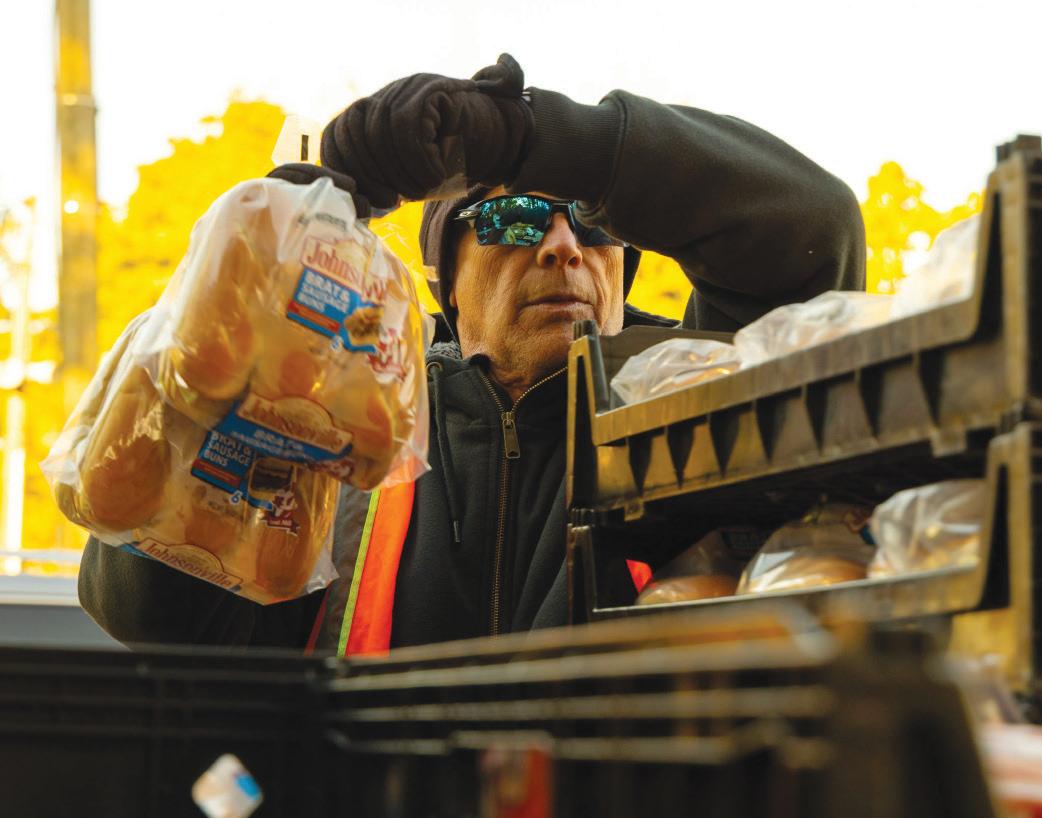
A Second Harvest food pantry volunteer takes hamburger buns out of the rack to prepare to place in a neighbor’s car Oct. 22 at Callaway Park. ANNA EVILSIZOR, DN
Ball State vs. Louisiana
Ball State vs. Mansfield (PA)
Ball State vs. Little Rock
Ball State vs. South Dakota State
Ball State vs. Miami (OH)
Ball State vs. Earlham
Ball State vs. Eastern Michigan
Ball State vs. Ohio
Ball State vs. Northern Illinois
Ball State vs. Buffalo
Ball State vs. Kent State
Ball State vs. Akron
Ball State vs. UMass
Ball State vs. Central Michigan
THE NEST THE NEST
Ball State vs. Indiana University East
Ball State vs. Northern Kentucky
Ball State vs. Cincinnati
Ball State vs. UIC
Ball State vs. Oakland City University
Ball State vs. Eastern Michigan
Ball State vs. Toledo
Ball State vs. Buffalo
Ball State vs. UMass Ball State vs. Miami (OH)
Ball
was the only job for
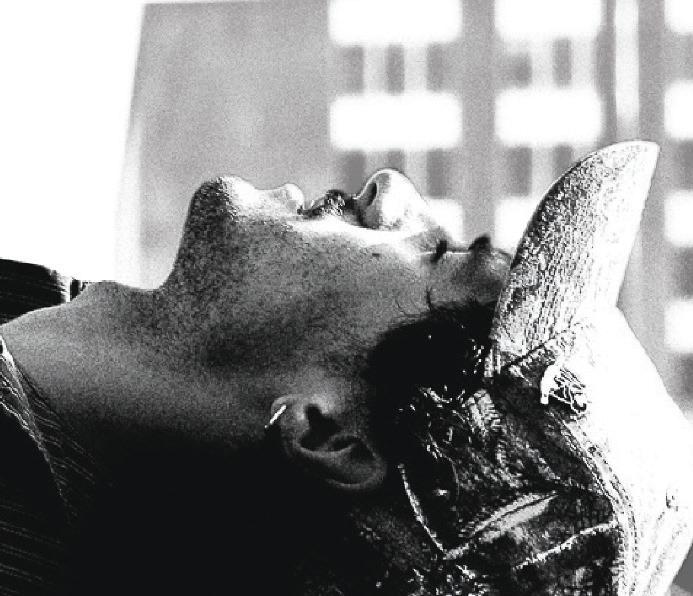
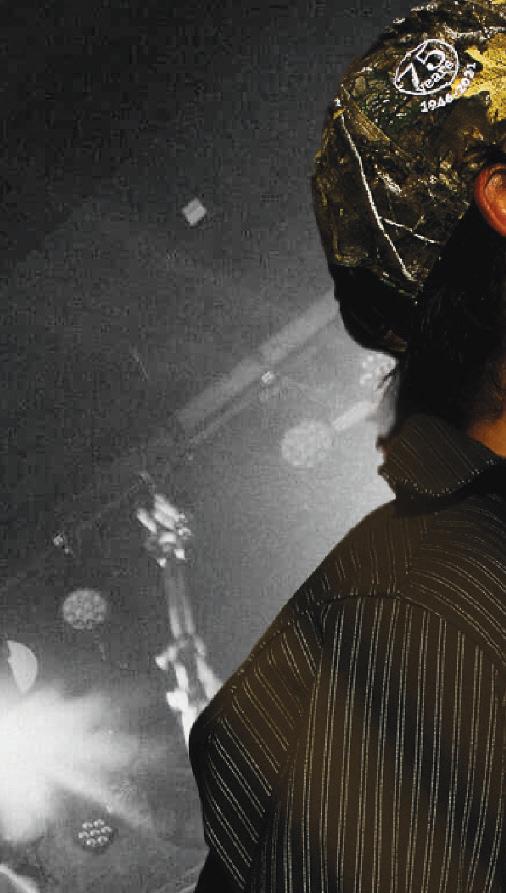
Noah Sties — a rising, Fort Waynebased musician — gives insight into his artistic origins.
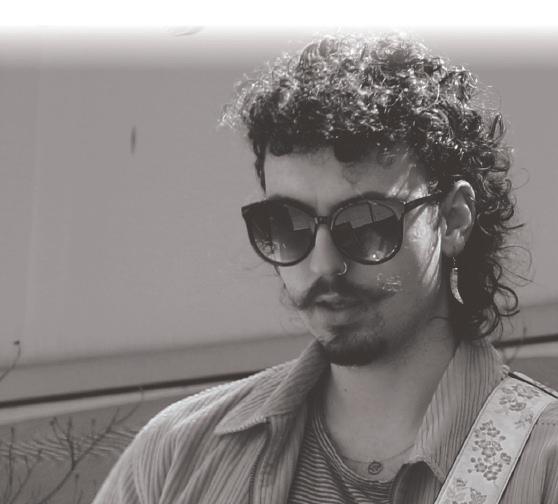
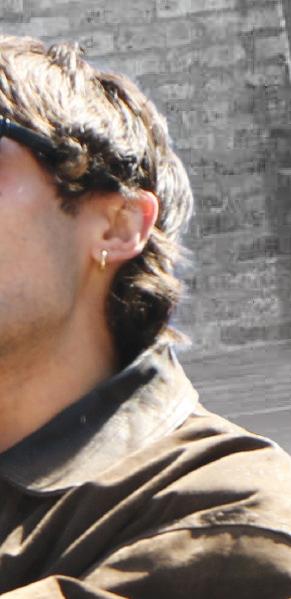
Noah Sties poses for a photo Oct. 1 in Downtown Fort Wayne. RADLEY RICHMAN, PHOTO PROVIDED
Reporter
Noah Sties, an up-and-coming musician, first stepped foot on Ball State’s campus to perform at the annual Equinox Music Festival in April 2025, playing select singles from his debut project “Sungold,” an indie-pop effort that has found a niche online following internationally. Since then, Sties has released three singles, performed across the midwest and worked as a concert photographer for artists such as Del Water Gap and Matt Maltese, gaining traction in the industry. Earlier this month, Sties met with the Daily News to discuss his upcoming extended play (EP) “giant!,” as well as his musical origins, inspirations and aspirations.
Q: “The last time I saw you was at the Fort Wayne Guitar Exchange. That, I believe, is where you first played “Have You
I think I wrote it that week and I was like, “I’ll just ding it out at the show.” But yeah, it was the night before I was shooting a show in West Lafayette, Del Water Gap, and then I put “Sandcastles” on a flash drive and gave it
to him after the show.
Q: What was the evolution of the pop sound of ‘Sungold’ to the more rock-focused sound of “giant!” like?
It was me hating “Sungold,” Sties said with a laugh. “The album… I can appreciate my vision for it; I had really big ideas there and I was still such an infant at making music. When I get asked “Do you have advice for new musicians?”— which [is], not often because I am a new musician — but sometimes people ask me and I’m like “Don’t make an album. Invest your resources into really polishing your craft.” Instead, as an act of self-therapy, I decided to write [Sungold] in my car in random parking lots for three months… at like two in the morning.
into
Instead, to by obscure but fast punk beats.
Q: Was making music, even throughout your early childhood, always the goal? Or was that something that developed five, six years ago?
No, I’m one of those people that jumps from different obsessions and, thankfully, music stuck… It wasn’t until middle school. I started going to church by myself and playing in the worship band and that’s where I kind of established learning how to play on a stage… It’s probably in eighth grade at this point, and I started learning what bedroom pop was… I was like “Wow, I feel like I can do this.”…Very specifically, I remember the song “Falling for the Wrong One” by Dreamer Boy… I heard that song, [and] I was like “I could make this.” I went home, I ripped the drums from part of that song, and then made this song called “Narrow” that I put out a long time ago. for Del and to play inspirations
…This EP was kind of an effort to collaborate more with people and really take my time with four songs instead of… seven or nine, and really [be like] “Oh, I don’t have to put every song that I write on this thing.”…[Sonically], it’s a really crazy story. This song, Giant, by the band Funeral party, that’s what the EP is named after, this very obscure band … I decided to listen to that album obsessively, along with a bunch of other stuff from that scene at the time. And then I dedicated the EP to that. So, all the songs on “giant!” kind of started as these rock songs, structured like pop songs, but very rock, heavier guitars, really fast like
One” I
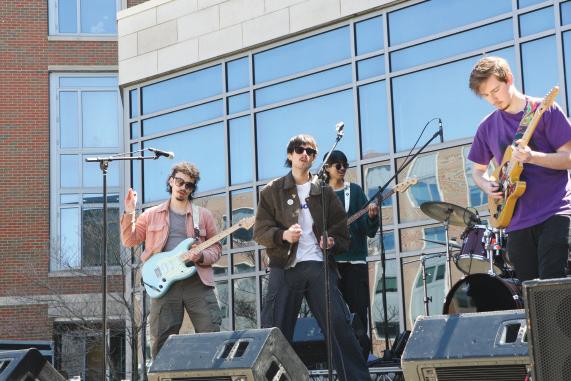
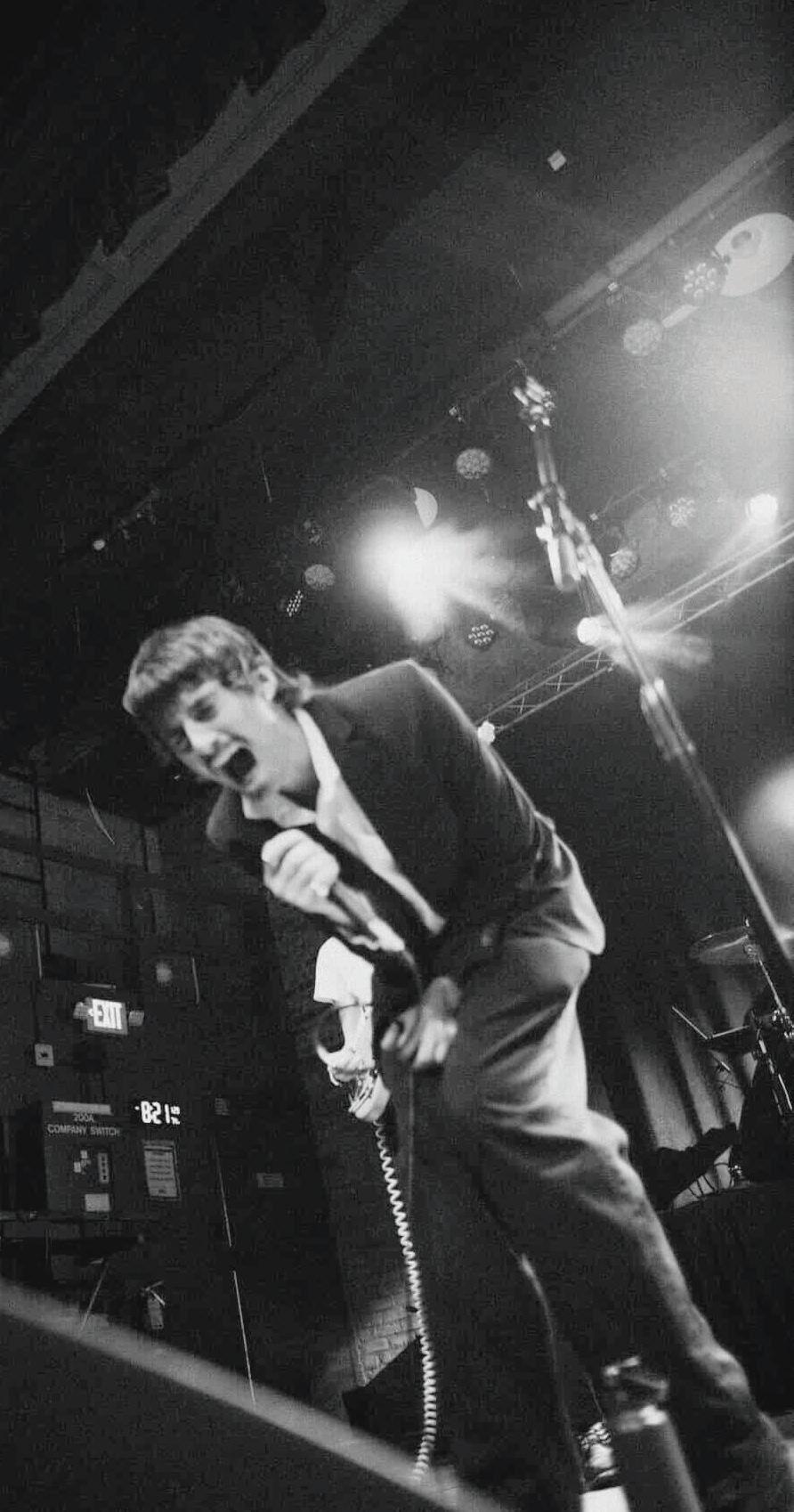
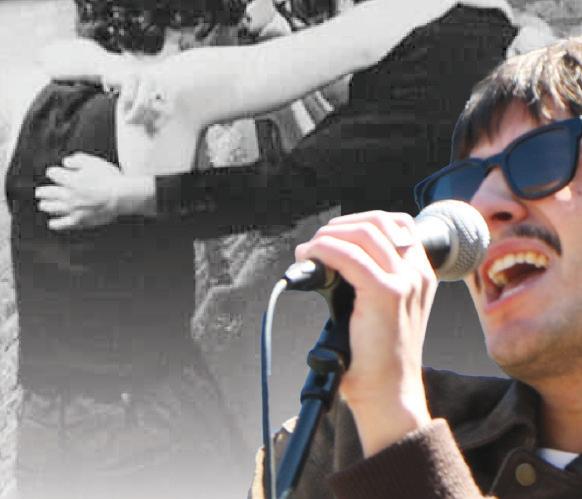
Noah Sties sings on stage with his band as the openers for The Band Light July 12 in Chicago Ill. ZAYNE ISOM, PHOTOS PROVIDED
RADLEY RICHMAN, PHOTO PROVIDED; RAQUEL RUFFIN,
PHOTO ILLUSTRATION
MUSIC
Continued from Page 11
Q: Was there a moment when something happened that made you think maybe [your] future [was] in music?
A: I think when I made “Narrow,” and when I put out [a] six song EP called “Our Conscious Hours.”… I listen back to it, and I was making these songs by myself at 15. Just putting that out, I didn’t feel like I’d gotten to the level I wanted to be yet, but I think I was like “Wow, this is the first step towards… the new me.” It was a drive that kept going to make something commercially viable, which I’ve now hit. Now, I’m shifting my goal toward making something that’s like “Okay, how can I push this genre in a new direction? How can I actually make something innovative? I’ve met the standard. How can I push the standard now?”
Q: How does your media feed into your music? How does your music feed into your media? What came first, and what influenced the other?
A: I think I have a really interesting relationship with the music industry… I hope I can stand out that way. My degree is in the music industry, I’ve toured as a photographer a little bit, I shoot a lot of shows just personally and contracted as well… I
come from a very artistic family and that was kind of my main source of income growing up, instead of doing normal high school jobs. I stuck with it and, being a kid from an Amish town, as much as I knew music was the only job for me, being an artist seemed like this impossible goal… So I was like, “Well, I’m going to learn how to work for other artists if my own artist thing doesn’t work out. Why can’t I do them at the same time?”
That’s been extremely taxing on my schedule and my mental health a little bit, just because of how busy I am, but [it] has been very beneficial to the networking side of things… I’ve met so many incredible photographers, artists, managers and producers, all people that I don’t know if I would have met otherwise.
Q: What is music to you?
A: It’s gonna sound really clichè, but it’s everything… I understand the world through music. That’s not just like “Wow, this song is really sad and really speaks to me.” No. I listen to these rock bands and I’m like “Wow, that guitar is exactly how I feel,’ or ‘that little arpeggio in the background is exactly how I feel.”
Contact Radley Richman via email at radley. richman@bsu.edu.
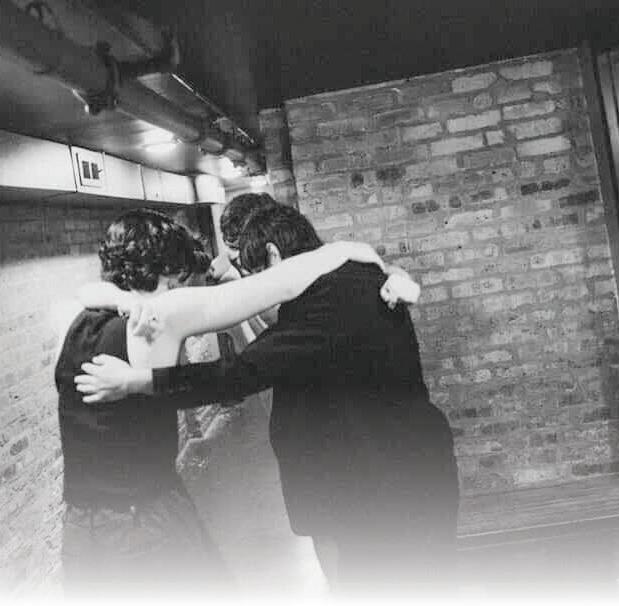
Noah Sties huddles with his band backstage as they opened for The Band Light July 12 in Chicago Ill. ZAYNE ISOM, PHOTOS PROVIDED
SHELBY
IMITATION IDENTITY Shapes
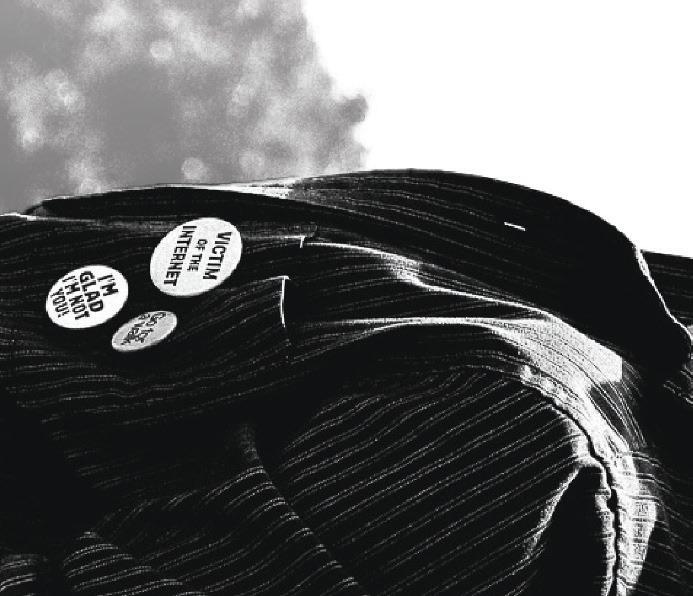
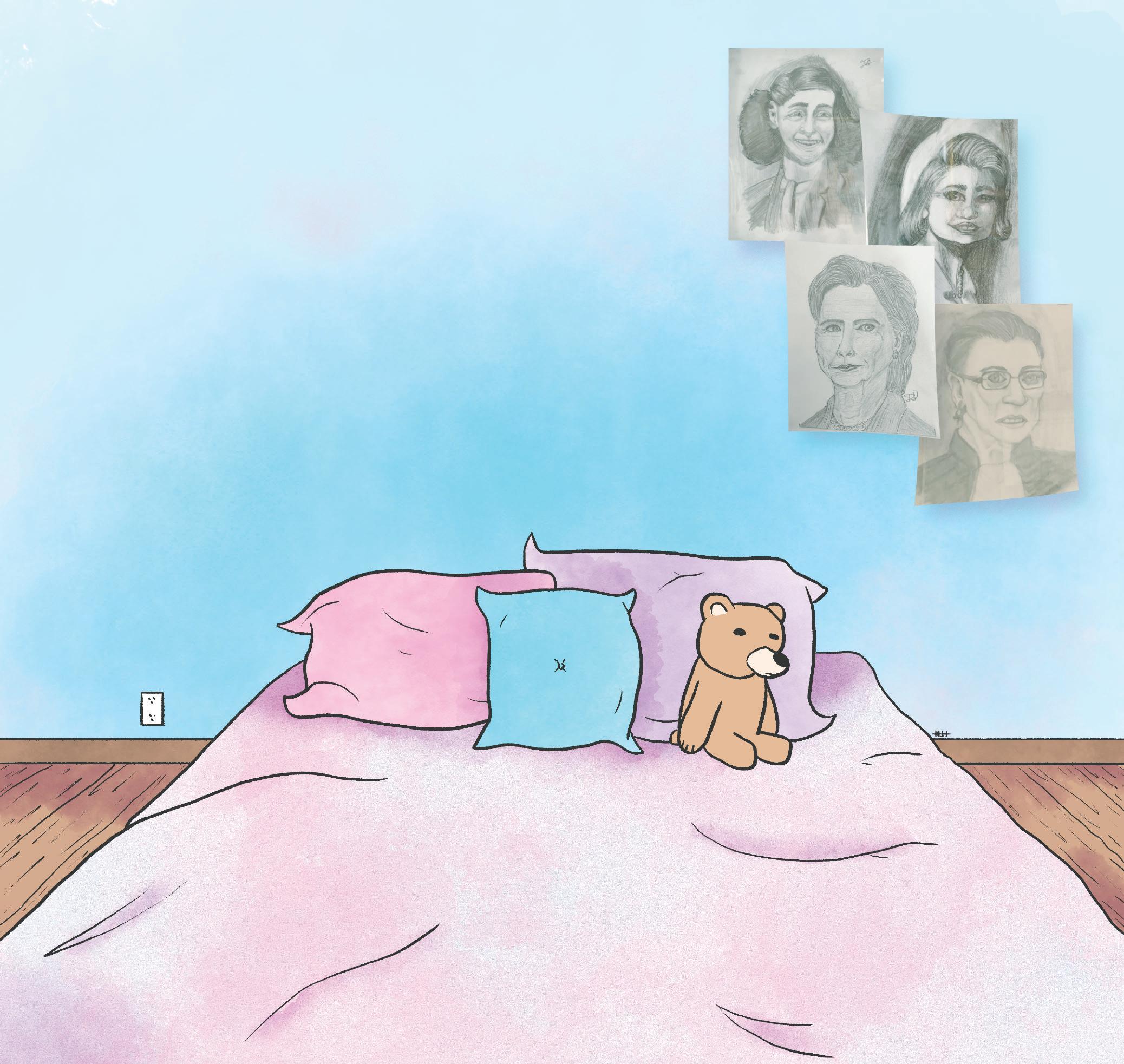
Our childhood heroes are strong indicators of the types of adults we become. 414
The people
we admire
in
childhood shape the types of adults we become.
Katherine Hill
Lifestyles Editor, “Cerebral Thinking”
Katherine Hill is a third-year journalism major and writes “Cerebral Thinking” for the Daily News. Her views do not necessarily reflect those of the paper.
I remember the 2016 presidential election vividly.
I remember the pit in my stomach when my dad pulled out his phone and showed my mom, younger brother and me the latest news headlines the morning after — because we did not initially believe him.
My knees buckled, I gripped the doorframe to stay upright and shuffled back to my room to get ready for another day of sixth grade. Sitting in my corner chair, I was too stunned to cry and could only think of three words to say:
“I’m sorry, Hillary.”
That was nine years ago, and the pit in my stomach has still not gone away. Instead, a branch of my personality sprouted from it, as the people I idolized growing up have influenced the person I am today.
I had only ever seen my family’s choice for president be elected — who also happened to be the more diverse candidate.
However, in November 2016, that was not the case. I became enthralled with the 2016 election after Hillary lost, trying to answer the existential question: “What went wrong?”
I never found a concrete answer, but I found something greater: perspective.
It was almost a gift to research the election in reverse because while I lived through it, I was doing so passively. After the fact, I had news articles, late-night comedic standup and Hillary’s own memoir, “What Happened,” published in 2017, to offer further insight.
It was like watching a television show or movie, but with low stakes, because I already knew the ending.
At the same time, it felt more riveting than a standard, middle-grade history lesson. I could compare Hillary’s firsthand memories and emotions while giving speeches to the ones I had experienced when watching her on my television monitor.
By the second semester of my sixth-grade year, students were tasked with presenting a book report of an autobiography on a person of their choosing. It was through the report that I learned not only the extent of Hillary’s political impact, but also the depth of her personality.
While she was the first celebrity I legitimately fan-girled over, she is not the only one. As I got older, the list, which I affectionately dubbed my “Old Lady Encyclopedia,” expanded to include; Jackie Kennedy, Anne Frank, Julie Andrews, Julia Child, Nora Ephron and Meryl Streep. Honorable mentions include, but are not limited to; Jane Fonda, Betty White and Ruth Bader Ginsburg. It is easy for the untrained eye to skim that list and categorize me under at least one of the two diagnoses:
mommy issues or high-functioning, special interest autism.
By my first year of high school, I even internally questioned if lesbianism was the root cause for my unorthodox historical role models, but cemented shortly thereafter it was never about body type or sex appeal. I was far too insecure about my own body to be consumed by another woman’s.
I remember the first time I watched “Barefoot in the Park,” starring Jane Fonda and Robert Redford. While most probably would, or did, watch the film and be drawn to Jane’s face or slim figure, I was utterly in awe of the fact that she could walk up the stairs in high heels, hands full of grocery bags and without holding the railing. That was the benchmark of femininity that felt unattainable to me.
history by being attentive to the present-day people and trends that will shape it.
One of the most valuable lessons I learned in journalism came from my dad. As we talked together in the kitchen one night, he reminded me that everyone, whether they are CEOs, lawyers or government officials, is fundamentally a person with families and hobbies.
Last summer, Hillary was preparing to go on tour for her latest book, “Something Lost, Something Gained: Reflections on Life, Love, and Liberty.” When registration for presale codes for tour tickets became available, I registered just before going to bed, almost subconsciously.
While sitting at my desktop a week later, I had made my way through a queue of 262 other people — who were most definitely four times my age — when I, unexpectedly, saw my wildest dream: one remaining VIP meet and greet package. As I hovered over the prospect, I remember thinking, “If I’m going, I’m going.”
I was able to grasp very quickly that none of those women had a body like mine, and instead, I observed their intellect and did my best to incorporate their dignity, poise and strength into my own outlook on life.”
Femininity and disability are two polarizing identities that I am still trying to figure out how to best interweave. I was able to grasp very quickly that none of those women had a body like mine, and instead, I observed their intellect and did my best to incorporate their dignity, poise and strength into my own outlook on life.
By my second year of high school, I entertained the idea of pursuing something within women’s and gender studies. It seemed probable, but there was something that felt too historical about the field. I did not want to just study the pasts of other women. I wanted to ignite change for the future — as my own woman.
The problem then became that I did not quite know who I was. I had spent so much of my early teen years researching others, I forgot to reflect inwardly. Then came journalism.
Phil Graham, husband of Kathrine Graham — who led The Washington Post through the Nixon administration — and whom I know because Meryl Streep played Kathrine in the 2017 film, “The Post,” said, “Journalism is the first rough draft of history.”
Whenever I am asked why I chose my major or career path, that quote appears in the back of my mind. Journalism became my ideal career because it honors
Two Ticketmaster crashes, one alert of fraud from my bank and three months later, my wildest dream was suddenly a reality as my dad and I were among the first waiting outside the side entrance of The Auditorium Theatre in Chicago, Ill.
After a slew of security checks inside the building, I turned the corner onstage and saw her.
She was a lot shorter than I imagined. It was no wonder she wanted Trump to “back up,” according to an August 2017 article from The Associated Press.
As the number of people between Hillary and me shrank, her press secretary caught sight of my smile — which had been frozen on my face since my dad and I entered the line nearly an hour and a half prior. Suddenly, I was a 12-year-old girl again.
A secondary assistant was helping funnel people through the line and asking for names. Hillary looked to the assistant, then to me.
“Katherine!” she said.
I could only stand there in awe — transfixed by the knowledge that she had just said my name.
My dad nudged me forward gently; I had to remind myself to put one foot in front of the other.
My dad, true to his character, began casual banter with the former Secretary of State, making her laugh within seconds. I, meanwhile, was too focused on the luminary overtone that surrounded her.
Hillary’s warm smile and cheerfulness throughout our interaction reminded me of my own mammaw.
I asked to hug her and was struck by her lack of hesitation.
It was then and only then, as I held tightly to her bony figure, that it finally clicked: Hillary was somebody’s mammaw. My idol was a person, and we are all just people trying to do good in the world in the best way possible. Leaving her embrace was usually the point in the dream sequence where I would wake up — but I did not.
Instead, I was too stunned to cry and could only think of three words to say:
“You’re my hero.”
Contact Katherine Hill via email at katherine.hill@bsu.edu.