
THE BROWN DAILY HER
ARTS & CUTURE
How prices at College Hill convenience stores stack up
STORES PAGE 4
Golden ’26 named first-ever threetime Ivy Defensive Player of the Year SEE GOLDEN PAGE 7
The Herald’s 2025 most memorable albums, TV, movies, moments
SEE MEMORABLE PAGE 12
NEWS
The past 15 years at Brown, according to BDH’s semesterly polls
POLL PAGE 17
SCIENCE & RESEARCH
A look at the trees lining the streets of College Hill
TREES PAGE 19

Dean Ashish Jha to leave School of Public Health
Beaudoin PhD’16, the current academic dean for SPH and a professor of epidemiology and emergency medicine, will become the interim dean starting Jan. 1.
BY ELISE HAULUND SCIENCE & RESEARCH EDITOR
Ashish Jha will step down from his position as dean of the School of Public Health and leave Brown at the end of this calendar year, Christina Paxson P’19 P’MD’20 announced in an email to the University community.
Following Jha’s departure, Francesca
Next year, Jha will “lead an initiative that aims to bolster our nation’s defenses against emerging pandemic and biological threats,” according to Paxson. It is unclear what the initiative is, and when asked about it, Jha wrote in an email to The Herald that “we are in a new age of biological threats and I believe that requires new approaches and responses.”
“It’s critically important work that will
The data behind Brown’s highest governing body
The Herald explored the backgrounds, political activity of the Corporation’s members
BY ROMA SHAH SENIOR STAFF WRITER
The Corporation — Brown’s highest governing body since 1764 — is primarily responsible for long-term strategy, overseeing Brown’s financial health, reviewing major policies impacting the campus community, accepting gifts and selecting University presidents.
The group, currently composed of 51 individuals, typically meets behind closed doors three times a year. The only publicized insights from these meetings are notes released in the following
be driven by collaborations with scientists, policymakers and organizations,” he added. “I’m very excited about what’s next.” He wrote that he has “mixed emotions” about leaving Brown but that he overall feels “at peace” and “confident” about the future of the school.
“I have loved being at Brown and it has been an honor to serve the (SPH) as dean,” Jha wrote in an email to The Herald. “I will miss the students, faculty and staff that make this such a vibrant and powerful place.” In an email to the SPH community, Jha described his time at Brown as “the
Five semesters ago, The Herald set out to understand the individuals who sit on the powerful panel.
Since then, campus issues have thrust the Corporation into a unique spotlight. After months of student activism calling on the University to divest from companies affiliated with Israel, the Corporation agreed to vote on a divestment proposal. The move — that ultimately ended in the Corporation rejecting the proposal — led one trustee, Joseph Edelman, to step down from his position early in protest. More recently, members have defended the University when it faced attacks from the Trump administration to its federal funding.
With a renewed prominence and 19 new Brown Corporation members, The Herald once again explored publicly available information — University
most fulfilling and rewarding of (his) academic career.”
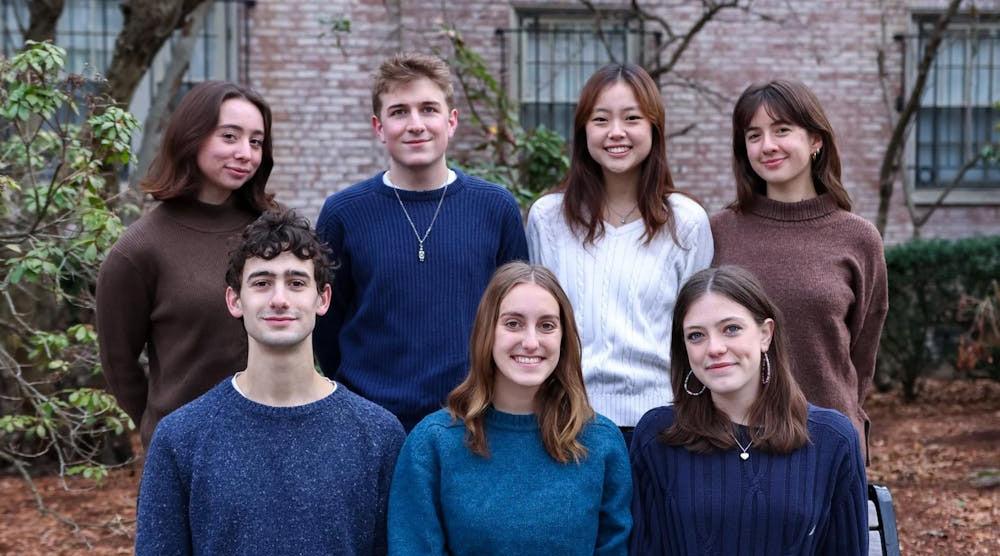
Jha, who is a professor of health services, policy and practice as well as a practicing physician, became SPH dean in September 2020 and led the school during the COVID-19 pandemic. In 2022, he was selected by former President Joe Biden to be the White House COVID-19 response coordinator.
Before joining the SPH, Jha was a professor of medicine at Harvard Medical School and a professor of global health at the Harvard T.H. Chan School of Public Health.
UNIVERSITY NEWS
An infectious disease expert who regularly provides analysis on global public health issues and has been critical of the Trump administration’s public health policies, Jha oversaw significant expansion of the SPH that included doubling graduate student enrollment and opening an office in Washington D.C., according to Paxson’s email.
“While Ashish’s leadership will be missed at Brown, he is embarking on exciting work that will have an impact far
Central faculty committee proposes changes to Brown’s shared governance
FEC shared recommendations to increase faculty involvement in U. decision making
BY SAMAH HAMID SENIOR STAFF WRITER
A new proposal from the Faculty Executive Committee — Brown’s central faculty governance body — is looking to reshape how faculty are involved in University-wide decisions.
The committee recommendations — which include both short- and long-term proposals — arose from the “Report on FEC Department Visit Initiative.” As part of the initiative, which spanned the 2024-25 academic year, the FEC visited 35 departments and circulated feedback forms to evaluate faculty perspectives on senior administration and
shared governance, according to the report.
At Tuesday’s meeting, former FEC chair and Professor of German Studies Kristina Mendicino explained that in feedback they received as part of their report, faculty members indicated “faculty decision-making power was not as strong as it should be at Brown.”
Some faculty also expressed that Brown’s faculty governance model has not “kept up” with the University’s growth, “especially when it comes to the allocation of resources and decisions that affect the future of programs,” she added.
“I think it is absolutely an appropriate time to have a review of shared governance,” President Christina Paxson P’19 P’MD’20 said at Tuesday’s meeting. “We’ve grown. We’re a different university, and governance structures that work when you have
SEE FACULTY PAGE 3

Francesca Beaudoin PhD’16 will serve as interim dean starting Jan. 1
Ashish Jha, who is a professor of health services, policy and practice as well as a practicing physician, became SPH dean in September 2020.
VICTORIA YIN / HERALD
Brown Formula Racing set to lose tens of thousands in funding
Club cannot continue to be dually recognized, according to SAO
BY CHIUPONG HUANG SENIOR STAFF WRITER
Brown Formula Racing, which receives an average of $23,000 annually from the Undergraduate Finance Board, is set to lose this funding in fall 2026.
As the start of the semester approached, the Student Activities Office informed Brown’s Formula Racing Team, referred to as FSAE, that they would no longer be eligible to receive funding from both the UFB and the School of Engineering. This is due to SAO regulations that restrict student groups from holding dual recognition, according to Joie Forte, senior associate dean and director of student activities.
The SAO handbook states that “organizations can only be recognized by one entity.” Forte added that dual recognition creates “different expectations,” and “important risk measures may fall through the cracks based on the assumption that the other office is responsible for managing something.”
Forte wrote that she had been “made aware in the summer that FSAE was recognized by both the engineering department and UCS.”
FACULTY
According to Harris, the SAO gave “multiple reasons” for the new funding structure while communicating with Brown FSAE, including the fact that the club operates over the summer.
Forte noted that UCS-recognized groups are not permitted to operate during the summer. “FSAE felt it was important that they operate year round which they would be able to do through departmental recognition,” she wrote.
FSAE member and former captain Rehaan Irani ’25.5 said this came as a “shock” to the group, which builds formula-style race cars to compete in national competitions. Funding the group receives from the UFB — which has totaled $83,636 since the 2017-18 academic year — goes toward the individual parts of the car, according to Jack Kolman ’26, one of the co-captains of Brown’s FSAE.
“I don’t think the same reasoning has been applied to other groups, as it has been to us,” Irani said in an interview with The Herald. Harris added that he is aware of other student groups who will continue to receive funding from both the SAO and the School of Engineering.
But FSAE is not the only club that has faced this decision, according to Forte.
“There have been other groups each semester that have been informed about the dual recognition process once we were made aware and have been asked to choose
Associate Professor of Engineering Daniel Harris, the club’s faculty advisor, wrote in an email to The Herald that he had received “conflicting information” from the SAO.

the recognition that works best for them,” Forte wrote. “We have handled each of these situations consistently.”
There are several other student organizations on campus that are funded both by academic departments and by the UCS — which is separate from dual recognition. But any student organization can receive funding from departments, so long as that
funding is transferred to the student organization’s SAO account, Forte wrote.
“Funding is not the concern,” she wrote.
Ethan Kim ’28, co-president of Brown Rocketry, said his club has received funding from both the School of Engineering and the UFB for as long as he has been a member.
Brown Rocketry received $1,770 in UFB funding for this 2025-26 academic year,
according to UFB public records. Kim said that without funding from both entities, the club would not be able to take on its primary project of building a “high power rocket that’s over seven feet tall.”
This article originally appeared online at browndailyherald.com on Nov. 30, 2025.
Professor Eli Adashi receives renowned National Academy of Medicine award
Former dean was awarded the Walsh McDermott Medal
BY TIMOTHY RO CONTRIBUTING WRITER
Earlier this fall, Professor of Medicine Eli Adashi was awarded the Walsh McDermott Medal, one of the National Academy of
Medicine’s highest honors.
The award recognizes individuals who have provided notable service over an extended period of time to the NAM and the National Academies of Sciences, Engineering and Medicine.
Adashi, the former dean of medicine and biological sciences, told The Herald that the medal represents a national recognition of his dedication to medicine, science and service. Adashi was elected to
the academy in 1999 and has since served on numerous NAM committees and the Board on Health Sciences Policy.
“I was tremendously, obviously delighted” to receive the medal, Adashi said. But he added the excitement was tinged by the realization that his wife, who passed away in June, would not be there to see him accept the award.
At the award ceremony, Adashi dedicated the medal to his wife. He told The

Herald that the honor also represents her enduring partnership and support throughout each step of his career.
Over the course of five decades, Adashi built a career at the forefront of reproductive medicine and national health policy.
Born and educated in Israel, Adashi completed his medical training at the Tel Aviv University School of Medicine as a member of the institution’s first graduating class in 1973. After enlisting in Israel’s armed forces during the 1973 Yom Kippur War and completing a yearlong internship, Adashi and his wife — whom he met in high school — immigrated to Boston. There, he completed his residency training at the Tufts University School of Medicine.
In his early career, Adashi trained at academic institutions across the United States, including Johns Hopkins University, the University of California San Diego and Harvard’s school of public health. At the University of Maryland, he served as the director of reproductive endocrinology and ran a laboratory funded by the National Institutes of Health.
Adashi then became the chair of the department of obstetrics and gynecology at the University of Utah before moving to Brown, where he assumed the role of dean of medicine and biological sciences and played a key role in the early development of the Warren Alpert Medical School.
He has also held numerous roles that allowed him to shape national policy, including serving on multiple NAM committees and overseeing many of the academy’s position papers, according to Philip Gruppuso, a professor of pediatrics and medical science and a research professor of molecular biology, cell biology and biochemistry.
Beyond his leadership roles, Adashi
has also produced many scholarly works throughout his career. In 2024 alone, he published more than 50 papers — a pace that Gruppuso, a longtime colleague and friend of Adashi, described as representative of Adashi’s lifelong devotion to his work.
In recent years, Adashi has focused on “writing commentaries on issues that strike (him) as important,” which he submits for publication in medical journals, he said.
For Gruppuso, who said he currently speaks with Adashi almost every week, the award confirmed what many of Adashi’s colleagues have already known.
“In addition to being brilliant, he is tireless and completely dedicated to his work. I’m sure those qualities accounted for the scope and significance of his contribution to the academy,” he said. Gruppuso emphasized that Adashi’s impact comes not just from his expertise, but also from a constant desire to constantly become educated on “whatever he views as important.”
Reflecting on his five-decade career, Adashi credited his tireless efforts and “some luck of coincidence” for his success. His passion for his work, he said, has been a driving force sustaining him.
The recognition has continued to pour in: In November, he was inducted into the American Academy of Sciences and Letters, and he will receive an honorary doctoral degree from Tel Aviv University in May 2026.
“I wasn’t anticipating any of this,” he said. “I’m grateful for that, except for the fact that I’m receiving these awards, but my wife is not here to be with me to jointly celebrate.”
KAIA YALAMANCHILI / HERALD
As the start of the semester approached, the Student Activities Office informed Brown’s Formula Racing Team, or FSAE, they would no longer be eligible to receive funding from both the UFB and the School of Engineering.
COURTESY OF ELI ADASHI
Over the course of five decades, Eli Adashi has built a career at the forefront of reproductive medicine and national health policy.
Jill Davidson ’89 wins Providence City Council Ward 2 seat
Davidson, the Democratic candidate, won nearly 95% of the vote
BY LEV KOTLER-BERKOWITZ SENIOR STAFF WRITER
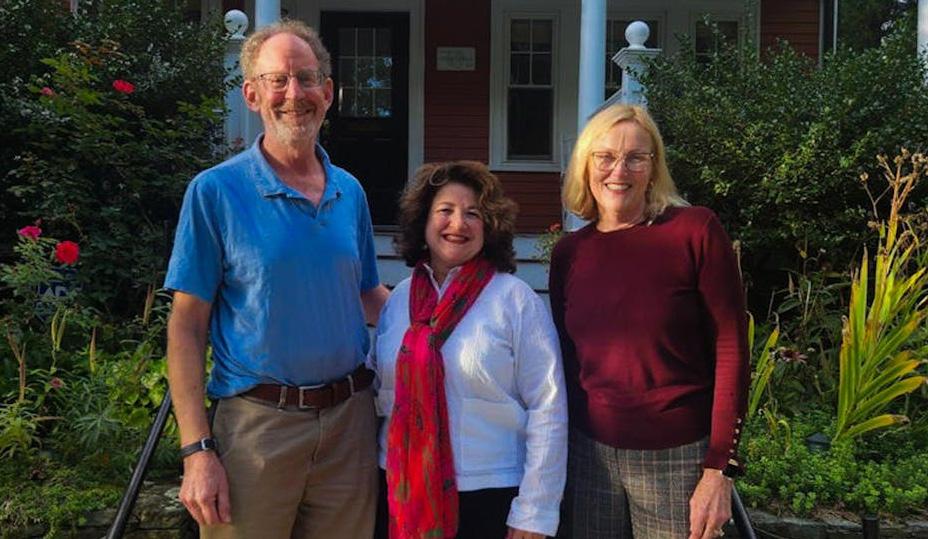
Democratic candidate Jill Davidson ’89 overwhelmingly won Tuesday’s special election for the Providence City Council’s Ward 2 seat, which represents the neighborhoods of Blackstone, College Hill and Wayland. With all polling locations reporting results, Davidson received almost 95% of votes cast, according to unofficial results posted by the Rhode Island Board of Elections.
The election saw 700 cast ballots — including 491 received on election day — yielding a turnout rate of just over 7% of registered voters. Davidson received 664 votes, while Republican candidate Axel Brito ’26 garnered 27 — just under 4% of the total vote. The remaining nine votes went to write-in candidates.
The election was triggered after former
400 faculty and one professional school may not work when you have 1,400 faculty and four professional schools.”
The report proposed adding an “elected faculty co-chair” to both the Academic Priorities Committee and the University Resources Committee. These committees make recommendations to the president about academic programs and the annual budget, respectively.
Mendicino explained that this proposal was motivated by concerns about a “power asymmetry” within the committees, which are both chaired by the provost.
The proposal advocates that the cochair create the committee meeting agendas alongside the provost “so that faculty involvement would begin not just in the meeting discussions, but in the direction of the committees,” she added.
Councilwoman Helen Anthony announced her resignation in August. With the election win, Davidson will fill the now-empty seat through next fall, when all 15 City Council positions are up for election. In her interview with The Herald last month, Davidson said she intends to run for re-election next fall.
Davidson’s swearing-in is “tentative-
Additionally, the report recommended the addition of three faculty governance leaders to the Corporation — Brown’s highest governing body — as ex-officio members. These leaders can be FEC officers or chairs of University committees such as the APC and the URC.
“Even though major decisions concerning our professional lives, such as promotions and the establishment of academic programs, are undertaken only with the Corporation’s approval, the Corporation appears to receive most of its information about the situation on campus from the senior administration rather than from the faculty,” the report states.
The report also recommends requiring a faculty vote to approve APC recommendations to close academic programs, particularly because a faculty vote is necessary to initiate new programs.
Another short-term proposal would
ly scheduled” for Dec. 17 at City Hall, according to June Rose, chief of staff of the Providence City Council. The induction date depends on when the election results are certified, which “we’re anticipating will happen on Dec. 11,” Rose wrote in an email to The Herald.
After her victory, Davidson told The Herald that she is “looking forward to work-
have the FEC chair lead faculty meetings, rather than the University president.
“We consistently received the feedback that faculty meetings tend to consist primarily of reports and matters to vote on, but not discussions of widespread faculty concern, and yet they are called faculty meetings,” Mendicino said.
Beyond these short-term proposals, the report also calls for implementing a task force to “undertake a comparative analysis of university governance structures, with the goal of determining further ways to strengthen the role of faculty in decisions impacting the academic mission.”
At Tuesday’s meeting, both Johanna Hanink, a professor of classics, and Michael Steinberg, president of Brown’s chapter of the American Association of University Professors, supported adopting a faculty senate model to accommodate the University’s growth.
ing toward long-term success for our public schools, pushing for increased environmental resilience, fighting for a more affordable Providence for everyone and more.”
In an interview with The Herald last month, Davidson advocated for the use of multiple strategies — including rent stabilization and building more social housing units — to address rising costs in the housing market. She also highlighted her takeaways from almost six years of working for environmental nonprofit Woonasquatucket River Watershed Council as well as her experience as a longtime PPSD parent.
In a post-win email to The Herald, Davidson called for increased dialogue and unity. “We need solutions, so let’s keep talking, even when we disagree,” she wrote.
She also commended Brito, writing, “I know that he has much to contribute to our community.”
Brito did not respond to The Herald’s request for comment.
Davidson won last month’s four-way Democratic primary with about 49% of the vote, having received endorsements from
“I think that for the FEC to work as it was originally envisioned, the University needed to be operating on a much smaller scale, and it also needed to be operating in an environment where every stakeholder was acting in good faith in terms of a commitment to shared governance,” Hanink added.
At some peer institutions, faculty sit on a senate that provides advisory input in institutional decision making.
Mendocino added that it wouldn’t help to create a senate at Brown that is entirely advisory.
A “senate, in and of itself, is not the solution,” said Nadje Al-Ali, a professor of international studies, anthropology and Middle East studies, noting the importance of considering different faculty governance options. “I really would like to stress the principles of transparency and accountability that should cut across whatever we do
THE BROWN DAILY HERALD
Assistant Copy
Design
Design
General Managers
Erin
Finance
Technology
Annika Singh
Data Desk Chief
Caleb Ellenberg
PRODUCTION
Copy Desk Chief
Daphne Cao


Graham
Office Manager
Cary Warner
Anthony, Climate Action R.I., Reclaim R.I. and Rhode Island State Senator Sam Zurier (D-Providence), among others, The Herald previously reported.
In a public statement, Davidson called her campaign “a reflection of our community,” noting that individuals of different backgrounds, priorities and experiences “came together to work for our future.”
She also wrote that while she doesn’t “have all the answers,” she believes that “community starts with listening, respecting one another and focusing on what we have in common.”
After Tuesday’s win, Anthony Vega, a spokesperson for Mayor Brett Smiley, wrote in an email to The Herald that “Mayor Smiley congratulates Jill Davidson on her victory.”
The mayor “looks forward to working with her to support neighbors and continue moving Providence forward,” Vega wrote.
This article originally appeared online at browndailyherald.com on Dec. 3, 2025.
in terms of shared governance.”
Other long-term recommendations include the creation of a faculty committee to oversee capital investment, establishing a threshold “above which resource allocations must be deliberated and approved by the faculty as a whole before they are made,” and creating a system for faculty to “regularly evaluate the administration’s decisions and performance,” according to the report.
FEC Chair Anna Lysyanskaya emphasized that, in addition to their criticism, faculty also provided positive feedback about University administration, particularly for their “receptiveness to feedback and for their leadership, especially in current rocky times.”
This article originally appeared online at browndailyherald.com on Dec. 2, 2025.
Submissions: The Brown Daily Herald publishes submissions in the form of op-eds and letters to the Op-eds are typically between 600 and 900 words and advance a clear argument related to a topic of campus discourse. You can submit op-eds to opinions@browndailyherald.com.
Letters to the editor should be around 250 words and respond to an article or column that has appeared in The Herald, or critique or commend The Herald’s editorial decisions. You can submit letters to the editor to letters@browndailyherald.com.
Submissions undergo multiple rounds of editing. These rounds of editing generally take place over the course of one evening, and you may have to respond to edits late in the evening. If you know you will be unable to do so, please mention that in your email, and we will do our best to work with you.
Submissions can build on reporting from The Herald, reporting elsewhere, official statements from the University or other groups and other reputable sources, but they cannot break news or contain information that The Herald cannot verify. Because we cannot publish unsubstantiated information, failure to provide appropriate sources may mean we have to modify or remove unverified claims.
The Herald will not publish anonymous submissions or submissions authored by organizations. Leaders of student organizations can be identified as such but cannot write under the byline of their organization. The Herald cannot publish all submissions it receives and reserves the right
Commentary:
COURTESY OF FRIENDS OF JILL DAVIDSON
With her victory, Jill Davidson ’89 (middle) seeks to improve the performance of public schools and fight to make Providence more affordable for its residents.
How prices at College Hill convenience stores stack up
The Herald compared the prices of popular items and spoke to students
BY MAYA KELLY SENIOR STAFF WRITER
Students looking to shop for necessities ranging from toothpaste to candy to medicine have plenty of local stores to choose from. Within 0.3 miles of the Stephen Robert ’62 Campus Center, there are four convenience stores: the University-run Gourmet to Go in the campus center itself, CVS on the corner of Thayer and Cushing streets, Metro Mart on Thayer Street and Harry’s Smokeshop on Waterman Street.
The Herald compared the prices of a few popular items and spoke to students and store spokespeople about pricing.
The Herald compared the price of eggs, a pint of Ben & Jerry’s ice cream, Celsius energy drinks, Crest toothpaste, Murchan ramen and Advil between the four stores. Across the four stores, Gourmet to Go had the highest average prices, while CVS offered the lowest average prices.
Five ounces of Crest toothpaste at Gourmet to Go is $4 more expensive than all other available options. The store is also tied with CVS for the most expensive egg prices.
“We primarily follow the suggested retail pricing structure established by our broadline supplier,” Vice President of Dining Services George Barboza wrote in an email to The Herald. “This is an average price structure determined by production/
BUSINESS

operational costs, cost of goods, market value and consumer demand.”
The prices for Ben & Jerry’s, Celsius and Advil were the lowest at CVS, whereas Metro Mart had the lowest price for ramen and eggs.
Metro Mart — which ranked as the second cheapest option overall — considers the prices of nearby competitors like CVS and Harry’s when pricing its own inventory, but also has to take its “very high” rent into consideration, said Suraj Pudasaini, manager of Metro Mart.
Pudasaini estimates that around 80% of the store’s customer base are students.
During breaks between semesters, the store sees a drop in sales of more than 50%, he added.
Four blocks up Thayer Street, CVS strives “to offer competitive prices for the products we sell and regularly monitor the prices other retailers charge to remain competitive in a market,” CVS spokesperson Shannon Dillon wrote in an email to The Herald.
“To maintain value, we strive to offer similar product categories of nearby stores,” Barboza wrote of Gourmet to Go.
Metro Mart’s prices regularly fluctuate. Egg prices at the store are reevaluated
about every two weeks depending on the prices when new inventory comes in, Pudasaini said. The shop buys its eggs from a nearby grocery store, and since they are a regular daily item, they “want to make sure that our customers are not overpaying,” he added.
Will Thomas ’28 chooses CVS when buying Celsius, toothpaste and Advil because “CVS has the deals,” he said. But when shopping for ramen, he chooses Metro Mart because there is more variety to choose from.
Pudasaini is negotiating with his vendor to bring the price of Celsius down by 20
to 30 cents in the coming weeks, he said. The energy drink is Metro Mart’s “hottest item” so the store is trying to make sure its customers are getting a “reasonable price compared to competitors,” he said. Coca Cola also recently lowered the price of its Monster Energy drink and the store wants to price match similar items, Pudasaini added.
Thomas occasionally strays away from Metro Mart, Gourmet to Go and CVS to buy specialty foods from Fox Point Grocers. He shops there because he enjoys supporting small businesses, “but it’s really expensive so I buy one or two things at a time,” he said.
Similarly, Minne Hatchuel ’27 shops at Metro Mart when she “just needs one missing ingredient for a recipe,” she wrote in a message to The Herald. Otherwise, she said she avoids doing any grocery shopping there because it’s “expensive and they barely have any fresh produce.”
CVS was the “go-to” convenience store for Thomas when he lived on North Campus, he said. But now that he lives closer to Metro Mart, he usually chooses that “for convenience.” In fact, Thomas’s purchasing decisions are largely influenced by convenience because “everything is kind of on the same level” in terms of price, he said.
Gourmet to Go is “the most convenient of them all,” Thomas said, adding that he likes that he can use his Flex Points at the on-campus shop. But this year, he used up his points, so he hasn’t frequented the store as much. Thomas was “not familiar” with Harry’s.
How the Boutros legacy on Thayer Street became a cornerstone of College Hill
The family now runs several of the street’s longest-standing eateries
BY GIA SHIN STAFF WRITER
Thayer Street has seen shops come and go for decades, but some of its most familiar storefronts — East Side Pockets, Chinatown on Thayer, Mike’s Calzones and the Baja’s franchise — all trace back to the same family.
The Boutros family opened East Side Pockets in 1997 after moving to Providence from Syria. The fast-casual spot, known for its falafel wraps and kebabs, draws on the family’s cultural and culinary roots.
“Back in 1982, my dad started our first falafel shop in Syria,” said Paul Boutros, owner of East Side Pockets. After moving to the United States in 1994, Paul Boutros worked in a pizza shop to learn English and adjust to American food service.
Shortly after, Paul Boutros decided it was time to open up his own shop — and what “can be better than (a) falafel shop?” he recalled thinking.
The early years of East Side Pockets depended heavily on family labor and long hours. Paul Boutros would arrive at 9 a.m. and only leave in the late hours of the morning. “We worked hard, and we worked as a family,” he said.
Paul Boutros said that, at the time, falafel and hummus were unfamiliar to many on College Hill, so he introduced students to the cuisine by handing out samples. “We stuck to the authentic recipe, the same falafel we used back home,” he said.

As more relatives joined them in Providence over the ensuing years, the family began adding new restaurants to the street. In 2005, Paul Boutros’s brother, Mike Boutros opened Shanghai in the building that currently houses Prime Liquors and Meeting Street Cafe. He ran the franchise for “a couple years” with a Chinese business partner before selling his share, he said. The restaurant has since closed.
Four years later, David Boutros, a Boutros cousin, opened the original Baja’s Tex Mex Grill, a franchise that has since expanded to 19 locations across New England — including a second location on Thayer. David Boutros ran the restaurant until his death in 2024 at age 57. After he passed, his wife, Andrea Mota, took over operations.
David Boutros’s success with Baja’s coincided with Mike Boutros’s re-entrance into the world of fast-casual dining. Mike Boutros opened Mike’s Calzones in 2012 and Chinatown on Thayer in 2018, followed by Mighty Mike’s Pizza in 2022.
“I always wanted to bring something different to Thayer Street,” Mike Boutros said. The businesses have stayed open through waves of change on Thayer, though the family has found it increasingly difficult to manage the stores.
Mike Boutros said this past year has been especially challenging due to the rising cost of supplies, high commercial rents and the current administration’s crackdown on immigration enforcement. “Most of … my customers here are Hispanic,” he said. “Now, they’re afraid to come outside.”
“My rent over here is close to $19,000 a month,” he added, noting that tariffs have increased the costs of items he sources from abroad.
Paul Boutros noted another change on Thayer after the pandemic: a decline in walk-in traffic. “People don’t want to go out anymore,” he said. “Everybody’s ordering through online apps, Uber Eats, Grubhub.”
Despite the challenges, the Boutros restaurants continue to attract a steady stream of students. “For me, Baja’s and Chinatown both do an amazing job of making great-tasting, affordable food,” Sophia Knaggs ’27 wrote in a message to The Herald.
Knaggs also noted the poster on the wall of East Side Pockets that describes the Boutros family’s arrival in Providence.
“It warms my heart to read the stories of family success,” she wrote. “I do feel happy knowing that my purchase contributes to their story.”
Fiona Shen ’28 said she “never would have thought that they were from the same (family),” noting how different the cuisines are across the restaurants.
For both brothers, seeing students return years after graduating reminds them of their restaurants’ legacy. Last May, Mike Boutros saw a couple of students who graduated 25 years ago, he recalled. “I still remember their names. Every time they come for Reunion, they come and see us,” he said.
A few doors down, the family is building beyond food. At 279 Thayer St., Mike Boutros and Mota are developing a five-story, mixed-use building with commercial space on the ground floor and apartments above. After decades of running businesses out of rented spaces, this project is the family’s first major investment.
Beyond Thayer, Mike Boutros has started expanding into other parts of Providence. He recently bought multiple properties on Reservoir Avenue with plans to clear the site and build a larger Chinatown restaurant — Chinatown Reservoir.
What has kept their businesses steady is still the same constant that motivated them in the first place: family and the people who keep coming back.
“Even the employees … I treat them like family,” Paul Boutros said. “That’s the connection you have to have.”
MICHELLE FENG / HERALD
HOUSING
HUD funding changes threaten long-term homelessness prevention in RI
Over 1,000 Rhode Islanders could risk losing permanent housing support
BY PAVANI DURBHAKULA SENIOR STAFF WRITER
Last month, the U.S. Department of Housing and Urban Development announced a funding change that will threaten state-level organizations’ ability to support unhoused communities, city officials and organizers told The Herald.
A Nov. 13 notice from HUD announced that overall grant funding for the Continuum of Care program — which provides funding for state-level organizations to support unhoused communities across the country — has increased from $3.6 billion in 2024 to $3.9 billion this year.
But the notice also outlined a new 30% cap on the renewal of permanent housing grants for people experiencing homelessness, among other changes.
Despite the increased funding, this 30% cap effectively redirects a significant amount of funding away from permanent housing initiatives to transitional housing and support services. While permanent housing initiatives aim to increase the amount of housing available for people to live in the long term — often by developing supportive housing infrastructure — transitional housing efforts work to temporarily shelter unhoused people in the short term.
The 30% cap could put many Rhode Islanders’ housing in jeopardy, as it “would
slash Rhode Island’s eligible renewal permanent supportive housing funding to just $5 million,” City of Providence spokesperson Michaela Antunes wrote in an email to The Herald.
“This could jeopardize permanent housing for at least 681 households, impacting 1,020 people,” she added.
In a HUD press release, HUD Secretary Scott Turner said the department is “stopping the Biden-era slush fund that fueled the homelessness crisis.”
“These long-overdue reforms will promote independence and ensure we are supporting means-tested approaches to … connect Americans with the help they need,” he added.
In response to HUD’s announcement, Rhode Island Attorney General Peter
Neronha P’19 P’22 co-led a coalition of 18 other attorneys general and two governors in filing a lawsuit against HUD on Nov. 25.
“If allowed, these cuts and conditions would further exacerbate already dire conditions for homeless Rhode Islanders.,” Neronha said in a press release.
“Continuum of Care resources have been critical to Rhode Island’s ability to respond to homelessness, particularly in sustaining and expanding permanent supportive housing across the state,” wrote Emily Marshall, a spokesperson for the Rhode Island Executive Office of Housing, in an email to The Herald.
Rhode Island’s CoC efforts receive $17.3 million from the federal government via 37 annual grants to 18 unique providers, according to Antunes.
Of that funding, roughly $14.5 million goes to permanent housing, Antunes added. The funding supports over 970 households and impacts about 1,450 people, many living in Providence.
In October, a Rhode Island Coalition to End Homelessness report found that 1,022 Rhode Islanders this year were experiencing chronic homelessness, defined as being homeless for at least 12 months. During the organization’s Point-in-Time Count on a single night in January, they determined that 2,373 individuals were actively experiencing homelessness in the state.
The situation is especially dire considering that “Rhode Island’s shelter system is already near full capacity each night, with constituents sometimes needing to wait a month or more to be able to access a bed,” and even longer for permanent supportive housing, Antunes wrote.
Permanent supportive housing helps Rhode Islanders experiencing homelessness “achieve long-term stability,” so changes “of this magnitude would have serious consequences for communities statewide,” Marshall wrote.
Michelle Wilcox — the president and CEO of Crossroads Rhode Island, an organization that works to alleviate homelessness in the state through permanent housing developments — expressed similar sentiments.
“By reducing access to housing, the only proven solution for ending homelessness, the new HUD rules will have serious consequences,” Wilcox wrote to The Herald. She explained that the changes could
result in “increasing homelessness and overwhelming (of) shelters, hospitals and other critical community services.”
Wilcox added that the implications of the new HUD rules can create new “risk” for communities across all 50 states.
Across the country, more than 170,000 formerly homeless Americans are at risk of losing their homes, according to a lawsuit filed on Monday against Turner and HUD by a coalition of municipalities and non-profits, including Crossroads Rhode Island.
“In a national housing crisis, forcing older adults, domestic violence victims, chronically homeless Americans with disabilities, veterans and families back onto the street or into mandated work or treatment programs is illogical and cruel,” Antunes wrote.
Still, Antunes highlighted how existing local initiatives may help continue addressing homelessness, even with decreased allocations of HUD funding to permanent housing.
Providence, for example, has “invested over $55 million in affordable housing construction and preservation projects through the Providence Housing Trust Fund,” which is “creating 1,600 new or preserved affordable units in our community,” Antunes added.
HUD did not respond to a request for comment.
This article originally appeared online at browndailyherald.com on Dec. 3, 2025.
With holiday travel demand, some students turn from Amtrak to buses, flights
Thanksgiving travel on FlixBus, Greyhound has increased more than 30%
BY SANAI RASHID METRO EDITOR
As the year comes to a close, crowds of people across the country are boarding flights, hitting the roads and booking last-minute trains for their holiday travel. In past years, cost-conscious travelers may have turned to Amtrak for an affordable ride. But as train prices rise, some are turning to other options to get home for the holidays.
Thanksgiving is the busiest week of the year for Amtrak. Last year, more than 1.2 million passengers traveled on Amtrak during the Thanksgiving season. Ahead of the holiday, Amtrak announced that it had provided 34.5 million customer trips in fiscal year 2025, setting a record for both ridership and revenue for the second consecutive year.
But as demand for Amtrak rides has grown over recent years, many customers have seen an increase in ticket fares.
“Up until this Thanksgiving break, I used Amtrak,” said Adwoa Owusu ’26, who usually takes an eight-hour train on the Northeast Regional from Providence to Virginia for the holidays.
That line is a part of the Northeast Corridor, which serves the Northeast’s five major metropolitan zones — Boston, New York, Philadelphia, Baltimore and Washington, D.C. — the country’s most heavily trafficked rail area.
But Amtrak prices have “gotten gradually worse since my freshman year,” she added.
“I’ve noticed that Thanksgiving is defi-
nitely the worst pricing period during the year,” Owusu said. When a one-way ticket from Providence to Virginia was set at $430, she quickly began looking at other alternatives to make it home for the holidays.
“I know that people have taken the bus in the past, but to me, even though it’s cheaper, it’s even longer than the train,” she said. So Owusu decided to fly back home from T.F. Green International Airport, which cost $340 round-trip.
Others turn to more affordable intercity bus options. Nya Bhat ’29 has taken the FlixBus from Providence to New York City several times throughout the semester, including for Thanksgiving, to save money. Round-trip tickets tend to fall between $50 to $90, she said.
“The first time I took the bus, I experienced some delays, but as I started taking it more and more (the trips have) been pretty smooth,” Bhat said.
But, other than the price difference, Bhat prefers taking the Amtrak since it is more reliable than the bus and allows for ticket flexibility, she said.
For their tickets, Amtrak uses a dynamic pricing model, a strategy that adjusts prices in real-time based on demand, travel times and customer behaviors.
As the departure date for a trip approaches, fewer seats are typically available on the train, and Amtrak will often raise prices “to try and make sure that they are sold to people who need that last-minute train and are willing to pay for it,” said Maddock Thomas ’26, a rail and transportation student researcher.
But “Amtrak is always broke” due to high fixed costs, said Professor of Economics Matthew Turner PhD’95. “If you’re Amtrak, you have to take care of the tracks, you have to take care of the train set, you
have to take care of the stations — trains are just expensive.”
Amtrak did not provide a comment to The Herald by press time.
As a quasi-public corporation, the company also operates under what Turner called an “impossible mandate” to provide service nationwide even when it requires running unprofitable lines.
“If Amtrak was allowed to just run from D.C. to Boston, they’d be fine,” Turner said. “But they have to serve Kansas as well, and that is not super profitable.”
But a majority of intercity bus companies are privately owned, which allows them to focus on profitable lines as opposed to maintaining a national network, Thomas said.
In the Northeast, some of the most popular intercity bus providers include FlixBus, Greyhound and Peter Pan Bus Lines. These are privately owned enterprises, with FlixBus and Greyhound together — under parent company Flix — facilitating the largest intercity bus network in North America.
“Buses offer a more affordable, flexible and convenient option than Amtrak, with frequent departures, direct routes to city centers and smaller towns and the ability to book last-minute without major fare spikes,” Ike Hajinazarian, a spokesperson for Flix, wrote in an email to The Herald.
In recent years, Flix has seen a “continued strong demand from college students” prompting the company to “purposefully design many routes to include colleges and universities,” he wrote.
Both FlixBus and Greyhound have seen a significant increase in bookings during this year’s Thanksgiving travel period, he added, which increased more than 30% from last year.

While many intercity bus companies use a dynamic pricing system, Thomas explained, fares are still often lower than Amtrak’s since companies often are not “paying for bus terminals” or “maintaining stations and tracks.”
While she cited FlixBus’s lower prices, Bhat also wishes that Flix would offer a flexible ticket option similar to Amtrak’s flex fare, which offers passengers a full refund with no fees if they cancel their trip before departure. If FlixBus riders cancel their reservation 30 days in advance, there is no cancellation fee. But, closer to the departure date, cancellation fees can rise to 80%.
“As college students, all of our plans are so easily subject to change, and the bus is very rigid in that respect,” she said.
To avoid having to take the bus in the future, Bhat has already started looking at Amtrak tickets to travel between Providence and New York for winter break and Presidents’ Day weekend.
Jonas Coats ’29 also plans to buy his Amtrak tickets in advance for his trips next semester. This fall, he has primarily used Peter Pan and Greyhound buses to travel between Providence and New York during weekends and holidays.
“I’m happy to buy an Amtrak ticket if it’s not significantly more expensive” than the bus, he said. But for Thanksgiving, “there were days when the Amtrak ticket was $300, and the bus was $60, so it feels wasteful to buy an Amtrak ticket when it’s that inflated.”
Plus, Amtrak has one feature that makes the price worth it for some students.
“I like looking out the window on the Amtrak,” Coats said. “A lot of the time you’re going through very pretty countryside, whereas with the bus, you’re just on the highway the whole time.”
“If you really want to see New England,” he added, “Amtrak is a much better option.”
MAX ROBINSON / HERALD
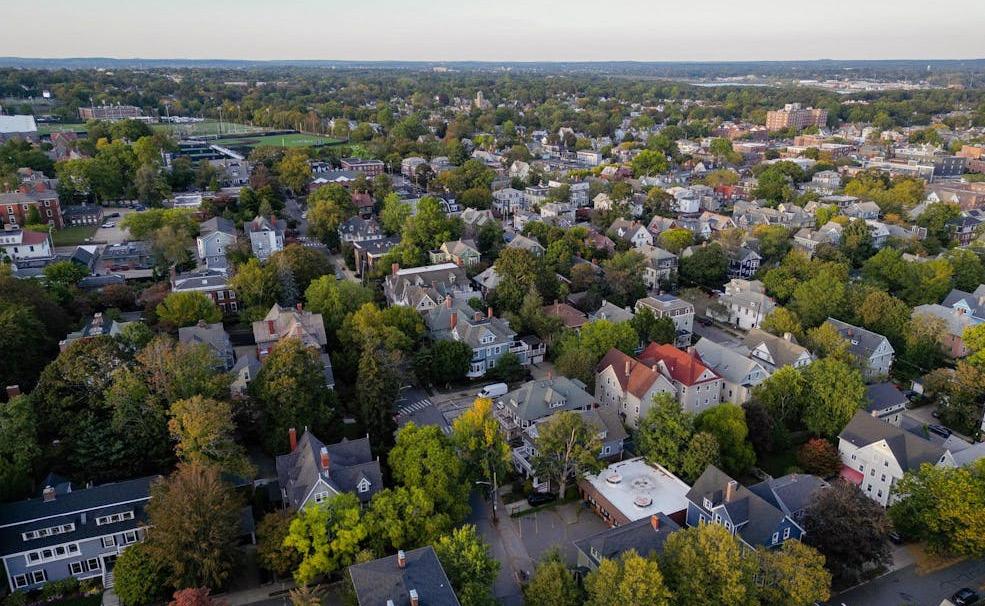
Housing in Providence in September. The changes affect the Continuum of Care program, which provides funding for state-level organizations across the country to support unhoused communities.
KAIA YALAMANCHILI / HERALD
The Peter Pan Bus downtown stop in November. Ahead of the holiday, Amtrak announced that it had provided 34.5 million customer trips in 2025, setting a record for both ridership and revenue for the second consecutive year.
ICE HOCKEY
Women’s ice hockey falls 4-1 to New Hampshire on Sunday
Despite early goal, Bears were unable to hold onto their lead at home
BY RAHUL SAMEER STAFF WRITER
On Sunday afternoon in the Meehan Auditorium, the women’s ice hockey team (8-51, 4-3-1 ECAC) fell 4-1 to New Hampshire (8-7-2, 4-4-1 Hockey East).
The hard-fought match began with an early goal from Brown, but New Hampshire’s offensive play catalyzed 4 consecutive goals for the Wildcats that the Bears couldn’t come back from.
Melanie Ruzzi, the team’s head coach, said in an interview with The Herald that it was a “tough weekend.” The day before their match against New Hampshire, the Bears lost 3-2 in overtime to Providence College.
On Sunday, the Bears played without Monique Lyons ’28 and Margot Norehad ’27, the team’s top two scorers. Last season, Lyons and Norehad led the team in goals with 14 and 12, respectively. Lyons was also ranked second in the country in goals per game among first-year players.
Losing key players like Lyons and Norehad “can shake the team up a little bit,” Ruzzi said.
From the moment the opening whistle blew on Sunday, both teams were aggressive on the ice. Eleven seconds into the game, the Wildcats’ Nina Rossi stole possession and dashed to Brown’s goal from the left. She fired at close range, but the puck streaked wide.
But Brown did not remain in its defensive position for much longer. Just moments later, Jade Iginla ’26 seized the puck
ICE HOCKEY

Melanie Ruzzi, the women’s ice hockey head coach, said in an interview with The Herald that it was a “tough weekend.” Looking forward, the Bears will face Yale (8-6, 4-4 ECAC) this Saturday in a home match.
and charged toward the New Hampshire goal. But New Hampshire’s goalkeeper Noemi Martinez blocked Iginla’s shot, leaving both teams scoreless after a tense start.
Two and a half minutes later, Brown eyed its next chance. As Iginla made her way behind New Hampshire’s goal in an attempt to shake off a Wildcat defender, she lost control of the puck. But it was quickly picked up by India McDadi ’26, who dodged New Hampshire’s Charlie Rauch, closed in on the goal and sent a missile streaking toward the net.
For a moment, the Wildcats breathed a sigh of relief as their teammate Addison Finn obstructed the shot from its path. But waiting to the right of the goal was Iginla, who slammed the puck through an opening and put Brown on the board.
Iginla has been “playing great” this season, Ruzzi said. “She’s a very powerful athlete, and she’s got a great shot, and so I think when she drives pucks wide (and) takes (them) deep in the zone, good things happen.”
“I think that she and India have had great chemistry for 4 years, and so having them together is always a great thing, too,” she added, commending McDadi’s assist.
For the rest of the period, Brown continued to put pressure on New Hampshire’s defense, taking 15 out of the 27 shots fired in the period after the initial goal. But neither team was able to capitalize on any scoring opportunities, and the game entered the second period with the score still at 1-0.
Despite Brown’s lead, both sides continued to wrestle for offensive control, taking a total of 7 shots in the first 3 minutes of the period.
But the Wildcats’ next attempt to score would turn out to be more successful. After a short tussle in the neutral zone, New Hampshire’s Kelly Harty stole possession from the Bears. Harty passed the puck to her teammate Addison Spitz, who then made her way along the right side of the rink.
With a clean swing, Spitz sent the puck toward Brown’s goal, but the shot was blocked by goalie Anya Zupkofska ’28. But Zupkofska’s kneepads rebounded the puck right to Harty, who was positioned next to the goal. With a quick flick of her stick, Harty launched the puck into the net, leveling the score at 1-1.
After losing their lead, the Bears saw an opportunity present itself when the Wildcats’ Alyson Hush was sent to the penalty box for roughing 8 minutes into the period, starting a 2-minute power play for Brown. Although the Bears took 7 shots during the power play, none found the back of the net.
To close out the second period, each team took an additional 9 shots — all of which were unsuccessful. The Bears and the Wildcats headed into the final 20 minutes tied.
The third period saw yet another early goal — this time by the Wildcats. New Hampshire’s Hush corralled a loose ball, sending it to teammate Danika Botterill in
front of the net. Without hesitating, Botterill knocked the puck cleanly to Zupkofska’s left, catapulting the Wildcats to a 2-1 lead. With only 3 minutes left in the game, Brown’s desperation to level the score only grew. To improve the team’s odds, Zupkofska stepped off the ice in exchange for an offensive player, leaving Bruno without a goalie.
But as soon as the Wildcats gained control of the puck, the game moved out of reach for the Bears. Once again, Hush took advantage of an unobstructed path to the net and charged along the left side of the rink. One Bear slid on her stomach in a frantic attempt to stop the shot, but Hush easily sent the puck toward the open net for the goal.
With New Hampshire now boasting a 3-1 lead, the Bears’ chances of emerging victorious looked bleak. Any hopes of a comeback were dashed when Spitz bagged the Wildcats’ second empty-net goal with just over 1 minute to spare.
As time ran out, Brown was unable to launch a counter-offensive, and the final score rested at 4-1.
Looking ahead, Ruzzi said the team plans to bounce back from the loss.
“We’ve climbed the ranks nationally to 11th in the country, which is a huge thing for Brown women’s hockey,” she said. “We’ll probably take a dip after this weekend, but we’ll be ready to fight back.”
This Saturday, the Bears will face Yale (8-6, 4-4 ECAC) at home. After losing to the Bulldogs twice last year, Brown hopes to flip the script this weekend.
This article originally appeared online at browndailyherald.com on Dec. 1, 2025.
Brown splits series against Yale before dropping road game against Northeastern
Team will play No. 10 Dartmouth and No. 20 Harvard this weekend
BY HARRY GUO STAFF WRITER
Last week, the men’s ice hockey team (3-7, 2-4 ECAC) split a two-game series against Yale (4-5, 3-3 ECAC) and fell to No. 12 Northeastern (9-4, 4-3 Hockey East).
“It’s still early, we’re growing (and) we’re learning,” Head Coach Brendan Whittet ’94 told Brown Athletics after the Yale series. “I like the team a lot, but my expectation is every game we play, we win.
On Nov. 21, the Bears faced off against the Bulldogs in the Meehan Auditorium.
Bruno started off strong, and less than 3 minutes into the game, forward Brian Nicholas ’28 finished off a feed from fellow forward Michael Salandra ’28, putting the Bears on the scoreboard. But moments later, a review overturned the play due to an offside call, and the game remained scoreless.
Brown then spent much of the first period killing penalties instead, with goaltender Fred Halyk ’27 turned aside 6 shots during 3 straight Yale power plays. On the other end, Brown couldn’t take advantage of 2 late power plays — including a long 5-on-3 — and entered intermission tied at 0-0.
Yale opened the scoring early in the second period when forward Will Richter picked off a Brown buildup and scored on the counterattack.
But Yale didn’t have the lead for long. Five minutes later, Salandra reacted quickly

after a shot by Alex Pineau ’27 rebounded, scoring smartly with a light tap-in to tie the game.
The Bears took the lead less than 2 minutes into the third period when forward Matthew Cataldo ’29 buried a loose puck after winning a faceoff and scramble in front of the goal.
But just like Brown did the period before, Yale was quick to level the score.
During a power play midway through the period, Bulldog forward Micah Berger released a long shot through layers of traffic that hit the back of the net.
Fighting hard to regain the Bruno lead, defenseman Matt Desiderio ’29 disrupted a Yale entry, allowing forward Mike Cataldo ’27 to send his brother, Matthew Cataldo, into the neutral zone. With a shorthanded breakaway, Matthew Cataldo gave Brown a 3-2 advantage less than a minute after Yale equalized the game.
To close out the game, forward Tanner Hartman ’26 added an insurance goal off an offensive-zone draw with less than 4 minutes left, effectively sealing Brown’s triumph. Throughout the game, Brown held a narrow 32-31 advantage in shots on goal and logged 25 blocked shots over Yale’s 6.
“That was a battle tonight. There were ebbs and flows to it, and we had to kill off a ton of penalties,” Whittet told Brown Athletics following the game. “We did a great job on the penalty kill, Halyk made a few huge saves and gave us a chance. By and large, I thought we battled and played pretty hard.”
But Brown’s success against the Bulldogs was short-lived. Just one night later, the Bulldogs evened the series following a 40-save outing from Yale goalie Jack Stark.
Brown played without standout captain forward Ryan St. Louis ’26, and the game “was hard” without him, Whittet
said. “That being said, you expect other guys to step up in his absence. I thought we did some good things. We were just a little inconsistent.”
The opening period had 7 combined penalties, with Yale finally breaking through on a power play with a clean finish by forward Zachary Wagnon, securing a 1-0 lead.
Yale then doubled its advantage early in the second period as forward David Chen carried the puck straight up the middle and fired a shot through traffic that bested Brown goalie Tyler Shea ’26.
Brown generated multiple high-quality chances to score throughout the period — including a shorthanded breakaway by Matthew Cataldo and a solo look for forward Ben Poitras ’28 — but Stark held firm.
In the final period, Yale forward Ronan O’Donnell pushed the lead to 3 after a sloppy Brown turnover behind the net.
The Bears pulled Shea with 4 minutes on the clock, and forward Ivan Zadvernyuk ’28 spoiled Stark’s clean sheet on a late power play to get Brown on the scoreboard. But to the Bears’ dismay, 1 goal was all they would get, and they headed back to Providence with a 3-1 loss, splitting the series with Yale.
Brown’s Thanksgiving break play ended with a road loss on Saturday against Northeastern.
On the Huskies’ Senior Day, the Bears gave up 2 early goals just 37 seconds apart to Northeastern forwards Amine Hajibi and Joe Connor.
The Huskies added a third goal early in the second period before Desiderio finished a late-period rush to get Brown on the scoreboard.
The Bears pressed for a second goal in the third period, but they couldn’t break past the Husky defense. Any hope Brown had left was crushed when Northeastern defenseman Vinny Borgesi capitalized on an empty net in the final 2 minutes, sending the Bears home with a 4-1 loss.
“We literally lost the game on a 30-second shift in the first period where we turned pucks over,” Whittet said. “We have to be better, and that’s everybody, including the staff.”
Brown returns to the ECAC next weekend with road games at No. 10 Dartmouth (8-0, 4-0 ECAC) on Friday and No. 20 Harvard (5-3-1, 3-1) on Saturday. Both games are scheduled for 7 p.m. This
JASCHA SILBERSTEIN / HERALD
MIA SANTOMASSIMO / HERALD
Brown played without standout captain forward Ryan St. Louis ’26, and the game “was hard” without him, Head Coach Brendan Whittet ’94 told Brown Athletics after the game.
Brown Sports Network announces partnerships with Chelsea FC, others
Club hopes to give students real-world experience in sports industry
BY MILES MONROE SENIOR STAFF WRITER
On Nov. 18, Brown Sports Network announced a five-month partnership with Chelsea Football Club. Throughout the spring 2026 semester, the network will look to improve the world-famous soccer team’s brand marketing strategy, online experience and content development while giving students firsthand experience in the industry.
The announcement comes alongside the network’s new strategy and marketing partnership deals with the Minnesota Vikings, an NFL team, and Boston Legacy FC — a team that will join the National Women’s Soccer League in the spring.
Brown Sports Network — which was founded this February by co-presidents Nikolas Rohrmann ’26 and Charlie Pliner ’26 — is Brown’s first and only pre-professional club dedicated to expanding student access to the sports industry. According to Rohrmann and Pliner, the club has over 400 students, 120 alums and over 40 athletic staff, in addition to the advisors from
FEATURE
the NFL, NBA, MLS, among other sports organizations.
With the student application window for the Chelsea partnership now closed, Pliner and Rohrmann will work to compose a “project team,” or a group of students who will work with the soccer club. Once the team has been appointed, they will have a “kickoff” call with their partners at Chelsea to determine a roadmap of action.
BSN leadership will “work closely with the project lead, who’s a Brown student, to come up with a cadence of meetings with the host organization,” according to Pliner.
Additionally, they will establish “how often deliverables will need to be met, and work toward doing a presentation.”
“There’s a lot of research involved, students working with other students to come up with a plan and how they’ll tackle it,” Pliner added.
Phil Lynch ’00, chief digital and marketing officer at Chelsea, facilitated the deal, Pliner said. But other members of the club’s network who are not affiliated with Brown connected the students with Boston Legacy and the Minnesota Vikings, according to Rohrmann.
The Vikings strategy and marketing project will also run through spring 2026 and specifically looks to evaluate the influence of flag football at the community level.
The project will also explore the ability to expand the NFL’s influence through flag football.
For Boston Legacy, BSN students will participate in two separate projects: one focused on increasing engagement of the brand in the Boston area, and another looking at how artificial intelligence can be used to grow the club’s influence.
Rohrmann explained that the club aims to take on a diverse set of projects spanning multiple areas “so that if (students) have a particular interest, (they) can see that actually exists within the sports industry.”
“We’re trying to create something here that’s just different and shows how big the sports industry is and … why it’s a great place for students to look to start a career,” Pliner added.
Rohrmann and Pliner believe the projects create a reciprocal and beneficial relationship between the network’s members, giving students valuable experience in the industry and brands connections with young consultants “on the pulse,” Pliner said.
“For us, it’s really about just creating something that will benefit all of the different people involved,” he added.
By the end of BSN’s ongoing and upcoming partnerships, more than 70 students at Brown Sports Network will have
worked with nine total organizations, building valuable connections and giving students real-world experience with some of the world’s top brands in sports, according to Pliner and Rohrmann.
“If you have tangible experience at a legit sporting organization, it’s a lot easier to land” post-graduate jobs in the industry, Rohrmann said.
Looking forward, the club hopes to
“continue to build and grow the amount of projects and ultimately just create a pipeline and cohort of Brown students within the sports industry together to build a network that will benefit everybody for years, decades even, to come,” Pliner said.
article originally appeared online at browndailyherald.com on Dec. 4, 2025.

Jessie Golden ’26 named first-ever three-time Ivy Defensive Player of the Year
BY JAMES LIBRESCO STAFF WRITER
On a Saturday night in early October, Brown women’s volleyball was in a deep hole. Down two sets to Penn, the Bears had ceded point after point to the Quakers. Brown would need to perform flawlessly to secure three straight sets and capture a win.
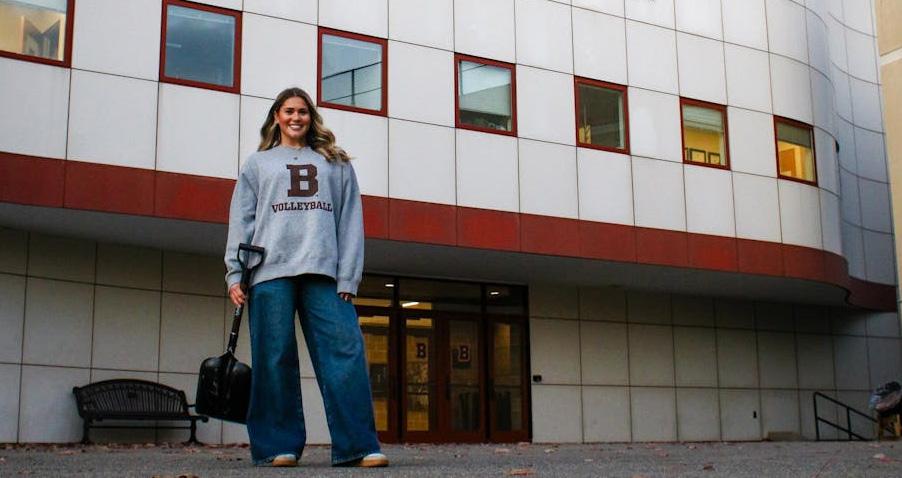
What happened next was not only a turning point for the team, but also for Jessie Golden ’26, who was unanimously named the Ivy League Defensive Player of the Year for the third year in a row last month.
Golden is the only player in Ivy League history to have won the honor three times.
The libero is known by her teammates — and dreaded by her opponents — as a quiet leader, one who could quite literally dig the team out of trouble. Over her career at Brown, she boasted an average of 4.2 digs per set, adding up to 1,457 digs in total.
But on Oct. 4 in Philadelphia, with the Bears on the brink of being swept, Golden “wasn’t playing (her) best,” she told The Herald.
She realized that Brown’s ability to eke out a win would depend on if she could instill a sense of urgency in her teammates. So Golden brought them into a huddle.
“This is not a game we can lose,” she recalls telling them. “We all trust each other. We all love each other. We have to play for each other here.”
Then, the unlikely happened: The Bears clawed their way back, reverse-sweeping the Quakers and leaving Penn fans with their jaws on the floor as they exited the stadium.
“I finally figured out how I could lead and how I could actually change the outcome of our game,” Golden said. “I needed to instill confidence in other people.”
That goal, she said, has since driven her both on and off the court.
“Watching her grow into not just a great athlete, but also a great leader and someone that the team trusts and relies on has been really incredible,” said Head Coach Taylor Virtue.
“She’s the best libero ever in the Ivy League,” Virtue added.
Hailing from Tampa, Florida, Golden started playing volleyball in fourth grade. Currently listed as 5 feet, 6 inches tall — short by competitive volleyball standards — Golden knew from the beginning that she would be a libero.
Playing for both Carrollwood Day School and an OTVA club team, she excelled in the defensive specialist position, winning a state championship and breaking school records in digs, service points, service receptions and aces.
With the pandemic raging during Golden’s junior year of high school, her primarily virtual college recruiting process was “very weird,” she recalled. Although coaches encouraged her to seek out colleges in Florida, which is known for volleyball,
Golden ventured north instead.
Brown had “just the combination of high-level academics and high-level volleyball,” she said.
In 2022, her first year at Brown, Golden recorded 266 digs while playing in 97 sets. The team made it all the way to the Ivy League final, but lost 1-3 to Yale.
On the somber bus ride back to Providence, silence shifted to screams when Golden received news on her phone about an upsetting situation in her hometown, she recalled. Golden declined to elaborate on the circumstances.
After texting the team group chat about the situation, “the girls had (her) back,” she recalled.
“We were like a sisterhood,” she said. Her teammates cared about her “as a person and not just a player.”
Feeling a new sense of cohesion with the team, Golden glided through her sophomore season, racking up 446 digs — the most in the Ivy League. She picked up her first Defensive Player of the Year award and was selected to the First Team All-Ivy.
But when the team fell to Yale in the
Ivy League Championship for the second year in a row, Golden started believing she had to play flawlessly if she wanted to win a championship.
“My biggest struggle in my whole life is being a perfectionist,” she said.
While the sophomore-season defensive player award was a mark of success, it also led Golden to put “more of a pressure” on herself to win the award again. She “was so focused on defending that accolade,” she recalled, that if she performed poorly at practice, her “whole mood would change.”
Ultimately, Golden succeeded individually, securing the Defensive Player of the Year award and a First Team All-Ivy designation for the second year in a row. But the team lost to Princeton 0-3 in the Ivy League semifinal.
“Reflecting on that (season), I was disappointed in how I carried myself,” Golden said. “So going into senior year, I tried really hard to just make it about other people. I really was not focused on winning an accolade.”
That effort was felt by the entire team, said Bella Bonatakis ’26, Golden’s team-
mate.
“She really became confident in herself as a player,” Bonatakis said. “Once she figured that out, she was able to bring others along with her in that mentality.”
Nowhere was her inspiring confidence more evident than at the Oct. 4 Penn game when Golden called the huddle, Bonatakis said. After hearing Golden’s speech, Bonatakis “had no doubt that the rest of our team would see that and perform.”
The team would go on to win 14 of 24 games this past season, holding a 9-5 record in the Ivy League and qualifying for the league tournament. But during warmups on Senior Night, Golden injured her ankle while trying to block a teammate.
The team won the game against Columbia but faced tougher competition seven days later in the Ivy League semifinal against Princeton. After resting her foot for the week, Golden decided to suit up for what would potentially be her last game.
“There’s no way she’s gonna play right now,” Bonatakis recalled thinking at the time.
But nevertheless, Golden did, unaware that she had three torn ligaments.
“She was able to step in and put the team above herself,” Bonatakis said. “That speaks to the kind of player that she became.”
Despite a 10-dig effort from an injured Golden, the team ended up losing the game 0-3.
But Virtue and Golden said the season’s end did not define Golden’s success or impact on Brown volleyball. Late last month, she picked up her third straight First Team All-Ivy and Defensive Player of the Year designations, securing her place in Ivy League history.
“She’s sitting alone at the top,” Virtue said. “It’s incredibly special and speaks to how consistent she was for four seasons.”
“I’m proud of what I did,” Golden said. “Volleyball has given me this confidence that I can use throughout the rest of my life.”
This
COURTESY OF CHARLIE PLINER
Brown Sports Network is Brown’s first and only pre-professional club dedicated to expanding student access to the sports industry.
Golden sat down with The Herald to reflect on her volleyball career
JAKE PARKER / HERALD
Jessie Golden ’26 posing outside the Pizzitola Memorial Sports Center on Thursday. Hailing from Tampa, Florida, Golden began playing volleyball at around the fourth grade.
OPINIONS
Vishwakarma ’29: Skipping college for a white-collar job
can’t end well
“Skip the debt. Skip the indoctrination. Get the Palantir degree.”
So opens the mission statement of Palantir’s Meritocracy Fellowship, a program that invites “exceptional” high school graduates to forgo college and pursue paid internships at the defense consulting firm. High-achieving fellows can even receive a return offer for positions with salaries that start at $157,000. But in a field as ethically challenging and interdisciplinary as security consulting, a college education is especially important in giving students the resources, experiences and time to grow into ethical leaders.
While college tuition prices have risen far more than other commodities in the modern economy, students can “skip the debt” in other ways. Many universities offer financial aid packages that meet full demonstrated need, and Brown has one of the most generous aid programs in the country. In the case of Google or NVIDIA, employees are likely to pay off their loans in a matter of years thanks to loan assistance programs. The average employee at a major tech company earns over six figures, an impressive return on investment for a college education.
At first glance, programs like the Meritocracy Fellowship might suggest that paying for a college de-
gree is optional. However, these initiatives do not offer the same developmental opportunities required to grow moral intuition about large-scale problems. A farmer or a firefighter can learn by doing, as they tangibly see the effects of their work and can be held accountable for their decisions. In contrast, when it comes to building software used to surveil millions, it becomes hard to see the effects of unethical decisions until civil liberties are violated.
Lived experiences at college develop this moral intuition over time — we discover who we want to be after being exposed to an incredible variety of backgrounds, values and ambitions. All Brown undergraduates are required to spend at least two years living on campus; interacting with diverse peers allows us to understand the world and refine our notions of a meaningful life. Opportunities like the Brown Outing Club promote a love of nature, while cultural and affinity groups expose students to potentially unfamiliar cultures. Those who want to shape the world must first understand the world. In stark contrast, the Meritocracy Fellows live with the same 20 teenagers for months.
Brown’s classrooms offer opportunities for moral debate. The University offers courses such as CSCI 1953A: “Accessible and Inclusive Cybersecurity and
Lived experiences at college develop this
moral intuition over time — we discover who we want to be after being exposed to an incredible variety of backgrounds, values and ambitions.
“
Berkwits ’29: It’s
time
Privacy” and many other ethics-focused computer science and engineering classes. Furthermore, each introductory computer science class features Socially Responsible Computing content in every TA section. These seminars allow students to debate their opinions in a low-stakes environment. For-profit companies, on the other hand, might struggle to promote ethical decision-making while protecting the bottom line, which is why employees must join with an already strong sense of their values.
Critics of higher education claim that colleges indoctrinate students through biased course material or professors. Vice President JD Vance declared “universities are the enemy” for this exact reason. Yet, Palantir’s college alternative is no better. In an attempt to condense four years of liberal arts education into 4 months, Palantir provides “curated readings” and “seminars with leading experts” on why the West is “worth defending.” Yet, every single one of the “leading experts” listed on the program website holds a university degree, often from Ivy League institutions. Clearly, their “indoctrination” is not strong enough to prevent Palantir from using them
as role models.
Palantir, in true anti-college fashion, claims “those with the highest aptitude deserve … responsibility, not busy work.” For many career paths, this is undoubtedly true. Yet, for motivated programmers — the very demographic the Meritocracy Fellowship is recruiting — the image of college as one big waiting room is completely detached from the reality of opportunity-rich campuses. Brown, an institution devoted to “serving the community, the nation and the world,” does not admit students for them to live on the sidelines — many of us work summer internships, join pre-professional clubs or conduct impactful research. We take on responsibility, but have room to make mistakes and learn. For those with “aptitude” and “conviction,” as anti-college pundits paint their recruits, this place is anything but passive.
Arya Vishwakarma ’29 can be reached at arya_vishwakarma@brown.edu. Please send responses to this column to letters@browndailyherald.com and op-eds to opinions@browndailyherald.com.
for Brown’s plastic silverware to go
As soon as meal times approach, hoards of students can be found across campus munching on Ivy Room salmon bowls, grabbing a Blue Room salad or slurping pho from Andrews Commons. All of these dining options have one thing in common: They are served with a side of plastic silverware. Every day, Brown students on meal plans use countless plastic forks, knives and spoons to eat their food — cutlery that often ends up in the landfill, polluting our air and water and contributing to global warming. The next at Josiah’s. And, each dining hall on campus composts in their respective kitchens, while Ratty diners are also able to compost their food on the way out. These environmentally friendly dining initiatives are complemented by a number of other sustainable efforts on and off campus, such as the ongoing construction of a massive solar farm in North Kingstown that will produce the vast majority of Brown’s energy. Eliminating plastic silverware feels like a clear next step for the University.

There is no perfect solution to the environmental upheaval or health effects that come from living in a plastic-dominated society. “ “
grams of plastic the average person consumes every week. Microplastics in the human body can decrease fertility and increase risk of colon and lung cancer. In addition, when eating hot foods, plastic releases harmful chemicals like BPA causing microplastics to be dispersed even more readily. The study of microplastics, both its effects on humans and the environment, is a relatively new and exponentially growing field, and one that Brown itself is involved in. We should not let ourselves remain the field’s guinea pigs. Simply put, the spoon’s worth of microplastic that is believed to exist in the average human brain should be reason enough to turn away from the plastic spoons in our dining hall.
For a university who claims commitment to student and environmental health, an actionable, and very feasible next step would be the elimination of plastic silverware in our dining halls. Metal silverware, as is used in the Ratty or VDub, would be the least harmful alternative, as it is not only reusable but also does not contain microplastics. However, if that choice is not feasible, more sustainable alternatives exist. Even though it is slightly more expensive, compostable utensils made out of corn are a great
plastic free, plant-based alternative. However, it is not the only option; bamboo or wood cutlery are also viable substitutes. While each alternative does have their own set of challenges, such as cost or durability, they come with a myriad of benefits. If, for example, Andrews started using one of these alternatives options, every food product handed to each student — the bowls, silverware and food itself — would be compostable except for the optional lids provided for the bowls, thus making it feasible for Andrews to begin front-of-house composting for diners. This small switch can lead to a cascade of attainable and sustainable action.
There is no perfect solution to the environmental upheaval or health effects that come from living in a plastic-dominated society. However, the switch away from plastic utensils is a step towards a more conscious and sustainable university.
Talia Berkwits ’29 can be reached at talia_berkwits@ brown.edu. Please send responses to this op-ed to letters@ browndailyherald.com and other opinions to opinions@ browndailyherald.com.
MAX ROBINSON / HERALD
Editors’ Note: Announcing The Herald’s 136th Editorial Board
The Herald is proud to announce the members of its 136th Editorial Board, which will oversee the paper through its 135th year.
The 136th Editorial Board will be led by Editor-in-Chief and President Cate Latimer ’27, an English nonfiction concentrator from Portland, Oregon. This month, she’ll conclude her time as a University news editor and special projects lead, where her calm and collected attitude and kind mentorship have already steered The Herald through some of its most challenging coverage.
Many will have seen Latimer’s byline and videos as she’s guided Herald readers through the Trump administration’s impacts on College Hill, including the deportation of a Brown professor, the freezing of the University’s federal funding, Brown’s agreement with the federal government and the University’s response to the Trump administration’s October compact. Her extensive reporting experience and unwavering leadership will serve her well as she navigates the future of The Herald — not unlike how her obsession with public transportation and urban planning has made her an expert in navigating Los Angeles’s public transit system.
After a prolific year of coverage spanning two sections, Ciara Meyer ’27 — a proud native of Saratoga Springs, New York — will assume the role of managing editor of newsroom and vice president. Meyer is concentrating in English nonfiction and statistics, a pairing that has trained her eye to spot fresh, original angles in her reporting as a University news and metro editor.
Since January, Meyer has led The Herald’s polling team, analyzing thousands of responses to capture data-driven snapshots of the student body on College Hill. When she’s not covering the inner workings of Brown’s admissions and financial aid systems, she can be found in Providence schools, doggedly reporting for articles on the city’s education system. From taking readers through a day at a bilingual elementary school to diligently following a congressional probe into Brown’s financial aid practices, Meyer has shown her ability to shift deftly between human-interest stories and hard-hit-
ting news. Her skill set will prove invaluable as she helms The Herald, following in the footsteps of her direct ancestor, Irish pirate queen Gráinne Ní Mháille.
Hailing from Redondo Beach, California, Elise Haulund ’27 will guide The Herald’s daily operations and staff training as the next managing editor of production and development and post- liaison. As an English concentrator, Haulund’s exceptional taste will provide her with a recipe for success when editing articles in the newsroom — and when making her weekly soup.
As an editor for The Herald’s science and research section, Haulund has diligently tracked both Brown’s scientific advancements and recent federal threats to research funding. From covering the groundbreaking development of a complete fly brain map to reporting on a law firm’s threats to the University’s wind research to following the 10-year anniversary of the Institute at Brown for Environment and Society, Haulund has done it all. But when she’s not writing or editing, she can always be found at Coffee Exchange or pirouetting her way across the Brown Ballet Company stage.
Claire Song ’27, a Dublin, California native, will be pioneering her role as managing editor of recruitment and audience. A rare pre-med Heralder, Song is concentrating in applied math and biology — both apt disciplines, considering her prolific career as a science and research editor. Perhaps someday, Song’s medical education will help her divine why she can so rapidly and ceaselessly crack her left pinky knuckle.
As both an S&R and University news editor covering graduate schools and students, Song’s coverage spanned from breaking reporting on research funding cuts to heartfelt obituaries and incisive science writing. True to her Bay Area roots, Song consumed one boba tea every 3.96 days for the past year, per her calculations — precisely the kind of diligent data reporting that underpinned her ambitious exploration of research grants at Brown. The caffeine from that boba has fueled her through many late production nights, and will cer-
tainly carry her through the nights to come.
Hadley Carr ’27 is no stranger to marathons, having walked one between five bagel stores. She will now take her first steps — quickly, as a competitive speedwalker does — toward her new position as The Herald’s senior editor of digital product and technology. A computational biology concentrator from Washington, D.C., Carr will oversee The Herald’s growing digital presence and usher the newsroom into the modern era. Despite her technological prowess, Carr can’t help but go analog sometimes, writing a letter to a new person every single day.
Carr will prepare for many more late nights in the office — luckily, for her, that’s when The Herald feels most like home. But she’s used to long hours, having spent the last years as a University news editor covering everything from love stories on campus to student government elections. From features on Dean of the College Rashid Zia ’01 and the late Earth, Environmental and Planetary Sciences Professor Jan Tullis, Carr takes on each story with a unique sense of grace, care and intention that will serve her and The Herald well in 2026.
After having perfected the craft of argumentative writing through his time as a columnist, editor and head of Editorial Page Board, Paul Hudes ’27 will step into the role of senior editor of opinions. Hailing from Baltimore, Maryland and concentrating in applied math and English, Hudes approaches commentary pieces with an analytical rigor and stylistic prose that has allowed him to excel as both a leader and mentor in the section.
When he’s not stealing the office’s Trader Joe’s faux-Takis bag, Hudes has authored sharp, compelling opinions, never failing to chime in on our community’s most contentious news. After the University made a deal with the federal government, he courageously authored a dissent in response to the Editorial Page Board’s majority stance. A few months later, when Brown was evaluating the Trump administration’s October compact, he critiqued the University’s solicitation of community input. Hudes’s precision with
words has recently transcended the opinions pages, as he assumed the role of games editor, helping to launch The Herald’s daily crossword puzzle where he brainstorms ingenious hints and clues for the Brown community to crack. Under his capable leadership, the opinions section is sure to reach new heights.
Rounding out the 136th Editorial Board is Max Robinson ’26.5, who will become senior editor of multimedia. A photography extraordinaire from Zionsville, Indiana, Robinson’s ability to capture his surroundings will bring color to The Herald’s coverage and prove to all that a picture is, truly, worth a thousand words.
Formerly a senior staff writer for the paper’s University news section, Robinson is no stranger to covering the ups and downs of undergraduate life on campus. But while serving as co-photo chief this past year, Robinson revolutionized The Herald’s photography section with innovative projects and beautiful portraits. From capturing 24 hours at Brown to photographing former Secretary of State Hillary Clinton and depicting a day at a bilingual school in Providence, Robinson redefined the publication’s visual identity one stunning shot at a time. Robinson’s organizational skills are beyond impressive — no one else could arrange for 20 last-minute photos, learn Chinese, play tennis and study local politics all at once. The Herald is forever lucky to have Robinson and his laptop, to which the paper owes a photo or two or three.
The 135th Editorial Board could not be more proud of these incoming editors. As we prepare to hand over the reins, we have full confidence that The Herald will be in good hands. Wishing you all good luck for the coming year, 136. Congratulations!
Editors’ notes are written by The Herald’s 135th
Editors’ Note: A heartfelt thank you for the lessons we’ve learned at 88 Benevolent
The weekend before our first night of production as the new editorial board, we took it upon ourselves to usher in a slate of new changes — rearranging dusty couches and furniture, installing our neon “135” sign and adorning the walls of 88 Benevolent St. with a collection of freshly printed photos.
At the time, we understood this was just the beginning of what promised to be a year full of new opportunities, transformations and, of course, challenges.
Looking back, we couldn’t have been more correct.
In January, we returned to a College Hill cloaked in uncertainty, as the University’s $46 million budget deficit and the Trump administration’s new mandates on immigration enforcement and diversity, equity and inclusion raised questions about the changes Brown would usher in. Just weeks later, we saw the University join what would be the first in a series of lawsuits against federal agencies that attempted to cut funding for indirect research costs.
The deportation of a Brown professor in March brought the Trump administration’s nationwide crackdown on immigration enforcement to College Hill, spreading fear and outrage among our international peers. This unease and anxiety continued through April, when the White House shared plans to freeze $510 million in Brown’s federal research funding. It intensified as the visa revo-
cations that rocked college campuses across the country reached our own community.
We left campus after the spring semester only to see our University remain in national headlines, the subject of congressional subpoenas and hearings. Just weeks before we were set to return, the University reached an agreement with the federal government to restore research funding in exchange for a number of concessions, resolving some questions regarding the campus we would soon come back to but undoubtedly raising more. Our inquiries multiplied in October, when the Trump administration invited Brown to sign a compact that would increase the University’s federal funding priority if it instituted a variety of changes — a proposal it ultimately rejected.
But even amid a year of turbulence, the changes we saw to our University revealed something unmistakably Brunonian. Brown is driven by a commitment to “discovering, communicating and preserving knowledge and understanding” via a community defined by “free inquiry” and a “diversity of ideas, perspectives and experiences.” In a time when our campus confronted unprecedented uncertainty, these values were not abstract ideas, but rather lived, daily practice.
We saw this spirit of dialogue in our opinions pages, where our brave editorial page board and columnists offered the first voice in the wake of these extraordinary changes to our University, soon met with debate, discourse and new perspec-
tives submitted by alums, faculty, administrators and you, our readers, in op-ed pieces.
This commitment to “free inquiry” was mirrored by the people who shape The Herald every day. Our staff’s diligent reporting, editing, filming and designing, alongside their devotion to informing the campus community, breathed life into our coverage when information was scarce and uncertainty ran rampant. The stories we have shared with you all over these past few months would not be possible without their tireless work.
It is because of our staff’s endless contributions that we’ve been able to introduce new conduits for conversation on campus. Our ever-creative multimedia staff are responsible for The Herald’s new vertical video initiative, through which we have interviewed our fellow Brunonians to further understand how this year’s developments are molding the College Hill community. Our talented tech staffers have created new ways of capturing our campus’s unique perspectives and ideas, while our keen-eyed data desk has spearheaded projects that help us understand how students’ opinions have changed over time. The examples are truly endless. We cannot wait to see what they do next.
And of course, we’re deeply grateful to you, our readers. Thank you for placing your trust in us this year, as we attempted to make sense of how this flurry of changes have shaped our campus. Thank you for sharing your stories and asking us difficult questions — our coverage has not been perfect, but
our role as the University’s paper-of-record would not be possible without your curiosity, criticism and willingness to share. Your engagement constantly reminds us that journalism requires collaboration, a trait that defines the work we do at Brown.
As we leave 88 Benevolent in these next few days and look ahead to a restful spring, our time as Brunonians is also coming to an end. In just a few months, we will walk through the Van Wickle Gates for the last time as students. But if there is anything our expansive network of Herald alums have taught us, we know that the lessons we’ve learned here — in the newsroom, across campus and throughout our unique, diverse community — will continue to shape how we navigate the world. More than any course, this year has taught us what it means to be a Brunonian — a forever student who asks tough questions, who searches for clarity amid uncertainty and who treasures the community around them. We will carry this understanding with us long after we leave College Hill, and we hope our work at The Herald has helped ensure that you carry this understanding with you too, wherever you may go.
Editors’ notes are written by The Herald’s 135th Editorial Board: Tom Li ’26, Ryan Doherty ’26, Owen Dahlkamp ’26, Julianna Chang ’26, Anisha Kumar ’26 and Yael Wellisch ’26.
Editorial Board: Tom Li ’26, Ryan Doherty ’26, Owen Dahlkamp ’26, Julianna Chang ’26, Anisha Kumar ’26 and Yael Wellisch ’26.


Dear Readers,
In preparation to write this last editor’s note of mine, I read through past post- goodbyes from so many people important to this magazine—some warm, hazy names from before I arrived, others the people who make post- post- for me. I’m struck with the feeling I always get nearing a graduation, or the end of a friend’s trip, or the final bite at a family gathering: how unfair it is that beautiful things must come to an end. Why can’t we make one more Top 10 that has 35 entries, most of which will inevitably be biblical and chronically online and illegible, some of which will be near impossible to cut? Why can’t we have more Scandinavian Swimmers (the sour ones!), and articles that make me tear up, and copyediting debates about numbers? Why not one more crossword? But perhaps the beauty of being a part of something like post- is knowing all of this goes on. post- is the people who show up to prod, the writers and illustrators, our wonderful readers. I will miss being in the thick of it, but more so I am feeling so lucky and grateful that, even if just for a while, I was in that magic, enveloped by it, sharing it with good friends, knowing that many more will find it too.
Our lovely writers of the last issue of post- this semester are also contemplating goodbyes and the changes that come with them. In A&C, Eleanor interviews women at Brown on agegap relationships and perhaps leaving behind our preconceived notions, while Jack catalogues the changes in radicalism in both himself and the characters of Gregory Maguire’s Wicked books. In Feature, Sasha traces her journey with a narcolepsylike disorder and how she’s changed in making decisions. As a

senior, Grace gives advice to first-years that she wishes she knew then in a Lifestyle guide. Our Narrative writer Christina moves through different lives of her own and the Fauconniers (both Cubist artist and writer), while the other, Vanessa, describes what it’s like returning to musical theater after an interlude. In post-pourri, Ina shares some “secret menu” dining hall items you should try out before you leave this semester. Finally, don’t miss Lily’s full crossword (bonus points if you avoid getting into a state of confusion…)!
I have spent almost every Wednesday (formerly Thursday) night of my college experience at 88 Benevolent St., and I wouldn’t have it any other way. For how else would I have met Joe (who believed in me more than myself), and Tabitha, Klara, Kathy, Elijah, Susanne (who kept me grounded but light with joy), and this semester’s prod team, especially AJ, Elaina, Jessica, Daniella, Gabi, Michelle, Indigo (who make me believe the best years of post- are to come). I am indebted to a long post- lineage. What a special feeling, to be a part of something that makes saying goodbye so difficult. I must keep this brief at risk of crying, but I am just marveling at finding family and communion. How unfair it must come to an end, but then again, how beautiful that it goes on?
state of confusion

Worst Songs atKaraoke
1. “This is Me” from the 2008 Seminal Film Camp Rock
2. “I Touch Myself”
3. “The Star-Spangled Banner”
4. “Finally for this one night, I'm about to have a fun night / With this Munchkin boy Galinda found for me / And I only wish there were / Something I could do for her / To repay her, Elphaba, see? / We deserve each other / And Galinda helped it come true / We deserve each other, me and Boq”
5. “The Star-Spangled Banner” if you’re Fergie
6. A beautiful harmonica solo
7. Slam poetry
8. Weird Al’s 11-minute odyssey, “Albuquerque”
9. “The Backyardigans Theme Song”
10. “Pontifical Hymn”
Across
1. Annual poker championship held in Nevada, abbr.
5. Assert, without proof
1. Bad moods
6. Quick chow on some grub
11. Data visualization technique with varying degrees of color intensity
10. DCU rival
Down
1. Prison employee
2. Tree tool and chainsaw company
3. Herman Melville sequel to Typee
1. Trade punches
4. Screen or separation
2. "Hoof guy" of social media
5. *Piece of produce who sang "Paper Bag"
3. "Your guess ____ good as mine"
13. High ranking Ottoman official
14. Bits and ____
14. Classic crossword cookie
15. Latin for "from what is earlier"
15. Lovato of internet fame
16. Unit of seasons
16. Big name in games
17. *Spicy capsicums who sang "Californication"
4. Laryngophone
5. Reach by boat
6. Super Bowl in which Maroon 5 was the halftime show, abbr.
6. Thing to pass in class
7. Minor deity
7. Mine material
8. Green prefix

17. A Nashville high schooler's understanding of the world
8. Observe
19. "Let's make like an orange and ____"
19. Pluck
20. Words of reassurance
21. Four-time Olympic gold medalist in discus
21. Danish composer of The Witch
22. Bread box?
25. Govt.-issued ID
23. Postive response to a suggested activity
9. Obama's birthplace
9. HS diploma equivalent
10. Word before Cristo or Carlo
10. Opposite of WNW
11. Math subgroup
11. Talks persistently (on a particular topic)
12. Place to be in while awaiting delivery
15. Bonus
12. Fencing swords
“How to capture my unbounded love for all these people, for telling their stories, for carving pumpkins and hanging trinkets on the wall and oversharing and coming together because we agree how important and powerful and beautiful this all is? The past three and a bit years have gifted me this family for which I will never have the words to fully express my adoration and appreciation. All I can say is thank you.”
— Joe Maffa, “editor’s note [f24] [11]” 12.5.24
25. Needed to take on a date, say Pierre
26. Where you might let him cook
27. *Bakery item who sang "Baby I'm-A Want You"
29. Tourney format
30. Remove the skin of, as an orange
28. Sheer soft fabric for curtains
34. One who makes edits
29. 1995 hit by Alanis Morissette, "You ___ Know"
37. Member of the 2024 "Golden Girls"
39. Ink on a mug?
41. Popular floral girl's name
30. Description of music in a quote by Arthur Schopenhaeur...or a hint to 5-Down and 17-, 27and 43- Across
42. Way to ride a large, horned mammal at the Roger Williams Zoo
45. Penniless
33. Yummy sauce to put on your Cantonese BBQ pork
49. What UCS might go by at a different school
50. More tidy
34. Gave five stars
35. Prefix with pot, gram, or cart
51. Certain Cape Cod catch
55. Midwestern bovines causing some trouble
36. What a Brit calls algebra or geometry, etc.
58. Heavy reading
37. Heads of corn
59. Kendrick of song battle fame
60. Danish shoe brand
40. Word to describe the South Asian diaspora
61. One who errs
41. Wish granter
42. ____, a-two, ____, two, three, four
62. Cryptography org.
63. Tough guy
43. *Multicolored legume who sang "My Humps"
64. Teeny tiny building blocks
46. Largest American cactus
49. Rhode Island's is Reed or Whitehouse
50. Small, spotted wild cat
51. Sunbathers on a beach, perhaps
52. Elephant-headed Hindu god of wisdom
53. Front's counterpart

post
18. Vegan, but not gluten-free, meat substitute
13. Highest woodwind
20. Award given to a meat dress-clad Lady Gaga
16. Galway land
23. 1950's presidential nickname
18. Did consume a beverage
24. Playground retort
22. Hawaiian anchovy
25. "Could've Been" singer
23. First word in NASA, abbr.
26. Hebrew leader

“This is my last ever editor’s note at post- and it’s hard not to get mawkish, so I will try to make it simple: Read post-! This magazine changed my life.”
—Kimberly Liu, “editor’s note”
24. Civil Rights law of 1990
27. The female version of a hustla
28. Ankle ailment
26. "Modern Family" actress Vergara
31. Totally in love with
32. "Put ____ on it!"
27. School transportation methods
28. A small room which opens into a larger one
33. Holler
35. Composer Rachmaninoff
29. Words following song, artist, and rookie in awards
36. Cabled wifi alternative
30. Quality of sound
31. Cat's expression of warning
38. There might be an intricately drawn one in the corner of your notes
40. Explosive material
43. Dallas-Houston dir.
32. Superlative for a cookie most likely to contain raisins, as compared to other cookies
EDITOR-IN-CHIEF
33. Concealed
44. Mysterious Christie
45. Early Peruvian
36. "Star Wars Theme/Cantina Band" artist
Section
37. Heli______
46. Bright colors, as a middle school boy might wear
38. ____ the other
47. Singer of the "Total Drama Island" theme song
39. Brown mascots
48. Phrase often followed by "boy" or "girl"
41. Country music singer Brooks
51. Kiss across the pond
42. In modern-day Cilicia
52. Snowballs, in a snowball fight
44. Home of Vientiane
53. Clothes line
54. Nine-digit IDs
45. French-derived feminine noun ending
46. A piece of wet, soft land
or
47. Health care reform law under Obama, abbr.
48. Like Z or X
ARTS & CULTURE
The Herald’s picks for 2025’s most memorable... ... pop culture moments ... albums ...
BY ANN GRAY GOLPIRA SENIOR STAFF WRITER
6 7
If you’ve encountered anyone under the age of 15 in the past few months, chances are you’ve had the displeasure of being introduced to Gen Z’s newest “brain rot” term: 6 7. Teenage boy Maverick Trevillain — now known as “the 6 7 kid” — originally popularized the term in his viral March TikTok, where he enthusiastically reacts to a basketball game by yelling the two numbers. The phenomenon, which supposedly comes from Skrilla’s 2024 song “Doot Doot (6 7),” has made even counting to 10 a perilous task.
“A Minecraft Movie”
Starring household names like Jason Momoa and Jack Black, “A Minecraft Movie” left a lasting impression on fans. The film briefly features a baby zombie riding the back of a chicken — or, as any Minecraft aficionado will tell you, a “chicken jockey.” At that particular scene, fans in theaters nationwide burst into chaos, even prompting some employees to call the police over damaged property and hurled objects. While undoubtedly a nightmare for those who had to clean it up, the moment represented a shared enthusiasm among the Minecraft community not seen since Dream’s controversial “face reveal” in 2022.
Coldplay concert infidelity scandal
During a performance of Coldplay’s aptly named “The Jumbotron Song,” Astronomer CEO Andy Byron and his chief HR officer Kristin Cabot were caught red-handed on the kiss cam for all of the internet — and both their spouses — to see. Chris Martin, the band’s lead singer, joked, “Either they’re having an affair or they’re just very shy.” Unfortunately, his first guess was right.
Sydney Sweeney has good jeans/genes?
Sydney Sweeney and her no-doubt burned-out publicist have been working overtime in 2025, as the star continues to face accusations of white supremacism for her recent denim campaign with American Eagle. The ad, which sparked nationwide controversy after proclaiming “Sydney Sweeney has great jeans/genes,” faced backlash over alleged themes of eugenics. GAP quickly capitalized on the controversy with its own wildly successful inclusive, lighthearted jeans ad. Featuring Kelis’s viral hit “Milkshake,” the ad starred the members of Grammy-nominated global girl group KATSEYE.
Labubus
This year saw consumerism reach new heights — and yes, that introduction does in fact mean that the next addition to our list is Labubus. The six-inch collectible figures — which sport crooked teeth, colorful fur and demon-like faces — took the internet by storm, sparking widespread controversy over whether the dolls were cute or terrifying even as their resale prices soared into triple digits.

Ben Platt’s Diet Pepsi
The night of the 2025 Las Culturistas Awards was a defining moment for theater-kids nationwide, who got to see Tony, Emmy and Grammy-winning artist Ben Platt perform a stunning rendition of Addison Rae’s 2024 single “Diet Pepsi.” The performance, despite featuring lines such as “my ass looks good in these ripped blue jeans,” held more emotion than a “Bojack Horseman” season finale. After going viral on social media, the performance was released across streaming platforms for fans to easily relive the magic.
Performative male epidemic
Grab your iced matchas, tote bags and Clairo vinyls, because this year marked the reign of the “performative male.” Known for dramatized — and often insincere — feminist, empathetic or pseudo-intellectual takes, the newly coined stereotype has become associated with inauthenticity and a need for social validation. College campuses nationwide embraced the trend by hosting “performative male” competitions, where students dressed to the nines in their favorite beanies and Beabadoobee t-shirts. Think “Manic Pixie Dream Girl” gender swapped.
BY TALIA LEVINE & ALYSSIA OUHOCINE ARTS & CULTURE EDITOR & SENIOR STAFF WRITER
“The Life of a Showgirl” by Taylor Swift
If you were unlucky enough to have ears in October 2025, then you likely heard “The Fate of Ophelia” from Taylor Swift’s newest album, “The Life of a Showgirl.” If you weren’t sure how you felt based on the lead single, no worries — the rest of the album doesn’t get any better. In fact, it actually gets much, much worse. Swift’s latest polarized listeners, with some loving its derivative pop sound and others appalled at how her lyricism could drop so drastically in quality. Seriously, come on: “Forgive me, it sounds cocky / He ah-matized me and opened my eyes / Redwood tree, it ain’t hard to see / His love was the key that opened my thighs.” Enough said.
“Lux” by Rosalía
Released just last month, Rosalía’s fourth studio album is a transcendental work of art featuring lyrics spanning an impressive 14 languages. Scored by cinematic strings from the London Symphony Orchestra, the record surprises fans with unique production choices and wide-ranging vocals. Whether you’re singing along or running the lyrics through Google Translate, you don’t have to be a polyglot to understand the sheer emotion embedded in the instrumentation and vocal tracks.

“Addison” by Addison Rae
Do we even need to say any more? Former social media influencer Addison Rae’s debut album “Addison” will go down as one of the greatest career reinventions of all time. With an explosive sound and dynamic lyrics, it’s evident that “Addison” has been a project long in the making. Rae is a devoted student of tried and true pop formulas, all while pushing the boundaries of what she can get away with. Now with a Best New Artist Grammy nomination under her belt, Rae is making one thing clear: She’s mastered the art of pop stardom and isn’t to be underestimated.
“DeBÍ TiRAR MáS FOToS” by Bad Bunny
Even though Bad Bunny has been at the center of controversy due to his upcoming Superbowl performance, he was recently crowned Spotify’s most streamed global artist. His album, released last January, is a beautiful commentary on his Puerto Rican identity, coupling powerful lyrics about gentrification with fantastic rhythm. Some critics rightly labeled it the best album of Bad Bunny’s career.
“Man’s Best Friend” by Sabrina Carpenter
“Man’s Best Friend” is the chaotic, horny and depressed album every person needs post-breakup. Trying to nail down the perfect rebound? Take a quick listen to “House Tour.” Looking to find your center after the closure conversation brought you no closure? Go no further than “Never Getting Laid.” Critics that gasped at the innuendos pervading her 2024 album “Short n’ Sweet” are probably having a heart attack. Consider them the lucky ones who haven’t gone just a little bit off the deep end when heartbreak season begins.

TV and movies
BY MANAV MUSUNURU & TALIA LEVINE ARTS & CULTURE EDITORS
“The Summer I Turned Pretty”
This September, fans tuned in as Belly Conklin (Lola Tung) finally chose which Fisher brother she wanted to spend the rest of her life with: Conrad (Christopher Briney) or Jeremiah (Gavin Casalegno). Based on the trilogy by Jenny Han, the Prime Video series has taken viewers across three seasons of the drama in Belly’s life as she struggles to find herself.
“Wicked: For Good”
Last year’s “Wicked” was nominated for Best Picture and grossed over $759 million worldwide, but its sequel hasn’t been as successful. Although “Wicked: For Good” improved upon the heavily criticized color grading of the first film, it felt somewhat rushed and received subpar reviews from critics. Nevertheless, both Cynthia Erivo and Ariana Grande were praised for their acting and may join the exclusive club of actors that have received Academy Award nominations for the same role twice.

“All’s Fair”
Even though “All’s Fair” was created by Ryan Murphy, who has worked on hit shows like “Glee,” “American Horror Story” and “9-1-1,” it received one of the worst critical reception of any television series this year with only a 3% rating on Rotten Tomatoes. Nevertheless, the series is enjoyable to watch — partially because its writing and acting are so absurd, and partially because of its mysterious plotline. Although the first season was a legal drama, maybe Hulu should consider categorizing the upcoming second season as a comedy.
“Severance”
Apple TV’s hit show released its second season this year. From the second a large glass box appeared in New York City’s Grand Central Terminal, it was clear that the show’s second season would be as enthralling as its first. Full of mystery and unpredictability, “Severance” is an entertaining commentary about work-life balance and capitalism.
“KPop Demon Hunters”
Since it was released on Netflix on June 20, “KPop Demon Hunters” has taken the world by storm. It quickly became Netflix’s mostwatched original film and saw four songs simultaneously chart in the top 10 of the Billboard Hot 100. Its biggest hit — “Golden” by EJAE, Audrey Nuna and Rei Ami, members of the fictional girl group HUNTR/X — received four nominations for the 68th Annual Grammy Awards and is the frontrunner for Best Original Song at the upcoming Academy Awards.
“Sinners”
Ryan Coogler’s “Sinners” was one of the most talked-about films of 2025. The movie stars Michael B. Jordan as both of the Smokestack Twins, who must confront the rising threat of vampires in their Mississippi hometown. “Sinners” grossed over $367 million at the box office and boasts a 97% rating on Rotten Tomatoes. With these levels of success, maybe the film can overcome the bias that horror movies have historically faced at the Academy Awards.
“Weapons”
This year has been a big one for horror-movie enthusiasts. “Weapons” revolves around Justine Gandy (Julia Garner), whose thirdgrade class runs out of their homes and disappears one night at 2:17 a.m. For her portrayal of Gladys, Amy Madigan has received widespread acclaim and is a top contender for Best Supporting Actress at the Academy Awards, but will her acting be enough to convince voters to award a horror movie?
COURTESY OF SONY MUSIC
COURTESY OF UNIVERSAL MUSIC CANADA
COURTESY OF UNIVERSAL PICTURES UK
COURTESY OF INEKO.XUSHOE VIA WIKIMEDIA COMMONS
REVIEW
‘Zootopia 2’ draws herds of viewers with stunning animation, world building
Sequel to 2016’s “Zootopia” raises more questions than it answers
BY MICHAELA HANSON CONTRIBUTING WRITER
Almost 10 years have passed since bunny cop Judy Hopps (Ginnifer Goodwin) and con artist fox Nick Wilde (Jason Bateman) first won the hearts of children worldwide in Disney’s smash-hit animated movie “Zootopia.” The first film — which earned over $1 billion globally — won Best Animated Feature Film at the 89th Academy Awards. Last week, theaters revisited the fantastical city of Zootopia to watch the duo solve yet another case in “Zootopia 2.”
Released on Nov. 26, “Zootopia 2” grossed $156 million in North America and an additional $400 million worldwide in its first five days, the fourth-highest global opening of all time and the highest-ever opening for an animated film.
Set just days after the first movie takes place, “Zootopia 2” presents the pair with a new investigative challenge. Despite their previous success, Judy and Nick — now both police officers — face doubts that they can synchronize their clashing identities and work as a team. Determined to prove themselves, they defy expectations in pursuit of justice.
Zootopia is only home to mammals, so
FEATURE

Released on Nov. 26, “Zootopia 2” grossed $156 million in North America and an additional $400 million worldwide in its first five days, the fourth-highest global opening of all time and the highest-ever opening for an animated film.
when evidence points to the presence of a rogue snake in town, the duo is determined to get to the bottom of the problem. But when they finally encounter the snake, they realize — in a turn characteristic of children’s movies — that reptiles are not as bad as they have been made out to be. Judy and Nick find themselves on the run from the police as they embark on an ambitious quest to uncover the truth about reptiles.
before the founding of habitat-based neighborhoods, raising a plethora of questions about how animals survived outside their natural environments.
Moreover, the sequel’s portrayal of reptiles is often contradictory. Initially, reptiles are presented as almost mythical creatures that have not been seen in Zootopia for generations. But later in the movie, Judy and Nick stumble upon a secret community of hundreds of reptiles, who receive the duo with little fanfare. The reptiles’ understated reaction to outsiders in their midst, as well as the sheer number of them, undercuts the idea that hundreds of reptiles have been living in seclusion for generations.
But despite its faults, “Zootopia 2” carries on the first movie’s legacy of hilarious puns and pop culture references. Whether it’s a long water pipe — dubbed the “Tube” — taking animals where they need to go, the infamous “Burning Mammal” festival or the water-walking, plumed basilisk lizard named Jesús, the film’s writers and directors keep the audience captivated. (At one point, the characters even leave the dazzling Zootopia to visit “Gnu Jersey,” the state adjacent to Zootopia.) With witty writing, stunning graphics and an engaging storyline, “Zootopia 2” is sure to become a classic in its own right.
For instance, the timeline of Zootopia’s founding is hazy, neglecting to clarify when reptiles were pushed out of the city. Additionally, the movie references a time
“Zootopia 2” introduces viewers to a richer depiction of Zootopia’s history, culture and politics, delighting children and adults alike with its thoughtful world-building. The movie delves into the inner workings of the intricate city system and animal class divisions. But despite their superficial allure, these issues are under-developed and, at times, raise more questions than they answer.
This article originally appeared online at browndailyherald.com on Dec. 3, 2025.
Behind the scenes of Ensemble Theatre at Brown’s bloody production of ‘Carrie’
The show is based off of Stephen King’s novel of the same name
BY MAXWELL SILVER CONTRIBUTING WRITER
In late November, Ensemble Theatre at Brown performed “Carrie” at the Fishman Studio in the Granoff Center for the Creative Arts.
The group held three showings of the genre-bending musical created by Lawrence Cohen, Dean Pitchford and Michael Gore based on Stephen King’s eponymous novel. Although the musical closed in 1988 after just five shows on Broadway, it was revised ahead of its 2012 off-Broadway revival.
The Herald spoke to the director of the Ensemble production and three cast members to gain a behind-the-scenes glimpse at how the show came to life.
The musical, like the novel, is a psychological horror-drama that follows a bullied high school senior with burgeoning telekinetic powers. Unlike most traditional theatrical productions, “Carrie” is dark, gory and involves numerous special effects. For director Gaby Richter ’28, this uniqueness was part of the musical’s appeal.
“I love horror, (and) I love the book and the movie,” Richter told The Herald.
When she discovered that “Carrie” had been adapted into a musical, she listened to its soundtrack and fell in love with the score. “I think there’s some lovely parts, especially for female roles,” she said.
Richter has been involved in theater productions since high school, but “Carrie” marked her first time directing one. After acting in Ensemble’s “Pirates of Penzance” last year, Richter became a member of Ensemble’s board and was picked to direct this semester’s production.
To commit time to the production,

ANNAMARIA LEUCHT / HERALD
“Carrie” on Saturday in the Fishman Studio. The show’s technical team and production designers decided to use blood packets, pulley systems and glitter to create convincing illusions.
Richter took a hiatus from her a cappella group to attend the show’s rehearsals.
“It was rough … but I loved it,” Richter said. “If I could, I wouldn’t do anything differently.”
Early production of the show started in the summer, Richter said.
The board settled on “Carrie” largely due to Richter’s love for the source material. Casting began in mid-September, only about nine weeks before the show’s premiere, Richter said.
Ensemble is unique in that it has a nocuts process, meaning all who audition will receive a role. This system leads to a welcoming, non-competitive environment, cast member Noah Martinez ’27 told The Herald.
“I like that Ensemble has created a space where someone can just jump in and be a part of something, even if they’re not the best, or even if they have less experience,” Martinez said.
In the production, Martinez played Tommy Ross, Carrie’s prom date, who takes
her to prom at the request of his girlfriend to make up for her bullying of Carrie. He appreciated Tommy’s complexity given that the cast of characters does not have “one villain,” he said.
Martinez also served as the musical’s fight coordinator, a role he received because of his experience taking a summer course at the London Academy of Music and Dramatic Art, where he learned stage combat. In theater productions, he explained, fight coordination is particularly important because cast members may have different boundaries and experience levels when it comes to combat.
“It was nice to be able to show some people some of the (fight) techniques, so that way people can learn how to do it,” he added, noting that he hopes the club’s members will now be able to continue teaching combat skills after he graduates next year.
One week after the audition process, rehearsals for the production commenced.
To accommodate cast members’ schedules, Ensemble broke up rehearsals depending on scene partners and held them in locations other than the final performance space, Richter said.
Jocelyne Lioe ’29, who played Tommy’s girlfriend, Sue Snell, said this departure from her high school acting experiences was a bit of a “culture shock” and didn’t allow her to bond with her castmates until late October.
Danaye Martin ’28, who portrayed Margaret White — Carrie’s deeply religious and emotionally abusive mother — shared a similar sentiment. “I wouldn’t have to go to the big ensemble rehearsals, so I did miss that community aspect a little bit,” she said.
Martin noted that her characterization of Margaret was inspired by Richter’s interpretation of the character.
“I got a lot of information about what (Richter) wanted Margaret to look like and be like, based on the original source material, which was really awesome for
me,” Martin said. “Margaret’s character and her songs are just on a completely different playing field than the rest of the show. And I think that represents how separated she is from the world and how she has created this world that’s just her and Carrie.”
For Lioe, portraying Sue was challenging, but a “good experience overall.”
In the past, Lioe was often “typecasted for, unfortunately, race or other things,” she said. But she “was always able to at least relate a little bit to (her) character.”
Her character in “Carrie,” Lioe said, “was a complete 180” from who she is. In the last week of rehearsal, the group began incorporating the technical aspects of the show — a process that both Lioe and Martinez described as difficult.
“Carrie” is known for its special effects that simulate telekinesis and blood splatter, which the show’s team had to navigate through guidelines instituted by groups like the Brown Arts Institute and the Student Activities Organization, Richter explained.
Because the Fishman Studio is a shared space, the show could not splatter the stage with fake blood, an integral element of the show’s climactic scene, Richter said the show’s technical team and production designers ultimately decided to use blood packets, pulley systems and glitter to create convincing illusions, she added.
“I am so glad it turned out amazing. But that was also really tough because we were like, ‘How do we make it safe?’” Richter said.
For all three performances, the technical aspects of the show went smoothly, and the production was a success.
“It is so crazy to see something that you’ve worked a lot on, then come to life and realize I was a part of this,” Richter said.
COURTESY OF DISNEY+ UK
SCIENCE & RESEARCH
ALUMS
Bradley Maron MD’03 set to become new editor-in-chief of Circulation
He will assume new role at cardiovascular research journal in May
BY JONATHAN KIM SENIOR STAFF WRITER
In 2026, Bradley Maron MD’03 will assume the role of editor-in-chief of Circulation, one of the leading cardiovascular medicine research journals. Maron’s appointment was announced at an American Heart Association conference in November.
Maron’s “commitment to combining advanced research with clinical care (supports) the association’s mission to improving health outcomes and quality of life for all people,” Mariell Jessup, chief science and medical officer of the AHA, said in a statement to The Herald.
Maron is the co-executive director of the University of Maryland Institute for Health Computing and a physician-scientist in cardiology — a field he says his father, a cardiologist formerly at the National Institutes of Health, inspired him to pursue.
“My older brother — who’s about four years older — and I are very close to one another, and we had a shared resolve to pursue a career in medicine, in part based on what we saw with our father,” Maron said. “My mother was also an important positive force in ensuring that we had the confidence and the self esteem and the emotional support to pursue these challenging endeavors.”
Maron said he was also inspired to enter a research-related medical career through interactions with physician-scientists while attending Warren Alpert Medical School. At Brown, Maron conducted research under Professor of Neurosurgery,
HEALTH

Pathology and Laboratory Medicine Suzanne de la Monte, examining the effects of nitric oxide synthase on neurodegeneration in patients with Alzheimer’s Disease.
De la Monte was one of “the first mentors outside of my own immediate family who taught me the powerful importance and implications of research for understanding how to interact with patients,” Maron said. “This was a period of enlightenment.”
In an interview with The Herald regarding Maron’s new position, de la Monte said her goal as a mentor is to encourage her students to learn the “enjoyment of discovery” while approaching medicine in a scholarly manner.
“Physician-scientists and scientists in general are not meant to be robots,” she said. “They have to learn how to do it, and they need to assess data and be critical.”
De la Monte said that during his time at Brown, Maron learned he could “do his own thing.”
“I was pretty happy that he learned that, rather than worrying about what his
siblings or his father was doing, because that’s a tough act to follow,” she added.
After graduating from Brown and pursuing his residency and fellowship at Brigham and Women’s Hospital, Maron also had a significant impact on others as a mentor himself, said Bruno Lima, a cardiologist and the associate director of the Advanced Cardiovascular Imaging Fellowship Program at Vanderbilt University Medical Center.
“Brad was always a great role model and somebody that was able to navigate between clinical and basic science,” Lima said.
Lima was training for a month at Brigham and Women’s Hospital as an international medical student when he first met Maron in October 2009. During Lima’s month at Brigham and Women’s, Lima said Maron encouraged him to pursue a career as a physician-scientist.
Lima said Maron also provided him with guidance as Lima committed to complete his residency in the United States, a process he says is difficult for international
medical student graduates.
“Brad pretty much became kind of a big brother to me,” Lima added.
Upon completing his fellowship, Maron stayed at Brigham and Women’s until 2023 to practice cardiology professionally as a physician and researcher. He also practiced within the Boston Veterans Affairs health care system, where he helped start a comprehensive care program for patients with pulmonary hypertension, a condition identified by high blood pressure in the blood vessels leading to the lungs.
“Most people were fighting for opportunities to stay at Brigham and Women’s as the primary clinical site for their work,” he said. “I chose to go to the VA because I wanted to get a better opportunity to learn firsthand clinical program building.”
Maron also pursued research projects within the national VA database, collaborating with Director of Cardiovascular Research at Warren Alpert Gaurav Choudhary to study the relationship between pulmonary artery pressure and mortality. The team of researchers found that even levels under the typical diagnostic threshold for pulmonary hypertension were associated with mortality and hospitalization.
“This created a new framework for understanding how to diagnose pulmonary hypertension, and we would later go on to repeat that work, focusing on other hemodynamic parameters,” Maron said.
In 2023, as the University of Maryland embarked on new efforts to take advantage of artificial intelligence developments and apply them in the clinical research setting, Maron was recruited to lead the Institute for Health Computing at the University of Maryland by Mark Gladwin, the dean of University of Maryland School of Medicine.
Gladwin knew Maron through their
shared work researching pulmonary hypertension, including a co-editorial they wrote redefining the range of mean pulmonary artery pressure that should trigger a diagnosis.
“He’s inspirational to a lot of people because he’s so nice and down-to-Earth even though he’s so accomplished and smart,” Gladwin told The Herald.
In his current role, Maron spearheads efforts to improve clinical diagnoses and outcomes using large language models and AI technology. This has included building AI algorithms that can anticipate the development of unstable cardiac rhythms in the intensive care unit setting, he added.
With Maron’s broad experience in the clinical and research field, Gladwin says he is excited to see his colleague as Circulation’s editor-in-chief.
“He’s got probably the greatest breadth of science knowledge that I’ve seen,” Gladwin said. “It’s very few people that are really good at science across that broad domain plus still practice medicine, so he’s very unique.”
The current editor-in-chief of Circulation, Joseph Hill, wrote in an email to The Herald that he is looking forward to watching Maron in his new position amid a critical time in research and clinical practice.
“As Dr. Maron knows well, this is a position of leadership — leading an international team of thought leaders, sculpting the future of cardiovascular science and medicine and serving as a gatekeeper of scientific truth,” Hill wrote. “In the present times in which we see science being questioned and sidelined, this is more important than ever.”
This article originally appeared online at browndailyherald.com on Nov. 30, 2025.
Why are so many college students smoking cigarettes?
Experts said students may smoke cigarettes to self-treat mental health
BY KELLY DING CONTRIBTING WRITER
Anyone walking through Brown’s campus may smell wafts of cigarette smoke — a sign of the prevalence of cigarette use on college campuses. At Brown, students might be seen smoking a cigarette in between classes or on the weekends at parties.
But what is the science behind the phenomenon of cigarette use in college students?
Jasjit Ahluwalia, a professor of behavioral and social sciences and medicine, noted that some college students approach smoking casually, treating “nicotine sort of like caffeine.”
He said that nicotine is a recreational drug for many smokers who might enjoy a specific aspect of smoking a cigarette or the habit of having one at a set time in the day.
“Some ex-smokers will say, ‘Oh my God, if I smelled it, it brings back memories, and I want to smoke again,’” Ahluwalia said.
But when smoking becomes too frequent in or crucial to an individual’s life, it can be a sign that that person is smoking as a way of “masking or self-treating” underlying mental health conditions like depression and anxiety, according to Ahluwalia.
When a person smokes, nicotine enters

the body and binds to nicotinic receptors located primarily in the brain, Ahluwalia explained. This binding causes neurons in the brain’s ventral tegmental area to release noradrenergic, or “feel-good,” neurotransmitters. Some of these chemicals include dopamine and serotonin.
Because cigarettes affect serotonin, they are “ultimately doing the same thing” physiologically as selective serotonin reuptake inhibitor antidepressants, or SSRIs, Ahluwalia said. Cigarette use does have some potential health benefits, Ahluwalia noted. Researchers have found that smoking cigarettes may increase individuals’ awareness, improve efficiency with repetitive tasks, potentially slow or treat the onset of dementia and combat gastroin-
testinal diseases like Crohn’s Disease or inflammatory bowel disease.
But Suzanne Colby, the deputy director of Brown’s Center for Alcohol and Addiction Studies and a professor of behavioral and social sciences, pointed out that the drawbacks of nicotine addiction counteract the potential upsides of the drug.
Nicotine’s “main role in tobacco products is to cause addiction,” she said in an interview with The Herald.
When one experiences withdrawal, focusing becomes more difficult, diminishing concentration and efficiency. Furthermore, addiction exacerbates anxiety and depression, which Colby said is concerning for college-age students, who “have a higher prevalence of mental health challenges …
JJ LI / HERALD
than the general population.”
When an individual consumes more nicotine, more nicotinic receptors are created in the brain so that the body can process more of the drug, Colby explained. This upregulation builds an irreversible tolerance to nicotine, and even after an individual stops smoking, those receptors remain in the brain.
Addiction also begins “really quickly,” Colby said. Fewer than 100 cigarettes can be enough to trigger the process, and “people tend to start smoking at younger ages.”
“There’s so much on social media, and it’s just a new landscape of influence on young people to have things like ‘cig-fluencers’ online,” she said.
According to Colby, normalized smoking in television and movies, nicotine product advertisements and social media might prompt younger audiences to try a cigarette for the first time.
“There’s something called generational forgetting, where a younger generation will kind of forget what it was like to have so many people who smoked and so many people who were ill from smoking and so many people who died from smoking,” Colby said. “Because of that generational forgetting, they might be lured into starting smoking.” Smoking among college-age students is at an all-time low, Colby said.
Associate Dean for Research Jennifer Tidey, who is also a professor of behavioral and social sciences and psychiatry and human behavior, noted that smoking is “decreasing steadily.” She also said that college students tend to smoke “intermittently,” as opposed to “pack-a-day smokers.”
According to The Herald’s First-Year Poll, 15% of incoming students in the class of 2029 used nicotine before coming to Brown.
“If you don’t use nicotine, don’t start,” Alhuwalia said. “If you smoke cigarettes or other combustible tobacco, the single best thing you can do is to quit” or switch to “nicotine pouches as your first choice and e-cigarettes as your second choice.”
“We’ve definitely made a lot of progress” on youth cigarette use, Colby said, noting there has not been “an uptick” in usage in younger populations. But she also raised concerns about “an attempt to re-glamorize or re-popularize smoking.”
COURTESY OF BRADLEY MARON
Bradley Maron MD’03 attended the Warren Alpert Medical School, and worked under Professor of Pathology and Neurosurgery Suzanne de la Monte.
“What I am most proud of is how the (SPH) has grown in its impact, not just its size,” Jha wrote.
ored” and “excited” about her new role.
beyond the University,” Paxson wrote. “As the U.S. and other nations have continued to witness the impact of avian flu, mpox, COVID-19 and other infectious diseases, Ashish’s work can bring scientists, policymakers and organizations together to develop solutions to confront a new era of biological threats.”
In an email to The Herald, Beaudoin called Jha “an inspirational and compassionate leader,” crediting him with facilitating the SPH’s transformation to “a powerhouse of public health impact.”
“From my time as Ph.D. candidate to my service as academic dean, I have seen firsthand the power of our approach to public health education, research and translation,” she wrote.
As the principal investigator of many federally and privately funded clinical research projects, Beaudoin has investigated chronic pain, opioid addiction and, more recently, long COVID.
“I have worked hand-in-hand with Francesca in her role as academic dean and am grateful for her thoughtful and decisive leadership,” he wrote. “I am forever grateful for her partnership during my tenure.” SPH FROM PAGE 1
Looking to her January start as interim dean, Beaudoin also wrote that she is “hon-
HEALTH
Beaudoin is a practicing emergency physician and clinical epidemiologist who specializes in opioid use disorders and adverse post-traumatic health outcomes.
Jha described Beaudoin as an “an excellent choice” for interim dean and added that she is “beloved by students and respected by faculty.”
Over her career, Beaudoin has advocated for legislation in Rhode Island to address the country’s opioid drug epidemic and has studied state-level emergency care interventions on opioid overdoses.
Marijuana use may decrease alcohol consumption, Brown study finds
Researchers conducted randomized clinical trials on substance use
BY MIRIAM DAVISON CONTRIBUTING WRITER
While many Brunonians have their go-to spots for alcoholic beverages, a group of Brown researchers added their own makeshift bar to the mix.
But once inside the bar, participants of a new research study led by Professor of Behavioral and Social Sciences Jane Metrik were offered cannabis cigarettes in an effort to learn more about how smoking cannabis affects how much alcohol people drink.
After they smoked the cannabis cigarettes which contained varying levels of THC unknown to them, participants were invited to indulge in alcoholic drinks. The bar offered a wide variety of alcoholic beverages and participants were invited to relax in comfortable chairs where they could even watch TV — all while every drink and inhale of marijuana is meticulously observed by a research team.
In the study, researchers found that smoking cannabis that contained THC caused a reduction in participants’ short term alcohol consumption.
The study, published in the American Journal of Psychiatry in November, is one of the first to isolate how an individual’s alcohol consumption is acutely affected by their consumption of cannabis. Using

a randomized, double-blind, crossover design, each participant smoked cannabis cigarettes with varying levels of THC — the main psychoactive compound in marijuana — across different sessions.
The study also distributed placebo cigarettes in some sessions. In other research designs, “you don’t have a placebo control,” Metrik said, adding that performing a randomized clinical trial was necessary to say for sure that cannabis usage directly causes a reduction in alcohol consumption.
“Everybody in the study got all the conditions so that you can test how cannabis affects alcohol within the same person,” she explained. “You eliminate any kind of variability between people that way.”
“This is gold standard evidence that (lets us) talk in causal terms,” Metrik added.
After smoking their assigned cannabis cigarettes, participants completed an alcohol choice task, during which they could drink as much or as little as they wanted, up to a blood alcohol concentration of 0.10. The study found that participants who smoked larger amounts of THC cannabis drank less alcohol.
But the findings generally challenge previous understandings of substance use. When Metrik first proposed the study nearly a decade ago, she hypothesized that cannabis use would actually increase alcohol consumption.
“You would certainly expect that when people are intoxicated, they tend to want to do other kinds of pleasurable things more,” explained Christopher Kahler, a co-investigator of the study and a professor of behavioral and social sciences and
psychiatry and human behavior, who is also the director of Brown’s Center for Alcohol and Addiction Studies.
While the study indicates that marijuana consumption results in a decrease in alcohol consumption, “we would never recommend that people start using cannabis as a way to change their drinking,” Kahler said. He explained that there are additional “risks and unknowns” that come with mixing two substances and that there are “lots of other ways” to lower alcohol intake.
Metrik said the mechanism behind this connection between marijuana and alcohol remains unclear, though she believes it is “likely” a combination of physiological and psychological effects.
The study’s double-blind design helps to rule out expectancy effects, as partici-
pants are instructed that they will get cannabis in a “moderate potency range” but not what specific amount they’re getting.
While the highly controlled environment offers strong internal validity, real-world effects may differ, the researchers said. The experiment only tested smoked cannabis, but ingesting marijuana edibles or other products may result in different outcomes. Furthermore, the cannabis they used was a specific type approved and provided by the National Institute on Drug Abuse, which is unlikely to be used by everyday people.
The study aimed to recruit those who “drank regularly” who were also frequent cannabis users — those consuming marijuana two or more times every week — meaning the findings apply only to this specific group.
Still, Kahler emphasized that this research “sets the stage for future studies.”
The study offers “a really important data point” that suggests a possible substitution effect, said Johannes Thrul, an associate professor at the Johns Hopkins Bloomberg School of Public Health who was not involved with the study.
But Thrul cautioned against drawing policy conclusions too soon, noting that “a single study is probably a bit too premature to say now we should go out and design policy based on this.”
This article originally appeared online at browndailyherald.com on Dec. 4, 2025.
Researchers partner with Panasonic Energy to develop next-generation batteries
Associate Professor of Engineering Feng Lin will lead the initiative
BY IAN RITTER SENIOR STAFF WRITER
Through a new partnership between the School of Engineering and Panasonic Energic, Associate Professor of Engineering Feng Lin will lead an initiative to develop next-generation lithium-ion batteries.
Lin joined Brown as a faculty member this July, moving from Virginia Tech where he was a professor of chemistry.
He and the School of Engineering were approached by Panasonic Energy, which had taken interest in publications coming out of Lin’s Virginia Tech lab. The research offered a “deep mechanistic understanding” of the way battery materials work and has “clear implications for practical applications,” Lin wrote.
Panasonic Energy is developing more powerful and longer-lasting battery cells in response to diversifying “market needs” that now require “a new dimension of performance evolution,” a Panasonic Energy spokesperson wrote in a statement to The Herald.
Lin has “extensive expertise in battery degradation analysis, and by leveraging his insights into degradation mechanisms in our material development, we aim to realize extended-durability cells even under high-power, harsh conditions,” they added.
The research in Lin’s lab primarily focuses on materials that contribute to the development of sustainable technologies, with an emphasis on rechargeable batteries.
As the collaboration with Panasonic Energy begins, Lin’s group is running systematic diagnostic tests to understand degradation in the batteries.
Rechargeable batteries like lithium-ion batteries slowly lose their performance capacity as they are charged due to “gradual degradation of the materials inside the cell,” Xiaowen Zhan, a senior research associate in Lin’s lab, wrote in an email to The Herald.
“The goal of our joint development is to identify how and why these changes occur and use that knowledge to improve the durability and power output of next-generation batteries,” he added.
Through the recently announced partnership, Lin’s group will primarily conduct research on battery material degradation, while Panasonic Energy will contribute its “industrial expertise,” Zhan wrote. The findings from Lin’s lab will inform Panasonic
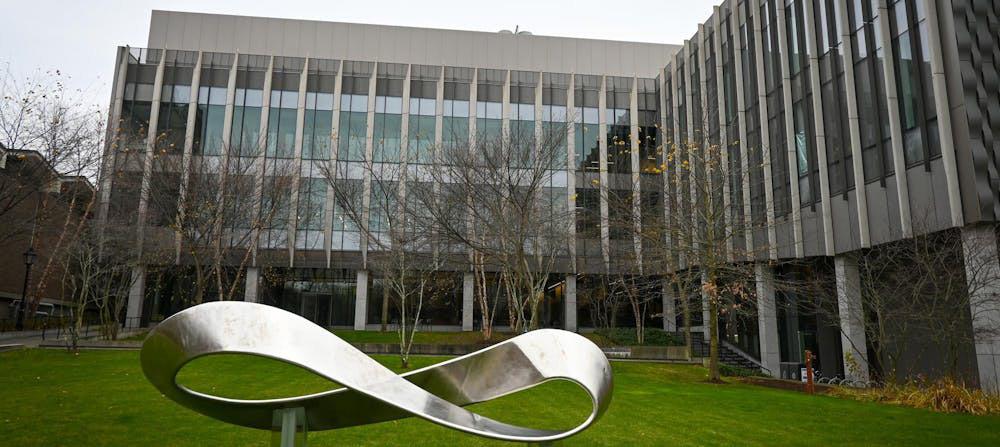
Energy’s battery development.
In the joint release, the School of Engineering and Panasonic Energy emphasized the need for longer-lasting rechargeable batteries, citing widespread electrification and the expansion of artificial intelligence-powered infrastructure.
“Batteries are at the heart of many technologies that will shape our future,” Lin wrote in an email to The Herald. “Better batteries mean longer-lasting devices, more sustainable transportation, more reliable
power grids and new possibilities in fields like robotics, artificial intelligence, aerospace and health care.”
In negotiations with the energy company, Lin’s group sought to partner on “projects that would help (the lab’s) students and postdocs develop their professional skills and deepen their scientific understanding,” Lin said.
According to Lin, multiple undergraduate students have expressed interest in his research, which he believes is “fantastic.”
“I am now surrounded by more researchers working in batteries and sustainable energy, which will further all of our research through productive and innovative collaborations,” he wrote, adding that he is “looking for ways to integrate our research into (undergraduate students’) experiential learning.” This article originally appeared online at browndailyherald.com on Dec. 2,
KENNA LEE / HERALD
The move is part of a broader initiative by Panasonic Energy to expand renewable energy applications, it wrote in a joint press release announcing the partnership.
SOPHIA BASALDUA / HERALD
UNIVERSITY NEWS
ACADEMICS
New course sequence reduces number of seats in CHEM 0350 next spring
Course will enroll 410 students this spring, a drop from last year
BY ALEJANDRO RUIZ SENIOR STAFF WRITER
Last spring, 555 students enrolled in CHEM 0350: “Organic Chemistry I.” But during pre-registration this fall, prospective students were met with a new course cap: Only 410 students were able to register for CHEM 0350 next spring, leaving many students scrambling to adjust schedules and meet requirements.
As the first course in the organic chemistry sequence, CHEM 0350 is a requirement for most life science concentrations and medical schools. In the past, CHEM 0350 has only been offered in the spring, while CHEM 0360: “Organic Chemistry II” has only been offered in the fall.
But starting in fall 2026, the Department of Chemistry will offer both courses every semester. Instead of holding two CHEM 0350 sections every spring and two CHEM 0360 sections every fall, the courses will now each offer one section every semester.
To accommodate these changes, the department reduced the number of organic chemistry seats to make sure all students in CHEM 0350 this spring will have a seat in CHEM 0360 next fall, according to Associate Teaching Professor of Chemistry Jesse Morin PhD’11.
The changes to the chemistry sequence also include a new half-credit lab course, CHEM 0370, that will replace the lab sections previously incorporated in both CHEM 0350 and CHEM 0360. Now, each course will only be offered as lecture courses, and students can take CHEM 0370 concurrently with or after CHEM 0360. CHEM 0370 will be offered every semester starting next fall.
Amit Basu, professor of chemistry and director of the department’s undergraduate studies, wrote in an email to The Herald that this new sequence “addresses a major complaint with the prior curriculum” — namely, that it did not align with medical schools’ requirements.
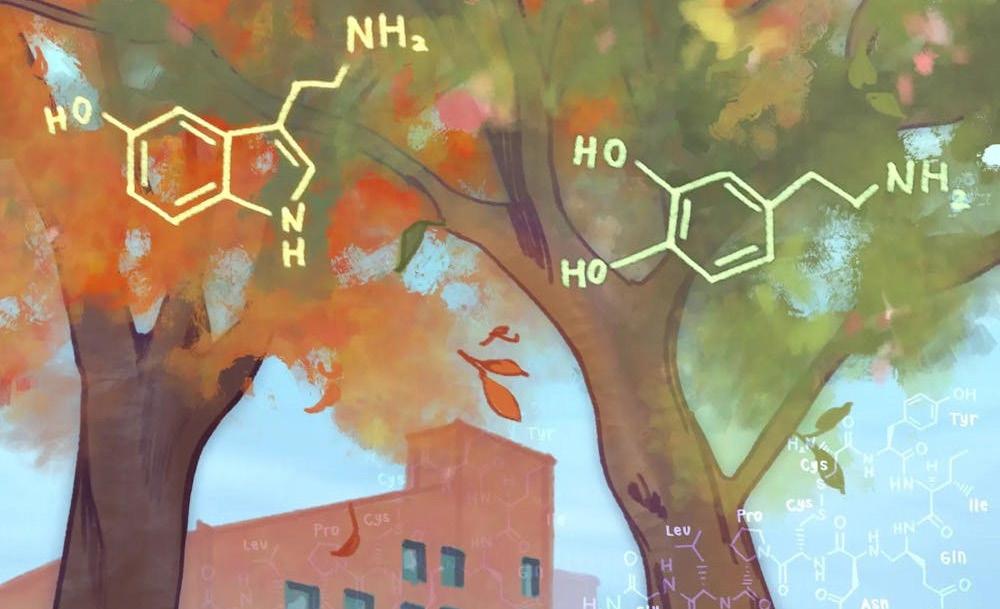
If students took both introductory chemistry courses — CHEM 0100: “Introductory Chemistry” and CHEM 0330: “Equilibrium, Rate and Structure” — over their first two semesters at Brown, they would have to wait until their sophomore spring to take CHEM 0350. These students would then be one year behind their peers who were able to skip CHEM 0100 and instead took CHEM 0330 in their first-year fall and CHEM 0350 the following semester.
Students will now be able to complete the entire general and organic chemistry sequence in four consecutive semesters, Basu wrote. Starting next fall, students who take both CHEM 0100 and CHEM 0330 will be able to take CHEM 0350 their sophomore fall and finish the sequence by the end of their second year at Brown.
“When we were thinking through all the implications of this curriculum change … we wanted to make sure that we would not be putting students at a disadvantage whether they started in CHEM 0330 in the fall or in the spring,” Morin said.
The department also considered historical data, lab space and teaching assistants’ availability when deciding on the caps, which “are designed to minimize the number of denied enrollments once the new curriculum is in place,” Basu wrote.
Students have long called for the chemistry department to offer CHEM 0350 and CHEM 0360 both semesters, The Herald previously reported. But now that the change is set to take effect, some students are “disappointed” that the new course cap prevented them from getting a seat in CHEM 0350 next spring, Basu wrote.
Olivia Tran ’29 did not get into CHEM 0350 during course registration this fall. Now, she plans on taking a gap year before applying to medical school, she told The Herald.
To Tran, the new offerings do not provide a solution for students who want to go straight to medical school without taking a gap year.
After taking CHEM 0360, most pre-medical students then enroll in BIOL 0280: “Biochemistry,” a course that is recommended or required by most medical schools. Biochemistry makes up a significant portion of the Medical College Admission Test, so pre-med students usually take the exam after they’ve completed BIOL 0280.
But the changes to the organic chemistry sequence did not affect BIOL 0280, which is still only offered in the spring.
Under the new system, students who take CHEM 0350 next fall will either have to take BIOL 0280 before or concurrently
with CHEM 0360 or wait until spring 2028 to take the course.
Although Ben Huang ’29 secured a spot in CHEM 0350 next semester, he said he was stressed about getting in during course registration. Had he been unable to enroll in CHEM 0350 next spring, Huang would have taken CHEM 0360, BIOL 0280 and BIOL 0800: “Principles of Physiology” concurrently in order to be prepared for the MCAT by the beginning of his junior year.
Tran said that she knew students who planned to take the three courses concurrently. “It genuinely seems terrible mentally,” she said.
Instead of taking CHEM 0360 concurrently with biochemistry, some of Tran’s friends plan to self-study the content before sitting for the MCAT, she said.
Sarah Linjawy ’29 said she found it “annoying” that the new half-credit lab course would prevent students from taking a fifth class, as students can only take a maximum of five credits every semester.
“I do not like how it is going to limit your autonomy when it comes to picking a schedule,” she said.
But Morin said the half-credit is a “strength” for the new curriculum.
“I think students are leaning towards taking too many classes in a given semester,”
she said. The half-credit allows students to show their “extra work” on their transcript without over-exerting themselves.
Basu wrote that creating a separate lab course frees up lab space concerns that previously stopped the department from offering CHEM 0350 and CHEM 0360 concurrently.
In order to condense two semesters of lab into one, Morin said that CHEM 0370 will meet every week of the semester, rather than only having the six weeks of lab that CHEM 0350 and CHEM 0360 required.
According to Basu, CHEM 0370 will be similar to CHEM 0360’s lab section, which was more project-based than CHEM 0350’s section.
Morin said the “more cohesive project-based experience … will emphasize the skills students are required to develop to get into research labs.”
The new lab course will “make students take lab more seriously,” Huang said.
Because most medical schools require two semesters of organic chemistry with lab, Morin wrote in an email to The Herald that the University sends a “letter that explains some of the unique curricular features” at Brown. This letter will now explain that CHEM 0370 is the equivalent of two semesters of lab.
The chemistry department has also been considering altering their general chemistry sequence to better match medical schools’ requirements. While CHEM 0100 counts as a general chemistry course, it does not include a lab component, and most medical schools recommend applicants take two semesters of general chemistry with lab.
The department is considering offering a new lecture-based course titled CHEM 0320, which would be taken before CHEM 0330 and would replace CHEM 0100, according to Brenda Rubenstein ’07, professor of chemistry and physics.
Rubenstein wrote in an email to The Herald that this potential change would accommodate “growing interest” in general chemistry that now exceeds the lab space and available TA staff.
This is not yet a decided change and the department is “formally and informally polling” students, Rubenstein wrote.
Brown records over $41 million in voluntary payments, community contributions
The University provided $30.2 million in community contributions
BY CATE LATIMER & CIARA MEYER UNIVERSITY NEWS EDITORS
Brown gave $30.2 million in community contributions and $11.1 million in direct voluntary payments to Providence in fiscal year 2025, according to the University’s Community Contributions to the City of Providence report released on Wednesday.
The University dedicated $17.1 million to city and public-serving nonprofits and spent $6.4 million on scholarships for approximately 300 local students to participate in Brown’s high school programs.
This is the second report released after Brown and three other Providence-based colleges entered into a Payment in Lieu of Taxes agreement with the city in 2023, accounting for the fact that the four institutions do not pay property taxes to the city as tax-exempt non-profits. All four colleges pledged to contribute more than $177 mil-

The University dedicated $17.1 million to city and public-serving nonprofits and spent $6.4 million on scholarships for approximately 300 local students to participate in Brown’s high school programs.
lion total to Providence over 20 years. In 2023, Brown also signed a separate agreement with the city to provide an additional $46 million in voluntary payments over the course of a decade.
The agreement requires that all four institutions provide “community contributions” to the city in addition to voluntary payments, which are pre-designated mandated cash payments. Community contributions can include in-kind and monetary services, such as volunteering or support
for public resources and parks.
The schools’ community contributions are expected to meet or exceed the value of their voluntary payments.
FY25 saw an $18.3 million increase in Brown’s community contributions compared to last year, partially due to a “more comprehensive collection of information” across an increased number of University departments and units, according to the press release.
The University also began to track re-
search activity at Brown focused on local issues among its contributions. This research is funded by grants given to Brown by foundations and the federal government, which list city and public-serving nonprofits as subawardees. This year, these grants accounted for 56% of Brown’s community contributions. Other community contributions included $2.5 million in volunteer hours, with each hour valued at $34.79, and about $100,000 in services the University’s facilities team provided in lieu of the city, like plowing
snow on streets adjacent to campus. The University’s contributions also included about $55,000 in in-kind contributions, such as hosting free workshops at Providence libraries.
“Brown’s positive impact in the community is powered by mutually beneficial partnerships,” Mary Jo Callan, vice president for community engagement, wrote in the report’s accompanying Brown news release. “Many of our greatest achievements come through collaboration with the communities across Providence.”
Under the four-school agreement, Providence College was set to provide $739,500 in voluntary payments to the city in FY25, while the Rhode Island School of Design and Johnson & Wales University were set to each contribute $612,000. RISD provided an additional $37 million in community contributions, PC gave $5.4 million and JWU contributed $5.3 million.
Additional reporting by Roma Shah.
This article originally appeared online at browndailyherald.com on Dec. 4, 2025.
KAITLYN STANTON / HERALD
KAIA YALAMANCHILI / HERALD
POLL
The past 15 years at Brown, according to The Herald’s semesterly polls
The Herald tracked the evolution of Brown’s undergraduate students
BY MANAV MUSUNURU ARTS & CULTURE EDITOR
Each semester, The Herald polls about 1,000 undergraduate students on topics ranging from national politics and new University initiatives to campus relationships and party culture. Its list of questions changes in varying degrees each semester, but the goal of The Herald’s semesterly poll remains the same: to capture the perspectives and backgrounds of the undergraduate students that, at the moment, call College Hill home.
The Herald looked back at almost 30 semesters of poll data to track the evolution of Brown’s undergraduate students — and their opinions — over the past 15 years.
This article originally appeared online at browndailyherald.com on Nov. 24, 2025.
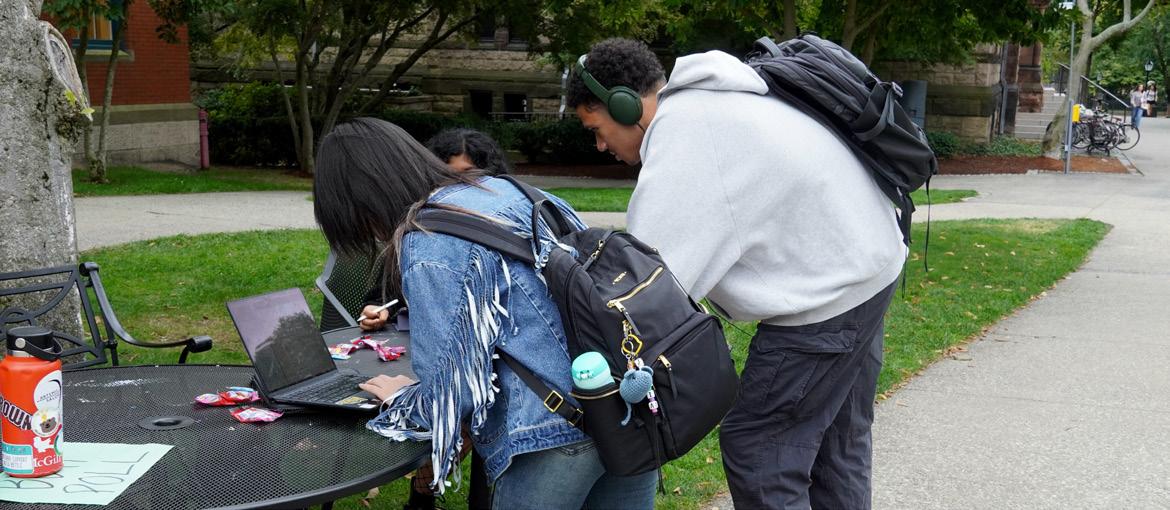
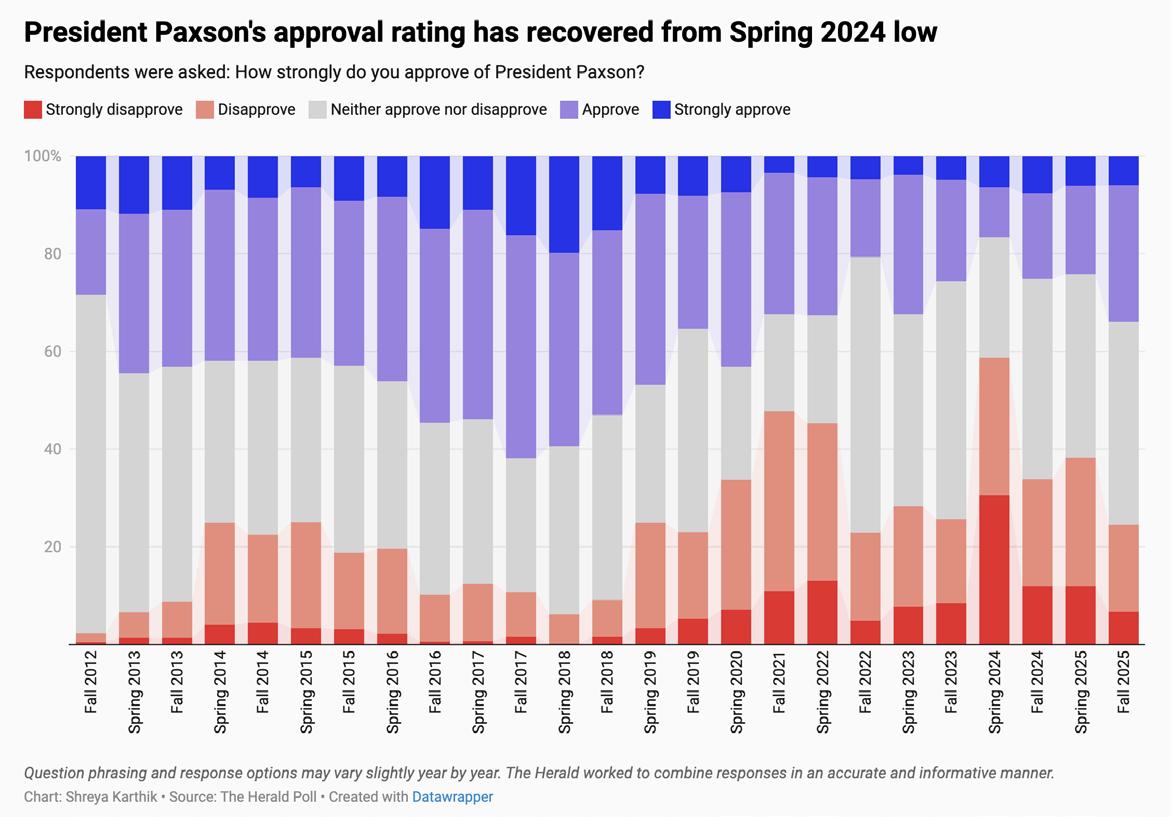
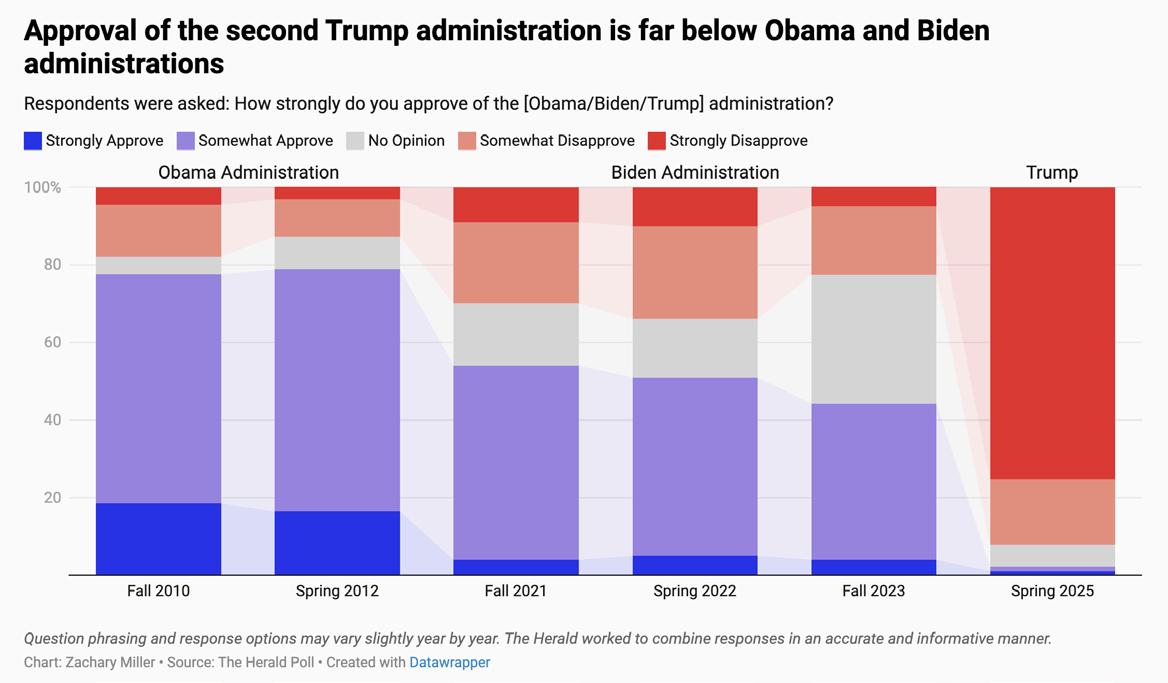
Over the last 15 years, approval of the U.S. president has declined among poll respondents. Presidential approval peaked ahead of the 2012 presidential election, when 78.8% of undergraduates approved of former President Barack Obama, according to the Herald’s Spring 2012 Poll. Former President Joe Biden had more lukewarm reception among Brown students, with only 44.2% of poll respondents approving of the former president in fall 2023.
Still, no recent president has had a higher disapproval rating among Brown undergraduates than President Trump, whom 92.1% of poll respondents disapproved of
in spring 2025. That same semester, 76.7% of undergraduates described their political ideology as “somewhat liberal” or “very liberal.”
This past April, the White House announced plans to freeze $510 million of Brown’s federal funding in response to alleged antisemitism and diversity, equity and inclusion initiatives. Research funding was restored in late July when the University agreed to align diversity and inclusion practices with federal nondiscrimination guidelines and adhere to NCAA rules regarding the participation of transgender athletes, among other provisions.
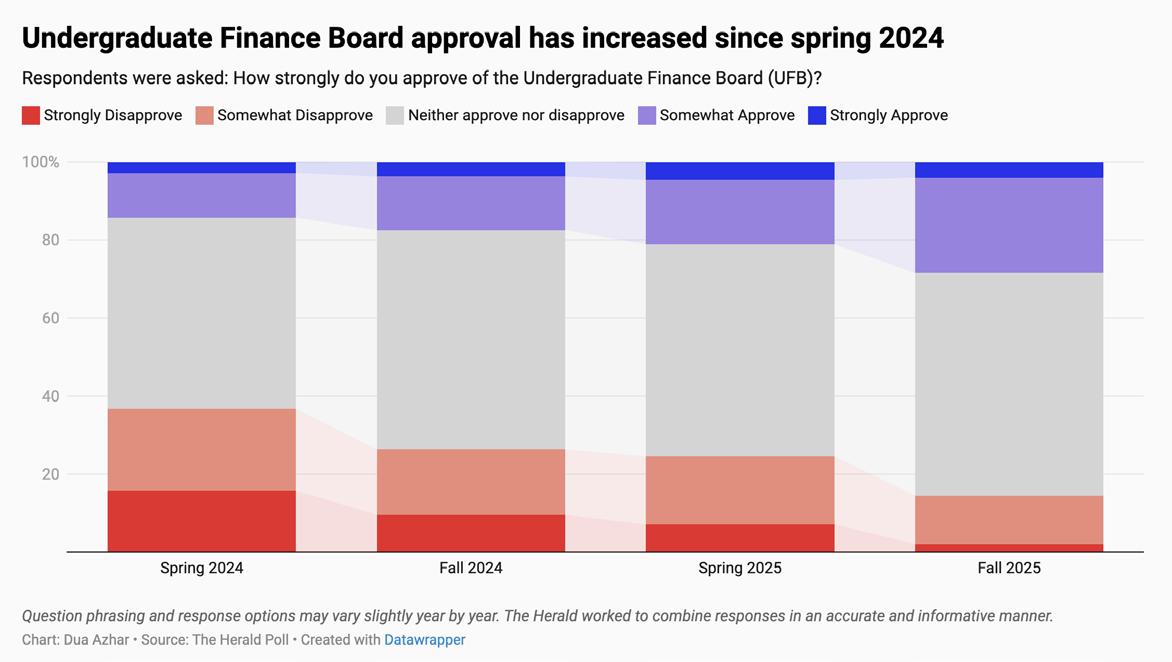
After spending its $1.2 million surplus in the 2022-23 academic year, the Undergraduate Finance Board faced a $1.5 million gap between the budgets requested by student groups and the amount of money it could disburse to them in the following academic year. In response, the UFB restricted budgets in fall 2023, causing many student groups to replan or cancel events and activities.
In interviews with The Herald at the time, student group leaders expressed concerns over how the budget reductions
meant they would not be able to perform key club activities. In spring 2024, 36.8% of undergraduate students disapproved of the UFB, but its approval rating has bounced back from this low over the past few semesters. Despite communication issues and continued funding problems in fall 2024, UFB disapproval dropped to 24.6% last semester. Now, only 14.5% of students disapprove of the UFB, while 28.5% of students approve of it, according to The Herald’s most recent poll.
President Christina Paxson P’19 P’MD’20 has had a fluctuating approval rating since she was inaugurated on Oct. 27, 2012. Paxson’s approval rating reached its highest in fall 2017, when 62% of poll respondents indicated either strong approval or general approval of her. That semester, the University had launched the “Brown Promise” initiative, aiming to eliminate all loans in undergraduate financial aid packages. It also increased support and resources for undocumented students after the Trump administration ended the Deferred Action for Childhood Arrivals program.
But Paxson’s approval rating steadily declined after this peak.
Disapproval of Paxson peaked in spring 2024, when 59% of respondents “strongly disapproved” or “disapproved” of the University president. Disapproval of the Brown University Corporation, the University’s highest governing body, also peaked that semester, with over 56% of poll respondents disapproving of the Corporation.
The semester before, protests had
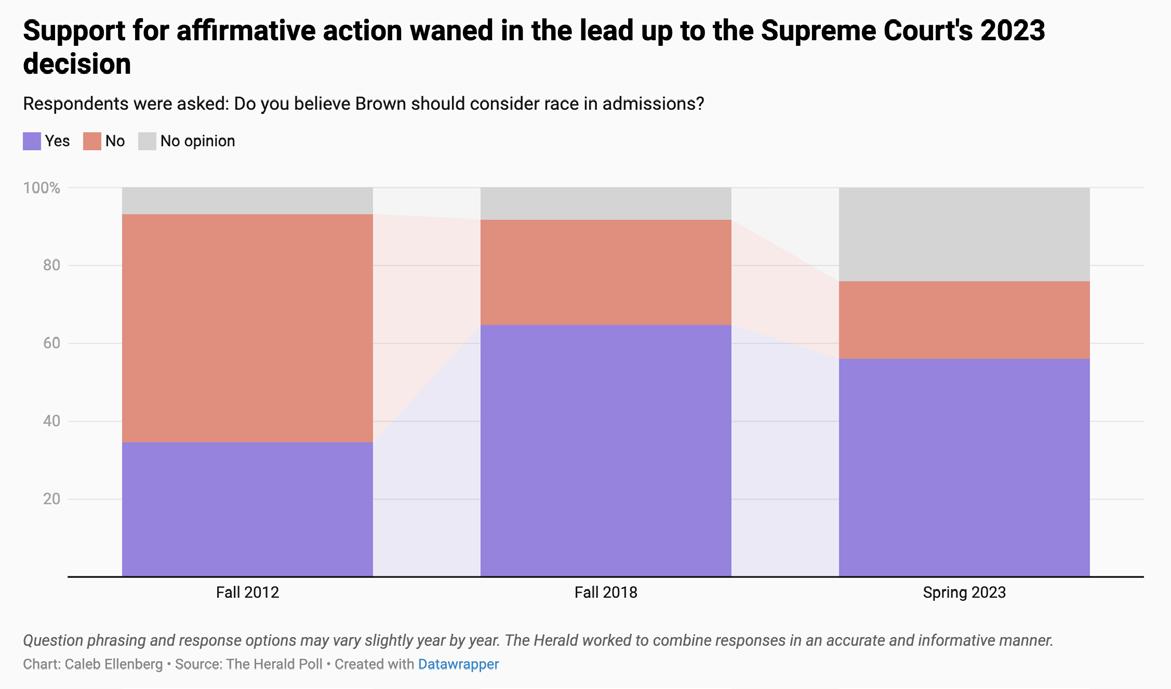
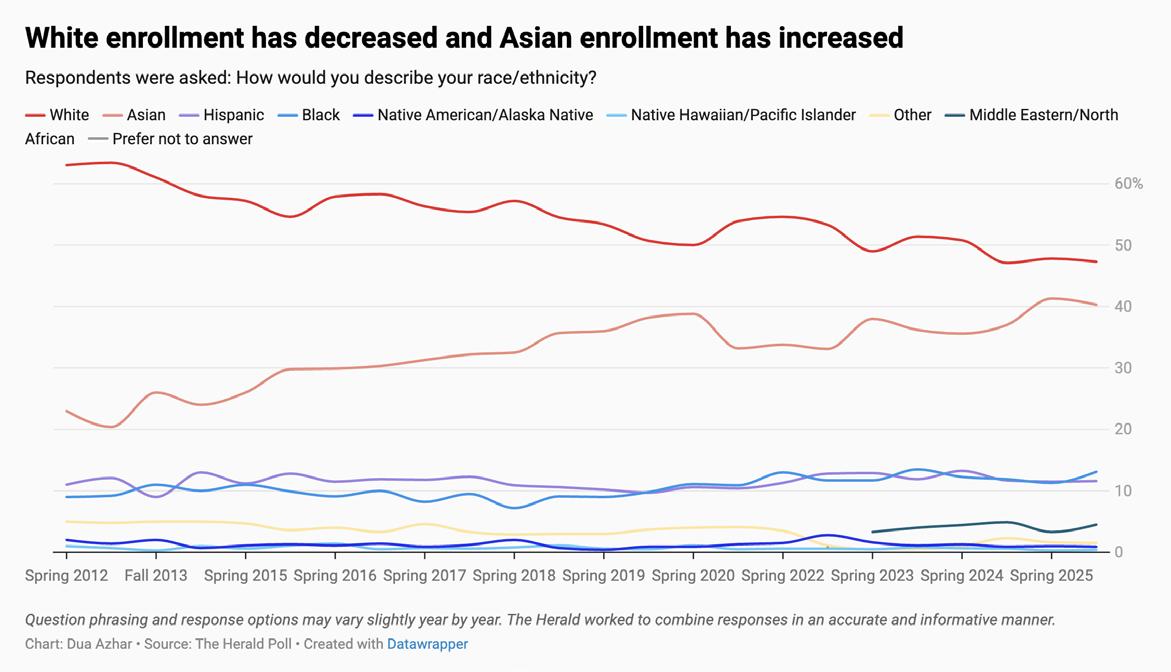
Legacy preferences in Brown’s admissions process have been broadly unpopular among the undergraduate student body in recent years. Last semester, support for legacy admissions declined to 15% from a high of 29.6% in spring 2019. But at the same time, disapproval of legacy admissions also declined from 66% in spring 2022 to 56% last semester.
In 2023, the University created an ad hoc committee to reevaluate Brown’s admissions policies, including the consideration of legacy status. The committee announced its recommendations in spring 2024, which included reinstating a standardized testing requirement and maintaining early decision admissions. The committee did not issue a recommendation on the future of legacy admissions, seeking further community input. The University has not publicly announced any major changes to legacy preferences in undergraduate admissions.
Over the past nine years, legacy enrollment has remained relatively constant, according to The Herald’s poll, with around 15% of undergraduates having a sibling, parent or grandparent who also attended Brown.
erupted across the country — including on Brown’s campus — prompted by the Israel-Hamas war, with some student groups calling for the University to divest from companies affiliated with Israel. That year, student activist groups carried out multiple protests, including two sit-ins that resulted in the arrests of 61 total students. In February 2024, 19 students had also begun an eight-day hunger strike in support of divestment.
After The Herald’s Spring 2024 Poll was conducted, around 80 students began a week-long encampment which ended when the Corporation agreed to vote on a divestment proposal. They ultimately rejected the proposal in October 2024.
Paxson’s approval rating has modestly rebounded since 2024. In The Herald’s Fall 2025 Poll, 34% of respondents approved of the University’s president compared to only 25% disapproving. Disapproval of the Brown University Corporation has continued to decline, with 32% of undergraduates disapproving of the Corporation in this semester’s poll.
Despite the relatively progressive politics of Brown’s student body, support for affirmative action waned in the semester before the Supreme Court’s 2023 decision in Students for Fair Admissions v. Harvard, which limited the consideration of race in college admissions decisions. In spring 2023, 56% of poll respondents supported the consideration of race in college admissions, down from 64.7% in fall 2018. The Supreme Court’s decision was followed by major changes in the makeup of Brown’s student body. In the year following the decision, Black and Hispanic enrollment at Brown plummeted, according to The Herald’s first-year poll for the class of 2028. Black student enrollment among first-years moderately rebounded this academic year, increasing from 7.7% for the class of 2028 to 12.0% for the class of 2029. White student enrollment at Brown has steadily declined over the past 13 years, according to The Herald’s polling. In fall 2012, 63.4% of poll respondents identified as white, dropping to 47.3% in fall 2025. Polling indicates that Asian student enrollment has almost doubled, growing from 20.4% in fall 2012 to 40.3% in fall 2025.
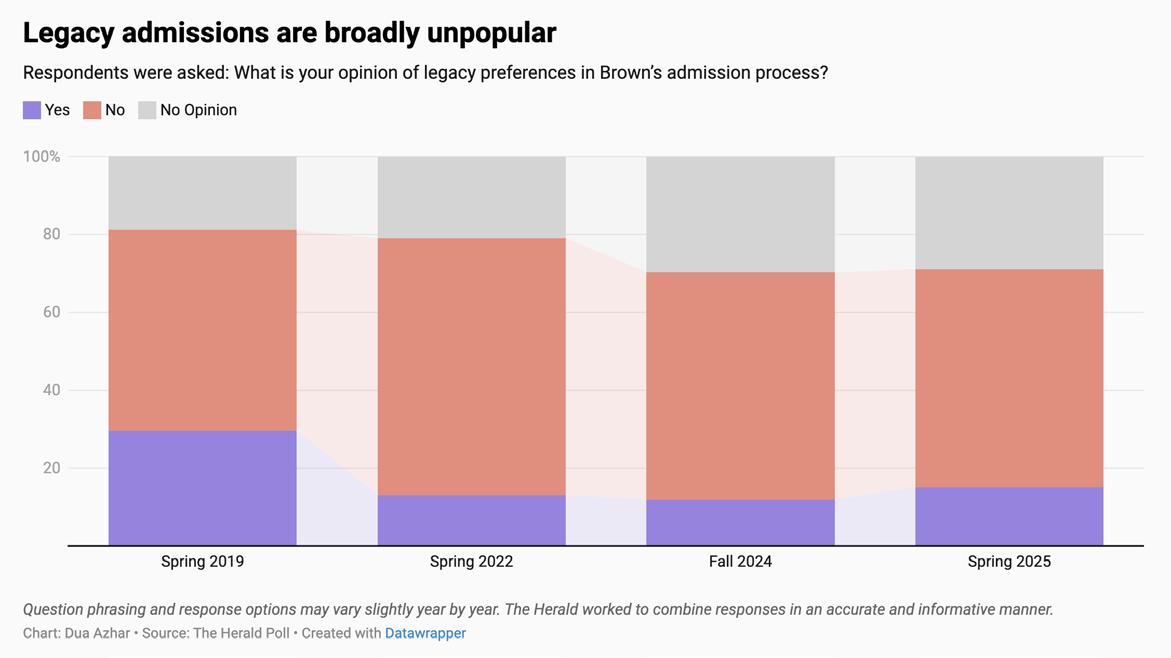
Since 2012, Brunonians have changed how they approach relationships on campus. Compared to previous years, more students at Brown are single and less are participating in hook ups, according to The Herald’s polling.
The percentage of students who are single has increased from 48.5% in fall 2012 to 68.7% in fall 2025. At the same time, the percentage of students hooking up with multiple people had decreased from a high of 12.6% in fall 2012 to a near-low of 1.5% this semester. The proportion of students in a casual relationship has also been more than halved, falling from a high of 9.8% in
fall 2023 to a low of 4.4% this semester. Still, love can be found on College Hill:
The percentage of students in a long-term relationship has stayed relatively stable over the past 13 years, hovering around 25%.
View more online at browndailyherald.com.
KAIA YALAMANCHILI / HERALD
UNIVERSITY NEWS
records, government databases and more — to compile a profile of the members of Brown’s highest governing body.
How is the Corporation structured?
The Corporation has a bicameral structure formed by two branches — the Board of Fellows and the Board of Trustees — that formally gather every Febru-
ary, May and October.
While trustees do not meet without fellows present, fellows meet more regularly and hold additional responsibilities in University administration such as “adjudging and conferring the academical degrees,” according to the University’s charter.
Each Corporation member must serve on one main committee — Com-
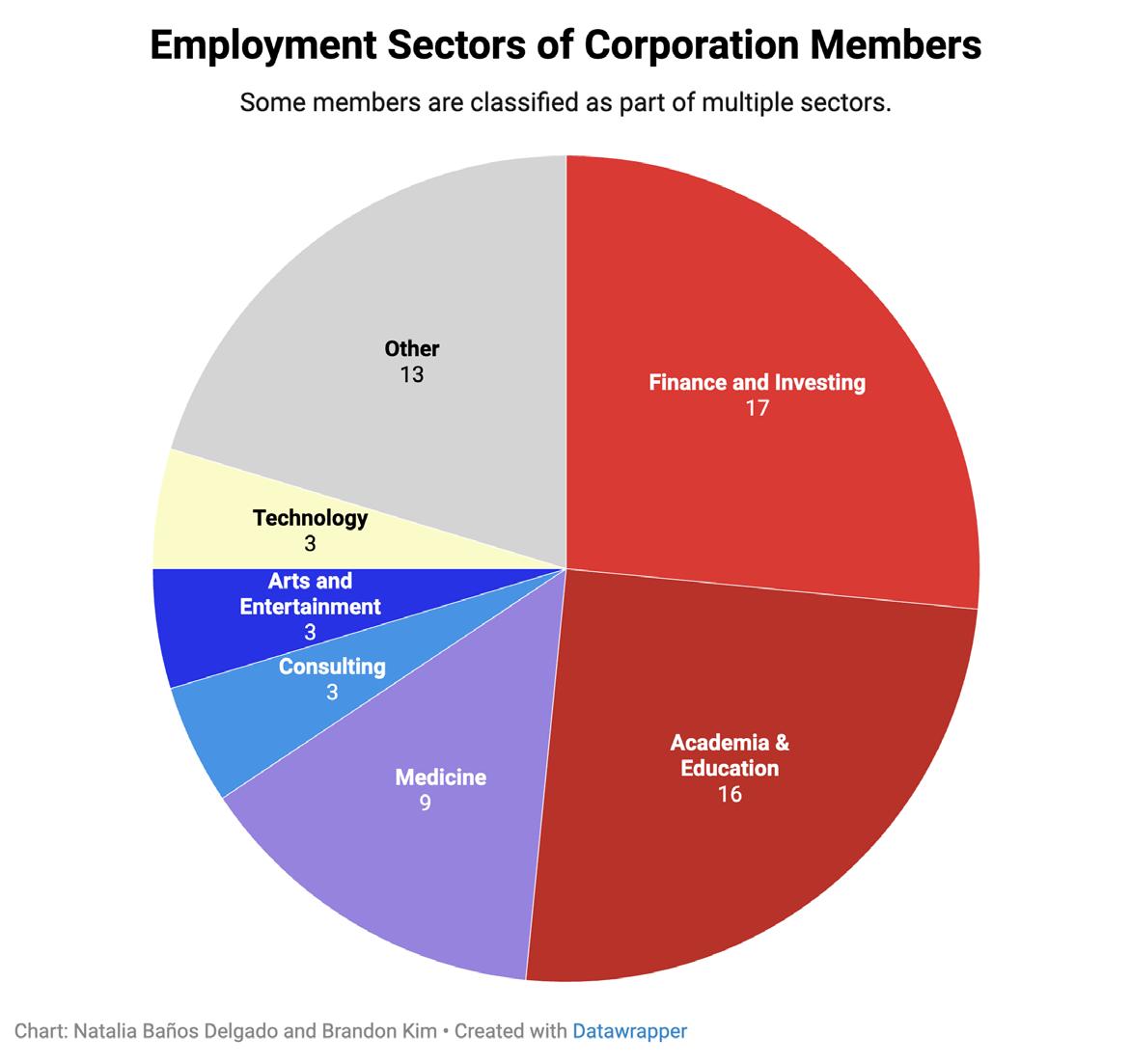
Professional background
Seventeen members, a third of the Corporation, have a background in finance or investing. All hold or have held prominent leadership positions, and at least seven have founded or co-founded financial companies.
A significant responsibility of Corporation members is to protect “the longterm institutional assets of the University,” set the budget and tuition and establish salary pools, according to the Corporation website.
Trustee Joe Dowling previously
served as Brown’s chief investment officer and the CEO of Brown’s endowment. Under Dowling’s leadership, the endowment grew to a then-record high of $4.7 billion and was the best-performing endowment in the Ivy League. Fellow Jim Yong Kim ’82 P’22 also formerly served as the 12th president of the World Bank from 2012 to 2019 and the 17th president of Dartmouth from 2009 to 2012 Academia and education is the second-most common sector of employment among Corporation members. Medicine is the third most common.
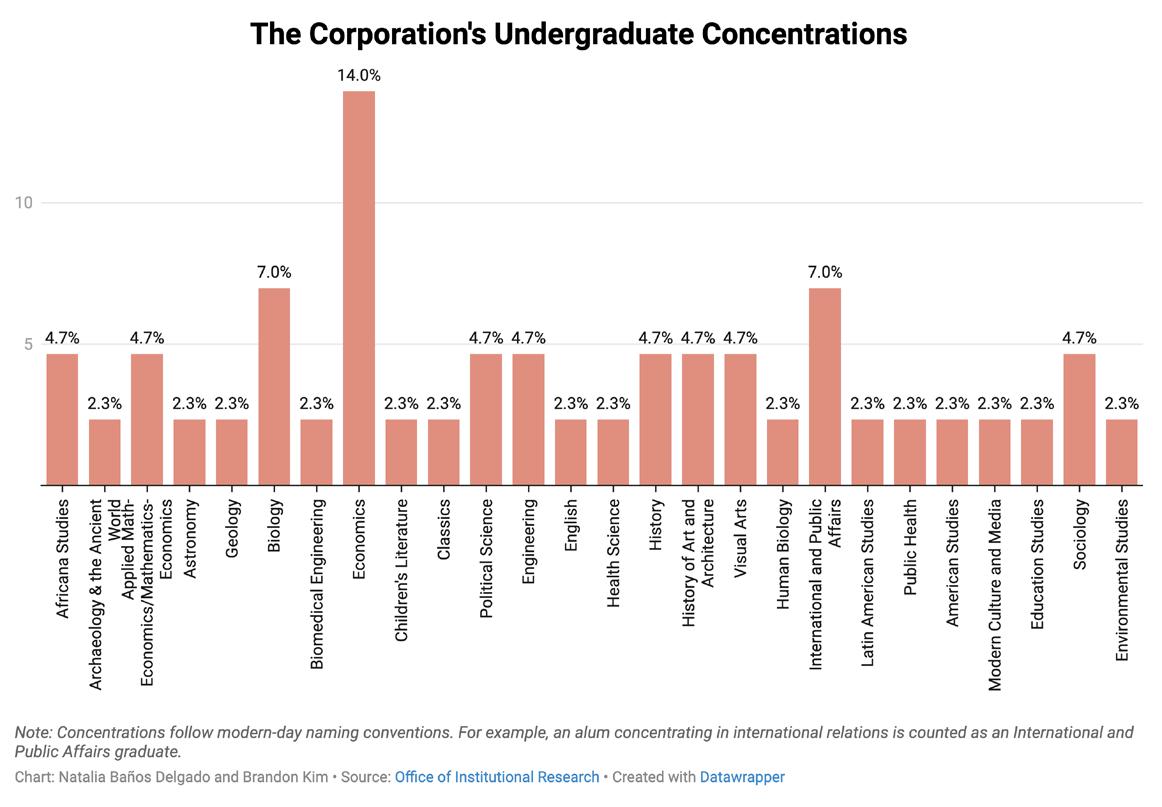
Fields of study
From visual arts to engineering, Corporation members earned their undergraduate degrees in a diverse array of fields.
The most common fields of study among members are in economics and international and public affairs, with 14% and 7% of members earning those degrees, respectively. While the Corporation previously had one trustee with a concentration in computer science, none of its current members hold an undergraduate degree in that subject despite it being one of Brown’s most popular concentrations.
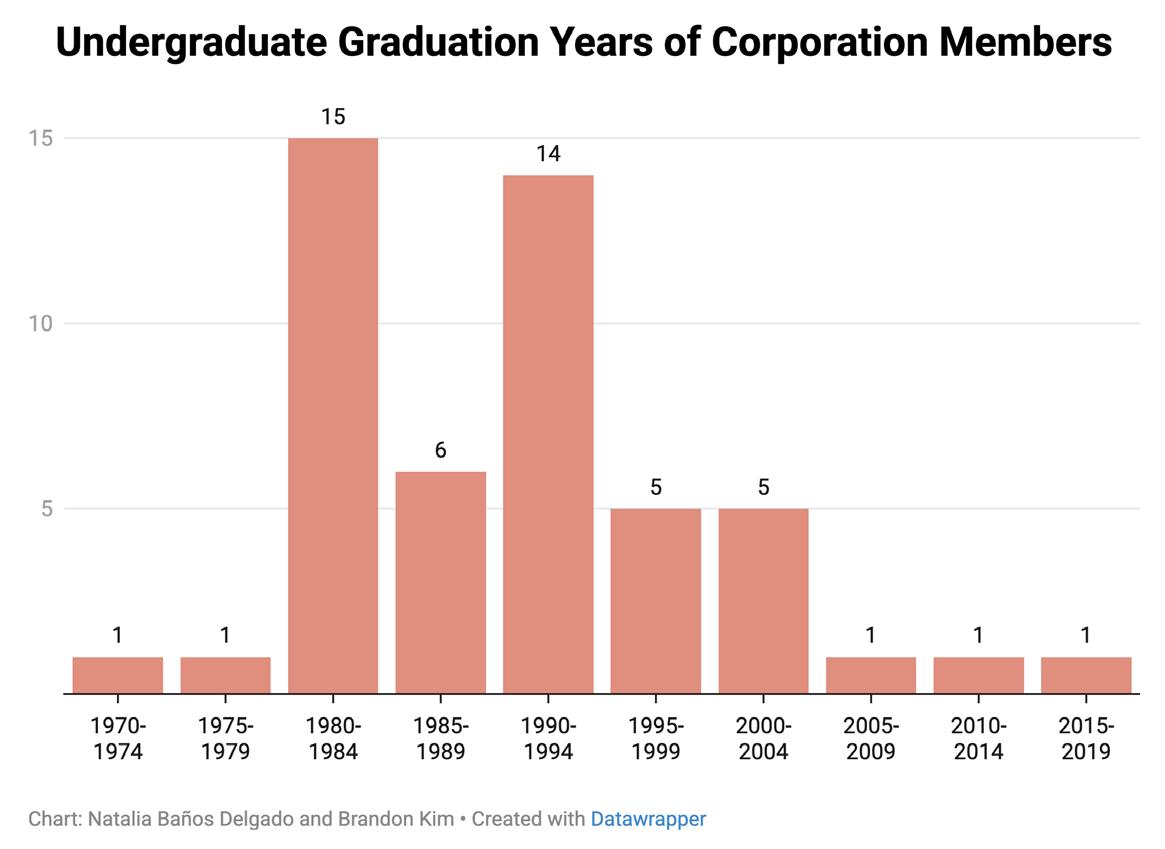
mittee on Academic Affairs, Committee on Budget and Finance or Committee on Campus Life — and can choose to join other standing committees, subcommittees and ad hoc committees.
Traditionally, the Corporation has 42 trustees and 12 fellows elected for sixand 11-year terms, respectively. Of these trustees, 13 are chosen by alums in an agreement between the Corporation and
the Brown Alumni Association.
Two new alumni trustees are elected by current Brown students in their final year of study and alums within five years of graduating, according to the Corporation’s website. The remaining trustees, along with all of the fellows, are elected internally by the Corporation.
Currently, the Corporation has 36 trustees, 10 fellows, President Christina Paxson P’19 P’MD’20, Chancellor Brian Moynihan ’81 P’14 P’19, Vice Chancellor Pamela Reeves ’87 P’22, Secretary Richard Friedman ’79 P’08 and Treasurer Earl Hunt ’03.

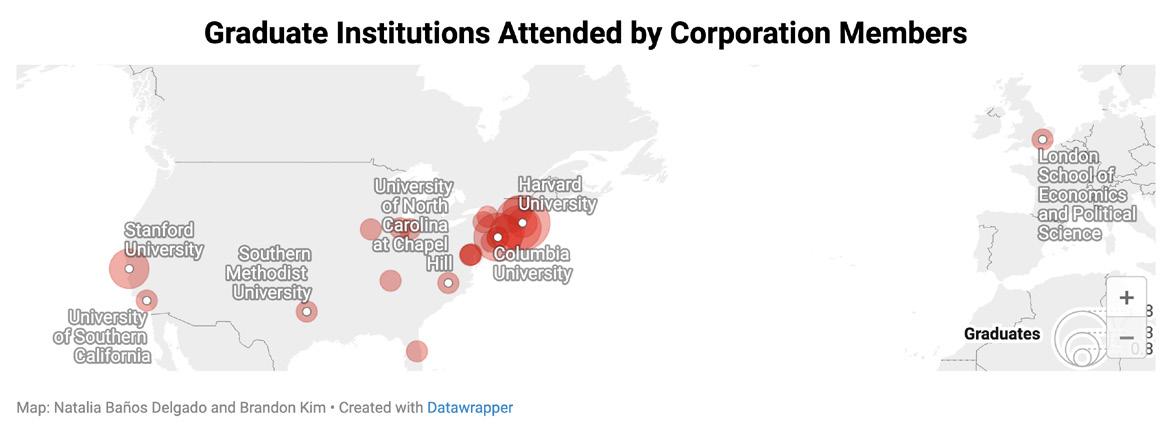
Political donations Since the early 2000s, Corporation members have donated over $8 million dollars to political campaigns and initiatives, with donations to Democratic representatives topping out at $5.9 million, according to data publicly released by the Federal Election Commission.
Fellow Robert Goodman ’82 P’18 P’24 made the largest donations, including $2.7 million to Democratic initiatives and just over $100,000 to initiatives not affiliated with either the Democratic or Republican parties. Gregory Penner, chairman of the board of directors of Walmart, trails him with a total of $934,000. A majority of Penner’s donations made to political initiatives were not affiliated with either major party. Penner also donated the most out of any Corporation member to Republican political initiatives, spending $430,435 according to FEC data.
Members donated over $80,000 to then-Vice President Kamala Harris and former President Joe Biden’s 2024 cam-
All Corporation positions are unpaid volunteer positions with the exception of Paxson, who also serves as Brown’s president.
Education
At least one of the trustees and fellows did not earn an undergraduate degree in the United States, with the majority of members attending institutions in the Northeast. Of the Corporation’s 51 members, 41 graduated from Brown. Other undergraduate institutions include Harvard, Spelman College and Swarthmore College.
The Herald was unable to determine the undergraduate institution for one member.
The Herald positively identified 42 corporation members who attended graduate schools. Harvard, Columbia and Brown are the most represented institutions with eight, six and five members receiving a degree from each school, respectively. Seven members did not attend Brown for either undergraduate or graduate studies.
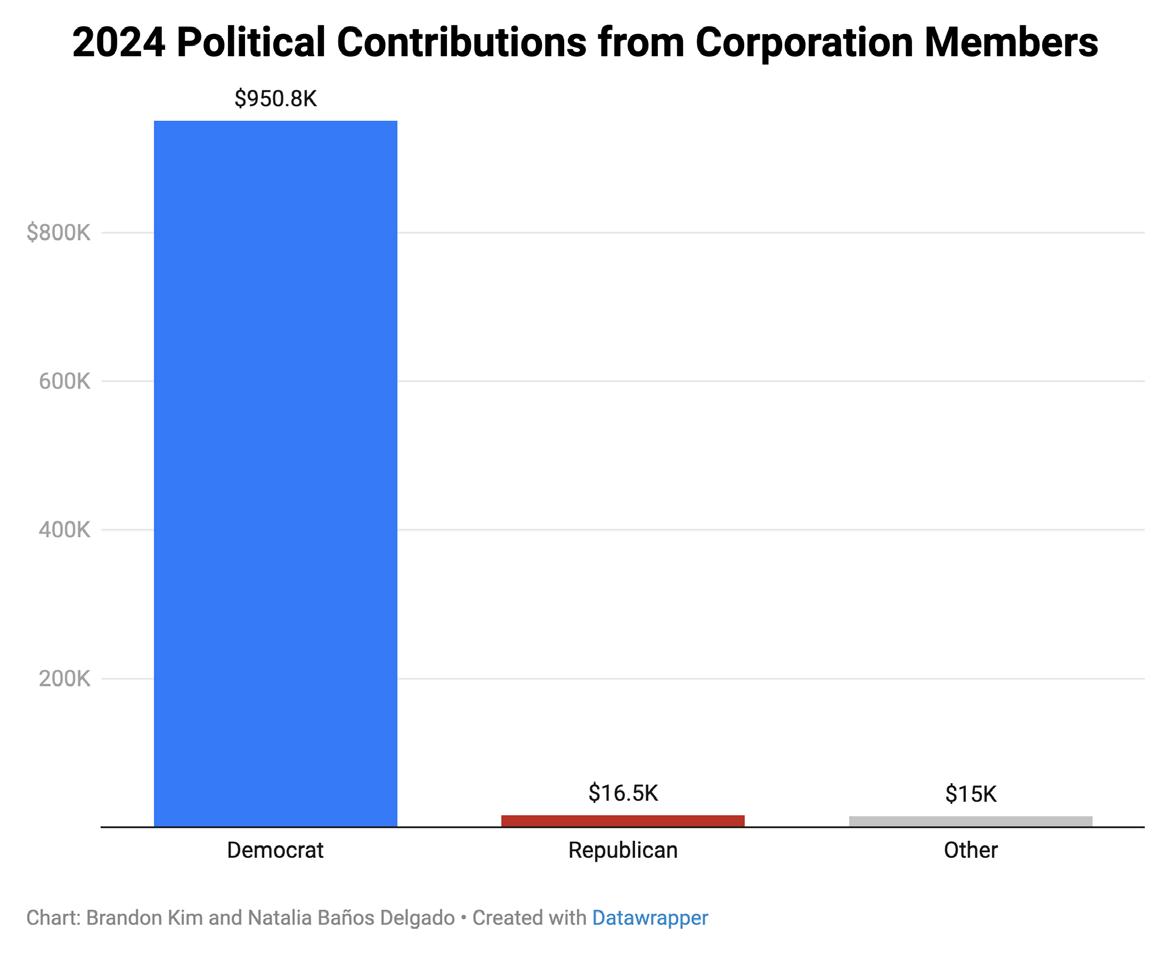
paigns. No direct donations were made in support of the Trump campaign. Goodman, Guow, Johnson, Penner, Dowling and Friedman did not respond to a request for comment regarding their political donations.
Paxson has donated $25,750 to political causes since 2000, and all of them were made to Democratic campaigns. Paxson also declined to comment on her donations.
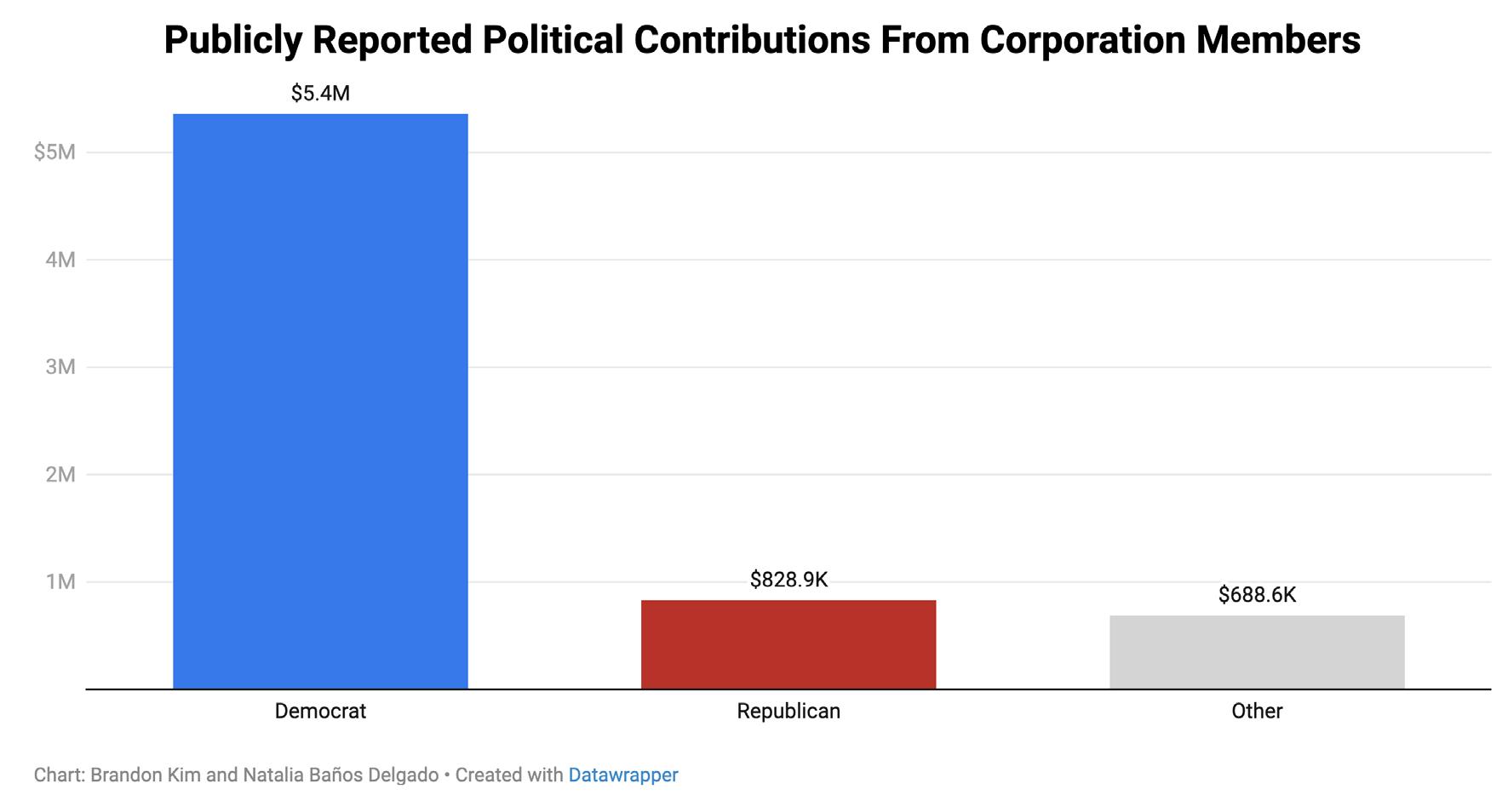
Class year
The Herald identified undergraduate class years for all but one member of the Corporation.
Of these members, around 70% graduated between 1980 and 1994. Over 25% graduated after 1995, a more than 6% increase from the number on the Corporation in 2023.
In 2009, the Corporation established a young alumni trustee position in hopes
of allowing the Corporation to engage more effectively with the perspectives of the student body and recent alums. In 2016, the Corporation reformed the process to expand the number of renamed new alumni trustees to two.
New alumni trustees serve staggered three-year terms and are asked to serve an additional year on another University committee.

The treescape of College Hill
added.
BY MANAV MUSUNURU ARTS & CUTURE EDITOR
In 2018, community members gathered on a rainy afternoon for the funeral of a beloved Angell Street resident: a soon-tobe deceased Fagus sylvatica, or beech tree.
The tree was set to be cut down to make way for the Lindemann Performing Arts Center, which eventually opened in 2023.
In 2024, another famed tree was removed from the campus grounds when the 120-year-old American elm (Ulmus americana) on the Main Green succumbed to old age and environmental stress. The elm’s wood was used by Eiden Spilker ’24 for the “Between Past and Future” exhibition at the Granoff Center for the Creative Arts. Another exhibition next semester will display more artists’ creations with the wood.
These moments are just two ways Brunonians present and past have expressed their love for College Hill’s leafiest residents. But Brown’s fascination with trees isn’t a recent phenomenon.
During the mid-20th century, Mary Elizabeth Sharpe P’45 — wife of the University chancellor at the time — gained an interest in landscape architecture while designing the garden for her home at 84 Prospect St., now known as Rochambeau House, according to University Curator Nicole Wholean.
In the 1940s, Sharpe expanded her passion for landscaping to the wider College Hill community when then-University President Henry Wriston asked her to
Nevertheless, Sharpe persevered with her landscaping plan, funding the project by soliciting donations from her friends and contributing money to the initiative herself, Wholean said. Sharpe also “encouraged Brown to propagate plants in (its) greenhouses and … donated cuttings from her own azalea plants.”
When deciding what species of trees to plant on campus, Sharpe considered each variation’s hardiness, attractiveness and ease of maintenance. Wholean added that Sharpe also accounted for Providence’s
tree management process. The Grounds Department also tracks the health of the trees and “monitor(s) for disease, insect damage and hazardous limbs.”
To prevent Dutch Elm Disease from spreading among the numerous American elm trees littered across campus, the Grounds Department has an integrated pest management program. During the early 20th century, Dutch Elm Disease wiped out much of the population of American elms. The species — currently listed as endangered on the International Union for Conservation of Nature Red List of

changing seasons, selecting flowering magnolias (genus Magnolia) and dogwoods (genus Cornus) for the spring and holly (genus Ilex) for the winter.
Decades later, Grounds Superintendent Nick Mol and Lead Groundsworker and Arborist Mark Lindenberg have preserved Sharpe’s treescaping legacy.
Mol added that the Grounds Department also considers the existing landscape when planting new trees. If the Grounds
Threatened Species — is the seventh most common tree on Brown’s campus, with 58 American elms lining the College Hill streets.
But American elms aren’t the only special trees on campus. An apple tree (Malus domestica) grown from a cutting of the famous apple tree in Sir Isaac Newton’s garden sits right outside the Engineering Research Center. This tree is only one of the 1,232 trees that line the streets of Brown and College Hill.

landscape the area around the newly refurbished University Hall, Wholean added.
“But (Sharpe) had a much bigger plan for Brown and decided that a landscape plan could unify all of the disparate architecture styles on campus,” Wholean said in an interview with The Herald. “She was given permission to move forward” but did not have “a budget or staff,” Wholean
Department “were to plant another tree in (the Main Green), we would choose an American elm or a magnolia to maintain the look and feel of the quad,” he wrote. But maintaining the various species of trees on campus requires a careful eye. Mol and Lindenberg explained that the unique sunlight, water and soil needs of each species are considered during the
These trees — and the treescape they form — are an important aspect of the first impression the campus makes on students, families and other visitors, according to Mol and Lindenberg. They wrote that the treescape’s “beauty is part of what makes Brown University so special.”
Trees also bring numerous health, economic and environmental benefits to Brown.
For example, “hospital admissions of kids with asthma … are much higher in low-canopy neighborhoods,” explained Elizabeth Haviland, the community stewardship coordinator and canopy crew supervisor at the Providence Neighborhood Planting Program. The PNPP was established by Sharpe’s family, the city of Providence and city residents after her death and aims to improve equitable access to trees.
Haviland added that trees can prevent wind in the winter season and provide shade in the summer, reducing residents’ heat and air conditioning usage.
She said that trees can reduce stormwater runoff and mitigate flooding, which
is especially important in areas like Providence, which has insufficient drainage infrastructure.
According to Haviland as well as maps from the PNPP’s PVD Tree Plan, the east side of Providence is the greenest part of the city. In Blackstone, for instance, 51% of the neighborhood is shaded by trees — a measure known as canopy cover. College Hill has a lower canopy cover of 34%, while neighborhoods in South Providence have some of the lowest proportions in the city at under 15%.
Areas with lower canopy cover tend to house communities of color, have higher levels of poverty and were historically redlined, Haviland added. Due to the lower tree cover, these areas can often see higher temperatures, more flooding and higher levels of asthma.
Communities around the state are taking steps to improve their treescapes and increase the amount of canopy cover, according to Pauline Cooper ’27.
This past summer, Cooper interned in the urban forestry program of the Rhode Island Department of Environmental Management. She said that RIDEM’s street tree inventories were “part of a longer, several-year plan to overall increase urban forestry management” in Warren, North Providence, Woonsocket and other Rhode Island towns.
For her internship, Cooper inventoried street trees in North Providence, an area
dence” — have been spreading into natural environments and forests in the state, according to Brown Herbarium Director Rebecca Kartzinel, an assistant teaching professor of biology and ecology, evolution and organismal biology.
The fifth-most common street tree on College Hill is the Bradford pear, a cultivated variety of the callery pear (Pyrus calleryana). Native to Asia, the Bradford pear is widely considered to be an invasive species — some states have even outlawed it. According to Kartzinel, when the Bradford pear was introduced to the eastern United States the species hybridized with native pear trees.
“When you have hybridization between Bradford pear and native pear, you can start to get the transfer of Bradford pear genes into the native population and change the composition of the native species” through gene flow, Kartzinel said.
Beyond Norway maples and Bradford pears, Brown hosts a plethora of native trees on its campus grounds. The most common street tree on College Hill — the London plane (Platanus x acerifolia) — is a cross between the non-native oriental plane (Platanus orientalis) and the American sycamore (Platanus occidentalis). The native honey locust (Gleditsia triacanthos) and red maple trees (Acer rubrum) are the second and fourth most common on campus, respectively.
According to Kartzinel, there are also
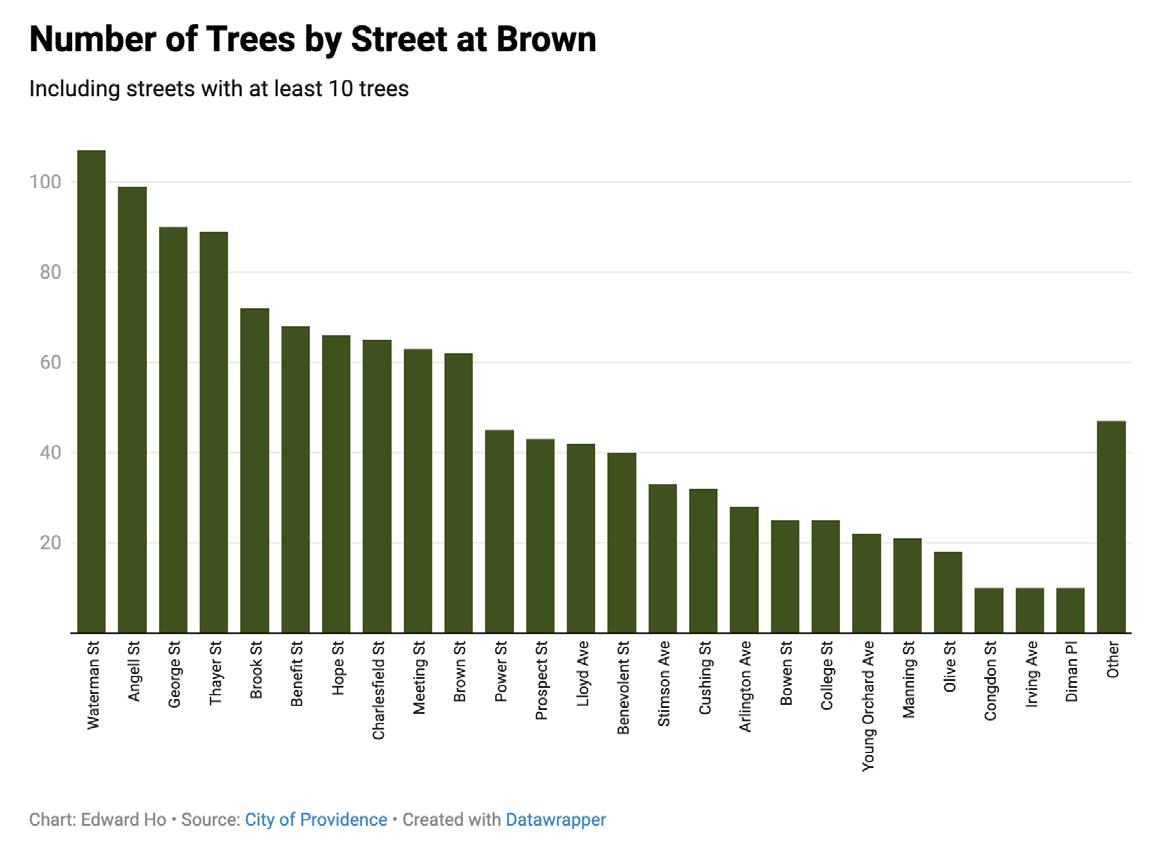
that was “shockingly not diverse” in terms of tree species — especially compared to College Hill. The town “had over 50% maple trees,” Cooper said, adding that “no more than 30%” of trees should be from a single family to prevent the spread of disease.
When creating new treescapes, landscapers must also consider the interaction between planted trees and the native environment.
Many of the maple trees in North Providence are Norway maples (Acer platanoides), “which is a non-native maple that’s somewhat prone to disease,” Cooper said. Norway maples — which also make up “a large proportion of street trees in Provi-
some harmless non-native trees on campus, such as the ginkgo (Ginkgo biloba), an East Asian species of tree endangered in the wild.
The Herald created the database below so readers can explore the street trees of College Hill.
View more online at browndailyherald.com.
The Herald mapped the trees that populate the streets around Brown
COURTESY OF THE JOHN HAY LIBRARY
The garden at Rochambeau House.
COURTESY OF THE JOHN HAY LIBRARY Magnolias on the Main Green.
UNIVERSITY NEWS
‘I don’t have to wear a uniform’: How professors choose their outfits
The Herald spoke with several professors with unique fashion styles
BY RAHUL SAMEER STAFF WRITER
When Mariah Min, an assistant professor of English, gets dressed in the morning, the first thing she considers is the weather. Since she began teaching at Brown, she has replaced much of her wardrobe with waterproof counterparts.
Min is currently teaching ENGL 1311P:
“Medieval Drama,” which culminates in the hands-on staging of a medieval play. Min said that the class requires a lot of movement, and the jacket gives her the freedom to “move my limbs the way they need to be moved.”
For professors like Min, fashion is a way to complement their teaching and express their identity. The Herald spoke to a few of these fashion-forward professors about how they select their outfits.
Richard Kimberly Heck is a professor of philosophy and linguistics, as well as the
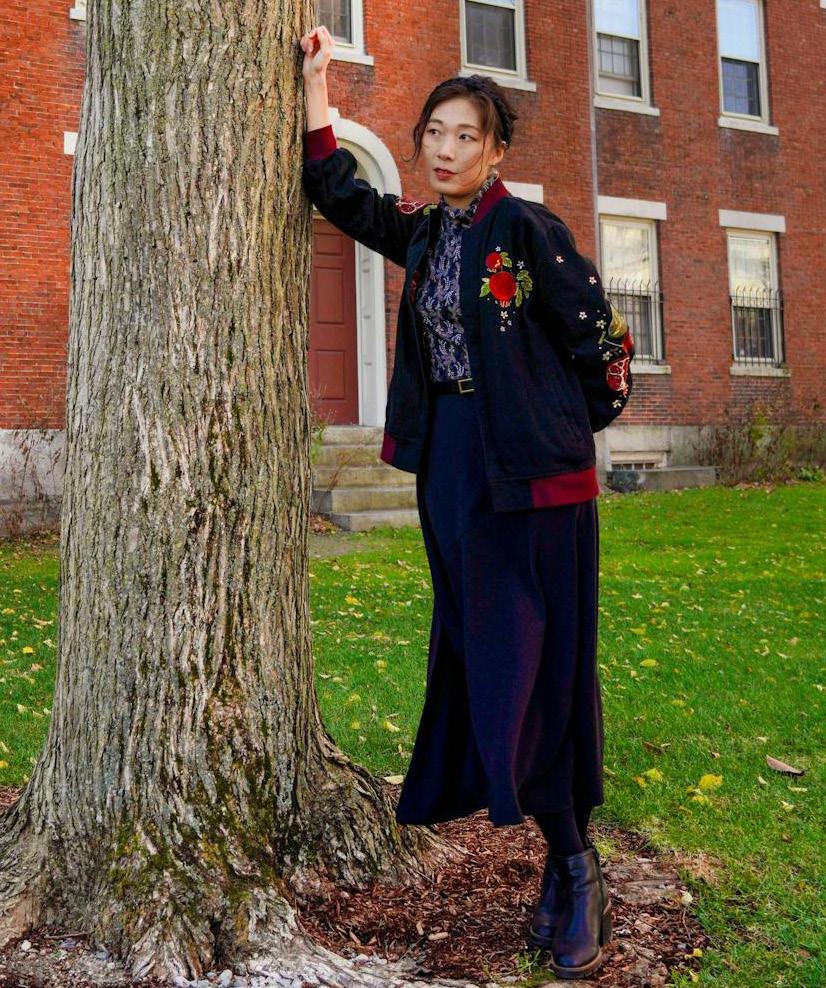
Apart from practical considerations, Min asks herself what kind of person she needs to be to approach the day ahead of her, “envisioning and then manifesting a version of myself in the world.”
Min’s favorite outfit to wear is a bomber jacket with pomegranates embroidered on it — an item that makes her feel “artsy and quirky.” She recalled how “a woman on the Amtrak offered to buy” the jacket — which was created by an independent artist who runs the brand Morningwitch — off her back.
director of graduate studies in the Department of Philosophy.
Heck, who is genderqueer, considers “where (they’re) feeling in terms of gender expression on a particular day.”
“I occasionally wear a dress or skirt to teach,” they said in an interview with The Herald. “I do dress in conventionally masculine ways, but a lot of the time I dress in more feminine ways.”
Heck’s favorite item of clothing from their wardrobe is a purple dress with geo-

metric patterns.
“It’s a nice mix of really colorful and playful, but at the same time, it’s professional enough to wear to work,” they said. “The mix of colors, the pinks and purples, are really cool.”
Before coming out, Heck said they were “infamous” for wearing the same thing every day.
“I was pretty much the ‘man in black,’” Heck said, referring to Johnny Cash’s headto-toe black outfit ensembles. But as Heck began to express their identity more fully through their fashion, they noticed their relationships with students “changed.”
“Students would come and talk to me about things that they never would have talked to me about before,” they said, noting that this has improved their advising relationships with students.
Mari Mota Lopes GS, who is a graduate student teaching courses in the Department of Portuguese and Brazilian Studies, also found their style has brought them closer to their students.
“The way I dress up really helped me … get closer to my students and to break the idea that academia should be bland,” they said in an interview with The Herald.
Lopes likes to wear different combinations of outfits because “every day feels different.” They said they set aside time each day to “examine how (they) want to be seen.”
Recently, Lopes thrifted a leather jacket, a product they usually don’t buy for “ethical reasons.” But this time, they felt that they “could express themselves in a different way through this jacket” and through the material.
“I’ve been feeling like embracing playfulness with gender and sexuality as a (form of) expression and fashion,” they said.
But Lopes also noticed that the way they dressed was “associated with immaturity, (naivete) and being dreamy,” which “tends to make people less confident about my professionalism.”
Ultimately, Lopes said that “being intentional” with one’s style is critical.
Richard Snyder, a professor of political science, said that his academic area of interest mirrors how he dresses.
Snyder, who has worked at Brown for 21 years, noted comfort as a factor for how he chooses his outfits. But what distinctly influences his fashion style is more closely related to the region of his academic expertise: Latin America.
While he does not have a particular favorite outfit, Snyder mentioned that he is fond of leather jackets and “some interesting boots.” Snyder brings the boots in when he teaches import substitution industrialization in POLS 1240: “Politics, Markets and States in Developing Countries.”
The boots are from Salta, a small province in Argentina, and were likely made from some machinery that had been imported from the United States, Snyder said. In this way, he said that his fashion was also “partly pedagogical.”
Snyder said that being a college professor “gives you the freedom of the artist.”
“I don’t have to wear a uniform. In fact, I never wanted to,” he said. “It is great that one of the big perks — and there are many perks of being a professor in a place like this — is the freedom to wear what I want.”
“As long as you’re not being harmful or offensive, you have the option to make it interesting and different if you want to,” Snyder added. “And I think that’s good for the students, good for me.”

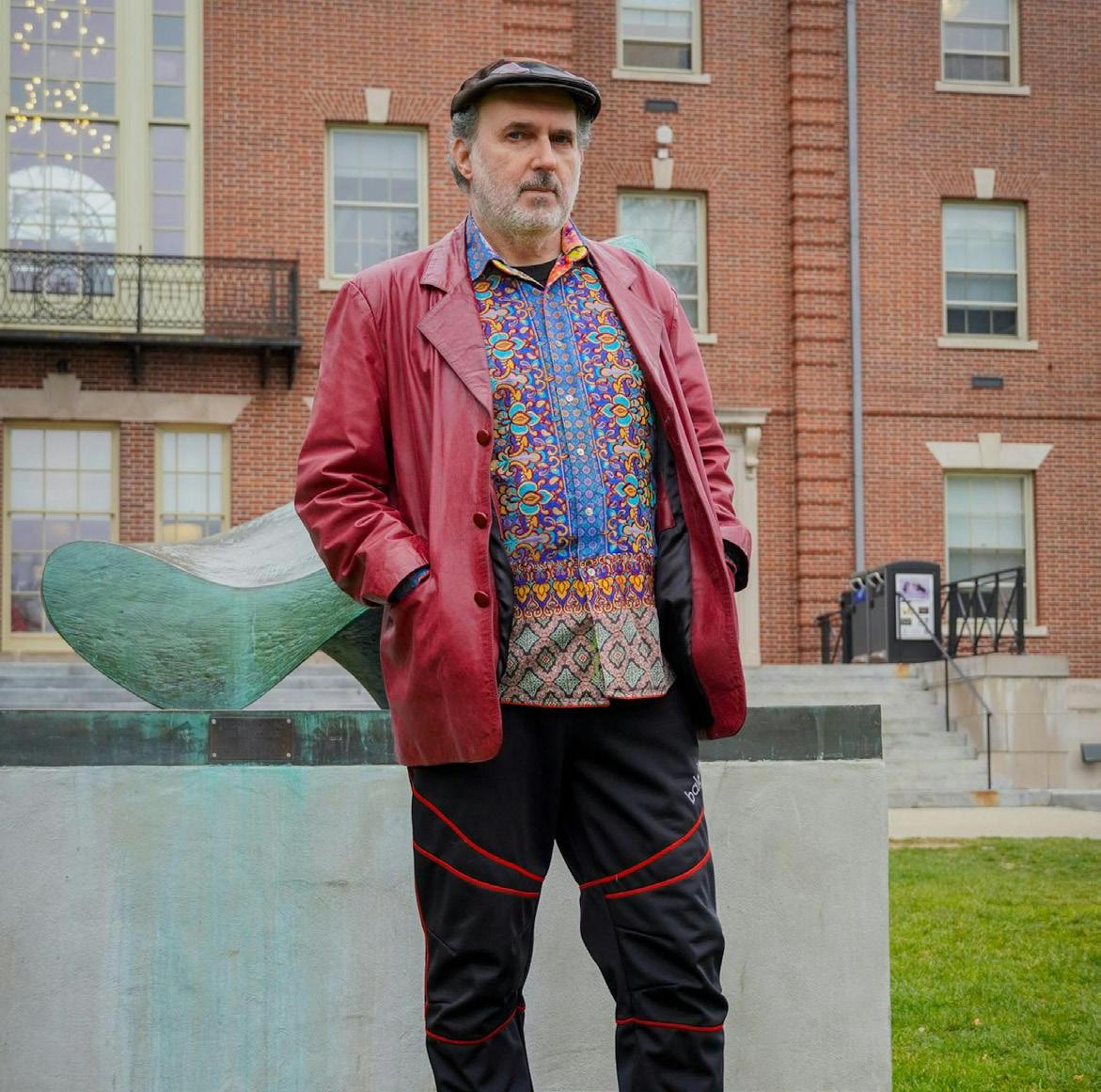

I consider one of the major strengths or advantages of this program to be diversity. Having a diverse teaching pool creates and promotes more unique thought to help shape the future leaders of tomorrow.
Sean Tissiere, BS Business, MBA


This article originally appeared online at browndailyherald.com on Dec. 1, 2025.
JASCHA SILBERSTEIN / HERALD Mariah Min, an assistant professor of English, wearing her favorite item: a bomber jacket with pomegranates embroidered on it. The jacket makes her feel “artsy and quirky,” she said.
TSEYANG AROW / HERALD Richard Snyder, a professor of political science, said that his academic area
MAYA MURAVLEV / HERALD Professor of Philosophy and Linguistics Richard Kimberly Heck is also the director of graduate studies in the Department of Philosophy.
JASCHA SILBERSTEIN / HERALD
Mari Mota Lopes GS is a graduate student teaching courses in the Department of Portuguese and Brazilian Studies.