
THE BROWN DAILY HER
VOLUME CLX, ISSUE 20
METRO
Nearly 200 students walk 30 miles across Rhode Island
SEE WALK PAGE 4
SPORTS
Football storms back from 12-0 halftime deficit to overpower Bryant
SEE FOOTBALL PAGE 6
OPINIONS
Editors’ Note: Welcome to our home away from home
SEE EDITORS' PAGE 8
ARTS & CULTURE
From the classroom to content creation: Brown’s social media stars
SEE STARS PAGE 12
SCIENCE & RESEARCH
Most parents overestimate how much sleep their children get
SEE SLEEP PAGE 14
Brown University rejects Trump administration compact
Paxson said the compact would “restrict academic freedom”
BY CATE LATIMER UNIVERSITY NEWS EDITOR
President Christina Paxson P’19 P’MD’20 announced that she formally rejected the Trump administration’s compact in a Wednesday letter to the Brown community.
The compact, which was sent to the
University on Oct. 1, would require Brown to freeze tuition for five years, limit grade inflation and cap international undergraduate enrollment at 15% in exchange for financial and other benefits.
Of the nine universities to have been sent the compact, Brown was the second to formally reject it after the Massachusetts Institute of Technology, which announced its refusal last week.
In her response — which was sent to the Education Secretary Linda McMahon and White House Officials May Mailman and Vince Haley — Paxson wrote, “I am
Brown professor wins Nobel Prize in economics
Peter Howitt was awarded the prize for work on economic growth
BY ELISE HAULUND SCIENCE & RESEARCH EDITOR
Early Monday morning, Brown Professor Emeritus of Economics Peter Howitt was awarded the Nobel Memorial Prize in Economic Sciences “for the theory of sustained growth through creative destruction,” according to a press release from the Royal Swedish Academy of Sciences.
The three recipients were awarded “for having explained innovation-driven economic growth” with a focus on new technology, the release said.
Asleep with his phone out of battery power this morning, Howitt only found out he had won the prize due to a tenacious Swedish news reporter ringing his wife’s phone several times.
“We had no champagne in the refrigerator, we were not anticipating this in any way,” Howitt said in a press conference Monday afternoon.
In a 1992 paper, Howitt helped derive a mathematical model for “creative destruction,” describing how new technologies replace old ones. As new and improved products enter the market, they replace older ones that then lose value.
“In order to understand technological progress, you have to understand that it takes place through waves of innovation that bring great benefits to mankind, but also generate tremendous losses to many people whose livelihood depends on technologies and capital that are rendered obsolete by these new technologies,” Howitt said.
The model built by Howitt and his co-laureate and co-author Philippe Aghion, a professor of economics at the College de France, INSEAD and the London School of Economics, elaborated on ideas originally theorized in the early 20th century by Joseph Schumpeter, an influential Austrian economist. Howitt is known as one of the fathers of this modern “Schumpeterian” approach to the theory of economic growth.
Howitt and Aghion share one half of the prize. The Royal Swedish Academy of Sciences awarded the other half to Joel Mokyr, a professor of economics at Northwestern University and Tel Aviv University. Mokyr won his share of the prize for explaining the requirements for the sustained economic growth that has been observed over the last two centuries.
The “simple idea” of creative destruction was understood by many, “but it
concerned that the compact by its nature and by various provisions would restrict academic freedom and undermine the autonomy of Brown’s governance, critically compromising our ability to fulfill our mission.”
While Brown’s deal with the federal government, which was reached in July, affirmed the government’s lack of authority to dictate Brown’s curriculum or academic speech, she wrote, the compact did not express this sentiment.
“Additionally, a fundamental part of academic excellence is awarding research
UNIVERSITY NEWS
funding on the merits of the research being proposed,” she wrote, framing the process of awarding funding “on criteria other than the soundness and likely impact of research” as a move that would “ultimately damage the health and prosperity of Americans.”
“President Trump is committed to restoring academic excellence and common sense at our higher education institutions,” White House Assistant Press Secretary Liz Huston wrote in an email
SEE COMPACT PAGE 2
Brown community praises U.’s decision to reject compact
Students, faculty, alums expressed their agreement with decision
BY ETHAN SCHENKER, ROMA SHAH & SAMAH HAMID UNIVERSITY NEWS EDITOR & SENIOR STAFF WRITERS
On Wednesday, the Brown community enthusiastically praised the University’s rejection of the Trump administration’s compact.
The stipulations laid out in the “Compact for Educational Excellence in Higher Education,” which was sent to Brown and eight other universities on Oct. 1, had been fueling rising tensions both on and off College Hill.
For the past couple of weeks, students, faculty and alums urged President Christina Paxson P’19 P’MD’20 to reject the compact over concerns that it would limit academic freedom, hinder hiring decisions and restrict admissions, among others.
Brown’s rejection of the White House’s proposal elicited a strong sense of pride among students, faculty and alums who spoke with The Herald.
‘Very nervous’: Afraid of agreeing to the compact
“We have been very nervous,” said Jen Corn ’94 P’26, a volunteer with the alum group Brown Stand Strong. “The July agreement
between Brown and the Trump administration was very disheartening, and so it made us very nervous about how Brown’s leadership … (was) going to respond to this compact.”
Axel Brito ’26 was also “pleasantly surprised,” as he didn’t expect the University to oppose the Trump administration after choosing to negotiate a deal with them just months earlier.
“I’m quite glad they’re actually putting up a fight now, and we’ll see what happens,” he said. “As an academic institution, we should be allowed to have our freedom of speech, as well as be able to have a safe environment for people from all backgrounds.”
After learning about the compact, Zoe Weissman ’28 was nervous about the University’s response because “voluntarily agreeing” to the government’s demands in July “implies a sense of complacency,” she told The Herald.
So when Weissman found out about the University’s rejection in an interview with The Herald, she was “very surprised, but also relieved,” she said.
Because Brown “claims to be defending educational freedom” and the right to express individual beliefs on campus, Weissman believed that rejecting the compact would be the “only possible solution” to preserve the University’s values.

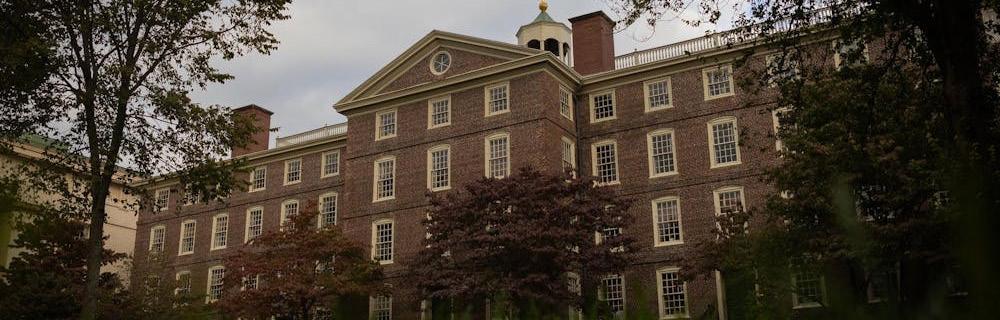
The announcement comes after the White House initially invited Brown and eight other universities to sign the compact on Oct. 1.
MAX ROBINSON / HERALD
UNIVERSITY NEWS
GRADUATE ADMISSIONS

PhD admissions paused in at least six humanities, social science departments
Faculty, graduate students expressed disappointment, frustration
BY ETHAN SCHENKER & CLAIRE SONG UNIVERSITY NEWS EDITORS
As Brown sought to identify targets for University-wide budget cuts in the spring and summer, administrators notified leaders of at least six departments that admissions for their Ph.D. programs would be paused.
The Departments of Egyptology and Assyriology, Classics, Anthropology, French and Francophone Studies, German Studies and Italian Studies will not admit first-year Ph.D. students for the 2026-27 academic year, according to the departments’ websites.
“These decisions followed a deliberative process led by our Academic Priorities Committee, which includes elected faculty members and senior academic administrators,” University Spokesperson Brian Clark wrote in an email to The Herald.
At a faculty meeting last week, Provost Francis Doyle noted that one program “proactively volunteered” to pause admission, The Herald previously reported.
But two directors of affected graduate studies programs told The Herald their input was either not requested or misconstrued as part of this process.
“Our input was not solicited before this decision,” wrote Professor of French and Francophone Studies Lewis Seifert, who is also director of the program’s graduate studies, in an email to The Herald.
Stephen Kidd, an associate professor of classics and the director of the department’s graduate studies, was confused to learn that graduate admissions for his department had been paused. Administrators’ justification for the decision “was based on a misunderstanding from the previous meeting,” he wrote in an email to The Herald.
In that meeting, administrators and the Academic Priorities Committee “asked us questions about our graduate program, how it functioned (and) the role graduate students played in teaching undergraduates,” among other inquiries, Kidd wrote. “But we were not part of the decision” to pause admissions.
“They thought that I had preferred to pause admissions for a year so that we could recruit a larger cohort for the 202728 season,” Kidd wrote, adding that he had told administrators “this was something about which I needed to consult the faculty.”
“When I cleared up this misunderstanding, they said there were other reasons too, which remain vague,” Kidd wrote.
“Previous yields, numbers of students currently in the program and application pools were all factors in the considerations
of this year’s admissions targets,” Interim Dean of the Graduate School Janet Blume wrote in an email to The Herald.
Clark added that APC “members spent significant time over the past year discussing doctoral education and considering how to balance Brown’s commitment to training scholars with the serious financial challenges facing the University, including both a structural budget deficit and an uncertain external economic environment.”
The Italian studies department had the “opportunity to share (its) concerns” and provide feedback, according to Professor of Italian Studies Massimo Riva, director of the program’s graduate studies.
For him, the downsizing of the graduate programs is a result of “the job market in the humanities overall.”
Citing the nearly 200-year history of Brown’s Italian studies program, he warned that a prolonged pause “would be highly detrimental to Brown, the profession and the humanities.”
Graduate students remain concerned about departments’ futures
Emma Kahn GS, a second-year Ph.D. student in the anthropology department, first heard in February that admissions for her department would be paused for at least a year. It remains unclear how long this pause will last.
“If it’s really just the one year of cancelled admission, I don’t think it will have
massive impacts on the program,” Kahn said. But if the pause is extended by multiple years, “that would be a big disruption in the kind of community we’re trying to build,” she added.
For Kahn, seeing similar pauses to anthropology Ph.D. program admissions at other schools across the country has been “disheartening.”
“The disciplines themselves are missing out on those new voices and new insights and new sets of questions and explorations,” she said. Anthropology “needs a constant influx of new voices,” and graduate programs help more individuals pursue careers in the field.
Andrew Clark GS, a fourth-year Ph.D. student in the Department of French and Francophone Studies, is concerned that the admissions pause will harm courses that rely heavily on graduate students to lead sections and grade assignments.
“If this continues and all the cohorts are drastically reduced in size, but the undergrad population remains the same, there’s going to be a discrepancy in the number of TAs available to actually administer all the classes,” said Adit Sabnis GS, a fourth-year Ph.D. student studying neuroscience. “So we’ve been asking the admin about that, but we still really have not gotten direct answers.”
Rivas believes that because the Italian studies doctoral program typically admits only two students per year, pausing admis-

sions would offer limited financial benefits. “Calculating the contribution that doctoral students make to teaching, we believe that the monetary savings, if any, would be negligible,” he wrote.
The University did not respond to a further request for comment on pausing graduate admissions.
While the University shifts its model from a liberal arts college to a research institution, Andrew Clark said he feels frustrated that funding for Ph.D. programs continues to be cut.
Andrew Clark would like to see more “articulate reasoning” as to why certain departments were chosen to pause graduate admissions compared to others, as well as the budgetary reasons behind the pauses.
The University has “millions of dollars floating around and plenty of other people who are getting paid pretty well,” Andrew Clark said.
“We are very aware of the impact on the departments: the experience of the current graduate students, the departments’ teaching, academic community, research and programming,” Blume wrote. “We are working with departments to mitigate those impacts. The exact form of support will be determined with each department according to its needs.”
This article originally appeared online at browndailyherald.com on Oct. 15, 2025.
to The Herald. “Any university that joins this historic effort will help to positively shape America’s future.”
A White House official told The Herald “past harm and discrimination,” while the compact is “forward looking and collaborative, and we plan to work with university leaders to achieve our shared goal of excellence in university teaching and research.”
The Education Department did not respond to a request for comment.
The Faculty Executive Committee, Brown’s central faculty governance committee, sent a letter to Paxson on Tuesday, urging her to reject the compact. This followed a faculty town hall earlier that day, where faculty members said they did not want Paxson to sign on to the compact.
Last week, Paxson solicited feedback from the greater campus community in a Today@Brown message. “We need to decide, as a community, how or whether to respond to the invitation to provide comments,” she wrote in the message.
MICHELLE NG / HERALD
SCIENCE & RESEARCH

wasn’t possible to really deal with (these conflicts) systematically in a mathematically coherent model until Philippe and I found a way,” he said.
A “central” point of Howitt’s work is the idea that “disruptive outsiders,” eager to make profit and interested in “shaking up the status quo,” end up “becoming the status quo” they once overturned if their innovation succeeds.
Once this happens, these individuals “become resistant to people that want to do that in turn to them,” Howitt explained.
To allow the transition of innovation to continue instead of becoming “blocked by the people who used to be innovators,” Howitt called on the importance of antitrust policy, competition policy and openness of international economic trade.
“I think the United States has been at risk of allowing too much unregulated monopoly power in various sectors in recent years, and that that’s had a somewhat stifling effect on innovation and economic growth,” he said.
Howitt commented on the advent of artificial intelligence as a good example of the theory of creative destruction — while it has “amazing possibilities” for enhancing labor, it also holds “amazing potential for destroying other jobs.”
“This is a conflict that is going to have to be regulated,” Howitt said. “Pri-
vate incentives in an unregulated market are not really going to resolve this conflict in a way that’s best for society.”
Before he joined Brown’s faculty in 2000, Howitt taught at the University of Western Ontario and the Ohio State University. Originally from Canada, attended McGill University for his bachelor’s degree and the University of Western Ontario for his master’s in economics, and he earned his PhD from Northwestern University in 1973. At Brown, Howitt taught macroeconomics courses even after his retirement in 2013.
The last time a Brown faculty member won a Nobel Prize was in 2016, when J. Michael Kosterlitz was awarded the prize in physics.
“At a time when the role of research in sparking innovation in new technologies is so prominent in discussions about our changing society, I’m sure that people around the world will appreciate learning more about Professor Howitt’s work, along with the contributions of the other prize winners,” President Christina Paxson P’19 P’MD’20 said in a Brown news press release.
Like Paxson, Howitt noted the importance of cooperation between universities, businesses and government to produce economic growth through technological advancement.
“I hope that will continue in the future, although I see dark clouds ahead,”

Howitt said.
According to Howitt, Brown was a “spectacularly helpful atmosphere” with ample opportunities and research funds for his research, but the real highlight of his time was “sharing ideas in an open
environment like Brown’s.”
“The students at Brown were extremely stimulating,” Howitt said. “I learned a lot from the graduate students I had over the years, several of whom have gone on to have really good aca-
Submissions:
THE BROWN DAILY HERALD
MULTIMEDIA
Yalamanchili
Kenna Lee Sophia Leng Anna Luecht Jason Mao
Illustration Chiefs
Eastep Kaitlyn Stanton
Social Media
Kaiolena Tacazon
Director of Technology
Annika Singh
PRODUCTION
Copy Desk Chief
Daphne Cao
Assistant Copy Desk Chief
Chelsea Long

Camila Valdes

Design Chief
Kaiolena Tacazon
Design
Emily Bao
Maggie Ruan
BUSINESS
General Managers
Hans Xu
Jakob Siden
Sales Directors Abe Wyett
Erin
Finance
Office
Submissions
demic careers of their own focusing on economic growth.”
This article originally appeared online at browndailyherald.com on Oct. 13, 2025.
email, and we will do our best to work with you.
Submissions can build on reporting from The Herald, reporting elsewhere, official statements from the University or other groups and other reputable sources, but they cannot break news or contain information that The Herald cannot verify. Because we cannot publish unsubstantiated information, failure to provide appropriate sources may mean we have to modify or remove unverified claims.
The Herald will not publish anonymous submissions or submissions authored by organizations. Leaders of student organizations can be identified as such but cannot write under the byline of their organization. The Herald cannot publish all submissions it receives and reserves the right
COURTESY OF BROWN UNIVERSITY VIA ASHLEY MCCABE
Before he joined Brown’s faculty in 2000, Howitt taught at the University of Western Ontario and the Ohio State University.
NOBEL
COMMUNITY
Nearly 200 students walk 30 miles across the state of Rhode Island
The event raised over $4,000 for malaria prevention this year
BY MAYA NELSON UNIVERSITY NEWS & METRO EDITOR
Thirty miles, 12 hours and over $4,000 raised. This Sunday, nearly 200 students from eight schools walked across the length of Rhode Island to raise money for malaria prevention.
The annual event began three years ago when six friends from Brown, the Massachusetts Institute of Technology, Tufts University and the New England Conservatory decided to walk across the state as a challenge for charity. Each year, more and more students — from six to 27 to 114 — took part in the trek from the state’s western border to its eastern one. And this year, that number skyrocketed to 180.
“What was originally a bit-turned-fundraiser now has snowballed into something
much larger,” said Xavier Bell, an MIT student and one of the original founders of the walk who has participated every year.
Since the original six have graduated, this year the baton was handed to Jeffrey Pogue ’27 to organize the walk. Pogue, who is an avid walker and leader for the Brown Outing Club, wanted the event to be “as big as possible.”
“It was a lot of postering,” he said. “I had people reaching out to their friends.”
The planning for the event was “very chaotic,” Pogue said. While 260 people signed up, only 180 showed up to Faunce Arch at 5:45 a.m. An extra bus had to be turned away.
Participants who raised at least $50 by soliciting donations from their family and friends were rewarded with a wooden cutout of Rhode Island, laser-engraved with the trail, according to Pogue.
After a quick group stretch session, a photo was taken, and the walk began at the Connecticut border.
At mile zero, spirits were high. Students
EDUCATION
were munching their first granola bars of the morning, and singing call-and-response shanties.
Sadie Hoiland ’28 said she was “feeling pretty good.” But, she was also just hoping to “make it through” — she woke up feeling sick that morning, but “chugged an orange juice” before the walk.
After being convinced by her roommate to join the walk, she figured it would be a “new and unique” way to spend her weekend.
“I think it will be a really cool experience,” she said. “To one: say that I have done it. And two: support charity.”
The first few miles were mostly wooded trails. Fall leaves crunched underfoot, and the narrow paths occasionally gave way to running streams and small farms. At mile five, a bakery stand on the side of the road tempted many walkers with its fresh-baked sourdough.
“This part of the state, the very western part, is the most beautiful,” said Romi Bhatia ’28. “Excellent forest. Some light hills. I love it.”
Bhatia, who had participated in Brown Outdoor Leadership Training over the summer, is no stranger to long walks. He had independently come up with the idea to walk the state, and when Pogue found out, he enlisted Bhatia for help with outreach and planning.
“I’m definitely hoping to meet new people, especially from other colleges, and get their perspective on what life is like,” Bhatia said.
Next year, Bhatia hopes to play more of a role in organizing the event. “I love leading outdoor trips and just helping people have that experience,” he said.
By mile 10, groups had begun to spread out. Muddy trails turned into paved roads, with many of the houses already decked out for Halloween. Several walkers stopped at

a farm offering free samples of coconut pie.
Just after noon, the rain began. A light drizzle was going as the first walkers reached the designated rest stop — a Subway just south of Johnston. When the rain picked up, a couple of walkers called Ubers to head home.
But after much-needed nourishment and another round of stretching, most of the crowd started gearing up for the home stretch, only a half-marathon away
For the rest of the journey, walkers could enjoy concrete sidewalks instead of the road’s shoulder. Farmhouses became parking lots which became multi-story shopping complexes. At mile 23, the rain was coming down hard and steady.
“This is familiar territory,” Bell said. “My feet hurt. My legs hurt. But there’s always great company on these walks.”
During the first walk in 2022, Bell said he had thought, “It’s gonna be hilarious in two months, but it sucks right now. I don’t know why we ever decided to do this.” Even though he has since graduated, Bell plans to keep on doing the walk for years to come.
“We’re all very proud that so many people have decided to take this on,” he
said. “That we left something behind that can persist whether or not our names are attached to it.”
With five miles to go, Julian Cohen ’26 decided to stop by Brown to recharge before continuing the walk. To pass the time, Cohen and his group had “just been talking.”
The rest of the walk was a straight shot through East Providence. While some walkers finished just before 5 p.m., for most, the sky was darkening as they crossed the bridge past India Point Park.
The light at the end of the tunnel: a highway sign that read, “Entering Seekonk, Massachusetts.”
Next year, Pogue hopes the event will continue to get bigger and better. He has a vision: hundreds of participants, road closures and official t-shirts.
The event not only gives participants the opportunity to have a “crazy experience and have these memories,” Pogue said, “but also to have done something really powerful.”
This article originally appeared online at browndailyherald.com on Oct. 13, 2025.
Annenberg report urges changes to professional learning to advance RI schools
Report provided financial and strategic recommendations
BY ALI SCHAPIRO CONTRIBUTING WRITER
In a new Oct. 6 report, researchers from Brown’s Annenberg Institute analyzed teacher professional learning practices in Rhode Island and offered a variety of recommendations for improvement.
Developed alongside the Rhode Island School Superintendents Association and the Rhode Island Department of Education, the findings center on “professional learning” — initiatives training teachers on ways to improve student learning and support. Common examples include reviewing curriculum materials, lesson planning, examining student work and career coaching.
When effective, professional learning assists educators’ daily tasks, offers checks on teaching improvements and garners backing among instructors, wrote Brenda Santos, director of Rhode Island research partnerships and networks at the Annenberg Institute, in an email to The Herald.
The institute’s report focused on how state and district leaders implement professional learning in public schools by examining four key themes: strategy, budget, personnel and time.
Most districts surveyed by the Institute had two or three professional learning days during the 2024-25 school year.

KATE ZHANG / HERALD
Last year, Rhode Island and the United States Department of Education dedicated $5 million and $40 million, respectively.
For Jeannine Nota-Masse, superintendent of Cranston Public Schools, securing funding and ensuring an effective use of time are two of the biggest difficulties with implementing more professional learning days.
The institute recommended that funding for professional learning be stabilized across years, allowing school districts to plan out their long-term professional learning goals, prioritize local initiatives and have higher retention rates for instructional coaching positions. Coaches are professionals hired by schools to support curriculum development and student instruction.
During the COVID-19 pandemic, Rhode Island increased spending on professional learning, according to the institute’s report. The study also found that total investment has since declined, but districts are now allocating about 3.5% of their budget to professional learning, far more than ever before.
In an email to The Herald, Nota-Masse
wrote that, since the initial expiration of COVID-19 relief funding in 2024, it “has become significantly more difficult to develop stable, effective (professional learning) plans.” Between the 2020-21 and 2023-24 academic years, Rhode Island spent $70.9 million of this funding on professional learning.
Since school districts can no longer rely on federal funding, “it would be fiscally irresponsible to base long-term (professional learning) planning” on federal dollars, she added. “Until state education funding becomes more equitable and predictable, this will always be a challenge.”
The report also suggested establishing a defined instructional coaching model, along with appropriate training and more support for coaches and school leaders. Half of last year’s coaches had three or fewer years of experience, a result of high turnover rates. The institute cited unpredictable funding as one key factor in these rates.
In 2024, Rhode Island allocated $5 million to the Instructional Coaching Corps, a grant program that provides funding for instructional coaches. The U.S. Department of Education also provided $40 million in funds to back this program.
Inconsistent funding and job instability have caused educators to hesitate about starting a coaching career, Santos wrote.
The federal grant is “a great start,” Santos added, writing that inconsistent funding and job instability have caused educators to hesitate about starting a coaching career. But she also noted that state agencies typically play “the critical role” in implementing these recommendations.
In 2019, Rhode Island passed the Right to Read Act that required teachers to become well-versed in the science of reading, a method of teaching literature backed by cognitive research. Further legislation required school districts to implement new high-quality curriculum materials in English language arts, math and science.
Despite this statewide legislation, professional learning and development vary widely across the state.
“Each school district in Rhode Island operates under different collective bargaining agreements, which outline the terms for professional learning, including time allocation and compensation,” Nota-Masse explained.
The state’s focus on “creating a statewide, uniform (professional learning) plan is challenging. Each district must assess its specific needs and set goals that align with
its (collective bargaining agreement),” Nota-Masse wrote.
Each local union negotiates the professional learning clauses of their contracts based on unique teacher needs, wrote Mary Barden, executive director of the National Education Association Rhode Island, in an email to The Herald. The NEARI is a statewide teachers’ union and professional organization.
“What educators want and need from professional learning varies by grade level, content area and years of experience — a veteran high school math teacher has very different needs than a first-year kindergarten teacher,” Barden wrote. “Educators often report that professional learning isn’t relevant or valuable to their work.”
Beyond the Oct. 6 report, the Annenberg Institute is continuing to focus on professional learning. Santos shared that the Rhode Island Education Research Initiatives team is continuing to facilitate a professional learning network of six school districts.
Those districts participate in “yearlong, deep collaboration and shared learning focused on implementing research-based professional learning strategies.” Santos added they will also “continue working with the RIDE to understand the impact of their investment in teacher coaching in Rhode Island.”
MAYA NELSON / HERALD
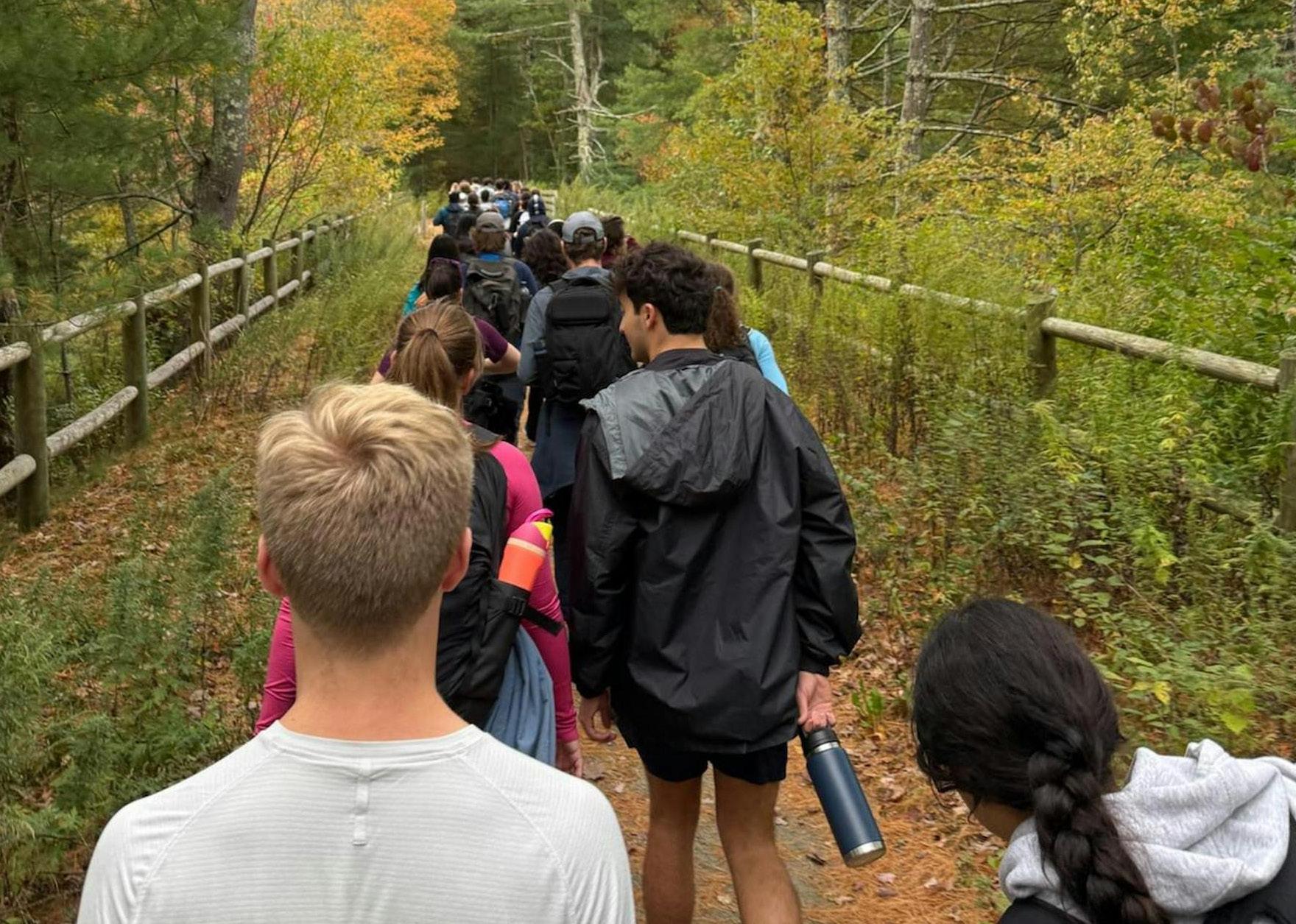
Participants at the walk’s starting point on the Connecticut border. Nearly 200 students took part in the 30-mile, 12-hour walk.
MAYA NELSON / HERALD
The first few miles were mostly wooded trails. Fall leaves crunched underfoot, and the narrow paths occasionally gave way to running streams and small farms.
New 176-unit permanent supportive housing complex opens in Providence
Opening contributes to state’s goal of permitting 375 new housing units
BY PAVANI DURBHAKULA SENIOR STAFF WRITER
On Oct. 10, the Summer Street Apartments, a new five-story 176-unit permanent supportive housing development for formerly homeless Rhode Island residents, opened at 94 Summer St. in Providence.
The 176-unit apartment complex is operated by Crossroads Rhode Island, a nonprofit organization that coordinates housing and homelessness services to individuals within the state. Each unit is a fully furnished, one-bedroom apartment that includes a kitchen and private bathroom. Residents began moving in on Monday.
“The Summer Street Apartments will literally be life changing for the nearly 200 men and women who will soon call them home, providing safety, stability and community to people who have struggled with housing insecurity for years,” said Michelle Wilcox, president and CEO of Crossroads R.I. in a news release.
The first wave of residents moving into the Summer Street Apartments are those who previously lived at Crossroads’s Travelers Aid Housing at 160 Broad Street. The 176-unit complex was originally constructed in 1915 as a

YMCA, and the existing small rooms, shared bathrooms and dated facilities are “in dire need of repair,” according to the organization.
Crossroads will begin renovating the Broad Street apartments once residents have transitioned to the Summer Street complex. A new framework for tenant eligibility and selection will be developed for future Summer Street residents.
The new project comes at a critical time in Rhode Island’s housing crisis.
“In the last five years, the price of a home has risen more than 50%, and
we simply do not have enough homes to meet the market’s demand,” House Speaker Joseph Shekarchi (D-Warwick) said in the Crossroads news release.
The state has set a goal to permit 375 new permanent supportive housing units by 2030, making the addition of 176 units a substantial step toward achieving those benchmarks, wrote Emily Marshall, a spokesperson for the Rhode Island Executive Office of Housing. Between 2018 and 2023, the state saw an increase of 85 PSH units, she added.
“Models like Summer Street are crit-
ical to creating housing that meets both immediate and long-term needs,” Marshall wrote.
In addition to these amenities, residents will also have access to education and employment services, health and recovery resources and case management, according to the press release. It adds that over 90% of those who receive both affordable housing and supportive services never become homeless again.
“By combining housing with supportive services, the project gives Rhode Islanders in need the resources they need to thrive,” Marshall wrote.
Construction began on the complex in 2023. Summer Street was an “ideal” location for this project because of its “high density zoning, easy access to public transportation and jobs and proximity to Crossroads’s headquarters,” according to the website.
In 2024, the Summer Street development was expected to cost $85 million, according to WPRI. The project has been heavily supported by local, state and federal funding, including $2 million in congressional funds secured by U.S. Senators Jack Reed (D-R.I.) and Sheldon Whitehouse (D-R.I.).
Additionally, Mayor Brett Smiley’s administration supported the complex “with $3.5 million in funding through the Providence Housing Trust Fund and (U.S. Department of Housing and Urban Development) grants,” Michaela Antunes, a spokesperson for the City of Providence, wrote to The Herald. Support also came from the state level, with Gov. Dan McKee’s administration securing a state investment of about $18 million for the project, according to Marshall.
“We are continuing to invest significant resources in projects like Summer Street to ensure that new, high-quality units with supportive services are quickly made available to our neighbors who need them most,” Antunes wrote.
This article originally appeared online at browndailyherald.com on Oct. 15, 2025.

Providence prepares for a bustling Family Weekend
Providence business stakeholders also expect a spike in activity
BY MAYA KELLY SENIOR STAFF WRITER
In the next few days, thousands of family members and friends will flock to College Hill for a Family Weekend filled with over 130 on-campus events. But that doesn’t mean everyone visiting will stay on Brown’s campus.
In fact, the three days of festivities are “a powerful driver for Providence’s tourism economy,” Kristen Adamo, President and CEO of the Providence Warwick Convention and Visitors Bureau, wrote in an email to The Herald.
Over 88% of Providence hotels were occupied during last year’s Family Weekend, compared to 73.7% for the entire month of October 2024, according to Alana O’Hare, senior director of communications and special projects for the PWCVB.
Many of these hotels sell out months before Family Weekend begins, Adamo added.
For Mikele St-Germain, Brown’s director of parent and family engagement,
the weekend is about “bringing the Brown community together on campus.” But, the University is “excited to feature some activities that will bring families into the Providence community and beyond,” she wrote.
Beyond featuring on-campus programming, the Family Weekend schedule also includes three events off-campus: an apple-picking trip at Barden Family Orchard in North Scituate, a group walk to India Point Park and a “Community Data Collection Day” at Providence’s North Burial Ground.
As of Oct. 14, 2,207 families had registered for the event, according to St-Germain. The number of visitors is expected to be much larger, as the University also accepts on-site registration.
This influx of visitors can have a significant economic impact on the Providence community, Adamo explained.
“Visitors don’t just stay in our hotels — they fill tables at restaurants, buy souvenirs at local shops and check out our local attractions,” she wrote. “What’s especially exciting is that this weekend introduces thousands of visitors to Providence, many for the first time.”
Family Weekend is “one of the good business weeks and weekends of the year” for Caspian Breakfast and Lunch,
said Turan Caspian, owner of the Wickenden Street restaurant. During normal weekends, Brown students are already the eatery’s biggest customer base, Turan said, and the restaurant “is supposed to be very busy” this weekend.
With the restaurant expecting so much extra business, Turan is preparing with “extra employees and extra food and extra prep,” he said.
It is also a time for Turan to connect with the families of his regular customers, he added.
This year, the PWCVB is launching a “Providence LOVES Brown” campaign, which highlights events that the group hopes will increase foot traffic and “foster lasting connections between the Brown community and Providence establishments,” O’Hare wrote.
In exchange for displaying “Providence LOVES Brown” signage in their stores, participating businesses will be featured on a dedicated website and the PWCVB’s social media channels, according to O’Hare.
“They come for their students, but they leave with a deeper appreciation for our walkable downtown, vibrant food scene and cultural richness,” Adamo wrote. “It’s not just a busy weekend — it’s a gateway to future visits.”



Department of History Brown University presents
The 46th William F. Church Memorial Lecture
“The Oyo Empire, Merchant Capital, and Orisa Epistemology in the Atlantic World: The Other African Intellectuals During the Age of Revolution”
Akin Ogundiran Northwestern University
Thursday, November 6, 2025 5:30 p.m.
Smith-Buonanno | Room 106 Free and open to the public

PHOEBE GRACE ASEOCHE / HERALD
Summer Street Apartments on Monday. The complex is the "largest permanent supportive housing development for formerly homeless adults in New England,” according to a Crossroads RI press release.
KAIA YALAMANCHILI / HERALD
FOOTBALL
Football storms back from 12-0 halftime deficit to overpower Bryant
The team can now call themselves the unofficial state champions
BY SAJIV MEHTA CONTRIBUTING WRITER
Despite a meek first half in which they put up zero points, the Brown football team (3-1, 0-1 Ivy) roared back at Bryant (2-5, 0-3 Coastal Athletic Association) in the second half on Friday night to steal a 29-19 victory. The in-state contest between the Bears and the Bulldogs was decided by more than one score for the first time since 2013.
The statement win at Bryant, combined with their upset against URI in the Governor’s Cup last week, gives Brown the right to call themselves unofficial state champions –– a feat they hadn’t accomplished in the preceding seven years. Sweeping the other two Division I teams in the state, Bruno stands alone on the highest perch of Rhode Island collegiate football.
The 2025 Bears are no strangers to drama –– every one of their games this season held its fair share of significance. The season opener’s 46-0 win against Georgetown was Brown’s largest margin of victory since 2013, yet the highly anticipated Harvard vs. Brown clash culminated in a 41-7 collapse. And in the Governor’s Cup last week, the Bears clinched their first victory against a national top-10 opponent since 1981.
Maybe it’s fitting, then, that the Bears’ bumpy ride refused to settle into a smooth win on Friday.
“At Brown, we don’t want things to be easy,” Head Coach James Perry ’00 said at a post-game press conference. “Coming from behind is an opportunity. I think the kids showed great resilience.”
The opening drives gave away no hints of the offensive production to come for either side. Instead, a defensive skirmish emerged. On the game’s very first series, quarterback James Murphy ’27 was hit as he released a deep ball toward the red zone, resulting in a Bryant interception.
The Bears and the Bulldogs traded punts on their next two possessions before Bruno recorded a sudden turnover of their own. On
a run up the middle, Bryant running back Dylan Kedzior coughed up the football at the line of scrimmage. When the resulting pile of white, black and gold finally disentangled, it was Brown defensive lineman Ike Odimegwu ’27 who secured the ball.
But Bruno was unable to build on the momentum. The ensuing drive ended in disappointment when Murphy was sacked on a long fourth-down conversion attempt at Bryant’s 29-yard line.
Unlike the Bears, Bryant managed to capitalize on their opponent’s turnover. The Bulldogs methodically marched 63 yards down the field in 7 plays and capped their drive off with a 14-yard touchdown run by tailback Elijah Elliott.
The extra point attempt from Bryant kicker Nicholas Stoyanovich, though, sailed wide right, holding Bryant’s advantage to 6.
But after giving up a touchdown, the defense came up with a turnover during their next appearance. On a deep 40-yard shot to the left sideline, Brown cornerback Elias Archie ’26 was in one-on-one coverage against Bryant’s Zyheem Collick. Swiveling to position his body towards the underthrown pass, Archie — who also recorded a pick against URI — dove for the ball and collected it before it could touch the turf.
But yet again, Brown’s offense looked lost after their defense delivered, and after advancing only 23 yards, they punted once more. Capitalizing on the change of posses sion, Bryant’s offense embarked on a 92-yard journey into the end zone, forcing Murphy and company to sit and wait for over 7 min utes in game time. The Bulldogs hammered the Bruno defense with deft runs, pushing Brown’s defensive line further and further toward their own end zone.
After 11 plays, a worn-down Bears defen sive unit succumbed to a 1-yard punch-in by Elliott in which no defensive lineman man aged to shake their blocker. A wayward throw by Bryant quarterback Jaden Keefner on the 2-point conversion kept the score at 12-0.
Brown’s defense trudged to the bench, and the offense emerged for a 2-minute drive that would need to be perfect in order to give the Bears any points and momentum going into halftime. But once
more, the offensive unit failed to rise to the occasion, and after a swift 3-and-out, Brown entered the locker room unsettled and adrift.
But if the Bulldogs dominated the first half, it was Bruno who commanded the second.
As if they had been shot out of a cannon, the Bears began their post-halftime quest, determined to make this match competitive. Bryant got the ball first, and they could only move the ball 3 yards — 89 less than their last drive — before punting. Brown’s defense stuffed 2 runs up the gut and broke up a pass over the middle with relative ease, giving the Bears’ offense a chance to cut into Bryant’s lead.
For the first time all game, the offense stepped up. Two strong runs by 2024 Ivy League Rookie of the Year Matt Childs ’28 created first down opportunities. Only a few plays later, from Bryant’s 47-yard line, Murphy delivered a missile over the middle to an in-stride Trevor Foley ’28 on a slant route. The pass sliced through the Bulldogs, creating a lane to the goal line which Foley had no problem taking advantage of. Outstripping Bryant’s secondary by multiple paces for his first career touchdown, the 6-foot-3-inch receiver changed the game with one sprint.
Now, the momentum was squarely swinging toward the Brown sideline. Bru-
to force another three-and-out.
Brown’s next drive was nothing like its predecessor’s quick strike, but it was just as effective. Mixing running and passing plays, Bruno worked down to Bryant’s 22-yard line before Murphy threw a short screen pass to Levi Linowes ’27. The 240-pound tight end barreled down the right sideline like a freight train, throwing off would-be tacklers and diving toward the goal line. In the end, the referees marked the ball just 1 yard short of a touchdown. From a pistol formation, Murphy handed the ball off to Childs, who willed himself through the crowd into the end zone.
Perry seemed intent on pressuring the Bulldogs while he had the advantage, calling for a 2-point conversion. Backup quarterback Will Currid ’28 rolled out of the pocket to his left, and the southpaw sent the ball right back to Linowes to push Bruno’s advantage to 15-12.
By now, there had been four drives in the second half — two hasty punts for Bryant and two convincing touchdowns for Brown. A lesser opponent may have been resigned to Brown’s momentum, but Bryant would not give up so easily.
The Bulldog offense quickly worked downfield in a manner reminiscent of their first half precision. Once they reached Brown’s 16-yard line, Keefner delivered a

MAX ROBINSON / HERALD
Bruno stands alone on the highest perch of Rhode Island collegiate football after sweeping the other two Division I teams in the state.
he ripped the ball out of a Bryant defensive back’s hands. A targeting penalty on Bryant’s Lonnie Rice led to his ejection and moved the ball to Bryant’s 11-yard line. Finally, Childs punched in yet another goal line score.
After yet another stop by the defense, Murphy’s offense trotted back out with a chance to put the contest out of reach ––and that’s exactly what they did. An unrelenting running back committee of Childs and Qwentin Brown ’26, powered by the offensive line, moved the ball down the field. Then, at Bryant’s 26-yard line, the game’s signature play materialized.
Murphy handed the ball off to Qwentin Brown from the shotgun, who ran straight up the middle and appeared to have been stalled by Bryant’s defensive front. But Bruno’s offensive line had other plans. In an amazing display of strength, three linemen, clad in white and brown, served as Qwentin Brown’s personal security detail, literally pulling him over 10 yards past the black and gold danger and clearing his way to the end zone.
“The offensive line has no quit,” Childs said at a post-game press conference. “Without (the offensive line), there’s no pass game, there’s no run game and I think they go sometimes uncredited with most of our success. Those guys are the oil to our engine.”
Another successful point-after kick made the score 29-19. With a little more than 4 minutes left in the game, the Bulldogs launched a final attack. But on a fourth-and-9, the Bruno defensive line broke through, forcing an incompletion and sending Bryant’s offense off for the last time. The Bears walked away with the 29-19 victory.
“The way we prepared makes me really proud, because seeing us stick with it, it’s hard to do,” Perry said. “We played a really good team, a really talented team, and just stuck together. That’s as good a half as you can have.”
Looking ahead, the Bears have six straight Ivy League matchups scheduled to close the regular season. They will host Princeton (2-2, 1-0) on Saturday at noon.
This article originally appeared online at browndailyherald.com on Oct. 13, 2025.
Women’s volleyball narrowly falls to Cornell, sweeps Columbia
The Bears are now ranked third in the Ivy League
BY MILES MONROE SENIOR STAFF WRITER
On Friday night in Ithaca, the women’s volleyball team (8-6, 3-2 Ivy) narrowly lost 3-1 to Ivy League leader Cornell (10-5, 5-0) in a thrilling matchup. Just one day later in New York City, the Bears throttled the Columbia Lions (2-13, 0-5) in a dominant 3-0 sweep.
One week ago, Brown delivered back-toback victories against Princeton (9-4, 4-1) and Penn (7-8, 1-4). With momentum on their side, the Bears entered this weekend looking to make a statement against Cornell, which has gone undefeated in conference play this year.
“We compete hard every day in practice and talk a lot about mentality,” Head Coach Taylor Virtue wrote in an email to The Herald. “Our goal is to be the best possible version of ourselves, (and) we know that our best is good enough to beat anyone.”
From the opening serve on Friday, the two Ivy League titans dialed up the intensity.
During the first set, the Bears and the Big Red fought hard for an early lead, matching each other’s kills, blocks and points. But nearly halfway through the set, they were still tied at 10-all.
Unfortunately for Bruno, the tide turned in the wrong direction after a controversial net call awarded Cornell a point, quickly snowballing into a 6-0 run for the Big Red. The Bears tried to claw their way back, but with a comfortable lead in hand, the Big Red cruised to their first set victory of the day by a score of 25-17.
The second set was simply organized chaos, with bodies and balls flying in every direction. The Bears opened the set with a 3-0 run, but Cornell stormed back and tied the game at 6-all. From there, though, the Big Red started to pull away, claiming a 16-10 advantage over Bruno.
But the Bears didn’t let Cornell simply waltz away with the victory. Star Bruno players Mariia Sidorova ’26 and Sophia Wolfson ’28 — who finished the match with 12 and 11 kills, respectively — sprang into action to help Brown close the deficit. Despite scoring a threatening 22 points, Bruno couldn’t get it done: Ultimately, Cornell took the second
set 25-22.
Now facing an outright loss, the Bears put up their biggest fight of the day, blocking and digging Cornell’s strong spikes to try and crawl back. Jessie Golden ’26 and Julia Kakkis ’28 headlined the third set, leading the team with 21 digs and 34 assists on the night, respectively. Locking down the defensive end, the Bears dominated the third set, pulling away 25-16.
“Coaching this group of women is a privilege,” Virtue wrote. “They have an incredible bond, they are very supportive of one another and (they) have great relationships both on and off the court.”
With the chance to draw even, Brown headed into the fourth set with something to prove. The set continued the thrilling back-and-forth play that characterized the first three sets, with the teams trading runs and leads. Although the teams went toeto-toe in the opening stretches, the Bears managed to pull away 15-13, a mere 10 points from victory. But then, shattering Brown’s hopes, the Big Red delivered a dominant 9-2 run and clinched the set 25-22.
“We played okay against Cornell, (and) it took us a bit of time to settle into that
match up (but) we found our rhythm eventually,” Virtue wrote. “That match exposed some very important things that we will need to continue working on.”
Despite the heartbreaking result in Ithaca, the team had no time to dwell on the loss. The next day, they had to face Columbia. But thankfully for Bruno, the match against the Lions was all Bears from start to finish.
Although the first set was closer than Bruno would have liked — Brown was up just 20-19 toward the end of the set — a series of strikes and blocks put Brown up 24-21. Finally, a block from the Bears sealed Bruno’s first set victory.
Wolfson headlined the start of the second set with two consecutive kills that resulted in a 6-2 Brown scoreline. Brown rode that wave for the rest of the set, aided yet again by 2024 First Team All-Ivy player Sidorova, who killed the set point to put Brown up 2-0. Overall, Sidorova led the way with 13 kills on the day.
Now down by two sets, the Lions roared back in the third, jumping to an early 9-4 lead. But a missed Columbia serve shifted the momentum, and Brown regained ground
quickly to draw the score even at 12.
From there, the Bears dominated. Leading by a score of 21-19, Bruno sealed off the last four points with impressive kills by Sidorova, Wolfson and Hannah Flannery ’26 en route to a 25-19 closing set win and a clean 3-0 sweep. Kakkis again led the assist leaderboard with an impressive tally of 27, and the team outblocked Columbia 7-4.
“We played great against Columbia,” Virtue wrote. “I thought Columbia was one of the best serving teams that we have faced, and I was impressed with how our passing unit responded.”
This win marks Brown’s fifth consecutive sweep over Columbia. The Bears now sit at third place in Ivy League standings with nine Ivy matches left to play in the regular season.
“We have the talent, mentality and experience to win a championship,” Virtue said. “That is our goal.”
The team looks to carry this momentum into their first home match-up on Friday at 7 p.m. against Harvard.
SOCCER
Men’s soccer settles for scoreless draw against Penn
Despite early momentum, the Alumni Day game ended 0-0
BY ABIGAIL DONOVAN SENIOR STAFF WRITER
On Saturday, the men’s soccer team (5-3-2, 1-1-1 Ivy) endured 90 grueling minutes of stalemate against Penn (5-2-4, 1-0-2) during the Alumni Day game. Despite early control and a strong push in the second half, the Bears were unable to find the back of the net, settling for a 0-0 draw.
This match followed a 1-0 loss to Princeton (9-1, 3-0) last week and brings the team’s Ivy League record to an even one win, one loss and one tie. Following the draw, the team stands at fourth in the league, trailing third-place Penn by just one point.
“I think we canceled each other out a little bit,” Head Coach Chase Wileman told Brown Athletics, “but I am proud of the guys for fighting and not giving in.”
The game got scrappy early, and a foul was called on Brown with just 39 seconds on the clock. But the Bears were able to gain control of the ball off of a free kick by Penn, launching what would be one of their strongest attacks of the day.
The Bears’ first shot came in the fourth minute of the game, when Greyson Mitchell ’26 sent the ball sailing over the top of the goal. Just two minutes later, Lorenzo Ama-

VAMSON VU / HERALD
Jamin Gogo Peters ’26 pushes the ball down the left flank in an 8thminute attack. Despite back-and-forth play, neither side was able to find a breakthrough.
ral ’27 tallied a shot-on-goal from the right side, just outside the box. The ball zipped past the feet of four Penn defenders, but was ultimately stopped by the hands of the Penn goalkeeper.
Brown kept up the attack with another shot in the eighth minute of the game.
Jamin Gogo Peters ’26 raced the ball down the left flank and delivered a quick pass to Mitchell. In a show of tricky footwork, Mitchell rolled the ball under his foot and slipped a rapid behind-the-back pass back to Gogo Peters, who launched it on a path towards the bottom center of the goal. But the Quakers’ goalkeeper was there to meet the attack, thwarting the Bears’ third shot in just 5 minutes.
Over the next 30 minutes, the Bears seemingly lost their momentum and were outshot 5-0 by Penn. Despite the Quakers’ onslaught, Brown’s defense stepped up to the challenge. Goalie Max Pfaffman ’28 dove to save a low shot from the left by Penn in the 23rd minute, and a smart defensive setup blocked a free kick by the Quakers 11 minutes later.
As the last 5 minutes of the half began to tick, both teams launched a last offensive push. Iyke Dafe ’27 and Mads Stistrup Petersen ’26.5 each delivered a shot on goal that was saved by the Penn goalkeeper. When Penn received a free kick with less than 2 minutes left in the half, Pfaffman leapt to the right to make a high diving
save and keep the 0-0 stalemate going into the break.
“We had a lot of chances in that first half (and) almost scored,” Pfaffman said. “We did well defensively, but we need to find a way to score early on and put teams away while we can.”
The Quakers controlled the game out of halftime, recording the only 3 shots in the first 29 minutes of the second half.
Despite the still scoreless game, the crowd’s energy hit a peak at the 70-minute mark, when the Brown foot team arrived in droves to support their fellow Bears. Packing the student section, the football team brought a riotous energy to try to revive the tied game.
port always helps rejuvenate the team.
us stay motivated and keep going till the end of the game,” Pfaffman told Brown Athletics. “We really appreciate
the game, the Bears final attempt to pull ahead. Centered on the goal and just outside
the box, Carter Smith ’27 sent a low, fast shot that was blocked by a well-placed Quaker defender.
Despite back-and-forth play in the closing minutes, neither side was able to find a breakthrough opportunity, leaving the tense game with a 0-0 score when the final buzzer sounded.
The game marked Pfaffman’s second shutout of the season.
“Talking to my teammates helps me

Women’s soccer falls to third in Ivy standings after tying Dartmouth 0-0
Both sides kept a strong defense throughout the entire match
RAHUL SAMEER CONTRIBUTING WRITER
In front of a packed crowd at Stevenson-Pincince field, the women’s soccer team (8-2-3, 2-1-1 Ivy) tied Dartmouth (6-2-4, 2-0-2) 0-0 on Saturday evening. Entering the weekend, the Bears stood at second place in the Ivy League standings, trailing behind Dartmouth by only one point. But after Harvard clinched three points by beating Yale 2-0, rising to first place in the process, the Bears dropped to third in the conference.
During Saturday’s match-up, Brown trounced the Big Green in opportunities to score. But despite outpacing Dartmouth 7-2 in corner kicks and 7-1 in shots on goal, the Bears were unable to overcome Dartmouth’s unrelenting defense.
In an interview with The Herald, Head Coach Kia McNeill said the team has been “very good on set pieces, and particularly corner kicks this year.” But because their opponents continue to target Bruno captain and stand-out player Naya Cardoza ’26, McNeill believes the Bears have been unable to convert these opportunities into fruitful plays.
Going forward, “that’s where we need somebody else to step up and really take ownership in those moments,” she said.
From the moment the opening whistle blew, the Bears took the offensive. Ten minutes into the game, Bruno encountered their first chance at a goal when Jael-Marie Guy ’29 — who won Ivy League Offensive Player of the Week after last weekend’s 4-0 victory over Penn — stormed past a Big Green defender, before entering a one-
on-one against Dartmouth’s Kate Ryan. Ryan tried to box Guy out, and after pivoting out to the left, Guy fired the first shot of the game. But in a lunging effort, Ryan was able to deflect the ball, foreshadowing the prevailing theme of the game: a ruthless offensive pursuit by the Bears and a stalwart defensive effort by Dartmouth.
Throughout the rest of the half, Brown tallied another three shots. Despite recording four times the number of opportunities as the Big Green, the Bears couldn’t get past Dartmouth goalkeeper
Ola Goebel.
Reflecting on the first half, McNeill said both teams were playing “not to lose the game, as opposed to really … being the aggressor.”
When the Bears found themselves still scoreless with the time ticking down in the second half, they changed their tune.
With 9 minutes left in the game, Brooke Birtwistle ’28 set up to take a free kick. Arcing the ball into the box, she found Hannah Schapiro ’27, who then fired a shot into the bottom right corner. Blocking the offensive effort, Goebel de-
flected the ball in a desperate lunge.
It bounced for just an instant before Cardoza, standing a few yards away from the goal, fired another shot. Unfortunately for Brown, Goebel came up with another miraculous save, and in a wild scramble for the ball, the Big Green was able to clear it from the box.
“We were able to bring some of our key identities to the game,” Cardoza said in an interview with The Herald. “We were winning a lot of aerial balls. I think we were bringing a lot of pressure towards Dartmouth.”
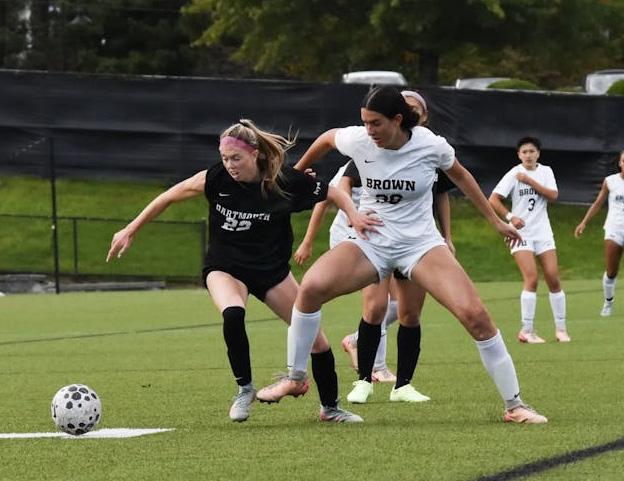
Less than a minute later, disaster almost struck for the Bears. Pulling past Bruno’s defensive line, Dartmouth’s Maeve Theobald launched a shot towards the right corner of the Brown goal. Goalkeeper Bella Schopp ’26 lunged for the ball, but it passed just inches shy of her fingers.
For a brief moment, the whole stadium held their breath as the ball bounced off the goalpost, but before the Bears had a chance to rally, Theobald caught up to her own deflection and smoothly placed the ball into the back of the net.
As the Big Green began to celebrate their first goal of the day, the Bears, counting their lucky stars, pointed to the referee’s raised flag: Dartmouth was offside.
“We work a lot on holding our back line, so it was very close, but we were able to keep them in that offside position,” Cardoza commented. “But even though it was called back, we want to make sure that there’s not that many chances going into any Ivy games.”
When the final whistle blew, the score was the same as it had been 90 minutes ago — 0-0.
Reflecting on the scoreless match, Guy noted that the team is “hungry” to get more wins.
“As a team, we have the personnel to be able to get to those moments,” Guy said. “It’s really just about finishing them and capitalizing on those small moments.”
This coming Saturday night in Cambridge, the Bears will face Harvard in their fifth Ivy League conference game of the season — hoping to make it a third consecutive win against the Crimson.
This article originally appeared online at browndailyherald.com on Oct. 14, 2025.
DOLMA AROW / HERALD
Midfielder Ella Weil ’28 battles with an opposing Dartmouth player for possession. The Bears came away with a draw after a late-game goal for Dartmouth was ruled offside.
OPINIONS
Editors’ Note: On an amicus brief in support of The Stanford Daily
On Wednesday night, The Brown Daily Herald, Inc. joined 54 other student news organizations and newsroom leaders in signing an amicus curiae brief filed by the Student Press Law Center in support of The Stanford Daily in Stanford Daily Publishing Corporation et al. v. Rubio.
In their lawsuit, the Daily challenges Secretary of State Marco Rubio’s use of federal immigration law to trigger deportation proceedings against international students for constitutionally protected speech.
With its signature, The Brown Daily Herald, Inc. attests to the importance of international student voices in our coverage and among our staff.
In April, the 135th Editorial Board — which oversees the paper’s newsroom operations — shared how the current spotlight on university campuses means that the voices of students, faculty and staff are more critical now than ever before.
As Brown University’s paper of record, The Herald has a unique responsibility to shine light on the perspectives that shape campus life, while preserving the stories that define our current moment.
And we’ve remained committed to this goal.
Our dedicated reporters, editors and multimedia staff have documented the detainment of one of our University’s own professors, and witnessed firsthand the fear and outrage that spread throughout the campus community in the days following her deportation. Seeing other student publications report on visa revocations at their universities, we kept a close eye on their potential spread to College Hill, recording revocations at Brown and the Rhode Island School of Design and covering available resources as soon as they were announced. And just last month, when we heard reports of a detainment taking place a few steps away from Brown’s John D. Rockefeller Library, we worked to verify details and provide accurate and timely information to the College Hill community.
In the face of these contentious events, brave contributors to our opinions section have taken on
the daunting task of being the first to speak out on the impact of immigration policy on our campus community. While navigating the nuance of these uncertain developments, our columnists have masterfully delivered thought-provoking pieces that help steer reflections on our nation’s values. Our editorial page board has tackled the very topic of international student speech and its importance on college campuses across the country, while also offering guidance on the steps we can take to navigate the uncertainty of our current political moment.
Still, we recognize the fear felt by many international students as our campus adjusts to the Trump administration’s policies on immigration and higher education. It is because of this very fear that The Herald remains committed to telling these stories with the rigor and care we have employed since January.
These difficult yet touching stories would not have been possible without the tireless work of our international staff, who shape our coverage through their words, photos and countless other contributions.
As we have always done, The Herald is dedicated to supporting our international staff members while telling the stories of the Brown community in the months and years to come. The Brown Daily Herald, Inc.’s signature on this amicus brief reaffirms this commitment.
The decision to sign onto the amicus curiae brief was made by corporate leaders of The Brown Daily Herald, Inc.: Tom Li ’26, President Ryan Doherty ’26, Vice President The corporate leadership of The Brown Daily Herald Inc., is separate from The Herald’s 135th Editorial Board, which leads the newsroom.
Editors’ notes are written by the 135th Editorial Board: Tom Li ’26, Ryan Doherty ’26, Owen Dahlkamp ’26, Julianna Chang ’26, Anisha Kumar ’26 and Yael Wellisch ’26.
Editors’
Note: Welcome to our home away from home
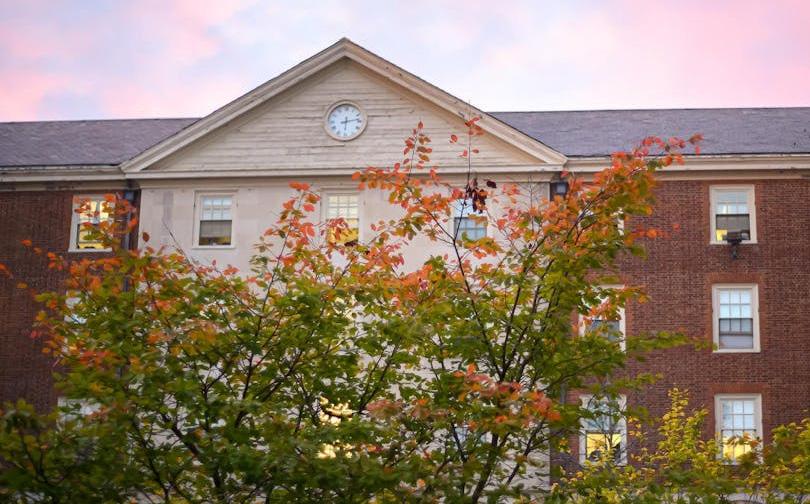
As orange and red hues brighten our campus quads, we are breaking sweaters out of the bottom of our dressers and preparing our best tour guide impersonations to welcome you — our loved ones — to College Hill.
Whether you’re stepping foot on campus for the first time or revisiting favorite spots discovered during Family Weekends of years past, The Herald is here to help you cultivate a perfect visit and give you a glimpse into why our campus is a home away from home.
WaterFire is usually a staple of these October weekends. This year, due to University budgetary constraints, the public art exhibition won’t be offered. But be sure to reference “Your guide to Family Weekend 2025” to fill the gap with events and activities hand-picked by Herald staff members. Grab a meal on Thayer Street, attend a lecture from a renowned scholar or simply spend time with each other, relaxing under the falling leaves that are starting to carpet our sidewalks.
For many, Family Weekend is the perfect antidote to the pangs of homesickness that come from packing up childhood bedrooms and moving into dorms. But when we can’t see our parents in person, a call home — which occurs far less frequent-
ly than most parents desire — gives us the energy to power through the week.
Yet, year by year, the ache for home subsides as Brown becomes a second one. And as any home does, College Hill has shaped us in ways that we often do not know until later. For new and old Brunonians alike, this weekend is an opportunity to welcome you into our second home — and for our families to meet our chosen families. We hope you love it here as much as we do.
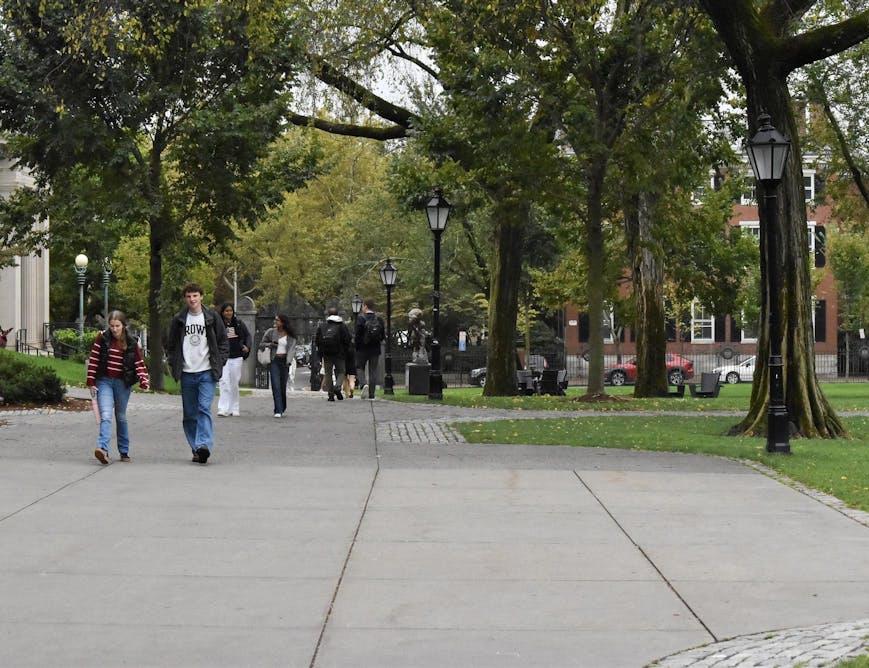
Amid a weekend chock-full of events and activities, we hope you take a brief pause from the bustle of campus life to share a meal, stroll across the Main Green and appreciate fleeting moments of togetherness. However brief these days may be, we hope you walk away with a sense of the people and places that make us feel like we belong — the community that turns College Hill into a home.
Editorial: Paxson’s rejection of the compact is a win for Brown and America
After two weeks of community input, faculty meetings and deliberation, President Christina Paxson P’19 P’MD’20 has rejected an invitation to join the federal government’s “Compact for Academic Excellence in Higher Education.” The decision avoids dire consequences for the future of the University and the United States as a whole. By choosing to uphold Brown’s institutional values of free speech and a commitment to unfettered academic inquiry, Paxson has taken steps to defend higher education and American democracy — for now.
Last week, the editorial page board argued that the compact unconstitutionally infringes upon Brown’s rights as an institution and provides little in exchange. Signing on to the compact, we believed, would disregard the merits of academic research and silence students and professors alike. Paxson, as she explained in her response to the federal government, agrees, stating that such a pact “would restrict academic freedom and undermine the autonomy of Brown’s governance, critically compromising our ability to fulfill our mission.”
The Brown community knew this. Our faculty wrote a letter to Paxson, urging her to turn down the White House’s proposal. Our alums organized a campaign to press Brown’s leaders to reject the compact. Our students and professors took to the streets and protested against the invasion of authoritarianism into our school. We are not surprised that the University has declined to join the compact — the decision represents the will of the Brown community. But Paxson’s decision, whether
intentional or not, will have an impact that reverberates beyond College Hill.
As Brown takes this critical step forward, other universities receiving the news will likely feel less isolated and can respond without fear of being put
versities to follow suit. Trump cannot deny equal treatment of universities if they all decide to follow MIT’s, and now Brown’s, path.
Still, the University must remain cautious. While Brown has turned down the compact, the
Today, we celebrate the courage that the University has shown in response to these attacks. Tomorrow, we must remain skeptical that they are far from over.
at a disadvantage when competing for funds. The Massachusetts Institute of Technology’s recent rejection of the proposal, along with the University’s matching decision, will make it easier for other uni-
Trump administration has made it clear that it is committed to expanding its hold on American higher education. Recently, the compact was unofficially extended to all U.S. universities, making it more
likely that Trump will set his sights on the University again in the future.
While the compact specifically targets universities, it is far from the government’s only attack on American institutions. In March, President Trump retaliated against America’s law firms, forcing them to shell out millions. In September, his influence hit our talk shows — “Jimmy Kimmel Live!” was temporarily taken off the air. This month, his campaign of retribution extended to major news outlets, resulting in severe restrictions on covering the Pentagon. Each individual, business or university that sheds its values by appeasing the administration feeds Trump’s ambition, further placing American democracy in danger. Yet, when institutions like Brown reject the president’s unprecedented demands, they protect not only their own individual interests, but also the very ideals that our nation was founded on. Today, we celebrate the courage that the University has shown in response to these attacks. Tomorrow, we must remain skeptical that they are far from over.
Editorials are written by The Herald’s editorial page board, and its views are separate from those of The Herald’s newsroom and the 135th Editorial Board, which leads the paper. A majority of the editorial page board voted in favor of this piece. Please send responses to this column to letters@browndailyherald.com and other opinions to opinions@browndailyherald.com.
Editors’ notes are written by The Herald’s 135th Editorial Board: Tom Li ’26, Ryan Doherty ’26, Owen Dahlkamp ’26, Julianna Chang ’26, Anisha Kumar ’26 and Yael Wellisch ’26.
HORATIO HAMILTON / HERALD
Berkwits ’29: Consent doesn’t have to be scary
“No” has been a full sentence my entire life. For almost as long as I can remember, I have undergone consent training. This education began informally in elementary school, where I learned bodily autonomy and the basic tenet of keeping one’s hands to themselves. In fifth grade, these discussions formalized when I started receiving sex education, which continued regularly throughout middle school and high school. When I arrived at Brown, I underwent three separate consent training workshops in the span of a month and a half. For students attending schools in liberal areas, consent is ever-present and intertwined with education. However, even though these educational programs are successful at delineating what consent is, they lack emphasis on the vulnerability and rejection that often come with asking for consent, instilling a fear and aversion toward new romantic encounters.
All consent trainings teach, with a number of dif-
ferent acronyms and metaphors, the same core principles of consent: It must be empathic and uninhibited, and if there is any doubt that is the case, consent has not been given. This education is not only pivotal — it actually works. Sex education for adolescents and youth has a role in reducing rates of sexual assault. Multiple states have ratified laws requiring university students to receive education that explains and promotes healthy relationship dynamics. Brown specifically has thriving and extensive student organizations surrounding sexual health, such as the Sexual Health Awareness Group and Sexual Health Advocacy through Peer Education. In other words, more and more people are learning who “wants tea” and that is an undeniable net good.
However, as this understanding of emphatic consent has become more widespread, a new issue has arisen: a general reluctance toward new romantic encounters for fear of not gaining consent. In
While sex education has made it clear what consent is and is not, it fails to touch on the discomfort that comes with trying — and sometimes failing — to receive it. “ “
my adolescent years, as well as in my first months at Brown, many have described a perceived barrier in approaching a romantic interest. As the harms of catcalling, “locker room talk” and casual sexual harassment have become more widely discussed, a fear — especially for straight men — of approaching possible love-interests has been instated. This is due, in part, to the rising popularity of dating apps and the social-stunting effects of the COVID-19 pandemic in our generation. However, I believe one key factor we have overlooked is consent training’s frequent conflation of rejection with crossing a personal boundary.
When searching consent training videos and articles online, they focus on “the importance of consent,” “respecting boundaries” and, more broadly, what consent even is. While sex education has made it clear what consent is and is not, it fails to touch on the discomfort that comes with trying — and sometimes failing — to receive it. When approaching someone, the risk of not receiving an emphatic response has become fatal. Specifically in heterosexual encounters, it is oftentimes not only shameful, but also perilous, to not receive consent, and thus individuals are too frightened to even try.
If we clarify that the act of not receiving consent is neither reprehensible nor immoral, despite the
fact that pushing that boundary is, then we can encourage individuals to put themselves out into the world without inhibition. Rejection is natural and human. We should feel empowered not only to say “no,” but also to hear it. Receiving a “no” is neither indecent nor a personal overstep, but a part of life. And, it builds character.
While I acknowledge that this is much easier to write than to do, I urge us all to take small steps to risk the rejection that is inevitable to an adventurous and fulfilling life. Talk to people at parties, express interest, share compliments — there is a respectful way to carry these actions out, even if the end result is denial. As we continue to teach comprehensive sex education and consent training to students of all ages, our next step is to emphasize not only what consent looks like, but also the oftentimes vulnerable steps involved in obtaining it. To teach the principle of sharing lust, affection and praise, even with no expectation of reciprocity, can only make our world more loving.
Talia Berkwits ’29 can be reached at talia_berkwits@ brown.edu. Please send responses to this column to letters@browndailyherald.com and other opinions to opinions@browndailyherald.com.


ELLIS ROUGEOU / HERALD
FAMILY WEEKEND
Several students spoke about what motivates them to call home
BY TEDDY FISHER SENIOR STAFF WRITER
For some college students, calling home can be a chore. For others, it’s a long-awaited moment of respite. But regardless of how Brown students feel about making the call,
most do it frequently anyway: One in five Brown undergraduates call their parents or guardians daily, and over 80% call home more than once a week, The Herald’s Fall 2025 poll shows.
Only 4% of students call home once a month or less, and 0.5% — a mere seven students — said they never call home.
The Herald spoke with several students about what motivates them to call home.
Aryan Narayan ’26 said he typically calls his parents once or twice per week. His last
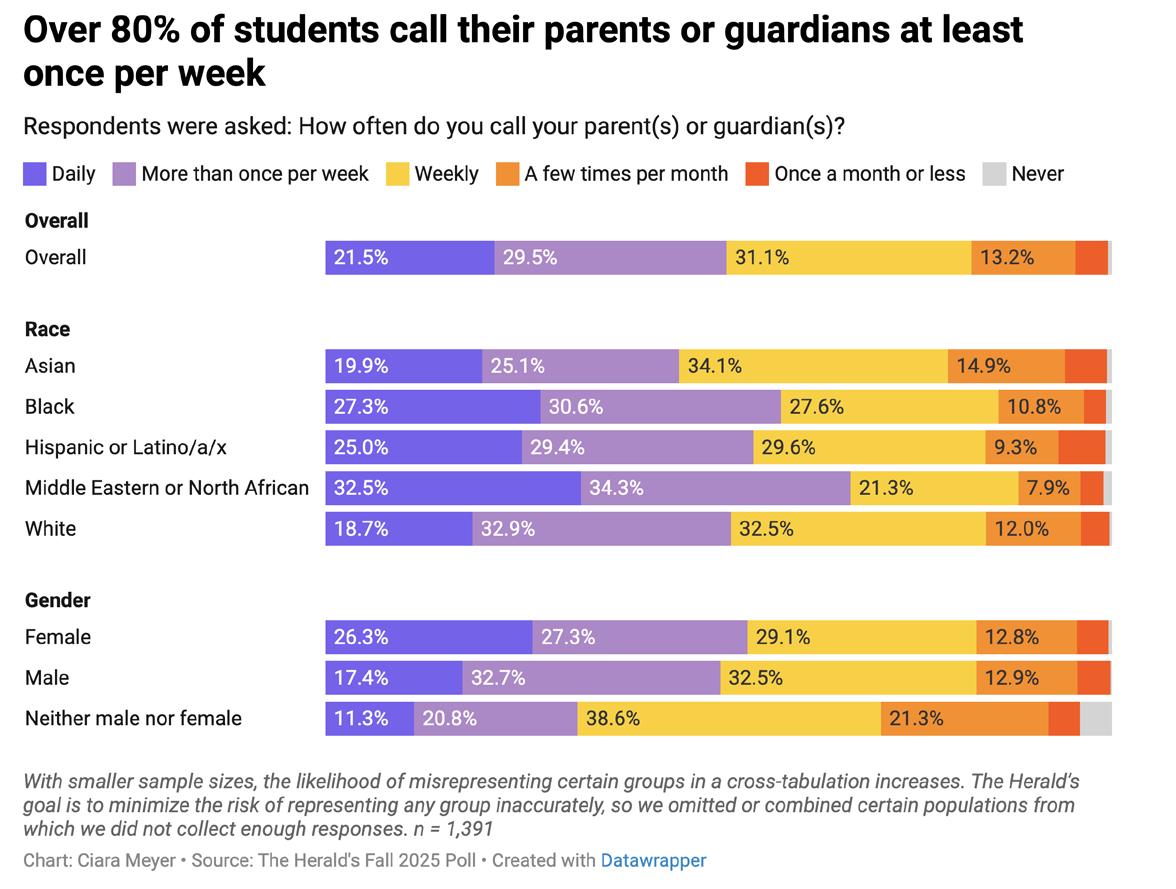


call home was just two days ago when he wished his dad a happy birthday.
Similarly, Nash Riebe ’27 calls his parents approximately two to three times per week. “I’d like to call home more,” he wrote in a message to The Herald, but it is especially difficult due to his family members’ early 9 p.m. bedtime.
When he does get the chance to call home, Riebe’s parents generally ask him questions about school or other goings-on in his daily life. “I also like to hear updates on my hometown (and) dog,” Riebe said.
“I rarely have a specific agenda when I call,” he added. “It’s just nice to hear from my family.”
Like Riebe, Caleb Schultz ’26 often calls home just to catch up and “stay connected” with his family. On occasion, he picks up the phone in search of advice, like “how to email a professor or start a new hobby,” he wrote in a message to The Herald.
But for students like Sophia Janssens ’27, whose parents live farther away from campus, calling home frequently helps make the distance feel less significant. She typically calls her family at least once a day.
Janssens wrote that she and her family talk about everything from family news to daily moments. “My parents tend to know

about all of the things going on in my life and I know what is going on at home,” she wrote in a message to The Herald.
Jimmy Chen ’28 said he calls his parents most weekends, roughly one to two times per week. “I just feel like I should check in with them,” he told The Herald. Although his parents would probably want him to call more often, Chen saw benefits in fostering independence as he entered adulthood.
Although Carolyn Wu ’28 only calls her parents one to two times per month, she does text them frequently, she told The
UNIVERSITY NEWS
Herald. Calling often isn’t for everyone, she explained. “It’s your own personal relationship with your parents.”
Narayan said that while he has not always been the best at staying in touch with his family, he believes that remaining connected is important. “Even just maintaining text conversation is something I’ve found impactful and easy,” he said.
This article originally appeared online at browndailyherald.com on Oct. 16, 2025.
Your guide to Family Weekend 2025
Ahead of the festivities, The Herald compiled the must-dos and must-sees
BY ELENA JIANG UNIVERSITY NEWS EDITOR
As the skies clear and fall leaves sprinkle College Hill’s streets, campus is perfectly staged to welcome loved ones for Family Weekend 2025. With programming beginning on Friday, an eventful three days await families eager to experience what it feels like to be a student at Brown.
Ahead of the festivities, The Herald compiled the must-dos and must-sees for the adventurous family.
On Friday, begin your journey at the heart of campus — the Main Green. Catch the buzz of students getting out of classes for the week as you relax on the grass with some furry companions from noon to 2 p.m.
As you were strolling around the Main Green, you might have been able to spot a copper-colored object in the distance, nestled in front of Manning Hall. Learn more about the sculpture, which recognizes the University’s 18th-century connections to slavery, and other important memorials and facets of campus on the Family Weekend Slavery and Legacy Walking Tour.



In the mood for more history? If you were able to snag a ticket before they sold out, be sure to head to Salomon Center from 6 p.m. to 7:30 p.m. for a conversation with award-winning documentary filmmaker Ken Burns, where you’ll also catch an exclusive preview of his upcoming film, “The American Revolution.”
End your evening in true college-student fashion: lost in the audience of an a capella concert. For some Mickey Mouse magic, there’s Disney A Capella from 9 p.m. to 10 p.m. at the Metcalf Research Building. Or, at that same time, return to Salomon Center to catch Brown’s longest-running a capella group, the Chattertocks.
Kick off Saturday bright and early with a hearty breakfast buffet in Sayles Hall at 8 a.m. Then, burn some of that energy through yoga on the Quiet Green, a fullbody cardio jam session at the Kasper Multipurpose Room or a scavenger hunt that will have you running from one end of campus to another.
For a glimpse into Brown’s vibrant research scene, attend the Faculty Research Forum from 11:30 a.m. to 12:30 p.m. in the Salomon Center, where faculty panelists spanning the sciences and the humanities will walk you through the undergraduate research experience. At noon, take a brain break and show up for the Bears as the football team takes on Princeton in our home stadium.
At 5 p.m., drop what you’re doing for an event you won’t want to miss: a conversation with goop founder and Oscar-winning actress Gwyneth Paltrow P’28. Unfortunately, if you haven’t yet secured a ticket, the event is sold out.
For dinner, consider venturing off campus. Explore Thayer Street’s bustling selection of student favorites, get lost in the hubbub of a Saturday evening downtown or wander the charming, eclectic neighborhood of Fox Point.
And, if you couldn’t get enough a cappella from the previous night, the Brown Derbies perform in Salomon Center at 7:30 p.m., the Alef Beats perform at 8 p.m. at Brown-RISD Hillel and the Jabberwocks come on at 9 p.m. back in Salomon. Ease into Sunday morning with a stroll down Wickenden Street, slipping into one of the many brunch spots and coffee shops. Catch the field hockey team’s match against Bryan at noon, go on a public art tour at 1 p.m. or simply soak in the beautiful day — you’ll want to savor every moment before you go.
ISABELA GUILLEN / HERALD









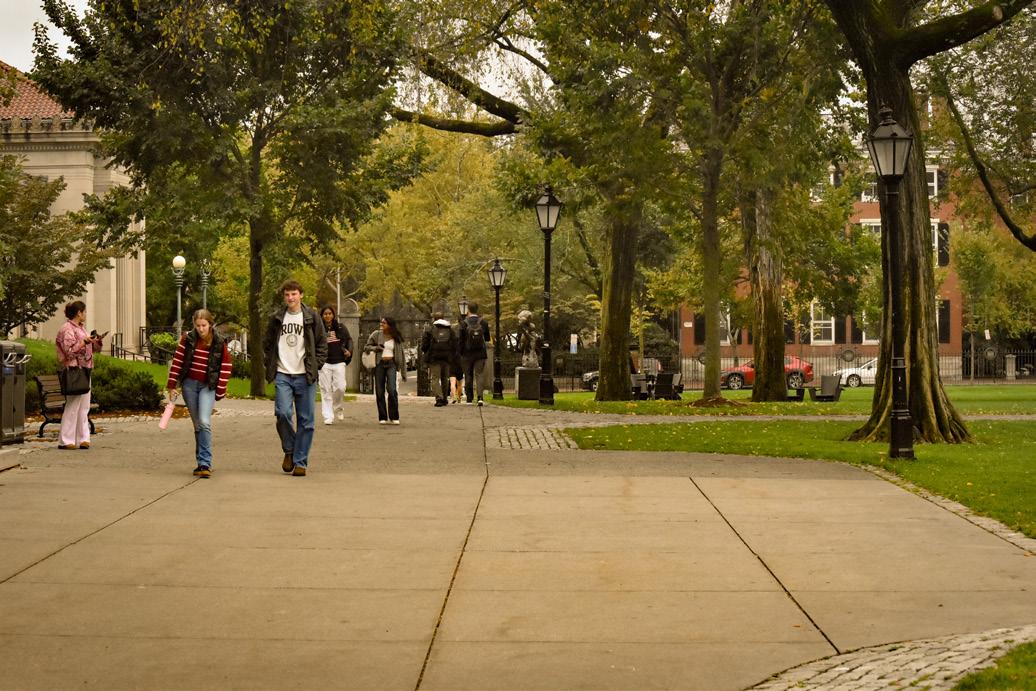
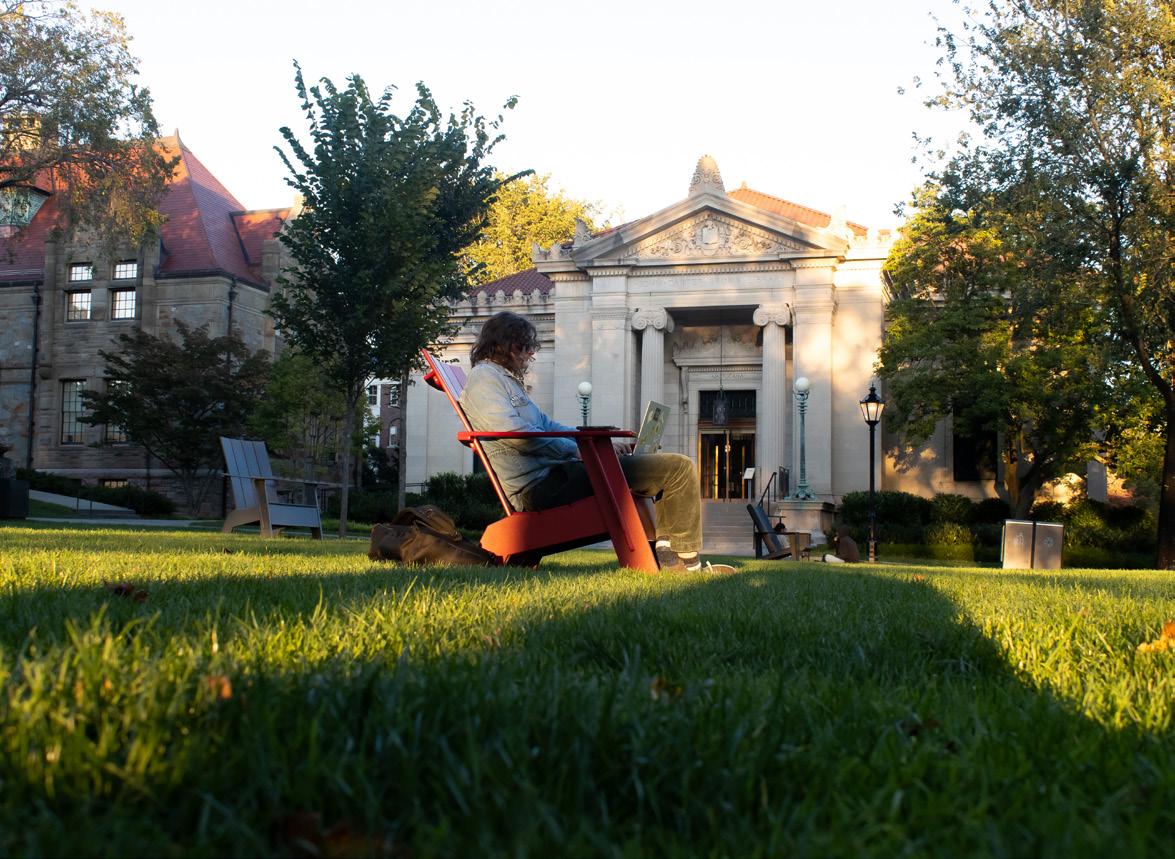
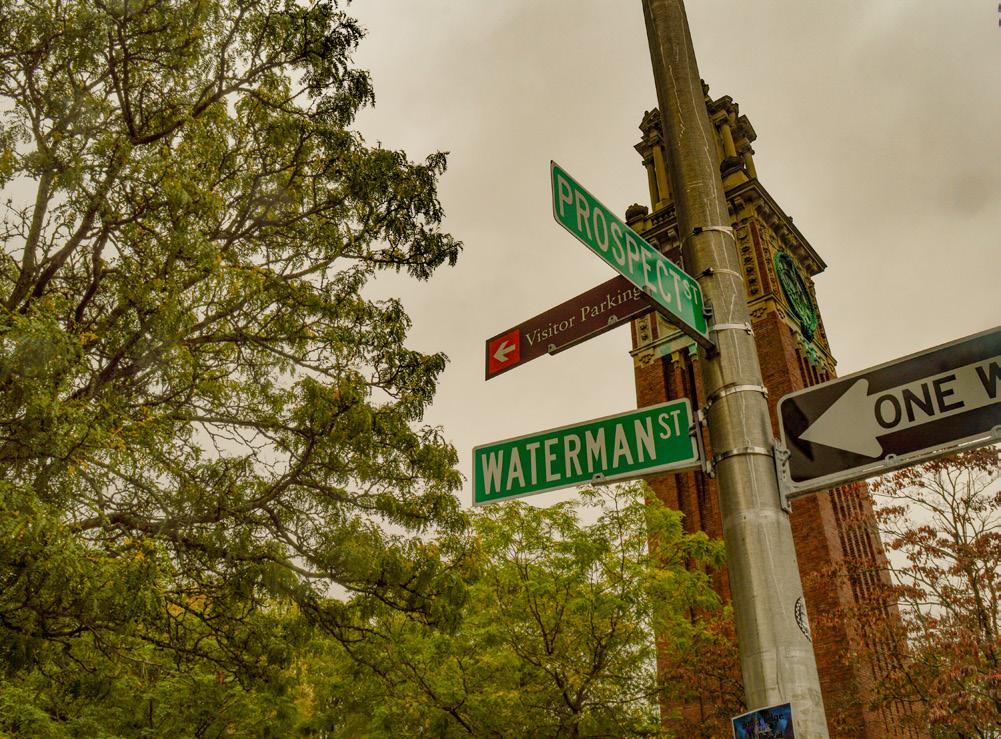





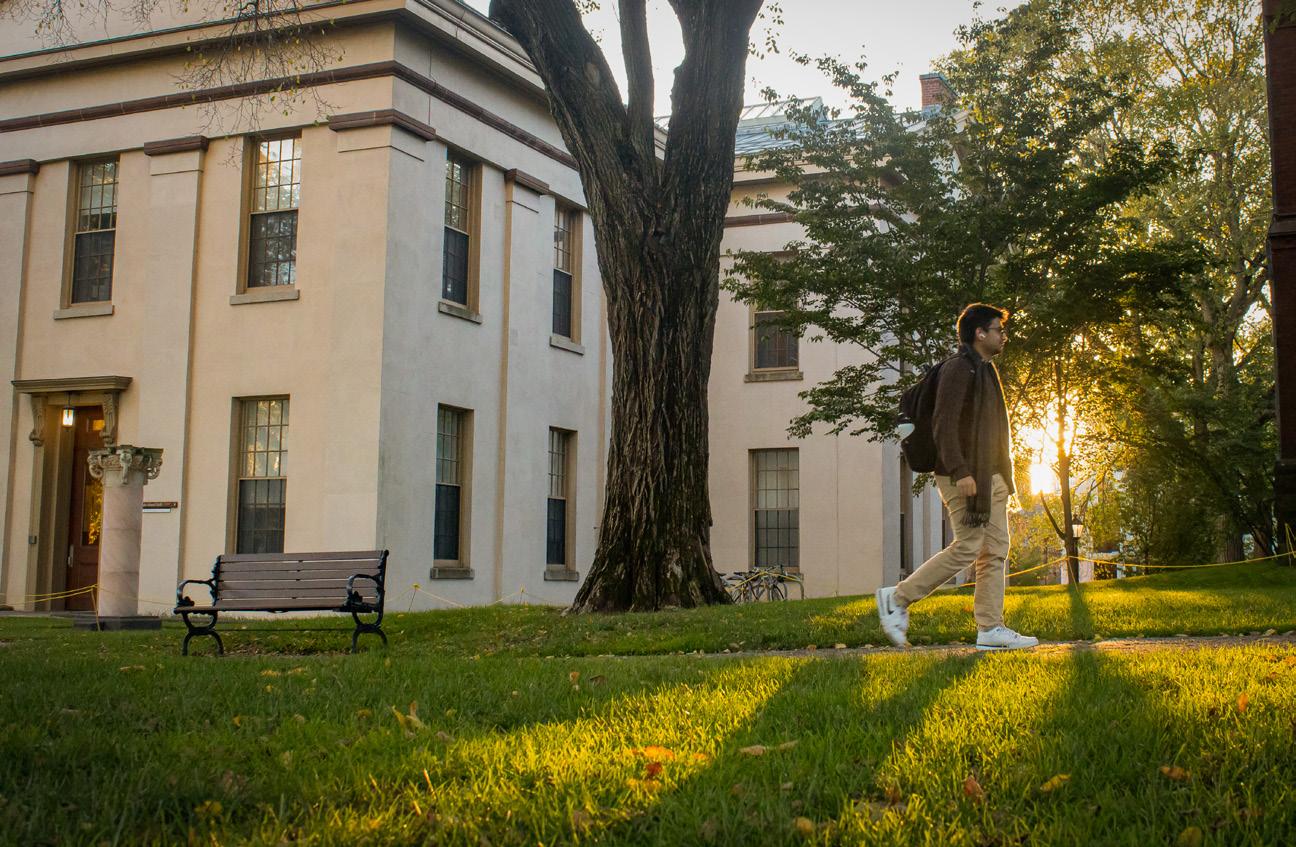


MAX ROBINSON
DOLMA AROW KAIA YALAMANCHILI PHOEBE GRACE ASEOCHE
ALAYNA CHEN
KAIA YALAMANCHILI
SELINA KAO MAX ROBINSON
MARAT BASARIA
SOPHIA LENG
KENNA LEE KAIA YALAMANCHILI
BOMI OKIMOTO ELLA LE
HORATIO HAMILTON
MARAT BASARIA
BOMI OKIMOTO SIDNEY LIN SIDNEY LIN SOPHIA LENG
ARTS & CULTURE
FEATURE
From the classroom to content creation: Brown’s social media stars
The Herald spoke with five students making waves on social media
BY SUMMER SHI SENIOR STAFF WRITER
While some students use breaks between classes to grab a snack or take a nap, others set up tripods and hit record.
Many of Brown’s content creators have found striking success in building a community of thousands online, whether centered around daily life or entrepreneurship or art. The Herald spoke with five College Hill influencers to learn what they try to bring to the internet.

Rosie Volpintesta ’27: Track and TikTok star
Rosie Volpintesta ’27, a track and field athlete, believes social media isn’t about perfection — it’s about honesty. She began posting on TikTok to fill a gap she noticed among fellow influencer athletes.
“I wasn’t seeing any representation … that really spoke to me,” she told The Herald. “I want to show the real highs and lows of being a student athlete.”
By posting videos that capture her training and her daily student life, Volpintesta has amassed more than 12,000 TikTok followers. Her audience, she said, is largely made up of female athletes between the ages of 16 and 21 who come to her page not for highlight reels, but for reassurance.
“You just see these people who blow up, and they’re beautiful and also incredible at their sport, and they never have a bad day,” she said. “But it’s not like that. It’s never like that.”
For Volpintesta, showing the moments that don’t make it to the podium is part of the message. On her page, she aims “to inspire a lot of confidence for female athletes” while also showing how she pushes through the occasional “shitty day,” she said.
The attention that came with her social media popularity “used to freak (her) out,” she said. But now, Volpintesta feels much more at ease, even though she can’t attend a track meet without encountering multiple people who recognize her.
Volpintesta takes pride in the community she’s built. At least once a day, she receives a message from “a young girl asking for advice on recruiting or body confidence or nutrition or just track in general,” she said.
“And I always respond … because that’s what little Rosie would want,” she added.
Janya Kaur ’26: Startups and self-empowerment
Creating content is something Janya Kaur ’26 has dreamed about since she was a

teenager.
“I have letters from my 14-year-old self asking me to start something,” she said. “I always wanted to do it, but I was either too scared or too busy.”
It wasn’t until last year — after a newfound focus on her physical and mental health — that she finally felt ready to share her journey online.
“Creating content,” she said, “became a way to celebrate that growth.”
That leap of faith eventually grew into a platform of over 75,000 subscribers on YouTube and over 36,000 on Instagram. In short- and long-form videos, Kaur documents everything from college life to entrepreneurship and faith.
“I used to think I needed to find a niche,” she said. “But people are so dynamic. Now I just post about all the different parts of me — school, faith, my startup — and I think people follow for my personality, not just one thing.”
Kaur approaches her content with intention and flexibility.
“I’m a full-time student, and I’m building a business, so content is third on the list” of priorities, Kaur said. “I post when I feel inspired, but I still plan around big life events.”
Kaur’s online presence has opened unexpected doors for her startup, Melaa, an Airbnb-style app for “idle cafés after hours.”
“Because of social media, a Stanford (University) class reached out to help me with my business,” she said. “Now, I have a full team working with me because they saw my content.”
Ultimately, Kaur hopes that her videos impart a single message: self-empowerment through self-awareness.
“The biggest shift in my life was moving from a victim mentality to a hero mindset,” she said. “When you take responsibility for everything in your life, things change. That’s what I want people to take away from my content — because if I can do it, anyone can.”
Gia Shin ’27: Content and connections
For Gia Shin ’27, a contributing writer for The Herald, social media has always been about connection and impact. She began posting when she was in high school in hopes of reaching ambitious peers with whom she could share lessons from her own journey.
“I built a personal brand around helping other people, especially people younger than me, to achieve their goals through LinkedIn and through networking and building their own passions,” Shin told The Herald.
As her platform grew, Shin began receiving professional opportunities, including messages from recruiters, unexpected

mentorship and brand deals, she said. Her partnerships with companies like LinkedIn and DoorDash have helped her work toward financial independence.
“Social posting has allowed me to pay off my loans or make steps towards retiring my parents,” she said. “I’ve realized through content creation that there’s not only one path to reaching success or to reaching financial freedom.”
Her content, which she shares on LinkedIn and TikTok, focuses on transparency and reflection. Shin has over 11,000 followers on LinkedIn and over 6,000 on TikTok. Creating transparent content, she

said, comes from her desire to make ambition feel attainable.
“I love investing into younger people, one on one … to be a sort of role model for these people, but also do it in a relatable way,” Shin said. Messages from students who’ve found internships, transferred schools or built their networks through her advice “really, really (make her) day,” she said.
Even as her content evolves, Shin has one goal in mind: “Through every walk of my life, I’m kind of just trying to hold the door open for the people behind me,” she said.
Desen Celik ’29: Posting for productivity Desen Celik ’29 ventured into content creation when her habit of watching study videos inspired her to try filming her own study sessions. Now, she has 6,400 followers on TikTok and a new productivity strategy: Recording herself meant she couldn’t get distracted by her phone.
Celik’s content has since evolved to blend study vlogs with college application advice, offering guidance for international students navigating the U.S. admissions process. As an international student from Turkey, Celik wanted to create videos where she could share her “knowledge with others in Turkey who want to go through this opportunity and basically help as much as I can.”

Celik said her workflow “depends on what I’m creating at that moment.” She switches between scripted informational videos and spontaneous day-in-the-life vlogs.
While maintaining a consistent posting schedule can be tough, Celik’s motivation comes from the community she’s built on her social media.
“People message me about how exams work or how the application process works, and I try to reply to everyone,” Celik said.
Celik’s advice for anyone hesitant to start creating content is simple: “Don’t push yourself too hard to get famous. This should come naturally. If you start and keep it up for 21 days, it becomes a habit.”
Harris Earls ’30: Surrealism and satire For Harris Earls ’30, a Brown-RISD dual degree student, sharing his art was nothing new.
“Everyone in my family is an artist,” he said. “Posting online just felt like a normal part of that process. My dad’s a designer, my brother’s in social media, so sharing what I was making never felt like a big decision.”
Earls’s Instagram account, which boasts 24,500 followers, showcases his large-scale oil paintings in short-form videos. For Earls, painting is a way to translate the intangible — “a mood, a misunderstanding or a weirdly beautiful moment”

— into color and form, he said.
Relationships, “both platonic and romantic,” are often at the heart of Earls’s painting, he said.
These relationships “end up superimposed onto the canvas whether I want them to be or not,” he said. “Every piece carries a bit of what I’m feeling, my mental state at the time.”
Often, Earls finds that the content he puts the least thought into sees the most success on social media.
“There’s something kind of funny about how seriously everyone takes the internet,” he said. “I like letting that irony sit in the work.”
When asked to sum up his artistic identity, Earls didn’t hesitate: “Surreal, satirical, sincere.” Recently, he has embraced “pieces that feel dreamlike and slightly disoriented,” he said.
While platforms like TikTok and Instagram can push artists to “make work faster, and honestly, sometimes a little shittier,” Earls doesn’t let algorithms dictate meaning. Instead, he treats the constant churn of social media as part of the rhythm of sharing his work.
“It’s cathartic in a weird way, watching the work exist inside that cycle,” he said. “The most rewarding part is staying consistent through it, showing up no matter the circumstances.”
COURTESY OF ROSIE VOLPINTESTA ’27
COURTESY OF JANYA KAUR ’26
COURTESY OF GIA SHIN ’27
COURTESY OF DESEN CELIK ’29
COURTESY OF HARRIS EARLS ’30
ANNEKE BLUE / HERALD
REVIEW
‘Midnight Sun’ is the shining light of Zara Larsson’s discography
Singer’s fifth album distinguishes itself from and fits in with former work
BY CAMILLA RODRIGUEZ CONTRIBUTING WRITER
On Sept. 26, Swedish singer Zara Larsson released “Midnight Sun,” her fifth studio album. Marked by its bright, Malibu Barbie aesthetic, the album is meant to evoke the feeling of a Swedish summer, as evidenced by its title, which references the long periods of daylight Sweden experiences in the summer.
“Midnight Sun,” which comes 17 years into Larsson’s career, is markedly more personal than her previous work. Produced and written by Margo XS, Zhone, Helena Gao and longtime collaborator MNEK, the album aligns closely with Larsson’s typical Euro-pop sound while incorporating deeper lyricism and aspects of electronic music. Larsson — best known for her 2015 single “Lush Life” and “Symphony,” her 2017 collaboration with Clean Bandit — stated that “Midnight Sun” “just feels like me — knowing myself, this album is just really, really me. And also, no one can do me the way I can.”
The album’s first and eponymous track, “Midnight Sun,” starts off the project with an upbeat, electro-pop energy that highlights Larsson’s strong vocals, a key feature of the album. “Blue Moon” keeps the same upbeat tone and production of the previous song, while “Saturn’s Return” — the penultimate track — continues the pattern
of celestial-themed titles.
But “Saturn’s Return” is a much more serious and introspective track, both lyrically and production-wise. Larsson uses the track to reflect on her past mistakes and accept the uncertainty of the future.
of Celebrity Big Brother UK. Pollard specially re-recorded a portion of her quote — “beautiful, fly, hot and sexy” — for Larsson’s song. Despite the fun, hedonistic energy of the track, Larsson sends an impactful message in the outro of “Hot
more similar to Larsson’s hits from the late 2010s — they still have a clear, dynamic sound to them, making up for their antiquated feel.
“Puss Puss,” which translates to “Kiss Kiss” in Swedish, is the final track on the
“Midnight Sun” — it’s about hanging up on a phone call — it leaves a bit more to be desired. Compared to other tracks on the album, “Puss Puss” is anticlimactic, although ethereal and sanguine. One would expect that on such a well-produced album, where each track seems to build upon the spective — like in “The Ambition” — or fully upbeat — like in “Midnight Sun” —
Despite its minor flaws, “Midnight Sun” is undoubtedly a turning point in Larsson’s career. After almost two decades in the music industry, she has harnessed her strong vocals, Swedish cultural heritage and introspective songwriting to create her
This article originally appeared online at browndailyherald.com on Oct. 13,

Black Music Lab allows musicians, community members to explore artistry
The Black Music Lab hosts experimental concerts for the public
BY RAGHAV RAMGOPAL CONTRIBUTING WRITER
Since its creation three years ago, the Black Music Lab has worked to establish itself as an experimental space at the forefront of Black musical expression.
The project was ideated in 2019 by Assistant Professor of Music Enongo Lumumba-Kasongo and Charrise Barron, a former member of the University’s music faculty who is now an assistant professor of music at Harvard.
The two noticed that scholars of Black music were spread across different University departments with minimal opportunities to connect and collaborate. Lumumba-Kasongo also noted a lack of advertising surrounding Black artists’ musical events on campus and in Providence.
Lumumba-Kasongo and Barron hoped to combat these issues by creating the Black Music Lab, which organizes artist visits and provides resources for Black student musicians.
“I wanted to think about a hub that could support, but also just signal-boost, all of the amazing things that are happening on and off campus” in the Black music space, Lumumba-Kasongo said in an interview with The Herald.
Over the lab’s first few years, creators focused on research and outreach, Lumumba-Kasongo said. Aiming to understand what the broader Brown and Providence

communities would want from the Black Music Lab, she met frequently with community leaders and students.
But recently, lab efforts have shifted toward helping artists experiment and discover their true creative selves. Lumumba-Kasongo said she has accomplished this goal through open artist workshop visits hosted by Black musicians and artists of all backgrounds.
At these events, the artists perform a setlist for the audience before presenting
new, experimental work for listeners in a raw setting. Lumumba-Kasongo believes these sessions are helpful not only for the artists themselves, but also for audience members interested in learning more about the music creation process.
Those in the audience say this format has been extremely effective.
“I think it’s a great opportunity that Brown offers in the (Black) Music Lab to not only experience performance, but then to actually engage with the musicians to
learn more about their processes,” said Jasmine Sykes-Kunk, head of research services at the John Hay Library, after attending a Black Music Lab event with the artist L’Rain on Oct. 4.
In particular, Sykes-Kunk enjoys the experimental nature of the lab’s events.
The flow of new music that has not yet been shared publicly creates a true lab-feel at events, she explained.
Lumumba-Kasongo hopes to continue providing these transformative experiences
to audiences and Black artists alike.
“Because of the success of the project and the community support, we’ve been able to receive some funding again this year” from the Brown Arts Institute, Lumumba-Kasongo said. “My hope is that (the Black Music Lab) continues to stay agile and responsive to the needs of the community.”
This article originally appeared online at browndailyherald.com on Oct. 15, 2025.
“Midnight Sun,” which comes 17 years into Larsson’s career, is markedly more personal than her previous work.
COURTESY OF CHARLOTTE RUTHERFORD
VIA SONY MUSIC CANADA
COURTESY OF YORK MGBEJUME VIA BROWN ARTS INSTITUTE
L’Rain performing at a Black Music Lab Event on October 4.
PUBLIC HEALTH
Most parents overestimate how much sleep their children get, Brown study finds
The new study explores subjective and objective measures of sleep
BY AMRITA RAJPAL CONTRIBUTING WRITER
The American Academy of Sleep Medicine recommends that children between the ages of six and 12 years old should sleep around nine to 12 hours a night. Most parents believe their children fall squarely within that range. But a study conducted by Brown’s School of Public Health found otherwise.
The study is part of the larger parent study G-SPACE, which is looking to examine the influence of green spaces on mental health, sleep and physical activity among children, according to Associate Professor of Behavioral and Social Sciences Diana Grigsby-Toussaint.
Researchers also examined the differences between objective and subjective, parent-reported measures of sleep in children, with a particular focus on the comparison between Latino and non-Latino groups.
The study consisted of two critical pieces — a subjective measure, supplied by the parent surveys, and an objective measure, drawn from accelerometers, Grigsby-Toussaint said.
Participants wore an accelerometer — a device that tracks sleep through movement detection — for seven days, during which parents completed morning and nightly surveys. The surveys included questions from the Children’s Sleep Habits Questionnaire, and parents were asked to keep sleep diaries detailing how much they believed their child slept that night. After seven days, the devices were retrieved from the
TECHNOLOGY

participants.
Results indicated a large discrepancy in the amount of sleep parents reported and what the accelerometer tracked, according to Aliana Rodriguez Acevedo GS, project coordinator and first author on the study.
“Eighty-three percent of parents believed their children were meeting national sleep guidelines, but only 14% actually were,” Acevedo said in an interview with The Herald. “This was certainly shocking, but it is what we hypothesized.”
Significant differences were seen in parent-reported sleep guidelines between the Latino and non-Latino subgroups, with 88.9% of Latino parents reporting that their child slept the adequate amount, compared to 78.9% of non-Latino parents, according to the study. A lower share of Latino children also met the sleep guidelines com-
pared to non-Latino children.
Currently, “the literature looking at Latino children and sleep is pretty limited, especially using objective measures of sleep,” Acevedo added.
Many children who have trouble sleeping may be iron-deficient or have low ferritin levels, which can lead to restlessness, poor sleep quality and difficulty falling or staying asleep, according to Co-Director of Hasbro Children’s Hospital Sleep Medicine Program Richard Millman.
“Good sleep is important for kids and having things like a consistent bedtime routine, seeing green space throughout the day and being physically active are essential for health, especially for kids,” Grigsby-Toussaint said.
Millman said there are “always discrepancies between what the parent
thinks and what the kid thinks” and “between subjective and objective measurements.”
But the study added that actigraphy-derived data, such as that calculated by the accelerometers, is less accurate.
“Total sleep time and sleep efficiency tend to be overestimated in certain situations, like people who are in bed and haven’t fallen asleep yet,” Millman added.
“Sleep latency,” the time it takes to fall asleep, and “wake after sleep onset,” or how long someone is awake during the night, are not accurately measured by accelerometers. This is due to the difficulty of distinguishing between sleep and quiet restfulness, according to the study.
For future studies, Millman thinks parents could film their children on a phone or baby monitor to see if they are moving,
snoring or showing signs of sleep apnea for a more detailed look at sleep quality.
“The question is, ‘Can you trust the actigraphy data without knowing what is actually going on sleep quality-wise, in regards to this phenomenon of a restless sleeper?’” Millman said.
Acevedo added that “it would be interesting to see what environmental factors, if any, play a role in the sleep outcomes that we are seeing.”
According to Grigsby-Toussaint, the research team plans to ask more in-depth questions of parents about their child’s sleep in the future, instead of using the metric-based CSHQ.
This article originally appeared online at browndailyherald.com on Oct. 15, 2025.
Brown engineers crack the code to stronger flexible electronics
Researchers overturned decades of assumptions about flexible technology
BY SUHANI GARG STAFF WRITER
The team, led by Professor of Engineering Nitin Padture, found that the plastic layers at the base of flexible devices like foldable phones and wearable sensors can develop microscopic cracks when bent repeatedly. Their findings, published in npj Flexible Electronics, could help engineers design longer-lasting bendable technology.
The researchers were initially studying perovskite solar cells — a type of ultra-thin, flexible solar technology — when they noticed something unexpected. Using a focused ion beam to examine samples that had faced repeated bending, postdoctoral researcher and first author Anush Ranka found that the soft plastic base layer beneath the device’s brittle, ceramic-like coating was cracking.
This observation challenged the assumption held since the 1970s that the soft plastic layer is tough enough to deform but not tear, and that it was likely not the root of material failure.
“People are measuring the toughness of the plastic as 10,000 times tougher than a ceramic coating of a film,” Padture said, adding that this assumption was predicted by models from the 1970s.

Associate Professor of Engineering Haneesh Kesari, a co-author on the study, added that before Padture’s work, he had not seen “any experimental evidence that this is exactly how cracks in materials … behave.”
The team was aided by the expertise of Kesari, a theorist who studies how materials deform, as they modeled the mechanical stresses that occur when flexible devices bend. Their analysis showed that a stiffness
mismatch between the brittle top layer and the softer plastic base amplifies strain on the plastic layer, also called the substrate, and creates cracks
“Without that understanding, you would not have been able to figure out a way to mitigate the cracking,” Padture said.
To fix this problem, the researchers inserted a thin interlayer — a flexible film that sits between the two materials. This extra layer absorbs the stress and stops
GINA BAE / HERALD
the cracks from spreading to the bottom polymer layer. In lab tests, devices with the interlayer were able to maintain stable electrical performance following more than 10,000 bending cycles — a property not previously seen without the interlayer.
“This kind of synergy between theory and experiment doesn’t happen every day,” Kesari said. “We identified the problem, proved why it happens and found a way to prevent it.
This discovery has far-reaching implications for flexible electronics, a growing field that includes foldable smartphones, wearable biomedical sensors and bendable solar panels.
“This is a small material fix with a big real-world payoff,” Ranka said in an email to The Herald. “Anyone who uses flexible devices, now or in the future, could benefit from a longer-lasting product.”
The more a device can change to “shape to its natural environment, the more functionality you can pull out from it,” Kesari said.
Wearable inertial brain sensors, which are used to improve the treatment of traumatic brain injury, is one possible application of the new technology. Engineers may even be able to integrate electronics into gloves or even skin, allowing observers to detect “what’s happening in the head,” Kesari said.
By preventing substrate layer cracks, the flexible interlayer method could make these technologies last longer and perform more reliably.
This study was conducted in collaboration with researchers from Yale and the University of Rome Tor Vergata. The team has since filed a patent for their interlayer design and hopes that the discovery will guide the next generation of flexible electronic materials.
SOPHIA BASALDUA / HERALD
UNIVERSITY NEWS



REACTIONS FROM PAGE 1
‘The only ethical decision’: A sense of pride in rejecting the compact For Abraham Carrillo-Galindo ’28, the University’s rejection of the compact “was definitely one of those moments where I felt proud to come to this school,” he added.
Carrillo-Galindo hopes Brown can “keep that ball rolling” and continue “standing up” to the Trump administration to protect academic freedom.
Emily Farmer ’28 said the decision was “essential to the protection of free speech” on college campuses, safeguarding the ability of students, faculty and staff to “express their political opinions.”
If signed, the compact would have forced the University to change or abolish “institutional units that purposefully punish, belittle and even spark violence against conservative ideas,” the compact reads.
In her letter, Paxson expressed concern that the compact’s provisions would “restrict academic freedom and undermine the autonomy of Brown’s governance, critically compromising our ability to fulfill our mission,” she wrote.
Professor of Political Science Corey Brettschneider was “proud to be a member of the Brown faculty and to see our institution reject the offer and stand firmly for academic freedom,” he wrote in an email to The Herald.
The compact, he believed, would have forced the University to “trade academic freedom” for a financial edge.
Like Brettschneider, Timmons Roberts, a professor of environmental studies, sociology and environment and society, also expressed pride in the University’s response. Roberts called the compact “unconstitutional” for “demanding the abridgment of our freedom of speech in exchange for unclear benefits.”
Andy van Dam, professor of computer science and technology and education, wrote in an email to The Herald that he approved of the decision, adding that he believed “the case for rejection” of the compact was “compellingly argued” in Paxson’s letter.
He added that Brown’s resolution with the federal government over the summer “clearly shows we’re not having a knee-jerk reaction to government concerns and demands.”
For Thangam Ravindranathan, professor of French and Francophone studies and treasurer of Brown’s American Association of University Professors chapter, the decision indicates that Brown “cannot in any circumstances be made to subordinate our larger mission to a partisan ideological agenda imposed by the government.”
Sarah Thomas, chair of the Department of Hispanic Studies and a member of Brown AAUP’s executive board, was “very relieved” by the decision. She believes that the compact would have “catastrophically compromised the University's foundational commitment to academic freedom.”
‘We’re over the moon’: Activists see this as a win for grassroots advocacy In interviews with The Herald, the leaders of activist groups and Brown’s graduate student labor union characterized Paxson’s decision as an unequivocal victory for their movements.
“We’re over the moon that (Paxson) rejected this compact,” said Simon Aron ’28, a co-founder of Brown Rise Up. The group was behind the Oct. 9 rally calling on Paxson to reject the compact.
In a letter to Trump administration officials, Paxson wrote that her “decision to decline participation in the Compact aligns with the views of the vast majority of Brown stakeholders.”
“We were hopeful that by asking for that feedback, it meant that she was going to listen to it,” Corn said. “I think her response today shows that she did.”
For Michael Ziegler GS, executive director of the union encompassing many Brown student workers and employees, Paxson’s letter to Trump administration officials rejecting the compact was “reflective of the thousands of messages that we helped to have sent to President Paxson” during a coordinated campaign designed to put public pressure on University Hall.
Hours before Paxson announced Brown’s rejection of the compact, Daniel Souweine ’01 — an organizer with Brown Stand Strong — personally delivered a petition opposing the compact and signed by 2,000 alums to Paxson’s chief of staff.
“I was really happy to see that the president listened to her community,” Souweine said, describing the news as “a moment for celebration.”
“Student organizing and student pressure works,” Aron said. “We have to keep it up.”
‘A long fight ahead’: Retaliation looms large Brian Lander, an associate professor of history and environment and society and the secretary of Brown AAUP, wrote in an email to The Herald that he was “delighted” to learn about the decision, but expressed concern about any actions that the federal government may take in response to Paxson’s rejection.
“There is still a long fight ahead, but I hope Brown will continue to be a leader in saying ‘no’ to executive overreach and refusing to compromise our principles,” Thomas wrote.
Despite the immediate celebration, “we also know that this is not going to be the end of attacks from the Trump administration on higher education and on Brown,” Corn said. “We stand ready to keep fighting … for everything that we love about Brown.”
UNIVERSITY NEWS
STUDENT LIFE
How Brown celebrates the Korean language
Every year, the Korean Language Program organizes a week of events
BY MARIA KIM STAFF WRITER
On Sept. 29, a colorful vehicle was spotted outside the steps of Sayles Hall, sporting tiles containing Korean letters across its surface. The appearance of the vehicle — named the Hangeul Truck — on campus marked the start of a week-long celebration of Hangeul, the Korean alphabet.
The truck drove up College Hill as part of its tour of several East Coast schools, including Harvard, Yale and Princeton. On Oct. 9 — celebrated annually as Hangeul Day in South Korea — the truck made its grand
finale in New York City’s Times Square. The tour was organized by the Korean Culture Center New York, the Ik-Joong Kang Foundation and Samsung Electronics.
More than 1,000 Brown students interacted with the truck by typing English messages that were translated into Korean on the display screen, according to Hye-Sook Wang, associate professor of East Asian studies and coordinator of the Korean Language Program at Brown. Other activities surrounding the truck included the popular game “ddakji” played with folded paper tiles, as well as a station that translated students’ messages to their future selves into Korean.
For around 10 years, the KLP has organized a variety of events during the week surrounding Hangeul Day, including lectures and performances from student martial arts and dance groups, according
to Wang.
Following the arrival of the Hangeul Truck, this year’s events included a Korean Game Day held last Tuesday, a guest talk by Gyuhyun Park on the origin of Hangeul on Thursday and a traditional Korean music workshop on Friday.
“Organizing these events requires a lot of commitment in terms of time and effort, and lots of organizational skills,” Wang said. “However, since we do this every year with very capable and dedicated colleagues, the process was quite smooth.”
During Korean Game Day, student volunteers from a range of Korean classes assisted with setting up and tabling events. The games included Korean jacks or “gonggi,” a face-painting station, a Korean traditional clothing try-on station and a “dalgona” candy-making station.
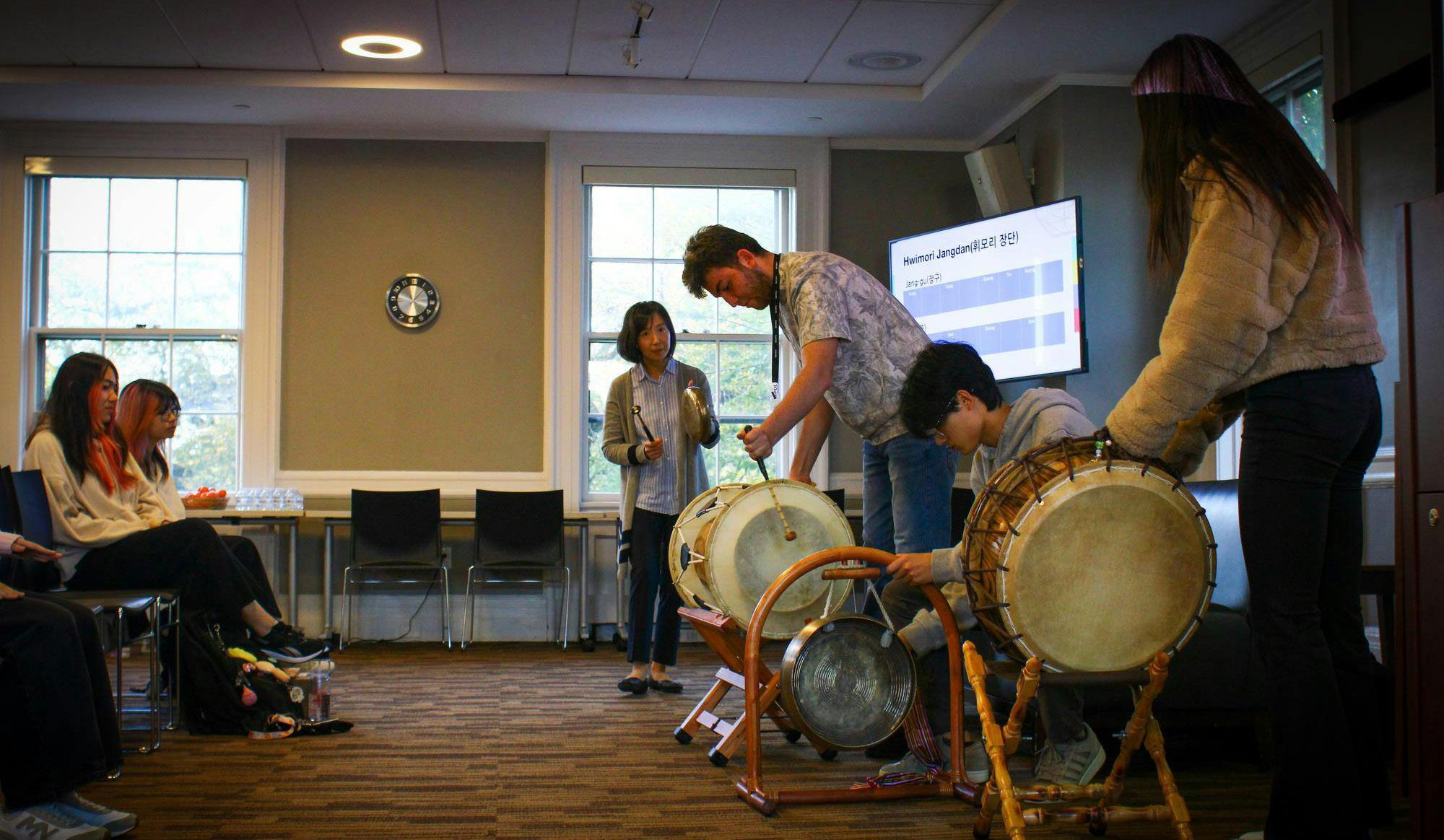
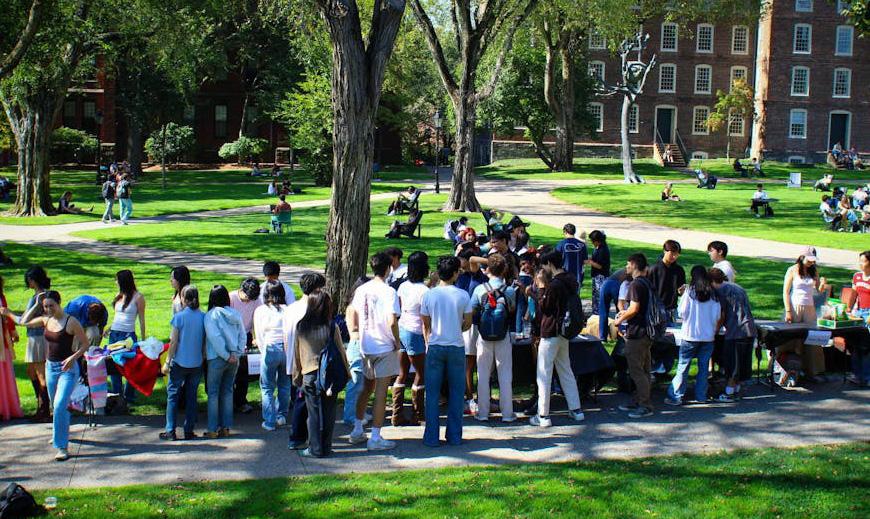
“All the events are really fun,” Iris Yang ’26 said while volunteering at the gonggi table. “This is my first time volunteering (at Game Day), but I’m having a really good time.”
“Game Day is such a lively and fun environment,” said Kyuwon Moon, assistant teaching professor of East Asian studies. “Everyone, regardless of their Korean level, can participate. It always brings such good energy, and I love seeing the laughter and joy it spreads across the Main Green.”
On Hangeul Day, Brown’s Department of East Asian Studies hosted Park for a lecture titled “Hangeul: Containing the Order of Nature and Numbers.” After discussing the interconnectedness of emotion, color and sound, Park dove into “Haerye,” the original text that explains the creation of Hangeul. Park told attendees that he hoped the lecture would spark students’ interest in linguistics as a whole, beyond just the Korean language.
The final event of the week included a workshop with music instructor Kyungsun
Kim. The event centered around an explanation of “gugak,” or Korean traditional music, featuring instruments such as the “janggu” — an hourglass-shaped drum — and the “gayageum” — a 12-stringed instrument. After Kim explained the main rhythms within gugak, audience members were called up to play the instruments themselves, turning the lecture into an interactive experience.
Wang hopes that the KLP’s yearly Korean Language Week exposes the broader Brown community to more aspects of Korean culture.
“While students are introduced to Korean culture through various traditional and modern (or) popular channels, those who are not taking classes may not have a chance to learn about Korea,” Wang said. “It is our hope to reach out to them and bring their attention to Korean culture.”
This article originally appeared online at browndailyherald.com on Oct. 14, 2025.
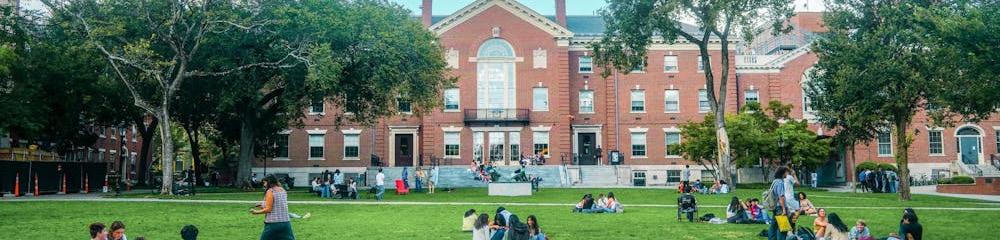
AAUP executive board sets sights on reshaping faculty governance system
One priority is increasing dialogue with administration
BY SAMAH HAMID SENIOR STAFF WRITER
As Brown finds itself in the crosshairs of the Trump administration’s effort to reshape higher education, newly elected leaders of Brown’s American Association of University Professors chapter told The Herald that they want to overhaul the University’s faculty governance model to improve administrators’ responsiveness to faculty input.
Brown’s AAUP chapter aims to protect academic freedom and ensure all faculty voices are heard by administrators, according to its website. The group was formed after the COVID-19 pandemic by faculty members seeking increased protections and stronger faculty governance, according to Michael Steinberg, a professor of
German studies and history and music who was elected Brown’s AAUP chapter president in September.
The group currently consists of approximately 130 members, according to Steinberg.
Steinberg described Brown’s current faculty governance model as “old-fashioned,” emphasizing that communication with administration needs to be improved.
Brian Lander, secretary of Brown AAUP and an associate professor of history and environment and society, agreed that Brown’s current faculty governance model “seems to be the legacy of the old days when Brown was a liberal arts college in which faculty voices had some influence, even though they lacked formal administrative power.”
Lander was shocked to learn that faculty committees tend to be “merely advisory,” he wrote in an email to The Herald. Currently, Lander feels that faculty are only able to substantively contribute to decisions about the curriculum, having formerly served on the Faculty Executive Committee.
In an email to The Herald, University Spokesperson Brian Clark wrote that Brown faculty have “direct and essential roles in participating in and informing important University decisions.”
Clark added that many Brown academic leaders in charge of “key decisions” are selected from Brown faculty members or “by search committees that include robust faculty representation.”
A crucial aspect of “University decision-making” is ensuring that significant decisions are “rooted in academic priorities shared with our faculty and other community members, and serve to advance common goals on campus,” Clark wrote in an email to The Herald.
“One of the great things about Brown is that you can always be in touch with administrators,” Steinberg said. “That’s excellent, but we want more than that.”
Denise Davis MA’97 PhD’11, the vice president of the AAUP chapter and an associate teaching professor of gender and sexuality studies, added that the group is
prepared to take an “adversarial role” in discussions with University administrators about faculty governance.
“The provost and other high-up administrators chair most of the faculty committees,” Davis explained. “There really isn’t a lot of what I would call honest, substantive faculty input in decisions about the University.”
Lander believes financial decisions are made without the opinions of the Brown community, “and this lack of consultation means that when we are asked to accept budget cuts, we cannot be confident that these are the results of good financial planning.”
To further include faculty in administrative conversations, Steinberg proposed multiple ways to “institutionalize” a new model of communication, such as establishing a faculty senate or unionizing.
He added that faculty unionization is “more controversial” and does not have “much hope” from a legal standpoint, citing a Supreme Court decision that declared
tenured and tenure-track faculty as managerial employees who are ineligible for unionization.
But Steinberg said that he is “very interested” in establishing a faculty senate. He believes it would be beneficial to promote dialogue across the University’s schools, such as the Warren Alpert Medical School and the Watson School of International and Public Affairs.
Davis believes that the process to establish a faculty senate would likely have to “go through the FEC” and culminate in a faculty vote.
In the coming year, Davis hopes to build Brown AAUP’s membership, especially by reaching out to faculty in the physical and medical sciences to expand their membership across disciplines. An increase in “faculty collectivity” can increase the influence of the Brown AAUP chapter, she said.
JAKE PARKER / HERALD
This year, following the arrival of the Hangeul Truck, events included a Korean Game Day on Tuesday, a guest talk on the origin of Haerye on Thursday and a Gugak Korean traditional music workshop on Friday.
JAKE PARKER / HERALD
After an explanation of the main rhythms within Gugak, a type of Korean traditional music, audience members were called up to play the instruments themselves.
FACULTY
UNIVERSITY NEWS
Brown anthropologist Ieva Jusionyte awarded MacArthur grant
She will use $800,000 grant to research extraditions of crime leaders
BY CHELSEA LONG CONTRIBUTING WRITER
On Oct. 8, the John D. and Catherine T. MacArthur Foundation named Professor of International Security and Anthropology Ieva Jusionyte as a 2025 MacArthur Fellow. The fellowship, awarded yearly to between 20 and 30 recipients, is an $800,000 grant supporting “extraordinarily talented and creative individuals,” according to the foundation’s website. The award is widely known as the “MacArthur Genius Grant.”
Jusionyte, who leads the Center for Human Rights and Humanitarian Studies at Brown’s Watson School of International and Public Affairs, conducts ethnographic research on displacement, violence and law enforcement. She plans to use the MacArthur grant to support her new book, which will investigate the frequent extraditions of organized crime leaders from Mexico to the United States, according to a University press release.
The project is “challenging for many reasons,” Jusionyte wrote in an email to
RESEARCH
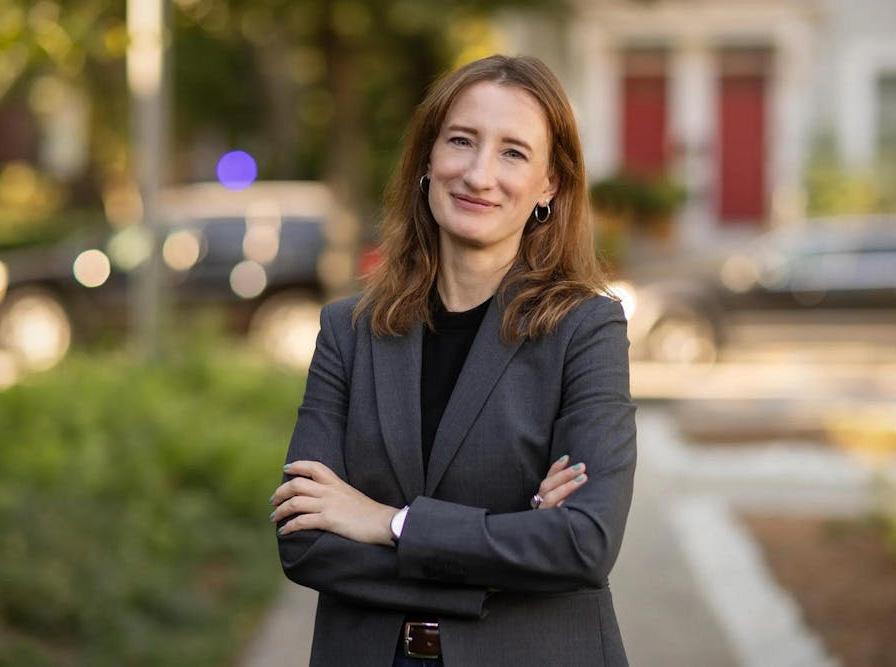
The Herald. Extradition is “heavily politicized,” and many relevant sources are government officials and judges who “don’t want to talk about what’s happening behind the closed doors of the offices.”
She added that the emotional toll of the project is also significant, as it involves interviewing members and leaders of organized crime groups: “I cycle through curiosity, fear, distrust, empathy and a ton
of other emotions.”
“The privilege of having received this fellowship is that now I can do this complicated work on a timeline that it needs, and that I need, without rushing it,” she wrote.
Jusionyte has written multiple books, all drawing on ethnographic research methods. Her research focuses on borders and their connections to political and social systems, with a focus on the U.S.-Mexico border.
Jusionyte considers borders to simultaneously be sites of state violence and places for community and solidarity. This inherent contradiction allows for meaningful revelations and a reconsideration of political ideas about “what is lawful and what is unlawful,” she wrote.
At Brown, Jusionyte is jointly appointed to the Department of Anthropology and the Watson School. She works with Ph.D. students and teaches graduate-level seminars, which she explained helped her “think through some of the theoretical and methodological questions” in her own work.
“Ieva is a wonderful colleague,” Jessaca Leinaweaver, a professor of anthropology and chair of the department, wrote in an email to The Herald. Leinaweaver emphasized Jusionyte’s “unquestionably important and cutting-edge work,” as well as her generosity and dedication to her students.
Daniel Jordan Smith, a professor of anthropology and international studies, also said he appreciates Jusionyte’s generosity.
Jusionyte was scheduled to visit Smith’s first-year seminar on the day her MacArthur award was announced. “She came and answered the students’ questions as if there was nothing else she could possibly do that
was more important,” Smith wrote in an email to The Herald.
At the Watson School, Jusionyte’s work is “more public-facing,” she wrote, with the opportunity to “engage in conversations that can have direct policy implications.”
Maggie Murphy, program manager at the CHRHS, remarked on the “energy” Jusionyte brings to her role as the center’s director.
After being appointed as director this year, “one of the first things she did was launch a human rights seminar series focusing on the themes of detention, deportation and disappearances,” Murphy wrote in an email to The Herald.
Jusionyte found out she had received the MacArthur fellowship in early September. She was preparing for the first day of classes when she got the call, but she initially didn’t pick up the phone.
“Who picks up calls from unknown phone numbers these days?” she wrote. When they called again, she answered and was shocked. “I didn’t know whether to laugh or to scream.”
This article originally appeared online at browndailyherald.com on Oct. 14, 2025.
Israel-Hamas war has killed or injured over 10% of Gaza’s population, study estimates
The research examined casualties, displacement and U.S. spending
BY ELISE HAULUND SCIENCE & RESEARCH EDITOR
The Israel-Hamas war has killed or injured at least 236,505 people in Gaza — 10% of the population before the war — according to one of four papers published last Tuesday as part of the Costs of War project at the Watson School for International and Public Affairs. The project also estimated that more than $21.7 billion of direct U.S. military aid has supported Israel’s intense military campaign in Gaza.
The papers follow a similar round of publications last year.
Like last year’s publications, research from this month’s papers has been widely cited, according to the project’s director Stephanie Savell PhD’17, who is a senior fellow at the Watson School. Savell noted that an Associated Press article featuring the research has been reposted by over 260 media outlets globally, including the Washington Post and ABC News, and the studies have been independently featured in original articles in more than 50 other outlets.
Costs of War research has become one of the definitive sources that policymakers and global media look to, according to Savell. Numbers found by the project’s researchers have been used to brief Senate Budget Committee staffers, and former President Joe Biden cited Costs of War research in his 2021 speech about the United States’ military withdrawal from Afghanistan, she added.
In their recent reports, the Costs of War project has tracked death tolls and U.S. military spending in the two years since Israel began its military operations in Gaza following the Oct. 7, 2023 Hamas attacks on Israel, which killed over 1,200 people and took 251 hostages.
One report focused primarily on the
death toll in Gaza, two papers studied associated military spending and another study investigated mass displacement caused by the war.
In one paper, Neta Crawford PhD’85, a professor at the University of Oxford and a co-founder of the Costs of War project, examined “indirect deaths” — those who die from non-military effects of war, such as destroyed health care infrastructure and starvation — in addition to direct casualties. The total number of these indirect deaths is still unknown, the paper determined, as most of these deaths “occur long after the fighting stops.”
“A lot of critics have … called into question the Gaza Ministry of Health numbers, calling them an exaggeration,” Savell said of the direct death estimates in an interview with The Herald. “Our paper … shows that actually, if anything, the Gaza Ministry of Health numbers are an undercount, and that’s just of the direct deaths.”
A Costs of War paper by David Vine, a former professor of anthropology at American University, counted that at least 5.27 million people have been affected by mass displacement in Gaza, Israel, Iran, Lebanon and the West Bank since the beginning of the war. This estimate is “conservative,” according to the paper, and Palestinians in the Gaza Strip have been “forcibly displaced” an average of “three to four times each.”
Since Oct. 7, 2023, the U.S. has spent at least an additional $9 billion to $12 billion in military actions in the wider Middle East, separate from direct aid to Israel, according to another paper by Linda Bilmes, a senior lecturer at the Harvard Kennedy School. This brings the estimated total U.S. military spending in the region during the time period to over $30 billion.
In addition, there are “tens of billions of dollars on the table for (arms sales) deals that will be concluded in the future,” according to William Hartung, a senior research fellow at the Quincy Institute for Responsible Statecraft and the author of
another Costs of War paper about overall U.S. military aid and arms transfers to Israel.
In an interview with The Herald, Hartung said that his paper aimed to draw attention to the fact that “the bread and butter of what (Israel) used to prosecute the war came from the United States and was paid for by U.S. taxpayers.”
But the dollar cost is only one piece of the picture, said Hartung, who added that the humanitarian impact is far more important. In addition to the “unnecessary suffering for huge numbers of people,” the United States’ enabling of the “unconscionable slaughter of innocent people” could discredit U.S. diplomacy in future conflicts, he said.
“It’s eroding international norms, international law (and) international guidelines that are not perfectly enforced, but at least used to be referred to,” Hartung said. “They’re bombing hospitals, they’re
killing journalists, they’re bombing people on their way to try to get food aid.”
“If the United States is going to support and finance that, it weakens our reputation, but also weakens globally the enforcement of those basic rules,” he added.
Research from the Costs of War project aims to link “attention to the dollar costs with attention to the human toll,” Savell said. But both Savell and Harting noted that U.S. media has tended to give more exposure to the monetary figures.
“We think about that in a kind of a practical, pragmatic way,” Savell said. In this project, researchers are “strategically using” dollar costs to draw attention to larger humanitarian costs, she added.
This year, there is a “shifting tide in U.S. public opinion about U.S. support for Israel’s war in Gaza,” Savell said, noting that Senator Bernie Sanders and “many other experts in international organizations” have recently said Israel is committing
genocide in Gaza.
“Last year, it felt like we were more alone in pointing to the costs,” she added. “This year, it feels more like we’re part of a chorus of other voices.”
According to Savell, the Watson School “has always been a really supportive home institution for the Costs of War project.”
As for outside opinions, “while there have been a few critiques of our work, they’ve been political in nature,” she said. “There’s not been critiques that have been able to substantively refute the fact-based information that we are publishing.”
Though the ceasefire agreement negotiated in part by President Trump is “certainly better than things raging on uncontrollably,” Hartung said he believes that there are still many questions to be answered, including “Who will control Gaza in the future? Will the people involved in prosecuting the war be held accountable in any way?”

COURTESY OF IEVA JUSIONYTE
Jusionyte’s research focuses on borders and their connections to political and social systems, with a focus on the U.S.-Mexico border.
KENNA LEE / HERALD
According to the project’s director Stephanie Savell, who is a senior fellow at the Watson School of International and Public Affairs, Costs of War research has become one of the definitive sources that policymakers and global media look to.


BROWN ARTS INSTITUTE CATALYZES BOLD INTERDISCIPLINARY ARTS RESEARCH, EDUCATION, AND PRACTICE AT BROWN AND BEYOND.
(WE MAKE COOL ART POSSIBLE.) LEARN
Spring Festival of Dance 2025.
Photo by Erin X. Smithers
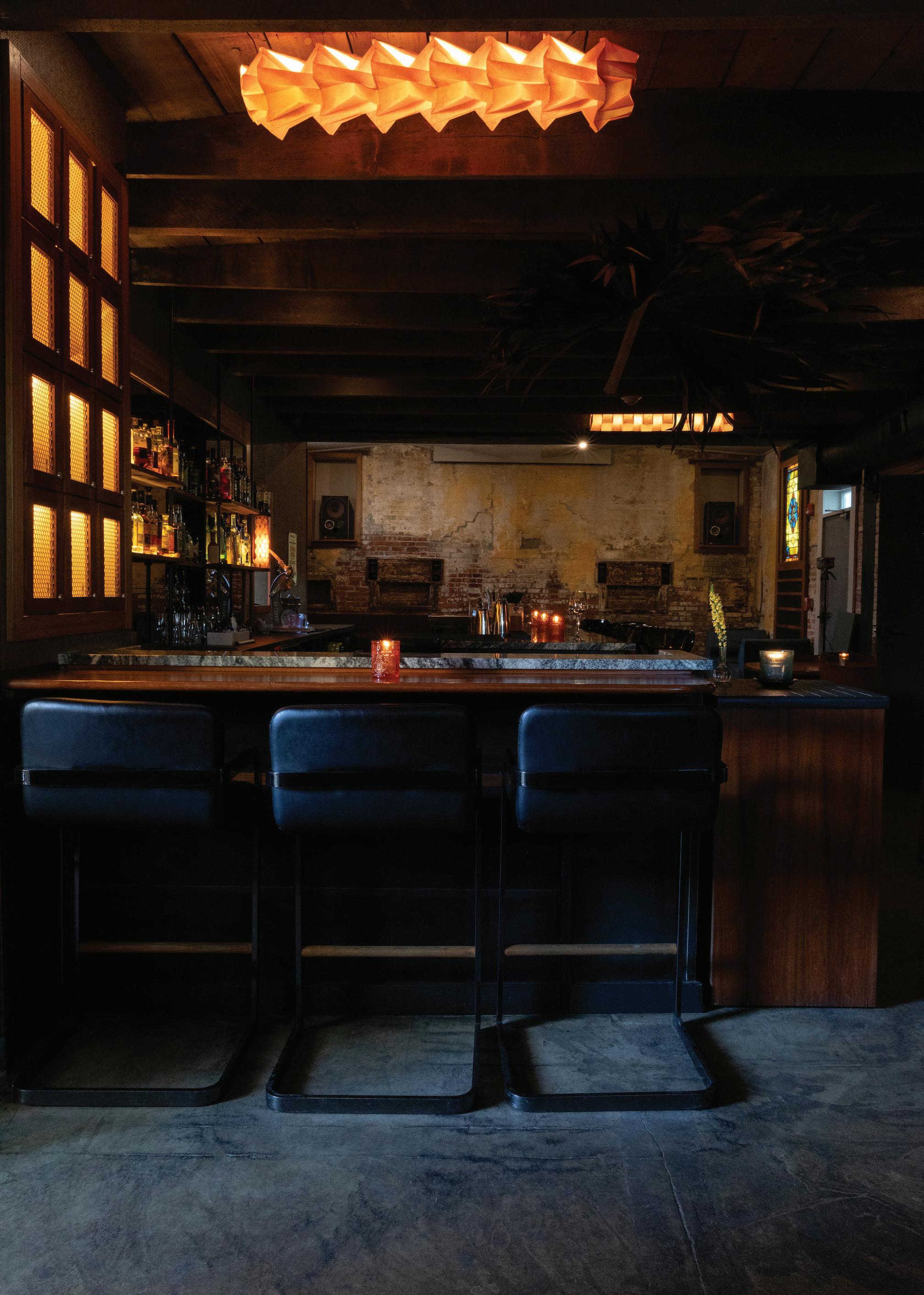




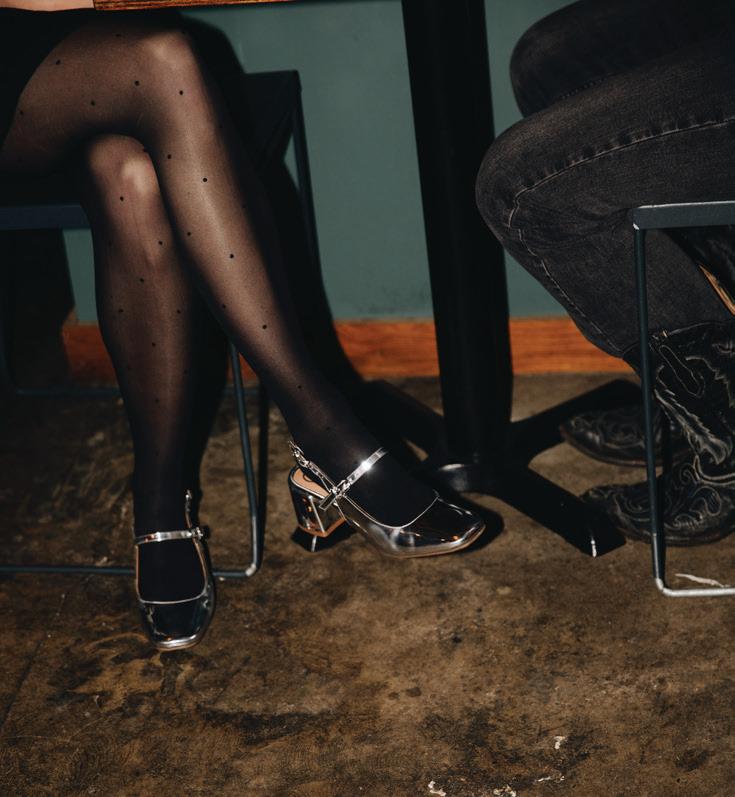

Family Weekend Trunk Shows