
Trump and Lurie: Similar Strategy, Vastly Different Candidates
Lachlan Riley, Editor
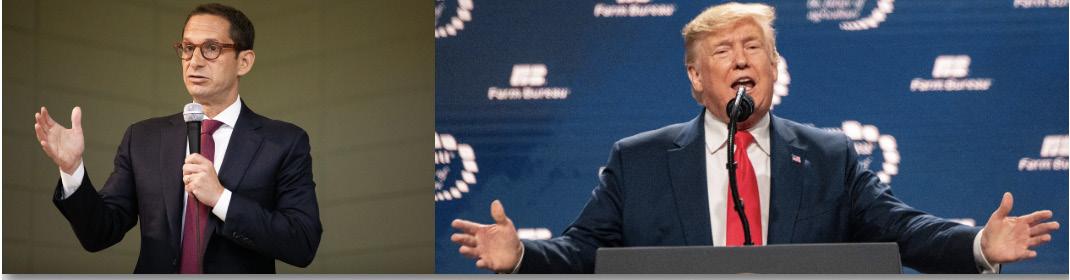
This November has seen some fascinating and shocking election results. The federal election saw Donald Trump making a momentous political comeback becoming the second-ever U.S. president to serve non-consecutive terms. Another relatively unexpected result happened close to home in the SF mayoral election. Fellow “Anti Corruption and Anti Establishment” candidate Daniel Lurie is to become the San Francisco mayor. Similarly to Trump, Lurie had no political experience before their first big role and is from a well-known family outside of politics. In January, Trump is not
coming to Washington alone, he is bringing Elon Musk. Despite having no previous government experience, these two are tasked with leading a new and somewhat ambiguous department called the Department of Government Efficiency or “DOGE”. Musk is a vocal supporter of not only Trump but rooting out Bureaucratic corruption that Washington is allegedly drowning in. Comparatively, Daniel Lurie used the fact that all his opponents had previously held office as a way to paint them as corrupt city hall insiders. In Trump’s first campaign, he ridiculed and berated Hillary Clinton for her long career in government, but lack of
accomplishments. He later used the same strategy against Joe Biden, but to little to no avail. However, despite his time in the shadows, Trump’s anti-establishment message has been echoed throughout Biden’s turbulent presidency. After a questionable first term and a very controversial time as a “Lame Duck”, he has been chosen to lead the country in times of global tension. Despite similarities, Daniel Lurie and Donald Trump are still very different candidates. While Trump and his MAGA agenda are very far right while Lurie is solidly a Democrat. Furthermore, Lurie’s approach to corrupt government is implementing a new and efficient
government. Despite being called the Department of Government Efficiency, Elon Musk has clarified that they intend to cut down the government whether it be spending or how many unelected officials. A stylistic difference between the two is how Lurie is very polished in the political scene and prefers not to go off script while Trump’s campaign is starting to acknowledge the success of the “let Trump be Trump” strategy. Junior Cabot Dick said, “Lurie is going to get police and social workers to help with the people doing drugs”. In contrast, Junior Benny Moosbruger said “Trump wants to get rid of everything that helps, he’s not empathet-
Empowering Filipino Youth Through Education
ic”. Cabot was referring to Lurie’s plan to restaff the police department and employ social workers to address the homelessness and drug problems San Francisco is facing. Benny was referring to Trump’s stance against welfare for underprivileged groups and his belief that these are simply “handouts”. Looking at it from the surface level, Trump and Lurie seem incredibly similar. However, when carefully analyzed on their belief behind their main platform one can see they have vastly different solutions and reasons.
In an effort to support our Sacred Heart brothers and sisters, some Convent & Stuart students decided to help make a positive impact internationally in the Philippines. Education is critical. To an extent, it can dictate one’s future. The Read Naturally Program, started by the St. Madeline Sophie Foundation, Inc (SMSF) aims to aid Filipino students in becoming fluent in English. As described on the RSCJ website, “the St. Madeleine Sophie
Foundation, Inc. (SMSF) [was] begun by the Sisters of the Society of the Sacred Heart in the Philippines as a way of living out their educative mission in situations of poverty. Through the years, it has evolved into an educational center that serves children from age 4 to young adults in college/university.”
Convent & Stuart Hall students aid in this effort by offering online tutorials with a paired tutee (kid being tutored) every Friday evening. They go over passages in English and follow
specific reading steps and as a result, the tutees can essentially, “read naturally.” This service allows Convent & Stuart Hall students to meet two goals of Sacred Heart Education: Goal 3: Serving Others and Goal 4: Building Community. “As a part of this program, I have learned so much from tutoring and connecting with the kids in the Philippines,” says Junior Elsie Scott, “Our work in the program gives kids the opportunity to learn English [in accessible ways] without a cost.” Filipino students being
able to benefit from this service without having any expenses is a tangible way that this connection transforms people’s lives. “As high schoolers, we may be young,” says Agastya Palathuruthil, “but this program is one of the ways we can make a difference in the world.” These tutors, who willingly sacrifice their Friday nights, can see that their service improves the human condition on a global scale. Furthermore, the connection between Convent & Stuart Hall students and the community in
the Philippines allows for both to learn from each other. During the tutoring sessions, many tutors have conversations with the tutees about their lives. In conclusion, tutors for the Read Naturally program help facilitate and contribute to the initiative to assist students’ educational journey on an international level. In the process, our students find themselves also transformed.
Ethan Yap, Editor-in-Chief
Assad Flees to Russia as HTS Forces Capture Damascus and Major Cities
Alex Akel, Editor-in-Chief
On December 8th, headlines shocked the world with the announcement of the Assad regime’s collapse. Hayat Tahrir al-Sham was the first opposition group to march on Damascus since 2018. Since the fall of the ISIS Caliphate in 2018, the Syrian Civil War has waned from international headlines. However, reports of HTS gaining territory—capturing major cities like Aleppo, Hama, and Homs with little resistance—brought it back into view. HTS forces also made gains in southern Syria and were able to enter Damascus with little opposition. Following the government’s collapse, President Bashar al-Assad fled to Russia under the protection of Vladimir Putin. “There are many reasons behind the collapse of the Assad government. However, I believe that Russia’s prolonged military involvement in Ukraine, combined with Israel’s actions to weaken
Hezbollah in Lebanon, emboldened Sunni militants and contributed to the government’s destabilization,” says Ethics and World Religions teacher Clint Hackenburg. While the wars in Ukraine and Gaza have been huge distractions for the powers backing Syria, there is no question the regime being unpopular did not help its stability. “If you rule by fear and intimidation, you can only do that by being very strong and very repressive. I think at some point people will stop buying into it. Adding on to that, with no outside support, Assad couldn’t hold Syria together, and he was left alone with no friends. That’s why it went so quickly,” says Global Politics teacher Martin Jorgensen. In addition, with major powers no longer having influence in Syria and the Islamist extremist connections of the group, many wonder about the future of the country. “Syria has been a repressed country for more than 50
years, so we don’t know how it is going to pan out, but the best case is they put together a broad coalition of Syrian parties and everyone else stays away,” says Jorgensen. “Without foreign influence, the Syrians can create something that can last. If we all keep poking our noses in, it is harder to create a stable solution.” To Jorgensen, Syria’s freedom from foreign influence will be key to its success as a functioning state. On the world stage, Iran and Russia have emerged as big losers from this collapse. “The collapse of the regime has led to a weakened Iran and Russia as both have lost a significant ally in the region, making both lose a substantial ability to show military power throughout the Middle East,” says Junior Quinn Harrell. It disrupts the Shia 'axis of resistance' for Iran. Iranian support for Hezbollah heavily relied on Syria for transport. Russia’s military bases in Syria are no longer protected by the govern-
ment. Not only does it lack guaranteed access to strategic military bases, but Russia can no longer use its foothold in Syria for counter-terrorism operations. HTS is designated as an international terrorist organization by the UN Security Council. Abu Muhammad al-Jawlani, the leader of the rebel group, has stated that his goal is to establish a new government in Syria. While many wonder whether his statements, alluding to a departure from authoritarianism and new prosperity in Syria, will become true, what is true is the regions in Syria in which HTS controlled civilian life went from being some of the poorest to some of the fastest growing. In Idlib— formerly Syria’s poorest region according to BayTMagazine—HTS has developed modern infrastructure development, continuous electricity supply, and new commercial developments like a university serving 18,000 students. Al-Jawlani also
claims he will protect ethnic minorities, unlike what was done under Assad. Under Assad, ethnic minorities like the Kurds were discriminated against. “HTS will likely not benefit the country as they will likely aim to take out the Kurdish groups in the North of the country,” asserts Harrell, contrary to what Al-Jawlani says. “Honestly, I do not believe HTS will bring prosperity to Syria,” says Hackenburg. “Until it demonstrates otherwise, my expectations remain low for a religious, non-democratic government. Plus, unlike other authoritarian regimes in the region, Syria lacks significant oil reserves that could offset the consequences of a corrupt, ineffective government.” Whether Syria emerges better or worse from this event, the speed and causes of the regime’s collapse demand reflection.
The Rise of Crypto America and the Push for Blockchain Supremacy
David Leshchenko, Senior Reporter
“We are going to make America the world capital of crypto,” says David Sacks, the new head of crypto and AI under the Trump administration. As the first pro-crypto president takes office, the socalled “crypto bros" are looking forward to the bull run crypto is set to take. So far, since election day, Bitcoin has hit all time highs of $108,000, after being just $68,000 the night before the election. Dogecoin is also among the “hottest” coins right now, increasing almost 250% since the election. Other popular crypto coins such as Etherium, Solana, and XLM, have also hit all time highs on this “bull-run.” Correlated to the rise of the main coins, is the rise in meme-coins. Although most dismiss the seriousness of these tokens, they also fail to realize that these tokens are an extremely popular source for money, as some of these to-
kens gain 200,000% in just a couple hours, making a mere $100 investment into upwards of 200,000 dollars! However, as fast as these tokens can rise, they can also fall. Many of these tokens are scams and rugpulls (the term used to describe when an entity owns most of the tokens they are promoting, pumping the price, then selling all their tokens crashing the price dramatically). So these memecoins are very high-risk / high-reward, and are very hard to navigate successfully. However, the meme-coin sentiment does not apply to other cryptocurrencies. XRP, for example, dubbed “the hottest coin of 2025” by Forbes, is set to replace the SWIFT banking system. The SWIFT banking system is a global network that facilitates secure, standardized communication and transactions between banks and other financial institutions worldwide. SWIFT transacts about five trillion dollars a day, with
some sources claiming upwards of 22 trillion dollars a day. Ripple, the company that made XRP, claims that their token is capable of faster and more secure transactions than SWIFT. Newly sworn in President Trump has had many meetings with the heads of Ripple, and is rumored to help replace SWIFT, skyrocketing the price of an XRP coin, which currently stands at around $3.20. Analytics say, even if XRP replaced 5% of SWIFT transactions, the price of a single token would skyrocket upwards of $1000 per coin, maybe even reaching $10,000 in the future. But these high prices are to come later. As of the very near future, Trump’s pick for head of the Securities and Exchange Commission (SEC), Mark T. Uyeda, is set to drop the lawsuit against Ripple first thing when he’s confirmed by the Senate, skyrocketing the token’s price to $5+ in minutes. Moreover, President Trump has stat-
ed that he plans to work with David Sacks to create a national cryptocurrency stockpile. Analysts say that this stockpile would be largely made of Bitcoin, Etherium, Solana, and stable coins such as Ripple/ USD, USDT, Tether, etc. For the purpose of the article, let’s examine how this would affect Bitcoin, which currently sells for $105,000 per coin. So far, the government already owns about 198,000 bitcoins, which currently values at about 21 billion dollars. These coins have been previously seized by the FBI during criminal investigations. As from records of the Biden administration, the SEC advised to slowly liquify those bitcoins back into the market, which would have resulted in a decrease in price. The new SEC advises holding Bitcoin, anticipating a rise in the token’s price, and furthermore anticipating the current government owned Bitcoin to value at over 81 trillion dollars
within the next decade. This would help eliminate the U.S. national debt, which currently stands at 31 trillion dollars. As this initiative soon turns into reality, other countries such as Japan, Hong Kong, and Germany are also already planning their own strategic reserves of cryptocurrencies. With all of this happening, a million dollar bitcoin may be closer than we may think. To finish up, the Trump administration, no matter how controversial, is going to pump cryptocurrency like never seen before. Dubbing himself “the first crypto-president,” Trump promises to take initiatives to make America the “crypto capital of the world.” If you are looking to invest, this may be your last shot before the so-called “bull-run” starts. Crypto is the currency of the future, and it’s coming in hot, and it’s coming in to stay.
A Day of Contradictions and Common Ground
Alex Akel, Editor-in-Chief
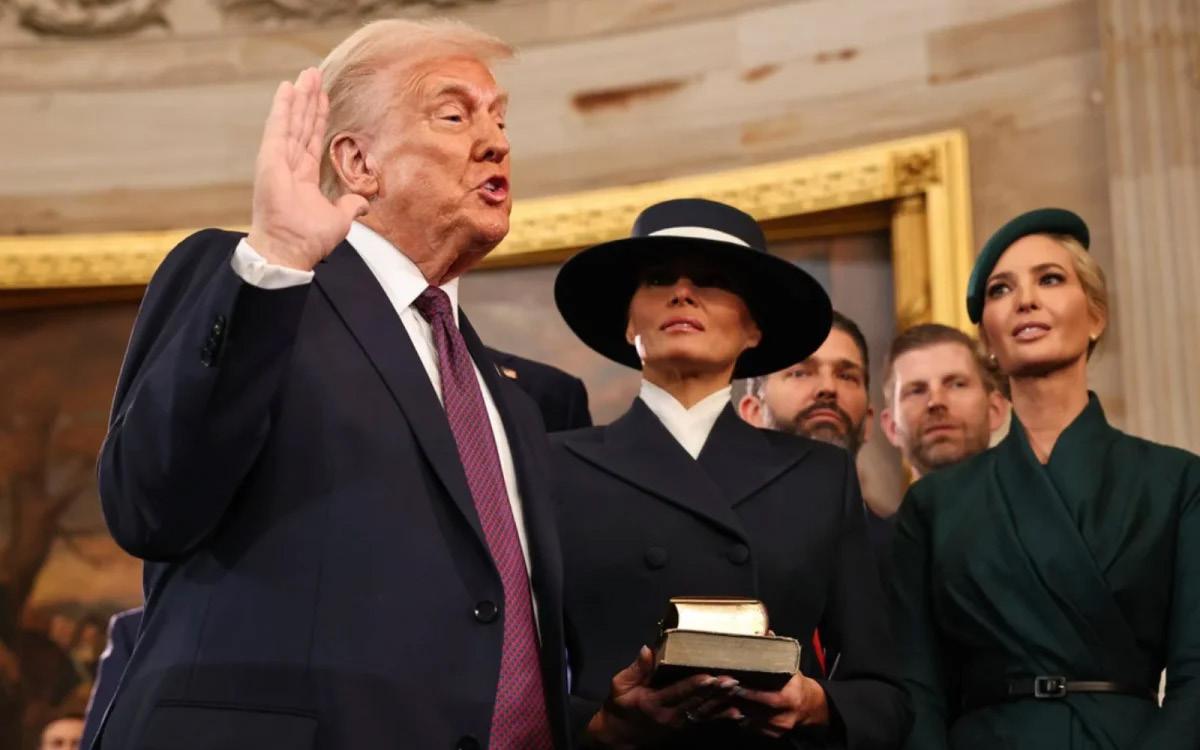
January 20th of this year marks a rare occasion: a presidential inauguration and MLK Day on the same day. Is this a conflict or complement? Throughout his presidential campaign, Trump, likely one of the most far-right candidates in recent U.S. history, promoted a message many of MLK’s most fervent supporters opposed. MLK’s children, Martin Luther King III, his son, and Bernice King supported Kamala Harris and her bid for the presidency. Given Harris’ stances on abortion, DEI (Diversity, Equity, and Inclusion), and taxation, some people may believe that MLK would have supported her bid for candidacy. This may cause some to think the inauguration and MLK Day happening on the same day contradict each other. But, actually, there is one area of common ground that we can take from both figures: both men have the rare ability to mobilize many, many people for their cause and fight persistently for it.
Donald Trump began his bid for the presidency in 2015, and ran on the campaign motto, “Make America Great Again.” He has changed the ideology of the Republican Party to become more nationalist and more isolationist, encouraging an “America First” policy. He campaigned in the 2024 election on similar issues as in his first term, except this time he had more ammunition and experience. He cited the overrunning of the border by the Biden-Harris policies. He often grouped immigrants from the Southern Border under all a single label—from “jails and mental institutions”—when in fact many of them are just trying to find a better life in the United States. This anti-immigrant rhetoric sometimes even spewed into racist comments from the 45th and 47th President, like when he lied during the Presidential debate versus Kamala Harris that Haitian immigrants in Springfield, Ohio were “eating the dogs and the cats.” This was obviously false and actually caused many bomb threats
within the town of Springfield because of the anti-immigrant feelings in the MAGA community. This anti-immigrant, America First platform is one of the main mobilizers for Trump’s base. Many believe that in his own way, Trump is an activist. Martin Luther King, Jr., in contrast, was an individual who stood for the human dignity of all. He fought his entire life for the equality of all people and for the end of the evil practice of segregation. After his famous “I Have A Dream” speech at the Washington Monument in Washington D.C. in August 1963, so many people were inspired and mobilized in the US and around the world, the next year in 1964 the Civil Rights Act was passed. This forbade discrimination on the basis of sex and race in hiring, promoting, and firing. King believed that all people, regardless of race, gender, sex and religion be treated equally. That is what he fought and died for and the movement he started changed the country forever. He was also an activist.
So, do Trump’s inauguration and MLK Day on the same day complement or contradict each other? On some issues, they would have agreed, while on others, they would have disagreed. However, there is some common ground between both of these men. Regardless of ones views on President Trump, he fought hard to get to where he is today. He was impeached twice, indicted, almost assassinated, and still managed to become President of the United States. He never let anything stop him. MLK, too, faced many obstacles in his fight for change. He was jailed, faced constant racism and death threats, and was ultimately assassinated, but he never gave up either, dying for his cause. The persistence of these two individuals, their ability to call people to action, regardless of political views, is truly admirable. In that way, hard work, perseverance and activism becomes a unifying message for this day. This sentiment is captured in a message from MLK’s son: “MLK Day is a reminder to move from
reflection to action, “he tweeted, reposting an article about the overlapping dates. “My father’s legacy was rooted in service and action. My mother envisioned a ‘day on,’ not off — an opportunity to serve and engage in building the Beloved Community.” In a similar call to action, Reverend Bernice King, the youngest daughter of King, said: “I’m glad it occurred on that day because it gives the United States of America and the world the contrast in pictures. Is this the way you want to go — or is this the way you want to go?” Trump and MLK being honored on the same day presents both contradiction and common ground. Regardless of how you view them, it is a call to action— to keep fighting for what you believe every day and to never give in or give up, no matter the challenges life presents.
As we go into the second semester, the Stuart Hall soccer team has been off to a 6-7-2 record overall this season. The team’s success this year has largely been attributed to the team chemistry and the coaching staff. “I thought our team chemistry got a lot better because there’s a deeper friendship and connection between each player,” sophomore
This year, the Class of 2026 officially embarks on their IB Extended journey, marking a significant milestone in the International Baccalaureate (IB) Diploma Program. With proposals completed and advisors assigned, excitement and anticipation are among students as they dive into, for many, their first solid extensive essay. The Extended Essay, often referred to as
Knights Soccer Season
Trent Sakamoto says. “Last year we had better individual skill, but this year we know each other’s play styles and are better friends with each other, which helps.” Jake Oenning says, “I think our coaching strategies and our team chemistry have helped make this year so successful.” Trent also believes that the team has a bright future in the freshmen and sophomores. “I think the freshmen have
a lot of talent and skill on the ball. The sophomore class as well has a couple of individually skilled players who, with some positioning critiques, can be very good.” As the season progresses, the team will only continue to develop and improve. With strong chemistry, new talent, and great coaching, the soccer team is in a position to possibly make an appearance in the playoffs.

11th Graders Begin the EE Process
the “EE,” is a big part of the IB program, offering students the opportunity to explore a topic of their choice in depth. Spanning up to around 4,000 words, the essay challenged students to engage in critical thinking, develop research skills, and showcase their ability to write academically all while being able to manage deadlines. This will all extremely help in college as a multiple thousand essay is common. For juniors, this
process began about a month ago with brainstorming and discussions with our EE team aimed at narrowing down research topics. After submitting their draft of their proposals a few weeks ago, they received feedback and were assigned an advisor based on their chosen subject areas. Advisors will play a crucial role throughout the process, providing guidance, feedback, and support as students begin their re-
search. Many students have chosen topics that align with their passions, future career aspirations, or curiosity about a particular subject. As it would be pretty hard to write such a long paper if there is no passion or motive for a subject. Stay tuned for updates as the juniors progress through their Extended Essay journey.

The Forgotten History of the San Francisco Tenderloin
The San Francisco Tenderloin is a well-known area that has a stained reputation when mentioned. People often overlook the reasons why it acquired its reputation. However, its history offers valuable insights as to how it got to its current state today. While there are many stories as to why it is called the “tenderloin,” it is commonly said that it does have to do with a cut of meat. In 1931, when corruption was common in this area, Captain Alexander S. Williams was said to have accepted bribes in order to afford finer cuts of meat such as the Tenderloin. The Tenderloin was already tainted with racism, scandalous businesses, and
“rebels” from the start. In the 1920s, jazz was illegal as society felt this genre of music was dangerous and immoral (PBS). In reality, the barring of this music was motivated by the intention to stifle African American culture and deem it as a crime. Nevertheless, African Americans continued to create and play jazz in the Tenderloin area as police regulation was very limited in that area. During the hippie era (‘60s, 70s), the Tenderloin also became a judgment-free zone for LGBTQ as they were able to freely express themselves (something that was limited to them in other areas of the city). Throughout the history of the Tenderloin, drug markets, illegal gambling areas, and pleasure
houses were also prominent throughout the Tenderloin. With most of these businesses operating underground, regulation of these areas was near zero (LETSOALO). These scandalous businesses, along with the fact that the Tenderloin was populated with outcasts of society and criminals contribute to the infamous reputation of the Tenderloin. Shady businesses were not the sole cause of the bad reputation. Housing issues for residents in San Francisco were also a driving force. The Tenderloin became an area where people could get housing for cheap. Nevertheless the land that was being sold was often small and cramped. With less space to be comfortable in one’s home, Tenderloin
residents often hung out outside of their buildings. Essentially, the sidewalk became the living room for most Tenderloin residents. This led to an increased amount of trash, cigarettes, and needles from drugs that pollute the area. Currently, the Tenderloin is known to be dangerous, dirty, and populated with homeless people. When making these assumptions, one must understand that it was very difficult for the Tenderloin to avoid this reputation as it was already set up for failure during its inception. Still, the Tenderloin is home to thousands of people and its history should not be forgotten.

Andrew Kim, Staff Reporter
Altan Agi, Staff Reporter
Antonio Ruby | WITH PERMISSION
Ethan Yap, Editor-in-Chief