Brighton College Vietnam | IB Parent and Pupil_Handbook
At Brighton College Vietnam, our Sixth Form o ers the International Baccalaureate Diploma Programme (IBDP), perfectly aligning with our philosophy of guiding pupils to become the best versions of themselves. The IBDP fosters the development of pupils with a rich breadth and depth of knowledge, enabling them to ourish physically, intellectually, emotionally, and ethically.
Our pupils are encouraged to remain curious about a broad range of subjects, building con dence through inquiry-based learning alongside the core elements of the IB: Creativity, Activity, Service (CAS), Theory of Knowledge (TOK), and the Extended Essay (EE). These components support the holistic development of our pupils, encouraging them to explore their passions and think critically about their identity, their place in the world, and the impact they can make.
Through the IB learner pro le, pupils are nurtured to become knowledgeable, self-re ective, balanced, and open-minded individuals. The emphasis on being caring, with kindness at the core, resonates deeply with the values of Brighton College, further strengthening our commitment to this approach.
Our sta , all of whom have received specialised IBDP training, collaborate regularly to create engaging and rigorous programmes of study. This collaboration ensures that our pupils are supported in their pursuit of the highest possible scores in this internationally recognized quali cation, opening doors to the world’s leading universities.
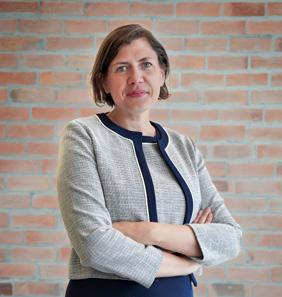
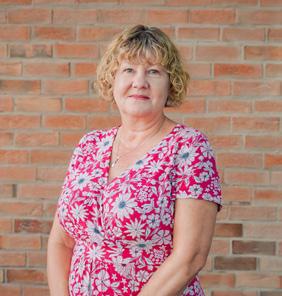
Carly Barber Head of College
Why the International Baccalaureate? Welcome from the Head of IB
The IB o ers a broad and balanced curriculum in which pupils study languages, humanities, sciences, mathematics and the arts alongside a CORE programme of TOK, CAS and the Extended Essay.
It enables pupils to have a broad education across six di erent subjects (three chosen at Higher Level and three at Standard Level) designed to enable young people to work and study across the world and play to their subject strengths.
As of June 2024, the IB is o ered in over 5,800 schools across 160 countries and over the past ve years the number of IB programmes o ered worldwide has grown by over a third1 Research indicates some of the reasons behind the IB’s growing popularity are that IB Diploma pupils ‘tend to be more positive about their research abilities and overall preuniversity education than A-level students2. and indeed they tend to be more globally minded and skilled at managing their workload3
Top universities in the UK and US and across the world welcome pupils who have studied the IB. The University of Oxford, for example, report that the number of o ers to IB pupils has doubled over the past ve years meaning there are over 1000 pupils there who have studied the quali cation4
At Brighton College Vietnam we are delighted to o er this rigorous academic o ering which enables our pupils to be ready for the demands of courses at top international universities and to have the skills needed to succeed in twenty rst century careers.
2 Wray, D. 2013. Student perceptions of the value of the International Baccalaureate extended essay in preparing for university studies. Coventry, UK. University of Warwick.
Welcome to Brighton College Vietnam 6th Form and to the International Baccalaureate (IB) programme! We are thrilled to have you join us and look forward to supporting you as you embark on this exciting and transformative journey.
The IB programme is renowned for its rigorous academic standards and holistic approach to education, designed to develop inquiring, knowledgeable, and caring young people who are motivated to succeed. You will encounter a diverse and challenging curriculum that will push you to explore a wide range of subjects and perspectives, fostering critical thinking and intercultural understanding.
One of the key aspects of the IB is coursework, and with it comes deadlines. You will be expected to complete a variety of essays, projects, and assessments throughout the year. Meeting their respective deadlines is crucial, as it helps you manage your workload e ectively and ensures you stay on track with your studies. Developing good time management skills and maintaining a disciplined approach to your coursework will be essential for your success in the programme.
In addition to your academic responsibilities, the Creativity, Activity, Service (CAS) programme is a vital component of the IB experience. CAS encourages you to engage in a range of activities beyond the classroom, promoting personal growth, self-discovery, and community involvement. While it is important to keep track of your re ections on Managebac, the true value of CAS lies in the joy and ful lment you will nd through your involvement. Whether you are participating in a sports team, volunteering for a community project, or exploring a new creative hobby, these experiences will enrich your life and provide you with lasting memories.
The bene ts of the IB programme extend far beyond the classroom. It prepares you for higher education and equips you with the skills needed to thrive in a global society. You will develop strong analytical abilities, e ective communication skills, and a deep understanding of di erent cultures and perspectives. Moreover, the IB fosters a sense of responsibility, ethical awareness, and a commitment to lifelong learning, qualities that will serve you well in whatever path you choose.
We encourage you to take full advantage of all the opportunities the IB programme has to o er. Embrace the challenges, stay organized, and most importantly, get involved and have fun. Your journey through the IB will be demanding, but it will also be incredibly rewarding. Remember, you are not alone on this path. Your teachers, tutors, and peers are here to support you every step of the way.
We wish you all the best as you begin this exciting chapter of your educational journey. Let's make it a memorable and successful 2 years together!
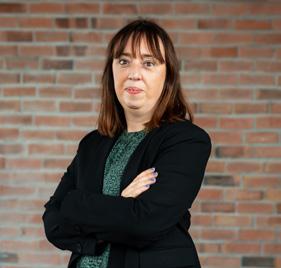
Freya Odell Head of IB
e IB Philosophy e IB Learner Profile
The International Baccalaureate aims to develop inquiring, knowledgeable and caring young people who help to create a better and more peaceful world through intercultural understanding and respect.
To this end the organisation works with schools, governments and international organisations to develop challenging programmes of international education and rigorous assessment.
These programme encourage pupils across the world to become active, compassionate and lifelong learners who understand that other people, with their di erences, can also be right.
Our Mission Statement
Our mission at Brighton College Vietnam is to inspire every pupil to achieve academic excellence and to become the very best version of themselves, ready to ourish in a dynamic global landscape. We blend innovative and personalised learning with advanced educational technologies and rst class teaching. We aim to deliver an education that is both pupil-centred and outcome-focused. We strive to equip our pupils with the capabilities needed for lifelong success, anchoring our e orts in our core values of curiosity, con dence, and kindness, whilst ensuring that every young person in our care is ready to contribute positively to society. Our ultimate goal is to cultivate critical thinkers and creative problemsolvers who respect diverse perspectives and want to give back to the world of which they are a part.
The International Baccalaureate aims to develop inquiring, knowledgeable and caring young people who help to create a better and more peaceful world through intercultural understanding and respect.
The International Baccalaureate® (IB) learner profile describes a broad range of human capacities and responsibilities that go beyond academic success.
They imply a commitment to help all members of the school community learn to respect themselves, others and the world around them.
To this end the organisation works with schools, governments and international organisations to develop challenging programmes of international education and rigorous assessment.
The Diploma programme is committed to the development of students according to the IB learner profile.
These programme encourage pupils across the world to become active, compassionate and lifelong learners who understand that other people, with their di erences, can also be right.
Inquirers They develop their natural curiosity. They acquire the skills necessary to conduct inquiry and research and show independence in learning. They actively enjoy learning, and this love of learning will be sustained throughout their lives.
Knowledgeable They explore concepts, ideas and issues that have local and global signi cance. In so doing, they acquire in-depth knowledge and develop understanding across a broad and balanced range of disciplines.
Thinkers They exercise initiative in applying thinking skills critically and creatively to recognise and approach complex problems and make reasoned, ethical decisions.
Communicators They understand and express ideas and information con dently and creatively in more than one language and in a variety of modes of communication. They work e ectively and willingly in collaboration with others.
Principled They act with integrity and honesty, with a strong sense of fairness, justice and respect for the dignity of the individual, groups and communities. They take responsibility for their own actions and the consequences that accompany them.
Open-minded They understand and appreciate their own cultures and personal histories, and are open to the perspectives, values and traditions of other individuals and communities. They are accustomed to seeking and evaluating a range of points of view and are willing to grow from experience.
Caring They show empathy, compassion and respect towards the needs and feelings of others. They have a personal commitment to service, and act to make a positive di erence to the lives of others and to the environment.
Risk-takers They approach unfamiliar situations and uncertainty with courage and fore-thought and have the independence of spirit to explore new roles, ideas and strategies. They are brave and articulate in defending their beliefs.
Balanced They understand the importance of intellectual, physical and emotional balance to achieve personal well-being for themselves and others.
Re ective They give thoughtful consideration to their own learning and experience. They are able to assess and understand their strengths and limitations in order to support their learning and personal development.
The Brighton College schools have a rich culture of innovation, social responsibility, and an impatience for established educational norms. Whether it be our community tradition of “Make a Di erence (MAD) week”, our innovative courses (Story of Our Land, Presentation Skills, Our Human Story), or being amongst the rst schools to include Mandarin as part of our core curriculum, a Brighton College education prepares pupils to make their next steps into the world as empowered global citizens.
e Diploma Programme Requirements for entry
IB Diploma pupils are required to study:
• 6 subjects with one from each group
• 3 must be taken at Higher Level (HL)
• 3 must be taken at Standard Level (SL)
The Diploma candidate must meet three additional requirements:
• Submission of an Extended Essay research project
• Submission of a Theory of Knowledge essay and exhibition commentary
• Completion of Creativity, Activity and Service (CAS) programme
To be awarded the bilingual diploma a pupil must ful l one or both of the following criteria:
• Completion of two languages selected from group 1 with the award of a grade 3 or higher in both
• Completion of one of the subjects in group 3 or group 4 in a language that is not the same as the pupil’s nominated group 1 language. The pupil must attain a grade 3 or higher in both the group 1 language and the subject from group 3 or 4.
In selecting IB subjects, pupils are encouraged to consider their interests, future university and career choices, and their strongest IGCSE (or equivalent) results. Each pupil will be guided by the Sixth Form Team and option choices and recommendations will be discussed with pupils prior to joining Year 12. The table below contains requirements for entry based upon prior performance at IGCSE. In circumstances where an IGCSE has not been obtained, we will review subject choices in light of equivalent quali cations from international institutions during the Sixth Form interview.
forman
1 Studies in Language and Literature English A: Language and Literature / English A: Literature / Vietnamese A: Language and Literature
2 Language Acquisition
English B / French B / Mandarin B
French ab initio / Spanish ab initio / German ab initio / Mandarin ab initio
English A: Language and Literature, English A: Literature, Vietnamese A: Language and Literature
3 Individuals and Societies History / Geography Business Management / Economics
4 Sciences Biology / Chemistry / Physics
Computer Science / Design Technology / Sports, Exercise and Health Science
5 Mathematics Analysis and Approaches / Applications and Interpretation
6 Arts and Electives Music / Theatre / Visual Arts / French B / Mandarin B / History / Geography / Business Management / Economics / Biology / Chemistry / Physics / Computer Science / Design Technology / Sports, Exercise and Health Science
Please note that courses are dependent upon pupil uptake each year, and therefore may be subject to change.
Conditions for the award of the diploma
The Diploma will be awarded to candidates whose total score, including core points, reaches 24 points and does not contain any of a number of the failing conditions. These include:
1. CAS requirements have not been completed.
2. Candidate’s total points are fewer than 24.
3. An N has been given for Theory of Knowledge, Extended Essay or for a contributing subject.
4. Grade E has been awarded for either Theory of Knowledge or the Extended Essay.
5. There is a Grade 1 awarded in any subject and level.
6. Grade 2 has been awarded three or more times (HL or SL).
7. Grade 3 or below has been awarded four or more times (HL or SL).
8. Candidate has gained fewer than 12 points on HL subjects.
ct
Group 1: Studie s in L anguage and Literature
English A: L anguage and Li terature 6 in English L anguage and Engl ish Literature 4 in Eng
Vietname s e
Societies
Group Group title Subjects o ered
Choosing IB Subjects
D e ciding which IB subje cts to fo cus on can b e trick y, e s pe cially for pupils with c onc entrate d intere sts. The International Bac calaureate Diploma Pro g ramme re quire s students to study a b road range of subj e cts acro ss
Deciding on which IB subjects to focus on can be tricky, especially for pupils with concentrated interests. The International Baccalaureate Diploma Programme (IBDP) requires students to study a broad range of subjects across six groups, which can challenge those with speci c future aspirations.
Sixth Form Choices and Applications to Competitive Universities
Many principles related to subject selection and university entrance can be found in the Russell Group's document: https://www.informedchoices.ac.uk/
However, three simple questions can help frame your subject choices:
However, thre e simple que stions f rame your subj e ct cho c e s :
• Which subjects are you good at?
Which subj e cts are you goo d at?
• Which subjects do you enjoy?
Which subje cts do you enj oy ?
Successful applications to leading universities, including Oxbridge, rarely hinge on IB subject selection. They depend on an extensive interest in the chosen course, developed through wider reading and engagement beyond IGCSE and IB speci cations. Further advice will be provided in Year 12, but demonstrating academic interest for its own sake is crucial.
• Which subjects are required for your desired higher education options?
• Which subje cts are re quire d for your de sire d higher e duc ation option s?
All three considerations matter, but the least emphasis should be placed on the third. Choosing subjects that don't align with ones interests or abilities can lead to inappropriate choices and fewer higher education options. The most important factor in university applications is generally the grades achieved, rather than the speci c subjects. Our advice is to pick subjects that are of interest and that you believe you'll excel in.
Successful applicants to competitive courses at Oxford, Cambridge, Imperial, and others are independent in their academic approach and appreciate that their interests must be more holistic than IGCSE and IB courses permit. The IB Diploma Programme supports this with its emphasis on breadth and depth, requiring engagement in six subjects and core components like Theory of Knowledge, the Extended Essay, and Creativity, Activity, Service.
The following pages outline the range of subjects o ered at Brighton College Vietnam in the Sixth Form. While we aim to o er the full range, please be aware that some subjects may not run if insu cient pupils select them.
more challeng ng in the IB Diploma Pro g ramme. Teachers can prov ide hone st and c onstructive advic e on nav igating
e Jump from IGCSE to the IB Diploma Programme
this jump. The s t yle of study can als o change b et we en IGCSE and IB, with an increa s e d fo cus on c ontinual asse ssment through c ours ework A subj e ct enj oye d at IGCSE may be c ome more challeng ing at IB, s o guidan c e is e ss ential. Re st assure d, there will b e sup p or t every s tep of the way
imp or tant to c onsider your future when cho o sing IB subj e cts. Sele ct subje cts that will sup p or t your univers it y aspirations
Discussing your abilities and interests with your teacher is strongly advised, as many subjects become signi cantly more challenging in the IB Diploma Programme. Teachers can provide honest and constructive advice on navigating this jump. The style of study can also change between IGCSE and IB, with an increased focus on continual assessment through coursework. A subject enjoyed at IGCSE may become more challenging at IB, so guidance is essential. Rest assured, there will be support every step of the way.
Universities make conditional o ers based on the total IB points score and speci c Higher Level grades, so it's important to consider your future when choosing IB subjects. Select subjects that will support your university aspirations.
Within our family of schools, many pupils apply to Oxford or Cambridge. These institutions have di erent application processes and requirements, though similar points apply to other leading universities like Imperial College, UCL, Durham, Bristol, and Warwick. Applicants must demonstrate an exceptional academic record, starting with strong IGCSE results and predicted high IB grades, especially in Higher Level subjects.
Be aware that 'obvious' subjects aren't always required—for example, theology applicants don't need to study religion, and PPE applicants don't need to study politics. Higher Level Mathematics is more important for economics applicants than IB Economics. However, if you haven't chosen relevant subjects where available, you'll need to convince Admissions Tutors of your interest in the course.
For those considering U.S. applications, it's worth selecting subjects that demonstrate breadth and in which you can succeed, alongside expected co-curricular activities. The IB Diploma Programme is highly regarded by U.S. universities for its rigorous and broad curriculum.
A Broad Guide to University Course Requirements
With the bene t of the wider Brighton College family, we've carefully considered the IGCSE quali cations needed to nd particular IB courses accessible.
Before the end of Term 2, all Year 11 pupils will be asked to indicate which IB subjects they wish to take in the Sixth Form, selecting six subjects – including one from each IB group – and indicating preferences for Higher Level and Standard Level. Choices will be confirmed by the end of Term 3 in Year 11.
e Timescale
Before the end of Term 1, all Year 11 pupils will be asked to indicate which IB subjects they wish to take in the Sixth Form, selecting six subjects—including one from each IB group—and indicating preferences for Higher Level and Standard Level. Choices will be con rmed by the end of Term 3 in Year 11.
By January, after IGCSE mocks, pupils will have a clearer idea of suitable subjects. During the IB fair, parents and pupils will be able to visit department staff to discuss the IB subjects on offer and what the different courses entail. The Year 11 Parents’ Evening in Term 2 will then provide an opportunity to discuss academic progress and ask final questions before the submission deadline.
Most Brightonians apply to higher education institutions during their Sixth Form years or immediately after completing their studies. Generally, choosing subjects you enjoy keeps your university options open. However, some courses specify particular IB subjects; others may prefer certain combinations. As a rule, you should take an IB subject –preferably at Higher Level – in any school subject you intend to study at university.
Beyond this, some required or preferred subject combinations at IB are listed opposite for possible degree subjects.
By January, after IGCSE mocks, pupils will have a clearer idea of suitable subjects. During Subject Brie ng Week, they can visit departments to discuss options. The Year 11 Parents' Evening in Term 2 provides an opportunity to discuss academic progress and ask nal questions before the submission deadline.
re sults. We'll do our b e st to acc omm o d ate chang e s, though we m ay n ot gua rante e all subj e ct c omb inations at th s stage
After IGCSE results are published in August, there will be a week to make changes to con rmed choices based on results. We'll do our best to accommodate changes, though we may not guarantee all subject combinations at this stage.
Politics No specific subject requirements; essay-based subjects at HL advantageous (e.g. History HL, English HL).
Product Design Design Technology HL required; Visual Arts HL helpful; portfolio often required.
Psychology No specific subject requirements; Psychology HL helpful; Biology HL beneficial.
Spanish Spanish B HL required.
Theology No specific subject requirements
Veterinary Science Chemistry HL and Biology HL required; some universities may accept Physics HL instead of Biology.
Group 1: Studies in Language and Literature
Overview At Brighton College Vietnam, the Language and Literature A courses o ered are in English and Vietnamese. Language and Literature is a varied, interesting and academically rigorous course for pupils that are curious about the way meaning is both generated and interpreted. Pupils will explore a wide range of texts, from across the globe, that are both literary and non-literary. In doing so, pupils will enhance their enjoyment of literature and non- ction from around the world; develop their critical engagement with these texts, exploring them from di erent lens; develop their ability to write structured academic essays that examine their own personal interpretations and re ect upon how meaning is constructed.
Assessment Although marking criteria and exam papers di er slightly, the method of assessment for both Higher and Standard levels is broadly the same.
External assessment
Paper 1 – SL/HL
SL: 1 hour 15 minutes (35%)
HL: 2 hour 15 minutes (35%)
Guided textual analysis of one (Standard Level) and two (Higher Level) non-literary passages
Paper 2 – SL/HL
SL: 1 hour 45 minutes (35%)
HL: 1 hour 45 minutes (25%)
Comparative essay based on two works studied
Internal assessment
Individual Oral – SL/HL
Individual oral (15 minutes) of an extract from one non-literary text and one from a literary work (Standard Level 30% and Higher Level 20%).
Higher level essay – HL only
An essay on one non-literary or literary text or work studied during the course (20%)
Future pathways
Studying Language and Literature at Higher level would lead naturally to studying English / Vietnamese at university. However, it is also a very good Higher level subject to o er for those who want to study any subject requiring textual analysis and excellent communication skills (business related subjects, law, medicine, marketing, media etc). The skills of analysis and criticality, which are central to the course are skills that are embodied within a wide range of degree and career options.
English A: Language and Literature
Year 12
Autumn Term Spring Term
SL and HL
Literary work
1. The Poetry of Wisalawa Syzmborska
Bodies of work
1. Banksy
2. Political cartoons
HL only
Literary work
1. After the Quake by Haruki Murakami
Non-literary work
1. Lost in Translation
Non- ction
1. Cartoons
2. Magazine covers
3. Infographics
4. Instructions
5. Diagrams
6. Maps
Assessment
Paper 1 response
Paper 2 singular response
Introduction to the IO
Learner Portfolio entries
SL and HL
Literary work
1. The Merchant of Venice
Bodies of work
1. United Colors of Benetton
HL only
Literary work
1. The Thing Around Your Neck by Chimamanda Adichie
SL and HL
Non- ction
1. Appeals
2. Advertisements
3. Websites
4. Manifestos
Bodies of work
1. Beyonce’s Lemonade
HL only
Preparation for the Higher Level essay
Assessment
Paper 1 response
Paper 2 comparison
Individual oral mini practice
Learner Portfolio entries
Non- ction
1. Speeches
2. Opinion articles
3. Columns
4. Interviews
5. Scripts
6. Essays
Assessment
Paper 1 response
Paper 2 comparison
Individual oral mock practice
Learner Portfolio entries
English A: Literature
Year 13
and HL Literary work:
1. Raisin in the Sun by Lorraine Hansberry
2. Chronicle of a Death Foretold by Gabriel Garcia Marquez
ction:
1. Informative articles
2. Guide books
3. Brochure
4. Lea et
5. Encyclopedia entries
6. Reports
ction:
1. Blogs
2. Diaries 3. Letters 4. Biography
5. Autobiography 6. Memoirs
Cartoon
2. Magazine cover 3. Infographic
4. Instructions
5. Diagram / map Assessment Revision Paper 1 Revision Paper 2 Higher Level essay submission
SL and HL
Literary work
1. Othello by William Shakespeare
2. The Great Gatsby by F. Scott
Fitzgerald
HL only
Literary Texts in translation
1. Selected Poems by Anna Akhmatov
2. Languages of Truth by Salman Rushdie
Assessment
1 response
2 response
SL and HL
Literary work
1. The Feminine Gospels by Carol Ann Du y
Assessment Paper 1 response
2 response
Higher Level essay submission
Year 12
and HL
Literary Texts in translation
1. Persepolis by Marjane Satrapi
2. Kitchen by Banana Yoshimoto
1. The Yellow Wallpaper and other short stories by Charlotte Perkins Gilman SL and HL
only
Literary work
1. Things Fall Apart by Chinua Achebe
2. The Heart of Darkness by Joseph Conrad HL only Higher Level essay
Individual oral mock practice
Year 13
Individual Oral IA Exam revision
1 revision
2 revision
Vietnamese A: Language and Literature
Year 12
Autumn Term
SL and HL
Literary work
1. Short stories of Thach Lam (Free: 20th century:VN)
2. A Doll's House by Henrik Ibsen (PRL: 19th century
1. Half of the Yellow Sun by Chimamanda (PRL: 21th century:Nigeria translation)
2. Short stories of Lu Xun (Free choice: 20th century: Chinese)
Assessment Paper 1 response
Paper 2 comparison
SL and HL
Literary work
1. Novels by Nguy n Ng c T
2. The Kite Runner by Khaled Hosseini
HL only
1. Short stories by Nam Cao
2. Novel of Vu Trong Phung
Higher Level essay
Assessment Paper 1 response
Paper 2 comparison
Individual oral mock practice
Year 13
SL and HL
Literary work
1. Les Misérables by Victor Hugo
2. Complaint of a Palace Maid (Cung
oán ngâm khúc) by Nguy n Gia
Thi u
Assessment
Paper 1 response
Paper 2 response
Higher Level essay submission
Individual Oral IA
Exam revision Paper 1 revision Paper 2 revision
Group 2: Language Acquisition
Overview The IB English B programme at Brighton College Vietnam, is a language acquisition course designed for pupils with some previous experience of the target language. Pupils are presented with the fabulous opportunity to further develop their ability to communicate through the incorporation of themes and sub-topics related to ve prescribed areas: identities, experiences, human ingenuity, social organization and sharing the planet.
Both language B SL and HL pupils learn to communicate in the target language in familiar and unfamiliar contexts. The distinction between language B SL and HL can be seen in the level of competency the pupil is expected to develop in receptive, productive and interactive skills.
At HL the study of two literary works originally written in the target language is required and pupils are expected to extend the range and complexity of the language they use and understand in order to communicate.
Assessment Studying the IB pupils will be assessed in the following ways
External assessment
Paper 1 – SL/HL
Productive skills - writing
SL: 1 hour 15 minutes (25%)
HL: 1 hour 30 minutes (25%)
One writing task of 250-499 words (SL) and 450-600 words (HL) from a choice of three, each from a di erent theme, choosing a text type from among those listed in the examination instructions.
Paper 2 – SL/HL
Receptive skills – reading and listening
SL: 1 hour 45 minutes (50%)
HL: 2 hours (50%)
Comprehension exercises on three audio passages and three written texts, drawn from all ve themes.
Internal assessment
Individual Oral – SL/HL (25%)
A conversation with the teacher based on visual stimulus (SL) or an extract from one of the literary works studied in class (HL), followed by discussion based on additional theme.
Future pathways English B incorporates the dual objective of developing English as a language and English as a subject. It is a springboard to future studies within many transferable higher education courses.
Beyond that, it can help support career paths in diverse areas such as teaching, journalism, law, publishing, copywriting, editing, translation, information services and learning mentors.
Language B: English
Year 12
Autumn Term Spring Term Summer Term
Topic 1 – Identities
SL themes:
1. In what ways does language shape our identity? (OUP)
2. Social Relationships – English a Global Language?
3. Cultural Diversity – The rise of English in China
4. Education systems around the world
5. Home-schooling
HL themes (in addition):
1. What does your mobile phone say about you?
2. The dependence of computers
3. Robot teachers – the future of school?
4. Mobile phones and poetry
5. The internet café refugees (of Korea and Japan)
Topic 2 - Experiences
SL themes:
1. What are the e ects of the internet on mental health?
2. American sport culture
3. The business of sport
4. Leisure activities
Topic 3 – Social Organisation
SL themes:
1. Are sub-cultures harmful?
2. How has the perception of celebrity changed?
3. Social institutions
4. Social movements
HL themes (in addition):
1. Customs and traditions (OUP)
2. Multi-cultural Britain
3. Migration (OUP) – forced and unforced
4. Facing life’s challenges (OUP)
5. Are we better o than our parents and grand-parents?
– Introduce year 1 text for HL - ‘The Picture of Dorion Gray’
Assessment
Written assessment – letter writing task (choice of questions –20 minutes, 150 words)
4. The Environment – Just stop oil or just stop just stop oil?
HL themes (in addition):
1. Con icts – are they inevitable?
2. Covid-19 – a blessing in disguise?
3. The rise of Africa
4. Globalisation
Assessment
Written assessment - SL / HL past paper
Reading assessment – SL / HL past paper
Listening – SL / HL past paper
Language B: Mandarin B
Overview At Brighton College Vietnam, Mandarin B is a language acquisition course designed for pupils with some previous experience of the target language. In the language B course, pupils further develop their ability to communicate in the target language through the study of language, themes and texts. In doing so, they also develop conceptual understandings of how language works, as appropriate to the level of the course. At both levels of language B (SL and HL), pupils learn to communicate in the target language in familiar and unfamiliar content. They describe situations, narrate events, make comparisons, explain problems, and state and support their personal opinions on a variety of topics relating to course content. The study of two literary works originally written in the target language is required only at language B HL. The distinction between B SL and HL can also be seen in the level of competency the pupil is expected to develop in the receptive, productive and interactive skills.
Assessment External assessment
Paper 1 – SL/HL
Productive skills - writing
SL: 1 hour 15 minutes (25%)
HL: 1 hour 30 minutes (25%)
One writing task of 250-499 words (SL) and 450-600 words (HL) from a choice of three, each from a di erent theme, choosing a text type from among those listed in the examination instructions.
Paper 2 – SL/HL
Receptive skills – reading and listening
SL: 1 hour 45 minutes (50%)
HL: 2 hours (50%)
Comprehension exercises on three audio passages and three written texts, drawn from all ve themes.
Internal assessment
Individual Oral – SL/HL (25%)
A conversation with the teacher based on visual stimulus (SL) or an extract from one of the literary works studied in class (HL), followed by discussion based on additional theme.
Future pathways Engaging in the study of Language B, which encompasses English, French, and Mandarin, provides the opportunity to attend universities in English, French, and Chinese-speaking regions. This programme also enhances career prospects in various sectors, including diplomacy, international organizations, non-governmental organizations (NGOs), business and trade, tourism and hospitality, education, communication and media, marketing, linguistics, and literature. Beyond formal educational and professional pathways, mastery of these languages can facilitate personal growth through travel, cultural exchanges, and the establishment of connections across diverse communities. The competencies acquired in IB Language B courses—such as advanced language skills, cultural awareness, and critical thinking—are highly transferable and sought after in numerous industries.
Year 12
Autumn Term Spring Term Summer Term
SL and HL
Identities
1. Lifestyles
2. Health and wellbeing
3. Language and identities
4. Literary works (HL only)
Experiences
1. Holidays and travel
2. Custom and traditions
3. Literary works (HL only)
Assessment
Paper 1 Writing
Paper 2 Listening and Reading
SL and HL
Human Ingenuity
1. Communication and media
2. Technology
3. Scienti c Innovation
4. Literary works (HL only)
Assessment
Paper 1 response
Paper 2 comparison
Assessment
Paper 1 Writing
Paper 2 Listening and Reading
Individual Oral Mock Practice
Year 13
Autumn Term Spring Term Summer Term
SL and HL
Saving The Planet
1. The environment
2. Globalization
3. Urban and rural environment
4. Literary works (HL only)
Assessment
Paper 1 Writing
Paper 2 Listening and Reading
Literary works submission (HL only)
SL and HL
Individual Oral Assessments
Exam Revision
Language ab initio: Mandarin
Overview At Brighton College Vietnam, Mandarin ab initio is a language acquisition course designed for pupils with no prior experience of the target language, or for those pupils with very limited previous exposure. At the language ab initio level, a pupil develops receptive, productive and interactive communicative skills. Pupils learn to communicate in the target language in familiar and unfamiliar contexts.
Assessment External assessment
Paper 1 – SL/HL
Productive skills - writing 1 hour (25%)
Two written tasks of 70–150 words each from a choice of three tasks, choosing a text type for each task from among those listed in the examination instructions.
Comprehension exercises on three audio passages and three written texts, drawn from all ve themes.
Internal assessment
Individual oral assessment – SL/HL (25%)
A conversation with the teacher, based on a visual stimulus and at least one additional course theme. (30 marks)
Future pathways The Mandarin IB ab initio course serves as a foundational gateway for pupils to explore future pathways in Chinese language and culture. Upon completing this course, pupils can pursue more advanced studies in Mandarin, opening doors to diverse opportunities in higher education, including degrees in international relations, business, and Asian studies. Fluency in Mandarin also enhances career prospects in global industries such as diplomacy, international trade, tourism, and education. Additionally, pupils may choose to immerse themselves in Chinese-speaking environments, further developing their language skills and cultural understanding, which are invaluable in our increasingly interconnected world.
Identities
1. Ab initio background
2. Introduction to the language (Pinyin & Chinese Characters)
3. Identities and Experiences (Self introduction, Family relationship & Appearance)
Introduction to Mandarin & Chinese Culture/ Personal Information
Year 12
Experience and sharing the planet
1. Weather and Seasons
2. Clothing
3. Vocation
Experiences and Social Organization 1. Leisure
2. Work 3. School 4. Daily routine
5. Traveling
Assessment
1 Writing
2 Listening and Reading
Experience
1. IB exams overview
2. Topic Review: vocation and special occasion; School; Food; Neighborhood, Future Plan
Human Ingenuity
1. Technology
2. Media
3. Entertainment
Assessment
Paper 1 Writing
Paper 2 Listening and Reading Literary works submission (HL only)
Year 13
Sharing the planet
1. Environmental Concerns
2. Global Issues
3. Physical Geography
Assessment
Exam Revision
Language B: French B, Spanish B
Overview At Brighton College Vietnam, the IB Language B course is designed for pupils aged 16 to 19, emphasising the development of pro ciency in a foreign language and the enhancement of cultural awareness. The curriculum covers vital contemporary themes such as identity, experiences, social organisation, human ingenuity, and our shared planet. These topics allow pupils to explore the in uence of language on thought and behaviour across various contexts. The Language B course prioritises practical skills, engaging pupils in activities that strengthen their writing, speaking, listening, and reading abilities, all aimed at fostering e ective communication. Through discussions, presentations, and written projects, pupils apply their knowledge to real-world situations. Ultimately, the IB Language B course encourages critical thinking and interdisciplinary connections, preparing pupils for higher education and a range of career opportunities while nurturing global citizenship and appreciation for cultural diversity.
Assessment External assessment
Paper 1 – SL/HL
Productive skills - writing
SL: 1 hour 15 minutes (25%)
HL: 1 hour 30 minutes (25%)
One writing task of 250-499 words (SL) and 450-600 words (HL) from a choice of three, each from a di erent theme, choosing a text type from among those listed in the examination instructions.
Paper 2 – SL/HL
Receptive skills – reading and listening
SL: 1 hour 45 minutes (50%)
HL: 2 hours (50%)
Comprehension exercises on three audio passages and three written texts, drawn from all ve themes.
Internal assessment
Individual oral – SL/HL (25%)
A conversation with the teacher based on visual stimulus (SL) or an extract from one of the literary works studied in class (HL), followed by discussion based on additional themes.
Future pathways Studying IB Language B equips pupils with vital language skills and cultural insights, providing a strong foundation for various university programmes and career pathways. Graduates often pursue degrees in international relations, linguistics, education, and cultural studies, leading to careers as translators, interpreters, diplomats, teachers, or international business professionals. The course also prepares pupils for roles in tourism management, marketing, and positions within global non-pro t organisations. Additionally, the skills developed—such as e ective communication, critical thinking, and cross-cultural understanding—complement other subjects like History, Business, and Environmental Studies, enhancing pupils’ pro les for careers in law, public policy, and cultural diplomacy. This interdisciplinary approach makes IB Language B a valuable asset in an increasingly interconnected world.
Year 12
Autumn Term Spring Term Summer Term
Identities
Exploring the nature of the self and what it means to be human:
1. Lifestyle
2. Health and wellbeing
3. Beliefs and values
4. Subcultures
5. Language and identity
Experiences
Exploring and telling the stories of the events, experiences, and journeys that shape our lives:
1. Leisure activities
2. Holidays and travel
3. Life stories
4. Rites of passage
5. Customs and traditions
6. Migration
Internal assessment
Class presentation
Informal Email
Assessment
Paper 1
Paper 2
IA component: Individual Oral
Internal assessment
Debate
Formal letter
Assessment
Paper 1
Paper 2
IA component: Individual Oral
Year 13
Human Ingenuity
Exploring the ways in which human creativity and innovation a ect our world:
1. Entertainment
2. Artistic Expression
3. Communication and Media
4. Technology
5. Scienti c Innovation
Internal assessment
Research project
Essay
Assessment
Paper 1
Paper 2
IA component: Individual Oral
Autumn Term Spring Term Summer Term
Social Organisation
Exploring the ways in which groups of people organise themselves, or are organized, through common systems of interest:
1. Social relationships
2. Community
3. Social engagement
4. Education
5. The working world
6. Law and order
Internal assessment
Class presentation
Informal Email
Assessment
Paper 1
Paper 2
IA component
Sharing the planet
Exploring the challenges and opportunities faced by individuals and communities in the modern world:
1. The environment
2. Human rights
3. Peace and con ict
4. Equality
5. Globalisation
6. Ethics
7. Urban and rural environments
Exam revision
Assessment Paper 1
Paper 2
IA component
Language ab initio: French, Spanish, German
Overview At Brighton College Vietnam, the IB Language ab initio course is tailored for pupils aged 16 to 19, focusing on building foundational skills in a new language while promoting cultural understanding. The curriculum introduces essential themes such as identities, experiences, human ingenuity, social organization, and our shared planet. These themes enable pupils to examine how language shapes perceptions and interactions in diverse contexts. The Language ab initio course emphasizes practical language use, engaging pupils in activities designed to enhance their speaking, listening, reading, and writing skills, all aimed at facilitating e ective communication. Through collaborative projects, discussions, and presentations, pupils connect their learning to real-life scenarios. Ultimately, the IB Language ab initio course fosters critical thinking and encourages interdisciplinary connections, equipping pupils for future educational pursuits and career paths while cultivating a sense of global citizenship and respect for cultural diversity.
Assessment External assessment
Paper 1 – SL
Productive skills - writing 1 hour (25%)
Two written tasks of 70–150 words each from a choice of three tasks, choosing a text type for each task from among those listed in the examination instructions.
Comprehension exercises on three audio passages and three written texts, drawn from all ve themes.
Internal assessment
Individual oral assessment (25%)
A conversation with the teacher, based on a visual stimulus and at least one additional course theme. (30 marks)
Future pathways Studying IB Language ab initio provides pupils with essential language skills and cultural awareness, laying a strong foundation for diverse university programmes and career pathways. Graduates often pursue degrees in elds such as international studies, linguistics, education, and cultural anthropology, leading to careers as language teachers, cultural consultants, travel coordinators, or roles in international organisations. The course also prepares pupils for opportunities in tourism, hospitality management, and positions within non-pro t sectors focused on global issues. Furthermore, the competencies developed—such as e ective communication, critical thinking, and intercultural competence—enhance pupils’ pro les in other subjects like Sociology, Environmental Studies, and Business. This interdisciplinary focus makes IB Language ab initio a valuable asset in navigating an increasingly globalised world.
Year 12
Autumn Term Spring Term Summer Term
Identity
Exploring the nature of the self and how we express who we are
1. Personal attributes
2. Personal relationships
3. Eating and drinking
4. Physical well-being
Experiences
Exploring and telling stories of the events, experiences and journeys that shape out lives
1. Daily routine
2. Leisure
3. Holidays
4. Festivals and celebrations
Internal assessment
Class presentation
Informal Email
Assessment
Paper 1
Paper 2
IA component
Internal assessment Debate Formal letter
Assessment Paper 1 Paper 2 IA component
Year 13
Human Ingenuity
Exploring the ways in which human creativity and innovation a ect our world
1. Transport
2. Entertainment
3. Media
4. Technology
Internal assessment
Research project Essay
Assessment Paper 1 Paper 2 IA component
Autumn Term Spring Term Summer Term
Social Organisation
Exploring the ways in which groups of people organise themselves, or are organized, through common systems or interests.
1. Neighbourhood
2. Education
3. The workplace
Internal assessment
Class presentation Speech
Assessment
Paper 1
Paper 2
IA component
Sharing the planet
Exploring the challenges and opportunities faced by individuals and communities in the modern world.
1. Climate
2. Physical Geography
3. The environment
4. Global issues
Exam revision
Assessment Paper 1 Paper 2
IA component
Group 3: Individuals and Societies - Geography
Overview The Diploma Programme geography course integrates both physical and human geography, and ensures that pupils acquire elements of both scienti c and socio-economic methodologies.
Geography takes advantage of its position to examine relevant concepts and ideas from a wide variety of disciplines. This helps pupils develop an appreciation of, and a respect for, alternative approaches, viewpoints and ideas.
The geography course embodies global and international awareness in several distinct ways. It examines key global issues, such as poverty, sustainability and climate change. It considers examples and detailed case studies at a variety of scales, from local to regional, national and international.
Assessment External assessment
Paper 1 – SL/HL
SL: 1 hour 30 mins (35%)
HL: 2 hours 15 mins (35%)
Each option has a structured question and one extended answer question from a choice of two.
Paper 2 – SL/HL
SL: 1 hour 15 minutes (40%)
HL: 1 hour 15 minutes (25%)
Three structured questions, based on each SL/HL core unit. Infographic or visual stimulus, with structured questions. One extended answer question from a choice of two.
Paper 3 – HL only
HL: 1 hour (20%)
Choice of three extended answer questions, with two parts, based on each HL core extension unit.
Internal assessment
Fieldwork
One written report based on a eldwork question from any suitable syllabus topic, information collection and analysis with evaluation.
Future pathways The skills developed whilst studying geography will equip pupils with a range of skills. By studying geography an insight into a range of practical, social, economic and environmental issues will be gained. Geography o ers the opportunity to tackle some of the most important issues facing modern society, from climate change and natural disasters, to overpopulation and urban expansion.
Jobs requiring geographical skills are often; conservation and environment professionals, architects, chartered architectural technologists, planning o cers, surveyors and construction professionals, business associate professionals, sales, marketing and related associate professionals, business, research and administrative professionals, teaching professionals, HR professionals and nance professionals.
Global climate – vulnerability and resilience (SL and HL)
1. Cause of global climate change
2. Consequences of global climate change
3. Responding to global climate change
Changing population (SL and HL)
1. Population and economic development patterns
2. Changing population and places
3. Challenges and opportunities
Year 12
Urban environments (SL and HL)
1. The variety of urban environments
2. Changing urban systems
3. Urban environment and social stresses
4. Building sustainable urban systems for the future
Fieldwork (SL and HL) Study
linked to previous topic of urban environments:
‘’How does the environmental quality and quality of life vary from the CBD of Hanoi to the outskirts?’’
Oceans and coastal margins (HL only)
1. Ocean-atmosphere interactions
2. Interaction between oceans and the coastal places
3. Managing coastal margins
4. Ocean management futures
Power, places and networks (HL only)
1. Global interactions and global power
2. Global networks and ows
3. Human and physical in uences on global interactions
Assessment
Past IB DP Geography Paper 2
Section A and C
Past IB DP Geography Paper 2
Section A and B
Assessment
Past IB DP Geography Paper 1
(a structured question and one extended answer question from a choice of two.)
Internal assessment
Fieldwork question to be based on any suitable topic from the syllabus
Total 25 marks
Assessment
Past IB DP Geography Paper 1
(a structured question and one extended answer question from a choice of two.)
Internal assessment
Fieldwork question to be based on any suitable topic from the syllabus Total 25 marks
Year 13 Autumn Term
Global resource consumption and security (HL and SL)
1. Global trends in consumption
2. Impacts of changing trends in resource consumption
3. Resources stewardship
Geophysical hazards (HL and SL)
1. Geophysical systems
2. Geophysical hazard risks
3. Hazard risk and vulnerability
4. Future resilience and adaptation
Assessment
Past IB DP Geography Paper 2
Section B and C
Past IB DP Geography Paper 1
(a structured question and one extended answer question from a choice of two.)
Term
Human development and diversity (HL only)
1. Development opportunities
2. Changing identities and cultures
3. Local responses to global interactions
Exam revision
1. Geopolitical and economic risks
2. Environmental risks
3. Local and global resilience
Revision and nal exam preparation
Past IB DP Geography Paper 3
Choice of three extended answer questions, with two parts, based on each HL core
Past IB DP Geography Paper 3
Choice of three extended answer questions, with two parts, based on each HL core
History
Overview History is a dynamic, contested, evidence-based discipline that involves an exciting engagement with the past. It is a rigorous intellectual discipline, focused around key historical concepts such as change, causation and signi cance.
History is an exploratory subject that fosters a sense of inquiry. It is also an interpretive discipline, allowing opportunity for engagement with multiple perspectives and a plurality of opinions. Studying history develops an understanding of the past, which leads to a deeper understanding of the nature of humans and of the world today.
The IB Diploma Programme history course is a world history course based on a comparative and multi-perspective approach to history. It involves the study of a variety of types of history, including political, economic, social and cultural, and provides a balance of structure and exibility. The course emphasizes the importance of encouraging pupils to think historically and to develop historical skills as well as gaining factual knowledge. It puts a premium on developing the skills of critical thinking, and on developing an understanding of multiple interpretations of history. In this way, the course involves a challenging and demanding critical exploration of the past.
Assessment External assessment
Paper 1 – SL/HL
SL: 1 hour (30%)
HL: 1 hour (20%)
Each option has a structured question and one extended answer question from a choice of two.
Paper 2 – SL/HL
SL: 1 hour 30 minutes (45%)
HL: 1 hour 30 minutes (25%)
Essay paper based on the 12 world history topics. Answer two essay questions on two di erent topics. (30 marks)
Paper 3 – HL only
HL: 2 hours and 30 mins (35%)
Separate papers for each of the four regional options. For the selected region, answer three essay questions.
Internal assessment – SL/HL
SL: 25% / HL: 20%
Historical investigation
Pupils are required to complete a historical investigation into a topic of their choice.
Future pathways Whilst engaging in its own right, studying history equips pupils with a variety of broader skills that are appliable to a range of careers. The IB course adequately prepares pupils for studying history at university which can lead to careers in academia, law and politics to name just a few. History is the most popular degree amongst MPs in the United Kingdom. 15 members of the Cabinet studied humanities degrees and four of those studied history. In addition to these careers, it is possible to take combined honours with history such as Liberal Arts, Anthropology & Archaeology and Economic History. Furthermore, the skills of critical thinking, constructing and deconstructing arguments, sustained evaluation, source analysis, cultural awareness and the ability to present information give pupils rm foundations to study a variety of degrees whether that be in humanities or STEM.
Year 12
Autumn Term Spring Term Summer Term
Rights and Protest (SL and HL)
1. Civil rights movement in the United States (1954–1965)
2. Apartheid South Africa (1948–1964)
Assessment Paper 1
Emergence and development of democratic states (1848–2000) (SL and HL)
1. Example 1: India – From the Raj to Independence (1858-1947)
Internal Assessment (SL and HL)
Linked to an area of rights and protest
• Initial structure and introduced
• Research areas introduced
• Focus of their project decided i.e. choosing the topic and drafting a question
Assessment Paper 1 Paper 2
Internal Assessment
Year 13
Autumn Term
Internal Assessment (HL and SL)
• Types of investigation
• Importance of referencing, referencing style
• Selecting appropriate sources
• Writing up their assessment
Authoritarian States (20th century)
1. Example 1: Russia under Lenin and Stalin (1917-1953)
2. Example 2: Germany under Hitler (1933-45)
Assessment
Internal Assessment
Past Paper 2
Past Paper 1
History of Asia and Oceania (HL only)
1. The rise and fall of the Mughal Empire (1526-1712)
2. Colonialism and the development of nationalism in South-East Asia (c1750–1914)
3. Impact of the Second World War on South-East Asia.
Emergence and development of democratic states (1848–2000) (SL and HL)
1. Example 2: Kenya (1920-63)
Assessment
Past Paper 1
Past Paper 2
Past Paper 3
Assessment End of year exams (past paper 1 and 2)
Business Management
Overview Pupils learn to analyse, discuss and evaluate business activities at local, national and international levels.
The course covers the key characteristics of business organization and environment and the business functions of human resource management, nance and accounts, marketing and operations management. Through the exploration of six underpinning concepts (change, culture, ethics, globalization, innovation and strategy), the course allows pupils to develop a holistic understanding of today’s complex and dynamic business environment. The conceptual learning is rmly anchored in business management theories, tools and techniques and placed in the context of real-world examples and case studies.
The course encourages the appreciation of ethical concerns at both a local and global level. It aims to develop relevant and transferable skills, including the ability to: think critically; make ethically sound and well-informed decisions; appreciate the pace, nature and signi cance of change; think strategically; and undertake long term planning, analysis and evaluation.
Assessment External assessment
Paper 1 – SL/HL
SL: 1 hour 30 minutes (35%)
HL: 1 hour 30 minutes (25%)
Based on pre-released statement that speci es the context and background for the unseen case study.
Paper 2 – SL/HL
SL: 1 hour 30 minutes (35%)
HL: 1 hour 45 minutes (30%)
Based on unseen stimulus material with a quantitative focus.
Paper 3 – HL only
HL: 1 hour and 15 mins (25%)
Based on unseen stimulus material about a social enterprise.
Internal assessment – SL/HL
Business Research Project:
SL: 30% / HL: 20%
Pupils produce a research project about a real business issue or problem facing a particular organization using a conceptual lens.
Future pathways In terms of higher education, pupils may choose to study business administration, management, marketing, economics, international relations, or specialised elds such as digital marketing or sustainable business practices.
Pupils will be well-prepared to pursue a range of future careers in areas such as nance, marketing, human resources, consulting and entrepreneurship. The analytical and strategic skills pupils gain enable them to be strong candidates for international business, supply chain management and corporate governance.
Unit 1: Business organization and environment
1. Introduction to business management
2. Types of organizations
3. Organizational objectives
4. Stakeholders
5. External environment
6. Growth and evolution
7. Organizational planning tools (HL only)
Assessment
Internal assessment focusing on building knowledge and understanding (Paper 1 - unseen case study)
Year 12
Unit 2: Human resource management
1. Functions and evolution of human resource management
2. Organizational structure
3. Leadership and management
4. Motivation
5. Organizational (corporate) culture (HL only)
6. Industrial/employee relations (HL only)
Assessment
Internal assessment focusing on building analysis (Paper 1 – unseen case study)
Unit 3: Finance and accounts
1. Sources of nance
2. Costs and revenues
3. Break-even analysis
4. Final accounts (some HL only)
5. Pro tability and liquidity ratio analysis
6. E ciency ratio analysis (HL only)
7. Cash ow
8. Investment appraisal (some HL only)
9. Budgets (HL only)
Assessment
Internal assessment focusing on evaluation (Paper 2 –Quantitative)
Year 13
Autumn Term Spring Term
Unit 4: Marketing
1. The role of marketing
2. Marketing planning (including introduction to the four Ps)
3. Sales forecasting
4. Market research
5. The four Ps (product, price, promotion, place)
6. The extended marketing mix of seven Ps (HL only)
7. International marketing (HL only)
8. E-commerce
Assessment
Internal assessment focusing on building analysis and evaluation
(Paper 1 – SL) (Paper 3 – HL: Social enterprise)
Unit 5: Operations management
1. The role of operations management
2. Production methods
3. Lean production and quality management (HL only)
4. Location
5. Production planning (HL only)
6. Research and development (HL only)
7. Crisis management and contingency planning (HL only)
Assessment
Internal assessment focusing on knowledge, understanding, analysis and evaluation (Paper 2 – SL) (Paper
3 – HL: Social enterprise)
Economics
Overview Economics is an exciting, dynamic subject that allows pupils to develop an understanding of the complexities and interdependence of economic activities in a rapidly changing world. The economics course allows pupils to develop a critical understanding of a range of economic models, theories, ideas and tools in the areas of macroeconomics, microeconomics and the global economy. It also enables pupils to apply these theories and models as well as analyse economic data, to understand and engage with real world economic issues that impact individuals and societies. By studying economics, pupils will develop a conceptual understanding of the economic choices of individuals and societies, challenges and the consequences of economic decision-making.
Assessment External assessment
Paper 1 – SL/HL
SL: 1 hour 30 minutes (30%)
HL: 1 hour 30 minutes (20%)
Extended response paper based on all units of the syllabus.
Paper 2 – SL/HL
SL: 1 hour 30 minutes (40%)
HL: 1 hour 45 minutes (30%)
Data response paper based on all units of the syllabus.
Paper 3 – HL only
HL: 1 hour and 15 mins (30%)
Policy paper based on all units of the syllabus.
Internal assessment – SL/HL
Business Research Project:
SL: 30% / HL: 20%
Three commentaries based on di erent units of the syllabus (except the introductory unit) and from the published extracts from the news media, analysed using di erent key concepts
Future pathways The IB economics course equips pupils with a versatile skill set that is highly valued in various elds. It is possible to pursue degrees in economics, which can lead to careers in economic research, academia, or policymaking. It can also allow pupils to study business and management, leading to roles in management, entrepreneurship, or consultancy. Further to this, degrees in nance are also possible, such as banking or investment, where economic principles are crucial. One other area is Public Policy, where pupils will be able to engage in public administration or policy analysis, focusing on economic policies and their impacts.
Unit 1: Introduction to economics
1. What is economics?
2. How do economists approach the world?
Unit 2: Microeconomics
1. Demand and Supply (HL only components)
2. Competitive Market
Equilibrium
1. Maximising behaviour (contains HL only components)
2. Elasticity of Supply and Demand (contains HL only components)
3. Role of government (contains HL only components)
4. Market Failure (contains HL only components)
Assessment
Assessed IA component
End of Unit 1 paper
End of Unit 2 paper
Year 12
Unit 3: Macroeconomics
1. Measuring economic activity
2. Variations in economic activity
3. Macroeconomic objectives (contains HL only components)
4. Economics of inequality and poverty (contains HL only components)
Unit 3: Macroeconomics
1. Demand management (demand side polices) (contains HL only components)
2. Supply Side policies
Unit 4: The Global Economy
1. Bene ts of international trade (contains HL only components)
2. Types of protection (contains HL only components)
3. Arguments for and against trade control/protection
4. Economic integration
5. Exchange rates (contains HL only components)
Assessment
Assessed IA component: Business Research Project
Assessment End of Unit 3 paper
Year 13
6. Balance of payments (contains HL only components) Unit 4: The Global Economy
Assessment
Assessed IA component: Business Research Project
1. Sustainable development (contains HL only components)
2. Measuring development
3. Barriers to economic growth and development
4. Economic growth and/or economic development strategies
Assessment End of Unit 4 paper Exam Revision
Group 4: e Sciences - Biology
Overview At Brighton College Vietnam, the IB Biology course is designed for pupils aged 16 to 19 and focuses on developing a deep understanding of biological concepts and scienti c inquiry. The curriculum covers core topics such as cell theory, genetics, ecology, evolution, and human physiology, with opportunities throughout to link topics together and explore how connected the eld of biology is. Emphasising practical skills, the course requires laboratory work and an internal assessment project. The IB Biology course encourages critical thinking, real-world application, and interdisciplinary connections, aiming to prepare pupils for higher education and careers in science and related elds.
Assessment External assessment
Paper 1 – SL/HL
SL: 1 hour 30 minutes (36%)
HL: 2 hours (36%)
Paper 1A – Multiple-choice questions
Paper 1B – Data-based questions (four questions that are syllabus related, addressing all themes)
Paper 2 – SL/HL
SL: 1 hour 30 minutes (44%)
HL: 2 hour 30 minutes (44%)
Section A – Data based and short answer questions.
Section B – Extended response questions.
Internal assessment – SL/HL
Scienti c investigation
SL: 20% / HL: 20%
Future pathways Studying IB Biology provides a strong foundation for university programs in health sciences, environmental science, biochemistry, and biotechnology. Pupils often pursue degrees in medicine, veterinary science, dentistry, pharmacy, and physiotherapy. The course also prepares pupils for careers in research, clinical sciences, conservation, and public health. Skills developed in IB Biology, such as analytical thinking, problem-solving, and data interpretation, are valuable in various elds including biotech industries, pharmaceutical companies, and governmental or non-governmental environmental agencies. Additionally, the interdisciplinary approach encourages pursuits in areas like law, education, and policy with a focus on bioethics, sustainability, and global health issues.
Molecular Biology
1. Cell ultrastructure
2. Cell di erentiation
3. Origin of life (additional HL content)
4. Fundamental molecules
5. Water
Proteins and cycles
1. Nucleic acids
2. DNA and proteins
3. Protein synthesis
4. Biochemistry
Assessment
Paper 1A & 1B
Paper 2
Assessed IA component: Scienti c Investigation
Year 12
Physiology and regulation
1. Body systems
2. Neural signalling
3. Hormones (additionally HL content)
4. Ventilation and gas exchange
5. Movement (additional HL content)
6. Reproduction
7. Immunology
Assessment
Paper 1A & 1B
Paper 2
Assessed IA component: Scienti c Investigation
Internal assessment
Year 13
Genetics and inheritance
1. Cell division
2. Mutations and gene editing
3. Gene expression (additional HL content)
4. Inheritance and variation
5. Classi cation and cladistics
6. Natural selection and adaptations
Assessment
Paper 1A & 1B
Paper 2
Assessed IA component
Ecology
1. Populations and communities
2. Energy transfers
3. Diversity and speciation
4. Conservation
5. Climate change
Internal assessment
Collaborative sciences project
Assessment
Paper 1A & 1B
Paper 2
Assessment
Assessed IA components and draft submission
Collaborative sciences project: response to a global issue prompt with re ection.
Chemistry
Overview At Brighton College Vietnam, the IB Chemistry course is tailored for pupils aged 16 to 19. It focuses on identifying patterns that explain the nature of matter at the microscopic level. Such an understanding allows for prediction and control of the behaviour of matter at a macroscopic level. The subject therefore places strong emphasis on the construction of representative models and explanatory theories based on both imaginative and logical thinking. The DP Chemistry course also gives pupils the opportunity to discuss up-to-date scienti c issues, giving them an opportunity to consider how claims about scienti c knowledge are generated within contexts that involve human interests and concerns. It is consideration of the generated scienti c knowledge within real-life situations that stimulates interest and develops curiosity in the subject. In studying the subject, pupils acquire various understandings, skills, and techniques helpful in further education and later life. Scienti c investigation provides the major vehicle for learning in DP chemistry both within and outside the laboratory.
Assessment External assessment
Paper 1 – SL/HL
SL: 1 hour 30 minutes (36%)
HL: 2 hours (36%)
Paper 1A – Multiple-choice questions
Paper 1B – Data-based questions (four questions that are syllabus related, addressing all themes)
Paper 2 – SL/HL
SL: 1 hour 30 minutes (44%)
HL: 2 hour 30 minutes (44%)
Section A – Data based and short answer questions.
Section B – Extended response questions.
Internal assessment – SL/HL
Scienti c investigation
SL: 20% / HL: 20%
Future pathways Studying IBDP Chemistry is a strong foundation for university courses related to the eld, including chemical engineering, medicine, pharmacology, environmental science, and material sciences. Pupils major in medicine, chemistry, biochemistry, veterinary science and environmental chemistry or related sciences. The course encourages candidates in research, pharmaceuticals, forensic sciences, and consulting in the eld of environment. These learned skills of analytical thinking, problem-solving, and data analysis in IBDP Chemistry are highly valued across industries such as the chemical industry, institutions of higher learning, and other government and non-government agencies concerned with the environment. Further, the nature of this course o ers an integrated approach to law, education, and policy, among many others, through a view of chemical safety, sustainability, and public health concerns.
Year 12
Autumn Term Spring Term Summer Term
S1: Models of the particulate nature of matter
1. Introduction to the particulate nature of matter
2. The nuclear atom
3. Electron con guration (additional HL content)
4. Counting particles by mass: The moles
R2: How much, how fast and how far?
1. How much? The amount of chemical change
2. Ideal gas (additional HL content)
R1: What drives chemical reactions?
1. Measuring enthalpy change
2. Energy cycles in reactions
3. Energy from fuels
4. Entropy and spontaneity (additional HL content)
Assessment
Paper 1A & 1B
Paper 2
S2: Models of bonding and structure
1. The ionic model (additional HL content)
2. The covalent model
3. The metallic model
4. From models to materials
Internal assessment
Assessed IA component: Scienti c Investigation Assessment
Paper 1A & 1B
Paper 2
Assessed IA component: Science Investigation
Internal assessment
Collaborative sciences project
Assessment
Assessed IA components: Science Investigation and draft submission Collaborative sciences project: response to a global issue prompt with re ection.
S3: Classi cation of matter
1. The periodic table: classi cation of element
2. Functional groups: Classi cation of organic compounds.
R2: How much, how fast and how far?
1. How fast? The rate of chemical change
2. How far? The extent of chemical change
Assessment
Paper 1A & 1B
Paper 2
Assessed IA component: Scienti c Investigation
Year 13
Assessed IA component: Scienti c Investigation
1. Proton transfer reactions
2. Electron transfer electrons
3. Electron sharing reactions
4. Electron-pair sharing reactions
Exam revision
Assessment
Paper 1A & 1B
Paper 2
Physics
Overview As one of the three natural sciences in the IB Diploma Programme, physics is concerned with an attempt to understand the natural world; from determining the atom's nature to nding patterns in the universe's structure. It is the search for answers from how the universe exploded into life to the nature of time itself. Observations are essential to the very core of the subject. Models are developed to try to understand observations, and these themselves can become theories that attempt to explain the observations. Besides leading to a better understanding of the natural world, physics gives us the ability to alter our environments.
DP physics enables pupils to constructively engage with topical scienti c issues. Pupils examine scienti c knowledge claims in a real-world context, fostering interest and curiosity. By exploring the subject, they develop understandings, skills and techniques which can be applied across their studies and beyond.
Integral to the pupil experience of the DP physics course is the learning that takes place through scienti c inquiry both in the classroom and the laboratory.
Assessment External assessment
Paper 1 – SL/HL
SL: 1 hour 30 minutes (36%)
HL: 2 hours (36%)
Paper 1A – Multiple-choice questions
Paper 1B – Data-based questions (four questions that are syllabus related, addressing all themes)
Paper 2 – SL/HL
SL: 1 hour 30 minutes (44%)
HL: 2 hour 30 minutes (44%)
Section A – Data based and short answer questions.
Section B – Extended response questions.
Internal assessment – SL/HL
Scienti c investigation
SL: 20% / HL: 20%
Future pathways IBDP Physics is an excellent course for pupils interested in pursuing further studies in physics, engineering, mathematics, or other related elds. The course is designed to provide a strong foundation in physics principles, as well as develop critical thinking, problem-solving, and analytical skills that are highly transferable.
By studying IB Physics, pupils gain a deep understanding of the fundamental principles that govern the natural world. This knowledge can be applied to various elds of study, including engineering and mathematics. For example, pupils who study IB Physics can develop a strong grasp of mathematical concepts, which can be applied to various elds like statistics, computational science, and more. Additionally, the analytical and problem-solving skills developed in IB Physics are highly applicable in engineering, where pupils need to be able to design and build systems that solve real-world problems.
Computer Science
Year 12
Term
A: Space, time and Motion
1. Kinematics
2. Forces and Momentum
3. Work, energy and Power
4. Rigid body Mechanics (HL only)
Skills Topic
B: The particulate nature of matter
1. Thermal energy transfers
D: Fields
Gravitational Fields
A: Space, time and Motion
1. Galilean and special relativity
B: The particulate nature of matter
1. Greenhouse e ect
2. Gas Laws
3. Thermodynamics
C. Wave Behaviour
1. Simple harmonic motion
2. Wave model
Internal assessment
Assessment
Paper 1A & 1B
Paper 2
Assessed IA component: Scienti c Investigation
sciences project
Assessment
Paper 1A & 1B
Paper 2
Assessed IA component: Science Investigation Assessment
Assessed IA components: Science Investigation and draft submission
Collaborative sciences project: response to a global issue prompt with re ection.
Year 13
C: Wave Behaviour
1. Wave Phenomena
2. Standing waves and resonance
3. Doppler e ect
B: The particulate nature of matter
1. Current and Circuits
D: Fields
1. Electric and magnetic elds
2. Motion in electromagnetic elds
Assessment
Paper 1A & 1B
Paper 2
Assessed IA component: Scienti c Investigation
D: Fields
1. Induction (additional HL content)
E: Nuclear and quantum physics
1. Structure of the atom
2. Quantum Physics (additional HL content)
3. Radioactive decay
4. Fission
5. Fusion and stars
Exam revision
Assessment
Paper 1A & 1B
Paper 2
Overview The computer science IB course at Brighton College Vietnam provides pupils with an extensive overview of fundamental concepts in the subject area. The curriculum contains a blend of theory and practical topics that work in conjunction with one another. Topics such as computational thinking introduce strategies for logical problem solving and algorithm design, while the module object-oriented programming allows pupils to put these ideas into practice. Both the standard and higher-level options assess pupils both internally and externally, requiring pupils to complete an enquiry-based project and formal examinations. The course introduces pupils to programming languages, ideas, and tools that are used in industry, aiming to prepare them for higher education of careers in related elds.
Assessment External assessment
Paper 1 – SL/HL
SL: 1 hour 30 minutes (45%)
HL: 2 hours 10 minutes (40%)
Section A: short answer questions
Section B: three compulsory structured questions.
Paper 2 – SL/HL
SL: 1 hour (25%)
HL: 1 hour 20 minutes (20%)
A range of questions for the option chosen relevant to both SL/HL
The HL paper will contain some extension questions.
Paper 3 – HL only
HL: 1 hour (20%)
A response to a case study with four structured questions.
Internal assessment – SL/HL
Solution
SL: 30% / HL: 20%
Pupils need to develop a solution for a speci ed client to a speci ed problem or an unanswered question.
Future pathways There is a broad range of career options for pupils who choose to study computer science, giving pupils plenty of opportunity to nd a path that suits their individual aspirations. Examples include software development and engineering, telecommunications, AI, web design, database management, audio engineering, computer networking, and many more. These career options do not have to directly relate to computer science. Some of the skills taught – such as scienti c inquiry, problem solving, and data management – provide pupils with traits that are desired by many areas of employment.
Year 12
Autumn Term Spring Term
Computational thinking
1. General principles - Teaching techniques for computational thinking and logical problem solving
2. Connecting computational thinking and programme design - Linking computational thinking skills to solution design
3. Introduction to programming - Covering the basics of the programming language C#
Object-oriented programming
1. Objects in a programming concept - Creating virtual objects in C# programs
2. Features of OOP - Introducing classes in C#, and making programs talk to one another
3. Programme developmentLooking at the bigger picture of programme creation; detailing the stages of software development
4. Advanced programme development (HL) - Exploring advanced features in C# to create e cient programmers
Abstract data structures (HL)
1. Thinking recursively - Studying the theory of recursion; methods that call themselves
2. Abstract data structuresOutlining the theory behind abstract data structures such as lists and classes then utilising them in C#
Abstract data structures (HL)
1. Linked lists - Further exploring abstract data structures, thinking how we can use linked lists to solve problems
2. Trees - Looking at the theory of trees and graphs in programming
3. Applications - Applying the ADS’ that we have covered so far in C#
System fundamentals
1. Systems in organizationsDelving deeper into the software development cycle, with a focus on the data mitigation and testing phases
2. System design basicsBeginning with coverage on the basics of computer design (hardware and software), then investigating wider topics in computer science; human computer interaction, ethics, modern computing conversations (AI, emergent technologies) etc.
Computer organization
1. Computer architectureOutlining the basics of CPU architecture and how computers use primary memory
2. Secondary memory - Evaluating long term storage methods and comparing options
3. Operating systems and application systems - Detailing di erent categories of software, and outlining the roles that each carries out
4. Binary representation - Exploring the language of computers; converting between number systems
Assessment
C# Programming project
Assessment
Mock paper 1/2 combined (SL/HL)
Mock paper 3 (HL)
Assessment
Collaborative sciences project: response to a global issue prompt with re ection.
Year 13
Networks
1. Network fundamentalsDiscovering how computers communicate with one another
2. Data transmission - Dissecting the format of communication on a network
3. Wireless networking - Outlining the characteristics of wireless networks, and evaluating their bene ts and drawbacks
Resource management (HL)
1. System resources - Evaluating the resources available in a variety of computer systems
2. Role of the operating systemExploring how operating systems manage available resources
Control (HL)
1. Centralized control systems - Discussing a range of control systems and how they are used in the real world i.e. heating systems, GPS, domestic robots, and other common devices
2. Distributed systems - Looking at connected technologies that work together to complete a shared goal
Assessment
Mock paper 1 (SL/HL)
Mock paper 2 (SL/HL)
Mock paper 3 (HL)
Preparation for External assessment
Internal assessment
Collaborative sciences project
Assessment
Paper 1A & 1B
Paper 2
Assessed IA component: Science
Investigation
Assessment
Assessed IA components: Science
Investigation and draft submission
Collaborative sciences project: response to a global issue prompt with re ection.
Design Technology
Overview The Design & Technology IB programme at Brighton College Vietnam o ers pupils the opportunity to foster creativity, problem-solving, and innovation by encouraging pupils to develop practical design and technical skills while addressing real-world challenges. This course equips pupils with the knowledge and tools to analyse problems, design solutions, and create prototypes that re ect both functionality and sustainability. Through the study of key topics such as human factors and ergonomics, resource management, materials, and manufacturing, pupils gain a deep understanding of the design process and its implications on society, the environment, and ethics.
Assessment External assessment
Paper 1 – SL/HL
SL: 45 minutes (30%)
HL: 1 hour (20%)
30 multiple choice questions (SL) 40 multiple choice questions (HL) on the core material.
Paper 2 – SL/HL
SL: 1 hour and 30 minutes (30%)
HL: 1 hour 30 minutes (20%)
Section A: one data-based question and several short answer questions on the core material.
Section B: one extended-response question on the core material.
Paper 3 – HL only
HL: 1 hour and 30 minutes (20%)
Section A: two structured questions on the HL extension material.
Section B: one structured question on the HL extension material based on a case study.
Internal assessment – SL/HL
Individual design project
SL: 40% / HL: 40%
Future pathways The IB Design and Technology course o ers diverse pathways for pupils interested in design, engineering, and innovation. Key pathways include Engineering and Product Design, focusing on problem-solving, materials science, and prototyping; Architecture and Interior Design, emphasizing ergonomics, aesthetics, and sustainable design; and Sustainable Design and Environmental Engineering, preparing pupils for green design and ethical production roles. Pupils can also explore Technology and Innovation, gaining skills in digital design and emerging technologies, or pursue Graphic and Digital Design, developing competencies in visual communication and UX/UI design. Additionally, the course provides a solid foundation for those aiming to pursue Mechanical or Civil Engineering, equipping them with essential technical and problem-solving skills. These pathways o er strong preparation for future education and careers in creative, technical, and engineering elds.
Human Factors & Ergonomics (SL & HL)
This topic explores the study of human interaction with products and systems.
1. Human Factors and Ergonomics
Modelling - (SL & HL)
We will explore how physical or digital representations are used to test and re ne design concepts before the nal production.
In this unit, we will examine iconic products and their in uence on design thinking, innovation, and aesthetics throughout history.
1. Classic design, Evolution.
2. Design movements.
3. In uential designers and their impact
4. Design movements.
User-centred design (HL)
This approach emphasizes designing products based on users' needs, preferences, and feedback to enhance usability and satisfaction.
1. (UCD)
2. Usability
3. Beyond usability—designing for pleasure and emotion
Year 12
Raw Material to Final Product (SL & HL)
We will look at the processes involved in transforming raw materials into nished products, considering their e ciency and sustainability.
1. Properties of materials
2. Material Theory
3. Scales of production
4. Manufacturing processes,
5. CIM, CAM, CAD
6. Production systems
7. Robots in automated production
Commercial production & viability. (HL)
This unit will focus on the strategies for scaling up production while ensuring the product's market viability and cost-e ectiveness.
1. Just in time (JIT) and just in case (JIC)
2. Lean production
3. Computer-integrated manufacturing (CIM)
4. Quality management
5. Economic viability
Resource Management and sustainable production. (SL & HL)
This unit addresses the e cient use of resources in design and manufacturing while minimizing environmental impact.
1. Resources, mitigation
2. Energy utilization,
3. Clean technology
4. Green design
Innovation and Design (SL & HL)
We will explore creative approaches to developing new products or improving existing ones through innovative thinking.
1. Strategies for innovation/ invention
2. Product life cycle
Sustainability (HL)
How can we design products and systems that meet current needs without compromising future resources or environmental health?
1. Sustainable consumption, design, innovation
2. Innovation and markets
IA Main Design Project (SL & HL)
A major independent project where pupils apply their design and technology knowledge to develop a product that meets a speci c need or solves a problem.
Introduction & Context generation
Research Outline and Gantt chard/ Time management.
IA: Main Design Project
Sports, Exercise and Health Science
Year 13
Term Spring Term Summer Term
IA Main design project
1. Analysis of Design Opportunity (A)
2. Research generation - SWOT
3. Interviews, Case Studies, Focus Groups, Market & Material Research.
4. DATA Analysis
5. Industrial, site Visit (HL E & F),
6. Ideation and Development
7. CAD Realisation (B & C)
8. Prototyping and testing. (D)
9. Mat Testing/Stress test – CAD (HL)
10. Commercial viability (E & F HL)
Assessment
Paper 1, 2 (&3 HL)
IA: Main Design Project
IA Main Design Project (SL & HL)
1. Analyse and nalise design.
2. Detailed development of a commercial product
3. Making choices for commercial production (E & F HL)
4. Submission of Draft/ teacher feedback.
5. Finalise/ nal submission
Assessment
Paper 1, 2 (&3 HL)
IA: Main Design Project
Overview Sports, exercise and health science (SEHS) is an experimental science course combining academic study with practical and investigative skills. SEHS explores the science underpinning physical performance and provides the opportunity to apply these principles. The course incorporates the disciplines of anatomy and physiology, biomechanics, psychology and nutrition. Pupils cover a range of core and option topics, and carry out practical (experimental) investigations in both laboratory and eld settings.
The course o ers a deeper understanding of the issues related to sports, exercise and health in the 21st century and addresses the international dimension and ethics related to both the individual and global context.
Apart from being worthy of study in its own right, SEHS is good preparation for courses in higher or further education related to sports tness and health, and serves as useful preparation for employment in sports and leisure industries.
Assessment External assessment
Paper 1 – SL/HL
SL: 1 hour and 30 minutes (36%)
HL: 1 hour and 45 minutes (36%)
Section A: Multiple choice questions
Section B: Data based questions
Paper 2 – SL/HL
SL: 1 hour and 30 minutes (40%)
HL: 2 hour 30 minutes (40%)
A mixture of short answer and extended response questions.
Internal assessment – SL/HL
Scienti c Investigation
SL: 24% / HL: 24%
The scienti c investigation is an open-ended task in which the pupil gathers and analyses data in order to answer their own formulated research question with the outcome written through the production of a formal report.
Future pathways This course provides a wide range of future academic pursuits and careers, depending on individual interests and further specialization. These include a focus on sports science, physical therapy and rehabilitation, medicine and health sciences, nutrition and dietetics, sports management and coaching.
Possible careers include sports scientist, tness instructor or personal trainer, sports coach, physical therapist or sports rehabilitation specialist, nutritionist or dietitian, health educator or public health specialist.
A.1. Communication
1. Inter – system communication
2. Maintaining Homeostasis (additional HL only content)
3. Energy Systems
A.2. Hydration and Nutrition
1. Water and Electrolyte balance
2. Fueling for health and performance (additional HL only content)
3. Energy Systems (additional HL only content)
A.3. Response
1. Qualities of training
2. Bene ts to health being active (additional HL only content)
3. Fatigue and Recovery
Year 12
B.1. Generating movement in the body
1. Anatomical positions, planes and movement (additional HL only content)
2. Structure and function of connective tissue and joints
3. Muscular Function (additional HL only content)
4. Movement analysis and its application
B.2 Forces, motion and movement
1. Newton’s laws of motion (additional HL only content)
2. Fluid Mechanics (additional HL only content)
3. Movement Analysis and its application
4. Injury
5. Causes of Injury (additional HL only content)
6. Interventions related to Injury
Assessment Paper 1A Assessment Introduction of the Internal Assessment Assessment Paper 1A Paper 1B
Year 13
Autumn Term Spring Term
C.1 – Individual Di erences
1. Personality (additional HL only content)
2. Mental toughness (additional HL only content)
C.2 – Motor learning
1. Motor learning processes
2. Attentional Control
C.3 – Motivation
1. Achievement motivation (additional HL only content)
2. Self determination (additional HL only content)
3. Motivational climate
C.4 – Stress and coping
1. Arousal and Anxiety
2. Coping (additional HL only content)
C.5 – Psychological Skills
1. Goal setting (additional HL only content)
2. Imagery
Assessment Paper 2 Assessment Paper 1 Paper 2
Term
Group 5: Mathematics Mathematics: Applications and Interpretations
Overview Whilst mathematics is compulsory, individual pupils have di erent needs, abilities, interests and aspirations. For this reason, there are two di erent DP subjects in mathematics:
• Applications and Interpretation (AI)
• Analysis and Approaches (AA)
Both AI and AA include core topics that are traditionally part of a pre-university mathematics course such as: Number and Algebra; Functions; Geometry and Trigonometry; Statistics and Probability; Calculus.
The AI course recognises the increasing role that mathematics and technology play in a diverse range of elds in a data-rich world. As such, it emphasises the meaning of mathematics in context by focusing on topics that are often used as applications or in mathematical modelling. Pupils should expect to develop strong technology skills and will be intellectually equipped to appreciate the links between the theoretical and the practical concepts in mathematics. All courses require the use of a graphical calculator: TBC.
Assessment External assessment
Paper 1 – SL/HL
SL: 1 hour and 30 minutes (40%)
HL: 2 hours (30%)
Compulsory short-response questions based on the syllabus.
Paper 2 – SL/HL
SL: 1 hour and 30 minutes (40%)
HL: 2 hour 30 minutes (30%)
Compulsory extended response questions based on the syllabus.
Paper 3 – HL only
HL: 1 hour (20%)
Two compulsory extended-response problem-solving questions.
Internal assessment – SL/HL
Mathematical exploration
SL: 20% / HL: 20%
A piece of written work that involves investigating an area of mathematics.
Future pathways Studying IB Mathematics will develop the ability to analyse information critically, understand how mathematical models represent the world, and communicate ndings e ectively. These are invaluable skills across a wide range of degree and career paths.
It is bene cial for pupils aiming for a degree that requires analytical thinking, problem-solving skills, and the ability to interpret complex data, such as natural sciences, social sciences (e.g. economics), business, technology, etc.
Higher Level would provide a stronger foundation for those considering university degrees in mathematics, engineering, physical sciences, computer science, or related elds.
Baseline
Introduction to:
• Toolkit • GDC
• Internal Assessment
1. Core exponents and logarithms
2. Core sequences
3. Straight lines
4. Core functions
5. Core trigonometry
Assessment
1. Exponents and logarithms
2. Vectors
3. Matrices
4. Geometry and trigonometry
5. Functions and modelling
Baseline/Prior knowledge checks Block Tests Paper 2 Calculator
Year 12
1. Core statistics
2. Core probability
3. Core probability distributions
4. Core di erentiation
5. Core integration
1. Complex numbers
2. Graphs and algorithms
3. Probability
1. Approximation and estimation
2. Applications and interpretations of sequences
Statistics
Assessment Block Tests
Summative assessment - Core
Paper 1 Non-calculator
Assessment Block Tests
Summative assessment - EoY Paper 2 Calculator
Mathematics: Analysis and Approaches (SL/HL)
Year 13
Autumn Term Spring Term Summer Term
SL/HL HL only
Prior knowledge
Recap:
• Toolkit
• GDC
• Internal Assessment
1. Solving equations with technology
1. Di erentiation
2. Integration
2. Mathematics modelling
3. Applications and interpretations of geometry
Assessment
Baseline/Prior knowledge checks
Block Tests
Paper 3
SL/HL HL only
1. Applications and interpretations of statistics
2. Applications and interpretations of calculus
1. Kinematics
2. Di erential equations
Assessment Block Tests
Summative assessment
Paper 1 Non-calculator
Overview Whilst mathematics is compulsory, individual pupils have di erent needs, abilities, interests and aspirations. For this reason, there are two di erent DP subjects in mathematics:
• Applications and Interpretation (AI)
• Analysis and Approaches (AA)
Each course is designed to meet the needs of a particular group of pupils. Both courses are o ered at Standard Level (SL) and Higher Level (HL).
Both AI and AA include core topics that are traditionally part of a pre-university mathematics course such as: Number and Algebra; Functions; Geometry and Trigonometry; Statistics and Probability; Calculus.
The AA course recognises the need for analytical expertise in a world where innovation is increasingly dependent on a deep understanding of mathematics. The focus is on developing important mathematical concepts in a comprehensible, coherent and rigorous way, achieved by a carefully balanced approach. Pupils should expect to develop insight into mathematical form and structure, and should be intellectually equipped to appreciate the links between concepts in di erent topic areas.
All courses require the use of a graphical calculator: TBC.
Assessment External assessment
Paper 1 – SL/HL
SL: 1 hour and 30 minutes (40%)
HL: 2 hours (30%)
Section A: Compulsory short-response questions based on the syllabus.
Section B: Extended-response questions based on the syllabus.
Paper 2 – SL/HL
SL: 1 hour and 30 minutes (40%)
HL: 2 hour 30 minutes (30%)
Section A: Compulsory short-response questions based on the syllabus.
Section B: Compulsory extended-response questions based on the syllabus.
Paper 3 – HL only
HL: 1 hour (20%)
Two compulsory extended-response problem-solving questions.
Internal assessment – SL/HL
Mathematical exploration
SL: 20% / HL: 20%
A piece of written work that involves investigating an area of mathematics.
Future pathways Studying IB Mathematics will develop the ability to analyse information critically, understand how mathematical models represent the world, and communicate ndings e ectively. These are invaluable skills across a wide range of degree and career paths.
It is bene cial for pupils aiming for a degree that requires analytical thinking, problem-solving skills, and the ability to interpret complex data, such as natural sciences, social sciences (e.g. economics), business, technology, etc.
Higher Level would provide a stronger foundation for those considering university degrees in mathematics, engineering, physical sciences, computer science, or related elds.
Year 12
Autumn Term Spring Term Summer Term
SL/HL HL only SL/HL HL only SL/HL HL
Baseline
Introduction to:
• Toolkit
• GDC
• Internal Assessment
Oct-Nov: structured research
Jan-Feb: assessment criteria; pupils self-mark
April: proposal deadline
1. Proof
2. Core exponents and logarithms
3. Core sequences
4. Straight lines
5. Core functions
6. Core trigonometry
Assessment
1. Mathematical proof
2. Vectors
3. Algebra
4. Trigonometry
5. Polynomials
1. Core statistics
2. Core probability
3. Core probability distributions
4. Core di erentiation
5. Core integration
1. Complex numbers
2. Counting principles
3. Probability
1. Analysis and approaches to exponents and logarithms
2. Analysis and approaches to sequences and series
3. Analysis and approaches to functions
1. Functions
Year 13
Autumn Term Spring Term Summer Term
SL/HL HL only SL/HL HL only
Prior knowledge
Recap:
• Toolkit
• GDC
• Internal Assessment
Aug-Oct: teaching IA
Dec: rst draft
Feb: nal draft
• International-mindedness, TOK, etc.
1. Analysis and approaches to quadratics
1. Further calculus
1. Analysis and approaches to probability and statistics
2. Analysis and approaches to di erentiation
3. Analysis and approaches to integration
1. Series and di erential equations
Baseline/Prior knowledge checks
Block Tests
Paper 2 Calculator
Assessment
Block Tests
Summative assessment - Core Paper 1 Non-calculator
Assessment
Block Tests
Summative assessment - EoY
Paper 2 Calculator
2. Analysis and approaches to graphs
3. Analysis and approaches to equations
4. Analysis and approaches to trigonometry
Assessment
Baseline/Prior knowledge checks
Block Tests
Paper 3
Assessment
Block Tests
Paper 1 Non-calculator
Summative assessment – EoY
Group 6: e Arts Music
Overview The Music course is grounded in the knowledge, skills and processes associated with the study of music and o ers a strengthened approach to student creativity through practical, informed and purposeful explorations of diverse musical forms, practices and contexts. The course also ensures a holistic approach to learning, with the roles of performer, creator and researcher a orded equal importance in all course components.
The aims of the music course are to enable pupils to explore a range of musical contexts and make links to, and between, di erent musical practices, conventions and forms of expression; acquire, develop and experiment with musical competencies through a range of musical practices, conventions and forms of expression, both individually and in collaboration with others; evaluate and develop critical perspectives on their own music and the work of others.
Assessment External assessment
Exploring music in context – SL (30%) / HL (20%)
Pupils select samples of their work for a portfolio submission including written work to demonstrate an engagement with, and understanding of, diverse musical material and practical exercises, both creation and performance.
Presenting music – SL (40%) / HL (30%)
Pupils submit a collection of works demonstrating engagement with diverse musical material. The submission contains presenting as a researcher, presenting as a creator and presenting as a performer.
Internal assessment
Experimenting with music – SL (30%) / HL (20%)
Pupils submit an experimentation report with evidence of their musical processes in creating and performing in two areas of inquiry in a local and / or global context.
The contemporary music maker – HL only (30%)
Pupils submit a continuous multimedia presentation documenting their real-life project.
Future pathways Studying IB Music can lead pupils into a wide variety of careers including music performance, music composition and production, music education, music technology and engineering and music business and management.
Year 12
Autumn Term Spring Term Summer Term
Exploring music in context
1. Music for sociocultural and political expression
2. Music for listening and performance
3. Music for dramatic impact, movement and entertainment
4. Music technology in the electronic and digital age
1. Exploring as a researcher
2. Exploring as a performer
3. Exploring as a creator
Assessment
Exploring music in context: written work engaging with diverse musical material and practical exercises.
Experimenting with music
1. Select musical prompts or stimuli
2. Applying knowledge and conceptual understandings
3. Develop ideas and work as creators
4. Practise
5. Evaluate / re ect critically
1. Experimenting as a research
2. Experimenting as a performer
3. Experimenting as a creator
Assessment
Experimenting with music: an experimentation report with evidence of musical processes
Presenting music
1. Communicating musical and artistic intentions
2. Interpreting diverse musical material
3. Expressing the intentions of diverse musical material
4. Demonstrating technical skills
5. Programme notes
1. Presenting as a researcher
2. Presenting as a performer
3. Presenting as a creator
Assessment
Presenting music: a collection of works demonstrating engagement with diverse musical material.
The contemporary music maker (HL only)
1. Developing an artistic vision
2. Planning projects
3. Managing a project
4. Collaboration
5. Presenting the music
Edit and Re ne for Coursework Submission
Exploring music in context
Pupils select samples of their work for a portfolio submission.
Experimenting with music
Pupils submit an experimentation report with evidence of their musical processes in creating and performing in two areas of inquiry in a local and or global context.
Assessment
The contemporary music maker (HL only)
Pupils submit a continuous multimedia presentation documenting their real-life project.
Year 13
Edit/Re ne Coursework for Submission.
Presenting music
Pupils submit a collection of works demonstrating engagement with diverse musical material from four areas
The contemporary music-maker (HL only)
Pupils submit a continuous multimedia presentation documenting their real-life project
Assessment
All external and internal assessments due in.
eatre
Overview The IB Diploma Programme theatre course at Brighton College Vietnam is a multifaceted theatre-making course. It gives pupils the opportunity to make theatre as creators, designers, directors and performers. It emphasises the importance of working both individually and as part of an ensemble. It o ers the opportunity to engage actively in the creative process of inquiring, developing, presenting and evaluating. Pupils are encouraged to work as inquisitive and imaginative artists, transforming ideas into action and communicating these to an audience.
Theatre pupils learn to apply research and theory to inform and contextualize their work as they experience the course through practical and physical engagement. They understand that knowledge resides in the body and that research can be conducted physically through both action and practice. In this respect, the theatre course encourages pupils to appreciate that through the processes of researching, creating, preparing, presenting and critically re ecting on theatre—as participants and spectators—they gain a richer understanding of themselves, their community and the world.
Assessment External Assessment Tasks
Pupils at SL and HL choose a published play text they have not previously studied and develop ideas regarding how it could be staged for an audience.
Research presentation – SL (30%) / HL (20%)
Pupils at SL and HL plan and deliver an individual presentation (15 minutes maximum) to their peers in which they outline and physically demonstrate their research into a convention of a theatre tradition they have not previously studied.
Solo theatre piece – HL only (35%)
Pupils at HL research a theatre theorist they have not previously studied, identify an aspect(s) of their theory and create and present a solo theatre piece (4–8 minutes) based on this aspect(s) of theory.
Internal assessment task
Collaborative project – SL (40%) and HL (25%)
Pupils at SL and HL collaboratively create and present an original piece of theatre (lasting 13–15 minutes) for and to a speci ed target audience, created from a starting point of their choice.
Future pathways IB Theatre opens doors to a variety of future pathways, including further studies in theatre, lm, writing, and education. You can pursue university theatre programs, drama schools, or conservatories for advanced training. Your skills are also valuable in lm and television, writing, arts administration, and public speaking roles.
Beyond technical skills, IB Theatre develops transferable soft skills like communication, collaboration, creativity, problem-solving, and critical thinking, making you a valuable asset in many elds. Research programs, attend performances, network with professionals, and consider internships to explore your options and nd the path that aligns with your interests and goals.
Formative Assessment: PPT presentation of Stanislavski and Realism Research
Formative Assessment: Mock production proposal
Formative Assessment: Mock solo theatre performance and re ection External Assessment
A Doll’s House – Henrik Ibsen
Summative Assessment: Section A of Production Proposal June 2025
5: Start researching and writing world theatre traditions assignment
6: Symbolism to Post-Modernism & Physical Theatre Devised Piece (SL/HL)
• Research Presentation
• World Theatre Traditions
• Collaborative Project
Assessment
External Assessment
World Theatre Traditions Presentation
Summative Assessment: The rst 5 minutes will be recorded in June 2025
The second 5 minutes will be recorded in September 2025
The last 5 minutes will be recorded in December 2025.
7. Creating and documenting original collaborative theatre piece (SL/HL)
Year 13
Autumn Term Spring Term Summer Term
1. Production Proposal
• Proposal and feedback
2. Collaborative project
3. Research presentation
• Role of the actor
Assessment
Internal Assessment
Production proposal
External Assessment
Collaborative project Research presentation
4. Solo theatre piece
• Role of director, performer, designer
Assessment
External Assessment
Solo performance evening
Assessment
External Assessment Production proposal
Visual Arts
Overview The Visual Arts IB programme at Brighton College Vietnam o ers pupils a unique opportunity to delve into how art and creativity can e ectively communicate ideas, opinions, and personal insights. The curriculum is composed of three interconnected strands, each driven by the pupils' individual interests and passions. With guidance from their teachers, pupils choose a central theme such as 'Identity,' 'Change,' or 'Consumerism'—and work on developing new skills to build a dynamic portfolio of artworks that re ect their perspectives. As all submissions are made electronically, the programme also helps pupils re ne their IT and photography skills.
Assessment External Assessment Tasks
Part 1: Comparative study – SL (20%) / HL (20%)
Pupils will analyse and compare di erent artworks by di erent artists.
Part 2: Process Portfolio – SL (40%) / HL (20%)
Pupils will submit carefully selected materials which evidence their experimentation, exploration, manipulation and re nement of a variety of visual arts activities during the two year course.
Internal assessment
Part 3: Exhibition – SL (40%) / HL (40%)
Pupils will submit a selection of resolved artworks from their exhibition. The selected pieces should show evidence of their technical accomplishment during the course. Pupils will also submit a rationale for their work.
Future pathways IB Visual Arts can lead into many further study options and future career pathways. Possible careers include painter, illustrator, designer, interior designer, costume designer and set designer.
The Visual Arts also develops transferable skills such as creativity and expression which are valuable assets in many elds.
Autumn Term
Personal Portfolio:
1. Visual Arts Journals: Exercises and re ections
2. Introduction to the Art making Table including Two-dimensional, three-dimensional, lens-based electronic and screen-based forms.
3. Mini workshops around the work of all types of drawing, painting, printing
4. Sculpture, Textiles, Photography, digital manipulation.
Process portfolio introduced.
Assessment
Process Portfolio
Year 12
Process portfolio: SL – 2 di erent forms / HL – 3 di erent forms.
Comparative study
1. Review, re ection
2. Guided activities
a. Elements & Principles of design
b. Art Vocabulary
c. Correct referencing
d. Discussion of Cultural signi cance
e. Discussion of Function & Purpose
Process portfolio: SL – 2 di erent forms / HL – 3 di erent forms
Comparative study
1. Review, re ection, re nement
a. Elements & Principles of design
b. Art Vocabulary
c. Correct referencing
d. Discussion of Cultural signi cance
e. Discussion of Function & Purpose
Assessment
Process Portfolio
Comparative study
Year 13
Autumn Term Spring Term
Exhibition – SL – 6 works /HL – 11
works
1. Works
2. Rationale
3. Electronic sketch book
Comparative study
1. Research
2. Comparison of di erent artworks by di erent artists
3. Di erent cultural contexts
4. Written essay
Assessment
Exhibition
Comparative study
Process Portfolio
Comparative study
Exhibition with rationale
Assessment
Process Portfolio
Comparative study
Assessment
Submission of all assessments:
Process Portfolio
Comparative study
Exhibition with rationale
Summer Term
e Core
One of the distinct features of the IB programme is the CORE – a programme that supports our core values of curiosity, con dence and kindness. The service element of the CAS curriculum a ords our pupils opportunities to be kind and caring to those in the wider community.
Creativity
CAS: Creativity, Activity, and Service – e Heart of the IB
eory of Knowledge – Exploring e Complexities of Knowledge
In Theory of Knowledge (ToK), pupils delve into the complexities and challenges associated with knowledge. The course encourages them to examine what they believe to be true, the reasons behind these beliefs, and whether those reasons are valid. ToK is broad in scope, addressing questions both common to other subjects studied in the Diploma, and those that reach further, beyond a traditional curriculum.
Subject-Related Issues:
• Is there a de nitive scienti c method?
• What de nes a great piece of art?
whilst ensuring pupils also develop holistically. It offers pupils
CAS is a cornerstone of the Diploma Programme, complementing the rigorous academic curriculum with ensuring pupils also develop holistically. It o ers pupils the chance to be kind, exercise self-determination, achieve personal goals, and nd enjoyment in various activities. Through CAS, pupils are expected to develop essential skills, attitudes, and dispositions by engaging in a range of individual and group experiences that allow them to explore their interests and express their passions, personalities, and perspectives.
The Creativity component of CAS encourages pupils to explore their original thinking and expression. This can stem from their talents, interests, passions, emotional responses, and imagination, with no limits to the form of expression. Creative activities might include visual and performing arts, digital design, writing, lm, culinary arts, crafts, and compositions.
Activity
The Activity strand aims to foster lifelong healthy habits and physical well-being. Activities can range from individual and team sports, aerobic exercise, dance, outdoor recreation, and tness training to any other physical exertion that contributes purposefully to a healthy lifestyle.
Pupils will of course have had much experience with the creative and active parts of our curriculum as part of our CCA programme. Opportunities to learn new musical instruments, star in one of our many drama productions, practise new sports and partake in xtures and participate in the D of E programme are all just an example of what is currently on o er in our school.
Service
Service in CAS helps pupils realize their potential to make meaningful contributions to their community and society. Through service, they develop and apply personal and social skills in real-life contexts, involving decision-making, problem-solving, initiative, responsibility, and accountability. Service experiences are often transformative, enhancing pupils' self-awareness and providing diverse opportunities for interaction, international-mindedness, and community engagement. The 'community' is de ned in its broadest possible terms, it could be the college, local, national, or even the international communities! Service in CAS will allow pupils to engage with global issues from a local perspective.
Our pupils have already had the opportunity to work in houses to raise money for local charities but as part of the IB programme we want to develop this further, creating new leadership opportunities and expanding on our service within the local community.
Through CAS, pupils cultivate attributes vital for future success, including leadership, teamwork, con dence, and resilience. These experiences prepare them not only for academic achievement but also for responsible and impactful lives as global citizens.
Hannah Hasim CAS Co-ordinator
• How reliable are history books?
Personal and Contemporary Issues:
• How can I determine what is right?
• To what extent can we trust the media?
• How does my culture in uence me?
Perennial Philosophical Problems:
• Can we know if God exists?
• Are humans predictable?
• Do our senses tell us the truth?
ToK goes beyond traditional critical thinking courses by developing rigor and logical analysis while introducing pupils to a wide range of ideas. It encourages them to view their perspectives, beliefs, and opinions in light of those held by others. Unlike assessment-driven courses, ToK focuses on the learner's experience, teaching pupils to critically approach all subjects.
Through ToK activities and discussions, pupils develop confidence, communicate, and test their ideas on debates, aiming assumptions. At Brighton College Vietnam, Hanoi, pupils also benefit from ToK-
Through ToK activities and discussions, pupil develop con dence, communicate, and test their ideas in debates, aiming to understand their cultural assumptions. At Brighton College Vietam, Hanoi, pupils also bene t from ToKspeci c lectures and activities. However, they quickly realise that ToK extends beyond the classroom, equipping them with tools to engage critically in an ever-changing world.
The assessment for ToK takes place through two components: the ToK essay and the ToK exhibition. The essay, up to 1600 words, is in response to one of 6 prescribed titles set by the IB each year and a ords pupils opportunities to think critically and imaginatively in their responses. The exhibition involves pupils selecting 3 objects, and writing a brief commentary on them in response to a set of questions from the IB. Creativity in choosing which objects to include in the exhibition allow pupils to take ownership of the task in an exciting way.
Dr Abigail Connor TOK Co-ordinator
Extended Essay – A Unique Opportunity For Independent Research
The Extended Essay is likely to be the most signi cant piece of written work pupils will complete during their Diploma – it is also likely to be the most rigorous and thought-provoking. It will provide pupils with the opportunity to explore and satisfy their curiosity about an academic area of their choice whilst being fully supported by our sta team.
The EE o ers pupils an opportunity to engage in independent research on a topic of their choosing, culminating in a comprehensive 4,000-word essay. In order to support pupils through the production of this academic writing process, they will receive support and guidance in all areas. This will include how to reference and cite sources; writing comprehensive bibliographies; and re ecting honestly and methodically on their approach to the production of their Extended Essay. Pupils will leave fully prepared for university style dissertations and theses with their skills sharpened in research, writing, and constructing a sustained argument.
Throughout the EE journey, their teachers will provide structured guidance. They will assist pupils in re ning their initial ideas; navigating the initial reading and research stages; formulating clear research questions for in-depth exploration; and ultimately producing a well-argued research essay.
This feature of the IB Diploma is highly regarded by universities and further education establishments, who often praise the Extended Essay for its scope, research quality, and logical line of argument.
Some examples of EE essay titles include:
• In Jane Austen’s Emma, how are the heroine’s evolving speech patterns re ective of her character development? (Literature)
• To what extent do the antimicrobial properties of metals, copper, barium and silver aid in inhibiting the growth of bacteria Staphylococcus albus and Micrococcus luteus? (Biology)
• To what extent can random numbers be used in place of pseudorandom numbers? (Computer Science)
• Which fairness criteria are satis ed by an iterative electoral system? (Mathematics)
• What is the relationship between mental health and rurality in South Australia? (Geography)
Catherine Toms EE Co-ordinator
Pastoral Support
Our pupils will be supported by the very best Pastoral system and Tutors across their IBDP years who will guide, support and mentor them through the IB Diploma.
Alongside regular Relationships, Social, Health Education (RSHE) sessions that will continue to explore areas such as Careers, Finance Management and Mental Health, pupils will also be supported with an additional core period as well. This Core period will focus primarily on developing them as learners and give space to some of the CORE elements of the programme.
The Tutors will also form part of the CAS supervisory team who will work to guide them through their CAS experiences and projects.
We will be appointing a Head of Sixth Form who will work closely with the Head of IB and the Tutor team to shape these really important years. A new dedicated Sixth Form area will open next year, where pupils will be able to study and socialise to support themselves and each other through the duration of the programme.
Higher Education Guidance
Pupils in the Sixth Form will be supported by the Head of University Guidance and Careers, as well as by the Head of Sixth Form, the Head of IB, Deputy Head (Pastoral) and their form tutors as they research, prepare for and apply to universities.
They will meet initially with the Head of IB and the Head of Key Stage 4 to discuss their IB subject choices, before later meeting with the Head of University Guidance and Careers to ensure these choices will set them on the appropriate pathway. A number of events will be put on to support pupils with this process, including speci c subject talks by Heads of Department, a Careers Fairs, university talks by experts, showcases from a range of universities and our IB Fair in the Spring Term where pupils will be able to learn more about the programme as well.
As pupils go through the programme, we will support them in choosing the best course and the best university for them. When choosing the subjects to study for the Diploma, pupils should be aware of the entry requirements for the university courses that they may consider applying to, including any speci c subject combinations that a university may want. Pupils will be encouraged to explore the information on Unifrog, the further education comparison platform, as well as on higher education websites to familiarise themselves with the entry requirements.
Most universities o er virtual tours and virtual open days, and virtual university events will be advertised on a weekly basis through a variety of communication channels. During Year 12 and Year 13,our Sixth Form and Pastoral teams will support pupils in making their applications to the universities of their choice.
Ann Jackson Deputy Head (Pastoral)
Brighton College Vietnam is a candidate school for the International Baccalaureate Diploma Programme and pursuing authorization as an IB World School.
IB World Schools share a common philosophy – a commitment to improve the teaching and learning of a diverse and inclusive community of students by delivering challenging, high quality programmes of international education that share a powerful vision.