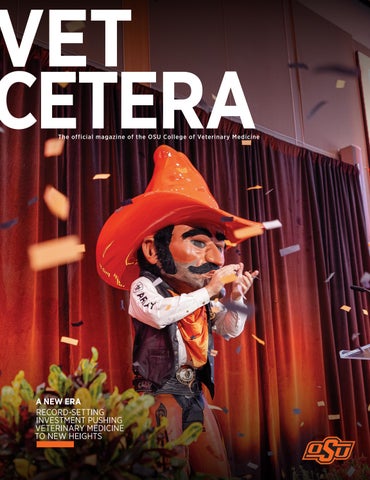
The official magazine of the OSU College of Veterinary Medicine
A NEW ERA RECORD-SETTING INVESTMENT PUSHING VETERINARY MEDICINE TO NEW HEIGHTS
FROM THE DEAN’S OFFICE
The historic $250 million appropriation from the Oklahoma Legislature will fund the design and construction of a contemporary, state-of-the-art veterinary teaching hospital — one that will set a new standard among North American veterinary colleges.
This achievement was truly a team effort. We are grateful to President Jim Hess and Oklahoma State University leadership, Past Chair Jimmy Harrell and the Oklahoma A&M Board of Regents, members of the Oklahoma House and Senate, our alumni and practitioners, and the faculty, staff and students who worked together to make this vision a reality.
Stay connected through college publications and social media for updates on our progress.
This year, we graduated 102 new veterinarians. This class achieved a North American Veterinary
Licensing Examination pass rate of 97%. This figure puts OSU eight points higher than the national average.
I hope you enjoy the stories and updates in this edition of Vet Cetera. Many exciting things are happening in our curriculum, hospital, diagnostic and research laboratories.
We invite you to visit and see for yourself — you are always welcome.
GO POKES!
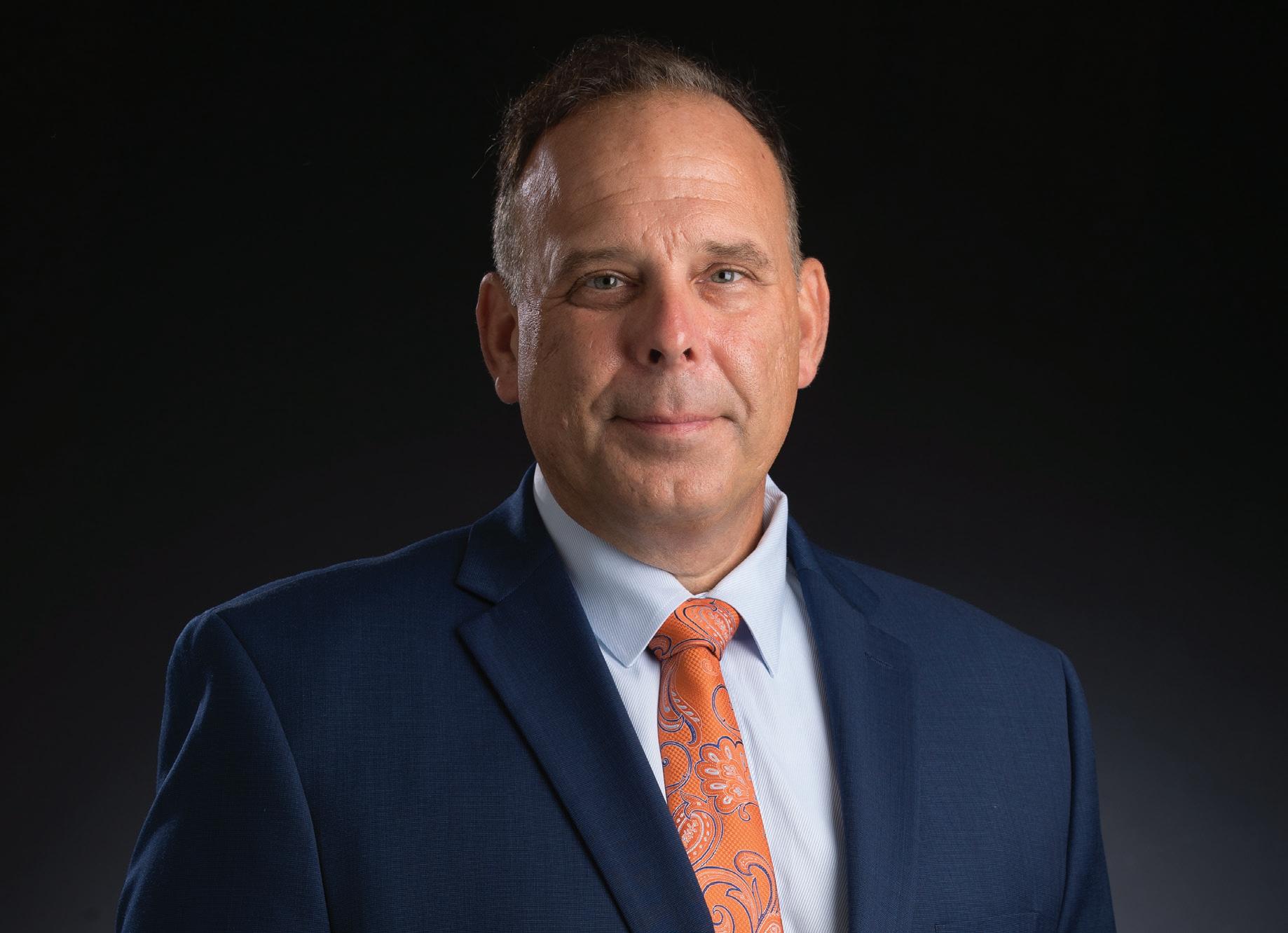
Dr. Jerry Ritchey Interim Dean College of Veterinary Medicine
PHOTO PHIL SHOCKLEY
10
Becoming Dr. Williams
OSU Alumna overcame childhood difficulties to become a veterinarian and mother. 16 The Last Frontier
OSU CVM students, faculty and friends work with sled dogs in Alaska for the Iditarod. 28
A Crystal Clear Vision
OSU alumnus and pioneering ophthalmologist make $2 million gift, advancing animal eye care and innovative research at CVM. 32 Blueprint for the Future
OSU secures a record $250 million state appropriation to build a world-class veterinary teaching hospital, advancing veterinary education, animal care and rural health.
40 Stride Toward Healing
OSU equine specialists advance treatment for septic joint infections in newborn foals, pioneering safer and more effective protocols to improve survival and longterm health.
INTERIM DEAN, COLLEGE OF VETERINARY MEDICINE
Dr. Jerry Ritchey
COMMUNICATIONS SPECIALIST
Kinsey Reed
INTERIM ALUMNI AFFAIRS AND EVENTS SPECIALIST
Jenny Capron
SENIOR DIRECTOR OF DEVELOPMENT/TEAM LEAD
Megan Smith
EDITOR
Jordan Bishop
ART DIRECTOR
Dave Malec
DESIGNER
Alyssa Scattergood-White
CONTRIBUTING WRITERS
Taylor Bacon, Abby Bianchi, Jordan Bishop, Mack Burke, Rylee Glazier, Bailey Horn, Presley Pullen, Grant Ramirez, Kinsey Reed, Elena Santiago and Sydney Trainor
PHOTOGRAPHY
Taylor Bacon, Bailey Horn, Ellie Piper, Eric Priddy and Kinsey Reed
The College of Veterinary Medicine graduates competent, confident, career-ready veterinarians — a tradition it has proudly carried forward since the day the veterinary college opened its doors in 1948. Please join us at the CVM website: vetmed.okstate.edu
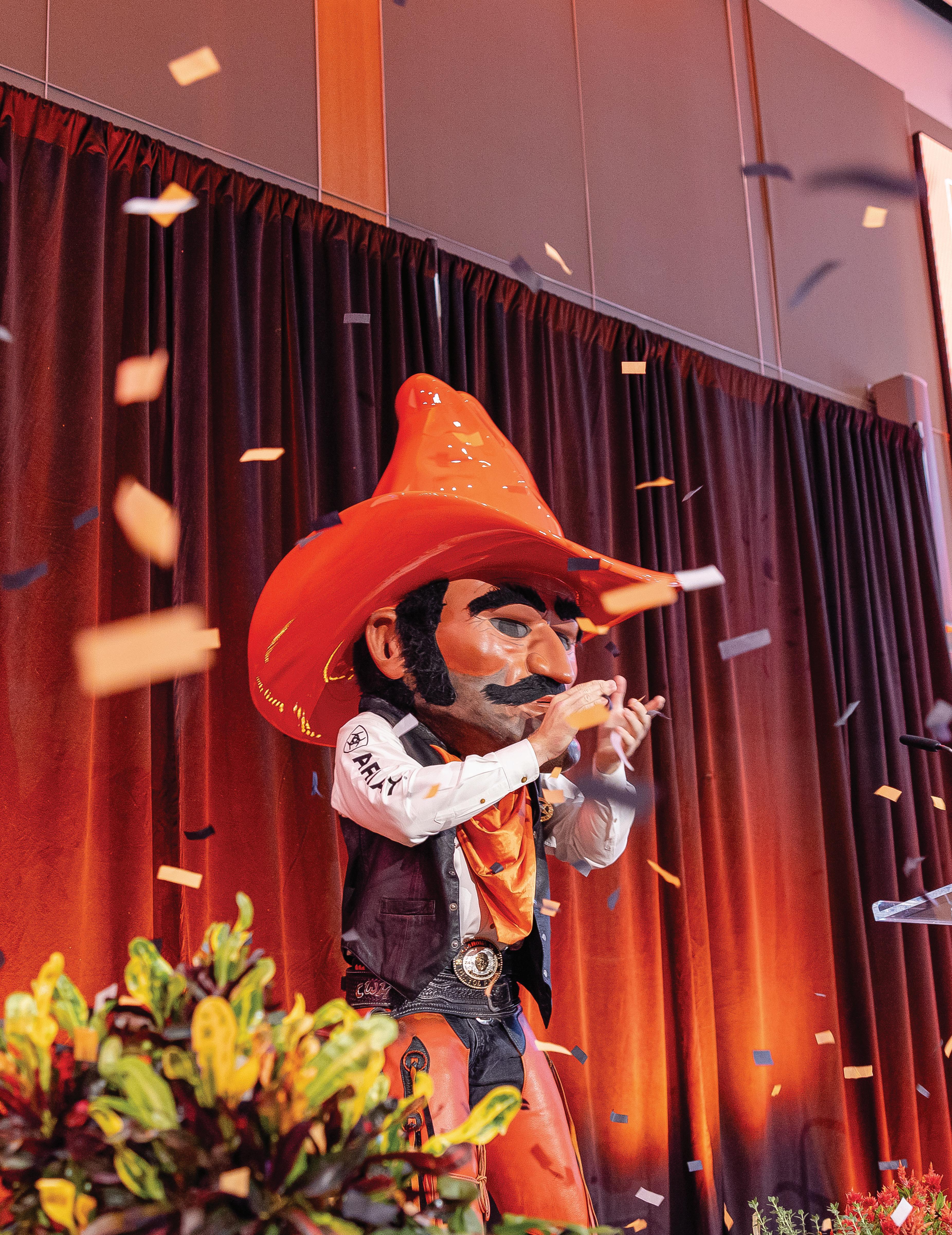
On the cover: Pistol Pete applauds as confetti falls at the Celebrating Oklahoma’s Veterinary Future event on Aug.
copies/Oct. 2025
in the ConocoPhillips OSU Alumni Center. (Photo by Ellie Piper)
Hello to the Class of 2029
CVM welcomes its newest students to Stillwater
As a new school year begins, Oklahoma State University’s College of Veterinary Medicine welcomed the class of 2029.
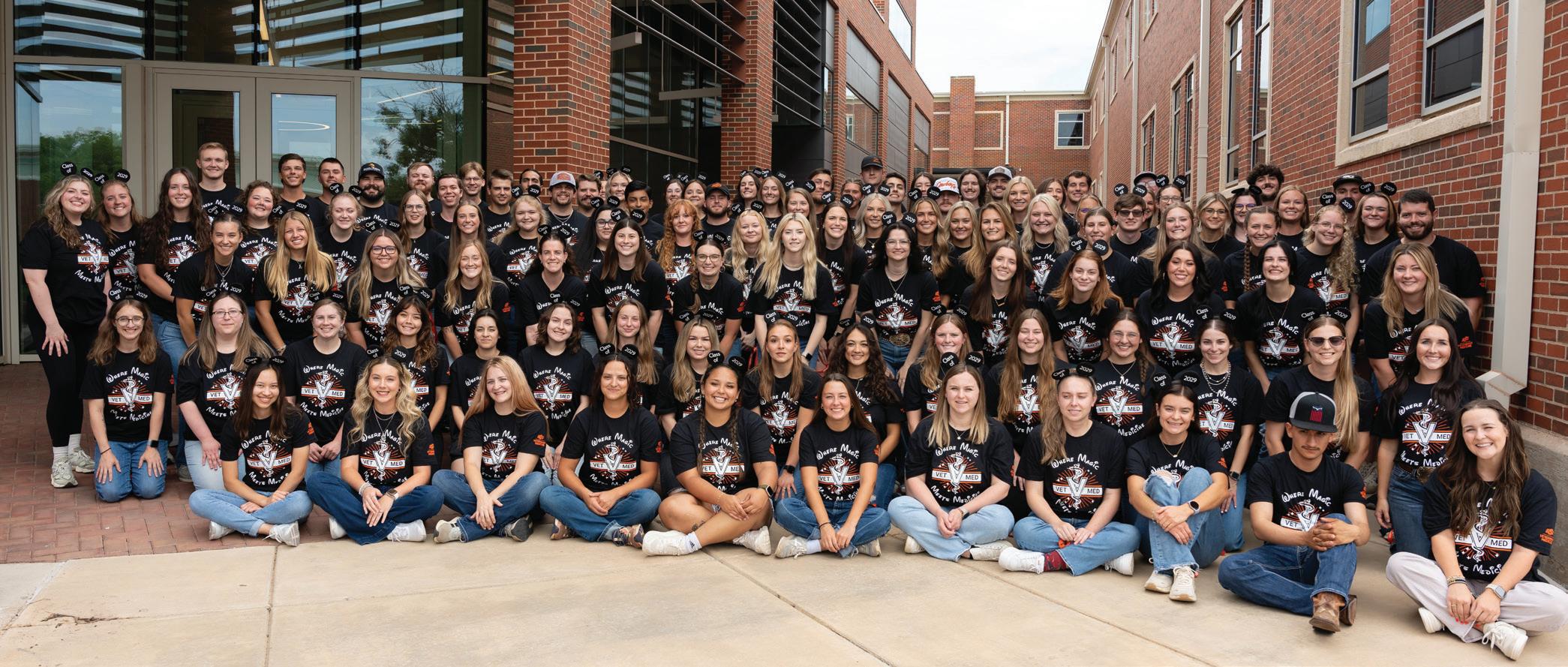
With each new class comes fresh ideas, unique interests and a wide range of experiences. This class consists of 106 students from across the country who have arrived in Stillwater. Each person has their own story, yet all share one common goal — to become veterinarians.
“What’s excited me most about starting veterinary school is getting into the material that actually applies to my career,” said Cade Harris, a firstyear student. “I loved the undergraduate experience, but having all my course material geared toward veterinary medicine has really gotten me excited about the challenge of learning.”
For many, this dream began in childhood, sparked by caring for family pets or helping on farms and ranches. Others discovered veterinary medicine later in life, after finding joy in science, research or serving their communities.
Regardless of when the journey began, every class member has taken countless steps to reach this milestone.
“I am excited to see what this class can do,” said Chasity Srader, prospective students coordinator. “You can tell that they are eager to work and learn, as evidenced by their punctuality — they all showed up for orientation 30 minutes early.”
Orientation week gave the students a glimpse into life at the OSU CVM. They spent time getting to know their classmates, meeting faculty and staff
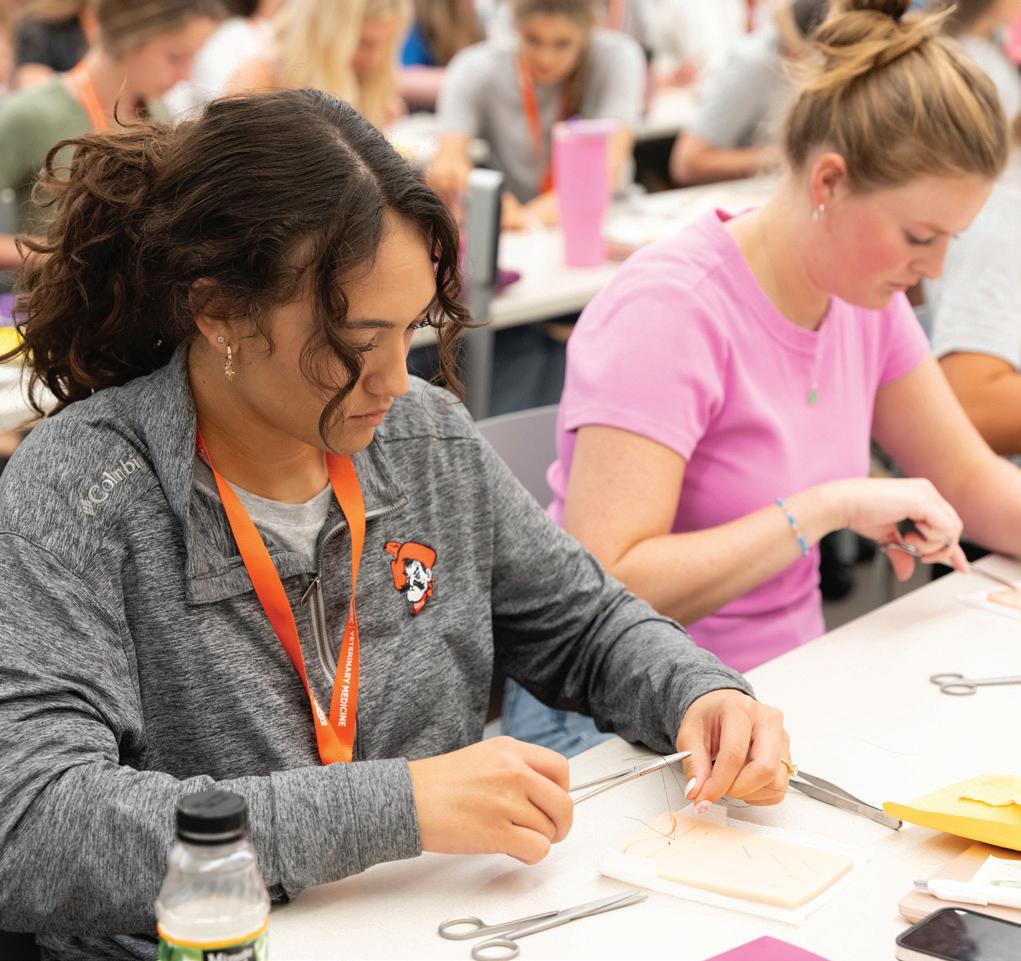
members and learning about the resources available to help them succeed. Team-building activities and even practicing their first sutures gave the class a sense of what lies ahead.
“What I enjoyed most about orientation was the opportunity to connect with my classmates through all the group activities before the start of our first year,” said Lauren Chaney, a firstyear student.
In just a few days, the students began to form connections that will carry them through the program. The veterinary curriculum is rigorous, and having a strong support system of classmates often makes the journey more manageable and more rewarding.
Beyond orientation, the students participated in the induction ceremony,
STORY AND PHOTOS BAILEY HORN
Oklahoma State University veterinary
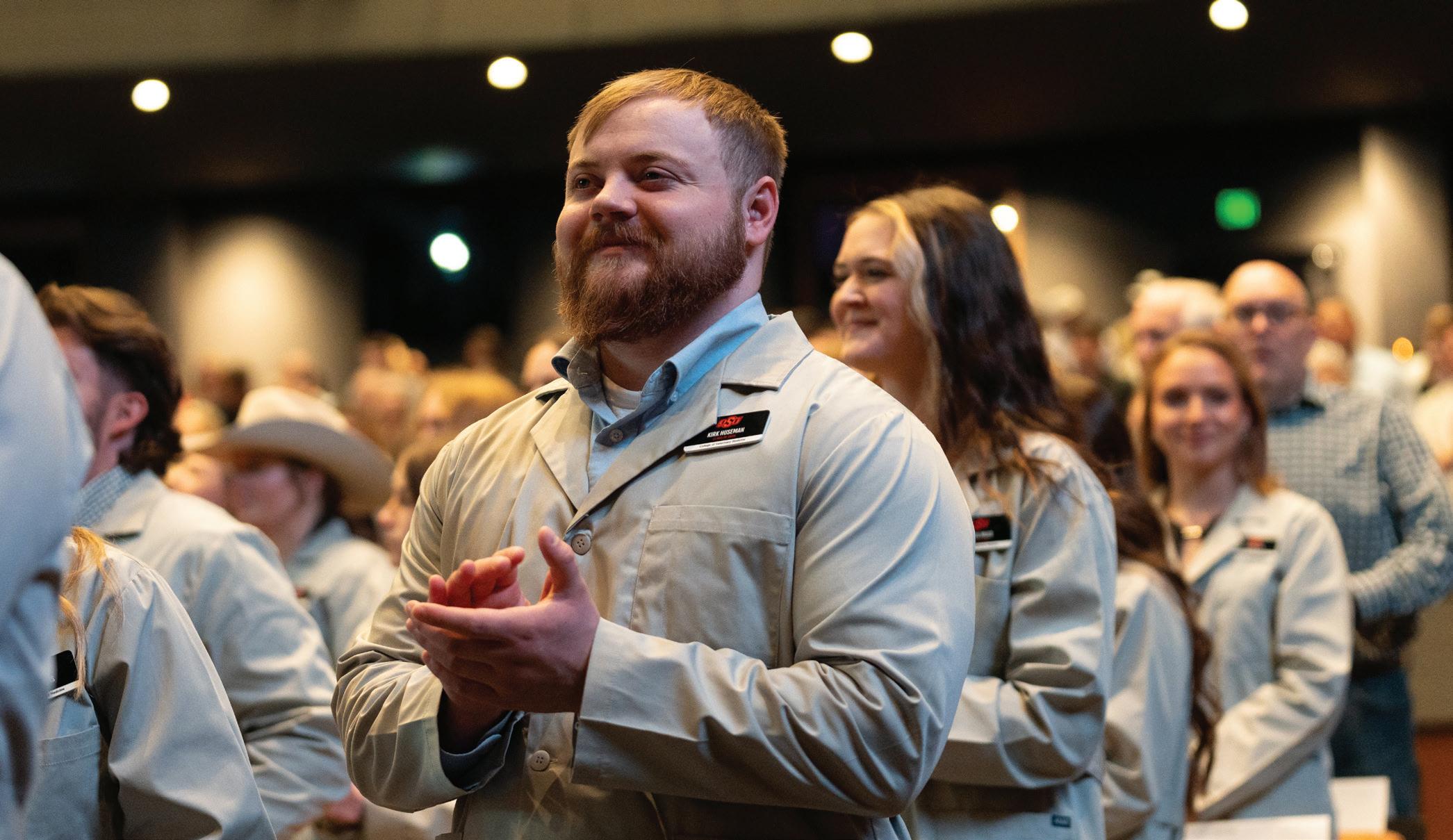
student Kirk Huseman applauds at the Class of 2029 Induction Ceremony.
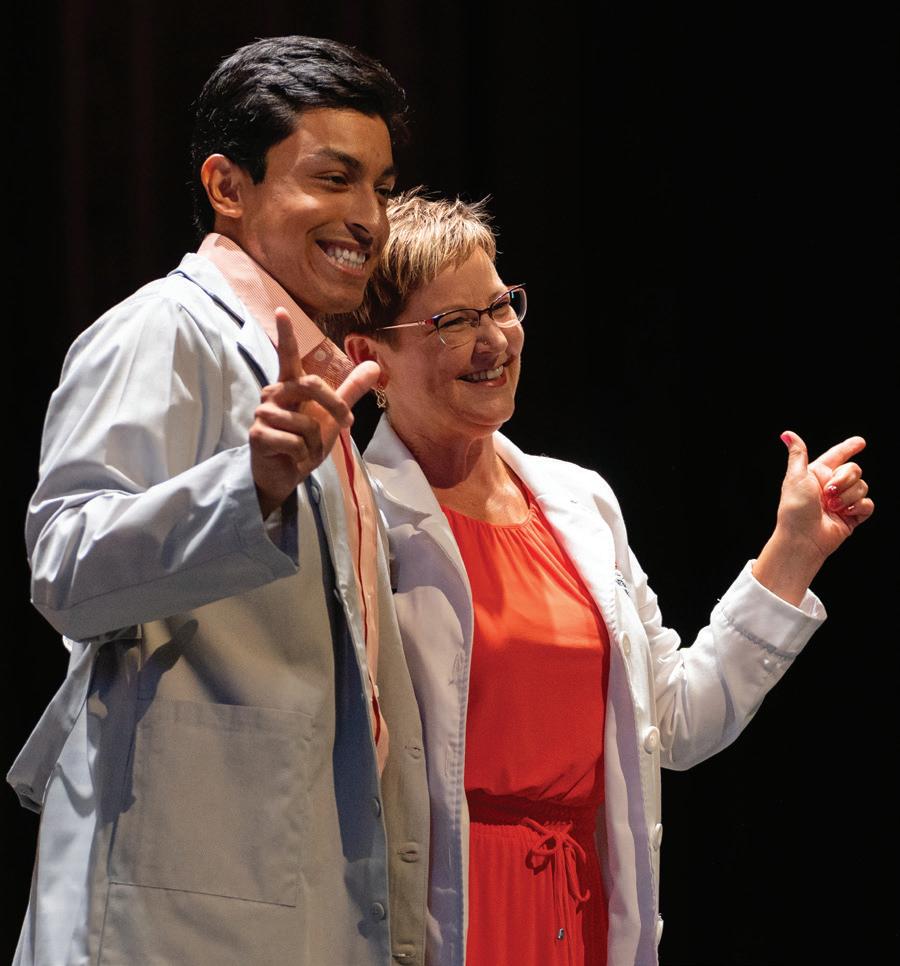
a tradition symbolizing their formal entrance into the profession. They’ll gain hands-on experience through labs, rotations and clinical work at the OSU Veterinary Medical Teaching Hospital and eventually walk across the stage at commencement to receive their Doctor of Veterinary Medicine.
Though the road ahead may be demanding, the rewards of becoming a veterinarian are immeasurable. From advancing animal health to supporting
food security, the impact these future doctors will make reaches far beyond Stillwater. For first-year student Connor Gregory, that impact begins with hands-on learning and a commitment to rural communities.
“I am looking forward to necropsies and theriogenology for large animals,” Gregory said. “I am excited to go back and serve my rural community and the agricultural industry post-graduation.”
The students’ energy, dedication and diverse backgrounds will shape their futures and contribute to OSU’s legacy of veterinary excellence.
“We have many talented and intelligent students coming through, and I cannot wait to see how much they grow within the next four years,” Srader said.
First-year veterinary students work on sutures as a team-building exercise during orientation.
Dr. Nancy Hensley coats a first-year student at the 2025 Induction Ceremony.
The Oklahoma State University College of Veterinary Medicine Class of 2029 consists of 106 students from across the country.
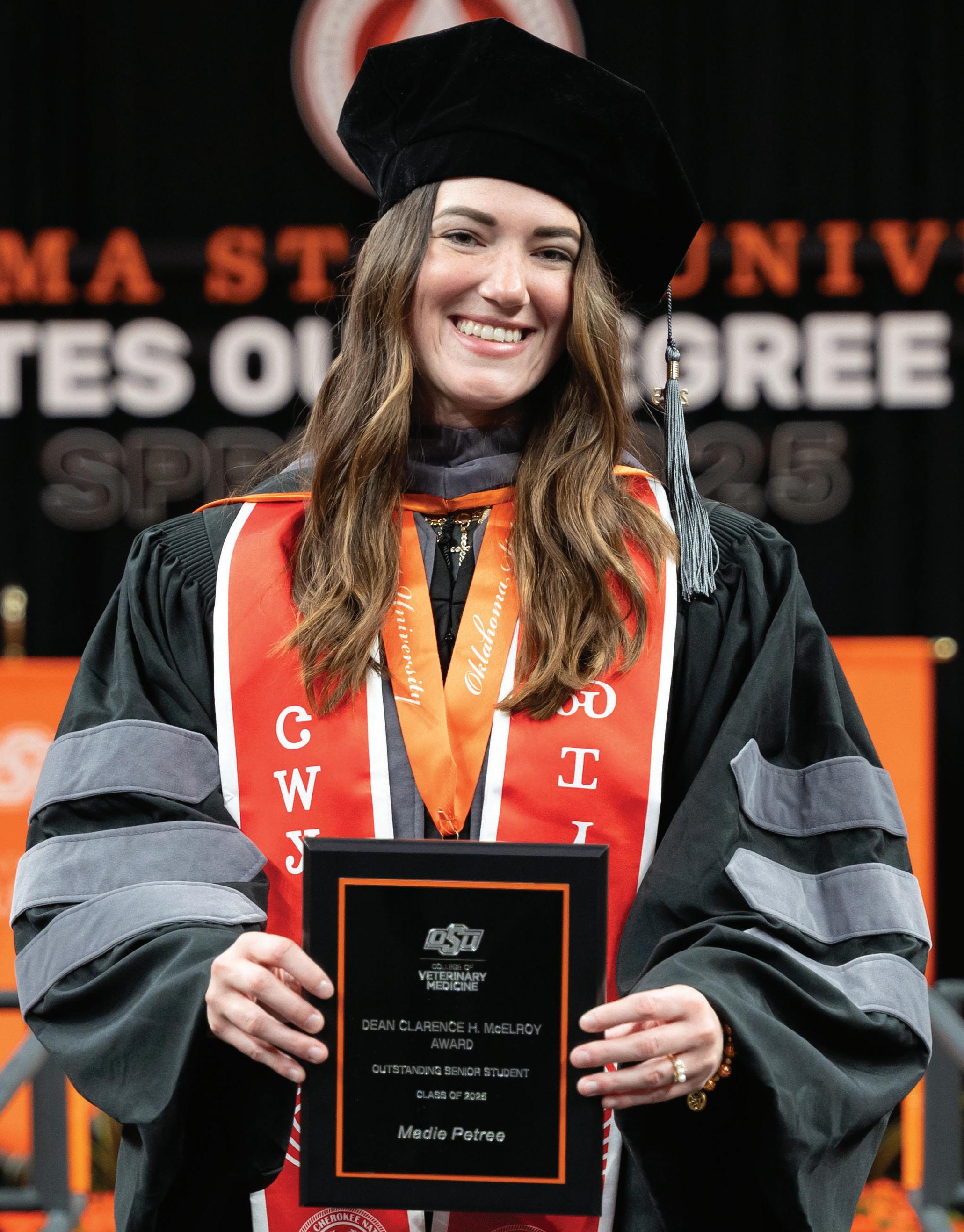
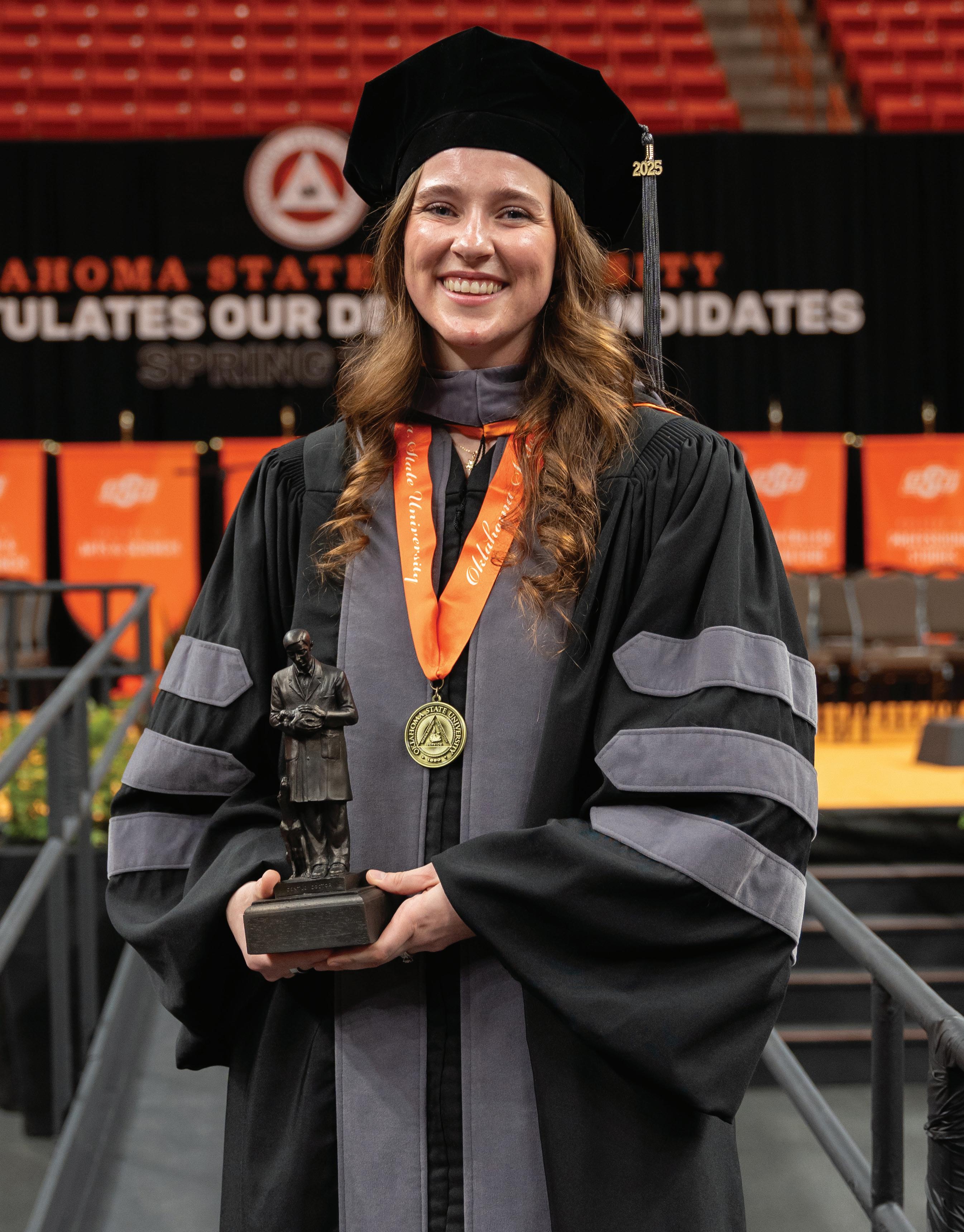
Dr. Madie Petree poses with the Dean Clarence H. McElroy Award at the Class of 2025 commencement ceremony.
Petree Prevails
Graduate earns McElroy Award: CVM’s highest honor
Dr. Madie Petree, an Oklahoma State University College of Veterinary Medicine alumna, didn’t just grow up with animals — she saved them, one stray at a time.
“My mom has a sixth sense for stray animals,” Petree said. “She would always say, ‘We’re keeping it until we find a home.’ But they never left.”
Petree was surrounded by 11 rescued dogs, a cat and a herd of black Angus cattle. In the Petree household, animals came first.
When emergencies happened, Petree stepped in to watch, help and ask questions. Early exposure to veterinary care shaped her future, but one moment in eighth grade sealed it.
A car hit the Petrees’ 20-year-old family dog, Sassy. The injury caused a broken leg, and the prognosis looked grim. Still, the Petree family opted for amputation surgery. Against the odds, Sassy survived, and by the next day, she sprinted around the yard on three legs.
“Watching the vet give us a few more happy months with her made me think, ‘I want to do this. I want to give people more time with animals they love,’” Petree said.
Petree received her Doctor of Veterinary Medicine degree at Gallagher-Iba Arena in May. The same day, she was awarded the 2025 Dean Clarence H. McElroy Award — the highest honor presented to a graduating veterinary student.
“I never expected it,” she said. “When they called my name at graduation, I was in shock. My mentor hit me on the knee and said, ‘That’s you.’ And I was overwhelmed with gratitude.”
Clinical faculty and fourth-year classmates select the McElroy Award winner. It honors a student who excels in academic achievement, clinical skills and leadership. Petree stood out in all three areas.
Petree broke her neck at a wellness night at a trampoline park during the
spring semester of her first year. She endured several months in a rigid neck brace, along with physical and emotional obstacles. This could have derailed her education. Instead, she pressed on.
“Ironically, I did not feel well at the wellness event,” Petree joked. “I couldn’t lift anything. Couldn’t turn my head. Couldn’t even look through a microscope.”
With the help of OSU faculty and classmates, Petree stayed on track.
Dr. Jerry Ritchey, interim OSU CVM dean, helped coordinate special accommodations so she could complete her coursework.
“Madie was the type of leader who never asked for special treatment, even when she had every reason to,” Ritchey said. “She just wanted to do the work and do it well. She’s the epitome of everything we hope our graduates become: intelligent, compassionate and grounded.”
Petree served as class president all four years. She was the bridge between students and faculty during one of the most intense times of their lives.
Dr. Lionel Dawson, OSU CVM professor, said Petree’s steady presence, clear communication and strong support of her peers set her apart.
“I truly believe I tried my best to go above and beyond for my class,” she said. “And I don’t regret a moment of it.”
Outside of leadership and coursework, Petree trained through externships. She completed externships at North Carolina State University and the University of Florida. During these externships, she developed a deeper passion for cardiology.
“The heart is my favorite organ,” she said. “It’s like a big puzzle. Every piece works together in perfect rhythm. It just makes sense.”
Petree began her career in mixedanimal medicine this past August when she moved to Wyoming to join a practice.
Drs. Terry Sparkman and Colter Smith at Sparkman Animal Clinic
AWARD INFO
The Dean Clarence H. McElroy Award is named after the College of Veterinary Medicine’s first dean. It is given to a senior CVM student selected by faculty and fourth-year students based on high academic achievement, leadership and outstanding clinical proficiency.
in Muldrow, Oklahoma, are Petree’s hometown mentors. As a teenager, they let her shadow them. Petree credits them with giving her the confidence to practice hands-on medicine.
“They didn’t treat me like a kid; they treated me like a future vet,” Petree said.
For current and future students, Petree offers honest encouragement.
“There will be days you feel you’re on top of the world, and days where you wonder if you belong,” Petree said. “But don’t give up, ask questions, take notes and lean on your mentors. You’re going to get there.”
Petree stated the lessons learned, friendships created and the gratitude she gained in Stillwater will carry her wherever she goes.
“I’ll always be grateful for Oklahoma State,” she said. “It shaped me, challenged me and helped me become the veterinarian I always hoped I could be.”
Hannah King was named the top third-year veterinary student by her peers.
Where Passion Meets Excellence
King earns Dean Harry W. Orr Memorial Award
Growing up in Arlington, Texas, Hannah King was determined to become a veterinarian.
That passion was solidified through years of hands-on experience in the field. King, a fourth-year veterinary student at Oklahoma State University’s College of Veterinary Medicine, began shadowing at veterinary clinics at age 14, starting with small animals. Her interests expanded during her undergraduate career at Texas A&M University, where she majored in biomedical sciences and worked at an equine breeding facility. Despite not growing up around horses, King quickly became comfortable and knowledgeable, deepening her interest in equine and small animal medicine.
Now, King’s dedication and academic excellence have been recognized through the Dean Harry W. Orr Memorial Award scholarship, presented in the spring of 2025. The Orr Award honors the top-ranking thirdyear veterinary student.
“I was honored when I found out I received this prestigious award,” King said. “It shows that my hard work has paid off, and being recognized for that is heartwarming.”
Beyond the honor of receiving the award, the scholarship is helping ease the financial burden of veterinary school.
“This scholarship will benefit me in multiple ways. I am currently not working, so any extra money to go toward my loans is tremendously helpful and appreciated,” King said. “It also helps a lot because I am an out-ofstate student, so my tuition is quite high. Receiving a scholarship, in any amount, is much appreciated and will help me now and in the future without having to pay as much as I originally had thought for school.
“Without this scholarship, I would have to take out even more loans and go further into debt, so I am incredibly grateful.”
Before coming to OSU, King gained experience at multiple veterinary clinics in Texas. She credits those early experiences and mentors with helping shape her career path.
“I have learned so much from the doctors that I have worked with and know that I am going to be the best doctor I can be because of my experiences at these clinics,” King said. “I can’t thank the veterinarians that I have worked with enough for pursuing me and encouraging me to keep learning.”
While working in clinics, King saw the powerful role veterinarians play during moments of crisis.
“I saw how I could make a difference for animals and their owners,” she said. “I want to be an advocate for animals and do my best to take care of them in their times of need.”
As King enters her final year at OSU, she is eager to go from the classroom to clinical rotations at the
hospital. After graduation, she hopes to return to the Dallas-Fort Worth area and become a mixed animal general practitioner.
“I am looking forward to getting a lot of experience on my different rotations and finally getting out of the classroom to continue growing my knowledge and applying what I know to a clinical setting,” she said.
l!J
AWARD INFO
The Dean Harry W. Orr Memorial Award is named after the College of Veterinary Medicine’s second dean who was on staff at OSU for 36 years. It is given to the CVM’s top-ranking thirdyear student.
“I saw how I could make a difference for animals and their owners. I want to be an advocate for animals and do my best to take care of them in their times of need.”
HANNAH KING, FOURTH-YEAR VETERINARY STUDENT
Dr. Jacqueline Casto poses with the Gentle Doctor Award at the Class of 2025 commencement ceremony.
Making Her Own Path
Early career shift ends with Gentle Doctor Award
As a child, Dr. Jacqueline Casto thought her future might follow in her father’s military footsteps. Growing up between Germany and Texas, she admired discipline and structure, imagining a career in uniform. But as graduation neared, Casto realized her dream was elsewhere.
“I really thought I was going to go into the military at first because my dad was super hardcore into that,” she said. “At the end of high school, I just thought, ‘No, I’m not doing that.’ I asked myself what I wanted to do that wasn’t shaped by other people’s expectations — and that was veterinary medicine.”
Her husband and high school sweetheart, Christian Casto, helped give her the confidence to pursue that goal.
“He was the one who said, ‘I don’t know why you don’t think you can do that but go do it.’ Without him, I don’t think I’d have had the courage to take that step,” Casto said.
While she didn’t grow up surrounded by cattle or horses, she did spend time around companion animals — even rabbits. Her grandfather in Germany raised and processed rabbits. Though unusual, those early experiences sparked curiosity about animals that stayed with her.
Unlike many who credit a childhood veterinarian or mentor, Casto said her path was largely self-made.
“Nobody in my family paved the way. I’m the first doctor in my family,” she said. Before veterinary school, she worked as a veterinary technician. That experience not only strengthened her medical skills but also deepened her ability to communicate with clients.
“I think being a vet tech gave me more confidence,” Casto said. “I’ve always been communicative but learning how to explain things in ways people could understand was a challenge at first. At the end of the day, it doesn’t matter if you sound smart. What matters is being able
“When someone looks at me and trusts me with something as valuable as a family member, that feels really good.”
DR. JACQUELINE CASTO
to connect with people, so they trust you with their pets.”
For her, those moments of trust — whether in the exam room or postsurgery — are the most rewarding.
“When someone looks at me and trusts me with something as valuable as a family member, that feels really good,” she said. “Even when the outcome isn’t positive, I can walk out of a room knowing I was there for them.”
That compassion and dedication were recognized in May when she received the Gentle Doctor Award at Oklahoma State University College of Veterinary Medicine’s commencement ceremony. The honor, voted on by classmates, left her stunned.
“Nobody tells you beforehand. When they called my name, I didn’t want to get up,” she said with a laugh. “I even walked off the stage the wrong way because I was flustered. But afterward, so many classmates told me they couldn’t imagine it going to anyone else. That meant everything.”
The award is given to a graduating senior who demonstrates deep care for both animals and people. For Casto, it validated the heart she had put into her education.
“It was such an honor to be recognized by my peers,” she said. “I’ll never forget it.”
Looking back, she credits OSU with shaping her both as a veterinarian and as a person. Classmates came from different backgrounds and perspectives,
and she learned to value listening and collaboration even when disagreements arose.
“You can turn disagreements into friendships,” she said. “It doesn’t matter if you’re always right. Be willing to listen, learn and make judgments off that. If you pigeonhole yourself as the only one who knows the answer, you stop growing.”
As she looks ahead, she carries that lesson with her. Whether in surgery, the exam room, or casual conversation, she strives to bring openness and compassion to every interaction. And she hasn’t forgotten the people who supported her along the way.
“Without my husband’s encouragement, I might never have pursued this path,” Casto said. “And without the support of classmates and faculty, it would have been so much harder. I’m just grateful.”
The Gentle Doctor award is given to the graduating senior who demonstrates the most compassion and dedication to their patients and clients. It is voted on by members of the College of Veterinary Medicine graduating class.
STORY ELENA SANTIAGO | PHOTO BAILEY HORN
Dr. WilliamsBecoming
A veterinarian’s story of survival and self-worth
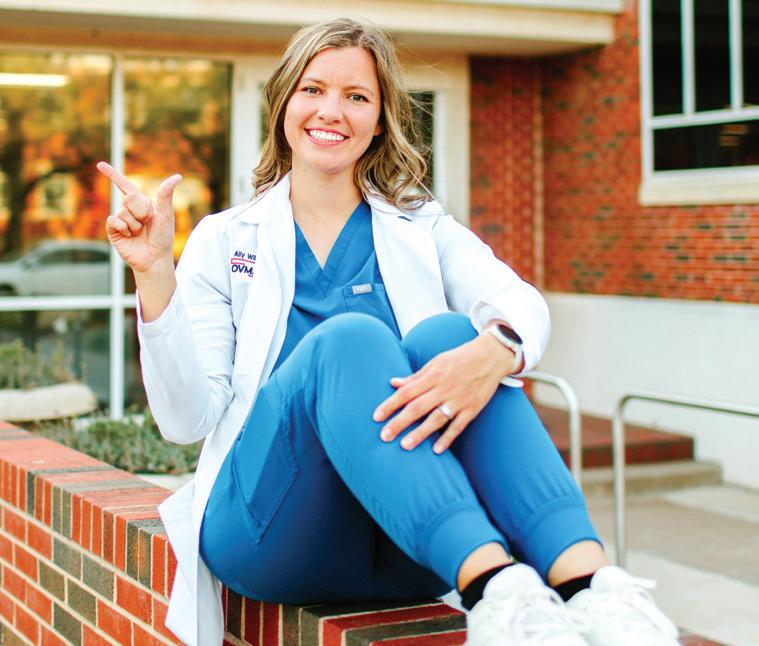
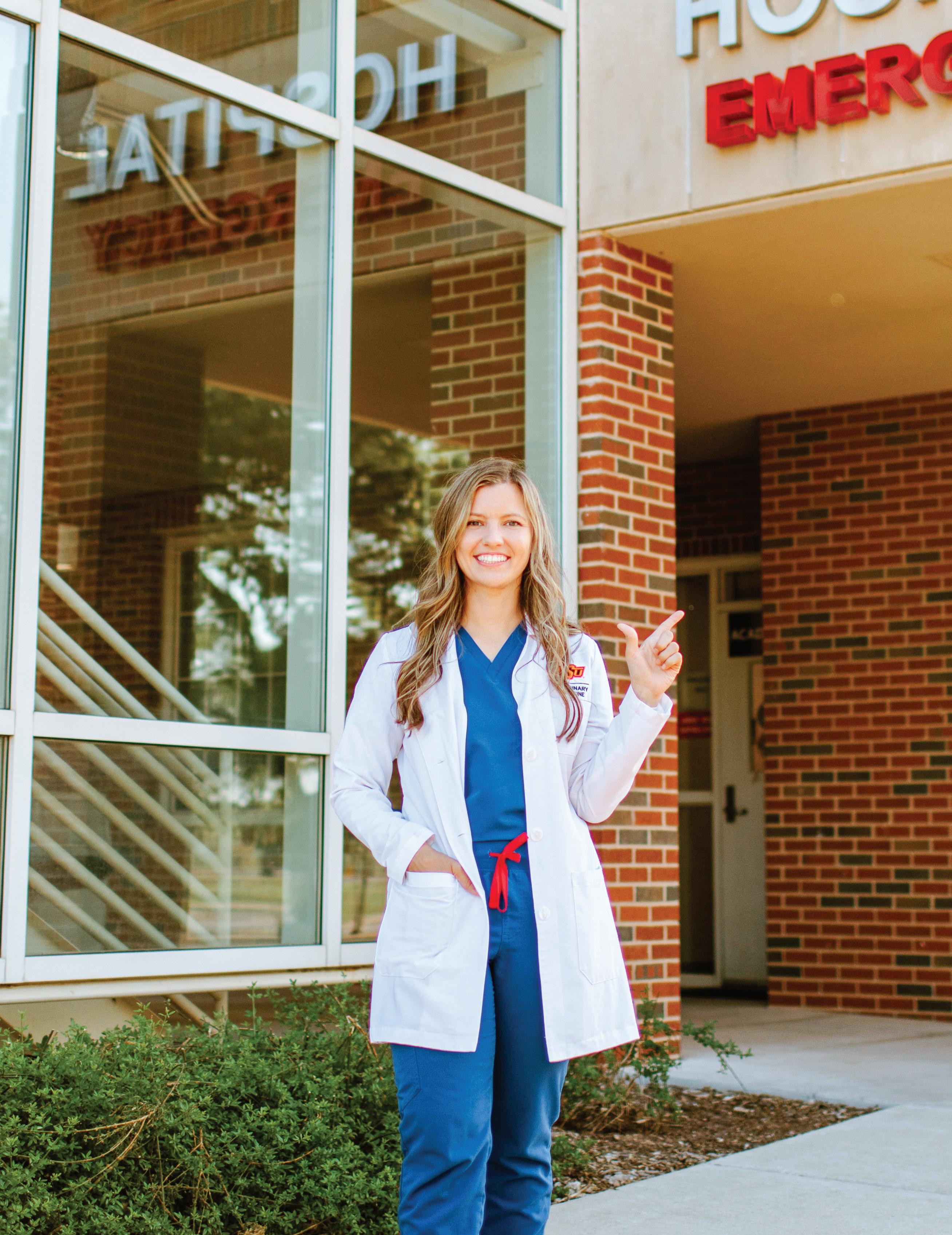
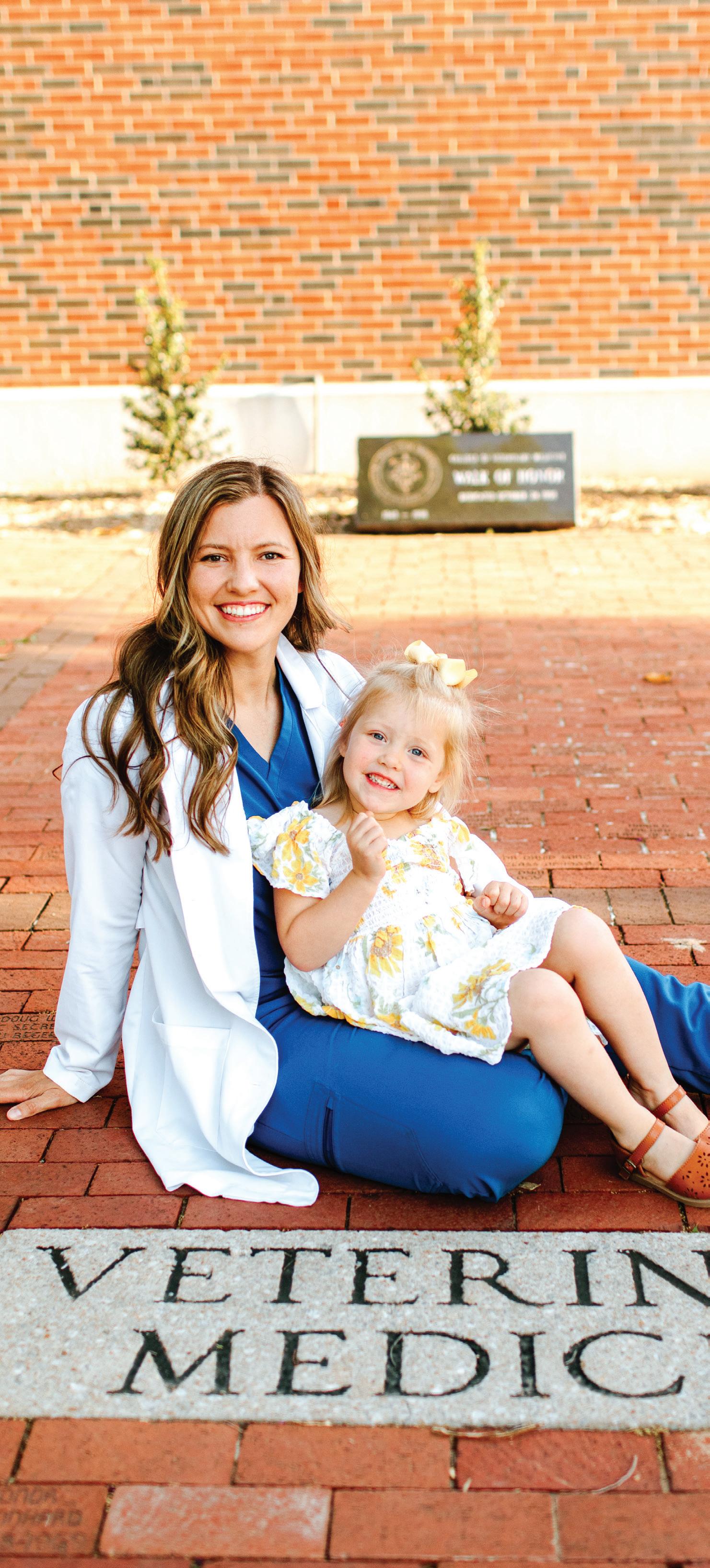
Dr. Ally Williams poses in front of the Veterinary Medical Teaching Hospital after graduating with her DVM in May.
STORY BAILEY HORN | PHOTOS CHLOE JANE PHOTOGRAPHY
Rough beginnings don’t have to define a life. Just ask Dr. Ally Williams, Oklahoma State University College of Veterinary Medicine alumna.
Born Nov. 15, 1995, Williams entered the world amidst chaos. Her great-grandmother, lovingly known as “Granny,” raised her until 2002. Her mother was absent, struggling with alcoholism. Her father — though he’d occasionally take her to Chuck E. Cheese and buy her dresses — battled the same demons.
“He was a pretty good dad — when he was around,” Williams said.
By the time she was a teenager, Williams was living with her father, stepmother and her stepmother’s two sons. That’s when things worsened.
Her father’s behavior shifted from inconsistent affection to emotional cruelty. He regularly tore her down with harsh words and belittling names. The verbal abuse began to erode her sense of worth, especially during her formative teenage years. Williams began questioning her value and internalized the negativity projected onto her.
“It was hard being a young girl and hearing those words from your dad,” Williams said.
In 2011, her father was diagnosed with congestive heart failure. His declining health took a toll on his mental state — and his family. The verbal abuse escalated into physical violence.
“I can still hear the sound of my stepmother’s head hitting the floor after being thrown to the ground by my father,” Williams said.
At 15, after years of primarily emotional trauma, Williams moved in with her paternal grandparents. But
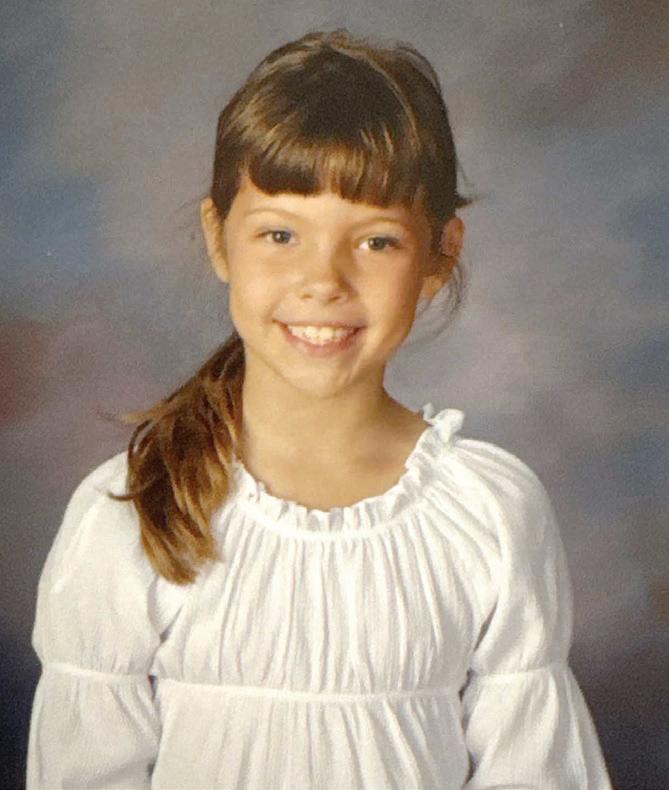
Ally Williams had a difficult childhood, with her great-grandmother raising her as Williams’ parents were absent.
they, too, quickly realized they weren’t equipped to raise a teenage girl. So, they made a call that would change her life: she was sent to Oklahoma Baptist Homes for Children.
“I was terrified, and being sent there felt like a punishment,” Williams said. “I had no confidence, no voice. I was scared of what the girls there would be like.”
She never received a visit from her family.
What began as another painful chapter turned into the foundation of her healing. The structure and support provided at the children’s home offered stability for the first time in years. Slowly, through the consistency of the environment and the staff’s compassion, Williams began to rebuild her confidence. Daily routines, expectations and encouragement helped her regain a sense of control and identity.
“The children’s home was actually the biggest blessing,” Williams said. “It taught me that everyone has a story — and you never know what someone’s been through.”
At Madill High School, she found a place to belong. She started showing livestock and began exploring a childhood dream someone once casually mentioned: becoming a veterinarian.
“The home gave me that chance,” Williams said. “Dr. Mike Tripp, a local vet who helped at the children’s home, made a huge impact on me. I even spent Christmas with his family one year. That meant everything.”
In high school, she met Austin Williams — her future husband. Both carried scars from childhood. Austin lost his mother at a young age and his father in 2014.
“I met Austin in ag class,” she said. “But we didn’t fall for each other until a church trip to Branson, Missouri.”
They dated through high school, attending four proms together before Ally left for college at Southeastern Oklahoma State University in Durant. She thrived — earning Top 10 Freshman honors. Still, a deep internal conflict stirred.
“I had an internal struggle with becoming a veterinarian and a mom because I had the model of a stay-athome mother, and the church emphasizes the importance of women being the primary caregiver,” Williams said. “I
do not think one is better than the other. Some women desire to be a wife and a mom, and some people are called to become professionals. For me, I was called to be a veterinarian and a mother.”
Fighting a constant battle with whether she felt called to be a mother or a veterinarian, she decided to choose psychology as her major.
“I just thought, ‘I guess I’ll get married and have babies,’” Williams said.
She and Austin married in December 2016. That same year, Austin was accepted to Oklahoma State University, and Ally transferred to OSU and changed
her major to animal science. But the transition wasn’t easy.
“Science classes hit hard,” she said. “I went from excelling to struggling.”
When it came time to apply to veterinary school, she procrastinated. She submitted her application at 11 p.m. on deadline night — only to learn the system wasn’t based on Central Time. The clock struck midnight. She was too late.
“I questioned whether I even belonged in vet med,” she said. “I saw the other applicants in the Pre-Vet Club and thought I could never compare.”
Williams began working at a veterinary clinic in Perkins, Oklahoma, while still a student and transitioned into a full-time role after graduating in 2019.
That same year, Austin graduated, and the couple spent some time traveling. They explored New Zealand, Australia, Singapore, India — then the COVID-19 pandemic hit, which led them to a small island in Thailand called Koh Tao.
“We were stuck on the island for five weeks,” Williams said. “It was a wild time, but also gave us space to think.”
When they returned to the U.S., Williams decided to try again. She applied to the Doctor of Veterinary Medicine program at Ross University, but the school recommended she begin with the veterinary preparation semester. She enrolled in an online program.
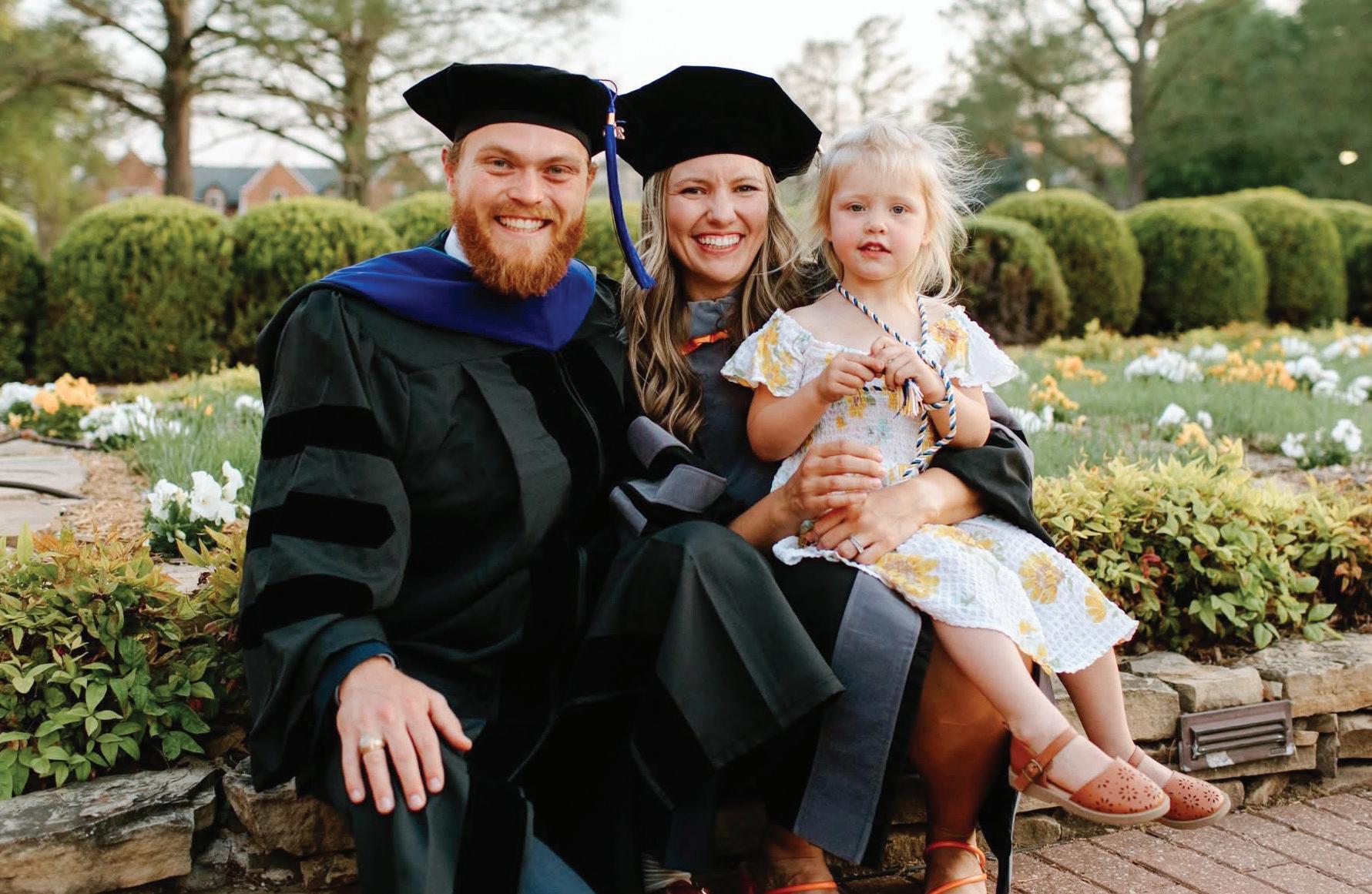
Austin Williams, Dr. Ally Williams and their daughter, Avelynn, pose on the OSU campus.
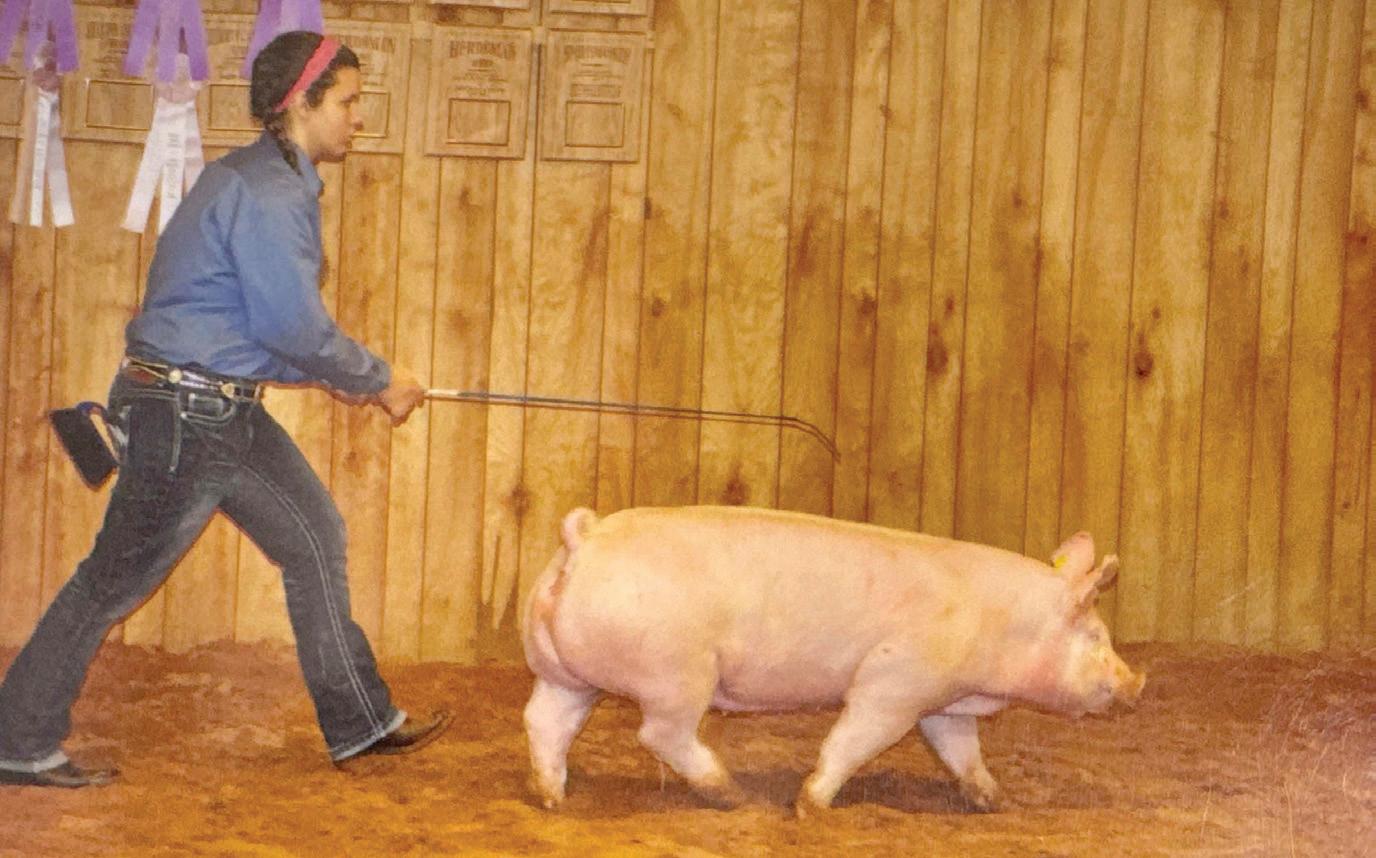
Ally Williams showed pigs when she attended Madill High School in Oklahoma.
“I did really well,” she said. “It reminded me I could do this.”
Her strong performance earned her a spot in the DVM program, which she officially began in January 2021. A month and a half later, she got another life-changing surprise: she was pregnant.
“Immediately, the doubts came flooding back,” Williams said. “Could I do school and raise a baby?”
Her first semester was virtual, but the couple packed their bags when it came time to move to the West Indies Island of St. Kitts, home of the Ross School of Veterinary Medicine, for in-person learning. While she studied veterinary medicine, Austin began his master’s in legal studies.
“My third semester of veterinary school, I took off and Austin and I learned how to be parents,” Williams said. “We moved back to the States, and I had Avelynn.”
Austin stayed home with Avelynn while finishing his master’s program, and in August 2022, he began law school at the University of Tulsa.
Eventually, Williams transferred to OSU’s College of Veterinary Medicine, starting in January 2021. In May 2025, she graduated as Dr. Ally Williams. That same month, Austin earned his law degree.
Now, the Williams family lives in Grand Junction, Colorado, where Ally is a small animal veterinarian and Austin practices law.
“I work three days a week,” she said. “It lets me be both a mother and a vet.”
For years, Williams didn’t believe she was smart enough or strong enough. But now, she sees how every piece of her story matters.
“I gave up on my dream because I believed the lies I heard growing up,” she said. “But I always come back to that quote from Will Smith — ‘God places the greatest things in life on the other side of fear.’”
Her greatest motivator? Her daughter.
“I thought, what would I want my daughter to believe?” Williams said. “I want her to know she can be anything her heart desires. If that’s being a stay-athome mom, great. If it’s chasing a career, great. Either way, she can do it — just like me.”
l!I
Dr. Ally Williams became pregnant soon after starting her veterinary studies. She and her husband, Austin, worked together to raise her and achieve their degrees.
From Stress to Serenity
OSU expertise helps Lucy the dog thrive again
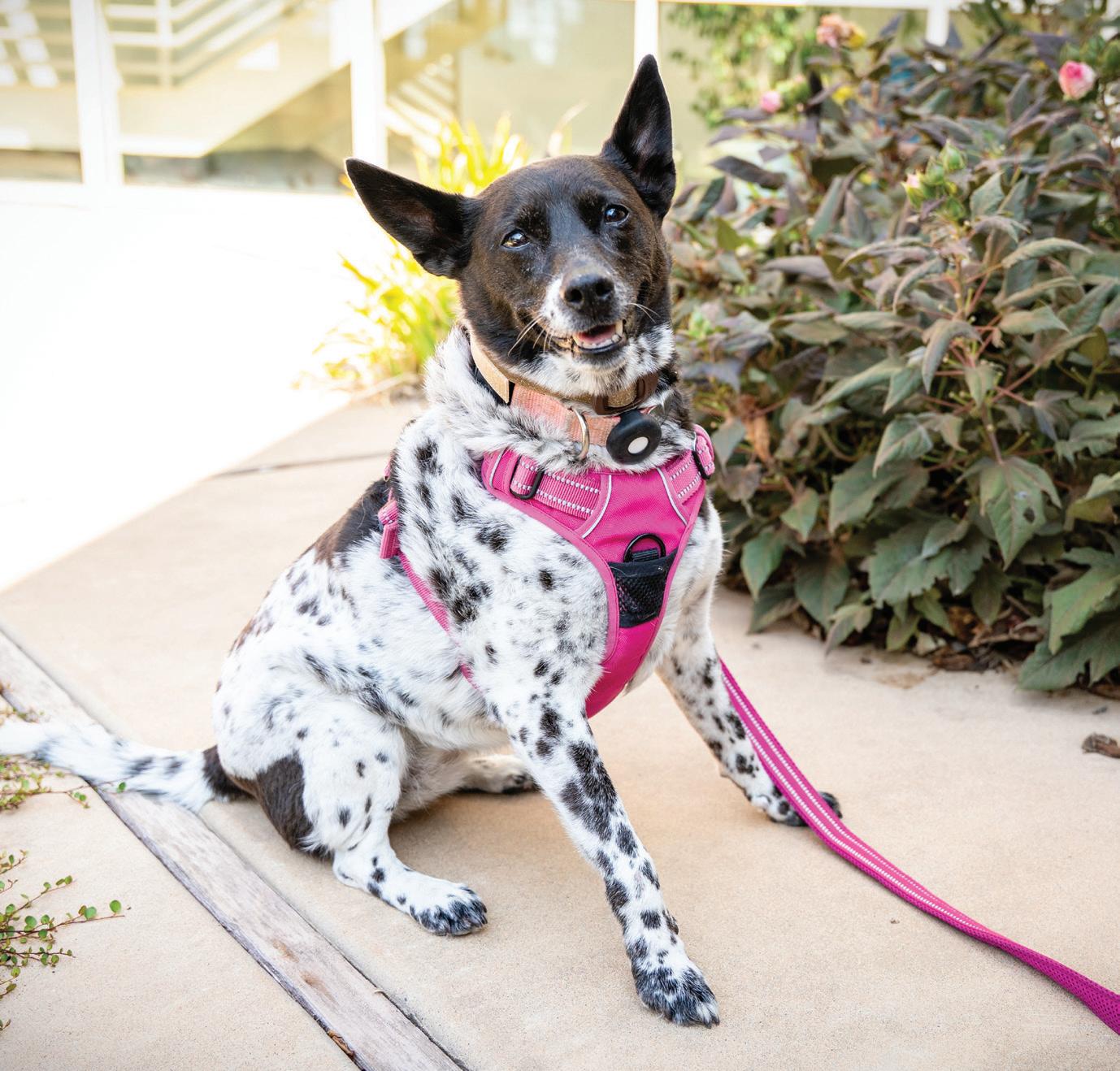
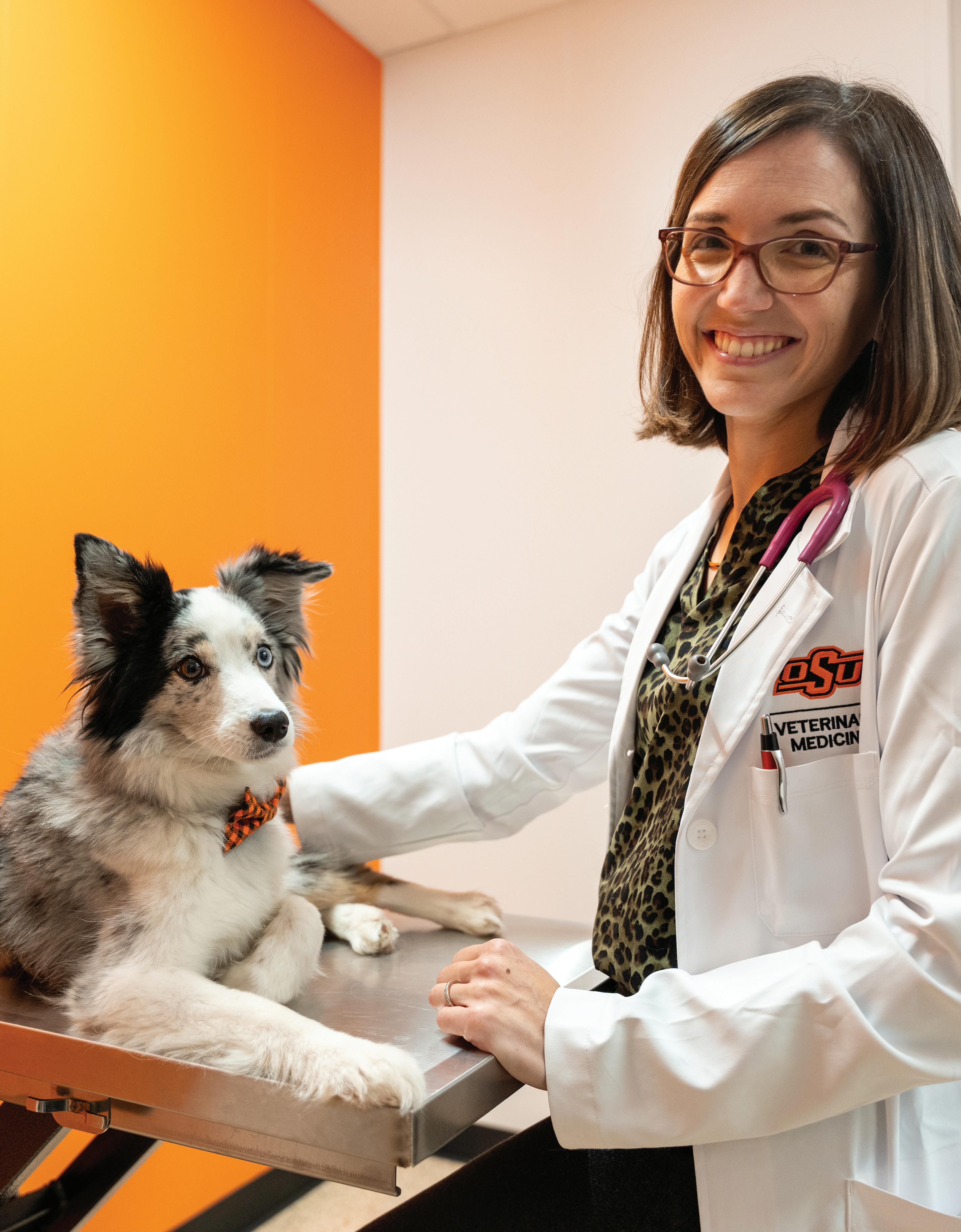
Through the Oklahoma State University Veterinary Medical Teaching Hospital’s behavior medicine service, Dr. Courtney Bir and her 12-year-old dog, Lucy, found the tools and support they needed to improve Lucy’s quality of life.
An OSU animal science undergraduate, Bir worked for an independent animal pharmaceutical testing company for a year following graduation. With a dream of becoming a veterinarian, she pursued veterinary school for a semester before deciding to return to OSU to gain an additional bachelor’s degree in agricultural economics.
Recognizing her passion for the business and economic side of agriculture, Bir obtained a master’s degree in agricultural economics. Seeking a companion for their Maltese dog named Donut during her graduate school journey, Bir and her husband, Ben, adopted Lucy from Stillwater Animal Welfare.
The high-energy pup has always been an integral part of the couple’s journey. Lucy followed Bir to Purdue University to pursue her Ph.D. and back to Oklahoma when the door opened to come back to OSU.
As an associate professor of agricultural economics in the Ferguson
College of Agriculture, Bir spends her career analyzing business problems and helping veterinarians develop management strategies.
Despite her partnership working with veterinarians and many clinical professors at the OSU College of Veterinary Medicine, it was not until the Birs attended the Research on Tap event at Iron Monk Brewing Company that she discovered the missing piece for Lucy. That missing piece was Dr. Leticia Fanucchi, clinical assistant professor in behavior medicine, who happened to be presenting a community lecture on dog behavior.
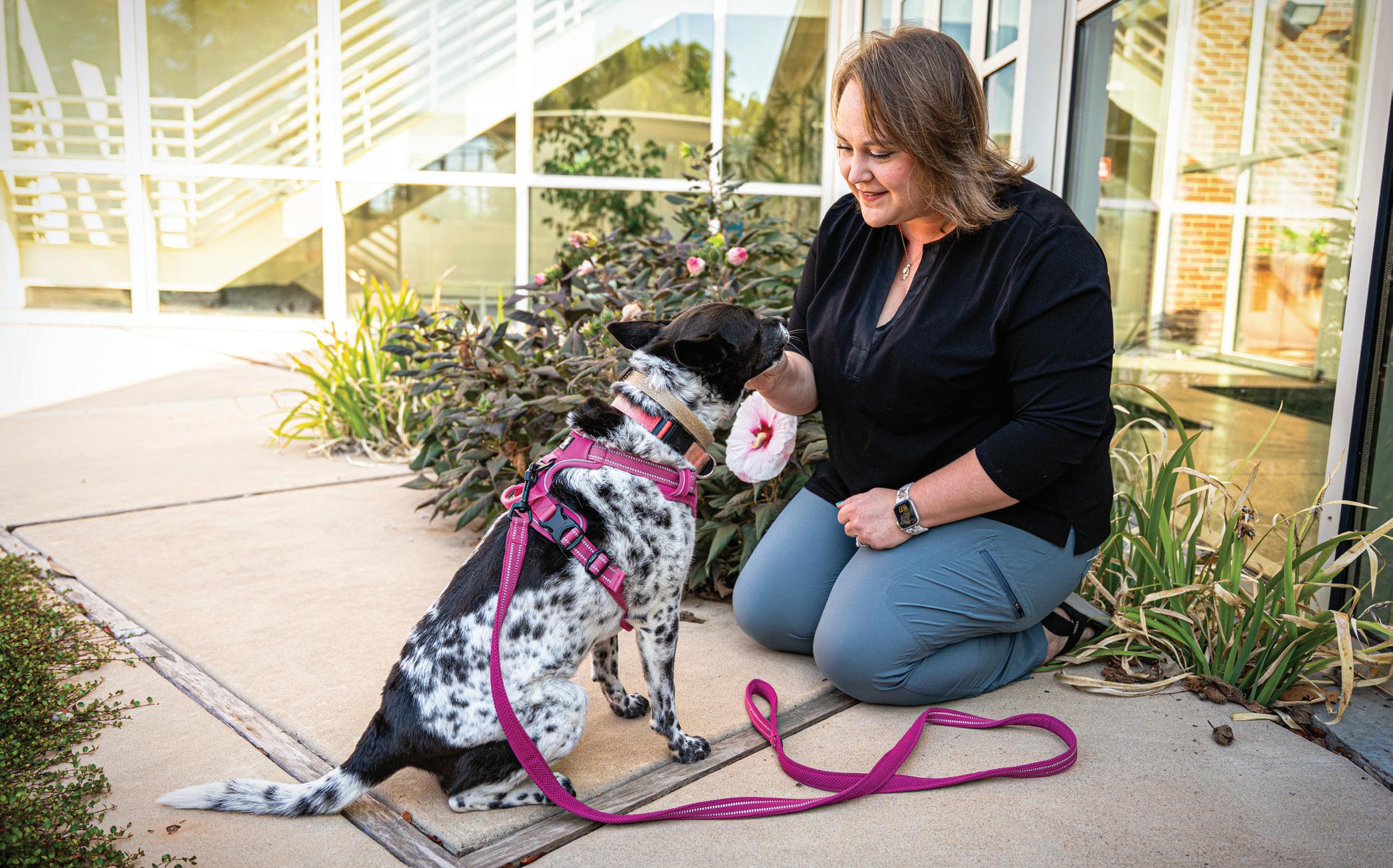
Dr. Courtney Bir and her dog, Lucy, remind us how compassion and understanding can transform the lives of both pets and their owners.
Although Bir’s expertise is in farm management, not animal behavior, she developed an interest in behavioral characteristics as she navigated the challenges of handling a high-stress pet.
“I have a personal interest in dog training, and I had read a lot and worked in a clinic, so I felt like I was pretty well equipped to handle a high-energy dog,” Bir said. “At first, when Lucy was younger, I felt like it was general anxiety.”
However, as Lucy grew, so did her nerves and anxiety. Recognizing this, Bir and her husband sought out dog trainers and approached their local veterinarian for help.
“When we moved back to Oklahoma, Lucy lost her long-term companion,” Bir said. “The little Maltese dog that she had always had in her life passed away at a very old age, and she had a lot more stress in her life.”
Implementing medications from their primary veterinarian, the stress plateaued for a little while. Then, Lucy had a couple of seizures, which only made the anxiety worse.
“It got to the point where she was terrified of the vacuum,” Bir said. “I couldn’t use it without her trying to run through the glass door.”
With two other dogs and three cats in the house, vacuuming frequently was a necessity, and this became a serious issue for Bir. Feeling as if Lucy’s needs had become too severe for her or the veterinarian to help control, Bir was desperate for answers and assistance.
After listening to Fanucchi’s lecture at Research on Tap, it was clear she was the exact resource Lucy needed.
“Despite me being at the veterinary teaching hospital all the time, I just didn’t think about it,” Bir said.
Fanucchi was quick to get Lucy in for an appointment, and the Birs saw significant results. After identifying Lucy’s behavioral status and current medication intake, Fanucchi made adjustments to her dosage requirements.
“It’s a combination of behavioral changes and routine adjustments,” Bir said. “She goes on a walk each day, gets her sniff time, and pairing this with the medication has helped her be herself again.”
Fanucchi and her team recommended a pheromone collar
that is designed to help calm dogs during stressful situations such as thunderstorms, fireworks, separation, travel or veterinary visits. The collars release synthetic pheromones that mimic natural calming signals, helping to reduce anxiety.
“The results from the dog collar have been remarkable,” Bir said. “Our veterinarian actually carries these collars now because they’ve noticed such a change in the success of Lucy.”
Another technology that has proven to be beneficial for Lucy are her custom, rechargeable headphones. The noisecanceling equipment helps Lucy during times of stress, storms or in loud environments.
This past summer, Bir was apprehensive about leaving Lucy at home for the Fourth of July while she and her husband traveled out of town.
“Our house sitter is also a veterinary student, so I felt confident leaving Lucy
with her, but I was nervous about how she would react to the fireworks,” Bir said. “To my surprise, Lucy was perfectly fine and did not even have to wear her headphones, largely due to the help of Dr. Fanucchi.”
Lucy’s improvement is leaps and bounds from where she once was, Bir said. Today, Bir communicates with Fanucchi digitally, and Lucy only sees her for an annual checkup.
When asked what advice she would give to someone with a pet in a similar situation as Lucy, Bir replied:
“I think starting with your primary care veterinarian is important. Get their opinion, seek outside resources and experts if needed, and be willing to make small daily adjustments that will make a big difference for your pet.”
Lucy’s improvement with anxiety is leaps and bounds from where she once was.
THE LAST FRONTIER
CVM’s impact extends from Stillwater, OK, to Anchorage, AK
Mathematics Meets Mushing
OSU professor’s passion for sled dogs inspires students and community
As a mathematics professor, Dr. Doug Aichele has spent years sharing his knowledge and passion with his students.
However, one of his most treasured passions goes beyond his love of teaching and mathematical research.
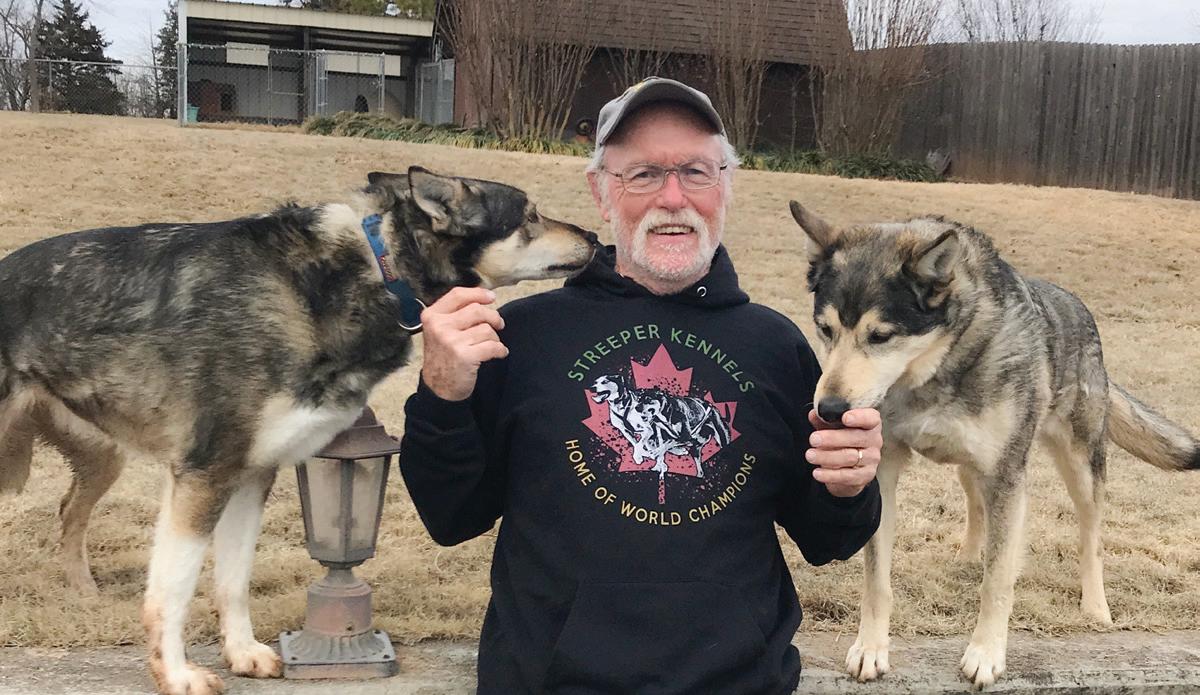
The Oklahoma State University professor emeritus and Regents Professor loves sled dogs. Not something that is very common in Stillwater, Oklahoma.
Aichele never imagined that a simple veterinary referral would lead to a lifelong connection with the OSU Veterinary Medical Teaching Hospital.
However, that’s exactly what happened when Rico, one of his beloved sled dogs, needed treatment for a bad tooth.
Dr. Heather Crawford, an OSU alumna, sent him to the CVM for treatment. From that moment on, Aichele and his team of sled dogs became more than just patients; they became part of the OSU CVM family.
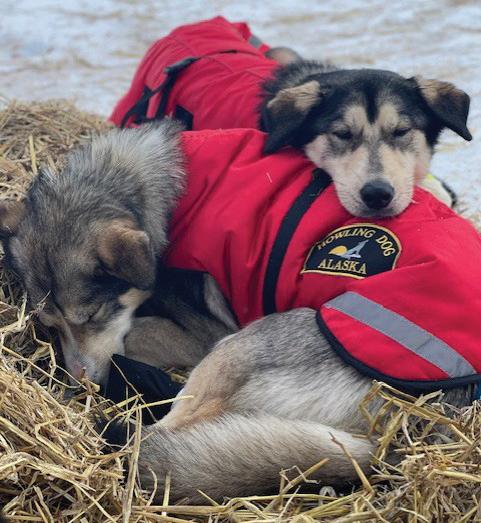
Aichele’s dogs aren’t the typical patients seen at the hospital. Each one has been a working sled dog, and part of a team that once raced across frozen landscapes, pulling sleds through some of the harshest conditions imaginable.
Gumbie’s kids, Vixen and Vulcan, welcome Dr. Doug Aichele home from the Iditarod.
Gumbie travels to Stillwater with a layover at the family cabin in Colorado.
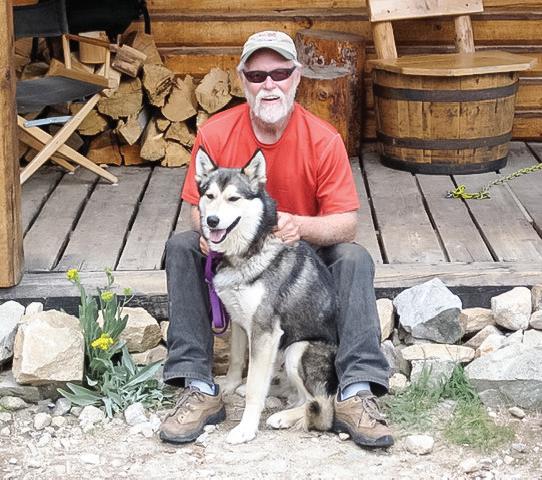
Aichele’s interest in Alaskan Huskies was motivated initially by his wife’s sledding experience with them in Fairbanks, Alaska. His reallife involvement with these amazing animals began in 2009 when he connected with Gumbie, a dog who had just completed the grueling 1,000-mile Yukon Quest and was being considered for the team on the upcoming Iditarod.
Their instant bond led to the creation of a growing pack of sled dogs, each with a unique journey and place in Aichele’s heart.
Reaching up, placing his paws on Aichele’s chest and looking into his eyes, Gumbie claimed him as his own. By June of that year, Gumbie was no longer in Alaska. Gumbie went home to Stillwater, the first of many sled dogs to become part of Aichele’s family.
Over the years, the Aichele pack grew. Gumbie and his kids, Vulcan and Vixen, Rico, Gabbie and Turtle are all cherished members of their team.
“The first thing we do when we get a new dog is bring them straight to the teaching hospital to see Dr. Lara Sypniewski for a checkup,” Aichele said.
When a new sled dog joins the Aichele family, they visit the veterinary teaching hospital to ensure they are healthy and ready to settle into their new home.
“Doug is incredibly committed to the health and welfare of his dogs; any dog that crosses the threshold into their pack has literally struck the jackpot,” said Sypniewski, a clinical associate professor in small animal primary care.
Aichele’s bond with OSU extends beyond his dogs’ care. With deep ties to the university and the Iditarod, Aichele provides invaluable insights to OSU’s fourth-year veterinary students during their rotations in Alaska.
His passion for sled dogs is woven into every aspect of his life, even honored in stone. Each dog has an Onyx brick at OSU dedicated to them as a tribute. His friends affectionately call it “Aichele’s Alley in the Onyx Courtyard.”
Aichele actively shares his story with the community, visiting elementary schools to inspire young minds and promoting the dogs and sport he loves.
He also speaks to over 60 civic groups and local organizations, covering states from Oklahoma to Colorado. Aichele can be heard ending his presentations with the same refrain: “It’s All About the Dogs!”
Aichele and his trail crew were recently honored with the Golden Clipboard Award during the 53rd Iditarod, a recognition given by the mushers to the checkpoint trial crew they found most helpful along the trail.
Although Aichele remains busy advocating for sled dogs, he remains deeply committed to the OSU CVM and its students, dedicating his time and expertise to shaping the next generation of veterinary professionals.
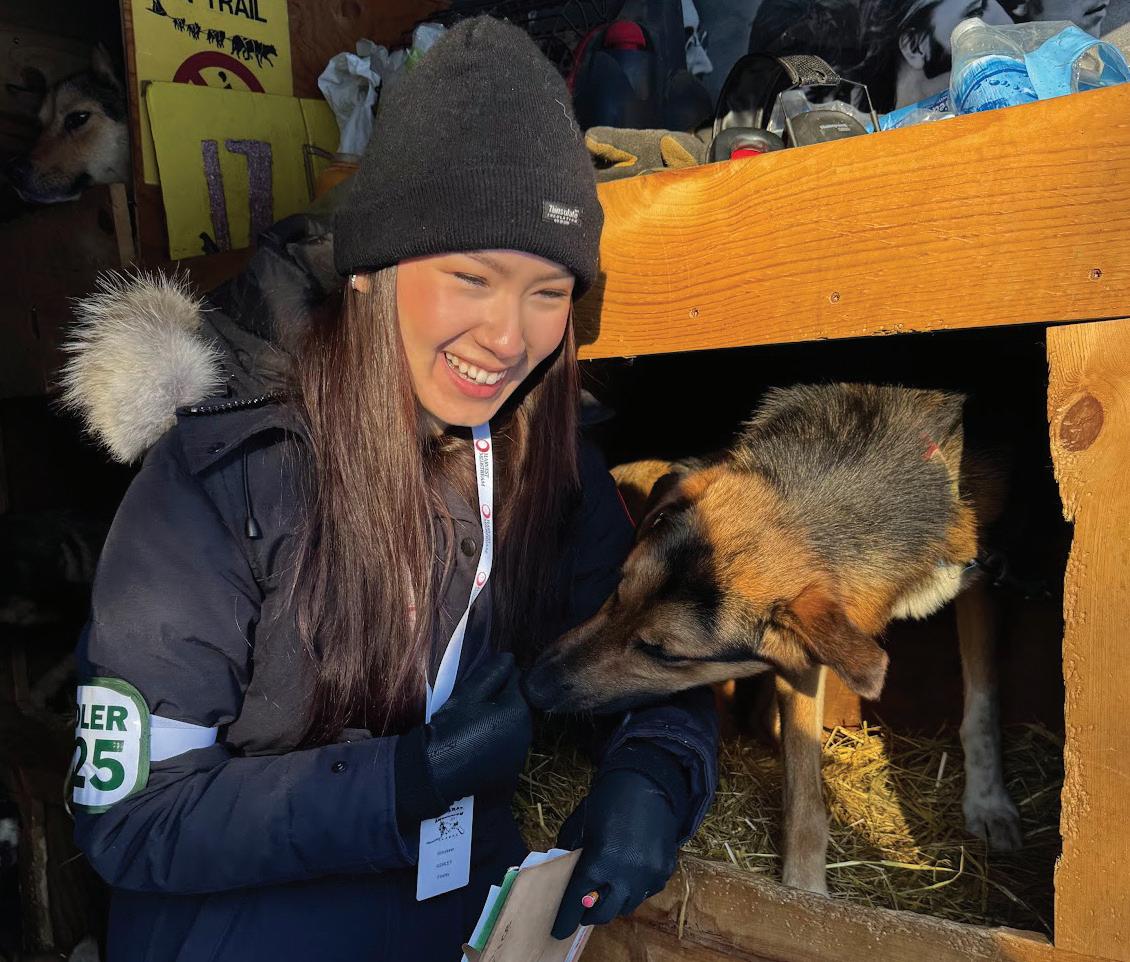
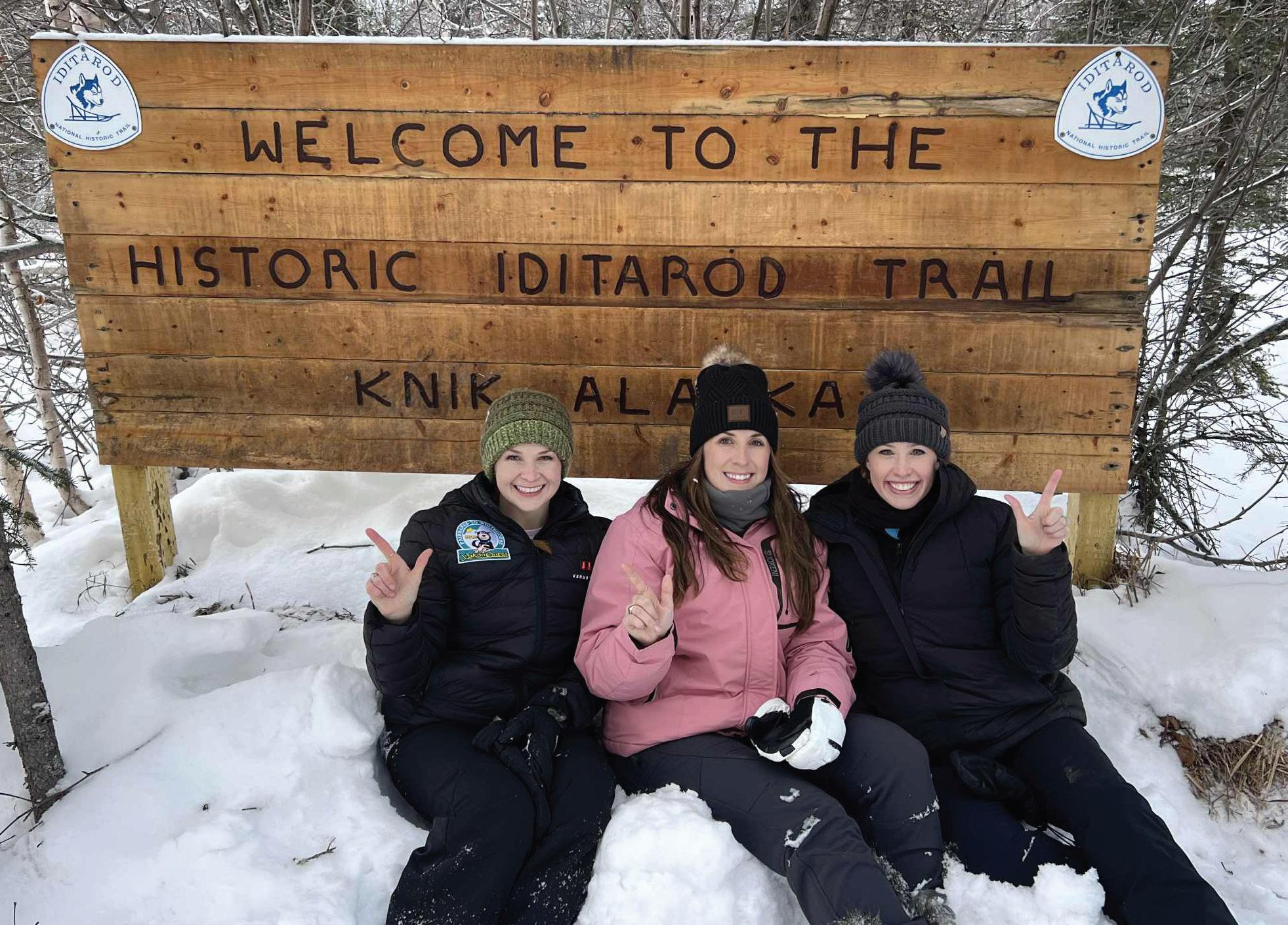
Allison Price, Kate Roeder and Carly Clower mushed sled dogs on the Iditarod Trail in 2023.
A Dream 30 Years in the Making
Dr. Lacey Loveless and the 2025 Iditarod
For Dr. Lacey Loveless, the 2025 Iditarod wasn’t just another line on her résumé — it was the culmination of a dream that had been quietly growing since childhood.
Loveless moved frequently during her childhood due to her father’s work in the oil industry, eventually settling in Anchorage, Alaska, around age 10. There, she was introduced to the Iditarod, attending the ceremonial start each March with her family. The event became a meaningful tradition and sparked a lasting interest in sled dog racing.
Although her path took her far from Alaska — first to Baylor University in Waco, Texas, then to Oklahoma State University for veterinary school, and later into a busy small animal practice in Fort Worth, Texas — Loveless continued to follow the Iditarod each March.
She closely tracked the mushers and race updates, always holding onto the goal of one day returning to the trail, not as a spectator, but as a veterinarian caring for the sled dogs.
Pursuing that dream took time. Life moved quickly — she met her husband, also a veterinarian, while at the OSU College of Veterinary Medicine and graduated in 2009.
Together, they built their careers in Texas, spending a decade in small animal practice. In 2019, they returned to Oklahoma and launched a veterinary relief business, a move that finally gave her the flexibility to pursue the
opportunity she had been quietly holding onto for more than 30 years.
In 2025, it all came full circle. Loveless was accepted as one of eight rookie veterinarians to serve on the Iditarod trail.
“It was literally 30 years in the making,” she said. “I always had it in the back of my mind — ‘This is something I want to do.’”
Before the race even began, she and her fellow rookie veterinarians arrived in Alaska for a weeklong sled dog veterinary conference and performed pre-race physicals on every single dog that would hit the trail. After that, the real adventure began.
Working as a trail vet is not for the faint of heart. There’s no set schedule. You find out where you’re going sometimes only hours in advance.
You hop in a bush plane — sometimes a commercial charter, sometimes a tiny two-seater — and land in remote Alaskan villages where the wind howls and temperatures can drop well below zero.
“You have to be super flexible,” Loveless laughed. “If you’re not, this probably isn’t the job for you.”
Her job was to monitor the health of every dog passing through her checkpoints, sometimes doing full physical exams, sometimes just putting eyes on each athlete to make sure they were healthy.
Most of the issues were typical of any high-endurance athlete: sore feet, mild lameness, fatigue, or the occasional upper respiratory issue.
Emergencies were rare, but not unheard of. And with a veterinary team that included everyone from general practitioners to board-certified surgeons and pathologists, they were ready for anything.
Still, for Loveless, the most striking part of the whole experience was the dogs themselves.
“They’re just the coolest creatures ever,” she said. “People might think they’re being forced to run, but if you’ve ever seen them take off at the start, you’d understand. That’s all they want to do. They’re so conditioned, so excited and so incredibly well-behaved.”
These aren’t your average clinic patients. While a typical exam room might require multiple techs to hold
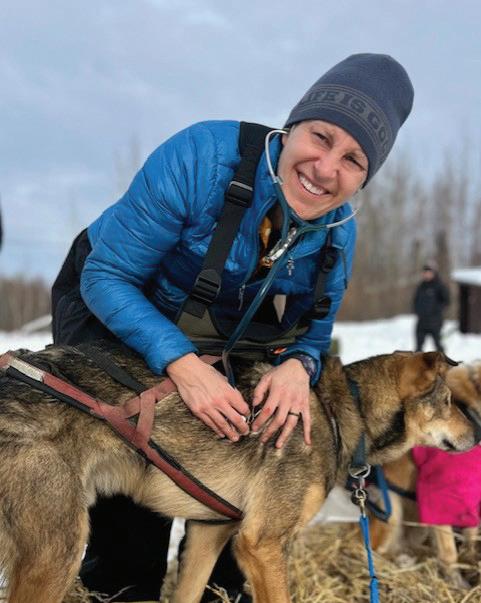
Dr. Lacey Loveless checks on a sled dog.
a wiggly dog still, Iditarod sled dogs lie down, curl up and calmly let the veterinarians do their work, she explained.
“They’re the stars of the show,” she said. “And they know it.”
The sense of camaraderie among the veterinary team was another highlight. As a rookie, Loveless was warmly welcomed by the seasoned veterinarians, some of whom had been working the race for over a decade.
They offered advice not just about the dogs but also about the lifestyle: where to sleep, how to store gear and what to expect when exhaustion sets in. By the end of the race, friendships had been forged.
“It’s something I absolutely hope to do again,” she said. “Once you’ve done it, you know what to expect, and that makes all the difference.”
With support from her husband, her parents and a lifetime of quiet determination, Loveless turned a childhood dream into a reality. And in doing so, she reminded everyone that sometimes, the best stories are the ones that take the longest to write.
Two sled dogs take a break during a checkpoint visit.
‘The Last Great Race on Earth’
Fourth-year veterinary students volunteer at 53rd Iditarod Trail Sled Dog Race
For 12 fourth-year Oklahoma State University College of Veterinary Medicine students, a veterinary rotation in Alaska became an opportunity of a lifetime: volunteering at the 53rd Iditarod Trail Sled Dog Race, often called “The Last Great Race on Earth.”
The annual event is a 1,000+ mile journey across the icy Alaskan wilderness, testing the endurance and resilience of mushers and their teams of elite sled dogs. This year, the race route was extended to around 1,150 miles (about the distance from Oklahoma City to Pittsburgh) due to a relocated start in Fairbanks, a change prompted by poor snow conditions in Anchorage.
While the students originally traveled to Alaska for a canine exercise
physiology rotation led by Dr. Michael Davis, OSU CVM professor and a specialist in sled dog medicine, their experience expanded significantly when they took the initiative to get involved with the Iditarod.
“I just thought, ‘Why not reach out and ask?’” student Ally Williams said. “We were sitting around talking about how cool it would be to go to the start of the race, so I emailed the head veterinarian.”
Although all official veterinary positions had been filled, the students were eventually connected with the veterinary technician and offered roles supporting the restart in Fairbanks. Davis gave the green light for their participation, and the students hit the road — literally — with a
five-and-a-half-hour drive from Wasilla to Fairbanks.
Kammy Bene, another student, was instrumental in igniting the group’s interest in volunteering.
“I just threw the idea out there during our first couple of days in Alaska,” Bene said. “Next thing we knew, we were researching how to get involved.”
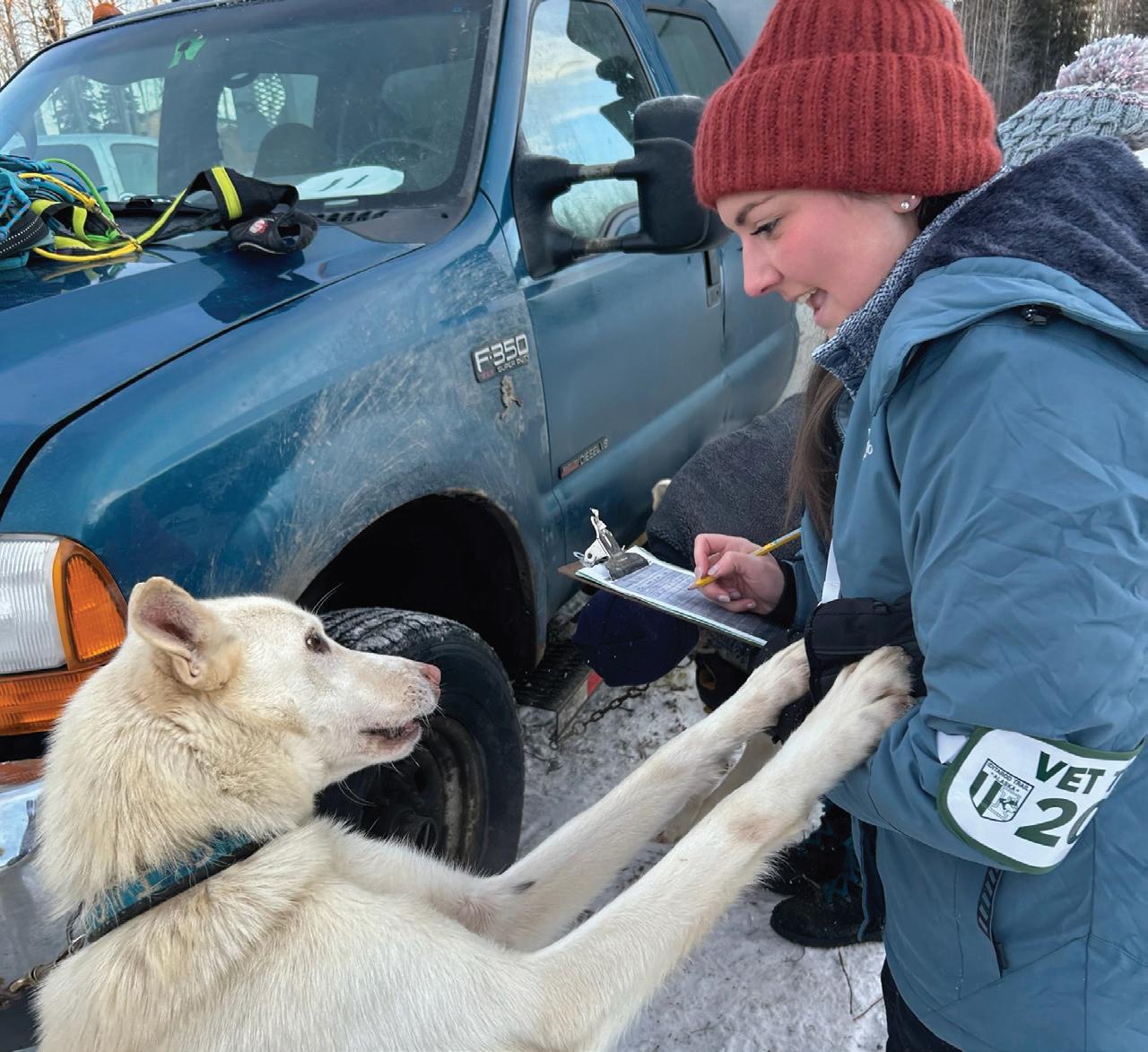
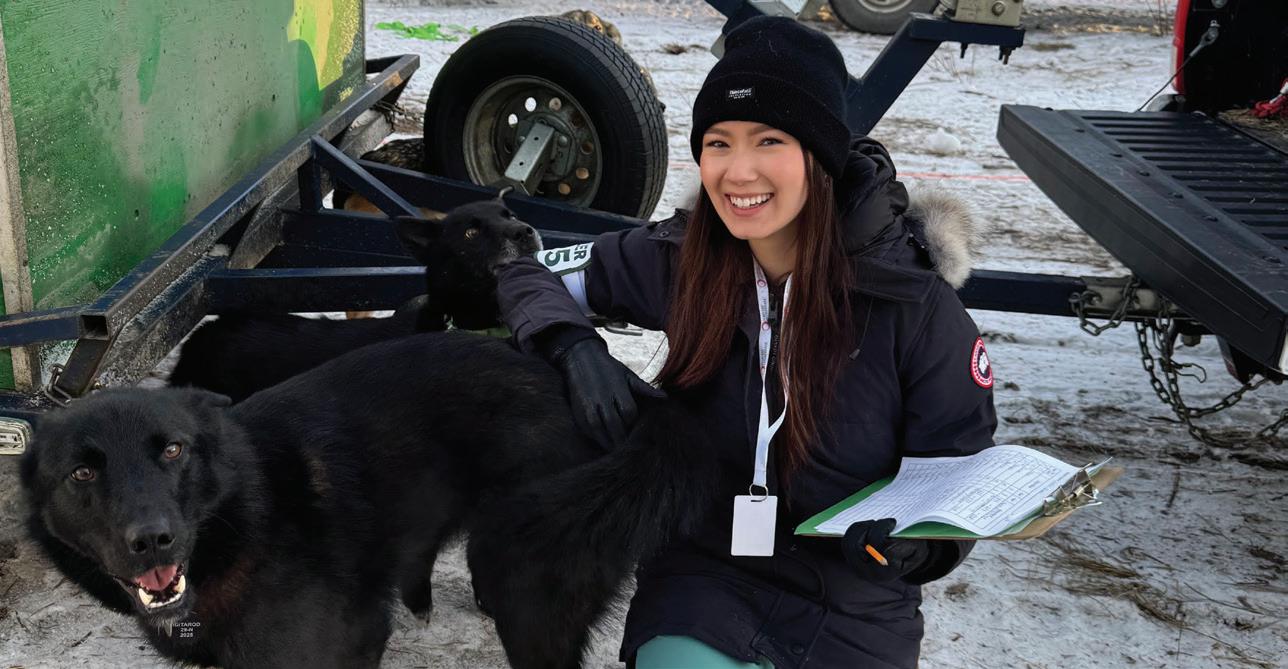
Their official role on race day was to scan and verify the microchips of each sled dog before the race began — a vital part of the Iditarod’s identification and health tracking system. Each dog’s microchip links to its medical record and helps prevent confusion throughout the race’s many remote checkpoints.
“Every team has 16 dogs, and with 33 teams, that’s over 500 dogs we helped process,” Williams said. “We split up,
STORY BAILEY HORN | PHOTOS PROVIDED
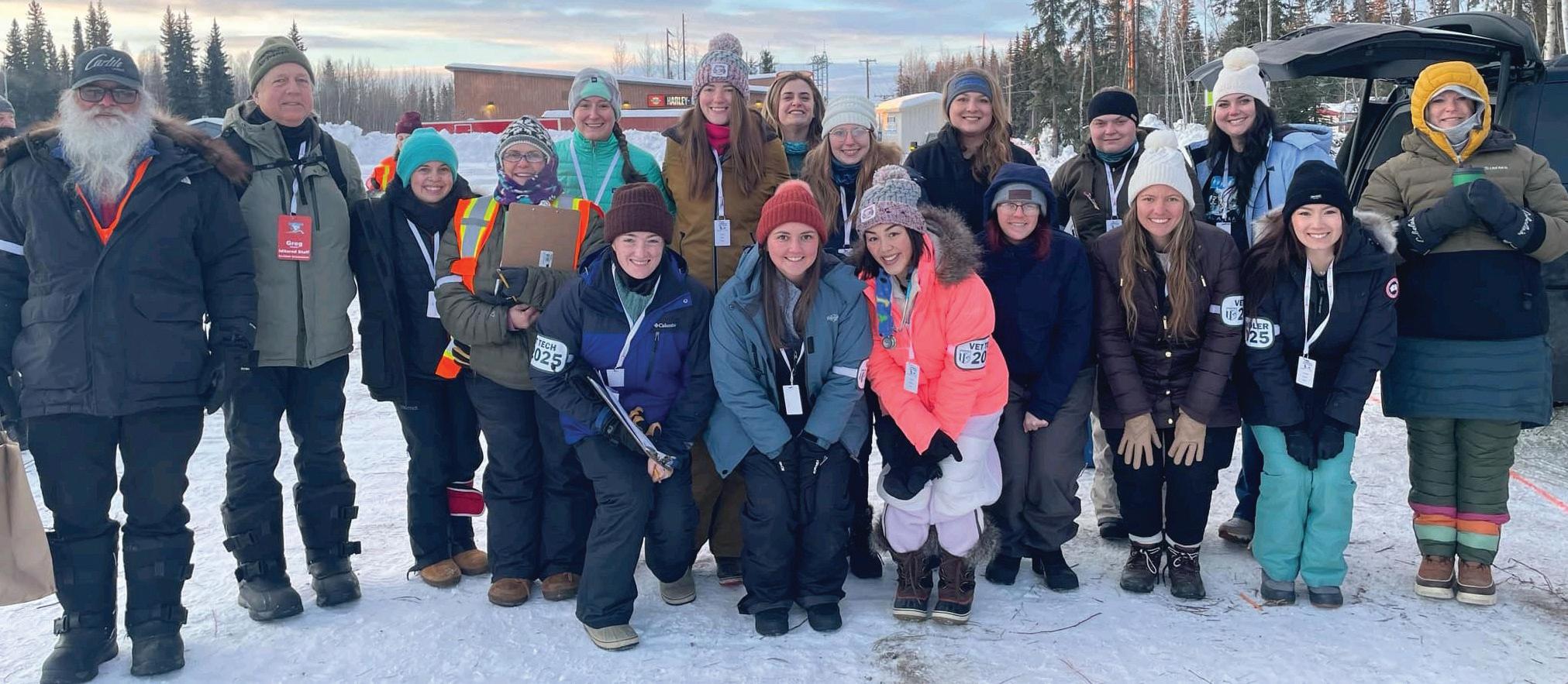
Fourth-year Oklahoma State University College of Veterinary Medicine students pose with other volunteers during the 53rd Iditarod Trail Sled Dog Race.
and each group took on a handful of teams. It was pretty incredible seeing it all come together.”
The students gained firsthand insight into the incredible physical capabilities of sled dogs, which thrive on the intense demands of long-distance racing.
“The Iditarod was especially interesting to me as a veterinary student because, throughout Dr. Davis’ lectures on our rotation, we learned about the vast array of physiological differences these canine athletes have compared to pet canine companions,” student Madie Petree said. “It was amazing to then be able to see those talented dogs working right in front of my eyes and to apply that knowledge as we were getting to meet them.”
At each checkpoint along the Iditarod trail, a team of veterinarians is flown in via bush planes to assess the dogs’ health. If a dog is injured or too fatigued to continue, it is safely dropped from the race and cared for until it can be reunited with its handler.
“It was fascinating to learn how dedicated these teams and veterinarians were to ensuring quality medical care even in the face of harsh and isolated conditions,” Petree said.
The experience left a meaningful impact on each student. For Bene, what resonated most was the electric atmosphere surrounding the race.
“Watching the dogs jump with excitement at the starting line was my favorite,” she said. “It was a contagious energy — between the dogs, the mushers and the crowd, you could feel how special it was.”
While the students only volunteered for one day during the official restart, their impact — and the experience itself — was significant. As the first OSU DVM students to volunteer at the Iditarod, they’ve set a precedent for future rotations.
A fourth-year veterinary student scans and verifies the microchip in sled dog.
A fourth-year veterinary student shares well wishes with sled dog competitor.
A fourth-year veterinary student checks in dog before the big race.
Rudd’s Recognition
Interim
associate dean earns Medal for Excellence in Research University Teaching
Dr. Jennifer Rudd’s impact on veterinary students goes beyond the classroom, transforming students to learn, think and grow as future veterinarians.
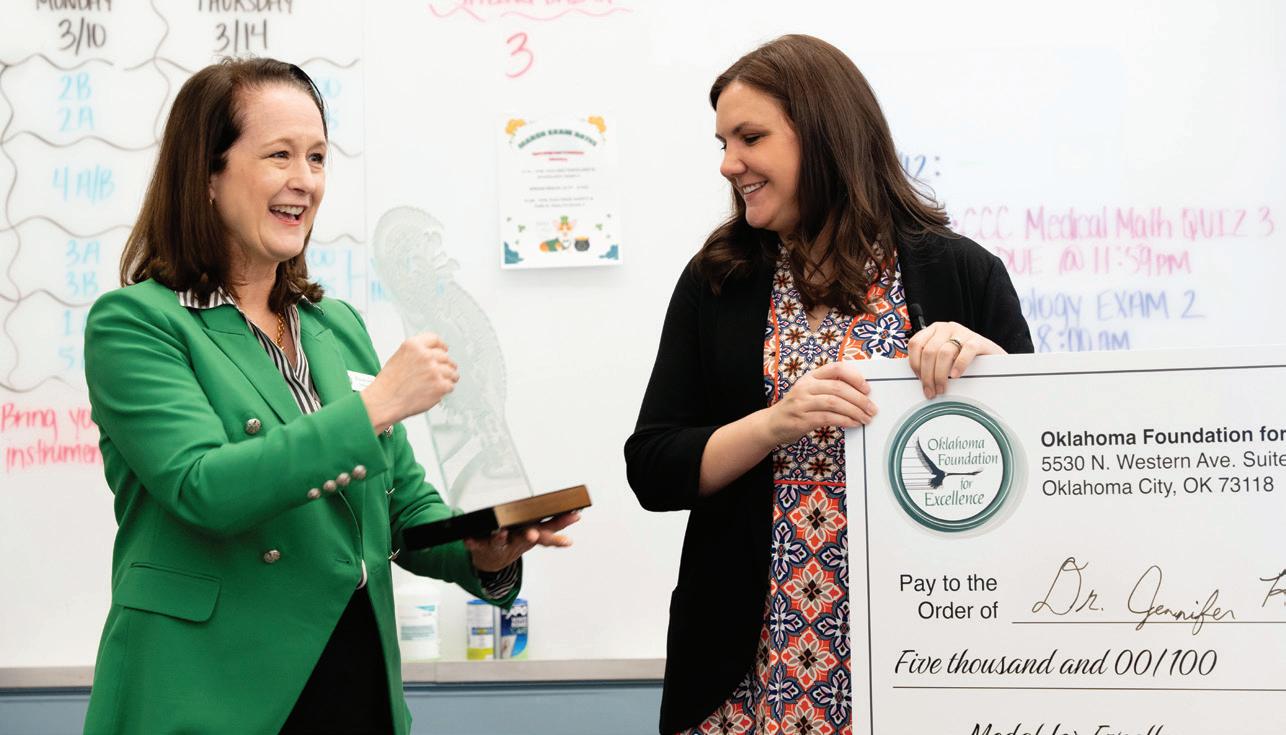
Dr. Jennifer Rudd, interim associate dean for academic and student affairs and associate professor at Oklahoma State University College of Veterinary Medicine, recently received the 2025 Medal for Excellence in Research University Teaching from the Oklahoma Foundation for Excellence.
The Medal for Excellence award recognizes public educators who exemplify innovative instruction and
exceptional commitment to student success.
Although both of her parents are in the veterinary field, Rudd initially wasn’t drawn to veterinary medicine. However, during graduate school, she felt the calling to explore teaching. Not long after, she found her place in front of a classroom.
“I wasn’t one of those people who always knew I wanted to be a veterinarian,” Rudd said. “But I’ve always loved science and medicine. Once I found veterinary medicine and later teaching, it just made sense.”
Rudd’s first official faculty role at the OSU CVM was in bacteriology, though she was already involved in labs.
“I was nervous at first,” she said. “Over time, I grew into it.”
Now a key member of the OSU CVM faculty, Rudd teaches primarily in the second-year curriculum, which she calls a “transitional year” for students.
“You get to see them really become doctors,” Rudd said. “Watching that lightbulb moment when the pieces finally click — that’s the best part.”
Rudd is especially passionate about teaching infectious diseases. She has a soft spot for pig pathogens, but her
Dr. Jennifer Rudd poses on the Oklahoma State University campus. Initially, Rudd started as a bacteriology faculty member but now teaches second-year veterinary students.
“Every veterinarian becomes an educator — whether it’s to clients, coworkers or students. Being able to communicate science and build trust is a critical part of what we do as veterinarians.”
DR.
JENNIFER RUDD, INTERIM ASSOCIATE DEAN FOR ACADEMIC AND STUDENT AFFAIRS
true focus is helping students develop clinical reasoning and long-term problem-solving.
“Medicine is constantly changing. The content will evolve, but how students think — that is what will carry them throughout their careers,” Rudd said.
Rudd strives to create an environment where students construct their understanding and take ownership of their education.
“That shift from checking my boxes as a teacher to ensuring students are learning has been the biggest evolution in my career,” Rudd said. “I want them to ask questions, think critically and engage.”
Rudd’s influence does not stop at academics. Over the years, Rudd has mentored students who came close to walking away from vet school, only to find the support they needed to succeed.
“Some of the most meaningful moments for me have come from students who nearly quit, but didn’t,” she said. “They worked hard, we worked together and they came out stronger. Those are the stories that stick with you.”
Rudd said that becoming a great educator is not instantaneous; it is something she works to improve on every year.
“No one is born knowing how to teach. It’s a developed skill,” she said. “I hope I’m a better educator today than I was five years ago, and I hope I’ll be even better five years from now.”
In her current role, Rudd has the opportunity to help evaluate and refine how each piece of the veterinary curriculum at the OSU CVM fits together.
“It’s exciting to take a step back and look at how the curriculum supports itself as a whole,” Rudd said. “We’re constantly asking how we can make it stronger — not just in content, but in how students experience and absorb that content.”
For Rudd, the Medal for Excellence is a humbling honor, especially because it highlights the value of public education.
“This is not a veterinary award, or a science award, it’s an education award,” Rudd said. “It’s about supporting students and learning. I think it’s incredibly special to see veterinary medicine recognized in that space.”
Rudd is quick to credit her colleagues for helping foster this culture.
“I may have received this award, but it reflects the heart of our college,” Rudd said. “We are all working together to shape the future of veterinary medicine, and I’m so proud to be part of a team that values innovation and student success.”
Rudd hopes the recognition helps shine a light on the impact veterinary educators have on students and the profession.
“Our profession is only as strong as the next generation,” Rudd said. “Being part of the team that’s helping build that generation is at the core of everything I do.”
Her advice to students and aspiring veterinarians? Learn how to teach.
“Every veterinarian becomes an educator — whether it’s to clients, coworkers or students,” Rudd said. “Being able to communicate science and build trust is a critical part of what we do as veterinarians.”
The ongoing growth mindset shaped more than just her classroom approach; it’s influenced how she contributes to the broader curriculum. Dr. Jennifer Rudd receives her award in front of the second-year class.
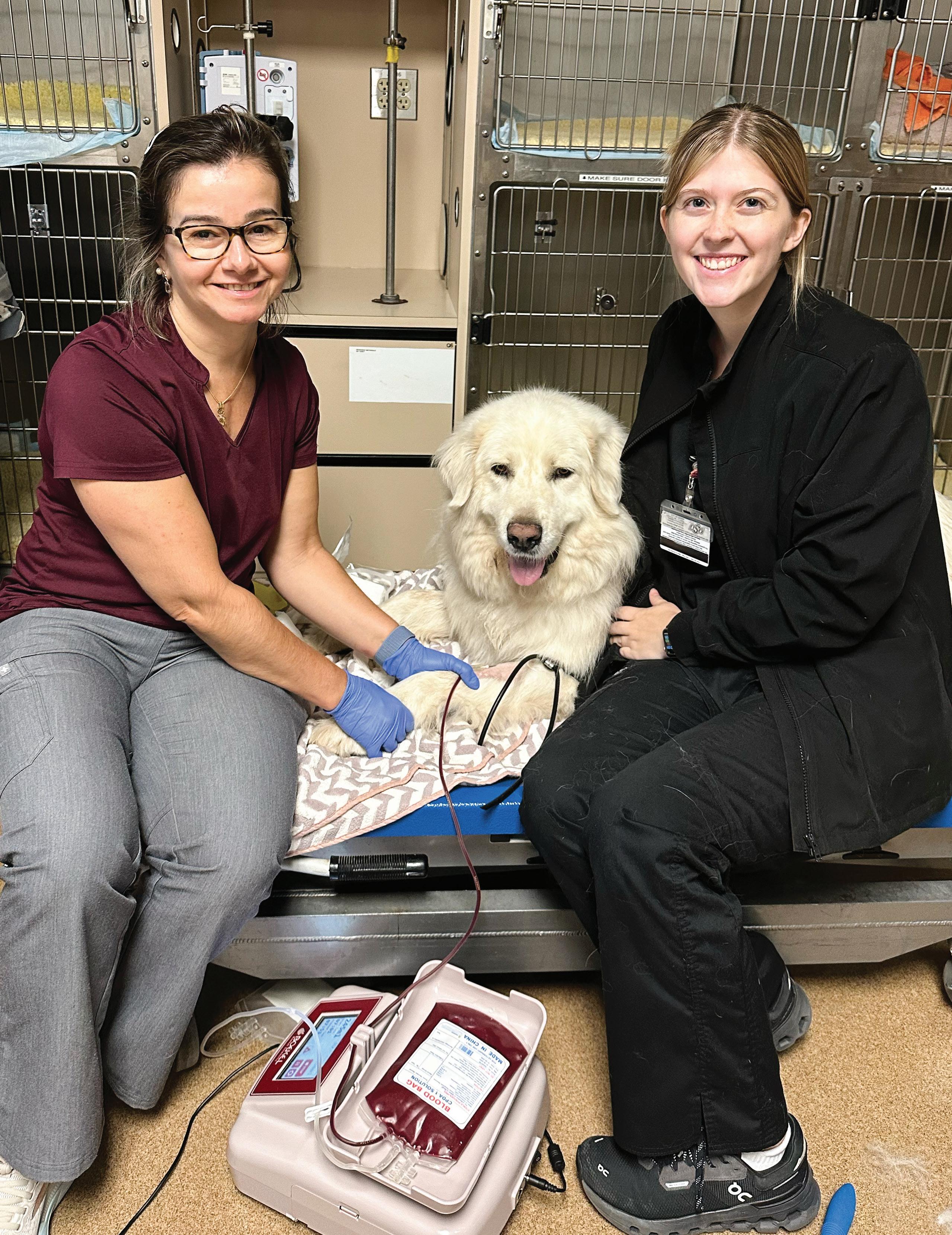
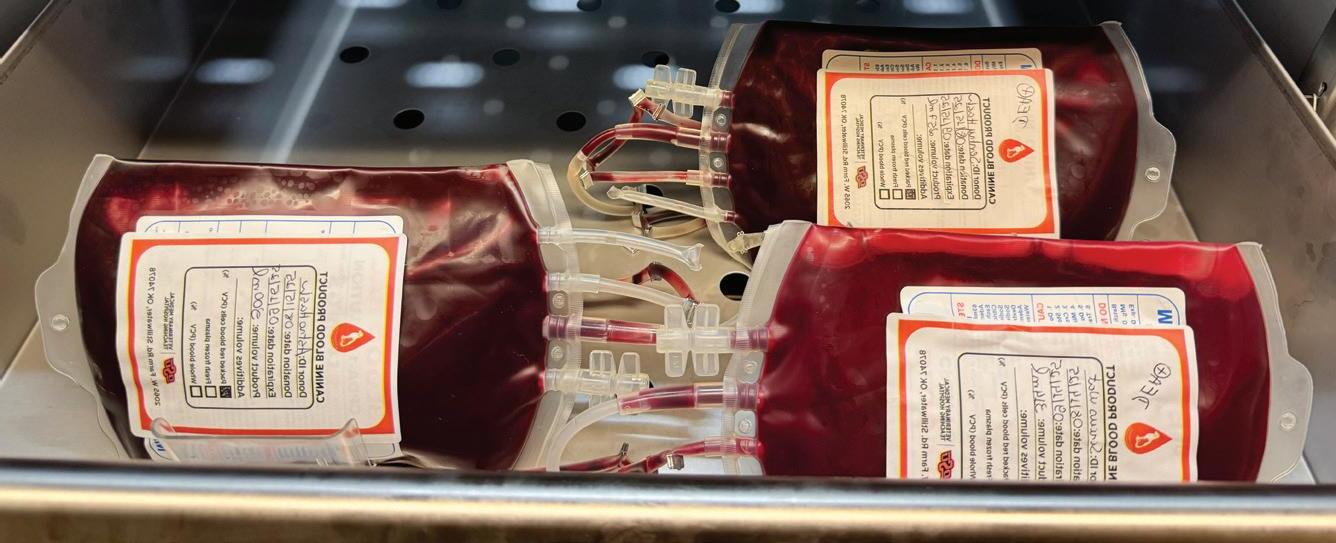
Dr. Andreza Conti Patara and veterinary assistant Zoey Hash pose with blood donor
New Blood
A vital resource for life-saving blood transfusions in our beloved pets
Veterinary transfusion medicine is vital.
Despite several advancements in recent years, the supply of blood products is still limited. Unfortunately, many patients still don’t receive the lifesaving transfusion needed due to the supply shortage.
The Oklahoma State University Veterinary Medical Teaching Hospital is looking to change that as it established a lifesaving blood bank in the fall of 2024.
The reasons for blood transfusions in small animals vary. However, it’s usually because of infectious diseases, trauma, immune-mediated diseases, during and after surgical procedures, and rodenticide toxicities are the most common causes.
Since opening, OSU has obtained 25 blood donors — 22 dogs and three cats — who are on routine at the hospital to give life-saving donations.
Dogs and cats have different blood types. To perform a blood transfusion without reactions or complications, it is necessary to know the donor and recipient’s blood type.
When a new donor arrives, they go through a series of tests to ensure they are fit for donation. During those tests, OSU veterinarians record the blood type for future infusions and ensure the quality of the blood products is at an alltime high.
To verify the safety of the donor and the transfusion recipient, donors have to meet certain standards. Passing their physical exam and meeting the weight requirement is crucial.
If donating, dogs should weigh more than 55 pounds, and cats must weigh more than 9 pounds. Donations are taken every three months.
“The donor’s safety is of the utmost importance,” said Dr. Andreza Conti Patara, small animal emergency and critical care assistant professor.
During donation appointments, the donor is constantly monitored by emergency and critical care veterinarians, fourth-year students and technicians.
Donors will receive a variety of incentives throughout the year in recognition of their commitment to helping save the lives of their fellow dogs and cats. The role of each donor’s owner is vital to the program’s success. Their commitment, responsibility and reliability are greatly valued and essential to the blood donation process.
Thanks to these heroes, the OSU VMTH blood bank has saved 25 lives in the last three months.
If you are interested in joining the mission to save lives, please reach out to the VMTH at 405-744-7000.
REQUIREMENTS
■ B lood donors (dogs and cats) should be between 1 and 7 years old, with a calm and agreeable temperament.
■ C anine donors must weigh over 25 kilograms or 55 pounds, while feline donors should weigh more than 5 kilograms or 9 pounds.
■ B lood donors must be in good health, as determined by a thorough physical exam, blood work and infectious disease screenings.
■ Pets must have never received a transfusion or anti-venom treatment.
■ Pets must receive annual vaccinations and be regularly treated for ticks and fleas.
■ C ats should be indoor cats.
Other Information
Every donation, the blood donor will receive a bag of the donor’s favorite food.
Donations could be as frequent as every 60-90 days.
Upon arrival, the donor receives a physical exam and blood draw.
Donations take 15-20 minutes, but donors will be monitored for 1-2 hours after donation and offered a meal.
Free annual checkup and wellness exams: Vaccines, tick and flea preventatives and dewormers, bloodwork, urinalysis, fecal plus PCR tick borne disease.
Since opening, OSU has obtained 25 blood donors — 22 dogs and three cats.
OphthalmOlOgy piOneer and OSU
alUmnUS SUppOrtS
COllege Of Veterinary MediCine with$2 milliOn dOllar gift
Dr. James Wise just wanted to figure it out. Really, he wants to figure everything out.
Curious defines Wise, a 1957 Oklahoma State University graduate. He doesn’t just wonder; he investigates. Throughout his life and trailblazing career as a renowned ophthalmologist, he often invoked Nobel Prize-winning physicist Richard Feynman, who spoke about the pleasure of finding things out.
That mentality led him to a new perspective of treating glaucoma, an eye disease that results from increased pressure inside the eye, which can damage the optic nerve and lead to vision loss. In 1976, he invented laser trabeculoplasty, a procedure which significantly reduced eye pressure over the long term.
His laser procedure, invented almost 50 years ago, revolutionized glaucoma therapy. It is still used today all over the world and has treated far more than 100 million people.
“I have just always tried to understand things, and that takes some creativity,” Wise said. “To be creative, you first have to know a whole lot about the problem, and then you look for the weak points. And every so often, I happen to discover stuff that other people haven’t found out.”
Growing up in Stillwater, Wise enjoyed activities a young boy typically does, like fishing at Theta Pond and riding his bike across town. But even as a child, he boasted an atypical passion for learning.
He first gained an interest in science after his parents bought him an encyclopedia, which he read at age 6. He often walked a couple blocks from his house to OSU’s campus, running around the library and chemistry building. At 10 years old, he spent his summer reading through Elements of Chemistry, sitting in on sophomore level lectures and watching students conduct experiments.
It fostered his love of discovery and helped set him apart before he began studying at OSU.
“OSU gave me an exC ellent ed UCatiO n that prepared me f O r mediCal SC h OO l and my Career.
i t’ S j US t a plaC e w O rth SU pp O rting.” — Dr. James Wise
Wise, 89, credits OSU for making his career possible. He was the university’s second alumnus ever to attend John Hopkins Medical School, where his excellent OSU education equipped him with the tools to succeed, as he graduated at the top of his class.
Including the invention of laser trabeculoplasty, Wise’s discoveries have made a lasting impact on the field of ophthalmology. He has authored 34 publications and given lectures in more than a dozen countries across the globe.
“I’ve never liked the word proud, but I’m very pleased that some of my discoveries have been so impactful,” Wise said.
“Everybody wants to feel that they can make a difference. To some extent, that’s one reason I went into medicine. Because a doctor can make a difference, hopefully for good.”Wise’s desire to do good isn’t limited to medicine. In 2010, he purchased Stillwater Milling Company to prevent it from being bought by a corporate outfit that
he felt didn’t have the agricultural community’s best interests in mind.
As Oklahoma’s largest cattle feed mill, the company is incredibly important to the state’s agricultural industry. Under Wise’s ownership, it has made significant improvements in capacity, efficiency and quality.
Cattle are no stranger to Wise, as he owns a ranch with a herd of more than 1,000. He’s always had a soft spot for animals, back to when he caught and raised rabbits and pigeons as a kid. Today, he has three dogs and three cats at home, one of which connected him with the College of Veterinary Medicine.
“This skinny black cat showed up at our front door one day and we took him in,” Wise said. “He had started doing better, but all of a sudden, Oliver got very sick.”
A vet in Oklahoma City found out Oliver’s bladder was blocked. They were able to aspirate it to remove the pressure, but couldn’t provide a stable
fix. Another animal hospital said they couldn’t do anything until the morning.
So Wise took I-35 up towards Stillwater, hurrying to CVM’s Medical Teaching Hospital.
“Oliver had been blocked up long enough that his potassium level was just about to kill him. He would not have made it to the morning,” Wise said. “But what they did for him at OSU, this was good medicine. They came out in the middle of the night and saved him.”
Oliver has since fully recovered and is affectionate, dramatic and impressively punctual. Every day at 4 p.m. he expects his regular serving of Gouda cheese, preferably smoked. And if the Wises forget, they’ll definitely hear about it.
Oliver is just like many pets — part of the family. OSU plays a crucial role in making sure they stay healthy, treating countless animals from cats to cattle, from homes to ranches.
When the Wises experienced firsthand the exceptional care CVM can provide, they knew they wanted to support it.
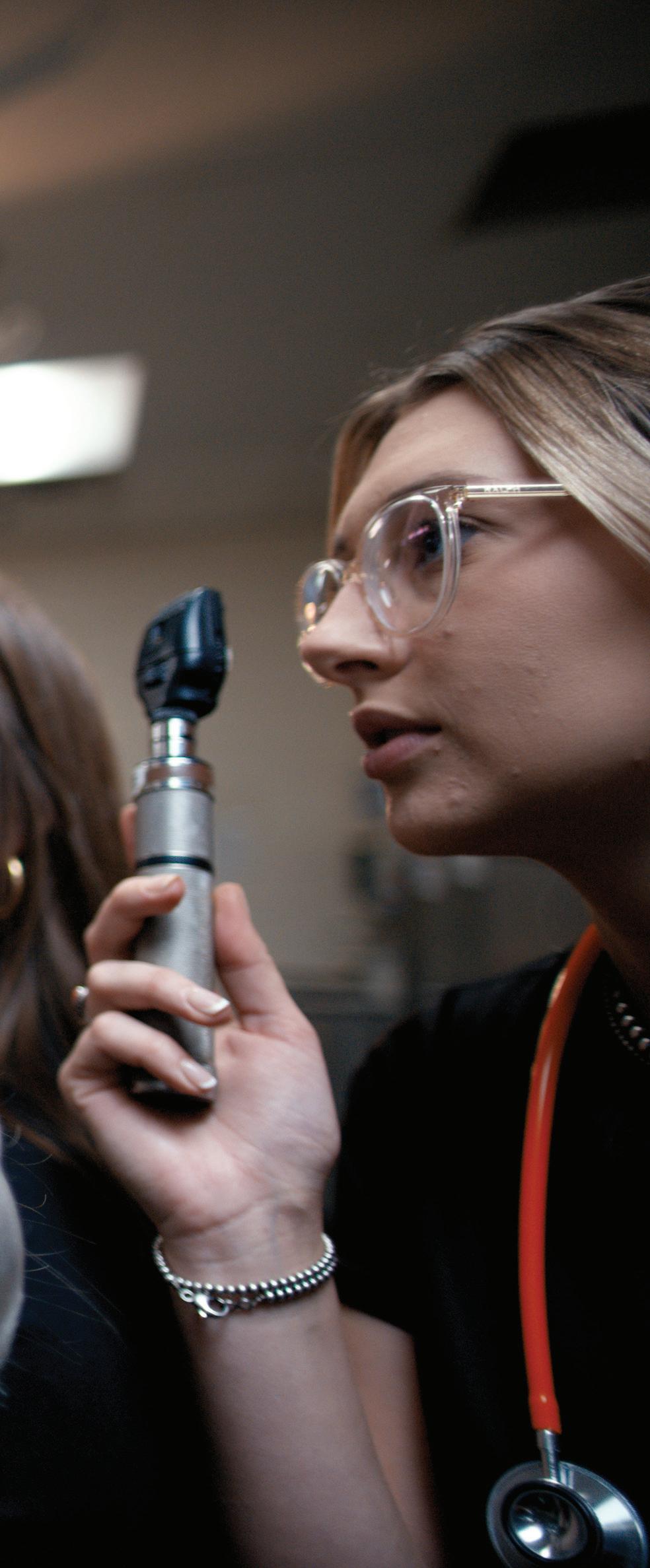
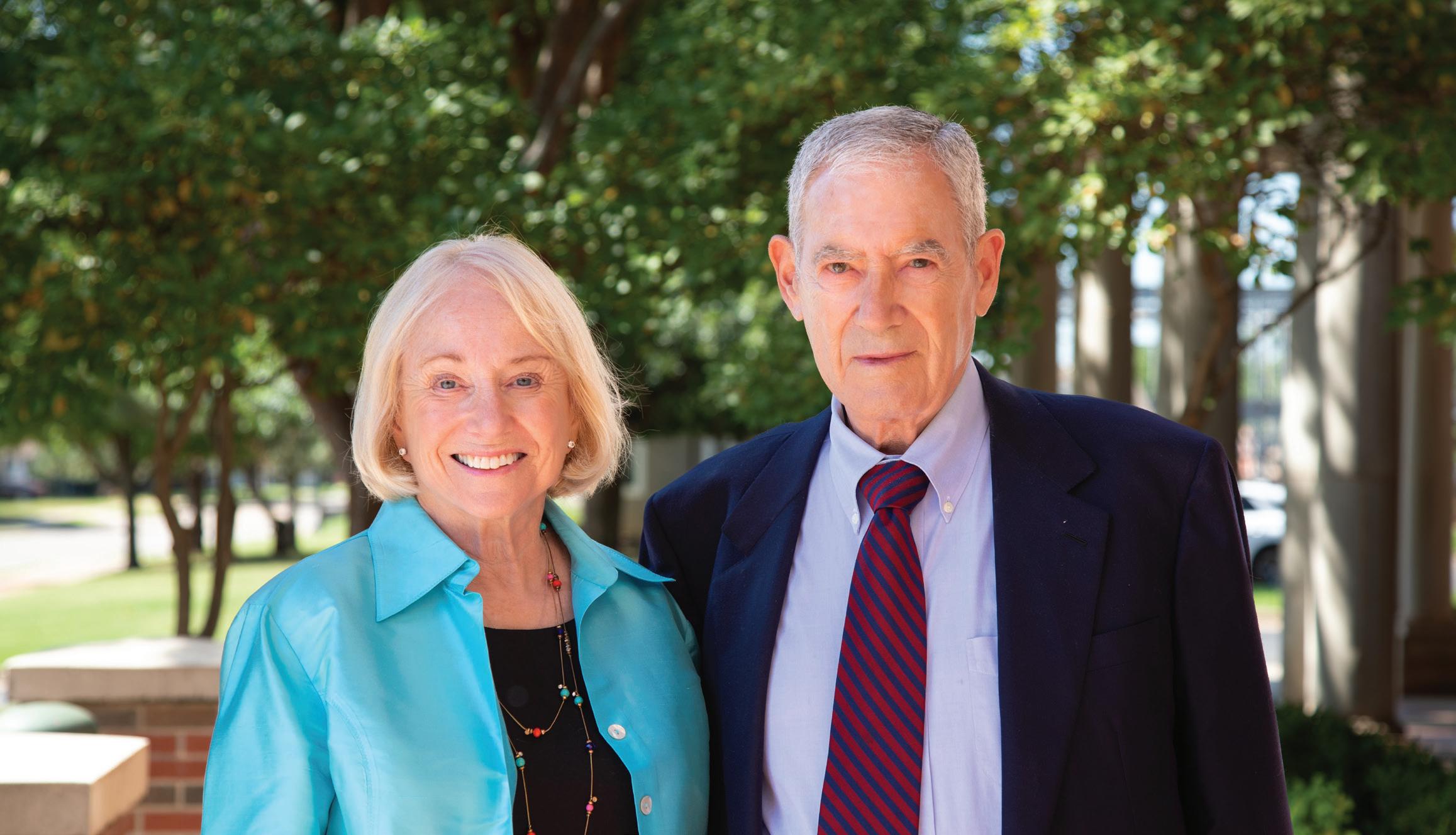
Dr. Wise spent a lifetime treating people, but recognizes that eyes are just as important to animals. To ensure they get the same quality of treatment, he and his wife, Elizabeth, have made a transformational investment in CVM.
The couple made a $2 million gift to establish the James and Elizabeth Wise Endowed Chair of Veterinary Ophthalmology. This donation will help ensure that animals receive toptier eye care while supporting CVM’s innovative research and development of prepared veterinarians.
“The College of Veterinary Medicine serves to improve Oklahoma lives, both animal and human,” OSU President Jim Hess said. “Its impact is felt throughout the state and nation, and we are so thankful to the Wises for this generous gift that directly supports OSU’s land-grant mission. This donation will enhance our ability to provide top-tier education and innovative research, benefiting countless communities and advancing the field of veterinary medicine.”
The contribution will push forward OSU’s land-grant mission, as prepared veterinarians are critically needed to
serve throughout the state. Not only does CVM care for pets, but it’s also incredibly important to Oklahoma’s agricultural industry.
“There are not enough words to express our gratitude for this transformational gift,” CVM interim dean Jerry Ritchey said. “Their generosity will have an immediate impact for our ophthalmology faculty and students and result in innovative clinical ophthalmologic research in animals, much in the same way as Dr. Wise’s pioneering career as an MD ophthalmologist.”
The Wises’ gift is part of a movement within CVM to advance the future of veterinary education, food security and public health in Oklahoma. In May, OSU received the largest state appropriation in
university history to support the construction of a new, state-of-the-art veterinary teaching hospital.
Still, donations like this are needed to ensure that animals can get the care they need, when they need it.
Wise is happy to play his part in that, giving back to the university where it all started.
“If you’re fortunate to have some money, there’s two ways to enjoy it.” Wise said. “One is to spend it on yourself, and the other is to help other people. Helping other people can be just as satisfying and even more so.
“OSU gave me an excellent education that prepared me for medical school and my career. It’s just a place worth supporting.”
“we are SO thankf U l t O the WiS eS ... ThiS d O natiO n will enhan C e OU r ability t O pr Ovide t O p-tier ed UCatiO n and inn Ovative reS ear C h, benefiting
COU ntleSS CO mm U nitieS and advan Cing the field O f veterinary mediCine.”
-Dr. Jim Hess, OSU President
After experiencing the exceptional care OSU’s Veterinary Medical Teaching Hospital provides, Dr. James and Elizabeth Wise knew they wanted to make a difference at CVM.
Blueprint for the Future
OSU receives historic $250M investment to build world class veterinary teaching hospital
STORY MACK BURKE AND BAILEY HORN | PHOTOS BAILEY HORN, ELLIE PIPER AND ERIC PRIDDY
The future of veterinary medicine runs through Stillwater.
Recognizing that veterinary medicine is a cornerstone of Oklahoma’s economy and public health, Oklahoma State University President Jim Hess made securing investment for a new veterinary teaching hospital a key priority this spring.
The combined efforts of faculty, staff, alumni and students were rewarded when the Oklahoma Legislature approved a $250 million funding package to construct a new veterinary teaching hospital.
Dr. Hess said this transformational investment will directly support OSU’s land-grant mission to serve the state’s needs.
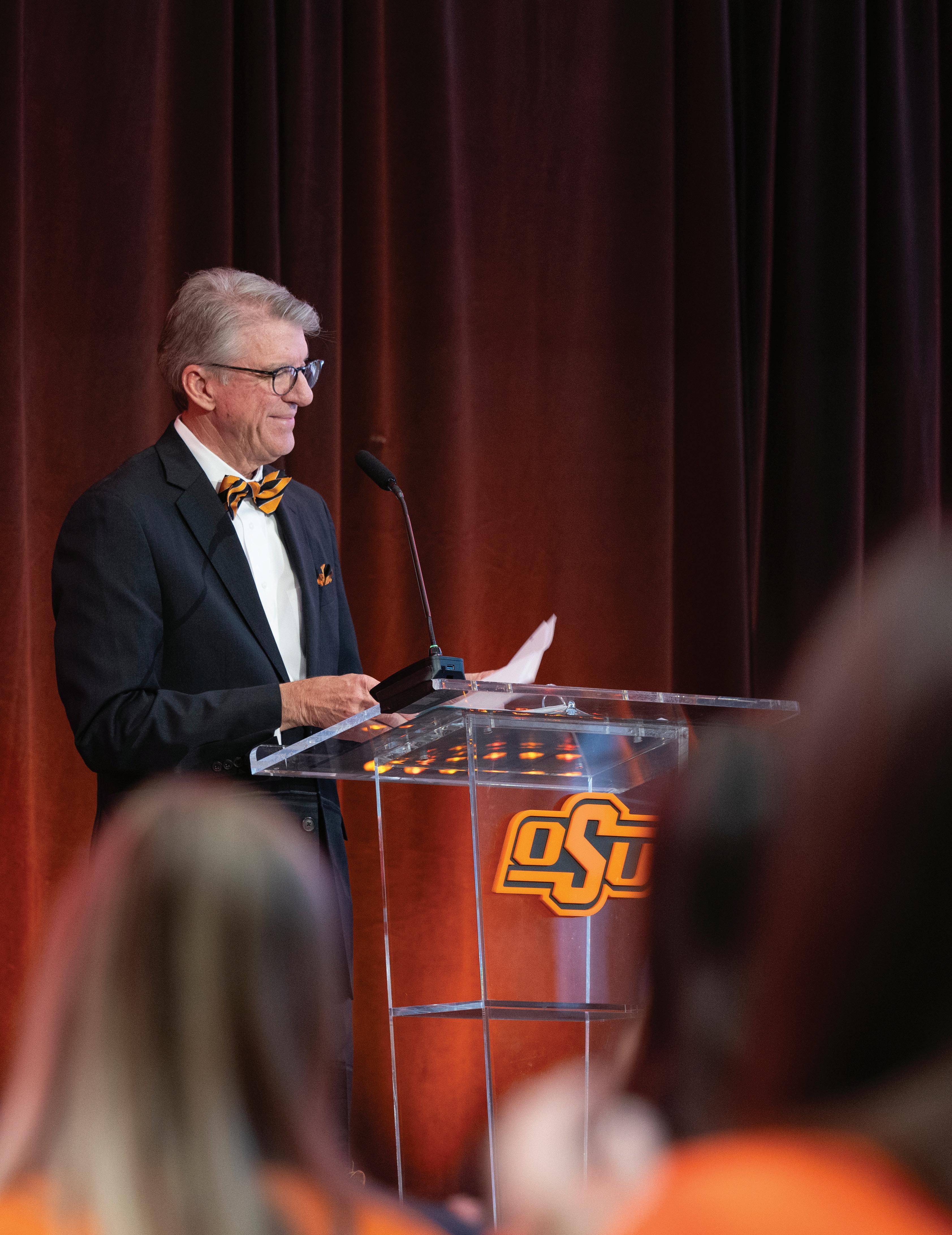
“Today marks a very historic day for Oklahoma State University and the entire state of Oklahoma,” Hess said. “Gov. [Kevin] Stitt and the members of the Oklahoma Legislature are to be congratulated for their contribution and transformational dedication to our College of Veterinary Medicine, the food supply of Oklahoma and the agricultural economy of our state.”
When the OSU Veterinary Medical Teaching Hospital first welcomed patients in 1981, it was considered one of the finest facilities in the country. After securing the largest state appropriation in university history in May, the university has committed to build a
new veterinary teaching hospital that will not only propel OSU to national prominence once again but also position it as the nation’s best teaching hospital. Hess said veterinarians are essential to every corner of Oklahoma — from rural ranches to urban centers — fueling economic growth and ensuring the safety of our food supply and public health. This critical investment, combined with $79 million allocated in 2023, marks a significant step forward in advancing the future of veterinary education, food security and public health in Oklahoma.
“This $250 million investment powerfully answers the call to build a new teaching facility for OSU’s veterinary medicine school, and we thank our elected leaders for their commitment to this vital project and the veterinarians who fought for it,” said past Oklahoma A&M Board Chairman Jimmy Harrel.
“We celebrate this significant progress as a win for Oklahoma State University, its veterinary students and the agricultural community. The facility will serve the state for at least the next 40 years and equip our graduates to meet the evolving needs of Oklahoma’s vital animal industries. Our mission is to be No. 1 in the nation, and this will be the launching pad to achieve our shared vision, advancing the university’s toptier status as a land-grant institution.”
The
Investment AT A GLANCE
•
$329 Million total cumulative investment secured to construct veterinary teaching hospital
255,000 ft2 to replace the current 145,376 ft2 facility
built to support 150+ veterinary students
ADVANCED TECHNOLOGY: CT, MRI, radiography and ultrasound
Linear accelerator for oncology treatments
Aqua Cow float tank
Large-animal MRI (first at OSU)
SPECIALTY SERVICES ADDED: Neurology and expanded oncology
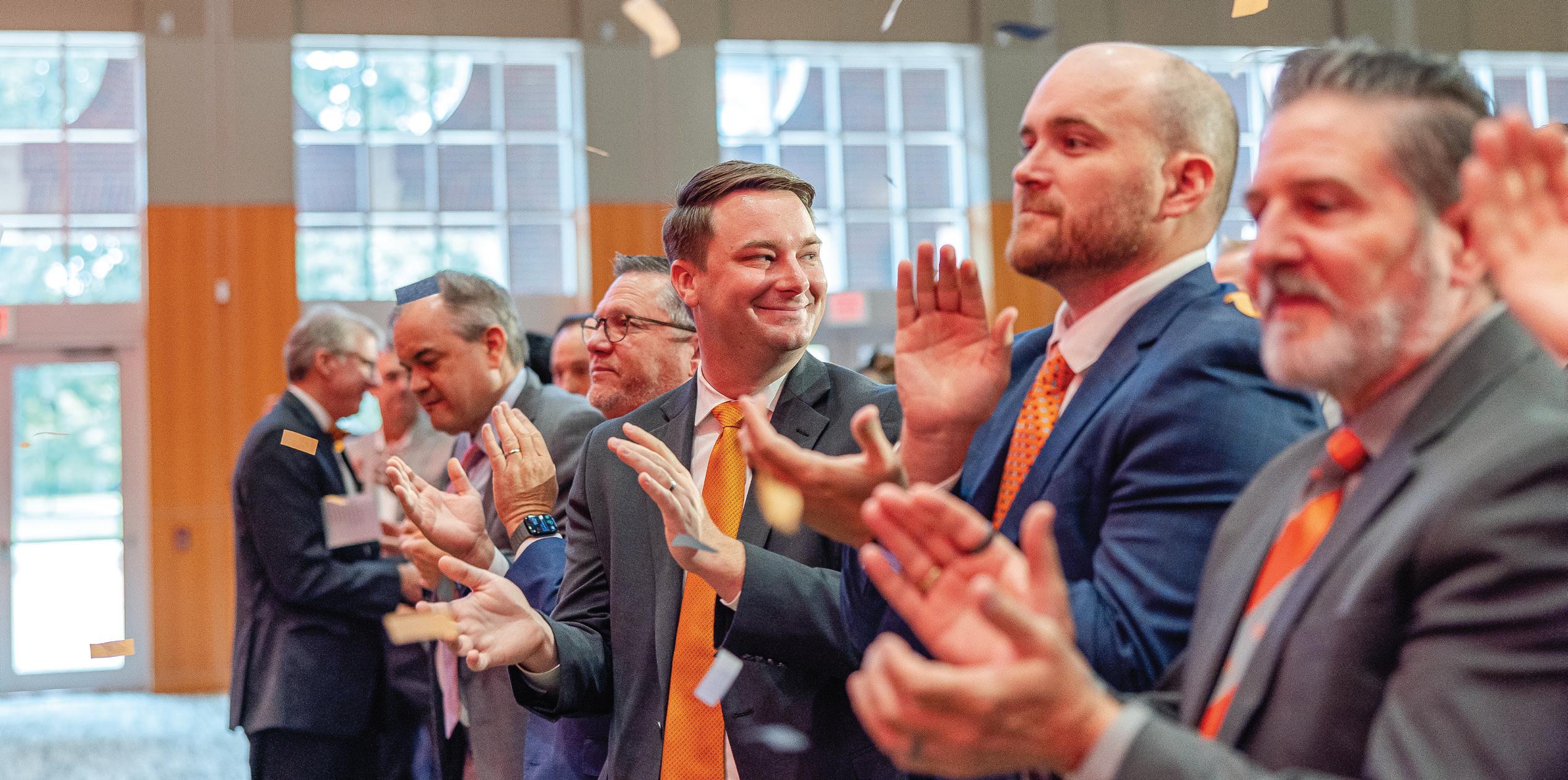
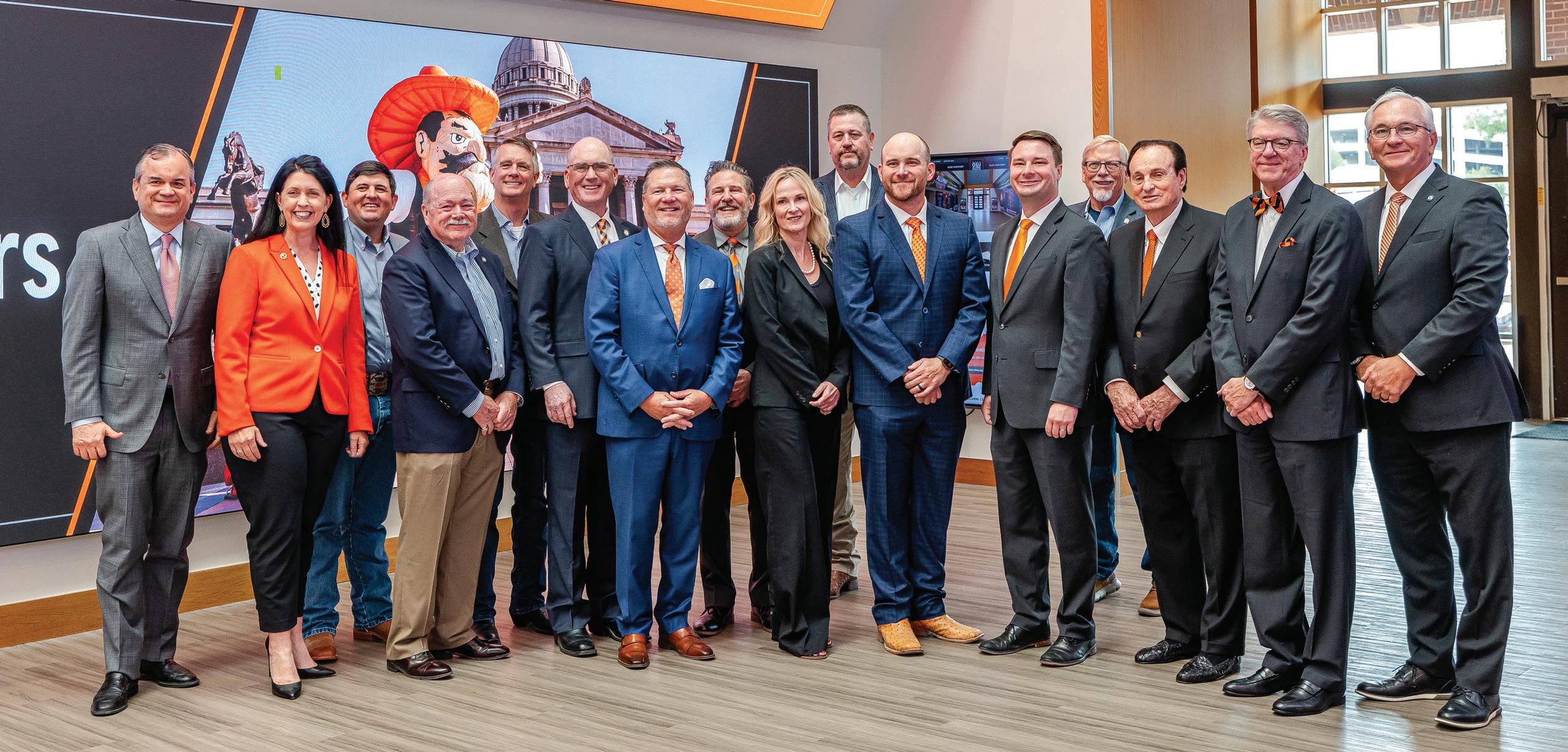
Chancellor Sean Burrage, Sen. Chuck Hall, Speaker Kyle Hilbert, Rep. Trey Caldwell and Sen. Todd Gollihare applaud at the Celebrating Oklahoma’s Veterinary Future event.
“For us, this means everything.”
Dr.
Kelly Black HOSPITAL DIRECTOR
Looking Ahead: A New Era for Veterinary Medicine
The new 255,000-square-foot facility will replace the existing 145,376-square-foot veterinary hospital, which was built to serve 60 students but now supports more than 150.
With this expansion, OSU will address one of the most urgent infrastructure needs in its veterinary program while expanding its ability to train the next generation of veterinarians.
The current veterinary hospital was identified as a key concern when the
full accreditation status in March, emphasizing that continued compliance is tied to facility upgrades.
Dr. Lionel Dawson, professor of theriogenology, said he’s seen veterinary medicine and student needs evolve dramatically since joining the OSU faculty in 1982. When he started, there were just 26 faculty members. That number has since more than doubled, but the hospital facility has remained largely unchanged.
“We were the premier veterinary hospital when I started,” Dawson said. “But veterinary medicine has changed. Our facility is outgrown. With a new building, we’ll be able to hire more specialists, give students more hands-on learning and provide better care to animals across the state.”
Dr. Jerry Ritchey, interim dean of the OSU CVM and an OSU alumnus, said the new hospital represents a turning point for veterinary medicine in Oklahoma that will immediately elevate OSU’s ability to provide a better
The new 255,000-square-foot facility will replace the existing 145,376-square-foot veterinary hospital.
“This is a long past-due reward for the legacy of current and past faculty and staff members who have worked so diligently to produce practice-ready, highly sought-after graduates,” Ritchey said.
“Professionally, this will immediately elevate our ability to provide a better operational experience for our patients and clients, allow us to expand subspecialty offerings, improve the work environment for our students and staff, help our recruitment efforts to attract the best faculty and train our students in a contemporary environment with space and resources to enhance their educational experience.”
From back yards to barnyards
“For us, this means everything,” said Dr. Kelly Black, hospital director.
Black said the new hospital will create new opportunities to expand treatment options for small and large animals, including advanced imaging tools (CT, MRI, radiography and ultrasound), a linear accelerator for oncology treatments and an Aqua Cow float tank.
“I think it’s an investment in the future of veterinary medicine in the state of Oklahoma, and I think it’s going to bring us into the next century, where
staff, veterinary technicians and receptionists.”
He said the new space will allow for more immersive clinical teaching, access to equipment like a large-animal MRI and even more excitement among students about learning.
“It is such an awesome feeling when students get excited about a case and have the necessary tools to bring it to discussion and not only prepare them as an entry-level veterinarian, but also show what advanced care is all about,” he said.
Horse owner Steele Hunter has been a client of the CVM hospital for over six years. He lives in Stillwater, but he said he’d make the trip to Stillwater even
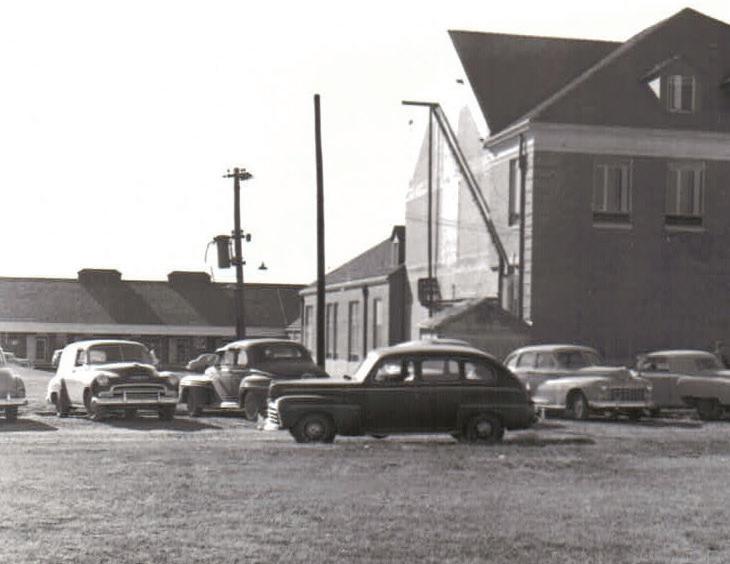
The current Veterinary Medical Teaching Hospital was built in the late 1970s and opened to the public in 1981.
from the best possible care,” he said. “And I know they’re gonna be putting out the best possible educated veterinarians into the marketplace that will be able to carry on their legacy and spread that experience wherever they may go.”
OSU food animal client Dale Newman has brought his cattle to OSU for a quarter century. He said ranchers like him would not be able to get their animals the care they need without the CVM hospital.
“It just makes me proud to know that there is concern about the rural animal facilities for taking care of the cattle,” he said.
“It’s a very big plus, and thank God for whoever stepped up to the plate to get it started. We’re rural, and who cares? So many people don’t know where their food comes from, it’s unreal. People also don’t understand how much people like me love our animals. We love our cattle. Thank God
somebody decided to take care of the old boys out in the rural country.”
Dr. Trey Kraft, an OSU College of Veterinary Medicine alumnus and president of the alumni society, characterized the Legislature’s support as “invigorating.”
“There are many crossroads in the headlights of veterinary medicine,” Kraft said. “There is a growing need for more veterinary practitioners in the rural corners of Oklahoma, and we are facing shortages of veterinarians on the national level. This investment in the infrastructure of Oklahoma State’s College of Veterinary Medicine will make our facilities not only contemporary but exemplary on the national level. We are setting the stage for a humongous leap forward into the future.
“I think that the facilities, and ultimately the veterinary program as a whole, should both be shining stars in the state of Oklahoma. We are so blessed to have this institution, and I look
forward to our future collaboration with legislators and Oklahoma veterinarians going forward. I don’t think we should settle until we see our school as a national power.”
The new facility directly supports OSU’s broader land-grant mission to improve agriculture and rural health through innovation and service.
“It’s program-changing, not only for our students and faculty and staff, but also for animal owners across the state, particularly our farmers and ranchers in rural areas that need the support to do what they do: feed and clothe the world,” said Dr. Rosslyn Biggs, assistant professor and director of the Center for Rural Veterinary Medicine.
In addition to the hospital’s expanded capacity to treat patients, there will be dedicated space for rural veterinary medicine education and production animal work, augmenting clinical instruction and providing a better operational experience. The investment
The new teaching hospital will feature modern equipment and technologies essential for both small and large animal care, including advanced imaging tools (CT, MRI, radiography and ultrasound), a linear accelerator for oncology treatments and an Aqua Cow float tank.
will also allow the college to launch its first neurology service, enhance its oncology offerings and attract new clinical research study opportunities.
When OSU alumna, veterinarian and former Oklahoma legislator Dr. Lee Denney attended veterinary school in the mid-1970s, the entire program was held in just one building: McElroy Hall. A lot has changed within the profession since she graduated in 1978, and Denney believes the investment is coming at a crucial time — not just for OSU, but for the entire state.
“Veterinary medicine is twofold, really,” Denney said. “We have the charge to keep the food animal population healthy, thereby keeping the food supply safe. We also have the charge to keep companion animals free of disease, as these pets have become family members.”
To further strengthen the future of veterinary medicine in Oklahoma, the Dr. Lee Denney Act of 2024 was established to provide financial support for students
pursuing a Doctor of Veterinary Medicine degree at OSU, focusing on serving rural communities and meeting the needs of livestock producers.
Fourth-year veterinary student Eli Pool, a third-generation OSU alumnus and proud Oklahoman, was among the first cohort of students to receive the Oklahoma Rural Veterinary Scholarship.
From the student perspective, he said clinical experiences are “paramount in preparation for becoming a practiceready veterinarian.” Now, he said, those experiences will be far more expansive and accessible.
“I could not be more excited to be part of the OSU CVM at this time,” he said. “This investment will no doubt serve Oklahoma State students as well as the state of Oklahoma for another 40 years, just as the current teaching hospital has, only better. Future classes at OSU CVM will get the experience, training and knowledge to practice in a state-of-theart facility, which will result in highly
skilled, practice-ready veterinarians. Not only will this new hospital help to produce veterinarians to practice across Oklahoma and the U.S., but it will provide the gold standard of specialty care to all of its patients.”
Kami Schenk said OSU’s commitment to building a new teaching hospital also sends a powerful message to first-year veterinary students like her.
“It’s a profound and impactful blessing that gives us the opportunity to learn and serve in a facility that matches the level of care our future patients deserve,” she said.
“This investment will provide a firm foundation for future veterinarians to succeed and, in turn, change and save more lives. It’s also worth noting that by investing in our future, as current students, we feel the support and confidence from our state and community to succeed.”
From left: Chancellor Sean Burrage, Secretary Blayne Arthur, Rep. John Pfeiffer, Rep. Mike Lay, Rep. John Kane, Sen. Jerry Alvord, Sen. Chuck Hall, Sen. Todd Gollihare, Rep. Toni Hasenbeck, Sen. Grant Green, Rep. Trey Caldwell, Speaker Kyle Hilbert, Rep. Carl Newton, Regent Jimmy Harrel, OSU President Jim Hess and Sen. Darcy Jech.
Pico Bounces Back
Surgery restores mobility and health for beloved dog
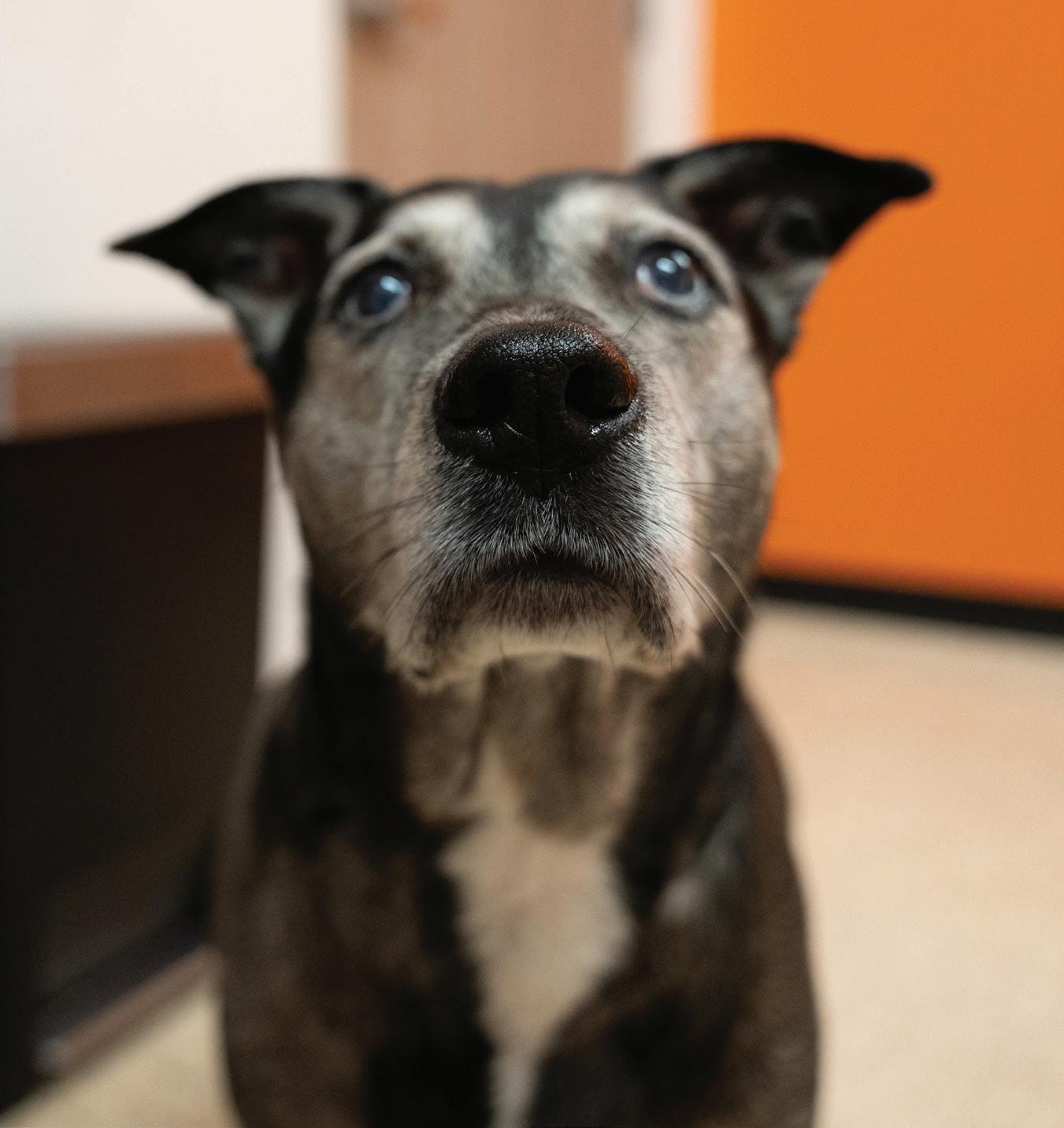
Pico, a 13-year-old Catahoula mix, found his energy again after a life-changing surgery.
For about five years, Pico has suffered from multiple masses on his body. What started out small grew to become detrimental to Pico’s day-today life.
“Our veterinarian at the time was not comfortable performing the surgery due to the number of blood vessels surrounding the masses,” said Christina Buntin, Pico’s owner. “We left them alone, assuming that since he was already an older dog, they wouldn’t cause too much of an issue.”
After the bigger mass on Pico’s shoulder grew to a grueling 5.5 pounds,
Buntin decided to bring him to the Oklahoma State University Veterinary Medical Teaching Hospital.
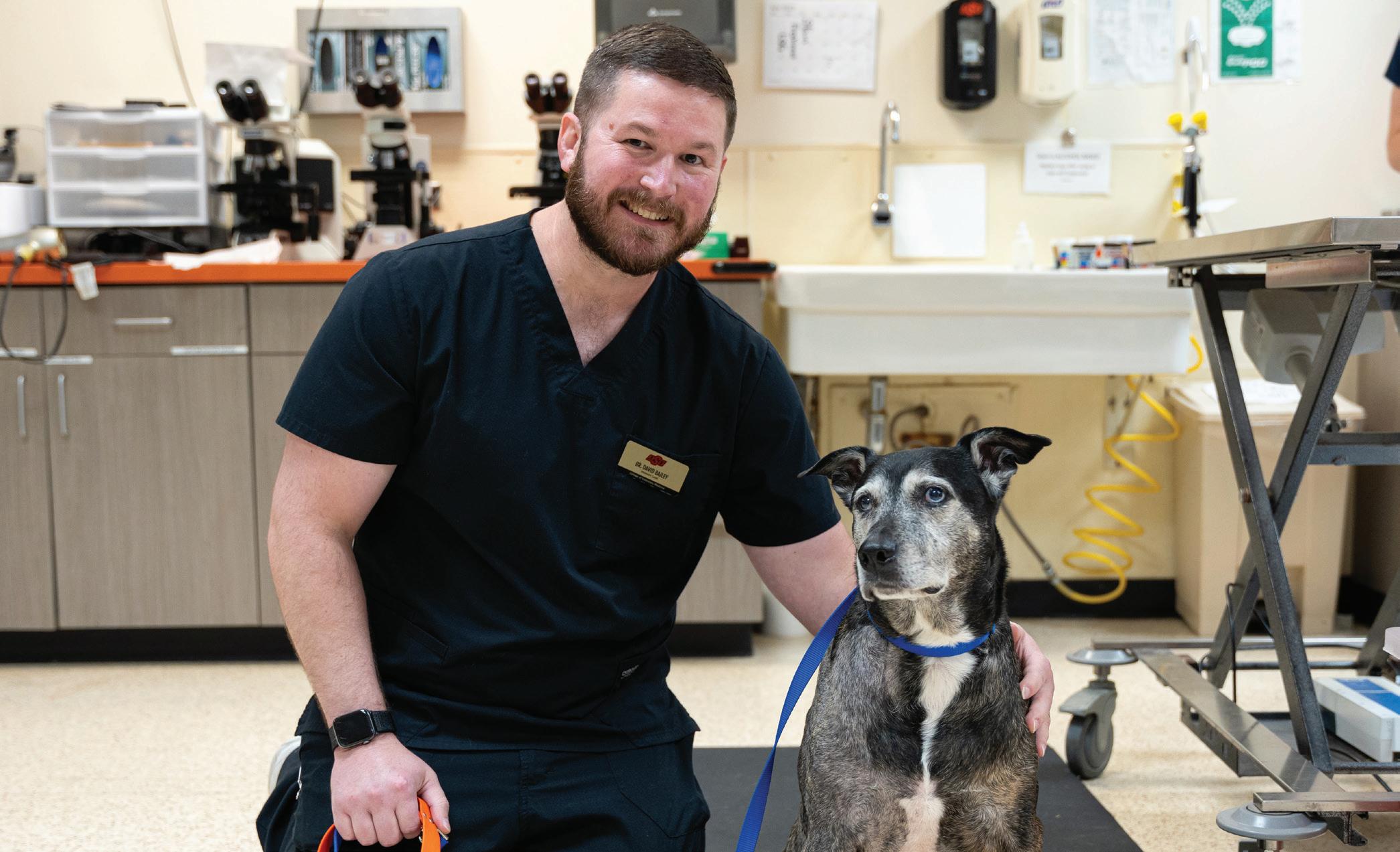
“Pico came in with two large masses, one on the right hind leg and one on the right shoulder,” said Dr. David Bailey, small animal primary care clinical assistant professor. “These masses were causing him discomfort and interfering with his ability to walk.”
During the initial exam, the primary care team collected fine-needle aspirates from both tumors.
Cytology showed the shoulder mass was a lipoma, a benign fatty tumor, while results for the hind leg mass were inconclusive. Chest radiographs confirmed the patient’s heart and
lungs were healthy for anesthesia and revealed the shoulder mass was located on top of the scapula rather than beneath it, making removal less complicated.
“Once we determined that the masses were unlikely to be malignant, we chose to remove the tumors in the hope of improving Pico’s mobility,” Bailey said.
Both tumors were removed and sent for histopathology, which confirmed the shoulder mass was a lipoma and the hind leg mass was a hamartoma, another benign tumor.
“The surgery was particularly challenging due to the large size of the right-side mass and the significant
STORY AND PHOTOS BY BAILEY HORN
Pico gets a post-surgery check-up with Dr. David Bailey at the Oklahoma State University Veterinary Medical Teaching Hospital.
blood supply feeding both tumors,” Bailey said.
Pico returned home the day of his surgery and did not require hospitalization.
“He recovered from surgery with no complications,” Bailey said. “When he came in for his incision recheck, he was moving much better, especially in the front legs, but was still having some mobility issues in his hind legs due to chronic arthritis.”
The primary care team implemented an arthritis pain management plan to improve Pico’s comfort and mobility and will continue follow-up care as needed.
“The most rewarding part of the case was knowing we could give Pico more quality time with his loved ones,” said Madi Purdy, fourth-year veterinary student.
Buntin said Pico seems like a completely different dog now.
“He is hyper and wants to play tug of war, which is his favorite activity,” Buntin said. “Before, that was pretty much impossible with the size of that lipoma.”
Buntin commended both the staff and Dr. Bailey for their care and professionalism.
“Everybody at the hospital was so nice and sweet,” Buntin said. “The student on Pico’s case even called to check on him before and after surgery, which was very comforting. It showed she truly cared about what she was doing.”
Buntin also appreciated Dr. Bailey’s approach.
“He was very nice, straightforward, informative and confident,” she said.
“The way he talked to me — and to the students — gave me confidence that they could do the job well.”
Purdy, the student assigned to Pico’s case, said the experience was equally meaningful.
“I was able to gain valuable surgical experience with an outstanding mentor, Dr. Bailey, whose calm and clear communication guided me through my portion of the procedure,” she said.
The case also gave other veterinary students a rare chance to witness the removal of such a large lipoma, turning Pico’s surgery into both a learning experience and a lifesaving procedure.
“By removing the mass, we not only made it easier for him to get around but also extended his life,” Purdy said. “He went home with his loving family walking easier, feeling lighter and with a new lease on life.”
“The most rewarding part of the case was knowing we could give Pico more quality time with his loved ones.”
MADI PURDY, FOURTH-YEAR VETERINARY STUDENT
Pico, a 13-year-old Catahoula mix, had tumors removed at the OSU Veterinary Medical Teaching Hospital.
STRIDE TOWARD HEALING
Groundbreaking foal research sheds light on joint infection treatments
With foaling season comes hope and excitement as the start of a new year and all the possibilities the horses could bring.
A new foal has a bright future ahead unless they start experiencing symptoms of depression, dehydration and multiple cardiac stressors. All of those signs could lead the foal to be diagnosed with septicemia.
The leading cause of illness and death in newborn foals, septicemia is a bacterial infection of the bloodstream.
One of the most devastating outcomes of septicemia in foals is septic synovitis — bacterial invasion of joint spaces. These infections are notoriously difficult to treat and, if not aggressively managed, can cause irreversible joint damage.
“Despite prompt intervention, survival rates still range between 42% and 89%, and many foals suffer from lasting performance limitations,” said Dr. Mike Schoonover, professor in equine surgery and sports medicine.
At the Oklahoma State University Veterinary Teaching Hospital, a dedicated team of equine specialists — like its counterparts in human medicine — is continually working to refine treatment protocols and develop more effective strategies to combat disease.
Drs. Schoonover and David Wallace, equine surgery resident, conducted a study on the efficacy and safety of concurrent systemic administration and intravenous regional limb perfusion of amikacin in healthy neonatal foals.
IVRLP is a technique that offers a targeted approach to antimicrobial delivery.
A tourniquet temporarily isolates the limb’s blood circulation while a dose of antimicrobial is injected directly into a superficial vein. Once administered, the antimicrobial diffuses into the limb’s tissues, achieving very high concentrations until the tourniquet is removed, allowing normal blood flow to resume.
Amikacin, an antimicrobial commonly used for IVRLP in horses because of its spectrum of activity against common orthopedic pathogens, was studied.
In the spring of 2023, Schoonover and Wallace started their study to evaluate the efficacy and safety of concurrent systemic and IVRLP antimicrobial treatment in eight neonatal foals, 3 to 7 days old.
While IRLP treatment is often used clinically in adult horses and foals, research on the technique in young, neonatal foals is lacking.
“There are many published experimental studies evaluating IVRLP in adult horses; however, no studies have been published evaluating the efficacy and safety of IVRLP in neonatal foals,” Schoonover said.
Antimicrobial therapy is the cornerstone of treatment for sepsis and septic synovitis; however, systemic administration alone often fails to achieve the antimicrobial concentrations required to eliminate the infection in joint tissues.
Increasing the systemic dose beyond those recommended risks side effects such as nephrotoxicity, particularly in neonates with immature organ systems.
“Giving higher than recommended doses of a drug like amikacin can systemically damage the kidneys, especially in young foals whose organs are still developing,” Wallace said. “But if we don’t give enough, we risk subtherapeutic concentrations, which will not clear the infection and can lead to antimicrobial resistance.”
To navigate these hurdles, veterinarians often treat septicemic foals suffering from septic synovitis by administering antimicrobials both systemically and locally. However, the dose of antimicrobial given by each route can vary substantially between practitioners due to the lack of research on the topic.
In the spring of 2023, Schoonover and Wallace started their study to evaluate the efficacy and safety of concurrent systemic and IVRLP antimicrobial treatment in eight neonatal foals, 3 to 7 days old.
The treatment protocols consisted of administering amikacin at the currently recommended dose, divided between systemic and IVRLP routes. Two-thirds of the calculated systemic dose was administered intravenously, and onethird of the calculated systemic dose was administered by IVRLP to either a forelimb or a hind limb.
Blood and joint fluid samples were collected at various time points over 24 hours and the amikacin concentrations were measured. Each foal underwent the forelimb and hind limb IVRLP protocol in random order, 48 hours apart.
As anticipated, both IVRLP protocols resulted in comparable blood amikacin concentrations over 24 hours and achieved peak concentrations considered to be effective in treating sepsis caused by common bacterial pathogens in foals. Additionally, trough amikacin concentrations within the range considered safe for once-daily dosing across multiple days were observed.
Reaching low trough levels of systemic amikacin is critical, particularly for treatment courses extending over several consecutive days.
Interestingly, not all the results were straightforward.
Although concentrations considered therapeutic were observed in joint fluid from the carpus, tarsus and forelimb fetlock joints, lower, possibly sub-therapeutic concentrations were observed in that from the hind fetlock joint. Reasons for this disparity are not completely apparent, but Schoonover and Wallace have some theories they plan to investigate further.
Despite this anomaly, the study indicated that both IVRLP methods can be safe and efficacious in the treatment of sepsis with concurrent septic synovitis in neonatal foals.
“Through this study, we were able to show that this combined method of amikacin delivery can work effectively in neonatal foals. We observed therapeutic
-QUI LLEN~
Dr. David Wallace and Dr. Mike Schoonover prepare a foal for IVRLP treatment at the OSU VMTH.
concentrations in most of the joints we studied, while still achieving the necessary peak systemic concentrations,” Wallace said.
This study lays the groundwork for a new era in neonatal medicine. Future research could explore variations related to IVRLP in foals, such as antimicrobial type and dose, administration techniques, tourniquet type, and more.
“This is just the beginning,” Schoonover said. “Now we have a model for others to build on.”
Schoonover and Wallace collaborated with other faculty members within the college. Drs. Megan Williams, associate professor of equine surgery; Jared Taylor, professor of pathobiology; and Lara Maxwell, professor of physiological sciences, each played an invaluable role in the research.
This study was supported by generous funding, including $20,000 from the 2023 OSU President’s Fellows Research Award and a $15,000 grant
from the OSU Research Advisory Committee. These contributions were instrumental in facilitating every stage of the research.
At OSU, faculty members are committed to advancing the field of veterinary medicine.
The investigation into IVRLP is just one example of how our equine specialists are leading efforts to improve neonatal care. This study deepens understanding of how to treat joint infections safely and effectively in septic neonatal foals and lays the foundation for future breakthroughs in equine medicine.
With continued research, collaboration and support, the veterinary community is one step closer to safeguarding horses’ soundness, health and longevity.
Donor Recognition
This study was supported by generous funding, including $20,000 from the 2023 OSU President’s Fellows Research Award and a $15,000 grant from the OSU Research Advisory Committee. These contributions were instrumental in facilitating every stage of the research.
Sterile supplies are prepared for IVRLP, including fluids, bandaging materials and infusion equipment, used to administer localized antimicrobial treatment in equine patients.
Against
OSU veterinarians detect organophosphate toxicity in a show goat pair
At the Oklahoma State University Veterinary Medical Teaching Hospital, clinicians received a call from a referring veterinarian about two 7-month-old wether goats named Last Chance and Tower.
consultation regarding their five-day history of inappetence, diarrhea and elevated liver values of unknown origin. with the referring veterinarian concerned he might not survive the trip. Tower exhibited similar, but milder, clinical signs. On physical exam, Last Chance presented with coughing, labored breathing, pinpoint pupils, lethargy, muscle tremors, excessive salivation and delayed mentation.
included pneumonia, coccidiosis and salmonellosis — but the case wasn’t adding up.
veterinarian showed acute liver damage, high blood cell counts. Still, no clear cause could be identified, and Last Chance had not responded to fluid therapy or treatment.
food animal assistant professor, related that the pinpoint pupils and general
signalment and bloodwork looked more like an acute toxicity and noticed a strong, unfamiliar odor on the goats’ coat, that the breakthrough came.
However, while the conversation continued, she expressed that due to limited pen space, Last Chance and Tower had been housed together
Sarah Brown and Dr. Hailey Drerup inspect Last Chance, a goat suffering from poisoning caused by a lice treatment.
specific treatment, Jimenez discovered it was an organophosphate. When combined with the clinical signs, this information pointed strongly to organophosphate toxicity as the likely diagnosis.
Organophosphate toxicity is rare in goats but is a serious condition caused by exposure to chemicals like those found in certain lice treatments or for plant pest control. Organophosphates work by inhibiting the enzyme acetylcholinesterase, leading to the accumulation of acetylcholine, which disrupts nerve function. In livestock, symptoms can include pinpoint pupils, excessive salivation, muscle tremors,
difficulty breathing and even seizures in severe cases.
In this case, Jimenez said the pinpoint pupils, also known as miotic pupils, a lack of response to light, and elevated liver enzymes were classic signs. The link between the chemical treatment and the symptoms became clearer when it was revealed that the two goats had been housed together, allowing them to lick each other and possibly ingest a toxic dose.
The veterinary team acted quickly once the suspicion of organophosphate toxicity was raised.
Atropine, a drug that counteracts the toxic effects of organophosphates, was administered. Last Chance’s symptoms began to improve almost immediately, confirming the diagnosis. Atropine works by blocking the action of acetylcholine, thus providing immediate relief. However, atropine alone wouldn’t be enough to fully reverse the effects. Organophosphate toxicity requires a more specific treatment: pralidoxime (2-PAM), which helps reactivate acetylcholinesterase, allowing the body to break down the accumulated acetylcholine.
Fourth-year veterinary students and faculty members pose with Last Chance before he went home to finish recovering.
“His case initially stumped us, but through collaboration, we reached the correct diagnosis and were able to administer effective treatment for a successful outcome.”
Mandy Lawson, fourth-year veterinary student
The challenge, however, was that 2-PAM can be difficult to find, and it needed to be specially ordered.
The team immediately contacted the OSU VTH pharmacy and the goat’s owner. After a detailed discussion, the owner agreed to proceed with the 2-PAM treatment. The drug was delivered promptly, and the treatment began with cautious dosing.
Within hours, Last Chance showed dramatic improvement. He regained the ability to stand and walk, and his symptoms of lethargy and weakness began to subside. While not yet fully recovered, his condition had transformed from life-threatening to stable, thanks to quick thinking and the right treatment.
“Since organophosphate toxicity is rare in food animal species, I hadn’t had the opportunity to utilize 2-PAM as a treatment,” said Mandy Lawson, fourth-year veterinary student. “Cases like this are the epitome of a teaching hospital, giving students like me the opportunity to practice the highest caliber of medicine and to gain exposure to treatments that may not be readily available at a rural practice. Those lessons are extremely valuable as we transition out of our clinical year at OSU and into the role of practicing veterinarians — they teach us what to look for and how to know when to refer cases. I can truly say this patient made me a better doctor.”
Throughout this case, Jimenez emphasized the importance of looking at the whole picture — every piece of information from clinical signs to environmental factors. In particular, the strong communication between
the clinicians and the owner played a crucial role in solving the mystery. Initially, the owner was hesitant to consider the possibility of toxicity, but the veterinary team’s persistence in obtaining all the details ultimately led to the correct diagnosis.
This experience was invaluable not only for the clinicians but also for the students working on and observing the case. They learned the importance of thorough diagnostic work, especially when symptoms seem inconsistent or unusual.
“This case was a great learning opportunity for students to see that you need to follow your instincts. The knowledge is there, you just have to learn to connect the dots and treat the animal, not the bloodwork,” Jimenez said. “Once we began treating the toxicity, it became clear that relying solely on the bloodwork would have led us to keep him on IV antibiotics longer than necessary. He did very well without them.”
For livestock owners, this case underscores the importance of early recognition of poisoning and immediate intervention, as it can be the difference between life and death. This case also highlights the importance of open communication with your veterinarian. What might seem like a small, insignificant detail — like the lice treatment, the shared pen or the odor of the treatment — could be the missing piece of the puzzle.
“Even if you think a detail is not important, just share it,” Jimenez said. “The answer may be the difference between treating the animal with the appropriate drug promptly versus
making an incorrect diagnosis or delaying treatment.”
Last Chance’s recovery was a testament to the power of observation, collaboration and clinical expertise. The successful outcome was made possible by the combined efforts of a dedicated referring veterinarian, a committed owner, skilled technicians, engaged students and the thoughtful contributions of five OSU faculty members.
Drs. Jimenez and Shari Kennedy from the food animal medicine and surgery group, along with Drs. Ari Merari and Kelsey Walker from the large animal emergency team, worked closely with students and house officers to discuss the case, determine treatment protocols, administer care and monitor the patient’s response throughout the process.
The case challenged the veterinary team to think creatively and provided an invaluable learning opportunity for all involved.
“In my opinion, cases like Last Chance’s organophosphate toxicity are some of the most rewarding in veterinary medicine,” Lawson said. “They represent a true culmination of the knowledge we gain in veterinary school. From recognizing subtle changes in clinical signs to applying concepts from courses like clinical pathology, pharmacology and food animal techniques, everything comes together.
“His case initially stumped us, but through collaboration, we reached the correct diagnosis and were able to administer effective treatment for a successful outcome.”
El
Ways to Engage
Stay up-to-date with the latest alumni news: Update your information with the college at vetmed.okstate.edu/alumni/ update-info.html
Stay connected: Connect with other alumni by joining the OSU CVM Alumni Society Facebook group at facebook.com/ share/g/1ANMJSb6Qb/
Nominate a Distinguished Alumni: Nominate deserving CVM alumni at vetmed.okstate.edu/about/alumni-awards.html
Greetings from the Alumni Society
Dear OSU CVM Alumni and Friends,
First and foremost, I would like to recognize Dr. Jerry Ritchey and congratulate him on his success as interim dean. His dedication and impact on the college have not gone unnoticed.
This year, 102 practice-ready veterinarians graduated from our program, and we are proud to welcome them as alumni.
We marked another successful year for the Alumni Lifetime Membership Scholarship Fund, which helps recent graduates become lifetime members. Through the program, students contribute $300 and alumni contribute $600, ensuring graduates remain connected to the alumni community well beyond graduation.
On behalf of the Alumni Society, I extend our gratitude to the Oklahoma Legislature, President Hess and the Oklahoma A&M Board of Regents for supporting the state appropriation for the new teaching hospital. This investment will strengthen our college’s mission in research, education and animal health.
We also thank our alumni affairs specialist, Sharon Worrell, for her years of service to the CVM and wish her well in retirement.
As president, I look forward to continuing to foster connections among our alumni, supporting the initiatives of the CVM, and encouraging recent graduates to engage with alumni events and opportunities. Together, we can bridge the gap between the past, present, and future of our alumni community while advancing the CVM’s mission.
I look forward to leading you all this year.
Go Pokes!
Trey Kraft, DVM President, OSU CVM Alumni Society
Donate to the Alumni Society White Coat Fund:
If you have an interest in taking an active role in CVM alumni programs, please contact Dr. Trey Kraft, OSU CVM Alumni Society president, at we3kraft@gmail.com.
DR. JEFF HALL
“One person doesn’t win an award. It’s the interaction of the people you associate with during your career that helps you achieve the things that you achieve.”
DISTINGUISHED ALUMNI
Riding High
Dr. Jeffery Hall’s expertise in veterinary toxicology has taken him from Stillwater to classrooms, labs and lecture halls worldwide.
Now, the Oklahoma State University College of Veterinary Medicine is honoring the 1987 graduate with its 2025 Distinguished Alumni Award.
“I actually had my eyes set on medicine and science since a very young age,” Hall said. “When I was in the second grade, my teacher said, ‘Based on what you do in class today, I know that someday you’ll be a scientific farmer.’”
That prediction wasn’t far off. Hall earned a bachelor’s degree in agricultural economics from OSU in 1984, followed by his Doctor of Veterinary Medicine in 1987. He then pursued advanced training at the University of Illinois College of Veterinary Medicine, completing an internship and residency in clinical, diagnostic and experimental toxicology before earning his Ph.D. in toxicology.
“I actually spent a lot of my time when I was in undergrad and veterinary school, working a full-time job to be able to afford to go to school,” Hall said. “I worked as a private investigator and insurance adjuster.”
Hall has been board-certified in veterinary toxicology since 1993 as a Diplomate of the American Board of Veterinary Toxicology. One of his most notable achievement came early in his career when he was the first to identify and describe Easter lily toxicosis in cats. He went on to publish and present his findings, providing guidance to veterinarians and internal medicine specialists.
He is recognized globally as a leading authority on vitamin and mineral nutrition and toxicology. During his career, he has published
extensively and remains active as a reviewer for leading scientific journals, while also speaking at major veterinary conferences.
He has held leadership and committee roles in several veterinary associations, including the American Association of Veterinary Laboratory Diagnosticians, the American Association of Veterinary and Comparative Toxicology and the American Board of Veterinary Toxicology.
“You can gain a lot of insight and knowledge by visually observing your surroundings, listening to people, processing information and then speaking when it’s important,” Hall said.
Colleagues say that commitment to careful observation and service sets him apart.
“I have experienced Jeff’s selfless service in search of answers to my questions. He takes each request, each lab accession, as a personal quest,” said Dr. Joe Roder, Huvepharma director of cattle technical services and OSU CVM alumnus. “He goes well beyond the results of the initial report, seeking truth that is often elusive in diagnostic medicine.”
Originally from Cement, Oklahoma, Hall has built a career that has taken him nationwide while leaving a lasting impact at every stop. In 1996, he joined Utah State University, where he advanced from assistant professor to full professor in the Department of Animal, Dairy and Veterinary Sciences.
Today, he lives in Utah with his wife and family and serves as a cattle technical services veterinarian for Huvepharma, providing expertise in diagnostics, nutrition, producer education, regulatory affairs and adverse event investigations.
Hall’s career has always extended beyond the classroom and laboratory. Drawing on his bull-riding background, Hall began volunteering with the University of Illinois Rodeo Team and later served as head coach and advisor of the Utah State University Rodeo Club.
Colleagues say he thrived because of his genuine concern for the wellbeing of both student-athletes and their animals, encouraging responsibility, stewardship and teamwork.
“Dr. Jeff Hall has always radiated dedication and humility,” said Dr. Val Beasley, University of Illinois professor emeritus of veterinary, wildlife and ecological toxicology. “His students and his peers consistently rave about him.”
When Hall learned he had been named a Distinguished Alumni, he said the honor wasn’t just his own.
“The first thing I did was call my parents,” he said. “And then the next six calls I made were to people that I’d interacted with in my career that I wanted them to share in the good news, because one person doesn’t win an award. It’s the interaction of the people you associate with during your career that helps you achieve the things that you achieve.”
Hall’s many achievements — those listed here and countless others — make him an exceptional choice for the Distinguished Alumni Award.
“His scholarship, instruction and service have significantly advanced veterinary medical knowledge, strengthened the practice of veterinary medicine and improved animal health and well-being. Jeff is recognized as an expert who continues to make a tremendous impact — one producer, one veterinarian, one student at a time. He does all of this with a calm, steady ease — the OSU Cowboy Way,” Roder said.
DR. MEREDYTH JONES
“During my time in Kansas and Texas, I never stopped wearing orange.”
A Teacher at Heart DISTINGUISHED ALUMNI
Dr. Roger Panciera, a legendary Oklahoma State University College of Veterinary Medicine faculty member, once said, “A university’s faculty are of minor importance compared to its graduates, and it will be its graduates for which will be known.”
Dr. Meredyth Jones, a food animal practitioner, exemplifies Panciera’s goal.
Jones grew up in a household that bled orange. Her father, Mike Jones, earned his Doctor of Veterinary Medicine from OSU in 1982. She graduated with her DVM in the spring of 2002. After graduation, Jones returned home to join her father in his mixed-animal practice.
Jones later returned to Stillwater to complete a large animal internal medicine residency, where the highly sought-after Dr. Bob Streeter mentored her.
“Dr. Streeter played an enormous role in my development,” Jones said. “In my opinion, Dr. Streeter is one of the best food animal internists.”
After completing her residency, Jones spent six years at the Kansas State University College of Veterinary Medicine, followed by another six years at the Texas A&M University College of Veterinary Medicine and Biomedical Sciences.
Throughout her time at both institutions, she left a lasting impact on the students and clients she served.
“During my time in Kansas and Texas, I never stopped wearing orange,” Jones said.
In 2018, Jones returned to Stillwater and joined the faculty as a large animal internist. Jones has a passion for teaching students and mentoring other food animal practitioners.
Jones has published more than 30 refereed papers and authored or co-authored over 40 book chapters.
She regularly presents continuing education seminars at state, regional and national veterinary conferences. Along with supporting fellow practitioners, she has dedicated her career to serving large animal producers.
Jones is a diplomat of the American College of Veterinary Medicine – Large Animal specialty board and is currently a professor of livestock medicine at Texas Tech University’s School of Veterinary Medicine.
“She is perhaps the most knowledgeable large animal internist that I have known in my long career,” said Dr. Robert Smith, Veterinary Research and Consulting Services. “She is always ready to share her
knowledge and experiences with others.”
A champion for other veterinarians, Jones founded Cowgirl Continuing Education Retreats — an organization that helps women in large animal medicine. Each year, 25-30 female veterinarians attend a four-day retreat on fellowship and continuing education.
“I am most proud of this organization because it creates a space for women across the profession to connect, share experiences and build lasting relationships,” Jones said.
“She is perhaps the most knowledgeable large animal internist that I have known in my long career. She is always ready to share her knowledge and experiences with others.”
Dr. Robert Smith, Veterinary Research and Consulting Services
DR. DAVID VONTUNGELN
“I’ve received awards before, but this one is especially meaningful to me because it came from my peers. “
DISTINGUISHED ALUMNI
Kneading Kindness
On any given day in Calumet, Oklahoma, you’ll likely find Dr. David VonTungeln tending cattle on his family’s century-old farm or lending a hand in his community.
A fifth-generation farmer and rancher as well as a veterinarian, VonTungeln has spent more than four decades bridging the worlds of agriculture and veterinary medicine.
From pioneering livestock health research at the USDA’s Grazinglands Research Laboratory to shaping agricultural policy as a leader in the Oklahoma Farm Bureau, his career has been defined by service — to his profession, his state and his neighbors.
That lifelong commitment makes him one of Oklahoma State University College of Veterinary Medicine’s 2025 Distinguished Alumni.
Before enrolling at OSU, VonTungeln served in the Navy and attended Redlands Community College in El Reno, Oklahoma. He earned a bachelor’s degree in animal science in 1978 and a Doctor of Veterinary Medicine in 1983.
After graduation, VonTungeln became the first veterinarian hired at the Grazinglands Research Laboratory. In that role, he contributed to advancements in livestock health, animal welfare and forage utilization for beef operations — years ahead of today’s grass-fed movement — and the sustainability of soil and plant resources.
On his own initiative, VonTungeln made repeated trips to Washington, D.C., where he met with lawmakers to stress the importance of agriculture and veterinary medicine, with a special focus on rural veterinary practice.
VonTungeln is held in high regard by his classmates, colleagues and friends.
“He is a greatly respected man with the highest level of virtue and
AND PHOTO BY BAILEY HORN
“He truly embodies the Cowboy spirit — committed to service, integrity and excellence.”
Dr. Steve Thompson, director of public policy for the OSU/A&M Board of Regents,
professionalism, a man of action and a man of his word,” said Kenneth Kirlin, David Henderson, Stephen Hopkins and Michael Sealock, 1983 OSU CVM classmates. “The OSU CVM should be very proud of David’s accomplishments.”
Steve Thompson, director of public policy for the OSU/A&M Board of Regents, spoke of VonTungeln’s unwavering commitment to veterinary medicine, agriculture and community service.
“Dr. VonTungeln was a generous mentor, advisor and role model to me during my time as vice president of public policy at Oklahoma Farm Bureau,” Thompson said. “His strong leadership and calm demeanor helped guide our team through many difficult issues at the State Capitol. He truly embodies the Cowboy spirit — committed to service, integrity and excellence.”
His record of service includes an appointment by Gov. Mary Fallin to the Redlands Community College Board of Regents in 2016, as well as membership in the American Veterinary Medical Association, the Oklahoma Veterinary Medical Association and the Academy of Veterinary Consultants.
Beyond his professional and civic leadership, VonTungeln and his wife, Maribeth, are known for their generosity and service to others.
Carrying on a tradition he learned from his parents, the couple are avid bread makers who have donated thousands of loaves to local charities. During the height of the COVID-19 pandemic, they baked 60 loaves every two weeks to help feed elderly residents receiving food boxes. Each Thanksgiving, they provide 250 loaves for community food baskets.
Their children, Amanda and Matt, both OSU graduates, and their spouses, along with grandchildren Hayden and Drake, remain closely involved in family life, reflecting a legacy of service and community care.
VonTungeln reflected on the significance of the award.
“I’ve received awards before, but this one is especially meaningful to me because it came from my peers — people I went to school with, people I know and respect,” VonTungeln said. “To be recognized by them was truly an honor, and I was thrilled.”
As a veterinarian, farmer, leader and servant to his community, VonTungeln has lived out the values instilled in him from an early age — hard work, humility and a commitment to helping others.
Whether in the field with his cattle, the laboratory advancing animal health, or the community kneading loaves of bread to share with neighbors, his life reflects a deep devotion to people and animals.
DR. TREY KRAFT
“I think one notable aspect of my veterinary journey is that I was not an honors graduate from veterinary school. I had to work for every grade I received, and I would have loved to have achieved higher academic marks.”
RECENT GRADUATE ALUMNI AWARD
The Cowboy Way
Those who know Dr. Trey Kraft best describe him as a rising star in veterinary medicine. Someone passionate, dedicated and already leaving their mark on the veterinary industry at such a young age.
Now, he has the award to back it up.
This year, Kraft, 32, is the Recent Graduate Alumni Award Winner.
Growing up in Paris, Texas, Kraft loved watching his dad fix animals of all shapes and sizes. Because of his passion for animals, Kraft joined 4-H in middle school and showed livestock until he graduated high school.
“I spent every day after school at our family’s mixed veterinary practice,” Kraft said.
After graduating from high school, Kraft moved to Stillwater, Oklahoma, where he earned his undergraduate degree before being accepted into Oklahoma State University’s College of Veterinary Medicine Class of 2020.
Kraft explained that his journey in veterinary school was not always easy, but having mentor support helped keep him on course.
“I think one notable aspect of my veterinary journey is that I was not an honors graduate from veterinary school,” Kraft said. “I had to work for every grade I received, and I would have loved to have achieved higher academic marks.”
While at the OSU CVM, Kraft made it his personal goal to be a lifelong learner. He also served his classmates as a class representative.
As an alumnus, Kraft’s dedication reaches far beyond the clinic walls. He serves on the Board of Directors for the Texas Veterinary Medical Clinic Association and the Northeast Texas Veterinary Medical Association. Within these organizations, Kraft contributes his time and expertise to several committees. In addition, Kraft is the president of the OSU CVM Alumni Society.
Kraft’s leadership extends beyond veterinary organizations and into his broader community. He serves on the Young, Beginning and Small Farmers and Ranchers Advisory Board for AgTrust Farm Credit, which supports and finances young agriculturalists in Texas and New Mexico.
“I’ve had the privilege of serving alongside Dr. Kraft on the OSU CVM Alumni Board and have seen firsthand the energy, dedication and generosity he brings to every endeavor,” said Dr. Craig Jones, past OSU CVM Alumni Society president.
Kraft’s impact on veterinary medicine has just started, and he’s already paved a path to be
proud of. His contributions to the profession, leadership within multiple organizations and enduring service to the OSU CVM make him an exceptional doctor.
“Trey is Cowboy through and through and orange to the bone,” said Dr. Jerry Ritchey, OSU CVM interim dean. “He has accomplished so much at a young age, exemplified by experiences and wisdom that are usually only matched by people much older than him.”
l!J
“I’ve had the privilege of serving alongside Dr. Kraft on the OSU CVM Alumni Board and have seen firsthand the energy, dedication and generosity he brings to every endeavor.”
Dr. Craig Jones, past OSU CVM Alumni Society president
Cowboy LEGENDS
Commemorating the trailblazers of OSU
Veterinary Medicine
The number of veterinarians nationwide surged in the early 1900s. Oklahoma was no different with the founding of the initial School of Veterinary Medicine in 1912.
Dr. Lowery L. Le w is
(Sept. 3, 1869-Sept. 26, 1922)
In the summer of 1896, a pioneering spirit arrived at then Oklahoma A&M College.
Dr. Lowery Layman Lewis, a Tennessee-born veterinarian with a sharp mind and a heart for animals, was appointed professor of veterinary science. What followed was a legacy that would shape the future of veterinary medicine in Oklahoma.
Lewis didn’t just teach — he built. In the early days, his classroom was a whirlwind of subjects: physiology, zoology, comparative anatomy, materia medica and veterinary medicine. His lectures tackled the science of disease and the power of prevention, introducing students to the role of bacteria and the importance of disinfectants. But his vision extended far beyond the lecture hall.
As the territorial veterinarian, Lewis immersed himself in the challenges of the Southwest. He investigated deadly diseases like glanders and anthrax, and his research connected him with regional livestock producers. In 1899, he expanded his role, diving into the bacteriology of milk and the study of horse diseases — fields previously untouched in Oklahoma.
By 1901, Lewis had moved into the new library building, later known as Williams Hall, where he continued groundbreaking work on parasites and the toxic effects of the loco plant. His efforts weren’t just academic. In 1902, he distributed over 123,000 doses of blackleg vaccine to more than 1,500 cattle owners, saving countless animals and livelihoods.
Lewis was a man of action during a time of transformation. The Meat Inspection Act of 1906, spurred by public outrage over unsafe meat processing, created a surge in demand for trained veterinarians. Lewis responded by helping
establish a School of Veterinary Medicine at OAMC in 1912. He served as dean of the School of Veterinary Medicine and the School of Science and Literature, crafting a curriculum that balanced general education with specialized veterinary training.
Despite financial and political hurdles — including a devastating fire in Morrill Hall and legislative deadlocks — Lewis remained steadfast. His research on hog cholera and blackleg continued to protect Oklahoma’s livestock industry, and his advocacy helped secure funding for serum distribution and agricultural extension services.
Dr. L.L. Lewis was appointed professor of veterinary medicine in 1896 and soon became a popular faculty member among the student body, becoming the namesake for Lewis Field.
Born in 1869 and educated at Texas A&M and Iowa State University, Lewis brought technical expertise and a charismatic presence to Stillwater. He married Georgina Holt and raised two children, Samuel Lee and Ruth. At the time of his death at age 53 in 1922, he held multiple titles: professor, researcher, dean and even acting college president.
His influence extended beyond academics. A passionate supporter of athletics, Lewis took the initiative to organize early track and football teams, encouraging students to sample different events and participate for their school. To students, he was known affectionately as “Old Doc Lew.”
Lewis helped locate the football field, placing it north of Morrill Hall. In 1910, the Athletic Association heartily endorsed the suggestion to honor Lewis by naming the athletic grounds Lewis Field. The new name was made official during the 1913-14 academic year.
Dr. Clarence H. Mcelroy
(March 26, 1886-March 7, 1970)
Before he was “Dean Mac” and helped launch Oklahoma’s first veterinary school, Clarence Hamilton McElroy was a young boy from Tulsa with grit in his soul and a dream in his heart.
McElroy’s journey began humbly — working as a janitor in Old Central for 10 cents an hour and sleeping in the attic to afford his education. “My board and room cost $2.50 a week. One year, I spent only $90,” he recalled. That tenacity would define his legacy.
After earning his bachelor’s degree in general science in 1906, McElroy returned to OAMC in 1909 to assist the legendary Dr. L.L. Lewis. Inspired by Lewis, McElroy pursued veterinary medicine at St. Joseph Veterinary College in Missouri, earning his DVM in 1919. He returned to Stillwater and quickly became a cornerstone of the veterinary program.
Throughout the 1920s and 1930s, McElroy wore many hats — assistant professor, dean of the School of Science and Literature, chairman of the Biological Sciences Group, and, like Lewis, even acting president of the college. He was also dean of men, a role he affectionately called “Dean of Wild Life,” and served on the Athletic Cabinet.
But McElroy’s most enduring contribution came after World War II. With the livestock industry booming and demand for veterinarians rising, McElroy and college president Dr. Henry G. Bennett championed the creation of a new School of Veterinary Medicine. Their efforts culminated in the school’s historic opening on March 1, 1948, with McElroy acting dean.
The launch was anything but glamorous. Classes were held in a repurposed World War II army hut, and supplies were scarce. McElroy scrambled to secure dissecting tables, microscopes and barrels of formaldehyde. He personally recruited students; many of whom had helped prepare bones for anatomy labs in a prefabricated hut. When the school opened, he greeted them, knowing each by name.
He oversaw the development of a four-year professional curriculum. Despite limited resources, the school thrived thanks to the dedication of faculty and students. Surgical demonstrations were even broadcast via closed-circuit television — a pioneering move in veterinary education.
McElroy retired in 1953, leaving a legacy of resilience, innovation and mentorship. In 1954, the Dean Clarence H. McElroy Award was established to honor the outstanding senior student each year — a testament to the values he embodied: scholarship, character and professional excellence.
“Dean Mac” passed away on March 7, 1970, at age 83, but his spirit lives on in every student who attends OSU’s veterinary school building, now known as McElroy Hall.
Dr. Clarence McElroy, left, started teaching at Oklahoma A&M College in 1909 and returned in 1919 after receiving his DVM. A proponent for the College of Veterinary Medicine, McElroy is the namesake of CVM’s home building.
Dr. Harry W. Orr
(Aug. 9, 1896-July 1, 1953)
When Dr. Harry William Orr stepped into the role of dean of the School of Veterinary Medicine at Oklahoma A&M College on July 1, 1953, he inherited more than a title — he inherited a school in crisis.
The facilities were inadequate, morale was low, and accreditation was hanging by a thread. But Orr, a seasoned educator and tireless advocate, brought with him nearly four decades of experience and a deep understanding of the institution’s needs.
Born in Mystic, Iowa, on Aug. 9, 1896, Orr earned his DVM from Iowa State University in 1918 and served as a second lieutenant in World War I. He joined OAMC in 1919 as an assistant professor in the original School of Veterinary Medicine under Dr. L.L. Lewis. When the school was dissolved in the 1920s, Orr remained, teaching physiology, human anatomy and animal disease courses to pre-medical and agriculture students. He earned his master’s degree in 1930 and became head of the Department of Physiology and Pharmacology in 1948.
Orr’s leadership was marked by relentless advocacy. He pushed for separate budget allocations to protect the veterinary school’s funding and worked with state legislators to secure appropriations. His efforts bore fruit in 1955 when Oklahoma voters approved $15 million in bonds,
Dr. Harry Orr joined Oklahoma A&M College in 1919, becoming dean of the College of Veterinary Medicine in 1953.
with $3.475 million allocated to OAMC for capital improvements — including a new unit for the veterinary medicine building.
Despite suffering a heart attack in 1954, Orr continued to work from home, urging state officials to recognize the school’s potential. “The School of Veterinary Medicine could contribute a great deal more to the welfare of all Oklahomans if it were supplied with adequate facilities,” he wrote. His passion and persistence helped stabilize the school during a precarious time.
Orr passed away suddenly on Jan. 14, 1956, at 59. Though his tenure as dean lasted only 30 months, his influence spanned nearly four decades. His colleague, Dr. A. E. Darlow, described him as “a scholar, an administrator, and a man whose legacy endowed the college with a rich inheritance.”
In 1958, the Dean Harry W. Orr Award was established to honor third-year veterinary students who demonstrate exceptional academic achievement and professional growth. It remains a tribute to a man who helped guide the school through one of its most difficult chapters and laid the groundwork for its future success.
Dr. June D. Iben
(June 27, 1927-Dec. 18, 2008)
In 1955, a quiet revolution took place at OAMC. Among the graduating class of the College of Veterinary Medicine stood a woman who had defied convention, challenged expectations and made history. Her name was Dr. June Iben, and she was the first woman to earn a Doctor of Veterinary Medicine degree from the institution.
Born in Monaca, Pennsylvania, in 1927, Iben’s path to veterinary medicine was anything but straightforward. Her father forbade her from pursuing the field, so she began her academic journey as a chemistry major at Allegheny College. But her passion for animals couldn’t be silenced. After working for a small animal practitioner and researching blood grouping in horses, she overcame familial opposition and applied to veterinary schools — only to face another barrier: gender bias. One school told her they only accepted women in pairs.
Undeterred, Iben applied to OAMC. The day her acceptance letter arrived, she was so overwhelmed with joy that she had her friends read it aloud repeatedly to confirm it was real. At school, she faced skepticism from some classmates and faculty, but she met it with humor, resilience and hard work. “I was not only a woman but a damn Yankee to boot!” she joked, crediting fellow Northerner John King for helping break the ice.
Iben’s class, the Class of 1955, was full of firsts. They were the first to wear proper DVM gowns with gray paneling and the first to have a uniform class photo.
After graduation, Iben joined the teaching and research staff at Washington State University, worked in private practice, and eventually opened her own clinic, which she ran for 35 years. But her true calling was with large exotic cats. She hand-raised lions, bobcats, a margay, a cougar and countless large-breed dogs. Her home was shared with “CC” (short for “common cat”) and later, a rescued cougar named Munchkin. She once said her dream was “to go to sleep at night listening to the purring of a cougar and the roar of lions”— a dream she fulfilled at the Western PA National Wild Animal Orphanage.
Her work with exotic felids earned her national recognition. She studied in Africa with George and Joy Adamson of “Born Free” fame. She was featured in the first edition of “Who’s Who in American Women” and received the Public Service Award of Merit from the Pennsylvania Veterinary Medical Association in 1999. She was also inducted into Monaca’s Community Hall of Fame and cited in multiple veterinary history publications.
She passed away in 2008 at 81, leaving a legacy of courage, compassion and trailblazing achievement. Her story is a testament to the power of perseverance and the impact of one woman’s determination to follow her calling — no matter the odds.
A look at the veterinary school when Dr. June Iben would have been attending Oklahoma State University during the 1950s.
Dellalene Marie Baker, DVM, died on Feb. 19, 2025, in Denison, Texas. She was 89. Born on June 12, 1935, in Sherman, Texas, to Delphord Baker and Alma Ridenour, Baker received her Doctor of Veterinary Medicine degree from Oklahoma State University in 1963, launching a distinguished career in veterinary medicine. She practiced in a mixed animal clinic in Ponca City, Oklahoma, for seven years before returning to Denison to establish the Grayson Equine Clinic. There, Baker maintained a large animal practice for the next 28 years, serving the community with dedication and care. She was honored as an Honor Roll member of the American Veterinary Medical Association for her outstanding contributions to the field. Outside of her professional life, Baker deeply appreciated the outdoors, enjoying activities like camping, fishing and sports. She cherished spending time with her friends and family, always bringing joy and warmth to those around her.
Source: Johnson-Moore Funeral Home
eight years. He was on the board of education at Kiamichi Tech for over 20 years and was president for eight of those years. He also served on the Community State Bank board for many years. He was a deacon at South Side Baptist Church since 2011 and was a member of the men’s choir.
Source: Holt Funeral and Cremation
veterinary medicine in Rogers, Arkansas. He spent many years with the USDA APHIS, earning a master’s in poultry science and contributing to national efforts against livestock diseases. Hahn and Kaye led Bible studies for decades. After Kaye’s passing, Hahn married Sharon McChesney in 2013. He was known for his warmth, kindness and genuine interest in others.
S ource: Northwest Arkansas Democrat-Gazette
George William “Bill” Flynt III, DVM, died on June 28, 2024, in Florence, South Carolina. He was 78. Born Nov. 13, 1945, in Boise, Idaho, he was a son of the late George William Flynt Jr. and the late Sallie Gauldin Flynt. He graduated from OSU with his DVM in 1970. Flynt was a retired veterinarian and a member of Pfafftown Christian Church in Pfafftown, North Carolina, and he attended Manning United Methodist Church.
Source: Stephens Funeral Home and Cremation
Dr. William “Bill” Carter, DVM, died on June 25, 2025, in League City, Texas. He was 86. Born on Sept. 3, 1938, in Crossett, Arkansas, to W. M. “Buck” Carter and Dorothy Bell Pierce, Carter graduated from high school in Crossett. He went on to get his bachelor’s degree from Arkansas A&M University. After serving in the Army for two years, he attended OSU, where he received his DVM in 1965 and was a lifelong OSU Cowboys fan. Once he graduated, he returned to his hometown to start a veterinary clinic. However, he eventually took a position with the U.S. Department of Agriculture as a regional director in the Meat and Poultry Division. He enjoyed a career with them for over 30 years, until he retired early to be a Granddaddy full time and spend every moment possible making memories with his grandchildren. Although he didn’t have a full-time veterinary practice for most of his career, he loved working with animals — horses being his passion. He volunteered his time and veterinary services over the years to many organizations. He loved the rodeo. If there were one in town or on TV, he would be watching it.
Source: Carnes Funeral Home
Dr. Phillip Ray “Phil” Chitwood, DVM, died on Jan. 17, 2025, in Poteau, Oklahoma. He was 77. Chitwood was born on Sept. 22, 1947, in Poteau to parents John Sherman and Margaret Ann (Gould) Chitwood. He graduated from OSU with his DVM in 1971 and practiced in Poteau for almost 50 years. He was a member of the National Wild Turkey Federation for many years, serving as local chapter president for 12 years and on the state board for
Stacy Brittain Fry, DVM, died on Oct. 24, 2024. He was 74. Fry was born to Keith B. Fry and Leona M. Fry in Clinton, Oklahoma and spent his childhood in Bethany, Oklahoma. At 14, he was willing to work hard by going on wheat harvest with his paternal grandfather, starting in Thomas, Oklahoma, and continuing to Montana. While spending time in Thomas, he shadowed a self-trained veterinarian, which piqued his interest in veterinary medicine. He graduated from Putnam City High School in 1968. Next, he continued his education at OSU, pursuing his passion for veterinary medicine. He married Melody Barr in 1970 while in college. They had two children. He graduated in 1975 and set up private practice in Tuttle, Oklahoma, serving the community until he retired. Fry married Mary Lou Bergin in 1979, and they shared many family adventures. He was an avid hunter and loyal OSU fan. He had a remarkable musical talent, including playing the piano and organ. During his children’s young years, he and Mary Lou spent many weekends camping in their RV at Lake Tenkiller with family. He purchased about every water toy available and spent endless hours pulling kids on his beloved Silver Bullet.
Source: Ireland and Son Funeral Home and Chapel
Gerald A. Hegreberg, DVM, died on May 2, 2025, in Cypress, Texas. He was 87. Born Aug. 3, 1937, in Minot, North Dakota, Hegreberg discovered his love of gardening early in life. As a young boy, he grew vegetables and grains, earning the title “Garden King of Ward County” at the county fair. This passion continued throughout his life, culminating in becoming a Master Gardener and growing a bountiful garden in retirement, especially cherishing his homegrown tomatoes. Hegreberg graduated from Minot High School, attended North Dakota State University for two years, and graduated from OSU in 1961 with a DVM. He served as a first lieutenant in the U.S. Army and later practiced veterinary medicine before earning a Ph.D. in veterinary pathology from Washington State University in 1968. His career included groundbreaking research on inherited connective tissue disorders such as Ehlers-Danlos syndrome and decades of teaching and research at WSU, where he retired in 1991. An entrepreneur and wine enthusiast, Hegreberg owned Vintages, a wine shop in Cincinnati, where he shared his love of wine through tasting and collecting. Hegreberg’s love for music brought joy to his life and others. He played the accordion and organ and delighted in singing old songs, spreading cheer wherever he went.
Source: Minot Daily News
John William Hahn, DVM, died on Aug. 9, 2025. He was 84. Born in Tulsa, Oklahoma, on Aug. 24, 1940, the only child of Que and Clegg Hahn, he grew up in Bartlesville, Oklahoma, graduating from College High School in 1958. An Eagle Scout, Hahn earned his DVM from OSU in 1966, where he met and married Kaye Holt. While in St. Louis, he and Kaye welcomed their only child, Kelly. Hahn served in the U.S. Air Force before working in medical research in St. Louis and later practicing small animal
Joel K. Jensen, DVM, died on Aug. 4, 2023, in Loveland, Colorado. He was 82. Born in Asheville, North Carolina, Jensen was the son of Myron Jensen and Blanche “Bee” Hill Jensen. He graduated from North Carolina State University and OSU, obtaining his DVM in 1965. At OSU, he met Sue Ann Brown, his wife of 57 years. Jensen turned his love of animals into a long career in veterinary medicine. He cared for many beloved pets in western North Carolina at his practice, Arden Animal Hospital. He also loved the outdoors, acting and storytelling. Jensen also had a passion for acting in local community theater and storytelling, where his sharp wit and sense of humor made him a natural entertainer. He was a dedicated husband, father, and “Popeye,” as well as an active member of his churches in both North Carolina and Colorado.
Source: BlueRidgeNow
Jesse Wayne Johnson, DVM, died on Jan. 11, 2025, in De Queen, Arkansas. He was 77. Johnson was born on Sept. 28, 1947, in De Queen. He was the fifth of seven children born to Jesse and Ruth (Rink) Johnson. He graduated from De Queen High School in 1965. Upon graduation, he attended Southern Arkansas University. From there, he went to OSU to pursue a DVM, which he earned in 1973. Soon after graduation, he established Johnson Veterinary Clinic in De Queen. It was a proud homecoming for him, and he spent many years in practice treating large and small animals for the community in which he had been raised. Johnson went on to practice veterinary medicine in Oklahoma, Texas and Arizona, making lifelong friendships everywhere he went. Upon moving to Cypress, Texas, Johnson and his wife, Dr. Debra Jackson, established Longwood Animal Hospital. He followed that up by building Animal Medical Center, where he had a long career and many devoted clients. He retired from AMC in 2017 to focus on his cattle, which was his lifelong passion.
Source: Klein Funeral Home
living again and was embraced by the Hatton, North Dakota, community. He loved working outside in the flowerbeds and visiting with the many friends who would stop by. Munson loved classic country music, dancing with Pat, and playing the Jukebox at Bucks’.
Source: Quam-Plaisted-Cushman Funeral Home
Edward Earl Jorden, DVM, died on Oct. 28, 2024. He was 75. Jorden graduated from OSU with his DVM in 1975.
Source: Billings Gazette
Ernest Sanford Martin, DVM, died on Oct. 22, 2024. He was 82. He earned his DVM from OSU in 1966. He was the founder of Meadow Brook Animal Hospital in McKinney, Texas. Martin previously established Sherry Lane Animal Hospital and Knox Park Animal Hospital in Dallas. He also raised cattle and horses. Martin was a past president of the Collin County VMA and served on several committees of the Texas VMA. In retirement, he joined the Melissa Volunteer Fire Department.
Source: AVMA News
Eric Allen Munson, DVM , died on March 2, 2025. He was 78. He was born on Aug. 25, 1946, in Carrington, North Dakota, to Edwin and Gladys Munson. He dedicated his life to the practice of veterinary medicine. After graduating with his DVM from OSU in 1970, he served in the Army Veterinary Corps and was stationed in Japan for three years. He opened his clinic in Greendale, Wisconsin, where his staff and clients loved him. In fact, he and his coworkers considered themselves a close-knit family. Munson cared deeply for the well-being of others around him and never forgot where he came from. In recent years, he grew to love small-town
Phillip R. Steinert, DVM , died on Dec. 11, 2024. He was 68. Steinert was born on Aug. 21, 1956, in Enid, Oklahoma, to Bill and Erna Steinert. He was confirmed at St. John’s Lutheran Church, Covington, in 1970 and was a member of the Immanuel Lutheran Church of Breckinridge. Phil graduated from CovingtonDouglas High School in 1974 and received his DVM from OSU in 1981. He opened Steinert Veterinary Clinic at Breckinridge in 1983, and his son, Scott, joined him in 2006. Steinert married Vickie Kroll on Aug. 4, 1979. Together they had three children, Scott Alan, Andrea Dawn and Haley Beth. He was a loving husband, father and papa. He enjoyed his grandchildren’s sporting events, visiting with his clients, farming and raising cattle.
Source: Anderson Burris Funeral Home and Crematory
Mary Michele Swartz, DVM, died on May 28, 2025, in Tulsa, Oklahoma. She was 42. Swartz was born on Aug. 26, 1982, in Boston to David and Michele Swartz. She graduated from Cascia Hall Preparatory School in the class of 2000. She then furthered her education by obtaining degrees in zoology and animal sciences before earning her DVM in 2009, all from OSU. Swartz then completed an internship at Virginia Tech in Blacksburg and a residency at OSU before moving back to Tulsa to start her own practice in 2012. She would specialize in equine reproduction, along with chiropractic and acupuncture on all species and go on to build a successful business and make a lasting impact on the entire community. In the summer of 2021, Swartz would finally connect with the love of her life, Zac Davis. They were married on April 29, 2024, and managed to pack an incredible amount of life, love and adventure into the years that they had together. Swartz was deeply connected with a vast number of family and friends for the entirety of her life, and continuously cultivated new meaningful relationships through her extremely kind heart and the immense amount of love she had to share. She had a very strong love for music throughout her life and made many amazing memories attending shows all over the country with some of her closest companions. Her family and friends will always remember her as a strong, kind, loving, adventurous and just allaround beautiful person that never failed to light up any room she walked into.
Source: Fitzgerald Funeral Service
Richard “Aron” Tallent, DVM , died on Jan. 20, 2025. He was 76. He was born April 26, 1948, in Fort Smith, Arkansas, to Thomas and Gwendolyn Tallent. From a young age, he aspired to be a veterinarian. His dairyman grandfather had a variety of animals that Tallent cared for growing up. He achieved the rank of Eagle Scout and graduated from Northside High School in 1966. Tallent attended the University of Arkansas for his preveterinary requirements. While there, a former Northside classmate, Beverly Lane, caught his eye. The two soulmates married in 1968. The newlyweds moved to Stillwater, where Aron earned his DVM from OSU in 1973. After graduation, he practiced in Arkansas and Oklahoma before relocating and purchasing the Conway Animal Clinic in Conway, Arkansas, in 1976. Volunteering with 4-H during the Faulkner County Fair and serving in the Conway community brought him fulfillment. Tallent had a strong work ethic and practiced veterinary medicine for 50 years before retiring in 2023. He was instrumental and tenacious in helping to establish the church while always willing to help in any capacity. The Tallents loved to travel. They shared many road trips with their boys throughout the United States. During retirement, Tallent enjoyed maintaining a beautiful lawn and blooming flowers. Tallent was a loving husband for 56 years, devoted father, and doting grandfather.
Source: Roller-McNutt Funeral Home
Catherine Ann Wells, DVM, died on April 18, 2025, in Fayetteville, Arkansas. She was 69. She was born on June 12, 1955, in Tulsa, Oklahoma, to Joseph Eugene and Catherine Porter Williams Jewell. On Aug. 22, 1981, Ann married Joe Wells in Tulsa. They shared over 30 loving years before his passing. Wells was a determined and passionate woman. Once she set her mind to something, nothing could stand in her way. She earned her DVM from OSU in 1980 and began her career working with small animals before pursuing her true calling in large animal veterinary care. She became a respected voice in sustainable and holistic animal health and farming. Her lifelong dream was to own a farm with sheep and cattle — a dream she not only achieved but deeply cherished. Her days on the farm brought her great joy, as she devoted herself to raising healthy animals and healthy pastures. Above all, Wells was a devoted mother. In her own words, she had “The two most wonderful children in the world, and through her son, a second daughter,” who brought her immense happiness. In addition to her parents, she was preceded in death by her husband.