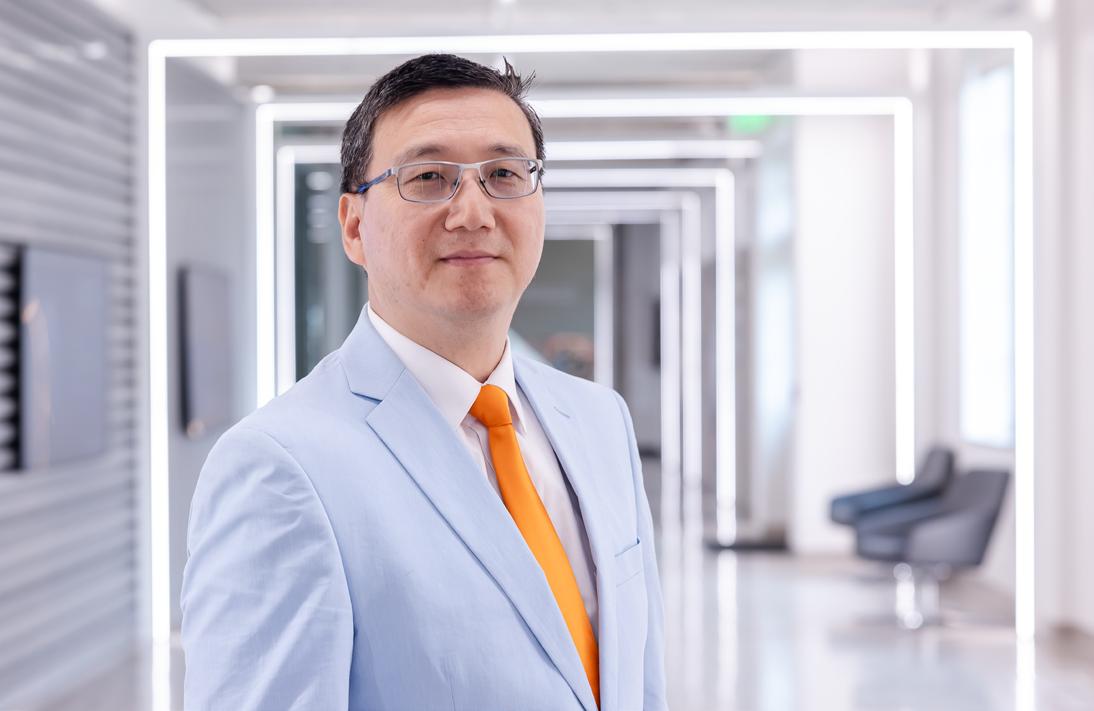
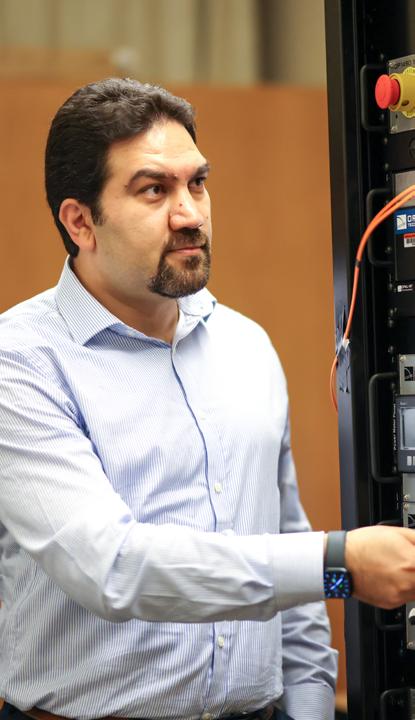
Guoliang Fan, Ph.D.
Professor and Head
Cal and Marilyn Vogt Professor
The year 2025 underscores a pivotal moment for higher education, as institutions increasingly recognize the urgency to rethink the role, impact and implications of AI in shaping the future of learning and workforce development.
2025 marks a milestone year for the School of Electrical and Computer Engineering — and for me personally. Looking back, I am deeply proud of what we have accomplished together as a team. At the same time, I feel a profound sense of responsibility to sustain our momentum and guide our school forward into a future filled with both challenges and opportunities.
ECE reached a record enrollment of 552 students in 2025, reflecting a nearly 20% increase in graduate enrollment compared to 2024 — a strong sign of the growing vitality of our faculty's research enterprise. Despite a nationwide decline in research funding, our externally sponsored research expenditures remained strong at over $2.1 million in the past fiscal year, a testament to the dedication and perseverance of our faculty. This year, we also welcomed two exceptional new faculty members, Drs. Tim Brown and Karl Strecker, both recipients of the prestigious National Science Foundation (NSF) Graduate Research Fellowship during their Ph.D. studies.
We are proud to celebrate the remarkable accomplishments of our students and faculty, whose excellence continues to be recognized within OSU and across the nation. Our students continue to excel in academic, professional and collegiate settings, while our faculty lead groundbreaking work that advances knowledge, innovation and impact across disciplines.
Among this year’s research highlights, Dr. John Hu received a NASA Rapid Response Research (R3) award to enhance the cybersecurity of critical systems, while Dr. Weili Zhang secured an NSF award to pioneer terahertz chirality sensing — a breakthrough with major implications for chemistry and biotechnology. Dr. Pouya’s NSF-funded project explores how public assets, such as school buses, can be leveraged to mitigate power outages during disasters, and Dr. Ying Zhang received a three-year grant from the Hamm Institute to strengthen cybersecurity in future energy networks. In addition, Drs. Weili Zhang and John Hu jointly earned a $600K NSF award to establish ECE’s second Research Experiences for Teachers (RET) Site, providing hands-on training in photonic microchip fabrication for high school and community college educators.
In this issue, we are also proud to highlight two distinguished alumni — Eric Rock (BSEE, 1990), a pioneer in AI-driven digital health, and Dr. Delores Etter, Professor Emeritus of electrical engineering at Southern Methodist University — both recently inducted into the College of Engineering, Architecture and Technology's Hall of Fame. Etter was further honored with the Melvin R. Lohmann Medal for her contributions in research, scholarship development, innovation and education. Meanwhile, our Industrial Advisory Board
I
am deeply grateful to our dedicated faculty and staff, as well as to CEAT leadership, for their trust, collaboration and unwavering support.
(IAB) continues to play a pivotal role in advancing ECE’s mission. Composed primarily of dedicated alumni who are industry leaders and distinguished professionals, the IAB provides invaluable insight and guidance. Beginning in 2025, the board has been revitalized to broaden its impact — fostering stronger engagement and interaction with both faculty and students while helping shape ECE’s strategic direction.
$2.1m+
552 students enrolled graduate enrollment increase 20% sponsored research expenditures
This newsletter also highlights several exciting departmental upgrades and new initiatives. Over the past year, we have made several major infrastructure improvements to enhance both our research and instructional environments. In addition, ECE has also partnered with the Department of Computer Science and the OSU Center for Health Sciences to launch a joint M.S. program in Artificial Intelligence (AI) with multiple tracks — in Computer Science (CS), Computer Engineering (CpE) and Healthcare Administration (HCA) — welcoming its first cohort in Fall 2026. Additionally, two new ECE minors — in Electrical Engineering (EE) and Computer Engineering (CpE) — have been introduced to provide broader academic pathways for both ECE and non-ECE students.
The year 2025 underscores a pivotal moment for higher education, as institutions increasingly recognize the urgency to rethink the role, impact and implications of AI in shaping the future of learning and workforce development. In response, ECE launched the AAA Initiative for AI-Assisted Learning — a strategic framework that integrates AI into the classroom through three progressive stages: Awareness, Adoption and Acceleration. In partnership with the OSU Institute for Teaching and Learning Excellence (ITLE), ECE is leading efforts to pioneer AI integration, preparing students and educators to thrive in an increasingly intelligent and technology-driven world.
As I conclude my first year as school head of ECE, I am both honored and humbled by this journey.
I am deeply grateful to our dedicated faculty and staff, as well as to CEAT leadership, for their trust, collaboration and unwavering support. My sincere appreciation also goes to the Publicity Committee and CEAT Marketing and Communications for their outstanding efforts in producing this content-rich newsletter. I hope you enjoy reading it and share our pride in what we continue to build together.
Guoliang Fan, Ph.D. Professor and Head Cal and Marilyn
Vogt Professor
In the summer of 2025, the School of Electrical and Computer Engineering partnered with the College of Engineering, Architecture and Technology to develop a new three-tier scholarship fund for ECE undergraduate researchers. The new fund, developed under School Head of ECE, Dr. Guoliang Fan and Associate Dean Carisa Ramming, combines CEAT’s Undergraduate Research Scholarship (URS) with ECE’s Lynn T. Miller endowment-funded ECE Miller Research Scholarship program to support 11 ECE students’ research proposals. Listed to the right are the recipients along with their respective advisors.
$4,000 URS+Miller max Scholars
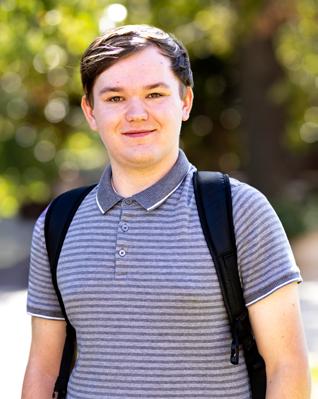
LANDREN MARTIN
Dr. Daqing Piao
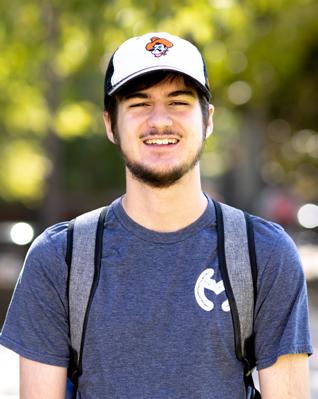
JACOB RAULIE
Dr. Guoliang Fan
$3,500 URS+Miller Pro Scholars

CARSON MCSPADDEN
Dr. Hritom Das
AUDREY RASMUSSEN
student awards
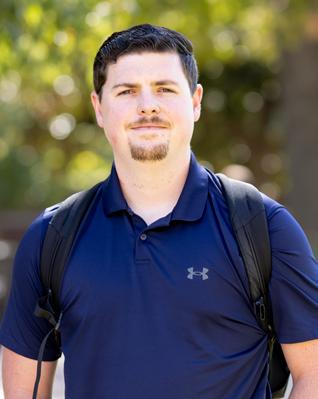
CONLAN CHESSER
Dr. Weihua Sheng
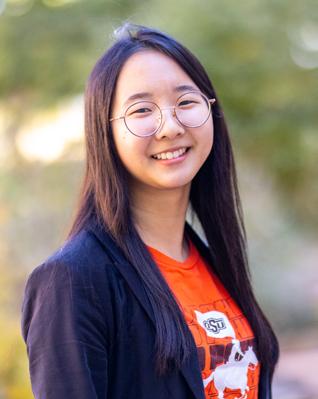
WONJIN REYES
Dr. Hamid Pouya
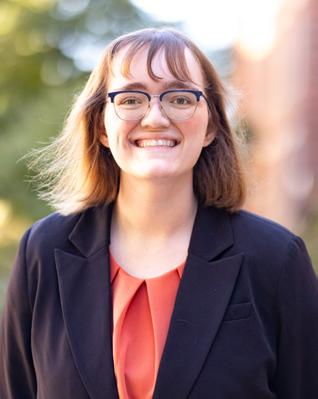
Dr. Hamid Pouya

RAILEY PRENTICE
Dr. John O’ Hara
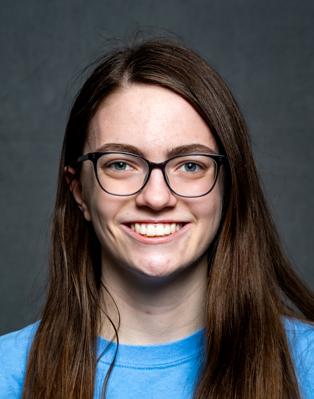
KATY WAGNER
Dr. Shahriar Shahabuddin
$3,000 URS+Miller plus Scholars
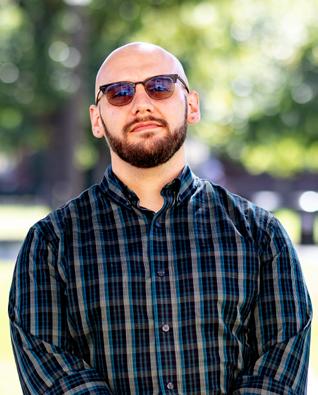
HUDSON
Dr. Hritom Das
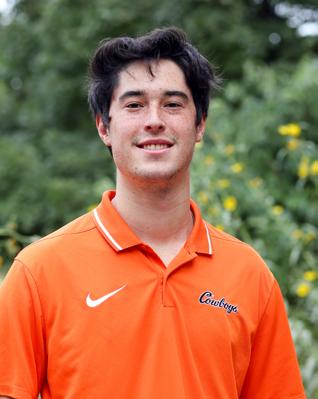
WILL PODUSKA
Dr. Weili Zhang

COLLIN MCQUEEN
Dr. Syed Jehangir
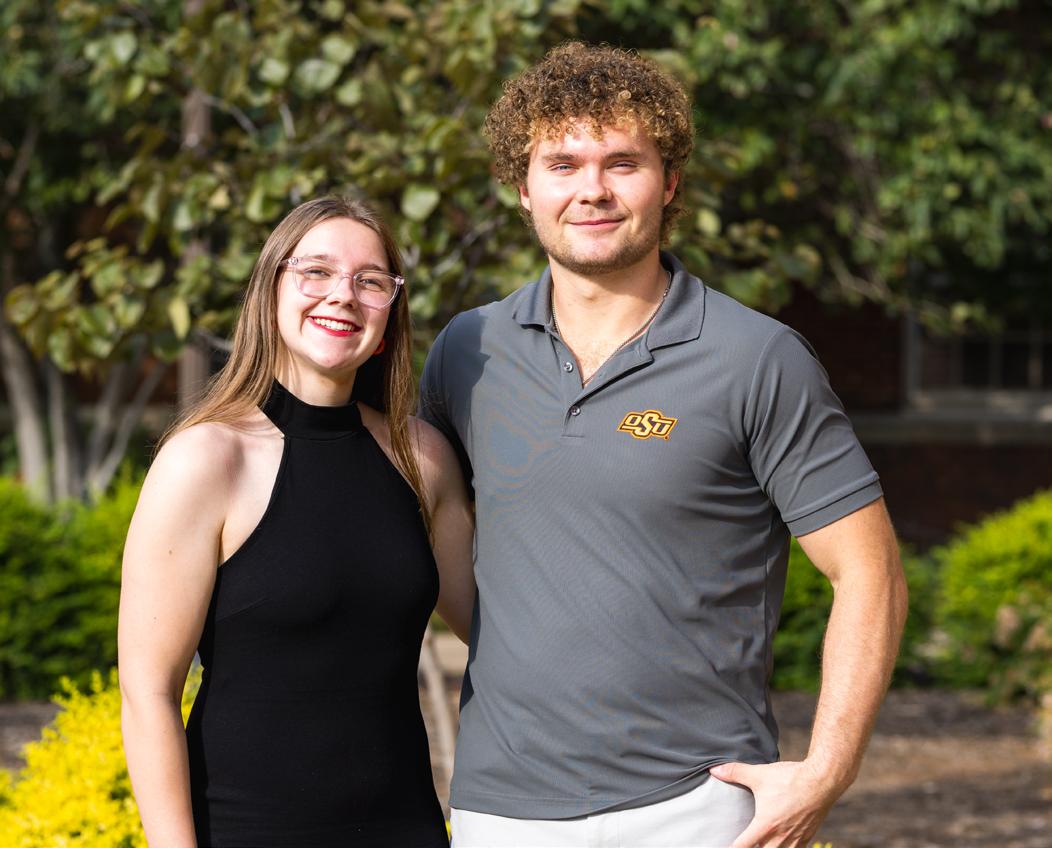
Earl J. Tuttle
Endowed Scholarship
Cameron Victor
Evan Cole
Marisol Senteno
Andreas Kant
Carlos Suarez
John R. Turley (usn vet)
Scholarships
Damian Gillespie
McBrian Miye
Naeter Memorial
Scholarships
Elizabeth White (CEAT scholar)
Jeremiah Young (CEAT scholar)
Leo J. Peters & Josie Mosely Peters Scholarships (CEAT Scholars)
Evan Acree
Charles Bruce
Matthew Brue
Bailey Chave
Conlan Chesser
John (Jack) Hicks
Sawyer Hutchison
Danny Johnson
Quentin Koeninger
Railey Prentice
Audrey Rasmussen
Abigail McCrary and Cannon Kilcrease
(both advised by Dr. Chuck Bunting) are the two 2025 ECE awardees of the prestigious Wentz Research Scholars award. Funded by the Lew Wentz Foundation and the Henry Bellmon Office of Scholar Development and Undergraduate Research and awarded to only 40 OSU students each year, the award provides a one-year, $6,000 scholarship for independent research in any field. McCrary’s project is entitled “Comparative analysis of probe-based instrumentation for HERO testing in naval ordnance” and Kilcrease’s project is entitled “Effects of Propellor Modulation with Software Defined Radios”.
Charles E. Stewart Endowed Scholarship
Tim Osgood
Benjamin Ley
Maddox Mosher
Chris Turner
Elzora Barry
Jafet Castro-Mendoza
Rachel Renollet
Devlin Yates
Frontiers of Power/Bill Hughes Scholarship
Luis Rosa-Berrios (CEAT scholar)

Piper Swain
was one of two students awarded the 2025 W. W. Allen Scholarship. The award, one of the most prestigious in CEAT, recognizes top academic students who also show promise for leadership and impactful careers by providing funds for networking and traveling in college, plus full tuition and housing to pursue a master’s degree at the University of Cambridge. Swain is especially conscientious of engineers’ ability to advance society and work on life-saving projects. Swain credits the role of mentors in young engineers’ career development and plans to encourage more women to enter the field.
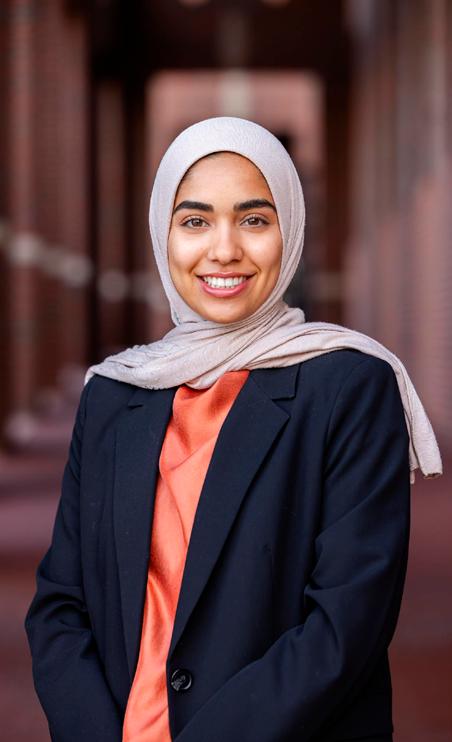

Lenna Abouzahr
(EE and CpE, 2026) was one of 51 seniors and one of eight CEAT students who received OSU’s Senior of Significance award on Oct 2, 2025. This prestigious award is given by the OSU Alumni Association to the top 1% of graduating seniors and recognizes students who have excelled in scholarship, leadership and service to campus and community, as well as bringing distinction to OSU.


Forrest Tuschhoff
received CEAT’s Outstanding Student award for ECE on March 4, 2025. “I’m proud of the hard work I’ve put in, but this award also reflects the incredible support I’ve received from my professors, advisors, and friends throughout my time as a student in ECE,” Tuschhoff said.
I’m proud of the hard work I’ve put in, but this award also reflects the incredible support I’ve received from my professors, advisors, and friends throughout my time as a student in ECE.
- Forrest Tuschhoff
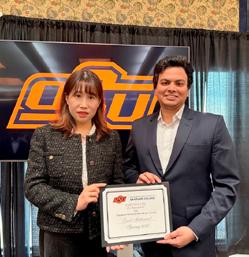
Zaid Ibn Mahmood (advisor: Dr. Ying Zhang) was awarded one of OSU’s Graduate Research Excellence Awards for his thesis “Grid forming inverters for modern power systems: fault current mitigation, inertia estimation, and frequency regulation” on April 30, 2025. The prestigious award is OSU's highest public recognition of the research conducted by its most talented graduate students.
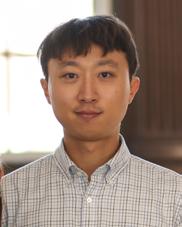

Sungjoo Chung (Advisor: Dr. Ying Zhang) and Moaz Zia (Advisor: Dr. Hamid Pouya) were awarded the OSU Foundation’s Ramakumar Family Energy scholarship in fall 2025. The award recognizes students with a focus on renewable energy in power systems.
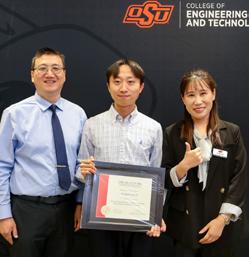
Sungjoo Chung (advisor: Dr. Ying Zhang) was awarded CEAT’s Outstanding Graduate Student Award for the ECE department in April 2025. He also received the CEAT Dean’s Outstanding Graduate Student Award, selected by the Dean as the top recipient among all nominees.
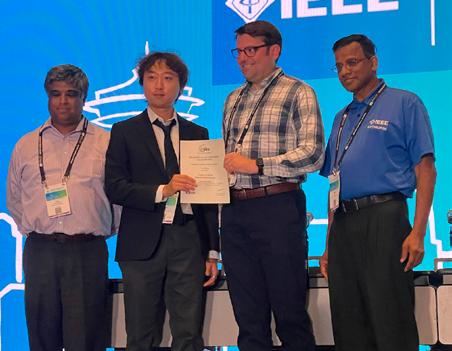
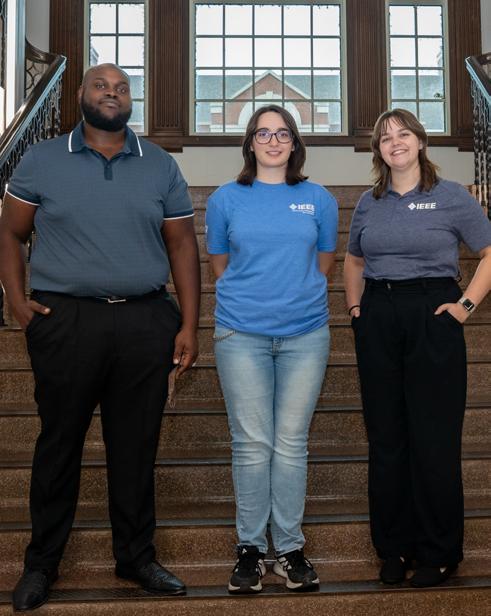
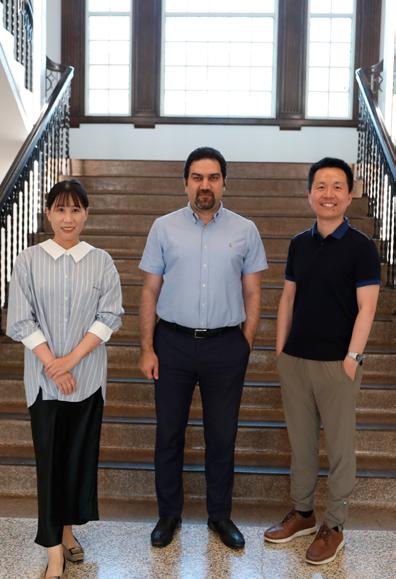
(pictured second from left) was awarded 1st place for his poster “TaylorExpansion-Based Robust Power Flow in Unbalanced Distribution Systems: A Hybrid Data-Aided Method” at the IEEE Power & Energy Systems General Meeting’s poster competition on July 29, 2025.

Koushik Roy (Advisor: Dr. Qi Cheng) was awarded the Dr. Rao Yarlagadda Graduate Fellowship. This fellowship recognizes an outstanding graduate student specializing in signal processing, communications, or applied mathematics.
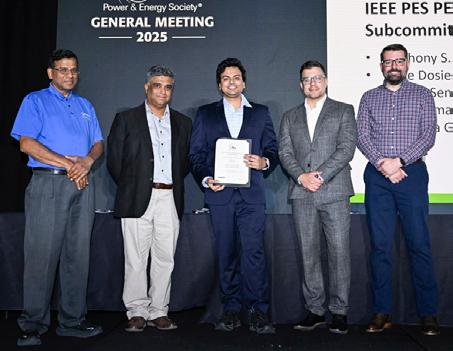
(pictured 3rd from left) was awarded 3rd place for his poster “A Virtual Admittance-Based Fault Current Limiting Method for Grid-Forming Inverters” at the IEEE Power & Energy Systems' General Meeting (PESGM) poster competition on July 29, 2025. The IEEE PESGM is the flagship international conference of the IEEE Power and Energy Systems society.
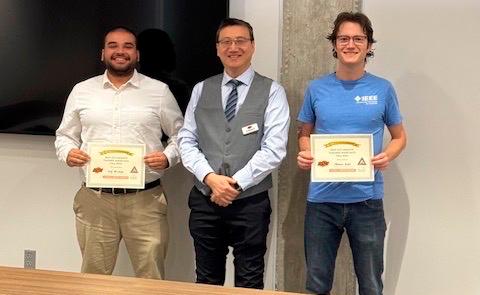
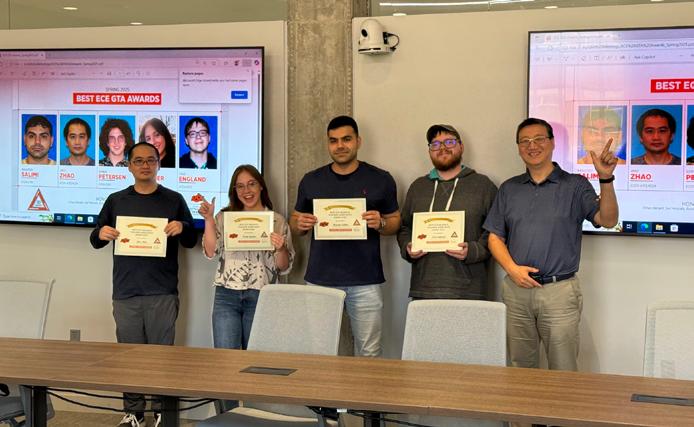
The following students received the Outstanding Teaching Assistants (GTAs) awards this year: Saif Mostafa and Soren Petersen (fall: 2024) Jikui Zhao, Carly Gotcher, Arastoo Salimi, Cale England and Soren Petersen (spring: 2025).
The awardees were selected based on student evaluations. Each semester, the school employs around 30 GTAs who play an important role in supporting instruction across classrooms and laboratories. Their work can be both challenging and demanding, reflecting the high standards of our curriculum and the rigor of our laboratory courses. This award acknowledges those who exemplify excellence in their duties and promotes a culture of excellence in teaching and service.
1
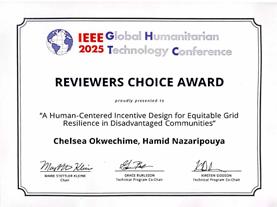
Chelsea Okwechime and Dr. Hamid Pouya were awarded the Reviewers Choice Award at the IEEE Global Humanitarian Technology Conference (GHTC) 2025. Their paper is entitled “A Human-Centered Incentive Design for Equitable Grid Resilience in Disadvantaged Communities”.
2
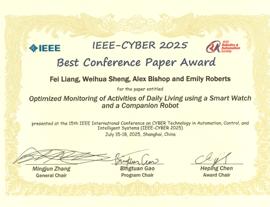
Fei Liang and Dr. Weihua Sheng were awarded the Best Conference Paper Award at the 15th IEEE International Conference on CYBER Technology in Automation, Control and Intelligent Systems. Their paper is entitled “Optimized Monitoring of Activities of Daily Living Using a Smart Watch and a Companion Robot.”
3
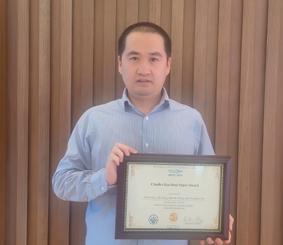
Jikui Zhao and Dr. Qi Cheng were awarded the the Charles Kao Best Paper Award at the 33rd Wireless and Optical Communications Conference. Their paper is entitled “ViT-MAE Based Foundation for Automatic Modulation Classification.”
4
Andrew Ash Ruxue Wei
Yuanshuo Zhang Haya Monawwar
Jacob Pease Bacon Family Scholarship
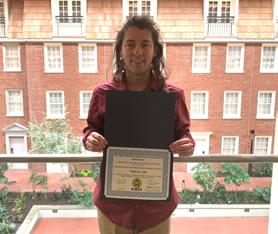
Andrew Ash and Dr. John Hu were awarded the Jake Karrfalt Best Student Paper Award at the 34th IEEE Microelectronics Design and Test Symposium. Their paper is entitled “Design for Testability of a CMOS Dynamic Bias Comparator for Through-Wafer Two-Photon Absorption Pulsed-Laser Testing.”


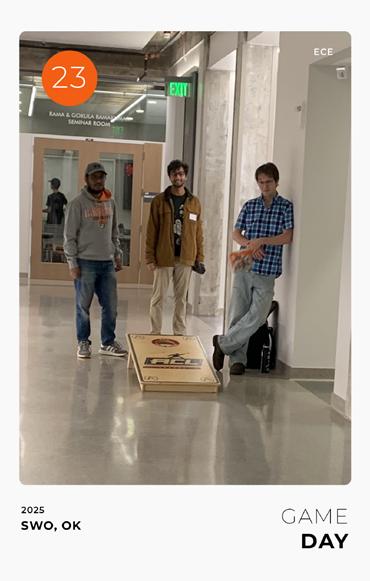
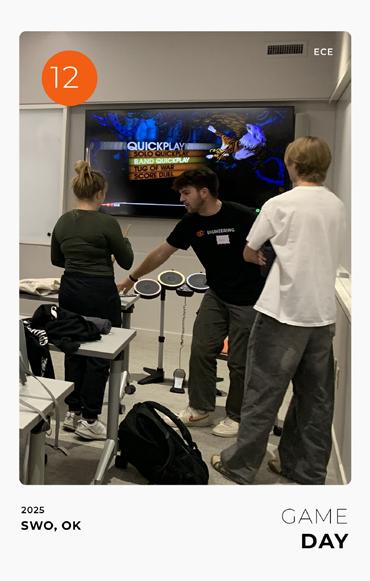

The School of Electrical and Computer Engineering has brought back a beloved tradition inspired by the ECE spirit
— Engage, Communicate and Empower.
On Tuesday, Oct. 21, 2025, during Week 10 of the fall semester, ECE hosted Game Day — a fun, informal indoor event designed to bring students together, especially freshmen and new graduate students, to relax, connect and build community beyond the classroom.
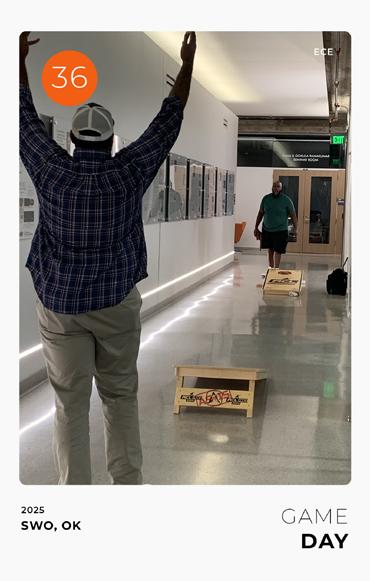
Held at the two-thirds mark of the fall 2025 semester, the event came at a perfect time to help students recharge and reconnect amid the academic rush, fostering renewed energy and camaraderie across the ECE community. Unlike the more structured Showcase Day in fall 2024 and the Open House in spring 2025, which celebrated the same spirit, ECE Game Day offered a casual and interactive environment where faculty, staff and students could simply enjoy time together through shared entertainment. ECE faculty, staff and student leaders organized a variety of video games, board games and yard games, accompanied by food and refreshments.
The event was a resounding success, attracting more than 70 students and over 20 faculty and staff members. Students also had fun collecting trading cards from faculty and staff while engaging with them in friendly games and conversations. Overwhelmingly, participants recommended making Game Day an annual tradition — a testament to the strong sense of community and belonging inspired. ECE proudly looks forward to continuing this revived tradition, fostering connections that make our school a place to learn, to belong and to make an impact — together.

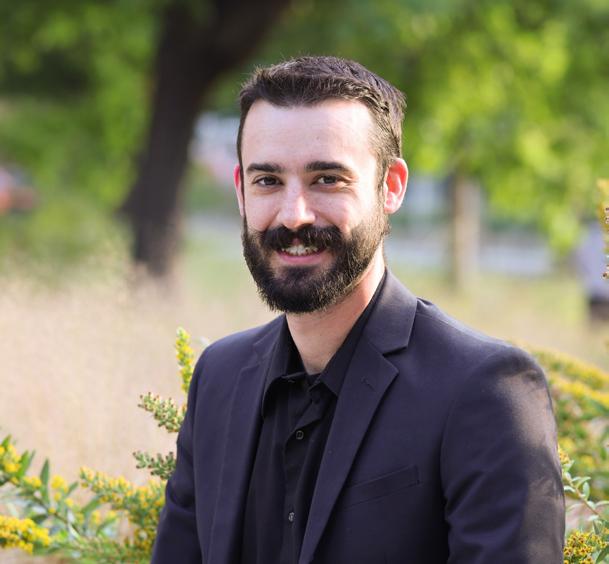
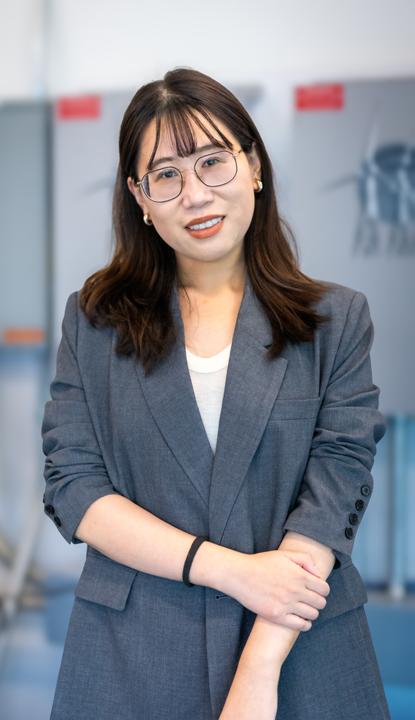
dr. karl strecker
graduated in 2018 with a B.S. in electrical engineering from Oklahoma State University and went on to also receive his M.S. and Ph.D. in electrical engineering from OSU. He has worked as both a graduate research assistant and postdoctoral researcher in the Ultrafast Terahertz and Optoelectronics Lab at OSU and is currently employed as a teaching assistant professor for the School of Electrical and Computer Engineering. Strecker was a recipient of the NSF GRFP award in 2020 and was named the ECE Graduate Student of the Year in 2023.
His previous interests include wireless communication and terahertz channel modeling. His current focus is on advancing engineering education through innovative course structures and AI-enhanced teaching strategies. Strecker currently serves as the IEEE Faculty advisor and as a member of the Undergraduate Program Committee.

New Faculty
graduated with a B.S. in engineering physics specialized in analog electronics in 2014 from the University of Tulsa. He obtained his Ph.D. in materials science and engineering from Texas A&M University in 2019. After graduation, he transitioned to a postdoc in electrical engineering at TAMU and then to a second postdoc at Sandia National Labs. Brown is now an assistant professor in the School of Electrical and Computer Engineering at Oklahoma State University and leads the Brain Inspired Circuits for Computation and Communication (BraIn-C3) lab group engineering neuronal and nonlinear oscillator behaviors in analog devices.
Brown was a recipient of the NSF Graduate Research Fellowships Program (GRFP) award in 2016 and was awarded the Excellence in Outreach award for his leadership roles during grad school. He currently serves as a member of the ECE Publicity committee.
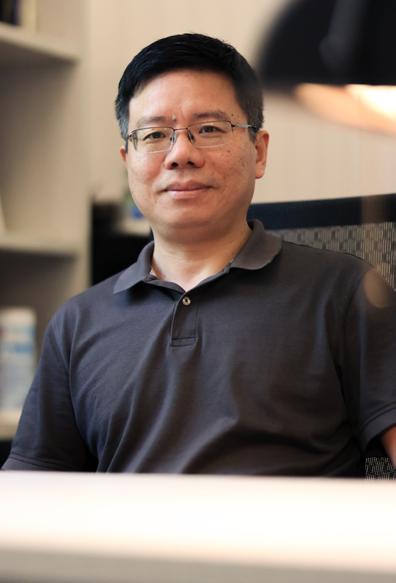
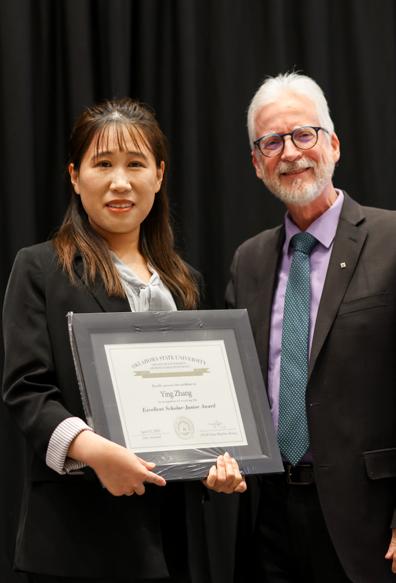
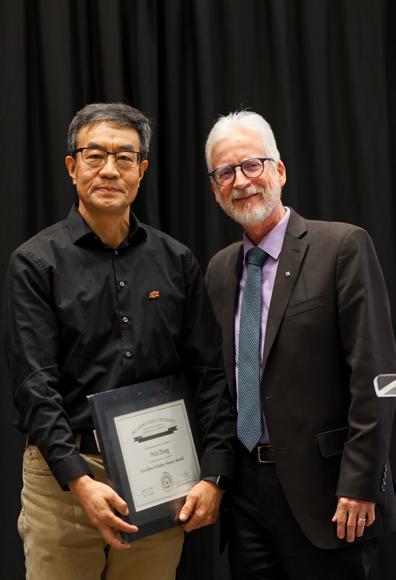
Dr. Weihua Sheng has been newly awarded the Earl & Carolyn Glimp professorship. This honor is in recognition of his excellent research impact. With an h-index of 44, Sheng has authored 254 journal and conference publications, including 10 best paper awards. He has received research funding of more than $6M, including $3.9M from the National Science Foundation. While at OSU, he has graduated 10 Ph.D. students and 23 master's students with thesis options.
Dr. Ying Zhang was awarded the 2025 OSU CEAT Excellent Scholar Award (junior faculty) in April 2025. The award recognizes the outstanding contributions of junior faculty to scholarship — including research funding, publications, citations, research productivity and graduate student mentoring.
Dr. Weili Zhang was awarded the 2025 OSU CEAT Excellent Scholar Award (senior faculty) in April 2025. The award recognizes the outstanding contributions of senior faculty to scholarship — including research funding, publications, citations, research productivity and graduate student mentoring.

4 6
Dr. Ying Zhang, Dr. Hamid Pouya and Dr. John Hu were each awarded an ECE department fellowship on Sept. 5, 2025, in recognition of their dedication to their students and research.
Zhang was named the Jack H. Graham Endowed Fellow of Engineering; Hu was named the Lynn T. Miller Faculty Fellow, while Pouya continues his 2nd year as Distinguished Fellow of electrical and computer engineering.
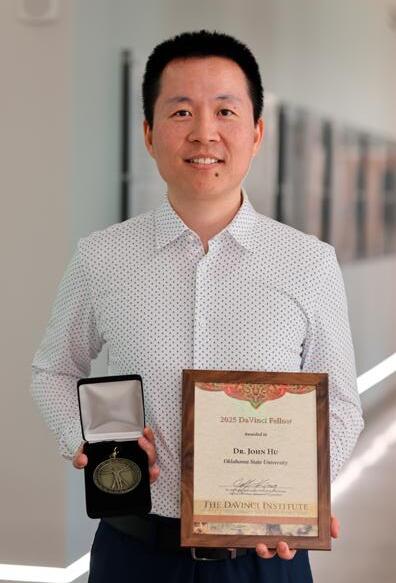
Dr. John Hu was awarded a DaVinci Creativity in Education fellowship on April 11, 2025, for his pioneering work to integrate AI tools like ChatGPT into electronics classes to help students learn circuit debugging. The award, given by the Oklahoma DaVinci Institute, recognizes outstanding educators whose work exemplifies the ideals of Leonardo da Vinci — crossdisciplinary excellence, imagination and a passion for transformative teaching.
Dr. Ying Zhang led a collaborative team between OSU and Southern Methodist University to win $25K as the runner-up at the Department of Energy (DOE) Solar Energy Technologies Office-sponsored American-Made Challenges

Competition: Data-Driven Distributed (3D) Solar Visibility Prize. The team, made up of Zhang, Dr. Eric Larson (Assoc. Prof. of CpE at SMU), Yuanshuo Zhang (Ph.D. student, advisor Zhang) and Yihao Wang (Ph.D. student, advisor Larson) customized a new physicsinformed AI algorithm for realworld large-scale distribution grid monitoring to achieve multi-faceted robustness.
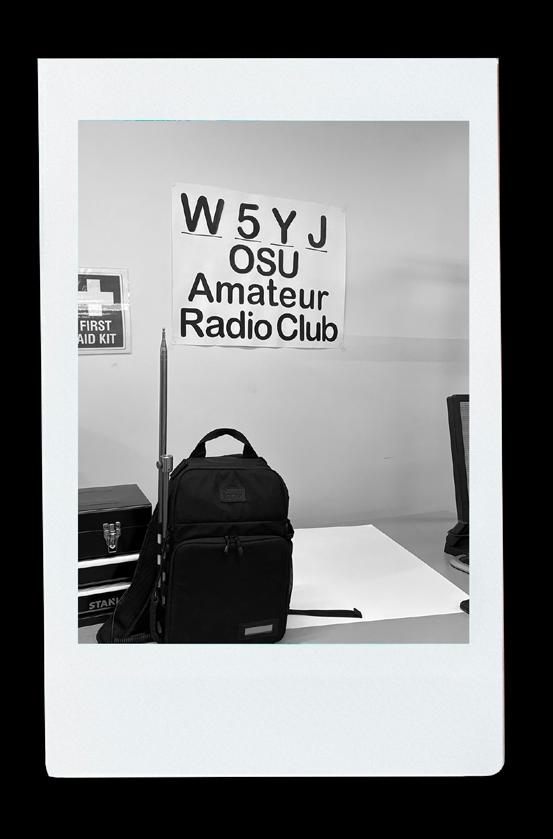
The Oklahoma State University Amateur Radio Club has developed a long legacy since it was originally formed in 1924. As one of the first amateur radio clubs in the country, it has been a staple of the College of Engineering, Architecture and Technology for more than 100 years.
Traces of those early years are still visible today, with the derricks holding the antenna in those days still adorning the roof of Engineering South. After a few years of inactivity, the club was rebooted in 2024 thanks in part to a $9,700 donation from the American Radio Relay League that now has W5YJ back on the air.
Our club is very welcoming, and there’s something for everyone - whether it’s learning to get your license, building and experimenting with gear, competing in contests or helping with public service events.
-Caden Cantwell
Amateur Radio Club
The club’s original values of learning and technical expertise are upheld by the group of current students, harkening back to its earliest days. The reformation
of the club has been a mixture of preserving history and building something new out of a century-old tradition.
The club meets twice a week in ENDEAVOR 370, its new home as of fall 2025. Club President Caden Cantwell (BSMAE) said having the permanent location to meet gives the club more establishment, allows them to host more events and adds to the club’s sense of commitment and community.
The club has 15 active members ranging from newcomers just getting their feet wet to experienced operators who serve as mentors within the club. Cantwell’s goals are to increase membership, create more education programs for members, expand hands-on activities like antenna building and share the fascinating world of amateur radio with more students on campus, welcoming all skill levels.
“My favorite aspect of the club is the sense of community and camaraderie,” Cantwell said. “Amateur radio brings individuals from all walks of life and all ages together, and it’s so rewarding to see members learn from each other, share their enthusiasm and even help in real-world communications emergencies.”
Cantwell said any student who is interested in joining the OSU Amateur Radio Club should not be intimidated by a lack of knowledge or
Amateur radio is more than a hobby - it’s a lifelong learning opportunity and a way to connect with people locally and around the world. We’re always excited to welcome new members and share the joy of this amazing hobby!
-Caden Cantwell
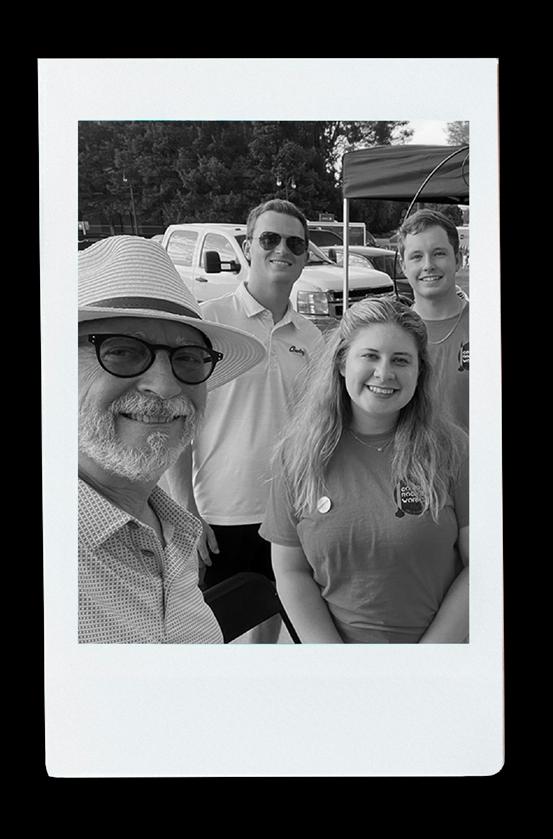
experience. He came into the club with no experience, but following a newfound passion led him to becoming the club’s president.
“Our club is very welcoming, and there’s something for everyone — whether it’s learning to get your license, building and experimenting with gear, competing in contests or helping with public service events,” Cantwell said. “Just come to a meeting, ask questions and dive in — you’ll find plenty of ways to get involved.”
Dr. Chuck Bunting, Bellmon Chair and associate dean of research for CEAT, is also an advisor to the OSU Amateur Radio Club. A lifelong amateur radio enthusiast, Bunting earned his technician and general radio operator licenses in 2021 and since then has contacted people in 140 different countries.
After getting involved with the Stillwater Amateur Radio Club, he made it a priority
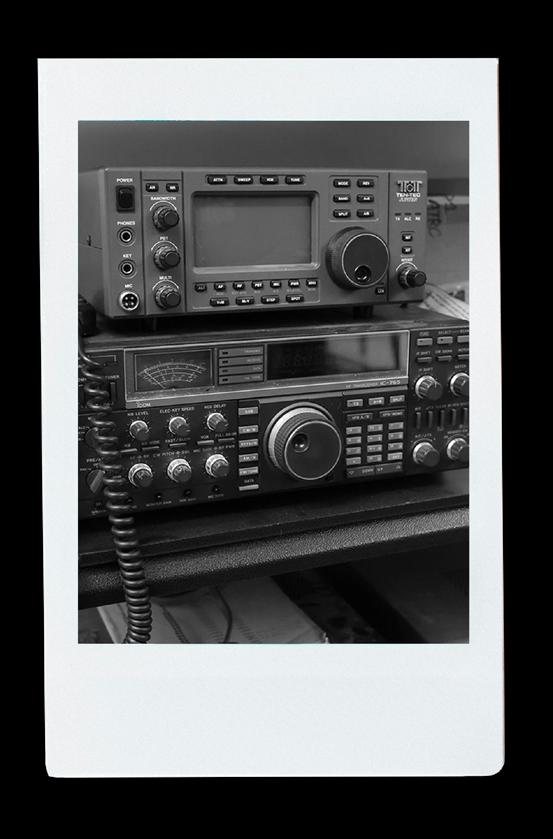
to help revive the OSU club. There are numerous engineering research programs that require an amateur radio license to operate transceivers, which are used within the NASA CubeSat program and the OSU rocketry club. "It is a great opportunity for students to be able to take the skills learned with the OSU Amateur Radio Club to other engineering aspects, adding another tool to their toolbelt," Bunting said.
Members are aided in receiving their licenses, which grant a user the right to operate freely on amateur radio spectrums. With the goal of recruiting new members of all skill levels, it is a club dedicated to ensuring members are given the chance to earn their licenses while expanding their skills.
“Amateur radio is more than a hobby — it’s a lifelong learning opportunity and a way to connect with people locally and around the world,” Cantwell said. “We’re always excited to welcome new members and share the joy of this amazing hobby!”
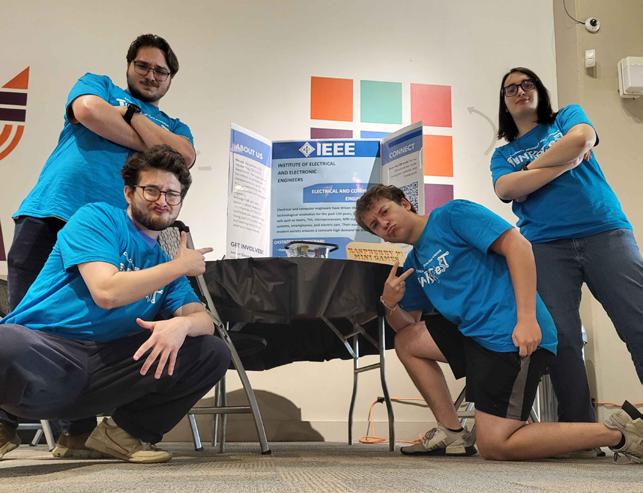
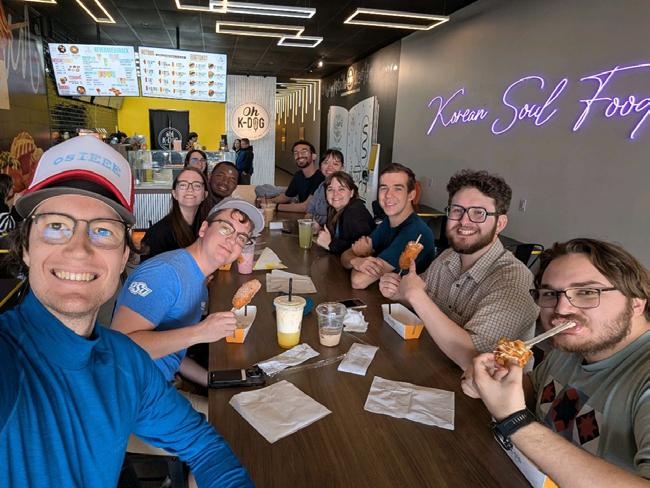
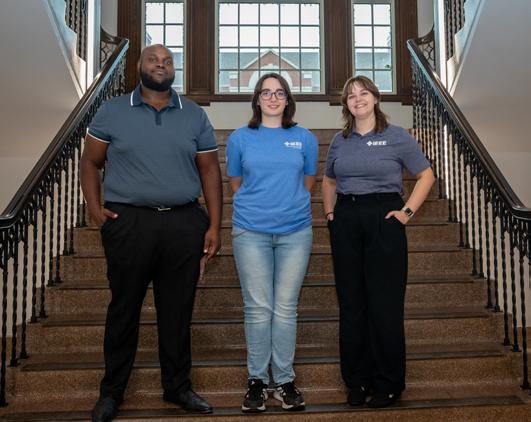
Oklahoma State University’s IEEE Student Chapter (IEEE-OSU) is dedicated to providing educational and professional opportunities to students in the ECE department through inspiring events and challenging competitions. Beyond skill-building, IEEE-OSU serves as a vital community where students passionate about the School of Electrical and Computer Engineering can connect, share ideas and fuel their love for innovation.
The organization is led by a dynamic officer board for the 2025-2026 academic year: President Katy Wagner (Sr. EE ’26), Vice President Emma Baucom (Jr. EE ’27), Secretary Jeremiah Young (Sr. EE ’26) and Treasurer Alexander Carter (Sr. EE ’26), as well as Conference Coordinator Skylar Araujo (Sr. EE ’26), Graduate Coordinator Thomas Kidd (MSc. EE) and Social Media / CEAT Representative August Ross (Soph. EE ’28). Their faculty advisor is Dr. Karl Strecker.
In spring 2025, several members attended and competed at the IEEE Region 5 Annual Conference. The team brought home awards and ranked highly among competitors in categories such as Cybersecurity, Ethics and Circuit Design. Members reported that the experience provided invaluable lessons on the intricacies of the field, highlighting the importance of adaptation and efficient problem-solving. IEEE-OSU looks forward to returning to the next conference in spring 2026.
The officer board has prioritized preparing students for industry expectations. In fall 2025, IEEE-OSU supplied critical resources for the CEAT Career Fair, including a collaborative resume workshop and an internship panel featuring experienced upperclassmen. Then on Sept. 25, IEEE-OSU invited Dr. Ed Daniel of the ECE Industrial Advisory Board to share advice for leveraging an OSU-ECE degree to build a successful and varied career.
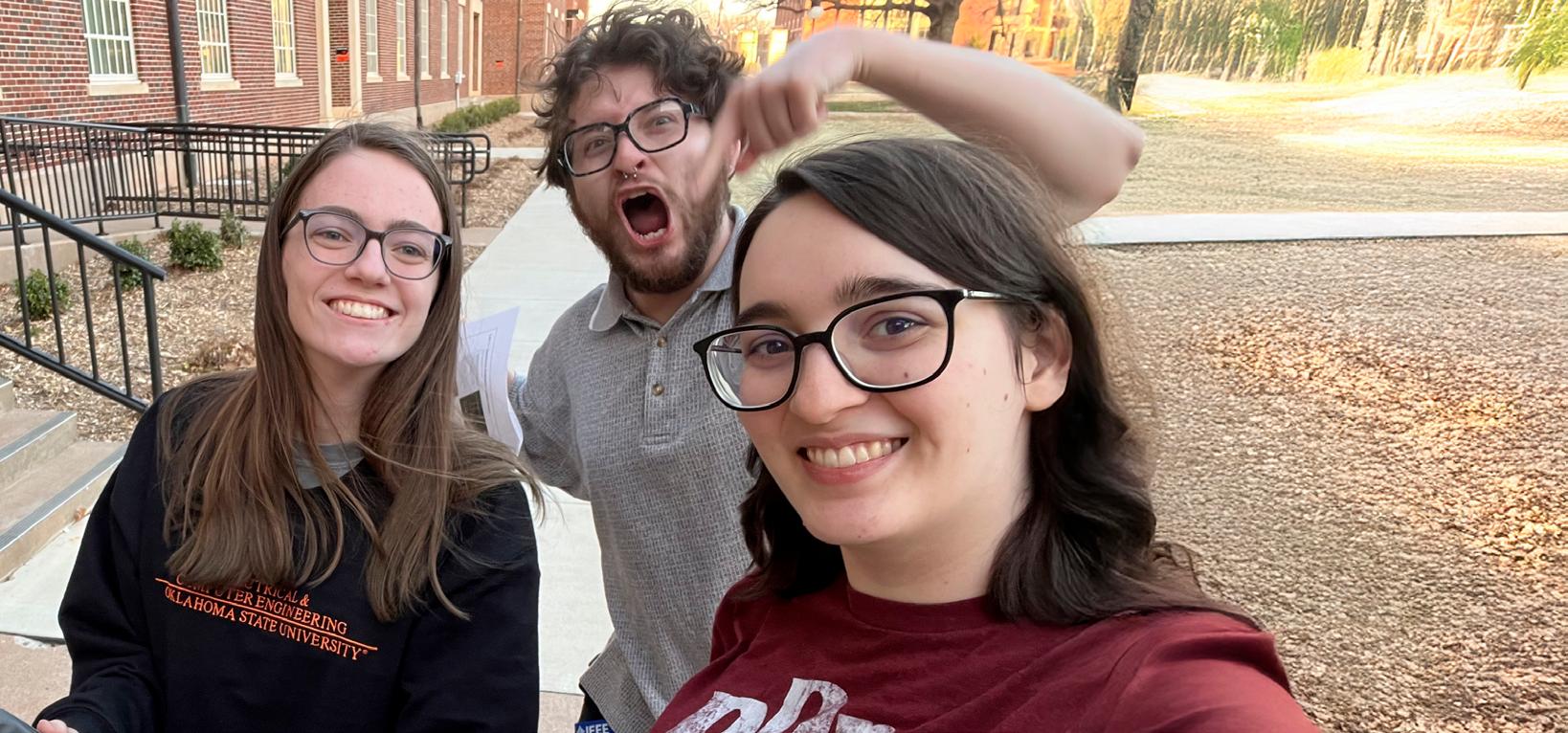
This academic year, IEEE-OSU is actively supporting student participation in various high-stakes technical competitions, offering incredible opportunities for hands-on experience and professional exposure.
Cyclone Cowboys: A regional collegiate rocketry challenge.
FSAE Electric Vehicle: The Formula SAE competition for electric vehicle design and racing.
IEEE Robotics, Circuit Design, Ethics and Cybersecurity Challenges: An annual suite of in-house and regional competitions, which allows students to hone their design and critical thinking skills.
IEEE Xtreme Programming: A grueling 24-hour global programming competition.
National Cyber League (NCL): A national competition that provides a realistic cybersecurity training environment.
IEEE-OSU is hosting a variety of events throughout the fall 2025 semester designed to enrich both the professional and social lives of its members:
Themed Social Events to foster a strong community bond.
Video Game Nights and Destressing Activities to ease academic pressures.
These casual events help create the supportive community environment that IEEE-OSU strives to provide.
With the support of IAB member Dr. Ken Butler, a new IEEE EPS student chapter has been established. Dr. John Hu serves as the faculty advisor for this new branch, which provides students with valuable opportunities to connect with peers, faculty and industry professionals through technical meetings, workshops and networking events.
Having organizations like IEEE-OSU is essential for keeping the love of Electrical and Computer Engineering alive and thriving within the ECE department. The community, hands-on opportunities and professional support this student chapter offers have already assisted many in their educational journeys at Oklahoma State University and will continue to do so for its future members. Don't miss out on the chance to connect with like-minded innovators, compete on a regional stage and sharpen your skills for a successful career. For more information on joining or upcoming events, reach out to the
OSU IEEE student Chapter Shines at Regional Conference and Beyond
IEEE Competitions
The Oklahoma State University student chapter of the Institute of Electrical and Electronics Engineers (IEEE) continues to grow in size and strength, recently making an impressive showing at the 2025 IEEE Region 5 Student Conference, held March 28–30 at Wichita State University in Wichita, Kansas.
OSU brought 19 students—one of the largest delegations among regional chapters—to compete in robotics, circuit design, ethics, cybersecurity and the graduate-level Three Minute Thesis (3MT) competition.
student Thomas Kidd placed third with a presentation on integrating open-source computer processor hardware using RISC-V architecture.
OSU’s cybersecurity team—Skylar Araujo and Gabe Cornelius—also placed third in a “capture the flag” challenge testing practical and technical security skills, including physical lock-picking.
That kind of resolve is what sets our students apart.
-dr. Nate Lannan
Despite major technical challenges, the robotics team showed remarkable resilience. After losing a motor and several key components just hours before competition, the team worked through the night to get their robot, nicknamed Bellatrix, operational.
“Another team faced similar issues and chose to withdraw, but our students refused to quit,” said Dr. Nate Lannan, assistant professor in electrical and computer engineering. “That kind of resolve is what sets our students apart.”
The ethics team, comprised of Danny Johnson and Alex Carter, earned praise for their thoughtful analysis of complex engineering dilemmas using IEEE’s code of ethics. In the 3MT competition, graduate
Participation in the Region 5 Conference has doubled since OSU’s first showing in 2024, thanks to the leadership of IEEE and the affiliated honor society, HKN. The group has expanded outreach through events like the annual banquet and freshman orientation, with travel support provided by the Zink Center.
Momentum carried into the fall with the IEEE Xtreme competition, held Oct. 24–25. Four members—August Ross, Isaac Garven, Audrey Rasmussen and Nolan Jones—tackled more than 25 programming challenges over 24 hours. Ross and Garven placed 6th out of 32 regional teams, while Rasmussen and Jones placed 8th.
“This was an unforgettable experience filled with moments of confusion, learning, and fun,” Ross said. “I learned a lot about compilation and optimization, and I hope to see other IEEE members engage in competitions like this.”
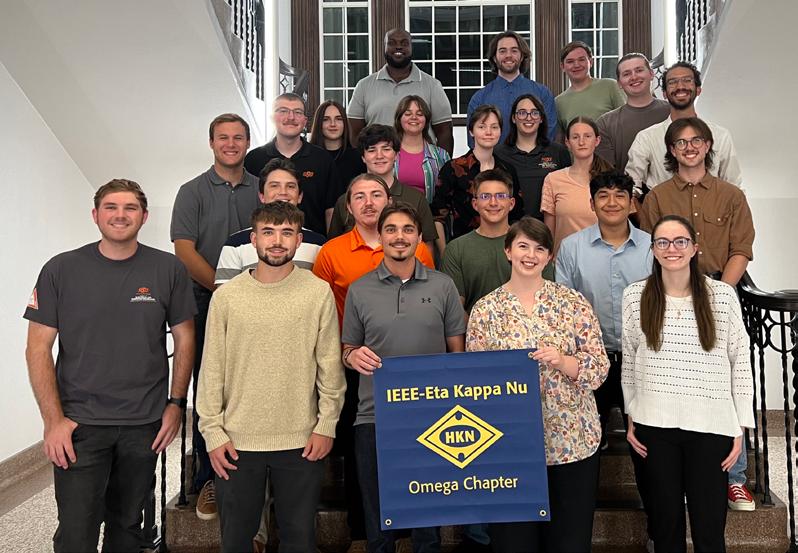
Eta Kappa Nu (HKN), the international honor society for electrical and computer engineering, continues its nearly century-long legacy of excellence at Oklahoma State University. The Omega chapter at OSU, founded in 1930 as one of HKN's earliest chapters, is celebrating a year of active engagement and commitment.
Membership in HKN is a distinguished honor: only the top 25% of junior and 33% of senior students by credit hours are invited to join. On Sept. 30, 2025, the chapter welcomed 16 new members into its ranks, signing their names into the official HKN members’ roster. The current chapter is led by President Elizabeth White (Sr. EE ‘26), along with her cabinet, Vice President Zac Wilson (M.Sc. EE), Treasurer Cade Seay (Sr. EE
‘26) and Secretary Juliette Reeder (Sr. EE ‘25).
HKN's mission is to support the community, the university and the ECE department. This year, a primary focus is supporting the relatively younger OSU IEEE student chapter by increasing student involvement in the department and aiding in social events. The chapter kicked off the academic year by sending a team to last fall’s IEEE Region 5 circuit design competition, showcasing their technical prowess.
IEEE Eta Kappa Nu (HKN)
HKN will hold new officer elections on Dec. 2, 2025, to replace graduating members as well as organize a T-shirt sale in the spring as an organization fundraiser. Prospective members can learn more by emailing the chapter at HKNOKSTATE@gmail.com.

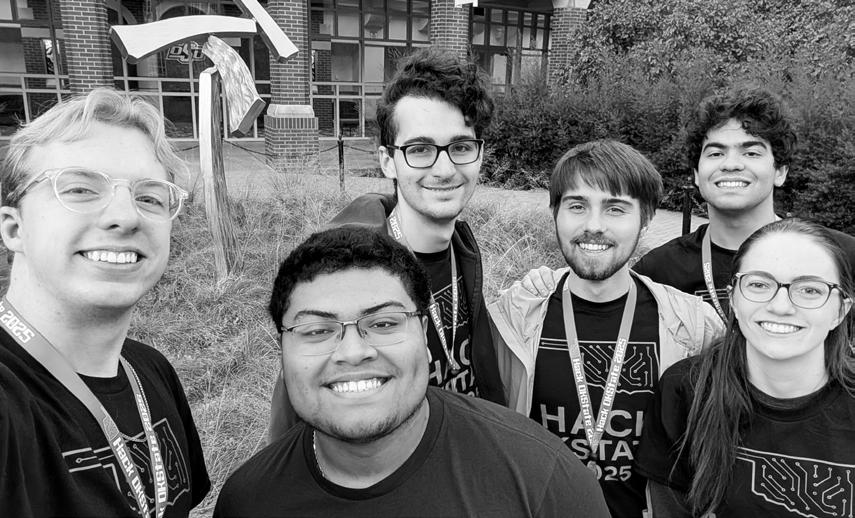
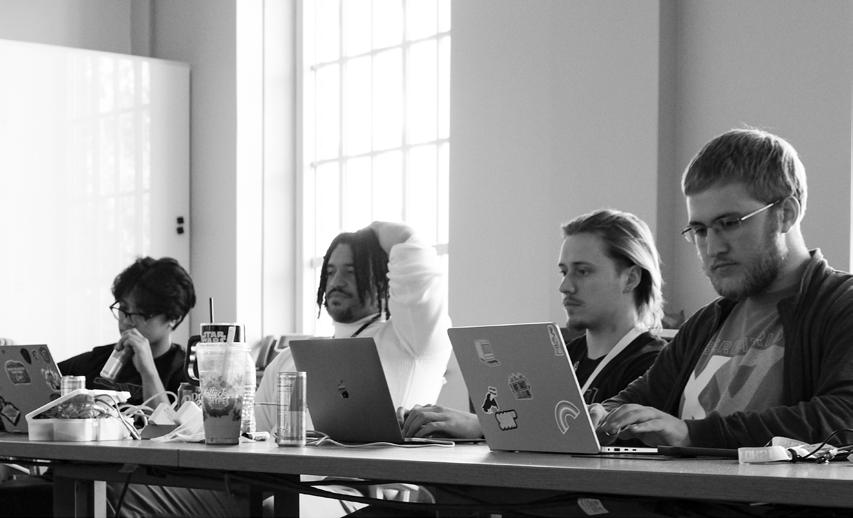
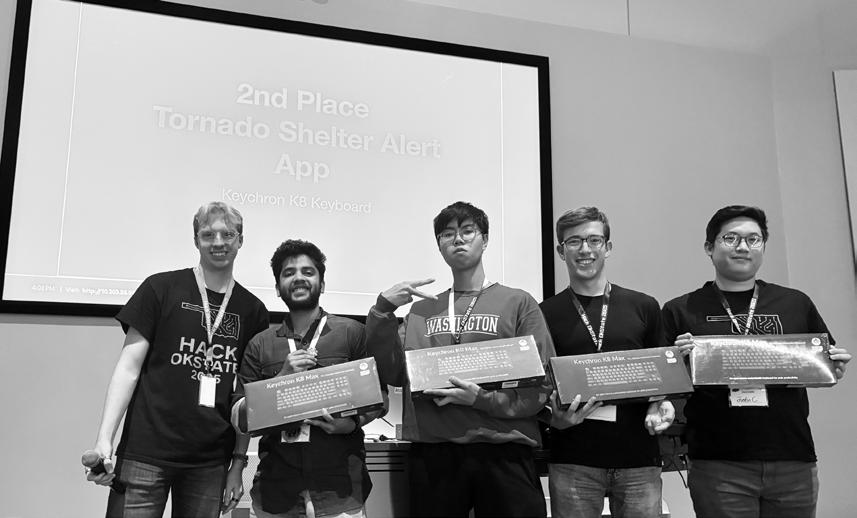
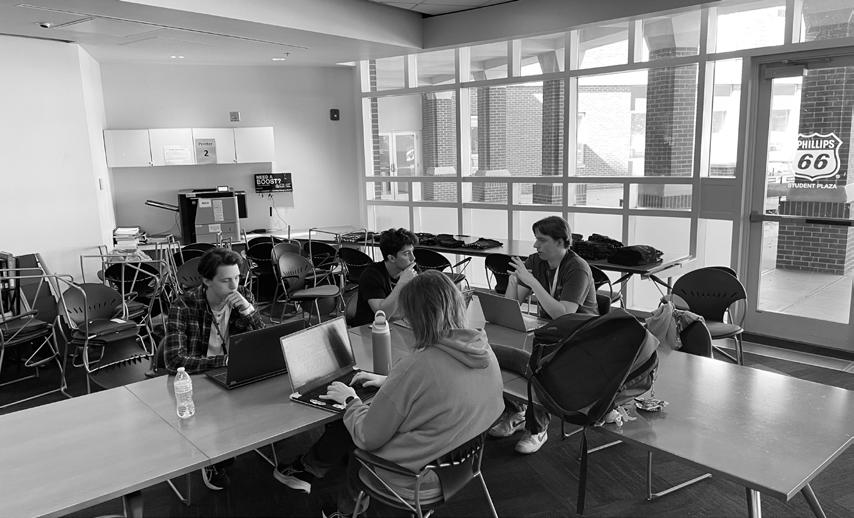
The annual Hack OKState competition event, in which students collaborate intensively over 24 hours to build software projects, hardware prototypes or digital solutions to real-world problems, has quickly become a highlight of the fall semester for students passionate about technology and innovation. With the most recent competition held on Nov. 1-2, 2025, Hack OKState is making the leap to become a fully independent student organization. While currently operating under the sponsorship of the OSU student chapters of IEEE and the Association for Computing Machinery, the group is focusing on establishing itself as a standalone entity dedicated to hosting the university's premier tech event.
At its core, Hack OKState is driven by a powerful mission: to empower students to use the tools and knowledge they gained in their classes to develop real-world products with real applications. The ultimate goal is to ensure that by the end of the event, every participant knows how to turn an idea into a product ready to be shipped.
The hackathon is already a regional event. This year's competition boasted over 100 students from eight universities, including participants from five Oklahoma universities and students from states like Kansas and Texas. A total of 25 projects were received and $4,000 in prizes were given out to 11 winning teams across 12 categories. Hack OKState plans for next year's event to expand to more neighboring states and even other countries.
The current leadership, who have steered the event to success, are prepared to guide the new organization. They include Executive Director Colter Holmes, Executive Co-Director Ricardo Mulino, Finance Director Alex Carter, Outreach Director Jase Scott and Logistics Director Katy Wagner. More details about Hack OKState can be found at: https://hackokstate.com
research highlights
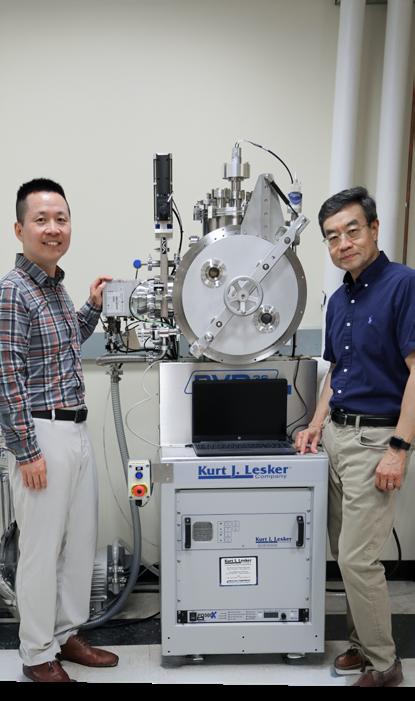
Weili Zhang & John Hu
the next wave of innovators
When a teacher learns something new, it benefits hundreds of students. By equipping Oklahoma educators with cutting-edge skills in photonic microchip fabrication, The College of Engineering, Architecture and Technology is multiplying the reach of semiconductor education across classrooms and communities.
Regents Professor Dr. Weili Zhang and Assistant Professor Dr. John Hu have received a $600,000 grant from the National Science Foundation to host a new Research Experiences for Teachers (RET) Site that immerses high school and community college educators in photonic microchip fabrication. The program responds to urgent workforce needs in STEM and the semiconductor industry.
Together, they represent frontier technologies reshaping how we live and work.
$600,000 National Science Foundation (nsf) 2026-2028
Each year, eight educators will spend six weeks at CEAT’s Advanced Technology Research Center cleanroom, gaining hands-on experience in photolithography, thin-film deposition, plasma etching, microchip design and terahertz spectroscopy.
Working alongside OSU researchers and graduate students, they will fabricate photonic microchips, characterize terahertz devices and explore optical sensing applications.
Terahertz technology could revolutionize communications, security and medical diagnostics, while microchip fabrication remains central to advancing semiconductor independence in the U.S.
“This program was inspired by the urgent national need to prepare a skilled workforce in semiconductors, combined with expertise at OSU in microchip fabrication and the unique capabilities of the ATRC Cleanroom,” Zhang said. “Photonic microchip fabrication was chosen because it is one of the fastest-growing areas in advanced communications and sensing technologies, and it provides an accessible, hands-on platform for educators to engage their students and spark interest in STEM careers.” By training teachers, the program creates a multiplier effect that can reach thousands of Oklahoma students. Each participant will develop classroom-ready modules aligned with STEM standards, translating complex concepts in microelectronics and terahertz photonics into accessible lessons.
The RET Site complements the federal CHIPS and Science Act and supports Oklahoma’s growing semiconductor ecosystem. Zhang and Hu are partnering with Oklahoma schools, community colleges and career tech centers to sustain the program and strengthen pathways to high-tech careers statewide.
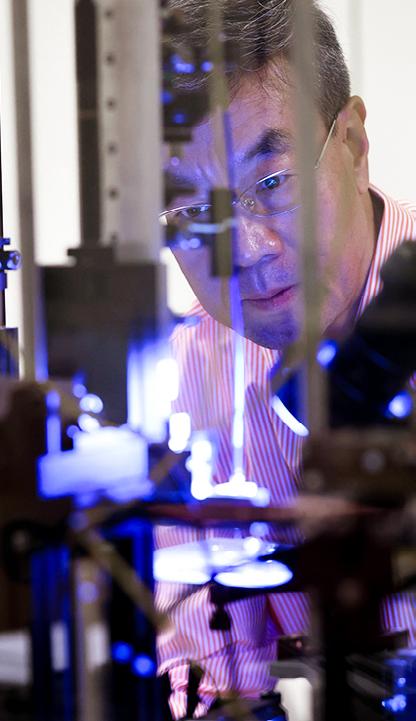
$370,000 National Science Foundation (nsf) 2025-2028 weili zhang
Regents Professor Weili Zhang, a global leader in photonics research, has received a prestigious National Science Foundation award to establish a brand-new field: terahertz chirality sensing. Since joining the School of Electrical and Computer Engineering at Oklahoma State University in 2002, Zhang has pushed the boundaries of terahertz plasmonics, metamaterials and ultrafast photonics. His pioneering work has influenced diverse areas including invisibility cloaking, plasmonic circuits and advanced sensing technologies. Recognized as a Fellow of OPTICA and repeatedly named a Clarivate Highly Cited Researcher, Zhang continues to expand OSU’s international reputation in cutting-edge science. This new NSF-funded initiative builds on his legacy of innovation by addressing one of the most pressing challenges in chemistry and biotechnology — detecting molecular “handedness.”
Many molecules come in two mirror-image versions, much like right and left hands. These “chiral” molecules can have dramatically different effects on the body: one version of a drug may heal, while the other might be ineffective or even harmful. Detecting chirality with precision is therefore vital in fields like pharmaceuticals, chemical engineering and biotechnology. Current tools, however, often lack the sensitivity needed to reliably measure these differences. Zhang’s project aims to solve this by using terahertz waves — a part of the electromagnetic spectrum between microwaves and infrared light— combined with plasmonic surface waves to amplify interactions with molecules. In simpler terms, the research uses special light
waves to “listen” more carefully to how molecules twist and turn, making it easier to detect their unique signatures.
The project introduces several world-first techniques. For example, the team will use circularly polarized light to launch chiral surface plasmon waves on plain metal surfaces, avoiding the need for complex nanostructures. They will also design new devices that manipulate terahertz waves with extreme precision. To prove the approach works, the team will test realworld examples such as different forms of ibuprofen.
The impact of this work extends well beyond the laboratory. By advancing terahertz technologies, the project opens the door to new applications in healthcare, security and communications — sectors that directly affect Oklahoma communities. For instance, better chirality detection could improve the development of safe, effective medicines, while advanced sensing methods could strengthen security screening and communications systems. At OSU, the project also enriches education. Students will gain hands-on training in advanced fabrication, cleanroom processes and high-tech measurement techniques, preparing them for careers in science and engineering. Outreach efforts, such as open houses and Summer Bridge programs, will introduce younger students to photonics and inspire future scientists across the state. By leading this groundbreaking effort, Zhang and his team are not only advancing global science but ensuring Oklahoma remains at the forefront of innovation in nextgeneration technologies.
through Electric School Bus Integration into Local Energy Grids
A$130,000 National Science Foundation (nsf) 2025-2026
ssistant Professor Hamid Pouya, an expert in power grid modernization at Oklahoma State University, is leading a groundbreaking project that uses everyday public assets — school buses — to tackle one of the biggest challenges communities face: power outages during disasters. His research focuses on renewable energy integration, smart grid technologies and community resilience and has been funded by agencies such as NASA, DOE and USDA. For this project, he is joined by Assistant Professor Dr. Ardeshir Moftakhari from the School of Mechanical and Aerospace Engineering at OSU, whose expertise lies in energy systems design and efficiency. Together, they form a multidisciplinary team supported by the National Science Foundation’s CIVIC 3.0 program.
Led by the University of Oklahoma, Oklahoma Gas & Electric, Shawnee Public Schools and industry leaders, the team is turning Shawnee into a model for how innovative energy solutions can directly serve communities.
At the heart of the project is a concept called Vehicle-to-Grid (V2G) technology. Put simply, this technology allows electric vehicles to not only draw power from the grid but also give power back when needed. In this case, the vehicles are electric school buses (ESBs). Because school buses are parked for long periods, their large onboard batteries can serve as mobile energy storage units. With the right charging technology, they can provide backup power during storms, reduce strain on the grid during peak hours and even support schools as temporary energy hubs in emergencies.
The team is developing tools to make this vision work in real life. These include smart energy management systems that decide when buses should charge or discharge, methods to test how batteries hold up under repeated use, and software that helps school districts and utilities coordinate effectively. A Community Advisory Board —including local officials, school representatives and utility partners — ensures that the solutions are designed with real community needs in mind. This project has far-reaching benefits for Oklahoma. By piloting the system in Shawnee, it demonstrates how school districts can transform existing transportation fleets into powerful tools for resilience and cost savings. The approach reduces the need for expensive new infrastructure while making schools better prepared for severe weather events — an increasingly important concern in the state. For students, the project provides hands-on exposure to cutting-edge energy technologies, from classroom activities to science fairs and internships with partners like Gordon Cooper Technology Center located in Shawnee, Oklahoma. These experiences help build a skilled local workforce in renewable energy and electrified transportation.
Economically, the work positions Oklahoma as a leader in innovative energy solutions. Collaborations with OG&E are exploring rate structures and business models that could eventually be scaled nationwide. By proving that V2G technology is both feasible and beneficial, this project paves the way for stronger, smarter and more sustainable communities — starting right here in Oklahoma.

AJohn Hu
t Oklahoma State University, Dr. John Hu is leading a new NASA Rapid Response Research (R3) project that addresses one of today’s most pressing issues: keeping critical systems safe from cyber threats. Hu, an expert in hardware security and cybersecurity, brings a wealth of experience to the project, including his time as a visiting faculty member with the U.S. Air Force Research Laboratory. His work at OSU bridges academic research with real-world needs, making him a strong partner for this national initiative.
The project also benefits from collaboration with Dr. Mark A. Stanley at NASA Headquarters and oversight from OSU’s Dr. Andrew Arena, the director of the NASA Oklahoma Space Grant Consortium, whose leadership in aerospace and advanced computing connects the effort to OSU’s broader research strengths.
The project focuses on a new cybersecurity approach called “Zero Trust.” In simple terms, Zero Trust means that no user, device or program is automatically trusted. Instead, every action is checked and verified continuously to ensure systems stay safe. While the idea sounds straightforward, putting it into practice across an organization as large and complex as NASA is a real challenge. To tackle this, the OSU team is studying how to create a “cybersecurity mesh.” Instead of security tools working alone in separate silos, the mesh allows them to share information and act as a coordinated team. This makes it easier to spot threats
early and respond quickly, without slowing down day-to-day work. The project is identifying the key building blocks needed for this approach, such as communication pathways, decision-making tools and performance tradeoffs. The outcome will be practical guidance and prototypes that make the “mesh” more than just a concept — helping organizations like NASA move from strategy to action.
This research brings wide-ranging benefits to Oklahoma. For OSU, it strengthens the university’s role as a trusted partner in national security and aerospace research, raising the profile of both the campus and the state.
Students gain hands-on training in cybersecurity techniques that are in high demand by local employers, from aerospace and energy companies to healthcare and agriculture. The project also provides direct value to Oklahoma industries. Many sectors rely on large, distributed computer systems that must stay secure without slowing operations — whether in power grids, hospitals or precision farming. The knowledge developed through this project helps these organizations modernize safely, boosting resilience across the state. In short, OSU’s partnership with NASA is not only advancing national cybersecurity but also preparing Oklahoma’s workforce and industries for a safer, smarter future.
$75,000 hamm institute oklahoma state university 2025-2028 ying zhang
Ying Zhang
Dr. Ying Zhang, assistant professor and Jack H. Graham Endowed Fellow of Engineering in the College of Engineering, Architecture and Technology’s School of Electrical and Computer Engineering, is leading a three-year, $75,000 project funded by the Hamm Institute to help the energy sector meet its growing security needs for future energy networks. The mission of the project, “Trustworthy AI for Distributed Energy System Operation toward Grid Security and Edge Intelligence,” is to transform how tomorrow’s energy grids operate — making them more intelligent, adaptive and secure. The research addresses one of the energy sector’s most pressing challenges: ensuring that modern power grids remain safe and reliable as they integrate millions of distributed devices such as solar panels, electric vehicles and smart meters.
From a technical standpoint, the project focuses on developing lightweight AI algorithms that enable distributed energy resources to make secure, realtime decisions directly at the network edge. Unlike traditional centralized control methods, this decentralized approach allows grid-edge devices to instantly detect and respond to
disruptions, optimize local resources, self-heal after outages and enhance resilience against both cyberattacks and natural disasters. The research integrates graph theory, statistical optimization and advanced machine learning models with historical grid and operational data — while accounting for imperfect information — to ensure the resulting methods are not only intelligent but also trustworthy. Beyond its technical innovations, the project’s broader impacts are far-reaching. By advancing trustworthy AI for power system security and edge intelligence, Zhang’s research will strengthen energy infrastructure, protect communities from outages and enhance the reliability of critical services. The project exemplifies her group’s leadership in developing the next generation of smart, adaptive and secure energy grids while providing valuable AI-driven research and training opportunities for students in power engineering and data science. Ultimately, the project’s outcomes will benefit not only Oklahoma but also the broader U.S. energy sector — ensuring that future grids can withstand extreme weather, evolving cyber threats and the increasing integration of distributed renewable energy sources.
Over the past three decades, Rock founded four software companies, each becoming a leader in their respective markets. His companies have been recognized for their innovation, rapid growth and industry impact. His work has also been featured in numerous business and technology publications. In addition, he holds multiple technology patents, highlighting a career driven by technical expertise and problemsolving.
Eric Rock was born and raised in Tulsa, Oklahoma. Rock grew up with a strong family tradition of Oklahoma State University, with his four siblings having attended the university before him. When the time came for his own education, the choice was clear. He earned bachelor's degrees in both electrical engineering and computer engineering from OSU in 1990. These experiences laid the foundation for a career built on innovation, entrepreneurship and a deep connection to his alma mater.

Eric Rock was born and raised in Tulsa, Oklahoma. Rock grew up with a strong family tradition of Oklahoma State University, with his four siblings having

From an early age, Rock discovered his calling. At the age of 14, he knew he wanted to become a software engineer, and by 15 he was already demonstrating his entrepreneurial spirit. Using an Atari computer, he developed inventory management software for his father’s company and negotiated a recurring contract that paid for his first car. Shortly after, Rock created a restaurant management program that evolved into the front-end of OpenTable.com via acquisition. These formative experiences sparked a passion for innovation that has defined his career.
Over the past three decades, Rock founded four software companies, each becoming a leader in their respective markets. His companies have been recognized for their innovation, rapid growth and industry impact. His work has also been featured in numerous business and technology publications. In addition, he holds multiple technology patents, highlighting a career driven by technical expertise and problem-solving.
Beyond his business achievements, Rock has invested in his community and profession, serving as a Boy Scout leader and youth sports coach for nearly a decade. He has also served as a mentor to early-stage technological entrepreneurs, helping many find their own success. His commitment to giving back extends to his alma mater, where he is a proud donor and serves on the Industry Advisory Board for the College of Engineering, Architecture and Technology's School of Electrical and Computer Engineering.
As a student, Rock found opportunities for academic and personal growth through the Pi Kappa Alpha fraternity. He credits his experiences gained during this time with helping him build the confidence and character that have guided his career.
While Rock has led a career full of success, his proudest accomplishments are rooted in family. He and his wife, Sharron, also an OSU alum, have built a true OSU legacy. Their son Logan earned his bachelor’s degree at OSU and is now pursuing his master's, while their son Dylan is currently working toward his bachelor’s degree at OSU. For Rock, seeing his children follow in his footsteps and become part of the Cowboy family is the greatest honor of all.
Through all of his achievements, Rock remains grounded in his belief that success is measured not only by personal accomplishments but by lifting others up. He hopes his legacy will be one of empowering people to believe in themselves and achieve their full potential, creating a ripple effect of opportunity and personal growth.
Dr. Delores M. Etter was born in Denver, Colorado, and raised in Shidler, Oklahoma. She enrolled at Oklahoma State University in 1965, never considering another university. Though her undergraduate education ultimately continued elsewhere due to her husband’s military service, OSU shaped her early path and has remained central to her life’s journey, helping her build a career defined by excellence in engineering, national service and education.
Etter went on to earn her bachelor’s and master’s degrees in mathematics from Wright State University and her doctoral degree in electrical engineering from the University of New Mexico.
Soon after, she served in an academic role as an assistant and associate professor at UNM, later joining the University of Colorado–Boulder as a professor of electrical engineering. She also spent a year as a visiting professor at Stanford University. Over the years, she pioneered research in signal processing, biometrics and engineering education, authoring 18 textbooks that have been used in classrooms worldwide by thousands of engineers.
From 1998 to 2001, she served as Deputy Under Secretary of Defense for Science and Technology, overseeing defense research at the Pentagon. She was later appointed assistant secretary of the Navy for research, development and acquisition, where she guided the Navy’s major R&D efforts, including oversight of the Joint Strike Fighter program. The Department of the Navy later established the Dr. Delores M. Etter Top Scientists and Engineers Awards, an annual honor that recognizes those who demonstrate exemplary scientific and technical excellence in support of national defense.
Etter continued to break ground in her career as the first woman to serve as president of the Institute of Electrical and Electronics Engineers Signal Processing Society. She also held key editorial positions with IEEE’s leading journals. Her distinguished contributions have been honored with election to the National Academy of Engineering and recognition as a Fellow of IEEE, the American Society for Engineering Education and the American Association for the Advancement of Science. Among her many awards are the IEEE James H. Mulligan, Jr. Education Medal; the Department of Defense Medal for Distinguished Public Service; and the Federal Women in Science and Engineering Lifetime Achievement Award.

DELORES M. ETTER
Beyond her professional accomplishments, Etter has been an advocate for education and community service. With her husband, Jerry, they generously created the Etter Scholarship at OSU to open doors for the next generation of engineers, empowering students who demonstrate leadership and promise. In her hometown of Shidler, they have actively promoted math education with annual awards, provided scholarships for every graduating senior, whether pursuing a trade certificate or a university degree, and funded the full renovation of the Shidler Elementary School. Etter and her husband also share a deep commitment to conservation, supporting the Tallgrass Prairie Preserve in Osage County, and earning recognition from The Nature Conservancy of Oklahoma as 2023 Conservation Champions.
HALL OF FAME INDUCTEE & LOHMANN MEDAL RECIPIENT
Beyond her accomplishments,professional Etter has been an advocate for education and community service. With her husband, Jerry, they generously created the Etter Scholarship at OSU to open doors for the next generation of engineers, empowering students who demonstrate leadership annual awards, provided scholarships for every graduating senior, whether Denver, Colorado, and raised in Shidler, Oklahoma. She enrolled at Oklahoma State University in 1965, never considering
Throughout her life, Etter has believed that education is the pathway to independence and opportunity. By opening doors for countless students through teaching, mentoring, leadership and philanthropy, she has left an enduring legacy in engineering and in her communities.

Industrial Advisory Board
The ECE Industrial Advisory Board (IAB) plays a vital role in advancing the mission of the School of Electrical and Computer Engineering by providing external counsel, professional insight and strategic feedback. Its primary goals are to help sustain academic excellence, maintain curriculum relevance, evaluate strategic priorities and support the school’s ongoing ABET accreditation. Members of the IAB are accomplished professionals with extensive experience in engineering, science, management and consulting across a broad spectrum of industries and government laboratories. Their diverse expertise and perspectives enrich the school’s understanding of current industry trends and workforce needs. The school deeply values their commitment and the time they devote each year to strengthening ECE’s academic and research programs.
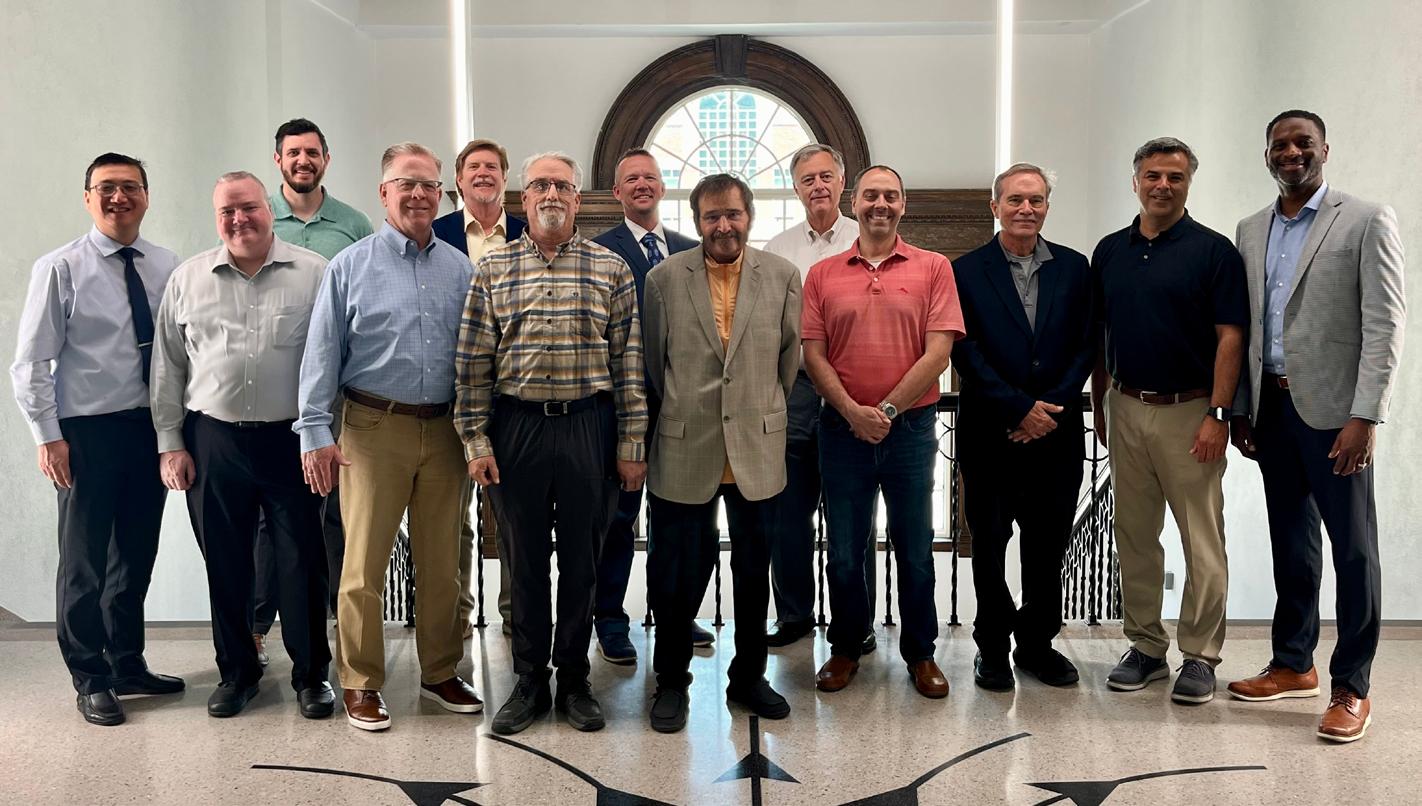
In summer 2025, the IAB welcomed two new members — Eric Rock (BSEE 1990), a pioneer in Digital Health and AI, and Ryan Morton (BSEE 2000, MSEE 2001), an accomplished patent attorney — whose diverse expertise will
further strengthen the board’s impact. At the same time, the IAB mourned the passing of a valued member, Billy Martin, in September 2025. Billy’s generous spirit and deep commitment to OSU and ECE left a lasting legacy. He will be profoundly missed by all who had the privilege of working alongside him.
Beginning in 2025, ECE has introduced several new initiatives designed to deepen engagement between IAB members, faculty and students. The IAB now meets twice annually, once each spring and fall, to foster meaningful interactions and collaboration. The spring meeting features a Faculty Research Spotlight, allowing selected faculty members to present their ongoing research and explore opportunities for partnership with industry. The fall meeting highlights a multi-panel Q&A session where IAB members engage directly with students. Specifically, there are three panels, each designed for a different student group: early-stage undergraduates, juniors and seniors, and graduate students.
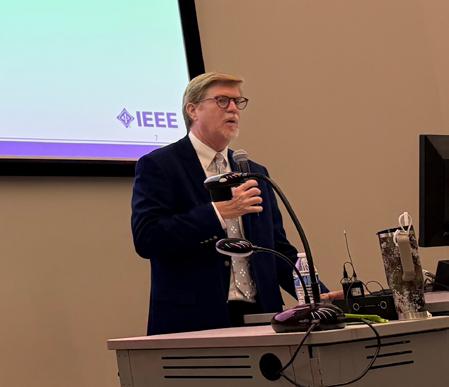
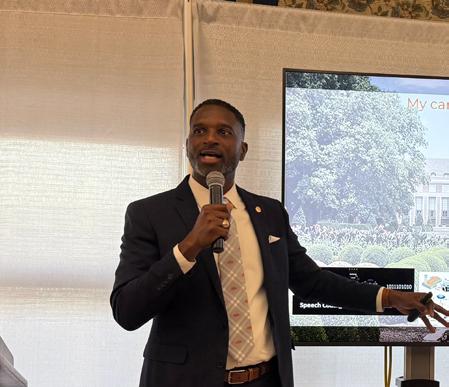
The first panel, “From Curiosity to Confidence,” encourages freshmen and sophomores to turn their curiosity into purposeful learning. The second panel, “Transition from College to Industry,” focuses on the journey from academic preparation to professional practice. The third panel, “Beyond the Lab: Thriving in Industrial R&D,” explores how graduate research experiences translate into realworld innovation.
The timing of IAB meetings has been strategically aligned with the day preceding the ECE Senior Design Expo, allowing members to serve as external evaluators for student capstone projects immediately following the meeting. This initiative, originally proposed by a couple of IAB members, enhances the educational experience by providing graduating seniors with technical feedback from seasoned industry experts and fostering meaningful professional connections.
In addition to the formal meetings, IAB members actively engaged with the ECE community throughout the year through various events aligned with
their interests and areas of expertise. For instance, Dr. Ed Daniel delivered an inspiring keynote address at the annual IEEE Banquet, while Dr. Ken Butler presented a technical lecture as part of the ECE Distinguished Seminar Series and played a key role in establishing the school’s student chapter of the IEEE Electronics Packaging Society (EPS). Several other IAB members also expressed interest in serving as guest speakers in ECE 4013 Design of Engineering Systems, sharing insights on professional ethics and self-directed career development.
Together, these initiatives have transformed the IAB into a dynamic and collaborative forum that bridges academia and industry, fosters innovation among students and faculty, and strengthens the fabric of the ECE community. The school is proud to have such a dedicated group of advisors whose continued engagement reflects their deep commitment and enduring passion for ECE.
These initiatives reflect a unified effort to elevate ECE’s impact within the college and the broader university community. Developments are part of a longterm vision to empower faculty, staff and students, with more innovations expected in the future.
Notes and Notices
DEPARTMENT UPGRADES
The School of Electrical and Computer Engineering is undergoing a transformative year, marked by major upgrades to facilities, research infrastructure and academic programs.
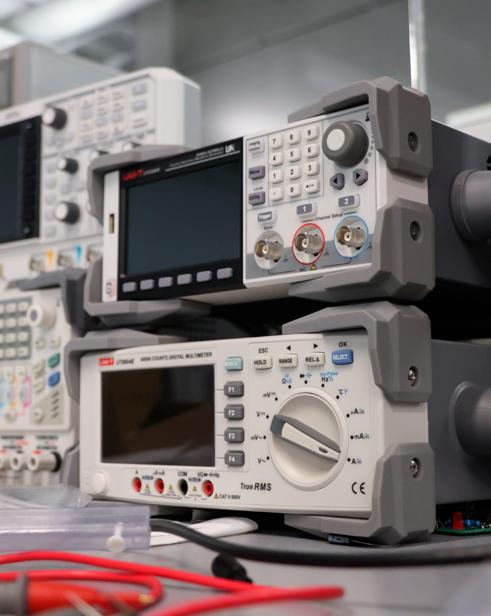
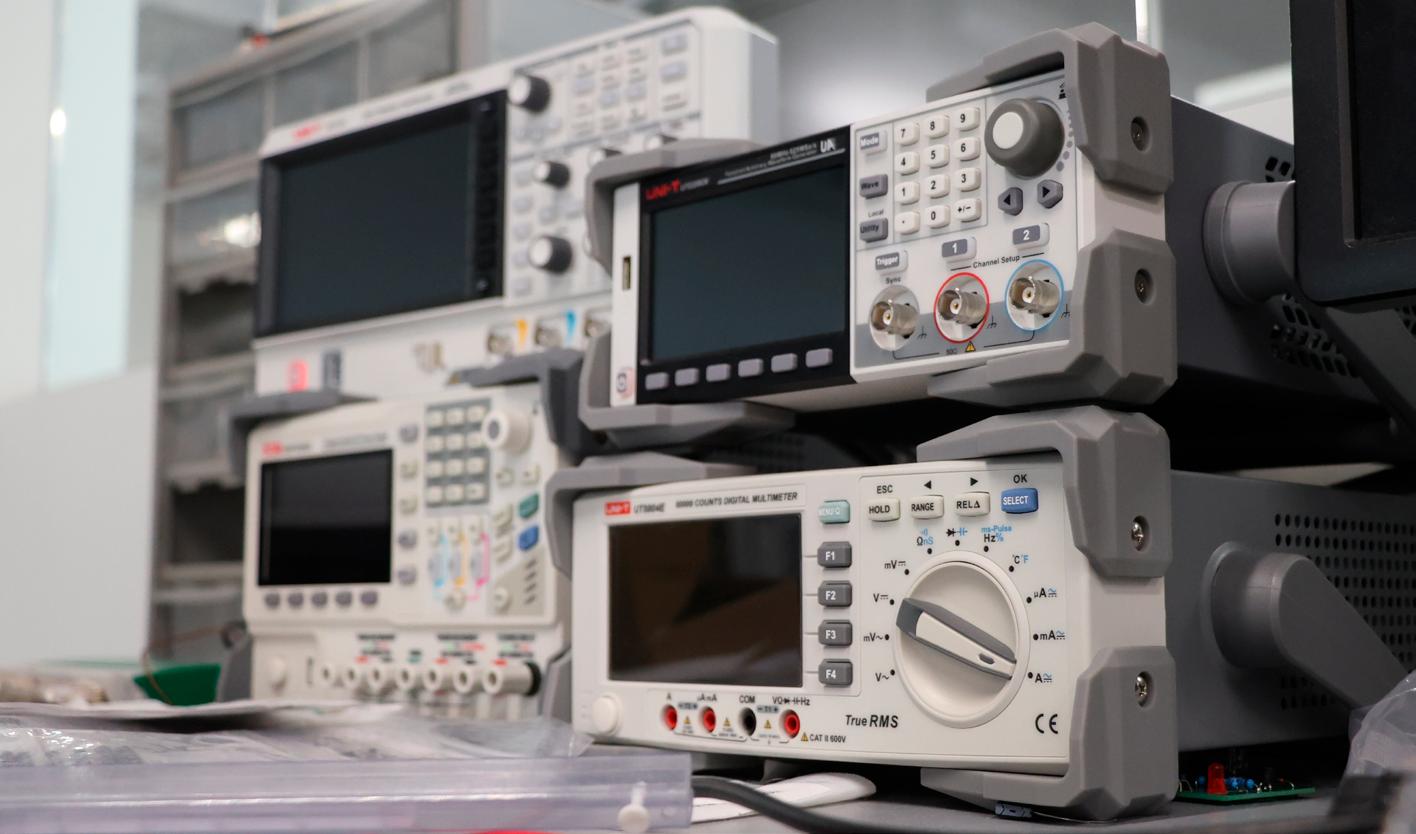
Backed by strong support from the College of Engineering, Architecture and Technology, ECE faculty and staff have overseen significant improvements in lab spaces and equipment, including a $29,000 investment in ENDEAVOR 320.
The new lab equipment, funded jointly by CEAT and ECE, was installed ahead of the fall 2025 semester, replacing outdated tools and enhancing the learning experience for students.
A complete remodeling of ATRC 237 is also underway, transforming the space into a dedicated research hub for earlycareer faculty and graduate students.
The $80,000 renovation, supported by CEAT leadership and facilities planning teams, will house the AI-C3PO initiative: Artificial Intelligence in Communications, Control, Chips, Power and Optics. This collaborative space will serve multiple faculty members including Drs. Hritom
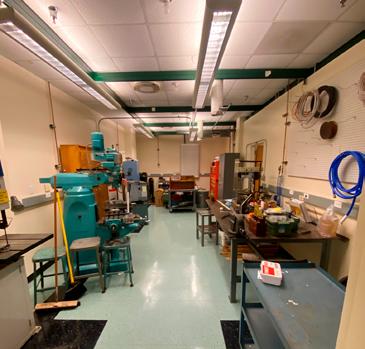
The ECE machine shop has been relocated to ATRC 002A, thanks to the efforts of CEAT Facilities Manager Patrick Wheeler and faculty members Drs. O’Hara and Daqing Piao. The move aims to provide a safer, more functional and sustainable workspace for students and staff.
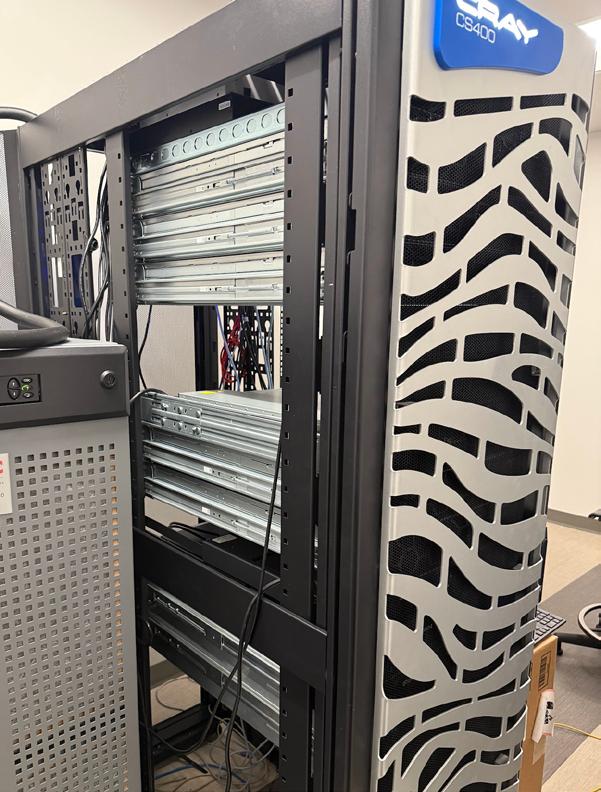
In addition, the department has upgraded its server infrastructure, which now supports high-performance computing needs for both undergraduate and graduate students. The centralized server system became fully operational in fall 2025 and is currently used in multiple courses, particularly benefiting students in the Computer Engineering program.
Visitors to the second floor of Engineering South will notice a newly redesigned hallway showcasing faculty research and achievements.
The display fosters a more immersive learning environment and helps students connect with their professors’ work.
Academically, ECE has launched a new Master of Science in Artificial Intelligence, co-administered with the Department of Computer Science and the Health Science Center at OSU-Tulsa. The program offers tracks in Computer Engineering, Computer Science and Healthcare Administration, combining shared core courses with specialized electives.
The department also introduced two new minors in Electrical Engineering and Computer Engineering, expanding accessibility to students across CEAT.
These initiatives reflect a unified effort to elevate ECE’s impact within the college and the broader university community.
The ECE school head, Dr. Guoliang Fan, emphasized that these developments are part of a long-term vision to empower faculty, staff and students, with more innovations expected in the future.
The School of Electrical and Computer Engineering is charting an ambitious course for the future of engineering education through the launch of the AAA Initiative: Awareness, Adoption and Acceleration. Beginning in fall 2025, this faculty-driven effort aims to integrate AI-assisted learning across the entire undergraduate curriculum. Recognizing the transformative role of artificial intelligence (AI) in shaping how students learn and how engineers innovate, ECE faculty are working collaboratively to cultivate a new academic culture — one that embraces AI as a powerful learning companion, not a crutch, empowering students to think critically, learn independently and innovate confidently.
The AAA framework begins with Awareness , mainly for sophomore and some junior level ECE courses. Faculty help students understand emerging AI tools and their implications for creativity, productivity and ethical responsibility. It then moves to Adoption , primarily for junior- and senior-level courses, where faculty integrate some AI applications into classroom and lab projects. Finally, the Acceleration phase focuses on a few selected senior-level ECE courses that require the applications of the newest AI tools to boost
productivity and efficiency in class projects. Specifically, ECE is offering $500 to sponsor a Best AI Practices contest in an ECE course for the Adoption and Acceleration categories. This contest will encourage our faculty to enhance their teaching skills and expand their instructional toolkit by learning directly from their students. By empowering both students and educators to confidently engage with AI technologies in the classroom, the AAA Initiative represents a bold and forwardlooking step in transforming the ECE learning environment to meet the future demands of an AI-driven industry.
ECE’s AAA Initiative has also gained strong support from OSU’s Institute for Teaching and Learning Excellence (ITLE), being selected as one of 16 units on campus to participate in a newly launched AI Integration Program. An ECE
AI team led by Dr. Qi Cheng, ECE’s ABET Coordinator, and joined by several faculty members, has taken part in this campus-wide effort. Through monthly training workshops, ongoing coaching and expert guidance from ITLE, the team is preparing to effectively and creatively integrate AI tools into the classroom. Moving forward, this group will play a key leadership role in advancing the AAA Initiative and expanding AI-assisted learning across the ECE curriculum.
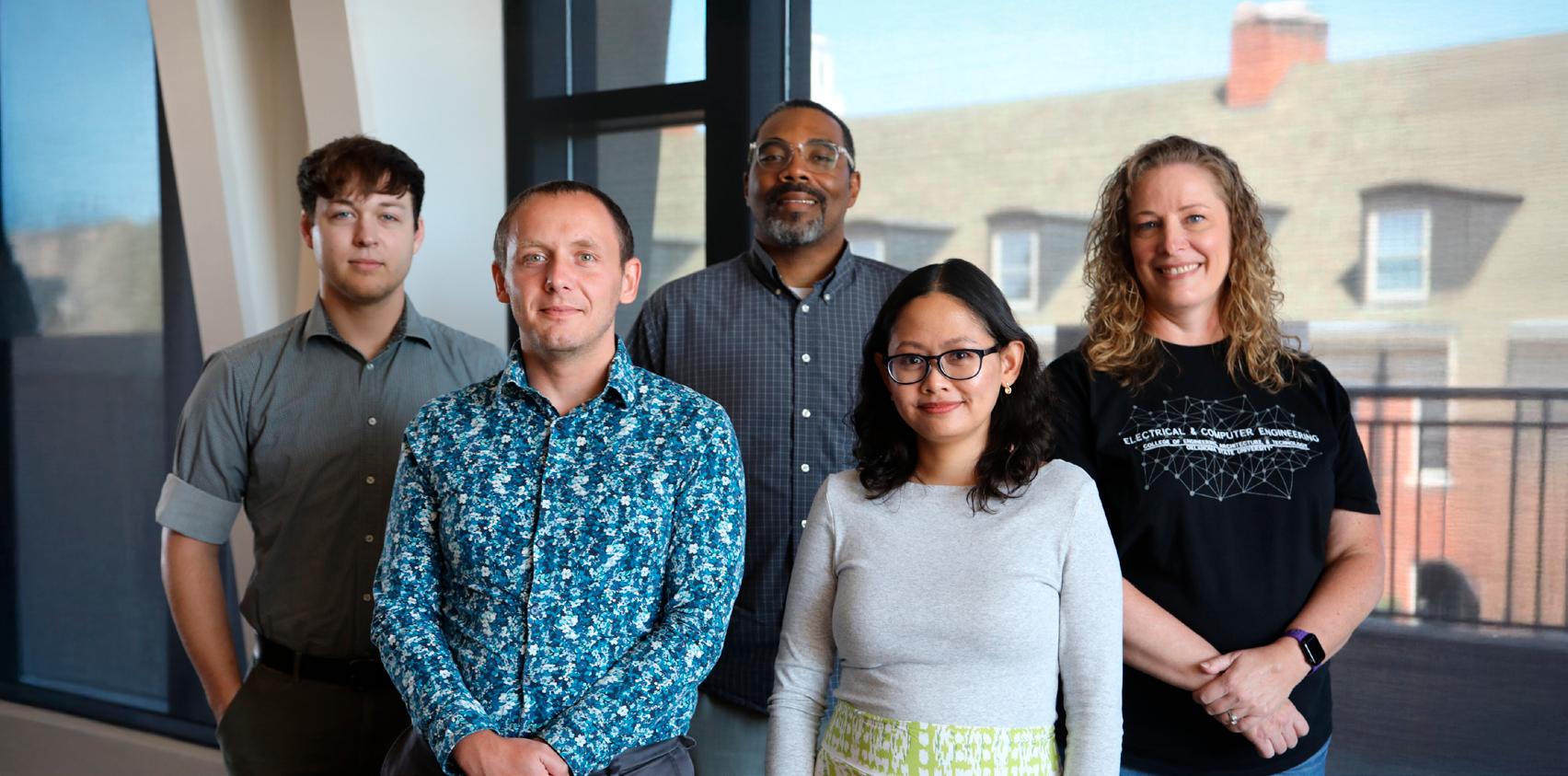
The School of Electrical and Computer Engineering extends its deepest gratitude to our dedicated staff, whose unwavering commitment forms the backbone of our daily operations. Their professionalism, teamwork and care foster a positive and collaborative environment where both students and faculty can thrive. We are fortunate to have a talented and cohesive team supporting every aspect of the school’s mission:
Fransisca Bolin, Administrative Associate – manages essential accounting tasks, payroll and administrative operations. Fransisca played a vital role during the leadership transition between 2024 and 2025. Her exceptional dedication and service were recognized with the CEAT Outstanding Staff Award (Academic Unit Category) in spring 2025 — a well-deserved honor.
Kristal Soderstrom Junkens, Senior Academic Advisor – guides and supports students in their academic and professional growth. Kristal has played a pivotal role in assisting the School Head with the development of new programs and the implementation of significant degree changes. She also provides valuable leadership and support to three other academic advisors serving ECE students.
Ryan Mouser, Lab Coordinator – oversees laboratory operations, technical training, IT support and equipment procurement.
Since fall 2024, Ryan has embraced the management of the new ECE departmental server, a critical infrastructure for the Computer Engineering (CpE) program. He has additionally played a key role in the renovation of the second-floor hallway and many new facilities upgrades during 2025.
Richard Prenzlow, Senior Administrative Support Specialist – assists faculty and staff with scheduling, travel and day-to-day coordination. Richard was instrumental in every hiring season when many travel and reimbursement requests were involved. He also helps many department events for faculty and students operate smoothly.
Curtis Ross, Senior Accounting Specialist – maintains financial records and ensures the smooth processing of invoices and budgets. Curtis has taken on significant responsibility in managing all faculty research accounts and has grown remarkably from a new hire into a confident and highly engaged member of the ECE team.
Together, their dedication and expertise create a strong foundation for excellence within ECE. We extend our heartfelt appreciation to each of them for their invaluable contributions to our community.
Fall 2025 Scholarships
$ 96,425 Spring 2026 Scholarships $ 68,025
Total Scholarships $ 164,450
FY2025 Research Grant Awards
over $ 2.1 million
FY2025 Research Expenditure over $ 2.3 MILLION
IEEE Chuck Bunting Ying Zhang Jack Graham Fellow
ENDOWED CHAIRS, PROFESSORSHIPS AND FELLOWS Chuck Bunting Bellmon Chair James Stine joullian Chair
PROFESSIONAL SOCIETY FELLOWS Guoliang Fan Vogt Professor John Hu
Lynn T. Miller Fellow
7 PROFESSORS 9 ASSISTANT PROFESSORS 2 ASSOCIATE PROFESSORS 2 career-track ASSISTANT PROFESSORS
Weihua Sheng
PSO/
26-67800 ECE General Operation Fund
26-00980 Next Generation Fund
26-87700 Lab Fund ECE Teaching
26-75500 Faculty Development Fund
26-87800 Student Development Fund
26-99650 Ramakumar Family Energy Scholarship
26-48600 Dr. Rao Yarlagadda Graduate Fellowship
26-01500 Jack Allison Endowed Merit Scholarship
THE SCHOOL OF ELECTRICAL AND COMPUTER ENGINEERING appreciates the generous donations given by its constituents to support ECE’s educational infrastructure and to fund ECE student scholarships. Each donated dollar amount for student scholarships—large or small—can make a big difference in assisting ECE students with their educational goals and career aspirations. Other contributions are used to purchase state-ofthe-art equipment and computers for student experiences in laboratories, which are the cornerstone of engineering education. We cannot stress enough the importance of the various cash gifts that we receive to the success, growth and health of our programs. Furthermore, we are committed to being good stewards of all monies entrusted to us. Should you wish to invest in our school and need more information, please do not hesitate to contact us.
DR. GUOLIANG FAN
School Head
School of Electrical and Computer Engineering