CVHS flie S into a C tion to H elp animal S H urt in o kla H oma’ S tornadoe S
SaV ing Franklin Healthy Animals — Healthy People
M agazin E Fall 2013/Volume 16
The Center for Veterinary Health Sciences graduates competent, confident, practice-ready veterinarians — a tradition it has proudly carried forward since the day the veterinary college opened its doors 65 years ago. Please join us at the CVHS website: www.cvhs.okstate.edu. The OSU homepage is located at www.okstate.edu
Vet Cetera magazine is a publication of the Oklahoma State University Center for Veterinary Health Sciences. its purpose is to connect the college with its many alumni and friends, providing information on both campus news and pertinent issues in the field of veterinary medicine
OklaHOMa STaTE UniVErSiTy © 2013
18 Sh A r I n G hIS P ASSIO n
Jim l ish has won the veterinary school’s top teaching award for the third time — all because he loves what he does and sharing it with students.
22 A W I n f O r P A TIE nc E
Mor e than a year after submitting his application, Dr. l in l iu has won an $11.3 million grant to establish a respiratory disease center.
25 L EA v I n G T h E B UILDI n G
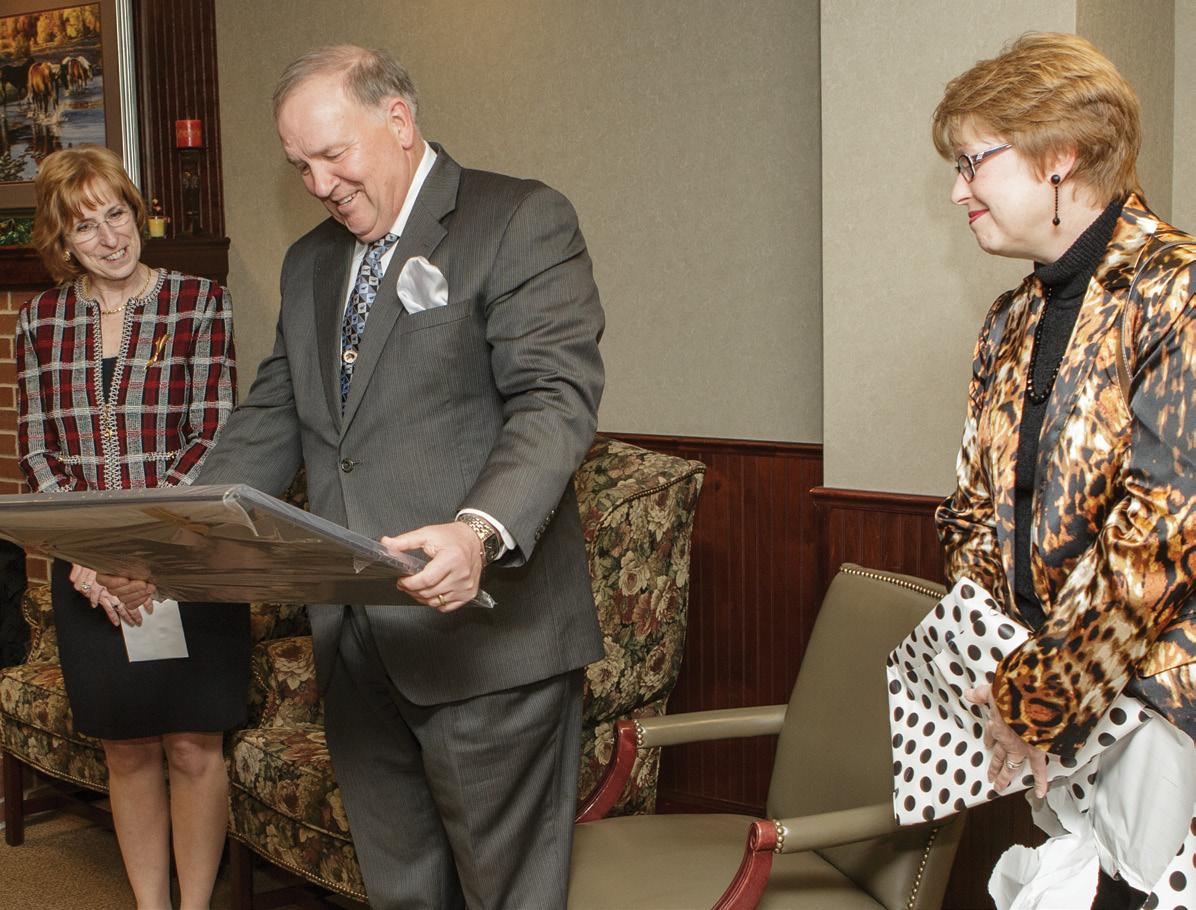
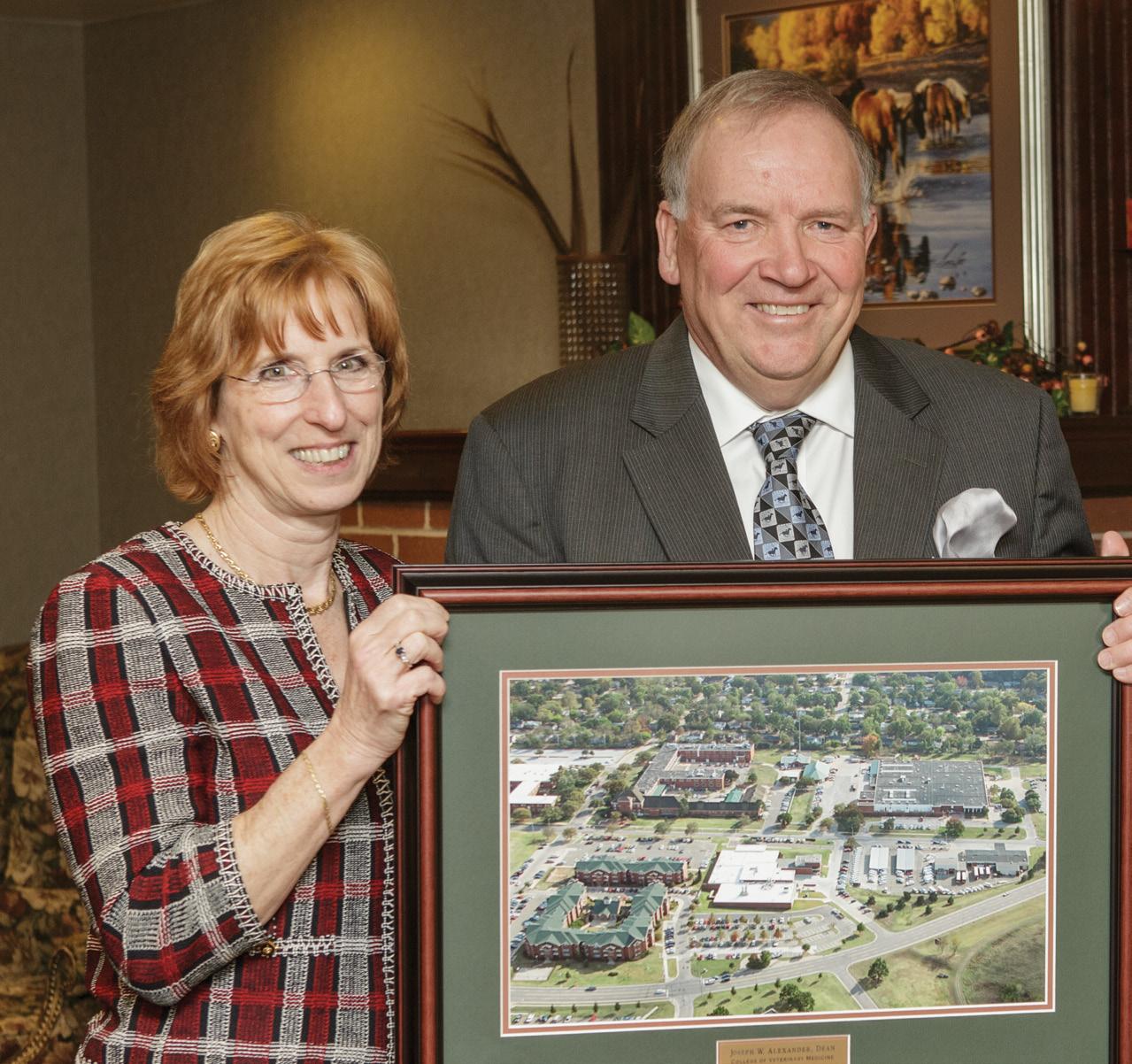
Dr. Joe a lexander (above center) has retired after 28 years with Oklahoma State University.
36 hEALT h A BOU n DS
Fr om the dean’s office to the veterinary “fat camp,” people and pets are taking a turn toward health in the veterinary school.
60 fI x I n G fE r AL fELI n ES
Oper ation Catnip Stillwater gets started on its mission of shrinking the numbers of community cats having kittens.
100 W I nn I n G A LL Ar OU n D
a program spearheaded by an OSU alumnus is helping rehabilitate shelter dogs and prison inmates at the same time.
Jean Sander, DVM, MAM, DACPV Dean, Center for v eterinary Health s ciences
Derinda Blakeney, APR Coordinator of Public r elations, and Marketing derinda@okstate.edu
Sharon Worrell a lumni a ffairs s pecialist
Heather Clay s enior Director of Development
Dorothy L. Pugh e ditor
Paul V. Fleming a rt Director / Designer
Phil Shockley / Gary Lawson s taff Photographers
Matt Elliott / Paige Vandaveer Contributing Writers
This has been a year of great highs, with much to celebrate and be grateful for. Many of these points of success and appreciation are in this issue of Vet Cetera. I believe you will enjoy reading about our faculty recognitions, successful fundraising efforts, graduate student recognitions, staff celebrations and alumni impact. Our college even developed a new tag line that tells our story in four short words: Healthy Animals — Healthy People.
But the biggest story of the year is filled with very mixed emotions: the devastating tornadoes that hit central Oklahoma causing so much death, injury and destruction. The Center for Veterinary Health Sciences has been a part of the recovery efforts. As the storm went through Moore, I was watching the news and trying to think just how we as a college could help these folks by taking away at least one concern: how to care for their animals that were injured. My goal was to make things as easy as possible for the people by providing care for their furry friends. Fortunately, Hospital Director Dr. Mark Neer had been at Louisiana State University during Hurricane Katrina and had some experience on what to expect.
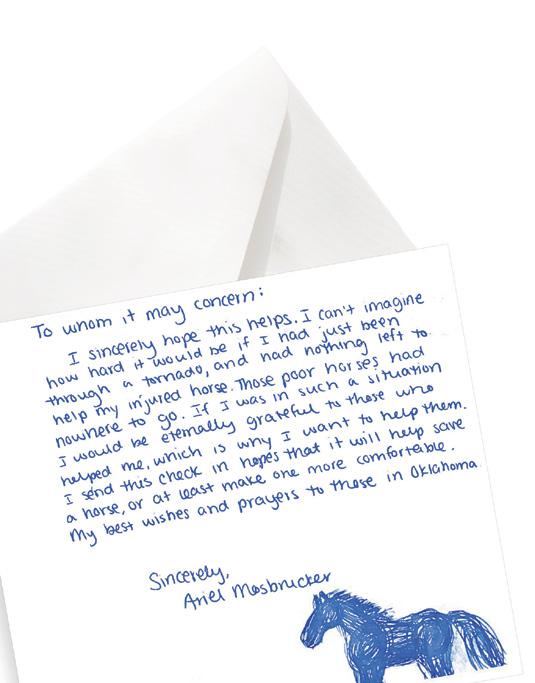
We came together with State Veterinarian Dr. Rod Hall and his team to address issues at ground zero and to spread the word that the Boren Veterinary Medical Teaching Hospital would provide all medical care to animals injured in any of the tornadoes at no cost to the owners. And once that was made known, donors came out of the woodwork. We received financial support from across the United States — some in small amounts and some in very large amounts. The outpouring of compassion warmed my heart.
Despite the fact that the Center for Veterinary Health Sciences is an institution of higher learning, we are expected to cover much of our own costs through fees for services. My decision to provide free care was a risk. Fortunately, so many people felt moved to send donations that there were no resulting difficult financial decisions. But free care was the right thing to do.
I think you will enjoy the story of the animals we treated and the lives we made better with our efforts. And while we couldn’t save every animal brought to us, we gave each one our full attention — even those who had no owners. I wish to thank our faculty, staff and students who provided the medical care as well as those folks who may have never heard of us before but still sent money. We consider each of them a friend of the college forevermore.
We cannot stop disasters from happening, but each of us can do something to help. The college has plans to develop a program to train students in crisis relief efforts. Tornadoes are not going away. My hope is that next time we will be able to do even more and that our graduates, wherever they go, will be prepared to step in and ensure Healthy Animals — Healthy People.
CVHS unite S into a pla C e of ‘Compa S S ion in aC tion’
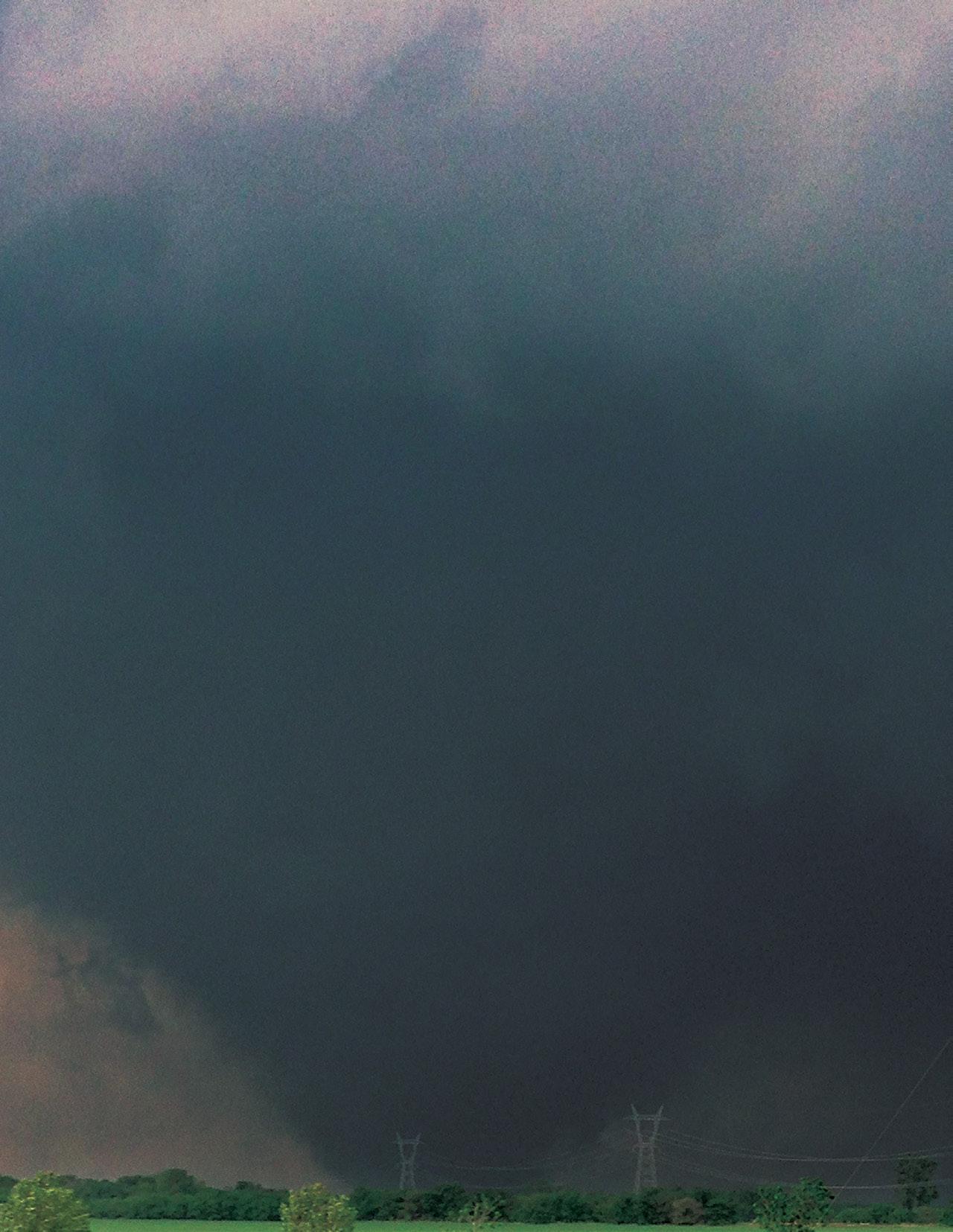
Devastating torna D oes twiste D through o klahoma from m ay 19–31.
Faculty, staff and students turned OSU’s Center for Veterinary Health Services into a place of “Compassion in aC tion,” as a Facebook post coined it.
Dr. Jean Sander, dean of the CVHS, offered free veterinary medical services to animal victims.
“These people have been through enough,” says Sander. “The last thing they need to worry about is how they are going to pay for veterinary medical care for their injured livestock or pets. We are here to care for these animal tornado victims for as long as it takes.”
An osu a nimal r elief f un D was established for donations. The veterinary center wants this fund to become a permanent resource for any future disasters.
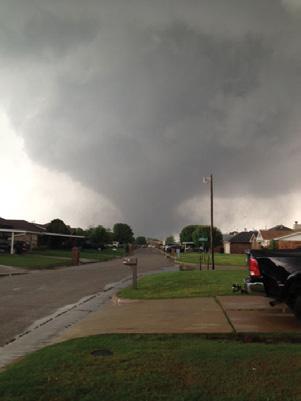
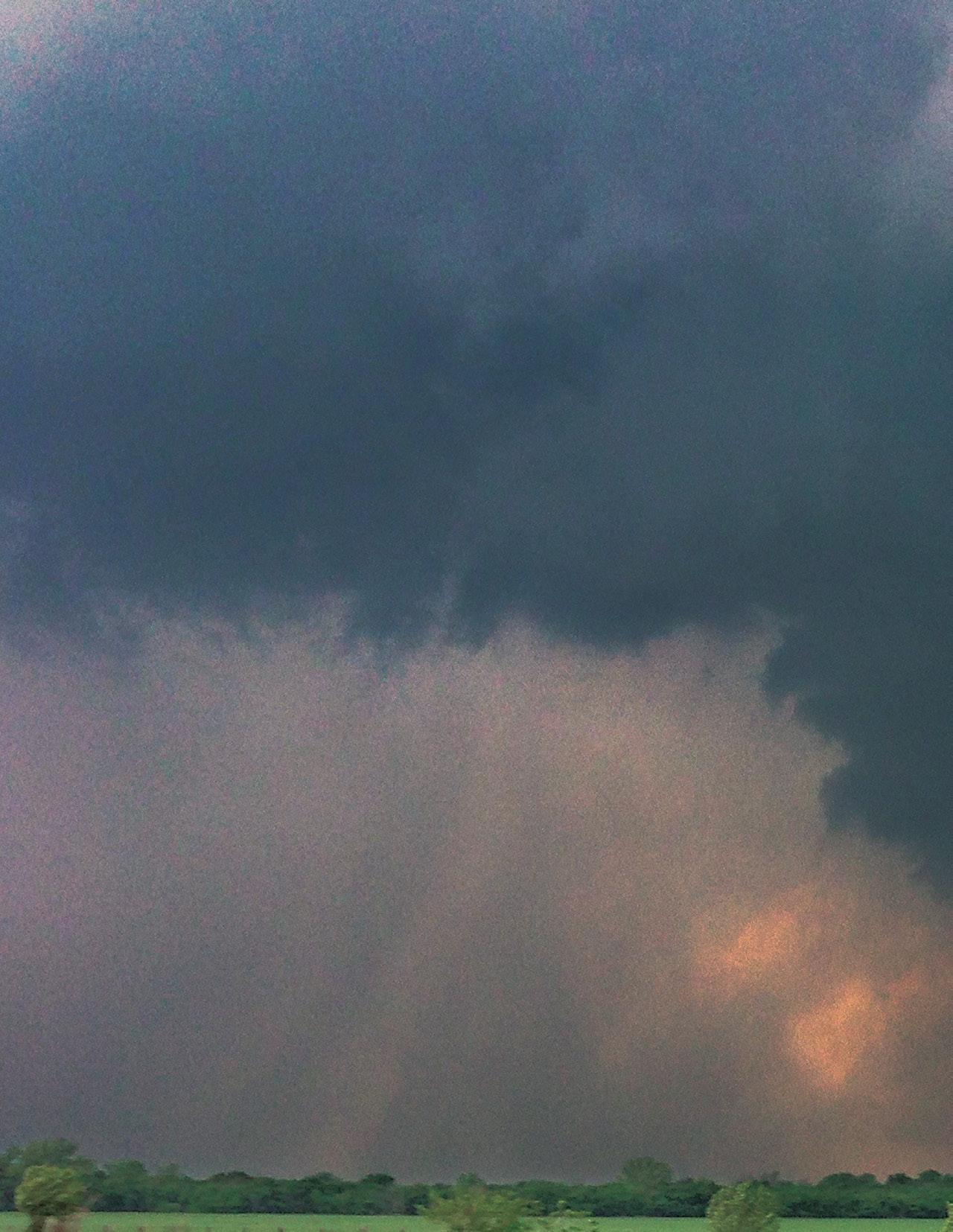
DetA iling the t orn AD oe S may 19: a series of tornadoes aff ected Edmond, a rcadia, Luther, Carney, Lake Thunderbird, s hawnee and Prague. The most intense was an EF-4 tornado in s hawnee.
may 20: The tornado that hit n ewcastle and Moore was classified as an EF-5, 1.3 miles wide, and left a trail of destruction 17.7 miles long.
may 31: The El r eno-Union City tornado was the widest tornado ever documented at 2.6 miles.
— nATionAl WeATHer
tH e e xpert S
Dr. Todd Holbrook, associate professor and equine section chief, took the lead on triaging large animals. Dr. Danielle Dugat, assistant professor of small-animal surgery, spearheaded the small animal relief effort with the assistance of small-animal surgery lecturer Dr. Kelci McKeirnan. Any exotic or wild animal cases were referred to Dr. Cornelia KetzRiley, assistant professor and head of the avian, exotic and zoo medicine services at the hospital.
OSU’s Veterinary Medical Hospital treated 60 animal victims (some of their stories, Pages 4-14) in all — 22 dogs, 15 cats, 11 horses, four woodpeckers, two guinea pigs, two birds, one donkey, one potbellied pig, one turtle and one chicken. Of 23 strays, all have new families.
tH e Volunteer S
Faculty, staff, veterinary students and the new alumni who had graduated just weeks before rushed to help. Volunteers assisted with record-taking, physical exams, triage and transport. The more serious cases went to OSU’s Veterinary Medical Hospital.
To help reunite pets with their owners, each “stray” animal was posted on several veterinary center Facebook pages and other social media sites.
“We were able to reunite more than 90 pets with their owners,” says Emily McCullough, a second-year veterinary student who volunteered at the triaging site in Moore, where many animals were reunited with their owners.
“It was one thing to see the devastation on TV and another thing to see it in person,” says Jill Murray, a registered veterinary technician specializing in exotic companion animals.
tH e Donor S
The veterinary medical care was made possible through the generosity of more than 460 donors (list, Page 15) who sent in nearly $170,000 to help these animal victims.
tH e f uture
The OSU Center for Veterinary Health Sciences is working toward being better prepared for the next disaster.
“Being located in Oklahoma, it is a pretty sure thing that another tornado will hit at some point,” says Sander. “We want to take this experience and learn what we can do better, what we need to mobilize our clinicians and veterinary technicians, and what training our responders need. We also want to be sure we coordinate with the state and federal agencies in charge when disasters do strike. We want to be sure they know what capabilities we have and how that can help them in the overall response.”
To support OSU’s Center for Veterinary Health Sciences, contact Heather Clay, senior director of development, OSU Foundation, at 405-385-5607 or hclay@osugiving.com
tH e 60 animal V i C tim S treate D after t H e m ay torna D oe S at o S u ’ S
Veterinar y m e D i C al Ho S pital range D in S ize from a C la S S room pet turtle to H or S e S .
a lly
“when i left that afternoon (May 20) to go pick up our children from school, i never thought that i wouldn’t go home again,” says Genni Satterlee of Moore, Okla.
“Had the dogs been in their crates, they would have probably died because the crates were destroyed.”
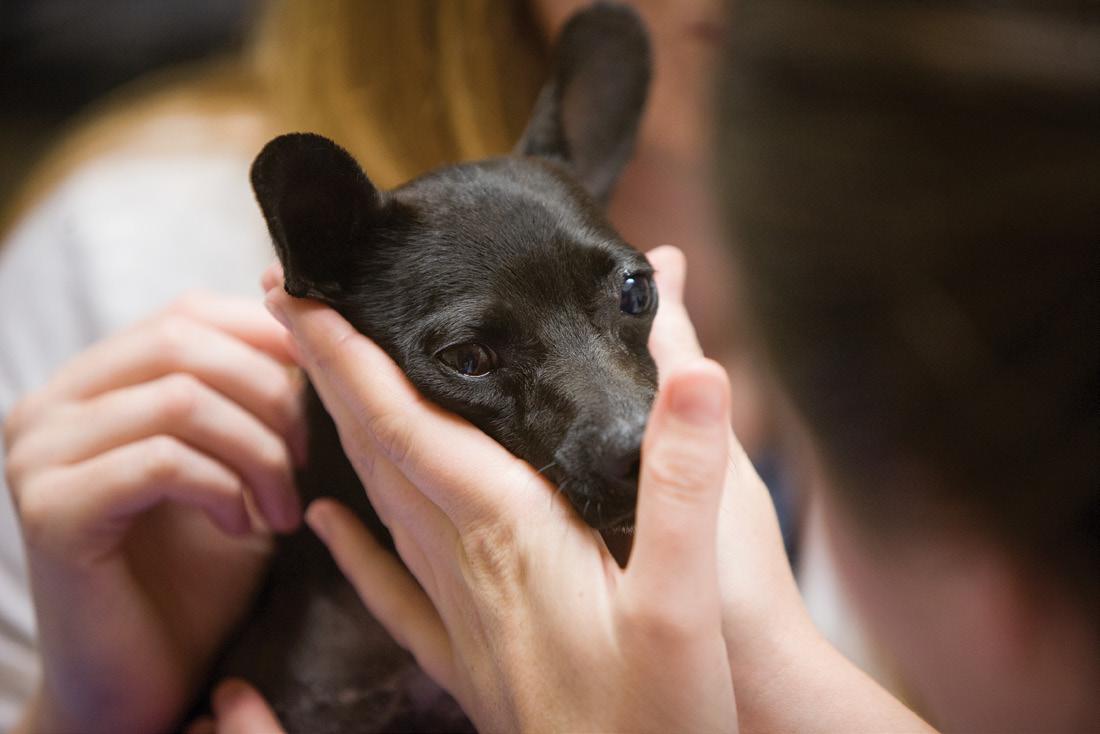
Two of the family’s dogs and a bearded dragon were quickly found unharmed but it took a week to find Ally, a 4½-year-old Chihuahua, in the rubble that once was the Satterlee home.
“ i didn’t think we would find her alive,” says Satterlee. “She was skinny. The amount of rain that fell was probably the only thing that kept her alive.”
“Ally had wounds and cuts on her shoulder,” says Carrie McCully , a registered veterinary technician with OSU’s ophthalmology service who was volunteering at the Home Depot triage center in Moore when Satterlee brought Ally in. “She also had a
deep corneal ulcer. We brought Ally back to Stillwater with us. Dr. Margi Gilmour , the veterinary medical hospital’s board-certified veterinary ophthalmologist, examined Ally. Her eye was evaluated, and a treatment plan was developed to address the corneal disease. After her eye was cared for, the small-animal surgery service took an X-ray to make sure her shoulder was normal, treated her cuts and gave her some pain medication to get her on the road to recovery.”
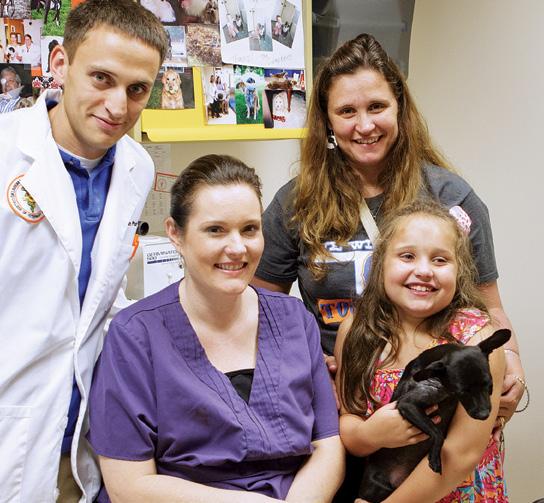
Dr. Jonathan Pucket and technician Carey McCully pose with Ally, a 4½-year-old chihuahua, as her family, including mom Genni Satterlee and daughter Payton, picks her up at the osU Veterinary medical hospital. ally was treated for injuries to her shoulder and a deep corneal ulcer.
“This was the first time we had been to the hospital and it has been great,” Satterlee says. “when i asked about the cost, they told me there would be no charge. Oh, my gosh. After all this and not to have to worry about the dog — it was such a blessing.”
“Ally’s cornea is completely healed,” reports Dr. Jonathan Pucket, assistant professor of ophthalmology. “She has a small scar that does not affect her vision and will probably fade in time.”
Chester Whitcher of Wellston, Okla., picked up a little brown ball of fur from the side of the road one night seven years ago. It wasn’t going to stay with him and his wife, Toni; they already had four dogs, so he promised to rehome the new one. In the meantime, they would call him Pup. Pup was outside on May 19.
Pup found his way home with a bulge on his side three days after the tornado. At the Lincoln County Animal Hospital in Chandler, Okla., Dr. Nancy Johnson (OSU DVM ’84) referred the case to OSU’s Veterinary Medical Hospital.
“Before bringing him in, I called to see how much it would cost,” says Toni Whitcher. “That’s when we found out that his care would be covered by the OSU Animal Relief Fund. If not for that fund, we would have had to put him down. You saved his life.”
“Pup had bruising and bleeding into his side,” reports Dr. Kelci McKeirnan, lecturer and smallanimal surgeon. “The fluid built up and was separating his skin from his chest wall. We operated and drained 2 liters of fluid from the site and inserted a drain to allow the injured area to continue to heal. I don’t know if he was slammed up against something or if flying debris hit him, but he definitely had something happen to him during the tornado to cause the injury.”
Pup spent a few weeks recovering at the veterinary hospital.
“This is the first time we have been to the hospital. it’s a phenomenal place,” says Toni.
“i highly recommend it,” agrees Chester. “we will be indebted to you folks forever,” he adds as Toni, Chester and Pup head home to the travel trailer that sits on the slab that once was the foundation for their house.
Eleven years ago, some guys at an Oklahoma lake were trying to drown a young chow and German shepherd mix. Moore residents Michelle Shepard and her husband rescued the dog and called her Abby
During the May 20 tornado, Abby was blown into the house, which was damaged but standing.
“we spent the night in our house but abby was really anxious and kept crying,” says Shepard. “i finally laid down with her to try to get her to relax.”
Shepard took Abby and their other dog, Riley, to the temporary kennels at the Cleveland County Fairgrounds. From there, Abby was referred to OSU’s Veterinary Medical Hospital for further evaluation.
“Abby had severe bruising that was probably caused by trauma during the storm,” says Dr. McKeirnan. “She also had an abdominal hernia that we repaired three weeks later. We wanted to give her lungs time to heal before we operated.”
“They (OSU) have been wonderful,” Shepard says. “Abby is doing well after her surgery. We hope to be back in our home soon where Abby can once again be in her backyard. … we are so blessed to have the wonderful people at osU College of Veterinary Medicine to care for our abby.”
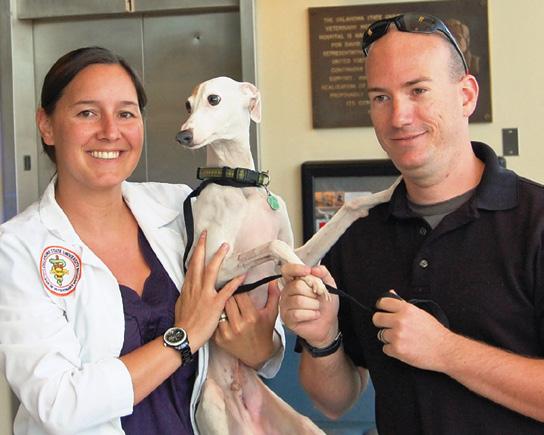
Six days after their home had been destroyed, Jo and Geoff Humann found their beloved cat, Egor, alive in the rubble.
“We searched days and days,” says Jo Humann. “when we finally were able to grab him, he was in shock. he seemed ok, but i wanted to be sure.”
Egor was seen at the Home Depot triage center, where Dr. Dugat was volunteering.
Jill and Scott Ashpaugh ended up having to dig themselves and their dogs out of storm shelters, after the tornado. Their house in southwest Oklahoma City was leveled.
Memphis , their 6½-year-old Italian greyhound, survived but still felt the impact. After the tornado, the Ashpaughs noticed that Memphis was not acting like himself.
“He wasn’t eating and running around playing with the other dogs. So we decided to have him checked out,” says Scott Ashpaugh.

“Memphis had trauma to one of his lung lobes,” reports Dr. Danielle Dugat, assistant professor of small animal surgery. “We believe the pressure change during the tornado caused barotrauma to the lung, leading it to rupture, impeding Memphis’ breathing. The difficulty breathing caused his lack of energy.”
Dugat and her team removed the damaged portion of Memphis’ lung. A week later, Memphis was able to go home.
After he was reunited with Memphis, Ashpaugh posted the following message on the Veterinary Medical Hospital’s Facebook page: “Just want to thank everyone involved again for all you have done for our Memphis. Glad he also helped other May 20 pets get diagnosed. you have touched our family when we were in greatest need more than words can describe. Thank you for what you do and continue to do for our state.”
“He was severely dehydrated and weak but still alert and looking around,” says Dugat. “Egor had a light fever for two days, which could have been caused by upper respiratory issues from being out in the dust and the debris for six days. He wasn’t eating well so we gave him an appetite stimulant, which helped some. The fact that it rained is one of the things that could have helped Egor pull through.”
“we are so happy to have Egor safe,” says Humann. “ we were able to walk away. you can replace material things. we appreciate so much all that osU has done. This made us complete. we lost our home but our family is still intact.”
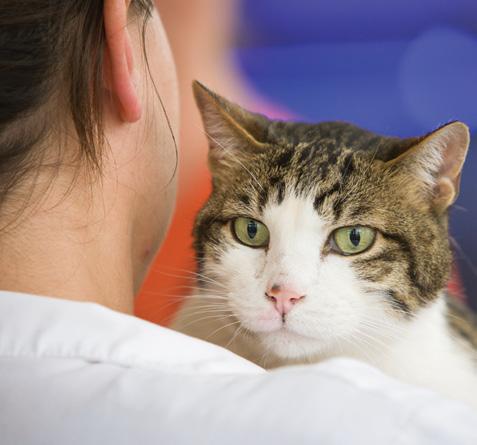
spent six days
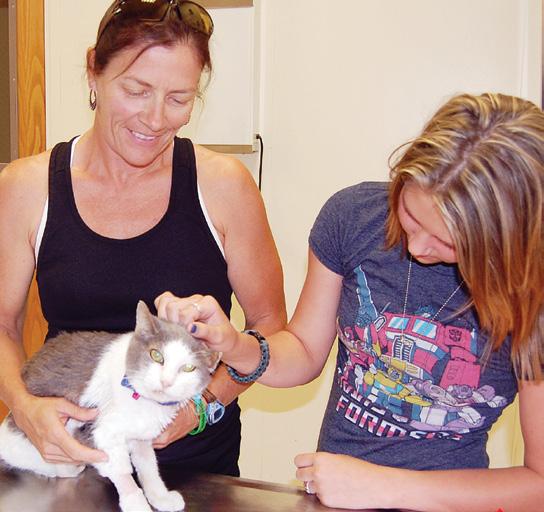
l ola
It took four weeks after the tornado to reunite Lola, a gray and white 6-year-old cat, with the King family of five and their four dogs.
“That afternoon my husband called home to warn us about the storm,” says Sherri King. “I rounded up the kids and the dogs but Lola was nowhere in sight. We had to leave without her.”
When the Kings returned to their demolished home, Lola was gone.
“We kept calling for her. We carefully sifted through debris constantly calling her name,” says King. “i searched in all directions. Lola had ear surgery and has very distinctive ears. her left ear is bent over, and her right ear has a small notch in it. i would ask everyone i saw if they had seen a gray and white cat with funny ears. i put posters everywhere i went. no Lola.”
Still, miracles happen and four weeks later, the Kings were reunited with Lola.
“She was scared. She was nothing but bones. I knew Lola needed to be looked at. Ultimately we were referred to OSU’s Veterinary Medical Hospital,” says King.
“Lola was diagnosed with hepatic lipidosis, a liver condition,” says Laura Katz, DVM, a
small-animal medicine and surgery rotating intern. “In an effort to access energy, her body mobilized its fat stores to the liver. This fat accumulated in the individual liver cells, which impaired their function.”
Veterinarians treated Lola with IV fluids and a feeding tube. While missing, she injured her jaw. Dr. David Russell (OSU DVM 1997), a veterinary dentist, examined Lola and removed two damaged teeth.
“When I brought her in, she had a yellow mouth and yellow gums, and she wasn’t eating,” says King. “she feels better. she is not just skin and bones anymore.”
“Lola has gained about a quarter-pound a day. She is up to 8.2 pounds,” says Audra Blasi , a fourth-year veterinary student assigned to Lola’s case.
“i love my animals and without osU’s help with treating Lola, i do not know what we would have done since we lost everything in the tornado,” says King. “I’m glad to have Lola back. OSU has taken great care of Lola. Since Dr. Russell removed her teeth, Lola has been eating up a storm, even to the point of ripping into dog food bags. I truly believe she will make a full recovery. She is doing awesome.”
Lola the cat was missing for four weeks after the storm, but the veterinary medical hospital treated her when owner Sherri King and her daughter Kailey brought her in.
As the storm victims streamed in, veterinarians gave stray animals names to keep the cases straight. A young male beagle mix was dubbed Tommy when he arrived June 1.
“Tommy was sent to us from the Cleveland County Fairgrounds triage center because it was noticed that he had a severely fractured femur,” explains Dr. Dugat.
The break was so bad that veterinarians ended up amputating the puppy’s left rear leg. Tommy’s picture was taken and posted on numerous social media sites in search of his owners. Still, no one came for Tommy.
One of the posts caught the eye of Johnna Gonzales, an Oklahoma Department of Agriculture employee in the Animal Industries Equine Division.
“when i saw his picture posted, something about his eyes got me. My heart melted,” says Gonzales. “I have had a three-legged pet before so I know how versatile they can be and how much you can learn from them. I have a corgi named Muffin who will be 8 years old this fall. I decided he would fit right in at our house.”
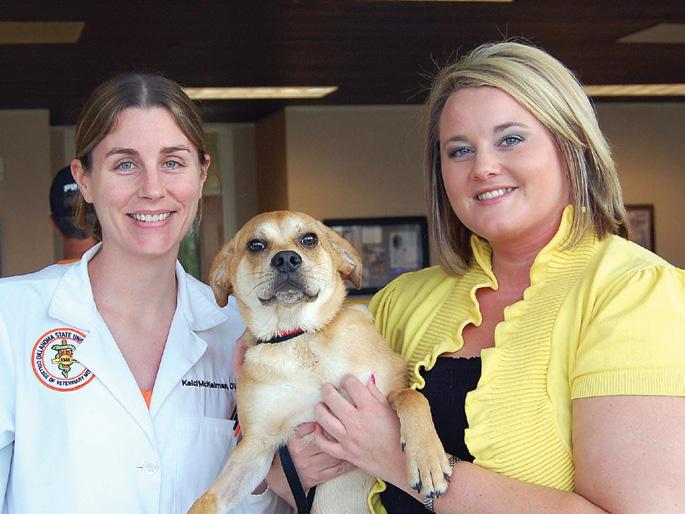
Gonzales decided the name Benjie fit her new family member better than Tommy. And the pup agrees.
“he struck me more of a Benjie than a Tommy. Muffin and Benjie play together all the time. Muffin doesn’t realize he’s even missing a leg,” she adds.
Benjie returned to the hospital in July to be neutered, vaccinated and to check on his amputation site.
“Benjie had some phantom pain and would cry out at first,” reports Dugat. “We gave Johnna some pain medication, and she has weaned him off it slowly. He is officially off his pain medication.”
“I’m just happy to be taking him home for good,” Gonzales says as she signs the adoption papers. “And Muffin will be glad to have her play buddy back, too.”
t i
One week after the Moore tornado blew through town, a young Siberian husky was brought to the Home Depot triage center with fly bites on her ears and a very thin body.
“The Good Samaritan who brought her in had just fed her a very large amount of dog food,” recalls Dr. McKeirnan. “She was in shock and really didn’t look good. We decided to transfer her immediately to the veterinary medical hospital due to concern that she might have a twisted stomach.”
As McKeirnan and Dr. J.T. Walker, a small-animal surgery resident, drove back to Stillwater, they started the dog on IV fluids.
“She started out on the van floor but ended up climbing up and sitting on my lap after she began to feel better,” says McKeirnan. “She was such a sweet girl. I felt an instant connection with her.
“ we chose Ti for her name because it was easier to say and was the beginning letters from an alaskan name that one of the iCU technicians came up with,” says McKeirnan. “Soon after Ti arrived at the hospital, she passed a lot of foreign debris, which she must have been eating trying to stay alive. She also required surgery to repair an umbilical hernia, which had suddenly become larger and painful.”
it turns out that Dr. Kelci McKeirnan couldn’t resist the blue eyes and friendly soul of Ti, a young siberian husky treated after the tornado. nobody came to claim ti, so mckeirnan took her home.
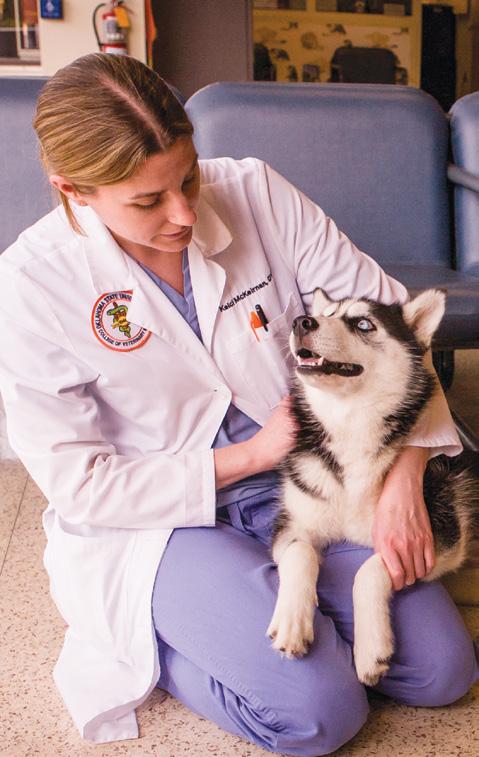
As Ti remained at the hospital to heal, McKeirnan bonded more with the dog. No one ever came for her. Even though McKeirnan already had two dogs of her own, it was an easy decision to make room for Ti.
“Ti gets along great with my other two dogs — one is young and one is older. Ti and Mya, the younger dog, are best friends, wrestling, playing and even sleeping together.”
McKeirnan recently took a position in Washington state.
“i am glad i was able to be part of the oklahoma tornado relief effort. i am also glad that Ti is settling in well in washington,” she adds. “She loves the cool weather and went from being a dog that hardly wanted to be outside to one that camps out in the backyard.”
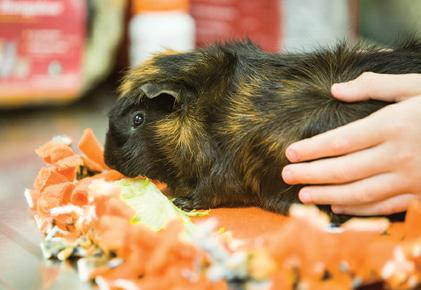
A pair of guinea pigs, Cowboy and Elvis, were brought to the triage center after the tornado.
“Cowboy’s and Elvis’ cage was crushed,” says Jill Murray, a registered veterinary technician specializing in exotic animals at OSU’s Veterinary Medical Hospital. “They were found about one week after the tornado. Elvis had suspected pneumonia and internal injuries too great to overcome, and he passed away that night at the Veterinary Medical Hospital. Cowboy was just suffering from dehydration and malnutrition but recovered quickly.”
Robin Dziedzic, her daughter, Mari, and her son, Sam, meet Cowboy the guinea pig for the first time. dziedzic was a teacher at Briarwood Elementary School; the guinea pig was to become both a classroom pet and fulfill her daughter’s wish for one.
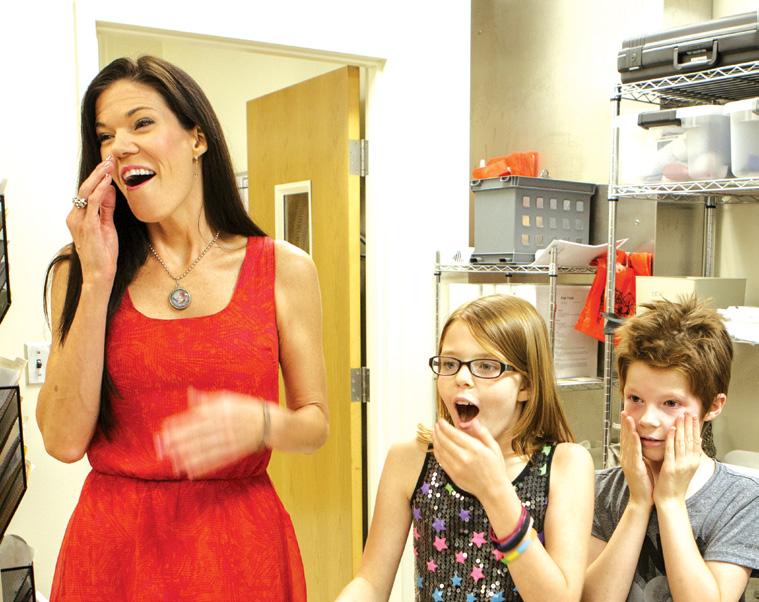
Robin Dziedzic, who teaches fifth grade at Briarwood Elementary School, one of the two schools destroyed in the Moore tornado, has a 10-year-old daughter who had long wanted a guinea pig. Dziedzic heard about Cowboy and brought her daughter to Stillwater in mid-July.
“I am so excited,” says Mari , almost jumping for joy. “Oh, he is really cute. Look at his little face and his pretty brown eyes.”
During the school year, Cowboy will be Dziedzic’s classroom pet.
“I know Mari will be there to see him the minute she gets out of class,” says Dziedzic. “I think since we were all there for the tornado that it will be nice for the students in my class to have Cowboy as a friend. he survived the storm, and so did we. Each day we will have a special time where a student gets to do things for Cowboy supervised. and that special privilege can be rotated throughout the class.”
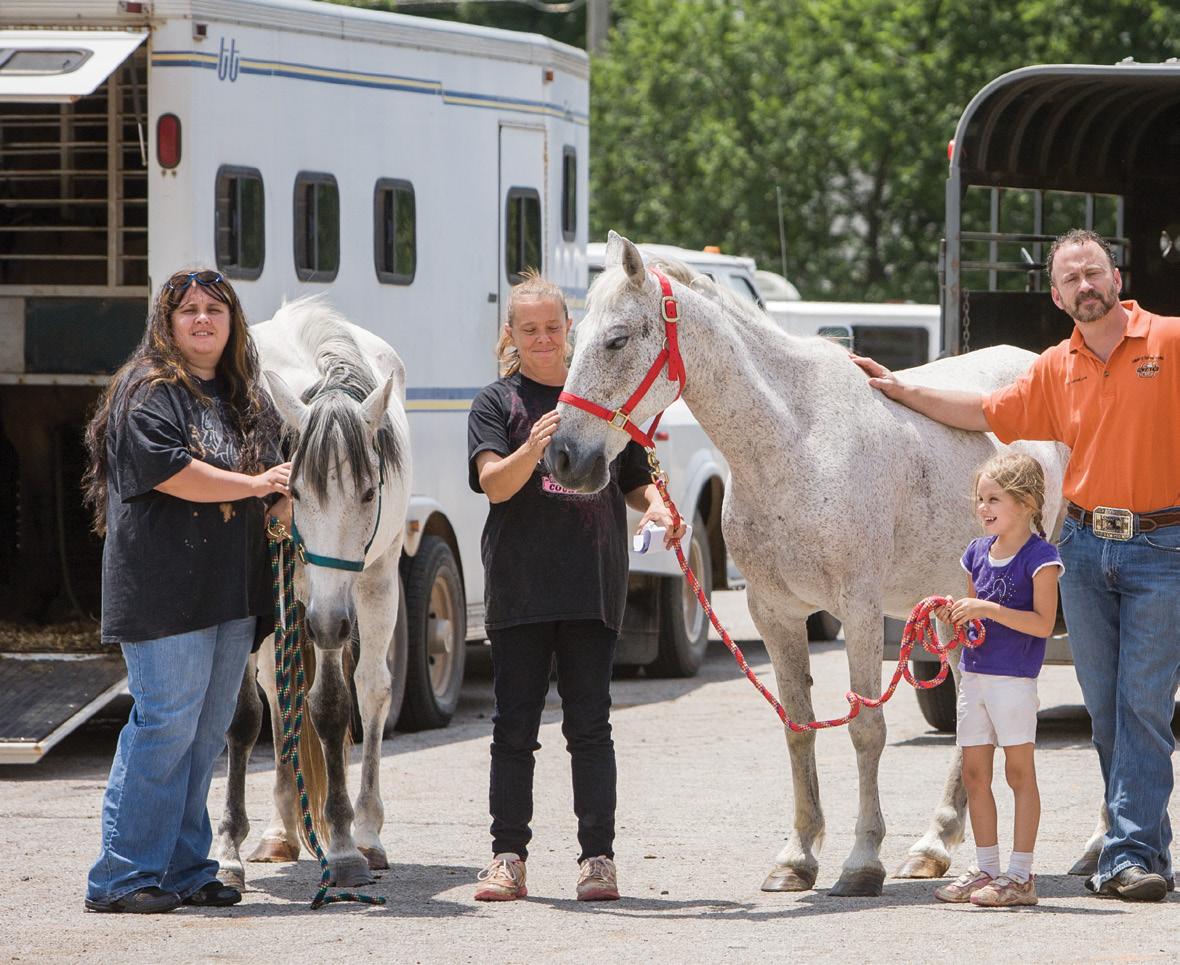
Amanda Nely of Carney, Okla., was trying to get to her horse pasture as the tornado headed straight for it. Snapped power poles covered the gravel road, and an Oklahoma state trooper wasn’t letting her through, no matter how much she pleaded.
Then, “I heard one of my horses scream,” says Nely. “It is the most awful sound. It didn’t matter that I had forgotten my shoes. I ran a quarter-mile down the gravel road, jumping over live wires to get to my horse. Red, my thoroughbred mare, was running down the middle of the road, impaled by a board with one hind leg dangling. When I finally reached her, she stopped and lay down. I held her head and petted her until my neighbor could put her down, right there in the middle of the road.”
Nely would comfort one more dying horse that night, Abbie, who suffered severe injuries from being wrapped in barbed-wire fencing. Nely would lose two more horses in the days to come despite valiant efforts by the equine veterinary team at OSU’s Veterinary Medical Hospital.
“i couldn’t find Play Girl,” says Nely. “it turns out she was in a tree. We used a tow truck wench to pull the tree down so we could get to her. Sir Frankie had a cut over his right eye and Admiral had cuts and bruises on his legs.
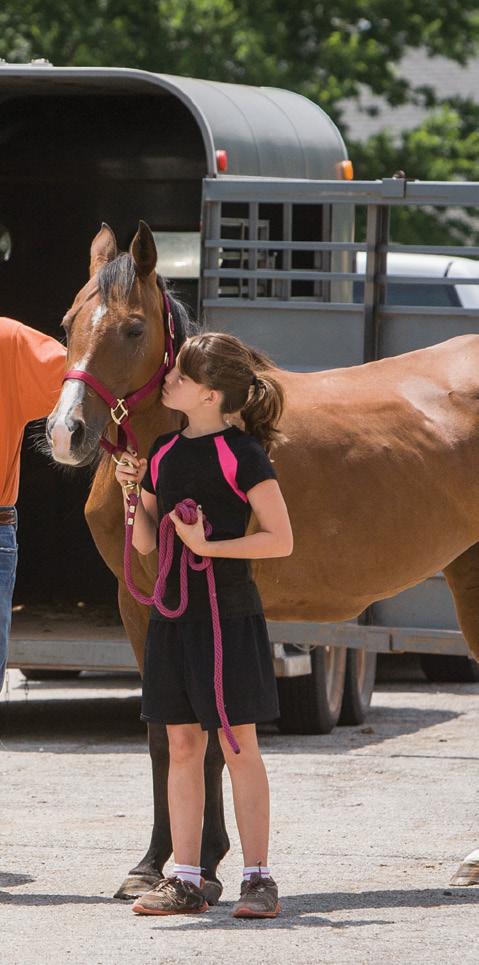
“ i was so thankful when o s U called me and told me there would be no charge for the veterinary care. in fact, i cried. i broke sir Frankie myself. he was my first horse. I wasn’t sure how I was going to pay for any of it. Sir Frankie’s eye care alone would have cost more than $5,000.”
“Frankie had a corneal trauma consistent with a blunt trauma to the eye,” says board certified veterinary ophthalmologist Dr. Margi Gilmour . “This resulted in a pocket of fluid accumulation (bulla) in the cornea and a corneal ulceration. We treated him medically and used a third eyelid flap for about a week to apply steady, even pressure over the cornea in the hopes of lessening the size of the bulla.”
“Play Girl had a laceration on her right hind distal limb that involved her digital artery,” says Dr. Chase Whitfield, equine surgery resident. “She made a full recovery. Admiral had a laceration over his left front carpus, or knee. It was very close to the joint but luckily for Admiral, it did not enter his joint. He also is recovering very well.”
Five long weeks later, Nely came to the OSU Veterinary Medical Hospital to take her three surviving horses home. Her daughter, younger sister and mother accompanied her for support. Loading the horses in her trailer, Nely says, “The veterinary care osU has given my horses has been a blessing. i appreciate everything you have done.”
Joyce Axton works in the student services office at OSU’s Center for Veterinary Health Sciences. She is one of the many faculty, staff and students who stepped up to give the four-legged tornado victims the new forever homes they needed.
“We have a black cat named Sambo and a blue heeler named Blue My husband, Larry, lost his best friend a couple of months ago,” says Axton. “Big Dog was 16 years old and for the last 16 years, he and Larry have done everything together. When I saw this Jack Russell’s picture, I took it home and showed Larry. We’re going to call her Minni, which means goddess of battle. I think it fits her because she has battled a tornado.”
Minni is less than a year old. She suffered a broken leg that is healing well, says Dr. Dugat
“She has become a very big part of our lives,” says Axton. “The ‘strictly outside’ dog that she was supposed to be has now become an ‘inside dog.’ It didn’t take long for her to capture our hearts.”
f ranklin / h ope
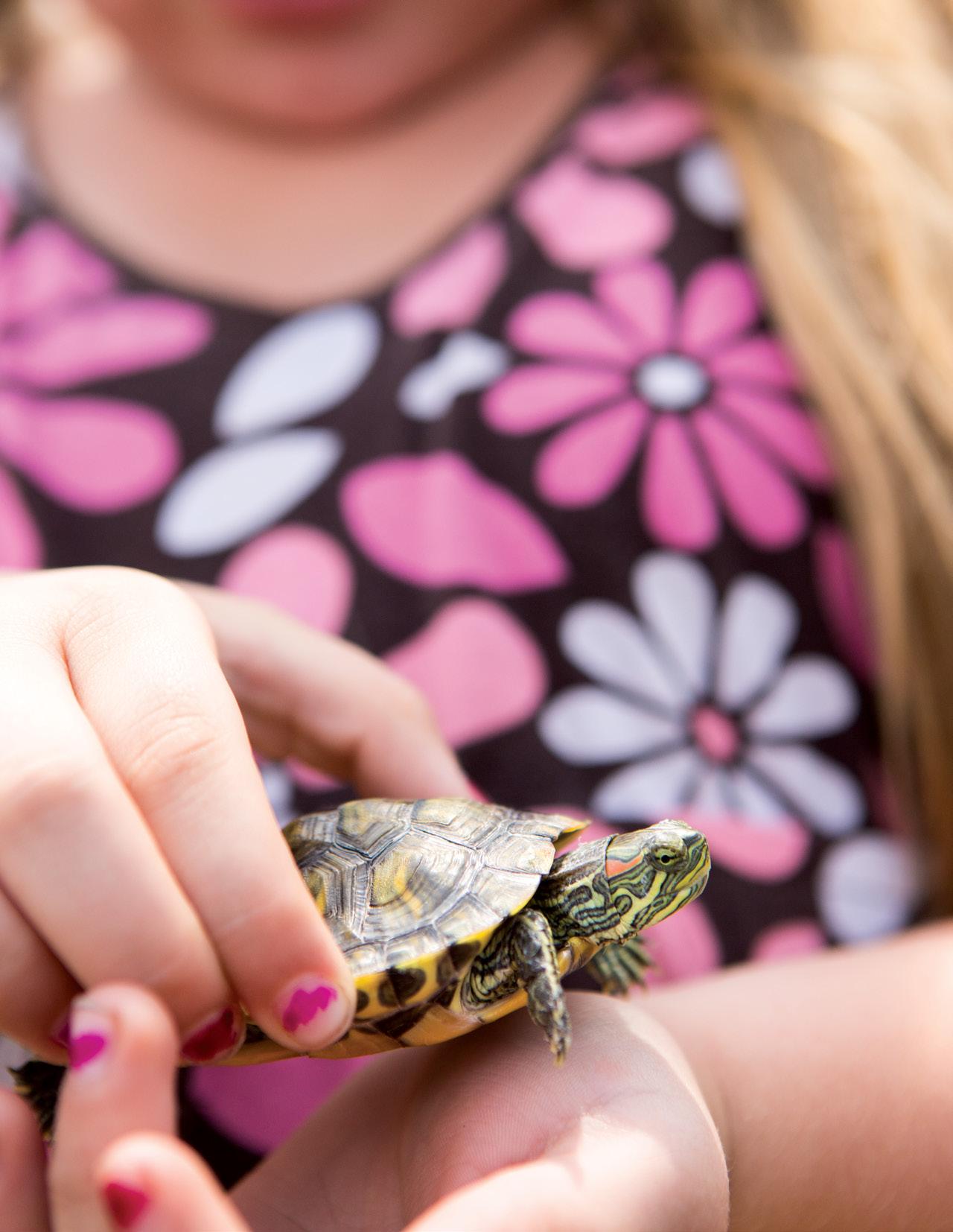
It doesn’t seem possible that Franklin , a 2½-inch red-eared slider turtle could survive the EF-5 tornado that smashed his tank and destroyed his first-grade classroom at Plaza Towers Elementary School in Moore.
But a young boy and his dad found a turtle across the street from the demolished school and brought it to the Home Depot triage center.
“The triage center wasn’t really equipped to handle exotic pets, so we brought the turtle back to Stillwater,” explains veterinary tech Jill Murray. “We posted the turtle’s picture and description on social media sites, hoping the owner would claim it.”
In the meantime, Murray determined the turtle was probably female and named her Hope
“I chose the name Hope for two reasons. While working at the triage center in Moore, I met so many people who had lost everything and despite their losses, these families were moving forward with a positive outlook and hope for the future,” says Murray. “I also was hopeful we would find her family and have a happy ending for our little turtle.”
A couple of weeks later, teacher
Sarah Tauscher called OSU’s Veterinary Medical Hospital to inquire about the turtle missing from her classroom.
“ s ince the turtle was found directly across the street from where the school had been and fit sarah’s description, we surmised it was her turtle,” adds Murray.
In addition to returning the turtle to Tauscher and her students, Dean Sander; Murray; Heather Clay, senior director of development with OSU Foundation; and Dr. Cornelia Ketz-Riley, head
of Avian, Exotic and Zoo Medicine Services at OSU’s Veterinary Medical Hospital, delivered a new tank and turtle supplies to replace the ones destroyed in the tornado.
“we are so beyond grateful for all osU has done,” says Tauscher. “we are excited to have our turtle back. I guess we’ll have to change her name to Hope now that we know she is a girl. We thank the veterinary hospital so much for taking such good care of her. It’s definitely our turtle. She still does her odd little quirks and is so personable. My class and I cannot thank OSU enough!”
One of the animals rescued following the Moore tornado was a 3- to 4-year old tan female pit bull with four white paws. Fourth-year veterinary students honing their clinical skills at the veterinary medical hospital called her Sally Mae.
“Sally Mae’s right front leg had suffered severe trauma,” says Dr. Dugat. “The injury had caused her skin to pull away from the bone, her bone was fractured, and there was severe muscle and blood supply trauma to the leg causing it to be macerated and twice the size of normal. We had to amputate her leg to save her.”
Sally Mae’s photo and story on social media caught the attention of a young man who also considered himself different.
“Growing up, i seemed to have a difficult time fitting in,” says Jess Flurry of Oklahoma City. “i knew i was different from the way i looked to the way i dealt with the judgment and bullying of others that i encountered.” At age 4, he was diagnosed with Ewing’s Sarcoma, a bone cancer that resulted in the amputation of his right arm.
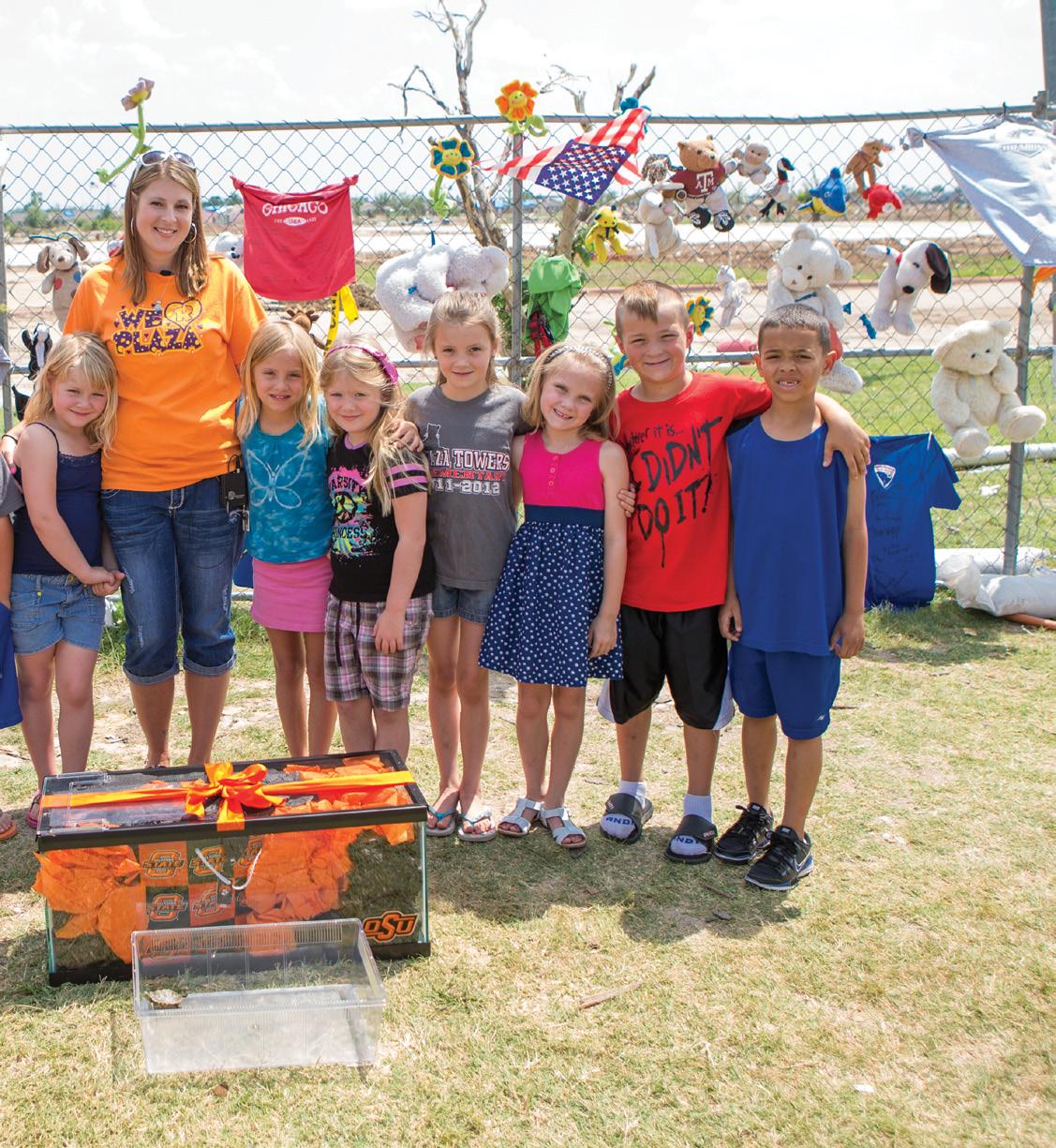
greeting Franklin on his return to Plaza Towers Elementary School are (from left) cVhs dean Dr. Jean Sander, Brayden Williams, Omalee Hare, teacher Sarah Tauscher, Kali Branson, Crisily Dixon, Annika Law, Karisa Drider, Xander Duncan and Marcus Norwood
“I remember waking up with one less limb,” says Flurry. “when i saw the three-legged dog’s post, i knew this was the dog for me. she stood out to me because she is missing the same limb i am missing. i thought that she needed me as much as i needed her. I knew I could offer her patience and understanding knowing she is going through some changes.”
Flurry renamed the dog Starke
“i chose that name because in German it means fight. Starke had to fight to survive the tornado and to learn to live with one less leg. We know each other’s strengths and weaknesses, and I am willing to do whatever it takes to ensure her needs are met as someone else once did for me.
“ s he taught me that unconditional love exists regardless of your past. she has more strength in her soul to keep on going. Because of the trials and tribulations she had to endure, i am in awe of her.”
Starke is fitting into Flurry’s home with his cat, AWOL, that he rescued in December 2012.
“Starke brings out the playfulness in AWOL,” Flurry says. “AWOL will stalk Starke and give her surprise attacks. Starke takes it like a champ. They often sleep curled up together.”
Flurry and Starke hope others will learn from their stories.
“no matter what life brings you, there isn’t anything you can’t conquer with a little hope,” says Flurry. “Because someone or something may appear different on the outside doesn’t mean they are. Chances are they are just as normal as you and don’t deserve judgment. You don’t know where they have come from. There is a reason we are all different — it saves the world from being a boring place.
“i really want to thank the staff at osU Veterinary Medical hospital. without them, my dog wouldn’t be here. They helped her so much. without their kindness and dedication, there is no telling where starke would be today. For that, i am truly grateful.”
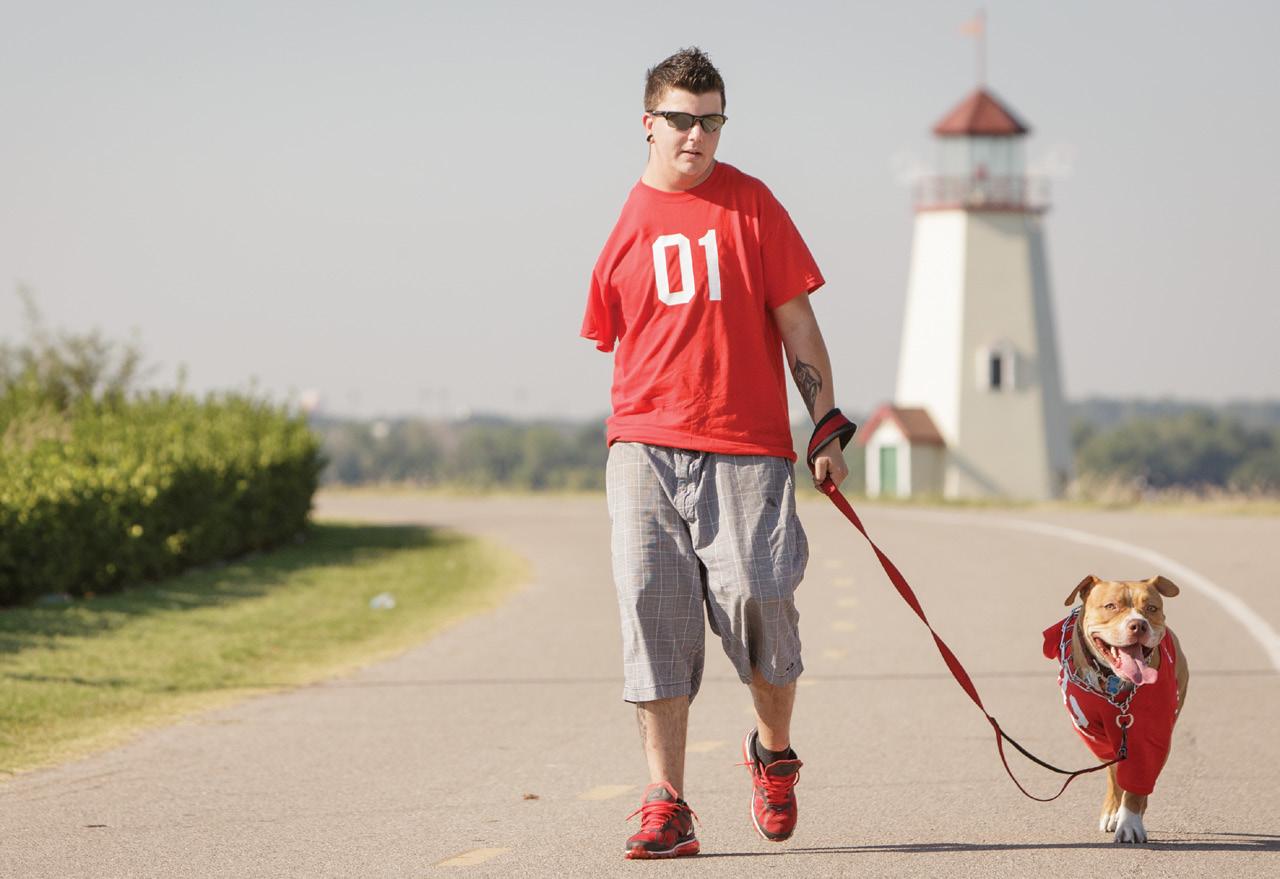
Jess Flurry walks Starke at lake hefner in oklahoma city.
Flurry adopted the former Sally Mae after injuries she suffered in the tornado forced veterinarians to amputate her right front leg to save her.
a ll of t H e D onation S , no matter t H e amount, ma D e it po S S ible for o S u ’ S Veterinary m e D i C al Ho S pital to pro V i D e nee D e D V eterinary me D i C al C are to t H e animal V i C tim S of
H roug H June 30, 2013.
Nancy Acton, Sand Springs
ASAP Steel Inc., Oklahoma City
Judy Averill, Tulsa
Kandy Ayres, Vinita
Betsy Barnes, Tulsa
Beth Ann Baysinger, Oklahoma City
Stephanie Beauchamp, Oklahoma City
Allyson Bockman, Rose
Vicki Bowlin, Tulsa
Lisa Jane Braverman, Tulsa
Larry Cain, Tulsa
Lorna Caraway, Norman
Dr. Kenneth and Patricia Clinkenbeard, Stillwater
Michel Coy, Tulsa
Pamela and D. Paul Crawford, Bartlesville
Margaret and Paul Creider, Tulsa
Christina and Davin Cronin, Oklahoma City
Stacey Dawson, Oklahoma City
Tracy Duggan, Sapulpa
EagleEye Royalty Management Co., Broken Arrow
Lois Erickson, Collinsville
Sheryl Farlin, Broken Arrow
Kelley Follis, Springer
Jana and Roger Freeman, Enid
Camille Fuller, Sperry
Amanda and James Hall, Vinita
Steven Hall, Tulsa
Jacci Hamilton, Broken Arrow
M. Elaine Hargrove, Oklahoma City
Pat Heinemann, Claremore
James and Carol Hersma, Tulsa
Tracy Holt, Edmond
April Hubbel, Oklahoma City
Jan and Jeffrey Hunter, Yukon
Wendy Johnson, Sperry
M. Cynthia and Michael Johnston, Oklahoma City
Pat Jones, Tulsa
Dawn Kemper, Tulsa
Paul Kerley, Enid
Charlotte Kincaide, Tulsa
Patricia Lansford, Broken Arrow
Maxine LaPierre, Norman
Steven and Martha Larry, Catoosa
Shelley Latta, Tulsa
Donna Lavery, Tulsa
Dr. D.J. Malone, Tulsa
Gwyneth Mason, Oklahoma City
John and Bonnie McAskill, Altus
Matthew McClain, Muskogee
Michelle McGolden, Noble
Lexi Meiwes, Tulsa
Bonita and David Milby, Perkins
Betty Muehlenweg, Luther
Shelley Mullins, Ardmore
Renae Musick, Owasso
Brenda Nixon, Oklahoma City
Jill Noble, Bartlesville
Sandra and Dennis Noble, Edmond
Dr. John and Patti
Otto, Norman
Dr. Charlotte and James Ownby, Stillwater
Mary K. Oxley Foundation, Tulsa
Sheila Pace, Oklahoma City
Betsi Phillips, Tulsa
Harry Poarch, Tulsa
Dr. Robert Poteet, Tulsa
Barbara and Jerry Reeves, Tulsa
Shelley Reeves, Owasso
Linda and Ronald Remke, Copan
Laura Robertson, Tulsa
Elizabeth Rogers, Sayre
Larry and Linda Sanders, Stillwater
C. Diann Sanford, Edmond
Arrianne Scott, Bixby
Janet Shell, Tulsa
Shari Rae Sheppard, Okmulgee
Upton Shimp, McAlester
Dr. Megan Smith, Frederick
Pat Sowers, Vinita
Donna Stephens, Stillwater
Janet Sutton, Woodward
Priscilla C. Tate Trust, Tulsa
Dr. Ronald and Cris Temple, Edmond
Lisa Thomas, Stillwater
Celia Vandegrift, Stillwater
Robert and Patricia VanTriest, Tulsa
Angela Varnadore, Stillwater
Jacquelyn Vinson, Tulsa
Christie Watson, Oklahoma City
Mike and Susie Weeks, Oklahoma City
Karen Wilson, Tulsa
Laura Wilson, Tulsa
Dr. Jane Wittstock, Owasso
Lisa Wolfe, Tulsa
Diane WoodwardFrost, Tulsa
Joanna and Dennis Wulf, Broken Arrow
Yoga Home of Therapeutics, Oklahoma City
Richard Zalko, Ardmore
ALABAMA
Megan Burton, Hartselle
Janie Montgomery, Mountain Brook
Dr. Jennifer Spencer, Auburn
Penny Turner, Leeds
ARIZONA
Animal Care Center of Green Valley
Steven Bright, Tucson
Carol Elliott, Cave Creek
Danae Michael, Green Valley
Jane Anne Rompel, Tucson
ARKANSAS
Benny and Kathy
Cagle, Little Rock
M.J. Lowman, Little Rock
Northwest Arkansas Veterinary Medical Association, Springdale
CALIFORNIA
Jennifer Behrens, Mather
Georganne Benesch, Livermore
Marjan BentleyRodgers, Sunland
Jessica Braverman, Pleasant Hill
Janet Carpenter, Fremont
Luanne Casillas, Inglewood
CDS East Bay
Chapter, Moraga
Cheryl Cirelli, La Selva Beach
Civic Feline Clinic, Walnut Creek
Quentin Clark, Sherman Oaks
Cynthia Collins, Victorville
Cindy Cruz, Bellflower
Melanie and Stephen Ellis, San Ramon
Megan Esaia, Buena Park
Foundation for Animal Care & Education, San Diego
Janet Fournier, Walnut Creek
Susan and Jacques Fuller, Lafayette
Judy Gadwood, Burbank
Kathleen Hodgdon, Gilroy
Katharina Horton, Woodland
Alison Knickerbocker, Walnut Grove
Randi Lee, San Jacinto
Jessica Loberstein, Concord
Joan Malley, Valencia
Christy Mangini, Pleasant Hill
Mary Metz, Martinez
Marilyn Morris, Walnut Creek
Ariel Mosbrucker, Morgan Hill
Tasha Padilla, Walnut Creek
Pamela Paine, Acton
Sandi Peters, Corona
Mandy Riley, Walnut Creek
Carole Rowland, Moorpark
Cathy and Paul Schroeder, Corona Del Mar
Patricia Shallenberger, Palo Alto
Bonnie Sheren, Studio City
Kimberly and Kent Smith, Pleasant Hill
Danielle Splawski, Woodland
Penny Sprague, San Pedro
Casey Taylor, Concord
Roger Ward, Acampo
Zephyr’s Garden LLC, Santa Barbara
COLORADO
Alpine Publications Inc., Crawford
Drs. Kim Anderson and John Summar, Conifer
Kristy Astry, Erie
Auto Collision specialists of Greeley Inc., Greeley
Juli Chavez, Wheat Ridge
Margaret Cole, Larkspur
Raelyn and Kerry Donahue, Wellington
Ensign United States Drilling, Denver
Jacquelyn Ferdinand, Denver
Teresa Hayes, Colorado Springs
Helen K. and Arthur E. Johnson Foundation, Denver
Vikki Kourkouliotis, Lakewood
Bryan Matthews, Canon City
Randy Owens, Greeley
Kersten and David Sharrock, Idaho Springs
Kim and John Summar, Conifer
Telluride Animal Foundation, Telluride
Linden Thompson, Thornton
Tara Vorhes, Colorado Springs
CONNECTICUT
Animal Eye Clinic, Norwalk
Iris Baldino, Sandy Hook
Karen Baril, Harwinton
Sandra Wright, Stonington
FLORIDA
Appraiser Select LLC, Winter Springs
Mary Berning, Middleburg
Martha CampbellThompson, Micanopy
Harry DeBusk, Bradenton
Florida Veterinary Technology Association, Miami
Dr. Kathleen Harper, Tallahassee
Elizabeth Jones, Tampa
Dr. Alan Kardoff, Palm Bay
Noah Kitty, Wilton Manors
Sandra Langston, Pensacola
Patricia O’Connor, Myakka City
Dr. Jill Reed, Micanopy
Thin Air Canvas
Inc., Palm City
Denise Wallace, Clemont
GEORGIA
Robert Burton, Athens
Shannon Childers, Warner Robins
Norma Childs, Harlem
Tim Hoon, Marietta
Catherine and Kelley McDaniel, Smyrna
Margaret Miles, Carrollton
Barbara Orloff, Atlanta
Nicole Piscitelli, Smyma
Sighthounds of North Georgia, Ball Ground
Clara Spier, Newman
IDAHO
Courtney Crowe, Nampa
Patty Kinast, Hayden Lake
ILLINOIS
Sharon Bregola, Elk Grove Village
Joshua Hoskins, Urbana
Lakeshore Pembroke Welsh
Corgi Club, Chicago
Janet Milbrandt, Mahomet
Stephanie Nosworthy, Naperville
Roscoe Village Animal Hospital PC, Chicago
Linda Sochnuk, Lombard
Karen Viater, Chicago
INDIANA
Stephanie Brandenburg, Lafayette
Eagle Creek Animal Clinic PC, Indianapolis
Kimberly Esteran, Georgetown
Drs. Gerald Hegreberg and Lynetta FreemanHegreberg, West Lafayette
Mayhew Oil & Gas LLC, Mount Vernon
Joseph Moore, Fort Wayne
Carla Peterson, Attica
Lisa Sisk, Thorntown
Dr. Natalie Strode, West Lafayette
IOWA
Brian and Janice Allen, Coralville
Colonial Terrace Animal Hospital PC, Dubuque
Joyce Lathrum, Johnston
KANSAS
Courtney Abbott, Bel Aire
Marilyn Brown, Eastborough
Harper County Youth Rodeo, Attica
Elizabeth Keating, Overland Park
Sherah McCurry, Topeka
JoEllen McGranahan, Topeka
Deborah and George Payne, Ingalls
Carol Phillips, Marysville
Emilie Ubert, Topeka
KENTUCKY
Margaret Bateman, Frankfort
Linda Boggs, Lexington
Cornelia Bonnie, Prospect
Joy Champion, Cadiz
Sara Collins, Lexington
Ruth Ann Combs, Versailles
Arizona Copher, Owingsville
Karen D’Ambruoso, Lexington
Derby Glass Warehouse, Louisville
Andrea Dunlap, Bedford
Claire and Rolf
Embertson, Lexington
William Fishback, Versailles
Franklin-Williams Co., Lexington
Katherine Goebel, Simpsonville
Grants Lick Veterinary Hospital PSC, Butler
Hagyard Equine Medical Institute, Lexington
Hagyard Pharmacy/HDM Pharmacy LLC, Lexington
Traci Hughes, Lexington
Jamie Keller, Lexington
Jennifer McManus, Richmond
Teresa Pence, Lexington
Kate and Vince Prusick, Lexington
Rebecca Seabrook, Paris
Michele Skoog, Radcliff
LOUISIANA
Sara Arceneaux, Carencro
Michelle Begnaud, Duson
Gary and Elizabeth Farwell, Belle Chasse
Patricia Gass, Lafayette
Donna Kulawiak, Slidell
Katie Mistretta, Baton Rouge
Stephany Monteleone, Metairie
Terri Pratt, Marion
Rhoby Rasch, Denham Springs
Tara Roussel, Gonzales
Ruth Elizabeth Smith, Baton Rouge
Candace Stockstill, Pride
MAINE
Patricia Hodgdon, Pownal, Maine
MARYLAND
Cheryl Beller, Rockville
Anita Gibson, Laurel
Seth Jason, Edgewater
Kingsbrook Animal Hospital, Frederick
Amy Lockwood, Bethesda
Wendy McCready, Saint Leonard
Gary McKee, Owings Mills
Judy Seeherman, Brookeville
Drs. Autumn and Adam Terry, Callaway
David Wildberger, Eldersburg
MASSACHUSETTS
Debra and Alphonse Calvanese, Longmeadow
Yvette Cove, South Yarmouth
Freda Driscoll-Sbar, Florence
Dr. Betsy Powers, Hyannis
Heather Storm, Hanover
Michael Zmurko, Northampton
MICHIGAN
E. Dennis and Marlene Bienkowski, Williamsburg
Cynthia Fowler, Byron Center
Judith Kirkeby, Dearborn Heights
Holly Kistler, Marshall
Linda Schmidt, Macomb
MINNESOTA
Vernon and Iona Heath, Bloomington
Lauri and Michael Henry, Rochester
Linda Herrera, Minneapolis
Sunset Ridge Equine Veterinary Services, Minnetrista
MISSISSIPPI
Dr. Christine Eaves, Jackson
MISSOURI
Dr. Ann Bosiack, Columbia
Elizabeth Carmichael, Lee’s Summit
Christian Veterinary Fellowship/University of Missouri, Columbia
John Crossett, Liberty
Shery Fetterman, Weatherby Lake
Dr. Francita Franks, Rogersville
Elaine Kerby, Raymore
Judith Spitzer, Novinger
Vickie Underwood, Seymour
NEBRASKA
Richard Buhlke, Juniata
Environmental Direct Inc., Grand Island
Elaine Menzel, Lincoln
Lisa Van Stratten, Fort Calhoun
NEVADA
Laura Conrow, Gardnerville
James Hulsey, Henderson
Bettie Jo Peters, Henderson
NEW HAMPSHIRE
Dr. Thomas Dowling, Hancock
Amy Sintros, Alstead
Jo Steele, Lyme
NEW JERSEY
Kristine Bergman, Howell
Victoria Campo, Jackson
John Carnevale, New Egypt
Chesterfield Veterinary Clinic, Bordentown
Earlen and Donald Haven, Pilesgrove
Dr. Maria Iannone, Mount Laurel
Alysse Jacobs, Hackettstown
Raritan Animal Hospital, Edison
Patricia Sansone, Marlton
Patty Valente, Stockton
Sarah Winzer, Vernon
Dr. Jessica Wysocki, Ringoes
Regina Zullo, West Orange
NEW MEXICO
Mary and Ray Arrowsmith, Albuquerque
Pamela Bishop, Ranchos De Taos
Margaret Keep, Las Cruces
Andrea McEneny, Peralta
Rosalynn Myers, Edgewood
NEW YORK
American Kennel Club
Companion Animal Recovery, New York
Mary Bartholomew, Palmyra
Albert C. Bostwick Foundation, New York
Colonial Bloodhound Club, North Baldwin
Sandra Epstein, Pawling
Indian Fields Animal Care Services, Feura Bush
Mira Leibstein, Oceanside
Nina Pusateri, Massapequa
Francine Salemi, Bronx
Mary Wathen, New York
NORTH CAROLINA
Jacquelyn Bankes, Smithfield
Ferra Hoover, Mooresville
Jacquelyn Lewis, Vass
Dr. Melissa Magnotta, Winston Salem
Susan Murray, Raleigh
Elizabeth Thomasson, Clinton
Sharon Vick, Wendell
Shelley Williamson, Concord
NORTH DAKOTA
World Vets, Fargo
OHIO
Beverly Coffman, Thornville
Fidelity Charitable Gift Fund/ Lingner Gift Fund, Cincinnati
Dr. Elisabeth Giedt, Chardon
Barbara and Jim Glasgow, Batavia
Donald Hardy, Cleveland
Terri Heffelfinger, Jeromesville
Toni Mindlin, Dayton
OREGON
Broadway Veterinary Clinic, Portland
Diane Graves, Beaverton
Jan Heaton, Albany
Dawn Holmes, Culver
Alice Jordan, Culver
Kylie Kershaw, Eugene
Alice Lamoreaux, Creswell
Sandra Lee, Portland
PENNSYLVANIA
Allegheny Veterinary Associates, Pittsburgh
Dr. Laurie Brewer, Stewartstown
Dr. Michael Finn, Pittsburgh
French Creek Veterinary Hospital, Pottstown
Wendy Harvis, Chadds Ford
Stephany Hayden, Nicholson
Carol Kiefer, Washington Crossing
Valley Veterinary Service Inc., Belle Vernon
SOUTH CAROLINA
Elizabeth and Michael Krysztofiak, Aiken
Amber Massey, Travelers Rest
TENNESSEE
Patsy Newman, Knoxville
TEXAS
Aledo Vet Clinic, Aledo
Allen Veterinary Clinic, Allen
Kenda Avery, Burnet
Carrie Barrick, Rockwall
Patti Brewer, Dallas
Caroline and Bryan Buck, Kaufman
Karen Conyngham, Austin
Dr. Jenna Crouch, Liberty Hill
Dark Doll Paranormal, Austin
Yvette Dobbins, Mesquite
Kimberly East, Wills Point
Tamie Fiel, Canadian
Kim Finch, Dallas
Lisa Harville, Houston
Heart to Horse Connection, Terrell
Margie Horn, Houston
Dr. Heidi Hottinger, Houston
Dr. Laura and Scott Lason, Flower Mound
Lone Wolf Photography, Kempner
Drs. Lacey and Brian Loveless, Keller
Dee Anna Manitzas, Fair Oaks Ranch
Constance Meredith, Bandera
Amy Metz, Webster
Stacy Moore, Dallas
Leslie Palmer, Benbrook
Dr. Rachel Perteet, Blue Ridge
Sandhills Veterinary Clinic, Monahans
Dorothy SchuldJohnson, Garland
Shannon Serwin, Flower Mound
Lisa Shenk, Austin
Kristi Silberman, Houston
Dr. Cynthia Spanhel, Driftwood
Mary and Richard Traylor, Crystal City
Donna Wall, Plano
LeNoir Wareing, Dallas
Mary Ann Wheeler, FLP, Tilden
Dr. Melody Whitten, Wallisville
UTAH
Barbara Middleton, North Logan
Carol Sarno, Ogden
Dr. Sharon Wilson, Sandy
VERMONT
Susan Taylor, Derby
VIRGINIA
Lyle Margaret and Christopher Bailey, Warrenton
W. Earle and Nicole Betts, Free Union
Thomas Bryan, Richmond
Aurora D’Amico, Arlington
Suzanne DuBose, Montpelier
Betty Gentry, Williamsburg
Susan Jones, Norfolk
Joyce Keeler, Dulles
Ryan Ross, Warrenton
Melvin Smith, Alexandria
James and Marsha
Whitehair, Norfolk
Lucy Zimmerman, Warrenton
WASHINGTON
Erika Belsby, Spokane
Lisa Buell, Spangle
Amy Kendis, Washougal
Jennifer Shorts, Yelm
WISCONSIN
Cindy and Shawn Berg, Mukwonago
Laurie and Gary Blum, Port Washington
Leanne Fredrich, Burlington
K. A. Gilbertson, Deer Park
Hags on Nags Saddle Club, Milton
Sally Keenan, Fond du Lac
David Lando, Milwaukee
WYOMING
Susan Lane, Saratoga
Lauren Tibert Wells, Cody
WASHINGTON, D.C.
Association of American Veterinary Medical Colleges
INTERNATIONAL
Wendy Craig, Hanmer, Ontario, Canada
Britta Hild, Toronto, Ontario, Canada
Carol Jenkins, Parksville, British Columbia, Canada
Annie MacDonald, Bournemouth, United Kingdom
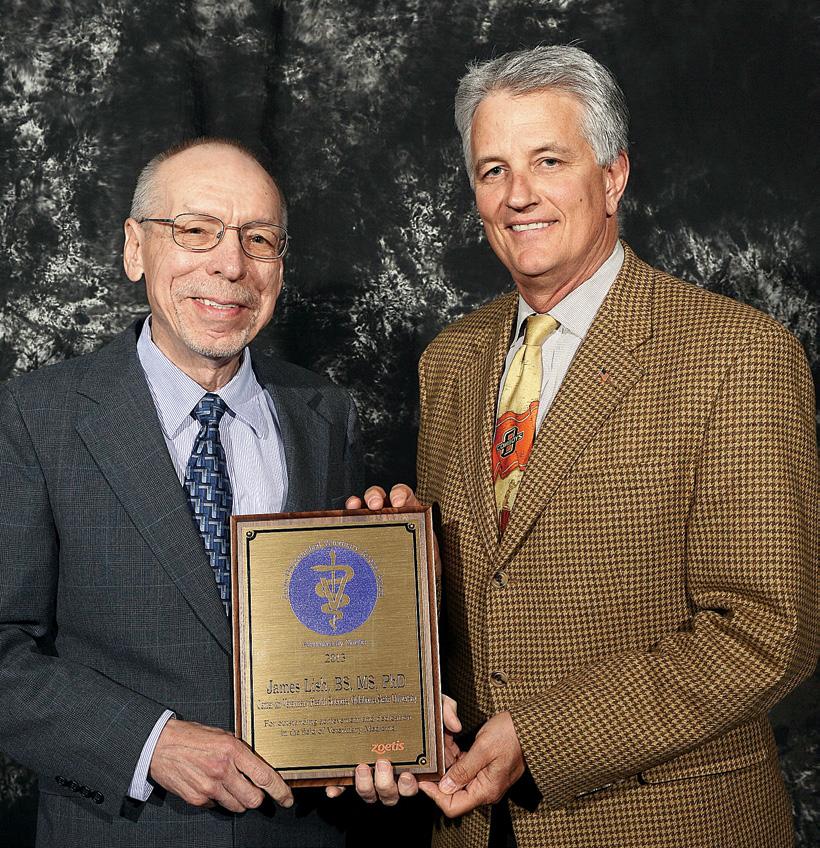
‘ tH ere’ S J u S t no D own S i D e to tea CH ing,’ S ay S 3-time H onoree l i SH
They might as well start calling it the “Ji M Lish C L a ss T E aC hin G awar D ”
Lish, a Center for Veterinary Health Sciences instructor, has won the school’s Zo ET is ( F or ME r Ly P F i ZE r) T E aC hin G awar D — for the third time.
“ iF Y o U like teaching, there’s pro B a B lY no B etter place on camp U s than right here in the V eterinar Y school.”
"IF YOU LIKE TEACHING, THERE'S PROBABLY NO BETTER PLACE ON CAMPUS THAN RIGHT HERE IN THE VETERINARY SCHOOL."
— Ji M Lis H
It’s no wonder. The zoologist exudes a passion for animals and explaining them to students, an opportunity he considers an honor.
“There’s just no downside to teaching, unless you just don’t like to teach,” Lish says. “In which case, you should be pumping gas or something else. It’s not everybody’s forte, that’s for sure. “
Lish has been the instructor of record for the large animal anatomy course since 2000. He also teaches a course in bird biology for veterinarians. And he’s been at the vet school since 1989, when he was hired as a researcher in a lab.
Lish came to the veterinary school from zoology, which he joined in 1971. He started teaching comparative anatomy in zoology as a doctoral student in 1980. Today, he considers himself a “displaced wildlife biologist with a zoology degree in the college of veterinary medicine.”
Of course, there are a lot of similarities between zoology and veterinary medicine. Still, he says, he’s the last person you would think would become a professor.
Never a dedicated student as a kid, Lish went to junior college after high school in Miami, Okla., but he didn’t do well. In 1966, the Army drafted him. He spent a tour in Vietnam and saw action during the Tet Offensive.
He was discharged in 1968. He ran a gas station for a while in his hometown. He later quit and went to the unemployment office to find work.
“I saw a flier there on the wall for a wildlife biologist,” he says, “and I thought, ‘Wow, I didn’t know they’d pay you to do that.’ ”
Ever since he was a boy, Lish remembers being entranced by the animal life around him, whether it was in his own backyard or in the neighboring yards and creeks that his sisters, who raised him after the death of his mother (his father was a traveling salesman), would let him roam after he got bigger.
He devoured books on birds and other animals his family bought him. His brother took him hunting and fishing. His dad, who was also a naturalist, took him out frequently, too. He was especially fascinated by birds of prey. Naturally, when he saw the flier, he knew it was the chance of a lifetime, especially with his GI Bill benefits.
“I decided, ‘I’m going to go to OSU and become a wildlife biologist,’” Lish says. He returned to the junior college he flunked out of to get his prerequisites and surprised everyone.
“I went back to the same instructors and just set the curve in every class. They were astounded it was the same guy.”
Lish would later make the dean’s honor roll at OSU. Today, he says he “has the best job in the world and with tenure to boot.” He owns land outside Stillwater that he works with his wife, Lurinda Burge, a vet school virology technologist in Dr. Robert Fulton’s laboratory.
A painter, engraver and avid photographer, Lish puts thousands of miles on his Toyota pickup driving Oklahoma’s back roads in winter, shooting pictures of raptors and other wildlife. His office at McElroy Hall is full of his work. He recently donated many of his works to be sold as a fundraiser for a college student organization, the Zoo and Exotic Wildlife Club, and for a wildlife conservation organization in India. He also spends a week in October each year helping trap migrating golden eagles with his colleagues in Montana.
He uses his personal trials as a student to help his students.
“I tell them it’s really just a matter of motivation. I can understand if they’re doing poorly. There may be a lot of reasons for that. I know because I’ve been there. But you can sure turn it around. I’m a living example. i’m the least likely person you would think would ever end up in academia, quite frankly,” he says with a laugh.
Lish’s other accolades include the Regents’ Distinguished teaching award. “If you like teaching, there’s probably no better place on campus than right here in the veterinary school.”
MATT ellioTT
Mason Reichard holds Holly, who has been in Animal Resources for more than four years. she has been critical to Cytauxzoon research in determining finer details on how the protozoan parasite is transmitted and how to stop its transmission.
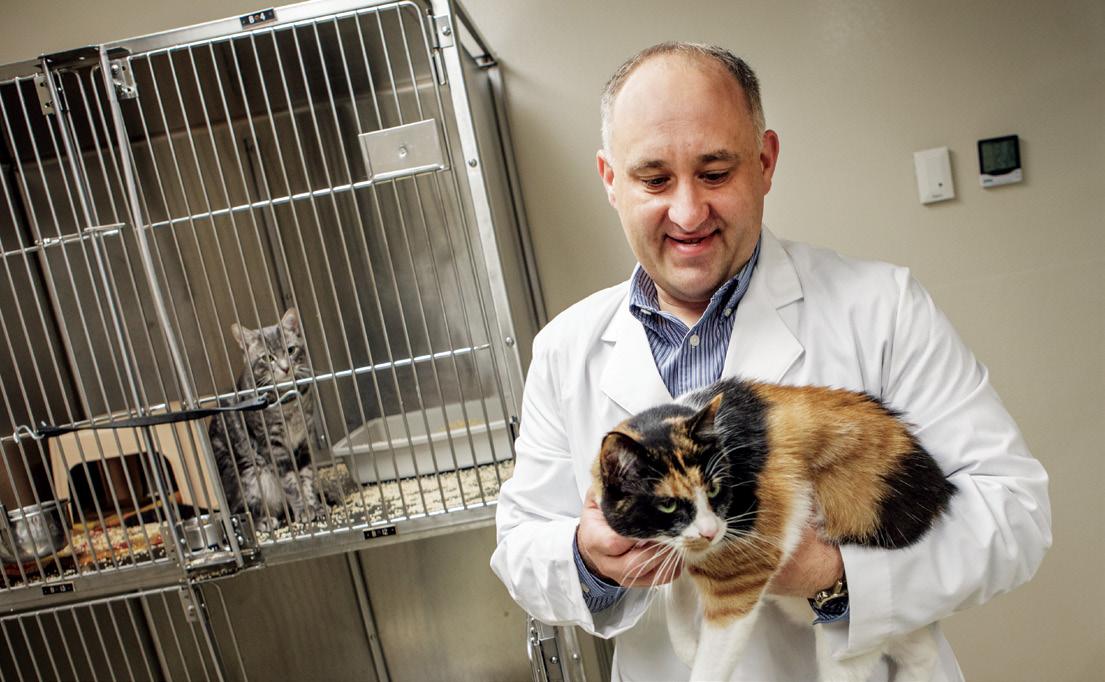
r ei CH ar D D i D n’t expe C t 2013 z oeti S H onor
Mason Reichard, who focuses his research on parasites of wild animals that spill over into domestic animals, received the 2013 Zoetis Award for Research Excellence
“I did not expect it. It was a pleasant surprise,” says Reichard, an associate professor in the Department of Veterinary Pathobiology at OSU’s Center for Veterinary Health Sciences.
Originally from St. Louis, Mich., Reichard earned his bachelor’s degree from Central Michigan University and his master’s degree from Northern Michigan University. He came to Oklahoma State for his doctorate and the opportunity to work with the late Alan Kocan.
“Dr. Kocan was well-known for studying parasites of wildlife,” says Reichard. “My doctoral degree is in veterinary biomedical sciences with a specialty in veterinary parasitology.”
“i have always had an interest in wildlife and am an outdoor person,” he says. “While I was in graduate school, my interest in parasites increased and I just merged the two together. I knew I wanted to be a professor; I just wasn’t sure in what specific field.
“I find it extremely interesting that most people consider parasites a lower, simpler species when in fact, they are highly evolved and complex life forms. They have unique behaviors and adaptations that allow them to transfer from one host to another.”
Even though Reichard is not a veterinarian, he is interested in and connected with veterinary medicine.
“ i like being able to do something that helps solve a problem for a veterinarian or helps a veterinarian better understand something that he has seen in his clinic. Through my research hopefully I am indirectly giving veterinarians solutions or information they can in turn give to their clients that will ultimately help their animals.”
But research isn’t all Reichard is about. He teaches, too.
“I teach Veterinary Parasitology I and a Wildlife Diseases elective. I enjoy teaching veterinary students here at OSU. The
people here are wonderful, and the abundance of parasites that are in and around Oklahoma make it that much better for my research,” he adds.
“This award means a lot. It increases awareness about the research program we are trying to build and what projects I am working on and how that can improve the health of animals everywhere,” says Reichard. “Thank you, Zoetis. it was very much unexpected and gratefully appreciated. This recognition solidifies that we are doing the right thing to try to control parasites and improve the health of both humans and animals.”
derindA blAkeney
r e S ear CH er re C ognize D f or C ar D io Va S C ular S tu D ie S
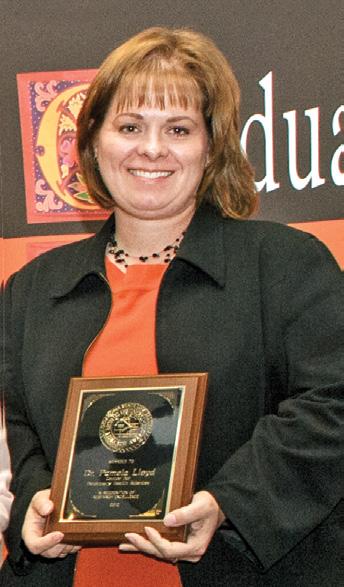
Dr. Pamela Lloyd received the 2012 Regents Distinguished Research Award in recognition of her achievements at OSU’s Center for Veterinary Health Sciences.
Lloyd, an associate professor in the Department of Physiological Sciences, was selected based on her record in cardiovascular physiology research and her national recognition.
“I am thankful for the opportunity to do the research that OSU and the Center for Veterinary Health Sciences has provided,” Lloyd says. “Without OSU’s support, I would not have been able to establish the lab and carry out the research.”
Lloyd joined the veterinary center’s faculty in 2006. Her work since coming to OSU has generated 10 journal articles and book chapters, along with 16 published abstracts and poster presentations at national meetings.
Research in Lloyd’s laboratory focuses on cardiovascular physiology. In particular, the lab is investigating mechanisms regulating blood vessel growth, and how those mechanisms are altered in disease. The research is funded primarily by the National Institutes of Health. Recently, the lab found that levels of a key vascular growth factor, placenta growth factor, are regulated by reactive oxygen species. This finding may provide insights into how the levels of placenta growth factor are controlled in both healthy and diseased blood vessels.
Several graduate and undergraduate students, veterinary students and postdoctoral fellows contributed to the success of the research program in Lloyd’s lab. Current lab members include Rohan Varshney (postdoctoral fellow), Asitha Silva and Nabil Rashdan (Ph.D. students) and Jamie Smith (lab assistant).
Pamela Lloyd received the 2012 Regents Distinguished Research Award
In addition to her NIH-funded work on the placenta growth factor, Lloyd is also working with Drs. Lin Liu and Myron Hinsdale to develop an adult stem cell focus group at OSU’s veterinary center. This project focuses on chronic obstructive pulmonary disease and is funded by the Oklahoma Center for Adult Stem Cell Research. The goal of the research is to determine whether adult stem cells can be used to treat COPD, for which there is currently no cure.
Altogether Lloyd has received more than $2 million in external funding, which has made it possible for her lab to study cardiovascular physiology.
“The goal of our research is to better understand the growth and repair of blood vessels,” Lloyd said. “If our research provides new information about how to either encourage or block the growth of blood vessels, it could benefit patients with many different diseases, including heart disease, COPD and cancer.”
PAige VAndAVeer
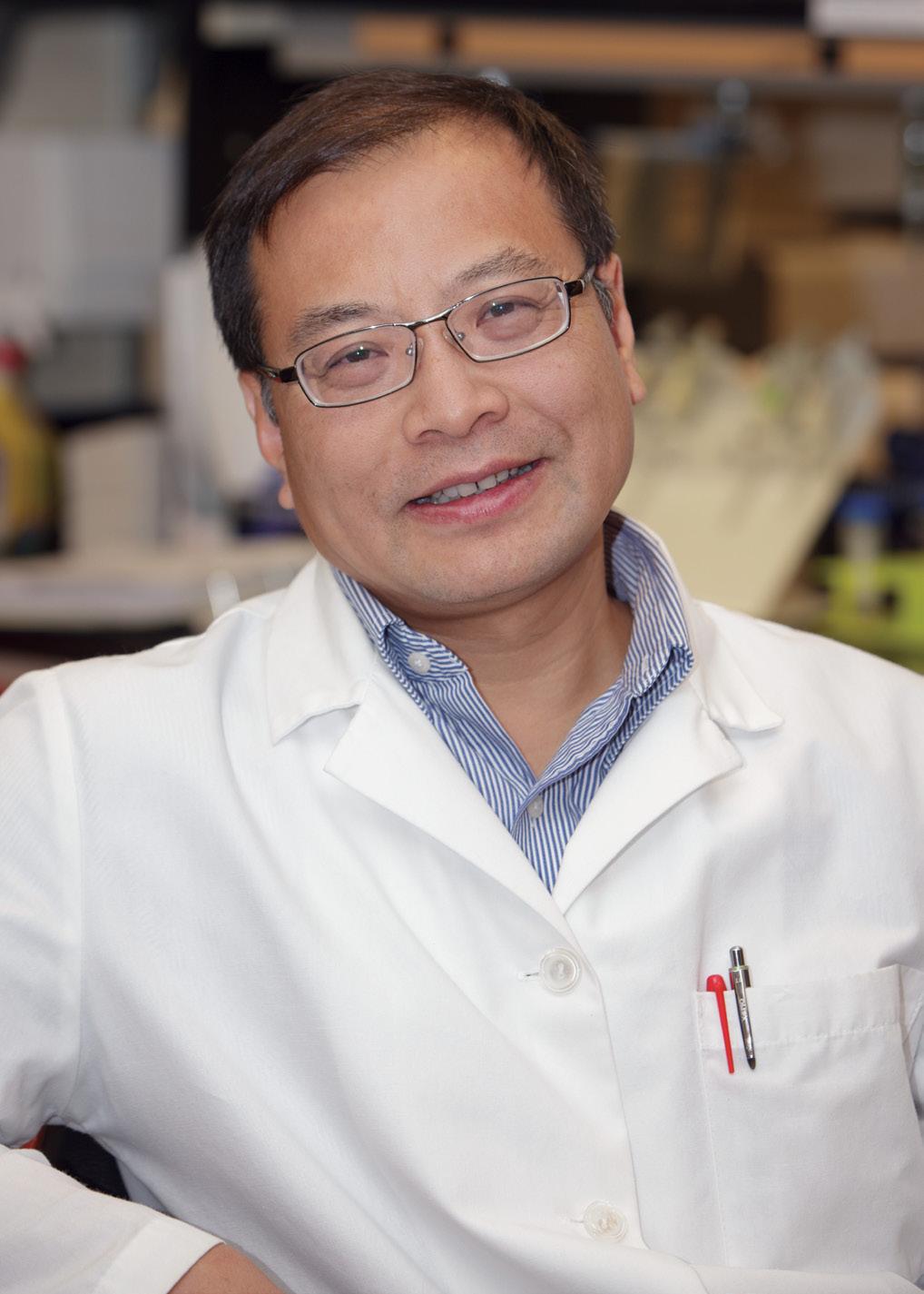
l iu win S $11.3 million grant to e S tabli SH re S piratory D i S ea S e C enter
It was worth the wait for Lin Liu, Ph.D.
The Regents Professor, Lundberg-Kienlen Professor in Biomedical Research and director of the Lung Biology and Toxicology Lab in the Department of Physiological Sciences at OSU’s Center for Veterinary Health Sciences, submitted an application to the National Institutes of Health’s Centers of Biomedical Research Excellence (CoBRE) in early 2012 for a grant to set up a respiratory disease center.
And in June 2013, the answer came: NIH approved a five-year grant totaling $11.3 million. It is the first CoBRE grant for OSU. “It was a long time coming and we are excited to be able to move forward,” says Liu, who has a Ph.D. in biochemistry from the Shanghai Institute of Biochemistry, Chinese Academy of Sciences.
Institutions participating in the planned center include four colleges from Oklahoma State University (Arts and Sciences, Agricultural Sciences and Natural
Resources, Center for Veterinary Health Sciences, and Engineering, Architecture and Technology), three colleges from the University of Oklahoma Health Sciences Center (Medicine, Pharmacy, and Arts and Sciences) and the Oklahoma Medical Research Foundation.
“The objective is to build up a critical mass of multidisciplinary investigators and research infrastructure to ultimately achieve research excellence in respiratory and infectious diseases,” says Liu. “respiratory infectious disease is the top global burden of disease. it is a public health priority. The discoveries that we will be able to research with this funding will address this need.”
“Dr. Liu’s leadership has shown what can be done when institutions in Oklahoma collaborate,” says Stephen McKeever, OSU vice president for research and technology transfer. “The National Institutes of Health recognizes the excellence of the research into infectious diseases being conducted in Oklahoma and this award will promote significant advances in several areas.”
“Each project has mentors, secondary mentors and external consultants,” says Liu. “We have core groups of experts to handle administrative duties, immunopathology issues, and best practices for animal models and molecular biology. The investigators from the participating institutions are top in their fields. We finally have the NIH funding to do exciting and meaningful work that will have a big impact on respiratory infectious diseases research programs throughout Oklahoma, not just at the veterinary center.”
The plan includes an internal advisory committee of five members and an external advisory committee, which is yet to be named. Reserve project leaders are ready to step in if needed to keep research projects moving forward.
In addition, Liu has won grants for two more studies.
An “Interdisciplinary Program in Regenerative Medicine at OSU” grant was approved by the OSU Planning Grants for Establishing Creative Interdisciplinary
Programs review committee. The program involves 19 faculty members from 11 departments in five colleges. William Picking (head of the Department of Microbiology and Molecular Genetics, College of Arts and Sciences) and Kenneth Miller (chair of the Department of Anatomy and Cell Biology, Center for Health Sciences) serve as co-PIs. This grant represents an important step in building an externally funded interdisciplinary program on regenerative medicine. Liu is also the recipient of a National Institutes of Health grant funded by the National Heart, Lung and Blood Institute. This $1.4 million project entitled, “miR-101 Control of Pulmonary Fibrosis,” aims to understand the regulation of the signaling pathways involved in fibroblast proliferation and activation in idiopathic pulmonary fibrosis. The study will help advance the development of effective therapies for IPF patients. Currently, lung transplantation is the only effective therapy against this lethal disease.
derindA blAkeney
The four projects that fall under the umbrella of the Oklahoma Center for Respiratory and Infectious Diseases are:
development of a respiratory syncytial virus vaccine by molecular manipulation of the viral matrix protein under project leader Tom oomens, department of Veterinary Pathobiology, Center for Veterinary Health Sciences, oSu
A novel tissue-equivalent respiratory model to study airway reactivity to infectious agents under project leader Heather fahlenkamp, School of Chemical engineering, College of engineering, Architecture and Technology, oSu
Control of lung inflammation by a Tlr4-interacting SP-A-derived peptide under project leader Shanjana Awasthi, department of Pharmaceutical Sciences, College of Pharmacy, ouHSC
n eutrophil-mediated acute lung injury in influenza virus pneumonia under project leader Telugu n arasaraju, department of Physiological Sciences, Center for Veterinary Health Sciences, oSu
“We F inallY ha V e the nih FU nding to do exciting and meaning FU l W ork tha t W ill ha V e a B ig impact on respirator Y in F ectio U s diseases research programs thro U gho U t o klahoma.”
"WE - NA _LY HAVE TH : "'-I H FUNDING 0 ) EXCITING A"-AN NGFUL WOR-< HAT WILL AVf- A 11'.1PACT ON H - <ATORY ~c 0 -> -ASES ARC~ ~AMS OUT "-1A."
— Dr. Lin Li U
a fter 28 year S , Dr. Joe a lexan D er H a S left t H e o S u C ampu S
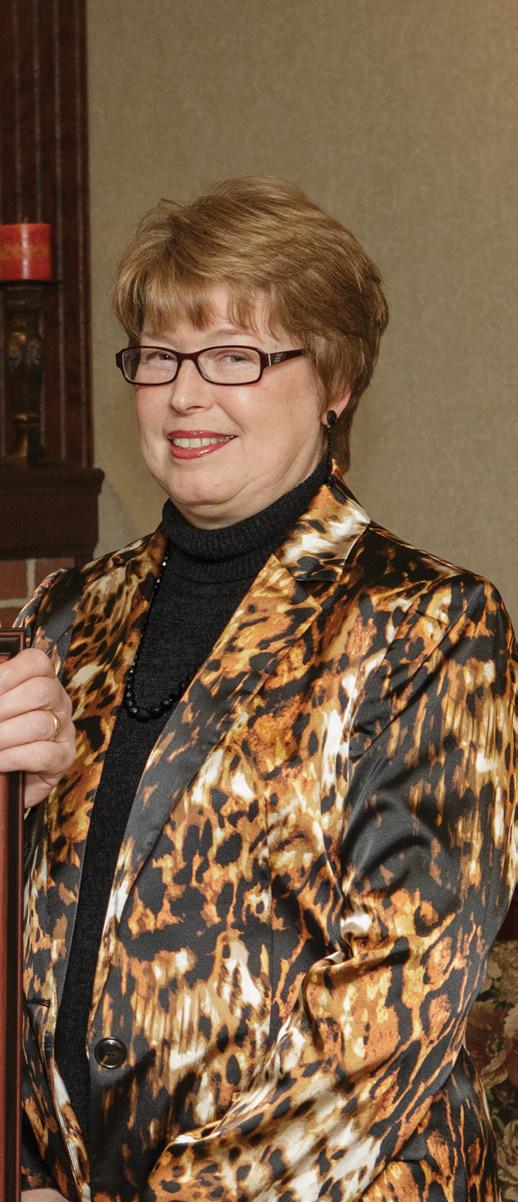
“dr. Alexander was the youngest dean to serve the college, but his energy, excitement and tireless work ethic were contagious. i gained a great respect and admiration for his leadership ability, which gave the college direction and a vision for growth. i wish him all the best in his retirement.”
— Marilyn w ilson, f ormer fiscal affairs director for the veterinary center
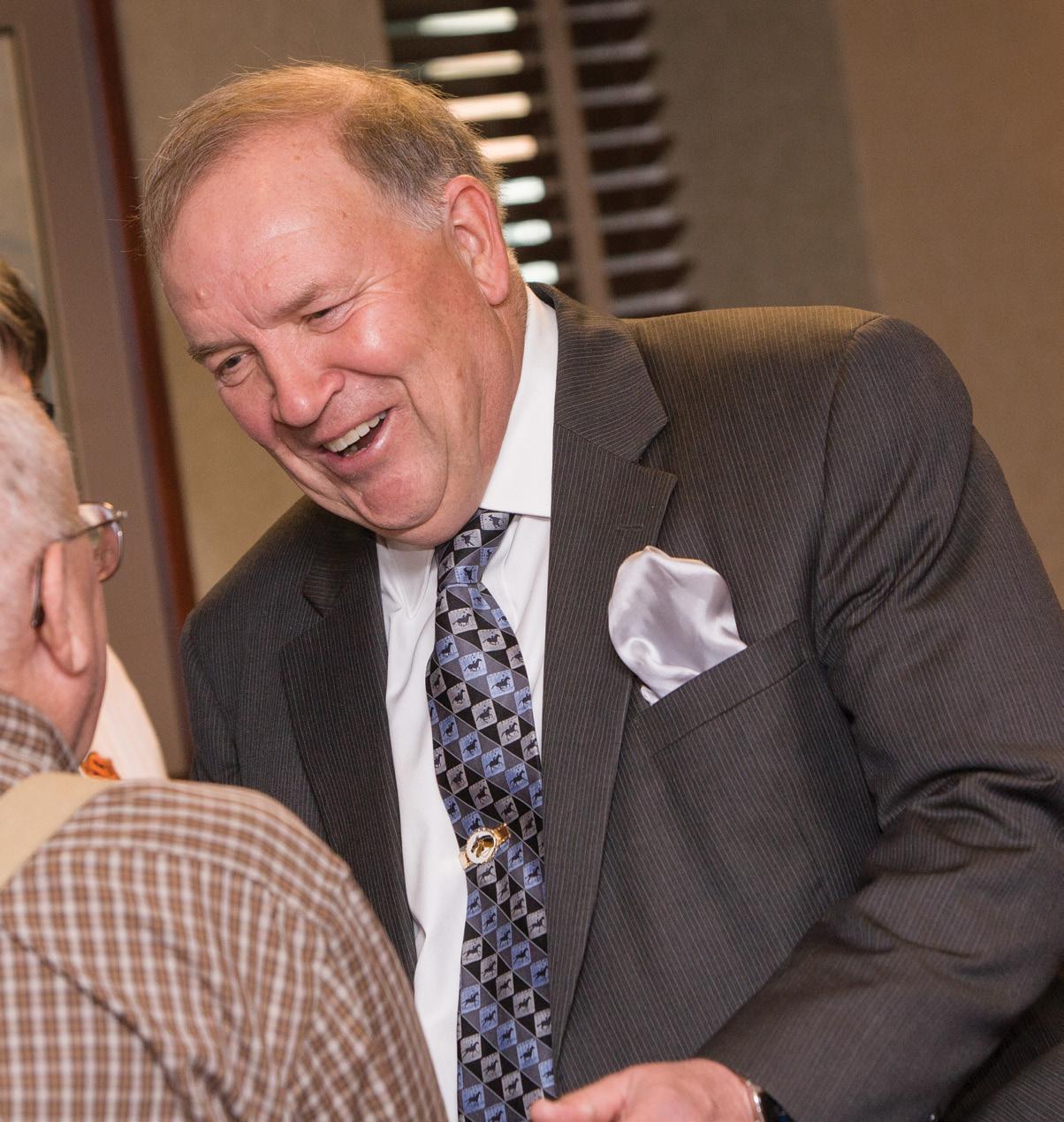
Dr. Jo E aLE xan DE r , who led the College of Veterinary Medicine as its longest-serving dean from 1985 to 2001, retired from OSU this year. The veterinary center held a reception in his honor. Derinda Blakeney, the center’s public relations and marketing coordinator, sat down with Dr. Alexander for a one-on-one visit.
When did you first come to Oklahoma State University?
I came in May 1985 to be the dean of the veterinary college.
What interested you about being dean of the veterinary college?
At the time, I was a department head and director of the teaching hospital at Virginia Tech. Then OSU President Larry Boger called saying I had been nominated to be dean of the school. I thought he had the wrong number.
I was fortunate enough to be selected to come for an interview. I really liked everything I saw about Oklahoma State. The university itself was very similar to other universities I had been at. A landgrant institution, the service program was very important to the people of Oklahoma. This is an agricultural state. They need a veterinary college — a good veterinary college. You could tell that a lot of people in the state took great pride in the veterinary school.
I was very impressed with the faculty. It was a small faculty, and we were never the best-funded place in the country, but the faculty had a ‘can-do’ attitude and they were committed to turning out quality veterinarians. I am a small-town person, and Stillwater just really fit the bill.
Looking back over your 16-year tenure as dean of the College of Veterinary Medicine, what do you think were your greatest accomplishments?
The accomplishment I am most proud of is the Endowed Chairs Program. When I left the dean’s office, we had more money in endowed chairs than any other college on the campus. I felt those endowed chairs allowed us to recruit and retain many people who are still here and I think are some of the finest faculty, not just at the veterinary school, but Oklahoma State University. And I look back at that with pride because their accomplishments will live on for a long, long time.
Anything you would go back and do differently?
There are lots of things you would go back and do differently. When I came here, I had been a department head but never had been a dean. I am sure I made lots of mistakes and misjudgments along the way. I was very fortunate to have had a wonderful associate dean in J. Mack Oyler. Dr. Oyler had lots of experience. He had been associate dean at several institutions and really provided guidance for me. And I had a wonderful financial director in Marilyn Wilson. They were the people who, when I got off course, helped me get back on course.
“upon dr. Alexander’s arrival, the university supported his request to construct the veterinary center’s library. This freed up space for the remodeling of two new classrooms formerly occupied by the library. He also acquired funds for new faculty positions devoted entirely to research. from a personal prospective, my endowed chair came from his efforts years before as he built the endowed chair program.”
— r obert F ulton, DVM, Ph.D., r egen ts Professor and McCasland Foundation Endowed Chair for Food a nimal r esear ch in the Department of Veterinary Pathobiology
Any thoughts on where you would like to see the veterinary college move toward in the next five years?
I would hope that the veterinary school would continue its commitment to training quality students, that it would continue to expand the offerings that the public needs but aren’t able to get in the private sector for lots of reasons. Maybe it’s the cost of the equipment. Maybe it’s the expertise of the faculty that you need. But most of all, i’d like the school to continue to recruit highquality faculty who have the credentials and the commitment to keep this school in the forefront.
What are your plans for retirement?
As you think of your career and specifically the time you spent at the veterinary college, what do you want to be remembered for?
i would like to be remembered for being someone who was committed to trying to grow the university, grow the veterinary school and establish us as one of the premier institutions in the Midwest. I hope to be known for a school that was committed to teaching and turning out quality students and a faculty who looked to do cutting-edge research — research that was specifically going to focus on the animal industries of Oklahoma — and for a teaching hospital that was viewed as one of the finest in the country.
Well, I had planned to retire to my thoroughbred horse farm but fortunately for me, I met a group of wonderful people, and I have become an investor. We are building a new retirement community here in Stillwater and, at least for a while, I am going to be the executive director of that facility.
Anything else you would like to share with the veterinary college alumni, donors and friends?
What I would like is for them to continue to support the college. Oklahoma is a wonderful state, but we are also a state that is not well blessed financially. The college cannot exist on state funds. It is going to have to have the support of our friends and supporters in the private sector. I hope that they will continue to be generous with their contributions, that we will continue to have a wonderful facility, that we will have a premier teaching hospital and that we will all be committed to providing the equipment, the facilities, the core faculty and the funding to turn out some of the best research in the nation.
“Joe and i became good friends during my deanship at kansas State university. i have enjoyed Joe’s gregarious personality and keen sense of humor. And his ability to get his hands on your wallet! Joe’s legacy as dean of veterinary medicine is found in the highly successful endowed chairs program (which he implemented), his emphasis on specialty credentials for clinical faculty, his diligence to develop college research facilities, and the implementation of a competitive research program.”
— Michael Lorenz, DVM, r egen ts s ervice Professor, Department of Veterinary Clinical s ciences
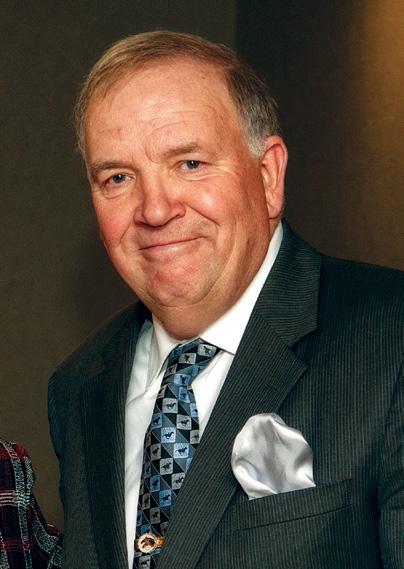
“dr. Alexander initiated and helped build the endowed chair and professorship program in the College of Veterinary Medicine as well as in the university as a whole.
He realized that ‘people gave money to people’ and developed those essential relationships with prospective donors. His leadership role in this endeavor strengthened oSu tremendously.”
— k enne th Bartels, DVM, professor, McCasland Professorship in Biomedical Laser s urgery and k err F oundation Endowed Chair, Department of Veterinary Clinical s ciences
’Twas 1947, the Cold War began, Truman was pres. with his Point Four Plan.
Baby boomers began coming, like a plague, like mad, Little Joe was one, and they say a fine lad.
He grew strong and smart, and one day he would say,
Think I’ll be a vet and learn how to spay. So off he went on his noble endeavor, To save all the beasts; thought he’d do it forever.
So CSU called and said come study, You’ll be a vet — an animal’s buddy.
He conquered surgery, micro, pathology
Anesthetics, palpation and even virology. But surgery was neat, groovy and hip.
A residency’s for him, to Cornell he would trip.
But after years with scalpel, mask, gown, Big Joe got tired, and he started to frown. Then once while removing a neoplastic spleen, Our hero was enlightened — said, “Think I’ll be a dean.”
’Cause deans are in charge, they make bucks and have fun, They don’t sweat under lights that are hot as the sun.
So he went to Oklahoma during the ’80s bust, He arrived when the budget was turning to dust.
Dean Joe was persistent, found a donor or two, Impressed presidents and legislators, to name only a few.
And the college has flourished up to this date, With little help from the governor or rest of the state.
Now today Dean Joe is half a century old.
The boomers are maturing, their years turning gold.
But I won’t harass Joe, not a cutdown is found, He’s done a good job for the college all around.
I’ll only sing praises, I can’t tell a lie,
After all, I turn 50 at the end of July.
a .W. c on F er, Jan. 22, 1997
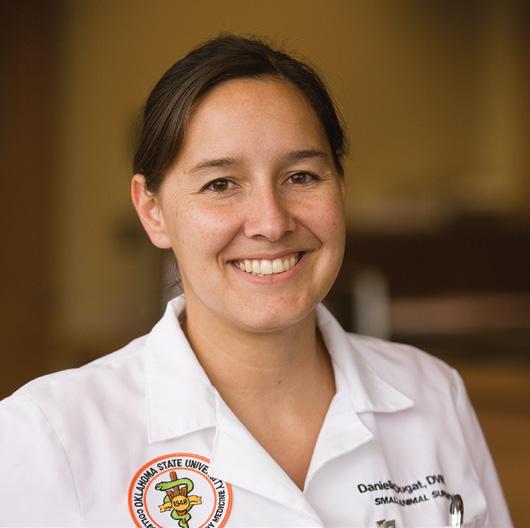
Danielle Dugat , dVm, ms, was promoted from lecturer to assistant professor in the department of Veterinary clinical sciences. dr. dugat is a diplomate in the american college of Veterinary surgeons and works in small-animal surgery. she holds dVm and master’s degrees from osU. her research interests focus on intramedullary arterial density of the feline tibia and implications in fracture healing and canine intervertebral disk disease.
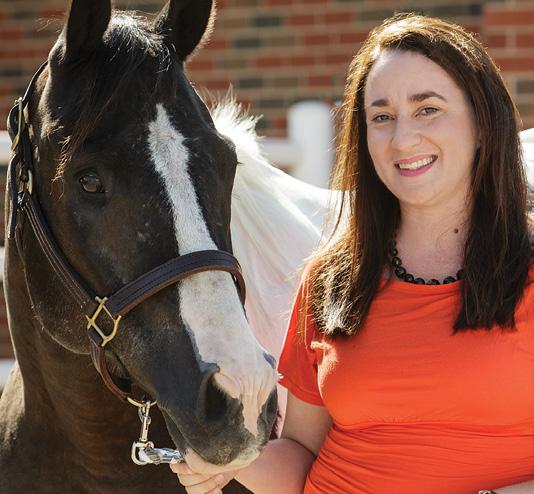
lyn D i g illiam , dVm, ph.d., was promoted from assistant professor to associate professor with tenure. dr. gilliam is a diplomate in the american college of Veterinary internal medicine — large animal in the equine section of the department of Veterinary clinical sciences. she earned her dVm degree from osU in 2001 and her doctorate in 2012. in addition to teaching students, training interns and residents, and treating client horses, her research interests include investigating the effects of rattlesnake venom in horses (the focus of her ph.d dissertation), equine herpes virus and using research to solve common clinical problems and diseases.
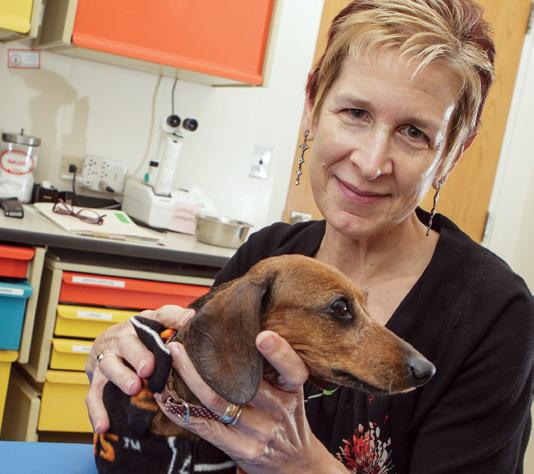
m argi g ilmour dVm, was promoted from associate professor to professor in the department of Veterinary clinical sciences. dr. gilmour is a diplomate in the american college of Veterinary ophthalmologists. she joined osU in 2001 to teach veterinary students, see client animals at the Veterinary medical hospital and pursue research in various areas of veterinary ophthalmology including sudden acquired retinal degeneration, the effect of non-steroidal drugs on intraocular inflammation in dogs, and fungal corneal disease in horses.
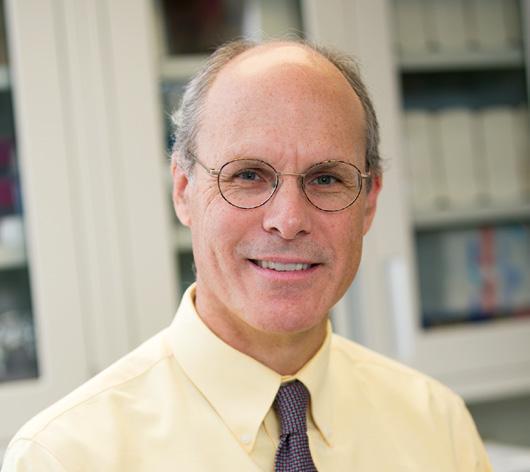
m yron Hin SDale dVm ph.d., was promoted from assistant professor to associate professor with tenure. dr. hinsdale, who also holds a doctorate, leads a research team in the department of physiological sciences. studies focus on proteins found outside of cells and on their surfaces that control how the cell perceives its environment. these proteins are important in controlling the cell’s behavior, what type of cell it thinks it is and its location within a tissue, which are important in diseases such as inflammation and cancer.
Dr. G. rEED h o Lyoak has accepted the position of department head of veterinary clinical sciences after serving as the interim department head.
Holyoak serves as the director of the center’s Veterinary Medicine Ranch and holds the Bullock Professorship in Equine Theriogenology. A diplomate in the American College of Theriogenologists, he is also a certified veterinary acupuncturist.
A native of St. Ignatius, Mont., he was raised on a commercial beef cattle and registered quarter horse ranch. He earned his DVM degree from Washington State University and a Ph.D. in veterinary science from the University of Kentucky.
Holyoak enjoys spending time with his family, raising livestock, fishing and scouting. He is an Eagle Scout and is active in his church, where he is involved in lay leadership responsibilities. As he takes on this new duty officially, we sat down for a one-on-one session with Holyoak.
Why veterinary medicine?
“When I was just a boy, around 5 years old, my dad would work the swing shift at a lumber mill. As he left for work, he would tell me that I was the man of the house. I believed him and took this role very seriously. One day, a first calf heifer was having trouble delivering. My mother and 9-year-old sister, neither one very big in size, were trying to pull the calf. Even though my sister ran to call the neighbor (who was miles away) for help, I watched the calf die and tears run down my mother’s cheeks. I knew I wanted to be a veterinarian to help prevent that type of loss.”
Although Holyoak knew what he wanted as a career, some of his teachers were not encouraging. Still he made it: “And I succeeded because what former teachers and a college adviser didn’t take into account was that I would work harder to make up the difference.”
Why Oklahoma State?
“i pursued a job at osU because of the graduates that i knew. i was really impressed with them.”
Holyoak joined the veterinary center as a theriogenologist (animal reproduction specialist) in 1999. Previously, the position had a strong food animal theriogenology focus. But Holyoak was asked to work with all species. Soon after, he added overseeing the Vet Med Ranch to his list of responsibilities. While he will continue to “keep an eye” on the ranch as director, junior faculty will handle most of the day-to-day operations.
What is your greatest accomplishment at the ranch?
“We diversified to reflect what is happening in rural Oklahoma. Previously the ranch was very thoroughbred-focused. A majority of the horses in Oklahoma are quarter horses and working ranch type horses. While keeping many procedures and techniques already perfected at the ranch by Dr. Steve Slusher, such as laser surgery on uterine cysts, we changed to include many other techniques utilized in the equine breeding industry such as artificial insemination, shipping, processing and freezing semen, and embryo transfer — reproductive techniques the thoroughbred doesn’t use. It is important that we train our students to meet the needs of the public in the equine industry in Oklahoma and across the country. We also brought in cattle. Students are able to palpate cows, heat synchronization and do embryo transfers — again, techniques our graduates are expected to know. Our senior students help produce the pregnant cows used to teach our junior students how to perform caesarian section surgeries. we strive to produce ‘practice-ready’ graduates. Just as those who inspired me to come to osU.”
What drew you to the department head position?
“Several of the junior faculty asked me to consider the position, and I felt it was my duty to respond. I like building, mentoring and fostering growth. There are two things in life that you can give away and yet be enhanced — love and knowledge. i like to encourage people, motivate them and provide them the necessary tools to assist them in their professional development. It’s fun. I love teaching for the same reason.”
What do you hope to accomplish in the Veterinary Clinical Sciences Department?
“I hope to build the program and continue to meet the needs of the public and the profession. … I want to do what’s best overall for the department and for the veterinary center. It is important that we have a team effort between the department head, the director of the veterinary teaching hospital and the dean.”
What words would you use to describe your leadership style?
“I am a ‘servant leader.’ I believe in sharing the power; I try to delegate, include and build. I am deeply committed to the personal and professional growth of each of us and our personal professional accountability. When the department’s faculty members succeed, then I feel that I am successful in leadership. it’s a team effort, not from the top down.”
derindA blAkeney
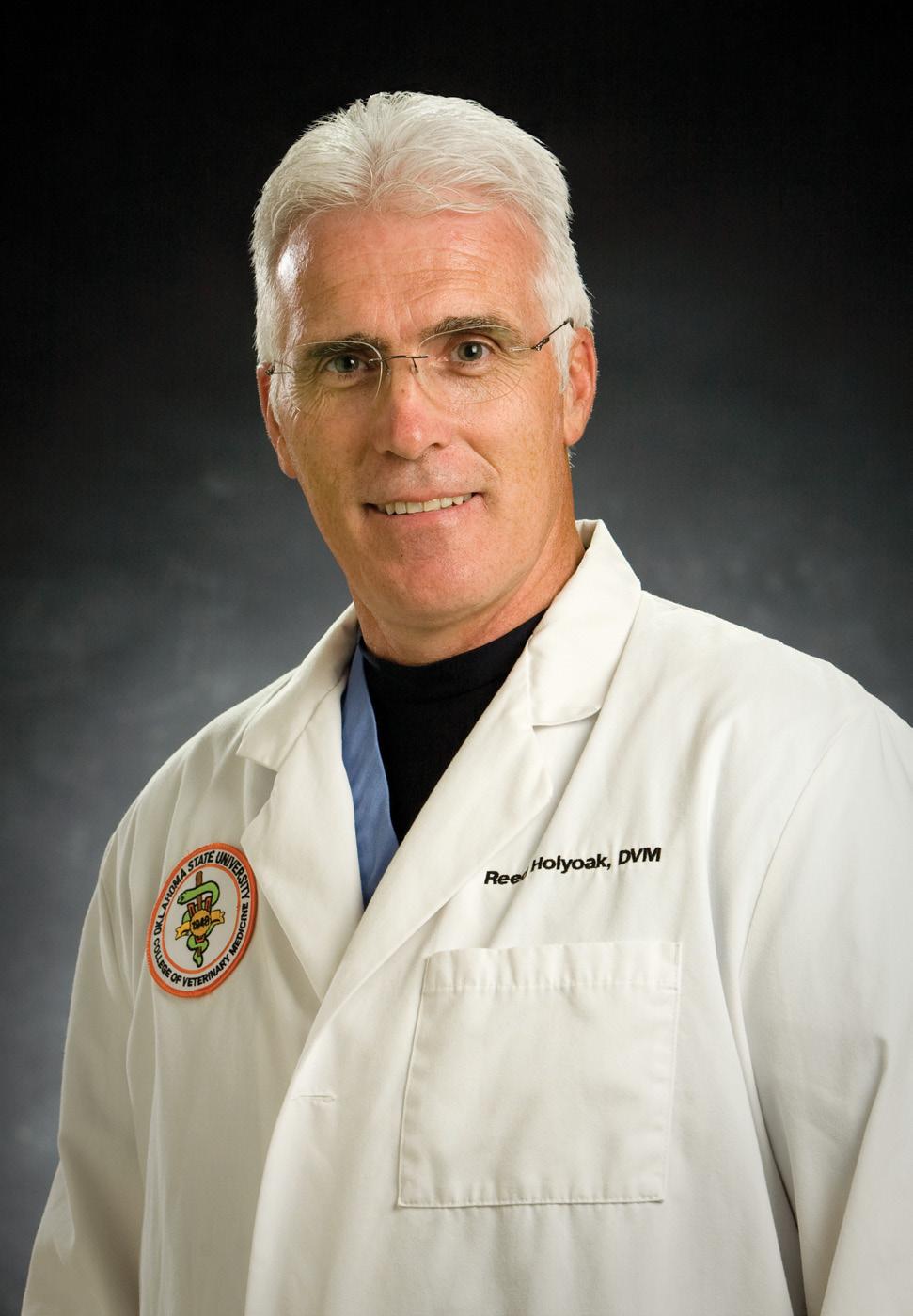
“ i W ant t o do W hat’s B est o V erall F or the department and F or the V eterinar Y center. i t is important that W e ha V e a team e FF or t B et W een the department head, the director o F the V eterinar Y teaching hospital and the dean.”
— Dr. g r ee D Ho Ly oak
Dr. r yan b a umwart
ryan Baumwart, dVm, dacVim (cardiology) is an assistant professor of cardiology.
originally from clinton, okla., he completed his undergraduate studies at northeastern oklahoma state University in tahlequah. he earned his dVm degree from osU in 2002 before completing a small-animal internship and a residency at ohio state University.
dr. Baumwart’s research interests focus on cardiovascular interventional surgery.
in his spare time, he enjoys fishing, hunting, hiking, camping and snowboarding.
Dr. e li S abet H g ie Dt
elisabeth giedt, dVm, mBa, joins the osU center for Veterinary health sciences as the director of continuing education, extension and community engagement. she is originally from san diego but moved every two years as the child of a navy pilot.
she graduated cum laude with a bachelor’s in agriculture from ohio state University, before earning her dVm at that osU. most recently, she earned her mBa from the lake erie college school of Business in ohio.
giedt has owned or worked in mixed animal, large animal, companion animal, and equine only veterinary practices. she most recently served as a professor of equine studies at lake erie college From 2009 to 2012, she served as the college’s dean of equine studies.
she is an active member of many professional organizations, including the american Veterinary medical association, american association of equine practitioners, the national association of equine affiliated academics and the equine science society.
in her spare time, giedt enjoys trail riding, spending time in and around water and traveling. she and her sons spent two weeks traveling around europe by car recently.
she is focused on building connections among industry, producers, veterinarians and communities throughout oklahoma.
candace lyman, dVm, is an assistant professor of theriogenology in the department of Veterinary clinical sciences. originally from abilene, kan., she earned her bachelor’s and dVm degrees from kansas state University’s college of Veterinary medicine.
after that, lyman completed an internship at ocala equine hospital in ocala, Fla. From there, she spent a year at texas a&m equine embryo laboratory performing transcervical aspiration of mare oocytes for cloning. next, she completed a residency program at the University of pennsylvania school of Veterinary medicine, new Bolton center, followed by the board certification exam to become a diplomate in the american college of theriogenology.
Before coming to oklahoma, lyman was a lecturer at new Bolton and in private practice in pennsylvania for nearly a year.
Jeremiah moorer, dVm, joins the cVhs faculty as a lecturer in small animal surgery in the department of Veterinary clinical sciences. originally from Valdosta, ga., he earned his dVm degree from the University of georgia. his clinical interests include arthroscopy and total joint replacements.
in his spare time, moorer enjoys hunting, fishing, softball, volleyball and hiking.
n ew Dire C tor of De V elopment
Join S t eam
Heather Clay, senior director of development and team lead for the center for Veterinary health sciences, joined the osU Foundation in december 2012 from the kansas University school of medicine, Wichita.
a native of Wichita, kan., she earned two undergraduate degrees from Washburn University in topeka, kan., one in math and statistics and the other in human services (non-profit management). clay has worked in various fundraising roles for more than 17 years, including seven years in higher education.
“the timing was ideal,” says clay of her move to osU. “our dean at the kU school of medicine had just retired so it was an easy time to transition to oklahoma state. everyone here was so friendly.
Dr. a k H ile SH r amaCH an D ran akhilesh ramachandran, BVsc & ah, ph.d., joins the veterinary center as the microbiology section head at the oklahoma animal disease diagnostic laboratory. originally from india, he earned his BVsc and ah degree (equivalent to dVm) in veterinary medicine from kerala agricultural University in india.
he then earned a ph.d. in veterinary biomedical sciences with a minor in biochemistry and molecular biology from osU with Jerry malayer, ph.d., associate dean for research and graduate education, serving as his adviser. ramachandran is a diplomate of the american college of Veterinary microbiologists with a specialty in Bacteriology and mycology.
Before joining the cVhs team, ramachandran spent 4½ years as a staff scientist with the osU University multispectral laboratories in ponca city, okla. his research interest is in developing novel and rapid assays for microbial detection.
When i met dean sander, i knew i would be able to work with her, and i was also very impressed with the programs at the veterinary center, the faculty and the students.
at kU, i had some experience with ‘grateful patient’ fundraising. i knew that the veterinary medical hospital wanted to start a ‘grateful client’ program. Being involved from the ground up was very compelling to me, and i have a huge love for animals.”
clay and her teenage daughter, sophia, have three chihuahuas.
“cha cha is an 8-year-old female and la la is a 7-year-old female. pepe is a shelter dog and we think he is about 6 or 7 years old,” she says. “they all have such unique, entertaining personalities. as anyone with pets knows, having animals around adds a pleasing dimension of happiness to daily life.”
i like meeting the people and working with donors,” she says about working in development.
“For the most part, they have these amazing lives. the majority of them come from modest backgrounds and through perseverance and a little bit of luck, they have amassed these remarkable resources. the fact that they want to do something life-changing with those resources is humbling. in the process i get to know them and their passions and help them leave a legacy of themselves. that’s rewarding.”
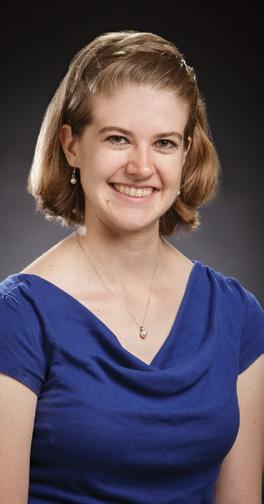
the veterinary center’s top priority is academic center fundraising, she says.
“We want to have planned commitments or cash in hand by the end of the calendar year 2013,” she says. “We need $4 million to pay for the auditorium portion of the academic center. We are working with existing supporters and exploring current relationships with corporations and foundations. of course, we are always open to new potential supporters.”
the university has agreed to fund the faculty office portion of the academic center with plans for the groundbreaking in early 2014.
“We can save money if we can break ground for the auditorium at the same time. it is always more cost-effective to have one project going rather than two separate building projects. if we don’t have the money, we’ll have to build it in stages and at a higher price.”
i am willing to talk to anyone about what is happening at the veterinary center,” clay adds. “You may be considering a gift down the road, but if you have an interest in learning more about the inspiring work occurring here, i would love the opportunity to tell you more about it.”
clay completes the veterinary center’s advancement team, joining derinda Blakeney, apr, coordinator of public relations and marketing, and sharon Worrell, alumni affairs specialist. to arrange an appointment with clay, call 405385-5607.
w elC oming a n ew l ibrarian
Liz Amos is the new William e. Brock college of Veterinary medicine librarian.
amos, a native tulsan and lover of oklahoma higher education, earned her bachelor’s in psychology and sociology from the University of tulsa. she completed her master’s in library and information studies in may 2013 from the University of oklahoma-tulsa. amos worked at the oU-tulsa schusterman library as a graduate research assistant, working the reference desk and helping with special projects. a recipient of the national library of medicine south central region’s 2012 library student outreach award, amos has a passion for working with the community and participating in whatever she can.
Veterinary technician supervisor and ophthalmology technician Carey McCully, RVT, received the 2012 Staff Advisory Distinguished Service Award at the University Awards Convocation
Nominated by Dr. Jonathan Pucket, a clinical assistant professor of ophthalmology, McCully was recognized for her expertise, compassionate care and willingness to help wherever needed to provide the best possible patient care and assistance to colleagues, veterinary students and clients.
Pucket met McCully when he was a veterinary student.
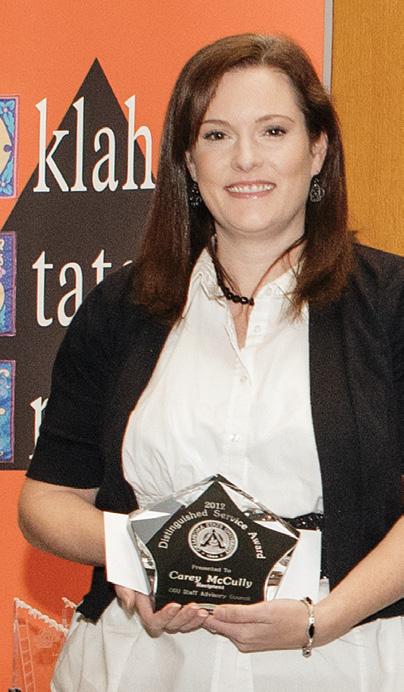
“she instructed me during various clinical rotations and provided a truly delightful experience,” he says. “her kind words and gentle encouragement guided me along the somewhat overwhelming education experience. Now, as one of my colleagues, she continues to treat every case as if it were her own animal, showing a level of care that is unmatched in her field. Every day she comes to work at this great university with a smile on her face, a passion in her soul for Oklahoma State University, and a heart of healing for all those in need.”
McCully has spent her career in the field of veterinary medicine, beginning in 1993 as a parttime kennel worker at a veterinary clinic. From there, she worked as a veterinary assistant while pursuing her associate degree (Class of 1999) in veterinary technology at OSUOKC in conjunction with Murray State College.
Carey McCully says she was truly surprised at being honored with the 2012 Staff Advisory Distinguished Service Award
She joined OSU’s veterinary hospital in 2004 and began working for the ophthalmology service in 2006. Most recently, McCully was appointed as a veterinary technician supervisor.
“I was really surprised when they announced my name at the awards ceremony because there were so many people nominated,” says McCully. “I couldn’t imagine it would be me. It was a nice surprise and very humbling. I am truly honored to receive this Distinguished Service Award.”
Originally from Yukon, Okla., Carey lives in Stillwater with her husband, Jeremy; two sons, Caden and Carson; two golden retrievers, Charlie and Lizzie; and a cat, Bonnie.
C1/HS
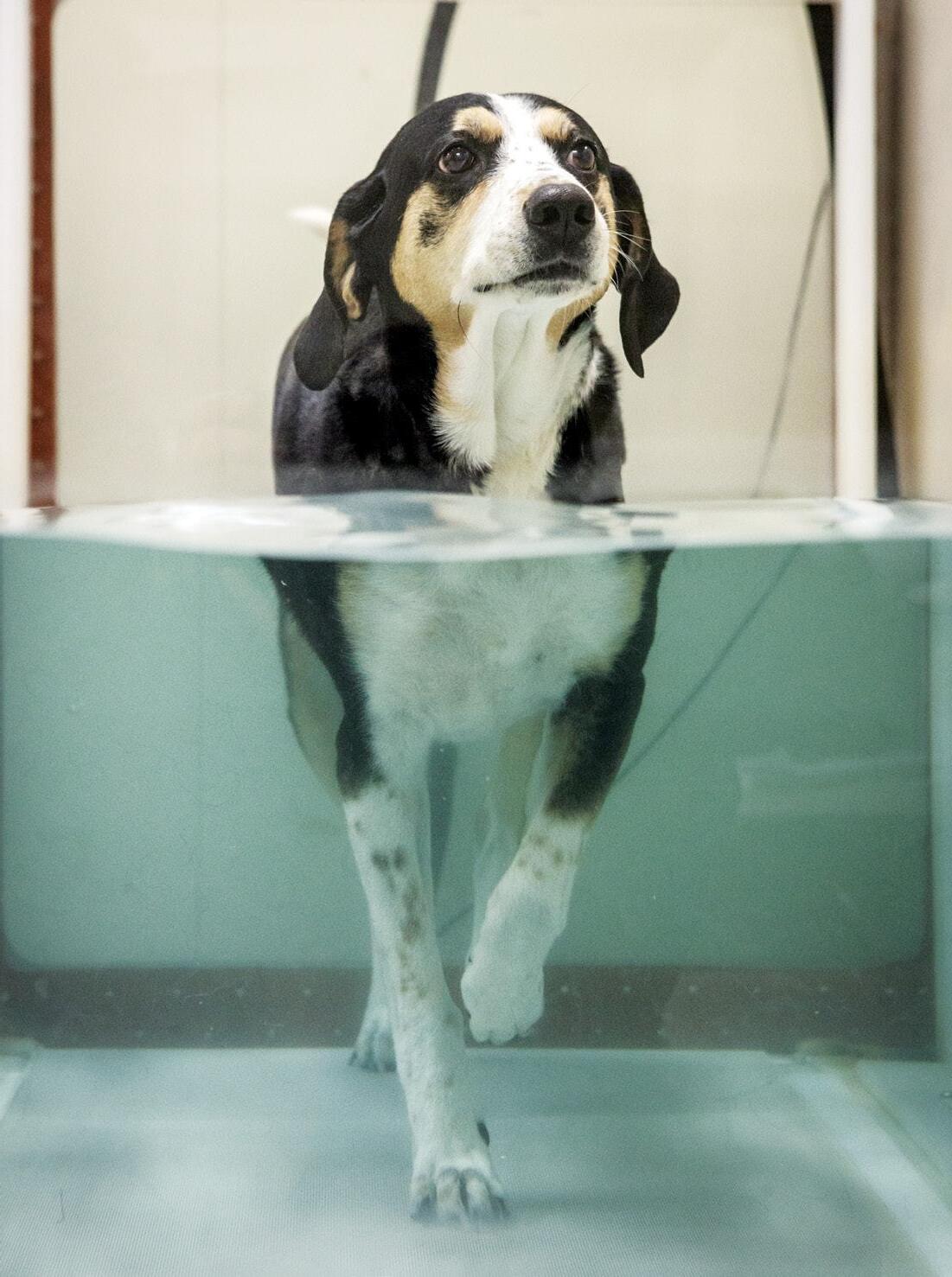
f rom people to pet S , t H e fo C u S turn S to li V ing better li V e S
The One Health concept is gaining momentum across the country and here at oklahoma State university. The veterinary center logo includes the tag line “Healthy Animals — Healthy People.” The veterinary medical hospital offers “Fat Camp” sessions for obese dogs and cats, and the dean’s office is one of 41 departments on the Stillwater campus designated as a “Certified Healthy Department” for 2013.
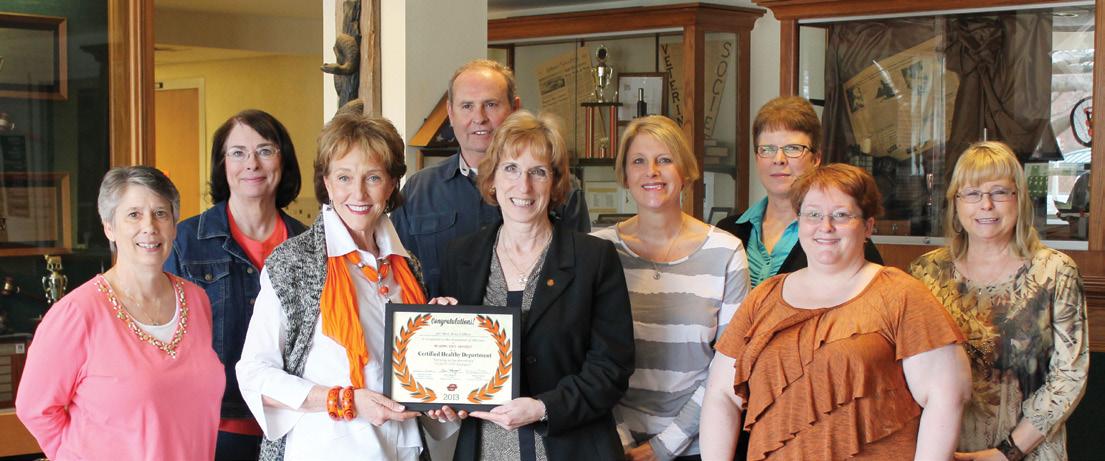
Dean’s office goes healthy
“We started planning small gatherings to get to know everyone in the department better and realized this would be an awesome opportunity to provide wholesome, nutritious treats and a support system for those trying to improve their health,” says Michelle Kuehn, senior administrative support specialist and the main organizer of the effort.
Starting in January 2013, 15 people signed up, pledging to try to eat healthier and exercise more.
“Just 10 weeks into the program more than 80 pounds had been lost,” says Kuehn. “That progress sparked the idea of becoming a certified healthy department.
A short survey was sent to workers inquiring about daily exercise, taking advantage of the Wellness Center health risk assessments, who has CPR/first aid training, etc. The responses were tallied, and the application was submitted for the group’s certification.
“ s everal people go for quick walks in the building during breaks. another group walks during lunch several times a week. Posters around the building encourage people to choose healthy snacks, drink water, and walk, walk, walk,” she adds.
The group is also switching the more sugary vending machine snacks to healthier options. When providing snacks for students, instead of breads and sugary breakfast rolls, 100-calorie snack packs, granola bars, fresh fruit and similar choices are now offered.
“although this started with the dean’s office, everyone in the Vet Med family is invited to participate. we are well on our way to becoming much healthier people,” says Kuehn.
os U’s Veterinary ‘F at Camp’
Fat Camp is where dogs and cats come to lose the pounds.
“If animals are obese, they will live two years less on average than a dog that is normal weight,” says Dr. Lara Sypniewski, community practice veterinarian at OSU’s veterinary medical hospital.
“we want to keep our beloved pets as long as possible, so a healthy weight is a good thing.
“Weight is relative to size. For a small dog in stature, 5 pounds can be a big deal. I think because people are always saying, ‘I only have 5 more pounds to lose,’ that it desensitizes us. For example, a 10-pound Chihuahua should really weigh 5 pounds. That means the dog needs to lose 50 percent of its total weight to be healthy. That’s a big deal.”
Laura Moorer , who has a master’s in public health and is a certified canine rehabilitation practitioner, often recommends a fitness routine that includes 20 minutes on the underwater treadmill, plus a strict diet of low-calorie, high protein dog food for her clients’ pets.
“We offer low-level laser therapy, water treadmill and therapeutic exercises in a comfortable and safe way,” adds Moorer.
According to Moorer, 15 minutes in the pool equals one hour of exercise on the ground. Water is 60 times more resistant than air, providing a more cardiovascular and muscular challenge
while exercising. Sypniewski likes it because the warm water helps increase joint mobility and provides buoyancy. Walking on the underwater treadmill will be easier on an overweight dog because of the buoyancy.
“I like the underwater treadmill because it is a very controlled environment,” says Moorer. “The dog can’t jump around. It goes the speed I want, the distance I want and the amount of weight bearing I want.”
The idea for Fat Camp came to Moorer shortly after she joined the veterinary center in the summer of 2010. Since then, dozens of animals have been helped.
“We wanted to offer pet owners some help in preparing their pets before surgery,” says Moorer. “Whether it is a person or an animal, any surgery comes with inherent risks. An obese animal is at far greater risk for complications from surgery than a healthy animal. Prehabilitation for surgery patients started it all, and then it grew from there to pets in the community that need to be healthier.”
Goo D Mornin G aME ri C a wEE k E n D E D i T ion heard about Do GG i E FaT Ca MP at OSU and visited with Dr. Lara s y P ni E wski and La U ra Moor E r about the canine camp. See the twominute story here: http://abcn.ws/XyJHX6
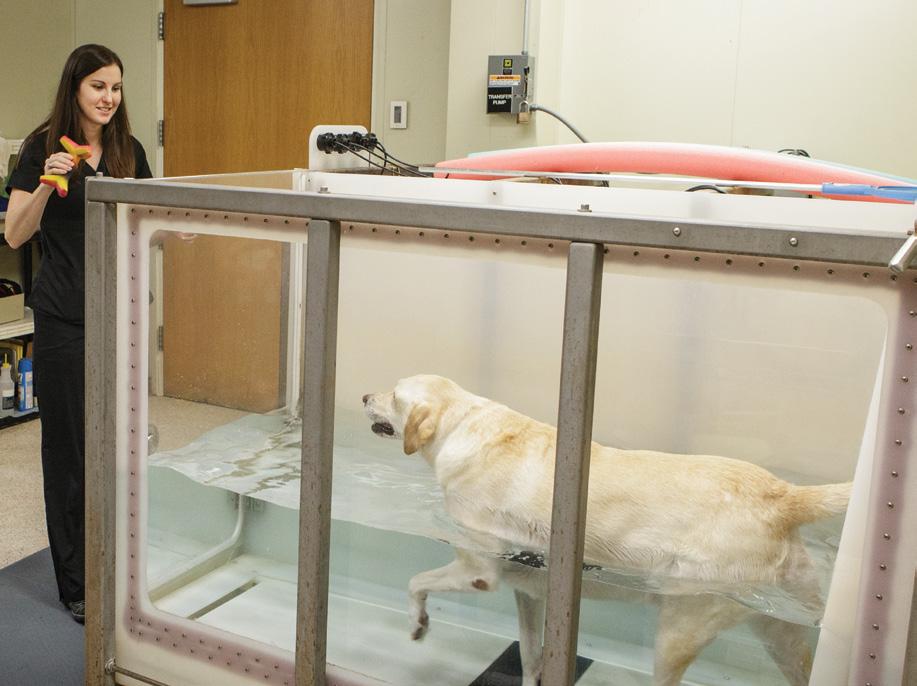
Laura Moorer watches Magic Morris, one of her canine clients, work out on the underwater treadmill.
“We also utilize fat camp to help prevent osteoarthritis in pets,” adds Sypniewski. “If an animal is overweight, it puts more pressure on their joints. As the pet ages, the risk for osteoarthritis increases, especially if the animal is overweight.”
Getting your pet to slim down at camp is important, but it’s not all about the pounds.
“nutritional counseling is very important,” stresses Sypniewski. “we offer owners feeding recommendations, diet recommendations and healthy supplements to use if needed. it is a team approach. we can’t be successful if the owner doesn’t follow through with nutritional changes at home and recommended exercise regimens.”
Their greatest success story was a Newfoundland that had to lose 30 pounds before it could have surgery for two torn ACLs.
“i like the underwater treadmill because it is a very controlled environment. The dog can’t jump around. it goes the speed i want, the distance i want and the amount of weight bearing i want.”
— Laura Moorer
“She had to drop 30 pounds or a quarter of her body weight before our small-animal surgeons would agree to repair the torn ligaments,” says Moorer. “The owner is the most important part of this process. It takes time for animals to gain weight, and just like people, it takes time to lose the weight.”
“The key is to prevent obesity before it happens,” says Sypniewski. “When you get a puppy or a kitten, start feeding it nutritionally from the start.”
“If it isn’t ‘dog food,’ it isn’t dog food,” adds Moorer.
If your beloved pet needs to slim down and lead a healthier lifestyle, make a consultation appointment with OSU’s Fat Camp for a happier, healthier pet.
There is a new graduate program at OSU, and Dr. Carey Pope Ph.D., Regents Professor and Sitlington Chair in Toxicology in the Department of Physiological Sciences at OSU’s Center for Veterinary Health Sciences, is one of its co-initiators.
Housed within the OSU Graduate College, the Certificate Program in Interdisciplinary Toxicology was approved by the OSU Board of Regents in late October 2012. The program requires 12 credit hours, with two core courses and six hours of guided electives.
“Faculty in the new OSU Interdisciplinary Toxicology Program come from the Center for Veterinary Health Sciences, departments of Zoology, Chemical Engineering, Chemistry, and Biochemistry and Molecular Biology, and the Center for Health Sciences in Tulsa,” says Pope. “Participating graduate
students from multiple programs will have a host of experts with whom to study and collaborate.”
Pope worked with Loren Smith of zoology and David Wallace of CHS to initiate the ITP with support of an interdisciplinary program-planning grant through the provost’s office. The general objective of the ITP is to facilitate research and training efforts among faculty from multiple disciplines interested in chemical toxicity.
“The Certificate Program in Interdisciplinary Toxicology is the first academic program of ITP to be approved,” says Pope. “Our goal is to develop an MS/PhD program in the future. we are very excited to launch this new academic program. we think it will attract many students from diverse fields with an interest in the toxic effects of chemicals in public health and the environment.”
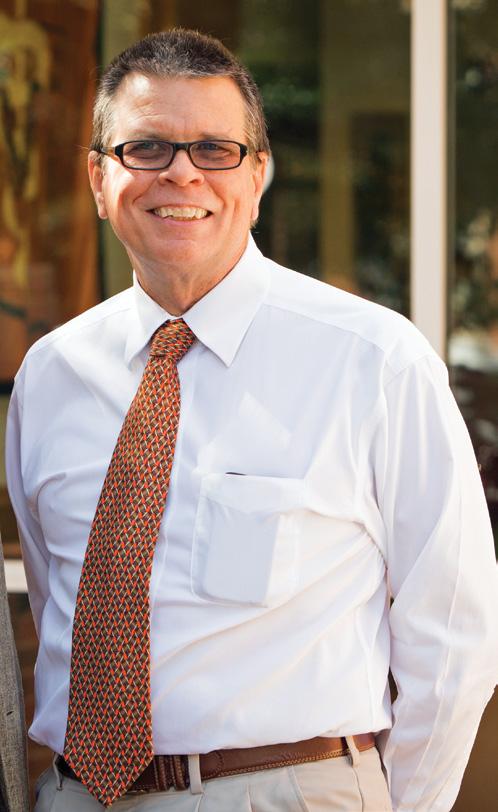
A team of iTP faculty received funding in August 2013 to study “Nanocarrier-mediated Targeting of Bioscavengers to the Red Blood Cell for Prolonged Circulation and Protection.”
Carey Pope is the principal investigator for the project. He is joined by Jing Liu and Ashish Ranjan from the veterinary center’s department of Physiological Sciences, Josh Ramsey from chemical engineering, and Steve Hartson from biochemistry/molecular biology.
The four-year, $3.3 million grant is funded through the Defense Threat Reduction Agency. The iTP team will collaborate with Steve Brimijoin at the Mayo Clinic to develop a nanocarrier to aid in the protection of soldiers and first responders from the acute toxicity of nerve agents.
“receiving funding for this interdisciplinary project will hopefully lead to more effective protection against these highly toxic chemicals that have previously been used in both chemical
warfare and chemical terrorism,” says Pope. “We anticipate that our success on this initial grant application will stimulate more interdisciplinary research efforts in toxicology-related areas.”
For more information on the Interdisciplinary Toxicology Program, visit toxicology.okstate.edu
D’ o ffay an D H i S team try to fin D t H e root S of w H at ail S animal S — an D people
i f we understand what causes the disease , we can develop vaccines, better treatments, and better protection against the disease.” t ha t’s been driving Jean d’ o ffay, DV m , Ph.D., since he joined the faculty of o SU’ s Center for Veterinary h ealth Sciences 27 years ago.
Dr. d’ o ffay, a diplomate of the American College of Veterinary m icrobiologists, is studying two diseases in particular.
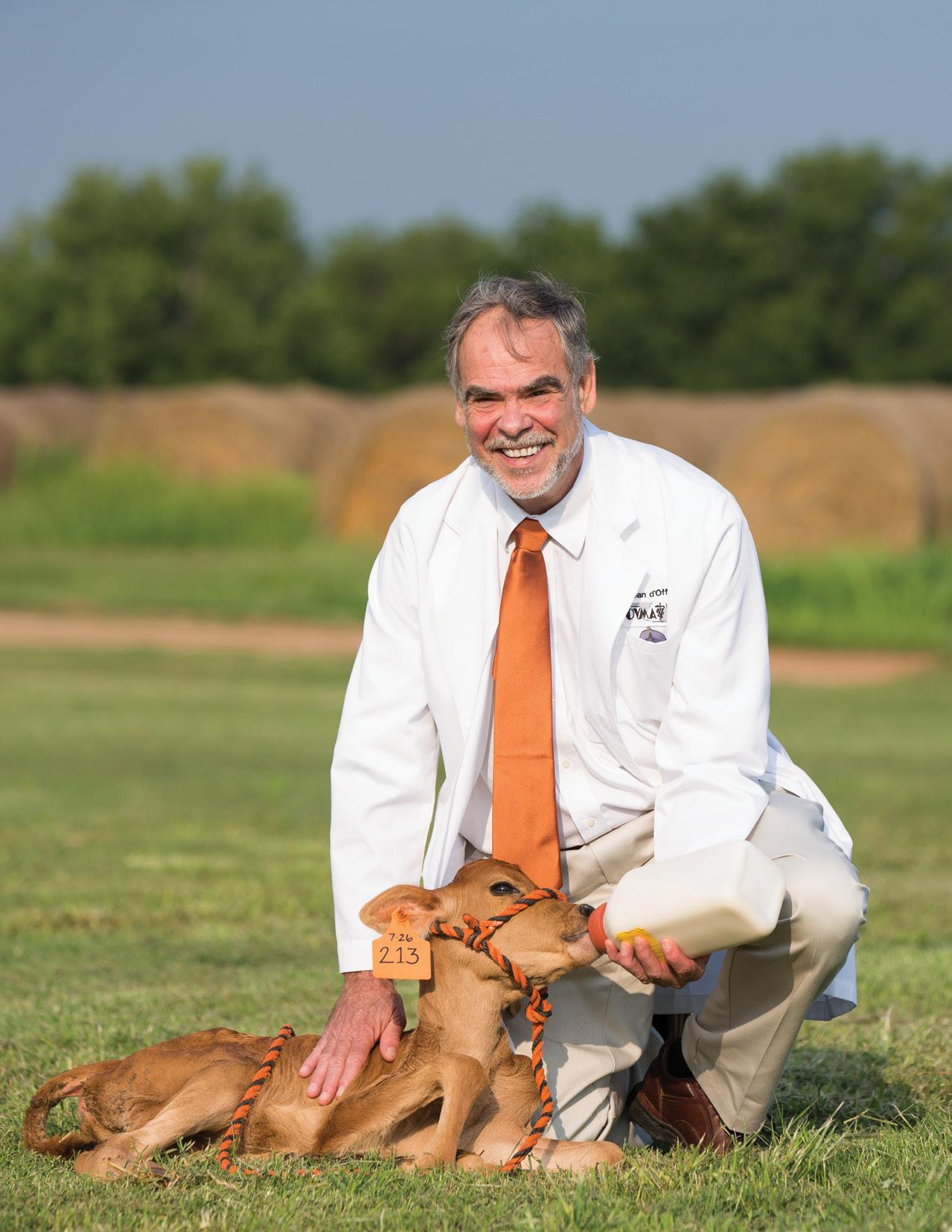
“The interesting thing about research is that you start with a theory. often you don’t find that theory to be true. instead your finding leads you down another research path, one that you had not anticipated.
Dr. Jean d’ o ffay, DVM, Ph.D.
“Since I can’t study all the viruses, I have focused my research on two — bovine herpes virus and simian retrovirus. In my comparative medicine research, I look at genes within a virus to try to determine which genes cause a disease. That’s what fascinates me,” says d’Offay.
He collaborates with OU Health Sciences Center and other faculty at the OSU veterinary center including Robert Fulton, DVM, MS, Ph.D., DACVM, Regents Professor and McCasland Foundation Endowed Chair for Food Animal Research, and Richard Eberle, Ph.D.
“I work with Dr. Fulton on bovine herpes virus research,” d’Offay says. “We recently analyzed 28 different viruses that came from cases of abortion or respiratory disease. Some samples had been from cows that had been vaccinated, and some cattle were not vaccinated. To determine if the vaccine could accidentally cause abortion or respiratory disease, we compared the genomes of these different viruses.”
Dr. d’Offay’s research team found cases of abortion by vaccinated cows where the virus recovered from the fetus matched the vaccine virus.
“Did it cause the abortion?” he says. “For years, we have suspected that the bovine herpes modifiedlive virus vaccine could cause abortion, but we could not prove it. You are not supposed to vaccinate pregnant cows with such vaccines. We put the information we find out there and let the practicing veterinarian decide what to do about the vaccine. The companies that make the vaccine also need to decide what to say about when to vaccinate and when not to vaccinate.”
D’Offay has also studied the development of naturally occurring simian retrovirus associated lymphomas in baboons.
“I am studying simian T-lymphotropic virus (STLV), a virus that can cause lymphoma in baboons. The virus is closely related to human T-lymphotropic virus (HTLV). The best thing about working with simian retrovirus at OU Health Sciences Center is that it is a naturally occurring infection. I just take samples from the living baboons or from baboons that naturally pass away and study the progression of the disease. i do not actively experiment on these baboons,” he says.
In people, the virus is transmitted sexually, via breast milk from mother to baby or by sharing needles.
“The interesting thing about research is that you start with a theory,” says d’Offay. “Often you don’t find that theory to be true. Instead your finding leads you down another research path, one that you had not anticipated. Through genotyping of the virus from the different baboons, we found that sexual transmission was not the most important source of transmission; it was fighting between females.”
Adult female baboons follow a dominance hierarchy. When the females first come in heat, they fight to establish their social position.
“Baboons are 3-4 years old when they start coming in heat, and that is where we find the infection,” he adds. “There was some incidence of transmission from mother to baby through breast milk but the majority of the cases were from fighting.
“By analyzing the virus from archived blood samples collected over eight years from baboons that died of lymphoma, we were able to determine that, in one case, the cell that grew to cause the tumor could be detected five years before death, at a time when chemotherapy might have a better chance to work. The baboon serves as a good model to study HTLV-associated cancer in humans.”
According to d’Offay, it is common to eat primate in Africa. STLV is thought to be transmitted from primates to humans by blood contamination during slaughter.
“Five percent of HTLV-infected humans develop either cancer (lymphoma) or an inflammatory brain disease that results in a paralysis called Tropical Spastic Paraparesis. The same patient never gets both diseases, though.
“research is never ending. We are trying to determine how the same virus causes cancer in some infected individuals and paralysis in others. If we understand the disease in baboons, it will help us understand the disease in humans. The more you look into a subject, the more you realize how much you don’t know and you keep searching for the answer.”
And with never-ending research comes the need for constant resources to do the studies.
“Recently, my research has been funded through OU Health Sciences Center and Novartis. During the summer months, I work with students in the first and second years of the veterinary medicine program. They help collect the samples, analyze the results and write the paper.
“i think it is important to help veterinary students understand what research is about and what it takes to come up with results. I have a 70 percent teaching assignment, teaching veterinary immunology to first year students and veterinary virology to second year students during the spring semester. That leaves summer and the fall semester for me to concentrate on my research. it is important for me as a teacher to share my research with students. we will need more researchers in the future as current ones step aside. i want them to be as excited as i am to look for new answers.”
dr. Jean d’offay grew up on the Seychelles islands in the indian ocean. He earned his dVM degree from university of Pretoria in South Africa, a diploma in tropical veterinary medicine from the university of edinburgh and his doctorate in virology from the university of Missouri. d’offay is also a diplomate in the American College of Veterinary Microbiologists. He has received the class teaching award five times and was selected as the top teacher by both the first-year and second-year classes in 2005. He has also won the Zoetis distinguished Teaching Award twice and was named the regents distinguished Teacher of the year in 2002.
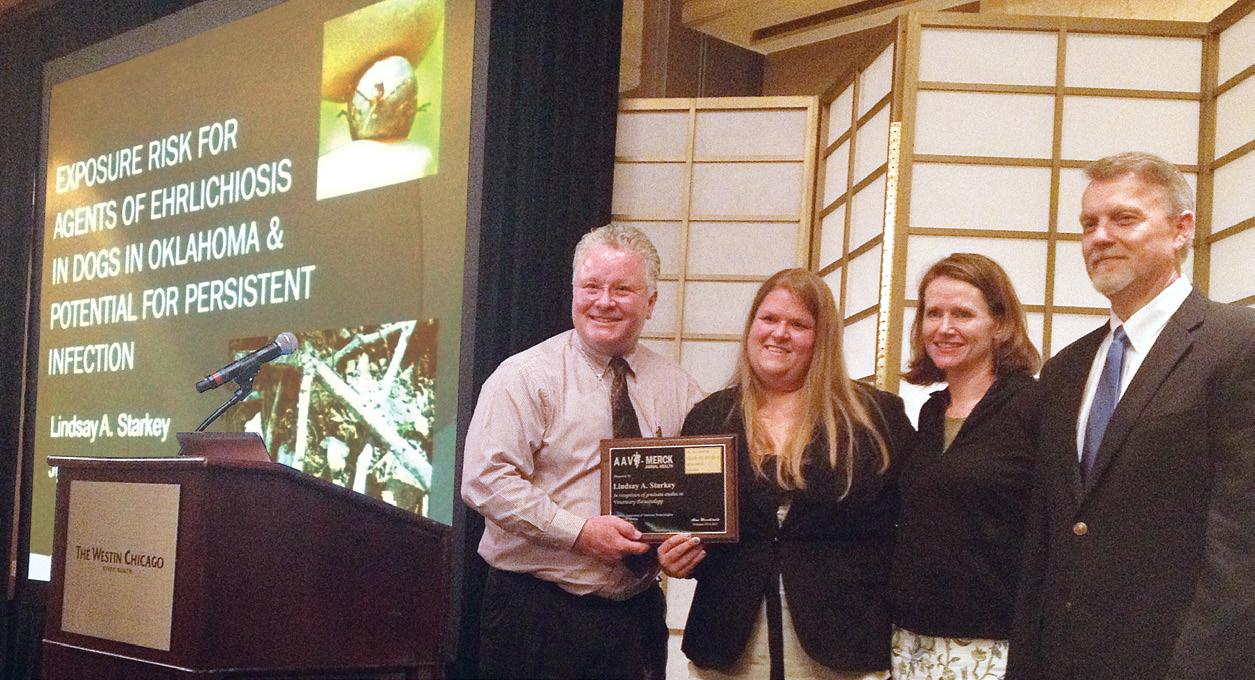
t he n ational Center for Veterinary Parasitology has seen a string of changes and successes over the last year. A look at a few of them:
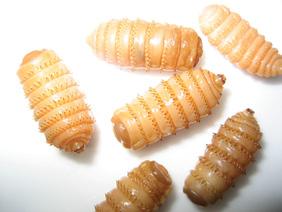
NCVP sponsors
n o Var ti S a nimal Healt H , b ayer, m erial an D k irkpatri C k f oun D ation
Projects between the Companion Animal Parasite Council and the NCVP are expanding.
Dr. Chris Carpenter, executive director of the Companion Animal Parasite Council, has visited the NCVP twice in the past few months to foster collaborative projects between the two groups.
Carpenter, accompanied on the first trip by Dr. Jason Drake of Novartis Animal Health, met with NCVP faculty, staff and graduate students, toured the facilities and developed initial plans for working on common goals.
Since then, NCVP residents have reviewed and updated recommendations on the CAPC website, ensuring that the information provided is accurate and current. Trainees have also authored new recommendations, which are subsequently reviewed and approved by the CAPC board, to meet emerging parasite informational needs.
On his second trip, Carpenter captured extensive video of clinical parasitology in action that will be used in future CAPC educational efforts.
“working with the nCVP allows us to create high-quality content to meet the needs of veterinarians. and in turn, the residents receive experience working on continuing education at the national level. it is a great opportunity for both organizations,” he says.
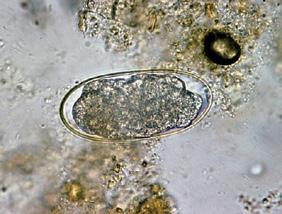
Many years ago, Dr. J. Carl Fox, a professor at OSU’s Center for Veterinary Health Sciences, compiled an online image database to aid those engaged in teaching and learning veterinary parasitology. Drs. Helen Jordan, Sidney Ewing and Alan Kocan also contributed images. In recent years, Dr. Eileen Johnson has led the charge, capturing high-quality parasite images to share on the web.
This parasite image database has been used by parasitologists and students worldwide and is linked as a resource on VIN and cited on Parasite World. NCVP staff members are updating the site to enhance the interface and improve image quality.
The posted images are available to anyone for educational use in lectures, presentations or discussions of parasites and parasitic diseases, but they should not be published or used for commercial purposes. If you need an image for publication, contact the NCVP with a specific request via ncvp@okstate.edu.
Oklahoma State University’s diagnostic veterinary parasitology laboratory has moved to a larger space.
The expanded space — located in the Oklahoma Animal Disease Diagnostic Laboratory across the street — dramatically increases the lab’s square footage, allowing room for more equipment. The larger laboratory is also centrally located in a busy diagnostic lab that offers more immediate access to tools such as microtiter plate readers and fluorescent microscopes that support diagnostic services.
Dr. Anne Zajac, parasitologist at the Virginia-Maryland Regional College of Veterinary Medicine at Virginia Tech, spoke about the specter of anthelmintic resistance in small ruminants in the United States at a spring dinner co-hosted by Oklahoma State University’s student chapter of the American Association of Veterinary Parasitology and the National Center for Veterinary Parasitology.
More than 30 students and faculty, including emeritus faculty, heard Zajac’s talk entitled, “It seemed like a good idea at the time: controlling Haemonchus.” She explained how we got to this point with anthelmintic resistance nematodes in sheep and goats and shared ideas for a way forward. Zajac, NCVP advisory board member and charter diplomate of the Parasitology subspecialty of ACVM, is a leader in ruminant parasitology with a special interest in alternatives to anthelmintics for parasite control. The students and faculty gave Zajac an OSU scarf, coffee mug and a special Haemonchus plate crafted by the veterinary center’s Dr. Eileen Johnson
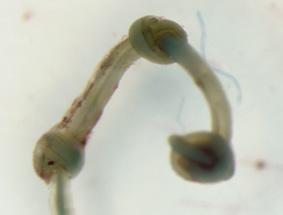
Dr. Chris Adolph , NCVP resident who recently finished his master’s degree at the National Center for Veterinary Parasitology, topped Veterinary Practice News’ list of “25 Vets to Watch in 2013.” He also was invited to join Phi Kappa Phi, a national collegiate academic honor society.
Dr. lindsay Starkey , NCVP Bayer Resident in Veterinary Parasitology and Ph.D. candidate, received the 2013 Merck Outstanding Graduate Student Award. Starkey, who received her DVM from OSU in 2011, presented her research regarding Ehrlichia spp. infections in dogs in Oklahoma to a crowded room on the opening night of the American Association of Veterinary Parasitologists 2013 annual meeting in Chicago.
Veterinary parasites affect human health and society in many ways. With the generous support of sponsors, the National Center for Veterinary Parasitology works to promote greater understanding and control of parasitic diseases in animals through innovative partnerships between academia and industry. Housed in the Center for Veterinary Health Sciences at Oklahoma State University, the center strives to create future generations of veterinary parasitologists, conduct targeted research, and provide diagnostic and consulting services worldwide. Drs. Mason Reichard and Susan E. Little are the center co-directors and Dr. Kelly Allen serves as NCVP project leader.
Board members and their universities include Drs. Byron Blagbum , Auburn ; Dwight Bowman, Cornell; Mike Dryden, Kansas State; Craig Reinemeyer, East Tennessee Clinical Research; and Anne Zajac, Virginia Tech
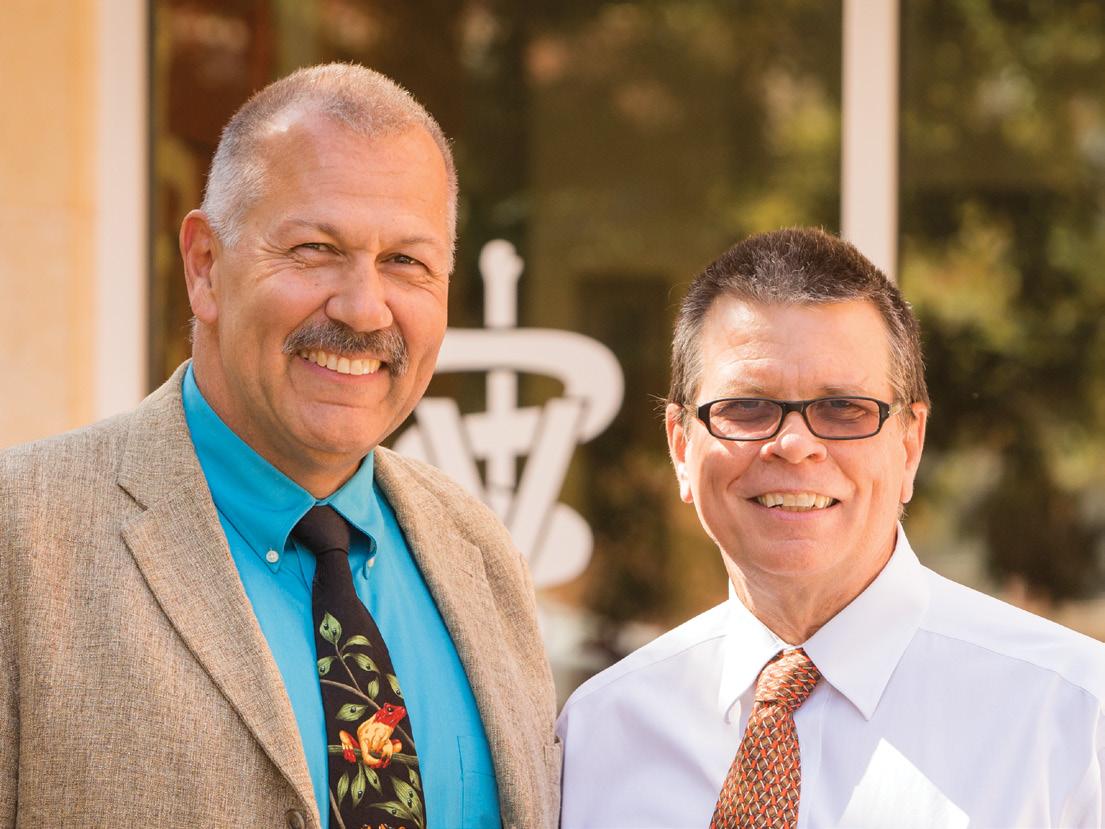
clemson
More than 100 faculty, staff and students came to hear Stephen Klaine, Ph.D., present “The Janus Face of Nanotechnology: Promises, Products and Potential Problems” at the 13th Sitlington Lecture in Toxicology on Oct. 18, 2012. Hosted by Carey Pope, Ph.D., OSU Regents Professor and the Sitlington Chair in Toxicology in the Department of Physiological Sciences, this annual seminar strives to bring in toxicology experts from around the world.
Originally from Cincinnati, Klaine earned a bachelor’s degree in biology with a minor in chemistry at the University of Cincinnati. While working at Procter and Gamble, he took environmental courses at night. A company executive who noticed his interest in the effects of chemicals on the environment recommended Klaine for graduate school at Rice University.
“We ha V e the potential to reallY impro V e e V er Y one’s li F e. What W e don’t kno W is W hat the conseq U ences are … We need to s U pplY people W ho make polic Y W ith the in F orma tion the Y need to make good polic Y ”
"WE HAVE THE POTENTIAL TO REALLY IMPROVE EVERYONE'S LIFE. WHAT WE DON'T KNOW IS WHAT THE CONSEQUENCES ARE ... WE NEED TO SUPPLY PEOPLE WHO MAKE POLICY WITH THE INFORMATION THEY NEED TO MAKE GOOD POLICY."
“I am intrigued how a compound is toxic to a particular organism but also what controls its bioavailability,” says Klaine. “Contaminants can be in the water and not affect the organisms. It depends on how available a compound is to an organism.”
About seven or eight years ago, Klaine’s interest in the environment led him to nanotechnology. Nano refers to any particle that is less than 100 nanometers.
“I met a colleague who was conducting carbon research,” explains Klaine. “Carbon nanotubes are not stable in water, and his research involved modifying the surface of the nanotubes to make them more stable in water, which presents an environmental risk to organisms. We decided to collaborate with my colleague producing the particles and my team assessing how these nanomaterials interact with various organisms.”
The title of Klaine’s talk referred to Janus, a Roman god who had two faces. While some nanomaterials have adverse effects, Klaine believes the majority of these nanomaterials do not present a high risk of toxicity.
“The real environmental and public health problems with nanotechnology may not be with acute toxicity but with long-term, chronic effects with prolonged exposures or with effects on processes we haven’t looked at such as microbial biofilms on the surface of the sediments. we live in a time of technological advancements. nanotechnology is being applied to every sector of society from airplanes to the clothes we wear to cosmetics, sunscreens and even drug delivery systems.”
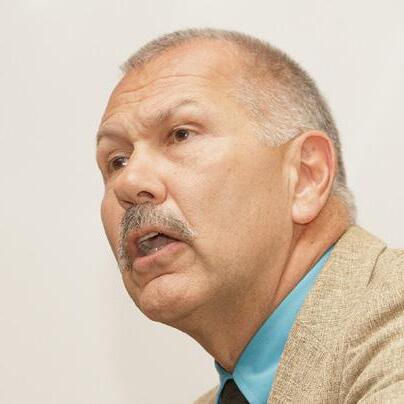
Stephen Klaine likens the possible effects of nanotechnology to the roman god Janus, who had two faces.
Dr. Klaine says 1,500 commercial products in society today contain nanomaterials, and more are on the way.
“We have the potential to really improve everyone’s life. What we don’t know is what the consequences are — whether they are human or environmental. We have an opportunity to look at various applications of these materials. As scientists, it is our responsibility to understand where these nanomaterials go and what potential harmful effects may happen. We need to calculate the risk to humans or risk to the environment prior to widespread use.”
He states that moving forward in the world of nanotechnology calls for more research.
“We need to supply people who make policy with the information they need to make good policy,” he adds. “Further research will advance knowledge on the potential adverse effects of the vast array of different types of nanomaterials being developed and provide data in support of defensible conclusions.”
Klaine is a professor in the Department of Biological Sciences and the director of the Institute of Environmental Toxicology at Clemson University.
derindA blAkeney
Dr. Craig Henke, a pulmonologist and critical care physician at the University of minnesota’s department of medicine, discusses his work on pulmonary fibrosis.
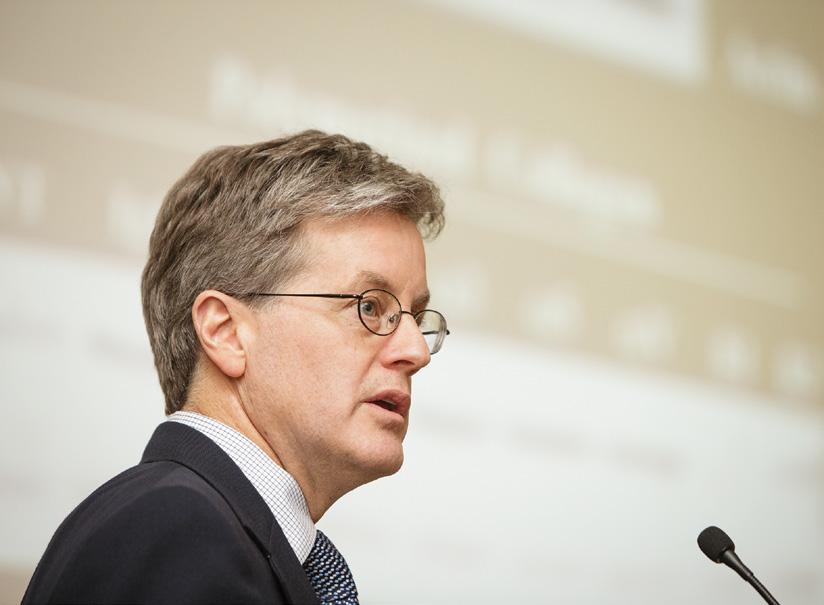
A noted medical doctor and University of Minnesota professor would like to take the death sentence out of pulmonary fibrosis, work he detailed during a December talk at the Center for Veterinary Health Sciences.
“The patients suffer terribly from this disease,” says Dr. Craig Henke, a pulmonologist and critical care physician at the University of Minnesota’s Department of Medicine, during his talk for the LundbergKienlen Lectureship in Biomedical Research that highlights groundbreaking research into medical issues.
Henke studies idiopathic pulmonary fibrosis, which afflicts approximately 200,000 people in the United States and has no known cause. The disease slowly asphyxiates patients by overwhelming their lungs with scar tissue.
Henke’s work focuses on the cells that make scar tissue — fibroblasts. In sick patients, they seem to go haywire. They make too much scar tissue and don’t stop, instead of simply repairing injury like normal cells of their kind.
The only treatment is a lung transplant. But nearly a third of transplants end badly as patients’ immune systems reject the organs. The lucky patients can live longer than a decade, Henke says.
“We don’t really have much to offer patients for treatment,” Henke told the assembly, as he clicked through the slides of his research. “We’re trying to make headway into it.”
Idiopathic pulmonary fibrosis’s connection to veterinary medicine at OSU lies in animal research. The veterinary center, which has an active lung disease research group, focuses in part on comparative medicine — looking into problems that affect animals and humans, often using animal models in medical experiments.

But Henke noted that IPF is a tough study in animal models, which highlights a stubborn problem in medicine.
“There’s little direct knowledge about human lung fibrosis,” he told students and faculty members. “I think a lot of the lack of progress in the field is because the animal models that we have to work with just don’t replicate the human disease very well.”
He began looking at IPF over a decade ago. Benefitting from the University of Minnesota’s status as an organ transplant center, his team’s work uncovered relationships among the lung’s chemistry, proteins and fibroblasts, later finding a connection between
the disease progression, the disease-mediating fibroblasts and a special kind of stem cell. Defects in the stem cells, known for their use in building other cells, caused them to make the offending fibroblasts, which lead to the excessive scarring.
“we believe our discovery provides a solid foundation for developing theories directed toward the fibrogenic progenitor before they have the opportunity to mediate organ fibrosis,” Henke told the assembly.
If researchers better understand the causes of the disease, they can help craft drugs or other treatments to fight it. But much more work needs to be done to find a full cure for the terminal disease.
MATT ellioTT
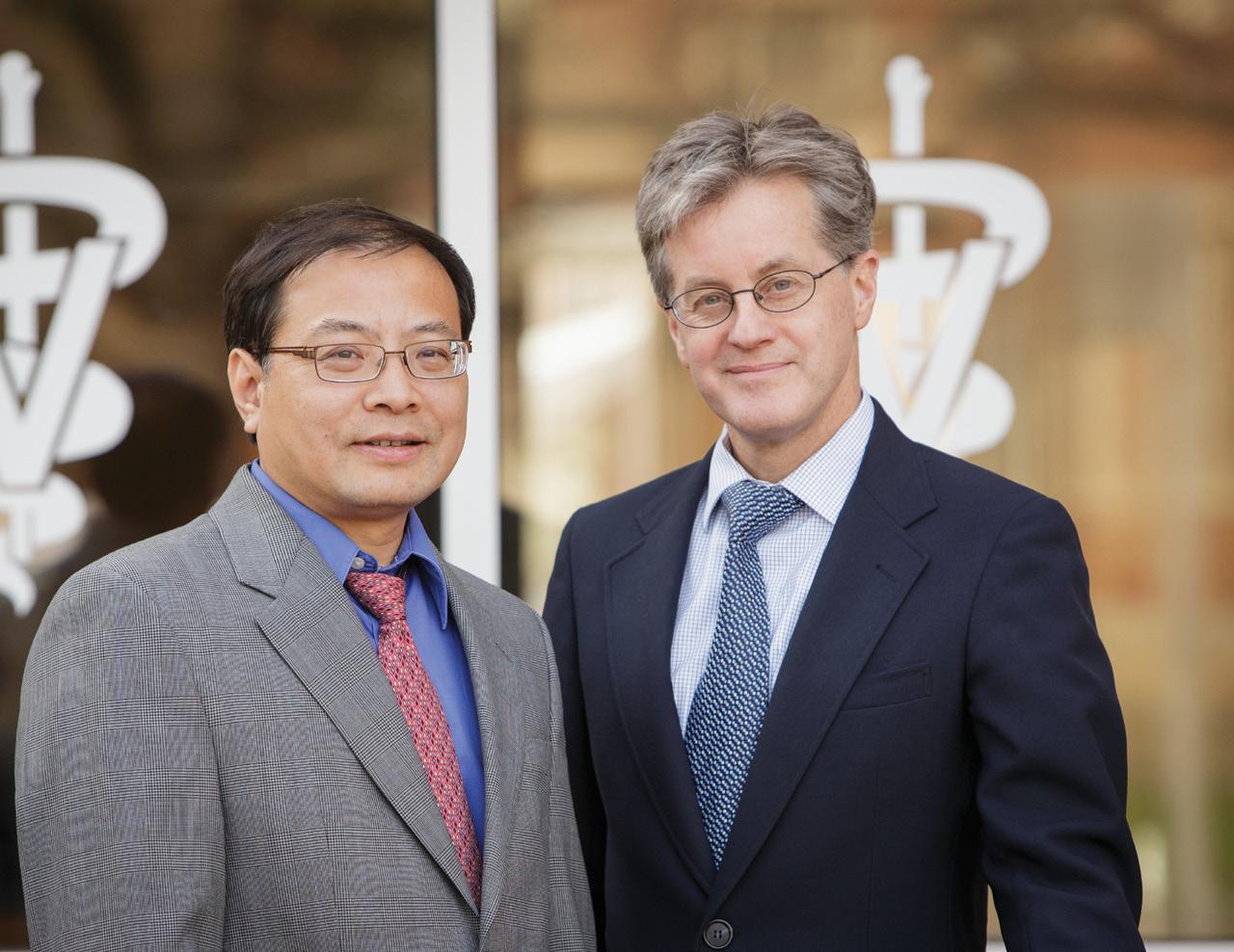
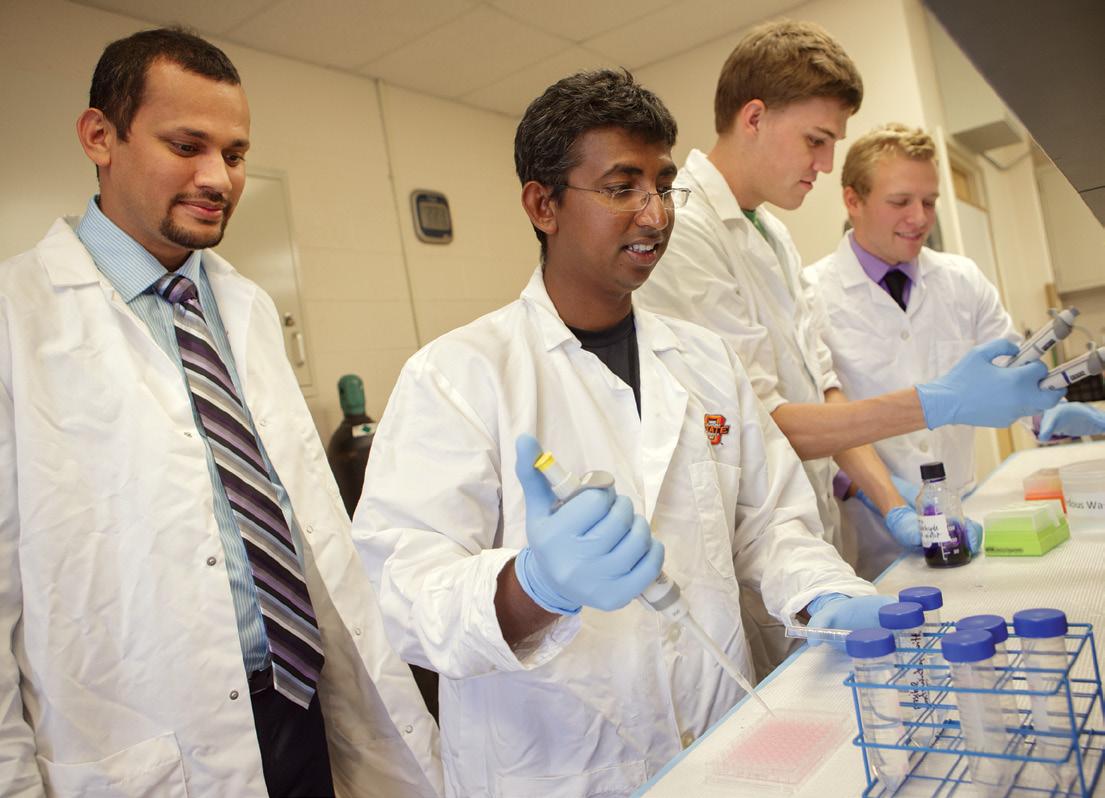
r an J an’ S lab u S ing nanoparti C le S to treat D i S ea S e
a shish r an J an may have only joined the veterinary center a year ago, but he’s got his research moving right along.
The assistant professor in the Department of Physiological Sciences is using nanoparticles to deliver disease-fighting drugs to targeted cancerous and chronically infected cells.
“Current treatment in cancer therapy usually relies on systemic delivery with limited tumor specificity,” says Ranjan. “This may result in adverse side effects in normal tissues and insufficient drug delivery to the targeted cancerous tumor. Encapsulation of a chemotherapeutic agent into a nanoparticle has the potential to reduce systemic toxicity and enhance drug delivery. For cancer targeting, we are pursuing two parallel approaches to address this critical need. One involves development of image guided drug delivery, and the other involves optimizing concurrent combinations of radiation and chemotherapy.”
nano me D i C ine an D targete D t H erapy laboratory member S
Ashish Ranjan, assistant professor
Danny Maples, pre-doctoral fellow and chemist
Venkatesan Perumal, post-doctoral fellow
Lauren Benedict, master’s veterinary biomedical sciences student
Michael Jensen, undergraduate
Ryan Newhardt, undergraduate
Kevin Mclean, undergraduate
Michele Harbeson, undergraduate
Joshua Vanosdol, special volunteer
Ranjan’s lab uses a simultaneous combination of drug encapsulated imageable nanocarriers with clinical imaging devices to achieve more accurate targeting, which may provide a more consistent tumor therapy.
“our team is developing nanoparticles that can be imaged using ultrasound, and simultaneously achieves drug delivery under image guidance,” he says. “One of the ongoing efforts recently funded by OCAST [Oklahoma Center for the Advancement of Science and Technology] focuses on developing thermally sensitive liposomes that can be combined with ultrasoundbased hyperthermia applicators.
“A thermally sensitive liposome is a tiny bubble made out of material similar to a cell membrane. These liposomes can be filled with a cancer-fighting drug and delivered using a very precise hyperthermia applicator, thereby achieving site-specific delivery. Currently, our group is developing many variants of these liposomes to enhance laser and radiation therapy, in addition to ultrasound,” he adds.
“Beca U se radiation can ca U se ad V erse side e FF ects, it is o U r goal to com B ine the site-speci F ic proton B ased radiation W ith nano dr U g deli V er Y t his targeted approach lessens the toxic radiation BY onlY treating the t U mor and not harming other W ise health Y tiss U e in the patient, and sim U ltaneo U slY ind U cing dr U g release F rom the liposomes.”
"BECAUSE RADIATION CAN CAUSE ADVERSE SIDE EFFECTS, IT IS OUR GOAL TO COMBINE THE SITE-SPECIFIC PROTON BASED RADIATION WITH NANO DRUG DELIVERY. THIS TARGETED APPROACH LESSENS THE TOXIC RADIATION BY ONLY TREATING THE TUMOR AND NOT HARMING OTHERWISE HEALTHY TISSUE IN THE PATIENT, AND SIMULTANEOUSLY INDUCING DRUG RELEASE FROM THE LIPOSOMES."
— a s H is H r an J an, a ssistant professor in t H e Depart M ent of pH ysio L ogi C a L sC ien C es
According to Ranjan, a benchto-bedside model of research requires an interdisciplinary approach to increase the project’s overall success rate. For example, the laser-guided drug delivery system being developed in his lab could be translated to clinical treatment of canine patients at the Veterinary Medical Hospital. He collaborates with Kenneth Bartels , DVM, McCasland Foundation Laser Surgery Professor and Kerr Chair for Biophotonics at the hospital.
For concurrent combination of radiation and chemotherapy, Ranjan’s group is collaborating with an OSU radiation physics group and with the ProCure Proton Therapy Center in Oklahoma City. The plan is to develop a drug delivery system that will deliver a vital anticancer drug encapsulated in the nanoparticles concurrently during radiation therapy to help treat prostate, lung and breast cancers.
“Because radiation can cause adverse side effects, it is our goal to combine the site-specific proton based radiation with nano drug delivery. This targeted approach lessens the toxic radiation by only treating the tumor and not harming otherwise healthy tissue in the patient, and simultaneously inducing drug release from the liposomes,” he says.
Ranjan’s research is in the cell culture model phase for prostate cancer, and plans are underway to conduct in vivo research in clinically relevant animal models.
Other areas of active research in Ranjan’s group involve reducing threats of biological and chemical weapons.
“There is an urgent need to develop effective prophylactic and therapeutic methods against chemical and biological weapons,” says Ranjan. “As part of the OSU Interdisciplinary Toxicology Program led by Dr. Carey Pope, we recently received funding from the Defense Threat Reduction Agency to develop nanoparticle-based bioscavenger molecules that can provide prolonged enhanced protection against such attacks.
“Similarly, we are developing the means to reduce patient compliant therapies by achieving targeted intracellular delivery of antimicrobials using our nanoparticle against a variety of intracellular pathogens of national interest. These may effectively reduce drugresistant pathogens and aid in development of innovative treatment approaches.”
Ranjan collaborates with Jerry Malayer, Ph.D., associate dean for research and graduate education at the veterinary center, and Akhilesh Ramachandran, assistant professor at the Oklahoma Animal Disease Diagnostic Laboratory, to evaluate the nanoparticles against a variety of clinically relevant pathogens.
Funding for Ranjan’s team’s projects comes from several sources, including the OSU Center for Veterinary Health Sciences, internal department grants, the OSU Interdisciplinary Toxicology Program, Oklahoma Center for the Advancement of Science and Technology and the Defense Threat Reduction Agency.
“The important thing that people need to know about our research is that the successful translation of our approach to clinical trials will have huge implications in patients’ lives,” says Ranjan. “nanoparticles have tremendous potential to change the way people look at current clinical practices. This is no longer basic science and is moving toward clinical science. If we can change how we treat diseases going forward, it will help doctors target drug delivery to minute areas for maximum effect and minimum risk to the patient.” derindA blAkeney
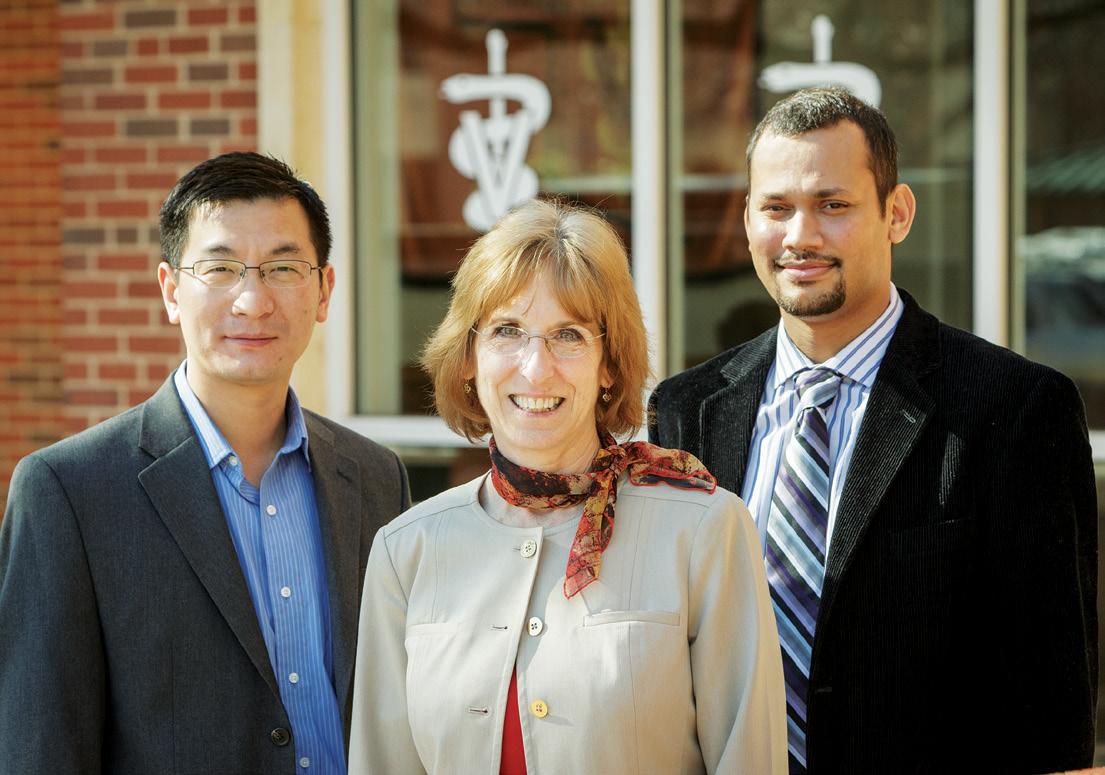
A chemist by training, s hawn Ch E n, Ph.D , is a chief and senior investigator at the n aT iona L i ns T i TUTE o F Bio MED i C a L iM aG in G an D Bio E n G in EE rin G with the n aT i ona L i n s T i T UTE s o F hE a LT h in Bethesda, Md.
In his presentation, “ Nanoparticle Platforms for Molecular Imaging, ” at McElroy Hall in early February 2013, he provided an overview of a novel nanoparticle that has potential applications in medical diagnostics and therapy. Sponsored by the Department of Physiological Sciences and OSU’s Interdisciplinary Toxicology Program, the seminar was part of the Distinguished Scientist Speaker Series and focused on various nanoparticle platforms that can be used for molecular imaging.
His research team’s work on using a gold nanoparticle platform for ELISA provided a new approach of improving assay sensitivity. ELISA, or Enzyme-Linked Immunosorbent Assay, is a test that uses antibodies and color change to detect the presence of a substance. Using the gold nanoparticle in ELISA provides a more accurate/ sensitive determination of the contents or characteristics of the subject matter being examined.
These particles could be used to determine biomarkers in vitro, diagnose diseases in vivo and eventually treat the diseases.
Chen and his team are using a new method of investigating molecular imaging that combines therapy and diagnostics to create “theranostics.” The idea is to use multiple techniques to arrive at a comprehensive diagnosis and treatment regime.
In one study, Chen’s team used different imaging modalities to determine the timeline of a cancerous tumor. Highlighting the nanoparticles made it easier to track the tumor’s growth and response to therapeutics over a short period of time.
Chen also presented new developments in photoacoustic imaging that could provide high tumor contrast, and suitably addressed the limitation of resolution and depth limitations of optical imaging. He also discussed other diverse theranostic systems that achieved simultaneous imaging and cancer therapy with significant success. Chen highlighted the key limitation in clinical translation of this idea, and noted the critical role that centers like the Center for Veterinary Health Sciences play in improving the clinical translation of this technology.
The field of theranostics is so new that Chen was tapped to develop a new journal for this area of research. Theranostics is in early publication, and Chen invited the nearly 60 faculty, staff and students attending the seminar to submit their related research articles for the journal.
Chen’s visit was hosted by Ashish Ranjan, BVSc, Ph.D., assistant professor in the Department of Physiological Sciences. Chen also spent time with veterinary center and main campus researchers, faculty, veterinary hospital clinicians,
graduate and postdoctoral students during his visit as well as with the director of the Advanced Magnetic Resonance Center Imaging Facility at the Oklahoma Medical Research Foundation.
“Image-guided drug delivery is a highly interdisciplinary field that combines the fields of chemotherapy and imaging for the development of ‘personalized medicine.’ Personalized medicine aims for individual chemotherapeutic interventions based on ex vivo, in vivo and response of a patient to a particular treatment regimen,” says Ranjan. “Theranostics can play a key role in personalized medicine by providing real-time imaging feedback for active monitoring of drug delivery.
II' ir ,r, {II UUUI IU 'f'i'f' r
“With his extensive experience, Dr. Chen is considered an internationally recognized authority in the field of theranostic nanoparticles and their application in molecular imaging and cancer therapy,” adds Ranjan. “He has published more than 300 papers, numerous books and book chapters and has multiple patents. We were delighted to have him visit and present his work.”
derindA blAkeney
Cl/HS
"WITH HIS EXTENSIVE EXPERIENCE, DR. CHEN IS CONSIDERED AN INTERNATIONALLY RECOGNIZED AUTHORITY IN THE FIELD OF THERANOSTIC NANOPARTICLES AND THEIR APPLICATION IN MOLECULAR IMAGING AND CANCER THERAPY WE WERE DELIGHTED TO HAVE HIM VISIT AND PRESENT HIS WORK."
“With his extensi V e experience, d r. c hen is considered an internationallY recogni Z e d a U t horit Y in the F i eld o F theranostic nanoparticles and their application in molec U l ar imaging and cancer therap Y … We W e re delighted to ha V e him V isit and present his W ork. ” — a s H is H r an J an
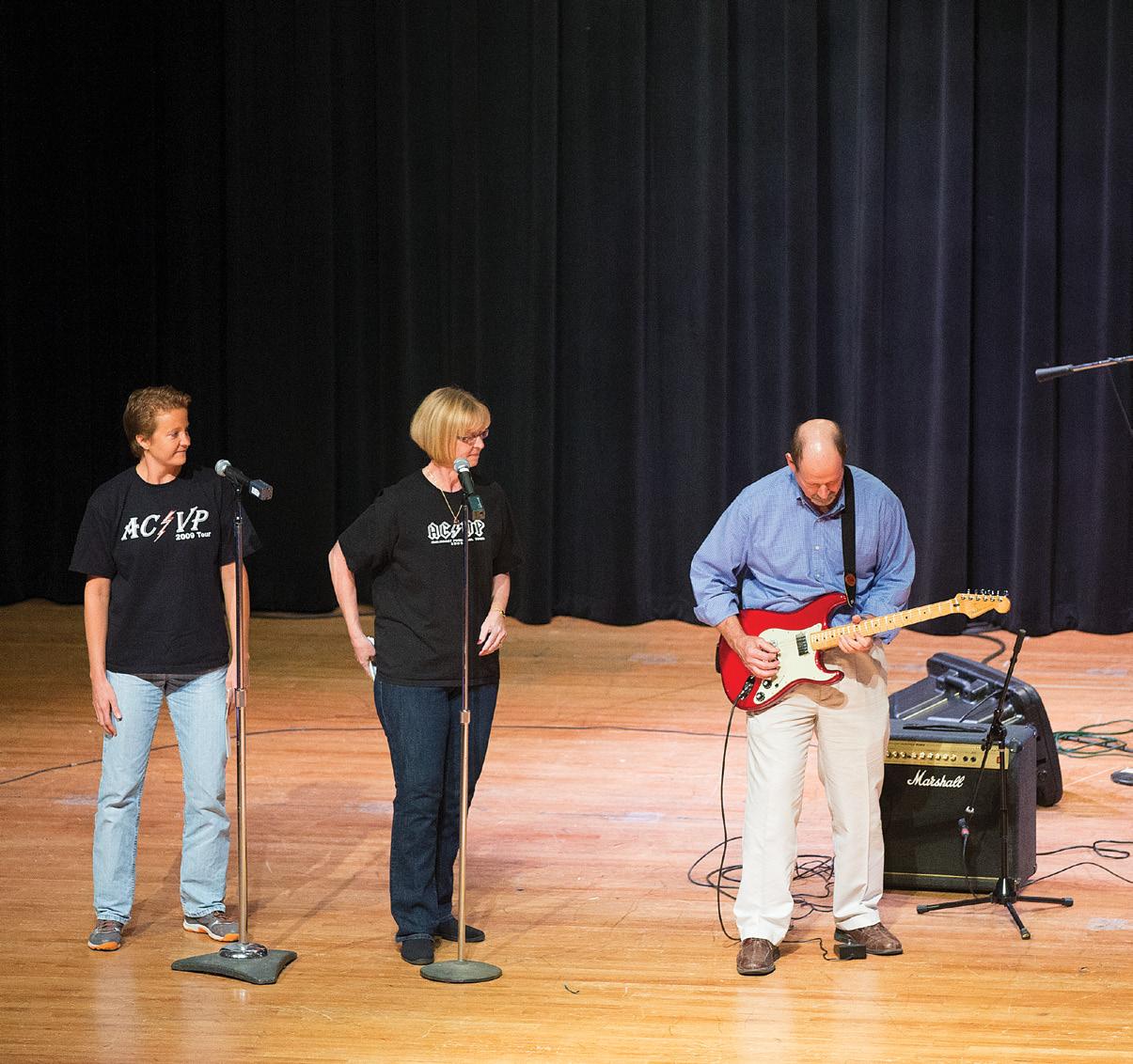
i t might not have been what the TEDxo sTaTE U audience expected from representatives from the Veterinary Center. …
But then again, TED events are designed to engage the audience with quick, 10- to 15-minute presentations. And the theme of TEDxOStateU 2012 was “IGNITE” your creativity and your passion; presentations included sustainability issues and important research being done at OSU that will have an impact on society for decades to come.
performing as AC/VP at TEDxOStateU were (from left) Drs. Melanie Breshears (osU dVm ’98), Robin Allison, Anthony Confer (osU dVm ’72) and Jerry Ritchey (osU dVm ’91), backed on the drums by Ed Harris from the college of education.
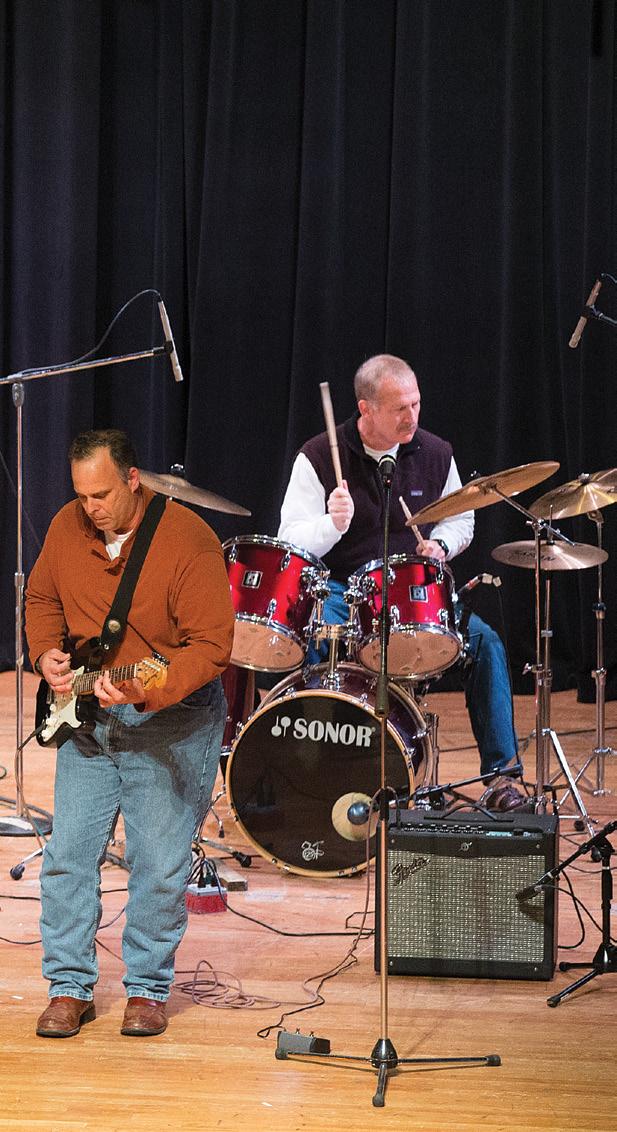
So perhaps when AC/VP and the Pneumo Sistas — a unique veterinary pathology rock band — took the TEDx stage on Nov. 1, 2012, the audience might not have been that surprised after all.
Band members — veterinary center faculty Drs. Anthony Confer , Jerry Ritchey , Tim Snider , Robin Allison and Melanie Breshears with the College of Education’s Ed Harris on drums — put veterinary pathology words to familiar rock songs.
Speaking at the event was Michael Davis, DVM, Oxley Chair in Equine Sports Medicine and director of the Comparative Exercise Physiology Laboratory from the Department of Physiological Sciences. As Davis talked about his U.S. Marine Corps-funded research, he was accompanied by Sampson, a black Labrador retriever in the military program, and the dog’s handler. The dog is trained to find improvised explosive devices among other things for the military. Part of Davis’ research is directed toward discovering the key to a dog’s resistance to fatigue.
To watch all the videos from the event, visit oState.tV or teDxoStateU.com
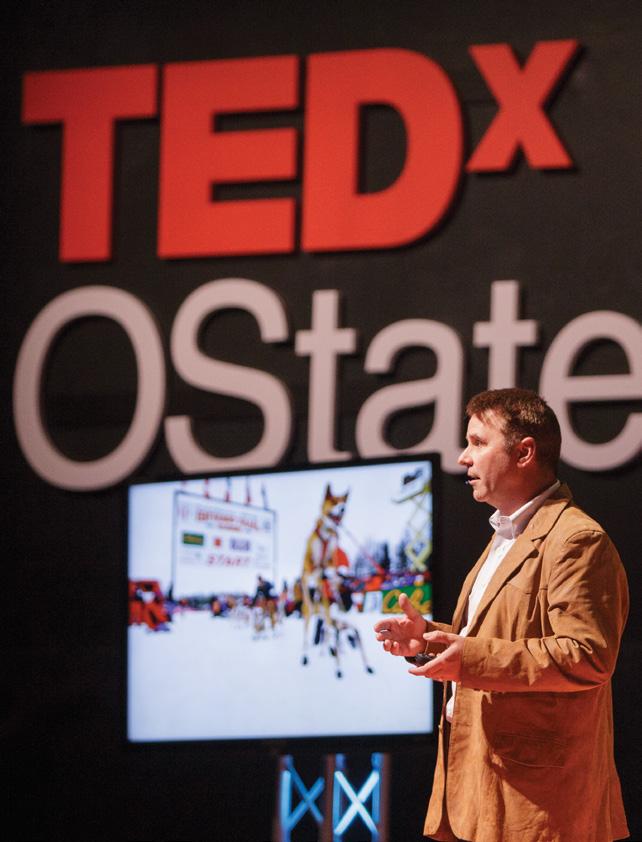
Dr. Michael Davis tells the TEDx audience that his research, funded by the marines, is aimed at discovering the key to a dog’s resistance to fatigue.
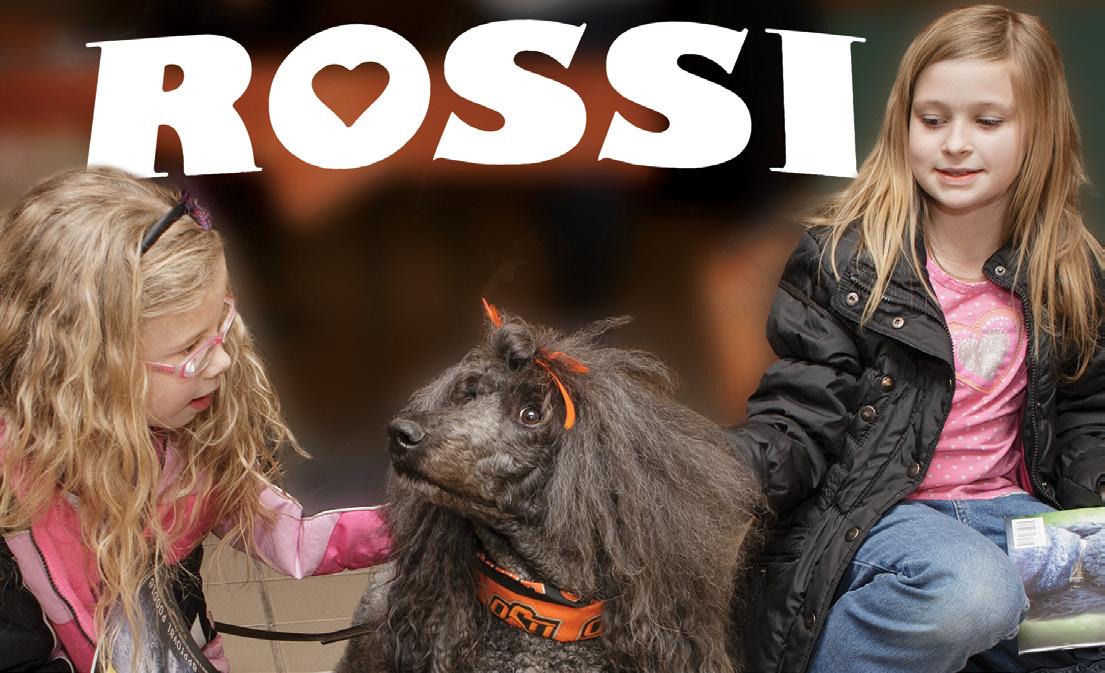
r o ssi T h E aPP r o Va L P oo D LE wasn’t giving accolades during her OSU visit — rather, it seemed she was collecting them.
A standard poodle, Rossi is a certified pet therapy dog with the Human Animal Link of Oklahoma Foundation. She earned her nickname, “the Approval Poodle,” by “approving” of good behavior. She and her owner, Judy Savage, volunteer in hospitals, schools and libraries.
Savage has put Rossi’s “approved” rules for living a happier and healthier life into a book named after the big-haired canine. The pair was signing copies during their January visit to McElroy Hall at the Oklahoma State University’s Center for Veterinary Health Sciences.
The veterinary center and members of its Canine Practitioners Club hosted the visit. Guests enjoyed bottled water and cookies shaped like dog bones while waiting to meet Rossi and Savage. Each person received a backpack of goodies along with one autographed copy of the book per family.
“Inviting Judy and Rossi to the veterinary center was a perfect fit,” says Dr. Lara Sypniewski, clinician at OSU’s Community Practice and Canine Practitioner Club adviser. “it’s important for the general public to see the important role veterinarians play in keeping their pets and working dogs like rossi healthy. Judy was very generous with her time, and Rossi was exceptionally patient after visiting two other OSU campus groups earlier in the day. We were very excited to welcome them to Oklahoma’s only veterinary college.”
g eorgia profe SS or link S H uman, animal H ealt H
The Class of 1963 Distinguished Lecturer’s speech tied together trade, traffic, emerging and zoonotic diseases and the important role of veterinarians in keeping the public healthy and animals disease-free.
Corrie Brown, DVM, Ph.D., DACVP, presented “The Global Express: Coping with Disease Threats in an Interconnected World” at the 2012 Annual Fall Veterinary Conference. Brown is a Josiah Meigs Professor in the Department of Veterinary Pathology at the University of Georgia’s College of Veterinary Medicine.
“It’s an ongoing process,” says Dr. Brown. “Global warming, live animal trade, the ease with which people can move from continent to continent — all contribute to an increase in diseases being transferred from one area to another and from animals to humans and vice versa.”
Brown shared that as emerging economies such as Brazil, Russia, India, and China enter the market, it is vital that all the players follow the same health and safety standards when trading internationally to minimize the risk.
“To help ensure animals and people stay healthy, i encourage veterinarians to engage more in overall health issues. Veterinarians are often the first to see diseases and the first point at which we can gain control to minimize adverse effects,” she adds.
Brown earned her bachelor’s degree in animal behavior from McGill University in Montreal and her DVM degree from Ontario Veterinary College at the University of Guelph. She completed a combined residency/Ph.D. in comparative pathology at the University of California, Davis. She is also a diplomate of the American College of Veterinary Pathologists.
She was an assistant professor of pathology at Louisiana State University briefly before joining the U.S. Department of Agriculture at Plum Island. As head of the pathology section at Plum Island, she specialized in the diagnosis and pathogenesis of transboundary animal diseases. She joined the University of Georgia in 1996.
Brown is interested in infectious diseases of food-producing animals, emerging diseases and international veterinary medicine. She has published or presented more than 250 scientific papers and has testified to Congress on issues involving agroterrorism.
derindA blAkeney
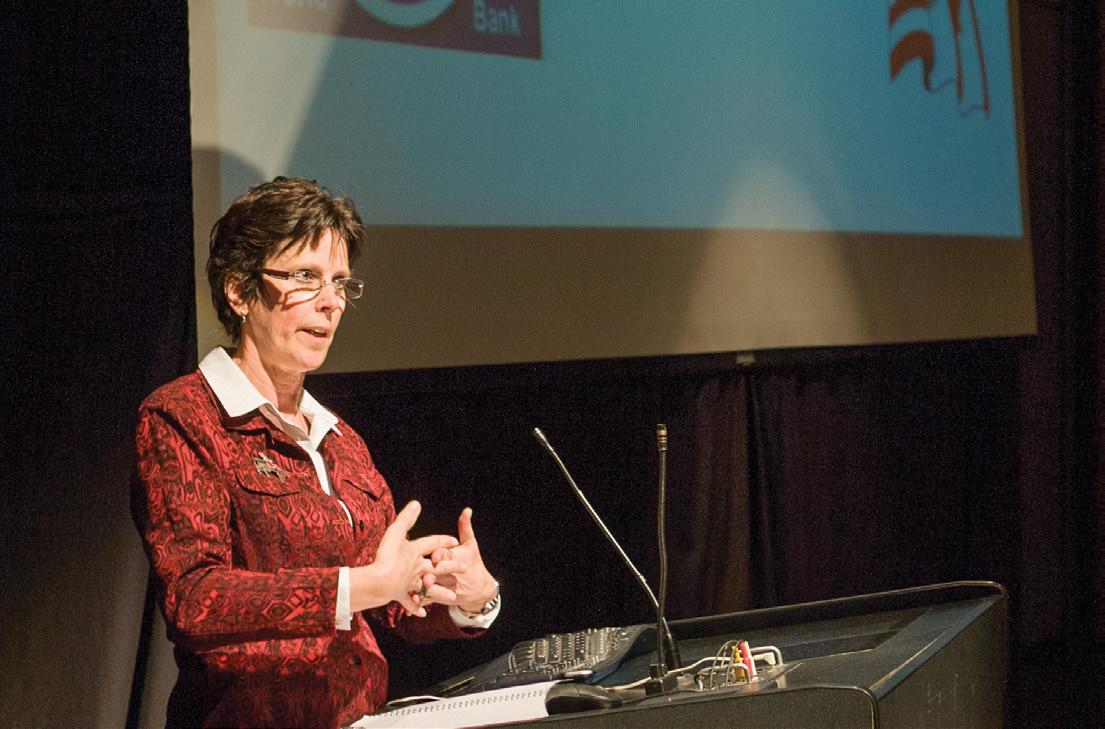
“ g lo B al W arming, li V e animal trade, the ease W ith W hich people can mo V e F rom continent to continent — all contri BU te to an increase in diseases B eing trans F erred F rom one area to another and F rom animals to h U mans and V ice V ersa.”
Veterinary C enter C ommemor ate S
Veter an S Day
left: a combined rotc color guard presented the colors on Veterans Day at the Military Veterinarian Honor Court
right: retired army reserve Maj. Gen. Douglas Dollar urges those with military experiences to share their stories.
A small group gathered at the Military Veterinarian Honor Court outside McElroy Hall on the Stillwater campus in November to pay tribute to those who have military ties. After all, many OSU Cowboy veterinarians have served, currently serve or will serve in the armed forces.
A combined ROTC color guard presented the colors, and retired Army Reserve Maj. Gen. Douglas Dollar addressed the group on “Why Should We Observe Veterans Day?”
Dollar encourages current and past military personnel “to share their stories. Veterans’ Day is a day to reflect on the consequences of war and the sacrifices made.” After all, he adds, “often, non-veterans do not understand what veterans do or have done for our country, and veterans sometimes assume that non-veteran family members and friends know what they have done.”
OSU’s Center for Veterinary Health Sciences has long had a relationship with U.S. armed forces. Several alumni and faculty members have had illustrious careers in the Army, Air Force or National Guard. In addition, nine veterinary students are currently connected with the military. They are:
Class of 2013
Catie Morris, Emily Stoppelmoore and Erin Way;
Class of 2014
Audra Blasi, Stefanie Bolas and Candace Wimbish; and Class of 2016
Patricia Baker and Brianna Smith
Patricia Baker joined the military right out of high school at age 18 and currently serves as a public affairs specialist for the Oklahoma Air National Guard. Like her father before her, she did her basic military training at Lackland Air Force Base in San Antonio, Texas.
“I am currently on a traditional guardsman status, which means I can have a full-time job as a veterinary student here at OSU. One weekend a month, I go to Oklahoma City and perform my training duties there,” says Baker. “I feel like we have support here in our veterinary school for persons who are serving in the military to help them succeed and complete school. When I graduate with my veterinary degree, I plan to apply to the health professions officer program for the U.S. Air Force active duty.”
Audra Blasi and Erin Way are already in the program Baker hopes to join.
“My dad and cousin are both in the Air Force,” says Blasi. “I have always thought about joining, and when the scholarship came up last year, I jumped at it. I was commissioned in January 2012. Earning my veterinary degree is my top priority as far as the Air Force is concerned. After I graduate, I have a few weeks off and then it is off to commissioned officer training, which is like the ‘gentlemen’s boot camp.’ Then I will go to another school for public health followed by a three-year assignment at a base. After that, if I want to stay in, I can. If I like it and military life is what I want it to be, I will probably stay in. If not, I will probably say, ‘Well, I did my duty’ and join a large animal practice.”
Like Blasi, Way has relatives in the Air Force, which gave her some insight into military life.
“My dad and brother are both in the Air Force, so I had been thinking about joining the military for some time,” says Way. “I submitted my application and was commissioned the spring of my second year of veterinary school. Like Audra said, after I earn my DVM degree, I will attend commissioned officer training school. That’s where they teach you how to be an officer in the military, how to wear your uniform, how to salute — the ins and outs of the Air Force.”
It might sound a little unusual for veterinarians to go into military service, but Way explains their jobs: “Veterinarians in the air Force serve as public health officers,” she says. “we mostly do human health rather than interacting with animals. Our job is about the potential disease transmission between humans and animals, food safety and if there were an infectious disease outbreak, we would do epidemiology related to that.
“It’s nice to see the veterinary center commemorate Veterans Day,” adds Way. “Veterinarians play an important role in the military and in protecting the food supply for everyone.”
“OSU has some prestigious graduates who are in the military,” notes Blasi. “Brig. Gen. Theresa Casey (retired) was the first veterinarian to rise to that rank. The scholarship opportunities are really good and I encourage anybody who wants to join the military to go for it.”
Of the nine veterinary students connected with the armed forces, five are with the Air Force, one is in the Army, one is in the Air National Guard and one is in the Army National Guard.
derindA blAkeney
An OSU Center for Veterinary Health Sciences professor has been promoted to lieutenant colonel in the U.S. Army Reserve.
Dr. Tamara Gull, an assistant professor in veterinary pathobiology, received her promotion at a ceremony during a clear April morning at the Military Veterinarian Honor Court outside McElroy Hall.
“I will be taking more responsibility in the Army Reserve. I will have to probably devote more of my off time to it, which just means I’ll have to work harder here so I can make time for everything,” Gull says.
Retired U.S. Army Reserve Col. Kenneth Bartels presented her with her promotion, saying he wouldn’t be surprised if Gull, due to her determination and qualifications, became a full colonel soon.
“That’s about as high as we can go unless she decides to shoot a bazooka and be a brigadier general in the infantry, and i wouldn’t put it past her,” Bartels said, drawing laughs from the assembled crowd of Gull’s students and colleagues.
Gull excels at the superhuman task of keeping up with her research in areas such as infectious respiratory diseases in cattle, teaching OSU veterinary students and maintaining her duties in the Army Reserve.
She began her military career with the Navy in 1988, spending six years in active duty before joining the reserve and starting veterinary school at Tufts University. She has been in the Army Reserve Veterinary Corps since 2001 — service that has taken her on veterinary humanitarian trips all over the world — and has a doctorate from Texas A&M.
Most recently, she deployed to Qatar and Kuwait in 2011, where her team worked in everything from food safety issues to providing locals with veterinary medical care, including helping round up and spay feral cats on a base.
“The personal risk factor was fairly low considering the part of the world we were in,” Gull says. “We got a lot of good things accomplished. We got a lot of kudos from our senior officers. It was a very successful deployment.”
As a lieutenant colonel, she’s assigned to the 321st Civil Affairs Brigade based in San Antonio. Her promotion means she’ll oversee a larger team involved in protecting troops’ food supply abroad and performing other vital tasks.
Gull is thankful to OSU for supporting her military career and allowing her to keep her position at the center, noting that not all employers are so accommodating.
She is a diplomate of the American College of Veterinary Internal Medicine (Large Animal), the American College of Veterinary Preventive Medicine and the American College of Veterinary Microbiologists. She has contributed to numerous articles and other publications, including the second edition 2013 textbook, Social Vulnerability to Disasters. Her doctoral thesis, finished in 2007, is on the lung disease contagious bovine pleuropneumonia, or “lung plague.” She has been with the center since 2008.
MATT ellioTT
army reserve Lt. Col. Dr. Tamara Gull (left) was on hand as
and
were commissioned into the army as second lieutenants.
Students applying to veterinary college are making a solid commitment to study for the next four years to learn their trade. Upon graduation, they commit to “a lifelong obligation for the continual improvement of professional knowledge and competence” with the Veterinarian’s Oath, so they can always offer the best possible care to their veterinary patients. This year, two OSU veterinary medicine students made one more commitment — to serve their country.
Sarah Keller and Kristen Kemper, both in the Class of 2016, were commissioned into the U.S. Army as second lieutenants. Both students were awarded three-year full scholarships in return for their service following graduation.
Keller, of New Cumberland, Pa., is no stranger to the service. She has already served five years in the U.S. Navy in aviation administration for the air operations command on Naval Air Station Pensacola, Fla.
“It was always my plan to leave the Navy to attend veterinary school,” says Keller. “The long-term plan was to earn my DVM degree and enter the U.S. Army Veterinary Corps. This scholarship will help make that dream a reality.”
Kemper, of Tulsa, Okla., became interested in the program through her fiancé.
“My fiancé is working on his master’s degree here at Oklahoma State,” explains Kemper. “He is very interested in becoming an entomologist in the Medical Service Corps. I knew there was a Veterinary Corps, so I looked into it. For me, i think it is a great combination of doing what i love — veterinary medicine and serving my country.”
On hand for the commissioning was Dr. Tamara Gull, assistant professor in the Department of Veterinary Pathobiology and a lieutenant colonel in the U.S. Army Reserve. Gull was deployed most recently in Kuwait and Qatar before returning home in November 2012.
derindA blAkeney
o peration Catnip offer S free neutering for ‘ C ommunit y C at S ’
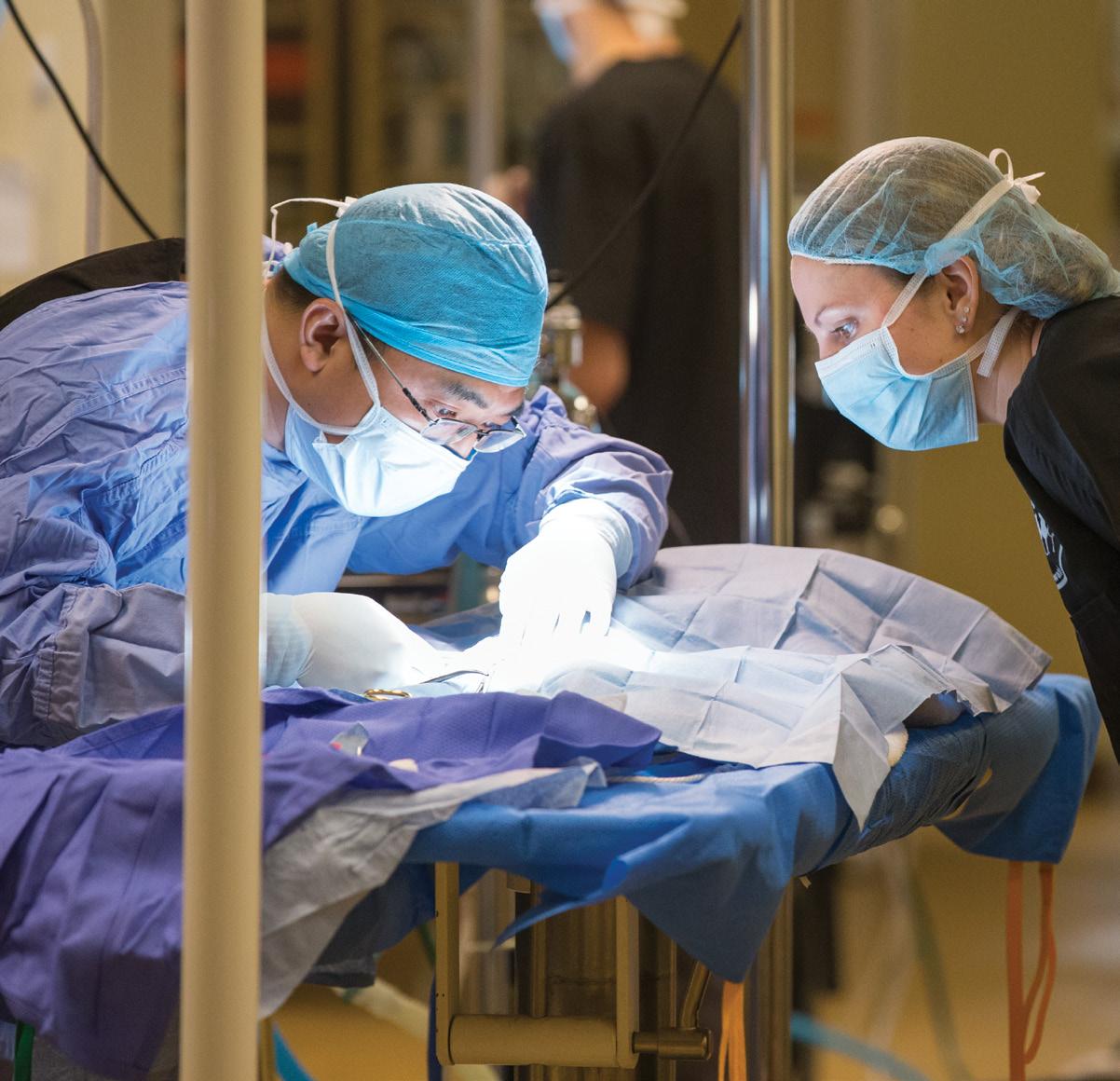
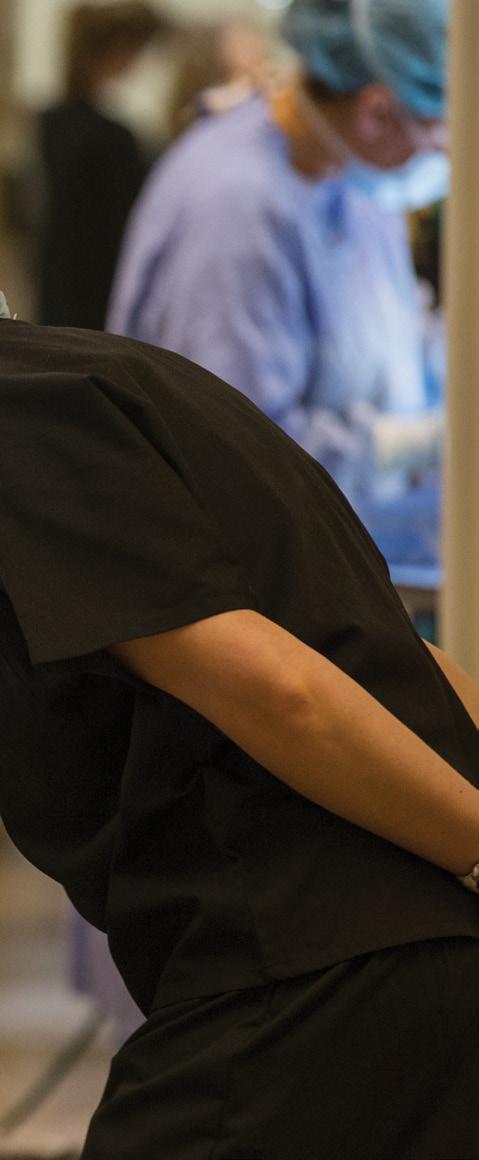
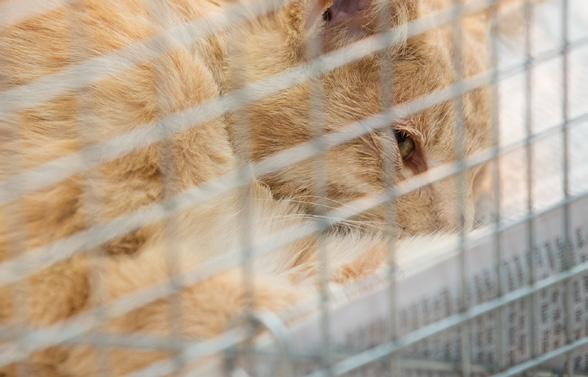
Several dozen “community cats” are living healthier, safer lives, thanks to Operation Catnip Stillwater And hundreds more will be joining their feral and stray brethren this year.
Operation Catnip is a nonprofit “trap, neuter and release” (TNR) organization spearheaded in Stillwater by Dr. Lesa Staubus, clinical assistant professor in shelter medicine and surgery at Oklahoma State University’s Center for Veterinary Health Sciences. Other veterinarians, veterinary and pre-vet students and members of the community are also involved with the group.
Community cats are free-roaming stray or feral (wild) cats who don’t have owners. A single female cat is likely to be responsible for producing 100 cats in seven years — 100 cats who won’t have homes or owners. TNR stops this cycle, helps reduce aggressiveness in feral cats and can prevent the spread of disease to pet cats.
The program also aims to ease the burden on local rescue group Tiny Paws Kitten Rescue as well as reduce the Stillwater shelter’s euthanization rate. Stillwater Animal Welfare Director Mary Dickey is a member of Operation Catnip Stillwater’s board.
Tiny Paws founder Holly Chapples also sits on the new group’s board of directors. After the first clinic, she sent out an email to thank the clinic volunteers, saying, “Tiny Paws kitten rescue loves operation Catnip! we believe that it will help reduce the number of orphaned neo-natal kittens that we rescue.”
At Operation Catnip’s first “Spay Day” clinic in May, 44 cats were “fixed” and vaccinated. Although the clinic is called a spay day, volunteers neutered male cats as well. Eight more such clinics are planned throughout the school year, monthly except in December.
Brought in by volunteers who trapped them, the cats weren’t shy about voicing their displeasure that Sunday morning in May.
f uture C lini CS SCH e D ule D o peration Catnip s ti LLwater CL ini C s wi LL be H e LD on t H e se C on D sU n D ay of t H e M ont H tH e D ates are: Jan. 12, 2014 Feb. 9 March 9 April 13 May 11
t o M ake a reservation for a stray or fera L C at, e M ai L OPERAT i ONCATN i PST i LLWATER @ GMA i L C OM , visit WWW OPERAT i ONCATN i PST i LLWATER ORG or CH e C k t H e gro U p’s fa C ebook page.
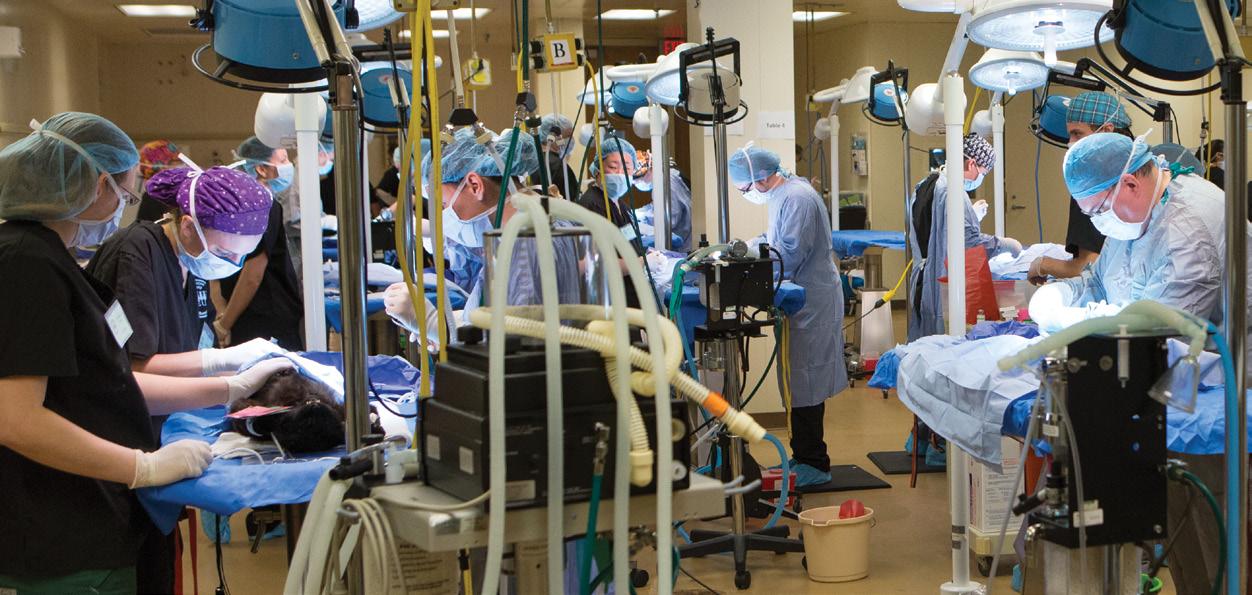
The volunteer medical professionals anesthetized the cats while they were still in the traps, making it safer and easier to handle the feral felines. Once out of the traps, the anesthetized cats were vaccinated, had their left ears tipped (a recognized sign that a feral cat is “fixed”) and genders checked and then were shuttled off to the right surgery table. Post-surgery, they were carefully watched until they started to wake up from the anesthesia; at that point, they were
returned to the traps they arrived in. Those who brought them in had been given careful instructions for caring for the cats overnight before releasing them the next day.
While only 44 cats were brought in to the first clinic, the high-efficiency surgeries are set up to handle as many as 300 cats at a single clinic. It may be hard to imagine, but the clinic operates much like an assembly line: Each person does only one job, carefully and quickly.
The clinic ran smoothly with that assembly line approach. It’s a design Operation Catnip Stillwater adopted from the flagship Operation Catnip program in Gainesville, Fla.
“it was wonderful!” says Staubus, who notes all 44 surgeries were done in 21/2 hours. And, she points out, that first clinic was seen as somewhat of a training situation for all involved.
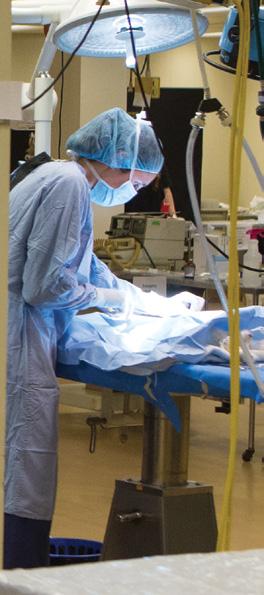
PetSmart Charities approved a $23,900 grant to host pediatric spay/neuter wet labs.
The first one was held during the oSu/oVMA Summer Seminar
The goal of the labs is to empower veterinarians with the skills to help their local animal shelters combat pet overpopulation.
“We are looking at two more at distant locations — a ‘take it to the people’ seminar,” says Dr. Lesa Staubus, clinical assistant professor in shelter medicine and surgery. “locations include possibly oSu-okC or a local oklahoma City clinic. We would also like to travel to Tulsa possibly.”
“now that we’ve got all the equipment in place and the people trained, our mission is to get the word out about upcoming clinics,” she says. The group has 300 traps to lend to help get community cats into the clinics.
Feral cats are sometimes trapped and taken to animal shelters, where they rarely come out alive due to their wild nature, Staubus says. “We don’t have laws that mandate taking every animal to a shelter,” she says, explaining that the trapneuter-release method is the most effective, humane way to deal with colonies of community cats.
“It costs a lot less to TNR than it does to trap, hold, then euthanize,” she says. “That leaves more money available for real animal control solutions, such as helping to figure out ways to get animals spayed and neutered and counseling people on how to find new homes for animals themselves instead of dumping their unwanted pets at the shelters.”
The Stillwater program is a 501(c)(3) charitable organization and is not affiliated with Oklahoma State University. However, the Center for Veterinary Health Sciences donates the use of its surgical suites for the clinics, and many OSU students and faculty volunteer with the group.
Staubus is the group’s president. Class of 2015 students Megan Dayton is the vice president and Jackie Paritte is the treasurer; both also act as operations managers. Dr. Kim Carter rounds out Operation Catnip Stillwater’s board of directors. Other CVHS students serve the group as volunteer coordinators.
There’s no charge for the surgery or to the caregivers or trappers who bring in the cats. Still, each surgery costs Operation Catnip around $30 just for the disposable supplies. That cost is covered by donations. Some of the larger grants have come from the Kirkpatrick
Foundation , the Summerlee Foundation , the Buel J. Staton Charitable Trust and Steve Kitson PetSmart Charities has also approved a grant for almost $60,000 for disposable supplies at the clinics — almost two years’ worth — and two student stipends of $5,000 each for the 201314 academic year to organize the monthly clinics.
“I told them in the PetSmart grant application that I needed the funds so we could concentrate on doing the work and could stop looking for money,” says Staubus.
Still, for the group to grow and continue its work, more funding is still needed.
“i’d love to encourage cat lovers to think of us and investing in our work,” Staubus says. Volunteers are also needed for the clinics, and “no volunteer is ever turned away,” she promises.
doroTHy l. PugH
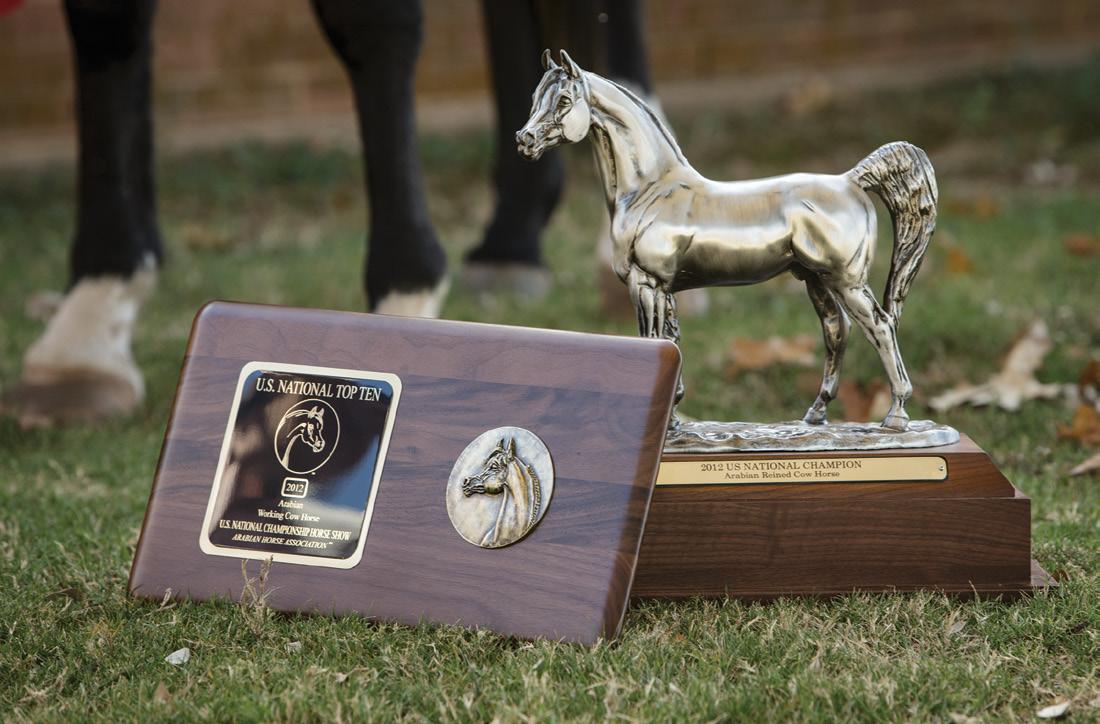
by derindA blAkeney
The clock was already ticking when Lisa Ga LLE ry ’s horse came up lame just two months before the 2012 U. s n aT iona L Cha MP ionshi P F or a ra B ian h ors E s . A registered veterinary medical technician at OSU’s veterinary medical hospital, Gallery knew the best place for treatment was at the large animal clinic there. But could clinicians help the horse without disrupting the intense training for the national competition?
The history
Lisa Gallery is an Oklahoman. She lives in Cushing, grew up in Tulsa and spent weekends and summers on her brother’s cattle ranch outside Bartlesville, where she learned to ride. In 1994, she began distance riding with the North American Trail Ride Conference (NATRC). Arabian horses excel in this arena, and Gallery bought her first Arabian in the summer of 1997.
“I went to my first Class A Arabian horse show as a spectator that fall and saw the working cow horse class,” Gallery remembers. “i put my horse in training to see if she could do it. Together, we rode to three U.s national Top 10 awards, several regional Top Five awards and three region 9 Championships.”
Gallery went on to train horses for friends and clients including breeders Art and Dee Byrd. In 2004, Dee Byrd invited Gallery to see their newest foal, Sogo Khemo
“When Dee told me I needed to see her 3-week-old colt, I couldn’t resist when I saw him,” Gallery says. “To be able to get Sogo, I traded some training time with the breeder, and I co-own him with Brenda Wyant, a senior accounting specialist at the veterinary medical hospital. I picked him up that fall once he was weaned.”
In 2007, Gallery started Sogo under the saddle as a 3-year-old, spending time out on the trail to prepare him for competition. In 2009, Sogo went to his first NATRC ride. At 5 years old, he placed second. Later that year, on his second ride, he took the Open Sweepstakes.
“he was beginning to prove what a special horse he is,” Gallery says. And then winter — with its accompanying ice storms — rode into the plains of Oklahoma.
lisa gallery graduated from Holland Hall High School in Tulsa and earned a bachelor’s degree in wildlife ecology at oklahoma State university. Always interested in veterinary medicine, she began working as a veterinary medical technician, joining oSu’s Center for Veterinary Health Sciences in 2000. She completed an online veterinary technician program at Cedar Valley College and became a registered Veterinary Technician in 2005. long before her rVT career, gallery dreamed of opening her own horse-training center. in 2009 she made that dream a reality.
gallery co-owns the Cowgirl Training Center in Cushing, okla., with brenda Wyant, a senior accounting specialist at the veterinary medical hospital. The center is doing so well that gallery went part-time at the veterinary medical hospital in June 2012 to handle the increased business.
“At the Cowgirl Training Center, we work with all breeds and all ages,” gallery says. “We specialize in Arabian working western horses. i enjoy seeing the horses learn. Working with colts is rewarding as you see huge strides in a short time.
“When friends or clients compete in distance events and do well, it’s nice to be able to say ‘i trained that horse,’ ” she continues. “i have one youth rider who qualified with her horse for the youth nationals next year in Western Pleasure. She also placed well this year in region 4 of the nATrC in the novice junior class.”
Currently Cowgirl Training Center has 15 clients in various stages of training.
For more information, visit www.cowgirltrainingcenter. com, call 918-223-6195 or email info@ cowgirltrainingcenter.com
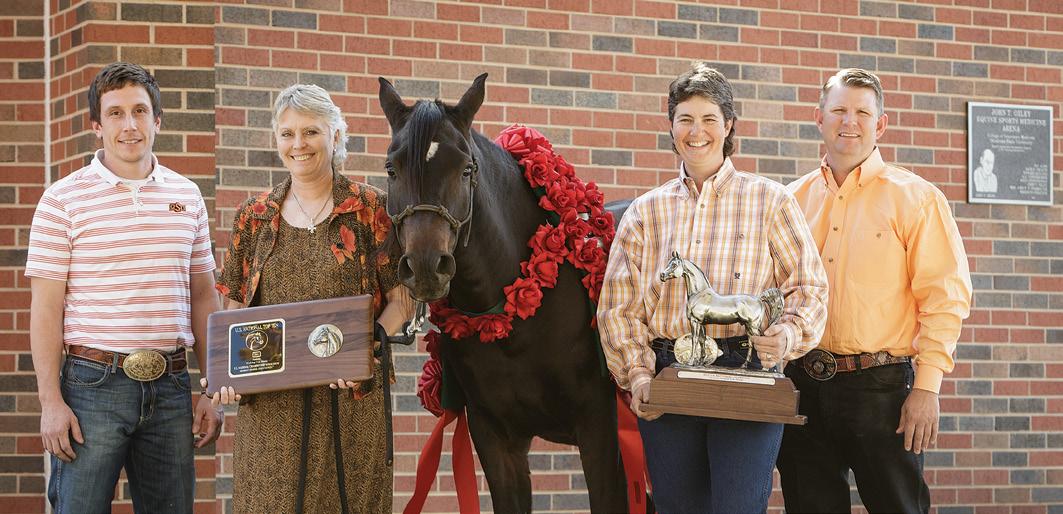
Sogo k hemo comes from a strong line of champions.
His sire, kemonada, is a u.S. and Canadian n ational Champion Working Cow Horse that was sired by khemosabi, a bay Arabian stallion.
k emosabi w on multiple national championships in both halter and western pleasure performance competition, which earned him the highest level achievement award offered by the Arabian Horse Association — the legion of Masters. in the course of his breeding career, he sired more than 1,200 foals (according to the book Arabian legends by Marian k. Carpenter). More than 300 were show champions and 75 won national championships.
When the colt was born and stood, original owner dee byrd waited for him to walk, saying, “So … go,” which became part of his name, Sogo khemo.
In late December 2009, Sogo Khemo suffered an injury that could have ended his career. Gallery doesn’t know how he came to be hurt — just that he was.
“I was devastated. He came into the barn to eat and had a huge cut on the outside of his right front pastern,” just above the hoof, she remembers. “I called OSU’s veterinary medical hospital to alert them we were coming. Dr. James Hart was the resident on duty that evening. We evaluated the injury and were concerned about tendon integrity, nerve damage, blood supply and scar tissue formation during the healing process.”
Almost miraculously, Sogo had avoided cutting any major vessels, nerves or tendons. The OSU equine clinicians placed the horse in a cast for 6 weeks to immobilize the area to allow healing while keeping the wound clean.
Much like a dog recovering from heartworm treatment must be kept very quiet, Sogo had to remain in his stall while the cast was on his leg. “Having such limited exercise can be very challenging for a young horse,” Gallery says.
“Sogo was a trooper being entertained by a stall ball and limited hand walks. When the cast was removed, the results were amazing. After a few more weeks in the stall with his wound wrapped, he returned to normal housing and training.”
Sogo went on to win Reserve Champion in Region 9 Reined Cow Horse in 2011 and Champion in 2012.
The competition
In late August 2012, Sogo came up lame following a training session. After a week of stall rest, he was still not 100 percent so Gallery brought him to OSU to have the experts check him out again.
“By using intra-articular anesthesia, we localized Sogo’s lameness to his left stifle, the anatomical equivalent of the human knee,” says Dr. Mike Schoonover, assistant professor of equine surgery and a diplomate of the American College of Veterinary Surgeons – Large Animal Surgery and a diplomate of the American College of Veterinary Sports Medicine and Rehabilitation. “The prognosis for this type of injury is good with an extended period of rest. However, Gallery and Sogo didn’t have the luxury of time if they were to make it to the show.”
After studying their options, Schoonover and equine surgery resident Dr. Chase Whitfield treated Sogo’s stifle with IRAP, short for Interleukin Receptor Antagonist Protein.
“IRAP is a protein produced by cells found in the horse’s own blood,” explains Schoonover. “After collecting and processing a small amount of Sogo’s blood, we injected the IRAP into his left stifle joint three times, two weeks apart. This type of therapy allows us to treat the inflammation by manipulating the body’s own repair mechanisms without using conventional pharmaceuticals.”
“Because IRAP is a natural protein, it doesn’t have any harmful side effects that other anti-inflammatory medications may have within the joint,” adds Whitfield.
The last injection was administered about two weeks before the national show.
“We had to miss the Tulsa State Fair, which most riders consider as the true warm-up for Nationals as the competition is held in the same arena,” says Gallery. “Reining horses and cow horses like Sogo put a tremendous amount of stress on the hind limbs, particularly the stifles when doing deep stops required in both the reining
pattern and the boxing portion and turns on the fence of cow work. Having a weak stifle would not allow Sogo to perform to his potential and could cause further injury or a fall if he were to compensate for this injury.”
The question loomed in Gallery’s mind: Would he recover in time to go to Nationals?
The finish
“Quickly, following his treatment, sogo resumed training stopping and turning around harder than he had done prior to his injury,” Gallery says. “i was very happy with the treatment and the results.”
Sogo and Gallery made it to the competition — and won.
“without the correct treatment plan, we would not have made the national show,” Gallery says. “Dr. Schoonover is responsible for bringing the IRAP system to the veterinary medical hospital and keeping OSU on the cutting edge. The clinicians at OSU are champions themselves. They do amazing work, and I highly recommend their services.”
“Lisa and Sogo deserve all the credit for this great horse’s accomplishment,” Schoonover says. “I do take pride in the fact that we were able to help this horse go on and compete at a high level. My goal — whether it is a big-time show horse or a child’s play-day horse — is to return an injured or unsound horse to its prior level of competition without risking further injury.”
At 8 years of age, Sogo Khemo is the 2012 National Champion in Arabian Reined Cow Horse — a title Gallery looks forward to defending.
“Sogo is still new to the sport and has many years of competition left,” says Gallery. “I look for him to continue to improve over the next couple of years, so I think he has a good shot at keeping this title for several years.”
Sogo Khemo’s award for being named the 2012 National Champion in Arabian
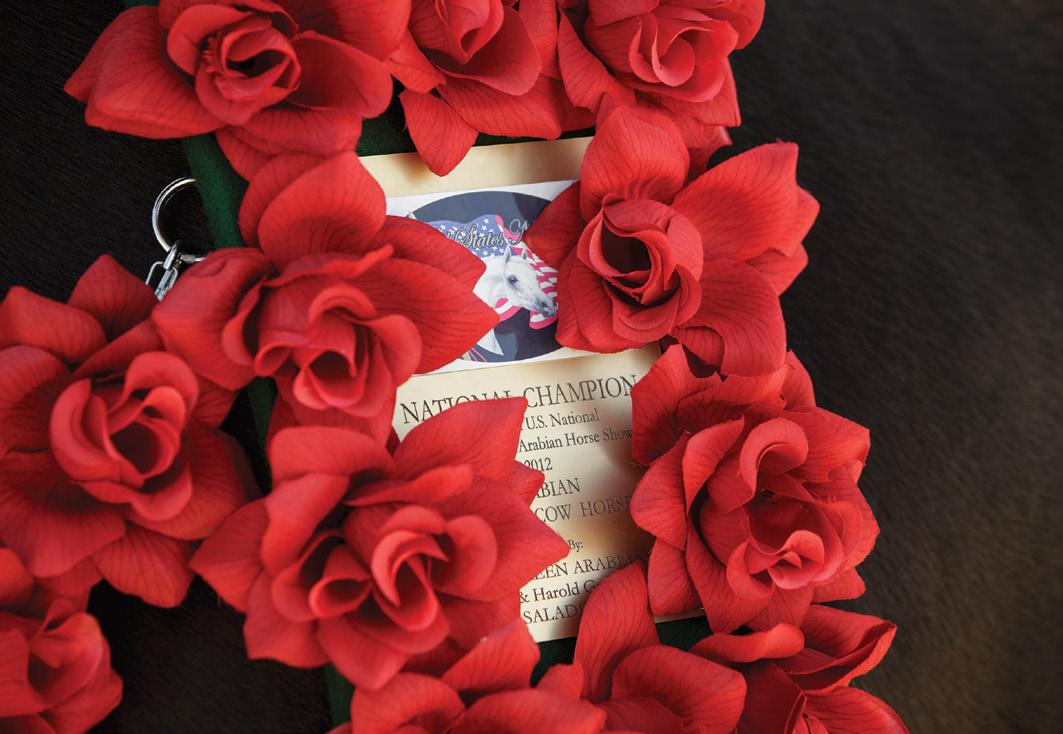
The oSu Veterinary Medical Hospital offers a number of regenerative medicine treatments for equine athletes. These treatments aim to repair or replace damaged tissue using the patient’s own blood or tissue:
P r P (platelet rich plasma) is taken from whole blood and can be injected into damaged tissues or applied topically to wounds to enhance the healing process.
ir AP ( i nterleukin r ec eptor Antagonist Protein) is also obtained from whole blood and contains a high concentration of anti-inflammatory proteins. its usage has had positive results in injured joints and tissues.
ASC (adult stem cell) therapy involves processing adipose tissue (fat) or bone marrow and has the potential to mature into many different tissue types depending on the environment. These cells also contribute to tissue healing by attracting certain growth factors to improve the healing process.
Collection, processing and application of PrP and irAP can usually be completed within 48 hours. ASC therapy may require a longer time between stem cell harvest and application.
For more information or to schedule an appointment, call 405-744-7000
‘You’ve
m urmur C an’t keep a goo D H or S e — or H i S owner — D own
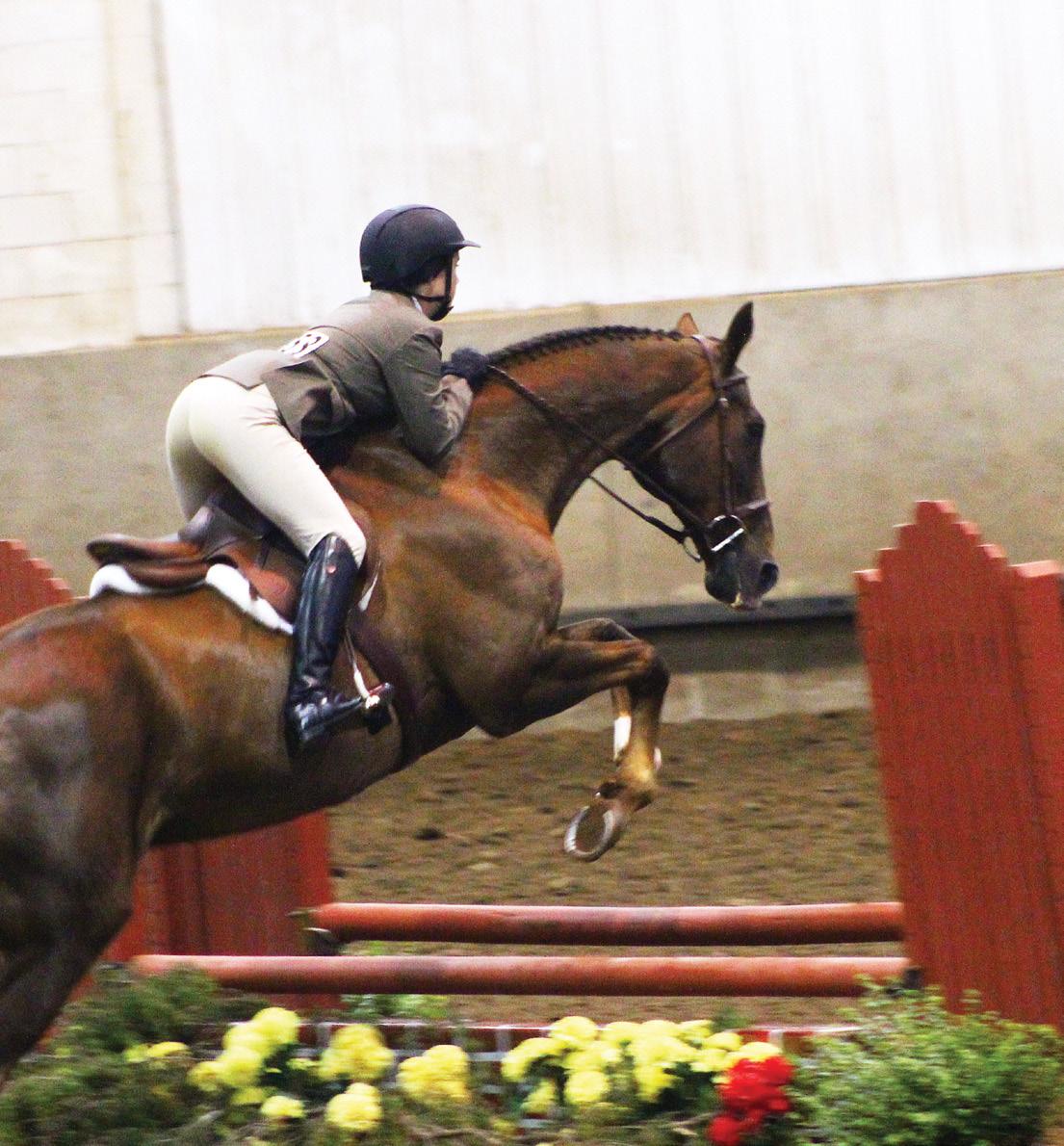
Sunday Best better known as Foxy, is ridden by Tess Von Hemel at the a and aa July go shows. he was champion the first week and reserve champion the second week in the thoroughbred division.
The diagnosis devastated thoroughbred horse owner Robin Von Hemel of Piedmont, Okla. Her 14-year-old daughter, Tess, spent the night crying, inconsolable after hearing the news. Their horse, Sunday Best, better known as Foxy, was at the veterinarian’s for a routine visit. At the age of 22, the horse was a picture of health that had been winning Hunter classes with Tess for the entire five years they had owned him.
Had he taken his last jump?
Would he be able to compete? If so, at what level?
With more questions than answers, Von Hemel turned to OSU’s Center for Veterinary Health Sciences for help.
“Foxy was referred to the center’s Veterinary Medical Hospital by Dr. Kim Rassmussen, the horse’s regular veterinarian, earlier this year,” recalls Todd Holbrook, DVM, diplomate of the American College of Veterinary Internal Medicine and of the American College of Veterinary Sports Medicine and Rehabilitation. “During a routine exam, Foxy’s veterinarian heard a significant heart murmur. Upon his arrival, we performed an ultrasound of Foxy’s heart (echocardiography) to determine the cause of the murmur and evaluate his chamber sizes for evidence of compensation.”
Echocardiography revealed Foxy’s murmur was caused by aortic insufficiency, also referred to by its initials, AI.
“AI is more common in horses Foxy’s age, and the condition tends to slowly progress,” says Holbrook. “The murmur is caused by a leaky aortic valve on the left side of the horse’s heart. As the severity of leakage worsens over time, the heart tends to enlarge, and the horse can become exercise intolerant. Horses can also develop abnormal heart rhythms with this condition that could also impact performance, or in a worst-case scenario, cause collapse and sudden death.”
“Tess rides Foxy four or five days a week; she loves it,” says Von Hemel. “They have been such a good team together and have done so well. We want to do everything we need to do for him.”
Holbrook decided to keep Foxy overnight and place a heart monitor on him to evaluate him for an abnormal heart rhythm or rate at rest.
“The next step was to record Foxy’s heart rate when he’s ‘working’ or jumping with Tess on board,” explains Holbrook.
“I didn’t want to put any further stress on Foxy by putting him on a treadmill,” says Von Hemel. “And I won’t let Tess jump him unless our trainer, Missy Davis, is in the ring with Tess and Foxy. Dr. Holbrook, who is just wonderful, graciously agreed to bring a portable device to our indoor training ring so he could test Foxy.”
Holbrook and Pete Streck , a fourth-year veterinary student assigned to Foxy’s case, traveled to Piedmont to monitor Foxy in action.
“We used a telemetric ECG device,” says Holbrook. “We gave Tess a battery-powered transmitter to slip into her pocket, which transmits the ECG signal back to a computer via Bluetooth technology. The electrodes or leads were hooked to the horse under his girth. Now all Foxy and Tess had to do was work over jumps, and we would be able to watch his heart rhythm on the monitor to evaluate the rate and rhythm in response to exercise.”

You’ve gotta have heart
All you really need is heart
When the odds are sayin’ you’ll never win
That’s when the grin should start r ichard a dler
“Foxy jumped 17 jumps in a row, which is many more than he would jump during a normal show. He did fine,” beams Von Hemel. “He is a once-in-a-lifetime kind of horse. Dr. Holbrook was amazed that Foxy was in such great shape for his age.”
“Currently, based on echocardiography, Foxy’s valvular insufficiency is not severe. He is tolerating it well,” says Holbrook. “In addition, by performing an exercise stress test while recording his heart rhythm, we were able to see that even though he was worked hard over fences, he showed no exercise intolerance, and on the telemetric ECG, there were no abnormal rhythms noted during or after exercise.”
Von Hemel and her daughter are relieved. Since Holbrook visited the training arena in January, Foxy and Tess have competed in two shows.
“Both shows had large divisions of competitors,” says Von Hemel. “Foxy and Tess came in Reserve Champion both times. nothing has changed in Foxy’s performance; it’s just that now we know about the heart murmur.”
AI is very common, and Holbrook offers the following advice to horse owners everywhere.
“The key is early recognition and monitoring over time,” says Holbrook. “Prior to the horse’s development of significantly altered cardiac function, your regular veterinarian will most likely note a characteristic murmur during a routine examination. Many horses can continue their jobs with this condition. It is dependent upon both the demands of exercise in whatever sport they perform, as well as the severity at the time of diagnosis, and the progression of the condition. we wish Foxy and Tess many successful shows in the future.”
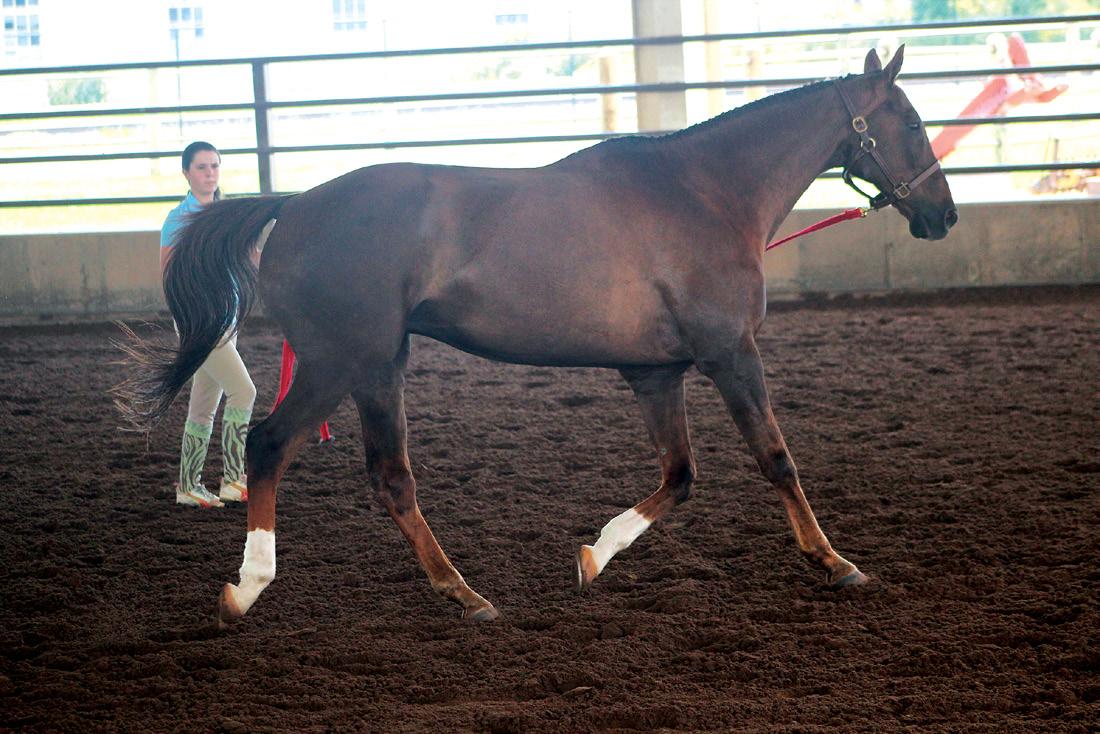
“ t ess rides Fox Y F o U r or F i V e daY s a W eek; she lo V es it. t he Y ha V e B een s U ch a good team together and ha V e done so W ell. We W ant t o do e V er Y thing W e need to do F or him. ” — robin von HeMeL
“ d r. l i U ’s la B has done a lot o F topnotch st U dies in micro rna , W hich is a V er Y hot and interesting area in the B iomedical arena. i am al W aY s gra te FU l that i can st U d Y at os U.”
"DR. LIU'S LAB HAS DONE A LOT OF TOPNOTCH STUDIES IN MICRORNA, WHICH IS A VERY HOT AND INTERESTING AREA IN THE BIOMEDICAL ARENA. I AM ALWAYS GRATEFUL THAT I CAN STUDY AT OSU."
— Xiao X iao
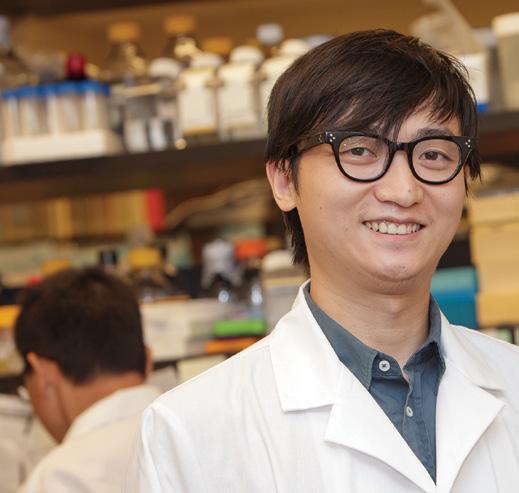
Xiao Xiao received a $50,000 award from the American Heart Association Southwest affiliate.
While at medical school in China, Xiao Xiao developed an interest in basic research and decided to pursue a Ph.D. in biomedical sciences. In August 2009, he arrived at OSU’s Center for Veterinary Health Sciences to study in the Lung Biology and Toxicology Laboratory under the guidance of the lab’s director Lin Liu, Ph.D., Regents professor in the Department of Physiological Sciences.
“osU is an internationally recognized university,” says Xiao, a native of Chengdu, China. “Dr. Liu’s lab has done a lot of top-notch studies in microRNA, which is a very hot and interesting area in the biomedical arena. I am always grateful that I can study at OSU.”
Xiao is one of only 14 students in the first cycle of 2012 competition to receive a $50,000 predoctoral fellowship from the American Heart Association
Southwest Affiliate . Selected from a pool of 61 applicants, Xiao
will receive $25,000 a year for two years to study microRNAs and idiopathic pulmonary fibrosis — to understand the mechanisms of the chronic, progressive lung disease. Specifically, he is studying one possible mechanism called EMT.
EMT, short for epithelial mesenchymal transition, may cause “fibrosis” or deposits in the walls of lungs. Xiao has determined that a small functional RNA — microRNA-424 — is increased during EMT.
“We are trying to identify the role(s) of microRNA-424 in this process,” explains Xiao. “Simultaneously, we are trying to identify what regulates the level of microRNA-424 in cells.”
The Pulmonary Fibrosis Foundation estimates that 128,000 people in the United States are affected by pulmonary fibrosis. The symptoms include fever, labored breathing with exertion, chronic cough, and late
inspiratory crackles (crackling noise when a person inhales and continues through more than half of the inhaling process).
“Due to the poor understanding of the origin and the development of pulmonary fibrosis, the treatment for the disease is still very limited,” adds Xiao. “There’s no proven effective treatment for IPF except for a lung transplant. The median survival range is very low, from 2½ to 3½ years. Understanding the role of microRNA-424 in IPF may lead to new therapeutic targets for the treatment of this disease.”
Xiao’s grant is not the first one the OSU lab has received from the American Heart Association. In the past nine years, the association has awarded the lab six pre-doctoral fellowships totaling $284,000. Since its establishment in 2000, Liu’s lab has trained 16 Ph.D. students and 20 postdoctoral fellows in
pulmonary
research.
In addition to Liu, Xiao’s graduate program advisory team consists of Dr. Chris Ross, associate dean for academic affairs, Dr. Myron Hinsdale , assistant professor of physiological sciences, both at the veterinary center, and Dr. Junpeng Deng , associate professor with OSU’s Department of Biochemistry and Molecular Biology.
Finding a cause the cause of idiopathic pulmonary fibrosis is unknown. it usually affects people age 50 and over and deposits collagen in the pulmonary space in the lungs, mainly alveoli walls.
Defining microRNAs micrornas are tiny molecules that bind to genes and may biologically alter a species’ function.
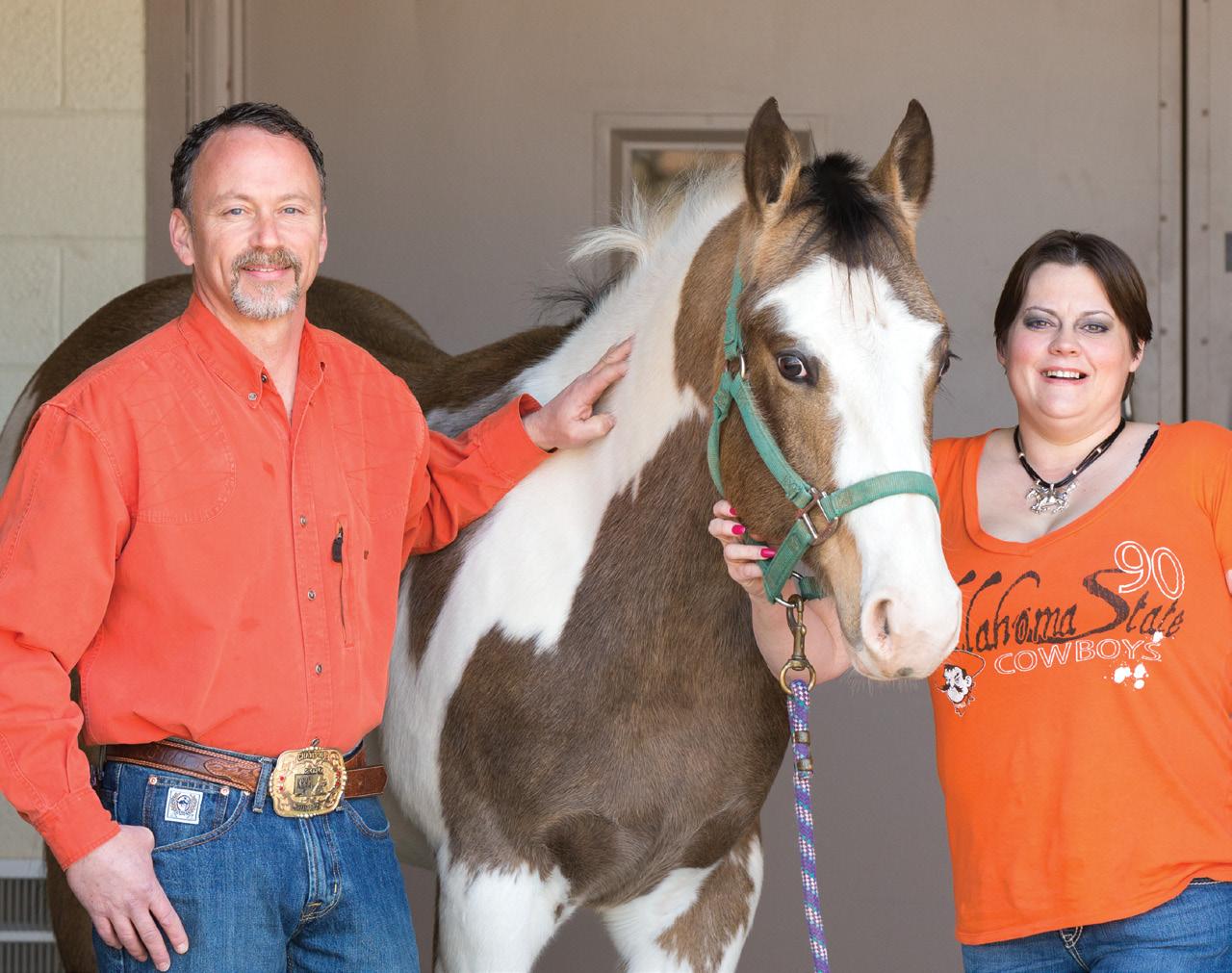
o S u ’ S me D i C al S taff H elpe D S aV e young C olt’ S life, but it took H i S owner to re V i V e H i S lo V e
Elliot, a young paint foal, went from being scared to death of people to being so comfortable that he walked right in his owner’s kitchen door. The fear was understandable — he faced a medical challenge early on.
“He was born Feb. 9, 2011. By the time he was a week old, Elliot was limping,” says owner Deana Seeley of Shawnee, Okla. “He had been up and nursed early on, but I knew something was wrong.”
Seeley’s regular veterinarian put Elliot on antibiotics and referred her to OSU’s Veterinary Medical Hospital in Stillwater.

"ELLIOT
“ e lliot W a s grad U allY ret U rned to normal acti V it Y h e is not lame and is as health Y and so U nd as can B e. We sa W a dramatic impro V ement o V er the co U rse o F his treatment. For a F o al to start W ith t W o ma J or pro B lems and ha V e no sign o F it t W o Y ears later is ama Z ing.”
WAS GRADUALLY RETURNED TO NORMAL ACTIVITY. HE IS NOT LAME AND IS AS HEALTHY AND SOUND AS CAN BE. WE SAW A DRAMATIC IMPROVEMENT OVER THE COURSE OF HIS TREATMENT. FOR A FOAL TO START WITH TWO MAJOR PROBLEMS AND HAVE NO SIGN OF IT TWO YEARS LATER IS AMAZING."
— Deana s ee L ey
“We had about 15 horses at the time but had never been to OSU’s veterinary hospital,” she says. “We were very pleased with the services,” she adds.
“Elliot was 19 days old when he came in with multiple joint swellings,” recalls Todd Holbrook , DVM, equine section chief at OSU’s Veterinary Medical Hospital. “Our examination determined that he had two major problems — an infected right stifle joint [located on the upper hind leg], as well as an infection that led to a fracture in his left front fetlock.”
Holbrook’s team continued the antibiotics and used short-acting anesthetics to immobilize the colt daily to flush the joint pouches in his right stifle and treat his left front leg.
“After we flushed the stifle, we put intra-articular antibiotics in the joint space,” says Holbrook. For the bone infection, a regional intravenous antibiotic administration was used while a tourniquet was placed around Elliot’s left front leg.
Five days after being admitted, Elliot was anesthetized for arthroscopic exploration of his right stifle.
“The joint spaces were thoroughly flushed, and some damaged cartilage was removed. After surgery, Elliot continued on IV antibiotics for six more days followed by three weeks of intra-muscular antibiotics to treat his bone infection,” says Holbrook.
And so the young horse’s fear grew. Every time a person would come near, he would shy away.
“Elliot hated people,” says Seeley. “He really did. When you would approach him, he was afraid you were going to draw blood or give him a shot. He had so much of that during his hospital stay.”
But Seeley was able to cure that after Elliot was discharged on March 10, 2011.
“once i got him home, i just loved on him,” says Seeley. “That’s what i do with all my horses. They all think they are dogs.”
Elliot returned to Stillwater in January 2012 for a follow-up visit.
“The fracture on his left front fetlock was healed. Radiographs of the stifle revealed OCD or osteochondritis dissecans, which is a relatively common developmental disease that affects many young horses of all types,” reports Holbrook.
“OCD occurs while the foal’s bones are developing at the interface of soft cartilage and mineralized bone. If this process does not proceed normally, a thickened piece of cartilage or cartilage and bone develops that is not well attached to the underlying bone. This abnormal piece loosens over time causing inflammation, which can lead to an excessive amount of joint fluid or swelling,” adds Holbrook.
Elliot returned to OSU’s veterinary hospital again in May 2012. Up until now, he had been hand walked for exercise.
“This time radiographs of the right stifle were normal,” says Holbrook. “Elliot was gradually returned to normal activity. He is not lame and is as healthy and sound as can be. We saw a dramatic improvement over the course of his treatment. For a foal to start with two major problems and have no sign of it two years later is amazing.”
“all i can say, is never give up,” says Seeley. “At one point it was recommended that we euthanize him. Elliot was so sick, and there were no guarantees that surgery would help. Today, his x-ray looks perfect. He’s no longer wary of people. we’re grateful to Dr. holbrook and the many people who helped Elliot. he’s going to make someone a great show horse.”
And in late February, Seeley sold Elliot — with full disclosure of his history — to new owners, who plan to show him in western pleasure classes.
derindA blAkeney
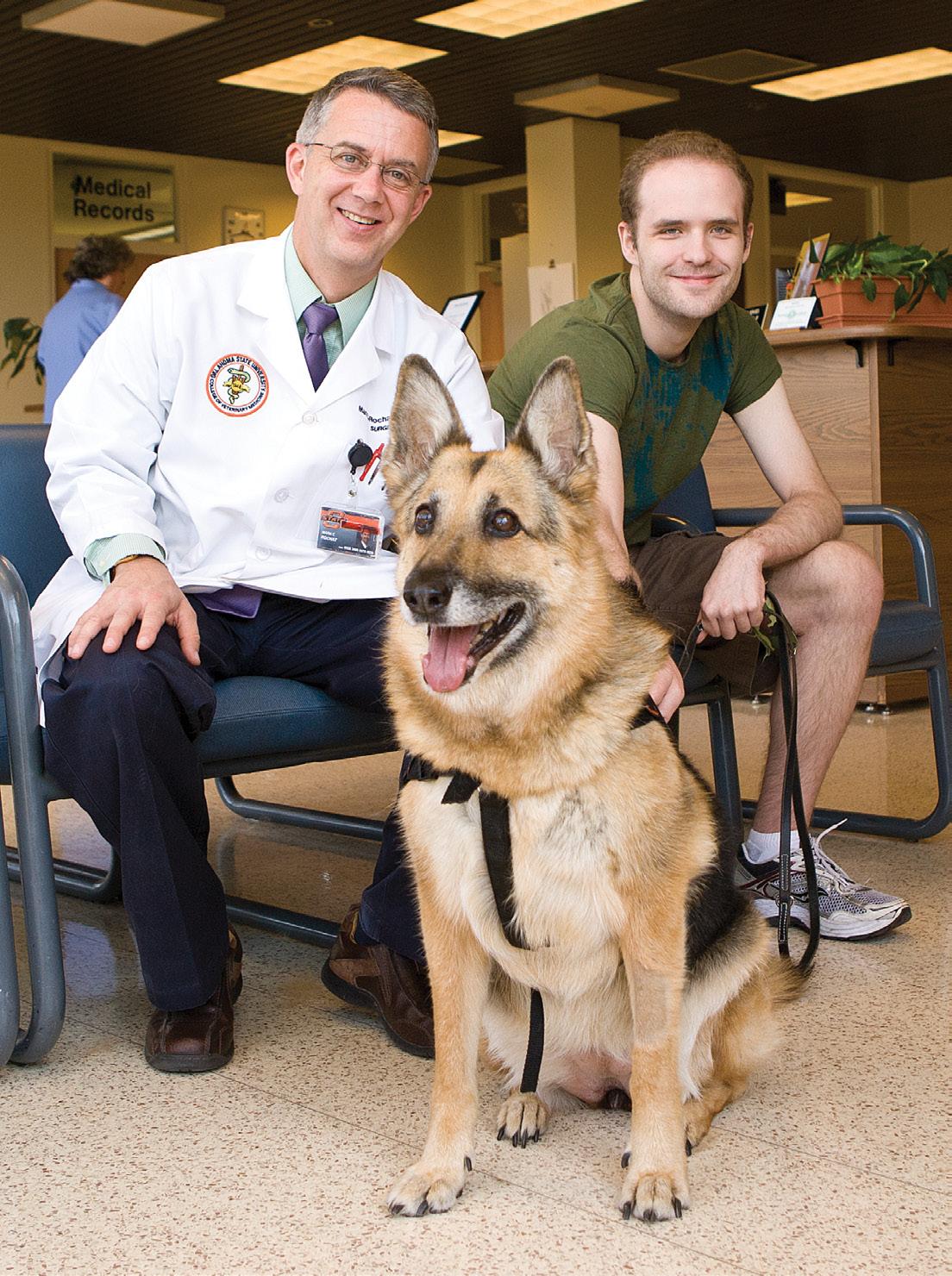
o S u V eterinary H o S pital H elp S S er V i C e D og keep working
by derindA blAkeney
The bond between Chris Borden and Miss Morgan is far more than merely a boy and his dog. After all, the German shepherd service dog gave the young man his life back.
And so, nearly 10 years later, it’s Chris who is doing all he can for Morgan. She is going on 13 years old and has been to OSU’s veterinary hospital many times. Dr. Mark Rochat, small animal surgery section chief and the Cohn Family Chair for Small Animal Care in the Department of Veterinary Clinical Sciences at OSU’s veterinary hospital, first treated Morgan in 2005.
“ we were dog novices,” says Janet Borden, Chris’ mom. “We thought she had a ‘hitch in her getup’ because she never complained. Morgan just did her job faithfully, never a whine or a whimper; no sign she was in pain. She just kept checking in with Chris making sure he was okay. We had no idea she needed veterinary care. when our regular veterinarian referred us to osU, we didn’t hesitate to bring her in.”
“Morgan had severe hip dysplasia,” reports Dr. Rochat. “Instead of having joints that were rounded like a ball and socket, hers tended to be more flat, causing her discomfort when she moved. We replaced both of Morgan’s hips.”
During her hospital stay, Chris and Janet stayed in a nearby hotel so they could visit Morgan daily.
“When she was in the hospital that was the longest time we have ever been separated,” says Chris. “What we are up here for today is nothing compared to what she has been through. I have taken her outside in a sling five times a day for months when she was recovering before. She has taken care of me and I am going to take care of her.”
Morgan did recover from her hip surgery but, unfortunately, that wouldn’t be her last trip to OSU.
“We also treated Morgan for cervical disc issues and lumbosacral disease. Her latest visit was for a vaginal infection,” says Rochat.
“Dr. Rochat, the hospital staff and the veterinary students have been so important and we really appreciate all they have done for us and for Morgan,” says Janet. “students assigned to her case would go out of their way to see that Chris could be with Morgan, and they would carefully teach Chris how to care for her. we are forever grateful.”
“When Morgan dislocated a disc in her spine, she needed constant care,” says Chris. “I worked with my instructors so I could finish my coursework without attending class so I could stay home and take care of her. Morgan was always there to take care of me. It was my privilege to reciprocate.”
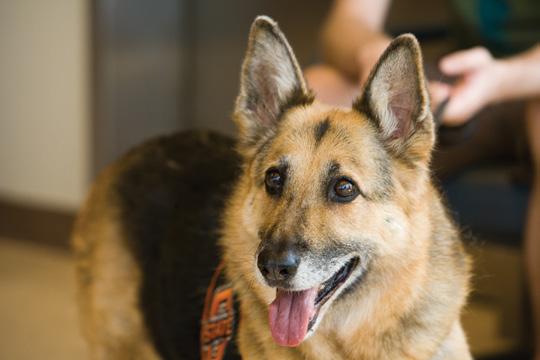
i n the Beginning
Janet Borden knew something wasn’t right with her son by the time he was 2.
As a youngster Chris was tested for a myriad of disorders — nonverbal learning, dyslexia, attention deficit, autism— and was treated with numerous therapies and medications, none of which helped.
By the time he was 13, Chris was targeted by bullies and eventually pulled out of school. It was believed Chris suffered from Asperger’s syndrome.
Morgan was 3 years old when she moved into the Borden household. A trainer helped lay the groundwork for the relationship between Chris and Morgan. Morgan was to check in with Chris regularly, and Chris was to acknowledge the dog so that she would know he was alert and doing well.
“Morgan would nudge your hand with her nose and sometimes flip your hand up until you acknowledged her,” says Chris. “I was working on my computer once and had my hand on the computer mouse. Morgan put her nose under my hand and flipped
it up so hard I ended up whacking myself in the face! Ignoring her was impossible.”
If Chris felt a panic attack coming on, he simply said, “Paws up.” Morgan would put her paws in Chris’ lap and lean into him until he felt calmer. During a full-blown panic attack, the command “lap up” would bring Morgan bounding into Chris’ lap for a full-body press until his anxiety subsided.
“Morgan was trained to walk slightly ahead of Chris to widen his personal space in crowds,” explains Janet. “She solicited attention from anyone who approached Chris, placing herself solidly between Chris and other people, unless Chris told her not to visit.”
Within 1½ years from moving in, Morgan had such a positive effect on Chris that he was able to not only leave the house but to make his first public presentation. He has since spoken on autism, bullying, assistive technology and service dogs to a variety of organizations and in various venues including the Oklahoma Autism Conference, Tulsa public schools, and the Governor’s Conference on Developmental Disabilities.
C on T inue S
“ d r. r ochat, the hospital sta FF and the V eterinar Y st U dents ha V e B een so important and W e reallY appreciate all the Y ha V e done F or U s and F or m organ.”
"DR. ROCHAT, THE HOSPITAL STAFF AND THE VETERINARY STUDENTS HAVE BEEN SO IMPORTANT AND WE REALLY APPRECIATE ALL THEY HAVE DONE FOR US AND FOR MORGAN."
— Janet b or D en
“It’s a night and day difference,” says Chris. “It is difficult to truly convey how affected I was by Asperger’s. I tell kids with disabilities to not let your disability get in the way of achieving your dreams. If your dream is like mine — to earn a degree — even if they’re only able to take one class at a time, go for it!”
s tr ong Bond
“Soon after Morgan was part of our lives, I took Chris and his younger brother, Chase, to a local swimming area,” says Janet. “The boys were swimming and I stayed back holding Morgan on a leash just on the water’s edge where we could wade. I was so happy to be doing something ‘normal’ like every other family. Next thing I know, Morgan has backed out of her collar and I see her swimming from person to person in the water looking for Chris. It was time for her to check in with him and she didn’t know where he was so she went looking. I had Chris call out to Morgan and she swam straight to him.
“It’s incredible to see the young man before me today and remember the child,” says Janet. “They have taken such good care of each other for the past nine years.”
Her latest visit is no exception. While Morgan is no longer officially a service dog for Chris, it seems she chooses to not understand that. At Oklahoma State University’s Boren Veterinary Medical Hospital on a summer day in 2012 for a follow-up medical visit, she lies on the cool reception floor strategically placed between her “charge” and anyone who might step from the elevator or small animal reception counter toward Chris. Her eyes never stop moving, watching the hustle and bustle of the veterinary hospital, glancing over her shoulder to make sure Chris is still there. Every now and then, she glances at Chris’ mom, but it is Chris she was commissioned to care for and care she does.
“When Morgan came to live with us in 2003, I hadn’t been out of the house for eight months,” recalls Chris. “That’s hard especially for a young teenager. I was just borderline nonverbal. The anxiety would be intensive enough to make me sick. I would panic if I even thought about going out.”
Chris is now training a new service dog, a chocolate Labrador retriever named Britta. The dog was acquired through High Aim Assistance Dogs, a volunteer organization that works to pair people with disabilities like autism with trained service dogs.
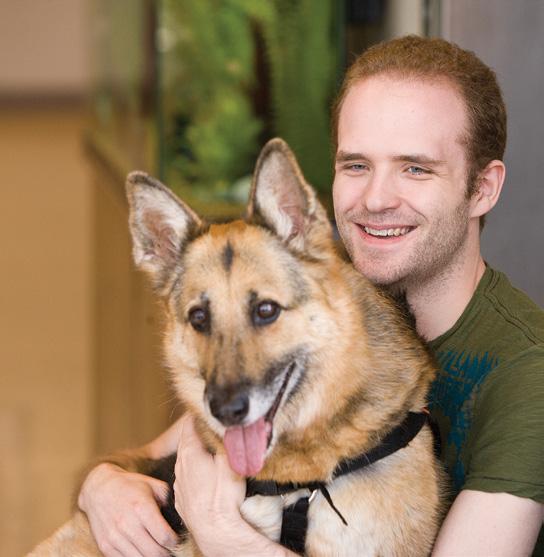
“I prefer herding breeds like German shepherds or border collies,” Chris says. “There is a big difference in the energy level of the two dogs. Morgan overwhelmingly ignores Britta.”
Chris looks at the list of more than a dozen “tasks” that Morgan was trained to do for him.
“I only need her to do about two of those anymore,” says Chris. “People usually say ‘hi’ to Morgan long before they even acknowledge me. I’m now a 23-year-old fairly normal guy.”
Looking at Chris, his mother smiles as she says, “i am proud of him and how he takes care of Morgan and the respect he gives her. she has paid her dues. It’s time for Britta to step in. It isn’t because Morgan is older now that she no longer does all the things on that list, Chris. It’s because you don’t need her to do that anymore; it’s because she healed you.”
Though “retired” from service, Morgan will live out her life with Chris.
Chris, Janet and Morgan leave OSU’s veterinary hospital with medication and instructions how to care for Morgan’s infection. They may have to bring her back for another surgery if the infection doesn’t clear. If they do return, it will be more than a boy — now a man — and his dog. It will be two lifelong friends, two partners who gave each other what they needed. It will be the human-animal bond at its pinnacle.
Connect to the Center for Veterinary Health Sciences with a membership in the OSU Alumni Association. Your Alumni Association membership dues directly support:
College alumni events
Alumni chapters nationwide
Student and alumni awards
Homecoming activities
Undergraduate scholarships
Alumni services and programming
Learn more about connecting to the Center for Veterinary Health Sciences through an Alumni Association membership at orangeconnection.org/join.
TEL
info@orangeconnection.org • orangeconnection.org
“We A re fore V er gr AT eful
T o d r.
Cunning HAM , A MA nd A Heller — TH e V e T erin A ry
ST uden T
WH o SP en T
d Ay S o V er
TH e H olid Ay
W eekend
WATCH ing
dA i S y — A nd
TH e H o SP i TA l
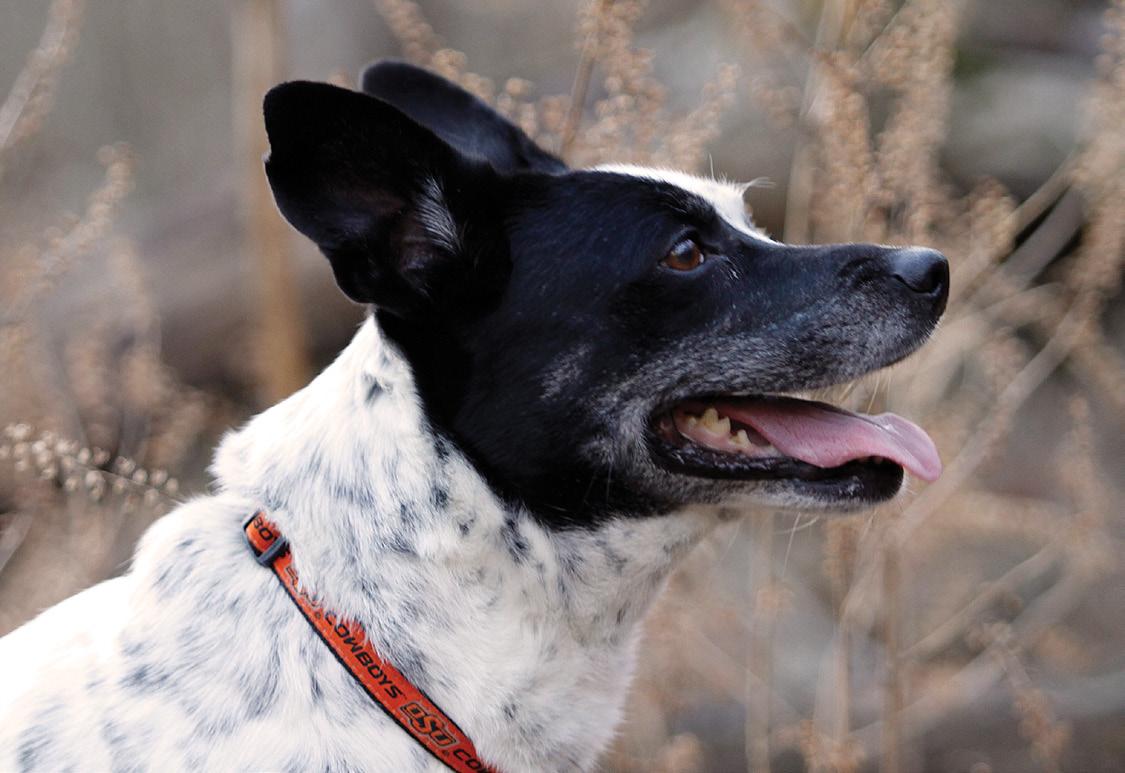
a rkan S a S family grateful for o S u C lini C ’ S S pee D , S aV V y
This Thanksgiving, an Arkansas family is grateful for the life-saving efforts that OSU’s Small Animal Clinic gave their dog just before last year’s holiday.
The Monday before Thanksgiving 2012, Julie Zimmerly of Bentonville, Ark., noticed her dog Daisy was having difficulty breathing.
“We took Daisy to the veterinary ER and they did an x-ray,” says Zimmerly. “We thought it might be pneumonia. We followed up with a visit to our veterinarian, who ordered a fungal panel that was sent to OSU.”
By Wednesday, Zimmerly, her husband Chad and son Cash were back at the veterinary clinic because the 7-year-old heeler, a rescue dog, had stopped eating.
“While we were there, Daisy started urinating blood,” adds Zimmerly. “The veterinarian told us to leave now and take her to Stillwater.”
Three hours later, the Zimmerlys arrived at the Small Animal Clinic, with Daisy in critical condition. Dr. Lauren Cunningham, a third-year small animal internal medicine resident, was assigned the case.
“when Daisy came in, she was dying of a pulmonary hemorrhage and was essentially bleeding out,” says Cunningham. “I gave her parents a 50/50 chance she would make it. The biggest problem was her lungs. Getting the bleeding under control by replacing blood and plasma is straightforward, but filling your air spaces with blood can’t be reversed easily.”
Daisy had ingested rat bait, which blocks the clotting factors activated by vitamin K and can cause hemorrhaging throughout
the body — in the GI tract, anywhere in the abdomen, into the lungs, under the skin.
“The problem is that it usually takes 48 hours or more to see the full effects of eating the poison so unless the ingestion is witnessed, many people don’t know their animal is sick until it is bleeding substantially,” explains Cunningham. “In Daisy’s case, she was bleeding into her lungs making it very difficult for her to exchange oxygen. if her condition had not improved, the next step would have been putting her on a ventilator to help her breathe.”
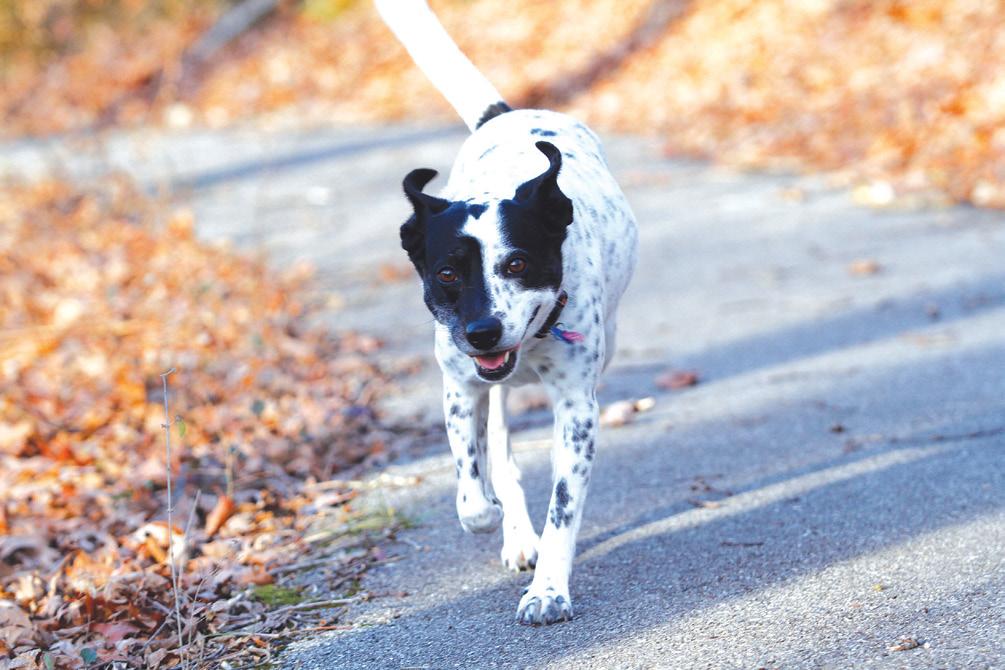
Within the first two hours of her arrival, Daisy received a little more than a unit of whole blood and a double unit of plasma along with a large amount of vitamin K.
“The amount of transfusions Daisy received is average for this condition,” adds Cunningham. “Since she had been bleeding for days, her bone marrow was already making new red blood cells as well. We placed her in an oxygen tent and sedated her to try to keep her calm. Her lungs basically just needed time. She took a turn for the better on Sunday and was released from our Kirkpatrick Foundation Small Animal Critical Care Unit seven days after she arrived.”
Cunningham says Daisy has a great long-term prognosis with no ill effects, but she warns that other pet owners might not be so lucky.
“It is important that owners be wary of where they place rat bait, such as d-Con, especially if it is in an area where dogs are allowed to roam,” cautions Cunningham. “If an otherwise healthy dog starts coughing or vomiting blood, develops large swelling over sites of relatively mild damage, etc., exposure should be questioned. This is treatable but the animal needs to be seen quickly and at a place with access to blood, plasma and injectable vitamin K.”
“A week before Daisy started coughing and having trouble breathing, we had been to our cabin north of Eureka Springs, Ark.,” says Zimmerly. “We had put out mouse poison, being very careful to place it where Daisy could not get to it. What we didn’t even consider was the fact that the mice could move that poison around. Apparently that’s what happened, and Daisy ate some of it.
“We are forever grateful to Dr. Cunningham, Amanda Heller — the veterinary student who spent days over the holiday weekend watching Daisy — and the hospital staff,” Zimmerly adds. “I always appreciated veterinarians, but I was so amazed how quickly Dr. Cunningham jumped to the rescue. She had a blood transfusion going in no time and knew just what to do to save Daisy. This Thanksgiving we were thankful for things we didn’t know we would be thankful for — like Radley, the blood donor dog that donated blood for Daisy’s transfusion, and the veterinary hospital.
“We really appreciate everything OSU did for our dog; it was a wonderful experience to know Daisy was in such good hands,” adds Zimmerly.
o wner D i SC o V er S e V en little D og S C an H aV e big H eart problem S
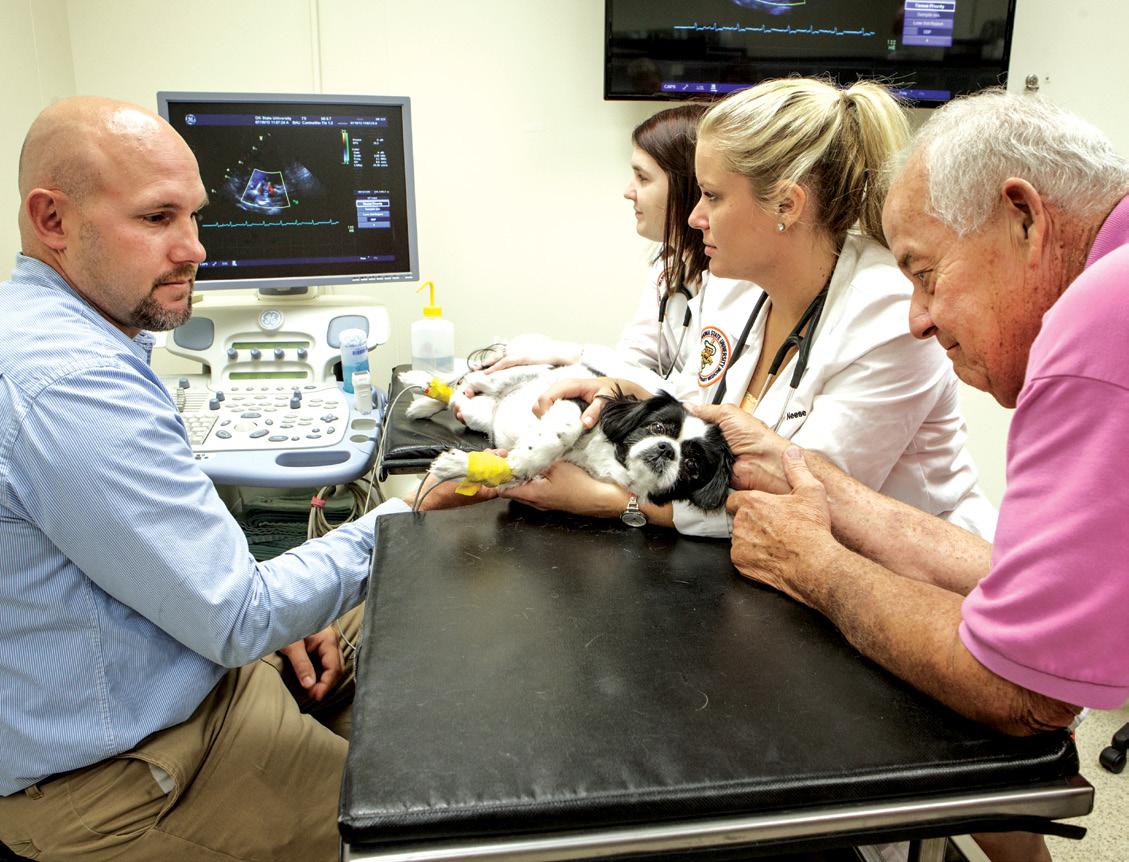
Dr. Ryan Baumwart treated Maddie and Tootsie for cardiac problems. the Veterinary medical hospital clinician is the state’s only small-animal cardiologist.
Dog owner Clifford McWilliams is singing the praises of OSU’s Veterinary Medical Hospital, especially the skills of Dr. Ryan Baumwart, DACVIM (Cardiology), assistant professor of cardiology and one of the newest clinicians on staff at the hospital.
“I was ready to put Maddie to sleep because I didn’t think anything could be done for her. You saved my little girl’s life,” says McWilliams of Owasso, Okla.
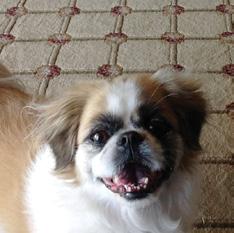
Maddie, McWilliams’ 10-yearold tan-and-white Shih Tzu, was suffering from episodes of coughing and occasional fainting.
“I took Maddie to Dr. Melissa Eads at VCA Woodland Central Animal Hospital in Tulsa,” explains McWilliams. “Dr. Eads discovered fluid in Maddie’s lungs and suggested that I take her to OSU where a cardiologist was on staff.
Driving from Tulsa to Stillwater, Maddie had another episode. He saved her life.”
Maddie’s coughing had become more frequent, and McWilliams noticed that the dog was less active and often slept very deeply.
“She hasn’t curled her tail up in months,” adds McWilliams.
“The radiographs we received from Dr. Eads showed Maddie’s heart was enlarged and that she had gone into congestive heart failure,” says Baumwart.
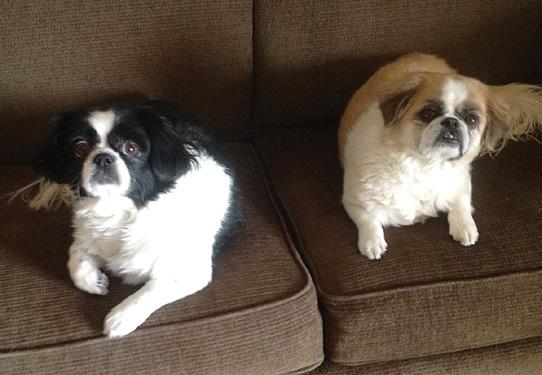
despite being treated for congestive heart failure at osU, Maddie (the tan-and-white dog) didn’t make it. her sister, Tootsie, is under osU’s care but hasn’t developed the same problems.
“With cardiac ultrasound [echocardiography], we were able to determine that Maddie was suffering from severe mitral valve degeneration and severe pulmonary hypertension. The mitral valve degeneration was causing the mitral valve to leak and subsequently caused the heart to enlarge and fail. The pulmonary hypertension was causing her to faint,” adds Baumwart.
Baumwart prescribed several medications for Maddie to help treat her condition.
“I went home, cut the pills according to the doses prescribed and gave Maddie her first dose at 4 p.m. that day,” recalls McWilliams. “The next morning at 4 a.m., I gave her the second dose. Dr. Baumwart thought it would take her two to three days to show signs of improvement, but Maddie was noticeably better within just 12 hours! She has been a new dog. She’s playing, eating, her tail is curling up; my prayers were answered.”
"OSU GAVE
ME
30
MORE
GREAT DAYS WITH MADDIE, AND I AM FOREVER GRATEFUL."
“ os U ga V e me 30 more great daY s W ith m addie, and i am F ore V er grate FU l.”
— C L iffor D M Cw i LL ia M s
A semi-retired trailer design engineer, Clifford finds a great deal of enjoyment in Maddie and her sister, Tootsie, who is black and white. He acquired the littermate Shih Tzus when they were 7 weeks old.
“i know two other owners whose dogs have heart problems,” says McWilliams. “i tell them that they need to bring their dogs to see Dr. Baumwart. he’s a great guy and he knows his stuff. They think it will cost thousands of dollars to bring their dog to OSU. The truth is that the OSU visit cost less than the visits to the clinics where Maddie has been treated before. And the other clinics don’t have the equipment that OSU has, and they don’t have a cardiologist. Dr. Baumwart is the only small-animal cardiologist in the state.”
”Mitral valve degeneration, also called endocardiosis, is very common in smaller breed dogs and older dogs,” says Baumwart. “There is a chance her twin sister, Tootsie, could develop congestive heart failure. Hopefully this pair of dogs will stay active and healthy for some time to come.”
Unfortunately, a month after her treatment began, Maddie passed away.
“OSU gave me 30 more great days with Maddie, and I am forever grateful,” says McWilliams.
He was so happy with Maddie’s care that after she passed, McWilliams was back in Baumwart’s office with Tootsie. Eads had heard a heart murmur during Tootsie’s physical exam and based on her sister’s health history, the owner was not taking any chances.
“We are doing an ultrasound on Tootsie, so we can look at every part of her heart,” says Baumwart. “Tootsie’s heart disease is not nearly as bad as Maddie’s. She has a very small leakage on her mitral valve. The size of her heart is normal, her blood pressure is normal. It’s good that we are catching things in the early stage. I see no need to put Tootsie on any medication at this time.”
“ you hear that, Tootsie? you’re going to be around for a long time,” McWilliams says, petting the little dog to keep her still during the ultrasound.
derindA blAkeney
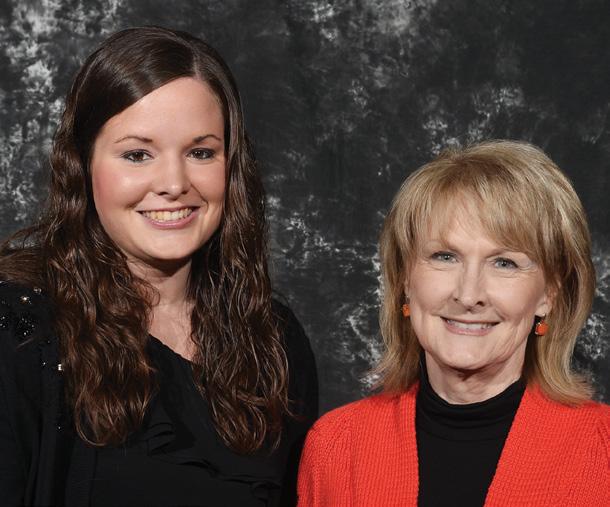
Katy Bailey grew up in rural northwest Indiana, where people looked up to the local veterinarians.
“They had a really positive role in the community, as well,” Bailey says of her hometown of Lowell, a town of about 9,200 people about 60 miles south of Chicago. “They were involved in the 4-H program, too. I just saw them as a role model to kids in the community — especially to me.”
Bailey, who received the Center for Veterinary Health Sciences’ Dean Harry Orr Award, grew up on a farm. Her family grew corn and soybeans and raised cattle; their vets were friends who protected their livelihood.
“You employ them to a certain extent, but you’re also friends with them,” Bailey says.
She remembers having pygmy goats as pets. One day, one of them died from an infection.
Bailey, who was in fourth grade at the time, remembers spending a lot of time at the vet trying to save the animal. Looking back, she is struck by how hard the vet worked to save a little girl’s pet goat.
“It really impacted me,” she says. She credits her parents with encouraging her to go in to veterinary medicine. Her mother, a fourthgrade teacher, had always wanted to become a veterinary technician but instead chose teaching.
When it came time to attend college, Bailey decided to study animal science at Purdue University and chose OSU for her veterinary education because of its strong food-animal program.
The fourth-year student was in her first rotations last summer, working at OSU’s equine breeding farm, caring for horses all day.
Bailey says she plans on becoming a large animal veterinarian in such a practice where she can enjoy the outdoors.
She praises the college for its food animal and equine veterinary clinicians, especially Drs. Lyndi Gilliam and Katie Simpson (who left OSU for Ohio State last spring), describing them as “awesome.”
The Dean Harry Orr Award features a $2,500 scholarship and is named for the second dean of the College of Veterinary Medicine. Orr led the college from 1953 until his death in 1956.
MATT ellioTT
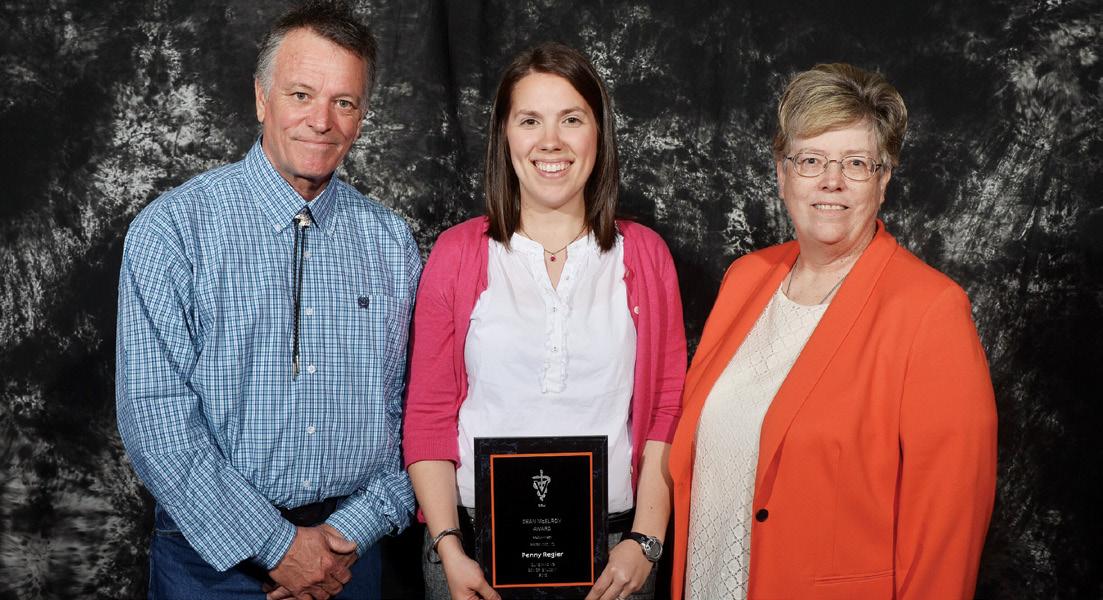
Penny Regier of Tulsa, Okla., was home-schooled and earned her bachelor’s degree in zoology from Oklahoma State University. Although she had always thought about being a veterinarian, she didn’t pursue that career right away.
“When I finished my undergrad work, I just wanted to go earn some money,” says Regier. “I got married and wanted to work. I have always liked marine life, so I got a job at the Oklahoma Aquarium, which I really liked. But after four years, I was ready to go back to school.”
The transition was hard at first, and it meant that Penny and husband Jake Regier were separated.
“I worked really hard and stayed focused,” she adds.
And that hard work paid off as Regier was named the 2013 Dean Clarence H. McElroy Award winner.
“when they announced my name, i was honestly surprised. My heart was pounding out of my chest. I didn’t want to cry because my friends were nearby, and I knew they would tease me forever. I was really shocked.”
Regier is interested in small-animal surgery.
“ w ha t i like most about veterinary medicine is the interaction with the animals. i love to see the improvement and know that it was something i did in surgery. when a patient comes out of surgery, they look like a new dog. you see how happy the owners are and the animal itself, and that is really rewarding.”
One case that stands out as special in Regier’s young career involves a schnauzer and its owners.
“The dog needed surgery a couple of times during my small animal surgery rotation,” Regier recalls. “It had to spend two weeks in the hospital and was such a sweet dog. Its owners were older and on top of the dog’s health issues, the gentleman was having medical problems. The drastic improvement in the dog after surgery was amazing. It was so happy, and the owners were so grateful. It was wonderful to be part of that — I love it.”
Following graduation, Regier is off to Colorado State University for a yearlong small animal rotating internship.
“My husband travels for his job, so he will be able to split his time and spend two weeks a month with me in Colorado. That’s more than I see him now,” she says. “After the internship, I plan to apply for a surgery residency.”
As Regier prepares to graduate, she offers these words of advice to incoming veterinary students:
“Make the most of the opportunities that come along. Don’t look at it as more work. Four years isn’t really that long. Be nice to your classmates; they can help you a lot. Learn all you can and take advantage of every opportunity you have.”
In addition to the McElroy Award, Regier also received an American College of Veterinary Surgeons Award, a Robert G. and Karen F. Beach Scholarship , a Butch and Luella Ruth Curtis Educational Fund Award , and the Gentle Doctor Award. She is the daughter of Greg and Terri Hlubek of Oklahoma City.
Sixty years ago, the D E an C L ar E n CE h M C E L roy awar D was established in honor of the college’s first dean. Fellow classmates and fourth-year faculty choose the recipients annually. Historically recipients are in the top of their class and exhibit professionalism, leadership and an overall exuberance for the veterinary medical profession.
To celebrate the 60th anniversary of the most prestigious honor bestowed upon an OSU veterinary student, all previous recipients were invited to attend the veterinary center’s annual awards banquet in 2013. An even dozen previous recipients returned to Stillwater to mark the occasion with a group photo and to congratulate the 2013 recipient. Dr. Fr ED F E r GU son , the 1963 recipient, was unable to travel from State College, Pa., but he did share his thoughts on how the esteemed award impacted his life.
“The Dean McElroy award has always been one of my prized awards,” says Ferguson. “The plaque has a continuing place over my desk. The fact that it was an award determined by my classmates, as well as the faculty i had spent four years of my life with, makes it very special.”
On hand to present the 2013 award and celebrate the 60th anniversary were PaT ri C ia M C E L roy , granddaughter of D E an M C E L roy , and her nephew, the dean’s great-grandson, sTEVE n M C E L roy
DeAn ClArenCe h. mCelroy AWArD reCiPientS
1954 Paul edmundson*
1955 robert Hudson
1956 donald Callicott
1957 gus Thornton*
1958 robert Spragg*
1959 robert laves
1960 raymond “gene” White
1961 James Vanbeckum
1962 doyne Hamm*
1963 frederick ferguson
1964 larry Swango
1965 Joe davis
1966 danny Hudson
1967 William Hornbuckle
1968 Vernon Thornton
1969 Michael lorenz
1970 larry nolen
1971 lawrence McTague
1972 kenneth neuens
1973 Hartford Hamilton
1974 bill Schaefer
1975 david Helms
1976 Steven Vonderfecht
1977 Thomas richardson
1978 J. keith flanagan*
1979 Terry lehenbauer
1979 Michael diesen*
1980 bruce rosier
1981 Michael lappin
1982 John link
1983 John Stein
1984 Thomas Vangundy
1985 kenneth Abrams
1986 Michael nichols
1987 robert Streeter
1988 Mark Hoffman
1989 William James
1990 John otto
1991 rudy Jordan
1992 Mary Phillips
1993 brian berridge
1994 Stacey karzenski
1995 Christopher Mcreynolds
1996 Jill Peale
1997 Paulette razy-faulkner
1998 Melanie breshears
1999 Julie Augustine
2000 Martin Trerise
2001 John gilliam
2002 robert Monin
2003 kathy Snyder
2004 eva Welch
2005 Heath Qualls
2006 Aaron Hofmeister
2007 kira kautz
2008 derick Whitley
2009 lacey Sullivan
2010 Troy Herthel
2011 James Michael rogers
2012 Jason duell
2013 Penny regier
a group of 12 previous recipients joined the current Dean Clarence H. McElroy Award winner, Penny Regier, and the late dean’s family members Patricia McElroy and Steven McElroy to celebrate 60 years of the top award for veterinary students. seated (from left) are Drs. John Gilliam (’01), Robert Streeter (’87), John Link (’82), Penny Regier (’13), Mary PhillipsNewman (’92) and John Otto (’90). standing are Steven McElroy, Drs. Michael Nichols (’86), Kenneth Abrams (’85), Terry Lehenbauer (’79), Michael Lorenz (’69), John Stein (’83), Larry Swango (’64), Melanie Breshears (’98) and Patricia McElroy
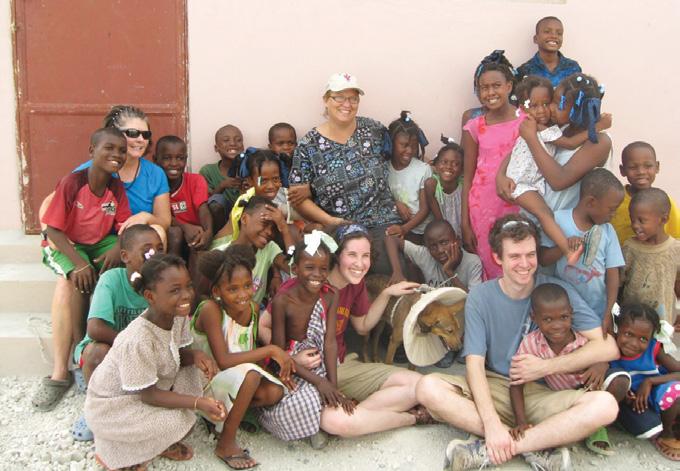
k itao S CH olar SH ip gi V e S S tu D ent CH an C e for international experien C e
At the end of her third year of veterinary college, k a ssi E nE w Ton (Class of 2013) received the k i Tao Fa M i Ly En D ow ED sC ho L arshi P to help fund an international externship during her fourth year of study. It gave her the opportunity to follow a dream she had for quite some time.
“I spent four weeks in Croix de Bouquets, just outside the Port-au-Prince area in Haiti,” says Newton. “i hoped to learn how to combine veterinary work with missions and to define more precisely what a veterinary mission is. i also wanted to enhance my diagnostic and clinical veterinary skills with both small and large animals. Finally, i just wanted to immerse myself and learn more about the culture, speaking Creole and talking with people.”
Newton was able to do all that and more. She connected with Dr. Keith Flanagan (OSU DVM ’78), a veterinarian who spent the majority of his career working as a veterinary missionary in Haiti before his death on April 3, less than one week after Kassie left.
“One of my favorite experiences was the few days we spent in the Artibonite Valley,” says Newton. “Our mission was to train men who were called veterinary agents. These are people with no formal education or training who perform basic veterinary care in areas of Haiti where there is no veterinarian, and the people have no way to transport animals for care.”
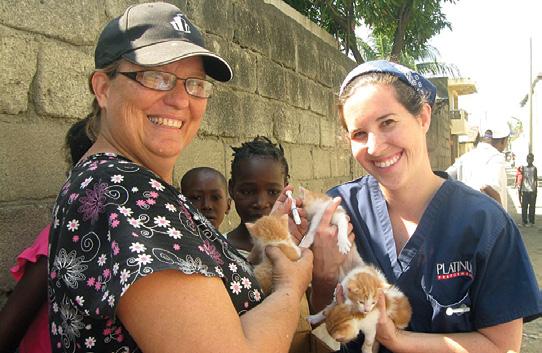
The training involved two days of classroom instruction followed by two days of hands-on work.
“i loved passing on our knowledge to help these men do their very best to care for animals. The agents are able to give vaccinations, care for wounds and administer antibiotics. Experiencing veterinary medicine in a completely different setting than what we are accustomed to is amazing. In a third-world country, you quickly learn that the luxuries of clinics (drug availability, surgical suites and privacy) are not readily available. In time, you adapt to your surroundings and find that you can practice good veterinary medicine and provide excellent patient care no matter the circumstances.”
Newton wanted to do everything possible during her time abroad, and she was even able to include a research project.
“I conducted a research study on the incidence of heartworm and tick-borne parasites in Haiti. it was a lot of fun to conduct research while also treating animals.”
She also visited (through a translator) with a family who lived next door to where they were staying.
“The father heavily practiced voodoo medicine, and I spent more than two hours learning about his family, his beliefs and his life. It helped me realize how incredibly blessed I am and how much I take for granted in life. It was a conversation I will surely never forget.
“Even though I did as much as I could to prepare myself for the Haitian culture, I was still shocked by the amount of poverty throughout the entire country,” she says. “Sadly, there aren’t many places (in Haiti) that are not lacking in education, finances and resources. It amazes me that people can adapt to live and be so happy in such circumstances. I was also surprised to see the amount of work and construction that has taken place since the earthquake in 2010. While parts of Haiti still show evidence of the tragedy, much of the country has rallied to rebuild, pave roads and make Haiti a better place than it was before.”
"THE
KITAO SCHOLARSHIP WAS
AN AMAZING OPPORTUNITY.
ENCOURAGE
I
EVERYONE TO SHARE THEIR KNOWLEDGE AND PROMOTE EDUCATION, WHETHER IN ANOTHER COUNTRY OR AT YOUR OWN CLINIC."
“ t he k itao scholarship W a s an ama Z ing opport U nit Y i enco U rage e V er Y one t o share their kno W ledge and promote ed U cation, W hether in another co U ntr Y or at Y o U r o W n clinic.”
— k a ssie n ewton
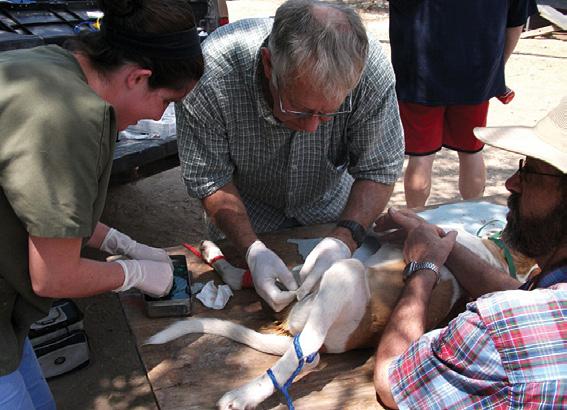
Newton earned her DVM degree in May 2013 and has accepted a position at The Pet Hospitals at Collierville in Collierville, Tenn.
“The Kitao scholarship was an amazing opportunity,” she says. “I encourage everyone to share their knowledge and promote education, whether in another country or at your own clinic. Continue to be teachers and to be teachable for the rest of your lives. There is always more to learn and there is always something you can teach.”
The Kitao Family Endowed Scholarship was established by the Kitao family of Japan. The Kitaos were so grateful for the experience their son had studying veterinary medicine at OSU that they wanted to offer a student the chance to study abroad. The scholarship allows a fourth-year veterinary student the opportunity to study small-animal medicine in an international externship.
derindA blAkeney
Lt. Col. Daniel Holland was killed in iraq in 2006. his wife’s college roommate established the scholarship in his honor.
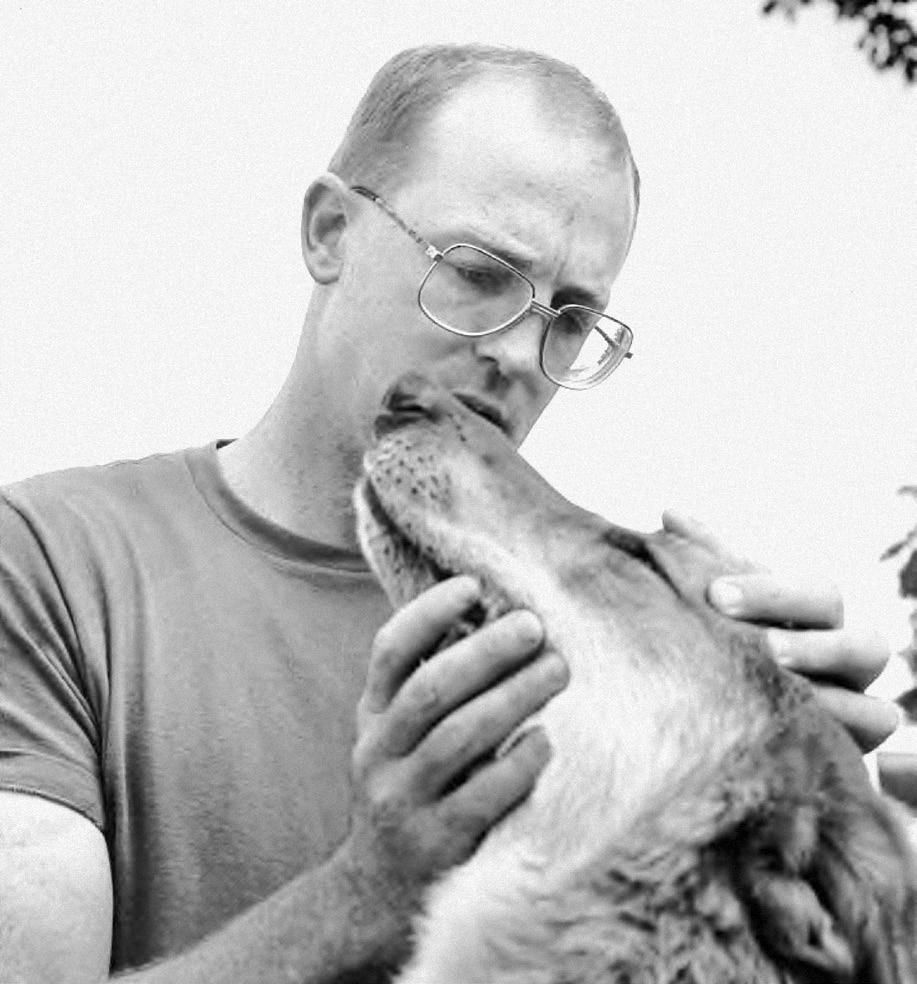
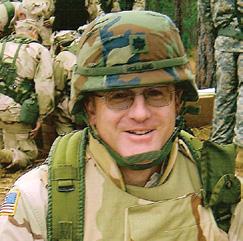
The Daniel Holland Memorial Scholarship was awarded for the first time in April at the OSU Center for Veterinary Health Sciences’ annual awards banquet. Tamyra Lingo Fancher of Glencoe, Okla., established the annual scholarship in honor of Lt. Col. Daniel Holland, DVM, a hero who is an alumnus of the veterinary college.
When Holland’s father retired from the U.S. Army, the family moved to Marlow, Okla. Always thinking the Army was a way of life, Daniel soon discovered his love of veterinary medicine. He entered OSU on a ROTC scholarship and was admitted to OSU’s veterinary college three years later.
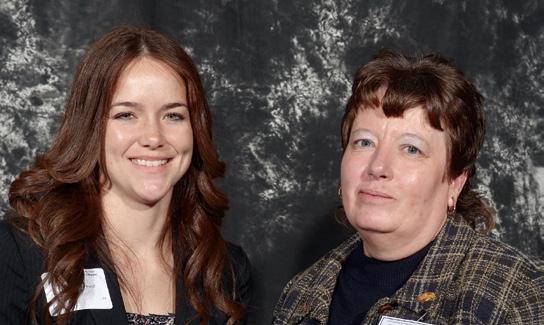
Connie Yearwood of Colony, okla., Class of 2015, is the first recipient of the Daniel Holland Memorial Scholarship. She met Tamyra Fancher and Sheryl Holland during the awards banquet, where the scholarship was presented.
“ i was shocked when my name was announced as the recipient of this scholarship,” says yearwood. “i was unaware that these wonderful people i had visited with all evening were the very people that made this generous contribution to my education and passion in life.”
yearwood says she has always wanted to have a career in medicine, but it wasn’t until her senior year of high school that she decided to pursue veterinary medicine.
“i came to oSu to complete a bachelor’s degree in animal science, which brought me to a whole new world of passion and knowledge
of food production,” says yearwood. “i stayed at oSu to earn my dVM degree. To this day, i still have this passion to gain more and more knowledge and share what i know to anyone who will listen about the magnificent animals that provide us with wholesome nutrition.”
yearwood credits her older sister, Emily, with influencing her career decision.
“As most older sisters do, emily has influenced every decision i could possibly make since i was little. We share a common passion to care for animals; she is a registered veterinary technician working at a small-animal veterinary hospital in edmond, okla. She always demonstrates an incredible work ethic, which i try to follow daily.
“i have been touched by Lt. Col. Daniel holland’s life and those still here to share his story. Sheryl told me a few stories about his days in
veterinary school, and he certainly was a man of great integrity and a man who recognized the importance to love people and enjoy life every day you are here. i will never forget this award or this night. it truly means way more than money. i will remember to show love to all the people and animals i encounter and to show continual support to our wonderful troops who sacrifice their lives for our freedom.”
other scholarships presented for the first time included the Butch and Luella Ruth Curtis Scholarships (nine awards at $10,000 each), the John B. Hays Endowed Scholarship at $1,000 and the Kammerlocher Endowed Scholarship at $1,700. Thanks to generous donors, more than $431,000 in scholarships and awards were presented during the awards banquet.
Combining his passions, Holland graduated in 1988 with his DVM degree and joined the U.S. Army Veterinary Corps as an officer. He was serving his country during Operation Iraqi Freedom when a roadside bomb exploded, killing him and three other service members on May 18, 2006.
“I knew Daniel because his wife, Sheryl, and I were roommates at OSU,” says Fancher, who earned a degree in accounting at OSU.
“i wanted to do something in memory of what Daniel did for our country. he was committed to his country, his community and his family, and gave the ultimate sacrifice for our freedoms — his life.”
“I’m so happy Tamyra is doing this in memory of Daniel,” says Sheryl Holland. “It means that people still remember him. It’s an honor especially to have a veterinary scholarship in Daniel’s name. Our son is actually thinking
about going into veterinary medicine. Every summer, he works for Dr. Lyndon Graf (OSU ’78) at his veterinary clinic in Marlow where Daniel once worked.
“Daniel had such a big personality. he was a giving person and a practical joker. he was so much fun — never a dull moment. i think that’s why, seven years later, we still miss him like crazy. Daniel was all about God, family and country,” adds Sheryl.
Eligible recipients must be an OSU veterinary student interested in large animal veterinary medicine whose studies focus on food animal medicine.
“I wanted to do something to honor Sheryl and their two children for their personal sacrifices and to remember the wonderful man Daniel was,” adds Fancher. “I hope the recipients recognize that the scholarship is a monetary gift in memory of a much greater gift from Daniel.”
derindA blAkeney
Camper S young an D ol D er CH e C k out an array of V eterinary experien C e S
The Center for Veterinary Health Sciences hosted 19 campers and 15 accompanying adults during the 2013 Grandparent University
One set of grandparents attending included an alumnus — Dr. Ronny (’70) and his wife, Nancy Kiehn, who brought their three granddaughters for the two-day program in June.
The children and their grandparents were able to participate in an array of hands-on activities, including small-animal endoscopy, teddy bear surgery, parasites, anatomy, radiographs, exotic and pocket pets, equine health and a trip to the cattle feedlot.
Interactive ideas to offer new learning experiences for our young visitors are always welcome. To share your thoughts, contact Kyla Trammell at 405-744-7672 or kyla.trammell@okstate.edu
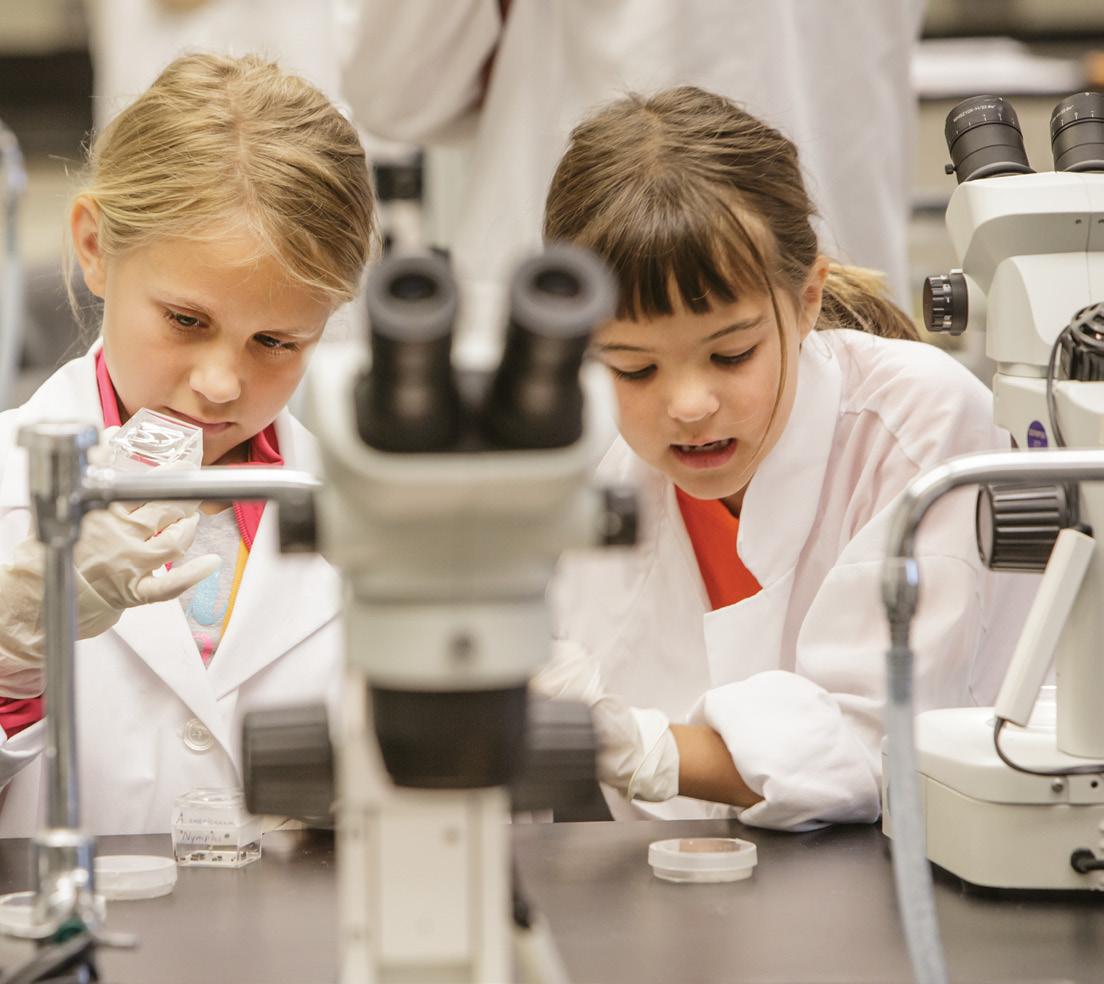
Kimmel and Natalie Patterson run some simple lab tests. lauren is the granddaughter of Michelle Kimmel m d., of cushing, okla. natalie patterson of leawood, kan., is the granddaughter of marsha patterson of springfield, mo.
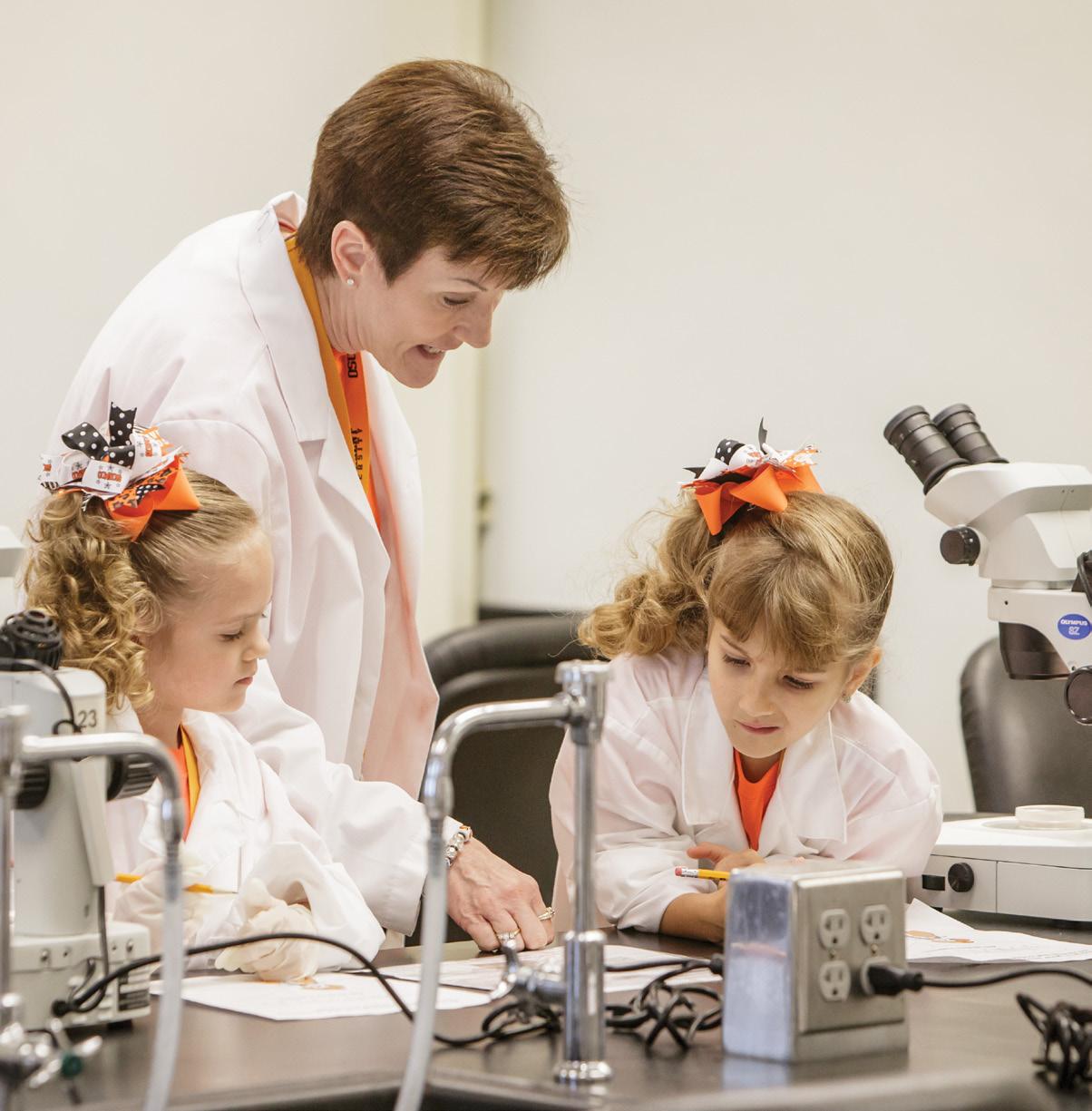
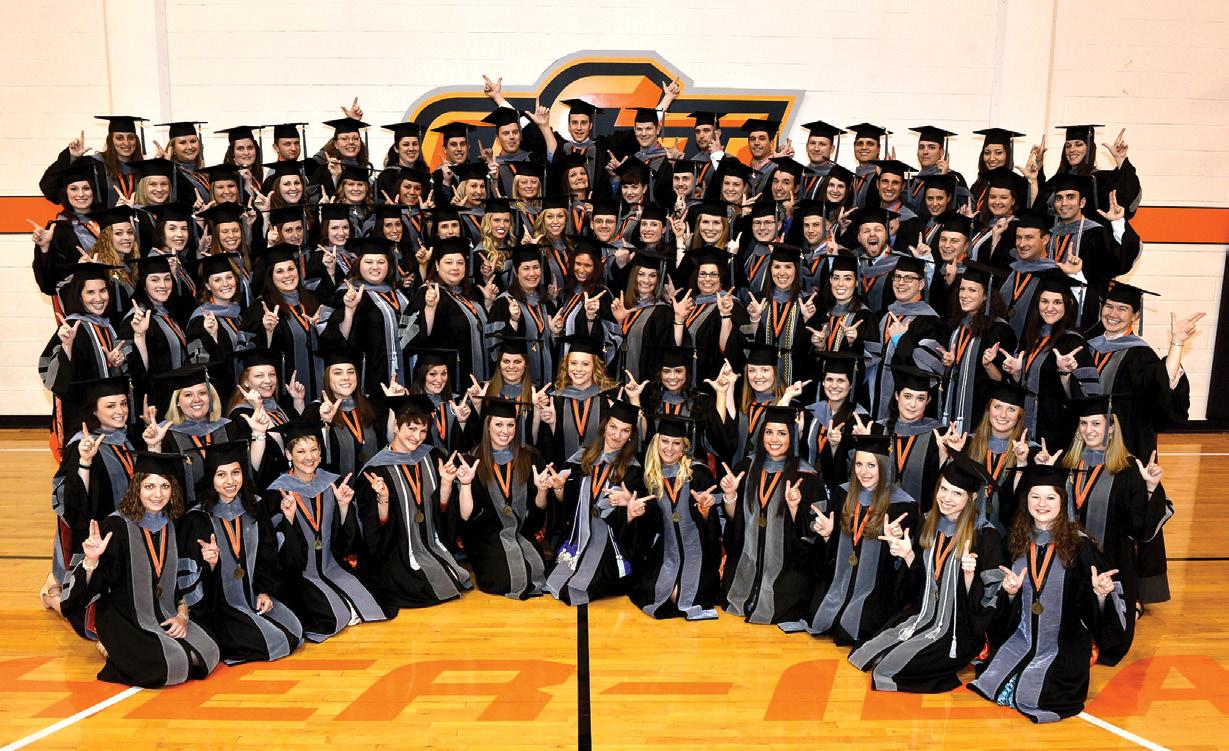
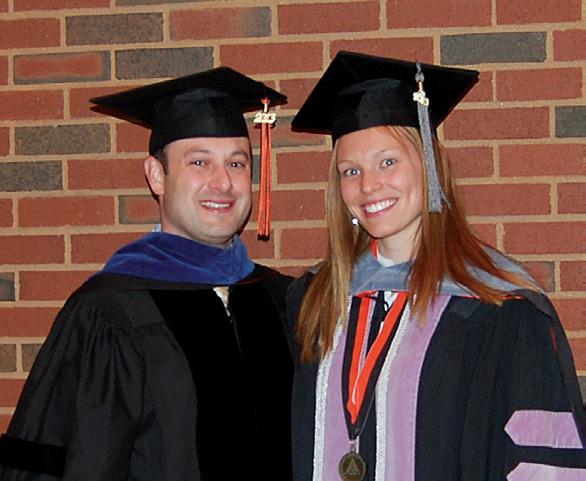
Many 6-year-olds fall in love with animals and dream of working with them.
Far fewer actually make that dream a reality.
Erin Way belongs in that small circle after her graduation from Oklahoma State University’s College of Veterinary Medicine with a Doctor of Veterinary Medicine degree.
The daughter of Daren and Kim Paddyaker of Tuttle, Okla., decided to make her dream career come true during her undergraduate studies at OSU. She gives a lot of credit to the support she has received from Chris Petro, DVM, also an OSU graduate and her husband. Petro hooded Way during the hooding ceremony on May 4, 2013.
“i am honored to have Chris hood me,” says Way. “he is the person who has helped me through the past four years the most. He’s always been there for me and pushed me to be the best I could. I admire him so much not only as a person but also as a caring, compassionate veterinarian.”
Since he graduated in 2010, Petro has been working at the Animal Medical Center I-35, a small-animal veterinary practice in Edmond, Okla.
“I commute from Stillwater every day to work,” says Petro. “The biggest challenge has been making time for each other between Erin’s school demands and my work schedule. Having just completed veterinary school, I knew exactly what she was going through, so it helped to make things a little easier.”
Following graduation, Way will enter the U.S. Air Force as a public health officer.
“Joining the military is a great career opportunity for a graduate with a DVM degree,” she says. “It’s a great way to see different areas of the country and even the world. I’m really excited to start my job and learn a different avenue of veterinary medicine.”
Way will be stationed at MacDill Air Force Base in Tampa, Fla. Her husband plans to go with her and look for work as a small animal practitioner wherever she is stationed throughout her military career. He has found a position with a clinic in Valrico, Fla.
Erin Way was hooded by her husband, Chris Petro (2010) at her may graduation.
“I am excited for Erin to graduate and start this new chapter of her life,” says Petro. “it is a great honor to hood my wife and welcome her into this profession that we both care passionately about. Erin and i have made many memories here. i know we will both miss stillwater and osU very much.”
Way was inducted into the Nu Chapter of Phi Zeta, the honor society of veterinary medicine.
“I met some great people while I was here in veterinary college,” she says. “Some will remain lifelong friends. The camaraderie that you build is really neat. If veterinary medicine is something you are passionate about, soak up as much knowledge as you can and really treasure the time you are in school.”
With 92 members, the class of 2013 is the largest class of Cowboy veterinarians to graduate from Oklahoma State since it opened its veterinary school 65 years ago.
derindA blAkeney
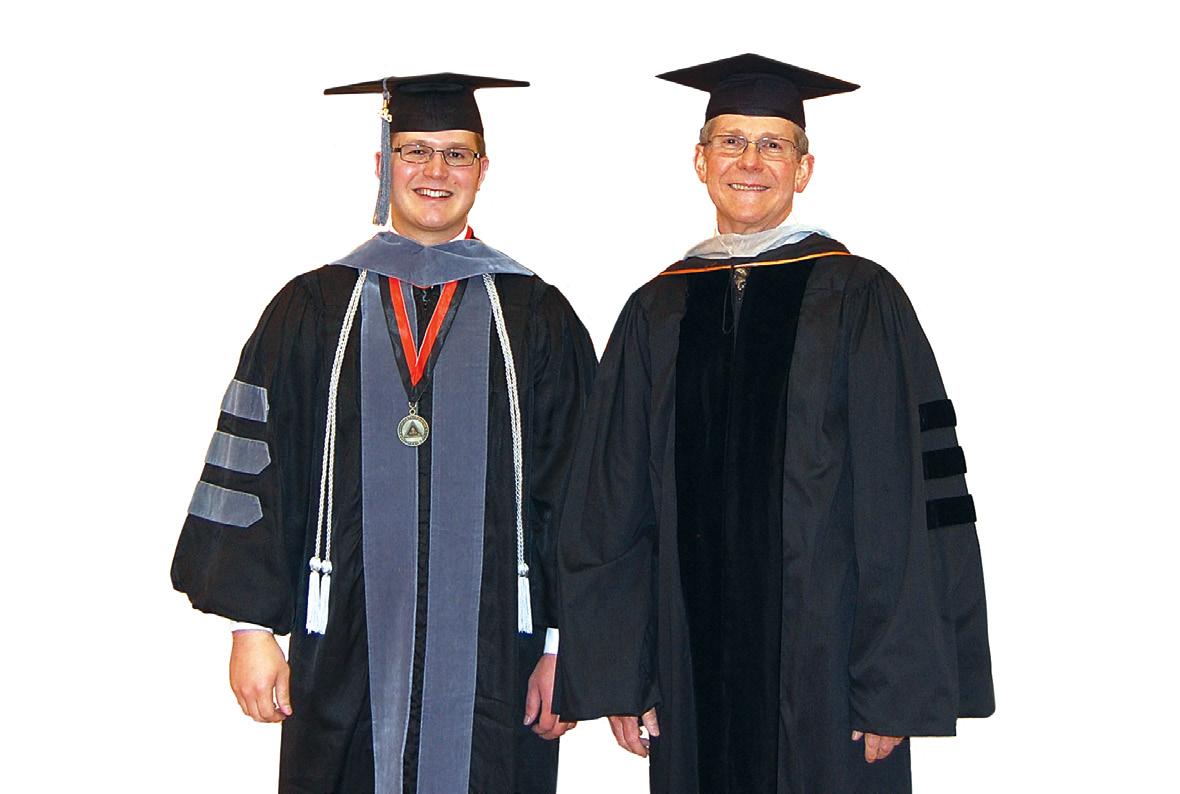
David Bailey (left) is following the examples set by his dad, Keith (right) and grandfather Richard (now deceased) by getting his dVm at osU.
DaV i D b ailey f ollow S t H e family pat H to o S u
For some, the family business may be just that — a business. A firm specializing in the law, perhaps, or architecture or maybe a store of some sort. For the Bai LE y Fa M i Ly of Tulsa, the family business is veterinary medicine, and the family school is Oklahoma State University.
"I HAVE ALWAYS LOOKED UP TO MY DAD IN LIFE AND IN VETERINARY MEDICINE," SAYS DAVID. "HAVING HIM HOOD ME IS A SYMBOLIC WAY OF BEING WELCOMED INTO THE FIELD AS WELL AS INTO THE REAL WORLD OF PRODUCTIVE CITIZENS."
“ i ha V e al W aY s l ooked U p to m Y dad in li F e and in V eterinar Y medicine,” saY s d a V id. “ h a V ing him hood me is a s Y m B olic W aY o F B eing W elcomed into the F ield as W ell as into the real W orld o F prod U cti V e citi Z ens.”
David Bailey is the third generation to earn his DVM degree from OSU’s College of Veterinary Medicine. His late grandfather, Dr. Richard Bailey earned his degree in 1965; his father, Dr. Keith Bailey, who owns Tulsa’s Southwest Veterinary Hospital, followed in 1984. David grew up watching his dad treat sick animals.
“Even though from an early age I was interested, I didn’t decide to pursue a career in veterinary medicine until late in high school. It’s a long time commitment to get the degree,” recalls David. “In the end, i couldn’t think of anything that would make me as happy as doing what i had witnessed with dad.”
“The road to a degree in veterinary medicine is long and difficult. Many desire, but only a few actually travel therein. I am very proud, as would be my father, to welcome one more generation,” says Keith. “as a child David was inquisitive, yet hated school. his mother and i never expected him to go to college, let alone into such a rigorous study. It just goes to show that you are capable of anything you set your mind to; never sell yourself short in work or in the hobbies you pursue.”
While David and his father have always enjoyed working together, the young Dr. Bailey is not yet joining his father’s practice.
“After graduation, I plan to work in a small-animal practice in Tulsa,” says David. “I feel I will benefit from gaining experience under a variety of doctors. In the long run, I think it will make me a better veterinarian and more of a benefit to dad’s practice when the time comes for me to join him. Also my family and my fiancée’s family are in Tulsa, and it is important for us to be around them.”
“David has a way with people that is easy and natural. he works very well with his hands and is a fast learner,” says Keith. “’When he does join the practice, he will bring a fresh viewpoint so that we may span decades of learning with a wide range of experiences. I believe it is important to stay current and listen to the opinions of your peers on both sides. I learn continually from both recent graduates and experienced mentors. This is what keeps the profession fresh and interesting.”
“i still have a lot to learn,” adds David. “However, working with Dad over the years, I learned a lot and have seen diseases and conditions that I would not have been exposed to otherwise at this point in my career. The experience I gained will allow me to adjust to being a veterinarian easier and will help me to recognize certain conditions more quickly in my patients.”
Looking back over the past four years, David has fond memories and some advice to offer incoming students.
“My favorite memory is the first day of orientation,” smiles David. “i met my best friend and now my fiancée, a manda Likins. It was also an interesting experience to go through the same veterinary program that both my father and grandfather went through. I even had several of the same professors that my father had, and surprisingly a few that my grandfather had. It was fun to share stories with these professors about my dad and grandpa from when they were in my position. I have made a lot of friends along the way and met a lot of people that I will never forget.
“Veterinary school can be very difficult and at times, may try your patience,” he continues. “Try to remember that you are there to learn. Soak up all of the knowledge you can. Take advantage of your peers and all of their experiences. You are surrounded by specialists in a variety of fields so learn anything you can from all of them. And have fun when you find opportunities to do so.”
On May 4, 2013, David Bailey was among 92 students earning a Doctor of Veterinary Medicine Degree from Oklahoma State University’s Center for Veterinary Health Sciences. His father hooded him.
“I have always looked up to my dad in life and in veterinary medicine,” says David. “Having him hood me is a symbolic way of being welcomed into the field as well as into the real world of productive citizens. It seems fitting that after sparking my interest in the field that he would be a part of the celebration of finally earning the degree and beginning my career.”
“Congratulations to the Class of 2013,” says Dr. Jean Sander, professor and dean of the veterinary center. “now is an exciting time to join the profession of veterinary medicine. Whether these young veterinarians chose private practice, a career in public health, the military service, academia or biomedical research, each one will play a critical role in keeping our food supply safe, our animals healthy and ultimately our families healthy.”
At 92 members, the class of 2013 is the largest class of Cowboy veterinarians to graduate from Oklahoma State since it opened its veterinary school 65 years ago in 1948.
derindA blAkeney
o kla H oma State u ni V er S ity’ S Center for Veterinary Healt H S C ien C e S wel C ome D t H e 82 member S of t H e Cla S S of 2017 wit H a wH ite Coat Ceremony, S ymbolizing t H e fir S t S tep of many mile S t one S for t H e S e S tu D ent S on t H eir J ourney to earn a DV m D egree.
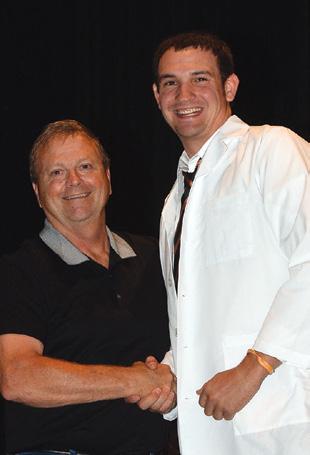
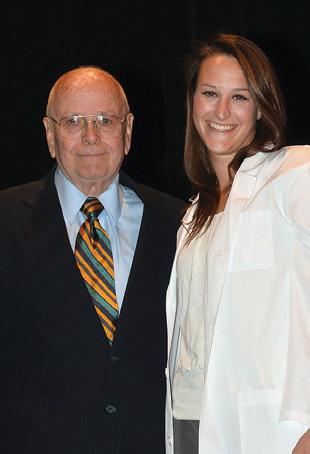
Both are
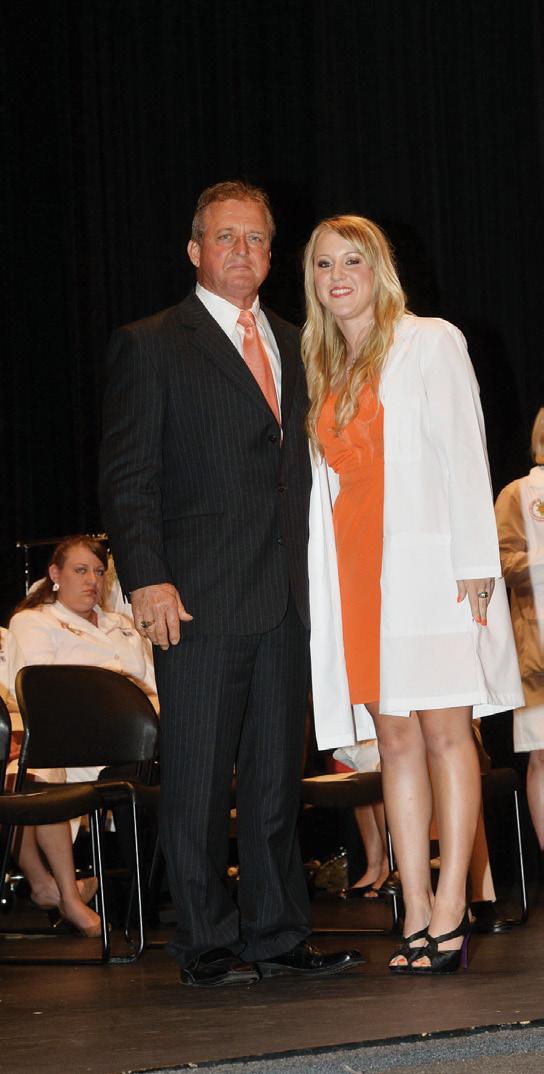
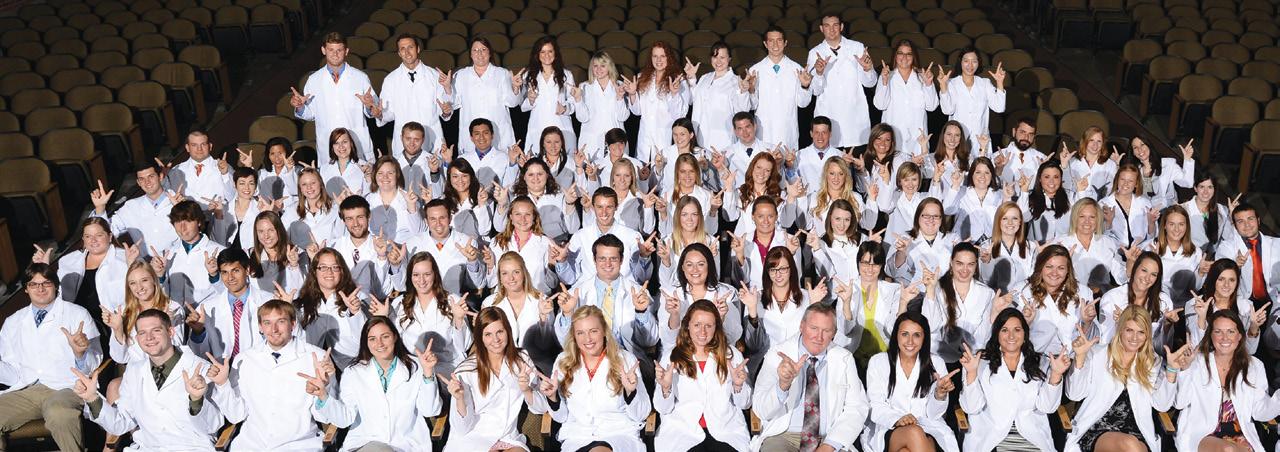

- RESIDENTS 4 E ARLY A DMISSION P ROGRAM * STUDENTS , SPLIT BETWEEN IN - STATE AND NON - RESIDENTS
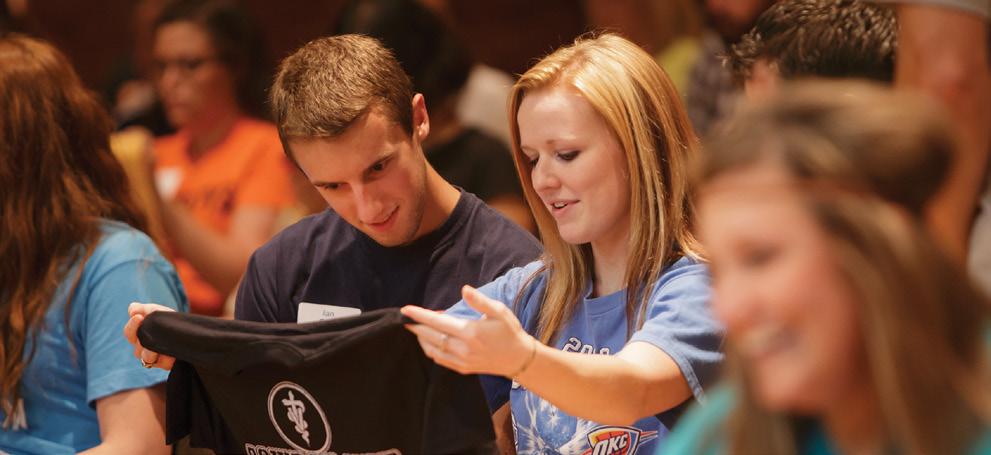
“ i think W e ha V e one o F the B etter schools F or tea ching Y o U ng people on ho W to get o U t and B e a part o F the comm U nit Y and B e a ser V ice F or their clients.”
"I THINK WE HAVE ONE OF THE BETTER SCHOOLS FOR TEACHING YOUNG PEOPLE ON HOW TO GET OUT AND BE A PART OF THE COMMUNITY AND BE A SERVICE FOR THEIR CLIENTS."
— Dr. Mike t ripp
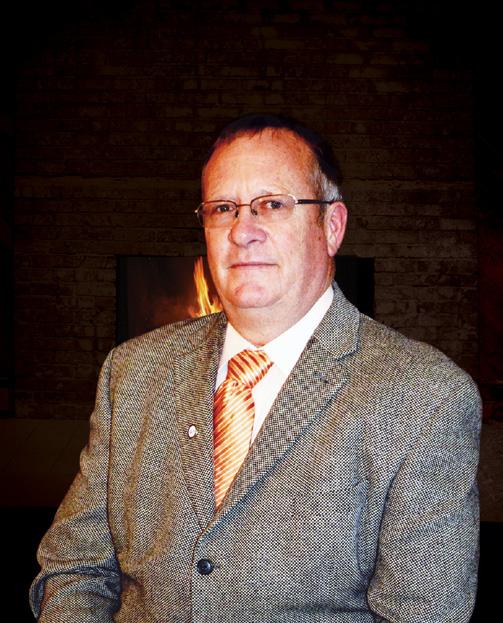
Dr. Mike Tripp of ringling is the oklahoma Veterinary medical association’s Veterinarian of the Year for 2013.
r ingling’ S m ike t ripp SH are S H i S pa S S ion wit H family, C lient S , S tu D ent S — an D pig S
Dr. Mike Tripp is a man of simple needs.
“I grew up with pigs,” says the Ringling, Okla., large-animal veterinarian. “We raised Yorkshires for show and breeding. It’s just kind of my relief. Some people like to go play golf and go to the bar. I like to go to the barn and mess with the pigs.”
But pigs aren’t his only passion. His dedication to his trade and his community were rewarded in January 2013, when he was honored as the Oklahoma Veterinary Medical Association’s veterinarian of the year.
Tripp, a member of the Class of 1982, was inspired to become a veterinarian by one of the first vets to graduate from OSU, Dr. Jack Bostwick . The former president of OVMA let the fourthgrade Mike work at his clinic in tiny Fairview, Okla.
It was work that would make most kids balk. Mike brought cattle in through the chutes once they arrived for treatment. He cleaned their pens. He cleaned the dogs’ and cats’ rooms.
“I think it’s good to learn all positions,” Tripp says. “if you start from the bottom and work your way up, you have a better appreciation for the people who do those things for you later.”
Bostwick also let him help — as much as he could — with calf birthing and surgeries. Bostwick showed the young Mike he “could help people and animals at the same time. I guess that’s why I decided to do what I did.”
Agriculture and taking care of valuable animals have always been a big part of Tripp’s life. His family had a farm outside Fairview where they raised sheep and pigs.
His dad, Wilbur “Doc” Tripp, was an extension agent who worked in the area and had a master’s degree from OSU. His mother, Nancy Tripp, taught school. Their four kids all went to school at OSU.
“ i only knew there was one school growing up,” Tripp says. “if the soviet Union was playing oU, Mom would be rooting for the russians to beat them.”
Like many veterinary students, Tripp studied animal science before starting in the veterinary medical program. He was such a dedicated student that he lived in the apartment of the department’s old and foul-smelling swine barn (which was replaced by the newer facility with better odor and waste controls in 2004).
He and another student who lived there ran experiments for faculty members in everything from special feeds to reproductive physiology. He was admitted to veterinary school after just three years in undergrad, meaning he was finishing up his bachelor’s degree as he started his veterinary medical degree.

Mor E on o VM a
Other OVMA Awards honoring CVHS alumni:
Companion a nimal p raC titioner of t H e y ear —
D r . W en D y B ray (’98)
f oo D a nimal p raC titioner of t H e y ear —
D r . T im L o W ry (’87)
faC ulty to p raC titioner awar D —
D r . r o B er T S T ree T (’87), aDJunCt aSSoCiate profeSSor, Department of Veterinary CliniCal SCienCeS
Di S tingui SH e D Ser V i C e awar D —
D r . y a L on D a B ur T on (’00)
o v M a eX e CU tive Co MM ittee
CVHS alumni serving Oklahoma and the veterinary medical profession
Dr. Greg Campbell
p re S i D ent — Dr. Greg Campbell (’85), former patHologiSt at oaDDl anD aSSoCiate profeSSor in tHe Department of Veterinary patHobiology
Alumni who own or work in veterinary medical clinics in Oklahoma that have been open for 50 years or more honored by the OVMA:
Dr. Louis Carlin
Dr. Louis Carlin (’53) — a ffor Dable p et Care, t ul S a
Dr. Colette Crotty
Dr. Colette Crotty (’85) — VC a Veterinary m e D i C al Center, t ul S a
Dr. DmugKirkpatrick
Dr. Doug Kirkpatrick (’77) — Sout H we S t Veterinary Clini C , e lgin
Dr. Brian
Dr. Brian McNeil (’78) — Cu SH ing Veterinary Clini C , Cu SH ing
Dr. Lawrence McTague
Dr. Lawrence McTague (’71) — a r D more a nimal Ho S pital, a r D more
Dr. Louis Nightengale
Dr. Louis Nightengale (’62) — town an D Country a nimal Ho S pital, a r D more
Dr. Rodney Robards
Dr. Rodney Robards (’89) — Sout H ern Hill S Veterinary Ho S pital, t ul S a
Dr.James Sewell
Dr. James Sewell (’58) — Veterinary Corner, g ut H rie
p re S i D ent-ele C t — Dr. Mark Shackelford (’82)
Dr. Mark Shackelford
Dr. Michael Steward
Dr. YalondaBurton
Vi C e pre S i D ent — Dr. Yalonda Burton (’00)
Dr. Michael Steward (’79) — S H awnee a nimal Ho S pital, S H awnee
Dr. RosemarieStrong
Se C retary/trea S urer — Dr. Rosemarie Strong (’89)
Dr. Larry Thompson
Dr. Larry Thompson (’81) — w in S or a nimal Clini C , Coalgate
i mme D iate pa S t pre S i D ent — Dr. Mark Ferrell (’88)
Dr. Mark Ferrell
Tripp met his wife, Rita Brawdy, at OSU. They were married in 1979. She taught at Olive schools while he was finishing up. Today, his Southern Plains Animal Hospital in Ringling, where he began working in 1985, sees dozens of clients from all over the region who rely on Tripp to protect their livelihoods as well as their companion animals — just like Bostwick’s clients did with Tripp’s mentor.
Tripp also mentors veterinary students. He hosted a veterinary technician intern last summer from Murray State.
“I enjoy the teaching part,” he says. “I’ve had several interns come and stay.”
In their spare time, Tripp and his wife volunteer with the Baptist Home for Girls in nearby Madill. They help them raise and show livestock. They also host a girl from the home each year at Christmas in their home.
He and his wife raised four children and have one grandson. Their oldest daughter will start in a veterinary technician program in the fall. Their youngest daughter is studying to be a registered nurse. Tripp’s grandson shows pigs with him. They attended the National Swine Registry’s 2013 summer conference in Louisville, Ky.
Tripp says winning the OVMA’s Veterinarian of the Year is one of the highlights of his career.
“To be honored by your peers is always a great honor,” Tripp says, noting his pride at being an alumnus of the veterinary school. “A lot of that goes in to the type of teaching that goes in to our school which I’m really, really high on. I think we have one of the better schools for teaching young people on how to get out and be a part of the community and be a service for their clients.”
MATT ellioTT
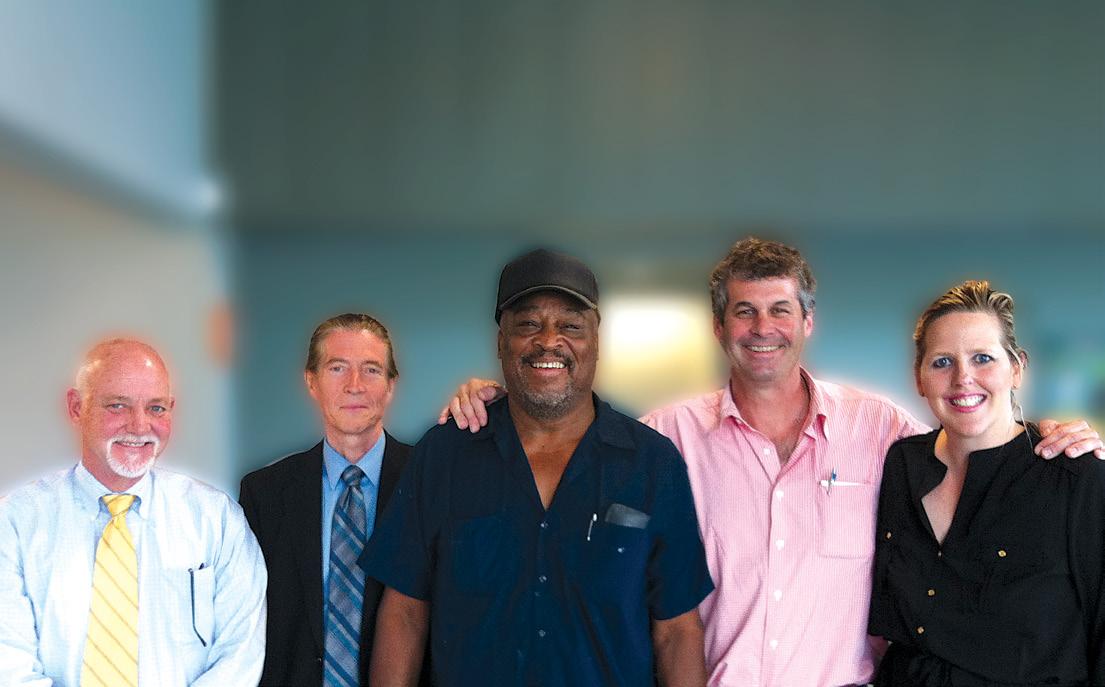
several of the leaders involved with Friends for Folks visited the Westtown homeless resource campus to discuss expanding the program. those at the meeting included (from left) Westtown executive director Dan Straughan; Greg Mellott, director of The Dogs of Lexington documentary; Marvin Perry, a former inmate who was involved in the program before his death in 2012; veterinarian Dr. John Otto Jr.; and Louisa McCune-Elmore, executive director of the Kirkpatrick Foundation that provided a grant to make the documentary.
Like all veterinarians, Dr. John oTTo often finds himself saving the lives of pets.
Unlike most, Otto takes it a step further with his participation in the Fri E n D s F or F o L ks program.
“The program is designed to pair inmates with animal shelter dogs,” explains Otto. “An inmate will spend four months training a dog so that the dog can eventually become a suitable companion for a widow, a therapy dog for a veteran or senior citizen center or for people with special needs.”
Once they have been trained, dogs from animal shelters become more adoptable, increasing their chances of finding a forever home with a new family. And that’s not all it helps, Otto says.
“Not only does the program help decrease the shelter population, but it also gives the inmates a second chance to make a positive change in their lives as well,” adds Otto. “Offenders learn to care for something other than their own needs. They learn to give rather than take. They can see the results of their hard work as their dog responds to the training.”
Otto is the volunteer veterinarian for the Lexington (Okla.) Correctional Center , a maximum-security men’s prison. The Friends for Folks program is patterned after a program started in Washington state in the 1980s by Sister Pauline Quinn
Within its structure, Friends for Folks has rules for everyone from the veterinarian to the warden to the program coordinator (who trains the inmates on how to train the dogs) to the inmates selected to be a dog trainer. Otto’s role is multidimensional.
Below: Marvin Perry worked with Star, a black lab he trained to be a search-and-rescue dog. perry was paroled in 2008 and died in July 2012 of lou gehrig’s disease.
right: Susan Savage and Dr. John Otto visit with Fergie, one of the program’s dogs. savage, a former oklahoma secretary of state, supports Friends for Folks and put the Kirkpatrick Foundation in touch with otto.
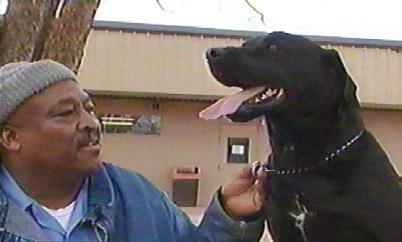
“I go with the trainer to introduce the program to the warden and support personnel who will be involved with the program at a correctional facility,” says Otto, who earned his DVM degree from OSU in 1990. “It is important that I ensure the health of the dogs is up to basic professional standards. This helps reduce the risk of contagious diseases to the inmates and other animals in the program.”
Otto makes sure a vaccine protocol is in place and monitors it to keep everyone healthy. He also explains to the inmates the importance of internal and external
parasite control programs for the animals’ health as well as reducing the risk for zoonotic diseases.
“The increased responsibility given to the inmate helps boost his self-esteem and pride in the program. I even give quizzes to the inmates to help in their educational process,” he adds. “The more the inmate interacts with me, the veterinarian, the more he gains in respect for this program and for the health of the pet.
“The pets in this program are being trained as companions for widows or people with special needs out in the community. It’s
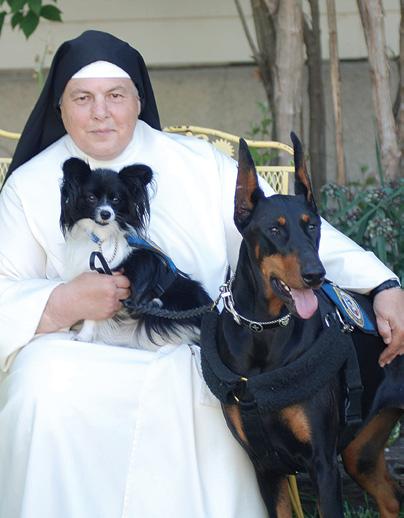
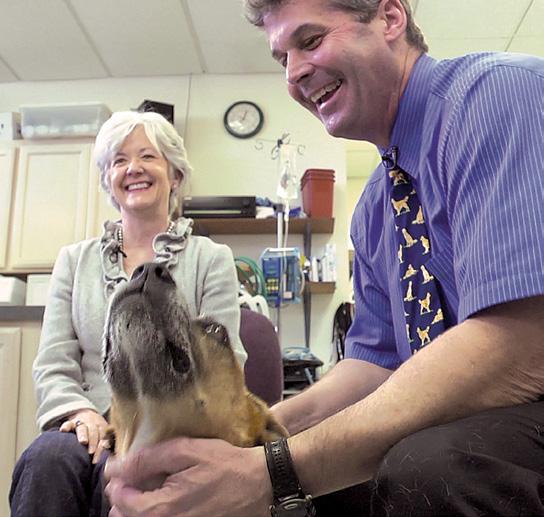
very rewarding to be part of this program,” Otto says. “History has also shown that this program has a ‘calming’ effect within the prison population even with inmates not directly involved with the cell dog program. Families of inmates also benefit as they see their loved ones make a positive change in their lives and give back to others.”
Otto is working with the Oklahoma Department of Corrections to establish a similar program in all the state’s prisons, including its female facilities. Mabel Bassett Correctional Center in McLoud, Okla., has already started to build its program.
While deeply involved in the program, the veterinarian has other things on his plate as well. He owns University Animal Hospital in Norman, and he’s a husband and father to two boys.
He has also produced a documentary about the program, The Dogs of Lexington, which can be viewed on OStateTV at bit. ly/1agmowp
derindA blAkeney
The Fri E n D s F or Fo L ks program is accepting donations through the Tulsa Community Foundation . Specify your gift is for friends for folks and send it to Tulsa Community Foundation, 7030 S. Yale, Suite 600, Tulsa, OK 74136, or visit www.tcf. org you can get more information at www.friendsforfolks.org
3
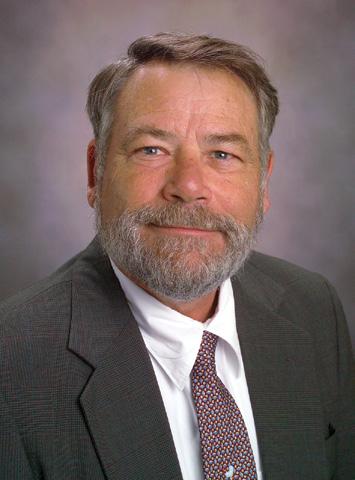
D r . F re D erick e nrigh T
Dr. Frederick Enright has battled bovine brucellosis for much of his career.
He is known for developing and implementing a program to eliminate bovine brucellosis from marsh cattle herds in southwestern Louisiana, which led to Louisiana becoming a brucellosis-free state, ultimately saving millions of dollars in losses each year caused by the disease. Enright also co-developed the vaccine that is the official USDA vaccine for brucellosis in the United States.
His research interests focus on the immunological and inflammatory reactions of a variety of hosts to bacterial, protozoal, viral and helminth parasites. He is particularly interested in the innate defense systems of animals to these agents.
He has been a professor emeritus at Louisiana State University’s Agricultural Center in the Department of Veterinary Sciences since his retirement in 2010. He joined LSU in 1976, returning to the university where he did his pre-veterinary studies. Enright
name D Di S tingui SH e D a lumni
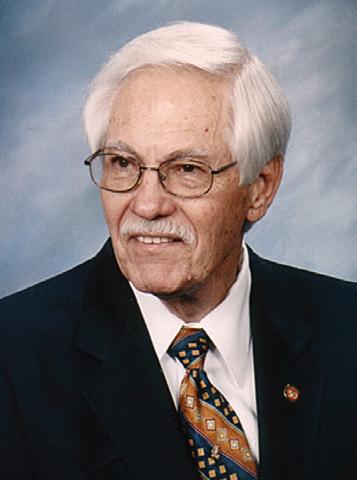
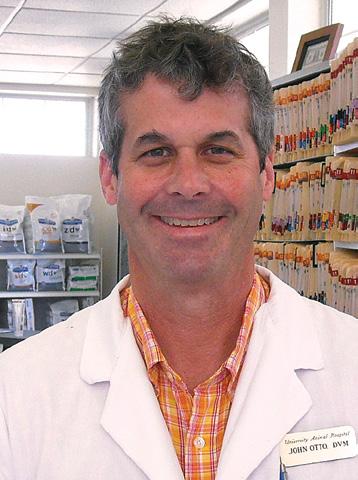
D r . S o L omon c . g ar T man
Dr. Solomon C. Gartman was a member of the team that effectively rid North America of the screwworm, a pest that plagued the cattle industry since the mid-1820s and caused millions of dollars in losses every year. He also was involved in the Animal Welfare Act.
Gartman attended Shawnee (Okla.) High School, where he played basketball on the state championship team and ran track. Following graduation, he enlisted in the U.S. Army Air Force and served as a tail gunner from 1944 to 1946.
In the fall of 1946, he attended then-Oklahoma A&M College and in 1948, he began veterinary college. In 1951, he became one of 26 inaugural graduates from Oklahoma’s School of Veterinary Medicine.
He went to work for the U.S. Department of Agriculture as an Animal and Plant Health Inspection Service veterinarian serving Arizona and Georgia. From 1957 to 1962, Gartman was the assistant veterinarian
D r . J ohn o TT o
Dr. John Otto may have the most popular veterinary clinic in Norman, Okla., but his true passion lies in helping homeless animals — “shelter medicine,” as he refers to it.
Readers of the Norman Transcript newspaper have named Otto’s University Animal Hospital, which opened in 1995, most popular with their votes several times.
In addition to treating patients, Otto volunteers at the Norman Animal Shelter and mentors pre-veterinary students who volunteer there. He worked to get a facility with spay and neuter facilities to make the animals more adoptable.
Otto also helped start a mentor program with current veterinary students and members of the Oklahoma Veterinary Medical Association.
During the aftermath of the May 3, 1999, tornado that ravaged Moore, Okla., Otto set up a triage system for 131 dogs and cats injured or misplaced during the storm and received the American Red Cross Hero Award for his work.
graduated from OSU’s veterinary college in 1970 and completed a Ph.D. at the University of California at Davis in 1974.
Some of Enright’s many honors and awards include receiving the LSU AgCenter Diversity Initiative Award for Excellence in 2004, being named as a Fulbright Scholar to conduct research and teaching at the National Institute of Agricultural Technology in Argentina in 2000, and receiving the Louisiana State University School of Veterinary Medicine Distinguished Faculty Scholar Award (1998).
He is active in numerous professional organizations, including the American and Louisiana Veterinary Medical Associations, Conference of Research Workers in Animal Diseases, American Association of Veterinary Immunologists and the Animal Disease Research Workers in the Southern States.
Enright is also active in his community, serving as a scoutmaster and assistant scoutmaster for Troup 50 Boy Scouts of America, a member of University United Methodist Church in Baton Rouge, and a judge in local, regional and state sciences fairs.
He and his wife, Christine, have a son, Richmond, and a daughter, Anna.
in charge of the screwworm program in Sebring, Fla. In 1962, he was appointed veterinarian in charge of the screwworm program in Mission, Texas, where he served until 1971.
Gartman transferred to Washington, D.C., in 1972, where he was involved in the Animal Welfare Act. In 1975, he was appointed area veterinarian in charge at Flowood, Miss., until he retired in 1980.
He was also an active member of the National Active and Retired Federal Employees Association and the United States Animal Health Association. He belonged to the Lions Club and served as a deacon and Pastor Search Committee chairman in his church.
Gartman earned many commendations during his life, including a Distinguished Service Award (1961), a Certificate of Appreciation for Superior Service (1972) and a Commendation for Distinguished Service (1980), all from the secretary of agriculture.
In 2006, Gartman died. Surviving are his wife, JoAnne Gartman, two sons, one daughter, nine grandchildren, and several great-grandchildren.
He also is the volunteer veterinarian at Lexington Correctional Facility’s dog training programs. Otto sterilizes and vaccinates the animals, which are paired with an inmate for 13 weeks of training. The pets later go to nursing homes and veterans’ centers as well as to shut-ins and people with special needs.
Otto works with Special Olympics through the Norman Kiwanis Club receiving the 2010 Hixon Award (the local club’s highest award) and the 2007 Texas, Kansas, Oklahoma Lay Person of the Year (the district’s highest award). He has also earned the Second Chance Humanitarian of the Year award in 1991 and 2004, as well as the 2004 Spay USA Top Humanitarian Award.
He was chairman of the Animal Welfare Committee of the Oklahoma Veterinary Medical Association, which helped create the animal friendly license plate that funds a statewide indigent spay/neuter program.
Otto also volunteers on the Dean’s Development Associates working with the dean, Dr. Jean Sander, and others to move OSU’s veterinary center forward.
He is married to Patti and resides in Norman with their two children, Grant and Payton. He grew up in various communities across the country before he graduated from OSU’s veterinary college in 1990.
derindA blAkeney
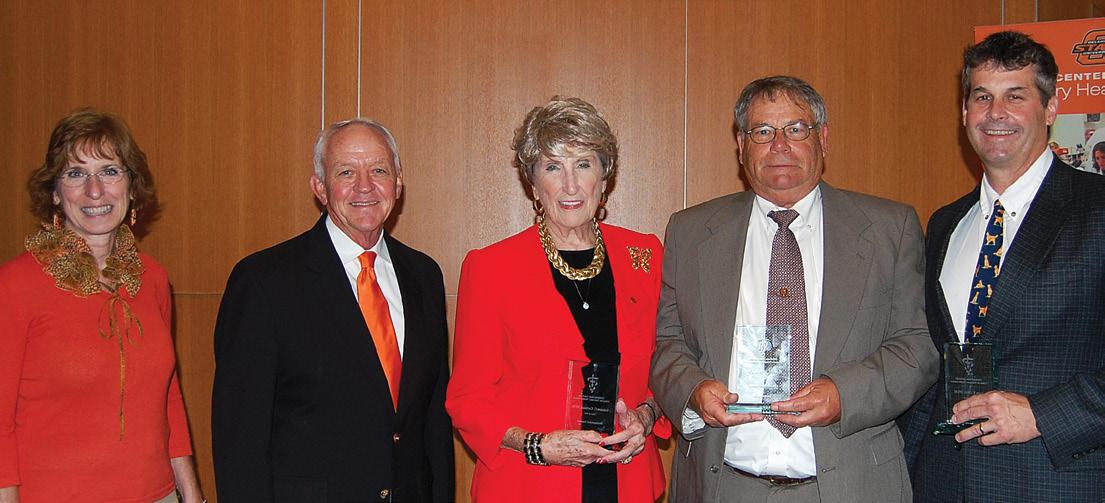
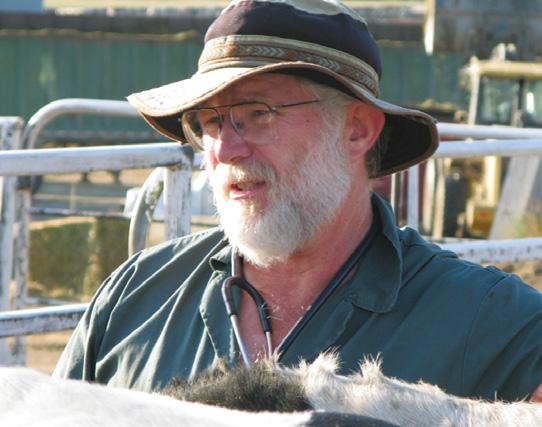
Dr. Earl Aalseth, a 1991 osU alumnus, has had a dairy consulting practice since 2004.
Earl Aalseth , Ph.D., DVM, a dairy practitioner from Lake Stevens, Wash., was awarded the AABP/Boehringer Ingelheim Practitioner of the Year at the 45th Annual American Association of Bovine Practitioners meeting in Montreal, Canada.
“it is nice that others think well of my efforts towards veterinary medicine and dairy management,” Dr. Aalseth says. “it actually makes my support group of other professionals, students, mentors and family feel good.”
Aalseth, a 1991 graduate from the College of Veterinary Medicine at Oklahoma State University, has had a dairy consulting practice with clients in the western half of the United States since 2004. The practice offers its wide range of clients consulting service regarding dairy production medicine and performance.
To keep his practice as advanced as possible, Aalseth also trains veterinary interns and participates in academic and industrial research directed at products and techniques that improve cow health. These activities include software development for herd health monitoring. Aalseth says clients place a high value on management concepts and technologies that move current practices forward.
Aalseth’s personal interests include his family, horseback riding, weightlifting, hunting, camping, auto mechanics, woodworking and financial investing.
“I usually catch up on Oklahoma State a little when my classmates call,” Aalseth says. “oklahoma state University is a great school from what i have seen comparatively from other veterinary schools.”
The American Association of Bovine Practitioners is an association of veterinarians organized to enhance the professional lives of its members. It was founded in 1965 as a non-profit organization. There are approximately 7,000 members from the United States, Canada and other countries.
PAige VAndAVeer
And the 2013 aVM a awar D goes to (drum roll, please) Dr. Ja ME s Bran DT , OSU Class of 1964. He was recognized at the American Veterinary Medical Association’s annual convention in Chicago for contributing to the advancement of veterinary medicine during his 50-year career.
Brandt, who lives in Nokomis, Fla., has been involved in veterinary medicine his entire career. He has held all the offices of his local veterinary association, including serving as president in 1972. He was very active in the Florida Veterinary Medical Association, representing District 7, serving on numerous committees and as president in 1990. In 2000, he was the primary founder of the Florida Veterinary Medical Foundation. Brandt was named the 1993 Florida Veterinarian of the Year and in 2003, he received the Distinguished Service Award. In 2006, the OSU College of Veterinary Medicine honored Brandt with a Distinguished Alumni Award.
On the national level, Brandt has been equally involved. Here are some of his accomplishments:
represented Florida in the aVMa house of Delegates, 1990-2000
served as aVMa president in 2001, guiding the organization through the aftermath of 9/11 with the help of many dedicated veterinarians
instrumental in the aVMa building beautification
assisted the national Commission on Veterinary Economic issues to raise the economic level of the profession
Elected trustee to the Group health and Life insurance Trust in 2005 and continues today to work for an acceptable source of health insurance for aVMa members
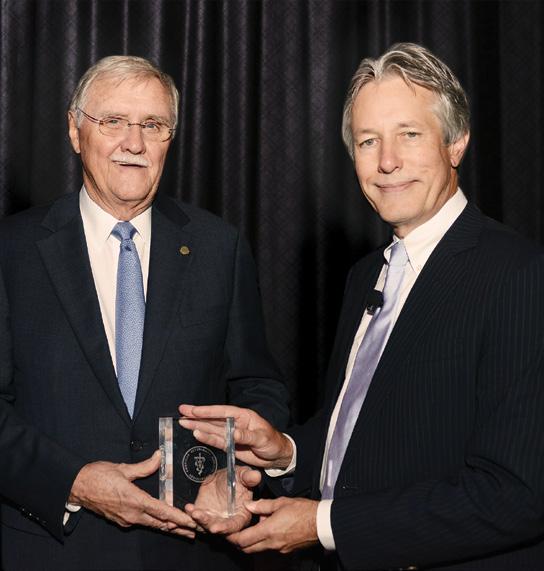
And Brandt’s involvement doesn’t stop there. He is also very active in his community, serving as president of the Venice-Nokomis Rotary Club, director of the Venice Area Chamber of Commerce, director of the Sunnyland Boy Scouts of America, and as vestryman and senior warden of St. Mark’s Episcopal Church. He has served on the Venice Hospital Board and helped found two community banks serving as a bank director since 1977. He also has participated in many events with local animal welfare groups and humane societies.
“i feel that Jim Brandt is a very deserving person representing oklahoma state University and the class of 1964,” says Dr. Ben Baker, 1964 class representative, OSU College of Veterinary Medicine. “he is an outstanding individual who has common sense and a very good outlook on many things.”
“I treasure the AVMA Award. I feel honored to be included in the long distinguished list of veterinarians who have received this award,” says Brandt. “My involvement in leadership was enjoyable, and i appreciate the profession. i am proud to be a veterinarian.”
Humbled by the present attention, Brandt is retired and has sold both of his small-animal veterinary practices.
Dr. James Brandt (left) receives the 2013 AVMA Award from Dr. Douglas Aspros aVma immediate past president.
Robin Wilson is someone who goes the extra mile in helping others and performing the duties of her position as the veterinary school’s director of student services.
Wilson doesn’t seek recognition for it. She just does it. That’s part of why she won the 2013 Stratton Staff Award, the top award for Center for Veterinary Health Sciences staff members each year.
“robin can be described as dedicated, resourceful, compassionate and tenacious,” wrote one of the individuals who nominated her. “Robin routinely goes beyond the call of duty to get her job done as well as providing tremendous support for her co-workers.”
Wilson, who considers Okmulgee her hometown, came to OSU in 1990 after finishing her associate degree at OSU-Okmulgee. She graduated from OSU in 1992 with a degree in business administration but didn’t return to OSU until 1999, when she was an extension program coordinator with the business college.
The best thing about her job is the people she works with, she says. But the parking is pretty good, too. Her office at McElroy Hall is the only one in the building that has an exterior door, giving her the opportunity to park maybe 30 steps from her office. But given the dedication she has shown to her work, it’s a good bet she has never used that door to sneak out early.
She remembers a student asking her during a postadmission interview if she’d always wanted to be a veterinarian.
“Truthfully, the thought never crossed my mind,” she says. “i see the passion that the students have for this profession, and i am glad to be involved in the process. it’s a long road. … To be a part of making their dreams come true is why we do what we do.”
She oversees a staff of five full-time employees and three student workers. While she prefers not to micromanage, she strives to familiarize herself with her staff members’ duties. She believes cross-training is imperative. Her staff lovingly refers to her as “particular” in describing her high level of attention to detail.
“ i t is V er Y re W arding t o ad V ise potential applicants, assist them in getting admitted, and help them d U ring their F o U r Y ears o F V et school and, F inallY, W a tch them grad U a te.”
"IT IS VERY REWARDING TO ADVISE POTENTIAL APPLICANTS, ASSIST THEM IN GETTING ADMITTED, AND HELP THEM DURING THEIR FOUR YEARS OF VET SCHOOL AND, FINALLY, WATCH THEM GRADUATE."
“When dozens of people a day stop by looking for me, they do have a way of noticing when I’m gone,” she says.
Wilson often refers to her office as Grand Central Station. In fact, one of her colleagues even made a Grand Central Station sign that hangs in the reception area of her office suite. She provides direction for all facets of admissions and student services activities. Her role in the college has evolved a great deal over the more than eight years she has worked at the veterinary school. She says she often feels like most her time is spent “putting out fires.”
“It is very rewarding to advise potential applicants, assist them in getting admitted, and help them during their four years of vet school and, finally, watch them graduate.” She has attended every CVHS commencement ceremony since her first day on the job and admits to getting teary-eyed every time.
She feels strongly about Stillwater, OSU and Oklahoma and shares that passion with prospective students, answering everything from questions about the college town to how to deal with tornadoes.
“I try to treat those who report to me like I would want to be treated. I’m there to assist and provide guidance, and I would never ask them to do something that I wouldn’t be willing to do or haven’t done myself.”
Outside of work, Wilson is an avid flower gardener whose friends routinely seek her advice. She also loves to share her plants with others.
At the Perkins home she shares with her husband, Mark Wilson, she has installed a koi pond and planted a mix of peonies, roses, lilies, zebra mallow, passion flower, lantana and clematis (just to name a few) as well as dogwoods, magnolias, lilacs and crepe myrtles.
“Everybody used to say, ‘You should be a landscaper.’ I always told them, ‘If I do it for a living, then I doubt I will enjoy it quite so much. That’s just my way to unwind — spending time in the yard.”
Wilson also enjoys reading and making Pinterestinspired crafts. She regularly makes gifts for friends and family.
She calls winning the Stratton Staff Award an honor because there are many other deserving staff members. She says she couldn’t have done it without her colleagues, staff and administration in the college.
Her only regret is that her beloved mother, whom she credits for her work ethic, is no longer alive for her to share this achievement with. If her mother could see her now, there is no doubt that she would be extremely proud.
MATT ellioTT
Cl/HS
Many classes at the Center for Veterinary Health Sciences tend to be closer than a typical graduating class, and that closeness doesn’t end with the diplomas. Even decades later, members of various classes continue to gather at Oklahoma State University to celebrate their years together and their lives since.
the class of 1952 had 36 members when they graduated 60 years ago. at the reunion in september 2012, five of the eight members still alive returned to stillwater. they are (from left): Drs. Allan Kimmell, Willard Rhynes, Edward Blevins, Harold ivie and Lawrence Valentine those unable to attend the 60-year reunion were Drs. J. Frank England, James Hatton and Raymond Young
Class of 1957
eight of the 19 living members of the class of 1957 celebrated their 55-year reunion during the Cowboy Roundup in september 2012. they are (seated, from left) Drs. Norman Adams Anton Kammerlocher and Joseph Potucek standing (from left) are Drs. Louis Stubbs Franklin Baker Leon Self Calvin Poole and Bert Briscoe
Class of 1972
six members of the class of 1972 celebrated their 40-year reunion. they are (from left) Drs. Lonnie Moore Rebecca
Morton Mike Johnston Kay
and Danny Dillon. Forty of the class’s 49 graduates are alive.
thirteen of the 65 living members of the class of 1982 celebrated their 20-year reunion in stillwater at the Cowboy Roundup in september 2012. seated (from left) are: Drs. Theresa Casey LeHew Robin Johnson Marcinda Mitchell Stephanie (Rosin) Moore Lawrence Shamis and David Migliaccio standing (from left) are: Drs. Bob Shoup Gary Kubat Margaret Thompson Paula Paetz Frank Roberts Daniel Christian and Mike Mitchell
twenty-five members of the class of 1987 celebrated their 25-year reunion at the home of classmate Dr. Robert Streeter of stillwater during the annual Fall Veterinary Conference the group had a great time catching up and reminiscing about the good ol’ days. on the front row are (from left): Drs. Karen Blanchard, Linda Blair, Michelle Corr, Kim Anderson, Vickie Brandon, Carol Best, Jim Neumann, Heidi McMorrow and Kevin Gibbs second row (from left): Drs. Marilyn Maltby, Dan Hefley, Mark Bock, Elaine Ross, Doug Aldridge and Teresa Brown third row (from left): Drs. Susan Mack, Tim Kennemer, Bob Streeter, Mark Kimsey and Terry Sparkman. Back row (from left): Drs. Terrell Blanchard, Craig Spence, Mike Aday and Tim Lowry Dr. Shirley Gilliland attended, but she is not pictured.
Class of 2002 members of the class of 2002 celebrated their 10-year reunion with four of the 72 class members making it back to stillwater for the occasion. they are (from left): Drs. Stephanie Loud, Jeanette (Lee) Yamamoto, Tammy Huber and Stacey Hubler
Four of the 68 members of the class of 2007 returned to stillwater to celebrate their five-year reunion. From left are: Drs. Kira Kautz, Carrie Hobgood, Kerri (Wilson) Darbonne and Melissa Kimble
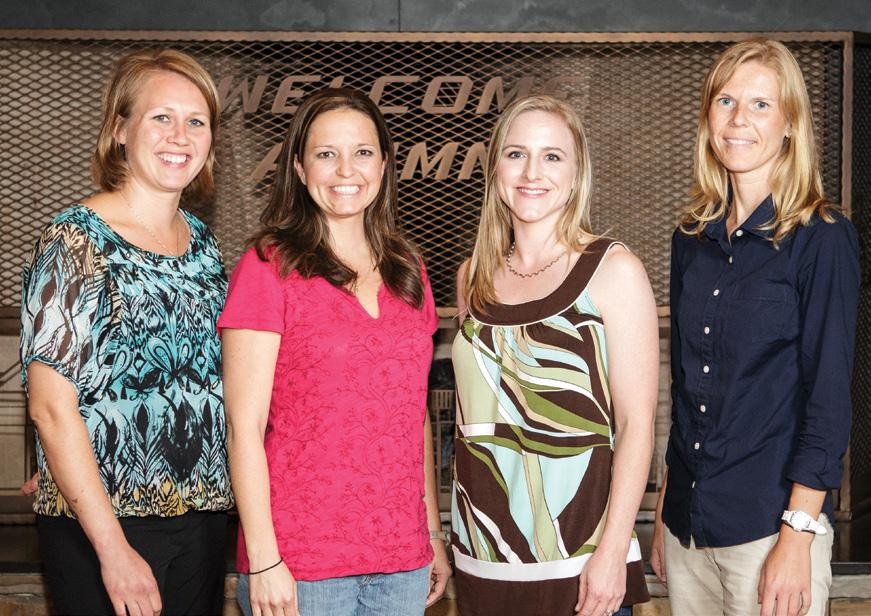

They came from North Carolina, Minnesota, Virginia, Florida, Nebraska, West Virginia, Mississippi, Pennsylvania, Louisiana, Kansas, Texas and Missouri as well as from cities in Oklahoma to celebrate their 50-year reunion in Stillwater. However, this class is no stranger to reunions — they have been getting together since they graduated from OSU with their DVM degrees in 1963.
“The key is to have one person keep track of everyone,” says Dr. Thomas Loafmann, class representative. “For a long time, Dr. Gene Fingerlin was the one who did that. We started having reunions every five years when we first graduated. The last 12 years or so, we have gathered together every two years.”
A total of 19 class members and two widows were able to attend some portion or all of the reunion activities. Here is a brief summary of the varied careers of the Class of 1963:
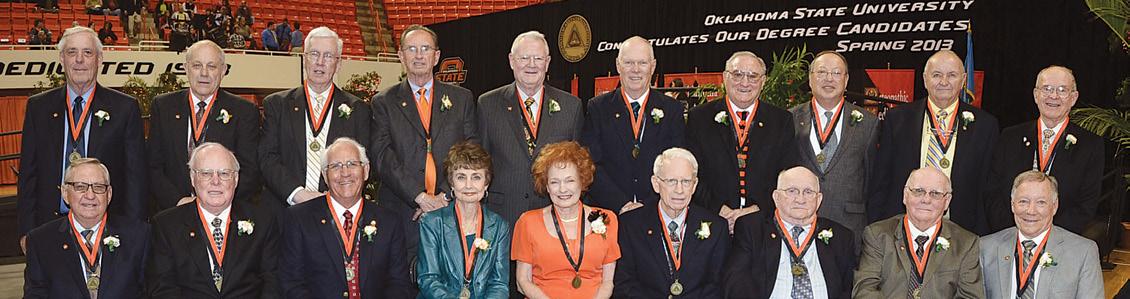
at the 50-year reunion for the veterinary Class of 1963 are (seated, from left) Drs. James Dear, Don Robertson, Gary Gibbons, Dorothy Fisher (widow of Dr. Edwin Fisher), Demarious Keller Frey, Franklin Humphreys, Robert Hardy, Wylie Hough and Don Luther standing (from left) are Drs. Jerry Kendrick, Stan Acree, Fred Ferguson, J.C. Bryson, Don Roach, Charles Warner, Don Vrbka, Josh Fidler, Ron Stenseng and Tom Loafmann also attending reunion activities but not pictured were Dr. Dellalene Baker and Evelyn Allen, widow of Dr. Jack Allen
Stan a cree
He was married before he attended veterinary college and worked in a mixed practice after graduation. He taught at OSU in the smallanimal clinic before earning a graduate degree in radiology from the University of Georgia. He has worked in small-animal medicine at Midwest Veterinary Hospital in Midwest City, Okla., for 44 years.
Jack a llen
He ran a solo practice in Kansas for 30 years. He was active in the Derby Chamber of Commerce, Sedgwick County Veterinary Medical Association, a Little League sponsor and a second-degree Mason. He and his wife, Evelyn, enjoyed traveling before his death in 2012. His widow attended the reunion in his honor.
Dellalene Baker
She worked in a mixed-animal practice for seven years before establishing her own facility, Grayson Equine Clinic, in Texas. She retired in 1999, having managed that one-woman practice for 29 years.
Zane Bowle S
He established a mixed-animal practice in Albemarle, N.C., the year after he graduated and loved being a veterinarian. “He would still be working today if he hadn’t become ill,” writes his widow, Geraldine Bowles. Dr. Bowles died in 2009.
J. c . Bry S on
He opened a mixed-animal practice in his hometown of Collinsville, Okla. In 1967, he opened a small-animal clinic in Owasso and practiced there until 2000, when he built a new clinic and practiced five more years. Today, he does relief work for a nearby clinic.
l oui S Burch
Following graduation, Dr. Burch was drafted into the Air Force, where he served for 12 years. Stationed in California when his service ended, he established a veterinary practice in Redlands, Calif., that grew to eight separate practices. Today, he still owns the original practice and works there two days a week.
Jo S eph c ha B ot
He began practicing veterinary medicine in Michigan after graduation. Four years later, he moved to Massachusetts to start his own smallanimal practice, which he ran for 36 years. Dr. Chabot went on to teach at Tufts School of Veterinary Medicine for 11 years, at Mississippi’s veterinary school and at two offshore schools. In 2008, he was diagnosed with primary lateral sclerosis, which is very similar to Lou Gehrig’s disease. He was unable to travel to the reunion.
Jame S Dear
He spent a third of his professional career serving as an Air Force veterinary officer in three states and Germany. He returned to Louisiana and worked for Dr. Michael Richie (Class of 1962) for two years while he constructed and established Cypress Animal Hospital near the New Orleans airport. He sold the practice in 2001.
D erick Fergu S on
In September 1963, Dr. Ferguson pursued an NIH fellowship in laboratory animal medicine with a master’s of public health degree at Tulane University. Upon completion, he took a position at the ASPCA in New York City. In 1966, he went to Philadelphia to work on a doctorate in immunobiology and pathology. In 1970, Dr. Ferguson went to Penn State University to serve as its first University Animal Resource Program director and teach. He stayed for 43 years, teaching, training graduate students, doing research and publishing papers until he retired in 2001 as a professor emeritus.
Jo S h Fi D ler
After graduation, Dr. Fidler returned home to Jerusalem to open a private practice. It wasn’t challenging enough so in 1966, he joined the faculty of the School of Veterinary Medicine at the University of Pennsylvania to work in surgical oncology. He wasn’t curing his patients; the dogs and cats were still dying of cancer so he decided to pursue a career in cancer research via the Department of Pathology at Penn’s School of Medicine. After earning a doctorate in human pathology in 1970, he taught at the University of Pennsylvania before leading Cancer Biology-Metastasis at the National Cancer Institute at Frederick, Md. In 1983, he joined the University of Texas MD Anderson Cancer Center, and has been there since.
e ugene Fingerlin Jr.
After serving in the U.S. Army, he decided to go back to college to earn his veterinary degree, graduating from OSU in 1963. In 1972, he opened the Bixby Small Animal Hospital. During his career, he was active in state and local veterinary associations and worked with the Boy Scouts. He received the Silver Beaver Award in 1982, the highest honor an adult leader can achieve. In 1989, he was the OVMA’s Companion Animal Practitioner of the Year, and in 1995 he was named the OVMA Veterinarian of the Year. “One of my most fortunate life experiences continues to be as a member of the Class of 1963. Over the years, the support, camaraderie and kindness of the other graduates have been richly rewarding. In all my days, I have not met a finer group of individuals,” Dr. Fingerlin wrote when he submitted his bio for the reunion. Sadly, less than a week before the 50-year reunion, Dr. Fingerlin died.
eD win Fi S her
After graduating with his DVM degree, he worked in Claremore and Tulsa. In 1965, Dr. Fisher moved to Winfield, Kan., and spent the next 43 years practicing veterinary medicine at the Winfield Veterinary Hospital until his death in 2008. “He loved treating animals and developing relationships with their owners,” wrote his widow, Dorothy Fisher. During his career, he was active in his community, serving as president of the Chamber of Commerce and Rotary Club and as mayor of Winfield. He was an OSU sports fan and the CVHS Distinguished Alumnus in 2006. Dorothy Fisher attended the reunion in his honor.
g aylor D “ g ig” French Jr.
Following graduation, Dr. French served in the Air Force for two years in Korea. In 1966, he moved to Virginia, practicing around the D.C. area before settling in Richmond, Va. In 1971, Dr. French joined the USDA and managed an inspection plant for 10 years. In 1981, he opened his own small animal hospital in Reidsville, N.C. In 1986, he sold the practice and took a year off to pursue his lifelong passion — aviation. In 1987, Dr. French became a relief veterinarian in Richmond for 10 different small animal practices. He died in 2012.
g ary g i BB on S
He served in the Army and was married before coming to veterinary college at OSU. In 1965, Dr. Gibbons built and opened his own small animal hospital. He owned as many as three practices until he retired in 1995. He was active in veterinary organizations, is a life member of the OSU Alumni Association and sings in a barbershop chorus. Dr. Gibbons is a charter member of his Rotary Club in Minnesota. For enjoyment, he has served in administrative positions within Minnesota Amateur Hockey and USA Hockey for 25 years.
r o B ert h ar D y
Dr. Hardy worked for the USDA in Georgia, South Carolina, North Florida, Kentucky and Virginia. After 24 years, he retired for 19 days before going to work for the state of Virginia’s Meat Inspection Program for the next 13½ years when he retired for good.
w ylie h ough
Dr. Hough worked for three years at the Miami Animal Hospital in Miami, Okla., before being drafted into the Army. He served as the post veterinarian in Indianapolis, where he established and ran a small animal and equine veterinary clinic. Following his military service, Dr. Hough returned to Miami. He and his wife, Doris, bought the Miami Animal Hospital, a general practice with a focus on purebred beef cattle. His son, Rod Hough, joined the practice after earning his DVM degree from OSU. They practiced together until 2007 when Wylie and Doris Hough retired.
Franklin h umphrey S
Following graduation, Dr. Humphreys returned to his home state of Louisiana to work in a predominately dairy veterinary practice. Before long, he moved to the USDA Veterinary Services, where he worked for the remainder of his career. His work focused mostly on diseases such as hog cholera and brucellosis, both of which are now completely eradicated from the U.S. He also spent two years working in Columbia, South America, on controlling foot and mouth disease in that country. He worked in exotic animal imports, which included inspection, testing and health certification of animals in pre-export quarantine facilities in Peru, Bolivia, Germany and South Africa. After 37 years, he retired from government service and resides in Brandon, Miss.
c linton Jewett
After graduation, Dr. Jewett opened a practice in Cabot, Ark., a farming community. Within five years, the mixed practice expanded to a second clinic in North Little Rock, Ark. In 1989, he left to pursue consulting services for a number of pharmaceutical companies in the U.S., Spain, England and Australia. He was active in organized veterinary medicine and animal health groups and in 1980 was the Arkansas Veterinarian of the Year. Dr. Jewett retired in 2011.
Demariou S k eller Frey
Frey graduated from Texas A&M with her undergraduate degree and received the one contract with OSU for a woman to be admitted to the veterinary college. Throughout her career, she has attended many international veterinary conferences starting with the World Veterinary Congress in Mannheim, Germany, the summer of 1963. She has run two private veterinary practices at once in Texas, served as the first woman on the Texas State Board of Veterinary Medical Examiners, on the National Examination Preparation Committee and on the Texas Racing Commission. Dr. Keller Frey has received many honors including the 2009 Distinguished Alumna award from Texas A&M University.
Jerry k en D rick
Following graduation, Dr. Kendrick went to work at Yarborough Animal Hospital in Miami, Fla. Soon he was drafted and assigned to the Air Force Academy. Two years later, he was accepted into a graduate program in laboratory animal medicine to earn a master’s degree. He was assigned next to an epidemiological unit in Manila, Philippines. By the time he finished a seven-year tour in the service, Dr. Kendrick was board certified in laboratory animal medicine. He returned to his hometown, Fairmont, W. Va., and opened Middletown Animal Clinic, where he still works 42 years later.
t homa S l oa F mann
From the time Loafmann entered OSU for his undergraduate studies through veterinary college, he was very involved in leadership roles. Following graduation, Dr. Loafmann worked for two years before joining the Army in December 1965. After that, he established Equine Medical Associates, a horses-only practice in St. Louis County, Mo. In addition, the Loafmanns have served as Christian missionaries to the Navajo in Arizona and the Cheyenne in Montana as well as in Bolivia and Mongolia. He is active in veterinary medicine organizations and serves as the class of 1963 representative.
Donal D l uther
Following graduation, Dr. Luther opened the West Side Animal Clinic in Louisiana and ran it until 1971. Along the way, he earned a doctorate in microbiology with a minor in bio-chemistry. In 1971, he began teaching in the Veterinary Science Department at LSU. In 1994, he retired as a professor emeritus. During the 1980s, he was part of a team that researched Bovine Anaplasmosis and produced a vaccine. In 1999, he became president of University Products LLC, which has USDA approval to market the vaccine in Puerto Rico and 19 U.S. states, including Oklahoma. Dr. Luther continues to do research in human cancer and wildlife diseases.
Don r oach
Prior to attending OSU’s CVM, he served in the U.S. Air Force as a flight instructor in gunnery school. After graduating with his DVM degree, Dr. Roach was in a mixed-animal practice for 12 years. In 1976, he established the Acre View Pet Hospital in Edmond, Okla., and retired from there in 1995.
Don r o B ert S on
Following graduation, Dr. Robertson moved back to North Carolina. In 1966, he established the Oldtown Veterinary Hospital in Winston Salem, N.C. The small animal practice grew from a solo to a five-veterinarian practice before he retired in February 2008. Dr. Robertson and his wife moved to King, N.C., where they now farm 30 acres of the original farm that he grew up on, travel and enjoy their grandchildren.
l ee Simmon S
An interest in herpetology (amphibians and reptiles) led Simmons to pursue a career in zoo medicine. Following graduation, Dr. Simmons worked as curator of mammals at the Columbus (Ohio) Zoo. In December 1966, he joined the Henry Doorly Zoo in Omaha, Neb., working there until he retired as executive director in March 2009. He is now chairman of the board for the Omaha Zoo Foundation. The zoo is consistently recognized among the top 10 best zoos in North America and under his watch raised more than $200 million for improvements and programs. Dr. Simmons is recognized as being a leader in conservation and the preservation of endangered species, is an inventor designing and manufacturing immobilizing devices used in zoos and in the field, and has many other accomplishments.
After graduation, Dr. Stenseng worked in a mixed practice in Arkansas. In 1965, he joined the USDA Animal Health, covering seven counties in southwest Arkansas. He spent the next 20 years working as section and district veterinarian, brucellosis and tuberculosis epidemiologist, and foreign animal diagnostician, which involved traveling to many states and countries. He was involved in veterinary organizations serving in many leadership positions. In 1978 he was named Arkansas Veterinarian of the Year, the only time a USDA veterinarian was honored. After serving in Bermuda as the government veterinarian, Dr. Stenseng returned to the U.S., working in Florida and South Carolina until he retired in 2003.
After graduation, Dr. Stone opened a veterinary clinic in Mangum, Okla. The next year, he built a new clinic and has been there for the past 50 years. His veterinary practice is largely cattle with some small-animal cases. He also works with three greyhound kennels. His son helps him at the clinic, with his own cattle ranch, and with a ranch he manages for someone else. Dr. Stone is still practicing and takes emergency calls 24/7.
Prior to starting veterinary college at OSU, Svec served in the Navy for four years, earned his bachelor’s degree and got married. After earning his DVM degree, Dr. Svec worked in a mixed animal practice in Scribner, Neb., and bought it after one year. He and his wife were involved in many church and civic activities in the rural Nebraska town where they reared six boys. Dr. Svec died in 2006.
Before starting veterinary college, Vrbka earned a bachelor’s degree and served four years in the Air Force. While working in the Veterinary Science Department in Lincoln, Neb., he took classes to satisfy the requirements for veterinary college and was accepted at OSU. Dr. Vrbka worked in a private practice before working for a feed yard that covered a 70-mile radius in Nebraska. He built a new clinic in Columbus, Neb., and left the feed yard for private practice. After several years, Dr. Vrbka closed the practice but continued to take ambulatory calls as well as service the feedlot. In 2006, a minor stroke forced his retirement. Dr. Vrbka now volunteers with his church and serves in a prison ministry. He’s a 25-year Rotarian and has been active in many veterinary and civic organizations.
c harle S w arner
Dr. Warner worked in a mixed practice in Bowling Green, Ky., before going home to Charleston, W. Va., where he opened his own practice. The practice grew to five veterinarians and after 35 years, Dr. Warner retired. He and his wife have attended every reunion for the Class of 1963 and enjoyed them all.
John w ehling
After graduation, Dr. Wehling worked briefly in an Oklahoma large-animal clinic. In the fall of 1963, he joined the USDA as a meat inspector. During his career, the family moved to Texas, California and back to Oklahoma. In 1974, he and his wife spent time in Australia while Dr. Wehling worked in a small animal hospital and with dingoes in a wildlife preserve. They returned to Oklahoma City, where he worked at two clinics. In 1996, they retired to California where Dr. Wehling opened one more clinic. He died in 2001.
“ t his is the c U lmination o F a ‘preser V a tion o F the archi V es’ pro J ect B eg U n more than 30 Y ears ago W hen d r. e ric Williams s U ggested that there W a s a de F icienc Y o F F oc U s on o U r past accomplishments.” — Dr. b i LLy C L ay
Considering that OSU’s Center for Veterinary Health Sciences’ rich history began in 1948, it’s no surprise that many changes have occurred in veterinary medicine since then. The Class of 1970 has decided to preserve some of that history with a Museum on Wheels to help bring public attention to the changes of the profession, the successful veterinary medicine program at OSU, and the impact veterinarians have on all of our lives.
Class of 1970 representative Dr. Billy Clay rallied his classmates for donations to start the project. A 1953 Chevrolet truck was donated to be the foundation for the mobile museum. Stu Preston of AGT Motor Works in Stillwater was commissioned to restore the vehicle. Preston made a pictorial history of the restoration process, which can be viewed at www.agtmotors. com/53chevtruck.php.
“My classmates have contributed generously toward the development of this project and for that we are all grateful,” says Clay. “This is the culmination of a ‘preservation
of the archives’ project begun more than 30 years ago when Dr. Eric Williams suggested that there was a deficiency of focus on our past accomplishments.
“In response, the Class of 1970 initiated an endowment fund through the OSU Foundation to catalog and maintain the archives. A part of the proceeds from that endowment will be used to maintain the Museum on Wheels,” Clay adds. “To facilitate the ease of transport of the vintage vehicle to var-
ious display sites, a trailer was donated by the late Dr. James Richardson of Poplar Bluff, Mo., (also Class of 1970). Many alumni and classmates have contributed vintage instruments, books, pharmaceuticals, etc. we still have room for more items if others might wish to donate. Thanks to all!”
Since in the early years a veterinary truck bed insert had yet to be developed, a 1953 veterinary alumnus, Dr. Roger Panciera, built a wooden insert that a country veterinarian of that era might have made to house his medical instruments. Panciera is not only an alumnus and a beloved Emeritus professor but a skilled woodworker who has made many pieces of furniture in his spare time. He also holds the record for longest tenure at OSU with 57 years of teaching.
The truck debuted during the 2012 Fall Veterinary Conference at Wes Watkins Center on the Stillwater campus. Plans for the truck include OSU Homecoming parades as well as community events where participants can learn about veterinary medicine in the past and the current state of the profession.
“I don’t think people at large realize the importance of veterinary medicine and the role OSU Cowboy alumni veterinarians play,” explains Jean Sander, DVM and dean of the veterinary center. “Veterinarians are often the first line of defense in protecting our food supply. They will be the ones to see a disease outbreak. This traveling museum shows people the rich history of the profession and gives us the opportunity to share what veterinarians are doing today to advance both human and animal health.”
The truck also acts as a launching point for discussing the services available at OSU’s veterinary center, including the veterinary medical hospital, the Oklahoma Animal Disease Diagnostic Laboratory, and the cutting-edge research by faculty members of all disciplines and their collaborative partners.
To help preserve the veterinary history represented by the Museum on Wheels, contact the Alumni Affairs office at 405-744-5630
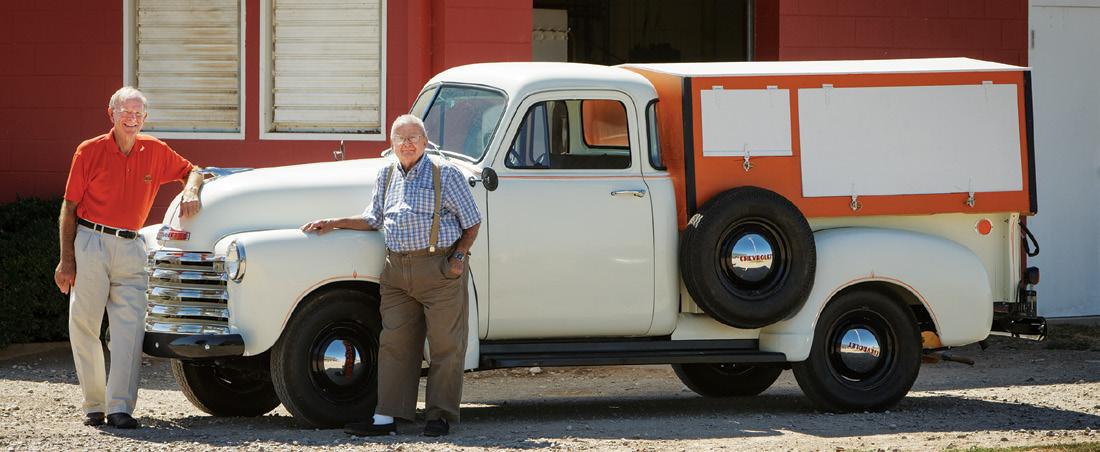
Drs. Steve Weir (left) and Bob Shoup have worked together at the Catoosa Small Animal Hospital since 1982. Weir, the hospital’s founder, is proud of the education he received at osU and notes, “We only hire osU graduates.”
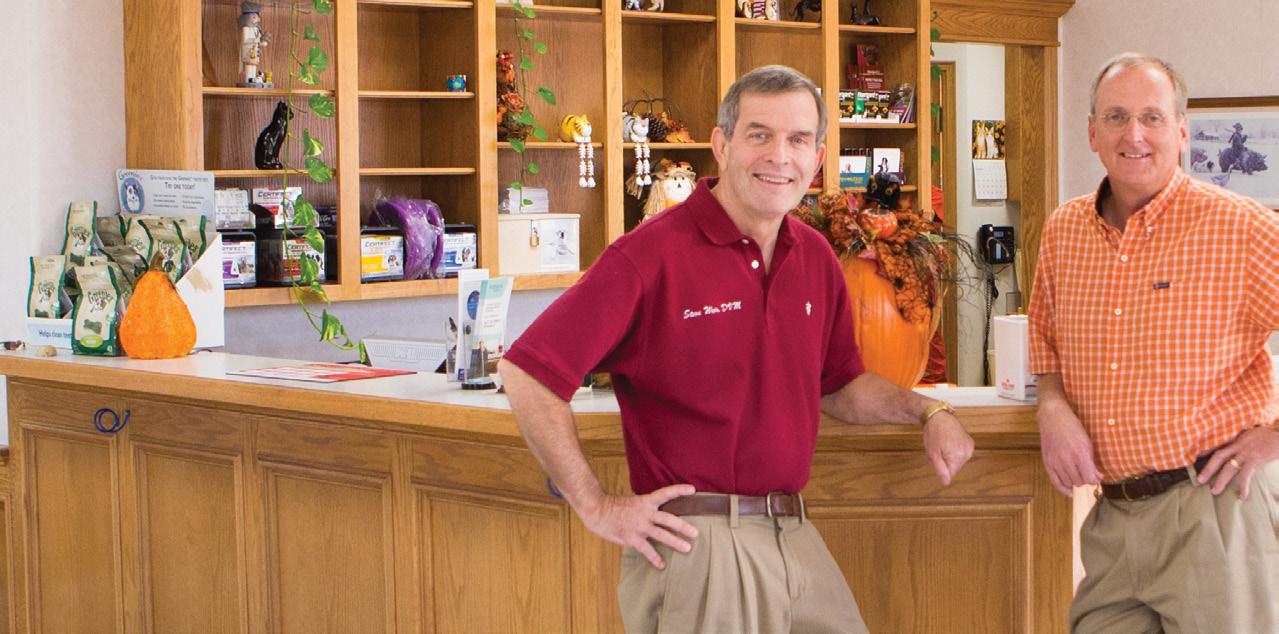
2 alumni SH ow appre C iation wit H C ontinue D S upport
STory by derindA blAkeney PHoTogrAPHy by PHil SHoCkley
The words “return gifts” may conjure up thoughts of standing in line to return an unwanted item to a store.
But for two OSU Center for Veterinary Health Sciences alumni, it refers to their continued support of their alma mater.
Drs. Steve Weir and Bob Shoup consistently give money, time and referral cases to OSU in return for the education they received while earning Doctor of Veterinary Medicine degrees.
“I graduated from OSU’s veterinary school in May 1980, got married in June and started the practice — Catoosa Small Animal Hospital — in July 1980,” recalls Weir. “I was a teaching assistant my senior year and knew Bob. When he graduated two years later in 1982, Bob joined the practice and a year later bought into the practice as a partner.”
That was a change of plans for Shoup: “After graduation, I was supposed to return to my hometown of McAlester, Okla., and take over another veterinarian’s practice,” he says. “It was a solo practice, and I didn’t want to work in a solo practice. I am known to say that I don’t mind working hard but, occasionally, I like to play hard. Having adequate time off has prevented burnout, and after 30 years, I still enjoy my job.”
Located on U.S. Highway 66 in Catoosa, Okla., the clinic offers a wide variety of services from general veterinary medicine to surgery and dentistry. There is an in-house laboratory, ultrasound and digital radiography and a boarding facility to take care of the needs of dogs, cats, birds, ferrets, rabbits and other small pets.
And when the clinic does get a problem that turns out to be more than it can handle, OSU is on call.
“The veterinary medical hospital at Oklahoma State is a great facility that provides care second to none and is a super asset for general practitioners in the field,” says Weir. “if people have problems that a primary veterinarian is not able to handle, it can be handled at the veterinary medical teaching hospital. They provide expertise and diagnostic abilities that the average practitioner simply doesn’t have. We have used them on a regular basis for referrals, and our clients have been extremely happy. They give excellent care and have cutting-edge veterinary medicine available with an MRI, cat scans and iodine cat radiation therapy.”
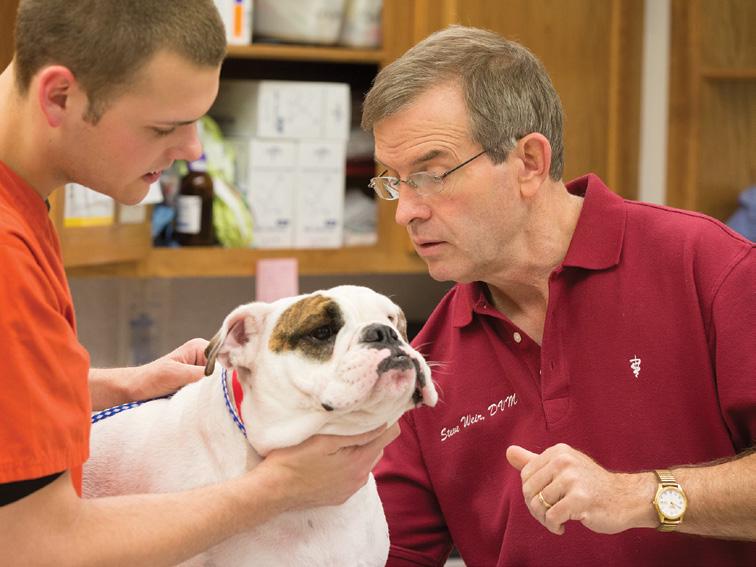
“ t he V eterinar Y medical hospital at o klahoma s t ate is a great F a cilit Y that pro V ides care second to none and is a s U per asset F or general practitioners in the F ield.”
"THE VETERINARY MEDICAL HOSPITAL AT OKLAHOMA STATE IS A GREAT FACILITY THAT PROVIDES CARE SECOND TO NONE AND IS A SUPER ASSET FOR GENERAL PRACTITIONERS IN THE FIELD."
— Dr. s teve w eir
There’s one other distinction for the Catoosa clinic. “We only hire OSU graduates,” Weir says with a smile. “osU produces veterinary students who are well rounded and make great practitioners.”
And indeed, Laura Embry, Class of 2003, and Sarah Smith, Class of 2007, also practice at the clinic.
One reason clients travel for miles to bring their animals to Catoosa is that the employees treat each animal as if it was their own pet. The clinic honors their memories with contributions to OSU’s Companion Animal Fund , which supports CVHS research.
“The Companion Animal Fund works great for us,” says Shoup. “here at the clinic, we all get attached to our clients’ pets almost like they are our pets. when one passes away, it affects all of us. we send a contribution to osU’s Companion animal Fund. The veterinary center, in return, sends a very nice letter to the client, saying that a donation was made in their pet’s memory by our clinic. Of all the things we do, I think this is one of the big things clients appreciate. Owners love knowing that their pet is remembered in such a way that the money may go to help other animals down the road.”
In addition to the Companion Animal Fund, Weir and Shoup donate approximately $20,000 a year to OSU’s veterinary center. They support the Student Chapter of the American Veterinary Medical Association Student Scholarship Fund, the Veterinary Medical Teaching Hospital Small Animal Equipment Fund, the Alumni and Friends Scholarship , the Dean Michael D. Lorenz Scholarship and the Dean’s Fund for Excellence. They also volunteer their time to sit on the Dean’s Development Associates, which meets with Dean Jean Sander, DVM, and the center’s Veterinary Administrative Council through the year.
C on T inue S
“if they don’t know the answer, they will find it.They are easy to reach and they promptly call you back. … other dog owners i know say their dogs hate going to the vet. Mine love it and don’t mind at all. Cracker Jack had kidney problems so i had to bring him in every day. When i would come to pick him up, he would be sitting with the receptionist. They treat everyone’s dog like he is the most important dog in the world. They have time for you; you are not just a number. i can’t say enough good about them.”
— s haron Price, Tulsa, o kla., breeder of akC bulldogs (including C racker Jack)
“We love Catoosa Small Animal Clinic and working with laura (embry) and Sarah (Smith). Sonya is here today to have her knee checked. She had knee surgery and it is bothering her. dr. Weir is going to look at it. if she has cartilage built up, we will probably be referred to dr. Mark rochat at oSu’s veterinary medical hospital.”
— s haron w ilson, Clar emore, o kla., owner of s amoyeds (including s onya)
“i am a huge animal lover. When we moved to Catoosa, i had heard good things about the facility, so this is where we need to be. Strays seem to migrate to my door and when we visit, the staff here is so knowledgeable. … The veterinarians and staff here just have such a personal interest in the animals — they really care.”
— Beth a nn Jensen, Catoosa, owner of thr ee dogs (including Belle) and a cat
“Caring, giving alumni like steve and Bob are of such importance to the veterinary center,” says Sander. “They provide a great example for our students of what lies ahead for their careers should they decide to go into private practice. The cases they refer to the veterinary hospital give our students excellent hands-on experience from which to learn. They provide valuable feedback about what practitioners in the field need from future graduates and from us as a referral source. We appreciate all that they do and hope more alumni will follow their example of giving back in whatever capacity they can.”
“as a small animal hospital, we feel that osU gave us the knowledge and the expertise we needed to have a very successful veterinary practice. One that has provided well for four veterinarians and their families over the years plus provided wonderful jobs for lots and lots of employees,” states Weir.
“OSU gave us a great education,” says Shoup. “They gave us the basics to build upon because your education is just a start. From there, there is no telling what you’ll learn and what avenues you will go down. I received a wealth of information from my instructors and met my classmates at OSU. We just celebrated our 30-year reunion and I am totally amazed at how diversified my classmates have become in different things and roads they have taken (career-wise).”
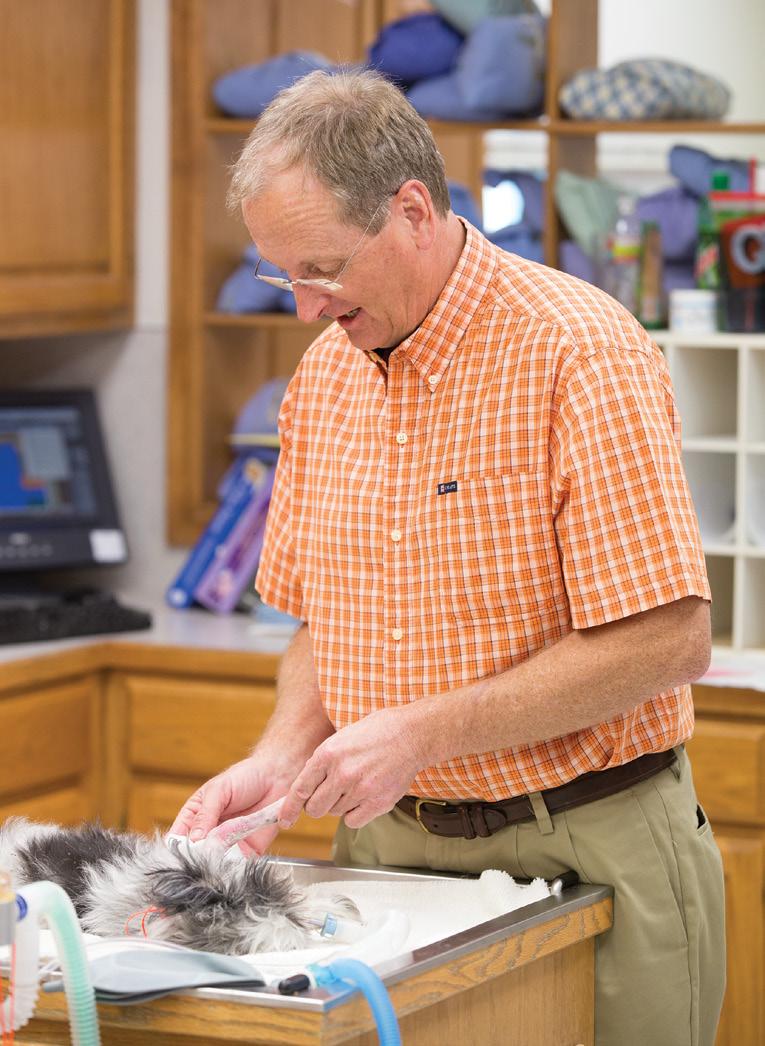
“We owe them a lot for what they gave us,” adds Weir. “we are blessed at this point in our careers to be in a position where we can donate dollars to the school. We do as much as we can because everybody knows funding from the state level is not increasing and it’s unlikely to increase. It’s really helpful for practitioners to give some money and help out. It’s money well spent and it goes to a very, very good cause.”
“it’s important that we all donate back to the things that we love and trust and really enjoy,” Shoup says. “That is why Dr. Weir and I have given back to the college. Because this profession has been wonderful to us, we want to give something back so that future generations will have the opportunities that we do.”
Cl/HS
For more information on giving to the OSU Center for Veterinary Health Sciences, contact heather Clay, senior director of development and veterinary center team lead for the oSU foundation at 405-385-5607 or hclay@osugiving.com
Thank you to all of our donors who generously support the mission of OSU’s Center for Veterinary Health Sciences.
$500,000 or more
l. Sheryl Colton and robert Shaff
John d. richardson Trust
$100,000–$499,999
bayer Health Care
e l. & Thelma g aylord foundation
dr. Michael and Velda lorenz
Merial ltd.
novartis Pharma Ag
Pauline Wright estate
$50,000–$99,999
Association of American Veterinary Medical Colleges
Jack Jacobs
kirkpatrick foundation inc.*
PetSmart Charities
$25,000–$49,999
Peter and kimberly erdoes
Helen k. and Arthur e.
Johnson foundation
kirkpatrick oil Co.
Alice J. levin estate
liteCure llC
Mercy Work foundation of oklahoma
$10,000–$24,999
William and Sonya Amend
American kennel Club — CAr Canine Support and Animal relief fund
leora Caulkins estate
dr. renee and Herb Hammer
Sandra M. lee
Mary k oxley foundation
d d. Patterson
W.d. Shoaf estate/Patricia empie
dr. bob and Terri Shoup/ dr. Steven and Pam Weir/ Catoosa Small Animal Hospital inc.*
Travis lumber llC/gilbert and Susan Travis
$5,000–$9,999
Meredith and Scott blair
Albert C. bostwick foundation
Carkel energy llC
ConocoPhillips
dr. Paul r. and Margaret S. dubois
Hill’s Pet nutrition inc.
$1,000–$4,999
drs. kenneth Abrams and kathleen Pointek Abrams/Veterinary ophthalmology Services inc.
Alamo Pintado equine Clinic inc.*
Arkansas Veterinary Medical foundation
AVMA Professional liability
insurance Trust
dr. keith l bailey
dr. ben and karen baker
bancfirst/Stillwater
baptist foundation of oklahoma
don bostwick
lt. Col. Stephanie bounds dr. delia burchfield*
linda and g ary burke
Cargill inc.
Carolina biological Supply Co.
kathryn and dr. William Carson Jr./bild Animal Hospital*
CdS east bay Chapter
dr. robert Poteet/Cedarwood Veterinary Clinic
Civic feline Clinic
Heather Clay
Colonial Terrace Animal Hospital PC
dr. James and deborah Conklin*
drs. kathy and James Cooper Jr. kendria and bradley Cost
ruth Cotner
Morris d. Covey estate
Joyce doran
dow Chemical foundation
denise drew
dr. norman and Jane durham
eagle Creek Animal Clinic PC
Max and Helen ehrhart
dr. Mark** and denice elwell*
robert and irma eufinger
kim finch
foundation for Animal Care & education
dr. John i freeman
Marybeth and ike glass Jr.*
dr. John and karen goedeken
dr. brent and Christinia Hague/ oakridge equine Hospital PC
Hagyard equine Medical institute
Hagyard Pharmacy/ HdM Pharmacy llC
burns and Ann Hargis
S. kim and Suzette Hatfield
dr. Joseph and betty lou Hayden
drs. gerald Hegreberg and lynetta freeman-Hegreberg
Cols. bradford and Annette Hildabrand
bruss Horn dVM PllC
dr. kenneth W. Huffman
intervet inc.
dr. Harry and Hannah James
kelly foods Corp.
dr. Cornelia ketz-riley and donald riley
dr. Thomas and linda latta
dr. John leHew iV and dr. Theresa Casey
Joshua e logsdon
dr. Steven and Melissa lucas
Jana and Steven Mackey
dr. John and debra Marshall/ Cherokee Hills Veterinary Clinic PC
rosana and Michael Mayer
dr. denis Matousek/Matousek Veterinary Clinic
Mid-America Alpaca foundation
Jean Miller
Shelley Mullins
drs. nicholas and dianne nail*
nestle Purina Pet Care Co.
newport laboratories inc.
northwest Arkansas Veterinary Medical Association
dr. Julia o’Carroll and dr. g ary Spodnick
okC obedience Training Club inc.
P&g/iams Co.
Vicki l. Palmer
dr. roger J. Panciera
dr. brenda Phillips and dr. david neal
Piedmont Animal Health
Jerry and donna Pongratz
dorothy and dan richardson
dr. James** and Cynthia richardson
Tim and Tina ridley*
dr. William and Mary roberson*
dr. Chris ross*
dr. ray Saleeb/katella Animal Clinic
dr. Jean Sander and Allen Shaffer
Carolyn Sanders*
drs. Paul and rebecca Sells
dr. richard and Mary Shepherd/ Shepherd farm
dr. d C. and l. Michelle Smith/ Veterinary Associates frances Smith
dr. l randall and barbara Smith
dr. rosemarie and eric Strong
Charles and Joyce Sullivan
Textron Matching gift Program
dr. Anthony and Julia Thomas/ dr. Stanley and karel Acree/ ATA Properties
dr. Steven and Carolyn Vonderfecht*
dr. Asheley and bradley Wathen
dr. Paul and Sarah Welch/ forest Trails Animal Hospital
Mary Ann Wheeler flP
bernadine Wold
World Vets
dr. Steve yandell
Zoetis
deAn’S Club MeMberS (GaVE aT LEasT $1,000 To ThE DEan’s FUnD For ExCELLEnCE) deCeASed indiViduAl
Sponsored by the OSU Adult Stem Cell Focus Group, Paul W. Kincade, Ph.D., presented “Stem Cell and Regenerative Medicine Research in Oklahoma” in May at the McElroy Hall Auditorium.
Kincade is a member and program chair of the Immunobiology and Cancer Research Program, holds the William H. and Rita Bell Chair in Biomedical Research and is the vice president of research at the Oklahoma Medical Research Foundation. He is also the scientific director for the Oklahoma Center for Adult Stem Cell Research (OCASCR).
His research focuses on immune system development and adult hematopoietic stem cells, also called HSCs. HSCs are the most studied stem cells in clinical trials taking place within the United States. According to Kincade, marrow transplants have been saving lives for 30 years. New studies suggest that other types of adult stem cells can be used for treating cancer, diabetes, spinal cord injuries and more. OCASCR was created to promote adult stem cell research with funding provided by the Oklahoma Tobacco Settlement Endowment Trust.
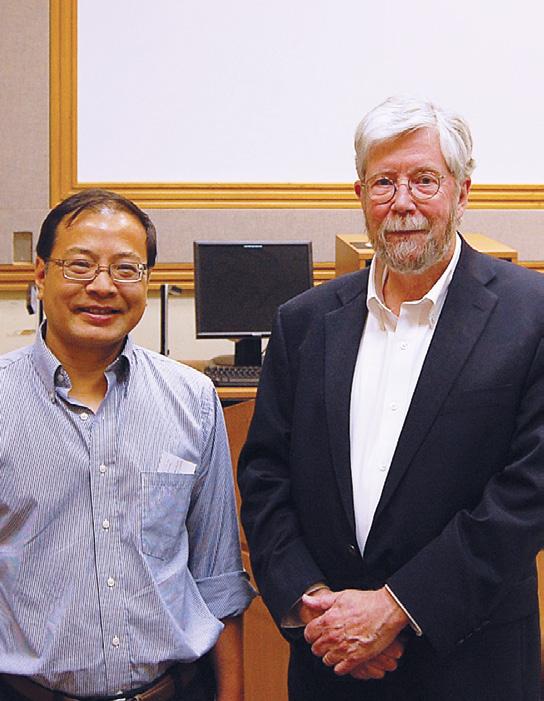
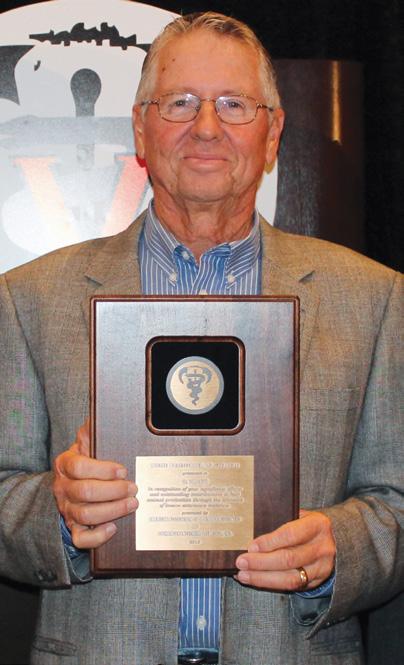
of Bovine practitioners at its 2013 conference in milwaukee. the award, sponsored by Boehringer ingelheim Vetmedica inc., honors a veterinarian in active practice who has made significant contributions to bovine medicine. latta earned his dVm at osU in 1968.
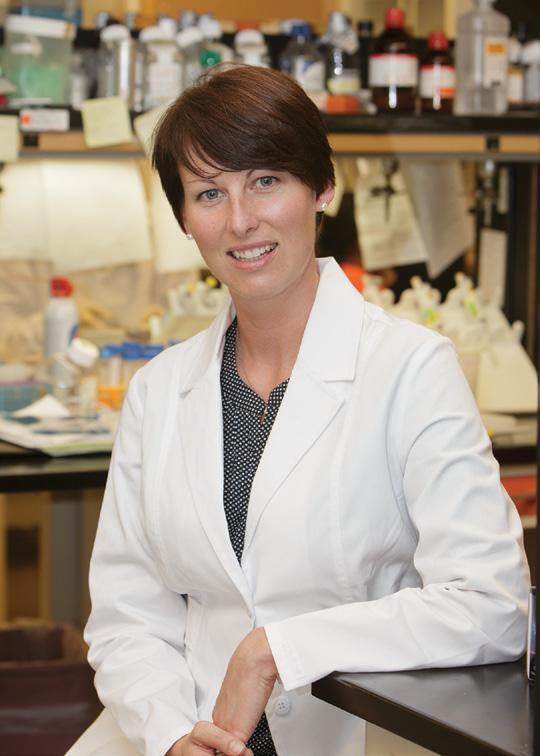
Gary Lawson / University Marketing
The “Vet Med Moment” is a 60-second spot that will begin airing soon on KOSU radio focusing on important animal health issues that are interesting and informative for animal owners and lovers. funded by the Kirkpatrick Foundation, the Vet Med Moment will feature a “topic of the week” that airs several times on koSu listeners can learn about everyday animal health care tips to seasonal news to specialty procedures available at oSu’s Veterinary Medical Hospital.
“we want to get helpful tips on animal welfare out to the public and felt kosU’s nPr network was a great way to accomplish that,” explains Dr. Lesa Staubus, clinical assistant professor in shelter medicine at oSu’s Veterinary Medical Hospital and coordinator of the program.
“The kirkpatrick Foundation was a natural sponsor as their goal is to make oklahoma the most humane place to be an animal.”
“We are very excited about the launch of this unique content collaboration,” says Kelly Burley, koSu director. “Public radio listeners are hungry for programming related to animal issues, and each week, ‘Vet Med Moment’ will provide useable information directly from the experts that will make a positive difference for animals.”
The program is scheduled to begin in november.
Amber Schofield has received a pre-doctoral fellowship from the American Heart Association. The $50,000 grant for two years is to study “IFIT viral sensor mediates Axin 1-induced Type I IFN synthesis.” In other words, Schofield will be investigating the innate immune response to the influenza virus, which has been shown to contribute to cardiovascular disease, the leading cause of death in the western world.
“amber received a score of 1.05 and a percentile of 96 percent on her application,” says Dr. Lin Liu, director of the Lung Biology and Toxicology Laboratory at the veterinary center. “This is the best score i have ever seen, particularly considering that she only completed a 10-week summer research program and a three-credit-hour research elective by the time she completed the grant application. well done, amber.”
Schofield, of Oklahoma City, started veterinary college with the Class of 2015. She has completed two years of study and will spend the next two years in Liu’s lab on this fellowship. In 2015, she will re-enter the veterinary program to graduate with a DVM degree in 2017. She is planning to pursue a doctorate in veterinary biomedical sciences.
“The veterinary center currently has three students participating in the DVM/PhD dual degree program,” explains Dr. Chris Ross, associate dean of academic affairs. “Supported primarily by the Lundberg-Kienlen endowment, dualdegree students also serve as graduate teaching assistants or earn extramural grants as Amber has done. A long-term goal of the program is to gain extramural funding to expand the number of students and laboratories involved.”
The 2012 issue of Vet Cetera took first place in the printed publication magazine category at the Public relations Society of America oklahoma City Chapter’s upper Case Awards ceremony.
To top that, it took best in Show for the tactic category, beating out 49 other entries that included brochures, magazines, annual reports, newsletters, collateral materials, one-time publications, straight news, feature stories, radio, podcast, TV or promotional video scripts, internal videos, external videos, websites, multimedia communications, slideshows/presentations/webinars and social media projects.
The 2011 issue had been honored by the group with a secondplace Merit Award a year earlier. That year, no first-place honor was awarded.
We honor those who have served the profession, our distinguished colleagues and friends.
Dr. Jack a llen
Jack C. allen, DVM, of Derby, kan., died July 13, 2012. he was 85.
He was born in okmulgee, okla. During world war ii, he served in the U.s navy. He earned his DvM degree from osU in 1963 and had a small animal veterinary practice in Derby from 1963 until 1993.
Dr. allen is survived by his wife, evelyn; two sons, Jack Curtis a llen Jr. and Dr. s teven allen and his wife, anne; one daughter, Diane Johnson and her husband, Douglas; and four grandchildren.
Memorial contributions may be made to the s alvation a rmy at 1101 s . Lowry, s tillwater, ok 74074.
Source: Derby Informer of Derby, Kan.
Marvin luther ‘Doc’ Denny Jr.
El reno veterinarian Dr. Marvin Luther “Doc” Denny Jr., 76, died July 15, 2012, after a 2½ -year battle with pancreatic cancer.
born in oologah, okla., he later lived in oklahoma City and graduated from Central High school there. He attended oklahoma a&M College and in 1954, he joined the U.s. Marine Corps and served two years. During his tour of duty, he married norma Jean Lynch. following his military service, he returned to osU and earned his DvM degree in 1961.
the couple moved to el reno, and Dr. Denny became a partner at the Canadian valley animal Clinic. He retired in 2002.
Dr. Denny also owned and operated Denny stables, where he boarded horses and stood “ima Doc o’Lena” at stud for many years. He and his former roping partner buddy Crump were honored with the naming of the Denny/ Crump rodeo arena in el reno
He actively supported his profession, serving as oklahoma veterinary Medical association president in 1985. Dr. Denny was named the 2008 oklahoma veterinarian of the year and served as the official veterinarian for the national finals rodeo for 20 years and the international finals rodeo for 18 years.
Dr. Denny also served on the Canadian valley vo-tech school board for 20 years, as osU alumni director for Canadian County and as a Canadian County underwater deputy. He was a boy scout leader, an active member of the wesley Methodist Church and an osU College of veterinary Medicine adjunct professor for 20 years. the Dennys hosted 65 veterinary students in their home over the years.
He is survived by his wife of 57 years, norma Jean; daughter, Laura kennedy and her husband Dwayne of el reno; sons Marvin Lee Denny and his wife, Lynn, of oklahoma City and Chris Denny of el reno; seven grandchildren; three great-granddaughters; two sisters; one brother; and numerous nephews, nieces, cousins and other relatives and friends.
Memorial donations may be made to the wesley United Methodist Church, 101 s barker, el r eno, ok 73036; o klahoma s ta te University foundation, c/o oklahoma state University, 308 Mcelroy Hall, stillwater, ok 74078; or russell- Murray Hospice, p o box 1423, el reno, ok 73036.
SourceS: Denny famiLy anD eL reno TrIbune
Dr. Joe Dixon
Dr. Joe M. Dixon, of Lakeland, Fla., died May 13, 2012. he was 94.
He was born in Dustin, okla., and served as a captain in the U.s army from 1941 through 1945. He continued to serve in the U.s army reserves until 1952.
He was among the second veterinary class to graduate from what was then oklahoma a&M College, earning his DvM degree in 1952. following graduation, Dr. Dixon practiced large animal medicine in tulsa. in 1955, he joined the Louisiana state University agricultural experiment station’s veterinary science department. in 1958, he earned a master’s degree in animal nutrition from LsU and went on to become a professor of veterinary science at LsU’s veterinary college.
Dr. Dixon was active in the Louisiana veterinary Medical association and the american veterinary Medical association for more than 27 years. in 1970, he was named Louisiana’s veterinarian of the year. Dr. Dixon left LsU in 1980 to establish his own mobile dairy and beef cattle practice in Louisiana and Mississippi. He specialized in bovine herd reproductive management and raised Jerseys.
Dr. Dixon retired to Lakeland in 1993 and continued a very active life, serving as a volunteer at bok tower sanctuary. He also volunteered for the florida Department of Corrections’ prison-operated nurseries. He loved growing unusual plants and participated in many local garden shows.
Joe is survived by two daughters, p eggy pressler and nancy taliancich; two stepdaughters, gana van Laanen and andrea Morgan; one stepson, kipp van Laanen; three grandchildren, three stepgrandchildren and one great-grandson.
Source: LakeLanD LeDger, LaKeL anD fL a
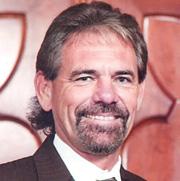
Dr. Mark e lwell
yukon, okla., veterinarian Dr. Mark i Elwell died July 15, 2013. he was 56. born in enid, okla., he grew up in fairview, okla. During high school, he was active in ffa, basketball and football. both of his degrees came from osU: a bachelor’s in animal science in 1979 and a DvM in 1982.
Dr. elwell practiced veterinary medicine at west yukon animal Hospital and was working there at the time of his death. He enjoyed running, golfing, snow skiing and canoeing. some of his favorite times were tailgating with family and friends on game days in stillwater.
He is survived by his wife, Denice; two sons, Marcus and his wife shannon of oklahoma City, and Lucas of Houston; three brothers and one sister. Memorial donations may be made to pets and people, 701 inla ave., yukon, ok 73099 and the osU foundation for the Companion animal fund, fund #2884200, c/o sharon worrell, 308 Mcelroy Hall, stillwater, ok 74078.
Source: yanDa & Son funeraL Home
Dr. e ugene Fingerlin
Dr. Eugene “Gene” Fingerlin, of Bixby, okla., died april 28, 2013, in Tulsa, okla. he was 75. He was born in 1934 in tulsa to agnes Louise tyner fingerlin of bernice, okla., and eugene fingerlin, an immigrant from the black forest in germany. as a toddler, gene was stricken with polio and had to learn how to walk again with one leg somewhat shorter than the other. He developed good manual dexterity, which aided him later when he became a veterinary surgeon.
when he was 12, he worked with cattle on shady Creek farm in tulsa, where he developed his interest in animals. in 1952, he graduated from Central High school in tulsa. after one year of college, he secured a ranch hand position at the wyoming Hereford ranch near Cheyenne, wyo.
in January 1954, he enlisted in the army and was stationed in karlsruhe, west germany. in germany, he met his wife, brunhilde, of the black forest town of Dossenbach, and they married in 1956. after returning to the states, he worked as an auto parts delivery driver until he decided to go back to school to pursue a degree in veterinary medicine at oklahoma state University.
Dr. fingerlin graduated in 1963 and worked for other veterinarians for several years. in 1972, he moved to bixby and opened the bixby small animal Hospital.
He was very active in the state and local veterinary associations. He served as chairman of the Legislative Committee of the oklahoma veterinary Medical association for many terms. He worked with the boy scouts from the 1960s through the mid-1980s, starting as a scoutmaster and often serving as veterinary explorer post adviser. in 1982, he received the silver beaver award, the highest award an adult leader can achieve in the boy scouts. in 1989, Dr. fingerlin received the ovMa’s Companion animal practitioner of the year award. in 1995, he received the ovMa veterinarian of the year award recognizing his achievements and service.
Dr. fingerlin is survived by his wife, brunhilde; children, Jim, John (and his wife Deanna) and karen; three grandchildren; and a sister and a brother.
Source:
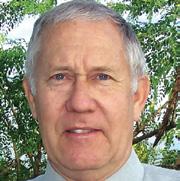
Dr. k eith Flanagan
Dr keith Flanagan, of Texhoma, okla., died april 3, 2013, at the aventura hospital and Medical Center in aventura, Fla. he was 64. born in texhoma, he graduated from texhoma High school and attended panhandle state University in goodwell, okla. He earned his DvM degree from osU in 1978, then spent the next two years as a captain in the U.s army veterinary Corps. Dr. flanagan spent the next seven years working at the Marlow veterinary Clinic with his classmate Dr. Lyndon graf.
in 1986, Dr. flanagan took his first short-term mission trip to Haiti. the next thing he knew, he was asking his wife, Jan, what she thought about living in Haiti. working with the Christian veterinary Mission, he planned to set up some programs, train people in animal health care and return to the states. He was still there 26 years later — serving god, the people of Haiti and the profession of veterinary medicine.
Dr. flanagan held many positions and was involved in several projects and programs including developing potable water, training animal health agents, acting as liaison to the Haitian Ministry of agriculture, serving as codirector of the Classical swine fever program and co-director of the avian influenza program, to name a few.
He was a 2011 Distinguished alumnus of the osU College of veterinary Medicine. at the time of the award, he said his wish was that the programs he helped implement and the work he has done will keep moving forward even after he is gone. He was highly respected and will be missed by many.
Dr. flanagan is survived by his wife of 43 years, Jan bullard flanagan; two sons sean flanagan and his wife Chandra of priceville, ala.; and brian flanagan and his wife robin of ithaca, n y.; three grandchildren; his mother, rosella flanagan; two brothers, one sister and numerous other family members. Memorial gifts may be given to the Christian veterinary Mission at www.cvmusa.org/flanagan.
Source: marLow revIew
Donal
Dr. Donald D. Ford of wann, okla., died nov. 19, 2012. he was 77.
He served in the U.s army from 1954 to 1956. on Dec. 26, 1956, he married betty Jeanine Hayden in Miami, okla. He earned his DvM degree from osU in 1961.
early in his career, Dr. ford worked in Montana and south Dakota before returning to oklahoma and teaching at osU in the 1965-66 school year. in 1979, he established the ford veterinary Clinic in south Coffeyville, okla., where he practiced for the next 33 years. He was a member of the oklahoma veterinary Medical association.
in 1993, Dr. ford’s first wife died. on Jan. 22, 2000, he married Judith k pool of Coffeyville, kan. she survives him, as does a daughter, patricia rae ford of blue springs, Mo.; a son, robert e. Lee ford and his wife alicia of kingwood, texas; a stepdaughter, kimberly Johnston of bartlesville, okla.; a stepson, kevin pool of Coffeyville, kan.; three grandchildren; three stepgrandchildren; and a brother, ronald tell ford (who got his DvM from osU in 1965) and his wife Charolette of Lemmon, s.D.
SourceS: Javma news; DaviD W. b arneS funeraL Home
Dr. g aylor D French Jr.
Dr. Gaylord howard French Jr., of Crozet, Va., died sept. 28, 2012, at the University of Virginia hospital in Charlottesville, Va. he was 74.
g.H. “gig” french was born in eden, n.C. He earned his DvM degree from osU in 1963 and practiced veterinary medicine for more than 50 years. for the past 22 years, Dr. french worked for a llied a nimal Hospital in r ichmond, va., and other animal hospitals and clinics throughout virginia.
from 1963 to 1965, Dr. french served in the U.s air force; he was passionate about aviation and was a licensed pilot. He also loved skydiving. a member of the north Carolina angus association, he bred angus cattle his entire life, starting with working with his father at sunny Home farm in eden.
sandra ritchie french, his wife of 44 years, preceded him in death. He is survived by two daughters, kristi french williamson and her husband J p., amy french boatright and her husband kyle; and four grandsons.
Source: The news & aDvance, Lync Hburg, va
Dr. r o B ert l in Dsey h ar Dy
Just a few weeks before he passed away, Dr. robert L. hardy celebrated the 50-year reunion of his veterinary school class in stillwater.
Dr. Hardy, who lived in kill Devil Hills, n C., made the trek back to osU on May 3-4 to mark the event with his classmates from the Class of 1963. He died May 30, 2013.
Dr. Hardy spent most of his years working as a veterinarian. He started with the U.s. Department of agriculture, staying there for 24 years, before moving on to the virginia Department of agriculture for 13 years.
He was known by many as “Doc” and had a keen sense of humor that helped him touch the hearts of many. He enjoyed spending time at the outer banks and was known for his cookouts. His motto was to live each day to the fullest.
Dr. Hardy was preceded in death by his wife of 56 years, Jean Hardy. survivors include his daughter, Louise wagner and her husband, Jim, of smithfield, va.; his son, Lindsey Hardy and his wife, Missy, of reston, va.; two granddaughters, a great-granddaughter, a stepgranddaughter and stepgrandson and step great-grandson along with other relatives and close friends.
Memorial contributions may be made to the american Heart association, p o box 5216, glen allen, va 23058 or https://donate.americanheart.org.
Source: SmIThfIeLD TImes
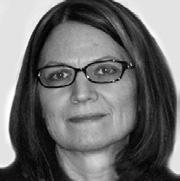
Dr. Janice h arlow h astings
Dr. Janice harlow hastings, of red Lodge, Mont., died June 10, 2012, after a long battle with cancer. she was 57. born in edmond, okla., she grew up in tulsa, okla. she earned degrees in elementary education and chemistry from Cameron University in Lawton before earning her DvM degree from osU in 1994.
Dr. Hastings is survived by her father, Harold Harlow of tulsa; husband, Mike Hastings of red Lodge; son, seth and his wife Michelle Hastings of edmond; sister, susan worrell of tulsa; brothers Carl Calhoun of Moore, okla.; and Don Harlow of Chouteau, okla.; and more relatives and friends.
Memorial donations may be made to bare tooth Cupboards, p o box 665, red Lodge, Mt 59068.
Source: carbon counTy news of reD LoDge, monT
Dr. Joe (J.B.) Jolli FF e
Dr. Joe (J.B.) Jolliffe, of kingwood, w. Va., died March 25, 2013. he was 84.
He went to school in wetzel County, w va., and attended west virginia University for his undergraduate degree. He earned his DvM degree from osU in 1958.
Dr. Jolliffe practiced veterinary medicine in preston County, w va., for 54 years. for the last 25 years, he also operated Jolliffe nursery in knob fork, w va., a farm established by his great-grandfather in 1874 and a Christmas tree farm since 1949.
Dr. Jolliffe is survived by his wife ann; three daughters, patricia bennett and her husband Mark, nancy schlegel and her husband robert, and Mary Henry and her husband steve; and three grandsons. Memorial gifts may be made to best friends animal society at www. bestfriends.org or mailed to 5001 angel Canyon road, kanab, Utah 84741.
Source: TennanT funeraL Home
Dr. Paul kunne M an
Dr. Paul L. kunneman, of kingfisher, okla., died aug. 27, 2012, at Deaconess hospital in oklahoma City. he was 78.
born in kingfisher, Dr. kunneman was a lifelong resident of the kingfisher area.
He earned his bachelor’s degree in zoology in 1955 and his DvM degree in 1958, both from os U fo llowing graduation, Dr. ku nneman began his lifelong career as a meat inspector for the U.s. Department of agriculture. Upon retirement, he farmed and raised cattle full-time.
He was a member of the emmanuel Lutheran Church. He also enjoyed collecting coins and guns.
Dr. kunneman is survived by a nephew, Dale kunneman, and a niece, glenda kunneman gatz.
Memorial donations may be made to either osU Center for veterinary Health sciences (checks payable to os U foundation), 308 Mcelroy Hall, stillwater, ok 74078 or kingfisher educational foundation (directed to the vocational agriculture department), p o box 24, kingfisher, ok 73750.
Source: The kIngfIsher TImes & free Press
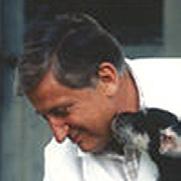
Dr. g eorge l ester
Dr. George Lester of alexandria, La., died april 27, 2013. he was 81.
a year after he graduated from osU College of veterinary Medicine in 1958, he and his family moved to alexandria and opened Lester veterinary Hospital. Dr. Lester practiced there until he fell ill in late april. He belonged to veterinary organizations and was beloved by his clients who said he had great bedside manner, compassion for animals and owners and was a loving veterinarian.
survivors include his life partner, edie Davenport; three sons, ron and his wife ellen Lester, george “greg” and his wife beth Lester, and David “allen” and his wife Christina Lester; three daughters, Jan and her husband kenny Clark, pam and her husband randall nethery, and allison and her husband scott Hancock; 14 grandchildren and nine great-grandchildren.
Memorial gifts may be made to st. Jude’s at 800-805-5856 or donors@stjude.org.
Source: The Town TaLk, aLexanDria, La.
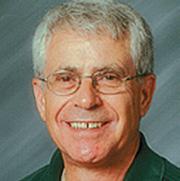
Dr. Phili P l inne M ann
Following a brief illness, Dr. Philip Linnemann of Lexington, okla., died March 27, 2013, at the healthPlex in norman, okla. he was 72.
b orn in Manistee, Mich., he and his family moved to st. Louis when he was a young child, where he developed a love of Cardinal baseball. in the late 1940s, the family moved to oklahoma City, and in 1958, he graduated from John Marshall High school there. He served in the U.s air force in Japan and Morocco. after leaving the military, he earned a bachelor’s degree in medical technology from the University of oklahoma in 1967. He continued his studies at oklahoma state University, earning a DvM degree in 1972.
following graduation, Dr. Linnemann worked at the westwood veterinary Hospital in norman with two osU alumni — Drs. Don biles (’68) and David Marx (’69) before opening his own practice, park Lane veterinary Hospital, which served norman and surrounding communities.
Linnemann was voted “best veterinarian” in the norman transcript’s readers’ Choice awards several times over. He also received the pittman-Moore award for research in porphyria, a metabolic disorder, and the small animal Clinician award from Upjohn. He also hosted a radio show, “pet talk,” that aired sundays on kref-aM (1400) in norman for more than 12 years.
Linnemann was a member of the oklahoma veterinary Medical association and the american veterinary Medical association. He was a founding member of the sooner rotary Club, where he actively served for 26 years, and a member of the norman business association. He and his wife, Michelle, are members of st. Michael’s episcopal Church in norman.
He loved all music, including playing classical guitar. He enjoyed ballet and especially the oU production of the nutcracker when his daughter, Mikayla, danced in it when she was 8 and 12. He also enjoyed reading and photography, including photographing the norman 89er parade every year.
Linnemann is survived by his wife, Michelle; children, Mikayla Linnemann of Lexington, amy Linnemann peters and rhett Jones, both of norman; two grandsons; two brothers; two sisters; and numerous nieces and nephews. He will be missed by many patients and clients alike.
Memorial donations may be made in honor of Dr. philip L. Linnemann to the Memorial scholarship fund c/o bill osborne, sooner rotary Club, 101 e gray, suite a, norman, ok 74069.
Source: HavenbrooK funeraL Home
Dr. Billy Joe “Bill” McDougal oklahoma state University alumnus Dr. Billy Joe “Bill” McDougal of houston died Jan. 22, 2013. he was 71.
born in paris, texas, he grew up in valliant, okla., lettering in baseball and basketball. He was president of the Methodist youth fellowship and the valliant ffa. He met and married his wife of 52½ years, ann riddle, in valliant.
in 2010, Dr. McDougal was inducted into the valliant Hall of fame
He earned both his bachelor’s degree (’63) and DvM degree (’65) from osU. He completed post-graduate training in immunology at the University of texas Health science Center and went on to be a clinical instructor of dermatology at baylor College of Medicine and an adjunct professor of veterinary medicine at texas a&M University.
Dr. McDougal opened his first veterinary clinic in Houston in 1965. He began his specialty in dermatology in 1970 and founded the veterinary allergy and Dermatology referral Clinic in 1981, one of the first specialty practices established.
He was the past president of the a merican academ y of ve terinary Dermatology, past president and life member of the Harris County veterinary Medical association and an author and nationally renowned speaker on dermatology.
Dr. McDougal was an avid sportsman, enjoying deer hunting, saltwater fishing, scuba diving, tennis, golf and dancing. He and his wife embraced life and excelled in everything they did.
He is survived by his wife, ann; two daughters, Julie gillaspie and her husband, tommy, and Dana kurtin and her husband, tim, all of Houston; and a son, b.J. McDougal and his wife, ellen, of katy, texas; and 10 grandchildren. Memorial donations may be made to the CepC Music fund, Christ evangelical presbyterian Church, 8300 katy freeway, Houston, tX 77024.
Source: housTon chronIcLe
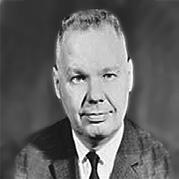
Dr. a n D rew w. Monlux
Dr. andrew w. Monlux, 93, of stillwater, died July 4, 2013. Dr. Monlux was an Emeritus regents Professor of Veterinary Pathology.
b orn in a lgona, i owa, he earned his Dv M degree from iowa state University in 1942 and spent the next four years serving in the U.s army veterinary Corps. after that, he conducted research for the U.s. Department of agriculture on bovine, porcine and ovine cancers for the next five years.
Dr. Monlux joined os U’s College of veterinary Medicine in 1956 as professor and head of the Department of veterinary pathology. He retired in 1985, having served as department head for 16 years. During his tenure, a graduate program in veterinary pathology was approved that allowed the college to gain full accreditation from the avMa. He also received an niH grant to classify and publish research on dog and cat tumors collected in the tulsa area. this project was part of the national effort to learn more about the nature and origins of cancer by understanding the occurrence of cancer in domesticated animals.
survivors include a son, roy Monlux and his wife, angela, of oklahoma City; a daughter, Laura wilson and her husband, bob, of Dallas; four grandchildren and three great-grandchildren. Memorials may be sent to salem Lutheran Church, 101 s. Duck st., stillwater, ok 74074.
Source: sTILLwaTer newsPress
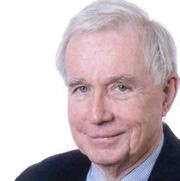
Dr. Donal D Patterson
Dr. Donald F. Patterson of seattle died June 8, 2013. he was 82.
after he earned his DvM degree from osU in 1954, he completed an internship at angell Memorial animal Hospital in boston, where he became interested in hematology. He then taught briefly before joining the U.s air force.
in the military, Dr. patterson was chief of laboratory services in the ae ro-Medical f i eld Laboratory at Holloman a ir force b ase in new Mexico. He helped train primates used in research, including Ham, the first chimpanzee in space.
in 1958, he joined the faculty at the University of pennsylvania as an instructor in veterinary cardiology, later becoming a professor. a diplomate of the american College of veterinary internal Medicine, Dr. patterson had been professor emeritus of medicine and medical genetics at the University of pennsylvania school of veterinary Medicine and professor emeritus of human genetics at the University of pennsylvania school of Medicine since 2000.
During his 42-year tenure at penn, Dr patterson served as the first chief of the section of Clinical Cardiology, established the penn Medical g enetics Clinic, and founded and served as chief of the first academic subdivision devoted to medical genetics in a school of veterinary medicine.
from 1985-2000, he was the principal investigator for the veterinary school referral Center for animal Models of Human genetic Disease. in 1995, he founded and directed the Center for research in Comparative Medical genetics. with his expertise in animal genetics, cardiovascular diseases and congenital malformations, Dr. patterson helped conduct national i nstitutes of Health-supported research to identify and characterize the role of genetic defects in cardiac development in dogs.
Dr. patterson was a member of many organizations. He was a past trustee for the seeing eye inc. and a past member of the board of scientific reviewers for the American Journal of Veterinary Research. He received several honors, including the avMa gaines award (1972) for contributions to small animal medicine, the american animal Hospital association’s award of Merit (1982) for research identifying specific types of cardiovascular disease in dogs, and the osU College of veterinary Medicine Distinguished alumnus award (1990), to mention a few.
Dr. patterson is survived by two sons, two grandsons and two granddaughters. Memorial contributions may be made to the seeing eye foundation, p o box 375, Morristown, n.J. 07963; University of pennsylvania school of veterinary Medicine, gifts accounting and administration, 3451 walnut st., 433 franklin building, philadelphia, pa 19104; or alzheimer’s foundation, 322 eighth ave., 7th floor, new york, ny 10001.
Source: Javma news: SepT. 1, 2013
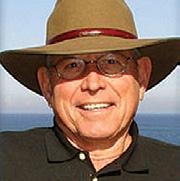
Dr. Ja M es r ichar Dson
Dr. James o richardson, of naylor, Mo., died Dec. 8, 2012, in Poplar Bluff, Mo. he was 67.
He was born in winston-salem, n.C. He earned his DvM degree from osU in 1970 and was a veteran of the U.s army. Dr. richardson opened Hillcrest animal Hospital in poplar bluff in 1972 and operated it for 40 years. He was a member of poplar bluff’s first United Methodist Church.
He is survived by his wife, Cynthia “Cyndi” of naylor; daughter, Monica eva foster and her husband, Joshua, of spartanburg, s.C.; three sons, Carl swanson and his wife, Michelle, of Harrison township, Mich., Michael r ichardson of fayetteville, ark., and aaron richardson and his wife, Heidi, of stillwater, okla.; six grandchildren, three brothers and numerous nieces, nephews and friends.
Memorial gifts may be made to Haven House, p o box 4975, poplar bluff, Mo 63902 or Habitat for Humanity, p o box 965, poplar bluff, Mo 63902.
Source: c o TreLL funeraL Service
Dr. e verett s hort
Dr. Everett C. short Jr. died July 15, 2013, on his farm in Perkins, okla. he was 81. born in Monette, Mo., he grew up and attended schools in Missouri. after graduating from high school, he joined the U.s air force, serving as an f80 pilot from 1952 to 1955. He earned a bachelor’s degree from kent state University in 1958, a DvM degree from Colorado state University in 1962 and a ph.D. from the University of Minnesota in 1968, where he taught until 1979.
Dr. short joined osU in 1979 as the head of the Department of physiological sciences. in 1982, he met susanne trent, and they married in 1984. the couple purchased land in perkins and began alpha angus farm, where they raised registered angus cattle. after the birth of their son, Charles, Dr. short retired to spend time with his family on the farm.
Dr. short enjoyed welding and building things, reading, studying the Civil war and watching birds around his property. He was a member of the american angus association and the oklahoma Cattleman’s association.
Dr. short is survived by his wife, susanne; four sons, Charles of perkins, Jim and his wife tricia of Colorado, steve and his wife Lisa of idaho, and Charlie and his wife Diane of texas; and four grandchildren. Memorial donations may be made to the University of Montana osprey program and the Cornell Lab of ornithology in care of palmer Marler funeral Home, 5106 n washington, stillwater, ok 74075.
Source: paLmer marLer funeraL Home
Dr. k enneth k inney stinson
Dr. kenneth k stinson, 88, of okeechobee, Fla., died at home on December 15, 2012.
the dedicated Marine loved his country and fought in saipan, tihian, okinawa, the Marianas i slands and the r yukyu i slands during world war ii, earning a purple Heart for his service.
after the war, he earned his DvM degree from osU in 1954.
Dr. stinson enjoyed sailing and diving as well as being a black belt martial arts instructor.
He is survived by his wife of 41 years, rosalie stinson of okeechobee; his son, patrick stinson and his daughter, teresa brooks and her husband, paul, all of arkansas.
Source: buxT on SeaWinDS funeraL Home anD cremaT ory
Dr. Dale os B orne t urner
Dr. Dale osborne Turner, 76, died nov. 30, 2012, at his residence in Pineville, La.
born in renick, w va., he earned his bachelor’s degree from west virginia University and served four years in the U.s air force. in 1964, he earned his DvM degree from osU. while he was in veterinary school, he met and married the love of his life, Janice ivey.
He began his veterinary practice in alexandria, La., in 1965 with Dr. billy knapp. shortly thereafter, he opened turner animal Clinic. He was known for his kindness, humor and stories. He became legally blind due to retinitis pigmentosa, which forced his retirement in 1985.
Dr. turner co-founded the Central Louisiana food bank, served as president of the Coalition against Homelessness in Central Louisiana, volunteered for the Central Louisiana veterinarians association, Louisiana board of veterinary Medicine, a merican red Cross, and s hepherd Center, and received the Lion’s Club outstanding Citizen award. He also served on the Louisiana state board of veterinarians as secretary/treasurer, vice president and the chairman of the preceptorship committee. in 1993, he received the ralph C. Cooper veterinarian of the year award for the state of Louisiana.
Dr. turner is survived by his wife of 49 years, Janice turner; three children, s cott turner and his wife kimberly of pensacola, fla., kelly fields and her husband Don of alexandria, La., and Matt turner and his wife Micara of pineville; seven grandchildren; and one brother, frank turner of beckley, w va.
Source: The Town TaLk aLexanDria, La.
Dr. John ‘ r oger’ wyant
Dr. John “roger ” wyant, of Piedmont, okla., died May 8, 2013, in oklahoma City. he was 75.
He was born in fort worth, texas, and studied as an undergraduate at the University of oklahoma. He earned his DvM degree from oklahoma state University in 1965.
following his graduation, Dr. wyant opened the great plains veterinary Hospital in Lawton, okla. He most recently worked with swaim serum Co. in oklahoma City.
He enjoyed golfing, hunting, hiking, gardening, fishing, socializing and playing cards. He always loved time spent with his family and friends.
Dr. wyant is survived by his wife, Lucia wyant; daughters, allison wyant, Cindy squyres and her husband David, ashley Landers and her husband tony, Lisa green and her husband Chad, Dorothy vela and her husband ruben Jr., and Juanita Jung and her husband steve; son, Marcus wyant and his wife ramona; and 12 grandchildren.
Source: The okLahoman
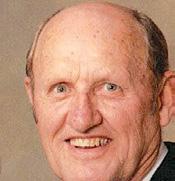
Dr. luther e wing w ilcoxson
Dr. Luther Ewing wilcoxson, of shawnee, okla., died July 27, 2012. he was 89. born in sayre, okla., he was the youngest of 11 children and graduated from Merritt High school in elk City, okla. He served in the navy from 1942 until the end of world war ii in 1943, he married his childhood sweetheart, Christine blackburn.
Dr. wilcoxson earned his veterinary degree at oklahoma a&M College, graduating with the first class of veterinarians in 1951. He practiced 36 years as a partner in the shawnee animal Hospital. Dr. wilcoxson held every office in the o kl ahoma ve terinary Medical a ssociation serving as its president in 1964. He was a member of the planning committee for the o klahoma a nimal Disease Diagnostic Laboratory, a veterinarian for the national High school rodeo finals, served on the Charham therapeutic arena board at st. gregory’s College and volunteered his services to the abbey. His highest honor came when he was named the 1980 oklahoma veterinarian of the year
He was also active in his community as a member of the shriners, the Lions Club and a free Mason with 50 years of service. He volunteered with future farmers of america and 4-H and was a member of st. paul’s United Methodist Church in shawnee since 1951.
i n 2007, Dr. w ilc oxson had the honor of returning to his alma mater in s tillw ater, okla., to hood his grandson, will sims, as will earned his DvM degree from oklahoma state University.
Dr. wilcoxson is survived by two daughters, Denise bennett and her husband richard of Denver and Lisa sims and her husband randy of pauls valley, okla.; four grandchildren, two great-grandchildren and several nieces, nephews and cousins.
Memorial gifts may be made to osU Center for veterinary Health sciences. Checks can be mailed to oklahoma state University, 308 Mcelroy Hall, stillwater, ok 74078, made payable to the osU foundation with Dr. wilcoxson Memorial fund no. 28-8550 in the check notation. gifts may also be made to st. paul’s United Methodist Church, 301 n beard ave., shawnee, ok 74801.
Source: news-sTar
f r om the p ublishing w orld …
Three of the four co-authors of a new book, Atlas of Canine and Feline Peripheral Blood Smears, earned their DVM degrees from oklahoma state University: drS. AMy C. VAlenCiAno, riCk l. CoWell (’78), THereSA e riZZi (’98), and ronAld d. Tyler Sr. (’77). rizzi is a clinical associate professor in the Department of Veterinary Pathobiology.
dr. Henry JAnn, associate professor of equine surgery, is the editor of The Equine Tendon in Health and Disease he is a diplomate of the american College of Veterinary surgeons and of the american College of Veterinary sports Medicine and rehabilitation.
p resentations and m ore …
d r S . S A n JAy kAP il , Pr A dyu M n A bAV i S k A r and To M o o M en S each presented at the 32nd a n nual Meeting of the American Society for Virology at the Pennsylvania state University in University Park, Pa. Dr. kapil, professor of virology at the oklahoma animal Disease Diagnostic Laboratory, presented a poster on “Canine Parvovirus Diagnosis and Surveillance in the USA.” Pradyumna Baviskar, a Ph.D. student in Dr. oomens’ lab, gave an oral presentation in the paramyxovirus section entitled, “The RSV fusion protein cytoplasmic tail facilitates an assembly step in the transition from inclusion body to viral filament.” Dr. oomens, assistant professor of veterinary pathobiology, presented a poster on work carried out by osU undergraduate student kelSie brookS and research specialist beCky dunCAn-deCoCQ, titled “The role of secreted G protein in production of infectious RSV.” Dr. oomens was also a co-author on two presentations concerning vaccinerelated rsV work by collaborators of Emory University in atlanta and nationwide Children’s hospital in ohio.
dr. kAPil also presented information on canine parvovirus 2c in two locations in southern California and two more in washington state. a total of 80 veterinarians and staff attended the seminars hosted by the Orange Belt Veterinary Medical Association in riverside, Calif., and orange, Calif. approximately 75 veterinarians and staff from washington and idaho heard him in spokane, wash., and yakima, wash.
dr. robin AlliSon represented the CVhs at the 2nd Symposium for Diagnostic Veterinary Clinical Pathology held in warsaw, Poland. she presented lectures about in-clinic hematology and the cytologic diagnosis of mesenchymal neoplasia. an interpreter was provided for the lectures and her lecture notes were translated into Polish.
student CAndACe WiMbiSH (’14) presented this year’s student case at the 2013 international Veterinary Emergency and Critical Care Symposium in san Diego she presented “Acute Kitty: The use of hemodialysis for acute kidney injury following radiation therapy for cutaneous lymphoma.” she worked on this patient while performing an externship in Texas with dr. liSA THoMPSon and staff. dr. AndreW HAnZliCek also provided guidance on the case submission.
a total of 160 veterinarians attended the OSU/OVMA Summer Seminar and heard these presenters: drS keiTH bAiley, ryAn bAuMWArT, MAry boWleS, Jill brunker, MiCHAel dAViS, dee griffin, AndreW HAnZliCek, Todd Holbrook, Henry JAnn, JAMeS MeinkoTH, SAndrA MorgAn, SAbrinA reilly, grAnT reZAbek, Jerry riTCHey, Mike SCHoonoVer, leSA STAubuS, d l. STeP and lArA SyPnieWSki
g rants, a w ards and h onors …
dr. roberT W. fulTon received funding from the osU Technology Business Development Program for the project entitled, “Bovine Herpesvirus-1: Selection of Genetic Variants for Vaccine Development and Evaluation.” The funded grant was then matched by novartis animal health, Greensboro, n.C., for “Bovine Herpesvirus-1: Evaluation of Genetic Diversity of Field Strains From Various Clinical Forms.” Dr. Fulton is a regents Professor and the McCasland Foundation Endowed Chair for Food animal research in the Department of Veterinary Pathobiology.
dr. fulTon also received funding from Zoetis animal health for “Bovine Respiratory Coronaviruses: Viral Challenge using BVDV Co-challenge and in Vitro Characterization of isolates.” dr AnTHony Confer, regents Professor and sitlington Endowed Chair, and dr. JuliA ridPATH, UsDa national animal Disease Center in ames, iowa, are co-investigators for the project.
d r. Todd Holbrook , equine section chief, won the 2013 Oklahoma Reining Horse Association’s (okrha) Buckle show in the rookie Level ii. The two-day event was in Tulsa. at an okrha show at the Lazy E in Guthrie, Dr. holbrook and his daughter, eMMA, each had scores that placed them at the top of their respective classes, earning two plaques, money and a pewter trophy.
d r. r oy S M i TH (’62) is the 2013 president of the American Association of Feline Practitioners he owns Central Texas Cat hospital in round rock, Texas. Dr. smith has served as president of the Texas Veterinary Medical Foundation and treasurer of the Texas Veterinary Medical association. he has also served as president and treasurer of the Texas academy of Veterinary Practice, the president of the Capital area Veterinary Medical association and member of the Board of Directors for the Veterinary information network.
osU students J.d folSoM (’15) and HolT TriPP (’15) received an Amstutz Scholarship at the American Association of Bovine Practitioners annual convention. a $7,500 award is given each year to nine third-year veterinary students in honor of the late dr. HoWArd AMSTuTZ. Tripp also received an AABP Bovine Veterinary Student Recognition Award sponsored by Merck Animal Health . This $5,000 award included airfare and travel expenses to attend the conference.
bruCe nAnCe, animal resources, has retired after 30 years of service at the CVhs he started as an animal caretaker and worked his way up through the ranks to his current position of veterinary lab manager.
family
Daisy , a puppy in an animal shelter, was at OSU’s Veterinary Medical Hospital for her spay by supervised veterinary students honing their surgical skills. Dr. Lesa Staubus, a clinical assistant professor who works with the hospital’s Shelter Medicine Program, saw the puppy and called Sander, who was looking for a new dog.
“Daisy is a sweet puppy, and we enjoy having her,” says Dr. Sander. “She and her cat brother seem to be getting along just fine. We needed a dog after mine passed away, and it just makes sense to rescue one rather than have one purposely bred for us. And who wouldn’t love such a sweet face?”
OSU’s Shelter Medicine Program collaborates with more than a dozen animal shelters and performs spay/neuter surgery on more than 4,000 cats and dogs each year. The program gives students valuable clinical experience while shelter animals receive needed veterinary medical care
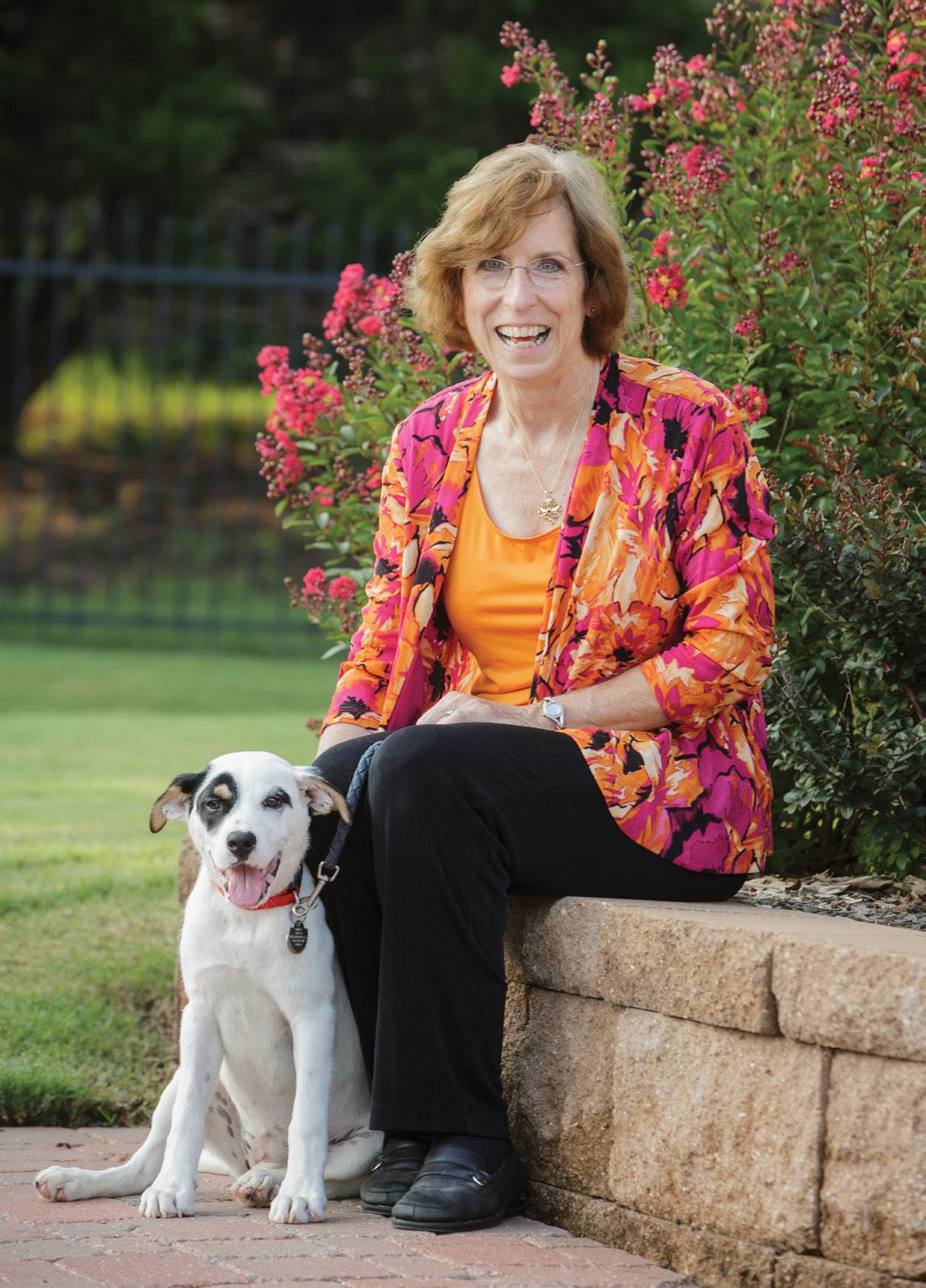
Oklahoma State University
Center for Veterinary Health Sciences
308 McElroy Hall
Stillwater, Oklahoma 74078-2011