






BY KEVIN KLINTWORTH Se nior Asso ci ate At hleti c Director
The number of NCAA championships won doesn’t reach into the fifties without a few coaching legends along the way. At Oklahoma State we have been blessed with our fair share. In fact, we have probably been blessed with more than our fair share.
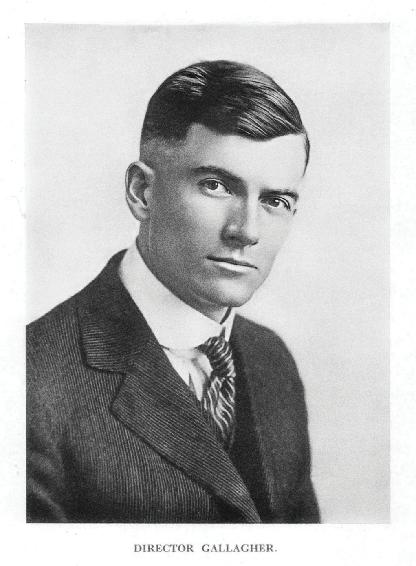
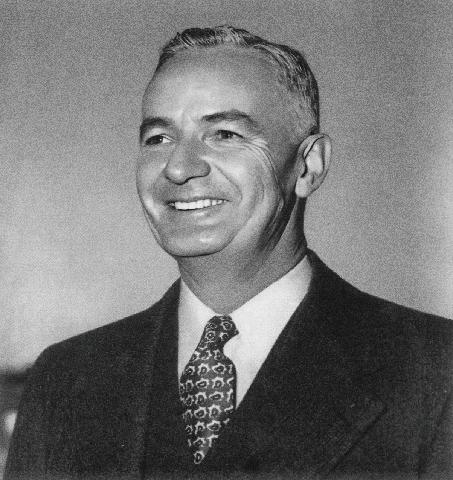
We know the people who have their names on buildings. Ed Gallagher and Henry Iba are two of the foundational building blocks for their sport with a scope of influence so strong, it remains in place today. Their coaching trees have been so fruitful and widespread, they have spawned their own legendary coaches.
Overall, 14 di erent Oklahoma State coaches have won NCAA championships. That number jumps to 16 when including non-NCAA sponsored national titles in football (Jim Lookabaugh) and equestrian ( Larry Sanchez , who is the only head coach in the history of that program).
The Gallagher-Iba duo combined for 13 of OSU’s 53 NCAA titles (11 in wrestling and two in men’s basketball). Gallagher’s disciples or branches of his tree combined to win another 21 national championships at OSU alone.
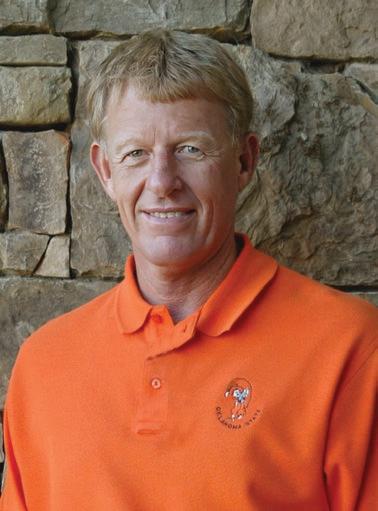
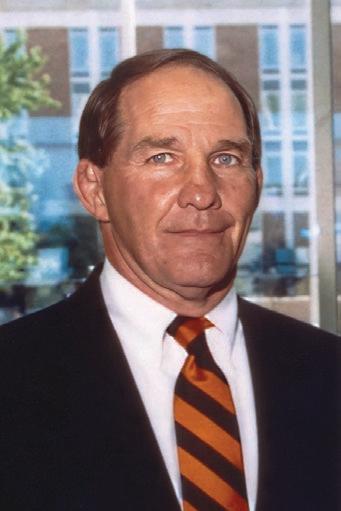
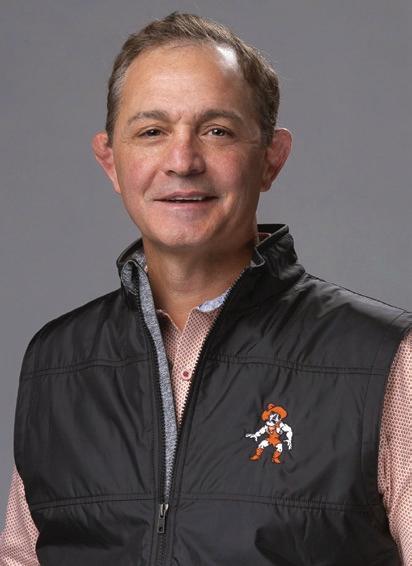
Gallagher, despite passing away at just 52-years-old, leads all OSU coaches with his 11 championships. His last team at OSU won the national championship while posting an undefeated record. Next in the trophy pecking order are his successor, Art Gri th, with eight, and Mike Holder, who won eight men’s golf championships. Myron Roderick , who followed Gri th, won seven championships. John Smith won five wrestling national titles before retiring last year.
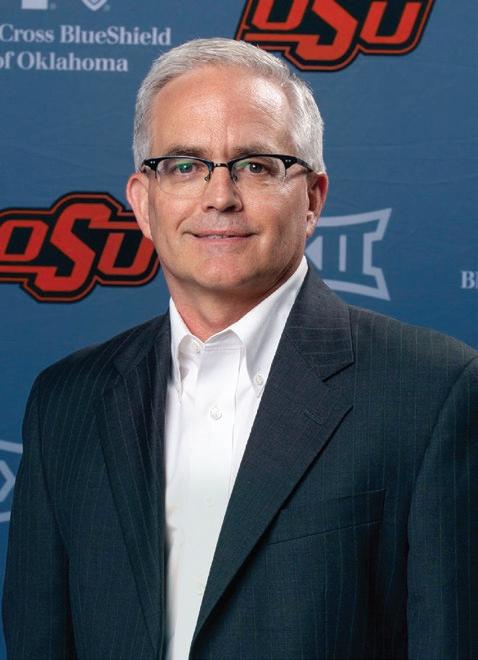
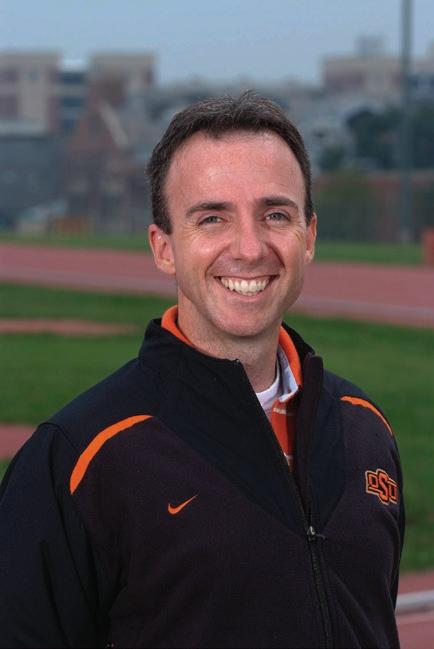
Next up is Dave Smith, OSU’s current director of track and cross country (which is a fancy way of saying head coach). His four national titles in men’s cross country
rank sixth all-time at Oklahoma State and have quietly moved him into the category of legendary coaches at the university.
Every coach has his or her own challenges to overcome. Gallagher built the NCAA’s first dynasty from scratch, and Gri th had to follow in the footsteps of the biggest legend of them all. Roderick was just 23 years old when he assumed the reins of the wrestling program and had to coach his peers. John Smith took over OSU fresh from winning Olympic gold and had to rebuild a probation-riddled program back to national prominence.
Men’s golf coach Labron Harris built the Cowboy program from scratch, winning 24 conference championships and a national title. But Holder took the baton and turned OSU golf into an absolute giant of national consistency and national championships. Five di erent men, five di erent paths to immortality.
Which leads us to the only coach on the list who is still coaching. Dave Smith took over a cross-country program with some tradition, but it was quite dusty. Cross country won a national championship in 1954 under Ralph Higgins and had four conference titles to its credit. Since 2008, Smith has led the Cowboys to 13 Big 12 championships and four national titles.
When he became the CEO of the program, there was no reason to believe OSU could become a national contender against schools with better budgets, better facilities, better traditions and elevation. Over the last 13 years, schools at elevation have won 10 national championships. The exceptions are Syracuse (2015) and OSU twice (2012 and 2023).
But Smith found his own way. He found the formula that worked for him, and his circumstances (good and bad) at
Oklahoma State. Like wrestling and golf, cross country is a sport that seems to move from one dynasty to another. It still might be a wee bit of a stretch to call OSU, with its five all-time national titles, a blueblood of cross country like it is in wrestling and men’s golf with their combined 45 titles. But that just makes Smith’s accomplishments even more impressive as he has moved OSU into the blueblood conversation.
Among current OSU head coaches, Sanchez and Alan Bratton of men’s golf join Dave Smith as the only holders of a national title. Several coaches on our campus have been oh-so-close to breaking into the national championship club and seem to be on a collision course with a trophy. Greg Robertson of women’s golf and Chris Young of women’s tennis have both had teams finish as NCAA runner-up, while baseball’s Josh Holliday, softball’s Kenny Gajewski (and Dave Smith on the women’s cross country side of the aisle) have all finished third in the national race. Other OSU coaches have had deep postseason runs and a newer group is just getting their programs started. Everyone on the coaching roster has had their fair share of success, as documented each year in the Learfield Director’s Cup.
Winning a national championship is di cult. Casually noting the di culty doesn’t begin to cover what an all-encompassing challenge it poses. Winning a second title rarely happens. Walking around with four in your back pocket like Dave Smith puts you in a rare circle — one occupied only by Gallagher, Gri th, Holder, Roderick and John Smith. It is the circle of legends
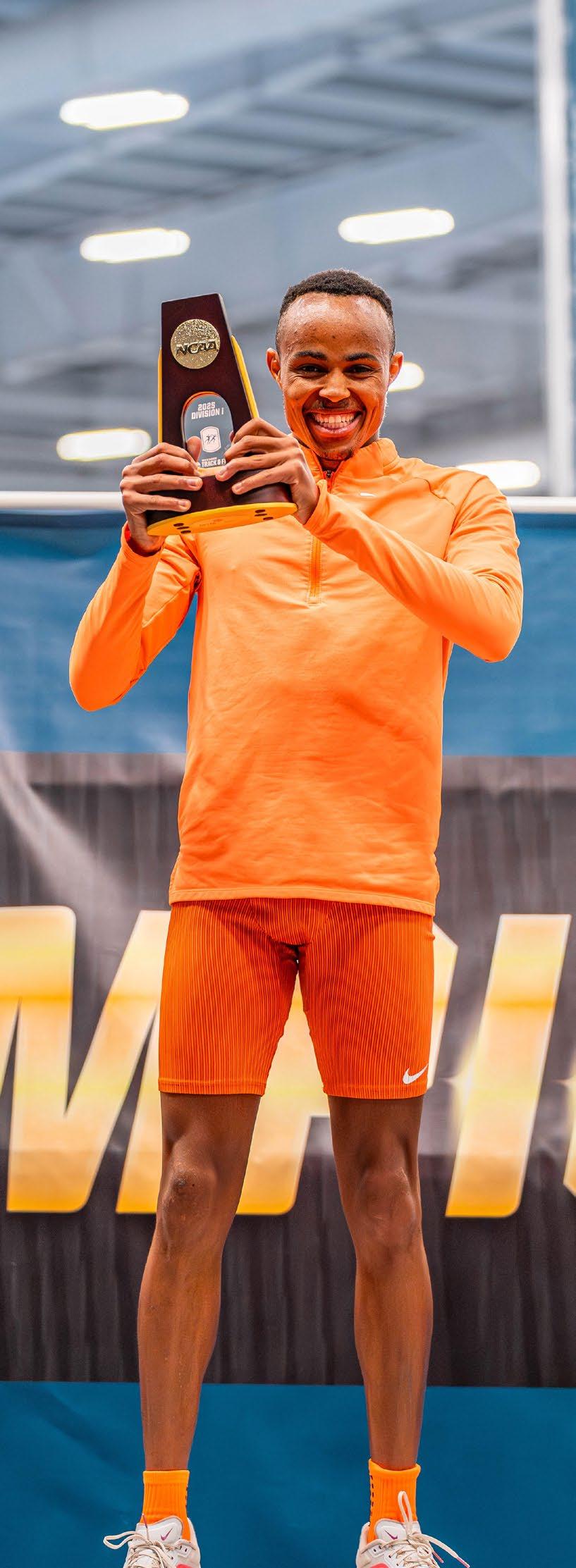
Cowboy Brian Musau captured the 5,000 meter title at the 2025 NCAA Indoor Track & Field Championships. The sophomore clocked a meet-record time of 13:11.34 on his way to becoming OSU's first 5K individual champ.
POSSE MAGAZINE
POSSE Magazine Sta
SPRING 2025
EDITOR-IN-CHIEF / SENIOR ASSOCIATE ATHLETIC DIRECTOR KEVIN KLINTWORTH
SENIOR ASSOCIATE ATHLETIC DIRECTOR JESSE MARTIN
ART DIRECTOR / DESIGNER JORDAN SMITH
PHOTOGRAPHER / PRODUCTION ASSISTANT BRUCE WATERFIELD
ASSISTANT EDITOR CLAY BILLMAN
CONTRIBUTING PHOTOGRAPHERS CHASE DAVIS, MASON HARBOUR, KATE HODGES, GARY LAWSON, COLIN PETERS, COOPER PEACOCK, CHLOE REEVES, MICHAEL SCHWAB, PHIL SHOCKLEY, ADDISON SKAGGS
CONTRIBUTING WRITERS CLAY BILLMAN, SAARA HAKANEN, KEVIN KLINTWORTH, GAVIN LANG
ASSOCIATE AD / ANNUAL GIVING ELLEN AYRES
PUBLICATIONS COORDINATOR CLAY BILLMAN
ASSOCIATE AD / DEVELOPMENT
BRAKSTON BROCK
ASSOCIATE AD / DEVELOPMENT MATT GRANTHAM
ASSOCIATE AD / DEVELOPMENT
DANIEL HEFLIN
SENIOR ASSOCIATE AD / EXTERNAL AFFAIRS JESSE MARTIN
SENIOR ASSOCIATE AD / DEVELOPMENT LARRY REECE
ASSOCIATE AD / DEVELOPMENT SHAWN TAYLOR
ASSISTANT DIRECTOR OF ANNUAL GIVING ADDISON UFKES
ATHLETICS PROJECT MANAGER
JEANA WALLE0R
ASSISTANT DIRECTOR / DONOR BENEFITS MORGYN WYNNE
OSU POSSE
102 ATHLETICS CENTER STILLWATER, OK 74078-5070
405.744.7301 P 405.744.9084 F
OKSTATE.COM/POSSE POSSE@OKSTATE.EDU
ADVERTISING 405.744.7301
EDITORIAL 405.744.1706
At Oklahoma State University, compliance with NCAA, Big 12 and institutional rules is of the utmost importance. As a supporter of OSU, please remember that maintaining the integrity of the University and the Athletic Department is your fi rst responsibility. As a donor, and therefore booster of OSU, NCAA rules apply to you. If you have any questions, feel free to call the OSU O ce of Athletic Compliance at 405-744-7862 Additional information can also be found by clicking on the Compliance tab of the Athletic Department web-site at okstate.com
Remember to always “Ask Before You Act.”
Respectfully,
BEN DYSON
SENIOR ASSOCIATE ATHLETIC DIRECTOR FOR COMPLIANCE
BIG 12 CONFERENCE
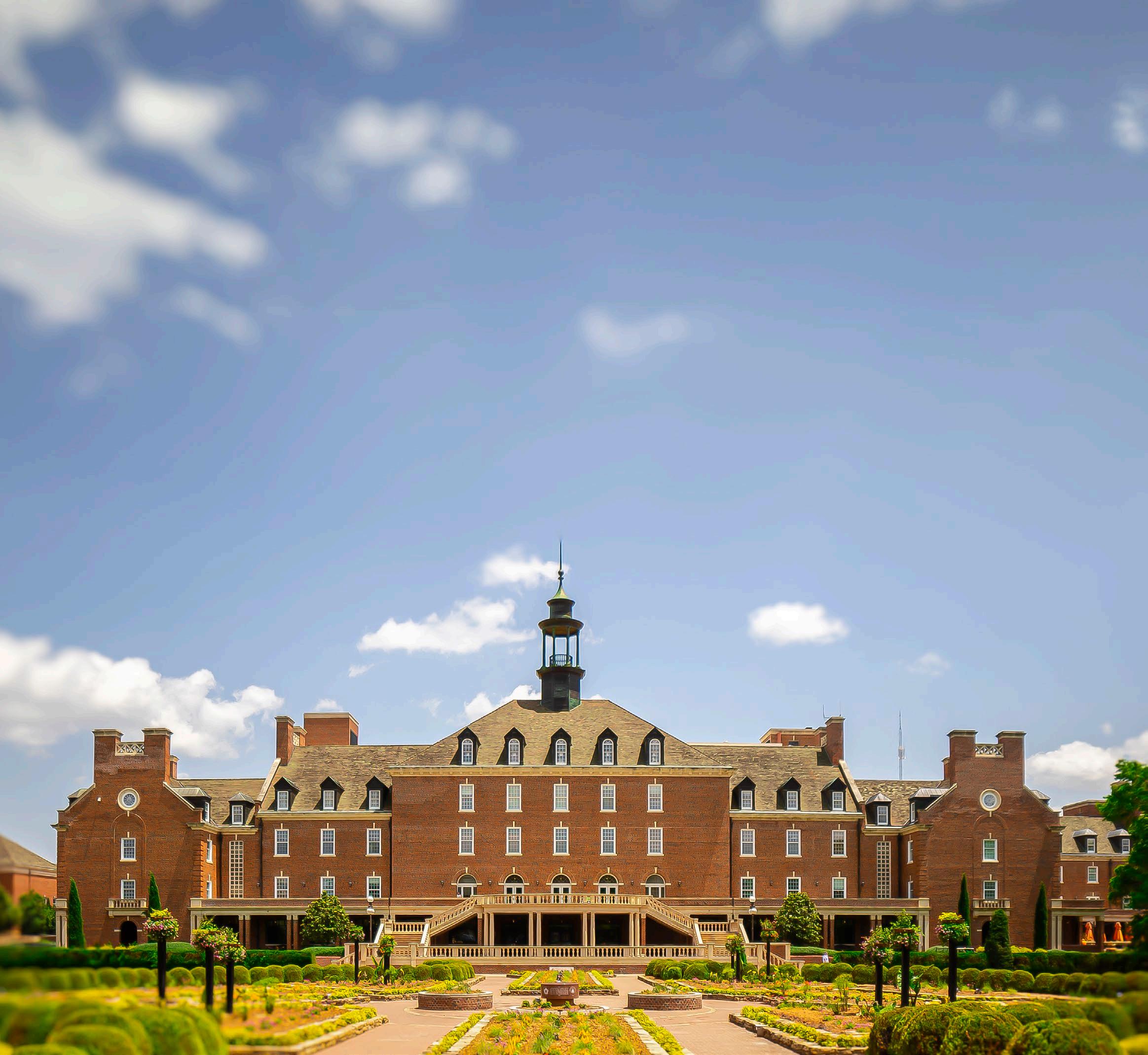
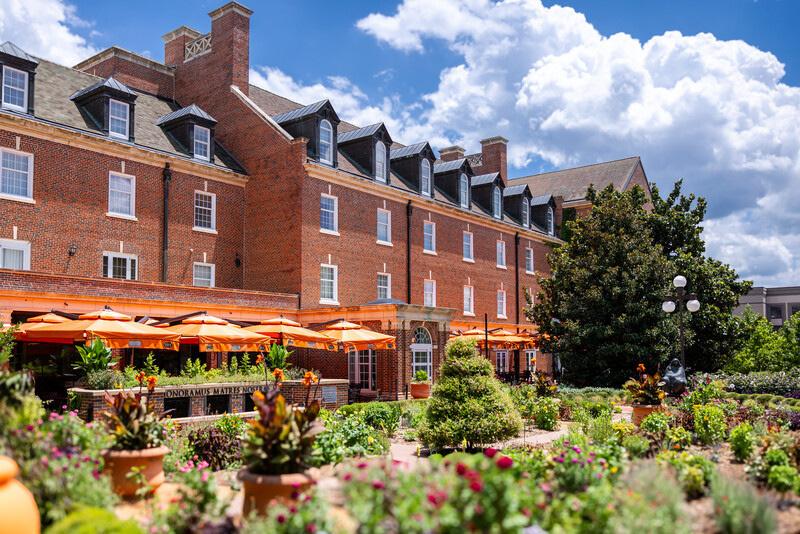
Encourage the future Cowboy you know to experience the beauty and innovation of OSU’s campus by checking out our virtual tour or scheduling an o cial visit.
With virtual tours, daily walking tours, weekend tours and special events, there is a right fit for the student you know!

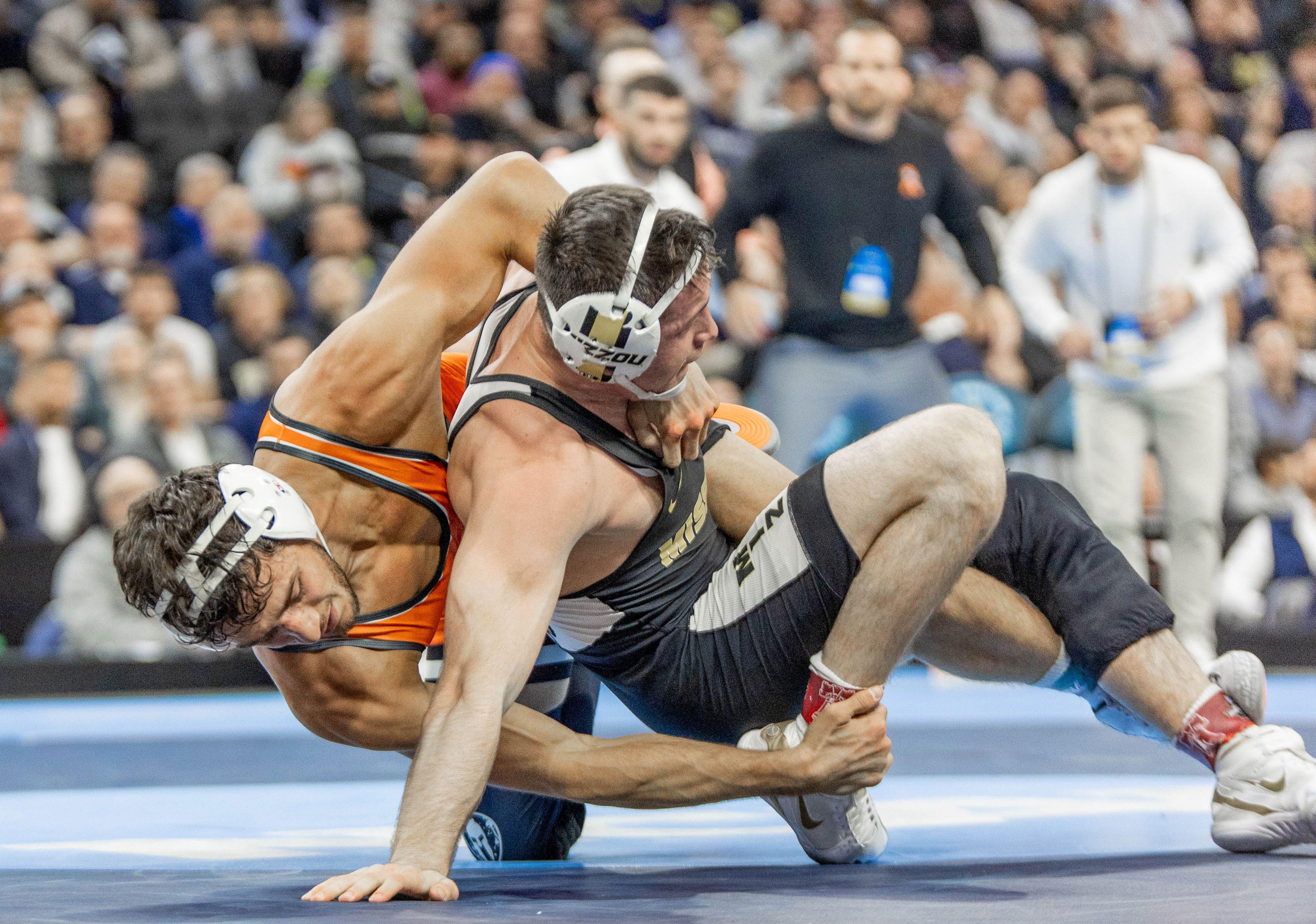
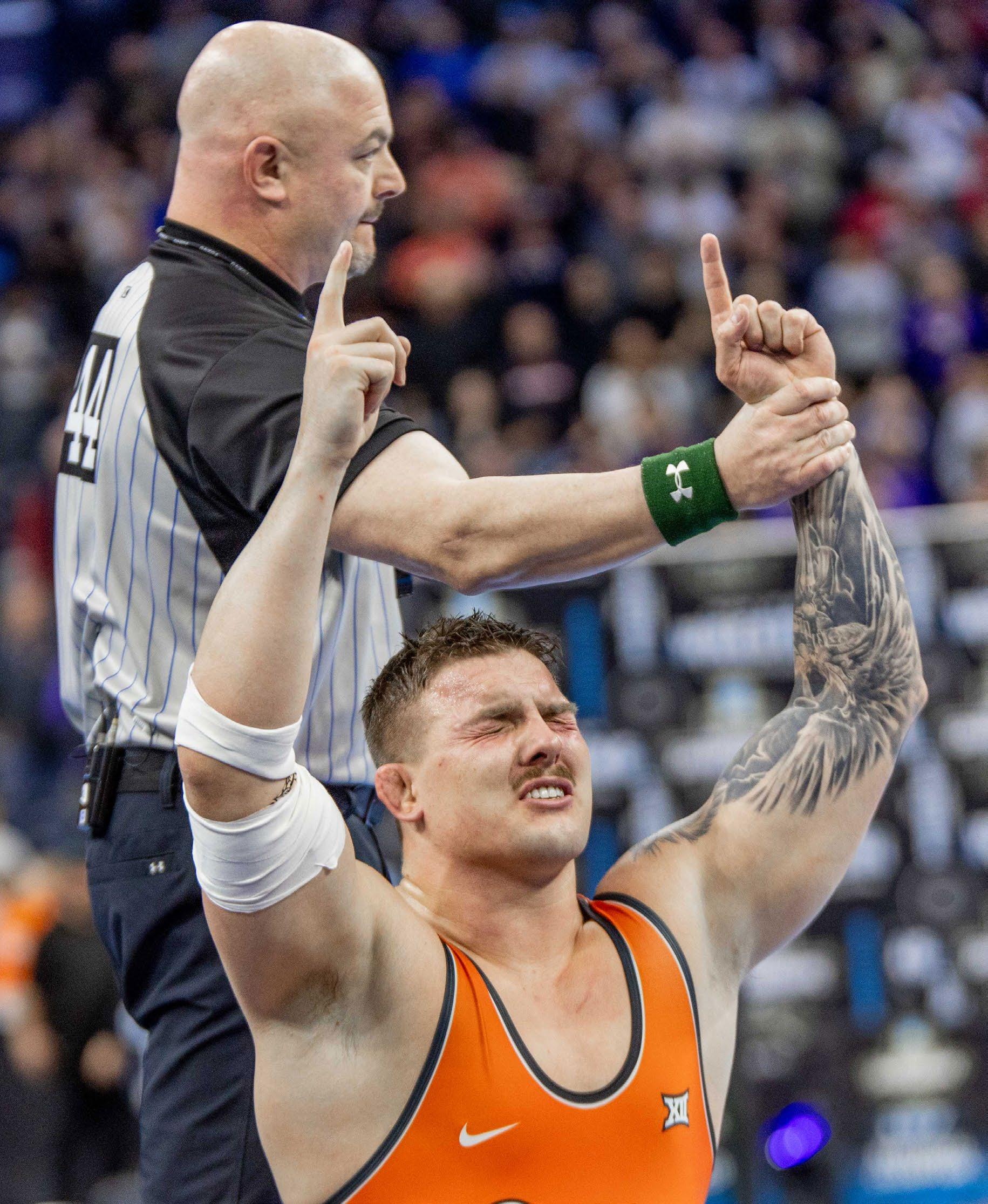
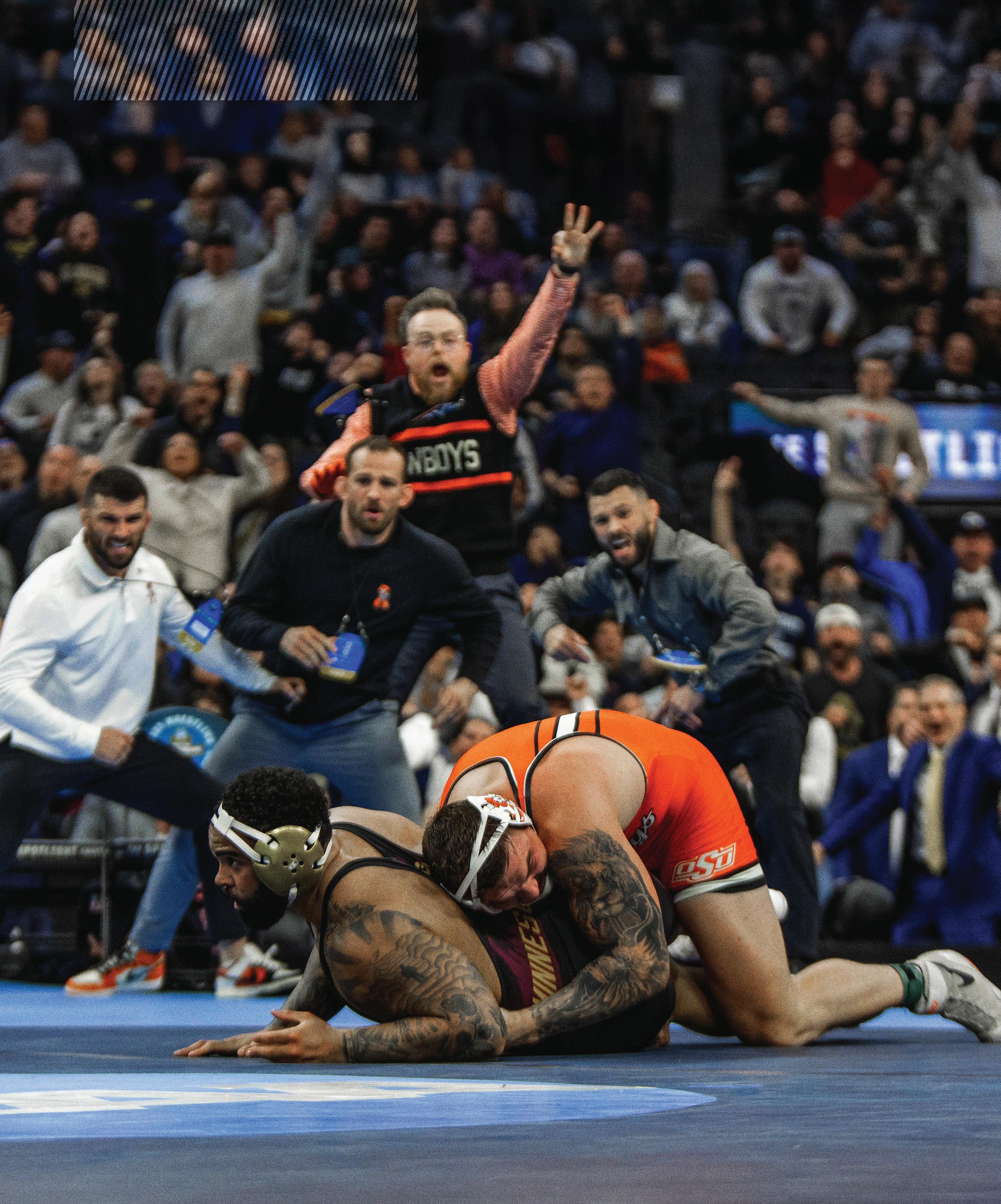
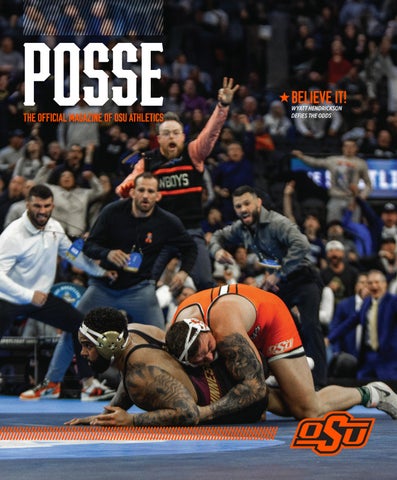
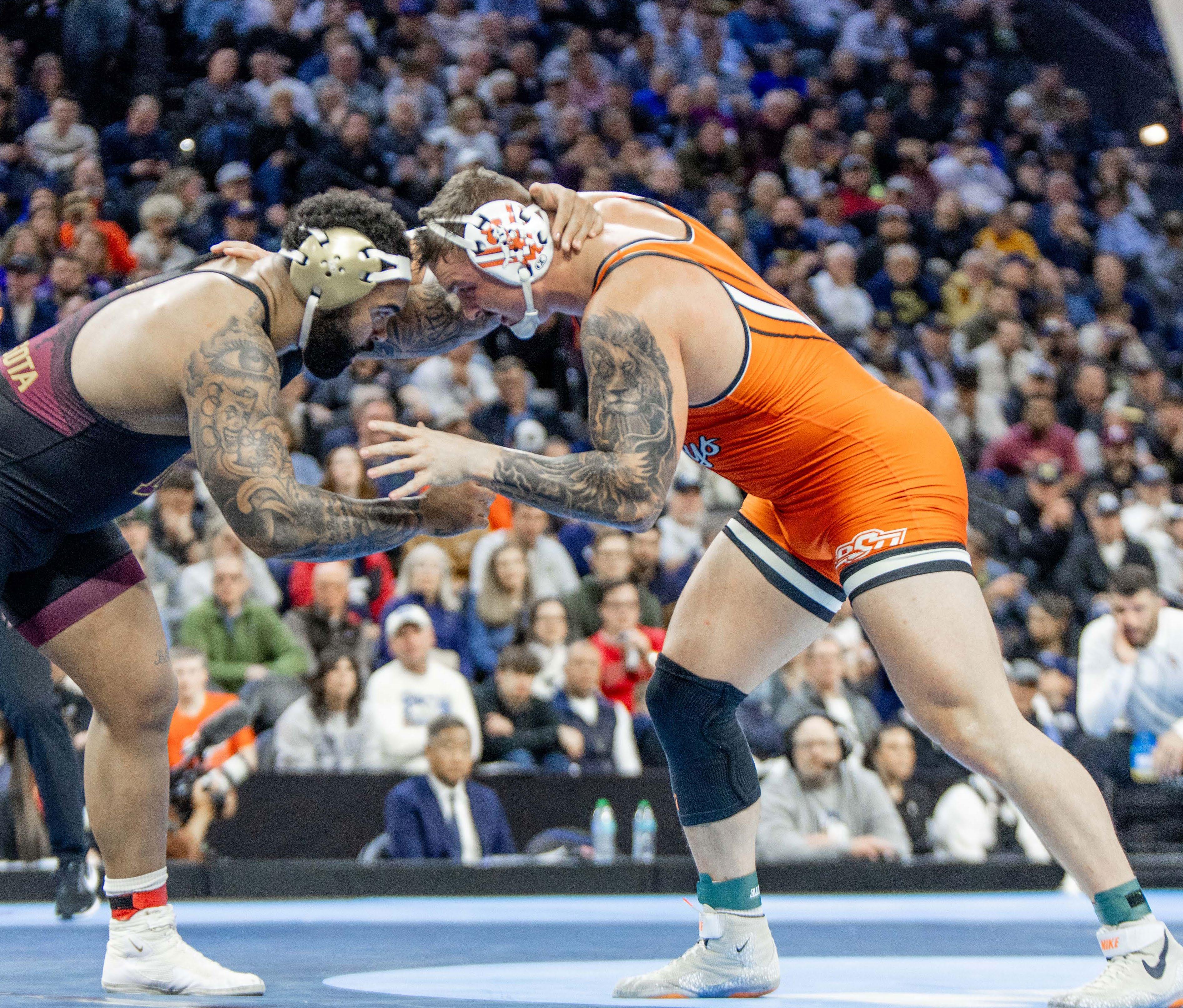
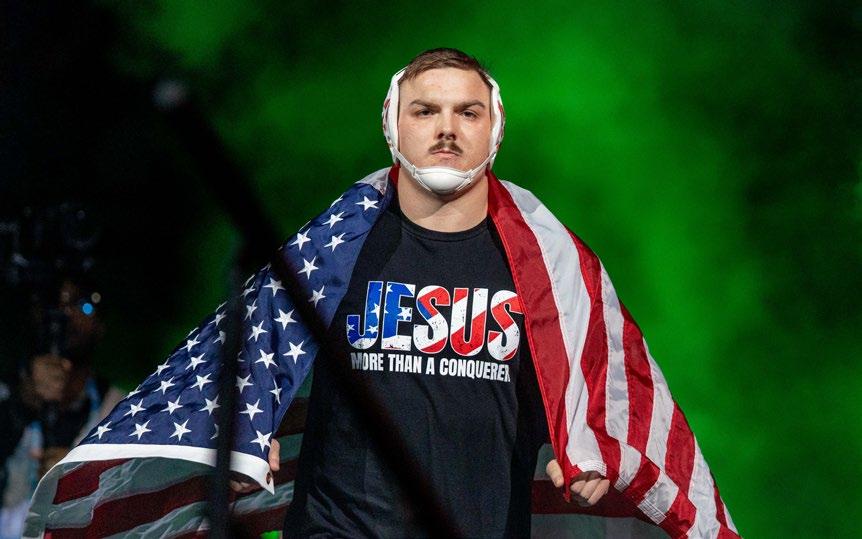
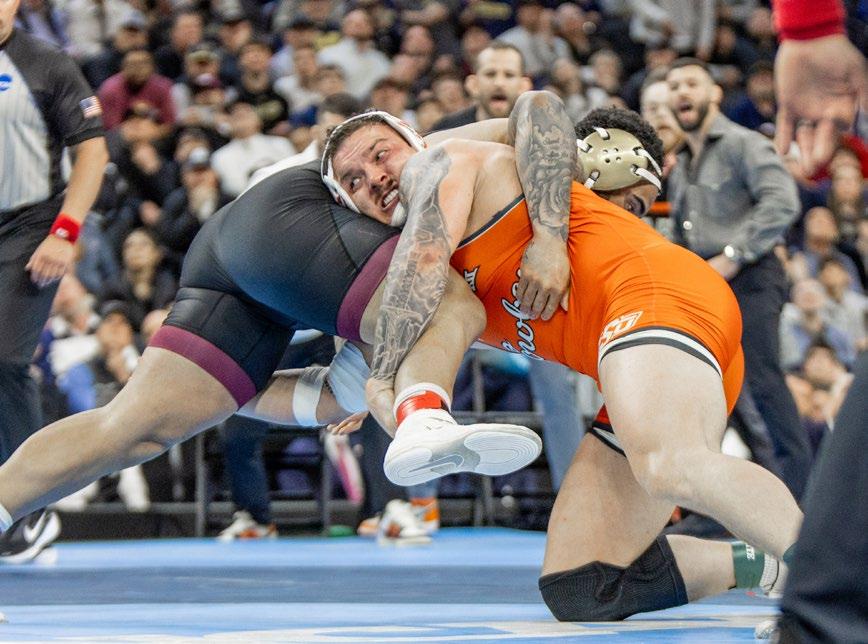
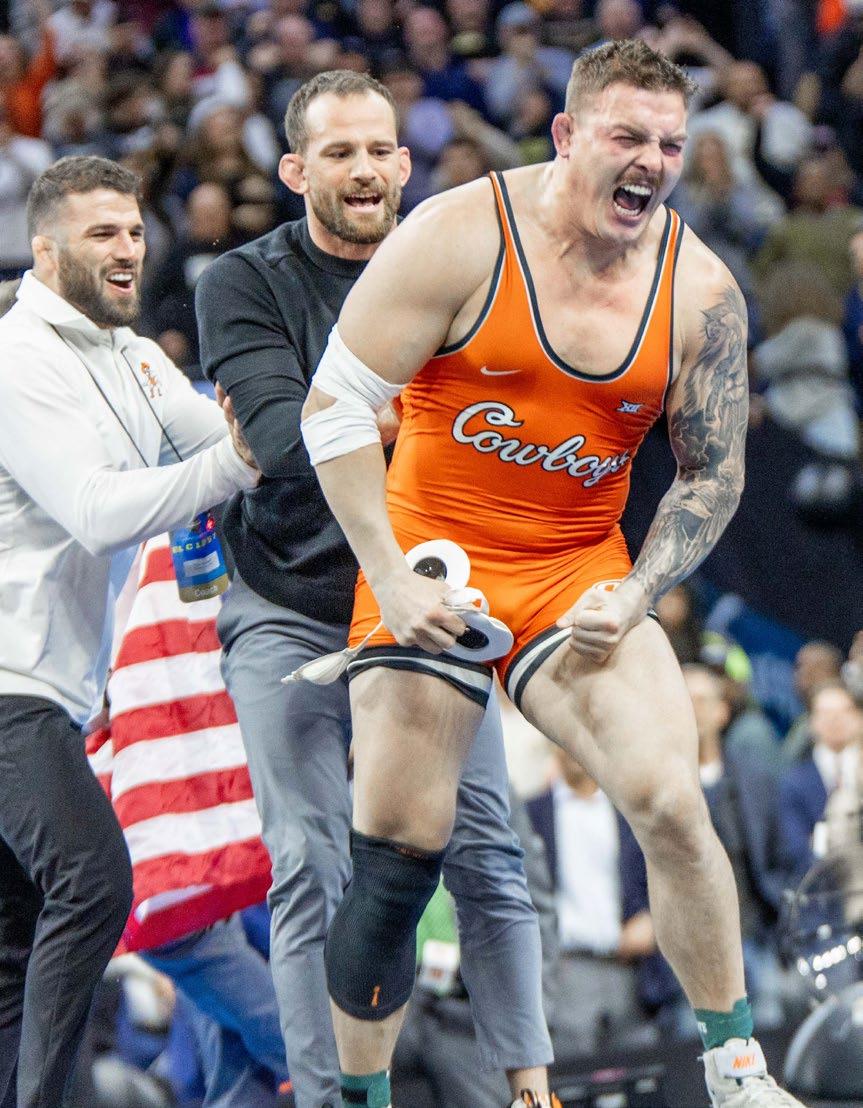
Oklahoma State's Dean Hamiti Jr. defeated two-time NCAA champ Keegan O'Toole of Missouri 4-1 in overtime to win the 2025 NCAA Championship at 174 pounds. A senior from Joliet, Ill., Hamiti transferred to OSU from the University of Wisconsin. With the win, Hamiti became OSU's 200th individual champ across all Cowboy and Cowgirl sports, followed by No. 201 as teammate Wyatt Hendrickson captured the heavyweight crown with a dramatic late-match takedown of top-ranked Gable Steveson
OSU's Wyatt Hendrickson went head-to-head with Minnesota's Gable Steveson and emerged victorious at the 2025 NCAA Wrestling Championships in Philadelphia, Pa. Steveson, a twotime NCAA champ and Olympic gold medalist, was a heavilyfavored heavyweight, returning to the college ranks after a stint as a WWE wrestler and NFL hopeful. Hendrickson, the No. 2 seed, came into the tournament undefeated on the heels of a Big 12 title. Trailing 2-4 with just 30 seconds in the match, Hendrickson got to Steveson's right leg and didn't let go. The senior from Newton, Kan. (via the U.S. Air Force Academy), finished the improbable takedown and rode out the period for a stunning 5-4 victory! President Donald Trump and Elon Musk were among the stunned crowed at the Wells Fargo Center.


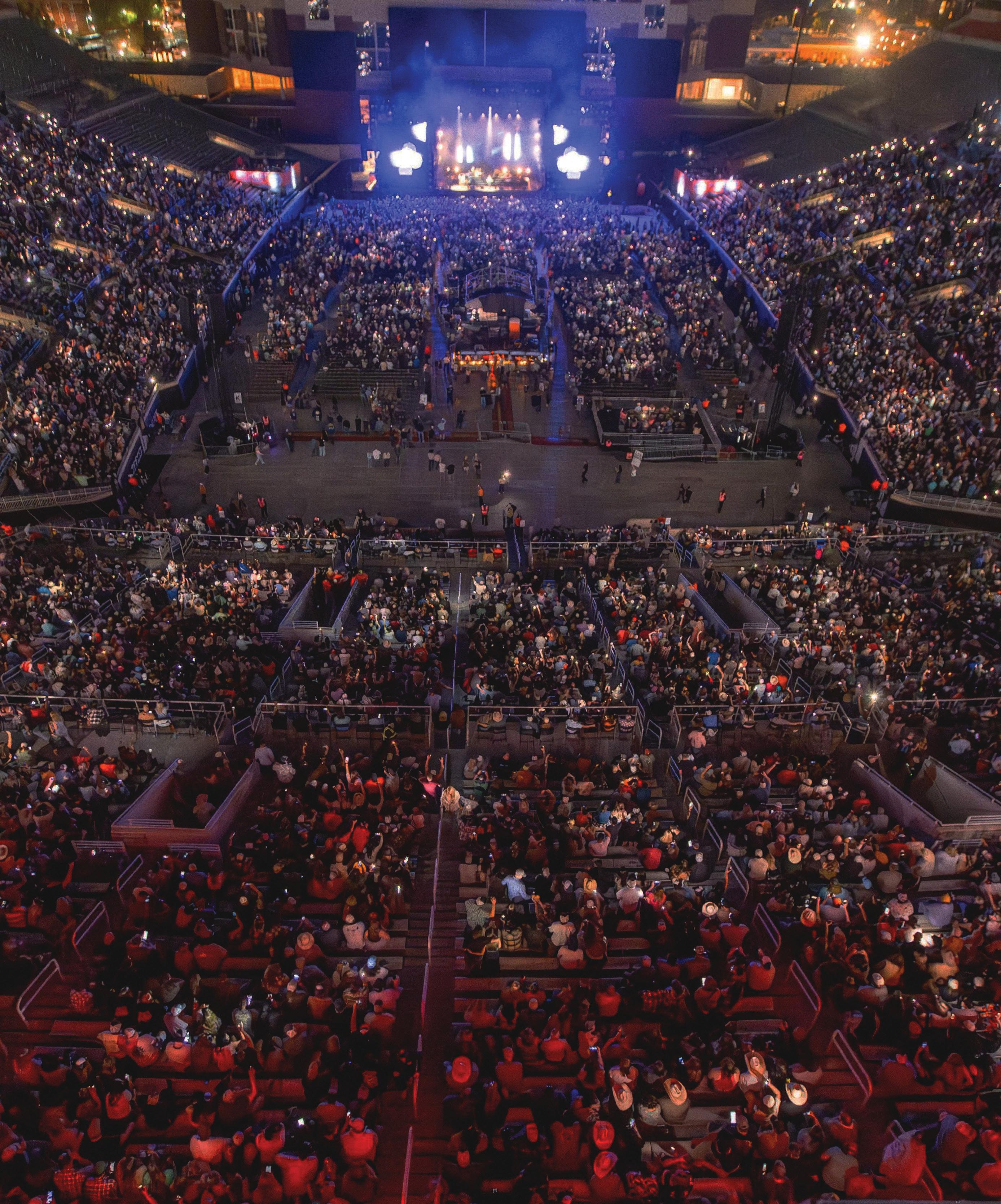
Fueled by nostalgia and emotion, “The Boys from Oklahoma” event in Boone Pickens Stadium was so much more than a concert.
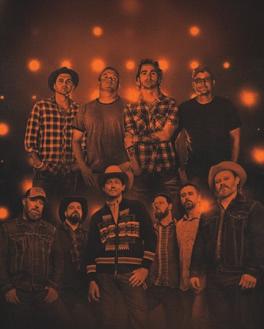
Headlined by Cross Canadian Ragweed and Turnpike Troubadours with special guests The Great Divide, Jason Boland & the Stragglers and Stoney LaRue, the event was originally announced as a one-night -only concert. Explosive demand led to an additional three nights being added.
“You hear stories of how Garth Brooks sold out in 11 minutes, and Taylor Swift sold out in about a half hour, but we had that phenomenon here,” OSU senior associate athletic director for facilities Kyle Waters said.
A Stillwater native and Red Dirt country music fan himself, Waters had the right relationships and the right professional knowledge to pull o something like the Stillwater four-day event. And keep in mind, when Waters is talking about sellouts, he’s talking about 45,190 tickets per show.
“We could have sold six shows,” Waters said. “We caught lightning in a bottle.”
Has there ever been anything like it before?
“Not in Red Dirt, by a long shot,” said Josh Crutchmer, the OSU graduate whose longtime coverage of the genre across a variety of platforms makes him a recognized expert. “This type of hype in country music has traditionally been reserved for Garth Brooks and not many others, but the response by ticket buyers and fans to sell it out in the presale and add show after show is more akin to the recent Oasis reunion announcement than anything we’re familiar with in our corner of the music world.”
The music was great, but what made The Boys from Oklahoma event so special was the emotion behind it.
From the mid-1990s through about 2010, Cross Canadian Ragweed — named for founding members Grady Cross (guitar), Cody Canada (lead guitar/vocals) and Randy Ragsdale (drums), along with bassist Jeremy Plato — were staples of the Stillwater live music scene. Cramming into bars on The Strip with friends to hear them rock the place was at the very core of the Oklahoma State student experience.
They weren’t nationally-known stars at the time, but they didn’t have to be. They were good, and they were ours. Watching them play is just part of life.
So when “Ragweed” broke up, the hurt was real because the group represented more than just a band. It represented so much about what students and alumni loved about Oklahoma State and Stillwater.


But late in 2024, hope emerged in the form of the band’s long-dormant website coming back to life. Then came the first post in about 15 years from the band’s social media account. It was a cryptic photo of what appears to be a stadium chair covered in orange cloth with “2025” written across.
It just HAD to mean SOMETHING???
When the concert was o cially announced in October, all the emotions hit.
Cross Canadian Ragweed is back.
Cross Canadian Ragweed is back!
And they’re doing a show with Turnpike Troubadours, The Great Divide, Jason Boland & The Stragglers and Stoney LaRue in Boone Pickens Stadium.
Wait! in Boone Pickens Stadium? There hasn’t been a concert there since it was bowled in 2009.
WHAT IS HAPPENING?
Stillwater mayor Will Joyce — who has “Turnpike” posters adorning the wall in his o ce — said he wasn’t the type to hit the bars down on Washington during his time in college, but did venture to the Wormy Dog to watch Cross Canadian Ragweed play live once.
“I love the music, and these bands are sort of quintessential to anybody who’s a Red Dirt music fan,” he said. “Them being in a reunion and they hadn’t played in so long … when I heard about it, I was excited first as a person who wants to go to the shows. I sat here in my o ce when tickets went on sale and watched the walking guy on my screen like everyone else. It was incredibly exciting.”
While it may have seemed out of the blue, The Boys from Oklahoma event did not spring out of nowhere.
It had been brewing underneath the surface for years, but no one knew what form it would take
Critically involved in bringing the event to life were Jon Folk and Russell Doussan. Folk is the agent who represents Cross Canadian Ragweed and Turnpike Troubadours, while Doussan is a long-time music promoter who is the owner and CEO of Doussan Music Group. He has significant experience putting on large-scale concerts, including shows by Garth Brooks, U2, Guns N’ Roses and more.
The first step in making the event happen was to get the members of Cross Canadian Ragweed to set their di erences aside and reunite.
“It’s tough to be guys in a band on the road,” Doussan said for why the band split in the first place. “I think you reach a point where you’re like, ‘Hey, I love music, but this isn’t fun anymore.’ And I think that’s kind of where they were, but after



the years passed and all the memories they had, you kind of want to recreate that and be able to bring it back to your fans.”
That’s where Folk came in.
Even after the split, Folk continued to represent Canada, so the lines of communication were always open. It helped that Canada looked back fondly on his time with Cross Canadian Ragweed.
Although the relationships were somewhat frayed within the band, they were not permanently damaged.
The whole thing just needed time.
“Cody, his wife Shannon, and I had been talking about this for many years,” Folk said. “The timing never was right though, and there was still a lot of soul searching that Cody needed to go through. I didn’t want it ever to be a situation where Cody felt forced or had to be convinced in any way. This needed to be something that he was excited about and not something that he was doing for the wrong reasons. He genuinely is one of the kindest people I know and have had the pleasure of working with over the past many years. He continued his soul searching and came to the realization that this was something he wanted to do, and he was ready to celebrate the band and the impact they have made on multiple generations.”
From there, it was on.
The question was how. How would the band reunite? Would it be in the form of releasing a new album? Touring theaters and arenas in a traditional way? What made the most sense?
Stillwater. That’s what made the most sense.
In fact, Doussan said that once Stillwater was brought up, it was the only place that was seriously considered
“Ragweed has such an allegiance to OSU,” he said. “A lot of them went to school there and graduated. Some of them had their kids go there and graduate, so there’s a massive alliance and allegiance to OSU and to Stillwater.”
So Cross Canadian Ragweed was set, Stillwater was set and thanks to then-OSU president Kayse Shrum, athletic director Chad Weiberg and Waters, Boone Pickens Stadium was locked in as the venue.
“Credit to those who brokered the show for OSU for daring to dream big enough to put the show on at Boone Pickens Stadium, because I think most people would have assumed this would be a Tumbleweed event or maybe an Eskimo Joe’s parking lot concert,” Crutchmer said.
At that point, it became about finding additional artists.
“Once Ragweed was on board, the show had to fill out with this lineup,” Crutchmer said. “The Turnpike Troubadours are the

bellwether band in Red Dirt. They took the bar that Ragweed set in the 2000s and have been continually raising it since.
And, Turnpike has a history in Stillwater, too.
Frontman Evan Felker worked for a time as an electrical technician at the MerCruiser plant. He and guitarist Ryan Engleman started as an acoustic duo in Stillwater before adding bassist RC Edwards and making Tahlequah their home base. (The burgeoning band later played the Hall of Fame Block Party outside a newly renovated BPS before the Cowboys’ 2009 home opener vs. Georgia.)
The Troubadours’ roster now includes Kyle Nix (fiddle), Gabriel Pearson (drums) and Hank Early (pedal steel) along with Felker, Edwards and Engleman.
Once you put those two bands on the bill, then it had to be rounded out with the bands who either influenced or supported both Ragweed and Turnpike. The Great Divide, Jason Boland & The Stragglers, and Stoney LaRue all fit one of those descriptions, and they belonged on the bill more than just about anyone else in music.”
Putting that lineup together was like putting together a Red Dirt Music dream team. Everyone involved knew that this type of show had a chance to be special, but it all became clear during the ticketing process.
There is a term in business — funneling — that means you start with a large number of people who express interest in something, then that number decreases significantly to the number of people who will actually arrive at the place of sale, be it a store or a website, then that number decreases significantly again to the people who actually make the purchase.
In the case of The Boys from Oklahoma event, the pre-registration number was a staggering 230,000
“It’s mind-boggling,” Doussan said. “I’ve been in this business for 28 years, and that doesn’t happen.”
On the morning of the first pre-sale, 190,000 people were in the queue to purchase tickets.
By the time the smoke cleared, nearly 181,000 tickets were sold in about five-and-a-half hours, and there were still more than 90,000 people left in the queue who never had the opportunity to even get into the site before the last ticket was sold.
“Sometimes we say in this business, ‘We have lightning in a bottle,’” Doussan said.
Selling out four stadium shows on consecutive nights is outrageous, but 90,000 people who were turned away divided by a 45,000-seat stadium venue means a fifth and sixth show
could have easily been sold out, and there may even have been capability to sell out a seventh.
“That is definitely in that conversation with Taylor Swift and Garth Brooks and Morgan Wallen,” Doussan said. “For the Red Dirt scene, it’s just unheard of.”
Naturally, the news of that level of demand for The Boys from Oklahoma reverberated throughout the music industry, particularly in Red Dirt Country.
“It’s significant because it shows the scene what the possibilities are,” Crutchmer said. “For decades, we never dared to dream that a Red Dirt artist could aspire to anything more than a big club concert. Cain’s Ballroom, Billy Bob’s, Tumbleweed — those were considered the ceiling for Red Dirt musicians throughout the time Cross Canadian Ragweed was active. Only recently, when the Turnpike Troubadours began playing in arenas and amphitheaters regularly around 2022, did people in the Red Dirt scene start to dream bigger.”
The demand for the event changed everything. In fact, Folk said it is the most significant event in the history of Red Dirt music and the largest event in Oklahoma history
Because it was the perfect lineup of Red Dirt stars and local favorites taking the stage in the town that helped launch them, The Boys from Oklahoma event came with an explosion of emotions for everyone involved.
It may be impossible to recreate this impactful of a musical event in Stillwater, but there’s a chance for other big shows in the future
Alluding to the uniqueness of The Boys from Oklahoma event, Joyce said it may be di cult to sell out Boone Pickens Stadium four straight nights for a future concert, but he does want to see more events like this down the road.
There are familiar options like The Tumbleweed and a handful of spots on The Strip, but Joyce specifically pointed to Block 34, the downtown venue which remains under construction but will be able to accommodate outdoor concerts in the future.
“That’s a venue that will hold about 6,000 people for outdoor concerts on the lawn, and so it would be great if The Boys from Oklahoma event kicks o more of an annual thing where we can do a Red Dirt-focused festival where you could do maybe one big show at Boone Pickens Stadium and then some stu at Block 34 and the di erent venues around town.”
The event was monumental. Unrivaled. Historic. And possibly a glimpse into the future.
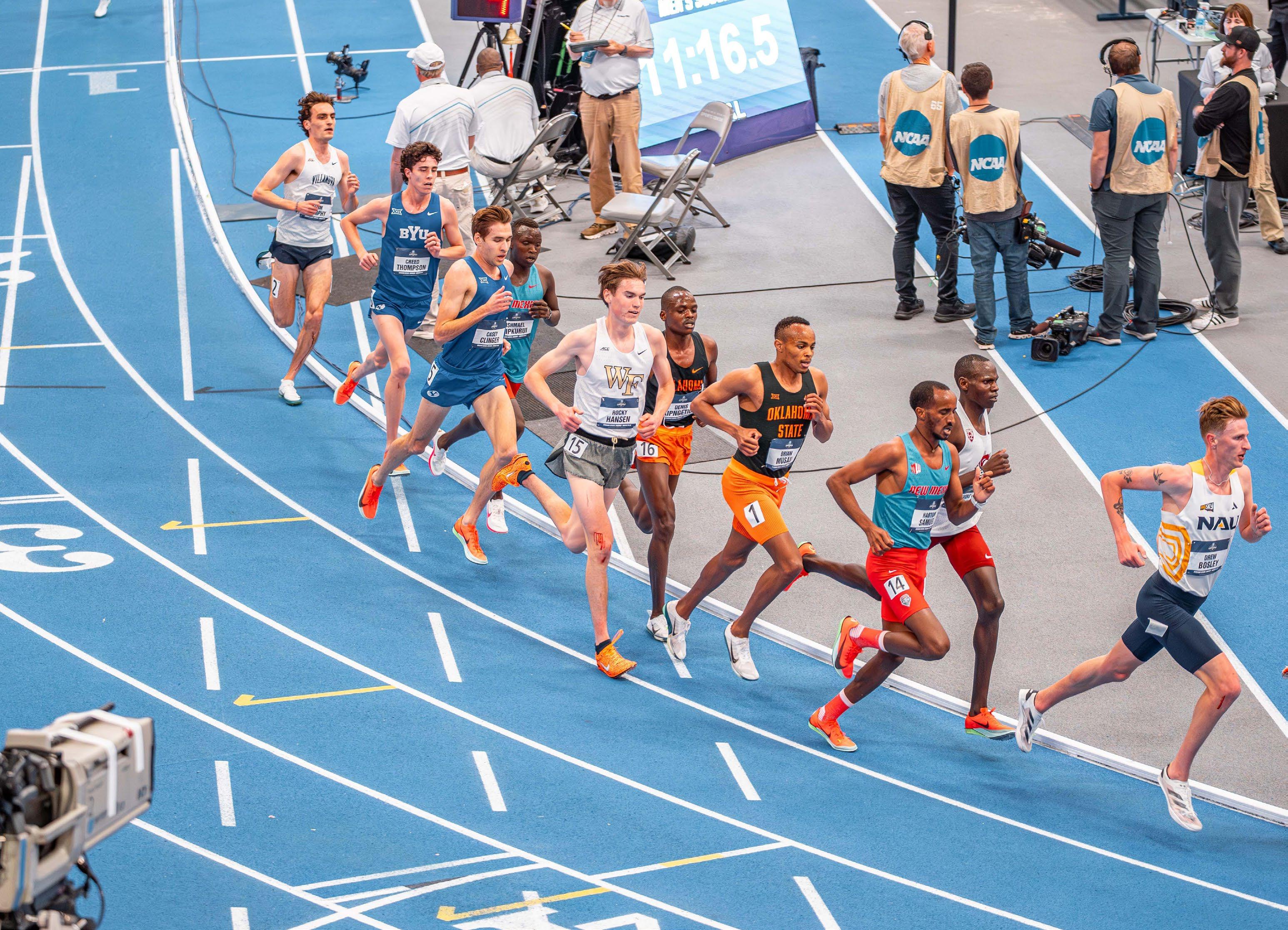
Cowboys Brian Musau (1) and Denis Kipngetich (16) battle for position in the 5,000 meters at the 2025 NCAA Indoor Track & Field Championships, held March 14-15 in Virginia Beach, Va.
The pair of Pokes sat comfortably in the pack for much of the race before Musau made his move to the front with 400 meters to go. The sophomore ran the 200m bell lap in a blistering 25.82 seconds for the win. Musau's time of 13:11.34 shattered the previous NCAA meet record. Kipngetich earned First Team All-America honors with a fifth-place time of 13:13.71 — a personal-best for the sophomore.
Musau's title marks the 11th NCAA individual champion under OSU Director of Track & Field and Cross Country Dave Smith, including at least one in each of the last four seasons.
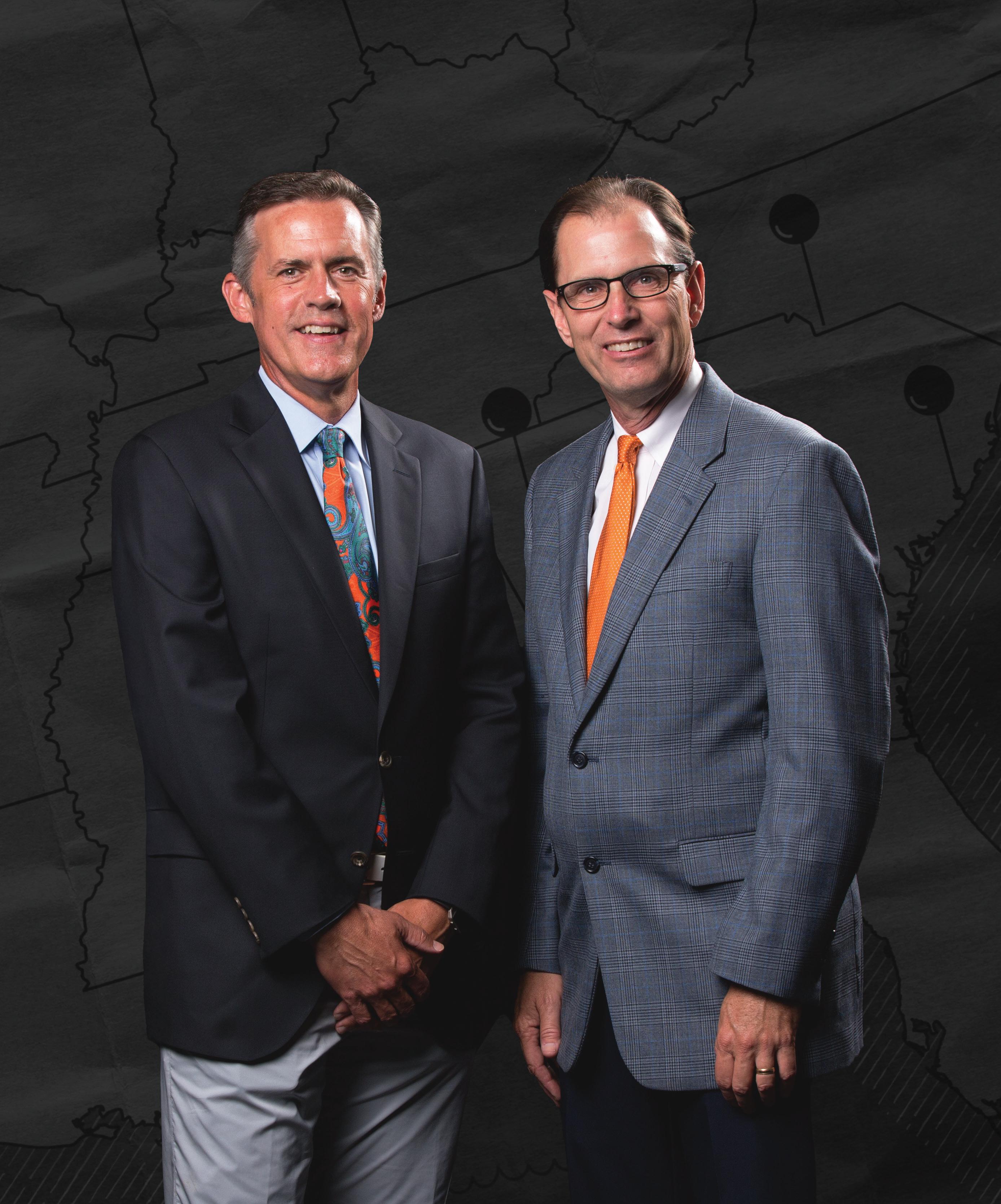
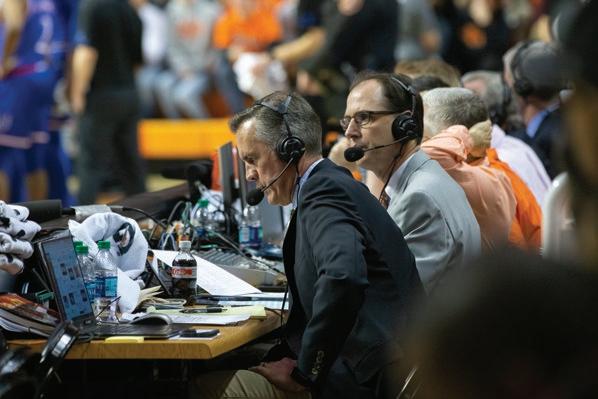
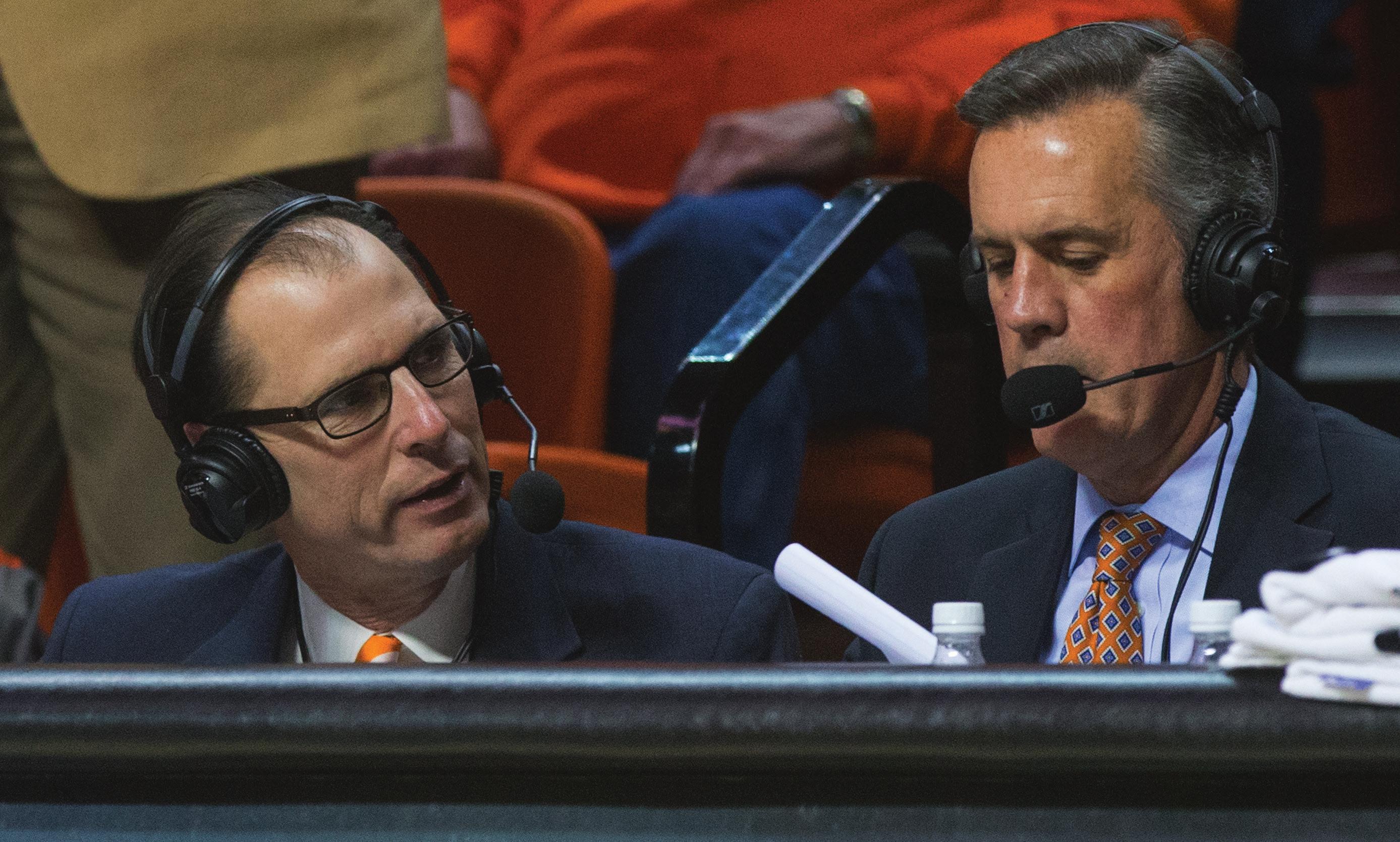
Like most fans of college basketball, Dave Hunziker can’t wait to get his hands on the Oklahoma State schedule.
The radio voice of Cowboy Football and Cowboy Basketball and the ESPN Plus voice of OSU Baseball, is of course a fan of all OSU teams. His job is much more fun when those programs are thriving. But unlike fans who are initially interested in what teams are visiting Gallagher-Iba Arena, or what road trip might be the most fun, Hunziker’s first glance ahead is focused on one single item.
Conflicts with football.
He is a dedicated broadcaster and feels a responsibility to both programs, as well as to head coaches Mike Gundy and Steve Lutz, to be at each and every one of their games. Regardless of illness, family concerns, or either team’s won-loss record, Hunziker feels a duty to be calling the action when the Cowboys are kicking it o or tipping it o .
The biggest threat to his perfect attendance goals each year is a scheduling conflict — those days in November or December or January (or all three) when both OSU Football and OSU Basketball are playing at di erent locations on the same day or in the neighborhood of the same time.
“Yep,” Hunziker said. “The first thing I do is look for conflicts on the schedule. Then I usually start looking for flights. Immediately. That day.”
“How are we going to get there from here?” he added. “And if it is just a flat-out conflict, like we had this year with the SMU basketball scrimmage, who are we going to get to do the game.”
When OSU Basketball announced its 2024-25 schedule, the first thing Hunziker noted was the weekend of Nov. 22-24. The football Cowboys would be closing the home schedule with a game against Texas Tech. That same weekend, across the country in South Carolina, Lutz’s first OSU basketball team would be participating in the Shriner’s Children’s Charleston Classic
The puzzle had presented itself, and this year there would be more pieces than usual. Not only was the kicko time for Texas Tech still weeks away from being set, but the basketball squad was not just playing far away. The Cowboys would be playing three games in four days in Charleston with the football game tucked in the middle. The tournament format assured that OSU would have games on Thursday and Friday before the Tech football game on Saturday. The hoops team would hit the floor again in Charleston on Sunday afternoon.
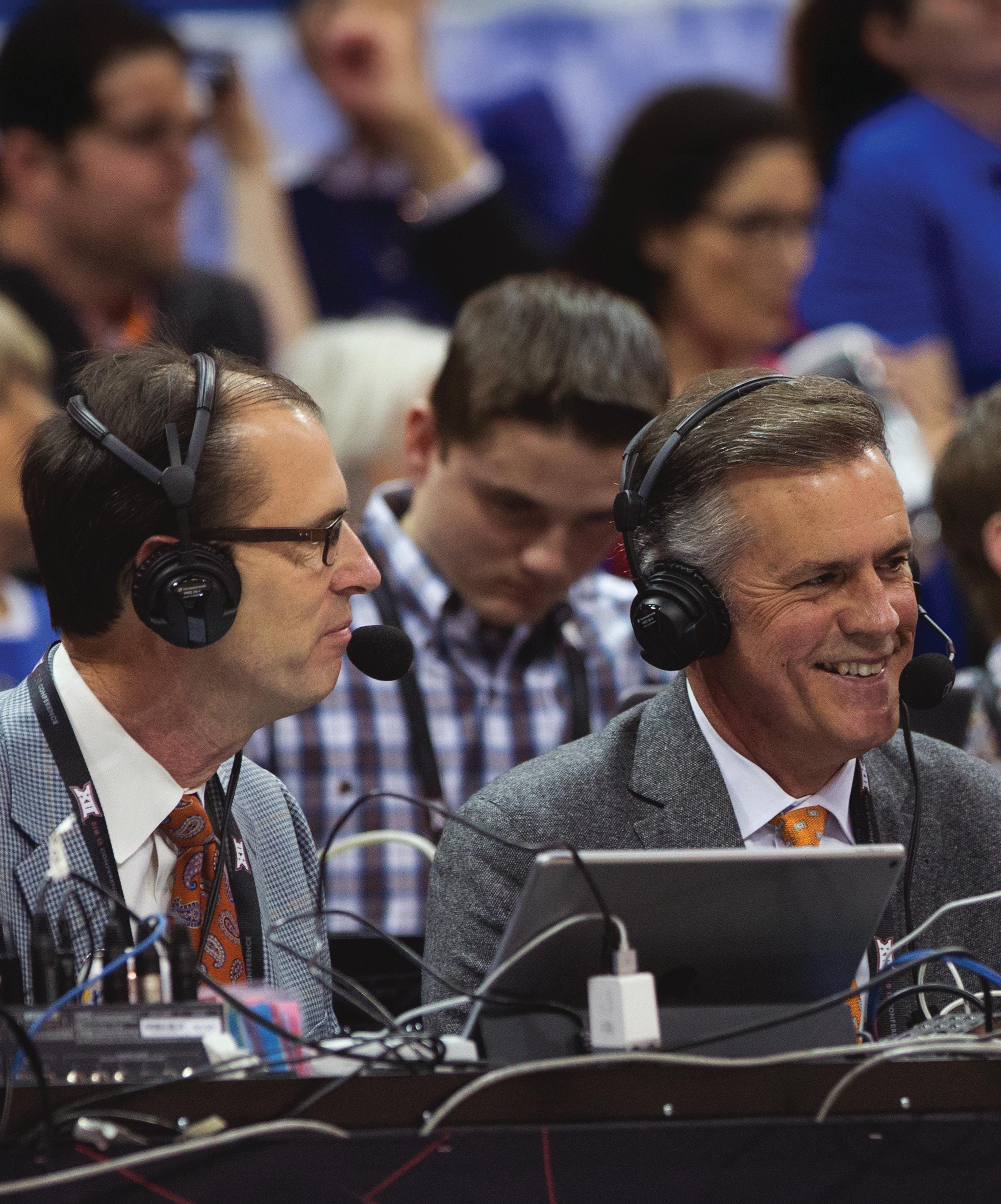
Hunziker, of course, doesn’t solo on OSU broadcasts. The radio analyst for both football and basketball network shows is John Holcomb. The duo has been calling Cowboy games together since 2004 on the football network and the 2007-2008 basketball season. While Hunziker is a Stillwater resident, Holcomb lives in Tulsa where he also serves as
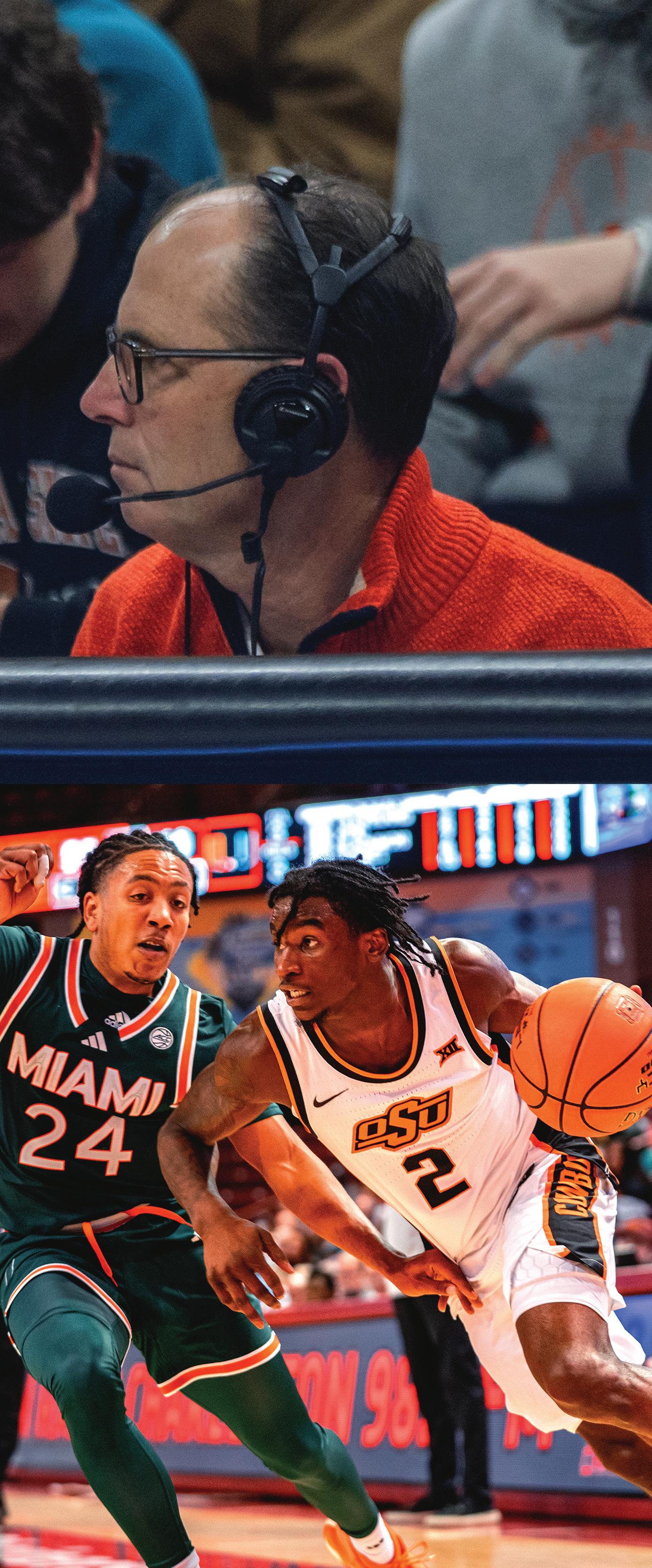
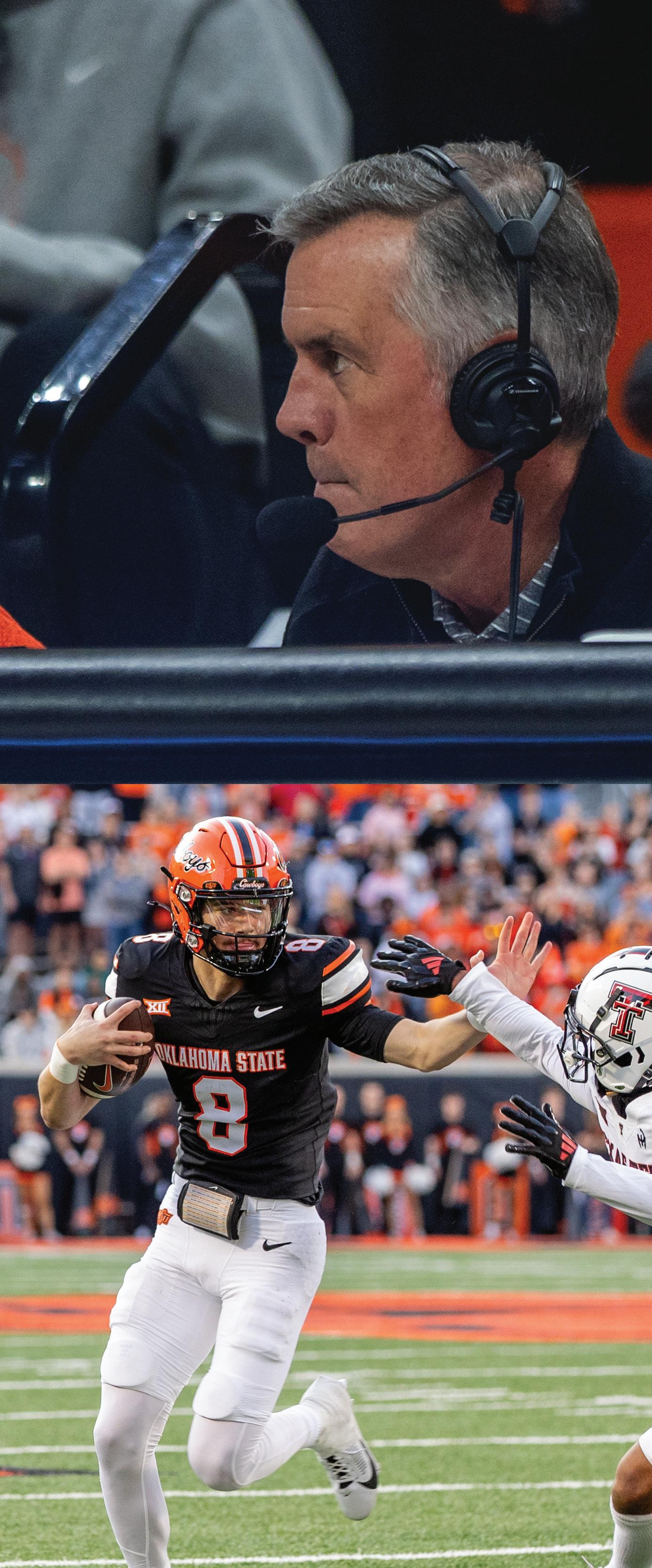
sports director at KOTV Channel 6, the city’s CBS a liate. So travel plans must be multiplied by two — but for more than just logistics.
“People think that it’s a no-brainer that we would travel together when we are not with the team,” Hunziker explained. “But it’s actually just the opposite. We travel separately very intentionally. If we were to travel together and experience problems, then neither one of us would make it to the game. By splitting up, the odds are much better that one of us makes it on time.
“If the window isn’t particularly tight, then of course we travel together. If it’s a tight fit, traveling together is the last thing you want to do.”
The Cowboy hoopsters were scheduled to open play in Charleston on Thursday (Nov. 21) against Florida Atlantic. When the team departed on its charter on Tuesday, Hunziker was on board. He spent Wednesday behind closed doors in the team hotel in pregame mode for three basketball games and a football game over a four-day period. Holcomb, whose daughter Melody is the assistant tennis pro at a resort in the South Carolina low country, had departed on Monday for some abbreviated family vacation time prior to the stretch at the end of the week.
“That’s a best-case scenario for me,” Hunziker said
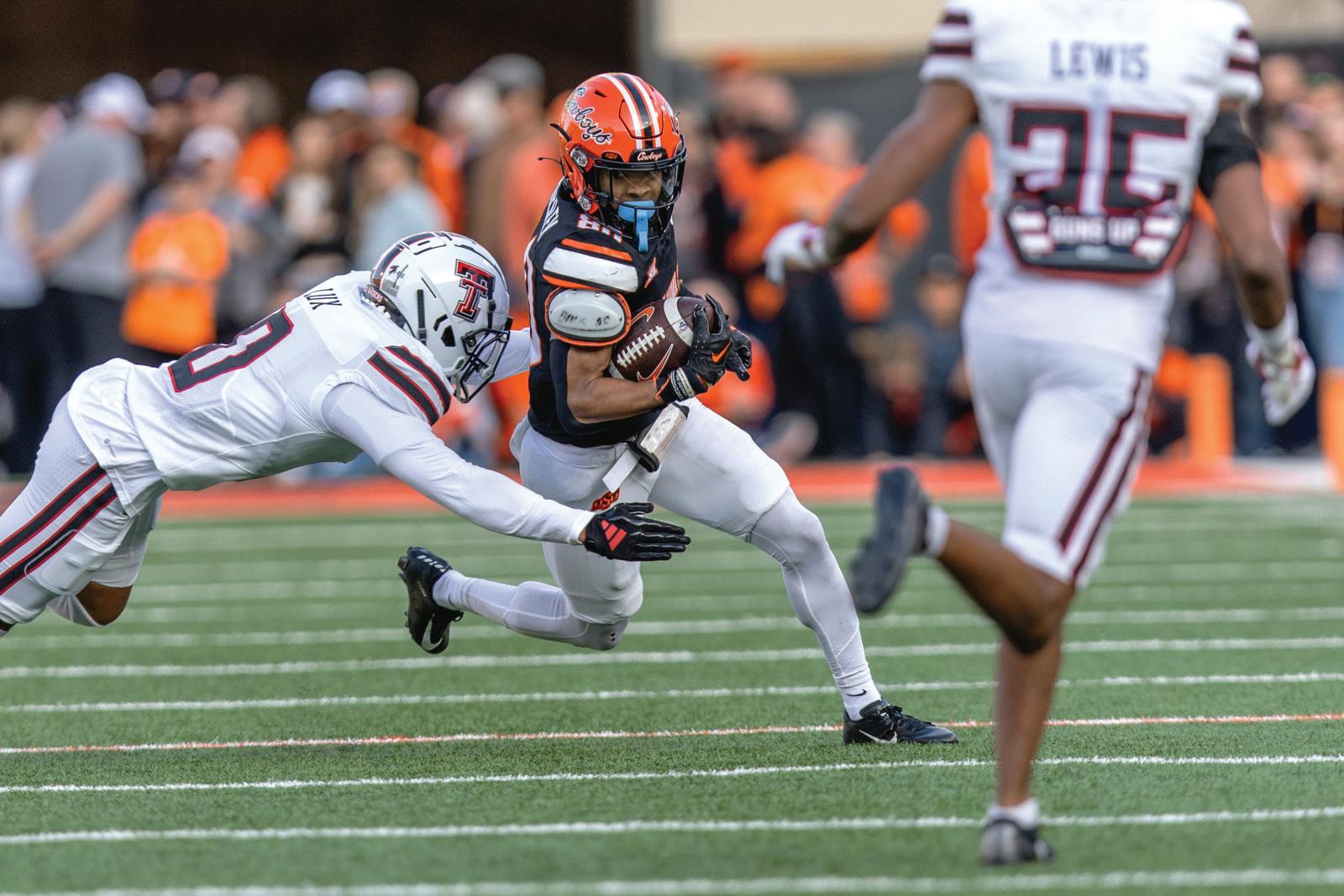
“She dropped me o very close to the stadium gate, so I didn’t have to mess with parking or walking or dragging equipment,” Hunziker said. “I got to the booth at 12:05 p.m. and the pregame show started at 12:30 p.m. It was close, but we would have had a game plan if it had looked like I was going to be late.”
After being on the air for nearly six straight hours, Hunziker’s day, which had begun in an Atlanta hotel room, finally ended with him sleeping in his own bed in Stillwater, briefly.
“I was awake at 2:30 a.m. and flew out of Oklahoma City at 5:30 Sunday morning,” he said. “Landed in Charleston around 11 Eastern and took an Uber to the arena for a late afternoon tip. Wasn’t too bad.”
Holcomb’s issues came on the return trip to Charleston following the football game. Once again, those pesky airlines were the biggest culprit.
“I had an early Sunday morning flight from Tulsa to Charlotte,” he said. “But we were delayed out of Charlotte to Charleston,” he said. “I got to the arena 20 minutes before the pregame show started.”
Hunziker busting into the radio booth atop Boone Pickens Stadium just before the football pregame show starting on Saturday and Holcomb strolling into a basketball
arena 20 minutes before tip on Sunday sounds harrowing. In fact, neither man was particularly stressed about the situation in regard to the on-air product, primarily due to their trust in the rest of the broadcast team.
“We had a couple of segments ready to go before I was really needed,” Holcomb said about the basketball game while echoing the same nonchalant attitude that Hunziker had carried the day before when he was racing the clock to the football stadium. Spending a lifetime behind an open microphone will develop confidence.
All in all, the Stillwater-to-Charleston-to-Stillwater-toCharleston-to-Stillwater weekend wasn’t as bad as it could have been.
Hunziker and Holcomb have experienced worse.
Let’s journey back in time to 2011. The Cowboy football team was undefeated. OSU was ranked an all-time high of No. 2 in the Associated Press poll and 9-0 on the season. The Pokes were headed to Lubbock, a place that had historically been tough on the Cowboys (at least that was the narrative at that point in time). Kicko was, of course, scheduled for 11 a.m.
The night before the football game in Gallagher-Iba Arena, the men’s basketball team was hosting Texas A&M-Corpus Christi. The schedule dictated Hunziker and Holcomb would call the basketball game in Stillwater and then drive to Texas. It would be a marathon evening for sure, but very doable.
Following OSU’s 71-39 hoops victory, the duo headed west for what would be a very long night.
“We were supposed to have a hotel room in Amarillo,” Hunziker explained. “We were going to spend the night there and then finish the drive to Lubbock early Saturday morning. They gave away our room in Amarillo, even though it was guaranteed (he said without sounding the least bit bitter). We decided to head on to Plainview and rolled into there around 5 a.m.”
Plainview, Texas, is about 45 minutes due north of Lubbock and beautiful in the wee morning hours in mid-November on no sleep.
“We took about a 90-minute nap and then got up and headed to the stadium,” Hunziker said. “Thank God the way that game turned out. The energy of our team helped us with energy in the booth.”
OSU handed the Raiders a 66-6 shellacking, jumping out to a 49-0 halftime lead, once again making its case as the
nation’s best team. With the early kicko and the easy win, and two seats on the team charter for the ride home, the broadcasters should have been back in plenty of time to catch up on sleep, watch some Saturday night football and get reacquainted with their families.
“Unfortunately, there were some hydraulic issues with the plane,” Holcomb remembered nodding his head slowly in one of the year’s great understatements.
Despite the morning kicko , it was well into Saturday night before the plane arrived back in Stillwater. Hunziker was home. Holcomb still had to make the hour-long drive to Tulsa.
Then there is the “Ames Trip” as it is known.
The year was 2017 and in this iteration of broadcaster travels, the opponents were Pepperdine and Iowa State.
On Nov. 10, the Cowboy basketball team blistered Pepperdine, 78-47, thanks to 14 points by Lindy Waters He was joined by four other Cowboys who scored in double figures.
The travel plan didn’t drift terribly o course. It was a tight squeeze from the beginning. Following the game, the broadcasters, along with Stillwater home builder Chip Shellhammer and Triple Play Sports radio personality Zachary Lancaster, jumped into a vehicle and headed north.
“We did the basketball game, and then Chip started driving,” Hunziker said. “The plan was for Chip to drive to Kansas City, and then I was going to finish the drive to Ankeny (Iowa) and the hotel where the team was staying.”
But in Kansas City, Shellhammer wouldn’t yield the wheel, with the battle cry of, “I started this game, and I’m going to finish.”
That’s a baseball analogy for those of you scoring at home. He finished the trip, driving the entire seven hours. The foursome arrived at the team hotel just as Cowboy Radio Network engineer Britt Lockhart, who was on the team charter, was leaving for Jack Trice Stadium in Ames to complete booth preparations for the football broadcast. Hunziker engineers the basketball games in addition to calling the action.
“I just asked Britt for his key,” Hunziker said. “We headed up to his room, took a shower, went to the stadium and called the game. Flew home with the team.”
It was a wildly entertaining football game with the Cowboys scoring 28 points in the second half, including 18 in the fourth quarter, in a 49-42 victory. Mason Rudolph passed for 376 yards and three touchdowns and Justice Hill ran for 149 yards with three more scores.
It’s not all stressful for Hunziker and Holcomb on the road. Both men are avid golfers, and at times they have been able to scratch that itch during the athletic seasons.
In 2008, OSU Football opened the season with a big win over Washington State in Seattle, and the broadcasters worked in a trip down Puget Sound to Chambers Bay. The duo managed a round on the course that hosted the 2015 U.S. Open and in 2010 was the site of the U.S. Amateur, which was won by Oklahoma State’s Peter Uihlein. In 2011 it was the TPC Scottsdale in advance of the Cowboys’ Fiesta Bowl win over No. 4 Stanford.
In 2009, the Cowboy basketball team traveled to Palo Alto and escaped with a 71-70 victory over Stanford. And Hunziker and Holcomb got to play Pebble Beach on California’s 17 Mile Drive in Monterey.
In 2014 OSU Basketball’s NCAA Tournament site was San Diego, adjacent to La Jolla and Torrey Pines. They checked that course o the list as well.
Big 12 expansion worked out nicely, as the fellows headed to Utah a day early for OSU’s first visit to BYU for football and managed to get in a round at Sand Hollow Resort in the golf haven of St. George, Utah.
“We live a charmed life,” Hunziker said. “One weekend or week a year we scramble, but the rest of the time it is a charmed life. We are living our dream.”
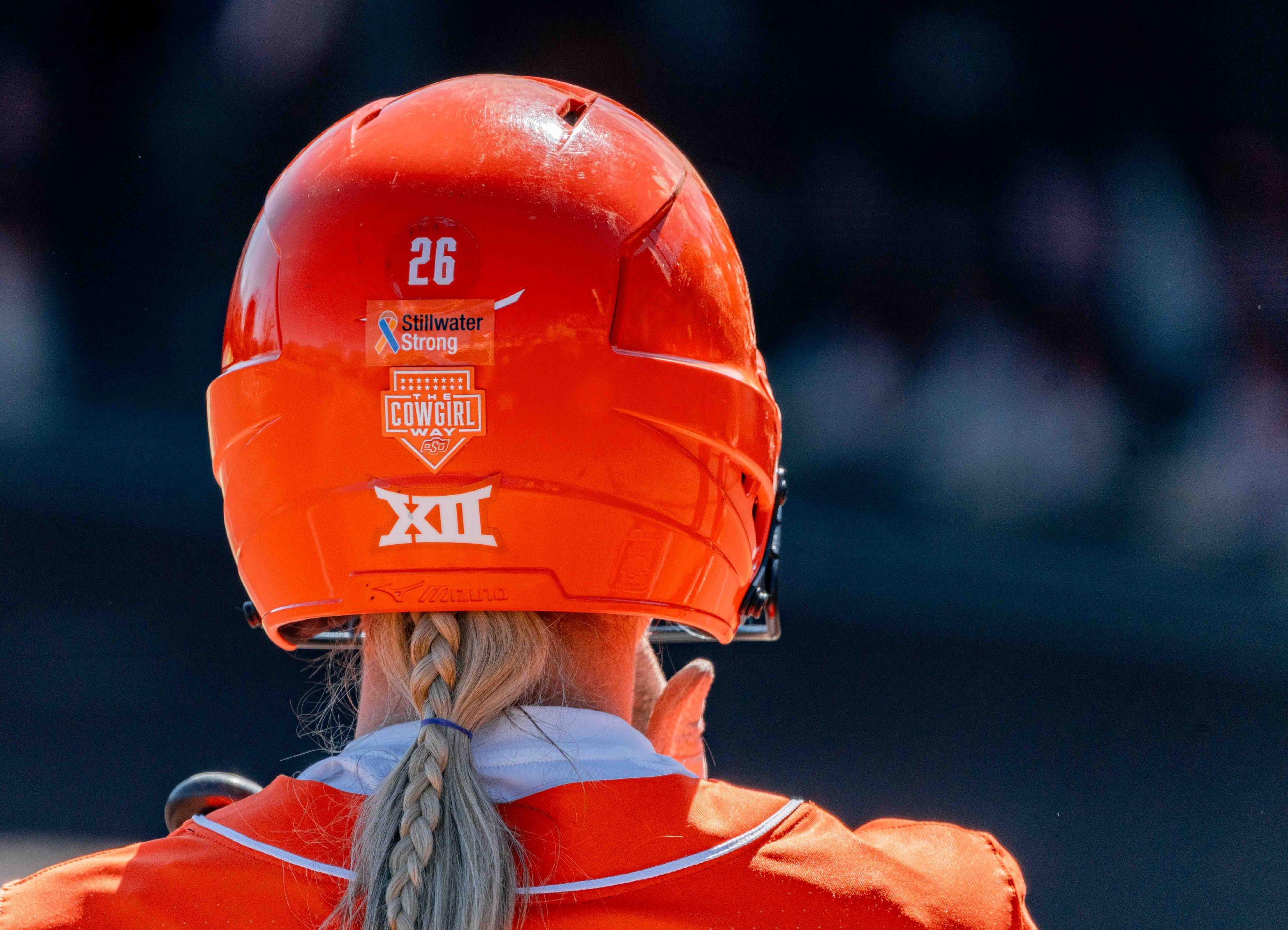
Oklahoma State's softball and baseball teams donned Stillwater Strong helmet stickers in the immediate aftermath of the March 14 wildfires that devastated several Stillwater neighborhoods and many rural residences in Payne County.
The unprecedented outbreak — 130 fires were reported in 44 counties across Oklahoma — was fueled by sustained winds of around 55 mph (with gusts up to 70 mph), plus low humidity and dry vegetation.
Locally, the fires destroyed nearly 200 homes, burning more than 26,000 acres in a 12-hour period, according to the Stillwater Fire Department. A number of OSU coaches, sta and student-athletes were among the many community members who lost everything.
As the rebuild begins, relief e orts and support continues. For more information on the recovery and how you can help, please visit okla.st/stillwaterstrong

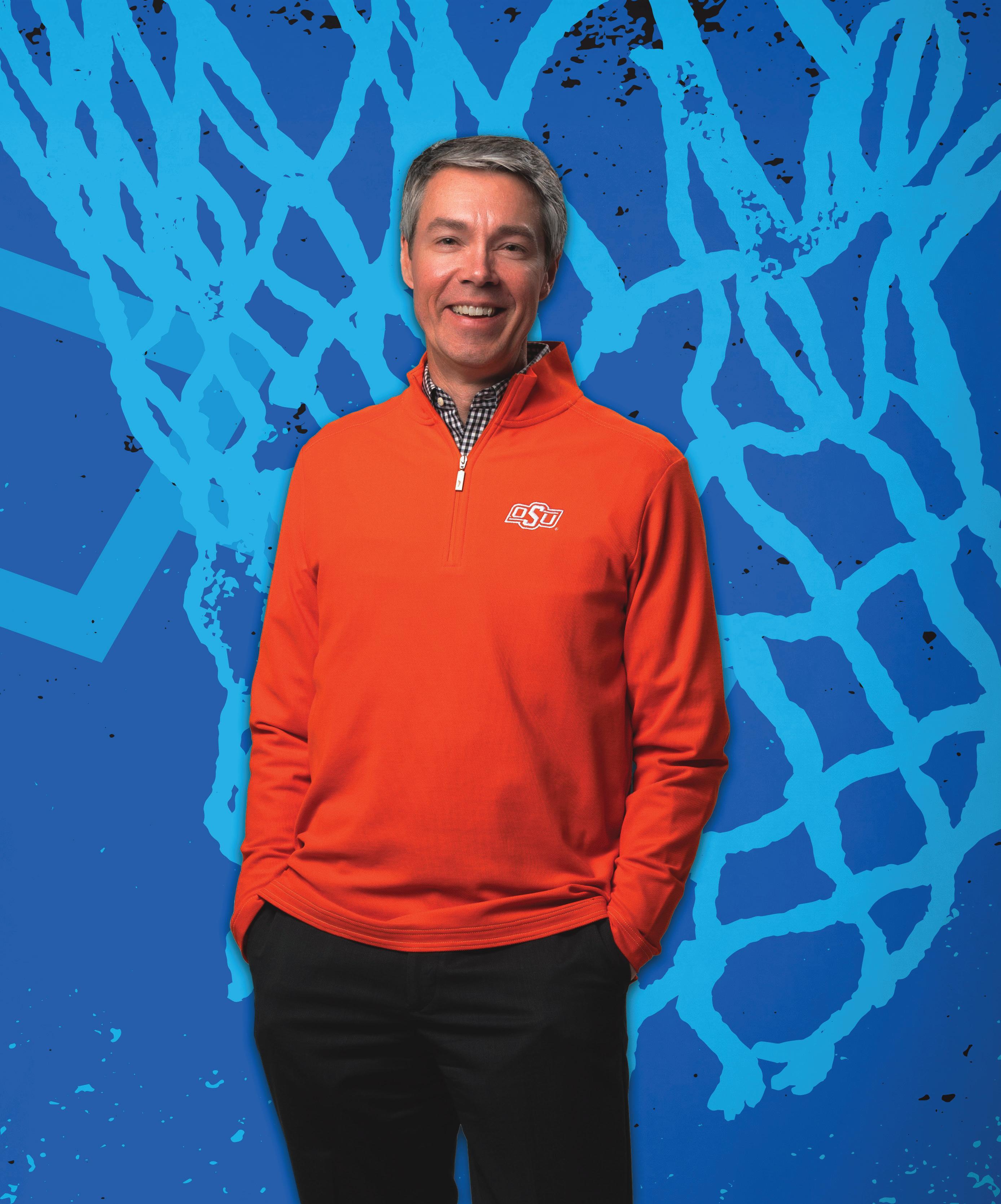
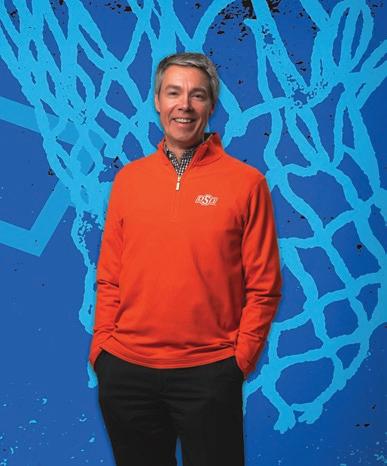
Chad Weiberg grew up in a basketball family.
His dad, Mick, made a career out of coaching, spending the majority of his years in the college ranks, including a stint at Oklahoma State under Paul Hansen
His brother Brett has followed in their dad’s footsteps and is now the head coach at Southwestern Oklahoma State. And his brother Jared began to walk that same path when, as a student manager on Eddie Sutton’s sta , he was part of the 10 members of the OSU family that were lost on Jan. 27, 2001.
Chad never aspired to coach, though; administration was always his goal.
But basketball?
It’s always been in his blood.
“I’ve literally grown up around basketball my entire life,” the Oklahoma State athletic director said, “and there’s always been this committee that is out there, and you follow them, what they do and the decisions they make.”
That committee, of course, is o cially known as the NCAA Division I Men’s Basketball Committee, though most know it for the duties it is best known to execute each March.
Seeding and overseeing March Madness.
For the first time this March, Weiberg was part of that committee and part of the selection process for the NCAA Tournament.
“To be on that committee and in that room is really pretty surreal for me in a lot of ways,” Weiberg said. “But pretty cool, too.”
Weiberg was appointed to the committee last fall and will serve a five-year term. Each of the power conferences has a seat on the committee, with the remaining spots on the 12-person committee filled by representatives from the rest of the basketball-playing leagues. Conference commissioners or school athletic directors can serve, but in the Big 12 Conference, the league’s spot is normally filled by an athletic director.
With Iowa State athletic director Jamie Pollard coming to the end of his time on the committee last year, Weiberg knew the Big 12’s spot would be open. Still, despite his love for basketball, Weiberg didn’t lobby Big 12 commissioner Brett Yormark for the job.
“The commissioner probably just has a sense of who has an interest,” Weiberg said, “and some of it to some degree is also sort of tenure, if you will.
“Our league has a bunch of new athletic directors, so you can quickly become a tenured AD.”
Weiberg is the first athletic director from Oklahoma State to serve on the committee.
When he learned that he was being appointed to the role, he immediately reached out to a few folks for advice.
First up: his uncle.
Kevin Weiberg was the Big 12 commissioner for nearly a decade, from 1998 to 2007, and during that time, he had a stint on the men’s basketball committee.
Next on Weiberg’s call list was Pollard.
“He was great about spending a lot of time with me, kind of walking me through everything, giving me advice, prepping me and getting me ready for it,” Weiberg said. “And I still talk to him.”
When the Big 12 athletic directors met last fall, Weiberg had an even lengthier discussion with Pollard. At that point, Weiberg had started some of his work as a panel member, so he had more pointed questions for Pollard.
“He’s been great and very helpful to me,” Weiberg said.
But some of the learning had to happen as Weiberg experienced life as a men’s basketball committee member. Even though he’d asked a lot of questions about his role, he says he still didn’t have a full appreciation of the workload.
“It’s probably more than I thought that it would be, to be honest with you,” he said. “I mean, it takes quite a bit of time.”
That’s because the committee does much more than selections and seedings for the tournament.
“We get involved in future site selection. We get involved in ticket prices. We have a lot of conversations with our television partners, conversations with our event partners that oversee the auxiliary and ancillary events around the tournament that drive additional value. We are involved with the o ciating. Who are the o cials that are going to call the tournament? How are we evaluating them? How are we advancing them through the tournament? Who ends up being the referees that call the Final Four?” Weiberg said.
“The committee is part of that.”
Because each of those areas is significant, the committee is broken down into sub-committees. Those smaller groups tackle the non-selection issues, then take their findings and recommendations back to the larger group for final decisions.
One such issue that has become a hot-button topic is tournament expansion.
With conference realignment and expansion, several NCAA power brokers have been outspoken about their desire to expand from 68 teams to 72 or even 76 teams. Still, at a time money is more of a driver than ever before in college athletics, the NCAA wouldn’t get additional revenue for the additional teams because of the current TV contract and would, in fact, have to divide the same-sized monetary pie between more teams.
Still, the debate rages.
“I can’t get into any of that,” Weiberg said.
But …
“This committee is heavily involved and will make the final recommendation of what that looks like,” he said. “So just those kinds of things have been very interesting and will be, I think, rewarding to just be a part of.”
The selection of the tournament bracket, however, remains a central part of the committee’s job. Weiberg is aware of its outsized importance because once upon a time, he was a kid, waiting nervously for the Selection Sunday show to begin so he could fill out his bracket and see where his beloved Cowboys would land.
Did they have a good draw?
Might they make a deep run?
Now, of course, his questions have changed. Once conference play started after the first of the year, he began seeding teams from No. 1 to No. 68. He couldn’t know for sure what teams might be automatic qualifiers and where they might slot, but he tried to rank the teams that he thought were the best 68 from top to bottom.
“But are you the No. 1 seed?” he found himself asking. “Are you the No. 2 overall seed or the No. 4 overall (seed)?”
Weiberg got help with some of his questions from an informal internal committee that he started at OSU. Pollard suggested the practice of asking a few sta members to pay special attention to what was happening in college basketball around the country.
Weiberg’s working group included the school’s director of NIL, Barry Hinson. Hinson, of course, is a three-time
college basketball head coach (Oral Roberts, Missouri State and Southern Illinois) and brings a coach’s perspective to the eye test. Communications sta ers Kevin Klintworth, Gavin Lang and Bryan Holmgren were also part of the group, along with OSU’s radio voice, Dave Hunziker, and administrator Melissa Meridith kept the group in line and on time.
On Super Bowl Sunday, the OSU men’s basketball team hosted Arizona State at 1 p.m. in Gallagher-Iba. Prior to the game, with the afternoon booked with OSU hoops, Weiberg and his internal committee arrived at the o ce at 9 a.m. and worked on seeding the field 1-68 for the first time together. It was a two-plus hour session that followed a meeting on the previous Friday, which had followed a meeting that had taken place on the previous Monday.
“Because it’s a big job, I think the more input I’m getting, the better informed I’m going to be,” Weiberg said. “I feel like I’ve got a great group here that is helping monitor things and give me their opinions about what they’re seeing.”
What used to be water-cooler talk is now part of the job.
“Well, that’s true,” Weiberg said with a chuckle.
“That’s exactly how I feel as I flipped … to what I think really matters here.”
“There is this sort of sense in the room that one of THE most important things we do is steward the game.” — CHAD WEIBERG
“There were times in our meetings when we were discussing and saying, “I don’t know if the committee would actually do that’,” Klintworth said. “And then you remembered he is the committee.”
Because of that, Weiberg had to be more mindful about what he said about the college basketball scene and to whom he said it. He used to be able to share with family and friends who he thought should be the No. 1 seeds in the tournament or what bubble teams were worthy of getting into the bracket.
Now, and for four more years, he catches himself when such topics arise.
“Oh, wait a minute,” he’ll think to himself. “You actually have some influence on this.”
Weiberg had to tone down his comments, even when he was talking to his family.
“I don’t want anybody to misinterpret that whatever I might feel is somehow o cial,” he said.
While picking the teams and seeding the bracket is a significant part of Weiberg’s job on the committee, the work doesn’t end with Selection Sunday. Committee members fan out around the country for the tournament, going to every site, including the Final Four, and serving as tournament administrators. They always muster in Indianapolis for the entire week before the bracket is announced.
“Clearly, there’s a lot of (NCAA) sta there that do a lot of the heavy lifting as well, thank goodness,” Weiberg said, “but it’s all of those kinds of roles that are beyond just the bracketing and selecting of the field that we get involved in.”
After the final buzzer sounds, the confetti falls and “One Shining Moment” plays, Weiberg’s job still isn’t done. The committee meets after the tournament to assess every aspect. What went well? What could be done better?
Then over the summer, the committee will begin the entire process again.
Even though it’s a lot of work, especially on top of the demanding job of being a Power Four athletic director, Weiberg realized early on that the rewards would be great, too.
That starts with the relationships.
“It’s a great group of people,” Weiberg said. “That was one of the first things I heard from people who’ve served on (the committee) before: The best thing about it is the people, the people that you get to meet, the people that you get to know in that room.”
And it’s not just the other committee members.
“The sta at the NCAA, (NCAA senior vice president of basketball) Dan Gavitt and his sta , just top notch,” Weiberg said. “They do an incredible job of organizing and managing and coordinating all of the e orts. They’re really pros at it. So it’s fun to get to work with them as well.”
The other thing that has thrilled Weiberg has been the chance to impact a sport he’s always loved.
“That’s what’s been, I think, the coolest thing about it. There is this sort of sense in the room that one of the most important things we do is steward the game,” he said. “It is about the game and making the game as healthy as we can make it.”
Everything has an impact on the state of college basketball, from the sportsmanship of the players to the quality of the o ciating and even the transparency of the selection process.
“All of our conversations, whether it is related to expansion, or site selection the ultimate is, ‘Is this good for the game, the future of the game, the popularity of the game? Is it good for the student-athletes who play the game?’” Weiberg said. “That is our charge, and that’s been really rewarding and cool to be part of as well.”
Chad Weiberg didn’t go into basketball like his dad or his brothers, but the sport has a special place in his heart. He spent so many days at practices and so many nights at games, the sport is imprinted on every fiber of his being.
Truth is, his ties to basketball run deeper than his allegiance to OSU. And you won’t find many people who bleed orange any more than Weiberg.
When his dad joined Hansen’s sta at OSU and the family moved to Stillwater in 1985, those who know Weiberg best say he was only a moderate Cowboy fan then.
Having the run of old Gallagher Hall as an eighth grader, however, changed him from moderate to rabid where OSU was involved.
But basketball?
That’s been in Chad Weiberg’s blood from birth.
To be a part of the committee charged with not only selecting the men’s basketball bracket, but also shepherding the sport for the next several years, is something he never dreamed possible.
Yes, it requires a lot of work and time and thick skin when the selections don’t go the way certain fans expected, and still, Weiberg will never take it for granted.
“It really is an incredible honor,” he said.
BUBBA CUNNINGHAM
North Carolina Athletic Director (Chairperson)
KEITH GILL
Sun Belt Commissioner (Vice-Chairperson)
GREG BYRNE
Alabama Athletic Director
MARK COYLE
Minnesota Athletic Director
IRMA GARCIA
Manhattan Athletic Director
STU JACKSON
West Coast Conference Commissioner
ARTHUR JOHNSON
Temple Athletic Director
ZACK LASSITER
Abilene Christian Athletic Director
MARTIN NEWTON
Samford Athletic Director
LEE REED
Georgetown Athletic Director
CHAD WEIBERG
Oklahoma State Athletic Director
TOM WISTRCILL
Big Sky Commissioner
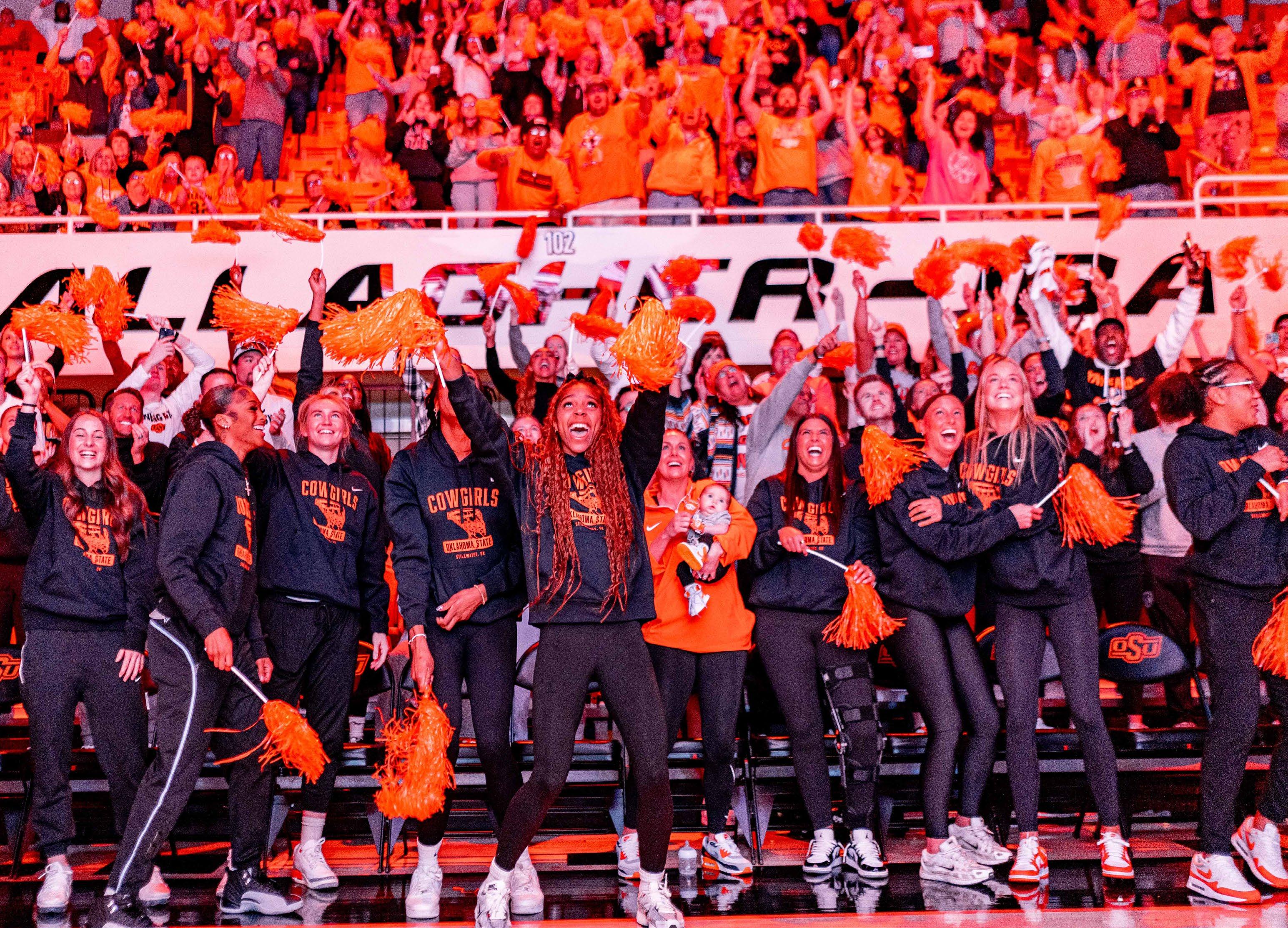
Senior Stacie Jones (center) and her teammates — along with hundreds of Cowgirl Basketball fans — celebrate Selection Sunday, March 16, at Gallagher-Iba Arena. The Cowgirls won 25 games in 2024-25, earning a No. 7 seed in the NCAA women's basketball championship field, aka "The Big Dance." Head Coach Jacie Hoyt's 17th-ranked squad posted a 25-7 mark overall, including a third-place finish in the Big 12 Conference. OSU won a program-record 14 conference games while posting the third most wins in program history.

A high schooler from Oklahoma had a big decision to make.
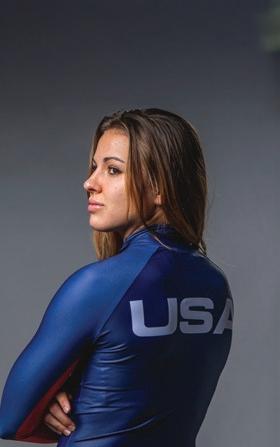
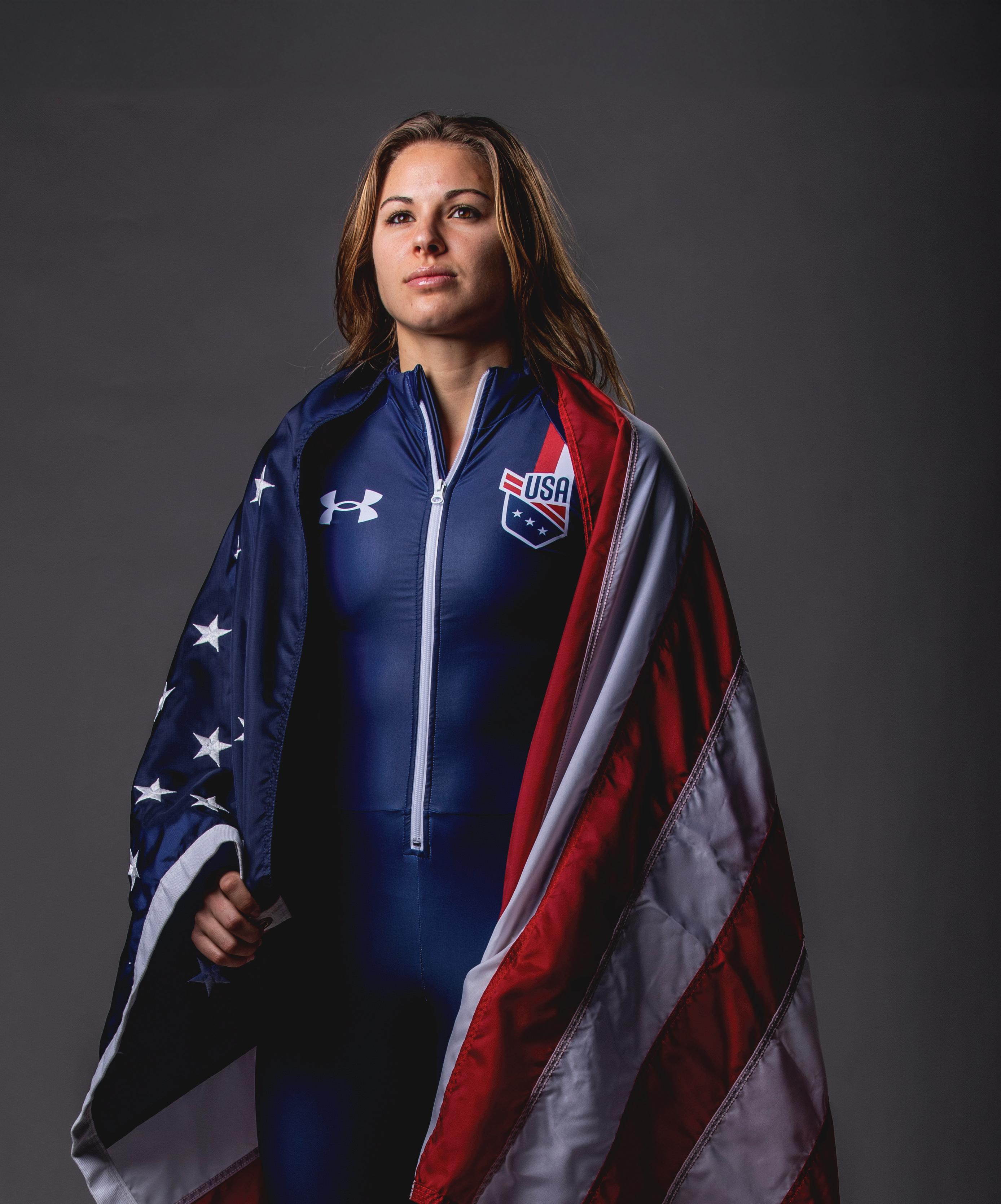
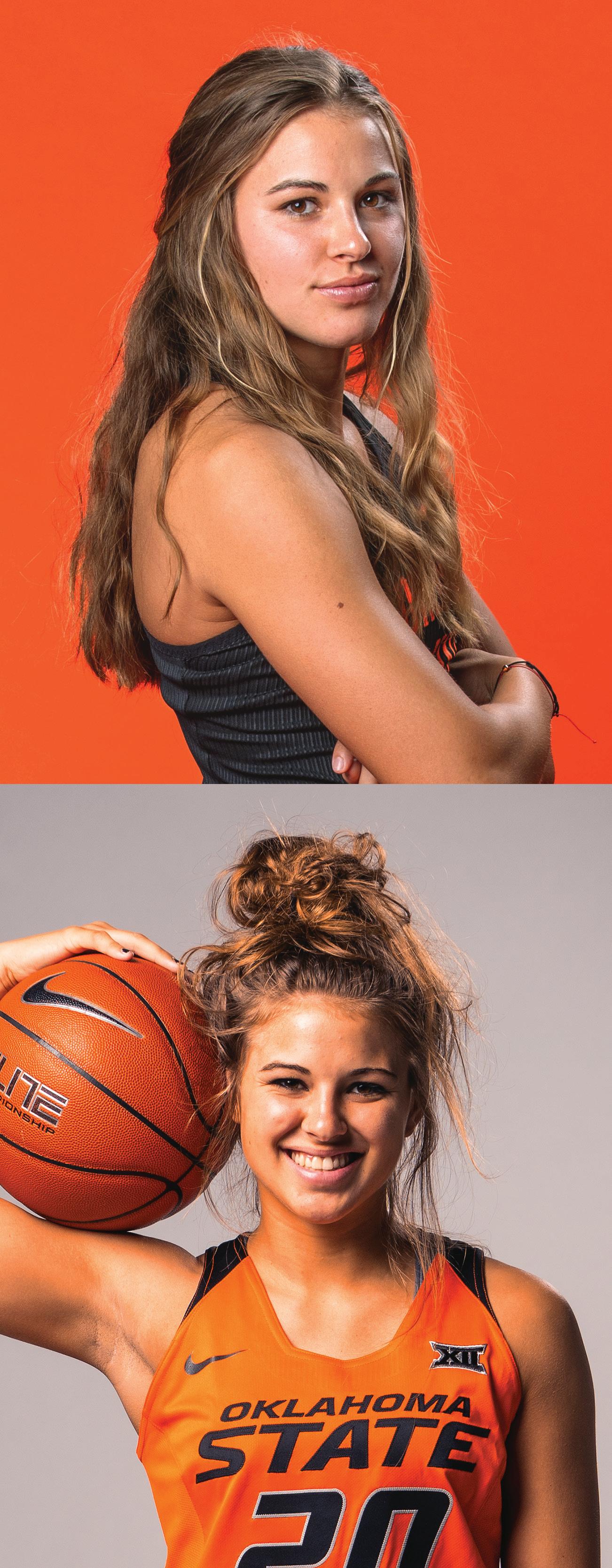
Bailey Golden could either stick with her primary sport (basketball) or leave her comfort zone to pursue success in track and field. The decision turned out much more pivotal than she could’ve ever imagined. It eventually led her to compete for a spot in the Winter Olympics
“Eighteen-year-old Bailey deciding to do track didn’t know where that decision would take her,” Golden says. “If I would’ve stayed with basketball, my athletic career would’ve been over after college.”
Golden had set an ambitious goal coming into Oklahoma State University: to become a first team All-American in the heptathlon. Her dreams, however, reached far beyond that. She wanted to represent USA in the Olympic Games.
A huge leap toward that big dream happened just five months after her last track meet. She got to compete in the national team uniform — in a sport she had never even heard of
“My ultimate goal with bobsled is representing Team USA on the world stage and medaling in the Olympics,” Golden says. “Initially, I thought I would’ve made it in track but when I got this opportunity, I went all in.”
During the recruiting process, OSU assistant Josh Langley visited Golden’s hometown of Choctaw to see her play in high school. He recalls basketball being the biggest hesitation in recruiting Golden.
“Most of the time if track and field is recruiting a kid and they have options from other sports, nine out of ten times they’re taking the other sport,” Langley says. “We don’t usually win that battle.”
Langley asked Golden why she would leave basketball for track. Her answer was exactly what the coach wanted to hear: She had more to accomplish in track and was willing to make sacrifices to reach those goals. The first sacrifice was leaving DI basketball scholarship o ers on the table.
Golden committed to OSU on a partial track and field scholarship, and her story began. Together with Langley, they sat down and created a plan — not only for Golden — but also for the school. They wanted to build a “multi” program from scratch.
In track and field, women’s multi-events — or “multis”— consist of the seven-event outdoor heptathlon (100m hurdles, high jump, shot put, 200m run, long jump, javelin, 800m run) and the five-event indoor pentathlon (60m hurdles, high jump, shot put, long jump, 800m run).
Fast forward to Golden’s first season in an OSU uniform and the Big 12 Indoor Championships. She was in a scoring position (top eight) going into the last event of the pentathlon as a true freshman. Falling from 5th to 10th during the 800m, however, wasn’t what both the athlete and the coach knew she was capable of.
About a week later, Langley asked what Golden would think about redshirting outdoor season.
“She said, ‘Indoor season was terrible. That’s not what I came here to do. I didn’t come here to suck’,” Langley recollects. “That was one of those moments when I knew this girl wants it bad.”
Redshirting (and COVID) allowed Golden a sixth year of eligibility — a year in which she would eventually climb onto the podium to finish sixth at her last NCAAs. The road there, however, wasn’t a straightforward one.
Near the start of Golden’s second year on campus, Langley and head coach Dave Smith received an unexpected call. The women’s basketball team was su ering from a rash of injuries and needed an emergency player on the roster. They o ered Golden a full basketball scholarship, which she accepted this time around.
As one can imagine, balancing two sports with school required an exceptional level of commitment. Golden would start her days around 5:30 am and keep going until 10 pm. She bounced between two practices, lifting and tutoring. During the season, Golden traveled to a tournament in the Virgin Islands and one away game. She also suited up for all home games and traveled for track meets nearly every week.
“Understanding goals and priorities was important,” Golden says. “Those were crazy days. My body took a beating, but the memories were great.”
Langley believes it was important for Golden to see it through with basketball. After about a month of playing, Golden told him she had made the right decision by choosing track.
“It helped her realize she was in the right place doing the right thing,” Langley says.
Golden’s sophomore season paused along with the rest of the world in the spring of 2020. She decided to stay in Stillwater and train through the pandemic. After that, she did the same every single summer.
“Our coach-athlete relationship grew through those
summers,” Langley says. “I picked up pretty quickly that I can trust her, and I think she developed a trust in me, too.”
Hard work paid o , and Golden reached a whole new level. She missed out on nationals by a minimal margin in her first outdoor season and earned second team All-America honors twice after that. However, her aim was even higher.
“It was a kick in the face,” Golden says. “Yes, you’re at nationals, but being at nationals isn’t good enough. Then my final year, I finally earned first team All-American. Being able to accomplish what my coach and I worked towards for so long is my proudest accomplishment at OSU.”
In addition to breaking school records in the heptathlon and long jump, Golden played a major part in creating OSU’s successful heptathlon program. According to Langley, Golden took a big chance in coming to OSU and helping get the field event group going.
By the time Golden graduated with her master’s degree in forensic science, OSU’s group of heptathletes had ranked No. 1 nationally for the past three years.
“There really wasn’t anyone before Bailey, and I’m eternally grateful to her for that,” Langley says. “It took a special breed of person to do that. Lord knows, she’s special.”
Six years in Stillwater prepared Golden to take on new challenges — not only physically — but also mentally. She attributes a big part of her personal growth to OSU sports therapist Kevin Andrews, who taught her many valuable techniques and tools to carry with throughout life.
“He taught me various breathing methods to level my brain out,” Golden says. “It’s important in high-stress situations and allows me to remain neutral and not let the environment disrupt my flow,” Golden says.
According to Golden, mindfulness techniques transition well into bobsledding.
After graduation, Golden was set to move to Key Largo, Florida, to become a scuba diving instructor and an ocean conservationist. She wanted to live on a beach and travel the world while teaching.
But then, a huge opportunity presented itself and forced Golden to make another life-changing decision. USA bobsled head coach, Christopher Fogt, reached out thinking Golden might be a good candidate with her multi-event background.
“At first, I was like what the heck is even bobsled? And I despise the cold more than anything,” Golden says. “But I thought it would be a fun summer side quest.”
“The ocean will always be waiting on me, and I thought I should pursue athletic endeavors while I can,” she says.
So she took all her skills and knowledge to a rookie camp in Lake Placid, New York, which was the first step in a lengthy team selection process.
Going back to the first big decision of her career, Golden now sees how pivotal it really was. The training as a track athlete had taught her to be fast and powerful — a robust foundation of qualities required to push a 400-pound sled.
“I don’t think basketball would’ve transitioned in that caliber.”
Golden’s rookie camp test results were top-notch. After that, she came back to OSU to train for an upcoming development camp. The stakes were high: convince bobsled coaches in a few months or kiss the national team dream goodbye.
Like numerous summers before, Golden and Langley got to work. Except this time around, the training had to be modified for her new sport, and neither of them knew where to start.
Langley approached Dr. Lance Walker at OSU’s Human Performance and Nutrition Research Institute, along with biomechanic expert Dr. Jerome Hausselle from the
College of Engineering, Architecture and Technology.
“I was like, ‘Hey guys I don’t know what I’m doing. Bailey has this opportunity, do you guys know anything about bobsledding?’” Langley recalls.
Walker had indeed worked with bobsledders in the past and was happy to help design a training program. Langley combined Walker’s speed and power workouts with what he knew worked for Golden specifically.
The plan worked. Golden learned fast and kept hitting good times at the development camp in September. Bobsled coaches liked what they saw and awarded Golden with an invitation to the next round, Push Championships.
Langley had one piece of advice for his athlete.
“I said, Bailey, there’s one thing you do really well,” Langley says. “Just go try to beat people, just go compete. That’s what you do best.”
A month later, Golden lined up against more experienced athletes and pushed the sled third-fastest overall. That was enough to advance to the selection races, where Golden — a breakman — raced with a pilot in a two-person bobsled. It was a true sled vs. sled competition down an actual icy track. Breakmen were compared based on start times, while pilots were judged on the total track times. The national team was determined after the race.
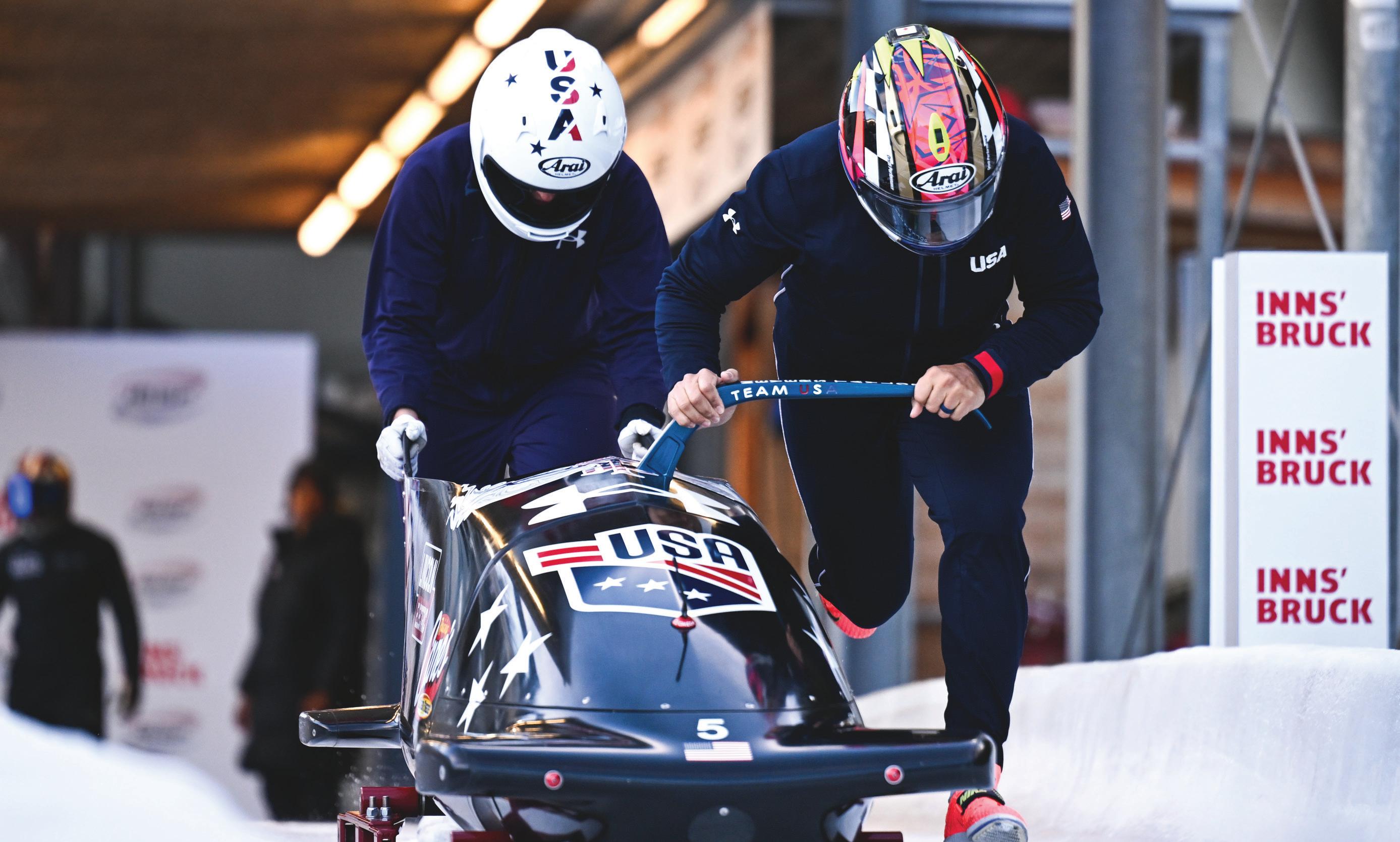
And Golden was in.
Langley wasn’t surprised at the outcome. He knows how talented and confident Golden is and how hard she had worked.
“I don’t think she allowed that moment of ‘holy crap what am I doing?’ to ever hit her,” Langley says. “She doesn’t doubt herself at all.”
Just like that, Golden was on a flight to Europe for the very first time. Her World Cup debut would take place in the picturesque German town of Altenberg.
The trip was all business as the sleds wouldn’t take care of themselves. Golden finds sled work as one of the biggest di erences between bobsledding and track. While track athletes show up in a ready-to-go competition venue, bobsledders need to prepare sleds before practices and races as well as maintain them afterward.
“It’s a blue-collar sport,” Golden says. “When you’re not going down the hill, you’re ‘sled dogging,’ which is taxing for the body.”
“You go in the sled with zero bruises and come out with ten,” Golden says. “I kind of forget I’m going so fast until we hit a corner, and then I’m like, ‘Oh yeah, the sled hurts.’”
Despite sled dogging and bruises, representing her country for the first time counts as Golden’s favorite bobsledding memory so far.
“Being able to zip up the uniform and send it down the hill at 70 miles per hour was surreal,” Golden says. “Just knowing I’m on a world stage competing against di erent nations.”
The short time frame from learning the sport to competing at such a high level has created its own challenges. For someone used to practicing various events each day, focusing on just one sport is very di erent. Golden now needs to push fast, get into the sled, and break down correctly. Over and over. Every day.
“Learning to train my mind to a di erent system has been challenging, but good,” she says. “You kind of get thrown into the water and just have to survive.”
In addition to Langley and other OSU sta , Golden has received guidance from the bobsled community. Kaysha Love, an experienced pilot, has been a major help in Golden’s learning curve.
According to Golden, riding the sled itself can be very aggressive and taxing, too. In the first World Cup race in Altenberg, Golden and her pilot clocked an impressive 74 mph (119 kmh) down the icy run.
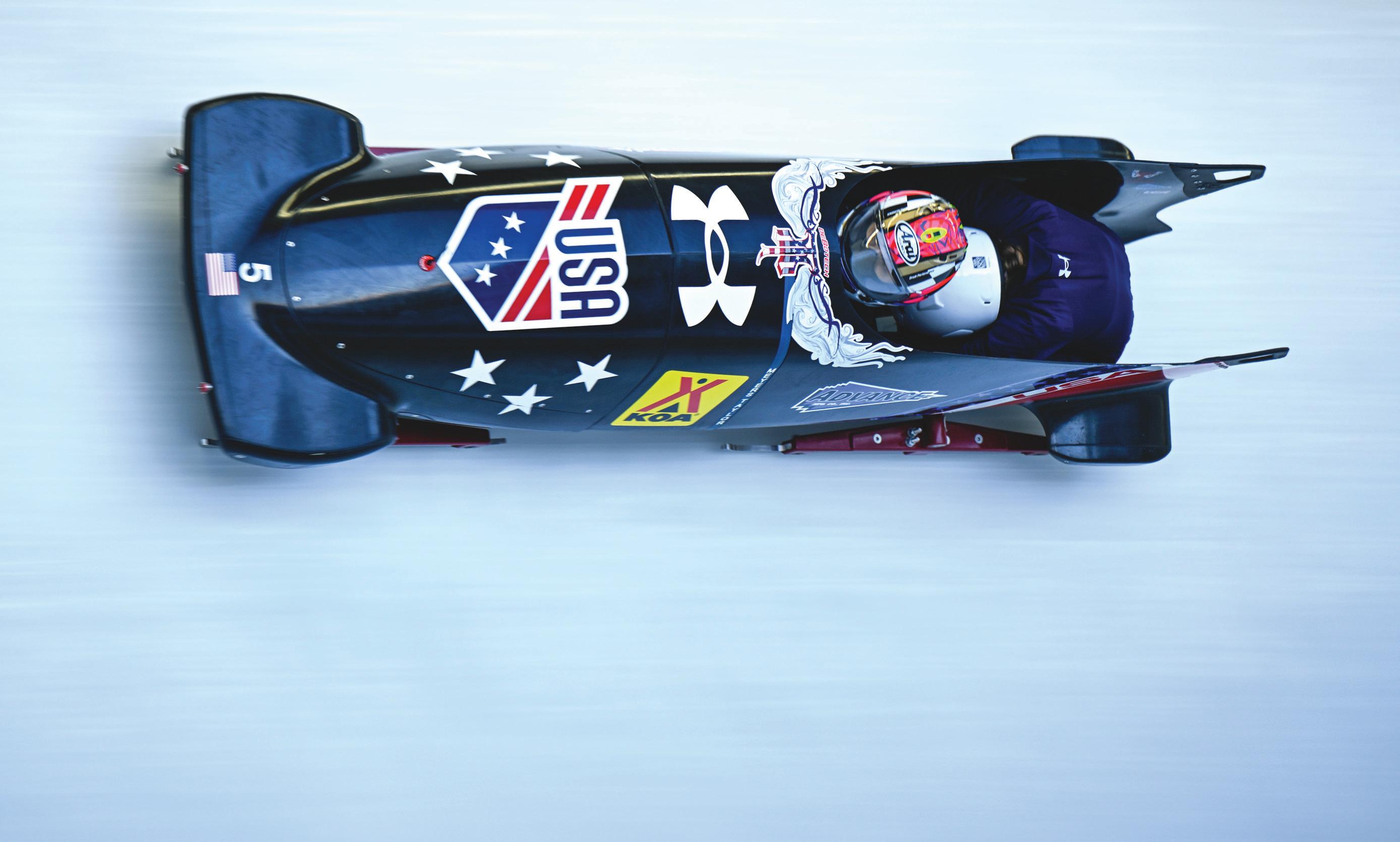
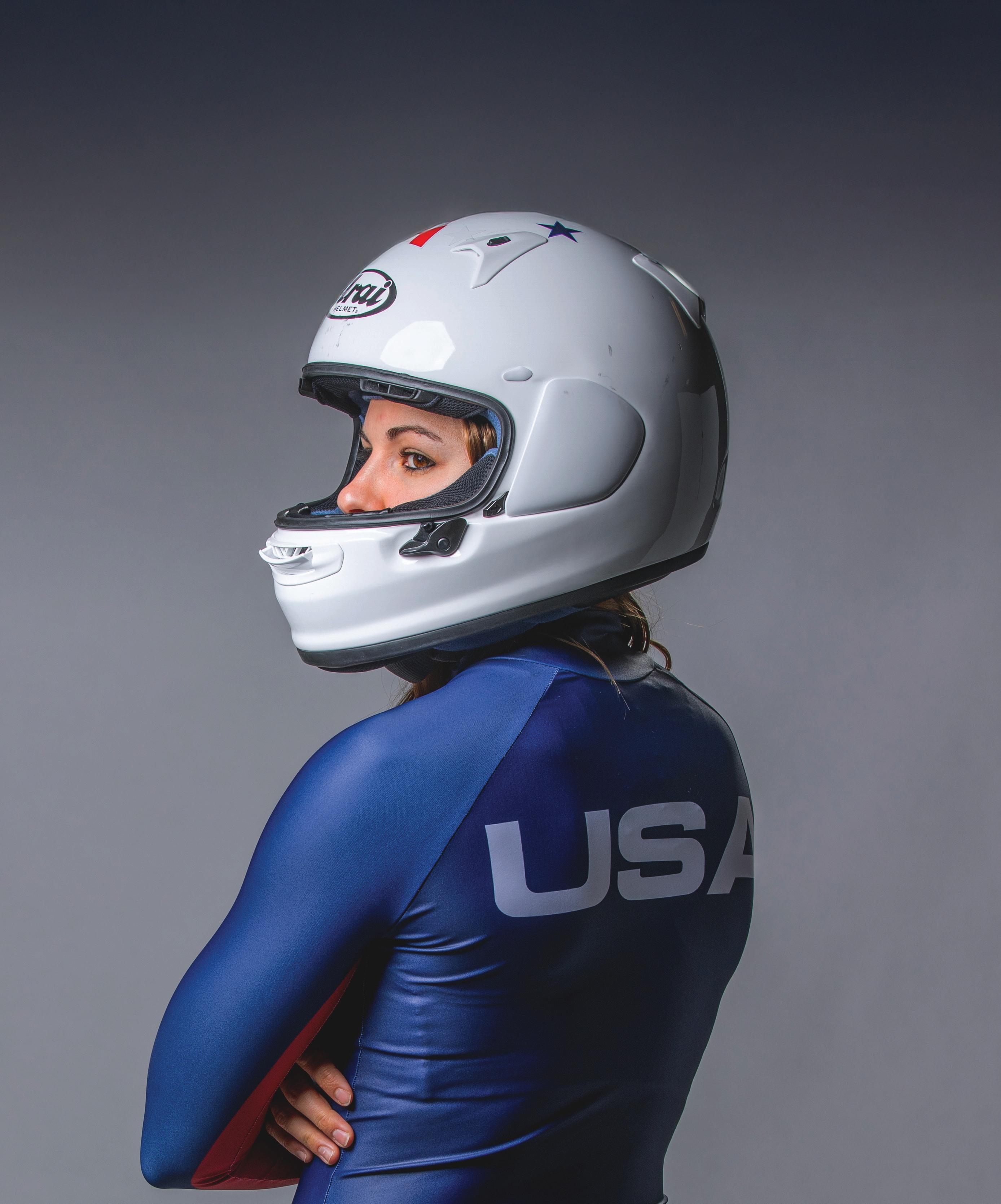
“MY GOAL IS TO CONTINUE TO PUSH BOUNDARIES , GET BETTER EVERY DAY, AND QUALIFY IN THE WORLD CHAMPIONSHIPS.”
-BAILEY GOLDEN
“Without her help I would’ve probably sunk by now,” Golden says.
The pinnacle of Golden’s rookie season will be the World Championships on home soil. The 20 fastest pilots in the world will qualify to compete for the title in Lake Placid. For Golden to be paired with one of the qualified team USA pilots in March, she needed to clock fast times throughout the world cup races in Germany, Switzerland, Austria and Norway.
“My goal is to continue to push boundaries, get better every day, and qualify in the world championships,” Golden said in December.
When the world championship team was announced in February, Golden’s name was among the five push athletes selected.
The pursuit of the Olympic dream begins immediately after the World Championships. Golden, alongside other Team USA athletes, will participate in the end-of-the-season selection races. Those results, together with next year’s selection process and World Cup rankings, determine the participants at Italy’s Milano Cortina 2026 Olympic Winter Games.
Golden has every intention to make that team, which requires her to keep making sacrifices. It also means she has another summer of hard work ahead, which she hopes to spend at the Lake Placid bobsled facility with free food, accommodation and training facilities.
“Currently, I’m using money I have saved through working multiple jobs during college,” Golden says.
Money that she was going to use for scuba diving school in Florida.
“The financial side is tricky, and I’m still trying to navigate funding for myself, whether that be fundraising, sponsorships or collaborating with brands.”
One thing is for sure, Golden has never let tricky situations stop her. She’s determined to stay in the sport for as long as possible — perhaps even go through three- or four-year pilot training.
Coach Langley sees no limits for Golden as a bobsledder.
“She’s never backed down from a challenge, so I’m not surprised she took this on. And I’m not shocked that she’s doing really well,” Langley says. “She hit the genetic jackpot and is just really talented. But above all, I think the work ethic her mom and dad instilled in her is just relentless.”
Picking up new projects and excelling in them through hard work is exactly what the golden cowgirl has been doing her entire life. According to Golden, the pursuit of her athletic limits stems from an endless desire to look for challenges and chances to get better.
“It keeps life interesting and gives me a purpose.”
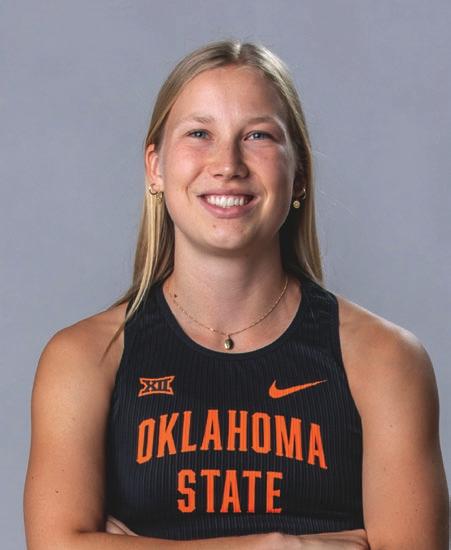
Cowgirl student-athlete Saara Hakanen is not your typical journalist — but that’s what made her the perfect choice to profile former teammate Bailey Golden.
The versatile athlete competes in the high jump, long jump and triple jump. As OSU’s indoor school record holder in the high jump (1.8 meters), Hakanen has earned All-Big 12 track and field honors seven times, along with an All-America honorable mention outdoors. She has also garnered a number of academic accolades.
The native of Kerava, Finland, graduated from OSU with a Bachelor of Arts in Multimedia Journalism in 2023 before pursuing an MBA through the Spears School of Business. This past academic year, Hakanen served as a marketing intern for OSU’s Student-Athlete Development o ce.
During several summers, Hakanen worked as a sports reporter for Helsingin Sanomat, the Nordic countries’ largest newspaper. Fluent in four languages, she was more than up to the task her POSSE editors presented.
“I love meeting new people, hearing their stories and writing about them,” she says.
Following the 2025 track and field season, Hakanen will embark on a career in communications in pursuit of her “dream job.”
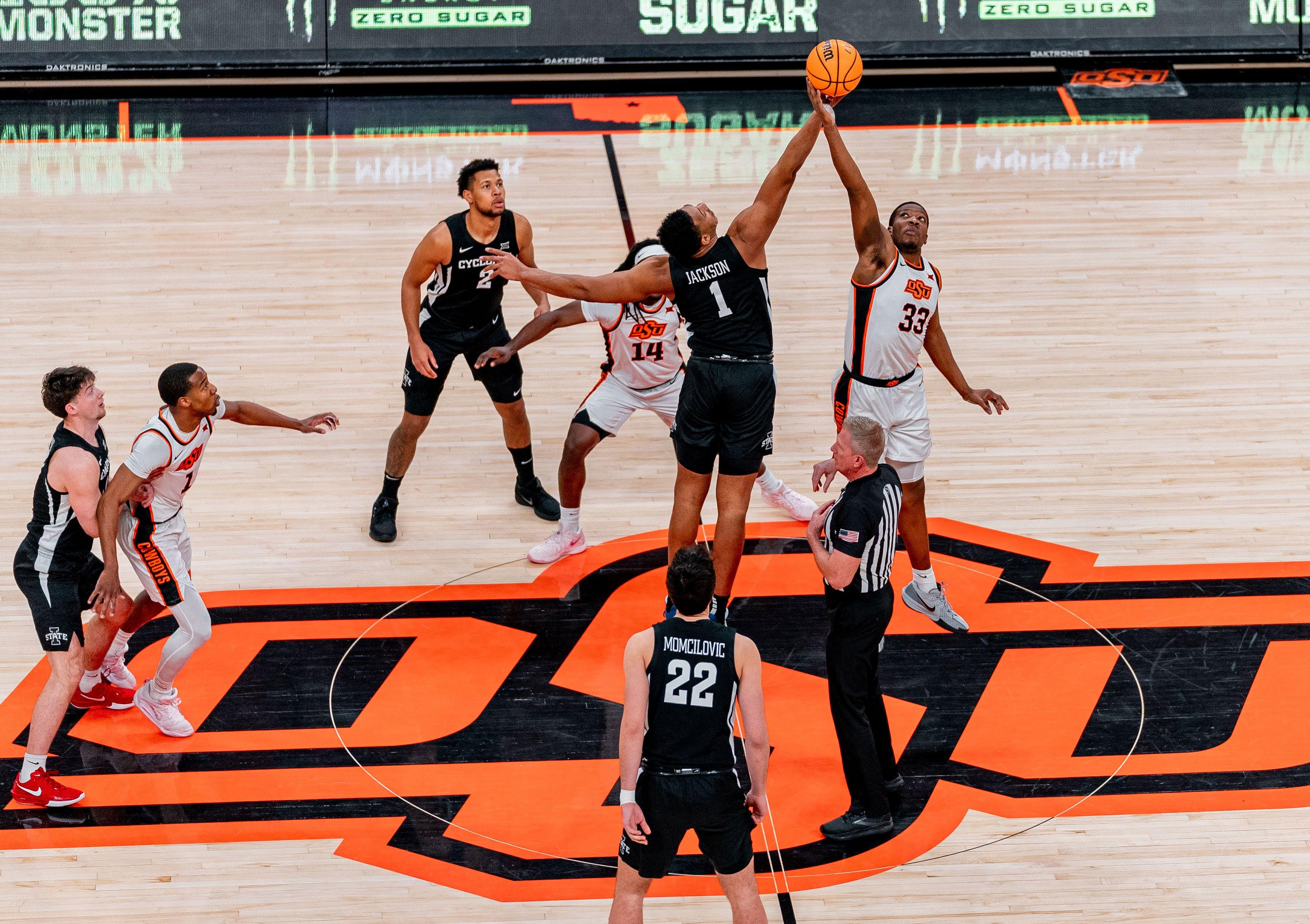
Senior center Abou Ousmane tips o what would become Oklahoma State's signature win of the season. Led by Ousmane's 25-point performance, the Cowboys knocked o No. 9 Iowa State, 74-68, at Gallagher-Iba Arena on Feb. 25. The victory marked the first top-ten win for first-year coach Steve Lutz, whose squad led the Cyclones wire-to-wire, bolstered by a strong defensive performance. Winter sports renewals and new season tickets sales are currently underway. For more information, visit okstate.com/tickets

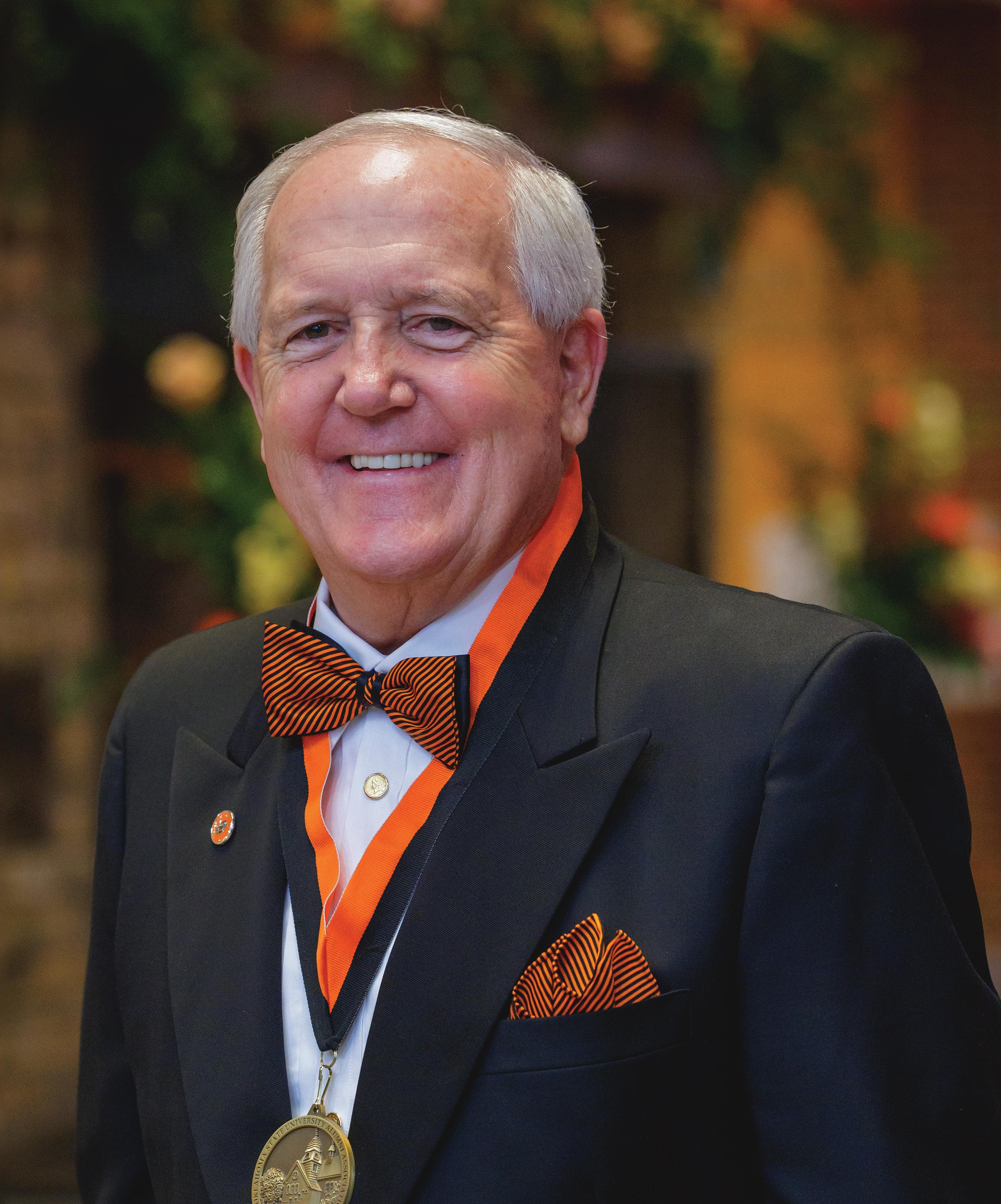
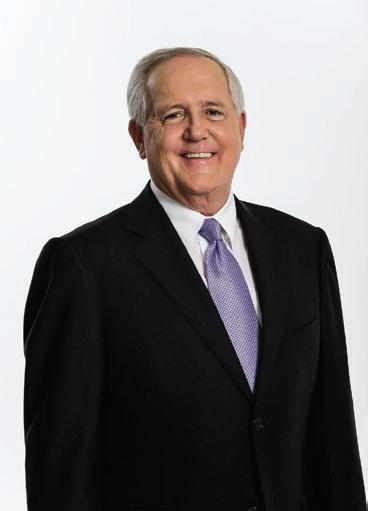
Alumnus. Advocate. Regent. Donor. Fan.
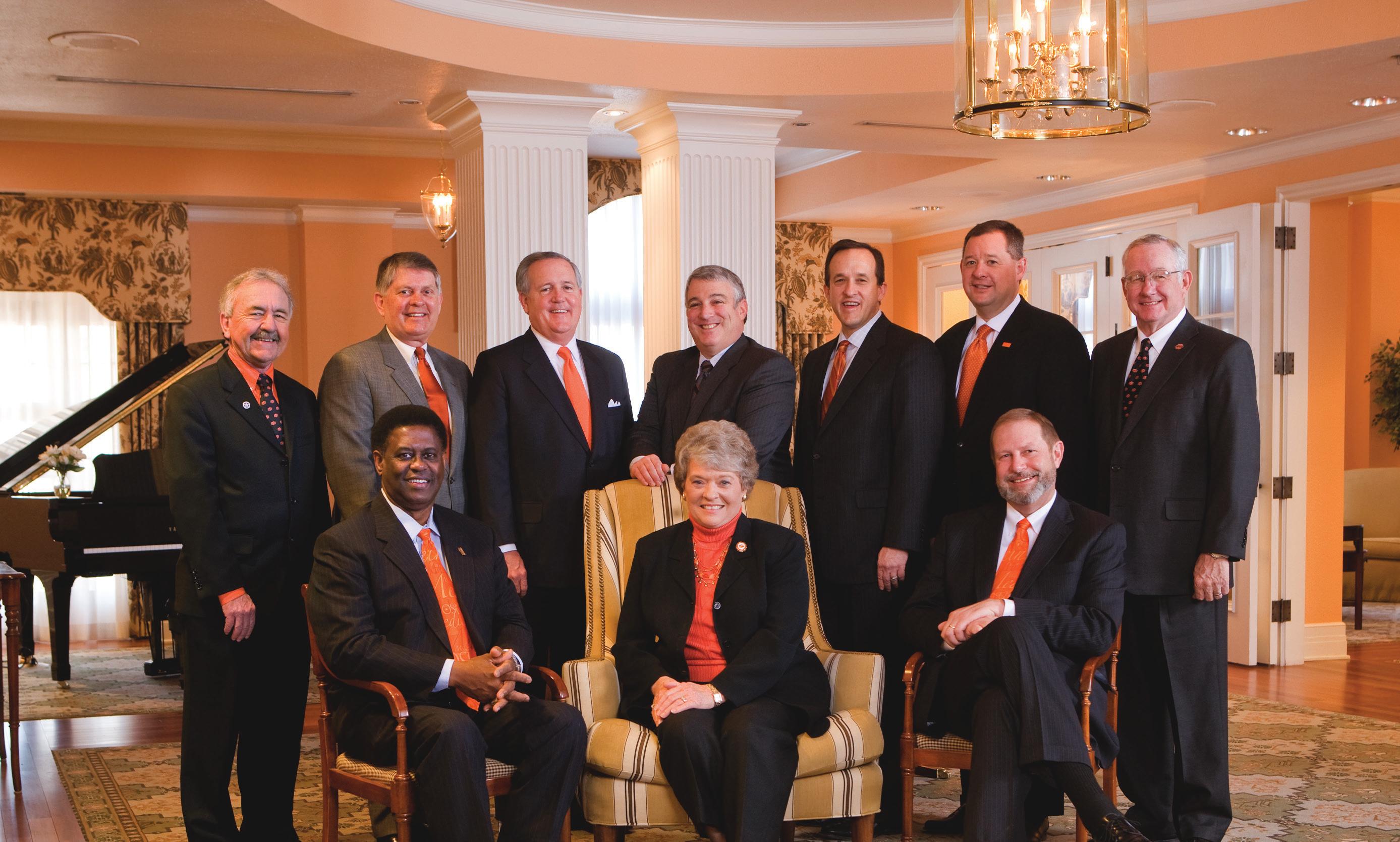
Whether working behind the scenes or stepping into the spotlight, Jay Helm’s contributions of time and treasure have played a significant role in the growth of Oklahoma State University.
His numerous connections to OSU (in both o cial and uno cial capacities) point to a man who has helped shepherd his alma mater and steer its trajectory going on half a century.
“Everything Jay does is to try to benefit Oklahoma State,” says Director of Athletics Chad Weiberg. “Not just athletics, but the entire university, the Center for Health Sciences … Whatever it is, he’s trying to use his influence to make OSU better.
“And he works hard at it,” Weiberg adds. “Jay doesn’t get paid for it. It’s just out of love for his alma mater. He’s given as much time as he has money — and that’s saying a lot, because he’s supported us financially at a significantly high level, too.”
To recognize a half-century of commitment to the university, the Tulsa community and state of Oklahoma, Helm was inducted into the OSU Hall of Fame class of 2025. According to the OSU Alumni Association, enshrinement in the Hall of Fame is considered OSU’s “highest honor bestowed upon an individual … recognizing outstanding lifetime achievement in society and professional life.”
“Board of Regents, Higher Ed Board, OSU Medical Authority Board of Trustees … He’s used his influence to promote OSU for a long time,” Weiberg says. “And when something new comes along, like NIL (Name, Image and Likeness), he steps up and helps with that, too. Jay is the definition of ‘Loyal and True.’”
Helm was born and raised in Je erson City, Mo., but his family moved to Tulsa in 1963 when he was a teenager (around the time a certain Henry Iba disciple was embarking on a coaching career).
“I went to Edison High School,” Helm recalls. “Eddie Sutton was coaching at Central (High School) at the time. I had a real good friend who played basketball at Central and thought the world of him.”
Decades later, when Sutton returned to Stillwater to lead the Cowboys, he and Helm connected.
“Eddie and I became good friends,” Helm says.
Helm’s love for OSU sports began as a freshman on campus in the mid-’60s.
“We had good times going to the games,” he recalls. “You’ve got to remember, we’d dress up in coat and tie to go to Homecoming. You’d buy your date an orange mum. That was obviously a di erent era.”
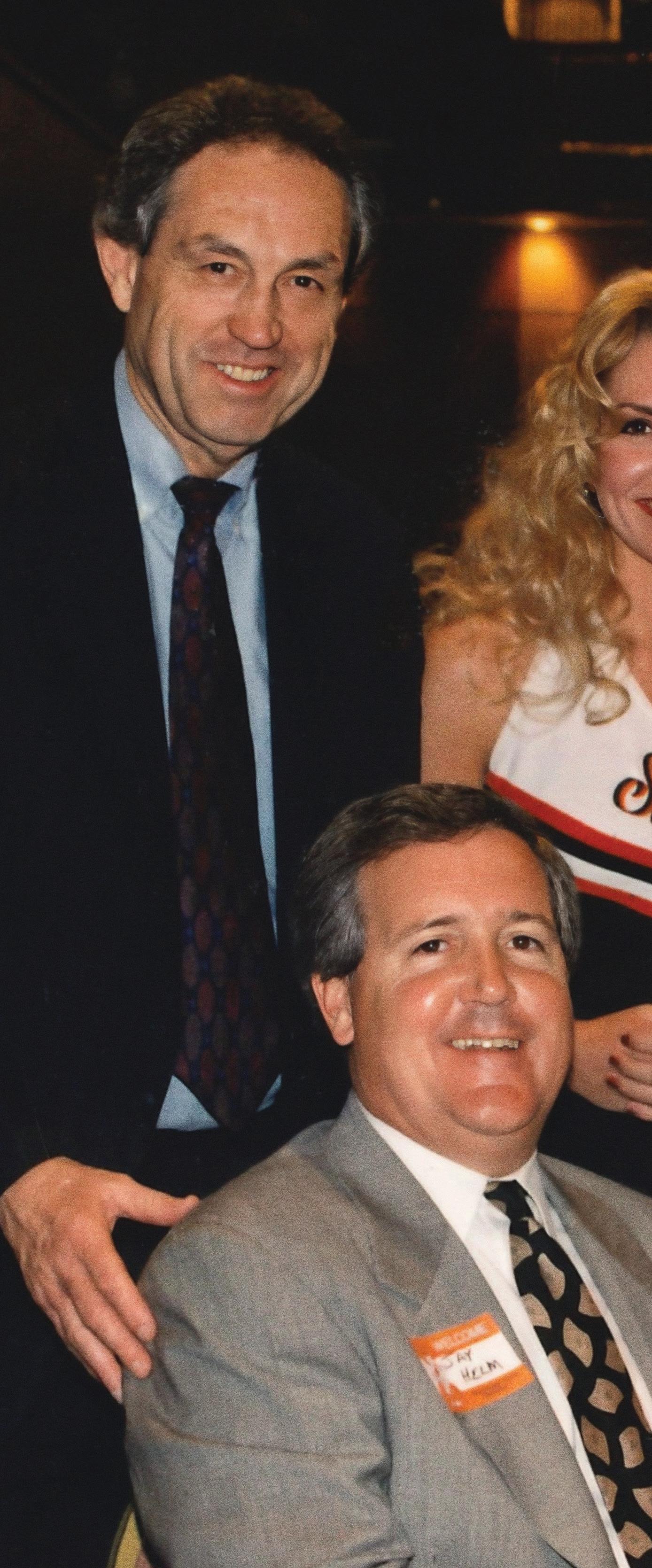
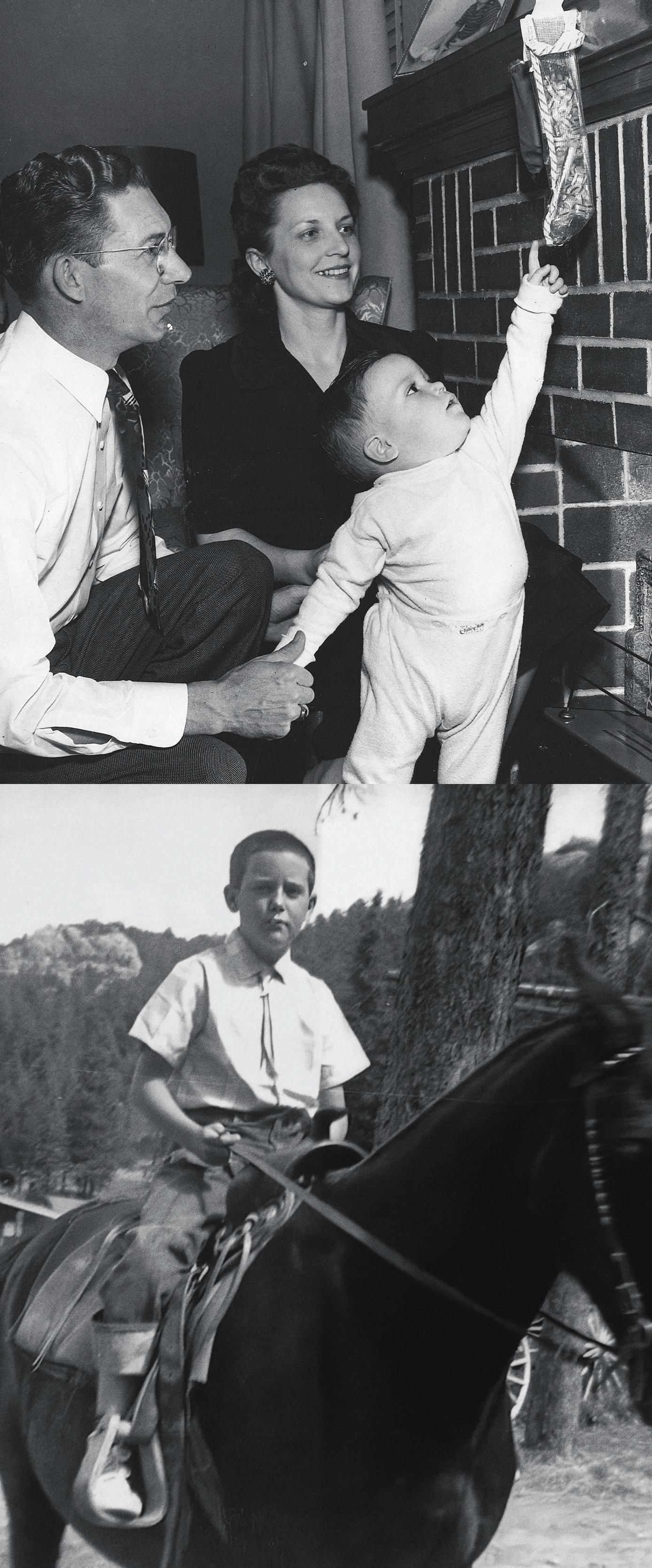
Helm also recalls his introduction to the Bedlam Rivalry — and the postgame celebration that ensued on The Strip after Cowboys Charles Trimble and Willard Nahrgang stu ed the Sooners’ two-point conversion attempt to preserve an OSU football victory.
“We beat them 15-14 at Lewis Field in ’66 … Students set bonfires up and down Washington Street. People were tearing fences out to make firewood!”
Helm earned a bachelor’s degree in business administration in 1970 and attended law school at the University of Tulsa before changing course.
“I was clerking for a law firm and figured out that isn’t what I wanted to do,” he says. “I was good at numbers, and I’m good at bull----, but that’s about it. I can sell anything … So I quit law school in ’72 and got into the real estate business. I went to work for a guy named Roger Hardesty. I enjoyed it.
“After that, I went to work for what is now MidFirst Bank for a couple of years in Oklahoma City. Then I moved back to Tulsa, became a broker and started building 7-Elevens and U-Tote-M stores.”
About that same time, Helm says he purchased Cowboy Football season tickets and joined the “Posse Club.”
“I got involved with OSU Athletics in 1973,” he says. “I was living in Oklahoma City and had a client that was flying the coaches around the state for recruiting purposes. That was when Jim Stanley was coach. When Jimmy Johnson came in, Jimmy and I got to be buddies. And I was also buddies with Pat Jones.”
Helm recalls hosting fundraisers for OSU Athletics in Tulsa in the early ’90s.
“We did the first one in 1988, and I became chair of it for five years, from 1989 to ’94,” he says. “We had a big ballroom with 600 people there. Eddie, Pat … all the coaches on sta would come over to help raise funds, but it was small dollars compared to what we need to compete today. It was a precursor to the POSSE Auction that they now have in Gallagher.”
“Jay was supporting us back when there weren’t nearly as many people on board,” Weiberg says. “He has helped OSU in so many ways.”
These days, Helm is helping lead the charge with gifts to keep the Cowboys and Cowgirls competitive in the new — and ever-changing — landscape of collegiate athletics.
“In terms of donor levels, he’s a 5-Star Cowboy VIP and beyond,” Weiberg says. “But it’s not just about the money he’s given. He’s trying to set an example of what we need to do.
“I just really appreciate his leadership in that regard, because he’ll talk to his peers about how they can help. He’s leading by example. He’s not just talking it, he’s walking it He’s doing it. And that’s what I appreciate about him.”
Jay met Fayenelle, his wife of 45 years, in 1977 — thanks to an introduction by his mother.
“Who wants to date somebody your mother introduces you to, you know?” Helm jokes. “Anyway, it’s a true story.
“Fayenelle was a mortgage banker here in Tulsa, and my mother worked at the Federal Housing Authority and approved loans. So Fayenelle was there talking with my mother one day, and I just happened to walk in. She said, ‘Come here. I want you to meet someone “We’ve been together ever since.”
The couple tied the knot in 1979.
Fayenelle accompanies her husband to most OSU events, he says, but she doesn’t get quite as wound up — or vocal — in the stands.
“She goes to games, but it’s not do-or-die like it is with me,” he admits.
“Jay has fun,” Weiberg says. “I think that’s a big part of who he is. Jay’s going to make sure that what he’s doing is fun and the people around him are having fun and enjoying it. I’m sure that’s the case in his work, but it certainly is the case as it relates to all things OSU: ‘Let’s go to work and get busy and take care of business. We’re going to have fun along the way.’”
Helm has tickets for the Bank of Oklahoma Club Level that he shares with family and friends, but personally prefers to watch games from the front row at Boone Pickens Stadium. From his 50-yard-line box seats, he can see all the action … and let Mike Gundy know how he’s doing from time to time.
“I’ve been right down on the field right behind the team for almost 30 years,” he says. “When the game is on, I’ve got to be close enough to yell at Gundy.”
And the coach can hear him.
“Oh yeah. He’ll turn around and shake his head.”
Helm says he and Gundy have been friends since his coaching career began.
“We talk quite a bit.”
As an assistant (quarterbacks coach) on Bob Simmons’ first sta , Gundy was on the sideline when the Cowboys broke a 19-year Bedlam losing streak. Helm was among a throng of OSU fans who flooded Owen Field to celebrate on their rival’s home turf.
“In ’95, I was on the field when we beat OU 12-nothing in Norman,” Helm recalls. “Mike Gundy came up and jumped in my arms! Everybody was pretty excited.”
Ten years later, Helm was a key part of the search process that made Gundy head coach in 2005, following Les Miles’ departure.
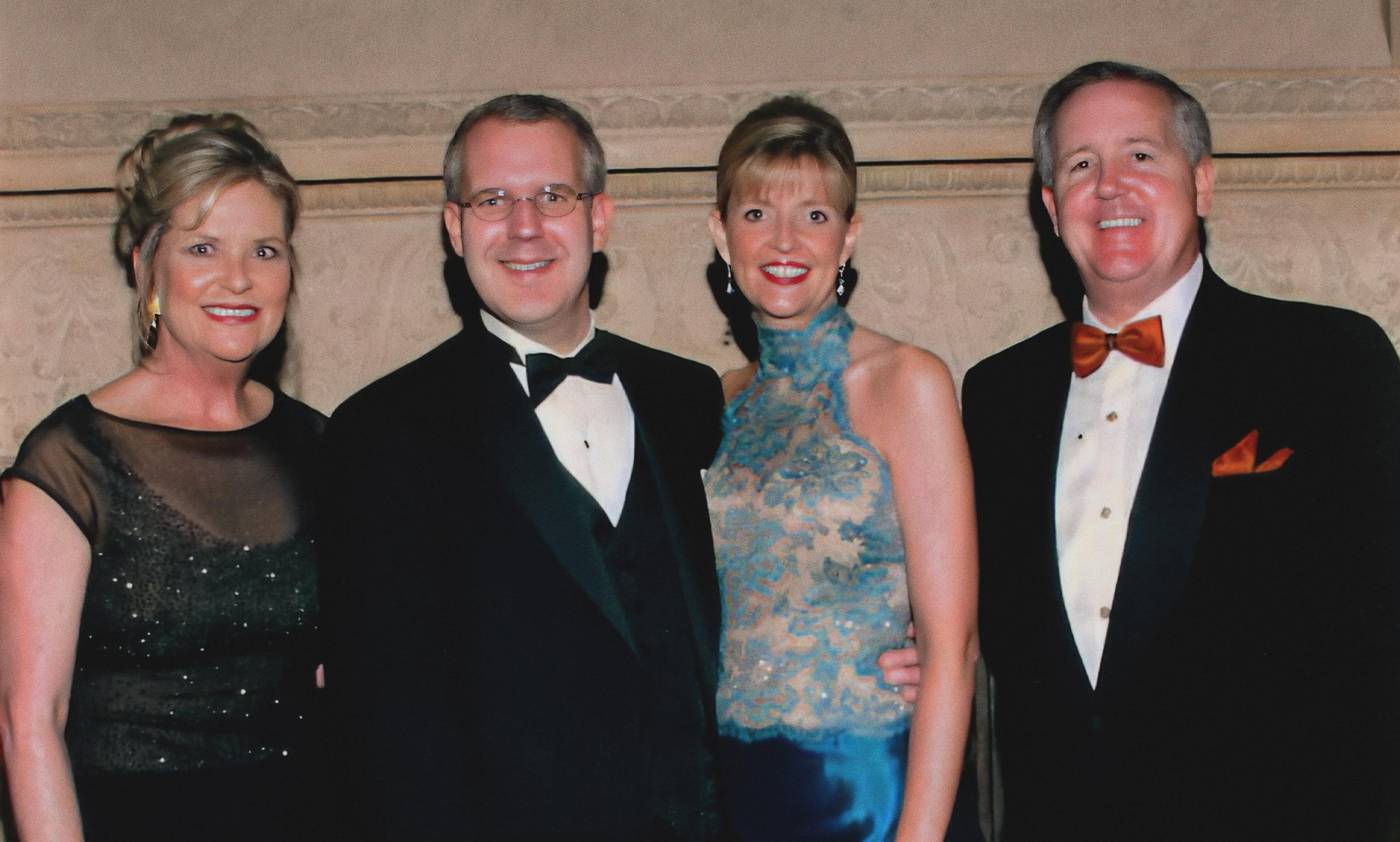
“I was Chairman of the Board (of Regents) and chaired the selection committee, which included Ed Keller, Burns Hargis, Mike Holder and David Schmidly, who was the president at the time. I introduced Gundy at the press conference.”
A lot has changed in the decades since, he says. From football’s consistency to campus growth, Helm has worked tirelessly to position OSU for success.
“When I went on the Board of Regents in 2001, we had 14,000 undergraduate students on the Stillwater campus. There’s 26,000 today. Everything’s gotten bigger. We’ve spent over a billion dollars on buildings. We’re spending $600 million here in Tulsa for the Health Sciences Center ...”
Helm was appointed to the OSU/A&M Board of Regents by Governor Frank Keating in 2001. He served for a dozen years until Governor Mary Fallen recruited Helm to the State Regents for Higher Education. He served as a State Regent until retiring from the role in 2022.
He’s not retired from business, however. In fact, Helm is as energetic as ever with his commercial and residential real estate endeavors.
Along with a partner, Helm founded American Residential Group in 1997 and currently serves as company chairman. With o ces in Tulsa and Dallas, ARG specializes in developing and managing multi-family properties, mainly in Oklahoma and Texas. The upscale residences o er a unique combination of living space, retail, dining and entertainment in urban and suburban markets.
“We’re just finishing up a project in Austin. We have one in Dallas, and just finished one in Tulsa.
“I still like coming into the o ce,” Helm adds. “Even though I’m getting too old to be doing this, as long as I’m on those (bank) notes, I’m paying attention to it.”
His attention is also on OSU Athletics’ bottom line.
“Money makes a di erence,” he says. “All of athletics gets supported by football. That’s the economic driver. You’ve got to have a good football team.
“We need to get basketball back,” he adds. “I think Steve Lutz is a good coach. I’ve watched him. He coaches like Sutton did — defense first. And (Cowgirl Basketball Coach) Jacie Hoyt’s proven herself. Obviously, David Taylor looks like a superstar. He’s moved the needle in wrestling.”
It’s not just about the money he’s given. He’s trying to set an example of what we need to do.” “ — CHAD WEIBERG
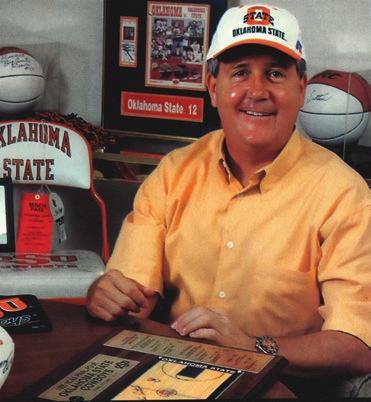
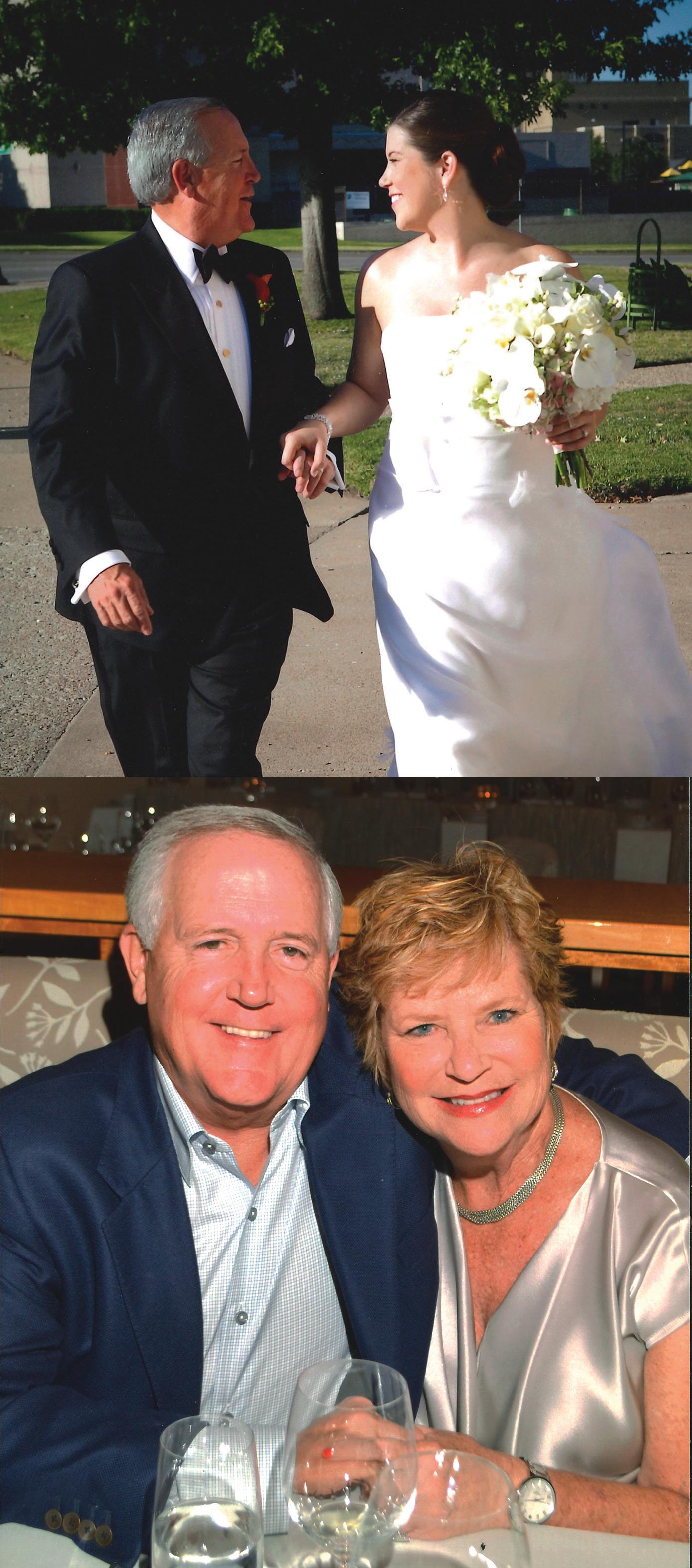
In the timeline of OSU Athletics, a number of pivotal moments can be plotted that tell the story of OSU’s rise — history-making people, projects and opportunities that helped propel the program to new heights. Helm has had a hand in many of them.
“Terry Don Phillips and I got to be real good friends,” Helm says of OSU’s athletic director from 1995-2002. “He’s the one that got us wearing orange. Terry Don said, ‘We need to renovate Gallagher-Iba, and then we need to do the football stadium.’ He got it started.”
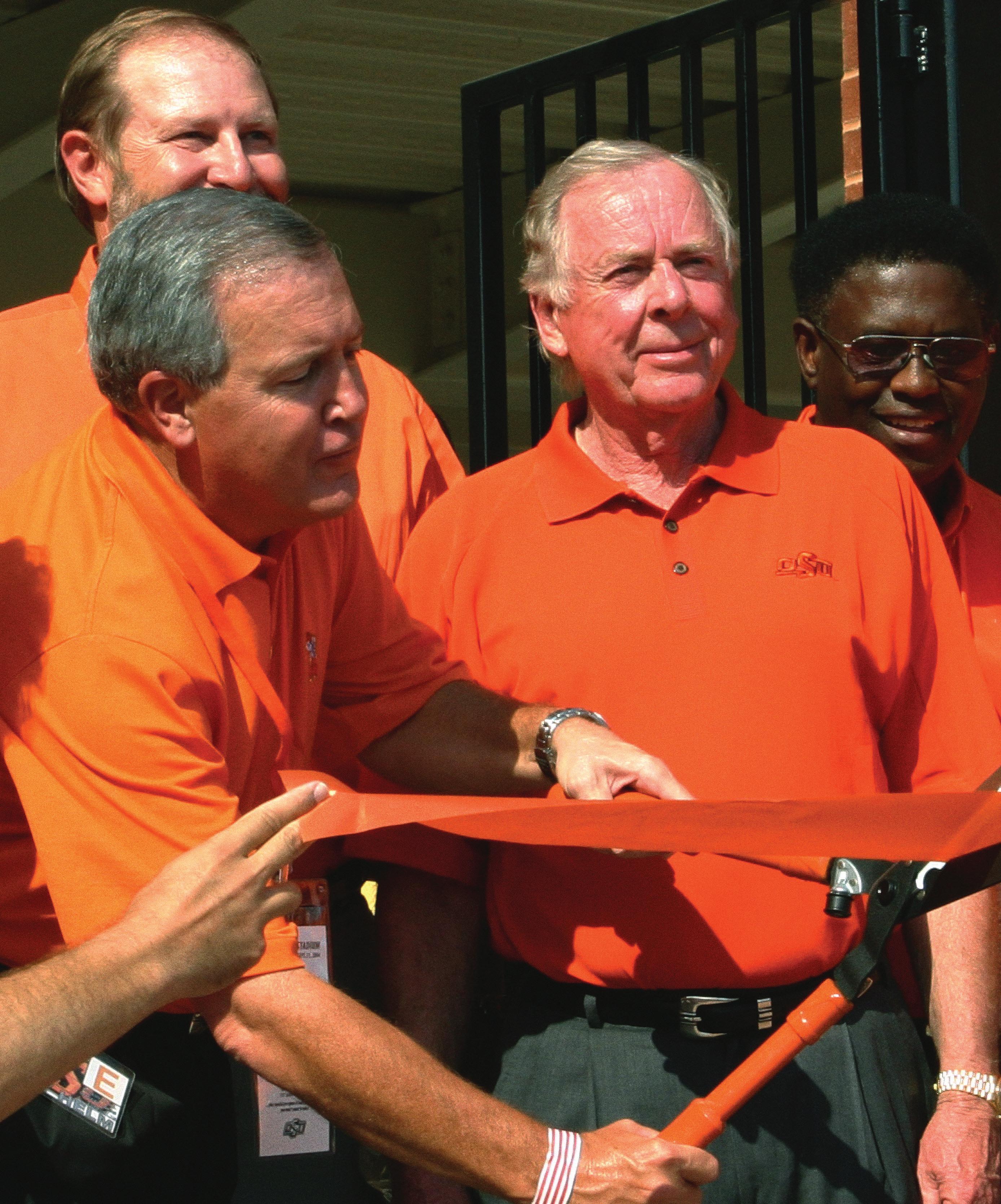
Phase I of OSU’s “Next Level” campaign to renovate the south side of Lewis Field was budgeted at $40 million, Helm recalls. A monumental gift by T. Boone Pickens made it happen, and in 2004, Boone Pickens Stadium was a reality. Helm helped cut the orange ribbon at the grand opening prior to the home opener that fall.
“Boone put in $20 million. It’s hard to believe that it turned out that nice for $40 million. It would be $200 million for that (phase) today.”
Phase II (north) and the west endzone bowl were completed in 2007 and 2009, respectively, thanks to even greater support from Pickens — to the tune of $165 million — along with numerous donors who followed his lead.
With a number of new fan amenities and upgrades since, Boone Pickens Stadium continues to be a point of pride for the program. But just as a first-class facility helped bolster the success and reputation of Cowboy Football, investment in the new era of college football requires an “all-in” e ort.
Weiberg says Helm is ready for the challenge.
“It’s just full steam ahead with Jay, no matter what,” he says. “‘If the rules are changing, then what changes do we need to make? What do we need to do? Let’s figure this out.’ He doesn’t treat those challenges as any kind of roadblock.
“He’s just all-in all the time.”

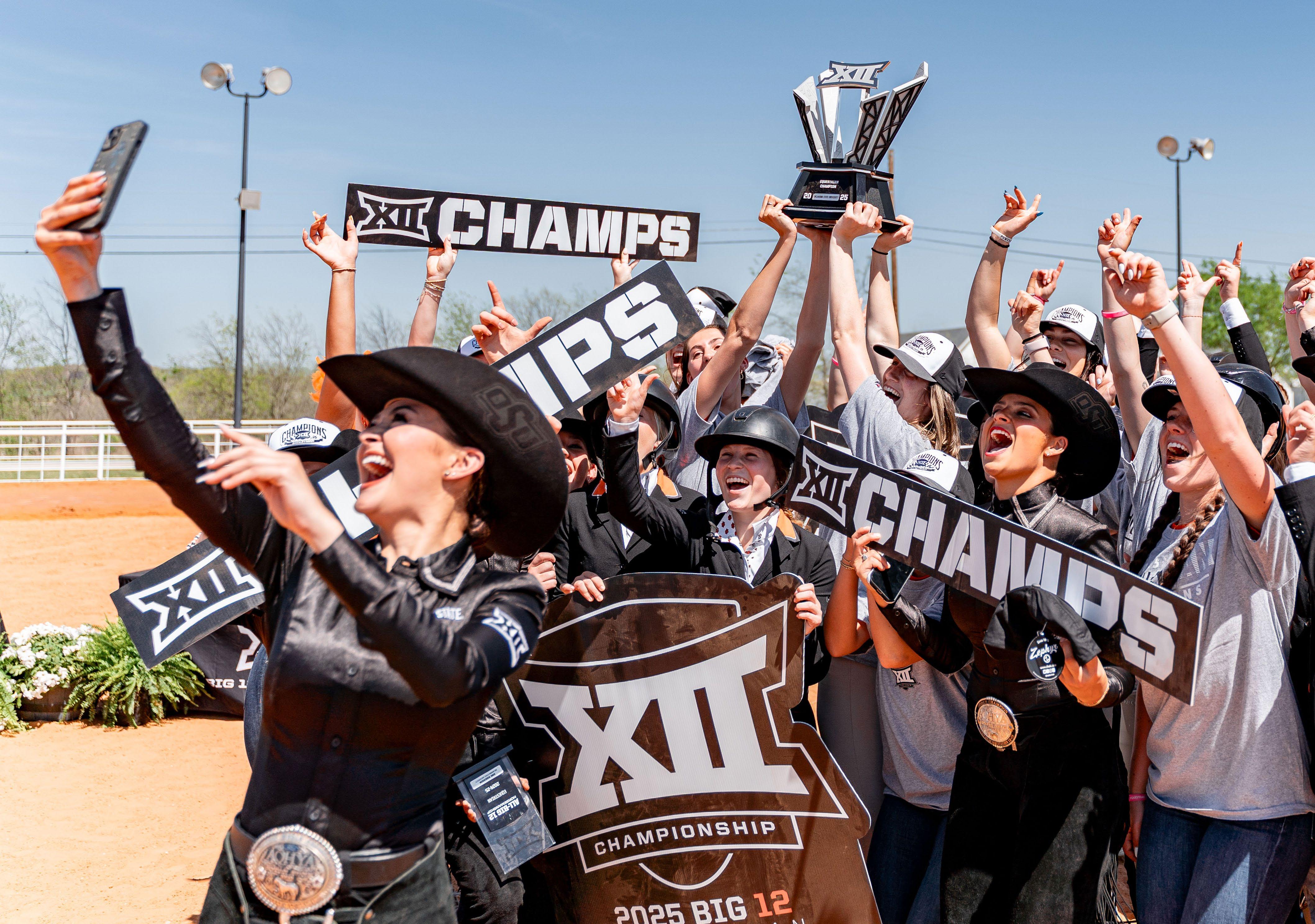
Oklahoma State senior Peyton Baxter snaps a selfie with her Equestrian teammates after the Cowgirls captured the Big 12 Championship trophy March 29 at KSM Bear Creek Farms in Burleson, Texas. OSU defeated TCU 11-8 to claim the program's fifth straight conference title.
Riley Hogan led the way for OSU, earning the tournament MOP in Fences, going undefeated in the tournament. After the contest, she was named the Big 12 Flat Rider of the Year and Fences Co-Rider of the Year. Along with Hogan, Claire McDowall, June Roberson, Abby Budd and Emma Filiatreau earned All-Big 12 accolades for their season-long performances.
When OSU announced its scholarship endowment initiative, the athletic program was last in the Big 12. Now, more than halfway through the 10-year program, OSU leads the conference.
OSU awards 229 full scholarships to student-athletes each year at a cost of $4.5 million. Each dollar freed up through endowed scholarships goes back into our programs. Better equipment. Better facilities. Better support. Each dollar has a direct impact on the lives of our student-athletes.
This is the list of all the generous supporters who have helped to provide a bright Orange future.
They are our Honor Roll.
Baseball 11.25
FULL SCHOLARSHIP
Dennis and Karen Wing (3) | Hal Tompkins
Sandy Lee | Jennifer and Steven Grigsby
Mike Bode and Preston Carrier (2)
David and Julie Ronck
HALF SCHOLARSHIP
Sally Graham Skaggs
QUARTER SCHOLARSHIP
Bryant and Carla Co man
David and Grace Helmer | Jill Rooker
Martha Seabolt | Dr. Scott Anthony
John and Beverly Williams
Richard and Lawana Kunze
Equestrian 1.25
FULL SCHOLARSHIP
Baloo and Maribeth Subramaniam
QUARTER SCHOLARSHIP
David and Gina Dabney
Football 34.0
FULL SCHOLARSHIP
Bob and Kay Norris
Bryant and Carla Co man /
The Merkel Foundation
David LeNorman | Dennis and Karen Wing (3)
Dr. Mark and Beth Brewer
Ike and Marybeth Glass
Jack and Carol Corgan
Jim Click | John and Gail Shaw
Ken and Jimi Davidson | Leslie Dunavant
Mike and Kristen Gundy
Mike and Robbie Holder
Ron Stewart | Ross and Billie McKnight
Sandy Lee | Tom and Sandra Wilson
Wray and Julie Valentine
James and Mary Barnes
HALF SCHOLARSHIP
Cindy Hughes | Donald Coplin
Doug Thompson | Ed and Helen Wallace
R. Kirk Whitman | Greg Casillas
Jim and Lynne Williams / John and Patti Brett
Mike and Judy Johnson | Sally Graham Skaggs
State Rangers | Tom Naugle | Nate Watson
QUARTER SCHOLARSHIP
Al and Martha Strecker
Arthur “Andy” Johnson, Jr.
Arthur Couch | Barry and Roxanne Pollard
Bill and Ruth Starr | Brad and Leah Gungoll
Brian K. Pauling
Bridgecreek Investment Management LLC
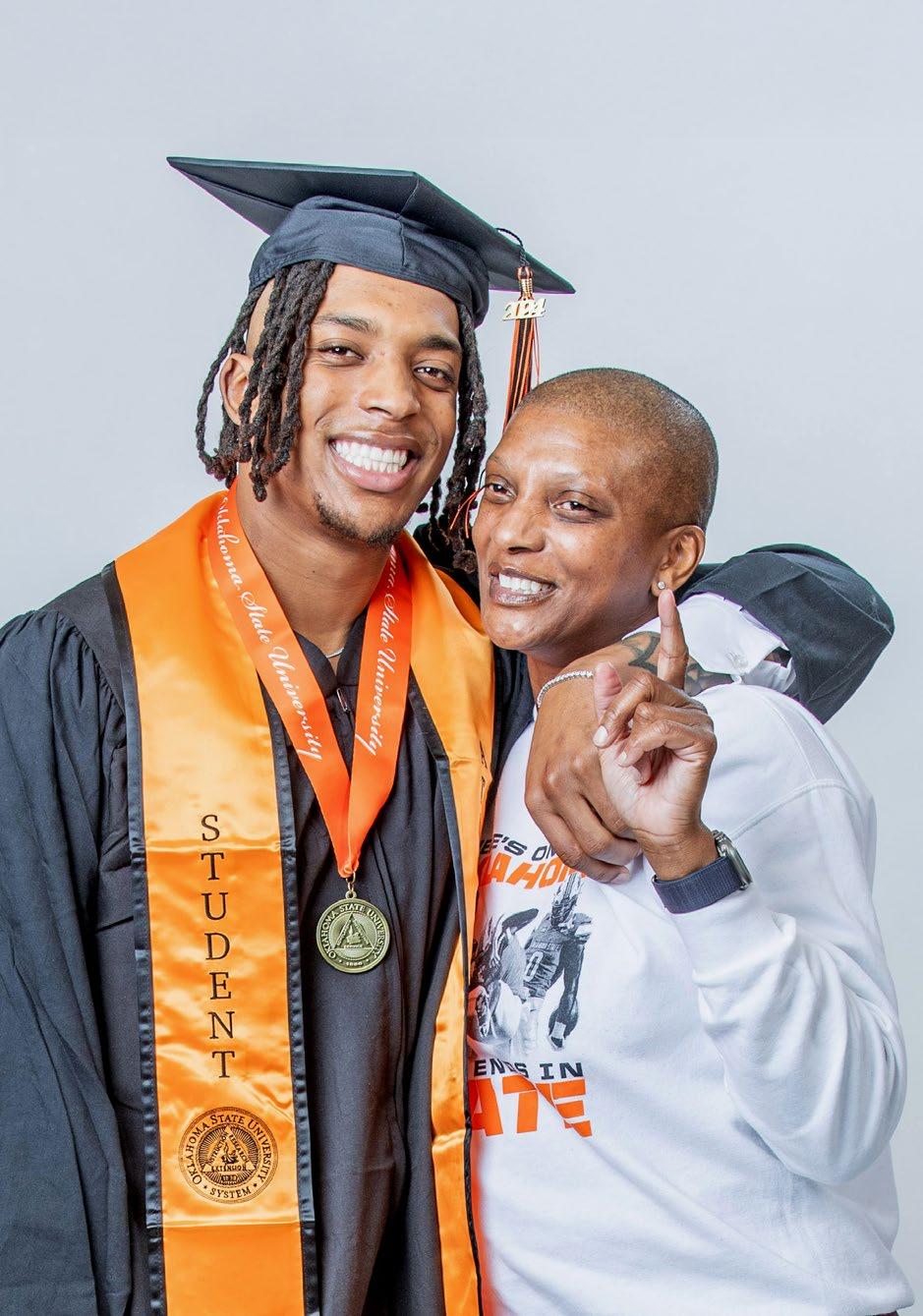
December graduate Ollie Gordon II celebrates the accomplishment with his mother, Tarona Smith. The 2023 Doak Walker Award winner from Fort Worth, Texas, earned a degree in University Studies from OSU's Spears School of Business.
Bryan Close | David and Cindy Waits
David and Gina Dabney | Dr. Berno Ebbesson
Dr. Ron and Marilynn McAfee
Eddy and Deniece Ditzler | Flintco
Fred and Janice Gibson | Fred and Karen Hall
Howard Thill | James and LaVerna Cobb
Jerry and Lynda Baker | John P. Melot
Jerry and Rae Winchester
John S. Clark | Ken and Leitner Greiner
Kent and Margo Dunbar | Paul and Mona Pitts
Randall and Carol White | Shelli Osborn
Roger and Laura Demaree
Steve and Diane Tuttle
Tony and Finetta Banfield
General 1.25
HALF SCHOLARSHIP
Terry and Martha Barker
QUARTER SCHOLARSHIP
David and Judy Powell
Kenneth and Susan Crouch
Sally Graham Skaggs
Graduate Athlete 0.75
QUARTER SCHOLARSHIP
Bob and Joan Hert | Neal Seidle
Tom and Cheryl Hamilton
Men's Basketball
24.5
FULL SCHOLARSHIP
Baloo and Maribeth Subramaniam
A.J. and Susan Jacques
Bill and Marsha Barnes
Brett and Amy Jameson
Calvin and Linda Anthony
Chuck and Kim Watson
David and Julie Ronck (1.25)
Dennis and Karen Wing (3)
Douglas and Nickie Burns
Gri and Mindi Jones
James and Mary Barnes | Jim Vallion
Ken and Jimi Davidson
Kent and Margo Dunbar | KimRay Inc.
Sandy Lee | Mitch Jones Memorial
HALF SCHOLARSHIP
David and Julie Ronck
Dr. Mark and Susan Morrow
Jay and Connie Wiese | Sally Graham Skaggs
Stan Clark | Billy Wayne Travis
Holloman Family
QUARTER SCHOLARSHIP
Dr. Scott and Lynne Anthony
Gary and Sue Homsey
Michael and Heather Grismore
Rick and Suzanne Maxwell
Robert and Sharon Keating
Steve and Suzie Crowder
Terry and Donna Tippens
Men's Golf 7.0
FULL SCHOLARSHIP
David and Julie Ronck
Dennis and Karen Wing
Jack and Carol Corgan
Bob and Elizabeth Nickles
Genevieve A. Robinson
Baloo and Maribeth Subramaniam
HALF SCHOLARSHIP
Simmons Bank
QUARTER SCHOLARSHIP
Garland and Penny Cupp
Richard and Joan Welborn
Men's Tennis 0.75
QUARTER SCHOLARSHIP
Tom and Cheryl Hamilton
HALF SCHOLARSHIP
Jim McDowell Men's
Men's Track 0.75
QUARTER SCHOLARSHIP
Dr. Mark and Susan Morrow
Susan Anderson | Ken and Leitner Greiner
HALF SCHOLARSHIP
Mary Jane and Brent Wooten Soccer 1.0
FULL SCHOLARSHIP
James and Mary Barnes
QUARTER SCHOLARSHIP
Tom and Cheryl Hamilton
Richard Melot
Ann Dyer
FULL SCHOLARSHIP
Brad and Margie Schultz
Ken and Jimi Davidson
Mike Bode and Preston Carrier
HALF SCHOLARSHIP
Baloo and Maribeth Subramaniam
Don and Mary McCall
John and Caroline Linehan
Calvin and Linda Anthony
Mike Bode and Preston Carrier
QUARTER SCHOLARSHIP
Bill and Roberta Armstrong
Bill and Sally Cunningham
Donald Coplin | Jill Rooker
Richard and Linda Rodgers
Jo Hughes and Deborah J. Ernst
Richard Melot
Women’s Golf 3.0
FULL SCHOLARSHIP
Baloo and Maribeth Subramaniam
Genevieve A. Robinson
Louise Solheim
HALF SCHOLARSHIP
David and Julie Ronck | Dena Dills Nowotny
QUARTER SCHOLARSHIP
Amy Weeks | Kent and Margo Dunbar
Women’s Tennis 0.5
QUARTER SCHOLARSHIP
Jamie Maher
Richard Melot
FULL SCHOLARSHIP
A.J. and Susan Jacques
Bruce and Nancy Smith
Chuck and Kim Watson
Lon and Jane Winton
OSU Wrestling – White Jacket Club / Gallagher Endowed Wrestling Scholarship
OSU Wrestling – White Jacket Club / Myron Roderick Endowed Wrestling Scholarship
OSU Wrestling – White Jacket Club / Ray Murphy Endowed Wrestling Scholarship
OSU Wrestling – White Jacket Club / Tommy Chesbro Endowed Wrestling Scholarship
The Cobb Family
HALF SCHOLARSHIP
Mike and Glynda Pollard
Mark and Lisa Snell
Bobby and Michelle Marandi
QUARTER SCHOLARSHIP
Danny and Dana Baze / Cory and Mindy Baze
Kyle and Debbie Hadwiger
John and Beverly Williams | R.K. Winters
To learn more about scholarship opportunities and how you may contribute, please contact:
Larry Reece (405-744-2824)
Matt Grantham (405-744-5938)
Daniel Hefl in (405-744-7301)
Shawn Taylor (405-744-3002)

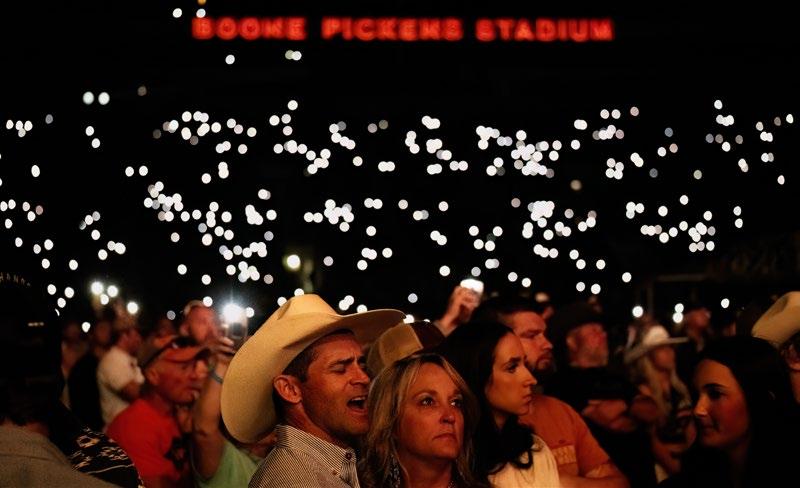
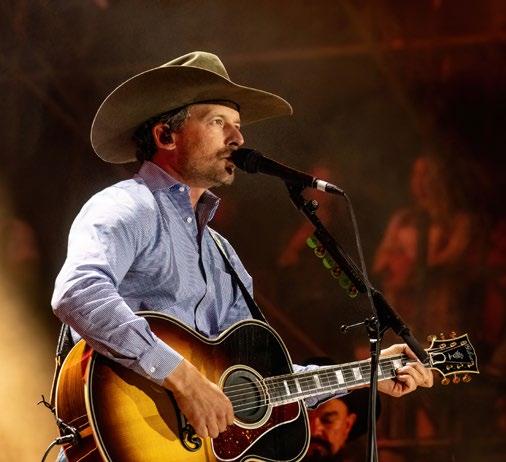
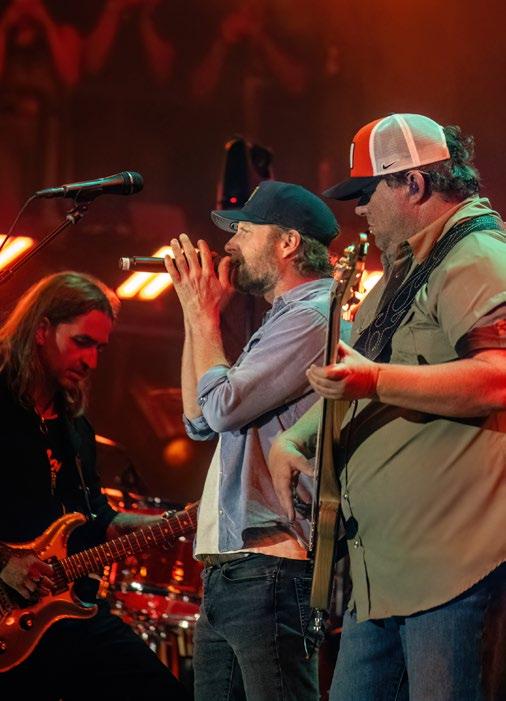
Hearts are still full, ears are still ringing, and Boone Pickens Stadium is still shaking in the aftermath of the Boys From Oklahoma concerts, held April 10th through 13th.
The unprecedented production — for both Oklahoma music history and Oklahoma State University — hinged on a reunion of "Red Dirt" rockers Cross Canadian Ragweed "Ragweed," which emerged from the Stillwater scene in the mid-90s, hadn't played together since the band broke up in 2010. Sharing the massive stage were Turnpike Troubadours, along with musical influencers The Great Divide, Stoney LaRue, Jason Boland and the Stragglers and the Mike McClure Band — plus special guests each night.
Turn to page 10 of this issue to read about how the epic event came together.
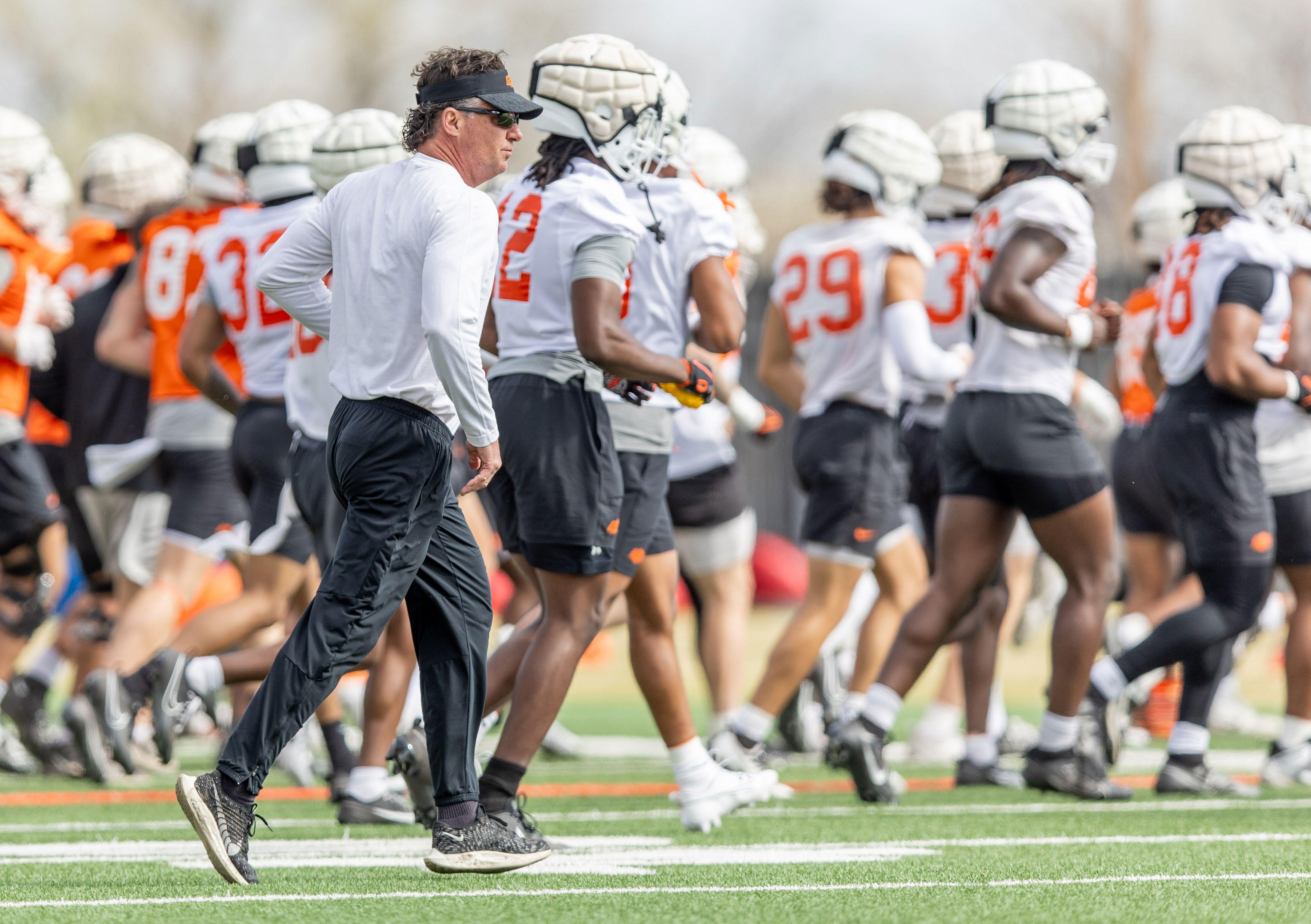
Coach Mike Gundy leads his Cowboy Football squad onto the practice field for spring drills at the Sherman E. Smith Center. The 2025 season kicks o Thursday, Aug. 28, as OSU hosts UT Martin. The seven-game home schedule also includes Tulsa (Sept. 19), plus Big 12 matchups with Baylor (Sept. 27), Houston (Oct. 11), Cincinnati (Homecoming Oct. 18), K-State (Nov. 15) and Iowa State (Nov. 29).
To be a part of the excitement at Boone Pickens Stadium visit okstate.com/tickets.

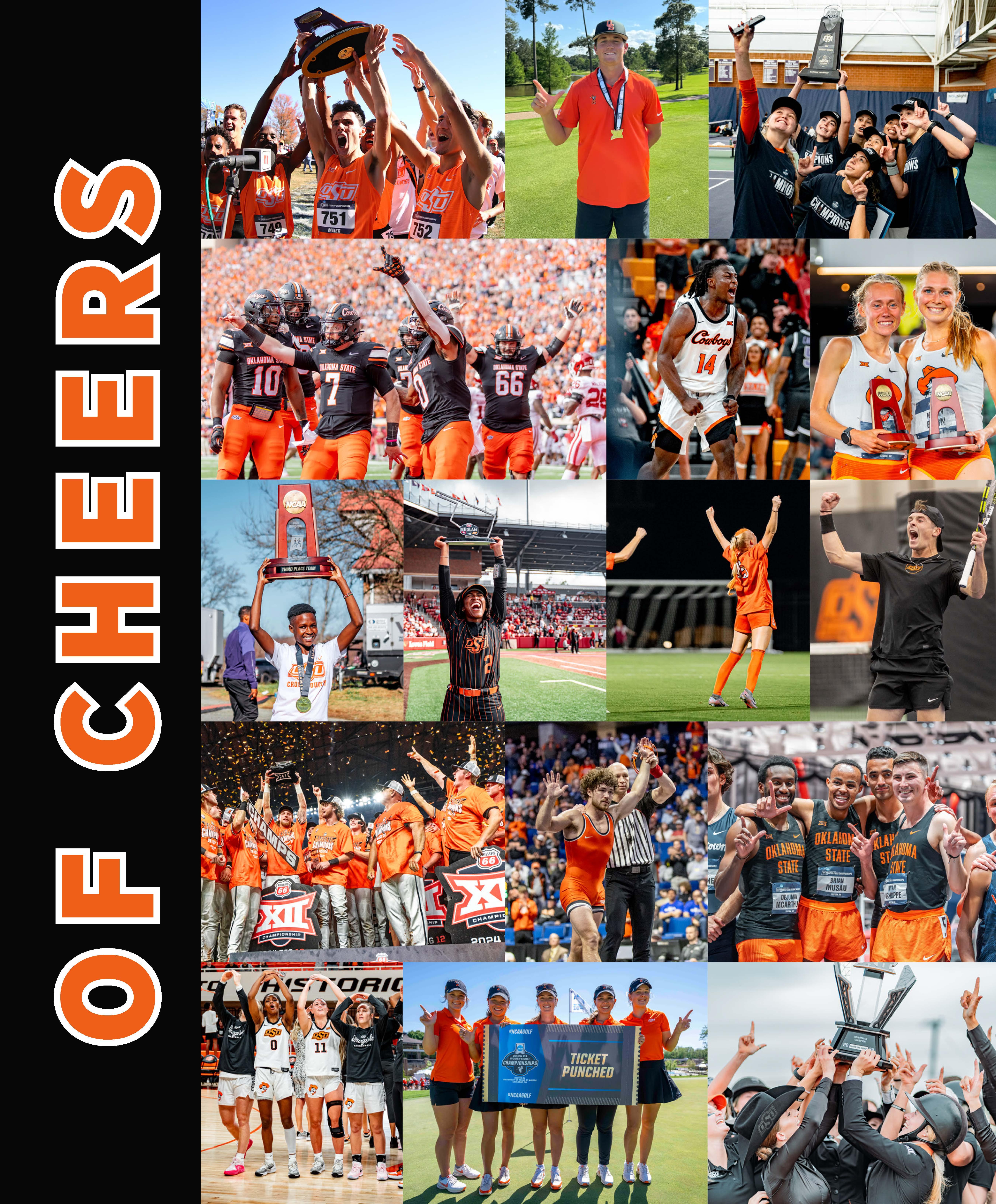
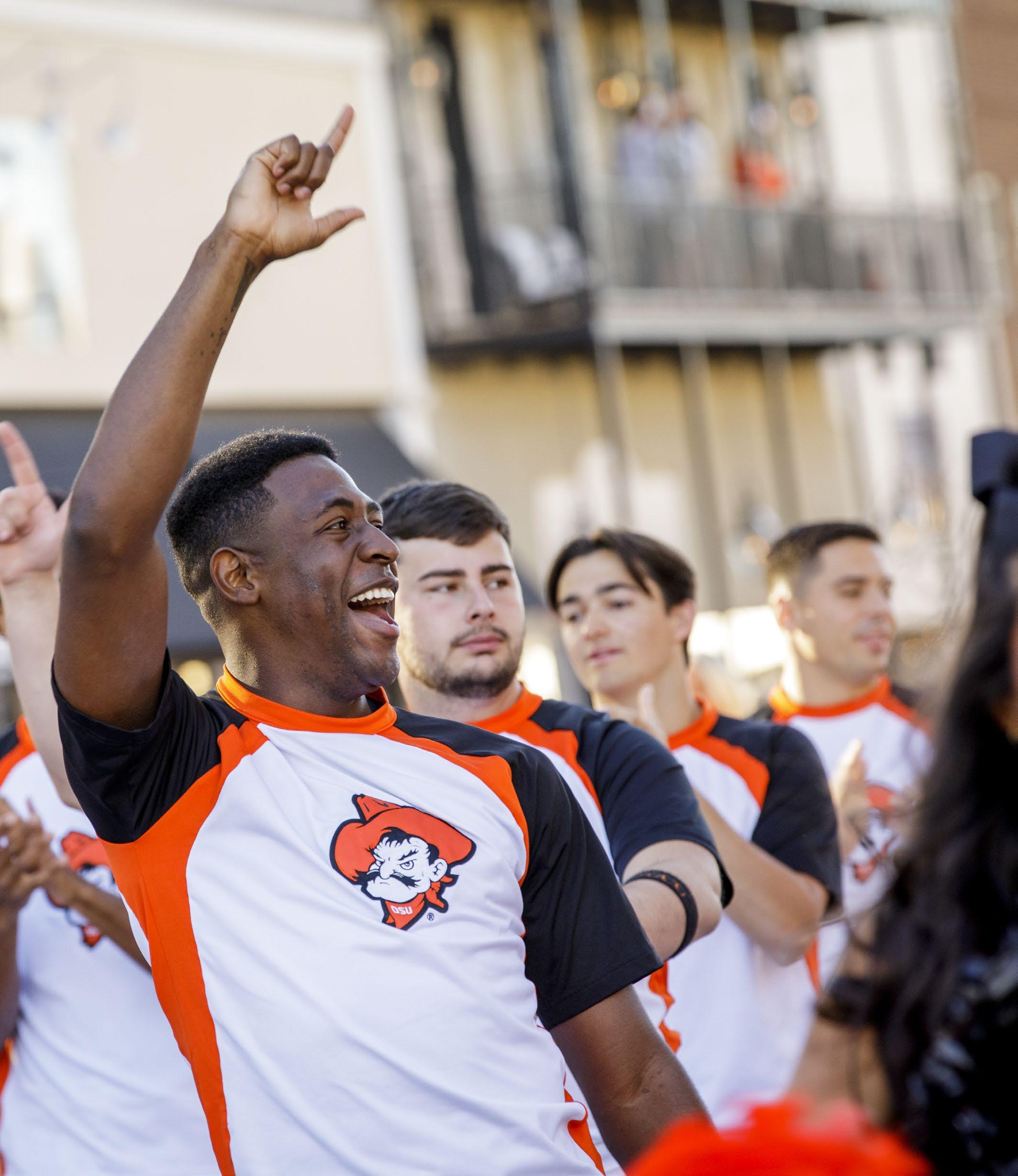



Way back in 2009, which wasn’t that long ago (but sort of was), Oklahoma State cut the ribbon on the new and improved Boone Pickens Stadium. Atop the facility sat 123 shiny new suites of various sizes. The premium areas, which also include the club seats one level below, have been a huge hit with the Cowboy fan base ever since.
According to OSU senior associate athletic director Larry Reece, the suites have been sold out since the day they went on sale, with only a slight bump in the road around the pandemic.
They are pretty and comfortable. And it sure is nice to be in a climate-controlled area on game days for a sport that kicks o during the dog days of summer and concludes with the clutches of early winter on the horizon. But when the suites opened, and every year since, the biggest buzz has always been about the food: the variety and the quality.
Making the OSU suite experience the best in the country was on then-athletic director Mike Holder’s mind well before Georgia came to town for the 2009 season opener and the west end zone ribbon cutting. During the massive construction project, a kitchen built for producing high-end meals — and lots of them — was always part of the blueprint.
“I know we have one of the biggest kitchens in the state,” said Ben Crawford, who serves as the director of Cowboy Dining. “There might be a couple of hospitals that rival it, but we can do anything we put our imagination to in our kitchen.
“When we opened in 2009, the kitchen was state-of-the-art,” he added. “And it still is today. We have things here that a majority of kitchens around the state, if not the nation, don’t have. There are people who visit us who are jealous the second they walk through the doors.
“I try to tell the people who work here how blessed and fortunate we are to have donors that have put us in a position to be successful.”
The imagination gets plenty of chances to be on display as Cowboy Dining not only serves up thousands of suite meals every home Saturday, plus food for 3,600 fans on the club level. Cowboy Dining sta ers also provide all of the training table meals for OSU’s student-athletes, and they are always churning out the good stu for recruiting visits, which in the portal era, last throughout the calendar year.
Now imagine the same dinner party, only with more than 6,000 guests six or seven times each year. Oh, and you don’t always know what you will be serving because you can’t be certain of what time your guests will be coming to the table. Could be breakfast, or lunch, or dinner. And in the case of bad weather, maybe two of those three.
“We start preparations for a game day about 10 days out,” Crawford said. “And I would say we start planning and preparing during the preceding baseball season, reaching out to certain vendors for specific items. If we are doing something special, we work with a lot of vendors in Oklahoma and the region.”
The planning is important. After all, Uber Eats might not be able to deliver 13,000 chicken tenders on a Saturday morning before kicko . They would probably need some sort of special parking permit for that.
Boone Pickens Stadium may not look like it from the outside, but it is full of dead animals, which we like to call food.
“Anything that is smoked, we smoke in house,” Crawford said. “We have two really large smokers. Their model number is 1400, which means you can put 1,400 pounds of pork shoulder in each smoker and smoke 2,800 pounds of meat at the same time.
“On game days, we prepare about 8,000 pounds of protein.”
The entire ring of suites, from the southeast corner (visiting locker room area) to the northeast corner (closest to Bennett Hall), includes bu ets with di erent menus for each home game. “One item will be barbeque, and the type of barbeque will vary from game to game,” according to Crawford. “We do have some menu items that are very popular, and we keep those available week to week. Beef ribs are very popular.
“Then we might have something fun or timely, like an Octoberfest bu et when the timing is right or a Tex-Mex. And we also have your typical game day fare of hot dogs, brats or chili, nachos and those type of items.”
There are also items for folks with dietary restrictions, vegetarians or other special needs.
“With 6,500 people, we have to think outside the box and try to do the best we can to include everyone,” Crawford said.
Imagine planning a giant dinner party. Think of all the details: the menu, the guest list, food shopping, food preparation. How much food and drink?
There are certain games that the Cowboy Dining sta (18 full-timers and about 300 workers on football game days) really hate. They are called the “six-day pick” games. Anyone who follows college football knows that the television folks are allowed a handful of games each fall in which they determine the start time on the week of the game. It allows television to slot games based on the success of the teams playing. But the folks in
“
We can do anything we put our imagination to in our kitchen.”
— BEN CRAWFORD
New York never ask the workers in the west end zone about their opinion on those late kicko announcements.
“Obviously we understand the whys of the six-day windows,” said a very mannerly Crawford. “But it does indeed play havoc with your menu. We work really hard thinking about the morning games. Will it be a breakfast meal? A brunch? If we have a six-day window we have to coordinate really well with our purveyors and just let them know as much as we know as soon as we know. We try to get out in front of those games as much as we can. We still have the barbeque, but it’s a little more “brunchy” than an evening game. And then we have four breakfast menus that we pretty much have on reserve at all times.”
Regardless of kicko time, the Cowboy Dining sta hits the Boone Pickens Stadium kitchen at least seven hours before the game, which is five hours before the suites are opened. And, of course the day doesn’t end with the singing of the alma mater. There is at least two more hours of work postgame.
“We have great managers,” Crawford said. “I can’t say enough about all the di erent people we have in place overseeing all of our respective departments.”
While there is no doubting the importance of Cowboy Dining’s e orts on game day, it is not the group’s only duties. The unit also provides the daily fare for OSU’s student-athletes.
“We have breakfast Monday through Friday,” Crawford said. “It’s open to all student-athletes.”
Not so long ago, training table as it is called, was limited to scholarship athletes per NCAA rule.
Lunch is not a training table meal, although most OSU programs have fueling stations in or near their facility that make for a good substitute.
“They can grab and go and have food while in their meetings or watching video,” Crawford explained. “We also serve dinner Monday through Thursday and the football team meal Friday nights before home games and Friday afternoons before they travel.”
The Cowboy Dining kitchen is a neighbor of Orange Power Studios on the third level of the west end zone, and the dining room (training table) is adjacent to the Cowboy Football o ces. It comes in handy on football recruiting weekends, when Cowboy Dining provides meals with views of the stadium, including a personal message on the video board welcoming recruits to campus.
“We do our best to shake things up for the student-athletes,” Crawford said. “We try to plan an eightweek menu. Of course, some items will be the same. We have a deli bar and a salad bar, and those are usually the same. But we have an international station that kind of becomes our chef specials every night. We have a homestyle menu, and we try to make sure it’s always di erent.
“We really want it to be special for them. We want them to look at training table as a refuge. A place that they want to go.”
If a student has a family favorite, Cowboy Dining welcomes recipe suggestions as part of its never-ending quest to keep the food and the ideas fresh and ever-changing.
Jason Schreier serves as the unit’s executive chef, and Sean Dickey is the head chef.
The goal of maintaining variety is important as Cowboy Dining is also in the pregame meal business for several OSU teams.
The head count for the training table is usually a minimum of 300 and at times more than 400 for meals. Of course, the fall weekends include 6,500 hungry fans six or seven times a year.
OSU is making good use of its must-see kitchen.
Along with the obvious food chores, Cowboy Dining also handles the hospitality duties in the premium areas. That crew is approximately 90 strong and is overseen by Andrea Vogt, assistant director of Cowboy Dining for Premium Services. And like any large employer in a college town, it is a student-heavy workforce.
“We start hiring in May, and even after we reach our number in August or so, we keep hiring,” she said. “We have kids that realize they are overloaded in school hours, or some decide they’d rather watch the game more than work the game, so we lose students during the year.”
Not to mention no-shows, students under the weather, and the general tendency of an occasional college student to be irresponsible.
No, really. It happens.
“We bulk up in numbers for just such cases,” Vogt said. She estimates that Cowboy Dining has hired 800 employees since she moved from OSU’s athletic marketing o ce to Cowboy Dining in 2018.
We have to think outside the box and try to do the best we can to include everyone.” “ — BEN CRAWFORD
The hospitality crew includes suite attendants, runners, and workers for the smaller concession-like areas in the suites. And since the students can be somewhat inconsistent, so can the game day experience in the premium areas.
“We had a memorable experience during the last Bedlam game when the glass separating two suites shattered,” she said. “We had to remove it because it was starting to fall apart, and we couldn’t wait until the game was over. During the process, some of the glass began to fall into the seating bowl. And we were accused of dropping glass onto the OU band.”
Final score: Cowboys 27, Sooners 24. Problem solved.
“We’ve had a few bats in the facility,” Vogt added.
She was referring to the kind of bats that fly and not those with the first name of Ding — although …
“We have had to escort some people out of the suite areas on occasion. Even an employee once.”
“The club level is the toughest,” Crawford said. “It’s fast-paced. It’s stressful. And depending on the temperatures, you could have most all of the ticket holders inside looking outside instead of sitting in their seats.”
In the olden days of Cowboy Athletics, there were no suites. Then came the overhaul of Gallagher-Iba Arena in 2000 with 13 new suites located atop the facility. They are sold for basketball, wrestling and football seasons.
In 2004 came the south side of the stadium with its football-only premium areas, followed by the north side in 2007. The 2009 season saw the number of football suites climb to its current level of 123, believed to be the most in the country, although confirming that fact has been a chore.
In many places, that would be a good stopping point. But not at Oklahoma State. The suite life has become so popular, there are now premium levels at Neal Patterson Stadium (soccer) and O’Brate Stadium (baseball).
“Baseball is pretty all-encompassing,” Crawford said. “You don’t have one game, you can and do have series. You have more weather issues because home games start in February and run through the severe weather season. It can make for some long nights and long weekends. But people love O’Brate Stadium.”
With the large number of home games, food preparation and wasting of food becomes a hotter topic.
“There are usually 29 to 33 home baseball games each year, and those are 12-hour days like they would be for football,” Crawford explained. “You can occasionally have five games in a week with weather as a factor and the opponent as a factor. We work with the ticket o ce through their analytics to help us determine how much to prepare because attendance can vary somewhat dramatically, especially early in the season when the weather is colder.”
“We decided to have a midweek menu for baseball, and then we up our game on the Big 12 weekends when the crowds are bigger and the games are more important and the weather improves.”
Cowboy Dining is also the provider of OSU Baseball’s pregame meals.
“We have sta members that come in and take care of everything pregame,” he said. “And we have sta that handle the club and suites that afternoon or evening at the stadium.
Being an employee of Cowboy Dining is not for the faint of heart. And if you didn’t already pay attention to the weather in Oklahoma, becoming a part of Cowboy Dining makes you an addict.
“We have definitely had to play bouncer, and you have to wrangle with people sometimes until the authorities can take care of business.”
But by far the biggest impediment to a fun game day is the weather.
In 2024, OSU changed the kick time for its football home game with Arizona State due to the weather forecast. And while the game was eventually finished and the Sun Devils returned safely to the Valley of the Sun, there was a two-hour delay that enveloped the traditional dinner hour and extended the halftime break.
“That was the longest the bu ets have been open, ever,” Vogt said.
Eventually, even the customer-friendly, always-cooking, never-yield-your ground crew of Cowboy Dining got to the bottom of the barrel. The food trough finally ran dry.
“We ran the food as long as possible,” Crawford said. “The delay hit at halftime, so you had the pregame run of meals, the halftime run and then another go-round when we were delayed. But at least we made it through halftime.”
“I can remember a game about 10 years ago or so in which we were delayed for hours and ran out of food,” he added. “We rustled up some hot dogs for President (Burns) Hargis’s grandchildren.”
To say that premium seating has been a hit at Oklahoma State is an understatement. In nearly every venue — there are a pair of suites at soccer and a club area on the locker room level — those areas are popular and have added a new layer to the game-day experience.
There have always been challenges, and each home event is a puzzle that needs to be solved. But judging by the response of suite and club owners, Cowboy Dining passes those challenges with flying colors. Crawford is quick to shower credit on assistant director of operations Hunter Whitford, along with commissary manager Jason Shilling and o ce manager Kyle Robles
“It has been a crazy ride over the years,” Crawford said, “but it is amazing to look back at everything we have accomplished.”
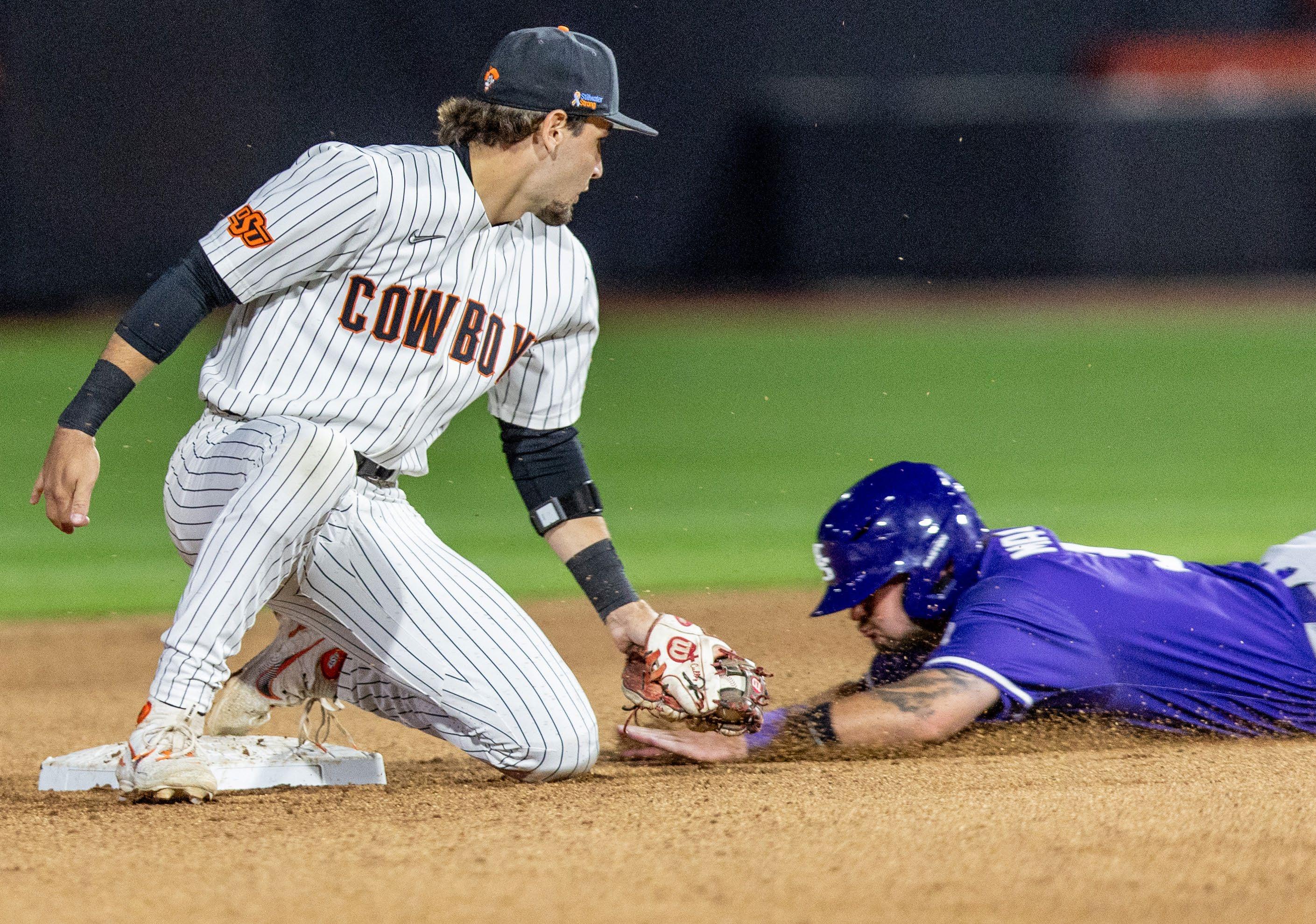
Shortstop Drew Culbertson applies the tag on a Kansas State runner as Oklahoma State edged the Wildcats, 4-3, at O'Brate Stadium. Southpaw pitcher Harrison Bodendorf had a career night on the mound, as the southpaw picked up the win after striking out a career-high 12 batters in seven innings of work. Coach Josh Holliday's Cowboys went on to sweep No. 22 K-State in the three-game series after Saturday's contest was pushed to a Sunday doubleheader due to heavy rains. Pitching again ruled the day, as Poke hurlers Sean Youngerman Hunter Watkins earned the wins (7-0 and 10-2, respectively).