2024/25
We want every child to read.
2024/25
We want every child to read.
This has been the first year of our three-year strategy; a year defined by purposeful growth, tangible impact and a continued sense of ambition. We set out with one clear aim: to bring the joy of reading into the heart of schools and communities facing the greatest barriers, and we are doing just that. This year, we partnered with 399 schools across the country and reached 180,979 pupils through our 10 evidence-based literacy programmes – a remarkable 92% increase in children supported year on year.
We have placed 70,329 books, 563,256 copies of The Story Corner magazine, 3,970 Story Starter Packs and 147 Book Clubs directly into children’s hands. Each one of these high-quality, engaging resources is a small but powerful step towards building rich, sustainable reading cultures in disadvantaged primary schools.
Powered by a community of wonderful volunteers, our One-to-one Reading Programme delivered 40,239 sessions to children who need dedicated reading time with a trusted adult or one of our fantastic 14-18 year old Reading Mentors. The results speak for themselves and the impact is clear. Teachers in our partner schools tell us children are reading more often, talking about books with enthusiasm and developing the confidence and joy that mark the beginning of a lifelong relationship with reading. The numbers back this up. Even
though many of the children we support are at risk of falling further behind, 94% managed to keep up or made accelerated progress over the year. These are not just statistics – they represent thousands of children who are now reading with confidence, curiosity and pride.
Beyond individual progress, we’re also building a reading ecosystem that surrounds each child. This means refreshing school libraries with diverse books and equipping teachers to inspire reading for pleasure. Additionally, we are involving families through book fairs, clubs and events that make reading a shared joy at home and in school.
We are firmly on track to reach our strategic goal: by July 2027, half a million children will have benefitted from one of our programmes and we will have partnered with 1,000 schools. The groundwork is in place, our momentum is building and the need for our work has never been greater.
We’re deeply grateful to our supporters, volunteers and partner schools for their unwavering support. Thank you. As we look ahead, we invite new schools, supporters and volunteers to join us. Together we can ensure that every child, regardless of background, discovers the joy of reading and builds a brighter future, one story at a time.
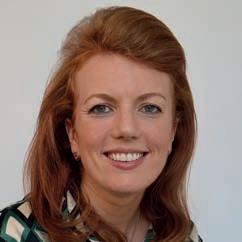
Emily Jack Bookmark CEO
“ We are firmly on track to reach our strategic goal: by July 2027, half a million children will have benefitted from one of our programmes and we will have partnered with 1,000 schools.”
Emily Jack

We partner with schools in some of the most disadvantaged communities across the country, ensuring our support reaches children who need it most.
Through our 10 literacy programmes, we brought the joy of reading to
399 schools in disadvantaged communities up and down the UK
180,979 pupils benefitted from our support
Our three-year goal is to partner with 1,000 schools and help 500,000 children benefit from a literacy programme.
One-to-one Reading Programme
1,752 children in 138 schools received a total of
40,239 one-to-one reading sessions
2,001 volunteers from our community delivered these reading sessions
Books and resources
We delivered:
70,329 high-quality, diverse books
563,256 copies of The Story Corner magazine
3,970 Story Starter Packs
147 Book Clubs
Our multi-year Literacy Partner Programme more than doubled in size, with 50 new schools joining us.
Hugo,
a child from a partner school, told us:
“Reading opens a firework in my heart, one that feels new every time. I feel a spark lighting up in my heart as I read, nothing matters, not the past, not the future, only now.”
Areas we’ve reached
Your Story Corner
As a result of the Your Story Corner Programme 98% of teachers told us reading enjoyment improved 84% of teachers saw an increase in the variety of texts read by pupils
One-to-one Reading Programme 95% of teachers noticed an increase in the reading enjoyment of pupils on the programme 96% of teachers said that pupils’ reading confidence improved 94% of children on the programme progressed at or above the rate expected for their age
We’re actively analysing how our programmes influence KS2 reading attainment across our partner schools. Early results show promising trends for schools supported under our needs-based criteria. This ongoing project will help us understand and strengthen our contribution to whole-school reading outcomes, ensuring we deliver meaningful, measurable change for the children who need us most.
Reading for pleasure produces far-reaching and longlasting benefits, which is why it’s our mission to excite and engage young readers.
Many children leave primary school with poor reading skills, creating a lifelong learning gap that affects their potential to thrive.
1 in 4 children leave primary school unable to read well 1
For disadvantaged children, it’s more than 1 in 3 2
In 2025, almost a third of pupils at the end of Key Stage 2 were considered disadvantaged* 3
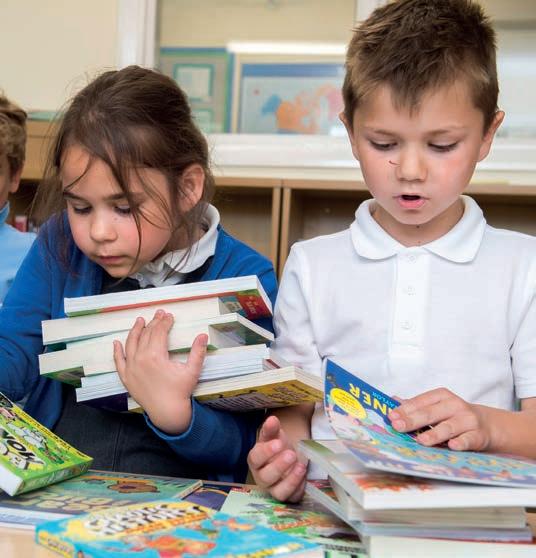
Poor literacy casts a shadow beyond the classroom and can have a devastating impact on a person’s life opportunities.
1 in 6 adults in England have very poor literacy skills (6.6 million people)4
Only 10% of disadvantaged children who fall behind in reading at primary school go on to pass English and maths at GCSE 5
Poor literacy is linked to a 26-year gap in life expectancy between the most and least vulnerable communities 6
£830 million in economic costs are generated per year due to insufficient early literacy support 7

Reading for pleasure is a powerful driver of a child’s future and a key indicator of success in education and life.
Children who read well are three times more likely to have good mental well-being 8
Reading for pleasure is four times more powerful than having a parent with a university degree in terms of driving progress in vocabulary, maths and spelling 9
Reading for pleasure is a stronger predictor of educational success than socioeconomic status 10
When children discover the joy of reading, they unlock doors to stronger literacy, improved outcomes and a brighter future
*Disadvantaged pupils are ordinarily defined as: those who were registered as eligible for free school meals at any point in the last six years, children looked after by a local authority or have left local authority care in England and Wales through adoption, a special guardianship order, a residence order or a child arrangements order.
At the heart of our work is the belief that every child should have the same opportunity to discover the joy of reading and develop skills that set them up for success.
Vision
We want every child to read
Mission
We improve children’s literacy by promoting a reading for pleasure culture in primary schools, with a focus on supporting children in the most disadvantaged communities
For many children, reading is not yet a source of joy or a daily habit. Only one in three say they enjoy it, and fewer than one in five read each day.11
The barriers are tangible: one in six children receiving free schools meals don’t own a book.12 One in five parents are buying fewer books for their children, a figure that rises to more than a third among those struggling financially.13
Teachers are stepping in to fill the gap. According to a 2024 report by the National Foundation for Educational Research, 79% of primary school teachers spend their own money on items for pupils, including books.14
In schools, budget cuts are at their highest levels since 2017, with 76% of primary leaders reporting reductions to teaching assistant budgets in 2025.15 In addition, one in seven primary schools lacks a library, rising to one in six in disadvantaged areas.16
At home, half of parents don’t read with their children daily,17 often because of a lack of time (38%) or confidence (28%).18
These challenges highlight the urgent need for targeted support through our 10 literacy programmes, which are underpinned by five evidence-based pathways.
Pathways
Teacher training and resources
Creating a reading buzz across the whole school
Family and parental engagement
By overcoming these barriers, we enable schools to build rich reading cultures that promote reading for pleasure, and celebrate, champion and encourage reading at every opportunity.
As everything we do is aimed at improving the lives of children, it’s vital that we listen to their views. This is why this year we designed a child-led evaluation approach in collaboration with children’s research expert Dr Yaspia Salema and literacy charity Chapter One.
Through piloting four in-depth case studies we explored how children experienced our One-to-one Reading Programme and how their relationships with volunteers shaped reading journeys.
This work reflects our commitment to strengthening impact measurement by gathering meaningful, first-hand insights from the children we support. The method was rigorous and child-led, helping us better understand the impact of our programme on children’s reading attitudes and behaviours.
Robust, child-led research
We used a flexible and engaging approach that respected each child’s unique voice.
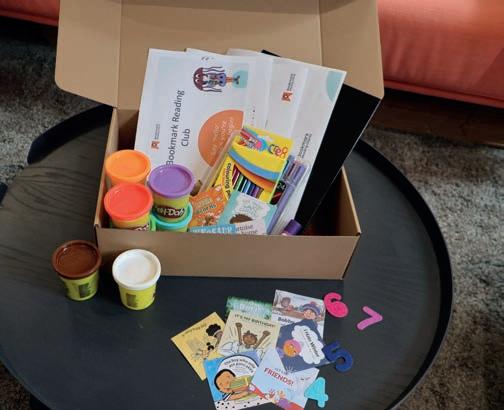
The research box
Before the visit, each child received a box of creative prompts and materials to help them reflect on their reading journey. The children took their boxes home and were encouraged to fill them with drawings, notes, reading rivers or anything else that felt meaningful. This open-ended approach helped us gather comprehensive, authentic data that reflected each child’s reading identity.
Researcher visit
A researcher visited each child at school to explore their research box, observe a reading activity, conduct a child-friendly interview and co-create a map of their favourite reading spaces These participatory methods ensured the data was grounded in each child’s lived experience
Holistic understanding of the children’s reading journeys
To triangulate the children’s perspectives, we gathered insights from the adults who support them. We captured the shifts they noticed in attitudes toward reading at home, in school and during their reading sessions.
We interviewed each child’s:
• Parent or carer
• Teacher
• Reading volunteer
This multi-perspective approach helped us build a more complete and nuanced picture of each child’s reading development.
Aisha, a lively and active pupil, was selected for the One-to-one Reading Programme because she lacked confidence in reading, was working below her expected attainment level and rarely engaged with books at home. Her teacher described her as “an outside child” who loved football but often avoided reading tasks in class. When asked to read aloud, she would speak quietly, mutter words or find ways to avoid reading.
Through exploring the reading research box with Aisha, we learned about her reading identity. She had filled the box with images of her favourite book covers, explaining:
“These are all the books that I’ve been reading and then I put my favourite books … I love my books.”
During the researcher visit, Aisha described how reading with her volunteer, Paula, gave her confidence in her own ability:
“Normally when I read by myself, it’s like I can’t read it. But Paula makes… easy books for me to read. We take turns reading paragraphs, and sometimes she says, ‘Oh wow, Aisha!’… and I feel like maybe I could read by myself.”
“ She’s so much more confident than she was.”
Aisha’s teacher
The teacher shared, “She’s so much more confident than she was, and in the classroom, she’ll happily read out aloud.”
Aisha is just two reads away from her target of 40 reads at home for a badge – something she had never previously achieved. Aisha now proudly brings her home reading journal to school every day.
Her mother explained that before the programme, Aisha never engaged with storybooks with the family, and preferred to do her own thing. Now, she joins family story time and even reads with her sisters. When she struggles, she pauses to correct herself instead of skipping words: “She’s definitely getting faster with her reading. It flows better… She pauses and she’ll take a moment and she’ll correct herself before she carries on.” Her mother reflected on the change: “She’s done these one-to-one type activities all the way from nursery… and we’ve never had a moment like this where it’s just clicking.”
Volunteer Paula explained, “At the start of the programme, Aisha didn’t have a very positive attitude towards reading at all. As soon as we hit the reading, she just said to me, ‘I can’t read, I can’t read.’”
Volunteer Paula explained that she began with picture books and let Aisha lead the pace to keep sessions fun and pressure-free. Aisha’s confidence grew and she now starts reading without prompting, a big change from her early reluctance.
Aisha’s journey shows how much the trust and connection she built with her volunteer mattered to her, and how Paula’s support helped transform her attitude towards reading. Reading is now something she values: Aisha chooses books, enjoys library visits and takes pride in her achievements. Her confidence and fluency have grown, enabling her to reach her potential in the classroom and experience the joy of reading as part of her home life.
We know that one-to-one tuition and oral language interventions, including reading aloud and book chat, can boost children’s literacy.
Education Endowment Foundation research found these activities improved outcomes by an average of more than six months 19, 20 These strategies are particularly impactful for reading comprehension and for children facing disadvantage.
Our volunteers inspire children to build confidence, fluency and a lifelong love of reading.
At Bookmark, we are changing the story for children who most need our support
Our One-to-one Reading Programme helps children in Years 1 to 6 who are at risk of not meeting the expected standard in reading.
Teachers identify children who will benefit most, often those without regular one-to-one reading time with an adult, and we match them with a volunteer. They meet for regular 30-minute sessions to provide one-to-one reading support.
This year:
2,242
children received one-to-one reading sessions
We prioritise support for children who face the greatest barriers. This year:
1,752 children completed at least one full reading programme
On average, each of these children received 21 reading sessions, consistent with 2023/24
43% spoke English as an additional language (national
What teachers told us this year about children on the programme:
Changes in attitudes:
95% of teachers noticed an increase in children’s reading enjoyment
Changes in behaviours:
73%
of teachers noticed children reading more often 75% of teachers noticed they are more willing to talk about reading
One child, Oliver, told us:
“The ability to build and sustain a relationship with the readers is what benefits our children the most. It gives them the opportunity to have a special connection with someone who is not school based and who is ‘just theirs’.” 100%
of teachers felt that the programme provided children with the opportunity to discover the joy of reading felt that the programme made a ‘positive’ or ‘somewhat positive’ difference to pupils who have participated this year
96% of teachers noticed an increase in reading confidence
79% of teachers noticed an increase in reading motivation
Changes in skills:
86% of teachers noticed an increase in children’s reading skills
79% of teachers noticed an increase in reading fluency
A teacher told us:
“The volunteers are very kind. They help me with tricky words, and they help me read. I feel happy after the session, and when I get to school, I do English and I then use what my volunteer taught me and then I write it in my story.”
This year, our One-to-one Reading Programme was made possible by our community of 2,001 dedicated volunteers. Thank you to our volunteer community for your commitment and the important contributions you have made to children’s literacy.
“[Reading with their volunteers] has made such a positive difference to their assessment results in reading. All of the children have looked forward to their sessions. We must congratulate the volunteers on the fantastic, supportive, positive, professional relationships that they have created with the pupils.”
Teacher at a partner school
We track children’s reading levels before they start the programme and again at the end of the academic year. After completing at least six sessions with a volunteer:
either maintained or improved their performance against expected reading standards. This is significant as, without support, children in our partner schools risk falling further behind in reading.
made more than just progress in reading, they made accelerated progress beyond typical expectations.

Narrowing the gap between disadvantaged children and their peers
In the 2023/24 academic year, we conducted a one-year study with evaluation specialists
ImpactEd to assess the impact of our One-to-one Reading Programme on children’s reading levels
The study found:
• The average standardised reading score for children on the programme rose from 91.2 to 97 over the 2023/24 academic year, exceeding expected progress by achieving an average increase of 5.8* and becoming much closer to the national average of 100
• Children eligible for Pupil Premium made better improvements in reading scores than their peers, with average scores increasing by 6.7, reducing the gap from 2.1 points to just 0.8
Before starting the programme, only 13% of children were meeting or exceeding their expected standard in reading. This figure increased to 44% after reading with their volunteer.
13% above expected reading standard
This demonstrates how our intervention is narrowing the gap between disadvantaged children and their peers.
44% above expected reading standard Programme start
Academic year
Expected standard
After programme
Before programme
*Any increase in standardised reading score is an indication a pupil has made more progress than would be expected, which means that the reading ability of children on the programme improved more than expected throughout the 2023/24 academic year.
One London school provided reading age data from June 2024 and June 2025, for seven pupils who participated in the One-to-one Reading Programme in the 2024/25 academic year.
Progress made in Reading Accuracy Age
In one year, the children made an average of five years and 11 months progress in their reading accuracy, exceeding the expected progress of 12 months.
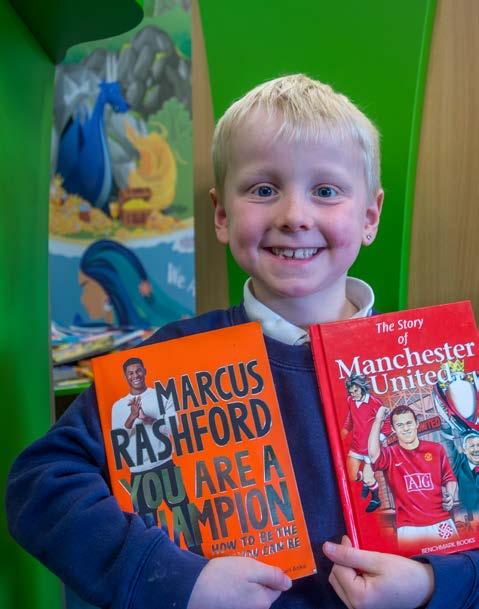
This South East London school is a one-form entry inner-city school where more than 70% of children are multilingual, speaking more than 36 languages. Families face significant hardship, with many living in shared accommodation, often in a single room, and 28% of pupils are eligible for Pupil Premium.
Luca began working with Bookmark at the end of Year 1 and is now finishing Year 3. He was selected for the programme due to very poor language skills and a challenging family context, including an older sibling with special educational needs. The early sessions were difficult for Luca; he cried often and struggled to engage.
Throughout the time he spent with his volunteer, Luca slowly became more and more engaged. His confidence grew. “He was starting to laugh. He was starting to read. He was starting to make jokes.”
In Year 3, Luca’s reading accuracy age has jumped from six to 11 in just one year: five years of progress in just 12 months.
“He’s made five years reading progress on a standardised reading test in one year. So from July 2024 to July 2025, he’s gone from six years to 11 years in his reading age. Which is bonkers.”
He can now read most texts in his class, a skill he didn’t have a year ago. “He can pick anything up pretty much that’s in his class now and read it, whereas he couldn’t read any of it a year ago.”
The One-to-one Reading Programme has filled a vital gap for Luca and other pupils at this school. “It’s incredible. We just couldn’t do it in the time and with the resources that we have available,” the school’s deputy head reflects. “From engagement and book talk, to having a grown-up that’s interested in you. They are just priceless.”
To ensure every school has what it needs to create a dynamic, vibrant reading culture, our Literacy Partner Programme offers comprehensive support and advice.
After conducting an in-depth literacy consultation to identify a school’s needs and challenges, we provide a bespoke two-year action plan and up to £10,000 in resources and activities
Our Literacy Partner Programme has more than doubled! With 50 new schools joining this year, we now have 90 schools taking part.
We delivered:
More than 30,000 books
More than 65,000 magazines
51 author visits to spark reading excitement
Library furniture to 85 schools, creating engaging indoor and outdoor reading spaces
A teacher told us, “The Literacy Partner Programme has had a really positive impact on developing our whole-school reading culture. The magazines have been amazing – engaging, high-quality and a big hit with the children. They’ve really helped to generate excitement around reading. The training I accessed not only supported our approach to reading for pleasure but also inspired new ideas and helped build momentum across staff... The programme is helping us create a more vibrant and joyful reading environment for everyone.”
from our first cohort reported that one year in, the Literacy Partner Programme has helped improve the quality of resources in their school
80% reported that it has improved the ‘reading buzz’ in their school.
142 Book Clubs
64 nighttime story walks to engage families
43 fully funded book fairs, so that every child can choose a book of their own to take home and keep
One teacher reflected: “We have book fairs every term, and it’s the same children that always get to come and choose a book. … the fact that every child at our book fair was able to choose a book for free... They were astounded.”
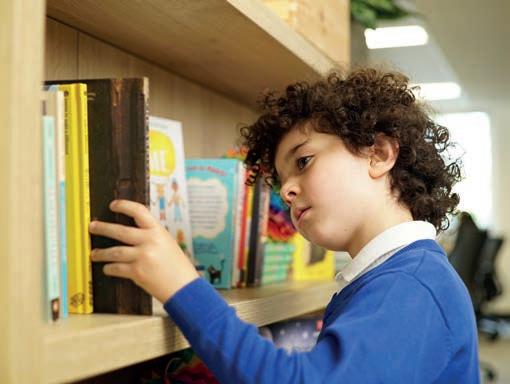
• Book ownership is linked to reading attainment: Children without a book of their own are more than twice as likely to have below-average reading scores (16.7% vs. 7.3%)21
• High-quality Continuing Professional Development (CPD) has an impact equivalent to ten years’ teaching experience 22
• Early shared reading predicts later attainment 23
One Derbyshire partner school, where 60% of pupils are eligible for free school meals, faced significant barriers to reading engagement before they joined the Literacy Partner Programme. A teacher from the school described how books were borrowed but often unread and not returned. Parental support was low, with few children reading at home. Resources were dated and unappealing, and book areas were cramped, often in corridors. “There was just quite a big lack of engagement in reading, both at school and outside of school… The library was stocked with really not very appealing books. So it wasn’t really a place that children enjoyed using or wanted to use.”
Through the Literacy Partner Programme, the library was transformed with new furniture and front-facing shelves, and children began to access high-quality books, which sparked excitement. Teachers noticed a dramatic shift: “There’s a lot more chat about, ‘Oh, have you read this one? Oh, this one’s really good... And if you like that, then you should try this.’ We didn’t have that before because they just weren’t that interested.”
Pupils now spend much more time in the library, actively seeking out new titles, and previously reluctant readers are participating.
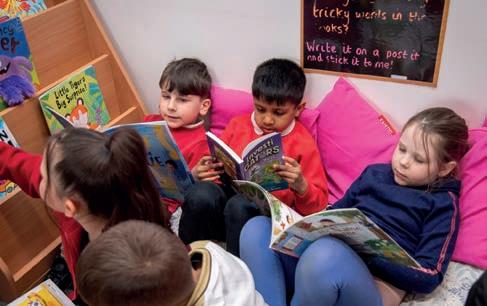
Graphic novels in particular are a hit:
“It was revolutionary… we have a graphic novel shelf in the library now and that’s where all the kids are… it’s been brilliant for disengaged readers.”
Family engagement is growing. The school invited parents to attend the final sessions of new clubs, such as Comic Book Club and Fact Finding Club, and a fully funded book fair brought nearly every family into school: “Because they all had the voucher, pretty much every single family in school came.” A reading breakfast, which was inspired by the reading for pleasure training, was another success: “We had a full hall. Loads of families engaged… reading with their children, looking at all the new books and things we’ve got. The reading for pleasure culture now is worlds away from what it was like 18 months ago.”
The school is looking forward to continuing to build on this inspiring change to further establish a whole-school reading culture.
The Your Story Corner Programme provides schools with high-quality, diverse resources to create nurturing and engaging reading spaces.
This year we expanded into three new areas, delivering Your Story Corner packs to 132 schools Each contained 200 new books, posters, worksheets and CPD training materials. To maximise our impact, we prioritised schools in disadvantaged areas where KS2 reading attainment is below the national average in two of the last three years.
Children and young people who use their school library are more likely to enjoy reading and writing, engage with it daily, and see themselves as better readers and writers.24
We gathered insights from teachers across the regions. Here’s what they told us:
• 84% of teachers reported a positive impact on the variety of texts pupils read
• Schools rated the quality, variety and diversity of their resources before and after delivery. Average scores increased from 5/10 to 8/10
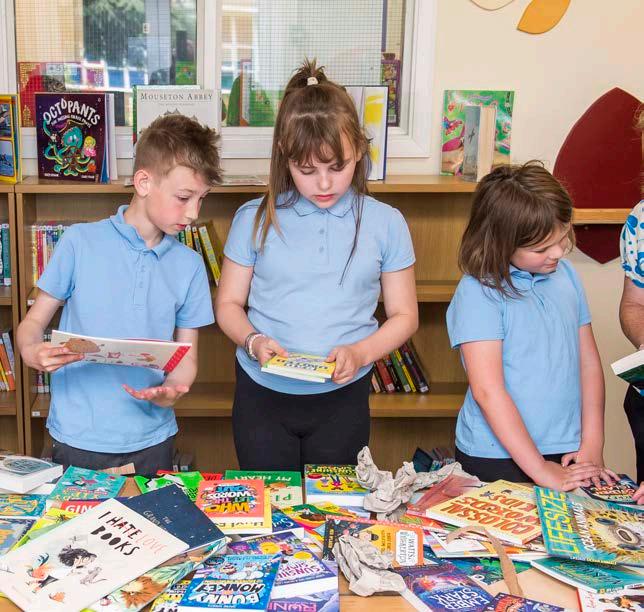
94% said the programme inspired improvements in their school’s reading culture
Rochdale
schools and 5,800 books
Derby and Derbyshire 80 schools and 16,000 books
Hull
23 schools and 4,600 books
“I feel special. I am getting the chance to look at all these new books. I love that.”
Hannah, age 10, Hull
From January 2026, the programme will be known as Roots to Reading, reflecting its focus on helping children build strong reading foundations.
Our School Network Programme builds on the foundations of the Your Story Corner initiative, providing sustainable, ongoing support to schools to continue improving whole-school reading cultures.
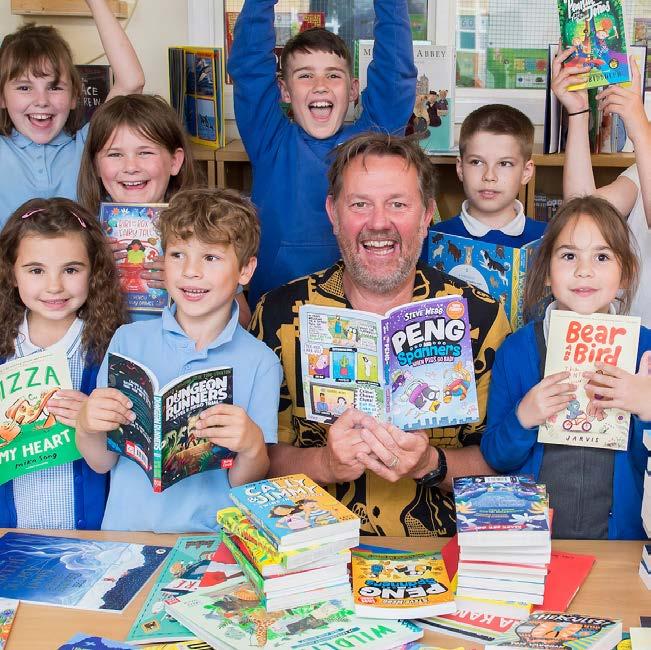
Each school in the network benefits from up to £1,000 of resources per year, plus access to our materials and training. The programme also offers networking opportunities for teachers and literacy leads to collaborate and share best practice.
Launched with 78 schools across Birmingham, Nottingham, Medway and Lincolnshire, schools received:
A scrapbook challenge to engage classrooms across the school
Teacher CPD suggestions for literacy leads
Access to author visits
Reading for Pleasure and Oracy training, in partnership with the Wandle Learning Partnership
agreed they have been inspired to develop their school’s reading for pleasure provision, their reading spaces or their wider whole-school reading culture as a result of receiving support from us.
One teacher told us, “The pupils have really benefitted from access to a range of diverse and new books. Due to budgets, we aren’t always able to buy current and up-to-date books, so it has been really great to be able to enjoy new and exciting books. Pupils have also enjoyed completing the scrapbooks by adding their book reviews to them. It has definitely promoted the love of reading.”
“I have learned so much more about how to promote reading for pleasure. Access to CPD has been great. This means that I have been able to develop initiatives across the school and develop our whole school approach.”
A teacher from a partner school
The programme distributed nearly 4,000 books and more than 55,000 magazines
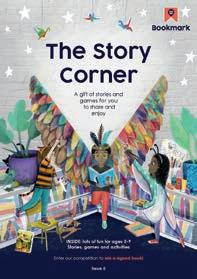
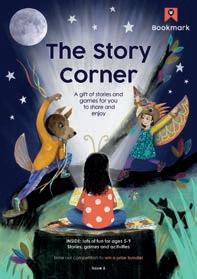
Our termly magazine, The Story Corner, continues to be a powerful tool in promoting reading for pleasure and preventing learning loss outside of school.
Designed for children who may not have books at home, each issue is packed with high-quality, diverse stories and engaging activities that inspire imagination and creativity.
In the 2024/25 academic year, we distributed 563,256 copies of The Story Corner magazine. This brought our total distribution to more than one million magazines shared since launch. The magazines were delivered through schools and a wide range of community settings, including food banks, warm banks, prisons, hospitals and refuges
Teachers consistently describe The Story Corner magazine as a high-quality, engaging resource that supports reading both in school and at home. One teacher shared in an interview:
“It’s nearly 60% Pupil Premium at my school. So pupils are not being bought magazines outside of school. They don’t have a huge access to books and literature at home, and the fact that the magazines are in nice bite-sized chunks and that the age range is five to 11 means that they’re really accessible to all of our learners… I love being able to give the children these resources.”
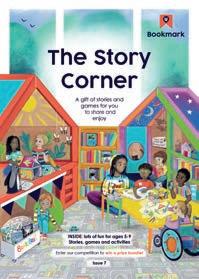
Delivery from 2020/21 to 2025/26
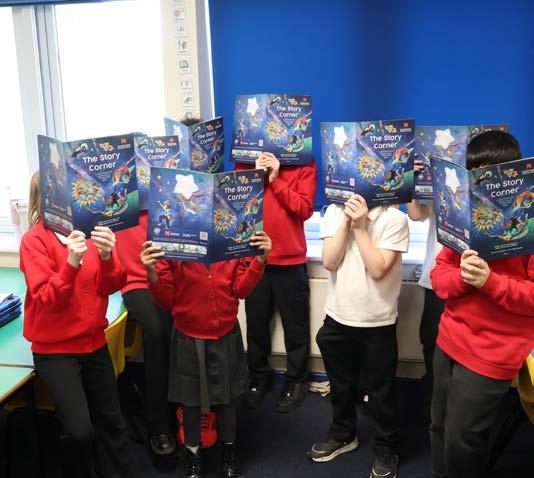
Partnership highlight: The Felix Project This year, we partnered with The Felix Project, which redistributes food and other essentials to those in need via charities, schools and food banks. We’re proud that The Story Corner is part of The Felix Project’s offering, a collaboration that means our magazine will reach children who might not have received it otherwise.
The Felix Project told us:
“The Story Corner magazines were very well received. The children were so happy. We included some colouring pens that we had, and quite a few of them spent an hour in a communal area colouring and fulfilling the tasks.”
Total distribution Distribution this academic year
563,256
1,000,000+
Our Rocket Packs are issued every term and include new books on compelling themes to fire up young imaginations and create a reading buzz in schools.
The packs provide new books across genres that are often missing from school libraries, such as graphic novels, poetry and non-fiction.
An Inspiration Pack accompanies each delivery to help teachers deliver inspiring, literacy-focused assemblies and class activities, and whole-school reading challenges. The packs also include our scrapbooks to encourage pupils to engage with the books, reflect on their reading and share their thoughts creatively.
A teacher reflected: “ The packs are amazing. We’ve loved them. We really like that there’s a theme each time… We’ve never been left with any book on the table. They get taken immediately.”
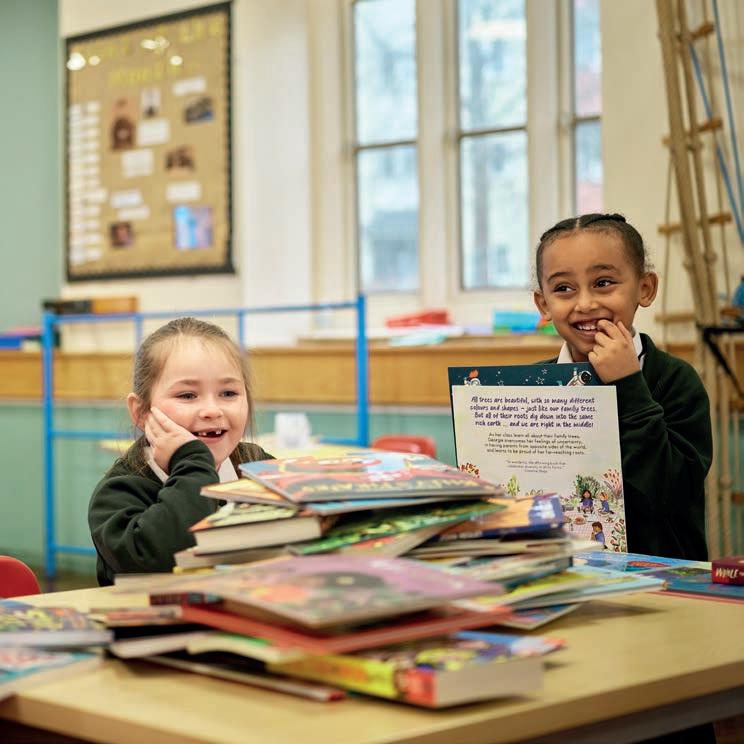
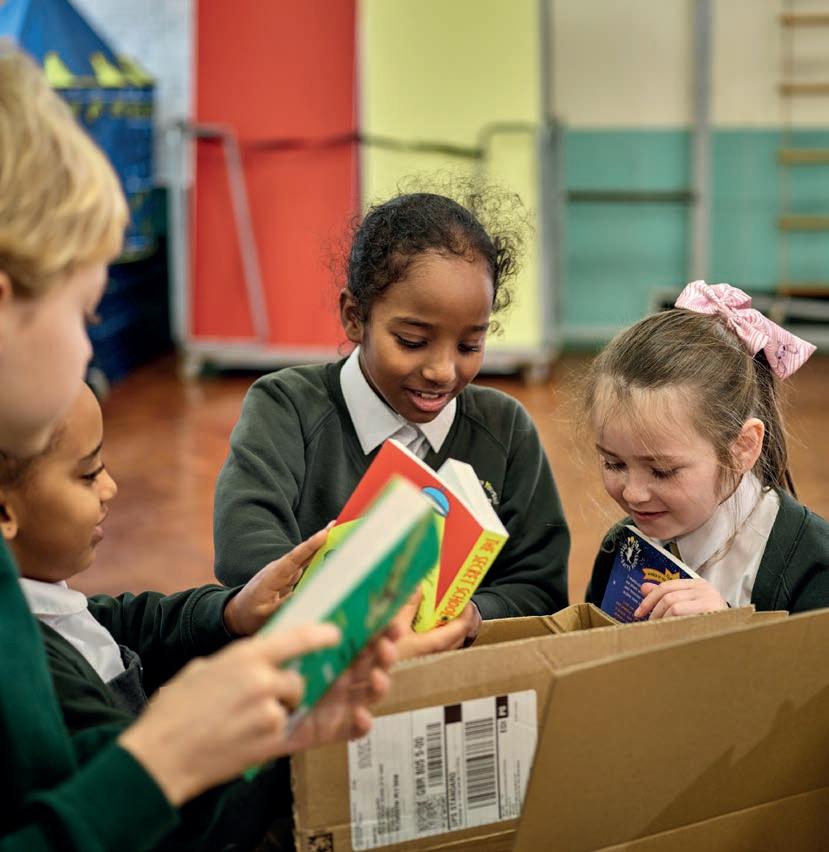
In 2024/25, we delivered 603 Rocket Packs and more than 12,000 books to our partner schools
One child, Malik, told
us,
“All the books you donated changed me into a person who loves books.”
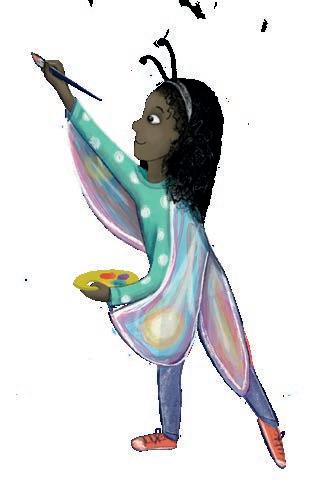

Our Book Clubs engage reluctant readers and foster a love of reading. Each club is fully resourced to ensure easy delivery for teachers. We have two themes: Comic Book Club and Fact Finding Club.
A library of books
Scrapbooks and high-quality art supplies
A teaching booklet with structured session plans
A subscription to a weekly magazine: The Phoenix for Comic Book Club, First News for Fact-Finding Club
The Comic Book Club remains one of our most popular interventions. Following a full pilot evaluation in its launch year, the Book Club has grown in scale: from 13 in 2023/24 to 87 in 2024/25.
One school used pupil data to identify white British boys in Years 3 and 4 as the group most in need of reading support. A teacher shared:
“When looking at the data, we found that those were the children who seemed to struggle with their reading the most. And not really engage… one of the children said that literally the reason why he loves reading so much now is because of the Comic Book Club and he’s there every week. So that has been really successful.”
[After the last session] “we passed the graphic novels from class to class because they were so, so, so popular. And then a really full circle moment is on World Book Day, we had some children dressing up as characters from the graphic novels…”
They were enjoyed by
3,600 children at 147
Book Clubs across partner schools this year
Launched in Spring 2025, the Fact Finding Club uses non-fiction texts to spark curiosity and build research skills. This year we provided 60 Fact Finding Clubs to partner schools.
One child, William, shared:
“After school, we have a club called the Fact Finding Club. In the club, we find facts for a certain category. Then, we gather all our facts and pop them down on a piece of paper (with details). When we are searching for facts, we always use your donated books! We are so thankful, I don’t even know how to express it anymore!”
Both clubs support family engagement, creating opportunities for children to share their work and celebrate their reading journeys. As one teacher described:
“On the final session, we invited all the parents of the children who had attended, and they all came in and sat with their children while they did that last session and got to share the work with them.”
In 2025/26, we will launch The Page Explorers Club, a picture Book Club aimed at KS1 children
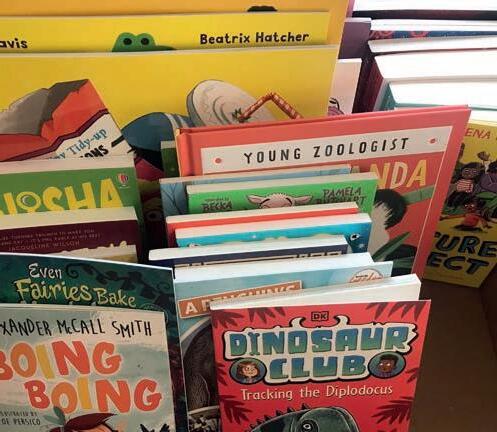
The Story Starter Programme is designed to spark a love of reading in children aged four to five before they begin reception.
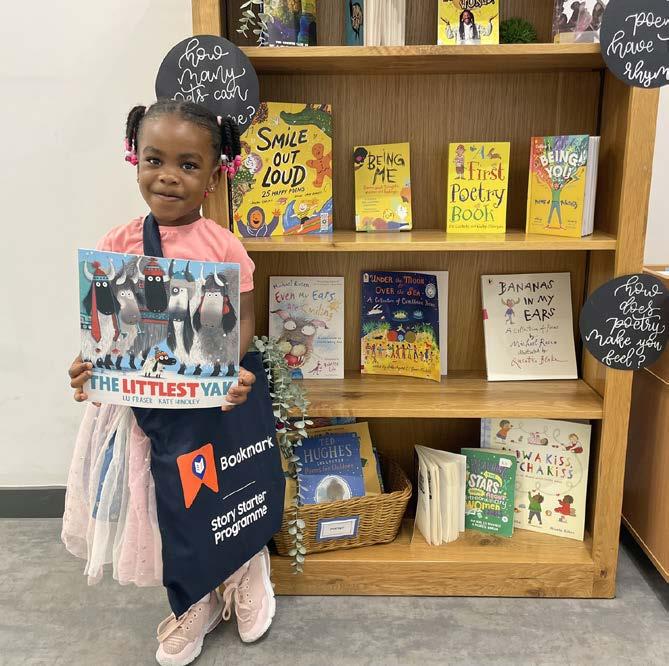
Children who read for pleasure early in life show better cognitive performance and healthier brain development by adolescence.25
This year: 84 schools were provided with our Story Starter Programme
3,970 children received Story Starter Packs
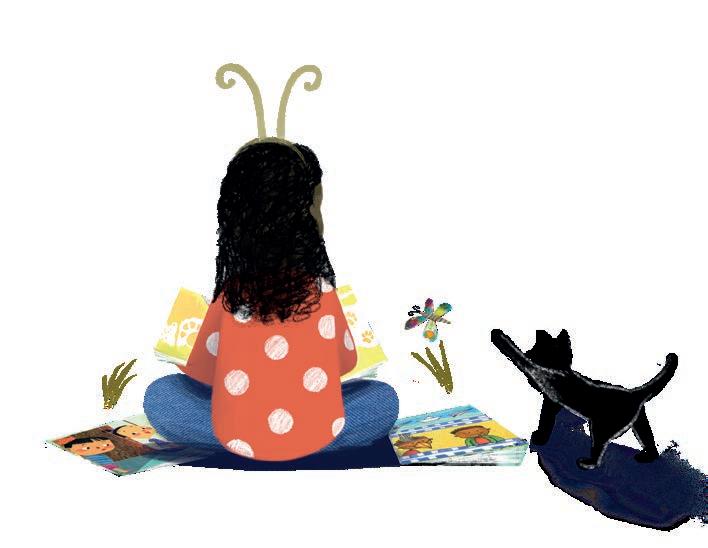
Each child receives a pack that includes a storybook, storytelling cards, finger puppets, stationery, guidance for parents and a copy of our Early Years
The Story Corner magazine. These resources are designed to support early literacy development at home and in school and create excitement around reading.
Evaluation findings show that the Story Starter Programme:
• Generates excitement around reading
• Encourages positive reading behaviours in children
• Supports families to take part in early literacy activities
• 97% of teachers at participating schools told us the packs encouraged children to read
• 100% told us the packs provided an opportunity for parental and family engagement
A teacher, Renata, told us:
“Lots of our children say they haven’t got books at home. So they all got their own. … It was a lovely picture book that you’d go and buy in a bookshop, which was perfect. They could write their name in it because it was theirs. It wasn’t dog-eared. It was all nice and shiny and new.”
On the day the packs were handed out, the teacher observed children gathering in small groups, reading together and sharing their excitement. “They had their books out together… they were all sitting reading the same book in little groups.” The teacher noted, “They were making up little stories already with their puppets on their fingers…”.
A parent wrote to us to say:
“We have made stories together with the story builder game cards. Sofia enjoyed speaking with the puppets. What a lovely starter programme package, we are thoroughly enjoying it. Thank you.”
This year, we offered grants to primary schools for Literacy CPD or to support the development of a whole-school reading culture.
Schools applied for funding with proposals based on their own needs and priorities. Bookmark grants allow each school to propose what will make the most immediate difference for their pupils. This approach means we’re expanding the breadth of ways we tackle the challenge of reading, supporting a wide range of strategies that reflect the diverse needs and contexts of our partner schools.
Applications included plans to refresh libraries and reading corners, buy new books and magazines, invest in staff training, launch book clubs and reading ambassador schemes and engage families in reading.

One school will use the grant to buy mini audio players for staff to record stories in their own voices. Children can follow a copy of the story’s text as they listen along to their teacher’s narration enabling younger and SEND children to access stories in a familiar voice. The project will make stories more accessible and engaging for those who may not yet be able to understand the text and benefit three classes of 30 children
Another school recently transformed a cloakroom into a dedicated library space. With their grant, they plan to purchase feature furniture, including a reading tree, to enhance the space and create a buzz around reading. This initiative is designed to benefit all children from Year 1 to Year 6, reaching 280 pupils.
One teacher told us:
“The flexibility is really helpful in a time where school budgets are just not what they need to be for schools.”
A total of:
£11,000
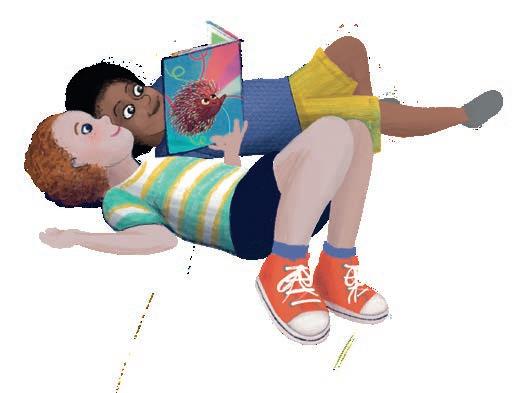
This year, we offered 44 grants of £250
Family engagement is one of the most impactful, yet challenging, pathways to improving literacy outcomes.
We support our partner schools to help families engage with reading at home through tools and resources shared across our different programmes.
Our programmes have provided access to resources for 15,937 families across 90 schools this year

• Children who are read to frequently at age five are half a school year ahead in reading at age 15 26
• BookTrust’s 2024 research with more than 2,000 low-income families found that shared reading experiences, such as bedtime stories and library visits, create positive emotional associations with books and foster generational cycles of reading 27
Isla, a child at a partner school told us:
“Thank you Bookmark for all your hard work. We are very grateful to have you”.
In addition to our Story Starter Programme, The Story Corner magazine, Book Clubs, night-time story walks and fully funded book fairs, this year we delivered:
Created in partnership with The Open University Professor Teresa Cremin, the videos were shared with 399 partner schools to help parents create joyful, relaxed reading experiences at home.
One teacher told us: “It’s a one-stop shop… it literally just has everything there that we would personally say to parents.”
Pop-up reading cafés
50 schools were provided with resources to run reading cafes.
A teacher told us how this “really encouraged” parents at their school. “At the first one, parents sat around the edges … then in second and third ones, they were starting to read the stories as well.”
Bookmark’s Kahoot! page
Offers quizzes and interactive activities designed to enhance family engagement with Bookmark’s resources, including The Story Corner magazine. This year, Kahoot! resources have had 804 plays, with Read-Along stories and quizzes being the most popular.

Our evaluation is guided by Bookmark’s organisational Theory of Change, built around five evidence-based pathways to reading. These pathways underpin all ten programmes and our aim to support schools in developing a whole-school reading culture. You can find our Theory of Change online.
Each programme has its own evaluation framework, designed to measure its contribution to one or more pathways. These frameworks define aims, outputs, outcomes and the data collection methods used to assess impact.
We assess the impact of volunteer-led reading sessions on children’s reading attitudes, behaviours, skills and attainment through:
• Teacher surveys each term
• Volunteer surveys after each programme and at the end of the year
• Reading-level data collected before and after the programme to understand how children are performing in relation to the expected standard
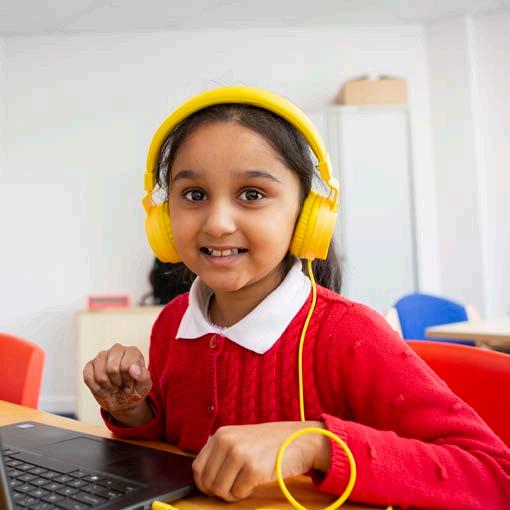


This programme provides holistic support across all five pathways. Its evaluation includes:
• Mixed-methods data, combining surveys, interviews, observations and in-depth case studies
• Stakeholder perspectives, including teachers, leaders, parents and pupils
• Tracking of Key Stage 2 attainment from programme entry onwards
Data collection tools:
We gather insights on our programmes through:
• Pre- and post-delivery surveys
• Interviews
• Observations
• Focus groups


This year, we piloted our new child-centred, Day in the Life case study research method, developed in collaboration with Dr Yaspia Salema and Chapter One. This helps us understand impact through children’s lived experiences. (see page 6)
We conducted a retrospective analysis of Key Stage 2 attainment using national and internal data, supported by machine learning. We plan annual updates as the dataset grows.
We collect feedback from schools through termly surveys and check-ins, and from volunteers via end-of-programme and annual surveys. This informs our improvement priorities and programme refinement.
We wouldn’t be able to change the story for so many children if it wasn’t for our incredible supporters.
We work with a number of generous individuals and organisations who play a crucial role in helping us provide reading support to children across the UK. We are truly grateful for your continued commitment to our work and the shared vision that every child deserves the opportunity to discover the joy of reading.
During our first year in partnership with Barings, we’re proud to have supported 1,500 children through the Story Starter Programme, while also providing 10 partner schools with vital support through other literacy programmes including the One-to-one Reading Programme and The Story Corner magazine.
We are especially grateful to Barings employees who participated in Bookmark events, contributing a total of 86 volunteer hours. Volunteer employees packed books for children to unwrap ahead of the winter holidays and assembled 200 Story Starter Programme packs funded by Barings. As part of Barings’ Global Month of Service, we worked together to refresh a school library in London,
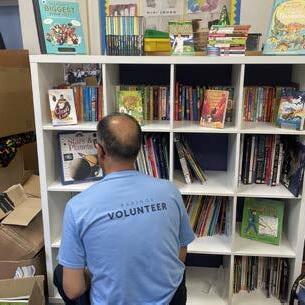
Barings employees dedicated
86 hours of volunteering to Bookmark in 2024/25
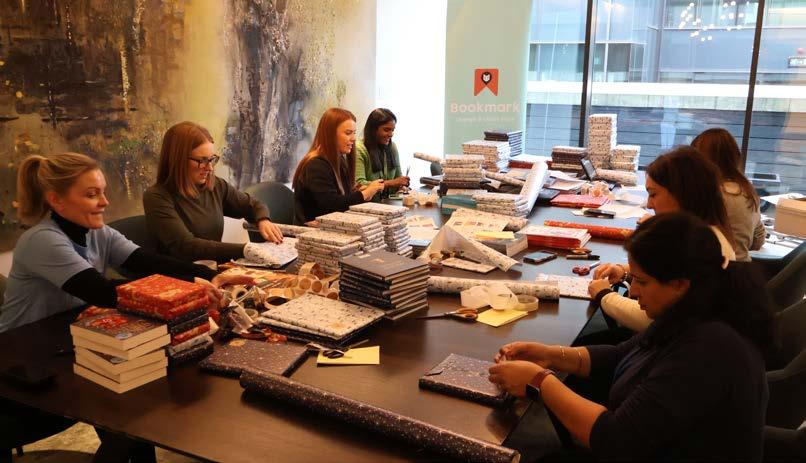
creating a more inviting space for young readers. Barings’ London interns also contributed by helping us develop new ways to engage and retain young volunteers (aged 18–24) for our One-to-one Reading Programme.
Elizabeth Cooper, Head of Corporate Citizenship at Barings, said:
“At Barings, we believe that every child deserves the opportunity to reach their full potential through access to early childhood education and literacy. That’s why we’re proud to partner with Bookmark, helping children develop the reading skills they need to succeed.”
We extend our heartfelt thanks to Barings and all our partners for their incredible support throughout 2024/25. Together, we’re making a lasting impact and we look forward to growing these partnerships to reach even more children over the next year.
We couldn’t do it without you! Thank you to everyone who has supported us this year. Alongside many who wish to remain anonymous, we would like to recognise the generosity of the following supporters.
Colm & Joanna O’Sullivan Alcumus
Bloomberg
Clearance Capital Close Brothers
Garfield Weston Foundation
Generational Foundation, Meg & Andrew Headley
3i
Alastair Fox
Alex Mahon
Andrew Strudwick
Chris Busby
Cyrus Kapadia
Dawn Marriott
Faye Hamilton
GIL Charitable Trust
Sharon & Paul Pindar
A huge thank you to The Literacy Network of philanthropists whose support makes it possible for us to scale in ways that would otherwise be impossible.
Literacy Capital Plc
AKO Foundation
The Barratt Redrow Foundation
Bank of America
Barings
The CVC Foundation The Harrington Foundation
Mayfair Equity Partners
Mike Hinchliffe Oakley Capital
OakNorth
PAI Partners
RSM UK Foundation
Tenzing
The Childhood Trust
The Inflexion Foundation
The Symondson Foundation
The Warburg Pincus Foundation
Jose Barreto Killik & Co La Fosse
Mark Sherman
Morgan Lewis Nataša Williams
Anthony & Sandra Gutman
Brette & Gordon Holmes
Gordon & Nikki Hurst
James O’Gara & Camilla Castro
Michael Bruun & Mette Treppendahl
Mick & Shirley McDonagh
Pev & Zanna Hooper
Nexus Media Group
Norton Rose Fulbright LLP
PwC
Sarah Macpherson The Maurice Hatter Foundation
Tom Green
Acacium Group
Book Dash
Browns Addleshaw Goddard
Children’s Book Project
Corndel
HarperCollins Publishers
Kahoot!
Peters
Department for Education. (2025). Academic Year 2024/25; Key Stage 2 Attainment. Department for Education. (2025). Academic Year 2024/25; Key Stage 2 Attainment. Department for Education. (2025). Academic Year 2024/25; Key Stage 2 Attainment. Department for Education. (2024). Survey of Adult Skills 2023: National report for England. Quigly, A. & Coleman, R. (2021). Improving literacy in secondary schools. Education Endowment
6 Gilbert, L., Teravainen, A., Clark, C., & Shaw, S. (2018). Literacy and life expectancy. National Literacy Trust.
7 Rodriguez Cabrera, K., Gomez, R., & Franklin, J. (2024). Early literacy matters: Economic impact and regional disparities in England. Pro Bono Economics.
8 Clark, C. & Teravainen-Goff, A. (2018). Mental wellbeing, reading and writing: How children and young people’s mental wellbeing is related to their reading and writing experiences. National Literacy Trust.
9 Sullivan, A. & Brown, M. (2013). Reading for pleasure and progress in vocabulary and mathematics. Institute of Education, University of London.
10 OECD. (2002). Reading for change: Performance and engagement across countries. Organisation for Economic Co-operation and Development.
11 Clark, C. & Teravainen-Goff, A. (2025). Children and young people’s reading in 2025. National Literacy Trust.
12 Clark, C., Picton, I. & Stoumpou, K. (2025). Children and young people’s book ownership in 2025. National Literacy Trust.
13 Clark, C. & Picton, I. (2023). Children and young people’s access to books and educational devices at home during the cost-of-living crisis. National Literacy Trust.
14 National Foundation for Educational Research. (2024). The ongoing impact of the cost-of-living crisis on schools..
15 Sutton Trust. (2025). School funding and pupil premium 2025.
16 Primary School Library Alliance. (2022). Working together towards a library in every primary school.
17 Picton, I., Moisi, I., Jackson, T., & Clark, C. (2024). Parents’ support for young children’s literacy at home in 2024. National Literacy Trust.
18 BookTrust. (2025). Reading Rights: Interim Report Spring 2025.
19 Education Endowment Foundation (2021). One to one tuition.
20 Education Endowment Foundation (2021). Oral language interventions.
21 Picton, I., Clark, C. & Oram, N. (2024). Children and young people’s book ownership in 2024. National Literacy Trust.
22 Fletcher-Wood, H. & Zuccollo, J. (2020). The effects of high-quality professional development on teachers and students. Education Policy Institute.
23 BookTrust. (2023). The Benefits of Reading.
24 Clark, C. and Teravainen-Goff, A. (2018). School libraries. National Literacy Trust
25 Sun, Y.-J., Sahakian, B. J., et al. (2023). Early-initiated childhood reading for pleasure: Associations with better cognitive performance, mental well-being and brain structure in young adolescence.
26 BookTrust. (2023). The Benefits of Reading.
27 BookTrust. (2023). Reading in the Early Years: Supporting generational cycles of readers.