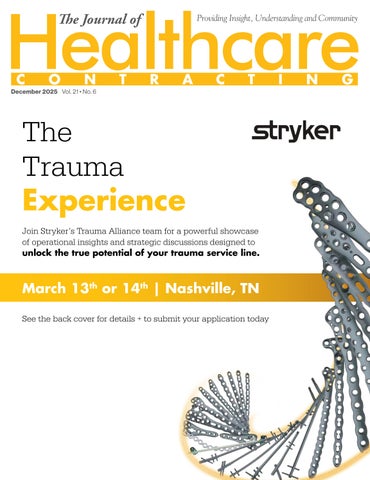
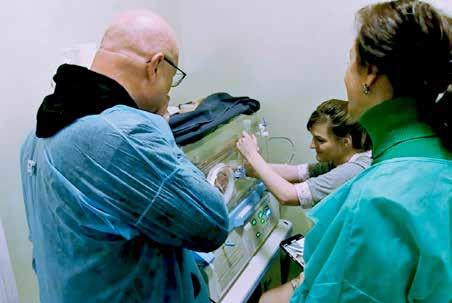
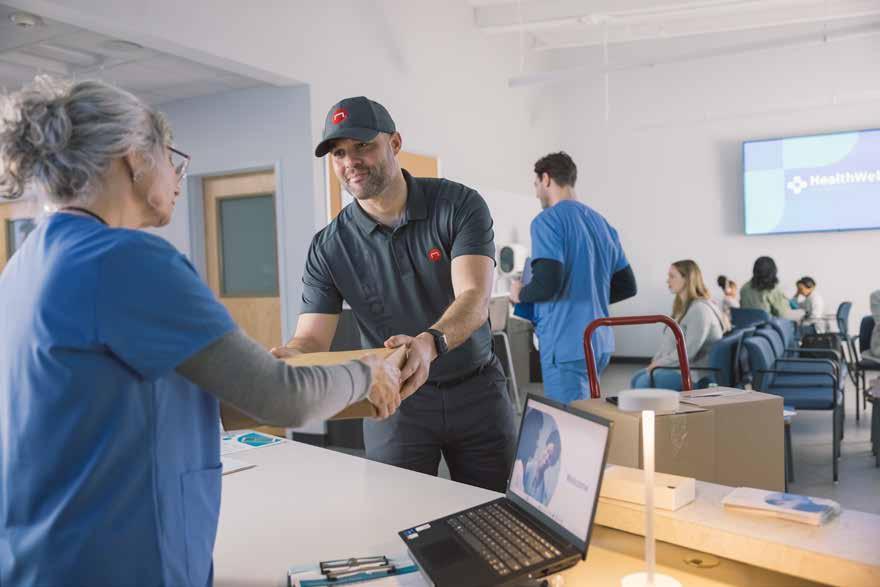
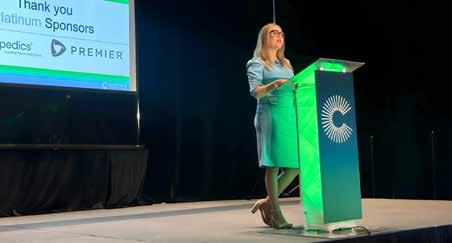
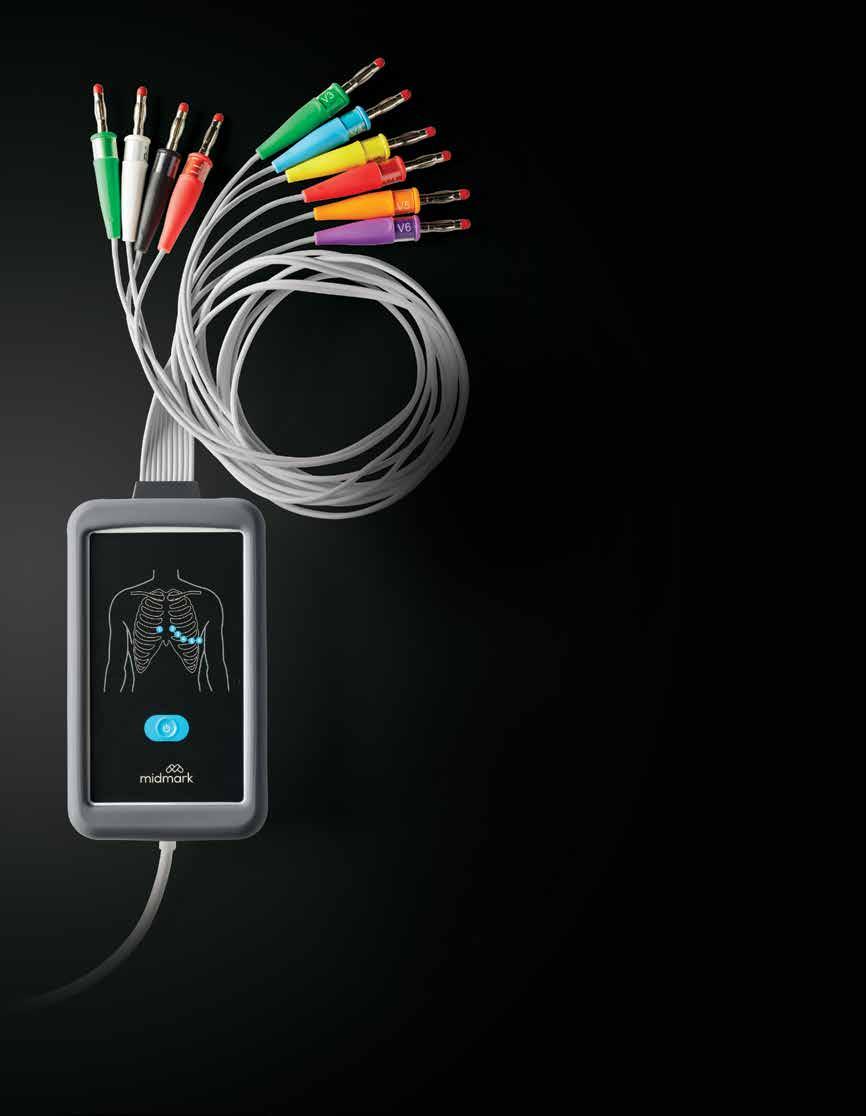
Join S tr yker ’ s Trauma Alliance team for a power ful showcase of operational insights and s trategic discussions designed to unlock the true potential of your trauma ser vice line.
See t he back cover for details + to submit your application today March 13th or 14th | Nashville, TN
The T rauma Experience
Presented by: Alliance T rauma Value Prog ram
March 13th or 14th | Nashville,
TN
Discover new ways to elevate your or t hopaedic trauma ser vice line wit h insights, perspectives, and approaches designed to spark meaningful progress.
Join t he Alliance team in Nashville for:
+ A look at the trauma landscape and the oppor tunities ahead
+ Tur ning data and insights into practical next steps
+ Building alignment across key voices and teams
+
+ Putting new strategies and tools into motion for lasting impact
Scan the QR to submit your application
Women Leaders in Supply Chain
WHAT A DIFFERENCE OUR DIFFERENCE MAKES.
HealthTrust Performance Group solves the toughest challenges by leveraging our decades of senior level healthcare experience to optimize clinical and operational performance while providing unmatched savings. Its a difference only HealthTrust can make.
The Journal of Healthcare Contracting is published bi-monthly by Share Moving Media
350 Town Center Ave, Ste 201 Suwanee, GA 30024 -6914
Phone: 770/263-5262
FAX: 770/236-8023
e-mail: info@jhconline.com www.jhconline.com
Editorial Staff
Editor Graham Garrison ggarrison@sharemovingmedia.com
Senior Writer and Columnist
R. Dana Barlow rickdanabarlow@wingfootmedia.biz
Editor-in-Chief, Dail-eNews
Jenna Hughes jhughes@sharemovingmedia.com
Content Creator Pete Mercer pmercer@sharemovingmedia.com
Art Director Brent Cashman bcashman@sharemovingmedia.com
Publisher John Pritchard jpritchard@sharemovingmedia.com
Circulation Laura Gantert lgantert@sharemovingmedia.com
The Journal of Healthcare Contracting (ISSN 1548-4165) is published monthly by Share Moving Media, 350 Town Center Ave, Ste 201, Suwanee, GA 30024-6914. Copyright 2025 by Share Moving Media. All rights reserved. If you would like to subscribe or notify us of address changes, please contact us at the above numbers or address.
POSTMASTER: Send address changes to Share Moving Media, 350 Town Center Ave, Ste 201, Suwanee, GA 30024-6914. Please note: The acceptance of advertising or products mentioned by contributing authors does not constitute endorsement by the publisher. Publisher cannot accept responsibility for the correctness of an opinion expressed by contributing authors.
Women Leaders in Supply Chain
2 Publisher’s Letter: Leading the Future of Healthcare Supply Chain: Strong Voices, Stronger Collaboration
4 Eliminating Barriers to Medical Supplies
MedWish Medworks merges healthcare access, sustainability, and volunteerism into one mission – ensuring every person has the chance to live a healthier life.
10 The Untapped Potential for Nonclinical Procurement in the Healthcare Supply Chain
Why every linen, meal, and IT service matters in building a resilient system.
44 Weathering the Storm
Hurricane Helene challenged Baxter’s North Cove operations, but rapid recovery efforts, technological investments, and community-focused support ensured critical medications continued reaching patients nationwide.
50 Clinicians and Supply Chain –Turning Dodgeball into Volleyball Conversation, collaboration works with sportsmanlike conduct.
55 Building Stronger Partnerships
56 Climbing the Lattice vs. the Ladder
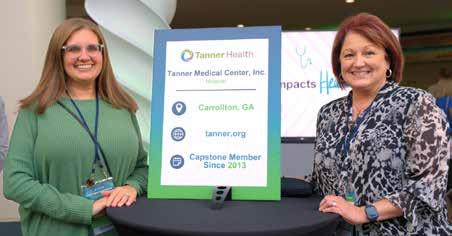
58 The Bridge Between Supply Chain & Healthcare Professionals Starts at the Capstone Forum
61 Adapting to Disruption Policy pressures on healthcare supply chains.
62 The Simplicity Shift
Using the art of simplicity as a strategic tool.
64 Contracting News
Leading the Future of Healthcare Supply Chain: Strong Voices, Stronger Collaboration
Across healthcare today, supply chain is more than a behind-the-scenes operation. It is a cornerstone of quality care, operational strength, and organizational resilience. And at the center of this critical work are talented leaders who understand that the best outcomes are achieved not in isolation, but through partnership and shared purpose.
This issue of The Journal of Healthcare Contracting spotlights the rising impact of women leaders in healthcare supply chain, and the vital collaboration between clinicians and supply chain professionals.
Our feature “Women Leaders in the U.S. Healthcare Supply Chain” showcases the voices of remarkable individuals who are redefining how healthcare operates. They are navigating disruption with creativity, advancing equity by elevating diverse perspectives, and improving patient care through smarter strategies and stronger supplier relationships. These leaders demonstrate resilience and clarity at a time when the stakes have never been higher. Their stories remind us that progress in healthcare supply chain is driven by people –individuals with purpose, vision, and an unwavering commitment to patients.
But leadership also reveals itself in the everyday interactions that shape trust inside hospitals and health systems. Our second major feature,
“Clinicians and Supply Chain – Turning Dodgeball into Volleyball,” highlights how collaboration between clinical and supply chain teams is essential to operational success. When conversations become adversarial – rooted in cost alone or clinical preference without context – everyone loses: supply chain, clinicians, and ultimately the patient. However, when both sides listen, share evidence, and problem-solve together, decisions improve. Respect replaces friction. Teamwork replaces turf battles.
What ties these two features together is the recognition that healthcare moves forward through relationships – those built on transparency, empathy, and a willingness to learn from one another. The women leaders we highlight embody these qualities. And the shift from “dodgeball” to “volleyball” is a call to extend them across the organization, ensuring that supply chain and clinical teams are truly aligned around the patient.
As we close another year of unprecedented challenges, we celebrate the professionals who continue to step up, speak up, and lead with both strength and collaboration. Thank you for the work you do to ensure care is accessible, high-quality, and sustainable for the communities we serve.
Here’s to an even stronger, more connected healthcare supply chain in the year ahead.
John Pritchard
Eliminating Barriers to Medical Supplies
MedWish Medworks merges healthcare access, sustainability, and volunteerism into one mission – ensuring every person has the chance to live a healthier life.
In Northeast Ohio, a unique humanitarian nonprofit is redefining the way healthcare resources are distributed, both locally and globally. MedWish Medworks (MW2) is committed to advancing health equity and environmental sustainability by providing essential care, redistributing surplus medical supplies, and connecting medically underserved communities with vital resources. Its vision is ambitious: a world free from healthcare disparities, where everyone has access to high-quality care and essential resources.
“At MedWish Medworks, we harness the power of volunteerism and partnerships to eliminate barriers to medical supplies, referrals, and care,” the organization explains. “We empower individuals to live healthier lives.” This mission drives every aspect of MW2’s work, from local clinics to international brigades, and underpins its innovative approach to addressing healthcare inequities.
Providing essential care
Central to MW2’s mission is the delivery of essential care. Each year, the organization hosts six to eight medical clinics at locations selected specifically for their accessibility to neighborhoods with the highest needs – areas marked by poverty, high rates of uninsured residents, and other social determinants of health. Whenever possible, MW2 clinics include a wide range of medical specialties, ensuring comprehensive care for participants. Beyond domestic clinics, MW2 organizes volunteer mission trips to impoverished countries, staffing brigades with healthcare professionals – including doctors and nurses – and lay volunteers who assist with translation, clinic coordination, and other critical roles. In 2025, these brigades served communities in Honduras and the Dominican Republic, continuing a longstanding tradition of global outreach that includes El Salvador, Nicaragua, Guatemala, Peru, and Kenya.
Redistributing surplus medical supplies
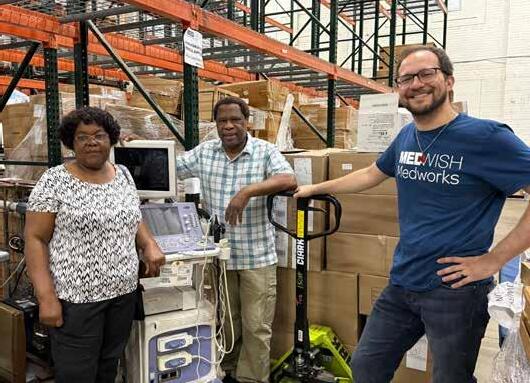
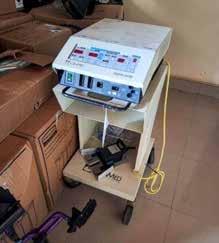
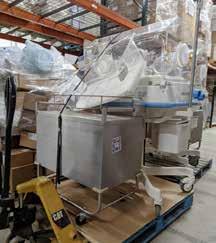
MedWish Medworks leverages its extensive network and inventory to ensure that surplus medical supplies and equipment reach those who need them most.
Internationally, the organization partners with healthcare facilities and medical missions in developing areas, providing items that range from essentials like wheelchairs or ventilators to full restocks of clinics and hospitals. Recipients span Asia, Africa, Eastern Europe, the Middle East, and Central and South America, including clinics operating in conflict zones or responding to natural disasters.
Domestically, MW2 collaborates with more than 300 social service agencies and nonprofits in Northeast Ohio to distribute free medical supplies and equipment. Recipient organizations submit wish lists, which MW2 fulfills from its inventory. Items provided include everything from walkers and home health beds to diapers and hygiene supplies. This thoughtful redistribution maximizes the impact of donations, ensuring that medical resources are efficiently directed to those who need them most.
Connecting communities with vital resources
MW2’s work extends beyond providing supplies and care to navigating complex healthcare systems. At every clinic, a Navigation Team assists patients with health insurance questions, Medicaid and SNAP applications, and connections to primary medical homes and other social resources. By building long-term, trusting relationships, the team supports followup care, improves access to services, and enhances overall well-being in medically underserved communities.
This holistic approach positions MW2 not merely as a supplier of resources but as a partner in health equity, ensuring that patients have the guidance and tools they need to maintain their health over time.
Ensuring quality and compliance
Maintaining high-quality, usable medical supplies is critical to MW2’s operations. With a volunteer force exceeding 3,500 annually, donated items are sorted, counted, and packed for redistribution. Volunteers remove expired, broken, or soiled items, while retired biomedical engineers test and vet more technical equipment.
The sorting process is meticulous. Initially, volunteers conduct “gross sorting,” reviewing donations for expiration and quality and categorizing items into 22 medical areas, such as cardiac, orthope-
dics, wound care, and OBGYN. During “fine sorting,” items within each category are separated, inspected, and prepared for bulk packaging with detailed labeling, including count, weight, and expiration date. This rigorous process ensures that each donation meets strict standards before leaving the warehouse.
Selecting recipient organizations
Not every clinic or organization qualifies to receive MW2’s supplies. Each potential recipient completes an application detailing
their operations, population served, and capacity to handle donations. For international shipments, a U.S.-based nonprofit must sponsor the request, and additional vetting is required for disaster zones. Domestic recipients, likewise, must be nonprofit or social service organizations that serve specific populations, from stocking backpacks for back-to-school events to providing equipment for patients who cannot afford it. Applications are carefully reviewed by MW2 staff before supplies are delivered.
Internationally, MW2 ensures compliance with country-specific regulations. Recipient organizations coordinate shipping and often engage customs agents to facilitate entry. All recipients sign agreements affirming that supplies will not be distributed to restricted entities, will not be sold, and will be used solely for humanitarian aid.
Measuring impact
MedWish Medworks employs a combination of quantitative and qualitative measures to assess the effectiveness of its programs. Metrics include orders fulfilled, pounds of equipment shipped, number of recipients served, and geographic reach. Whenever possible, the organization tracks the number of individuals impacted by shipments, though many international clinics operate in under-resourced locations with limited data collection capacity.
Qualitative feedback – including stories, photographs, and testimonials from recipients – provides invaluable context for evaluating long-term outcomes. Domestically, MW2 tracks shipments, items distributed, and estimated numbers of people served, while clinic teams
collect data on patient demographics, services offered, and follow-up care. This multifaceted approach ensures that the organization continually evaluates its operations, benchmarks success, and identifies areas for improvement. MW2 is currently expanding its reach and capabilities. Following the merger of MedWish International and Medworks last year, the organization has unified all programming under one roof. Its immediate priorities
include deepening existing programs, improving operational systems, and meeting the growing demand for services.
Looking forward, MW2 plans to increase its budget and expand its pool of volunteers, supplies, and equipment, enabling the organization to help more people in more profound ways. The goal is not just to meet immediate needs but to create sustainable, lasting impact on health equity and environmental sustainability.
Equip your medical practice, all in one order.
Healthcare-grade chairs.
Commercial disinfectants.
Breakroom snacks.
Keep your practice running smoothly through flu season and beyond with corner-to-corner solutions from the waiting room to the back o ce so you can focus on your patients.
GPO member savings for the best pricing available.
Digital account tools to control rogue spending.
desktop delivery to over 98% of the U.S.
Digital account tools to control rogue spending.
Opportunities for partnership
MedWish Medworks offers multiple avenues for individuals and organizations to support its mission:
1 Be an ambassador: Spread the word in your community and network, and share MW2’s initiatives on social media.
2 Donate surplus medical supplies and equipment: Medical professionals and manufacturers can redirect unused inventory, reducing landfill waste and providing critical support to underserved communities. MW2 provides tax documentation and, in some cases, direct feedback on the impact of donations.
3 Conduct a supply drive: Collect items from home, workplace, or community, or contribute through MW2’s Amazon wishlist to support clinics and nonprofit partners.
4 Make a financial donation:
Funding is essential to MW2’s operations, and every contribution helps sustain and expand programs.
These partnerships extend MW2’s reach and amplify its impact, ensuring that more patients receive the care and resources they need.
A vision for the future
MedWish Medworks exemplifies the power of combining healthcare, volunteerism, and sustainability to create meaningful
change. By redistributing surplus medical supplies, facilitating access to care, and providing navigation support to underserved communities, the organization addresses both immediate and systemic healthcare inequities.
Its model demonstrates that healthcare access is not solely about financial investment but also about resourcefulness, collaboration, and a commitment to serving those most in need. Through a combination of strategic planning, meticulous operations, and volunteer engagement, MW2 has built a scalable framework that reaches across neighborhoods in Northeast Ohio and extends to the most resource-limited regions of the world.
The organization’s rigorous approach to measuring impact, paired with a qualitative understanding of community needs, ensures that its work remains both accountable and responsive. By emphasizing partnerships and community involvement, MW2 encourages individuals and organizations alike to contribute to its mission, magnifying the effects of its programs and fostering a culture of shared responsibility.
As healthcare disparities persist and the demand for medical resources grows globally, MedWish Medworks continues to lead by example – demonstrating that one nonprofit can drive meaningful change while maintaining sustainability, efficiency, and compassion at the heart of every initiative. Through its clinics, brigades, and supply redistribution efforts, MW2 is not just providing care – it is empowering communities, saving resources, and building a healthier, more equitable world.
For more information, visit medwish.org, or call (216) 692-1685.
Building Resilience Through Community Supplier Development
When supply chains strain, hospitals need more than competitive pricing. They depend on suppliers who understand what’s at stake; those who move quickly, adapt to market shifts and deliver the right products at the right time are the ones who succeed. Increasingly, that capability is being found among small or disadvantaged businesses (SWVEs) that understand local markets and are deeply invested in the communities they serve.
Recognizing this early in the company’s inception, HealthTrust Performance Group built a program designed to strengthen these connections. Its Community Supplier Development Program focuses on identifying, supporting and expanding the role of SWVE suppliers within the healthcare supply chain, helping hospitals remain nimble and resilient amid ongoing change.
“Our members rely on supply partners who bring both dependability and flexibility,” says Joey Dickson, Vice President of Strategic Sourcing at HealthTrust. “Smaller, regional business often have the
For many health systems, engaging with SWVE suppliers has yielded benefits beyond operational stability. These partnerships often lead to greater service responsiveness, faster innovation and shared accountability.
ability to shift production or fulfillment quickly, which helps hospitals maintain continuity and control costs.”
The program not only connects health systems with qualified SWVE suppliers but also provides contracting guidance and visibility within HealthTrust’s sourcing channels. It’s an approach that builds
capacity while simultaneously driving meaningful local economic impact.
“It’s not about replacing large suppliers – it’s about creating balance,” Dickson adds. “When hospitals can leverage a mix of regional and national partners, they’re better positioned to serve patients and sustain performance through disruption.”
For many health systems, engaging with SWVE suppliers has yielded benefits beyond operational stability. These partnerships often lead to greater service responsiveness, faster innovation and shared accountability. Smaller enterprises tend to form close working relationships with hospital teams, allowing for faster problem-solving and a more personalized level of support.
As health systems plan for the future, the importance of regional supply relationships continues to grow. Initiatives like HealthTrust’s Community Supplier Development Program demonstrate how sourcing strategies can strengthen both local economies and national healthcare infrastructure.
By aligning purchasing priorities with community engagement and supplier growth, HealthTrust is helping hospitals do more than manage through volatility – it’s helping them build a supply network rooted in partnership, adaptability and shared value.
HealthTrust is making missions possible through Community Supplier Development by connecting hospitals with the partners that keep healthcare moving. Want to learn more?
Start here scan the QR Code:
Joey Dickson, VP of Strategic Sourcing
The Untapped Potential for Nonclinical Procurement in the Healthcare Supply Chain
Why every linen, meal, and IT service matters in building a resilient system.
BY PETE MERCER
Clinical procurement often takes center stage in the healthcare industry, with clinicians and decision makers focused on securing life-saving medications, surgical tools, and medical devices. However, there is a largely untapped opportunity in the net revenue of a health system: nonclinical procurement. Encompassing everything from IT services and office supplies to facility maintenance and food services, nonclinical procurement is easily overlooked as a strategic lever for cost reduction, operational efficiency, and even patient satisfaction. Unlocking its potential could reshape the economics of healthcare delivery, without compromising clinical outcomes.
John Dockins works as a partner for healthcare client operations at LogicSource, an organization that provides sourcing and procurement services to a variety of clients and industries. The Journal of Healthcare Contracting sat down with Dockins to discuss what it takes to build a strong supply chain, how to respond when your organization receives an important designation, and his next steps at LogicSource.
Building a strong supply chain
The healthcare industry lives and dies on the stability of the supply chain. During the pandemic, we saw what happens when the healthcare supply chain is weakened or inefficient. The industry needs to invest in fortifying and strengthening the supply chain across the board to improve efficiency, processes, and patient outcomes.
When it comes to building out a strong supply chain in the healthcare industry, Dockins generally lays everything out in three buckets.
1 Never lose sight of the mission: Even in the supply chain, the top priority always needs to be patient care. The end user in the healthcare supply chain is the patient, and they are directly impacted by each decision that is made. Every strong supply chain in healthcare has the patient at the center.
2 Leave nothing untouched from the strategy/roadmap: Every touchpoint needs to be included in the overall strategy of the supply chain, even things like food service and linens. Dockins said, “It’s OK to acknowledge that you might be good in these three areas, but you need
some work in these areas. Don’t leave anything off the strategy or the roadmap.”
3 Relationships and partnerships:
Dockins divides this bucket into two more buckets, internal and external. The internal bucket is both the clinical and nonclinical leaders within the health system. Each of these groups needs to work together to ensure that the patients are taken care of. The external bucket includes the suppliers and third party partners the health system works with to deliver services.
When put together, these buckets can work together to build and fortify the healthcare supply chain in a way that benefits everyone involved.
Winning the top prize
From 2021 to 2023, the Cleveland Clinic ranked as the No. 1 healthcare supply chain by Gartner, a designation that recognizes supply chain excellence through factors like supplier diversity, clinical integration, supply chain resiliency, and workforce optimization. Because Dockins worked at the Cleveland Clinic during this time, he understands that sort of recognition doesn’t just come without putting in a significant amount of work.
“If you reach the so-called top, which in this case is the No. 1 ranking, you can’t rest,” he said. “Don’t sit back and be idle. Don’t expect that to happen next year. You constantly have to be elevating. There’s a constant refresh of the strategy, a constant culture within supply chain there led by some phenomenal people that keep challenging the status quo by saying, ‘Well that’s great, what are we doing next?’”
For Dockins, a big part of what it takes to run a successful supply chain in
healthcare is to look outside of the system for inspiration. It’s no secret that the healthcare industry struggles to adapt to changing trends and emerging technologies, especially when it’s related to supply chain. He said, “Stop comparing yourself to a broken system.”
One of the things that Dockins appreciates about the Cleveland Clinic is that the leadership team is able to look outside of the healthcare bubble and talk to major brands to get a bigger picture of what is possible. He explained that something like indirect nonclinical spend in healthcare is a good metric for the success of the supply chain because it’s a vital component of the operational necessities of a hospital. His favorite example of indirect nonclinical spend is tracking linen usage.
“Who else has a lot of linen usage? Hotels – that’s a huge part of their business. Well, what could we learn in healthcare from a major hotel group that manages linens every day? You will discover some great ideas. I think to stay constantly evolving and keep improving, hospitals need to be looking outside of the typical benchmarks.”
Transitioning to LogicSource
In 2024, Cleveland Clinic and LogicSource developed a strategic collaboration to elevate nonclinical procurement in the healthcare supply chain. Health systems are traditionally not investing as much time in nonclinical procurement, despite the fact that 20% to 25% of their net revenue is dedicated to these categories. Additionally, health systems are dealing with increased costs across the board, especially with nonclinical items.
Dockins compared the way that healthcare organizations are getting “flat-out fleeced by suppliers” to wedding photography pricing. “We all know a photographer doesn’t cost that much, but when it’s for a wedding, it’s hard to argue. That’s what’s happening in healthcare, and partnering with LogicSource was great when I was at Cleveland Clinic.”
Now that Dockins is working for LogicSource, he gets to act as a partner for healthcare organizations, specifically related to nonclinical procurement. “What drew me to LogicSource is an opportunity to blend procurement expertise with realworld operator knowledge. LogicSource has built a solution purpose-built for nonclinical sourcing specifically, backed by years and years of data, technology, and category expertise.”
While Dockins has only been at LogicSource for a short time, he hopes that he and his team can help to build a better future for nonclinical procurement for the healthcare industry. “I hope that somewhere in this timeline there is a broad appreciation that supply chain is a strategic lever that can deliver value to the bottom line. You could almost stop there, but I also hope that others will come to realize how untapped the nonclinical component is.”
John Dockins
Transparency in distribution
Healthcare providers rely on distributors more than ever to help them amplify value across the continuum of care. Working with a distributor helps organizations drive efficiency and reduce costs across facilities while gaining more time and resources to maintain high standards of quality. In fact, according to Health Industry Distributors Association (HIDA), providers who work with a distributor gain 30% more time and resources to devote to patient care.1 The most effective distributors operate with a transparent approach that further simplifies supply chain management, strengthens compliance, and maximizes value.
Transparent distribution involves comprehensive dialogue that clearly communicates accessible information on things like pricing, back orders and availability. It includes sharing visibility into supply chain operations, real-time tracking of sensitive materials, traceability of sourced products, and straightforward pricing without hidden fees. Doing so fosters trust through collaboration and gives labs the actionable information they need to make more confident, informed decisions.
For clinical labs, transparent distribution isn’t as simple as just giving greater insight into how boxes move from the warehouse to the bench. Effective support means meeting needs unique to the lab, such as specialized handling of sensitive products, cold chain management for temperature-sensitive products, Clinical Laboratory Improvement Amendments (CLIA) compliance, and consistent product availability amid fluctuations. Nuances like these give laboratories different considerations from other medical departments in
healthcare, and they require that distributors take the time to truly understand the lab environment.
Asking more from your lab distributor
The decision to align with a distributor carries long-term implications for cost, efficiency, and patient outcomes. Laboratories should weigh a distributor’s full value beyond price and ask key questions, such as:
How do you manage products requiring specialized handling?
What are your cold chain capacities and how do you ensure temperature compliance?
Are there hidden fees associated with distribution services?
Do you provide a single point of contact for expert recommendations?
How do you support supply chain needs during high-demand seasons?
What supplier relationships, private brand offerings, and capital equipment expertise do you bring?
Do your representatives understand the unique needs of laboratories?
How do you handle rebates, and are you aligned with contract vs. noncontract pricing structures?
Seeking honest answers to these questions can help organizations avoid hidden costs and operational inefficiencies and assess if their needs are being met.
Laboratorians have preferences when it comes to lab products and instrumentation. A distributor should not
References:
only provide broad access to suppliers but also offer exclusive relationships that ensure supply stability. Private brand offerings can unlock additional savings opportunities without compromising quality. For example, customers that switch from national brands to Cardinal Health™ Brand lab products see at least 10% in aggregate savings. 2
However, decisions that affect the lab are often made without input from its team members. Lab distributors that operate with a transparent approach can facilitate collaboration between lab stakeholders and supply chain to drive visibility of inventory management and streamline workflows to mitigate disruptions, help reduce labor costs, and deliver the supplies and equipment labs prefer. Consolidating distribution through a trusted advisor also helps maximize contract value and reduces the administrative burden of managing multiple vendors and contracts.
One customer’s experience
One Cardinal Health customer recently shared their experience after transitioning back to Cardinal Health from a combined med-surg and lab distributor. What they were promised by their previous distributor didn’t match reality. Over 30% of their lab inventory still required ordering through their previous distributor. Additionally, dual supply chain management increased overall costs in the long run. Their new distributor wasn’t on contract with a major GPO, resulting in higher prices. Leaving Cardinal Health originally
also meant losing rebates and delivery synergies that supported cost efficiency.
This experience underscores the importance of choosing a resource with true lab distribution expertise and transparent practices and pricing.
Choosing a distributor that works for you
To navigate rising costs and operational complexity requires clearly understanding the true costs of lab distribution decisions. Transparent, lab-focused distributors provide more than logistics—they deliver strategic support, product breadth, and industry expertise to help strengthen laboratory operational performance that drives patient care.
Cardinal Health was recently awarded the 2025 Transparency Badge from the Healthcare Industry Resilience Collaborative (HIRC), demonstrating an ongoing commitment to supply chain transparency as a national medical products supplier. Cardinal Health continues to optimize its distribution network and integrate technology and automation solutions that directly support operational efficiencies. Our team of lab representatives provides transparent, unbiased recommendations to help customers save. And, with an expansive footprint, inventory is kept in distribution centers located in close proximity to customers, helping ensure timely delivery and fewer disruptions.
When patient outcomes are on the line, labs deserve a distributor who is transparent, specialized, and committed to more than their bottom line.
1 Distribution: More Value Than Ever. Hida.org. Published 2023. Accessed October 7, 2025. hida.org/distribution/news/healthcare-distribution-supply-chain-magazine/2023/healthcare-distribution-more-value-than-ever.aspx
2 Contract savings recognized through GPO contracts based on historical data to date. Savings are not guaranteed.
Women Leaders in the U.S. Healthcare Supply Chain
Across the healthcare landscape, women are shaping the future of the supply chain with insight, innovation, and resilience. In hospitals and health systems nationwide, these leaders are driving initiatives that strengthen resiliency, promote equity, and improve patient outcomes through smarter, more strategic supply chain practices. Their stories reveal not only the complexity of today’s healthcare environment, but also the clarity of purpose that guides these leaders in their daily work.
In this special series, The Journal of Healthcare Contracting features conversations with women leaders from across the country who are transforming how healthcare supply chains operate. They share their career journeys, the mentors and moments that shaped their paths, and their perspectives on what it means to lead in a field that sits at the intersection of clinical excellence and operational efficiency. From navigating supply disruptions to championing innovation and collaboration, these women offer lessons in leadership that resonate far beyond supply chain management.
Together, their voices illuminate the challenges, opportunities, and enduring values that define this essential profession, and the people committed to advancing it.
The reason our IV bags aren’t made with DEHP is clear.
Over 40 years ago, B. Braun recognized the environmental and patient risks of toxic chemicals like DEHP and PVC and was the first medical device manufacturer to remove them from many products. DEHP, which is used to soften PVC, can leach into IV fluids, potentially putting patients at risk. Protect your patients and the planet with a full line of IV bags not made with DEHP or PVC.
Janet Abbruzzese serves as the Chief Supply Chain Officer for University of Michigan Health, overseeing operations across the statewide enterprise. In her role, she provides “strategic direction and support [to] the supply chain departments to include sourcing, contracts and procurement, value analysis, operations, technology and performance.”
JANET ABBRUZZESE
Chief Supply Chain Officer for University of Michigan Health
Her path to healthcare supply chain leadership was unconventional but rooted in purpose. “After college I spent several years in sales and management in a different industry,” Abbruzzese explained. “When I relocated to Michigan, I had an opportunity to start a new career and knew I wanted to do something that had a meaningful impact on people. This prompted me to enter the healthcare field.”
Over the past 15 years, Abbruzzese has built a career that spans multiple perspectives within the healthcare supply chain. She began in medical sales, transitioned to a Group Purchasing Organization, and ultimately landed on the provider side. “In all of these supportive business-oriented roles I maintained that passion in health care and that at the end of the chain is a patient that deserves safe quality care, which requires ensuring that the clinical teams have what they need,” she said.
Abbruzzese credits a defining moment early in her career for shaping her leadership style. “A long time ago a mentor of mine provided constructive feedback: macro-manage versus micro-manage. This advice led me to embrace the servant leadership philosophy, which I continue to focus on every day. I believe that I’m here to support an incredibly
talented team.” She added that team members have appreciated her approach: “Since then I have received feedback from team members on how they appreciate my trust in them to be creative and innovative instead [of] directing them on what to do.”
For women aspiring to leadership roles in healthcare supply chain, Abbruzzese emphasizes resilience and adaptability. “Be comfortable being uncomfortable. Healthcare supply chain has become a complex environment with continually shifting dynamics and priorities. Career growth in this field requires confidence, curiosity and the ability to embrace difficult situations with strength and flexibility,” she said.
Catalysts for change
Reflecting on how the field has evolved, Abbruzzese points to the pandemic as a catalyst for change. “The biggest disruption and resulting evolution of supply chain was due to the pandemic. The vulnerabilities and fragilities of the supply chain were exposed, forcing the prioritization of resiliency which had previously took a back seat to strategy and financial savings. As a result, supply
chain has been elevated as a critical function in healthcare versus a support service.” She predicts that the increased recognition of supply chain’s complexity will continue. “I suspect there will be a continued increase of respect towards the complexities and importance surrounding the supply chain, giving it a continued seat at the executive table.”
Innovation, particularly through technology, remains a key focus for Abbruzzese. “Without a doubt, the adoption of AI. This will require healthcare supply chains to leap over existing deficiencies in our technologies. Specifically for health are supply chains, AI could have a significant impact on resiliency by providing transparency all through the chain, helping to predict risk, reducing the cost of managing risk including buying outside of a defined strategy. Improvements in data quality and use of AI could enhance our ability to reduce information asymmetry in contract negotiations and augment capacity in contract negotiations and procurement processes.”
Building and retaining strong teams is equally important. “I support the theory about surrounding yourself with people who are smarter than you in their area of expertise. We are fortunate to have a team consisting of diverse skillsets, backgrounds and experiences, which create thoughtful collaboration. In terms of retention, I think it’s important to recognize each person’s hard work. Recognition can come in many forms, but I find that taking the time to round and talk one on one or in group settings is valuable,” she said.
Encouraging innovation and problem-solving among her teams, Abbruzzese invokes a familiar mantra: “There’s a popular phrase at the University of Michigan: ‘The team, the team, the team.’ This was used by former Michigan Wolverines football coach, Bo Schembechler, to motivate his players. Our department continues
“Recognition can come in many forms, but I find that taking the time to round and talk one on one or in group settings is valuable.”
to navigate the unstable healthcare supply chain for a large, complex organization. To achieve, and exceed, our goals we must openly collaborate with one another, key clinical stakeholders, administrative and operational leaders, as well as vendors. We are all part of the healthcare supply chain ecosystem and it’s ‘the team, the team, the team’ that makes it all possible.”
Looking back, Abbruzzese would have advised her younger self to trust her instincts. “Trust your gut. Like most individuals at the start of their career, I resisted difficult situations or stressed about decisions to make a change. My younger self couldn’t have imagined being a chief supply chain officer at a prestigious well-respected institution like Michigan, but it is due to making those decisions along the way.”
Abbruzzese’s career is a testament to the evolving role of healthcare supply chain, a field that has grown from a supportive function to a strategic driver of patient care and operational resiliency. Her emphasis on servant leadership, team collaboration, innovation, and embracing discomfort offers a roadmap not just for supply chain professionals, but for any aspiring leader seeking to make a meaningful impact in healthcare.
Every Breath Matters
Transforming OR Smoke from Hidden Risk into Strategic Value
In today’s healthcare economy, value analysis leaders stand at the intersection of clinical quality and cost control. However, there is a silent, chemical fog drifting through the operating room that threatens employee health, compliance, procurement budgets, and reputations. It is real, quantifiable, and until
you make it part of your value equation, it is quietly costing you more than you think.
That familiar haze in the OR isn’t harmless. Just one gram of ESU-ablated tissue is equivalent to smoking six cigarettes1. Surgical plume contains more than 150 harmful chemicals, including benzene, formaldehyde, and hydrogen cyanide2. 77%
of surgical smoke particles are not filtered out by standard surgical masks3.
If your goal is to reduce the cost of care without sacrificing quality, drive procurement efficiency, minimize supply chain disruption, and stay ahead of compliance, surgical smoke evacuation must become part of your standardization strategy.
The Growing Pressure –Why It Matters Now
Regulation and awareness are converging. States are requiring hospitals to act on evacuating surgical smoke. 20 states have enacted legislation to protect operating room staff from the hazards of surgical smoke and many more are voting on the issue. A smoke-free OR is no longer a niceto-have, it’s the new standard of care. Waiting invites rushed procurements, patchwork clinician-preference buys, and last-minute compliance scrambles. Getting ahead of the curve is not just smart, it’s necessary.
The Smarter Solution –Why CONMED Leads the Conversation
Surgical smoke management isn’t just about compliance – it’s about rethinking how your facility protects people, optimizes spend, and builds operational resilience.
With over 30 years of experience through the Buffalo Filter acquisition, CONMED delivers the most comprehensive smoke evacuation portfolio on the market, purpose-built for standardization and cost efficiency.
At the center is the PlumeSafe® X5TM Smoke Evacuator, a next-generation system combining powerful yet quiet performance, advanced ULPA filtration with 99.9997% efficiency at 0.01 micron, and activated carbon media for VOC capture4 Pair it with smoke evacuation pencils, filters, tubing kits, and accessories, and you have a complete, flexible ecosystem that adapts to any surgical specialty. Clinicians
References:
keep their preferred tools. Procurement gains a single, integrated source for every smoke management need.
Total cost of ownership is where true savings emerge. The PlumeSafe® X5TM system’s long filter life, bundled disposables, and low maintenance translate directly into reduced operating costs and less downtime. Compared with alternatives such as Stryker Neptune, CONMED’s smoke solutions consistently deliver the lowest total delivered cost5 –not just in purchase price, but in day-today efficiency and longevity.
to create a safer surgical environment for themselves, their teams, and their patients. The program provides step-by-step guidance to make the process as simple and seamless as possible.
With CONMED, you’re not just investing in devices – you’re obtaining lasting peace of mind that your facility meets every safety benchmark from day one.
The Leaders Who Act First Lead Best
The hospitals leading this shift aren’t waiting for mandates; they’re acting
When your OR air is clear, your path forward is too – safer teams, streamlined procurement, and measurable cost savings that endure.
And because every product comes from one trusted supplier, your supply chain becomes leaner and more predictable with fewer SKUs and fewer touchpoints.
Built-In Compliance and Education
Staying compliant requires more than hardware. That’s why CONMED partners with AORN to deliver CE-accredited staff education, hands-on implementation support, and ready-to-use policy templates. It’s a complete solution designed to keep your teams safe, trained, and confident from day one.
In addition, CONMED’s Clear the Air program is a collaborative partnership that empowers healthcare professionals
now. By embedding smoke evacuation into a broader value initiative, Value Analysis Committees are proving that safety, efficiency, and savings can all coexist.
This isn’t just a compliance story, it’s a leadership story. It’s about taking ownership of a risk before it takes ownership of you. When your OR air is clear, your path forward is too – safer teams, streamlined procurement, and measurable cost savings that endure.
Because at the end of the day, every decision you make protects more than budgets – it protects people. In the OR, every breath matters. Join the movement today!
1 Sahaf, O., Vega-Carrascal, I., Cunningham, F., McGrath, J., Bloomfield, F., (2007). Chemical Composition of smoke produced by high-frequency electrosurgery. Irish Journal of Medical Science, DOI: 10.1007/si1845-007-0068-0
2 Pierce JS, Lacey SE, Lippert JF, Lopez R, Franke JE. Laser-generated air contaminants from medical laser applications: a state-of-the-science review of exposure characterization, health effects, and control. J Occup Environ Hyg. 2011;8(7):447-466
3 Liu Y, Song Y, Hu X, Yan L, Zhu X. Awareness of surgical smoke hazards and enhancement of surgical smoke prevention among the gynecologists. Journal of Cancer, 2019; 10(12):2788-2799
4 Data on file, PDD1791226
5 As compared to Stryker Neptune with 8 hours of active filtration. Reference IFU.
— Mark Welch, Senior Vice President, Novant Health
AMICHELLE AZOTEA
Michelle Azotea, Executive Director of Sourcing and Procurement for the Johns Hopkins Health System
s the Executive Director of Sourcing and Procurement for the Johns Hopkins Health System, Michelle Azotea oversees one of the most critical functions in the organization’s operations. Her role spans four main pillars: transactional procurement, supply chain data management, cost savings through strategic sourcing, and supply chain resiliency. In practice, this means managing purchase orders and confirmations, maintaining the organization’s materials management information systems – including item master, vendor catalogs, and EDI connections – and ensuring that contract spend is optimized while new product requests are thoroughly evaluated. Beyond these functions, Azotea and her team work closely with inventory planners to identify alternative products when primary items are disrupted, ensuring clinicians always have access to the tools they need at the bedside.
Reflecting on her career, Azotea points to the experience of taking over teams that had seen frequent leadership changes as pivotal in shaping her approach. She recalls managing the contract analyst team, which had endured three managers in three years and lacked consistent workflows. “I started by just having listening sessions, so understanding what was working for them today, where their points of frustration were,” she says. By combining that qualitative insight with quantitative data, she identified
inefficiencies such as high rates of price exceptions and frequent manual interventions in automated procurement, and then provided the team with the tools and data needed to succeed.
The results were immediate and measurable. “Today our price exceptions are at an all-time low. Our contracted spend is at an all-time high, and our manual requisitions are also at an all-time low,” Azotea says. Beyond metrics, the impact on team morale was clear: employees felt recognized and celebrated because their
work was visible and impactful. Azotea emphasizes that leadership doesn’t have to be groundbreaking; it is often about “setting expectations for what they’re going to be held accountable to, [and] giving them the tools and resources” to succeed.
Azotea’s career path has been anything but linear, and she credits that journey with her professional growth. She encourages taking on projects outside of one’s comfort zone, noting that such opportunities – though sometimes uncomfortable – often yield the greatest learning. “When you’re in a situation that makes you uncomfortable, you feel like you don’t have to be the expert in the room,” she says. “But those are the areas or the times of peak growth.” Early experiences like working on transportation projects or non-clinical initiatives helped build her expertise in contracting, negotiation, and change management, ultimately preparing her for her current leadership role.
Her advice for emerging women leaders in healthcare supply chain emphasizes clarity, communication, and receptivity to feedback. Azotea recommends setting concrete goals, being vocal about them, and actively seeking feedback from supervisors, peers, and direct reports. “There
have been a couple of times when your pride is hurt transparently,” she says. “You hear it maybe in some scenarios your pride is hurt for a few days, but then as you come out of a bad meeting or discussion, it starts to resonate. ‘Yeah, they’re right. If I would have done that a little different, it probably would have had a better impact.’”
Over the past decade, Azotea has witnessed the evolution of healthcare supply chain from a primarily transactional support function to a strategic driver of value within the health system. “Historically, supply chain has always been a function within healthcare that was simply viewed as moving product from the dock up to the bedside,” she explains. Strategic sourcing has allowed Johns Hopkins to standardize products and care pathways, creating efficiencies, cost savings, and more consistent patient care. The COVID-19 pandemic further elevated the importance of resiliency, requiring the team to anticipate disruptions and collaborate closely with operational teams. “The operational aspects around better supply planning, getting ahead of market disruptions, and bringing resiliency issues to the forefront of award decisions has been the latest shift I’ve seen in healthcare supply chain,” Azotea notes.
Building a strong and diverse team is a central focus for Azotea. She intentionally recruits team members with complementary skills to her own, ensuring that the department benefits from a wide range of expertise. For example, her sourcing directors are all RNs with experience in the areas they manage. Once team members are on board, she prioritizes clear goals and performance metrics. “I have found that probably the biggest satisfier for my team is they know where they stand, they know where they need to improve, and they know how to get to that next level,” she says.
“I have found that probably the biggest satisfier for my team is they know where they stand, they know where they need to improve, and they know how to get to that next level.”
Azotea encourages innovation and problem-solving by giving her team autonomy and structured opportunities to collaborate. Quarterly on-site meetings, which include all-hands sessions and breakout discussions, allow employees to report on initiatives and tackle challenges together. These sessions aim to educate, share best practices, and foster camaraderie, helping staff support each other through tough days.
Motivation for Azotea comes from the tangible impact she can make on the organization. “I love making an impact on our organization,” she says. “Making it easier for clinicians or even non-clinicians to engage with our corporate supply chain team, and creating a more simplified workflow for our teams to work through, is what keeps me motivated.”
Azotea’s approach reflects a blend of strategic insight, operational expertise, and people-centered leadership. She demonstrates that effective supply chain management is not just about moving products but also about optimizing systems, building resilient teams, and fostering innovation. Her commitment to transparency, feedback, and continuous improvement sets a standard for healthcare supply chain leadership, particularly for women aspiring to advance in the field.
SSEEMA DECAMP
Senior Director of Strategic Sourcing, NewYork-Presbyterian
eema DeCamp, Senior Director of Strategic Sourcing at NewYork-Presbyterian, has built a career at the intersection of strategy, collaboration, and patient care. Her journey into healthcare supply chain was inspired by a desire to make a tangible difference. “I was drawn to healthcare sourcing and supply chain because the work combines strategic thinking with a direct impact on patient care. Knowing that the decisions we make behind the scenes can affect outcomes at the bedside is incredibly motivating,” DeCamp said. Today, she continues to find purpose in driving innovation, building resilient systems, and mentoring future leaders.
Her leadership philosophy was shaped by a defining moment early in her career. Tasked with leading the creation of a Product Value Analysis Committee, DeCamp designed the process flow for reviewing new perioperative products. “At the time, we needed a more structured and collaborative approach to evaluating clinical innovations that balanced cost, quality, and outcomes. I worked closely with clinical operations, medical directors, and the sourcing team to build a transparent framework that mapped out each step, from product request to final approval, ensuring alignment and accountability across departments,” she explained.
This initiative taught her the importance of transparency, agility, and empowering teams to take ownership. It also reinforced the value of listening
deeply to diverse perspectives and cocreating solutions. “That experience shaped my collaborative leadership style, where I focus on aligning around shared goals and celebrating wins together,” DeCamp said.
Her advice to women aspiring to leadership roles in healthcare supply chain reflects her commitment to fostering diverse perspectives. “For women specifically aspiring for roles in healthcare supply chain, own your voice and your value. The sourcing and supply chain space needs diverse perspectives, and women bring unique strengths to leadership. Build your network, seek mentors, and don’t wait for permission to lead. Step into opportunities, even if they feel outside your comfort zone,” she said.
Over the past decade, the healthcare supply chain has undergone significant
transformation. Once primarily administrative, it has evolved into a function directly involved in the delivery of care. “Over the past decade, we have seen greater integration with clinical teams, data-driven decision making, and a focus on supply resilience. Looking ahead, I see supply chain evolving to be more predictive and focused on standardization,” DeCamp observed.
Technology and innovation are at the heart of this evolution. Artificial intelligence, she predicts, will play a pivotal role in the coming years. “Over the next five years, I believe incorporation of AI in day-to-day sourcing and supply chain work will transform the industry. There will be new technologies for forecasting and inventory management, as well as tools to help navigate creation of crosswalks and RFPs. All of
this will help better predict the needs and increase the ability to standardize. These technologies will help us move from reactive to proactive supply chain strategies and increase our ability to standardize supplies,” she explained.
Building and retaining strong, diverse teams is another priority for DeCamp. “Building a diverse team in supply chain and really in any area, starts with intentional hiring, looking at candidates above and beyond the traditional profiles. I try to seek candidates that have diverse experiences, who also have a passion for healthcare,” she said. Within her team at NewYork-Presbyterian, she has fostered a culture of support, growth, and empowerment. By creating additional role levels within sourcing and conducting regular check-ins, she ensures team members have clear development paths and opportunities to build skills for advancement. “Continuous development, transparent career paths, and consistent recognition are key,” she added.
Innovation thrives in an environment where collaboration is encouraged and ideas are valued. DeCamp emphasizes crossfunctional engagement and safe spaces for creative problemsolving. “In order to promote innovation and problem-solving amongst the teams I support, I encourage collaboration across clinical operations, supply chain, vendors, and/or providers, to really strategize. When people feel safe to speak up, take risks, and see their ideas valued, innovation naturally follows,” she said. By leveraging insights from value-based management meetings, weekly one-on-ones, and leadership discussions, her teams are empowered to challenge the status quo and develop creative solutions.
The biggest leadership lesson DeCamp has learned is simple but profound: a strong team is the foundation of meaningful,
“Over the next five years, I believe incorporation of AI in day-to-day sourcing and supply chain work will transform the industry.”
lasting results. “The biggest leadership lesson I have learned is that building a strong team is essential to achieving meaningful and lasting results. I emphasize the importance of attention to detail. Clear, accurate communication and the ability to prioritize work are critical in this field, where precision directly impacts outcomes. Effective communication ensures alignment across teams and stakeholders, helping to avoid mistakes and maintain clarity. Prioritization is equally as critical; it allows us to focus on what matters most while delegating or deferring tasks that can wait. Balancing these elements has enabled me to lead with intention and deliver results that are both strategic and sustainable,” she explained.
Seema DeCamp’s career illustrates the growing influence and strategic importance of healthcare supply chain leadership. From designing innovative processes to mentoring the next generation, she exemplifies how careful planning, collaboration, and a focus on people can translate into better outcomes for patients and organizations alike. Her journey underscores that leadership in healthcare supply chain is not just about managing resources – it’s about shaping the systems that make quality care possible.
The Agility Imperative: Strengthening the Non-Acute Supply Chain
As care continues to shift beyond the hospital, the non-acute network has become one of the most dynamic – and complex – areas of healthcare operations. Physician offices, ambulatory surgery centers, and post-acute facilities are expanding rapidly as patients seek more convenient and cost-effective care options. For supply chain leaders, this migration represents both a challenge and an opportunity: how to bring hospital-grade discipline and visibility to an increasingly decentralized care model.
“Many health systems have mastered efficiency inside the hospital,” says Dan Young, Senior Manager of Supply Chain Services at Henry Schein Medical. “The next opportunity is extending that same discipline, visibility, and speed into the non-acute network – where growth is happening fastest.”
While non-acute sites often represent only about 2% of a health system’s total supply spend, they can create up to 80% of the operational headaches. The reason is simple: complexity without connectivity. Clinics, urgent care
centers, and specialty practices frequently operate with separate systems, purchasing channels, and product preferences. Without centralized oversight, these variations create inefficiencies, reduce contract compliance, and limit data-driven decision-making.
“In many systems, the non-acute supply chain still runs on manual processes,” Young explains. “When purchasing happens in silos, supply leaders lose the ability to forecast, optimize, or respond quickly when market conditions change.”
As care migration accelerates, this imbalance between spend and complexity
will only grow. Forward-thinking health systems are recognizing that operational agility – the ability to sense, adapt, and respond to changes in demand, cost, and care delivery – is no longer a nice-to-have, but a strategic necessity.
Defining Operational Agility
Operational agility begins with visibility. When supply chain leaders can see what’s happening across every care site, they can manage inventory more effectively, identify variation, and uncover opportunities for efficiency. Data consolidation across the continuum also creates the foundation for proactive decision-making – transforming supply chain from a reactive function into a strategic partner.
“When we centralize and analyze non-acute data, leaders start to see trends they didn’t know existed,” says Young. “That insight opens doors to efficiency and standardization opportunities that were invisible before.”
Standardization builds on that foundation. By harmonizing product formularies, ordering protocols, and supplier relationships, health systems can reduce waste, simplify processes, and improve clinician satisfaction. The key is to standardize intelligently – preserving clinical flexibility while ensuring operational consistency.
Technology integration plays a critical role in making this possible. Connecting
Non-acute care is expanding fast—and operational complexity is growing even faster. Health systems need visibility, standardization, and connected systems to stay ahead.
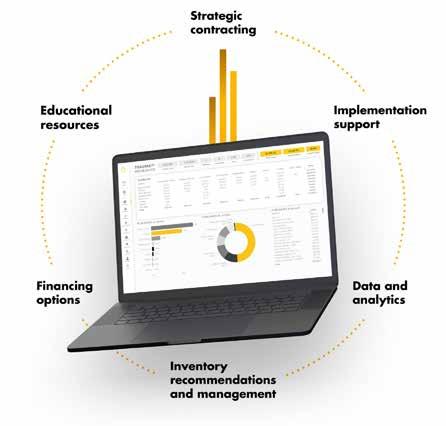
Henry Schein brings clarity and control to the non-acute continuum—so your supply chain becomes more agile—through:
Unified visibility across every non-acute site
Smarter standardization that reduces waste and simplifies work
A resilient distribution network built to keep care moving
An operational advantage that transforms supply chain from transactional to strategic Move faster. Operate smarter. Strengthen performance across every site of care. For more information, visit landing.henryschein.com/agility.html
Scan to download the Healthcare Leader’s Guide to Operational Agility
ERPs, EHRs, and distributor platforms enables real-time visibility, automated replenishment, and streamlined purchasing. It eliminates redundant manual effort and creates a single source of truth for supply utilization and contract performance.
“Our customers are asking for integrated digital tools that don’t just report data but help drive action,” Young notes. “That’s where Henry Schein is investing – bringing intelligence, automation, and ease-of-use into every aspect of the nonacute supply chain.”
Partnership and Resiliency:
Extending Capability
Beyond Control
True agility also depends on resiliency –the ability to adapt quickly when challenges arise. Tariffs, recalls, product shortages, and global disruptions can all threaten continuity of care if not proactively managed.
“You can’t predict every disruption,” says Young, “but you can design a network – and choose partners – that keep you steady when the market shifts.”
A resilient partner brings scale, visibility, and flexibility to protect against uncertainty, ensuring clinicians have what they need, when they need it – no matter what happens in the market.
From Cost Center to Competitive Advantage
Agility and resiliency together transform supply chain from a transactional cost center into a strategic differentiator. When organizations can anticipate and adapt to change – whether that’s a product shortage, a new site opening, or a shift in patient
The Agility Checklist
1. Visibility Fuels Agility
Data consolidation across all care sites creates the foundation for proactive, informed decision-making.
2. Standardization Simplifies Complexity
Reducing variation across products, processes, and partners drives greater efficiency and control.
3. Technology Connects the Network
Integrated digital systems eliminate friction, automate workflows, and enable real-time responsiveness.
4. Partnership Expands Capability
Strategic partners bring expertise, analytics, and scalable support to strengthen performance.
5. Resiliency Safeguards Continuity
A flexible, well-prepared supply chain anticipates disruption – ensuring patient care continues even when the market shifts.
6. Agility Secures the Future
Flexible, connected supply chains can anticipate change, mitigate disruption, and drive sustainable growth.
demand – they gain control and confidence in an unpredictable environment.
“When supply chain can respond faster than the market changes, it moves from being a cost center to a competitive advantage,” Young says.
The benefits extend beyond efficiency. Agility enhances clinician experience, supports value-based care models, and strengthens resilience across the entire network. For health systems managing growth across multiple sites of care, agility becomes the connective tissue that keeps performance aligned to purpose.
The Road Ahead
The shift to non-acute care is accelerating, and so is the need for a more
connected supply chain. Success will require more than product availability – it demands visibility, standardization, integration, resiliency, and collaboration. The systems that build these capabilities now will be best positioned to manage growth, reduce complexity, and deliver consistent value to clinicians and patients alike.
“Henry Schein’s approach goes beyond distribution,” Young concludes. “It’s about helping health systems build the frameworks, analytics, and governance needed to sustain non-acute excellence long-term.”
Because when your non-acute network moves with agility, your entire organization moves forward.
Henry Schein Medical partners with health systems to optimize non-acute network performance through data-driven visibility, technology integration, and collaborative supply chain services. For more information, visit landing.henryschein.com/agility.html
From all of us at The Journal of Healthcare Contracting, we want to extend our warmest wishes for a wonderful holiday season.
Wishing you peace, joy, and success throughout 2026!
WLISA GERKO
Director, Strategic Sourcing at The Ohio State University
Wexner Medical Center
hen Lisa Gerko describes her approach to leadership, her words come back to one theme: purpose. Whether it’s ensuring supply continuity in patient care, empowering her team to solve complex challenges, or advancing healthcare supply chain maturity at The Ohio State University Wexner Medical Center, Gerko leads with intention and with a deep sense of curiosity and compassion.
Gerko doesn’t have to push her team to innovate. They’re already wired that way.
“It doesn’t take a lot of fostering,” she said. “They have a lot of ideas and they’re happy to take them head-on.”
The team collaborates to identify which problems to tackle, from improving consignment processes to developing better analytics dashboards or refining rebate management. Gerko encourages each team member to take ownership of an area that inspires them.
As of October 1, Gerko stepped into an expanded role overseeing all strategic sourcing for the Wexner Medical Center, including both clinical and indirect categories. She also leads network solutions, which includes two major initiatives: the recently launched TS-III Supply, a spend aggregation group for supplies, and a supply chain solution for The Ohio State Health Network. Together, these programs help elevate collaboration, efficiency, and fiscal responsibility across the system.
Building strong teams
Gerko’s leadership philosophy centers on people and finding the right mix of skill, temperament, and shared purpose.
“I look for people who approach things with a genuine curiosity, a desire to understand, someone that has empathy, compassion, and is collaborative,” she said. “Obviously, work experience or education is important, but it’s really more about temperament.”
That philosophy has paid off. Gerko’s team at Ohio State has enjoyed remarkably low turnover, which she attributes to recruiting individuals who connect deeply to the organization’s mission.
“The people who are connected to the mission end up working together really well as a team,” she said. “They’re very different, but they share similar intrinsic goals. That’s been very effective for us.”
“They just take it and run with it,” she said. “People in supply chain are natural problem solvers. They pick something they care about and return about ten times more than I expected most of the time.”
Asked what industry issue she would solve overnight, Gerko joked, “It would be nice to not have back orders.” But she quickly reframes the question.
“I don’t see problems. Everything’s an opportunity,” she said. “We need suppliers, suppliers need us. Things happen. There are always areas for improvement, and we’re constantly working on them.”
That mindset, equal parts pragmatic and optimistic, reflects Gerko’s philosophy that supply chain is not simply about transactions but about partnerships and continuous improvement.
See what’s possible
Distributors and self-distributing health systems now have complete transparency of their Dukal products’ from purchase order to delivery.
Product Assigned at the Factory Level
Product Tracking at the Item Level
Compatible Excel Reporting
Automated Communication
Worldwide Tracking
Scan
> Learn more at dukal.info/insight
Purpose and impact
What keeps Gerko motivated today is the visible impact her team has on the organization.
“We have two primary responsibilities,” she explained. “One is supply continuity, making sure we’re mitigating disruptions with our supplier community and addressing challenges head-on, especially since COVID. The second is fiscal responsibility. Every dollar we save gets reinvested in something that adds value to the organization.”
For Gerko, the link between operational excellence and patient care is personal. “Patient care drives everything we do,” she said. “It’s very satisfying to see the impact we can make.”
Throughout her career, Gerko has learned from a range of leaders, each shaping how she approaches her own leadership journey. “I’ve had the benefit of wonderful experiences with various leaders,” she said. “I’ve learned a lot about myself through those experiences.”
She focuses on what matters most: the team and the mission. “I try to meet people where they are. It’s very personal to me, and I want to be motivating to the team,” she says. “There’s nothing I would ask them to do that I wouldn’t do myself.”
Leadership, to Gerko, involves continual growth. “I’m mindful of my own growth desires too,” she added.
For women in healthcare supply chain aspiring to leadership, Gerko emphasizes persistence, patience, and grace. “You have to be assertive, especially if you want to be in leadership,” she said. “But you don’t have to be dominant all the time. Be who you are. You don’t need to change your personality, just continue working to find your place in the healthcare environment.”
Evolving supply chain in healthcare
Over her tenure, Gerko has watched the supply chain profession evolve from reactive operations to a respected, strategic pillar in healthcare systems.
“At Ohio State, we’re very fortunate, and credit to my leadership, in advancing our supply chain team along the maturity curve,” she said. “Supply chain is very respected in the organization now. It’s gone from being reactive to much more intentional and purposeful.”
That evolution, she said, is essential for meeting today’s challenges, from disruption management to financial pressures, and for driving closer clinical alignment with organizational goals.
The role of technology and AI
Gerko sees technology as a critical enabler
of this next stage. “I hope AI really takes off here,” she said. “We’ve got a team exploring it, and there are some very interesting use cases and business cases we’re testing.”
Already, her team is leveraging AI to streamline administrative processes. “We’re using AI to help edit contracts and draft standard operating procedures,” she noted. “It’s been a nice tool to speed up tasks we’d otherwise do from scratch.”
Data quality remains key. “The quality and completeness of data in healthcare has improved,” she said. “We’re no longer a candle in a cave when it comes to getting the basic data we need.”
Leading with purpose
As she looks ahead, Gerko remains focused on advancing supply chain maturity and developing the next generation of leaders who share her values of curiosity, compassion, and collaboration.
For her, leadership isn’t just about managing processes. It’s about cultivating purpose-driven teams that elevate the entire organization.
“In the end,” she said, “it all comes down to people, people who care, people who are curious, and people who want to make a difference.”
Where Time, Trust, and Data Meet: Redefining Value in Orthopedic Trauma
From the operating room to the supply chain office, Dr. Douglas Dirschl champions collaboration as the key to delivering timely, high-quality, and cost-effective trauma care— one patient, and one partnership, at a time.
As chair of the Department of Orthopedic Surgery at Baylor College of Medicine, Dr. Douglas Dirschl balances a wide range of responsibilities: overseeing approximately 90 physicians and mid-level providers, educational programs, research initiatives, and the complex business operations that keep it all running. But his true passion lies in orthopedic trauma.
“I treat all the things no one else wants to take care of,” he says—fractures that haven’t healed, bones healed the wrong way, chronic pain, infections. From children to nonagenarians, simple ankle breaks to life-threatening injuries, trauma patients are a heterogeneous group, each case demanding individualized attention and decision making.
What truly sets orthopedic trauma apart, Dr. Dirschl explains, is time. Elective surgeries can be scheduled
in advance; fracture care, however, is highly time-sensitive. An undue delay can compromise outcomes, and the best care requires timely actions and seamless coordination across surgeons, nurses, and hospital operations.
Aligning fracture care with outcomebased models adds another layer of complexity. Unlike knee replacements, which follow standardized paths and predictable recoveries, fractures vary wildly. Dr. Dirschl cautions against attempting to
bundle all fracture care into one economic model. Instead, he advocates focusing on simpler, high-volume procedures—like hip fractures in elderly patients or straightforward ankle fractures—where outcomes are more easily measured and reproducible.
Measuring value in trauma is rarely straightforward. “Some metrics make sense, and some are less meaningful,” he explains. Hip fractures allow hospitals to track mortality, readmissions, and costper-case. Rare or complex injuries—a pedestrian struck by a bus, for example— require long-term functional outcomes and patient-reported results rather than simple cost metrics.
The power of collaboration
This complexity underscores the importance of clinician involvement in supply chain and contracting decisions. Dr. Dirschl emphasizes a three-way partnership between clinicians, vendors, and hospitals. Hospitals can’t stock every implant, and those they do keep on hand require careful management to avoid waste. Surgeons must weigh both clinical necessity and cost, using complex implants only when simpler options do not suffice. “We are all inextricably intertwined,” he says. Success depends on collaboration informed by accurate data.
A successful contracting strategy relies on transparency and communication. Shared, high-quality data allows hospitals,
clinicians, and vendors to make strategic decisions—ensuring the right implants reach the right patient at the right time while balancing cost, efficiency, and outcomes. In trauma care, value is measured not only in dollars but in lives restored and mobility regained.
Trust is central to constructive collaboration between trauma surgeons and supply chain leaders, and trust is built on data and dialogue. Presented with reliable cost comparisons to peers and across vendors, surgeons will more constructively engage in adjusting implant choices, aligning clinical decisions with both patient needs and responsible spending.
Dr. Dirschl emphasizes that collaboration must include vendors. Manufacturers provide insights based on national trends and analyses of their own internal data, helping hospitals and surgeons make informed decisions. “Many times, the data the manufacturer can bring can be really illuminating,” he says, highlighting how transparency strengthens the entire ecosystem.
Vendors are expected to deliver fair pricing, reliable service, and knowledgeable support—but their value can go further. Those who analyze hospital data, share insights, and act as true partners elevate their role from supplier to strategic collaborator. In trauma care, where timing, resources, and complexity intersect, the best outcomes arise when surgeons, hospitals, and vendors work in sync using shared data.
Dr. Dirschl sees a critical opportunity for deeper collaboration. “We need a trusting and constructively collaborative relationship between clinicians, hospital supply chain, and vendors,” he says. Margins are thin, budgets tight, and high-quality trauma care is constant. To preserve outcomes while managing costs,
he emphasizes identifying areas where collaboration adds value—improving the ratio of patient outcomes to cost per case.
Turning Data into Better Decisions
Analytics play a pivotal role. “Most hospitals don’t fully understand their own data on utilization and cost,” he notes. While many collect this information, few have the tools or expertise to interpret it meaningfully. Analytical guidance can reveal patterns in case mix, cost, and utilization, informing contracting and value analysis decisions. Shared-risk economic models have been explored in elective orthopedic care, he adds, but trauma depends on an established foundation of trust and collaboration.
Dr. Dirschl advises supply chain leaders to start by finding a clinical partner to foster trust and a data-driven, dialogue-based approach. “It’s far better to collaborate with a clinician than to try
often lack the bandwidth to understand how all elements affect cost per case. He recalls a shoulder arthroscopy example where cost variance across surgeons stemmed from draping and positioning practices, not implants. With proper engagement, vendor partners could have highlighted these disparities immediately— through data and education—reducing costs without affecting outcomes.
Greater potential lies in analyzing the full episode of care. Hospitals often focus on reducing length of stay for immediate revenue, but opportunities exist in optimizing consumables, surgical prep, and ancillary services. Vendors offering insights into utilization, case mix, and inventory optimization and management help hospitals act on these opportunities. “There’s huge potential to lower cost per admission without impairing outcomes,” he says, “but hospitals need to look beyond the obvious metrics to truly understand where value can be added.”
Vendors acting as strategic partners— providing insights, savings opportunities and analytical support—enable hospitals and clinicians to make smarter decisions, reduce waste, and enhance patient outcomes.
to establish trust on your own,” he says. Once a partnership is in place, hospitals can engage vendors about data sharing and analysis. “Begin with simple conversations around checks and balances and a collaborative approach,” he adds.
Vendor support extends beyond implants. Many provide a full ecosystem of surgical tools, devices, and soft goods, along with education for both clinical and supply chain teams to ensure these resources are used efficiently. Yet hospitals
Ultimately, Dirschl stresses that the most successful orthopedic trauma programs rely on transparency, collaboration, and shared data. Vendors acting as strategic partners— providing insights, savings opportunities and analytical support—enable hospitals and clinicians to make smarter decisions, reduce waste, and enhance patient outcomes. In trauma care, where timing, complexity, and resources intersect, these partnerships are essential for both financial stability and high-quality patient care.
From strategy to solutions: Explore the tools, insights, and partnerships that turn pain points into possibilities.
Trauma Value Program
Running an orthopaedic trauma service never slows down. Every choice—from patient care to inventory and cost control—shapes outcomes. That’s why we created Alliance, a value-added program designed with trauma care at its core.
Alliance simplifies trauma procurement by connecting patient care and supply chain management. You can pick the right blend of strategic contracting, inventory management, education, and implementation support to fit your service line, giving you flexibility and control from the start.
For
YOLANDA REDMOND
Chief Supply Chain Officer, Vanderbilt University Medical Center
Yolanda Redmond, Chief Supply Chain Officer at Vanderbilt University Medical Center (VUMC),
the path
to healthcare leadership
began in accounting – a foundation that gave her a unique view into the complexity and importance of supply chain management.
“My initial career path was in accounting, where I supported global supply chain financial operations,” Redmond explained. “This role enabled me to collaborate closely with supply chain teams on daily operations … transitional services, and system implementations, giving me valuable insight into the complexity and significance of their work.”
That collaboration sparked her transition into supply chain leadership. “When our organization separated from the university, I was offered the opportunity to lead the newly established procure-to-pay team within Supply Chain,” she said. “This experience has been incredibly rewarding, as I am motivated every day by the chance to lead a dedicated team that actively supports the mission of VUMC.”
Defining leadership through change
For Redmond, leading that new team was a defining moment – one that shaped her leadership philosophy.
“Stepping into this role required me to quickly adapt to a new environment, build trust with my team, and establish clear strategic priorities aligned with the mission of VUMC,” she reflected. “I realized that effective leadership is not just about managing tasks, but about empowering individuals, fostering collaboration, and creating a culture of accountability and continuous improvement.”
That experience taught her to lead with clarity and care. “Since then, I have made it a priority to lead with transparency, strategic focus, and a commitment to developing my team,
ensuring that each member feels valued and motivated to contribute to our shared goals.”
Guiding women leaders forward Redmond’s career also offers inspiration for women seeking to rise in healthcare supply chain – a field that continues to expand in strategic influence.
“My advice to women aspiring to leadership roles in healthcare supply chain is to believe in your potential and recognize that the only boundaries are the ones you set for yourself,” she said. “Embrace opportunities to learn and grow, even if they take you outside your comfort zone.”
She highlights the importance of mentorship and advocacy. “Building a strong network of mentors and peers can provide invaluable guidance and support as you advance in your career,” she said. “Don’t be afraid to voice your ideas and advocate for change; your perspective is both unique and essential to driving innovation within the industry.”
“Stay committed to continuous improvement, remain resilient in the face of challenges, and lead with confidence, knowing that your contributions are vital to the success of your organization and the healthcare community at large.”
The evolution of healthcare supply chain
Over the past decade, supply chain’s role in healthcare has expanded dramatically. Redmond has witnessed its transformation from a back-office function to a strategic, clinically integrated discipline.
“This shift has been driven by the growing need to align supply chain strategies with clinical priorities, ensuring that patient care remains at the forefront of all decisions.”
“The adoption and integration of advanced data analytics and technology have further enhanced supply chain capabilities, allowing for improved visibility, efficiency, and responsiveness.”
Looking ahead, she expects supply chain to remain a driver of organizational performance. “I believe the healthcare supply chain will continue to be a driving force for change, leveraging innovation and data-driven insights to optimize processes and outcomes,” she said. “By partnering closely with clinical teams, supply chain professionals will play an increasingly critical role in delivering cost-effective healthcare solutions, supporting both the financial sustainability and quality of care within organizations.”
Building strong, diverse teams
For Redmond, technology alone isn’t enough – success depends on the people behind the systems. “Building and retaining strong, diverse teams in supply chain operations requires a deliberate approach that values ongoing training and adaptability,” she said. “First and foremost, it is essential to foster an inclusive culture where team members feel valued and empowered to contribute their perspectives.”
Training and flexibility are central to that approach. “Ongoing training plays a pivotal role in both developing and retaining high-performing teams,” she said. “By investing in continuous education, whether through formal programs, workshops, or on-the-job learning opportunities, you enable team members to stay current with industry trends, regulatory changes, and emerging technologies.”
“Encouraging a mindset of continuous improvement and agility helps teams respond effectively to evolving challenges and opportunities,” she added. “Providing cross-training and exposure to different aspects of the supply chain builds flexibility and resilience, ensuring the team can adapt to shifting priorities or disruptions.”
“By prioritizing inclusion, ongoing training, and adaptability, leaders can cultivate
teams that are engaged, innovative, and wellpositioned to drive organizational success.”
Leadership as service
At the core of her leadership philosophy is humility and gratitude. “One of the most profound leadership lessons I’ve learned is to never take people for granted and to always remember that leadership is, at its core, a form of service,” she said.
She learned early that results depend on relationships. “There was a time when I became so focused on meeting targets and driving results that I overlooked the importance of expressing gratitude and acknowledging the hard work of my team members,” she recalled. “This experience taught me that success is never achieved alone. It’s built on the dedication and commitment of the entire team.”
“By never taking people for granted and embracing the responsibility to serve, leaders can inspire their teams to achieve their highest potential,” she said.
For Redmond, that commitment to service and collaboration remains the foundation of her success – and the driving force behind VUMC’s supply chain excellence.
Products You Need...
Quality You Trust
Medegen is the U.S. manufacturer of Bedside Products and core EVS Products delivering:
REGULATORY CONFIDENCE: Compliance with FDA and U.S. safety standards.
FAST DELIVERY: Quick domestic turnaround gets orders to you sooner.
PROVEN QUALITY: Made to rigorous U.S. manufacturing standards.
BUILT FOR AGILITY: Rapid response to urgent needs and custom requests.
ECO-SMARTER: Shorter transport means lower environmental impact.
MADE IN AMERICA: Supporting U.S. jobs and communities.
Jane Torzewski, RN, MAN, MBA, serves as the Director of Medical Device
Contracting at Mayo Clinic, leading a team responsible for managing contracts that support both Mayo and Captis, a supply aggregation service provider, in the physician preference space. With nine years in this leadership role, Torzewski’s career path reflects a unique combination of clinical experience and business acumen, providing her with a distinctive perspective on healthcare supply chain management.
JANE TORZEWSKI
RN, MAN, MBA, Director of Medical Device Contracting at Mayo Clinic
“My role is really to meet the needs of our practice,” Torzewski said. “Our primary value at Mayo Clinic, which we’ve had since inception more than 150 years ago, is that the needs of the patient come first. I listen to the practice and meet those needs across our contracting areas, particularly in medical device implants.” Her approach emphasizes that, even in supply chain management, patient-centered care remains the guiding principle.
Torzewski’s career began far from the corporate boardroom. After earning a business degree, she worked in retail management before transitioning into nursing, where she spent 15 years at the bedside. “Nursing was honestly my second career,” she recalls. Her dual background in business and clinical practice eventually led her to pursue an MBA rather than an advanced practice nursing degree, driven by an interest in healthcare economics. This combination of experiences positioned her to join Mayo Clinic’s Value Analysis department, where she merged clinical knowledge with financial strategy – a foundation that naturally led to her current role in contracting.
Even as her daily work shifted from direct patient care to managing physician relationships and contracts, Torzewski
remains motivated by her ability to impact patient outcomes indirectly. “I’m less close to the patient today in contracting, but the needs are no less felt in managing and working with physicians to meet those needs,” she notes. She draws energy from Mayo Clinic’s broader initiatives, including the transformative Unbound Project, aimed at shaping the hospital of the future and advancing the organization’s mission to cure, connect, and transform care.
Torzewski credits several mentors for shaping her leadership philosophy. Early in her career, a nurse manager modeled advocacy, demonstrating how to support staff with internal and external stakeholders. Later, a supply chain leader taught her the importance of relationship building, transparency, and empathy. “Those moments crystallized some of my core beliefs and behaviors and created the leadership style I have today,” she reflects.
For women aspiring to leadership roles in healthcare supply chain, Torzewski offers clear guidance: embrace opportunities, take risks, and consciously build your personal brand. “Women leaders bring their own unique viewpoint and dimension. You should take advantage to lead if there’s an opportunity. It builds confidence, elevates your reputation, and
helps you create your personal brand,” she advises. “Seek out opportunities when they’re given to you, don’t shy away, and find excuses to lean in rather than lean out.”
Building a strong, diverse team is equally central to Torzewski’s philosophy. She emphasizes the deliberate cultivation of multiple viewpoints and experiences to complement existing team strengths. “Retention is about creating a culture of excellence,” she says. “Within your team, that culture is really about a group that gets together, maintains humbleness, grace, and support for one another to grow each other, which helps elevate the whole team.” This approach fosters cohesion and stability, ensuring team members are empowered and motivated to stay.
Innovation and problem-solving, Torzewski believes, emerge naturally when team members feel empowered and supported. By providing leadership opportunities and encouraging skill growth, team members contribute to both their own development and the collective strength of the group. “All boats rise as the team individually gets better and matures,” she observes, underscoring the symbiotic relationship between individual growth and team success.
Reflecting on her early career, Torzewski wishes she had taken more risks and focused earlier on networking. “I wish I could have been bolder about the choices I made and concentrated on honing my networking skills. That skill nourishes you for years to come,” she says. This advice extends to younger professionals: seize challenges, expand your horizons, and actively cultivate relationships that will serve you throughout your career.
When asked about an industry problem she would solve overnight, Torzewski identifies business continuity in healthcare supply chain. “The one thing I would do is ensure we always have something to meet the needs of our patients. Unfortunately,
“Seek out opportunities when they’re given to you, don’t shy away, and find excuses to lean in rather than lean out.”
almost daily, you run into situations where products are unavailable, and when it’s critical, you just try to figure out what you can do.” Her perspective highlights the tangible impact of leadership in supply chain operations on patient care and outcomes. Ultimately, Jane Torzewski’s leadership is defined by a balance of clinical insight, business strategy, and human-centered values. Her journey – from retail management to bedside nursing to healthcare supply chain leadership – illustrates the power of diverse experiences, thoughtful mentorship, and the courage to take risks. By prioritizing patient needs, fostering team cohesion, and advocating for women in leadership, Torzewski exemplifies a holistic approach to leading complex healthcare operations.
For professionals aspiring to make an impact in healthcare, her guidance is clear: take calculated risks, invest in relationships, and lead with empathy. By doing so, future leaders can shape not only their careers but also the systems and teams that directly impact patient care. In an era of rapid healthcare transformation, Jane Torzewski’s leadership insights serve as a roadmap for success, demonstrating how vision, values, and adaptability converge to drive meaningful outcomes.
Cardinal Health™ Lab Distribution: Products and Services
Services supporting you from order through delivery and beyond
With labs navigating challenges like financial pressures, staffing shortages and unpredictable supply cycles, the need for stronger supply chain resilience and reliability has never been greater. But, finding a distributor who helps build trust, equity and convenience can be difficult and frustrating.
Cardinal Health provides customized solutions designed to help labs overcome these daily obstacles with confidence.
With a rich history of distribution excellence and decades of lab expertise, we are committed to providing value-added services and regularly advise our lab customers on the right mix for their facility.
Cardinal Health™ Lab Briefings webinar series
A monthly ASCLS P.A.C.E.® and Florida-accredited webinar series that supports lab professionals' career growth through continuing education and expert-led insights into the latest industry trends.
Cardinal Health™ OptiFreight® Logistics
Comprehensive and reliable shipping solutions to optimize the flow of your packages and help you ship them at the best total value.
Cardinal Health™ Reserved Inventory Program
The first-of-its-kind program enables customers to reserve dedicated quantities of respiratory testing products for supply assurance all season long.
Cardinal Health™ Strategic Stock Solution
Customer-owned inventory managed by Cardinal Health.
Cardinal Health™ Wavemark™ Lab Supply Solution
This digitally automated solution provides workflow optimization, product traceability, real-time data analytics and actionable insights on product supply within your laboratory.
Cold chain and hazardous material handling
Proper treatment of sensitive products, stored at a distribution center near your facility.
Data-driven insights
Standardization and formulary tools to enhance facility purchasing power.
FourKites enhanced shipment visibility
Real-time shipment milestones to provide customers with visibility to shipments in-transit, fueling predictive analytics and machine learning.
Kinaxis™ advanced planning and visibility
Machine learning and advanced inventory planning analytics to build greater connectivity with carriers and help optimize product availability amid disruption.
Kitting solutions
An effective combination of products, packaging, instructions and compliant labeling to accommodate your specialized kitting requirements, from blood and urine collection kits to tissue biopsy and direct-to-consumer kitting.
Leasing services
Dedicated leasing and diagnostic specialist teams provide customized payment options that meet your capital financing needs.
Product availability biweekly tracking and communication
Stay informed with regular Cardinal Health™ Brand and select national brand product availability updates delivered right to your email.
Quality
assurance program (QAP)
Access to a team of specialists with expertise in developing the optimal QAP for your facility, overseeing select order renewals and creating standardized or custom shipping cycles to best fit your standing order requirements.
Seasonal respiratory preparedness
A dedicated inventory team providing ongoing reviews of available product, proactive supplier constraint mitigation, monitoring of CDC reporting and historical data to anticipate seasonal spikes and moderating demand by geographic regions.
Sequestered lots
Tried-and-true sequestered lots provide elevated management of sequestered, one-lot and dated materials to help reduce costs and drive operational efficiencies, minimizing recalibration requirements due to multiple lot switches.
Supply chain assessments
A no-cost assessment that provides strategic supply chain recommendations tailored to your facility’s needs.
We’re more than just box movers — we're a preferred laboratory distributor and service provider of top healthcare providers, and we have been for decades.* With a rich history of distribution excellence, 200 experienced lab professionals and a broad portfolio of clinically equivalent Cardinal Health™ Brand Products, you can count on us for financial savings, operational efficiencies and supply continuity.
Transparency without the hidden costs or fees. One point of contact. Deep supplier relationships. Always-on service. That’s the Cardinal Health way.
For more information, scan the QR code to connect with a lab expert or visit cardinalhealth.com/labdistribution
Weathering the Storm
Hurricane Helene challenged Baxter’s North Cove operations, but rapid recovery efforts, technological investments, and community-focused support ensured critical medications continued reaching patients nationwide.
When Hurricane Helene struck Western Carolina last fall, Baxter’s North Cove facility found itself at the mercy of rising waters and chaos. On September 27, the last day of Baxter’s fiscal third quarter, the storm’s threat was monitored hour by hour. By midday, conditions seemed manageable, but by late afternoon, communication lapses signaled trouble. A breach in the plant’s levy quickly became apparent, prompting immediate action. The first priority was to evacuate the 25 employees still on site. Safety came first, even as the plant braced for unprecedented damage.
By the next morning, Baxter’s local team and plant manager returned to assess the situation. Three feet of water and mud had inundated the facility, a controlled environment now left in disarray. Cecilia Soriano, president of Baxter’s global Infusion Therapies and Technologies division, said the damage was extensive.
“Until you physically see it, it’s hard to comprehend,” she recalled. Hallways once filled with order and routine were unrecognizable. Industrial lights illuminated a surreal scene of fallen pallets, scattered cases, and debris, all against the backdrop of pitch-black, powerless corridors.
The emotional toll on the team was evident, and the broader implications for the U.S. healthcare supply chain loomed large. In North Cove, the path from
evacuation to recovery would test resilience, leadership, and the company’s ability to deliver to the people and patients who rely on its products.
Recovery process
Recovering from Hurricane Helene was a monumental task. For Baxter in North Cove, the process began by focusing on three critical areas: employees, customers, and operations. Soriano recalls that the human element was foremost on her mind as she drove through the impacted area in the immediate aftermath. Many employees had lost homes, possessions, and access to basic necessities, yet some still reported to the plant because it was the only familiar place left. “People who had lost everything were coming to the plant because they had nowhere to go,” Soriano said.
Baxter acted quickly, setting up an employee resource center just a few miles from the North Cove facility. The center became a lifeline, providing essentials like food, water, toiletries, showers, and mobile cots. Generators kept the lights on, washers and dryers offered some semblance of normalcy, and even chainsaws were available to help employees clear debris from their homes.
The company’s rapid mobilization extended beyond its workforce. As the largest private employer in the area, Baxter recognized its responsibility to the broader community. The resource center was not just a hub for employees – it was one of the first relief points in the community, signaling Baxter’s commitment to supporting everyone affected by the hurricane.
Customer communication was another immediate priority. By Saturday afternoon – just one day after the storm – the company had briefed federal authorities on
the evolving situation at North Cove. Calls to customers followed quickly, with the goal of providing transparent, consistent updates about the plant’s status and potential impacts on supply. Soriano notes that feedback on this communication approach was overwhelmingly positive. “It was very transparent, it was consistent, it was posted on one site,” she said, emphasizing that the effort extended globally, as Baxter coordinated the flow of products imported from overseas to meet U.S. patient needs.
Operational recovery was equally urgent and complex. Baxter assembled a task force of the “best of the best” from across the company, combining the expertise of the North Cove team with advanced engineering support from Switzerland and other global sites. The work was meticulous and labor-intensive: remediating equipment down to the level of Q-tips and toothbrushes, carefully rebuilding thousands of wires, and methodically restoring production lines. Yet the team’s efforts paid off. Within about four weeks, Baxter had restarted its highest-throughput IV manufacturing line, a line responsible for producing 50% of the site’s one-liter IV solutions, the most commonly used size by hospitals and clinics. Soriano emphasized that meeting every milestone communicated
to customers was critical, noting the ripple effects throughout the healthcare industry when products like IV bags were on a shortage. The mission-driven culture of the North Cove team became a powerful motivator, as employees understood that their work directly affected patients and healthcare providers nationwide.
Investments in resilience
The recovery from Hurricane Helene underscored the critical importance of preparedness, technology, and collaboration in safeguarding Baxter’s operations and the broader healthcare supply chain. Soriano highlighted the investments and strategies that proved invaluable in the immediate aftermath of the storm. From the very first hours, communication was paramount. With electricity and traditional telecommunications down across North Cove, satellite phones and Starlink internet connections became essential lifelines. “The first phone calls that came in were on Starlink,” Soriano said. These tools allowed Baxter’s leadership to maintain contact with the plant, coordinate with federal authorities, and manage the distribution of resources in real time, even when local infrastructure had failed.
Technology was not just a communications tool; it also underpinned the company’s ability to understand and manage its supply chain under extraordinary circumstances. Rapid response platforms, integrated data systems, and a centralized “single source of truth” provided visibility into inventory levels, production capacities, and product location across Baxter’s global network. This meant that even as bridges were impassable and the plant itself was flooded, leadership knew what inventory had been safeguarded at higher ground, what remained at risk, and how to move critical supplies to where they were needed most. It also allowed for proactive problem-solving: shipments could be prioritized, customs fast-tracked, and logistics coordinated around the holiday season, when U.S. ports and airlines were already under heavy demand.
Customer-facing investments also proved crucial. Two to three years prior, Baxter had implemented portals that allowed customers to view orders, inventory, and estimated delivery dates. During the Helene crisis, this transparency allowed healthcare providers to plan patient care around disruptions, ensuring critical therapies continued despite widespread
logistical challenges. “There were multiple inputs into a customer portal so they could plan patient care accordingly,” Soriano said, underscoring the value of preemptive investments in technology.
Yet Baxter’s recovery extended beyond technology and internal coordination; collaboration across the industry played a pivotal role. Prior to the crisis, Baxter had partnered with Medline, a leading U.S. distributor, to streamline product movement. Using Medline’s backhaul program, Baxter bypassed some of its distribution centers in the months following the hurricane, moving supplies directly from ports to Medline’s network and ultimately to healthcare providers more efficiently. Similar support came from large healthcare systems that helped “push” Baxter’s product volume through third-party logistics at different points in time.
Following the hurricane, Baxter sought additional ways to bolster its supply resiliency. In July, Baxter and group purchasing organization Vizient announced the expansion of Vizient’s supply assurance program to include IV fluids. Through this program, participating customers receive access to dedicated, on-demand safety stock managed by Baxter.
Baxter also continued to pressure testing its processes and supply chain maturity. Already a member of Healthcare Industry Resiliency Collaborative (HIRC), a non-profit consortium of healthcare providers, suppliers, and industry partners with a focus of improving the healthcare supply chain, Baxter engaged HIRC to conduct an external assessment of its supply chain maturity. Baxter was awarded a gold-level resiliency badge in September, the first manufacturer in IV and clinical nutrition solutions and premix drug categories to receive this recognition.
Preparing for tomorrow
Looking beyond the immediate response, Baxter’s long-term supply chain strategy emphasizes visibility, resilience, and proactive risk management. Soriano highlighted the company’s philosophy of “buy where you make, make where you sell,” which guides decisions about sourcing raw materials and managing production globally. By mapping the supply chain several levels deep, Baxter aims to anticipate disruptions from extreme weather, geopolitical risk, or other crises.
Investments in technology and AI enable end-to-end visibility across nearly 40 global production sites, from inbound materials to quality assurance to final delivery. However, she acknowledges an ongoing challenge: once products leave Baxter’s direct control – on a truck, with a distributor, or in transit to a hospital –they are largely invisible. Closing that blind spot is a priority for future investments in tracking technology and supply chain analytics, ensuring critical medications can be monitored until they reach patients.
Soriano emphasized that lessons from previous disruptions informed Baxter’s
approach. After Hurricane Maria in Puerto Rico, the company implemented infrastructure and technology that proved invaluable during Helene. Similarly, the COVID-19 pandemic highlighted the importance of transparency, communication, and inventory management across multiple stakeholders.
“We learned that for critical drugs and medicines, you need to see the product in real time, even once it leaves your facility,” she said.
Baxter is exploring technologies to monitor shipments at every step, bridging the gap between production and final delivery and ensuring that healthcare providers never experience unexpected shortages.
Hurricane Helene also reinforced the value of preparedness beyond the plant floor. Emergency generators, backup communications, and rapid response protocols allowed Baxter to respond quickly even in a blackout. Satellite connectivity enabled leadership to coordinate the recovery effort despite widespread infrastructure failures. Investments in these systems, combined with a culture of resilience, allowed Baxter to not only restore operations but also provide timely and transparent updates to government agencies, distributors, and healthcare providers.
The Helene response demonstrates that resilience involves a combination of people, planning, technology, and collaboration. Baxter’s ability to respond quickly, communicate transparently, and coordinate across stakeholders ensured continuity of critical medications while protecting employees and supporting the wider community. Soriano emphasizes that these lessons will continue to shape Baxter’s strategy. From monitoring global supply networks to investing in AI-driven visibility tools, from strengthening local infrastructure to deepening partnerships
with distributors and healthcare providers, the company is committed to staying ahead of future disruptions.
The human impact
While restoring plant operations and the national supply chain was a monumental undertaking, the human and community impact of Hurricane Helene remained at the forefront of Baxter’s recovery efforts. Soriano reflects that a year later, North Cove is still healing. Many employees lost not only their homes and possessions but also family members, leaving deep emotional scars in this multi-generational community where several family members often worked at the plant. “It took us over three weeks to locate all of our employees,” Soriano said. The weeks-long uncertainty compounded the trauma, underscoring the personal stakes behind every recovery decision.
Baxter invested more than $4 million to aid employees and the communities impacted by Hurricane Helene, while the employee resource center continued to provide ongoing support for housing, material needs, and other hardships. Company leadership, including HR and plant managers, remained actively involved in
identifying employees in need, ensuring the organization could provide resources and assistance where it mattered most. Even months after the hurricane, the signs of disruption were evident: in December and January, some employees were still sleeping in tents on their property, a stark reminder that recovery is a long-term process.
Soriano emphasizes that the company’s response to the human impact of Helene is inseparable from its operational efforts. Supporting employees and the broader community has been a priority and a hallmark of Baxter’s crisis response, demonstrating a holistic approach to disaster recovery that extends beyond production lines to the people who make the work possible. She also extends gratitude to Baxter’s customers, whose patience and collaboration during the crisis were essential in maintaining continuity of care for patients nationwide. Looking ahead, Baxter is committed to sharing lessons learned with other companies and the wider industry.
“I don’t ever want to say we have a playbook for this, but we have a lot of lessons learned,” Soriano said. “And a lot of things went right in the process. If we could shortcut that time for others before they’re in the middle of a crisis, we’d be happy to take time to speak with them.”
The effects of chronic disease in America
Currently, 6 in 10 Americans live with at least one chronic condition and 4 in 10 manage two or more. These diseases account for 8 in 10 of the leading causes of death nationwide. Contributing risk factors include physical inactivity, poor nutrition, tobacco use and excessive alcohol consumption.1,2
If a patient receives a chronic disease diagnosis, ongoing monitoring and treatment require continued lab testing throughout the rest of the patient’s life. These conditions present a growing strain on our health system and providers are looking for efficiencies in every area of their process.
Chronic disease costs the American medical system over $1 trillion annually — and is estimated to cost $47 trillion globally by 2030. 2
Every diagnosis begins with a lab test
Cardinal Health provides our distribution customers with robust capital equipment support to help increase lab capacity and diminish the strain of chronic disease. With Cardinal Health, you receive end-to-end support with single-source access to top manufacturers, expert consultation in equipment choice and assay menu expansion, extensive leasing options and access to a team of specialists that helps optimize your quality assurance program (QAP).
Cardinal Health™ Lab Capital Equipment Portfolio
No matter which equipment you choose, you’ll be connected to a community of over 200 Cardinal Health Lab experts who are here to serve you.
To connect with an expert and discuss available instruments and financing options, scan the QR code or visit cardinalhealth.com/labcapitalequipment
References: 1. CDC. About chronic diseases. Centers for Disease Control and Prevention. Published October 4, 2024. Accessed March 13, 2025. https://www.cdc.gov/chronic-disease/about/index.html 2. Hacker K. The burden of chronic disease. Mayo Clin Proc Innov Qual Outcomes. 2024;8(1):112-119. doi: https://doi.org/10.1016/j.mayocpiqo.2023.08.005
2025 Cardinal Health. All Rights Reserved. CARDINAL HEALTH and the Cardinal Health LOGO are trademarks of Cardinal Health and may be registered in the US and/or in other countries. All other trademarks are the property of their respective owners. Patent cardinalhealth.com/patents. Lit. No. 2LAB25-3607981-01 (09/2025)
Clinicians and Supply Chain –Turning Dodgeball into Volleyball
Conversation, collaboration works with sportsmanlike conduct.
BY R. DANA BARLOW
If healthcare supply chain executives and leaders were asked to identify the two most challenging conversations that they experience on a daily basis, they likely would place themselves between two bookends – contract negotiations with suppliers and service companies on one side and product and service discussions with clinicians (e.g., nurses, physicians and surgeons, etc.) on the other.
Bridging the gap between the two can have its positives and negatives, expectations and nuances. It can leave supply chain feeling like Crayola’s Silly Putty.
Working with external suppliers and service companies, supply chain strives to be the hero of its own story, representing the product and service needs and demands of its internal customers based on their clinical preferences and quality issues while trying to appease the fiscal constraints of its organizational employers.
Working with internal clinical customers, supply chain strives for credibility and respect, representing the cost pressures inflicted by its organizational employers while trying to explicitly understand as well as advocate for the product and service
needs and demands of nurses, physicians and surgeons.
Supply chain nurtures the delicate balance between the provider organization on one hand and the clinical community on the other as it weaves between the art and science of conversations and negotiations with suppliers.
Supply chain experts generally agree that successful business relationships and transactions occur when they are fortified with clinical input and intelligence before sitting at the negotiation table with supplier and service company executives.
They also acknowledge that those clinical conversations straddle the line between art and science with clear recommendations on what to say, how to say it and what to avoid saying.
What supply chain should never say to a clinician
If there’s a common denominator for ticking off nurses, physicians and surgeons, supply chain experts agree on this: Ignore them, followed closely by talking down to them.
Joe Colonna, chief supply chain and project management officer, Piedmont Health, warns against tacitly excluding them from the product selection process, by “assuming that they don’t care about cost or imply anything that questions their clinical expertise,” he indicated. Colonna further lists two more red flags: “Your [insert product or procedure here] is costing too much money.” “Why do you have to have this?”
Don’t even think about dissing a clinician or a supplier, according to Mark Dozier, CPA, associate vice president, supply chain services, strategic sourcing and engagement, HonorHealth. “Never use unprofessional language when discussing a product request or the behavior of a specific supplier,” he told The Journal of Healthcare Contracting.
Dozier also dismissed the notion of supply chain acting like a boss with “You should clinically be able to use the product.”
Tom Lubotsky, vice president and chief supply chain officer, Allina Health, pooh-poohs the idea of playing the cost card right from the start.
“Don’t go with ‘I need you to consider this product because it is so far less expensive,’” he said. “Don’t lead with that. You’re going to shut off the conversation. Instead, you should lead with ‘I’d like for you to consider this because it sounds like it might offer the same or similar clinical benefit at a lower cost.”
What clinicians hate to hear from supply chain
Aside from budgetary and economic complaints, clinicians really don’t like to hear about limits on product and supplier choices, particularly if an agreed-upon
formulary isn’t in place, according to Allina’s Lubotsky. “‘I want to be innovative. I want us to be innovative. I want us to be at the bleeding edge of providing the best of care, so don’t tell me what I can’t use,’” he added.
Piedmont’s Colonna points to accessibility with three statements that lack any explanation:
“Your device is on backorder or is in some other way unavailable.”
“You can no longer use your preferred vendor/product [no reasons given].”
“Your new product request has been denied [no reason given].”
Passive-aggressive behavioral modification doesn’t work either, he added: “Your peers can change so why can’t you?”
HonorHealth’s Dozier also cites the backorder revelation, adding insult to injury by applying it to the clinician’s next case.
their procedures are not profitable for the healthcare organization.”
What clinicians prefer to hear from supply chain
Short of “you can have everything you want,” Dozier offers two distinct responses clinicians want to hear from supply chain: “Your new product request has been promptly considered and approved,” and the more succinct, “Yes.”
Colonna and Lubotsky center around collaboration and relationship management.
Colonna lists four statements that clinicians want to hear from supply chain that invite cooperation:
“Can you help us to better understand your request and are you open to other options?”
“Can we discuss both the clinical and financial aspects of the products you use?”
“We prefer to hear, ‘I’d like you to consider this product because I believe this has applications to a select set of patients and would like to have that be considered as part of the portfolio of offerings for our clinical patients.’”
Further, clinicians don’t appreciate hearing that “the supplier rep who services you recently had a blatant violation of hospital policy and has been suspended from our campuses for the next 30 days” and “no additional suppliers can be added to this modality at this time,” he said.
Dozier also notes that clinicians tend to frown “when they are shown data that
“Would you join us in the value analysis process?”
“What information and data would help you be more comfortable with our request for a product change?”
Lubotsky highlights the giveand-take of mutual compromise and concession.
“They would prefer to hear we are open to considering all suppliers that bring innovation and improvement in our care,” he told JHC. “We’re willing to do so, but I need your help in understanding what percent of our spend can accommodate innovation. We might pick two vendors that may represent 80% of the market share or spend in that category. That leaves 20% to allow innovation and other players in the door that they can continue to work with.
“What they prefer to hear is us saying is we are open to inviting all suppliers that you are interested in using. But then I need your help in figuring out how do we offer that choice,” he added.
Colonna emphasizes proximity: “I want to use what I want to use, and if you don’t let me have it, I am going across the street.”
Then Colonna migrates to the dismissive with two more examples: “You only care about the money.” “I am not interested in hearing from you.”
Dozier moves to the intimate and intricate: “I want to move to this new vendor because the rep I depend on is now employed by them.” “I don’t care if I use the cheaper product at the ASC; I’m not going to use it at the hospital.”
Lubotsky winces when hearing, “I have to use this” or “I have to use that” without any background evidence
“We might pick two vendors that may represent 80% of the market share or spend in that category. That leaves 20% to allow innovation and other players in the door that they can continue to work with.”
What clinicians should never say to supply chain
Supply chain may say the darndest things to clinicians that irk them to no end, but then clinicians can reciprocate with questionable replies and retorts, too, that can be abrasive and petulant. And that can happen before they pull rank and approach the C-suite as a last resort.
Colonna and Dozier both hint at geographical leverage and the proverbial threat to relocate.
Dozier shares the nebulous: “Either give me what I want by approving my new product request, or I’m taking my patients and volume elsewhere.”
because this really doesn’t invite supply chain’s expertise to help with any decision. “Show evidence on what you call best and let’s look at it critically,” he advised. “Part of it is the style or manner on how physicians approach us. It is always better if we talk about what are the clinical criteria [supporting] why you need it? What is the evidence behind it?
“We prefer to hear, ‘I’d like you to consider this product because I believe this has applications to a select set of patients and would like to have that be considered as part of the portfolio of offerings for our clinical patients,’” he added.
What supply chain hates to hear from clinicians
One of the challenges supply chain faces when working with clinicians is their employment status. Nurses tend to be employed staff; physicians and surgeons can be employed staff, depending on the provider organization, or they may simply have privileges to practice at the facility. The former grants the hospital more authority and control over decisions than the latter, which may require handling with kid gloves.
Colonna lists four potential statements that call for further discussion about procedures and processes:
“The device you made me use is causing patient harm.”
“The information you provided is old or incorrect.”
“I already made this change, so why are you still asking? Do you actually know what is going on in the hospital?”
“I feel like this change is being forced on me without my concerns be addressed.”
A blatant rejection of cooperation turns off Dozier: “I’m not willing to participate in a trial of your recommended contracted product.”
Lubotsky acknowledges that physicians and surgeons are suspicious that “we may seem to be interested in spending money on innovative products,” he indicated. “I’d rather they say, ‘I know you guys care about innovation and I found this product area of focus here that I like and I need some help in exploring it further. Can we look at this together?’”
Still, Lubotsky admits one familiar comment can be really upsetting to supply chain: “‘My patients are
different. What I do is different.’ There may be clear instances of complex morbidity that require a different approach and therapeutic regimen to take care of a patient. I get that. But unequivocally saying, ‘my patients are different so I can’t use these products’ does not foster engagement with supply chain.”
Lubotsky also recognizes when residents come in and prefer to use products and technology they trained on in medical school, but the organization may have standardized to a set of branded product already or it may not have any of that on hand and isn’t likely going to invest in it. “It’s kind of an acceptable reality,” he added.
What supply chain prefers to hear from clinicians
Collaboration and cooperation toward the common goal of providing quality care for patients while keeping the facility’s doors open should be shared goals and responsibilities of administrators and clinicians alike.
Supply chain experts concur that their team must demonstrate an openness and willingness to understand clinical desires to provide the best, if not optimal, care with the appropriate products, services and technology available. Meanwhile, clinicians need to recognize and understand the motivations and reasons around fiscal constraints and restraint to act as economic stewards.
Lubotsky would like to hear something along the lines of “‘I know that things are tough in terms of being careful about managing our costs. I have a product or a service that I really would like to use. I need your help to examine it. Let’s evaluate it together and see if this
is something that we could work towards bringing on board,’” he said. “I just think that’s a much better approach in terms of cooperation and the sensitivity and understanding around the financial hardships.”
Colonna give five clinician statements that make supply chain smile and offer value:
“I am open to change if it makes clinical and financial sense for the patient and the organization.”
“I may need help in getting comfortable with these new devices so can we discuss what I will need to help me change?”
“Here are my concerns. If we can address them, I may be able to make this change.”
“What can I do to support this initiative?”
“Thank you. I feel included and heard in this process.”
Dozier adds two more:
“I’m open to trialing a product that is recommended by the value analysis process or awarded a contract by your GPO aggregation model.”
“What the hospital has on product formulary is fine with me and will meet my needs.”
Lessons learned
Clinicians and supply chain working together with shared goals and successful outcomes can be turbulent and unnerving, but ultimately necessary for the organization and the healthcare system to continue operating.
Much of this is rooted in simply listening, according to supply chain experts.
“I think among the most important [lesson] was to listen to the concerns and
ideas,” Colonna noted. “There is more than one way to achieve the outcome you desire. Instead of coming to a clinician with a savings goal and a predetermined strategy or solution, just come with the goal and work out the strategy with the impacted clinicians. Then agree to move forward, together, with a commitment to the success of the strategy and to achieving the goal.”
Lubotsky concurs. “The key is always to listen to the purpose around why physicians want to do what they want to do,” he said. “Their style or manner may not be what you like, but at the end of the day, they’re doing this because they care about their patients. Get a deeper understanding about the reasons why they want to use or buy a certain instrument or device. You must listen to the purpose and the why and then help them create the business point, the business position around doing just that, but it may not always be attractive because it could be just too costly. The lesson here is don’t get contentious. Don’t say we can’t afford it. Listen to their purpose and the why and then go from there.”
Dozier shares four additional relevant tips.
“In-person conversations can sometimes be helpful as opposed to email,” he recommended. “Never ever share data with a clinician unless you are absolutely sure it is correct. If you find out later that the data wasn’t correct, the clinician will never forget it. It’s important and beneficial to get clinicians involved early in the process of a product decision, evaluation, conversion, etc. And it’s better to have clinicians trial a new product first to see if the technology walks the talk before approving it and adding it to contract.”
Navigating through clinician-supply chain rapids
The professional relationship between clinicians and supply chain should resemble more of a relay race where teammates pass the baton to continue running rather than bobbing and weaving, keeping your guard up and rolling with punches, according to supply chain experts.
They acknowledge the challenges to initiate and maintain ties through building trust and growing successful outcomes and share the intricate nuances that simmer between the two groups.
Trust is key, according to Mark F. Dozier, CPA, associate vice president, supply chain services, strategic sourcing and engagement, HonorHealth.
Joe Colonna, chief supply chain and project management officer, Piedmont Health, has seen development, growth and progress between the two.
“I don’t think it is as difficult as it was earlier in my career,” he said. “I think this is a function of several things: My growth and understanding of the needs of physicians and that their goals are not that far from my own; physicians have a much better understanding of the financial challenges associated with providing high-quality care in the current environment; and [my] trying not to demonize sales representatives or companies that the physicians see has partners in providing care for their patients. Instead, we have an honest discussion with the
“Due to surgeons and cardiologists receiving enumeration in various forms from suppliers, they clearly favor the supplier over the hospital network.”
“Distrust towards supply chain hurts on many fronts,” Dozier noted. “Many clinicians think that all supply chain cares about is costs. That is a hard perspective to change. We have three value analysis nurses on our strategic sourcing and contracting team who ensure that manufacturer [instructions for use], specifications, safety features, effective cross references, conversion costs, recalls and backorder history are all heavily factored into the decision matrix.”
So is respect.
“Most surgeons and cardiologists do not see a supply chain professional as a peer or equal,” he continued. “This makes it more difficult to establish an effective relationship of respect.”
Economics can be a linchpin.
“Due to surgeons and cardiologists receiving enumeration in various forms from suppliers, they clearly favor the supplier over the hospital network,” Dozier said. “Due to the strong relationships that surgeons and cardiologists have with supplier reps, it puts supply chain on unequal footing in product evaluations and discussions.”
Further, motivations can be somewhat different, if not parallel with a common linkage.
“Supply chain is focused on the health of the hospital system. Clinicians are focused on the health of the patient. These two perspectives do not always meet,” Dozier added.
companies in collaboration with the physicians about the need to manage costs and both of their roles in the process.”
Much of the relationship centers on the breadth and depth of communication between the two groups, according to Tom Lubotsky, vice president and chief supply chain officer, Allina Health, as well as the recognition that each has expertise in parallel areas that intersect.
“I think clinicians might view us as, ‘Oh, they don’t know anything about medical care.’ There’s this immediate suspicion on their part saying, ‘They don’t get it. They’re not going to be receptive to what things I need or why I need it.’
“The key here is to turn that around by saying, ‘You’re right, I don’t. But I’m a process expert, and I’m going to help manage the process so that we work through this in the appropriate way for me to help you best position what you really feel strong about that’s needed for our clinical care,’” Lubotsky said.
“We’re process experts,” he continued. “Some of our contract leaders are definitely good subject matter experts even if they aren’t clinicians. They’re not trained in clinical medicine, but they may know a lot about all the devices and products that are used. They hear the request, the purpose and the why, and then develop successful relationships to manage the process of evaluation, acceptance, executing an agreement and making sure that things are put in place properly based on expectations. Those are all good win-win situations.”
Building Stronger Partnerships
BY PETE MERCER
The Association of National Account Executive’s annual National Accounts Summit was held in Atlanta, Georgia, this year, where ANAE members had the opportunity to network with their peers and get insights from leading supply chain executives on what it looks like to successfully work with IDNs. Here are some of the key takeaways from this year’s National Accounts Summit.
Building
relationship-centered
partnerships with IDNs
All the best-in-class IDNs are looking for valuable partnerships with suppliers, but what does it take to build these partnerships?
“We don’t want to be transactional,” said one supply chain officer, “While we can’t have the same depth of relationship with every single supplier, we want to be on the same page. We want to solve problems together; we want to innovate together. In some cases, we even want to form ventures together in the sense that we know we’re a connected supply chain.”
Leveraging strong relationships in a supplier-hospital partnership enables value for all parties involved, using trust as the foundation for the partnership.
Keep things simple to get access to IDNs
The first steps toward getting access to an IDN for a national accounts executive are critically important, so it’s vital to keep things simple when in pitch mode, according to a senior director of strategic clinical sourcing and value analysis.
“When you go to your clinicians, talk to them about features, functionality, and how it’s going to improve outcomes and care. Don’t start talking about how this is going to be reimbursed or what the payment structure is. All that does is create confusion across the organization. As soon as you create that conflict, it’s a non-starter.”
Value analysis continues to play a vital role in healthcare supply chain
Everyone seems to have a different idea about the utility of a value analysis committee, especially when it comes down to the hospital selecting one product or another. At the end of the day, the value analysis committees weigh the cost and value of each product before making a purchasing decision.
One vice president of clinical services compared the process of value analysis to shopping at the grocery store for Taco Tuesday. She said, “There are different kinds of lettuce. You can pay $1.50 for a head of lettuce that you have to chop up and do all the extra work, or you can get a bag of lettuce that’s already done and pay twice as much for it. You have to stand there and make that decision based on who is coming to your house and how much time you want to spend preparing it. In value analysis, you’re putting the whole story together from a clinical perspective, cost perspective, and ease of conversion perspective to do the right thing.”
Value analysis continues to play a vital role in the healthcare supply chain continuum because it is a patient-focused exercise that is designed to help the hospital operate more efficiently and cost-effectively.
Climbing the Lattice vs. the Ladder
BY R. DANA BARLOW
Women shouldn’t have to strive or work any harder than men to be recognized, valued, hired or to advance in any workplace, healthcare or otherwise.
It’s not only inappropriate but unnecessary.
Some of the world’s largest businesses and companies are led by women, and many smaller ones, too. In fact, women have made and continue to make monumental contributions to corporate success and cultural advancement. For a short list and links to longer lists shared last year around this time, visit jhconline.com/its-a-wonderfullivelihood.html, where you’ll also learn the identity of the true hero of Frank Capra’s classic holiday film, “It’s A Wonderful Life.”
More than six decades ago, a woman, architect Gertrude Kerbis, designed the iconic and world-famous “Seven Continents/ O’Hare Airport Rotunda Building” in Chicago. She designed it to contain several restaurants and to serve as a convenient link for passengers between the two terminals at the time. Next year, construction begins on O’Hare International Airport’s new “Global Terminal” that was designed by local architect Jeanne Gang and her team with completion anticipated in 2032.
Here are three reports worth noting. The first two hail from the “The Monday. com Weekly Insights” email newsletter.
Back in mid-March, Monday.com’s newsletter highlighted issues with gender equality as part of workplace trends with an item bearing the headline, “In wealthy countries, the wage gap is widening.”
Here’s what they posted:
“The gender pay gap persists at 11.4% across wealthy nations, a step backward from 2020’s 11.1% low, according to
The Economist ’s ‘glass-ceiling’ index. In Australia and Japan, this divide continues to widen. One core reason is that women bore the brunt of pandemic disruptions, facing disproportionate layoffs while shouldering increased childcare demands. This ‘motherhood penalty’ hits particularly hard in Britain and America, where prohibitive childcare costs force impossible choices. Labor economists also point to corporate cultures that increasingly reward excessive hours and competition as key factors driving women away from lucrative fields. Workplace equality researchers continue to argue that pay equity requires more than incremental policies, it demands redesigning how we structure and value work.”
More than three months later in late June, Monday.com highlighted under the headline, “Diverse boards create safer workplaces,” the essential value of women in the workplace, starting at the top:
“Companies with more women on their boards experience significantly fewer workplace accidents and injuries, according to Notre Dame research, which examined safety data from 266 companies over nearly a decade. The study found that businesses with higher female board representation consistently outperformed peers in employee protection metrics, helping reduce their share of the $170 billion that workplace incidents cost U.S. businesses annually.
Researchers determined that women bring distinct perspectives on welfare and risk management that translate into stronger advocacy for employee safety initiatives. However, the safety improvements only materialized when female board members held powerful committee positions. This research demonstrates that boardroom diversity delivers concrete operational benefits that directly impact both employee wellbeing and company financial performance.”
Meanwhile, this past summer in late August, Indeed.com reported that “just over half of all new jobs created over the past two years came from health care and social assistance, a sector that is nearly 80% female. Women in this subsector alone have captured more than 38% of all U.S. job growth since mid-2023, adding 1.35 million jobs.”
A level playing field
Within healthcare organizations, there have been and continue to be capable and qualified women leading and among leaders at hospitals (large, medium and small, urban, suburban and rural), integrated delivery networks (IDNs), multihospital systems, group purchasing organizations (GPOs) professional and trade associations, and suppliers and service firms.
Award-winning and Hall of Famecaliber women also lead or have led some of the most influential and noteworthy supply chain operations in the provider and supplier market segments. And honestly, there are countless others who have yet to be acknowledged, highlighted and recognized – let alone
honored – for all the accomplishments and achievements their departments, functions and staff contribute to the fortification of their clinical customers and the patients they serve
Yes, this means you.
It’s important that women have as much chance and as many opportunities to land leadership roles because of their inherent value to the cause, mission and vision of an organization. Let’s start with a classical music example.
“blue-book” computer consisting of several short-answer responses and one long-form essay offering potential solutions to everyday problems. They could be general or organization-specific. Because the computer is not hooked to the internet, it cannot be hacked; nor can the candidate access artificial intelligence (AI) or search engines for assistance. Think of it as an electronic version of those “blue books” you may have used in college back in the Paper Era in which to write your
“Companies with more women on their boards experience significantly fewer workplace accidents and injuries, according to Notre Dame research, which examined safety data from 266 companies over nearly a decade.”
Want to ensure a gender-free assessment of qualified candidates for a leadership or management position? Follow the example of the Chicago Symphony Orchestra (CSO). When the CSO looks to fill an opening, it conducts a double-blind musical audition whereby the evaluators cannot see the performer, nor can the performer see the evaluators. CSO identifies performers by number as each plays the requisite musical pieces from which the evaluators can choose the candidate(s) they would like to join the group.
For a healthcare supply chain position, test the problem-solving capabilities of each candidate using a double-blind situational audition. Each candidate identified by a number completes a lengthy questionnaire via free-standing cyber-secure
responses. Such a double-blind assessment eliminates the potential bias of a double helix identification.
Don’t be surprised if this lattice rather than ladder exercise demonstrates the obvious – that cleverness, creativity and ingenuity seasoning logical and rational thought knows no gender.
President Theodore Roosevelt gets the last word in an opinion that epitomizes a logical philosophy from more than a century-and-a-quarter ago: “Women should have free access to every field of labor which they care to enter, and when their work is as valuable as that of a man it should be paid as highly.”
It’s high time to walk loudly and maybe wield a pool noodle to wake people up once and for all.
R. Dana Barlow serves as a senior writer and columnist for The Journal of Healthcare Contracting. Barlow has nearly four decades of journalistic experience and has covered healthcare supply chain issues for more than 30 years. He can be reached at rickdanabarlow@wingfootmedia.biz
The Bridge Between Supply Chain & Healthcare Professionals Starts at the Capstone Forum
The Capstone Forum brought together Members, Suppliers, industry experts, and key stakeholders in Myrtle Beach, South Carolina, from October 21-23 to discuss emerging trends, share best practices, and foster collaborative partnerships within the healthcare supply chain sector.
Over three days, attendees engaged in dynamic sessions, interactive panel discussions, educational presentations, a Supplier Showcase, and numerous networking opportunities. The Forum focused on topics such as cost optimization strategies, supply chain management advancements, value-based care initiatives, and innovative solutions to address the evolving challenges faced by healthcare providers.
As a dedicated platform for leadership development and innovation, Capstone Health Alliance creates a unique space at this event for collaboration between Members and Suppliers. This environment reinforces our commitment to driving excellence and positive changes in healthcare delivery, all while ensuring an enjoyable and impactful experience for everyone involved.
COURTESY OF THE CAPSTONE HEALTH ALLIANCE
Town Hall, 2025 Capstone Forum.
Following Tuesday morning educational sessions, Yolandi Myers, President & Chief Administrative Officer of Capstone, set the tone with welcome remarks emphasizing strategic priorities such as partnerships, collaboration, and innovation.
Then Molly Bloom’s inspiring keynote, “Make Every Customer Feel Like a High Roller,” captivated attendees with her unique insights into high-stakes customer service, resilience, and leadership. Drawing from her experiences as an elite athlete, entrepreneur, and the inspiration behind the Oscar-nominated film “Molly’s Game,” she emphasized the importance of confidence, strategic thinking, and adaptability; attributes that resonate within the healthcare supply chain and patient care environments.
A dynamic State of Supply Chain Town Hall provided a comprehensive overview of the current industry landscape. Moderated by Capstone Owner & CEO Tim Bugg, panelists including Dr. Randy Bradley, Dean of Belmont University’s Jack C. Massey College of Business; Dr. Brian DeBusk, President & CEO of DeRoyal Industries; Kathryn DiBitetto, VP of Government Affairs at HIDA; and Dr. Soumi Saha, SVP of Government Affairs at Premier, explored policy impacts, emerging trends, and practical steps for Members and Suppliers to navigate future challenges.
That evening we celebrated the accomplishments of our leadership development program. The Capstone Leadership Institute (CLI) Class of 2025 graduates were recognized during the Welcome Dinner, marking their successful completion of a rigorous curriculum designed to cultivate strategic leaders within the healthcare supply chain. The ELEVATE awards acknowledged Members who con-
sistently elevate their performance, setting new standards of excellence in healthcare delivery. Meanwhile, the Innovative Supplier Partner awards spotlighted companies that transcend transactional relationships, delivering transformative solutions that enhance cost efficiency, quality, and patient outcomes.
The Member Connection Social and Nightcap offered attendees relaxed opportunities to forge meaningful relationships. The social event featured Member-hosted cocktail tables with posters highlighting their health systems, sparking targeted conversations with Suppliers. Later, the Nightcap & Poster Walk provided an informal setting for further
networking, allowing attendees to review facility highlights and foster collaborations in a laid-back atmosphere.
On Wednesday, the Forum’s thought leadership continued with impactful general sessions. Dr. Sampson Davis delivered a compelling keynote titled “Brick City,” sharing personal stories of resilience and community engagement, inspiring attendees to foster similar values in their organizations. Dr. Randy Bradley then led a session titled “Too Critical to Be This Fragile: Why Healthcare Needs a Scrappy Supply Chain Reset,” which challenged the industry to rethink resilience, agility, and strategic flexibility in today’s complex environment.
Yolandi Myers
Member Connection Social
Wednesday night’s Beach Bash Bonanza transformed the ballroom into a lively seaside celebration featuring dinner, live music, dancing, and boardwalk activities.
Join us next year for the 2026 Capstone Forum
The Capstone Forum is uniquely crafted to connect supply chain expertise and healthcare delivery through meaningful interactions between Members and Suppliers. It is a platform for sharing best practices, exploring emerging trends, introducing innovations, and celebrating leadership. Mark your calendar for the next Capstone Forum happening August 4-6, 2026 (registration opens in the New Year at capstonehealthalliance. com/capstone-forum). Plan to arrive early on August 3 to check in and settle in before the educational sessions begin Tuesday morning. We look forward to seeing everyone back at the beach in August for the 2026 Capstone Forum.
AHP Supplier Showcase
The Capstone BEACHIN’ Supplier Showcase filled the Myrtle Beach Convention Center with Supplier exhibits, live demonstrations, and solution deep dives. This focused environment enabled Members to evaluate new technologies and services side-by-side, while Suppliers engaged directly with decision-makers in targeted one-on-one conversations.
Throughout the week, concurrent sessions tailored for Members and Suppliers included topics such as “Driving Value Through Clinical Integration and Real-World Value Analysis,” “Beyond the Contract: Integrating GPO Partnerships to Drive System-Wide Value,” and “A Day
in the Life of a Supply Chain Leader,” offering valuable operational insights. Pharmacy-focused sessions examined critical issues like the drug pipeline, biosimilars, and PBM strategies, providing attendees with targeted knowledge to address future challenges.
Wednesday night’s Beach Bash Bonanza transformed the ballroom into a lively seaside celebration featuring dinner, live music, dancing, and boardwalk activities. Attendees were decked out in their beach wear for a festive evening led by live music from Julio & the Saltines, which served as an ideal way to strengthen relationships in a fun, relaxed setting.
Adapting to Disruption
Policy pressures on healthcare supply chains.
By Wyeth Ruthven, Director of Congressional and Public Relations
The policy landscape for the healthcare supply chain is shifting fast, and the coming year will test the industry’s ability to adapt. While many of this year’s developments were expected, their combined impact will reshape how distributors and providers plan for the year ahead. Four policy themes stand out.
Tariffs
Tariffs on imported medical devices, components, and raw materials are inflating input costs across the supply chain. Even products labeled “Made in the USA” often depend on imported parts. HIDA’s October 2025 survey found that 98% of U.S. medical manufacturers rely on foreign-sourced inputs. This economic reality makes pure domestic manufacturing goals difficult to achieve.
Strategic takeaway: Organizations should continue to assume tariff-driven inflation as they budget for the months ahead. Providers and their distributor partners should work closely together on scenario planning around tariff uncertainty to identify where supplier diversification or other strategies might offset future shocks.
Funding cuts and coverage changes
ACA subsidies: Unless Congress makes an end-ofyear deal to extend enhanced Affordable Care Act subsidies, premiums will rise significantly, and some patients will drop their coverage. This will likely lead to decreased demand as well as increases in uncompensated care.
Medicaid: The “One Big Beautiful Bill Act” passed in July reduces federal Medicaid funding by an estimated $911 billion over 10 years. This could translate to lower Medicaid reimbursement rates and more people without coverage. These changes, coupled with the impact of the ACA changes, will impact
community and rural providers especially hard, and could lead to closures and service cutbacks. However, these changes are phased in over several years, so providers have some time to prepare.
Strategic takeaway: Model how coverage losses could alter utilization patterns and plan accordingly.
Public-private partnerships: Reviews of the Strategic National Stockpile (SNS) COVID-19 response recommend enhanced coordination among federal, state, local, and tribal governments. Recommendations to develop stockpiles at the state, regional, tribal, and local level could be an opportunity for greater collaboration between providers, distributors, and government partners.
Strategic takeaway: Assess whether your organization has a buffer of critical medical products in private-sector distribution centers to withstand the initial spike in demand during a public health emergency.
The policy changes of 2025 are not isolated issues. Tariffs increase costs for manufacturers just as reimbursement cuts limit provider purchasing power. Coverage losses shrink patient volumes while stockpile mandates divert working capital. Providers can recognize these connections and work proactively with distributors to navigate them; better positioning them to maintain continuity of care. In a year defined by volatility, expertise and foresight are the most valuable products distributors can deliver.
The Simplicity Shift
Using
the art of simplicity as a strategic tool.
BY PETE MERCER
There are plenty of different ways to drive change, but it usually involves creating products or processes to be the catalyst. We rarely choose reduction in the pursuit of change, but it might be the secret weapon that your company needs.
The power of simplicity is often underestimated as a downgrade – it’s rarely considered flashy to take a minimalist approach to anything, but simplicity can be a refreshing antidote for a culture that’s addicted to life in the fast lane.
In the following article, Lisa Bodell discusses how the power of simplification can be a catalyst for change. Bodell is the founder and CEO of FutureThink, a company that uses simple techniques to help organizations embrace change and increase their capability for innovation, and an award-winning author of Why Simple Wins and Kill the Company
Why simplicity is innovative
Simplicity is often misunderstood in the work environment. Our days are filled with busy work that eats up a significant amount of time, but does it really accomplish anything? Bodell argues that when your team has the time and space for priorities, they are much more efficient and effective with the work that actually matters.
“The first thing to know about simplicity is that it isn’t only meant to drive productivity and efficiency. That will happen, but the bigger thing about simplicity is it’s a strategic advantage because it means that people can move faster, they can focus, and they have time to think.”
It can be easy to fall into the trap of looking to innovate by adding ideas and processes to the workflow, but simplicity is really about scaling back to the essentials. Your employees need the space to shed meaningless tasks and focus on more meaningful work that will have greater impacts on things like revenue, productivity, and the bottom line.
For example, managers at pharmaceutical giant Sanofi implemented a technique called Stop It, which is an effort to remove tasks that aren’t meaningful for the company.
She said, “We spend so much time having people tell us what more they’re going to do, but we never ask them what they’re going to stop doing. I like what Sanofi does – subtraction is just as important as addition, just like weeding
the garden so it can grow. When they do their strategic planning, they say, ‘Give us your top five priorities that you’re going to accomplish and then tell us the top five you’re going to stop doing to make that happen.’ You can’t just keep piling on more, you have to make space for priorities.”
Kill the company
Part of what Bodell does in her work is encourage leaders to think like their competitors to identify and confront any vulnerabilities within their own organization. This exercise is called Kill the Company, and it puts business leaders in position to look at their own companies as the competition and find ways to put themselves out of business.
“The purpose of it is proactive obsolescence,” she said. “How do you identify your weak spots and fix them before your competitors make them a problem? Because you don’t want to react to change, you want to drive it – the only way to do that is constantly look at your weaknesses with honesty and fix them.”
This process gives business leaders free reign to take an objective look at their own weaknesses in a safe and constructive environment. Bodell even likens it to a kind of business therapy session for some people, allowing them to say whatever they want. From there, it gives them an opportunity to take these “bad things” and “impossibles” and turn them into opportunities and solutions.
This exercise is designed to be performed by executive and leadership teams right before strategic planning starts, so that time can be spent prioritizing the things that need to be fixed. Bodell said, “What’s cool about it is that
you discover new fixes that are actually a competitive advantage that now make you turn those strengths onto your competitors. It’s cathartic.”
Reigniting curiosity and other power skills
As artificial intelligence continues to evolve and saturate the market, it’s more important than ever for your employees to flex their skillsets, especially the power skills. Bodell has advocated for replacing the oft used (and perhaps under-appreciated) term soft skills with power skills, or as she put it in an article for Forbes, skills that “make us human.”
“AI is going to take care of a lot of automated tasks, but that’s going to free us up to be more human and we’re not used to it. We’re used to processes, but we need more ability to creatively solve problems, to innovate, to think, to
Curiosity is also one of those traits that can die out if we don’t provide the right kind of kindling to keep the fire going. Leaders who are looking to reignite the curiosity of their team members need to be able to demonstrate it themselves by providing a safe space to ask open-ended questions.
Bodell also advocates for other power skills like agility, resilience, creative problem solving, and leading through change. She argues that agility often gets put in the wrong bucket as a result of misunderstanding why leaders want their teams to be agile. “You don’t want people to be agile just to respond to change. You want people to be agile so they can drive change. That’s different.”
It’s all about framework, which is why her trainers at FutureThink implement improv exercises that are popular at improv training grounds like Second City, The Groundlings, and Upright Citizens Brigade to look for a solution
Leaders who are looking to reignite the curiosity of their team members need to be able to demonstrate it themselves by providing a safe space to ask open-ended questions.
be curious, to have empathy. Those are things machines can’t do yet, so we call those power skills.”
For Bodell, the greatest of these skills is curiosity. “Curiosity drives action. It hijacks your brain. If I can ask you enough questions, I can get you on my side from a sales perspective very quickly. If we teach people how to ask better questions, we’re going to get better innovations.”
in the positive and the negative. One of these is called “That’s Great” and it uses scenarios where someone is confronted with bad news and has to come up with a “that’s great” kind of opportunity from the news.
“It teaches muscle memory to look for the positive and negative aspects in the problems we need to solve. There are always ways to solve problems if you have the right mindset.”
Contracting News
UChicago Medicine AdventHealth Bolingbrook expands access to advanced heart and cancer care
UChicago Medicine AdventHealth Bolingbrook is making a major investment to bring specialized care closer to home. The hospital announced a 15,000-square-foot expansion that includes two cutting-edge catheterization laboratories, designed to enhance cardiac and cancer treatment capabilities for the Bolingbrook community.
The new facilities will enable faster response times for cardiac emergencies, such as STEMI heart attacks, and broaden access to interventional radiology procedures, including image-guided biopsies and minimally invasive cancer therapies. These advancements aim to improve outcomes for patients requiring complex cardiovascular and oncologic care.
Construction is expected to be completed by September 2026, with services launching in early 2027. This strategic investment underscores the hospital’s commitment to innovation and meeting the growing healthcare needs of the region.
NewYork-Presbyterian launches “Hospital at Home” Program
NewYork-Presbyterian has introduced its Hospital at Home initiative, designed to deliver hospital-level care in the comfort of patients’ homes. The program aims to improve recovery by creating a familiar, supportive environment while maintaining the same quality standards as in-hospital treatment.
Eligible patients – those recommended by a physician and living within
30 minutes of NYP’s Manhattan campuses –will receive comprehensive services including remote monitoring, imaging, pharmacy support, daily telehealth consultations, and twice-daily in-person visits. Patients are also provided with devices to track vital signs, ensuring continuous oversight by the care team.
The program is voluntary and covered by Medicare, and NYP ensures continuity of care after discharge through medication adjustments, follow-up appointments, and ongoing health monitoring. This initiative reflects a growing trend toward home-based healthcare, prioritizing patient comfort without compromising clinical excellence.
SMI announces BJC Health and Ryder System, Inc. as recipients of the 2025 Tom Hughes Collaboration Award SMI® presented BJC Health and Ryder System, Inc. with the 2025 Tom Hughes Collaboration Award at the SMI Fall 2025 Forum in Orlando, FL.
The SMI Tom Hughes Collaboration Award is in honor of the late Tom Hughes, SMI Executive Director from 2004 – 2021. This annual award, established in 2021, recognizes exceptional efforts of industry thought leaders collaborating to bring innovation, discovery, and improvements to the healthcare supply chain.
SMI members BJC Health and Ryder were chosen for their collaboration to transform the healthcare supply chain through the creation of an industryleading Consolidated Services Center (CSC). “With BJC’s visionary leadership
and Ryder’s operational expertise, this collaboration exemplifies the spirit of this award – healthcare supply chain’s absolute best models of leaders working together to deliver patient-centric healthcare in a time of transformative change,” says Jane Pleasants, SMI President.
Launched from BJC’s 2019 vision to build a more efficient, patient-centric, and resilient supply chain, the collaboration combined BJC’s clinical and operational expertise with Ryder’s 90+ years of logistics innovation, technology, and cross-sector best practices. Together, both organizations designed and implemented a 416,000-square-foot, state-of-the-art distribution center that delivers 100% inventory control, 99% on-time delivery, and real-time supply chain visibility across the 14 hospitals, 3,300 beds, and 4,600 physicians in BJC’s East Region.
Tom Harvieux, BJC senior vice president and chief supply chain officer, said “To break industry norms of the past 20 years, we looked for innovation that could bring best practices from more mature supply chains, like automotive and high tech. In December 2020, we embarked on our transformational journey, and by that time, we were in the throes of a pandemic that reinforced the critical need for speed, agility, and resiliency.”
“It’s extraordinary – you can’t see where one team ends and the other begins,” said Ryder Senior Vice President of Supply Chain Solutions Cherie Brinkerhoff. “From frontline associates to executive leadership, everyone shares in BJC’s mission to improve patient care and save lives.”
Empower your team to work more efficiently and collaborate seamlessly at the point of care with the Midmark Digital ECG.
With optional DICOM compatibility, you can securely share ECG data with cardiology specialists via their preferred CVIS—right from your EMR. This supports fewer manual steps, faster turnaround and more accurate test results without disrupting your workflow.
It’s an opportunity to strengthen the connection between your team and your patients— transforming every data point into a clearer picture of health and every interaction into better care.
View product info at: midmark.com/ecg-workflow
Scan to see the Midmark Digital ECG.
Healthcareʼs Most Comprehensive Pharmacy Portfolio
Driving measurable savings. Building resiliency. Advancing innovation.
Premierʼs pharmacy programs go beyond contracts. With 25 - 30% greater contract coverage than competitors and a rapidly expanding technology and automation portfolio, we deliver unmatched opportunities to reduce spend, optimize margin and strengthen your pharmacy supply chain.
Premier Pharmacy Portfolio Highlights
Market-Leading Portfolio
• 3,800+ contracted brand products and 110 suppliers.
• 60 value-add programs.
• 80% of Acute COT portfolio has Retail COT pricing.
� Premier-exclusive DSH Class of Trade: 8,116 NDCs, 95 suppliers, up to 20% savings.
Technology and Automation Expansion
Seven new categories and 25 new suppliers in 2025-2026, including those that offer drug diversion monitoring, central fill and mail order automation, revenue cycle management, IV automation, and PBM services.
Specialty and Oncology Focus Intersectta™ GPO with 110 drugs, 17 contracted suppliers and five exclusive contracts delivering average 10.7% savings.
Resiliency Leadership
Growing ProvideGx® committed drug shortage program and expanding PremierProRx® private label portfolio.
Compounding and 503B Optimization
11 contracted suppliers, 1,000+ products, ~22% savings, 503B site evaluations, product crosswalks and member collaboratives.
See how Premier delivers more ways to protect your supply chain — and your bottom line.