

Words of Wisdom
From mastering coaching to embracing simplicity, this year’s standout voices in sales and leadership shared strategies for growth, integrity, and human connection in a rapidly changing world.



TRENDS
44 Strengthening the Foundation: Massachusetts Targets Primary Care Challenges
With decades of convening expertise, MHQP leads measurement and policy discussions to support clinicians and improve patient care.
ASC
48 Leveraging Capnography in an ASC Setting
As procedures grow more complex and patient risk increases, continuous CO2 monitoring gives clinicians a clearer, faster picture of respiratory status – helping them intervene before complications arise.
INDUSTRY
Former fighter pilot and keynote speaker Waldo Waldman shares how lessons from the cockpit – trust, preparation, and teamwork – can help business leaders build resilient, high-performing teams.
52 Weathering the Storm Hurricane Helene challenged Baxter’s North Cove operations, but rapid recovery efforts, technological investments, and communityfocused support ensured critical medications continued reaching patients nationwide.
HIDA
58 Strengthen, Not Strain
Section 232 tariffs are the wrong tool for supply chain resilience, says HIDA.
TRENDS
60 Regulating AI Implementation
Two leading healthcare organizations partner to ensure the responsible adoption of AI within community health centers.
AMERICAN DIABETES ASSOCIATION
64 American Diabetes Association Celebrates 85 Years of Impact
In 2025, the ADA reflects on decades of advancements in the understanding and treatment of diabetes.
REP SPOTLIGHT
68 Team Godfrey: Paying It Forward
Connected by shared ALS journeys, two families turned adversity into hope through a simple act of generosity – a van that now symbolizes freedom, love, and the promise to give again.
NEWS
72 Industry News
A Year Marked by Both Change and Continuity

As 2025 ends, it’s worth pausing to look back at the conversations we’ve shared throughout the year –12 issues that tell the story of an industry in motion and a community bound by purpose.
In January, we began with a sense of renewal –setting the tone for a year defined by growth in the non-acute market, new technologies in distribution, and an ever-deepening connection between manufacturers, distributors, and providers.
February reminded us that relationships are at the heart of this business – while systems and supply chains evolve, trust and personal recommendations from someone like you still drive decisions.
March and April turned our focus to education and excellence. We celebrated those who built careers on integrity and grit, from sales reps in the field to leaders shaping our next generation of distribution professionals. May was a time to honor collaboration – how distributors, GPOs, and health systems align around better patient outcomes, and we honored three new Hall of Famers.
June brought attention to innovation and efficiency, exploring how automation and data are reshaping how supplies reach caregivers.
By July, we recognized the independence and entrepreneurial spirit that define our channel, celebrating smaller distributors whose agility and relationships give them a unique edge.
In August and September, we looked outward – at broader shifts in healthcare delivery, from outpatient migration to new models of care. We examined how supply chain professionals adapt, balancing cost, access, and quality.
October reminded us of the human side of distribution, where dedication and long-standing partnerships make this work more than a business – it’s a calling.
In November, we returned to gratitude, reflecting on family, friendship, and faith in the work we do – how fortunate we are to be part of an industry that serves others and saves lives, even behind the scenes.
Each issue of Repertoire this year has been a chapter in that larger story – a testament to resilience, relationships, and the responsibility we share in shaping the future of medical distribution. As we turn the page to 2026, may we carry forward that same sense of pride, purpose, and partnership that defines our field.
Thank you for reading, for leading, and for all you do to make our industry what it is today – an industry built on relationships with one goal: to take care of our country’s caregivers and their patients.
Merry Christmas and Happy New Year,
R. Scott Adams
Publisher
editorial staff
editor Graham Garrison ggarrison@sharemovingmedia.com
editor-in-chief, Dail-eNews Jenna Hughes jhughes@sharemovingmedia.com
content creator Pete Mercer pmercer@sharemovingmedia.com
art director Brent Cashman bcashman@sharemovingmedia.com
circulation Laura Gantert lgantert@sharemovingmedia.com
sales executive Aili Casey acasey@sharemovingmedia.com (404) 625-9156
publisher Scott Adams sadams@sharemovingmedia.com (800) 536.5312 x5256
founder Brian Taylor btaylor@sharemovingmedia.com
Subscriptions
www.repertoiremag.com/subscribe or (800) 536-5312 x5259
Repertoire is published monthly by Share Moving Media 350 Town Center Ave, Ste 201 Suwanee, GA 30024-6914 Phone: (800) 536-5312, FAX: (770) 709-5432; e-mail: info@sharemovingmedia.com; www.sharemovingmedia.com
VITROS™ Cer tified Analy zers
Confidence you c an count onAt a smar ter value
Power up your lab with the built-in intelligence and ef f icienc y of our VITROS Systems, designed to make it easier to do more with less VITROS Systems complete the analy tical process the first time without inter vention or repeat testing for 96 5 percent of tests conducted 1
The cer tified advant a ge Ever y cer tified analy zer undergoes a rigorous cer tification process to ensure like-new qualit y and per formance
Count on reliable per f ormanc e
Keep your lab powered up and ready when you are with high-per formance systems and industr y-leading uptime 2
Dri ve oper ational ef f iciency
Power your lowest total cost of ownership with purposefully designed solutions

Learn more about VITROS Systems by scanning the QR code or cont acting QuidelOr tho today.
Cer tified and shipped in the USA
Ensure high- qualit y re sul t s
Trust the results of ever y test, ever y day with intelligent technologies and patient-focused design that deliver the highest qualit y and precision
Flex to enable w ha t's nex t E x pect consistent qualit y results across your net work with f lexible, scalable and connected solutions

The Three Elements of Value in Cancer Testing
Clinical relevance, financial feasibility, and workflow efficiency guide account managers as they help physician offices integrate established and cutting-edge cancer assays into patient care.
 The role of an experienced distribution account manager is multifaceted, encompassing both product offerings and pricing for customers. It is essential to ensure that everyday medical and surgical items are delivered on time, at the right price, and with consistent quality.
Our trusted manufacturers have done an exceptional job helping us, despite recent supply chain disruptions. Our ability to provide private label products has also helped account managers keep our customers’ costs in line in the face of the challenges they experience.
Declining reimbursements and scarcity of qualified personnel, coupled with increases in wages and costs of healthcare and property insurance, are all factors that keep even our most loyal customers coming to us with requests for better prices and, in worst cases, shopping our prices against our competition. The medical and surgical business is our core connection to our customers and needs to be front and center from an economic and product availability viewpoint. Consultants would tell us that the key customer facing success factors in the medical and surgical business are price and availability. No one who has been in this business for any length of time could argue that these factors are significant.
From time to time, regulatory issues such as removal of substances believed to be harmful to patients and caregivers (latex

allergies are a good example) as well as providing a safe and accessible environment for all patients, even those with disabilities, have also become part of the medical and surgical landscape.
But, overall, it is a largely consistent business marked by exceptional product quality and range, with occasional innovations. We deliver excellent products on time, every time, and at market price. If we were grading our performance in school, I would give us an A- and expect every experienced distribution account manager to challenge me that we should get an A.

By Jim Poggi
The lab business, on the other hand, has an entirely different level of challenges. We provide products for patient health screening, follow up and assessment of treatment effectiveness. Our job is to assure that we provide clinicians with products that answer the question they think about daily: “Will this product help me initiate or modify a patient treatment program?”
I assess whether we are providing relevance and value to our customers by considering our offerings compared to the list of the 10 leading causes of death. As I review the leading causes of death our customers encounter every day, the landscape for lab products is a dynamic one, especially for the diseases they experience most frequently: heart disease, cancer, diabetes and stroke. I have eliminated some of the 10 leading causes of death from this listing, since we either have established products with little change over time (kidney disease) or sadly, there is no current lab test available to help diagnose or guide treatment (unintentional injuries). An up-to-date listing
of the leading causes of death (morbidity and mortality) can be found at the Center for Disease Control and Prevention’s National Center for Health Statistics web site: www.cdc.gov/nchs/fastats/ leading-causes-of-death.htm.
This column will focus on cancer diagnosis and ask the question: If we believe the three elements of value are clinical, economic and workflow, how well do established tests available in the market stand up against the new alphabet soup of new molecular tests?
Every day we hear about ctDNA (circulating tumor DNA), mDNA (methylated DNA), miRNA (microRNA), NGS (Nextgeneration sequencing), qPCR (quantitative PCR) and other words new to us being brought to market in academic research centers and large reference labs. Our customers have questions about the future of lab testing. They expect us and our trusted lab manufacturers to come to them with answers.
Which tests should they perform now, and which tests are likely to be available soon, at reasonable prices to improve their ability to properly diagnose and treat their patients?
Are the new molecular assays the future? Are they complementary to established assays we currently offer? Or will they shift the balance of testing back to core labs and large private reference labs?
Before we discuss the three elements of value and how our customer value proposition aligns with current cancer screening technology compared to these newer technologies, let’s look at the world of reimbursement. For many years we were accustomed to providing financial value as a part of our customer value
proposition in the physician office market. As PAMA and private insurance have reduced reimbursement, this element of value has become more difficult to present easily and credibly.
The story of the Clinical Lab Fee Schedule (CLFS) Reimbursement Schedule
Even though PAMA continues to be on pause, maybe never to return, the CLFS had one revision each quarter of 2024. That number of revisions is significant.
What happened? From the first quarter of 2025 to the fourth quarter of 2025, 62 new CLFS codes were introduced. The biggest change related to the CLFS in 2025 has been the number of new tests added to it.
Which ones are beneficial to the physician office lab?
Two molecular assays for hepatitis C (G0567 and G0567QW) and four for respiratory panels 0563U (11 viral, 4 bacterial targets) and 0564U, (10 viral and 4 bacterial targets) were introduced, each having a QW modifier. All these CPT codes are associated with products we can sell in the physician office. As a result, they help us round out the lab product portfolio we offer to our customers.
What is the balance of the new CPT codes all about?
The balance of the new CPT codes is for new molecular assays which are CLIA complex and run on new testing platforms, either qPCR or NGS. Most of these tests are sophisticated methods for providing information for cancer predisposition or to understand the best treatment plans for patients with cancer knowing
how well their current program is working and the extent to which their cancer may be mutating to evade the treatment program.
Remarkably, there are a few other nuggets to share about the new assays available on the CLFS. First, there are now 186 tests that reimburse at least $1,000. Nearly all of them involve ctDNA, NGS or qPCR assay methods.
An increasing number of them also compare the patient result to a large database of test results (on the patient’s DNA or the DNA or RNA of their tumor itself). With databases expanding daily based on the increased use of these assays and the availability of AI, I expect the trend of comparing specific patient results with large databases to predict outcomes to continue to grow and to become more accurately predictive and answer the question: Is the screening result for the patient truly positive, or how does the tumor DNA compare to others and what level of risk can be assigned to this specific patient’s tumor? The term “personalized medicine” has been with us for a while, but these large databases along with sophisticated data mining and analytical tools are making it a reality for cancer diagnosis and especially for cancer treatment follow up.
The first multianalyte assays with algorithmic analysis (MAAA) are already available for prostate cancer, so we can see a path to the future in which multiple immunoassays are combined with a level of predictive analysis to improve sensitivity and specificity of cancer test results. I expect this trend to continue using currently available immunoassay technology well before newer technologies migrate into our market.
It is highly unlikely these complicated, cutting-edge assays will migrate down to the physician office lab – at least any time soon. The analytical systems they use and the databases they query and analyze are not yet ready for wide-scale product availability and adoption. But don’t sell our trusted lab manufacturers short. I am confident they are actively
These tests include:
working on innovations in physician office tests. Our customers are closest to the patient and there is reason to believe we will see many of these tests in our market at some point. Availability of MAAA tests points to potential innovations in our market. Stay in close touch with your trusted lab manufacturers to understand their future plans.
Remembering what we sell now
This may seem like a yawner for most highly experienced distribution account managers but should serve as a guide to the tests our physician office customers use most frequently for cancer diagnosis for the less experienced distribution account manager. And, from time to time, we all need a reminder of our testing portfolio.
Tumor Marker Tests Overview
In addition to these instrumentbased tests listed above, we need to remember FIT or fecal immunoassay tests. These waived tests are used as screening assays for colorectal cancer. Their CPT code is 82274 QW (as a waived test) and they reimburse $16 under the CLFS.
So, knowing that our current position in tumor marker assays is likely to remain stable for a while, how do these assays stack up against the cutting-edge assays beginning to enter the market using the three elements of value? I have made an assessment of
Clinical Value Element
Broad range of well-established tumor markers
Assays available on widely available testing
Cost per test is reasonable
Kit sizes usually designed for the physician office
Reimbursement is established
Multiple manufacturers support these tests
Many of these tests are screening tests
our currently available technology in comparison to newer testing methods for each of the three elements of value. These assessments are mine and may not match those of others, but I believe they capture the mainstream views of this comparison.
some
To some extent
Their specificity meets screening needs Some Yes, some
‘ TIS THE SEASON








Financial Value Element
Needed Product Attribute Currently Available POCT Tests New Technology (qPCR, NGS, others)
Reimbursement
Staff costs
Equipment costs
Test menu breadth
Test time
Test interpretation
Send out test considerations
Personnel qualifications
Mid-teens to low $20s per test; paid to who performs the test; likely due to high installed base
Moderate: staff capable of performing moderate complexity tests satisfactorily; no specific support staff
Moderate: several suppliers who serve the POL
Unlikely due to tests being CLIA high complexity, personnel requirements and complex technology but high for those who do in the $1,000 range
High: high level staff requirements include lab director, technical supervisor, clinical consultant, general supervisor, testing personnel
High: continuing to evolve as new technologies are introduced; few suppliers who serve the POL beyond respiratory
Workflow Value Element
Tests performed on large menu instruments used for thyroid and other tests; no special learning curve
No tests require multiple hours
Typically no complicated interpretation
Send out tests have equivalent workflow but more tests are likely to be sent out
Unlikely to require new more highly trained personnel
As we consider our customers’ needs for cancer screening and follow up, it is clear to me that the portfolio of needed tests is clearly split between tests suitable to be performed in the POL given the right personnel qualifications and test volume and those that should be sent out.
How should we consider the balance? It starts with knowing our customer well: do they have the right instrument in-house to perform these tests now? Does their test volume make adding some or all these immunoassay tests a viable patient care and economic solution? Is their staff ready, willing and able to take on these new tests?
What I like about considering the option of presenting
Tests performed on highly sophisticated systems; likely new and unfamiliar.
Long learning curve
Some tests require multiple hours
Some require comparison to large data bases and complex interpretation
Send out tests have equivalent workflow but fewer tests are likely to be sent out
Likely to require new more highly trained personnel

immunoassay tests for cancer screening and diagnosis is that it takes the same skills we use to have a customer consider any
new lab testing. As an added bonus as we consider which customers may be candidates for this testing, it should also help us deepen our relationships with our key lab manufacturers.
As you consider presenting this range of tests to your customers, keep the three elements of value in mind. Knowing your customer well and having a clear understanding of how they consider the three elements of value should help you quickly develop a list of “best few” customers for cancer tests.
Selling what we have now to create a higher level of value for our key customers will pave the way for them to consider us first as new technologies migrate down to our market.
Seamless ECG Connectivity
How Midmark’s new DICOM upgrade helps reps strengthen their story
Midmark’s latest advancement in digital ECG technology is all about connection—between primary care and cardiology teams, between data and workflow, and between distributor reps and new selling opportunities. In a recent Repertoire podcast, Brooke Griesdorn, Midmark Marketing Manager, discussed how the company’s new DICOM compatibility upgrade is transforming the ECG landscape.
“The new DICOM compatibility upgrade for the Midmark Digital ECG allows for seamless collaboration between primary care teams and cardiologists,” said Griesdorn. “Clinicians can capture, send, and receive ECG data directly within their existing EMR workflows, while cardiologists can review and edit reports in their preferred CVIS—and everything syncs back in real time.”
For distribution reps, Griesdorn said, the DICOM upgrade strengthens an already strong Midmark story. “It gives reps a more powerful way to sell workflow efficiency—not just equipment,” she explained. “It also creates an upsell path for existing Midmark ECG customers who are ready for better interoperability.” With this new capability, Midmark can now
target the full ECG market, including practices that previously required DICOM compatibility.
From a workflow standpoint, Griesdorn emphasized that nothing changes for clinicians—only improves. “There’s no workflow disruption, just better data flow,” she said. “Primary care providers complete an ECG as usual, and the file is automatically sent as a DICOM file to the cardiologist’s CVIS. When the cardiologist reviews, edits, and saves the report, it syncs back instantly to the EMR.”
The upgrade also enhances accuracy and scalability. The Midmark Digital ECG’s high signal quality and low noise ensure more reliable data, and the platform integrates with leading EMR and CVIS systems, including Muse, Sclmage, and

Cardio Server. Through Midmark Connect, customers receive timely updates, compliance support, and dedicated technical assistance.
Griesdorn encouraged reps to look for practices still relying on faxing or scanning ECGs— signs of a disconnected workflow. “These are ideal opportunities for DICOM,” she said. “It helps clinicians reclaim time and ensures that reports are always accurate and up to date.”
For longtime reps, she added, the DICOM feature is an easy door-opener with existing accounts. “This is an upgradable license,” she said. “Revisit older ECG customers and start conversations about workflow modernization.”
Ultimately, the upgrade benefits patients too. “By reducing delays in cardiac review and ensuring everyone’s seeing the latest report,” said Griesdorn, “we’re improving care coordination and supporting better outcomes.”
Her advice for reps: start with a workflow audit, understand where manual steps still exist, and position DICOM as the solution that connects it all.
To listen to the full podcast, scan the QR code.



Key Takeaways From HIDA’s Streamlining Healthcare Conference

Competing perspectives on artificial intelligence
INSIGHT: Opinion is divided on the value proposition of artificial intelligence in healthcare. Artificial intelligence drives innovations in cancer therapies and pandemic supply chain responses. But the counterargument is that many large investments in AI have failed to deliver measurable financial returns.
FACT: A July 2025 MIT Media Lab report found that despite $30 billion to $40 billion in enterprise spending on generative AI, 95% of organizations are seeing no business return on investment.



Wayland Coker, ASPR.
Ken Spett receives the Sasen Leadership Award from HIDA’s Matt Rowan.
ADVICE: For supply chain professionals, it is important to look past overhyped expectations and focus on core functions where AI can add value, such as pricing optimization and contract management.
Providers under pressure
INSIGHT: Policy, payment, and utilization policies are placing unprecedented financial stress on hospitals. Payment challenges include shrinking reimbursements, growth in Medicare Advantage, and declining physician compensation. Utilization is climbing, but in less profitable directions.
FACT: The Advisory Board’s Nick Hula observed that the median hospital has a 7% operating margin, 37% of hospitals are operating in the red, and 34% of rural hospitals are at risk of closing.
ADVICE: For suppliers and distributors, these pressures shift expectations: hospitals now treat them as strategic partners rather than background vendors.
Federal focus on resilience
INSIGHT: HIDA and federal partners from the HHS Administration for Strategic Preparedness and Response (ASPR) continue working together to bolster the healthcare supply chain. HIDA unveiled a recent supply chain security risk assessment project they completed as part of their cooperative agreement with ASPR.
FACT: Approximately 80% of HIDA members surveyed use a supplier risk assessment questionnaire.
ACTION ITEM: Strong supplier relationships as the foundation of resilience. Strong relationships lead to detailed risk assessments to address operational, strategic, financial, geopolitical, and cybersecurity risks.



Tariffs and trade policy in healthcare
INSIGHT: Expect tariffs to continue for the foreseeable future. Even if the Supreme Court invalidates IEEPA tariffs, the Trump administration has other tools at its disposal to re-impose levies on imports.
FACT: Section 301 measures on Chinese products such as gloves and masks are set to double in January 2026.
ADVICE: To limit tariff exposure, distributors should map their entire supply chain down to raw materials and components. Keep documentation that proves country of origin, especially if Customs and Border Protection changes its definition
of transshipment to levy new, punitive tariffs.
Federal procurement pathways for medical suppliers
INSIGHT: Governmental partners are promoting innovative legal tools such as Other Transaction Agreements (OTAs) to partner with non-traditional companies to accelerate the acquisition of innovative technology.
FACT: In Fiscal Year 2024, more than $18.3 billion was awarded as Other Transaction Agreements.
ACTION ITEM: Businesses seeking to work with the federal government should pair compliance with proactive engagement. Networking, persistence, and relationshipbuilding remain critical.
Nick Hula, Advisory Board.
Jack Stephens, NDC AI Debate.
Outgoing HIDA Board chair Lisa Hohman officially handed the gavel to incoming chair Kelley Moffett of Cardinal Health.
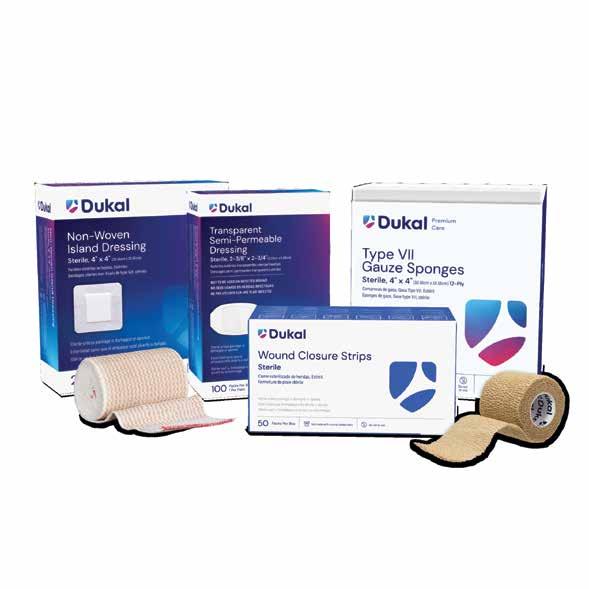
DawnMist, Redefined
Where legacy meets innovation - a refreshed identity that strengthens brand equity, enhances care, and unifies our portfolio
By Aimee Kenline, Senior Creative Director
Rebranding DawnMist
As a trusted provider across personal care, acute care, and corrections, Dukal acquired the DawnMist brand in 2012 to strengthen its portfolio with a proven line of personal care products that emphasize comfort, dignity, and compassion in healthcare environments. The addition of DawnMist expanded Dukal’s reach within personal care, offering a broad selection of essentials, including oral care, cleansing, deodorant, shaving, moisturizing, and incontinence care products—each designed to support the daily needs of patients and residents.
Now the second-largest brand in Dukal’s portfolio, DawnMist aligns with the company’s mission to enhance family and community health while delivering meaningful value to health systems. With CHG-compatible, hypoallergenic, paraben-free, and sulfate-free formulations, DawnMist supports clinical protocols, patient safety, and operational efficiency—providing high-quality, cost-effective solutions for care delivery across a range of medical settings.
While consumer research affirmed DawnMist’s strong standalone equity, it also revealed a limited association with the Dukal master brand—highlighting a key opportunity to strengthen brand integration and unlock greater value across the portfolio.
Our Design Objective
The redesign of DawnMist aimed to evolve the brand into a more compassionate, gender-neutral expression that feels modern, approachable, and aligned with both the personal care market and Dukal’s core values. The design team aimed to create a flexible system—simple enough to scale across diverse substrates and label formats yet distinctive enough to capture attention on the shelf and in clinical settings.

Design Principles
The name DawnMist evokes a story: the calm, dewy mist at daybreak. Historically, this story was told through varied symbols—an egret, ocean waves, and a rising sun. Dukal’s design team set out to unify these elements into a single, cohesive identity. The result is a new visual mark that honors the brand’s legacy while building stronger equity for the future. The new icon combines a droplet, representing hydration,
cleansing, and care, with a horizon line, symbolizing softness, renewal, and the start of a new day.
The result is a refreshed DawnMist logo that is clean, fluid, and comforting—featuring elements of movement, waves, ripples, and gentle mist.
Visual System
The updated visual system employs a carefully considered color strategy centered on soft, muted tones that enhance the brand’s emotional resonance. A refined color-coding structure enhances product categorization, enabling clinicians and caregivers to quickly identify the right solutions with clarity and confidence. Typography was modernized to support this clarity—clean, legible, and structured to perform well in both clinical and consumer-facing environments.
Vision for Tomorrow
The future of DawnMist is rooted in compassion. With its renewed identity, the brand is positioned to elevate its impact across healthcare settings by delivering care-focused products with a clear, consistent, and modern voice. The rebrand enhances the DawnMist story while establishing a cohesive design language across the whole portfolio—deepening trust, improving recognition, and supporting Dukal’s mission to deliver better health through every detail.
Better Health Better Future





Reclaim Your Sales Swagger
The
year we take back the territory.
By Brian Sullivan, CSP
 If sales had a spirit animal, it’d be the honey badger.
Unstoppable. Scrappy. Occasionally chaotic. Somehow still smiling after being ghosted harder than a bad Tinder date.
You survived another year of dashboards, backorders, and budget freezes that made you wonder if anyone remembers how capitalism works. You smiled through “just checking prices” calls and “we’re going in a different direction” emails. And yet here you are – still dialing, still grinding, still believing that the next conversation might change everything.
That’s why this year isn’t just about hitting quota. It’s about reclaiming your swagger.
It’s the year we take back the territory.
You control the controllables
In sales, effort still matters. You can’t control the market, the merger, or the mystery spreadsheet that changed your territory lines at midnight. But you can control how many times you show up, follow up, and get back up.
Forget the outcome goals for a minute – set behavior goals.
How many first meetings will you create each week?
How many follow-ups before you surrender to CRM fatigue?
How often will you practice your pitch so it doesn’t sound like you’re reading a ransom note?
Every call, every prep, every awkward voicemail is a rep in the
gym. Most people quit at sore, but you lift through it.
You live in the real world
Sales is the last honest job. You can’t hide behind “busy.” Either you moved the deal forward or you didn’t.
You work with people, not projects. You juggle gatekeepers, ghosters, and buyers who think “next week” is a fiscal quarter. And still you find a way to turn a hallway chat into a pipeline opportunity.
While the world obsesses over “alignment” and “AI enablement,” you’re out there with a phone, a smile, and a browser tab titled Directions to Facility Loading Dock B
This year, live in the real world again. Show up. Ask sharper questions. Listen like your commission depends on it –because, well, it does.
You’re the economy’s front line
Let’s call it what it is – without reps, nothing happens. No product ships. No service starts. No invoices get paid. We are the first impression, the voice, the shock absorber, and occasionally the emotional support animal for frustrated customers.
You’re not just selling. You’re representing everyone behind you: the techs, the engineers, the folks who never see the client but depend on you to keep the lights on.
So, stop thinking like an employee. Start thinking like a franchise owner.
Your name may not be on the logo, but the territory is your business.
Run the marketing. Run the meetings. Run the experience. Own the wins and the losses.
And if you’re going to wear the badge, wear it like it’s engraved.
You never stop growing
You can spot the difference between a good rep and a great one by what happens after a good year. The good rep coasts. The great rep reinvents.
They treat every January like rookie training camp. They study their market, tweak their talk track, and ask the dangerous question most reps avoid: “What if the way I’ve always done it isn’t the best way anymore?”
They try new tools. They role-play tough conversations. They actually read the email marketing sent. Growth isn’t glamorous – it’s uncomfortable. It’s
In a world of ghosted emails and automated “touches,” you remind people that good service still exists – that someone still cares enough to show up, shake a hand, and actually listen.
Every time you walk into a clinic, a hospital, or a conference room, you bring energy. You make people believe again. You’re the reason products get launched, customers stay loyal, and someone’s Friday doesn’t completely fall apart.
You’re the Wi-Fi password of the business world. Everyone’s happier when you show up.
So as we start this new year, remember: you’re not just selling a product. You’re selling belief. Belief that something better exists. That problems can be solved. That people still matter.
In a world of ghosted emails and automated “touches,” you remind people that good service still exists – that someone still cares enough to show up, shake a hand, and actually listen.
asking the extra question when silence would be safer.
So, audit your habits. Where did you get lazy? What skill have you ignored? What’s one uncomfortable behavior that will make you a monster by year’s end?
Greatness never comes from “fine.”
You give people hope Yeah, I said it. Hope.
And if that’s not reason enough to celebrate, I don’t know what is.
Here’s to you – the rep who grinds, learns, laughs, and leads.
You’re the reason companies grow, customers return, and optimism stays in business.
Let’s make this the year we don’t just hit quota…
Let’s make it the year we take back the territory.
Brian Sullivan, CSP, Founder of PRECISE Selling, founder of The PRECISE Selling and PRECISE Performers, helping companies train, coach, and outsource top-tier sales talent. Learn more at www.preciseselling.com.
Never Fly Solo: Why You Need a Wingman
Former fighter pilot and keynote speaker Waldo Waldman shares how lessons from the cockpit – trust, preparation, and teamwork – can help business leaders build resilient, high-performing teams.
By Pete Mercer
 Have you ever found yourself flying solo, metaphorically speaking? There might be road warriors and field reps in the industry who feel that they’re carrying the business on their backs, but the reality is that everyone needs a wingman. Without a wingman, you are exposed to attacks from behind that will reduce your effectiveness, your productivity, and eventually your bottom line. If you don’t have a wingman by your side to check for weaknesses and blind spots, it might be time to find one.

Waldo Waldman is a professional sales and leadership keynote speaker whose primary focus is to help businesses build collaborative, team-oriented environments, leveraging principles like accountability, trust, relationships, preparation, courage, and resilience. Waldman’s perspective on these attributes is unique –these are all things he not only learned in the cockpit as a combat decorated fighter pilot, but also in real-world corporate sales roles.
Repertoire Magazine sat down with Waldman to discuss how he draws from his 23-year military career to help businesses better develop their teams.
Overcoming challenges in the cockpit
Waldman’s approach is compelling because he’s using his lived experience as a combat pilot to talk about team building and resilience. This is obviously not a shared experience for everyone – how many of us have been in a
Waldo Waldman
cockpit during an aerial dogfight? If you’re going to be successful (and in Waldman’s case, stay alive), you have to be resilient to any changes in your environment.
“Flying complex jets in the heat of battle is challenging –leveraging this million-dollar piece of machinery you call an F-16, with all the weapons systems, tactics, tools, and teamwork involved was critical. You have to make fast decisions based on data that’s coming at you very quickly, which makes responsiveness, agility, flexibility, adaptability all very important,” Waldman said.
Even with all the complexities of controlling an aircraft in intense situations, one of Waldman’s biggest challenges was overcoming claustrophobia, the overwhelming fear of enclosed spaces, while in a cockpit. It started three years into his flying career with a near-death experience 35-feet underwater while scuba diving that then turned into PTSD-induced claustrophobia at 30,000 feet.
“What ensued was this journey of resilience and courage, facing my fears to do what I love more than anything else, which was to fly jets,” he said. “I had to actively choose between the joy of following my passion for flying or getting sucked into the dungeon of doubt and fear. Making that choice allowed me to stay out of the danger zone and fly into the performance zone.”
The
importance of a wingman
Do you have a wingman in your life?
A wingman is someone who partners with you to help you achieve more – overcoming obstacles, adapting to change and achieving success.
Any good company culture is built on partnerships like these, where people can come together and have a greater impact. Waldman believes the most important wingman in your life is the one you spend the most time with.
“The most important wingman is yourself. You have to trust the person you see in the mirror, which is something you can build through preparation and putting in the reps. When it comes to tactics and performance, I always say, ‘Wingmen never wing it.’ You don’t fly by the seat of your pants, and you can’t sell or lead by the seat of your pants.”
The 7 Wingman Principles
Waldman has seven foundational principles that he designed to be essential to building cultures of trust, teamwork, and excellence.
1 Winners Never Fly Solo: You might be able to survive on your own, but you win as a team. Waldman said, “You have to go out and build those relationships, which means you need to serve first. I call it giving your wings away. If you want to gain a wingman, become one.”
2 Leaders Promote Collaborative Cultures: Collaboration means cross-checking each other’s blind spots. Any threats that can
With all these high-stress situations surrounding us, it would be really easy to stay in our comfort zones and not push boundaries. But would that make us more effective?
It all starts with building within yourself, challenging yourself through exposure and stretching outside of your comfort zone to grow into the person you need to be. Change is hard and uncomfortable, but it’s necessary to evolve and adapt to the moment that you are in.
Working out that confidence muscle is the first step towards success, but there’s only so far you can go on your own. Waldman said, “There’s a limit to your skill, your perspective, and your courage. This is why your wingman, the people in your formation who you have trusting relationships with, needs to be someone you can go to and say the three most important words in life, which are, ‘I need help.’”
derail your productivity are going to sneak up from behind you, so you need a wingman to check the ‘6-o’clock position’ to improve trust across the organization.
3 Training and Preparation
Drive Sales Excellence: One of Waldman’s mantras is “Wingmen never wing it.” If you’re going to win in business, you need to build a performance-focused culture. He likened this principle to constantly upgrading the weapons systems on an F-16, ensuring that it was ready for any new challenges it might face.
4 Standards Determine Culture:
The accountability, attention to detail, responsiveness, and discipline set by the standards of your leadership will determine the output of the culture. “Hold people
to a higher standard, and the most important standard you must hold is of yourself. That’s how you command excellence.”
5 Relationships are Foundational: If you’re going to build strong, lasting relationships within your organization, you need mutual trust. There are plenty of heroes in your organization that aren’t in the spotlight, and they need to be recognized for everything they contribute. “If you’re in sales, you need to build better relationships with your account managers and the people who are making sure your systems are upto-date. Without them, you can’t do your job.”
6 Be Courageous, Not Fearless: There’s a difference between
courageous and fearless. When you’re embracing courage, you are controlling your fear. Fearless can mean reckless, and fear is an important element of the greater equation. “Fear is a common component, and it shows that you’re human. It shows that you’re fighting for something important.”
7 Core Values are Essential for Growth: Your core values are the essential building blocks for growth within your organization. Leadership is held to a higher standard, so you need to practice what you preach and emulate the core values of your organization.
Resilience today
In 2025, uncertainty is all around us. It comes in the form of tariffs,

unemployment rates, artificial intelligence, economic uncertainty, international conflicts, and so much more. It’s a lot to take in from every side, but resiliency is about finding ways to push forward and keep getting back up when you’re getting pushed down.
With all these high-stress situations surrounding us, it would be really easy to stay in our comfort zones and not push boundaries. But would that make us more effective? By embracing a resilient mindset, you can walk out into the world with no fear, because you know that when you get knocked down, you will pick yourself back up.
Waldman said, “Resilience is your ability to adapt to stressors and bounce back from failure, rejection, doubt, fear, and performance debilitating situations. It’s your ability to say, ‘I’m getting back in the cockpit of my life and I’m going to still take the action necessary to grow.’ It’s about avoiding shrinking away from fear and knowing that the stress will come anyway. You’re still able to fly through that fear because you have people depending on you.”
It’s important to understand how resiliency works: it’s not a lack of fear or anxiety, but it’s about pushing through the fear and anxiety to get the job done. It’s not comfortable and it might not even be fun, but it will grow and stretch you into the leader you are meant to become. “Fear, anxiety and doubt are going to be present, but it’s going to diminish. The more you get used to it, the easier it gets. Expose yourself to those challenging situations – it’s part of what a growth mindset is all about.”
From all of us at Repertoire, we want to extend our warmest wishes for a wonderful holiday season.

Wishing you peace, joy, and success throughout 2026!
A Different Approach to Medical Sales
In 2006, Founder and CEO Bill Sparks sought to build something different: a contracted sales organization invested in a highperformance team of executives and sales representatives, always valuing handshakes and relationships above all else. Under his leadership and that of President and General Partner Manny Losada, MedPro has grown into a leading, experience-driven sales organization within the healthcare market.
Though the organization has grown in more ways than one, the consistent culture of MedPro is close-knit. “We operate more like a family than a corporation. Everyone knows each other and every voice matters. We celebrate each other’s wins, rally together to solve challenges, and genuinely care about the success of our partners and customers,” says Tim Driver, Regional Vice President of Sales – East. This culture directly fuels success; when sales representatives feel supported and aligned with the mission, great things happen for customers.
The MedPro Way
MedPro leverages its industry network and employs 60+ field sales representatives to generate leads, drive sales, provide in-servicing and product demonstrations, and be the customer-facing team on behalf of the manufacturers we represent. The difference between other sales organizations and MedPro is this: MedPro allows manufacturers to focus on branding and product development, while its sales team attacks all major medical markets consistently, increasing awareness and revenue.

Sales representatives are HIDA accredited and annually trained in all aspects surrounding safety, compliance, and HIPPA. Additionally, MedPro reps shadow veteran representatives – as well as their counterparts in medical distribution – within their territories to grow their understanding of the industry and establish relationships with all parties involved in the sales and purchasing process. “Mentorship from experienced reps and crossfunctional collaboration have provided me with opportunities to learn from industry leaders and challenge my sales processes,”
says Gage Mize, Director of Government Sales and Central States Government Specialist.
Investing in the Future
This year the group made significant financial and organizational investments to solidify their commitment to providing toplevel service to their partners. In partnership with Monstrous Media Group, MedPro is rolling out a three-phase technology initiative that enhances transparency and efficiency. This includes a secure data warehouse for detailed sales insights, predictive analytics to uncover growth opportunities, and a next-generation CRM to empower field representatives with real-time market intelligence. MedPro is committed to adapting to and understanding the new healthcare landscape that has become more valuedriven and data-focused than ever before. They equip and lead a group of sales representatives with a full toolkit before entering the field. They focus on providing sales representatives with the skills set and resources that enable them to serve their markets in a better, more efficient manner.
Let’s build your sales strategy! Connect with us today.
Ben Brenneman, Director of Business Development bbrenneman@mproassociates.com
MedPro is a contracted medical sales organization serving leading manufacturers across every major care setting.
Our clinically trained, HIDA AMS-accredited sales professionals are strategically located throughout the country, delivering expert, in-person support to providers and streamlined execution for manufacturers and distributors alike.
Words of Wisdom
From mastering coaching to embracing simplicity, this year’s standout voices in sales and leadership shared strategies for growth, integrity, and human connection in a rapidly changing world.
By Pete Mercer
It’s hard to believe that another year is coming to an end!
For Repertoire Magazine, 2025 has been a powerful year of new insights and best practices for sales and leadership. As we bring 2025 to a close, we wanted to take this opportunity to revisit some of the highlights in our conversations with the thought leaders and experts who were generous enough to share their experiences with us. As always, thank you for reading and we hope you have a great holiday season.
Using
coaching to change the tone of
the room
There are so many ways to lead a team, but one of the most effective approaches is to incorporate coaching into your leadership method. Coaching is one of those topics that we cover a good bit, but it’s always fascinating to hear everyone’s different perspectives on how coaching works and what it looks like to incorporate into a leadership process. Aaron Keyes, an executive coach at Novus Global, discussed how an effective coach can begin to set the tone of the room and influence their surroundings.
“Authority is not a prerequisite for leadership, but a byproduct of leadership,” Keyes said. “Even someone who’s just a volunteer on their team that is actively showing integrity, making big commitments, keeping their word, and demonstrating character and competency, will begin to influence their surroundings.”
A challenging aspect of the coaching dynamic is working through feedback. While it’s rarely pleasant to get feedback, an effective coach will shape the feedback that they give you to make it fit into your next steps –you just have to be willing to hear what they are saying.
“Hypersensitivity to criticism is only going to hinder you – it’s not going to help you at all. We’ll walk with people through these discoveries, and they choose if they want to change. You can be hyper-defensive and easily offended if you want, but is that going to get you where you want to go?”


The importance of integrity
What kinds of qualities should leaders possess? Certainly, qualities like strong decision-making skills, organization, drive, and vision are things that every leader should want to possess, but one of the most important, and often forgotten, qualities is integrity.
Mike Studeman, author and retired commander of the Office of Naval Intelligence, defined integrity for us, saying, “Integrity has a lot of different meanings – one of them is to be honest, one is to have a moral underpinning. You operate from a moral base. Another definition, which is critical, is that integrity is about uniting, not dividing.”
where you can hone it in a way that makes it better every day.”
Navigating hazardous attitudes
Author Ricky Brown shared insights from his book, The Five Hazardous Attitudes: Ways to Win the War Within, where he discusses the five hazardous attitudes taught by the Federal Aviation Administration to improve the decision-making process for pilots. According to Brown, around 80% of airplane accidents have involved one or more of the hazardous attitudes. It turns out, the same attitudes that can wreck a plane can also wreck your business, your relationships, and your marriage.
“Many leaders still think of human connection as a soft skill, but in today’s disconnected world, human connection is not just a nice-to-have. Especially in sales, where relationships fuel success, human connection is an essential business skill that impacts the bottom line.”
In his book, Might of the Chain: Forging Leaders of Iron Integrity, he breaks down almost four dozen leadership traits and why they are essential qualities for great leaders. His perspective on integrity and leadership is shaped by his military experience. For Studeman, integrity is the difference between a good leader and a greater leader.
“I think it can be born and bred,” Studeman argued. “Everyone can have high integrity. It’s both something you might have in your genetic makeup and your upbringing, but it’s also something
Part of the battle is identifying these hazardous attitudes.
Here are the five hazardous attitudes, broken down with their respective antidotes:
1 Anti-authority: This is the hazardous attitude of people who say, “You can’t tell me what to do.” Brown said, “The antidote for anti-authority is to user your words and say out loud, ‘Follow the rules, they’re usually right.’”
2 Invulnerability: The person with this hazardous attitude knows that consequences can
happen, but they don’t believe that the consequences will affect them. The antidote for invulnerability is to say out loud, “It could happen to me.”
3 Macho: With this attitude, the person has an overinflated sense of self-ability, prompting people to take unnecessary risks. Brown’s antidote for the macho attitude is to say out loud, “Taking unnecessary risks is foolish.”
4 Impulsivity: People with impulsivity tend to act before they think. Brown said that the antidote for impulsivity is to say out loud, “Not so fast. Think first.”
5 Resignation: Resignation is the hazardous attitude that causes people to prematurely end what might have otherwise been successful. Brown’s antidote to resignation is to say out loud, “You can make a difference.”
Once you’ve identified the hazardous attitudes, you can then take steps to eradicate these attitudes and their influence within your life. He said, “It’s really an issue of self-awareness. When a person has a hazardous attitude, they are often the last person to realize it – everyone around them already knows. What I have found through coaching, training, or facilitating workshops is that identifying the hazardous attitude is the big thing.”
In his research for the book, Brown found that most of these hazardous attitudes were doing the most damage within members of leadership, which then trickles down to infect the rest of the culture at the company.
“The bridle is placed in the horse’s mouth for a reason. Wherever the head goes, so does the body. Leaders have the biggest impact – a
A STRONGER FUTURE, TOGETHER PHASE Scientific + Lumos Diagnostics

Empowering
INNOVATION
PHASE Scientific is proud to announce its exclusive U.S. distribution partnership with Lumos Diagnostics, launching the revolutionary FebriDx® test—a singlefingerstick solution that aids in the diagnosis of acute respiratory infection and differentiates bacterial from non-bacterial etiology after just 10 minutes.
Lumos brings diagnostic innovation. PHASE Scientific brings the commercial strength to deliver it where it matters most—at the point of care, where clinicians and patients make decisions that define outcomes.
Together, we are shaping a new standard in point-of-care testing, enabling confident decisions, improved patient outcomes, and responsible antibiotic use across clinics, urgent care centers, and health systems nationwide.

Doug Ward, CEO, Lumos Diagnostics
Dr. Ricky Chiu, Founder and CEO, PHASE Scientific
leader’s job is to make sure they are healthy. When the leader gets better, everybody wins,” he said.
Investing in human connection
Over the course of this year, we’ve seen a rise in the utility and strength of artificial intelligence, which in and of itself is not a bad thing – what matters is how it’s used. AI can be used to simplify processes and reduce workloads, but it cannot and should not be used to replace people or human connections. In fact, human connections are more important now than ever before.
Smiley Poswolsky, keynote speaker and author of Friendship in
the Age of Loneliness: An Optimist’s Guide to Connection, believes that the future of work is human connection. He said, “Many leaders still think of human connection as a soft skill, but in today’s disconnected world, human connection is not just a niceto-have. Especially in sales, where relationships fuel success, human connection is an essential business skill that impacts the bottom line.”
Ryan Estis, keynote speaker and author of Prepare for Impact: Driving Growth and Serving Others Through the Principles of Human-Centered Leadership, believes in the power of human-centered leadership.
“I think fundamentally, people want to be seen, heard, understood and valued,” Estis said. “Leaders
The idea for layering successful skills is that you continue to develop your competency at certain skillsets, while introducing new ones into the mix. With all the resources available to the modern sales rep, it’s more accessible than ever to develop a mastery of medical sales.

need to invest the time to build those high-trust relationships to nurture, care and develop people and put them in a position to be successful. That’s our responsibility, but it takes time and competency to do it.”
Building a people-centered culture that focuses on human connection requires balance between the results and the culture – you need both to successfully run a company. “If you’re going to be a leader and earn fellowship, you have to take care of people, love people, value people, and invest in people. One of the most loving, kind things you can do for people is to hold them accountable to very high standards of excellence,” Estis said.
Embracing simplicity
Of all the ways to lead a company and drive change, embracing simplicity might be one of the most overlooked methods. Lisa Bodell, founder and CEO of FutureThink, wants to help people look towards the future by embracing and encouraging simplicity.
She said, “The first thing to know about simplicity is that it isn’t only meant to drive productivity and efficiency. That will happen, but the bigger thing about simplicity is it’s a strategic advantage because it means that people can move faster, they can focus, and they have time to think.”
Too many leaders fall into the trap of trying to pursue innovation for their organization. Bodell argues that simplicity is innovative in and of itself, allowing you and your team to scale back to the essentials and focus on what works. She says that your team needs the space to shed meaningless tasks and focus on more meaningful work
that will have greater impacts on things like revenue, productivity, and the bottom line.
Navigating gatekeepers
Mark Copeland, the Value Analysis Whisperer, has been in medical sales for 28 years and has been selling medical devices in hospitals and ASCs for 20 years. The moniker ‘The Value Analysis Whisperer’ stuck because of his success rate for getting products through the value analysis committee.
One of the ways he approaches coaching sessions with sales reps is to help them understand the role of the clinician by likening them to a three-star chef at a Michelin restaurant. The reality is that while their names might be on the restaurant banner, that doesn’t mean they know how to run the business.
He said, “They might know what the best ingredients are, but about three quarters of them put the restaurant out of business in a year because they don’t have business sense. That’s who you’re calling on – you’re calling on the chef, while value analysis is running the business side of the restaurant.”
Getting past the gatekeepers is one of the biggest obstacles medical sales reps face on a daily basis, making it harder to set up meetings and close deals. Copeland argues that the best way to get your foot in the door is by creating a sense of urgency. He said, “If you say, ‘Hey, you’re wasting money, you have a problem, you have an issue,’ it accelerates it because they may not know they’re wasting money each month. Now, there’s an urgency – it’s not about the product or the service, it’s about the problem. All of a sudden, they’re asking you to send a sample over.”
Going Beyond the Sale
For healthcare providers, distributor representatives are far more than order-takers. As Shannon Trahan, director of sales, south region for CME Corp., explained, “Healthcare providers view distributor reps as trusted advisors.” By building strong, authentic relationships and showing they understand the everyday challenges of patient care, reps “earn a level of trust that goes way beyond transactional interactions.”
That trust is reinforced through service. According to Trahan, “The best reps act less like vendors and more like problemsolvers and partners, making the practice’s job easier and helping them focus on what matters most – patient care.”
Trahan pointed to a recent example that demonstrates this partnership in action. CME focuses exclusively on healthcare equipment, and customers rely on them to, as she said, “Deliver a Better Experience.”
One of their account managers learned late on a Friday that a long-delayed, backordered product had finally arrived. Although delivery would typically be scheduled for the next week, the customer had a facility opening on Monday.
The rep quickly teamed with CME’s project manager and warehouse staff to ensure delivery before close of business that day. As Trahan recalled, the facility opened on schedule, patients received needed care, and “the customer couldn’t have been happier.”
Developing a mastery of medical sales
Mace Horoff, author of Mastering Medical Sales – The Evolution –The Modern Playbook for Medical Sales Professionals, spoke to us about what it takes to develop a mastery of something by layering successful skills.
“Mastery is developed over time, but competency is the bare essential. It’s the same thing in medical sales – there are multiple skills involved in becoming a successful medical sales rep,” Horoff said.
The idea for layering successful skills is that you continue to develop your competency at
certain skillsets, while introducing new ones into the mix. With all the resources available to the modern sales rep, it’s more accessible than ever to develop a mastery of medical sales.
“How lucky are we?” Horoff said. “We live in a time when artificial intelligence is exploding, and all these new tools are coming into the marketplace that allow you to practice in very realistic ways in private. You don’t have to do it in front of your colleagues, that role play every rep hates –but there’s no excuse not to practice now. If you want to achieve that top 1% in medical sales, you have to put in the work.”
Health News: Year in Review
An overview of the top health industry stories from this year.

From breakthrough innovations to policy overhaul and public health debates, 2025 was another transformative year in healthcare news. In this article, Repertoire Magazine looks back at the stories and trends that defined the industry this year.
Vaccine policy
Policy related to vaccination has been a major topic of discussion in 2025, having continued to evolve throughout the year as public health agencies and healthcare providers adapt to a changing vaccine regulatory framework.
HHS restructuring of Advisory Committee for Immunization Practices
In June 2025, current Secretary of Health and Human Services (HHS) Robert F. Kennedy, Jr. restructured the Advisory Committee for Immunization Practices (ACIP), which develops recommendations on the use of vaccines to control disease in the United States. All 17 sitting members of the committee were removed and replaced with new members. The Biden administration appointed all 17 of the former sitting ACIP members, 13 of
which were appointed in 2024. ACIP’s vaccination recommendations become official Center for Disease Control (CDC) policy once adopted by the Director of the CDC.
FDA ends emergency use authorization for COVID vaccines
In August 2025, The Food and Drug Administration (FDA) rescinded emergency use authorizations (EUAs) for COVID-19 vaccines. The Emergency Use Authorization (EUA) authority allows the FDA to help strengthen the nation’s public
health protections against threats like infectious diseases by facilitating the availability and use of medical countermeasures (MCMs) needed during public health emergencies, according to the FDA. The Secretary of HHS declares when an emergency use authorization is appropriate; HHS Secretary Robert F. Kennedy Jr. stated that the COVID-19 EAU decision was made to end national coronavirus vaccine mandates.
Shifting COVID-19 vaccination guidance
In October 2025, the CDC shifted its COVID-19 vaccination guidance from standardized national recommendations to a “shared clinical decisionmaking” approach. This change, influenced by HHS Secretary Robert F. Kennedy Jr.’s advisory panel, emphasizes personal discussions between healthcare providers and patients when making decisions on whether to get vaccinated, especially for patients under 65 without underlying health conditions.
Childhood vaccine recommendation updates
The CDC updated its child immunization schedules in October 2025 to recommend that toddlers receive protection from varicella (chickenpox) as a standalone immunization rather than in combination with measles, mumps and rubella vaccination. The CDC now advises separating the chickenpox vaccine from the MMRV combination vaccine for children under 4 years old; the updated guidance aims to reduce the risk of febrile seizures associated with the MMRV vaccine.
AI in healthcare, digital health and technology
In 2025, Artificial Intelligence (AI) technology continued to dominate in diagnostics, care delivery and workflow optimization – but with the technology’s rapid growth also comes growing ethics and privacy concerns.
CHAI and NACHC join forces to prioritize community health centers in AI adoption
Community Health Centers (CHCs) provide critical healthcare and resources to patients at more than 17,000 sites across the U.S. – and they are experiencing rapid changes as AI transforms the healthcare ecosystem. The Coalition for Health AI (CHAI) and the National Association of Community Health Centers (NACHC), as a result, announced a new strategic partnership in August 2025 that aims to empower safe and responsible AI adoption at CHCs across the nation.
By leveraging both organizations’ expertise, the partnership will ensure that CHCs and their patients are positioned to benefit from the use of AI in healthcare as well as build a trusted AI infrastructure specifically designed with CHCs and other safety-net providers.
Healthcare AI moves from pilots to real-world use, focusing on ROI and clinical efficiency
U.S. healthcare providers and payers are ramping up their AI investments to improve profit margins as they focus on an imperative of harnessing tech to bolster returns, according to an October 2025 study from Bain & Company and KLAS Research. Approximately 70% of providers
and 80% of payers now have an AI strategy in place or in development – a significant increase from 60% for both groups in last year’s Bain/KLAS survey.
The prioritization of technology solutions that deliver greatest impact to bottom lines comes as the deployment of AI in healthcare moves from broad exploration to a more focused execution capturing financial benefits, Bain and KLAS reported in their 2025 Healthcare IT Spending study.
Thermo Fisher Scientific to accelerate life science breakthroughs with OpenAI Thermo Fisher Scientific Inc. plans to increase its growth strategy using the AI platform OpenAI. The company stated that the collaboration will help to improve the speed and success of drug development, enabling customers to get medicines to patients faster and more cost effectively.
The collaboration will deploy OpenAI advanced capabilities to Thermo Fisher’s industry leading PPD™ clinical research business, leverage OpenAI capabilities to more quickly help identify therapies that are unlikely to succeed, integrate AI into Thermo Fisher’s Accelerator™ Drug Development solution and launch frontier AI to Thermo Fisher colleagues with ChatGPT Enterprise.
Premier advocates for improved supply chain cybersecurity
As the use of AI in healthcare has expanded, Premier has emphasized the importance of its secure and ethical rollout. Premier submitted recommendations in October 2025 to the Cybersecurity and Infrastructure Security Agency (CISA) on its 2025 updates to the
minimum elements for a software bill of materials (SBOM).
Premier recommended that CISA take the following actions to strengthen cybersecurity and safeguard critical infrastructure: update certain data fields to make SBOM minimum elements more useful to stakeholders in critical infrastructure, including healthcare; incorporate AI models into the “Dependency Relationship” field and explore ways to leverage the private sector contracting process to promote broad adoption of SBOM minimum elements.
Cleveland Clinic collaboration to create AI-powered technology for structural heart care Cleveland Clinic entered an agreement with DASI Simulations in October 2025 to co-develop the
continue to influence purchasing and clinical decision-making as the year comes to a close.
New Vizient survey finds drug shortages cost hospitals nearly $900M annually
In June 2025, Vizient announced an updated analysis of the financial impact of drug shortages for hospitals to their workforce and budgets. The survey, “Beyond the Shortage: The Hidden Cost of Drug Supply Chain Disruptions,” revealed that in 2023, hospitals across the U.S. spent roughly 20 million hours managing a range of drug shortages, which translates to nearly $900 million annually in labor costs, which is more than double the labor costs reported of just under $360 million in the 2019 survey.
In 2025, the U.S. saw a rise in the resurgence of certain infectious disease, along with other notable health trends.
next generation of AI for the treatment of structural heart diseases. As part of a two-year codevelopment partnership, DASI and Cleveland Clinic are working to develop innovative AI technology that can assist doctors in real time during heart procedures. By combining Cleveland Clinic’s clinical expertise and extensive data with DASI’s advanced AI models, the goal is to create the world’s first AI-powered “co-pilot” system for catheterization labs.
Supply chain and tariffs
Tariffs and supply chain disruptions dominated healthcare news early in 2025; concerns which
The respondents who participated in the 2024 survey monitored an average of 43 drug shortages and a maximum of 70 over the course of 2023. Approximately 27% of respondents reported that drug shortages caused disruptions in patient care, and planned medical procedures were also impacted by shortages, with disruptions reported in 32% of cases, followed by hospital admissions at 22%.
Tariff-driven cost increases factored into small business health premiums
President Trump indicated in August 2025 that the administration
will phase in tariffs on pharmaceutical imports – starting with a “small tariff,” and climbing to 150% within roughly 12 to 18 months, and eventually rising to as much as 250%, as part of an effort to bring drug manufacturing back to the U.S. A tariff on pharmaceutical imports may, however, inadvertently impact employee health benefits across the nation, as tariffs can indirectly affect health insurance premiums by increasing the cost of imported medical goods like prescription drugs.
Pfizer reaches landmark agreement with U.S. Government to lower drug costs for American patients
Pfizer announced a historic agreement with the Trump Administration in September 2025 that will ensure U.S. patients pay lower prices for prescription medicines while simultaneously aiming to strengthen the nation’s role as a global leader in biopharmaceutical innovation.
Pfizer additionally agreed to implement measures designed to ensure Americans receive comparable drug prices to those available in other developed countries and pricing newly launched medicines at parity with other key developed markets.
U.S. opens tariff investigations into medical equipment
The U.S. Commerce Department stated in September 2025 that it had opened new national security investigations into the import of personal protective equipment, medical items, robotics and industrial machinery, according to CNN Business. The “Section 232” investigations from the U.S. Commerce
The industry’s only one-touch, silent mobility system has arrived.

A simple turn of a switch engages and disengages the EasyGlide Mobility System.
Introducing the Brewer EasyGlide™ Mobility System.
The first to offer a one-touch, whisper-quiet mobility system, Brewer makes it possible to reconfigure and clean exam rooms quickly and with zero disruption to patients and providers. Our advanced EasyGlide Mobility System is an available option on our Access® PLUS and FLEX™ PLUS Exam Tables.
Scan to explore Access PLUS with EasyGlide
Department are interested in the role of major exporters like China in meeting national medical needs and the “impact of foreign government subsidies and predatory trade practices.”
Premier weighs in on Section 232 Investigation into medical devices and tariffs Premier submitted comments on the Section 232 investigation into imports of PPE and other medical devices in October 2025 – the comments recognized the value that thoughtful and targeted use of tariffs can provide to supply chain resiliency in the long-term, but Premier warned that material increases in tariffs on healthcare supplies coupled with rapid implementation timelines may result in unintended consequences that increase costs and shortages in the short-term.
Public health and policy
The national healthcare policy landscape has witnessed historic change in 2025, including administrative reorganization, sweeping healthcare reform and changes to rural health policy.
HHS reorganization & creation of ‘Administration for a Healthy America’
In March 2025, the U.S. Department of Health and Human Services announced a major restructuring, consolidating its 28 divisions into 15 new divisions, including a new Administration for a Healthy America (AHA). The restructuring centralizes core functions such as Human Resources, Information Technology, Procurement, External Affairs and Policy to streamline healthcare operations and improve public health delivery.
The restructuring reduced the HHS workforce by nearly 10,000 full-time employees, aiming to save taxpayers $1.8 billion per year and improve Americans’ experience with HHS by making the agency more responsive and efficient while ensuring that Medicare, Medicaid and other
under the Working Families Tax Cuts Act.
The RHT Program seeks to support rural health innovations, help rural providers work together and become long-term access points for care, attract and retain a skilled healthcare workforce built of providers
Vaccination is the best way to prevent pertussis. However, as typical infection patterns return to the United States, CDC experts expect pertussis cases to increase both in unvaccinated and vaccinated populations.
essential health services remain intact, according to an HHS press release.
“One Big Beautiful Bill” / Budget Reconciliation Act and Healthcare Impact The 2025 Budget Reconciliation Act, also known as the One Big Beautiful Bill Act, includes significant changes to who is eligible for health insurance in the U.S. Signed into law in July 2025, the bill includes funding cuts and policy changes to Medicaid and Health Insurance Marketplaces, Medicare physician payment and medical student loans among other healthcare policy changes.
CMS launches Rural Health Transformation (RHT) Program
The U.S. Centers for Medicare & Medicaid Services (CMS) Rural Health Transformation Program (RHT), authorized in September 2025, outlines details on how states can apply to receive funding from the $50 billion Rural Health Transformation Program created
in rural communities, spark the growth of innovative care models to improve health outcomes and foster the use of new, innovative technologies.
The funding is to be allocated to approved states over five fiscal years, with $10 billion of funding available each fiscal year, beginning in fiscal year 2026 and ending in fiscal year 2030, according to CMS.
Infectious disease resurgence and other health news
In 2025, the U.S. saw a resurgence of certain infectious diseases, along with other notable health trends.
Measles makes a comeback
As of October 2025, more than 1,500 confirmed measles cases were reported in the United States, according to the CDC. The 2025 spike has been the largest number of cases recorded in a single year since 2000, when the disease was declared eliminated in the
U.S., according to Harvard Health. There have been 44 total outbreaks reported as of October 2025, and 87% of confirmed cases are outbreakassociated. In comparison, 16 outbreaks were reported during 2024 and 69% of cases (198 of 285) were outbreak-associated.
The largest measles outbreak this year was in west Texas, according to the Texas Department of State Health Services, where 99 people were hospitalized and two unvaccinated school-age children died, the first measles deaths in the U.S. since 2015.
Pertussis cases remain elevated in 2025 despite decline from 2024 peak, CDC says Reported cases of pertussis, a bacterial infection also known as whooping cough, have been trending down since a peak in November 2024. However, preliminary case reports remain elevated in 2025 compared to immediately before the pandemic, according to the CDC. There’s no distinct seasonal pattern to pertussis, but past trends suggest that cases may increase in summer and fall. Vaccination is the best way to prevent pertussis. However, as typical infection patterns
return to the United States, CDC experts expect pertussis cases to increase both in unvaccinated and vaccinated populations.
Obesity trends in the U.S.
A 2025 report shows a modest decline in adult obesity this year: in 2024, 19 states had obesity rates of 35% or higher, down from 23 states the previous year, according to an analysis of the latest data collected by the CDC. The analysis follows a CDC report last year that found that the overall rate of obesity in the U.S. is high but holding steady, affecting about 40% of the population.


2025 Infection Prevention: Year in Review
By Paul Girouard
Infection prevention in 2025 was defined by transition – in policy, personnel, and public health priorities. At the same time, evolving disease threats – from resurgent measles and H5N1 to a tougher flu season – reinforced the critical role of infection preventionists (IPs), clinicians, and sales professionals on the front lines.
The following article examines how the infection prevention landscape adapted to new challenges, how vaccine policy evolved, and how sales professionals helped bridge the gap between regulation and real-world implementation.
A year of change in public health leadership
Significant changes within the U.S. Department of Health and Human Services (HHS) had ripple effects across key federal agencies. According to Reuters, a major restructuring effort resulted in approximately 10,000 staff reductions across the CDC, FDA, and NIH. In October, CIDRAP and Infection Control Today reported that the CDC experienced a 33% workforce reduction, impacting divisions such as immunization, global health, and infection prevention.
Earlier in the year, the Healthcare Infection Control Practices Advisory Committee (HICPAC) was disbanded, drawing concern from healthcare professionals and associations due to its historic role in guiding infection prevention policies. These structural
changes introduced uncertainty into national-level coordination of infection control practices.
Evolving health threats and vaccine policy
Throughout 2025, multiple disease outbreaks kept infection prevention top of mind. Measles cases rose in certain regions, zoonotic threats like H5N1 resurfaced, and seasonal influenza activity was more severe than expected in some areas. The World Health Organization continued to advocate for strong national IPC programs as part of the global strategy to combat antimicrobial resistance.
At the same time, U.S. vaccination guidance underwent revisions. The CDC updated its immunization schedule, offering more flexibility for COVID-19 boosters and recommending the MMRV (measles, mumps, rubella,
varicella) combination vaccine be split into individual components for toddlers. These updates reflected a shift toward individualized decision-making and highlighted the growing role of local providers in communicating vaccine strategy.
Increased reliance on local and facility-based protocols
As federal guidance evolved, many healthcare systems took a more localized approach to infection prevention. Organizations such as APIC (Association for Professionals in Infection Control and Epidemiology) and AORN (Association of periOperative Registered Nurses) played a greater role in educating frontline staff and sharing updated best practices. Campaigns like WHO’s “Clean Your Hands 2025” kept focus on hand hygiene and glove use compliance.
Key insights from 2025:
The U.S. infection prevention market reached an estimated $52 billion, with 6% to 7% projected annual growth.
Federal agencies experienced major staffing reductions, impacting national infection prevention coordination.
Public health events (measles, H5N1, influenza) increased infection risk and response urgency.
Vaccination policy changes emphasized individualized decision-making.
Local facilities, infection preventionists, and distributors played a growing role in education, implementation, and support.
Sales representatives and infection prevention
For distributors and field sales reps, 2025 highlighted the importance of supporting infection prevention beyond just product fulfillment. The most successful reps:
Provided education around regulatory drivers, such as CMS penalties for HAIs.
Helped implement compliant product solutions, particularly hand hygiene and single-use instruments.
Partnered with IPs and nurse educators to offer training and in-servicing.
Leveraged manufacturer support
teams to supply clinical data and ROI tools that resonated with both procurement and clinical teams.
Recommended resources for new sales representatives:
CDC HAI Prevention Tools: www.cdc.gov/hai
APIC Resource Library: www.apic.org/ProfessionalPractice/Resource-Library
CMS Infection Control Standards: www.cms.gov/Medicare/ Provider-Enrollmentand-Certification/ SurveyCertificationGenInfo/ Policy-and-Memos-to-Statesand-Regions
WHO IPC Guidance: www.who.int/teams/integratedhealth-services/infectionprevention-control
HIDA Insights on Infection Prevention: www.hida.org
Looking ahead
As infection risks persist and federal staffing transitions continue into 2026, local leadership in infection prevention will remain essential. For sales professionals, this presents an opportunity to move from a transactional to a strategic partner –by aligning products with protocols and supporting outcomes. Wash your hands.
TOSOH BIOSCIENCE
Empower Your Lab
IMMUNOASSAY ANALYZER
18-minute result turnaround time
Allows result reporting during the visit
Wide dynamic ranges


Delivers high-sensitivity results for proper patient care
90-day calibration stability
Reduces cost, time and calibration frequency
Biotin-free immunoassay designs
Minimizes the risk of false lab test results
Unit dose test cup dry reagent technology
One test, one cup ensures minimal reagent waste leading to increased efficiency and cost savings

Available in Four Configurations for Labs of All Sizes and Workloads
Health o meter® Professional ADA Compliant Scales
Pelstar LLC, the manufacturer of Health o meter® Professional Scales, was the first industry leader to develop ADA compliant scales aligned with the U.S. Access Board’s new MDE (Accessible Medical Diagnostic Equipment) Standards. The company has introduced several ADA compliant patient scales, including the first and only scales independently certified for ADA compliance and specifically designed to meet these Standards.
Designed for accessibility and safety
The new 2620KL and 2920KL-AM wheelchair scales were built to meet the needs of all patients, including those with disabilities. Their dual ramps feature a gentle 1:8 slope that allows wheelchairs to easily roll on and off the platform without strain for patients or staff. The large 32” x 40” platform comfortably accommodates most wheelchairs, while 2-inch edge guards prevent accidental roll-offs. The platform’s anti-slip caution tape adds extra safety. When not in use, the 2620KL and 2920KL-AM platforms fold for compact storage, and the 2620KL’s built-in casters make it easy to transport. The line of Health o meter Professional ADA compliant scales include the 1100KL and 2101KL stand-on scales, which are ideal for ambulatory patients that need additional support and a large platform. With a 1,000 lb / 454 kg capacity, the scales deliver durability and advanced functionality, including BMI calculation, hold/release, tare/pre-tare, Everlock® unit lock, and EMR connectivity via USB or optional Pelstar® wireless technology.
Meeting new accessibility standards
Building on the rugged reliability of Health o meter Professional’s trusted medical scales, the ADA compliant scales introduce enhancements to meet the MDE
2920KL-AM
ADA Compliant Antimicrobial Wall-Mounted Fold-Up Wheelchair Scale

2620KL ADA Compliant Wheelchair Scale
Standards for Accessible Medical Diagnostic Equipment. The redesigned ramps of the wheelchair scales now meet the Access Board’s 1:8 slope requirement, while the new 2-inch edge guards and larger platform ensure compliance and patient safety. The compliant stand-on scales feature the required slip-resistant standing surface as well as handrails located between 34”-38” above both sides of the platform. For facilities, this certification provides peace of mind. “Facilities are more interested in purchasing equipment that has been certified because it gives them assurance their scale complies with U.S. Access Board standards,” the company explained.
Health o meter Professional also offers the 2600ADAKIT, an optional ADA Compliance Kit that can be installed on existing 2600 series scales, allowing hospitals, clinics, and long-term care facilities to meet the latest accessibility requirements without replacing their entire inventory.
Thoughtful design for real-world use
User feedback shaped the scales’ designs. The display head on the 2620KL and stand-on scales swivels 180 degrees for optimal readability and privacy. For ambulatory patients, the “live” handrails on the 2620KL and the stand-on scales provide support during weighing without affecting accuracy. The 2920KL-AM wheelchair scale’s wall-mounted design makes it an excellent choice for facilities where space is limited and accommodating large equipment is challenging. The remote display can be mounted on either side for flexible setup in any clinical space. All of the ADA compliant scales also feature an antimicrobial keypad, helping reduce cross-contamination risks.
Facilities connecting the Health o meter Professional scales to their vital signs monitors report measurable improvements in workflow and data accuracy. The scale connects directly to the monitor, which transmits measurements to the electronic medical record (EMR), eliminating manual entry and reducing errors.

First to Comply. Only to Certify.

First to Align with U.S. Access Board Standards— Only with Certified ADA Compliant Scales




From primary care clinics to hospital systems, Health o meter® Professional makes ADA compliance easy—offering certified wheelchair and stand-on scales designed for every care setting. As the first manufacturer to align with the U.S. Access Board’s MDE Standards—and still the only one with independently Certified ADA Compliant Scales—we help you stay ahead of regulations and focused on what matters most: delivering equitable, accessible care to every patient.
What You Need to Know:
• October 8, 2024 – All medical diagnostic equipment purchased by state and local government entities must be accessible.
• August 9, 2026 – Facilities must have at least 10% of equipment, but no fewer than one unit, meeting ADA MDE standards (20% for mobility rehabilitation facilities) Learn More About our Certifed ADA Compliant Scales Or visit www.homscales.com/ada-mde

Don’t risk non-compliance. Choose the only certified ADA Compliant scales on the market—trusted by healthcare providers nationwide.


Post Acute and Long-Term Care News: Year in Review
The top headlines throughout 2025 for the post-acute, long-term and home health care sectors.
December 2024
APIC and AAPACN release new infection prevention resources for skilled long-term care facilities
In March 2024, the Centers for Medicare and Medicaid Services (CMS) issued new guidance for skilled nursing facilities on the use of enhanced barrier precautions (EBP) to help prevent infections, which involves the use of personal protective equipment (PPE) – specifically gowns and gloves, during high-contact resident care activities, such as assistance with bathing, dressing, or toileting long-term care residents.
The Association for Professionals in Infection Control and Epidemiology (APIC), in collaboration with the American Association of Post-Acute Care Nursing (AAPACN), released a practice guidance tool and resource guide for infection prevention in December 2024 to assist healthcare professionals working in skilled long-term care facilities implement EBP to prevent multi-drug resistant organisms (MDROs).
The practice guidance tool outlines when EBP should be implemented for residents, provides infection control recommendations for routine care activities, and includes case study examples for healthcare

professionals and care staff to help reinforce learning. The resource guide also provides a comprehensive list of infection control websites and references – both tools are available for providers cost-free from APIC.
March 2025
American Health Care Association/ National Center for Assisted Living releases 2025 policy priorities for a ‘better way’
The American Health Care Association (ACHA) announced its 2025 policy priorities in March, known as ‘The Better Way,’ to encourage Congress and the
current administration to work with nursing homes to protect access to care and prepare for a growing national elderly population.
According to AHCA, Americans are living longer and requiring long-term care, which necessitates solutions that ensure quality care, a stable workforce, sustainable reimbursement and a more effective regulatory system for post-acute care.
Policy priorities outlined in ‘The Better Way’ include strengthening the long-term care workforce, protecting Medicaid, reaffirming the promise of Medicare Advantage and rationalizing the regulatory environment.


June 2025
U.S. Nursing Home spending projected to soar
Annual spending on nursing homes and continuing care retirement communities (CCRCs) is projected to nearly double from $192.9 billion in 2022 to $385.9 billion by 2033, according to the Centers for Medicare & Medicaid Services’ (CMS) Office of the Actuary and Skilled Nursing News in June 2025.
Year over year growth rates is expected at approximately 8.3% in 2024, 8.0% in 2025, then slowing to 6.2% in 2026–27 and around 5.6% annually through 2028. These projections exclude the potential impact of proposed reconciliation budget changes, which, according to CMS, may further influence spending trends.
from the health inspection rating to better reflect current performance and incorporate more comprehensive long stay antipsychotic measures that combine Medicare/Medicaid claims with existing data. CMS noted that these updates will leverage data to improve the measure’s accuracy. Finally, COVID-19 vaccination rates for residents and staff were removed from the CMS’s main profile pages, streamlining reported indicators.
August 2025
CDC launches sepsis prevention assessment tool for nursing homes
Sepsis is a life-threatening medical emergency that affects at least 1.7 million adults each year, and since 2017, the Centers for
UnitedHealth Group and Amedisys officially closed a $3.3 billion merger deal, making Amedisys a wholly owned subsidiary of UnitedHealth, joining the company’s Optum unit.
July 2025
CMS launches nursing home ratings and revamps inspection metrics
CMS detailed key updates to the Nursing Home Care Compare platform in July 2025 – aggregating performance data for nursing home chains, which includes average overall five-star ratings, inspection outcomes, staffing and quality measures that are now displayed in a more consumerfriendly layout.
CMS also dropped the oldest “third cycle” standard inspection
Disease Control and Prevention (CDC) has been addressing sepsis by providing new, innovative tools to help optimize patient care, such as the Hospital Sepsis Program Core Elements (Sepsis Core Elements).
In August 2025, CDC launched a Sepsis Prevention Assessment Tool that can assist nursing homes in better understanding sepsis attitudes and practices among their frontline staff. By modifying pre-existing sepsis and infection prevention assessments, the CDC Sepsis
Prevention Assessment Tool helps nursing homes navigate and improve sepsis recognition and escalation of care to get patients to an acute care facility faster.
UnitedHealth and Amedisys reach settlement with Department of Justice over $3.3B merger
UnitedHealth Group and Amedisys officially closed a $3.3 billion merger deal, making Amedisys a wholly owned subsidiary of UnitedHealth, joining the company’s Optum unit. The two parties agreed to divest 164 home health and hospice facilities across 19 states, securing approval from the Department of Justice (DOJ) to move forward.
October 2025
Providence, Compassus launch California joint venture
Providence and Compassus, a leading national provider of homebased care services, announced the first phase of a joint venture for six home health and five hospice and community-based palliative care locations across Alaska, Texas and Washington.
Under the agreement, Compassus will go forward managing operations for the joint venture, positioning both organizations to meet the growing demand for home health and hospice services while addressing rising healthcare costs and workforce shortages.
The new company will operate under the name Providence at Home with Compassus, and in Lubbock, Texas, the Covenant Health hospice program that is part of the Providence family of organizations will be rebranded as Covenant Health at Home with Compassus.

CaviCide™ HP
1-Min Hydrogen Peroxide INTRODUCING
The power of CaviWipes™ HP now available in ready-to-use liquid
1-Minute universal contact time for all listed pathogens
Effective disinfection against 70 pathogens including MDRO and Candida auris
Hydrogen Peroxide with no signal word –no PPE required*
1-Step cleaning/disinfection*


Ordering Information
Part No. Item Description
16-1024 CaviCide HP 24 oz spray bottle
* Follow Product Label for special precleaning and PPE instructions
16-1000 CaviCide HP 1 gal bottle Quality Products. Trusted Solutions. Since 1985.
Scan the QR code or visit Metrex.com to learn more

Strengthening the Foundation: Massachusetts Targets Primary Care Challenges
With decades of convening expertise, MHQP leads measurement and policy discussions to support clinicians and improve patient care.
 For nearly three decades, Massachusetts Health Quality Partners (MHQP) has served as a convener and catalyst for improving healthcare in the Commonwealth. The nonprofit organization, led by President and CEO Barbra Rabson, brings together diverse voices –clinicians, health plans, and patients – to identify systemic challenges and work toward practical solutions. “We have always worked across stakeholder groups to achieve better patient experiences and address challenges that no one group can tackle alone,” Rabson said.
MHQP’s governance structure reflects that mission. Three councils – clinicians, health plans, and consumers – each hold seats on the board, ensuring a balanced perspective in decision-making. Rabson notes that the consumer council is particularly powerful, as members bring personal experiences,
often difficult ones, and a shared commitment to improving care for others. “So everything we do, we listen really well,” she said. “That helps us understand problems deeply, but it also helps us identify emerging issues before they hit the headlines.”
One such issue was the fragility of primary care in Massachusetts.
In 2018, MHQP convened a group to discuss barriers to care, identifying lack of access to primary care as the most urgent. When clinician leaders responded that they simply couldn’t take on more responsibilities, MHQP realized the magnitude of the problem. “If primary care is this fragile, that is the story,” Rabson
recalled. “We need to shout this from the rooftops because primary care is the foundation of our healthcare system.”
Examining the evidence
Investing in primary care may be one of the most powerful and underutilized strategies to improve the health of Americans while controlling costs. According to Rabson, the evidence is clear. “Without access to high quality primary care, minor health problems can spiral into chronic diseases,” she said. “Chronic disease management becomes more difficult if it’s not managed well and uncoordinated. It usually leads to visits to the emergency departments. If you don’t have access to primary care, your preventive care gets behind. Cancer screening and other screenings don’t happen, so you identify issues much later and people become much sicker.”
“The bottom line is that healthcare spending keeps soaring to unsustainable levels,” Rabson said. “If you look at primary care spending in the U.S. compared to other developed countries – who have much better outcomes – the difference is striking. Here we spend about 5% of total medical expenses on primary care, but if we tripled that to 15%, we’d likely see far better outcomes.”
She pointed to another fundamental issue: “We have to acknowledge that our healthcare system has misaligned incentives,” she said. “When payment is based on volume or sick care, there’s little motivation to keep populations healthy. We end up spending less on prevention and far more on treating people when
they’re sick. That benefits some, but ultimately it’s a misalignment we’re all paying for – and it’s something we need to change.”
The evidence supporting the value of primary care extends beyond cost savings.
“The National Academy of Science, Engineering, and Medicine released a report in 2021,” Rabson said. “They noted that primary care is the one specialty that actually improves longevity. Studies show a clear correlation: the more primary care physicians in a population, the longer the average lifespan. There’s a lot of evidence showing this is important.”
care doctors were 60 or older, and many had retired during COVID. At the same time, the number of medical school graduates entering primary care is shrinking.”
The annual dashboard, which also measures performance and equity, became a key reference point. “It’s an effective tool because it shows trends clearly, and things were getting worse every year. If you don’t act, the trajectory just continues.”
While the dashboard got lots of press attention in the first two years, policy action took longer. It wasn’t until after the second dashboard that state leaders
“ When payment is based on volume or sick care, there’s little motivation to keep populations healthy. We end up spending less on prevention and far more on treating people when they’re sick.”
Measuring primary care’s health
In 2023, MHQP partnered with the Massachusetts Center for Health Information and Analysis (CHIA) to launch the Massachusetts Primary Care Dashboard, nation’s first instrument for tracking the health of primary care.
“We looked at four domains,” Rabson said. “First, financing – how much of total medical spending goes to primary care and what types of payments are used, fee-for-service or alternatives. Then we looked at capacity: the number of primary care physicians and the pipeline for new clinicians. We found that between COVID and 2023, the workforce had aged. About 30% of primary
began taking action. “We saw a tipping point in Massachusetts,” Rabson said. “The governor started talking about investing in primary care, and the legislature created a task force to strengthen primary care. A number of things happened, but it took time to get there.”
In January 2025, Massachusetts Governor Maura Healey signed Chapter 343 of the Acts of 2024, establishing a 25-member Task Force on primary care access, delivery, and payment in Massachusetts. The Task Force, which held its first meeting April 16, is co-chaired by David Seltz, Executive Director of the Massachusetts Health Policy Commission, and Dr. Kiame Mahaniah, Secretary for Health
in the Executive Office of Health and Human Services.
MHQP has a seat on the Task Force, with Rabson representing the organization. The Massachusetts Primary Care Dashboard serves as the key measurement tool for the Task Force’s work.
The Task Force is charged with developing a series of recommendations to stabilize and strengthen the primary care system across Massachusetts, including:
Define primary care services.
Develop a standardized set of data reporting requirements for payers, providers, and provider organizations to track payments for primary care services.
Establish a primary care spending target for public and private payers.
Propose payment models to increase primary care reimbursements.
Assess the impact of health plan design on health equity and patient access to primary care services.
Monitor and track the needs of and service delivery to Massachusetts residents.
Create workforce development plans to increase the supply and distribution, and improve the working conditions, of the primary care workforce.
“I am honored to serve on this Task Force and thrilled that the Massachusetts Primary Care Dashboard will be an important resource for this work,” says Rabson. “MHQP has been sounding the alarm for some time that our state’s primary care system is in crisis and that our frontline clinicians are stressed and overburdened. The
formation of this Task Force is a critical step toward policy shifts that will prioritize investments in primary care to improve the health of our residents.”
Payment pressures and the push for reform
The national debate over payment models and reimbursement is colliding with the realities of a strained healthcare system, and nowhere is that more visible than in Massachusetts. Rabson said the timing of federal and state payment changes could not be more challenging.
appointments, and even physicians struggle to secure care for themselves. The result, Rabson said, is crowded emergency departments and overreliance on costly, fragmented care.
Despite these challenges, Rabson believes Massachusetts could again lead healthcare reform. The state pioneered near-universal coverage nearly two decades ago, intended as the first step toward addressing affordability. “That was 20 years ago, and we still haven’t made healthcare more affordable,” Rabson noted. With mounting financial
“ MHQP has been sounding the alarm for some time that our state’s primary care system is in crisis and that our frontline clinicians are stressed and overburdened.”
“Unfortunately, this is hitting at a time when payments to the delivery system are already being cut. It’s a really tough moment,” Rabson explained. In Massachusetts, increasing investment in primary care is often seen as a zero-sum game: employers insist total medical expenses cannot rise, so any additional spending on primary care must be offset by cuts elsewhere. “If you can imagine, it’s pretty heated,” she said. The pressures go beyond funding. Coverage losses loom, with 200,000 members expected to be removed from Medicaid in Massachusetts. Hospitals, community health centers, and academic institutions are also facing cuts, weakening the delivery system. Meanwhile, primary care access continues to deteriorate – patients wait months for
pressures, she sees an opportunity. “Some people say there’s always opportunity in a crisis, and I’m an optimist and hopeful that is true in this case.”
For Rabson, the stakes are not just financial but foundational. She points to a physician researcher, the late Barbara Starfield, who defined the “four Cs” of primary care: first contact, comprehensiveness, coordination, and continuity. These elements make primary care central to population health, yet today’s corporatized, transactional system often undermines them. “Trying to preserve those valued pieces of having a primary care clinician as your partner … I think that’s incredibly important,” Rabson said. Rebuilding and reinvesting in that vision, she added, will be essential to making healthcare both effective and sustainable.


the risk of needlestick injury through a
while minimizing patient discomfort during injection.
• Smooth and comfortable injection due to less plunger pressure*
• Blunt needle allows change of needle for drawing up and aspiration and prevents needle dullness
• Lessen medical waste due to streamlined product design
• Low dead space syringes* reduce medication waste
• SurTract™ needles are designed for use exclusively with SurTract™ safety syringes, allowing you to create the combination you need
Leveraging Capnography in an ASC Setting
As procedures grow more complex and patient risk increases, continuous CO2 monitoring gives clinicians a clearer, faster picture of respiratory status – helping them intervene before complications arise.
By Pete Mercer
 In ambulatory surgery centers, patient safety and efficiency are the top priorities as surgical volumes and case complexity continue to rise. One technology playing a growing role in advancing both is capnography – the continuous monitoring of a patient’s exhaled carbon dioxide. Capnography is being recognized as an invaluable tool within ASCs for enhancing airway management, improving sedation safety, and enabling earlier detection of respiratory compromise. By integrating capnography into routine perioperative monitoring, ASCs can strengthen their commitment to high-quality, patient-centered care while meeting evolving clinical standards and regulatory expectations.
Repertoire Magazine spoke to Paul Mountford, the medical affairs program manager for Microstream™ Capnography at Medtronic, and Shayna Jackson, the senior principal marketing manager for Microstream™ Capnography at Medtronic, to discuss what capnography is, the role that it plays in an ambulatory surgery setting, and how the Medtronic Microstream™ Luer capnography sampling lines can integrate into the ambulatory workflow.
What is capnography?
Capnography is a medical monitoring technique that measures the concentration of carbon dioxide
in the patient’s exhaled breath. This is used as another form of patient monitoring to improve the patient’s safety and overall health outcomes while undergoing a procedure in an ASC.
“Capnography is not directly measuring oxygenation, but rather the ventilation status of the patient,” Mountford said. “The way it does that is it samples and measures exhaled end-tidal carbon dioxide content from the patient’s breath, providing a respiratory rate, which is just how many times you’re breathing. The reason you want capnography is it’s the fastest indicator of ventilatory status.”
With capnography, you can immediately detect any changes in breath, which tells you more about a patient’s respiratory status faster than relying on pulse oximetry or other monitoring methods. This provides a much fuller picture of respiration compared to pulse oximetry, which measures blood oxygen saturation.
Oxygenation is a latent indicator of a patient’s respiratory function because oxygen will remain in your blood even after you stop breathing. When you breathe in, that oxygenated air goes into your lungs, through the alveoli, and into your blood system, which is where the pulse oximeter captures the oxygen levels. This doesn’t account for the carbon dioxide being produced and then circulated back into the lungs and out of the body on exhalation. Jackson said, “When patients are undergoing cases where we need to monitor respiratory levels, they’re on supplemental oxygen as well. They have elevated oxygen levels, which will cause an extended delay even in those times of respiratory depression. We need to be able to capture that gas. The capnography reading is truly a breath-by-breath waveform analysis that’s going to be able to detect any of those changes, whether it be through partial airway obstruction, complete apneas, or even episodes of hypopnea that patients sometimes go through.”
Enhancing patient safety in the ASC setting
Due to the nature of the procedures and the speed with which they’re performed in an ASC, patient safety is paramount. Hypoventilation, or when the body cannot effectively remove carbon dioxide from the body, is a common challenge in these settings,
Microstream™ Luer sampling lines


Capture CO2 not compromise
Reliable.
Flexible. Ready for your ASC.
Intubated and non-intubated patients Uni-junction™ technology captures from both nares and mouth1-4
Delivers O2 without diluting CO2 readings2
Compatible with most sidest monitors
Smarter CO2 monitoring starts here
Scan the QR code for more information



1 Based on internal report D006122, Report for evaluation testing against Welch Allyn products for
2 Based on internal report D005886, Evaluation Testing with the New Version of the Adult/Intermediate Smart CapnoLine Plus, an Injection Molded, One-Piece Cannula (Appendix 5.3 and 5.4 relate to accuracy even with up to 5 Lit/min O2).
3 Based on internal report D005655, Clinical Validation Test -CO2 Oral Nasal FilterLine, Adult, Intermediate, and Pediatric -Healthy Patients (Protocol, See Objectives Chapter 3).
4 Based on internal report D05658, Clinical Validation Test -CO2 Oral Nasal FilterLine, Adult, Intermediate, and Pediatric -Healthy Patients (Report, See Conclusions, Chapter 3.1 and Analysis of Results, Chapter 5).
The Microstream™ capnography monitoring system should not be used as the sole basis for diagnosis or therapy and is intended only as an adjunct in patient assessment.
©2025 Medtronic Medtronic, Medtronic logo, and Engineering the extraordinary are trademarks of Medtronic All other brands are trademarks of a Medtronic company 10/2025 – US-PM-2500443 –[WF#19766474]
where the medication slows down the respiration rate, and can also decrease the depth of ventilation. For this reason, capnography is an incredibly valuable tool to enhance respiratory monitoring.
“A lot of times, these patients are not intubated,” Jackson said. “Anywhere from mild to deep sedation, their airway is unprotected, and the medications being used have respiratory depressive properties. Things like propofol, fentanyl, and midazolam. Every patient is different, and how they respond to these medications is different.”
Even when the patient meets a certain height, weight, or age requirement, that doesn’t mean that physicians can count on a specific response to these medications. This can leave the airway compromised, and the patient may not breathe sufficiently on their own. Being able to capture the ventilation through capnography can help the physician to determine how they can proceed with their case.
Mountford likens capnography to an added layer of protection for the patients, despite the level of sedation expertise in the ASC setting. “We step into these ASC settings, whether it’s spine or gastroenterology, and we don’t always have the anesthesia expert in the room. Capnography is just an early onset indicator so that you can intervene sooner in the case of respiratory depression.”
The growing case for capnography
The practice of capnography is readily available to use in most sedation suite monitors. Most anesthesia carts are equipped with the required connections, so it comes down to
ensuring that the team knows how available the tools are and having the right one at your disposal.
Capnography is not only a versatile tool to monitor patient’s respiratory functions; it can also act as a sort of warning system for when facilities are busy. Mountford said, “There are less sedation nurses, less CRNAs, less anesthesiologists, and less gastroenterologists if we consider GI-focused facilities. Everyone’s working more, which may mean things are going to get missed. The more people are overworked, the more advantageous it is to have a warning indicator like capnography.”
There is a growing case for capnography in healthcare settings – more complex procedures are being pushed to ASCs, which means that more high-risk patients are being treated in ASCs. As the patient population grows older, heavier, and sicker, the risk of operating on these patients increases.
Mountford said, “As you go up in patient risk, you really want to be looking at capnography because they are at a higher risk for respiratory depression. The case is growing because we have a growing number of high-risk patients.” He explained further that capnography is important to use with younger patient populations as well, because it will detect any adverse reactions to any of the sedative agents being used.
Medtronic Microstream Luer capnography sampling lines
Medtronic Microstream Luer capnography sampling lines are compatible with most sidestream monitors, making it a flexible option for use with patients in an ASC setting. This is an easy-to-implement
Vol 61, No 4, 397-404.
technology that supports practitioners who may not have the anesthesia expert in the room with them.
“Because the technology is already integrated into most of these monitors, our Luer lines come equipped with both a male and female adapter,” Jackson said. “It’s very versatile as far as what connection point you have on that monitor. That versatility combined with the dual-nare sampling versus the split-nare sampling that most of the other options in the market have today is where the Microstream Luer capnography sampling lines really shine, providing powerful insights with every breath.”
Microstream Luer capnography sampling lines are designed to capture samples from the mouth and both nostrils, referred to as dual-nare, which is important because approximately 80% of patients experience nasal cycling, where the airflow alternates between nostrils. On top of that, Jackson said that is “extremely common for patients to transition between nasal and oral breathing.” Without the dual-nare sampling and the oral sampling lines, it’s much easier to miss exhalations for patients who are nasal cycling as well as switching between nasal breathing and mouth breathing.
“Just having that technology there to be able to serve as a guardrail to those early warning signs of hypoventilation is an added measure of protection, especially for ASC spaces that might not be tied to an acute care facility right next door. Practitioners need to have that level of confidence to be able to complete the procedure and send the patient home,” Jackson said.
1 Marshall SG, Henry NR, Russian, CJ. Right Versus Left Prong Nasal Cannula, Flow Delivery and the Effects of Nasal Cycling on Inspired FiO2 in an Adult, Anatomic Model. Respiratory Care April 2016,


Nellcor™
Pulse oximetry monitoring system #2 global share
325+ clinical references
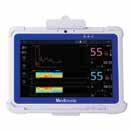
BIS™
Brain monitoring system #1 global share
3,000 clinical references

McGRATH™ MAC
Video laryngoscope and disposable blade #1 global share for routine use
-75 clinical references

Shiley™
Specialty endotracheal tube with TaperGuard™ cuff #1 global share
-80 clinical references

Microstream™ Capnography monitoring system #2 global share
325+ clinical references


INVOS™
Regional oximetry system #1 global share
800 clinical references World-class


Weathering the Storm
Hurricane Helene challenged Baxter’s North Cove operations, but rapid recovery efforts, technological investments, and community-focused support ensured critical medications continued reaching patients nationwide.
 When Hurricane Helene struck Western Carolina last fall, Baxter’s North Cove facility found itself at the mercy of rising waters and chaos. On September 27, the last day of Baxter’s fiscal third quarter, the storm’s threat was monitored hour by hour. By midday, conditions seemed manageable, but by late afternoon, communication lapses signaled trouble. A breach in the plant’s levy quickly became apparent, prompting immediate action. The first priority was to evacuate the 25 employees still on site. Safety came first, even as the plant braced for unprecedented damage.
By the next morning, Baxter’s local team and plant manager returned to assess the situation. Three feet of water and mud had inundated the facility, a controlled environment now left in disarray.
Cecilia Soriano, president of Baxter’s global Infusion Therapies and Technologies division, said the damage was extensive.
“Until you physically see it, it’s hard to comprehend,” she recalled. Hallways once filled with order and routine were unrecognizable. Industrial lights illuminated a surreal scene of fallen pallets, scattered cases, and debris, all against the backdrop of pitch-black, powerless corridors.
The emotional toll on the team was evident, and the broader



implications for the U.S. healthcare supply chain loomed large. In North Cove, the path from evacuation to recovery would test resilience, leadership, and the company’s ability to deliver to the people and patients who rely on its products.
Recovery process
Recovering from Hurricane Helene was a monumental task. For Baxter in North Cove, the process began by focusing on three critical areas: employees, customers, and operations. Soriano recalls that the human element was foremost on her mind as she drove through the impacted area in the immediate aftermath. Many employees had lost homes, possessions, and access to basic necessities, yet some still reported to the plant because it was the only familiar place left. “People who had lost everything were coming to the plant because they had nowhere to go,” Soriano said.
Baxter acted quickly, setting up an employee resource center just a few miles from the North Cove facility. The center became a lifeline, providing essentials like
food, water, toiletries, showers, and mobile cots. Generators kept the lights on, washers and dryers offered some semblance of normalcy, and even chainsaws were available to help employees clear debris from their homes.
The company’s rapid mobilization extended beyond its workforce. As the largest private employer in the area, Baxter recognized its responsibility to the broader community. The resource center was not just a hub for employees – it was one of the first relief points in the community, signaling Baxter’s commitment to supporting everyone affected by the hurricane.
Customer communication was another immediate priority. By Saturday afternoon – just one day after the storm – the company had briefed federal authorities on the evolving situation at North Cove. Calls to customers followed quickly, with the goal of providing transparent, consistent updates about the plant’s status and potential impacts on supply. Soriano notes that feedback on this communication approach was overwhelmingly positive. “It was very transparent, it was consistent, it was posted on one site,” she said, emphasizing that the effort extended globally, as Baxter coordinated the flow of products imported from overseas to meet U.S. patient needs.
Operational recovery was equally urgent and complex. Baxter assembled a task force of the “best of the best” from across the company, combining the expertise of the North Cove team with advanced engineering support from Switzerland and other global sites. The work was meticulous and labor-intensive: remediating


equipment down to the level of Q-tips and toothbrushes, carefully rebuilding thousands of wires, and methodically restoring production lines. Yet the team’s efforts paid off. Within about four weeks, Baxter had restarted its highestthroughput IV manufacturing line, a line responsible for producing 50% of the site’s one-liter IV solutions, the most commonly used size by hospitals and clinics. Soriano emphasized that meeting every milestone communicated to customers was critical, noting the ripple effects throughout the healthcare industry when products like IV bags were on a shortage. The mission-driven culture of the North Cove team became a
powerful motivator, as employees understood that their work directly affected patients and healthcare providers nationwide.
Investments in resilience
The recovery from Hurricane Helene underscored the critical importance of preparedness, technology, and collaboration in safeguarding Baxter’s operations and the broader healthcare supply chain. Soriano highlighted the investments and strategies that proved invaluable in the immediate aftermath of the storm. From the very first hours, communication was paramount. With electricity and traditional telecommunications down across
North Cove, satellite phones and Starlink internet connections became essential lifelines. “The first phone calls that came in were on Starlink,” Soriano said. These tools allowed Baxter’s leadership to maintain contact with the plant, coordinate with federal authorities, and manage the distribution of resources in real time, even when local infrastructure had failed.
Technology was not just a communications tool; it also underpinned the company’s ability to understand and manage its supply chain under extraordinary circumstances. Rapid response platforms, integrated data systems, and a centralized “single source of truth” provided visibility into inventory levels, production capacities, and product location across Baxter’s global network. This meant that even as bridges were impassable and the plant itself was flooded, leadership knew what inventory had been safeguarded at higher
ground, what remained at risk, and how to move critical supplies to where they were needed most. It also allowed for proactive problem-solving: shipments could be prioritized, customs fast-tracked, and logistics coordinated around the holiday season, when U.S. ports and airlines were already under heavy demand.
Customer-facing investments also proved crucial. Two to three years prior, Baxter had implemented portals that allowed customers to view orders, inventory, and estimated delivery dates. During the Helene crisis, this transparency allowed healthcare providers to plan patient care around disruptions, ensuring critical therapies continued despite widespread logistical challenges. “There were multiple inputs into a customer portal so they could plan patient care accordingly,” Soriano said, underscoring the value of preemptive investments in technology.

Yet Baxter’s recovery extended beyond technology and internal coordination; collaboration across the industry played a pivotal role. Prior to the crisis, Baxter had partnered with Medline, a leading U.S. distributor, to streamline product movement. Using Medline’s backhaul program, Baxter bypassed some of its distribution centers in the months following the hurricane, moving supplies directly from ports to Medline’s network and ultimately to healthcare providers more efficiently. Similar support came from large healthcare systems that helped “push” Baxter’s product volume through thirdparty logistics at different points in time.
Following the hurricane, Baxter sought additional ways to bolster its supply resiliency. In July, Baxter and group purchasing organization Vizient announced the expansion of Vizient’s supply assurance program to include IV fluids. Through this program, participating customers receive access to dedicated, on-demand safety stock managed by Baxter. Baxter also continued to pressure testing its processes and supply chain maturity. Already a member of Healthcare Industry Resiliency Collaborative (HIRC), a non-profit consortium of healthcare providers, suppliers, and industry partners with a focus of improving the healthcare supply chain, Baxter engaged HIRC to conduct an external assessment of its supply chain maturity. Baxter was awarded a gold-level resiliency badge in September, the first manufacturer in IV and clinical nutrition solutions and premix drug categories to receive this recognition.




Preparing for tomorrow
Looking beyond the immediate response, Baxter’s long-term supply chain strategy emphasizes visibility, resilience, and proactive risk management. Soriano highlighted the company’s philosophy of “buy where you make, make where you sell,” which guides decisions about sourcing raw materials and managing production globally. By mapping the supply chain several levels deep, Baxter aims to anticipate disruptions from extreme weather, geopolitical risk, or other crises.
Investments in technology and AI enable end-to-end visibility across nearly 40 global production sites, from inbound
materials to quality assurance to final delivery. However, she acknowledges an ongoing challenge: once products leave Baxter’s direct control – on a truck, with a distributor, or in transit to a hospital – they are largely invisible. Closing that blind spot is a priority for future investments in tracking technology and supply chain analytics, ensuring critical medications can be monitored until they reach patients.
Soriano emphasized that lessons from previous disruptions informed Baxter’s approach. After Hurricane Maria in Puerto Rico, the company implemented infrastructure and technology that
proved invaluable during Helene. Similarly, the COVID-19 pandemic highlighted the importance of transparency, communication, and inventory management across multiple stakeholders.
“We learned that for critical drugs and medicines, you need to see the product in real time, even once it leaves your facility,” she said.
Baxter is exploring technologies to monitor shipments at every step, bridging the gap between production and final delivery and ensuring that healthcare providers never experience unexpected shortages.
Hurricane Helene also reinforced the value of preparedness
beyond the plant floor. Emergency generators, backup communications, and rapid response protocols allowed Baxter to respond quickly even in a blackout. Satellite connectivity enabled leadership to coordinate the recovery effort despite widespread infrastructure failures. Investments in these systems, combined with a culture of resilience, allowed Baxter to not only restore operations but also provide timely and transparent updates to government agencies, distributors, and healthcare providers.
The Helene response demonstrates that resilience involves a combination of people, planning, technology, and collaboration. Baxter’s ability to respond quickly, communicate transparently, and coordinate across stakeholders ensured continuity of critical medications while protecting employees and supporting the wider community. Soriano emphasizes that these lessons will continue to shape Baxter’s strategy. From monitoring global supply networks to investing in AI-driven visibility tools, from strengthening local infrastructure to deepening partnerships with distributors and healthcare providers, the company is committed to staying ahead of future disruptions.
The human impact
While restoring plant operations and the national supply chain was a monumental undertaking, the human and community impact of Hurricane Helene remained at the forefront of Baxter’s recovery efforts. Soriano reflects that a year later, North Cove is still healing. Many employees lost not only their homes and possessions but also family members, leaving deep

emotional scars in this multigenerational community where several family members often worked at the plant. “It took us over three weeks to locate all of our employees,” Soriano said. The weeks-long uncertainty compounded the trauma, underscoring the personal stakes behind every recovery decision.
Baxter invested more than $4 million to aid employees and the communities impacted by Hurricane Helene, while the employee resource center continued to provide ongoing support for housing, material needs, and other hardships. Company leadership, including HR and plant managers, remained actively involved in identifying employees in need, ensuring the organization could provide resources and assistance where it mattered most. Even months after the hurricane, the signs of disruption were evident: in December and January, some employees were still sleeping in tents on their property, a stark reminder that recovery is a long-term process.
Soriano emphasizes that the company’s response to the human impact of Helene is inseparable from its operational efforts. Supporting employees and the broader community has been a priority and a hallmark of Baxter’s crisis response, demonstrating a holistic approach to disaster recovery that extends beyond production lines to the people who make the work possible. She also extends gratitude to Baxter’s customers, whose patience and collaboration during the crisis were essential in maintaining continuity of care for patients nationwide. Looking ahead, Baxter is committed to sharing lessons learned with other companies and the wider industry.
“I don’t ever want to say we have a playbook for this, but we have a lot of lessons learned,” Soriano said. “And a lot of things went right in the process. If we could shortcut that time for others before they’re in the middle of a crisis, we’d be happy to take time to speak with them.”


Strengthen, Not Strain
Section 232 tariffs are the wrong tool for supply chain resilience, says HIDA.

By Kathryn DiBitetto, Vice President of Government Affairs
 After nearly a year of activity and uncertainty around tariffs, the medical supply chain now faces its biggest and most sustained challenge. That’s why the Health Industry Distributors Association (HIDA) strongly opposed new tariffs in its response to the Administration’s Section 232 investigation into medical products. While we support the Administration’s goal of strengthening U.S. manufacturing and supply chain resilience, we explained why new tariffs and reshoring mandates are the wrong tool for the job. Here’s a summary of our comments. Any additional tariffs would:
1. Stall the momentum of a rapidly diversifying medical supply chain.
2. Not address the underlying realities of manufacturing in the United States.
3. Fail to make U.S. manufacturing a self-sufficient producer of medical products.
Tariffs fail to address existing barriers impacting U.S. manufacturing
Dependence on foreign-sourced inputs: 98% of U.S. medical manufacturers still rely on imported raw materials or components, meaning tariffs on steel, aluminum, and timber simply increase costs rather than encourage full domestic integration.
Unchanged economic fundamentals: Production costs in the U.S. remain 300% to 400% higher than overseas, dominated by cost of production (85%) and labor availability (85%). Tariffs do not fix these core economics.
Infrastructure limitations: U.S. sterilization capacity is already maxed out with only 90 commercial sterilizers – limiting the ability
to produce and finish medicalgrade products domestically.
Tariffs create new economic barriers
Increased input costs: Section 232 tariffs on raw materials (steel, aluminum up to 200%) make U.S.-based production more expensive, reducing competitiveness of domestic factories just as they are expanding.
Discourages further investment: With 54% of manufacturers planning to expand U.S. operations, new tariffs risk reversing the “America First” effect by driving production costs back up and deterring future reshoring.
Burden on healthcare providers: Providers and distributors cannot absorb new tariff-driven supply cost increases – financial strain could ripple through the system, leading to fewer suppliers and higher prices.
New tariffs and aggressive reshoring policies risk endangering the progress already made in diversifying the medical supply chain.
Negative consequences of new tariff barriers
Providers under pressure: Rising product costs from tariffs would increase hospital financial stress – particularly in rural areas – and strain federal budgets since the government funds 40% of healthcare spending.
Competitive disadvantage: New U.S. manufacturers face an uphill climb against entrenched global competitors; adding cost burdens could collapse fragile new ventures before they mature.
The Administration must pursue policies that strengthen the medical supply chain, not strain it.
Domestic manufacturing growth depends on addressing core challenges such as labor shortages, high production costs, and limited infrastructure, rather than imposing new tariffs that compound these pressures. The healthcare sector has made significant progress in diversifying global sourcing and expanding U.S. manufacturing capacity. Maintaining this momentum requires stability, predictability, and targeted incentives.
Building A More Resilient And Responsive Supply Chain


Join 200+ key partners across the healthcare supply chain at the premier event for improving supply chain visibility and building resilience.


REGISTER NOW

Join Key Partners From Across The Healthcare Supply Chain:
Distributors Manufacturers
GPOs Healthcare Providers
Government Agencies
Technology & Solutions Providers
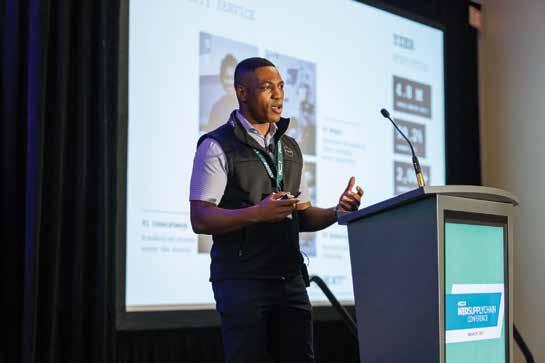

Regulating AI Implementation
Two leading healthcare organizations partner to ensure the responsible adoption of AI within community health centers.
 The use of Artificial Intelligence (AI) technology in healthcare has redefined the way hospitals and healthcare organizations coordinate workflows, streamline the patient experience, process data and much more.
AI adoption among physicians has, in fact, risen across the healthcare sector from 38% in 2023 to 66% in 2025, according to the American Medical Association.
The rate of regulation of AI, however, has not grown with it.
Despite growing adoption and outcome improvements associated with healthcare AI, more than 60% of all community health centers (CHCs) and 70% of rural CHCs report that expenses were a challenge to implementing emerging technologies.
For this reason, the Coalition for Health AI (CHAI) and the National Association of Community Health Centers (NACHC) announced a new strategic partnership that will empower the safe and responsible adoption of AI technology at CHCs across the nation. CHAI, a nonprofit organization founded by clinicians to advance responsible AI, and NACHC, a leading association advocating for the nation’s community health centers, now have
a shared mission to ensure that CHCs and their patients are prioritized and positioned to benefit from the increasing use of AI technology in healthcare.
Repertoire Magazine recently spoke to Merage Ghane, director of Responsible Health in AI for CHAI, on the partnership and how the organizations plan to roll out the safe and secure use of AI technology across CHCs nationwide.
AI education and training
Community health centers help increase access to primary care by reducing barriers such as cost, lack of insurance, distance and language barriers, according to NACHC. CHCs provide care to all patients, regardless of their ability to pay, serving at least 1 in 10 people nationwide and at least 1 in 5 rural residents.
Post-pandemic, physicians and healthcare staff at CHCs have continued to face unprecedented challenges in providing primary healthcare. CHCs for many years have needed quick, reliable solutions to help serve their increasing patient populations, and that’s where AI comes in – allowing CHCs to adopt technology that streamlines workflows and optimizes patient care delivery.
“Many healthcare professionals are turning to AI tools, like ambient documentation, clinical decision support and EHR information retrieval tools as a lifeline to reduce burnout and reclaim time with patients,” said Ghane. “AI can help streamline workflows, support population health, improve revenue cycle management and enhance the quality of care for so many individuals with health needs across the country.”
The importance of healthcare organizations to safely and
responsibly integrate AI technology is paramount, as the technology has rapidly expanded across the healthcare sector.
CHCs are positioned to substantially benefit from the implementation of AI technology, as they serve over 30 million people in the U.S., and are often the first care touchpoint for many patients.
“If CHCs are left behind in the AI transformation, the digital divide in healthcare will deepen,” said Ghane. “Responsible adoption ensures that AI supports and enhances, not replaces, clinical judgment, and it benefits patients and communities without unintended harm.”
Streamlining medical documentation processes
Medical processes and information are increasingly becoming digital. With more streamlined processes due to the use of AI, healthcare staff have more time to focus on the patient and their needs. In fact, nearly half of community health initiatives using AI report improved outcomes.
“The pace at which medical information is becoming digital and clinical guidelines are shifting is unprecedented – in 2020, medical knowledge was doubling at a rate of 73 days, compared to every 7 years in the 1980s or every 50 years in the 1950s,” said

YOUR GO-TO PARTNER FOR IMAGING TABLES
From ultrasound to C-arm tables, Oakworks delivers the quality, reliability, and support your customers expect, so you can sell with confidence.
Dependable delivery and support
Trusted by leading health systems
One partner for all your needs
Ghane. “All of this together means that traditional ways of searching through EHRs for patient information, or searching through databases for clinical information, are limited and time-consuming.”
AI helps to fill gaps in administrative work, said Ghane, by synthesizing information, completing documentation and focusing staff’s attention on high-priority cases.
“AI has done a lot to support providers (of all kinds, not just physicians), to use the time for what really matters – caring for patients,” said Ghane. “At the same time, AI capabilities have matured, and many EHR and tech vendors are embedding these features directly into



clinical systems. We’ve also come a long way to make sure that vendors know how to design solutions in a human-centered way, with their end users’ needs in mind.”
Keeping vendors’ needs in mind when developing healthcare AI allows practitioners at CHCs to more easily integrate the technology into their practices once it is adopted.
Safe and trustworthy adoption of AI
AI has the potential to ease workloads for healthcare staff and increase access to care for patient populations such as those served by CHCs, but only if adopted responsibly, says Ghane.
Organizations looking to implement AI technology must first receive training on how to properly use AI and integrate it into existing clinical workflows.
“AI has the potential to improve care quality, reduce administrative burden and close gaps in access, but only if adopted safely, fairly and with intentional guardrails,” said Ghane. “AI is already being integrated into EHRs, vendor platforms and clinical workflows, often without clinicians or administrators fully understanding how it works or what risks it carries. Without responsible implementation, AI can replicate or even amplify existing gaps, introduce new safety risks, or reduce trust in care systems.”
AI literacy, or the ability to understand, evaluate and engage with AI technologies responsibly in the field of medicine, allows clinicians and healthcare staff to feel empowered using AI, and more likely to continue to use it to achieve better quality patient care.
CHCs specifically, however, may also encounter challenges to implementing AI, such as fragmented data and interoperability issues, a lack of CHC-tailored vendor solutions (also impacted by data access issues) and limited IT and AI experts available in-house.
“These issues make it even more important for us to come together as a community to position CHCs towards readiness and responsible adoption,” said Ghane. “Without AI literacy, CHCs may unknowingly adopt tools that harm patients, risk patient data, increase liability, or waste resources. They may also misuse the tools and not know what to look out for if or when errors or issues arise.”
AI literacy, education and training are therefore a crucial part of the process for healthcare organizations beginning to work with AI. According to Ghane, this is especially true for CHCs, given they are often lower-resourced, understaffed, have less access to specialty care and serve highly complex patients.
“Building literacy now equips CHCs so they can make informed decisions, advocate for their needs and shape the AI ecosystem rather than passively be shaped by it,” said Ghane.
Partnering for trustworthy AI
In the first year of their partnership, NACHC and CHAI hope to achieve numerous goals, including tailoring the governance of AI playbooks to the CHC context and pilot adoption, understanding the unique needs of CHCs/safety nets when it comes to AI procurement, validation, adoption and use, developing and delivering AI literacy initiatives
tailored to the CHC context (workshops, webinars, etc.) and providing educational resources to help align federal and statelevel conversations on CHC and related industry-led perspectives on AI, according to Ghane.
“While we will not be co-developing any AI technology ourselves, we will likely help convene partnerships between vendors, CHAI certified assurance resource providers, and CHCs/CHC networks and provide the frameworks, best practices, and playbooks to guide them towards responsible codevelopment,” said Ghane.
Over time, AI could also enable new forms of team-based care and support better integration of behavioral, physical and social care.
“Potential tools that may arise as we continue to develop this technology include ambient documentation tailored for resourceconstrained settings; population health dashboards that stratify risk with transparency; eligibility support tools for Medicaid or social services enrollment; patient-facing chatbots/outreach that are culturally and linguistically appropriate and coding or revenue cycle support tools,” said Ghane.
Leveraging NACHC and CHAI’s combined scale and expertise through NACHC’s Science, Education, Practice, and Policy (SEPP) framework, the organizations will collaborate on building a trusted AI infrastructure and standards specifically designed with CHCs and other safety-net providers nationwide.
The key elements of the partnership include Science: jointly conducting and supporting research to understand the adoption of AI in CHCs;
Education: the development and dissemination of evidencebased educational programs and resources for CHC professionals’ AI literacy; Practice: supporting responsible integration of AI tools into clinical and operational workflows and Policy: advocating for policies, regulations, and standards fostering trustworthy AI use in primary care.
“In the near term, AI can help reduce documentation and administrative burden, identify and close gaps in care, improve outreach and engagement with high-risk patients, expand capacity through intelligent triage and advance workflow optimization,” said Ghane.
NACHC and CHAI’s vision for AI readiness to fully leverage
AI going forward is to promote that CHCs are not just passive recipients of AI tools – but “cocreators, evaluators, and national leaders in equitable and responsible AI adoption,” says Ghane.
NACHC and CHAI plan to lead an inaugural survey of CHCs to assess current uses of technology and AI, identify gaps and surface opportunities for innovation in clinical settings, which will inform the co-development of future tools.
The organizations will also co-design an ‘AI in Healthcare for the Safety Net’ curriculum, with tailored content for CHC leaders, providers, and other safety-net organizations at various levels, to be
available in virtual, hybrid and in-person formats and address the urgent need for AI literacy across the field.
“We want CHCs to have the knowledge, infrastructure, and governance capacity to assess AI for fit, safety, and value, ensuring that AI serves the mission of community health, not the other way around,” said Ghane. “I often make it a point to tell CHC leaders I speak to: you should not be adopting AI for AI’s sake – think about your organization, staff, and patients. Think about their needs, your strategy, and goals. Then ask the question, where can AI help me better meet those needs, align with strategy, and achieve goals? That’s where you start.”


American Diabetes Association Celebrates 85 Years of Impact
In 2025, the ADA reflects on decades of advancements in the understanding and treatment of diabetes.
 This year, the American Diabetes Association is celebrating 85 years of national impact toward its vision of ‘a life free of diabetes and all its burdens’.
Prior to the mid-1900s, Americans with diabetes had no formal organization that was devoted to the health and research of their condition.
The American Diabetes Association was founded as a result in 1940 to improve the lives of those affected by
diabetes, and ever since then has been advocating for and funding groundbreaking diabetes research and educating healthcare practitioners and patients on proper diabetes care.
Repertoire Magazine recently spoke to Dr. Rita Kalyani, chief scientific and medical officer at
the American Diabetes Association, and Dr. Samar Hafida, vice president of the Obesity Association, a division of the ADA, about the anniversary of the organization and the strides that the medical community has made in diabetes knowledge in the past 85 years.
Impact of the ADA
Approximately 38.4 million Americans, or nearly 11.6% of the nation’s population, had diabetes in 2021, according to the ADA. And 1.2 million Americans continue to be diagnosed with diabetes every year.
Diabetes is a chronic condition impacting how the body uses glucose (sugar) for energy; if not managed properly, it has the potential to lead to serious health complications including heart, kidney and eye disease, nerve damage and more, according to the ADA.
For decades, the ADA has recognized the need for nationwide understanding of the condition among healthcare practitioners and has been pivotal in supporting the health journeys of people across the nation with diabetes.
In the past 85 years, the ADA has marked numerous important milestones in the advancement of diabetes care.
In 1952, the ADA Research Program was founded to support diabetes research aimed at saving lives and accelerating health breakthroughs.
“Since the early 1950s, the ADA has invested millions in research, driving discoveries that have transformed diabetes prevention, care and treatment,” said Dr. Kalyani. “This investment, together with that of the diabetes and research community at large, has helped yield landmark outcomes – such as in demonstrating the benefits of lifestyle changes in delaying the development of diabetes; advances in insulin delivery and continuous glucose monitoring; and breakthroughs in stem cell–derived beta cell replacement and precision medicine.”
In 1984, the first National Standards for Diabetes SelfManagement Education and Support (DSMES), a comprehensive resource for achieving success in self-management and support were published, establishing a framework for high-quality diabetes education. Today, the ADA has the largest number of recognized DSMES programs available to people living with diabetes.
“Research is the cornerstone of advancing the mission of the American Diabetes Association,” said Dr. Kalyani. “While we have made significant progress, there is still much left to discover about diabetes. By supporting early career investigators, fostering the next generation of leaders, and funding investigator-initiated research, we aim to uncover discoveries that will advance care and treatment for people living with diabetes.”
individuals who are dedicated to prevention and to helping people with diabetes thrive.”
Advancing an understanding of diabetes
As the medical community’s understanding of diabetes continued to advance after the 1940s, healthcare practitioners treating the condition needed a systematic, reliable way to treat all their patients.
In response, in 1989, the ADA began publishing yearly Standards of Care in Diabetes, giving healthcare practitioners a definitive resource on best practices for diabetes care.
Through the efforts of the Professional Practice Committee (PPC), which includes volunteer experts from diverse professional backgrounds and physicians, nurse practitioners, certified diabetes care and education specialists and more, the Standards
Managing diabetes effectively is in many ways connected to a patient’s nutrition habits and weight – being overweight or obese can cause increased risk for potential health complications.
In 2024, the ADA Research Program grew to manage 193 active awards and launched 51 new projects.
“One of the foundations of our current strategy is the Pathway to Stop Diabetes® program, which identifies and supports a new generation of innovative scientists and physicians,” said Dr. Kalyani. “Since its inception, Pathway has provided resources and mentorship to extraordinary
of Care in Diabetes are still updated annually with the latest breakthroughs in research.
The ADA’s Standards of Care have reshaped the way diabetes that is treated in the U.S., according to Dr. Kalyani.
“Today, in addition to glucose-lowering management approaches, care has broadened to address the whole person – cardiovascular health, kidney protection, weight, technology, and
quality of life,” said Dr. Kalyani. “Just as importantly, they’ve highlighted prevention, regular screening, diabetes technology, and the need to address health access. In many ways, the Standards have become the roadmap for consistent, evidence-based and personcentered diabetes care.”
The Standards of Care have continued to impact the way that practitioners approach diabetes care by educating them on emerging research and new technologies.
“These guidelines have also helped bring newer cardioprotective therapies into everyday practice, and they’ve pushed clinicians to personalize treatment rather than use a one-size-fits-all approach.”
Since the website was launched, the ADA has continued to increase their presence across the nation.
In 1999, it launched the Safe at School® campaign to help create safer conditions for students at school living with diabetes; and in 2012, launched what is today known as Project Power, which focuses on diabetes education, physical activity and obesity prevention for youth at an increased risk of developing type 2 diabetes.
“Well-managed diabetes during the school day and at all schoolsponsored events is crucial for a student’s ability to learn and to support normal growth and development.
The American Diabetes Association launched its award-winning Safe
“ The American Diabetes Association has been the leading voice advocating for insulin affordability for a decade,” said Dr. Kalyani. “Ensuring that all people with diabetes have access to the care they need is a priority for the ADA.”
Diabetes advocacy in the internet age
In 1996, the ADA launched their website, diabetes.org, to bring diabetes to the modern internet age and reach more people than ever before.
“Today the Standards of Care in Diabetes are available online and through an app. Providers can access a wealth of supporting materials, continued learning and patient resources online,” said Dr. Kalyani. “For people living with diabetes, information to support them at every stage in their diabetes journey can be found on diabetes.org.”
at School campaign almost three decades ago,” said Dr. Kalyani. “Since its inception, Safe at School’s efforts have been successful in helping to ensure all children with diabetes receive needed diabetes care, are treated fairly, and have the same opportunities as their classmates.”
Diabetes management for children/students includes monitoring glucose levels, administering insulin and other medications, monitoring and calculating food intake and always having a school nurse or trained non-clinical school staff available.
“Safe at School has worked tirelessly to lead legislation in a
number of states to enable trained non-clinical school staff to provide diabetes care, including the administration of insulin. Today, 35 states permit insulin administration in the school setting by someone other than a school nurse or licensed health care professional,” said Dr. Kalyani. “Passing and implementing state laws allowing the provision of diabetes care by trained lay school employees is critical to the health and safety of students with diabetes as more students are being diagnosed with diabetes.”
Moving forward in diabetes care
Managing diabetes effectively is in many ways connected to a patient’s nutrition habits and weight – being overweight or obese can cause increased risk for potential health complications.
For example, obesity is a risk factor for cardiovascular issues, according to the Centers for Disease Control and Prevention (CDC), and has been linked to insulin resistance. Cardiovascular disease is, in fact, the number one cause of death for patients with diabetes, according to the ADA.
As a result, the ADA has begun to focus its education and advocacy efforts around proper nutrition and reducing nationwide incidence of obesity.
Regular physical activity, maintaining a healthy weight, healthy eating for prediabetes and diabetes and taking care of mental well-being are all steps that patients can take outside of a clinical setting for proper management of diabetes and to avoid cardiovascular disease risk.
In 2024, the ADA formed the Obesity Association™, a division
of the ADA, to help change the conversation on obesity and reduce its prevalence. The ADA now develops trusted, evidencebased Standards of Care in Overweight and Obesity to improve care for people living with overweight and obesity.
“The creation of the Obesity Association is a natural and necessary evolution for the ADA,” said Dr. Samar Hafida, vice president of the Obesity Association™. “This initiative is about building a larger tent, not moving to a new one. For the type 2 diabetes community, it means integrating obesity treatment as a central strategy for prevention and remission. For the type 1 diabetes community, it means acknowledging that obesity can co-occur, creating complex management challenges and ensuring we have specialized resources to provide holistic care.”
The affordability of insulin is an incredibly important part of advocating for patients with diabetes, as patients cannot live without it – insulin is a key hormone for regulating blood sugar levels.
Many types of insulin are used to treat diabetes, according to the CDC. Patients with type 1 diabetes usually take insulin, or in some cases a combination of insulins, and some people with type 2 diabetes may also need to take insulin.
The best insulin or combination of insulins for a patient depends on how active they are, the food they eat, how well they can manage their blood sugar levels, their age and how long it takes their body to absorb insulin, which is different for each person.
Approximately half of all states and the District of

Columbia have now enacted legislation that caps co-payments on monthly insulin and some also limit cost sharing for supplies, according to the ADA.
“The American Diabetes Association has been the leading voice advocating for insulin affordability for a decade,” said Dr. Kalyani. “Ensuring that all people with diabetes have access to the care they need is a priority for the ADA.”
In 2023, after years of the ADA advocating for affordable insulin for patients and their families, Medicare put an out-of-pocket cost cap on insulin of $35 monthly.
“While we have been able to help achieve significant progress on the issue of insulin affordability and encouraging patient assistance programs from insulin manufacturers that make the lifesaving medication more affordable, we know that our work is not done,” said Dr. Kalyani. “Today, the ADA’s advocacy team
is working to cap cost-sharing for insulin in commercial insurance plans and to increase mechanisms to make insulin affordable for those living without insurance.”
By pursuing advocacy efforts such as more affordable insulin, the ADA continues to build on its decades of success and explore new approaches to advance the future of diabetes care.
“From the earliest fellowships in the 1950s to the innovations shaping care today, ADA has fueled progress across every era of diabetes research while training generations of leaders,” said Dr. Kalyani.
“Ultimately, initiatives such as the Obesity Association are an expansion of our arsenal,” said Dr. Hafida. “We are strengthening our fight against the diabetes epidemic by directly addressing its most significant predictor, all while redoubling our efforts to support every individual living with every form of this disease.”
Team Godfrey: Paying It Forward
Connected by shared ALS journeys, two families turned adversity into hope through a simple act of generosity – a van that now symbolizes freedom, love, and the promise to give again.
By Pete Mercer
 Have you ever had a chance to pay something forward? This might be a scenario where you receive a gift so generous that it almost doesn’t even belong to you – you just have the opportunity to use it for a while before it goes to the next person who needs it. The concept of “paying it forward” isn’t new, but it’s one of those situations of overwhelming kindness that you practically don’t hear about anymore.

Chris and Julie Godfrey, or Team Godfrey, are account managers at CME Corp. where they sell medical equipment to different healthcare organizations across the country. Repertoire Magazine spoke to the Godfreys back in 2023 about finding success and a work-life balance amid a devastating diagnosis of ALS. While Chris’ disease has continued to progress, he still maintains as much independence as possible while continuing to work at CME with Julie. Earlier this year, they reached out to us about a development in Chris’ health journey. This is a story about the gift of generosity and an opportunity to pay it forward.
Meeting the Cunninghams
Cheryl and Mike Cunningham got married in 1996 and would have celebrated their 29th wedding anniversary this past Easter Sunday. Mike was diagnosed with ALS on June 9, 2023, and passed away on Jan. 17, 2025. The
Chris and Julie Godfrey
Cunninghams were introduced to the Godfreys through a mutual friend, bonding over Chris and Mike’s shared diagnosis.
Cheryl Cunningham said that throughout Mike’s journey with ALS, the Godfreys were a huge resource for how to navigate the progression of the disease. Mike’s ALS started in his right leg, and the Cunninghams were able to help Chris as his ALS spread down from his shoulders. “We were really a support to one another for resources, organizations, and the emotional journey,” Cheryl said.
In August 2023, friends of the Cunninghams created a fundraiser for them that raised over $80,000. This allowed them to purchase a 2023 Chrysler Pacifica wheelchair van, which is an accessibility vehicle for people who are confined to wheelchairs. This was a huge benefit for the Cunninghams, allowing them to travel from Boston to Florida to see family. With the van, they were able to be gone for a month
“Having the van allowed us to bring all the equipment that comes with ALS,” Cheryl said. “That van provided us with the comfort of everything he would’ve needed at home. The front seat came out of the van, so he was able to sit in front as a passenger next to me. Even just having that alone time together made everything feel somewhat normal.”
While in Florida, they were able to see all their friends and family, celebrate St. Patrick’s Day with a bar crawl, enjoy what they could of the beaches, and eat and drink a ton. This vehicle enabled them to establish some

One of the biggest challenges with ALS is it greatly reduces mobility and independence, which can deal a heavy blow to one’s productivity at work. Some people are unable to work, while others can find accommodations to make things more accessible.
independence back into their lives, allowing Cheryl to truly enjoy and soak in every moment she had left with her husband.
“Mike was just that great guy,” Cheryl said. “As a testament to who he was, we had over 1,000 people at his service. He was a hard worker, always
behind the desk, but his dream was to swing a hammer and fix things. He was a great dad to our kids – we have a boy and a girl. He could braid her hair and then hop on the lacrosse field with my son and coach. I don’t think he’s ever had an enemy, and he died with zero regrets.”
Cheryl and Mike Cunningham with their children

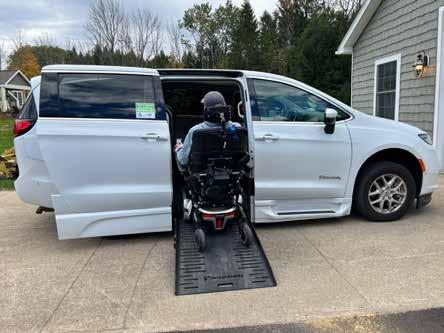

An act of generosity
These accessibility vehicles are an incredible tool for people who have mobility challenges, but they are very expensive, in the range of $80,000 to $85,000. The Godfreys had just spent a good deal of time and money making their home more accessible for Chris’ electric wheelchair – things like adding a lift in the garage, as well as widening doorways so that the chair could get through. A new mobility van wasn’t exactly in the budget at that moment, so they decided to wait.
After Mike Cunningham died, Cheryl knew that she wouldn’t need the van anymore, but she didn’t have a plan for what to do next. While speaking with Julie over the phone, Cheryl learned that they were interested in buying a van but were surprised by how much they cost. They offered to purchase the van from Cheryl, but she decided to give it to them, no strings attached.
“I knew the van was meant to go to them” Cunningham said. “I didn’t have a real plan, but I knew I wasn’t keeping the van. It just felt like this was supposed to help somebody else. It’s not for me to sell and make money off. Since doing so, I think it’s providing them with the freedom, flexibility, and joy that it brought us.”
Because of this act of generosity, the Godfreys have been able to recapture some of their independence without relying on others to transport them around. “You’re held hostage by your disease,” Julie said. “If you can’t afford to purchase one of these vehicles, you must call somebody every time you want to just go out
for dinner or go for a drive to a park or something. And it’s just amazing that the generosity that they put forward for us.”
Moving forward, the Godfreys plan to pay it forward one day, just like Cheryl Cunningham did for them. Whether it’s through the creation of a foundation or just a simple understanding, the vision for this van is that it’s well-kept and maintained to be used for families for many years to come. Julie and Chris both want this van to be given away in the same spirit of generosity as it was given to them.
“We just plan on having it be a gift for someone in the future. Hopefully, it’s a gift that gives them a better quality of life, and then they will pay it forward to the next person who needs it,” Julie said.
Maintaining a work-life balance at CME
One of the biggest challenges with ALS is it greatly reduces mobility and independence, which can deal a heavy blow to one’s productivity at work. Some people are unable to work, while others can find accommodations to make things more accessible.
Through CME, Chris has been able to maintain a work-life balance that allows him to keep his job and his accounts, while also prioritizing his health and time with his family. Eva Willis, vice president of business development at CME, said, “Our culture overall certainly is that your family comes before your work. CME’s executive team is very supportive of that and displays that themselves. Everyone works very hard at CME, but if you need to

do something for your family or for your health, that comes first.”
When she found out about the accessibility van, Willis was overjoyed about the opportunities and possibilities this gift would open up for the Godfreys. “When they told me about the van … I said, ‘You guys made my whole week,’ because it’s so rare that you hear great news about people helping each other and not financially getting anything in return. It’s such a good piece of news in what is typically a very negative news cycle.”
Willis’ leadership role at CME gives her a unique perspective into the working dynamics of Team Godfrey. With ALS, attending something like a sales meeting is a significant obstacle, so the team at CME has gone above and beyond to ensure that the Godfreys are still included by having them join virtually, where they can chime in and participate in the conversation.
Because Chris has been an integral part of the sales team
since 2014, the team at CME values all his contributions and the working relationship that he has with Julie. Willis said, “Together they are really strong, and without Julie’s support, I think it would be much more difficult for Chris, and vice versa. He has so much product knowledge, industry knowledge, and sales experience, and he’s great at guiding and mentoring Julie. Julie has more physical capability at this point, and they balance it really well.”’
The Godfreys aren’t forgetting about the life side of the equation when working towards a better work-life balance. Whether they are focusing on just getting outside after the day is done, taking a road trip to see the National Baseball Hall of Fame (Chris and Julie are Yankees fans) in Cooperstown, New York, or going to visit Julie’s sister in the Finger Lakes, the Godfrey’s are taking advantage of every moment – and one day, they’re going to give that gift to someone else.
Industry News
Pelstar LLC appoints Senior Director of Global Sales
Pelstar, LLC, a leading manufacturer of Health o meter® Professional medical scales and Bridgehelacare Safe Patient Handling solutions, is pleased to announce the appointment of Jason Fillipp as Senior Director of Global Sales. Jason brings more than a decade of sales management and distribution experience in the healthcare industry. Before joining Pelstar, he held key leadership roles at Aspen Surgical and Integra Lifesciences, where he consistently drove growth, expanded market presence, and built strong partnerships across diverse regions.
Throughout his career, Fillipp has earned a reputation for cultivating long-term business relationships, developing high-performing teams, and delivering sustained sales success.
In his new role, Fillipp will lead Pelstar’s global sales strategy, driving continued expansion and strengthening the company’s position as a trusted partner in healthcare innovation. His leadership and expertise align with Pelstar’s ongoing commitment to quality, customer satisfaction, and advancing accessibility in medical measurement solutions.
Cardinal Health completes acquisition of Solaris Health
Cardinal Health announced that it has completed its acquisition of Solaris Health, the country’s leading urology MSO. Solaris Health brings more than 750 providers across more than 250 practice locations in 14 states and adds immediate scale to the Urology Alliance within Cardinal Health’s leading multi-specialty MSO platform, The Specialty Alliance.
CME Corp. awarded the Providence Journal Top Workplaces honor for 5th consecutive year
CME Corp. has been awarded the Providence Journal Top Workplaces honor for a fifth
consecutive year. CEO Normand Chevrette has also been recognized individually with a Top Workplace 2025 Leadership award.
Awardees are selected based on employee feedback gathered through a third-party survey administered by employee engagement technology partner Energage LLC. The confidential survey measures the employee experience through a host of questions including those related to employees feeling respected and supported, encouraged to grow, and confident in their roles.
BD launches new AI-enabled solutions to drive connectivity across healthcare settings
BD introduces the BD Incada™ Connected Care Platform, a new scalable, AI-enabled, cloud-based platform that unifies BD device data into one intelligent ecosystem for the first time. The BD Incada™ Platform is available now with the launch of the next-generation BD Pyxis™ Pro Automated Medication Dispensing Solution, creating enterprise-wide visibility and connectivity that transforms data into actionable insight.
Built on Amazon Web Services’ (AWS) on-demand cloud computing infrastructure, the BD Incada™ Platform leverages the latest in AI technologies, such as natural language search in analytics, and is scalable to meet the data volumes created by nearly 3 million smart connected BD devices.
Kimberly-Clark to buy Tylenol maker Kenvue for $40 billion
Kimberly-Clark announced it’s struck an agreement to buy Kenvue in a deal valued at $48.7 billion that would create a consumer staples giant, according to CNBC. This transaction brings together two iconic American companies to create a combined portfolio of complementary products, including 10 billion-dollar brands, that touch nearly half the global population through every stage of life, the companies said in a news release.
Help your customers improve efficiency and collaboration at the point of care with the Midmark Digital ECG
With optional DICOM compatibility , providers can securely share ECG data with cardiology specialists via their preferred CVIS—right from the EMR. For providers, this means fewer manual steps, faster turnaround and more accurate test results without disrupting workflow.
For you, it’s an opportunity to deliver value that meets today’s growing demand for connected care and better outcomes.
Find product info at: midmark.com/DICOM
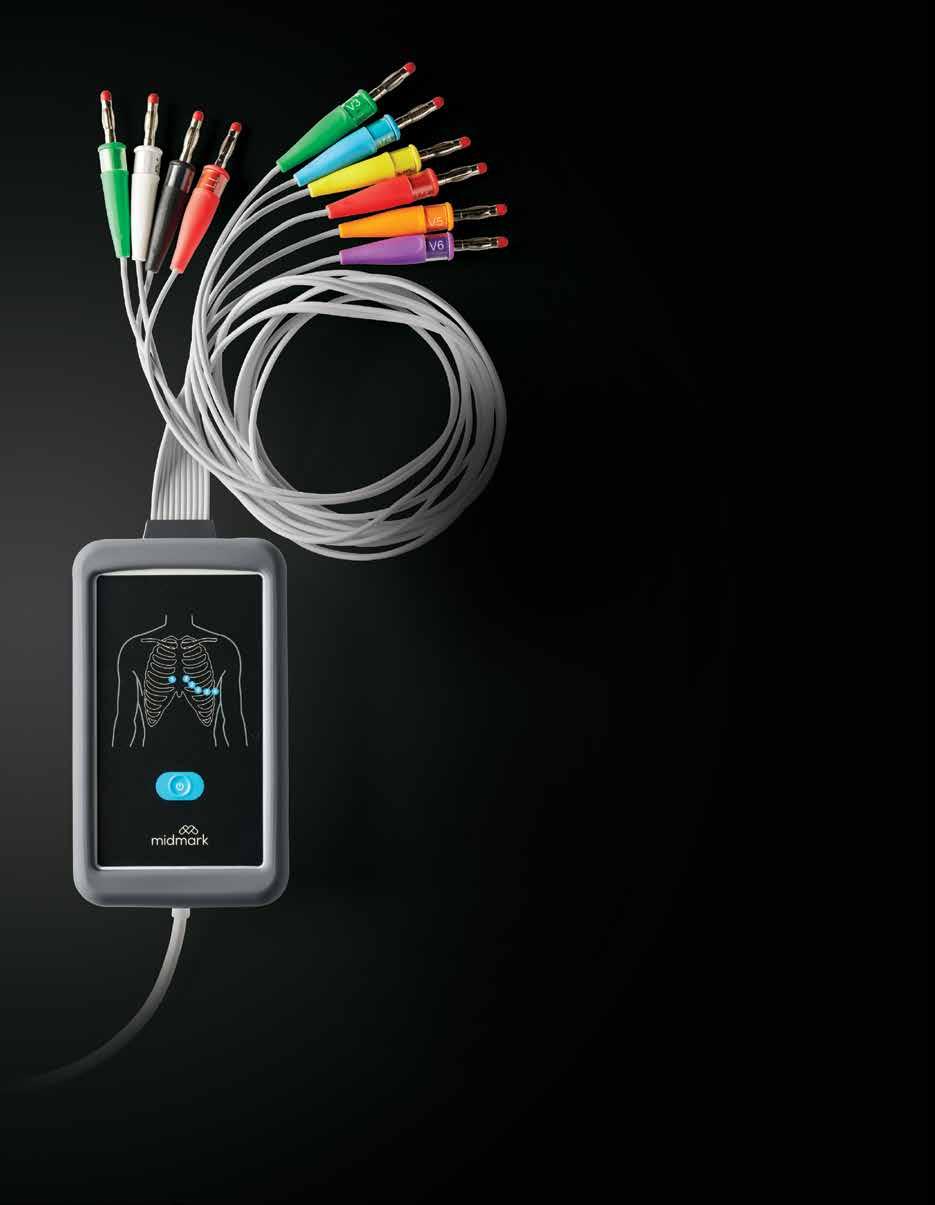
Scan to watch the 2-Minute Drill and access additional resources on RepConnect.
Spotlight on Welch Allyn Solutions for Outpatient Care
Baxter has more than 100 years of innovation, 268,000 customers nationwide, and 100 configurable Welch Allyn products.
Redefining Healthcare Delivery
< Scan To View Our Current Promotions