Winter 2025/2026



Winter 2025/2026
Big ideas. Bold energy. A new daily service. We’re flying direct from London Heathrow to Seoul Incheon from March 2026. Whether you’re closing deals, exploring new markets or chasing the K-wave, Seoul’s where the world’s watchingand now we’ll get you there in style.
Flying daily on our 787 Dreamliner, with WiFi, an Upper Class onboard bar, and world-class service throughout.
Book now and be first onboard.

























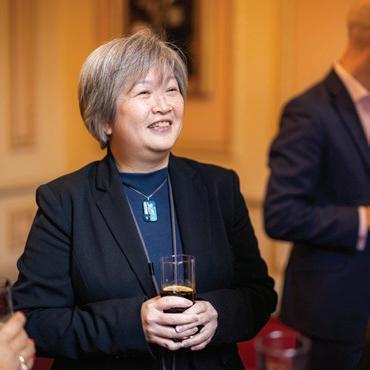


People Awards: Pictures from the 2025 awards ceremony, and categories unveiled for The Business Travel People Awards 2026 48 Ground transport: Why it's becoming easier to manage your spend on taxis, transfers and chauffeur drive
52 Lunch Forum and Workshop: Blacklane and guests look to a future with 100% policy compliance 54 Lunch Forum Technology: Buyers and tech experts debate the key challenges and opportunities
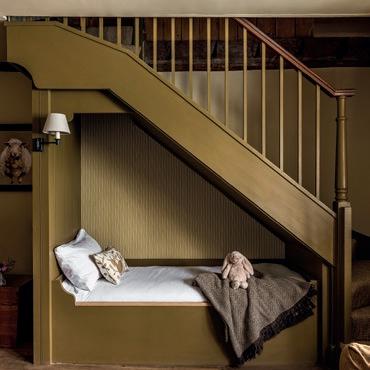
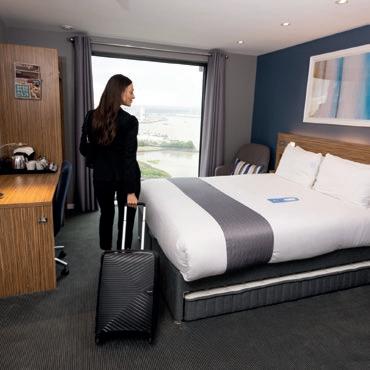
56 Budget hotels: How the big chains are adapting their products and services with your travellers in mind
Opening Shots: The most exciting openings in the world of travel – in pictures
The Conversation: We chat with Charlie Sultan, President Concur Travel
Speaking Out: Martin Ferguson goes back to the 1960s to prove a point about the value of business trips
Pretty much every conference I've attended this year (and I've done a fair few) has featured a presentation from an economist or political expert that's been so gloomy it's a wonder we didn't all go straight home.
And yet, in the exhibition halls, coffee breaks and breakout sessions –and at our own Dinner Clubs and Lunch Forums – there remains a strong sense of optimism and excitement about our industry and its future.
Despite economic uncertainty, new ways of working, tighter purse strings and all the other potential challenges, people still need to travel for work and connection, and the GBTA's latest outlook shows confidence among global industry professionals is rising.
In this issue – our Air Travel Special – there is clear evidence of a similar confidence in the aviation industry. The world's major airlines are investing heavily, particularly in their long-haul premium cabins, and the next few years will see a host of new products take to the skies (see page 28).
It's interesting to see IATA figures which show international premium traffic grew by 11.8% year-on-year, outpacing growth in economy cabins. Experts believe demand is being driven by a shift to longer, more meaningful trips and a sharper focus on wellbeing and duty of care.
Our features on ground transport (page 48) and budget hotels (page 56) also show a strong commitment to the corporate travel sector.
And if further proof were needed that our industry is very much alive and well, check out the photos from the 2025 Business Travel People Awards (page 12). What a night that was!
A big congratulations again to all of the winners, particularly those just starting out in their business travel careers. You're in for a great ride.


Bev Fearis, Editor
EDITORIAL
EDITOR
Bev Fearis
CONTRIBUTORS
Gill Upton, Nick Easen, Gary Noakes & Matt Parsons
EDITORIAL DIRECTOR
Steve Hartridge
ADVERTISING SALES
PUBLISHER / COMMERCIAL HEAD
Kirsty Hicks
DESIGN & PRODUCTION
DESIGNERS
Matt Bonner, Caitlan Francis, & Colette Denham
OPERATIONS DIRECTOR
Clare Hunter
PRODUCTION ADMINISTRATOR
Steve Hunter
SUBSCRIPTIONS
Subscribe for free at thebusinesstravelmag.com/subscribe
MANAGING DIRECTOR
Matt Bonner
CEO Martin Steady





























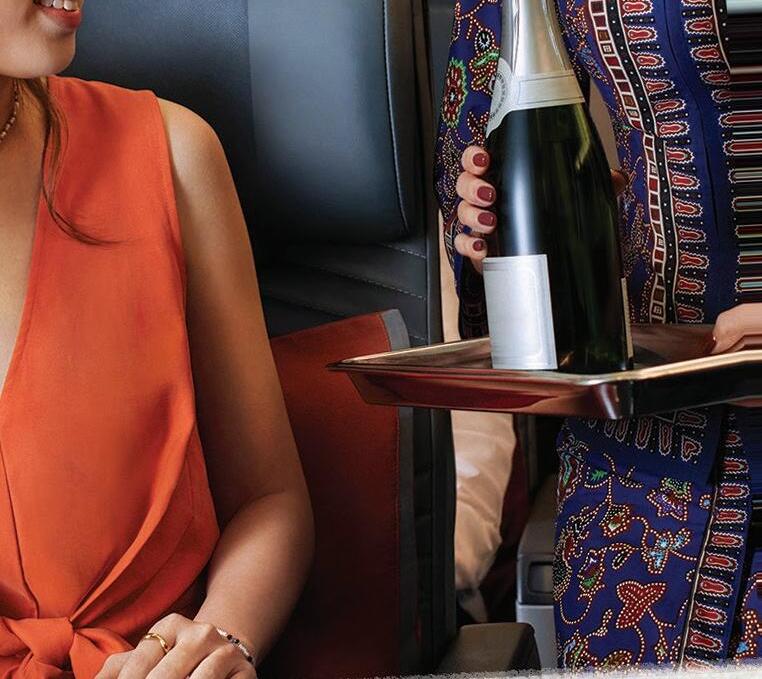









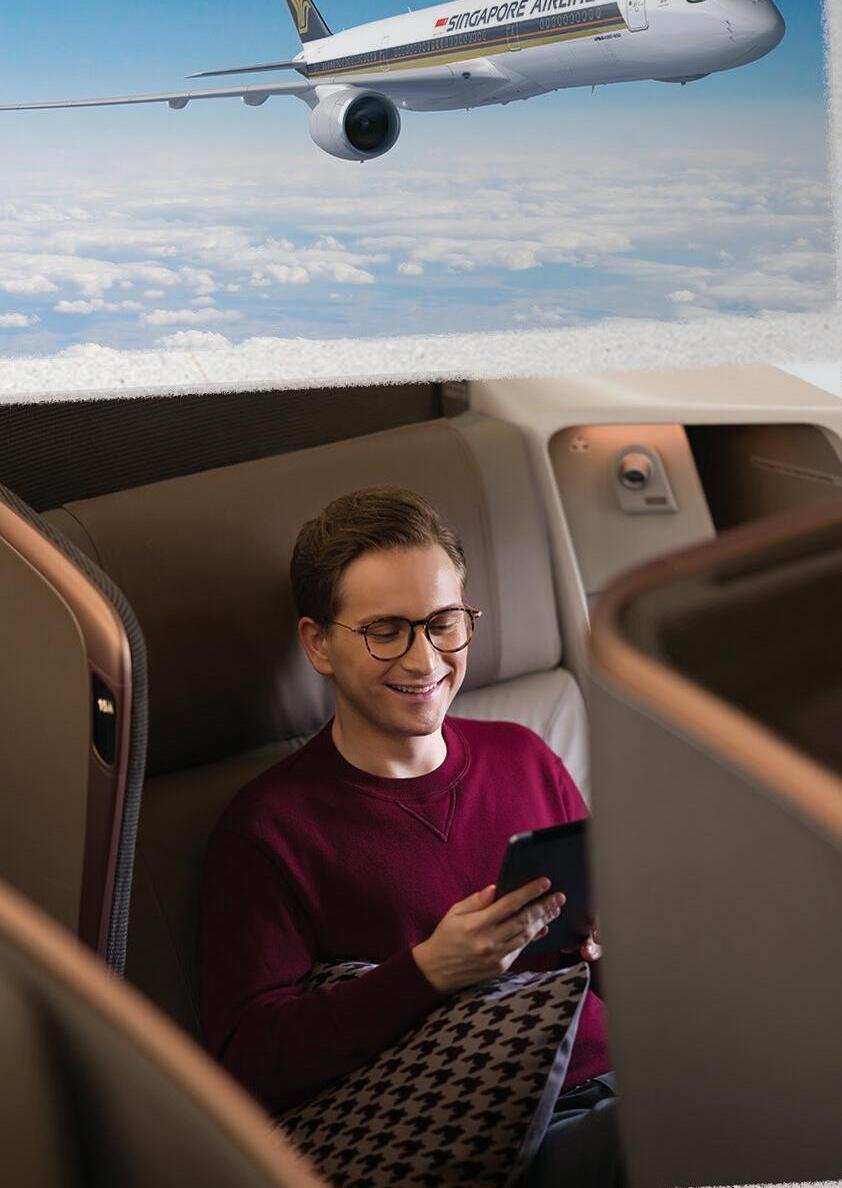















Embark on an exquisite journey with Singapore Airlines, offering flights from a choice of three UK gateways: London Gatwick, Heathrow and Manchester.
Experience spacious seats, gourmet dining, and world-class service from our cabin crew, tailored to elevate your experience.















Aloftʼs Instanbul debut brings a chic and modern option to the heart of Türkiyeʼs capital city. The property features 107 urban loft-style rooms and suites, a public area with billiards and gaming, the hip WXYZ bar, and a meeting room for up to 12.
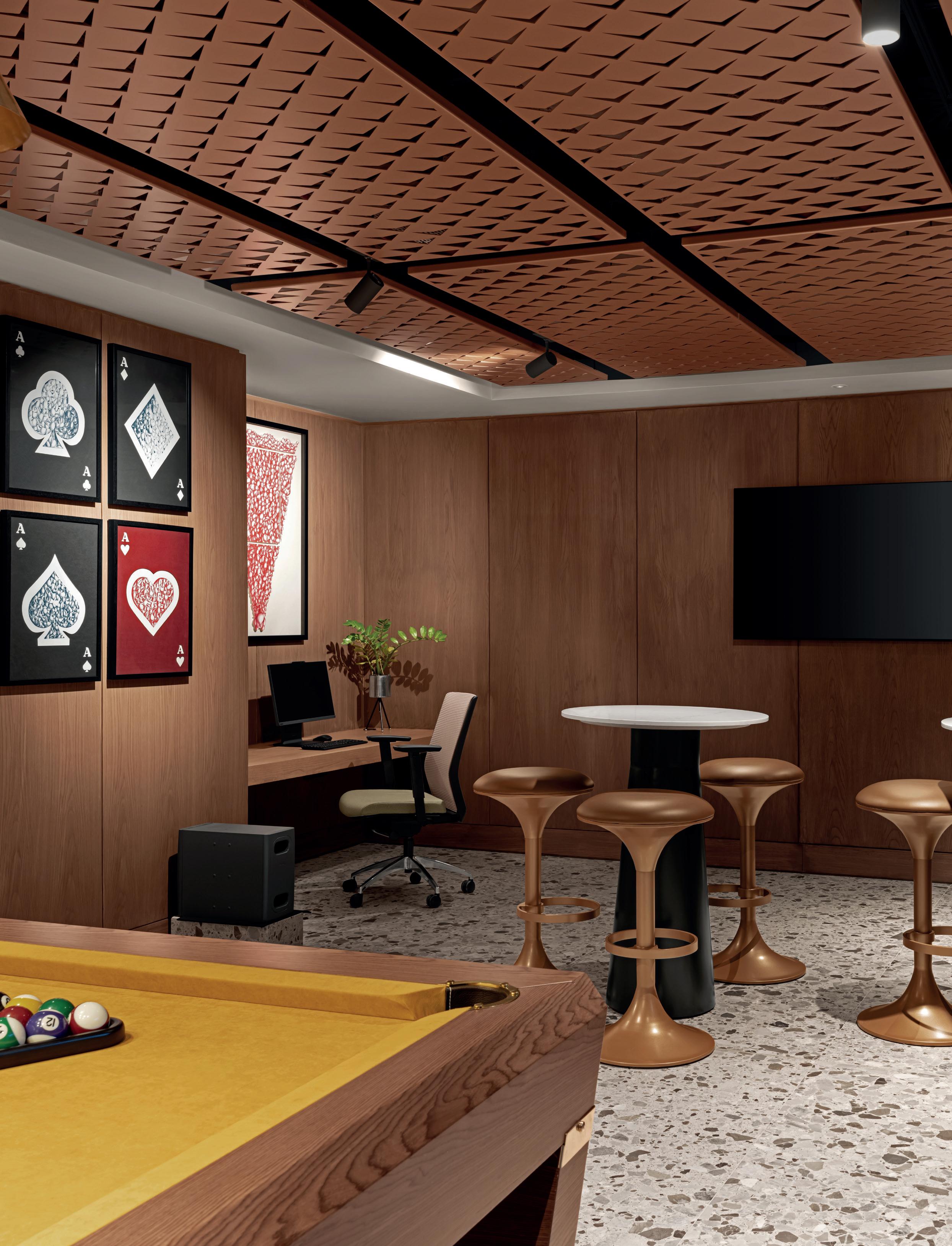
Anchored in upbeat energy, design and connection to local culture, the hotel brings the brand’s modern style to the heart of the capital and its buzzing social scene with common spaces to connect”
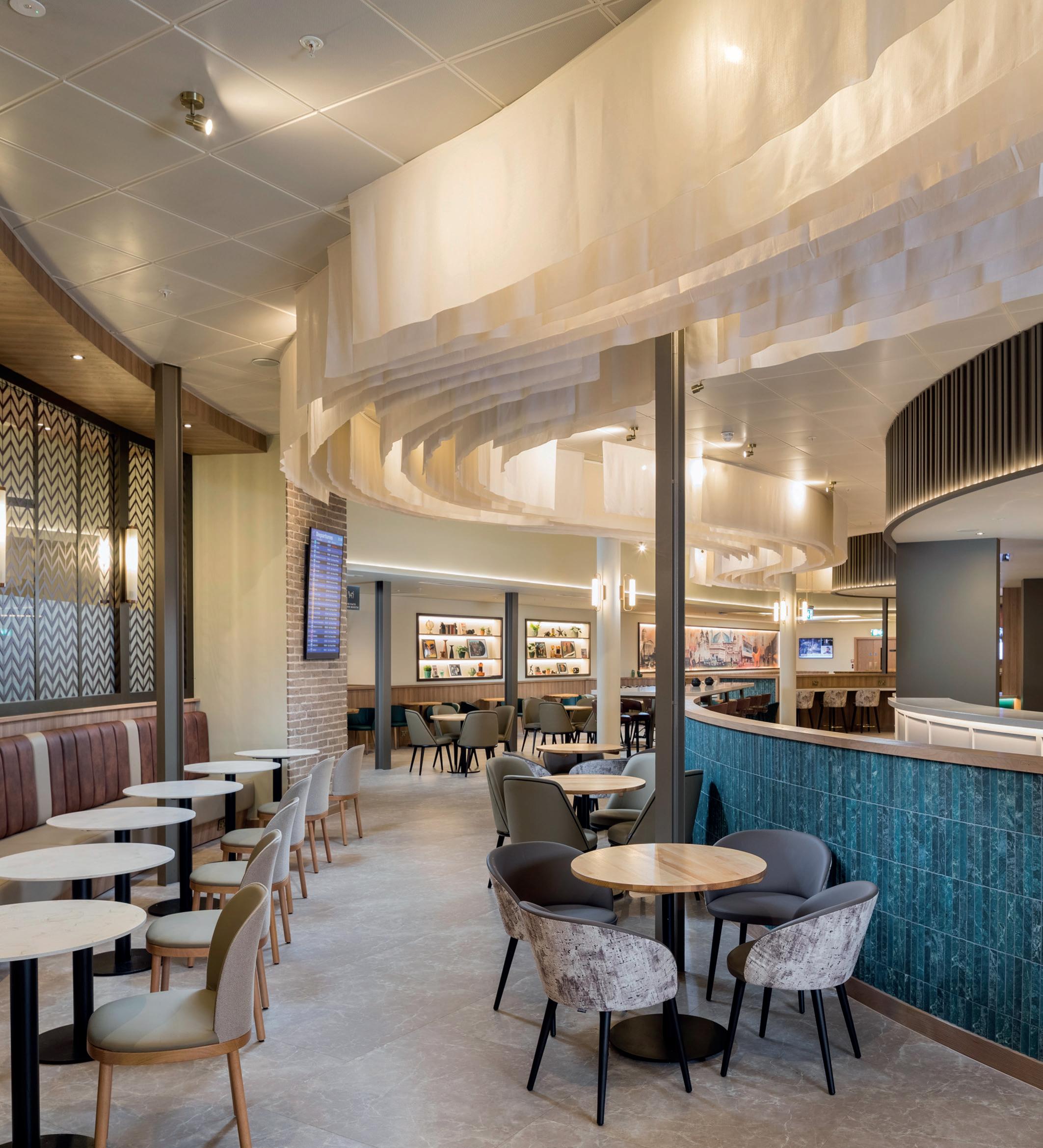
Aspire has opened a new and expanded lounge at Liverpool John Lennon Airport, drawing on the city’s cultural heritage for its design. The lounge offers access to Aspire and premium Luxe by Aspire guests, with seating for up to 205 passengers. Facilities include private booths, a communal workspace, premium snacks and drinks.
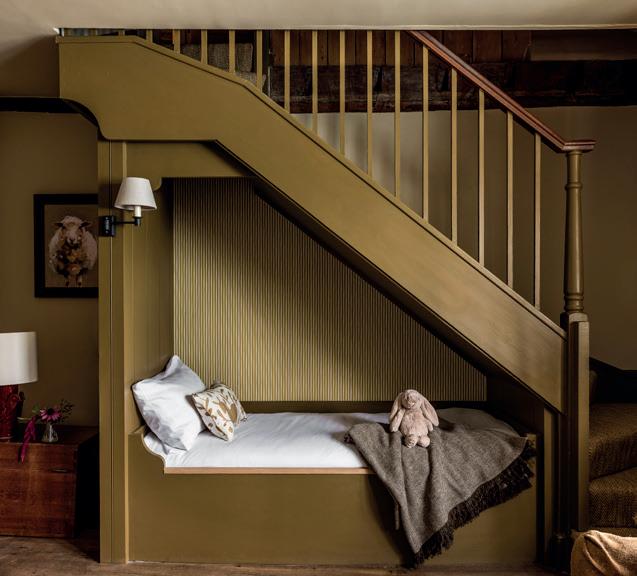
Woolley Grange, near Bath
Luxury Family Hotels has reopened Jacobean manor house Woolley Grange in BradfordUpon-Avon following refurbishment. Alongside upgrades to its 25 rooms, restaurant, private dining area, tea lounge and Orangery, the property has added a sauna, outdoor hot tub and treatment rooms to its spa facilities.
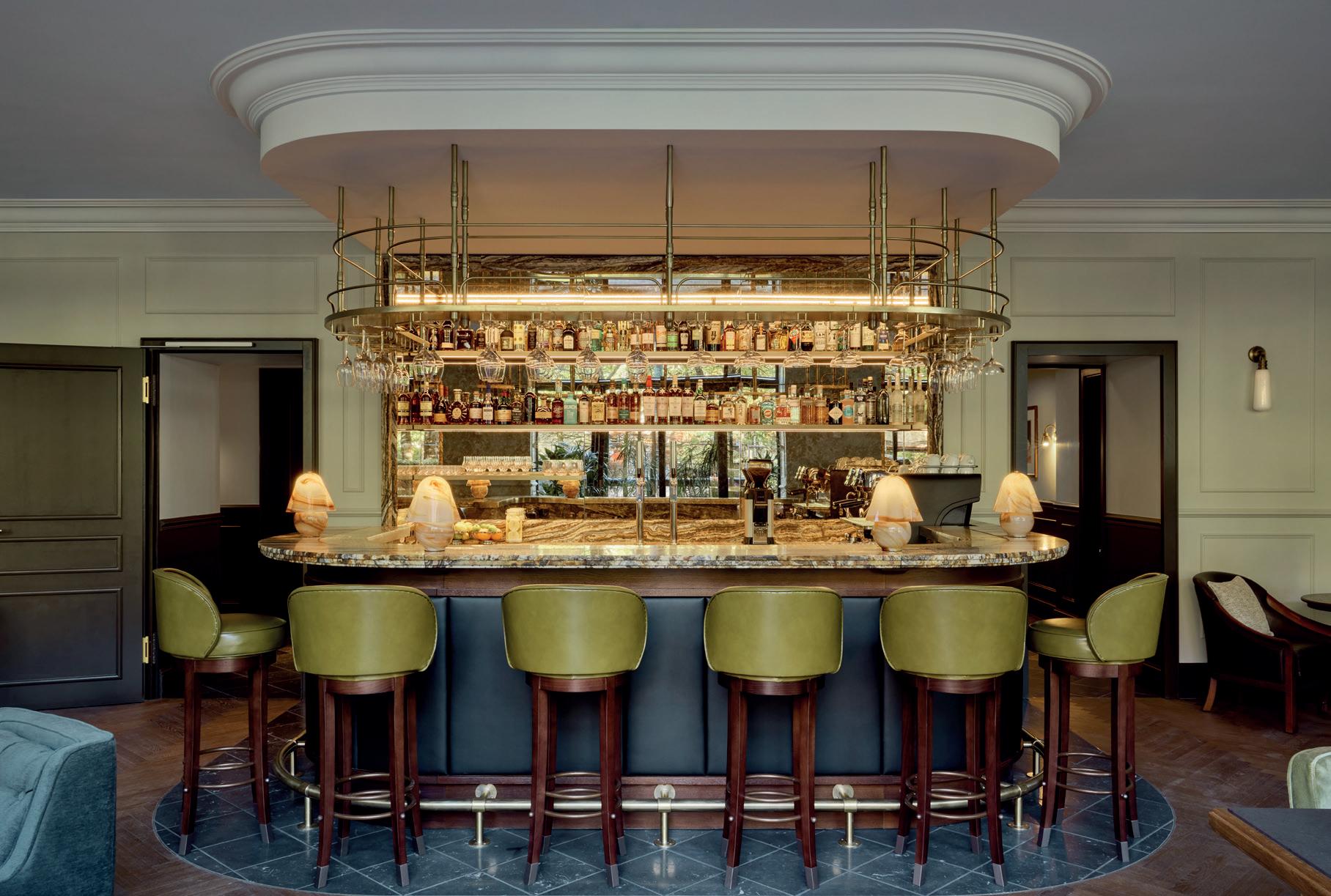
Opening its fifth property in 16 months, upscale boutique brand Miiro is betting big on the Austrian capital. This 64-room townhouse site on historic Rudolfsplatz square boasts a sleek, modern look, with Italian-flavoured bar and restaurant. A second Viennesse opening is planned for 2026.
As Concur embarks on a new strategic alliance, we chat with the man in charge about the speed of change, the expanding role of travel managers and more
Apart from an 18-month stint, Charlie Sultan’s career has always been in travel and he feels hugely grateful for the opportunities the industry has presented and for the people he’s met along the way.
“There’s something about the people in this industry that make it so enjoyable. I think maybe it’s because at its core this is a hospitality industry and it attracts people who want to be hospitable. There are very few industries where you go to a conference and everyone is hugging and kissing each other!” he says.
“While people move around the industry, the majority stay with it, so you’re interacting with people on different sides of the table but who have a common background, and therefore a shared understanding. Ultimately, we’re all here to solve challenges.”
Sultan’s 28-year career has been split between American Airlines and SAP Concur, where he is now President of Concur Travel, working with suppliers, corporate customers, the media, industry consultants and TMCs, heading up the travel product marketing on a global scale.
“That’s what I love – meeting with our customers, partners and industry personalities. Every year with Concur there seems to be something new going on but things seem to be moving at a much faster clip right now. The speed of innovation in business travel is accelerating, and the sector just keeps evolving so rapidly,
especially now with the developments in AI and the greater need for automation. Expectations continue to rise every year and it’s really pushed us all to figure out how to be more innovative and how to move faster.”
With huge investment required to keep up with the fast pace of change, Sultan feels blessed to be at SAP Concur, which has pledged to spend more than a billion dollars on AI technology.
“We are a leader in the space and at the forefront of innovation,” he says. “AI doesn't work without good data and I believe that we have the most robust data set out there – the data that’s in Concur and the data that’s in SAP. I believe our AI agents will be able to give the most value back to customers.”
Sultan is excited about the new strategic alliance with American Express GBT and the launch of a new solution, Complete, a “revolutionary” new travel and expense platform.
“It unites SAP Concur’s technology and
We understand the space. We've been talking to travel managers, procurement and CFOs for years, for decades, and we understand what they need”
expertise with Amex GBT's knowledge and its unmatched marketplace. It brings rich data from both sides and mutual AI capabilities, software and servicing and means customers can do everything from one screen," he explains.
While the new alliance will bring clear benefits to Amex GBT and Concur’s joint clients, Sultan insists it will also have a positive impact on the wider industry.
“I would imagine there will be a rub-off effect where people see we are innovating at a faster clip with GBT and will also want to move faster. And so, whereas historically they may have just waited to see what was going to happen, this forces everyone to start innovating more quickly.”
He insists the alliance won’t distract from development of Concur Travel.
“We have the newest booking tool in the market and we’ve spent a lot of time and money getting that into place. We’re going to continue to innovate on that platform, but now on top of that we have a partner who will work jointly with us to innovate. Our commitment to the vast network of other TMCs remains the same.”
Being a well-established legacy player puts Concur in a better position than many of the new tech travel players, he argues.
“We understand the space. We've been talking to travel managers, procurement and CFOs for years, for decades, and we understand what they need. We've been investing a tonne of time in the


infrastructure and data protection so we don't have to start from the ground up on that. It gives us an advantage. I think we're very well placed to meet the challenges of the travel industry going forward.”
One of the key challenges for travel managers, he believes, is that their remit keeps getting wider. “But AI technology will help to free them up. You simply can’t take on all these additional tasks that your company is asking you to do. You’d be working 24 hours a day. The SAP business suite, combined with Concur Travel, will give enhanced visibility and data-driven insights to help across both travel and expense and increase productivity throughout.”
While Sultan acknowledges that the booking process was less complex back in
his early days, he believes the sector is “in a better spot” now.
“It was simpler because you didn't know anything yourself. You had to pick up the phone and call someone and say ‘hey, how do I get from Heathrow to New York?’,” he explains. “Whereas now, you can see all the options. You can see what the seat looks like. You can see what the meal is going to be. You can see what the cabin's going to look like. You have airlines and hotels and rail providers and tech tools and everyone else trying to figure out how to better meet the needs of the travellers and of the organisations, and that’s what adds the complexity. But it's good complexity because it’s giving you more choice and more control over what you are doing.”
Who has had the biggest influence in your life and career and why?
My father died when I was eight, which left my mother to raise my brothers and me. She often worked two jobs just to make sure that we had the basics. And her mother actually passed away giving birth to her. And you know, she just pressed on and did what needed to be done and never really complained about her lot in life. And so as obstacles or bad things happen, I just learned from her that you just press on.
Who was your best boss and why?
Aren't we all just obligated to say our current boss?! But assuming that's a given, I’ve had lots of great ones. Maya Leibman, David Cush, Kurt Stache, Kenji Hashimoto, Derek Decross and then at Concur I’ve had the pleasure of working for Mike Koetting and indirectly for Steve Singh. What they all shared in common was that they were very smart, but they didn't tell me how to do the job. They listened and gave me the freedom to pursue different initiatives.
What’s your biggest achievement?
I would probably say that one would be on the personal side. I’ve been married over 25 years – I met my wife at American Airlines – and we have raised three kids that appear to be pretty good humans. I can't take much of the credit. With me travelling so much, it's probably more so my wife who gets the credit there, but I'll take partial credit!
Are you a techie person?
I don't think techie people would say that I’m a techie person. I’d say I know just enough to get excited and to be dangerous. I do like dabbling. I've dabbled with ChatGPT but I’m not a guy who’s going to programme his own app or anything like that. At least not yet!
What’s your proudest moment?
I'd say what makes me proudest is really seeing the people who have worked in my teams over the years get promoted to significant roles and to lead large organisations.
“ IN THE CONTEXT OF THE SEISMIC SHIFT HAPPENING IN THE TRAVEL TECHNOLOGY LANDSCAPE, THIS ALLIANCE MAKES LOGICAL SENSE FOR BOTH SIDES ”
and CEO Garner
“WHILE THE MARKET REMAINS FLOODED WITH TMC RFPS, AS CLIENTS EVALUATE THE BEST PATH FORWARD TO MANAGE TRAVEL, THE IMPACT OF THE GBT/CONCUR RELATIONSHIP MAY NOT BE FULLY FELT FOR MANY MONTHS, BUT ONCE IT DOES WE PREDICT AN UNPRECEDENTED INDUSTRY SHAKE-UP”
Brandon Strauss, Co-Founder CapTrav


“My
headline summary is both players had no choice but to create this strategic alliance"
Let’s not shy away from the fact that this isn’t about the customer. This is very much about GBT and Concur trying to shield one another from the changes that are happening within the industry”
Calum Hawley, Managing Partner BTC Global








“FOR OUR CLIENTS USING CONCUR WE WILL CONTINUE TO ADVOCATE FOR THEM IN THE INTEREST OF INNOVATION AND IMPROVEMENT. THIS IS ALSO SOMETHING CONCUR WILL
NEED
TO DO TO SUPPORT THE MANY CLIENTS SERVICED BY OTHER TMCS
”














“I would imagine there will be a rub-off effect where people see we are innovating at a faster clip with GBT and will also want to move at a faster clip”


Charlie Sultan, President Concur Travel



Martin Ferguson, Managing Partner, Kintela Group, wonders if it’s time to change the tune when it comes to measuring the value of a business trip
In February 1964, four Liverpudlian men in their early 20s boarded a plane at Heathrow bound for New York. On paper, a pedant could argue it was just another business trip. But when The Beatles stepped onto the tarmac at JFK airport, they triggered the British Invasion, changed popular culture and redefined the economics of the music industry.
It’s a clear reminder that the return on investment (ROI) of business travel isn’t always captured in the ticket price. Sometimes the true value of a trip is only realised with hindsight, whether that’s in the relationships built, the momentum created, or the doors opened.
That’s the real challenge with business travel ROI. How is it measured? The frame



of reference is often too narrow, as if it were only about cost reduction or revenue growth.
Fab formula?
Direct travel is easy to justify. A salesperson meeting a prospect. Researchers collaborating in the lab. These trips directly correlate to revenue, delivery or growth. Indirect travel is trickier. Compliance checks, support functions, internal projects: these trips don’t have an obvious connection to trading performance. They risk being seen as unnecessary overhead. Managers are left weighing up purpose and value in a fog of subjectivity.
It’s why convenient ROI formulae fall apart. You can measure a deal signed, but






you can’t quantify the morale boost of a team meeting face-to-face and what it ultimately delivers. This is judgement, not arithmetic.
The discipline lies in asking hard questions before approving a trip. What will be gained by travelling? What will change if it doesn’t happen? And even who is travelling?
As an industry, that’s possibly the right question to ask ourselves. After all, how many travel events do we go to where we meet the same people every time? Should we not be leading by example and suggesting a colleague who hasn’t had their ticket to ride before should make the trip?
That’s why reframing ROI is so important. The real question isn’t “what’s the ROI of travel?” in the abstract. It’s “what is this trip meant to achieve, and does it ladder up to our core purpose?”.
Travel tied directly to sales, delivery and client retention has a justifiable return. Travel outside that sphere isn’t automatically wrong, but it demands sharper scrutiny, especially in lean times.
Here, there and everywhere Travel is too important to be reduced to a cost centre. Handled wisely, it is a growth engine. Cut it for the comfort of the accountants and you risk interrupting the rhythm that drives momentum.
Sometimes the wisest move is simply to let it be, accept that not every trip has a calculable ROI, but that some carry strategic weight that only hindsight will reveal.
The Beatles’ first flight to New York didn’t just justify its cost, it transformed everything that came after. And in business, as in music, the real ROI often comes when people come together. If that isn’t the climax of the argument for business travel, I don’t know what is.

Martin is
Partner Kintela




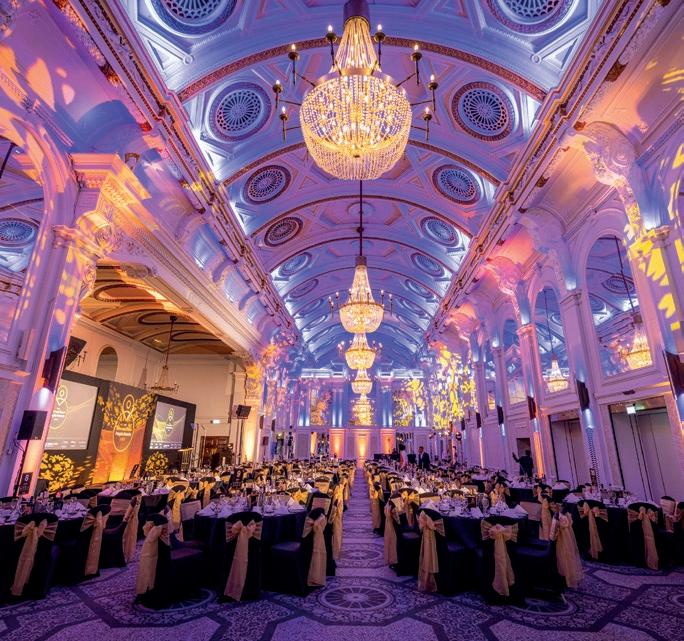
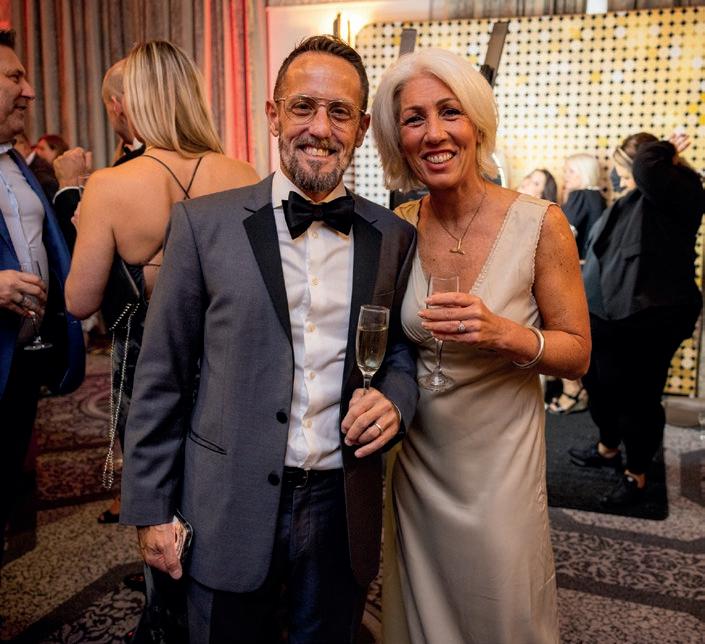
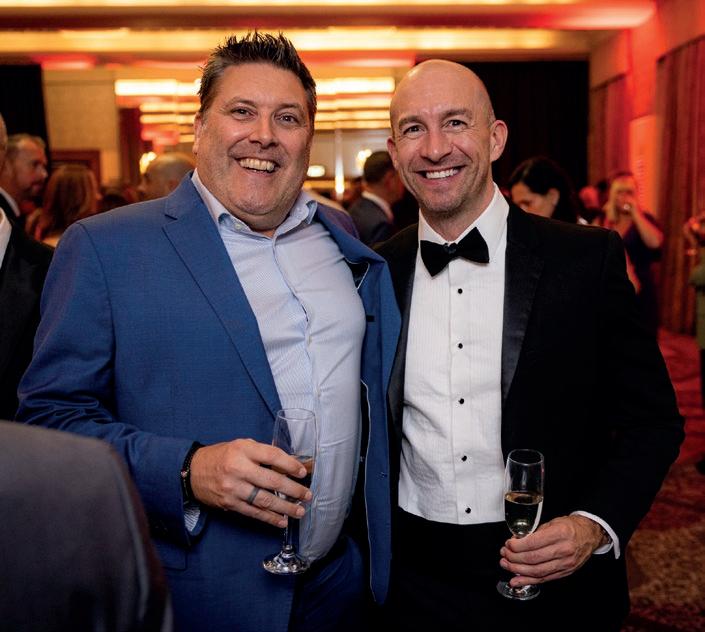
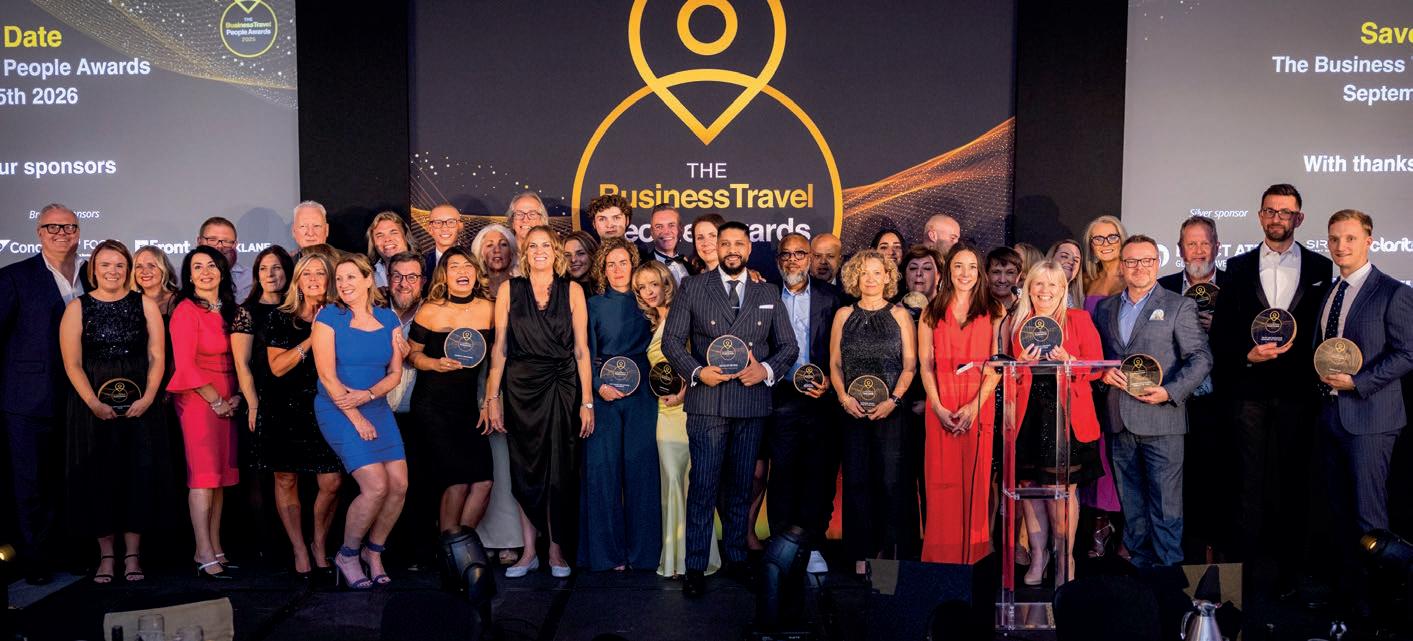
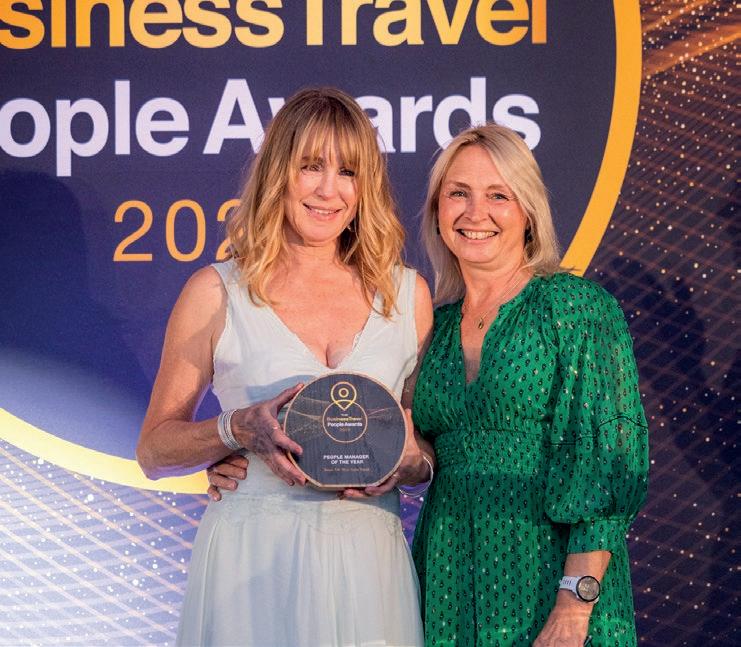
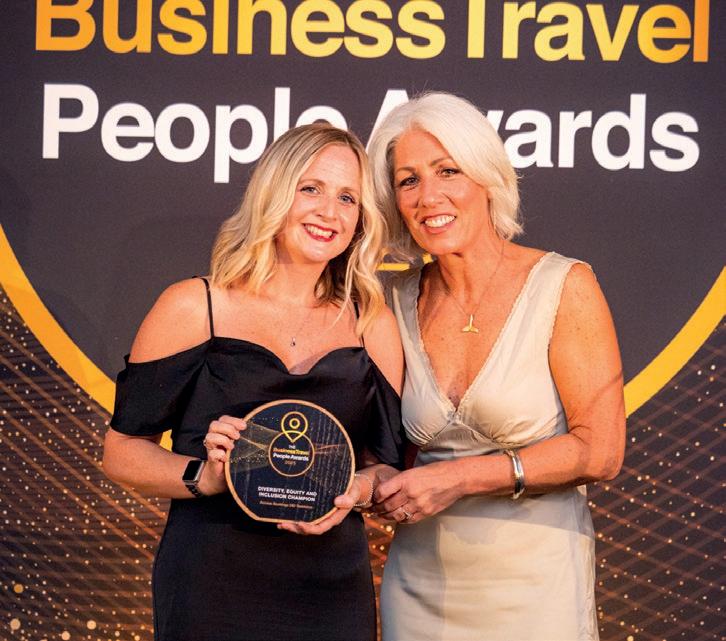
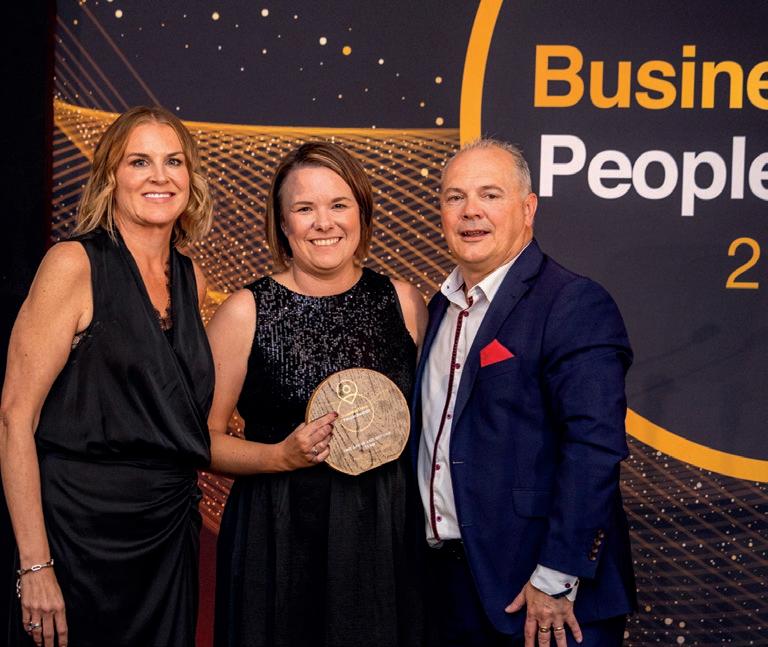
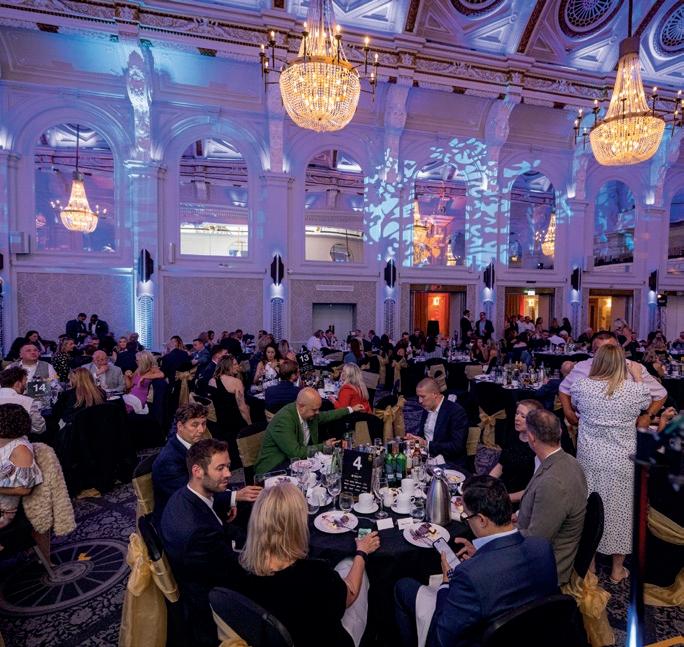
The great and good of the business travel industry gathered in London on September 30 to celebrate with the winners and highly commended in this year's Business Travel People Awards.

Nearly 300 guests attended the event at the Grand Connaught Rooms in Covent Garden to watch as the winners in the 22 categories were revealed.



A special Industry Contribution Award went to James Foice, CEO of the Association of Serviced Apartment Providers, for his leadership in the sector with "great humour, composure, exceptional passion and energy".
Mel Phaure, Director at Blue Cube Travel, was presented with the Chair’s Award for her mentoring work and for helping to bring new talent into the sector.
Access Bookings walked away with three awards. Its DEI Taskforce was voted Diversity, Equity and Inclusion Champion and its Sustainable Taskforce was named Sustainability Champion – Team. Its TV Project Team, Access Bookings won the award for TMC Above and Beyond – Team. Inntel won two awards. Account Management Team of the Year went to Inntel’s Relationship Management Team and its LOGiC Development Team was named Travel Travel Technology Innovator – Team. Its ESG Team also got Highly Commended in the Sustainability Team category.

The winners of this year's Business Travel People Awards got the recognition they deserved at a glittering ceremony in London. Big congratulations to you all...

The evening's guests were also treated to welcome drinks, a photo booth and a 360 video booth, with fun props, thanks to sponsorship by Direct ATPI.
Many of the judges were among the guests, along with teams from the category sponsors – Direct ATPI, Sirius Talent Solutions, Clarity, Blacklane, Best Workplaces in Travel, United Airlines, TripStax, Focus Travel Partnership, Visas2, Front, Beyond Business Travel, SAP Concur and ALTOUR.


Kirsty Hicks, Publisher of The Business Travel Magazine and the organiser of the awards, said: “Without our partners supporting the event we would not be able to put on this special celebration for our finalists, who all deserve to be honoured for their achievements."
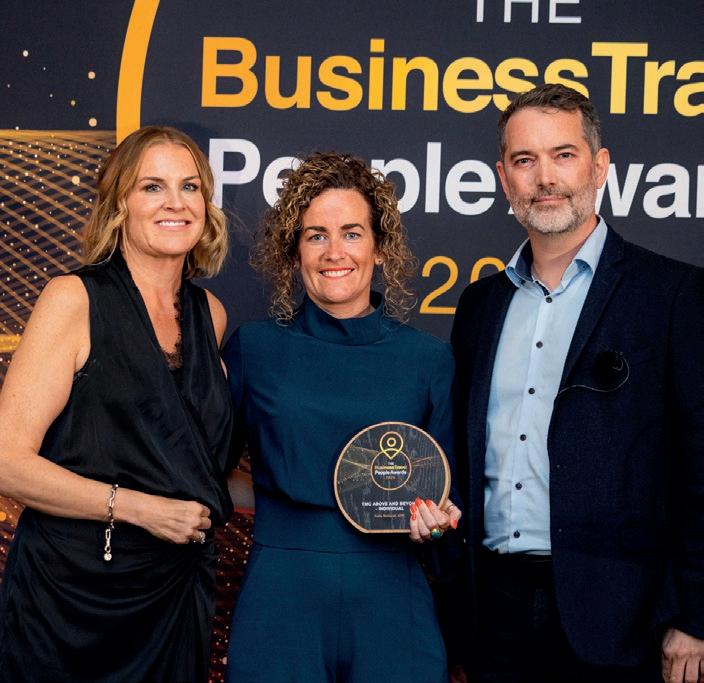
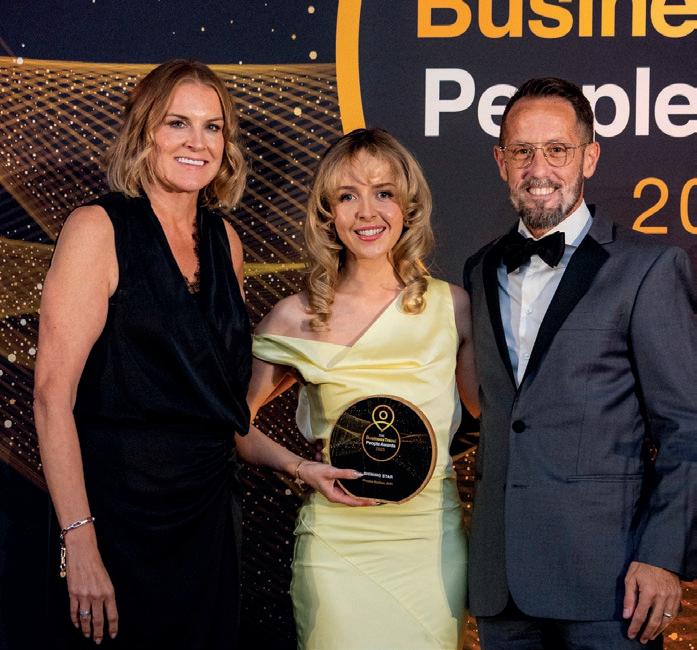
ATPI celebrated two individual award wins. Phoebe Buchan, Global Service Delivery Manager, was named this year’s Shining Star and Katie Skitterall, Group Commercial Director, won the TMC Above and Beyond – Individual award.
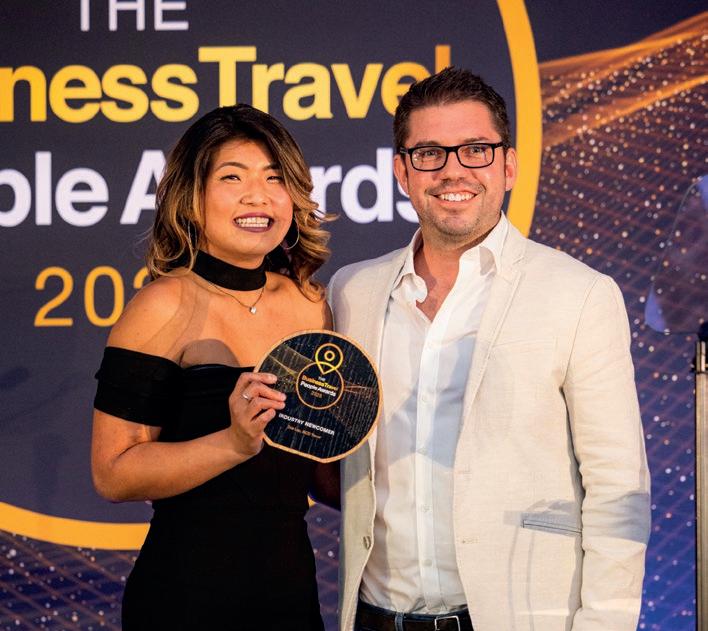
In a new category, Industry Newcomer of the Year was awarded to Zoe Lau, Event Marketing Manager at BCD Travel.
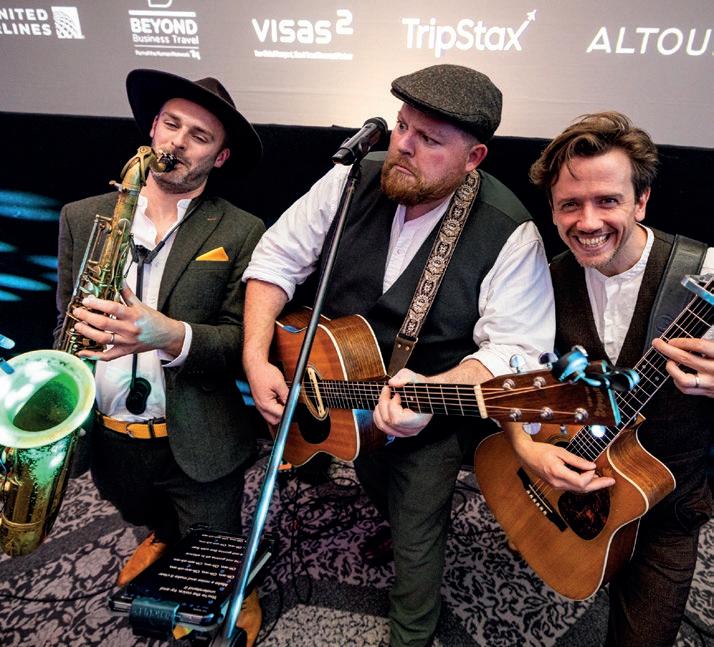
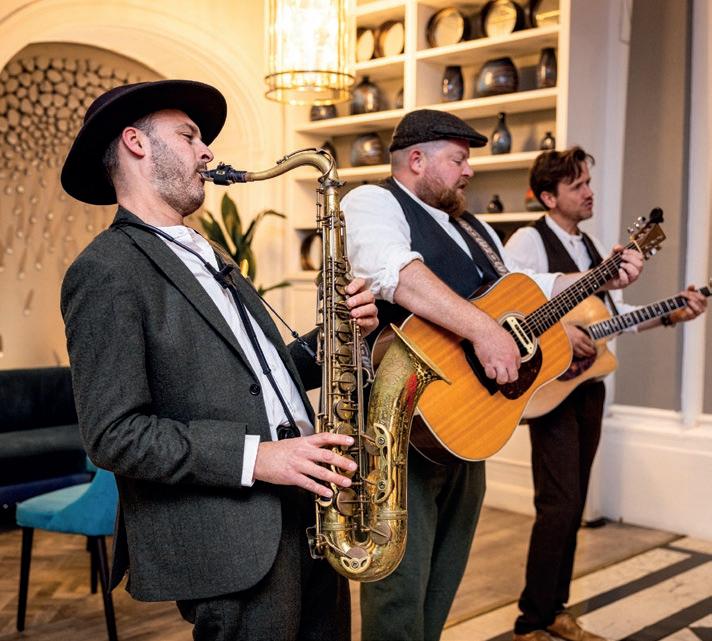
A three-piece band, Wandering Hands, played tunes dedicated to each of the winners as they walked up to the stage to collect their awards.
See thebusinesstravelmag.com for more photos and a video of the evening, and go to page 18 for information about the 2026 awards, including the entry opening date and a full list of categories.
2026
The Business Travel People Awards 2026 will be held on September 15 at the De Vere Grand Connaught Rooms, London. Look out for details on thebusinesstravelmag com

ACCOUNT MANAGER OF THE YEAR
Liz Chapman, Diversity Travel

ACCOUNT MANAGEMENT TEAM OF THE YEAR
Client Relationship Management Team, Inntel
MEETINGS AND EVENTS TEAM OF THE YEAR
Lemon Lane Events Team, Lemon Lane
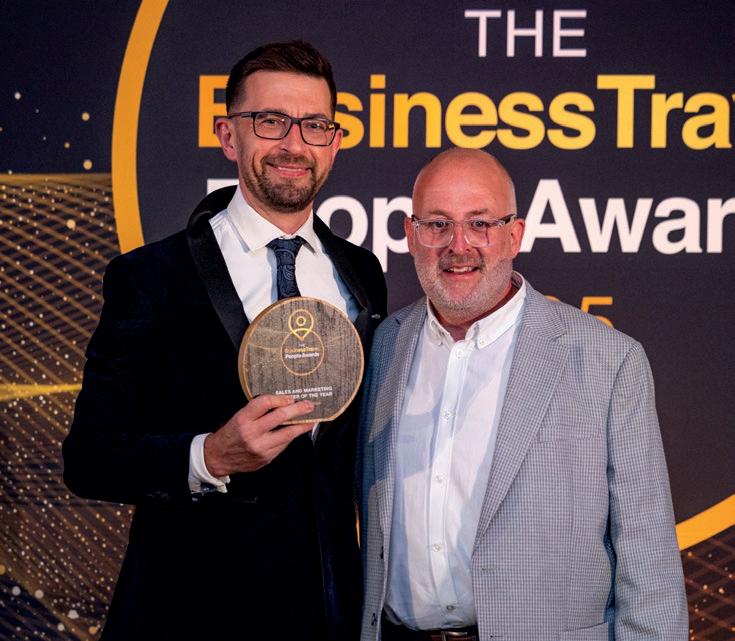
SALES AND MARKETING MANAGER OF THE YEAR
Sponsored by Beyond Business Travel
Maris Kuklis, JetBlue
DIVERSITY, EQUITY AND INCLUSION CHAMPION
Access Bookings DEI Taskforce


PEOPLE MANAGER OF THE YEAR

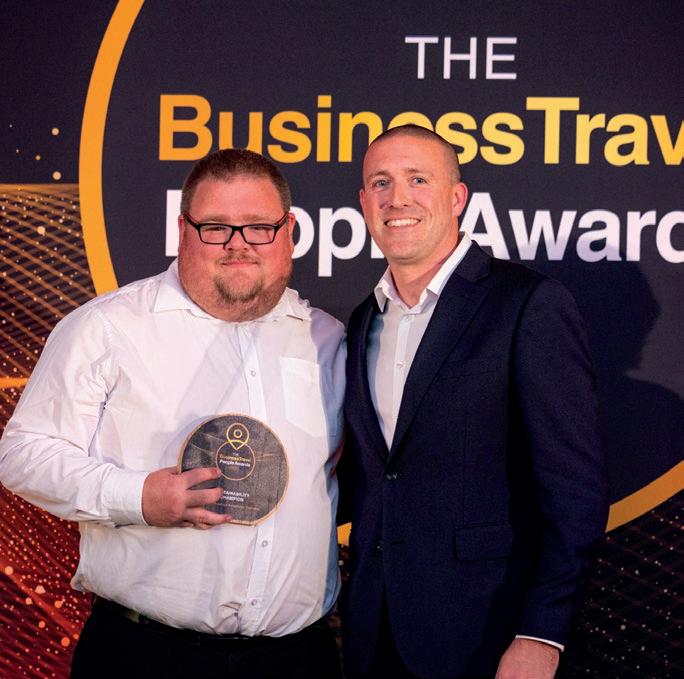
SUSTAINABILITY CHAMPION
Sponsored by Blacklane
Access Bookings Sustainable Taskforce
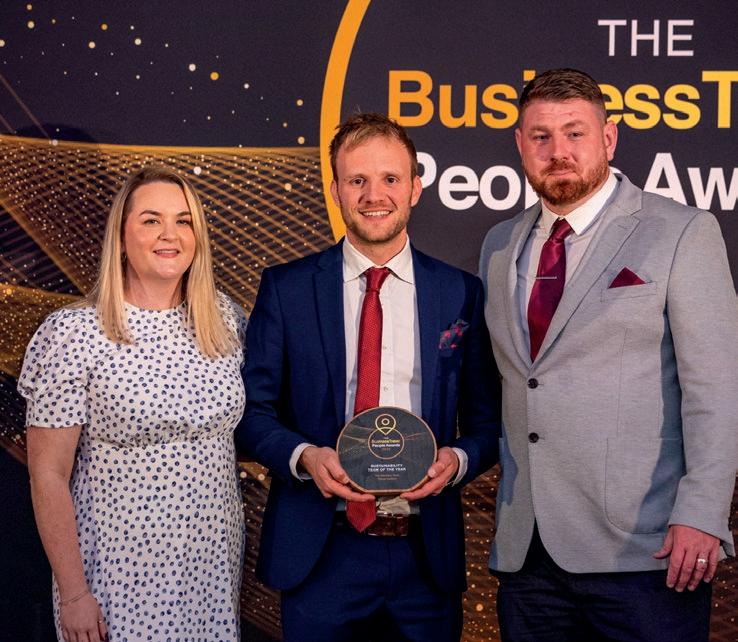
SUSTAINABILITY TEAM OF THE YEAR
Sponsored by Focus Travel Partnership
The Advisory Team, Thrust Carbon (Highly Commended ESG Team, Inntel)
TRAVEL TECHNOLOGY
INNOVATOR – INDIVIDUAL
Sponsored by United Airlines

Sponsored by Best Workplaces in Travel Kevin Trill, Blue Cube Travel (Highly Commended Anam Hussain, Internova Group)
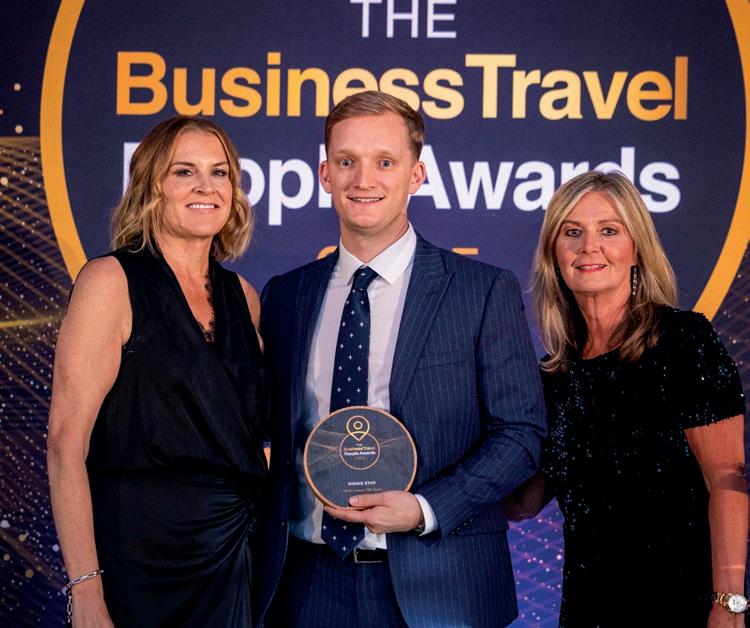
RISING STAR
Sponsored by Sirius Zander Gregor, TBR Global
SHINING STAR
Sponsored by ALTOUR Phoebe Buchan, ATPI
TMC ABOVE AND BEYOND –INDIVIDUAL
(Highly Commended Nikki Banks, TripStax)
SALES AND MARKETING TEAM OF THE YEAR
The Sales and Marketing Team, Wings
Global Travel

Robyn Joliat, 3Sixty
(Highly Commended Sarosh Waghmar, Spotnana)
TRAVEL TECHNOLOGY
Sponsored by TripStax Katie Skitterall, ATPI

INNOVATOR – TEAM
Sponsored by Front LOGiC Development Team, Inntel
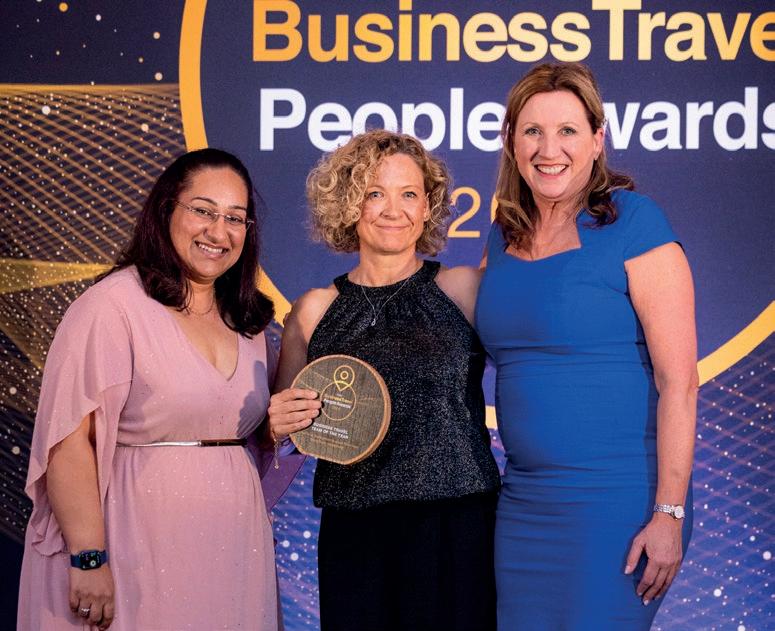
BUSINESS TRAVEL TEAM OF THE YEAR
Sponsored by Visas2
Global Travel Management Business Travel Team
(Highly Commended Internova Finance Team, Internova Group)
DUTY OF CARE CHAMPION
Ingrid Sanderson, Principal Travel
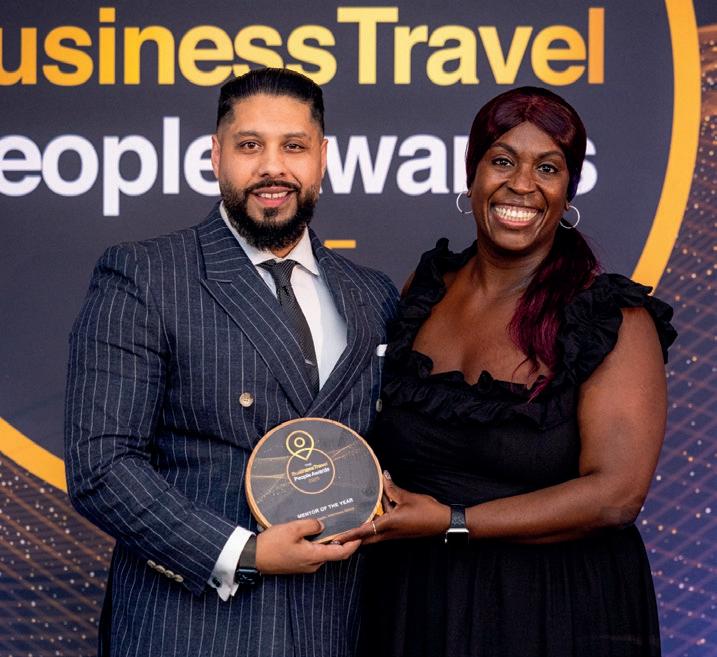
MENTOR OF THE YEAR
Sponsored by Clarity
Anam Hussain, Internova Group (Highly Commended Shauna Burns, Beyond Business Travel)
INDUSTRY NEWCOMER OF THE YEAR
Sponsored by Direct ATPI Zoe Lau, BCD Travel
TMC ABOVE AND BEYOND –TEAM
Sponsored by SAP Concur
TV Project Team, Access Bookings
INDUSTRY CONTRIBUTION
AWARD
Sponsored by The Business Travel Magazine
James Foice, CEO, ASAP
CHAIR’S AWARD
Mel Phaure, Blue Cube Travel
Bronze sponsors Silver sponsor











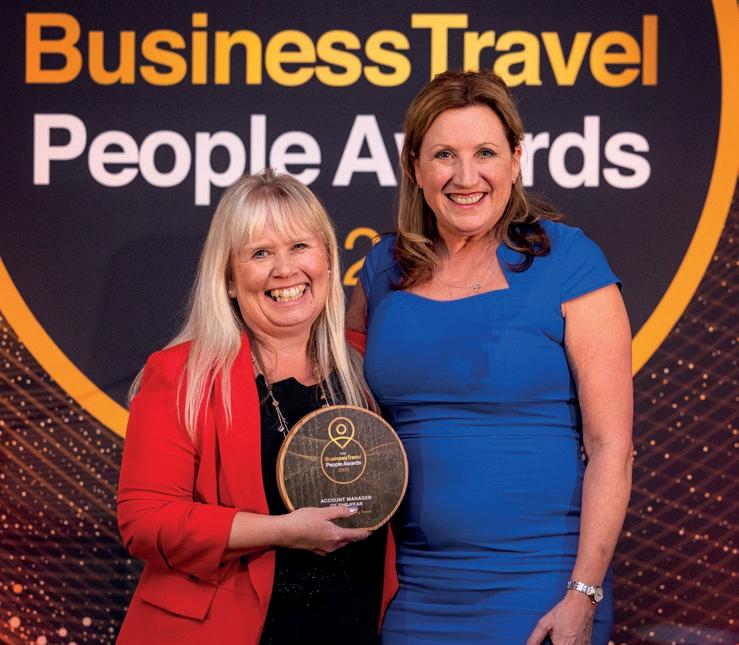
Taking a consultative approach, Liz manages complex accounts and achieves a 100% retention rate. Her hard work meant that one happy client extended its contract by 12 months and its satisfaction score jumped from 80% to 100% in February 2025. A standout winner.





Thrust Carbon’s submission truly highlights the difference it is making in the business travel sector, particularly relating to product integration and bringing sustainability to the forefront of the booking process through its partnership with Concur.




Zander is a true ‘Rising Star’, with an unwavering focus to better himself, the business and the industry. He has already shown strategic-thinking, clientcentricity, adaptability, a passion for learning and a commitment to delivering value. An exceptional future leader.






SUSTAINABILITY CHAMPION
ACCESS BOOKINGS
SUSTAINABLE TASKFORCE
Thanks to its taskforce, Access Bookings lives and breathes its ‘green’ culture and exerts positive influence on clients and suppliers. All employees have access to the YuLife app, a platform to improve overall health and wellness. It’s a game changer.




As a leader, Katie consistently goes above and beyond to deliver exceptional commercial results, showing true vision and drive to make the impossible feel possible. The testimonials and supporting evidence show she is truly an extraordinary figure in the sector.




MARIS KUKLIS, JETBLUE (NOW WITH AIR PARTNER)
Maris exemplifies everything about being a true sales and marketing leader. He shows initiative, innovative thinking and an agility to infiltrate new markets and gain share in a highly competitive sector. The results speak for themselves.



Anam doesn’t just inspire the people he works with, he actively champions them. He also creates opportunities within his local community in East London to promote the business travel sector at schools and youth charities. A true unsung hero.



GLOBAL TRAVEL MANAGEMENT
BUSINESS TRAVEL TEAM
An exceptional entry which gave the judges goosebumps. What particularly set it apart was the willingness to share innovation and products, particularly highlighted with its approach to FareFinder and the Focus Partnership.



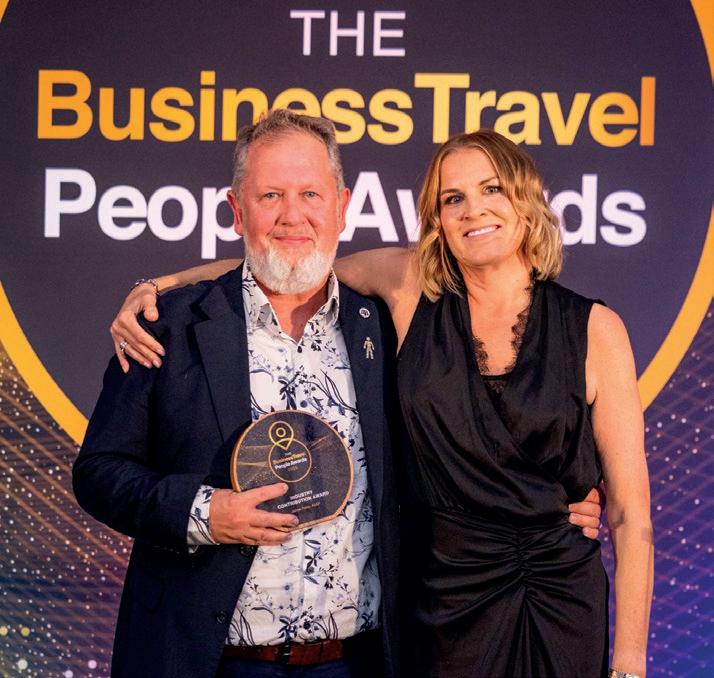
INDUSTRY CONTRIBUTION AWARD
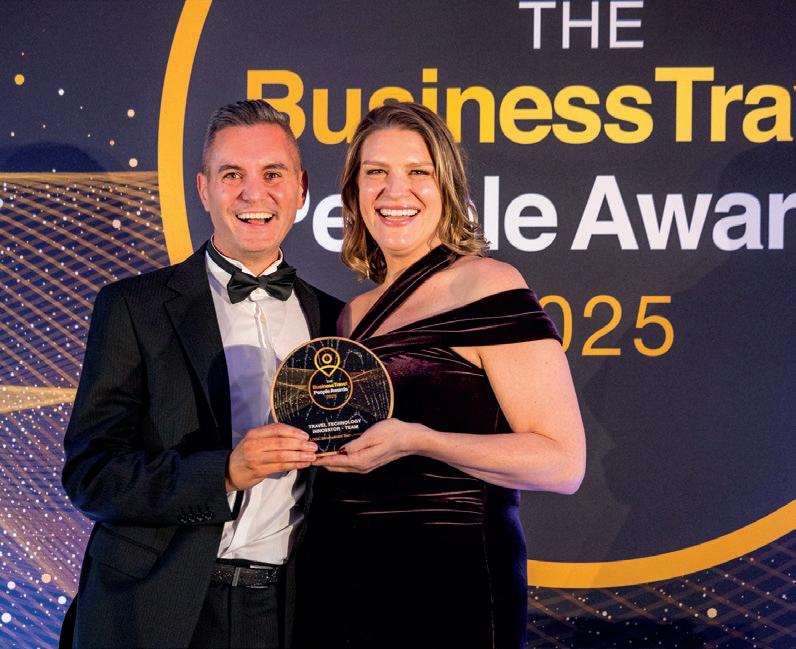



TRAVEL TECHNOLOGY INNOVATOR – TEAM LOGIC DEVELOPMENT TEAM, INNTEL

Inntel’s LOGIC Development Team has managed to bring together content that’s bookable through one online booking tool, including modern retailing and GDS content. It has even managed to integrate taxis and ground transport.

JAMES FOICE, CEO, ASAP
In the words of his own team, James is “an inspiration, a mentor, a true friend and, of course, a fashion icon. If we’re worried about something, he always has our back. If we’re worried about him, he lightens the mood by laughing at himself. He’s unflappable, unshockable, unsinkable. We're all so glad he's here".



INDUSTRY NEWCOMER OF THE YEAR
ZOE LAU, BCD TRAVEL


In just two years, Zoe has already received 19 ‘Circle of Excellence’ nominations from colleagues across different levels of the business. Her cando attitude, creativity and collaborative style have had a positive impact all round. Zoe truly shines.
Phoebe is only six years into her career but is already making an impact. Spotted early on by her managers, she was given responsibility for a key account where the travel manager describes her as a ‘rock star’. Alongside her day job, Phoebe graduated with a first-class honours in Business Studies. Shows great potential.



TRAVEL TECHNOLOGY INNOVATOR – INDIVIDUAL ROBYN JOLIAT, 3SIXTY
Robyn has delivered transformation in the mobility area with platforms like Home Match, bringing significant benefits to 3Sixty’s clients. Her achievements are driven by a clear strategy and a high level of collaboration and communication in all she does for the business.



PEOPLE MANAGER OF THE YEAR
KEVIN TRILL, BLUE CUBE TRAVEL (ACCEPTED BY A COLLEAGUE)
Kevin deserves recognition for his exceptional leadership, innovative contributions to IT, and the culture of empowerment he fosters. He has also had a broad influence on organisational transformation and company-wide innovation. A popular choice.





TMC ABOVE AND BEYOND – TEAM TV PROJECT TEAM, ACCESS BOOKINGS
Working with TV production, this team often needs to think quickly and adapt to the fast-changing requirements of its demanding clients at short notice. It does this with unwavering enthusiasm and professionalism. A clear winner.

DIVERSITY, EQUITY AND INCLUSION CHAMPION


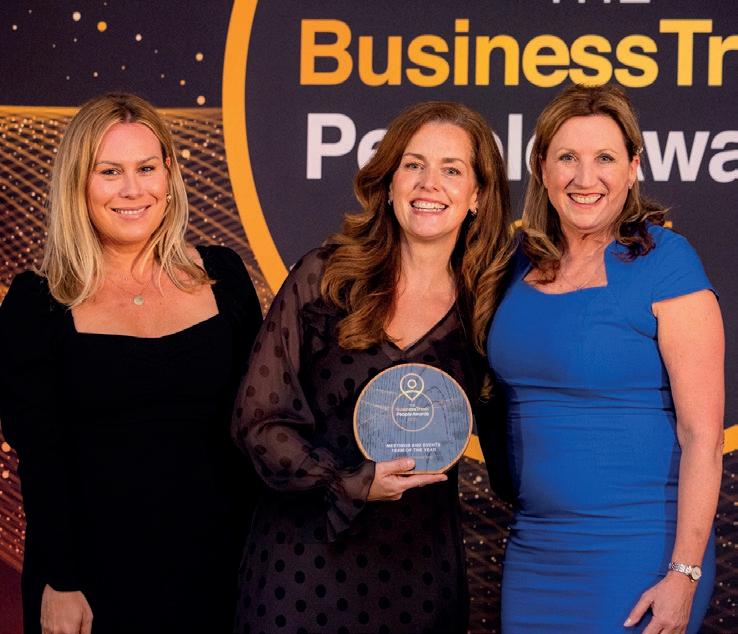
ACCESS BOOKINGS DEI TASKFORCE
This company isn’t just ticking the box, it’s blowing the box to pieces! It is doing so much more and covering all areas of DE&I, neurodiversity and wellbeing, and putting plans into place. An extremely worthy winner.
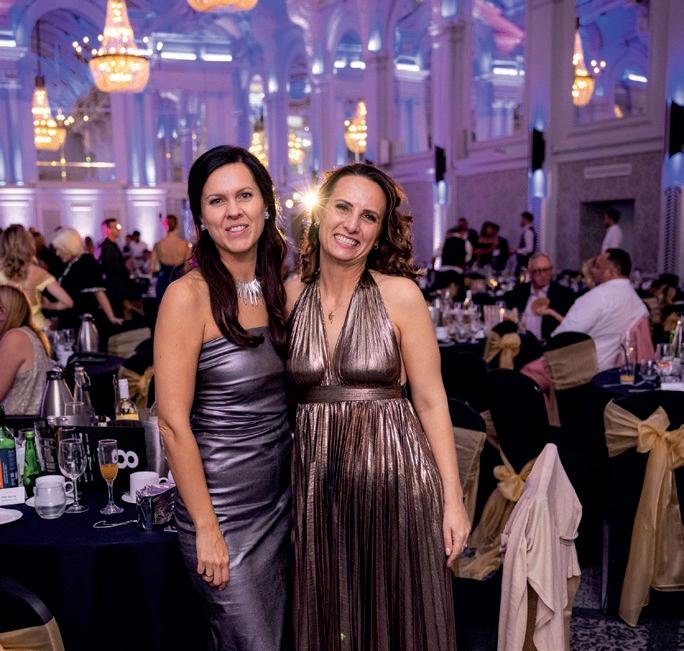


MEETINGS AND EVENTS TEAM OF THE YEAR
LEMON LANE EVENTS TEAM, LEMON LANE
Brave to set up in the pandemic, the team works cohesively, understanding customers’ needs, looking to exceed expectations, understanding the industry and its challenges, and demonstrating a clear sustainability strategy.









Entries will open on January 14 for the 2026 Business Travel People Awards. These prestigious awards celebrate the achievements of individuals and teams across all sectors of the corporate travel industry and at all stages of their careers. Watch out for more details in The Business Travel Magazine's weekly newsletter and at awards.thebusinesstravelmag.com.

2026
• Account Manager of the Year






• Account Management Team of the Year
• Meetings and Events Team of the Year
• Business Travel Team of the Year
• Sales Champion(s) * NEW
• Marketing Champion(s) * NEW
• Diversity, Equity and Inclusion Champion(s) *
• Sustainability Champion
• Sustainability Team of the Year
• Travel Technology Innovator – Individual
• Travel Technology Innovators – Team
• Mentor of the Year
• People Manager of the Year
• Industry Newcomer
• Rising Star
• Shining Star

• Travel Manager/Travel Team of the Year NEW
• TMC Above and Beyond – Individual
• TMC Above and Beyond – Team
• Industry Contribution Award
• Chair’s Award
*Open to individuals or teams

2026 CEREMONY
SAVE THE DATE: Tuesday September 15 2026 at the De Vere Grand Connaught Rooms, London.
With thanks to our sponsors






Clive Wratten, BTA Chief Executive Officer

THE UK AIRLINE sector is at a turning point.
Business travel remains vital to how the country's economy functions. Our Beyond the Boardroom research shows 89% of people who travel for work expect to maintain or grow their travel in the next year. For engineers, consultants, creatives and project managers, getting where they need to be on time isn’t a luxury, it’s the difference between a project delivered and a project delayed. But the system isn’t keeping up.
Routes are patchy, reliability is slipping, and nowhere is this clearer than in regional air travel.
The recent collapse of Eastern Airways and Blue Islands shows this. Overnight, businesses lost vital links with little warning and even fewer alternatives. When a key route disappears, the impact is immediate.
Although other airlines stepped in, the speed of those takeovers highlights how fragile the regional aviation ecosystem has become. Regional connectivity has been fragile for years. The UK cannot call itself a globally connected nation if swathes of the country
Scott Davies, ITM Chief Executive

rely on a single airline or service. Business travel today is fast, multi-modal and time sensitive. Our research shows 62% of business travellers make domestic trips, 27% relying on air travel; 72% use TMCs because fragmented systems don’t work; 51% want an integrated TMC solution where their whole trip can be booked in one place.

HAVE YOU EVER had a mentor ?
Across two recent ITM events I asked 600 attendees if they had, and half of them said no.
Mentoring enriches both the mentee and mentor through the sharing of perspectives and embarking on a mutual journey that is immensely rewarding and can be transformational.
With sincere thanks to all the passionate mentors and mentees I’ve had the good fortune to learn from, here are some guiding principles that may support a successful mentoring experience
First, matching with the right person is critical and expectations on both sides must be committed to, with clear goals. Some companies offer their people organised schemes, but mentoring can be most successful when it’s instigated by the individuals concerned. Securing a mentor in an external
Regional routes connect specialist workers, SMEs and the UK’s nations and regions to global markets. When those links fail, regions pay the price.
The UK needs coordination and clarity. Links must be protected, airspace modernised and airlines integrated with rail and ground transport. Travel for work is not optional. thebta.org.uk
environment opens up the scope and can be a revelation.
Second, the process must be confidential and selflessly motivated. A safe space should be created where ideas can be explored, skills practiced and confidence built. This dynamic is essential and underpins the privilege of mentoring.
Third, areas of focus can be varied, but should not stray into simply helping someone do their job. Mentoring is quite different to managing, coaching, training or sponsorship.
Fourth, mentoring can be either highly structured and formal or entirely informal. Some of the most game-changing mentorship I received came in the form of a single question, delivered in the right way, at the right time, that made me rethink my entire frame of reference.
Identify someone you think may be willing to mentor you. It’s a humbling and beautiful thing to be asked to do. itm.org.uk
Scott Wylie, Chief Technology Officer, TripStax

I ALWAYS ENJOY Christmas, but this year I’m looking forward to the festive season even more than usual.
My granddaughter has turned two, so this will be the first Christmas where she will understand that something special is going on.
I can’t wait to see her, Rocky
pud burns the luckier our family will be in the year to come.
While your own Christmas pudding is alight, perhaps, like me, you’ll cast your mind back over the year just passed.
I’ve reflected a lot on AI, for example, which has seen a shift from generative AI to agentic AI advancing automation capabilities benefiting things like real-time flight disruption management.

the cat and the three dogs all rushing around, knocking over the tree and causing general mayhem.
We tend to do things quite traditionally at Schloss Wylie. I will cook the biggest turkey I can find in a 30-mile radius of Lowestoft. Then it’s Christmas pudding, over which I will chuck half a gallon of brandy because we Wylies believe the longer the
Agentic AI can rebook flights, adjust hotel reservations, and update itineraries instantly without human intervention, which is a real game changer for the industry.
AI also offers huge operational efficiencies and deeper personalisation, but there is also a darker side too, for example cybercrime.
AI can enable attackers to
automate every stage of the cyber kill chain from reconnaissance to exploitation at speeds humans can’t ever achieve, which is keeping all of us techies on our toes.
One element I cannot ignore is travel’s age-old friend: NDC, which reminds me of A Christmas Carol’s Ghost of Christmas Past, having haunted some for 15 years now.
Despite reports of much bigger figures by others, we’re seeing the percentage of business air bookings made through NDC plateauing at around 20%.
Call me the Grinch, but I’m dubious if it will ever really rocket as intended.
NDC still isn’t being used much to book lounge access, baggage allowances, meals and all those other extras we were promised, certainly not in negotiated bundles.
It works fine for booking seats, and yes, one advantage is you can book more intermediate price points, but it can still be clunky if you want to make any post-booking changes or cancellations.
The other problem is that airlines haven’t standardised NDC enough, leaving TMCs having to build complicated, separate connections to each carrier, or turn for help to aggregators that increasingly look like the GDSs whose stranglehold the airlines wanted to break in the first place.
Perhaps we should we take a fresh look at NDC in 2026, because it really is about time we removed the “New” from New Distribution Capability.
What will be 2026’s gift that keeps on giving? I do wonder… tripstax.com
52%
A GBTA survey of 7,300+ business travellers found 52% of European travellers say they are comfortable or very comfortable booking trips with AI, compared to 58% in North America, 64% in Africa and the Middle East, 67% in Latin America and 78% in Asia Pacific.
According to a new temoji report on neuro-inclusive business travel, 81% of neurodivergent business travellers experience fatigue through overstimulation when travelling, versus 55% in the general business travel population.
The latest Air Monitor from American Express Global Business Travel is predicting that business class fares for flights within Europe will rise by 4.8% in 2026 compared with 2025, with economy fares seeing a smaller increase of 3.4%.
Jason Dunderdale, Global Director of Sales, Blacklane

THE END OF THE year is a time for reflection and pondering what we've learnt.
Here are my insights, predictions and not-so-wise things I’ve made a habit of:
Collaborations, partnerships and brilliant pairings Traitors and faithfuls, England’s Red Roses and the Rugby World Cup trophy, White Lotus and luxury hotels – these are just some of the big duo moments of 2025. In the corporate travel space there have been plenty of interesting collaborations and I’m predicting that this trend will





continue and grow into 2026.
Starlink and airline groups and Amex GBT and Concur made headlines in 2025. There will be much more to come.
Ground transport is having a moment
More conversations on ground transport spend, and ensuring it is managed within policy, are shifting attention from skies and beds to the roads. And this sector has never been hotter - growth, acquisitions and investment are coming from all sides.
Ground transport’s moment is a result of the combined force of innovation in the sector to grow awareness, and traveller demand for well-rounded policies from



the first mile to the last. Our research tells us that if a journey is too fragmented or lacks elements of comfort, then travellers take matters into their own hands. Now is the time to address this.











AI grows up Robotaxi investment is hotting up, although with the caveat that regulations and travel policies are far from ready for mainstream usage. The tech is there, albeit in its 'growing-up' years, trying to find its place and purpose. We don’t yet know how powerful the combination of true expertise, insight and careworking hand in hand with AI - will be. I’m excited by what I see in terms of service enhancements coming to the mainstream in business travel. Losing things is a bad habit My New Year’s resolution is not to lose things. As I write this I am also on the phone to a hotel in Hamburg to try and get back some airpods. I may AirTag everything I own, but technology alone cannot help me.
A Travelodge poll of 2,000 working people who commute and travel for work found 30% like the extra time they get to themselves when they are on a work trip, 21% think they sleep better, and 17% like avoiding chores around their home.
terms something
The Global Business Travel Association's latest Industry Outlook poll in October found 43% of business travel professionals worldwide are feeling more optimistic for the rest of the year – up from 28% in the last GBTA poll in June.





phone powerful are



A 2025 survey of 1,000 SME employees in the UK by Travel Counsellors for Business shows that 76% of respondents now typically extend their overseas work trips for leisure or for personal time – a sharp increase from the 48% in 2024. 76%

Despite having lost something at pretty much every hotel and event I have been to this year, I have never lost something in a Blacklane. The care of our chauffeur partners includes checking that a guest has all their belongings. I won’t share how many times it has been noticed my phone is still on the back seat. All these points remind me to never lose sight of how powerful first-class service is. Partnerships, travel policies and AI integrations are all developed to improve travel experiences. Success in 2026 will be rooted in this, as long as I can find my phone! blacklane.com


Roberta Iorizzo, Global Travel and Expense Manager at SCOR, has left the company after 10 years to join agency network Havas Worldwide as Travel Manager, supporting travel operations across the agency network from the UK.

Following his six-year tenure as Chief Operating Officer, Keith Watson has been promoted to President of Roomex, a platform for UK workforce travel. He succeeds former CEO, Garry Moroney, who led the business for six years.

Festive Road has appointed of Rich Johnson in the newlycreated role of Head of Client Solutions. He joins from CWT, where he spent more than eight years, most recently as Global Vice President of the Solutions Group.
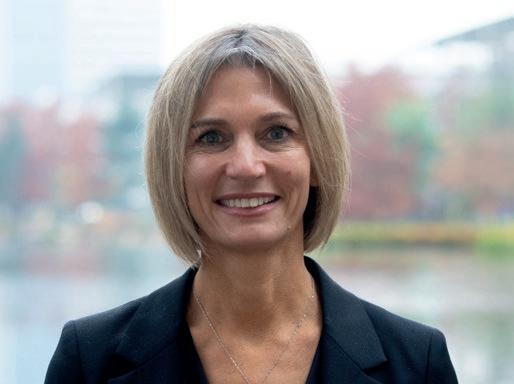
Synergy's Claire Barrie has been promoted from EVP Commercial Operations to Chief Commercial Officer as part of a restructured senior team for the combined business following Synergy's merger with SilverDoor.

Tom Maynard, the former Director of Global Corporate Sales for Virgin Atlantic, has joined content aggregator Travelfusion as Head of Corporate Accounts and Sales to support partners and develop its corporate proposition.
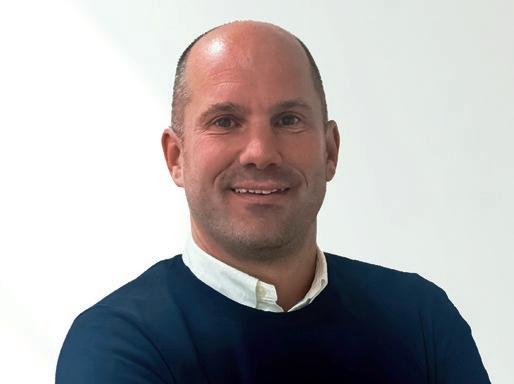
Corporate Travel Management (CTM), has appointed Chris Jenkin as Director of Client Success, a new role in EMEA. He was recently UK Sales Director at Reed & Mackay and previously worked at British Airways, Avis and Eurostar.
ALSO ON THE MOVE... >> Juliet Howie, formerly with 3Sixty, has joined Haven Housing Solutions as VP Sales, Corporate Housing >> John Simeone has been appointed as the Executive Manager, Offshore Sales and Alliances, at Qantas >> Corneel Koster will become Chief Executive for Virgin Atlantic from January 1 2026. He will replace Shai Weiss, who is standing down after a seven-year tenure >> Eloise Ferrara-Neched, who previously headed up travel and events, marcomms and professional services for Royal Mail, has joined the Rail Delivery Group as Business Travel Lead >> Danny Chesworth has been promoted to Vice President International Sales at Carey International >> Direct Travel has promoted Christine Sikes, Senior Vice President of Operations, to the role of Chief Operating Officer >>

As easyJet celebrates a milestone anniversary, we chart its journey to becoming a key player in the corporate space
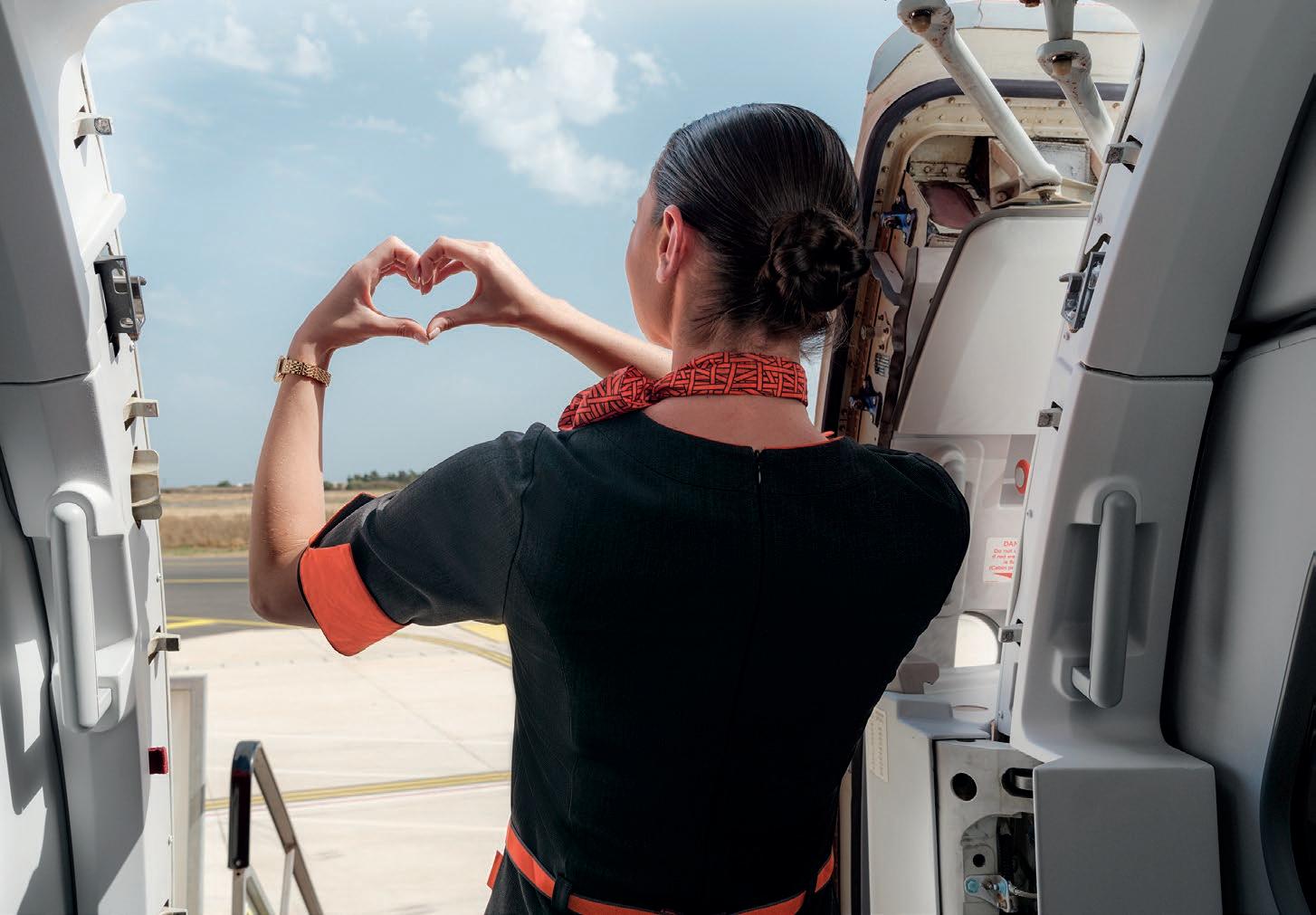
Preparing for takeoff
It’s 1995 and the UK is changing. The country’s music, fashion, art and food are taking centre stage as ‘Cool Britannia’ rules the waves. Being bold, brash and British is all the rage.
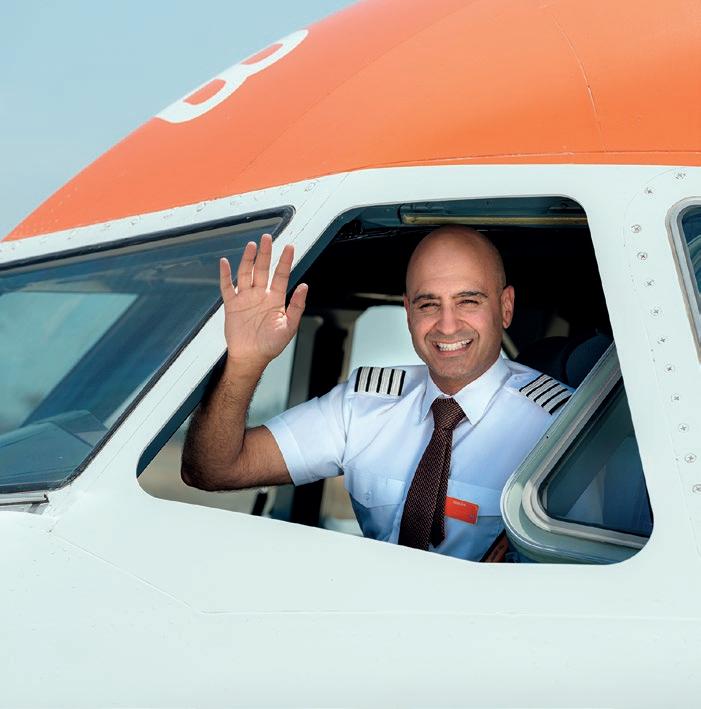
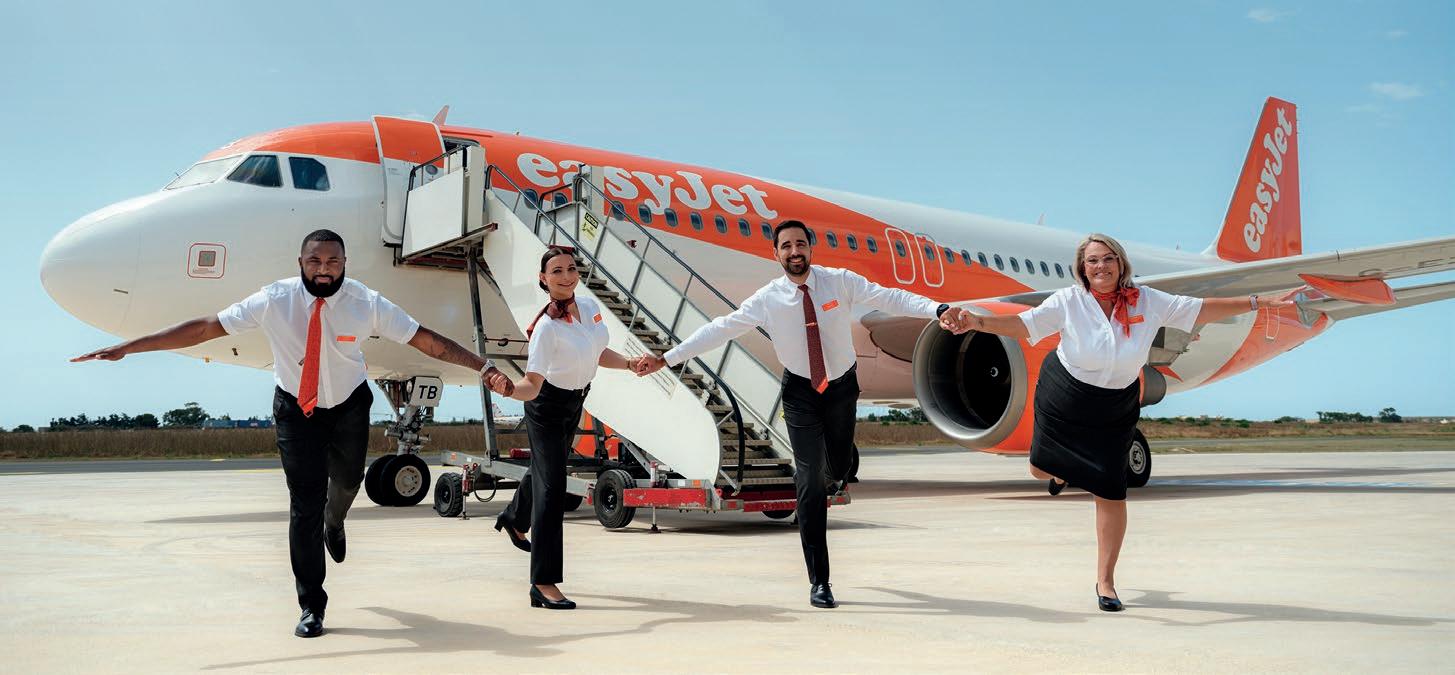
Enter easyJet. Starting out with a modest operation connecting Luton and Glasgow, the carrier’s fun, bright orange livery was a sign of the times. The mission of making flying affordable for everyone couldn’t fail to capture the imagination of a public ready to let the good times roll.
As the airline celebrates its 30th anniversary this year, it has grown to become one of Europe’s most recognisable brands. And its founding ethos – to connect people and places – doesn’t just apply to leisure travel anymore. Today, easyJet has reshaped business mobility across the continent.
Sure, sun-seekers still make up the bulk of
its customers. But easyJet has quietly become the go-to choice for business travellers, as companies look for value, flexibility and reliability in their travel programmes.
The airline’s powerhouse short-haul network is hard to beat. Over 1,000 routes to 35 countries, operated via a modern fleet of 350 aircraft, are the embodiment of its growth in three short decades.
time-pressed travellers. Add in a point-topoint model that avoids the faff of layovers, and it’s easy to see the appeal.
By the early 2010s, easyJet was already a household name so could comfortably lean in to the corporate market.

And because many leisure hotspots double as business hubs, the airline has cleverly capitalised on this overlap. Frequent daily flights between key city pairs – think London and Amsterdam, Geneva and Berlin, Paris and Milan – make it a breeze for professionals to hop between meetings. Unlike some low-cost rivals, easyJet flies into primary airports like London Gatwick, Rome Fiumicino and Berlin Brandenburg. That means shorter transfers, better access to city centres, and less stress for
Its own data showed that small businesses and budget-savvy firms were already on board – booking often, booking late, and happy to pay for convenience. The airline responded by fine-tuning its offer to meet their needs for both managed and unmanaged business travel.
Since then, it’s been full throttle – shaking off the ‘cheap and cheerful’ tag for ‘slick and business-ready’.
A host of features tailored to corporate needs have been introduced, all designed to reduce ‘traveller friction’.
For example, the easyJet Plus membership programme, with benefits including speedy boarding, seat selection and access to fast bag drop, make the airport experience a breeze.

Flexible fares allow travellers to change plans without stiff penalties, while its mobile



app provides easy access to boarding passes, flight updates and receipts. easyJet has also built strong relationships with travel management companies (TMCs), integrating with booking platforms and global distribution systems. This makes it easier for companies to include the airline in their travel programmes and manage their trips efficiently.


Business, insists: “Our story remains the same – delivering value, convenience and access to Europe’s primary airports in a way that truly meets the needs of today’s business traveller, while we continue driving towards net zero emissions.”
That ‘start-up’ mentality still runs through the business. From pioneering mobile boarding passes to investing in smart tech that streamlines operations, easyJet continues to innovate.

While some big corporates may still favour full-service carriers, easyJet has carved out a loyal following among SMEs, freelancers and remote teams. It’s especially popular with professionals in tech, finance and creative industries – and as legacy airlines trim their perks, easyJet’s appeal keeps growing.
James Marchant, easyJet's Head of
Behind the scenes, data-led scheduling and predictive maintenance help keep flights running smoothly – a must for travellers who don’t have time for delays.
Sustainability is also high on the agenda. The airline is investing in fuel-efficient aircraft and exploring future-forward tech, such as hydrogen. It’s also helping customers track emissions more easily – a big win for companies with green goals. Now, as easyJet enters its fourth decade, the world of work is changing fast. Budgets are tighter, remote working is the norm, and virtual meetings are here to stay. But the need for in-person connection hasn’t gone away – and easyJet is perfectly placed to deliver it. From budget disruptor to trusted travel partner, the airline is flying high into a future of smarter, sustainable, more agile business travel. easyjet.com











LUFTHANSA
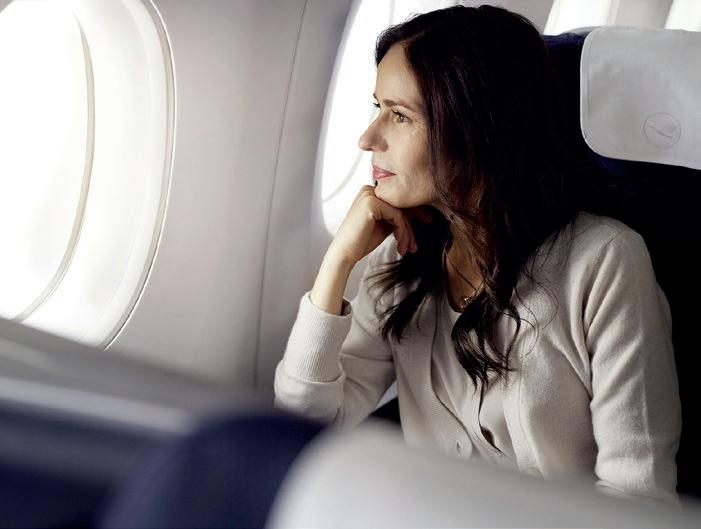
As the rollout of Lufthansa Allegris continues, we chat with Lufthansa Group’s GM Sales UK, Ireland and Iceland, Patrick Borg Hedley, to get an update on the new premium product
What is unique about the new Lufthansa Allegris?
Allegris is designed to deliver a highly personalised flying experience, backed by a €2.5 billion investment across all four longhaul classes: Economy, Premium Economy, Business and First.
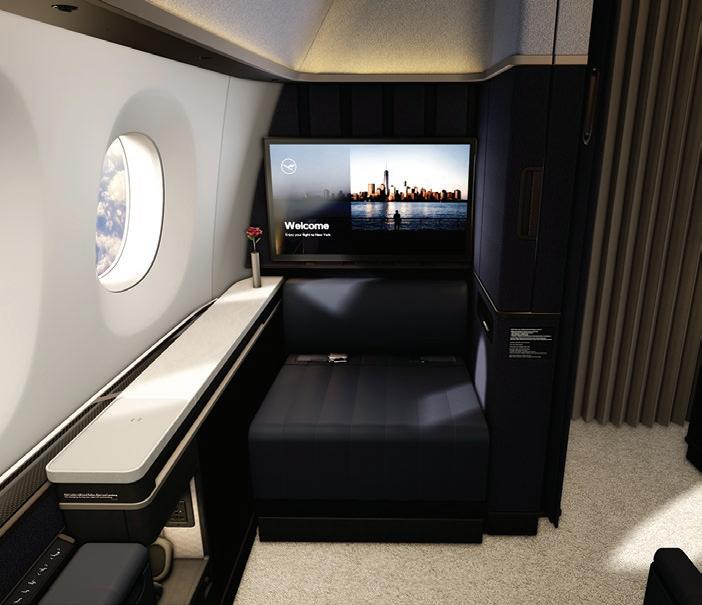
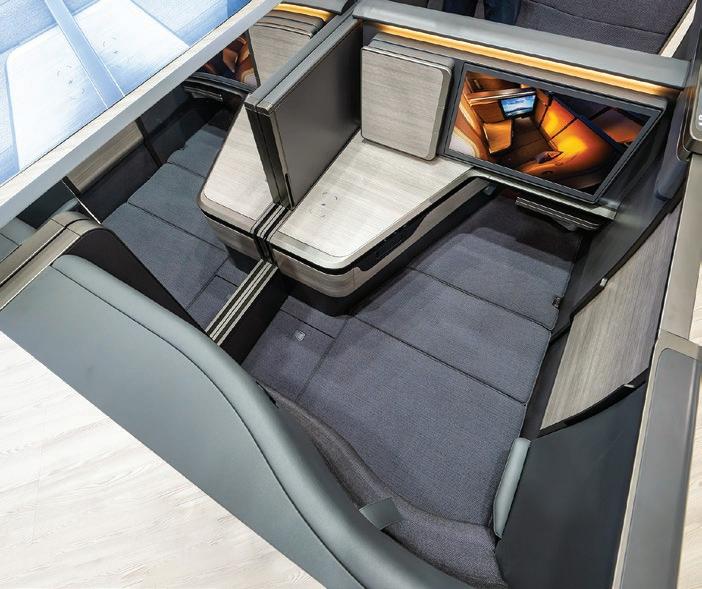
In First Class, Suite Plus introduces single and double suites that function like private rooms, complete with closable doors, dining tables and fully flat beds. Business Class offers five seat types to suit a range of requirements. The Business Class Suite, with its front-row position, high partitions and door, is ideal for work or rest. Two individual suites can become a double to cater to the growing ‘bleisure’ trend, while the Extraspace seat provides additional work surface for productivity. Premium Economy,
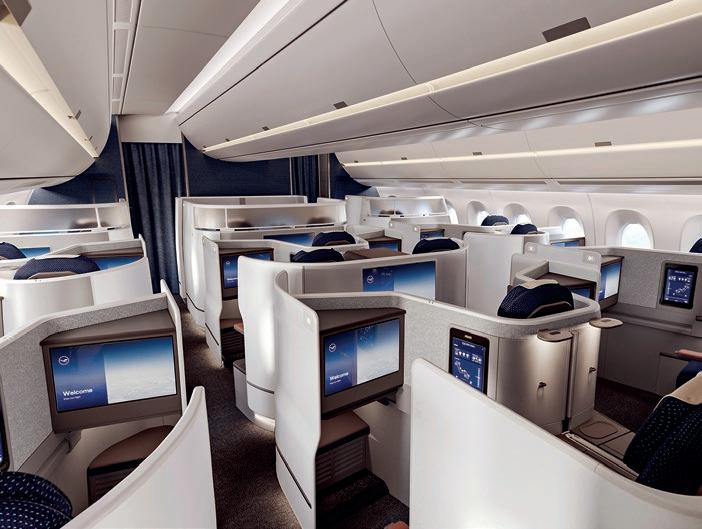
meanwhile, balances value and comfort with generous seat pitch, wireless charging and power sockets – perfect for cost-conscious corporates working on the go.
How is the rollout going?
To date, 10 Allegris-equipped A350-900s are flying from Munich to destinations including Bengaluru, Chicago, Cape Town, Miami, Newark, New York, Shanghai and TokyoHaneda.
The second phase has begun with four B787-9 currently operating from Frankfurt. Four more aircraft will join Frankfurt by year-end, and by summer 2026 Lufthansa expects to have 20 B787-9s in service. Next year will also see the arrival of the A3501000 and retrofitting of the first 747-8, further expanding the Allegris fleet.
What has the feedback been so far?
Business Class Suites have been especially well received, with executives praising the ability to work or rest in privacy. Corporate customers value the flexibility Allegris provides, enabling tailored travel options that align with policy and budget. Early results are strong: 90% of passengers say they would choose Lufthansa Allegris again, a clear endorsement of the new product.
Why is the flexibility of Lufthansa Allegris so important to your corporate clients?
As Lufthansa approaches its 100th anniversary, one lesson stands out: no two customers are alike. Allegris reflects that insight by offering choice and adaptability. For corporate travellers, the product ensures trips meet their purpose, whether for privacy, collaboration or rest. Wellbeing is now a major corporate priority. Companies know staff perform best when they feel valued and rested, and

Lufthansa aims to support that by creating environments that balance productivity with comfort.
What else is Lufthansa doing to cater for the corporate market?
For corporates, a primary requirement of any airline partnership is simplicity. The PartnerPlusBenefit programme lets companies earn points on every ticket, redeemable for flights, upgrades, services and sustainable aviation fuel.
The new Cash & Points option allows partial payment with points, simplifying budget management. In parallel, our Miles & More frequent flyer programme allows members to accrue personal miles, making the scheme straightforward and popular.
With all eyes on emission reporting, our Green Fares automatically include CO 2 offsetting – 20% through Sustainable Aviation Fuel (SAF) and 80% via certified climate projects for European flights (10% SAF on long-haul). Tickets also come with up to 20% more miles and points and free rebooking, delivering tangible benefits alongside environmental responsibility.
business.lufthansagroup.com
90% of passengers say they would choose Lufthansa Allegris again, a clear endorsement of the new product”










More room to create?






















Experience the new Lufthansa Allegris Business Class with extra space seats.




Investment continues in premium cabins, says Nick Easen, driven by higher demand, passenger expectations and capacity constraints
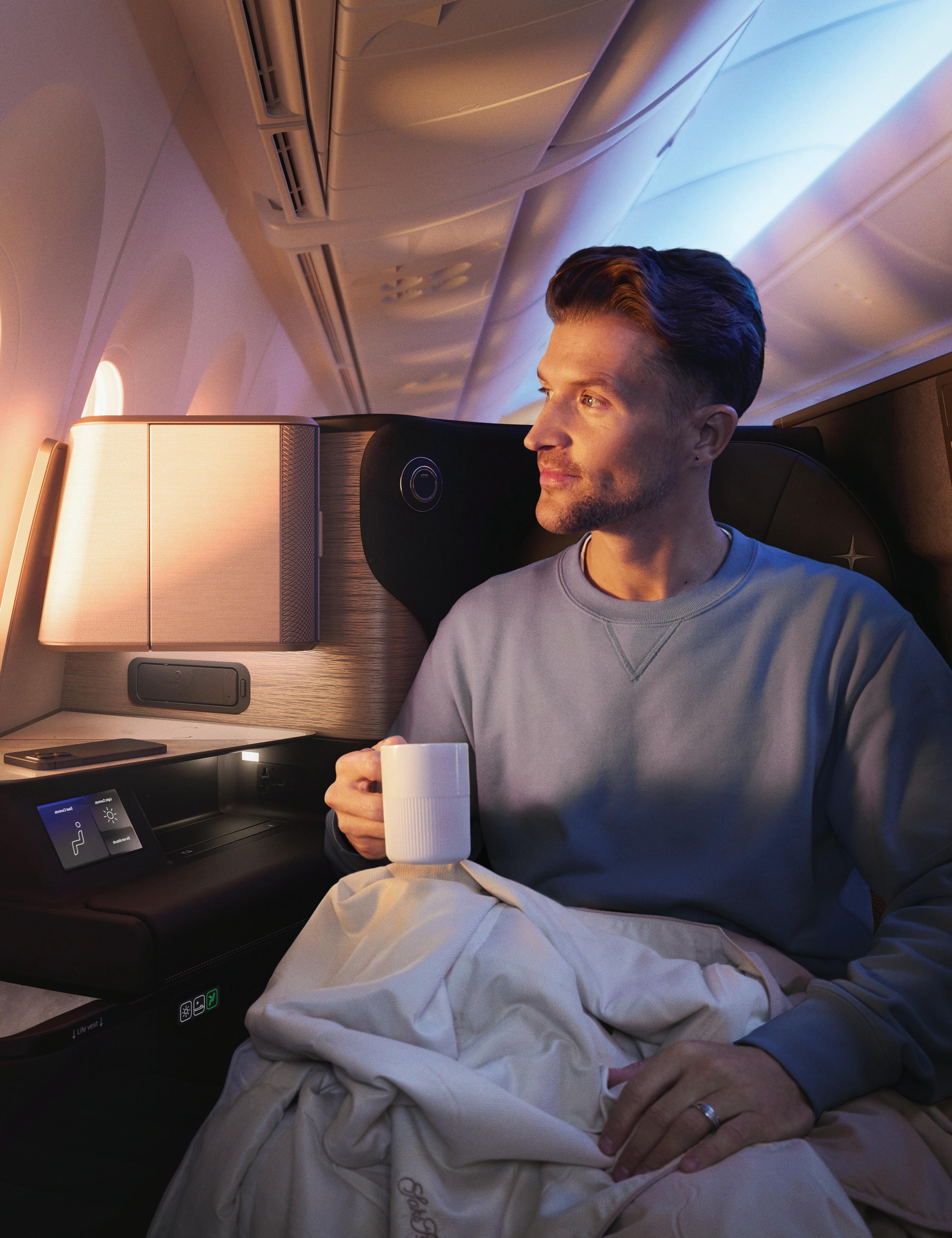
Premium cabin tickets will still be key components in corporate travel programmes in 2026, especially for long-haul or overnight flights. The duty of care and wellness factor helps fund their continued purchase. Spend at the front of the cabin is still strong despite economic jitters in the UK and beyond.
In fact, international premium travel globally, including business and first class, grew by 11.8% year-on year, according to the International Air Transport Association (IATA), exceeding growth in economy cabins. With Europe seeing the highest growth in passenger numbers, it’s also the largest market with over 39 million passengers.
“We’re not seeing downgrades; instead there’s a strong focus on making travel count for more, such as longer trips
combining multiple purposes. We’ve seen some slowing sporadically, but this is more related to geopolitics rather than corporate policy decisions,” explains Claudia Jackson, Managing Director, UK & Ireland at BCD.
Post-Covid, airlines have been clawing back money. The lows in global oil prices, which translates into jet fuel, have been cushioning airlines, and will continue to do so in 2026. This is likely to dampen any future growth in ticket prices. Premium air seats are predicted to cost $3,900 on average next year, with a growth rate of less than 1%, according to the latest CWT GBTA Global Business Travel Forecast.
Now with balance sheets back in better health, buoyed by strong leisure, then business demand, carriers are investing again in products that grab market share. This includes highly competitive premium ▶


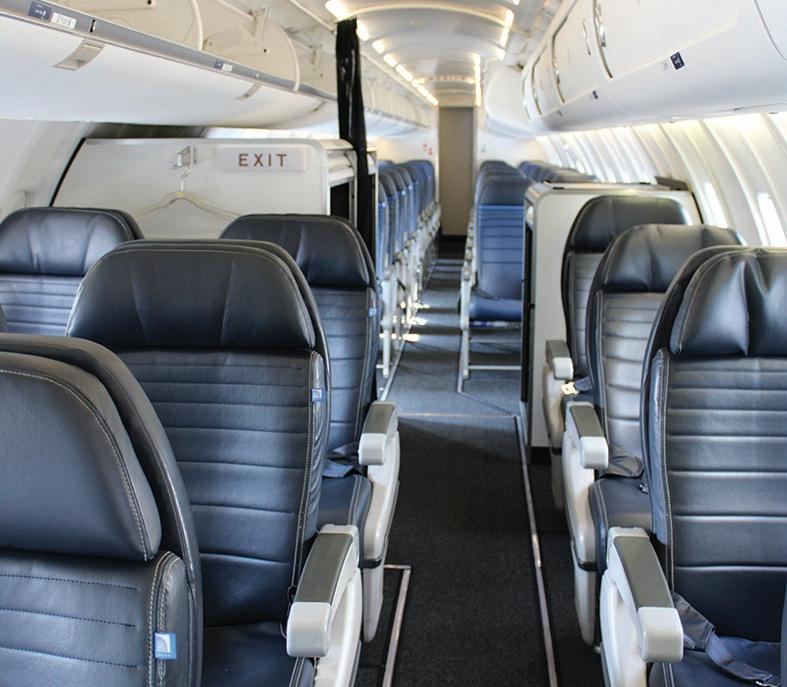
offerings, where up-to-date, state-of- theart cabins aim to lure customers. In 2017, 42 carriers offered a premium economy cabin, but by 2025, that figure has doubled to 88, according to aviation analytics firm Cirium.
Delays in new aircraft deliveries from Boeing and Airbus mean that fleets aren’t expanding quickly enough. This has led to some carriers reconfiguring planes in order to generate higher yields per seat. This involves switching to more slots in premium economy. It’s why some airlines such as Emirates have been introducing premium economy for the first time on certain routes.
“Airlines that had plans to up-gauge aircraft and expand premium seating are now facing constraints, and that scarcity is driving demand. At the same time, fixed costs such as labour continue to rise. In a low-margin industry, airlines are doubling down on higher-yield products like premium cabins to protect profitability,” says to Amy Rayca, Global Air Practice Line Lead at Amex GBT.
“Understanding these shifts, along with dynamic pricing and revenue management, are key to navigating fare trends.”
With only so much capacity at the front of the aircraft and with stiff competition from leisure, travel managers are advised to book early for 2026. “Forward bookings are up 48% for premium economy over the next six months, while business and first class cabins are due to see an increase of 10% and 7% respectively,” says Jabr Al-Azeeby, UK Divisional Vice-President at Emirates.
Many legacy carriers across the globe have been ploughing money into upgrading business class, with a focus on high quality and traveller comfort. The aim has been to attract strong demand from leisure buyers buoyed by increased disposable income among older passengers, rather than corporate travellers. This is especially true on long-haul flights where comfort matters.
“Around 70% of customers in business cabins on flights from London are leisure travellers, with around 80% in premium economy,” says Darsh Chapman, Qantas Regional General Manager for UK, Europe and Africa. The Australian airline is undergoing the biggest fleet renewal programme in its 105-year history. For Delta 30-40% of premium seats are filled by corporate travellers, similar to Japan’s ANA.
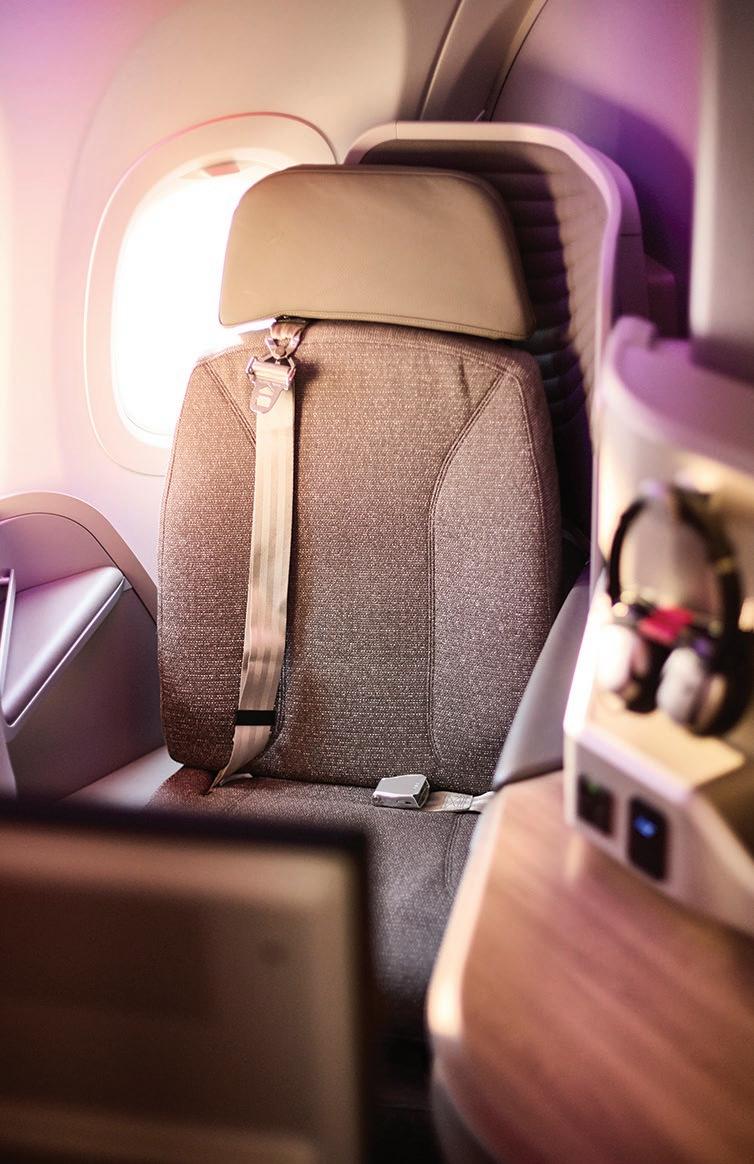
Returns from premium seats have been rising more than for economy, hence the investment. Even though front of plane seats account for only 6% of passenger numbers globally, revenues from these seats fuel the bottom line, particularly for legacy carriers.
“In the third quarter, premium cabin revenue rose 6% year-over-year, while revenue from economy rose less, at 4%,” points out Karolien De Hertogh, Director Sales UK and Ireland at United Airlines.
Strong demand and occupancy has also helped maintain prices. “As of 2025, the cabin occupancy for Prestige Class, Korean Air’s business class offering, reached 84%. This was an increase of over 10% compared to 2019,” said a spokesperson for the carrier. So what can corporate travellers expect in 2026? Prices will remain elevated yet steady, since global leisure demand is still robust.
Legacy carriers across the globe have been ploughing money into upgrading business class, with a focus on high quality and traveller comfort”
Airlines also plan to provide more differentiated services to customers even within the same premium cabin, such as upgrading inflight meals”
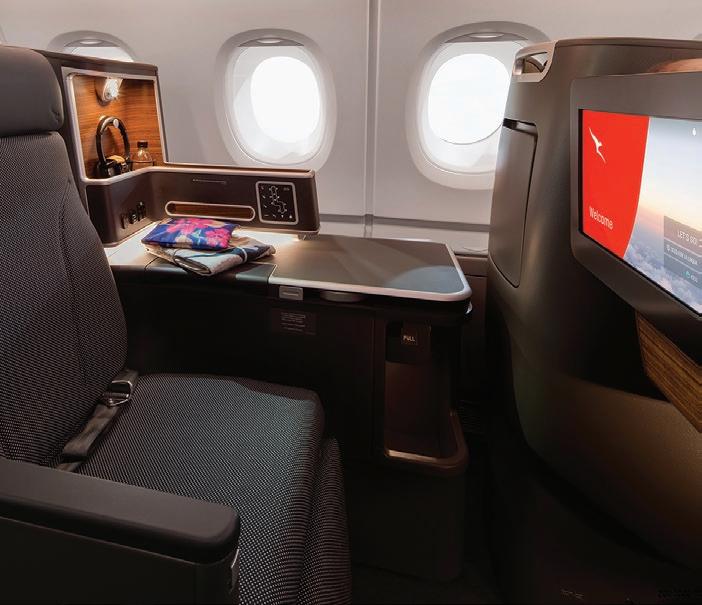
Another area of investment is privacy. “This is something we continue to focus on, as well as comfort, which is reflected in the enhanced, private suite-style seating,” states Hiroko Shingo, CX Strategy Director for ANA. For instance, its ‘THE Room FX' product has a private door for each seat.
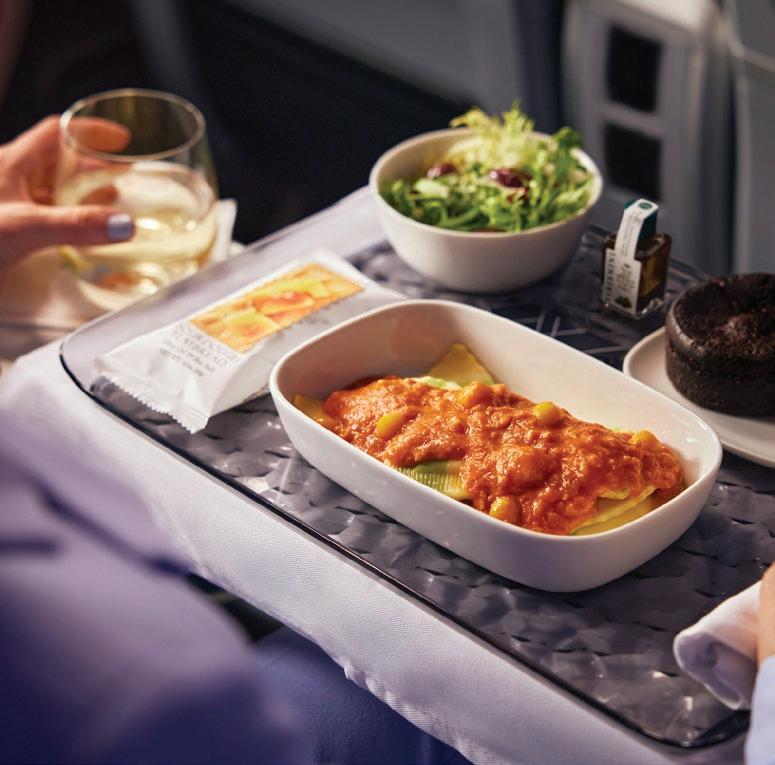
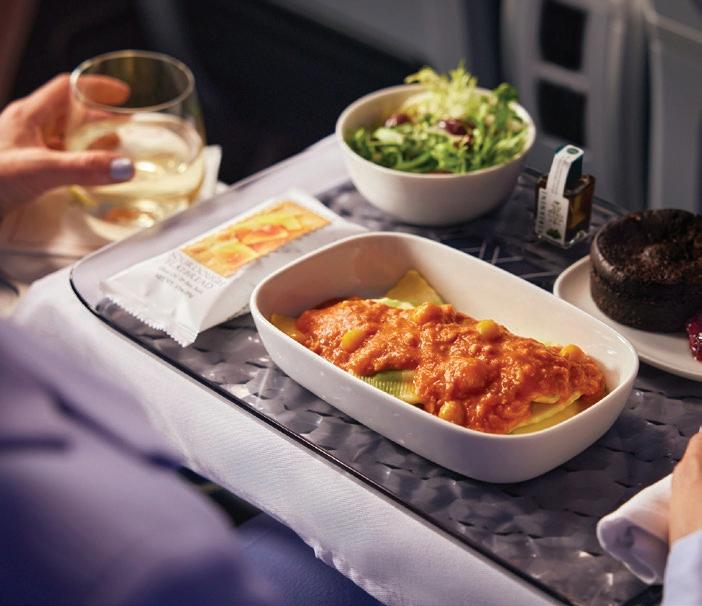
Airlines also plan to provide more differentiated services to customers even within the same premium cabin, such as upgrading inflight meals or enhancing amenities. Expect more exclusive products and collaborations. Curated regional dishes are all the rage. This is still an exciting space.
Premium economy has been a focus for carriers in 2025 and this will continue. Emirates has introduced this class of seat extensively in its retrofitted aircraft and the new Airbus A350. It expects to deliver double its capacity in premium economy to four million seats a year by the end of 2026, as part of a $5 billion retrofit programme.
“We’re opting to replace our economy rather than business seats due to increasing demand,” says Emirates’ Al-Azeeby. Its white glove service has also been causing a stir in first class with new dining enhancements, upgrades to tableware and amenity kits. Lufthansa Allegris is giving travellers
unprecedented choice with a range of premium seat options, with no less than five different options in business class alone.
Iberia has been upping its game, particularly on its narrow-body, single-aisle aircrafts. The Spanish airline’s cabin for the A321XLR involves 14 seats in business class that convert to full flat bed, and a layout prioritising privacy and relaxation. The shift earned it Cabin Concept of the Year at awards run by Onboard Hospitality, sister publication to The Business Travel Magazine
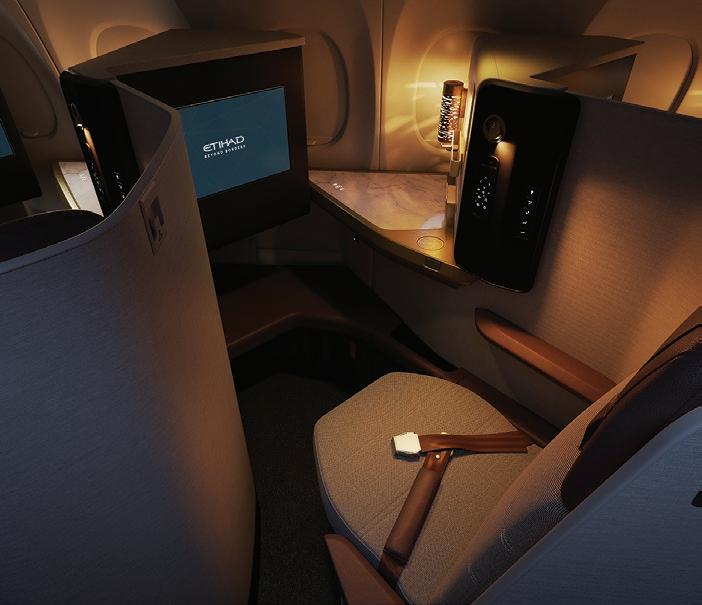
Etihad is also focused on the A321, including new first class suites and business class seats on aircraft out of Abu Dhabi.
Turning to the US, GoJet Airlines has been upgrading, with an increase in first class seating on its CRJ-550 jet. JetBlue is now pitching hard in this space expanding its Mint service, a premium option with seats that lie flat. The airline is also focusing on highermargin, transatlantic routes popular with premium business travellers.
Delta continues to invest in new product as well, with a record number of premium seats in 2026 as it expands Delta Comfort and invests in enhancements to the Delta Premium Select and Delta One experience.
United Airlines plans to up its game in 2026 with the delivery of its Dreamliners later in the year with two new business class
offerings. The airline’s Polaris Studio suites will be positioned in the first row of each business class section and will be 25% larger, with privacy dividers and wireless charging. These aircraft will have the highest number of premium seats in the airline’s fleet.
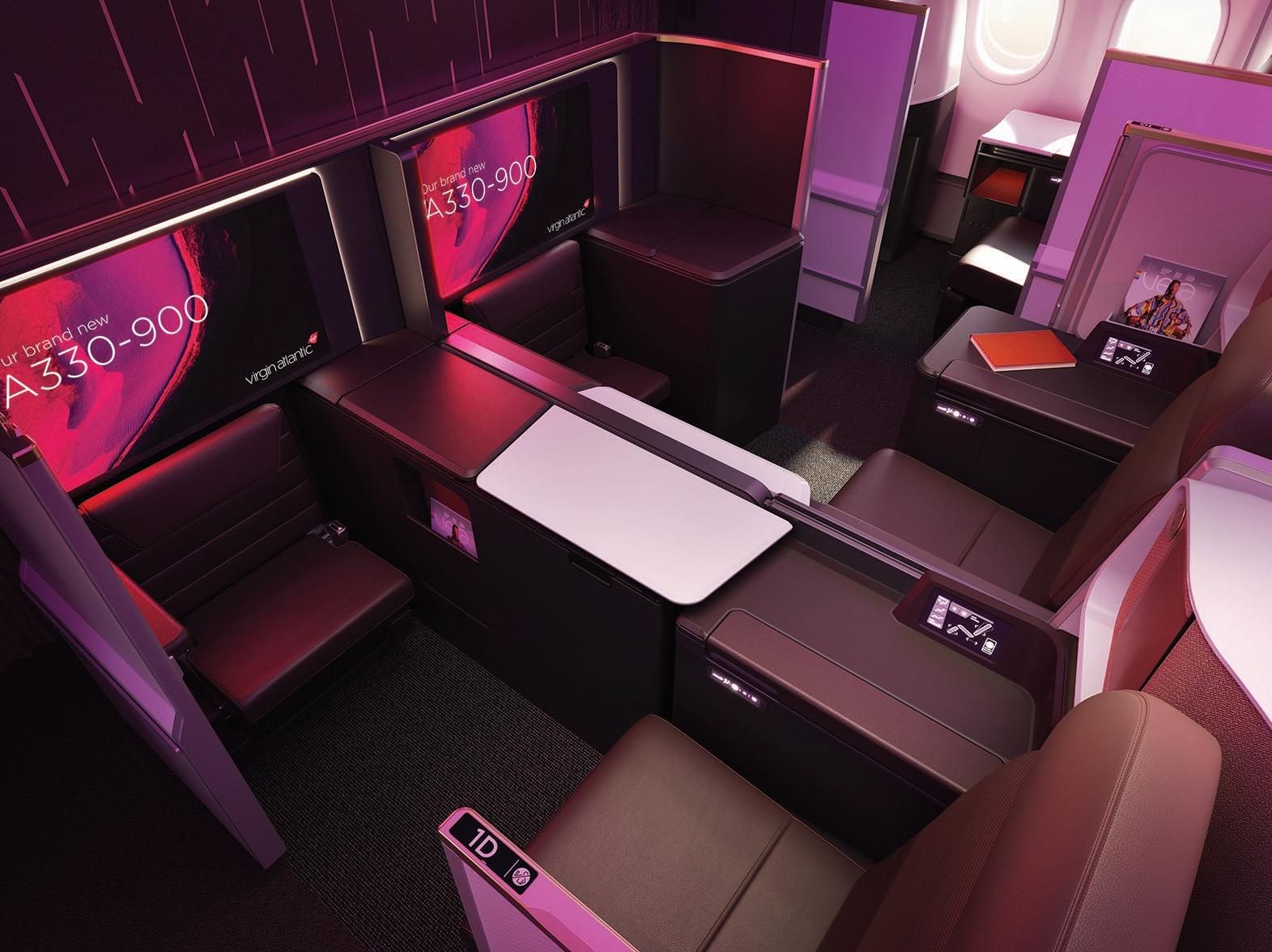
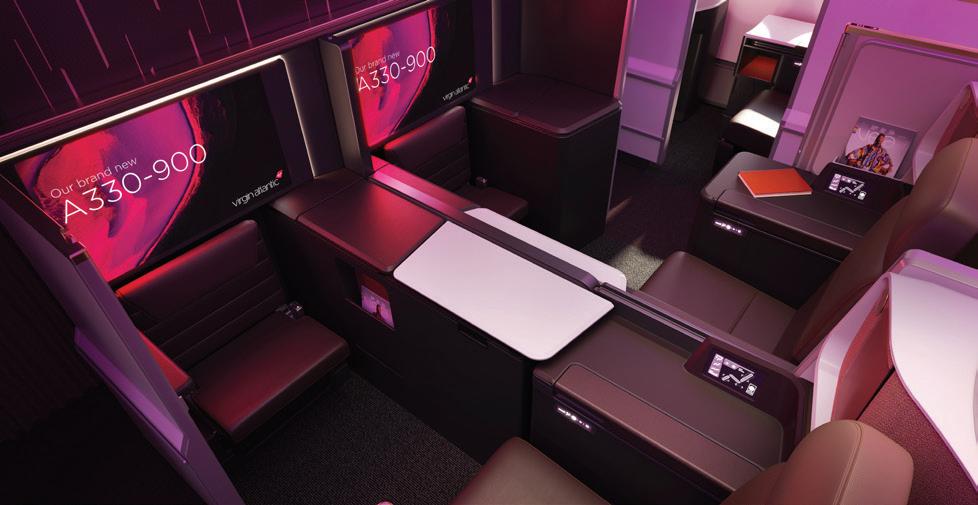
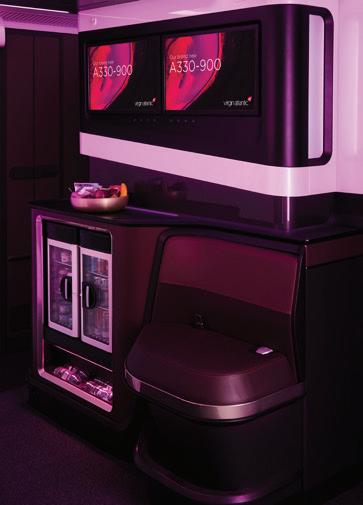
Virgin Atlantic is investing by increasing the number of seats at the front of the plane, particularly in its new aircraft, the A330neo, as well as refitting its B787s, with new and expanded upper class cabins.
The Retreat Suite is Virgin’s newest offering. It’s a private space, made for sharing, comprising of a 6ft 7in direct seat to a fully flat bed, touchscreen with Bluetooth, and wireless charging. This setup allows up to four people to comfortably dine or work.
Next year, Singapore Airlines starts the rollout of its all-new long-haul cabin concept as part of a S$1.1 billion multi-year upgrade programme, while Qantas’ much-anticipated Project Sunrise will see direct flights from Sydney to Europe and New York featuring large first class suites with full-length beds and separate reclining armchairs.
What is interesting is how important frontof-cabin sales are to airlines’ bottom lines.
The fact that British Airways is reintroducing first class cabins on flights from Mumbai to Heathrow after five years shows that premium travel is finally back.












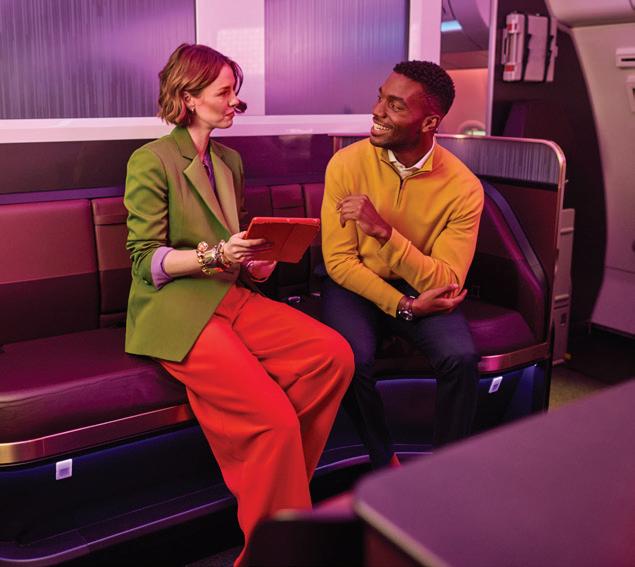








WiFi, workspaces, and a world–class welcome
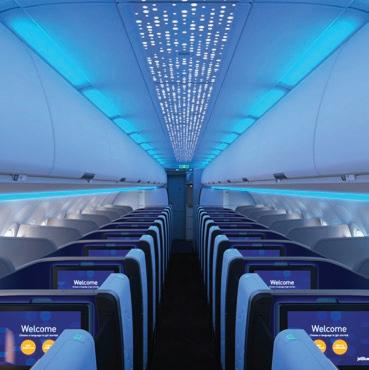
Business travel just got a promotion. Thoughtfully designed, more choice, and service that anticipates your every need. Virgin Atlantic is setting new standards in the skies.
The next generation of connection




We’re partnering with Starlink to bring high-speed WiFi to every seat, on every route. Service begins in 2026 and completes across the fleet by 2027, delivering connection that feels as natural as it does on the ground. Flying Club members can stay online, free of charge.


Redefining the time before you fly
From London to New York and LA, our Clubhouses are redefining what it means to unwind before you fly. Stylish spaces, intuitive service and a calm that keeps evolving – with a refreshed London Heathrow Clubhouse experience coming soon. Expect more ways to relax, reset and make the moment yours, with new features on the horizon that elevate every kind of preflight ritual.
Every step, e ortless
Arriving this December, the new Virgin Atlantic app places your entire journey at your fingertips. Manage your trip, store travel documents, and connect instantly with our AI-powered concierge for personalised support whenever you need it.
Suite life
Ten new A330neos are joining our fleet by 2027 with the finer details dialled up. Six Retreat Suites will o er our most spacious experience yet: fully flat beds, expansive 27-inch screens, wireless charging, and the ability to turn it into a social space for four when there’s call for collaboration in the clouds.
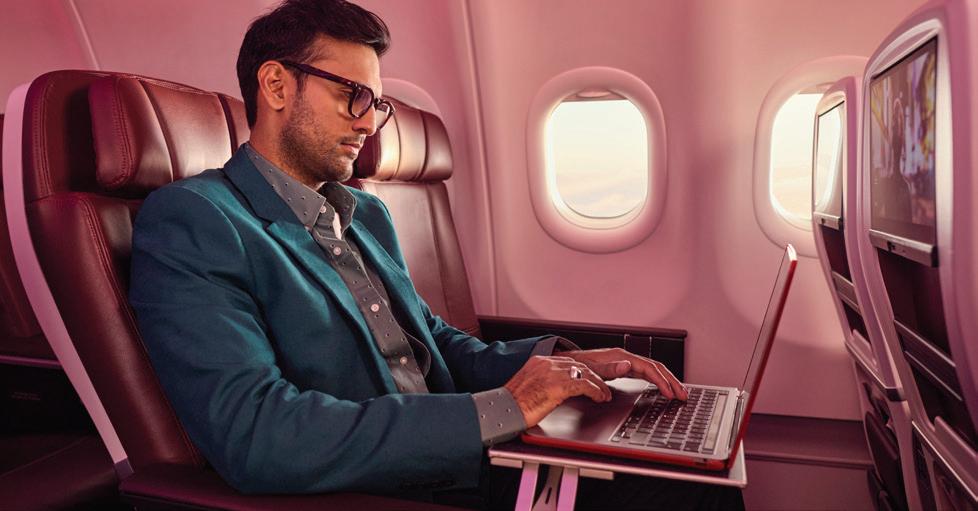
next feels easy
With Virgin Atlantic, seamless journeys and daily flights to key global business destinations set you up for wherever work takes you. And when your plans call for even further reach, Delta Air Lines and our SkyTeam partners open up access to 1,000+ destinations worldwide, making the whole world feel within easy reach.
Sustainability for the long-haul
We’re building a future that flies cleaner. With one of the youngest fleets in the sky, more e cient aircraft and real progress in Sustainable Aviation Fuel, every step moves us forward.
Onboard, simple changes make travel smarter — from pre-selected meals that reduce waste to new amenity kits made with natural ingredients from our partner, Votary. Less impact. More intention. And one journey at a time.

The path to truly sustainable aviation is a fraught one, and it can’t be navigated by airlines alone, says Gill Upton

Reaching net zero by 2050 is a big ask. It requires airlines to make unparalleled capital investment in transitioning away from fossil fuels – one estimate goes as high as €2.4 trillion –while at the same time demand for air travel continues to grow
The bottom line is that airlines will not achieve their ambitious target alone. They need financial institutions to step up and for governments to offer subsidies, to incentivise cleaner fuels and technology, and disincentivise the continued use of fossil fuels through stronger carbon pricing.
Tim Johnson, Director of the Aviation Environmental Federation, sums up the current situation when he says: “Beyond the short-term focus on scaling SAF (sustainable aviation fuel), there’s insufficient long-term investment in bringing cleaner technologies to market and outright opposition to carbon pricing mechanisms that would help incentivise the industry to decarbonise.”
The UK Jet Zero strategy will only halve the industry’s peak emissions in 2019 by the target year of 2050 through in-sector measures. Similarly, SAF targets globally are only aiming for 5%–10% by 2030.
While SAF has been hailed as the saviour for the industry, its success has been marred by high cost and lack of availability. Clean alternatives, such as electric aircraft and hydrogen, will not be ready to scale by 2050.
Alexandre de Joybert, Director of Sustainability at ACI EUROPE, highlights the need for a collective effort if 2050 is to be a realistic and achievable target for net zero aviation in Europe. It hangs on decisive action being significantly scaled up across both industry and policy stakeholders.
“Close collaboration among policymakers, investors, energy producers, airlines and airports is essential to secure long-term funding, expand renewable energy and SAF infrastructure, and accelerate the deployment of emerging technologies,” he says.
Today, SAF makes up about 0.2% of aviation fuel and scaling production requires not only hundreds of billions of investment but also reliable feedstocks. Corporate purchasing has been one way to help scale production, but again, it’s not enough.
There are pockets of positive change and optimism. For example, attempting to
galvanise the industry is Destination 2050, an alliance bringing together Europe’s airlines, airports, aerospace manufacturers and air navigation service providers with ACI EUROPE as one of its founding partners. This body is committed to achieving climate-neutral European aviation in line with EU climate goals and the Paris Agreement.
“The alliance has outlined a clear roadmap showing that the pathway to climate neutrality remains within reach,” says de Joybert. “A combination of four key measures will be essential to achieving substantial CO2 emissions reductions: advances in aircraft and engine technology, improvements in air traffic management and operations, large-scale adoption of sustainable aviation fuels, and economic measures, like EU ETS and CORSIA.” [CORSIA is ICAOs offsetting scheme]
There is no one silver bullet to increase fuel efficiency and reduce emissions. Instead there are multiple levers. “The key point here is that while we should rightly champion any innovations that are advancing and could have a significant impact, we need multiple innovations to help decarbonise the sector,” says Lahiru Ranasinghe, Director of Sustainability at easyJet.
Leaving SAF aside for the moment, the other three drivers can be actioned without delay. Contrail [condensation vapour trail] prevention is one such, which makes up nonCO2 emissions. A study led by Google Research and Breakthrough Energy, together with support from American Airlines, found that by using AI-based predictions to make small modifications to routes that were projected to create contrails, their formation could be reduced by 54%, although avoidance burned 2% additional fuel.
Other recent studies have shown that only a small percentage of flights need to be adjusted to avoid the majority of contrail warming. There were encouraging results from a small group of American pilots who flew 70 test flights over six months, according to Jill Blickstein, Vice President Sustainability at American Airlines.
“While there are more questions to answer about how to operationalise contrails avoidance, we’re excited to have played a role in establishing their first proof point,” she said at the time. “And we’re looking forward to sharing what we learned with stakeholders in the aviation industry and beyond.”
Virgin Atlantic runs a Contrail Impact Task Force, sharing research and turning it into actionable changes.
Advances in aircraft and engine technology is farther advanced, with fleet renewal a major plank of most airlines’ environmental strategy.
easyJet points to modern aircraft, such as Airbus NEO models, being up to 13% more efficient and 50% quieter. Both easyJet and Virgin have invested in these new aircraft.
Software upgrades like Descent Profile Optimisation have helped easyJet reduce carbon emissions by 800,000 tonnes within its own operation. And it has made huge strides in developing carbon removal and hydrogen-powered engine technology through partnerships with 1PointFive and Rolls-Royce.
Etihad, meanwhile, took delivery in July of the first of 20 A321LR, an aircraft that achieves at least 20% lower fuel consumption and CO2 emissions compared with previous generation single-aisle aircraft.
To meet its 2050 goal, United Airlines expects to take delivery of over 600 new narrow body and widebody aircraft by the end of 2033, with an expected 20% improved fuel efficiency per seat compared to older types. This fleet renewal plan will help the airline reach 21% of its forecasted emissions reductions by 2050.
Virgin Atlantic is transforming its fleet with 74% next generation aircraft, improving carbon efficiency by 20% over the last decade. It is aiming to achieve 15% gross reduction in carbon emissions per revenue tonne kilometre.
This year the fuel airlines use to fly to EU airports, including the UK and Switzerland, must be at least 2% SAF but it’s three to five times more expensive than conventional jet fuel and it will take years to develop the infrastructure to meet required production volumes. It means that airlines will not be
Net zero 2050 has never been about getting the sector to fully decarbonise by this time. Most roadmaps forecast significant residual CO2 emissions”
able to adopt SAF at the scale needed to meet net-zero and decarbonisation targets.
“There is so much noise around the many different types of feedstocks, buying mechanisms, accounting guidelines that it’s difficult for stakeholders to get their head around SAF,” explains Delphine Millot, Senior Vice President Advocacy and Sustainability and MD GBTA Foundation.
Countries such as the Netherlands and the UK are at the forefront of significant investments in SAF infrastructure, with production capacity ramping up in APAC region countries, specifically China and Singapore. The UK has a £63 million funding boost for new SAF projects. The EU reckons some €100bn is needed by 2035 to drive SAF production.
Ranasinghe at easyJet points to Exolum’s launch of the UK’s first independent SAF blending facility, expansion of SAF availability at major European airports by Signature Aviation, and the EU’s “ReFuelEU” initiative reporting record SAF use ahead of the 2025 2% blending mandate. “But we need to see much more,” he says.
November’s European Commission announcement, under the Sustainable Transport Investment Plan (STIP), was welcome news. It attempts to remove key investment barriers and bridge the financial gap in the short-term, mobilising close to €3bn of funds available until the end of 2027. It will also see the launch of an eSAF Early Movers Coalition pilot project before the year end, to mobilise at least €500m for synthetic aviation fuel projects.
Travel managers can do their bit too, by purchasing more SAF (which helps their Scope 3 targets), report annually on social and environmental risks under the new CSRD legislation (currently those non-EU companies with a turnover in excess of €450m but from 2030 it will include SMEs), and drive behavioural change to multi-modal journeys.
The GBTA has come to the rescue with a toolbox to help behavioural change.
“The toolbox indicates how travel policies can be optimised to encourage multi-modal journeys or even a shift from air to rail when such alternatives are available,” says Millot.
Today, meeting the 2050 zero emissions target looks unlikely but AEF’s Tim Johnson says: “Net zero 2050 has never been about getting the sector to fully decarbonise by this time. Most roadmaps forecast significant residual CO2 emissions that will need to be balanced with greenhouse gas removals, like direct air capture.”
Interim targets would stop the industry’s delay tactics in the hope that solutions would be found in the future.
Governments need to step up, as outlined, while more joined-up thinking between other government departments and agencies such as energy and industrial policies would help too, say the experts.
“Talking to energy and climate departments outside of transport ministries will be key to effective planning,” says Johnson.
There's still a long way to go and airlines cannot absorb the green premium alone.
As Qantas gears up for Project Sunrise, we check in with Darsh Chapman, Regional General Manager – UK, Europe and Africa
You’ve taken on this role at an exciting time for the UK market. Tell us more about Project Sunrise. Project Sunrise represents a vision we’ve had for over a decade, to operate the world’s longest commercial flights non-stop from Australia’s east coast to almost any destination around the world, such as London and New York. We tasked Boeing and Airbus to develop an aircraft for ultralong-haul flights, aiming to transform Australian air travel under the name ‘Project Sunrise’, paying homage to the historic “double sunrise” flights flown by Qantas during World War II, which lasted so long that the pilots saw two sunrises.
In May 2022, we selected the Airbus A3501000 and placed an order for 12 aircraft. These will be specifically configured for the ultra-long-haul routes, with more premium seating and a Wellbeing Zone for all customers. We’ve worked extensively with Sydney University’s Charles Perkins Centre on the cabin design, conducting research aimed at improving passenger and crew health and wellbeing on these long flights. The first A350 aircraft entered the final
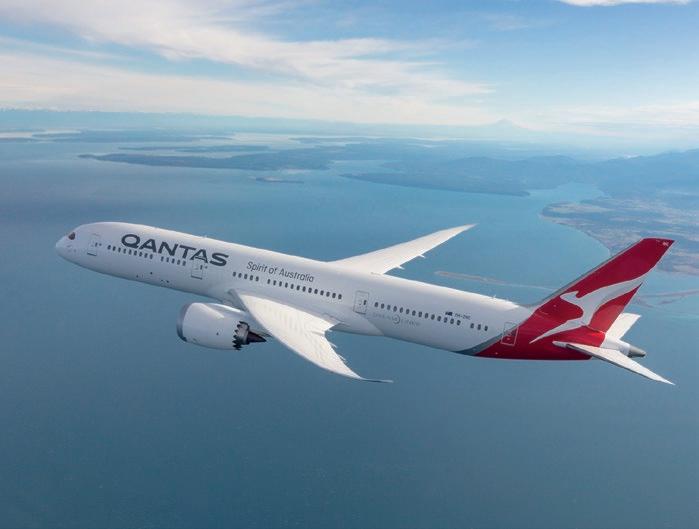
assembly line at Airbus this month and is scheduled for delivery in 2026, with operations to start in the first half of 2027.
Why is this so significant?
It will be groundbreaking in commercial aviation. London to Sydney is 17,000km, and being able to fly this non-stop is an engineering and operational challenge that the industry has been working on for years. It’s about completing our global network, connecting Australia directly to Europe and the US East Coast without stopping. This fundamentally changes what's possible in global air travel, connecting cities that have never had a direct link before.
What will it mean for your corporate customers?
The benefits are transformative. We’re talking about journey-time reductions of three to four hours on London-Sydney compared to one-stop options. We’ve designed the entire onboard experience around traveller wellbeing.
What can business travellers expect in terms of the inflight service?
We have completely reimagined premium cabins on these aircraft. Our business cabin will feature our next-generation suite with enhanced privacy, more personal space, and ergonomic seating that is optimised for sleeping. We’re introducing a new First product that raises the bar for luxury. But beyond the hard product, we’ve focused extensively on the service flow. Recognising that these are 20-hour journeys, we’ll offer flexible dining so passengers can eat and rest according to their own schedule.

There’s a wellbeing programme, with stretching guides and recommendations for staying comfortable. We’re working with leading sleep specialists and nutritionists to ensure everything from the meal ingredients to the cabin environment supports passengers arriving at their destination in the best possible condition. Our premium economy cabin will also see enhancements, recognising that this is an important product for corporate travellers.
How important is the corporate market to Qantas?
Corporate business makes up a significant portion of our premium cabin customers and is fundamental to the economics of our network. We invest heavily in products and services for the business travel market –from our premium cabin offerings to our lounges and our corporate travel programmes.
Around Project Sunrise we are growing our teams in the UK and European markets to ensure we provide the high-touch service our partners expect, alongside a comprehensive education programme that will help TMCs and travel managers sell the benefits of these new services to clients.
We have designed the entire onboard experience around traveller wellbeing”

With the NDC debate rumbling on, Matthew Parsons considers some of the key concerns and asks whether they are justified
Perception is everything, and when it comes to New Distribution Capability (NDC), the debate continues over its perceived value. Despite launching in 2015, there has been very slow adoption of NDC — the standard from IATA that aims to enhance communication and data exchange between airlines and air fare sellers.
Airlines, for example, are using it at staggered stages. IATA may have updated its NDC API standard to 24.4, but the latest version in use by airlines is 21.3. The problem is not all carriers have advanced this far.
"Execution varies widely and inconsistencies remain," says Omri Amsalem, CEO Atriis Technologies.
Richard Viner, Sabre Head of Corporate Travel UK, says TMCs can still struggle with fragmented content, workflow disruptions, servicing issues and inconsistent pricing. However, experts point to a brighter future beyond NDC’s chequered past, or as Dane Molter, SVP, Navan Group Travel Marketplace, puts it "past the lingering effects of the early rollout days".
“What matters is that NDC is now delivering measurable benefits,” says Nancy Delgado, Director, Product Marketing –Global Partners, Accelya, which claims it powered half of all NDC transactions in 2024. “Adoption is accelerating, with real gains in servicing, content and traveller satisfaction. There are still challenges –there always are with technology change –but progress is clear,” she observes.
Opinions are still divided, notes Andrea Caulfield-Smith, MD Global Business Travel, Advantage Travel Partnership. “NDC continues to split opinion across the industry, as some see it as a step forward while others see it as a further complexity which is fragmenting airline content.”
One narrative is that NDC means higher air fares, because it has enabled airlines to offer continuous pricing.
“We do hear this from clients, and this perception stems from the fact that the
landscape is changing,” explains Nicola Ping, Global Manager of Travel Distribution, Flight Centre Travel Group.
"Traditionally, airlines filed static fares and then gave corporate discounts as a percentage off, which was very transparent – sometimes not only to the buyer but to competitors as well. As some airlines shift toward dynamic or continuous pricing, that static, transparent model begins to go away. However, the fundamentals haven’t changed – airlines still need to fill planes.”
It’s a similar story at Wings Global Travel. Some of its corporate clients were initially worried NDC would lead to higher prices as airlines started moving their best fares out of traditional GDS channels, according to Commercial Director Angelina Bunting.
“There’s also been frustration over surcharges in the GDS, which popped up before NDC was fully developed or a practical alternative,” she adds. “But opinions are shifting. More clients now see NDC can deliver real value through
personalised content and an improved traveller experience.”
For Paul Dear, Regional VP Supplier Services EMEA at SAP Concur, continuous pricing will always be cheaper or exactly the same as the GDS. Concur has visibility here with 85 million users. "NDC is still a revenue management tool, so the airline still controls its pricing. That’s business,” he adds.
Servicing, where a ticket needs to be modified, has arguably been one of the biggest hurdles for NDC adoption. But the blame for not being able to handle areas
More clients now see NDC can deliver real value through personalised content and an improved traveller experience”


Even the most advanced airlines still have gaps compared to the consistent reliability we expect from GDS bookings, especially when it comes to changes or more complex itineraries”



such as cancellations and refunds seems to be laid at travel agencies that do not modernise.
“That perception is absolutely out there, and it stems from the challenges of trying to fit new technology into old systems,” says Molter. “For a travel programme and agency that aren’t equipped to handle the sale and servicing of NDC, NDC can feel unpredictable and servicing can be a real issue. But this is a technology problem, not an NDC problem.”
Kristina Geier, VP Supplier Partnerships at Perk, says "clean servicing is a first priority" before it makes any NDC connections. "With each new connection, we aim to ensure it satisfies our connectivity requirements, such as the ability to enable our customers to make automated modifications and cancellations,” she explains.
Flight Centre also plays the myth down: “It is simply not true,” argues Ping. “Initially, NDC worked well for the leisure market, which requires far less servicing than the corporate sector. However, since Covid, all parts of the corporate value chain have focused on enabling key capabilities within NDC, such as cancellations, credits on hold, disruption handling and more. In some cases, NDC now offers better servicing
functionality than traditional content.”
Accelya’s Delgado believes progress has been made in the past year.
“Early challenges around exchanges, credits and post-booking changes came from the fact every airline implemented NDC differently. That created inconsistency – not because NDC couldn’t support servicing, but because the industry was still learning how to build it in a standardised way. That’s changing fast.”
She cites an ETraveli report that found a 30% average reduction in handling time for both voluntary and involuntary servicing, with a 70% reduction expected by the end of the year due to servicing automation.
However, the pace of change might not be fast enough, reckons Bunting.
“Many clients feel NDC bookings are tougher to service. Even the most advanced airlines still have gaps compared to the consistent reliability we expect from GDS bookings, especially when it comes to changes or more complex itineraries," she says.
Like others, she believes part of the reason is the varied airline implementations, although adds there is a “clear recognition that NDC holds long-term promise”.

NDC continues to split opinion across the industry, as some see it as a step forward while others see it as a further complexity which is fragmenting airline content”
tracking team locations
finding (the right) venues rebooking cancelled flights managing missed connections dealing with fiddly paper receipts exporting the world’s longest report chasing travel expenses chasing RSVPs chasing approvals chasing the chasing going back and forth decoding policy handbooks
Don’t let shadow work get in the way of real work.
flagging policy breaches
You move business for ward. We take care of the rest .
The intelligent pla orm powering real work




As JetBlue announces exciting plans for rapid growth across the Atlantic, we check in with GM Europe Maja Gedosev and Senior Sales Manager TMC and Corporate

Tell us about the new JetBlue team in the UK and Ireland.
Following a successful summer season in the UK and Europe, we have added Mike Burton and Rachel Small as UK Account Managers, alongside Caitriona Toner and Francis McCabe.
Mike Burton brings extensive experience from his previous roles at British Airways and Travelport, while Rachel Small joins from MSC Cruises, Virgin Atlantic and Virgin Holidays. Both are highly regarded in the travel industry and bring valuable expertise to support JetBlue’s continued success in the UK market.

relationships, while Francis will be looking after our key trade partners in Ireland and support the UK team in Scotland where we now fly seasonally to Edinburgh from both Boston and New York JFK.
I am extremely proud of the work the team is doing with amazing support from our transatlantic pricing manager Matt Baker, who continues to unlock revenue opportunities by working closely with the team and our key partners.

Caitriona will continue to oversee panEuropean TMC partnerships and corporate
What have been JetBlue’s key achievements this year?
Looking back at 2025, I am very proud of the team’s achievements.
Firstly, and most importantly, we have continued to strengthen our team dynamic and teamwork by supporting each other cross-border.
transatlantic network we continued to grow with the launch of seasonal Boston-Madrid and Boston-Edinburgh flights. Boston is one of our largest operations in the US and we offer fantastic connectivity from Boston to the rest of our domestic US, Caribbean and Latin American destinations.


Building on the success of our 2024
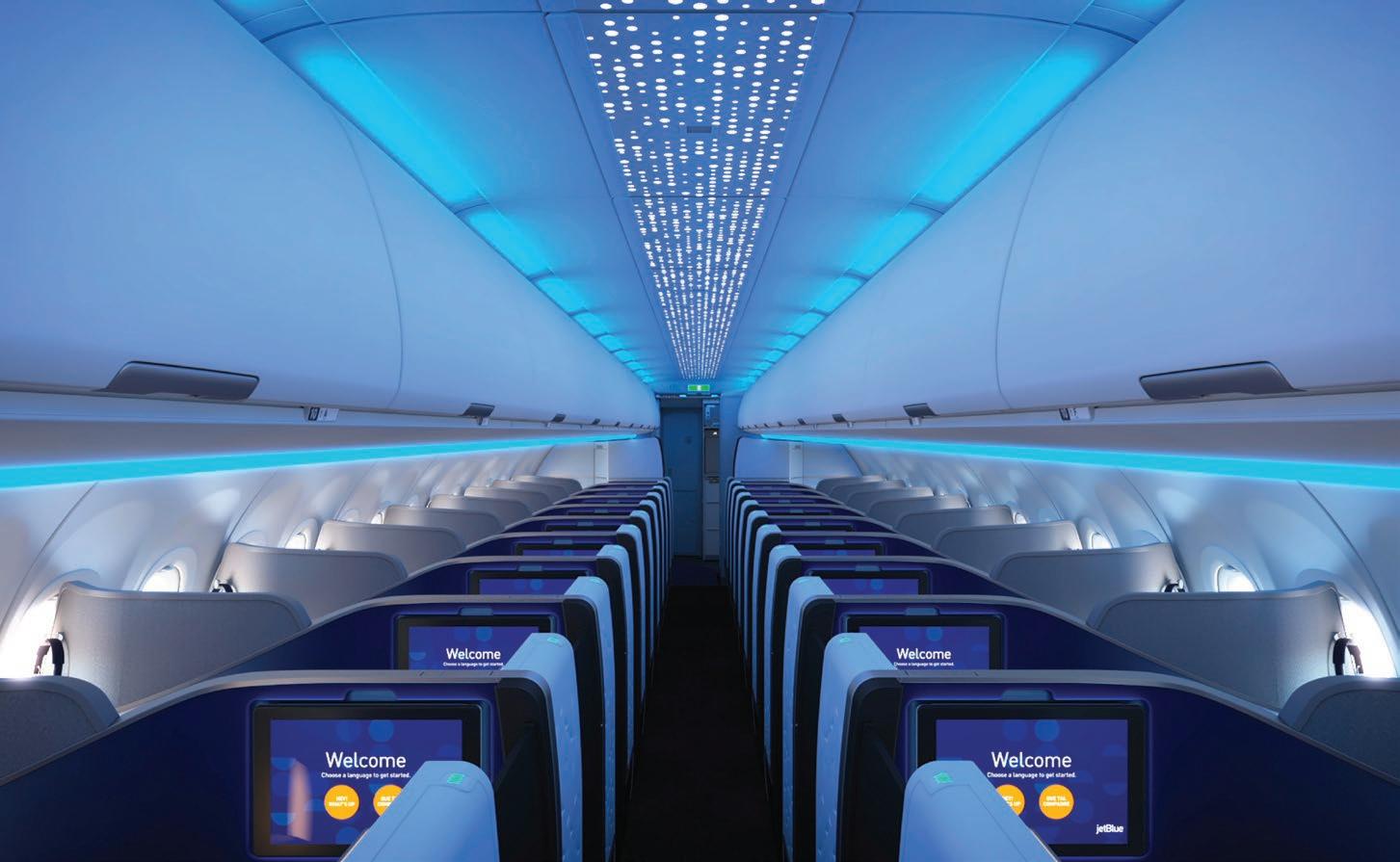
We have introduced distribution through the GDS for EvenMore, our premium economy experience, so that agents are now able to book with ease a bundle of services including priority security and boarding, more legroom, reserved overhead bins, which in addition to free Wi-Fi, fresh food and drinks, create a premium experience for our customers.
We were nominated for awards at a number of key industry events and we managed to take home the Business Travel Partner of the Year – European Long-Haul Airline award at the Business Travel Awards for the second year in a row.

The judges praised our dynamic approach to corporate travel, combining affordability, premium service and sustainability initiatives to deliver real business impact. They highlighted our ability to redefine expectations in the corporate space, with fresh, commercially meaningful partnerships and a focus on loyalty, innovation and client collaboration.
I’m excited to share that we will be launching two new transatlantic routes in 2026.
In April, we will start flights from Boston to Barcelona. This will be a fantastic addition to the already successful Boston to Madrid flights. We will also be entering a completely new market for us – Italy – with seasonal flights from Boston to Milan.


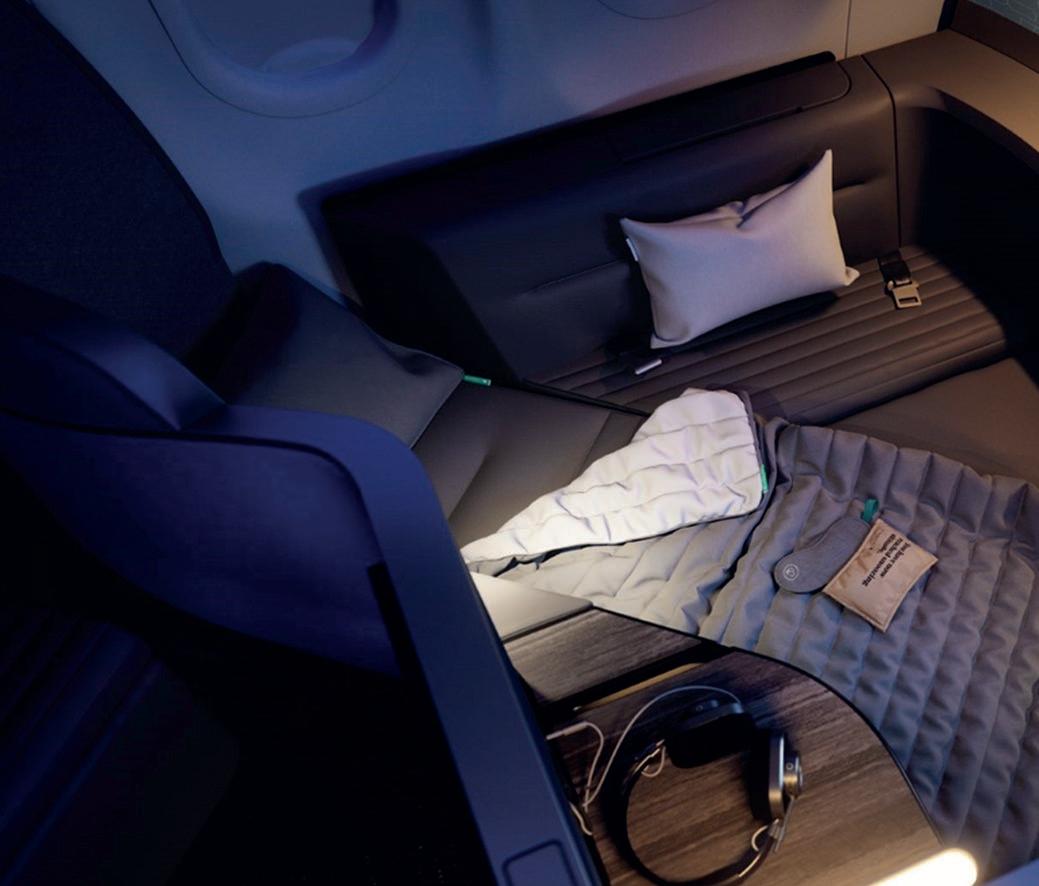

This is a testament to all the good work that everyone at JetBlue has been doing to make these routes successful and I am especially proud to see us come this far. Also, our first JetBlue lounge will be opening at JFK Terminal 5 and this will be followed by a lounge opening in Boston in the first half of 2026. We are more than ready to welcome transatlantic customers!

How do you work with the corporate markettravel managers and TMCs?
I am privileged to represent JetBlue and work closely with travel management companies and corporate travel managers across Europe and UK. JetBlue is a small carrier in a competitive
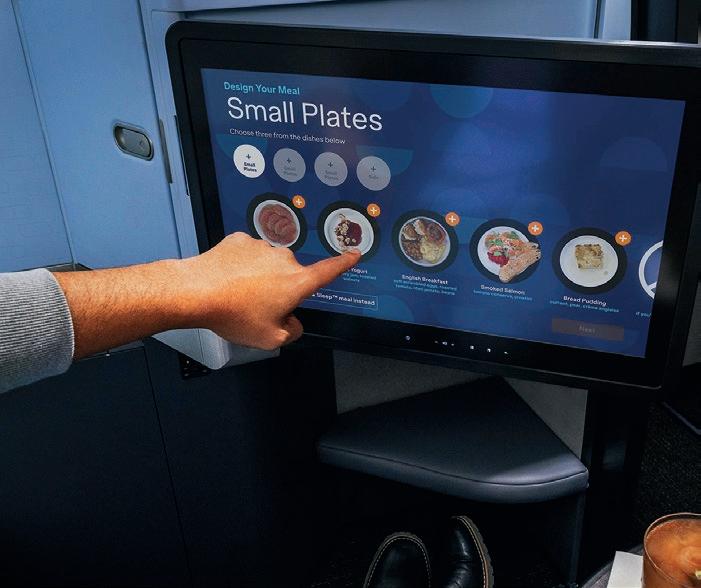
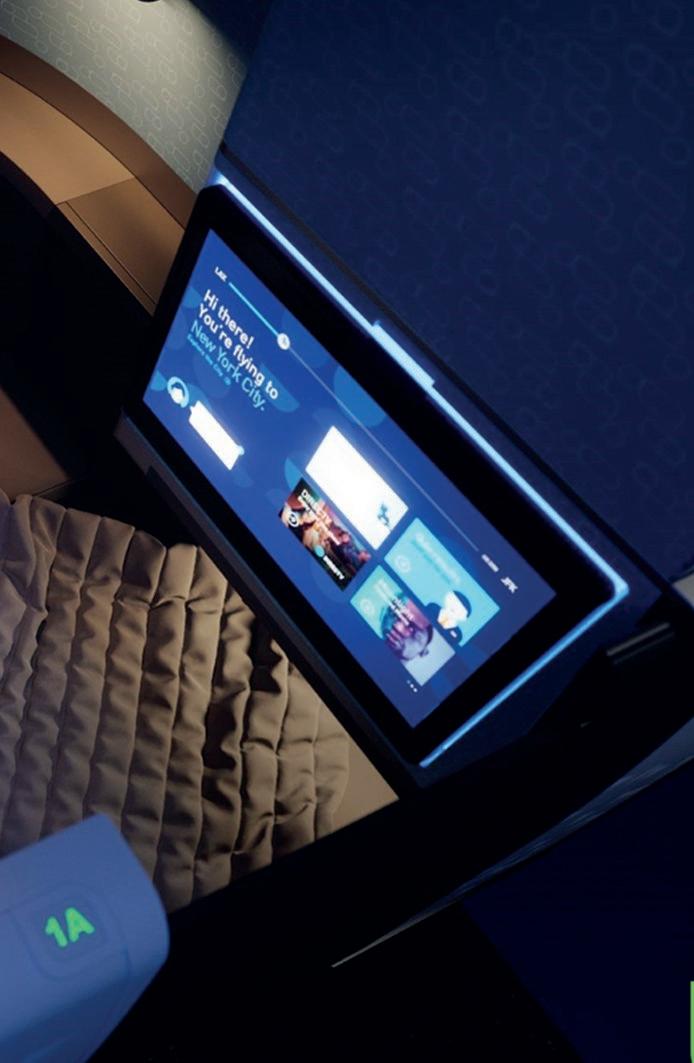

The corporate sector was always the cornerstone of our expansion across the Atlantic and today is more relevant than ever as we expand further”

customers, while seeking to provide a better experience for all our customers, regardless of the fare they purchase.
landscape, but we have a boutique carrier mindset. I am empowered with the flexibility to be creative and adapt a bespoke programme and action plan that is individual to meet our customer’s needs.
I have worked hard to become a Trusted Advisor, seeking to understand each customer's goals and creating a mutual value for an effective partnership.
How do you cater specifically for the corporate market?

JetBlue offers special corporate discounts to contracted corporate customers. JetBlue's loyalty programme, True Blue, includes benefits like points pooling, no black-out dates, four tiers of elite status (called Mosaic), and points which never expire.
The onboard experience includes spacious legroom, signature cocktails, unlimited snacks from the onboard pantry and farmto-table fresh dining options, all served by our amazing crew members.

Entertainment is available at every seat and JetBlue was the first US carrier to offer complimentary, high-speed Fly-Fi (Wi-Fi).
How important is the corporate sector to JetBlue?
The corporate sector was always the cornerstone of our expansion across the Atlantic and today is more relevant than ever as we expand further.
JetBlue focuses on corporate needs, ensuring an affordable option is given to match every company policy, budget and traveller preference.

JetBlue and United Airlines announced a partnership called ‘Blue Sky’ enabling members of each airline's loyalty programme to earn and redeem miles on both carriers and access reciprocal elite benefits, including priority boarding, complimentary checked baggage and same-day flight changes.
What makes JetBlue stand apart from its competitors?
JetBlue was founded with the mission to "bring humanity back to air travel", which is at the heart of the JetBlue experience. We don’t compromise quality over price. On the contrary, our strategy is a blend of both.
We are actively investing in premium products to attract higher-spending
JetBlue provides a perfect fit whether the company is small, medium sized or large, and we are open for business and keen to engage to offer tailormade programme solutions across UK and Europe. jetblue.com
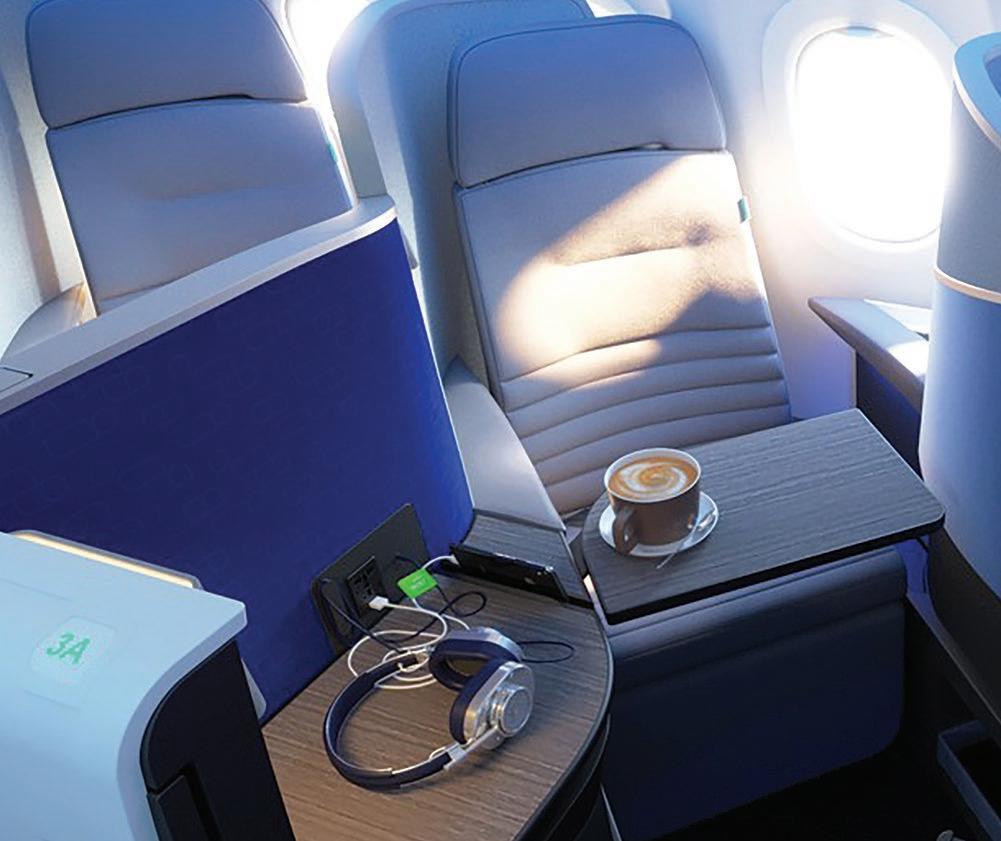
Let’s move from legacy systems to limitless solutions and clean up the messy business travel ecosystem, says Katie Skitterall, Group Commercial Director Direct Travel x ATPI


This is the most excited I’ve been about what’s to come in business travel in nearly 25 years. Avenir is changing the game in North America. It’s a platform travellers actually want to use, revolutionising and reducing the clunky booking process into a seamless and intuitive experience that takes minutes. It’s intelligent technology that reflects where business travel should be. Avenir will change business travel the way that Spotify changed music, Netflix changed buying and renting films, and the iPhone changed telecoms.
And now pioneering European travel buyers are ready to change and they are
challenging the complexities of legacy architecture and processes with us.
But what do Spotify, Netflix and the iPhone have to do with business travel?
Remember when we used to buy CDs and DVDs? When topping up your mobile meant scratching off a code on a card? At the time, it felt normal.
But looking back, those systems were clunky, closed, and transactional. Then came streaming and subscription models with platforms that were seamless, cloud-based, intuitive and built around the user. Everything changed.
But in business travel, we’ve stayed the same. Outdated revenue streams and innovations built around the travel equivalent of a vinyl player and a telephone box. Sounds crazy, right?
When Daniel Ek launched Spotify, the idea of paying monthly for music you didn’t own seemed absurd. But it worked. Why? Because it offered something better and more valuable: unlimited access, simplicity, and control. For the same cost of one album you could enjoy unlimited content. And rather than searching for a CD only to find it missing, you were a few key taps away from finding your favourite song, a new hit or something you hadn’t heard in years. The possibilities were limitless.
Avenir will change business travel the way that Spotify changed music, and Netflix changed buying and renting films”
Spotify didn’t just change how we listen. It built a new digital ecosystem. Artists got paid. Piracy dropped. Personalisation soared. The same with Netflix and the iPhone. The technology skyrocketed, the models changed, and the industry exploded. These weren’t just products. They were paradigm shifts. They redefined how we consumed, reshaped expectations, and brought a new frontier in their industries. And the world adapted.
We’ve lived through this digital transformation in every corner of our livesexcept, it seems, in business travel. But now it’s our turn - and it’s long overdue.
In travel we are - by nature - risk-adverse, but sometimes the greatest risk of all, is to be left behind.
Avenir is reimagining business travel. A new ecosystem built for where business travel is going, not where it’s been.
Across the ecosystem, we’re seeing the rise of modern, open API, cloud-based platforms that connect data and services in real time. These systems aren’t just more efficient; they’re transformative. They enable travel managers to see, shape and support the trip end-to-end. They give travellers the ability to self-serve confidently within policy. They allow for greater traveller experience through personalisation, flexibility and control. They turn fragmented journeys into connected experiences.
And as the technology evolves, so too must the commercial model.
If technology allows on-the-move changes and cancellations, but travellers still face endless transaction fees and secret charges, no one will utilise them.
The old 'transaction fee' structure was born in a world of offline bookings, GDS-driven workflows and it limited the customer experience. The fee model no longer reflects the value delivered or the way travel is consumed today.
To truly support innovation, the model must evolve to ensure customers actually experience the value and flexibility being created by technology. After all, if you’re charged for every change, add on and service, you won’t use them to their full potential.
We’ve become used to simple, predictive pricing in our personal lives. In the UK we’re paying £12.99 for Spotify. £8.99 for Amazon.
Pioneering travel managers are already moving beyond outdated models and infrastructure, embracing technology and experiences that truly reflect the future by joining our early adopter programme for Avenir”

£12.99 for Netflix. A monthly data plan for our mobiles. We know exactly where we stand with our monthly and annual spend.
Yet in business travel, it’s rarely that clear. Out of hours fees, amendment fees, cancellation fees, separate charges for rail, air and hotel. It’s messy. Business travel is ready for its own model reset.
Avenir has a simple and transparent trip fee model for this reason – one clear, simple cost per trip, making budgeting and forecasting effortless. A single fee gives travellers the freedom to access the best service at any time of day, with no guilt, and the possibility to change and cancel bookings as many times as needed with no additional TMC charge.
This is exactly the experience Avenir is built to deliver – frictionless bookings in minutes, full autonomy to amend or cancel on the go, and one transparent fee that covers
everything. No hidden costs in sight. Amazon gives you unlimited next day delivery. Spotify gives you unlimited listening. Netflix gives you unlimited streaming. Avenir gives you unlimited content, choice, changes, add-ons and customer service. All from the moment you book, to the moment you arrive back home, for one simple and transparent fee. Simple, right?
For travel buyers, this is a pivotal moment.
The tools are finally catching up to the vision of a truly connected programme, one where data flows seamlessly, content is accessible everywhere, and value is measured in outcomes: cost control, wellbeing, sustainability and traveller satisfaction. But we have to lean in. The future won’t arrive by itself.
If we keep operating on old rails, we’ll keep getting old results. It’s time to demand better: modern infrastructure, transparent pricing, and a mindset that puts the trip, not the transaction, at the heart of travel management.
We’ve seen what happens when industries embrace openness, integration, and user experience. Music, media, telecoms all evolved. Now it’s business travel’s turn.
The next era belongs to those willing to take the leap from legacy to limitless. Pioneering travel managers are already moving beyond outdated models and infrastructure, embracing technology and experiences that truly reflect the future by joining our early adopter programme for Avenir.
Because the question isn’t whether we change as an industry, it’s how fast we’re willing to let go of the legacy systems, models and thinking that is holding us back.
Avenir is coming to the UK and Europe in Q1 2026, and pioneering travel managers are ready to go live.
Be part of the future



Ensuring travel policies are fit for purpose is a major challenge for travel managers. James Dow, GM UK and Ireland at the global chauffeur service Blacklane, breaks down its ‘Cracking the Code to Boost Policy Compliance’ research

Can you share the headline findings of Blacklane's travel policy compliance research?
While detailed travel policies are commonplace, 46% of business travellers admit they do not check it. There is a strong relationship between limited disruption and business travel policy compliance. We see that travellers justify booking outside the rules to reduce the number of journey legs, save costs and enhance comfort in order to make efficient use of their time.
Who was involved in the research?
On behalf of Blacklane, the international research company YouGov assessed the opinions and behaviour of more than 1,000 business travellers across the UK and US who travel internationally for work at least twice a year, across a diverse mix of industries and company sizes.
What was the biggest surprise in attitudes to the travel policy?
Perhaps naively we were astounded by just how many people don’t refer to the travel policy when awareness that a policy exists is so high. Almost eight out of 10 know there is a policy in place but high awareness does not translate to engagement.
It is also interesting that almost half (47%) of business travellers believe that going outside the policy, in fact, saves the company money. And when we break it down into those who regularly consult the travel policy, almost two-thirds (61%) still believe they save by going rogue.
So, we can put some of the lack of compliance down to a belief that it is a ‘good’ decision, however these out-of-policy bookings in fact bring huge costs, not least just in terms of time and risk.
The booking isn’t reported accurately, the supplier may not meet standards that are in

place for reasons including safety, and the paper trail for expenses, carbon emissions impact and more is not integrated into company reporting.
There is far more to a travel policy than the initial transaction cost taken in isolation. And there is huge work to do in order to educate travellers accordingly.
Why else do business travellers break the rules?
The most important factors when booking business travel - with significantly over half (60%) stating these elements - are direct routes, cost, flexibility, loyalty programme benefits, and access to premium options such as lounges and a chauffeur service. When travellers don’t have access to services that allow them to be productive, efficient and comfortable, they break the rules.
Do you think out-of-policy booking is related to the technology and booking tools on offer?
Definitely. Almost half (45%) say that improvements such as more intuitive booking platforms would enhance their travel booking experience. Just a third (33%) say they use corporate travel booking platforms as their main tool when booking business travel, compared to half (51%) stating that personal travel apps are their first port of call.
We see in our own data that many corporate travellers prefer to have a corporate account on the Blacklane app, rather than use desktop-led booking tools.
How do opinions and actions differ amongst various generations?
In general we see that compliance and engagement drops dramatically with age. Eight out of 10 Gen Z-ers consult the travel
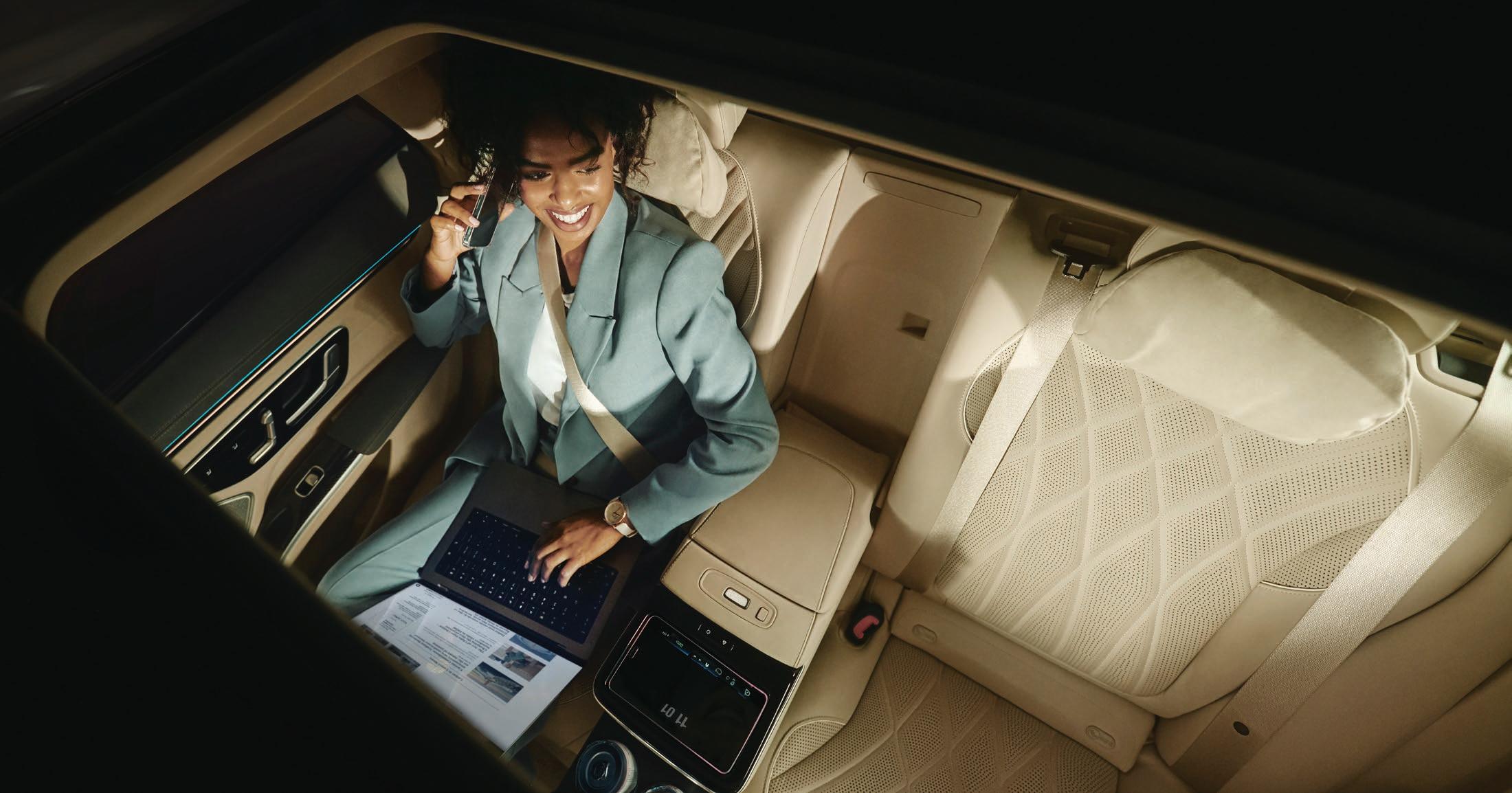
policy, versus only half (54%) of those aged over 55. Half of Gen Z states they are engaged with the travel policy, regularly communicating with travel managers and seeking guidance of policies.
Tell us what this means for travel managers - what should they do next?
Our research underlines the need for policies to take on-board traveller demand for options that make a journey faster and more pleasant. In some cases, travel guidelines need a refresh to consider adding
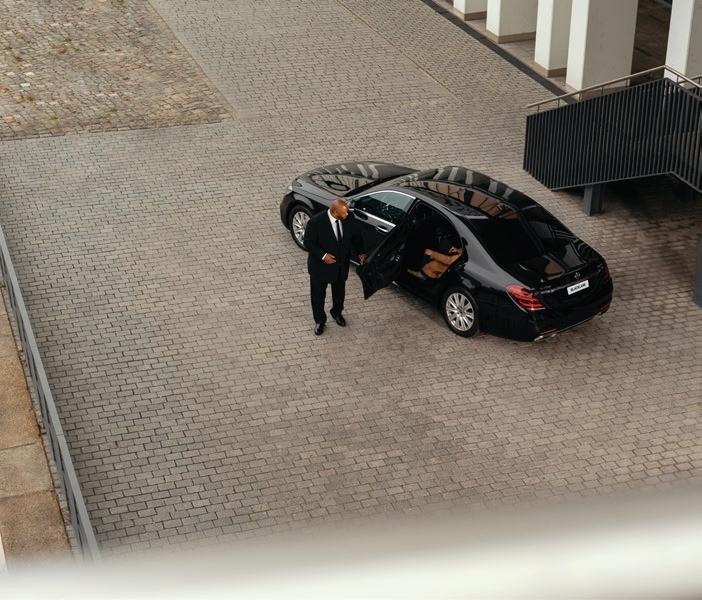
rewards and unlocking benefits when travellers book within company policy. There is also work to be done amongst more seasoned professionals. The very people who are more likely to be in senior roles and influence company culture are often the ones sidestepping policy, which in turn shapes team behaviour.
What is Blacklane doing as a result of these findings?
We’re working with our clients, both the travel managers and bookers, to support them in reframing the travel policy.
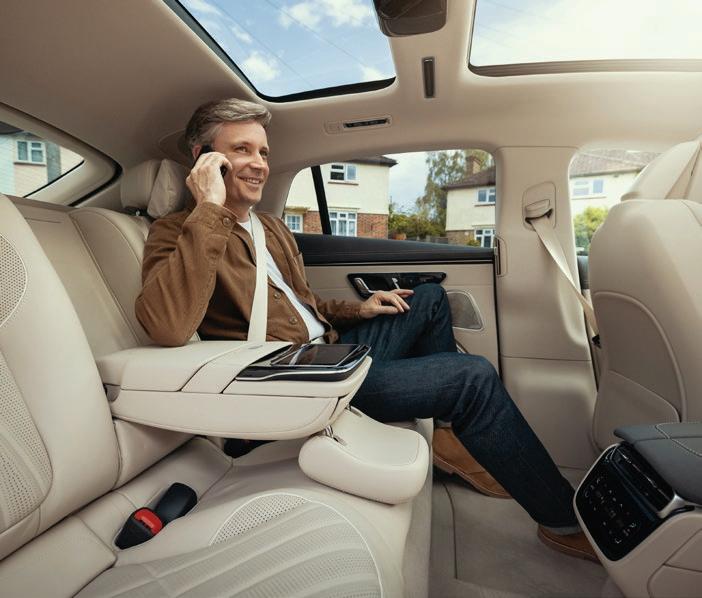
When travellers don't have access to services that allow them to be productive, efficient and comfortable, they break the rules”
It is imperative to take into account the comfort and productivity factors that drive bookings outside of the policy.
Don’t assume things like lounge access or chauffeur services are a luxury for the most senior members of your organisation. Instead see them as options that boost wellbeing and productivity. After all, they are spaces where people can rest and/or work. Here at Blacklane we say again and again that these elements are not a cost centre, they are a profit centre; engaged, productive people do their jobs better and drive revenue.
Look out for a dedicated webinar from our sales team coming soon to share more on the data.
For more information go to: blacklane.com/en/business/
Consolidation and automation are making it easier to manage your spend on taxis, transfers and chauffeur services, says Gill Upton, but blind spots remain
Over the last five years technology has been busy transforming the one spend category that was ripe for change –ground transportation. What was once manual and opaque is increasingly automated and data-rich from AI-driven analytics.
Long considered the “last mile” and consigned as low priority behind high-value air travel and hotel bookings, it is the last bastion of unmanaged travel.
Disruptors and mainstream suppliers are
improving the way it is managed with technology platforms, booking portals and apps to allow corporates to book, pre-book, embed policy, track, report on costs and CO2, provide spend visibility and satisfy duty of care. These advances make managing ground transportation comparable to air and hotels.
“These mobile apps make it easy to book, bring visibility so we can drive behaviour change and bring more savings,” says Karen Hutchings, CEO and founder of consultants Cobb & Hutch.
“What these companies are doing is really smart. It’s a quick win for travel managers.”
To date, this spend has been akin to the Wild West, with unclear or no policies at all, giving travellers the freedom to book whatever chauffeur, taxi, car rental, bike or scooter they want. Leakage has been legion – one statistic points to 70% of ground transportation bookings being out of policy – while safety has been another issue.
“For corporates who get this right: success will look like a smooth end-to-end travel ecosystem where the airport transfer is as









seamless, visible, manageable and compliant as the flight or hotel; where spend is visible, policy is enforced, travellers are happy; where ground transport is an enabler not a headache,” says Lorenzo Bugliari, Director, Taxiworld/JUMP, the app for black cabs.
Merging lanes
Aside from technology, change has come from consolidation in this fragmented marketplace, especially by the global ridehailing brands. Lyft purchased FREENOW and TBR Global Chauffeuring, Addison Lee acquired Tristar, Bolt acquired a Danish operator and Chabé, a major French player, bought a UK fleet to expand its reach. Both Bolt and Uber have launched business arms: Bolt Business and Uber for Business. Uber dominates the ride hail sector in most countries and is strongly challenged by Bolt, while Blacklane is the major player in chauffeuring.
“The corporate ground transport market is undergoing a seismic shift — and a few
major players are setting the pace,” reckons Craig Chambers, Group CEO at TBR, one of Lyft’s acquired companies.
"It’s promising to see a once-fragmented world consolidating into smart, efficient and seamless platforms.”
Fewer suppliers should translate to better integrations, a simpler vendor management process, less admin and better service and a single, unified method for invoicing. Rich content will mean that favourite suppliers –and this is a very personalised spend area with high expectations – will be integrated into a seamless ecosystem.
“They will need fewer contracts as they can have a framework agreement that covers more countries and regions making the overall procurement process easier,” says Felix Brand, Chief Strategy Officer at Freenow by Lyft.
“In Europe, where regulation and language diversity make operations complex, consolidation helps platforms achieve efficiency and consistency,” says Dr Vojkan Tasic, CEO at
The corporate ground transport market is undergoing a seismic shift — and a few major players are setting the pace”
Limos4, the premium chauffeured ground transportation network.
“We’re also seeing alliances between chauffeur networks, TMCs, and technology providers to create more integrated ecosystems, essentially uniting booking, tracking, invoicing and reporting in one place.”
But Dr Tasic warns that it must be smart consolidation, as in, “one network, one data ecosystem, and one service philosophy, without sacrificing the quality and care that make the chauffeur experience unique”.
FREENOW, for example, offers taxis, e-bikes, e-scooters, e-mopeds and car sharing across one platform, giving
















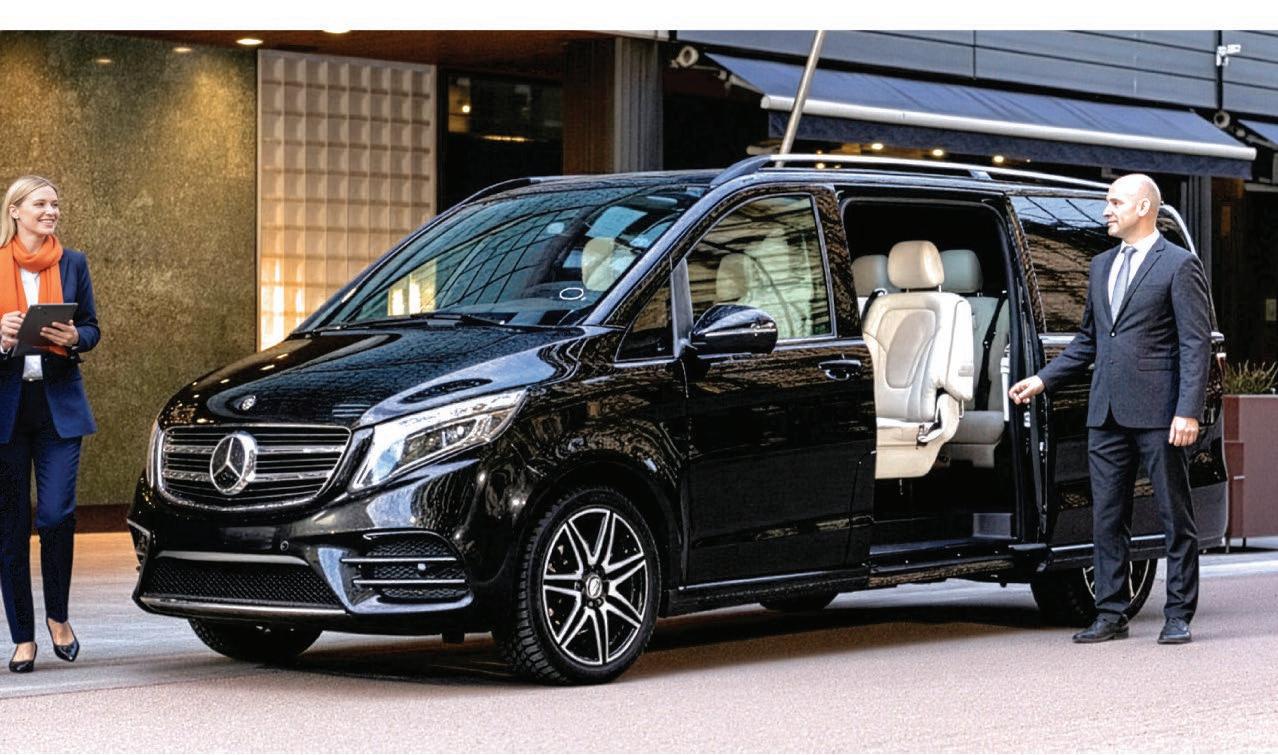

corporates a single, compliant solution across 180 European cities and, since July’s acquisition, leveraged across Lyft’s four continents and nearly 1,000 cities. It also has the capability to embed travel policies, giving travellers access to specific fleet types to help drive compliance.
Similarly, the joining up of TBR and Lyft will bring benefit to corporates in the shape of a “360-degree ground transportation solution, from everyday black cars to fullservice chauffeur experiences”, says Brand, backed by Lyft’s technology across 3,000 cities across six continents.
Limos4 provides real-time visibility, strict partner auditing, 24/7 proactive operations management, alerts for delays or flight changes, full compliance tracking, carbonfootprint data and integrated reporting for global clients form its own proprietary technology platform.
Building bridges
Attempting to professionalise the sector is global ground transport management platform Mobility IQ, from The Miles Consultancy, which integrates all favourite suppliers into a seamless ecosystem together with its OBT.
“It’s an enterprise-grade platform and we are deliberately focussed on large enterprise clients for now," says Stuart Donnelly, President Mobility.
“We’re integrating all the verticals so corporates can have on-demand rail and car rental and policy and CO2 and duty of care and offer a bridge over all of them.”
He believes TMCs and OBTS are not interested in this sector due to its characteristically high volume and low value and reckons they are missing a trick. Substantial savings are possible now that there are sophisticated solutions in the marketplace to show fastest, greenest and cheapest options, he says.
Donnelly cites a £105 cost discrepancy between the lowest and highest cost option of a provider during the month of June, and a similar price differential between one standard car category between Addison Lee, Bolt and Uber.
“We’re not talking about pocket change,” says Donnelly. “It’s the black hole of travel spend, where travel managers focus on air spend and TMC spend.”
Some estimates place ground transport at 10% of total travel spend, but it could be even higher.
“It’s the largest unprocured category they have,” says Daniel Price, CEO of Jyrney.
Creating a baseline and policy, mandating suppliers and changing traveller behaviour are the first steps to best practice.
When travellers only need to use one platform rather than using multiple ones, Price believes this will naturally shift
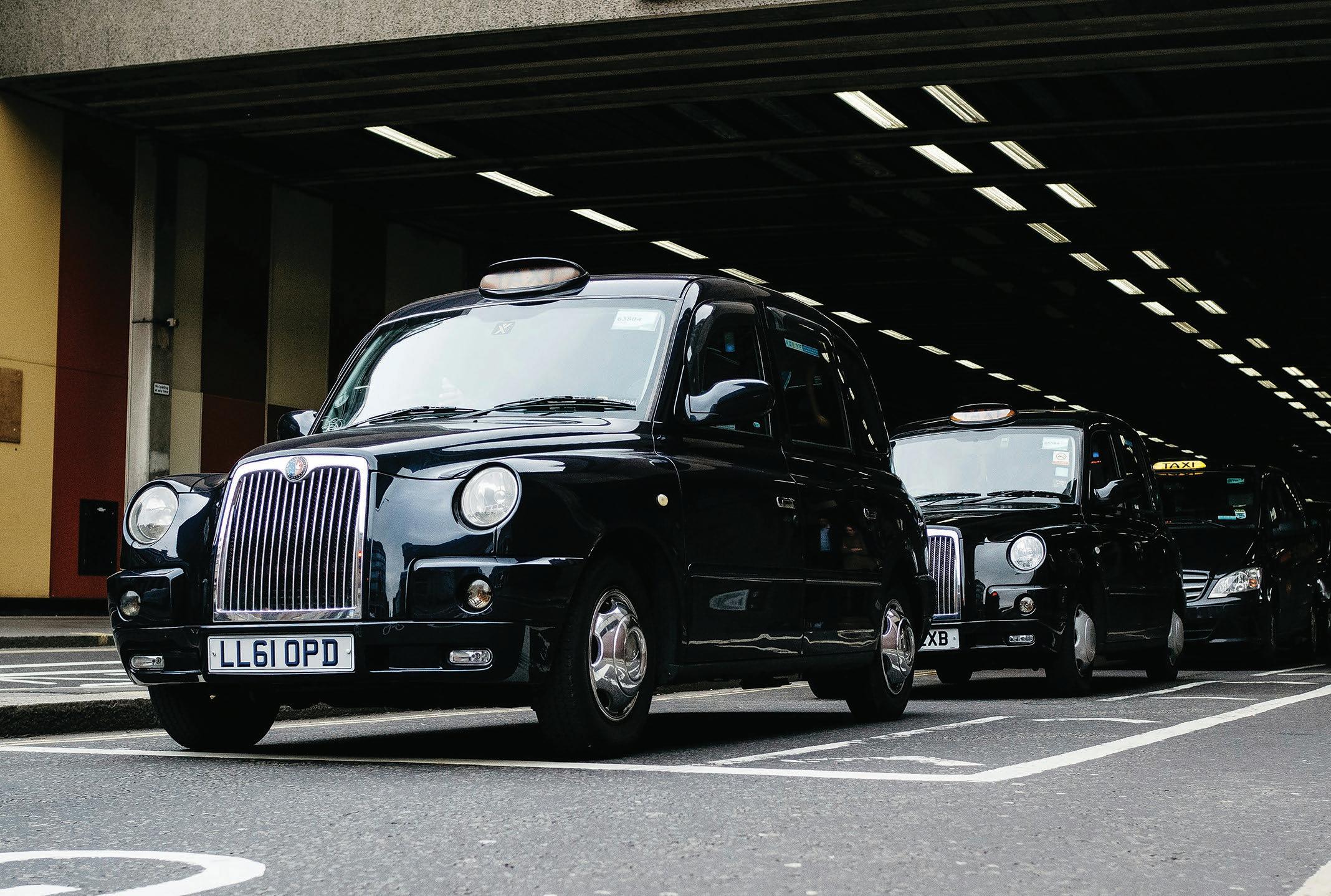
Some estimates place ground transportation at 10% of total travel spend, but it could be even higher. It’s the largest unprocured category”
behaviour to increase traction and adoption.
For example, Jyrney aggregates everything from ride hail to hiring a limo or a whole day hire, including all local and global taxis firms, and provides that content in a single API bookable by a TMC. "This is the future –seamless and touch-free. We can connect a small taxi firm on the outskirts of Manchester to a global client," says Price.
Jyrney works with 15 TMCs currently and earlier this year its API was integrated into Inntel's app, giving travellers access to ridehail from Bolt alongside taxi and chauffeur cars. This has driven a 500% increase in bookings, underlining the customer demand shift towards fully integrated mobility.
Meanwhile, Blacklane can customise its booking portal to fit the right customer profile. “It can be nuanced to embrace a two-tier policy or an elevated service when an employee travels, say, in personal time,” says James Dow, General Manager UK & Ireland. Insights include booking behaviour, number of users, CO2 emissions, type of vehicles, cost savings and more.
Blacklane recently released a new booker portal with a raft of new functionality. Features include the ability to save frequent guests, improved single sign-on, adding details such as vehicle licence plate, being able to book for someone else and so on. It is available across distribution channels such as Concur, Groundspan and Navan.
Price at Jyrney reckons ground transportation will become an incredibly more interesting space, particularly in a new world where ‘robot taxis’ take over responsibility for moving clients around cities. Conservative estimates predict that up to one million autonomous taxi vehicles could be on the roads globally by 2035, in a market worth $100bn. “It’s about to be a humungous part of how we move around, so travel managers have got to get their arms around it,” he says.

Travel buyers, senior travel management company professionals and supplier sponsors enjoyed a night of networking at The Business Travel Dinner Club on October 9. Organised by The Business Travel Magazine, the dinner ended with a talk on transport decision-making from Thomas Ableman, founder Freewheeling. The evening was kindly sponsored by United Airlines, Lokulus, South Western Railway and Take2Eton Group.

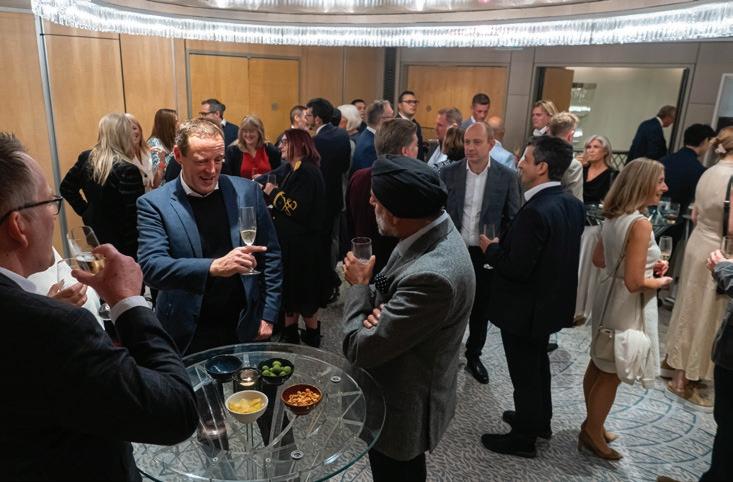
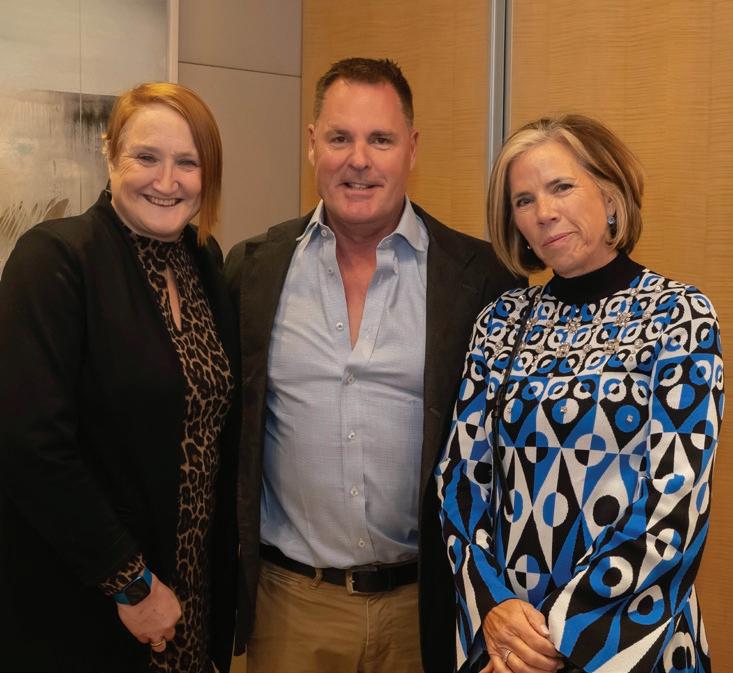
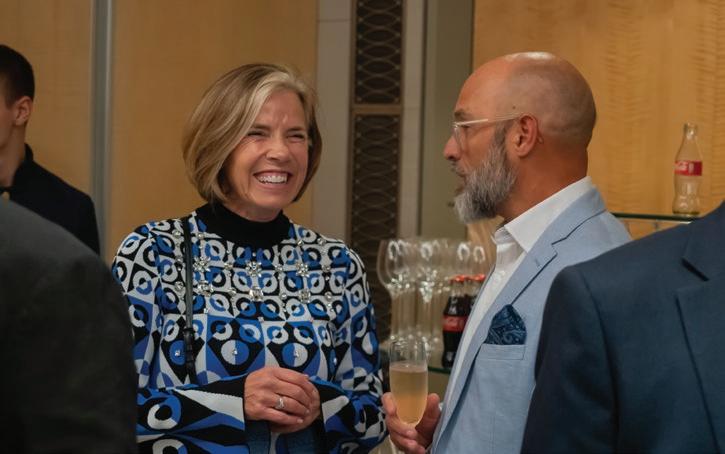
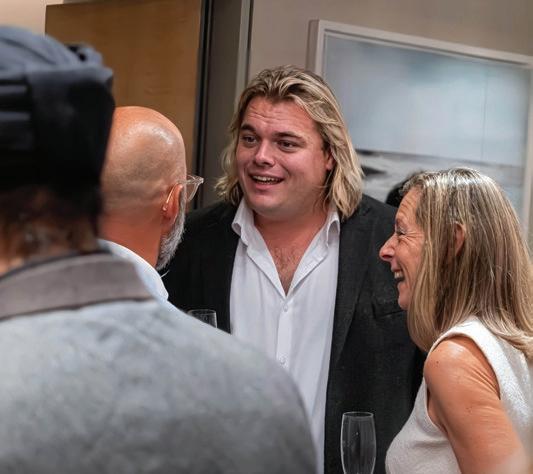


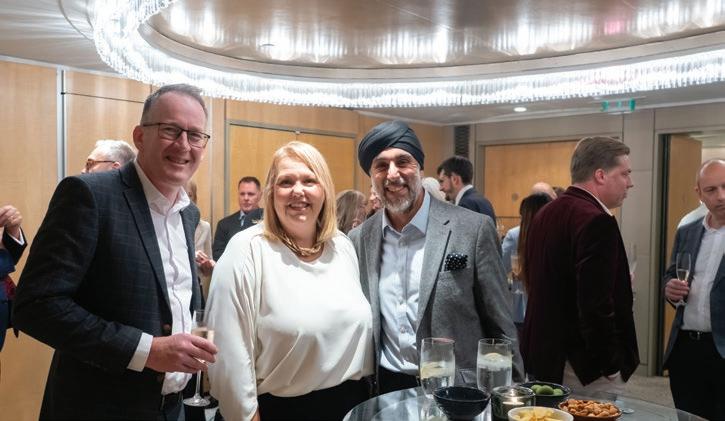




DRINKS AND THEN DINNER





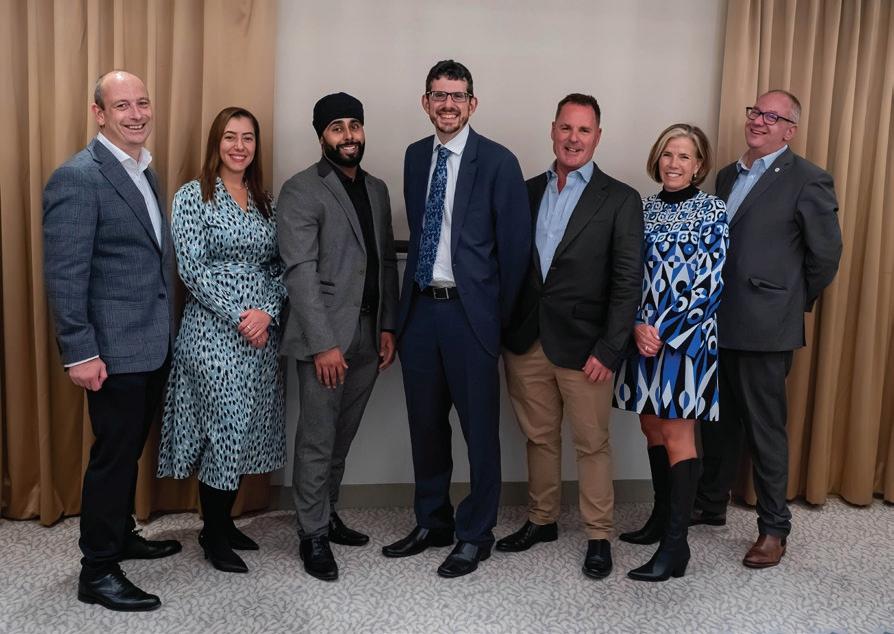


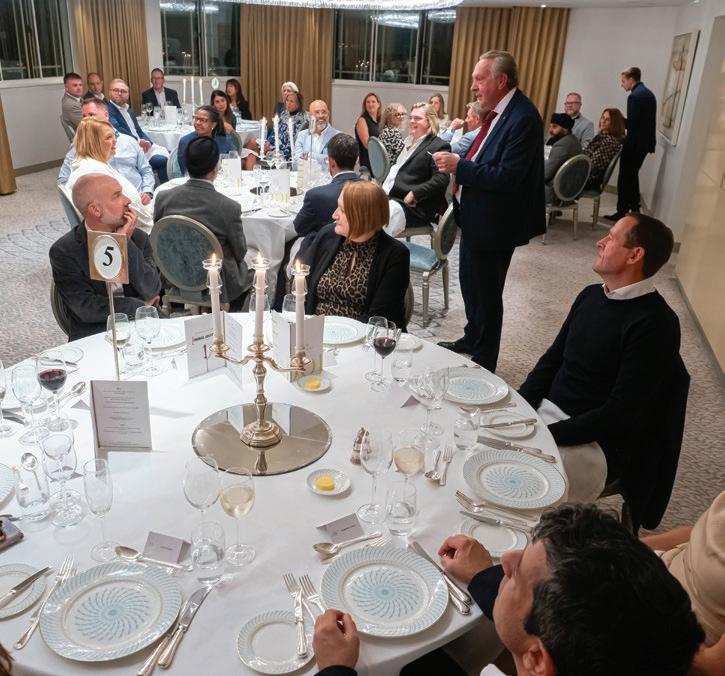
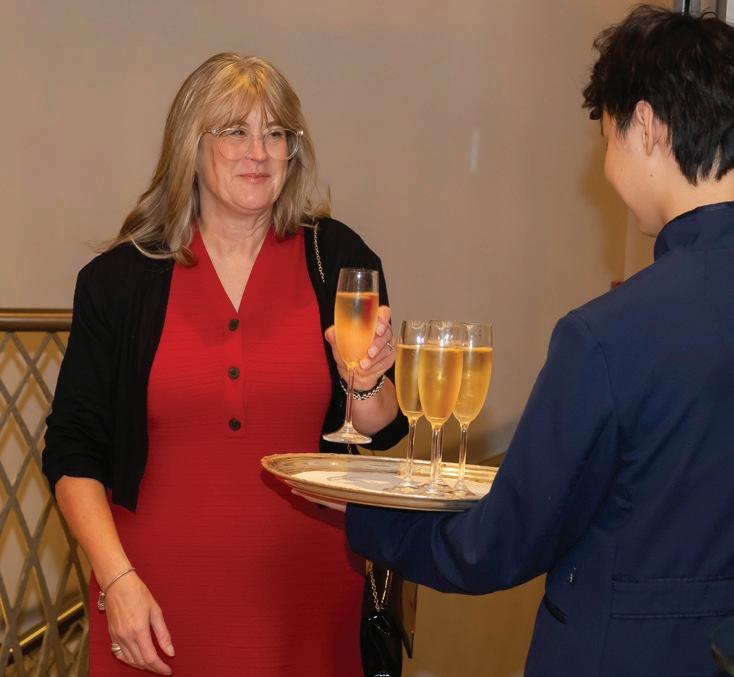
CHEERS!

THE SPONSORS AND GUEST SPEAKER




CHAMPAGNE RECEPTION
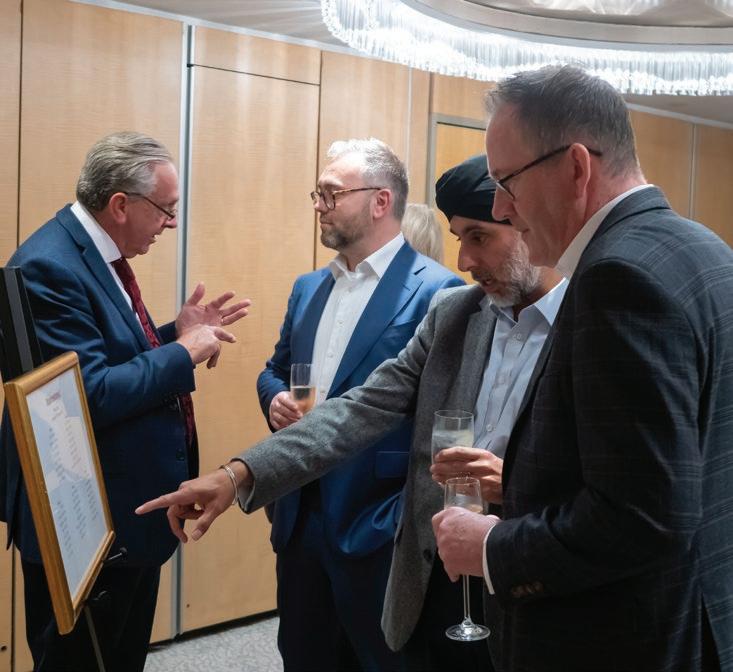



How
to drive travel policy compliance was the theme of a Business Travel Lunch Forum with Blacklane, the global chauffeur service
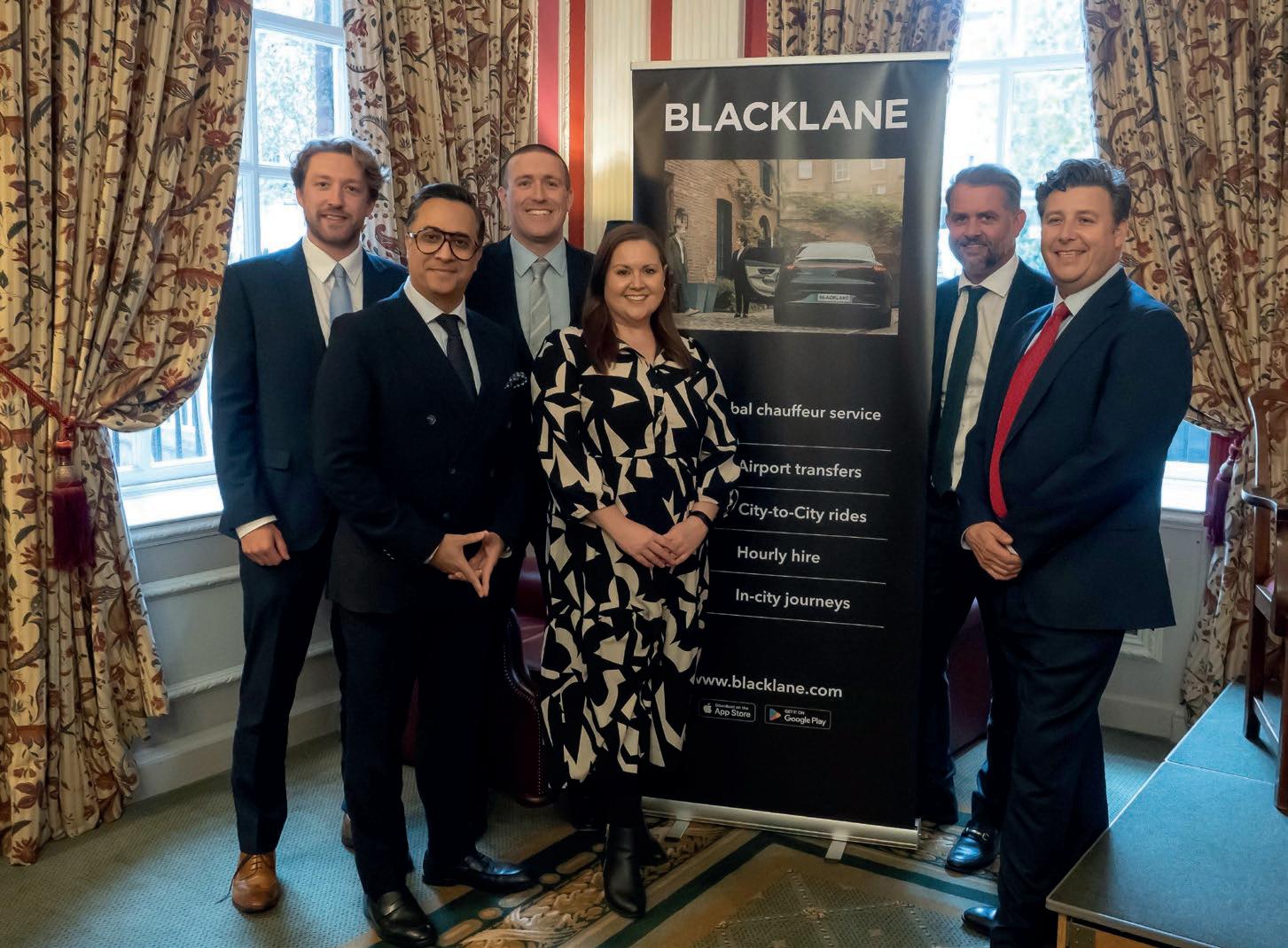
Travel managers, travel management companies and other business travel professionals took a trip into a future with 100% travel policy compliance at a Blacklane Lunch Forum and Workshop.
The event, at the Caledonian Club in London, began with a fireside chat where Jason Dunderdale, Blacklane’s Global Director of Sales, shared the findings of the luxury chauffeur specialist’s research looking at why travellers book outside of policy and identifying which groups – based on seniority, age and other factors – were likely to be the worst offenders.
Lunch guests were then split into groups and were tasked with imagining a future where they could start from scratch to create the perfect programme and travel policy, with total compliance, from the perspectives of different stakeholders. The ideas and insights were then shared with the rest of the guests.

from the travellers and the travel manager is at ease that when a full package is booked there is less room for veering out of policy. To achieve this we saw an industry future where joint ventures between different suppliers made this easy for the travel manager to navigate, and generated new opportunities for the sector.
Paul Clark, Account Manager, UK and Ireland

Here are the key takeaways from members of the Blacklane team:
Sam Davies, Team Lead, Sales and Account Management, UK and Ireland

Our workshop session envisioned a future where travel costs have been redefined as a profit centre. We explored how in 2029 AI would assist with travel policy compliance to ensure that sustainability, policy and content are all fit for purpose. In our future, business travel packages – such as those we see in the leisure travel industry – would be easily available to ensure that travel is fully compliant, and the need to book out of policy is removed. There would be collaboration between suppliers to create compliant bundles for the most popular trips within a business, so that there is greater convenience
‘Bosses, buckle up!’ was the theme coming out of our workshop session where we addressed how C-suite decision makers needed to ensure that travel management content is a true one-stop-shop that meets convenience needs in order to boost compliance. We looked at differences in both gender and generational compliance and saw a future with greater representation of women in decision-maker roles, showcasing how meaningful change comes from the top. With women more compliant in the Blacklane research, this led to greater compliance through improved gender balance. Gear changes in travel policy compliance were also seen from Gen-Z. The research showed we need to think about how to re-define digital compliance and ensure that policies were fit for purpose in businesses where 90% of employees, and the CEO, are currently under 30 years old. In future, these business leaders will have high expectations around the digital experience, and they will dominate the workforce. Embracing digital natives with tools that match their expectations is a key driver of compliance success in the future.
Raaghav Dawar, Sales Manager, UK and Ireland

The AI takeover was the theme in our group where we addressed how TMCs weather changes in workforces and booking flows in a future





This event was kindly sponsored by Blacklane



where AI tools have become more efficient than people. We addressed how TMCs can focus on the human experience and traveller engagement to really show their worth, and boost compliance through these channels. AI can then assist by making processes more efficient and policies simpler to follow in a manner that drives more compliance. In particular, we talked about sustainability and the future potential of AI to steer travellers towards more sustainable choices, once the travel manager has ensured that a strong scope of sustainable options are on offer and that their travelling public is engaged and aware of the benefits of choosing a more sustainable means of travel. In our future AI is a strong partner to the TMC, assisting with data analysis and trend tracking to keep travel managers informed and empowered.

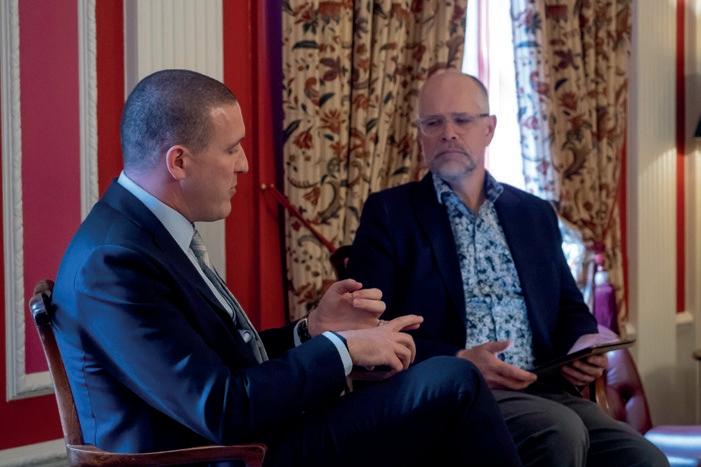



Adam Garside, Sales Manager, UK and Ireland Crystal balls and mentors were the topics of conversation during the workshop. We looked at how improvements in travel compliance in the future could be delivered by greater integration between TMCs and AI. In our future scenario, the online booking tool was supercharged by AI making decisions for travellers in a manner that is both more compliant – and with less friction. To achieve this, our future needed highly-experienced business travel professionals to ‘feed’ the AI and become mentors to the tech tools of the future. We envisioned our most seasoned colleagues sharing their wisdom, learnings and experiences like a crystal ball to help AI tools predict future business travel trends and booking behaviours. Like other groups in the workshop, AI was seen as an important addition to the expertise of people, helping to drive improvements in our processes and, in turn, compliance.

In our future, business travel packages – such as those we see in the leisure travel industry – would be easily available to ensure that travel is fully compliant and the need to book out of policy is removed”















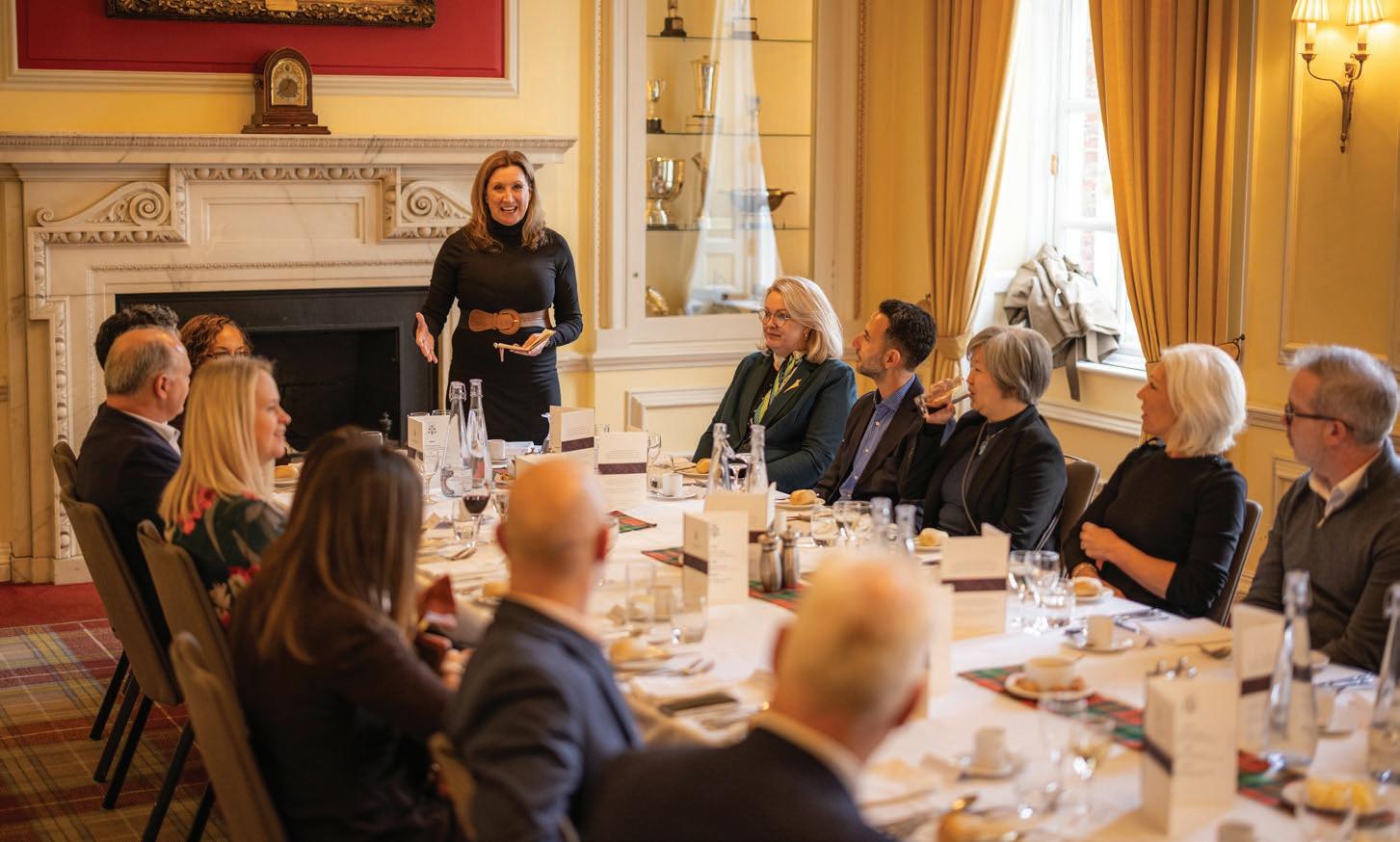
The fast-changing world of business travel technology was under the spotlight at a Business Travel Lunch Forum in London on November 19.
Travel managers and buyers from a range of sectors came together with technology leaders to discuss key issues, which include the increasingly overwhelming choice of solutions, gaining full access to content, distrust of AI and managing data security.

Thank you to the four technology partners for this event – ALTOUR, Concur Travel, Direct ATPI and Atriis. Here are the key takeaways from their experts:
Tristan Hindley ALTOUR Regional Sales Director EMEA

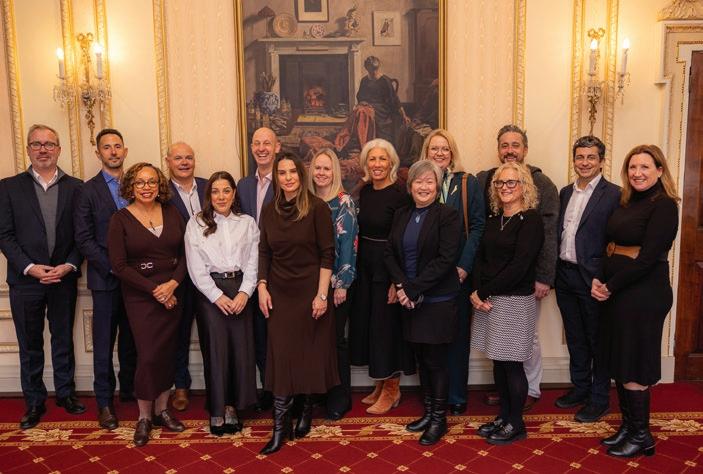


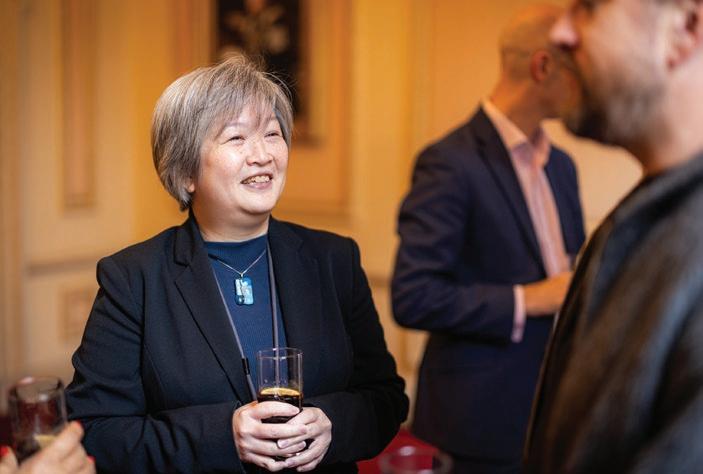
The session underscored how quickly travel technology is evolving and why travel buyers now expect flexible, outcomedriven solutions.
Full access to global content was highlighted as a top priority, with category managers increasingly seeking a marketplace of options, since no single system can meet every organisational need.
As AI becomes embedded across the travel supply chain; trust, data, and platform integrity are more important than ever to advance travel programmes and accelerate programme adoption.
Direct connect content is expanding rapidly through modern technology providers. When gaps appear, the root cause isn’t always the platform itself.
Conversational booking is expected to become mainstream within the next three years, reshaping traveller engagement, while experienced travel consultants remain
essential for complex scenarios and emergencies. Ultimately, AI now influences every area of the travel category, and suppliers who embrace this shift will advance, while those who remain static risk losing relevance in a rapidly changing landscape.
Paul Dear, Regional Vice President - Supplier Services EMEA SAP Concur

I had the pleasure of attending The Business Travel Lunch Forum. Thank you to the team for hosting such a thoughtful and engaging event.
It was a fantastic opportunity to connect with travel managers and partners and dive into the complexities of travel technology in today’s business-travel ecosystem.


A highlight was discussing our new strategic alliance and the launch of Complete by SAP Concur and Amex GBT.

We explored how these solutions complement established players and enable interoperability when multiple suppliers are involved.
The conversations were lively and insightful, touching on distribution challenges, supplier revenue dynamics, and the growing influence of AI.
What impressed me most was the shared commitment to collaboration, transparency, and clear messaging as we navigate technology integration and commercial pressures.


I left feeling inspired and grateful for the chance to exchange ideas. Thank you again to The Business Travel Magazine for bringing us all together.
Camilla Tuzemen
ATPI Group Technology Optimisation Manager

I had a fantastic afternoon at my first Tech Lunch Forum discussing the progress – and challenges – we face with technology. It’s so important to have these safe spaces to share and I came away with plenty of insights from the lively discussions and debates we had.
We spoke about future technology, like our open API platform Avenir, the importance of collaboration and, of course, AI!
A recurring theme and key takeaway for me was the disconnect between us as all.
While we all want to advance, improve and collaborate more with technology, the question of who is responsible for delivering these developments wasn’t as cut and dry as you would hope. Like most things in business travel, it’s a complex landscape!
AI also sparked plenty of conversation, mostly around striking the right balance and not losing the human touch. I think we all agree that AI is best used to summarise a year's worth of expense reports, and a person to support me at 3am if I have a cancelled flight. But both emotional and artificial intelligence clearly have key roles to play.
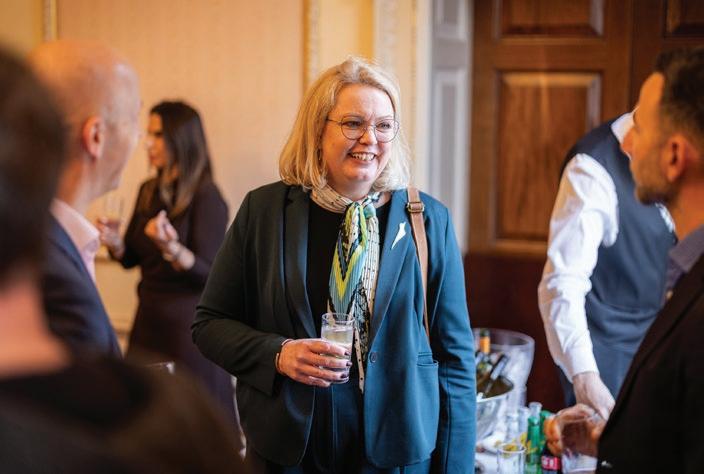



Amsalem, CEO and co-founder Atriis

The lunch forum was a fantastic opportunity to hear from some highly-experienced travel management professionals across different industries.
The open discussion made clear how much pressure teams face as content becomes more fragmented, distribution models shift and traveller expectations continue to climb.
A major theme was the need for technology that genuinely reduces complexity. Buyers spoke about wanting clearer visibility, easier configuration and tools that bring their ecosystem together rather than working in silos. AI sparked a lot of interest too, seen as full of potential for planning, booking and servicing, but still requiring stronger data foundations before it can support more sensitive, risk-related decisions.

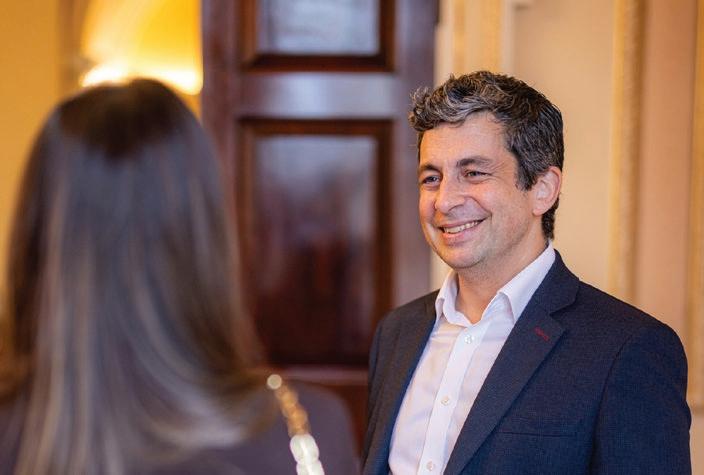


The debate around how service, technology and partnerships will evolve was particularly insightful, reinforcing how valuable it is when platforms help unify the moving parts of a travel programme.



Buyers spoke about wanting clearer visibility, easier configuration and tools that bring their ecosytem together rather than working in silos. AI sparked a lot of interest too”
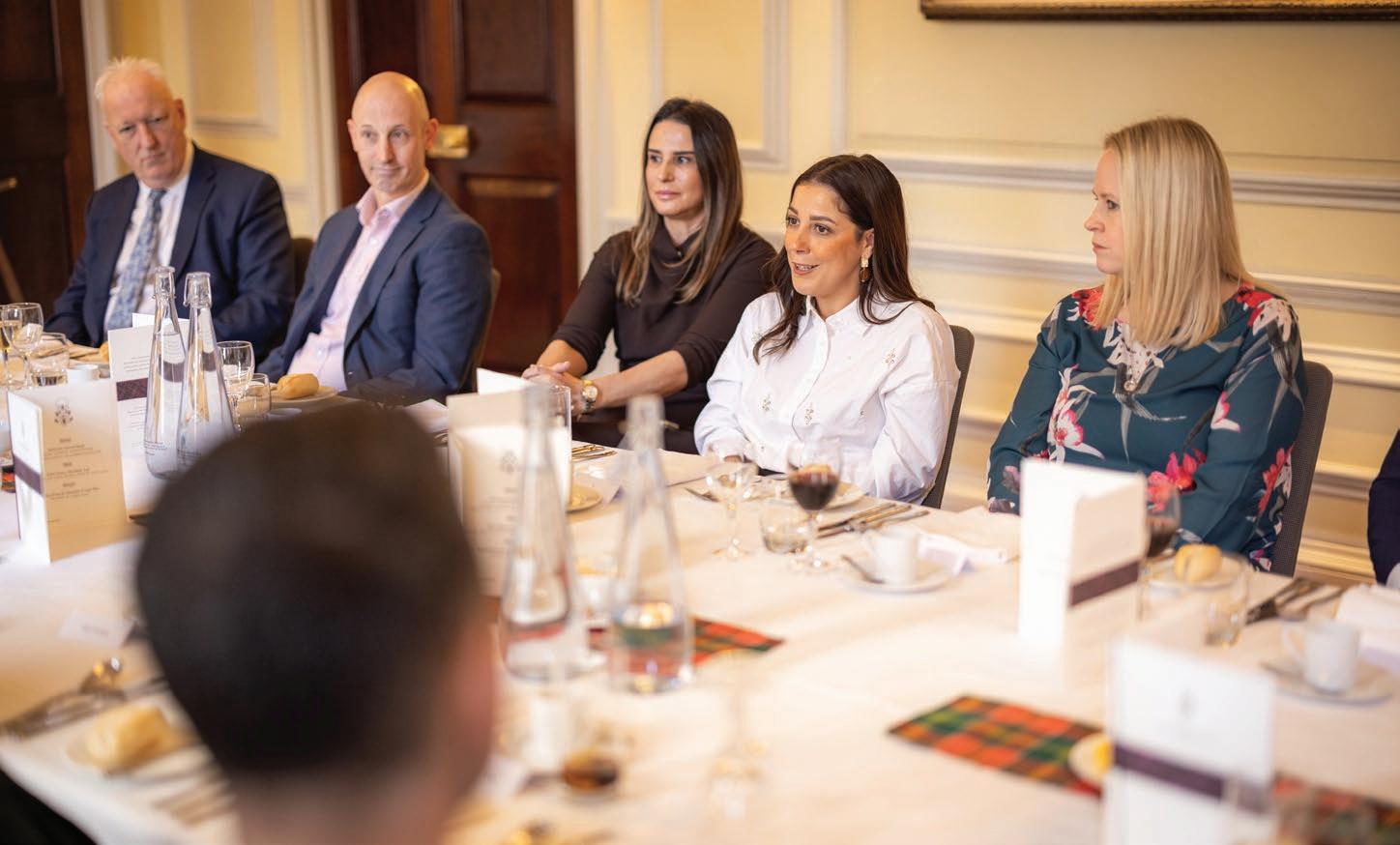



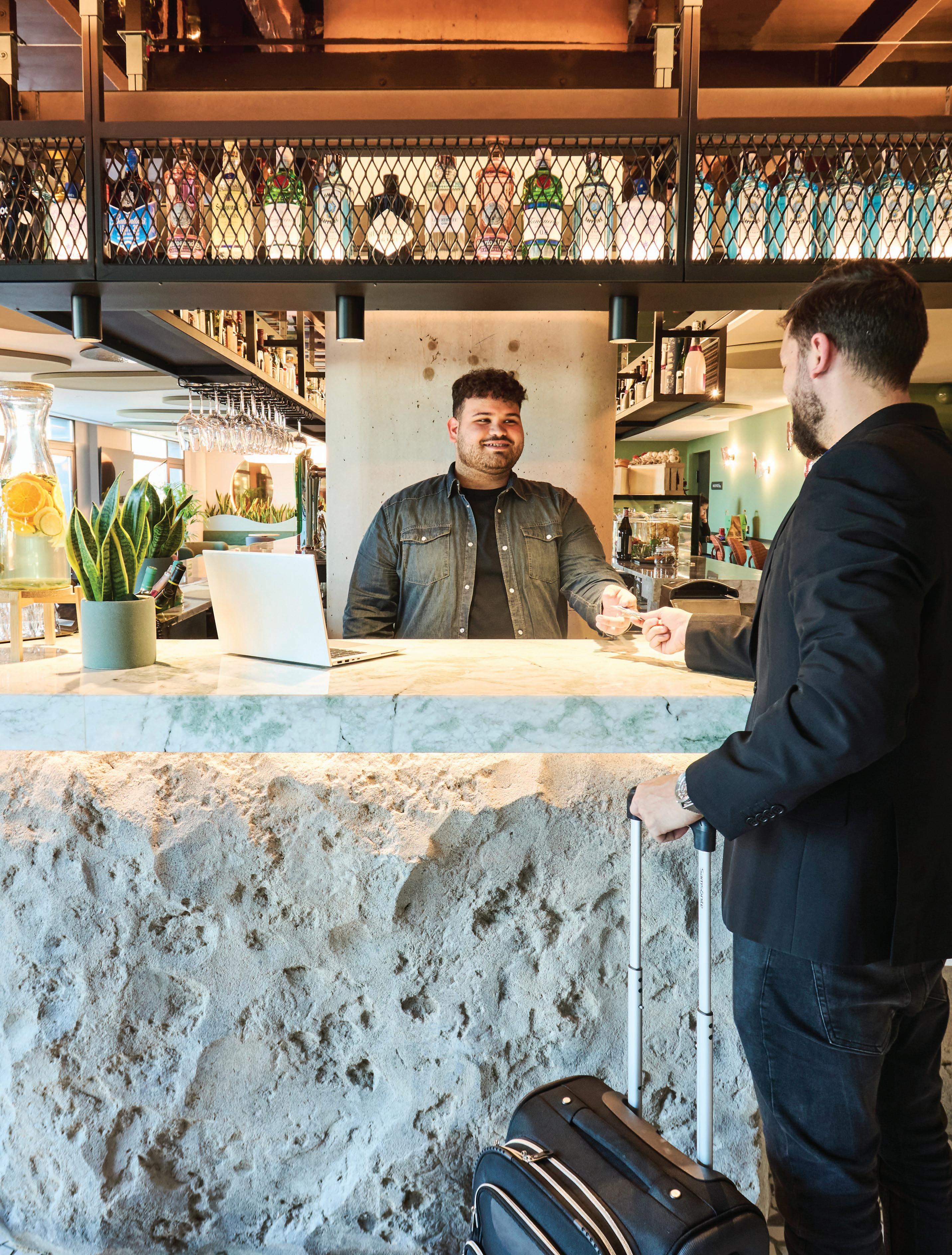
Business travellers know what to expect when they book with a budget brand, says Gary Noakes, and often it’s all they need
Some of your business travellers may not see it this way, but budget hotels have a lot to offer the corporate sector.
Only a decade or so ago, there was a stark choice between booking with an expensive global hotel group or a cheap but unknown quantity. Now the market is awash with bigname budget brands that do exactly what they say on the tin.
At this price point, a brand name provides reassurance in offering an affordable stay where travellers know exactly what they’ll get. That usually means city centre locations, affordable breakfasts, 12pm check-out and reasonable fees to check in early or check out late. Add in decent Wi-Fi, comfortable beds and 24-hour security and it’s job done.
The budget sector grew by targeting leisure travellers but has learned to cater for the corporate world, especially SMEs, and now brands actively court business travellers with dedicated programmes.
One theme is common to all: core comforts, as easyHotel Chief Executive Karim Malak explains: “Four-star mattresses, black-out curtains, sound proofing. You don’t pay for what you don’t use, like spas and swimming pools.”
His brand has close to 50 hotels with, on average, a third of guests staying for business. Malak believes the corporate sector no longer thinks of budget hotels as a less-favoured option. As a result, easyHotel has added workstations in rooms and work
areas in public spaces. “Those weren’t there 20 years ago,” he says. “It used to be tough to send staff to budget hotels, but that’s not the case anymore because the concept has changed. The habits of the leisure traveller progressively creep into the business market. Twenty-five years ago, people would attach social currency to staying in one brand or another. It’s still true, but only at the very fine end of the market.”
Paul Dear, SAP Concur Senior Director, EMEA Global Supplier Strategy, is seeing a real shift in booking trends, not just driven by price, and has added budget brands to Concur Travel's inventory.
“It’s definitely a coming together of cost, ability to book and sustainability. We’re seeing a groundswell in European markets,” he says. “It’s almost inappropriate to say ‘low-cost’ hotels – low-costs are coming up slightly and three- and four-star are probably coming down slightly.
“Cleanliness and comfort are the key. Lowcost hotels understand the business market much better. The lower end of the scale understands how to work with TMCs better.”
He adds that budget hotels win when it comes to sustainability. “Low-cost hotels tend not to have atriums and pools and tend to be modular and new, so therefore are probably more sustainable. We use Thrust Carbon to see emissions and have several customers with carbon budgets; they can stay 10 times in a low CO2 hotel and six or seven times in one that’s higher.”
Obviously, easyHotel has an advantage in its brand association with easyJet and Malak believes the budget hotel sector generally has benefited from consumers’ faith in lowcost airlines.
“Everybody understands the concept; it appeals to all segments. Investment bankers fly easyJet, it’s the same with easyHotel.”
One issue for corporates is that with budget hotel direct sales channels being so prevalent, booking direct – and therefore, outside policy – is an issue. Booking tools like Concur have had to react.
“Leakage is a problem; so we bought all of that content into our product,” says Dear. OTAs have also been included.
“If you want an Expedia hotel, you can get it. The traveller’s voice meant we had to do that. We have to counter staff saying I can get it cheaper," he adds.
However, hotel brands have also been courting corporates direct with their own programmes. One such is Premier Inn Business, open to corporates and TMCs and offering between 5% and 15% off Flex rates.
Low-cost hotels tend not to have atriums and pools and tend to be modular and new, so therefore are probably more sustainable”
Travelodge says 65% of its 610 UK properties now offer the new, more luxurious, SuperRoom option designed to appeal to corporate customers”
There are no spend thresholds and tracking is possible, plus members receive up to six weeks’ interest-free credit. The programme boasts more than 50,000 UK business members and it's free.
In addition, the chain now has more than 2,000 Premier Plus rooms aimed firmly at the corporate market. Most come with free Ultimate Wi-Fi (normally £5 for 24 hours), faster than the standard connection, plus a bedside USB port, mini-fridge and water, hot drinks, snacks, iron and ironing board. Other differences include an “improved” workspace, rainfall shower, upgraded toiletries, armchair and hairdryer.
Travelodge has a similar corporate programme, Travelodge Business, with more than 45,000 companies registered. It offers 5% off all flexible booking rates plus up to six weeks interest-free credit. Around half of Travelodge’s 22 million guests are business travellers, which it says range “from independent contractors and SMEs to major FTSE 100 companies”.
Travelodge Business is backed by a UK support team and allows pre-payment of expenses via the Travelodge Business Pay card, so staff do not need to pay out from their own pockets.
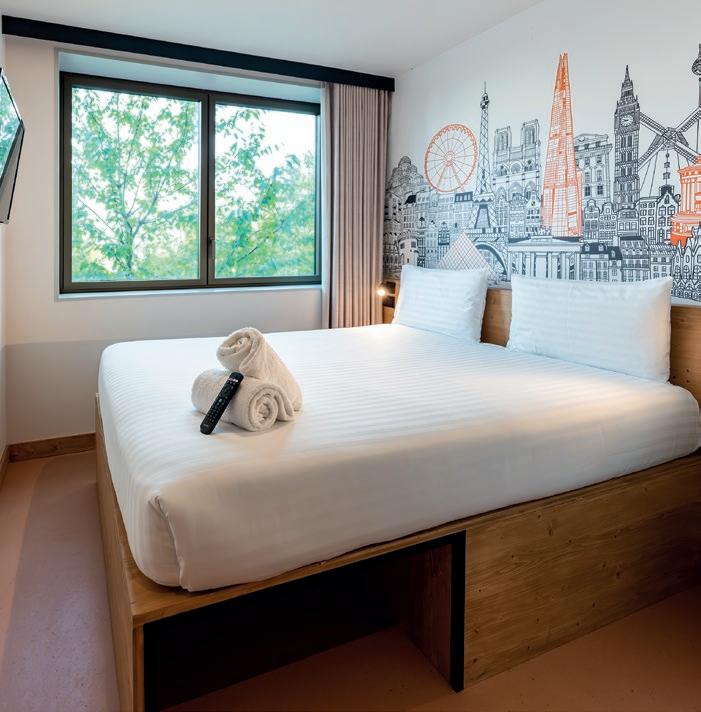
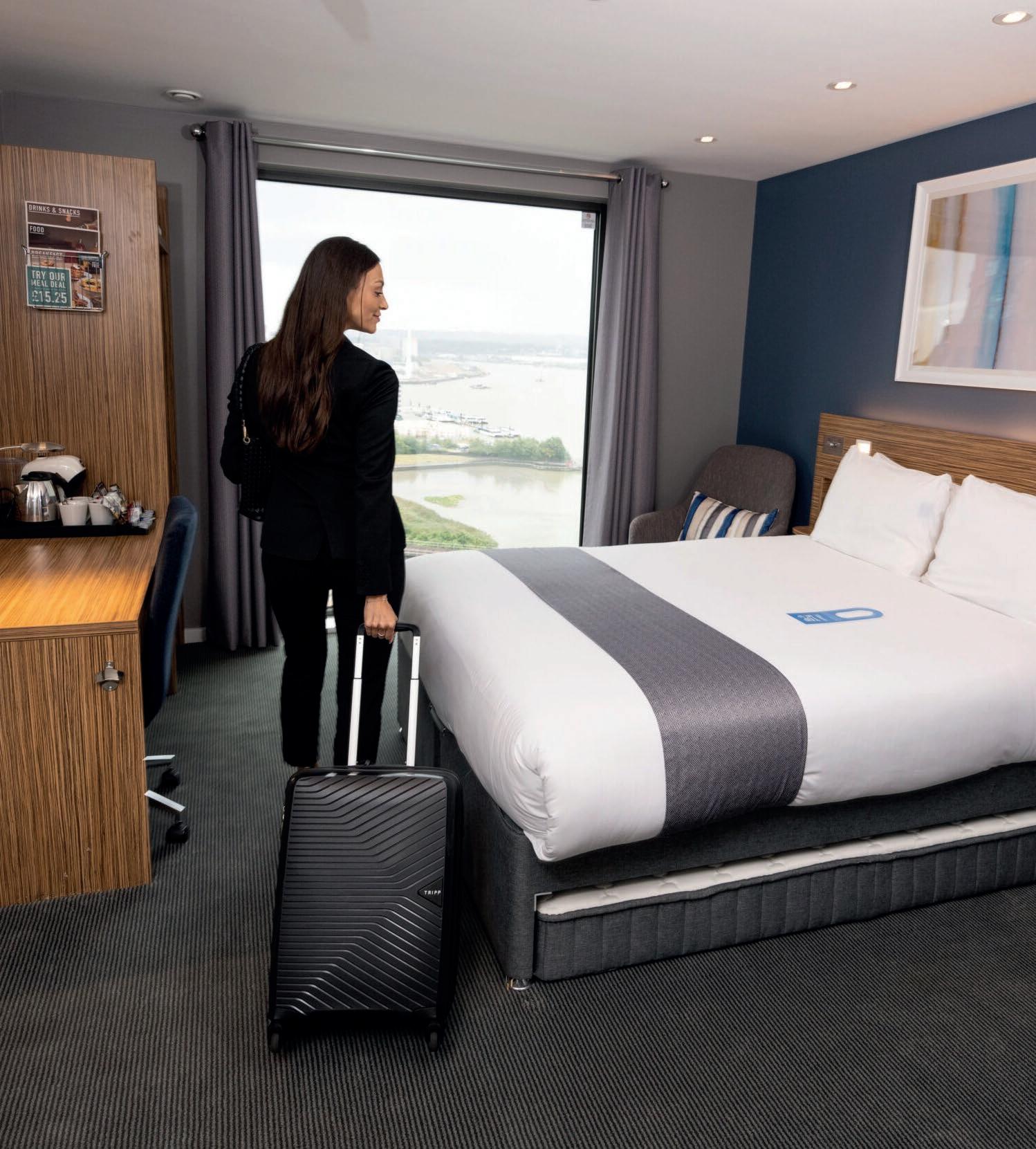
Travelodge says Business Pay “is used by tens of thousands” of UK companies.
Further benefits include no card or booking fees and a dashboard enabling tracking and control of spend. Another perk is that bookings can be amended or cancelled up to midday on arrival date.
Travelodge says around 30% of its business clientele is staying in London. It has 610 UK properties, 65% having the new, more luxurious, SuperRoom design.
“SuperRooms are located on a dedicated floor which tends to be quieter,” a spokesperson explains. “This balance of comfort and cost-efficiency appeals to SMEs, contractors and large corporates alike. Since the rollout of our new next generation rooms, we’ve seen a noticeable shift in the types of business travellers choosing Travelodge, particularly from professional sectors such as legal and financial services.”
Accor’s budget brand Ibis has designed services with business guests in mind.
“We offer round-the-clock snacks and drinks at our bars that suit irregular hours often worked by business travellers,” says a spokesperson.
“We also offer flexible dining options and breakfast buffets that cater to early starts or late arrivals. Our hotels have social hubs that double as networking spaces, with a
selection of Ibis properties also offering wellequipped meeting rooms.”
Another brand with a business travel niche is Days Inn by Wyndham, with more than 1,500 properties in over 20 countries, including 35 at UK motorway service areas. Some are being rebranded as Super 8 by Wyndham, including those at Durham and Chester.
Jackie Brown, Wyndham Hotels & Resorts Regional Director North & West Europe, says brands have adapted to business travel trends: “Hybrid and remote events have become a central aspect of the modern event landscape. As a result, our hotels and meeting rooms are equipped with state-ofthe-art technology to support in-person and virtual participants.”
Brown says Days Inn has strong relationships with TMCs and corporates, “particularly among contractors, drivers and government travellers” and collaborates with Welcome Break and Roadchef to respond to RFPs.
It’s all a far cry from how roadside accommodation used to be and yet another sign the budget sector is stepping up to cater for the business sector. There’s now a world of choice – with the good news that in both cash and sustainability terms, it isn’t costing the earth.
We chat with Nick Jacobs, Travelodge Sales Director, about how the budget hotel group is catering for business travellers and the importance of this sector
How is Travelodge developing its portfolio, product and services with business travellers in mind?
Over half of our guests travel for work and that’s why we’re investing in partnerships, technology and services that make booking, staying and managing travel easier. Our commitment to business travel is built on accessibility, reliability and value, underpinned by digital innovation and customer insight.
This year we have delivered our largest development programme in over a decade, with 21 new UK hotels opened so far and at least one more to come. This expansion focuses on key business hubs, transport corridors and growth areas like London.
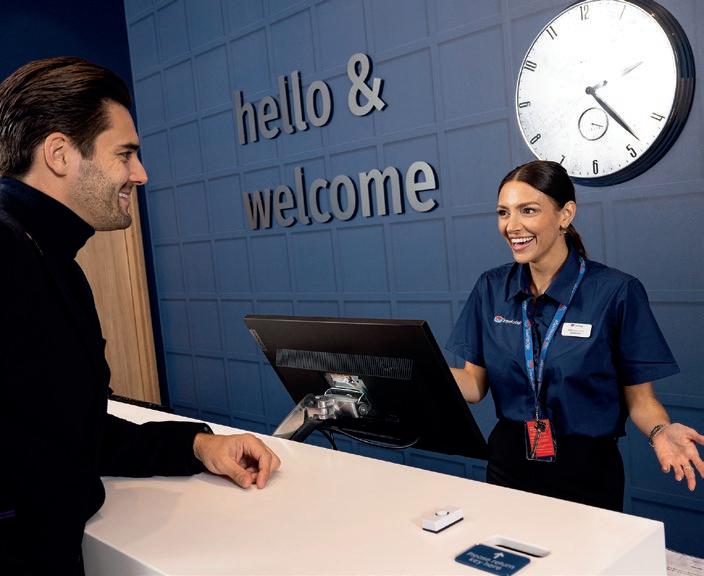
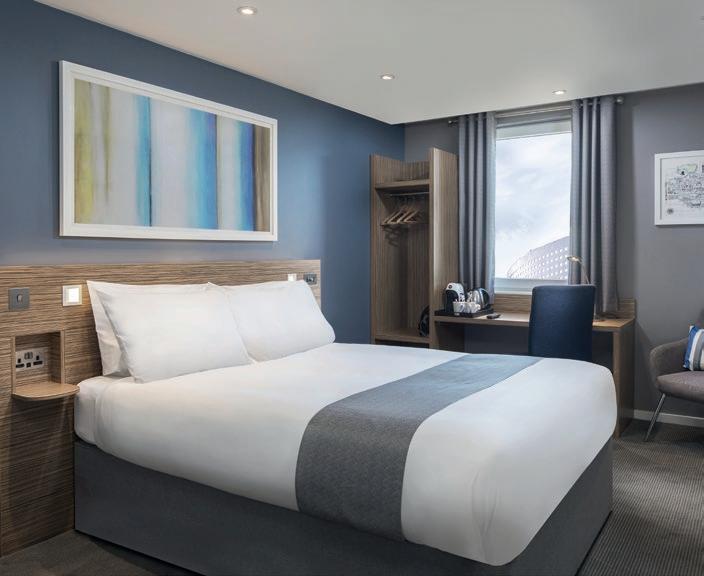
We’re continuing to upgrade our estate, with approximately 65% of rooms refitted with our updated design. Benefits include king-size Dreamer beds, tea, coffee and hot chocolate, comfortable working space with multiple USB and power points, Wi-Fi and blackout curtains.
Our ‘next generation’ SuperRooms feature a Lavazza coffee machine, Hansgrohe Raindance 3jet adjustable shower, hairdryer and wall mounted 32” Samsung Freeview TV. Our newest SuperRooms, in selected hotels, also now include an in-room fridge.
Over 200 of our hotels feature Bar Cafés offering breakfast, barista coffee and evening meals. And 77 of these hotels have been updated with our latest 85 Bar Cafés, which feature plug sockets and charging points, providing another working space.
How important is this segment to Travelodge?
The business travel segment is really important to Travelodge - it accounts for around half of our guests.
Over 80% of Travelodge hotels are in major cities and towns across the UK, Ireland and Spain, and we have identified 300 UK locations and 20 in Spain for further expansion. By the end of 2025, we will open a 151-room hotel in London Stratford, a former vacant office building moments from Stratford station, perfect for business travellers.
What booking/payment solutions does Travelodge offer the corporate market?
We offer various booking and payment solutions for the corporate market, including our own booking platform, Travelodge Business.
We partner with a diverse range of businesses, from small and medium-sized

enterprises to larger corporations, including several FTSE companies. We actively engage in discussions to understand and meet businesses’ varied needs.
We are also evolving the way business travellers book with us through global TMCs and tech specialists. We have launched new integration with our back-end payment, booking and connectivity functions, allowing partners to access our complete inventory.
This delivers better visibility, richer content and the ability to amend or cancel bookings directly.
How else is Travelodge working with the business travel sector?
Travelodge participates in industry events like the Business Travel Show and GBTA forums and we have ongoing collaboration with the Business Travel Association (BTA) and TMCs.
We have also recently partnered with Katanox to significantly extend distribution reach and provide customers with an even better booking experience and greater options. The partnership integrates Travelodge’s back-end payment, booking and connectivity functions, creating a smoother experience for TMC users. We are expanding distribution by partnering with a range of leading tech providers and hope to strengthen our presence across key booking channels.
Our commitment to business travel is built on accessibility, reliability and value, underpinned by digital innovation and customer insight”
Taipei has been a powerhouse in the consumer electronics world since the mid1980s and its reputation as a centre of innovation continues today. Big names like Google, Apple and Cisco are among those leading R&D in semiconductors, advanced chips and AI, while biotech and green energy are also booming, says Neal Baldwin
Getting there: Etihad offers perhaps the best-priced option from the UK, with daily flights from Heathrow with quick changes at its Abu Dhabi hub. China Airlines and EVA Air both offer
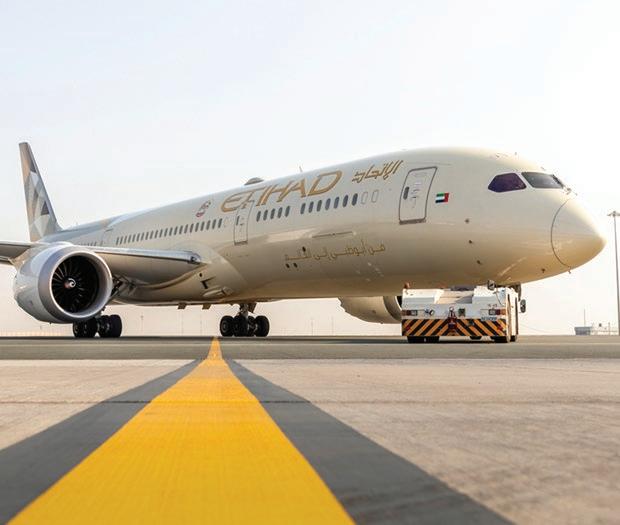
direct flights from London, while Emirates, Qatar Airways, Singapore Airlines and Cathay Pacific are all alternatives depending on your preferred stopover point.
Five-star luxury is in no short supply, with brands including Marriott, Shangri-La and Mandarin Oriental all

represented. The Grand Hyatt Taipei a favourite for corporate stays and conferences. The Okura Prestige Taipei offers Japanese-style elegance, while Kimpton Da An brings boutique flair to the Da’an district. For longer stays, CitizenM Taipei North Gate and Hotel Proverbs Taipei offer stylish, tech-savvy rooms with flexible layouts and great beds. The longawaited 260-room Four Seasons Taipei is slated to open in the central Xinyi District next year.
Food is a big deal in Taipei – look no further than its astonishing 38 Michelin-starred restaurants. Top of the tree is undoubtedly Le Palais, a Cantonese eatery inside the Palais de Chine Hotel, which has held three stars since 2018. Street food favourites including beef noodle soup, oyster omelettes and mango shaved ice can be found in abundance on Yongkang Street or the Shilin Night
Market. Meanwhile, Din Tai Fung’s original branch on Xinyi Road is a pilgrimage site for lovers of traditional dumplings (xiaolongbao).
Once business is done, there’s nothing better than taking a deep breath for the 1.5km climb up Elephant Mountain for incredible panoramic views of Taipei’s skyline. Afterwards, dive into the city’s thriving speakeasy scene. Lurking behind hidden doors – mainly in the Zhongshan District –these sleek bars typically have a 1920s prohibition feel. Alchemy, Bar Mood and Ounce are among the best.
Taipei’s sleek MRT metro system is clean, fast, bilingual and very cheap. Contactless EasyCards (like London’s Oyster card) can be bought and loaded at convenience stores and used on trains and buses. Taxis are
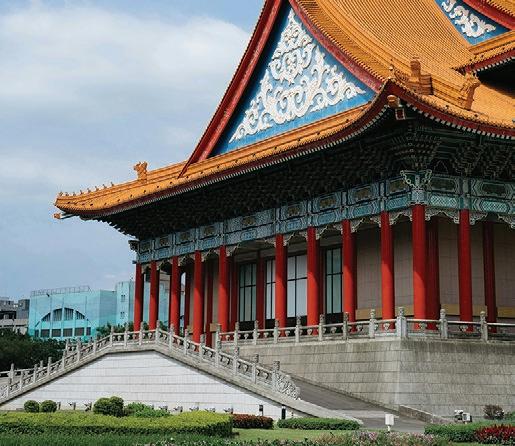
cheap and plentiful, though drivers may speak limited English. Uber is available as an alternative. From Taoyuan Airport (TPE), the Airport MRT gets you downtown in under 40 minutes for around £4.
Yangmingshan National Park, just 30 minutes from the city, has hot springs, hiking trails and volcanic landscapes. Take a trip to Jiufen, a misty mountain town that inspired cult Japanese animated movie Spirited Away, or hop on the cable car from Taipei Zoo to Maokong Station for the famous oolong tea plantations and teahouses.



















Fly to Taipei via Abu Dhabi


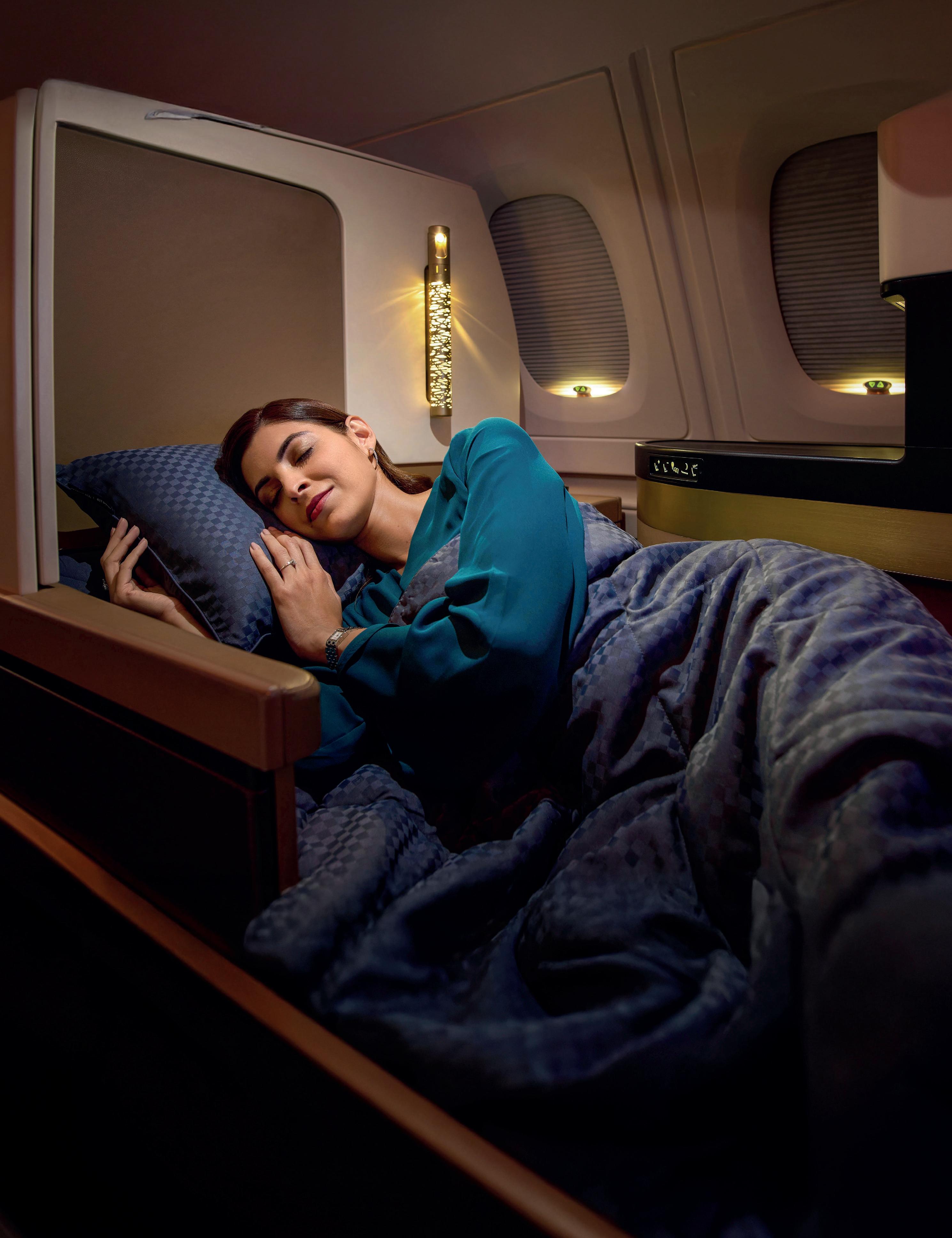









THE FLIGHT All Nippon Airways (ANA) surprised the industry with its upgraded The Room business class a few years back and the cabin still shines. Its B777-300 from Heathrow to Tokyo is the carrier’s flagship route and is popular with corporate travellers.
THE CHECK-IN The check-in was courteous and efficient. We were directed towards the lounge of Singapore Airlines (a Star Alliance partner), which was large with warm lighting and plenty of seating. We ordered Bloody Marys from the bar, which were delicious and spicy. The food offering included some tasty looking curries and finger sandwiches. My plant-based requirements were catered to as most salads were vegan and a few of the curries were meat free.
THE BOARDING Boarding was quick and easy. Our flight attendant showed us to our pods in the centre aisle, with the stewardess pointing out the shoulder seatbelts and asking me about my trip to Japan.
THE SEAT ANA’s B777 services are premium heavy because of demand, with cabins in a 1-2-1 configuration. Beige wood panelling and muted dark grey finishes make for a modern and sophisticated look. Seats are wide and comfortable, and there is a large and sharp entertainment screen, plus the usual array of storage, USB ports and plug sockets. At 5ft 1in I’m rarely squashed, but the luxury of the fully-flat bed seat was particularly welcome.
THE SERVICE I had forgotten to preorder a plant-based meal but this wasn’t an issue. That said, I was initially offered a cold tomato and courgette dish, which although beautifully presented, wasn’t to my tastes. Otherwise, the meat-free options were excellent – there was a wonderful ramen soup with tofu chunks, a vegetable curry with rice and beans, a superb tofu steak Thai style curry and summer rolls with soy sauce and okra. There was a generous choice of entertainment, and I could have opted
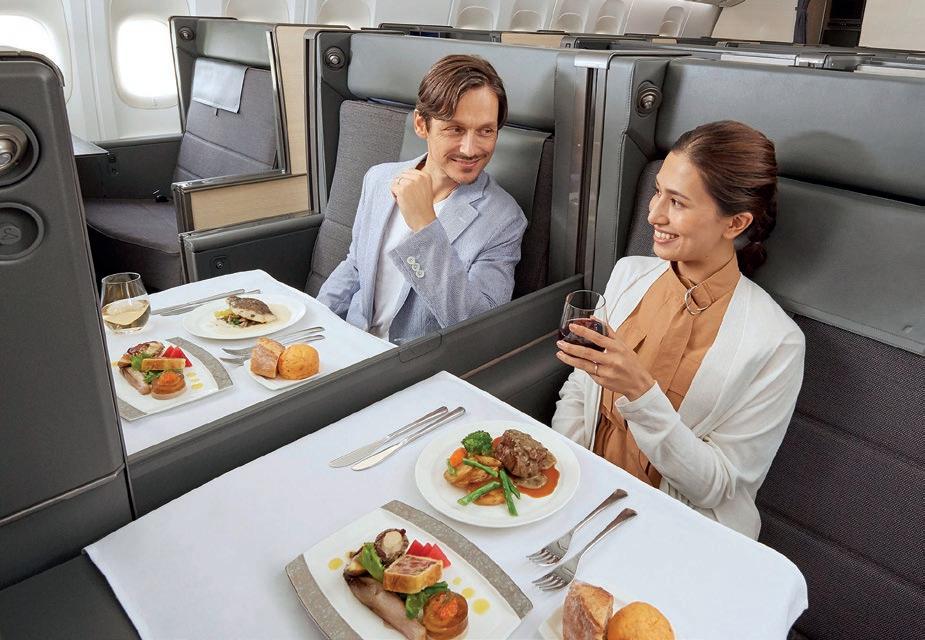

to follow the pilot's view on screen but I saved that for the descent. Wi-Fi was available, but connection was patchy.
THE MEAT-FREE OPTIONS WERE EXCELLENT – THERE WAS A WONDERFUL RAMEN SOUP
THE VERDICT The flight was a really positive experience from beginning to end. All our needs were catered for and we were treated delightfully by all crew.
THE DETAILS Return business class flights between Heathrow and Tokyo start at £3,400, ana.co.jp
Helen Jenkins
THE FLIGHT Emirates introduced a Premium Economy cabin on flights between Edinburgh and Dubai when it began flying an Airbus A350-900 on the route in January 2025. A total of 21 seats are available in a 2-3-2 configuration. Cream-coloured leather seats offer a footrest and recline up to eight inches, making them ideal for overnight flights departing from the Scottish capital at 8:55pm.
THE CHECK-IN I checked in 36 hours ahead of my flight, using my mobile phone. I took a 35-minute tram ride from St Andrew Square, near Waverley Station, to Edinburgh Airport. With two separate tickets for my journey to Singapore, I was a little concerned that I might have to collect my suitcase in Dubai and recheck it. However, the person at the baggage drop quickly took care of that, checking it all the way to Singapore.
THE BOARDING Emirates’ Premium Economy does not include lounge access, so I headed to a bar to watch
the evening’s Premier League game. Announcements were clear and I was one of the first to be called. The whole boarding was smooth and quick.
THE SEAT My aisle seat (16F) for the seven-hour flight to Dubai was in the third row of a subtly illuminated cabin. The broad armrest between seats meant that both my neighbour and I had no problem using it simultaneously.
My seat’s pull-out tray table gave me ample space to work on my laptop before settling down for a post-dinner nap. With a pitch of 40 inches between seats, there was ample room for me.
THE SERVICE I was welcomed to my seat with a choice of drinks by a crew member named Veronica, who provided excellent service throughout the flight. I opted for a glass of refreshing minted lemon. I selected the fish pie for dinner, served about an hour into the flight, and was impressed by the flavours and textures of a meal. I napped for a spell, then watched the first episode of The Assassin, a show normally available on
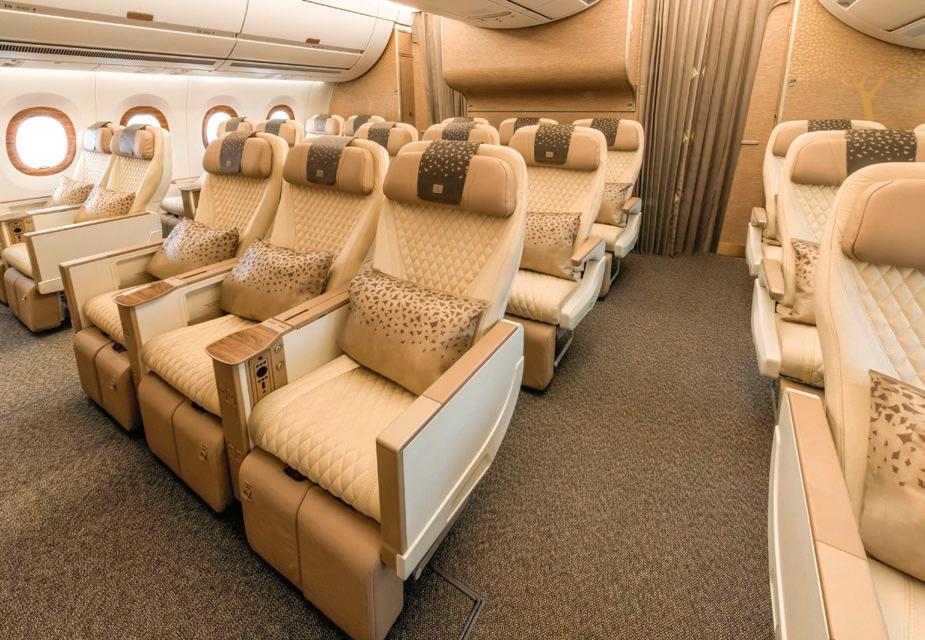
Amazon Prime. Breakfast was chopped fruit, yoghurt, plus a croissant and jam
I WAS IMPRESSED BY THE FLAVOUR AND TEXTURE OF MY FISH PIE DINNER
THE VERDICT There was ample room for me to stretch out, and with a 35kg baggage allowance I could have carried plenty more with me! It’s a cabin that I’d happily fly in again.
THE DETAILS Return Premium Economy flights between Edinburgh and Dubai from £1,615. emirates.com
Stuart Forster
THE FLIGHT United’s B787-8 Dreamliner service is a sleek and modern way to spend nine hours. We left Denver at 8.20pm local time, arriving into London Heathrow on schedule at 12.20pm. The business cabin has a 1-2-1 configuration, with the upgraded Polaris look that is to become standard across the carrier’s B787 fleet.
THE CHECK-IN I had the option to complete check-in on the app but instead chose to use the pre-flight directions which led me seamlessly to a dedicated Polaris check-in. I was seen straight away and warmly welcomed. The actual formalities of checking in were over in a flash. The West security section had just opened with the aim of streamlining the process and I was through in five minutes with no need to remove anything from my hand luggage. Flying out of Concourse A it was a single stop on the internal rail shuttle, then a short walk via a moving walkway to the new United Club lounge, which just happened to be a 30-second stroll from my gate.
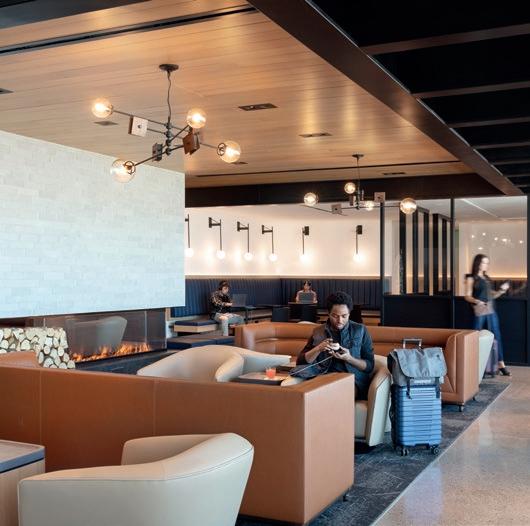
THE BOARDING The United Club lounge appears small at first glance but it's spread over two floors so there is plenty of room to relax. I grabbed a prosecco from the bar, which serves a full range of beers, wine and spirits and cocktails, before visiting the wellstocked buffet. The runway view and the fun robot that helps clear dishes were a perfect diversion while I enjoyed a couple of tacos and a great cheeseboard. It’s worth noting that United keeps its lounges quiet, with no boarding announcements, so the onus is on passengers to keep track of their flight’s boarding status. There was a
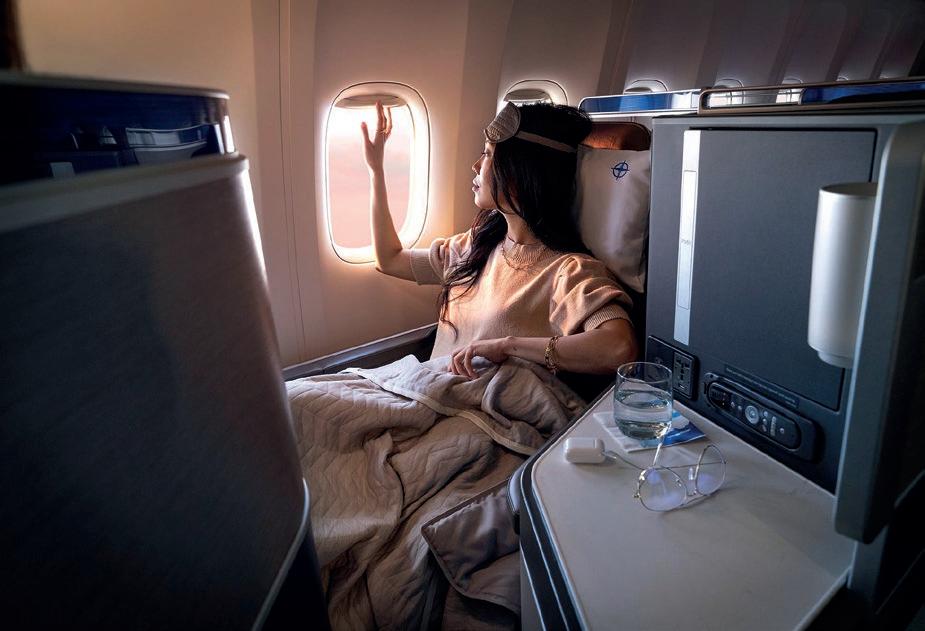
short queue of business class passengers at the gate, but I was quickly onboard with zero fuss.
THE SEAT Polaris seats all have aisle access, and since I was travelling with a companion we’d opted to sit in the ‘middle’ section of two (me in 4D). You can’t fault the seat for space and comfort, and the fact it converts into a fully-flat bed was especially welcome with an overnight journey ahead. The angle of the central seats adds an element of extra privacy if required, along with the high privacy screen. The seat itself had good storage, and an eye-level shelf with a couple of bottles of water is a nice touch that is perfect for storing things like books and glasses that you might want to have close to hand. There was no faulting the Therabody amenity kit that was packed with luxurious toiletries either. Noise reducing headphones and extras such as a cosy mattress topper, plush pillow and a SAKS Fifth avenue blanket added to the vibe that getting a great sleep was a priority.
THE SERVICE From start to finish the service was amongst the best I have experienced. The crew knew everyone’s name, were friendly without being overpowering, and so helpful. Once seated I enjoyed a glass of Champagne with some premium nut mix and was handed the menu and a hot towel. I’d already pre-ordered my main course via the app so they confirmed they had this and that service would commence as soon as we were airborne. I had an unusual appetizer of sliced watermelon radish with carrots, watercress and
whipped lemon ricotta and a super fresh baby red oak leaf arugula salad with mozzarella. The entrée was a seared Asian short rib with a delicious Asian-style barbecue sauce, sweet potato cakes and stir-fried vegetables. I’d overindulged in the United Club lounge so skipped dessert but, looking around the cabin, the lemon curd cheesecake and artisan cheese plate both looked popular. During the flight there were sweet and savoury snacks, fruit and drinks available, although most people chose to sleep. On waking in the morning I was immediately served some great coffee and a decadent American-style cooked brunch with eggs, sausage and roasted veg. My companion, meanwhile, sung the praises of the banana bread pudding with fresh berries.
I TOOK THE TIME TO FILL IN THE FEEDBACK FORM TO HIGHLIGHT SOME OF THE HELPFUL CREW
THE VERDICT Professional and friendly crew, a well thought out cabin, great F&B and fabulous on-demand inflight entertainment ticked all the boxes. The whole experience put United up there as one of my favourites to travel with and, after experiencing the different cabins in the past, it is clear the airline looks after all their travellers, not just the ones up front. I was so impressed that, for once, I took the time to fill in the requested feedback form after the flight, just so I could highlight some of the helpful crew I had interacted with.
THE DETAILS United Polaris (business class) flights between Denver and London Heathrow start from £2847.79, united.com
Kirsty Hicks
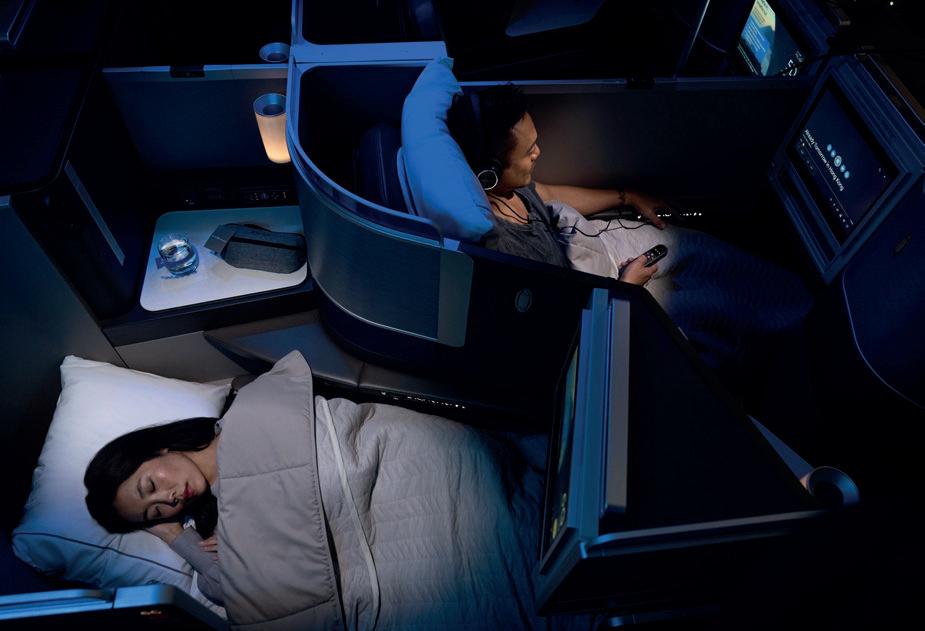
The inaugural Biz Trav Quiz saw 14 teams battle it out at the Tower Suites by Blue Orchid on October 20. The quiz, co-hosted by The Business Travel Magazine and temoji consulting, attracted teams from all sectors of the industry. The winning team was Focussed & Fabulous, put together by the Focus Travel Partnership.
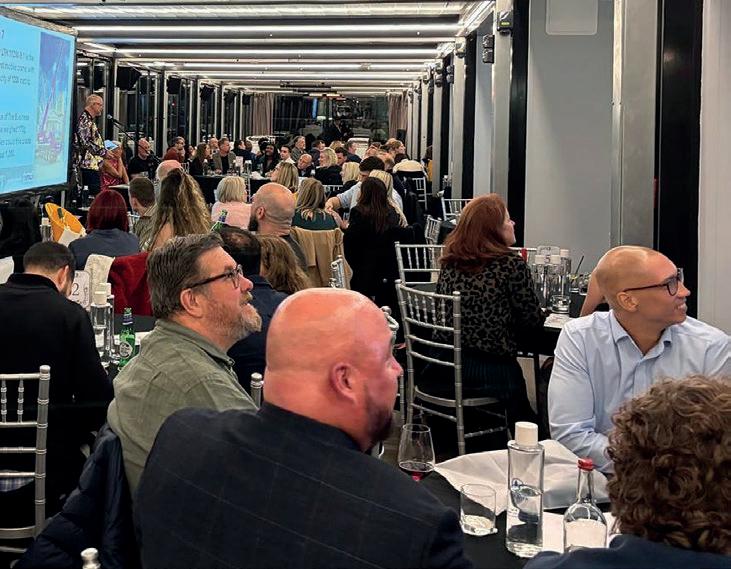

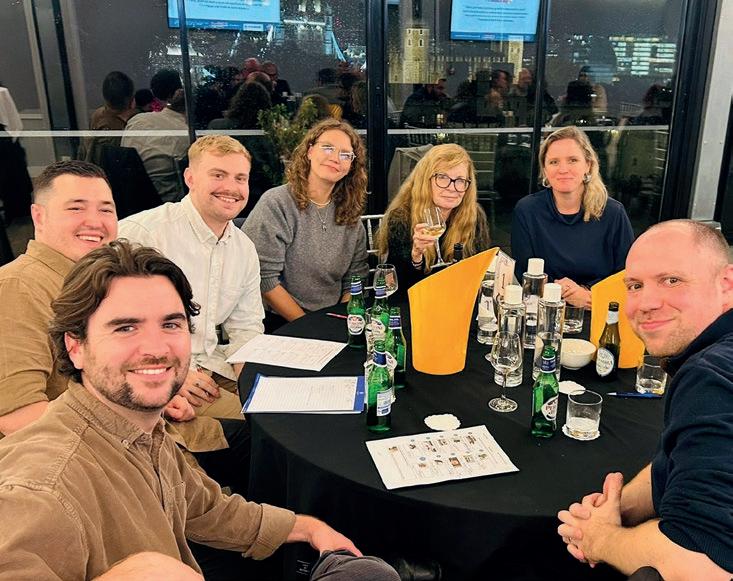
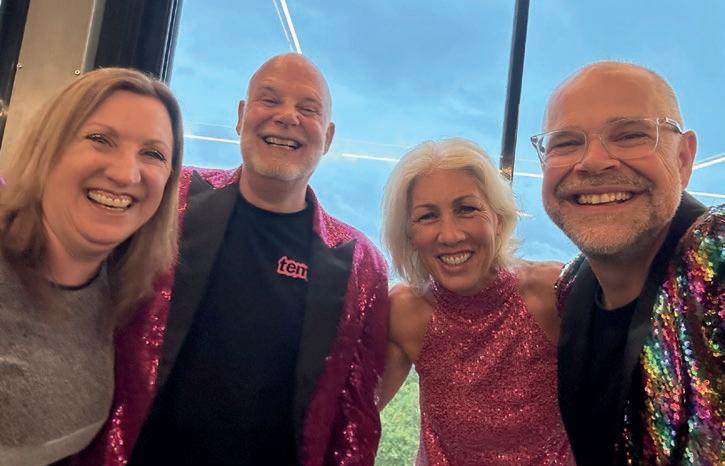
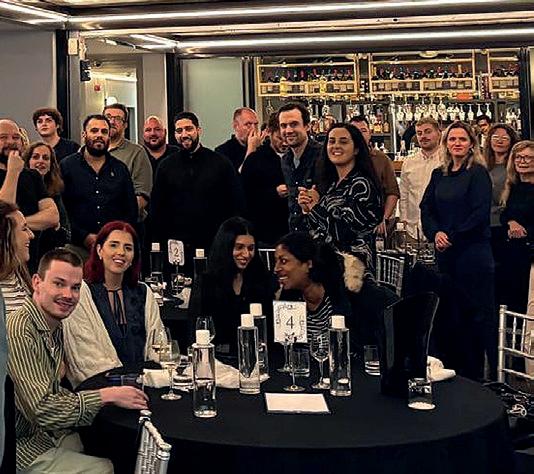





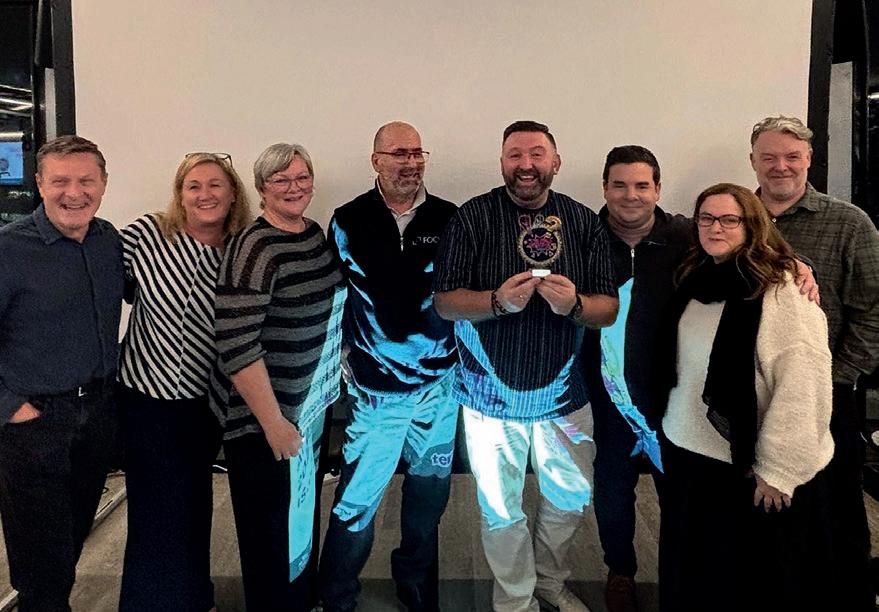
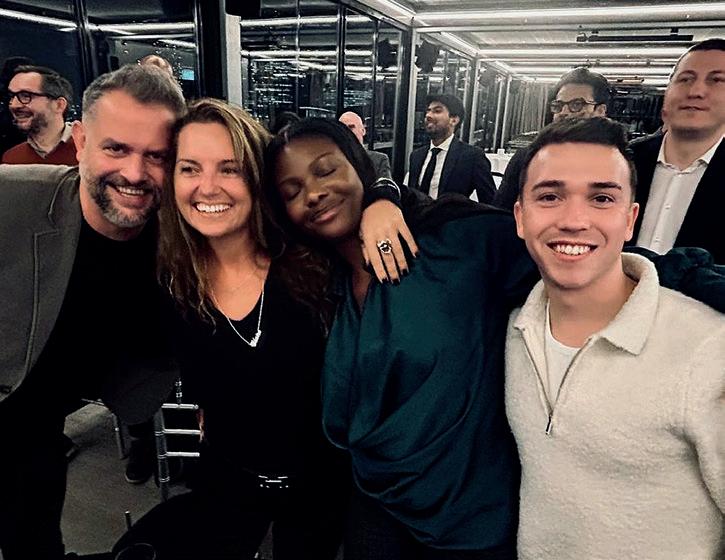



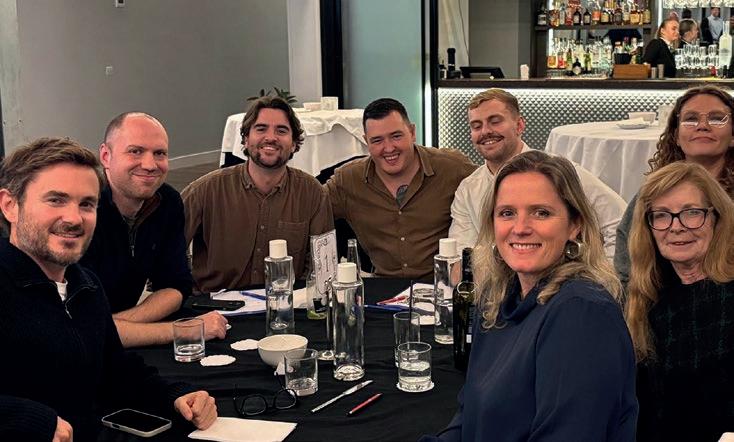
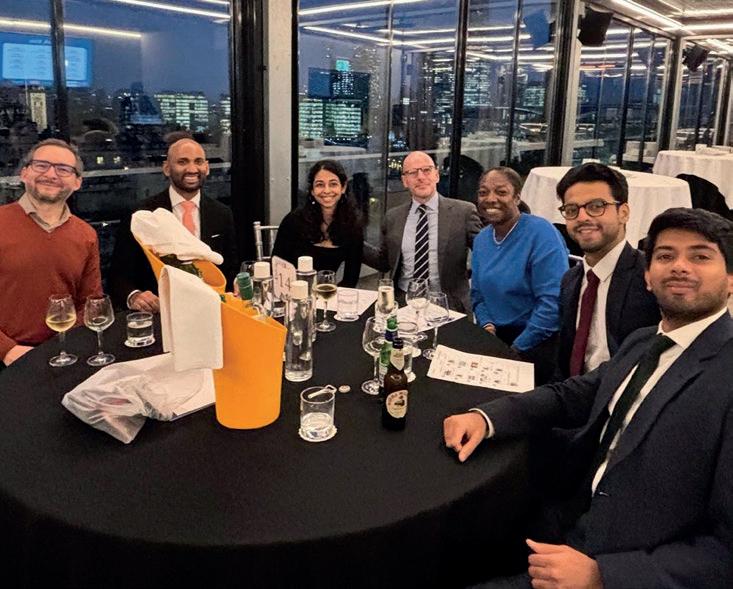






Water bowls, beds, blankets, treats, balls, toys, towels, even branded poo bags –when it comes to petpampering in hotels we thought we’d seen it all.
But then news popped into our inbox about a new dog-friendly initiative by Virgin Hotels London Shoreditch that took it to another level.
Catering for the growing number of travellers who simply can't go away without their pooch in tow – even on New Year's Eve – the hotel has launched 'Calm for Canine', an in-room TV channel designed to help dogs who don't like the noise of fireworks.
Nervous muts will be treated to soothing scenes of dogs running carefree in fields, gentle waves lapping beaches, rabbits playing in snow and eating carrots, and red squirrels steeling walnuts, all
with relaxing classical music to keep them chilled. If that doesn't distract them from the New Year bangers and rockets, owners can choose from a special 'Bone Appetit' menu for true V.I.Ps (Very Important Pups),

If, like us, you got hooked on Celebrity Traitors and can't wait for the next series, here's how to get a quick fix.
Perfect for your work
New research has
most
cities for getting around, based on taxi fares, the price of local public transport, daily car rental rates and fuel prices. Here are the cities where you'll be spending the most:
with delicious doggy dishes like Fillet Steak and Rice or Raw Beef Tartare, paired with Bark Brew Dog Beer or the Paw Star Dog Martini, which are actual drinks for dogs, but only if they're over 12 weeks old and have ID! of their needs," says Harding Bush, a former
Overpacking remains the most common traveller blunder, even among the world's most frequent flyers. According to travel risk specialist Global Rescue, our inability to pack light is both for practical and psychological reasons. Anxiety about losing control, past trauma from forgetting essentials and an attachment to home could all be to blame.
"Travellers often pack for their fears instead of their needs," says Harding Bush, a former Navy SEAL and the


Christmas do, the Imposters Dinner Experience from Adventure Connections and party organisers, Office Christmas, is a three-course catered meal with a Traitorsinspired game of murder and deception for 15-150 people, Work together (and against each other) to uncover the imposters, helped by actors from West End Events.
There's no Claudia Winkelman at breakfast, but it's still devilishly fun.




Associate Director of





Ryanair's overweight baggage fees might help?