
Quantitative Biology and Physiology, Translational Research in Biomaterials, Synthetic Biology & Biotechnology, Biological Feedback Control
Quantitative Biology and Physiology, Translational Research in Biomaterials, Synthetic Biology & Biotechnology, Biological Feedback Control















Friday, December 5, 2025


RKC-101 (Eichenbaum Colloquium Room) 610 Commonwealth Avenue








CILSE - Kilachand Center for Integrated Life Sciences & Engineering





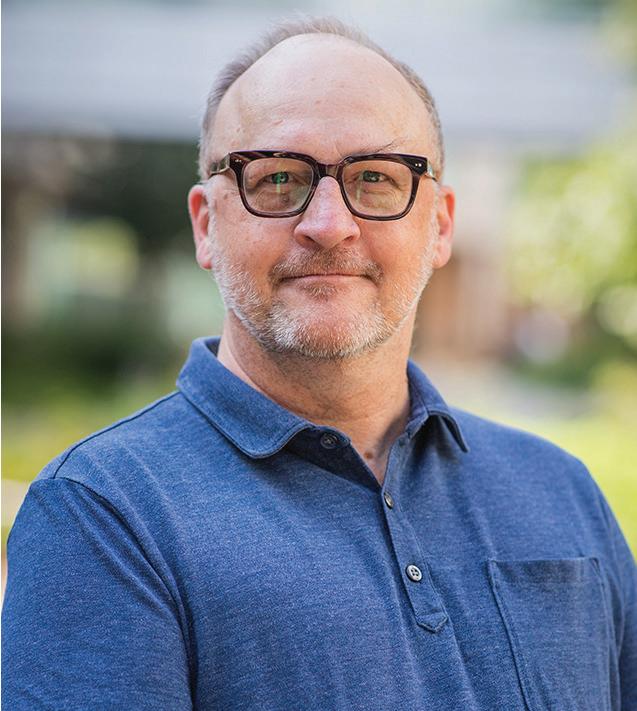
Director, Biophotonics Research Center
Sherwood Moore Professor of Radiology Director, Imaging Sciences Pathway Co-Director, Imaging Sciences Doctoral Program
Washington University School of Medicine
Joseph P. Culver, PhD, is the Sherwood Moore Professor of Radiology for Mallinckrodt Institute of Radiology (MIR) at Washington University School of Medicine in St. Louis. In 2022, he was named director of the Biophotonics Research Center, which harnesses the power of light to develop methods for understanding, diagnosing and treating human diseases. He also serves as co-director of Washington University’s Imaging Sciences Pathway and its Imaging Sciences PhD program. Culver’s work has been at the leading edge of functional and molecular biological imaging, particularly in leveraging noninvasive optical measurements and advancing diffuse optical tomography (DOT) technology. He received his doctorate degree and completed biomedical optics postdoctoral training from the University of Pennsylvania.
The QBP program (QBP) is for PhD students with an interest in studying biological phenomena at all length scales using a combination of computational and experimental techniques. Supported by the National Institute of General Medical Sciences (NIGMS), a large fraction of the BME faculty, as well as faculty from other departments, are included among the advisors for this program. Trainees follow a specialized curriculum and are involved in a number of enriching activities, including journal clubs and retreats.
To improve prospects for biomaterials solutions for tissue engineering and drug delivery, the National Institutes of Health (NIH) awarded a five-year training grant to the Biomedical Engineering Department in its nascent Translational Research in Biomaterials program (TRB). Conceived in 2006 in response to student interest, the TRB program seeks not only to train PhD students in scientific aspects of biomaterials, but also to provide them with a solid understanding of clinical trials, commercialization strategies and other concepts needed to effectively transition research ideas from the laboratory to the clinic.
The goals of the Synthetic Biology and Biotechnology (SB2) Predoctoral Training Program at Boston University are to provide a unique, field-defining, and interdisciplinary training environment in synthetic biology, directly in the heart of Boston, that enables trainees to: 1) predictively engineer complex biological systems through laboratory research and a holistic curriculum, 2) learn how to develop and translate breakthrough biotechnologies that can drive new inventions, products and therapies and 3) develop the professional and operational skills of team science, interdisciplinary thinking, and communication that are so crucial for success across the full array of careers in biotechnology and biomedical science.
BU’s newest graduate training program, Biological Feedback Control (BFC), is funded by the National Science Foundation. This exciting new program will form an interdisciplinary community of students and faculty that combines the study of the engineering principles of feedback control with investigations on how biological systems self-regulate, adapt, heal, and evolve. This program is open to all PhD students in engineering, natural sciences, physical sciences, health sciences, and data science.
22nd Annual
Friday, December 5, 2025
Student Emcees: Aedan Brown; Michael Wallace
KEYNOTE PRESENTATION
8:30 - 9:00 Registration/Breakfast CILSE Lobby
9:00 - 9:20 Symposium Welcome Remarks CILSE 101
Shannon Stott, Ph.D., BME Chair
Darren Roblyer, Ph.D., BME Faculty
Kate Herrema & Maya Bartels, QBP Co-hosts
9:20-10:20 Student Speakers CILSE 101
Aarohi Mehendale
Dev Raj Mehrotra
James Robson
Aalanna Farrell
10:20-10:50 Coffee Break CILSE Lobby
10:50-11:50 Student Speakers CILSE 101
Maryam Dashtiahangar
Zoe Garman
Audrey Van Heest
Jordan Smiley
12:00-1:00 KEYNOTE PRESENTATION
Joe Culver, PhD
Prospects for Semantic Mapping and Decoding with Optical Brain Imaging
1:00-2:30 Student Poster Session and Lunch Reception CILSE 106B/CILSE Rear Lobby
CILSE 101
9:20-9:30
Aarohi Mehendale
Spatial Frequency Domain Imaging (SFDI) for assessment of skin involvement in Scleroderma
QBP Training Grant Roblyer Lab
9:35-9:45
Dev Raj Mehrotra
Non-destructive Longitudinal Raman Spectroscopic Monitoring of Osteoarthritis
Treatment Progression
QBP Training Grant Albro Lab
9:50-10:00
James Robson
Deciphering Sequence-to-Function Frameworks of Programmable RNA Sensors
SB2 Training Grant Green Lab
10:05-10:15
Aalanna Farrell
Investigating mechanisms of vascular toxicity by tyrosine kinase inhibitors in cancer treatment
TRB Training Grant Chen Lab
10:55-11:05
Maryam Dashtiahangar
High-throughput assessment of cooperative cofactor recruitment to composite DNA elements
SB2 Training Grant Siggers Lab
11:10-11:20
Zoe Garman
Investigating the role of relaxin-2 in uterine fibroids
TRB Training Grant Grinstaff Lab
11:25-11:35
Audrey Van Heest
Engineering Tumor Microenvironment-Responsive Biosensors for Precision Oncology
SB2 Training Grant Hao Lab
11:40-11:50
Jordan Smiley
Enhancing Vaccine-Induced Immunity with Self-Amplifying RNA
TRB Training Grant Grinstaff Lab
CILSE 106B
James Roberts
AI Agents for Biological Design Tools
QBP Training Grant Densmore Lab
Aedan Brown
Evolutionary simulations of metabolism reveal role of constant selective pressure
QBP Training Grant Cleary Lab
Samuel Zhou
Dopamine loss alters striatal cholinergic interneuron intracellular dynamics and movement encoding QBP Training Grant Han Lab
Emily Davis
FAK as a central mediator of provisional matrix assembly during stromal repair
TRB Training Grant Chen Lab
Sophie Zic
Building a custom system to perform sequential spatially resolved transcriptomic experiments
TRB Training Grant Cleary Lab
Christopher Lu
Implementing Base Editing to Correct a Pathogenic Variant of Wolfram Syndrome for Preventing Neurodegeneration
TRB Training Grant Banskota Lab
Rockwell Tang
Neurogenic low frequency blood flow oscillations and microcirculatory perfusion associated with stroke recovery
QBP Training Grant Boas Lab
Ezra Cho
Modulating Antigen Processing through Nanoporous Cages to Bias Adaptive Immunity.
TRB Training Grant Teplensky Lab
Siyi Zheng
Harnessing DNA-based vaccines to generate lung-resident immunity
SB2 Training Grant Teplensky Lab

Boston
University Department of Biomedical Engineering