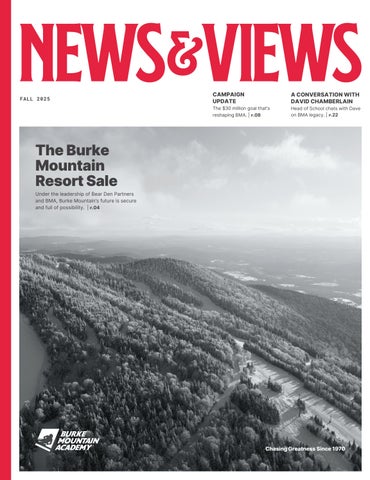
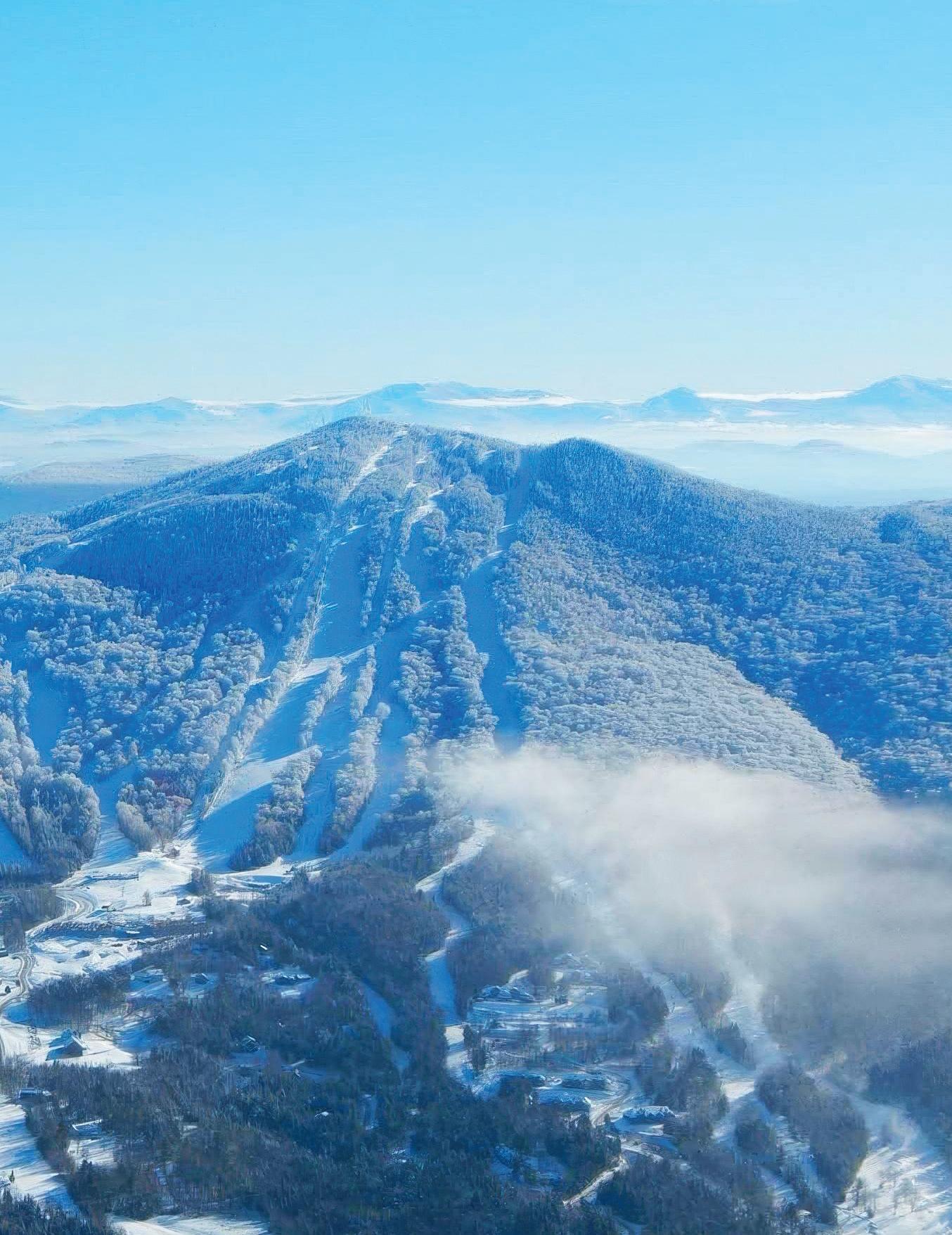
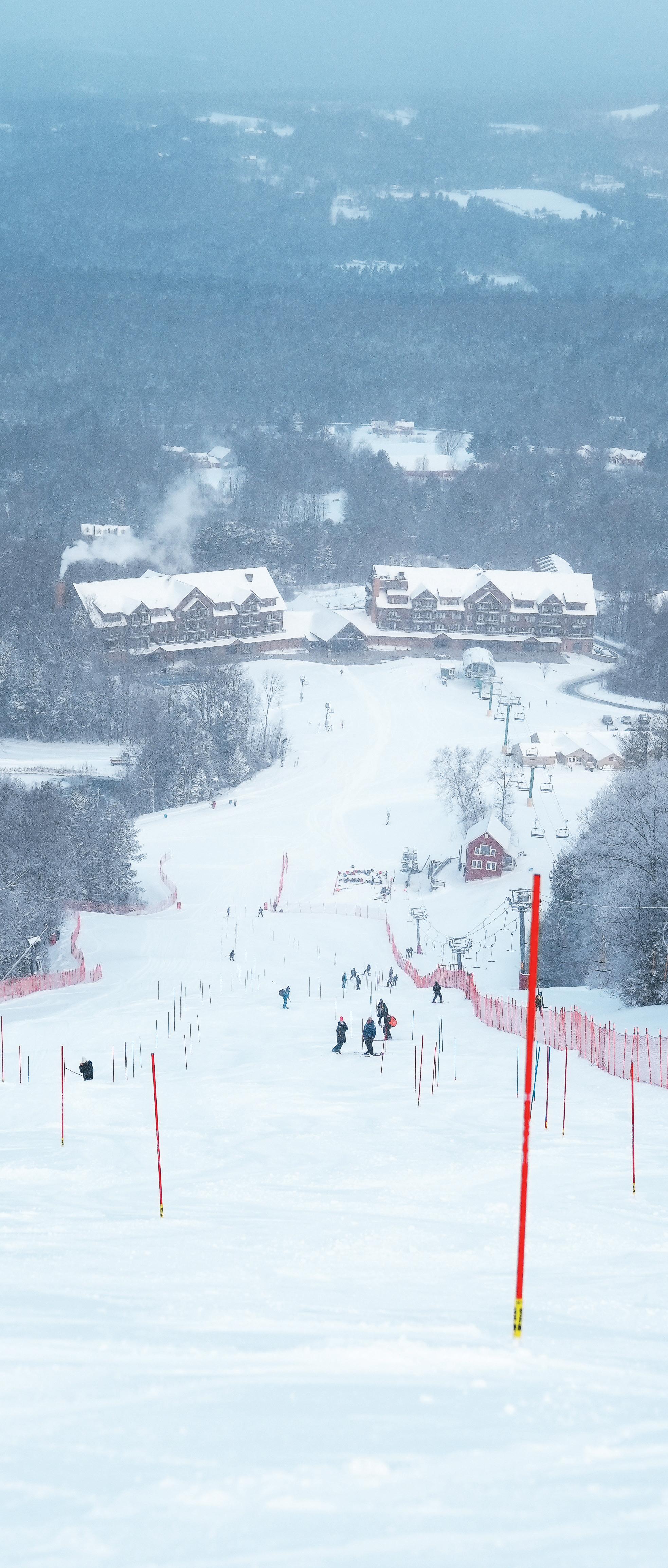
Under the leadership of Bear Den Partners and BMA, Burke Mountain’s future is secure and full of possibility. | p.04
CAMPAIGN UPDATE
The $30 million goal that’s reshaping BMA. | p.08
A CONVERSATION WITH DAVID CHAMBERLAIN Head of School chats with Dave on BMA legacy. | p 22 Chasing Greatness Since 1970
CHASING GREATNESS
Most of us are capable of so much more than we think we are. When we chose to come to Burke we chose not to be most. We chose to be that one-in-a-million who push themselves to their limits and beyond. We came from all over the world to this postage stamp in Nowheresville, VT. This collection of eight or nine red houses on the side of a mountain. We came for the same, simple reason. To find out just how far we can go. Here, we choose to know. Here, we Chase Greatness.
IMOMENTUM AND MILESTONES
WILLY BOOKER’96
would imagine that working at any boarding school is a dynamic experience, but it seems incredibly so here at Burke. Over the past few years, our world, local environment, sport, educational resources, and consequently our school have been evolving at a terrific pace. Just when you think you’ve adapted to the “new normal,” another tectonic shift arrives.
Amid it all, here sits our little school—perpetually in top gear, accelerator mashed to the floor, chasing every opportunity to extract a little more performance, to find a few more hours in the day, all in an effort to create the most memorable Burke experience for our students.
Remarkably, our school has proven well-suited to adapt and thrive in this extreme environment. Our small size, flexibility, community support, and bedrock values instilled in BMA’s culture by our founders have enabled us not only to endure but also to thrive in spite of the shifting sands under our feet. Indeed, as I look to the not too distant future, I’m more optimistic about the prospects for our school than ever.
A Season of Achievement
The 2024-2025 school year was a remarkable one and marks an important inflexion point for BMA. First and foremost, it was something of a breakout year for our students. It would be challenging to capture all of the standout results in this letter, but there were highlights in every ski group that indicated that something special was happening. As the season progressed, the momentum that had been building for the past few seasons reached a new level. We are incredibly proud—not just of the outstanding results—but of the effort our athletes put forward, the positive attitude they brought to their training, and the great sportsmanship and teamwork they embraced. It was a year worthy of celebration.
Expanding our Horizons: The European Initiative
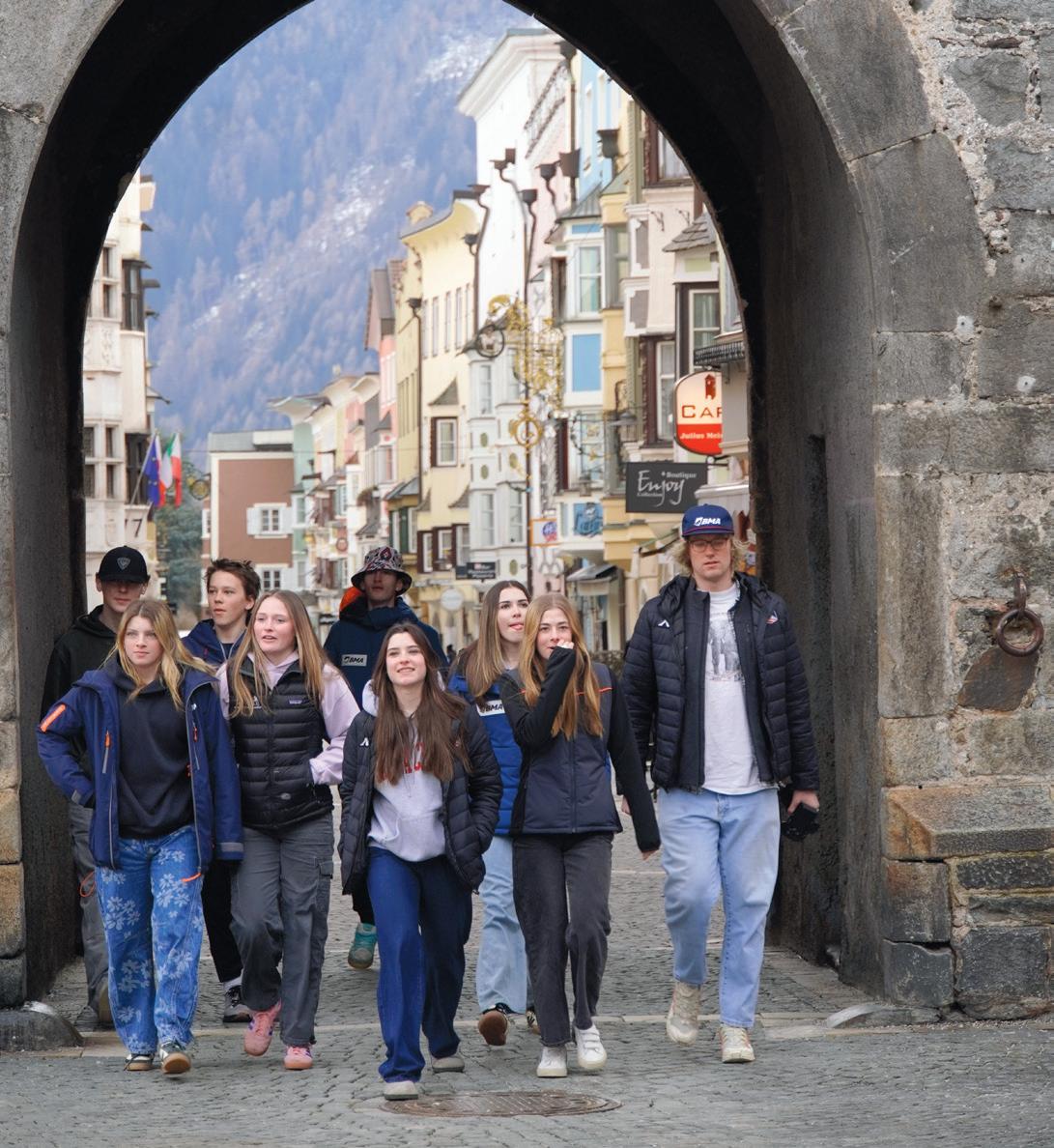
The second milestone for this year was the launch of our new European initiative based in Sterzing, Italy. This winter, every current Burkie had an opportunity to spend time at our new training base thanks to funds made available from Chasing Greatness: The Campaign to Win from Within. It was an impactful experience, and we look forward to expanding the program. In addition to the ongoing trips available
to all students, our postgraduates and a handful of students will spend most of the winter in Sterzing. The European initiative is a vital step forward for BMA as we prepare our students to compete on equal footing with the best in the world.
surrounding the potential sale, Ken became deeply passionate about a vision for the mountain and the critical need to stabilize the resort for the school, as well as for all stakeholders in the greater Burke area.
Also at the heart of this development is Jon Schaefer, owner of Berkshire East and Catamount resorts. Jon, Ken, and I spent years discussing the unique potential of Burke. He concluded that only a group with strong community ties and deep resort operations experience could lead the mountain into a sustainable future. Bear Den Partners LLC was created, and Burke’s future was secured.
Looking
Ahead with Gratitude and Confidence
FROM, WILLY
Just as importantly, this program opens new doors for cultural exploration and global learning. We are entering into a partnership with the Sterzing Sports High School, which has a well-regarded alpine program. Thanks to this new collaboration, there are exciting opportunities for language immersion, cultural exchange, and the sharing of best practices in sport and education. Now more than ever, providing an education that cultivates a broader worldview seems critically important, and we are thrilled to see where this program takes us over the next several years.
A New Chapter for Burke Mountain
by WILLY BOOKER’96
As fall in the Northeast Kingdom unfolds outside my window, it feels almost bittersweet to redirect our focus to the very season that gives us purpose. Today, with renewed enthusiasm, I write about the state of our school and the optimistic atmosphere that permeates this academic year. The campus culture and “vibe” feel particularly strong.
Following an in-depth brand audit and our collective reflections on the unique Burke experience, BMA’s timeless mission stands reaffirmed.
Mission: To Champion Ski Racers Chasing Greatness. Vision: To Be the Best Ski Academy in the World.
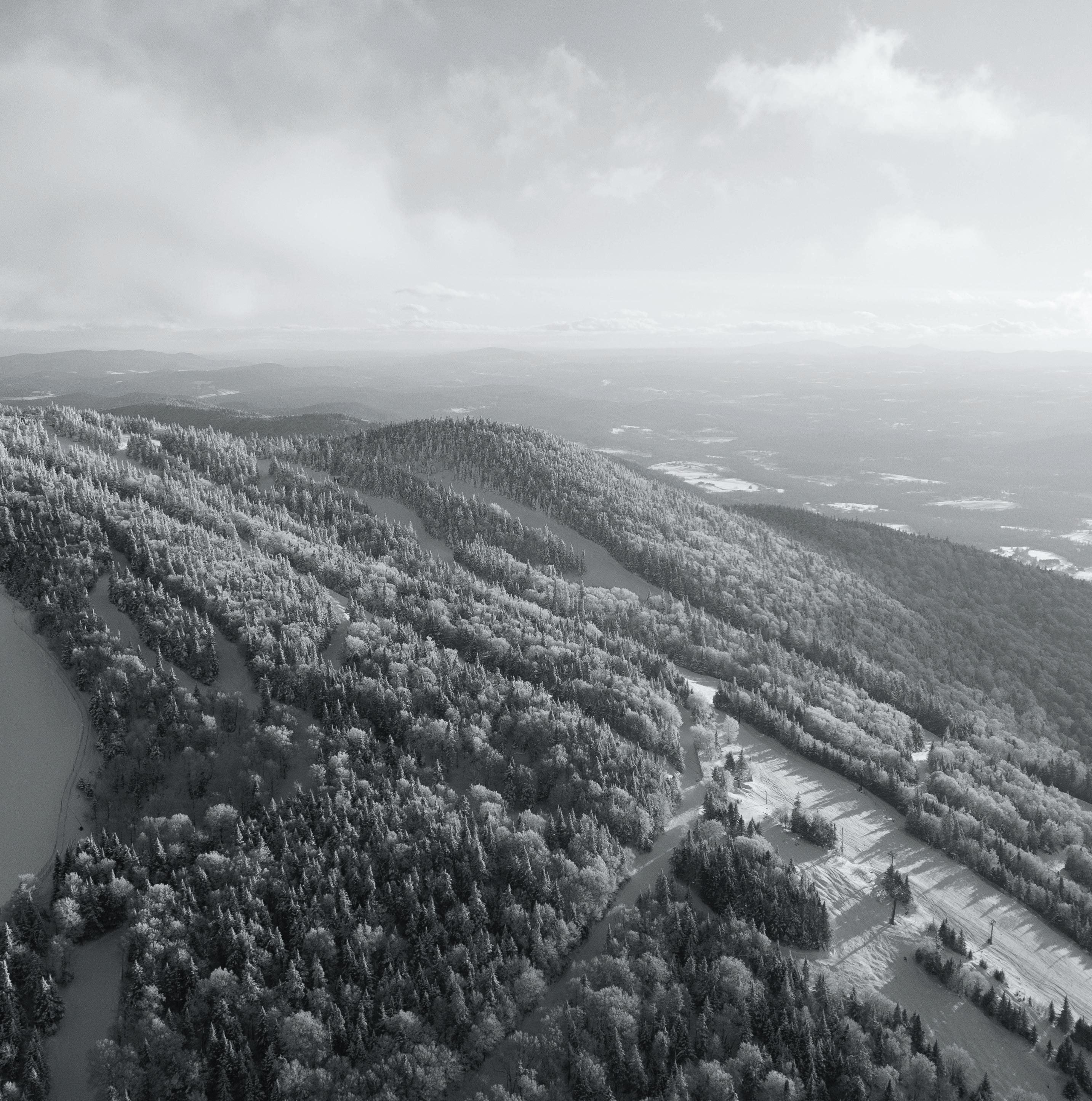
Finally, you may have heard that there have been some very exciting developments regarding the ownership of Burke Mountain—our training venue, an extension of our campus, and our literal backyard. After decades of instability and a rocky ownership history, the mountain was operated for nearly a decade by a court-appointed receiver following a federal seizure in 2016. While BMA continued to thrive thanks to our ski rights, the broader resort languished in a state of suspended animation. Today, with renewed enthusiasm, I write about the state of our school and the optimistic atmosphere that permeates this academic year. The campus culture and “vibe” feel particularly strong. Following an in-depth brand audit and our collective reflections on the unique Burke experience, BMA’s timeless mission stands reaffirmed.
This is an extraordinary moment for BMA. Having an ownership group that understands and supports our school's strategic vision is more than we could have ever hoped for. As corporate consolidation and mass pass sales have transformed the industry, it has become increasingly difficult to find ski racingfriendly venues. Under this ownership group, ski racers will always have a home at Burke Mountain. Critically, the Schaefer family brings decades of resort operation experience—an essential skill set that has long been missing from the Burke story. Finally, as the ultimate vote of confidence, the Graham family has generously donated a share of the mountain ownership to BMA, ensuring not only our training rights but also securing a permanent seat at the table as stewards of this vital part of our ecosystem.
It’s a resolution that feels both hard-earned and full of promise.
We have much to celebrate—and yet, still so much to do. What more could we ask for?
The world needs individuals who value hard work, critical thinking, intellectual risk-taking, and most of all, collaboration—qualities that Burke continually fosters. But are we doing enough? Success hinges on engaged and dedicated student-athletes. We’ve always believed that a blend of academics, athletics, and community cultivates holistic student growth. Today, coaches are free to coach; teachers can focus on teaching; and students can grow, learn, and be kids. By reaffirming our mission, vision, and dedication to the pursuit of greatness, we ensure the invaluable skills that benefited past students are actively nurtured today. We’re deeply thankful for your unwavering support. Here’s to a fantastic year. I’ll see you on the hill.
Our 50-ish celebration emphasized the evident and enduring influence Burke has on its alumni. Not only do Burkies excel in their chosen fields but many credit BMA with shaping their foundational abilities and character. Given the changing landscape of ski racing, education, and work, are the skills and values fostered at Burke still relevant? I believe they’re as crucial now as they have ever been.
As of May 2nd, 2025 the mountain has a viable ownership group that promises not only to stabilize the resort, but to carefully grow the business over the long term.
Unsurprisingly, the new ownership group has deep ties to BMA. Bear Den Partners LLC is headed by Ken Graham’81 and backed by the Graham family. Over the years of closely following the developments
Hope to see you in the Kingdom soon.
Willy
Booker,
Head of School
Best regards,
WILLY BOOKER’96 HEAD OF SCHOOL
1930 s
• CCC cuts Wilderness and Bear Den trails
A NEW CHAPTER FOR BURKE MOUNTAIN
1955–1987
• First lift installed; summit lift arrives in 1966
• Burke Mountain Academy founded (1970)
• Lower mountain lodge and lifts added (1978)
• Bankruptcy declared in 1987
1987–2005
• Series of private owners: Paul Quinn, Bernard & Karen Schaefer, North Star Group
• BMA manages the resort (2000–2005), proceeds from the 2005 sale support the Graham Endowment
2005–2012
• Lubert-Adler ownership era
• High-speed quad installed (2012)
• Ownership transferred to Ariel Quiros
2012–2016
• Quiros era marked by EB-5 fraud and SEC intervention 2016–2025
• Resort managed under SEC Receivership
• High-speed D-Bar installed (2017)
• Snowmaking improvements and deferred payments benefit BMA
2025–PRESENT
• Bear Den Partners acquires Burke Mountain Resort
• New investments announced in snowmaking, lifts, and terrain
• Reinforced partnership with BMA
Bear Den Partners, LLC, led by Ken Graham’81 and Jon Schaefer, officially acquired Burke Mountain Resort. As part of the acquisition, Burke Mountain Academy has entered into minority ownership, securing a formal stake in the mountain that has shaped generations of Burkies.
by MERYL WILLETT
While the legal transaction happened quickly, the path to this moment has taken years, even decades. After a prolonged period of instability during the mountain’s time in receivership, ongoing questions about resort ownership created a sense of uncertainty, not just for the mountain but for the school and the broader community that depends on it.
Burke Mountain Academy, like many others, has long hoped for a resolution that would safeguard the mountain’s integrity and ensure its ability to serve as BMA’s training and race venue for athletes at every level.
“This is without question the best outcome we could’ve hoped for,” said Head of School Willy Booker’96. “Burke Mountain is now in the hands of people who understand and value what makes this place special.”
Bear Den Partners brings a balance of history and vision to the resort. Ken Graham’81, a BMA alumnus and longtime supporter, has deep personal ties to the school and the mountain. Jon Schaefer, whose family owns and operates Berkshire East and Catamount ski areas, brings decades of experience running independent resorts. Together, they share a belief in mountain sport as a lifelong pursuit, and in Burke as a place where those ideals can thrive.
Their commitment was evident from the outset. Just weeks after the sale, the new ownership team announced a significant investment in snowmaking that will nearly triple output before the start of the 2025–2026 season. The upgrade will allow the mountain to open earlier, operate more reliably, and
support consistent training conditions through the full arc of winter, benefiting not just BMA athletes but hundreds of other racers, coaches, and families who visit Burke throughout the season.
“I think we have an opportunity to really unleash the potential here with the right capital investment to drive important automation and improvements in snowmaking,” said Graham. “We’re prepared. We’re coming in swinging, I’d say.”
In joining as a minority owner, BMA has gained a seat at the table in shaping the future of the resort. That role is not symbolic. It affirms the school’s commitment to protecting the character of Burke Mountain and strengthens our ability to advocate for infrastructure and planning decisions that support ski racing. It also reflects the generosity and vision of the Graham family, whose gift made BMA’s ownership stake possible.
“Our priority has always been ensuring long-term access to the terrain and resources our studentathletes need to grow and compete,” said Booker. “This partnership secures that access and affirms our role in helping shape what comes next.”
While much work lies ahead, there is a renewed sense of possibility on the mountain. The challenges of the past have not been forgotten, but the focus has shifted forward. Burke’s next chapter will be written with clarity, intention, and collaboration.
For Burke Mountain Academy, and for all who believe in this place, the future is in good hands.
May 2, 2025 NEW OWNERSHIP
• Bear Den Partners
• Ken Graham’81, BMA alumnus and longtime supporter
• Jon Schaefer, Owner/operator of Berkshire East & Catamount
• Willy Booker’96, Burke Mountain Academy
BMA'S ROLE
Minority owner with an active seat at the table (Gift supported by the Graham family)
• Tripling snowmaking capacity ahead of the 2025–26 season
• Increased water pumping infrastructure
• More reliable early-season conditions
• Benefits both the BMA and visiting race programs
THE CAMPAIGN TO WIN FROM WITHIN
THE $30 MILLION GOAL THAT’S RESHAPING BMA
When Renny SmithP’11 stepped forward at a November 2021 trustees dinner at The Burklyn on Darling Hill, he spoke with conviction. The former trustee and parent looked around the room and issued a direct challenge: if Burke Mountain Academy was going to remain competitive in an increasingly evolving and challenging ski racing landscape, half-measures wouldn’t cut it.
by JENNY BRUELL FISHER’01
Smith backed his words with a substantial personal commitment, catalyzing what has become the most ambitious fundraising effort in BMA’s history: Chasing Greatness: The Campaign to Win from Within.
The $30 million campaign isn’t just about raising money—it’s a declaration that BMA intends to claim its place as the world’s best ski academy. With more than $21 million already secured, the early momentum suggests the BMA community is ready to back that audacious vision.
BMA in Sterzing, Italy
The campaign’s early success is already paying dividends in ways that would have seemed impossible just a few years ago. Take BMA’s European training initiative, a program that exemplifies the school’s willingness to innovate and take calculated risks.
Warren’s Way, the school’s primary training venue, is regarded as one of the best alpine venues in North America, but BMA sees high value in giving our student athletes exposure to the exceptional European coaching, training, and enthusiasm for the sport that has maintained Europe’s leadership in alpine skiing for more than 100 years.
“We know there’s clear value in the training opportunities and cultural exposure,” explains Head of School Willy Booker, “but the exact formula is still a work in progress.” That experimental approach— backed by solid financial footing—allows BMA to test hypotheses, learn from experiences, and refine programs without the constant pressure of budget constraints.
It’s classic BMA: embracing uncertainty as a pathway to excellence, as the grounds for developing the next generation of world-class athletes.
Beyond the Snow
While athletic excellence remains central to BMA’s identity, Chasing Greatness recognizes that excellence extends far beyond race results.
Growing the school’s endowment significantly, particularly for scholarships and financial aid, is among the highest priorities to address rising tuition costs and the expenses of the sport of ski racing. It’s a strategy that will help to ensure that talent and character, not just financial capacity, determine who gets to chase greatness at BMA.
Understanding that it is the people who truly make BMA special, Chasing Greatness is dedicated to preserving the culture and environments where educators can refine their craft and build their lives. Strategic investments in the campus to support our faculty’s work and enrich our students’ experiences are already underway, thanks to early campaign support. Attracting and retaining top
talent goes beyond offering competitive salaries; it requires creating a supportive community. This is why the campaign’s focus on faculty housing is crucial—helping BMA maintain the close-knit, vibrant community that distinguishes us from larger, more impersonal campuses.
Leadership From the Alumni Ranks
The campaign’s co-chairs, Jennifer Kahl Grumhaus’85 and Colin DeVore’04, represent different eras of BMA history but share a common understanding: the school that shaped them must evolve to remain relevant for future generations.
Their leadership has helped rally support across the entire BMA ecosystem—alumni, current families, staff, and friends of the school. The response suggests a community that understands the stakes involved and is a testament to confidence in the school’s mission to champion ski racers chasing greatness.
“ My experience at Burke informs who I am, my values, and helped me prepare for a life of purpose and impact beyond high school and skiing. None of that would have been possible without financial assistance. My experience, and the outside support that made it possible, have fueled my passion for making sure the same opportunities are available for future Burke students.”
—JENNIFER KAHL GRUMHAUS’85 , BMA Board of Trustees Co-Chair
CAMPAIGN GOAL
$30 MILLION
TOTAL RAISED
$21 MILLION
The Next Chapter Chasing Greatness captures something essential about the BMA experience: the understanding that meaningful achievement requires embracing discomfort, taking risks, and maintaining relentless focus on improvement. These aren’t just athletic principles—they’re life skills that BMA alumni carry long after their racing days end.
The campaign represents a pivotal moment for the school. Success will position BMA athletes to achieve their personal best in ski racing, which for some will be the opportunity to compete at the highest level of the sport in the world, while maintaining the intimate, character-focused environment that defines the Burke experience.
As Smith understood when he issued his challenge two and a half years ago, this moment demands bold action from everyone who has been shaped by their time on Burke Mountain. The next generation of Burkies is counting on it.
A SECOND HOME AWAY FROM BURKE
BMA Establishes European Training Base in Sterzing, Italy
by MERYL WILLETT
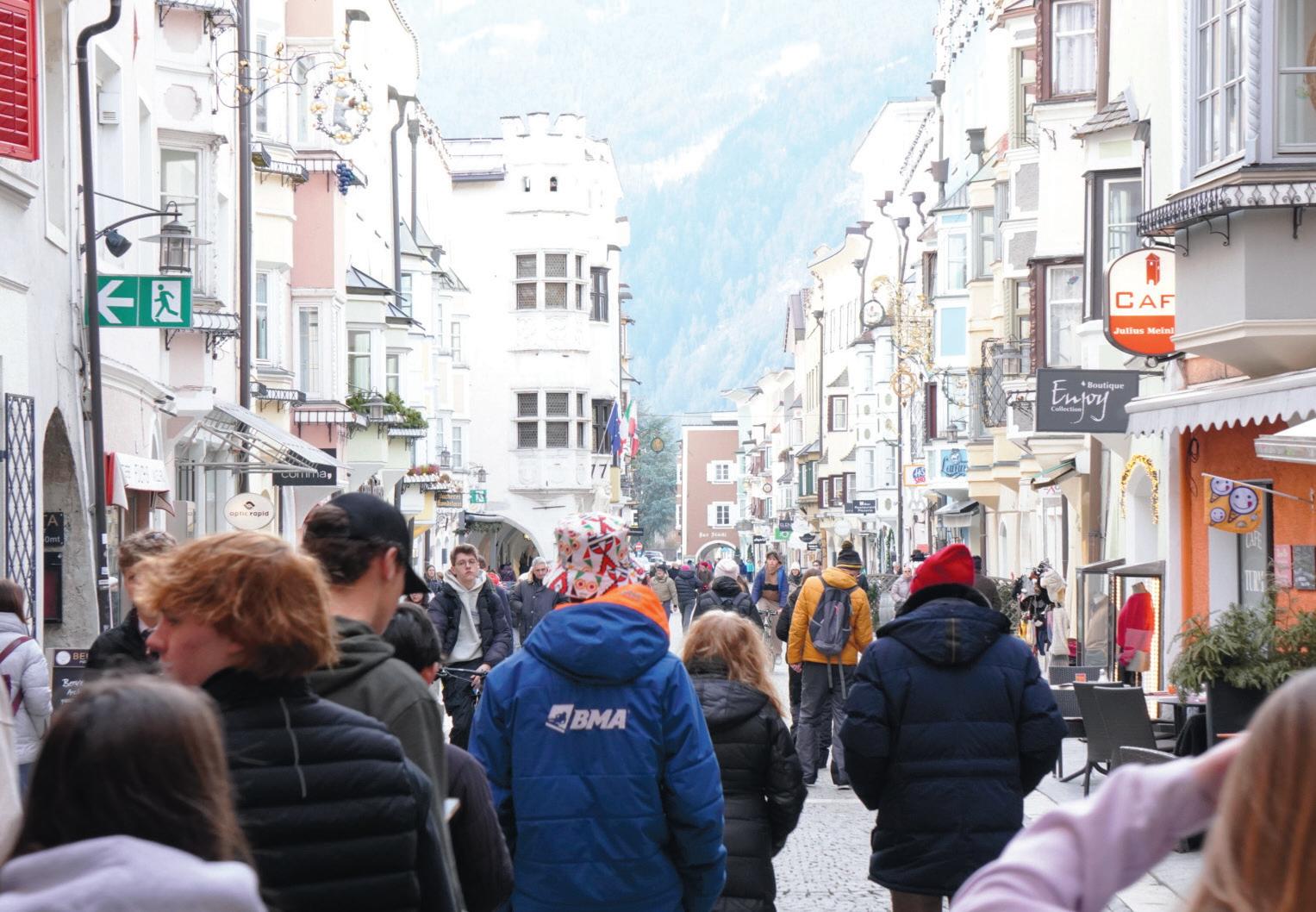
This year, BMA’s vision took a bold and tangible step forward with the establishment of its European Training Base in Sterzing, Italy . A move that solidifies BMA’s commitment to developing well-prepared, well-rounded, and globally competitive athletes.
Nestled in the Südtirol region near the Austrian border, Sterzing (or Vipiteno in Italian) sits at the southern end of the Brenner Pass and offers access to elite-level training and racing. Just three hours from Munich and surrounded by venues like Rosskopf, Ratschings, Ladurns, and Ridnaun, it’s a location that, according to Sport Director Jesse Hunt’83, “delivers everything we could want, excellent conditions, reliable infrastructure, and the depth of competition you only find in Europe.”
This initiative is about building a deeply immersive experience, one that brings BMA athletes up close with the culture, pace, and professionalism that define European ski racing.
“The idea was never just to send athletes on another training trip,” says CW Estoff’97, a trustee and Junior Program parent who visited the Italy location during a winter Board of Trustees trip. “It’s about establishing a true base—a place they return to. A place that offers both grounding and lift.”
While East Burke remains BMA’s home campus, the Sterzing base represents a natural and necessary extension of the program. With annual travel to Europe already a part of BMA’s highperformance model, the goal was to reduce logistical barriers and provide a more consistent training presence on the continent. Supported by Chasing Greatness: The Campaign to Win from Within, the new European base is underwritten for three years, covering the majority of costs for participating athletes, and turning a long-held dream into reality. Through key friendships and the generosity of those who believe in what BMA stands for, the academy now has a foothold in the heart of European ski racing. This isn’t just another training trip; it’s a fundamental shift for the school’s approach to athletic development.
Each athlete lives in a fully equipped apartment with their team and coaching staff, shopping for and preparing meals together, or enjoying home-cooked food prepared by the staff at The
“ The grind is real. But when you can tap into joy, when you can see the sport through a wider lens, it changes the game. That’s what we’re offering in Sterzing.”
Rose Hotel—a small, family-run business owned by Oswald Tötsch, a former Italian ski racer and two-time Olympian. From October through April, FIS and Postgraduate athletes rotate through the Sterzing campus, with additional U16 training blocks integrated throughout the season. Beginning in the 2025–26 school year, the program will expand to allow a select group of FIS and Postgraduate athletes to live and train in Sterzing for six consecutive months.
“We’ve structured this so that our 6:1 athleteto-coach ratio stays intact and our academic engagement remains strong,” says Head of School Willy Booker. “This isn’t a departure from who we are; it’s an expansion of what we can offer. And it gives our students something extraordinary.”
Just as compelling as the location is the cultural opportunity. BMA has established a formal partnership with Oberschulzentrum Sterzing, a local sports-focused school, to promote exchange, collaboration, and language immersion. Athletes are encouraged to engage locally, and long-term, BMA is exploring reciprocal programs for European students and coaches.
“When I talk to people in the BMA sphere, it’s the number one question after the mountain itself.”
For athletes, the experience has already begun to reshape what’s possible. “The first-year groups came back sharper, stronger, more energized,” notes Hunt. “They gained more than time in the gates; they gained confidence, independence, and joy.”
And that, ultimately, is the point. Ski racing at the highest levels demands not only talent and work ethic, but also passion. Resilience. Perspective.
Sterzing native Anton Seeber, President of High Technology Industries (HTI Group), has become a key supporter, providing training access and connections across the region. His involvement, alongside other alumni and families, has helped anchor the initiative.
The racing environment has proven advantageous as well. Though FIS quotas limit the number of American slots for races, athletes are gaining access to a broader race calendar that includes Austria, Slovenia, and beyond.
“It’s probably the most exciting development to come out of BMA in a long time,” says Estoff.
“The grind is real,” says Booker. “But when you can tap into joy, when you can see the sport through a wider lens, it changes the game. That’s what we’re offering in Sterzing.”
As the Academy looks to the future, possibilities abound. From deeper race integration to longer athlete residencies, and perhaps even more structured exchange programs with European families and schools, the Sterzing campus is poised to become an enduring part of BMA’s athletic and cultural identity.
“This was a dream for a long time,” says Estoff. “Now it’s real. And we’re just getting started.”
INSIDE BMA’S SPORT SCIENCE
“ Every graduate from BMA should leave knowing enough about alpine skiing to be capable of training themselves.”
—JESSE HUNT’83 , BMA Sport Director
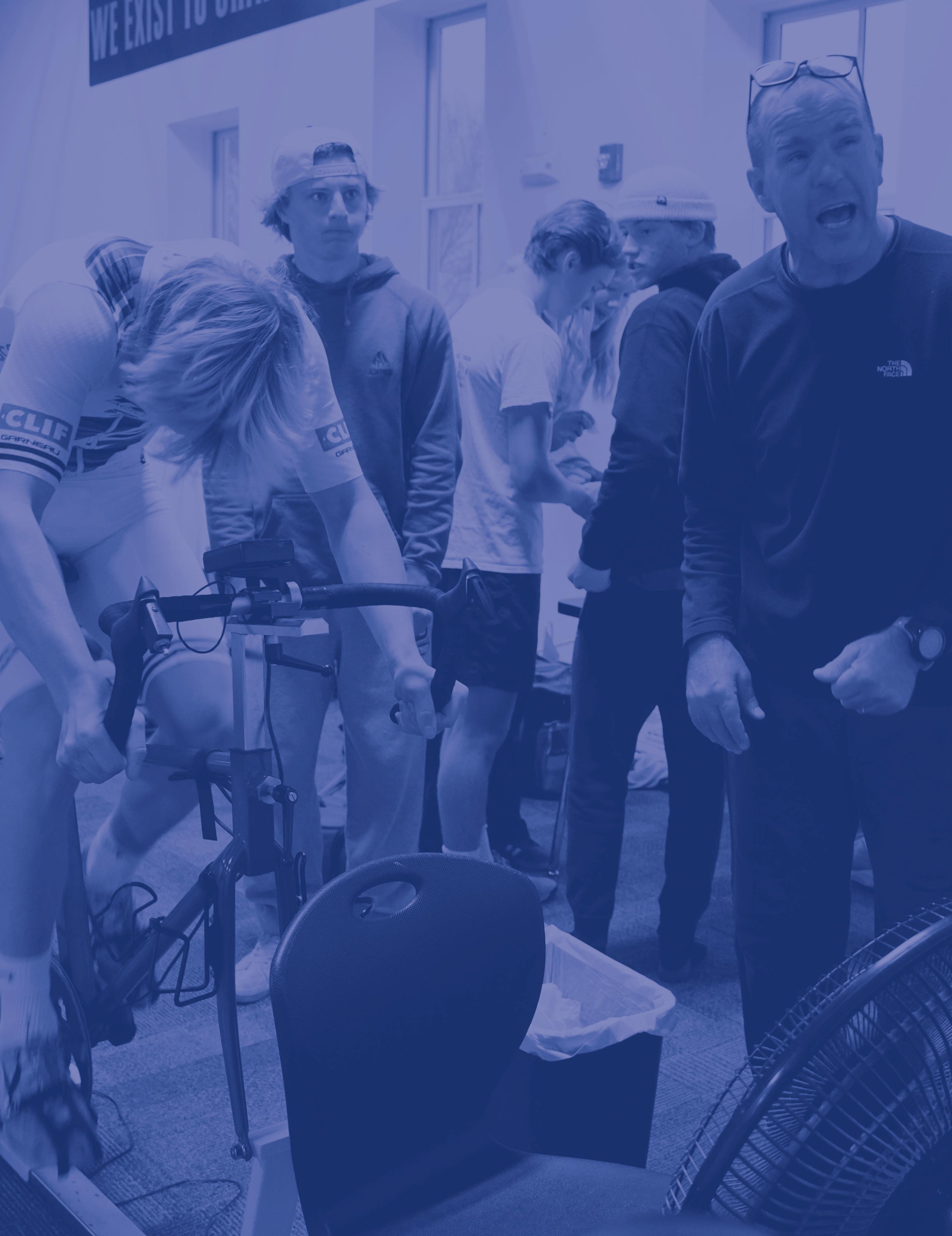
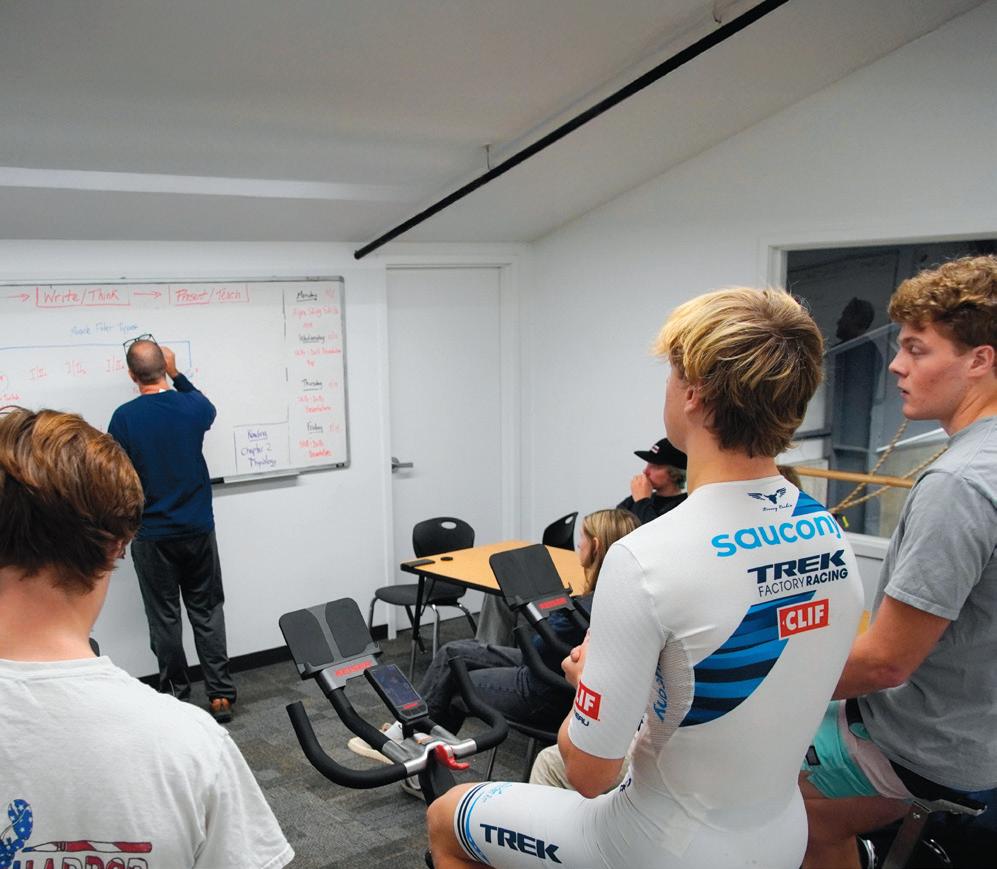
Designed with that vision in mind, BMA’s Sport Science Senior Elective gives BMA athletes the tools to understand and take ownership of their athletic development.
The course is led by High Performance Director Darrell Gray, who has been a cornerstone of the BMA community for more than 26 years. It is not uncommon to find him with a book in hand, covering topics ranging from movement science to mental training to athlete development. His depth of knowledge, curiosity, and calm presence make “teacher” a natural extension of his longstanding role.
Grounded in The Science of Alpine Ski Racing, edited by James Pritchard and Jim Taylor’76, the Sport Science class helps students break down the complex sport of alpine skiing into real and applicable knowledge. From biomechanics and physiology to tactics, training load, nutrition, and mental preparation, students connect the science of performance to the demands of ski racing. The culminating project is a full annual training plan created and presented by each student.
What inspired you to create the Sports Science class at BMA, and how has it evolved over the years?
When we shut the school down at the start of COVID and began offering online classes, I taught a course focused on summer training planning. We invited guest speakers to join us, and the students were tasked with developing their own training programs. It was a hit, and they left the class with a stronger sense of ownership over their physical preparation. Since then, we’ve added a mini-course on Sleep, Stress, and Recovery, as well as Anatomy and Physiology. The full-fledged Sport Science elective originated from the encouragement of Jesse Hunt, BMA’s Sport Director, and the publication of The Science of Alpine Ski Racing, which now serves as the textbook for the class.
I love discussing training for alpine skiing, both onsnow and off-snow work, and have probably crossed the line into providing too much information when asked about anything related to the sport. As you accumulate knowledge and understanding, it feels natural to want to share it with others. I genuinely enjoy that exchange, and it goes both ways. Most classes are unscripted and tend to follow the direction of the discussion. Over the years, I have learned more from the athletes and coaches I have worked with than they have learned from me, so in a way, I am just making amends for the deficit.
What shifts do you typically see in students between the fall and the spring?
The fall and winter were spent gaining background knowledge and developing actionable daily and weekly training programs. This spring is mostly about putting the pieces together. So, there will be more class time, project time, and presentation time during the fall and winter, and significantly more independent work in preparing the final project during the spring.
Why do you think it’s important for athletes to engage with this kind of material?
I think it is important to be a student of your sport. Many times, I have heard former athletes who have become coaches lament that they wish they had known then what they know now. The reality is that it is a near impossibility as you need to live life, gain experience, and pay attention. But I believe that this current group of students is taking heed of what they are learning and putting it into practice.
What do you hope students take away from this course, both in terms of ski racing and their development as athletes more broadly?
Be prepared to ask questions of yourself and your coaches. To be curious and allow that curiosity to lead them into more nuanced approaches to training and competing. The goal with our culminating project is to create an annual plan that fits their needs and personality. Hopefully, we will see 10 unique ways to plan and program a year of alpine ski racing. And lastly, when someone asks them a question concerning our sport, I hope they respond with “depends,” which would indicate an understanding of our sport’s complexity.
How does your background in high performance and coaching influence how you approach teaching this class?
I am a contextual learner. Much of my learning is based on the context of who, what, when, where, why, how, and how much something is happening. I enjoy asking questions and then trying to answer them. The class is inquiry-based, and students are encouraged to ask questions about our sport and then attempt to answer them. I think that is the essence of high performance.
“ It’s helped me understand every aspect of the sport, from biomechanics to recovery. And I use what I learned about aerodynamics every time I ski.” —AIDEN
Students describe a high level of independence in how they learn — can you talk about why you’ve structured the class that way?
Yes, I think engagement follows curiosity. We all have different interests that can spark that curiosity. Asking both broad and specific questions allows each student to discover areas they are drawn to and dig deeper. On the first day of class, I introduced a method for our learning: Read and research, think and write, then teach and present.
For example, after studying the chapter on biomechanics, students chose topics they felt warranted further discussion. They selected the one that interested them most, studied it, wrote about it, and then presented it to the class. This approach allows us to cover more ground and gives students a chance to develop expertise within the framework of a broad survey course.
As a teacher or coach, I’ve found that much of the learning happens during preparation, but it becomes
more complete in the act of teaching and in the conversations that follow. We are fortunate to have very capable students at BMA. The more capable the student, the more freedom and responsibility can be handed over. I believe the more you invest in something, the more you’ll gain from it, especially if you’re paying close attention along the way.
What excites you most about the kind of thinking and planning they’re doing now, particularly with their annual training plans?
Annual planning requires a 30,000-foot perspective to lay out the season, followed by integrating the ground-level learning students have engaged in throughout the year. Ideally, there will be lightbulb moments along the way. In reality, these annual plans will always be works in progress, evolving with shifts in focus and themes that reflect each athlete’s current level of preparedness. This mirrors my own experience in coaching and planning. Each year is different from the last, if only because we are shaped by the learning that came before.
A Conversation with Darrell Gray
A CONVERSATION WITH DAVE CHAMBERLAIN
This spring, Head of School Willy Booker sat down with longtime history teacher and dorm parent Dave Chamberlain to reflect on Dave’s years at BMA, his recent return after time away, and what continues to draw him to Burke. Their conversation was candid, insightful, and, as anyone who knows “Chambo” would expect, full of heart and humor. by WILLY BOOKER’96
Willy Booker (WB): Dave, thanks for doing this interview. It’s the second in a series. Last year, I caught up with Erik Schlopy’90, an alum who also has a son who currently attends BMA. This year, I was thinking about who might bring an interesting perspective, and I thought of you. You’ve been part of BMA for a long time, and recently took time away to work elsewhere. You have a unique perspective on Burke as it continues to evolve. To start, remind me: how long have you been at BMA, and how long have you been teaching here?
Dave Chamberlain (DC): I came to Burke in August of 2011 and immediately jumped into a wild trip to Chillán, Chile. An avocado truck overturned on the Pan-American Highway! My first lift ride was with Kraiger (Kraig Sourbeer’83). I was skiing on an old pair of twin tips that had belonged to the late Greg DeLuke, a former BMA athletic trainer.
WB: So about fifteen years ago.
DC: I was at Burke from 2011 through June of 2021. So, ten years. Then Rachel (Chamberlain) and I took a little walkabout and a nice sabbatical. I took a job at the Lawrenceville School in Princeton, New Jersey, and we were there for two years. I’ve been back at Burke for two years now, so I’m just finishing up year twelve, all told.
WB: When you first arrived in 2011, did you have any sense you’d end up staying that long?
DC: No, not at all. An old friend and former BMA coach, Amber McHugh, saw the job posting and thought I’d be a good fit. I figured I’d be here two or three years, as a transitional step.
That first year, I had a great American history class. Maybe some of those old characters will read this: Charlie Sheils’13, Charlie Harrison’13, Sam Coffin’13 — too many to count. Rachel and I were doing long distance at the time, and I told her, “I think I could be here for a really long time.”
It suited me. BMA gave me a lot of freedom, which works for me. I’m intrinsically motivated and prefer minimal oversight. I liked working for Kirk Dwyer,
the former head of school. His approach was: If you’re doing a good job, he leaves you alone and only asks what you need to be successful. That mindset carried through all my years here.
WB: What about Burke drew you in?
DC: Honestly, I didn’t even know ski academies existed. I had only ever been a recreational skier. I knew I wanted to be back in New England, having grown up in New Hampshire. However, I didn’t know much about the school until I arrived.
WB: What other aspects resonated with you, like the school’s philosophy or values?
DC: I have always valued the community of colleagues here. Consistently, the people I have worked with at BMA have been inspiring and creative. That has been a lasting draw for me.
Educationally, I appreciate the school’s antihierarchical approach. I still like that students call us by our first names and that we do not use detentions or demerits. Having worked in public schools, I observed a more top-down discipline style. What draws me to BMA is the belief that teens thrive through meaningful relationships, not moral judgment, which many schools still rely on.
When I left BMA to work at a more traditional prep school, I befriended a guy in my building. One night, he said, “Dave, every time you talk about BMA, there is a twinkle in your eye.” He told me, “I do not think your story there is done.” That stuck with me.
WB: Yeah, it’s funny how Burke really gets into your system. There are certain things that stick with you or draw you in, whether it’s the physical place, the values, or something else about it.
DC: I mean, look where we are right now, in your office, looking out at the gap, I really missed this place. I truly believe there is a certain sacredness to it. Scan the code for the full interview, including more on his travels, teaching philosophy, and deep connections to the Burke community.
DISCONNECT TO RECONNECT
BMA’s Commitment to Digital Wellness
“ The new cell phone policies really brought the community together— people were talking, playing, and enjoying simple moments, like Hacky Sack on the way to the dining hall.”
—TRIXIE SHACKLETON’25
At Burke Mountain Academy, where focus and connection are core values, the 2024–25 school year launched with a clear message: put the phone down and look up.
When Head of School Willy Booker announced at All-School Meeting that the year would begin with a phone-free week, the response was instant—and unforgettable. Students instantly began throwing their phones onto the soccer field in a spontaneous show of support. That moment set the tone: this wasn’t about enforcement, but shared intention.
The schoolwide initiative had taken shape the previous year, sparked by rising concerns about screen use and deepened during a summer conference, where BMA’s Residential Life Director, Duncan Barnes, and Student Life Director Alyssa Belcher encountered Jonathan Haidt’s The Anxious Generation. Haidt’s research, linking smartphones and social media to a teen mental health crisis, affirmed BMA’s long-standing values of autonomy, outdoor time, and self-direction. Families and faculty were invited to read the book, creating a shared foundation for action.
The next step felt bold, as the students entered into a full week without phones, just days into the
term. Phones were collected at the first All-School Meeting, Wi-Fi was shut off at 10 p.m., and teachers modeled limited use. Students responded by playing games in the RBC, gathering around campfires, and even camping at the Burke firetower.
“Our new students were integrated into the community faster than ever before,” said Student Life Director Alyssa Belcher.
Phone-free weeks weren’t new—BMA has long practiced phone-free meals and collected devices during training—but a new daily policy required students to place phones in labeled pockets in the Dining Hall before breakfast, where they stayed until after training. The consistency signaled a cultural shift: not just a policy, but a shared mindset.
Students remained engaged. They proposed extending Wi-Fi slightly later for homework and revisiting phone policies after the fall term. Staff listened—and adapted. That collaborative approach drove the initiative’s momentum.
In October, BMA welcomed Dino Ambrosi, founder of Project Reboot, for Family Weekend. A former tech addict turned digital wellness advocate, Ambrosi met with students and families, reframing the issue:
“Teens aren’t the problem,” he said. “They’re the first generation to grow up in an environment designed to hijack their attention.”
His visit sparked change. Students installed delay apps, formed accountability groups, and
participated in a parent-led book discussion the next day.
“Tackling the ‘phone issue’ with teens is a delicate negotiation,” Belcher noted. “Real change only happens when they’re intrinsically motivated.”
More phone-free weeks followed: after the Hintertux camp, at the end of race season, and in the final week of school—that last one led entirely by students, who chose the timing and reflected on their experiences in a student-led All-School Meeting.
Even when another full week wasn’t practical during winter travel, teams set expectations around camp and race-day phone use. Some coaches collected phones; others prohibited them on the hill. The goal wasn’t strict enforcement—it was intentional use.
Across campus, device storage pouches were placed in the Dining Hall and Frazier to encourage tech-free zones. Some students opted in regularly; others occasionally. But the message remained: connection and community matter.
And it worked. Students arrived earlier. They stayed after class to talk. They sang in the van on the way to soccer games, forming bonds that can get drowned out in a digital world.
“As educators, we want students to develop the habits of attention and reflection that support deep learning,” said Academic Director Ida Sargent’06. “Putting devices aside—especially during key parts of the day—creates space for focus, conversation, and creativity. Those moments add up.”
“ We continue to seek educational opportunities to develop the intrinsic motivation and selfreflection necessary for making healthy habits,” Belcher wrote. “ With technology—and in life.”
At its core, this initiative isn’t about taking phones away. It’s about choosing presence in a world that constantly demands distraction.
This article was reported by Alyssa Belcher, with editing by Meryl Willett and support from Academic Director Ida Sargent‘06. Details were compiled from conversations and materials gathered over the year.
OUR GOAL IS SIMPLE: GET ATHLETES ON
WORLD CUP PODIUMS
Interview Between Jesse Hunt’83
(BMA Sport Director) and Paul Epstein (CEO, Global Racing)
Being a competitive alpine ski racer is a masterclass in resilience; progress is rarely linear, and setbacks are part of the process. The same is true of coaching. At Burke, our vision is to be the best ski academy in the world, and that requires a growth mindset from everyone, athletes, teachers, and coaches alike. When we invest in our team’s development, we raise the bar for all.
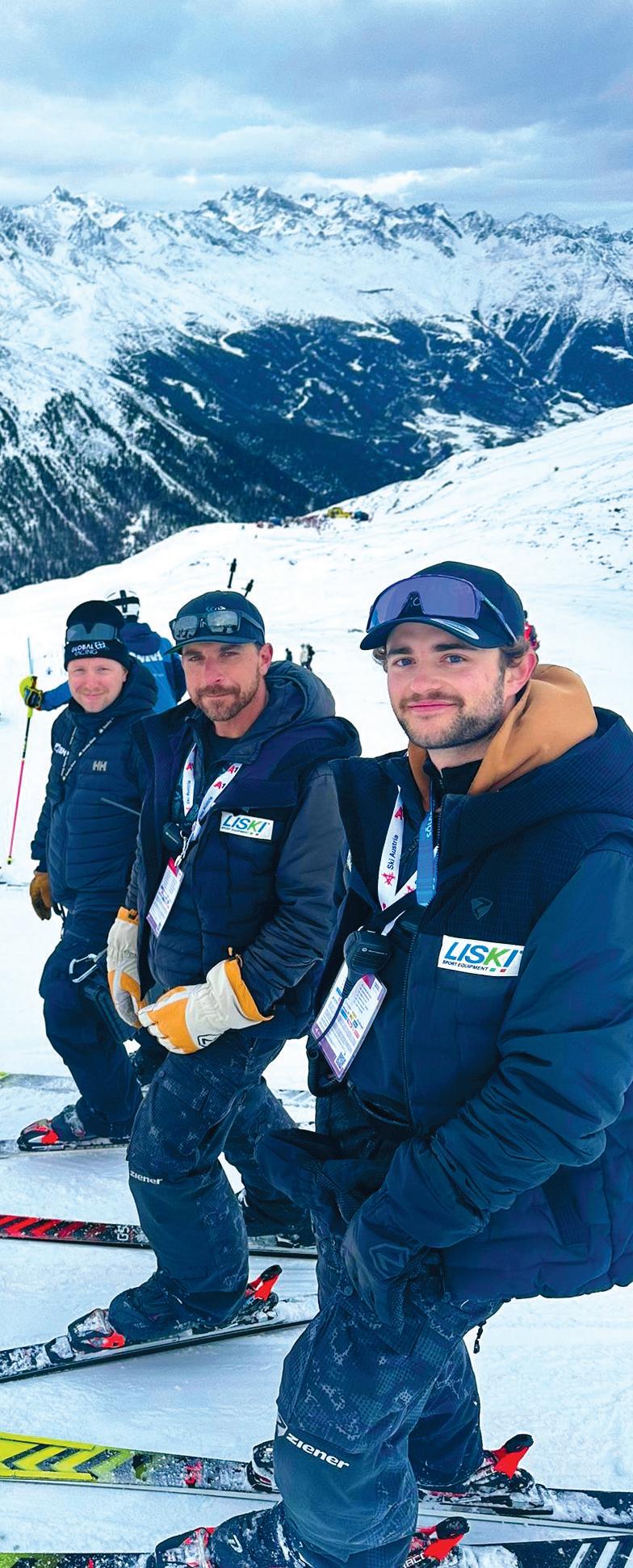
During the 2024-25 school year, BMA partnered with Global Racing, an elite international team led by Paul Epstein. The collaboration gives BMA coaches the chance to work alongside top athletes in diverse training environments, expanding their skills and perspective. BMA alumnus Patrick Kenney’15 trained with Global Racing before rejoining the Stifel U.S. Ski Team, calling it “a special group” shaped by Epstein’s purposeful mindset. We spoke with Paul and BMA Sport Director Jesse Hunt’83 about why coaching development matters and how collaboration drives success.
Jesse Hunt (JH): Let’s dive into the state of coaching in the U.S. You’ve mentioned frustrations, especially with international tours. What’s your view on the bigger picture, and what does America need to improve coaching development?
Paul Epstein (PE): A major challenge for U.S. coaches is a lack of real-world experience in athlete development, understanding what it takes mentally and physically to prepare athletes for the World Cup. Winning a Nor-Am no longer guarantees readiness, and mental toughness, often overlooked, is crucial.
Many Nor-Am winners never score World Cup points, yet there’s still an expectation that a Nor-Am win means an athlete is ready, which isn’t true. Coaching goes beyond tactics; it’s about preparing athletes to race better than they train. Without firsthand exposure to top-level racing, coaches can’t fully develop this. That’s why programs like our partnership with BMA are essential—they give coaches the intensity and commitment insight needed.
JH: BMA coaches who joined your program experienced that intensity firsthand. They come back energized and focused, which improves training. Where is Global Racing headed, and how does your program fit into broader coaching development?
PE: Our goal is simple: get athletes on World Cup podiums. Just last weekend, one athlete achieved his first top 10 World Cup finish—a huge milestone. Progress at this level happens in stages: breaking into the top 30, settling between 20 and 30 to build confidence, moving into the 15 to 20 range, then breaking
the top 10—that’s a major mental breakthrough. This result is a big step and should inspire others. Our aim is steady progress toward the podium.
JH: Global Racing works with athletes from multiple nations. What happens when athletes reach higher levels? Do they stay with you or return to national teams?
PE: Historically, athletes from larger nations return to their national teams after working with us, but that’s changing as some coaches see that certain athletes perform better in private programs. However, resistance remains—federations often discourage private programs, sometimes threatening blacklisting. Funding is the biggest barrier. If athletes could keep financial support while choosing their training environment, many would stay. For now, most return to national teams, which is frustrating because we have limited time with them. I’ve seen performance decline when the system doesn’t suit the athlete.
JH: You’ve worked with many athletes returning to their national teams. What’s the most impactful way you help them?
PE: Several factors set us apart. Athletes cut from national teams often keep racing by selffunding through sponsors or savings. That financial investment changes motivation—when a training day costs $200, every session counts. National team athletes with covered expenses might skip sessions in poor conditions since there’s no financial consequence. Our team environment is also crucial.
We foster a close-knit, supportive culture where every coach is invested in each athlete, whether winning or struggling. National teams often focus on top performers and sideline others. One former athlete in Italy, once ranked top 30 in the World Cup, was cut from all team communication after some poor races. That wouldn’t happen here. We believe in long-term development, knowing real coaching happens when things go wrong, not just when athletes are rising.
JH: You highlight two key points: athletes’ financial ownership boosting focus, and a family-like environment. That makes sense. But on-hill, how do you help athletes bounce back? National teams use video and timing—do you do anything differently?
PE: Coaching ski racing isn’t about complication—it’s how feedback is communicated. Trust is key. Coaches must believe athletes are processing feedback, even if it takes time. Second-guessing too soon leads to overwhelming athletes with changes. Most World Cup teams focus on fundamentals, but we emphasize the mental side. Many athletes excel in training but falter in races. Since race-day pressure is inevitable, we add pressure in training—friendly wagers, like buying pizza, to make it feel real. Pressure is part of elite competition. Even Marco Odermatt feels it; it’s about managing it. Our job is to prepare athletes to perform when it counts. While programs differ in communication style, how a coach delivers feedback can make all the difference.
JH: Trust is crucial—between coach and athlete, often overlooked.
PE: Absolutely. Doubting an athlete’s ability to process feedback can cause premature changes that overwhelm them. Some athletes need several days to integrate adjustments, trusting that the process avoids unnecessary disruptions. At World Cup level, where everyone skis fast, we focus on subtle factors like body language and equipment— small tweaks can have a big impact. We also emphasize mental toughness, adding pressure in training to prepare athletes for race-day stress. Even top athletes feel pressure; our goal is to help all perform when it counts.
JH: So, you set them up with testing and monitor progress, then private coaches design their programs?
PE: Exactly.
JH: There’s so much to this sport. On equipment and technique, do you think having a good eye is innate or developed?
PE: I’ve worked with two coaches who came in with little experience—one from conditioning, the other from racing—and neither had much eye for equipment or technique at first. Though I started coaching in 2008, still consider myself new compared to World Cup coaches with twice my experience. That skill develops over time. When I raced, I trusted small tweaks rather than constant changes. Now, with new athletes, I ask for videos immediately—issues often appear right away. For example, in 2017, I noticed that Austrian skier Magnus Walch's boots were set up incorrectly, which his European Cup team had missed. After gradual adjustments, he finished 14th in Adelboden and had no more knee problems. While a natural eye helps, we also train coaches to spot signs like shaky knees or poor edge angles so they can make adjustments without always needing me.
JH: In Austria’s system, you don’t move up unless you’re within 10 percent of the fastest at the Level One clinic. You need to ski well or you don’t advance.
PE: Austria’s system is unusual. Many coaches never raced but chose coaching as a profession at 18 or 19, then went to school for it, like becoming an architect or plumber. Learned coaches aren’t bad; formal education can be as valuable as experience. You don’t need to be a former racer to be a great coach. Martin Guyer, one of the best I’ve worked with, came from schooling; I learned through racing. We exchanged ideas constantly. Good coaches come from formal education or firsthand experience.
JH: You highlight the difference between practical and theoretical learning. Both have value, and combining them is best. After ten-plus years racing, you develop “racer IQ,” but teaching is separate. Where do you see the most room for improvement?
PE: Many coaches focus on effects, not causes. For example, telling an athlete to “not lean in at the end of the turn” misses the point; leaning there is rarely the real issue. It’s more important to trace back and find where things went wrong, like entering the turn too early and throwing weight inside. If coaches only see the effect, they aren’t coaching effectively. I encourage athletes to self-coach by reviewing their own videos or coaching each other while I watch.
Athletes need to spot errors quickly so they can adjust mid-run.
JH: How often do athletes coach each other? There’s a lot of peer learning at your level, right?
PE: Quite a bit. On the hill, I often see athletes at the bottom of a run—say Stefan Luitz has been leading, and Patrick Kenney is a second behind. Patrick might ask, “I’m struggling with my line, what’s your approach?” Stefan shares his thoughts. This reflects our family-like environment. They don’t see each other as competitors but as teammates to learn from. That’s different from many national teams. Having someone like Stefan Luitz, a World Cup winner, means the team has a wealth of knowledge to tap into.
JH: Well, Paul, this has been a great hour. Any final thoughts?
PE: I could talk for hours, but overall, the collaboration this year—especially early on—was very positive. It’s one of the few ways coaches truly understand how tough World Cup level is. It’s not just setting courses; it’s the daily grind, emotional strain, and constant push to improve. I wish more coaches could see the full cycle—the highs, lows, and demands on athletes and staff. When a whole team struggles, it falls on the coach. If only one in ten excels, that’s not success. After a rough World Championships, I reflected, made changes, and recently, four out of five athletes finished in the top 30. Coaches must recognize consistent dips and own that. Coach education should reflect reality. Most of us don’t have Switzerland’s luxury—we have to grind through a harder path.
JH: Closing thoughts, you’ve stressed that exposure to higher levels is key to improving coach education. When coaches regularly experience levels above their own, they gain insights and learn more. It’s not just reaching a certain level, but consistently raising the bar throughout the system. We’ve seen great value in sending coaches with you; they return inspired. Thanks for this partnership and for helping advance coaching in the U.S., especially given the difficulty of international access.
ORACING BEYOND BORDERS
Burke Mountain Academy at the Hahnenkamm Juniors
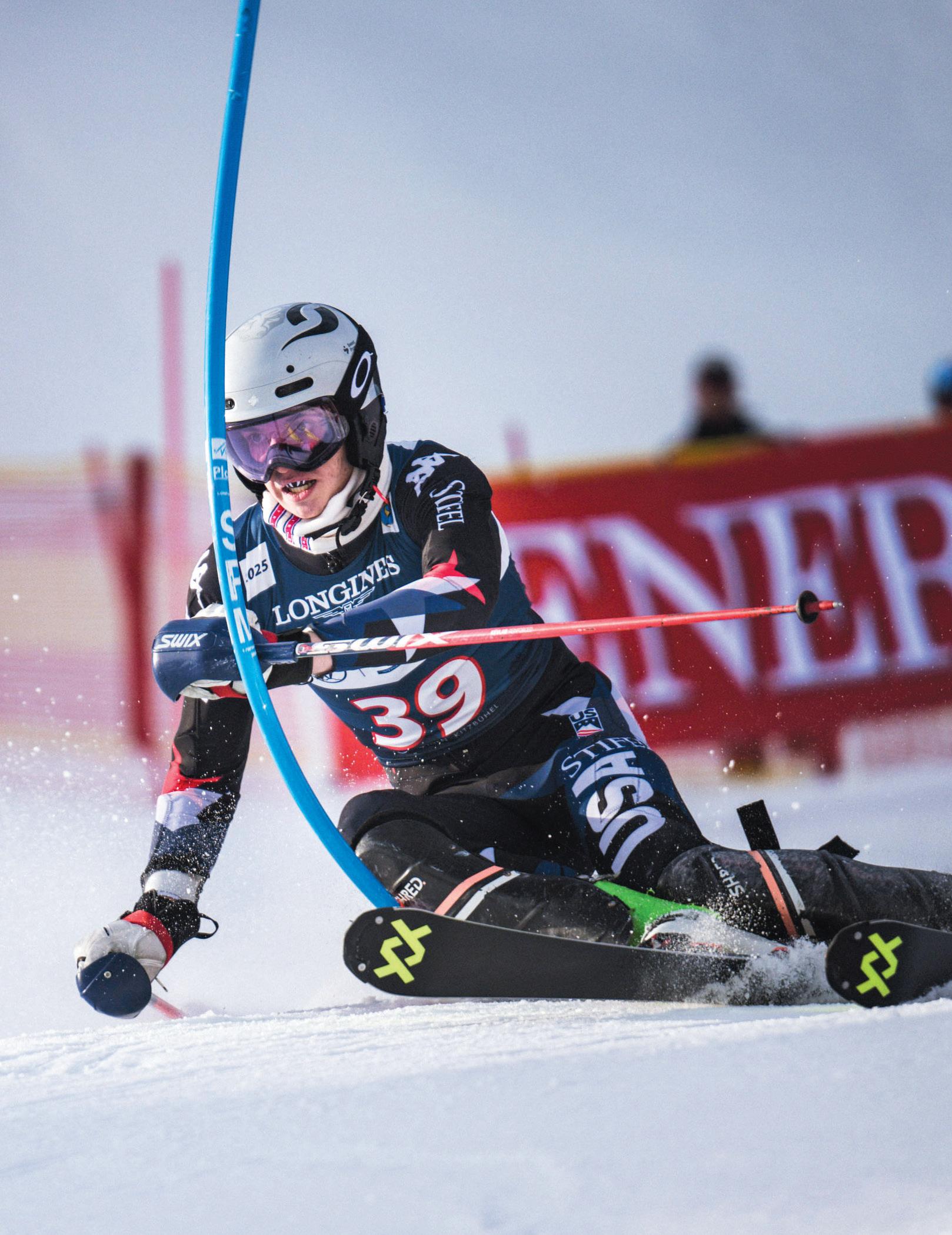
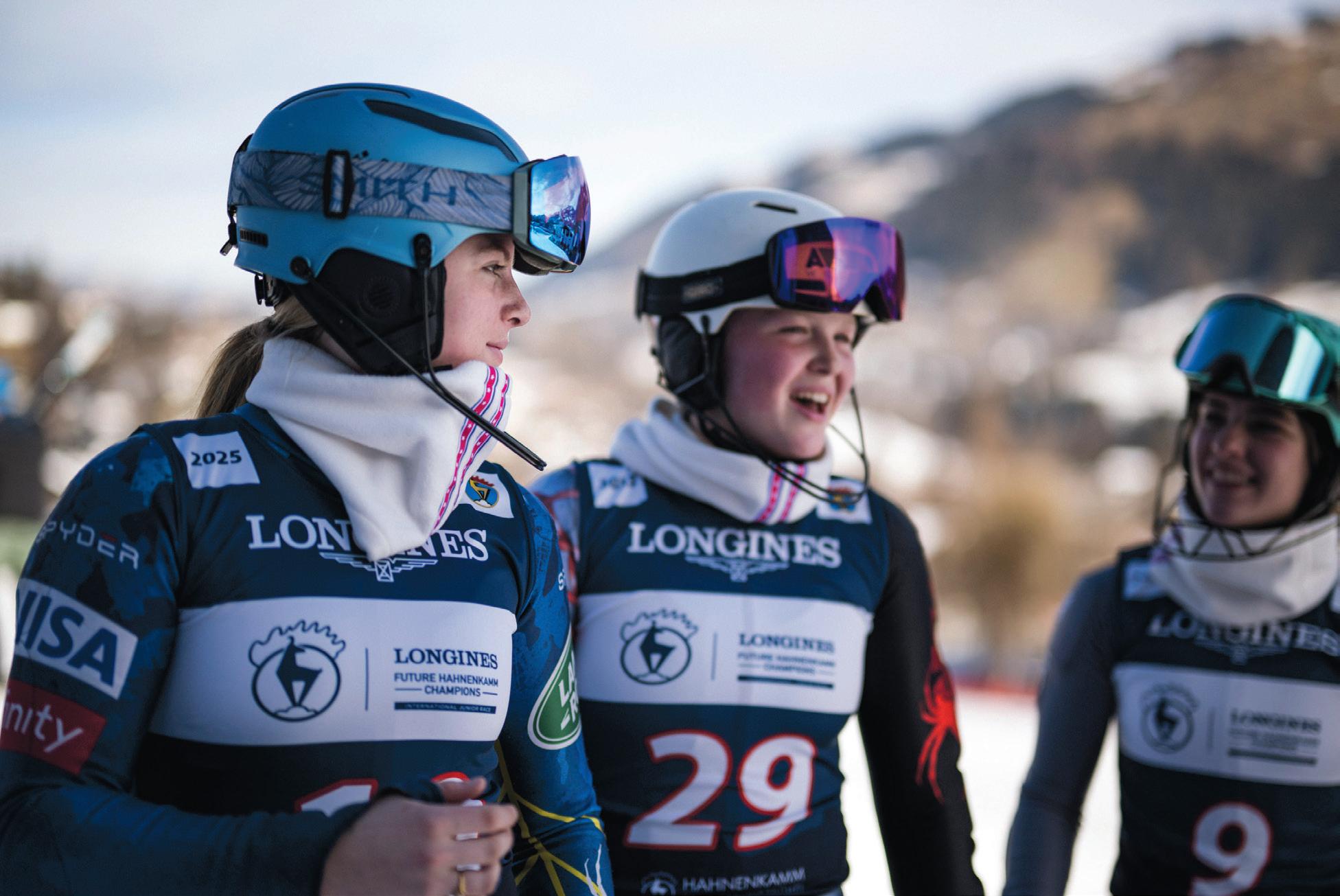
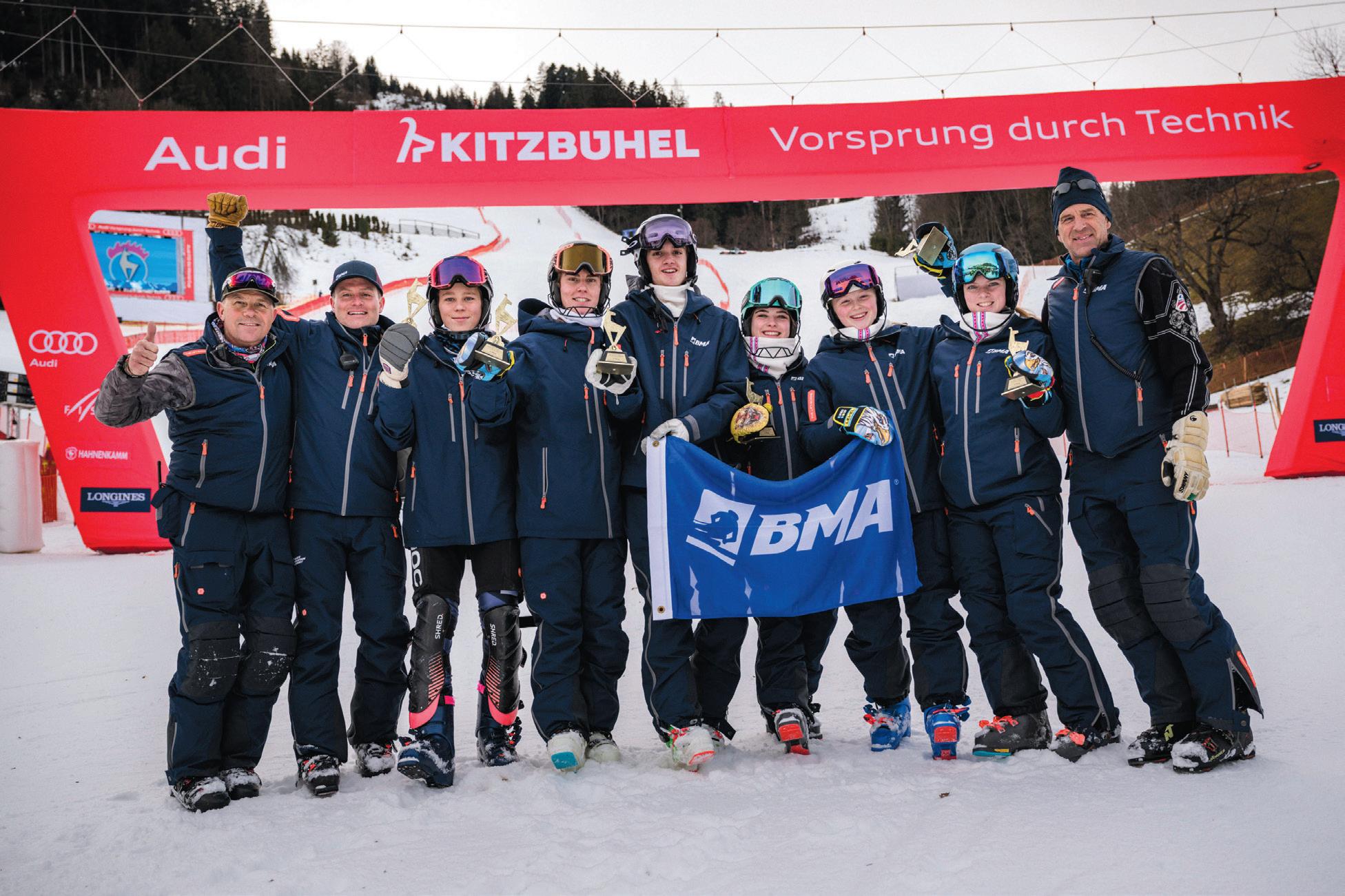
n January 22, 2025, six Burke Mountain Academy U16 athletes stepped onto the iconic Ganslern slope in Kitzbühel, Austria, representing Team USA in the Longines Future Hahnenkamm Champions International Junior Race, a prestigious team slalom competition held as part of the 85th Hahnenkamm Races.
Since 2001, this race has served as a prologue to the celebrated Hahnenkamm World Cup weekend, inviting top junior racers from eight nations to test themselves on the same challenging course just
days before the world’s best ski athletes arrive. This year marked a milestone: For the first time, the United States fielded a team, and all six racers were from Burke Mountain Academy.
After a strong first run, Team USA took the lead and ultimately finished in second place, a remarkable achievement for their debut on this international stage. Among the team, Burke Mountain Academy’s Kieran Hildreth and Katie Rowekamp posted the fastest individual times of the day for boys and girls, respectively.
Reflecting on the experience, Katie Rowekamp shared, “Racing in Europe, especially at a World Cup venue, was an incredible learning opportunity. It taught me how to manage the pressure of highlevel competition and allowed me to connect with athletes from around the world.”
The full team included Kira Hiebert, Katie Rowekamp, Sayla Rowe, Kieran Hildreth, Charles Lemerond, and Oliver May. They were supported by BMA coaches Thomas Erhard’84 and Jesse Hunt’83, along with Head of School Willy Booker’96
Booker reflected on the team’s performance, saying, “We are proud of how our athletes approached this challenge. Their preparation, focus, and competition and spirit exemplify the values we cultivate at Burke Mountain Academy.”
Beyond the podium finish, the experience embodied BMA’s commitment to helping young athletes grow through challenge, gain confidence on demanding courses, and develop the resilience that will carry them through both their athletic careers and life beyond the slopes.
“ We are proud of how our athletes approached this challenge. Their preparation, focus, and competition and spirit exemplify the values we cultivate at Burke Mountain Academy.”
—WILLY
BOOKER’96
BMA NAMED 2025 U.S. SKI & SNOWBOARD
ALPINE CLUB OF THE YEAR
Burke Mountain Academy has once again been recognized at the national level, earning the title of 2025 Alpine Club of the Year from U.S. Ski & Snowboard. This prestigious award honors clubs that exemplify excellence in athlete development, competition results, and program leadership. BMA previously received the honor in 2007, 2019, and 2020.
In its official announcement, U.S. Ski & Snowboard stated, “The Club of the Year is presented to a U.S. Ski & Snowboard Competition Club in each sport, which has distinguished itself in providing direction to young athletes through high-level competition programs resulting in athletic success.”
In addition to the club-wide recognition, two BMA coaches received national honors for their outstanding leadership and contributions to the sport.
KYLE DARLING NAMED ALPINE DEVELOPMENT COACH OF THE YEAR
Kyle Darling, Head Women’s FIS Coach, was recognized as the 2025 Alpine Development Coach of the Year. A former U.S. Ski Team coach, Darling has been instrumental in guiding BMA athletes to top NorAm performances and World Junior Championship qualifications.
“I am very proud to be recognized for the amazing achievements of our athletes this season,” said Darling.
PHOTOS | LEFT
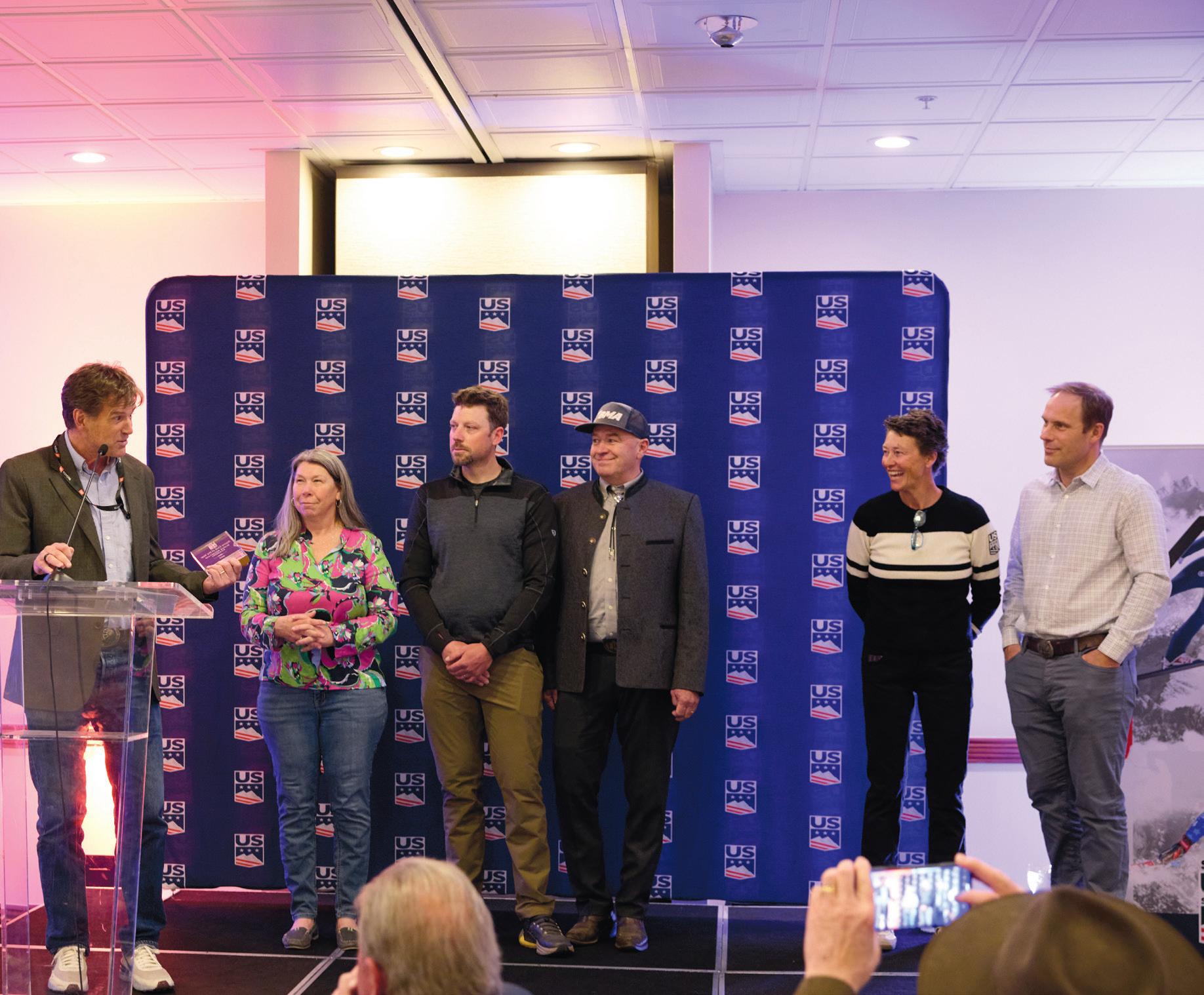
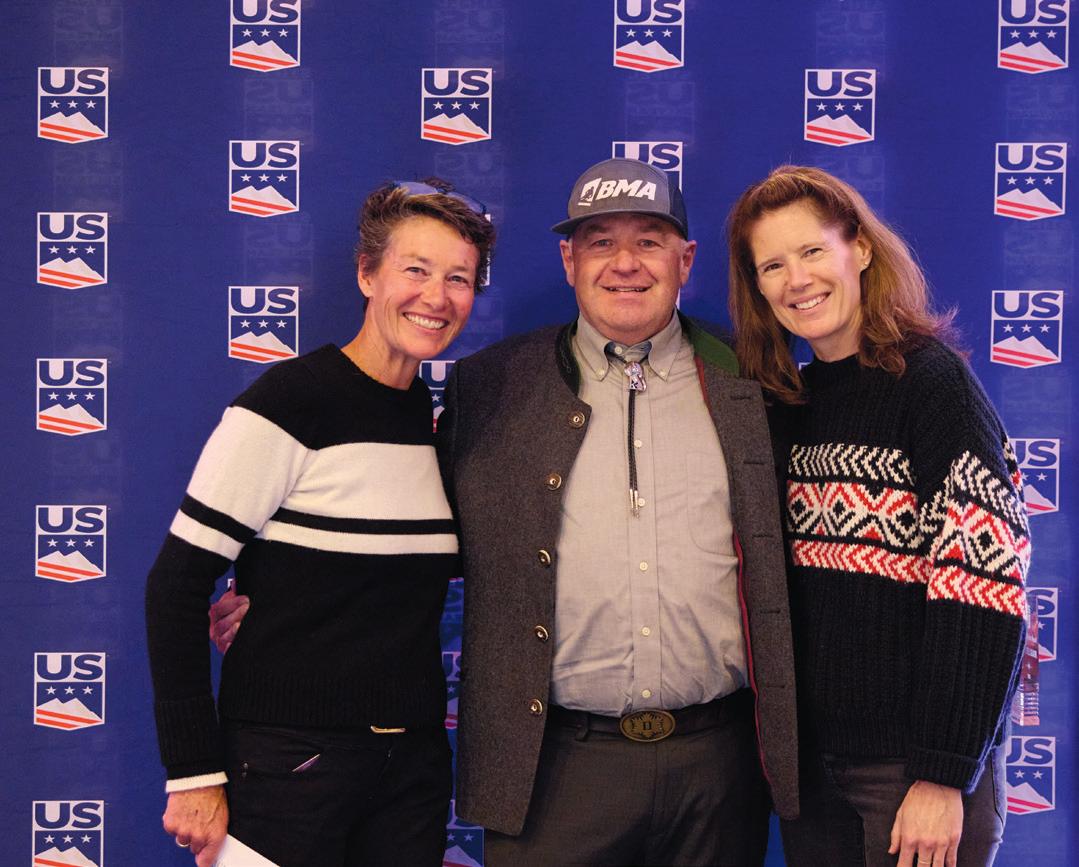
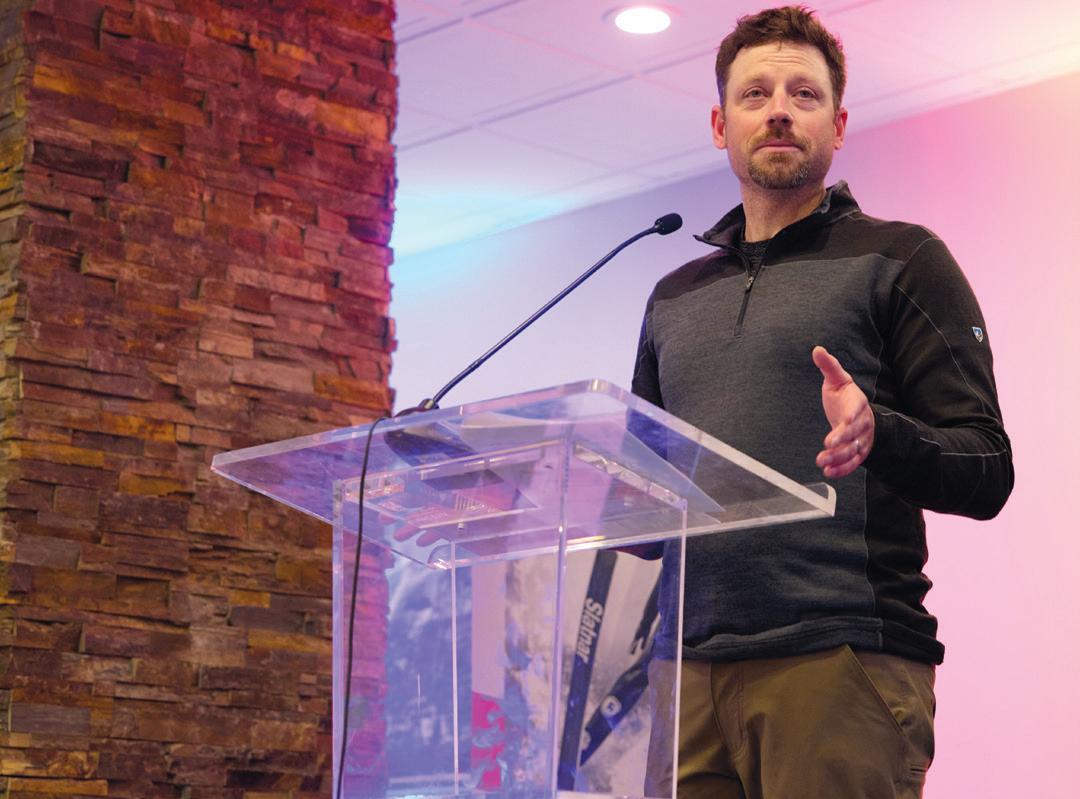
BMA Sport Director Jesse Hunt’83 addresses the crowd as BMA is recognized as Alpine Club of the Year, joined by Junior Program Director Diann Roffe’85, FIS Women’s Head Coach Kyle Darling, U14 Head Coach Terry DelliQuadri, U.S. Ski & Snowboard Chief of Sport
Anouk Patty, and Alpine Director Chip Knight’93.
P37 | TOP U14 Head Coach Terry DelliQuadri with U.S. Ski & Snowboard Chief of Sport
Anouk Patty and President & CEO Sophie Goldschmidt after receiving the 2025 Russell Wilder Award.
P37 | BOTTOM
Kyle Darling, Head Women’s FIS Coach, was recognized as the 2025 Alpine Development Coach of the Year.
“ Thank you to the entire BMA community for the support as we continue to strive to be the best ski academy in the world.”
TERRY DELLIQUADRI RECEIVES THE RUSSELL WILDER AWARD
Head U14 Coach and Race Volunteer Coordinator
Terry Delliquadri was honored with the 2025 Russell Wilder Award, which celebrates individuals who have made exceptional efforts to inspire and engage youth through skiing and snowboarding. Known for his joyful, all-in coaching style and signature mantra—“Every turn matters”—Delliquadri brings a deep passion for the sport that has impacted generations of young athletes.
“Both my mother, Esther DelliQuadri, and BMA Junior Program Director Diann Roffe’85 are past recipients,” he shared.
“ I’ve always told our athletes: the better you get at skiing, the more fun it is—and the kids on our team are having a lot of fun these days.”
These honors reflect not only the talent of BMA’s athletes and coaches but also the strength of a community deeply committed to the pursuit of excellence. Congratulations to Kyle, Terry, and the entire BMA team on this well-earned recognition.
NATIONAL TEAM ANNOUNCEMENTS
Burke Mountain Academy is proud to recognize a remarkable group of students and alumni named to their respective national alpine ski teams for the 2025–26 season.
From the World Cup circuit to the Europa Cup and FIS competition, these athletes continue to represent the strength, focus, and determination that are at the core of BMA’s mission.
U.S. Ski Team
Annika Hunt’25 – C Team
Patrick Kenney’15 – B Team
Nina O’Brien’15 – A Team
Mikaela Shiffrin’13 – A Team
Ava Sunshine’21 – B Team
Nolan Sweeney’22 – C Team
National Development Group / Regional Training Group Athletes
Troy Boissonneault Kira Hiebert
Bea May’25
Katie Rowekamp
Harper Sargent’25
British Europa Cup Squad
Calum Langmuir’21
Dominic Shackleton’22
Australian Alpine Ski Team
Cate Dance’23
Tommy Hoffman’21
Harry Hoffman’23
Harry Laidlaw’14
Canadian Alpine Ski Team
Raphael Lessard’20
Estelle Martin’23
Rebecca Pelkey’25
Britt Richardson’21
“ BMA helped shape me into the person and athlete that I am today, and I will continue to live by the values that I was taught at Burke: grit and hard work, trust, being unapologetically myself, and enjoying the journey.”
—ANNIKA HUNT’25
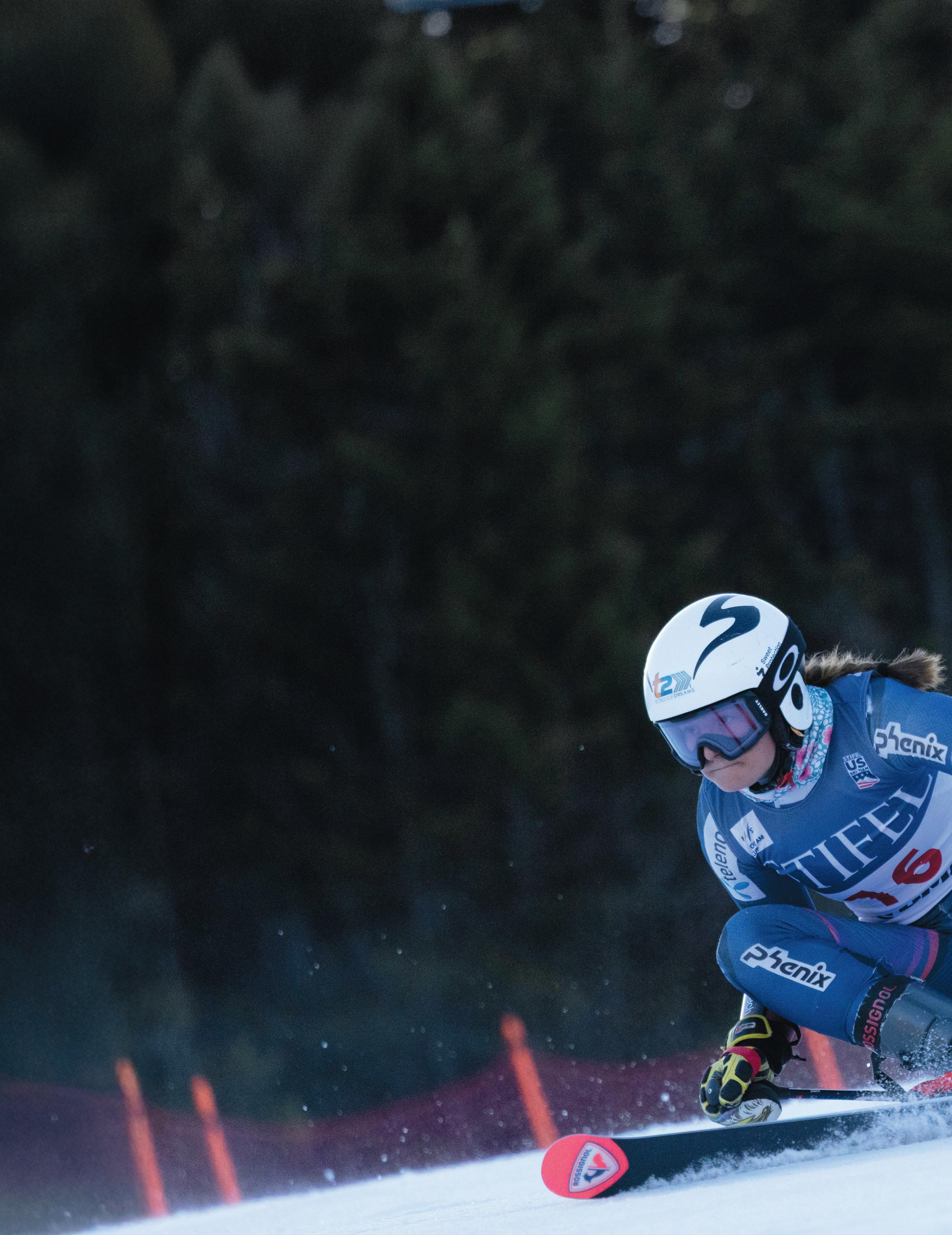
Annika Hunt’25 at the FIS Women’s Nor-Am Cup hosted by Burke Mountain Academy, March 18–19, 2025.
OUR COMMUNITY IS BUILT ON A FOUNDATION OF TRUST, WHERE HARD WORK IS VALUED ABOVE ALL ELSE.
IREUNITING AFTER THIRTY YEARS
Class of 1995 Celebrates 30th Reunion and Honors a Classmate’s Legacy
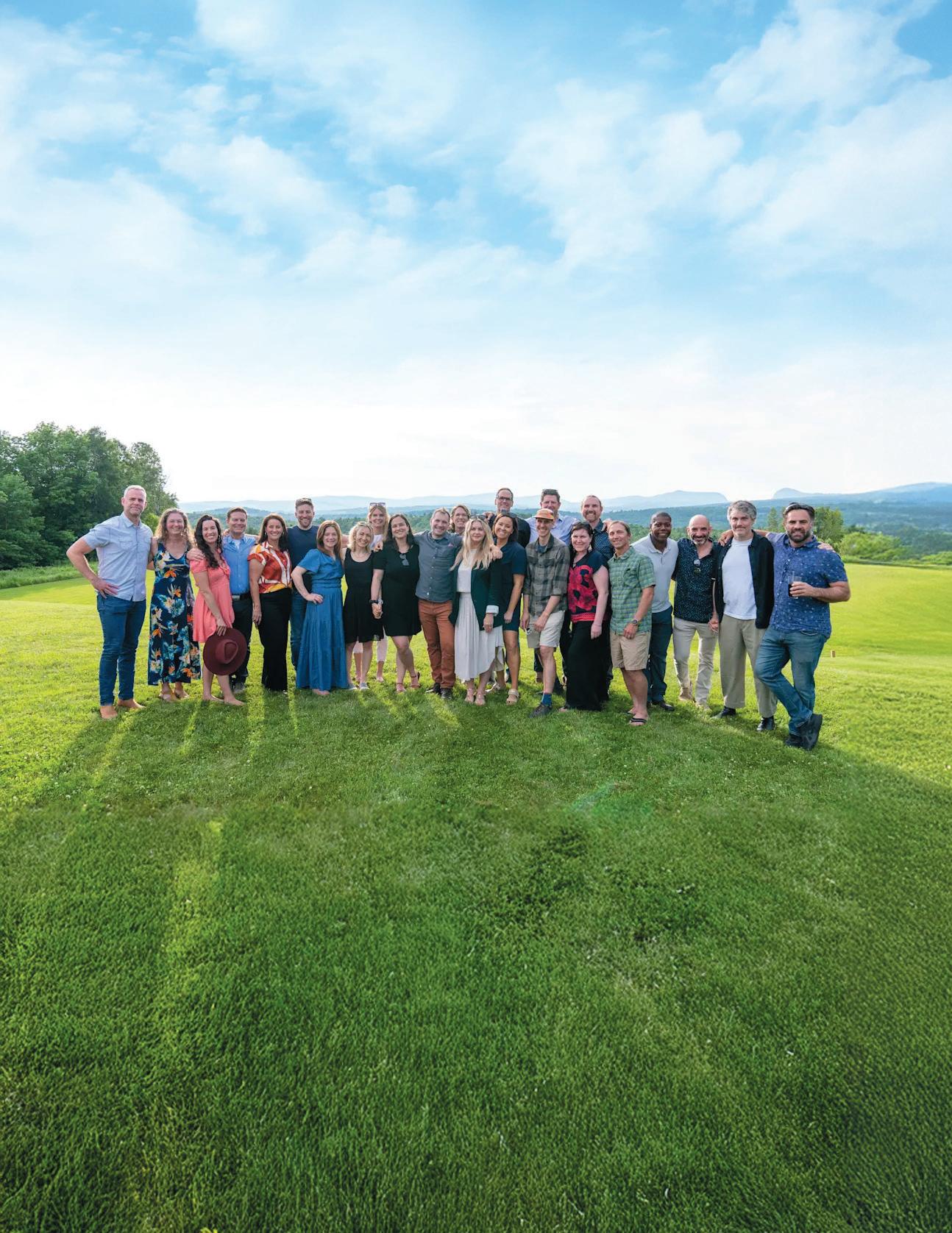
n mid-June, Burke Mountain Academy welcomed members of the Class of 1995 back to campus for their 30th Reunion, joined by friends, family, and fellow Burkies from the Class of 1996. For many, it was their first time returning to East Burke since graduation—an opportunity to reconnect, reflect, and relive memories rooted in their time at BMA.
One of the most meaningful moments of the weekend came Saturday evening during a ceremony in the Ronnie Berlack Center honoring the life of Adam Lawrence’95. The group gathered to dedicate the newly named “Core Station” in Adam’s memory. Known for his strength, character, and athleticism,
Adam still holds the school record for sit-ups during physical testing (legend has it he ended up in the ER with torn abdominal muscles). The space now stands as a tribute to his spirit.
The dedication was followed by dinner, stories, and laughter that stretched into the evening, ending around the firepit built and gifted to BMA by the Class of 2025. The reunion wrapped up with Sunday brunch and heartfelt goodbyes.
Burke Mountain Academy is grateful to the Class of 1995 for returning to celebrate and for honoring their classmate in such a meaningful way.
HELLO, BURKIES
CLASS OF 1995 AND 1996
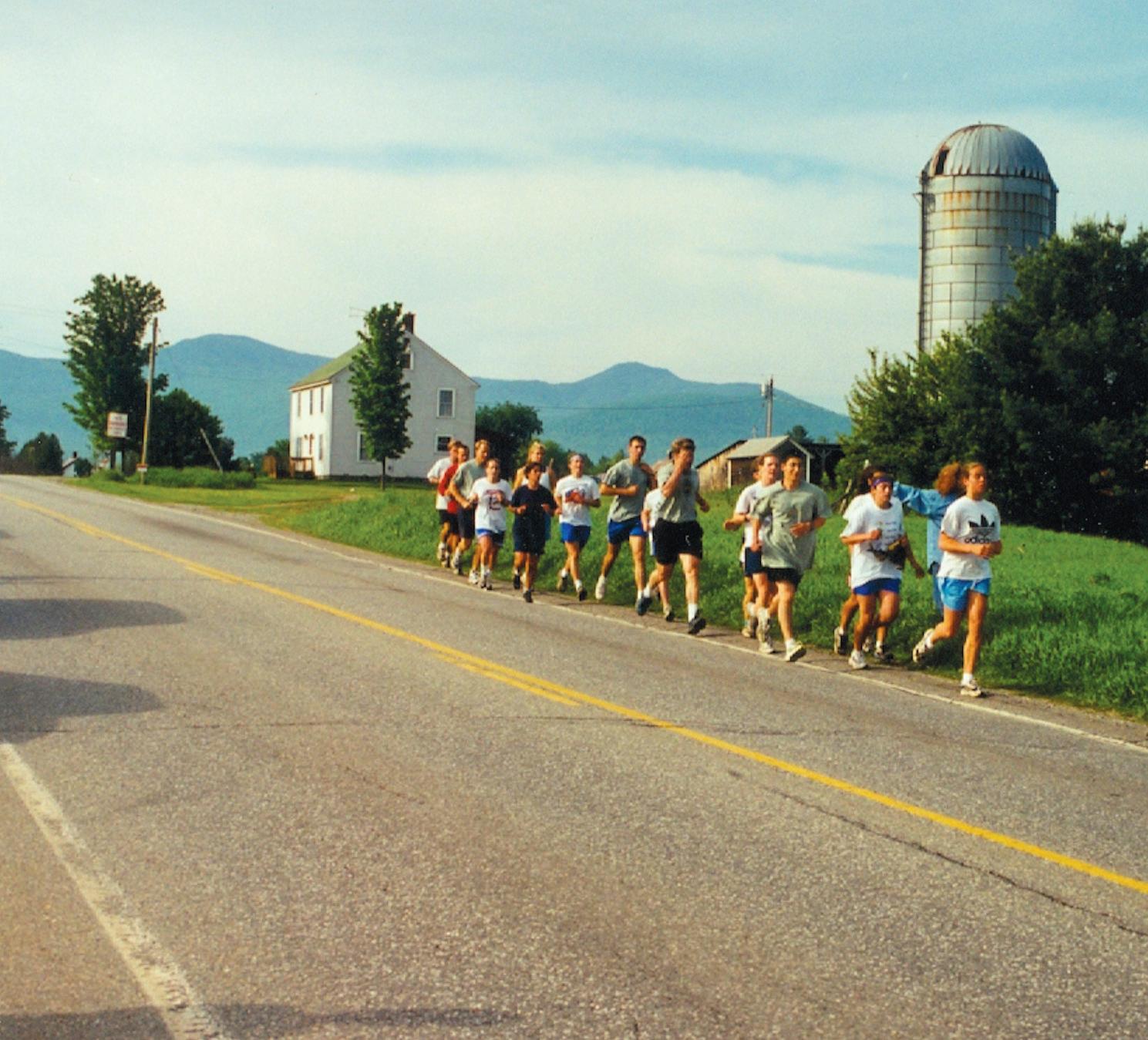
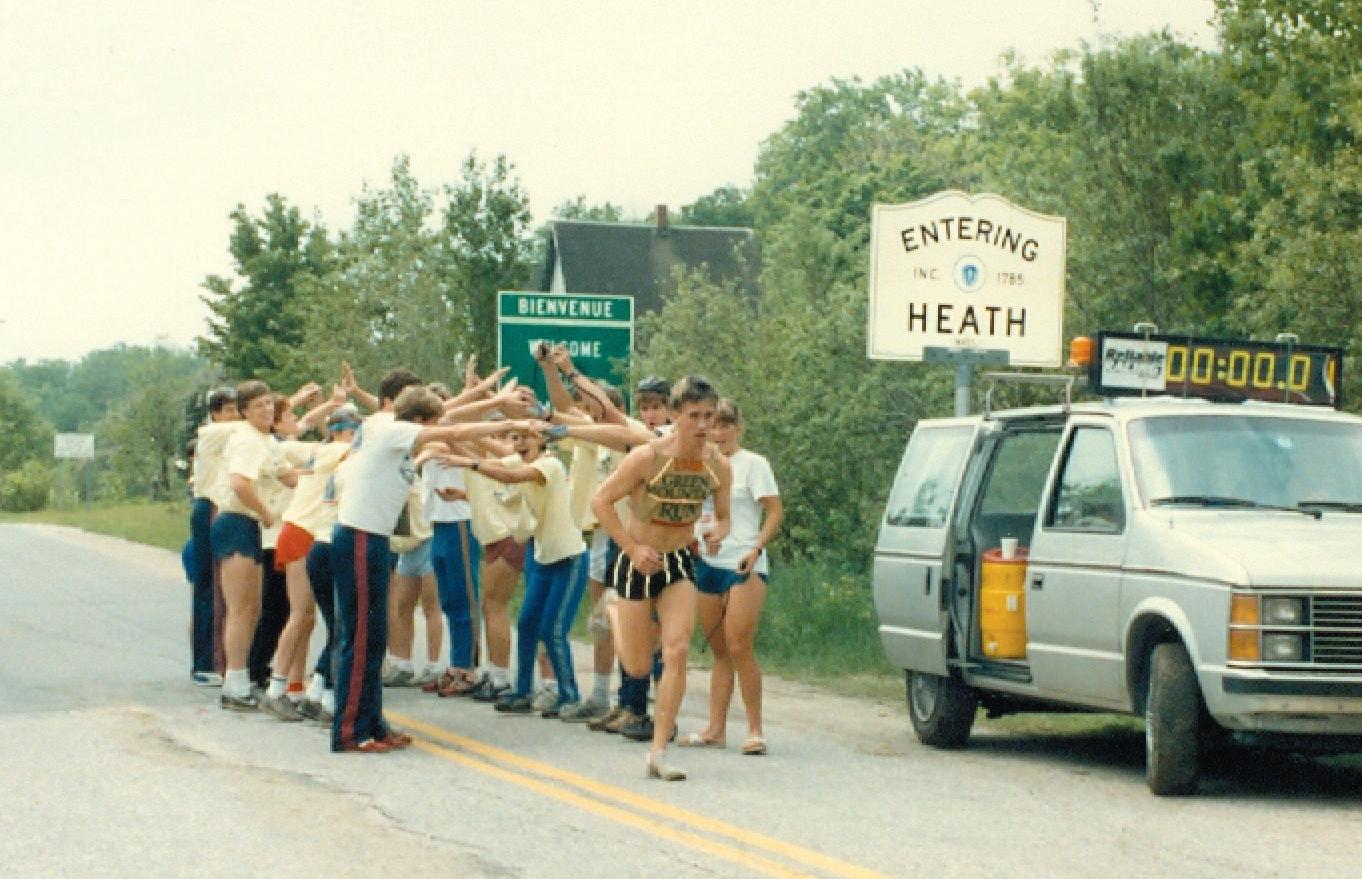
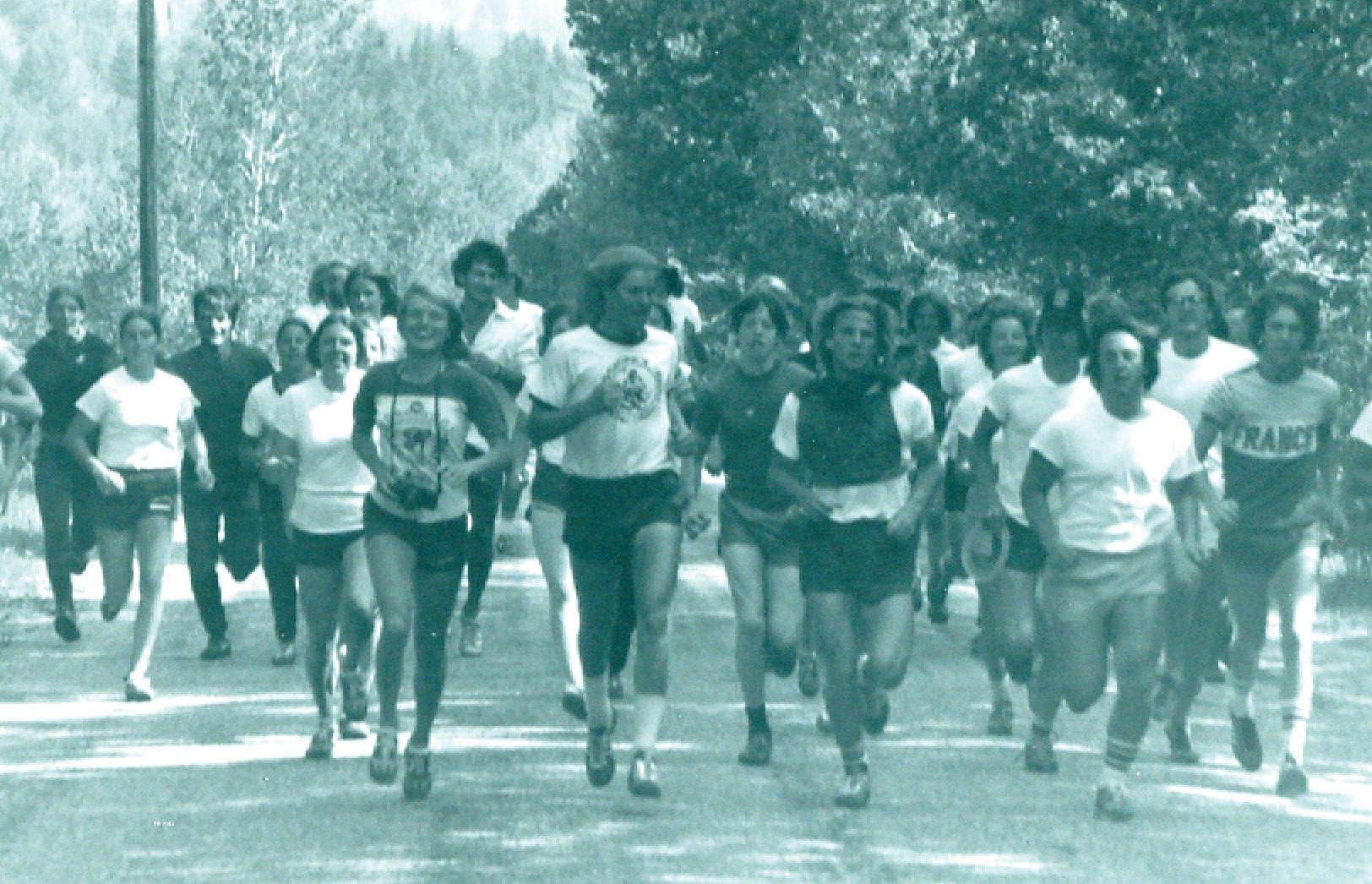
In the spring of 1975, two staffers floated a question that felt part challenge, part experiment: What if we ran the length of Vermont? That May, they did just that, 211 miles along Route 100.
50 YEARS. ONE WILD TRADITION.
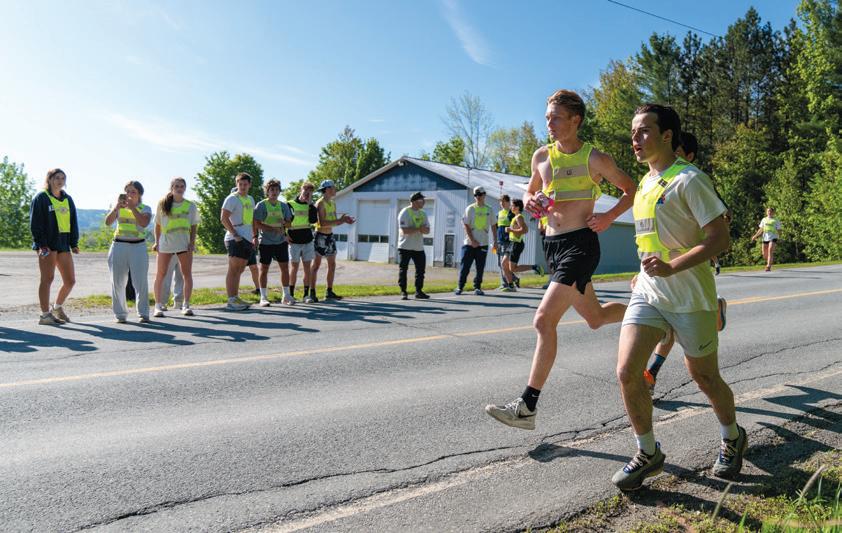
This year marks the 50th anniversary of one of BMA’s most legendary traditions: the Green Mountain Run. (Okay, there were a few years it didn’t happen—but still, fifty years!)
Since then, the run has become something of a rite of passage. Students pile into vans, take turns running four- or five-mile legs, and pass the bib through towns, fields, and mountains. It’s loud, chaotic, and full of heart. It’s the kind of determined joy that defines our school.
There were a few years it didn’t happen—Hurricane Irene, a global pandemic—but the spirit of the run never really went away. In 1988, Burkies set a still-standing record: 21 hours, 8 minutes. And this spring, they finished in under 24 hours.
It’s not the 50th time we’ve run it, exactly. But it’s been 50 years since that first spark of an idea. A good excuse to remember why we do it.
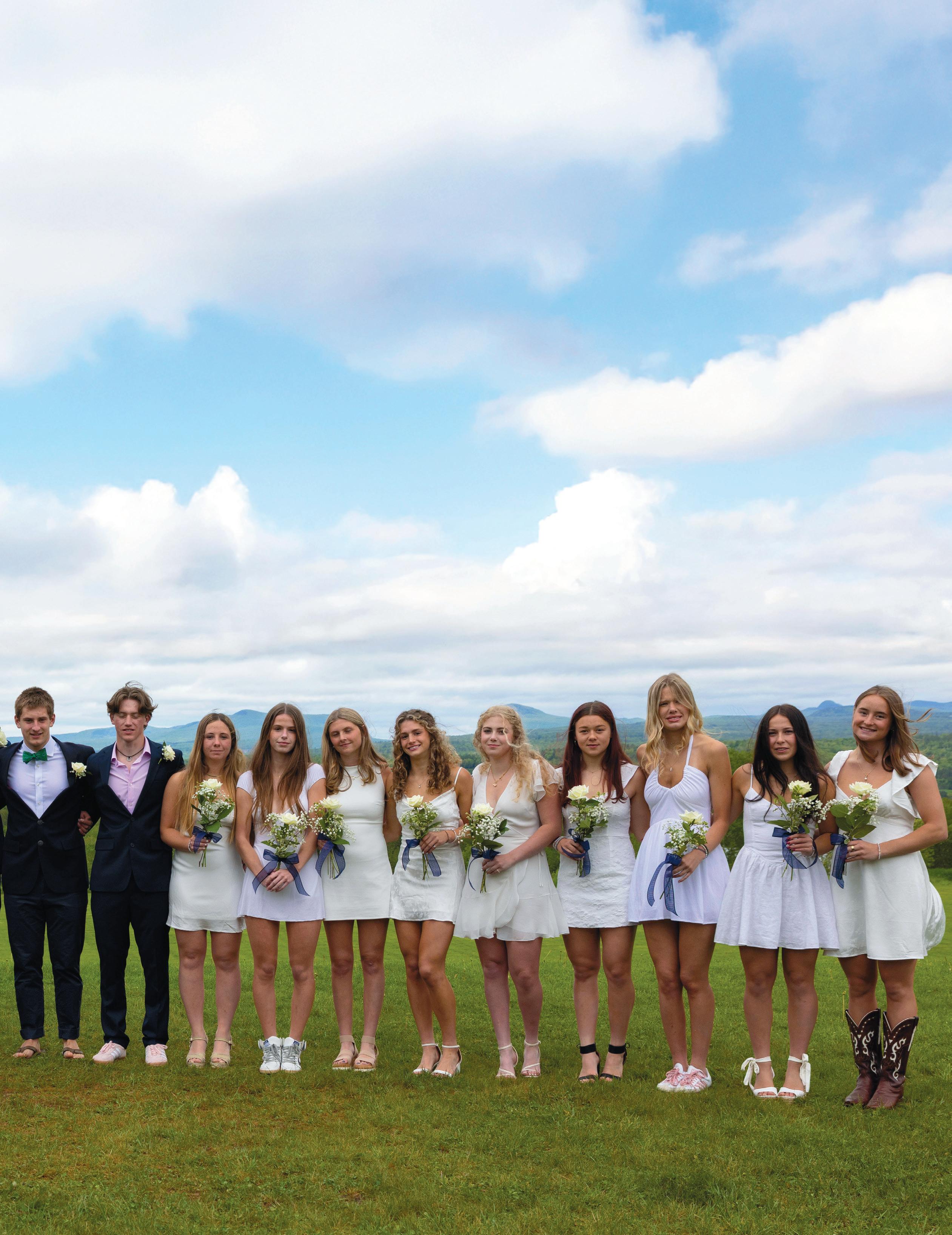
THE CLASS OF 2025
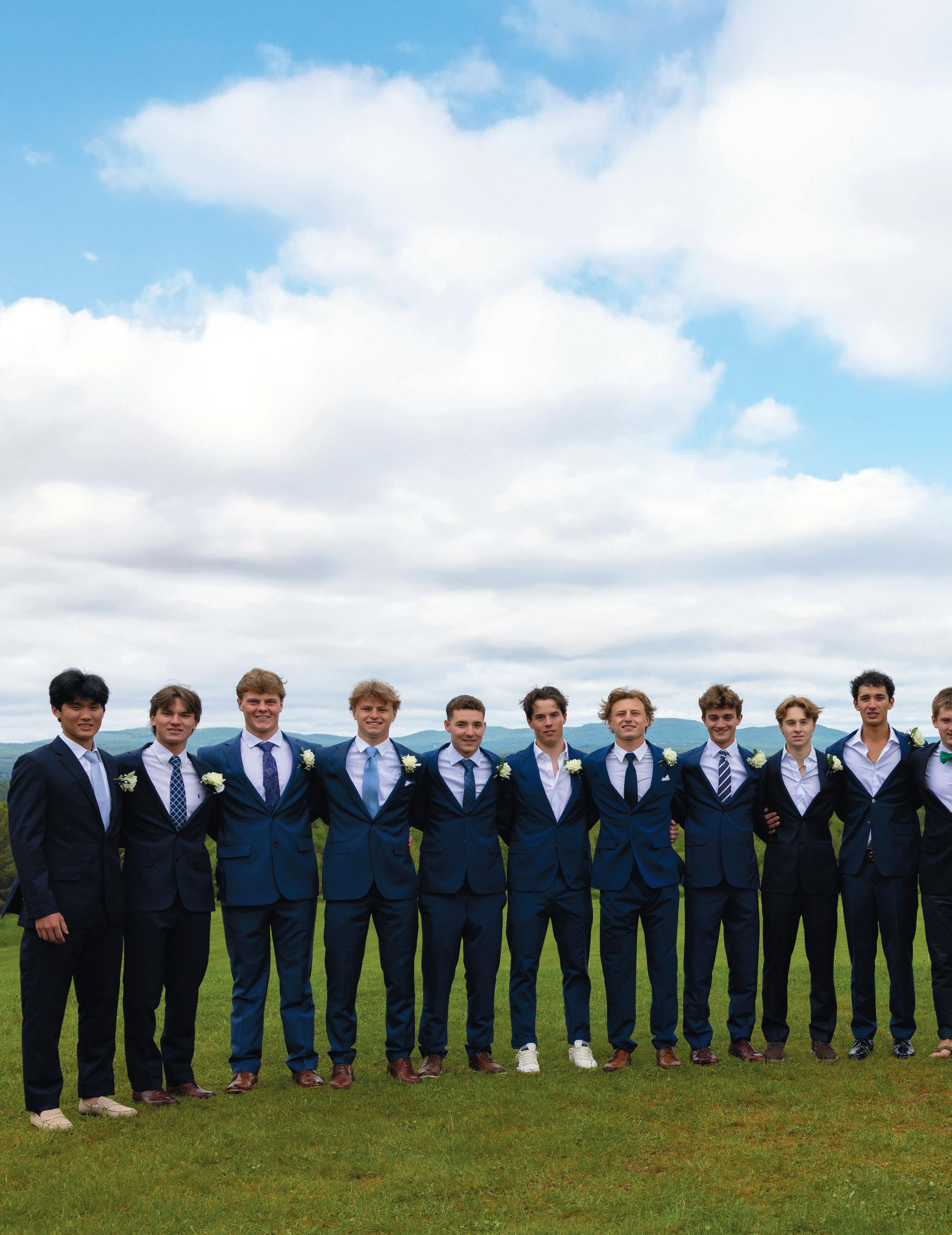
BMA celebrated the twenty-one graduates of the class of 2025 during a commencement ceremony on June 1st. With families, coaches, alumni, and classmates present to cheer them on in recognition of the effort it took to get to this milestone moment.
“This is not an easy place. The students sitting before us today have done the work, they have struggled and grown, and they have reached this moment not just because of what they achieved, but because of what they gave of themselves along the way,” said Head of School Willy Booker’96
Thomas Erhard’84, who was selected by the senior class as the speaker, offered his reflections on what
it means to be part of the BMA community and to stay grounded in the process.
“We should be proud of the achievements, but as I frequently remind the students, what we are most proud of is the effort,” Erhard said. “The work and the dedication to the process of trying to maximize their potential is the thing.”
The class of 2025 has challenged each other to be better and raised the bar for those who will follow. They leave Burke not only with accomplishments but with a deeper understanding of what it means to be a Burkie. Congratulations to the class of 2025!
CONGRATULATIONS!
Margarita Brotons Batista, Barcelona, Spain / Ty Christensen, Thetford, Vermont / Colby Englehart, Fredericton, NB, Canada / Nicholas Heinrich, East Burke, Vermont / Benjamin Hostetter, Stowe, Vermont / William Hostetter, Stowe, Vermont / Annika Hunt, Park City, Utah / Aiden Lee, Seoul, South Korea / William Lemerond, Scarsdale, New York / Jillian Lizotte, Rothesay, NB, Canada
Beatrice May, East Burke, Vermont / Lucas McDermott, Glenwood Springs, Colorado / Mackenzie Meirowitzm, East Burke, Vermont / Alex Nodder, Toronto, ON, Canada / Henry Parobeck, Saratoga Springs, New York / Rebecca Pelkey, Calgary, AB, Canada / Harper Sargent, Stowe, Vermont / Beatrix Shackleton, Kirby, Vermont / Soteri Tousimis, Georgetown, Colorado / Griffin Walters, Marblehead, Massachusetts / Clare Willard, East Burke, Vermont
BURKE MOUNTAIN ACADEMY CLASS OF 2025
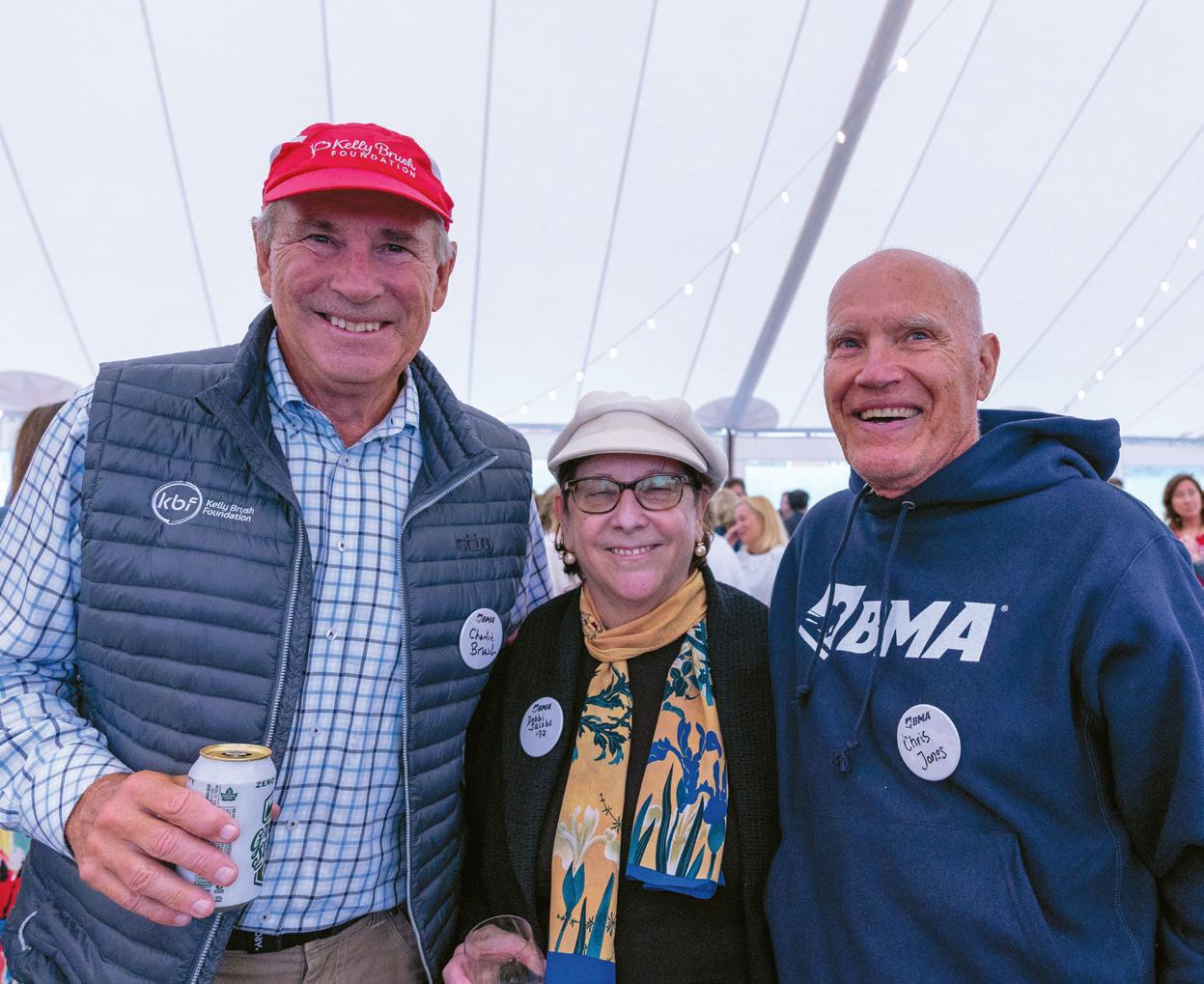
THIS ISSUE IS DEDICATED TO CHRIS JONES (BMA COACH, 1971–1977)
Chris was among the first to take a leap of faith on Burke Mountain Academy, arriving in 1971 after a chance conversation with Warren Witherell on a T-bar at Waterville Valley. He helped shape BMA’s early years with humor, heart, and a belief in possibility. His legacy endures in the lives he impacted and the friendships he carried forward for decades.
“ If you want life to be good, then it is up to you to make it that way.” —CHRIS JONES
HEAD OF SCHOOL
Willy Booker’96
EDITOR
Meryl Willett, Marketing and Communications
CONTRIBUTING PHOTOGRAPHERS
Kenyon Fatt
Three Peaks Media
Jay Riley
Matt J Wilson Photography
DESIGN
Square Spot Design
PUBLISHED BY THE OFFICE OF ADVANCEMENT
Marcia Berry, Database Coordinator
Jenny Bruell Fisher ’01, Director of Advancement
Meryl Willett, Marketing and Communications Manager
Burke Mountain Academy is a co-ed boarding school for elite ski racers in East Burke, Vermont. Since its founding, the school has produced more than 154 National Ski Team members and 37 Olympians and has earned a reputation as one of the top ski academies in the world. BMA provides passionate ski racers with the opportunity to pursue their limitless academic and athletic potential in a community based on trust.