THE INDULGENCE ISSUE

Page 1


The Indulgence Issue

COVER

Photographer

Stylist

Hair

MUA

EXECUTIVE PORTRAITS

Talent Cierra Martin
Amanda DiMaio
Danny Colon
Artist Liberty Ackerman
Alexis Allen
Photo Assistant Cheyenne Temple
Photographer Eva Demming
Graphics Hailey Weber
Gown Ava Wilson

Photography

The Indulgence Issue

Editor-in-Chief

Creative Director

Features Director President

Vice President

Art Director

Junior Art Director

Fashion Director

Co-Beauty Directors

Photo Director

Junior Photo Director

Photo Assistants

Managing Editor

Senior Fashion Editor

Senior Culture Editor

Web Director Treasurer

Assistant Treasurer Secretary

Editorial Assistant

PR Director (Collabs)

PR Director (Events/Merch)

Co-Social Media Managers

Podcast Director

Phoenix Simpson

Audrey Tobin

Cristina German

Madison Ludwig

Nishtha Jhawar

Hailey Weber

Erin Black

Danny Colon

Brooke Harry and Gillian Tokar

Amanda DiMaio

Cheyenne Temple

Coral Day and Kiefer Shortell

Ava Ferrise

Samantha Le Brecht

Emily Simon

Yeajin Lim

Heer Sharma

Tamanna Jain

Lorelei Gwynn

Jenesis Vaughn

Alyssa Klein

Sydney Dyball

Jayne Kim and Kristin McCormack

Rebecca Messner Medina

Spring/Summer 2025

Chi Erdemri, Christian John, Elise Harcsar, Erin Black, Erin Kidd, Hailey Weber, Isabella Cerak, Laura Hansroul, Luanna Tang, Mia Berninger, Thalia Merino, Vicky Li

Allison Simms, Alyssa Klein, Amanda DiMaio, Anais Conde, Cheyenne Temple, Coral Day, Esai Velasquez, Eva Demming, Jan Edward, Kiefer Shortell, Mason Drowne, Mia Baric, Penelope Peralta, Sophia Giulietti, Tais Simon, Wendy Beauvais

Amanda Wachner, Danny Colon, Dominic Turiczek, Elisa Phanelo, Ellie McCullough, Fiona Verderosa, Giulianna Wong, Haley Birton, Helena Haralambopoulos, Laila Abdul-Aziz, Mathea Bruns, Michelle Liao, Michelle Wysocki, Sammy Palma, Shun Lei Wai Aung, Talia Moss, Taliana Esposito

Alexandra McKinnell, Alexis Allen, Ashley Simas, Brooke Harry, Diana Philippi. Isabella Mosquera, Evan Liu, Gillian Tokar, Heather Collins, Iris Santiago, Izzy Catu, Kristine Sader, Lavani Laishram, Liberty Ackerman, Mio Okagaki, Yasmin Sagheb, Zoie Kremer

Erin Black, Madison Meyer

Ashley Simas, Anoushka Dorigallu, Grisell Montes, Michelle Liao, Nathaly Krzesiczan, Prachi Roongta

Blush is produced by the students of the Fashion Institute of Technology, part of the State University of New York, with funds provided by the FIT student government association. FIT is committed to prohibiting discrimination in its programs, activities, and employment, whether based on race, color, nation origin, sex, gender, gender identity, religion, ethnic background, age, disability, marital status, sexual orientation, military service status, genetic information, pregnancy, familial status, citizenship (except as required to comply with law), or any other criterion prohibited by law. Inquiries regarding the nondiscrimination policy may be directed to the affirmative action officer/title IX coordination, (212) 217-3360, titleix@fitnyc.edu.

Executive team

Editor-in-Chief

Creative Director

Phoenix Simpson
Audrey Tobin
Photo Director Amanda DiMaio
Art Director
Hailey Weber
Managing Editor
Ava Ferrise
Senior Fashion Editor
Samantha Le Brecht
PR Director (Collabs)
Alyssa Klein
PR Director (Events/Merch)
Sydney Dyball
President Madison Ludwig

Co-Beauty Director

Co-Beauty Director

Spring Summer 2025

Photo Assistant Coral Day
Photo Assistant
Kiefer Shortell
Vice President Nishtha Jhawar
Podcast Director Rebecca Messner Medina
Fashion Director
Danny Colon
Brooke Harry
Web Director Yeajin Lim
Jr. Photo Director Cheyenne Temple
Gillian Tokar
Social Media Manager
Kristin McCormack
Social Media Manager Jayne Kim
Talent Phoenix Simpson
Photographer Amanda DiMaio
Stylist Danny Colon
Stylist Assistant Michelle Liao
Hair Artist Gillian Tokar
MUA Brooke Harry
Nail Artist Gillian Tokar
Graphics Erin Black
Photo Assistant Coral Day, Kiefer Shortell
Dress Electrix Vintage
Shoes Chinese Laundry
Leotard Speerise
Dress Electrix Vintage

What does indulgence look like?

When Audrey and I initially conceptualized The Indulgence Issue back in August of 2024, we dreamed up an issue bursting at the seams with excess. We aimed to transport the Blush Magazine reader into a lavish fantasy that served as an escape from reality.

Reality hit us hard as the club was put on financial probation in the first week of the academic year. This unexpected turn of events left us playing catch-up as we were trying to create an issue with a club rife with foundational issues that had been plaguing it for years. Eventually, the decision was made for Blush to postpone the issue to the spring semester and spend the fall addressing the club’s areas of growth.

This was not the end of our difficulties as the team dealt with the unexpected loss of team members, photo shoots rescheduled, and many more issues, but we took it in stride. Once we started production in the spring, we found a new meaning in indulgence. Embodied by the cover, The Indulgence Issue represents finding the glamour even in the face of adversity. It is holding your head up high and persevering when times are tough. Even though there are so many issues plaguing the world and impacting FIT’s student body, it’s important to find moments to foster creativity despite it all. Despite working with limited resources compared to previous issues, our team has been able to craft an extravagant issue that continues to propel the club forward.

I have always been drawn to life’s most fabulous offerings. Even when my circumstances were far from glamorous throughout my life, I could always flip through the pages of my mom’s issues of Vogue for the cutting-edge fashions I couldn’t otherwise access or her many gossip magazines to obsess over how the stars lived. This issue is filled with fantasies that would’ve never been possible to realize without the countless hours put in by me and the team over this year, as well as the platform that Blush has provided me.

Blush has shaped my college experience, and I am thrilled to see the issue come to fruition as I come close to the end of it. I started with Blush in 2023, writing my first article ever for The Anniversary Issue. From this, my involvement rapidly expanded as I became the Senior Beauty Editor, and graced the cover of The Rebirth Issue. I am honored to have had the opportunity to reshape the club this past year and carry on its legacy with this issue.

I want to extend my gratitude to the team this year who showed resilience through the ever-changing circumstances and stayed dedicated to the art we were creating. I couldn’t have done it without those who gave this issue their all as well, and I am so excited to finally share this issue with everyone.

XOXO, Phoenix Simpson

EXECUTIVE PICKS

Photographer Eva Demming
Graphics Hailey Weber

TREND SPOTTING

Photographer Kiefer Shortell
Graphic Designer Hailey Weber

WHAT ARE FIT STUDENTS WEARING?

MINUTE

For every Fashion Institute of Technology student, the concept of the glamorous life in New York City gets shoved down their throats since day one. Over time, their career interests developed through the consumption of copious amounts of media selling the same dream- a fast-paced, fashionable lifestyle, leading them to one of the best fashion schools in the world, reading one of the best student-led fashion magazines.

Each year, eager FIT freshmen drive across state lines or fly overseas to pursue their NYC dreams. However, for FIT’s in-state students, their dreams were a Metrocard swipe away. The inspiration for their art, style, and fashion comes from more than the Chelsea but lived cultural experiences in the notable boroughs- Manhattan, Brooklyn, Queens, and the Bronx.

A 35-minute ride on a Uptown train takes you to Harlem, known for its

dynamic history with fashion, art, and music that inspires all visitors. From Fifth Avenue to East 96th Street lies East Harlem, known as Spanish Harlem–or El Barrio, for real New Yorkers. Lesley Valdovinos, a fourth-year Advertising Marketing Communications and graphic design intern, was born and raised there.

For Valdovinos, diversity and creativity were at the forefront of her childhood- recalling music-filled community gatherings on scorching hot summers. She wanted her college experience to match those memories. “I just knew that I wanted to be surrounded by effervescent people who were good at being passionate and, of course, surrounded by creativity, which FIT does exceptionally well,” she says.

For 40 minutes on several Downtown trains, you arrive in Brooklyn. Referred to as the new Manhattan, this borough is home to diverse artistic communities and upcoming creatives. Jamisha Rosado, an AMC senior and the founder of JAMDED Magazine, discovered her inspiration there.

Growing up surrounded by creativity, Jamisha knew she was destined for a place in the industry. However, as a first-generation college student, she didn’t know where to start. During her senior year at the High School of Fashion Industries, she fell in love with the balance marketing provided, eventually deciding to pursue it as a major. “However, I figured if I did pursue marketing, I would want it to be in fashion, and what better place to expand my network in the fashion industry than THE Fashion Institute of Technology,” she explains.

After taking the N or 7 train, you enter Queens, known for its beautiful parks with eye-catching views and diverse communities, serving delicious flavors of food and art. Jennifer Sze, a fourth-year knitwear fashion design student and president of the Fashion and Art Design club, gained her artistic passion there.

Like Jamisha, Sze’s road to FIT started inside the walls of a classroom. During her freshman year at the famous LaGuardia High for studio art, Sze joined the fashion club, inspiring her to take FIT’s “Designing a Collection” precollege class and drop her dreams of attending Rhode Island School of Design.

“After finishing that pre-college class, I had solidified in my head that I am going to only apply to FIT, and I only wanted to go to FIT,” recalls Sze. “New York is the best city to grow up in, attend schools, and work after college, so there wasn’t any point for me to go to RISD anymore.”

Multiple stops on the 2 train leads you to the Bronx. The birthplace of Hip Hop, the Bronx transformed fashion as we know it. This is the borough Carlos Villa, a Technical Design senior and freelancer, calls home.

Although Villa had a natural eye for fashion, it was not his first choice. “Actually, I wanted to be an artist, so I was studying fine arts at Hunter College,” he explains. “A lot of the fashion jobs started hitting during my time there, so I just decided to continue my degree in fashion because I’m already in the industry.”

These are the type of people that make up our FIT community and give a taste of their borough to 27th Street. However, the energy of New York City stays the same in any borough you enter–an addicting one that every citizen has no choice but to match.

“You walk around every day in a city, like, what are you wearing?” Villa expresses. “Why did they choose that?” These signs of unconventional thinking lead people to the center of fashion inspiration and creation.

Elizabeth Ovalle, a stylist and AMC student in her final year, was one of them. After graduating high school, she decided to move to New York City with the support of her dad. “After researching FIT’s programs and its accomplished alumni, I recognized that the dynamic environment would challenge me to grow and further develop my creative abilities,” she explains.

WHEN

YOU WALK DOWN THE STREET, WALK LIKE YOU

HAVE SOMEWHERE

TO BE.

WHEN ASKED TO SPEAK— ANSWER LIKE YOU HAVE SOMETHING VALUABLE TO SAY.

“Additionally, I was drawn to the freedom of self-expression the city offers, allowing me to explore outrageous and unconventional fashion choices confidently.”

The FIT experience is one like no other. Outside in the Breezeway, students, native and transplant alike, display their curated outfits–expressions of their culture, attitude, and art. Inside FIT’s walls hold not only competition and cliquey attitudes but faculty and student staff with friendly faces.

In the Design Tutoring Studio, Jen would kindly provide flat guides. In the Career Services Center, meet Adrian Jones, who critiques the cover letter that will secure an internship. On the fourth floor of the B-building is Lorretta Volpe, Chairwoman of the AMC department, assisting your London study abroad trip.

Play the FIT game right, and gain longlasting relationships and experiences that challenge comfort zones. You will join clubs like Blush magazine, curating shoots and developing articles. On the weekends, party with celebrities at The Box in the Lower East Side or get wine drunk at LunÀtico jazz club in Brooklyn. Finally, on weekdays, work diligently.

As students leave FIT with their degrees, portfolios, and tech packs, their love story with the City is just beginning. A love story that leads them back to the city every time.

Talent Laila Abdul - Aziz, Jada Davis
Photographer Mia Baric
Stylist Ellie McCullough
Graphic Designer Elise Harcsar
Dress Cest Nous
Fur coat Vintage
Hat Vintage
Shoes Jeffery Campbell
Lace skirt Vintage Slip dress Thrifted
Fur jacket Marvin Richards Shoes Vintage

An exploration of the cultural impact of TikTok “girl trends” and their evolution from empowering to toxic.

FEMININE overload

FEMININE overload

“Girl math,” “girl dinner,” “I’m just a girl,” “hot girl walk,” “it girl,” “rat girl,” “feral girl.” For a moment, it felt like the “girlification” of anything and everything was inescapable. These gendered trends peaked in 2023 when the term “Barbie Summer” took over. Greta Gerwig’s multi-billion dollar film delightfully functioned like a modern Feminine Mystique, giving voice to women’s issues and sparking conversation and discourse.

Feeling empowered, women swarmed to social media. Some filmed serious multiminute videos tackling the problems they perceived as most pressing for women. Others chose a more lighthearted approach, using satire as a coping mechanism. The latter approach gave way to the rise of “girl” trends.

Photographer Allison Simms

Photo Assistant Kiefer Shortell

Stylist Fiona Verderosa

Stylist Assistant Elisa Panelo

Hair Artist Brooke Harry

MUA Zoie Kremer, Iris Santiago, Izzy Catu

Nail Artist Mio Okagaki

Graphic Designer Erin Black

However, Barbie was not the lone star of the summer, numerous female icons swept the entertainment industry. Taylor Swift’s The Era’s Tour ravaged charts in the United States alongside Beyonce’s Renaissance Tour. Swift released her chart-topping re-recording of Speak Now in July, while Olivia Rodrigo snuck in to close the summer with her Grammy Award-winning Guts album in early September. These accomplishments contributed to the unique sense of femininity, strength, power, and celebration of the zeitgeist of summer 2023.

Talent Sydney Dyball, Samantha Le Brecht, Brianna Herbet
Jewelry Vintage Dress Adrianna by Adrianna Papell
Shoes Vintage

While the jokes started as a means to commiserate, they quickly

SOURED.

“I think, unfortunately, sometimes on social media, a lot of the girl trends like “girl dinner” can go from being cute or funny or something relatable into something that could be toxic,” says the head of the gender studies department at the Fashion Institute of Technology, Melissa Tombro.When “girl math” and “girl dinner” started as self-deprecating jokes that seemed innocent. The videos drew smiles on faces and provided a sense of unity in shared faults.

Furthermore, some of the trends defied stereotypical gender roles. “Girl dinner,” for instance, subverts the expectation that women should cook for the family. Young women prepared food solely for themselves, the “meals” not at all suitable for a traditional family dinner but rather women seeking provision for herself and herself only; a concept many cannot fathom-a woman doing something for herself and herself only.

Despite solid beginnings, “girl dinner” illustrates one of the clearest descents into darkness. “ A lot of it is silly or fun and snacky,” Tombro says, “I also identify with girl dinners. I’m eating cheese, nuts, a piece of fruit, a cookie, whatever it is. Then it descends into things like “girl dinner,” “I’m eating ice.”

What began as a feminist subversion of gender roles quickly plunged into women publicizing disordered eating habits on social media. Other trends like “girl math” and “I’m just a girl” progressed down similar paths. They perpetuated stereotypes like women being

poor at math or somehow less capable than men. Overwhelmingly, TikTok users who pointed out this harmful rhetoric met the sentiment that the videos are jokes and, therefore, not that serious. However, those expressing concern identified a real problem.

Social media sites like TikTok are complicated arenas brimming with a variety of contentious content. Not every user opens TikTok looking for the same type of content; some seek news or information, while others search for entertainment, and what the user looks for often changes multiple times a day.

Professor of English and Communication studies at FIT Marcus Brock explains that TikTok is “not necessarily a comedic, satirical space.” Brock says, “When I log on, I’m not paying for tickets to a comedy show or watching something on Netflix. So it gets misconstrued in a very different way.”

The constant shifting tone from video to video makes it hard for users to differentiate between serious and satirical content. A perfect example of this phenomenon is rage baiting, a content strategy where creators intentionally post agitating videos to increase engagement. The technique is profoundly effective because the average user fails to engage the content they consume critically and subsequently fails to recognize a fabricated video when they see one. Therefore, many TikTok users take messages to heart, regardless of whether they are framed as jokes. That gets particu-

larly dangerous if the messaging is negative or consumed in large amounts.

The TikTok algorithm tailors the in-app experience by collecting comprehensive data to push the most engaging content for the individual user. For that same reason, the algorithm is so effective and intensely dangerous. If a user interacts with toxic or harmful content, the algorithm will push more of the same into their feed.

In her experience doing social media for her children’s apparel store, owner of Phia Boutique Michelle Gardiner explains, “The algorithm will keep focusing on the negative images instead of bringing in positive ones. You can go down rabbit holes of negativity because it just keeps showing up on your For You page.”

On a platform like TikTok, governed by a pervasive algorithm and rampant with poor media literacy, jokes can quickly become harmful. Gardiner warns,”If you’re constantly getting the same message, satire or not, then you’re going to buy into that message.” Her sentiment applies to all app users but is increasingly concerning for young children.

It is estimated that 32.5% of TikTok users are under the age of 20. While TikTok has a 13+ age requirement, it is incredibly easy to lie about one’s age. Therefore, children are present on and consume content through the platform.

“When I was growing up, we had magazines, which you would look at. These kids now, every 15 seconds, they’re seeing a new image,” Gardner says. “We were seeing it once a month; they’re constantly being bombarded by negative messages.”

Children are hugely impressionable as they are developing their view of the world and self-image. When children use a platform like TikTok, they start to internalize these poor sentiments as universal truths. For young girls making sense of their place in the world, it is profoundly damaging to see adult women, who they might consider role models, make self-deprecating jokes about their gender.

Dress Milly Ring Chelsea Flea Shoes Michael Kors

“Tony Morrison’s The Bluest Eye follows similar themes,” says Professor Brock.” What happens when you soak children in shame and despair? They end up going insane, essentially. It messes them up psychologically.”

One of the best qualities of TikTok is that people from all walks of life can use the platform. It democratizes media, giving voices to marginalized groups who historically haven’t had them in traditional media and publishing. This also means anyone can see a video posted to TikTok. It is important to consider that while a piece of content might have an intended audience, there is no way to guarantee that’s who consumes the video. “It’s interesting because social media is a place where young women have a lot of power,” says Professor Tombro.

With an increased sphere of influence comes a certain level of responsibility and a real opportunity to make impactful change. To achieve equality, it is dire that female creators recognize their power and start acting accordingly.

Professor Brock recalls, “I grew up with that phrase: You have to teach people how to treat you.” Practicing positive self-talk when posting to public platforms is one way female creators can use their power for good. Speaking positively about oneself and other women creates an expectation that everyone does the same. This behavior sets a good example for young girls, who can learn to speak kindly to themselves and refuse to accept negativity from others.

Dress B Darlin Necklace Vintage Earrings Vintage

That’s not to say that all women have to post serious videos to TikTok, there is of course a place for humor. The distinction lies in the jokes we choose to popularize.

Azalea Flores, President of Her Campus at FIT, loves videos of “women bashing stereotypes and insane beauty standards.” While there is an abundance of problematic “girl” trends, there are absolutely healthy iterations that have appeared across the app. One such trend that immediately comes to mind utilized TikTok’s photo mode. Female creators would compile personal childhood photos, or images that reminded them of growing up, to highlight the beauty of girlhood. Trends like this, that show appreciation for the female experience, are a wholesome way for the girl trends to continue.

With small tweaks to the way we create and consume TikTok content, there is hope for the girl trends to be reborn into something beneficial. After all, this began as a celebration of the increased role of women in popular media. By refocusing the girl trends into something positive again, they can act as a powerful vehicle for furthering the conversation around women’s equality. Gardiner has faith that this is possible,” I feel like your age group will change things in the next five years.”

Dress French Connection Ring Chelsea Flea Earrings Vintage

It’s 2025, and Indie Sleaze—once a raw, rebellious aesthetic of the late 2000s and early 2010s—has returned. Defined by chaotic energy and sexual provocation, the movement blurred the line between rebellion and exploitation. Figures like Terry Richardson and Dov Charney helped shape its visual identity, later tainted by allegations of misconduct. Yet, in 2025, Indie Sleaze persists. The question remains: Can it evolve, or are we doomed to repeat its toxic past?

The original rise of Indie Sleaze coincided with a moment of internet transformation. Before the dominance of algorithms, fashion was less intentional and more rebellious. Unpolished, unglamorous, and

shockingly candid photoshoots in dive bars became the visual norm. However, much of the movement’s real danger came from behind the lens. Richardson’s boundary-pushing imagery made him the poster child of the era, while Charney’s American Apparel campaigns have since been criticized for exploiting young women under the guise of “edgy” marketing. Though Indie Sleaze was meant to represent countercultural rebellion, those driving its visual identity ultimately perpetuated exploitative power dynamics.

And yet, the allure of the aesthetic, with its unvarnished edge, managed to sustain itself. But can it break free of its tainted origins in 2025?

BY MALLORY DISNAY

NOSTALGIA, GRITT, AND THE REBELLIOUS REVIVAL OF INDIE COOL.

The question is whether the “new sleaze” can shake off its toxic past, or risk walking the same perilous plank of objectification disguised as rebellion.

Today, Indie Sleaze is redefined by a new generation. From social media to the runway, the elements are all there–smudged eyeliner, disheveled hair, leather jackets, and gritty nightlife photos to permeate our media. This revival, however, isn’t just about aesthetic nostalgia. Today’s cultural climate demands more accountability especially when it comes to issues of consent, power dynamics, and representation.

A key part of this shift is how club culture fosters a sense of community, offering young people a shared space of togetherness and collective identity. As Lillian Barshop, a freshman majoring in fine arts, puts it, “clubbing gives young people a sense of community and common culture.” At the same time, the internet has broadened the scope of who can participate, allowing people from different backgrounds and body types to engage in ways they couldn’t before. As Lillian explains, “because of how the internet gives everyone access, more people–regardless of their background–are now able to participate in a way that was less possible in the original scene.” This democratization of Indie Sleaze through digital platforms has allowed for greater diversity, but it also raises questions about authenticity.

“The internet gives every individual access,” Lillian continues, “so people of all different body types, all different backgrounds

are going to be able to participate less so than they were before.” However, this same control over personal image can amplify issues tied to self-curation and commodification. “In the mid-2000s, when Indie Sleaze was really becoming a thing, photographers would take a picture of you, and then you would be able to see it on a website the next morning,” she notes. Now, people manage their own online personas, shaping how they’re seen through platforms like Tik Tok and Instagram.

The question is whether the “new sleaze” can shake off its toxic past, or risk walking the same perilous plank of objectification disguised as rebellion. Will today’s generation reclaim the sexualized imagery of Indie Sleaze, or are we simply glorifying a version of counterculture that once thrived on misogyny?

A point of contention within the alternative community is the “watering down” of the aesthetic. Some argue that the resurgence feels like a sanitized version of its original form, stripped of its rawness in an attempt to appeal to a wider, more commercial audience. Social media influencers fight to “out-indie” each other by cultivating niche music tastes and carefully curated nonchalance. The new Indie Sleaze feels more performative than rebellious. Is it still cool if everyone is doing it?

Indie Sleaze once rejected mainstream trends, yet today, “indie credentials” are curated. To be part of the revival, one must know obscure bands, underground designers, and cultivate effortlessness—otherwise, you risk being labeled “basic.” Ironically, the race to be the most indie often mirrors the gatekeeping the movement originally opposed.

Artists like Lorde and bands like Crystal Castles, once considered trailblazers of the aesthetic, now find themselves caught between mainstream appeal and underground cool. Their influence still looms. However, in the hyper-connected digital age, maintaining

authenticity within the Indie Sleaze revival feels like a balancing act.

Part of the resurgence in 2025 can be attributed to pop culture’s ongoing embrace of sexual imagery, a phenomenon with deep historical roots. For instance, Britney Spears’ hypersexualized image during the early 2000s became emblematic of the music industry’s exploitation of young female artists. Despite her talent, Spears was often reduced to a sexual persona, a public struggle that contributed to her eventual breakdown and exposed the darker side of entertainment culture.

Talent Grace O'farrell, Danny Colon Photographer Cheyenne Temple
Photo Assistant Amanda DiMaio
Stylist Sammy Palma
Hair Artist Heather Collins
MUA Alexis Allen
Nail Artist Alexandra McKinnell
Graphic Designer Thalia Merino
Necklace OHTNYC
Earrings Heavens by Marc Jacobs
Shoes Camilla Skovgaard
Top Minga
Bracelet Hermes Necklace Hermes
Balenciaga

This dynamic illustrates how the commodification of sex seeps into every subculture, including alternative ones. As pop culture infiltrates indie aesthetics, some worry that the once rebellious spirit of these movements is being co-opted by the very systems they sought to critique.

Where do we go from here? Can the new sleaze evolve into a space where gritty rebellion doesn’t come at the expense of women’s bodies, where sexuality is celebrated without being commodified? Or will the movement once again fall into the trap of exploiting the very people it seeks to represent?

The answer is still unfolding as the new wave of Indie Sleaze navigates an era more attuned to consent and a balance of power. If done right, the resurgence could reclaim the aesthetic in a way that celebrates individuality and autonomy, allowing a new generation to define what rebellion looks like.

TikToker Sofia Calavera offers a hopeful perspective on this transformation saying, “I think this new era of knowledge and shared responsibility of inclusivity will bring a breath of fresh air to the resurgence of culture like this. It’s really interesting to see, especially with the rise of the internet, how vast these subcultures can grow and the different interpretations of it. I think the media has a lot to do with the change of pace as well and will hopefully hold that oppressive nature accountable.”

Calavera’s point underscores the potential for the new sleaze to break free from the exploitative dynamics of the past. However, without intentional efforts to hold media and cultural gatekeepers accountable, the movement still risks becoming a shallow echo of a problematic past. The challenge lies in whether this generation can build a foundation of inclusivity, autonomy, and responsibility that ensures the aesthetic evolves rather than regresses.

The music industry, particularly in pop, has operated under a harsh system where record labels, and management teams represent major control over artists’ careers. However, a change is occuring. More artists each year are reclaiming their presence, curating their own public image, and sticking up for themselves against the domination of the public eye that has historically hawked their every move. With the rise of social media and outspoken musicians challenging the music industry and public, more and more pop musicians are standing up for themselves.

One of the new situations over the past year is artists showing that they have control over their music, branding, and creative output as a whole, instead of the public.

While pop has traditionally been one of the most controlled genres due to labels and what they want, artists now are pushing back against the industry’s unalterable expectations. With platforms like TikTok, Instagram, Youtube, Soundcloud, and independent streaming services, musicians are no longer solely reliant on major labels to distribute their work. This shift allows artists to have greater say over their careers, chord progressing onto

They are perfectly curating their images; some by even making fun of themselves and playing into the bit of public scrutiny. Charli XCX, Miley Cyrus, Addison Rae, Billie Eillish and more have all mastered being their true selves and not caring what anyone thinks about them on socials and through their art and song.

Chappell Roan is a perfect example of an artist breaking free from industry norms. In 2024, she yelled back at a photographer who told her to “shut the f**k up”. She said, “No you shut the f**k up. Not me b***h”. She faced a lot of backlash from her own supporters, and the industry. Claiming that was her job, and she had to deal with people mistreating her.

And that mistreatment is not just a phenomenon; it’s a femininomenon. The history of the music industry is riddled with stories of artists, especially women, being silenced, controlled, and exploited. The rise of social media and investigative journalism has shone a harsh spotlight on exploitative label deals, abusive management, and the mental health toll of fame. Britney Spears’ conservatorship battle became a watershed moment, exposing the disturbing extent to which industry figures could dictate an artist’s life, finances, and career. Even after securing her legal freedom, Spears remains under public scrutiny, with fans dissecting her every social media post, proving that the industry’s grip extends beyond just contracts, it’s cultural, too, and lives in the industry.

These examples have pushed more use of the fans’ voices in support of their favorite music artists resulting in movement being made, and it matters more than ever. The fans really control the music artists and labels fate, if everyone is unhappy, the culture and reputation of an artist can be ruined. Fans like when their favorite artists listen to them, it makes them feel seen. Public support for artists speaking out against exploitation has never been stronger, and this has forced industry leaders to rethink their approach to artist relations.

The music industry has long been plagued by corruption, from exploitative contracts to unfair revenue distribution. In the past, artists had little recourse against the power of major labels, which controlled not only music distribution but also marketing, touring, and radio play. Today, however, transparency is becoming a priority.

Looking ahead, the music industry must adapt or risk irrelevance. Labels that once dictated every aspect of an artist’s career are finding their influence diminishing. To stay afloat, they must foster genuine partnerships with artists rather than clinging to outdated power structures.

One key area of change will be artist contracts. The era of restrictive, one-sided contracts is being challenged, with more musicians demanding transparency and better revenue sharing fronts. A lot of artists have been

independent for years before being signed by a label, by Choice. Madison Beer was independent until 2019, and she already was successful. Additionally, mental health awareness within the industry is growing, prompting discussions about better support systems for artists facing the pressures of fame. Another major shift will be in how artists build their brands. Social media has given musicians a direct line to their fans, allowing them to market themselves without needing label backed promotions. This trend will likely continue, giving artists greater hands on experiences on their careers.

The power dynamics in pop music are changing. With artists gaining more control, fans becoming more vocal in their support for fair treatment, and industry corruption being exposed, the future of music looks more promising than ever. While challenges remain, the shift toward artist autonomy is an important step toward a healthier and more equitable industry. As the politics of pop continue to evolve, one thing is certain: the artists are taking the lead, and the industry must follow.

Illustrator Hailey Weber
Graphic Designer Hailey Weber
Dress Mis Mister
Shoes Princess Polly
Necklace Dalmata
Earrings Core New York

Has Gen Z’s approach to spontaneity and relatability on social media shattered how we connect with celebrities and influencers?

Fame today isn’t about perfectly curated feeds flaunting opulence. It’s all about reliability and authenticity. While this shift seems to be going in the right direction, many are skeptical. Gen Z has begun to question whether this effortless authenticity and duplicitous portrayal of the perfect life is more calculated than ever before.

The need for authenticity and relatable content can be attributed to the rise of TikTok. Before the platform blew up during the COVID19 pandemic, Instagram was at its peak as the main platform for celebrities and influencers to document their extravagant lifestyles. However, TikTok opened the door to a less curated and casual content consumption experience.

Influencers and celebrities kept pushing the ideal of cohesive, meticulously curated, and aesthetically pleasing content. The rise of TikTok influencers brought with them a more genuine approach to content creation leading to a shift towards TikTok’s innovative short video format that later would be adopted by other platforms, becoming the new norm.

From how-to videos to wellness and astrology blogs, TikTok became a hub for creatives. Its complex and unpredictable algorithm made it easier for anyone to go viral, fueling Gen Z’s obsession with online popularity.

Before long, micro-influencers were thriving and paving their way to fame with content that would resonate with their audiences, fostering a sense of community. Nicole Rutsch, a wellness influencer and social media strategist says, “In today’s social media world, it’s all about storytelling and inspiring others; your followers need to know why you do what you do.”

She adds, “Without that, it gets tricky to maintain an audience.” But how can public figures remain relatable when becoming famous involves wealth, excess, and extravagance?

While this “magical” algorithm favored some by making it more attainable to grow an audience, it also fueled hate and hostility as content would often fall into the wrong niches. Regardless of your intent, TikTok would get the job done–making you viral!

“The more relatable they are, the more aspirational they become,” says YouTuber Charli Rose in her podcast on influencers and relatability. Rose reiterates that content creators who present themselves as ‘everyday people’ have a more substantial impact on their audience.

Celebrities and influencers perpetually try to portray themselves as “just like us," but often miss the mark. Instead, they appear out of touch with their audiences. A glaring example was when Charli D’Amelio worked as a cashier at Walmart—felt more like a pathetic promise of sympathy and a sorrowful staged attempt at relatability to a fan base of wide-eyed, hopeful, everyday citizens.

Similarly, when Kylie and Kris Jenner filmed themselves grocery shopping “for the first time in a long time,” it struck many as absurd, reinforcing just how far removed from reality celebrities can be. These efforts seem almost performative, creating more distance than connection as fans see through these scripted attempts to blend into “normal life.”

Today, Influencers navigate the line between relatability and wealth more subtly, yet this balancing act often feels contrived.

Talent Blake Sylvie, Angel Leibman, Cierra Martin
Photographer Anais Conde
Stylist Laila Abdul-Aziz
Hair Artist Kristine Sader
MUA Alexis Allen
Nail Artist Yasmin Sagheb, Gillian Tokar
Graphics
Luanna Tang
Production Assistant Madison Meyer
Photo Assistant Kiefer Shortell
Earrings Vintage Necklace Vintage
Jacket Anton
Top Vintage
Belt Cache
Jeans Grise
Bag Vintage
Shoes
Steve Madden

Nara Smith’s videos of cooking everything from scratch in luxury dresses turn everyday moments into extravagant displays. By showcasing high-end, organic ingredients while many grapple with rising grocery prices, she inadvertently highlights a privilege that distances her from the very audience she seeks to engage with.

Emma Chamberlain is another prominent example of navigating the fine line between relatability and luxury. Chamberlain was known for being outspoken about issues like fashion, sustainability, and consumerism. Her deceit, however, lies in her public critiques of the industry’s excess, all while attending exclusive events like Fashion Week and partnering with high-end brands like Miu Miu. Chamberlain has also faced backlash for her out-of-touch remarks on her podcast “Anything Goes”, despite her efforts to address

issues that are relatable to her audience.

This push for authenticity fosters creative freedom that challenges conventional content creation. However, celebrities like Chappell Roan face backlash for straying from the “ideal” celebrity mold. Her outspoken views on the election and fan boundaries have made her a target for those who expect a polished persona. This discomfort with her authenticity reveals society’s tendency to punish those who deviate from the typical celebrity blueprint.

But isn’t freedom of speech essential for spontaneity and genuineness? Or is it only acceptable when it aligns with fans’ expectations?

Fans today feel an overwhelming need to shape and control their idols’ public personas, mirroring the overbearing paparazzi culture of the early 2000s that plagued a young

Britney Spears. In today’s digital era, being chronically online has fostered an environment where every move of celebrities is scrutinized and critiqued, creating a sense of ownership among fans. This obsession can lead to toxic behavior, as fans expect their idols to conform to a specific narrative. Just as the media frenzy contributed to Spears’ struggles, today’s digital landscape raises similar questions about privacy and autonomy for public figures.

What happens when fans develop parasocial relationships with their idols? Once rooted in admiration, this connection can evolve into something obsessive; something where boundaries blur, and the idea of knowing someone through a screen becomes a false sense of intimacy.

Stan culture thrives in social climates like this. A stan doesn’t just follow, they advocate,

Once rooted in admiration, this connection can evolve into something obsessive; something where boundaries blur, and the idea of knowing someone through a screen becomes a false sense of intimacy.

particularly on platforms like X and Reddit. Fandoms such as the Swifties (Taylor Swift) and Barbs (Nicky Minaj), among others, transform their admiration into full-blown loyalty, treating every critique of their favorite stars as a personal attack.

“It is incredible how your love and admiration for someone can turn into hatred toward those who don’t agree with you,” says Madison Paradine, a public relations and press management assistant at Moschino. While freedom of speech is crucial for open conversations, the low censorship on platforms like X and Reddit allows hate speech and death threats to infest the dark web that is Stan culture.

In pop culture, we’ve seen this play out countless times—Swifties versus Ariana Grande fans or Barbs versus Cardi B supporters. Instead of engaging with both artists, these fandoms fuel drama and intensify the hostility, specifically on Snark Reddit and X hate trains.

These rivalries don’t stop at simple disagreement—they often evolve into fullblown campaigns to discredit or “cancel” the opposing figure. When enough momentum builds, celebrities and influencers find themselves at the center of mass backlash, with fans mobilizing to end their careers.

Stan culture, creeping towards the line of mob mentality, leads to rivalries. Fandoms pit their idols against others, targeting celebrities or influencers perceived as competitors. Whether it’s two singers at the top of the charts or influencers vying for the same audience, these tensions become a way for fans to justify their hatred.

“Cancel culture can be a good thing as it forces people to grow and change and be held accountable; however, it can get out of hand a lot of the times,” remarks Madison Collins, former Blush editor-in-chief. One of the complexities of cancel culture is that there isn’t a set of rules on how to use it right.

It seems like the public has full control over who to cancel and when to do it. Double standards and favoritism play a key role in determining who gets a pass.

Sunglasses TCS
Earrings Lucky Charm
Jacket LPX Vintage
Top Sour Dice
Belts Everything's Fine Vintage Pants Otkutyr
Shoes Vintage
Earrings Everything's Fine Vintage
Top Blumarine Shorts Electrix Vintage
Boots TCS

An introduction to the alluring and evolving scene of burlesque, cabaret, drag shows, and stripteases in New York City.

The exciting nature of New York City nightlife is no secret, serving as a culmination of socializing, consumption, and performance art. New York will continue to push the boundaries in every aspect. In turn, it has become not just a hub for artists, but a true home for the worlds of burlesque, cabaret, drag, and striptease.

When looking for burlesque and cabaret, Manhattan has all the classics. From Broadway shows and exclusive nightclub features to performances at the bars of Hell’s Kitchen, Manhattan has it all at your fingertips. For starters, Moulin Rouge and Cabaret at Kit Kat Club are two of the most talked about and successful shows on Broadway right now. These high production shows reveal insight into this artform and its history to the fresh eye.

As we walk up west into Hell’s Kitchen, the real fun begins with live drag performances and competitions at the vibrant Industry Bar, the fabulous Balcon Salon, and many other bars in the area. Head down to the Lower East Side for up-and-coming performers at The Slipper

Room, a burlesque theater housing talent who will without a doubt keep you on the edge of your seat. Elle Lusty, FIT’s 2024 drag pageant winner is currently working in the industry and has all the knowledge on how to navigate the city’s hotspot for a night of authenticity, beauty, and performance art. Elle shares, “Manhattan is for the shows! If you want to see a Broadway queen work her magic, Hell’s Kitchen is the moment. There are also more exclusive, intimate, and sometimes private shows for NYC’s highlife in luxury venues around Soho, the West Village, and the Lower East Side (the nightclub, The Box and high-end supper club, Duane Park).”

If you are interested in more of an early bird special, Manhattan has multiple restaurants hosting energetic and interactive drag brunches. Lips Restaurant is the perfect spot for all ages wanting to experience drag without staying out too late. Fresco’s Grand Cantina over in Astoria is another fierce drag brunch, perfect for those over in Queens wanting to avoid the hectic commute into Manhattan. Fresco’s is perfect

for discovering new queens in the scene during brunch or for Rupaul’s Drag Race viewing parties on Friday nights.

Maison Close, opened in 2022, is a celebratory restaurant in Soho inspired by France and its shared spaces of cuisine and performance. The dining experience begins with lavish burlesque performances featuring dancers adorned in beautiful corsets, lace, and crystals, and the night comes to a close with sparklers and the entire room dancing on the tables.

The New York guide to the nightlife world of drag and burlesque would not be complete without mentioning Brooklyn. The popular House of Yes is an exhilarating nightclub known for its electrifying performances, featuring circus acts, drag shows, and themed nights celebrating icons like Lady Gaga and Charli XCX. Elle Lusty currently occupies the Bushwick drag scene, explaining that, “If you go to Brooklyn you can find the most experimental and new, up-and-coming queens at some of the hottest parties at The Rosemont and Metropolitan Bar.

Illustrator Chi Erdemri Graphics Laura Hansroul

hottest parties at The Rosemont and Metropolitan Bar. Larger venues like 3DB/9BN and House of Yes always have queer events going on which can be a great introduction to the scene.”

Supporting this community of performers and showing up for them is crucial to continue growing this artistry. This is especially important now, amidst the uncertainty surrounding future rights for women and the LGBTQ+ community, who bring these performances to life and transform them into the fantasy they are. The hard work and dedication of these performers behind the scenes can often be overlooked. “One thing most people don’t recognize often enough is that most performers make and stone their own costumes as well! Men, Women, and everyone in between

perform burlesque and cabaret shows as well so it truly is an authentic queer art form as well and that is what makes me feel so connected and inspired by its beauty.” explains Elle Lusty.

With the recent releases of blockbuster films Anora and The Last Showgirl, mainstream media has raised awareness for the well-being of performers, from burlesque dancers to sex workers, in cities across the country. The importance of preserving this art form and ensuring the safety of all those involved must remain a priority. The stage represents a place of self-love and acceptance for many performers—a place where authenticity can shine through in a bold, unapologetic way that isn’t always possible or accepted in everyday life.

Photographer Cheyenne Temple Graphics Isabella Cerak
Photo Assistant Amanda DiMaio
Stylist Audrey Tobin

the ultimate guide to finding your perfect spring pair.

by Carolina Farias

High heels have always been synonymous with power, confidence, and style. But what is it about them that makes us willing to endure discomfort for that extra boost of confidence? From classic stilettos to modern sneakers, the evolution of footwear has always been influenced by both aesthetics and practicality.

As Carine Rotifield, former Editor-In-Chief of Vogue Paris said, “Always wear high heels. They give you power. You move differently, sit differently, and even speak differently.” Is the boost of confidence worth sore feet and walking barefoot across the pavement? For some Fashion Institute of Technology students, the answer is always yes.

Rain, snow, or shine, fashion students remain head over heels. However, the new little secret of high heels lies in their stability and stylishness. It’s the perfect combo when we’re looking for ‘the pair’. If you’re searching for your perfect shoes for the spring season, here are 7 shoes chosen by FIT students:

Sneaker heels

The wedge heels from Isabel Marrant remind us of our childhood and famous icons like Britney Spears and Paris Hilton, evoking a 2000s vibe. The style is a mix of grunge and modern aesthetics. These heels offer stability to walk around New York and face any challenges that come your way, as they’re chunky and can handle the weather changes throughout the day. They are often styled by students with long skirts, jeans, and bermudas. They’re a promise of coolness and a touch of effortless confidence, making them the perfect statement piece for anyone looking to channel both nostalgia and bold style in their everyday look.

Mary jane heels

Mary Janes continues to make a comeback season after season. These ballet-inspired flats exude a feminine, girly style. Worn by Amelia Star and Olivia Rodrigo, they’re commonly seen on campus paired with sheer socks, colorful tights, and cropped ankle covers. A must-have for a timeless look, Mary Janes offer both comfort and stability. Whether with a platform or not, they’re a much better choice than a bare-foot stiletto, which can leave you regretting your decision after just five minutes of standing. “I got these from Steven Madden. I love wearing them with skirts and oversized sweaters. I feel more elegant and classy at work and when I go out for dinner ” said Diana Trippia, a Fashion Business Management sophomore.

Clog heels

Modern, chunky, and comfortable, clogs have made their comeback. Their thick platforms provide stability and simplicity, making them ideal for those mornings when you can’t decide what to wear. Typically paired with jeans, long skirts, or coordinated sets, clogs evoke a bohemian vibe while also embracing a super-feminine aesthetic, with hints of androgyny. Luxury brands like Chloe, Hermes, and Miu Miu have all embraced this trend.

Mule heels

For taller girls or those who can’t bear stiletto high heels for more than two hours, mule heels are the perfect solution. They are ideal for a corporate look or for achieving a 90s vibe. “I love kitten heels because they’re versatile and easy to style for any occasion. I have black, pink, and brown suede pairs. My favorite looks are with jeans and a cute top for dinner or with a dress for special events. They’re more comfortable and chic than high heels!” said Lily Apostle, an FIT sophomore when asked about her perfect Friday night outfit.

Biker boots

“I love pairing them with maxi skirts or a pretty dress because they create contrast and make my outfits more interesting,” says Ana Beatriz Qualha, FIT student and fashion blogger. “If you’re looking for something a little edgier, something versatile that you can style

up or down and that transforms your closer, biker boots are the way to go.” Metallic, grunge, and stylish, biker boots are everywhere, offering both style and comfort. They’re perfect for rainy days or a night out, adding a statement to a simple outfit. Check out thrift stores to score that worn-in, grunge boho look.

Ganni patent ballerina flats

The perfect companion for your mom jeans, especially in red, these flats are comfortable while going with just about everything. “I want to buy them because they’re the perfect mix of girly and edgy! As soon as I put them on, I knew they’d make so many of my outfits cuter. I’d style them with mini skirts, baggy jeans, or shorts and oversized shirts. They’re perfect for spring,” says Sofia Jensen, The Style Shop Marketing Assistant.

Swords, Cartoons, and Cosplay—How the fashion industry is settling into the world of fantasy.

The line between fantasy and reality has begun to blur—aliens have taken over the runway, and we’ve time-jumped into a dystopian dreamscape. While gaming may seem like uncharted territory to the fashion industry, all things fiction have quietly become a thriving source of inspiration. Even the most historical fashion houses are leveling up their runways.

Fan culture is the zygote for fashion, drawing inspiration from video games and film. Theresa Winge discusses in her work, Costuming the Imagination: Origins of Anime and Manga Cosplay, how cosplay involves hours of dedication. Cosplayers meticulously piece together elaborate looks, aiming to transform into an entirely different persona.

Cosplay has its roots in Western culture, where fans replicate the looks of popular fantasy and science-fiction films. As technology progresses, sources of inspiration extend to not only film and television but video games as well. Games from the 1980s transform from microscopic pixels into memorable fashion, later replicated by many fans through cosplay.

The idea of embodying a persona other than oneself can feel unsettling or intimidating. To embrace fantasy in everyday life is to tap into a culture that is typically marketed as only for children.

Talent Nova Krasner
Photographer Mason Drowne
Stylist Mathea Bruns
Stylist Assistant Shun Lei Wai Aung
MUA Zoie Kremer
Photo Assistant Coral Day, Kiefer Shortell
Graphics Erin Black

Kart and cartoons like Gravity Falls. She views fashion not merely as a form of escapism but as a tool of relatability. “I built my own world through clothing, and people find it relatable, feeling a sense of community within me,” she says.

Posing in front of her bedroom wall (adorned with visuals of fictitious characters), Clover styles bouncy Harajuku skirts and cartoonish candy-patterned tees. She aims to emulate the color palettes she sees in cartoons that captivate her. She also credits her childhood for inspiration, describing her childhood as “the most fantastical headspace I’ve ever been in—when everything felt like an adventure.”

One of the most major fantasy takeovers happened in March 2024, when Denis Villeneuve’s Dune: Part Two was released to theaters, serving us intergalactic looks of Arrakis. Throughout the press tour, actress Zendaya commands the carpet with an entirely dystopian wardrobe, notably going full robotic with a sleek, chromatic archival Mugler suit for the London premiere. The Dune effect broke through editorial dressing and trickled down to streetwear, arriving as billowing cowl necklines, hooded veils, and shades of gray and nude from designers such as Nicholas K and Hyein Seo.

Traversing back to 2004, Alexander McQueen embraced new shapes, beginning the Fall Ready-to-Wear show with angelic draped soft jersey nude fabrics that evolve into exaggeratory brown hooded Mongolian lamb jackets and ovular-silhouetted gowns resembling spaceships, as if transported from the set of Star Wars

The sci-fi fantasy continues in 2024, with a wave of fantasy-ridden looks from major fashion houses such as Louis Vuitton, Fendi, and Dion Lee. Junya Watanabe subconsciously plunged into sci-fi for the Fall 2024 collection, displaying conceptual geometric robes with Darth Vader drapery in all shades of black. Although he majorly looked to sculpture to inspire this particular collection, Watanabe didn’t deny the sci-fi inspiration allegations, telling WWD, “I feel like the fact that I have such visual images in my memory is subconsciously influencing me, especially because I love sci-fi movies.”

As the metaverse grows, so does its fashion. In 2019, The Sims 4 released a Moschino “Stuff Pack,” showcasing the brand’s reallife merchandise in the gameplay. Demna Gvasalia’s Fall 2021 collection at Balenciaga leveled up, developing an experiential video game to display the looks. The video game Afterworld: The Age of Tomorrow, takes the player on a hero’s journey through Demna’s projected 2031 apocalyptic future. The Balenciaga models were individually scanned and rendered to be playable characters, all while wearing the collection’s oversized utility jackets, pointed metal footwear, and alienesque glasses.

To the everyday consumer, stepping out in sheet metal accessorized with a sword is not something you can simply look past in one take. Pop musician Chappell Roan had social media buzzing after she wowed the 2024 VMAs with three separate medieval looks throughout the night. First, a sheer, romantic Y/Project gown, her dagger-like nails carrying a fierce sword. Then, for her performance of her hit single, “Good Luck Babe!”, she slayed the stage in a full mighty 17th-century chainmail suit. Finally, she accepted her “Best New Artist” award in another chainmail piece; a Spring 2024 Rabanne dress with a matching hooded headpiece, dangling a bang of reflective metal strands over her eyes.

Chappell isn’t the first to wield a sword down the carpet. For 2021’s “In America: The Lexicon of Fashion” themed Met Gala, Iris Van Herpen dressed, Canadian musician Grimes in a total celestial gown. After obsessing over her fantasy was made with sharp 3-D scales running down her bodice, cascading into an elegant black train. Like out of a video game, Grimes held the Met Museum collection’s own polished medieval-style sword, smelted from discarded Colt AR-15A3 guns, honoring tradition while sporting modern technologies.

Fashion Institute of Technology alumni Saman Bakayoko, 23, has cemented her brand into TikTok history through her styling of medieval armor, coining the nickname “Armour Girl” to her over 23K followers.

Saman, @s.annia on TikTok, will wear her armor anywhere, to the club, parties, class, and even on the train. She notes that it has become a conversational piece, “I’ve sat and had fullon, deep conversations with people on the train because they’re so fascinated with the armor.”

Since her virality, her armor has made numerous appearances in publications like Vogue and various music videos. Post-“Armour Girl” debut, Saman has many ideas for her stylistic future, “I’ve been very into technology, and I want to play more into cyborgs,” she states. It’s all about authenticity for Saman, saying that wearing the armor “makes me feel more excited, happy, and confident.”

The evidence is extensive—fantasy is here. With the uproar of applause over Marc Jacobs taking over Anna Wintor’s job as editor for Vogue’s December 2024 issue, it’s clear whimsy fashion is needed. Grace Coddington dressed Kaia Gerber in proportionally large silhouetted Marc Jacobs looks, bringing a fantastical joyousness to the sometimes too-serious fashion industry.

Fantastical elements in clothing may always be weird to the average person. One can’t point out the slit of my Margiela Tabi heels to a group of small-town suburban boomers without a few

When Fashion Bites Back

“The Italian poet Leopardi said, fashion and death are sisters. They’re both daughters of decay,” says Valerie Steele, director and chief curator of The Museum at the Fashion Institute of Technology.

Biting down on fabric, this is no ordinary showstopper; it’s the Haute Horror Picture Show. Eye-grabbing looks that can send a pit to your stomach, or money to a couture lover’s hands, or usage of a gothic halloween costume in an exhibition of high fashion. From Alexander McQueen’s 2001 collection that was a mix of macabre and mastery, to Robert Wun’s recent couture displays of sharp angles and eerie elegance, and the longlasting emogothic scene, horror has had its niche in fashion. Haute Horror is an evolution, a return to runways, where gore, ambition, and death merge into a statement that’s as compelling as it is unsettling.

Valerie Steele, exclusively shared her insights on haute horror, and where

it stands today. Steele, an illustrious fashion historian and curator, has played a polar role in shaping the field of fashion studies. As the director and chief curator of The Museum at FIT, she has organized numerous fabulous exhibitions that represent the cultural significance of fashion. Recognized for her influence in the industry, Steele has been featured in the Business of Fashion 500 since 2014.

Horror, by nature, holds the power to linger. Much like fashion’s cyclical trends, it returns, it shocks, it challenges, but it never completely takes over. Thriving in the undercurrents of avant garde fashion, where the scream worthy meets the runway ready. Think of designers like Rick Owens or Gareth Pugh, who walk the line between terrifying and tantalizing. They’re not selling fear, they’re selling a returning narrative.

Horror’s role in fashion is crucial, especially in relation to creativity. It allows fashion to dip into fantasy, to tap into those darker elements that shake us awake. This is foundational art, a creative liberation that doesn’t just push the envelope, it rips it open with blood red lips and razor sharp nails. Alexander McQueen knew this well, especially in his ‘98 and ‘01 shows, which combined elements of horror with mastery.

Even beyond the runways, horror has bled into mainstream culture - films like The Rocky Horror Picture Show and Bram Stoker’s Dracula from 1992 brought visual

“I said the Gothic style was big when the economy was booming,” says Steele. “It doesn’t have anything to do with that. It’s cyclical, I think, and it probably has more to do with other sorts of pop culture phenomena, like music, for example, or like movies. I mean, we had Poor Things, which was kind of a take on the Frankenstein idea, so that was kind of Gothic.” said Valerie Steele.

Haute horror is an evolution, a return to runways, where gore, ambition, and death merge into a statement that’s as compelling as it is unsettling.

Jacket Carolann Altobelli Skirt New York Vintage Jewelry Vintage
Corset Alexis Yulo Hoffman
Skirt Giana DiGaetano
Necklace Vintage
Talent Lucas Nealon, Julianna Lombardo, Grace Pickard, Fiona Bollinger
Photographer
Photo Assistant Kiefer Shortell

aesthetics that have influenced designers for decades. Today, we see indie sleaze revival and emo-style tastes, tapping into that same jarring presentation that once belonged to horror films but now also belongs to fashion, as they are forever interconnected.

As for Robert Wun, his Spring 2024 collection doesn’t shy away from the eerie either. It’s sharp, structured, and striking. Fashion has always sought to evoke a reaction, to pull its audience into a new state of mind. And haute horror? It forces you to reckon with what you see. Do you love it? Does it scare you? Can it do both?

But does horror attract a new audience to fashion, or is it just another way of elevating the elite insiders who already know the game? Horror doesn’t just appeal to your classic couture lover, it extends its grasp into subcultures and its birthplace, from the emo scene to the avant-garde. There’s a reason why shops like Screaming Mimi’s Vintage in NYC thrive–because horror in fashion isn’t limited or curated for the catwalk.

“Gothic style, I felt it wasn’t really true that the designers were just ripping off the subculture. I felt what you had instead was designers drawing on the same sources that goth kids were,” explains Steele.

The emo scene, for instance, captures horror in its raw, unpolished form, dark makeup, ripped clothing, and an air of rebellion, and all to the individual. In many ways, horror in fashion has always been about breaking the mold, shaking things up, and bringing a bit of melancholy pleasantry to an otherwise structured world. For some, that’s the ultimate allure. “Well, I’ve been wearing black for many many decades,” says Steele.

While horror in fashion may never dominate mainstream runways, its resurgence in collections like Alexander McQueen’s Fall 1999 The Shining-inspired line reminds us that horror holds a special place in fashion’s history. Will it ever take over completely? Maybe not, but it will always return, just like a classic monster movie, ready to scare, ready to shock, and ready to suck you in by its quiet storm.

“The fashion world has become increasingly homogenized and corporatized,” Steele says. “A lot of the best fashion comes from independent designers who are in the middle or groups of young people who are sort of creating their own fashions and sort of the today’s version of subcultural style. So I don’t really care whether the big fashion machine is promoting a horror style or not. It’s probably better that it’s not. Why commercialize it? Why not have it be sort of a more pure aesthetic that really appeals to the people who are wearing it and designing it?” – Valerie Steele.

At its core, haute horror isn’t about fear. It’s about expression. It’s about reacting to the world around us in ways that might feel unsettling but are undeniably captivating. The key to its success is keeping audiences on edge, leaving them wide awake at night, haunted by the desires of the dark and cultivating allure of haute horror.

And isn’t that what fashion should do? Make us feel something visceral, and horrifyingly beautiful.

DESIGNS DOMINATING

DESIGNS DOMINATING

HOW BDSM CAME TO HAVE THE FASHION INDUSTRY IN A CHOKEHOLD. BY HARPER HICKS

From underground subcultures to the mainstream runway, dominatrix-inspired fashion has bonded a bold conversation on power, sexuality, and self-expression. Once seen as taboo, it now challenges traditional desires of femininity and autonomy, dominating to reclaim control over how they present themselves. As designers like Mugler and Balenciaga embrace this edgy aesthetic, dominatrixinspired fashion has evolved from the fringes of alternative culture to a powerful statement on empowerment and liberation.

Media related to Dominatrix aesthetics has always received backlash for their BDSM themes with films like Blue Velvet, 50 Shades of Grey, and Secretary being banned in several countries. Rihanna’s 2010 music video for her song "S&M" was banned on YouTube just for the title alone. However, in more recent years, Dominatrix and BDSM fashion has been dominating the runways and a newfound expression of sexuality.

Necklace Mara Peralta Studio
Earrings Mara Peralta Studio Dress SEKS
Shoes Le Silla
Blindfold Luis de Javier Corset FERN New York Briefs FERN New York
Socks Calzedonia

Victoria Ann Ho, a professional dancer says, “As a dancer that gets the opportunity to wear provocative styles of clothing on stage to transform into different characters, it is liberating to flaunt my sexuality and femininity. However, that feeling of freedom is taken away when an audience over sexualizes performers, paying less attention to our talent and more attention to our bodies.”

S&M and Dominatrix fashion can largely be attributed to English Designer, Vivienne Westwood, and punk subcultures. In the 1970s, when the punk movement was on the rise, Westwood’s partnership with the alternative band, the Sex Pistols, inspired her to open the boutique simply titled SEX. The London store quickly became the hub for those sporting unique, alternative styles, and BDSM fashion was very much prevalent. From spandex bodysuits, collars, fishnet tights, and bondage pants, SEX had it all and was widely considered to be the first non-adult store to offer bondage and S&M fashion.

SEX was short-lived, however, closing in 1976 due to protests. Sex anything was considered taboo, and those with AIDS were often stigmatized. According to Gallup, between 43% and 44% of Americans in 1987 and 1988 believed that AIDS might be God’s punishment for immoral sexual behavior. Thankfully, the majority (78%) agreed that people with AIDS should be treated with compassion, and many efforts were made to help de-stigmatize AIDS and STD culture in general.

It wasn’t until 16 years after SEX shut down that fetishwear became a mainstream topic in fashion again. Versace’s 1992 Fall show, provocatively titled Miss S&M, caused quite a stir among spectators. British journalist and former Vogue editor, Suzy Menkes, was not a fan, stating, “I don’t want women to be sex objects, or any of that. But after all, you know, women have a right to choose.” The young models dressed in leather, bondage, and spandex sparked the question: ‘Is this female empowerment or exploitation?’

So the question of ‘Is S&M clothing empowering or dehumanizing to women?’ should often be decided by its wearer. No person should ever be forced into wearing something that they feel exploits their sexuality.

On the flip side, risque and sexual fashion is also a major form of empowerment, especially for women. The term Dominatrix refers to a woman who is in control in an S&M setting, which is a form of empowerment for many. Expressing sexuality through clothing is something that is more new to the 21st century as it breaks the status quo for what is considered acceptable fashion.

Julia Fox, Italian actress and model, is widely known for her provocative and campy fashion style. As one of the innovators of the ‘no-pants trend,’ Fox uses her clothes to express herself sexually. The actress has stated many times before that her fashion efforts are not executed for the male gaze, as they are often lost on the statement she is trying to make. “Men hate my outfits,” she tells BBC, “But I don’t care because the girls love it—the girls and the gays.”

Dressing for the male gaze versus dressing for the female gaze has been a controversial debate online, with certain styles being criticized for leaning too far in one direction.

Blindfold Luis de Javier SS25

IT’S OFTEN ASSUMED THAT IF SOMETHING IS INHERENTLY SEXUAL, THEN IT MUST BE FOR THE MALE GAZE.

HOWEVER, IN MANY CASES, WOMEN DRESS IN A WAY THAT MAKES THEM FEEL GOOD, POWERFUL, OR SIMPLY COMFORTABLE IN THEIR OWN BODIES.

The line between sexual liberation and objectification is blurred in many ways, especially in an era where fashion is intertwined with social and political movements. Social media has amplified this discussion, with platforms like TikTok and Instagram serving as spaces for women to redefine how they present themselves without societal limitations. The rise of digital influencers and fashionforward celebrities has only propelled this conversation further. Figures like Cardi B, Megan Thee Stallion, and Kim Kardashian have all championed provocative fashion in ways that challenge outdated narratives.

The accessibility of dominatrixinspired fashion has also expanded in recent years. Designers like Mugler, Alexander McQueen, and Balenciaga have integrated latex, leather, and harnesses into their collections, signaling a shift in how these aesthetics are perceived. What was once reserved for underground subcultures is now a staple on red carpets and magazine covers.

As BDSM and dominatrix fashion continue to evolve in mainstream culture, the conversation surrounding its impact will likely remain complex. Some see it as a form of rebellion against societal constraints, while others worry about its potential to reinforce problematic stereotypes. However, at its core, fashion is about self-expression, and no one should dictate how an individual chooses to present themselves.

Ultimately, the decision to wear dominatrix-inspired fashion is personal. Whether someone sees it as a form of empowerment, art, or simply an aesthetic choice, what matters most is that they feel confident and comfortable in their own skin. Fashion has always been about pushing boundaries, and as society continues to embrace diverse forms of self-expression, dominatrix aesthetics will likely remain a powerful symbol of confidence, autonomy, and self-love.

Talent Frida Uribe, Neal Ross
Photographer Wendy Beauvais
Stylists Dominic Turiczek, Taliana Esposito
Hair Artist Gillian Tokar
MUA Alexis Allen
Nail Artist Alexandra McKinnell
Graphics Erin Black
Photo Assistant Kiefer Shortell Coat SEKS
Bra Mara Peralta Studio
Bodysuit Briana Andalore Studio

IT’S A JUNGLE OUT THERE

Fashion’s Endless Wild Affair and Roaring Trends.

Fashion has never been shy about tapping into its wild side. From sleek snakeskin boots to lion-headed gowns that turn heads louder than a spat at Fashion Week, the industry’s obsession with animal motifs shows no signs of slowing down. And why should it? After all, who wouldn’t want to channel the fiercest predator on the runway? Whether it’s McQueen’s bold 1997 It’s A Jungle Out There collection or JW Anderson’s quirky pigeon purse, it’s clear that designers love transforming Mother Nature’s creatures into iconic wardrobe staples. But the real question is: Who’s wearing who?

From Schiaparelli’s jaw-dropping lion-headed couture to the surprising resurgence of horse hair (yes, really), designers have long looked to the animal kingdom for inspiration.

BECAUSE NOTHING SCREAMS POWER, ELEGANCE, OR PURE EXOTICISM LIKE BORROWING FROM NATURE’S WILDEST CREATIONS.

This fascination isn’t just about rocking a cute leopard print; it’s about harnessing the untamed energy of the wild to strut your way to your 9am. And while you might think fashion’s done it all, the latest trends prove plenty more surprises lurking in the designer’s fur-lined sleeves.

With a career that spans journalism and editorial leadership, former Harper’s Bazaar editor Nishat Fatima brings a sophisticated understanding of animal-inspired fashion. She emphasizes how designers are reinterpreting wildlife motifs, with sustainability and innovation now playing central roles in their creative process. “More designers have become much more aware of animal welfare and the importance of wildlife preservation over the years. We’re most excited about the shift toward cruelty-free fashion, especially with the growing use of materials like mushroom leather, which shows how much more conscious the industry is becoming,” she shares.

While sustainability might be fashion’s new buzzword, it’s added an exciting twist to the industry’s love affair with the wild. Designers aren’t just borrowing from nature for aesthetics anymore; they’re now trying to figure out how to honor it without completely exploiting it. But let’s not forget, long before this eco-consciousness kicked in, designers like Alexander McQueen were already raiding the animal kingdom, not to save it, but to capture its raw, untamed spirit in ways that made the runway feel like survival of the fiercest.

Talent Hannah Challenger, Alyssa Scanlon, Courtney Wall, Audrey Tobin
Photographer Sophia Giulietti
Retouching Amanda DiMaio, Cheyenne Temple
Stylist Amanda Wachner
Stylist Assistant Haley Birton
Hair Artist Kristine Sader
MUA Isabella Mosquera, Gillian Tokar, Brooke Harry Nail Artists Alexandra McKinnell, Mio Okagaki, Yasmin Sagheb
Graphics Erin Black
Photo Assistant Kiefer Shortell, Coral Day Jacket Vintage Skirt DoorPR showroom

Isabella FitzSimmons, a junior majoring in Fashion Business Management with a minor in Ethics and Sustainability, is in her second year as Fashion Institute of Technology’s Secretary of Sustainability. She sees a new kind of power taking hold in fashion, one rooted in sustainability. “It’s not just about trends anymore; students want to know their choices aren’t harming the planet,” she says. However, according to Isabella, students fall under two groups at FIT—those who know the drill and those who know better but look the other way. “They’re the ones we need to reach,” she adds. While fast fashion makes it easy to grab a zebra-print top, she believes authentic style comes from mindful choices, like thrifting or investing in quality pieces that truly make a difference.

This idea that fashion is more than just surface-level choices, is something designers have explored for years, but Alexander McQueen cut deeper than most, capturing it with a raw intensity that set him apart. He didn’t just flirt with the jungle; he plunged right in with his 1997 collection, It’s A Jungle Out There. In classic McQueen style, he didn’t romanticize the natural world. His models stormed down the runway looking like they’d clawed their way out of the wilderness raw, powerful and unapologetic.

On the flip side, JW Anderson proves that not all animals must be fierce to make a statement. Enter his pigeon purse—why not accessorize with a bird more commonly seen pecking around city sidewalks? Equal parts quirky and brilliant, Anderson knows exactly what he’s doing. A humble pigeon is all it takes to stand out in a sea of lion heads and cheetah spots. It’s a playful reminder that sometimes, shaking things up doesn’t require taking the jungle too seriously.

Animal prints, meanwhile, have become such a staple that they’re practically considered neutral at this point. Leopard, zebra, snake—you name it, they’re stalking across runways everywhere. Why the enduring appeal? Nothing says “I’m in control” like dressing in something that could, in theory, devour you. It’s not just the print; it’s the attitude that comes with it. Wearing cheetah print isn’t about subtlety, it’s a declaration that you’re hunting for more than just fashion compliments.

Love it or hate it, one thing’s certain: whether you’re a maximalist rocking head-to-toe fur and leather or someone who prefers a subtle touch with a pair of leopard print kitten heels, there’s just no escaping the wild allure of these prints. Thanks to social media platforms like TikTok and Instagram, animal prints are having their moment (again),

with trends like the ‘Mob Wife Aesthetic’ and ‘Quiet Luxury’ putting their own spin on how these patterns are styled. Style enthusiasts are proving that animal prints can be anything you want them to be: edgy and bold or sleek and sophisticated, depending on how you wear them.

And just when you thought fashion’s animal love couldn’t get more literal, here comes the return of horse hair. Yep, you heard that right:horse hair is staging a serious comeback as fashion’s next mane attraction. While you’ve been distracted by faux fur, designers have quietly brought back this natural texture, weaving it into everything from statement jackets to accessories. It looks like stepping into 2025 means embracing the rugged charm of the stables.

Dress Nicola Caravaggio

At the heart of this animal obsession is one undeniable truth: the animal world is all about power and status. And if there’s one thing the luxury fashion scene knows well, it’s the game of power. In this jungle, you have the predators— the ones who wear couture and the prey. Every animal-inspired design is a reminder of who’s at the top. Whether it’s Schiaparelli’s lion heads or McQueen’s wild edges, these pieces aren’t just about looking fierce; they’re about claiming dominance. The prey in this world are the ones who want to reach that level but never quite make it. Mainstream shoppers, admirers, and even fast fashion, which tries to imitate but never really joins the elite circle. Just like in the wild, fashion’s jungle always favors the bold.

So what’s next? Safari chic or an ostrich-feather gown that flaps in the breeze? Who knows. But one thing’s for sure: The animals still run the show in fashion’s jungle. And, let’s face it, we’re all just wild about it.

Dinner at dior

From Breakfast at Tiffany’s to Dinner at Dior, for decades consumers have been obsessed with luxury and the status it brings to the table.

Business of Fashion reported details of the Loro Piana controversy in their article, “Loro Piana’s $9,000 Sweaters Rely on Unpaid Farmers in Peru,” explaining how the trade of wool has not benefited or improved the poverty of the indigenous community of Lucanas, who provide this service and rare vicuña wool. Likewise, in the Christian Dior controversy involving sweatshop conditions, Business of Fashion published an article about LVMH’s damage control in November 2024, titled “The Debrief | Luxury’s Italian Sweatshops Problem.” The article emphasized the decline in ethical manufacturing and the quality of materials, with allegations of sweatshop production for both Dior and Armani. These controversies show that a higher price tag and luxurious image

The fashion industry has been navigating the issue of overconsumption for some time now, whether it be in fast-fashion or luxury. Particularly with luxury goods, the idea of overconsumption coincides with the obsession of displaying wealth. While fast-fashion companies face criticism head on about unethical practices, they are not the sole contributors to this problem. Luxury brands often get away with unethical practices because of their ability to hide behind quality materials and high price tags. Celebrities

and influencers play a significant role in normalizing the possession of grandiose amounts of designer pieces, furthering this societal norm of showcasing wealth.

Overconsumption has corrupted the fashion industry for decades, gaining momentum since the 1970s. Customers overtime have become accustomed to fast-paced trends and immediate availability. The economy fueled this behavior, capitalizing off the high grossing sales, and cheaper overseas production costs. Resulting in the current state of consumers and the economy, as the repercussions of this unsustainable behavior becomes alarmingly evident.

The production of luxury items frequently involves the same unethical labor practices that plague fast fashion, as seen in the scandals surrounding brands like Loro Piana and Dior.

do not always reflect the production methods and quality of a product.

The media has exacerbated the problem of overconsumption by normalizing it through celebrities and influencers.

Hauls and closet tours online gain millions of views showcasing unnecessary amounts of clothing.

With even the most luxurious of items coming off as disposable, whether it be an insanely large collection of Birkins or designer ready to wear that will only be worn once. Celebrities and influencers that showcase this behavior digitally include the Kardashians, Jeffree Star, Cardi B, Chiara Ferragni and Emma Chamberlain.

This underscores the urgent need for change within the industry. The relentless pursuit of newness drives

excessive spending and accumulation, often overshadowing crucial sustainability efforts. Fast-fashion brands are dropping new merchandise weekly, traditional retailers are introducing new items 2-3 times per month, and high-end designers now release collections about four times a year, including pre-fall and pre-spring. Yet, this doesn’t even account for diffusion lines, partnerships, or licensed products. In the fashion industry, these constant drops of new merchandise is what fuels overconsumption.

The fast-paced nature of trends and the pressure to acquire new outfits for every occasion are fundamentally at odds with sustainable practices. FIT student Violene O’Keefe, a Fashion Business Management major with a minor in

Pearl bracelet Electrix Vintage
Vest & Organza Skirt Xinyi Liu Maxi Skirt Doors PR Showroom

Sustainability, discussed the ongoing awareness of harmful practices in the fashion industry and why consumers continue to support these brands. She explained, “A major reason is their image. Influence has a certain hold on people where they want to have the latest trendy pieces, whether for style or brand recognition, especially when it comes to luxury. Social media platforms like TikTok have accelerated the trend cycle as well, causing people to over consume as fads quickly come in and out of style.”

For many Gen Z consumers, especially in the United States, poor-quality clothing has become the norm, and they may not recognize

what high-quality garments look or feel like because it’s unfamiliar to them. However, students at FIT and other fashion schools are educated on these differences, which enables them to identify poor-quality items and understand the harmful practices behind them. As the future leaders of the industry, they have a responsibility to address this lack of awareness among consumers. O’Keefe adds, “A lot of these high-end brands don’t use the price of their clothing to fund a more sustainable business but just to make more profit. I believe that many consumers who aren’t from FIT or involved in the fashion industry can’t tell the difference because most are not educated on the matter. Hopefully, in the future, school curriculums around the world will include sustainability lessons related to both business and the environment.”

Alternatives to overconsumption and constant buying for clothing have emerged. Rental services such as Pickle and Rent the Runway have gained momentum, especially among influencers. Local New York rental business, RNTL added insight into this fashion movement stating that “RNTL aims to create a circular economy by providing a platform for brands, boutiques, and fashion enthusiasts to minimize waste and maximize their clothing’s

Dress Mads Schiavi
Fur Shawl Doors PR Showroom
Necklace Electrix Vintage

shelf life. We focus on reducing the impact of fast fashion by encouraging others to rent their dream wardrobes instead of buying.”

Clothing rental services offer a promising solution to the dilemma of buying a new outfit for every occasion. These platforms allow consumers to access designer items without contributing to overconsumption.

It is crucial for both the consumers and designers themselves to rethink their approach to luxury consumption. Designers like Vivienne Westwood and Stella McCartney advocate for responsible consumption, emphasizing the importance of sustainability. Even as a

designer for a successful global luxury brand, Vivienne Westwood was a strong advocate for conscious shopping. Her famous mantra, “Buy Less. Choose Well,” highlighted her commitment to sustainability. Westwood was a prime example of an industry professional who prioritized quality over quantity, stressing that as a society, we are overconsuming and need to cut back on the health of our environment. Stella McCartney is an example of a designer who adapted sustainable practices into a successful luxury business, considering their environmental footprint throughout their entire process of production. Stella McCartney is a leading example of

a designer who has integrated sustainable practices into a successful luxury business, carefully considering the environmental impact throughout every stage of production.

As we face changes in our country with this past election, it will be significant to unveil exactly how overconsumption in the fashion industry is affected. The possibility of many’s discretionary income and willingness to spend may fluctuate. However, whether this will favor fast-fashion or luxury consumption is still up in the air. As for overconsumption in fashion as a whole, improvement is necessary to move forward in light of an ethical future.

Talent Jordyn Johnson, Alyssa Klein, Nayara Vargass, Ariana Smith, Jayne Kim
Photographer Esai Velasquez
Stylist Shun Lei Wai Aung
Stylist Assistant Giulianna Wong
Hair Artist Brooke Harry, Gillian Tokar
MUA Izzy Catu, Isabella Mosquera
Nail Artist Mio Okagaki
Graphics Vicky Li
Set Designers Erin Black, Madison Meyer
Photo Assistant Kiefer Shortell

A Peek Inside the Tumultuous and Never-ending Creative Director Swaps.

They say that “when a door closes, another opens,” supposedly, to provide a hopeful solution to the unexpected, to master a state of confusion. But when the fashion industry closes one, it does for good and takes no chances when opening a new one—at least, not anymore.

These days, the overall slowdown of luxury, uncertain demand, and differentiation struggles have made the cocktail of fashion sour, but not bitter enough to justify the dramatic regression of creativity, and the quick elimination of its players along the way.

Creative directors have been subjected to a rapid turnover rate, dictated by high scrutiny from management and recurrent impatience from stakeholders, who seem to be looking for meaningful returns in an environment with tighter margins. “We used to have a vertical fashion cycle,” says independent consultant Elena Kirioukhina, “now fashion has become a commodity, it’s much more commercial… which led to the situation where brands had to decide how to make money, what makes money.”

Growth is the inevitable frontier of every label, but there’s no secret formula to guarantee its linear trajectory. Certainly, placing all bets on creativity doesn’t make the job easier. Former Goldman Sachs engineer Rahul Rekapalli, turned into a freelance creative director, believes that “When you think of design, you have to be able to think without limits…[But] traditionally we have been very segregated. People who study business and management do not study arts, people who study arts do not study business,” which makes internal communications an intricate and complex system that lacks mutual understanding.

While brands aren’t given enough room to readapt, one wonders if such quick departures are simply the product of unachievable and inorganic business objectives—seemingly not dictated by a creative director’s job. After all, it’s when creativity follows the sales clock rather than its own, that delivering great returns might block art’s flow.

In the past, fewer collections, less competition, and the higher demand for staple pieces made the job less burdensome. While it still allegedly led many to burnout—John Galliano and Raf Simons included—, there was a sense of trust in creativity’s profit that, perhaps, has now weakened. “The creatives called all the shots,” says Kirioukhina, “[now] If these financial goals are not met, people leave…As a brand, you need to be realistic about what you can and can’t do.”

Legacy creative directors of unachievable caliber also had the privilege of time. Karl Lagerfeld, Jean-Paul Gaultier, Alexander McQueen, came in years where they could revolutionize and rely upon such inventions to make the return they needed. Now, the increasing feeling that there is nothing new under the sun leaves the stakes high, and creating wearable pieces that evoke a certain nostalgia became many’s priority for a safe return on investment.

While seemingly far from the topic, it shouldn’t be ignored that many of these iconic creatives were largely men dressing women, igniting a strange appeal in customers—perhaps now lost—, as we collectively watched and trusted men to understand the female body. Perhaps, many of their much-praised collections spoke to a sense of sexuality that simply spoke to the standards of the time.

The environment matters as much as a creative leap does, and while much has changed there is another social pressure that hunts most markets: frequency. The unbearable standards of production set by the demand for newness may be another reason for a creative flop, forcing businesses to continuously compete for attention and struggle to create longlasting cultural moments, which may have led to what Kirioukhina defines as “people’s disengagement with fashion,” dictated by trends all over the place and a disconnect between a brand’s offering and real demand.

Fringes, sequins, weren’t knitwear scarves always in fashion? The cyclical calendar of trends, which awaits a comeback every 15/20 years, doesn’t seem to count any longer, as some are still out there with bows just seen last year and pointy pumps that I am not sure ever left.

It may not be a creative’s fault after all, although part of making something last involves creating a cohesive look, one that retains its identity in spite of the brand’s successors. In this instance, a creative director’s selection is crucial, and success appears to be different in a case-bycase scenario.

Some prefer to pick a master’s right-wing, as with Sarah Burton or Virginie Viard; perhaps for mentorship, to guarantee a seemingly tight bloodline. Others, prefer to place an esteemed phenomenon, as Alessandro Michele or Daniel Lee. While none are necessarily proven to foster growth or success, one ought to admit that the latter is riskier when preserving cohesiveness.

Creative directors

have been subjected to a rapid turnover rate, dictated by high scrutiny from management and recurrent impatience from stakeholders, who seem to be looking for meaningful returns in an environment with tighter margins. “We used to have a vertical fashion cycle”

As with Tom Ford before him, one has the sense that revolutionary minds like Michele’s shine too bright to stand by someone, as they carry an identity of their own. Similarly, but less creatively, such patterns are reminiscent of sports teams playing musical chairs with their players, and while some stand out for their outstanding talent, what’s left of the team’s identity?

A big star, after all, can still be enough to create momentum: Valentino’s showing in Paris under Michele’s creative leadership was one of the most awaited yet. Most interestingly, however, implementing a once-per-year collection surely gets the public talking. Was it Michele who made the suggestion? If so, how did management, highly growth-oriented, let this slide?

From a C-suite perspective, such a decision may fuel a scarcity appeal, going against the industry’s rhythm, which favors quantity over anything else. While Valentino risks missing the wave here, one ought to admit that this serves, at least, as an educational moment for the industry.

A likewise instructive moment may also come from brands with greater independence. There’s Prada with a proven track record of growth, or Versace and Chloè which, in spite of no outstanding performance, seem to dodge reputational changes. In a way, their parent companies have smaller fish to fry, yet it’s the redundant theme of fostering predictably cohesive identities that seems to favor their stability.

As Kirioukhina puts it, “The Chanel customer doesn’t need any changes, and then you see brands [who have been] on the wrong path for a long time.” Could it be that growth, perhaps, isn’t as timely as for others? In an effort to find an answer, Rakapulli rather poses a counteractive question, “When shareholder value is concerned, how many quarters can they be okay with not seeing the return?”

While there is no clear pathway ahead, there will always be tension between sales and creativity, and the two must learn to find balance. Although they may never, a romantic ending is fantasized, where creativity reigns supreme and untangles money knots.

But there’s always hope: Rakapulli explains, “[for most people] more than time there is this question of outcome, you don’t want to start doing something unless you know you’ll be successful at it,” but as he left his field to jump into a totally different one, he is able to embrace the best of both worlds, posing an even greater challenge, “rather than asking the question ‘will this sell’ what if we asked ‘how can we sell it?”

It would be nice to see management engage in such a quest, perhaps at the expense of their own objectives rather than their creative directors, who keep frantically changing placement in much familiar brands, but in a less familiar environment.

Corset Ryan DePaolo Designs
Jacket Hamlets Vintage
Skirt Allegra Vintij
Shoes Electrix Vintage Necklace Eden's Harvest

Photographer Alyssa Klein

Stylist Talia Moss

Hair Artist Kristine Sader, Zoie Kremer

MUA Alexis Allen, Gillian

Tokar

Graphics Isabella Cerak

Top Revolve
Skirt Couper
Boots Prada
Necklace Hamlet's Vintage
Earrings Never Wear Boring
Talent Grace Germinder, Jonathan Sachs, Julia Mackey, Ruby Carr
Photo Assistant Kiefer
Shortell, Coral Day

A Beauty

REPORT

When New York Fashion Week rolls around, it’s easy to only pay attention to the clothes; it is called Fashion Week after all!

But, a look isn’t complete without the artistry of hairstylists, makeup artists, and nail artists. Would Maison Margiela’s Spring 2024 Couture show make the same mark without Pat McGrath’s artistry? Would Jean Paul Gaultier’s Spring 2007 Couture show be as iconic without teardrops falling down the models’ cheeks?

It’s time to pull back the curtain on the hottest beauty trends spotted during NYFW Fall/Winter 2025.

Bare Beauty

Minimal makeup looks are a staple down many runways every season, but NYFW F/W25 truly blew it out of the water.

Brandon Maxwell partnered with MERIT to create looks that reflect the everyday looks of New Yorkers. Lead artist Fulvia Farolfi and her team used minimal products to enhance the models’ natural features and made it easy for viewers to picture the looks in their own wardrobes.

Vettese’s NYFW debut this season took “bare faced” to the extreme and sent models down the runway with no makeup at all. The brand partnered with plastic surgeon Dr. Lara Devgan and her team to send models down the runway with only skincare. They paired the look with loose, lived-in curls to bring the vision to life.

Talent Sydney Kidd and Brandon Spigner
Photographer Tais Simon
Retouching Kiefer Shortell, Amanda DiMaio
Hair Artist Gillian Tokar, Brooke Harry
MUA Lavani Laishram, Evan Liu
Graphics Mia Berninger

Maximalist Makeup Junk Nails

Minimal makeup will always have a presence on the runway. Yet in a society consumed by personalization and individuality, it’s no surprise that maximalism is in. This spring, many designers let their makeup artists run wild.

Collina Strada partnered with Ilia Beauty this season, and their key makeup artist, Dick Page, painted a cheetah print on models’ faces. The brand has been known to dabble in the extreme when it comes to runway beauty and often plays with animal motifs and prosthetics.

Thom Browne’s collection played with bird-like textures and motifs and used the glam team to bring the vision to life. Isamaya Ffrench and her team partnered with Lashify to create long, spindly, feather-like lash sets. They also mirrored necktie patterns in the lipstick of a few models.

One of the most exciting things to see each season is designers opting for fun and exciting looks. Beauty is something that can be played with and used as a tool to bring a whole show together. It can emphasize the fantasy that designers are creating for their clients. The more intertwined beauty artists and designers become, the more magical their work

Personalization is in, and unique nail art is no exception. Layered in colorful designs and massive 3D charms, “junk nails” are a far cry from Hailey Bieber’s “glazed donut” nails of 2022. Extra long extensions and even “duck nail” tips add even more space for the craziest designs that can be dreamt up. While the runway often tones down mainstream nail art , there were an array of eye-catching designs this season.

The Blonds partnered with Creative Nail Design (CND) to create long, sharp nails studded with a variety of rhinestones. The sets used rich colors like deep purple, emerald green, and gold. Like in NYFW seasons past, Alice + Olivia had their models wear bold nail art down the runway. This season they partnered with Salon Perfect to use metallic, pearl encrusted nails designed by celebrity nail artist, Miss Pop.

Bleached Makeup

The past few seasons, designers–such as Juzui, Palomo Spain, and Aiste Hong–have highlighted models with bleached (and even shaved) brows. While it wasn’t as prevalent this season, glam teams for multiple designers worked bleached brows into this season’s runway shows.

Prabal Gurung, Thom Browne, Christian Siriano, and more all sent models down the runway with blonde brows. This season, the style seemed toned in and more lived in and felt natural with the looks and designs presented.

Indie Sleaze

Runways the past few seasons have been very clear: indie sleaze is back! While Tumblr hasn’t made it back into the mainstream, its aesthetic sure has.

At Tory Burch’s show, NARS’ lead makeup artist Diane Kendal used grey toned eyeshadow to create the makeup looks that 90s dreams are made of. The team blended steely eyeshadow from lid to brow bone to create a single-tone, effortlessly grunge look to the runway.

Luar’s lead makeup artist, Terry Barber, created looks that played on the classic look of 80s drag makeup styles. Partnering with MAC, Barber’s team used MAC’s classic makeup products to create grey-toned graphic cut-creases and beige lips with grey liner. Barber said he was aiming for “late ‘80s supermodel meets stonewall era drag.”

As fashion lovers look to the future and mark their calendars for NYFW S/S26 in September, it’s important to not forget about the glitz and glam of it all. Fashion is a feast for the senses; an explosion of color and texture and a true expression of creative freedom and fine craftsmanship. Glam teams bring an extra sense of artistic beauty to every show every season.

So that begs the question,
what looks will we see next season?
Who needs a relationship? Your life is already full of love!

Single & Fabulous?

“So…seeing anyone new?” is too often an inquiry that makes its way into conversation.

Frustrated and even a bit embarrassed, you once again reply, “Nope. Same old.”

Why is this such a pressing question? Characters like Sex and the City’s Carrie Bradshaw might be at fault, leading to unrealistic dating expectations while lacking the accuracy of modern dating. Sure, being single in your thirties is common, but scoring a

Dr. Pepper Schwartz, emeritus professor of sociology at the University of Washington and award-winning sociologist and

“Today, I think a lot of this pressure is internally generated, rather than socially driven. Look at the diet of movies and shows: We’ve been raised on this form of media, and it puts that kind of longing in you,” says Dr. Schwartz.

The modern love seeker may have multiple “matches” via dating apps, yet that number doesn’t translate when observing how many dates that user has been on. Dating platforms merely serve to provide us with the illusion of options and potential lovers.

But, wait! One just instant messaged you? Your hope prevails–Need you so bad, come over–only for it to let you

It’s customary to receive a message from a match, though a forward remark about your appearance or a desire they possess is on par. Sometimes, you do get lucky and have a semi-interesting conversation with a match…only for them to “ghost” you days later.

Dating apps are often used unseriously and for validation, which leads to sexual conversations online and transactional personal encounters. It’s frequently joked among women that Tinder and Hinge are their “favorite games,” for they’ve lost faith in the possibility of actually meeting someone online.

Despite this, many have scored a date with a match. However, our expectations of what a person is like based solely on online conversations, often fail to line up with reality and lead to harsh wake-up calls.

Zinia Fengel, a Fashion Business Management (FBM) student at the Fashion Institute of Technology, describes an off-putting outcome she had with a dating app match, leaving her frustrated and disappointed. “We went on one date, and I thought we had a good time since we planned to meet up again. Later that day he hard-launched his girlfriend on Instagram. I ended up blocking him,” says Fengel.

Clinical social worker Ellen Lacko discusses the effect of exclusively knowing someone’s online persona before having the chance to actually meet.

“Because technology is so easy and quick, people make judgments about each other based on very little information, so their connection with the person may not be as solid as it might be if they were to have the opportunity to meet that person in a real-life setting,” says Lacko.

These false realities have set unrealistic expectations, resulting in feelings of inadequacy and insecurity. Worries that you’re doing something wrong or that you’re not good enough flood your mind, as you struggle to move beyond the “You’ve Got a Match!” screen on Tinder and Hinge. And those that do find themselves talking to someone lack communication and assurance of the relationship, leading to the all too normalized “situationship.”

The constant release of new dating shows and apps tricks you into thinking you should be going on dates and trying to get into a relationship while making you feel like there’s something inherently “wrong” with being single.

How unusual would it be to bump into someone on the streets of New York, only to run into them later that night at a bar? Yet, this is a common occurrence for Carrie and the girls. Or to continuously run into the guy that drove you home from college years ago like in When Harry Met Sally?

“In the movies it’s so easy to run into someone and have it casually work out, but that’s really not how it is. Everyone’s moving in their own direction based on their goals, rarely stopping to notice their surroundings, or more importantly, the people around them,” says Daniela Garcia, another FBM student.

Self-love is especially important as the more comfortable you are with yourself, the less pressure you feel to rush into a relationship; you can enjoy being with yourself just as is. Society has been led to believe that the ultimate goal in life is to find someone, when really it should be to find yourself. When you learn to love yourself and be happy with your existence, you feel less like you need to be in a relationship

Illustrators Laura Hansroul, Hailey Weber
Graphic Designer Hailey Weber

ValueHigh Woman

In a society where modern gender roles are questioned from their very root, the idea of the ‘High-Value Woman’ has emerged as a paradox.

Gender roles have become more of a debate than a standard: when has a generation been so critical and held their peers so responsible? There is no underground practice left uninterrupted, and traditional behavior is analyzed with a radical response.

Most men searching for a partner are in the market for a ‘High-Value Woman,’ which has a moderately predictable meaning: “A high-value woman is confident, ambitious, respectful, and compassionate, so she isn’t afraid to go after what she wants and deserves.

In pop culture, a high-value woman is often considered “marriage material”, or “one of the most desirable partners for men” (according to Wikihow, which offers the least opinionated definition in the sea of descriptions for the term).

They are classically feminine and professional, completely idealized by the modern man who would love a traditional relationship, (queue Pearl Davis and the anti-feminist worshippers), but doesn’t wish to foot all of the bills. Independently strong and submissive,

career-oriented and doting on love…how these factors contradict their partnering descriptors!

It almost seems as if the ‘Woman’ in question is completely unachievable– a pure mark of extreme standards. Those searching for men are guilty of similar searches, and this cannot be dismantled when considering the idea of the ‘High Value Woman’. Sure, height and financial security, handsomeness, and humor–everybody wants it all! However, something of the High Value Woman has a different smell.

Necklace Vivienne Westwood
Top Laruicci
Skirt Laruicci
Shoes Pleaser
Talent Grace Pickard
Photographer Penelope Peralta
Stylists Haley Birton, Dominic Turiczek
Stylist Assistant Taliana Esposito
Hair Artist Gillian Tokar
MUA Izzy Catu
Nail Artist Yasmin Sagheb
Graphics Erin Black
Photo Assistant Kiefer Shortell
Hat Dollhouse at Pointe Foure

Women are not typically favored by many professional odds. They are not as disadvantaged as in prior decades, but alongside male applicants in the workforce or in comparison to their thoughts, there is an existing bias. Women break the mold with every year that they further equal opportunities, but rising pursuits are being paired with past expectations.

The rarities of multiple achievements, the ability to be modest and strong but still possess coquettish allure, to be smart but forgiving and a true deity of eternal, personable perfection–it is a bundle of expectations that belittle women who miss a meeting requirement. This is not an exaggeration for the sake of reaching feminism, it is a checklist that is alive and well for the modern woman.

In his podcast “The Diary of a CEO,” NYU Professor and CEO Scott Galloway highlighted the impact of moving to a major city for a young adult, and how productive it is to be competing with the most attractive, hardworking, wealthy, and social people in the cosmopolitan area.

“When you’re in a city, you’re playing against Serena Williams every day,” he says.

New York City has long been a landing spot for the young and ambitious, but it is becoming crucially normalized that women are set a spot at the table. It is truly invigorating to see most young women exercise their limits on becoming “valuable.” In most major goals, challenges will either push people into a euphoric sense of motivation or bring you to the ground.

However, strength fluctuates. For a woman to attract a partner, it is unfair for her value to exist in relationship with this competition. For a woman to give her life to science, she may not have time to manicure her appearance. For

a woman to be the most nurturing mother to her child, she may not have the time to educate herself. One could list every other whirlwind of the conundrum.

Enjoying time together in Central Park, Bonnie and Oliver are young DINKs (dual-income, no kids) who have been dating for around a year. When asked if the expectations of women were a factor in her pursuit of a partner, Bonnie responds, “In a way, yes. It’s kind of exciting and equally complicated that I am so unlike the women he’s been with before. Different people fill in different spaces, one person cannot have it all. I think in order to be in a healthy relationship, both people have to bounce off one another.

They had agreed when they were first talking, the surpassing of prior relationships was a steep mountain to cross, as comparison is so heavily a trait in modern dating (the era of the free trial!). When Bonnie was asked about being the “best girlfriend she can be,” she dove into an honest truth: “When you think too deeply, you have to tell your mind to settle. When you think you’re being crazy, you have to evaluate trust and confirm if it is all worth it.”

If being patient and understanding heightens the “value” of a woman, this makes for a complicated figure of analysis. How much of this cooperation is coercion?

Nineteen-year-old Catherine, who has been in a ‘situationship’ (if you’re unfamiliar with the term, it is exactly what it sounds like), where she has been casually seeing a guy for several months, no label. She laughs at the definition and says, “For the ‘High Value Woman’ idea, you want to be available, but not too available. It is a common concept.

“It has been a challenge operating with my guard up for someone else, because if I’m not around, who is?” she says. “I slept at his house and missed a class because I wanted to be ‘available’ enough for him. He doesn’t pressure me, but there is an existing pressure because we’re still on the market, you know?” One could question, if both are comfortable with the dynamic, why search for problems? Isn’t value found in the ability to stand by what you want?

Stella, who is the same age with completely opposite priorities, explained her journey to exclusivity.

“I’ve been dating someone for three years, and we were set up together in high school. I told him ‘I don’t do talking stages, and we’re either doing this, or we’re not.’ It didn’t take long to seal the deal,” she says.

These boundaries alone are commendable, but they are directly preference, which she agrees is simply how she prefers to date. “Yes, there’s a pressure to be the most marketable,” she adds.

“Our generation is entirely hookup culture, and everyone wants to be better than the other person. Cutthroat, isn’t it?”

The glories of the new age: women seeking what they want.
To demand respect, stand with reedlike backs against hookup culture and casual betrayals, this aligns them with a more healthy sense of value.

To align “loyal” women with higher value is to disapprove of those who wish to engage in hookup culture, however—the “value” in the woman’s eyes is to speak for herself and not allow her peace to be contaminated with a man’s common carelessness.

For the woman staring at herself, wondering what he sees in her, wondering what he doesn’t see enough of: find value in your existing abilities and the very acknowledgment of your potential. For the man en cherche for his High Value Woman… they won’t be excusing your behavior anymore. They’re far too busy for that.

Veil Erik Charlotte Dress Bella Albano
IN A TIME WHEN THE WORLD FEELS INCREASINGLY HEAVY AND UNCERTAIN, MUSIC OFFERS A MUCH-NEEDED BURST OF LIGHT AND OPTIMISM.

As political divisions deepen and the news remains filled with tension, the Billboard Hot 100 almost seems like an alternate reality. As the country grapples with issues like economic instability and social unrest, the music dominating the charts tells a different story.

Songs like “Birds of a Feather” by Billie Elish and “Espresso” by Sabrina Carpenter have spent months in the top fifteen spots, far removed from the struggles playing out in the headlines. Though this contrast is not necessarily a reflection of ignorance, it highlights a cultural pivot– a way to tune out the chaos and immerse in a world where, for a few minutes at least, everything feels more vibrant.

The resurgence of upbeat music started in 2020, the year of the pandemic. A time when people craved social interaction but were confined to dancing for their TikTok followers indoors. According to the BBC, the average tempo of 2020’s hit songs was 122 beats per minute, the highest since 2009.

As much as the world around us was slowing down, music seemed to be speeding up, filling the void left by lockdowns and distancing with energy and drive. It was almost as if the music itself was a reflection of a collective desire to keep moving, to keep spirits high, and to stay connected through sound.

Illustrator Christian John Graphics Erin Kidd

IN TIMES OF DARKNESS, IS THERE A REASON PEOPLE INHERENTLY SEEK LIGHT IN MUSIC?

According to musician Stefan Haerle, “People wanna use music as an escape from their problems. Sad, slow-tempo songs do the opposite— they force you to acknowledge and confront them.” Haerle, who posts covers on TikTok, has noticed that the upbeat, sensual songs tend to bring him better engagement than slower, more melancholic tracks like Frank Ocean’s “White Ferrari.”

His observation aligns with a trend that’s been shaping the way people consume music over the past few years. It seems that when faced with adversity, listeners gravitate toward the music that lifts them up, rather than makes them sit in their emotions.

If there’s one artist who understands the cathartic power of letting loose, it’s Charli XCX. Last summer, Brat took over, whether you love it or hate it. Infused with hyperpop adrenaline and club-ready beats tailor-made for a summer full of sweat and neon lights, Charli started an era.

According to Chart Masters, Brat sold equivalent to three million album sales worldwide. As the world continues to grapple with existential worries, Brat offers an alternative: pure, euphoric release. It’s not just an album–it’s an invitation to forget, even if it’s just for a night.

Even artists who are known for releasing music that is perfect for bedroom cry sessions, like Lana Del Rey, are turning a new leaf. Paying homage to her new marriage, Lana Del Rey is set to release an album this May entitled The Right Person Will Stay. The title alone already sounds more positive than the singers previous Born to Die.

I think this album is going to speak to her newfound happiness, and right now, we all need happiness, celebrity or not.”

Byers goes on to emphasize how uplifting music offers him an escape from the world around him, “‹Everyday, I am afraid of more of my rights getting taken away, but when I put my headphones on just for a little while, I can forget about it.”

This idea of using music as an escape is echoed by many. When surveying fellow students at FIT on their favorite songs, the reasonings behind their picks all tied back to escapism.

Twenty-two-year-old Jessica Cruz shares, “I can’t stop listening to ‘Dreams’ by The Cranberries. Their music makes me feel very nostalgic in a warm and fuzzy way.”

For Cruz, music transports her to happy memories.

For twenty-one-year old Chloë Gibbon, it’s about nostalgia and manifestation. “Right now, my favorite song is ‘Wait On It’ by Jeremih.” Gibbon laughs at her choice. “It brings me back to 2016 and Musically. Plus, it feels like summer, so it’s like I’m subconsciously manifesting warm weather.”

“I can’t get ‘30 for 30’ by SZA and Kendrick Lamar out of my head. I blast it on my way to work all of the time. It makes me feel better going into my dreadful eight-hour shifts,” says twentythree-year-old barista Gabriel Aguirre.

Fans like twenty-year-old Fashion Institute of Technology student Nicolas Byers are anticipating its release: “I am excited for The Right Person Will Stay because Lana seems so much happier now. People have so much to say about her marriage [to an alligator tour guide], but if she’s happy as a fan, you should be happy too.

In addition to its role as an escape, music also serves as a shared experience that brings people together. Whether it’s dancing in a crowd at a music festival, screaming lyrics in the car with friends, or simply exchanging song recommendations, music fosters connections. It bridges generational gaps, with older tracks finding new life on platforms like TikTok and Gen Z listeners discovering the emotional depth of previous decades.

This shift in the way people engage with music highlights the importance of collective joy. In an era where doom-scrolling dominates our daily routines and stressors seem endless, music provides a necessary counterbalance. It allows people to reclaim moments of lightheartedness and excitement in a world that often feels heavy.

Music has always reflected the times, whether as a mirror or an antidote. In a trying time where uncertainty looms large, the songs topping the charts suggest that listeners are choosing joy where they can find it. Whether it’s through nostalgic throwbacks, shimmering pop, or the pulsating beats of Brat summer, people are finding light in sound. And maybe, in moments like these, letting the light in is what everyone needs.

When society demands pure perfection from a woman, what is the impact on their bloom?

Despite Ophelia’s narrative of delusion and sorrow, she is portrayed as a delicate woman. A peony to be handled with care.

To be cast away, kept barred from true love, driven to utter hysteria would perhaps compel one to construe a list of words far less pleasant than that of Lady Ophelia from William Shakespeare’s Hamlet.

While we can’t relate to being a noblewomen of Denmark and the daughter of the chief counselor to the

holds onto despite evidence that dispirited it. Being delusional indicates being disconnected from reality, but for the person experiencing it feels very real,” says Dr Penola.

In her practice, Dr. Penola treats young women suffering from a lot of the same afflictions Ophelia experienced in the midst of her grief. Dr. Penola describes an 18-year-old female patient suffering from delusions: “She felt other women were targeting her, and she seemed to be seeking comfort in men, particularly older men she would meet online and entertain ideas about ‘running away together.’”

Despite Ophelia’s narrative of delusion and sorrow, she is portrayed as a delicate woman. A peony to be handled with care. Ana Salazar is a writer with the ambiance of a soft violet in the midst of springtide, and the fervid affections of a lover in limerence. Known for her keen sense of reliability and unapologetic ardor, her Substack blog-post titled, “February 1st” reads, “I find it charmingly entertaining.

Salazar discusses her experience with the antidepressant Bupropion HCL, also known as Wellbutrin and its revolutionary weight loss sorcery. “Even though it was really helpful, taking it in combination with therapy made me not want to get better,” she says. “It completely messed up my perspective of who I wanted to be. I tried to go out of my way to watch my eating in such a heavily detailed manner because I knew I wasn’t going to have it anymore.”

The seemingly inseparable ties between the physicalities of womanhood and mental well-being are embedded into every aspect of female existence. As Harper’s Bazaar described it in 2014, the ‘Happy, Sexy, Skinny Pill’ Wellbutrin soon came to be an idealized mechanism for coping with the mental repercussions

of society’s ongoing dismissal and objectification of female mental health.

It’s much easier to paint something pink and shove it in a pretty vase than to concern yourself with its true implications.

Foraging through a garden of weeds to find the divide between sexual exploitation, lust, and love sounds like, for lack of a better word, hell. All is fair in love and war, the saying goes. Claire Kremyar, 21, a textile designer, wonders, “Since when did love and sex become so casual?”

She elaborates on her past efforts in seeking authenticity and sincerity in a world that prefers to “love ‘em’ and leave ‘em’.” “When I like someone, it really means something to me, I put in effort, I want to give gifts, I want to listen and feel heard, be seen,” she explains.

Being together sexually feels like the most intimate thing, when did that change?”

Paradoxically, when a woman doesn’t sheath her sorrow, bury her feelings in soil and let a pink peony grow there instead, she is deemed, “unhinged”. What measures are women left with to traverse this unweeded world of male chauvinism and disregard for female mental well-being?

Raven Irabor, a 30-year-old TrinidadianNigerian-American Pan-African image maker, model, and curator says simply, “Community and gratitude.”

Top Srujana Achyutuni Cardigan Srujana Achyutuni

Irabor experienced a layoff and is in the midst of starting over. “Being in those dark places makes it so easy to spiral, feel like everything is hopeless. Just being grounded in gratitude, even the smallest bit, makes it easier to find those solutions to get out of that spot. It opens you up,” she says.

“Think, I am grateful that I can move, that my body can breathe, that I can read”.

Irabor talks about the first time she used personal heartache in her creative work. “Nothing had been directly based on pain or heartbreak before, so navigating through those emotions to create something was a new challenge for me,” she explains. “The photoshoot in the exhibition was really cathartic because it was something I did truly to deal with that heartbreak.”

Considering the practice of gratitude and privilege of community, Ophelia’s struggle becomes more visible as we can understand now she fell victim to the implications of isolation within her anguish.

“Throughout my own personal healing journey I saw how community was really a major impact on my ability to heal, there is a lot of dialogue around healing in isolation,” Irabor says. “Go heal on your own and then come back when you’re ready, but people don’t really work like that.”

It wasn’t Ophelia that killed her father, but instead her

Hamlet. Nonetheless, it was Ophelia who suffered the ruinous repercussions of a man’s wrongdoings. The ill-omened circumstances women repeatedly find themselves in are usually the result of malicious or careless actions by ignorant men.

It can be so easy to convince oneself that it’s their own fault they were mistreated, to grant the perpetrator another pardon. Dr. Penola says, “I worked with women who were survivors of domestic abuse. Once the client leaves the situation, their abuser turns on the charm.”

She continues, “I remember working with one woman in particular for months and one day she came into my office and told me she couldn’t do it anymore. We called the police, and they were able to file a domestic violence report, and then they assisted her in getting access to a safe haven shelter.”

A corpse flower only blooms once every eight to twenty years, a giant himalayan lily takes seven years. A woman isn’t a flower subsisting on a blooming time clock. She is still a creature of nature deserving of the same patience we give to the beauties of the garden.

Before you denote your feelings, consider the time and care you’ve actually allocated to yourself and those who have disregarded it. You may find there is something more there.

Talent Jewel Surphalis, Rachel Kuan, Claudia Santangelo
Photographer Jan Edward
Stylist Michelle Liao
Hair Artist Kristine Sader
MUA Izzy Catu, Alexis Allen, Ashley Simas
Nail Artist Yasmin Sagheb
Illustrator Gabriella Clements
Graphics Mia Berninger

Brought to you by the Student Activities Fund

Special Thanks to Electrix Vintage Beacon’s Closet

Thomas Group Printing

Ava Wilson

Turn static files into dynamic content formats.
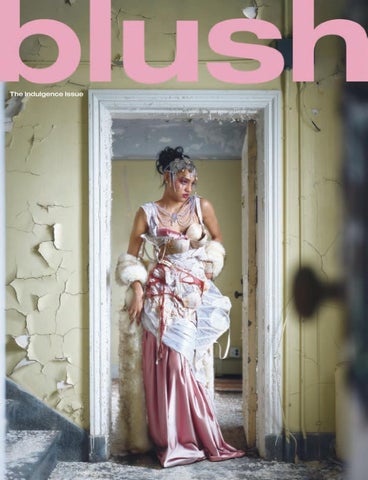
Create a flipbook
Issuu converts static files into: digital portfolios, online yearbooks, online catalogs, digital photo albums and more. Sign up and create your flipbook.