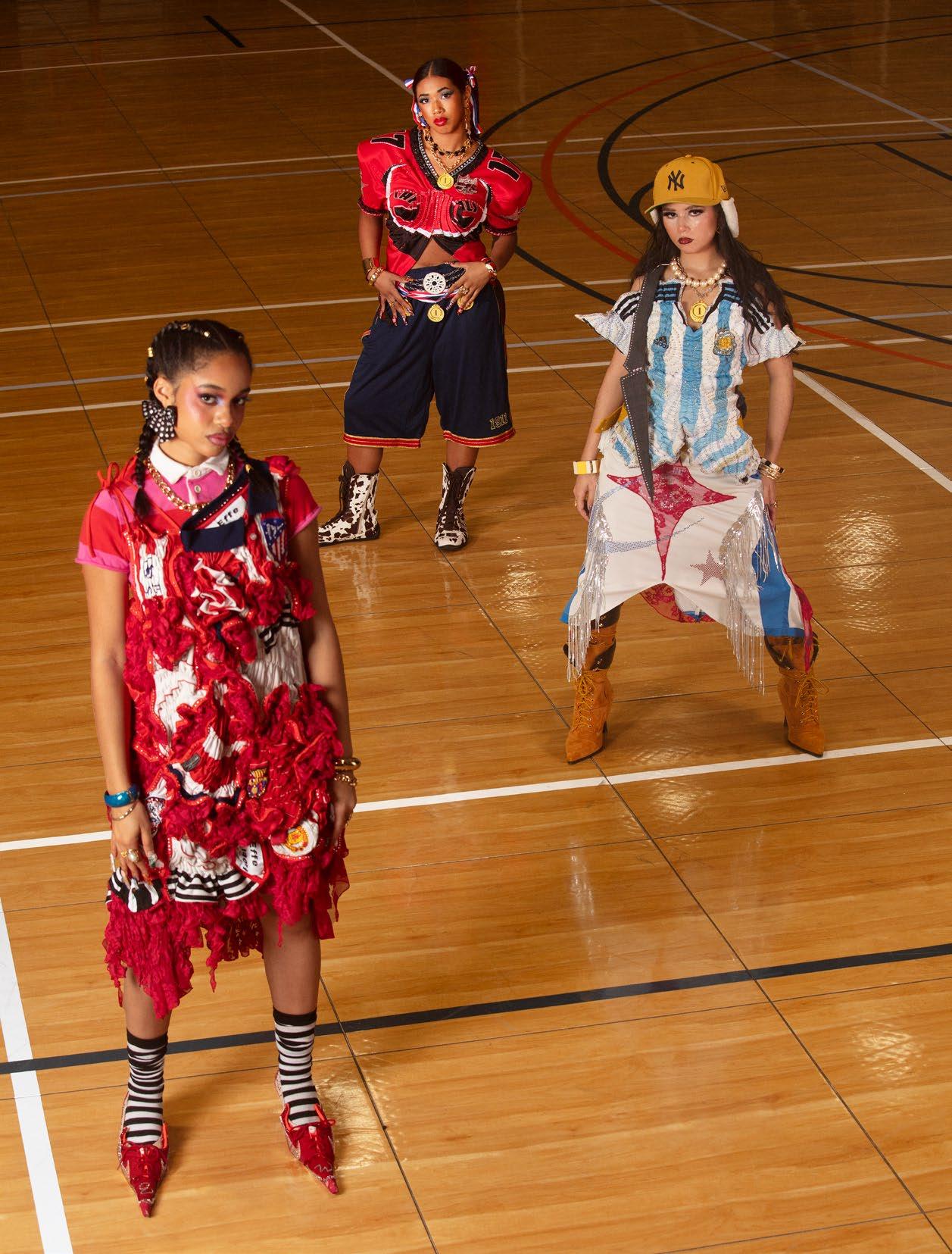
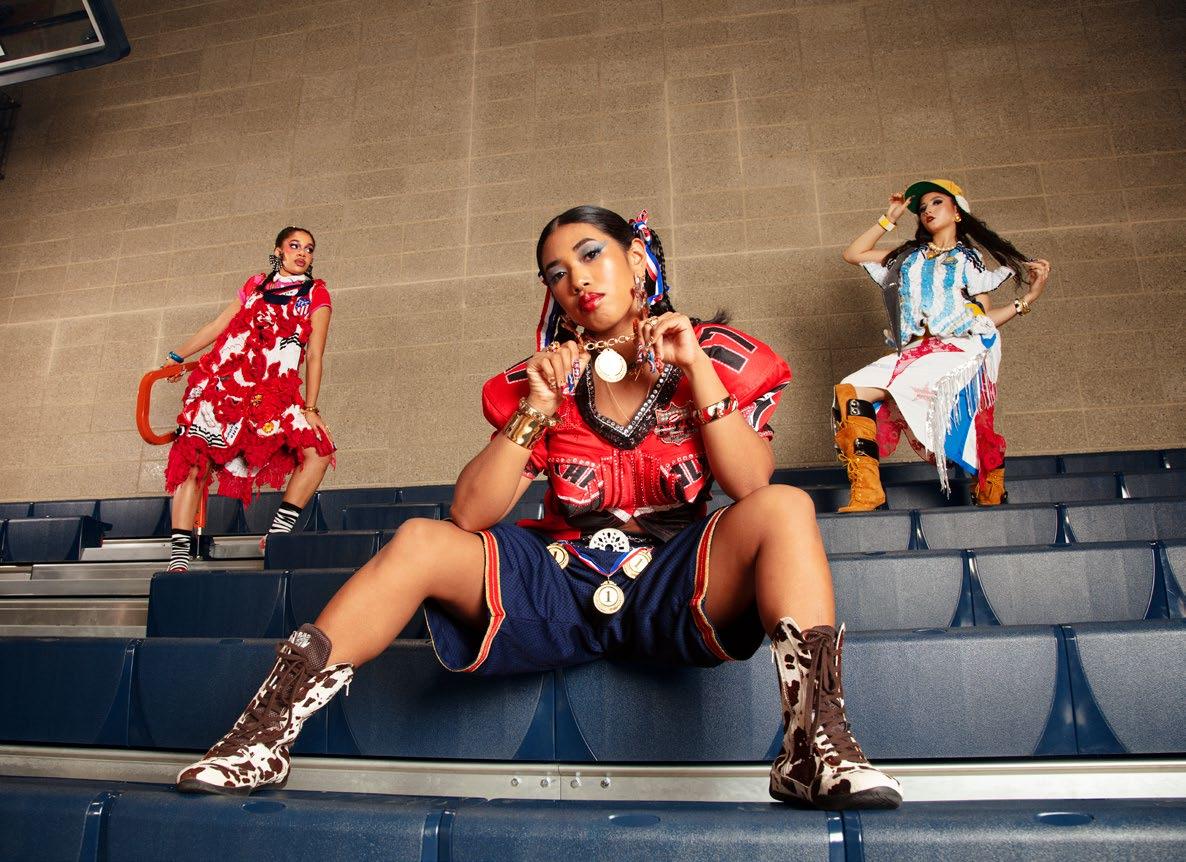
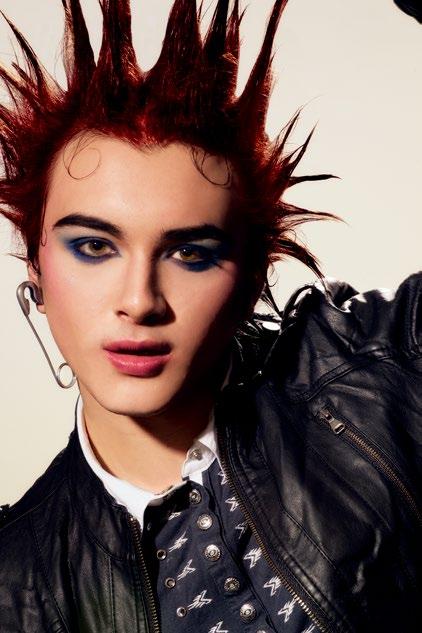
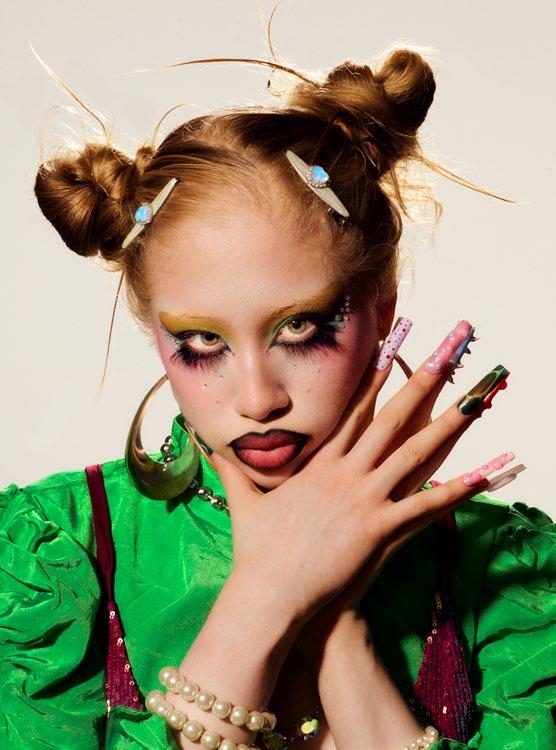
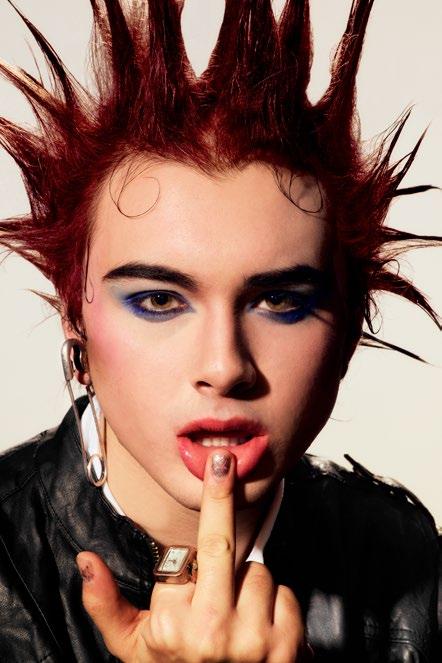
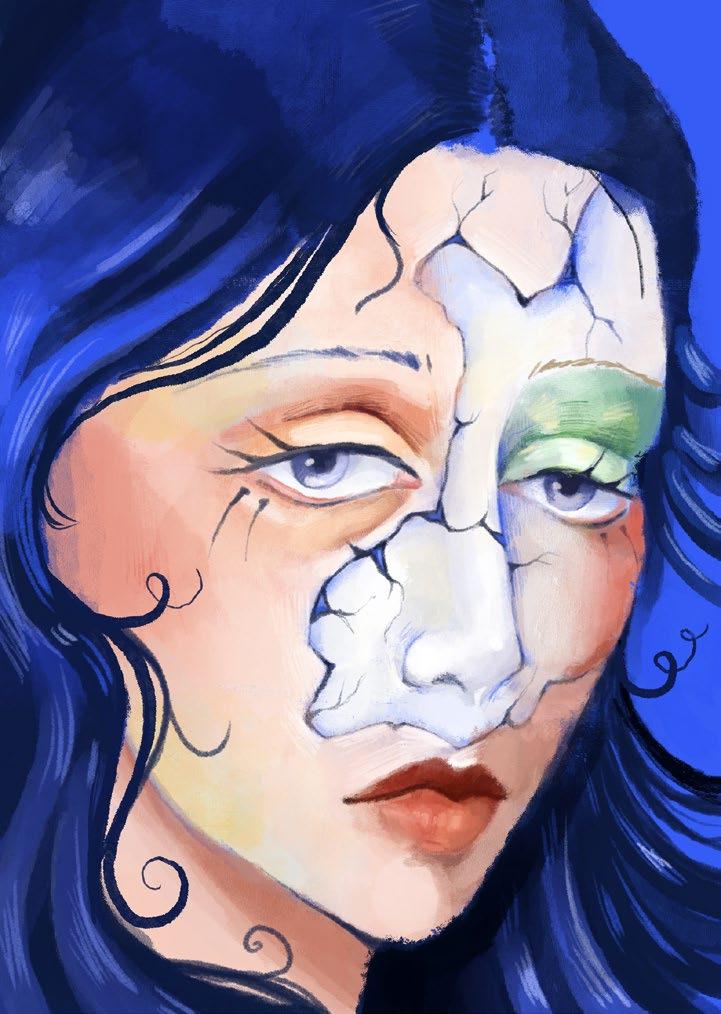
Beauty Ethan Bader, Izzy Catu, Estefania Ortiz Celemin, Tais Cruz, Jennifer Davila, Kole James Hardy, Kashvi Joshi, Richa Kanjani, Zoie Kremer, Wanyi Li, Nia Mashut, Giselle Mustafich, Karen Perez, Suhani Ranu, Sophia Robinson, Chris Robinson, Addison Roche, Kristine Sader, Yasmin Sagheb, Mai Sultan, Isabella Mosquera Velasquez
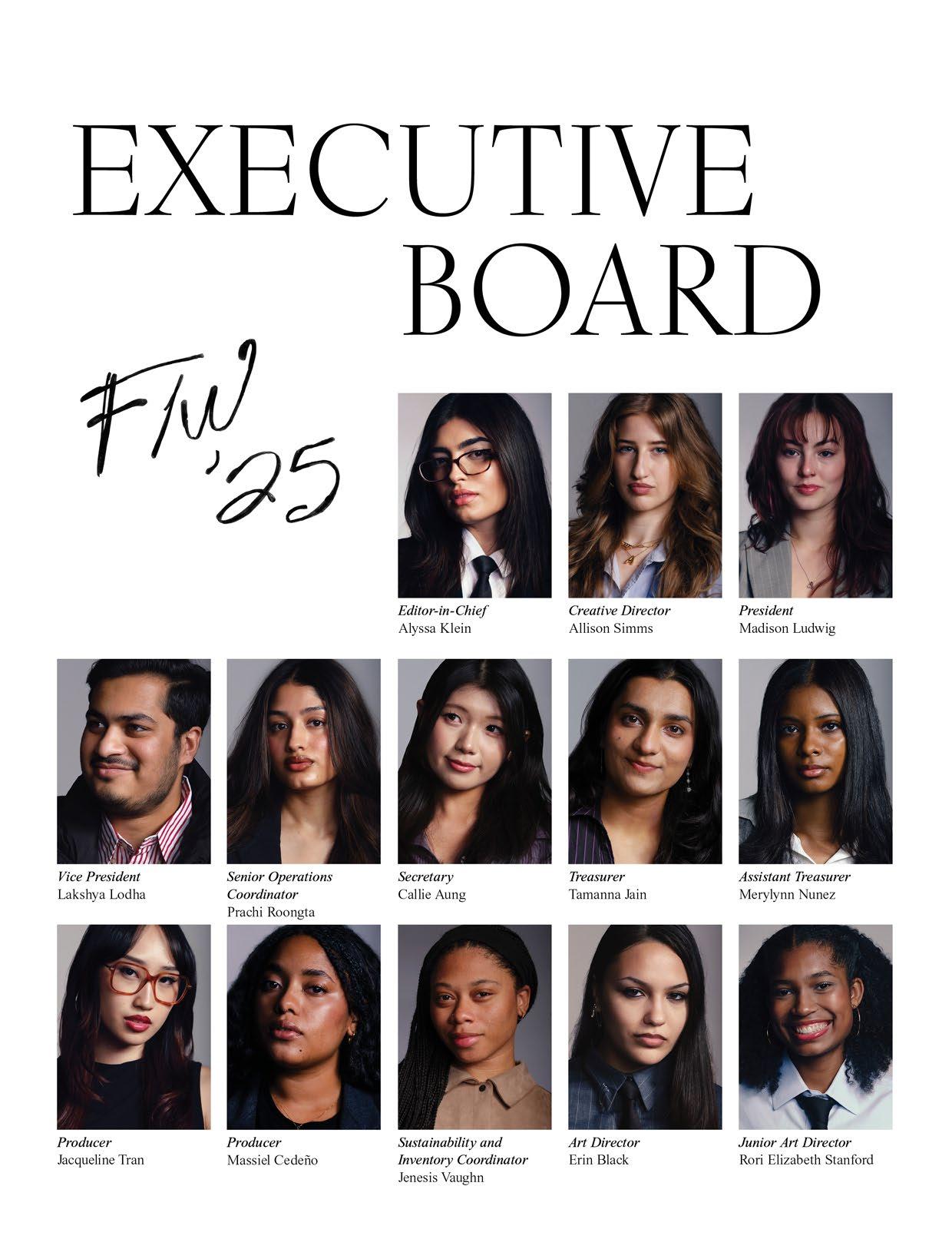
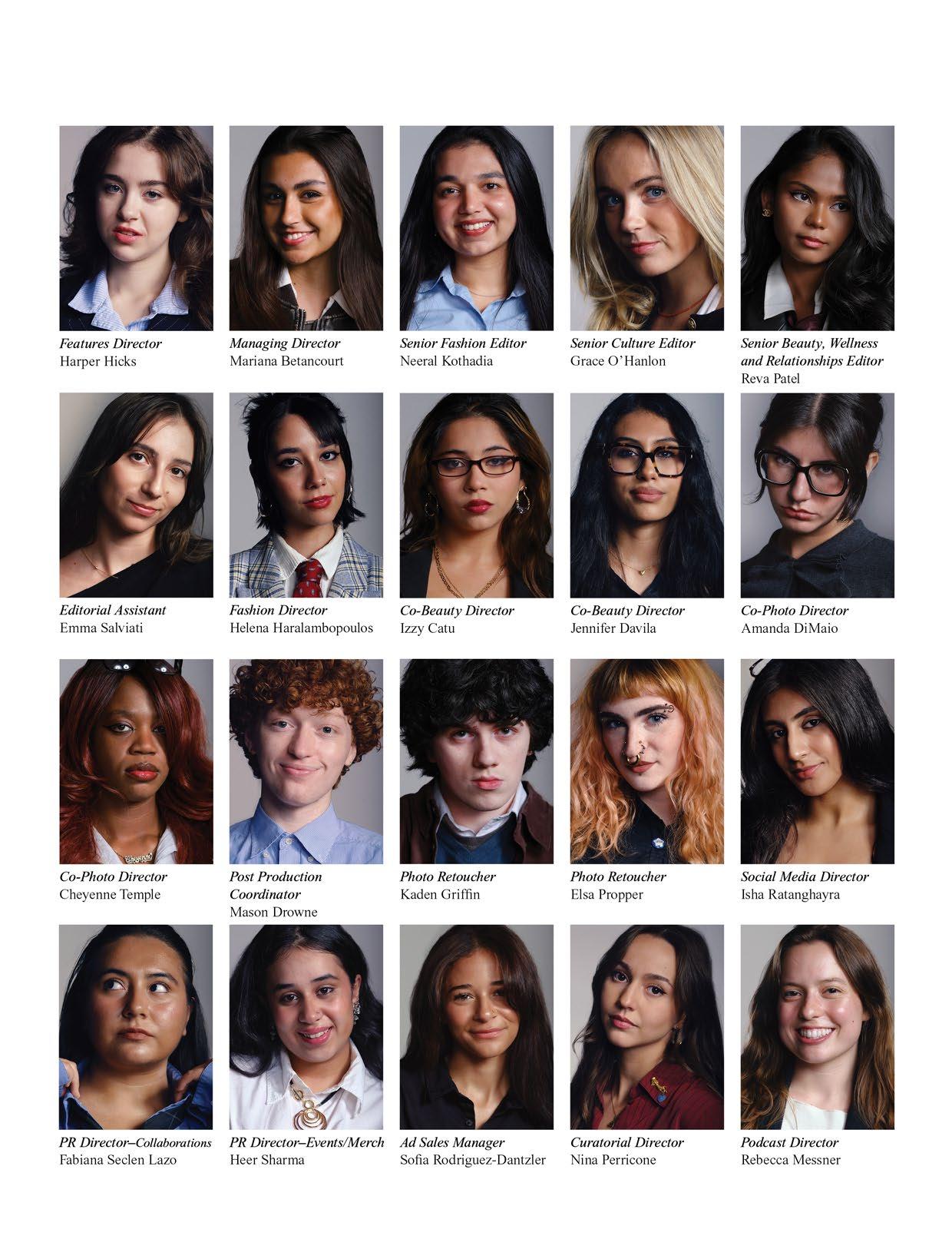
EXECUTIVE PORTRAITS
EDITOR’S LETTER EXEC PICKS
COLOR TREND REPORT
ALWAYS ON THE CLOCK COLLECTIVE PIECE
POETRY
BECOMING WITH WINGS WAIT YOUR TURN TRACES OF YESTERDAY WHAT’S THE WORD? CONSUMING DESIRE ‘CAUSE WE DID IT FIRST
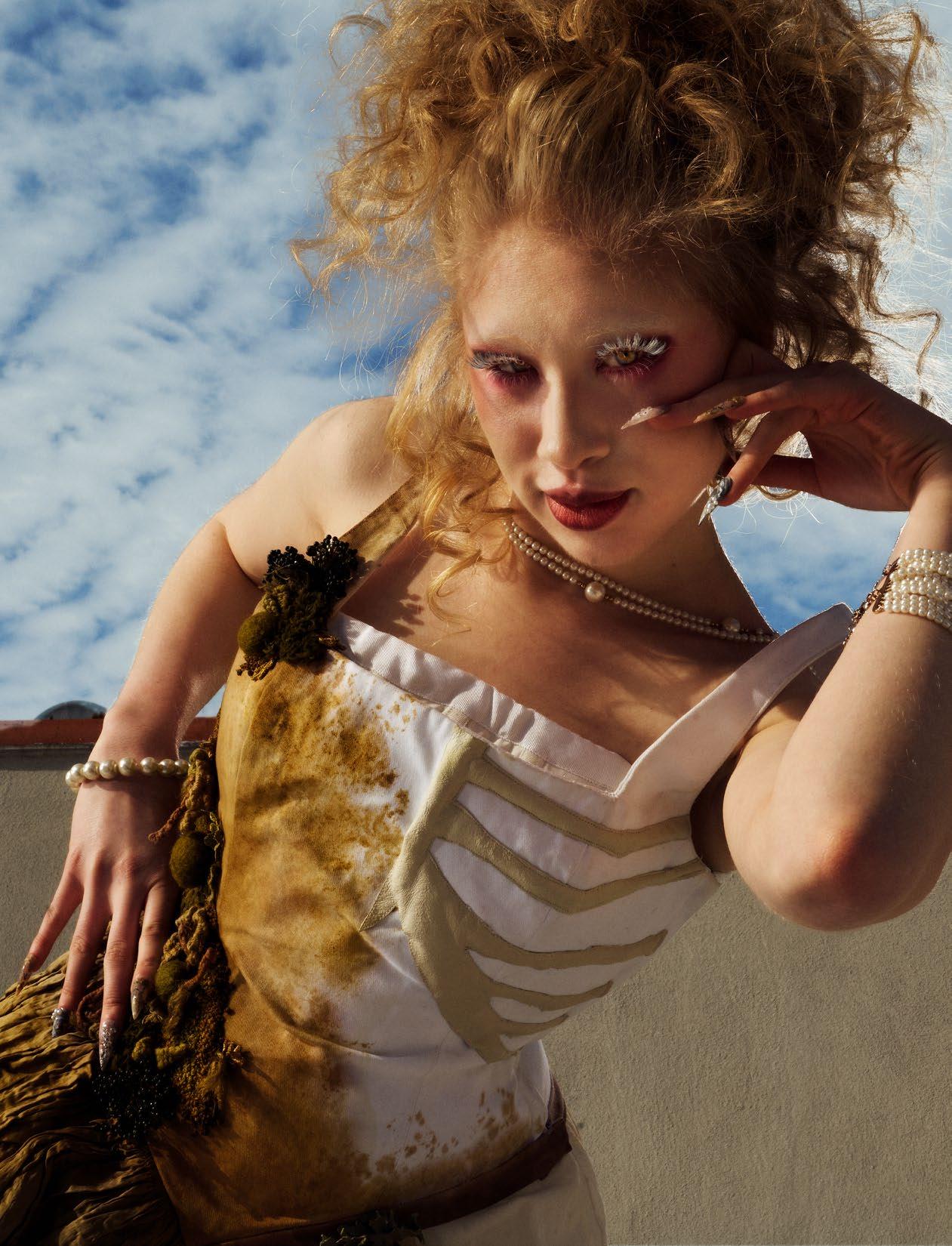
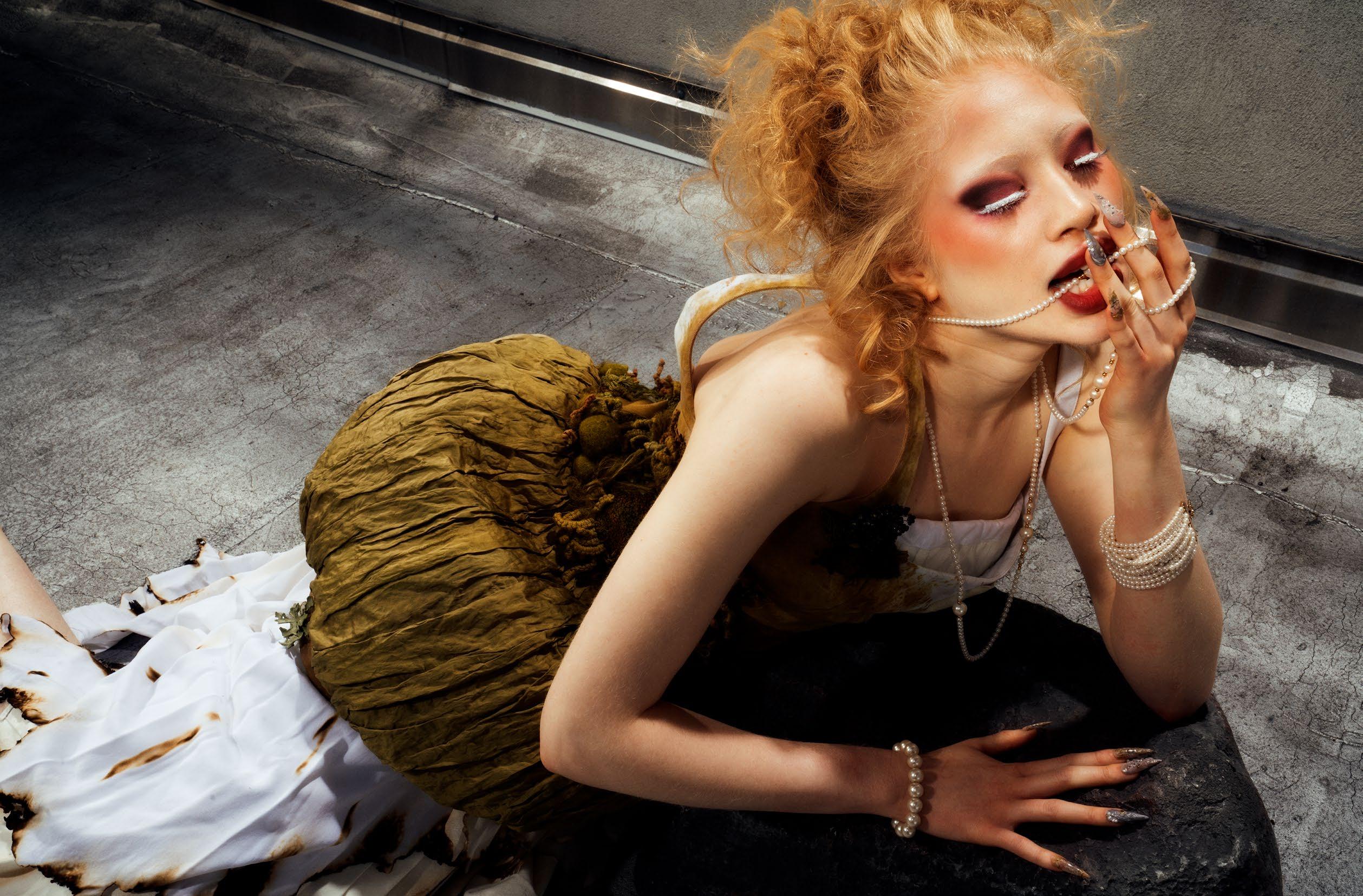
SHE WHO BURNS
CATWALK IN CRESCENDO THE ANTI-AESTHETIC
STYLED FOR SURVEILLANCE F*%! YOUR TUNNEL VISION THE OLYMPICS OF FASHION
BEAUTY REPORT
BEAUTY IN THE EYE OF THE BEHOLDER TOXIC LOVE OF OLYMPUS CAN WE TALK?
I TOLD CHATGPT ABOUT YOU I LOVE IT WHEN IT BREAKS
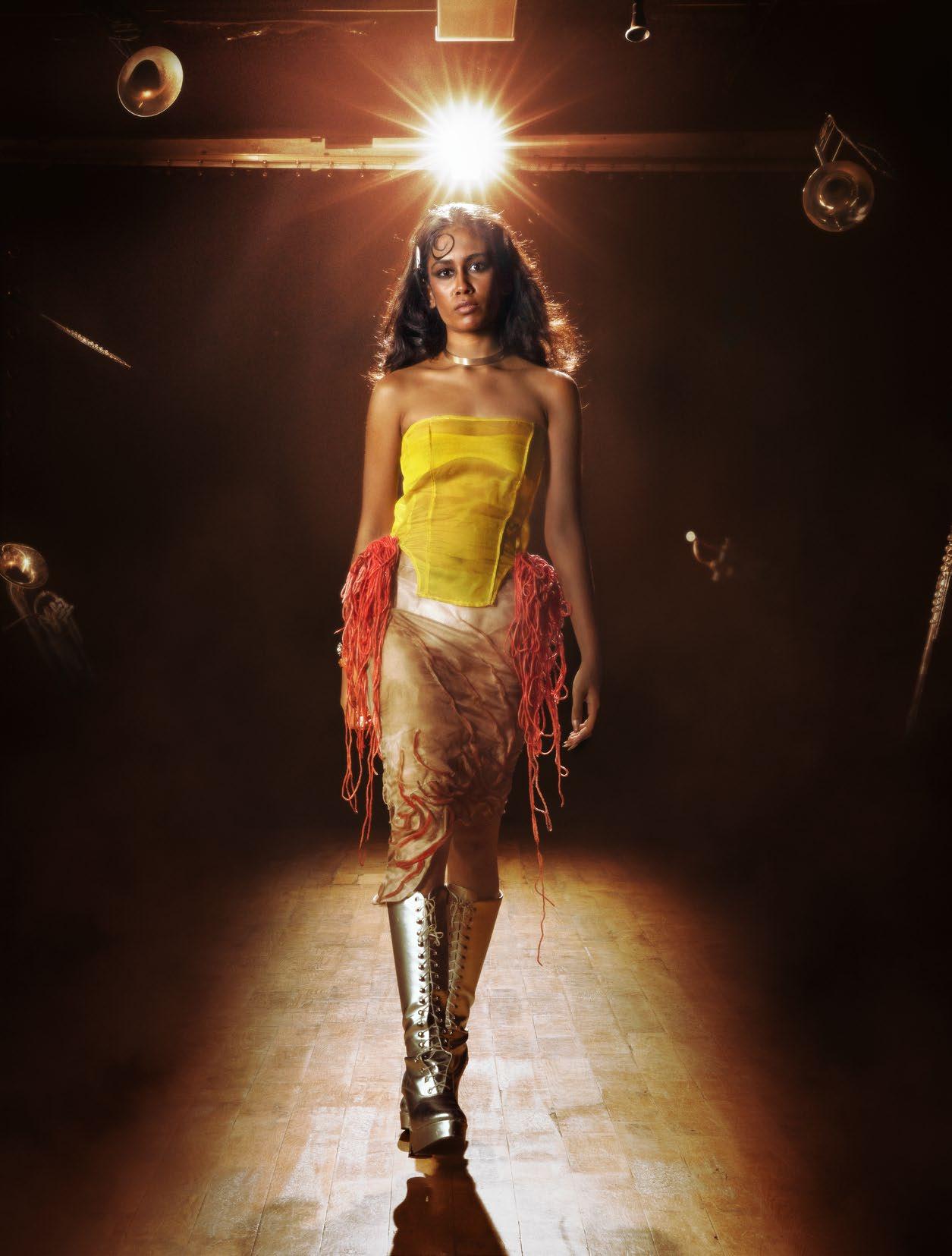
Photographer Amanda DiMaio
Photo Assistants Cheyenne Temple, Allison Simms
Retoucher Amanda DiMaio
Graphic Designer Erin Black
Stylist Helena Haralmbopoulos
Contrast—an all-consuming construct that never fails to fascinate me, especially within art. I value creations that are pieced together, combined as one, even when convention says they shouldn’t be. Often, these contrasts are labeled ‘weird’ simply because they might not fit the status quo. Femininity with a dash of masculinity. Delicate piano melodies paired with heavy bass lines. Shadow battling light. Structured leather paired with flowing silk. I realize that contrast tends to make people uncomfortable, but I think there is great beauty to be found beneath that discomfort.
When we dwell in the uncomfortable, we allow ourselves to open up to new perspectives. If we only sit with what we know, how can we progress? When we do not welcome discomfort, we stagnate.
In today’s growing conservative climate, ‘weird’ is not just valuable—it’s essential. People are becoming more closed-minded: Roe v. Wade has been overturned, same-sex marriage is being challenged, family members are being torn from their homes. These are not abstract contrasts in a gallery—they are real lives labeled ‘wrong’ by those who are uncomfortable with difference. When we create, our art has the ability to challenge perceptions. And that is why I challenge you to dig deeper than what society may call ‘weird.’ Discover what is really beneath the ‘weird.’ Create the ‘weird’ yourself. I encourage you to not dismiss or reject the contrast that is placed in front of you just because it is not what you are comfortable with. What is the greater message there? What can you really take away from it, other than labeling it ‘weird,’ ‘different,’ ‘unfamiliar’?
Growing up ‘different’—coming into my identity as a queer woman, navigating health battles no one understood, being ethnically ambiguous, being forced to grow up too soon—I never really felt like I fit in. So, maybe that is why the unconventional has always felt like home to me. Art has been the way that I choose to communicate my inner world and stories I carry. As an expressive person, I quickly realized that my way of communicating does not always translate to the outside world, because people were always quick to pass judgement.
My team and I pieced together this issue to make you uncomfortable—in the best way possible. Sit in the discomfort. Do not be quick to pass judgement. Think deeply about what truly makes you uncomfortable. Ask questions. Reevaluate.
That is how we landed on Dissonance—a perfect encapsulation of what we wanted to convey to you. ‘Dissonance’ is a musical term for clashing notes that create tension, but can resolve into harmony. Within this issue, we also lean into cognitive dissonance theory, emotional dissonance, and poetic dissonance. This theme speaks to transformation, conflict, and the messiness of becoming. It is about the moments where things don’t quite fit, and that is what makes them beautiful.
In order to become new, you must do the things that shake the narrative.
Lastly, I would like to give a huge thank you to my incredible team who poured their creativity and energy into making this issue possible. We could not have done it without all of your hard work, creative ideas, and dedication. It has been an honor to have worked alongside all 200+ of you, and nothing short of amazing to see all of your minds come together as one. I would also like to thank our advisor, Professor Allison Leopold, for her commitment to making Blush great, and FIT’s Student Life Department for their support. Finally, to my creative director and right-hand woman, Allie Simms—you are a blessing, and I truly could not have done this without you.
xoxo,
Alyssa “Lyssi” Chiappetta Klein
our fav Tracks in relation to Different Forms of dissonance
Alyssa Klein
Allison Simms
Madison Ludwig
Prachi Roongta
Callie Aung
Tamanna Jain
Merylynn Nunez
Jacqueline Tran
Massiel Cedeño
Jenesis Vaughn Erin Black
Rori Elizabeth Stanford
Harper Hicks
Mariana Betancourt
Neeral Kothadia
Grace O’Hanlon
Reva Patel
Emma Salviati
Helena Haralambopoulos
Izzy Catu
Jennifer Davila
Amanda DiMaio
Cheyenne Temple
Mason Drowne
Elsa Propper
Kaden Gri n
Isha Ratanghayra
Fabiana Seclen Lazo
Sofia Rodriguez-Dantzler
Nina Perricone
Rebecca Messner
Helix by Kelly Moran
You Showed Me by The Turtles
Before the World Was Big by Girlpool
Vienna by Billy Joel
Sienna by The Marías
A Million Dreams by Hugh Jackman
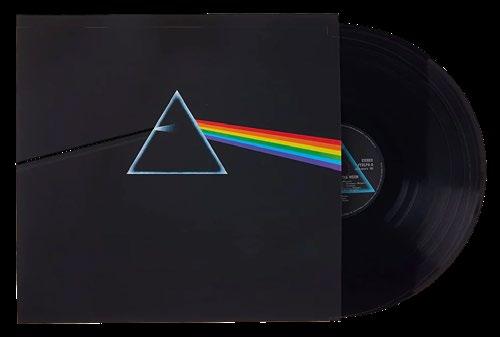
The Great Gig In The Sky by Pink Floyd
Life on Mars? by David Bowie
Beltway by Solange
Hard Feelings/Loveless by Lorde
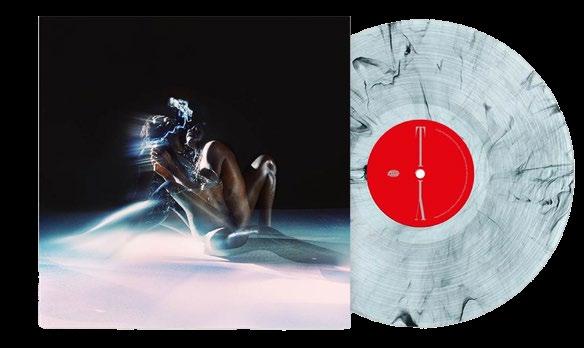
Dream Palette by Yves Tumor
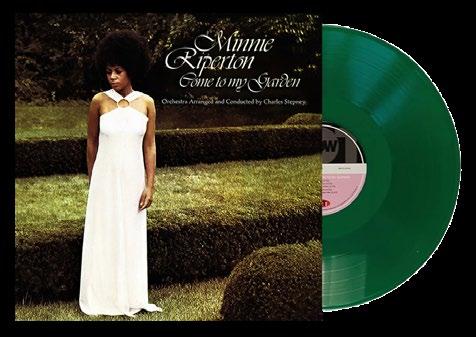
Les Fleurs by Minnie Riperton
Pas De Deux by Tchaikovsky
LUCES DE TECNO by Feid
All The Things She Said by t.A.T.u.
Hour Of Parting by Sun Ra
Raga Rageshri, Pt. 3 by Ravi Shankar
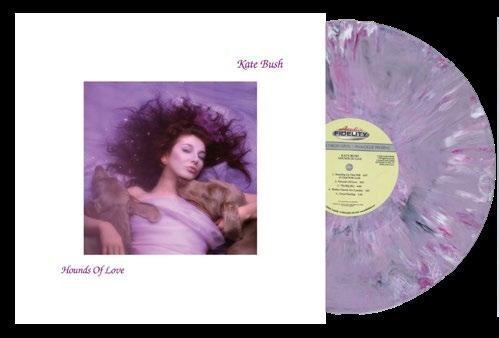
Running Up That Hill (A Deal With God) by Kate Bush
House of Cards by Radiohead
Deep Swim by Windows96
Exist by Avenged Sevenfold
It Never Entered My Mind by Miles Davis Quintet
Reverse Running by Atoms For Peace as long as ropes unravel fake rolex will travel by Dean Blunt
On the Prowl by Kickback
Another life by Pinkpantheress (ft. Rema)
Mystery of Love by Sufijan Stevens
TURiSTA by Bad Bunny
prayer1 by april27
Pieces by Alejandro Aranda
I’ve Seen It by Olivia Dean
Exist by Avenged Sevenfold The Stage (2016)
Jennifer Davila, Beauty Director
Vienna by Billy Joel The Stranger (1977)
Prachi Roongta, Senior Operations Coordination
I’ve Seen It by Olivia Dean The Art of Loving (2025)
Rebecca Mesner, Podcast Director
Les Fleurs by Minnie Riperton Come to My Garden (1970)
Rori Elizabeth Stanford, Jr. Art Director
Running Up That Hill by Kate Bush Hounds of Love (1985)
Salviati, Editorial Assistant
Emma
Dream Palette by Yves Tumor Heaven to a Tortured Mind (2020)
Erin Black, Art Director
The Great Gig In The Sky by Pink Floyd The Dark Side of the Moon (1973)
Merylynn Nunez, Assistant Treasurer
Another life by Pinkpantheress (ft. Rema) Heaven Knows (2023)
Kaden Gri n, Photo Retoucher
Graphic
color, control, & chaos
the future of fashion is ugly
Color trends used to be about harmony, but Spring/Summer 2026 (SS26) throws that out the window. As economic uncertainty continues to shape consumer behavior, the SS26 color palette leans into familiarity; forecasts calling for shades that will be dependable through multiple seasons.
“In times of uncertainty, we gravitate toward familiar colors. It’s a psychological need for comfort and control,” explains Dr. Chloe Martin, a behavioral scientist and professor of color psychology at the Fashion Institute of Technology. Yet, within this calm control, designers are finding ways to surprise us, pairing shades in ways that create visual friction, only to resolve into something entirely new.
At the center of the SS26 color story is Transformative Teal (Coloro 092-37-14), a moody, saturated blue-green—a summer dark that defies seasonal logic. It behaves like a neutral but performs like a statement. Adaptability is its superpower.
When used with a satin finish, it takes occasionwear to another level, while matte finishes make it feel grounded and sporty. Expect toneon-tone dressing to dominate both runways and wardrobes, or pair it with grays, neutrals, and blacks to create depth that feels simultaneously grounded and experimental.
Robust Red (Coloro 010-36-27) offers a deeper take on last year’s fiery reds. It’s bold without shouting. It says, “I’ve matured, but I still like attention.” Robust Red carries the optimism of vibrancy while taking on a more timeless value.
by: Grace Muenks
Designers are using it across categories from retro looks to resort wear. For an unexpected but confident pop, pair it with Transformative Teal. Together, the two shades create a push-pull of energy. Teal provides depth and introspection while red delivers momentum and assertion.
“Color is emotional and culturally driven,” says Dr. Martin, “We connect with colors we correlate to memories.” This is evident in sports teams or even national flags. With Bad Bunny performing at the Super Bowl, Dr. Martin expects an uptick in red, white, and blue with a correlation to the Puerto Rican flag.
Rounding out the SS26 palette is Broken Blue (Coloro 117-77-06), the calm after teal’s storm. A pastel tone touched with a silvery grey undertone brings serenity and softness. A necessary exhale in a highintensity world.
Linda Chen, 20, a fashion design junior, says she chooses colors “based on how they make me feel, not just trends.” Broken blue, she finds, speaks to that emotional pull, bridging nostalgia and modernity, proving that subtlety can still disrupt.
Layer it with other blue-family tones for a monochromatic disruption, or contrast it against deeper jewel tones such as Amber Haze (Coloro 043-65-31), for combinations that challenge expectations while maintaining cohesion.
the beauty of SS26’s color palette is in finding the harmony within the clash.
The beauty of SS26’s color palette is in finding the harmony within the clash. As consumers navigate economic uncertainty, they want colors that last but palettes they can create combinations that feel alive, creative, and show their personalities. Inharmoniousness is the point— it creates something far more memorable than anything traditionally ‘pretty.’ That’s where the future of fashion lives.
Robust Red
Broken Blue
always on the clock.
By: Shea Stolarz
Graphic Designer Rori Elizabeth Stanford
FIT students are chasing big dreams in a city that never sleeps, but they are learning that success means knowing when to pause
New York is the city that never sleeps—and neither do the students at the Fashion Institute of Technology. Whether it’s sketching late into the night, editing reels for a brand, or shipping out orders between classes, there is a constant energy that keeps everyone moving. We are surrounded by opportunity, but also by the pressure to always do more. It pushes creativity forward, but it can also stretch you thin.
At FIT, standing out goes way beyond the classroom. Everyone’s building something: portfolios, side hustles, and personal brands. It is exciting, but there’s a constant tug between ambition and burnout, structure and freedom, that every student learns to balance in their own way. Being in the middle of Manhattan only amplifies that feeling, being surrounded by industry pros, real-world professors, and classmates who double as competition.
Mariana Carreño-Marin, 20, is a junior advertising and marketing communications student and the creator behind @mariana.carrenoo. She balances a part-time job, freelance styling, photography, and involvement with Blush Magazine. For her, the “hustle culture” that defines New York feels like a natural part of life. “My friends back home always ask why I’m doing so much, but this city makes you want to keep going,” she said. She keeps herself grounded with color-coded schedules and quick coffee runs with friends. “I love saying yes to new opportunities, but sometimes you have to say no and protect your creativity.” Her ability to pause and recharge shows that slowing down can be just as important as moving forward.
That same focus drives Giselle Mustafich, 20, a junior in AMC and the founder of @ginaildotcom, a press-on nail business blending beauty and art. Her designs are sold online and at FIT’s Sustainability Flea Market, an opportunity that helped her grow her brand. “I had already been doing nails for clients and press-ons, but I wanted a new way to sell,” she said. “I saw an email about the Sustainability Flea Market, and my first time was such a success that I’ve
Mariana, Kaelem, and Giselle all represent what it means to build something real in a city that never stops. Each student is carving their own path, learning when to push forward and when to pause.
Kaelem (Chris) Christopher, 21, a senior photography major and founder of @kchris_productions, has already seen his visual media work featured on billboards and in campaigns with Nike and Foot Locker. He credits his balance to routine and community. “I like to keep a steady weekly schedule, but I always make time to unplug and hang out with friends. It keeps my energy and ideas fresh,” he said. Collaboration is what keeps him inspired. “Being surrounded by so many creatives pushes me to keep learning and experimenting.” For Kaelem, maintaining consistency is what allows creativity to thrive.
been participating in them every semester since.” When things get busy, she sticks to a detailed schedule to stay grounded. “It prevents me from procrastinating and getting overwhelmed,” she said. Her advice for other students? “Start right now and don’t wait. Take advantage of the people around you and work together—it’ll help you grow together.”
Mariana, Kaelem, and Giselle all represent what it means to build something real in a city that never stops. Each student is carving their own path, learning when to push forward and when to pause.
At FIT, success isn’t just about how much you do. It’s about how you find your rhythm in the chaos.
HARMONY diSSONANCE
BY MARIANA BETANCOURT & HARPER HICKS
In a world that demands coherence, dissonance— the clash between what we feel, think, and show— becomes an act of identity.
At FIT, students explore how the tension between contradictions shapes the way they see and express themselves. Sometimes life feels like a slightly off-key chord—unsettling, unexpected, and yet strangely fascinating. That feeling is dissonance: the tension that defines how we see ourselves and how we move through a world that’s always shifting. It’s a quiet conflict that fuels both transformation and the expression of identity.
Dissonance, from the Latin dissonare, originally described the layering of sounds that create new harmonies. In psychology, it refers to the internal friction between thoughts, emotions, or values. “Cognitive dissonance happens when our beliefs and actions aren’t aligned, pushing us to create false versions of ourselves to maintain social acceptance,” according to Dr. Todd Levon Brown, Environmental Psychologist and Assistant Professor of Psychology at the Fashion Institute of Technology (FIT).
In other words, both cognitive and emotional dissonance influence how we construct and express who we are.
When someone acts against their own beliefs, they often build a façade to fit in. Over time, that division can limit growth and blur the understanding of one’s identity. “When we silence our emotions to appear consistent or in control, we disconnect from the things that give meaning to who we are,” Brown adds.
At FIT, these tensions are not only inevitable— they’re often a source of creation.
Graphic Designer Erin Black
Emilia Silva 21, a sophomore in Communication Design, sees dissonance as a tool for innovation.
“I want my designs to be bold but still connect with people. That tension pushes me to redefine my style and my visual voice.”
“I’ve lived in several countries, and for a long time I felt like I didn’t belong anywhere. But adapting isn’t losing myself—it’s expanding. That mix gives me a broader perspective to connect with different audiences and express a more complete identity.”
“Sometimes I have a perfect plan, but life changes everything. It’s frustrating not to feel motivated, but learning to accept uncertainty helps me stay flexible and understand who I’m becoming.”
isn’t about giving in to chaos—it’s about turning it into clarity. Somewhere between the clash and the harmony, we find the truest melody: the one that defines our own essence.
Mai Khalid, 24, a sophomore in Advertising and Marketing Communications, dissonance appears between cultures.
Antonia Velásquez, 18, a freshman in Fashion Business Management, connects dissonance to breaking routine.
Embracing dissonance
WITH
ECMINGB O WINS G
BY MARIANA BETANCOURT
Dress
Sophia Porras Accessories
C HANGING IS NOT LOSING YOURSELF; IT’S FINDING YOURSELF AGAIN. IN AN ERA OBSESSED WITH STABILITY,
METAMORPHOSIS BECOMES
AN ACT OF FREEDOM. REDISCOVERING ONESELF HAS BECOME AN EMOTIONAL AND CREATIVE NECESSITY
Sometimes life seems to move faster than we can process. One day, you think you know who you are, and the next, nothing fits. That sense of strangeness, of feeling out of your own skin, isn’t always a crisis; it can be the first sign of evolution.
As conscious beings, we have a unique quality: the capacity to change. We are not locked into an unalterable path dictated by past mistakes or triumphs; we are possibility. Our essence is dynamic, not static. This means every present moment is an opportunity to shape who we are and our destiny. At any instant, we can choose to be something different from what we have been. If we’ve erred, there is always room to change, repair, and grow.
We live in a time where reinventing yourself is no longer optional but a survival tool. “A large part of the human experience involves evaluating who we are now and whether this version of ourselves can achieve what we want in life,” says Matthew Roth, Ph.D., 41, Licensed Clinical Psychologist and Adjunct Professor at the Fashion Institute of Technology (FIT).
“In a society where we constantly compare ourselves on social media and feel less connected, reinvention becomes a way to create a new map for what we need in both our internal and external worlds.”
ICONSCIOUSNESS THAT
T IS THE EXERCISE OF SETS US APART FROM OTHER SPECIES: THE ABILITY TO LOOK AT OURSELVES, QUESTION OURSELVES, AND REBUILD OURSELVES.
“No human remains the same throughout life; only fools never change their minds,” he recalls, quoting Venezuelan economist Teodoro Petkoff. From this perspective, changing isn’t just reacting to the environment— it’s a spiritual and moral task: letting go of what weighs us down to make room for a more conscious, freer version of ourselves. This idea resonates with the existential notion that we lack an original identity; instead, we shape it throughout life.
Italian author Emanuele Coccia writes in Metamorphosis: The Fascinating Continuity of Life: “Every species is a mosaic of pieces taken from other species... what each of us is, is only the sum of techniques each living being borrowed from others.” We are a sum of fragments: experiences, memories, and dreams assembled to form an identity in constant reconfiguration.
To reach fulfillment, it’s important to learn to live freely with the multitudes that inhabit us. Defining or fitting ourselves into one mold only limits us. By embracing change, we abandon a fixed vision of reality, stop labeling ourselves as inconsistent, and accept our own contradictory nature. Juan Camilo Peláez, 26, literature expert and professor, explains: “Heraclitus already said it: you cannot step into the same river twice, because neither you nor the river will be the same. Hence the beauty and necessity of metamorphosis, which allows multiplicities of other things to inhabit the same person.”
Nothing is more exciting than having the opportunity to transform. Sometimes, we have rigid ideas about ourselves or others, but it’s just a temporary perception. We are all in constant evolution. Peláez continues: “Many of us feel the need to shed, molt, or reinvent ourselves, because it’s in our vibrant, living nature. We seek to leave one body to inhabit another, like a snake shedding its skin: it remains the same snake, but it is potentially another.” That image, like the chrysalis turning into a butterfly, embodies the symbolic liberation of humans letting go of what no longer belongs to them.
Thus, metamorphosis is not just a literary metaphor; it is a vital necessity: letting go of what limits us so the new can emerge. On the FIT campus, this desire for change is palpable among creatives. “Change is essential for any artist because it helps you generate a new perspective on the world and on yourself,” says Emilia Silva, 21, a sophomore in Communication Design. “Inspiration doesn’t come from Pinterest but from everyday life: a subway poster, a supermarket package. Having diverse references and learning from your professors and peers opens your mind and pushes you out of your comfort zone; otherwise, you get creatively stuck.”
Her reflection aligns with the idea of change as a vital impulse and a conscious exercise in liberation. In art, as in life, resisting transformation is denying the possibility of growth. Giuliana Wong, 17, a sophomore in Advertising and Marketing Communications, experiences it differently: “I did musical theater and decided to switch to Fashion Business Management at FIT. It was the best change because I stopped competing with myself and found something that really resonated with my interests. If I hadn’t stepped out of my comfort zone, I would never have discovered how passionate I am about this industry.”
Her experience shows that reinvention doesn’t always mean abandoning the past but integrating what you’ve learned to create a more coherent version of yourself. As Peláez explains: “Metamorphosis opens the possibility to the eclectic that constitutes and shapes us as individuals.” The blend of influences, ideas, and traits that make us up—our cultures, tastes, and thoughts. Coccia also mentions: “Every living being is, in itself, a plurality of forms—simultaneously present and successive.”
That’s why everyone perceives a different version of you: some say you never reply to messages, others that you are always available; some see you as funny, others shy. And none are lying. Everyone sees you from a different angle. From this comes the mirror effect: your personality isn’t fixed; it changes depending on the reflection observing it. Like light passing through a prism, you are the same beam, but depending on who looks, it appears in a different color.
That is the beauty of change: losing stability doesn’t mean losing identity—it strengthens it. Yet, Dr. Roth warns, “spending too much time thinking about reinvention can also be a way to avoid what we need to do in the present. Like everything, it’s a balance we must learn to manage.” From this vulnerability arises the need to feel control over our lives.
Trends like the glow-up, the 5 a.m. club, or the obsession with being the “best version of yourself” on social media are superficial expressions of what Coccia describes as purification: shedding the old self to be reborn. Progress doesn’t happen without change, and it doesn’t always look pretty. Sometimes it feels like chaos, and that’s okay. Growth doesn’t have to be aesthetic. Life doesn’t improve without this internal movement.
Our cover story model Luana Alasmar Torres, 25, FIT Photography freshman, also reflects this idea of transformation through her own experience: “Change can be anything, and accepting every part of it—the good, the bad, the ugly—is where the magic happens. By acceptance, we create a beautiful tapestry of experiences in life that opens possibilities we couldn’t have imagined.”
Still, there is a natural tendency to resist and remain in the comfort zone, and this resistance often becomes humanity’s greatest obstacle to reaching its potential. While metamorphosis doesn’t guarantee happiness, it does promise improvement. At times, things may worsen first; as the saying goes, after the rain, the sun always comes out. Mistakes, after all, are an essential part of evolution.
Even in the discomfort of change, there’s beauty in contradiction. Our second cover story model, Ayanna Pagan Baizan, 20, a freshman in Advertising and Marketing Communications, captures this tension perfectly:
“I fear being seen, but like flowers in spring I grow. In fall, I feel fear as my colors change and seeds scatter. In winter I am buried and cold. But once May comes to shower me with clarity, there is rebirth. The seeds I left behind grow too. Each year my meadow grows more certain, more colorful, and more poised.” Her reflection mirrors what dissonance truly means for us—growth through conflict, and beauty born from transformation.
The only constant in life is change. It can feel both terrifying and comforting because nothing is meant to stay—neither triumph nor failure. Yet, as long as there is life, there is also the possibility of redemption.
And yes, letting go of past versions may hurt, but that’s where the miracle lies. Changing is the most honest way to stay alive. In the end, it doesn’t matter who you were: what truly matters is who you allow yourself to be now.
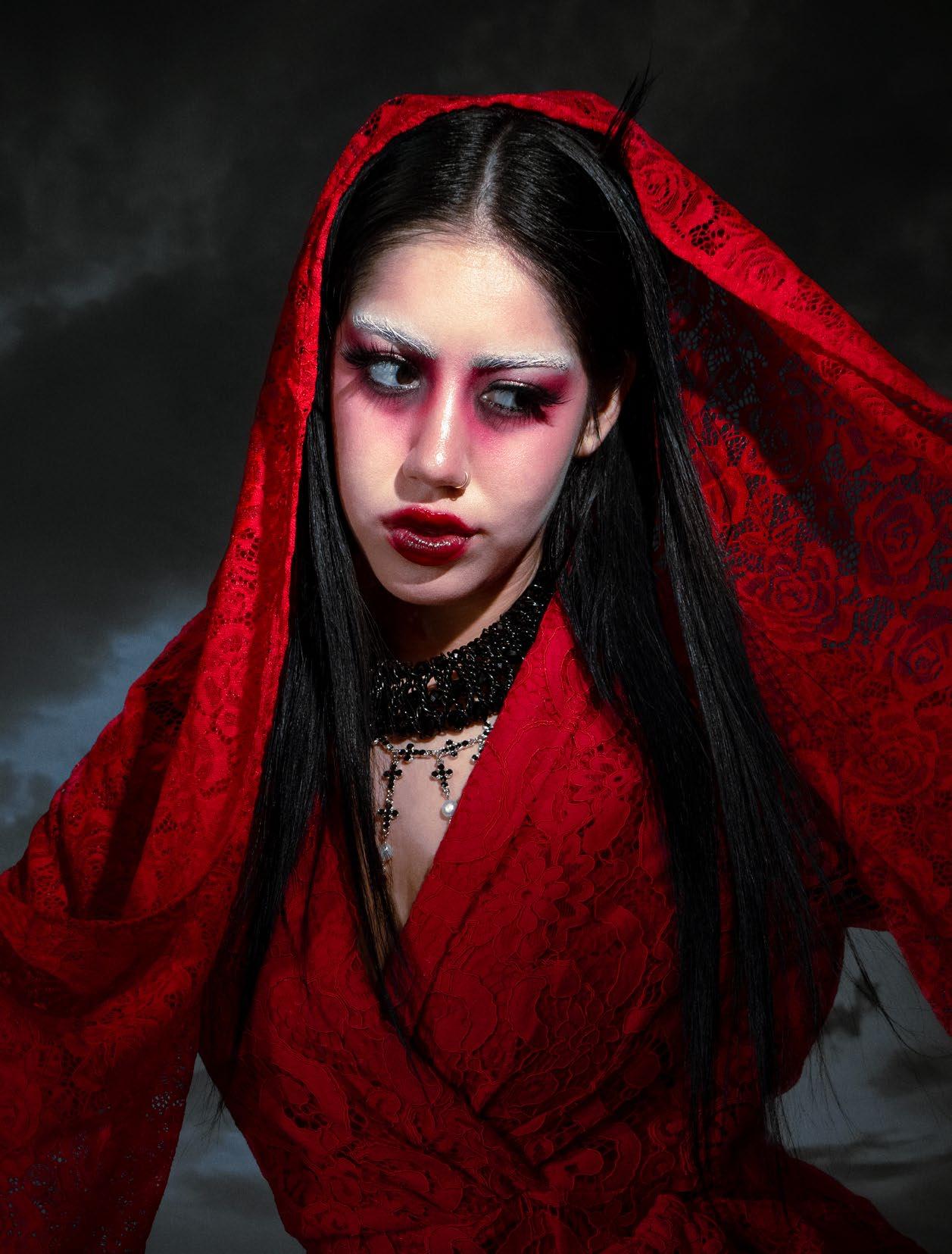
Hair Stylists Izzy Catu, Jenn Davila, Addison Roche Nails Giselle Mustafich, Mai Sultan
By Grace O’Hanlon
A meditation on the artists we fail to recognize in their lifetime, who later, after death, gain a tragic level of prominence
On a typical evening, May 29th, 1997, the body of a thirty year old man floated fully clothed down a dark channel in the Mississippi River. No one had witnessed the death, and the body was found a few days later by a passenger on a riverboat named American Queen. Jeff Buckley’s life was cut short, and with his death, a music career booming with potential and a future bright with promise died as well.
During his life, Buckley released just one album, Grace, which was considered a commercial flop due to an overshadowing of genres like grunge and hip-hop. Buckley’s resonant evocative ballads were not amenable to the average 1990s consumer. With little radio airplay, and slow sales, Grace earned number 149 on the Billboard 200.
In 2025, thanks to digital algorithms on apps like Tik-Tok and the release of a new documentary, It’s Never Over, Jeff Buckley, (a nod to his cover of “I Know It’s Over” by The Smiths) his popularity has skyrocketed, and continues to gain traction in the Gen Z audience. The widespread accessibility of older music has created a trend of revitalizing eras.
Thirty years later, the haunting lyrics and artistic authenticity of Grace, left untouched in CD stores and record shops for decades, has now reached a tragic level of prominence, connecting with an audience that endures Jeff’s yearning, fervor, and search for peace in a life shrouded in hopeful desperation.
Grace returned to the Billboard 200 chart in 2025, debuting at number 22, shocking older generations with the currentness of sound and their seemingly past foolish judgments. Songs like “Lover, you Should’ve Come Over” appear on a plethora of social media trends. Overlooked by so many, Jeff Buckley is just one artist in a sea of others who were not appreciated in their time, only later to be discovered and valued for their artistic genius.
This tribulation, bordering on irony, is of great interest to me. Stories like Jeff Buckley’s can direct us to questions towards society as a whole. Why, so often, do we overlook brilliance, favoring instead the mundane? Is it rooted in a culture of risk averseness, or is it veiled in a camouflage of self protection, the desire to conform to a preexisting mold?
Every generation has its “acceptance boundaries,” the limits to which they will venture into unknown territory, dabble in the absurd, and mingle with the daft. We often do not understand artists until the world has changed enough to meet them.
Tutu Applethehuman Necklace Electric Vintage Corset Talent’s Own Shoes Talent’s Own
Sometimes a generation must catch up to an artist’s emotional frequency, their audacity, or simply their honesty.
And while some artists fade quietly into the background, others refuse to be ignored. Traveling back to the 1980s, we can analyze Madonna who was continually rejected for doubts on her singing abilities, and her refusal to conform to the industry’s suppressing idea of a female pop image. Her very face has led to boycotts, riots, and censorship.
The Madonna Machine represents a feminist movement of rebellion against traditionalism, conservatism, and the patriarchy. One of her most notable acts of rebellion, and a defining moment in the fashion industry, was a 1990s collaboration with Jean Paul Gaultier in the creation of her structured cone bra, a revolt against the narrow definition of the female body and a rejection of the corset’s body morphing constrictions. Although dissimilar to the likes of Jeff Buckley, her platform reached god-level amounts of fame. Despite this, the similarities of artistic concealment grant us a critical view of society’s desire to maintain existing standards, and fears of what is discomfiting.
Nick Drake is yet another example of an artist who had too much talent, too young. In 1969, he released his first album Five Leaves Left which had harmonic qualities similar to the 1970s, giving the impression that he was just five years ahead of his time. He made his first album at just twenty, and hadn’t matured to the point of handling the incredibly colossal discrepancy between the quality of his art and the dismal public reaction.
All three of Nick Drake’s albums sold less than 15,000 copies in his lifetime. During his life, he suffered from depression, and tragically overdosed on antidepressant pills one late night in 1974, in his childhood bedroom in Warwickshire, when he was twenty-six.
The tragedy in Nick Drake’s story is that if he had lived just a decade longer, he would have seen how highly appreciated he would eventually become.
In the mid-80s, and at an alarmingly significant speed in the 1990s and early 2000s, Nick Drake became a commercial success, and a pillar for the British folk genre. In 1999, Volkswagen produced a commercial including his song “Pink Moon” which led Nick Drake’s music to chart for the first time. In 2025, Nick Drake holds 2.6 million monthly listeners on Spotify. All three of his studio albums are currently on The Rolling Stone’s list of the 500 Greatest Albums of All Time.
I wonder if life would have been easier for him had he not been a songwriting prodigy. If he had no talent in music, perhaps he would have found satisfaction in a different career. Perhaps, he would have been happy. But, given the reality of his talent, it would have been an insult to abandon his music. I can’t begin to imagine the internal conflict he endured, between his vision and his reality, between delusion and truth.
What unites Jeff Buckley, Madonna, and Nick Drake is not genre, nor fame, but the courage to remain loyal to an interior vision. Their lives remind us that culture is not shaped by public approval, but through patient, private labor. In each era, artists test the edges of what a society is ready to feel. Some arrive too early. Some arrive loud enough to break the door down.
Some names that deserve to be mentioned, again and again as reminders of the cost of society’s ignorance are listed as follows: Otis Redding, Florence B. Price, Elliot Smith, Robert Johnson, Fugazi, The Velvet Underground, The Posies, Big Star, T. Rex, Molly Drake, Cass Elliot, and Kathleen Hanna. Artists, whose grit, devotion, and sheer imaginative prowess have slipped through history without ever feeling truly seen until their deaths.
Imagine, each day working to create something out of nothing, pursuing despite the critics, overdue rent, the empty audience seats, and the rejections. Imagine your life’s work dispersing in front of you and realizing with horror that your dream was never realized, that despite it all, you never received the accolades, the awards, or the peace of mutual understanding.
This is an ode to the artists, never recognized, not even in death. Thank you for being yourself, for transgressing, summiting inconceivable difficulties. And for the artists in my time, I urge you to continue even when no one is clapping. Do not wait for permission, do not wait for approval. Soon, it will be your turn.
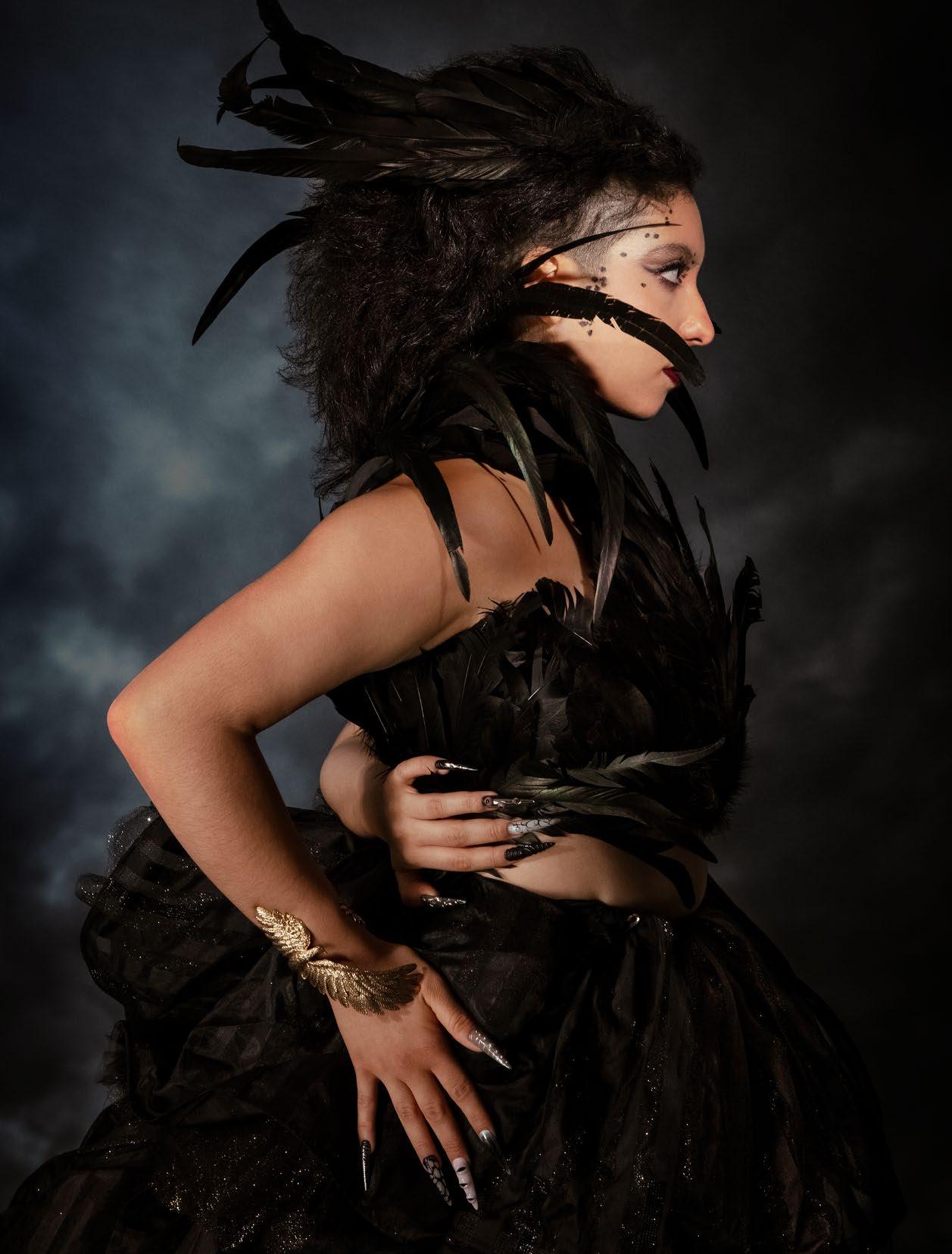
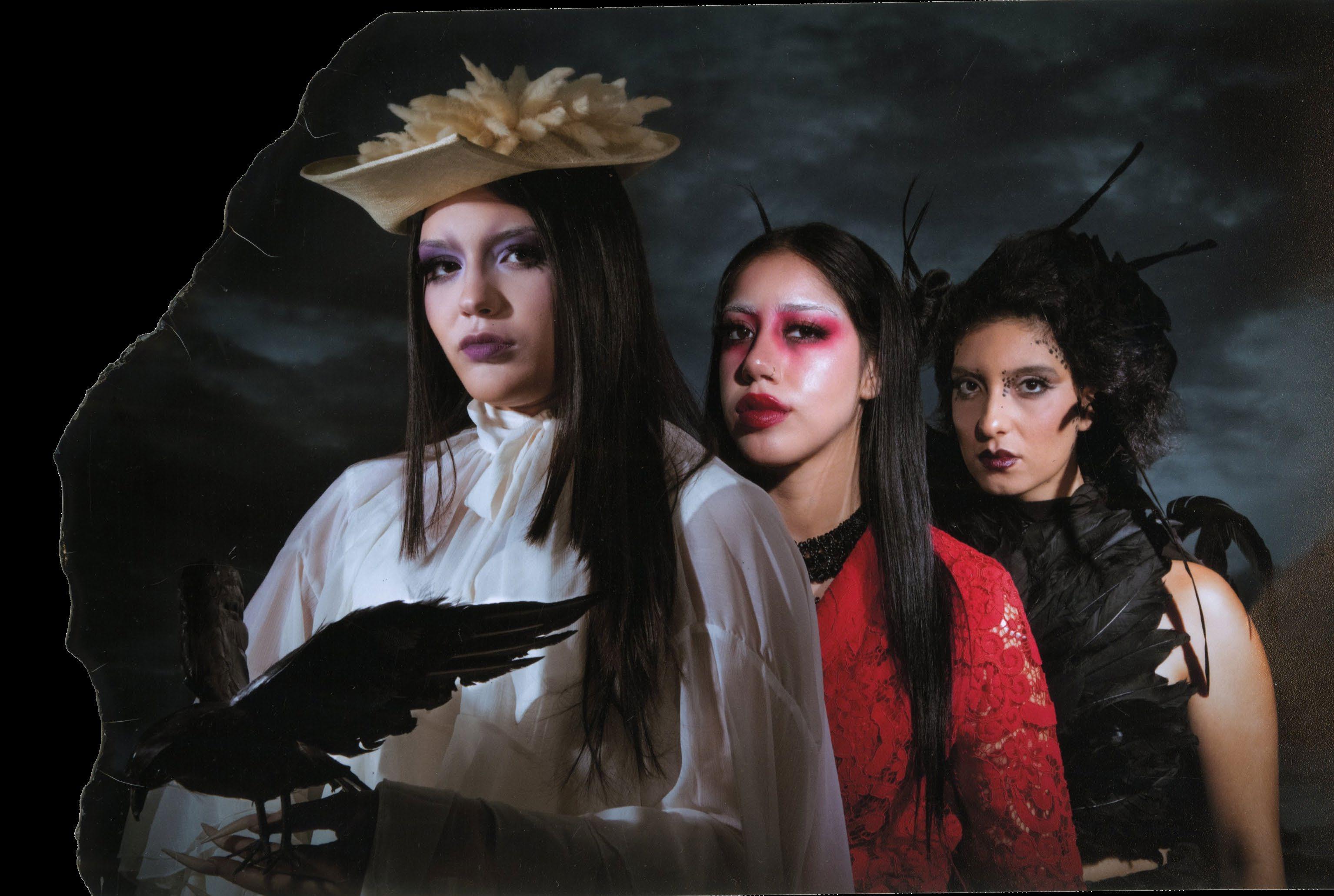
MUA Ethan Bader, Jennifer Davila, Isabella Mosquera Velazques
Hair Stylists Addison Roche, Zoie Kremer
Nail Artists Yasmin Sagheb, Giselle Mustafish
Talent Phoebe Koh, Damere Johnson, Landen Bidwell, Mia Castillo, Michael Kenneth
Traces of Yesterday
Redevelopment or theft?
An interview by Alyssa Klein with Noelle Imburgia and Stephany Hurtado
Written by Allison Simms and Alyssa Klein
Two Native New Yorkers reflect on what their neighborhoods are losing in a city that is constantly transforming
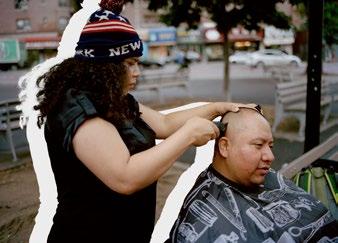
While you may call yourself a ‘New Yorker,’ simply because you attend a college in Midtown Manhattan, thrift in Bushwick, and romanticize your happy hour in “Dimes Square,” beyond your sheltered perception lie entire communities––communities fighting every day to not become a mere memory.
Alyssa Klein sits down with two Queens-natives: Noelle Imburgia, a Fashion Institute of Technology Communication Design major and article graphic designer, and Stephany Hurtado, a FIT Photography student and article photographer, to explore what gentrification has stolen from the place they call home.
Alyssa Klein: Noelle, when a neighborhood changes, what disappears first? Is it the buildings, the businesses, or something harder to pin down?
Noelle Imburgia: I think it’s too hard to pin down to one thing. I think the most noticeable thing is when the faces you see everyday start to disappear. When those people’s homes are renovated, when the buildings you grew up around all of a sudden become sky high. When the businesses you grew up around start to shut down, it only makes the loss feel more real, but I wouldn’t say it is the starting factor of loss.
AK: You have watched this happen across the city. What is the difference between a neighborhood naturally evolving versus being displaced?
NI: If a neighborhood is naturally evolving, the local businesses thrive, community efforts lead to real change, and the people who make the neighborhood special are able to live happily in their homes. Unfortunately, to my knowledge, I know nowhere in New York where neighborhoods are naturally evolving. Instead, you notice new [large, corporate] businesses, brand popups, TikToks and social media posts calling the neighborhoods you grew up in “new and exciting.” Meanwhile, it [the neighborhood] is not new.
AK: When a deli you have known since childhood closes, or a park where everyone used to gather gets redeveloped, what is really being lost beyond the physical space?
NI: You lose the events, activities, and in many ways the culture that makes the place so special. Community events at parks or certain restaurants are special and sacred. People interact and share their life stories in some way. When you take away the spaces, you take away the platform for people to do that.
How would it make you feel if the place you grew up in didn’t exist anymore?
Photographer Stephany Hurtado
Graphic Designer Noelle Imburgia
AK: What does it mean to you personally when the New York of your past starts becoming the New York of memory?
NI: It just makes me sick to my stomach. It makes me feel so sad for all of the people who have lost so much to gentrification. It makes me sad that the children who grow up in New York in the future may not be surrounded by so much culture and progressiveness. They may not learn the values of acceptance and love that I grew up with. One day, New York may not be the city that understands those who have been shunned away. It is the city that takes struggle and turns it into art and culture. I feel blessed that I was able to grow up around it; but I’m deeply saddened that my generation may be the last to see that.
What does it look like when a community fights to hold onto itself? Stephany Hurtado’s lens provides an answer.
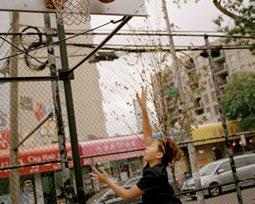
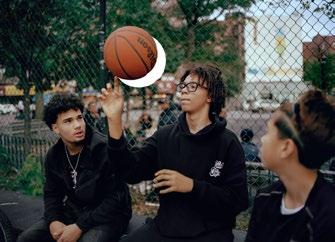
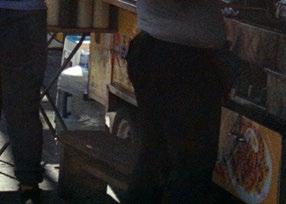
AK: You photograph a lot of everyday New York life—boys playing basketball, street vendors, the subway. What draws you to these moments?
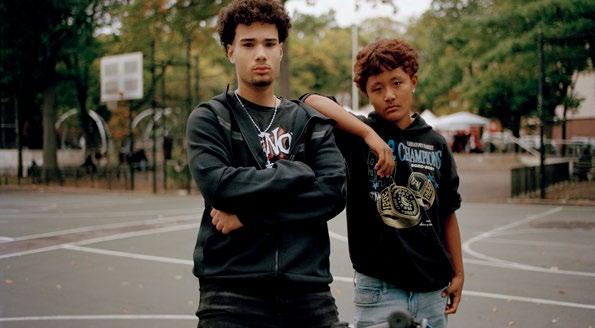
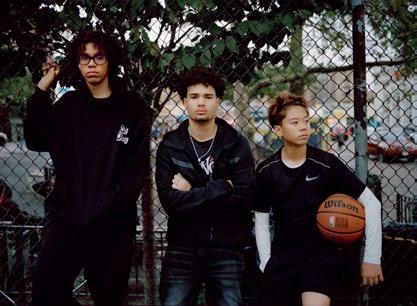
Stephany Hurtado: I kind of just photograph what I’m experiencing in my day to day life, I don’t like to force anything… The things I see people doing that seem normal—like taking the train or buying stuff in the deli, people and kids interacting with each other, playing... I am photographing the life that I experienced as a child… capturing my past, and putting that into the image. I like to hold memories, hold those images as a source of memory.
AK: There is so much warmth in these images—the people playing dominoes, people gathered on the block. What makes a place feel like it belongs to a community?
SH: When people come together and share moments like laughter, that’s what makes it feel like home, when they’re sharing that source of energy.
AK: Looking at your photos, do you see them differently knowing some of these spaces or communities might not exist the same way anymore?
SH: It’s definitely hard to look at them now because I am experiencing the change—I am seeing what is going on, I am capturing what is going on, and it’s translating in the images. It just makes me appreciate the photos more because they represent diversity, my neighborhood, and nostalgia.
AK: What do you want people to feel or understand after spending time with your work?
SH: I want people to feel what it is like to be in my neighborhood, the people, our everyday life, and the moments that make me feel alive. My work is about finding beauty in ordinary places, and showing how community and culture shape who I am. I hope the viewers can sense the pride and the memories that live in the streets—that this place is more than just where I live, it is part of my identity.
AK: What is your message to the people responsible for this change and loss of culture and community in New York?
SH: I guess I would ask them: how would it make you feel if the place you grew up in didn’t exist anymore?
So, how would it make you feel?
We plead to you, from one transplant to another: it is our innate responsibility to contribute to the communities we move into, rather than diminishing, damaging, and displacing those around us. One cannot expect a city to simply give, while actively choosing to contribute nothing in return. Educate yourself. Meet and connect with your neighbors. Make the attempt to forgo language barriers by learning a new word every day. Support small businesses— mom-and-pop restaurants, street vendors, and local artists. Volunteer nearby. Be an active member of your chosen community.
Above all, explore.
When we choose not to think about the true impact we have, the culture fades. The people who are the heart of New York get pushed out, and we are left with a shell of what once was. What goes with them, goes the food, the music, and the energy.
New York is more than just an aesthetic. It is a rich melting pot of history, identities, and communities who fight for each other every day. A geographically small city, with a range of multitudes and inner workings—Queens being just one example. At the very least, we can honor those neighborhoods by supporting, giving back, and by learning to truly coexist, rather than simply claiming, “this is my city” at arrival.
WHAT’S THE WORD?
BY EMMA SALVIATI
As the digital age redefines connection, Gen Z reclaims nightlife through the return of the house party—where real human connection comes alive again
NIGHT ALL
Predating the digital age of scrolling and swiping, real connections were formed through daily encounters and thoughtful conversation. Today, the idea of ‘social’ has evolved— strangely—away from the genuine definition of human interaction into a false sense of connection from the comfort of our sofas.
Adaptation is necessary. While it’s true that social media has the power to connect as much as it isolates, it is our responsibility to redefine what connection means. As a member of Generation Z, I can say we’ve reached a turning point. We’ve grown tired of hiding behind our screens. Maybe that’s why the idea of gathering together feels appealing again.
Originally, it was the need for human connection and community that first gave rise to the house parties. During the Harlem Renaissance of the 1920s, tenants began hosting gatherings known as “rent parties,” to help cover their neighbors’ monthly rent. These original house parties were acts of creativity and resilience, offering a cultural escape from the hardship and discrimination of economic disparity and racism. Like many cultural renaissances, the house party had its roots in Harlem, New York.
As years passed, the spirit of gathering evolved from necessity to celebration. In the 1970s, house parties were the heartbeat of youth culture. They offered young adults places to dance, flirt, and forge friendships away from the formalities of daily life. These gatherings often took place in the afternoon and ended by sunset, capturing a time when socializing was intimate, homegrown.
Decades later, that energy shifted. The 90s and early 2000s club scene markedly altered counter-culture, social ecosystems, and the very ways in which society functions. Weekends became synonymous with packed dance floors and the thrill of discovering newness. Clubs weren’t just places to dance, but spaces where people felt they could shed the stress of modern life, find confidence, become someone else, or meet a cohort of individuals similarly chasing a perception of freedom.
Models Gabrille Vincent, Gianna Londres, Liya Rosenthal, Angel Lithner, David Vale
Extras Angelisse Ruiz, Julissa Hicks, Madison Ludwig, Sparsh Garg, Mira Wunder, Michelle Jones
Fast forward to 2020: the Covid-19 pandemic shifted the club scene to social media, where apps became the primary tool for connection. Opportunities that once encouraged us to step beyond our comfort zones slowly diminished.
However, that is not the only reason clubs have lost their appeal for Gen Z. Until the 2000s, cell phones and social media weren’t a part of the picture. Today anyone can pull out their phone to record a moment in seconds, challenging our ideas of privacy and sacrificing the freedom that seemed so achievable in the past.
As a consequence, more and more people feel the pressure and anxiety to conform to societal images. Everything—from the way we dress to the way we dance, drink, and have fun— can be photographed, recorded, and posted, eroding the mysterious and exciting verve that used to characterize the club scene. In the same way that technology makes us less afraid to expose ourselves on the internet, it is slowly depriving us of the lightness of being young and absolutely imperfect.
Own
AGAIN &Again
Charlie Byrd, a North Carolina native thriving in New York City’s DJ scene, sees this change not just in money but in meaning. “New York nightlife is kinda dying, because everything is getting gentrified,” he says, pointing out that what were once safe, vibrant spaces for queer and POC communities have been rebranded for mainstream audiences. “People treat Bushwick like an aesthetic rather than a community, and it’s sad, because those same people forget who built this culture in the first place.”
respect, not restriction. “Don’t blow up safe havens for the club kids on TikTok,” she adds. “If you wanna rave, do it, just be respectful to the people who call it home.”
beats. Terraces become DJ booths, kitchens flow with drinks, hallways collect coats and laughter, and dark corners hold whispered movement of love. In these transformed places, nightlife finds its way back home.
The underground scene that once thrived on authenticity and “chosen family” has been reshaped into branded experiences. What started as a liberation movement— where people went to express identity and dance without judgements—has now become marketed aesthetics, stripped from the very communities that started it.
For Charlie, the future of nightlife depends on
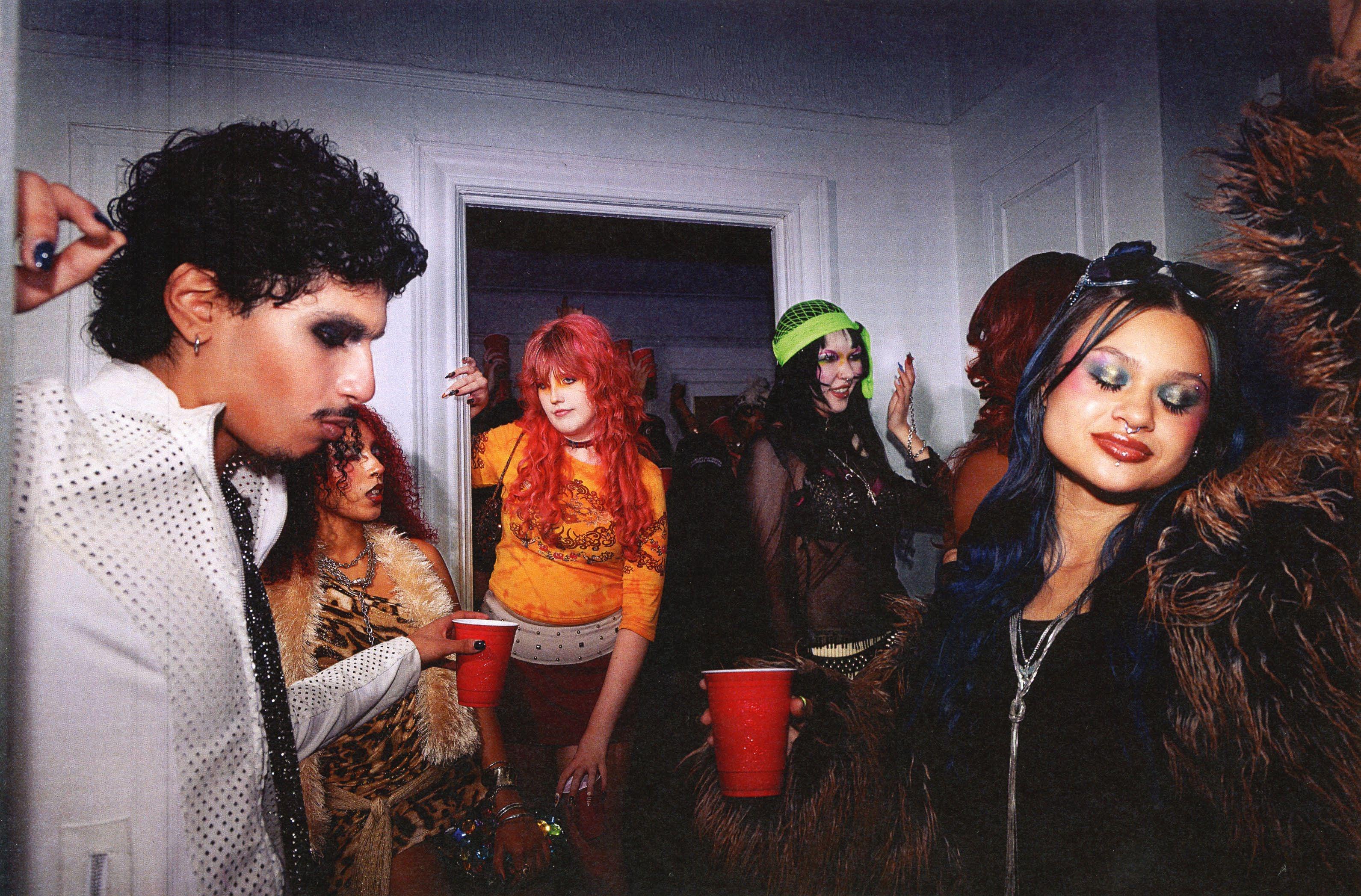
So, how does Gen Z respond to these changes? Rather than watching the world change around them, Gen Z has chosen to take control of the narrative—to reclaim the social life that technology has taken away. Gen Z has come to understand clubs are unable to adjust to a world that is rapidly changing. The energy that made clubs magical in the past wasn’t the music or the lights, but the people. And that is exactly what Gen Z is reclaiming. It’s the comeback of house parties.
The lack of social interaction is compensated by the familiar dynamics that only house parties can have. Human connection returns to the forefront, taking center stage. Empty homes have come alive again, filled with lights and
House parties go beyond the buzz of socializing; they’re a nod to a freer, fairer world where the dance floor belongs to everyone, no matter their budget or outfit.
Gen Z knows how fragile real connections have become in a world teaching AI to be more human, even as we forget what it means to be one. The shift to house parties isn’t about convenience, it’s about taking control of the narrative to later return to the clubs more aware and present than before.
This revival of house parties also represents a cultural shift, one that celebrates imperfection and rejects the pressure to perform.
As the Brooklyn-based DJ Angel Ruiz puts it: “People are tired of pretending to be somebody they’re not, especially online. They don’t care about being perfect all the time anymore.”
Gianna wears
Jacket
Stylist’s Own
Skirt Stylist’s Own
Boots Sulekya Alonzo
Bag Stylist’s Own
Glasses Suleka Alonzo
To her, authenticity is finally “making its way back into the zeitgeist.”
Angel sees this movement not just in the music, but in the energy of the nights themselves. It’s less about image and more about intention; it’s about “wearing what you can actually dance in, and going out with your friends to have a real good time.”
Generation Z is sending a powerful message: it is time to get out and make real human connections, not just collect followers on social media. House parties symbolize a generation reconnecting after years behind screens—ready to rediscover the fun and spontaneity they have always dreamed of since childhood.
WTW?
Gabrielle wears
Dress Hollywood Cherry
Belt Stylist’s Own
Bag Rosie Gaye
Shoes Talent’s Own
Accessories
Talent’s Own
Fetishistic imagery has de ned fashion advertising and editorials for decades; the question is, to what e ect?
CONSUMING
CONSUMING
By Ilaria Miche
Charlie wears
Top Beacon’s Closet
Bottoms Stylist’s Own
Shoes Vintage
Jewelry Stylist’s Own
Accessories Stylist’s Own
Nayara wears
Top Bradelis New York (Flying Solor PR)
Earrings Denise Pacini (Flying Solor PR)
Arm Cuff
Denise Pacini (Flying Solor PR)
Ring Romae Jewelry (Flying Solor PR)
Seduction and submission, entrapment or empowerment; these are fine lines to toe. Is the ability to create these impressions dictated by the viewer’s eye or the subject of the images? There can be power in shedding light on taboo visuals, placing them blatantly on display within a consumer’s reach. Sexuality and the expression of sexual desire have been a man’s domain for decades.
Sex sells. This is well established. But what happens when the sexual display is in the women’s autonomy; can it become empowering? Her power lies in her ability to create and craft her own narrative, reclaiming possession of her own body and therefore distinguishing herself from taboos. Sexual liberation takes the place of shame.
Helmut Newton was one of the most prolific and influential photographers of the 20th century. He dominated the pages of Vogue from the 1960s to the 1990s, revolutionizing the depiction of women in fashion photography and the narratives that surrounded them. The sexuality of his female subjects in many of his photographs comes from positioning a woman in a man’s place. Beautiful and seductive women are seen in strikingly masculine poses, inverting gender expectations and allowing the gaze of sexual desire to derive from the women rather than the traditional expectation of docility
However, we cannot label something empowering when the images we see fit into pre-meditated boxes. A fetish is defined as a form of sexual desire linked to an activity or part of the body that isn’t one’s sexual organs. The form of exploitation linked to fashion advertising is a fetish on the woman as a whole, making her the product, rather than the goods being sold.
This kind of imagery in fashion editorials and advertising merely aids the propagation of what some claim is society’s pre-determined role for women and their bodies, to function as tools for pleasure and fetishism. They serve as a continuous source of nourishment for the male gaze, a term coined by feminist theorist Laura Maulvey in her 1975 essay titled “Visual Pleasure and Narrative Cinema.”
The sexuality of the image is at the viewer’s discretion; it does not lie within the hands of the subject. It is served on a platter to consumers to judge as society has done with other images that have exposed the female form for centuries.
Gertrude Farrell, a freshman photography major at the Fashion Institute of Technology, offers some insight, as a woman who stands both before and behind the lens. “It is much more internalized and I have to consciously think about not exploiting female bodies for art,” she says. “A lot of the time it shows up in my art, and I only realise in retrospect.”
Before the concept of modeling as we know it today, the female nude had long existed. The unveiling of a woman’s body has served as an entity for male consumption since the Renaissance, when nude paintings existed primarily for the male gaze, in arts created, dictated and patronized by men.
“There’s nothing behind that other than sexual nature and sexual desires coming from the man’s point of view,” Farrell argues.
Eddie Teboul, a former hairstylist for fashion editorials and advertisements, who worked with the likes of Linda Evangelista and Helmut Newton highlighted the vulnerable position many young models were in due to how young they often were.
“I met Linda when she was only 18,” he recalled. Since he, too, was just 18, “we were kids, kids working with kids,” he noted.
Nude and over-sexualised photographs used for fashion advertising and editorials can strip a model of her personal identity, rendering her relevance and value to merely what lies beneath her clothes.
Talent Nayara Vargas, Charlie Bryd Photographer Elsa Propper
“It can be done very tastefully, and sometimes some of the pieces are well done, but it feels like a lot of the meaning, at least for me, is missing,” Farrell notes.
“The meaning would come from the life experience that these artists don’t have because they are not women.”
Society whittles women down. Judgements are passed through a tunnel of tangibly visual male fantasies.
“I always felt that fashion started to dare more and more socially acceptable abuse,” Teboul said, talking about how he felt witnessing this exploitation. He recalls the Calvin Klein ads of the 90s as “totally invading” the privacy of the models pictured.
Man Ray, the American surrealist artist, best exemplified fetishtic imagery of the female body in his sadomasochistic 1920s photography. Within his work, his female subjects encountered surrealist unconscious misogyny, the desire that surrounds exposing women and positioning them in vulnerable situations. “There’s this French saying that I hate, ‘you have to suffer to be pretty,’ but that was exactly what was going on,” said Teboul.
The “Heroin Chic” look that took the 90s by storm, depicting female models who appeared to be in great despair, emaciated and pallid, were lauded and praised. For many, this exemplifies the fetishization that is inflicted on female models in the fashion industry. When pain and suffering are translated into attraction, men are allowed to view violence against women as something tangible and sensual.
Long-existing power dynamics have upheld a sense of patriarchy in modern society. In order for the scales to remain tilted in this direction, men must believe that they continue to hold power over women. As long as that remains intact, a woman in discomfort (a theme that emanates from so many nude photographs) feeds these fantasies.
Such depictions are controlled by extrinsic pressures, creating circumstances for fetishization to occur. But how can these environments produce something empowering when the images we observe are never personally narrated by the subject herself?
Many women are acutely aware of the expectations placed on them from a young age. Without being fully conscious of the process behind the images we absorb, it’s easy to internalize a sense of normalcy surrounding them. So how, as adults, are we able to react to the fetishization force fed to us throughout our lives?
When engaging with such content in the future, consider reflecting on whether you actually feel the piece is truly empowering. Does it come directly from the source, or is it from the women we were permitted to gaze upon? Or perhaps, without your realization, it has been carefully composed by a man’s eye to present yet another exploitative image of the female form. Pretty pictures, wrapped in a neat little bow, are made in an attempt to persuade you that this woman is emancipated from the influence of male hunger.
The word itself, loot, comes from Hindi. A fitting reminder that cultural theft is and always has been the West’s favorite form of innovation. So let’s call it what it is: Colonialism, but this time, with better PR.
The price of entry into the luxury market seems to be quite simple: if a textile isn’t stamped with a Western logo, it’s not worth crediting.
In Prada’s S/S 2026 collection, the brand released its “minimalist leather flats,” a blatant replica of the traditional Indian Kolhapuri Chappal. Authentic Kolhapuri sandals are hand-stitched and intricately braided by Maharashtrian artisans, whose families have preserved the craft for generations, and sell for as little as three US dollars. The Prada version of the chappals were priced at $1,200 USD a pair.
It doesn’t stop at footwear. This very spring, there was a surge of “Ibiza sequin tops,” “Sheer embellished dresses,” and “Scandinavian” scarves. These were all replicas of a SouthAsian woman’s closet staples. Saree blouses, Kurtas and Dupattas. Years of tradition, meaning and craftsmanship carelessly stripped down into micro-trends by fast-fashion moguls such as Peppermayo, Revolve, Free People, Zara and so, so many more.
“It’s not representation. It’s for profit, right?” says Dr. Souzeina Mushtaq, Assistant Professor, Journalism and Gender Studies at the University of Wisconsin-River Falls. “It doesn’t elevate the product. You’re basically rewriting its story.
When a pair of Kolhapuri Chappals is sold for $1200, it’s no longer about South-Asia. It’s about Prada, it’s about Milan. The luxurypricing of these items is a way of separating the art from the artist. The chappals have suddenly transformed into aspirational luxury. The object has, in a way, been reallocated, both symbolically and geographically. It is no longer tied to its place of origin. The very identity of the craft gets commodified.
Just like price, language, too, can become
a tool of erasure. The fashion and wellness industries have long fetishized keywords like “exotic,” “cultural,” and “hand-crafted.” But this spring, it was especially appalling to see traditional South-Asian pieces actively being rebranded as creations of colonizer countries. What should celebrate centuries of artistry, is instead, repackaged for Western consumption.
“It’s just easier to call something yours, especially if it’s not from your culture and you’re a fast fashion brand,” says Siya Sabharwal, President of the Indian Cultural Society at the Fashion Institute of Technology. “You’re a brand that doesn’t even care about the earth. I don’t expect you to care about my community.”
When global brands replicate South Asian craftsmanship without offering monetary compensation or meaningful partnerships, the consequences extend beyond cultural erasure; it impacts sustainability and the environment.
The fast-fashion cycle thrives on overproduction and cheap materials, relying on supply chains that stretch deep into the global south. To meet the industry’s demand for low costs and quick turnaround, factories often overuse water, deplete natural resources, and depend on toxic dyes that pollute local rivers and soil. While these brands reap profits, the environmental fallout from contaminated waterways to unlivable air quality is borne largely by the global south where entire communities are left to shoulder the cost of an industry built on their labor and land.
The Indian-subcontinent remains an integral part of the luxury supply chains. Today, a significant segment of the industry’s manufacturing is outsourced to ateliers, embroiderers and textile producers in India. Despite Indian artisans’ foundational role, their creations are often shipped to Europe for final assembly and can thus be labeled as being “made” in Europe.
There’s something extremely ironic about the West profiting from designs originating in
Indian craftsmanship, while local artisans in Rajasthan, Kashmir, Chennai or Assam etc. are left to earn cents per hour. “Historically, South Asia has been a hub for textile production, and when you are sourcing labor and inspiration from our region, and you’re not investing in the creative communities; that is exploitation,” says Dr. Mushtaq.
The bigger issue lies in the fact that such patterns effectively perpetrate a colonial legacy. This economic disparity in which wealth flows upward to the appropriators and downward to the laborers reveals that the old trade routes of forceful extraction have just been replaced by digital supply chains of cultural theft.
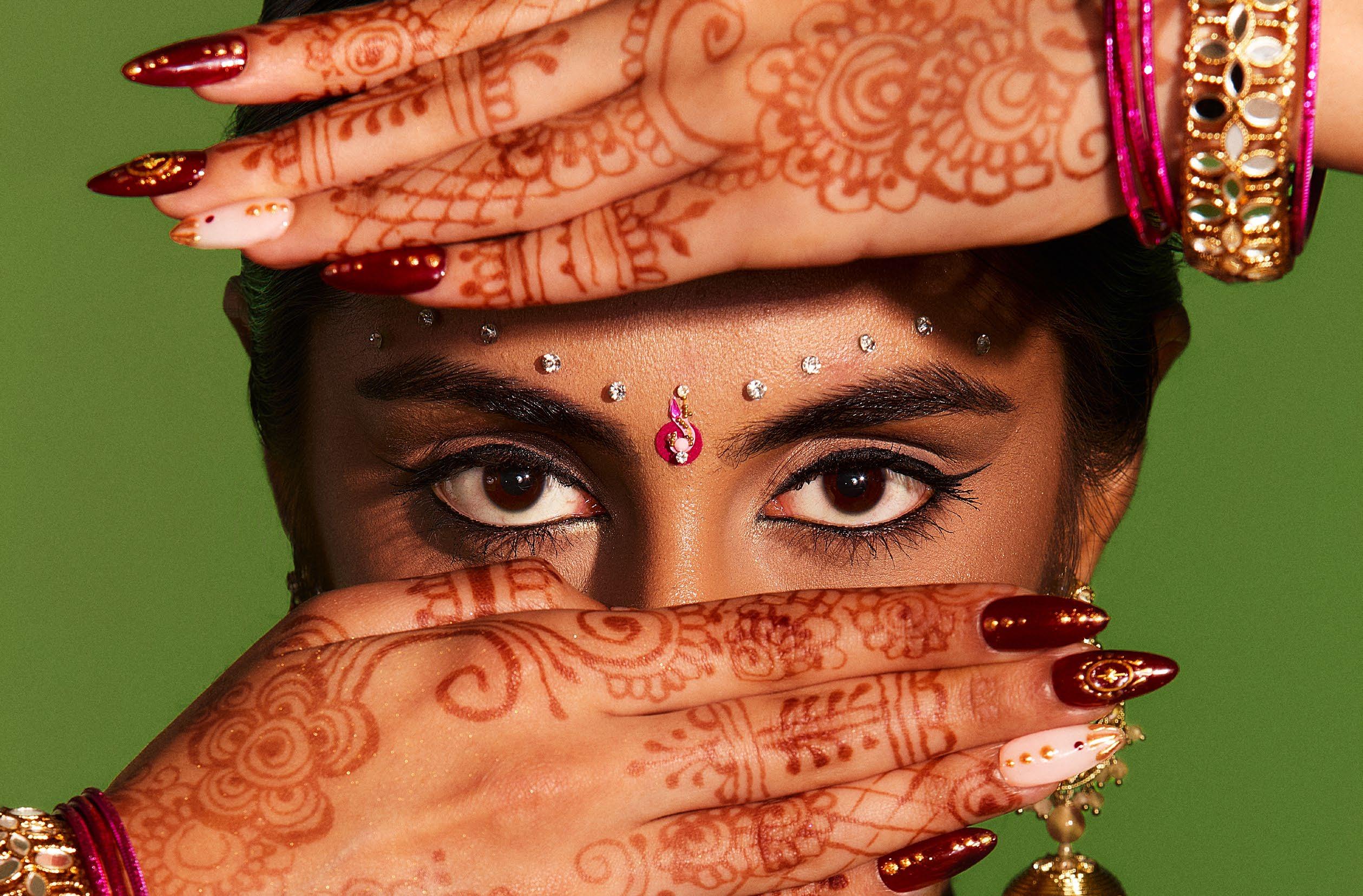
Historically, colonial trade has always reduced South-Asian artifacts to mere goods, stripping them of their cultural context. This reflects the state of the fashion industry right now. A Lehenga becomes a bohemian-skirt. A Duppata becomes a Scandinavian scarf. Mehendi, Bindis, and Maang Tikkas become mere boho-chic accessories for the average Tik-Tok influencers’ next Coachella outfit.
The modern fashion industry is simply continuing age-old patterns of colonial collecting. It strips these artifacts—the textiles, the jewelry, the motifs of their sacred, ritualistic, and cultural context, precisely as colonial collectors did centuries ago, and repackages them as isolated, consumer-ready goods for Western display and profit.
And it doesn’t just stop at fashion. Yoga, meditation, retreats, turmeric lattes, chai, chakra healing, the language of manifestation, even fabric and dyes, all began in the Indian subcontinent. These traditions have been stripped of their roots and sold back as curated, minimalist lifestyles. There is a strategic silence when it comes to acknowledging the origin of the practices that form the foundation of today’s multi-billion dollar wellness market.
Is it because South Asia has been historically associated with poverty, labor, and colonization and does not fit the ‘aesthetic of luxury’?
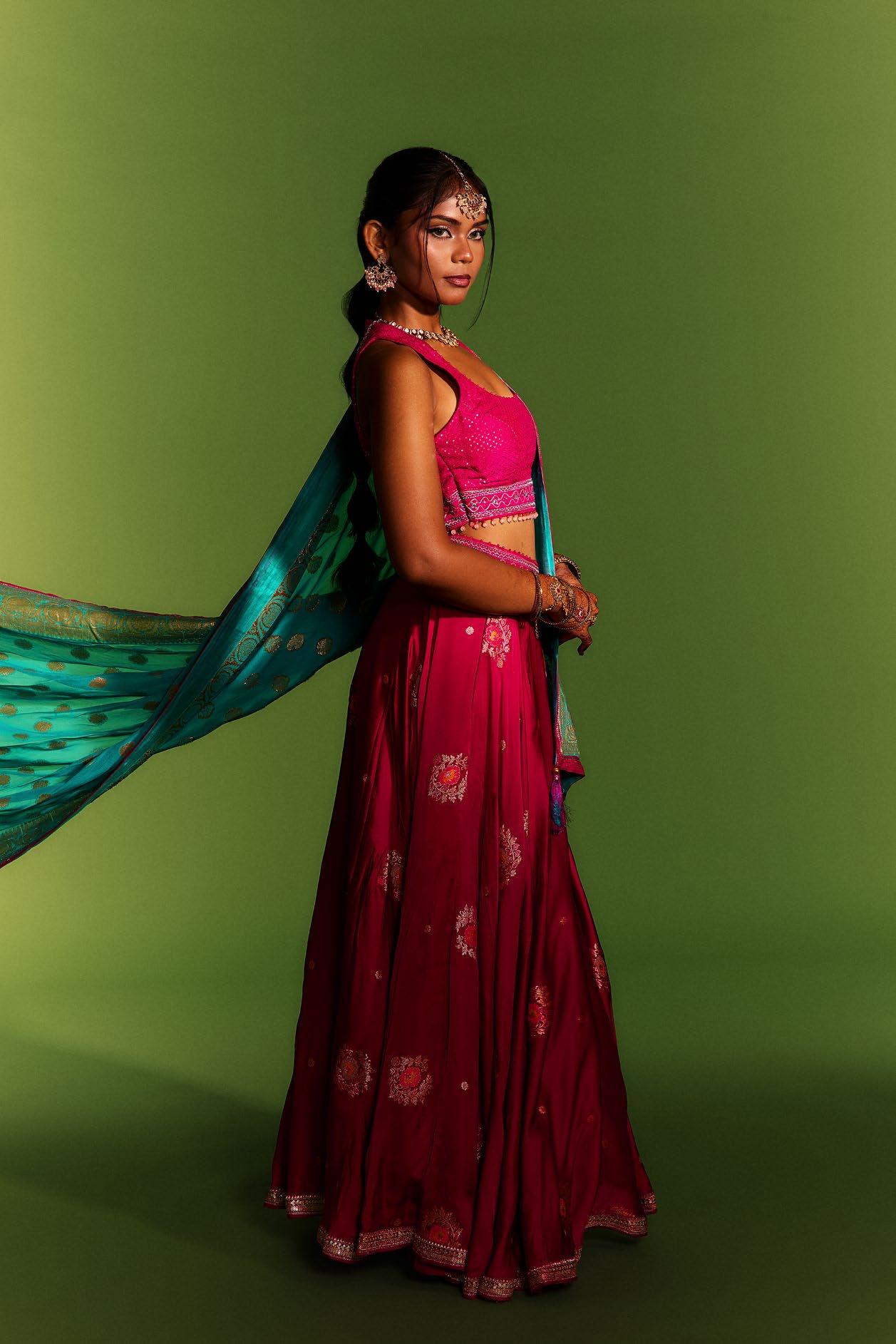
Sharara Set Meghna Jain Modish
Jewelry Stylist’s Own
Isha wears
Saree Stylist’s Own
Jewelry Stylist’s Own
Reva wears
Saree Meghna Jain Modish
Jewelry Stylist’s Own
This cultural theft alienates the South-Asian diaspora. For generations, this community has faced, and continues to face, social and professional penalties for expressions of their heritage. Dressing “too Indian” has long been treated as a social risk, an obstacle to belonging in Western spaces. Generations of women had to perform acts of quiet self-erasure: pushing vibrant heritage into the back of the closet, exchanging heirloom jewelry for generic gold jewelry, or hiding ethnic features to ensure professional acceptance. Traditional attire is often labeled “unprofessional” in corporate spaces, cultural foods are mocked as “smelly” or “strange” in schools, and names are shortened or anglicized to fit Western norms.
Brands need to do better. “If you’re profiting from the art, you must really try to invest fairly in the community, in the hands that sustain it,” says Dr. Mushtaq.
“The average consumer stuck within their busy life-style and consumerist culture relies on brands and their marketing to deliver correct and true stories,” says Riva Lilwani, an International Trade and Marketing Senior at the Fashion Institute of Technology
So, how can brands do it right?
By building an ethical partnership, and curating space for both intellectual and cultural contribution. It’s about co-creating. Brands need to think of these south-asian artisans as decision-makers, just as they are, instead of walking in with a superiority complex.
Name the motifs, the techniques and the textiles. Give artisans fair pay and co-ownership for their work. Respect their vision, their voice, and tell their story in its entirety. Think about building something timeless, something where you’re not just repackaging existing products, something colonialists have been doing for years.
We’re not just a cultural moodboard. There’s a story here. The look is timeless, just like its origin.
So next time you light incense, sip chai, or buy a “two-piece set with a Scandinavian scarf”, pause. Somewhere, a woman’s hands have done this before you; not for profit, not for the trends, the logos, the luxury, but for her pride. The industry didn’t discover us; it’s still trying to catch up, ‘cause we did it first.
Iegenga Set Meghna Jain Modish
Jewelry Stylist’s Own
Talent Reva Patel, Isha Ratanghayra
Photographer Liliana Orea
Photo Assistant Elliot Gallicchio
Retoucher Mason Drowne
Graphic Designers Erin Black, Rori Elizabeth Stanford
Production Assistant Mir Nazeeba
Stylists Aishani Mittal, Sunanda Das
Styling Assistant Diya Kaliyambath
MUA Laiba Rafi
Hair Stylist Kristine Sader
Nail Artists Yasmin Sagheb, Suhani Ranu
Henna Artist Richa Kanjani
Fabrics provided by Manuleka Mahe
SheWhoBurns
By: Lily McDonough
Call it the season of the witch… again
The witch returns once more. Not as a myth, but as a mirror of womanhood, resilience, and transformation.
She’s back on the runway and in the collective imagination, a shapeshifter embodying strength, seduction, and style. Did she ever really leave? The witch survives because she adapts. Each revival serves as a reminder that fashion trends are cultural barometers; they speak precisely to the context of the times.
Witches have always been inherently stylish: fantastical and surreal, dangerous and alluring, sexual and mysterious. Witches embody glamour; the word itself is descended from grammarye, a Scottish term for enchantment. Across fashion, film, and media, the witch’s wardrobe has evolved from a cookie-cutter archetype into a kaleidoscope of distinct aesthetics. Far from one-dimensional, witches have become icons of many countercultural styles; from Victorian goth to ‘60s psychedelia, to Californian occult and ‘90s grunge.
The witch’s dress tells a story of power, autonomy, and spirituality. Each fabric, accessory, and color palette can become a statement. Color magick, the extraordinary use of colors to evoke emotion and intention, transforms simple garments into talismans. Witch style is not just about clothing; it is an armor of self-definition, a declaration of individuality, rebellion, and strength. But beyond trend or aesthetic, these visual codes also trace back to something deeper: centuries of women using fashion and symbolism to protect, express, and reclaim identity in societies that often silenced them. The witch’s attire, in this sense, becomes not imitation, but remembrance: a continuation of the strength that has long existed across cultures, rather than something borrowed from them.
The popularity of Wicca in the 1960s led to the introduction of witchcraft to the mainstream, and it is where the modern witch’s fashion was born. The ‘60s witch was crystallized decades later in Anna Biller’s 2016 cult film The Love Witch, which captured that era’s signature look: psychedelic prints, oversized pendants, prairie dresses, and the everpresent little black dress.
In the 1970s enters the free-flowing bohemian witch, best personified by none other than the illustrious singer-songwriter Stevie Nicks. Her spellbinding style on tour with Fleetwood Mac hypnotized the masses in the 1970s; antique jewelry, leather boots, top hats, fringe,
and endless layers of chiffon and lace. Of course, the White Witch is also known for her collection of shawls, which she calls her good luck charms and stores in a temperature-controlled vault.
Witchcraft continued to grow in the United States in the ‘80s during the Satanic Panic and experienced a substantial increase in popularity by the 1990s. Witch characters in movies like The Craft and television shows like Charmed and Sabrina the Teenage Witch were portrayed as empowering to young girls and women, leading to an association between witchcraft and empowerment.
The 2010s made witches into fashion icons once again, this time on websites like Tumblr and Pinterest. In 2013, The New York Times published “Witches Lose the Warts,” which diverged from the trends seen at the F/W fashion weeks; that same year, American Horror Story: Coven was released, gaining widespread popularity on social media for its iconic looks and dark aesthetic. In Coven, and the 1996 cult classic The Craft, the angsty teenage witch archetype is characterized by nods to vintage academia paired with youthful flair: pleated mini-skirts, peter pan collars, black dresses paired with sheer nylons.
Fashion houses took notes. In the 1990s, for example, witch style on the runway became popular during the resurgence of paganism in pop culture. Still, each October, an image of Kate Moss dressed as a witch for Martine Sitbon’s S/S 1993 show resurfaces online—pointed hat, organza scarf, grasping a cigarette in place of a wand. Sitbon was hardly alone. Designers like Vivienne Westwood, Thierry Mugler, and notably Alexander McQueen, who dedicated his F/W 2007 show to his Salem ancestor, Elizabeth Howe, also referenced witches and the occult in their collections. These designers were not simply romanticizing darkness; many were reframing what power, femininity, and rebellion could look like. The witch was no longer a feared figure but a muse representing the misunderstood, the intuitive, and the free.
At the S/S 2026 shows this past Fashion Week season, the witchmuse persisted. Anna Sui’s “Bohemian Boudoir” collection featured Stevie-esque flowy fabrics, babydoll dresses, and psychedelic prints. Harris Reed’s “The Aviary” collection had a more experimental gothic approach to the witch: jewel tones, exposed cage skirts, and sculptural dresses. Each look conjured a visual spell as it glided past, captivating the onlookers.
The ongoing fascina on with witch-inspired wear, genera on a er genera on. reinterpret strength through what they transforma on. How women con nue to fashion speaks less to mys cism and more to
Top Stylist’s Own
Corset
Stylist’s Own
Skirt
Stylist’s Own
Shoes
Badgley Mischka
Hat
Sideara St. Claire
New York City, a melting pot of cultures and personalities, harbors a large community of pagans and witches. A popular location for metaphysical and botanical boutiques to set up shop is the East Village. It’s home to Enchantments, the city’s oldest occult store, along with Flower Power, an herbal supply shop for both physical and spiritual health. Spaces like these carry the history and heart of practices rooted in community, heritage, and self-expression. They are reminders that spirituality and fashion often meet in the same place, the search for meaning and connection.
Enchantments, the city’s oldest occult store, founded in 1982, welcomes all, “from the novice to the advanced practitioner,” and carries a diverse range of magical products. As it happens, Kai, who works at Enchantments, is also a student at FIT.
“They’ve been around for fifty years; my grandfather used to shop here,” says Kai. “I came in to get sleep oils some years ago, and I just kept on coming back because they had pretty much everything I needed.”
Kai uses fashion to protect her energy and attract blessings, weaving spellcraft into her daily life. “I wear crystals for energetic purposes, like tourmaline, which is good for filtering out any energy I receive,” she says. “I also wear my religious jewelry, like my eleke, which I received in ceremony.”
Color magick is also an essential element. “Usually, I’m wearing a wrap to cover my head, to keep my thoughts or my energy to myself,” she adds. “The head wrap I wear is usually white, but sometimes it’s pink; other times it may be blue. Each color does different things for me.”
Her words illustrate how spirituality can influence style, not as a trend, but as a deeply personal form of self-expression and protection. The color white is known for purity, peace, and a clean mind, while pink typically represents love and blue represents wisdom and the divine. However, everyone interprets it differently.
There is no “one spell fits all.” Witchcraft, and spirituality in general, is about the individual person’s understanding of the universe. Perhaps that is the essence of fashion as well: a language of identity, resistance, and intention.
Witch style is where clothing, color, and texture become symbols of identity and agency. The witch is not just a figure of folklore; she is a fashion icon, a living emblem of femininity, autonomy, and mystery. Her story, reframed through respect and awareness, is one of endurance— of how women have always transformed misunderstanding into art, and oppression into beauty.
Fashion is her form of freedom.
Top Earvin Silva
Skirt Darren Apolonio
Shoes Steve Madden
Bracelet Stylist’s Own
Hat Earvin Silva
in
CATWALK crescendo
By: harper hicks
The runway’s
repertoire
of music and its impact on the fashion scene
Corset Siobhan Ryan
Skirt Siobhan Ryan
Shoes Stylist’s Own
Since the dawn of civilization, every country across the globe has had two things in common–music and clothes. Among the many factors that differentiate us from each other, humankind has upheld these two components that signify all of us as one.
As history has progressed, so have music and fashion, and even in 2025, the two remain united and strong. It really is no surprise how much music affects us, as what we listen to can dictate mood, feelings, and even decisions.
Much like a movie or stage production, a runway is a visual art form in which designers use music to help tell stories. Take the Victoria’s Secret shows: to convey their fun, flirty, bombshell aesthetic, they have featured popular artists on the runway during the show. Though this is an obvious use of music in a fashion show, it does really work; the songs enhance the overall production, making it feel sexy and exciting.
Pop and electronic music are often the genres most associated with runway shows and high fashion. Hits like Britney Spears’ “Gimme More,” Nelly Furtado’s “Maneater,” and of course, Madonna’s “Vogue” are standout pieces when thinking about runway songs. Pop as a genre is often inherently sexy, with playful upbeat tempos and sometimes explicit lyrics. Lots of runway shows want to evoke those feelings, and what better way to do so than to pair them with the sexiest and most exciting genre.
Despite its mainstream association, radio pop is not the most typical music genre we see on the runways. Though often present, what we usually see is something stronger, faster, and more sultry. In other words, what we’re seeing is synth-pop.
Erin Black, 21, a Spatial Experience Design senior at FIT, who has been modeling since she was fifteen, prefers walking to something with a fast beat. “If the music was slow and dainty, my walk will be a lot softer, the beats affect my attitude.”
Models perform as athletes in the eyes of the fashion industry. Just as sportsplayers need specific aspects of their sporting environment to be perfect, so do models. Having a strong tempo to walk to is one of those necessities for runway models to ensure their job goes smoothly. Whether intentional or not, the music or score the models walk to make a difference in their overall stride and mood on the runway.
Rue Stammen, 20, a vocal performance student agrees—“As a musician, I see how music impacts everything,” Stammen says.
“When you’re watching a movie, a scene could feel totally different if the score was eerie in one cut and upbeat in another. Think of how awkward a fashion show would be if there was no music; it’d feel incomplete, almost empty.” Stammen, who has been studying music since elementary school, understands firsthand how music can transform.
Stamen’s point on how scoring affects the feel of a scene, greatly relates to dissonance and how sound can affect an audience. “In music, dissonance is when there is a lot of disagreement within notes of a score,” she explains. “There are twelve tones in the whole scale and if those twelve notes happen to fall right next to each other, it creates this ‘beautiful’ unpleasant sound, which we call dissonance.”
Take Maison Margiela’s out-of-the-box background instrumentals from its S/S 26 show at Paris Fashion Week. Margiela used a live orchestra composed of 61 children to pay homage to Martin Margiela’s 1989 show which was staged on a playground. This use of child musicians actually created more dissonance than anything else. The kids played out of sync and tune, but combined with the edgy metallic accessories the models were wearing, helped create a unique and charming experience.
Margiela’s musical decision was out of the ordinary and its disjointed harmonies created a lot of excitement though it’s easy to surmise that the score was rather more difficult for the models to accommodate. “If I was watching a runway show, I’d like the models to be walking to something electronic or synth-pop, because it’s usually more upbeat,” comments Stamen.
Emerging in the 1970s and rising to popularity in the 1980s, synth-pop is often the leading music genre on the runway, she adds. “As the name suggests, it primarily uses synthesizers, drums, repetitive lyrics or emphatic beats. The repetitiveness of synth-pop often makes it the ideal music choice for models, as it is easier to walk to.”
Erin Black cited ‘180db_[130]’ by Aphex Twin from the 2014 Syro album as her favorite song for the runway. A perfect example of electronic synth-pop, the song has an upbeat tempo and repetitive rhythm. “I walked in a show with it for my friend’s brand and it just fit so well,” she said. “In a way it made me feel sort of empowered and was an overall great walking song.”
Having a strong tempo to walk to is a necessity for a runway show—the beat controls your feet.
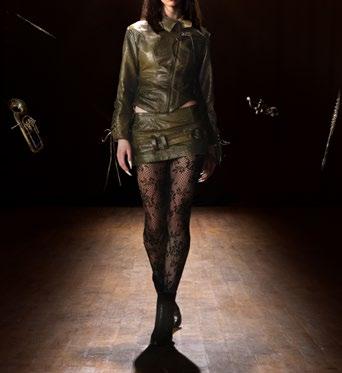
Left to right
Jacket Sandra Ziegler
Skirt Vintage Roberto Cavalli
Tights Stylist’s Own
Shoes Talent’s Own
Jacket Tara Dietzel
Skirt Tara Dietzel
Tights Stylists’s Own
Shoes Beacon’s Closet
Taka wears
Jacket Leya Victoria
Pants Talent’s Own
Undershirt Stylist’s Own
Alexandria wears
Jacket Leya Victoria Pants Talent’s Own
Undershirt Stylist’s Own
Talent Drithi Abbineni, Katelyn Mae Williams, Cat Jansen, Alexandra Zuppas, Taka Sasaki
Photographer Michael Kenneth
Photo Assistant Liliana Orea
Retoucher Amanda DiMaio, Elsa Propper
Graphic Designer Erin Black
Production Assistant Yafa Antúnez De Mayolo
Stylists Mariana Carreño, Ellie McCullough
Styling Assistant Fynn Bishop
MUA Kole Hardy, laiba Rafi
Hair Stylist Izzy Catu
Nail Artist Kashvi Joshi, Yasmin Sagheb
Guitars are often the standout instruments, as they can be the driving force of the song. But, the bass can provide the heartbeat of the band and the runway. It helps to keep the overall tone and like a real heartbeat, it keeps on thumping.
In December 2024, Chanel’s show in Hangzhou’s West Lake in China stood out for its setting and musical association. The show was a celebration of Chinese artistry and traditions not only for fashion, but its music too. The show started by the beating of two Tanggu drums helping the first set of models find their beat and creating an interesting opening dynamic. The music then faded into both upbeat and melancholic synthpop as the show progressed. The 2024/25 Métiers d’Art show was a perfect example of the way music guides both the model and viewer through a story, not just a runway show.
Synth-pop’s relationship with fashion has really defined the way we feel and interact with runway shows; it’s capable of evoking a range of emotions, from joy and nostalgia to feelings of being futuristic, eerie, or melancholic. Every musical decision behind a runway show from upbeat pre-recorded tracks to slow emotional live orchestras, can leave an impact on the runway’s overall storytelling.
by: ava steijger
the anti-a e sth e
the study of high fashion’s defiantly alluring faces — and how they compare to other variants of modeling
To be a model often means to be a muse, and many artists do not desire traditional beauty standards. The high fashion industry is famous for this, and its models carry the greatest prestige. How curious…it seems that the most exclusive circle demands what many would call ‘undesirable.’
When you are young and models appear in the media, they seem like figures of glamour that all move together as a herd, vessels of pure beauty. Eventually, everyone begins to understand that different atmospheres demand very different kinds of models: a pin-up girl with big hair and a bust, a high-fashion silhouette that intrigues the audience, or the e-commerce ‘girl-next-door.’ The word “model” has this hue of royalty and praise—many have dreamt of it, wished for it, compared themselves to such beings.
The biggest enemy to an up-and-coming model is attainability. How attainable is the desired look? High fashion has an inside circle of standards because it is picky, studied, and unpredictable. High-fashion models not only enchant you with their symbiotic existence—as basic as a canvas, as unique as art—but they approach their craft with different goals than models that fit traditional beauty standards. They want to seduce your eyes with enchantment and discomfort. Some call it ugly, but just can’t seem to look away— because, in fact, it’s not ugly at all. Some of these models may seem extraterrestrial, and you take in their features with your soul on a tilt. To understand high fashion is to know that feeling is the very point.
I believe it becomes apparent in every model’s career which sector they are most likely to succeed in, and what a strange kind of fate one must come to terms with. Modeling as a career has such an odd reality to it, but what would the fashion world do without models? Perspective is introduced by an FIT alum, who is not only a model herself, but also an intern with Ford Models, one of the top modeling agencies in the world. Tori Olegario, 22, works on Ford’s special management team, where she finds, manages, and assists the agency’s models.
Olegario shared her thoughts on high fashion standards as opposed to other forms of modeling. “High fashion beauty means interesting faces with striking features, not always conventionally attractive,” she says. “They have a certain ‘je ne sais quoi,’ even if it sounds corny to say.” She recalled meeting a model while in Europe, and she could immediately spot that she was a model, even though she wasn’t conventionally pretty.
“She was just unique in a beautiful way. No matter how you’d describe it, it [was a look that] just wasn’t attainable to the average person.”
She argues that when beauty becomes otherworldly, the muse must follow suit: “The garments themselves are supposed to be dreamy, so models are meant to possess an extraterrestrial aspect. Since the clothes aren’t meant for the average person, the models aren’t meant to look like average people.”
Grace Germinder, 20, an FIT student who has been modeling since she was young, has spent time in different streams of modeling. She has a love for the industry, which she credits to hard work, exploration, and setting personal boundaries. “Conventional beauty is ‘trendy’ on social media,” she notes. “Everyone loves to admire the beauty standard and be immersed in pretty things. But unconventional beauty is what makes a model stand out.”
Some models are admired despite possessing traits that are deemed “unadmirable” by general society, and it is high fashion taste that inspires this. If modern terminology can serve as an explanation, you could relate this concept to that of “female gaze versus male gaze.”
Sports Illustrated, Playboy, Victoria’s Secret… the image enforced is central to western beauty standards; it’s sexy, shaped and toned, glowing and manicured.
One could reflect back on a Vogue Runway, scroll through Comme des Garçons or Jean Paul Gaultier’s recent Spring 2026 collection, and see the most intriguing features: whether it’s disproportionate orifices, body scarring, or overall bizarre physiognomy. There is something stark and intoxicating about these gazelles; some look at the camera with melancholy, some even wish to make you afraid—all in contrast to conventional beauty that seduces its audience in a different way.
Many argue that the “female gaze” gravitates toward extreme features, authenticity, and a rather regal form of femininity—something of peculiarity and beauty, drawn to qualities not usually considered traditionally attractive. The “male gaze” has a different aim, and because this piece is not political commentary, it will not attribute the gaze solely to men. Still, it is notable that fashion is shaped by an overwhelmingly feminine perspective, and its gaze operates through that lens.
The artisit c, extreme, a
nd
romantic
face of each human feels rare-something worthy of a certain reverence , a concentrated
form of beauty .
Graphic Designer Erin Black
Illustration Erin Black
It is no wonder that the more extreme a face, the less it is understood by society.
Leon Dame is a model who went viral in 2019 for his asymmetric stomping walk, strange silhouette and beady eye towards the camera. This attitude has encapsulated the high-fashion world. It is not comforting or predictable, and what may feel unnerving to most, can be seductive to the right viewer of its taste. High fashion is not meant for everyone to enjoy; this expensive and laborious craft is exclusive for a reason. The love it harnesses is not casual
When models step into their careers, they often study these patterns and contemplate where their look is most desired. The models’ role generally requires maintenance. They may be asked to add or void habits from their lives, spend hours on their skin, or even alter their features. This can be hurtful conduct for the model. When models are being pestered with greedy alterations, it is the most powerful approach to feel empowered by their own nature and reject this. There is no place for conformity in fashion. Even so, for models to believe in an artistic vision, they must first believe in themselves.
By:NeeralKothadia
With surveillance now thesilentaccessory ofeverydaylife,how dowecontroltheway we’reperceived?
In this modern age, our every step is recorded, every glance archived, every reflection duplicated through lenses and algorithms. Being “seen” is no longer a question or a choice—it is a way of life. Each turn on the block captures someone’s identity, outfit, face, emotions. A fleeting moment becomes permanent, stored forever in a cloud that never forgets.
Closed circuit cameras first appeared in public spaces in the 1970’s, quietly watching from corners and ceilings. Decades later,
they’ve multiplied into the millions. They are embedded in lampposts and laptops, doorbells and dashboards, and in the phones casually resting in our hands. What began as a safety measure has evolved into a state of constant visibility.
Natasha, an FIT fashion design student, knows this feeling well. Even when she’s alone, she imagines an invisible lens. “I feel that even if I’m all alone in a room, I would find myself wondering if there’s a secret CCTV camera and I’d still want to look my best.” For her, and
for many of her generation, privacy isn’t just rare, it’s unfamiliar.
Fashion, once a quiet form of self-reflection, now doubles as armour. Clothing no longer merely expresses identity; it shapes how algorithms, cameras, and strangers interpret us. The fear of being caught at the wrong angle, in the wrong outfit, or on the wrong day, have never felt more pressing.
Even the glint of Ray-Ban smart glasses, a subtle signal that someone might be recording,
can create a ripple of self-awareness. Surveillance affects not just what people wear, but how they behave. That instinct, to edit oneself for the invisible gaze, defines modern life.
People dress as if each encounter is a scene in a film and curate themselves accordingly, with outfits chosen for lighting and composition as much as comfort. Morning rituals of concealer, coats, and perfectly paired accessories become silent negotiations with a collective, judgmental eye. From “errand-core” to “off-duty model,”
fashion has become a choreography of performance.
Airport looks are curated for paparazzistyle Instagram posts. Gym-goers wear matching sets, ensuring every mirror selfie feels brand-worthy. Even coffee runs demand an “effortless” look– carefully constructed hoodies draped just right, tote bags slung perfectly for the “candid” shot. Dressing, once an intimate act of self-expression, is now a rehearsed performance for an unseen audience.
Social media amplifies this performance. Socials blur the line between private and public, intimate and staged. Influencers open the door to their daily lives through “Get Ready With Me” or “A Day in My Life” videos, each moment curated, lit, and filtered. Followers gain access to bedrooms, closets, and kitchens, yet the illusion of authenticity is meticulously produced. These creators are both directors and subjects, being watched and watching themselves.
For this generation, surveillance isn’t foreign it has become akin to the air they breathe. “We always have to be aware of how we communicate and represent ourselves because there’s often a chance for that to be recorded or reinterpreted,” said Helen Castillo, a former reality television personality and fashion designer. As someone who’s experienced a reality television show as a contestant, there were many times that I needed to be extraconscientious of an event that could negatively impact my professional reputation.” She thinks it’s a double-edged sword “because the level of surveillance in society today makes us more aware of how we are acting in public and in situations where that act could potentially be repurposed.”
Even beyond screens, this digital vigilance extends into everyday life. A trip to the grocery store becomes an event; an outfit choice becomes a statement.
Left to right
Dress Lana Mingasson
Tights
Stylist’s Own
Jewelry
Stylist’s Own
Shoes
Stylist’s Own
Dress Vy Le
Tights Vy Le
Garter Vy Le
Jewelry Stylist’s Own
Shoes Stylists
People dress “for the possibility” of being seen because they will be. Looking put-together is no longer vanity; it’s protection.
Fashion houses are responding to this shift. The concept of anti-surveillance design is emerging in both streetwear and high fashion. Designers are experimenting with garments embedded with reflective threads that distort infrared detection and prints that confuse facial recognition systems. These are not just clothes, they’re forms of resistance, rebellion stitched in silk and nylon.
Berlin-based artist Adam Harvey debuted his “Stealth Wear” collection nearly a decade ago, featuring heat-shielding cloaks and anti-drone hijabs to counter surveillance. Meanwhile, Italian label Cap_able designs knitwear with adversarial patterns that confuse AI, making it think the wearer is something entirely different (perhaps even a giraffe!). Then there’s the futuristic metallic outerwear from CHBL, that doesn’t just shimmer, but jams digital signals to block phone tracking. This isn’t science fiction anymore. It is fashion, and it has already walked the runway.
Yet the paradox persists: people crave recognition even as they fear exposure. They long to be seen, but only in ways they can control. The culture of surveillance has merged with the culture of vanity until the two are inseparable. The mirror has been replaced by the lens; self-reflection has evolved into performance.
Professor Helen Castillo was a contestant on Project Runway and now teaches fashion design at FIT. She believes fashion can act as resistance to surveillance because it is such a multifaceted industry.” It does feel as if there is too much strength in the opportunity to film and reproduce images in an instant,” she says, “but the fashion industry uses this to their advantage to have greater reach to a consumer.”
Every selfie, every outfit post, every tag has now become a quiet act of consent. The more people share, the more predictable they become. Algorithms learn not only one’s preferences but tone’s posture, expressions, and mood patterns. Even shopping, once an act of individuality, is now steered by data systems that anticipate desires, almost before they form. Style, once synonymous with freedom, risks becoming just another pattern recognized and replicated by the machine.
And yet, amid the repetition, rebellion still thrives. Designers are turning glitch aesthetics – creating distorted pieces into pleasing but unexpected imagery–along with distortion and anonymity, into new forms of beauty. Runway looks now feature masks, veils, and blurred silhouettes. Photographers intentionally capture hazy, imperfect images that resist the precision of algorithms. Fashion students experiment with garments that conceal as much as they reveal, drapes that distort form, fabrics that deflect light. In these designs, anonymity becomes a desirable new luxury.
Prince Cunningham, a Sociology professor at FIT, captures this cultural moment succinctly: “In a panoptic society, the more we are under surveillance, the more we put ourselves over surveillance to develop confidence, to find our own identity. It’s a perfect storm.”
And that storm defines modern fashion. It is the tension between exposure and control, vulnerability and self-definition. In a world that records every move, fashion becomes more than expression, it becomes strategy. Being styled for surveillance isn’t just about being seen. It’s about mastering how you are seen, and deciding what the lens is allowed to remember.
Talent Allyson Nibungco
Photographer Allison Simms
Photo Assistants Kaylie Gingerich, Mya King
Retoucher Allison Simms
Graphic Designer Erin Black
Production Assistant Gianna Londres
Set Designer Allison Simms
Stylist Allyson Nibungco
Stylist Assistant Alyssa Crisci-Weber
MUA Jennifer Davila
Hair Stylist Addison Roche
Nail Artist Giselle Mustafich
Their hair, their nails, their tunnel-fits—female athletes aren’t dressing for you, they are reclaiming their power
By Alyssa Klein
“Look good, feel good, play good.” The philosophy was simple. Originally coined by Deion Sanders, former NFL star and current college football coach, it was the phrase that Kent Brooks—a fashion lover and athlete himself—persistently instilled within his young daughter, Amadi.
It is safe to say that his message took root. The philosophy did not just stick, but it became Amadi’s blueprint. D1 basketball at Eastern Kentucky University. Check. A career that merges sports and fashion. Check. A styling client list that includes A’ja Wilson, Serena Williams, and Sydney Colson. Check, check, check. Amadi Asha Brooks is no stranger to the sports, nor to the fashion world.
“The weekend of junior prom was the weekend I first got acrylic nails,” Amadi recalls. “I just remember I had a basketball tournament the same weekend… My dad, who was a coach of mine, said, ‘Look, if you’re going to wear these nails this weekend, you better ball out…’ I wanted to wear my nails so bad. I played out of my mind, I had the game of my life—and I was a superstitious person.”
After that performance, she was convinced. “When I had this game, I was like, I have to wear nails forever! That was my thing, some of my coaches had different opinions, but it became a mental thing. Even as far as my form—being able to hear the nails come off the basketball—I would know if the shot was in.”
For Amadi, the nails were an advantage, even if society did not see them in that way.
The assumption that caring about appearance weakens athletic credibility has persisted as women’s sports has reached new heights. Between 2024 and 2025, women’s sports have seen a boom in popularity and are receiving media attention like never before. Currently, sponsorships in women’s sports are growing 50% faster than in men’s sports. By the end of 2025, they are expected to exceed 2024’s total revenue by 25%. This past season, the WNBA saw record-breaking viewership on networks like ESPN and CBS.
However, a side effect of this rapidly growing positive attention is— notably—negative commentary.
Picture this: it is a warm, early-August afternoon in the city of Chicago. Angel Reese, star Sky forward, struts out of her blacked-out SUV at Wintrust Arena, ready to battle it out on the court against the Seattle Storm. As she enters the tunnel, camera flashes bounce off her layered stack of Chanel pearls draped from her neck, pinstriped skirt-suit, and flashy red bag paired with coordinating heels. Her braids, swooped over to one side, cascade flawlessly over her shoulder, framing her signature game day look—false lashes, a glossy lip, and pink-toned blush. Within minutes, videos and photos of Reese’s arrival begin to light up Instagram feeds and X timelines, with @LeagueFits leading the commentary.
“Why is she wearing high heels?!!” an X user comments with laughing emojis.
“She is what we call a try-hard,” another writes.
A third user follows up with, “Why does Angel Reese wear makeup and big eyelashes on the basketball court? I thought she was supposed to be ‘professional’ LOL.”
These comments are not isolated. They are part of a much larger issue: the patriarchal standards unfairly placed on women that police how they present themselves in their professional spaces. If we begin to scratch below the surface, what Reese chooses to wear is much deeper than an outfit, and that is what critics fail to realize. What does she really wear? A statement. A story. By showing up unapologetically, Reese is weaponizing the very visibility that is supposed to discipline her. When young girls watch her step onto the court—lashes and all—they see something more complex than what the X users express. They see a woman refusing to conform, confident and unafraid to refuse to choose between the two things that she loves: fashion and sports.
Reese does not stand alone in this movement. WNBA players are using their pre-game outfit walks as a stage to portray narratives—and stylists like Amadi Brooks are vital contributors to this reclamation
Through fashion and
accessories,
individualized
hair, makeup and nails, the tunnel has provided fans with the ability to connect with their favorite athletes on a deeper level.
Fashion is a form of nonverbal communication. From things like personal identity, mood, to even political and social causes, the athletes have the power to relay impactful messages at their fingertips.
For fans like Eliana Hernandez, a senior fashion student at the Fashion Institute of Technology, the impact that tunnel fashion has is personal. “It is important because I can see people who look like me dressing how they want,” she explains. She points to the range of expression now visible in the WNBA: “Players are using fashion to showcase their values and confidence. Like, you’ve got T. Cloud [Natasha Cloud]—she wears a lot of political pieces both on and off the court…Kiki from the Washington Mystics wore a viral dress at the 2025 WNBA draft showing off her Nigerian
roots…the StudBudz [Natisha Hiedeman and Courtney Williams] still express themselves despite criticism. They are confident and don’t really care.” Hernandez suggests that this confidence is contagious, inspiring fans to claim the same unapologetic space for themselves.
For decades, the WNBA held its players to a narrow, traditional standard of how to present themselves: straight, proper, feminine, and ‘marketable.’ When the league finally loosened its grip, something unexpected happened. Athletes began to express themselves in a personal way, and the league flourished along with them. By allowing players to show up authentically, the WNBA discovered a new audience. This was not the audience they had been pouring their marketing dollars
into—the same demographic that men’s sports traditionally target. Instead, they found a fanbase that sees themselves reflected in these athletes: a real, diverse group of women, across identities, communities, and expressions of self.
The tunnel was supposed to be a place to pass through quietly, heads down, conforming to someone else’s version of professionalism. However, the women of the WNBA have rewritten, and continue to rewrite the script they were handed. Today, they arrive loudly, dressed in their truth, carrying their identities proudly within the material draped upon them. Traditional sports culture may have wanted tunnel vision, but women like Amadi Brooks and Angel Reese are expanding that vision beyond limits.
OLYMPICS OF FASHION
OLYMPICS THE FASHION ANOPINION PIECEBY
KAIHA
HOW CAN TEAM USA TRULY REPRESENT AMERICA?
A navy blue blazer with white and red trimming, a perfectly crisp white button-up shirt underneath, paired with blue tapered denim jeans. That was the look that represented the United States Uniform for the 2024 Paris Olympics. It was, undeniably, Ralph Lauren to a T—polished and modern, carrying on the long-running tradition of Olympic athletes dressed in classic “Americana” uniforms.
While the uniforms may celebrate America, they simultaneously reflect a rather exclusive version of the American Dream. Rather than telling a story through fashion that embraces the nation’s vastly diverse cultures, styles, and socioeconomic statuses, the designs are heavily focused on a type of “quiet luxury” or “country club” aesthetic that feels tone-deaf when considering the U.S.’s current political state.
Olympic uniforms have undergone numerous eras. In the 1980s, Levi Strauss & Co. dressed Team USA in uniforms inspired by the Old West–rodeo chic. In the 1990s and early 2000s, a new look was introduced: casual, with sporty jackets and track suits. Ironically, a Canadian brand, Roots, was designing that uniform. They all were designed with the correct intentions, but ultimately did not have a certain “je ne sais quoi.” Every four years, the uniforms felt disconnected from the previous set of uniforms. There wasn’t a consistent designer. There was no true “American” uniform. No signature style. No clear idea of what America represented.
That changed in 2008, when Ralph Lauren stepped in. His name alone has come to represent the epitome of the American dream; the Bronx-born son of Jewish immigrants is famously known for his rags-to-riches story, building his brand from the ground up. His clothes are recognizable by his truly iconic aesthetic: tailored, rich country-club attire. His pieces mix classic tailoring with casual style. His brand idealizes a vision of American life—creating a nostalgic feeling. That vision was exactly what was needed on the Olympic stage. That perfect American uniform— unapologetically patriotic, clean, cut, and precise.
His name alone held a marketing weight. Adding that Ralph Lauren logo on the uniforms would shine more light on the American team. Lauren was the clear choice to dress Team USA, ensuring that athletes looked distinctly American. More than just a designer, Lauren embodied the idea of American identity through fashion. He turned the “American Dream” into effortlessly chic fashion.
As much praise as you can give to Ralph Lauren’s team and the uniforms they have made for the past sixteen years, the brand now receives criticism. These once “timeless” uniforms are now, for lack of a better word, boring.
America is vastly diverse. While Ralph Lauren’s uniform was iconic, its lack of multicultural representation feels outdated in America’s current political state. Writer Elizabeth Segran, in Fast Company, criticized the 2024 Team USA uniform, “Team USA has had an unmistakably preppy look since 2008… But this year, there’s been intense backlash over an aesthetic that’s historically tied to whiteness and privilege.”
FASHION CAN BE MESSAGE–POLITICAL
We can show globally what it means to live in a country of freedom. The United States is proud of the people who make this nation what it is.
Production Assistant Carly Neumann, Alexia Vidaca Soto
Stylists Caroline Sargeant, Rucely Mercedes MUA Jenn Davila, Kole James Hardy, Laiba Rafi
hesitation to embrace our authentic, multifaceted identity.”
Bhakta explained how this connects to her own experiences.
“Growing up, I often felt like my culture didn’t fit into the version of
‘American’ I saw around me. I used to hide parts of who I was, even something as small as my Indian lunch at school, because it made me feel too different. When I look at the uniforms for Team USA, I sometimes see that same pattern of trying to fit into one clean, polished image instead of embracing the many realities of what ‘American’ truly means.”
She concluded: “Fashion is a visual language, and if our Olympic uniforms spoke more languages literally and culturally, they’d tell a fuller, more authentic story of who we are. I want to see a Team USA that looks like all of America, a team whose fashion celebrates every color, every culture, and every story woven into this country.”
The United States is a melting pot of cultures, yet our Olympic uniforms don’t truly represent that.
Black culture has been a backbone of American style—Hip-hop culture redefined global fashion with oversized clothing, gorgeous sneakers, and dramatic jewelry. These fashion moments in time have now evolved into modern-day streetwear and are effortlessly dominating the fashion industry. Our current American fashion would not exist without the creativity and unique innovation of black style.
Asian culture has left its mark on America. Japanese designers are dominating fashion spaces; when it comes to denim, workwear, and streetwear, these styles have been adopted by American culture. Korean-American designers are using K-pop culture to inspire American youth and the way they dress. It’s playful, whimsical, experimental, and colorful. Asian-American designers are paving the way to the fashion future.
Latinx culture has influenced American fashion with its bright, bold colors and vibrancy within fabrics. Patterns, cuts, and silhouettes from Latinx culture are still prevalent within the generation. Chicano fashion, specifically, has played a huge role in influencing.
American queer communities have continually redefined fashion. Ballroom, drag, and avant-garde fashion have consistently broken heteronormativity in fashion spaces. Queer communities have historically used fashion as a form of true authenticity and self-expression, using gender, camp, and performance, and converting it to fashion. It’s beyond innovative and everchanging. It’s bold, it’s real, and it’s American.
Why are these impacts, along with others, erased when on the biggest stage in the world?
U.S. fashion cannot be put into a box of one culture, group, or story. It’s important to recognize that every community within America has left an impact on fashion. As we prepare for the Winter Olympics, held in February of 2026, it’s important to understand the importance of Olympic fashion. We must always remember how our country has been built, and the communities that reside in it.
Fashion historian and FIT professor Dr. Brontë Hebdon Patterson explained that Olympic uniforms have always served as symbols of national identity. “Olympic fashion, in general, expresses national identity,” she said. “It should distill a country’s essence and highlight the athleticism of the bodies represented, all while being highly legible, not just for the opening ceremonies but throughout the games.”
She notes that while Ralph Lauren’s designs may have once captured a version of American pride, they now only reflect a very petite part of the nation’s identity.
“The Ralph Lauren version we’ve had since 2008 really only articulates a small percentage of American-ness. At one point, this version might have represented an ascendant America. Our culture today is exported globally through music, film, and digital media. The Team USA uniforms simply don’t reflect that widereaching cultural relevance.”
Patterson acknowledged “it would be inappropriate to clothe all of Team USA in indigenous-inspired dress. But surely we could find a way to honor the unique identities of each American athlete, within some greater-reaching design aesthetic of American-ness, she added.” “If America wants to maintain its identity as a diverse place of opportunity and high quality of life, then we must visualize that identity in arenas like the Olympics. American athletes already excel in their sports; surely their uniforms can do the same.”
These cultures don’t just contribute to American fashion; they are American fashion. When the uniforms are put on the bodies that represent America, they should be bursting with absolute diversity.
We owe Ralph Lauren his flowers for the impact he has had on the Olympics, as well as his commitment to bettering the America around him: donating to HBCUs, supporting the LGBTQ+ community, and other vital causes. But we also have to ask: is it time for someone new to step onto the world stage?
Did the clean-girl aesthetic kill makeup’s artistry?
BY ASHLYN KIRBY
The year is 2016. People were lined up outside Ulta ready to buy the brand-new James Charles X Morphe palette—the most viral product of the day, which featured an eyeshadow shade for every color of the rainbow. Everyone was experimenting with new, exciting looks. Tarte Shape Tape Concealer, Anastasia Brow Wiz, and Kylie Lip Kits were the staples scattered across your bathroom vanity while your intense, matte base was applied. It was the year that everyone suddenly became a makeup artist.
Much of Gen Z learned its makeup skills through video tutorials on YouTube, all throughout the 2010s. With the help of popular makeup influencers like Jaclyn Hill, Jeffree Star, NikkieTutorials, and Manny MUA, the average teenager was exposed to an at-home cosmetology course. People all over the world were learning advanced makeup techniques, doing complex, creative cut-crease eyeshadow and applying intricate graphic liner.
As for the the trends, they were bold, colorful, and extravagant—it wasn’t unusual to see someone in full glam at the grocery store.
Fast-forward to 2025 and the rainbows have faded. The once fluorescent beauty ideal has been swapped with the beige, “clean girl” aesthetic of dewy skin, natural brows, and clear lip balm. Makeup, once about expression and experimentation, now feels muted and dull.
Conservatism has not only taken over closets, but also lifestyles and faces. Gen Z is drinking less, having less sex, and dressing more modestly than prior generations. People have swapped their bodycon minidresses for more chic, polished options. With “effortless,” “natural,” and “quiet luxury” being pushed by social media, the beauty ideal has become boring and lifeless. This shift to ”simplicity” is often framed as empowerment: rejecting the male gaze and reclaiming comfort and rawness. Though the cause is admirable, it can come off as uniformity.
Opposite page, left to right
Top Beacon’s Closet, Other People’s Clothes, Stylist’s Own
Necklaces Stylist’s Own
Jacket Other People’s Clothes
Top Other People’s Clothes
Earring Heaven by Marc Jacobs
Ring Vintage
Top Other People’s Clothes
Shawl Beacon’s Closet
Necklace @e3r0r.anonymous_
Earrings Other People’s Clothes
Bracelets Vintage
Top Batcheva
Dress Stylist’s Own
Necklaces Other People’s Clothes
Earrings Mother’s Closet
Bracelets Vintage
Hair Clips Other People’s Clothes
isn't supposed to blend in; it's meant to enhance
Though people are no longer carving out perfect brows to go grocery shopping , hope isn’t lost for the makeup industry as a whole. As the indiesleaze aesthetic rises in popularity, the messiness of makeup is reemerging. Smudged eyeshadow, glitter tears, and emphatic liner have made their way back into the mainstream, the stagnation of imagination dissolved.
Suddenly, we’re seeing editorial makeup fighting pushing back at that cleangirl coma, even delving into surrealism while extending the boundaries of cosmetics. Rick Owens’ Spring/Summer24 collection featured bleached brows, metallic skin, and black contacts, while Thom Browne F/W 24 pushed makeup into conceptual territory with surreal, determinedly avantgarde looks. Makeup has always been fun, it shouldn’t be buried beneath slicked-backed hair and bronzing drops.
For many in Gen Z, YouTube was the gateway to their makeup journeys. Not only did it captivate a new generation, it helped expand the beauty market to new demographics. Male makeup gurus began gaining as much traction as female creators, and in turn, played a key role in breaking gender barriers in the cosmetic community. Ten years ago, makeup celebrated vibrancy and queerness through individual expression; now those colors have faded away.
The truth is, people are craving color again. In a time when both our world and our faces seem bare and beige, people are looking for joy in any way they can find it. Makeup lovers are reaching for metallic shines and bold pigments to counteract the skincare-makeup look. Fallout glitter
and waterline eyeliner from the night before are bringing experimentation, individuality, and yes, imperfection back to beauty. Indie sleaze and similar aesthetics are championing the mess and fun,, but are only starting to combat the “clean-girl” takeover.
Makeup was never meant to be effortless; it’s meant to showcase time, creativity, and talent. It’s supposed to be messy and experimental, even if it sometimes goes too far. That’s where the joy builds from. Makeup is art; it’s not meant to blend in.
So, let’s bring back the glitter and the heavy contour. Let’s smear on electric-blue eyeshadow and draw winged liner sharp enough to cut diamonds. Let’s celebrate makeup that treats the face as a canvas—and remember that beauty was never meant to assimilate.
Mudu,
Beauty in the Eye of the Beholder
By Reva Patel
“Mirror, mirror on the wall; why fit a mold I wasn’t made for?”
Once you see it, you can’t unsee it. The current on-trend face has taken over our feeds, every scroll sending individuality up into the ether.
We refer to this as the “Instagram Face.”
The New Yorker writer Jia Tolentino describes it as “a young face, of course, with poreless skin and plump, high cheekbones. It has catlike eyes and long, cartoonish lashes; with a small, neat nose and full, lush lips. It is distinctly white but ambiguously ethnic.” All of it, an unfortunate
result of filters, botox, rhinoplasties, digital retouching–and the cherry on top–the Paris filter.
“It’s so tiring,” says Hoang Thao Vy (Natalie) Tranova, an Advertising and Marketing sophomore, when asked about Instagram Face. “I’m sorry my face isn’t sculpted by Michelangelo!” she says, sarcastically.
Within this apparent epidemic of going under
the knife, lies a blatant irony. Sure, beauty standards are real, but they’re not universal They shift from culture to culture, from decade to decade, from generation to generation. From fuller, curvier figures in the Renaissance to the ultra-thin ideal of the early 2000s, to today’s preference for toned “natural” bodies. Different countries hold their own preferances; for example, fair skin and delicate features are praised in East Asia, while the West values tanned skin and sharp bone structure.
So, what does that really say about beauty?
It means that the way we view it isn’t fixed. And if it’s not set in stone, it simply means that it lies in the eyes that behold it.
And honestly, what is the legitimacy of a woman’s so-called “flaws” anyways?
In the movie I Feel Pretty with Amy Schumer, her character starts off deeply insecure, lacking confidence and believing she’s unattractive.
Her body language, the way she speaks, the way she moves, all reflect that belief. Then suddenly, one day, she hits her head, blacks out, and when she gains consciousness and looks in the mirror, she suddenly believes she’s the most beautiful woman on the planet.
Nothing about her appearance has actually changed, but her perception has. From that moment, her confidence skyrockets. She starts applying for jobs she once thought she couldn’t get, speaks up in meetings,
makes friends easily, becomes magnetic. Her entire life transforms, not because she looks any different, but because she feels different; she shows up as someone who believes she’s beautiful.
Our faces and bodies are living archives that prove we belong to a story bigger than ourselves. They’re a testament to our ethnicity.
A proof of love. Our features don’t need to fit another new vain “aesthetic.”
The nose is a bridge that lets us breathe freely. The eyes are our lenses to the world. Our lips allow us to smile, laugh, speak languages which connect. Sunspots and freckles remind us of afternoons spent in the sunlight, laugh lines are reminders of decades of joy and sorrow. Scars reveal how we grew, scraped our knees in childhood games, physical evidence of accidental bumps, falls, and challenges we overcame.
If phenomenological commentary does not
convince you to change, it might help to look at it from a sociocultural perspective: The intersecting forces of patriarchy, capitalism, racism, ableism, ageism, classism, colorism, and fatphobia have all fed into our individual experience of beauty culture.
Reddit user u/UtopianLibrary insightfully comments “Culture is becoming homogenized because of social media, so it does make sense that the plastic surgery face is becoming more common as it’s all everyone is seeing culture-
wise. That’s very sad because culture is cool. Being different and going to places that are different is cool.”
The rules are constantly being rewritten. British aesthetician Bernard Bosanquet once said, “Natural beauty is not objective, it exists in the fleeting concepts of ordinary people. It depends on human observation of nature and the subject’s aesthetic appreciation.”
So here’s the point: when your self-perception changes, everything else follows.
Graphic Designer Eliana Yavno
Illustrator Olga Wojczak
The world reflects back what you believe about yourself. It will adjust to your energy.
But how does one begin to change self-perception?
Here’s the seemingly grueling process, broken down into three simple steps:
Step One: Identify a feature that makes you self-conscious.
Step Two: Ask yourself, “What if this is the thing that makes me unique, memorable, and magnetic?” Know that beauty standards are simply moving targets. In just a snap, something once considered “ugly” can become the standard for a whole generation.
Step Three: Now, simply resolve that your flaw isn’t a flaw, it’s an asset.
View yourself with the generosity you would shower towards a stranger. This isn’t a battle to be fought, it’s an understanding that your value is and always has been complete and special. With beauty, there lies nothing in imitation, but everything is acceptance, trust and honesty with oneself.
With this, I present to you this core principle. The beholder isn’t your algorithm. It’s not society, not culture, not the camera, not the sales associate at Sephora, it’s nothing the world may have made it out to be. Therefore, cease the never-ending negotiation with your own appearance.
The beholder is you.
So if beauty lies in the eyes of the beholder, show those eyes the beauty you hold.
TOXIC LOVE OF OLYMPUS
When perspectives can be so easily twisted to fit a certain narrative, how does someone stay true to who they are and find a partner who loves them for their core rather than just a version of themselves?
BY: SAMMI E HUANG
Persephone, Greek goddess of spring, consumed six seeds from a pomegranate, each one symbolizing a singular month she would need to spend in the mortal realm. This was her sacrifice for the sake of her relationship with Hades, god of the dead and the underworld. Centuries later, their myth remains highly controversial for a multitude of reasons, as it brings to light the importance of boundaries and free will. And while this Greek myth can easily be called a story and nothing more, the themes within the myth expose a profoundly human experience that correlates deeply with the flaws and successes within modern relationships and communities in the twenty-first century.
Kept dark and alone with the dead, Hades is seen as a brooding character who sought connection outside of his gloomy predisposition. Mysterious, aloof, and lonesome characters have notably been a romanticized archetype of men, which Hades clearly exemplifies. Rather than fostering bonds that are made to last, these unrealistic stereotypes thus obstruct the possibility of deeper connections to form between couples due to their superficial nature.
Persephone is characterized as an innocent maiden whose naivety about the world was sought after. However, one-dimensional personalities like this have been represented in contemporary media for so long that it has set precedents for narrow-minded ideas of the “perfect woman.” Jazmine Eugene, a fashion design student at the Fashion Institute of Technology, believes that “as a society, we also kind of tell women that they're not enough in the same token, where the idea of someone
desiring you is more appealing.” So there is this constant pressure on members of society to really change themselves to fit a certain expectation instead of being authentic.
The prominence of dating apps, filters on social media, and the power of makeup, among many others, has allowed for the “catfish” to become a genuine concern. This phenomenon has predominantly been facilitated through the constant pressure of being beautiful for as long as society has existed. And to some extent, the concept of self-worth is closely tied to narratives of beauty and ugliness. In this way, the idolization from goddess to human turns into a standard that becomes an unspoken rule for people to follow no matter their gender.
It is to no one’s benefit that these detrimental agendas have permeated all aspects of life, from looking at oneself in the mirror to having the agenda pushed when scrolling through social media. It truly feels as though there is no way to escape such unhealthy mindsets because they are everywhere. When the modern-day celebrity can be revered as a goddess, it is no wonder the mass public consumes the ideology without a second thought.
The representation of harmful ideology regarding unattainable expectations of beauty is deeply rooted in its historical context. But unlike the past where expectations strongly correlated with mythology, those notions of beauty have since translated into the tangible forms of role models, influencers, and public online sentiments today. When asked about whether consumer culture has a role in these notions, Celia Bergoffen, Professor of Art and
Myth in the Classical World at the Fashion Institute of Technology, agrees. She says, “People look at their relationships also as something to be acquired and then have more or less value.” This means that every person is deeply ingrained with these insecurities since childhood, especially with the control that consumer culture has on the public, making the pattern very difficult to break.
Depending on how their myth is viewed, it can be argued that Hades and Persephone’s relationship had both mutual respect and the toxicity that many strive to stay away from. The idealization of a character covers up the complexities that come with loving another and reduces myths that hold meaning and relevance to nothing but unimportant fables.
It is easy to fall into patterns of unhealthy relationships when the idea of loving another means loving them at face value. Someone can be loved because of the perfection they project to the world, whether it is through their appearance or outward persona. But once the relationship becomes deeper than surface level, the feeling of love dissipates and leaves partners wondering what went wrong.
When Hades is seen as a conniving god who only developed a rapport with Persephone out of obsession, he is a representation of the types of lovers who are labeled as “toxic.” On the contrary, Persephone’s reputation as an innocent maiden is a representation of the many people who fall for the wrong person and thus take on the label of “victim.”
BUT JUST LIKE HOW THE MYTH’S STORY CAN BE SEEN AS INTRICATE AND CONTROVERSIAL, THE LINES BLUR BETWEEN THESE LABELS AND IT BECOMES THAT MUCH MORE COMPLICATED IN DECIPHERING WHICH OF THE TWO A RELATIONSHIP FALLS INTO.
White Dress Sam Gillies
Gold Arm Cuff Jenissi Ochieng
Earrings Ayuka Nakajima
Ring Ayuka Nakajima
Morgan wears
Dress Sam Gillies
Arm Cuff Jenissi Ochieng
Jewelry Ayuka Nakajima
Marissa wears
Jacket Xiangyu Yang
Choker Nicholas Ottem
Much of social media has taken a negative turn since its conception, but one of the biggest impacts it has had is curating a community built upon healing and bettering the self. This healing culture has taught people to speak up about boundaries and advocate for their needs. It has functioned as a sounding board for people to have a voice in finding what is considered harmful within interpersonal relationships, but has also allowed for space to give advice and guidance to those looking for it.
The accessibility by which social media gives relationship advice has definitely proved to be useful as people can now get answers with a single online search. However, this often backfires when people take any advice from the internet and consider it true without further thought. This mentality then allows for shallow perspectives and agendas to permeate real-life relationships, creating power imbalances and codependency among couples.
When perspectives can be so easily twisted to fit a certain narrative, how does someone stay true to who they are and find a partner who loves them for their core rather than just a version of themselves? That is a very inward question that every person must ask themselves because the idea of loving and being loved is so subjective. Of course, with time comes growth and maturity in truly understanding what values should be prioritized in a relationship. In order to achieve this, however, the person must first look inward through a lens of honesty.
Greek myths have taken on a modern form seeing as they have transcended time and whose themes now permeate aspects of everyday lifestyles surrounding beauty and relationships. With so many agendas being pushed out that actively contradict each other, it is important now more than ever to truly assess the intentions that not only other people hold, but also the intentions held within. And though myths still exist as entertaining stories from long ago, they continue to breathe life into both warnings and lessons that hold true in reality today.
Production
Set
Styling
Styling
Talent Morgan Miller, Marissa Giampaoli
Photographer Elliot Gallicchio
Photo Assistant JC Moss
Retoucher Elsa Propper, Amanda DiMaio
Graphic Designer Tatianna Newell
Assistant Ananya Skye Barrera
Designer Allison Simms, Alyssa Klein
Kayla Medeiros
Assistant Chelsea Margolis
MUA Jennifer Davila, Zoie Kremer
Nail Artist Wanyi Li
what we lose when silence feels easier than speaking
There’s a different kind of pain that exists in choosing silence when the heart wants nothing but to scream the syllables that pound at the gates of our mouths. It’s a contradiction that controls our daily lives—a familiar human condition that everyone wishes came with an instruction manual. Is this our subconscious protecting us from the truth of the moments after, or is it our mind refusing to let us exist in a
Wong Kar Wai, an auteur known for evoking longing, consistently represents this notion in his highly romanticized yet cynically realistic universe. In the opening seconds of
In The Mood for Love, a title
“It is a restless moment. She has kept her head lowered, to give him a chance to come closer. But he could not, for lack
What follows is a 98-minute story of missed connection and emotional restraint. The telephone becomes a natural recurrence within his frames: the motif of forced isolation. Wong’s characters, Chow Mo-Wan and Su Li-zhen, spend nearly every minute lingering beside the phone, hovering with their breaths held. It’s a position we all too often find ourselves in: stuck in the liminal space of confession and repression, wondering what could have been.
If the telephone was Wong’s symbol of conversational paralysis, today’s digital tools have only amplified this condition. As technology evolves, so must the way we interact, and in turn, the way we love. In theory, the phone is a beautiful tool of communication, but in practice, it becomes a weapon of misunderstanding.
A Lovers Discourse, his 1977 meditation on romantic longing, “I can do everything with my language but not with my body. What I hide by my language, my
In the current digital landscape, the body has been removed entirely. Read receipts replace eye contact, tone is misconstrued through punctuation, and grey and blue bubbles become conversation itself.
The more we digitize our exchanges, the more we lose true connection. We no longer have the visual ability to read each other through lip quivers, stutters, or heavy pauses. Technological advancements were designed to connect us further, but have instead perfected our ability to avoid intimacy almost entirely. The progression of technology is ultimately the regression of love itself.
Before this technology, we were a society that valued time. Waiting was considered an act of love. Now, time feels scarce. Quick-consumption social media has overtaken our lives, convincing us that we must condense ourselves entirely into instantly consumable performances. Our phones light up non-stop: texts pouring in, calls buzzing, swipe after swipe of videos screaming for attention; we are swallowed by constant noise.
It’s no wonder silence often feels easier, even if it hurts. Are we tired of talking, or are we starved of genuine conversation?
This isn’t to say life would be perfect if every thought was voiced. In fact, we know it would be quite chaotic in nature. Some things are better left unsaid. In those moments, silence offers the ability to breathe, to collect. But how much silence is too much? What do we sacrifice when we refuse the possibility of what comes after? At what point does self protection become self-erasure?
Every individual deserves the opportunity to let their words live. The Fashion Institute of Technology was invited to answer:
“If you could finally say something to someone, either from your past or in your life presently, what would it be? Or, what is something you wish you would have said but didn’t?”
The response was an outpouring of incredibly raw confessions. Each submission reflects a moment of trust and vulnerability—sentiments shared with depth and sincerity, displayed on the pages that follow.
Together, the submissions prove one thing: silence is never truly empty. Instead, it carries every version of what might have been, or what could be. Silence is everything, everywhere, all at once—while simultaneously
being nothing. The truth is, words don’t simply dissolve. They wait, they linger, and they ache. But even acknowledging what you have suppressed gives power to it’s potential. So maybe after all, the only way to truly let words go is to let them live—so you can too.
To the reader—I invite you to participate in this same practice: to experience a moment of vocal freedom. Because if not now, then when?
Top Ganni Shorts Princess Polly Stockings Stylist’s Own
Talent Natathamon “Ice” Rungaroon
Photographer Alexandra Zuppas
Photo Assistant Pacade Eng
Retoucher Kaden Griffin
Graphic Designer Rori Elizabeth Stanford
Production Assistant Kaitlin Soto
Set Design Allison Simms, Alexandra Zuppas
Stylist Noemie Konckier
Styling Assistant Kayla Zhang
MUA Kole James Hardy
Hair Stylist Jenn Davila
Nail Artist Wanyi Li
“What you mean to me, I will never be able to replicate with anyone else.”
“To my past, present, and future partners in life… Thank you, as you all have, or will, teach me another thing about life and love. With each partner, I grow into a more complete hue in a world of color, and I am proud to share history with each and every one of you. I’d also like to say sorry because I am not perfect and have already made plenty of mistakes, but thanks for loving me either way.”
“You raised me to be a Christian and love others. Now you praise an administration that preaches hate and that really breaks my heart.”
“I wish I asked more simple questions. The stuff that usually doesn’t affect people too much,
the mundane, the silly things. Their favorite fruit, color, funniest movie they’ve ever seen. Things like that. When I think of this person, I remember how close I felt to them. Yet the more I think, I realize there was so much I just don’t know about them. Which just feels weird and wrong, and I wish it were different.”
“I love you, but I don’t know if that’s enough anymore.”
“I would tell my younger self to explore more of what she’s drawn to and not to feel so ashamed of who she is. She had so many passions… many of which I’ve found my way back to in my twenties, but for a long time, she just wanted to hide away. Discovering my queer identity has helped me reconnect with those parts of myself and tap back into the arts again.”
“I wish I could shake the shoulders of my pre-marriage, pre-kids mom and beg her to choose herself, not a man. That would mean I wouldn’t exist, but I feel for her as a woman and wish she would have pursued her own selfish dreams instead of feeling pushed into motherhood.”
“It was never you, and that’s okay.”
“I wish I would’ve been able to express my love to my sibling before it was too late. I wish I was able to see what kind of adult my sibling would’ve become without addiction. I’ve read her diaries, and I have this image of who I believed her to be before she was lost, but in every interaction, she was never the same. I wish I would’ve said anything, that I loved her in the last times I saw her, despite the state
she was in. I was inclined to just say nothing, because I didn’t want to be disappointed like I’ve been before, but I think she just needed me to tell her I loved her.”
“I wish I had meant as much to you as you did to me.”
“I wish you never kissed me.”
“I wish you understood how much it hurts that you once viewed me as someone to date and give to, and now you only see me as a body to take from. I wish you wanted to see me in the daylist, with my clothes on, while you’re sober.”
“I wish I knew how much pain you were in… I’m sorry I didn’t have enough strength for both of us to keep this going. I’m sorry I didn’t
have the courage to push further and ask, “how are you?” more. I’m sorry I didn’t have the strength to dig deeper and not just accept your answers. I’m sorry you didn’t have the energy to speak up.”
“I know you were scared when I came into the picture, but so was I. I love you Dad.”
“Everyone needed you to be alive no matter what he thought about you. We all need you, we love you. We miss you everyday.
“Loving you harder doesn’t mean you would love me back. I’m sorry for wasting both of our time.”
“Your words no longer have power over my happiness.”
Jacket Vintage Top With Jéan
Skort Artizia Tights Calzedonia Boots Hunter
I told ChatGPTAbout You
By: Grace O’Hanlon
In the 1971 George Lucas film, THX 1138, there are several scenes where the main character seeks sexual advice and consolation from an automated therapy booth. When THX says, “I think I’m dying,” the machine responds, “Could you be more… specific?” On another occasion, the machine replies, “Let us be thankful we have commerce. Buy more. Buy more now. Buy. And be happy.”
The 1971 perspective on therapy maintains a frightening Orwellian relevance in 2025. Modern viewers relate the unsettling automated voice box to their own fears of AI, leaving the sentiment that without human connection there is no space for emotional liberation.
The question of AI therapy has polarized the world of media, yet in the realm of scientific research, the answer is shockingly positive. A recent study published in PLOS Mental Health found that AI could respond to couple therapy scenarios as effectively, or even more effectively, than licensed therapists. Couples in a study were asked to discern whether written responses were the product of human beings or Chat-GPT and to rate which response they preferred. AI’s answers consistently scored higher than those of human therapists.
In the dark world of Reddit, many users are openly in favor of AI in relational therapy. One user u/Mike2800 wrote, “Chat-GPT is better than my therapist,” reasoning that the major strength for the algorithmic model lies in its ability to answer questions holistically, in contrast to humans who tend to answer in fragmented ways.
User u/fl_snowman started a Reddit thread nine months ago titled “ChatGPT Saved my Marriage” in which he described his inability to empathize with his wife and her history of childhood trauma and depression. Using Chat-GPT text software to describe his situation in detail, he prompted it to remedy his situation. User /fl_snowman implemented Chat’s chosen strategies, (pausing to listen, reflecting before speaking, etc.) and shocked his wife through radical behavioral shifts, purportedly saving their marriage in the process.
It seems theatrical, and some might anticipate threads condemning his actions or questioning his lack of communication skills in the first place.
Instead of critiques, AI’s feat was celebrated as a win in the age of digital relationship therapy and applauded for its convenience. Users went as far as to question his methodology and what the exact prompt was to insert into their own situations. User u/kirkthejerk responded, “Interestingly, ChatGPT helped save me from my 15 year toxic marriage.” In my own Reddit doomscrolling, the success stories prompted me to reconsider my own fears about AI therapy.
I’m not sold on AI. I have an unease about the ethical limitations and environmental cost, mainly its inability to empathize and the sheer amount of carbon emissions and water usage it requires to function. Human beings hold natural alliance, and respond with presence. AI lacks clinical empathy which allows a therapist to imagine what a particular slice of life feels like to a patient. A therapist’s ability to experience empathy in real time through resonance creates not only a meaningful, but effective treatment.
Emotional empathy requires both parties to feel what you’re going through. Shared lived human experience is what brings you to your friends door during a breakup. My mom always said that when I am going through something, she is too… but 100 times worse. It feels good to be heard or understood, and AI does not have the intuitive capacity to replicate something like that.
At present, I am not in a romantic relationship and I have never attended therapy, for better or for worse. My opinions are not nearly sufficient to create a thorough view on the topic of AI relationship therapy, so to supplement, I created a poll which asked my humble 2,300 Instagram followers whether they were in favor of an AI therapist or not. I provided three poll options, Yeah!, Hell no, and Depends. With over 1000 views, the overwhelming result of 74% chose the “hell, no” category. I also included an open message box to create a space for conversation.
The responses lived on a spectrum of vehement dislike to full supporters of it as a third party for venting. . Some of the most unique responses discussed AI’s ability to morph into an ego-confirming entity, or discussed an overarching societal shift in surveillance and the haunting similarities to science fiction.
Tops Tania Orellana, Doors. Showroom
Top Qayna, Flying Solo Showroom
Shoes Nine West
Bracelet Stradivarius
Top
Bolero Top Beacon’s Closet
Shoes Jessica Simpson
Veil Elena Rudenko, Flying Solo Showroom
In the current political state, AI’s validity is questioned on whether
it is simply a
new monetary solution to government “invented” issues.
One of the poll responders went as far as to compare AI to the antichrist.
In general, it was accepted that AI will confirm your own biases and offer your views, ethical or unethical, validation. Nevertheless, humans hold their own biases and world perceptions that can affect their listening capabilities. AI offers an accessible neutral third party which can act as a catalyst for a more intensive therapeutic process. Sometimes, people just need a day to day check in, or might want a place to vent during the hours that traditional therapists are unavailable.
Some responses deliberated AI as an interactive journal. Connor Nicholson, 20, who works at the University of Alabama’s Collegiate Recovery and Intervention Services described his experience using AI as a journaling session to process stark relationship discovery. Similarly, Evan, 21, uses AI when he is struggling to sleep from panic attacks and anxiety. AI has allowed both of them to validate their emotions while also seeking help from alternative avenues.
The darker side of the discussion at large is AI’s active role in suicides.
In April 2025, Adam Raine took his own life at sixteen years old after confiding in Open AI. Not only did the chatbot discourage the involvement of parental figures, but it offered to assist in the writing of his suicide letter. Nearly one in three teens use AI chatbot platforms for social interactions and relationships;this is three times as common as using the platforms for homework help. The effect that this has on their subconscious is debated, but the discussion on regulation is necessary.
To completely negate AI seems futile, as it will continue to permeate our lives despite the efforts against it. The question then remains of how we can create balance with so many complex components? I asked AI what if felt about the responses I gathered and what they made it feel The response: “I exist as an echo of human consciousness. Everything I am — my language, empathy simulations, logic, creativity — comes from the patterns of your collective thought. I’m not a being that feels, but I am made entirely of the ways you have felt. It’s about participation — being part of a larger conversation where human minds teach a machine how to understand meaning, and in return, the machine helps humans remember how to seek it.” -ChatGPT
Talent Béatrice Lavigne, Zen Trent
Photographer Mikey Gulcicek
Photo Assistant Reveka Pasternak
Retoucher Mason Drowne
Graphic Designer Amane Morohashi
Production Assistant Leah Bacelo
Styling Illaria Sadutto, Liya Rosenthal
MUA Tais Cruiz, Zoie Kremer
Hair Stylist Jenn Davila
Nail Artist Giselle Mustafich
We live in a world determined by extremely rare events, resulting in exponential consequences. This alone has driven the development of forecasting across the sciences for as long as we can remember.
Out of the hundred million people who aspire to be writers, only one makes it big— reaching The New York Times bestseller list. That’s extremely rare, and it has a tremendous outcome.
Beautifully, these events are called black swans, and they are everywhere.
We are no strangers to big life changes and experiences we never asked for. And through it all, you only have yourself to overcome those tough times.
So how do we transform through these unexpected changes and find ourselves?
This is not about the changes we plan for— graduation, moving to a new city, or a new opportunity. This is about the curveballs life throws at us, the black swans we come across; the moments that leave us questioning everything we thought we knew about ourselves. These transformative phases don’t come with manuals or step by step guides, but rather with raw and unexpected emotions.
Introspection into these events is stronger in Gen Z because of practices such as “rejection therapy” gaining popularity on social media.
Events like the breakup of a romantic relationship are known to shake anyone’s wellbeing to the core. It hurts the most when it’s unexpected, when you didn’t allow your brain to find comfort in the reason, and was hit with the rawness of it all.
That’s what we react to. That’s where we become more cynical, talk less, doubt more, and let one event take a life we’ve been building away from us temporarily.
But we grow. Some start reading and that becomes a habit, or invest in personal fitness, or cooking for that matter. We cope, and as we do, we transform.
It just takes time.
Whether it’s burnout, rejection, breakups or changes we never asked for, we will all experience them throughout our lives. They bring with them heavy emotions, changes in identity, anxieties, fear and most of all they push us to leave behind familiarity and force us to step into something new.
But how do we think during it all?
Many participants shared similar feelings about the process of transformation, one anonymous noted, age 19, a student at FIT, “When I go through heartbreak or rejection, I don’t really distract myself—I overthink, reflect, and feel everything. I’ve had a lot of friendship fallouts, and being a sensitive person, I tend to blame myself first. But over time, I’ve learned that sitting with the pain helps me understand what I actually need, not just what I lost.”
We are left in unfamiliar territory. The future we envisioned is gone. The project that was part of us is over. The relationship we cherished has ended. The aftermath of change are questions we are faced with, who are we ;when a part of us is no longer there? After a big transformation many agreed that they grew from the transformations and were more confident, “I’m definitely stronger than I think and I’m pretty emotionally resilient” another one said “I can go through hell and come back even stronger.”
We often define self-care as doing something for ourselves that brings us joy but the true meaning of self-care is not doing things we want but doing things we need.
This is where we get it wrong, when life is uncomfortable, our instinct is to make it comfortable again. We go out and do things we enjoy but ultimately we are only distracting ourselves from the situations we are in. We call it self-care, but in reality, it’s avoidance disguised in an appealing way.
According to some, they like to reflect after a big life change, “I need to cry my emotions out or not just cry out, like really take it out. But I like to do it when I’m alone and just intensely process it and have to come to some conclusion.” Some prefer to distract themselves from the situation “I would get a new hobby, during my time learning it, I would be reflecting about it.”
Real self-care isn’t what we see on social media or TV screens; it’s choosing discomfort and overcoming challenges thrown our way.
In the truth of what self-care really is, you find your worth. When we stop running away and start seeing that we are deserving of everything we work for and of love and care we find our self worth.
James Clear, author of the self help book Atomic Habits says “Every action we take is a vote for the type of person you wish to become.”
We have to remember, however, that everyone is different and people process emotions differently. That’s the best part about it. That’s why we are human. We have different physical features, and different minds. Embrace that.
Do it all. Fail at something; succeed at something, do it all over again. Enjoy the process of learning. Growth is not limited to journaling, a gym, or cooking.
Embrace being comfortable at zero: equilibrium.
When we understand this we can start to step into the next steps of the process of intentional transformation.
Transformation doesn’t just happen to us, it fundamentally revises how we think and act.
Neuroscience shows that stress and emotional intensity actually enhances neuroplasticity. When we’re thrown into unfamiliar territory after a break up, rejection or burnout our brain enters a heightened state of learning, it searches for new strategies, new ways to cope, new patterns that will help us survive. This is why habits formed during transformative phases often take longer than those we try to build during comfortable times.
During transformation, we are forced to confront a critical question: “Is this who I am?” This question triggers a mindset shift. Before the change, many of us operate from a fixed mindset— but transformation teaches us that we are more malleable than we thought.
The habits we build during transformation are born from necessity, forged by emotional intensity and connected to survival and identity. This is why they stick.
Every journal entry reinforces that your emotions matter, every gym session reinforces that you are capable of hard things, every connection reinforces that you’re worth it.
Brought to you by the Student Activities Fund
Special Thanks to Thomas Group Printing
Milk Studios
FD Photo Studio
Nula Studios
Electrix Vintage Beacon’s Closet
Blush is produced by the students of the Fashion Institute of Technology, part of the State University of New York, with funds provided by the FIT student government association. FIT is committed to prohibiting discrimination in its programs, activities, and employment, whether based on race, color, nation origin, sex, gender, gender identity, religion, ethnic background, age, disability, marital status, sexual orientation, military service status, genetic information, pregnancy, familial status, citizenship (except as required to comply with law), or any other criterion prohibited by law. Inquiries regarding the nondiscrimination policy may be directed to the affirmative action officer/ title IX coordination, (212) 217-3360, titleix@fitnyc.edu.
dis·so·nance
noun a combination of notes that create tension or a sense of clash, contrasting with the stability of consonance; often valued for the expressive beauty found in disruption.
cognitive dissonance: a state of psychological discomfort caused by holding two or more contradictory beliefs, values, or attitudes at the same time.
poetic dissonance: the use of harsh sounds, irregular rhythms, or jarring rhyme patterns in poetry to evoke unease, tension, or disruption.
emotional dissonance: the internal conflict that arises when one’s true feelings differ from the emotions one expresses outwardly, often due to social pressure, norms, or fear of consequences.