andmoreonnewsports programs, record-breaking trackandfieldathletes, and musicatschool.
WordoftheIssue: /ˌdānoo ˈmäN/
1:theoutcomeofacomplexsequenceof events.
2:theendofastory,inwhicheverything isexplained.
EDITOR-IN-CHIEF
EmmaShin‘26
BrookeLai‘26
DESIGN EDITOR
NaelLee‘26
PHOTOGRAPHY EDITOR
CarstenHolst‘25
NEWS EDITORS
JamiePark‘27
JayneKim‘27
FEATURE EDITORS
CatherinePark‘27
HelenJin‘27
OPINION EDITORS
MichelleKo‘25
SeunghunLee‘27
YISS Cracks Down on Dress Code
byHannahKim‘27
Two words, nine letters: a phrase that most students seemed to forget about as they roamed the hallways in black denim jeans, backless uggslippers and hoodies with big logos On Feb 26, 12:49 pm, all high school students, staff and parentsreceivedthesameemail from Caleb Coleman, the HS vice principal. Just one email rapidly sparked controversy and mixed feelings within hundreds of students across campus.
“Starting tomorrow, enforcement of the dress code will be ramped up,” stated Dr Coleman in his email. Struck by this sudden and unexpected message, many students were initiallyconfusedastowhatthe email meant exactly, and why Dr Coleman sent out a Dress Code Enforcement email on a seemingly ‘random’ Thursday After Lunar Break, many teachers and administrators had been increasingly lenient with the dress code. Thus, students were “stretching the rubber band,” said Dr. Coleman, taking greater advantage of the dress code by wearing clothes with washedout gray jeans and increasingly visible logos until the rubber band eventually snapped and caughtDr Coleman’sattention
also believe that, at times, the dresscodeismoreinconvenient than effective at getting students to stay in uniform “I think they [HS staff] should just give us a warning at first,” said Matthew Choi ‘25, believing that the policy in which if a student is not in dress code, they must be sent home even if that results in a 0 on their summative test, was a harsh punishment
Mr. Suhany thought similarly. “Thereisaspiritofalaw,and there is a letter of a law [...] and sometimes those two things do not overlap. For 90% of the dresscode,theydo”
“However, there are some parts of the dress code where the letter of the law, for example, logos, there's nothing necessarilybadaboutthem[...]I thinkthatitsnotworththefight because if it's got a logo, it's probably a nice shirt anyway.” Mr Suhany said, as he believes that dress coding students because of small logos on their polosisnotahugeconcern.
When asked what the dress code means to the high school community,Dr.Colemanstated that“abigpartofadresscodeis to just standardize what the expectation is within the school.” Dr. Coleman was not the only one with a passion for enforcing the dress code Michael Suhany, AP social studies teacher, also said that “the dress code communicates something about the activities that are supposed to be done at that time at that place, and that there is a dress code either stated or unstated for basically every situation that we find ourselves in” For example, teachers in a school setting are also expected to dress in a professionalmanner.
After39students,excluding
seniors, walked into the high school office on Thursday morning, Feb. 27, because they werenotinproperschoolattire, the expectations as well as the limitations to which pants actually fit the dress code left students puzzled Some students were dress-coded and others were not, even though theybrokethedresscode.
In response to this concern, Dr. Coleman said that “any rule has some amount of flex to it. There are some things that we have very little flex and some things have more Dress code is always something that has more flex, just because of the natureoffashion.”
Even though Dr Coleman honestly stated that he could not tell the difference in pant material from more than 3 feet away, he believes that, more importantly, the spirit of dress codewasgonefromtheYISS
student body. “If we can't follow what we have, then we can't really flex at all. And so I think why the sudden crackdown is more just a straw that broke the camel's back. It's always been a problem,” he argued.
While some students and staff believe that the reinforcementofdresscodewas notnecessarilynegative,they
Some students were also perplexed as to why puffer jackets were not allowed in the classroom.Tothis,Dr.Coleman responded that puffer jackets were more of a space problem than anything “Especially for things like tests or anything summative with heavy jackets on, it’s just harder to be able to watch,”Dr.Colemanstated.
From the student perspective, although the reinforcement of the dress code through the email sent out on Thursday may seem random or limiting, HS admin and staff fully believe that the dress code exists solely for the benefit of the students: to enforce uniformity and to allow studentstobeintherightframe ofmindinaprofessionalsetting with professional clothes on “There has to be a substantial sort of change to how people are dressing here. I'm sure Dr. Hwang and I will talk about it [the dresscode] very soon to see what that metric is,” said Dr. Coleman
YISS Track and Field Smashes Records
byOliviaSuh‘28
In any other situation, the sound of a gunshot terrifies; in track and field, the only fear it feeds is an athlete’s worry that they didn't jump off their startingblockattherighttime
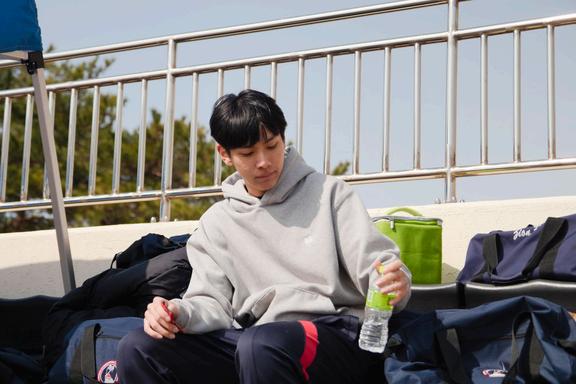
YISS’s 2024-25 track and field season came to a close on April 26, and the YISS team has garnered triumphant wins this year. In their first meet on March 8 at Humphreys, the girlsfinishedstrongin3rdplace with 107 points, and the boys pushed through in 6th place with 42 points. Only a week later, the girls showed rapid growth by placing 2nd place with1415points,whiletheboys experienced an increase in pointsaswell,finishing6th
with46points.
In addition to the high placing, many athletes have broken the school record in just two meets. Rachel Kim ‘27, Emma Tomlinson ‘28, Elaine An ‘27 and Brena Nerooban ‘26 broke the school record for the 4x100m relay, and Rachel, Emma, Brena and Kaiden Holst ‘26 broke the school record in the SMR (Sprint Medley Relay) 800, in which each athlete runs a different length during the relay
Laurels of success continued to shower the team in later meets. On April 11-12, 30 track and field athletes competed at Morrison Academy in Taiwan fortheannualACSC
tournament The girls team dominated the tournament, finishing first with a total of 183 points.
Many athletes also broke standout school records during the tournament: Brena for the 100m, 200m and 400m races; Keado Frederick ‘26 for javelin; Caroline Richardson ‘27 for triplejump;andHaydenLee‘27 and Aubrey Luck ‘27 for discus. Notonlydidindividualsachieve groundbreaking results, teams such as the one comprised of Kaiden, Brena, Olivia Suh ‘28 and Lydia Ro ‘25 also established new records for relayraces.
Brena a junior who cleared the sprint leaderboard during the season discussed her training. “In the US, my [track] season was from January to May. I had practice four days a week, excluding Wednesdays for JV meets, and Saturdays for all day varsity meets Track season here is only from midFebruarytotheendofApril I’ve been fighting hard to get back the results I had with my rigorous training, and I think at ACSC I really showed myself I stillhadit…Asformy400m,I'd actually never ran one [before theACSCtournament] Ijust
gave it all I had and pushed myselftothemax.”
“At the end of the day,” said Brena,“bothtrainingandactual racesaremental IknewIputin the work and did the training, so all I had left to do was push myself and reap the benefits of myeffort”
What most don’t realize about trackandfieldisjusthowmuch effort goes into the athletes’ practice, which is the only surefire way to succeed. Many athletes have expressed that most of them did not win the first time they competed in an event Just like Brena, they set goals and expectations and trainedtoreachtheirgoals Track and field requires more than just physical strength. On the surface, it may simplylooklikerunningaround in circles. However, the endless sprinting and mind-numbing training allows the athletes to break their records and do the impossible. When a sweating athlete, shining under the stadium lights, steps up to the podium and receives a wreath of medals around their neck, they’ve proven just how arduous running around in circlescanbe.
YISS Celebrates Music In Our Schools Month
byHelenJin‘27
Every March for the past forty years, schools around the world have taken time to recognizetheimpactofmusicin educationthroughMusicinOur Schools Month (MIOSM), a global celebration organized by the National Association for MusicEducation.
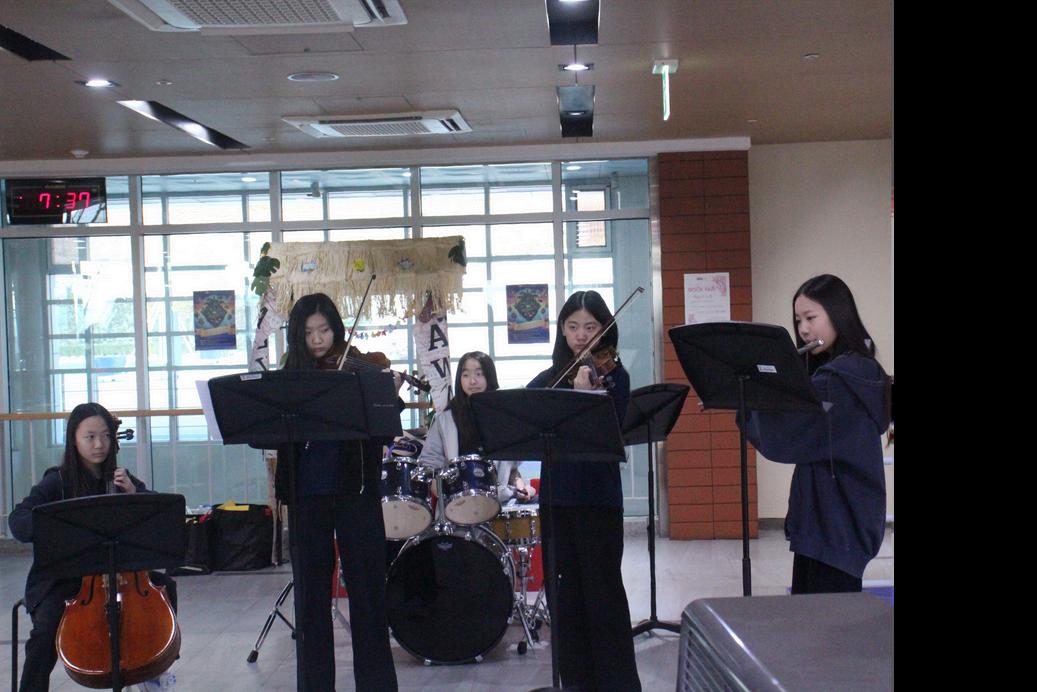
Thankstotheschool’smusic department,YISSembracedthis celebration this year by providing live music throughout the school all month long. “We’ve… [celebrated] in various ways including MS & HS Tri-M lobby performancesbeforeschool,the HS Tri-M Coffeehouse during Opps, MS small ensemble cafeteria performances, HS & MS small ensemble performances for elementary students, and more,” said Ms. Pavon, the school’s middle and highschoolorchestradirector.
One of the highlights of the month was the annual Variety Concert, one of the biggest MIOSM events at YISS. Unlike the usual teacher-led ensembles, this concert showcased student-led small ensembles from both middle and high school, giving performersthechancetotake
creative control and try somethingnewonstage.
Theperformancesthroughout March were well-received by the YISS community. With studentsandteachersgathering in the halls every morning to hear our Tri-M students play, “we received so many comments from teachers and students about how much they enjoyed the music and were impressedwiththetalentofthe musicians,”saidMs Pavon
But MIOSM is more than just a month of performances –it’salsoareminderofthedeeper value of music in education “We are always looking for ways to showcase what we do in the music department, emphasize the importance of music education and bring joy to everyone ' s day,” Ms. Pavon explained, especially as the department looks to inspire younger elementary students andsparktheirinterestinmusic aspartoftheirfuturelearning
Looking ahead, the department hopes to make the celebration even bigger. Ideas include inviting guest musicians, highlighting teachers with musical backgroundsandevenholding
alumni performances. “In the future, we would love to encourage more community involvementinMIOSM,”said Ms.Pavon.
Beyondsimplybeingabout enjoying music, at its core, MIOSM is a reminder of how crucialmusiceducationistoa well-rounded learning experience.Byprovidinga
platform for students to showcase their talents and fostering engagement in younger audiences, YISS shines light on the essential role music plays in shaping students’ lives As the program continues to grow, it’s clear that music will continue to have an irreplaceable impact on school lifeatYISS.
YISS HS Considers New Golf Program
byBrookeLai‘26
Golfting,Photoby MarkusSpiskefromPexels
Earlierthismonth,students were notified that YISS was considering adding golf as a fall sport to the high school athletics program for the 2025-26 school year. While other schools and even potential coaches have been contacted, many logistics, such as training grounds and studentinterest,remainupin theair.
If approved, the YISS golf teamwouldjoinschoolssuch as SFS, KIS, CI and SIS in KAIAC golf. Currently, golf is not a ‘sponsored’ sport funded by KAIAC but falls into the category of ‘supported’sports,whichjust means the sport is allowed to exist. However, ultimately, AthleticsDirectorDanielHale will decide whether YISS golf becomesareality.
Mr Hale received the proposal for the team around a month ago from Tommy Kang‘26,KoominChung‘26,
Jay Jeon ‘27, and Aiden Kwon ‘27 They all have experience playing outside of school –often practicing up to two to three times a week, according toTommy–buthaven’tgotten a serious chance to play competitively. This team aims tofillthatgap
So, what would YISS varsity golflooklike?
Similar to other KAIAC sports, teams will be divided based on gender. Each team will consist of a maximum of six students, with four players onthefieldandtwosubstitutes at any given time. Matches wouldbeplayedaroundoncea week using screen golf, culminating in the KAIAC Screen Golf Championship at theendoftheseason.However, opportunities for field experience still present themselves through the KAIAC Championships at Osan and evenaKoreaCupinThailand Additionally,although
nothing is certain, potential coachesincludeDavidBenedict, the ES principal, or even Dr. Coleman himself, who has a trophy from the Staff Screen Golf League sitting on his shelf
Furthermore, Tommy predicts high levels of interest from the risingfreshmanclass,evidenced by the interest form sent out on Tuesday, April 6. High student interest could increase the likelihood of this proposal becomingareality
However, unlike SFS, which hasitsowngolftrainingfacility, YISS lacks an on-campus location for practices and matches This poses the biggest logistical challenge – one that the tennis team encountered earlierthisyear.“Wedon’thave tennisfacilitieshere,andsoour
tennisteam’sexistence,almost, is at the mercy of the tennis courts around us,” said Dr. Coleman “Forgolf,it’sasimilar thing.”
Another issue is how the team would acquire golf clubs and other equipment for those who don’t own their own already. “I don’t think it’s that beginnerfriendly,” said Tommy. “If you don’t have your own club, I don’t think they’d try out to beginwith”
Training facilities and equipment remain the two primary problems for both administrators and students, but also contribute to another concern: money. Golf is an expensive sport Dr Coleman notedthatasingleroundofgolf inKoreacosts80,000wonat
the “absolute cheapest.” Funding has not yet been settled. As a first-year sport, the burden might fall on participating students, accordingtoDr Coleman Costalreadycreatesarelatively high barrier to entry, but another issue is skill. “There are hillsthatyoucrossasabeginner to get to a sufficient level where youcanplaycomfortablyasyou progress, right? But then golf has the steepest hill,” said Tommy.“It’sjusthardtogetthe hangof.”
Tommy also notes unexpectedaspectsofgolf,such as the amount of cardio involved in golf competitions. “You walk like six kilometers withabag–likeawholegolfbag thatweighsagoodcoupleof
kilograms,” he said. Stamina will be a crucial skill for prospective players to consider. “Golfisamentalgame,”hesaid “That’s what really differentiatesit”
Tommyhasbeenplayinggolf since he was seven, under the tutelage of his dad. While he didn’t enjoy it initially, he now enjoys it enough to have gone golfing the morning of his AP Seminarexamlastyear.
As of now, the varsity golf team still exists in the realm of ‘maybe.’ Tommy says there is a 50/50 chance of getting it it’s a 50/50chanceonwhetheritgets approved Dr Coleman echoes that sentiment: “I would be the same amount of surprised if it existedorifitdidn’texist.”
FEATURE
Who’s Leaving?
bySiaKim‘26andClaireSoyoonLee‘26
Chat with Mr. Chaffee
Reflectionwith Mrs.Roper
Mr.ChaffeeisofftoanotherbrightstartinVietnam,teachingat a new school and navigating what he calls a “new social class”
After two years of whole-hearted dedication and iconic existence, he has chosen to move in pursuit of a better lifestyle and financial stability, emphasizing, “If I lived this frugally in anyotherschool,Iwouldbemakingbank.”
Still, leaving carries a certain bittersweetness. Mr. Chaffee says he will miss spending time with his colleague Mr Hannah, his students,and,ofcourse,thefreeJ&Jmeals.
Evenathisnewschool,hispassionformathwillcontinue,ashe believes it is the “foundational base that offers universal problem-solvingskills.”
As a final word of encouragement for his students, he advises: “Highschoolisasdeepasyouwantittobe Ifyouaddtoomuch meaningtoit,yourlifewillnotbethatdeep”.
Let’s all wish Mr. Chaffee a warm farewell and good luck at his newschool!
As the school year comes to a close, the halls feel just a little quieter and the homeroom a little emptier. Mrs. Roper, a belovedteacherandcoach,ispreparingtotakeastepbackfrom teaching. Despite this pause, one thing is clear: her legacy of authenticity and her ability to make students feel seen will lingerforyearstocome.
When asked what she’ll miss most, she answered with a smile, "Definitelymyhomeroom.”ForMs.Roper,thoseearlymorning chats her homeroom shared brought about a genuine sense of connection that’s hard to replicate. "We were so comfortable witheachother,andpeoplecouldberealaboutwhattheywere thinking.Youdon’tgetthatoften."
Butnoteveryaspectofteachingwilltugatherheartstrings.She admitswithalaughthatfindingwaystomotivatestudentswas not always easy. Her advice to them is straightforward: “Stop wasting your time Live life Don’t get stuck complaining about circumstancesbecausetimemovestoofast.”Sheurgesstudents to savor the carefree moments of high school rather than fixate onstress-inducingmilestoneslikeAPexams.
Thoughsteppingaway,Mrs.Roperisn’tsayinggoodbyeforever. She plans to return for next year’s graduation, still in disbelief thattheClassof‘26isnearingthefinishline Nextyear’sseniors may walk into homeroom without her, but her presence won’t beforgotten
Wewillmissyou,Ms Roper!
HastaLaVista Mr.Hannah
After ten years of heartfelt dedication, Mr. Hannah is bidding farewell to YISS, leavingbehindnotjustaclassroombutalegacyofmemories,mentorshipand meaningfulconnections.
When asked what he’ll miss most, Mr. Hannah didn’t hesitate: “The community”InhistimeatYISS,hehasseenstudentscomeandgo,colleagues becomelifelongfriends,andfamiliesgrow hisownincluded.“[MywifeandI have] been here since before we had kids,” he reflected “It’s been a place of deeprootsandsharedhistory.”
SeeYouSoon, Ms.Stallings
From hallway conversations to alumni visits that spark memories, he cherishes the ties that remain even after people move on He even wished aloud for a stronger alumni network, dreaming of a day when more legacy studentswouldwalkthroughthedoorsofYISS
Butthenextchaptercalls!Thissummer,Mr Hannahandhisfamilywillenjoy a brief vacation in the Philippines and a visit with family in Arizona. Afterwards,theywillsettleinBaku,Azerbaijan.There,Mr.Hannahwillreturn toteachinghighschoolEnglish hisoriginalroleineducation whilehiswife returnstoteachingthirdgrade.
This next step isn’t without its challenges. Moving overseas with three young children is no small feat But Mr Hannah and his wife feel a deep sense of purposeandfaithguidingtheirtransition.“Wereallybelievethisissomething God orchestrated,” he shared “We’re leaving a place that we love, and I think that’sablessing.I’dratherleavesadthanindifferent.”
He offers this parting wisdom to students, staff, and everyone in the YISS community: “Don’t take where you are for granted You’ll be gone from it soonerthanyouthink.I’mgladI’mleavingsad,becauseitmeansthischapter meantsomething”
As he prepares to leave his classroom, Mr Hannah hopes for a future visit “Maybewhenmykidssay,‘ImissKorea,’we’llcomeback.Ihopewedo.”
Thankyou,Mr.Hannah,forthewisdom,warmth,andlaughteryou’veshared. You leave YISS better than you found it. Wishing you and your family all the bestinyourjourneytoBakuandbeyond
Ms. Stallings has many things to celebrate this year – not only her 10-year anniversary teaching at YISS, but also a new baby! Her presence will be dearly missed during her maternity leave, but don’t be too sad because she’ll be returning next year! Although she is not leaving for good, we’ve covered her interview to gain some insight into the different reasons that teachers choose toleave,includinginstitutionalorpersonalreasons.
According to Ms. Stallings, it is normal to expect a 15 to 20% turnover rate at mostinternationalschools Thisyear,ofthe37highschoolteachers(including counselors),11ofthemwillbeleaving,representinga30%turnoverrate,aratio significantlyhigherthannormalcircumstances
While personal reasons are covered in the following interviews, general reasons for leaving may include opportunities to advance careers, family/institutional reasons and having a Korean nationality Teachers may feel that they have maximized their potential at YISS and may also want to teach new programs such as IB or A-levels Many have cited institutional reasons,somerelatedtocharacteristicsofYISSasafaith-basedinstitution,one that focuses on Christian values of serving others rather than profit-making Additionally, YISS views all teachers as nearly homogeneous, regardless of subjectandcourserigor
Tothis,Ms Stallingsstatesthatthereisaline:makingeverythingaboutmoney will “get the wrong type of people,” especially since “people don’t become teachers just for money.” It is up to the school to determine the line to make teachingacompetitiveyetservant-heartedprofession
Kamsahamnida toMs.Kim
Ms. Kim is parting from YISS after two meaningful years, leaving her Korean classroomvacant Althoughhernextstepsarestilluncertain,sheisgratefulto have spent time in a community filled with kind, servant-hearted people. She gives a special shout-out to the World Languages department for their warm welcome and support, even with there being a new Korean teacher every two years.
As she moves on from YISS, she will miss the jung – a Korean word for deep emotional connections – she built with her students through shared conversations and watching them grow. She will also miss the J&J Thanksgiving and spicy braised chicken meals, but she admits that she’ll be happy to leave behind the syrupy sauces on the “mystery meat” and the fried foods
As a parting piece of advice, Ms Kim reminds students that while tests and relationships may one day feel unimportant, their health will always matter. She encourages students to get lots of sleep, exercise, and build their stamina forthelongjourneyahead.
Though her stay with us was short, the guidance and the welcoming atmospheresheprovidedwillbedearlymissed.Thankyou,Ms.Kim!
At YISS, there are teachers who help coach sports. There are teachers who sponsor clubs Some, however, do both, and one such teacher is Timothy Baker, US and AP US History teacher
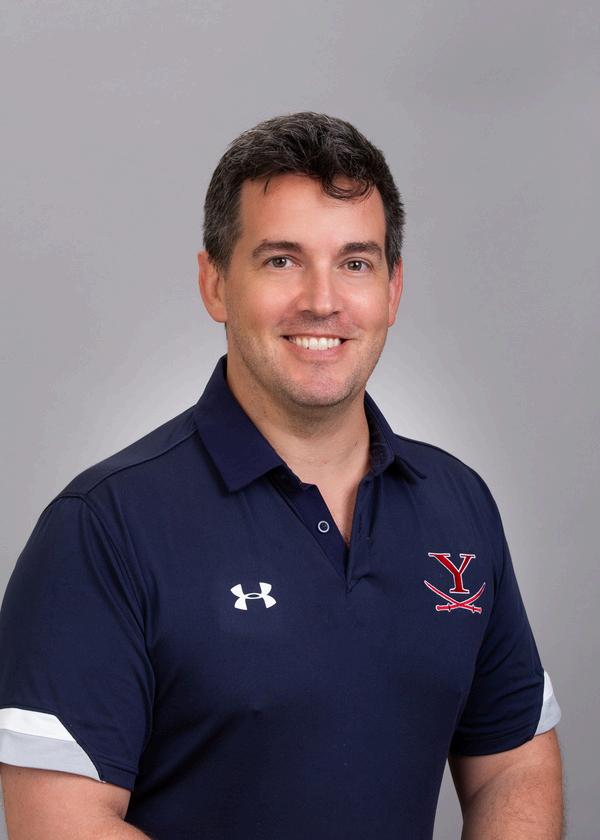
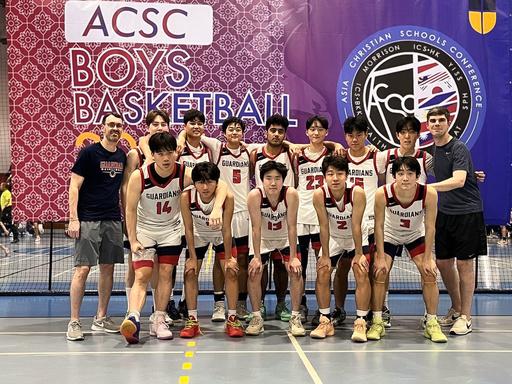
Mr.Bakerisoneoftheteacher sponsors of the National Honor Society and has been the head coach of the YISS varsity boys basketball team for the past ten years Mr Baker has many responsibilities, yet he is committed to being excellent in all of them Mr Baker’s journey to his current position as a teacher and coach at an international school in Seoul, South Korea starts 11,000 kilometers away, in a small towncalledGreer
Childhood,HighSchool,College
Born and raised in Greer, South Carolina, Mr Baker grew up on a cattle farm owned by his grandfather, where he lived a “typical country life,” working on the farm and attending churchtwiceaweek.
His life in Greer was incredibly different from life in Seoul While groceries, shops, and malls are readily accessible in Seoul, Mr. Baker had to take a 15-minute drive for groceries and a 40-minute drive for a big storelikeWalmartoramall
Many children today spend most of their time on TV, video games and mobile devices, but Mr Baker’s best memories as a child came from playing outside “There wasn't much to do inside,” he said. “I was outside if possible playing football or basketball or baseball.” Playing sports outside and enjoying nature created some of Mr. Baker’s fondestmemoriesatGreer
For Mr. Baker, high school wassports,andsportswashigh school.Heparticipatedinsports like cross country and tennis, but for him, basketball was his passion “Pretty much most everything I did in high school centered around basketball and preparingforseasonandduring the season and practices and summerworkouts,”Mr.Baker
said. School revolved around basketball, and even in his studies, he just maintained A’s and B’s so that he could play basketball.
Eventually, Mr Baker graduated high school and enrolled at Clemson University in South Carolina, a large college with around 23,000 students. His grandfather and motherbothattendedClemson, andbecausecollegesportswere
big, he grew up going to Clemson football games and becoming a fan of their sports program “Itwasalwaysaplace that I wanted to go,” Mr. Baker said “So that's where I ended upgoingtoschool.”
JourneytoYISS
Mr Baker decided that he wanted to become a teacher his sophomore year at Clemson “GoingintoClemson,Iwasn't
really sure exactly what I wanted to do,” he said. “I got the opportunity to coach basketball through coaching camps and clinics and things like that primarily with fellowship for Christian athletes.” Though he knew that hereallyenjoyedandwantedto coach basketball, he didn’t know how to become a coach This led him to look into education as an avenue for coachingbasketball.
After Mr. Baker graduated college,hehadtroublefindinga teaching job. “A lot of school districtsandstateswerecutting budgets and they were on hiring freezes,” he explained While traversing through this difficult time, Mr Baker says he heard a calling from the Holy Spirit to serve in another part of theworldanddecidedtoputhis information out on a missionary website. Out of all the schools that contacted him, one of the only schools that offered him a salary was one in Seoul. After working in a small international school, Mr. Baker got married and moved back to the States. He then got a job offer while looking to return to Korea, and ten years ago, he finallyarrivedatYISS
BeingaYISSChristianTeacher
“One of the reasons why I wanted to be here was because [YISS]isaChristianschool,”Mr. Bakersaid Beingopenabout
the Christian faith and sharing it with others is what Mr. Baker always wanted to do, and because the school encourages it,hereallyenjoysbeingatYISS “I guess that could be a little bit of a challenge too,” said Mr Baker. “a challenge of making sure that I am [talking about Christianity] in a way that is fruitful and beneficial for students whether they're Christianornot.”
Mr. Baker said that there aren’tanysignificantchallenges to being a YISS teacher “I think it'sactuallyareallygoodjoband less challenging than a lot of other teaching positions,” he said As with all schools, YISS holds high expectations for its teachers, which motivates and pushes teachers to provide ample education opportunities to benefit the students and preparethemforuniversity Mr Baker believes that although this may be a challenge, it is a goodone,becauseitallowshim toimproveasateacher
BasketballCoach
For Mr Baker, time management is key; he coaches two sports – varsity volleyball and basketball – and also teaches US and AP US History Thankfully, he has one advantage; having taught the samecoursesformanyyears,he only has to make minor tweaks to his lessons. However, balancinggrading,practices
Fishflation: How Climate Change is Driving
and games can still be a challenge, and to conquer what appears to be an insurmountable obstacle to some, Mr Baker marches into battle. Whenever he finds himself with spare time during his day, he adopts a mentality of,“I'vegot15minuteshere Let me just get as much done as I can now” Balancing priorities and making wise use of time is how Mr. Baker can coach and teach.
Despite his efficient use of time, things aren’t always so smooth sailing. Some of Mr. Baker’s toughest moments as a basketball coach were when he hadtocoachteamsthatweren’t united or that he had a hard time communicating with When teams don’t have a common goal to win, getting the players in line is hard and canbefrustrating
Some of his favorite moments, on the other hand, are when teams overachieve. “As far as some of the best moments coaching, I think it's when you have the teams or players that might not have the most talent they achieve success,” Mr Baker said “Maybetheyoverachievealittle bitandsoIthinkthosearereally good moments to see that where it's okay it's not just because you ' re the most talented”
This year’s varsity basketball teamnotonlyhadthework
At Seoul’s bustling Noryangjin Fish Market, the price of a single yellow croaker, a staple fish enjoyed by many Korean families, has soared nearly 40% in just two years. Behind the rising cost isn't just overfishingormarketdemand–t’s the warming seas of climate change triggering a new economic phenomenon experts arecalling“Fishflation.”
Recent data from the Korea Agricultural and Marine Products Distributions nformation Service (KAMIS) paints a stark picture of this phenomenon On March 3, popular seafood items were being traded at record-high prices. For instance, the ritual priceofsaltedmackerelreached ₩6,430 on March 25, 43.7% higherthanayearagoand
ethic, but was also a talented young team, with only one senior To Mr Baker, the potential that the current team has is exciting, stating, “This team also has the talent to achieve even more than what theydidlastyear.”
“Bepatient.Seek wisecounsel, wiseadvice.”
Advice,FutureandConclusion
After overcoming difficulties and conquering various challenges throughout his career, Mr. Baker offers a piece ofwisdomfromhishard-won experience: get rid of the expectation to have everything figured out. “You don't have to havealltheanswersrightnow,” he said. “Be patient. Seek wise counsel, wise advice” As a Christian, he would go a step furtherandwouldadvisetostay patientandtoalwaysseekJesus andthetruth.
Though Mr Baker doesn’t currently have any plans to leave YISS, he does stay open to opportunities year by year. Right now, he is trusting what God has in store for him and expects to continue teaching andcoachingatYISS.Aslongas hestays,Mr Bakerplanstohelp his students thrive and coach withpassion
658% above the recent multiyear average. Squid prices have also jumped significantly In Seoul, the retail price of a single refrigerated squid hit ₩10,430, up 49.4% from the previous month and nicknamed “금징 어” (Golden Squid) by consumers Meanwhile, the valueofdriedanchoviesroseby 14.6% to ₩2,534 per 100g, and frozen haritail prices surged by over 50%. The price hikes are not limited to a fish species Even the cost of kim, salted dry seaweed,hasclimbedby258%, reflecting a broader market trend that is starting to impact everydaymeals.
“These changes aren’t just temporary fluctuations,” said Keeyong Chung, Ambassador and Deputy Minister for ClimateChangeattheMinistry
of Foreign Affairs, in a Zoom interview “They reflect a structuraltransformationinour marine ecosystem caused by climatechange.
Thesedramaticpriceincreases can be largely traced back to a less visible but more serious issue of climate change. With the catch of popular species like mackerel squid and anchovy plunging by 116%, the largest decline observed in records dating back to 1971, the 2024 Fishery Production Trend Survey by Statistics Korea reports that overall fish production dropped by 2.2%, amounting to 8,100 tons less than the previous year. The National Fisheries Science Institute reports that last year ' s average surface water temperature in Korean waters reached 1874C – the highest in 57 years. This unprecedented heatnotonlyreducescatch,but also inflicts severe damage on aquaculture, with losses amountingto₩143billion.
In response to these mounting challenges, the Korean government is implementing both short and long term measures to stabilize the seafood market The Ministry of Ocean and Fisheries is set to introduce predictive models of six keystone species that are likely to be affected by climate change. These models aim to predict supply fluctuations,enablingmeasures tomitigatepricesurges
“We are building data driven resilience,” Chung explained. “Predictive models and international cooperation are critical tools for managing unpredictablepatternsahead.”
In addition, the Fisheries Cooperative Association recently organized discount events, slashing prices on seasonalproductslikeredsnow crabs and razor clams by up to 50% Chung echoed the importance of such relief efforts by saying, “Short term price stabilization helps maintain publictrust Butwealsoneedto shift toward long term marine sustainability, both in Korea andglobally.
OPINION
The Influence of Chaebols:
Driving South Korea’s Economy or Hindering Innovation?
byRyanCha‘28
Few countries have experienced economic transformation as rapid and dramatic as South Korea From the ashes of war and poverty in the1950s,SouthKoreaemerged as a technological powerhouse and the world’s tenth-largest economy Much of this can be attributed to the power and reach of chaebols – massive, family-run conglomerates like Samsung,Hyundai,LGandSK
Yet as South Korea looks to the future, the question looms: are these corporate giants still engines of growth, or are they now obstacles to innovation, fairness, and long-term sustainability?
The answer is complicated Chaebols are both pillars of South Korea’s economy and, increasingly, its stumbling blocks. The time has come to rethink the relationship between the state and these corporate titans, and to create a system that rewards risktaking, supports entrepreneurship and fosters a trulycompetitivemarketplace
The chaebol system was born out of a necessity to rapidly catch up with the industrialized Western world In the 1960s and 70s, under Park Chung-hee’s leadership, SouthKoreapursuedanexportledgrowthmodelthatreliedon sectors such as manufacturing. Lacking natural resources, the country placed its fortunes on a few family-run businesses, providing them with enormous and generous credits, subsidies and protection from foreign competition. In return, these companies committed to producing goods for the global market
And it worked. South Korea became a manufacturing and technology powerhouse. The country is home to some of the world’s most innovative firms such as Samsung and Hyundai, anditsglobalculturalfootprint
– driven by the Korean Wave –isstrongerthanever.Inessence, SouthKorea,followingthepath of many war-ravaged countries after WWII, committed itself to what we now call the DST, or the Developmental State Model
However, while chaebols havebuiltglobalempires,critics argue they are stifling the very innovation South Korea needs to stay competitive in a postindustrial,AI-drivenworld
Lee Jung Hoon, a former entrepreneurial founder, a CEO and an avid follower of global economics, said, “Chaebols used to be the drivers of innovation and growth within our economy and broader society But now, they have become the blockers, outsourcing critical risk-taking to startups, yet still dominating the supply chains, hence stranglingthesetalentpools”
Headded:“Peopleheredream of joining Samsung No one dreams of being the next Samsung”
The origin stories of these giant conglomerates from humble beginnings illustrate the industriousness and entrepreneurship of their founding individuals. For instance, the Hyundai Group was founded by Chung Juyung, a life-long farmer. The Hanjin Group of Korean Air startedbecauseitsfounder,Han Jin, was believed to have fixed the jeep of a American woman who was well connected with the American Presence in South Korea that time Subsequently, HanJinwasabletomakealotof money due to the woman’s gratitude to him for fixing her jeep
But unlike the original chaebol founders, the current economic leaders have neither decisiveness nor proper vision. In the current economy, no chaebols want to take risks since they aren’t the founders of their conglomerates. And, since they inherited their positions, they don’t want to risk, invest or showentrepreneurship Thus
theygetinthewayofnecessary risk-taking, and vital entrepreneurship and further economicdiversification. Examples include chaebols resisting expansion and diversification into unfamiliar markets such as the semiconductor industry; avoiding major mergers or acquisitions;avoidinghigh-risk, high reward innovations; limiting investment in startup innovation and resisting radical corporate restructuring and reforms
In addition, while Korea’s rapid development was initially spurred by its adherence to the principles of the DST Model, suchasatop-downapproachto growth and industrialization, there is a need to adapt to the drastically different economic landscape of the modern day. Instead of picking winners and protecting incumbents, the state should now focus on settingtherulesofafairgame–ensuring competition, enforcingtransparencyand
TheNationalAssemblyofKorea.PhotobyJoseTayag‘28.
OPINION
TheNationalAssemblyofKorea.PhotobyJoseTayag‘28.
TheNationalAssemblyofKorea.PhotobyJoseTayag‘28.
AI and the Creative Renaissance: How Algorithms Are Amplifying Human Imagination
byAidenYoon‘28
Thecontemporarydiscourse aboutthefutureroleofartificial intelligence (AI) in the arts tends to gravitate toward dystopia – will machines displace artists, writers, and musicians? But across creative industries, from fashion studios to Hollywood writers' rooms, another narrative is emerging: AI is enhancing, not dampening,creativity.
An increasing amount of evidence shows that AI fuels this new wave of human ingenuity as a collaborator of sorts, which expands the horizon of what is possible, rather than being a substitute forcreativityitself
One such indicator of a paradigm change can be aptly seen in the visual arts. Artists like Refik Anadol are using machine learning to generate digital installations from massive data sets, which feel animate,organicandvery
emotional Anadol's AI innovations have also found a berthintheMuseumofModern Art in New York, which is a growingplatformforAIasatool for contemporary art And instead of coding down into a program, the program offers new mediums for expression. As Anadol said, "the machine becomes the brush, and the databecomesthepaint"
Writersarealsotryingtouse AI as a co-author Author Jennifer Egan has gone on record about using language generated by AI to unblock her writer's block, calling it, " an unexpected source of linguistic play" In contrast, screenwriters are using tools like Sudowrite and ChatGPT to brainstorm plotlines, propose dialogue or even playfully subvert genre tropes Rather than displacing the craft of writing, AI offers a developmental playground that manycreatorssayrevitalizes,
The Dark Side of Korean Celebrity Culture
byJaydenKim‘27
In South Korea, fame is a double-edged sword. While celebrities earn loads of money and are celebrated for their talents and appearances, they face immense public scrutiny From family background to romantic relationships, every aspect of their private lives are exposed to the public daily In fact, some fan clubs track a celebrity’s every move every minute. Even though it is how some fans express their love towardtheirfavoritecelebrity,it places an extraordinary burden oncelebritiestomaintaina
flawless image whenever they areoncamera.
Yet, it is important to note that celebrities are human, and just like anybody else, they make mistakes However, in Korea’s fan culture, people expect celebrities to serve as a moral standard for others. Consequently, small mistakes canleadtosocialcondemnation andendoftheircareer
not undermines, their working methods.
There is scientific proof to corroborate these testimonies.
The results of an MIT study conducted in 2023 by Yunhao Zhang and Renee Richardson Goslineshowedthat,increative contexts such as marketing copy or product naming, AIassisted professionals generated more original and highly rated work than their unassisted counterparts. The team found that AI did not replace human intuition or taste; rather, it accelerated ideation and acted as a second mind, integrating juxtaposition and surprise to spark innovation. In other words, rapid drafts, daring choices and quickdeadends.
AI has become a sort of democratizing force in the production of music in areas that could not have been imaginedafewdecadesago
AIVA and Amper Music enable amateur composers to produce admirable concert works with littletraining,whiledesignersof a caliber such as Grimes are using AI technologies to remix their voices and stretch the limits of sound Just in 2023, and decades after their passing glory,theBeatlesreleasedanew song–"NowandThen"–using AI audio restoration tools that splitJohnLennon'svoicefroma demo made years ago. For its fansanditsartists,AIislessofa threat than a confluence of a timetraveldeviceandamusical instrument.
Critics warn that this rapid infusionofmachineintelligence into the arts threatens to homogenizecultureorgenerate derivative work But many creatives fight back that the converse holds: AI is a lawless creation.
Recently,thereleaseofSquid Game has reignited this issue The show set great records by ranking 68 million views on Netflixwithinjustthreedays,
and as a result, attention toward the actors has intensified. One of the actors, Park Sung-Hoon, who played the role of “Hyun-Ju” – a transgender woman aiming to win the prize money to complete her gender-affirming surgery in Thailand – gained significantattention
Unfortunately,theattention soon turned against him Park accidentally uploaded an Instagram story featuring a parody poster which resembled an adult film styled after Squid Game. Although he deleted the post immediately, the damage was done Thousands of fans had already seen it, taken screenshotsandwerespreading it across the internet. He immediately became a target of criticism.
Koreannetizenswroteharsh comments related to the incident These comments weren’t helpful or constructive; they were nonsense attacks filled with profanity and false, unrelated claims Many even called for him to be removed from the Squid Game series entirely. During an emotional interview addressing the issue, Park explained how the upload was a mistake; he meant to sharethephototohismanager, as he found it problematic for the series he acted for During the interview, he looked up several times and his voice trembled as if he was trying to hold back his tears But despite theinterview,hecouldn’tstop
Fall of K-Pop
bySeunghunLee‘27
Dance. Sing. Dance some more Singsomemore
This basic sequence used to be the one and only formula for instant fame and success in the K-pop industry One catchy chorus and Spotify erupts. One dance trend and TikTok erupts One picture of BTS Jin with a military buzz cut and the world eruptsintotears.
OPINION
the harsh criticism in his comments
It is undeniable that ParkSung-Hoon should accept responsibilityforhisactions.His Instagram story could have negatively influenced his fans, including younger fans, making some level of criticism necessary Criticism describing his actions “disgusting” and calling for his removal from the series is something Park needs to take accountability for However, the majority of the criticism that Park faced was aimed at character assassination,someevencalling himapervert EventhoughPark made a mistake, it still doesn’t define his entire identity and worth. Unfortunately, in South Korea, the distinction between criticism of actions and character is often lost during onlinecondemnation.
Following the issue, Park was dropped from an upcoming film, The Tyrant Chef, a movethatillustrates the unforgiving nature of public backlash. Despite his willingness to take responsibility and step back, which shows that he understands the moral gravity of the situation, many remain unwillingtoforgivehim
Thisphenomenonispartof a broader trend known as “cancel culture,” or narak (나 락), in Korea It is a cultural movement where an individual thought to have acted in an unacceptablemanneris
K-pop has become a vanguard of not only Korean entertainment, but of the Land of the Morning Calm itself. The revolutionary rise of pop music in Korea has changed the oncebarren nation to a place of excitement and energy. The formation of new groups and the release of long-awaited albums are all part of the uncontrollablefun.
For better or for worse, Seo Taiji and Boys introduced the world to K-pop in 1992 Now, over 30 years later, the global music community has seen the reigns of Twice, Blackpink and BTS as well as the dynasties of numerous record labels such as Star Museum (SM), YG and HYBEEntertainment.
ostracized, boycotted, shunned and assaulted, often aided by social media. Specifically, it is when a celebrity receives great criticism despite having committed only minor transgressions. Fortunately,therehavebeen several attempts to fight oppressive expectations and cancel culture. One famous example is the show “Hell Quiz Show,” produced by Psick University In the episode, famous celebrities are invited and asked sensitive questions which could lead to great criticism. For instance, one questionincludes“Whichofthe two do you think should be gone: Women’s rights movement or Black Civil Rights Movement?” Having to choose one, they would end up discriminating against a gender/race. Controversial questions like this are designed to see the performers’ reaction, as their answer could possibly lead to the end of their career. These kinds of series aren’t meant to provoke real criticism; instead, they’re seen as entertaining and serve to satirizecancelculture. Nevertheless,itremainsdifficult for celebrities to face malicious comments directly by asking perpetrators to stop and taking legal measures Doing so often leads to further backlash, as the publicperceivestheactionasan attempt to silence criticism rather than taking responsibilityfortheirpast
Yet we can notice one common trend Due to online rumors and unnecessary releases, Twice finally lost its undisputed position as the best girl group of the 2010s. Despite asuccessfulcomebackalbumin 2022, Blackpink has been inactive for extended periods of time, and most members have resorted to pursuing their own solo careers. Finally, in 2023, withthehiatusofBTSandtheir belovedmembersfulfillingtheir military conscription, the absence of the seven superstars will be felt in all seven continents. Itissafetosaythattheartists and faces who showcased Kpoptotherestoftheworldhave fadedfrommainstreammedia.
mistakes.
For instance, after the end of Youtube content “Money game,” internet streamer Pi facedseverepubliccriticismfor her behavior and for the remarks she made in the program Pi could not accept the hatred she was facing and decided to confront the criticism by starting a live stream and fighting with the livecomments.
Suchanattitudeshowedthat Pi either didn’t recognize her mistake or that, although she was aware of her actions, she did not acknowledge them as wrong As a result, she received even more criticism and experienced a significant loss of YouTube subscribers. Such confrontation to criticism often leads to more backlash, preventing celebrities from tacklingmaliciouscomments.
As South Korea’s entertainment industry continues to thrive, the way society treats its public figures must change Responsibility fromcelebritiesisnecessary,but itshouldnotcomeatthecostof basic human dignity. Mistakes should be met with constructive criticism, not attacks. The tragic, sometimes fatal, consequences of cyberbullying have already been seen too many times A culture which values empathy over outrage will create a healthier environment in entertainment industries and a morecompassionatesociety.
Newgenerationshaveappeared with time, but none of them have come close to the stardom and success of their seniors. Album sales and exports have either leveled or peaked in recentyearsinseveralcountries, including the United States. And the albums themselves have decreased in quality and quantity First on quality. Founded upon simple and memorable tunes, producers rush to release all the catchiest hits under the nameoftheirownK-popgroup. This essentially fosters a competition between different record labels and the artists themselves. Typically, rivalries are natural and even healthy, leadingtomorereleases.
However, the competitive nature of the K-pop industry is essentially a race where time is also extremely important. In other words, the faster we announce our new single, album or even mini-album, the better we can secure our next globalhit
Here is when the problem starts to occur Every K-pop group can make an unlimited amount of promises to their fans.ButnoK-popgrouphasan unlimited amount of ideas for their music. As a result, when there is a constant demand to release music, producers and artists are actively forced to risk low quality work in the brief timeframe they have. This can resultinthreeoutcomes Firstly, groups produce music that is simply bad with poor lyrics and horrible melodies. Secondly, in an attempt to play it safe, groups produce music that is redundant and similar to their previous successes. Thirdly, to expand their options for future releases, groups may do the exact opposite by producing musicofentirelynewgenres.
All of these outcomes are inevitable, and diversification is neverbad.Butwhenitcomesto the style of music for a group, these decisions must be made after careful consideration between producers and artists. Yet none of this is possible in a dog-eat-dog environment where a second of delay may cost the record label a million dollars And the saddest part about all of this is that the record labels create high expectations for themselves through excessive marketing andhypetowardsthepublic.
So how is the quantity of albums decreasing? If it is true that the K-pop industry is as ambitious and competitive as it is,thenshouldn’tthenumberof albums and singles increase? Theanswerisbothyesandno.
Yes, the absolute number of albums should definitely increase But no, the number of Korean albums is actually decreasing When record labels diversify their music, they not only change genres in preexisting K-pop groups, but they also create new ones Most of the time, these “new and improved” bands are either mixed or full of international artists.Forinstance,almosthalf
OPINION
of the nine members in Twice are from other Asian countries, with three from Japan and one from Taiwan. On top of that, with a total of twenty-three members, NCT has eleven international members from Japan, Taiwan and China. XG is a Japanese girl group that is unsurprisingly based in South Korea
All of this begs the question: why is any of this so bad to the extent where the K-pop industry is meeting its descent? To answer this, we need to see who even listens to the music: thefans.
With hundreds of K-pop bands, soloists and rappers, it is important for artists to distinguish themselves from all the others. They need to find a specific style of music that resonates to a certain audience or fanbase If successful, artists can find a music style that not only inspires one community, but also inspires anyone who listens At the bare minimum, finding a common ground with your fans is crucial to gain loyal and reliable supporters of your music
But when record labels and producers drastically pivot to different genres for the purpose of avoiding redundant music, fans may be displeased Even if anewmusicstyleattractsanew audience, you lose out on the connections and community of yourinitialfanbase
But how do international or non-Korean artists indicate a fall in the industry? While having a diverse pool of members may attract attention from fans from their home countries, they do not have the sameeffectonKoreanfans This is not to say that international members are worse at singing or dancing than Korean artists. However, due to the homogeneityofKorea,thereisa natural tendency to ignore or overlook foreigners especially from other Asian countries. Even if there was no historical conflict between Korea and these nations, Korean K-pop fans are still unafraid to target thesemembers
Forinstance,NishimuraRiki, a member of the rising fourthgeneration boy group ENHYPEN, was victim to several criticisms for his Japaneseheritageandlanguage
barriers. Despite being an icon for ENHYPEN on social media and trying his best to learn Korean,Nishimuracontinuesto facehatefromfans
Additionally, there is a trend inK-popforsongstobewritten fully in English to lower the entry barrier for international fans. But by doing this, K-pop groups are assuming their fans will remain faithful, even when much of the Korean youth may not understand the lyrics to the song
When K-pop fans feel disconnected or “betrayed” by theirgrouporbytheindustryas awhole,theymaysimplyleave.
While there are still millions of devoted fans around the world, none of it matters if K-pop is weak in Korea. If Korean fans lose trust or interest within Kpop, then record labels will lose their basic foundation Without anysupporters,thereisnovalue orpurposeforlabelstocontinue expanding to new musical categoriesorcountries
If something is not done to increase the quality of Korean music and the quantity of Korean satisfaction, then there will be no Korean pop. The three-decade long bubble of Kpopissoontopop.
Stranger Things Season 5: What’s Coming Next?
byEthanSul‘28
Stranger Things is one of Netflix's most iconic and belovedshows,andfansaround the globe is waiting impatiently forseason5todropinthefallof 2025 The series has taken the audience on a suspenseful journey through creepy towns, secret labs and a spectral parallel universe known as the Upside Down Season 5 will be the series' last season, so devoted fans around the world, while disappointed that the show will come to an end, are waiting excitedly to watch the thrilling finale As a Stranger Things fan, I, too, look forward tothisfinaljourney
First premiered on Netflix in 2016, Stranger Things, orchestrated by the Duffer Brothers, gained worldwide attention extremely quickly. Theshowblendssciencefiction, horrorand1980nostalgiaintoa unique story of a town plagued by supernatural forces It all begins with the disappearance of young Will Byers, which uncovers a secret, terrifying dimensionknownastheUpside Down.
Over the course of the seasons, viewers have watched the ordinary kids grow up into brave teens facing their fears and fighting courageously against monsters The various jaw-dropping twists throughout the show spark interest in many viewers and leavethemwantingmore.
One of the most fascinating aspects of Stranger Things is how the story has continued to develop and expand with increasing specificity with each season. Every new season introduces new characters, increasingly intense action and conflict, and richer connections between members of the main cast Theshowisnotonlyabout fighting scary monsters – it is also about friendship, family, courage and growing up. Personally, it has been especially interesting to watch the child actors grow and matureovertheyears Inthefirstseason,theywere kids on bikes and playing Dungeons &Dragons,butnow, they are teenagers dealing with real-lifeproblemsand
supernaturalthreats.Seeingthe actors and characters grow up together makes the show feel relevantandmeaningful WhileIwatchedtheepisodes, Ifeltawiderangeofemotions I was occasionally frightened, for instance when suspenseful scenes came on and there were monsters, or when the villain, Vecna, was present There were sadtimes,suchaswhenHopper was presumed dead or when Eleven was leaving her friends. However,therewerealsohappy and exciting moments, like when the crew spent time together or went to the Snow Ball dance These emotional highs and lows let me connect with the characters and made watching the show an inspiring andmeaningfulexperience
With season 5 of Stranger Things now coming up, I am bothexcitedanduneasy. Because it will be the last season, I will be watching every episode. I am curious to know what happens at the end of the story. Will Hawkins be rescued? Will the Upside Down be destroyedonceandforall?
What happens to Eleven, Mike andtherestofthegroup?There are so many questions that remain unanswered, and I am eager to discover how everythingturnsout I am also eagerly waiting to see how the actors develop in this final season. Seeing them growupfromchildrentoyoung adults has been great, and their acting skills have greatly improved over the years I anticipate that they will deliver their finest performances to date in season 5. Finally, I am interested in seeing how their characters say goodbye and what their futures might look like.
Inshort,StrangerThingshas beenanincredibleshowpacked with suspense, adventure and emotion. It has entertained viewers for years, and it will be remembered long after the last episode is over. I know that I will miss it when it's over, but I amalsogratefulfortheamazing ride that it has taken us on Season 5 will be unforgettable, and I cannot wait to see what happensnext.