


fieldday.

fieldday.
WordoftheIssue: /presəpəs/ 1:averysteeporoverhangingplace. 2:ahazardoussituation.
EDITOR-IN-CHIEF
EmmaShin‘26
BrookeLai‘26
DESIGN EDITOR
NaelLee‘26
PHOTOGRAPHY EDITOR
CarstenHolst‘25
NEWS EDITORS
JamiePark‘27 JayneKim‘27
FEATURE EDITORS
CatherinePark‘27
HelenJin‘27
OPINION EDITORS
MichelleKo‘25
SeunghunLee‘27
byMiaMarce‘26
OnAugust28,2024,varsitytennisplayedGSISonSFS’scourts
In late August, the YISS varsity tennis team played its firsthomegame…atSFS.
This might seem unusual, as no other YISS sports team hosts home games at other schools. But unlike volleyball or basketball, tennis doesn’t attract large crowds, so most students remain unaware that the varsity tennis team struggles to practice and host games because it lacks a sufficientnumberofcourts.
Two years ago, the team haddailyaccesstofourcourtsat Hannam Tennis Club, with additionalonesrentedforgame days As one court can fit up to four players, this was ideal for boththeboysandgirlsteamsto train efficiently. However, last year,YISScouldonlysecuretwo courts, so both teams had to alternate between using the Hannam courts and the single courtatschoolforpractice
At the start of this year’s tennisseason,thesituation
aggravatedtothepointwhereit seemed like all 17 tennis players would have to share the school’s one court by the soccer field.
Since YISS didn’t have enough courts to practice, let alone host another team, the first home game of the season was played at SFS, as the SFS tennis team had an away game thesamedayandkindlyoffered to lend the team its many courts.
Since their first home game, students, parents, and coaches have all been “disheartened” by the situation, according to Nathan Park ‘26, a member of theboysteam.
Accordingtoathleticdirector Daniel Hale, YISS has rented courts from Hannam Tennis Club ever since he founded the tennisteam20yearsago These courts, about a 15-minute walk fromschool,havegradually
become less available over the last two years, so Coach Hale began looking for other options lastyear,withoutmuchsuccess
Since the Hannam Tennis Club no longer had a manager and individual coaches were renting courts for the whole year, YISS was unable to rent courts from only August to October, as it had always done. Instead,theschoolhadtoresort to using the online reservation system, which opens every two weeks and operates on a firstcomefirst-servedbasis.
To add to an already inconsistent court situation, a large portion of the Hannam courts are currently undergoing renovations from September to November in other words, until the end of the KAIAC tennis season. Coach Hale said, “Ms Kim in the high school office called them three or four times during the summer to try to get our courts booked before theschoolyearstarted,andthey
never told us that they were renovating”
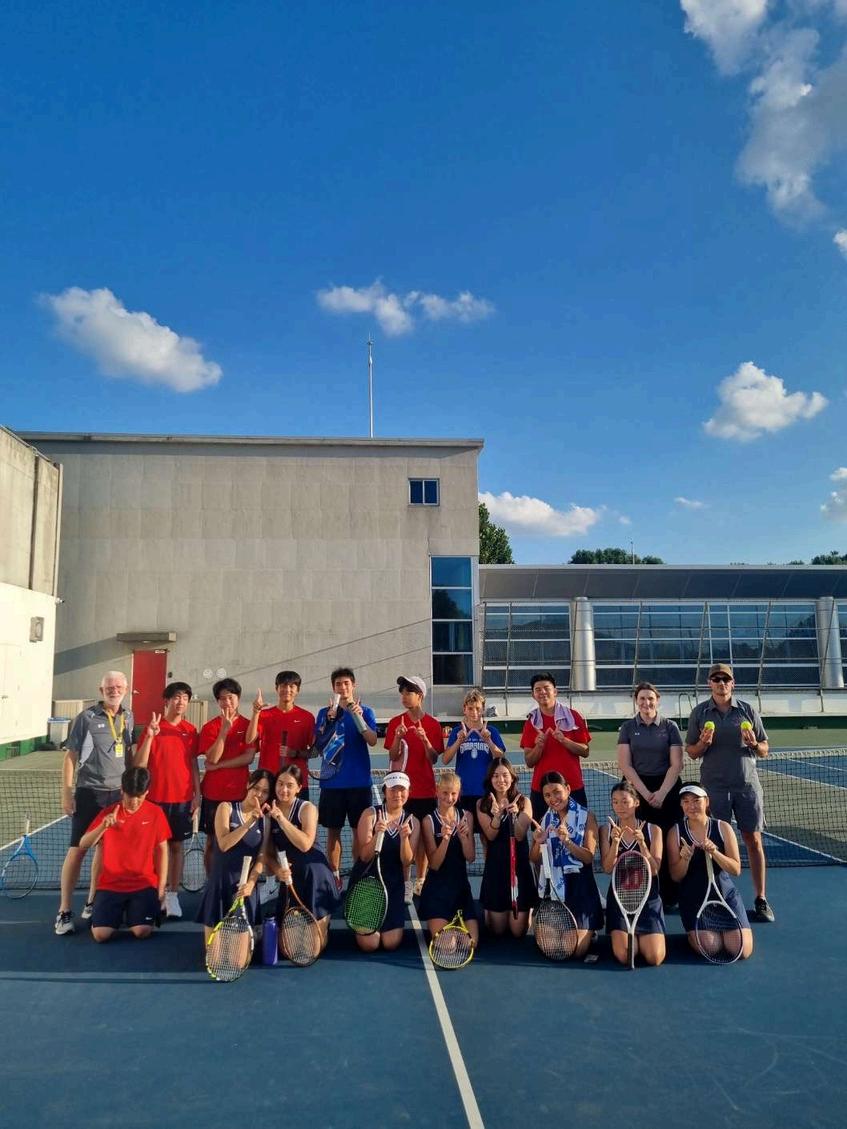
This left the tennis team with one court to use for practice, meaning that the boys and girls teams had to take turns playing tennis on practice days and doing conditioning, which involves running up and down stairs, completing workout videos, or doing various agility and endurance drills when the otherteamisusingthecourt
Amber Domasicwicz, the varsity girls coach, said, “You have to learn how to work around it, so it requires a lot of adaptability. And I think with that, it can also affect our morale and how well we do.”
Coach Brandon Moore added thattheteam“didn'tgetalotof playing time” before some of its firstmatches.
Furthermore,DaleSon‘25,boys captain, explained that he faced alotofstrugglesleadinghis
team during practices because “the boys never listen, which I understand…they want to play tennis but can’t.” For instance, Dale mentioned that the boys often “start playing basketball… next to the court because only four people can occupy it at a time”
WhatHasBeenDone
When parents were notified aboutthecourtsituationduring the informational meeting with Coach Hale and the coaches, most were angry and confused, unable to understand how there could be a tennis team without courts. All five interviewed students said that their parents “thought it was unacceptable” and were “really mad.”
Mandy Shin ‘27, a player on the girls team, said that her mom “immediately was like, you gotta do something about this”
The very evening after the parent meeting, one player’s mom was able to secure two courts for practice at Hannam on Mondays and Thursdays, to the great joy of the desperate team Since matches usually occur on Wednesdays and Fridays, this arrangement allowed the team to get more courttimeduringpractices
Shortly after, Mandy’s mom was able to secure three courts for practice and six for home games at Jangchung Tennis Club, which is a 10 minute bus ride away from school Mandy said she went to the academy there all summer As she put it, “I've known the coaches for a little bit, and so my mom just gave them a call and they said they'd consider it. There wasn't muchtoit”
To sum up the situation, Kirsten Park ‘26 said, “Throughout this whole process, it honestly felt like the moms were always the ones to be the bigger people,” specifically referring to their flexibility and eagerness to help in areas where the school was comingupshort
In response to the solutions offered by the tennis moms, Coach Domasicwicz said “our team support just makes me extra frustrated that we don't havetheproperthingstoback
up all that love and support.” She added on, “I wish we had a definitive place at our school [to] bring everyone around. Like, let's have a good cheer for our girls. So that's where I feel like I'm letting them down as well.”
Coach Moore, who has been coaching for five years, said “As far as YISS, I think they should definitely support us and build us some courts, because you can't have 18 players with two teams practice on the one court and be prepped for a game [which] we can't host here either.”
CoachHale,whoiscontinuing to make proposals for additional courts on campus, said “I want the tennis team to succeed, and the last thing I wanttodoistocutit”
After making the initial proposal in 2014 which led to one court being built by the soccer field, Coach Hale offered additional options this year to the administration to build more courts. Currently, the top choicesareeitherbuildingthree courts in the courtyard, using the upper parking lot (where busescurrentlypark),or
building courts on the other schoolrooftops
As reported by Coach Hale, “This proposal was to put one court on each rooftop and then just have a walkway that goes all the way across and all the way to the field. The hard thing about that is all of the AC units are on the rooftops, so constructionwouldbehuge”
ANeedforSchoolwideSupport
Thisseason,thetennisteamhas been undefeated and has won firstplaceinbothitsreddivision conference and KAIAC, and will be promoted to the blue divisionnextyear.Nevertheless, theplayersfeltliketheywereon their own in these matches and that no one at YISS really cared As Mandy put it, “Tennis is a veryunderratedsport”
Even when the team used to have home games at Hannam, very few people ever came to watch This season, with no home games, the level of support received by the team hasonlydecreased.
To add on to that, the tennis team, in contrast to every other YISS sports team, has not had thechancetotravel
internationally for five years, ever since COVID started The team used to fly to Japan for a Far East tournament, but because it hasn’t received an invitation since 2019 and no other tournament has been found, varsity tennis has played only in Korea against the same schoolsforalltheseyears.
Few people know about the struggles that the varsity tennis team faces, and many players on the team, who have been playing the sport for over six years,feelliketheireffort,talent and dedication aren’t being appreciated.
Inmanyways,onecouldsay that tennis is at a disadvantage
The team doesn’t have sufficient practice facilities at YISS, hasn’t had the chance to travel, and lacks supporters at games.
Nonetheless,thetennisteam has a lot to be proud of. Despite all the challenges this season held, the team emerged victorious due to the hard work and dedication of its players. If they overcome these obstacles nextyear,theYISSvarsitytennis teamwillbeunstoppable.
With new grades, fresh students and bloom possibilities, the beginnin the 24-25 school year w season of change for m students. However, it wa just the students who g new beginning; the sch also underwent signific changes. One change particular caught attention of many –transformationoftheSMC
Changes in the S included new chairs, n tables and a reimaged lay grabbing students’ attent However, the most intrigu addition was the new g room,calledthe“CollabL which sparked curio about its purpose Insid 3D printing machine and a lasercuttingmachineawait
byLeahCho‘28

students’ use Nick Steffen, educationtechnologyspecialist, statestheCollabLabisdesigned as a space where “students can express their ideas” and bring their creativity to life It will mainly utilize different types of technology for hands-on projects where students can create designs they dreamed of –turningideasintoreallife!
Beyond serving as a creative outlet, the Collab Lab will improvethequalityofstudents' work. As Mr. Steffen said, “Insteadofusingcardboardand glue,you're3Dprinting.Soyour end product is a lot more professional”
While some students might express concerns about the costsofusingthemachines,Mr. Steffen says, “If you brought in your materials, it doesn't cost anythingtousethis”
In addition to quality, the CollabLabwillprovidestudents with opportunities to explore innovative design techniques and foster a sense of community within the school Its purpose isn’t only to encourage students' individual creativity, but also to inspire studentstodreambigandmake a real-world impact Using this new device, students can launch small businesses and organize fundraisers, also contributingtoschooleventsby raising money and developing theirentrepreneurialskills
Like any new feature, challenges always come along the way. One challenge is that many students are unaware of thepurposeoftheCollabLab.If students are unsure about how touseit,thespacemightendup unused. However, the good news is that the Collab Lab is currently available to students. Students can submit a request to use the machine by going to YISS Bookmarks → YISS Support → Submit a Request → STEM Resources From there, students can choose whichmachinetheywishtouse and start on their projects immediately
Though the room is still undergoing construction, its completion will serve to turn students’ ideas into reality. As Mr Steffen said, “Our goal is to alwaysbeaddingtoit.Butright nowwe’rejusttryingtogetthis roomdone.”
byAlexisLim‘28andSiaKim‘26

Ameretwominutesafter the school bell rings, Chloe Kim ‘28 trudges up the seemingly ceaseless stairs from the basement and finally enters the main lobby, collecting a tardy slip at the front desk with a dejected face Chloe left her house in her mother’s car at 7:25 am, butshearrivedatthelobby27 minutes later a trip that would have taken less than 20 minutes had her mother not dropped her off in the basement.
For years, both students andparentshaveenduredthe jumble of traffic that swarms the main road beneath YISS. From drivers who slam their feetontheacceleratortoseize a spot in the waiting line to huge public buses that force any surrounding cars to withdraw several inches back, the journey to YISS is as chaotic as a family drive to theairportatdawn.“Because goingtoschooltakessomuch
time, I always try to make my childrenleavethehousefaster,” said Claire Lim ‘28’s mother. “It usuallyendsupwithusfighting andyellinginthecar.”Withthe escalating traffic situation and numerous complaints from parents, YISS finally decided to takeaction
On August 18, 2024, the YISS Transportation and Security Department released an update thatstated:
“We have been asked to address the traffic congestion on the main road during morning drop-off Beginning Monday, August 16, all drop-off vehicles will be directed to theB1parkingarea.”
As such, any cars that drove up the school hill in the morning cannot veer left towards the lobby entrance; instead, traffic coordinators now route all vehicles to inside the basement parking lot, a segregated area beneaththeschool’smainfloor. Yetmanyhighschoolstudents
seemed either unaware or indifferent towards this new drop-off policy. “No, I didn’t know about this policy until I wentupthehillafewtimesand saw for myself,” said Emily Jin ‘27. “It doesn’t really apply to me because I usually don’t go up the hill” Another student, AndyLim‘26,said,“Iremember seeing something about traffic, but I just skimmed through the Schoology post in like five seconds.”
The collective cluelessness of thestudentbodyraisesacritical question: if students are unaware of the drop-off policy, how relevant or irrelevant is its impact on the morning congestion?
Claire is one of the many students who do not go up the schoolhill “Thereareusuallyso many cars waiting in front of the hill,” said Claire “If my parents drop me off across the street in front of Blue Square, the time it takes to cross the roadtwiceisquickerthanthe
timeittakestowaitforallofthe carstogetby”
Notwithstanding the new drop-off policy, the long wait line in front of the school remains ever crowded due to the traffic, the line discourages parents from waiting in it for dozens of minutes to go inside the basement, prompting them to find instead new drop-off areas below the school hill. A vast number of parents follow this method, steering away fromthemainlinetodroptheir children off in front of the nearby police station, a popular location for students including EmilyandAndy
For these students, it is of little surprise that the drop-off policy holds little to no value. “I’ve seen the traffic on the schoolhill.There’snoreasonfor me to wait in that line when I can just get off at the police station,”Andysaid.Whenfaced with the option to either squeeze oneself into the throng of cars or arrive at a less cramped area without bearing delay, students are inclined to choosethelatter.
For cars that withstand the trafficonthemainlineand
byEthanSul‘28
On Sept 27, the YISS HS Student Council hosted this year’sannualfieldday Students participated in events such as tug of war, student vs teacher games, dodgeball, and more. The student body was divided into teams based on their grades, each with their own color: the freshmen were red, the sophomores were blue, the juniors were white, and the seniors were black Each grade wore their team’s color to schoolthatday.
Student Council, through regular Tuesday meetings, plannedtheschedule Theyalso
arrive at the top of the hill, congestion within the basement itself is another problem One freshman faced an issue due to the new policy. “After the policy was released, I used to go inside the basement in the morning,” Chloe Kim’ 28 said.“Butafterexperiencingthe time consumption in the basement, my mom decided it wasbettertojustdropmeoffby the auditorium.” Because all vehicles drive down into the basement, the one-way path towards the basement's dropoff area becomes overcrowded, if not more so than the line on themainroad
Yet it is not only the poor circulationinthebasementthat makes it an ineffective drop-off location “I’vebeentardybefore tomyfirstblockafterarrivingat the basement The additional time it takes to go from the basement to my A-block class on the above floors makes me late,” Chloe said. Because tardies are marked in the lobby on the first floor, students who step into the B1 building an areabeneathnotonlythelobby butalsomostA-blockclasses before7:50amreceiveatardy
slipnonetheless.
Toavoidthissituation,Chloe, just like the students who hunt for open drop-off areas on the main road, discovered a more ideallocationtoarriveatschool “My mom now drops me off at the steps next to the auditorium,” said Chloe. “I always end up arriving behindhand when I go into the basement.” Ironically, although the auditorium steps are just a couple of meters next to the basement entrance, the time it takes to enter the lobby door from these steps is a mere 30 seconds.
Her deliberate avoidance of the basement, akin to the gaping mouth of Tartarus itself, is ubiquitous in the YISS community Chloe said, “Sometimes I see parents arguing with the traffic officers to go in front of the lobby. But the officers don’t let any cars go throughthatway.”
Although YISS is located on a small street prone to overcrowding, it offers accessible drop-off areas across boththemainstreetandwithin the school campus To curtail theuseoftheseareaswhile
promotingonlytheB1garageas the main drop-off location decreases the efficiency of this newdrop-offpolicy “Theplacethatmymomdrops me off, the area next to the auditorium, isn’t being used in themorning,”saidChloe “Ifthe line of the cars is distributed to three different areas like next to the auditorium, garage, and in front of the school lobby, there wouldn’t be unnecessary traffic causedbycars.”Withouttaking advantage of numerous other drop-off areas such as Blue Square, the police station, the lobby, etc., and thus dispersing the congestion, the drop-off policy can only do so little against the incessant stream of cars.
This morning traffic is a foe to all. Students who pile up their bags with tardy slips constantly search for a drop-off area with the most ample space and so they make sure to evade the B1 garage unless they glean pleasure from an invigorating sprint up the stairs. “I wish I could tell all the cars that go down the basement to stop,” Chloesaid,“becauseIknowthe studentsinsidearejustgonna getanothertardyslip”
posted a question on the bulletin board asking what activities the students wanted for field day in an effort to consider every student’s opinion Thestudentswereable towritetheirthoughtsdownon stickynotes
The students had shorter classes that day The first activity that they planned was the student vs staff basketball game. Special guest Tyler Park ‘26, or ‘Taylor Parker,’ was a pleasant surprise to students during the game. “The Staff vs. Students basketball game was undoubtedly the highlight of Field Day,” said Lucas Choi ‘27 “The energy and excitement were contagious, bringing the entire school together and truly representingourschoolspirit”
After the game, students could choose between dodgeball and Family Feud on the signup sheet, and Student Council members helped oversee the activities. At dodgeball, there were many roundswiththeteamsdivided
bygradeandgender.
Following dodgeball, there were even more stations the students could choose from Students played badminton and pickleball in the gym with nets set up and played ping pong in the lobby of the gym Soccer and spike ball took place on the field and the chill room was in the SMC. In the chill room,peoplewereabletomake friendship bracelets and participateinotheractivities.At each station, at least one StuCo member helped lead the activity
In the third round of activities, sign-ups were on a first come first serve basis. Thesestations,includingsoccer, basketball, and obstacle courses, took place on the field, while volleyball took place in the gym The chill room remained an option. Finally, fielddaywasclosedwithafourwaytugofwar.
In an effort to promote team spirit and grade bonding, the StudentCouncilcreatedapoint
system where some of the activities gave out points to the teams based on the results. The grade-based teams will continue to earn points from different activities throughout the year and the team with the highest number of points will beabletoearnprizes.
“Grade-level teams were good to foster bonding people didn't feel like they were just put with random people for a day, and they still collaborated with others,” said Sharania Mandloi ‘25, 24-25 Student Council President Student Council put in great effort to make sure that things ran smoothly and that the students wouldhavefun
“We [Student Council] all worked together to propose, plan, and execute the events, while also managing the logistics,”saidLucas.Attheend offieldday,someoftheStudent Council cleaned up and made sure that extra materials were takencareof
When asked why Mr Rey doesn’thangoutwiththeother Filipino teachers outside of school,Mr.Tadeosaid,"Mr.Rey is building a palace” Of course, that wasn’t the actual reason. It’sbecause“helivesfarfromus [the other teachers]”. Apparently, Mr Rey “lives in[the]DMZ,”jokedMr.Sarao.
OnSept.11,Ihadtheprivilege of interviewing the four science department teachers in our school – Mr Dante Arboleda, Biology Teacher; Mr. Roneve Sarao, AP Biology Teacher; Mr Danilo Tadeo, Physics Teacher; andMr Rey,ChemistryTeacher – about their friendship, which manystudentscallthe“Filipino BroGang”.
So what is the origin of the friendship? While all the teachers are from the Philippines, only Mr. Tadeo is from the capital of Manila. All the other teachers, Mr Sarao, Mr. Arboleda, and Mr. Rey are from the island of Mindanao, althoughonlyMr.Arboledaand Mr Sarao are from the same areaoftheisland.
The teachers got to know eachotherindifferentways.Mr. Sarao and Mr Arboleda already kneweachotherastheyworked inthesameschoolorganization inChina.Whentheopportunity arose, Mr Sarao contacted Mr Arboleda about job openings at YISS for two biology teachers. The pre-YISS bond ends there, though.Thefourteachersdidn’t get closer until they met in Korea. Mr. Tadeo’s first encounter with the science teachers was through a zoom call “I kind of like shared what thecommunitylookslikehere,” hesaid
Now,thescienceteachersare inseparable Infact,ifyouwenttofindany of the science teachers during lunch, you would see all the teachers eating together in Mr. Rey’s classroom Mr Arboleda said, “Sometimes we discuss experiencesintheclass Welike toeattogetherbecausewecan
byIsaacShim‘27
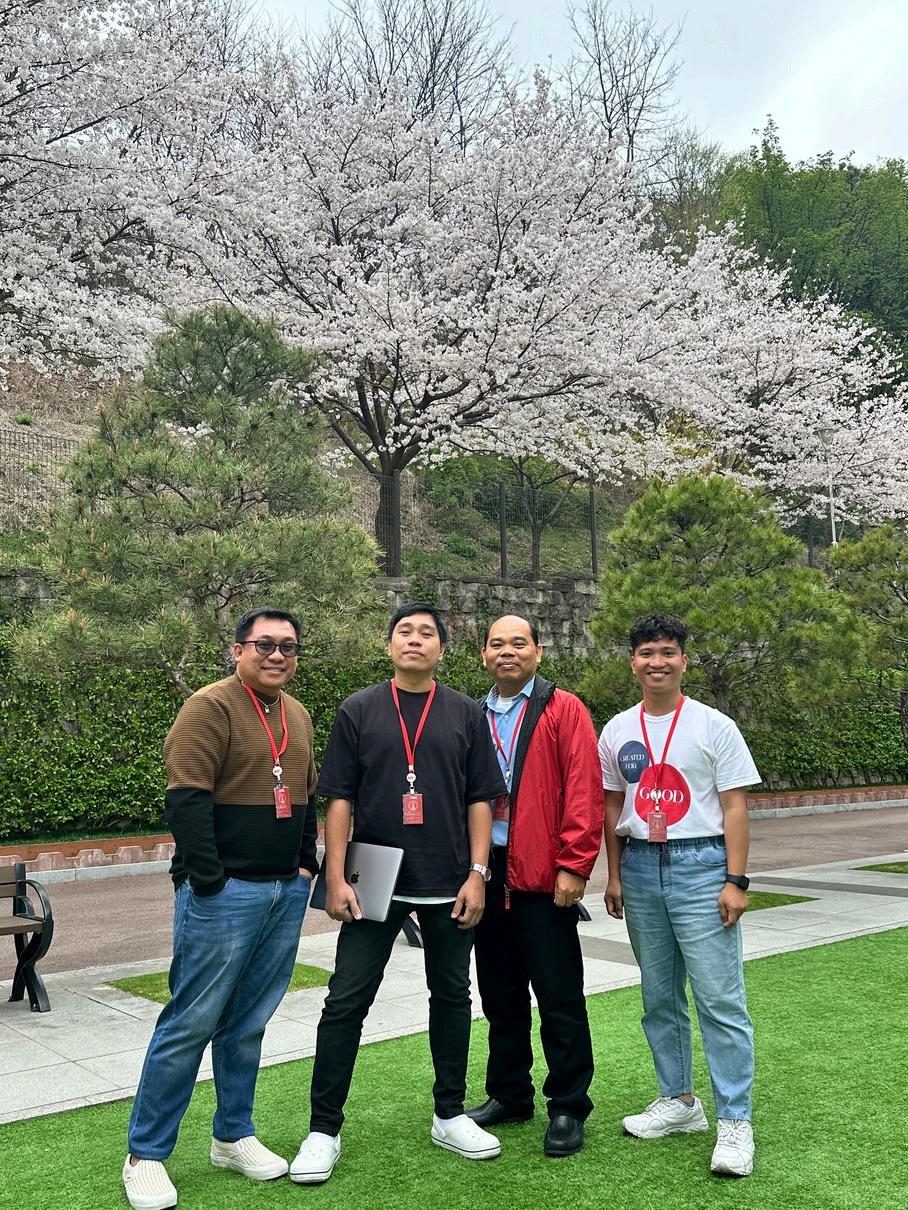
(fromlefttoright)Mr.Sarao,Mr.Arboleda,Mr.Lahoylahoy,andMr.Tadeo
discuss that a lot.” The teachers discuss teaching strategies and how to solve issues in the class; even eating lunch is an opportunity for the teachers to improvetheirteaching
“We have some good practices that we share [with] each other,” Mr. Arboleda said.
“There are some issues that we discuss also and we resolve issues. We can easily do that becausewearefriends”
Their friendship also gives roomforimprovement “Ithink, becauseyouarefriends,youcan correct each other right away if you see some things to be corrected,” Mr Tadeo said They can “help each other easily, especially because we ' re working in the same team and we 'remeetingthesame
students. If not all students, most of the students So we get to update each other on what's happening with the students andhowwecanhelp.”
One benefit of a tight bond holding down a subject area is that these teachers are already familiarwithstudentswhomay be superb students or class clowns. “We share info, though,” said Mr. Sarao. “Because it benefits our class at thesametime.”
The teachers will ask for adviceonwhattodoindifferent situations regarding students andoffersolutionstoclassroom problems Because the teachers haveagreatfriendship,theycan point out mistakes and things to improve on, and also share informationaboutstudentsso
that ultimately they can be betterteachers.
Some students may assume that, as Filipino teachers, they partakeinconversationsintheir native language of Tagalog or other dialects of Filipino However, Mr. Arboleda said, “Sometimes we use Tagalog, especially when there are only four of us. We use Filipino. But most of the time we use English.” The teachers know that they have to respect teachers who don’t understand the language, so they use English,evenwhentheydiscuss witheachother
Because it’s common to see theHSscienceteacherswalking down the school hill together, it’s not a stretch to think that their friendship extends outside of school That isn’t exactly the case. “We seldom actually met outside of school,” said Mr Arboleda The teachers have hobbies and interests outside of school,andtheyrarelyhangout with each other unless it is planned
Another misconception people have is that since these teachers are all Filipino, Christian science teachers, they are similar in many ways. “Whenitcomestointerests,we are totally different from each other,” said Mr Arboleda For example,whileMr.ReyandMr. Sarao are both sports people, respectively coaching JV boys volleyball and varsity cheerleading, Mr Arboleda and Mr. Tadeo don’t enjoy sports as much These differences are what make their friendship unique “We enjoy these differences,”Mr.Saraosaid. Regardless of their differences, the one thing tying them together is their faith in Christ. Sometimes, having a friend who is a negative influence may cause one to stray from Jesus. However, the friendship between these teachers has only grown from their common Christian faith Tostart,theteachersgotothe
same church called Every NationChurch Althoughnotall of the teachers show up every week (Mr Arboleda attends his “local online church in the Philippines because [he helps] that church,”), this connection forms a strong bond that is rootedinChrist.
Mr Sarao believes that through their friendship, all of the teachers’ Christian faith grew stronger. As they are close and comfortable sharing things with one another, they were able to build each other up in thecommunity Having
different beliefs can create conflicts and clashes between friends, but the teachers’ Christian faith allowed for the friendshiptobesetonJesus.
“I mean, having the same beliefs, I think makes the bond of the friendship stronger,” said Mr.Arboleda.
Mr Tadeo also shares another instance where their faith is affected by their friendship: “I mean, we have a chat group, right? We have a Kakao group I think it's easy for us to share and, like, say, pleaseprayforme,pleasepray
for et cetera.” The science teachers’ friendship and faith both affect each other; they bothhelpeachotherindifferent ways and make them better in so many ways This connection is like “covalent bonding,” as Mr Saraocallsit
So would the science teachers have very different lives at YISS without this friendship? Mr. Sarao thinks that although his life at YISS would be different without this friendship, it wouldn’t be a good or bad change. Being the sole Filipino teacherinyourdepartment
As global temperatures rise, South Korea is grappling with an alarming increase in heatrelated illnesses, particularly heat strokes. Just this year, a military soldier was found dead of heatstroke on May 28, three construction workers were found dead on Aug. 4, and an 80-year-old woman from Taean was found dead in her wheat plantation on Aug 11 This formerly rare medical emergency is now a serious public health issue due to more frequentandsevereheatwaves, leading experts to warn against extensive exposure to extreme heat
The average summer temperature in cities like Seoul, Daegu, and Busan during the last 20 years has been recordbreaking hot this year, according to the Korea Meteorological Administration (KMA) Moreover, the number of heatwave days, defined as days with temperatures exceeding 33°C and 40°C in apparent temperature, has more than doubled in the last 20years.
Andastemperaturesrise,so do cases of heat-related illnesses “Heatstrokeisasevere heat-related illness that involves a significant elevation in body temperatures, usually as a result of prolonged exposure to high temperatures orphysicalexertioninhigh
byJamiePark‘27
temperatures In a majority of the cases of heat stroke, body temperatures are usually over 104ºFor40ºC,”Dr Bangash,a physicianatBayhealthinDover, Delaware claims The elderly, outdoor workers and those without access to adequate cooling systems are particularly vulnerable
On a broad scale, the main cause of heat strokes and increased temperature lies in global warming and the urban heat island effects that occur in highly urbanized areas like Seoul or Busan. In urban heat islands, asphalt, concrete, and buildings absorb heat during thedayandreleaseitduringthe night, making cities gradually increasethetemperature.
However, the cause of heat strokesisacomplexmatterthat branches beyond the basics of “too hot”. Not only does it require an extremely specific mathematical formula of humidity,heat,andwindspeed, but it can be caused by various factors, including excessive physical activity, dehydration, andlackofcoolingsystems.
Excessivephysicalactivities in extreme heat, whether for work or sports, significantly increase the risk of heat strokes. It is extremely dangerous for people who are actively involved in summer sports like cross country, soccer and hiking Moreover,dehydration
impairs the body’s ability to cool itself through sweating, heightening the danger of heat stroke This is particularly dangerous for patients with an impairedability tosweatdueto diseasessuchasanhidrosis.
Heat stroke can develop rapidly, especially during periods of intense heat Recognizing the symptoms early is crucial for preventing long-term damage or death. Key symptoms include high body temperature exceeding 40°C (104°F); altered mental state like delirium or loss of consciousness; and dry skin, caused by sweating and excessivesunlight.
So what do you do when experiencing these symptoms?
According to Mayo Clinic, “Heatstroke needs emergency care If it's not treated, heatstroke can quickly damage the brain, heart, kidneys and muscles.” Heat stroke symptoms must be dealt with withimmediateintervention.
AccordingtotheYISSmedical nurse,thefirststepistofindthe nearest cool place to get out of the heat, whether it is a nearby convenience store or shade. Then, the next step is to use whatever means available to cool off This could be through applying ice or receiving cool air It is most effective in areas like the neck, armpits, and groin Next,themostimportant
means you are incredibly uniquetoeveryoneelse
Mr. Arboleda believes differently “I think I can still adjust,” he said. “But it's better when you have colleagues like them [the other science teachers] Because you can easily connect.” It’s clear that the teachers value their friendship, and they believe it makes their lives at YISS better. It is truly a privilege to have such tight bonds within a disciplinary department, which helpsstudentsaswell.
step is to rehydrate and avoid sugary, caffeinated, or alcoholic beverages, as they can worsen dehydration. Finally, if the situation is extreme you must call an ambulance. It is important to avoid quick escalation and permanent damagetovitalorgans
However, Euhyun Park, a student majoring in nursing at Emory University says, “The preventionofheatstrokesinthe first place is the most important” Preventing heat stroke is key, especially during Korea’s increasingly hot summers The KCDC recommends staying indoors during peak heat hours, usually between 11 a.m. and 4 p.m., whentemperaturesarehighest If outdoor activities are unavoidable, staying hydrated and taking frequent breaks in the shade can help reduce the risk. Wearing light, breathable clothing and using hats or umbrellas to shield from the sun can also make a significant difference.
As Korea faces hotter summers, the threat of heat stroke looms larger. The rising numberofheat-relatedillnesses underscores the need for public awareness and prevention measuresfromthegovernment. Above all, it is important that we, students, are informed aboutthisissueandthatweare not putting ourselves in danger for any purpose, whether it's sports or extracurriculars. It is important to stay safe in the future as temperatures continuetorise.
byRyanCha‘28
The 2024 South Korean Legislative Elections were held on April 10 to elect 300 representatives to the National Assembly. 254 of the 300 representatives were elected through individual district elections, while the remaining 46 were chosen through proportional representation, selected by their respective party affiliations depending on how much of the popular vote theirpartyreceived.
Arguably, the fiercest competition took place in the 48 constituencies of Seoul, where most of the media’s attention was concentrated throughout the duration of the campaignseason Seoulandthe Greater Gyeonggi area were also where the outcome of the legislative elections were ultimately decided, with the area having the greatest numberofswingdistricts
The results of the election were surprising to everybody including the political watchdogs and pollsters, and needless to say, the outcome was a massive upset for South Korean political history Not only did the ruling party in government, the conservative PeoplePowerParty(PPP),failto secure a simple majority or pluralityofseatsintheNational Assembly, but the main opposition party, the liberal DemocraticPartyofKorea(DP), swept the map, picking up a total of 175 seats compared to the 108 of the PPP. The PPP also failed to reach its targeted seat count of 120-140 seats instead fallingshortat108
Projected swing districts such as Gwangjin-eul in Seoul, where the most competitive tossup races within the margin of error occurred, voted for the DP candidate with the sentiment of punishing the PPP-affiliated Yoon administrationfortheir
perceived mishandling of the economy and mismanagement of public services at the forefrontofvoters’minds.
However, constituents residing in other swing districts of Seoul, such as Mapo-gap, Yongsan or even Dobong-gap went against the odds and the national sentiment to elect a PPP candidate, albeit by very close margins. Instead of punishing the PPP-affiliated Yoon administration being the sole objective of voters there, thesepeoplevotedbasedonthe local issues facing their constituency,ratherthanbythe national sentiment. Many focused more on the individual candidate, not voting by party butbyperson
When Representative Na Kyung-won was asked what shethoughtthemostimportant issues for voters were, she answered in the interview by sayingthatwhilebothlocaland national issues played a role in determining the choices of the electorate. “It seems that voters considered authenticity and likeability as important as the candidate’spolicies.”
This was most notable in perhaps the most contested constituency election of them all. Dongjak-eul, where former four-term representative Na Kyung-won and former member of the police force Ryu Sam-young,putforthbytheDP to strengthen their notion of punishing the Yoon administration, battled it out door to door. Throughout the campaigning process, opinion polls conducted in the area showcased an ever tighter race, with neither candidate able to breaktheirpollingnumbersout of the margin of error In other words, both of the candidates consistently failed to bring their polling leads northwards of five percentagepoints
Onthenightofelectionday on April 10th, when the exit polls were released, victory seemed probable for the DPaffiliated Ryu Sam-young, as projections predicted that he would receive 52.3% of the votes compared to Na Kyung won’s 477% However, as the night panned out, after all the votes were tallied up, the eventual result was a surprise victory for the PPP-affiliated Na camp,withherreceiving
54.01% of the vote compared to the Democratic-affiliated Ryu camp’s45.99%.
This seemed to be a wider trend throughout the exit polls broadcasted by the major media companies In the initial exit polls, the forecast was that the DP would come out on top in crucial swing districts; however, as the night progressed, these critical races turned actually in favor of the PPP, helping them secure the neededminimumof101seats
In Dongjak-eul, where the competition was especially fierce, many people voted with the intention of punishing the Yoon administration with a strong wake up call, but many more voted with more local issuesinmind.
When asked what she thought the reason for her victory was, Representative Na responded, “I believe that the factors that had the greatest influence on my election were consistentcommunicationwith local residents and practical efforts for local development Over the past four years, we have taken the lead in listening to the stories of local residents andsolvingtheirdifficulties.For example, we have continued to pursue transportation improvement projects such as ‘Establishment of the Seoul Inner Ring Express Railroad Network’ and ‘Sadang-ro Expansion’, and education development policies through ‘New Heukseok High School’ and‘ImprovementofEducation Environment’”
“Of course, we made efforts to communicate with the younger generation through social media and inform them of our policies, but above all, I think the biggest factor in my election was my sincerity toward regional development and the trust I gained from working with residents in their dailylives”
Onthequestionofwhether
she thought local or national issues were more important, Representative Na said “I believe that both constituency issues and national-level issues had a significant impact on voters' decisions Dongjak-gu residents showed great interest in improving specific transportation and education infrastructure for regional development, that is, local policies At the same time, pledges on national issues such as a low birth rate and a response to the climate crisis also played an important role During my election campaign, I tried to reflect the voices of residents in policies through honest communication about the problems they felt As regional development and national policy complement each other, it was important to address and communicate both issuesinabalancedway.”
Mrs Cho, a woman in her sixties, said that ultimately, what swayed the vote for her and all her friends towards Na Kyung-won was the sincerity evident in her candidacy. She told us that Na had more relevant local policies to solve issues like public transport, housing, and culture revival than her opponent, and also because of her history as a lawmaker, she would be able to help with stability which was a priorityforherandherfriends. Ultimately,boththeDPand PPP were able to win swing districts in Seoul and the Greater Gyeonggi Area with the PPP producing unexpected resultsinmanyconstituencies. This election result has profound ramifications for Korean politics. Although PPP support was somewhat underestimated, overall, the Yoon administration still took a beating electorally. The message was clear: Accept this result. Listen and change accordingly

byMichelleKo‘25
Every Sunday, a group called PLUR meets through humid summers and biting winters to form an assembly line
around helpsmebroadenmy thoughts and my views on the world”
helping people makes me feel better. So I really like having a community and [doing] something that I know is helpfulandmeaningful”
heartedpeoplekeepjoiningthe volunteeringtohelpthem.”
Thesoundofcrinklingplastic and shuffling sneakers fills the air as bags with sausage, chocolate, soy milk, and bread are passed from member to member. After the chatter of idle conversations and food packing dies down, everybody walks through Seoul Station’s underpass, delivering the bags to Seoul’s growing homeless population.
In2007,agroupofexpatsin KoreaformedaFacebookgroup built on Peace, Love, Unity, and Respect. Inspired by the aphorism commonly repeated in rave culture, the creators of PLURaimedtoapplytheideato volunteering ChrisHong,oneoftheleaders for the program and a veteran volunteer, spoke about how the organization’s origins have shaped its identity. “[I]t’s all startedbyexpats WhenIjoined the group, … me and my daughter, we were the only Koreans,” he said. “[H]aving a lot of volunteers and having conversationsonourway
The organization focuses on diversity and inclusion through keeping its doors open for all nationalities and ages. As unpaid volunteers, however, all members have one thing in common:aheartforservice
Michelle Moore is a teacher in Seoul, and came across PLUR after looking for volunteering opportunities “[I] moved here and knew nobody,” she said. “So I was like, I want to meet new people and have new experiences, and I volunteered with the homeless before, so I found this on Meetup [a social mediaplatformusedforhosting and finding events and gatherings] And I was like, that would be interesting to do and a way to meet new people, and I did, and there’s a great community around volunteering with a lot of expats, and so it’s great to meet newpeople.”
When asked about the most rewarding part of volunteering, she said, “[H]elping people in the charity is very fulfilling but also stress-relieving in a way WhenI’mtiredorworried,
Marcel Kraus, an expat from Germany, has also had a strong urge to help the communities around him for a long time.
“[I]n Germany, I had a lot of work and study and I lived in a smallvillage,soIdidn’thavethe chance to do any volunteering.
So when I came to Korea and had more time, I looked on the internet to find a group to do any kind of volunteering, and I found this group on the internet, so I thought it was a good opportunity to help some people.”
However, as winter approaches, PLUR’s leaders are worried that their turnout rate and weekly distribution of one hundred and forty-four food bagswon’tbeenoughtohelpall of the homeless people taking shelterthiswinter
Jini Kim, another leader for PLUR,madeapostonFacebook urging people to join the organization “[R]ecently, the number of homeless is increasing and our 144 bags are notenough.Hopefully…warm
Struggleswithlackofturnout have been endemic to the organization since its beginnings. “When I joined the group in 2010,” Chris said, “we actuallyhadthreeprograms”
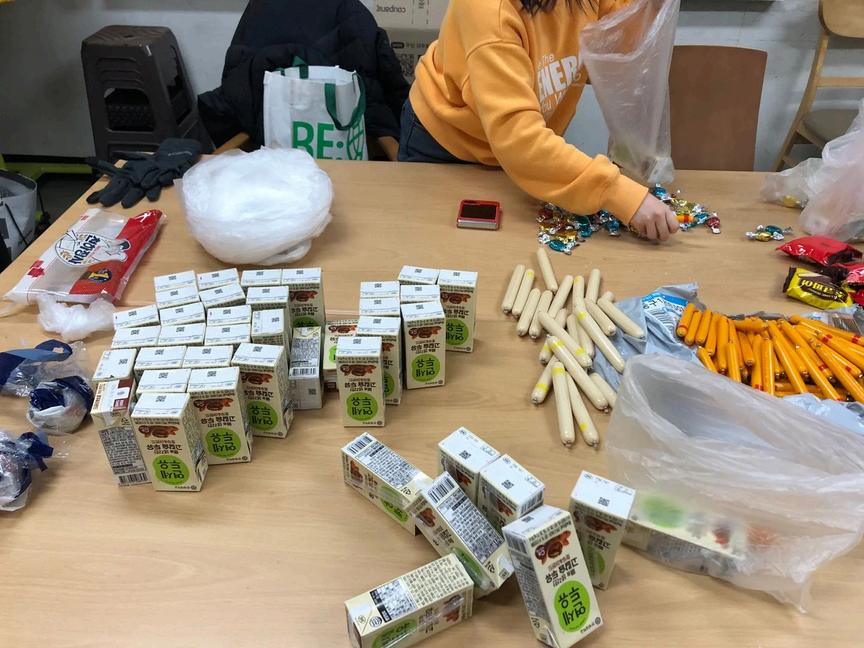
Butbecausemanyexpatsare not permanent residents, hopes to maintain the other programs were quickly dispelled “[W]hat we found was that there were no people who wanted to take over from the predecessor. We tried several times, but because ofthelackofleadership,wehad to give up on two programs: an orphanage and soup kitchen volunteering”
Although the situation for many homeless populations in Seoul looks dire, the members of PLUR continue to make effortstohelp
“It’sgoodtoseethatthereare other people as well who are willing to help the people, … it gives me hope,” says Marcel “If I were in this situation, I would know that there are some people who are willing to help other people without getting somethingback.”
bySeunghunLee‘27
For centuries, democracy has been a hallmark of development Freedom of choice was a prerequisite for earning legitimacy on an international level. A successful country was defined as one where free elections, civil liberties, and personal opinions were all protected. What distinguishes democracy from most other forms of governmentwasthefreedomof expression that every person is entitledto.
But can society progress when everyone tries to express theirviewsatthesametime?
Democracy creates a dilemma for itself As an institution that promises to uphold the majority while also listening to the minority, democracyisforcedtoprovidea platform where anyone can voice their beliefs, even when those beliefs are unpopular or unwelcome.
But in a world where society is divided by economic inequalities and political differences, individuals are more vocal than ever about theirpersonalconvictions.Echo chambers are prevalent throughout society, especially as people continue to surround themselves with information and networks that reinforce their views. The strongest echo chambers exist in homes, schools, religious institutions, and social media: these platforms have no room for balanceddiscourse.
The polarization of social issues has also made it impossible for people to remain neutral. Choosing to remain silent is a sign of uncertainty, which is often weaponized by radical advocates As a result, most moderates end up supporting a cause not because they truly believe in it, but because they feel obligated to
from all walks of life protest about various issues, ranging from recent scandals to recurring issues. Most of these demonstrations are highly organized, and they attract tens of thousands of participants over a span of several days. However, while having a platform to express your views is a healthy indication of a strong democratic institution, there have been growing concerns about the efficacy and efficiencyoftheseprotests.
The main problem with demonstrations in Korea is that they disrupt daily life Protests are intentionally organized to occur at the busiest parts of Seoul: roads, intersections, and subway stations, among many other locations. Therefore, it comes as no surprise that when these protests finally take place, entire bridges and roads are shut down by the government Hundreds of police officers are also dispatched to monitor the safety of these rallies, and endless rows of police buses continue to be a foolproof hint thataprotestisnearby
Onewayprotestsareableto interrupt daily life is through traffic.Whenthousandsof
protesters are gathered in one area, it can cause congestion throughouttheentirecity Most of these protests occur in busy districts and neighborhoods, such as Seoul City Hall, which already have limited entry pointstoregulatetraffic.Hence, when a protest begins in these bustling areas, vehicles are forced to crowd together on highlyconcentratedroads Both private and public transportation are victims of suchtraffic.
Even veteran drivers are not spared from these traffic jams. As the location of protests often shift, it is extremely difficult to predict which roads and highwayswillremainopen.Not only are navigation apps too slow in updating routes in accordance with protests, but real-time tracking systems still fail to solve the volatility of protests
Whileadultsareundoubtedly affected by traffic during their commute, the people who have it the worst may be high school students.
In Seoul, most students have busy weeks that are filled with academies, sports, and other commitments.Withsomany
activities occupying their daily lives, students are already operating on a time crunch where every second matters. Any form of traffic wastes the time and money of these studentsandtheirparents
Winston Kim ‘27, a YISS student, is one teenager who is regularly affected by these protests. “I got to go through [these protests] to get to practice. I got to go through [these routes] to go home and do school work. I have some hagwonsupintheareanearmy home. Sometimes I’ve had to tell my coaches that I’m going to be late to practice due to a protest [ ]It’ssomethingthat’s not in my control, so it’s very stressful”
Protestsaredefinitelyagreat platform for change. However, when disruptive demonstrations cause inconvenience in the lives of others, it only lowers the credibility of the protestors When society feels like a movement is causing more harm than good, they will naturally choose to oppose the cause in question. But as social backlash and anger increases, protesters feel even more marginalized; thus, they feel a stronger incentive to protest evenmore.

South Korea is home to a growing democracy that is famous for its massive protests anddemonstrations
This is the vicious cycle that occurs in democracies when there is no effective method to express the wants and needs of the constituents While online applications and complaint formsexist,theyaretediousand have no direct impact on the government In contrast, protests usually result in immediate attention but have lowsuccessratesandanegative socialimpact
SouthKoreaalreadyhasthe prerequisites to create change: people want to talk and politicians want to listen. It is now the responsibility of the government to establish a platform or process where citizenscansharetheirconcerns inapersonal,peacefulmanner
byKatieChoi‘26

“If you don’t study for this test, you’re cooked!” Defying all expectations, this Gen-Z-esque quote is not from a late-night study group or a conversation between two teenagers in different AP Calculus testing blocks. These are the words of Michael Suhany – a social studies teacher known for his academically rigorous classes and intellectually expanding assignments – informing his AP Economics class about an upcomingtest.
Mr Suhany is fully aware of the tenacity of his tests and is willing to resort to Gen Z’s “brainrot” humor to convey his ardent hopes that his students will do their work. All the AP Econ students are also aware of theclass’srigor;agoodgradein a Suhany course is only achievable with hard work and effort
However, as Ellie Fertig ‘25 diligently sat down to review the supply and demand model, she found her mind wandering, from her Instagram feed to her AP Euro homework. For the next 2 hours, she couldn’t focus and worked on her other assignments, pushing her to stay up until 1 A.M. to prepare for her test the next day Throughthis trial anderror, the AP Econ students have found another component crucial to success:sustainedfocus ApplicablebeyondaSuhany class,sustainedfocusand
attention are uncompromisable foranylong-termgoals,suchas being accepted into a prestigious college. In an increasingly fast-paced and short-form environment, however, a global attention crisis among students has alarmed adults and adolescents alike, arguably the most dire issue for high-achieving students anywhere in the world YISS has been no exception.
Sharania Mandloi ‘25, the president of Student Council, has expressed that he feels that his attention is “most definitely declining. Before [he] discovered YouTube shorts [he] could study for about an hour without getting up, but nowadays, it’s become hard for [him] to stay on task for even half an hour without getting distracted”
Despite the academic drive that YISS students possess, many other students have also reported experiencing diminished abilities to employ sustained concentration on any academic and non-academic task, much like Ellie’s experience This is a more concerning issue than one may assume; before attempting to achieve any long-term goal, we must first deal with our attention problems. Initially, Ellie pinned her inability to focus on her screentime on socialmediaapps,themost
citedreasonastowhystudents feel their attention spans dwindling.
It’scommonknowledgethat if you want to accomplish something that requires even an ounce of sustained, longtermfocus,‘SkibidiToilet’isnot your friend. However, unbeknownst to students, multitudes of other factors also subtly degrade sustained focus, such as the multiple monitors staring at you with seven different assignments on your desk.
JohannHari,aScottishauthor and journalist, can attest to this in his book Stolen Focus In his book, Hari goes through twelve causes of our declining attention spans. One chapter of the book that is especially critical to students is how the increaseinspeedandswitching, also known as multitasking, diminishesourattention
In the fast-paced worlds of academic, extracurricular, and social activities, many students have felt that they need to constantly multitask between various projects Between working on an AP summative, studying for a calculus test, and scrolling through StudyTok, the productive rush of checking numerouschoresoffato-dolist at once feels like hitting five birdswiththesingularstoneof
of attention in a clean, strategic throw.
However, when we constantly switch between tasks, the sensation of hitting five birds is, in reality, more like trying to hit the birds but missing all five in the drunken stupor of self-delusion - one that results from our lost attention
Humans have always been very single-minded, as asserted by MIT’s Professor Earl Miller. He argues that our human brains have a very limited cognitive capacity and are prevented by their neurological structures from killing more than one bird at a time Instead of acknowledging the maximum capabilities of our brains and trying to work within them, however, we have embraced a delusionary narrative that our brains can produce and focus on multiple thoughts at once The ideal of multitasking may be applicable to computer applications, but nottous
When we juggle multiple tasks at a time, our brains switch between various assignments The transitions between activities and assignments may seem timeefficient and uninterrupted, but with each jump from task to task, our brains are forced to switch and recompose themselves, leaving four main ramificationstoourattention
First,the“switch-costeffect” referstothetimeittakesforthe braintoreconfigureandrefocus when going from one task to another, degrading our ability to focus and making us slower to function. Professor Michael Posner at the University of Oregon found that if you are interrupted from a state of focus, it takes 23 minutes to get back to the same state. Thus, if you are regularly replying to texts when doing your English homework, you aren’t just losing the time it takes to reply to a reel You’re also losing the time it takes to refocus after, whichtakesfromthespeedand quality of work that was supposedtobecompleted
Second,the“screw-upeffect” describes errors made by forcing your brain to constantly switch between tasks. When you jump between assignments, your brain needs thetimetoreconfigureandpick up the next task, which makes your brain make mistakes that wouldn’t have happened if its sustained focus was on one assignment. Instead of producing a critically thoughtout essay, your brain is spending more time correcting grammatical errors and basic logicalfallacies
Third, our brains suffer from a creative drain when multitasking Creativity and depth require your brain to absorb and process certain information and find links between them, but if brainpower and time are relegated to correcting basic errors, there is little to no room for our brains to produce originalanddeepconnections. Lastly,thementalenergy
required to convert experiences into memories form the “diminished memory effect.” If our brains’ energy is spent on briskly switching between AP Seminar and AP Statistics, we can’t spend as much time processing the information from both subjects, and there’s a high chance that we’ll remember and learn much less than could have been retained with prolonged focus on one subject.
Cook or Be Cooked: Future ImplicationsAgainstMultitasking
As Mr. Suhany inadvertently implied,theinabilitytostudy fortestsforsustainedperiodsof time will ‘cook’ the students of YISS. Beyond academics, any effort or goal that is hampered by distractions points to diminishedresults.
Toapplylearnedinformation and produce quality work effectively, we need to respect our minds’ limitations. There is no other alternative to accomplishing tasks well than to focus carefully on one thing atatime.Themultitaskinglogic of machines cannot be applied to humans; when you allow yourself to respect your mind’s restraints, you’ll find that you’ll beabletofocusproductivelyfor longerstretchesoftime.
The next time you need to “lock in” for your AP World summatives, consider exiting from the other tabs on your computer. Close YouTube, TikTok, and even your AP Biology homework. To cook before you get cooked, the fundamental structure of your brain requires you to stop multitasking and start focusing ononetask
“Toapplylearned informationand producequalitywork effectively,weneedto respectourminds’ limitations.”
‘Domains’
byJaneYun‘28
At YISS, students face the challenge of balancing difficult AP classes, extracurricular activities and personal commitments Keeping up with schoolwork while maintaining high grades isn’teasy. The grading system, study habits and a student’s mindset all play a big role in a their academic success.
Oneofthebiggestchanges this year was the shift in the grading policy, which lowered the weight of formative assessments from 30% to 0% This change has led to mixed reactions from students, with some worried about how it will affect their GPAs and others more supportiveofthechange.
For some students, the reduction in the weight of formative assessments is frustrating. Kate Lee ‘27 explains, “The formative assignments definitely boosted my grades when I was in the harder classes It was a safety net for me, and now I feel like I’m at a disadvantage.” Kate and others who did well in formative assessments are concerned that the change will hurt their grades, especially if they struggle with summative assessments Formative assessments were often seen as a way to help students improve and prepare before thebigexams.
On the other hand, some students welcome the new grading system These studentsarguethatformative assessments are meant to help with learning, not to be graded They believe that studentsshouldbeallowedto makemistakeswhilelearning andnotbepunishedforit.
One student said, “Formatives are just for practicing the material We should focus on learning, not worrying about thegrade”Byremovinggraded formatives, students feel they can focus more on understanding the material without the pressure of getting everythingright.
Teachers also have their own opinionsaboutthenewgrading policy. Christopher Cha, a TEV teacher at YISS, believes that formative assessments should not count toward a student’s final grade. He explains, “Formatives are meant to help students understand the material and get ready for the final assessments. They aren’t meant to be graded, but to help studentslearn.”Chaarguesthat summative assessments (like testsandprojects)shouldbethe main way to measure how well students have learned the material.
This raises the question: Do graded formative assessments actuallyhelpstudentslearn?
Supporters of graded formatives argue that they encourage students to stay on track with their learning Knowing that they can earn points from these assignments motivates students to complete them and pay attention to the feedback. Without the possibility of earning grades on formative assessments, some students might be less motivated to do them, which could lead to gaps in their understanding and hurt their performance on summative assessments
However, many students believe that graded formative assessments cause unnecessary stress and take away from the real goal of learning. Chloe Lee ‘27says,“Ipersonallypreferthis year 'sgradingsystembetter

because there is less pressure to ace the formatives I can focus on learning the material without worrying about whether I’ll mess up and affect my grade” Chloe’s comment shows that many students feel the pressure of graded formative assessments gets in the way of their ability to learn Instead of focusing on understanding the material, they end up worrying about getting a good grade on each assignment.
Research from the Harvard Graduate School of Education supports this by stating that formativeassessmentsaremost effective when they are used as learning tools, not as grading tools. By making formative assessments ungraded, students can feel less pressure, which helps them learn more effectively.
Anotherproblemwithgraded formative assessments is that students might focus too much onthegradeitselfinsteadofthe feedback they receive. If every assignment is tied to a grade, students may rush through their work just to get a good score, instead of carefully reviewing their mistakes and learning from them. This can prevent students from making realprogressintheirlearning.
According to research by the American Educational Research Association, students perform better when they are not constantly focused on grades, and instead can focus on mastering the material. This is because when grades aren’t the focus, students are more likely to engage with feedback and learn from their mistakes, leading to a deeper understanding.
Moreover, the change in grading policy raises questions about whether a rigid grading system fits every student’s needs. Not all students learn in the same way or at the same speed.Somestudentsmayneed more time to understand certain concepts, and graded formative assessments can increase pressure for those who needextrasupport Withoutthe grade hanging over their heads, students can now take their time to learn at their own pace, without worrying about penalization. Many students appreciatethisaddedflexibility, which helps them better understandthematerial.
It’s also important to note that grading formative assessmentsputsextraworkon teachers. Teachers have to spend time grading these assignments,whichtakesaway
fromotherimportanttaskslike planning lessons, teaching, and giving personalized feedback to students. Some teachers feel that this additional workload makes it harder for them to focus on helping students improveinthelongterm
While the new grading systemmaynotbeperfect,itisa step in the right direction. Removing grades from formative assessments helps students focus on the learning process rather than stressing over every assignment, and the new policy appears to be workingwellformanystudents who appreciate the chance to learn without the constant pressure of grades With less focus on grades, students can develop a stronger understanding of the material, which is the ultimate goal of education.
Sophomore year: not quite the fresh start of high school, nor the final sprint to graduation. Between the excitement of freshman year and the looming pressure of junior year, many students find themselves stuck in what’s known as the “sophomore slump” a phase of decreased overall motivation that encompasses everything from academic to relational and emotional stress But how do the students within our communityreallyexperienceit? And, more importantly, how canitbedealtwith?
“I’ve wanted to quit school. Not actually, though, because obviously, I have to go to college,” said Elaine An ‘27 whenaskedaboutherthoughts on sophomore year so far. “It was really, really stressful because there were, like, three consecutive days [when] I got five hours of sleep in total. All combined Those three days I actually couldn’t function as a personproperly”
With this year being most sophomores’ first experience with AP coursework, many fellow students are sure to relate to her statement. “I feel like definitely the transition from just normal classes to AP classes was pretty big,” shared Elaine. “For AP World, the workload is really stressful as someone who procrastinates often. Also for AP Biology, I found that the curriculum has gotten more complex, so that’s alsoachallenge”
For in-season athletes, specifically those participating in the fall season, juggling academicswithextracurriculars has been especially tough. JaelynKoo‘27,amemberofthe
byHelenJin‘27
girl’s varsity volleyball team, reportsfeeling“toolazytothink about school, especially on top of practices and schedules.”
This balancing act often means that students have to make difficult choices about how to prioritize their time. Jaelyn confesses having “ignored a lot of school work just to focus on volleyball.”
But despite the doubled pressure, staying engaged in extracurriculars can also provide students with a muchneeded outlet for stress “Being on a team with so many other people helps to relieve some of [my] stress because I get to talk about my challenges with my teammates during practices or games,”saidJaelyn
“Whenyou’re thirtyandhavekids tofeedandyour wifeisinlabor, sophomoreslump willbeajoke.”
In fact, most students have foundventingandsocializingto be the most effective solution for dealing with sophomore slump. “Just talking with my friendsanddoingourAPWorld assignments together helped,” said Elaine “It felt like I was on the same page with someone else, and we related to each other’sstruggles.”
Similarly, Joshua Ko ‘26 stated that he “talked it out with a lot of friends” when dealing with a slump in his sophomoreyear
Aside from confiding in their closefriends,manyemphasized
the importance of being organized and ready “I think time management is the most important You need to be able to plan your time well and do your assignments as quickly as possible,” advised Elaine. Jaelyn added, “Putting off school work is definitely a bad idea… [And] make sure teachers kind of understand that being an athlete in-season is really difficult, especially for fall seasonathletesbecauseyou’re
still getting used to the beginningoftheyear”
The stress of sophomore year is inevitable, but as Joshua Ko said, “Later on, thirty years fromnow,ifyoulookback,this will all be [child’s] play. You won’t even remember [your] sophomore slump. When you’re thirty and have kids to feed and your wife is in labor, sophomore slump will be a joke. Like what is sophomore slump?”
HelenJinisaFeatureEditorontheBRInkEditorialBoard
byOliviaSuh‘28
Two steps ahead, I amalways twostepsahead
This famous line perfectly describes J & J, a catering service that provides lunch and food services to the YISS community. Since the start of the 2024-25 school year, J & J hasbeenaddingnewitemsto their deli and providing more options, especially healthier options.
This year, J & J initiated a new lunch option called Double Day where they serve two popular menu items from the Guardian side and Griddle side once a month. For example, on Oct 25, they served pulled pork sandwiches with fried chicken, which are two popular menus Additionally, J & J has vegetarian, Halal, boneless and less spicy options daily to fit the needs of all students. The salad bar hasaddedavarietyofoptions like waffles, banana bread andgranola
Many students look forward to buying commodities in the heart of J & J: the cafeteria deli The cafeteria deli is available to students starting from middle school, and it offers ready-to-eatitemslikecheese french fries, chicken, sandwiches, frozen mango smoothiesandmore.This
year,therearehealthieroptions that have not been in the deli before bananas, hard-boiled eggsandstringcheese
The lunch ladies at J & J said that they wanted to have greater diversity in their production For example, the staff noticed that string cheese was served by other catering companies, so they took the initiative to sell new items as well After selling multiple items at the deli, they kept the successful items, such as string cheese, and stopped selling the lesspopularitems
Buthasthischangeinadding healthier options in the deli item been benefiting the students? According to Ryan Park ‘28, “I believe that J & J should continue having more new items sold at the deli due to the variety of international customers they are trying to reach.” Additionally, he said that “it seems that J & J is startingtochangeitsmanyinto making students more healthy which really shows the care that the staff at YISS show for usstudents.”
Although the new additions to J & J may be positive, some students have expressed concerns and opinions about the new deli options Kaelyn Kwon ‘28 said, “I really enjoy the new drinks, but I don’t like thefruitsbecauseIcanget

J&Jannounces‘DoubleDay’infrontofthecafeteria PhotobyCarstenHolst‘25
those from the salad bar” When asked if the new deli items were helpful for better nutrition, she noted that “it’s not nutritious to eat one simple healthy item from the deli. It’s better to eat school lunch I enjoy J & J cafeteria lunch nowadays”
According to Healthline, teenagers should eat nutritious foods for their developing bodies, as these healthy habits improve their overall work ethics at school. Consuming healthyfoodhelpsstudentsstay focused, especially at school wherestudentsneedtheenergy to stay awake in class. Healthline suggests teenagers should consume nuts, cheese, eggs, granola bars, and foods high in protein and fiber that can fuel their energy This is the motif that J & J has introduced to the school community this year; indeed, they were truly two steps ahead, transforming the rudimentary deli system thatonlysoldchickenfingers
into a sensuous place with an assortment of food full of protein
Overall, the students at YISS seem to be more than content withthechangesJ&Jhasmade to their lunch menu After years of licking off salt and oil from their fingers from the french fries, there are finally better options students can choose to help them keep up with their rigorous school life. With these positive changes and the catering service always two steps ahead, YISS has a great future to come, and the food is suretoplease
“...J&Jisstarting tochange...which reallyshowsthe carethatthestaff atYISSshowfor usstudents.”
byJaydenKim‘27
Jennifer Miller, a math teacher from Greenville, South Carolina, went on a journey to Korea in August. Her relocation wasn’t only about her job and professionalambitions;itwas a pursuit to become part of Korean culture It is evident that her love toward Korean customs and traditions has influencedherpersonallife.
Before even arriving in Korea, Ms Miller had already been making efforts to connect with Korean culture She filled her leisure time by watching K-dramas, a passion driven by her sister's recommendation to watch "Twenty Five Twenty One," which she fell in love with due to its great storytelling. Comparedtopastdramasshe watched, she believed that it was easier to immerse into thestory.
From then on, she continued to watch more Kdramas including “Business Proposal”, “Our Beloved Summer”, “Extraordinary Attorney Woo” She likes these styles of dramas because they are funny, romantic, and importantly, appropriateforeveryone Listening to K-pop is another of her interests, and her favorite K-pop idol is D.O., a member of EXO. She appreciates that Korean celebrities are expected to act correctly because it sets a good example for others. She stated, “ Even though people may be expecting too much fromcelebritiesasahuman,it is better than foreign celebrities, especially in the UnitedStates,wherepeople
expect them to be involved in misdeeds.”
Ms Miller’s first impressions of Korea were marked by a mixture of admiration and surprise. She remarked, "The spaces for pregnant women in public transportation are a thoughtful gesture that I find impressive."Itwassurprisingto seehowpeoplewoulddecideto go home standing up instead of sitting on the empty seat. The cleanliness of the streets also stoodouttoher.
However,sheobservedsome issues such as public smoking, where people often smoke and throw their cigarette butts on the street She also acknowledged that many Koreanpeoplearegluedtotheir phones, finding it surprising thatpeoplecontinuedstaringat their devices even on the crosswalk.
Anotherpartshedislikedwas the ‘cold’ relationships between neighbors She commented, “Whilepeopleinmyhometown engage in a lot of small talk including daily lifestyles, Koreanslookintroverted Itwas surprising to learn that even though it might be their neighbor who has lived nearby for multiple years, Koreans end up watching their phone when takingtheelevatortogether”
Ms. Miller found a sense of belonging in Korea through a localchurchwhereshereceived awarmwelcomeandfoundthe communal spirit she had sought. With friends in her church, her weekends often included visits to culturally significant sites like Changdeokgung Palace and Secret Garden and traditional hanokvillagesinJeonju-Si.She
even tried wearing a hanbok, a traditional Korean clothing, to vividly experience the culture. Knowing that Korea is filled with beautiful places, she is thrilled to go on a Jeju-do trip soon.
Notonlyhasshevisitedmany of Korea’s cultural landmarks, she’s also tried various traditional Korean foods She loved eating kimbap at a convenience store, which she found very comfortable and delicious, and she even tried kim-jang, the process of preparingkimchi
Her learning efforts furthermore shows Ms Miller’s commitment to embracing Koreancustoms
She has been learning the Korean language – a fundamental aspect of immersingherselffullyinthe
culture–throughDuolingoand textbooks Although she’s not yet fluent, she knows basic Korean, such as how to greet someone. Her favorite Korean phrase is “jin - ja”(진짜), which is roughly translated to “really” or “for real” Another Korean phrase she likes is “A - SyaChu”(아샷추), which is used when customers ask to add syrup in her coffee. Unfortunately,shehasnottried using it before because she feels afraidthatshewillgetitwrong
Living in Korea, she also learned about multiple Korean national holidays and has felt that Koreans celebrate a lot, which she believes is good for society Itwassurprisingforher to know that there was “Children’s day” in Korea “Children day” is celebrated on May5thwhichwasestablished
by Bang Jeong-Hwan in 1923 to celebrate the happiness, wellbeing and future of children. Even though “Parent’s Day” was familiar to her, as she used to celebrate “Mother’s Day” back home, “Children's Day” wasnewtoher Living in Korea, Ms. Miller has found lots of aspects of Korean culture she admires. As a teacher, she appreciates the Confucian values of a culture whereoneneedstogiverespect to elders and authority She adores the fact that no one has disrespected or spoke up to her during class. However, even though she believes it is a good thing, she does believe a balances required Giving respect doesn’t mean that the opinions of younger people are completelywrong. Similarly,inrelationships,she
COURSE GUIDES
byJayneKim‘27
APWorldHistoryandAPEuropeanHistory!Thedreaded historyAPs,bothtaughtbytheoneandonlyMr.Suhany,send eventhesmartestofstudentsrunningforthehills You’ve heardthepanickedwhispers:“Theworkloadwillkillyou!” “It’satotalGPAtanker!”Butnevertrembleamidthese rumors,becausethisAPclassguidewillhelpyouacethese courses.ReadytogetafiveontheAPExam?Herewego…
CanYouGiveMeaSummaryonAPWorldandAPEuro?
APWorldisthestudyofworldhistoryfrom1200ADtothe present,investigatinghowdevelopmentsindifferentnations relatetooneanother.MichaelSuhany,whoteachesbothAP WorldandAPEuro,saidthatAPWorldisanalogoustoalake: itcoversawiderangeoftopicsbutdoesn’tdelveintothem deeper Inadditiontothecontent,studentslearnhowtowrite shortanswerquestions(SAQs),longessayquestions(LEQs), document-basedquestions(DBQs),andotherhistorical writingskillsrequiredforAPcourses.
APEuroisahistorycoursethatdelvesintoEuropean developmentsandinteractionswiththerestoftheworld. It’sariver,notalake:it’snarrowintermsofnumberof
likes how there is an emphasis on family relationships in Korea. In Korea, family membersaretaughttotakecare of one another. For instance, “hyo-ja”(효자) is a word for people who are loyal and take care for their parents until they die.Shementioned,“Whileitis considered to be weird to live with your parents after 20, it is neveraprobleminKorea.” Furthermore,herappreciation for Korean beauty is evident. She loves how Koreans think positively about taking care of themselves, especially externally. It works as a source of confidence, which changes how one acts toward others. She also loves how it isn’t considered weird when men apply make-up, while it is considered to be “wrong” outsideofKorea
byCatherinePark‘27
Psychologyiscommonlydefinedasthestudyofthemindand behavior.ButLainaJang‘25hasadifferentdefinitionforit. “It’samixofhistory,sciences,andappliedthinking,”shesaid BetterthanWorldHistory,betterthanBiology it’sallof themputtogether
ThesesubjectsintersecttoofferAPPsychologyaselectrange oftopicstocoverinclass.“Thegeneralareasofpsychologyare [ ]thephysiologyofit,thebiologicalsystemsrelatedtoit, andhowourthinking,ourcognition howthatshapesour behavior,”JimMilliken,psychologyteacher,said.“Wealsogo intosocialpsychology.Alotofpeoplearealsointerestedin clinicalpsychology,sowegointomentalillnessesattheend oftheyear”
APPsychisundoubtedlyoneofthemostpopularsubjectsfor YISSstudents,andsomemaywonderwhyitattractssuchan overwhelmingnumberofapplicantseveryyear LukeKim‘25, aformerstudentoftheclass,offeredhistakeonwhatmade APPsychsounique “Foralotofscienceclassesthere’sone specificansweroronespecificempiricaldefinition,”hesaid. “Butintermsofpsychology,there’salotofdifferent interpretationsandtheoriesandperspectives,andIjustthink it’ssointerestingthatthere’s
topicsbutcoverscontentindepth.Studentswillneedto memorizenamesandempiresmorethanAPWorld,and becauseofthis,it’salsoaslower-pacedclass.Another differenceisthatstudentstakeAPEurointheirjuniorand senioryears,whilemosttakeAPWorldintheirsophomore year
Fairwarning:bothcourseshavearatherheavyworkload Fivesummativeassignmentsdueattheendofaunitarenot easybusiness
“Thecoursesarenotjust[about]memorizing,andIcould developtimemanagementskillswhichIwasn’treallyusedto doing,duetotheheavyworkload,”saidMiaMarce‘26,a studentofbothAPWorldandEuro
Whatelsestandsoutaboutthesecourses?ThefourAPWorld studentsIinterviewedcollectivelyanswered,“Theteacher.” Mr Suhany,theystated,ispassionate,knowledgeable, understanding,reasonable,andgoodatteaching.Hehelps studentsseetheconnectionsbetweenhistoricalfactsandis clearwhentellingstudentswhatheexpects.Don’tbe intimidatedbyhim!
Unlessyoudon’tsubmityourworkontime Thenyoushould bescared.
Thereareatleasttwohoursofhomeworkdueperclass,most oftennote-taking.APWorldstudentshaveroughly20pagesof note-takingfromthetextbookdueatthebeginningofevery class,whileAPEurostudentshave30pageseverythree classes There’saformativequizeveryclassthatfollows immediatelyafterthereading:thesecanbeMCQs,SAQs, sourceanalysis,andmore
I’mStressedBecauseofMyLowFormativeQuizGrades, andIWanttoImmigratetoSiberia.
Putdownyoursuitcase.Formativequizscoresareusually lowerthansummativescoressothatstudentscanlearnfrom theirmistakes,andMr Suhanyexpectsthis “Igivestudents everychancetofailsothattheycanthenbesuccessful,”he said Miaagreesthatformativescoresgetbetterthroughout theyear.
Furthermore,formativequizzesaremoredetailedthan summativeexams,becausesummativesandtheAPExam coverabroaderamountofcontentinfewerquestions.
StudentstakeexamsonceperquartermodeledaftertheAP exam Forthesummativesatthebeginningoftheyear, studentswillhavea55-questionMCQportionandanSAQ portion.InbothAPWorldandEuro,theMCQisgradedin multipledomains,soastudent’srawscoremaybelower,but theiroverallgradeswillbefine.
Attheendoftheyear,studentswilltakemultiplesectionsofa singularexamoverafewclassperiods,includinganMCQ, SAQ,LEQ,andDBQportion.
Othersummativesincludeoneprojectreflectionessay,one longSAQ,onestudyguide,andtwodiscussionpoststo completeonceperunit.APWorldisproject-based:everyunit includesasummativeproject,presentation,oractivity
Howdoesastudentexcel?
noonerightanswer”
NoAPPsychlessonisthesame,somethingMr Millikenaims toprovidethroughadiversearrayofactivities.“Theresearch tellsusthatthemorevarietyyoucanprovide,themore engagingtheactivitiesare Itrytodomoreactivitieslike that,”washisreasoning Anotheraspectofhisclassisin-class experiments,whichhelpsdevelopstudents’abilitytoevaluate data.
Presentations anassignmentthatsomestudentsdreadand othersrelish canalsobeexpectedinAPPsych “Hegavealot ofpresentations,grouppresentations,becausesometimesthe unitwouldhavetoomuchinformationforhimtoteach alone,”UpasanaChakraborty‘25,anotherformerstudent, said “Sowecoulddoadeepdiveononepartofthesectionand teachothersaswell,whichwasfun.”
“Studentsarenaturallyinterestedinpsychology,”Mr.Milliken said “Itrytobuildonthatnaturalinterest”
OneofthebiggestconcernsstudentsoftenhaveaboutAP classesisthemountainofworktheycomewith.WithAP Psych,oneparticularcauseofstressisthesheernumberof vocabularytermsthatneedtobememorized
EmmaWillemsen‘27,acurrentstudent,said,“There’salotof vocabularytomemorize,andwealwayshavetomake notecardstorememberallthevocab”Howlongdoesthat take?Alotoftime,accordingtoChynayimKalilova‘27, Emma’sfellowclassmate
“HowIusedtostudywasjustwritingdownallthevocab wordsoverandoveragainuntilitstuck,”Upasanasaid. “BecausevocabisreallyimportantforPsych,dowhateveryou cantomemorizethevocab.Ifyoudon’tknowthevocabulary, you’rekindoffinished”
So,whatshouldstudentsdotostudy?“Forapersonaltip,if youstudyinadvanceandunderstandalltheconcepts,” Chynayimsaid,“[the]vocabautomaticallygoesintoyourhead ifyouknowtheconceptsreallywell”
“Ifyou’rereviewingforatest,pleasedonotcram,”Emma added.“Youneedtoprepareasyoulearnit.Inaunit,you mighthavearoundonehundredvocabwords,andyoucan't rememberthemallinonenight,sopleasedon’tcram.”
“That’swhatIdidtoday,andIfailedmyquiz,”Chynayim laughed
“ThewayIstudiedwasIusedKnowt”Thisappcontainsall thefeaturesQuizletPlushasbutcomesfree,anditisatoolthat isusedbymanyAPstudents.AsaformerstarstudentofAP PsychaccordingtoMr Miliken,it’ssafetotrustthatLuke knowswhathe’stalkingabout.Lukerecommendstheonline flashcardfunction “Iguaranteeyou’lldogoodonthetest”
TheAPexam,ofcourse,isamajorsourceofstressforAPPsych students.“LikemanyAPs,multiple-choicequestionsareabig partof[theAPPsychexam] It’sdefinition-heavy,”Mr Millikensaid,addingthattheFRQsareprimarilyabout analyzingresearchanditsresults
Theteacher’sownassessmentofhiscoursemayworrysome students,buthealsoofferslenience.“Peoplearegenerally presentlysurprisedatthecurve,Iwouldsaypercentage-wise it’sagenerouscurve.Butthesearehighschoolersandthisisa college-levelcourse,soIdon’texpectthemtogetahundred percent”
Whenasked,studentsstatedthatMr Milliken’sclasswas sufficientpreparationfortheAPPsychexam.“Forme,[the]
AstudytoolthatformerstudentsKaidenHolst‘26andBrooke Lai‘26sharedisKnowt,areliablewebsitethatoffersstudy notes,practicetests,andflashcardsthatformerstudents made AnotherresourceBrookerecommendedis“Heimler’s History,”aYouTubechannelthatprovidestipsandstudy guidesaboutAPWorldandEuro “Heimler’sHistory”features manyshort,condensedoverviewsofAPWorldandEuro material,soit’sgreatforstudentswhowantaquickrecapof thecontentthey’relearningbeforeaquizoranexam.
And,ifthetextbookstartstoreadasindecipherableas hieroglyphics,EmmaShin‘26recommendswatchingthe lecturevideosonSchoologyasasupplement.
Inadditiontoallthesestudytools,sincethesecoursesare heavyonworkload,agoodworkethiciscrucial.Mr.Suhany said,“Studentsshouldbeintrinsicallymotivatedandwellorganized.[It’salsoimportantforthemto]lookaheadtosee what’sontheirschedules Theyshouldsubmittheirworkon time,evenwhenit’sdifficult especiallywhenit’sdifficult.”
Firstandforemost,theclassissufficientfortheAPWorldand Euro Don’twasteyourmoneyonhagwons nobodythat Brookeknewofwenttohagwon.Thein-depthsummatives helpstudentsremembermostofthecontentattheendofthe yearwithoutoutsideresources.
Somethingsyoucandotopreparearelookingoverpastexams onCollegeBoardandstudyingpastnotesandsummatives. MiareadAPWorldHistory:AnEssentialCoursebookbyEthel Wood,theprepbookprovidedbyMr.Suhanyatthebeginning oftheyear,backtobackbeforetheAPexam Usethesetips,go forth,andcinchthatfive.
Here’sthefirstcommandmentofAPWorldandEuro:ifyou arestruggling,youshouldaskMr Suhanyforhelp Hesaid, “I’mthebestresourcetouse.Icanidentifyyourshortcomings andidentifystrategiestobecomesuccessful”Also,startearly onthesummativesandcompletethemasyouprogress throughtheunit.
Ifyou’reoverwhelmedorhaveschool-relatedtrips,don’tbe afraidtoaskforanextension Miaclaimed“Mr Suhany’svery understanding;justdon’taskforextensionseverytime.”
And,ifyoureallyfeeldown,rememberBrooke’swisewords: “EveryAPWorldstudenthashadmomentsoffrustrationand struggle.Eventhebeststudentsintheclasshadlate assignments It’sokaytobewobbly,tonotbeontopofthings, aslongasyoualwaysstrivetoimprove.”
Finally,IsItWorthTakingAPWorldandEuro?
Withalltheinformationyounowhave,thefinaldecisionisup toyou,butperhapsyou’llbepersuadedbyhearingwhat formerstudentshavetosay Kaidensummedupthe consensus:“Definitely.Idefinitelyrecommendit.”
JayneKimisanewseditorontheBRInkEditorialBoard
Psychfinalexamstudyingwasn’tatallstressfulforme,” Lukesaid “Aslongasyou’rediligentwithyoursummative studyingfortheAPtest,you’regoingtohavenoproblemwith theAPexam”
Thefinalquestionthen,iswhetherAPPsychisworthit “AP Psychologywasmyfavoriteclasseverinhighschool,” Upasanasaid,“Iwoulddefinitelyredoitagain”
CatherineParkisafeatureeditorontheBRInkEditorialBoard
What’syourgo-toemailsign-off?
NaelLee‘26:“Isay‘Best.’”
SeunghunLee‘27:“Thankyou Withaperiodattheend” JayneKim‘27:“Iusuallygowith‘Thankyou,’andifIwantto switchitup,Iuse‘Kindregards’”
Where’syourfavoriteplaceatschool?
AngelJin‘26:“CanIsaythebathroom?Actuallynononono erasethat.Myfavoriteplace,like,goingdownthehill.Leaving. AshleyPark‘27:“AnywhereIcansleep.”
CarolineRichardson‘27:“Iguessthoseboothsinthelibrary” EmmaWillemsen‘27:“Cafeteria.”
BestJ&Jmeal?
EvaHuang‘27:“Butterchicken.Actually,Idon’tknow.” JaydenKim‘26:“Stir-friedchicken”
Mr.CliftonChan:“Ilikewhentheydothesteamedporkone, youknowtheoneinthelittlebowl?Thatfeelslikerealfood”
Bestmovieof2024?
JaewonChoi‘26:“IfeellikeifIwatchedWickedIwouldsay Wicked,butIhaven’twatchedityet.MaybeInsideOut2?”
AverySohn‘25:“IfMoana’sgood,Moanawillbemybest movie”
PriscillaYoon‘25:“Wicked.Period.”
Bestalbumof2024?
PriscillaYoon‘25:“eternalsunshinebyAri,buddy.”
MichelleKo‘25:“Chromakopia!”
GraceKim‘26:“Idon’treallylistentoalbums,Ilistentosongs. Idon’treallylikeTylertheCreator’snewalbumthough Chromakopia?”
AngelJin‘26:“WeStillDon’tTrustYou”
LukasMarce‘27:“GNX.”
IanLee’27:“Chromakopia”
PattyCragun‘26:“Likemadein2024?Bronone.Ionlylikeold songs,‘causethey’reactuallygood.”
OnethingonyourChristmaswishlist?
MichelleKo‘25:“Acollegeacceptance.”
LukasMarce‘27:“Iwanttogoskiinginreallygood conditions.”
ShashankBeijani‘26:“Idon’tcelebrateChristmas”
Mr.Sarao:“Likewhat?AnythingIwantforChristmas?Likea thing?Oh,IjustwantaRimowacardcase (“Forwhat?”)For puttingmycreditcardsin.”
PattyCragun‘26:“Newkneecaps (“What?”)Forvolleyball WhatdidyouthinkImeant?”
byTheBRInkEditorialBoard
ACROSS
1 Nationality of the Science Bros
4 Happy belated 2nd birthday!
8. Green figures next to Mr. Chan's door.
9. Theme of the 2024 Winter Banquet.
11 Recent guest morning announcement joke creator
12 The 'BR' in "BRInk ” DOWN
2 YISS's old name
3 Dr Kim's PhD Maybe
5. TikTok trend that involves cafeteria yelling.
6 Edgar Allan Poe, but YISS
7 Dr Coleman's hidden talent
8 Legal crocs
10. Something short in a garden. Also on Ms. Kim’s desk.
CorrectedonDecember18th,2024,19:45PMKST Oursincereapologies