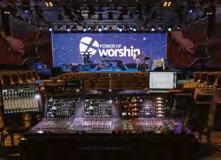
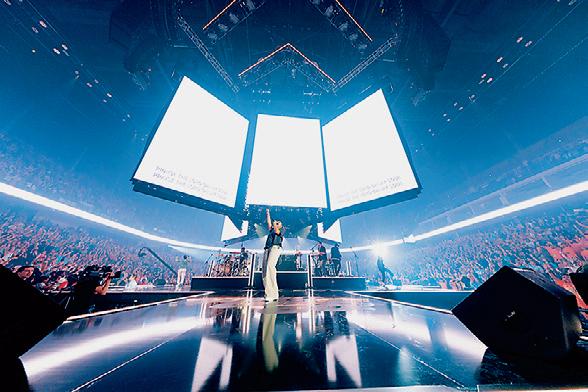
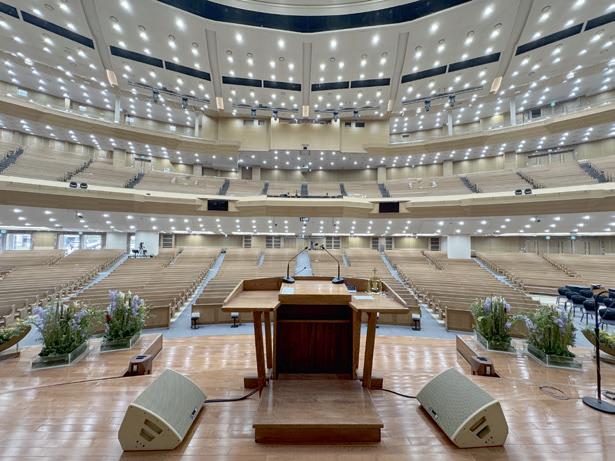
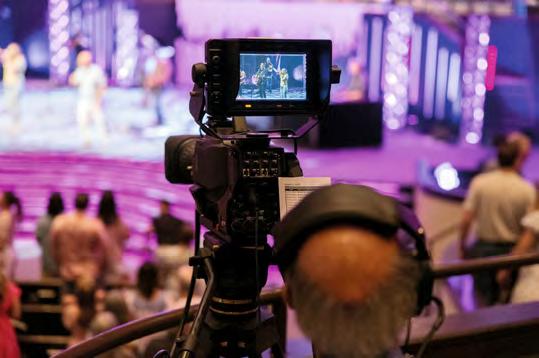
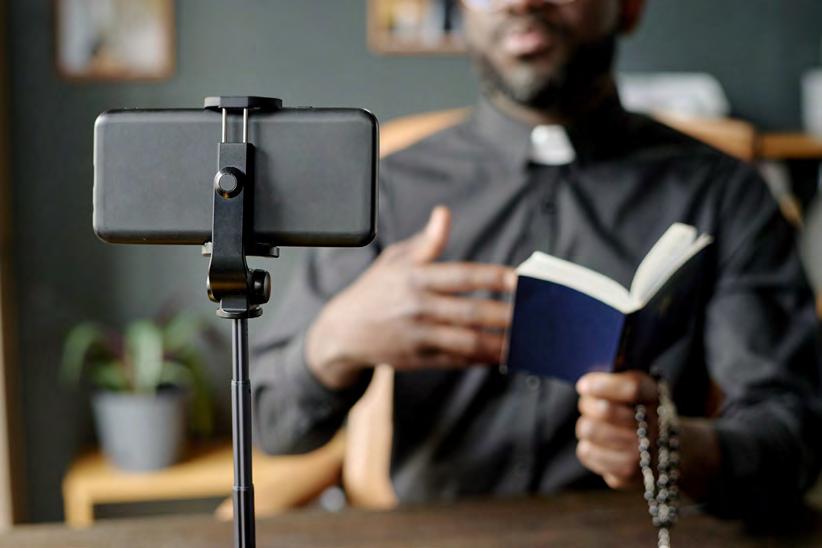
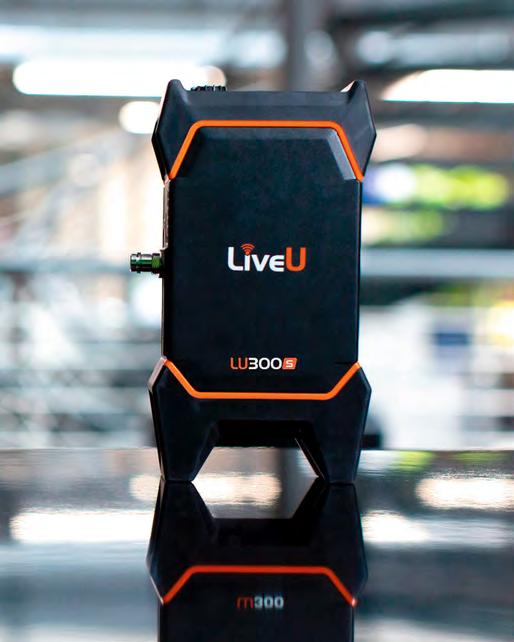
Livestreaming has become an essential tool for houses of worship today, allowing them to expand their reach far beyond the physical building. It allows members who are homebound, travelling or living far away to stay connected and participate in worship, as well as acting as a welcoming first step for newcomers who want to explore a church community before attending in person. In an increasingly digital world, HOWs can use livestreaming to foster connection, inclusivity and spiritual growth among their congregations. In his article on page 42, Troy Braghini, LiveU’s customer success manager, looks at how the livestreaming landscape is rapidly evolving, with major advancements in areas like cellular bonding, IP connectivity and cloud-based
anywhere, bringing live, realtime feeds of mission trips or summer camps for example back into the main sanctuary.
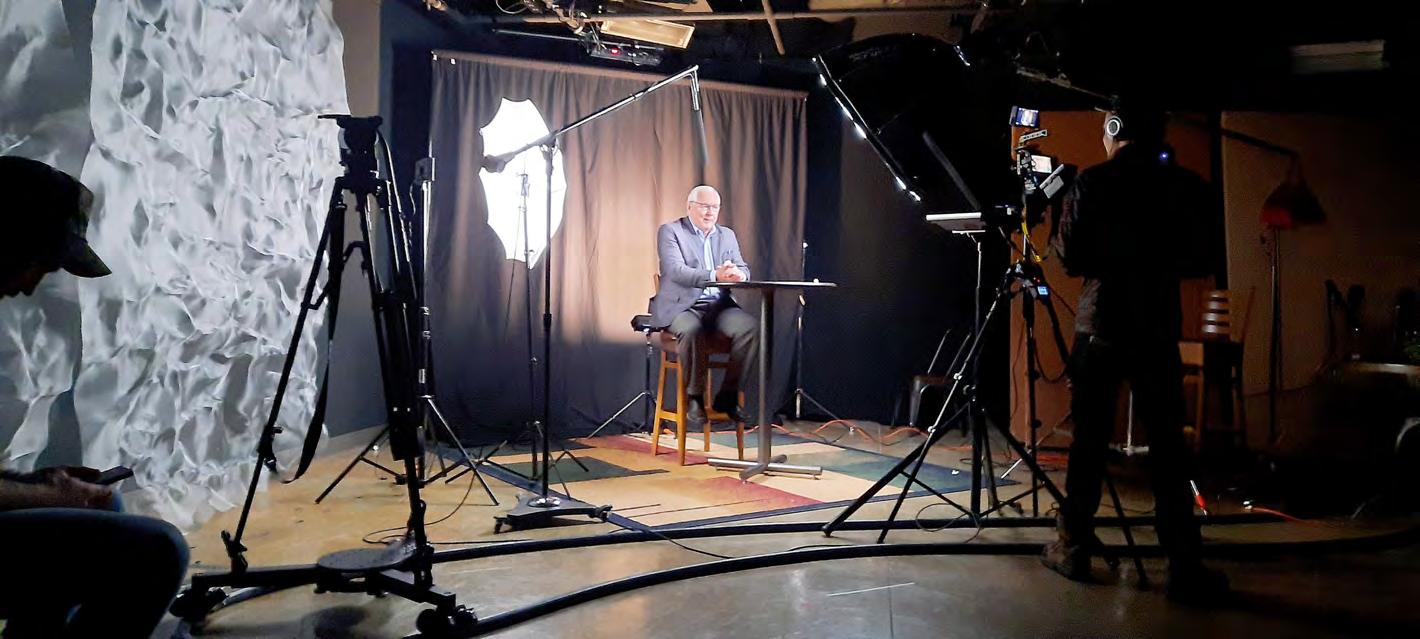
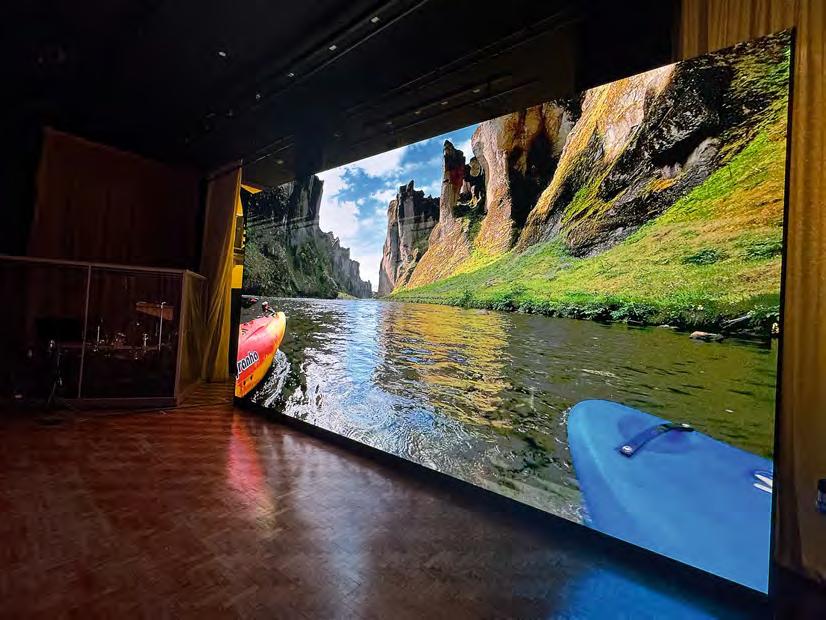
On page 36, James Liu, Canon’s national house of worship account manager, looks at the ways in which HOWs are using virtual production technologies to add visual enhancements to their services. With online content becoming an important marketing tool for any place of worship, digital content – such as lighthearted podcasts – can be played in the sanctuary or broadcast online on social channels and elsewhere. The days of simply attending a worship service each week are long gone. I hope you enjoy the issue.
Richard Lawn General manager rlawn@worshipavl.com
Nick Smith Digital media manager nsmith@worshipavl.com
Sue
sgould@worshipavl.com
Chris Yardley Video editor cyardley@worshipavl.com
Carolyn
cvalliere@worshipavl.com
Jack Stennulat Digital content creator jstennulat@worshipavl.com
Simon
Adrian
Caroline
cmoss@worshipavl.com
Jo Pugh-Jones Production manager jpj@worshipavl.com
challenging for me regarding volunteers. The problem was not a lack of volunteers, but rather experiencing way too many of the volunteers I have taking Sundays off. The issue was compounded by a staff shortage as well. So, what did I do to survive?
As I write this in late October 2025, I look back to last Sunday when I had only 62% of my volunteer crew present. I have 27 positions to fill each Sunday. Some are filled by staff and others by volunteers. I have 13 regular weekly volunteers and, last week, five of them were out along with the two open staff positions. But we were able to get through it without anyone noticing a loss of service or thinking something was wrong.
I have been in church media since 1990 and I have heard many ideas of how a volunteer ministry should be run. Usually, the common approach is to “crosstrain”, where you have everyone capable of doing all the jobs. But that really doesn’t work for our broadcast ministry because we have so many staff members (there are normally 12 broadcast staff) in all the key positions, such as front of house, lighting and video directing. Our volunteers also generally have their “optimal” or “default” serving position and that has been how we’ve operated for over 40 years. We have one camera volunteer who has been with us every Sunday since we started this ministry in 1982 and several other
years with us, non-stop.
All 13 of my volunteers serve every Sunday. Some serve both services. Two years ago, when I took over managing the staff and volunteers when my old boss retired, we did not have a ton of flexibility in volunteer or staff cross-abilities. But, today, mostly due to how I manage, schedule and train our volunteers and staff, most are now capable of serving in several different positions.
What is so special about my version of “crosstrain”? Well, number one, it combines staff as well as volunteers.
Most “crosstrain” examples I’ve heard of recommend training volunteers to do all the positions and then a staff member or two just oversees the volunteers. That will never work at our church. There are just too many performance expectations out of the key roles, so we have staff for them. While I can train volunteers and oversee them, they are support for our primary staff roles.
With that in mind, I then dissect the situation even more by observing where each volunteer has a strength or preference. I then make that their primary role and schedule them to that position by default each week. Then through volunteer shortages over the years, I have been able to expose most volunteers to other positions. Even when they aren’t as great as the “default” person for that position, they still develop skillsets in those other
areas. That way when I need to move people around, it works!
But I have found that it really helps to get to know my volunteers personally and keep them happy, so I maintain a solid roster and rarely have volunteer openings. I listen to each one of them and I know where each one likes to serve and where they don’t. Whenever I need to place someone in a position they aren’t comfortable with or don’t care for, or when I have to ask them to serve both services instead of just their normal one, I always make it up to them by not asking them to do that more than once in a while. I also respect their needs and when they need to be out, I don’t argue or fuss and I certainly don’t schedule volunteers outside of when they have said they are willing to serve. I don’t want to take advantage of my
volunteers in any way like I have been taken advantage of in the past.
Why don’t I just recruit more volunteers, you might ask? I don’t have room for them. I know it sounds funny, but when I have more volunteers and then everyone is present, then I have the problem of having volunteers with no place to serve. That, I have learned, will lose volunteers quickest of all.
So, “crosstraining” in my experience takes more than just showing volunteers the ropes and then sitting back to watch your well-oiled machine. It takes listening to your volunteers and caring about them, and then making sure they know they are appreciated. After all, I was a volunteer for decades. The Golden Rule: treat others as you want to be treated and, when you need them, they’ll be there.
It’s important to know where each volunteer likes to serve and where they don’t
Making sure volunteers know they are appreciated is key
Images courtesy of GABC Communications
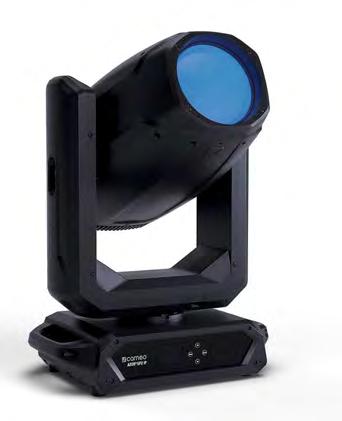
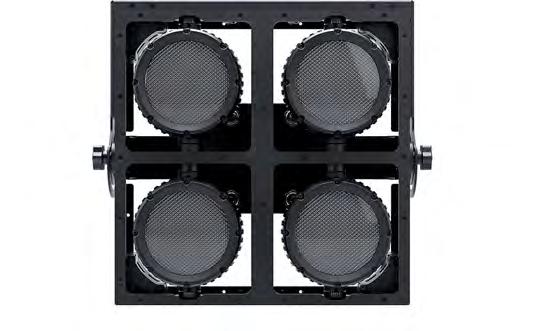
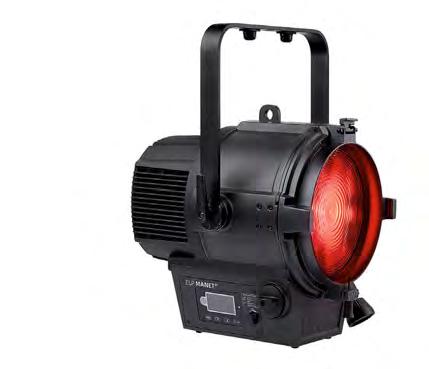
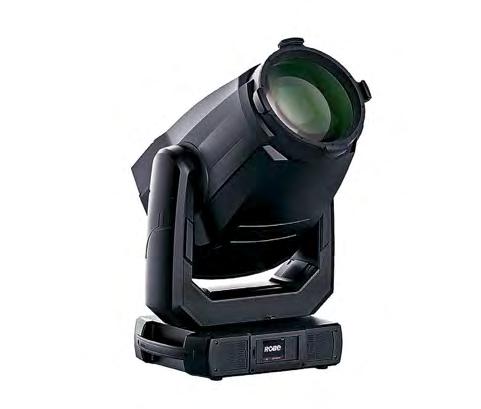
A True Workhorse Long-throw Luminaire
No compromise IP65/66 high-output low footprint LED WashBeam and FollowSpot
Beyond tech mastery
Reclaiming the heart of church production
Audio engineer Kevin Yague considers the evolution of leadership and the importance of nurturing the next generation of church technicians
IN
CHURCH
PRODUCTION,
IT’S easy to equate excellence with execution. We spend hours finetuning compressors, chasing RF interference and crafting mixes that disappear into the experience. But, over time, I’ve come to realise that technical mastery, while essential, isn’t the end of the story – it’s the doorway. The real work begins beyond it.
The truth is, gear doesn’t build culture – people do. Yet many ministries have unknowingly trained volunteers to think like machines: react, adjust, repeat. When that happens, the sound booth becomes an island of stress instead of a garden of creativity. Our teams stop growing when the goal is perfection instead of participation.
We must remember that the call to serve through technology is also a call to shape other people. The best audio engineers, lighting designers and broadcast directors in the church world aren’t just technical wizards, they’re patient mentors. They teach not by flexing their skills but by simplifying them. They create spaces where failure becomes part of formation. Because the truth is, when we value control more than community, we trade wonder for worry.
I’ve seen too many churches lose their best people to burnout or better-paying industries. Some departures are inevitable – but
MEET THE AUTHOR
Kevin Yague is a sound engineer and systems consultant with over 15 years of experience in church and live event production across Southeast Asia and the United States. He uses his expertise to write about the intersection of faith, technology and community, helping churches build sustainable teams that serve with both excellence and empathy.
many could be prevented if we shifted our focus. When your volunteers understand why the fader moves before they learn how to move it, they’re more likely to stay, grow and pass it on. It’s not about lowering standards, it’s about raising the purpose.
This is where leadership in production must evolve. Technical excellence is no longer enough; what we need now is relational excellence. The ability to see a rookie behind a console and think, “in six months, this person should know enough to train someone else”. That mindset transforms a
or processor – it’s vision. They need mentors who understand that technology in worship isn’t about performance, it’s about connection. The fader is a form of empathy. The cue light is an act of trust. The mix, when done in love, becomes a conversation between heaven and earth.
Technical excellence is no longer enough; what we need now is relational excellence
production booth into a discipleship space. It’s stewardship in action –the kind that multiplies talent rather than hoards it.
The next generation of church technicians will inherit tools far more powerful and complex than anything we’ve known. But what they need most isn’t another plugin
So as we step into 2026, maybe the question isn’t how good can our mix get but how deep can our ministry go? What if every decibel of clarity we create on Sunday carried a little more human understanding with it? That’s where church production becomes more than craft – it becomes a calling.
Kevin Yague
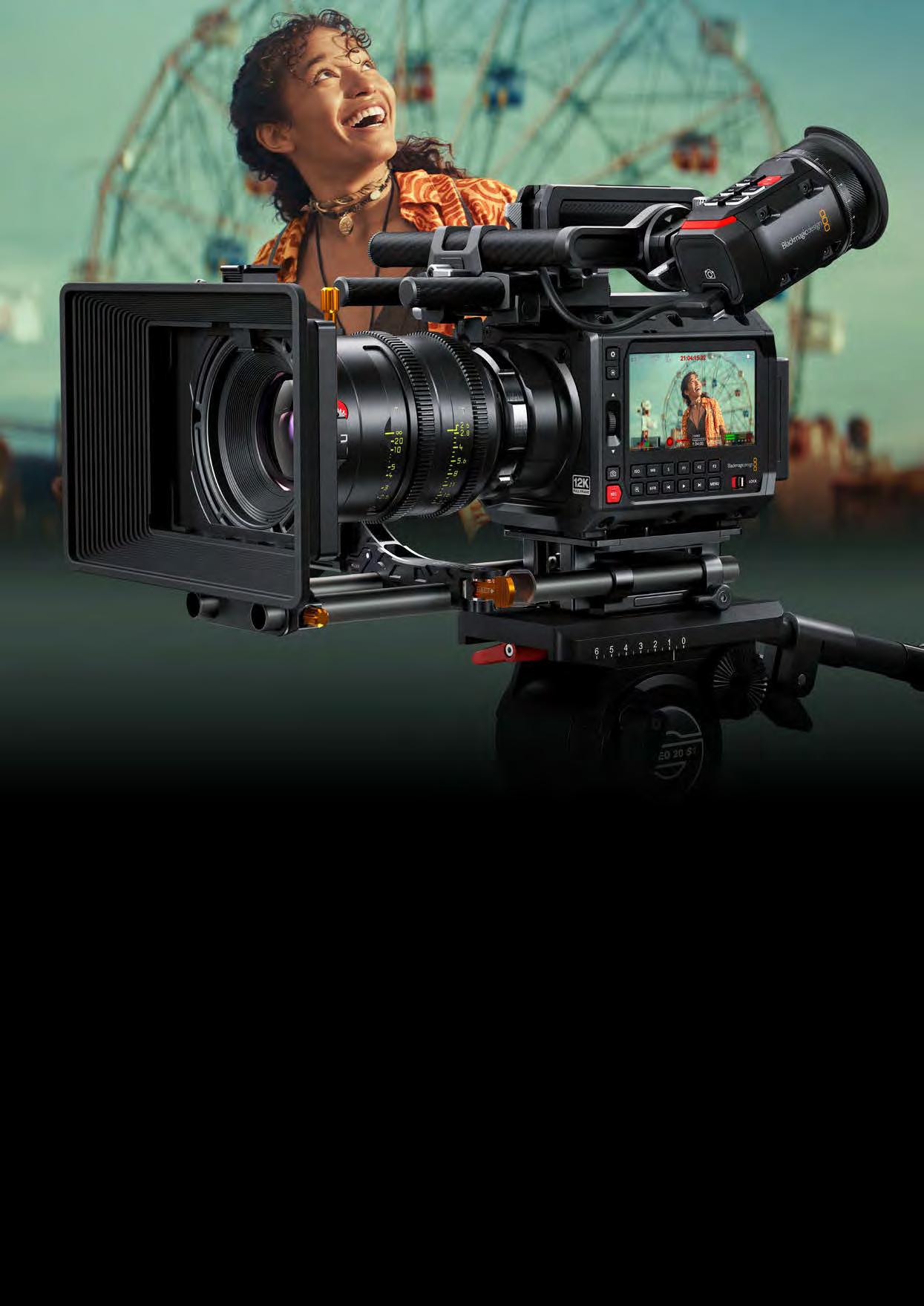
Blackmagic PYXIS 12K
Get URSA Cine’s large format sensor with 16 stops of dynamic range recording into Blackmagic RAW!
Introducing the next generation customizable cinema camera!
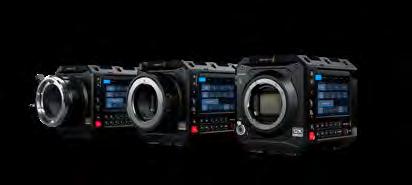
It features an extremely versatile design that lets you build the perfect camera rig for your production! You get a full frame 36 x 24mm 12K sensor with wide dynamic range and a built in optical low pass filter that’s been designed to perfectly match the sensor. Plus there are 3 models available in either EF, PL or L-Mount.
Designed for Maximum Customizability
With multiple mounting points and accessory side plates, it’s easy to configure Blackmagic PYXIS into the camera you need it to be! PYXIS’ compact body is made from precision CNC machined aerospace aluminum, which means it is lightweight yet very strong. You can easily mount it on a range of camera rigs such as cranes, gimbals or drones!
Get the “Hollywood Look” with Digital Film
Blackmagic PYXIS has the professional features you need for feature film, television programming and documentaries, however now this same quality can be used to create cinematic content for social media, YouTube videos and more. Imagine shooting with large format digital film on low budget independent films, TV commercials or even corporate video!
Large Format Cinematic Digital Film Sensor
Blackmagic PYXIS 12K features a large full frame sensor with a native resolution of 12288 x 8040. That’s almost three times larger than a Super 35 sensor and lets you shoot with a shallow depth of field or use anamorphic lenses uncropped for a true cinematic look. This amazing sensor combined with Blackmagic color science gives you the same quality as the most expensive digital cinema cameras.
Blackmagic RAW Fueled Image Capture
Blackmagic RAW is a revolutionary format designed to capture and preserve the quality of the sensor data from your camera. It also saves camera settings as metadata so you can set ISO, white balance and exposure in camera or override them later while editing, all without any loss of quality! Blackmagic RAW files are also small and fast to use making them easy to work with.
Blackmagic PYXIS 12K
S$6,375
Practice makes perfect
How virtual soundcheck changes the game
Allen & Heath’s commercial audio manager, Samantha Potter, looks at how virtual soundcheck can give technicians time to practise cues and experiment with mixing techniques
DIGITAL CONSOLES OFFER
quite a bit of value: recallable preamps, effects, easy customisation and, most importantly, virtual soundcheck. While there are setups that can give this functionality to analogue consoles, this is mostly aimed at those blessed enough to have a digital console of some kind.
Virtual soundcheck is a way to record and play back many channels of audio to/from a console to simulate the experience of having a band onstage without having them be there in-person. This can give us audio people virtually unlimited time to practise cues, experiment with mixing techniques or sharpen our ears. This also gives us a chance to loop the same small section over and over again to dial it in, without forcing a poor drummer (poor us) to hit the same drum for 10 minutes straight.
Setup
Waves’ Tracks Live software on an older laptop (they no longer officially support that software, but it was free and amazing and I refuse to let it go entirely).
Once you have the USB connection and the software, all you need to do is open the settings of your software and tell it to look at the USB connection for audio inputs and outputs. Then you’ll have (usually) up to 32 channels of recording and/or 32 channels of playback available.
Obtaining tracks
A prerequisite for this beyond having a digital console is that your console has a USB interface on it.
Most (if not all) digital consoles from the last 15 years will have a USB interface on them. You can look at the manual for your console or simply look at the back to see if yours has one available –the port will either be a USB-B (affectionately referred to as the “printer cable” USB) or USB-C. You’ll be able to plug in from that
port into a laptop or computer of your choice.
Then, you’ll need some software. There are a few choices out there, but Reaper is a good option and reasonably affordable. Other software like Cubase or Apple’s Logic can be excellent options, too. Don’t feel like you must spend money on software. I still use
I would advise most people to record a multitrack (where each input into the console is being recorded as an individual audio track) of their own service with their own musicians as often as they can. Nothing will help you get better at mixing your own people like mixing your own people. However, they’re not always the same. Or, perhaps, you’re looking
Kick drum and bass guitar have an
Vocal balance is the most important part of any musical mix
Image courtesy of Raj Edorolu
to experiment more and broaden your horizons to get refreshed techniques for your worship band. If that’s the case, there are free multitracks available out there for download. My favourites come from Telefunken’s website. My next stop is Cambridge’s Music Technology catalogue of
multitracks. However you obtain your tracks, keep a few different genres, occasions or flavours on your computer to reference or play around with from time to time.
I would also advise that while you may explore and experiment with your mixing style, you should always return to mixing your own worship band’s tracks, or multitracks, that closely resemble your worship band’s style. Mixing is incredibly fun but, if all your practice is on music that you aren’t coming in contact with in real life, it can be difficult to make decisions on the fly that match the styling and genre of your house of worship.
Practice
And now, we have arrived at the fun part: what to practise on. If you read some of my articles from last year, I detailed mixing techniques and what is most important when it comes to approaching a mix. If you haven’t read those, I highly recommend checking them out.
Kick drum and bass guitar (if you have both a bassist and a drummer) have a very important relationship with one another as they take up the same frequency/pitch space and do a lot of driving in western-style music. Finding
the right balance between these two channels will mean a lot for your mix. For an interesting experiment, put a compressor on the bass guitar with its side-chain or key source as the kick drum. This will compress the bass each time the kick is hit, allowing space for both to exist.
Effects are the herbs and spices of the mixing world. They’re the absolute last thing to add once you’ve got a stable, well-balanced mix elsewhere. But when we have virtual soundcheck and unlimited time to play around? Amazing fun. Take the time to get to know all the different reverbs on your console. Have a play with harmonics.
Slap a chorus on your vocals and ease it in to hear your otherwise-thin vocal arrangement suddenly fill out without distorting them. Add a dash of distortion to your squeaky-clean bass to create some presence. Try using only delays instead of reverbs. There are so many options.
Fade-ins and fade-outs are a special artform. Missing cues and abrupt mutes are one of my biggest pet peeves. Work on hitting your cues and preparing for incoming and exiting people. If your worship leader quietly strums guitar during prayer, are you prepared for that and is it at the appropriate level given
the circumstance? When you have a surprise reader come up to the podium, how quickly can you move the fader down, unmute then fade it back up?
Vocal balance is likely the most important part of any musical mix (with vocals, that is). We need to hear and understand what is being said to receive the message. We can get quite a bit from just the music alone, but the lyrics are undeniably important. Can we hear the primary vocals? Are the background vocals muddying up or distorting the lead vocal(s)? Are the vocals comfortably sitting atop the music? Are the vocals so far out that it sounds like a karaoke party?
These days, mixing is a side gig for me. I love it, I understand it and it scratches an itch in my brain that my other work and hobbies don’t quite scratch. But with virtual soundcheck, I can keep my skills sharp for the weekends I pick up a service. Virtual soundcheck has been one of the greatest advances for mix techs and engineers in the live sound field. We should all be taking the time to set it up and use it routinely. I cannot overstate how great this technology is and what a difference it can make for us all. When was the last time you practised your craft?
important relationship with one another
Expanding the reach with networked audio
Kurt Howell, DAD sales director, North America, looks at how networked audio can be used to reach the widest possible audience
AV TECHNOLOGY WITHIN THE
house of worship industry has evolved incredibly within the last decade as more churches have moved to embrace the “holy trinity” of live sound, recording and broadcast/webcasting as part of their standard operations. We find ourselves now in an exciting time as networked audio has rapidly gained favour within the pro audio industry and has finally begun filtering into worship spaces.
Networked audio solutions are making it easier than ever before for churches to unify these three equally important AV disciplines as part of the streamlined technical approach. Previously the purview of churches with ample budgets and trained technical staff, the technology and the means to operate it are now coming into the realm of affordability and ease-ofuse suitable for a wider range of parishes.
Meeting the flock where they are
Although many churches across the world had been experimenting with recording and webcasting services in the previous decade, the pandemic was the true genesis for these
technologies in the house of worship market. Many parishes invested in these technologies during the lockdowns as a way of keeping their communities together and, as a result, it has ultimately changed the way that people stay connected with their faith. Although the pandemic has been in the rear-view mirror for some time now, the advantages of live webcast capabilities and asynchronous access to services have not been lost on worshippers. No longer is it simply the business of showing up on Sunday morning – now, worshippers can engage with their faith when it fits into their lives. This flexibility ultimately allows for a more robust church community with a much wider reach, and the ability to support parishioners in a way that fits the fast-paced lives that they live.
Investing in the future
In addition to providing a more flexible worship experience for parishioners, offering recorded and streaming options for services, musical performances and other faith-based activities also provides additional potential revenue streams with which to support the church. The ability to cast this wider net and reach a larger audience is a
sound, long-term investment for any church community. The current level of technology available is such that the initial outlay is not nearly as imposing as it would have been even a few years ago. As these trends continue, doing so will allow a church to keep in touch with its current community while welcoming new generations of the faithful.
Adapting existing technologies for a modern workflow
Outside of the realm of megachurches, the prospect of integrating recording and broadcast capabilities into an
existing live sound setup may seem daunting. In previous eras this was certainly true, given the relative complexity of designing a setup that could incorporate multiple analogue signal paths of audio and video.
AoIP (audio over IP – distributing digital audio signals over the internet or local network connections rather than using traditional analogue routing) has changed all of this. Individual interfaces – or modular ones – can shepherd analogue or digital audio signals and convert them as needed. Instead of juggling multiple formats in a complex rack setup, digital audio feeds are easily coordinated via Dante and routed to any number of devices as
Better yet, modern digital consoles often already have this capability and it is simply not being utilised. The ubiquity of Dante within adjacent industries that make use of AoIP means that there may well be a Dante expert in the midst of your parish already. If not, there is a glut of educational material on the topic that can quickly get your church’s AV team up to speed on the technology. Once this knowledge has been obtained and nominal investments in the proper interfaces have been made, your team will be well on their way to a networked audio setup that can tackle your church’s recording and webcast needs.
In conclusion
As these technologies continue to evolve, the barrier to entry for a church to embrace a holistic, unified approach to networked AV that reaches the widest possible audience will continue to get lower. The ability to get high-quality audio and video is already readily available without having to invest in a studio-level array of recording and broadcasting equipment – it’s simply a matter of recognising that these rapidly maturing AoIP technologies can raise the horizons of what we thought possible. The congregation of the future can truly be anywhere at any time, so it is to the benefit of our faith communities to embrace these technologies to provide wisdom and spiritual guidance in as many ways as we can.
www.digitalaudio.dk
Kurt Howell
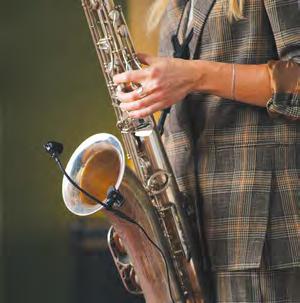
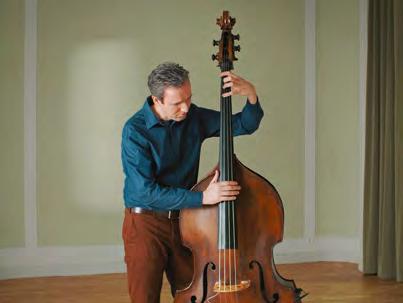
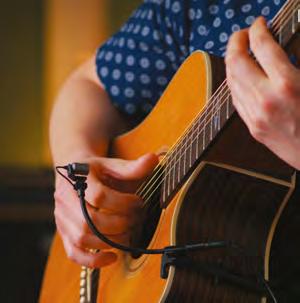
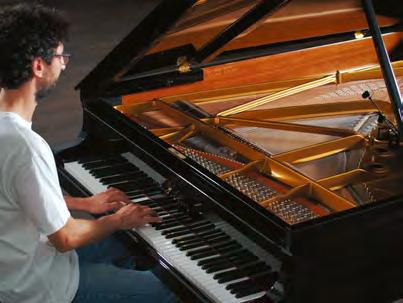
The New Reference For Close Miking Instruments
The Miniature Clip Microphone system (MCM) delivers true Neumann sound on stage for wired and wireless operation. Flexible mounting options, fully modular, ultra durable.
TAKE YOUR LIVE EXPERIENCE TO A NEW LEVEL.
Q&
Digital outreach
FOR OVER 40 YEARS, MINISTRY Brands has supported churches with purpose-built technology that helps them connect more deeply with their congregations and communities. It serves over 90,000 faith-based organisations and 10 million users with an integrated platform that provides online giving, websites, church communications, safety, background screening and livestreaming.
Why is it important for churches today to reach the younger generation?
Connecting with younger worshippers today is essential. Engaging Gen Z in their faith journeys strengthens local ministries and expands community, while also providing meaningful guidance. Church technology can help close the gap between Gen Z and their local churches, serving not as a substitute for in-person engagement but as the bridge that leads them there.
How can the right technology deepen engagement?
Rather than viewing attendance as a static benchmark, churches can focus on deepening engagement across digital and in-person
channels. Whether someone starts by watching a livestream or joins a prayer group online, these moments can be stepping stones towards other forms of participation. The right technology helps churches track engagement across multiple touchpoints, enabling them to guide spiritual exploration into long-term connection.
Has the pandemic accelerated people’s engagement with digital content?
Even before Covid-19, younger churchgoers were turning to social media, streaming platforms and podcasts. What the pandemic did was reveal how essential it is for churches to meet people in these digital spaces. Today, hybrid worship models are no longer temporary solutions; they’re an integral part of how churches operate. Livestreamed services, mobile-friendly giving, communication apps and digital messaging are tools that help extend the church experience beyond Sunday mornings.
How can churches ensure they’re not alienating the older generation?
Technology should support ministry, not replace it. While younger
Jamshed Patel, chief technology officer at technology provider Ministry Brands, looks at how churches are diversifying their media content to reach the younger generations
members may expect mobile-first communication, older members still value personal calls, bulletins or in-person fellowship. The key is flexibility and understanding the needs of congregants of all ages. Offering online and in-person options for giving and participation helps ensure all generations feel included and supported.
Does digital content discourage younger worshippers from attending in-person?
To increase engagement among younger generations, pastors, stewards and other staff need to know their congregants and find ways to connect with them on their own terms. For younger members, digital engagement is the beginning of connection, not the end. Many explore churches online before stepping inside one. That first livestream, podcast or Instagram post may be what sparks their interest. However, digital content can’t and shouldn’t do all the work alone. Churches need a balanced strategy to follow up that curiosity with personal invitations, discipleship opportunities and real community.
Can technology help reverse the trend of declining worship numbers?
With automated check-ins, realtime messaging and livestream capabilities, members stay connected in ways that feel natural and timely. Behind the scenes, centralised data allows ministry leaders to track participation trends. This shift transforms engagement from a passive, one-way direction into a responsive, relational experience. Digital doesn’t mean impersonal. When used intentionally, it does the opposite: helping churches reintroduce the personal touch
that’s too often lost in overloaded systems.
What types of content are churches turning towards?
Churches often regard a diverse range of content formats, such as audio, video, livestreams, mobile apps and social media, as essential for meeting members where they are and staying present in their daily lives. Audio content is especially effective at creating emotional engagement. Whether it’s curated worship playlists, sermon excerpts or daily devotionals, churches are using sound to help members stay grounded in their faith during commutes, workouts or even quiet moments at home. Video content, too, continues to grow in impact. Short testimonies, youth-led video devotionals and clips from services can be shared easily across social platforms, broadening reach and drawing new participants into the fold.
How easy is it for churches to find the money to invest in new equipment?
Figuring out how to make the proper investments in technology and necessary equipment can be challenging for churches on a budget, but it doesn’t have to be. One of the biggest misconceptions about digital ministry is that it requires a large upfront investment. In reality, many churches already have the essential components in place, like Wi-Fi, smartphones, laptops and volunteer support; they simply need to optimise what they’re already using. Often, a few strategic upgrades or smarter system integrations are enough to significantly improve how they connect with their congregation.
www.ministrybrands.com
A decade of eMotion
THE THREE-DAY MOTION
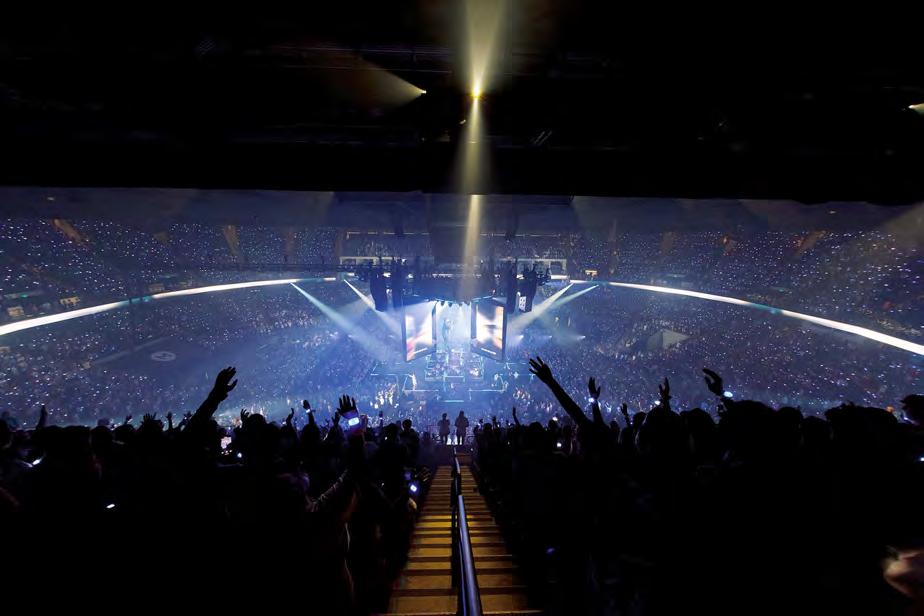
Conference is an annual event created by Church of the Highlands (COTH) held at the Birmingham-Jefferson Convention Complex (BJCC) for students aged 12–22. COTH recently celebrated its 17th year of the Motion Conference, and has relied on Brentwood, Tennesseebased event technology company CTS AVL to supply the AV equipment for the past 10 years.
The conference is one of the largest gatherings of young people in the US, with this year’s event attracting around 17,000 people. It brings together all the youth groups from COTH’s 25+ churches across the southeast of the US and features live music, educational content and community-based breakout sessions.
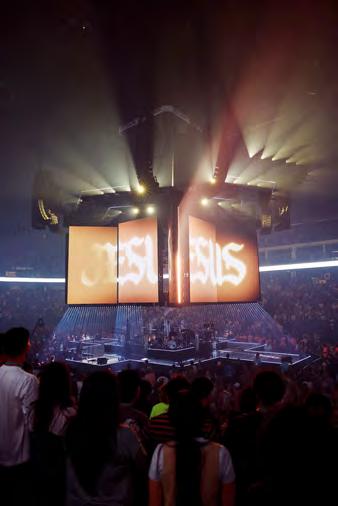
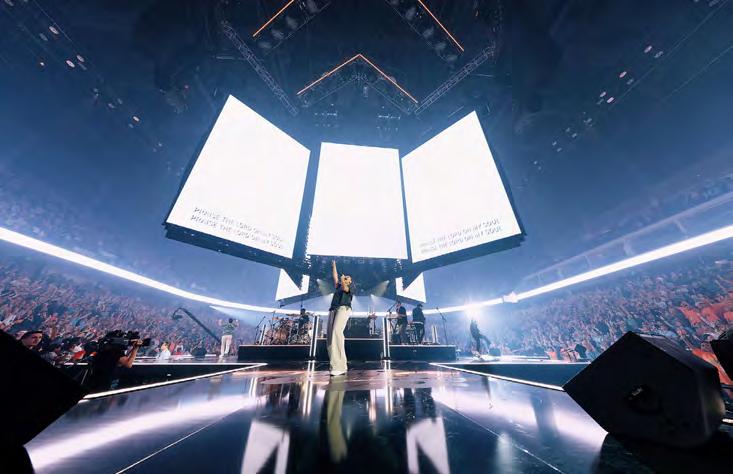
Marking a significant new feature to this year’s conference was an innovative “in-the-round” stage design. The aim of the immersive setup – where attendees surrounded the stage on all sides – was to bring Motion’s signature energy even closer and deepen the sense of community among participants.
“It was a traditional end stage event when we first started 10 years ago with maybe 10,000 kids, but now it’s grown upwards of 16,000 and completely fills the BJCC arena,” explains Michael Taylor, CTS AVL president. “We’d been talking about doing an in-the-round layout for a couple of years. This is a general admission event with everyone paying the same ticket price, so it was essential that regardless of where they sat, they experienced the same powerful energy and full experience in every session.”
To cater to the new stage design, CTS AVL had to consider the positioning of the equipment to ensure that sightlines weren’t affected. The speaker inventory increased from over 100 boxes from last year’s event to more than 180 this year, with the CTS AVL team having to reconsider the curvature of the boxes to cover the lowest to the highest seats. “We were basically doubling up on the equipment that we’d supplied in the past,” continues Taylor. “Once you go in-the-round, the layout has to be clean so that everyone is getting the same experience. We also had to redesign our plans a few times to take into consideration the weight of what we could hang.”
The extensive kit list included 132 JBL VTX V20 3-way line arrays and 32 JBL VTX B28 dual 18-inch subwoofers. Four VTX B28 suspension bars were used to support 24 of the B28 enclosures. The JBL inventory also featured an additional eight VTX B28
subwoofers on the ground and 24 VTX F12 2-way speakers as wedges. The FOH drive rack included Smaart Software with preamps/test mics, Lake Controller system processor control software, a Lake LM44 system controller and multiple zones of RTA measurement microphones.
Two Yamaha Rivage PM10 digital mixing systems, two Yamaha Rivage RPIO rack packages and two Yamaha Rivage R10 DSP packages were supplied for COTH’s worship band, while a DiGiCo setup consisting of two Quantum 338 mixing consoles, Optocore HMA cabling and an SD-Rack stagerack were provided for guest bands and artists. Four Waves Soundgrid servers completed the audio setup.
The Shure microphone package consisted of nine P10T PSM 1000 dualchannel transmitters, two PA821A 8x1 active IEM combiners, one Axient Digital dual-channel and three Axient Digital quad-channel wireless microphone receivers.
For visuals, CTS AVL implemented 832 INFiLED 3.9mm curved LED panels to create eight IMAG displays, with Novastar MX2000 processors and Novastar CVT10 Pros for fibre conversion for the INFiLED walls. In addition, 140 ROE Visual 8.33mm CB8S full tiles and 28 CB8S half tiles used Brompton Tessera SX40 processors with Brompton Tessera XD data distribution units for fibre conversion. Two NovaStar MCTRL4K LED display controllers and a Barco E2 multiscreen switcher were also utilised. However, the biggest consideration was preparation, explains Taylor. “The buildup to the event had to be on point, so we doubled the amount of preparation time in the shop beforehand and marked out all the cables so that we were completely ready the minute we walked into the venue. We had to consider set changes as well – you’re in the middle of the room and visible at all times – you can’t hide behind a stage curtain. So, we had to think about each session differently and stack equipment so that we could be ready to change from a pastor speaking to a full band.”
The in-the-round layout proved to be an enormous success, allowing COTH to increase seating capacity and help more people grow in their faith. “Now we’ve opened the can of worms, we can’t go back,” smiles Taylor. “We all learned so much doing it for the first time, and the best part of doing repeat events is that you get to grow and be better each year. The feedback from the client, the preparedness of our team and the onsite execution came together to create an unforgettable event.”
www.churchofthehighlands.com www.ctsavl.com
www.motionconference.org
CTS AVL supplied an extensive JBL line array system
The setup consisted of an extensive range of INFiLED and ROE Visual screens
Conference was held at the BJCC in Birmingham, Alabama
High-quality cables in accordance with the latest standards
Clear pictured price list for planners and installers
Shop selector and online configurator
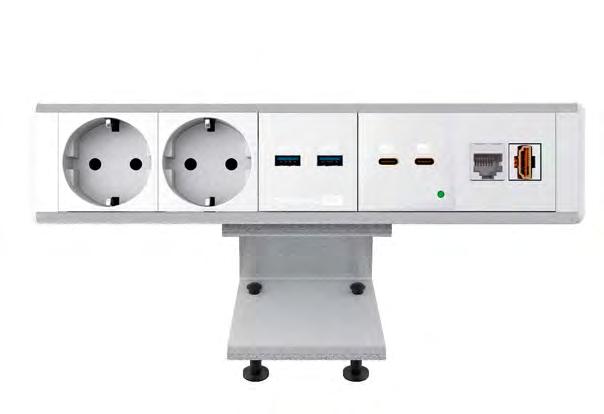
Modular housing systems for wall, table and floor mounting
Individually configurable connection solutions
SOMMER CABLE based in Straubenhardt/Germany was founded in 1999 and is now one of the leading suppliers of professional high-quality cable and connection technology with a focus on the audio, video, broadcast, studio and media technology sectors. The product range including the in-house brands HICON, CARDINAL DVM and SYSBOXX covers cable bulkware, connectors, connection cables, individually adaptable distribution systems and electronics.
Myung Sung finds a new voice
Soundus has supplied Myung Sung Presbyterian Church with a new DiGiCo Quantum852 to replace its ageing but ever-reliable SD7
FOUNDED BY SENIOR PASTOR
Dr Kim Sam Whan in 1980, Myung Sung Presbyterian Church remains the largest Presbyterian church in the world. Located in Myung-il-dong, Seoul, the church has over 30 plants, including Myung Sung First Presbyterian Church and Myung Sung Second Presbyterian Church, together with an additional 10 “screen” video churches. In addition to being the largest, Myung Sung demands best-in-class AV technology to ensure its multiple services continue to draw their dedicated congregants.
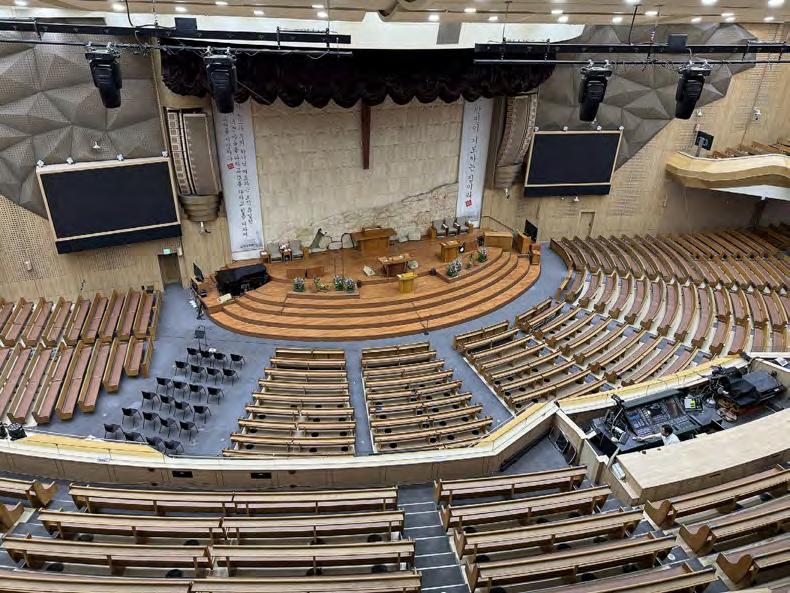
Constructed adjacent to the old building over a two-year period, the new Jerusalem main sanctuary opened its doors on Christmas Eve 2011. Five Sunday services draw worshippers from a wide catchment area of the South Korean capital city to the 6,500-seat venue.
Translating to “voice”, Myung Sung’s impressively grand scale requires that all the networked audio in the neighbouring chapels and smaller rooms can be routed via fibre to the main control room. From a single PC interface, bidirectional audio is transmitted via a matrix switcher over Cobranet fibre between any of the connected rooms.
Having always demanded firstclass equipment to enhance its services, the inventory of this prestigious church greatly benefits from reliability and longevity. Despite hosting daily services including five on a Sunday, the Jerusalem sanctuary has not had to invest in any major wholesale upgrades over its 14-year timespan. Even by megachurch standards, the scale of the service with its 1,000-strong choir, 50-piece orchestra, musicians and worship leaders, continues to impress both its in-house and broadcast audience.
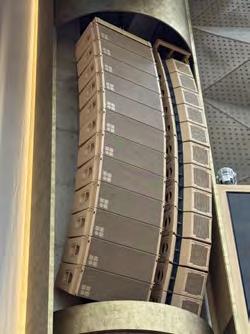
Located to the right of the stage, the choir and the orchestra are amplified by 20 DPA stereo pairs suspended from the ceiling and 20 wired microphones respectively. Additional DPA stereo pairs are suspended above the main stage and 20 channels of Shure Axient UR40 wireless together with PSM900 IEMs are preferred by the soloists, musicians and worship leaders. In total, 120 microphone channels are routed to three DiGiCo SD-Racks and two SD-MiNi Racks and to the front of house console. The resultant front of house mix is transmitted over AES/EBU to the pre-existing d&b audiotechnik
D12 amplifiers that power the 12-per-side J-Series loudspeakers. Operating daily on a DiGiCo SD7 control surface at FOH, Myung Sung Presbyterian technical director Kim Dong Jun was aware that the console was ageing and may need replacing in the not-so-distant future. “I was very comfortable with the SD7, but the control surface was showing some signs of wear and tear. For example, a digital console is like a big computer, whereby the screens start to gradually degrade. We mix audio each day and the SD7 had not let us down over the past 14 years, but we didn’t want to risk any failure.”
Over a three-year period from 2022, Kim had to convince the church elders to provide a budget for a digital console upgrade. “This was made quite difficult, because the SD7 had operated perfectly each day for over a decade, and so the committee was not entirely convinced.” The waiting game over three years proved to be good timing with the Quantum852 console becoming available during the interim. Getting to grips with a Quantum852 at the KOBA Show 2024 convinced Kim that he had found the ideal SD7 replacement. Following his
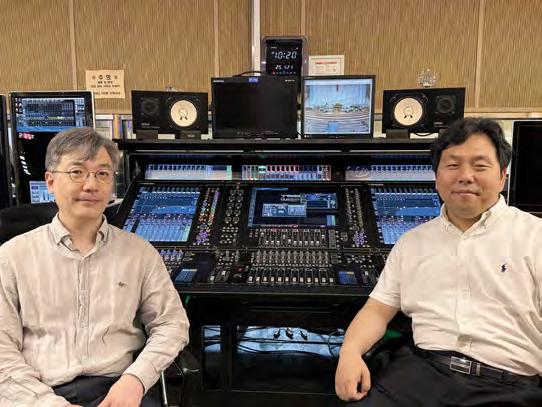
L–R: Lee Dae Eun with Kim Dong Jun
The impressive Jerusalem sanctuary hosts five
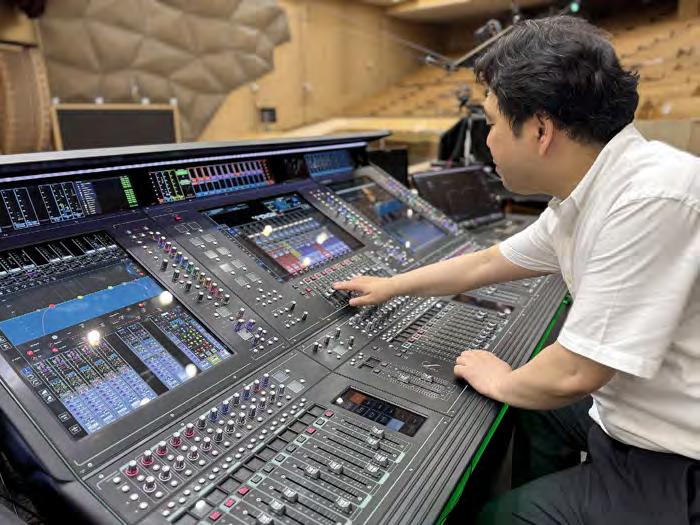
Myung Sung’s technical director Kim Dong Jun mixing on the DiGiCo Quantum852
first demonstration, he remarked: “DiGiCo seem to know exactly what the engineers need.”
The Quantum852 was delivered and installed in March 2025, together with SD-Racks fitted with 32-bit cards.
Capable of receiving up to 384 inputs, the Quantum852 provides more than enough open channels for system expansion well into the future. For now, Kim is enjoying driving the 852 through the many and varied services.
“Like the SD7, the Quantum852 incorporates dual engine redundancy over the Optocore fibre ring, but with much newer hardware. In comparison to the SD7, the preamplifiers sound a lot better, the noise floor is a lot quieter and I don’t need to mix as thoroughly or take as many steps as before. The overall audio quality of the Quantum is incredible, and the congregants can now identify even the slightest musical nuance.”
Hands-on training was provided by DiGiCo distributor Soundus and Kim is now demonstrating the manyinherent features of the 852. “Both the professional and volunteer sound teams enjoy the functionality and ease-of-use features of DiGiCo. By turning on the virtual sound check and playing a past mix through the main PA, the engineers have easily familiarised themselves with the functions, controls, settings and parameters.”
Between services, Kim enjoys experimenting, especially with the addition of the Fourier Audio transform.engine with its wide variety of added built-in plugins, creating certain resonances.
“With the processing available in
the transform.engine, I now have access to an even more powerful DiGiCo ecosystem,” confirms Kim. “I can feel the difference in the tube processing as the tube amp modelling on the Mustard gives me the freedom to shape the sound as I want it. The Soothe plugin is a resonance suppressor that cleans up the audio signal and, to date, is one of the most demanded plugins. Using Mustard and Chilli makes the 852 feel like a completely new console. The additional compressors added to the Mustard processing are excellent.”
With a Snell & Wilcox Kahuna console added to the broadcastquality inventory, the 11 Panasonic camera feeds are switched and transmitted from the upper-level technical suite. The resultant audio for video mix of up to 504 channels is split from the front-of-house Quantum852 to the loudspeaker system and another Quantum852 residing in the technical suite. The
The original d&b audiotechnik J-Series loudspeaker system continues to fully function
secondary 852 was stipulated for its audio quality and ensuring consistent broadcast levels are correctly output to both viewers and listeners.
Compared to the previous mixer, the engineers, including technical head Lee Dae Eun, noticed a discernibly lower noise floor with the 852 A sizeable investment, perhaps, but one that will keep on giving with many years of aural and mixing pleasure ahead. Currently installed with DiGiCo’s V20 software, continued firmware updates will add new features and audio dimensions to the mix. An age of mixing discovery has commenced for the self-confirmed pioneer. With the 852’s features and transform.engine’s plugins, Kim is continuing to inspire and lead all those around him with his experience and enthusiasm.
www.digico.biz www.msch.or.kr www.soundus.co.kr
New Hog. New Tricks.
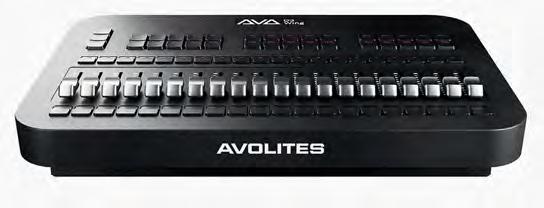
The next generation of Hog is here! The Hog family brings a robust set of road tested features featuring RGB-backlit keys and 10 RGB-backlit motorized faders on the Hog platform programmers know and love. Boasting portability, adaptability, and cutting-edge technology, the Hog family is the perfect fit for any production environment. #newhog
And then there were three…
RDK Consultancy has used its combined knowledge to design a new AV setup for ARPC’s recently constructed sanctuary
WHEN ADAMS ROAD
Presbyterian Church (ARPC) took the leap to build its third church location in a new residential housing project, it commissioned three leading AV industry veterans before the architectural blueprints were drawn. Excellent foresight, or merely circumstantial timing, the decision to draw the combined talents of Kheong Sen Lim, Daniel Loh and Reuben Ong to their inner sanctum proved to be a masterstroke.
The humble origins of ARPC witnessed 16 congregants first gather at a Woodlands ministry in 1983. Merging the Woodlands and Adam Road Ministries to form the Warm Ministry eight years later,
branched out to create a second location in Bishan. Fast forward to 2020, and the opportunity to build a church on virgin land at Bukit Batok West Avenue 5 was taken.
The new plot led to the inception of a new AV and acoustics consultancy in Singapore. Abbreviated from their given names of Reuben, Daniel and Kheong, RDK has now come of age as Loh explains. “A friend and member of the church asked me to place a bid for their consultancy tender in 2021. I discussed this with my colleague Reuben and friend Kheong, and between us we decided to propose a package for the church, which in turn prompted us to start RDK Consultancy.”
October 2010, where he continues to drive the AV standards ahead of the pack. Overcoming the initial challenges to create The Star PAC in addition to ensuring the unique venue asserts its headliner status as Singapore’s premier performance venue, has given rise to Loh’s own star credentials. Catering for a diverse range of weddings, corporate events and concerts, he continues to oversee all things AV within The Star PAC’s 5,000-seat theatre, 770-seat multipurpose event space and rooftop venue from Monday to Saturday. The venue transforms itself into the New Creation Church (NCC) each Sunday. As a resident in Australia’s upper Victoria State, Lim adds three-and-ahalf decades of extensive experience to this gang of three, including performing arts technical design and management, architectural acoustics, facility management and consulting.
His extensive experience includes his own independent consultancy, in addition to roles at d&b audiotechnik APAC in Singapore, Marshall Day Acoustics in Melbourne and Electronics & Engineering Pte Ltd in Kuala Lumpur.
Loh elucidates that although Ong and himself take joint responsibility for the audio, visual, lighting and staging design, Ong provides more schematic work in the background. “In addition to handling the project timeline from conception to completion, I focus more on the front end with the clients,” further explains Loh. “With his background managing venues, Kheong provides the acoustical analysis and recommendations. However, because of his extensive experience working as a distributor, and in business development for major manufacturing brands, many of our design principles are co-developed with Kheong.”
L–R: RDK’s Daniel Loh and Soundsmith Solutions’ Nicholas Loe
The pastor’s view of the fourth-level sanctuary
Twelve months after RDK’s appointment, the ground was broken, and construction began at Bukit Batok West Avenue 5. “The church had the foresight to draft us in at a very early stage, so we were fortunate enough to liaise with the architect and the other stakeholders,” continues Loh. “By understanding how they were progressing with their design and build, we could envelop the acoustics and AVL technological package into their evolving design. Kheong, for example, submitted the acoustic specifications including the NC rating, and made recommendations in terms of noise control, such as door seals.”
Working through ARPC’s technical requirements and their operations, RDK took the combined knowledge to other specialised consultants, the architect and others to conceive a design that would ultimately be submitted for tender. “Having been handed the design concept by Pastor Joe, RDK had to be quite adamant with its recommendations, although we did not want to appear as over controlling,” adds Loh. “If there was a budget restriction or the church was not used to a certain operational way of working, we would not push the client to make a change.” However, RDK needed to be a little more forceful when liaising with the architect and interior designer. “The architect needs to understand what the AV and lighting operators require,” continues Loh. “Our concerns ultimately reflect those of the client.”
By focusing on what AV technology should be installed into the individual rooms, the design concept was made into a tender document. This was then sent to prospective systems integrators, with those who could not meet the specifications eliminated. Demonstrating a pedigree in houses of worship since their inception in 2001, Soundsmith Solutions was awarded the contract to install the AV
and lighting technologies throughout the four-level building. “Ultimately, the client was asked to make a final decision from the remaining entries, because they will ultimately be working with that same SI for servicing and repairs, following the completion of the project,” explains Loh.
Originally scheduled to be completed in June 2024, a construction delay ensured the Soundsmith Solutions team was called late to site to oversee the installation of the loudspeaker, category and fibre cabling work. Reporting directly to Loh’s consultant
plans had to be reiterated before we could commence our works.”
Working directly with the architect and the interior designer, RDK was encouraged to amend constructional elements that could benefit their client. Having read the plans for the main fourth-level sanctuary, Loh was concerned that the wide-open stage had no stage wings. He duly promoted a reduction in the stage length by creating two enclosed walls added at either end. “Wearing my theatrical hat, I felt that the church would benefit from having a discrete space where the musicians could enter out of sight from the audience. We developed this concept with the architect, who agreed with our design proposal.”
Concealed within the walled spaces, RDK’s recommendation to create a mezzanine level was also approved, providing the church with more storage space. Located near their outputs, the cable runs have been reduced by installing the equipment racks here in addition to lift access.
team, Soundsmith Solutions managing director Nicholas Loe was encouraged to communicate freely with Pastor Joe and his team. “With the clock ticking down, and with some decisions needing to be made immediately onsite, there was a danger that the reporting lines may slow down an action,” comments Loe. “However, I would always communicate back to RDK and seek their approval before proceeding. The communication channels were generally open all the time, and any delays that did occur came more from the construction works.”
To cover for holidays and sicknesses, Loe appointed two project managers who would revolve shifts to manage the project onsite. A steep learning curve followed as Loe testifies. “Initially, the main contractor was moving forward with their own works, but in doing so they would not inform us that we could proceed with the AV integration for a vacant room. Without involving the consultant, we had to improve communications with the general contractor. For example, having submitted drawings and marked the locations for the stage cable trays in the main sanctuary, we discovered that the cable conduits were the wrong specifications and inserted in the wrong place. These
One of the key demands made by the church committee for the fourth-level sanctuary was consistent audio coverage. “The church worship services are not overly complex, but intelligibility was a chief concern,” states Loh. “Devoid of pillars, all the seats in the rectangular sanctuary are blessed with a great view of the stage, so audio intelligibility could be attained. Further to our assessments, we found that a curvilinear array would be one of the better solutions for this room and should conform to their budget, compared to a line array or point source solution. Despite it being a premium brand, I recommended an L-Acoustics loudspeaker system, because I believe that such an investment will ultimately pay for itself over the years.”
Based on a left and right array design of Arcs A10i models, Singaporean L-Acoustics distributor Concept Systems Pte Ltd provided room simulations using the proprietary Soundvision software. With the upper three Arcs A10i Focus models in each array providing 10° horizontal coverage and a fourth A10i Wide module offering 30°, the results encouraged the RDK team. Addressing the lower frequencies down to 35Hz (±3dB), four centrally arrayed KS 21 21-inch subwoofers in cardioid mode proved ample. Finally, the first few rows of seats are addressed by eight 5XT coaxials recessed into the lip of the stage. The speaker inventory is complete with the addition of four X12 speakers deployed as stage monitors. Located in the rear room rack, the entire speaker system is managed
An L-Acoustics Arcs A10i loudspeaker solution provides intelligibility and even coverage
L-Acoustics 5XT coaxials recessed into the stage lip serve as front fills
and processed by a combination of four LA4X and LA2Xi amplified controllers.
“Working with the client, we maintained a very neutral space for the audio,” explains Loh. “Initially there was more energy directed towards the front seats, but Soundsmith Solutions adjusted the acoustics to ensure a more consistent audio. Operating from an open production area at the rear of the room, the audio technicians wanted to hear similar audio to the bulk of the congregation. It’s quite a simplistic view to assess how many SPLs you lose by the time the audio reaches the production area located at the rear of the room. However, we set a target of ±3dB and achieved around –2dB in broadband.”
together.”
Sennheiser. “The auto-setup and intermodulation-free features of the reliable Digital 6000 system we use in the main theatre boosts the confidence of our operators,” suggests Loh. The church’s EW-DX system comprises four modest, but reliable, channels of EM2 receivers paired to four SKM-S handheld transmitters and MMD835 capsules. Each receiver and transmitter is boosted by its own dedicated ADP UHF antenna.
An Allen & Heath Avantis 64-channel console was preferred for both FOH and monitor mixing. With Continuity UI, the church technicians manage a seamless flow between the physical controls and the onscreen software, such as gains and pans on the rotaries. Upgraded with a dPack software package, intuitive operations are provided by the control surface’s two Full HD touchscreens and corresponding rotary controls. Operating within the Everything I/O ecosystem, the Avantis connects to three portable DX168 stageboxes and a DX012 remote output expander for internal broadcasting to other rooms. Dante audio networking has been enabled by inserting a dLive Dante 64x64 card inside one of the two I/O ports.
Providing simple operation, a LiveMix personal monitoring system was specified for the church’s musical requirements. A LiveMix Mix-32 central mixer/distributor connects to eight mounted CSDUO personal mixers for up to 16 musicians via a Netgear switch over the Dante network. In his
Citing user familiarity, the client specified an extensive Blackmagic suite of video editing equipment including an ATEM 2 M/E Constellation 4K live production switcher connected to a SmartvideoHub 40x40 router.
“The church committee expressed a preference for a tactile computer browser solution instead of a video control surface,” adds Loh. “From an operational perspective, this was a first for ARPC. The committee did not wish to stream externally, but the added Panasonic PTZ cameras can transmit internally to other rooms. Sensitive to the fact that volunteers would be operating the video equipment, our design brief was to maintain its simple-to-use features.” For the video outputs, RDK recommended Goo projector paint for the rear wall. “The original plans showed a crucifix above the middle of the stage, so we initially opted for two projection spaces,” suggests Loh. “It was a limited solution, however, so I convinced them to redesign the entire rear wall as a projection space, which remains clean in appearance when not in operation. The Goo easily adhered to the rear wall and can host a 32m x
In addition, the congregation can view different content output by two projectors from the four Panasonic PTZ cameras and two Apple Mac Minis loaded with word graphics, lyrics and images. “Futureproofing is important, even though the church currently only wants two separate projections. Ultimately, they may want to host just one large, fixed image, which would need to be purchased, together with the removal of the two existing screens. From their own experiences, the team understands the concept of futureproofing and was very open to ideas.”
Not to distract from the powerful visuals, RDK was requested to ensure the lighting design remained simple. Two lighting bars attach Silverstar Eclipse 1000 RGB LA face lights and Super Solar 2 stage wash fixtures, all capable of changing colour. “The infrastructure that has been built into the sanctuary, including Lite Puter power relays, allow extra lighting including moving lights to be rented in should it be required at Christmas or Easter,” adds Loh. For lighting control, a ChamSys Quick Q20 console includes scenes and presets for the volunteers.
Although the sanctuary became the main focus of attention, all four levels of the church required AV solutions to be added. “By designing the correct infrastructure, most of the spaces are interlinked by Category and fibre cables, so the audio and video signals can be transported from the sanctuary to the lower-level rooms,” explains Loh, who fully appreciates the complexities from his own experiences
may not be used immediately, such as Dante networking, they are in situ to be used in the future.”
Split into four sections, the third level hosts three divisible classrooms, and is served by two AV equipment racks. Each of the 17 divided rooms is equipped with its own dedicated Panasonic PT-TMZ400 projector and Remaco TEN-2113 motorised screen connected to four Blackmagic Design ATEM Mini Pro switchers. “The classrooms are primarily used on weekdays but, during the weekends, they change their configuration,” says Loh. “Partition walls can be drawn to either combine or divide the rooms, and for this purpose we added a Q-SYS DSP ecosystem, which combines a Core 110f processor connected to Qio-ML4i and Qio-L4o network expanders. The DSP settings are programmed into the Q-SYS software.”
Loh suggests that the creation of the design was straightforward but, to make it operational and satisfy all the various users, including Pastor Joe, the task became more challenging. “Each user wanted to load one of the four iPad touchscreens with their own bespoke controls. This was never going to be possible. Following two weeks of Beta testing, we invited the users to make a list of edits and customisations that they wanted us to implement in all 17 rooms. We reviewed it again two months later and finally modified the GUI, so that it incorporates approximately 99% of the control parameters required.”
For the audio, RDK measured the STI in the corners of each classroom, which can be converted to overflow
Goo projector paint has transformed the entire rear wall into a screen
Eight mounted LiveMix CSDUO personal mixers cater for up to 16 musicians
rooms during Christmas and Easter.
“Some of the rooms, including one that is used for children’s services, required added flexibility and some of the bigger rooms needed to be combined and divided as overflows,” adds Loh.
ARPC requested VGA inputs to be installed in each room for external laptop connections but opted not to add speaker connections for added amplification needs. As such, a ceiling speaker solution consisting of Work Pro C Pro 6 6-inch models powered by five Equipson PA4150L 4-channel amplifiers was deemed sufficient.
With its coffee shop and central foyer, the ground-level communal area operates as a fellowship hall during the week and an overflow area at the weekends. The audiovisual fulfilment combines 14 Work Pro Entar 8-inch surface-mount loudspeakers together with Samsung 55-inch 4K displays fixed to supporting columns. The displays are used during events, whereby the HDMI signals can be transmitted from the sanctuary above, and the inputs can be switched when a wedding is being staged.
of how a modern, traditional church should be designed. “From a technical point of view, I think many churches looking to build from scratch can learn from this and come in and conduct a research study. Researchers will be able to deduce what works and where the budget is best allocated.”
A Blackmagic App controller was preferred as the switch matrix for replaying to the Samsung displays.
“Liaising with RPK and the client onsite, we conformed to a request
made by the interior designer, who entered the project late in the day,” adds Loe. “The positions of the loudspeakers needed to be modified as the agreed locations interfered with the sightlines of the TVs mounted at an angle on the pillars. Fixed speakers in other zones also needed to be repositioned because the wall cladding did not exist when we initially installed them. The two AV racks in the classrooms were replaced with furniture cabinets, and this led to an over-congestion of Blackmagic SDI to HDMI mini and micro converters within small spaces, and subsequent
heat problems. Ultimately, we had to customise, including the addition of antennas for the Audio-Technica ATW-3212 microphone system, because the wireless developed dropouts with the receivers locked away in the cabinets.”
Centrally located in the newly built housing development and with a basic aim to draw new converts, APRC is now at the heart of this maturing Tengah community. Having accrued over two decades installing AV technology into Singaporean houses of worship, Loe believes that the ARPC project serves as a good example
RDK’s early appointment as the AV and acoustic consultant ensured that ARPC is set to benefit from ease-ofuse concepts, added functionality and futureproofed features. Working with RDK for the first time, Loe assessed his new working relationship with the team. “RDK are hands-on consultants and they provided Soundsmith Solutions with the confidence to complete the extensive works. Many other consultants are happy to allow the project managers to make decisions, but I could call Daniel and Reuben at any time and get an immediate answer. Open communications are vital as a project evolves, as nothing is ever set in stone.”
With the AV and lighting systems now fixed and fully functioning, ARPC is firmly set to welcome increasing numbers to its landmark facility.
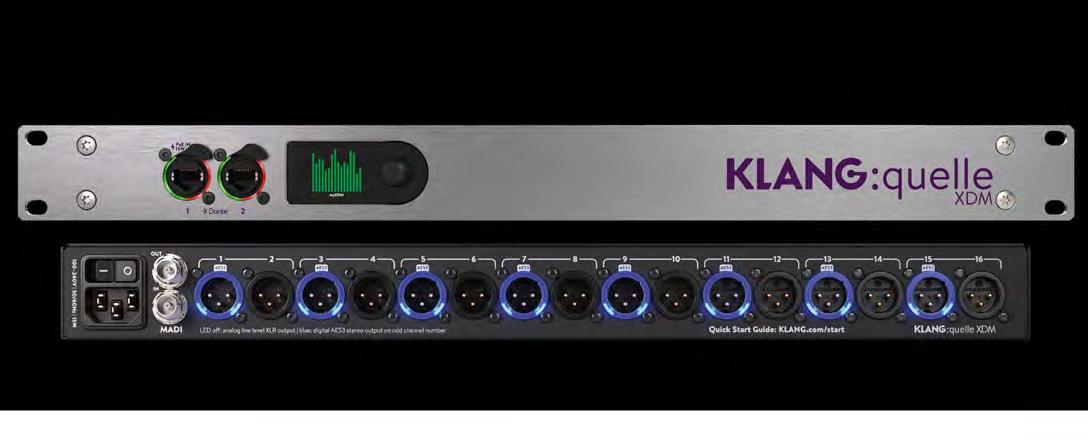
Works with any Dante or MADI system 16 analogue or 8 stereo digital outputs
Built-in redundancy with dual power and backup network
Converts both ways: Dante <> MADI, with passthrough
Simple remote control via the KLANG:app
Compact 1U rack design for touring or tight spaces
One of the third-level divisible classrooms
Faith in harmony
Delta Tecno Studio has extended the Basilica of Santa Maria Maggiore’s AV system into four chapels with a K-array audio solution
THE PAPAL BASILICA OF SANTA
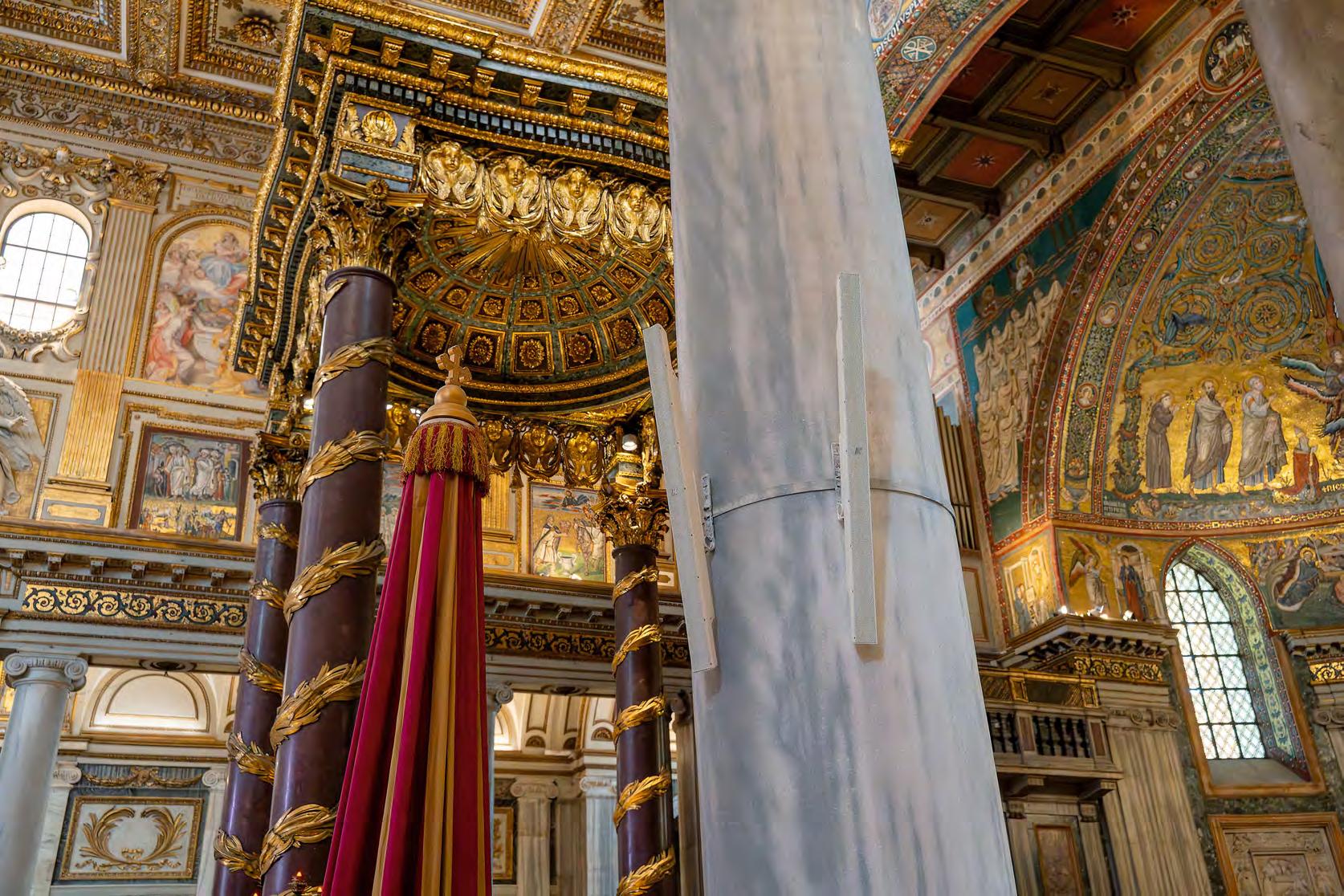
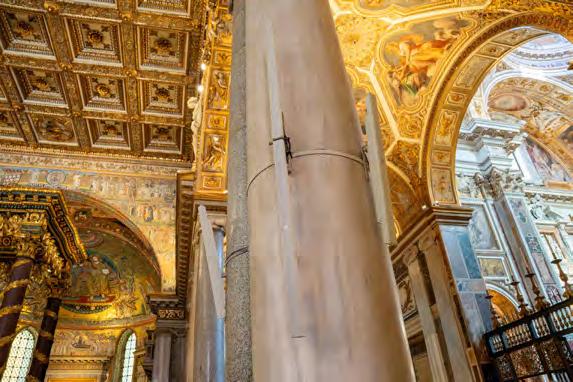
Maria Maggiore in Rome is one of the city’s four papal basilicas and a UNESCO World Heritage Site. As a major pilgrimage destination, it hosts a range of services and events, from daily masses to papal celebrations that are broadcast around the globe. These activities demand an audio solution that can deliver clear and intelligible speech across vast, reverberant spaces, while also remaining discreet in the highly protected surroundings. In 2018, AV integration specialist Delta Tecno Studio completed a full redesign of the basilica’s audio system, replacing an outdated infrastructure with a Q-SYS-based network and K-array’s column array loudspeakers in the main worship areas. The system resolved longstanding challenges around speech intelligibility and coverage, and introduced a custom, user-friendly interface allowing the clergy to easily operate the audio system across several zones. In 2025, the Delta Tecno Studio team returned to the basilica to expand the K-array audio system into four side chapels, spaces that serve a central role in the daily rhythm of prayer and worship at the basilica.
With many years of experience working in sensitive environments, Delta Tecno Studio understands
the importance of respecting heritage spaces and their acoustic characteristics. Working in collaboration with consultant and owner of Delta Tecno Studio, Dario Zanotti, and sound system designer, Pier Luigi Pecchenini, Pietro Radaelli and Emanuele Zanotti were already established as trusted technology partners of the basilica.
“Following the completion of the main project in 2018, the priests at the basilica have enjoyed the flexible, clear and easy-to-use audio system, allowing them to focus on their liturgy rather than struggling with audio coverage or microphone issues,” explains Emanuele Zanotti. “The success of this project has led to the recent expansion into four lateral chapels and the integration of the audio in these chapels with the overall central system.” The relationship with the basilica has been ongoing since 2018, with Delta Tecno Studio maintaining and optimising the existing system over the years.
Ensuring the infrastructure is fit for future expansions and has robust redundancy built in were other essential requirements.
The latest phase of the project focused on incorporating the four chapels and maintaining identical audio quality and consistency. This included consistency in the user experience, with simple preset-based operation from a touchscreen in the sacristy or via wireless devices through a dedicated network.
“The goal was extension and unification,” adds Radaelli. “The basilica wanted one integrated system, not separate subsystems. From the user’s perspective, it had to remain simple, whether they were activating the full church or just the chapels, depending on the service or event.”
While the nave and altar host the largest celebrations, the chapels
are critical for daily operations. They are often used for small weekday services, private prayer and devotional gatherings. This meant that speech intelligibility was high on the list of requirements. Visitors and clergy needed the same high level of audio clarity in these smaller, more intimate spaces as in the central basilica.
The expansion followed the same design philosophy as the original project: a fully digital audio distribution network, using QSC’s Q-SYS platform for DSP and control, with signals transported over fibre
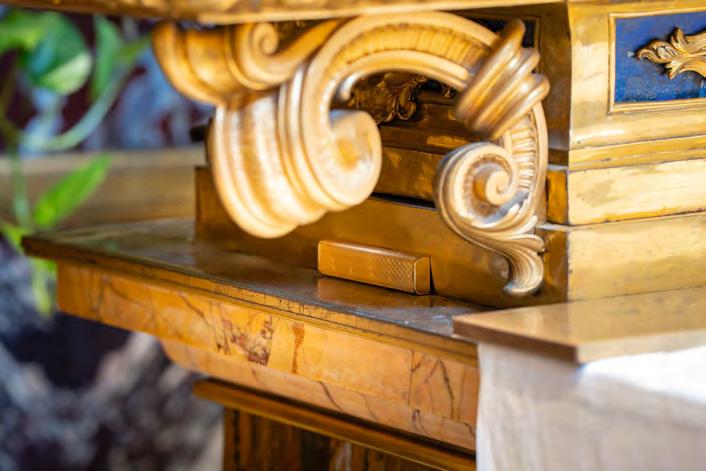
Gold Lyzard loudspeakers provide discreet sound reinforcement at the side of the altar
and Cat6 cabling. Two of the chapels, Cesi and Sforza, are equipped with pairs of 0.5m K-array Kobra KK52 column loudspeakers. In the most architecturally sensitive areas, such as in the Cappella Paolina, four KK52 are coupled into two small arrays, with two additional ultra-mini, gold-coloured Lyzard loudspeakers installed to provide discreet sound reinforcement for the seats to the side of the altar. In the Cappella Sistina, two additional Vyper KV52 loudspeakers provide extra coverage in combination with the 0.5m Kobra units.
The narrow vertical dispersion and long throw achieved by the array configuration of K-array’s solutions helped to overcome the challenges of these highly reverberant spaces, while requiring fewer loudspeakers overall, reducing visual distractions. The slim profile of K-array’s solutions is another benefit – by staying within the same loudspeaker families as the existing main basilica system, consistency was guaranteed across the entire site.
“We are very familiar with K-array products and, thanks to their particular characteristics and features, when coupled with careful configuration, you don’t need many loudspeakers to achieve excellent
coverage,” continues Radaelli. “With a proper combination of loudspeakers, aiming and tuning, you can very clearly hear intelligible speech without energy wasted in reverberation.”
Following the same methodology as the 2018 project, extensive EASE modelling was carried out to predict coverage and intelligibility, followed by onsite testing with real-time acoustic analysers. “A preliminary acoustic survey and instrumental measurement session was conducted with our in-house acoustic engineer, Davide Squarciapino,” explains Radaelli.
“A precise and accurate acoustic assessment of the rooms allowed us to perfectly calibrate a threedimensional, mathematical-physical model used for electroacoustic simulations, allowing us to verify the real suitability of the selected K-array solution.”
Delay and equalisation were specially programmed for each loudspeaker, and presets were created for common scenarios, such as chapels operating individually, together or in combination with the central nave.
“During services or events, the priests can quickly set up the system,” says Emanuele Zanotti. “They just press the buttons related to the area
are strictly protected,” notes Radaelli. “Every fixture and every cable route must be justified. By using the slimline K-array enclosures together with the custom mounting systems we engineered, we avoided the need for any intrusive fixtures, which is a major advantage.”
or service they are giving, and the system reconfigures automatically.”
The chapels are connected via fibre back to the sacristy, where amplification and processing are centralised. Q-SYS power amplifiers drive the K-array loudspeakers, with full DSP capability for each output channel. Dante converters were included to allow for the integration of future microphones or additional loudspeakers.
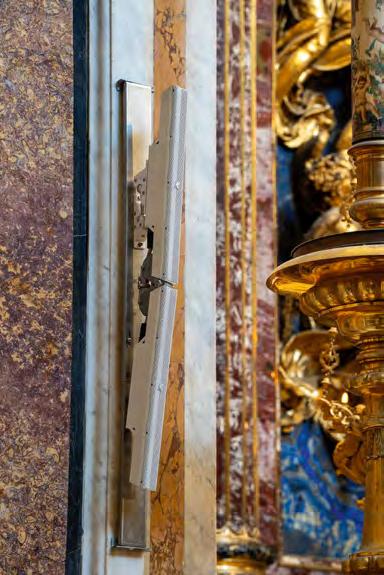
The physical installation was carefully managed to reduce any impact on the fabric of the building. Existing loudspeaker mounting points were reused where possible, and cabling followed the architectural lines of the chapels, fixed with specialist adhesives to avoid damaging surfaces. The Delta Tecno Studio team also installed a new Wi-Fi network to allow for remote access to
Controlled audio directivity and careful loudspeaker alignment helped to minimise reverberation, while cabling was installed carefully using non-invasive methods to protect the historic building. Q-SYS and Dante integration provides the flexibility for chapels to operate either independently or as part of the main system. A dedicated manual mode was specially developed to allow Vatican Radio technicians to take direct control and use their own equipment, such as microphones, with the main system during papal events. Furthermore, a fully hardware redundant DSP solution ensures services are never interrupted.
The new system expansion provides high-quality, clear audio coverage across the four chapels, unified with the rest of the basilica under a single, intuitive user interface. Clergy can operate the entire system without technical expertise, and technicians have full access for advanced configuration and monitoring.
“The priests tell us that hearing clearly is more important than seeing for worshippers,” concludes Emanuele Zanotti. “We have worked hard to successfully implement a system that ensures that every word is intelligible, across all spaces in the basilica.”
The expanded system at the Santa Maria Maggiore, installed with expertise and care by the Delta Tecno team, proves that technology can serve both function and faith in harmony.
Existing loudspeaker mounting points were reused where possible
Pairs of 0.5m Kobra KK52 speakers have been installed in the Cesi and Sforza chapels
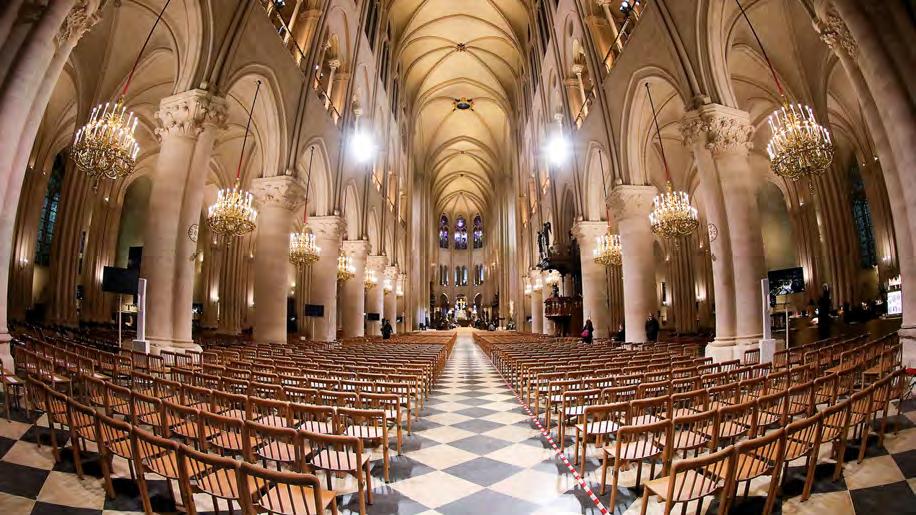
Notre-Dame comes back to life
Novelty Paris – and the wider Groupe Novelty – has been chosen as the lead integrator for the reopening of Notre-Dame de Paris
history and faith was engulfed in flames, destroying its spire and roof and causing significant damage to the cathedral’s altar, pipe organs, 13th-century rose windows and many religious relics. After what is described as one of the most ambitious and extensive house of worship reconstruction projects in modern history, Notre-Dame de Paris has now fully reopened.
Appointed as the lead integrator for this momentous job, Novelty Paris handled the vast majority of the integration work, seeking critical support from its sister company De Préférence for fine-tuning and acoustic optimisation, and the wider Groupe Novelty companies to undertake the challenge of equipping the religious monument with a sophisticated and fully integrated audiovisual infrastructure. The project incorporated sound system installation, live audio recording and video delivery, as well as remote video production capabilities for KTO, the French language Catholic television channel, to broadcast services. One of the project leads for this installation was David Créteur from Novelty Paris. To ensure a futureproof integration work, Novelty Paris requested from the outset an increased capacity for fibre optic to be used for the cabling infrastructure. A full-fibre infrastructure was deployed throughout
the cathedral, enabling seamless management for technicians and external service providers, alongside a dual spine-leaf network topology that supports both audio and visual workflows and utilises industry-standard protocols, including Milan-AVB (audio video bridging), Dante and NDI (network device interface) for synchronised, lowlatency transmission. In such a historic venue, custom and non-invasive mounting solutions were
the remains of the original, iconic house of worship. Positioning of all the AV equipment was arguably the most challenging part of this highly ambitious integration, due to the restrictions imposed by the architecture. Speaker placement was optimised using precise altimetry, angling and rotation, with discreet bracketry to support 128 colour-matched L-Acoustics speakers including KIVA in the main area and above the choir stalls, alongside a combination of 2-way passive 5-inch SYVA and 3.5-inch SOKA column speakers, upled with 2-way passive 5XT and
Most of the sound distribution is amplified by six 19-inch racks situated in the grandstands, with an additional rack located in a chapel on the ground floor dedicated to the technical room. L-Acoustics LA2Xi and LA7.16i amplifed controllers were chosen for their channel density and native Milan-AVB compatibility. DiGiCo mic preamps have also been installed in the grandstand racks to relay audio ambiences and organs, as well as inside the two credenzas at the choir for all stage mics (20 Schoeps CCM4s and a Sennheiser MEB 114-SW at the altar), for the spoken voices and the Maîtrise Notre-Dame de Paris, as well as for additional live equipment.
With this installation, Novelty Paris not only addressed the acoustic requirements of a world-renowned religious venue but also cemented the groundwork for a next-generation, digitally connected place of worship.
“This integration was as much about discretion and precision as it was about performance,” confirms Créteur. “Working within a site as iconic and architecturally complex as Notre-Dame required custom engineering and solutions that respected its heritage while delivering high-quality, advanced technology.”
The resurrection of Notre-Dame made way for the world’s first installation of Sennheiser’s Spectera, the first wideband bidirectional digital wireless system for live audio production. The Novelty integration team appreciated the speed of the new Spectera, offering simplified management of microphones, IEM/IFB signals and control data on a single RF canal, allowing the team to optimise space and reduce installation time.
The broadcasting integration consists of eight Panasonic AW-UE150 cameras, coupled with three extra cameras for content feedback and onsite streaming. A Panasonic 4K AV-UHS500 live switcher with a Blackmagic Design ATEM 4 M/E Constellation 4K switcher for remote live production were chosen to enhance and feed the livestream to KTO’s HQ situated on the outskirts of Paris. Ten 43-inch free-standing NEC screens have been situated behind pillars throughout the nave to allow visitors to follow the services in-person.
Jacques de La Guillonnière, founding president of Groupe Novelty, concluded: “We are especially proud to have had the opportunity to contribute to the rebirth of Notre-Dame de Paris. This project, with its immense scope, ranks among the most prestigious we have had the privilege to deliver. It stands as a remarkable demonstration of the complementarity between our companies and the synergy within our group, drawing on individual areas of expertise to successfully carry out a project of such complexity.”
www.groupe-novelty.com www.l-acoustics.com
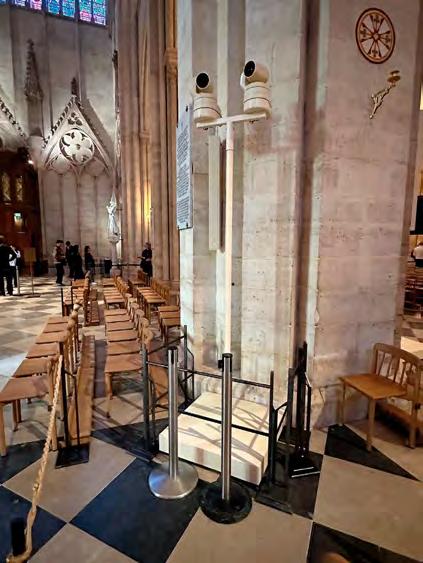
L-Acoustics speakers and Panasonic cameras have been fitted throughout
Image courtesy of Novelty Paris
Image courtesy of Hugues de Beauschesne
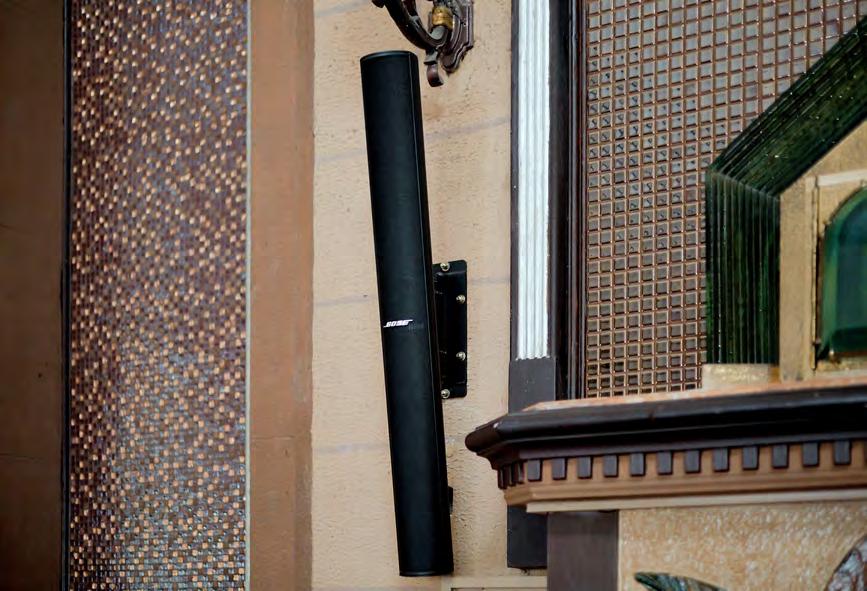
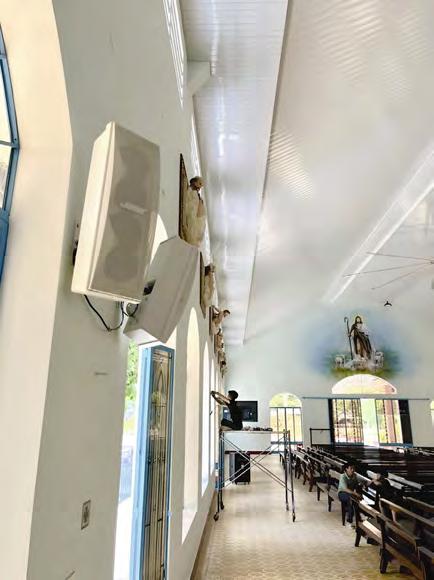
Bose Professional Panaray MA12 speakers have been included in the interior upgrade
Cleared for speech
The Parish of the Holy Cross has been upgraded with a Bose Professional speaker system to minimise reflections in unseated areas and ensure proper coverage for seated areas
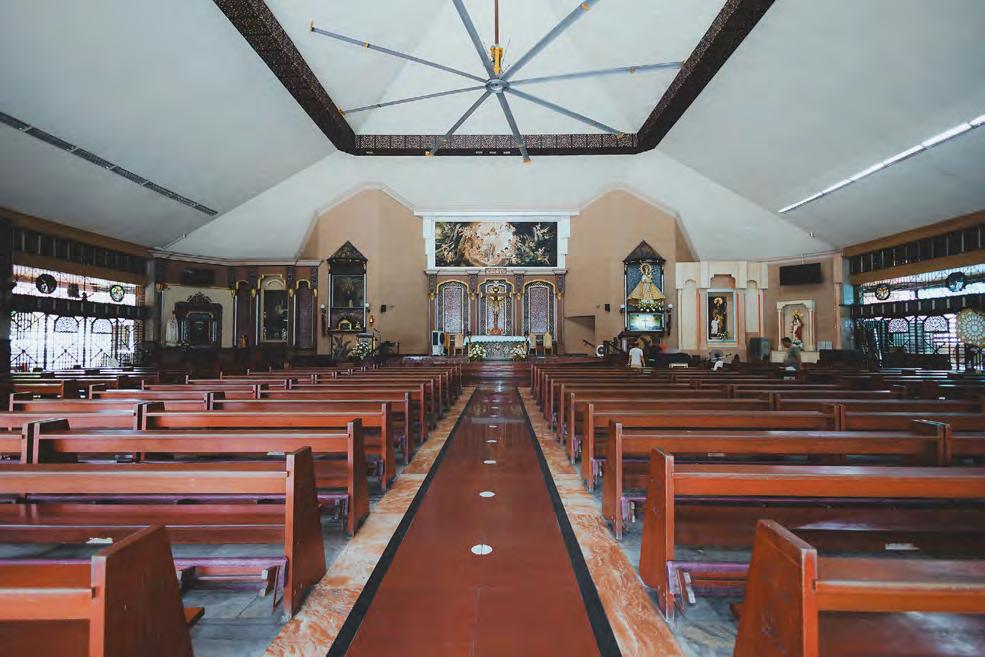
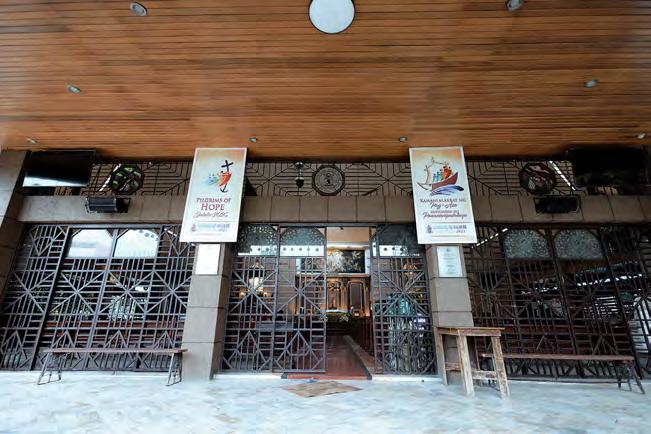
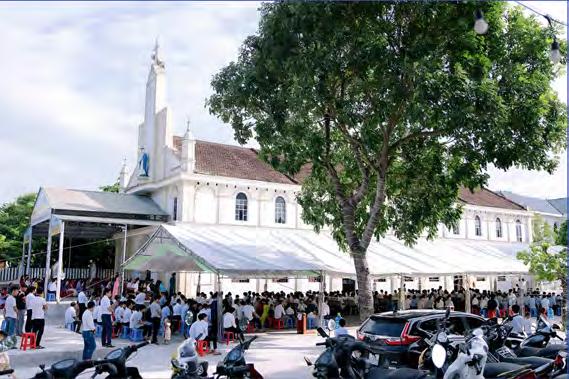
THE 600-SEAT PARISH OF THE Holy Cross in Valenzuela City in the Philippines was struggling with high reverberation levels caused by the pentagonal shape of the sanctuary with a high concrete ceiling and a large metal fan, low absorption materials inside the church and the semi-outdoor nature of the venue. The main aim of the installation was to ensure proper coverage with maximum speech intelligibility while minimising reverberations in outside areas without seating. “The church wanted to upgrade from an audio system that wasn’t properly designed and optimised within the space – it needed too much effort to sound even half decent,” explained Benedict Michael Abreu, brand manager at Versatech, Bose Professional’s distributor in the Philippines. “The PA consisted of a variety of speaker and amp brands – there was no proper structure to the system, the cabling was cluttered and, overall, it was hard to navigate.”
Having identified the church’s needs, Versatech engineer Natz
Tayamen specified 12 Bose Professional Panaray MA12 modular column array speakers inside the church, with six AMU108 and two AMU105 compact, IP55-rated speakers for the outside area. The upgrade also included one
ControlSpace EX-1280C processor, three PowerSpace P2600A power amplifiers and one CC-64 controller.
“Reverberation is always a challenge in these kinds of installations, so we made sure
that speech remains intelligible throughout, including outdoor areas where people gather to attend mass,” added Abreu.
“With proper calibration of the speakers and the installation of a few wooden panels, the church is no longer having to deal with any issues of echo, clarity or uneven coverage.”
Having trained the church’s technical team post-installation, the church is also being supported by a technical engineer who regularly visits the site and is a direct point of contact for any future concerns. “Versatech takes after-sales very seriously,” said Abreu. “We’ve provided a robust system that should provide for all their future requirements. The EX-1280C can handle future additional input expansions with ease. Compared to the old system, the new Bose Professional solution not only sounds better, but operation is much simpler and more intuitive.”
www.boseprofessional.com www.versatech.com.ph
Bose Professional AMU108 and AMU105 IP55-rated speakers were chosen for the outside area
sennheiser.com
A collaborative approach
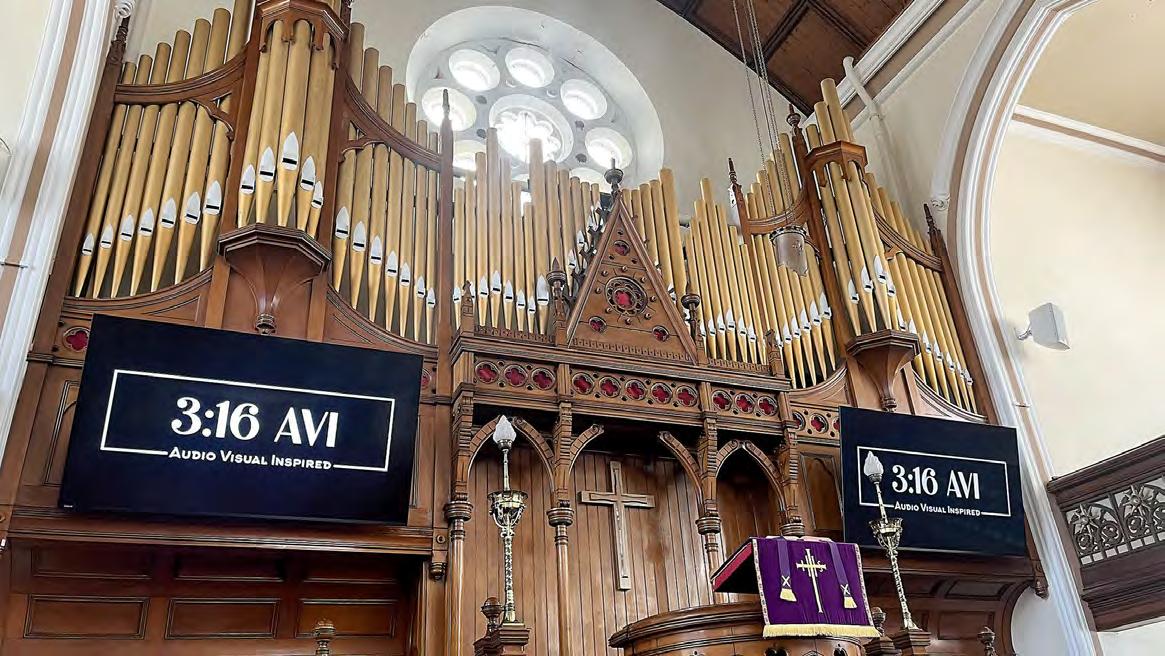
3:16 AVI has upgraded three Scottish parish churches with near-identical equipment to provide the volunteer technicians with a common AV setup
THE CHURCH OF SCOTLAND
(C of S) is Scotland’s national church and largest Christian body. It recently undertook a review of its operations which resulted in the transformation of the Fraserburgh parish in Aberdeenshire into a key regional hub, integrating the neighbouring towns of Rosehearty and Inverallochy. Strategically chosen to minimise travel times for everyone in the wider parish, the three churches have a combined congregation of around 180 worshippers. The initiative was driven by financial constraints, ageing buildings and smaller congregations, but it also presented an opportunity for the C of S to overhaul the technological infrastructure of each venue.
Based in Aberdeenshire in the north-east of Scotland, 3:16 AVI is a systems integrator specialising in house of worship installations along with livestreaming services and providing equipment for live events. The company is one of the C of S’s recommended suppliers.
“The Fraserburgh district originally had seven parishes, but this has been reduced to three,” explains
Alexander Dixon, 3:16 AVI director.
“As opposed to working as seven separate churches, they’ve now become one district together. Their tech was all overdue replacement anyway, so they wanted to put in a very similar system in each church that would be easy for one person to operate, so there was a common look and feel across the whole project. The three churches have been installed with a new PA setup and control system, with Fraserburgh South also equipped with cameras for livestreaming.
“The upgrades were planned as a single project and it was important for us to work on all three churches in one installation period, partly because we wanted to train everybody together as one unit,” adds Dixon. “Preparatory work was carried out in all three buildings one week, then the next week we carried out the installations to make sure there was minimal impact for everyone.”
In all three churches, 3:16 AVI has installed a Martin Audio speaker system consisting of eight CDD6 6-inch passive coaxial speakers
and two SX112 12-inch passive subwoofers for Fraserburgh South; eight A40 4-inch passive 2-way speakers and one SX110 10-inch passive subwoofer for Inverallochy Parish Church; and four A40 speakers and one SX110 subwoofer for Rosehearty Parish Church.
All three churches have acquired a Martin Audio DX 0.6 system controller, XLI1500 Crown amplifiers, an Ampetronic C7-1 loop amplifier,
an Allen & Heath CQ18T mixer and Audio-Technica PRO49QL gooseneck microphones. Existing Sennheiser radio microphones remain in use. In the welcome area and kitchen, Fraserburgh South and Inverallochy Parish Church have been fitted with respectively three and two Martin Audio A40T 4-inch passive 2-way speakers with individual 100V volume control, with a further two A40T units installed in the hall at Rosehearty
The screens at Fraserburgh South were attached to special brackets in front of the organ
Fraserburgh South is the lead church in the parish
Parish Church. An RTI control system powers on the TV and the audio system in all three venues.
“The three churches have the same common components for their speaker system and also system controllers,” continues Dixon. “We used Martin Audio’s modelling software to make sure we were installing the correct number of boxes for each church’s shape and size. We tend to stick with manufacturers that we know produce high-quality kit that integrates well and is easy to operate. The Martin Audio speakers are going to give the churches a good return on investment.”
With listed building status for Fraserburgh South, the integrator was restricted as to where the speakers could be fixed. “All the speakers are either wall- or ceiling-mounted but, because of the ornate details of the woodwork, we had to secure them to the bottom of the balcony pillars for the least impact. For the other two churches, we had to work around the usual restrictions of being able to hang things on lathe and plaster walls and how we run the cables, but everything is more discreet and neater than before.”
A standardised approach has also been taken for the screens. 3:16 AVI selected Avocor’s K Series screens: seven for Fraserburgh South, five for Inverallochy Parish Church and one for Rosehearty Parish Church, also retaining Rosehearty’s existing projector. Fraserburgh South has been fitted with two 85-inch and two 75-inch screens, along with one 55-inch comfort monitor. At Inverallochy, the integrator specified two 75-inch and one 55-inch screens,
while at Rosehearty, a 55-inch comfort monitor has been fitted. Two 24-inch screens have also been installed under the balcony at Fraserburgh South and Inverallochy. After meeting Avocor at ISE 2025, the integrator realised that the K Series would be ideal for the project. The screens are equipped with DisplayNote Montage which provides seamless wireless screen sharing and Rise Vision for content management. “They blend seamlessly with the church’s traditional architecture, thanks to their slim bezel and discreet design, while ensuring the technology enhances the space and congregation experience,” says Dixon. “In addition, the ability to integrate with a smart control system allows simple and intuitive use of all the church’s facilities via a simple interface.
“Fraserburgh South is a larger building with a traditional U-shaped balcony, so we needed a higher number of screens for this one,” he adds. “We submitted our plans to the C of S in Edinburgh for approval and, as it’s a listed building, we were asked to make sure that the screens in Fraserburgh South didn’t touch the organ, so we attached them to special brackets that hang at the front. The brackets are secured between the pipework so they’re actually freestanding and independent of the organ. We’re really pleased with how they turned out, and they don’t look out of place at all.”
For livestreaming at Fraserburgh South, 3:16 AVI supplied three PTZOptics 30x SDI cameras, one PTZOptics joystick, one Blackmagic Design ATEM Mini Pro
postal address, so they’ve had to register for a postcode which takes three months. But once this comes through, they’ll get a wired fibre connection which will give them much more stability.”
With the previous audio systems only amplifying speech, and only one projector, the upgrade has brought all three churches up to speed and improved reliability. “The churches are also used by the schools in the area for a service maybe once a term or a prize giving, so they can now bring in their own laptops and show videos,” explains Dixon. “Theatre groups have Christmas concerts and would normally hire in a PA system and bring in all their own equipment, so that won’t be necessary this year.”
and two RØDE M5 congregation microphones. “The PoE-powered cameras are mounted to give the church three different views across the space, with one square in the middle at the back at eye level with the person speaking on the platform and the other two installed on the sides of the balcony. Signals are fed into the ATEM Mini Pro to create a user-friendly and easy-to-use solution for the volunteers. The feed from the screens can be overlaid for the people at home.”
However, while the installation of the livestreaming equipment at Fraserburgh South has been straightforward, the same can’t be said about the internet connection. “They haven’t started streaming yet because the church didn’t have a
of evenings with the volunteer technicians using the equipment, talking them through the basics of the PA system and how sound works, as well as showing them the livestreaming setup. “We make sure that we understand what the customer needs, what worship is like for them in their environment before we start building a system or proposal for an upgrade,” concludes Dixon. “But supporting them with their new setup is just as important – it’s been a big change for them, so we’re on hand to help them be confident with the new equipment.”
www.316avi.com
www.avocor.com
www.martin-audio.com
Five Avocor K Series screens have been fitted at Inverallochy
The setup at Inverallochy includes two 24-inch Avocor screens under the balcony
Remote power
Powersoft’s Unica 8K8 has powered an audio transformation at Kinh Nhuan Parish in Vietnam
KINH NHUAN PARISH, LOCATED
in Quang Trach district, Quang Binh province, is one of the largest parishes in central Vietnam, accommodating between 500–700 parishioners for each mass, both inside and outside the church. After years of service, the existing sound system had deteriorated significantly, plagued by faults, instability and poor quality that disrupted daily worship services and choir performances. The reverberant space – consisting of reinforced concrete for the walls, ceilings and floor tiles – meant that speech was difficult to hear clearly.
Faced with these challenges, the parish priest and pastoral council made the decision in July 2025 to invest in a complete audio upgrade, with the goal of delivering reliable, consistent and high-quality sound coverage for sermons, liturgy and choir performances.
The church turned to UPSV –the authorised distributor of Powersoft and Bose Professional in Vietnam – to design the new system, and Sao Mai Audio to install the chosen solution, which combines Bose Professional Panaray loudspeakers with Powersoft’s Unica 8K8 amplifier. Sao Mai Audio also provided onsite training and guidance for the parish’s audio team post-installation.
UPSV reportedly selected 16 Bose Professional Panaray 402V loudspeakers in white due to their controlled directivity, consistent voice projection and ability to integrate seamlessly into the church’s architecture. Powersoft’s Unica 8K8 8-channel amplifier has been installed to deliver power distribution across multiple zones. Controlling directivity within the Panaray speakers and using zoned delays within the amplifier was sufficient to significantly minimise reverberation in the room. The system was tailored to address the church’s acoustic environment, with an average RT60 of 2–2.5s due
to its concrete structure and vaulted ceiling. Careful zoning and delay alignment via Unica’s DSP ensured intelligibility across every seat, from the nave to the outdoor congregation area.
Nguyen Luong Niem, technical manager at UPSV, explains the choice of equipment: “Kinh Nhuan Parish is located far from major cities, in a region with harsh weather conditions. This made site surveys, transportation and installation both challenging and time-consuming. We advised Sao Mai Audio to deploy the Powersoft Unica 8K8, which would be perfectly suited to drive the 16 Bose Professional
402V loudspeakers across multiple zones. Its built-in PowerShare function and remote monitoring via MyUniverso Cloud make it both efficient and futureproof. After installation, the parish priest, pastoral council and parishioners expressed complete satisfaction with both the sound quality and the professional work of Sao Mai Audio. Combined with a five-year warranty, the system gives long-term peace of mind.”
The project at Kinh Nhuan Parish has become the latest example of how combining Bose Professional speakers with Powersoft’s Unica amplification can transform a parish’s audio experience, while also cementing UPSV’s reputation for delivering highquality audio solutions for religious spaces across Vietnam. Along with consistent and even coverage for choir music and congregational singing, the church is now able to enjoy clear and intelligible speech across the entire church and outdoor areas, while also benefitting from reliable, remotely monitored amplification, which was critical in such a remote location. The scalable nature of the solution means that additional loudspeakers and amplifiers can easily be added in the future if required.
www.boseprofessional.com www.powersoft.com
The church can now enjoy clear and intelligible speech both inside and out
The upgrade includes 16 Bose Professional Panaray 402V speakers
ACT-700 Series Professional Wireless System
When worship deserves your best, trust the MIPRO ACT-700 Series to deliver.
Engineered with a true diversity receiving circuit, it ensures drop-out-free audio — so every word, every note, and every message reaches your congregation with clarity and power.
The all-new MWC software makes system setup and frequency coordination intuitive and efficient, even in multi-channel environments.
Our dual-power handheld and bodypack transmitters support both 18500 rechargeable and AA batteries, with flexible USB-C or dock charging — ready to serve faithfully in any venue or workflow.
Pair it with our MU-57 Series waterproof headworn and lavalier microphones for extended durability, ideal for long services, active worship, and life on the road.
MIPRO — Professional wireless audio, designed to support your calling.
Dialling in vocal compression
Sound engineer Erwin Balangue provides a step-by-step guide to help church sound technicians master compression
WHEN I BEGAN AS A VOLUNTEER sound technician at church, compression was the hardest audio processor for me to grasp. Unlike EQ or effects, which had clear, audible results, I struggled to understand the role and effect of compressors. My learning involved a lot of trial and error, tweaking settings, listening and running between the stage and booth. Eventually, reading the manual only deepened my confusion with unfamiliar technical jargon. Has this happened to you?
But that was then, and after years of pushing faders and listening, attending audio seminars, reading books and trade magazines, and now with tons of information online about audio production, learning can be easier than what I’ve been through. This guide is specifically crafted for
in gently, singing the opening verse almost as a whisper. The congregation leans in too, straining to catch the words. But then, as the chorus arrives, the singer belts out powerfully – and suddenly the voice overwhelms the mix, clipping the system and startling the audience. This is when compression becomes your best friend.
At its simplest, a compressor is a dynamics processor – a device that automatically manages changes in loudness over time by reducing the difference between the softest and loudest parts of a vocal performance. This means that when a singer sings very quietly or very loudly, the compressor automatically controls the volume. This keeps the voice clear and consistent, so quieter parts become
To help and spare you the confusion and frustration, let’s walk through how to properly set up a compressor for vocals and explore tips for dialling in each parameter.
What is a compressor?
Imagine this: it’s Sunday morning, the worship team is in full swing and the band sounds tight. The vocalist leans
Why does this matter?
For vocalists, this matters enormously. The human voice is naturally dynamic; a gentle whisper can be nearly inaudible, while a soaring chorus can spike into distortion. In the context of worship, the voice is the channel of the message and ministry. In singing, a well-set compressor adds presence, making the voice
ensuring lyrics are intelligible even in busy arrangements. It adds consistency, so the emotional arc of a performance comes across naturally and is not lost in volume swings. It ensures that every word is heard, felt and understood. And it frees the sound tech from constantly riding the fader, so they can focus on mixing musically instead of just managing volume. But here’s the catch: compression is a tool that requires finesse. That’s why for the church sound tech, learning to properly dial in a compressor is an essential skill, whether in a church sound booth, onstage or in a broadcast room. So, let’s dive into those knobs.
1. Start neutral
Always begin from a clean, neutral setup. Before tweaking knobs, reset the compressor:
sert the compressor on the vocal channel.
tio – 2:1. tack – 20–30ms.
• Release – 100ms.
• Threshold – set the threshold level high so no gain reduction occurs yet.
• Makeup gain – 0dB.
This neutral baseline provides a clean slate for you to hear what each control does, allowing you to start listening and make adjustments.
compressor starts working or the level at which compression begins. Think of the threshold as the line in the sand. If the vocal level is below the threshold, the compressor does nothing. Once the vocal crosses that line, the compressor steps in to tame it.
• Slowly lower the threshold level.
• Monitor the output meter until you see 3–6dB of gain reduction on the gain reduction meter.
• Aim for 3–6dB of gain reduction on the loudest notes. This ensures that loud phrases stay under control.
Listen: does the vocal feel steadier or is it getting squashed or choked?
A well-set threshold smooths the peaks without flattening the emotion. Rule of thumb: if the compressor is slamming 10dB or more, your threshold is probably too low, you’re no longer smoothing –you’re suffocating. Push it up.
3. Adjust the ratio: how firm is the hand?
The ratio determines the amount of compression applied once the signal crosses the threshold.
• Low (2:1–3:1) – gentle, transparent control, best for natural worship vocals.
• Me dium (4:1–6:1) – more assertive, useful for energetic singers or loud stages.
Figure 1: Typical controls of an audio compressor
Erwin Balangue
• High (8:1+) – special effect or broadcast-style limiting, not typical for lead vocals.
Pro tip: if the vocal sounds lifeless, your ratio may be too high – pull back.
4. Set the attack: preserving the emotion
Attack controls how quickly the compressor reacts once the signal crosses the threshold. Set it too fast and it clamps down before the singer’s words even breathe, robbing energy. Set it too slow and wild peaks will slip through.
• Fa st attack (1–5ms) – catches consonants and harsh peaks quickly, but can dull energy.
• Me dium attack (10–30ms) –lets the initial “punch” of the vocal through before compression engages.
• Sl ow attack (30+ms) – rare on vocals; may cause inconsistent results.
Start with a medium attack (10–30ms), then adjust by ear. Listen: does the consonant “bite” of the vocal still come through? Adjust until the vocal feels natural but controlled.
5. Dial in the release: letting go naturally
Release determines how quickly the compressor recovers after the signal drops below the threshold. Set it too fast and you’ll hear a distracting “pumping” sound as the level jumps up and down. Set it too slow and the vocal feels pinned down, unable to rise again.
7. Makeup gain: restoring what you’ve controlled
After compression, the vocals will often sound quieter overall. Makeup gain raises it until the processed vocal (output) matches the loudness of the bypassed (raw input) signal.
Match the level with the compressor bypassed and
“louder” but not better, revisit your adjustments.
8. Listen in context
Finally, step back and place the voice in the full mix. Fine-tune the settings slightly until the vocal feels present, natural and steady – whether the singer whispers or belts. Compression settings that sound good in solo might
• Sl ow release (200+ms) –smooths out sustained notes but can sound sluggish.
Watch the gain-reduction meter. It should “breathe” with the singer’s phrasing, not pump unnaturally. Aim for a release that breathes with the tempo of the song, significantly around 100–200ms for a steady worship ballad. Use your ears: the voice
Making
the vocal shine
At the heart of it, compression isn’t about knobs, ratios or meters – it’s about helping the vocalist’s message connect clearly with the congregation. A properly dialled-in compressor doesn’t steal the soul of the performance; it supports it. It keeps the quiet words from getting lost and the powerful moments from overwhelming everything else.
Like any musical tool, dialling in compression takes practice.
The more you listen, adjust and compare, the more instinctive it becomes. In time, you’ll stop thinking about “attack and release” as technical terms and start hearing them as part of the singer’s expression.
• Fast release (50–100ms) –keeps vocals lively and natural.
uncompressed to compressed The “knee” controls how gradually the compressor engages.
• So ft knee – more natural, gradual compression, great for expressive singers.
• Ha rd knee – immediate, firmer compression.
you undo your compression work.
Rule of thumb: if the compressor averages 3dB of gain reduction, apply the same amount (3dB) of makeup gain. Tip: A/B your settings with the bypass (or On/ Off) switch. If it only sounds
So, the next time you stand behind the console, remember: with each adjustment, you’re not just controlling dynamics, you’re shaping how the story of the song is heard. And when the voice sits perfectly in the mix, supported but not suffocated, you’ll know the compressor has done its job –and so have you.
Figure 3: Attack and release settings
Figure 4: Knee and makeup gain settings
Figure 2: Threshold and ratio settings
Experience worship with crystal-clear sound, direct to your hearing device or receiver.
Every message, every hymn, every prayer is meant to be heard. Auri™ makes that possible for everyone.
Powered by Auracast™ broadcast audio, Auri™ delivers high-quality sound straight to your hearing aid, cochlear implant, smartphone, or Auri™ receiver.
No complicated setup. Just tap, connect, and immerse yourself in worship.
Accessible. Inclusive. Effortless.
From the front pew to the back row, Auri™ ensures everyone can hear and participate fully—strengthening connection, community, and faith.
Learn more at: auriaudio.com/applications/worship
Bringing next-generation audio access to houses of worship worldwide.
Virtual production
James Liu, Canon’s national house of worship account manager, discusses the rise in HOWs turning to virtual production environments for their services
TAKING THE LEAD FROM filmmaking and advertising, more houses of worship are using virtual production technologies to add visual enhancements and advance storytelling and messaging in their services. But are there any drawbacks to this approach? James Liu uses his experience of visiting churches to see how virtual production technologies can be used to help keep people engaged.
Why are churches using virtual production in their services?
If you think about the history of design and visuals in churches, something that always comes to mind for me is colourful stained glass. They can provide breathtaking beauty, especially when floods of light are coming through. While I love this aesthetic and the history and significance of stained glass, there are lots of creative and artistic purposes that LED walls can provide. LED walls can add differentiation while keeping design fees at bay – it wouldn’t be possible from a financial perspective to constantly change your
stained-glass windows or other major physical elements. An LED wall can allow you to change designs not only every single week, but every single song or every single message. The visual design can match the message of the pastor’s sermon and it can be a powerful visual storytelling tool. Virtual production opens up the ability
Virtual production technologies can be used to increase engagement
other software. It can also give you the flexibility for video playback, so if the HOW wants to show any videos to the congregation, they can use that LED wall to do so. I think virtual production represents the future of how media is being consumed. We’re all very used to our phones and using screens, so having those visuals helps people stay engaged and understand the message.
What types of technology are being used?
The most common technology that we see in the market right now is very large LED walls that are displayed as one gigantic piece, or broken up into different pieces and hung in strategic places. Another major shift is the use of professional film lighting –a big change from the standard fluorescent lights of the past. We’re also seeing that the move towards cinema cameras is progressing, as more HOWs look to capture a strong dynamic range, robust depth of field and rich, deep colours. We’re also witnessing lots of upgrades to speakers and sound. Churches are
Where is this technology being integrated?
The majority of the time, it’s the main sanctuary that is using virtual production technology. But, we do have a few customers that are very invested in production outside of their weekend services and they sometimes have their own studios. A lot of the time, they have their own LED wall studio, green screen studio and cyc walls, which are also very popular. These studios are close to what you might see on a commercial set or even a Hollywood film. There’s
Churches are increasingly using studios to produce online content
James Liu
Image courtesy of GABC
investment in these additional spaces for those who have the extra budget and the space to build it. Additionally, a few of our customers design their main sanctuary to be dual-purpose. We work with a church in Arizona, the Generation Church, that uses their LED wall onstage to film their messages or any content testimonials Monday to Friday.
Is this digital content being used entirely online?
Most of the time, the studios have a couple of different purposes. Firstly, many pastors host their own podcasts, so they sometimes have a podcast studio. Studios that feature a green screen, LED wall and/or cyc wall are designed for capturing news announcements, promotional activities and testimonial videos from congregants who speak about their experiences. And those videos can be played on Sundays in the service and broadcast, as well as online on social channels and elsewhere.
How can online content be used to encourage new people into the building?
Virtual content is being used to extend the reach of the church beyond its sanctuary walls. Creating original content and capturing the Sunday worship experience and messages allow people to access everything remotely, and to play back and revisit
certain sermons. Additionally, a lot of people look to digital content to scope out the vibe and atmosphere of a church they may want to attend. Through online content, you can see the church’s personality, as people want to make sure that their personality and beliefs match the church before they ever step into the church building. Online content is an incredibly important marketing tool for a house of worship.
Who is this content primarily aimed at?
Some churches put resources behind promoting their big services, such as Easter and Christmas, in an effort to reach people who might not attend every week. During different seasons, HOWs will publish content aimed towards non-churchgoers. And for this use case and many others, it’s being filmed and geared towards social media. With this, we’re seeing more vertical content being captured for social media specifically (Instagram, TikTok and YouTube Shorts).
Are there examples of content that churches are producing using virtual production?
At Generation Church, they’re using a camera to shoot video podcasts for their pastor Ryan, which goes up on YouTube. The content is conversational and lighthearted –it’s not always directly related to
seamless, as messages from the sermon and other graphics are cleanly and richly projected onto the screen. The audience has a very clear visual of what the pastor is communicating.
Is the technology costprohibitive for most churches?
Just like any other technology, the cost of virtual production tech is lowering as it becomes more popular and more accessible for a lot of churches. LED walls are getting cheaper and better, so a lot more churches can access this technology than they could have five or 10 years ago.
How important is it to ensure a good ROI?
a specific sermon or service. With their LED wall, they’re shooting videos about their upcoming youth camps and hosting past participants to give testimonials. An additional example is a church in Alabama. They have a cyc wall to promote their merchandise and activities at the church. They also have a dedicated studio where they can have the pastor or multiple pastors speak in front of the same background and achieve beautiful, consistent results. In the past without the wall, they would constantly have to re-light to ensure consistency between videos. Now they can put the content onto the wall and capture each pastor using the same exact lighting scenario and same exact background scenario throughout the entire day.
How can HOWs make sure that virtual productions aren’t a distraction from worship?
Back in the day, when there were a lot of physical set pieces onstage, the clutter could distract from the messages that were shared. With the introduction of virtual production technologies, this clutter can be erased. For example, Generation Church no longer has a screen that pulls down from the top every Sunday to display videos or messages complementing the service. Now, with an onstage LED wall, the presentation is more
Interestingly, a lot of younger generations now have access to cameras on their phones, play video games on the joysticks, etc. This familiarity with this consumer technology can help these virtual production technologies be implemented in churches more easily, because the volunteers can use the skills they use on a daily basis to operate these cameras and they can visualise things on their phone and translate that into a bigger camera. Churches who invest in these technologies have often already evaluated the skill level of their volunteers before they make these purchases.
Will other churches feel like they’re being left behind?
Not having virtual production isn’t as threatening as other trends. I think that online distribution, like livestreaming to YouTube, is absolutely a place where churches can get left behind. During Covid, a lot of churches who have never streamed online were forced to transition to online distribution. So, the effect was that HOWs, in general, modernised faster than they otherwise would have because there was competition with other churches going online while they were trying to scramble and not lose audiences. Right now, I wouldn’t say that every HOW needs to have virtual production, but those that do have drastically improved their content operations and the general visual experience of their church.
www.canon.co.uk
An AOTO LED screen at Church of Singapore
Keeping the light shining bright
Caring for your stage lighting
John Black considers the importance of regular maintenance
IN TODAY’S HOUSES OF worship, light does more than help us see. It shapes the atmosphere of worship, draws focus to the message being shared and creates a sense of reverence and beauty. Whether it’s the soft glow during prayer, the vibrant colours during worship or the warm spotlight on the speaker, lighting quietly serves the heart of every service experience.
Yet, behind every inspiring moment of light is a team that makes sure everything works as it should. Stage lighting systems – especially the modern LED and moving fixtures many houses of worship use – need regular attention. Without it, lights can dim, colours can shift and equipment can fail at the most inconvenient times. With the Christmas holidays behind us, this time of year provides a good opportunity to go through the lighting rig and perform preventative and repair maintenance. Taking time to maintain lighting may not sound glamorous, but it’s one of the most important ways to keep worship running smoothly and safely. Let’s take a closer look at why lighting maintenance matters, what it involves and how every house of worship –large or small – can care for its lighting system faithfully.
Why lighting maintenance matters
Lighting isn’t just technical equipment; it’s a ministry tool. When lights work properly, they enhance worship and help the congregation focus. But when they flicker, go out or create uneven brightness, they can distract from worship. Regular maintenance keeps lighting consistent, reliable and free from unexpected interruptions. There are also practical reasons to stay on top of lighting care:
• Longevity: LED instruments can last many years, but dust and heat are their worst enemies. A little cleaning can add years to an instrument’s life.
• Safety: loose cables, overloaded circuits and unsecured instruments can pose serious hazards. Routine inspections can help to prevent accidents.
• Stewardship: house of worship budgets are often tight. Taking care of the resources that are owned is one of the best ways to be a good steward of those resources.
Understanding what’s on your stage
Even small houses of worship use a mix of lighting equipment. There may be soft LED wash lights to illuminate the platform, brighter spotlights for speaking areas or moving head instruments for dynamic effects during worship. Each piece needs different kinds of care.
It’s a good idea to keep at minimum a simple lighting inventory – a list of all your instruments, their locations, when they were installed and when they
were last cleaned or serviced. This helps you stay organised and ensures no instrument gets overlooked.
Setting a simple maintenance schedule
You don’t need to be an expert technician to keep your lighting system healthy. A regular schedule – broken into weekly, monthly and annual tasks – can cover most of the essentials.
Weekly
Before or after services, take a few minutes to:
• Walk the stage and look for instruments that seem dim, flicker or point the wrong direction.
• Check your lighting cues on the control console to be sure they’re working correctly.
• Wipe down lenses with a soft cloth to remove fingerprints or dust.
This short inspection often catches small issues early – before they become Sunday morning emergencies.
Maintaining lighting is one of the most important ways to keep worship running smoothly
Untidy cabling can create a hazard
Monthly
Once a month, plan a deeper cleaning:
• Use a can of compressed air or a soft brush to remove dust from vents and fans.
• Inspect all cables for fraying, strain or loose connectors.
• Make sure your lighting console is backed up on a USB drive or in cloud storage.
• Check that all instruments are still aimed properly – sometimes vibration or movement can cause them to shift.
Annually
Once or twice a year, schedule a full maintenance day:
• Clean every instrument thoroughly, inside and out as directed by the manufacturer.
• Inspect rigging and mounting hardware to make sure everything is safe and secure.
• Update software or firmware on instruments and controllers.
• Replace ageing lamps or LEDs that have grown dim or discoloured.
• Review your power distribution to make sure no circuits are overloaded.
If your house of worship doesn’t have an experienced lighting technician, it’s worth hiring one for an annual inspection. A few hours of professional attention can prevent costly damage later.
Cleaning and care: doing it safely
It’s tempting to grab whatever cleaner is nearby, but stage lights are sensitive instruments. It is important that you and all volunteers stay personally safe. Always:
• Turn off and unplug instruments before cleaning.
• Use a soft, lint-free cloth when wiping down parts – microfibre is best.
• Avoid harsh chemicals; a bit of glass cleaner or distilled water is plenty.
• Handle lenses and LED elements gently.
• Keep air vents clear so heat can escape properly.
• Follow all manufacturer guidelines for each particular piece of equipment.
A good habit is to label each fixture with its last cleaned date and the
initials of whoever did it. It’s a small step that keeps everyone accountable and organised.
Troubleshooting common lighting problems
Even with good care, things occasionally go wrong. Maintenance is on ongoing task and should not be limited to the schedule that you have established. Here are some quick fixes for common problems:
• Flickering lights: check for loose power or DMX connections or a lamp that needs replacing.
• Uneven brightness or colour: LEDs may be ageing or the controller
make a huge difference in keeping maintenance consistent.
• Cr eate a lighting guide with photos of your rig, control instructions and cleaning tips.
• Ho ld short training sessions to teach volunteers how to power on/off the system properly and recognise signs of trouble and how to report them.
• As sign roles: one volunteer can handle weekly checks, another monthly cleaning and another keep track of repairs or upgrades.
• En courage everyone to report issues right away – a flickering light on Sunday could become a full failure by next week if
• When planning upgrades, consider energy-efficient instruments that lower long-term costs and reduce heat onstage.
Consulting a lighting professional or local integrator can help you choose upgrades that fit both your vision and your budget.
A spiritual perspective on maintenance
It’s easy to see lighting as just wires and metal, but, in houses of worship, even the smallest technical task has spiritual meaning. When we care for the physical equipment that illuminates our worship, we are also caring for
For tungsten fixtures, they may not have been properly bench-focused when re-lamped.
• Lights not responding: make sure the cables are correct, check the console patch and try restarting it.
• Overheating: clean fans and vents, and give instruments plenty of space for airflow.
Keeping a lighting logbook – a simple notebook or spreadsheet –helps track problems and solutions. Over time, you’ll start spotting patterns that make future troubleshooting easier, as well as knowing when to think about replacing needs.
Training and teamwork
Most house of worship lighting teams rely heavily on volunteers. Training and clear communication
When volunteers feel confident and equipped, they take pride in their work and the ministry it supports. Maintenance calls can also be a “crew event” and help to build team unity and camaraderie.
Looking ahead: planning for upgrades
Even the best-maintained equipment eventually needs replacing. LED output fades gradually, and newer technology often offers better efficiency, colour and control. Use your maintenance process to plan ahead rather than waiting for equipment failure.
• Ke ep track of the age and condition of each instruments.
• Se t aside a small annual budget for maintenance and gradual replacement.
people experience distraction-free worship. Every time a technician wipes down a lens, tightens a bolt or checks a circuit, they are part of that mission.
Conclusion
Stage lighting maintenance may not draw applause or attention, but it’s one of the unseen ministries that keeps worship beautiful, safe and distraction-free.
By building simple routines, training your team and caring for your equipment with diligence, your house of worship can ensure that every light continues to serve its true purpose – allowing those who attend to have an authentic worship experience.
Let’s keep the light shining bright in all houses of worship as we enter this new year.
Rigging should be inspected regularly to ensure everything is safe
Sound without spillage
As environmental restrictions tighten and audience expectations increase, broadband directivity has become a key point of differentiation for system designers and manufacturers
THE SUCCESSFUL STAGING OF events increasingly depends on factors that have little to do with production values. Beyond the usual concerns of coverage, clarity and reliability, there is now a growing requirement to contain the system’s acoustic footprint. The same pressures are felt in many modern houses of worship, particularly those located in residential areas or operating in acoustically reflective sanctuaries, where controlling where sound goes – and where it doesn’t – is becoming equally critical.
Venues of all kinds are becoming more acoustically complex, shows more dynamic and local governments less forgiving. Offsite complaints, once treated as the inevitable background noise of social gatherings, are fast becoming showstoppers and, in certain markets, regulatory tolerance for offsite emissions has tightened significantly. Simultaneously, rental companies, along with fixedinstallation operators such as churches and multipurpose worship spaces, are looking for greater flexibility and precision in how their systems behave across varied environments.
One of the more significant responses to this shift has come in the form of broadband acoustic directivity – specifically, full-range pattern control that extends into the low-frequency domain. While highand mid-frequency dispersion has long been shaped through horns and waveguides, low frequencies have typically proved harder to control. Their longer wavelengths tend to radiate in all directions, which not only adds unwanted energy to the stage and reflective surfaces but also increases the risk of offsite disturbance. For worship venues, this can translate to muddled low-end buildup in rooms designed primarily for speech and a challenging onstage environment for musicians.
Given that German loudspeaker manufacturer d&b audiotechnik considers itself to be something of a leader on the topic, Worship AVL recently sat down with its loudspeaker product manager, Santiago Alcalá Baillie, to see how the market is responding to this challenge.
“People used to worry about whether their PA would be loud
and reliable enough to survive a summer of festivals,” says Alcalá. “Now, we’re in a completely different era. It’s not just about being loud, but about evenly distributing that powerful sound to everyone in the audience, and not anywhere else. At the same time, audience expectations for sound quality are higher than ever. These forces are colliding in ways that demand smarter, more intentional system design.”
The company’s approach to this problem can be traced back to 2013, when engineers identified a persistent 100Hz peak travelling beyond the boundary of a large German festival. By time-aligning the main arrays, they were able to attenuate the problematic frequency in the affected zone without compromising audience coverage. That incident contributed to the development of NoizCalc, a software tool designed to predict offsite SPL levels.
The Belonging Co uses a d&b KSL system for its main audio needs
The CCL main array element
Church on the Queensway is home to a
Three years later, the launch of the SL-Series saw the first d&b large-format systems to offer full-range directivity, including cardioid behaviour at sub-100Hz. Consisting of the GSL, KSL and later XSL systems, the series became one of the few touring-grade solutions to integrate this level of control in a line array format. According to Alcalá, the SL-Series helped confirm that there was demand in the market for loudspeakers with this behaviour –despite their higher cost.
channel per cabinet. While intended for performance venues, regional festivals, houses of worship and other mid-sized applications, the product also serves a larger strategic purpose.
“CCL is the first system in the second wave of our loudspeaker systems portfolio strategy,” says Alcalá. “SL proved the concept works in large formats. CCL is now proving that it can be scaled down and still bring all the same advantages and benefits to smaller projects. It changes the conversation.”
Alcalá is aware, however, that convincing long-time users to adopt something smaller and more efficient can take time. “FOH engineers, system designers, promoters and venue owners demanded something lighter and easier to deploy than the SL-Series but, when CCL is unpacked, the first reaction is scepticism,” he explains. “They still expect performance to be linked to size or weight. There’s still a quick and smooth learning curve.”
significantly louder unless you make them bigger, more complex and use expensive exotic materials. But you can make them more efficient – whether that means lower power draw, fewer enclosures or simpler deployment. That’s where we see the future opportunities.”
That efficiency includes removing unnecessary operational and logistic complication in system design. Through its simulation and planning tools, d&b has increasingly encouraged users to take a more measured approach to system scaling and rigging decisions. “If ArrayCalc software shows you can do the job with four elements instead of 32, why carry 32?” asks Alcalá. “Of course, some people still prefer to over-specify, but we’re trying to shift the mindset.” For churches, this mindset often translates into more sustainable budgets and easier deployment for volunteer-driven teams.
“It wasn’t a given that people would pay more for a system because it reduced side and rear low-frequency spill,” he notes. “But the advantages in realworld applications for promoters, neighbours and even monitor engineers turned out to be definitive and unquestionable. Once our industry experienced what the SL-Series could do, the next question is always the same: can you make it smaller?”
That question led to the development of the CCL compact cardioid line array. Released in 2025, CCL is the first of d&b’s smaller-format systems to adopt the same directivity concept. It retains many of the underlying electroacoustic principles of the SL-Series, but with a more compact form factor and halved channel count, requiring a single amp
Internally, building CCL required several changes to the company’s normal design and manufacturing processes. The tight dimensions of the box leave little margin for error, particularly given the need to fit ports, drivers and structural bracing into a single enclosure without impacting the exact internal volumes and mechanical intricacies that make CCL work. Alcalá describes the product as “enormously satisfying to listen to and to sell – but extremely difficult to design and manufacture”.
He also points to a broader trend in loudspeaker development: a shift from chasing higher output to refining efficiency. “As an industry, we’ve pushed most loudspeaker parameters close to the limits of physics,” he explains. “You can’t really create loudspeakers that are
While CCL is still in the early stages of rollout, feedback has been broadly positive, particularly among younger engineers and contractors. According to Alcalá, what was initially met with caution is now being embraced as a new baseline. “It’s already being used as the go-to reference system even by people who never previously worked with SL,” he says. “For them, this is just how sound should behave.”
Whether or not that view becomes widespread will depend in part on how fast the industry adapts to changing priorities. Not every region has a strict level of regulation, and not every venue operator is focused on environmental control. But with noise management increasingly tied to licensing and compliance, systems that can accurately direct their output are gaining traction –especially in built-up areas,
including many contemporary worship campuses surrounded by residential development.
“I don’t think there’s any doubt that this approach is going to spread,” Alcalá reasons. “The days of measuring success in maximum SPL are over. What matters now is consistency, accurate predictability and keeping broadband acoustic energy exclusively where it’s supposed to be, indoors or outdoors, avoiding walls or neighbours, while ensuring stages are quiet for the artists and keeping the audience joyfully entranced by the show.”
With noise regulation tightening and audiences less tolerant of poor or uneven sound, d&b’s focus seems well-placed. In an industry where every show or service must now operate at the intersection of creativity, compliance and community, the ability to control where sound goes and, crucially, where it doesn’t, may well be the defining factor for the next generation of events and worship experiences. www.dbaudio.com
An array of eight CCL8 top cabinets
CCL-SUB
d&b XSL setup
Stepping up the streaming game
Troy
Braghini, LiveU’s customer success manager, discusses the latest advances in livestreaming technology and where the market is heading
Have there been any specific developments in livestreaming technology recently?
Absolutely. The livestreaming landscape has evolved rapidly, with major advancements in areas like cellular bonding, IP connectivity and cloud-based production. These innovations have greatly improved the reliability, flexibility and scalability of live broadcasts, enabling content creators and broadcasters to deliver high-quality streams from virtually anywhere. Together, these technologies are reshaping how live content is produced, managed and distributed across platforms.
How has the technology used in livestreaming services changed in the last five years?
Five years ago, livestreaming looked very different. Much of the technology was still broadcastfocused and, in many cases, pre-pandemic, organisations like churches were just beginning to stream online. They typically used small encoders that relied solely on LAN connections. Since
then, the technology has evolved dramatically – there are now more redundant, reliable and higherquality solutions on the market that deliver stronger signal performance and greater flexibility for any type of livestreaming environment.
The Covid-19 period also played a major role in accelerating innovation and adoption. Many faith-driven communities wanted to unite their members through a broadcast-quality, zoom-like experience across locations. As in-person events came to a halt, the need to stay connected drove a surge in remote production (REMI) workflows. These approaches proved that live content could be produced collaboratively from anywhere, maintaining quality while lowering operational costs and increasing flexibility. Today, remote and cloud-based production have become mainstream, reshaping how live events are delivered and experienced, including for cross-country churches, global missionary workers and non-mobile members.
What livestreaming trends are you seeing in houses of worship at the moment?
We’re seeing a strong focus on costefficiency and lean staffing, with many churches relying heavily on volunteer teams to manage production. Beyond just livestreaming Sunday services, there’s also been a noticeable shift towards using livestreaming for marketing and social media. Churches are increasingly creating ancillary content, such as behind-the-scenes videos, community updates and special events, to expand their reach and engagement throughout the week.
How has livestreaming technology developed so that churches can now stream from anywhere, not just inside the building?
It’s actually become very common for churches to stream from virtually anywhere. For example, during mission trips, teams want to share what’s happening in real time with their congregations back home –bringing those live feeds directly to the main stage on Sunday. That’s where innovative broadcasting technology
Troy Braghini
really comes into play, enabling reliable broadcasting from anywhere in the world and seamless sharing between locations.
This same flexibility supports pop-up and satellite churches, allowing services to be streamed no matter where they’re held. For multi-campus ministries, it’s especially powerful –some of these organisations have dozens, even hundreds, of locations under one brand. Livestreaming technology now makes it possible to connect all those campuses in real time, creating a unified worship experience across every location.
How simple is this technology to use?
The technology is as simple as your production needs. For example, consumer- and prosumer-friendly models are designed for parents streaming a child’s football game. If it’s easy enough for that, it’s easy enough for church staff or volunteers to stream services online. At the same time, we also support mega churches and multi-campus organisations with advanced broadcast solutions – the same technology used by national networks for events like the Summer Games.
So, whether your production is simple or highly sophisticated, there are the tools and services available to match your desired quality and scale.
Is this technology likely to be cost-prohibitive for most houses of worship?
Not at all. There are consumerand prosumer-level products that cost just a few thousand dollars, making them accessible for smaller churches – often through modest fundraisers or reallocated budgets. What is most important to these congregations is the ability to deliver high-quality video with resilient network connectivity at a reasonable price.
For larger churches with more advanced needs, there are higherend solutions and while these come at a higher upfront cost,
they often save money in the long run compared to piecing together multiple systems or sacrificing production quality. Overall, IP video and cloud-based solutions can fit a wide range of budgets and requirements.
How are you expecting remote production to shape the house of worship livestreaming market in the coming years?
I like to think of all content today as part of a “content race” – everyone is trying to reach audiences, share their message, and bring light and positivity into people’s lives. For houses of worship, remote production has become a crucial way to extend that reach beyond the walls of the church. As more churches recognise the potential of IP video technology, they can broadcast high-quality services and content to a wider audience, whether it’s for live services, special events or outreach initiatives. Looking ahead, these advancements will continue to expand the reach of houses of worship, enhance production capabilities and allow more communities to engage with their
How has the technology changed to allow technicians to control/ monitor livestreams from a different location?
Recent advancements have made it possible for technicians to control and monitor livestreams remotely, even from a different continent. For example, IP-based gear can be fully managed from a separate location, allowing for colour correction, camera control and other technical adjustments that previously required the operator and equipment to be in the same place. In the past, a remote operator might have had to rely on phone calls to guide a camera operator on settings, which could be inefficient and distracting for the person focusing on framing.
Now, technicians can handle all the technical aspects remotely, ensuring professional-quality production without needing to be onsite.
Is remote management something you’re expecting to see develop further in the coming years?
Remote management is expected to continue evolving in the coming years. Organisations can manage equipment and personnel across
and simplify operations. This kind of cross-communication and orchestration is becoming an
The main benefit is efficiency: technicians and operators can monitor, control and schedule equipment remotely, saving time and resources. The primary drawback is that it requires careful oversight to avoid over-reliance on remote access and ensure personnel are still engaged with the production on
What developments are you expecting to see in the livestreaming market in the next
Looking ahead, I expect cinematicstyle video to become a standard and a growing expectation for houses of worship. Right now, many livestreaming tools are designed with broadcast workflows in mind rather than a cinematic approach. As demand for cinematic-quality livestreams grows, we’ll likely see more tools and services tailored to that style, with greater control over frame rates, camera settings and visual presentation. The market is moving towards solutions that support high-quality, visually engaging content, rather than traditional broadcast-centric workflows.
LiveU’s LU300S is a compact 5G, 4K, HDR livestreaming encoder
Lighting beyond limits
Alain Péard, R&D engineer at Ayrton, looks at how laser diodes can redefine spectacle and performance
WHEN WE THINK OF LASERS, we often envisage futuristic and cutting-edge technologies. However, lasers, and in particular laser diodes, are already ubiquitous in our daily lives, revolutionising various industry sectors. Today, these innovative technologies are also making their mark in stage lighting, where they promise to redefine performance and efficiency standards. To understand this revolution, let us explore the fascinating history of lasers and laser diodes, and how phosphor-converted lasers represent a significant breakthrough in the lighting industry.
A spark of genius from lasers to modern diodes
The history of lasers begins with a theoretical principle proposed by Albert Einstein in 1917: the stimulated emission of radiation. This fundamental concept states that photons can stimulate excited atoms to emit additional photons of the same energy, direction and phase, thereby creating a coherent beam of light. However, it wasn’t until 1960 that Theodore Maiman succeeded in materialising this theory by creating the first laser in a laboratory in California, marking the dawn of the laser era.
The first lasers, such as those using ruby or gas, employed a resonant cavity formed by two mirrors placed on either side of the active medium, with one mirror being partially transparent to allow the beam to exit. This system required optical or electrical pumping to excite the atoms in the active medium and create the population inversion necessary for the laser effect. This configuration laid the foundations for laser technologies, enabling the production of coherent, directional and intense beams.
With advances in semiconductors, laser diodes naturally emerged. Unlike traditional lasers with mirrors, laser diodes are extremely compact devices that generate light from semiconductor materials without using conventional mirrors. In these diodes, the resonant cavity is formed by the interfaces of the semiconductor crystal itself, acting as natural internal reflectors due to differences in refractive index, eliminating the need for external mirrors.
The
power of light in next-gen diodes
The term laser is an acronym for Light Amplification by Stimulated
Emission of Radiation. For a laser to function, there must be stimulated emission, population inversion and coherent light amplification through a resonance process.
Historically, in lasers with mirror cavities, resonance was achieved through multiple reflections between two parallel mirrors, which amplified the light emitted in a specific direction. In semiconductor laser diodes, however, resonance is achieved within the material itself.
The faces of the semiconductor crystal act as a cavity where the light is amplified through internal reflection, without requiring partially transparent mirrors. These diodes primarily consist of a PN junction where electrons and holes recombine to emit photons. The cavity formed by the semiconductor allows these photons to stimulate further recombinations, thereby amplifying the light coherently. This process is more compact and efficient, making laser diodes ideal for a wide range of modern applications, particularly in lighting.
Phosphor lasers creating brilliant white light
Phosphor-converted laser diodes are an innovation that combines
the advantages of laser diodes with phosphorescent materials to produce white light. The principle is simple but ingenious: a blue laser diode excites a phosphorescent material, which converts the blue light into white light. The phosphor can be applied as thin layers on the diode or as a separate volume placed in the laser beam’s path. Phosphors are often composed of materials such as europium or cerium, capable of emitting a wide range of wavelengths to produce high-quality visible light.
This technology offers numerous advantages over traditional LEDs, including superior luminous efficiency and remarkable colour stability. By adjusting the composition of the phosphor, precise colour temperatures and a high colour rendering index (CRI) can be achieved, which is essential for applications where colour fidelity is critical, such as stage lighting and special effects.
Laser technology redefines stage lighting
Laser diodes and phosphorconverted lasers provide optimised solutions for stage lighting.
Phosphor-converted laser diodes
Laser technologies enable the production of coherent, directional and intense beams
The Kyalami was Ayrton’s first phosphor laser source luminaire in its Creative Series
produce intense light with superior luminous efficiency, surpassing traditional LEDs. This allows for reduced energy consumption while delivering exceptional lighting performance, ideal for projectors and stage effects.
The white light produced is stable, with a consistent colour temperature and, in the near future, an excellent colour rendering index, ensuring a faithful representation of hues onstage. This chromatic consistency will be particularly beneficial for productions where visual appearance is paramount. Laser diodes are also distinguished by their ability to be modulated rapidly, which is crucial for dynamic lighting effects synchronised with music or performers’ movements.
Finally, thanks to their compact and durable design, laser diodes are ideal for demanding stage environments, often subject to repeated transportation and installation constraints. Their robustness reduces maintenance needs, ensuring reliable performance over multiple shows.
Safe by design
Concerns associated with lasers are often ophthalmic in nature, as
direct exposure to a concentrated laser beam can damage the retina. However, it is important to remember that it is not the technology itself that poses a problem, but its usage. In ophthalmology, for instance, lasers are commonly used for delicate surgeries such as vision correction. This demonstrates that, under proper control, lasers can be not only safe but also beneficial. In the case of phosphor-converted lasers used for lighting, the risk is even lower. These systems do not produce pure laser light at the output. The conversion process via
phosphor transforms the beam into diffuse and incoherent light, similar to that of traditional LEDs, making the technology safe for stage use. Moreover, lighting systems adhere to strict optical safety standards, ensuring they are safe for both operators and the audience.
Lasers leading the future of performance lighting
Laser diodes and phosphorconverted lasers represent a major advancement in stage lighting,
offering a unique combination of luminous efficiency, light quality and reliability. By integrating these technologies, the lighting industry can push the boundaries of creativity and stage performance. As these solutions continue to evolve, they promise to become a cornerstone of modern stage lighting, transforming the way we illuminate live performances.
www.aryton.eu
Ayrton’s Kyalami produces vibrant, vivid colours This
NEWPRODUCTS
Waves Audio releases
InTrigger plugin
DESIGNED TO make drum triggering faster, easier and more accurate, the InTrigger plugin from Waves Audio includes a hit detection engine that reportedly saves producers and engineers hours of manual tweaking, by handling ghost notes and mic bleed, without manual threshold settings or editing.
InTrigger’s two-step workflow is said to simplify drum replacement: in step one, the system analyses the performance. By clicking the Learn button, InTrigger’s algorithm automatically detects and categorises the drum hits. In step two, users assign a new sample. The Humanise knob shapes each hit’s envelope and dynamics, so one sample reacts differently every time and delivers a natural, expressive feel across the song. Users can also stack up to eight sample layers to give drums greater depth and impact.
InTrigger also includes a licence for Cosmos, Waves’ AI-powered sample manager, integrated directly into the plugin with access to 1,400 curated one-shot drum samples. These can be used to streamline workflow by letting customers organise samples in context, all within one session.
InTrigger Live is also included for use in real-time performance environments. Built for Waves’ eMotion LV1 Classic and SuperRack setups, this version supports manual threshold settings and up to four
sample layers. It omits the Learn and Cosmos features for maximum stability onstage.
Introducing full immersive audio mixing capabilities across all SuperRack products, V15 of Waves’ SuperRack now supports 5.1.4, 7.1.4 and 9.1.4 immersive channel configurations. With support across SuperRack SoundGrid, SuperRack Performer and SuperRack LiveBox products, Waves says the update enables new workflows for cuttingedge immersive audio in both live broadcast and concert environments.
Using Waves’ collection of professional plugins, engineers can now craft immersive mixes for live broadcasts, livestreamed events and live audio, and, with SuperRack LiveBox or SuperRack Performer, they can also integrate immersive VST3 plugins from other manufacturers. The Waves Immersive Wrapper plugin is also now compatible with all SuperRack products; this means any Waves mono plugin can be transformed into an immersive processor. Immersive Wrapper is now also bundled with SuperRack LiveBox, giving sound
engineers and creative artists access to a variety of plugins running natively on a single 2U rack-mountable device with Dante or MADI connectivity. Finally, the manufacturer has announced that Immersive Wrapper, which previously enabled any Waves mono-compatible plugin to function as an immersive processor for multichannel and object-based mixing in Dolby Atmos and other formats, now supports VST3 plugins from a wide range of third-party developers.
SPREAD THE WORD
Disguise enhances AI assistant Ask AId3n
DESIGNED TO cut programming time and free production teams to focus on creativity, a significant upgrade has been released by Disguise to its AI-powered workflow assistant for Designer Pro, Ask AId3n. Now powered by Google’s Gemini 2.5 Pro, the updated Ask AId3n can execute complex instructions via a chatbased interface, from configuring LED screens for a specific venue to sequencing an entire show timeline. The assistant can also build reusable custom tools from user commands, stored in the Disguise Cloud for use across future projects.
Claiming a 175% increase in generative graphics power, the GX 3+ is Disguise’s most powerful media server. Built on NVIDIA’s Blackwell GPU architecture, the latest addition to the company’s GX range includes a two-year Notch playback licence to unlock the full capabilities of Notch 1.0 for generative content playback, from advanced ray tracing and realtime global illumination to complex geometry, physics simulations and multi-machine rendering. Showcasing
the latest Notch capabilities, the GX 3+ comes with a selection of ready-to-use Notch Blocks created by Disguise’s Creative Services team.
The GX 3+ can reportedly handle 40% more video layers when compared to the GX 3, which Disguise says allows for the creation of more complex video compositions in real time. Featuring 96GB of VRAM, the GX 3+ eliminates previous memory bottlenecks and helps bring Notch 1.0’s deterministic, sparse grid solvers to even bigger canvases. To achieve lower video output latency, users can run their content engine of choice locally on the GX 3+ with Disguise’s RenderStream Local infrastructure; this is critical for live IMAG, AR overlays in broadcast or interactive effects in immersive installations where precise timing impacts audience experience. The GX 3+ also supports ST 2110 video output via IP VFC, as well as ST 2110 video capture, enabling seamless integration into IP-based production environments.
www.disguise.one
CallMe anytime
RØDE HAS unveiled CallMe, designed to transform remote content creation for the RØDECaster Pro II and RØDECaster Duo. Developed in partnership with UK-based broadcast solutions company Vortex Communications, CallMe delivers ultra-low latency, studio-quality remote connectivity through seamless integration of Vortex’s CallMe Codec capability.
CallMe enables creators to connect remotely over Wi-Fi or Ethernet, without reliance on intermediary software, complex setups or additional gear. Powered by CallMe’s secure, fully integrated SIP IP audio connectivity, users can now immediately connect
Expanded IP support
AIMING TO strengthen integration with broadcast networks, Audinate has expanded Dante support to enable ST 2110 and AES67 configuration directly in Dante Controller. It has also added 96kHz sample rate support and broader ST 2110 network compatibility. Audinate says the enhancements strengthen Dante’s role in bridging audio and video workflows across modern broadcast networks and give broadcast teams more flexibility in how they manage ST 2110-30 and AES67 audio flows. Core configuration tasks
In addition, features such as the ability to assign flows within a broader multicast address range, define custom RTP payload IDs and specify PTPv2 clock DSCP values are all designed to improve compatibility with third-party devices, support a wider variety of network designs and provide long-term flexibility as systems scale and evolve. Meanwhile, Dark Mode generates email notifications when devices go offline and provides advanced log filtering to quickly identify issues, device importance ranking within sites, signal presence indicators for transmit and receive
such as defining flow parameters and adjusting PTPv2 clock settings can now be completed directly in Dante Controller without the need for Dante Domain Manager. Meanwhile, more complex systems can continue using Dante Domain Manager to automate configuration, apply global policies and coordinate settings across subnets, while also taking advantage of expanded device-level control. Dante now also supports ST 2110-30 AX, BX and CX conformance levels, ensuring interoperability with systems and equipment operating at higher sample rates.
to another RØDECaster Pro II or Duo. They can also connect to a guest contributor using a browser-based
for free via a firmware update and supports one remote contributor (one CallMe channel), offering up to 10
channels, and detailed latency charts for the previous 30 days. Finally, the manufacturer has also announced that AI-Media and SyncWords have joined the expanding ecosystem of cloud-based software applications to integrate Dante natively. AI-Media is advancing the integration of native Dante audio into its LEXI AI-powered tool kit, while SyncWords is integrating Dante to enable live AI captioning, subtitling and dubbing to transform livestreaming experiences with GenAI and real-time voice cloning.
www.getdante.com
hours of RØDECaster-to-RØDECaster audio calls per month along with a five-hour trial of Web-to-RØDECaster calling. CallMe provides support for two remote contributors (two CallMe channels) and unlimited RØDECaster-to-RØDECaster and Webto-RØDECaster audio calls. Finally, CallMe Pro offers multi-guest support (three CallMe channels), a fully integrated IP audio codec with thirdparty interoperability and advanced SIP calling with full protocol support. Finally, the manufacturer has announced that its Wireless Micro is now available in red, orange and blue. www.rode.com
RØDECaster Pro II
Next GEN processing
DEBUTING IN Meyer Sound’s ASTRYA-140 screen channel loudspeaker, the Galileo Extended Networking platform – or GEN-1 –brings networked connectivity and onboard signal processing directly to the loudspeaker. While traditional sound system designs rely on centralised DSP to manage processing before distributing
Planning
signals to loudspeakers, GEN-1 shifts that model by embedding processing at the loudspeaker. Meyer says that this not only reduces cabling and rack requirements but also minimises points of failure and gives system designers greater flexibility in how they tailor systems to specific performance and budget needs.
for success
BUILDING ON the success of the Sennheiser Room Planner, the manufacturer has released a free online tool for simple configuration of its wireless microphone solutions. Named Wireless Planner, the tool reportedly offers customers switching to a new SpeechLine Digital Wireless or EW-DX microphone system a quick and easy way to decide on the right Sennheiser solution and how best to configure it when designing live environments.
The system has been created to help customers who are facing tight timelines to quickly complete a Sennheiser wireless microphone setup. The step-by-step, webbased interface allows users to select channel count, receivers, transmitters, batteries, chargers and antennas to meet their specific project requirements.
Focusrite
FOCUSRITE HAS announced full Windows on Arm compatibility for all generations of its USB audio interfaces. Native Arm64 drivers are available to download from the Focusrite website.
The move is said to bring the quality and reliability that Focusrite users have come to expect to both ASIO and non-ASIO applications running on a new generation of Windows laptop and desktop PCs.
Delivering the processing power of a single Galileo Galaxy channel, GEN-1 transforms each loudspeaker enclosure into an intelligent node on the network. AES67-compatible and optimised for Milan integration, GEN-1 is capable of receiving an AES67 audio stream and performing full onboard processing, including delay and EQ, as well as Meyer Sound’s proprietary U-Shaping and Product Integration tools. Configured and monitored via the manufacturer’s Nebra software platform, GEN-1 also delivers system telemetry over a network connection. As the platform evolves, Meyer says Nebra will enable additional control features and user-defined logic for network redundancy and failover.
www.meyersound.com
After completing a setup using Wireless Planner, users will receive a full summary of their design, including a system overview, itemised Bill of Materials, product names, spec sheets and article numbers. To ensure that every
Focusrite Control and Focusrite Control 2 control software
Digital array mic for broadcast
DESIGNED FOR precise, experiential audio capture in live event production, Shure has unveiled the DCA901 planar array microphone. With digitally steerable lobes and onboard DSP, engineers can isolate sources, reduce ambient noise and maintain total control over the mix.
project detail meets the user’s specifications, additional support from Sennheiser’s technical and sales teams is also available as needed.
www.sennheiser.com
applications are also now supported on Windows on Arm systems, enabling remote control of select features. The company is planning to further support Intel, AMD and Arm-based Windows systems, with future driver updates continuing to improve performance across all platforms.
www.focusrite.com
As the first product in Shure’s new Arqos portfolio, the low-profile, all-black DCA901 replaces traditional workflows and complex setups with a streamlined, high-fidelity solution. The manufacturer claims that advances in immersive experiences and multichannel audio mean that previously elusive elements including talent dialogue and on-set movements can now be captured. Minimising crowd noise and bleed, the digitally steerable lobes isolate voices. Providing wider coverage than analogue sources, the CA901 delivers up to eight isolated channels of high-fidelity audio and can simultaneously capture 5.1 and stereo conversion. A set of real-time digital tools – including integrated DSP with automixing, EQ, compression and delay – can instantly deliver consistent audio with minimal post-processing. Reducing complexity and onsite setup time, the DCA901’s digitally steerable lobes can replace multiple shotgun or parabolic mics. Combining audio, power and control into one source, a single-cable Dante or AES67 connection simplifies routing and reduces cable infrastructure. Remote control capabilities allow the adjustment of pickup zones without onsite intervention, while also supporting REMI workflows and alternate feeds.
The manufacturer has also announced that its ShurePlus Channels is now Wireless Workbench Mobile, a nextgeneration tool for audio professionals seeking seamless management of Shure wireless systems while on the move. The app delivers new tools, including guided alerts and mobile frequency coordination.
www.shure.com
WITH LIVE sound engineers preferring to use the AES/EBU digital audio connectors of CEDAR Audio’s existing noise suppressors to minimise latency for live events, the manufacturer has released the DNS 8S, a noise suppressor designed specifically for live sound and broadcast where audio-over-IP isn’t required. The DNS 8S offers the same setup, processing and remote-control capabilities that make previous DNS hardware simple to use, along with a high-quality AES/EBU breakout cable. This means that users can immediately connect
its four XLR male plugs and four XLR female sockets to almost any other professional standard digital audio devices and be working within moments of unpacking. It is suitable for front of house, monitoring, liveto-air broadcasting and anywhere else where near-zero latency and retention of lip-sync is critical. The DNS 8S also provides fail-safe AES3 audio bypass implemented in the form of hardware relays that immediately connect its inputs to its outputs in the event of a power failure or other significant disruption. This means that users can install it in critical paths anywhere within the
Mixing and bussing
PRESONUS HAS unveiled its Series III SE digital mixers, designed to deliver ultra-low noise, studio-quality sound to the stage. Features include Virtual Soundcheck, Metro remote access, live multitrack recording and playback, while Studio One Pro and Capture integration provide scalable I/O and routing flexibility. Users can set up 16 FlexMixes as auxes, subgroups or matrix mixes to match any workflow. Four dedicated effects busses add reverb and delay without affecting monitor mixes, while four subgroups simplify processing for drums and vocals. With 24 DCAs, group control is said to stay intuitive, flexible and fast. The 64x64 bidirectional audio interface allows users to record individual channels and routing to plugin racks. With StudioLive, any of four available sources can be patched to any channel. Customers can instantly switch between analogue
inputs or digital returns (AVB, USB or SD card) at the push of a button and route audio freely to networked devices or a computer.
Additional benefits include the ability to create a custom fader layout with the user layer for fast access to critical channels, while soft patching routes the same source to multiple channels for parallel processing or simultaneous FOH and monitor mixing. User profiles and permissions give administrators full control so they can lock access to EQ, dynamics, gain staging, scenes, projects and level limits to keep less experienced operators on track. PreSonus’s XMAX-Remote preamps provide analogue tone with digital recall, while studio-grade 32-bit floating-point DSP is said to deliver smooth, precise processing. Lowjitter clocking and 115dB AD/DA converters are also included.
www.presonus.com
audio chain. With its standard 4-pin 12VDC input in addition to universal mains power, it’s suitable for use in all live situations.
Meanwhile, the manufacturer has also added two processes to its CEDAR icons suite of plugins. Derived from the CEDAR Studio range, Auto Dehiss and Debuzz offer the same processing, but with new user interfaces that are said to make them quicker and easier to use. Auto Dehiss removes noise in real time without unwanted side effects. It can be used to remove tape hiss and other broadband noise when mixing and mastering,
in post and when preparing user copies in libraries and archives. Debuzz removes buzzes and hums with fundamentals as high as 500Hz, and can eliminate unwanted harmonics across the entire audio spectrum. It will track wandering tones so that the problems don’t reappear if the fundamental frequency drifts and, unlike traditional filters, can restore the audio without unwanted artefacts and side effects such as limited bandwidth or the hollow sound introduced by comb filters.
www.cedaraudio.com
Stagetec expands its portfolio
COMPLETELY REDEVELOPED
from the ground up and based on latest technologies, On Air from Stagetec is a modular console solution designed specifically for the needs of modern production environments. The console provides a compact design with flexible control options either via onboard hardware and touchscreen controls or via a browser-based interface for remote-control operation. With native IP integration, PoE operation and seamless setup and workflow, On Air is suitable for space-constrained installations and self-operated setups. Whether in OB vans or decentralised production environments, the console is said to bring maximum scalability, intuitive operation and futureproof technology.
In a new category for the German company, three Video Line products have been unveiled that are said to bring Stagetec’s proven system expertise from the audio world into the video domain –IP-based, flexible and fully integrable into existing workflows. The first products in the new range include a software based Multiviewer, Format Converter and IP Gateway. All components are CPU/GPU-based and controlled via a central, browser-based Stagenet interface for seamless operation. Instead of fragmented standalone solutions, Stagetec has created a consistent platform that unites audio and video, with the aim of making professional video technology easier and more efficient than ever.
www.stagetec.com
DiGiCo launches its first flypack mixer
WEIGHING ONLY 23kg when housed in a custom Peli case, DiGiCo’s newest and smallest desk brings Quantum features and performance to any venue. Joining the manufacturer’s flagship Quantum852 large-format desk, the Quantum112 is a single-screen, 12-fader desk that is DiGiCo’s first true flypack mixer. Designed to fit within a rugged and robust Peli Air 1637 case, the console, when packed, qualifyies as a standard checked bag option on most flights. But despite its ultra-compact form factor, the Quantum112 is still every bit a Quantum in terms of its pedigree.
Based on the latest seventhgeneration FPGAs, the desk offers 80
input channels with 24 aux/subgroup busses, L-R/L-C-R master busses and a 12x8 matrix, all with full channel processing. Twelve control groups plus two solos are also available. Sporting a 17-inch, 1,000-nit, high-brightness multitouch s cr een with both a meterbridge and soft quick select buttons for speedy and intuitive operation, the Quantum112 is additionally equipped with 18 individual TFT channel displays to provide clear user feedback and interaction. Beneath the main display are a dozen newly sourced 100mm touch-sensitive faders, selected for their smooth movement and precise control.
Quantum features such as Mustard Processing channel strips (20), Spice Rack plugin-style native FPGA processing options (six) and Nodal Processing (24). Twelve graphic EQs are further available, as are eight FX Rack slots.
Other highlights include Stadius 32-bit ADC and DAC conversion,
dBTechnologies launches the VIO W12T
DESCRIBED AS “the most versatile multi-tool in your road case”, the VIO W12T from dBTechnologies is a high-performance 12-inch coaxial active monitor developed to address the evolving technical requirements of stage monitoring and distributed sound reinforcement across a variety of deployment scenarios.
Purpose-built to perform as a wedge, the W12T features a 12-inch/1.3-inch coaxial neodymium transducer housed behind a rotatable 60° x 40° horn, delivering 138dB SPL (AES75). This configuration is said to provide directional precision and point source coherence for “highly intelligible” performance in shortthrow and tightly controlled zones, while remaining adaptable to a range of deployment scenarios via optional rigging hardware. The design makes it suitable for sightline-critical
applications, while still delivering the punch and clarity to lead a fullscale mix.
The system is powered by a 1,600W RMS Class-D amplifier operating on dBTechnologies’ Digipro G4 16S4 platform, with 32-bit/96kHz DSP delivering linear-phase FIR filtering, dual-stage limiting (peak, RMS, thermal) and real-time impedance monitoring.
Small but mighty
THE SMALLEST loudspeaker in EM Acoustics’ Reference Series, the R4 has an ultra-compact, 2-way passive design engineered to convey the performance and headroom of its bigger siblings in the most compact package possible.
Expanding EM’s application range below the R5, the company says the R4 is ideal as a front fill or delay. Its enclosure contains two 1.3-inch voice coil 4-inch neodymium LF/MF drivers and a 1.5-inch voice coil annular HF compression drive unit, while the use
of a ring diaphragm HF unit retains ultra-low harmonic distortion levels. Meanwhile, the HF drive unit feeds one of two alternate waveguides to deliver a consistency of response both on- and off-axis. As with other Reference Series models, the R4 is supplied with both waveguide options to provide flexibility for both rental users and installation customers. The wide dispersion is 120° x 70°, while the narrower 80° x 70° dispersion offers more controlled coverage over longer distances. Both waveguide
Dante audio-over-IP networking. A rear-panel USB Type B port is included for firmware updates and service.
Designed to withstand the rigours of professional use, the enclosure features a polyurea-coated wooden cabinet, a rugged wraparound powdercoated metal grille and recessed handle design. Weighing 22.5kg and equipped with M10 rigging points,
versatile I/O options, including Dante (64 channels in and 64 channels out at both 48kHz and 96kHz), MADI (redundant or single), optional optics, AES and local connections (16 analogue inputs and eight outputs).
www.digico.biz
the W12T integrates seamlessly with VIO W-series accessories – including the new SA-WT pole-mount adapter and U-bracket – for secure flown and installed configurations.
According to the manufacturer, the VIO W12T delivers “clean, high-output monitoring with phase-coherent coaxial clarity and consistent VIO voicing”, making it suitable for a wide range of performance styles in demanding live environments. Its compact form factor, flexible mounting options and remote DSP control also make it a valuable asset in auxiliary roles such as stage wings for offstage talent or cue mixes, choir loft fills in houses of worship, side-stage or utility vocal monitoring, speech reinforcement zones, and broadcast or camera wing monitoring.
www.dbtechnologies.com
company says when combined with the FIR processing functions of EM’s Advanced System Amplifier range and its bespoke waveguide design, the R4 yields flat frequency and
phase responses. Externally, the
an impact and weather-resistant polyurethane finish and is available in both black and white as standard, with custom RAL colour matching options and permanent outdoor enhancements also available.
www.emacoustics.co.uk
Neumann expands KH series
EXPANDING THE lineup with solutions optimised for stereo, surround and immersive audio production, Neumann has introduced five subwoofers to its KH series. The KH 805 II, KH 810 II and KH 870 II are joined by two audio-over-IP variants –the KH 810 II AES67 and KH 870 II AES67 – offering scalable monitoring options for a wide range of formats. Designed to deliver greater headroom and tighter low-end control in stereo setups, the KH 805 II builds on the success of the KH 750 DSP with approximately twice the output. Positioned as a match for the KH 120 II, KH 150 or KH 310 monitors, the sub is aimed at
environments requiring precise bass reproduction.
For multichannel applications, the KH 810 II incorporates bass management for up to 7.1.4 configurations and supports up to 11 connected monitors. It shares the same acoustic design as the KH 805 II, while the flagship KH 870 II doubles the output again, pairing with large-format monitors such as the KH 420 for full-scale immersive workflows in postproduction. In addition to analogue connectivity, Neumann has also introduced AES67-compatible versions of the KH 810 II and KH 870 II. Designed for broadcast and networked studio environments, the AoIP models support 12 AES67 channels and offer full compliance with ST 2110, ST 2022-7 redundancy, Ravenna, NMOS and Dante-generated streams. According to the manufacturer, this ensures a futureproof design and flexible interoperability across networks. All five models are equipped with a built-in DSP engine and integrate with Neumann’s MA 1 Automatic Monitor Alignment system for full-room calibration, allowing users to tailor the entire monitoring setup for optimal phase coherence and accurate lowfrequency response.
www.neumann.com
JBL stays in control
HARMAN HAS announced the launch of the JBL Professional Control 400 Standard Coverage Series and Control 400 Premium Coverage Series Ceiling Speakers. The 15 new models join the Control 400 Enhanced Coverage Series introduced earlier this year. The three tiers have been designed to provide the optimal solution to support any commercial application. The Standard, Enhanced and Premium Coverage Series share many core features, including sonic performance, reliability, installation features and a contemporary design aesthetic. The nine Standard models are designed to provide high-performance audio at affordable price points; the six Enhanced units include JBL’s Coplanar Radiation Boundary Integrator (CRBI) to provide a more even frequency response throughout the coverage area, while
HK Audio heads out on the road
THE LINEAR 9 Long Throw Pack from HK Audio is described as a scalable system configuration that combines high SPL performance, long-throw precision and plug-andplay usability. Developed with the needs of touring professionals and rental firms in mind, the setup offers a road-ready solution for applications where range, clarity and control are needed.
The pack consists of two Linear 9 210 LTA mid/high units
and six Linear 9 118 Sub BA subwoofers. This configuration is designed to deliver extended horizontal coverage, high output and a tightly controlled low-frequency response in both mobile and installed environments.
The Linear 9 210 LTA has been engineered for clustered arrays and quick rigging, and features a constant-curvature design for consistent dispersion across the horizontal plane. It can be paired with an 18-inch dual-vented bandpass subwoofer to provide depth and definition in the low end.
All components in the Linear 9 range are controlled via HK Audio’s DSP Control software, which enables remote access to EQ, delay, limiter, mute and preset settings. The full system can be managed from the FOH position via a stable network connection using etherCON. In addition, all Linear 9 models can now be upgraded for Milan audio networking compatibility with a free firmware update. DSP Out allows users to integrate non-networked speakers into the same setup and apply uniform DSP processing, extending the value of existing loudspeaker stock while streamlining control.
www.hkaudio.com
the six Premium speakers include JBL’s proprietary conical Radiation Boundary Integrator (RBI) technology to achieve coverage consistency for installations where audio quality and clarity are paramount.
The Control 400 Standard Coverage Series consists of the Control 412C/T 3-inch, Control 414C/T 4-inch 2-way coaxial, Control 416C/T 6.5-inch 2-way coaxial and Control
418C/T 8-inch 2-way coaxial. The Control 412C/T-VA 3-inch, Control 414C/T-VA 4-inch 2-way coaxial and Control 416C/T-VA 6.5-inch 2-way coaxial are for Life Safety Applications (EN54-24). The Control 414C/T Micro 4-inch 2-way ceiling speaker and Control 414CT Micro Plus 4-inch 2-way high-output ceiling speaker both come with a low-profile enclosure.
Meanwhile, the Control 400 Premium Coverage Series comprises the Control 442C/T 2.5-inch, Control 445C/T 5.25-inch RBI-equipped 2-way coaxial, Control 447C/T 6.5-inch RBI-equipped 2-way coaxial ceiling speaker, Control 447LP 6.5-inch RBIequipped 2-way coaxial ceiling speaker with a low-profile enclosure, Control 440CS/T 6.5-inch RBI-equipped 2-way coaxial ceiling speaker for high ceilings and the Control 447HC 8-inch ceiling subwoofer.
Terminal covers allow for convenient top or side cable entry and the reliable captive dogear design accommodates a variety of ceiling thicknesses, ensuring versatility for any environment. Most options include transformers to support both 70V/100V and low-impedance applications.
pro.harman.com
Linear 9 210 LTA
KH 805 II
Riedel unveils ultra-light Bolero Mini
DESCRIBED AS the company’s lightest and flattest wireless intercom beltpack to date, the Bolero Mini from Riedel Communications has been designed to deliver “maximum mobility with minimal footprint”. It combines Bolero’s wireless performance and audio clarity with a discreet form factor that weighs less than a smartphone, making it suitable for stage talent, rigging crews and anyone who is looking for freedom of movement.
The beltpack is powered by the manufacturer’s ADR technology which provides reliability in challenging RF environments and optimal performance in high-pressure, visibility sensitive settings. In addition, it incorporates advanced 5G filter technology for greater resilience in today’s crowded spectrum, mitigating interference from highoutput 5G cell towers.
At just 165g and 28mm thin, the Bolero Mini can be clipped to a costume, worn under a jacket or strapped to a harness. Its low-
profile silhouette and black-grey housing help it stay out of sight and out of the way.
Despite its compact size, the Bolero Mini can be deployed in all three network modes for maximum versatility. In Bolero Integrated mode, it
operates seamlessly within Artist intercom environments, unlocking the flexible routing, intelligent redundancy and extensive I/O connectivity that power some of the world’s largest productions. This mode supports networks with up to
Audio Training
250 beltpacks, accommodating up to 10 beltpacks per antenna through intelligent bandwidth management. Bolero Standalone Link offers plug-and-play simplicity, ideal for smaller productions, temporary projects or when Bolero needs to connect to other systems without an Artist matrix. For standards-based IP workflows, Bolero Standalone 2110 (AES67) allows users to build an SMPTE ST 2110/AES67 network with no Artist required. Connecting to standard Bolero IP-networked antennas, the Bolero Mini integrates effortlessly into any Bolero wireless system and is available in both 1.9GHz DECT and 2.4GHz versions.
This streamlined Bolero features four programmable buttons, dedicated volume controls and a small push-pull connector. It also includes Bluetooth for headset or smartphone connectivity, as well as intuitive Touch&Go NFC registration.
www.riedel.net
Hicon reaches the summit
SOMMER CABLE has added a 3-pin XLR connector to its Hicon Alp-Line XLR series. The HI-X3CFANXT (female) and HI-X3CMA-NXT (male) come with high-quality, gold-plated contacts for optimum signal transmission. The robust construction in a metal housing reportedly ensures increased durability, while the black silk matte finish is described as visually appealing. The slim, ergonomic design is said to
provide a comfortable feel, making it suitable for daily use in demanding audio, lighting and event technology applications. The special clamping chuck design provides a pull-out force and, at the same time, facilitates installation. At the end of the connector, a flexible plastic cap with integrated kink protection protects the cable
Coms to the cloud
RTS INTERCOMS has announced the launch of RVOC (RTS Voice Over Cloud), a cloud-based intercom solution aimed at revolutionising communication in mission-critical industries, including broadcasting and live events. RVOC combines scalability, mobility and security without the constraints of traditional intercom systems. Built on Amazon Web Services (AWS), RVOC operates as an Infrastructure as a Service (IaaS), allowing organisations to deploy and scale effortlessly in their own AWS environment using Infrastructure as Code (IaC) through AWS CloudFormation templates. Supporting up to 2,400 non-blocking ports, RVOC integrates with RTS hardware like ODIN, KP series keypanels and RVON networks. WebRTC-based connectivity enables low-latency, cross-platform communication, while advanced encryption and authentication ensure security. The RVOC Edge mobile app functions as a virtual keypanel,
cabling systems, the connectors are equipped with orange-coloured
allowing seamless collaboration from anywhere. With cloud-based controls, REST API support and automated deployment, RVOC is described as a future-ready intercom solution. Meanwhile, the manufacturer has unveiled its HRF Series headsets. Designed for seamless communication in fast-paced, high-pressure environments, the
headsets come with the new Flip-ToMute feature, making muting as easy as flipping the boom up. Re-engaging is just as simple – flip it back down and you’re live again. In highpressure production environments, there’s no time to fumble with mic controls. Based on the proven HR-1 and HR-2 designs, the HRF-1 (singleear) and HRF-2 (dual-ear) have been
rings as standard, while a black replacement ring for alternative markings is also included. The connectors are suitable for cables with a diameter of 3–8mm. When matched with the SC-Binary 225 DMX cable, it can be used by ambitious lighting riggers and event professionals who need to rely on their equipment even at height.
www.sommercable.com
designed for fast-paced production crews where seconds count and silence matters.
Finally, the NOMAD wireless intercom has also been launched. It comes with full-duplex audio, seamless multi-site roaming and a durable design. With IP65-rated hardware, redundant fibre and copper connectivity, and glitchfree ST 2022-7 support, NOMAD provides “a future-ready solution for real-time coordination”. It offers wireless freedom with licencefree DECT-based connectivity for extended range and security; scalability that supports up to 120 access points per system; an integrated AEC speakerphone and enhanced sound processing; continuous operation with simultaneous charging and an 18-plus hour battery life; and seamless integration with RTS Digital Matrix via OMNEO, Dante and AES67.
www.rtsintercoms.com
Blackmagic Design adds Streaming Decoder
FEATURING TALKBACK, camera control and tally, the Blackmagic Streaming Decoder decodes live H.264 and H.265 streams from an encoder or camera and converts it to SDI or HDMI. Previously marketed as the Blackmagic Web Presenter, the Streaming Encoder also features a matching set of
streaming encoder and decoder products.
The streaming processor builds internet broadcast links with the Streaming Encoder. The Streaming Decoder 4K receives the H.264 or H.265 stream from the Streaming Encoder and converts it to SDI and HDMI video. Users can
transmit directly from Blackmagic Design cameras (Studio Camera Pro, PYXIS, URSA Cine and URSA Broadcast) and send video pointto-point between remote locations via Ethernet or phone connection using mobile data. A 12G-SDI reference input can connect SDI tally, camera control plus talkback for backup to the encoder. Both the front and rear panels feature USB-C connections that can be used for phone tethering but, should the internet fail, the Streaming Decoder will automatically switch its internet connection to use a connected phone.
Most Blackmagic Design cameras support camera control, talkback
and tally from an ATEM switcher via an SDI control protocol. Control for all cameras is embedded into the ATEM SDI outputs and the specific camera number can be specified on the camera. For cameras with built-in streaming, the Streaming Decoder’s REF input is connected to the ATEM switcher’s SDI output. With control embedded into the SDI monitoring output, the Streaming Encoder can be used for cameras without streaming. Measuring 135mm in width, three units can be mounted in a single rack space for simultaneous streaming to multiple independent services.
www.blackmagicdesign.com
Epson expands projector lineup
EPSON HAS introduced new projector models designed for a wide range of venues. At the forefront is the EB-L890E, a 3LCD laser projector specified for large spaces such as auditoriums. Delivering 8,000 lumens of colour and white brightness, it reportedly ensures vivid images even in bright environments. The projector offers WUXGA resolution with 4K Enhancement technology, alongside flexible installation options including a 1.6x optical zoom, wide lens shift and 360° mounting capability. Connectivity covers HDMI, HDBaseT and wireless casting via Apple AirPlay 2, Miracast and Epson’s iProjection, while built-in geometric
High Five
THE D3 family from UK lighting and visual control manufacturer Avolites is a five-strong range of control products powered by Avolites’ Titan software. Designed to deliver intuitive programming and operation for multiple lighting solutions, the D3-010, D3-110, D3 Wing, D3 Core and D3 Touch aim to make lighting and visual control more widely available
correction and optional accessories such as the ELPEC01 camera enable multi-projector configurations.
Also making its debut is the EB-L690SE, a compact short-throw
all sectors. The console has a mixture of USB-A and -C ports for file transfer, device control and systems integration.
The D3 Wing adds 20 faders to both consoles to provide more physical control during live playback as well as during cue stacking and speed programming. Occupying minimal real estate, it brings more flexibility to the
to a greater range of operators, technicians and projects.
The D3-010 is a self-contained, entry-level console that can handle up to eight universes of DMX control without needing a laptop and offers full programming via 10 faders, three encoder wheels and 12 macro buttons. Designed for mobile rigs and events, as well as freelancers wanting to travel light, an external monitor can be added to access Avolites’ Titan processing and a D3 Wing expand the surface with more faders if needed. The D3-110 features 24 DMX universes of control and an inbuilt touchscreen, and is designed for live events, plus rental and touring fleets across
control space for media layers and effects, without needing to replace the console. Meanwhile, underpinning the D3 series, the 1U rack-mounted D3 Core processor runs Avolites’ Titan software to bring greater versatility and control practicality to installations, remote-controlled shows and space-challenged locations. Finally, the D3 Touch is a preconfigured plug-and-play Titan remote control interface for use with any D3 product, enabling nontechnical staff to switch on/off anything from looped show playbacks to house light presets and architectural schemes.
www.avolites.com
laser model offering 6,000 lumens with 4K Enhancement technology. With a 0.5–0.7:1 throw ratio, 1.4x optical and motorised zoom, focus and lens shift, the unit can project
EB-L890E
large images from short distances, suiting space-constrained installations.
www.epson.com
ETC centralises lighting control with F-Drive RX
AIMED AT simplifying the design, installation and maintenance of architectural and commercial lighting, ETC has introduced the F-Drive RX, a centralised LED driver system. The 2U rackmounted unit can drive constant current or constant voltage LED fixtures using standard Cat6 cabling, removing the need for high-voltage conduit and reducing labour costs. The system features 10 hotswappable output cards with a total output capacity of 2,800W, paired with a 1U power supply available in 1,800W or 2,800W versions. It supports DMX or sACN control, integrates with ETC’s Concert software and provides an onboard user interface for straightforward configuration. UL 924 compliance allows integration into emergency lighting systems, while output card options extend to Constant Current, Constant Voltage, Fade to Warm and the forthcoming Navis Chroma family. Alongside the launch of F-Drive RX, the manufacturer has released Eos v3.3, a free software update for its Eos Family of entertainment controllers. The update introduces Expansion Processing, enabling productions to divide workloads across multiple devices for scalable output and synchronised multi-
console operation. The update also delivers redesigned Magic Sheets with new editing tools, updated network requirements, multitouch fader layouts and enhanced fixture editing with LED curvature adjustments for improved colour accuracy.
The latest update to the Hog software platform has been unveiled. The 5.0.1 release is the first version 5 software recommended for all Hog users, including those operating Hog 4 consoles. Introduced earlier this year, Hog v5.0.0 brought support for the latest generation of Hog consoles – the Tour Hog, Stage Hog, Flex Hog and Gig Hog. The refreshed user interface, introduced in v5.0.0, is described as flatter, bolder and more modern, providing a cleaner and more intuitive programming experience. It also includes the new Master Ranges function, which replaces the previous Playback Bar Docking feature. Master Ranges simplifies console configuration and wing connectivity by eliminating the need to “dock” a playback bar to a wing before use, streamlining setup for programmers and operators.
www.etcconnect.com
Astera is in the spotlight
WITH AN inbuilt 15–50° zoom range that is optimised for maximum lux output, the SolaBulb from Astera is based on the LunaBulb launched in 2024.
The SolaBulb is a zoomable LED bulb that provides both spotlight and a wide-angle beam spread and comes with a refined PAR20 Fresnel lens.
Equivalent to a 50W tungsten PAR bulb, the luminaire includes a high-quality light output with clean edges and an even beam, making it suitable for eye-lights, concealed backlights or background accenting and effects.
as an external display or power supply, and the fixture’s housing includes two threads (¼- and 3⁄ 8 -inch) for attaching to baby pins, tripods and other mounting accessories.
When no other control is available, the SolaBulb can be turned on or off via its onboard hardware button, or “blue mode” can be activated for Bluetooth pairing or to easily apply different colour presets.
The fixture is powered by Astera’s five-colour Titan LED engine which delivers the same performance and beam characteristics as larger luminaires like the QuikSpot or QuikPunch. The front barrel is rotatable to obtain the desired beam angle, and the fixture comes with a SolaSnoot that attaches directly to the front of the barrel, eliminating light spill.
The unit is compatible with Astera’s battery-driven PowerStation, which can be used
Onboard CRMX makes LumenRadio’s wireless DMX and RDM protocols available for seamless integration with lighting consoles plus tablet-based controllers such as Blackout. It also works with Astera IR WhiteRemote and FX Remote for tweaking colour temperatures, skin tones or dimming values, and is fully compatible with the Astera App. The DMX patch can be swiftly configured using the Astera App, which offers full control over SolaBulb and other Astera fixtures that can be combined in the same smart ecosystem, offering familiar setup features and real-time monitoring.
www.astera-led.com
Long-throw lighting
EXTENDING THE company’s Paragon Series, the IP54-rated Paragon LT is a long-throw LED profile luminaire from Elation designed for large productions and stadium shows. Incorporating a number of proprietary patents, the Paragon LT boasts full output even with framing or animation engaged. It has variable TruTone CRI control that allows adjustment from CRI 70 to CRI 93, a dimming system that claims to boost brightness by 4% and a Turbo Mode to deliver up to 20% more output. The luminaire reportedly uses the largest rotating gobo wheel in Elation’s history, as well as re-engineered frost and zoom systems that cut noise by up to 10dB.
At the heart of the Paragon LT is a 1,300W variable CRI white LED engine delivering an output of up to 52,000 lumens. It has a 200mm front lens and a fast zoom range from 3.7–48°, as well as providing a full FX suite: three gobo wheels (two rotating, one fixed), a full animation wheel, overlapping dual prisms, dual frosts and a high-speed iris.
Its indexable full-blackout framing system provides beam shaping and detailed shutter cuts, while its profile lens can be swapped for a Fresnel wash or PC beam lens.
Combined with a variable linear CTO, Elation says the Paragon LT features its fastest and quietest CMY colour mixing system to date; available as an option, the SpectraColor colour mixing system uses a CMY + RGB mixing array in combination with the variable CTO to deliver an expanded colour range. Its Ultra Dimming system allows for precise low-level control and operates at a refresh rate of 25kHz. For noise-critical environments, a range of low-noise modes minimise distractions for quieter operation. Paragon LT’s specialised theatre mode further reduces sound by slowing specific motors to decrease audibility and resonance. This can be remotely activated, allowing the fixture to adapt to specific situations as the performance requires.
www.elationlighting.com
Cameo introduces AZOR SP2 IP spot profile
CAMEO HAS expanded its AZOR series with the launch of the AZOR SP2 IP, a compact IP65-rated spot profile designed for both indoor and outdoor use. Equipped with a 300W LED light source delivering 11,500 lumens, the fixture combines a powerful output with a versatile effects package in a weatherproof housing.
Offering a 3–51° motorised zoom, the unit also integrates CMY colour mixing with linear CTO, and an additional colour wheel featuring eight dichroic filters. A rotating gobo wheel with
seven replaceable glass gobos, overlapping prisms, two frost filters and motorised framing blades on four levels provide extensive creative possibilities. The framing shutters can rotate by ±60° for precise beam shaping,
while the fixture’s 360° pan and 270° tilt add dynamic movement options. Optimised for both live and broadcast use, the AZOR SP2 IP includes adjustable PWM frequencies up to 25kHz for flicker-free camera performance. Control is offered via DMX512, RDM or wirelessly through an integrated
W-DMX iDMX adapter, with an OLED display and onboard controls simplifying configuration.
Housed in a durable metal and ABS chassis, the fixture weighs 24kg and has been designed for reliable operation in ambient temperatures from –10°C to 45°C. IP65 protection ensures resistance to dust and water, making the fixture suitable for demanding environments such as outdoor events and architectural installations.
www.cameolight.com
GLP launches Matrix Eye LED blinders
GLP HAS introduced the first fixtures in its new Matrix Series with the release of the Matrix Eye 2 and Matrix Eye 4. Designed as part of a modular cluster system, the fixtures can be mechanically linked into larger seamless lighting units, offering a flexible approach to stage and event design.
Both models employ RGBAL LEDs with GLP’s iQ.Gamut colour algorithm to deliver high-efficiency output and accurate colour rendering. With a CRI above 90 at 6,500K, the fixtures replicate the behaviour of traditional DWE tungsten blinders, including a realistic warm dimming curve, while
adding the versatility of modern LED technology.
The Matrix Eye 2 houses two LED engines, producing up to 19,650 lumens with a 100° field angle, while the larger Matrix Eye 4 doubles the output to 39,300 lumens from four LED engines. Each head provides ±20° pan adjustment, while both fixtures carry an IP65 rating for indoor and outdoor use.
Control options include DMX, RDM and GLP’s iQ.Mesh wireless protocol, with multiple channel modes and high-resolution dimming curves. Pixel rotation and mirroring effects are built in,
while fan speed, PWM frequency and output modes are user configurable.
Constructed from lightweight yet durable materials, the Matrix Eye 2 weighs 9.5kg without its yoke, compared to 13.5kg for the Matrix Eye 4. Both can be clustered via a dedicated alignment and linking system, making them suitable
for touring applications and fixed installations alike.
GLP says that the Matrix Series is designed to offer maximum performance at a cost-effective entry point, ensuring fast return on investment and competitive rental rates.
www.glp.de
INSPIRED BY Shakespearean theatre, Martin Professional says its ELP MANET 8f LED stage and studio Fresnel blends tungsten warmth with high-efficiency LED performance.
Debuting the company’s nextgeneration light engine, the fixture adopts a six-colour engine featuring red, green, blue, amber, lime and cyan LEDs, to deliver a TM-30 Rf of 95 and a CRI score of 98. Its fully
linear colour temperature control spans 1,850–12,500K in 50K increments.
Meanwhile, its 8-inch Fresnel lens delivers soft-edge fades that Martin claims are free of artefacts, while the 9–50° zoom system
offers precise lumen control. Standard anti-reflective barn doors enable beam shaping and eliminate glare. Despite delivering over 13,000 lumens of output, the ELP MANET 8f boasts a
sub-30dB noise rating. In addition, the unit’s integrated manual zoom and optional pole-operated yoke allow for quick and easy focusing from stage to studio, while an intuitive menu and control options, including NFC compatibility with the Martin Companion Mobile app, simplify setup and operation.
pro.harman.com
JOINING ROBE’S T-Series and specifically created for live and broadcast environments, the T3 Profile has been designed for longthrow applications. Over 31,250 lumens (integrating sphere) emanate from the T3 Profile’s 1,400W MSL (Multi-Spectral-Light) LED engine, offering user-selectable – CMY, RGB or individual colour emitter RGBAL – colour control for nuanced colour work. Colour features include a DataSwatch virtual colour library, factory-calibrated whites, an extensive 2,700–8,000K CCT range, lamp-selectable tungsten emulation and MCE multicoloured effects directly from the LED engine. It has a virtually controlled CRI of 80–95+, while UpLift handles can be attached and removed to improve portability. The iPAINTE LTM comes with a 170mm front lens but weighs 30kg. The optical design features a 2:1 field ratio, enhanced with a 3–52° zoom range; narrowing the iris allows coverage from 2–52°. In
long-throw mode, using patented xR7 technology, this fixture provides ultra-tight beams from 0.7–2° without any of the intensity loss usually associated with engaging an iris.
Said to solve remote power issues for all environments, the PowerDolly weighs 80kg and has a load capacity of up to 200kg for all types of kit, including lights, audio and AV
equipment. For all-round environmental protection, the werDolly has IP65 ingress protection; for touring and location work, the unit has an IK07 impact protection rating. Selected for safety, longevity and extra stability, the LiFePO4 battery within the PowerDolly delivers long-lasting 5,000Wh power, generating 2,000W for 2.5 hours or over 300W for 16 hours.
Following the initial SVOPATT launch, demand increased for a streamlined model. The SVOPATT Classic can be used as either a scenic element, as
“pixel matrix” combined with other “pixel”-style fixtures. The SVOPATT Classic has nine individual modules, each with six 40W RGBA multi-chips that deliver over 12,500 lumens of output and 132,500 lux at 5m. With a fixed 4° beam angle, each module supports quick-swap diffusers, so the beam spread can be tailored to all design requirements, individually or across the entire fixture.
The IP65-rated FOOTSIE1 MC comes with 24 4W RGBW or RGBA LED multi-chips, increasing to 48 for the FOOTSIE2 MC. The fixtures have a low-profile, 52mm-high design and are said to produce smooth colour homogenisation closer to the source.
A self-contained cable tray removes any loose laying cables and reduces trip hazards, reportedly resulting in a cleaner-looking installation with quick and easy connection between fixtures, including various angled corner pieces.
Robe creates a profile
SVOPATT Classic
T3 Profile
Two hats are better than one
Bill Nattress discusses his roles as director of consultant relations and field sales engineering at Biamp and Grace Lutheran Church’s AV team leader
LOCATED IN WOODSTOCK, Illinois, Grace Lutheran Church is a small community located about 50 miles northwest of Chicago. Since the pandemic, the HOW offers a single service each week on Sunday mornings that varies weekly from traditional to contemporary, along with special events like Vacation Bible School, community meetings, weddings and funerals.
Helping to maintain and evolve the technology at the church for more than 25 years, volunteer AV team leader Bill Nattress is a veteran of the AV industry for more than four decades. He has worked in many roles from field technician to designer and leader, spending 17 years as a consultant working on projects globally and the last 10 years in various leadership roles at Biamp. Prior to the pandemic, Sunday services used audio technology for the spoken word and both traditional and contemporary music, with video limited to PowerPoint slides. During the lockdowns, content was filmed during the week then posted online for the congregation on Sunday mornings. When the church was allowed to meet in the parking lot, portable solutions were brought outside to capture and livestream the services. Upon returning indoors, the video solutions were augmented to allow for weekly streaming, which continues to this day.
“We didn’t have livestreaming or recording prior to the pandemic,” explains Nattress. “We continue to livestream today as we still have congregation members that want to limit their outside contact, plus we want to support others that are vacationing or in warmer climates during the winter months. Our services are typically viewed by 20–30 IP addresses on the livestream and another 20–30 throughout the week.”
The systems at Grace Lutheran Church have been evolving for many years, Nattress adds. “Postpandemic, we needed to upgrade our
video setup as we were using my personal equipment to support the services up to that point. Our only addition in the last year has been the installation of the Ampetronic/ Listen Technologies Auri solution for hearing assistance. This has been very well-received by the congregation and found to be much easier to use, plus it’s been an amazing improvement in the sound quality that they receive.” While no further upgrades are currently planned, thoughts will soon turn to replacing the video projection system that has been in place for about 15 years.
For the spoken word, the church’s setup includes three Lectrosonics lavalier microphones and one headworn microphone for the pastor, along with a Shure gooseneck on the pulpit. Additional Shure wireless mics are available for special events. For music, there are six Audio-Technica wireless handhelds, an Audio-Technica large diaphragm mic for the organ, two Shure overhead mics for choir pickup and two Shure condenser mics on the baby grand piano. Lastly, an Audio-Technica shotgun mic is used to capture the congregation during services. Separate monitor mixes for the band and vocalists are captured via wedges on the floor. A remote
all recalled from an Elgato Stream Deck. Audio is fed from the Allen & Heath SQ-6 mixer processing both FOH and monitor mixes through a Biamp TesiraForté AVB AI DSP that maintains separation for the recordings and house mixing. The setup allows us to support almost every service or event that we put on at the church.”
Nattress reports that one of the biggest challenges with technology has been available budgets. With limited funding, he has often brought in his own devices to
gig rack with digital snake supports the contemporary musicians, while the gig rack can also be pulled to other parts of the building or outside to provide audio support for special events using powered speakers.
Large screen projection fed from a production computer runs OBS that places content on the screen as well as feeds to the livestream.
“We have two Marshall PTZ cameras and one fixed camera for a general room shot,” describes Nattress.
“These are all fed through a Blackmagic Design ATEM Mini Pro ISO for the livestream along with recording of the produced content and ISO recording in case something
support larger, more complex events. “Some of the surrounding communities do have satellite mega churches that have a very different focus on the worship experience and the budgets/staffing to support it. Within our community, we mostly have smaller congregations – some have stopped livestreaming or only place a single device in the room to capture what is happening mostly due to costs and volunteer resources. However, we’re committed to providing a worship experience to everyone, whether they are in the house or remote.”
www.gracewoodstock.us
Bill Nattress
Grace Lutheran Church’s livestreaming setup
NXL 14-A SMALL FRAMEWORK. MASSIVE SOUND.
COMPACT ACTIVE POINT SOURCE SPEAKER
Minimal dimensions with the power of a giant. The new NXL 14-A is the most compact active speaker in the professional NXL series. It features two 6” woofers in a symmetrical configuration and the new 1.75” Precision Transducers PKX driver loaded on a rotatable TRW waveguide, all powered by a 2,100W two-channel amplifier with FiRPHASE and Bass Motion Control processing. Available in black or white finish, the NXL 14-A is designed to deliver definition, power, and portability in any live application. Perfect for vocal reproduction, ideal in compact live systems paired with SUB series subwoofers, in immersive applications, or as a fill speaker.