


When government teacher Alex Gray was tasked with grading her students’ argumentative essays, she decided to seek a second opinion: an Artificial Intelligence (AI) chatbot.
Using Magic School — an AI platform paid for by the San Mateo Union High School District (SMUSHD), designed to support teachers — Gray inputted rubrics and sample essays from the College Board to train the automated assistant, then uploaded her students’ essays for it to grade.
“The goal of this was really to increase fairness, to try to make sure that I’m grading as fairly and equally as possible,” Gray said.
BY ADDISON CHU Staff Reporter

BY HENRY GARDNER Managing Editor
BY PAIGE CORNELIUS Business Manager
As more teachers turn to AI, questions have emerged about its accuracy and effectiveness in the classroom. According to a recent survey by Gallup, 60% of teachers used AI during the 2024-2025 school year, with 32% of them consulting the technology on a weekly basis.
Gray worked alongside other teachers during the grading process. She said they initially graded the students’ work themselves, then compared it with how the AI graded the student, adjusting the chatbot’s settings if it graded too harshly or generously. She also created another chatbot for her students, where they could upload their writing and consult AI for feedback. Gray said the tool was implemented to incentivize students to seek immediate academic support in preparation for their Advanced Placement (AP) exam in May.
“I would love to give them all one-on-one feedback as they’re practicing writing these, like it’s impossible to get enough time with each student. And so that’s one way they’re able to get individualized feedback immediately,” Gray said.
However, some students have expressed concerns over AI’s ability to interpret academic writing.
See in “AI,” page 4

From fan-favorite animations like “Zootopia 2” — which delivered a record-breaking $556 million global opening — to the highly anticipated sequel “Wicked: For Good,” November’s new releases feature old and new Hollywood stars, characters, and plotlines that will blow viewers away this holiday season. Reporters from the B reflected on six new releases, and this is what they had to say.
See in “WATCHLIST,” page 6/7
On May 18, San Francisco Mayor Daniel Lurie announced “Breaking the Cycle,” a plan aimed at addressing “cycles of homelessness, addiction, and government failure.” The plan is one of several proposed solutions for managing the city’s homeless population, which increased by 51.3% between 2005 and 2024, according to the San Francisco city government.
Sophomore Gabe Nuñez, who lives in San Francisco’s Sunset District, said he has witnessed changes in his routine due to the high levels of homelessness in the city.
“I remember when I was a kid, you’d go to these field trips, and there weren’t as many, and we were less cautious,” Nuñez said. “But as I got older, it was always ‘stick to an adult’ or ‘stick to a teacher’ because there’s a lot more of them around.”
According to San Francisco District 3 Supervisor Danny Sauter, who represents a section of the city that includes North Beach and the Financial District, the homelessness issue has been exacerbated by the spread of fentanyl. The opioid, which is 50 times stronger than heroin, was involved in 74% of drug overdoses in San Francisco in 2024.
“It’s been crushing to us as a city, it’s been crushing to the hundreds of people we lose every year to drug overdoses, it’s just been something that has been so hard to contain and respond to,” Sauter said. “We’re finally wrapping our heads around it a little bit, and we’re starting to see that it looks like we should have a decline this year, but it’s been such a battle to get to this moment.”
See in “CITY,” page 3
San Francisco by the numbers
43%
of San Francisco residents believed the city was “on the right track,” compared to 22% the previous year.
million tourists are set to visit San Francisco in 2025.
people are homeless in San Francisco as of January 2024.
BY AKIRA NAKAMURA Copy Editor
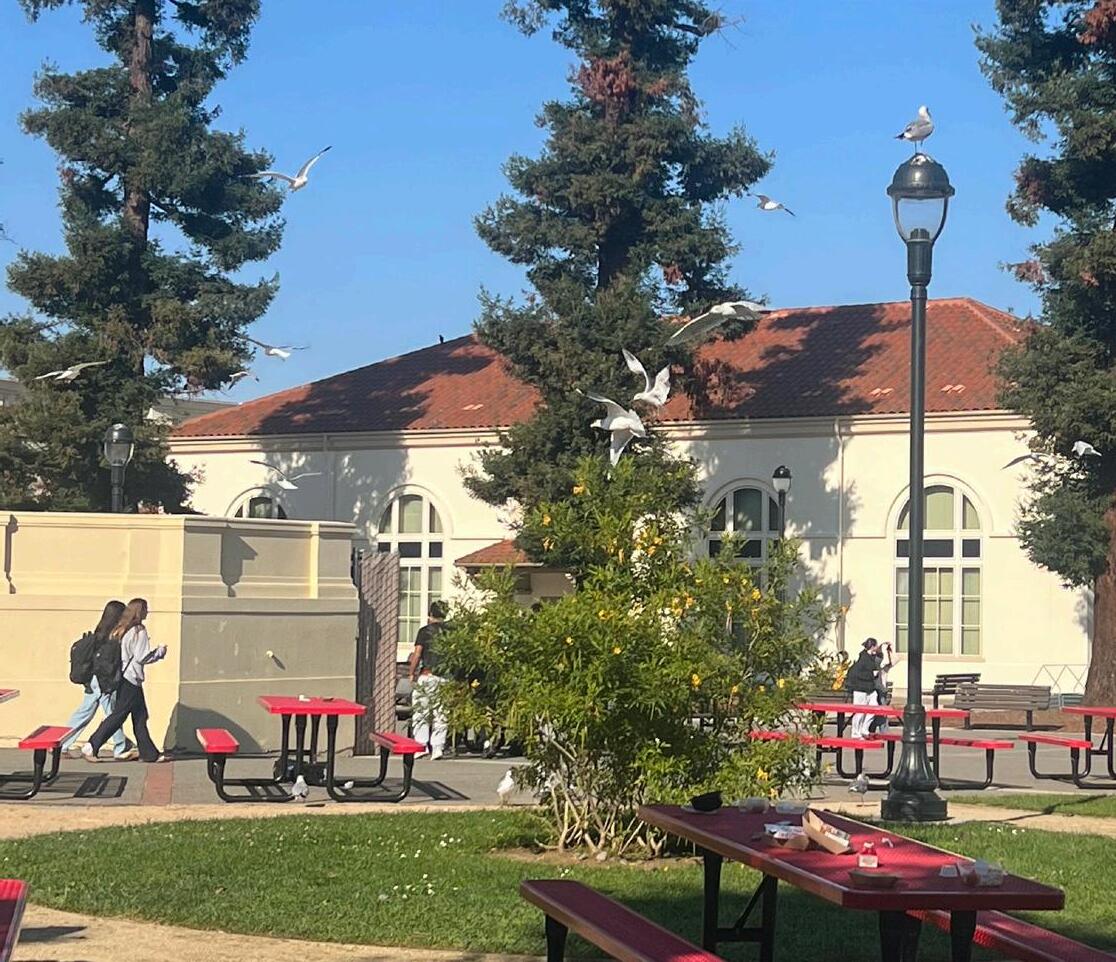
On July 1, the San Mateo Union High School District banned the sale of single-use plastic water bottles on school campuses. The initiative is a small step toward larger sustainability goals, and was led primarily by students in the district.
“It’s awesome for two reasons. One, because it helps maintain a more sustainable campus and helps us reduce our plastic use. And then the cooler aspect of my opinion is that it was a student-led initiative,” Thomas Bennett, science teacher and advisor for the Burlingame Environmental Club, said. “Students proposed the idea to the board. Students
collected signatures and their petition, and students really made the change. So it’s really nice to see when young people are motivated.”
Senior Rowan Kelly said that although the ban may seem small, it is a step in the right direction and reflects the hard work behind it. While two stu dents, Sydney Chen and Jayden Wan, who campaigned for the ban graduated last year, Kelly said she knew them well and saw their efforts firsthand.
“To some people, it might seem like kind of a small ac tion to be taken. I know the kids who made this ban happen pretty well, and I know that they had to work pretty hard to get this done, because it took a lot of activism,” Kelly said. “They had to create a whole pe
tition and get people to sign on
Although Wu said sustain-

people should make sure the items they purchase and use do not harm the environment.

Nothing is created or destroyed. So we were only given a certain amount of materials. So it’s on us to use it responsibly and sustainably.”
- Michael Wu, chemistry teacher
“Nothing is created or destroyed. So we were only given a certain amount of materials. So it’s on us to use it responsibly and sustainably, because eventually we are going to run out of things,” Wu said. “Not in the near future, but eventually we will run out of things. So again, I think it’s very important for the current generation to be sustainable in order to support future generations.”
“But other than that, I think from when I was in school… you all as students are just so much more conscientious as a student body than mine was.”
Building on that idea, Burlingame Environmental Club president and senior Alexandra Rivas said she believes environmental conservation matters for society’s progression. She explained that because of rising consumerism,
Although she is happy with the steps the district has taken to make the school sustainable, more could be done to make school lunches environmentally friendly.
“If there’s a way to get us to start using clear plastic instead of black plastic, which is something that can’t be recycled, I think that’s pretty cool,” Rivas said. “But I know that to get these changes in the cafeteria, it’s much more than just a site thing. It’s like a district thing, which is why it’s so hard to get it going. But I feel we can get changes implemented.”
According to Rivas, change can be as simple as using reusable utensils or encouraging more students to bring their own lunch to school. Despite its simplicity, she said students are often resistant to the idea of sustainability because they do not experience the consequences of climate change firsthand. To create meaningful change, they must first be educated on the topic.
“If people open their minds up more to it, and they understand how important the issue is, then they’ll be able to do more to change their lifestyle,” Rivas said. “I don’t think that people can make changes without really understanding why they’re doing it.”
BY JOSIE WETTAN Social Media Manager
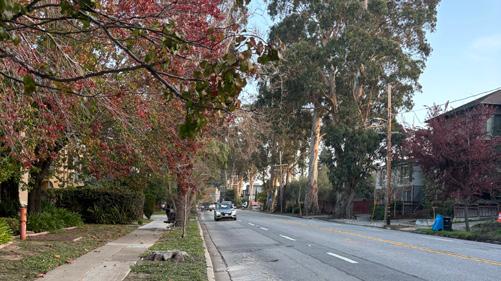
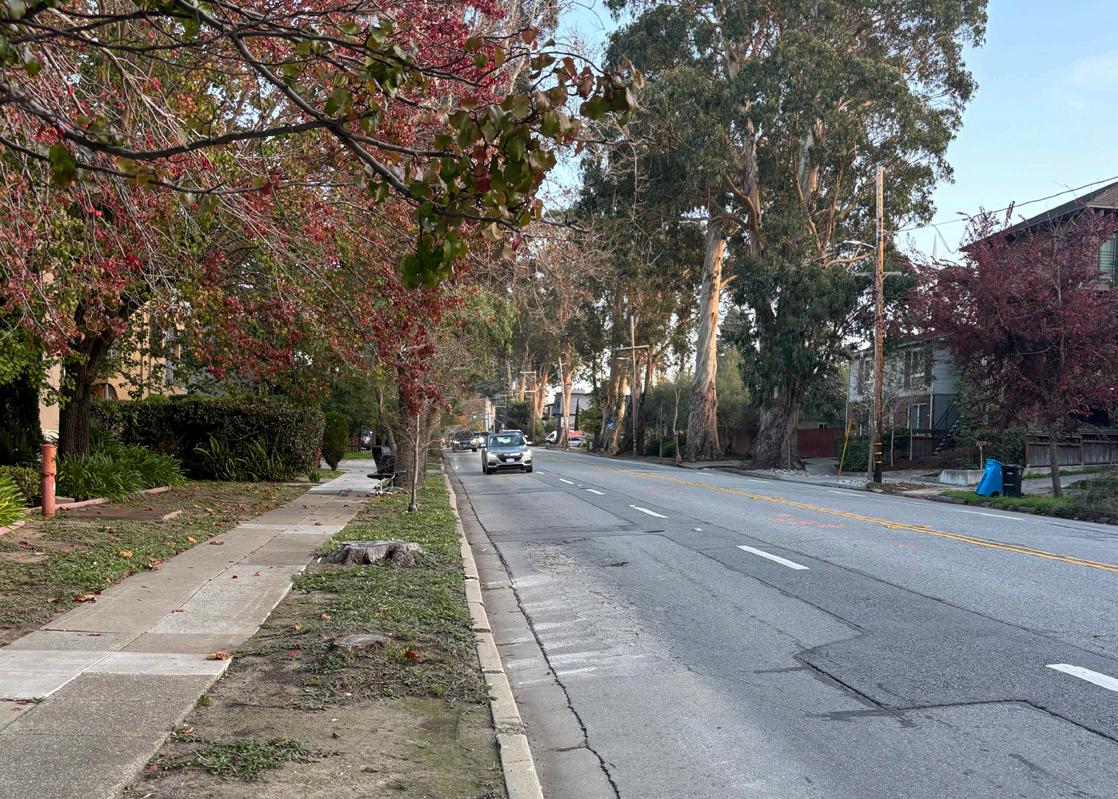
For years, El Camino Real in Burlingame has been marked by potholes, broken sidewalks, and occasional flooding. However, the road is also home to a historic tree grove, making it unlike any other in the county. In Burlingame, the trees have been a lasting problem because their roots interfere with crucial infrastructure. After years of negotiation between Caltrans, a State of California department that manages transportation, and the City of Burlingame, construction on the road is set to begin in December 2025 or January 2026 and end in fall of 2029, contingent upon Pacific Gas & Electric Company (PG&E).
The first stage of the plan will begin with tree removal and road closures on the northbound section of El Camino Real, drainage work on the southbound, and pothole closures. This stage is expected to last until May 2026. In stages two and three, the city plans to pave, replant trees, and fix sidewalks on the northbound lanes until summer 2027. On the southbound lanes, paving, tree removal, and tree replanting will last until winter of 2028. The full
plan includes six stages. Construction will leave at least one lane open in each direction and result in a visible change after a few hundred trees are removed. However, as part of the compromise, the city plans to replant these trees and preserve the grove as much as possible, bypassing Caltrans’ typical regulations on how far apart trees must be planted.
“El Camino Real has not really been repaved, like a real paving job, where they really go down far, couple feet, since it was initially paved in 1913,” Historical Society President Jennifer Pfaff said. “That’s a long time. This will make for some unstable trees, because we’re going to have to be possibly wrecking the integrity of the root system. So we’re going to have to take out probably more trees than people were anticipating, but we will replace the same types, and we’re going to do them a little closer together than typically California allows.”
The project is estimated to cost around $130 million and also focuses on fixing drainage issues, upgrading crosswalks, and improving visibility. According to Burlingame Public Works Director Syed Murtuza, this type
of project hasn’t been done in Burlingame in the last 100 years.
“But given the scope of work, it’s going to be inconvenient, and it’s going to be destructive, but they’re trying to get it done as fast as they can, so that it will all be done,” Murtaza said. “... You will have safer pedestrian crossings, sidewalks, and all of that.”
Another aspect of the project is moving the overhead power lines underground so they no longer interfere with the trees. The city also plans to plant a smaller eucalyptus that is less disruptive to the roads.
“Right now, the sidewalks are taken over by the trees,” Murtaza said. “The new trees will be not as big as the existing are. So there’s going to be a lot of room and lot of pedestrian safety crossings that currently is lacking.”
Junior Hope DiLaura said she enjoys the trees and appreciates their historical background, but recognizes the safety concerns.
“It’s definitely a little sad because a lot of those trees have a pretty historical background,” DiLaura said. “They’ve been standing for a while, but at the same time, if they become a safety hazard, that’s necessary,
because you can’t have tree branches blocking the middle of El Camino.”
With a similar view, Pfaff said that while she will be upset about the loss of the trees due to their historical significance, she knows this was one of the best plans the city could reach.
“Because for a while it’s not going to look good. So yeah, about that, I am devastated. Now, the good news is this: having done this for… close to 30 years when I count it all up, when all is said and done, this
was the best we could get,” Pfaff said. “I think it’s a good plan.”

BY INY LI Managing Editor

G
From pg. 1
Juniors Beckett Johnson, Niko Boyanov, and Colby Dang said the city’s struggles with homelessness inspired them to start the Community Uplift and Outreach Club. The club focuses on alleviating homelessness through fundraising and donations. Members go door to door in Burlingame to collect money, which they use to purchase food for San Francisco’s homeless population.
uations are the most urgent and whose behavior most impacts the community,” Hebb said. “The list of these high-need individuals guides our outreach teams, the public health workers, and SFPD, so we’re not wasting resources.”
or the Bay Area, and I think that’s a very negative portrayal of the city.”
Math teacher and San Francisco resident Jennifer Feldis said the city has an unfair reputation in the media.
The California Academy of Sciences lost Claude, the museum’s beloved albino alligator, after his 17-year tenure in San Francisco on Dec. 2. Necropsy findings performed at the UC Davis School of Veterinary Medicine confirmed that Claude died from “extensive liver cancer with evidence of liver failure.” The museum will hold a public memorial for Claude in the near future.

National: Trump v. Slaughter
After two and a half hours of argument on the Trump v. Slaughter case on Dec. 2, the Supreme Court’s conservative majority appeared to side with President Donald Trump in firing former Commissioner of the Federal Trade Commission Rebecca Slaughter without cause. This would overturn the 1935 precedent of Humphrey’s Executor v. United States, which would increase presidential power over nearly two dozen independent agencies.

Local: Claude dies at 30 International: Social media ban
Starting Dec. 10, Australia’s new federal law requires social media companies to restrict children under 16 from keeping or making accounts on apps including TikTok, Instagram, Snapchat, and YouTube. According to the New York Times, many Australian teenagers have already evaded the ban by using Virtual Private Networks (VPN) and falsely reporting their ages to create accounts.

Former University of Mississippi Rebels coach Lane Kiffin departed the team on Nov. 30 for a seven-year deal worth $91 million to coach the Louisiana State University Tigers, who missed the playoffs and fired their coach mid-season. The Rebels, who are set to play the Tulane Green Wave in the College Football Playoff, named defensive coordinator Pete Golding as their full-time head coach.
“I would say there’s a lot of gratitude, especially when we walk up and offer food. A light kind of turns on in their eyes, and it’s the same Wthing going around,” Johnson said. “When business owners or people on the street see us doing it, they’re grateful not only that we’re helping out the community by feeding the homeless, but that we’re doing it by our own volition.”
Johnson, Boyanov, and Dang are not the only ones working to improve the city. Jack Hebb, communications director for District 2 Supervisor Stephen Sherill said the city government has implemented initiatives to reduce crime and homelessness. Along with the “Breaking the Cycle” vision, the city created the Coordinated Entry system to “prioritize and match people experiencing homelessness to housing opportunities,” according to the San Francisco government.
A 2024 survey conducted by Sonoma County Tourism found that 42% of respondents believed San Francisco’s “woes” made them less interested in visiting the area. Johnson said that despite investments to improve the city, San Francisco still struggles with a poor reputation and national media scrutiny.
“There’s been a large stigma
That is so much of what our city is: the belief that you can come here and make a better life, the belief that you can invent a future here. I think we’re all starting to feel like that again.”
- District 3 Supervisor Danny Sauter
around San Francisco due to the homeless population increasing,” Johnson said. “And a lot of tourists are very scared of here, even people from California who aren’t
“I love it. I think it’s beautiful. I think it’s iconic. There’s the bridge, there’s Coit Tower, there’s amazing areas,” Feldis said. “But I think the homeless issue has been the widespread thing the newspapers love to print about, but I don’t know that that’s necessary. It doesn’t characterize the whole city. It characterizes one part of it.”
While the city’s struggles have not subsided, San Francisco’s public reputation is recovering. A poll conducted by the San Francisco Chamber of Commerce in February 2025 showed that 43% of San Francisco residents believed the city was “on the right track,” compared to 22% the previous year.
“We’ve had problems in the city, but we’re turning things around,” Sauter said. “We’re seeing optimism rise and people’s belief in our city rise. “It feels so good, because that is so much of what our city is; The belief that you can come here and make a better life, the belief that you can invent a future here. I think we’re all starting to feel like that again.”
*To read more, view the full article at theburlingame.org.

BY ALEX BERTELLI Copy Editor
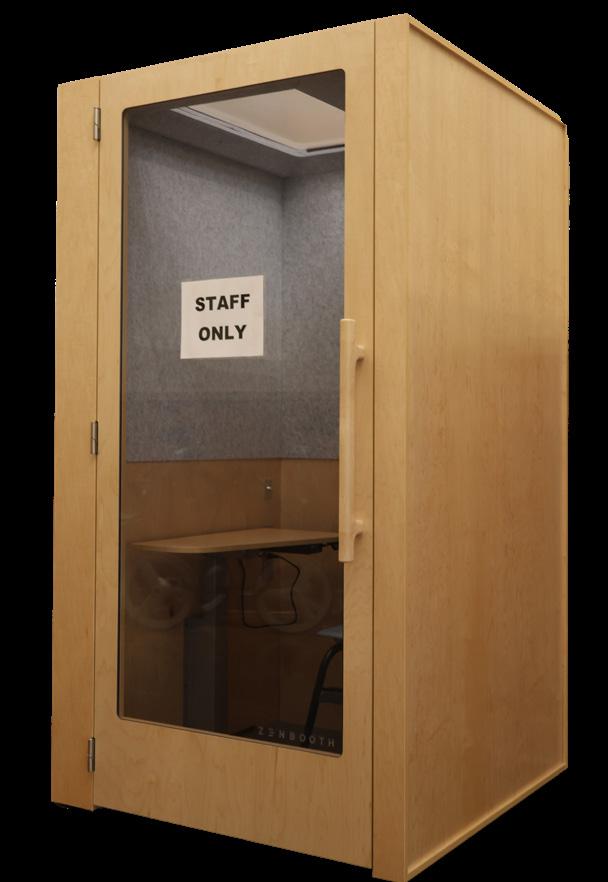
In response to concerns about limited teacher workspace, a Zen Booth cubicle was installed in the F building on Nov. 20. Assistant Principal Aimee Malcolm said an order of three or four cubicles had been discussed near the beginning of the 2025-26 school year, but the district ultimately funded one.
“The goal is that teachers who have shared classrooms would be the first to try to use the space, and then, if it’s not taken, I’m sure other people can utilize it if they wish,” Malcolm said.
The $6,000 booth contains a table, outlets, and noise-insulating walls.
“That’s something that blocks the noise and allows you to concentrate. Quite honestly, as much as I like teacher engagement in the hallways, in the break rooms, … sometimes you just need a space where you can kind of close the door and focus,” said English teacher Brian Clack, who shares a classroom.
While a majority of shared classrooms are in the A and C buildings, Malcolm said the booth was placed in the F building because there was avail-
able floor space. Chemistry teacher Kendrick Chow, who also shares a classroom, said he was under the impression that some staff were unsure how often the booth would be utilized, especially given the existing department offices.
“From what I understand, most teachers were a little skeptical of a space like that. I would say the reaction isn’t quite negative, but teachers were … unsure if we would use that space,” Chow said.
Clack said that going to the F building may be inconvenient for some staff, but he appreciates that the administration is seeking solutions.
“The F building is further away, but when I have real chunks of time, I can go over there and use it,” Clack said.
“Of course, if you pack up and head all the way over there, and then somebody’s already in it, [I’ve] got to find somewhere else. But again, that’s just being on a crowded campus. … You’re just always looking for somewhere to work, and I’m happy that they have at least started with something.”
According to Malcolm, other space compromises have been considered, including reorganizing large classrooms into medium-sized classes and adjusting adjacent spaces. Malcolm also said it is unclear if the school will receive more booths due to potential district funding limitations, but that the administration is continuing to look for general space solutions.
“Dr. Fong has worked really hard to try to be creative with the space that we have at BHS and providing adequate spaces for teaching and learning,” Malcolm said.
Sophomore Annie Ma, who experienced AI essay grading her freshman year, said AI is a useful tool for teachers, but it struggles to analyze subjective aspects of her writing.
“It doesn’t always understand the context or creativity that students try to incorporate,” Ma said.
Similarly, sophomore Liam Christensen, who has seen teachers integrating AI into their curricula, raised concerns over its tendency to focus on general trends rather than truly understanding students’ writing.
“AIs don’t usually have the ability to grade like teachers do. It’s very different in the fact that AIs are really good at detecting patterns, but they’re not really good at finding a line of reasoning, which is where a lot of teachers grade on,” Christensen said. “If you’re grading an essay, you don’t grade on how nice the words look. It’s the actual thought behind it.”
However, Gray, who used the chatbot as a second opinion, said it was a valuable tool
for identifying strengths and weaknesses in each student’s work.
“Sometimes the chatbot would actually find students’ points that I hadn’t noticed, ‘Oh, actually, because of this sentence here in this paragraph, they do get the point,’” Gray said. “I’d be like, ‘Oh, that actually makes a lot of sense, I hadn’t noticed that.’ So running messages to the chatbot as a secondary point of view was very helpful.”
Senior Serena Koopmans, who is the president of the Artificial Intelligence club, said AI comes with both benefits and drawbacks, having recently learned that one of her teachers used AI to grade her work. For Koopmans, transparency between the teacher and student is crucial whenever AI is involved in the classroom.
“The main thing that many students are concerned about is honesty,” Koopmans said. “I think that teachers should definitely disclose at the start of the year and before every assignment, if they’re going to be using AI to grade. And I also

think teachers should potentially have the option for students to opt out of that.”
Koopmans also said AI grading could decrease personal interactions between students and teachers. Conversely, she added that the time saved using AI can open up more time for student-teacher interaction.
“I can think back on a few fond memories of when teachers have read my work and talked to me about it in class, and it strengthened our relationship. And so I think that if it’s only AI grading, then it will be harder to have these relationships,” Koopmans said. “But at the same time, if the teacher can spend less time grading mundane assignments and more time actually talking to the students and giving them direct support in class, I think that that could be potentially a good thing.”
To keep the district well-informed about its benefits and consequences, the SMUHSD Board of Trustees approved the Artificial Intelligence (AI) Capstone Program, as well as an AI Fellowship during the Nov. 20 board meeting. The fellowship was designed to give teachers a chance to learn about the ethics of AI in education and how to utilize it in the classroom.
“AI is here to stay, for better or for worse, so I think it’s really important that we all really think about how we can use it in a positive way moving forward,” Gray said. “I don’t think shunning it is the answer, because I think we all need to practice working with it and figure out how we can best use it without resulting in this brain drain that we often see.”
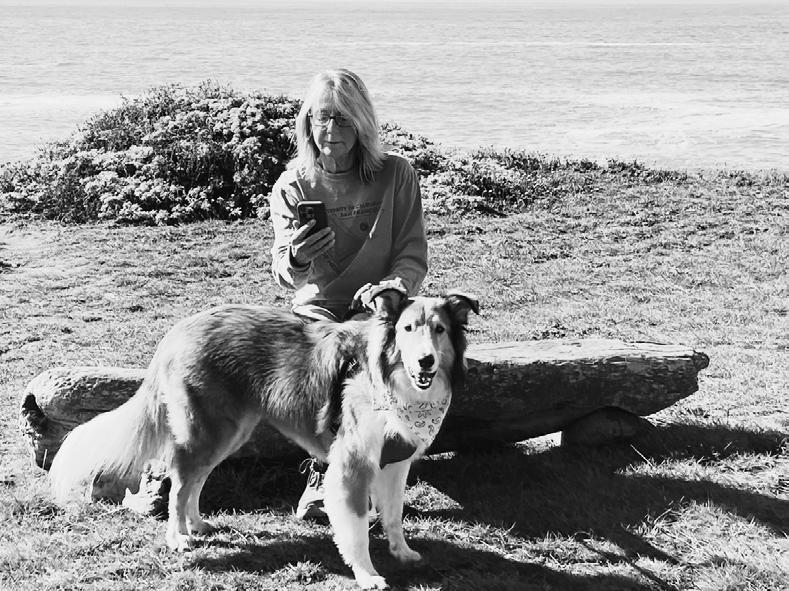


How do you feel about teachers using AI to grade essays?
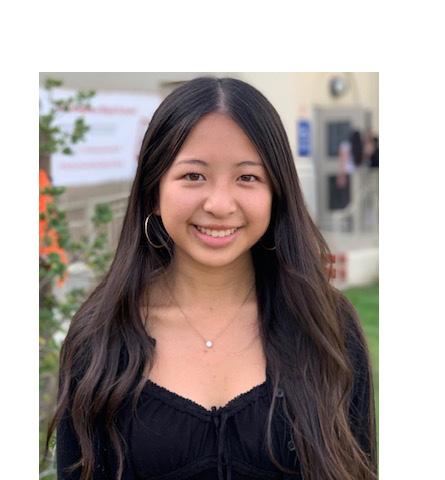
“AI notices patterns but it doesn’t always understand context or creativity that students try to incorporate.”
- Annie Ma, sophomore
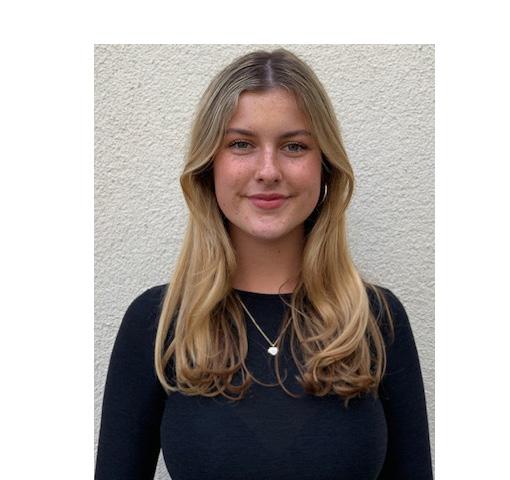
“Teachers can be allowed to use it as long as they disclose it with their students and also check it over.”
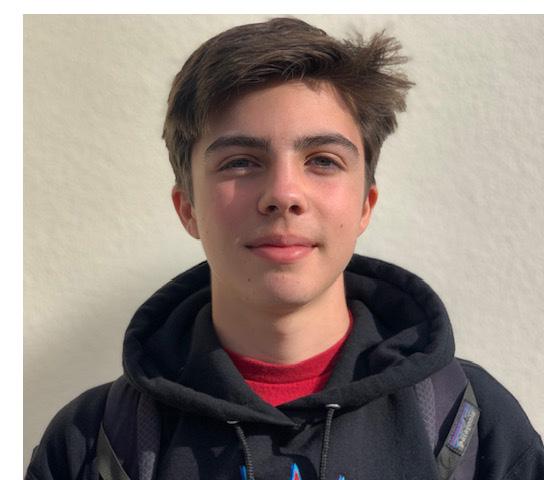
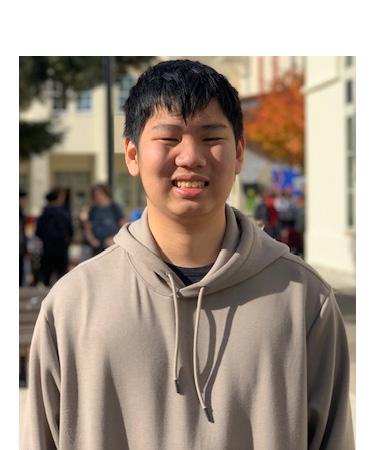
- Serena Koopmans, senior - Liam Christensen, sophomore
“[AI] is not really good at finding a line of reasoning, which is where a lot of teachers grade on.”
“It probably isn’t the best idea, because students can easily find loopholes to try to get the AI to grade better.”
- Tyrus Zhang, senior

If you make it compli cated for yourself and if you like complex things, then yes, it will be fun.”
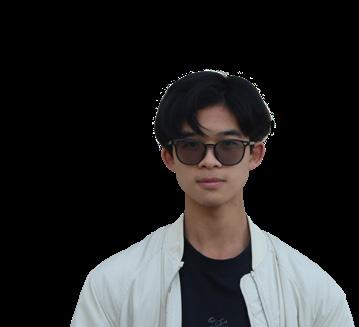
PHOTO BY FAITH LEE
Fung was introduced to investing in fifth grade, through a paper stock-trading game his friends played called “How the Market Works.” His mother, a former investor, helped in the game. Following her lead, he began investing in technology stocks.
Being informed allows you to be knowledgeable of different things happening around in our world.”
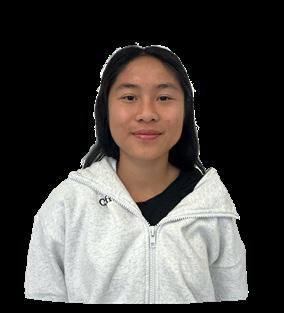
Chen began investing for long-term benefit. She said it will help as a “crutch to get into college” and gain financial literacy. She invests in common stocks with her JP Morgan account. When she reaches the legal age, she intends to learn option stock trading.
Patience is a significant factor, but I think having an edge is probably a little bit more important.”
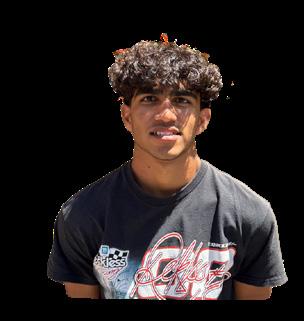
Irfan joined the stock market for a long-term investment plan after hearing about it from his friends and family. Despite the risk of futures trading, he has gained experience in mastery of psychology and strategy, and discipline.
BY FAITH LEE Staff Reporter
With money on the line and only a brief period of time between a stock’s rise or fall, the stock market is known as a highrisk, high-reward environment that takes years of experience to master. Despite this, some students have already begun investing in stocks, with a few even finding success in the market.
Junior Terry Fung invests in the technology market. In fifth grade, he and his friends played “How the Market Works,” a paper stock-trading game. His mom, a former investor, helped him in the game. She invested in the technology sector, so he followed her lead. Fung said the technology sector is the most effective at making money.
Fung added that investing can be easy and fun, depending on the approach.
“If you make it simple for yourself, it will be easy to learn,” Fung said. “If you make it complicated for yourself and if you like complex things, then yes, it will be fun.”
Senior Maisam Irfan began futures trading for his long-term investment plan to make money. He attributes the popularity of trading to its similarity to other opportunities, like starting a business or having a job.
“People don’t understand that with true risk management and true discipline, it could genuinely change their lives,” Irfan said.
Irfan is an aspiring investor and currently trades futures. Instead of traditional investing, where someone buys stocks at low prices and sells them when
values increase, futures require the investor to trade multiple sessions and buy margins of a stock within a set time frame.
“A lot of people fail in trading futures because it’s kind of hard to regulate whether you should enter or not enter into a trade,” Irfan said. “And I think that patience is definitely important to an extent, but you also want to make sure you have that edge.”
Futures trading involves both skill and psychological understanding. Irfan said he learned to control his emotions through repeated failure, and now sees it as a learning opportunity.
“You have to master your psychology,” Irfan said. “You have to answer the market with no emotions whatsoever.”
Meanwhile, sophomore Chloe Chen uses her JP Morgan stocks to invest in long-term common stocks. Over summer break, she was looking for something that could benefit her in the future, and possibly use as “a crutch to get into college.”
Chen said being well-informed as is a “person’s best guide in society,” and recommends learning from YouTube videos and different news outlets.
“If we put into perspective that we could possibly have more financial literacy in the future due to these opportunities,” Chen said.
At Burlingame, students also learn about stocks and economics in their senior year. Economics teacher Matthew McDermott said he aims to teach students morality in trading.
McDermott advises students to make safe investments, though he warns them about the overvalued market.
“Make the safe investments in index funds or large-cap stocks that are very unlikely to go down in value. Be very careful about speculative ones,” McDermott said.
*Fung, Irfan, and Chen all legally trade under custodial accounts. To read more, view the full article at theburlingameb.org.

BY TEHYA SCHOLZMORESCO Staff Reporter
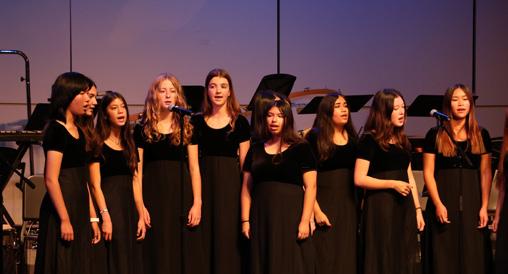
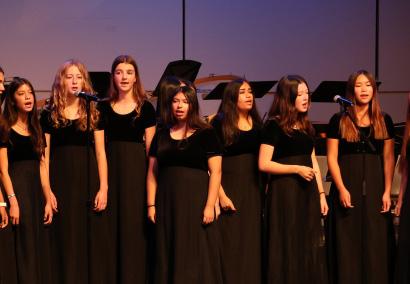
Excitement filled the air during the music department’s 102nd annual winter concert, led by director Kyoko Yamamoto on Wednesday, Dec. 3.
Senior chorister Jeffrey Galvez said everyone gave their best in the concert, despite sickness and other challenges.
“Most proud of, I say, just everybody showing up and putting their best out there,” Galvez said. “The week before, a lot of people were sick, a lot of people had difficulty showing up to class: sickness, personal reasons.”
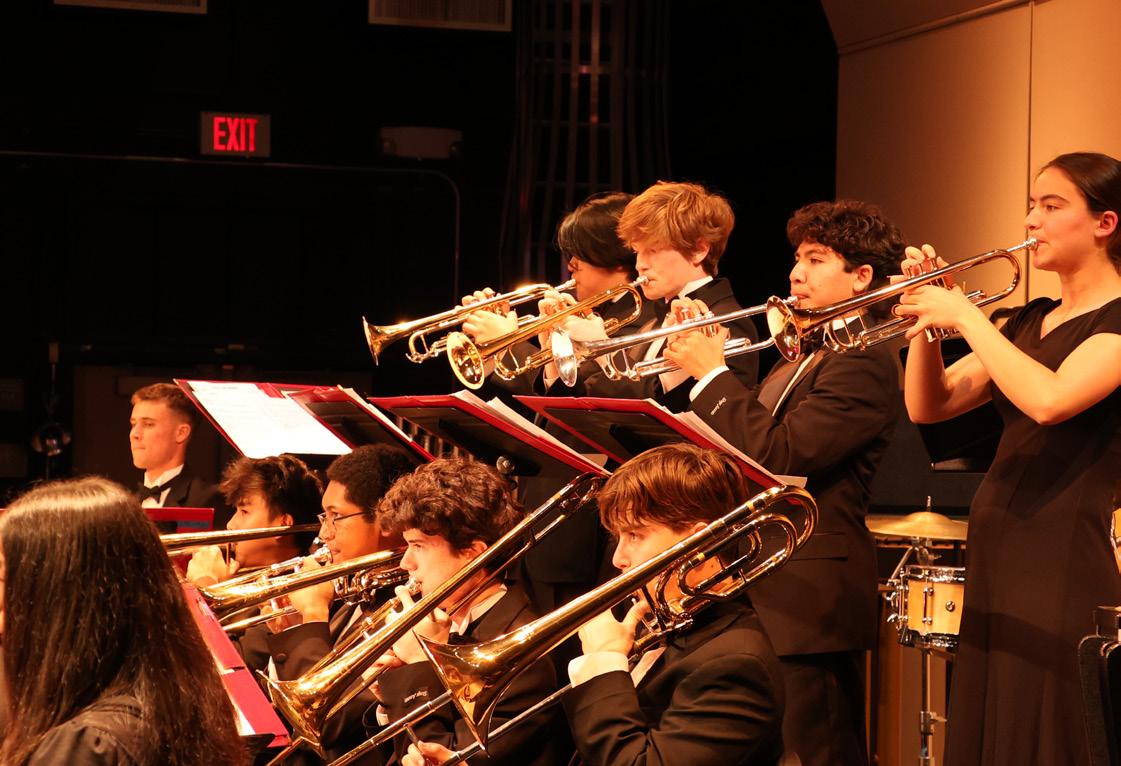
The concert began with the jazz ensemble, featuring multiple solos on tewnor saxophone, guitar, alto saxophone, and trumpet in songs such as “Space City Shuffle,” “Seven Steps to Heaven,” and “El Abrazo.” Junior trumpeter Stephen Jankowski commented on the trumpet section’s performance.
“We could have had a better balance amongst us and compared to the other sections, because we tend to kind of overpower the other sections
in some parts of the songs, but overall it was pretty good,” Jankowski said.
Next came the vocal jazz ensemble, which performed “Forever Blue,” “Goodbye, Yellow Brick Road,” and a lyrical composition of “Africa” by TOTO.
According to Galvez, “Forever Blue” was the “most important” song in the ensemble’s repertoire.
“Because we nailed it so good in the performance, it was an all-around good performance, and it really showed our ability to adapt and to learn new things and to have those things turn out in the end,” Galvez said.
The chamber orchestra then played “Tango Toscano” before showcasing three soloists in each movement of Vivaldi’s classic concerto “Winter.”
“I was most proud of our group as a whole. I think the bond between the orchestra is something really special, especially since we’re still kind of small, we get to know everyone really well,” junior violinist and soloist Sophia Chang said.
Next, the concert band, accompanied by members of other ensembles, played songs from the movie “Encanto,”
alongside “Screamers!” and “Yorkshire Ballad.”
“It was a wonderful way to end the semester’s band experience, and it was such an amazing night,” freshman clarinetist Ruby Kendall said.
The wind ensemble brought energy with performances of “Music for a Darkened Theatre” and “John Williams Swings!”
“Personally, I think the wind ensemble did way better than I expected, and I really do believe that all the practice we put into it really benefited,” sophomore clarinetist Kayleb Schlesinger said. “And especially today during rehearsals, I feel we really dialed in on all our music, and we put out our best tonight.”
Finally, to wrap up the night, the symphony orchestra — a combination of wind and chamber orchestra — performed the classic holiday song “Sleigh Ride.”
“The highlight of the overall concert had to be ‘Sleigh Ride’ again,” Schlesinger said. “Because it really just brought everyone together from both chamber orchestra and wind ensemble, and allowed us to put out our best and play the best we can.”
After almost a decade, Jesse Eisenberg, Woody Harrelson, Isla Fisher, and Dave Franco reunite for another captivating movie in the “Now You See Me” franchise. Featuring smooth incorporations of computer-generated imagery (CGI), “Now You See Me: Now You Don’t” is guaranteed to leave its audience in complete awe. It’s been 12 years since the infamous “Four Horsemen” — Daniel Atlas, Merritt McKinney, Henley Reeves, and Jack Wilder — first set up their series of shows. This time, they’re not performing; they’re working behind the scenes. Young illusionists Bosco, June, and Charlie have joined the fray, tasked to overthrow Veronika Vanderburg, head of a corrupt diamond company. Their mission? Stealing the world’s largest diamond, the “Heart Diamond.” With simple execution of tricks and eye-catching stunts, the movie excels at what it sets out to do. If you’re looking for a fun, thrilling movie to watch, “Now You See Me: Now You Don’t” is the perfect addition to your watchlist.

Who’s
The world of IT expands with “IT: Welcome To Derry,” an eight-episode prequel series directed by Andy Muschetti and starring Bill Skarsgård and Taylor Paige. Set in Derry, Maine, the series kicks off with Matthew (Matty) Clements, a young boy leaving Derry with the goal of escaping his abusive father. As he is running away, Matty is kidnapped by Pennywise, who is disguised as a family member.
After watching the first five episodes, this new series lived up to my expectations as a fan of IT. While some of the computer-generated im agery (CGI) was disappointing — particularly in scenes involving para normal creatures — the overall storyline and pacing were still engaging. Multiple storylines, including the military, the group of children, and the adults, overlap with one another, giving the audience a view of the cen tral plot through several perspectives.
Regardless of the problems in the production of the show and minor critiques, “IT: Welcome To Derry” was rated 79% on Rotten Tomatoes. It’s clear fans were able to look past its faults and appreciate the enthrall ing plot and iconic characters.
“It was eventful and a good way to expand the plot. It was better than the first movie.”

“I didn’t think it was as good as the first

“I’m excited to see if they’re able to take down Vecna once and for all.”
After a three-year wait for the highly anticipated “Stranger Things 5,” the first four episodes were not what I expected. Released on Nov. 26, the decade-long show stirred up excitement from fans to see the series conclude.
While watching the first episode, I immediately noticed the grim atmosphere that starkly contrasted previous seasons. Gone were the adorable kids from season one, solving mysteries in the dark, alternate dimension of the Upside Down. Though the season was visually impressive, I was reminded of what diehard fans and I loved about the series: the character relationships.
The episodes themselves, specifically “Sorcerer,” were impressive, and you won’t be disappointed with this season, filled with huge twists and turns that are sure to leave you in awe and wanting more. However, viewers who enjoyed the series’s lighthearted first two seasons may fail to see the good in this new season.
To say I have been changed for good is quite the understatement. No, it wasn’t by Glinda’s sweetness or Elphaba’s defiance alone, but by the way “Wicked: For Good” delivers one of the most emotionally precise endings I have seen on screen in years.
The film follows Act 2 of the stage musical and carries the hefty role of refining what many fans consider the weaker act. While the entire musical initially ran 2 hours and 45 minutes with an intermission, “Wicked: For Good” alone runs for 2 hours and 17 minutes, giving Director Jon M. Chu room to expand on character development and storylines that were lost in the stage version. This helps resolve the pacing issues and holes the original production suffered from. Chu’s movie musical accomplishes the difficult task of translating the second act of “Wicked” to the big screen, following the triumphant first part of the movie franchise. When the iconic silhouette cover of Elphaba and Glinda from the original Broadway cast album of “Wicked” reappears at the film’s ending, Chu creates a full-circle moment that serves as a fitting way to close a near-perfect adaptation.
“Zootopia 2,” the subsequent installment in Disney’s Zootopia universe, was released in theaters on Nov. 25. The film featured many returning characters and starred Ginnifer Goodwin as Judy Hopps — the ambitious and witty rookie detective — and Jason Bateman as Nick Wilde — the sarcastic and clever conman-turned-police officer. The movie follows the iconic duo as they fight corruption, smugglers, and a wealthy family with ties to the city’s politicians. While full of action and humor, the writers effectively convey important underlying messages to the audience. The movie features a powerful and wealthy family bribing city management for permits to start a new construction project, despite the project hurting marginalized groups. Along with this, the vibrant and creative animation style highlights the effort and planning that went into designing the film. Overall, while “Zootopia” was intended for a family-friendly audience, it truly shines with its subtle but powerful messaging.

“The world will hunt you and kill you just for being who you are.” This was my favorite quote from the highly anticipated R-rated “Frankenstein” movie, which debuted in theaters on Aug. 30 and
“I don’t think we’re looking that much towards the tourna ments, more just towards progressing.”
- Julian Lee, junior
1-2 vs. Leland
On Saturday, Dec. 6, the Panthers (0-2-1) lost to Leland High School with a final score of 2-1.
68-41 vs. Wilcox
On Friday, Dec. 5, the Panthers (3-1) defeated Wilcox High School in the Westmont Tournament 41-68, led by senior Jean-Luc Uharriet, who guided the offense with 11 points.
23-57 vs. Santa Cruz
The Panthers (2-2) lost to Santa Cruz High School 57-23 on Saturday, Dec. 6. Freshman Sydney Lue led the team with six points.
BY KAI SHAH Sports Editor
After playing on the flag football team in the fall, freshman Charlotte Dunne said she wanted to practice in the off-season. So when she heard about a new club flag football team launching in Burlingame, Dunne knew she wanted to sign up.
“I’m most excited about meeting new people and especially getting stronger in flag football,” Dunne said. “Because I was a quarterback for high school, so probably just getting stronger and understanding the game more.”
The new club team is a part of an organization called Next Play, which was created during the COVID-19 pandemic. The name, “Next Play,” conveys the organization’s mission to inspire athletes to move forward from past mistakes on and off the field. According to founder James Johnson, Next Play expanded to Burlingame after Burlingame alumnus
Angelo Medina contacted him about launching his Apex 7 vs 7 flag football club teams.
“That’s when I said, you know what, let’s get this next play organization running, which would then support your goals of coaching these teams in that process,” Johnson said.
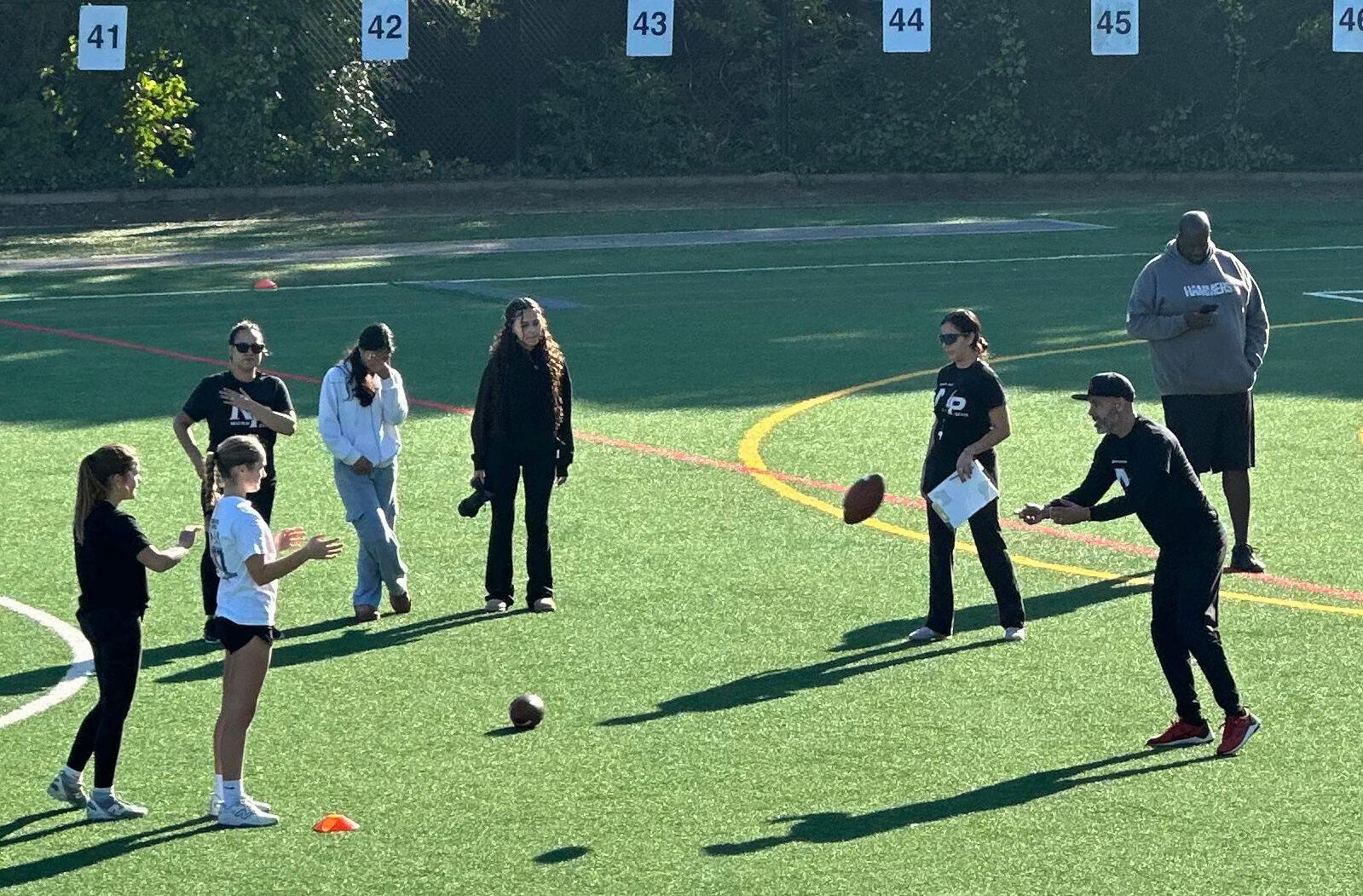
through eleventh grade are eligible to try out, and the season runs from January to April, including seven tournaments across California.
you wanted. You didn’t get a position you wanted. How do you navigate through that?”
Johnson added that he
keep playing flag football outside of school, improve on her skills and muscle memory in the off-season, and train with coaches she

“Goal is to play good, not make any mistakes. You know, it’s second year of BHS soccer, so I’m going to have some fun, really learn the way.”
- Zachary Rudman, sophomore
Next Play now serves as the parent company of multiple clubs, helping them gain additional playing experience through its connections.
In the Burlingame division, there will be eight total teams: four girls’ teams and four boys’ teams. Flag football coach Denise Burch will be one of the coaches and the director of the girls’ division. Students in eighth
Although Next Play is a competitive sports orga - nization, Johnson said the most important goal is instilling a growth mindset in athletes.
“Our goal is to teach you how to work through that and move on to that literally, and that could be on and off the field, that’d be at school,” Johnson said.
“You don’t get the grade

I’m most excited about meeting new people and especially getting stronger in flag football. I was a quarterback for high school, so probably just getting stronger and understanding the game more.”
- Charlotte Dunne, freshman
hopes the new club will foster the training and development of local high school athletes, so that their players can also improve during the off-season and aim to play in college.
“We need to bring back where, if you’re local, if that’s where your high school is, that you have an opportunity to come to our program, get better, and then play at your local high school and represent your public high school,” Johnson said.
Fresh -
man Sienna
Par - iani said she is excited to
already knows.
“I’m comfortable with them in their coaching style and stuff, and I think that’ll help a lot, because I already have experience with their way of playing,” Pariani said.
The girls’ evaluations took place on Saturday, Dec. 6. Burch said she looks forward to expanding the new brand and creating more opportunities for girls interested in flag football.
“We just wrapped up our third season in our district, it’s brand new, and the popularity, the way it’s exploding, is just so exciting to watch,” Burch said. “The girls get so into it. The parents get so fun to be involved on any level that I’m excited to see where this takes us.”

BY AUDREY WEI Social Coordinator
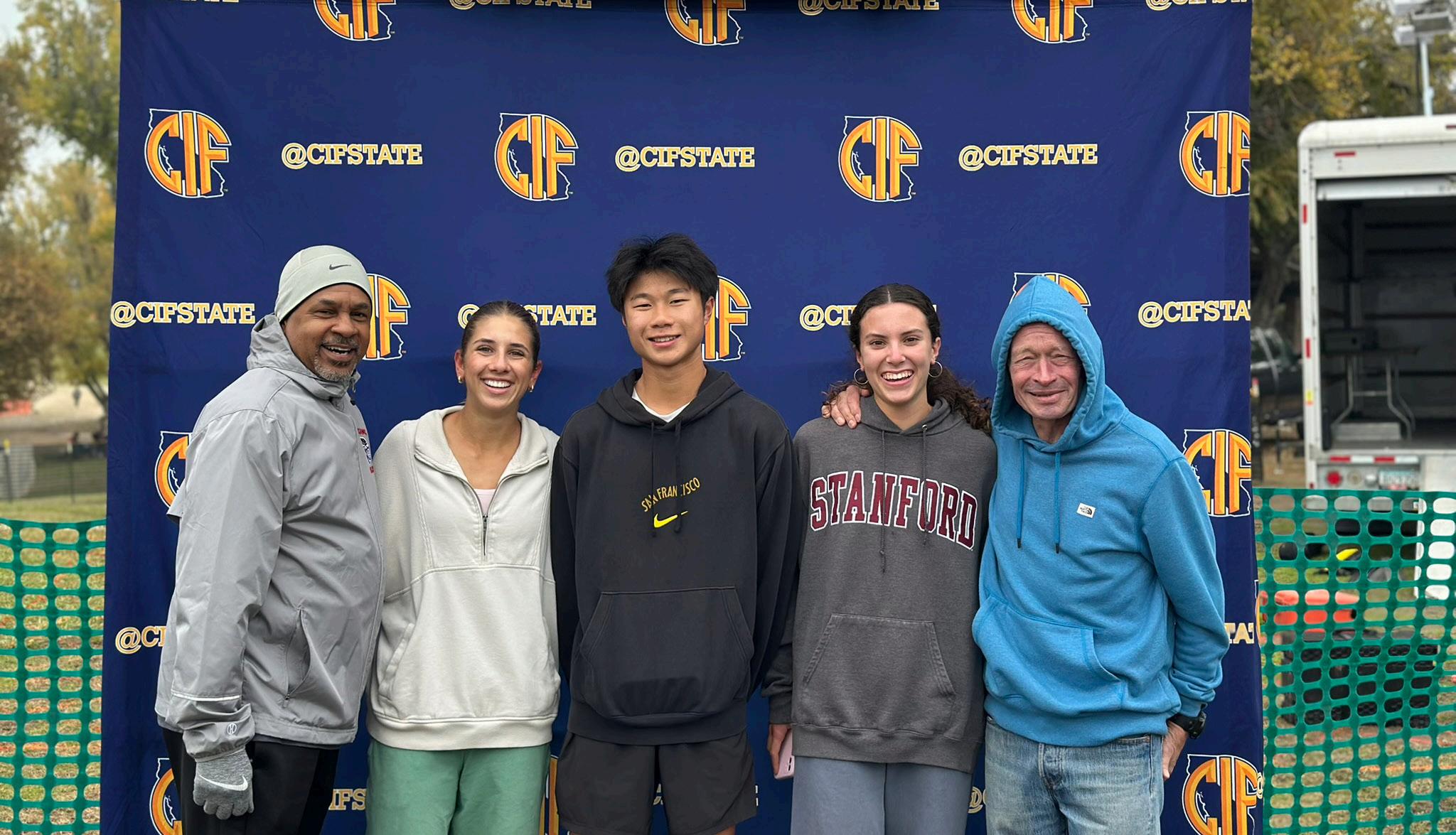
After battling at the 2025 California Interscholastic Federation (CIF) State Cross Country Championships (DIII), cross country concluded the season with solid performances across the board.
“It’s always fun to run here, and it’s a huge meet, with thousands of people that race at the meet,” junior Elizabeth Carroll said. “So to place that high up in this meet was really exciting, because I think there’s 200 and something people in our race.”
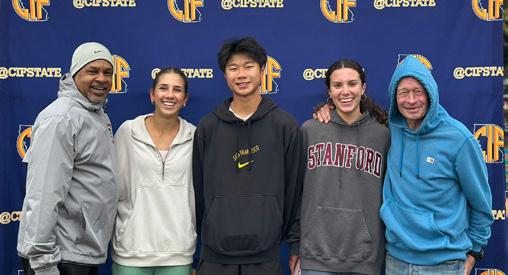
Three runners — seniors Ryan Liu and Stella Newman, and Carroll — competed on Saturday, Nov. 29, after qualifying individually. Except for Newman tripping at the start of the race, head coach Chris Coleman said it was “a great meet,” with Liu and Carroll both setting new personal records (PR).
“It was what we expected,” Coleman said. “It’s the state meet, and different things happen. But the team performed well, including Stella, who was probably going to be on her way to a personal best as well.”
Cross Country Results
Elizabeth Carroll
18:15.6 (PR)
Ryan Liu
17:09.4 (PR)
Stella Newman 19:23.8
Liu, making his first and final CIF State appearance, finished in 173rd place with a time of 17:09.4. Despite placing lower than he hoped, he said he was happy with the outcome, especially as the team’s first boys’ qualifier in seven years.
“I was a little bit nervous for the race, but after the gun rang, we started running,” Liu said.
“I was really excited and happy just to be there. It was my first time at the course, so I was not ready for the hills at the back end … I didn’t expect how hard they would be during the race.
I think it would have been nice to get some more course experience before, but it was nice to kind of just be there.”
Newman echoed that sentiment, reflecting on her fall during the race. About 400 meters in, she had to restart after a runner fell over, and later tripped 600 meters into the race. Despite the mishaps, Newman managed to finish in the top 100 runners with a time of 19:23.8.
“I ended up getting tripped about 600 meters into the race on the concrete by someone behind me. It took me a minute to get up from that, and I pretty much was just stunned after that, with wind knocked out of me, and I also scraped the whole side of my body,” Newman said. “… I tried to catch up to Elizabeth, who, at this point, was like forty meters ahead of me by the time I got up, and my body just basically stopped working. So not exactly the stage I had hoped for.”
For Carroll, who placed 22nd among 216 runners with a personal best of 18:15.6, this
meet was a success.
“It went really well,” Carroll said. “I had a PR, which was exciting, and I feel like it was good conditions. It was nice and cold in the morning, and the energy at state is always incredible.”
Newman and Carroll used their recent run on the course at the Clovis Invitational on Oct. 10 to their advantage.
“It was so helpful to have seen the course this year and not have a full 12-month span in between the last time we were here,” Caroll said. “I feel like I’m getting to know the course better, which is insanely helpful. I think it’s our fifth time running the course, and it kind of is turning into our second home.”
Coleman applauded Newman and Carroll for their dedication to the team.
“It really speaks to their commitment to the sport, their ability to make it through the
postseason, all the way to this level,” Coleman said. “I think the thing that makes this the most special, regardless of the result, is just Stella being able to make and qualify for it every year that she has been a Burlingame Panther — that really speaks to her ability. Also, with Elizabeth falling in those footsteps, that makes it extra special as well.”
With four state qualifications to look back on, Newman said it felt surreal to be closing out her final season.
“It still hasn’t really hit me yet since we’re still so early on [in the year], and it hasn’t hit me yet that it was my last one, but no one I’d rather do it with than Elizabeth,” Newman said. “It was very exciting, because Ryan, it’s his last year too, and he made it. So it was fun to have the trio of us. I’m super proud to be a four-time qualifier, so, can’t complain.”
Sharing Newman’s outlook, Liu said the emotions of his final season at Burlingame won’t fully set in until the end of track season in the spring.
“As a track runner, at least we have track season, so I think I’ll be more sad after track because it’ll be my last running season. But I am still happy because my goal was just to make it to state. It’s sad for cross country to be over, but it was nice that I got to accomplish my goals,” Liu said.
Coleman said he is proud of the three runners for both their success and the supportive community they brought to the team.
“We’ll definitely miss them, but I will say that I think they’ve set a culture that really is going to last for the next couple years, as far as how you work together, how you work out, how you help your other teammates, and so on,” Coleman said.
BY JONAH MOSS Staff Reporter
The wrestling program is growing in many ways. Along with entering their first season in the new gym, the team also has an increase in female wrestlers and rookies. These changes are sure to help as the team moves forward with tournaments and meets.
For the past two years, the
wrestling team conducted practices at Mills High School while Burlingame’s gym was under reconstruction. Despite the inconvenience, they placed second at the Peninsula Athletic League (PAL) championships in 2024 and sent multiple athletes to the state championships over the last two years. With the loss of state qualifiers Andrew Jarret and Lauren Aguilar, the team’s new wrestlers are welcome additions.
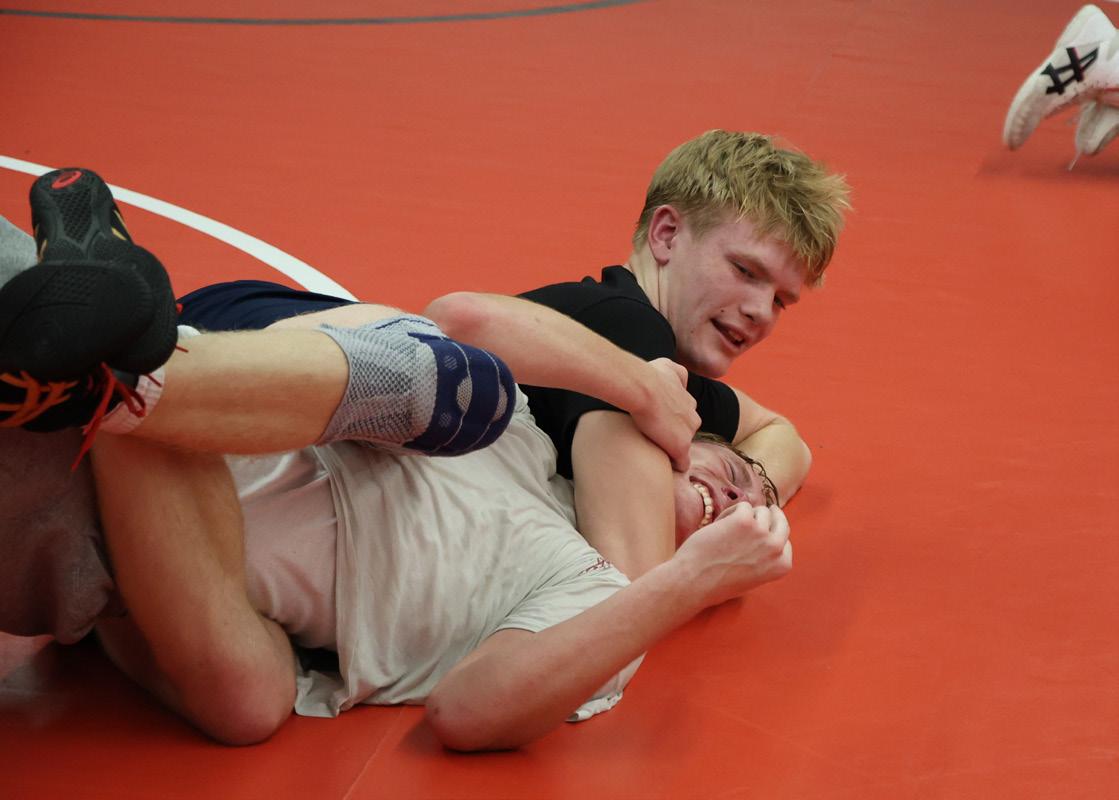
“We have access to so many more things, like the weight room, the track, we have more resources, so many more things helping us grow our technique and style,” sophomore Nora Scopazzi said.
Scopazzi said she also appreciates the morale boost that comes with practicing in a home gym.
“It’s definitely more of a family, and everyone’s more conjoined and getting to know each other, and it feels more like a home,” Scopazzi said. “It feels like more of a team bond, and everyone’s growing closer together, and we feel like we’re gonna have more energy, and we’re kind of hype for the season.”
Junior Julian Lee agreed that a home gym will improve the team’s mentality.
“Having our own gym will mean that we get to have home duels, and that could boost a lot of our confidence,” Lee said. “And I think it would look really
cool with the spotlight.”
Along with the new gym, Scopazzi said she has high hopes for the influx of girls on the team.
“I’ve drilled the new girls. They’re amazing girls, they’ve learned and absorbed the material really well,” Scopazzi said.
I hope this will bring more girls into the program and start bringing in more interest to wrestling for boys and girls.”
- Nora Scopazzi, sophomore
She added that the change will likely help the team’s chances for the season.
Similarly, Lee is optimistic about the wrestlers trying the sport for the first time. The novice tournament coming up will be their first tournament, and there will be more later on.
“A lot of them were there during preseason. So I’m pretty excited to see how good they get,” Lee said. “And I hope they stick with it and wrestle through the whole season.”
Looking ahead, Scopazzi said the team is becoming more prepared after their recent scrimmage at El Camino High School, as well as upcoming novice and varsity tournaments.
“It showed what we really need to work on, especially for some of the guys that did get multiple matches,” Scopazzi said. “It shows what our weaknesses and our strengths are and what we need to do to get better every single weekend.”
“Coach E. is definitely happier since we have more girls than last year. Just me and Lauren last year, so he’s definitely really happy about it, and he’s going into the season with a positive outlook and hoping for the best for the girls and the guys,” Scopazzi said.
Editor-in-Chief Joelle Huysmans
Managing Editors
Evelyn Du
Henry Gardner
Iny Li
Design Editor Kaylee Hwang
Sports Editor Kai Shah
Social Media Manager Josie Wettan
Business Manager Paige Cornelius
Arts Director Emma Yu
Head Photographer Oscar Bill
Diversity Coordinator Abby Zarahn
Social Coordinator Audrey Wei
Copy Editors
Alex Bertelli
Akira Nakamura
Olivia Newman
Senior Reporters
Chiara Wesley
Staff Reporters
Andrew Barrera
Peili Brown
Leia Burlingham
Abigail Chou
Addison Chu
Lea Von Hagen
Claire Hwang
Scarlett Ko
Chantal Lay
Faith Lee
Jason Lu
Jonah Moss
Eddy Josue Ortiz
Tehya Scholz-Moresco
Elsa Scimeca
Teacher Adviser
Melissa Murphy
Policy Statement:
The Burlingame B is a student-run newspaper with the sole purpose of providing an open forum for student expression. Anything printed represents the opinion of the writer, but not necessarily that of the Burlingame B staff, the administration, or the faculty of Burlingame High School, or anyone affiliated with the San Mateo Union High School District. The Burlingame B does not discriminate against race, political orientation, ethnicity, religion, gender, sexual orientation or disability. Although The Burlingame B will never refuse to publish guest submission based on the aforementioned factors, we reserve the right to edit or not publish them.
Letters to the Editor
Disagree with the writers? Bring your letters to the room A120 or email them to <theburlingameb@smuhsd.org>. Letters may be considered for publication. The Burlingame B reserves the right to edit for clarity, length, and accuracy. We welcome all comments.
Website: www.theburlingameb.org
Phone: (650) 558-2899
Email: theburlingameb@gmail.com
Address: 1 Mangini Way, Burlingame, CA 94010
BY THE BURLINGAME B EDITORIAL BOARD
On Friday, Nov. 28, a shooter opened fire at Westfield Valley Fair Mall in the midst of Black Friday shopping. According to ABC7 News, the gunfire sent hundreds of shoppers fleeing for cover in nearby stores. While the shooting was an isolated event, it should serve as a reminder of the lack of mass shooter preparation in public spaces like shopping malls.
Under California law, businesses with more than 10 employees are required to create documents that outline plans for incidents of workplace violence. Senate Bill 553, which made Workplace Violence Prevention Plans a statewide requirement, also mandates training on procedures for emergency response and requires violent crime logs. While California has strong policies to respond to violent crime, there is no similar standard on the federal level. In fact, over 60% of companies do not conduct active shooter preparedness drills at all, according to Everbridge.
Retail locations are the second-most common targets for mass shooting events, making up 17% of mass shootings recorded

between 1966 and 2021, according to The Violence Project. Shopping malls like Valley Fair — which can hold thousands of people — have a responsibility to protect both shoppers and employees.
While some stores like Sephora have security teams, these guards are usually “asset protection partners” who are assigned to protect merchandise, not shoppers. Rather than relying on store-by-store security, large shopping areas should emphasize a more organized security program in partnership with local police.
In the 2000s, there was a resurgence in concern for public safety and terrorist attacks. According to
the National Institute of Justice, 63% of mall security directors reported modifying their patrol and surveillance strategies after 9/11. This level of preparation should be the standard for mass shooting prevention.
The incident at Westfield Valley Fair Mall is a lesson on the importance of planning for mass shootings. While California has existing policies in place, these policies should be strengthened, and there should be a national standard requiring retail spaces to create plans and training. It shouldn’t take a major incident to occur for our country to take action.
BY OSCAR BILL Head Photographer
It’s time we start talking to people we don’t agree with.
The Decision Lab defines confirmation bias as the brain’s tendency to avoid cognitive dissonance, which is the uncomfortable feeling associated with encountering different ideas. This causes people to seek out information that supports what they already believe. We don’t like having our beliefs, especially ones tied to our identity, proven wrong. This prejudice can push someone to stay away from people and sources that don’t back up their beliefs.
Not only can confirmation bias cause a person to look for information that supports their existing beliefs, but it can also lead them to discredit contradicting sources and refuse to acknowledge evidence that supports the opposing side. For example, during the 2020 Presidential Election, some right-leaning news sources claimed the election was allegedly rigged or stolen by the Democrats, despite evidence to the contrary. As a result, in March 2021, months after the election, 29% of Americans believed the election was stolen by Democrats. Among people who trust Fox News, the number was even higher, with about 65% of Fox News viewers saying the election was stolen. Confirmation bias isn’t only a problem for Republican voters. According to the Pew Research Center, those who identify as liberal are also less likely to trust or consume news from a conservative-leaning news source, preferring a set list of left-leaning news outlets that tend to report more favorably

on Democratic leaders and policies. News corporations use this to their advantage. Companies use sensationalized stories to attract loyal viewership on their websites, even if the issues covered are exaggerated or untrue, such as Trump’s 2020 claims of election interference. Because many news organizations focus on stories that appeal to a certain audience, the media landscape is continually split along political lines, and few companies manage to appeal to both sides. According to the Pew Research Center, 48% of Democratic supporters regularly get news from CNN, versus only 20% of Republican supporters, and these statistics become even more polarizing with more partisan sources. The same strategy can be seen on social media, where users are less likely to see content that promotes discussion and are instead pushed the same ideas they already incline to believe in. According to NPR, people on Facebook are unlikely to be shown content from the other side of the political spectrum, and there is little overlap in the news links algorithm selects for users.
Why is this dangerous?
Without exposure to differing perspectives and sources, we risk falling into an echo chamber, where we only hear ideas we already hold without being exposed to the opposing view. This pushes us away from the truth and prevents us from developing our own opinions about current and past events.
But it’s possible to avoid echo chambers. Suppose people purposefully seek out unbiased sources and engage in discussions with those they disagree with. In that case, we can form our own opinions and beliefs, which helps us to become a more informed and educated population.
*To read more, view the full article on theburlingameb.org.
FROM THE NOVEMBER 2025 ISSUE In the girls’ golf section on page 9 of the November Issue, a photo of Elaina Foley was incorrectly paired with a quote from Jolene Liu.
BY LEIA BURLINGHAM Staff Reporter
BY SCARLETT KO Staff Reporter
The Burlingame Winterfest came alive on Friday, Dec. 5, as students, families, and residents gathered for the annual Christmas tree lighting.
Dozens of student clubs tabled at the event, while people of all ages mingled with hot chocolates in hand.
educate about cancer research, and raise awareness about cancer disparities.
“Last year, our mission was mainly focused around fundraising, and this year is more towards advocacy and research. We have a different focus every year,” Ma said.
In the past, the club has drawn a large number of participants at the Winterfest. Ma said she enjoyed interacting with other Burlingame clubs at the festival.
It’s just really fun to see all of the clubs there. We were also able to fundraise for our own respective mission.”
For senior Ivana Ma, president of the American Cancer Society (ACS) club, this year’s Winterfest focused more on advocacy. She said the primary mission of ACS is not only to fundraise, but also to promote healthy habits,
- Ivana Ma, senior
“We were just talking to Burlingame alumni, we were talking with the Robotics club, the Italian exchange program,” Ma said. “It’s just really fun to see all of the clubs there. We were also able to fundraise for our own respective mission, but also give back to our own community as well.”
Edited by Rain Yang
Sophomore Isha Chittetti helped at the STEM Olympians table. The STEM Olympians Club organizes science education-related activities beyond the school curriculum, competes in events like the Science Olympiad and NASA Tech Rise, and aims to promote STEM in the community. At the festival, the club asked science trivia questions to kids and adults.
Chitteti said she enjoyed the fun, festive environment and seeing different clubs coordinate with and talk to each other.
“To me, it means seeing all the different people in our community interact, talking to all of them, really forming a connection between every individual,” Chitteti said. “I think that’s really important in terms of getting a closer relationship with people in the community, getting to know them better, and having a stronger bond with Burlingame itself.”
Serena Koopmans, the co-captain of the BHS Robotics
BY ALEX BERTELLI
Copy Editor
BY ABBY CHOU Staff Reporter

Across Down
1. In reserve; or a hint to the four starred down entries...
6. Cacophany
11. In favor of the idea
12. Desert relief
13. Hairstyle involving short, bleached spikes
15. Charged particle
16. Place after high school, for short
17. General ___’s chicken
18. Spiral shape
20. Nail, as a test
22. Show host
24. Like Santa’s helpers
28. Genetic building blocks
30. Green Hornet’s sidekick
31. If you ask me... to a texter
34. Airport screening org.
36. Back muscle, for short
37. Author of “The Prince”
40. Top story
41. Acid used in soap
42. Opted
43. Recoil from pain
1. Not enabled*
2. We’re full, sorry!
3. Darkly humorous
4. Prefix with gender
5. ___, Brute? (Caesar quote)
6. Wordlessly agree*
7. Cereal grain
8. “Really?”
9. Enjoys a drink
10. Canadian gas brand
14. Bambi’s aunt
19. Conducted
21. Antlered animal
23. Lord of the Rings tree creature*
25. “I’ve ___ and I can’t get up!”
26. Slanted, as text
27. Basic logic gate*
29. Cool ___ cucumber
31. Large apple desktop
32. Trigonometry, Calculus, etc.
33. Prefix meaning eight
35. Declare openly
38. That guy’s
39. Whitney of the cotton gin

Club, said the club is a “fan-favorite.” Each year, the team brings its robot, and attendees often stop by to engage with members.
“It’s really cool, because we get to engage with people of all ages, from young kids who are fascinated by the pretty colors on the robot to parents of the community who are curious as to what our club does and how
Rules: Each row and column contains the numbers 1 to 6 without repeats. Each set of bordered squares has a target number and an operation (multiply or add) in the top-left; the numbers in that region should evaluate to the clue number after the operation is applied. (Ex: 3, 4, and 6 could go into a region with the clue ×72, since 3 × 4 × 6 = 72; 3, 4, and 6 could also go into a region with the clue +13, since 3 + 4 + 6 = 13.)

their child can get involved,” Koopmans said.
Koopmans said she loves attending the Winterfest because it showcases the variety of student clubs and allows her to engage with the community.
“It’s a really positive and festive atmosphere,” Koopmans said. “We’re really looking forward to going again.”
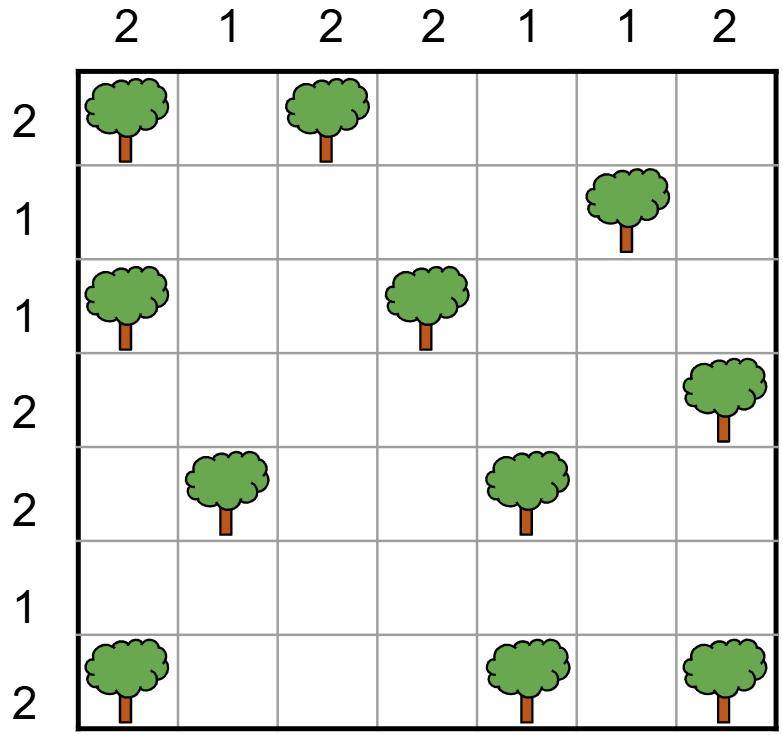
Rules: Draw one tent (triangle) next to every tree, horizontally or vertically — but not diagonally. There should be as many tents as there are trees. Tents should never touch, not even diagonally. The numbers outside the grid should match how many tents are in the respective row or column. (Ex: a column labelled 2 must have 2 tents in it.)
Rules: each word on the “ladder” has one letter changed compared to the previous word, and answers its clue on the side. Find the two golden words, which come together to make a themed object! (Ex: BEST could be above REST on the latter, or BUST.)
not fast ___ machine ashy fire remnant ___ one’s own horn screwdriver, e.g. The Phantom ____ booth not short

Play the crossword!

BY AKIRA NAKAMURA Copy Editor BY JASON LU Staff Reporter
As more and more students use social media to communicate efficiently, questions arise about whether virtual interactions can fully replicate the spontaneous interactions when meeting someone face-to-face.

According to video and game design teacher Henry Francisco, students today communicate very differently than his generation did.
“From what I’ve observed from younger people and students, I think they’re more comfortable in communicating through online venues, online spaces,” Francisco said. “There’s more of a comfortability there… I think my generation, and I don’t mean to speak for every individual, but we tend to navigate towards more of a human connection versus online.”
However, some students describe their experiences differently. Sophomore Zach Sanchez, who plays various video games such as Call of Duty, Hell Divers, and Grand Theft Auto 5, said his online interactions often lack the authenticity of in-person interactions.
“In-person interactions are probably a little more real, a little more emotional,” Sanchez said. “They’re a lot more less superficial. In my opinion, whenever I’m talking to someone online, it doesn’t really feel like I’m talking to them. It just feels like I’m talking to maybe an AI, or just like some random computer system on the game.”
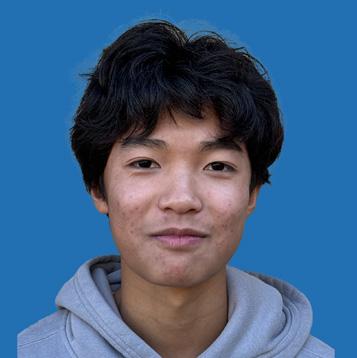
Darren Tam, sophomore
We’ve just become so accustomed to technology and it’s become a large part of our lives. It’s much easier to talk to someone online.”
Henry Francisco, video and game design teacher
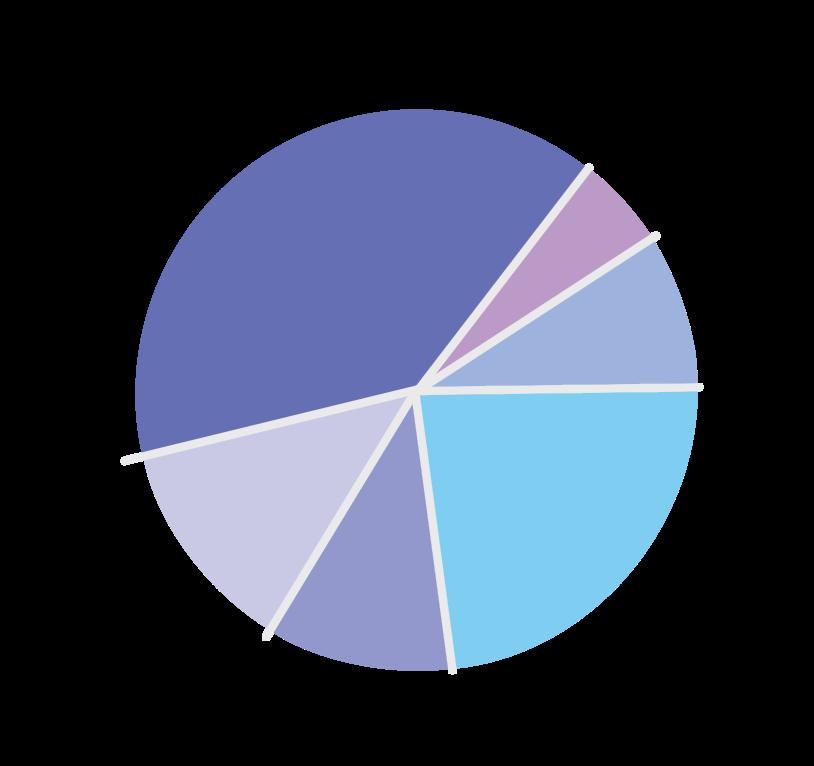
What is your most used social media platform to communicate with people?


Interventionist counselor Ted Brugman echoed that senti ment and said there is an innate human need for face-to-face interactions. Research supports this idea: on average, virtual interactions produced significantly less activity in areas of the brain associated with social interaction than in-person interactions, according to researchers at Yale.
“As human beings, we yearn to connect with one another, and that’s why social media is so addicting because we’re just yearning to connect with other human beings,” Brugman said. “But that interaction does fall short, and that can be a really frustrating experience.”
According to Brugman, students may feel compelled to take on different identities when interacting online. He referenced Anxious Generation by Jonathan Haidt, which argues that the restrictions of meeting in person can lead students to interact more online.
“His theory is that the combination of restrictions in the outside world and open gate with the digital world increases mental health challenges with young people,” Brugman said. “From my perspective, the biggest piece is its impact on our attention span. I think it’s interesting, it’s this really addictive thing. Now we have so many people on this earth right now that are really struggling with what we might call digital addictions.”
While working virtually in 2020, Francisco noticed a loss in interactions in the office during creative team collaboration, as familiarity with virtual communication reduced human connection. He said human interaction will continue to thrive even amid rapid advancements in technology.
“Human to human and individual to individual, we are learning how to navigate those different terrains in person — whether they are positive or negative things,” Francisco said. “We’re learning how to navigate rather than typing something online and hiding behind the screen…Human interaction is not disappearing already, but technology is booming at a very fast pace.”
When social media is utilized in a proper way, certain young people can utilize that towards entrepreneurial skills.”

Jacilyn Chen, freshman
You can see their reactions, their tone. You can read more into what they’re feeling, as well as it’s just faster than having to type out everything.”

Ted Brugman, counselor
I spend too much time in fro-