


Berries Australia extends a warm welcome and sincere thanks to all our Berry Industry Partners for 2025–26
Your support plays a vital role in strengthening the Australian berry industry and helping us continue to deliver value to more than 700 growers nationwide. By joining the BIP program, you’re contributing to a more connected, innovative, and resilient future for the sector.

Specialised crop protection and production solutions for horticulture agnova.com.au

Suppliers of high-quality polytunnels and crop protection systems elitetunnels.com
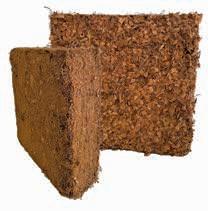
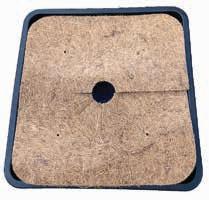
Suppliers of high-quality coir substrates for sustainable crop growth atlantiscoco.com

Distributor of high-quality growing media for berry cultivation globalaxis.com.au

The leading global provider of end-to-end smart irrigation solutions netafim.com.au
Designed for long-lasting horticultural crop support nztubemills.co.nz

Industrial automation design, build and installation services automationtechniques.co.nz

Expert irrigation and greenhouse solutions, design and installation services. irribiz.com.au

Experts in greenhouse technology and horticultural automation solutions powerplants.com.au

Leaders in spraying equipment and crop protection technology croplands.com

Offer Tasmanian farmers, growers, and contractors quality solutions with support. marshallmachinery.com.au

Australian provider of specialty fertiliser and crop protection inputs tanuki.com.au
Sustainable, innovative crop nutrition and protection solutions for horticulture agspec.com.au
Smart, sustainable irrigation solutions backed by global expertise rivulis.com
Leading supplier of pots and containers for horticulture gardencityplastics.com
A leading provider of specialist fumigation services trical.com.au

Innovative crop protection solutions that support healthy, productive berries corteva.com/au
Supplier of high-chill strawberry runners and plug plants jclmfarming.com.au
AI-powered blueberry grading that boosts profitability cailu.ai
Innovative cocopeat growing media for sustainable crop production ecomix.com.au
out how to join today at

Rachel Mackenzie
| 0408 796 199 |
As we near the end of 2025, it’s rewarding to reflect on the significant progress the berry industry has achieved with the support of Berries Australia. From securing long-awaited market access to driving the Berry Basket Marketing campaign and strengthening our IDO and communications work, we continue to champion the sector for the benefit of growers.
The standout achievement of 2025 was securing market access for blueberries to Vietnam, our first successful entry into a new protocol market. This milestone confirms that Berries Australia has the technical expertise and advocacy capability to deliver complex trade outcomes and positions the entire sector to capitalise on future opportunities. Enormous credit goes to our Head of Trade and Market Access, Jenny Van de Meeberg, for leading this work.
Our new consultation process with Hort Innovation is also starting to deliver tangible outcomes. Projects such as the root wrapping, chilli thrip and leafroller programs are now underway, with several more in the pipeline. These include berry residue trials to generate data for minor use permits, along with Rubus and strawberry mite efficacy trials.
We have secured two years of funding for the Berry Basket Marketing campaign through a mix of voluntary levies, statutory levies and strawberry royalty funds. The $500,000 per annum campaign is now running through to September 2027. Around 65% of activity is focused on out-of-home advertising to drive household penetration, with the remaining 35% invested in social media to build long-term brand equity. Seasonality charts have been developed to ensure strawberries, Rubus and blueberries are each ‘heroed’ at their peak, providing fair representation across the sector.
rachelmackenzie@berries.net.au
Reducing the cost and compliance burden on growers remains a core advocacy focus, and 2025 has delivered several important wins. We joined a coalition of agriculture industry associations to successfully oppose the Australian Government’s proposed biosecurity levy, which would have imposed unnecessary costs on growers.
We are also close to finalising the removal of the nursery pot levy obligation for berry growers. After four years of negotiation with government, the formal request has now been lodged with the Minister. We extend sincere thanks to Greenlife Australia for their collaborative support in progressing this issue.
Following extensive advocacy, we have also minimised the impact of the new mandatory food safety standards. Implementation in Victoria and Western Australia has adopted a ‘light touch’ approach that recognises our existing robust programs, with New South Wales soon to follow. We continue to work with Queensland and Tasmania to ensure similar outcomes are achieved.
On the ground, we are working to provide greater certainty for growers regarding infrastructure. We are currently supporting a test case in the New South Wales Land and Environment Court to confirm that nets and tunnels are essential farm tools rather than buildings. We also successfully prevented excessive development approval requirements being imposed on growers in the Nambucca region. Ensuring planning frameworks remain practical and fit for purpose will remain a priority.
Finally, we are pleased to confirm that BerryQuest International 2027 will be held in August on the Gold Coast, with farm tours beginning in Coffs Harbour and travelling north to showcase the best of our blueberry and Rubus production.
Wishing you all the best for the remainder of the yearmay the festive season be productive for those in harvest, and restful for those between peaks.

Anthony Poiner | 0412
010 843 |
As we reflect on the past year, it’s worth noting that Berries Australia is now seven years old, and our continued progress would not be possible without the support of our valued partners, in particular Hort Innovation, whose collaboration remains central to our success.
This year has been marked by meaningful progress across our organisational priorities and industry initiatives, driven largely by the strong performance of our Berries Australia subcommittees.
Each subcommittee has taken substantial steps forward, reflecting the dedication and expertise of the members involved. I would like to acknowledge two examples here. Gavin Scurr's leadership of the Propagation Subcommittee has been exemplary. His efforts have helped drive constructive dialogue and improved collaboration within this important part of our supply chain. Nathan Baronio has taken responsibility for shaping the next two years of our joint marketing investment and his guidance is ensuring that growers receive the maximum benefit for the funds invested.
A truly notable achievement this year was BerryQuest 2025, which was an outstanding success. The event delivered exceptional value to delegates, sponsors, and industry partners alike, showcasing the depth and innovation of our berry industries. A special mention must go to Simon Dornauf and the event team. The positive feedback we received is a testament to their collective efforts. Block out your diaries for August 2027 when the next BerryQuest International conference will take place at the Gold Coast in Queensland.
Our export development work has also advanced significantly. Australian blueberries secured technical market access to Vietnam, opening new commercial
anthony@smartberries.com.au
opportunities for growers. We also successfully hosted an inbound Chinese delegation, strengthening relationships in a key market and laying important groundwork for future trade. In addition, our progress with Japan remains on track, and the momentum across all markets is extremely encouraging. The ongoing research supporting strawberry and Rubus export access continues to move forward, ensuring our industry will be ready to capitalise on these opportunities as phytosanitary pathways are finalised.
Communication remains one of our great strengths. Both the Australian Berry Journal and The Burst continue to be consistently published, widely read and well-regarded. These platforms play an essential role in keeping growers, researchers, and stakeholders informed and connected.
Of course, not everything has been smooth sailing. Labour costs remain a significant challenge for growers nationwide, even though labour laws themselves appear to have stabilised for now. Managing workforce pressures while maintaining viability remains a key priority.
Finally, I want to emphasise the importance of maintaining our social licence. As an industry, we have made great progress, but we cannot allow ourselves to become complacent or assume our standing is guaranteed. Continued transparency, responsible practices, and proactive engagement are essential to sustaining trust with consumers, regulators, and the broader community.
In summary, this has been a year of strong achievements and positive momentum. I extend my sincere thanks to everyone who has contributed their time, knowledge, and leadership across our committees and industry initiatives. Together, we are building a resilient, innovative, and forward-looking berry industry.
With this year’s Annual General Meetings taking place in October and November, here’s the highlights from each Association chair and confirmation of the Committees for the next year.
It has certainly been an interesting and, at times, challenging twelve months for the Australian blueberry industry. Despite the ups and downs, our sector continues to demonstrate resilience, collaboration, and a strong commitment to improvement and innovation.
The new Committee elected at this year's AGM are:
President: Andrew Bell
Vice President: Rob King
Treasurer: James Kellaway
Secretary: Sally Jolly
Members:
John Simonetta
Joshua Clementson
Devinder Knunkun
While the activity of this Committee has been somewhat limited due to the growing role of Berries Australia, it’s worth highlighting just how successful that arrangement has proven to be. The outcomes achieved on behalf of members have been tangible and positive, and I would like to extend my sincere thanks to everyone involved. A special mention must go out to Christian Parsons, who has long served on the ABGA committee and Berries Australia, including a term as President of the ABGA. Christian has moved on to other endeavours within Costa, and I thank him for his valuable contribution over the years.
From a production standpoint, our winter–spring season was impacted by weather events across the Northern Rivers and Mid North Coast regions. Fortunately, this was partially offset by stronger pricing, but it remains a reminder of the volatility our growers face. Another significant issue has been the ongoing legal proceedings in the NSW Planning and Environment Court, where we are contesting Coffs Harbour City Council’s position that nets and tunnels constitute farm buildings and therefore require development approvals. The hearing is set for 11 November, and the outcome has the potential to set a precedent that would affect growers across NSW.
On a more positive note, our joint berries marketing campaign continues to deliver strong results. The ABGA has contributed $200,000 towards the campaign, which strategically flexes to highlight each berry type during its peak production period. This collaborative approach has strengthened our collective presence in the market and reinforced the positive image of Australian berries.
Our research and development work remains a cornerstone of our efforts. The root wrapping project continues to progress, the Chili Thrip and Leaf Roller project has been contracted, and important work is ongoing in the area of chemical permits, ensuring growers have the tools and confidence to manage crops effectively and sustainably.
Finally, it’s pleasing to end on a high note. We have recently been granted market access to Vietnam for the export of fresh fruit: our first protocol market. This is a major achievement and a testament to the hard work and persistence of Jenny and her team, to whom we owe a great deal of thanks. It will be exciting to see Australian blueberries on shelves in Vietnam in the coming months. I would, however, remind all producers that the market’s demand is for premiumquality fruit; this new opportunity must not become a dumping ground for lower-grade produce.
Thank you once again to everyone involved in supporting and advancing our industry over the past year. Your dedication and professionalism continue to make the Australian blueberry industry one to be proud of.

The new Committee elected at this year's AGM are:
President: Gavin Scurr
Vice President: Andrew Terry
Treasurer: Richard McGruddy
Secretary: Kate Sutherland
Members:
Manpreet Sidhu Christy Poynton
It has been a year of transition and progress for our industry, marked by collaboration and consolidation across the berry sector. One of the most significant developments has been the continued move from individual commodity groups to the unified Berries Australia model. This structure, with its five dedicated subcommittees covering marketing, strawberry propagation, sustainability, R&D, and BerryQuest, is now operating effectively and delivering real benefits through shared focus and coordination.
In the spirit of better communication, all association committee members should now be receiving Berries Australia meeting minutes, ensuring everyone stays informed about what’s happening at the national level. This increased transparency helps align our efforts and strengthens our collective voice as an industry.
It has been a roller-coaster year for raspberries and blackberries, with unpredictable weather and fluctuating prices creating challenges. Autumn pricing was difficult, but market conditions have since improved and are now performing better than expected. More broadly, fruit prices outside traditional peak periods have strengthened, highlighting the importance of managing production peaks collectively.
Weather impacts have been mixed around the country. Tasmania suffered severe winds, losing more tunnel skins this year than in the previous five combined, while Queensland experienced what many consider one of their best seasons in years.
Despite the challenges, the year has demonstrated the value of working together. With continued cooperation under the Berries Australia framework, we are well placed to build a resilient and profitable future for all growers.
This year has seen strong progress across the strawberry industry, supported by the continued evolution of the Berries Australia structure. Recent board changes and the effective operation of several subcommittees have provided clearer focus, better coordination, and stronger strategic leadership. I would especially like to acknowledge Nathan Baronio for his excellent leadership of the Marketing Subcommittee, which has already strengthened our national marketing approach.
The new Committee elected at this year's AGM are:
Chair: Simon Dornauf
Vice Chair: Nathan Baronio
Treasurer: Adrian Schultz
Members:
Anthony Yewers
Clarrisa Cincotta
Jamie Michael
From a production perspective, the southern season performed well, with favourable conditions delivering good fruit and solid pricing. In Queensland, growers faced challenges, but this has not been the worst season on record. Despite weather pressures and regional variability, many have managed to maintain production and adapt effectively.
A major achievement this year has been the industry’s progress in blueberry export development. There is also promising potential for strawberry exports, with ongoing medfly-related work expected to unlock new markets once regulatory requirements are finalised.
Another highlight was BerryQuest 2025 in Hobart, which received overwhelmingly positive feedback from growers, researchers, exhibitors and international guests. The strong turnout and high-quality content demonstrated the importance of bringing our industries together. Planning is already underway to build on this success at BerryQuest 2027, ensuring it remains a world-class event.
Finally, I extend my sincere thanks to everyone involved with Strawberries Australia Inc. Your ongoing commitment and collaboration continue to drive our industry forward.

Brett Fifield, Hort Innovation, Chief Executive Officer
Australian horticulture is on track to become a $21 billion industry by 2030. But the number alone isn’t the measure of success; the profitability and sustainability of our growers is what truly matters. It’s a vision for keeping clean, green Australian produce on plates at home and around the world. It’s ambitious, achievable, and absolutely necessary if we want to keep growers profitable and hold our reputation for quality, safety and sustainability.
Achieving it will take collaboration and innovation across the whole sector. As we close out a big year and look toward 2026, we face real challenges: rising costs, climate volatility, labour shortages, and shifting consumer expectations. But we also have significant opportunities. If we act together, we can build an industry that is not just resilient, but remarkable.
Productivity: Doing More with Less: Productivity is the engine room for growth and profitability. Labour accounts for more than a third of input costs, and availability remains a constant hurdle especially at harvest. Our recent Factors Driving Horticulture Productivity report shows that through innovation - automation, data-driven decision making, and mechanisation - the industry’s annual value added could nearly triple.
These aren’t abstract ideas. Hort Innovation has already invested more than $220 million in on-farm productivity projects, from new tech to food safety and disease risk research. But we know adoption takes time, which is why our investments support growers with knowledge, connections and confidence, not just funding.
Productivity isn’t a silver bullet, but it is a powerful lever. If we get it right, our sector will be more profitable, more competitive and better prepared for the future.
Consumption: Closing the Serving Gap: Australians aren’t eating enough horticultural produce. ABS data shows we average 2.2 serves of vegetables and 1.3 serves of fruit a day, far below recommended levels. This is a national health challenge, but it’s also a major opportunity for growers.
Hort Innovation is investing over $30 million in behavioural research, marketing campaigns and school-based trials to shift fresh produce from “good to have” to “must have”. When Australians consume more horticulture, everyone benefits; growers, consumers and the nation.
Unlocking Global Markets: At Hort Innovation, we’re focused on expanding high-value export markets that deliver profitability and sustainability for growers. This isn’t just about trade, it’s about positioning Australian produce as premium, trusted, and in demand across the globe.
Horticulture exports hit a record high of $2.9 billion, reaching 76 countries in FY23/24, to continue growing the sector to reach that $21 billion goal, exports and opening up new markets will be key to unlocking new consumers for Australian growers.
Through global engagement - such as Asia Fruit Logistica - and partnerships including the Australian Food and Wine Collaboration Group, we are actively supporting market access and trade development. When we export, we’re not just sending produce; we’re exporting trust, quality and innovation.
Let’s Grow Smarter, Together: The decisions we make now will shape horticulture for decades. If you have an idea - whether it’s a breakthrough technology, a new market opportunity, or a smarter way to reach consumers - talk to the team at Hort Innovation.
Together, we can achieve the $21 billion vision and keep Australian horticulture thriving, sustainable and respected around the world.
Dr Angela Atkinson, Research & Development and Biosecurity Manager 0499 645 836 | angelaatkinson@berries.net.au
Since the last research and development update in Spring, the projects endorsed by the berry prioritisation panels this year have gone out to open tender (summary below). The tender responses received by Hort Innovation are evaluated by panels of industry experts appointed by Berries Australia and Hort Innovation, which include levy paying growers, ensuring the chosen delivery partners are addressing the needs of industry. Berries Australia’s involvement in this process is new and proving to be a positive step for better industry participation in project funding through the levy system. If you would like to know more about how the horticulture levy system works, see PAGE 25.
Hort Innovation is currently asking industry to provide input into the next five-year berry strategic investment plan through their new SHIFt process (see article on PAGE 24). The investment plan helps to shape priorities for levy investment, and by providing input you can help ensure levy investments in the future continue to address grower’s needs. Please participate in the short survey to provide your feedback.
Complete the survey by scanning this QR code or visit bit.ly/BA-SHIFt-Survey

MT25006 Generation of data - Rubus and strawberry mite efficacy and residue trials: This project has been contracted and will gather data for new miticides for control of broad mite and two spotted mite.
MT25007 - Generation of Data - Berry Residue trials: This project has been evaluated, is in the process of contracting, and will provide data required by the APVMA to extend 15 minor use permits which are expiring soon (5 Rubus, 9 blueberry and 1 for all berries).
MT25004 Mid-term reviews for Industry Development and Extension projects: This project reviews IDO and extension projects across a number of hort industries, to ensure good governance. The cost of the reviews is factored into the projects.

National bee pest surveillance program:
This is an extension of the previous 5-year project through Plant Health Australia. While we now have Varroa mite in Australia there are a lot of other bee pests, particularly viruses which can be spread by Varroa mite, that we still don’t have here and which can severely impact honeybee colonies.
In addition, a variation of the Rubus IPDM program (RB21000) has been proposed to include work on an emerging pest issue in southern growing regions, Bronze Leaf Beetle.
After endorsement by the prioritisation panel to support the Berry Basket Marketing Campaign through the strawberry royalty stream, Berries Australia will continue to deliver this program for a further two years. You can find out more about this on PAGE 65.
There are also a number of Hort Frontiers projects underway involving the berry industry. Hort Frontiers projects are multi-industry projects funded through a different mechanism, not industry levy funds, and are often technology-driven and focused on commercial outcomes. They are usually delivered by a consortium of service providers.
AS23010 – Robotic UV-C System for powdery mildew control
AS23002 – Driving on-farm productivity with augmented technologies for fruit growers
BY23002 – Next-Generation Weed Management
AS24007 - Drone-Enabled Bird Management for Australian Horticulture
AS23001 – Growing horticulture through protected cropping innovation
More information on any of these projects can be found at horticulture.com.au by searching for the project code.
The next round of the ideation workshop and prioritisation panel meetings will take place in March and May 2026. If you would like to get involved, please contact me on 0499 645 836 or angelaatkinson@berries.net.au
Wendy Morris, Berry Industry Development Officer 0484 272 963 | qldberryido@berries.net.au
Christmas will be approaching by the time this edition hits your desk, however I’m writing this report during the lull period between winter and summer season strawberries. Pricing is excellent for those who have fruit to send to market, with raspberry prices also surprisingly holding firm even as production ramps up. What fate awaits the blueberry season remains to be seen.
For those who are ending their season, it’s a welcome break from what’s been a tough year, hampered by drizzly, overcast days and the usual litany of pests and disease. Grey mould cut a path through winter season strawberries, as the weather didn’t let up. The season also saw incidences of nitrogen stunting and albinism in in-ground strawberries, with plants unable to effectively uptake and utilise the nutrients in the soil due to poor weather conditions. Thankfully, there were no incidences of foliar nematodes on farms this year, however ‘behind the scenes’ we are continuing to explore all possible control options as we know they’ll be back at some point!
There have been a slew of fabulous webinars over the past few months, all of which are available in the online Resource Library at bit.ly/BA-RL. Can’t find what you’re looking for? Email admin@berries.net.au and we’ll send you the link. Recent webinars include three sessions on strawberry cultivars, as well as an overview of drones (covering legislation, opportunities and threats) and a best practice spray session presented by Syngenta.
Very often I find myself in the trap of ignoring a webinar or event invitation because I’m busy and can’t seem to make the time. But did you know that a drone can’t be flown within 30m laterally of a person not essential to its operation? Or that it needs to be

kept within sight at all times? Are you aware that just because the active ingredient is the same, doesn’t mean one pesticide will be the same as the next? There are so many seemingly minor details that can make crucial differences to the efficiency of your operations, and these are covered in these recent webinars.
Red Imported Fire Ants (RIFA) continue to be an irritation for many of our Sunshine Coast region growers, however Berries Australia and QSGA have been working with the National Fire Ant Eradication Team to help develop understanding and – fingers crossed –redevelop treatment strategies to better suit the needs of growers. Plant Health Australia has recently published a Red Imported Fire Ant (RIFA) Quick Guide which can be found in our Resource Library if you want to know more about this troublesome pest.
QSGA and Berries Australia have also received feedback from growers wanting to know how we can encourage consumers to eat more delicious Queensland strawberries. As well as the national Berry Basket Marketing program (SEE PAGE 65), which is running continuously from now until mid-2027, Adrian Schultz and I will be engaging with our contacts and drawing up a plan for 2026. In the past, strawberry festivals have played an important role in local community engagement, and our experiences at the Ekka this year emphasised just how keen consumers are to know more about their berries and where they come from. The biggest change? Traditionally promotional activities have taken place during the peak of the season. We’re looking at a pre-season launch, to get everyone excited and willing to spend money when profit margins are at their highest for growers.
If you have any other suggestions or comments, please don’t hesitate to reach out to your local IDO. In the meantime, enjoy a wonderful and safe Christmas break.
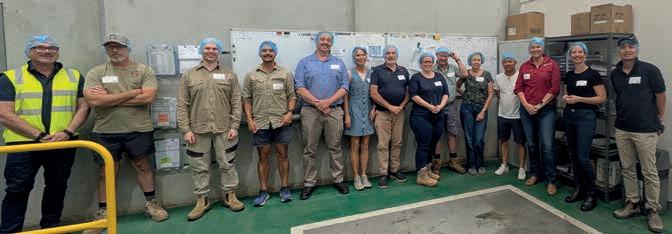
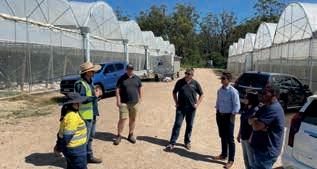
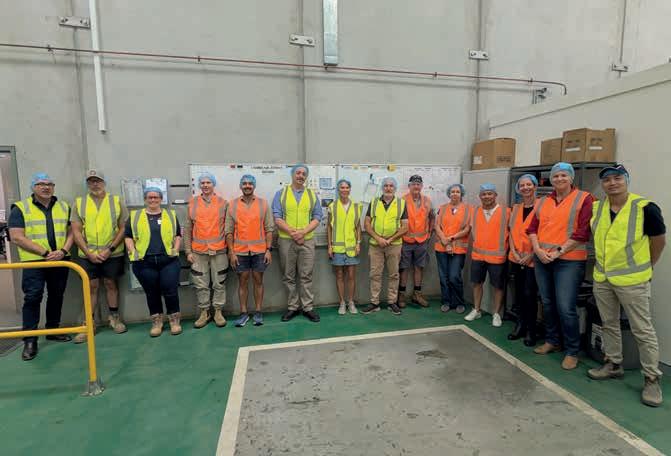
Growers and IDO’s toured the Multisteps facility at Narangba as part of the recent Gatton AgTech Bus Tour


Simon Neil, Berry Industry Development Officer 0400 100 593 | berryido@fruitgrowerstas.org.au
It’s been a busy few weeks hitting the ground running as the new Tasmanian Berry Industry Development Officer, following on from the great work of Ella Roper, who many of you will know for her dedication and enthusiasm for the industry. I’m already connecting with growers across the state and I’m genuinely grateful for the warm welcome and support I’ve received.
My background is a little different, having spent several years in Tasmanian aquaculture farming oysters in the stunning, freezing waters of our East Coast lagoons. What I’ve quickly observed is that both aquaculture and horticulture share the same fundamental challenges: unpredictable weather, volatile trade policies, seasonal labour shortages, logistics bottlenecks, and everpresent pest and disease pressures.
Farmers battle all these and more in pursuit of an excellent product, despite the odds. I’m proud to bring a mindset of problem-solving, observation, and persistence with me; it feels right at home in the berry sector.
Spring has certainly sprung down here in Tassie, and growers big and small have been feeling the full force of the season. Spare a thought for those repairing tunnel and infrastructure damage from the mighty northwesterly winds that brought gusts of up to 150 kph in the higher regions. And with all signs pointing to another hotter-than-average summer, as well as active zones around the state, this is a good time to double check fire plans and think through the knock-ons for flowering, pollination behaviour and water management.

In my first few weeks I’ve been visiting growers, meeting researchers, and building connections with my fellow IDOs. A highlight was travelling to Queensland for the Department of Primary Industries and Hort Innovation AgTech showcase day in Gatton, coupled with by visits to Multisteps packaging in north Brisbane and Bugs for Bugs in Donnybrook. The showcase offered a glimpse at new tools and technologies emerging across horticulture, while the Multisteps tour provided insight into how packaging innovation is evolving to meet sustainability goals and the specific handling needs of berry crops. You can read more about these visits on PAGE 18.
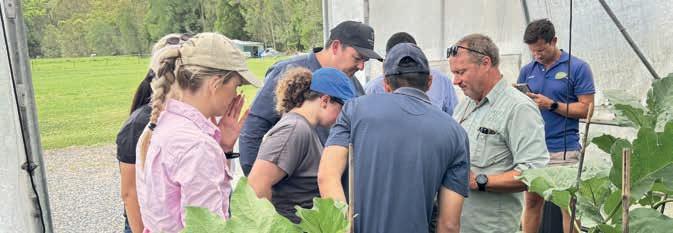
The visit to Bugs for Bugs was especially fascinating; seeing the production of beneficial insects firsthand was a great reminder of how biological control is continuing to grow in importance across all horticultural sectors. I picked up some interesting tips for maximising the effectiveness of beneficial insects for pest control that are worth sharing.
1. Be Ready Before They Arrive
Beneficials are living organisms with a short window of peak activity. Make sure your crop environment is ready before delivery, that pests are present but not out of control, compatible crop protection products are in place, and there’s adequate habitat available to support the bugs (shelter, pollen, or nectar sources if required).
2. Handle Deliveries with Care
When the insects arrive in the post, treat them gently. Open the package immediately, check product condition, and store exactly as directed by the supplier. Whatever you do, avoid leaving boxes in the sun or a hot vehicle as overheating can quickly kill beneficials.
3. Release at the Right Time
Release insects early in the morning when temperatures are mild and light is low. This reduces stress and helps them disperse and settle into the crop canopy. Gently rotate or mix the carrier material to distribute them evenly, following the supplier instructions for each species.
4. Avoid Chemical Conflicts
Check product compatibility as many pesticides, fungicides, and even some adjuvants are harmful to beneficial insects. Use Integrated Pest Management (IPM) compatibility charts or consult your supplier before spraying. If a spray is unavoidable, time releases several days after application.
5. Monitor and Support Their Success
Use sticky traps, field scouting, or magnification lenses to check that beneficial populations establish and pests are under control. Provide ongoing habitat (flowering refuges, banker plants) and avoid broad-spectrum sprays to keep beneficials thriving long-term.
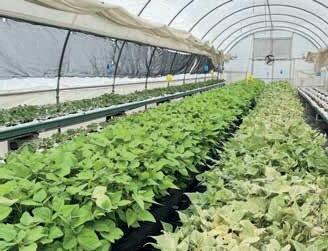
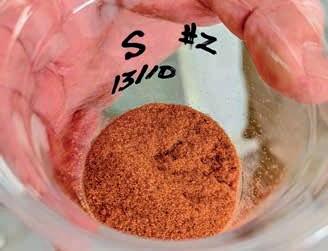
I’d like to extend my thanks to everyone involved in hosting these events, as well as to the Queensland farms that welcomed us so generously. It was a great opportunity to see firsthand how things are done outside of Tasmania.
The next few months will be about getting around more of the state, listening, learning, and linking growers with the tools and resources that can help. Tasmania’s berry industry is full of innovation and quiet determination, and I’m looking forward to supporting that wherever I can.
I’m keen to hear directly from growers about the kind of support, resources or connections that would make the biggest difference. So please reach out anytime as your ideas will help shape our work in Tasmania.
Gaius Leong, Berry Industry Development Officer 0484 055 748 | gaius.leong@dpi.nsw.gov.au
Hort Innovation visited the Coffs Harbour berry industry in early November. They were here on a strategic visit to understand challenges that the NSW berry industry faced (Rubus and blueberries), which would help guide investment decisions to achieve future industry goals. The visiting team included Eduardo Barbosa (R&D Manager), Dumi Mhlanga (Berry Industry Service Manager) and Leanna Smith (Acting CFO).
The first stop was Oz Group Cooperative’s facilities, where the group was taken on a tour of the pack house by Parminder Singh (Operations Manager). The group was taken through the process of receival, sorting and packaging blueberries.
At the second stop, the group dropped in to visit Pardip and Arjun Gill on their farm in Bucca, innovative growers who provided insights into the on-ground challenges growers face on a day-to-day basis. They are currently members of the Oz Group Cooperative growing both Mountain Blue and Driscoll’s genetics.
The last stop was at Costa Group’s Upper Corindi farm where the team was introduced to various on-farm innovations and challenges by the Costa team.
Some key challenges and needs that were highlighted are:
• Urgent access to softer (IPDM friendly) chemistry alternatives for the industry, especially as older chemistry are phased out
• A centralised up-to-date database of current, available control measures for pests and disease in the berry industry that is easy to access, perhaps similar to the old ‘Infopest’ system
• Addressing community concerns and misconceptions about the berry industry
• Improvement of source water quality and fertigation line management
• Investment in practical technology that is economically viable
Thank you to the Hort Innovation team for taking to time to get out on our berry farms.

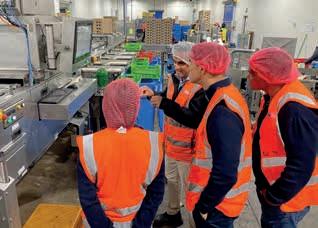
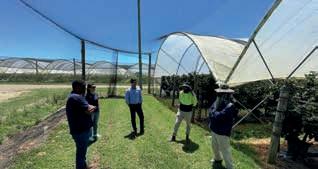

Helen Newman,
Berry Industry Development
Officer
0428 335 724 | Helen.Newman@dpird.wa.gov.au
Winter wrapped up in WA with above average rainfall and average to slightly above average temperatures, albeit significantly cooler than 2024. Several sites recorded their highest August total rainfall on record, including Anketell which received 204mm. Wanneroo also received a drenching with its highest August total rainfall since 1965 with 228mm. Pearce RAAF and Muchea both had their highest daily rainfall on record on 10 August with 50mm and 70.6mm (that’s a lot for WA!).
August temperatures were close to average throughout berry growing regions. Above average rainfall continued into September and Pemberton received its highest daily rainfall on record on the 8th with 67mm. Maximum temperatures were slightly above average in September, and minimums were average to slightly cooler than average in parts. October was a mixed bag with slightly above average rainfall in the greater Perth and Geographe regions, but average to below average elsewhere. Maximum and minimum temperatures were also mixed, but generally close to average.
The weather chart in Figure 1 shows interesting variations for the last six years compared to the longterm averages for rainfall, maximum and minimum temperatures for WA.
Compared to 2024 (and potentially 2020 which was also warmer and sunnier), berry crops were behind schedule leading into spring but appear to be catching up as the weather gets warmer.
Perth region strawberry growers keeping second-year strawberry plants over the summer should be mindful of chilli thrips populations and the impact this may have on surrounding crops and new season plantings. Maintenance of second-year plants can also pose challenges with fungicide resistance as there is no break in the resistance cycle between crops. Early applications of protectant (multi-site) fungicides and limited, strategic use of curative (single-site) fungicides is recommended. You can read more about Resistance Strategies in Strawberries on PAGE 92.

All WA berry crops, particularly those in the northern growing regions, can benefit from shading during the summer months. Shading cools ambient (daytime) temperatures, reduces water loss from the soil, and reduces transpiration stress and sunburn. Rapidly evolving technology may soon make agrivoltaics an attractive option for shading berry fields.
Researchers throughout Australia are investigating the feasibility of using agrivoltaics to offer crop shading while having the added benefit of electricity generation through the University of Melbourne led project ‘Plant production agrivoltaics across southern Australia’.
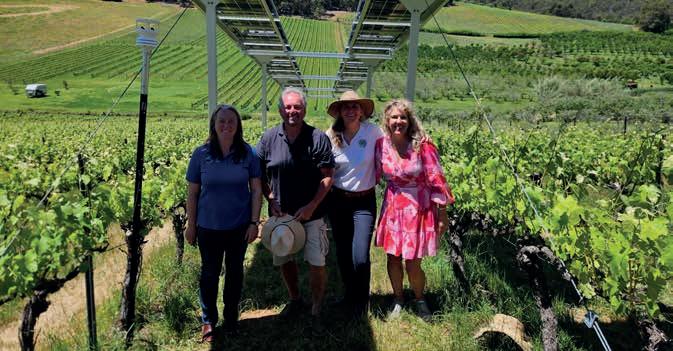
In WA, the South-West WA Drought Resilience Adoption and Innovation Hub, with industry partners, has installed a demonstration solar array at Plume Estate in Bickley as proof-of-concept for deploying agrivoltaics in WA viticultural systems. Soil, climate, vine yield and quality data will be captured at the site, for modelling of production and economic impacts. Growers and industry visited the site on 28 October and will be invited back in early 2026 to hear the initial results of the trial.
This demonstration is expected to lead to further investment in research, development and adoption of agrivoltaics as part of a national CRC Zero Net Emissions project and a proposed Agrisolar CRC
More information:
• SW WA Hub: hub.gga.org.au/plant-productionagrivoltaics-across-southern-australia
• Agrisolar CRC: agrisolarau.com
• Zero Net Emissions Agriculture CRC: zneagcrc.com.au
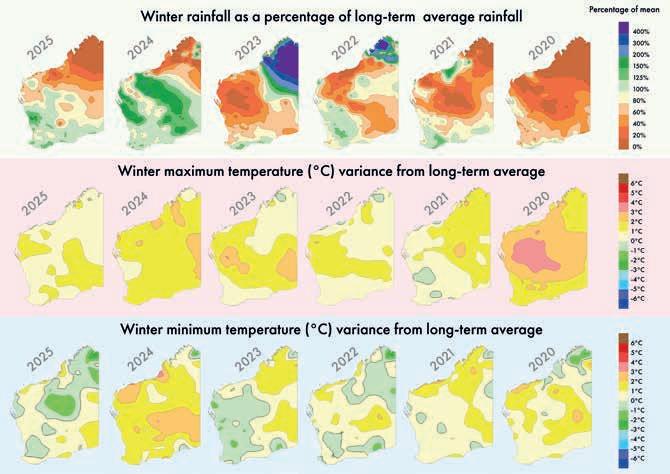
1. Last six years compared to the long-term averages for rainfall, maximum and minimum temperatures in WA © Commonwealth of Australia, Bureau of Meteorology
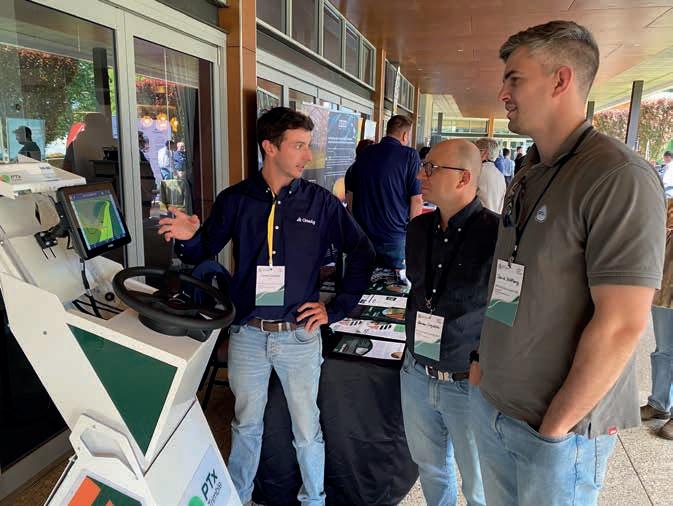
Berry growers were well represented at this year’s WA Horticulture Update (WAHU) at Mandoon Estate in Caversham held in late October.
The program kicked off with a keynote presentation from Grant Dusting, a social researcher who advises organisations on how to respond strategically to current and future trends. Grant explored WA’s demographic trajectory to 2040 and the implications it has for food consumption, agricultural productivity, and sustainability.
He explained the cultural, generational and values changes we will continue to see and how the consumer base is expanding to both younger and older generations.
WAHU also included panel sessions with growers and industry groups on the topics of ‘Productivity and growth in a changing world’ and ‘Reconnecting consumers to growers: rebuilding value’. The day wrapped up with a talk on leadership and support from former Australian cricketer Brad Hogg and a sundowner in the trade display.
For growers that were unable to attend on the day, the WAHU 2025 page on the DPIRD website includes a range of Program resource links that may be useful. Find the links at www.dpird.wa.gov.au/businesses/plant-and-crop-farming/horticulture/WAHU2025

Victorian
Sandy Shaw, Berry Industry Development Officer 0408 416 538 | vicberryido@berries.net.au
Spring has been busy across South Australia and Victoria, with shifting weather patterns bringing strong windstorms, a freak tornado, and unexpected rain right at the beginning of strawberry season and amidst key pollination for Rubus and blueberries. Production initially looked set to surge off the back of warmer than average temperatures in September and October, but slowed abruptly with a late cold snap.
Rainfall increased in October and November which had significantly detrimental effects on outdoor production but unfortunately not a significant impact on water storage, which remains over 15% down from the same period in 2024. Despite the increased rainfall both Victoria and South Australia remain drought-declared. Looking ahead, forecast modelling suggests a warm but slightly wet summer for both South Australia and Victoria. As such, I will continue to focus on seeking opportunities for growers to access improved irrigation management tools and drought readiness resources. As I mentioned in my last update, both Victoria and South Australia are currently running drought support programs which can help growers weather the drier conditions. These programs include access to rebates to support the installation of drought-ready infrastructure improvements and water efficiency upgrades.
Victorian growers can access $5,000 to $10,000 in rebates depending on their LCA. South Australian growers can access up to $20,000 but applications should go in soon as the South Australian program closes 31 January 2026.

For more information on drought support for South Australia, go to the PIRSA website (pir.sa.gov.au/emergencies_and_recovery/drought) and look at more information on programs including mental health and resilience support, financial counselling support, the drought infrastructure rebate, and more.
For more information on drought support for Victoria, go to the AgVic website (agriculture.vic.gov.au/farm-management/droughtsupport) and look at more information on programs including farm management and drought support planning, news on the latest drought extension events, the drought support grants, and more.
Victorian growers who want to hear more about their drought support options can also opt to re-watch the Drought Support Webinar from mid-October which included speakers from AgVic, Rural Financial Counselling Service, and Netafim. The webinar presented options to growers from a number of angles: government support, private financial counselling, and increasing self-knowledge and capacity for drought resilience. You can find the webinar in the Berries Australia Resource Library or visit bit.ly/AgVic-Drought-Webinar
In late August we collaborated with Agriculture Victoria to run an irrigation workshop for all berry growers. Jeremy Giddings, AgVic’s regional irrigation manager for the Mallee very graciously made the long trek down from Mildura to run a half-day workshop for berry growers in the Yarra Valley focused on designing, optimising, maintaining and monitoring irrigation systems for maximum efficacy. Many thanks to Jeremy and the AgVic Horticulture team for their hard work making the workshop possible.
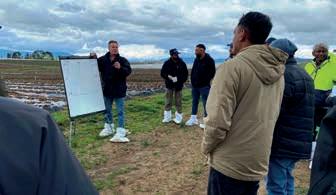
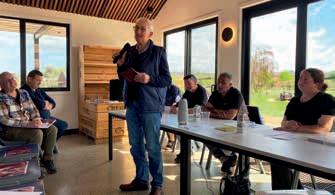

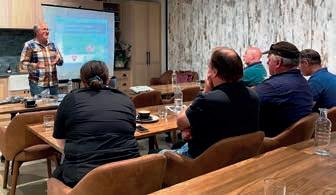
October was a busy month. In addition to the Victorian Drought Support webinar, we also continued our Strawberry Variety Overview series with a webinar in partnership with ABZ Seeds, a flower and strawberry breeding company from the Netherlands that focuses on breeding strawberry varieties to be produced from seed. Many thanks to Robbie Gieslink, their head breeder, and to Lefroy Valley, their Australian distributor, for making that happen. You can watch the webinar anytime by searching for it in the Berries Australia Resource Library
The Victorian Strawberry Growers’ Association hosted their AGM at Cherry Hill Orchards on a beautiful October morning. The morning included inducting their newest Hall of Famer, John Hasan and discussing topics of relevance to the Victorian strawberry industry. Berries Australia CEO Rachel Mackenzie, Hort Innovation Berry Industry Service Manager Dumi Mhlanga, and Hort Innovation General Manager for Production and Sustainability R&D Dr. Anthony Kachenko joined to discuss the SHIFt Initiative (SEE PAGE 24) and ongoing national projects and funding opportunities.
I did a bit of traveling in October as well, going to Queensland to attend the Gatton AgTech Showcase and to spend some time with my fellow IDOs (SEE PAGE 18) and over to South Australia to check in with growers there. While I was in South Australia, I was joined by Dr. Scott Mattner of VSICA Research and Dr. Cathryn Todd of SARDI, who gave a joint presentation on best practice charcoal rot prevention and best practice for pest and disease identification and sampling. The event could not have been accomplished without the help of Fruit Producers South Australia, who also provided an update to growers on local initiatives and activities, and the fantastic team at Beerenberg who hosted us.
Thank you to everyone who has hosted, attended, or contributed to recent events and visits; your involvement makes these events possible. Over the coming months, I’ll return to my usual focus: visiting growers and industry members to listen, learn, and connect. If you’d like a visit or just a chat, please don’t hesitate to reach out. All
Jen Rowling, Project Manager, Berries Australia
The Industry Development Officers (IDOs) are funded as part of the strategic levy investment project ‘Facilitating the development of the Australian berry industries (MT22010)’ under the Hort Innovation Strawberry, Blueberry and Raspberry and Blackberry Funds.
With our busy Berry Industry Development Officers dispersed across the country, it’s not often that the project team are able to get together in person. But an invitation to join a bus trip to an AgTech Field Day in October provided us with the ideal opportunity to spend some quality time together as a team. It was also a great chance to meet and get to know our newest IDO, Simon Neil who took over the reins in Tasmania in September. To make the most of the visit to Queensland, we added some farm visits, joined a factory tour and bus trip to Gatton, and held a team building workshop across three very busy days.
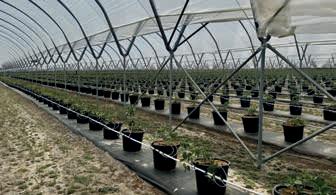
First stop for the day was Queensland Berries at Ningi. Richard and Melissa McGruddy have invested heavily over the last few years in infrastructure development and expansion into blueberry production, adding to their existing crops of strawberries, raspberries and blackberries. It was fantastic to see just how much progress has been made and the IDOs were suitably impressed with the scale of development and the on-farm tech employed by the team. Jared Maloney, General Manager and Lucy McGruddy were happy to provide the IDOs with a guided tour.
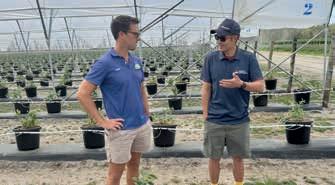
The Bugs for Bugs insectary at Donnybrook was the next stop on the day’s itinerary. Paul Jones, Director and James Hill, Farm Manager for the insectary provided the team with an overview of the business and the site. Bugs for Bugs has been supporting Australian growers since 1981, and as of May 2025, it’s entering an exciting new chapter, now wholly owned by the Biobest Group. It will continue to operate proudly under the Bugs for Bugs name, delivering the same trusted expertise in biological pest management, now backed by a global leader in sustainable crop protection.
The IDOs were given a tour of the many climate-controlled glasshouse structures where the team work to maintain continuous insect production of each beneficial species including Persimilis predatory mites and Hayati wasps. It’s a challenging task which requires constant monitoring of the rearing systems and attention to detail.
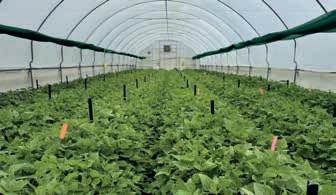
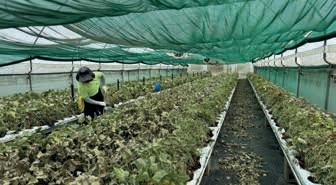
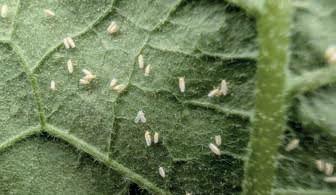
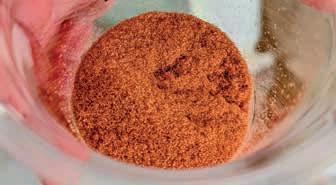
The rearing process involves three key stages: first, growing a healthy crop of host plants; next, introducing the target pest and allowing its population to build up to a critical level; and finally, releasing the predatory insects so their numbers can rapidly multiply as they feed on the pest. Once the populations of predator are at a significant level, they are harvested for distribution to growers Photos
After lunch at the insectary, the IDOs visited Perfection Fresh to meet the team there and hear more about the production side of the business in Queensland. They then headed over to Piñata Farms with just enough time to get a quick tour of the raspberries.
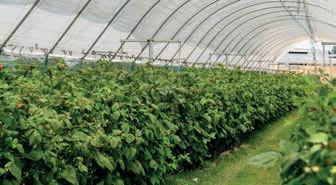
The IDO Project Team joined a group of local growers for a full day bus tour organised by Qld IDO Wendy Morris, starting the day off right with a delicious breakfast at Gather and Feast in Caboolture. With full bellies, we headed off to the first stop of the day, the new Multisteps packaging manufacturing facility in Narangba.
Multisteps is a global leader in food packaging with manufacturing facilities across three continents. The state-of-the-art Narangba facility combines cutting-edge technology, sustainability-driven production processes, and strict quality controls to ensure shorter lead times, reduced environmental impact, and premium-quality products for customers.
The 7,200m2 facility operates four advanced PET RP production lines with state-of-the-art thermoforming technology. An on-site extruder allows 100% of trim waste to be recycled back into production, effectively eliminating waste and ensuring consistent material quality.
It’s fantastic to see a facility of this calibre right on our doorstep and the Multisteps team provided a comprehensive and informative tour which was enjoyed by all. They were also keen to give the group a sneak peek at some new cutting-edge packaging technology coming through. It is hoped that this will be available in 2026 but is under wraps until then. Stay tuned!
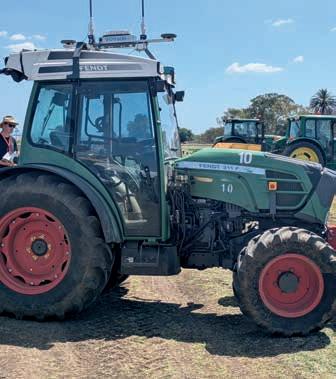
Then it was off to Gatton! A couple of hours to relax on the bus before arriving at the Gatton AgTech Showcase. This biannual event offers industry an exciting opportunity to inspect emerging AgTech and innovations designed to grow and boost profitability and productivity.
This year’s focus was ‘Protected Cropping’ and we were pleased to see Queensland Berries support the event by providing Australian Strawberry Breeding Program variety ‘Red Rhapsody-ASBP’ in coir bags as part of the on-site demonstrations. As the team observed during the previous day’s farm visit, Queensland Berries is
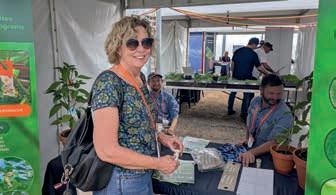

no stranger to cutting edge technology. They did not build their business by doing things ‘the way it’s always been done’ and instead placed innovation at the core of their business model. It was great to see their fabulous berries in the protected greenhouse, and to see several of their staff supporting the event and continuing to expand their knowledge.
The showcase also featured live demos and a full speaking program. It was a fantastic opportunity to learn more about autonomous sprayers and machinery, drone imaging and data analysis, compostable mulch, and new greenhouse technologies. There was also a strong attendance from industry stalwarts, who could advise growers on beneficial bugs, growing media and irrigation.
The showcase is held every two years and even if you’re not sure it’s entirely for you, it’s an excellent opportunity to catch up with colleagues and make new connections.
A professional development team workshop rounded out the three days together, facilitated by the wonderful Jo Eady of RuralScope. With Jo’s warm, supportive and entertaining guidance, we spent the morning learning more about each other and our individual working styles, and identifying ways that we can continue to improve collaboration and team development.
These sessions are a great way to remind ourselves that we are all unique and although we may operate somewhat differently to each other at an individual level, we each have a place in the team and provide a valuable contribution to the project and the delivery of industry development and communications to the Australian berry industry.
Jane Richter, Communications Manager, Berries Australia
With more than 30 years’ experience across a wide mix of crops and countries, Hort Innovation’s new Senior Industry Services Manager Dumi Mhlanga is bringing energy, fresh ideas, and a grower-first approach to the berry industry.
Dumi’s horticulture story began in 1994, after graduating in Production Horticulture and later completing a Masters in Agribusiness at the University of Melbourne. In his career to date, he has worked across Australia, South Africa and Zimbabwe, getting hands-on with everything from stone fruit, apples, pears and cherries through to walnuts, open-field cut flowers, native Australian flowers, organic herbs, and protected cropping in tomatoes and herbs.
These experiences have given him not only technical know-how, but a real passion for supporting growers and helping industries find new ways to thrive. That passion was seeded early in his childhood growing up in a farming family in Zimbabwe, so Dumi is certainly no stranger to long hours. He was often up at 5am to help with the cattle before school, then back out on the farm again afterwards. Those formative years gave him a deep respect for farming life and a strong connection to the land.
While the berry industry is new ground for him, Dumi sees plenty of crossover with his past work. “The lessons I’ve learned managing such a wide range of crops are very transferrable,” he says. “Whether it’s problem-solving, building industry capability, or finding opportunities for research and innovation, the core principles remain the same.”
In his role, he sees himself as a bridge between growers and Hort Innovation. That means keeping communication open and transparent, making sure grower needs are front and centre, and helping to guide levy-funded research and development that delivers real results.

I will be looking for levy investment opportunities that can benefit multiple industries, encourage collaboration across sectors, and help steer strategic investments. A big part of my role is working closely with growers and industry bodies to pinpoint R&D priorities, using targeted investment and collective problem-solving to drive innovation and lift productivity across horticulture. My first priority is building relationships with berry growers and really understanding the challenges and opportunities faced in this booming sector of Australian horticulture, he explains.
Looking ahead, he believes the berry industry has strong opportunities to keep growing both by boosting domestic demand and creating more export markets. At the same time, he recognises the hurdles growers are facing, from agrichemical access and profitability to building capability and industry capacity.
“There’s no set list of projects yet - it’s about working with the industry to set priorities together,” he says.
If there’s one thing growers can expect from Dumi, it’s accessibility. Whether through regional visits, working with Berries Australia and state bodies, or picking up the phone for a one-onone chat, his approach is all about listening and staying connected.
I’m always available for a chatgrowers can call me anytime, even after hours. I want to make sure your perspectives are heard and help champion them wherever decisions are being made. I believe strong relationships and open conversations lead to real change. That’s what will help make horticulture more resilient in the long run.


Berry growers are encouraged to get in touch with Dumi: 0447 091 186 dumi.mhlanga@horticulture.com.au



Dumi Mhlanga, Senior Industry Service Manager, Hort Innovation
Imagine an investment system that truly reflects your needs as a grower. One that adapts to change, delivers real outcomes, and keeps your voice at the centre of decision-making. That’s exactly what Hort Innovation is building with the Strategic Horticulture Investment Framework (SHIFt).
This new framework is more than a plan, it is a bold step toward transforming how research, development, and marketing investments are shaped beyond 2026. Developed in partnership with industry and informed by feedback from over 400 stakeholders, SHIFt is designed to create a simpler, more transparent, and flexible approach to investment planning.
The current Strategic Investment Plans (SIPs) have guided levy investments for years, but they expire on June 30, 2026. This milestone offers a unique opportunity to re-think the system and introduce a model that is ambitious, effective, and future-ready. Through SHIFt, Hort Innovation aims to:
• Deliver greater impact and value for the industry
• Simplify planning and reporting for clarity and efficiency
• Deepen engagement with growers and stakeholders to ensure priorities align with real-world needs
For berry growers, SHIFt promises a planning system that is responsive, and results driven. It is about creating a framework that adapts to evolving challenges and opportunities, ensuring that every investment counts.
The new strategic plan for the berry industry is scheduled for release in June 2026, supported by clear dashboards and timelines to keep progress visible and transparent.
Industry consultation is the cornerstone of SHIFt. Hort Innovation is inviting berry growers to share their insights and help shape the priorities for the next five years. A short survey has been created to capture your feedback, and your input will directly influence the strategic objectives and initiatives that guidefuture investments.
This is your chance to make a real impact on the future of the berry industry. By participating in the consultation process, you ensure that the next generation of investment plans reflects your needs and ambitions. Don’t miss the opportunity to have your say, your perspective matters, and together we can build a stronger, more innovative industry.
Complete the survey by scanning this QR code or visit bit.ly/BA-SHIFt-Survey


Hort Innovation advances Australia’s $16.3 billion horticulture industry by investing in research and development, marketing and trade to build a prosperous and sustainable future for growers. We partner with Australian and international co-investors including government, leading science, technology and consumer strategy experts to anticipate future challenges and opportunities. Our role is to capture value from the investments we make to benefit all levy payers.
Horticulture levies are raised by growers for investment into research and development, marketing or both
Government contributions are accessed by Hort Innovation for each R&D investment. Marketing investments are not eligible for government contributions
Advice from industry helps Hort Innovation determine investments aligned to industry-specific investment plans
Statutory levies are paid to the Australian Government Voluntary levies are paid to a collective industry fund collector
Levy funds are entrusted to Hort Innovation for management

Information on how Hort Innovation manages levy funds at our website

More on the levy system at the Department of Agriculture, Fisheries and Forestry website
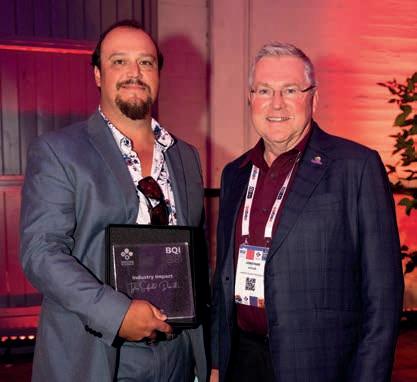
NSW based Driscoll’s manager Tyler Scofield received the Industry Impact Award at BerryQuest International 2025.
Behind every award is an innovator and inspirator, someone who drives change and leads others through troubled waters. For Berries Australia CEO, Rachel Mackenzie, it was Tyler Scofield’s work with the Varroa mite crisis which led to his nomination for this inaugural award.
Born and raised in Watsonville, California, the birthplace of Driscoll’s Berries over 100 years ago, Tyler grew up idolising growers. They had the best stories, they looked out for and cared for communities, and they had a natural level of respect from those around them.
Over Tyler’s ten years in Australia, he’s noted the challenges that lay ahead; IPM, water usage, harvest costs, run off management, chemical access and biosecurity risks. And, when the industry called for help with the 2022 Varroa mite response, he did not hesitate to step up to the plate.
His detailed understanding of the pollination requirements of the sector along with his strong links to growers meant he was the perfect conduit between the berry industry, government and the pollination sector. The role of industry liaison officer is key to the success of any biosecurity response and Tyler’s contribution, along with that of AHBIC CEO Danny Le Feuvre meant growers could keep growing even with the restricted areas.
Tyler is proud of the strong collaboration between key industry representatives during the Varroa mite initial incursion and pathway to management. He recognised that the local knowledge and contacts he had at his fingertips would be vital in helping growers get their crops harvested. Progress wasn’t always easy, and at times it felt like an uphill battle, but persistence paid off ensuring berry growers could keep accessing the pollination services they needed.
With Varroa mite now in the management stage, Tyler’s attentions have returned to new varieties and genetics.
As Tyler says, “There are some fantastic varieties available out there, but we are really only scratching the surface. The blueberry breeding programs globally are in a bit of a race. Everyone is searching for that ‘perfect’ berry and the information that the consumer is providing is helping to define what that berry is. As the berries get bigger, juicier, firmer and sweeter we can see that people are buying more and that’s exactly what we want to see.”
Berries Australia was thrilled to be able to recognise Tyler with the Industry Impact Award, especially as his contribution was the inspiration for the development of the entire industry award program. Berries Australia would also like thank Driscoll’s Australia for making Tyler available to assist the whole sector in its hour of need.

For 25 years, Freshcare has been quietly shaping the way Australian growers and supply chain businesses demonstrate food safety, quality, and sustainability. What began as an industry-led initiative to create a practical, affordable assurance program for Australian growers has evolved into one of the most trusted and respected certification standards in the country, now working with more than 4,600 businesses nationwide, supporting the people who make Australian horticulture, wine and supply chains thrive.
Freshcare’s CEO, Jane Siebum, says the organisation’s success comes down to collaboration.
“Freshcare is where it is today because of the invaluable contributions of industry members, growers, business owners, horticultural and agricultural experts, and the many stakeholders who’ve shared this journey with us,” she said. “Their expertise, collaboration and commitment have shaped Freshcare into Australia’s leading provider of certification standards.”
The program has always had one clear purpose: to give Australian growers a fit-for-purpose food safety solution
Industry organisation Freshcare received the Supply Chain Champion Award at BerryQuest International 2025 earlier this year.
For 25 years, Freshcare has been proudly supporting Australian fresh produce supply chains with practical, industry-owned and operated assurance standards.
Rachel Mackenzie, CEO Berries Australia, nominated Freshcare for their advocacy which ensured Australian berry growers’ compliance with global food safety standards was acknowledged by government, preventing costly duplicate audits while protecting industry sustainability as part of the newly introduced Primary Production and Processing (PPP) Standards.
built for local conditions. From soil to supermarket, Freshcare helps ensure that Australian produce is safe, sustainable and of the highest quality.
Over the years, Freshcare has continued to refine and expand its standards to meet the changing needs of both growers and customers. Its continuous improvement philosophy has driven innovations in training, digital tools, auditor support and governance, all while keeping the system practical and grounded in real-world farming operations.
“Freshcare has grown alongside Australian horticulture,” says Jane.
“It’s evolved from its early ‘growing up’ years to become an internationally benchmarked program that was built by industry, for industry.”
Behind Freshcare’s success is a dedicated onshore team who live and breathe the values of Australian agriculture and viticulture. They work closely with growers and businesses every day providing practical support, guidance, and expertise to help them meet their assurance goals and maintain the confidence of consumers at home and overseas.
Supporting them is a highly skilled and experienced Board, whose leadership ensures Freshcare remains accountable, transparent, and strategically focused on the future needs of Australian horticulture and wine industries.
Complementing this governance is the Freshcare Technical Steering Committee: a network of industry specialists in agriculture, food safety, sustainability, and certification. Their collective knowledge and hands-on experience ensure Freshcare’s standards stay practical, credible, and relevant, reflecting the realities of Australian production while meeting the expectations of markets and regulators worldwide.
The Supply Chain Champion Award recognises this enduring commitment: to integrity, to collaboration, and to helping every grower, packer and supplier deliver food that’s safe, sustainable, and proudly Australian.
Jane Richter, Communications Manager, Berries Australia
Berry growers across Australia have the chance to take part in one of horticulture’s most exciting international events, and thanks to Hort Innovation and Agriculture Victoria, you could be going for free.
Hort Innovation, a platinum sponsor of the XI International Symposium on Irrigation of Horticultural Crops, is supporting berry growers to experience this world-class event, hosted at Tatura SmartFarm, Victoria, on 20–21 January 2026.
Through this partnership, Berries Australia is giving away three free tickets: one each for a strawberry, Rubus, and blueberry grower, to attend the symposium’s dedicated workshop and technical tour. It’s a unique opportunity to gain firsthand insight into the latest irrigation research, technology, and global best practice, right here in Australia.
The two-day grower program includes:
• Access to R&D sessions, presentations, and an industry-tailored workshop on Tuesday 20 January
• Entry to the technical tour of the Goulburn Valley region on Wednesday 21 January, with bus transport provided
• Networking opportunities with international scientists, growers, and policymakers
Please note: accommodation and general transport costs are not included.
The workshop theme “Sustaining future orchard profitability in years with reduced access to irrigation water” could not be more timely, given the drought situation being faced currently in Victoria. You can expect in-depth discussions on AI-driven water management, smart irrigation systems, and innovative agronomic practices that help producers adapt to the challenges of low water availability.
Dr Alessio Scalisi, Symposium Convenor, says the event will offer something special for every grower.
The International Symposium on Irrigation of Horticultural Crops is more than a scientific meeting. It’s where the brightest minds in horticulture come together to shape the future of water, energy and climate-smart farming. We can’t wait to welcome the world to Tatura.
Dr Ian Goodwin, from Agriculture Victoria agrees. This symposium is a rare opportunity to connect researchers, growers, and innovators from across the globe. Together, we’ll share solutions that make horticulture more resilient, more profitable, and ready for the challenges ahead.
A single-day registration normally costs $550, making this giveaway an exceptional opportunity to expand your knowledge and network with leading irrigation experts, all while representing Australia’s berry industry on the world stage.
To enter, simply complete the entry form online at bit.ly/BA-XI-Symposium. Winners will be selected to ensure one grower from each berry crop type secures a ticket. Entries close 5.00 pm AEST, 15 December 2025.
For more details on the full symposium program, visit www.irrigation2026.com.au/program-overview



Jane Richter, Communications Manager, Berries Australia
For Australian berry growers, pollination is the unseen engine that drives productivity, quality, and profitability. The difference between an average and an exceptional harvest often lies in the small but mighty efforts of bees who are the silent workforce ensuring that flowers become good quality berries.
Bees are essential partners in berry growing. Whether it’s strawberries, blueberries, raspberries or blackberries, effective pollination improves both the yield and quality of fruit. While some berry plants can self-pollinate, the presence of bees dramatically enhances results, and that’s backed by decades of local and international research.
In strawberries, bee activity can lift yields by up to 18%, producing larger, firmer fruit with better shape and higher sugar content. Blueberries, highly dependent on insect pollination, rely on honey bees to increase fruit weight and reduce development time resulting in more uniform crops that meet market specifications. Even blackberries benefit from improved pollination, producing larger, more symmetrical berries with an extended shelf life.
For growers, that translates directly into greater productivity, higher pack-out rates, and better returns per hectare. Robust pollination isn’t a luxury, it’s a business investment that pays off every season.
Despite its importance, reliable pollination is becoming harder to secure. Australia’s beekeeping industry is under increasing pressure from several fronts. Rising competition for hives across multiple horticultural sectors has tightened supply. The arrival of the Varroa mite in Australia has further disrupted colony availability and management costs. Add to that unpredictable weather events and shifting flowering times, and many growers are finding that traditional handshake arrangements with local beekeepers are no longer guaranteed.
A shortfall in pollination can mean significant yield losses, a risk that few growers can afford in a competitive marketplace.
Recognising this emerging challenge, a South Australian AgTech start-up ‘HiveHub’ has developed a new, free online platform that connects growers and beekeepers across Australia. Designed to complement, not replace, existing relationships, HiveHub aims to strengthen pollination security and transparency while providing a reliable backup network when challenges arise.
The idea is simple: make pollination management easier, clearer, and more resilient by bringing together growers with pollination service providers, and using modern technology to create a win-win relationship coupled with reliable pollination outcomes.
Growers can use HiveHub to:
• Register their farms (free forever) – providing key details like crop type, location and flowering periods so local beekeepers understand their needs
• Find available beekeepers nearby – access profiles showing experience, hive availability, and service regions
• Communicate and negotiate directly – message beekeepers through the platform to confirm details, timing and terms
• Create and sign digital agreements –formalise arrangements with clear expectations and conditions to protect both parties
• Track and manage pollination activity –monitor hive placements, dates and milestones through a simple dashboard
• Facilitate payments and resolve disputes –use HiveHub’s built-in tools for secure payments and structured issue resolution
• Build a trusted history – review and be reviewed after each season, helping to create a national reputation network that rewards reliability
For growers, HiveHub delivers clarity, accountability, and confidence which are three things that have often been missing in informal pollination arrangements.
Berry crops are particularly sensitive to timing and quality in pollination. Missing even a small window can compromise yield and fruit uniformity. HiveHub helps growers safeguard against those risks by offering:
• Access to a wider beekeeper network – ensuring backup options if a usual supplier is affected by Varroa, weather events, or high demand
• Centralised records – keeping contracts, payment details, and past arrangements in one easy-toreference location
• Transparency and security – digital agreements provide clarity for both parties and reduce misunderstandings
• Biosecurity awareness – HiveHub fosters good record-keeping and encourages best practices to protect bee health across regions
• Future-proofing – participation helps build a stronger national pollination network that benefits the entire horticulture sector
For berry enterprises that depend on reliable flowering windows and premium fruit quality, these benefits translate into reduced pollination risk and improved long-term sustainability.
HiveHub isn’t about disrupting existing grower–beekeeper relationships; it’s about strengthening them. Many growers already have trusted beekeepers they work with season after season. HiveHub’s tools simply make those arrangements easier to manage by providing digital records, automatic reminders, and secure payment options to streamline an oftenoverlooked part of farm operations.
At the same time, it creates new opportunities. If a grower’s regular beekeeper becomes unavailable,
HiveHub offers an immediate pathway to find alternatives nearby saving time, protecting yield potential, and maintaining business continuity. The platform is designed for ease of use, with step-by-step guidance and support available to help first-time users. Once a farm profile is set up, growers don’t need to revisit it until they’re ready to arrange pollination again keeping administration light and practical.
HiveHub’s broader mission is to support the resilience of Australia’s pollination ecosystem. The arrival of Varroa has underlined how interconnected the nation’s horticultural industries are, and how important it is to plan ahead for continuity of service.
By linking growers and beekeepers through a transparent, structured system, HiveHub contributes to:
• Greater regional pollination security
• Better data on national hive demand
• Improved biosecurity awareness and traceability
• A more collaborative agricultural community
For berry growers, that means greater control over pollination planning, improved risk management, and a stronger voice in shaping the future of pollination services.
HiveHub is inviting Australian berry growers to be part of this movement. The platform is FREE to join, easy to use, and backed by a support team ready to help with setup and onboarding.
By signing up, growers can protect their upcoming harvests, strengthen existing beekeeper relationships, and gain access to a growing network of reliable pollination partners across the country.
As HiveHub’s founder explains, “Our goal is to give growers confidence. Pollination shouldn’t be a source of stress, it should be something you can plan for, manage easily, and rely on every season.”
In a time when bee health and hive availability are under increasing strain, HiveHub represents a practical, grower-focused solution that is worth signing up for.

To learn more and register your farm free of charge, visit hivehubpollination.com and join the HiveHub community.
Professor Alan Dorin, Monash University
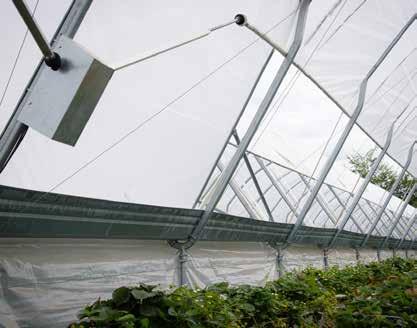
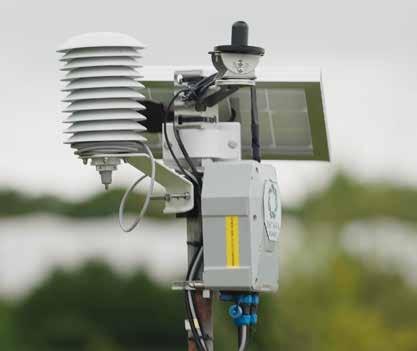
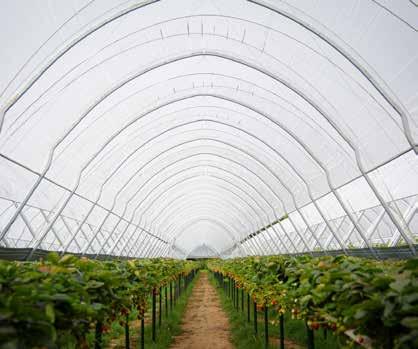
In this article I offer some personal perspectives, observations and suggestions, related to insect pollination in polytunnels. As I explain below, there are many aspects of tunnels that make it hard for bees to visit crop flowers under plastic. Nevertheless, by offering this informal opinion piece (it’s not a research article, but it is backed by my understanding of the literature, my own research and field experience) I hope to provide some food for thought.
I’m not a grower. You are the expert on your crops and know them much better than I do! My perspective is that of a computer scientist researching bee behaviour and pollination monitoring, simulation and management on semi-protected berry crops. I hope you’ll find some relevant detail here on the complexity of pollination management, some clarity about why more research is needed, and also, why “quick fixes” to pollination issues may not work.
Honeybees’ colour vision extends into the UV range where human vision doesn’t respond, and it falls short of the range of colours we perceive as red. Honeybees have compound eyes that don’t clearly image a scene like our own eyes. They can only resolve spatial detail about 170 times less effectively than humans. So, what do these factors mean for bees visiting crops?
Although we can easily detect a white flower at a distance of a few metres against a dark green background, for example a strawberry flower against foliage, it may not be easy for a honeybee to spot it. A cluster of white blueberry flowers, perhaps 5cm across, will be easier to detect from the same range. But factors such as the
illumination, (green-) colour contrast, reflectivity of background surfaces such as leaves, mulch or weedmat, will all also impact flower detection.
Sometimes, humans can easily distinguish between one variety of a crop flower and another planted nearby, or between a weed and a crop flower. However, under some circumstances a honeybee may find these seemingly very different flowers to be indistinguishable from one another, especially from a distance approaching the limits of their vision. The opposite can also be true. For instance, if a bee detects two flowers that look similar to humans, but one absorbs incoming UV light and the other reflects it, the flowers will be more easily distinguishable to the bee than to us.
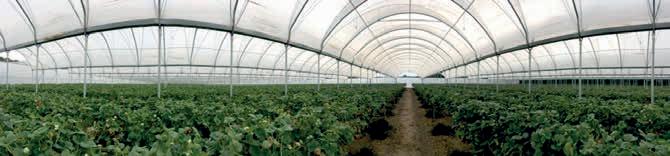
The “colour” and UV components of the illumination in your tunnels or protected environments might not be first and foremost on your mind when it comes to pollination. But bees must detect and select flowers to visit in these environments to achieve your pollination goals. Interfering with natural sunlight via artificial illumination, grow lights, or cladding that differentially filters sunlight, may invisibly alter key bee behaviours. To understand the impact of illumination, imagine yourself trying to identify a colour-matched left sock in your dim wardrobe. Now imagine doing this by looking at a randomly arranged collection of tiny flower-sized colour swatches while staring through the bottom of a smudged beer glass inside a night club illuminated with coloured lights. If all your socks (or crop flowers) are the same and there are no “distractors”, this doesn’t matter much. Any choice will be a match to the right sock (or target flower variety). If you have non-crop flowers in the vicinity though, this may, under some circumstances, be a visual distraction to your bees. But it’s not simple – a diversity of co-flowering plants can be of nutritional benefit to bees; maybe attractive co-flowering plants help to bring bees towards a less attractive crop that would otherwise be unvisited.
Bees estimate the distance travelled by processing the amount and speed of scenery passing through their vision; this is called “optical flow”. They use sunlight polarisation to determine compass orientation.
Imagine you are a 2cm long honeybee in the middle of a 100m long polytunnel. You’re relatively short-sighted and can only detect small things clearly within about a metre
of your position. The polytunnel cladding is interrupting your view of the sky and may be interfering with the polarisation of the sunlight you use to orient yourself. Now also consider that the polytunnel infrastructure and the crop rows seem to endlessly repeat themselves in all directions. How would you efficiently approach a tunnel exit or move towards your hive? How would you locate an unvisited part of the crop to forage?
In addition to making navigation a challenge, polytunnels are hot and humid. This can be great for plants, but stressful for navigationally challenged bees, especially as they batter themselves into exhaustion against plastic cladding and through spiderwebs in a desperate attempt to escape a tunnel. Our protected cropping infrastructure helps us manage crop plants under climate change, but it can be an obstacle to bee navigation and free movement, which means it can be detrimental to bee pollination. It’s not simple to design infrastructure that helps bees whilst maintaining protection to berry crops and research into this aspect of horticulture is essential but currently under-explored.
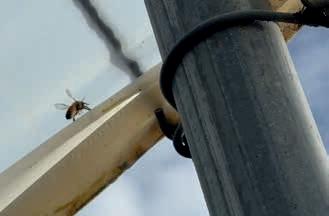
The honeybees’ famous waggle dance communicates the location of a floral resource by distance (probably measured via estimates obtained from optical flow, as noted above) and the direction of travel (measured with respect to the sun’s position in the sky determined by light polarisation). This is an amazing thing for insects to do, but it is limited in its expressiveness and precision.
The waggle dance didn’t evolve under conditions that would ensure it could identify the locations of specific patches within a polytunnel. Instead, it is more effective at identifying the location of a large flowering tree in a forest, or a broad patch of flowers in a wideopen area. As a result, once the bees are in the vicinity of crop flowers, they can’t rely on their communication skills to explain to their fellow workers how to find a specific sub-region that, from the perspective of the grower, requires pollination. We need to ensure access to crop flowers is easy so that bees can discover new areas via an unimpeded path. We can do this by providing as much open space in and out of polytunnels as we can, and either hope they find it, or coax them to specific areas somehow.
Several companies offer bee attractants for sale. I have not conducted research to understand their effectiveness, so I can’t offer an informed opinion on their use.
Open space between crop rows can assist the insects to travel rapidly into central areas of the polytunnel parallel to the row. But if we’d also like pollen to flow across crop rows, we need to make this easy for bees by providing overhead space and ensuring that one crop row is visible from the next. Otherwise, the bees’ dominant direction of travel will be along each row and cross-row pollination (for instance between berry varieties in adjacent rows) may be suboptimal. If you want to see dancing bees and learn more about their moves, visit
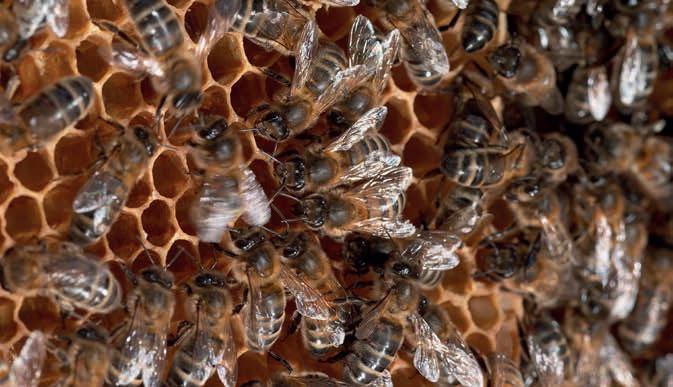
Netting required to keep hail, birds, flying foxes or pest insects away from crops may hinder bee movement. Sometimes, it’s necessary to install a mesh size that doesn’t allow honeybees to pass at all.
In an ideal scenario, nets remain open until after pollination is complete. However, this may not be feasible when fruit and flowers appear simultaneously on a plant. My personal observations, not yet backed by rigorous data collection, indicate that even opening relatively short sections (say 10m) of net to make an opening between hives and crops for a relatively short time (a few hours) can successfully allow a useful bee highway to form. Hence, any opportunity to open otherwise closed nets can be of benefit if it can be managed.
It has been shown that hive health may decline if hives remain under netting for extended periods. However, it’s not clear that they would suffer much if left for short periods under nets. More research is needed. If crops are kept under insect-proof nets, as with polytunnel cladding, ideally allow plenty of space above the crop for bees to fly freely beneath the net. The benefit of having the hive under the nets with the crops is that bee access to crops is simplified and, to the extent that bees may avoid travelling through the mesh, crop visitation might increase due to a reduction in bees flying offsite to your neighbour’s crop or unmanaged roadside weed patch. The downside of having hives under nets for a short period is that initially bees with experience of life beyond the net may trap themselves in the netting as they try to fly to regions outside. Eventually, bees will emerge from the hive that are unaccustomed to free flight beyond the netted area. These insects will be less interested in exploring beyond the net and, if all goes well, will visit your crop. But this will take time – and then the hives are clearly not under the net for a ‘short’ period so the
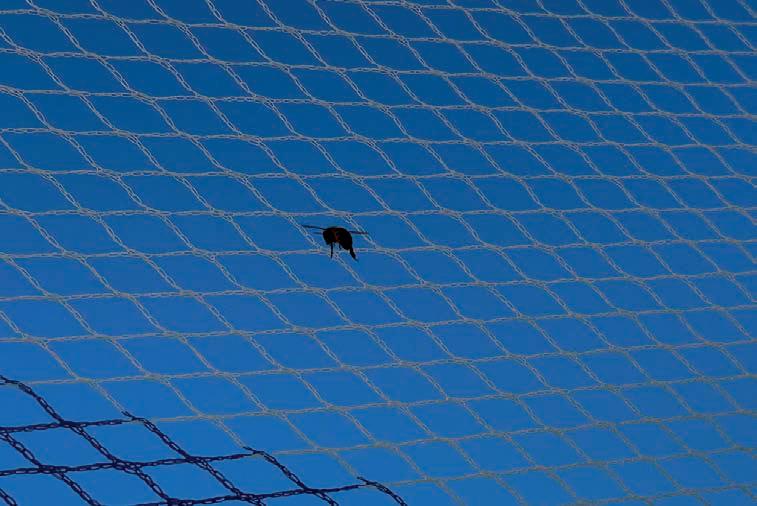
Of course, only introduce bees under nets with crops when there are adequate flowers to keep the colony fed. If they are introduced prior to, or late in a flowering season, the hive may suffer from poor nutrition. At the very least it may need supplementary feeding to sustain it for a short while.
What if hives are placed outside the nets and bees have free access to the crop, and then one day the fine mesh nets must be dropped, even though flowers are still present and pollination is still required? In this case, bees that have learnt the location of the crop may attempt to travel through the net to reach food. If the weave is tight, they may fly or crawl across, up and down the net trying to find access they expect, from experience or from a bee dance, to be available. This may result in exhaustion or the bee becoming trapped. At best, it will result in wasted time, energy and stress for the bee.
If the nets feature a large mesh that allows bees to pass through, it will do little to restrict access for experienced foragers. I’m unsure what it might do to inexperienced bees though. From a distance a visible mesh may still, I expect, look like an unbroken wall to a bees’ poor resolution vision system. Unless a bee has a reason to expect food to be beyond even a coarse net, it may be less inclined to attempt to travel through it than to an obvious flowering tree or open crop. The difference in behaviour when approaching coarse netting between net-experienced and inexperienced bees has, to the best of my knowledge, not been well explored. This is something that may warrant further investigation.
Growers may also like to re-visit Alan’s previous article ‘Precision Pollination of berry crops is not a pipedream’ published in the Spring 2022 edition of this journal.
This article - along with all other articles published in the Australian Berry Journal - can be found in the industry Resource Library at bit.ly/BA-RL





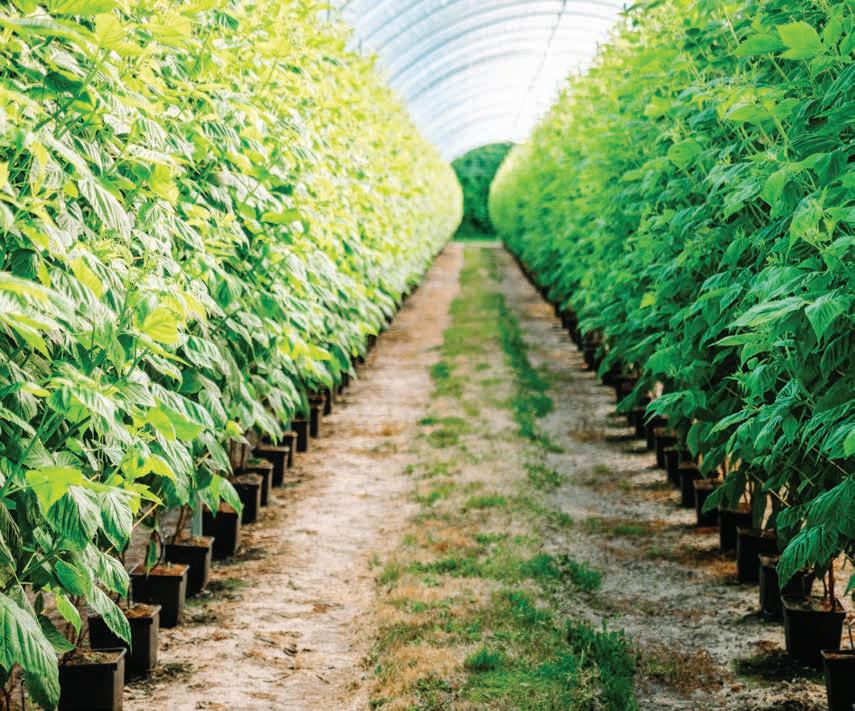


Jane Richter, Communications Manager, Berries Australia
Picture this: a freak storm sweeps through your farm, bringing winds over 100 km/h that rip the plastic off your polytunnels and flatten half your blueberry crop. Bent poles, torn bushes, and a lot of uncertainty are left behind. You have insurance, but harvest is just weeks away, and cash flow is already stretched thin. Waiting months for a loss assessor and the subsequent claim payment just isn’t an option.
Now imagine a different kind of cover, one that pays out automatically when the storm hits, putting cash in your hands when you need it most. That’s the idea behind parametric insurance; a smarter, faster way to manage extreme weather risk.
Severe weather and natural disasters are an unfortunate reality in Australia. Since January 2020, storms and floods alone have cost over $12.3 billion in insurance claims, with one in every 25 Australian adults lodging a claim due to extreme weather (Insurance Council of Australia, 2022). For berry growers, weather events such as floods, hail, heatwaves, or high winds can have devastating impacts. Yet many have found it increasingly difficult or costly to access traditional crop insurance. That’s where parametric insurance is emerging as a practical, flexible solution designed for modern farming risks.
Benefits
• Fast payouts – get back on your feet quickly after a weather event
• Customised coverage – choose the triggers that matter most for your crops
• Transparent and objective – based on trusted weather data
• Flexible protection – complements existing insurance or risk-management plans
Parametric insurance pays a predetermined amount when a specific, measurable event occurs, such as rainfall dropping below a threshold, or wind speeds or temperatures exceeding an agreed level. Unlike traditional insurance, it doesn’t require an inspection or proof of damage. Instead, payouts are triggered automatically using objective data (for example, Bureau of Meteorology readings) once the agreed parameters are met. This means growers can receive payments within 30 days, helping them recover faster and maintain cash flow after severe weather events.
Most growers are familiar with indemnity insurance, often included in “Farm Pack” policies. These policies assess actual damage to determine compensation, a process that can be time-consuming, costly, and subject to exclusions or limits. Parametric insurance takes a different approach. It focuses on the event itself, not the resulting damage. When the trigger happens, for instance, rainfall exceeding 200 mm or a defined number of days over a defined temperature threshold, the payout is made automatically, regardless of the actual crop loss. This transparency and speed are what make parametric insurance particularly valuable for berry growers dealing with short harvest windows and time-critical operations.
One of the main challenges with parametric products is ‘basis risk’: the possibility that a payout might not perfectly match your actual loss. For example, if heavy rain falls just outside your designated area, the trigger might not activate even though your farm experienced flooding damage. However, this risk can be reduced by using accurate, localised data that better reflects your location and growing conditions. As technology and weather monitoring continue to improve, basis risk is becoming easier to manage.
It’s important to work with a broker or insurer experienced in parametric products for agriculture to ensure your triggers and data sources are set correctly for your operation. Parametric insurance isn’t designed to replace traditional cover but to fill the gaps, offering a safety net for the unpredictable weather patterns that increasingly challenge Australia’s berry industry. As the climate continues to change, this new style of insurance offers growers a faster, fairer, and more flexible way to protect their farms, their crops, and their livelihoods.
Take a close look at the weather-related events that have hit your business hardest. Consider heavy rainfall, hail, heat spikes, frost, sudden high winds or extended dry periods. Understanding which hazards pose the biggest threat to your crop, infrastructure, or cash flow is the first step in deciding whether parametric insurance could help.
Review your existing farm or crop insurance policies. What do they include and what’s excluded? Note any coverage gaps, payout delays, or high premiums for weather-related losses. Parametric products are often designed to complement, not replace, traditional insurance.
Parametric insurance is still relatively new in Australian agriculture, so it’s important to speak with a broker or insurer experienced in parametric products. They can help assess your risk profile, identify suitable triggers (e.g., rainfall, wind speed, temperature), and explain what kind of payout structure would make sense for your business.
The accuracy of parametric insurance depends on local, reliable weather or satellite data. Ask what data sources would be used for your policy, such as Bureau of Meteorology stations, private on-farm sensors, or satellite-based indices and whether those data points accurately reflect your growing region.
Make sure you understand exactly what will trigger a payout and how the payout is calculated. Basis risk (when the data trigger doesn’t perfectly match your actual loss) can be reduced by setting well-defined parameters with your insurer.
Request a few example scenarios or quotes to see how a parametric product stacks up against your current insurance. Look at trigger levels, payout amounts, and premium costs. The right structure should match your business size, crop type, and risk tolerance.
Before committing, talk to your accountant or financial adviser to ensure the product fits within your overall risk and financial management plan.
Jen Rowling, Projects Manager, Berries Australia
Export-curious berry industry members were invited to explore international markets and visit Asia Fruit Logistica in September as part of the Hort Innovation levy funded project ‘Multiindustry berry trade development and market access project (2024-2029) (MT23004)’.
Under the guidance of our Head of Trade, Jenny Van de Meeberg, a group of six took up the opportunity to have a first-hand look at what it takes to export berries to international markets; the complexities, challenges and opportunities available and how the different retail landscapes, consumer behaviours and competition from other countries impact Australia’s potential export markets for berries.
The six industry delegates were Rebecca Scurr (Piñata Farms), Jason Lin (Hillwood Berries), Blair Greenhalgh (Driscoll’s Australia), Tina Slattery (Perfection Fresh), Josh McGuiness (The Berry Collective) and Luke Penza (Fresh Produce Group).
The short but productive 4-day itinerary began in Japan, visiting the Australian Embassy in Tokyo and a broad variety of retail and wholesale outlets. The tour then moved to Hong Kong for a visit to Asia Fruit Logistica and the local retail environment. On their return to Australia, each of the participants were asked to submit a report providing their key learnings from the experience and this article aims to summarise the tour from the participants’ perspective.
Participants gathered in Tokyo on Day 1 for a meeting at the Australian Embassy. The group met with Agriculture Counsellor, Mr James Strachan and Trade and Investment Commissioner & Counsellor (Commercial) for Austrade, Ms Kendall Draper who provided a comprehensive overview of the barriers and opportunities for entry into the Japanese market.
Some of the key learnings from this meeting, as reported by Jason Lin:
1. Branding is essential. Japanese consumers and retailers are highly sensitive to variety names and brand stories. Simply labelling fruit as “Australian” will not resonate. The brand must emphasise a premium location e.g. Tasmania, plus specific varieties
2. Transparency builds leverage. Growers need visibility of the full value chain (FOB wholesale retail) to understand where margins are captured and to strengthen future negotiation power
3. Diplomatic and official platforms matter. Austrade’s support enhances credibility, opens networks, and reduces barriers to entry
The group then spent the remainder of their time in Tokyo exploring retail outlets and wholesale markets. The retail outlets visited ranged from local fruit and vegetable shops and everyday supermarkets through to high end premium food stores and premium fruit gift shops, where fruit is displayed like jewellery in glass counters (with prices to match!).
Both Tina Slattery from Perfection Fresh and Rebecca Scurr from Piñata Farms noted the absence of fresh strawberries in supermarkets. Despite being out of season for Japanese strawberries, Tina expected there would be imports filling the gap and questioned whether limited market access for many countries is the reason for the distinct lack of product. Rebecca suggested that perhaps the Japanese celebrate in season produce, treating strawberry season like Australia treats mango season with very little imported fruit out of season. By example, there were very large, beautiful displays of peaches in every store. Both observations are correct and have an influence on the limited amount of strawberries available during the Japanese strawberry off-season.
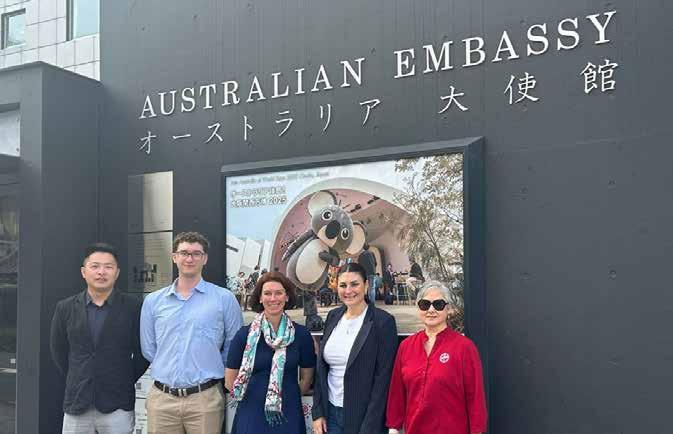

Rebecca also noticed that in Japanese supermarkets, fruit and vegetables aren’t the first thing you see as you walk in the door – convenience food is! There appears to be a huge market for convenient and healthy ready-to-eat meals which included ready-to-eat fruit in various forms. For Blair Greenhalgh, the retail environments of Japan often felt more organised and quieter, creating a calm shopping experience. In both Japan and Hong Kong, the stores emphasised aesthetic appeal and cleanliness, with displays that were meticulously arranged and visually engaging. He also noted the premium positioning of imported goods, including Australian products, often showcased in dedicated sections with clear labelling around origin and quality.
In the high-end stores and fruit gift shops, great emphasis is placed on presentation, precision and customer experience. Josh McGuiness from The Berry Collective noted standout examples such as individual gift boxes and multi-tier presentation packs for premium grapes, strawberries, and melons featuring minimalist design, soft-touch materials, and elegant typography. The product screams luxury and gives the impression of a high-end confectionery or jewellery-style product. Some brands have incorporated QR codes or story cards linking to grower stories or harvest videos, creating a sense of authenticity and emotional connection.
Blair was surprised at the depth of information available to consumers at the point of sale, especially with regard to locally produced fruit. It was common to see detailed labels that included the farm name, fruit size, sugar content (brix level), age of the produce, and even the grower’s history.
Equally impressive was the general knowledge Japanese consumers had about the fruit they were purchasing. Shoppers seemed well informed and engaged, often choosing produce based on specific attributes like brix level or region of origin. This reflects a culture that values quality and informed decision making.
The Tsukiji Outer Market, known as Japan’s “Food Town,” is a bustling maze of narrow alleys and open streets lined with fruit vendors, seafood stalls, sweet shops, and a mix of wholesale and retail outlets offering fresh produce and traditional Japanese foods. Jason reported that fruit prices at the market were significantly lower compared to department stores, and displays were neat but not as perfectly curated. A pack of Hokkaido strawberries was purchased for approx. AUD$13. The strawberries had a strong fragrance but were surprisingly sour, highlighting the seasonal and regional differences in taste profiles.
Jason added that sweet strawberry products were a significant highlight in Tokyo. Strawberry Mania is a chain of strawberry-themed cafes and shops in Tokyo that sells a vast array of strawberry delights such as Daifuku (a Japanese sweet), tanghulu (candied fruit on a stick), smoothies and soft serve ice cream. These offerings show the cultural importance of strawberries beyond fresh fruit, extending into desserts and experiential food products. Rebecca noted that the tanghulu used frozen strawberries and the strawberry fruit used in the sweet creations was sourced from the Netherlands.
Ota Market is Japan’s largest wholesale fruit and vegetable market, acting as a key hub for distribution and product pricing. It operates under a system of wholesalers, intermediaries and authorised buyers. Daily auctions set reference prices that influence retail and food service markets across Japan.
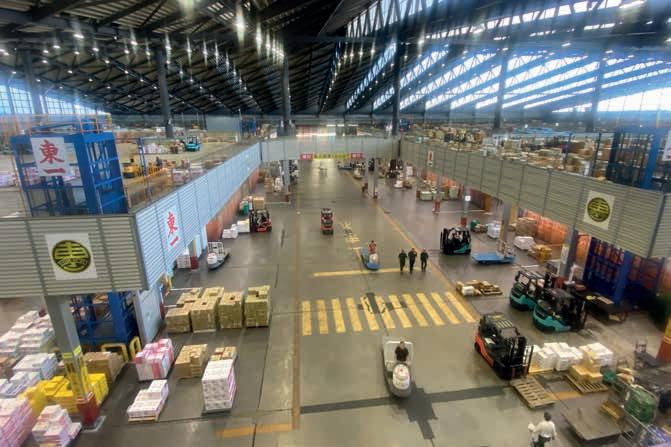
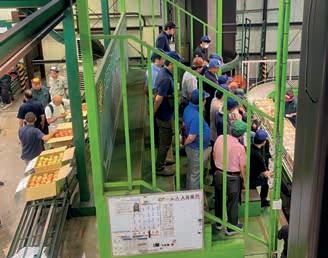
The products are displayed in lots, labelled with origin and grade and inspected by buyers. Auctions are then conducted in rapid, rhythmic style by licensed auctioneers with intermediaries raising hands or using gestures to bid. Winning bids are instantly confirmed and documented, and products are quickly dispatched using turret trucks and other logistics vehicles.
In his report, Jason highlighted that Ota Market is critical for accessing Japan’s mainstream distribution channels, and price positioning impacts supermarket and restaurant pricing nationwide. To succeed, berry exporters should partner with trusted intermediaries, balancing premium branding for high-end markets with competitive positioning in wholesale distribution.
Day 3 of the tour was spent at Asia Fruit Logistica which is held at AsiaWorld-Expo next to Hong Kong International Airport.
Asia Fruit Logistica is the leading international trade show for Asia's fresh produce business, covering the entire value chain from production to retail. It serves as a platform for networking, business development, and gathering market intelligence, featuring exhibitors, product launches, and the Asiafruit Knowledge Centre with congresses and forums on industry trends and innovations.
The event features 760+ exhibitors from 43 countries and regions plus around 26 national and regional pavilions, and it welcomes over 14,000 buyers and trade visitors from all over the world.
The group spent the morning exploring the show, keeping an eye out for fresh ideas in marketing and packaging. One brand that stood out was Zespri™, whose clever, localised campaigns had clearly made an impact in Japan too. Using collectible figurines, Zespri has turned kiwifruit into a cultural moment. As Tina observed, with the current “Labubu” craze sweeping Asia, consumers love the thrill of collecting limited-edition items and Zespri has nailed this trend, turning fun merchandising into a powerful driver of sales.
According to Rebecca, Zespri was also the only notable brand in any Japanese retail outlet and their presence at Asia Fruit Logistica was unmatched, being the largest and most interactive exhibitor.
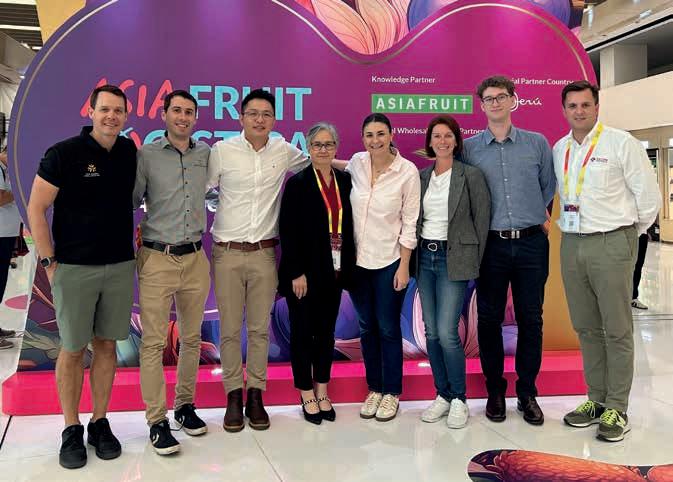

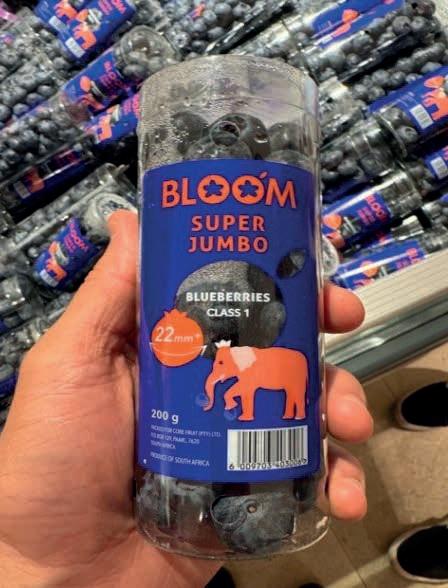
Following Asia Fruit Logistica, the group hit the streets of Hong Kong to review the retail landscape, from wholesale markets to mainstream supermarket chains and premium grocers.
Supermarkets in Hong Kong felt more familiar to Australian visitors, with fresh produce displayed front and centre as you walk through the doors. However, unlike Australian stores that typically promote bulk buying, retailers in both Japan and Hong Kong focus on smaller portions, eye-catching packaging, and a wide variety of value-added and ready-to-eat products designed for busy, convenience-driven shoppers.
Blair highlighted that the city’s role as a global trading hub was evident in the variety of fruits and vegetables on offer from all over the world. There was a wide range of strawberries and raspberries from China, the UK and the USA. However, the strawberries appeared under ripe (white shoulder) and the quality of raspberries from both China and the UK appeared poor compared to Australian standards. No berries purchased were sweet to eat.
There was also an abundance of blueberries across all retailers which reflects the open market access. The variety of berries was impressive, with products sourced from all over the globe.
In terms of packaging, Josh noted that the blueberries in Hong Kong were often larger (jumbo size) than those typically available in Australia, and some sold in larger sized plastic containers rather than standard punnets. Tina also noted the tubes and tubs for blueberries, particularly those from Zimbabwe or South Africa.
Premium strawberries from the UK were presented very well in a little tray with individual pockets for each strawberry. The huge volume of plastics being used in fruit and vegetable packaging did not go unnoticed. Josh was amazed by the lack of visible sustainability initiatives in both Japan and Hong Kong.
Luke Penza from Fresh Produce Group also noted the excessive use of plastics, particularly the fruit and vegetables that appear to have been shipped to Hong Kong in bulk and then re-packaged to suit the consumer landscape.
Coming from Australia - where there is increasing emphasis on recyclable, minimal, or fibrebased packaging - it was striking to see how much single-use plastic and layered wrapping is still used, even for small quantities of fruit. Individual pieces were often wrapped in foam nets, placed in plastic trays, then sealed with film or enclosed in a decorative box.
Overall, it was observed that the retail environments in both Japan and Hong Kong placed much greater emphasis on presentation, precision, and customer experience than typical Australian fresh produce retailing. Across premium supermarkets, the overall impression was that fresh fruit is treated as a premium, high-care category rather than a commodity, which is reflected in its packaging.
Here are some key market differences identified by Josh McGuiness:
• Exceptional visual merchandising: Produce was meticulously arranged, with near-perfect uniformity in size, colour, and alignment. Berries, grapes, and stone fruit were often displayed in small, curated packs or in individually wrapped portions, with labels clearly indicating variety, origin, and, sometimes, the grower's name. In Australia, the goal is to touch the product as little as possible prior to reaching the supermarket or to use the least amount of packaging. This aligns more broadly with Australia’s sustainability goals.
• Premium gifting focus: In both Japan and Hong Kong, fruit gifting remains a major cultural driver. Dedicated areas showcased luxury fruit boxes (particularly melons, apples and grapes) with elegant packaging, often accompanied by branded ribbons, cushioning, and story cards.
• Provenance and storytelling: Signage and digital screens often highlighted origin, seasonal freshness, and grower regions, reinforcing trust and pride in the source. On pack or point of sale QR codes linking to producer videos were common.
Rebecca Scurr, Piñata
“I didn’t realise quite how ‘easy’ it is to supply into the Hong Kong market. It appears to be a market that is very commoditised. I did not see much genuinely premium fruit on offer. Most berries were definitely not the same quality (eating or appearance) as we have in Australia. I was also told by an importer that the market ‘likes’ strawberries with a white shoulder so there is obviously more weight put on shelf life than eating quality.”
On the other hand, Rebecca could see a market for premium Tasmanian strawberries in the shoulders of the Japanese season (October / May-June).
“It may be more difficult to get the Japanese consumer to love raspberries. With extreme care in the supply chain to maintain quality, together with customised branding and packaging solutions for the Japanese consumer, it could be done”, she said. “I believe that with the right strategy, focussed on relationship building and storytelling it could be a very loyal and rewarding market.”
“The visit to Japan and Hong Kong highlighted a clear and growing opportunity for Australian fruit in both markets (pending access to Japan for the mainland), particularly in the premium and trusted-origin segments. Australian produce already enjoys a positive reputation for being safe, clean, and high quality. Still, success will depend on how effectively we can differentiate, communicate, and consistently deliver on that promise in markets that value presentation. Countries with lower-cost labour have a distinct advantage in what they can do at scale with novel products, and to be successful in both markets, we need to consider how we can use packaging to communicate the additional value.”
“The blueberry market in Hong Kong is extremely competitive with a large variety of brands, countries and pack formats available. Blueberry product from Peru and Zimbabwe was prevalent in retail visits and can be produced at a low cost when compared to Australian product. For Australian blueberries to have a competitive advantage in the Hong Kong market, packaging needs to be bright, inviting and create a sense of prestige when consumers see Australian product on shelves. Australia’s export opportunity is in delivering a consistent, safe and high-quality product in terms of both size and flavour which would encourage repeat purchase. This is what will differentiate Australian produced blueberries to blueberries produced elsewhere.”
“For Japan, exports are currently restricted to Tasmania. This makes it essential to highlight origin clearly, positioning the product not just as Australian berries, but specifically as Australian berries from Tasmania. Tasmania already enjoys a strong reputation in Japan for producing premiumquality food, and marketing strategies should leverage this positive perception. However, logistics from Tasmania can be challenging, so a review of supply chain options is necessary to ensure both quality preservation and cost efficiency.”
“In Hong Kong, the open market environment creates strong price competition. I observed a significant availability of jumbo-sized blueberries, which appear to be the preferred consumer choice. Strawberries on the other hand were limited, mainly imported from the USA, creating a seasonal window of opportunity for Australian growers. Similarly, raspberries and blackberries were present in smaller volumes, predominantly from China, which also represents a potential opening for Australian produce during this period.”
“After visiting Japan and Hong Kong, it’s clear that there are strong export opportunities for Australian growers, particularly in premium categories like meat, dairy, citrus, and other fresh produce. Australian products are already well regarded for their high quality, safety, and traceability, which positions them favourably in these markets. However, to grow and sustain success, both individual businesses and the broader industry need to adapt to local market expectations.”
“To be successful, Australian growers should focus on understanding and responding to consumer preferences, especially around packaging, portion sizes, and presentation. In Japan for example, minimalistic design and individually wrapped items are common, reflecting cultural values around cleanliness, convenience and aesthetics. Hong Kong consumers also value premium presentation and efficient retail experiences.”
All participants agreed the tour was an invaluable opportunity to better understand key export markets, from retail trends and consumer preferences to the importance of strong relationships, supply chain dynamics, and emerging opportunities. Experiencing these elements firsthand offered a rare and practical perspective on the many factors that shape international trade and the future of Australian berry exports.
As Blair Greenhalgh noted, “Delegates who participate in these tours return with fresh insights and renewed motivation, which will inspire and lead the growth and innovation required to develop a targeted strategic plan in these markets.”
Helen Newman, Berry Industry Development Officer, Agricultural Produce Commission WA
• BioScout was recently announced as the first recipient of funding through the Hort Innovation Venture Fund
• Launched in late 2024, the Venture Fund, delivered in partnership with Artesian Venture Partners, was created to accelerate innovation across the horticulture sector by investing in early-stage, high-growth startups
• In a real-life South Australian vineyard case study, a BioScout unit was deployed to measure airborne fungal spores
• Data from the BioScout system showed that most of the products applied (51 out of the 54) were unnecessary and that key opportunities to target pathogens when notable levels of spores were present in conjunction with conducive infection risk levels were missed
BioScout is an Australian agricultural technology company that has developed an autonomous sensor for detecting airborne fungal diseases. The technology can identify and count fungal spores affecting crops, and report results in near real-time. Combined with its integrated weather sensors, growers can use BioScout to identify which airborne diseases are present on their farms, assess the potential severity of infections, determine optimal timing of fungicide sprays, and gain quantifiable insights into the effectiveness of disease management activities.
Lewis Collins, BioScout CEO, was working on spore trapping (which is painfully slow) as part of his microbiology studies at University of Sydney when he thought: “Why is it so challenging to analyse airborne disease? By the time you’ve received the data, it’s already too late to avoid an outbreak”. Lewis had a vision of automating the process so that growers could get a real-time understanding of the pathogens in their environment.
HOW IT WORKS
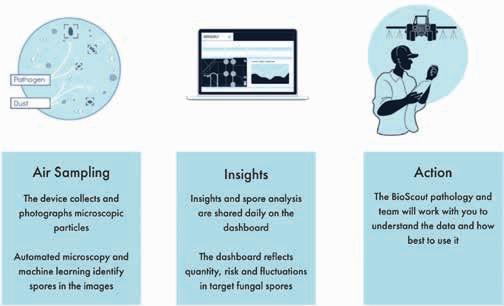
BioScout units are positioned strategically throughout the field to intercept the air that flows into and within the crop. Air is sucked into the units where it passes over a sticky film that captures airborne particulates such as fungal spores. An autonomous microscope inside the BioScout captures high-resolution images of the spores on the film and instantly transfers them to cloud-based software in Sydney. Advanced AI algorithms identify and categorise the spores based on their morphology.
The system then converts spore counts into precise airborne concentration values (Figure 2). These values are displayed in charts alongside infection risk graphs, which are a combination of a weather-based model (temperature-moisture response function) with adjustments based on the concentration of spores detected (Figures 3 to 5). The infection risk graphs can be used to assess the most suitable timing for fungicide applications, helping to maximise their effectiveness while reducing unnecessary sprays.
Vast amounts of airborne particulate data are collected and reported by BioScout each day. This enables detection of fungal pathogens up to two weeks before symptoms become visible on the crop.
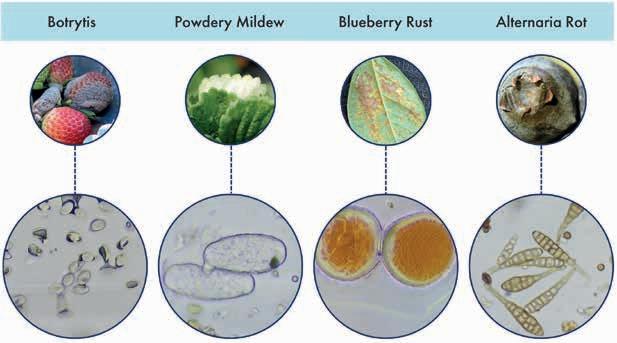

Figure 2: The BioScout Dashboard ‘At a Glance’ Disease Warning System provides quick updates on disease inoculum from units on your farm. You can have a look at live readings from the broadacre GRDC network at bioscout.com.au/grdc
BioScout units were deployed in a South Australian vineyard during the 2024/25 season where botrytis, powdery mildew and downy mildew were monitored. Air was sampled from 6 am to 12 pm local time and airborne spore concentrations were recorded daily and reported as spores/m³ air.
The grower did not use data from the BioScout to guide spray applications. Grower driven fungicide spray timings were assessed using airborne spore concentrations and weather-driven infection risk predictions from the BioScout and were categorised as either:
• ‘Unnecessary’: Sprays applied during periods of low/absent spore detection combined with unfavourable weather conditions for infection
• ‘Necessary’: Sprays applied when moderate to high spore concentrations coincided with weather conditions conducive to disease development
Nineteen sprays were applied over the season, each containing a mixture of one to three fungicides (targeting different pathogens) along with wetters where required; this equated to a total of 54 individual product applications.
Data from the BioScout system showed that most of the products applied (51 out of the 54) were unnecessary and key opportunities to target pathogens when notable levels of spores were present in conjunction with conducive infection risk levels were missed.
Low levels of botrytis spores were detected across the season, reaching the high spore concentration on just one occasion (14/01/25). The weather, however, was extremely conducive to infection for much of the period. Even a moderate number of spores (yellow in the threshold) can lead to infection if the weather is highly optimal for the disease to proliferate. Figure 3 shows the spore load and corresponding infection risk over the season. Spray applications that contained fungicide targeted at botrytis are marked with a star (14 in total); all bar one of these was categorised as unnecessary according to BioScout data. The two points shown in red had notable levels of spore concentration, but more importantly, high infection risk levels. Applying botrytis-targeting fungicides at or shortly after these points would likely be more effective for managing disease.
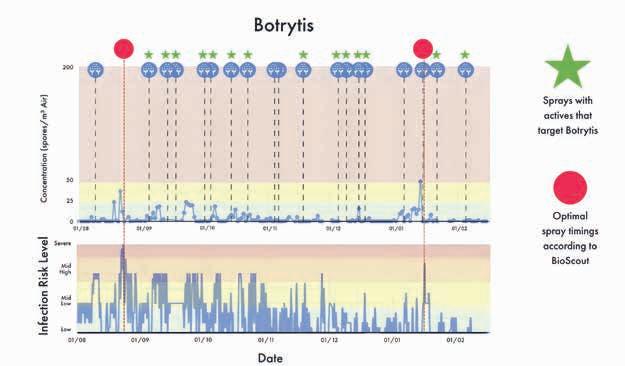
Figure 3. Botrytis spore concentration and infection risk graphs from the vineyard. Spray applications containing botryticides are marked with a star. Optimal spray application timings according to the BioScout system are shown in red.
Downy mildew posed a higher risk overall throughout the season. Several high peaks of airborne spores of downy mildew were detected across the period, especially from September to late October. It then remained low for the remainder of the season. Figure 4 shows the airborne spore load and corresponding infection risk over the season. Spray applications that contained fungicide targeted at downy mildew are marked with a star (16 in total); all bar one was categorised as unnecessary according to BioScout data. The three points shown in red were identified as more suitable spray timings for effective for disease management. These were when the spores were present and the weather was conducive to an outbreak, which resulted in mid-high to severe infection risk.
There were only four powdery mildew spikes detected throughout the season. Analysing the spore concentration graph and infection risk graph in tandem (Figure 5), the BioScout system deemed all bar one of the 19 grower-applied powdery mildew sprays as unnecessary. This is because the spikes in spore concentration corresponded with relatively low infection risk levels; the weather was not suitable for infection; therefore, those spores were unlikely to cause problems. However, if the vineyard wanted to adopt a more conservative approach, application of a fungicide after the large concentration spikes could be justified.
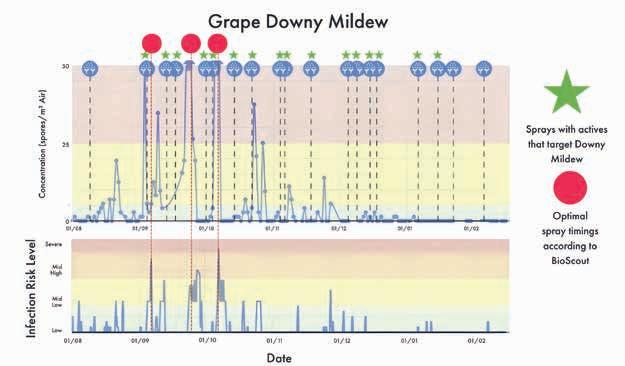
Figure 4. Grape Downy Mildew spore concentration and infection risk graphs from the vineyard. Spray applications containing actives targeting downy mildew are marked with a star. Optimal spray application timings according to the BioScout system are shown in red.
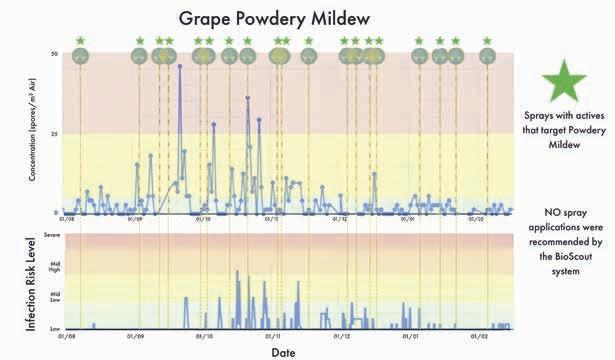
Figure 5. Grape Powdery Mildew spore concentration and infection risk graphs from the vineyard. Spray applications containing actives targeting powdery mildew are marked with a star. Infection risk remained relatively low during spikes in spore concentrations, so no spray applications were recommended by the BioScout system.
More information
Hort Innovation Venture Fund: www.frontiers.au/startups
BioScout: www.bioscout.com.au




Guard your crop from sun, hail and rain with smart, integrated protection.
• Complete protection – Trellis, hail net, and rain cover in one system.
• Durable design – Built to withstand extreme weather conditions.
• Maximise yield and quality – Reduce damage and improve crop performance.
• Proven worldwide – Trusted by growers in over 40 countries
Tané Howe Head of Operations - AU/NZ +61 483 213 617 | tanehowe@agrinova.au

Jane Richter, Communications Manager, Berries Australia
Weeds pose a serious threat to Australia’s environment and agriculture, inflicting significant economic, environmental and social costs. They damage natural landscapes, farmland, waterways and coastal ecosystems ranking among the greatest challenges to both our natural environment and primary production industries.
More than just a nuisance, weeds are an expensive, persistent and often underestimated threat. They cost Australian agriculture around $4.9 billion each year, while also posing health risks to people, pets and livestock. The true environmental toll is harder to measure but is likely just as high, as weeds choke out native species and degrade ecosystems.
Because weed problems don’t stop at fence lines, tackling them requires a coordinated effort across farms, regions and communities. Land managers and growers alike invest significant time and money every year trying to stay ahead of infestations and protect both productivity and biodiversity.
Mobile apps such as ‘PlantSnap’ and ‘PictureThis’ have revolutionised plant identification through artificial intelligence, offering instant suggestions from a single photo. These tools show how powerful quick, accessible diagnostics can be in spotting new or unusual plants early.
However, most existing apps are paywalled, designed for garden enthusiasts rather than land managers, and rarely clarify whether a plant is actually a weed of concern. They also stop short of connecting users with local management advice or the reporting channels needed to act on those discoveries.
That’s where WeedScan™ steps in. The app not only identifies plants but links users directly to verified weed profiles relevant to their state or territory, helping them understand what they’re dealing with and how to manage it. If a priority weed is detected, users are prompted to submit a record, automatically notifying government weed officers where appropriate.
Every public record contributes to a national weed map, allowing users to see what’s being reported nearby and helping authorities track potential incursions in real time. In short, WeedScan turns everyday weed spotting into a coordinated national defence.
Simply snap a photo of a plant you suspect is a weed and upload it to WeedScan. The AI model compares your image against verified photos of known weeds, generating a list of possible identifications with confidence ratings for each suggestion, all within seconds.
WeedScan is available as a web platform or mobile app (Android and iOS). Developed by the Centre for Invasive Species Solutions, CSIRO, NSW Department of Primary Industries, and several state governments in collaboration with the Atlas of Living Australia, WeedScan™ has been trained to recognise around 270 priority weed species across the country.
Importantly, the tool has been tested in the field by farmers, agronomists, community groups, park rangers and NRM officers to ensure it works in real-world conditions. It bridges the crucial gap between identifying a weed and knowing what to do next.
This easy-to-use digital tool enables:
• Rapid identification of priority weeds without expert knowledge
• Direct access to best-practice management information
• Coordinated action at the farm, community or regional level
Australia’s national approach to weed management is guided by the Australian Weeds Strategy, which focuses on three goals:
1. Prevention, detection and early intervention
2. Minimising the impact of established weeds
3. Building Australia’s capacity and commitment to weed management
WeedScan helps deliver on all three. It’s a simple, science-based tool that empowers growers to act early before weeds become economically damaging and impossible to manage.
In some cases, it’s a legal requirement to report certain weeds, especially those listed as high-priority, notifiable, prohibited or alert species in your state or territory. These are weeds not yet established or in the very early stages of invasion, where early detection can make all the difference.
So
next time you spot a suspicious plant in your patch, don’t guess, grab your phone, open WeedScan, and be part of Australia’s weed biosecurity frontline.
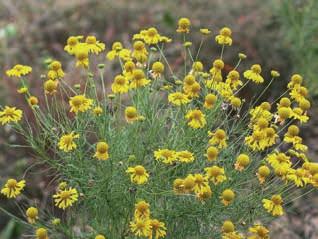
Read the ‘Australian Weeds Strategy 2017–2027’ by the Invasive Plants and Animals Committee at the industry Resource Library – visit bit.ly/BA-RL and search ‘weeds’
Visit the weedscan.org.au website to download the App or visit your phone’s App store

apps.apple.com/au/app/ weedscan/id6446067750
play.google.com/store/apps/ details?id=com.weedscan
Visit weeds.org.au to connect you with further knowledge to make informed decisions about managing invasive weeds within Australia
Visit weeds.org.au/weeds-profiles to learn more about Weeds of National Significance
Visit weeds.org.au/report to learn more about the organisations that you can report weeds to in each state or territory
WeedScan™ is powered by the Centre for Invasive Species Solutions, CSIRO, the Atlas of Living Australia, the NSW Department of Primary Industries and Regional Development and the South Australian, Queensland and Victorian Governments. The project was funded by the Australian Government's National Landcare Program.



Scarab beetle larvae are soil-based pests of southeastern Australia. They can cause damage to blueberries, strawberries, and Rubus by feeding on their roots and new growth. They can be difficult to control as they spend the majority of their lifecycle in the soil beyond the reach of insecticides. The three species examined here are Redheaded Pasture Cockchafer (Adoryphorus coulonii), Blackheaded Pasture Cockchafer (Acrossidius tasmaniae), and African Black Beetle (Heteronychus arator).
Identification
All scarab beetle larvae share the following characteristics. There are three larval stages, of which the 3rd instar is the most damaging. All larvae are C-shaped, with six short legs and a hardened head capsule with mandibular. Their stomach content of decaying organic matter, humus, and plant roots can often be seen through the external covering in medium to larger larvae. See Table 1 for a comparison of common differentiating characteristics.
Redheaded Pasture Cockchafer
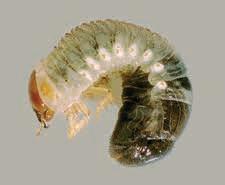
Distribution: Southeastern Australia (except WA)
Head Capsule Colour: red to red-brown
Head Capsule Texture: rough or matted
Body Colour: white-grey to cream
Size: 4mm-30mm
Blackheaded Pasture Cockchafer
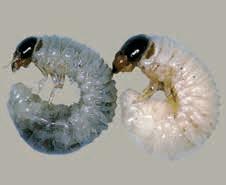
Distribution:
Southeastern Australia (except WA)
Head Capsule Colour: dark brown to black
Head Capsule Texture: smooth and shiny
Body Colour: white to white-grey
Size: 4mm-20mm
African Black Beetle
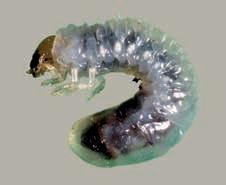
Distribution: Throughout Australia (except TAS)
Head Capsule Colour: brown or tan
Head Capsule Texture: smooth and shiny
Body Colour: grey when young, transitioning to creamy white when older
Size: 5mm-25mm
African black beetles have a one-year life cycle.
Adults lay their eggs in the soil in spring and larvae hatch 2–5 weeks later and begin to feed.
Larvae develop throughout the summer and reach their full maturity between mid-January and March.
Larvae then pupate in the soil between February and early April. Once they emerge as adults they continue to live in and just above the soil, feeding on plant material throughout the rest of the year until starting the cycle all over again the following spring.
Redheaded pasture cockchafers have a two-year life cycle.
In year one, redheaded cockchafer adults pupate from late summer to mid-autumn but remain underground. They emerge from the soil from August to October, when they proceed to lay their eggs.
Eggs are laid singly or in loosely dispersed groups 10-50 mm underneath the soil. The eggs hatch 6-8 weeks after being laid. Once hatched, larvae will develop for almost a full year, progressing rapidly through 1st and 2nd instars and reaching the 3rd instar by early autumn of the second year. Most damage is caused from the 3rd instars feeding from March to June until winter temperatures hinder larval activity. Larvae resume feeding the following spring and summer until pupation starts in November. Except for a very limited period as adults, the lifecycle takes place underground.
Blackheaded pasture cockchafers have a one-year lifecycle.
Adults lay their eggs about 10cm deep in the soil in groups of 2-3 dozen in summer.
These hatch approximately three weeks later. Their head capsules are pale at birth but turn to shiny dark brown to black after a few hours.
Larvae feed on humus in soil and mature throughout autumn and winter, changing from a light grey colour to a creamy-yellow colour.
As they grow, so does the damage. They leave the soil to harvest green material as well as feeding underground.
They continue to feed until they reach full maturity in late winter/ early spring, at which point they cease feeding and wait to pupate.
They pupate in late spring and early summer and emerge as adults in late summer.
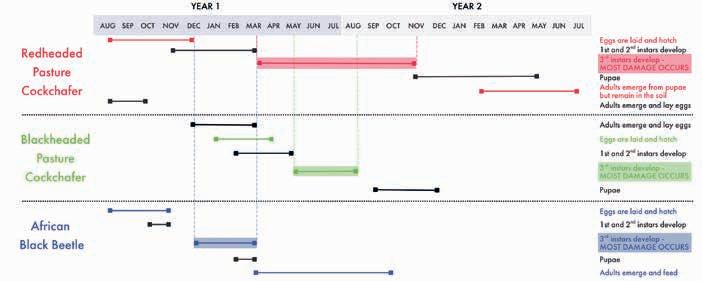
Scarab beetle larvae are subterranean feeders who consume plant roots and new growth, causing structural damage to root systems. Larvae, particularly the larger 3rd instar larvae, prune or completely sever root systems. It can be difficult to identify the pest as the source of plant stress, as scarab beetle larvae damage is to the root systems.
• Affected plants when uprooted have few or no fibrous roots, and larvae can usually be found residing in or near the plant
• Larger roots may have scarring and calluses from feeding damage
• Damaged plants may exhibit symptoms such as poor vigour, leaf reddening, reduced fruit production, and death
The African black beetle differs from the other scarab pests noted in this article in that it also causes feeding damage as an adult. African black beetle adults damage young stems of newly established plants either underground or just above the surface, causing central shoots to wither and dead-hearting the plants. If adult beetles are found with accompanying stem damage below or just above the soil surface, African black beetle is likely to be the culprit.
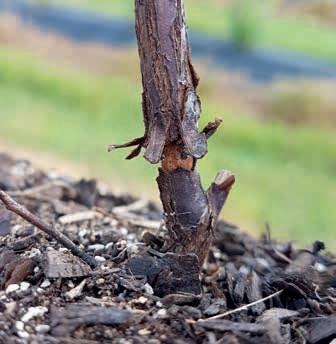
There is no standard monitoring procedure for scarab beetle larvae in berries.
Pasture and grains sources recommend that monitoring can be done by digging to a depth of 10-20 cm with a spade and counting the number of larvae present.
This should be repeated 10-20 times to get an estimate of larval numbers.
Four larvae per spade square is roughly equivalent to 100 larvae per m2 in a pasture context.
As species-level identification of scarab beetle larvae is difficult, it’s suggested this process be carried out by a qualified specialist or that larvae samples found be sent to an entomology or diagnostics service for accurate identification.
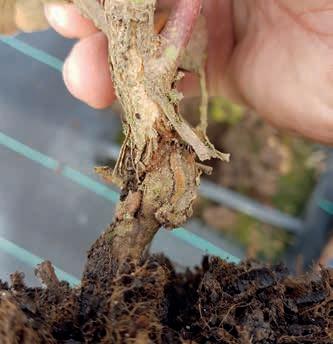
Opportunities for cultural control can mainly be found when cultivating ground. This is easier for strawberries, where the ground is worked every 2-3 years.
Ground disturbance during cultivation can help control larvae. Larvae can be directly mechanically killed by the ground preparation process, and turning over the soil also exposes larvae to predation from birds and other predators.
Redheaded Pasture Cockchafers and African black beetles can be controlled by the application of the beneficial nematode species Heterorhabditis zealandica, available for commercial application via the company Ecogrow (ecogrow.com.au). These nematodes work best when applied to active populations of 3rd instars.
Soil temperature should be above 15°C and below 25°C at the time of application. Ensure that the area to be treated has been irrigated and that the soil is moist. Applications should be made at dusk to avoid high UV light. Irrigate well immediately after treatment and maintain moist soil conditions for the next 7 to 10 days.
Research has shown that soil fumigation products, such as Strike 80/Tri-Form 80 (chloropicrin, 1,3-dichloroproprene), Metham Sodium, and EDN (ethanedinitrile), control scarab beetle larvae as a byproduct of their applied uses.
Non-fumigant chemical control is limited for scarab beetle larvae. Foliar application of insecticides is only effective on young blackheaded pasture cockchafers as they are the only scarab larvae to spend a portion of their time feeding on the surface. However, no insecticides are registered for this purpose in berry crops. Standard foliar insecticide applications are ineffective at controlling other scarab beetle larvae as they never emerge from the soil.
Currently two permits are available for scarab beetle larvae: one for pre-plant application in strawberry (Queensland only) and one for post-harvest application in blueberry. Both can be viewed at any time in the APVMA Permits Database (portal.apvma.gov.au/pubcris)
Permit 81745 allows for a pre-planting soil application of chlorpyrifos via granular application during strawberry bed formation in Queensland only.
Permit 12534 allows for postharvest soil application of Imidacloprid via subsurface trickle irrigation to target 1st and 2nd instar larvae in blueberries. Imidacloprid application for soil-grown blueberries must take place post-harvest but pre-flowering to ensure that pollinators are not affected.
Berg, Gordon, et al. “Biology and Management of the Redheaded Pasture CockchaferAdoryphorus Couloni(Burmeister) (Scarabaeidae: Dynastinae) in Australia: A Review of Current Knowledge.” Austral Entomology, vol. 53, no. 2, 21 Oct. 2013, pp. 144–158, https://doi.org/10.1111/aen.12062. Accessed 8 Mar. 2023
Department of Jobs, Precincts and Regions. “Redheaded Pasture Cockchafer - Agriculture.” Agriculture Victoria, 21 Oct. 2022, agriculture.vic.gov.au/biosecurity/pestinsects-and-mites/priority-pest-insects-and-mites/ redheaded-pasture-cockchafer
Ford, Phillip, et al. Biological Control of African Black Beetle (Heteronychus Arator) in Turf Using Entomopathogenic Nematodes. 2001.
SARDI, and DPIRD. Insects of Southern Australian Broadacre Farming Systems Identification Manual and Education Resource 2nd Edition. National Invertebrate Pest Initiative, 27 Mar. 2018.
Simpson, Melinda, and Gaius Leong. Berry Plant Protection Guide. NSW DPI, 2025.
Umina, Paul, and Bill Kimber. “Blackheaded Pasture Cockchafer – Cesar Australia.” Caesar Australia, Jan. 2015, cesaraustralia.com/pestnotes/beetles/ blackheaded-pasture-cockchafer
“Redheaded Pasture Cockchafer – Cesar Australia.” Cesaraustralia.com, 2012, cesaraustralia.com/ pestnotes/beetles/redheaded-pasture-cockchafer
WADPIRD and the Grains Research and Development Corporation (GRDC) have recently (May 2025) begun a three-year research project aimed at developing management strategies for the control of cockchafers.
The research is ongoing but may result in more management options. Updates, learnings, and communications from the study can be found on the website here https://grdc.com.au/grdcinvestments/investments/investment?code=DAW2505-006RTX
Differentiating between scarab beetle larvae can be tricky. Identification is often based on small morphological characteristics that are only visible under a microscope and are difficult to distinguish by anyone but a professional entomologist.
There are almost 30,000 beetle species in Australia and over 2,000 in the Scarabaeidae family. Some of these species, such as the three described, cause damage to berry crops. Others are harmless and to attempt to eliminate them is a waste of time and money.
Treatments should be targeted during the larval stage when the pests are most vulnerable. Each species has their own development cycle at which they are most vulnerable to predation, so it’s important to identify the species and therefore the specific lifecycle moment to target. Misidentification of harmless larvae will result in unnecessary treatments, while misidentification of one damaging larva for another may result in ineffective treatment.
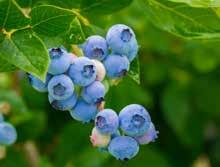
Get ready, BQI27 is set to land on the iconic Gold Coast from 2-5 August 2027, bringing you multiple action-packed days of learning, innovation and connection.
From hands-on farm tours to conference sessions featuring an unmatched line-up of Australian and global speakers, plus a vibrant trade show and plenty of chances to catch up with fellow growers, this is the berry industry’s biggest event and you won’t want to miss it.
Save the date, book the leave, and start planning your Gold Coast getaway.
BQI27 is where the berry world comes together.

Jane Richter, Marketing Manager, Berries Australia
The latest Berry Basket Marketing project is in the final stages of contracting and has been live in the market since August this year. As we highlighted in the last edition of the journal, the campaign will now run every month until July 2027, providing yearround support to every crop harvested and sold from every region.
Funded by a mix of Strawberry royalty funds, voluntary Blueberry levy and Rubus industry contributions, the campaign helps shoppers choose local, fresh berries every time they shop.
In the first two months, our out of home advertising reached 2,403,386 people in our target demographic of main grocery buyers through just under 450 different digital screens across the country.
When our Berry Basket ads appear on digital screens outside supermarkets, we only have about seven seconds to make an impact, and that’s exactly why we have upgraded our Berry Basket creative to feature animation instead of just static graphics. Movement naturally catches the eye; it’s just how people are wired. A gentle pan across fresh berries or a quick burst of colour instantly pulls attention towards the screen, even in busy retail environments. In those few seconds, animation allows
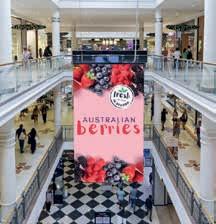
us to show freshness, colour and seasonality all at once, instead of relying on a single still image to do all the work.
Animated vision also builds appetite appeal in a way a static picture simply can’t. When berries tumble, glisten or appear to bounce, shoppers instinctively associate them with freshness and flavour. This helps spark the “I might grab some berries” impulse right before they enter the store. And because digital screens rotate through multiple adverts, animated content stands out far more than static graphics, improving recall, recognition and ultimately the likelihood that berries end up in someone’s trolley.
Our new social media campaign has also got underway with new agency partner Project Studio. Hopefully you’ll have tuned in to @FreshAussieBerries and been seeing our posts. If you have been following along, you’ll see that we have been out and about on berry farms capturing video and still images to use in the campaign.
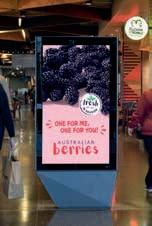
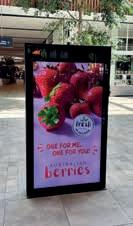

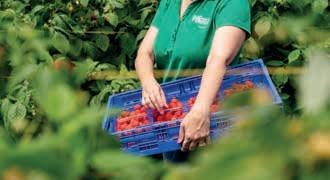
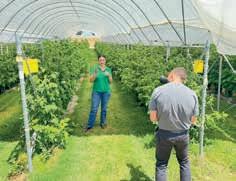
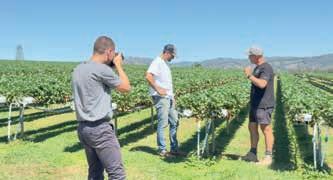
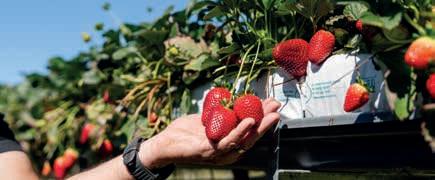
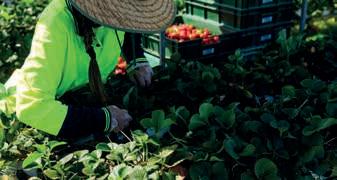
There’s something powerful about showing real Australian berry farms: the rows and rows of lush green plants, the hands that harvest the fruit, the landscapes that make our regions unique. That authenticity can’t be faked, and it’s one of the strongest tools we have in the Berry Basket campaign. When we use genuine imagery captured on local farms, we’re telling the real story behind fresh Aussie berries. Consumers respond to that honesty. They want to know where their fruit comes from, who grows it, and what goes into producing the berries they buy each week. Real farm content gives them that connection.
Using our own material also ensures the campaign represents the diversity of Australia’s berry industry, our different regions, varieties, seasons and growing styles. Stock images simply can’t reflect this. By capturing video and photography on farms, we can highlight the quality and care that goes into every punnet while showcasing the
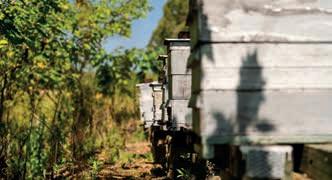
scale and professionalism of Australian berry production. This not only builds trust with consumers, but it also strengthens the identity of our industry as a whole.
Most importantly, authentic farm imagery helps bring growers to the forefront of their own story. People love seeing the faces behind their food. When our social media shows real berries grown by real Australians, it adds credibility and pride to the campaign. It also creates long-term value and we’re building a library of high-quality, uniquely Australian content that can be used across future seasons, promotions and platforms.
We’d love to be able to feature your farm in our campaign, so if you have great pictures or videos that you have captured and are willing to share, then please let me know. Contact me at jane@teres.com.au or 0431 700 258
Jane Richter, Communications Manager, Berries Australia
Recent estimates suggest that Queensland fruit fly (Q-fly) is costing the Australian horticultural industry around $300 million per year, considering crop damage, control measures and lost market access. This is a broad national estimate and doesn’t necessarily take into account the ‘opportunity cost’ factor. For example, strawberry growers in south east Queensland could continue production longer into the spring window were it not for the population explosion of these pesky flies as the weather warms up.
On 11 November this year, the Australian Pesticides and Veterinary Medicines Authority (APVMA) confirmed it has suspended the product registration and label approval of chemical products containing dimethoate for use on blueberries, raspberries and blackberries.
The APVMA published notice of the suspension in the APVMA Gazette No 23, Tuesday 11 November 2025, including a brief statement of reasons for the decision, and instructions for use during the suspension period, which allow the continued use of dimethoate with a 14-day harvest withholding period when used on blueberries, raspberries and blackberries under a permit valid for one year.
We understand that many berry growers have relied on the use of dimethoate up to this point, but with the withdrawal of this chemical option, it is important to understand what other resources are available to help you to make changes to your fruit fly Queensland Fruit Fly management plans.
One excellent resource that is available in the industry Resource Library at bit.ly/BA-RL is ‘Fruit Fly Management for fruit and vegetable growers’, by Dr Jenny Ekman from Applied Horticultural Research (Version 2 2024). The following summary has been based on this guide, and growers are encouraged to download the full version to boost their understanding of this pest.
In the past, insecticides were the go-to solution for tackling fruit flies. Today with fewer chemical options available and a growing focus on sustainable production, it’s more important than ever for growers to really understand their fruit fly foes. Instead of spraying first and asking questions later, the modern approach is about knowing how to combine a range of control strategies to keep these pests in check.
A range of management tools can be used to produce a pest free crop. These include exploitation of fruit fly biology and behaviour, chemical controls, food-based and parapheromone lures, sterile insect technique and physical barriers. Integrated pest management (IPM) for fruit flies involves combining two or more of these strategies with excellent crop hygiene, improving overall effectiveness.
A fruit fly can develop from a freshly laid egg to a fully mature adult capable of producing hundreds more eggs in under a month. Understanding this rapid lifecycle and how it responds to environmental conditions is key to developing effective management strategies to keep these pests under control.
There are several weak points in the fruit fly lifecycle that can be exploited to put downward pressure on population numbers:
• Assassinate the males before they can successfully mate
• Poison the females before they can lay the eggs which form the next generation
• Repeat the process consistently, in line with the lifecycle timing
Chapter 3 of the guide provides a detailed understanding of the lifecycle, and this is key to getting your timing right.
• Forest edge dwellers: Fruit flies naturally thrive along forest margins, where trees provide food, moisture and shelter
• Feed on more than fruit: They also feed on bacteria and bird droppings on leaves and branches, not just host fruit
• Love irrigated environments: Orchards and gardens with moisture and vegetation mimic their ideal conditions
• Poor fliers, great walkers: They walk more than they fly, hopping only 5–50 cm at a time, or around 2 m high between trees
• Short-range homebodies: Around 90% stay within 600 m of where they emerged
• Limited by weather: Can’t fly below ~15 °C, and movement drops in high winds or low humidity
• Females lead the invasion: Because their primary goal is egg-laying, female flies are the main threat inside crops
• Edges are high-risk zones: Fruit near the crop edge is most likely to be infested especially when trees or shrubs are nearby
• Avoid open ground: Pastures and low crops (like strawberries, capsicums, tomatoes) lack shelter or food so flies enter briefly to lay eggs then retreat to nearby trees
• Social but selective: Mating happens only at dusk and lasts about 30 minutes
• Males form leks: Groups of males gather to release pheromones, attracting females
• Strength in numbers: A single male can’t attract a mate alone so flies rely on group scent plumes, which limits long-distance dispersal
Monitoring is all about knowing whether fruit flies are around and whether their numbers are on the rise or falling.
It’s important to remember that monitoring doesn’t tell you exactly how many flies are in your crop, whether they’re female, or if fruit is already infested. In fact, trap catches can be misleading: a high number of flies in traps doesn’t always mean infested fruit, and sometimes there’ll be flies in the crop but none in the traps if other smells or attractants are competing for their attention. What monitoring does show is how well your control strategies are working. It also helps pinpoint those trouble spots where extra effort like an extra trap or two could make all the difference.
Chapter 4 of the guide provides a detailed view of the types of traps and how to best deploy them on your farm, but the key action is regular and systematic monitoring and recording of the data the traps are providing. Plus remember that traps have a limited zone of attraction and so they need to be placed where fruit flies are most likely to be. And don’t forget that you also need to check your crop for damage at the same time as checking the traps!
Protein bait is a powerful lure for both male and female fruit flies, but it’s especially tempting to newly emerged females that need a good dose of protein to mature and start laying eggs. The secret to success lies in the what, how, and when: the ingredients you use, how you apply them, and the timing all make a big difference to how effective your baiting will be in the field. You want to knock out the females once they are sexually mature but before they can get busy laying.
Fruit fly bait is a mix of protein lure and insecticide. The protein has to be partly broken down (hydrolysed) to give off the smells that attract flies and that’s where the magic (and the stink) happens. Yeast autolysate or hydrolysate are the usual ingredients, and while they might make you wrinkle your nose, to a fruit fly they’re absolutely irresistible. Chapter 5 of the guide covers baiting in detail.
Chapter 6 investigates the art of annihilating males! Think of MAT as using the fruit fly’s own instincts against it. The technique uses the same lures and insecticides found in monitoring traps, but without the trap itself. Instead, a parapheromone such as cue-lure is combined with an insecticide, drawing in male flies and wiping them out on contact.
Male fruit flies simply can’t resist cue-lure as feeding on it makes them more attractive to females so young, maturing males are especially vulnerable. Deploying MAT early in the season, before fruit becomes susceptible, helps knock down numbers before they can cause trouble.
Each MAT device remains effective for three to six months, depending on conditions. They should be placed around the crop edges and near likely fly hangouts such as trees near watercourses at 1.5 m high, spaced about every 20–30 m.
However, even the best MAT system has limits. Male flies can mate many times, so removing a large proportion won’t completely stop females from laying eggs. It’s also worth noting that if you’re using the same lure type for MAT and traps, you might see fewer males caught in traps, even though females are still active.
For the best results, MAT should always be part of a broader management strategy, working alongside protein baiting and other control methods. And as always wear the right PPE, follow label directions, and dispose of spent devices safely.
Sometimes, the best weapon against fruit flies is another insect. Nature has its own army of helpers like tiny parasitoid wasps and beneficial fungi that quietly go to work keeping fruit fly numbers in check. Chapter 9 provides more information on harnessing these natural allies who target fruit flies at their most vulnerable stages. Parasitoid wasps lay their eggs inside fruit fly eggs and larvae, while entomopathogenic fungi attack the pupae and adults in the soil. Between them, they can make a serious dent in fruit fly populations.
In fact, Australian pest fruit flies (including Qfly and Medfly) are attacked by at least 11 native wasp species, and recent reports show natural parasitism rates of around 30% in infested fruit, a figure that’s risen as growers move away from broad-spectrum organophosphate sprays.
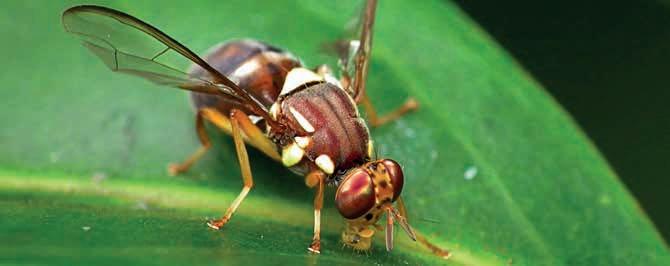
Eight wasp species are known to target Queensland fruit fly, three attack Mediterranean fruit fly, and two go after less common species. Once limited to the tropics and subtropics, these wasps are now spreading further south, with at least one species already established in Victoria.
For an extra boost, growers can also use inundative releases of large numbers of wasps to overwhelm pest populations. This approach works best when fruit fly numbers are already low, with research suggesting around 10 wasps per fly is an effective ratio.
Harnessing these natural allies is an important part of an integrated pest management strategy, reducing reliance on chemicals and helping create a more balanced, resilient orchard ecosystem.
Encouraging natural enemies to not just stick around but truly thrive can make a big difference to long-term fruit fly management. Here are some practical ways to help your local parasitoid wasp population do its best work:
Go easy on broad-spectrum sprays: these can wipe out beneficial wasps along with the pests, so where possible, choose target-specific or softer options instead
Keep some shelter and flowering vegetation nearby: wasps need nectar, pollen, and shade to survive between host encounters so native shrubs, flowering herbs, or mixed groundcovers can provide ideal refuge and food
Reduce chemical disruption in the soil: beneficial fungi and soil-dwelling wasp stages thrive best in healthy, organic-rich soils with minimal disturbance
Use integrated control timing: if you’re planning inundative wasp releases, do so when fruit fly numbers are low and other control methods (like protein baiting) are already in place
There is no silver bullet to managing fruit fly: it’s about combining knowledge, timing, and the right mix of tools to stay one step ahead of the pest. Whether it’s understanding their behaviour, perfecting your baiting routine, combining male annihilation, or harnessing nature’s own army of helpers, every tactic plays a part in protecting your crop and your markets. And don’t forget just how important good crop hygiene is! Removing residual fruit immediately, disposing of graded out fruit away from the farm and destroying neglected fruit trees all contributes to removing the food sources which fruit flies depend on.
To take your understanding further, download the full ‘Fruit Fly Management for Fruit and Vegetable Growers’ guide by Dr Jenny Ekman from the Industry Resource Library at bit.ly/BA-RL and while you’re there, explore the other 20+ practical fruit fly resources available covering everything from monitoring and lure types to sterile insect techniques and post-harvest hygiene. Every extra bit of knowledge strengthens your defence against one of horticulture’s most persistent enemies.
The original ‘Fruit Fly Management for Vegetable Growers’ was produced as part of project VG13042 New in-field treatment solutions to control fruit fly. This was funded by Hort Innovation using the vegetable research and development levy and funds from the Australian Government. The second edition has been revised and expanded to include information for fruit growers. The revision has been funded by NSW Local Land Services (through the Early Needs Recovery Program which is part of the $150 Million Primary Industry Support Package co-funded by the Australian and NSW Governments) and Agriculture Victoria Fruit Fly Strategy grants program.
Strengthening the sustainability of berry production (RB22001)
Beatriz Reutter & Marguerite Renouf, Lifecycles
With climate change consequences being daily topics in the media, there is a need across Australian agricultural industries to publicly demonstrate environmental stewardship and reduce greenhouse gas (GHG) emissions. Here, the carbon footprint of raspberries and blackberries is presented, along with some opportunities to reduce the Rubus footprint.
Environmental sustainability policies are now part of doing business for many agricultural industries, and there is a growing need to measure environmental metrics and monitor improvements over time. This is particularly the case for climate change impacts from greenhouse gas (GHG) emissions, where there are emerging requirements and incentives for the agriculture sector to consider practices that can reduce GHG emissions. For the Rubus industry, a good place to start is by quantifying the GHG emissions intensities (carbon footprint) of Australian Rubus, as a baseline from which to consider future initiatives.
The Hort Innovation project ‘Strengthening the sustainability of Rubus production (RB22001)’ conducted by Lifecycles, quantified the carbon footprint of Australian raspberries and blackberries using the life cycle assessment (LCA) method. This article provides a summary of the findings, including the industry-average carbon footprint results, the main sources of GHG emissions for Rubus production, and opportunities for reducing emissions. The findings from this study can be used to make informed decisions about the industry’s response to climate change by targeting any emission reduction initiatives to those actions most likely to have a higher impact.
This study employed environmental Life Cycle Assessment (LCA) methodology, adhering to international standard ISO 140441. LCA provides a systematic approach to quantifying environmental impacts across the entire production cycle, ensuring comprehensive and comparable results.
The system boundary for the Rubus LCA was ‘cradle to farm gate’, up to the production of berries in punnets in cardboard trays. It included plant establishment, the productive phase of growing berries, on-farm packaging and cold storage, waste management, and upstream production and transport of all farming inputs (Figure 1). Transport of berries to market and refrigerated storage post-farm were not included.
The data required for the LCA were collected from a sample of 9 Rubus growers during 2024 and early 2025 (8 sites for raspberries and 5 for blackberries). The sample represented 36% of Rubus production in Australia. In order to observe regional differences, the sample differentiated northern production (9 sites in Southeast Queensland and Northern New South Wales) and southern production (4 sites in Victoria and Tasmania).

The data was populated into a life cycle model of raspberry and blackberry production in the Simapro LCA software, which combines the GHG emissions for all parts of the life cycle. The main GHG emissions accounted for were carbon dioxide (CO2) from fossil fuels, methane (CH4) and nitrous oxide (N2O). All emissions aggregated, converted to carbon dioxide equivalents (CO2e), and divided by annual Rubus production to generate the carbon footprint per kilogram of harvested and packaged Rubus kg CO2e/kg.
When conducting a carbon footprint, all the life cycle emissions are assigned to the end product, describing the carbon credentials of the product (including scope 1, 2 and 3).
The carbon footprint of Australian raspberries is estimated to be 2.2 kg CO2e/kg of raspberries at farm gate, and for blackberries 1.7 kg CO2e/kg of blackberries. Even though raspberry and blackberry production are very similar, the lower carbon footprint of blackberries can be attributed to higher yields.
These carbon footprint results are similar to values reported for Rubus grown in other countries2-4, and consistent with horticultural products produced in protected cropping and greenhouse systems5.
For both, raspberries and blackberries, the largest contributors to the carbon footprint are the production of materials for crop protection (tunnels and trellis) and fruit packaging (plastics and cardboard), on-farm energy use (electricity and diesel) and production and use of fertilisers (Figure 2). Other aspects, such as the production of pesticides, herbicides and insecticides, irrigation infrastructure, and fugitive emissions from refrigerants, are less significant to the total GHG emissions and included in the ‘other’ category in Figure 2.
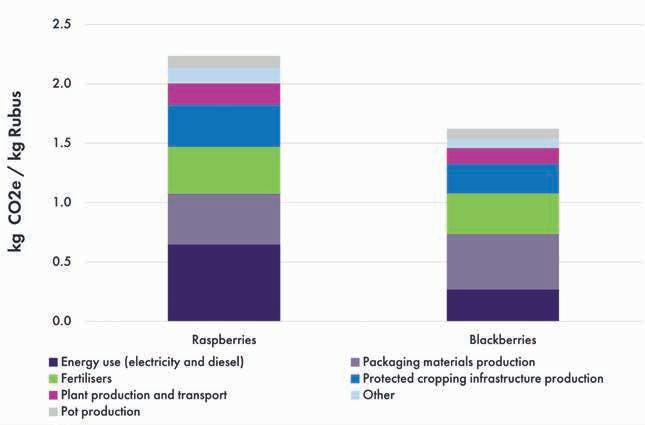
Northern production sites (Southeast Queensland and Northern New South Wales) have an average carbon footprint of 2.5 kg CO2e/kg of raspberries, while the southern production sites (Victoria and Tasmania), have an average footprint of 2.0 kg CO2e/kg of raspberries. The difference can be explained mostly by yields and energy consumption for irrigation. The sample did not allow for regional values for blackberry production.
The carbon footprint profile of Rubus production can be used to inform opportunities to reduce GHG emissions. Based on the main emissions sources identified in Figure 2, a sensitivity analysis was conducted to test and compare the scale of emission reduction that may be possible for a selection of system change scenarios, relative to the average (Figure 3). The assessment was performed for raspberries but applies equally to blackberries. This helps to identify the initiatives that offer the best potential.
Energy use: As is typical for most horticultural systems, on-farm energy use in the form of fuel for machinery operations and electricity for irrigation is a significant contributor. Many Rubus farms have already installed photovoltaic (PV) solar panels for self-generation of renewable electricity, which has reduced the carbon footprints of these farms significantly. If a switch to 100% solar electricity were made, a 12% reduction in the average carbon footprint could be expected.
Another opportunity to reduce the energy-related emissions is to consider the electrification of farm vehicles. If 50% of farm vehicles were replaced with electric vehicles, the emissions reduction could be around 3%.
Any reduction of on-farm energy use will reduce the Rubus carbon footprint. This could be achieved by implementing energy efficiency measures, including pump optimisation, irrigation system upgrades, and preventive equipment maintenance.
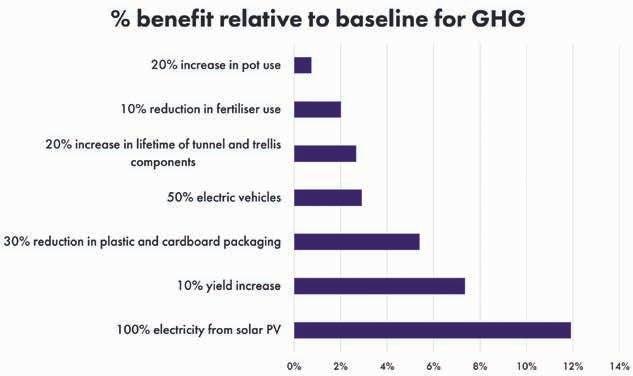
3. Estimated percentage reduction in GHG emissions, relative to the average, from adoption of practice change scenarios
Yield increase: Since the carbon footprint is considered per unit of product produced (kg of Rubus), if a higher yield could be achieved from the same inputs, then the carbon footprint will be reduced. A 10% yield increase is expected to reduce the footprint by 7%. There is no linear relationship because the packaging isn't yield-dependent.
Packaging: The type and amount of plastic punnets and cardboard boxes for packaging significantly influence the carbon footprint. Results show that punnets are responsible for about 60% of the packaging-associated GHG emissions, with cardboard boxes making up the remainder. This highlights the importance of cardboard secondary packaging.
If the amount of both packaging types is reduced by 30% per unit of fruit, the carbon footprint can be expected to reduce by 5%. This can be achieved by getting more fruit per package, by light-weighting punnets and cardboard boxes, or by sourcing packaging materials with lower emission intensities. For cardboard secondary packaging, the use of reusable plastic crates could also be explored.
Higher recycled content of punnets reduces the carbon footprint; most of the farms included in the study already include a high percentage of recycling content. For those farms that don’t, this is a little action that can help reduce the carbon footprint.
Fertilisers: Emissions are mostly associated with the nitrogen (N) component of fertilisers, in relation to both their energy intensity for production, and also the potential loss of nitrous oxide (a strong GHG) released when used. In a scenario where the fertilisers applied are reduced by 10%, the carbon footprint could be reduced by about 2%. This could be achieved through precision application for greater efficiency or by reducing the amount lost through drainage.
Crop protection infrastructure (tunnels and trellis): Impacts could be reduced by extending their life, as far as practicable. In a scenario where their duration of use is increased by 20% (for example, 5 years instead of 4 years of use), the total GHG emissions are reduced by 3%.
This project has provided an understanding of the scale and hotspots of GHG emissions for Rubus production, and a path to reduce the carbon footprint of Rubus starts to form.
The results suggest that priority GHG emissions reduction opportunities for the industry would be:
1. increasing the use of solar energy and electrified vehicles,
2. increasing yields,
3. investigating alternative packaging systems and materials,
4. fertiliser use efficiency, and
5. extending the life of crop protection infrastructure.
The information generated by this project can be used to advance the industry’s sustainability efforts by guiding strategic investments of the industry and farmers alike, and responding to customer and supply chain partners' data requests.

Project RB22001 has been funded by Hort Innovation, using the raspberry and blackberry research and development levy and contributions from the Australian Government. Hort Innovation is the grower-owned, not-forprofit research and development corporation for Australian horticulture. The research team thanks the participating growers who provided essential production data, the Project Reference Group members for their industry insights, and Berries Australia for their communication support throughout the project.
1. International Organization for Standardization, International Standard, ISO 14044, Environmental Management Standard- Life Cycle Assessment, Requirements and Guidelines. 2019: Switzerland.
2. Sandip, S., D. Benjamin, and A. Rajendra, The carbon footprint of fruits: A systematic review from a life cycle perspective. Sustainable Production and Consumption, 2024. 52: p. 12-28.
3. Tecco, N., et al., Innovation strategies in a fruit growers association impacts assessment by using combined LCA and s-LCA methodologies. Science of The Total Environment, 2016. 568: p. 253-262.
4. Leonardo, V.-I., et al., Considering the influence of the variability in management practices on the environmental impacts of fruit production: A case study on raspberry production in Chile. Journal of Cleaner Production, 2021. 313: p. 127609.
5. Clune, S., E. Crossin, and K. Verghese, Systematic review of greenhouse gas emissions for different fresh food categories. Journal of Cleaner Production, 2017. 140: p. 766-783.
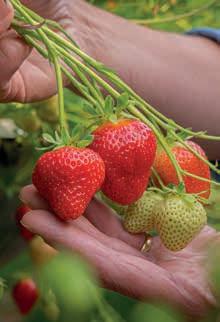
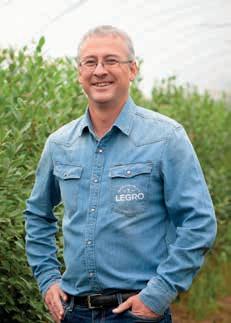
We believe it is important to really listen to our customers. We like to create the right long-term growth for both the customer and its crops. At Legro, we like to do together. Want to know more about our substrates? Feel free to contact me or one of my colleagues.
Dr Shannon Mulholland, Program Lead Plant Preparedness, NSW DPIRD
We all love that blush red of ripe raspberries but what happens when they turn rusty? Fungal rust that is. Australia has endemic rust pathogens that cause growers headaches from time to time, but a new species has recently been confirmed in raspberries on the NSW north coast. It can affect red raspberries but not black raspberries or blackberries. Raspberry late leaf rust Aculeastrum americanum is a fungal pathogen that forms powdery yellow spores over the leaves and sometimes even fruit.
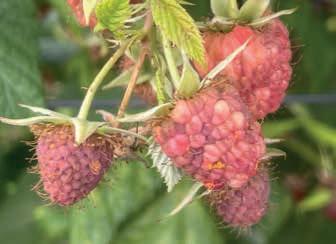
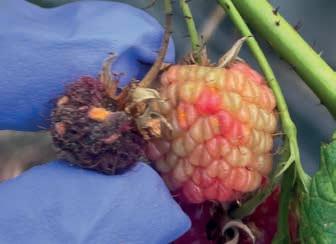
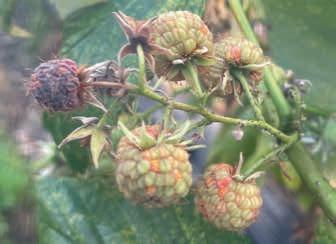
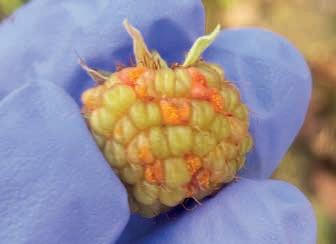
In the field it looks very similar to yellow rust Phragmidium rubi-ideai, a rust pathogen that has been in Australia for some time now.
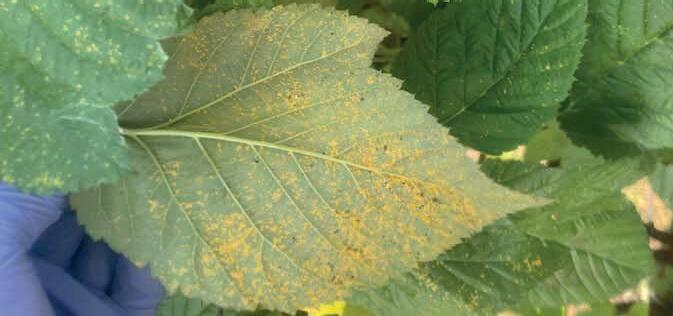
It’s hard to tell the two rust species apart when seen in a crop so it is possible raspberry late leaf rust has been with us for longer than we realised. Whilst the impacts reported to date have been low, higher moisture and humidity levels set the perfect conditions for rust to flourish.
Raspberry late leaf rust can be spread within and between farms by wind and rain splash. It can also move via infected canes used for planting so good crop hygiene and the use of clean planting material are important to reduce spread.
It can infect all parts of the plant including leaves, canes, petioles, calyces and fruit. If not effectively managed it can impact yield resulting in premature fruit drop and defoliation. If present on the fruit it may also deem fruit unmarketable
The good news is that existing fungicides registered for yellow rust are also effective against raspberry late leaf rust.
• Choose sites with good air circulation and full sun exposure so leaves dry quickly
• Avoid dense plantings or overgrown patches where humidity stays high as rust spores prefer these micro-climates
• Remove old floricanes and any visibly infected canes as soon as you spot symptoms as these can harbor overwintering or carry-over inoculum
• Dispose of or bury infected plant material and debris away from the production area so spores don’t build up in the patch
• Use drip or ground-based irrigation rather than overhead sprinklers, which keep foliage wet and favour fungal infection
• If overhead watering must be used, schedule it early in the day so plants have time to dry before evening dew or humidity builds
• Train your staff to be on the lookout for this disease
• Crop scouts should look for small yellow/orange spots on the upper surface of older/lower leaves, with powdery or rust-coloured pustules underneath
Raspberry late leaf rust is not a regulated pest in NSW and is not notifiable.
Helen Newman, WA Berry Industry Development Officer, Agricultural Produce Commission
• In raspberry, too much nitrogen can lead to excessive plant growth, which increases water use, cane management and picking costs, whilst also increasing the risk of fungal disease and reducing light levels in the crop canopy
• Researchers at Niab have been able to reduce nitrogen applications by up to 76% in raspberry crop trials without affecting marketable yields or berry quality
Niab collaborated with industry partners on two SMARTFert+ projects aimed at matching the supply of nitrogen to raspberry crop requirements to improve resource use and productivity and reduce waste and emissions.
In the first project, scientists adapted an existing nitrogen demand model called VegSyst-DSS, which had previously been used with tomatoes in the south of Spain. This model estimates a plant’s nitrogen needs by considering its growth stage and key environmental factors, such as photosynthetically active radiation (PAR) and temperature, that influence how the plant uses and distributes nitrogen. It was calibrated for raspberry using environmental data along with the dry weight and nutrient composition of leaves, stems and fruit of Malling™ Bella raspberry plants grown at the Niab Water Efficient Technologies (WET) Centre in the UK (Figure 1).
CAUTION! The VegSyst-DSS model estimates water requirements of the plants by measuring evapotranspiration and applying crop coefficients. After the initial trial in 2022, the scientists saw that the model had overestimated how much water the plants were using due to inaccurate coefficients. This resulted in too little nitrogen being applied as it was diluted and lost in the drain water.
Further trials were conducted in 2023 to re-validate the model using more accurate estimates of crop water use based on the volume of water actually used by the crop. Every two weeks, the fertiliser formulation was adjusted based on how much water the plants had used in the previous two weeks, along with the environmental variables such as temperature.
The results of the 2023 trials were much improved! Compared to the commercial control, the model gave rise to a 76% reduction in nitrogen and 27% reduction in water use, without affecting marketable yields or berry quality (Figure 2). In addition, leaf and cane growth were reduced leading to lower harvest and cane management costs (Figure 3).
Note: Reductions in nitrogen use vary widely during the season and between varieties, but the model is dynamic, and accounts for changing nitrogen use depending on environment fluctuations throughout the season.
In their second project, Niab used EDT directION’s handheld NPK sensors to study nutrient delivery in real time, so that fertiliser formulations could be adjusted more readily to better match demand with supply. In this trial, the nitrogen demand model was adjusted for a Malling™ Bella primocane raspberry crop grown as 1-year-old root blocks with 80 cm spacing and 10 canes per pot in a fan-shaped growing system.
The nitrogen demand model was used during the vegetative phase of growth (only) and was compared to a commercial control. Total seasonal Class 1 yields of 5.2 kg/pot were picked from the control compared to 5.0 kg/pot from the Nitrogen demand model (Figure 4). The model gave rise to water savings of 35% and nitrogen savings of 48% over the season compared to the commercial control. Dry matter (cane and leaf growth) production was lower under the nitrogen demand model in July and August.
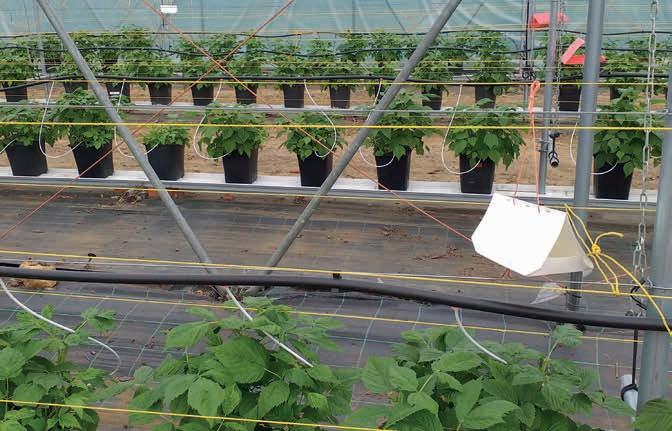
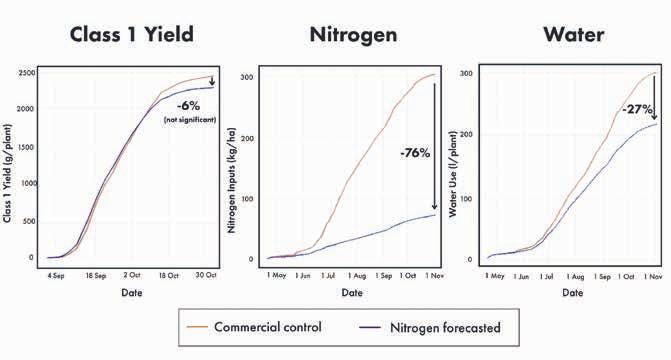
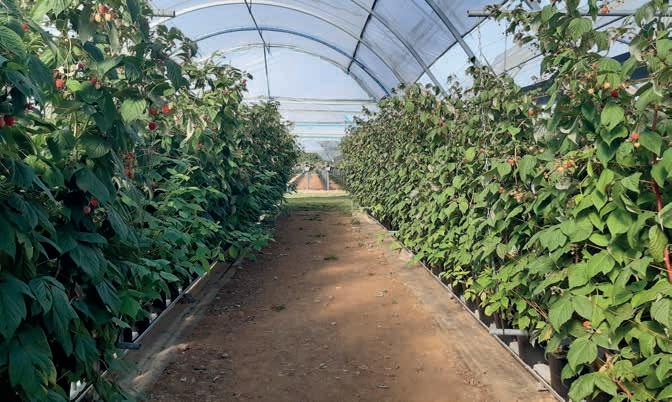
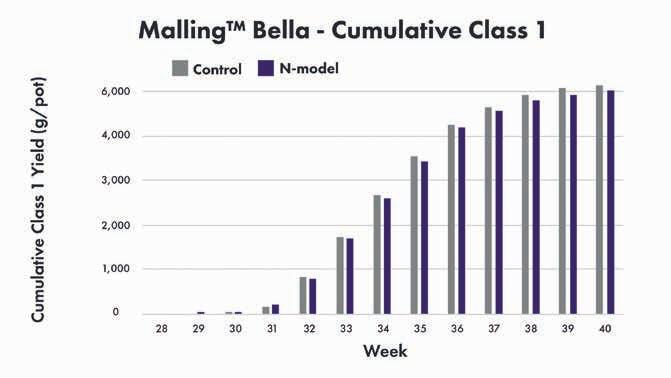
Niab hope to conduct further testing to quantify any legacy effects of low-N treatments in subsequent cropping seasons and to identify the optimum planting density or number of canes per linear metre of crop row in commercial production. Further testing and refinement is also needed to develop a user-friendly version of the model for growers.
Niab holds Soft Fruit Technical Webinars annually in November/December to provide an update on all research activities currently being undertaken by their team. Visit www.niab.com/node/3479
The WET (Water Efficient Technologies) Centre at Niab’s East Malling site in Kent holds events for Rubus and strawberry growers and can be visited throughout the year by appointment. Visit www.niab.com/the-wet-centre
A copy of the original VegSyst irrigation and nitrogen model can be found at bit.ly/ABJ-VegSyst-DSS




This article presents research undertaken from 2020-25 by UK-based crop research organisation, Niab, through their SMARTFert+ project. The project, funded through ‘Innovate UK’ and ‘The East Malling Trust’, was managed by Dr Mark Else, Head of Crop Science and Production Systems - East Malling. Project partners were EDT DirectION, Netafim UK Ltd, Berry Gardens Growers Ltd, and New Farm Produce Ltd













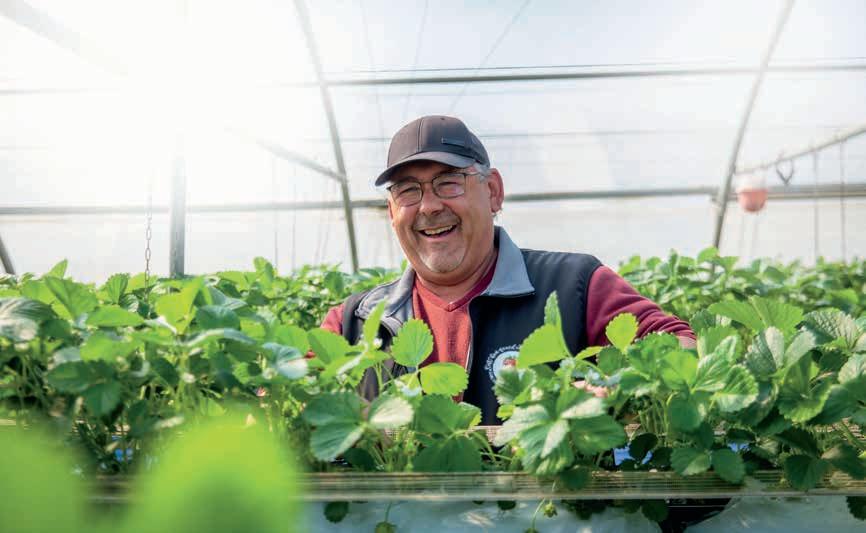
Gains in yield and fruit size over the past 9 years: An update from the project ‘Australian Strawberry Breeding Program (BS22000)
Katie O’Connor – Plant Breeder, Ky Mathews – Biometrician, Jodi Neal – Principal Plant Breeder Australian Strawberry Breeding Program Team, Queensland Department of Primary Industries
The Australian Strawberry Breeding Program (ASBP) has been hard at work to produce more profitable varieties with improved fruit quality. By focusing on the unique needs of Australia’s strawberry growers, the program has made measurable progress in developing varieties that deliver higher yields, larger fruit, and better resilience to environmental challenges. These improvements not only increase grower profitability but also ensure consumers continue to enjoy strawberries that look and taste excellent.
This article highlights the genetic gains (improvement) achieved in the subtropical (Bundaberg and South-East Queensland) and temperate (southern states, Albany region of WA and Stanthorpe region of QLD) breeding nodes of the ASBP and shows how these advancements are directly benefiting growers. Our Mediterranean breeding node has significantly expanded in recent years. As a result, genetic gain for this region will be presented at a later time, once more years of data are available.
Genetic gain refers to the measurable improvement in desirable traits within a breeding population over time. In plant breeding, it’s a key indicator of progress, showing how effectively a program is enhancing traits that matter most to growers and consumers. By tracking genetic gain, we can quantify improvements in areas like yield, fruit size, and quality, ensuring that each new generation of plants outperforms the last.
For growers, genetic gain translates into tangible benefits: higher productivity, better fruit quality, and improved resilience to challenges like disease and weather extremes. These gains are the result of rigorous selection
processes, where only the best-performing plants are chosen as parents for the next generation of seedlings.
The graphs presented in this article show how the performance of strawberry accessions in our breeding program have improved over time.
• The vertical axis represents the trait being improved (e.g., yield, fruit size), while the horizontal axis shows the year each plant was selected as a seedling
• Each dot represents the performance of an individual accession from that year
• The line on the graph is a trend line, summarising the overall progress made across our entire breeding population
• The slope of the line indicates the rate of genetic improvement over time in direct relation to the trait (i.e. a slope of 1 indicates a gain of 1 unit per year)
• A steeper slope indicates greater genetic gain
• The dotted horizontal lines represent the performance of other industry varieties for comparison with the general breeding population
• Note: Red Rhapsody-ASBP was selected by ASBP as a seedling in 2010, and Stella-ASBP in 2017
The subtropical breeding node of the ASBP has delivered significant genetic gains in traits that directly impact grower profitability. Since 2016, the program has achieved consistent year-on-year progress in several key areas:
• Total yield: An increase of 19 grams per plant per year (equivalent to an additional berry per plant each year), ensuring higher overall productivity (Figure 1)
• Season average fruit size: A gain of 0.7 grams per fruit per year, through consistent improvements across the growing season (Figure 2)
• Average fruit size in August: An increase of 0.7 grams per fruit per year, particularly valuable during hot weather when punnet prices tend to decrease
In addition to these yield and size improvements, the subtropical population has shown increases in shelf life since 2016 and higher levels of fruit glossiness. This means that fruit stays fresher for longer, reducing waste and increasing marketability. Yield and Brix (or total soluble solids, sweetness) are usually negatively correlated; however, despite our excellent gains in yield across the season, there has been no significant decrease in Brix.
The higher early-season yield of Stella-ASBP (30g per plant in May) compared to Red Rhapsody-ASBP (12.5g) translates to approximately $0.25 gain per plant due to more punnets packed1. Furthermore, the higher yield per plant and average fruit weight of Stella-ASBP in August compared to Red Rhapsody-ASBP (+98g and +0.53g, respectively) equates to approximately +$0.81 per plant2. These significant gains are an indication of the program’s focus on delivering real-world, profitable benefits to strawberry growers.
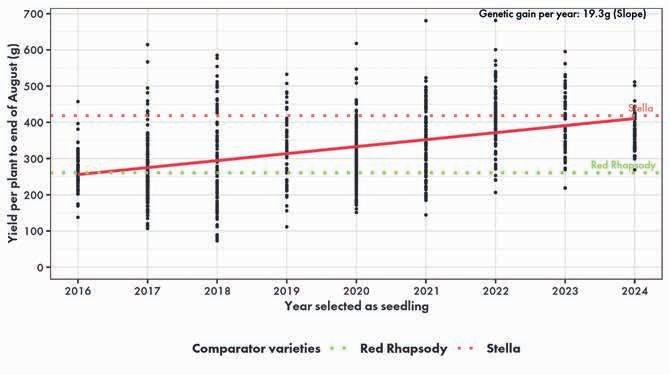
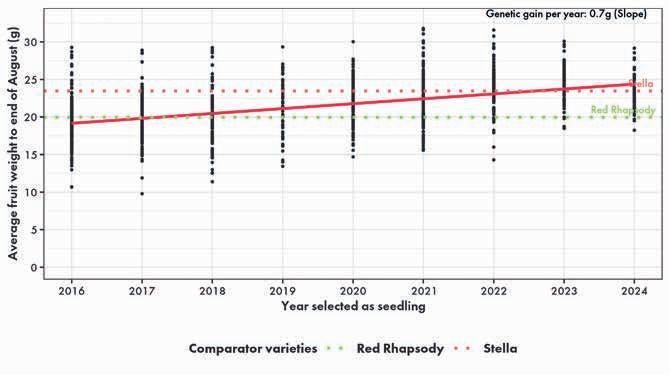
Figure 2. Genetic gain of average fruit size across the season from 2016 to 2024 for the subtropical region
In the temperate breeding node, the ASBP continues to make steady genetic gains, particularly in fruit size. Since 2016, the program has achieved:
• Total Yield: A modest but valuable increase of 7 grams per plant per year, contributing to overall productivity (Figure 3)
• Fruit Size: A gain of 0.5 grams per fruit per year (Figure 4), with particularly strong improvements during the hot months of December and January
These gains are especially important for growers in temperate regions, where the typically smaller fruit sizes during peak summer months significantly increase the cost of production.
The temperate breeding population also outperforms popular varieties like Albion and Cabrillo in several key traits, including a higher brix-to-acid ratio (indicating
better flavour), higher proportion of marketable fruit, higher levels of single-stemmed fruit compared to branched trusses, and a lower proportion of small fruit (less than 10 grams). Additionally, the population shows less truss branching, which results in more uniformly sized fruit, simplifies harvesting, and reduces labour costs.
In terms of economic gains within this node, our precommercial accession 2017-025-130 is outperforming Cabrillo. In December, 2017-025-130 has an average yield per plant of 45g more than Cabrillo, and an average fruit weight of 37.6g compared to Cabrillo’s 26.5g. This translates to an economic gain of $0.38 per plant3. Similar gains are observed for January (+94g yield per plant, +4.9g fruit, +$0.72 per plant4). 2017-025130 (often abbreviated to “ASBP-130”) is currently being grown in medium-scale trials (100-1000 plants) at 11 farms across four states. A commercialisation decision for it will be made at the conclusion of this season.
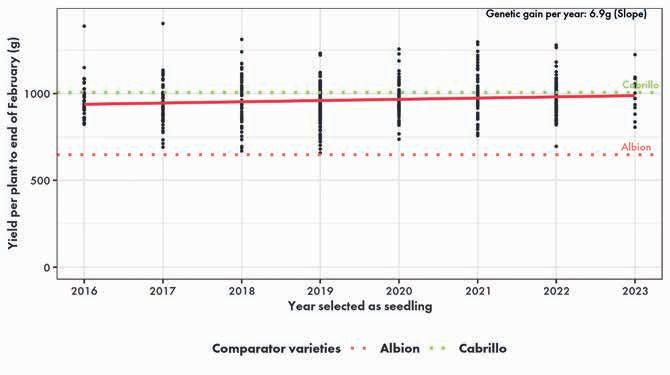
Figure 3. Genetic gain of total season yield per plant (until the end of February, as data was only collected until this point historically) from 2016 to 2023 for the temperate region

Figure 4. Genetic gain of average fruit size across the season from 2016 to 2023 for the temperate region
While the ASBP is proud of the progress made to date, our team remains firmly focused on continuous improvement. By systematically assessing genetic gain at the end of each season, the team can measure the successful advances, as well as identify the areas where further improvements are needed.
The program’s achievements to date, particularly in yield and fruit size, represent a significant step forward. Economic modelling has confirmed that these traits are critical drivers in increasing profitability through increased productivity (yield), as well as reduced cost of production from larger and more consistent fruit sizes. Larger fruit require fewer picks (and therefore less time in labour) to fill a punnet. These gains demonstrate the strength of the ASBP’s breeding strategies and the program’s ongoing commitment to delivering commercially significant outcomes for Australian strawberry growers.
For more information about the program or to share your thoughts, please contact Jodi Neal at jodi.neal@dpi.qld.gov.au or 07 5381 1352.
Your feedback helps us ensure that the ASBP remains focused on delivering the best possible outcomes for growers and the industry as a whole.
By working together, we can continue to achieve genetic gains that benefit everyone, from growers in the field to consumers enjoying strawberries at home.
Notes
1 based on the average Brisbane market 250g punnet price of $3.56 in May 2025, obtained from Ausmarket Consultants
2 based on calculations of the number of fruit per plant, number of fruit per 250g punnet, number of punnets per plant, and August 2025 punnet price of $2.06
3 based on the average Melbourne market punnet price of $2.10 in December 2024
4 based on punnet price of $1.91
The Australian Strawberry Breeding Program has been funded by Hort Innovation using the strawberry research and development levy and matched funds from the Australian Government, with co-contributions from the Queensland Government through its Department of Primary Industries.
We thank the contributions by the Temperate, Subtropical and Mediterranean Reference Groups who have helped guide the program, the Berry Industry Development Officers, and all other industry members who provide feedback, advice, and support.
We are also extremely grateful to all the fruit producers in all states who have trialled, collected data on, and given feedback on our onfarm accessions. This has helped us make more informed and better commercial judgments.
The Australian Strawberry Breeding Program team members include Jodi Neal (project lead), Michaela Antoine (Perth field assistant), Sarah Brindley (Wandin field assistant), Freya Brinkley (Nambour lab assistant), Joanna Gillespie (genetics and virus indexing), Dilmini Hettiarachchi (PhD student), Lilian Kass (Nambour field assistant), Dale McKenna (Nambour field technical officer and hydroponics), Alan Noon (Wandin field assistant), Katie O’Connor (breeding and genomics), Michelle Paynter (virus indexing, tissue culture, and pathology), Karen Spencer (Wandin operations manager), and Louella Woolcock (Nambour field and glasshouse operations manager).



To find out more visit rivulis.com
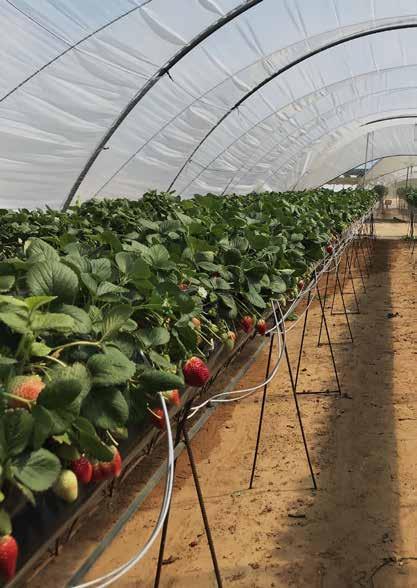
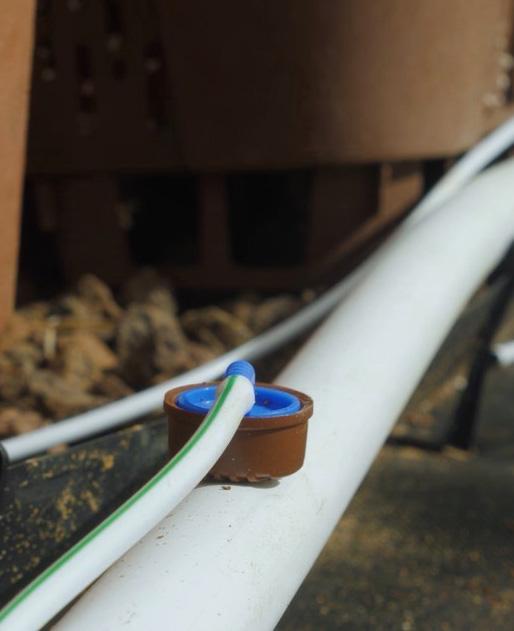
Trusted by leading strawberry growers worldwide, Rivulis solutions deliver outstanding performance and adaptability. But it quickly grows beyond just a micro irrigation solution—it’s about achieving greater yields, improved fruit quality, and building a lasting partnership founded on trust and loyalty. You and Rivulis. Stronger together.

+ PRECISION
Shaping the future through innovation to deliver high-quality coir with uncompromised uniformity.
+ PEOPLE
Working hand in hand with growers and advisors to build lasting relationships in industries we care about.
+ PLANET
Striving to protect our natural resources and adapting to build resilience for future generations.

“Celebrating 20 years of hard work and excellence, I thank everyone who’s been part of our journey. Here’s to many more years of shared success and progress!”
Kalum
Balasuriya, Botanicoir Founder
Learn more about our 20 year journey
www.botanicoir.com/20-years
MIRAVIS® Prime fungicide combines the strengths of proven fludioxonil (Group 12) and powerful pydiflumetofen (Group 7) to manage hard-to-control diseases.
These complementary active ingredients attack fungal pathogens in different areas of the plant. They target four different stages of disease development to effectively break the disease life cycle, while aiding resistance management.
MIRAVIS® Prime is your new standard in protectant fungicide technology. For further information talk to your local Syngenta representative or visit syngenta.com.au/miravis-prime.


QLD based strawberry disease expert Apollo Gomez was recognised for his Lifetime Contribution at BerryQuest International 2025.
Winning a lifetime contribution award is normally reserved for professionals nearing the end of their professional lives, but not Apollo Gomez. Having recently left the Department of Agriculture and Fisheries in Queensland to become an independent consultant, Apollo is still in the prime of his career, assisting growers with disease and fungicide related issues.
If you need solutions on how to manage disease on your farm, or avoid chemical resistance then Apollo is your man. When he’s not busy in the kitchen whipping up a storm, he’s busy researching new disease management technologies, and liaising with growers.
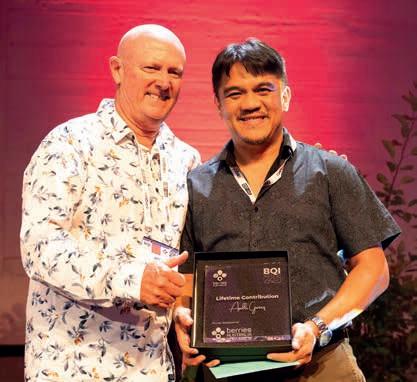
Apollo’s career began under modest circumstances. As a first year Bachelor of Science Student in the Northern Territory, he obtained a casual position with the CSIRO. His role? Roasting cashew nuts and recording kernel sizes. From there, he secured a full-time position as a scientific assistant working on cashew and mango irrigation projects.
A move to far north Queensland led him to transition from plant physiology to entomology working on the quarantine fruit fly species, Papaya Fruit Fly. When a cyclone forced the destruction of all fly colonies, he took the opportunity to move south in 2000 joining the macadamia pathology program before later turning his full attention to the region’s largest fruit crop, strawberries.
Apollo’s keenest areas of interest are disease epidemiology, fungal pathogens, chemical and non-chemical treatments, resistance and advocating for the responsible use of fungicides. He reminds growers that several factors can increase the risk of pathogens developing resistance to fungicides. With so many products on the market - including generics - it’s easy to think you’re rotating chemicals when, in fact, they share the same mode of action. That’s why it’s vital to know exactly which group each product belongs to.
He also stresses the importance of getting spray coverage right. Fungicides only work when they reach their target, so equipment needs to be calibrated to deliver product to the undersides of leaves and deep within the canopy where the pathogens like to hide.
And finally, timing matters. Growers should understand what to apply and when to apply it to get the best protection and keep resistance at bay.
It’s not just Apollo’s knowledge that sets him apart, it’s his genuine commitment and enthusiasm for helping growers. From countless articles in the Australian Berry Journal to interstate tours, speaking engagements, and active involvement in industry forums, Apollo has worked tirelessly to support the berry sector in both paid and voluntary roles.
For many growers, though, it’s more than his technical expertise that stands out. It’s his warm, positive nature and his knack for connecting with people from all walks of life that truly make him one of the industry’s most respected and well-liked figures.

It is with warm memories and deep respect that we share the passing of Doug Goodall, whose outstanding contributions left a lasting impact on the Australian and international strawberry industry.
Doug’s first passion was geology, and he built a distinguished career in the mining sector across Australia and Africa. Through his work, Doug developed enduring relationships with leaders in politics and mining companies, earning a reputation for his integrity, enterprise, and ability to bring people and technology together to build strong industries. These were important skills he later utilised for the benefit of the Australian strawberry industry.
It was through his friendships that Doug was introduced to the wonderful world of strawberries, and he quickly fell in love with both the people and the berry itself. Drawing on his vision and global connections, Doug went on to establish a thriving strawberry industry in his beloved Africa, while also helping to strengthen the industry at home in Australia.
Through collaborations with the University of California and other leading international breeding programs, Doug played a pivotal role in introducing some of Australia’s most successful strawberry varieties, including Albion and Cabrillo. These varieties built wealth in the Australian industry and supported many family businesses.
Doug strongly recognised that healthy transplants are the key to a profitable strawberry industry. This conviction led him to serve as Chair of the Victorian Strawberry Industry Certification Authority (VSICA), where his leadership was highly applied and practical.
During his tenure, Doug facilitated the adoption of systems from Africa for plug plant production that improved their cost-effectiveness.
Doug also represented the Australian strawberry industry on the international stage, serving as part of the delegation to United Nations meetings of the Montreal Protocol. His expertise proved vital in securing continued access to the essential soil fumigant methyl bromide for the nursery sector while research advanced toward more sustainable alternatives.
Ever forward-thinking, Doug played a pivotal role in the successful commercialisation of the superior soil fumigant methyl iodide for Australian nurseries - a feat unmatched anywhere else in the world. His work ensured that the phase-out of methyl bromide did not come at the expense of plant health or industry viability.
Although illness eventually limited his active involvement with VSICA, Doug’s insight, wisdom, and steady guidance continued to shape its direction and development until his passing.
A dear friend to the strawberry industry, Doug will be remembered for his kindness, humility, mentorship, sharp intellect, and dry, quirky humour, all qualities that are deeply missed by all who knew him.

Verpixo ® Adavelt® active - A new mode of action that provides powerful protection from botrytis, powdery mildew, sclerotinia and alternaria. Inspired by nature, Verpixo ® offers growers broad spectrum control of damaging crop diseases that helps to maximise yield and quality. Now registered for use in Strawberries, Cucurbits, Fruiting and Leafy vegetables.
To find out more, contact your local Territory Manager on 1800 700 096 or visit corteva.com.au
Helen Newman, WA Berry Industry Development Officer, Agricultural Produce Commission
CropLife Australia is a not-for-profit organisation that represents the innovators, developers, manufacturers, formulators and registrants of crop protection and ag-biotechnology products. To help ensure the longevity and viability of these products, CropLife Australia has developed resistance management strategies which are reviewed and updated annually by scientific technical review committees in consultation with national and international experts.
There are currently 4 strawberry-specific strategies in their collection, in addition to specific recommendations for many other target pests and diseases, and specific guidelines for different herbicide groups.
CropLife strawberry-specific strategies have been published for:
• Strawberry – Grey mould (Botrytis)
• Strawberry – Powdery mildew
• Strawberries / Ornamentals – Two-spotted mite (Tertranychus urticae)
• Strawberry runner production – Powdery mildew
Although the strawberry powdery mildew and botrytis management strategies are presented by CropLife Australia separately, it is useful to look at them together when planning spray applications as there is overlap between the fungicide groups and products used for both diseases.
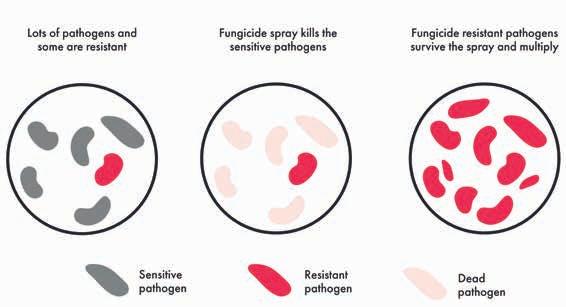
Why are resistance strategies presented separately?
CropLife Australia does not publish combined guidelines for multiple pests and diseases affecting the same crop, as each presents unique biological resistance risks. Pests and pathogens differ in their life or infection cycles, mutation rates, and survival mechanisms. Although multiple pests and pathogens may coexist in a crop, resistance management strategies are developed separately to reflect these differences. A strategy suitable for one pest or pathogen may be too restrictive or ineffective for another.
Table 1 shows all the single-site fungicide groups currently registered* for use in strawberries (not including runner production). Table 2 shows the strawberry spray recommendations by mode of action group.
Table 1. Registered single-site fungicide groups for botrytis and powdery mildew in fruiting strawberries.
Mode of Action
Fungicide group
Group 2
Group 3
Group 7
Group 7 + 3
Group 7 + 11
Group 7 + 12
Group 9
Group 9 + 12
Group 11
Group 17
Group 19
Group 21
Group 52 (U)
Group U6
Fungicide family
Dicarboximide
Demethylation inhibitors (DMI)
Succinate dehydrogenase inhibitors (SDHI)
SDHI + DMI
SDHI + Quinone outside inhibitors
SDHI + phenylpyrroles (PP)
Anilinopyrimidine (AP)
AP + PP
Quinone outside inhibitors
Hydroxyanilide
Chitin synthase inhibitor
Quinoline inside Inhibitor
Dihydroorotate dehydrogenase inhibitor
Phenyl-acetamide
Registered disease
Botrytis
Powdery mildew
Botrytis; Powdery mildew
Botrytis
Botrytis; Powdery mildew
Botrytis; Powdery mildew
Botrytis
Botrytis
Powdery mildew
Botrytis
Botrytis; Powdery mildew
Botrytis; Powdery mildew
Botrytis
Powdery mildew
*This information is current only at the time of publication (December 2025). Please ensure that you always check the status of a permit or label registration prior to chemical use.
Table 2: Strawberry spray recommendations by mode of action group. Adapted from CropLife Australia resistance management strategies for strawberry botrytis and powdery mildew (2025).
1 Group 7+3 formulation (Tebuconazole + fluopyram) is registered for botrytis only.
2 Group 17 may be applied in up to two consecutive applications if applied with an effective mixing partner, or a different Group. Do not apply Group 17 containing mixtures for more than 50% of all applications.
3 Where there are several crop cycles per year, up to a maximum of five (5) applications containing Group 21 can be applied.
The following guidance points are a summary of the guidelines provided in the CropLife Australia resistance management strategies for strawberry botrytis and powdery mildew (2025).
Powdery mildew specific guidance:
• Do not use the same fungicide group as the last application on runner production and the first application to in-field fruit production.
• Apply a program of protectant (multi-site) fungicides from early crop establishment and maintain a regular spray program throughout the crop growing cycle.
• Do not use Group 3, 7, 11, 19, 21 or U6 fungicides as eradicants (once symptoms are visible).
Botrytis specific guidance:
• Apply a program of protectant (multi-site) fungicides during flowering.
Fungicide group specific guidance:
1. Do not apply more than four Group 3 sprays per season.
2. Do not apply more than two consecutive sprays of Group 2, 3, 7 (including 7+3, 7+11 or 7+12), 9, 12, 17, 19 or 21 fungicides, including from one season to the next.
3. Do not apply Groups 52 or 17 (solo) as consecutive applications, or more than 3 times per season.
4. If using Group 17 with an effective mixing partner, or a different Group, do not apply the Group 17 containing mixtures for more than 50% of all applications.
5. Do not apply more than three Group 7 containing sprays per season. If consecutive sprays are used, then use the same number of sprays of an alternative group before using another Group 7, including sprays in consecutive seasons.
6. Do not apply consecutive sprays of Group 11 or U6 fungicides, including from one season to the next.
7. If three or fewer fungicide sprays are applied per crop, use only one spray containing a Group 9, 11, 12 or 21. Use a maximum of three sprays containing a Group 9, 11, 12 or 21 fungicide, or 33% of total sprays (whichever is lower).
8. Do not apply Group 19 fungicides more than 6 times per season, or for more than 50% of the total number of fungicide sprays.
9. Do not apply more than two Group U6 sprays per crop.
NOTE: Always refer to the label. Resistance management strategies do not replace product labels, they supplement them.
**Remember to use your multi-sites**
Maximise the use of multi-site (protectant) fungicides throughout the season (e.g. Captan©, thiram, sulphur, potassium bicarbonate formulations, and biological products). Multi-site fungicides shield leaf and fruit surfaces from fungal pathogens and have proven to be an excellent stand-alone method of managing disease in some circumstances. They act on multiple parts of the pathogen, unlike single-site fungicides that only act on one part, so resistance to multi-site fungicides is low.


• Effective control of grey mould in berries
• Flexible use pattern
• Strong protectant action


• Highly effective on powdery mildew in strawberries
• Nil withholding period
• Translaminar and vapour action
• Excellent and reliable grey mould control in strawberries
• One day withholding period
• Group 52 – New mode of action
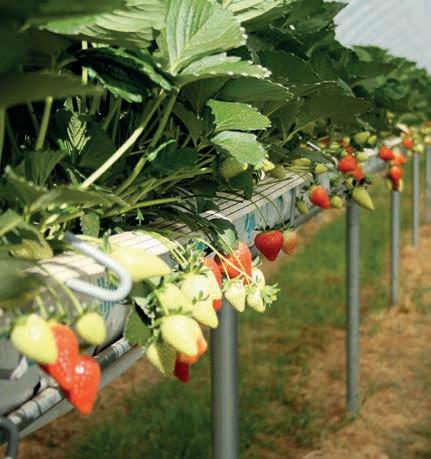




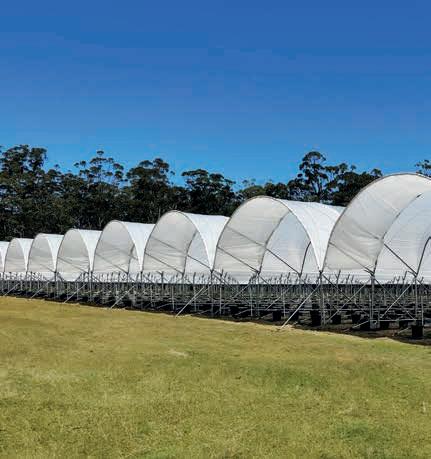



Jane Richter, Communications Manager, Berries Australia
Australian blueberry growers have something to celebrate! A major milestone has been hit with the signing of a new biosecurity protocol enabling Australian blueberries to be exported to Vietnam for the first time.
The agreement signed by the Australian Department of Agriculture, Fisheries and Forestry and Vietnam’s Plant Production and Protection Department in Hanoi on Thursday 9 October 2025 heralds a new chapter for the Australian blueberry industry who can now access this burgeoning Asian market.
Berries Australia welcomed the new agreement, highlighting that the signing represents significant new export opportunities for Australian blueberry growers.
“Vietnam is a very exciting market for us with an estimated value of $4million in the first year, growing to approximately $22million within five years, which would effectively double the industry’s’ current export value.”
“Vietnam market access presents a fantastic opportunity for the blueberry industry, as it has a growing middle class who actively seek out high-quality imported fresh fruit. Vietnamese consumers have a well-established preference for branded premium fruit with exceptional freshness and flavour aligning perfectly with Australia’s reputation for superior blueberry production.”
Australian blueberry production has seen significant growth over the last 25 years from $24million to $505million, however most produce is consumed domestically so this will be a game changer for the sector. Access to Vietnam offers Australian growers the opportunity to showcase their ultra-premium berries to an entirely new audience.
The Australian Blueberry industry would like to thank the Australian government for their efforts in negotiating this protocol in a timely fashion and looks forward to visiting Vietnam in the coming months as the first Australian fruit hits the market.
The Vietnamese consumer is rapidly evolving, shaped by a dynamic mix of economic growth, a young population, urbanisation, and increasing digital adoption.
YOUNG AND URBANISING: Over 50% of the population is under 35, and urban areas are expanding quickly
GROWING MIDDLE CLASS: Vietnam has one of Southeast Asia’s fastest-growing middle classes, expected to reach 50 million by 2030
VALUE-CONSCIOUS: Consumers seek good value for money and are price-sensitive, but are willing to pay more for quality, health, and trusted brands
BRAND-AWARE: Brand reputation and product origin matter - Korean, Japanese, and Western brands are often seen as premium
SHIFT TO PREMIUM: As income grows, consumers increasingly opt for premium products, especially in food, beauty, and technology
TECH-SAVVY: High smartphone penetration and social media usage (Facebook, Zalo, TikTok) influence purchasing decisions
HEALTH-CONSCIOUS: There’s growing demand for organic, natural, and functional foods, especially among urban consumers
To download the Export Market Factsheet about Vietnam including demographics, economy, political environment, consumer profile, trade data, supply chains, and future opportunities for berry exporters, visit the Resource Library at bit.ly/BA-RL and search “Vietnam”
For growers who are interesting in exporting to Vietnam, please make sure you understand the process, the protocol requirements and the timelines.
If you haven’t already done so, join the Export Hub at bit.ly/BA-Export where you’ll find everything from Export Action Plans to useful links.
Check out these links for important information to get you started.
Provided by Head of Trade Jenny Van de Meeberg, this Process Map helps to explain what is required for exporting to Protocol Markets
Download from the Export Hub or Resource Library
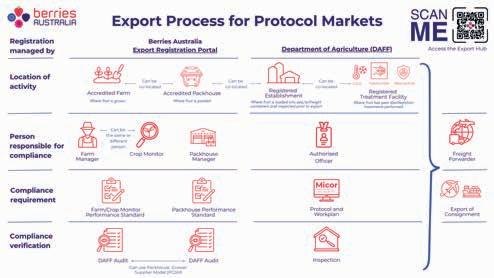
2025-53: Horticulture – New market access for blueberries to Vietnam
This Industry Advice Notice is to advise of new protocol requirements for the export of blueberries to Vietnam. www.agriculture.gov.au/biosecurity-trade/export/controlled-goods/plants-plant-products/ian/2025/2025-53
This website sets out the known requirements that exporters and the Department of Agriculture, Fisheries and Forestry must meet for products and commodities to be accepted for import into specific overseas countries micor.agriculture.gov.au
All businesses wishing to export berries are required to be registered through this system prior to any activity commencing berry.exports-online.com/login
Jane Richter, Communications Manager, Berries Australia
As Australia’s blueberry industry continues to mature, insights from international markets can offer valuable guidance on how quality drives profitability. A recent report from Agronometrics ‘2025 Peruvian Price Quality Index (PQI)’ provides one of the clearest demonstrations yet of how varietal performance translates directly into price outcomes.
The PQI uses six years of export data from Peru’s customs authority (SUNAT) to measure how different blueberry varieties perform in the marketplace. It distinguishes between premium and standard fruit categories, tracking how these have evolved over time.
The findings show a striking trend: the price gap between premium and standard blueberries has grown more than tenfold since 2019/20
Varieties such as Sekoya Pop, Eureka, Rosita and Raymi are leading the charge, achieving prices more than $1.30/kg above the market average, while older varieties including Ventura and Biloxi continue to sit in the standard bracket. The analysis reveals a structural shift: retailers and importers are no longer paying solely for volume. Instead, they’re rewarding fruit with superior flavour, texture, shelf life and overall eating experience. For Australian growers, this international perspective underscores an important principle: quality differentiation is becoming central to profitability. As consumers become more discerning and supply competition intensifies, the varieties that consistently deliver a premium eating experience will command stronger demand and better returns.
Understanding where quality meets price isn’t just a marketing tool, it’s a production strategy. Selecting the right genetics, maintaining optimal post-harvest handling, and delivering consistent quality can all
influence how fruit is valued by buyers. And this value equation will determine the long-term sustainability of both the industry and individual farms.
The Peruvian data reinforces what many growers already know; that every berry tells a story. The better and more consistent the eating experience, the better the reward both for growers and the future of the blueberry industry.
Quality drives value: Premium blueberry varieties are achieving significantly higher prices in export markets, proving that flavour, texture and shelf-life really do matter more than sheer volume
The price gap is widening: The difference between premium and standard fruit in Peru has grown more than 10x since 2019/20, reflecting changing buyer preferences
A lesson for Australian growers: As global markets mature, profitability depends increasingly on varietal choice, consistent quality and post-harvest care and not just yield
If you would like to read the full report, visit the Resource Library at bit.ly/BA-RL and search ‘2025 Peruvian Price Quality Index for Blueberries’
For more information visit: www.agronometrics.com
Jiffy Blueberry mix for long lasting results
• RHP Certifi ed inputs to produce a premium blend of coir, peat and perlite.
• AFP and WHC specifi cally designed to suit Australian growing conditions.
• Perfectly balanced particle sizes to ensure mix stability and longevity.
• Quality materials for the perfect starting PH (of approx 4.3). Tel.: 1300 695 098 www.gardencityplastics.com
AFP of 28-38% for healthy roots
WHC of 50-70% for effi cient nutrient uptake
Long lasting premium materials
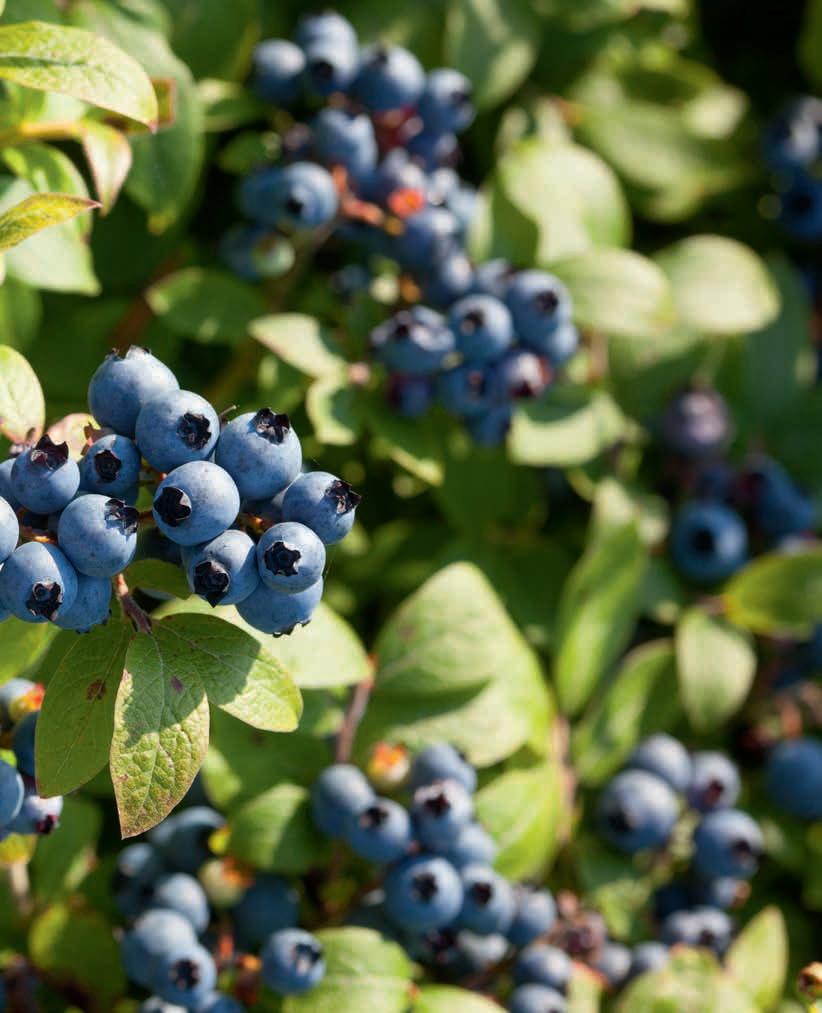







Matt Champness & Harriet Brickhill, formerly North Coast Local Land Services (LLS)
Ewan Leighton, North Coast Local Land Services (LLS)
Robert Hoogers, NSW DPIRD
• This study presents findings from irrigation assessments conducted across 28 intensive horticultural operations on the NSW North Coast, focusing on distribution uniformity (DU) performance in both soil-based (12) and substrate-based systems (16)
• Distribution uniformity averaged 73% & 88% for soil-grown and substrate systems, respectively
• Only 8% of soil grown and 56% of substrate systems achieved optimum DU of 90% (optimum industry standard)
• Critical issues identified included many blocked and partially blocked emitters and lateral and sub-main drainage post system shut-off leading to poor DU
• Incorrect valve pressures, erosion and insufficient maintenance regimes were also found
• An Excel spreadsheet toolkit was developed to standardise DU calculations and support industry-wide performance improvement
Intensive horticulture production continues to expand on the NSW North Coast with transition of soil grown blueberries to substrate-grown systems and substantial expansion of substrate grown cucumbers and Rubus (raspberries and blackberries) under protected cropping systems. The horticulture industry’s emphatic hype on precision agriculture technologies, such as sophisticated fertigation systems and climate monitoring tools, can lead to a dangerous disconnect if foundational principles of irrigation and drainage are not in place. While these technologies can offer significant benefits, site-specific monitoring becomes meaningless when irrigation output across the block varies substantially (> 100% in many situations).
Poor uniformity creates cascading problems: some plants receive excess water and nutrients while others are stressed, leading to uneven crop development and reduced productivity. More critically, poor DU results in
economic waste - growers must over-irrigate entire blocks to ensure stressed plants receive minimum requirements, resulting in significant water, energy, and nutrient losses.
Irrigation and drainage assessments were conducted by Local Land Services (LLS) and NSW Department of Primary Industries and Regional Development (DPIRD) staff on 12 soil-grown blueberry, 6 substrate grown blueberry/Rubus and 10 substrate grown cucumber systems. Comprehensive evaluation included flow rate measurements, pressure monitoring at different hydraulically challenged locations, drainage and environmental assessment, and component condition evaluation. Irrigation and drainage management practices were also recorded from an interview survey.
A standardised Excel spreadsheet toolkit was developed to enable consistent data collection and assist with DU calculation across operators.
Distribution uniformity (DU) is the ability of the irrigation system to deliver water and fertiliser evenly to all plants in the block. DU is a key metric for irrigation system efficiency, and systems should achieve DU >90%, meaning all emitter outputs are near equal. A system that delivers high DU will improve water and fertiliser application and increase fruit yield and quality.
There were performance differences between soilbased and substrate-based systems. While substratebased systems achieved an average DU of 88%, soil-based berry systems consistently demonstrated poor performance with an average DU of just 73%. Key factors influencing system performance included maintenance protocols, topographical challenges, emitter condition, system design and installation, erosion and source water quality. Across all systems assessed, source water was often observed to contain high algal growth and presence of aquatic weeds. Regular source water testing was not a common practice. However, filtration was generally found to be sufficient for water delivery. Farmer capacity on flushing protocols was lacking, with questions on maintenance regimes the most common query received during the interview stage of the assessment on majority of farms.
The following findings are organised by growing system type to highlight the distinct operational challenges and performance characteristics observed.
Despite use of pressure compensating drip tube, soilbased berry systems consistently demonstrated poor DU, with 11 of the 12 below the optimum standard of >90%.
The soil-grown blueberry systems assessed were generally designed to run down the slope with downhill irrigation supply. The systems assessed were typically on steep or very steep terrain, with Land and Soil Capability (LSC) between 5 – 7.
Blocks on steep terrain often suffered excessive postsystem shut off drainage with some emitters discharging flow for over 10 minutes after system shut off, with bottom-of-slope emitters receiving up to 200% of designed irrigation volumes. This occurred when submains drained through laterals to low-elevation emitters as seen in Figure 2. For example, emitters designed for 1.6 L/hr delivered over 3.0 L/hr including drainage.
On all sites assessed, it was observed that erosion was impeding trafficability and/or source water quality with likely flow on production effects. Erosion was most significant on steep sloping, down-the-grade blocks with minimal groundcover in the interrow. Erosion was less pronounced on blocks that ran diagonally across the grade.
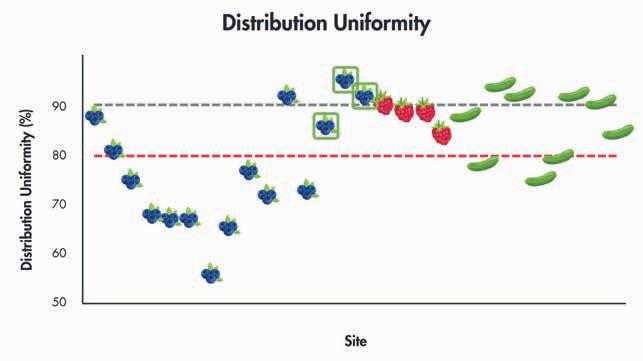
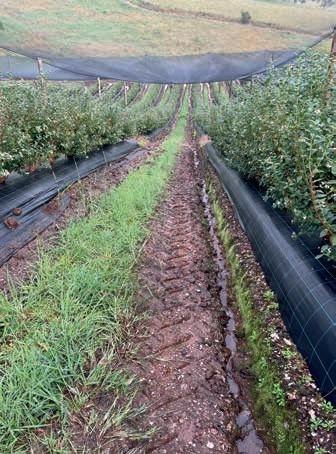
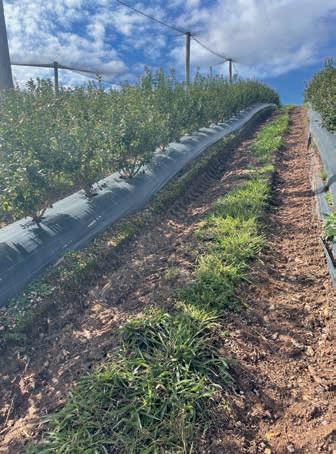
Blocked and partially blocked emitters were endemic across soil-based systems. Many blocked emitters were excluded from DU calculations, meaning the actual block uniformity was worse than calculated values. The prevalence of these blocked emitters indicated that systematic maintenance protocols were not implemented or were ineffective.
The position and condition of makeshift flushing ‘taps’ at the end of laterals indicated flushing was not regular. Flushing valves on mains and submains were not common, indicating that maintenance was not considered at the design and installation phase of many systems. This was supported by laterals regularly exhibiting tied or knotted ends, rather than adequate flushing hardware. Flow rates of some PC emitters were above design, potentially due to algae build up impeding diaphragm function, further indication of poor maintenance regime.
Valve operating pressures exceeding 400-500 kPa were documented across multiple operations, causing fitting failures and poor uniformity. Conversely, some blocks experienced inadequate pressure due to system leaks, poor design and on one farm a poor performing pump (likely impeller issues), resulting in emitter flows well below design specifications and inadequate flow for maintenance.
Substrate-based systems had an average individual block DU of 88% (with a range of 75-95%). The presence of dripper line non leakage (DNL) valves in substrate-based systems enabled pulsed irrigation with short charge-up time and eliminated the excessive post system shut off drainage issues seen in soil-grown systems. However, due to the need for leaching, erosion and drainage issues were present between and at the end of rows on Rubus systems without adequate control measures.
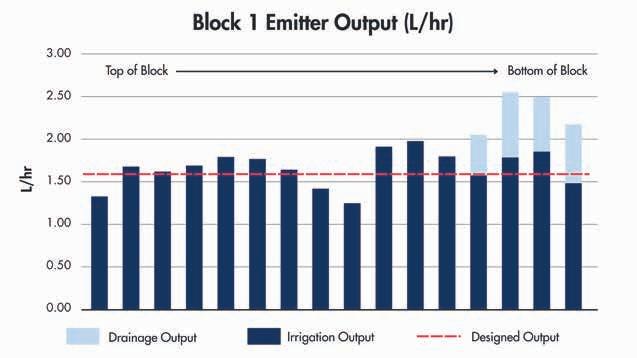
Although many systems’ performance suffered from inherent design flaws and poor maintenance, installing low-cost retrofit options and improving the maintenance flushing regime will overcome many issues in the short term. In the long term, a focus on repairing and preventing erosion should be a priority for all soil-grown systems assessed to ensure the viability of future operations on these farms.
Such options include:
• Implementation of systematic flushing protocols following industry maintenance guidelines
• Installation of DNL valves on sub-mains and laterals to eliminate post-shutdown drainage
• Valve pressure adjustment to maintain optimal operating ranges
• Increasing ground cover on farm to >90%, with a particular focus on decreasing herbicide spray width at weed mat interface in interrow and integrating slashing
• Installation of drainage controls are required to assist with surface water management as well as irrigation drain water run off
As part of the assessments, Excel spreadsheet toolkit templates for soil and substrate systems were developed to standardise data collection and automate DU calculations, eliminating calculation errors.
The Excel spreadsheet toolkit is available for distribution to irrigation practitioners and includes DU calculation templates and data collection protocols.
The toolkit can be accessed by contacting North Coast Local Land Services at Admin. northcoast@lls.nsw.gov.au
Or you can find your local LLS Office at www.lls.nsw.gov.au/i-want-to/contactmy-local-office/north-coast-local-offices
The assessments demonstrated that irrigation system maintenance is an overlooked practice on farm. Substratebased systems generally adhered to fundamental design principles, however, soil-based systems generally had inherent design flaws, although low-cost retrofit options do exist.
Key findings include:
1. Distribution uniformity is critical - Soil-based systems consistently fall below the industry standard DU of >90%
2. Common issues are preventable - Most problems stem from poor maintenance and design oversights
3. Low-cost solutions exist - DNL valves, pressure regulation, and flushing protocols can dramatically improve performance
4. Industry support needed – Training and upskilling are essential for widespread industry improvement at the farmer and advisor level

These assessments were conducted as part of the Clean Coastal Catchment project and WaterWise for the Future project. WaterWise for the future is a North Coast and Greater Sydney Local Land Services project aimed to upskill farmers and private sector to improve irrigation performance. WaterWise for the Future is supported by the Australian Government through funding from the Climate-Smart Agriculture Program under the Natural Heritage Trust. The Clean Coastal Catchments program was funded through the Marine Estate Management Strategy.
Excel is a trademark of the Microsoft group of companies

UNITEC innovative solutions for the external and internal quality selection of your blueberries
With BLUEBERRY VISION 4.0 AI and UNIQ BLUEBERRY your blueberries have more value. Nothing is left to chance thanks to an efficient and complete sorting of the qualities: internal and external quality, shape defects, in addition to optical size and color.

Dr Sophie Parks, Research Horticulturist, NSW DPIRD
Nutrient runoff is a significant challenge for blueberry growers using substrate systems. As part of the Clean Coastal Catchments Project, NSW DPIRD is investigating how to improve the nitrogen efficiency of these systems to reduce the risk of nitrogen losses.
Nitrogen (N) pollution is a potential risk from intensive horticulture on the NSW mid north coast being located near the coast and its biodiverse marine estate. Algal blooms and their impact of limiting marine life can be exacerbated by increased N in waterways that connect to the coast. Blueberry is a major crop in this region and in this research report we highlight how reducing N inputs into substrate systems can be achieved without compromising crop performance.
In our preliminary work, we observed that for some farm samples, the N concentration in the fertigation solution being applied to blueberries in substrate can be as high as 130 mg/L (total N). To test if this nitrogen rate could be reduced without impacting the crop, we set up an experiment in 2021 at our Wollongbar research station, on the North Coast of NSW. An article update about this experiment was published in the Winter 2024 edition of this journal available at the industry Resource Library at bit.ly/BA-RL by searching 'nitrogen fertiliser guidelines'.
We grew the cultivar ‘11-11’ of southern highbush at 5 nitrogen rates (40, 60, 80, 100 and 120 mg/L total N) in fertigation, with all other nutrients required supplied in these solutions. For N, half was supplied as nitrate and half as ammonium. The target strength or electrical conductivity (EC) was 0.9 dS/m and the pH was 5.7 for all treatments, and a control system was used to guide fertigation volumes for the environmental conditions.
One year into growing this crop, we destroyed some plants to measure the effect of the nitrogen treatments on plant growth. The plants grown at the lowest rate of N (40 mg/L total N) were small compared to the rest of the plants in the study, because at this rate, the N supply was too low for maximising growth (Figure 1). The plants from all the other treatments (60-120 mg/L total N) were all similar in size. This provided a clear indication that rates greater than 60 mg/L total N were unnecessary during the establishment of the crop.
In 2024, we were excited to harvest our first fruit from our now-mature crop, 3 years after planting. Mature berries were harvested every 2 weeks between early August and early November (Figure 2). Regardless of the N supply rate, peak production occurred in early September and declined thereafter.
• A trend of reduced total fruit weight for the whole season for the high N supply rates (100 and 120 mg/ total N), compared with lower N rates
• Average berry weights across the season were not affected by N rate
• Average Brix levels (sugars) in berries for the season were not affected by N rate
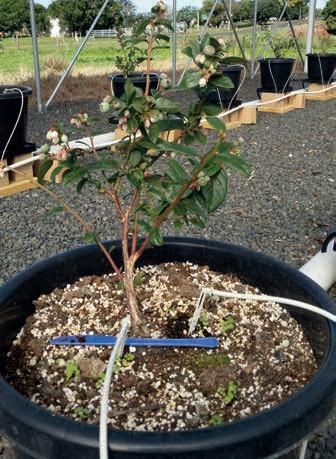
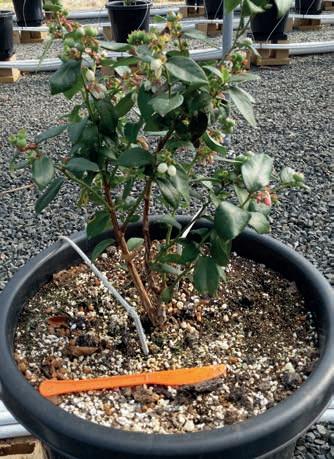
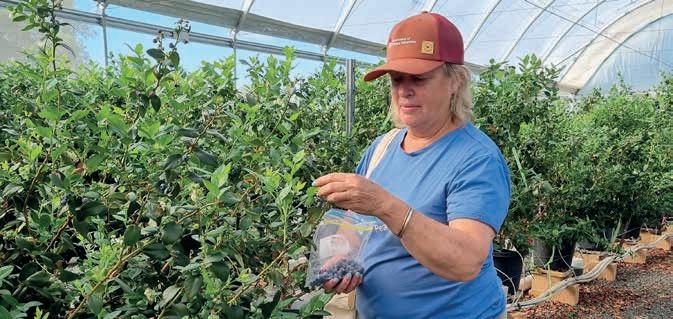
All photos credit: NSW DPIRD
Based on these results, we showed that during establishment, plants did not need more than 60 mg/L total N, since there was no growth advantage of applying higher rates.
It is likely that the optimum rate is below this, between the 40 and 60 mg/L total N treatment rates, around 50-55 mg/L. We are currently setting up a new experiment that will determine this optimum rate. This will be critical to reducing N losses in pot drainage because the greatest losses of nutrients occur for establishing crops. This is because their roots occupy only a small volume of the substrate being fertigated and do not intercept much of the nutrition being supplied. Our results also highlighted that more established plants may need up to 80 mg/L total N in fertigation, and that greater concentrations risk reduced yield.

Selecting N rates in fertigation, appropriate for the stage of blueberry growth helps to address nitrogen in runoff but our work continues because the presence of N in drainage remains a challenge. We have already demonstrated significant reductions in drainage N when the drainage is channelled through and treated by a bioreactor, using the one installed at our research facility.
Also, the Clean Coastal Catchment team is close to releasing an online fertigation calculator that streamlines the task of working out fertiliser amounts for nutrient stocks according to the recipe and solution concentration that you select.
The Clean Coastal Catchments Research project is funded through the NSW Marine Estate Management Strategy to reduce nutrient and sediment run off from key coastal agricultural industries.

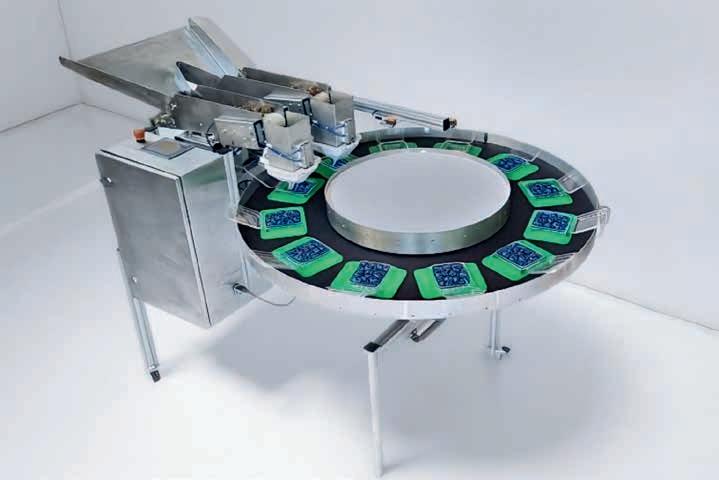
How are you travelling?
You don’t seem yourself lately – want to talk about it?
I’m here to listen if you want to talk more. Have you been feeling this way for a while?
What do you think is a first step that might help you?
Just wanted to check in and see how you’re doing?
Have you spoken to your doctor about this?
Have things improved for you since our last chat?