Take Charge of Your HEALTH...








Learn how a Maine island community is staying connected each winter through their local library 10 SOUNDS OF THE SEASON
Discover what it takes for the Bangor Symphony Orchastra to bring Tchaikovsky’s classic “The Nutcracker” to life
Three
Adventure
Why


MAYBE BECAUSE I’m approaching my 46th birthday, maybe because I’ve been peer-pressured into running a 5K this summer, maybe because the hormones in my house range from teenage to perimenopausal — but this magazine is really hitting home for me.
I have a group of friends from my hometown of Presque Isle who I get together with every year (the same ones who signed me for the running leg of the 2026 Tri for a Cure). Our conversations have evolved through the years — most recently delving into previously uncharted waters: hot flashes, hormone therapy, aging parents, health scares, our own mortality.
But it’s not all heavy (and sweaty). Lots of wonderful things come with getting a little older and wiser, like knowing what you want, letting go of your insecurities, gaining a greater appreciation for what you have. And the maturity to take charge of your own health and seek help when you need it.
Taking charge of your health may look like talking to your healthcare provider about hormone replacement therapy. When the night sweats and mood changes become too much, why not explore your options? Stephanie Bouchard talks to local experts on page 20. And then flip to page 24 for advice about strengthening your pelvic floor (surprise — it’s not just for women). A strong pelvic floor can improve balance, posture, bladder control, and more. Who knew?
Getting outside to explore our beautiful state is another great way to feel strong and healthy. Aislinn Sarnacki shares easy hikes and paddling adventures all around Baxter State Park starting on page 16. While you’re outside, consider collecting a few spruce tips and juniper berries to cook up a locally flavored boreal feast — Jasmine Cabanaw explains all about this nature-inspired cuisine (and shares a recipe for spruce tip salt) on page 14.
And when you’re done cooking, flip to page 22 to learn about a local service that will pick up your food scraps and turn them into nutrient-rich compost (so you don’t have to). Looking for more ways to be clean and green at home? Starting on page 26, we have 10 simple ideas to reduce toxins in your home.
One of the most challenging parts of growing older is losing people you love. Thankfully our community is full of support systems to help navigate these times. Robin Clifford Wood visits with a grief support book club at the Bangor Public Library on page 8 and shares their reading recommendations, then Crystal Sands shares details about a family grief support in Bangor led by three women who understand what it is to lose a loved one.
Speaking of getting older, our country turns 250 this year. We’re celebrating with a look at Bangor: Then & Now, starting on page 34. Local historian Richard Shaw will introduce you to 10 eastern Maine Revolutionary War heroes, and also explain why so many Maine places still have very British names (we’re looking at you Bath, York, and Bristol). And Stephanie Bouchard deep dives into the life of one particular Revolutionary War soldier whose surveying work is still shaping Bangor today. You can learn more this spring when the Bangor Historical Society unveils a new exhibit marking the nation’s 250th anniversary.
WISHING YOU A HAPPY, HEALTHY SPRING

AMY ALLEN EDITOR & ART DIRECTOR
www.bangormetro.com
P.O. Box 1329
Bangor, Maine 04402-1329
Phone: 207.990.8000

PUBLISHER
Richard J. Warren

EDITOR & ART DIRECTOR Amy Allen aallen@bangordailynews.com


VICE PRESIDENT OF SALES AND MARKETING
Angela Marcolini amarcolini@bangordailynews.com
SENIOR SALES MANAGER
Laura George lgeorge@bangordailynews.com
CONTRIBUTING
Emily Baer, Stephanie Bouchard, Jasmine Cabanaw, Robin Clifford Wood, Wanda Curtis, Anne Gabbianelli, Jodi Hersey, Emily Morrison, Crystal Sands, Aislinn Sarnacki, Richard Shaw
Bangor Metro Magazine. Spring 2026, Vol. 22, No. 1. Copyright © Bangor Publishing Company.
Bangor Metro is published 4 times annually by Bangor Publishing Company. All rights reserved.
This magazine may not be reproduced in whole or part in any form without the written permission of the Publisher.
Opinions expressed in either the editorial or advertisements do not represent the opinions of the staff or publisher of Bangor Metro magazine. Advertisers and event sponsors or their agents are responsible for copyrights and accuracy of all material they submit. Bangor Metro magazine to the best of its ability ensures the acuracy of information printed in the publication.
Inquiries and suggestions are welcome and encouraged. Letters to the editor, story suggestions, and other reader input will be subject to Bangor Metro’s unrestricted right to edit and publish in the magazine both in print and online.
Editorial: Queries should be sent to Amy Allen at aallen@bangordailynews.com.
Advertising: For advertising questions, please contact sales@bangordailynews.com.
Accounts Payable/Receivable: For information about your account please call 207-990-8000.
COVER ART: Adobe Stock

MARCH 3
Kinky Boots captivates and entertains audiences around the world with the dazzling Tony-winning score by pop legend Cyndi Lauper. Based on true events, Kinky Boots follows the journey of two people with nothing in common — or so they think. Trying to save his family’s shoe factory, Charlie Price finds inspiration in the form of Lola, a fabulous entertainer in need of some sturdy stilettos. Visit crossinsurancecenter.com for more information.
Founded in 2009 in Portland by brothers Luke and Will Mallett, the band carries forward the songwriting tradition of their father, folk artist David Mallett. Over the past 15 years, their working-band ethos and a dedicated fan base have carried them across countless tours, shows, and festivals. Find tickets at gracietheatre.com.
MARCH 21-22
Maine maple producers are hosting the 43rd annual Maine Maple Sunday weekend March 21-22. Visit mainemapleproducers.com for a list of sugarhouses around the state offering demonstrations, tours, samples, and treats. Maine Maple Sunday is always the fourth Sunday in March although some sugarhouses are offering events both Saturday and Sunday — check each sugarhouse to confirm what time they will be open and the activities they offer.
25-29
The Maine Discovery Museum presents the 2026 Maine Science Festival, celebrating Maine scientists and the incredible discoveries happening all around the state. More than 70 events are planned, including forums, shows, talks, art exhibits, workshops, and hands-on activities for all ages. For more about this free Bangor-area event, visit mainesciencefestival.org.
MARCH 26
Take a tour through the universe and back with beautiful visuals and amazing music, hosted by the one and only EDM robot duo, Daft Punk! Give Life Back to Music pairs stunning imagery and lights with a collection of Daft Punk’s most popular songs including One More Time, Get Lucky, Instant Crush, and more! Tickets are $9 for general admission. Visit astro. umaine.edu for more info.
APRIL 4
Hike for the Homeless raises awareness of homelessness in our Bangor community and raises funds for the Bangor Area Homeless Shelter. Bring your friends and family to walk through downtown Bangor. The walk typically begins behind Sea Dog Brewing Company at 9:30 a.m. at 26 Front St. in Bangor. For information about sponsoring and to register for the walk, visit bangorareashelter.org.
WE’RE FORTUNATE TO HAVE THESE TALENTED & CURIOUS WRITERS SHARING STORIES THIS MONTH.
INTERESTED IN JOINING OUR RANKS? EMAIL AALLEN@BANGORDAILYNEWS.COM FOR MORE INFORMATION ABOUT WRITING FOR BDN SPECIAL SECTIONS.
JODI HERSEY is a reporter with ABC7 & FOX22 in Bangor. Over the years, she’s had the privilege of writing for all sorts of platforms including television, radio, magazines, and newspapers. When she’s not working, Jodi enjoys giving back to her community by volunteering at a number of nonprofits. Jodi is a proud military wife, mom, and a huge fan of classic cars.


AISLINN SARNACKI has worked as an outdoor journalist for over a decade. She’s a columnist for the Bangor Daily News, and she is the host of Maine Public’s outdoor TV show “Borealis.” A lifelong Mainer and nature enthusiast, she’s the author of three hiking guidebooks, teaches journalism at the University of Maine, and is a registered Maine guide. Learn more at aislinnsarnacki.com.

CRYSTAL SANDS is a writing professor, homesteader, and editor of the journal Farmer-ish, a journal dedicated to farming arts and education. When she is not saving seeds or tending chickens, she is writing daily for the Farmer-ish blog. You can follow her adventures in homesteading in rural Maine at www.farmer-ish.net.

RICHARD SHAW is a Bangor native who lives and breathes local history. In 2021, the city named him its honorary historian and presented him with a key to the city. When Dick isn’t writing freelance articles, providing television commentary, or compiling best-selling vintage photo books for Arcadia Publishing, he might be photographing old graveyards or haunted houses. His long careers with the Bangor Daily News and the City of Bangor have provided him with fodder for untold stories and editorial opportunities. On his horizon is a possible novel involving Bangor’s colorful lumbering era.


STEPHANIE BOUCHARD is an editor and writer based in the Midcoast. She writes about health/wellness, business, pets and Maine life and people. She has been published locally and nationally in publications such as the Portland Press Herald/Maine Sunday Telegram, the Working Waterfront, Island Journal, The Maine Monitor, WSJ.com, Caregiving, Chicago Health and Cosmopolitan magazines, MensHealth.com, and the Washington Post’s The Lily. Find her at stephaniebouchard.net.
ANNE GABBIANELLI has enjoyed a robust career as a freelance writer, broadcast journalist, and college professor. Her articles about the fascinating people and history of Maine have been published in several magazines, newspapers, and other periodicals. She finds her subjects as she travels throughout the state, discovering hidden towns, visiting museums, and exploring local lore. Anne is also a hospice volunteer who meets amazing people who often share their life stories with her.
After a lifetime love of reading and writing, ROBIN CLIFFORD WOOD landed in Maine 23 years ago and blossomed as a teacher, author, and poet. In Maine, she completed an MFA in creative writing from Stonecoast, published her award-winning book “The Field House,” and wrote for Port City Life, the BDN, Bangor Metro, Décor Maine, the Maine Review, and more.

EMILY BAER is a freelance writer and artist based in Bucksport. Her work has appeared in various magazines and publications throughout New England and her curiosity about our state and its people is boundless. When she is not writing or making art, Emily enjoys exploring Maine's many nooks and crannies with her young family and their neurotic dog, Billie.

EMILY MORRISON is a high school English teacher, freelance writer, and graduate writing instructor from coastal Maine. Since 2000, Emily has been teaching teens, raising children, running marathons, and writing columns. Emily has written for Bangor Daily News, Portland Press Herald, and Journal of Maine Education. Her writing is humorous and frequently insightful. Read more from her at emilydenbowmorrison.com.
JASMINE CABANAW is an award-winning essayist and the Founder of Green Bamboo Publishing. She has over 20 years of experience as a journalist, editor, and content writer and is currently a Senior Account Manager at Pulse Marketing Agency. She’s the author of two children’s books and is a dance instructor in her spare time.




BY ROBIN CLIFFORD WOOD
After attending two meetings of the Grieving Through Reading Book Club at Bangor Public library, I remembered a story.
When my six-year-old niece first became aware of death, she was distraught.
“I don’t want to die!” she cried. My sister Katy, trained as both a therapist and an interfaith minister, felt sure she could console her daughter without lying about death. She’d be honest yet reassuring. Katy tried logical conversation. She tried distraction. She told an elaborate story using her hand as the spirit and a glove as the body.
“See my hand?” she said, waving her bare fingers in the air. “This is you before you were born.” She indicated the glove on the table. “See that glove? That’s your body.”
Katy slipped her hand into the glove and lifted it into the air again, gloved fingers dancing.
“When you die,” she said, slipping the glove back onto the table, “you leave your body. But see?” She raised her dancing, bare fingers back in the air. “Here you are still, the same spirit. You’ve just left your body behind.”
“There,” Katy thought, “I’ve done it.”
After the briefest of pauses, my niece wailed, “But I don’t want to die!” and burst into tears.
“Okay, sweetheart,” Katy said with a sigh. A lie would have to do. “You’re not going to die.” Her daughter sighed with relief.
Grown-ups may not burst into tears at the idea, but many still harbor an aversion to facing the reality of death. Death is an absolute certainty, but we assiduously ignore it, or we pretend death has nothing to do with us… until it does. Unfortunately, after years of denial, many people are undone, torn to pieces, shocked by death’s arrival on their doorstep.
“It came out of nowhere!” people say. But it didn’t. Death was always there; death is always there, all around us. However, there are ways to make the end of life less fearsome, more manageable. We can prepare, we can have conversations ahead of time, we can speak openly about our fears, our grief, our suffering. It helps.
It was the desire to help people come to peace with death and grief that inspired Holly Williams, head of circulation at Bangor Public Library, to facilitate the Grieving Through Reading Book Club. Holly is also a hospice volunteer, a death doula, and no stranger to grief. Her continuing goal is to educate people about death and dying. She soon learned that the conversations participants engage in at each meeting are as important as the material in the books.
“This is not a grief support group,” Williams said. “I’m a librarian, not a therapist.” Still, people do express vulnerabilities and share deep emotions during their meetings.
Holly was surprised by the group’s popularity — from eight to 18 people show up consistently. Some come every month, others only once, but all seem grateful to have been there. Here is what some participants say about the group:
“We’ve laughed, we’ve cried, we’ve read really good books.”
“I feel a lot less anxiety now about my future path.”
Referring to one of the books, one participant said, “The book taught you a lot of how to live while you’re dying.”
Some attendees have lost spouses, parents, siblings, or children. Some have terminal illness themselves. Some take an active part in conversation, others sit quietly and listen. If you decide to go, be ready for laughter, nodding heads, and compassionate listening. An undeniable sense of warmth and camaraderie infuses the room. What better antidote to fear and grief?
CONTINUED ON PAGE 10
Faced with the prospect of dying, most of us agree with my 6-year-old niece. One conversation might not resolve our fears, but a series of conversations about wellcrafted books might help. As David Kessler says in “The Needs of the Dying,” it is possible to say, “I don’t want to die,” even as we accept death’s inevitability. There’s no way around the gut-punch of grief, but the more we educate ourselves about the losses that are sure to come, the better prepared we’ll be to take the hit.






The Grieving Through Reading Book Club meets in the Bangor Public Library’s Crofutt Room on the third Thursday of each month from 12-1 p.m. The group will continue at least through 2026. See the BPL website for updated information.
TUESDAYS WITH MORRIE
BEING MORTAL: MEDICINE AND WHAT MATTERS IN THE END
THE GENTLE ART OF SWEDISH DEATH CLEANING
THE NEEDS OF THE DYING: A GUIDE FOR BRINGING HOPE, COMFORT AND LOVE TO LIFE’S FINAL CHAPTER
WHEN BREATH BECOMES AIR
ART OF DYING WELL: A PRACTICAL GUIDE TO A GOOD END OF LIFE
THE IN-BETWEEN: UNFORGETTABLE ENCOUNTERS IN LIFE’S FINAL MOMENTS
THE YEAR OF MAGICAL THINKING
MAKING TOAST: A FAMILY STORY
WITH THE END IN MIND: DYING, DEATH AND WISDOM IN AN AGE OF DENIAL
MEMORIAL DAYS
ONCE MORE WE SAW STARS
DYING: A MEMOIR
THE END OF YOUR LIFE BOOK CLUB

NOTHING TO FEAR: DEMYSTIFYING DEATH TO LIVE MORE FULLY
THE GRIEVING BRAIN: THE SURPRISING SCIENCE OF HOW WE LEARN FROM LOVE AND LOSS
(MARCH 2026) THE LAST LECTURE
(APRIL 2026) SMOKE GETS IN YOUR EYES: AND OTHER LESSONS FROM THE CREMATORY
ROBIN CLIFFORD WOOD is the award-winning author of “The Field House,” a biography-memoir hybrid about Maine author Rachel Field. For the last 20 years, she has immersed herself in Maine’s writing world — as columnist, poet, blogger, essayist, teacher, student, and colleague. To learn more, visit her website: robincliffordwood.com.

BY CRYSTAL SANDS

During times of grief, we all need support. For those living in the greater Bangor area experiencing grief after the loss of a loved one, The Lighthouse Project offers both support and hope. The Lighthouse Project was established in 2024 and provides peer-facilitated groups for individuals experiencing grief after the loss of a loved one.
Misty FitzGerald, Katie Beaulieu, and Kimberly Jewell are the founders of The Lighthouse Project. All three experienced the loss of their fathers between the ages of 8 and 9. As adults, they met through a program called Pathfinders, which helped those experiencing grief after a tragic loss.
According to Beaulieu, the Pathfinders program “supported grieving children by offering a safe environment where children, teens, and their caregivers utilize peer support and grief education to creatively express, share, and grow through the healing process.”
Over the years, the Pathfinders program offered hope to thousands of families. Beaulieu said the program “helped her 8-year-old self begin to understand and to heal” from the devastating loss of her father.
Beaulieu eventually became a facilitator for Pathfinders, where she met FitzGerald and Jewell, who also worked as facilitators. But after the pandemic and the passing of program coordinator Linda Boyle, the program dissolved.
In 2024, FitzGerald, Beaulieu, and Jewell decided to honor Boyle, their mentor, and start a program here in the Bangor area to help children and families who have experienced tragic loss, as they did when they were young.
“This is where The Lighthouse Project began,” said the founders. “It was a whisper of a dream and has now become a beautiful reality that we are so proud of.”
Today, the founders are working to spread the word about this important service in our community. With little grief support offered in the Bangor area, The Lighthouse Project is already helping families heal. To date, they have served 15 families in our community, but as word spreads of these services, they are expecting the numbers to rise — perhaps serving even more families than the Pathfinders program did.
At The Lighthouse Project, each group is led by a pair of trained volunteers. Chil-
dren are placed into groups based on age, and adults are placed in groups based on the type of loss they have experienced. During the group, facilitators explore the many aspects of grief. They also use a wide variety of activities to help express the spectrum of emotions that come up while grieving.
If you or someone you know are interested in the program, there is a sign-up form on The Lighthouse Project website at thelighthouseprojectgroup.org. Sign ups are accepted year-round, and the program currently offers two eight-week sessions each year — one in the fall and one in the spring. Sessions are currently held in a local church, but the founders hope the program grows enough to eventually have their own space and offer additional services.
FitzGerald, Beaulieu, and Jewell want to emphasize that there is support for families in our area who have experienced loss. They now work hard to help others through difficult times they understand so well.
“Navigating loss is scary and painful and having a safe space to be able to discuss and process the complex emotions that arise is so important for healing.”


BY AMY ALLEN

I love catching up on a podcast or watching short YouTube videos while I make dinner. But after a while, it starts to shift into brain rot. So I recently treated myself to a subscription to MasterClass (watch for their deals and discounts that make a year-long subscription pretty reasonable). It’s like a classy, educational version of YouTube where you actually learn a thing or two. I sorted through and queued up videos that interested me — cooking tips from Gordon Ramsey (he’s much more calm and pleasant while in his home kitchen), a graphic design class from David Carson, how to be a boss like Martha Stewart. Joanna Gaines’ class on interior design was actually super helpful while I was updating my dining room/ office area. Now I feel a little better about my online media intake.
Feeling healthy means eating healthy — and the Acai Bowl at Nest Cafe in downtown Bangor (and in downtown Orono) makes eating healthy taste delicious. While my daughter was home from college for winter break, we made a point to pop into and fuel up while shopping downtown. The frozen acai (pronounced “ah-sigh-ee” — and yes, your daughter will make fun of you if you screw it up) and mixed berry combo is topped with sliced bananas, strawberries, blueberries, chia seeds, granola, shredded coconut, and a drizzle of honey. Super tasty, filling, and packed with antioxidants, vitamins, minerals, protein, and more — it’s a perfect combo of nutritious and delicious.
FLANNEL SEASON FROM ORONO BREWING COMPANY
Can beer be healthy?
I’m going to say yes — especially if it’s part of a regular date night tradition that gets you and your special someone out of the house once a week. My husband and I try to get out on Thursday nights to go play bar trivia at Nocturnem (yet another Obsession), but first we like to grab a drink somewhere fun — most often at Barliman’s or Orono Brewing Company’s tap room on State Street. This winter OBC added the appropriately named Flannel Season to the regular rotation, a 5.0% ABV copper ale with a light touch of hops. It reminds me of crisp, light red — perfect for sweater (or flannel) weather. You can find it on draft or available as a 4-pack. Eating HEALTHY

Good for your RELATIONSHIP HEALTH

PAPRIKA APP
I try really hard to plan out meals for the week while I watch CBS Sunday Morning (yet another Obsession of mine) and write my grocery list. I love cooking and trying new things so I’m always scouring the internet for new recipes. At which point, I either painstakingly write the whole recipe down or screenshot it in multiple captures. Neither situation is ideal. So when a friend recommended the Paprika app, I dropped a one-time $4.99 fee to try it out. And I love it. You drop in the link to any recipes you find, and then the app pulls in the recipe (just the ingredients and recipe — not all the extra fodder) and adds it to your collection. Apparently you can also make meal plans and share grocery lists — I haven’t tried that yet — but so far the thing I love most is being able to edit the recipe so you’ll remember any adjustments you made next time around.

As we wait for winter to ever so slowly melt into spring, cozying up with a good book is the perfect anecdote to the mud season blues. There are few things better for my mental health than a good book. Here are a few recommended reads to get you through this in-between season.
THE ONLY ONE LEFT BY RILEY SAGER
A modern(ish) day Gothic mystery set in an old coastal Maine mansion that’s slowly falling apart? Yes, please. I’m a little obsessed with Riley Sager in general — his twisty, suspense-filled thrillers and mysteries are always lots of fun to read. This one tells the story of a young caretaker in the early 1980s, with a bit of a mysterious past herself, who is hired to care for an elderly woman living in the aforementioned crumbling mansion. And did I mention the old lady is an accused killer who can only type out messages on a typewriter? It’s a fun and fastpaced whodunit with lots of twists and turns. I loved it enough to look past Sager referring to the location as “the rocky coast of northern Maine.” Tell me you’re not for Maine without telling me you’re not from Maine.
ADMISSION BY JULIE BUXBAUM
Another author I’m obsessed with — Julie Buxbaum never fails to hook me hard. “Tell Me Three Things,” “What to Say Next,” and “Hope and Other Punch Lines” are all excellent. “Admission” is another winner, inspired by the 2019 college admissions scandal. The novel’s protagonist, Chloe, is a privileged teen who recently got into her dream college — thanks to, unbeknown to her, a hefty bribe from her celebrity mom. The story opens with an FBI raid of her house, and follows Chloe as she navigates the public backlash, guilt, pressure, family drama — and ultimately learns something about herself the hard way.
YOUNG ADULT FICTION
BY JASMINE CABANAW
Boreal cuisine is like a taste of winter, even in the spring. Ingredients like spruce tips, juniper berries, wintergreen, and wild game harken back to winter magic and memories of freshly fallen snow. It is a seasonal, earthy cuisine that draws from the splendors of northern forests and is named after Boreas, the Greek god of the north wind.
My first experience of boreal cuisine was in Quebec City, where I fell in love with spruce beer, maple taffy, and venison tartare. I was delighted to see that menus featured foraged greens and wild mushrooms. Beef and chicken were often omitted in favor of venison and duck. Locally caught fish was almost always an option. The result was a weekend of indulging in hearty cuisine that left me feeling full, content, and connected to the forest.
The origin of boreal cuisine took form in the 18th century, when indigenous peoples taught French settlers about local wildlife and how to sustainably use and prepare the forest’s resources. Recipes evolved over centuries, becoming a blend of Northern indigenous traditions, Nordic influence, and the deep, flavorful richness of French fare.
Yet the term boreal cuisine is a new one on the culinary scene. Emerging in the 2010s, the conscious branding of this style as “boreal cuisine” is a relatively modern development in gastronomy. Chez Boulay in Quebec City is often credited as the first restaurant

to popularize the term, when it opened in 2012 with a menu that boasted a fusion of French cuisine and seasonal ingredients from the surrounding northern forest.
“The Boreal Gourmet: Adventures in Northern Cooking” by Michele Genest was one of the first cookbooks to categorize its recipes under the label of boreal cuisine. Her definition varies slightly from the chefs in Quebec City to incorporate recipes that don’t always contain the influence of French cuisine.
As a newer culinary term, it makes sense that the definition of boreal cuisine is still evolving. In its truest form, boreal cuisine is simply a cooking style that garners the majority of its ingredients from the boreal forest, with a focus on foraged plants and mushrooms (chanterelles are a favorite), wild game like elk and deer, protein-rich fish like salmon and trout, and tree-based syrups.
Why is this exciting for Maine? Of the seven states that have boreal forest, Maine has the largest section of eastern boreal forest, along with a unique section that overlaps with the eastern deciduous forest. Many restaurants across the state unknowingly feature boreal cuisine on their menus, simply by utilizing local and in-season ingredients.
This means that Maine is ripe for breaking into a new culinary scene. Most of the boreal cuisine fame goes to Quebec, Alaska, Northern Canada, and a few Scandinavian countries.


However, Maine’s vast forests, coastline, rivers, and lakes provide an unusually diverse range of ingredients within a relatively small area. Foraging, fishing, hunting, and small-scale farming are not niche practices here but living traditions. From sea vegetables and cold-water shellfish to game, maple, and wild berries, the state’s landscapes support a cuisine rooted in seasonality and place. Boreal cuisine in Maine is already happening, whether or not we call it by name.
The convenience of sourcing local ingredients also means that most Mainers can enjoy creating boreal recipes right in their own kitchens. Spruce tip salt is an easy one to make in the springtime and is perfect for enhancing seafood, meats, vegetables, and even cocktails. Juniper-spiced venison and greens is a favorite in my household, and the juniper berries can be easily foraged or pur chased at a grocery store. The possibilities are abundant and half the fun lies in the creative experimentation. The other half lies in enjoying the delicious food!
Boreal cuisine invites us to slow down and savor the flavors of the northern forest, no matter the season. It’s about cooking and eating with intention, and honoring what’s available, local, and wild. If you’re looking for food that will leave you feeling nour ished and grounded, boreal cuisine offers a delicious way to recon nect with the natural world.

Spruce tip salt is a citrusy, piney seasoning that adds a distinctly boreal flavor to a variety of dishes and desserts.
Harvest young, tender, bright green spruce tips in spring. (Ensure they are free from pesticides.)
Combine fresh spruce tips and coarse salt in a food processor, using roughly equal parts. Pulse until finely chopped and mixed, avoiding over-processing into a paste.
Spread the mixture thinly on parchment paper and dry in a dehydrator (around 120°F/50°C) or an oven (same temp), leaving the door ajar for moisture to escape, until completely dry and crumbly.
Crumble further if needed and store in an airtight container. Can be stored for up to two years.

PHOTOS BY AISLINN SARNACKI
HOME TO MANY of Maine’s tallest mountains, Baxter State Park is known as a place to tackle challenging hikes, including the famous Katahdin. But that’s not the only way to explore the park. One of my favorite ways to enjoy Baxter is by visiting its many tranquil ponds.
Within the 209,644-acre park, some ponds see more visitors than others. Kidney Pond and Daicey Pond, for instance, are each home to a rustic campground that you can drive to. At the campgrounds, you can rent canoes (and life vests) for the low price of $1 an hour or $8 a day, then take a leisurely paddle.
If looking for something a bit more remote, you can walk to a pond that’s only accessible by hiking trail. The park has plenty of those.
And, if looking for a bit more adventure, you can canoe on some of those walk-in ponds. You just have to

plan ahead of time by visiting the nearest ranger station and renting the canoe that’s chained up on the shore of the pond. The ranger will hand you a paddle, life vests, and a key to unlock the canoe when you get there.
Yes, you’ll have to hike with a paddle in hand, but that will only fuel your sense of adventure.
Ponds are excellent places to spot wildlife in Baxter. Commonly spotted animals include ducks, beavers, loons, and moose. Many of the ponds also offer fantastic views of nearby mountains. Plus, if the weather is calm, the still water will reflect the surrounding landscape for twice the beauty.
Here are a few ponds you can visit in Baxter State Park, though I highly suggest you purchase a detailed trail map for planning your adventure and navigating once in the park.
One of the park’s most popular destinations, Daicey Pond covers less than 40 acres, making it easy to explore by canoe. On its shore is a campground that includes 10 rustic cabins of various sizes, plus a ranger station and library. Canoe rentals are available.
The pond offers amazing views of Katahdin right from the shore, plus several hiking trails depart from the pond to visit nearby backcountry ponds including Lilypad Pond and Windy Pitch Pond. Both have a locked canoe that you can rent through the Daicey Pond ranger station.
DIRECTIONS: From the south entrance of the park, veer left after Togue Pond Gate and drive 10.4 miles on the gravel Park Tote Road, then veer left onto the road leading to Daicey Pond Campground. Day use parking is in a small lot before reaching the campground at the shore.

EASY TO MODERATE
Located just northwest of Daicey Pond on the Tote Road, Kidney Pond is notably larger at 96 acres. Its shore features 13 rental cabins of various sizes and designs, plus a ranger station, picnic area and library. Canoes are available to rent.
The pond offers a great view of Katahdin and Doubletop Mountain, but not from the shore of the campground. You need to paddle out onto the pond for the view to appear.
Kidney Pond Campground offers access to a number of easy to moderate hiking trails that travel through the forest to visit smaller ponds including Celia and Jackson ponds, Rocky Pond, and Draper Pond. All have locked canoes that you can rent through the Kidney Pond ranger station.
DIRECTIONS: From the south entrance of the park, veer left after Togue Pond Gate and drive 11.5 miles on the gravel Park Tote Road, then turn left onto the road leading to Kidney Pond Campground. Be sure to park in the day-use parking area unless you’ve rented a cabin.



This pond is particularly popular among wildlife photographers because it’s frequented by waterbirds and moose. On my most recent hike to the pond, I watched a white-tailed deer walking through the water, weaving between boulders, and I spotted a sandpiper wading along the shore.
The hike to the pond follows a fairly even and easy trail. You cannot canoe on Sandy Stream Pond, however, the trail travels along its scenic shore in a series of narrow wooden walkways, and there are a few places where you can stop, sit, and enjoy amazing views of Katahdin.
The trail leading to this pond also continues to South Turner Mountain, a wonderful, moderately challenging hike in the park. Topping off at 3,122 feet above sea level, it’s one of the smaller mountains in the park, but the top is steep and rocky. It’s a great option for people who are working their way up to larger mountains, or people who want to enjoy an epic mountain view without hiking all day long.
DIRECTIONS: This hike begins at Roaring Brook Campground, which is one of the trailheads for hiking Katahdin, therefore you need to reserve a parking spot ahead of time. From the south entrance of the park, veer right after Togue Pond Gate and drive about 8 miles on the gravel Roaring Brook Road until you reach its end at Roaring Brook Campground. Be sure to park in the day-use parking area.
If looking for a more challenging adventure to a beautiful body of water, I suggest the 6.4-mile, out-and-back hike to Katahdin Lake. The hike is relatively flat, traveling through a beautiful woodland area, but it does feel quite long.
Located on the east side of the park, Katahdin Lake is quite large, covering over 700 acres. Its shores offer breathtaking views of the mountains of the park, including Katahdin. In fact, these views have long inspired artists, ranging from 19th-century Hudson River School painters to contemporary artists.
The lake wasn’t always a part of Baxter State Park. It was added to the park with more than 4,500 acres in 2006 after a successful campaign to raise $14 million for the purchase.
DIRECTIONS: The trailhead for Katahdin Lake Trail is at Avalanche Field. From the south entrance of the park, veer right after Togue Pond Gate, and drive 6.4 miles on Roaring Brook Road to the parking area.
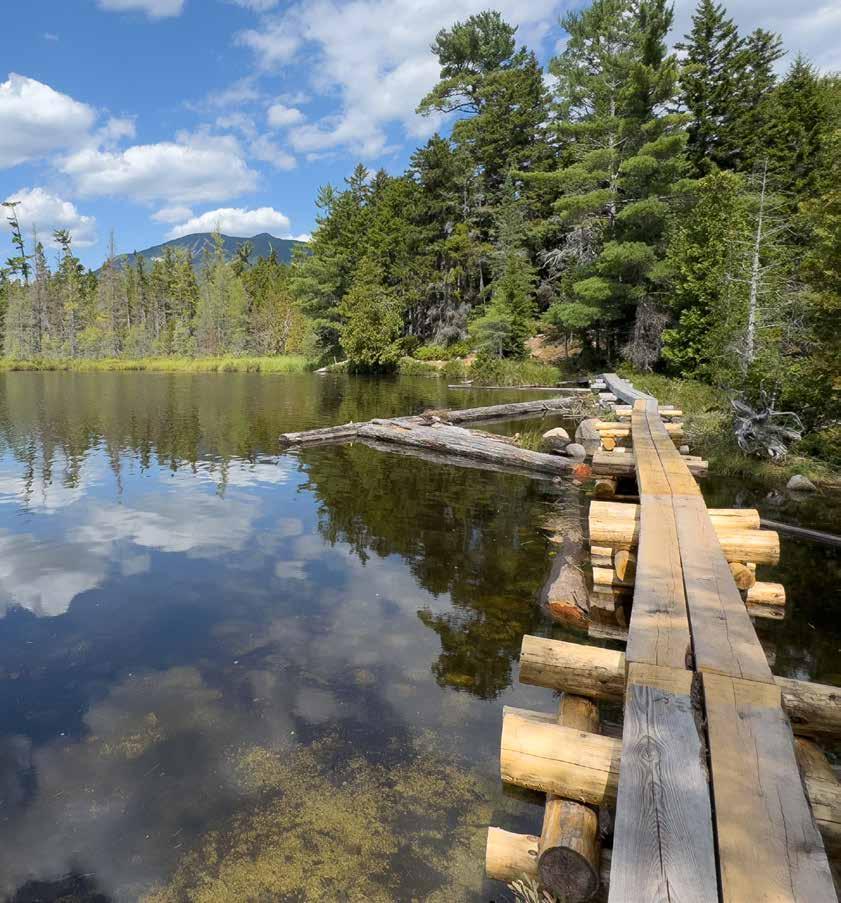
If looking for a fun, easy hike to multiple ponds, this is a great option. Depending on where you start and how many ponds you choose to visit, the hike is between a quarter mile (if just visiting Tracy Pond) and just under 3 miles (if you hike a loop that includes all of the ponds, plus Daicey Pond).
This is a quiet, peaceful place to hike, traveling through mossy forestland that feels ancient. Locked rental canoes are available at the shore of Elbow Pond and Grassy Pond, but not Tracy Pond, which is quite small.
DIRECTIONS: The park’s vast network of intersecting trails means you can start your hike from two locations: Daicey Pond Campground or a small parking area off the Park Tote Road just southeast of Daicey Pond Road. DAY USE OF THE BAXTER STATE PARK IS FREE FOR MAINE RESIDENTS, AND $20 A DAY FOR NON-RESIDENTS. DOGS ARE NOT PERMITTED. FOR MORE INFORMATION ABOUT THE PARK, VISIT BAXTERSTATEPARK.ORG.
AISLINN SARNACKI is a Registered Maine Guide and the author of three guidebooks: “Dog-Friendly Hikes in Maine,” “Maine Hikes Off the Beaten Path,” and “Family Friendly Hikes in Maine.” Follow her adventures at aislinnsarnacki.com.

COULD HORMONE THERAPY BE RIGHT FOR YOU?
BY STEPHANIE BOUCHARD




Last November, the U.S. Food and Drug Administration (FDA) announced that it was removing the “black box” warning labels from certain hormone therapy products used to treat menopause symptoms in women. Citing years of research since the infamous 2002 Women’s Health Initiative (WHI) study that gave hormone therapy a bad reputation, the FDA is now signaling that hormone therapy, in certain circumstances, is safe and effective. What does that mean, and how do women determine if hormone therapy is the right choice for them?
The original WHI was a long-term national study of cardiovascular disease, cancers, and bone breaks caused by osteoporosis. Tens of thousands of women aged 50 to 79, with an average age of 63, participated in the study. When early results indicated that estrogen-plus-progestin therapy increased the risk of coronary heart disease, stroke, pulmonary embolism, and breast cancer, and estrogen-only therapy increased the risk of stroke and showed no protection against heart disease, an uproar about hormone therapy — often referred to as hormone replacement therapy or HRT — ensued. In the hullabaloo and fear that followed, much was lost in translation, with the end result being that hormone therapy wasn’t an option offered to or even considered for and by menopausal women.
In the decades since, research has continued and the old data from WHI has been reexamined, yielding insights such as women within 10 years of menopause, under the age of 60, get the most benefit from hormone therapy with little or low levels of risk, women age 70 and older get the least benefit and benefit varies for those in their 60s. Newer research also indicates that estrogen alone doesn’t necessarily increase the risk of breast cancer, and, in fact, when applied topically, is considered safe even for many women with a history of breast cancer.
“THERE ARE STILL RISKS, BUT THIS IS WHY YOU MEET WITH A CLINICIAN AND YOU TALK ABOUT THE RISKS AND THE BENEFITS OF HORMONE REPLACEMENT THERAPY SPECIFIC TO YOU.”
While the FDA’s removal of the black box warning from hormone therapies is largely being hailed as a positive step for women’s health, the removal doesn’t mean that hormones are risk free, said Liz Duke, a nurse practitioner who operates Bangor-based Integrated Wellness, a clinic focused on hormone and bone health.
“There are still risks, but this is why you meet with a clinician and you talk about the risks and the benefits of hormone replacement therapy specific to you,” Duke said.
As the fear about using hormone therapy diminishes, the question for many women is no longer whether hormone therapy should ever be used, but whether it makes sense for them. Making that determination starts with an assessment of your personal health history and symptoms, keeping in mind that symptoms can be much more than hot flashes and night sweats, said Dezireé Worster, a nurse practitioner who operates Hampden-based Synergy Holistic Wellness, where she focuses on women’s health.
Menopausal symptoms are wide-ranging and can include heart palpitations, mood and cognitive changes, joint pain, muscle aches and stiffness, issues with urinary or reproductive functions or organs, and even itchy ears and tongues that feel like they’re burning.
The FDA’s removal of the black box warning from hormone therapy gives women and their clinicians the opportunity to be more thoughtful about symptom management, Worster and Duke said. Instead of automatically prescribing antidepressants to a 49-year-old woman who is suddenly experiencing depression and anxiety, Worster said, “we should be thinking about their hormones.”
Hormone therapy can offer relief from disruptive symptoms and may provide additional health benefits, but it is not a one-size-fits-all treatment, Worster and Duke emphasize. Guidance will evolve as research continues, underscoring the importance of individualized care. As women weigh their options now and into the future, Worster hopes the conversation keeps moving forward.
“Hopefully the knee-jerk reaction for patients, but also their providers, will be education and not fear,” Worster said.

BY EMILY BAER
Founded in 2022 by Matt and Katie Saunders, 1 Earth Composting has turned food scraps into a growing family business. It’s one that reflects both a passion for environmental stewardship and a practical, community-focused approach to sustainability.
“Katie is very ecologically conscious and I worked in restaurants my whole life,” said Matt Saunders. After moving their young family to Hampden, the couple “noticed that composting isn’t really a thing here. We saw a need and an opportunity.”
“Our business is basically the two of us, a truck, and a tractor,” Saunders said. And buckets. Dozens and dozens of bright green 5-gallon buckets.

throughout the week. Then, when it’s just about full, it’s set out for pick up.
“All you have to do is make sure your bucket is out that morning,” Saunders said. “We take care of the rest.”
And by the rest, he means 1 Earth composts pretty much anything that isn’t trash.
“We make it very easy,” he explained. “We take anything that would have been on your plate or cutting board, including things like dairy and meat, and then also coffee
LAST YEAR, 1 EARTH COMPOSTED MORE THAN 80,000 POUNDS OF FOOD WASTE, ALL OF WHICH IS BEING PROCESSED INTO DENSE, NUTRIENT-RICH COMPOST.
For 1 Earth, these green buckets are at the center of everything.
1 Earth offers weekly curbside pick up for residents in Bangor, Brewer, and Hampden. Each customer is provided with a bucket, which they keep and fill with food waste
grounds and filters, or stuff from your yard like leaves, branches, and garden waste.”
Bangor resident Katie Brydon has been with 1 Earth from the very beginning.
“Honestly, the hardest part was getting our kids to scrape their plates into the bucket,” she said. “But now they’re so into it and it's really fun to be able to talk with them about what it means in the bigger picture.”

“Education is a huge part of what we do,” Saunders said. “Once we start talking to people about why composting is important you can see it quickly starts to make a lot of sense to them.”
“There’s an amazing amount of food waste [in our society] on both the residential and commercial side of things,” he said. “And almost all of it is compostable.”
For folks who don’t live within their service area but travel to Bangor regularly, 1 Earth has two bucket exchange locations where customers can drop off food waste and swap out their bucket.
“It's flexible,” Saunders said. “You swap it out when you need to. There’s no set time or schedule.”
The exchanges are located in the Northwoods Portable Buildings lot at the Bangor Mall and Rize CoWorking.
Saunders has drawn on his experience in the restaurant industry to help grow the commercial side of the business.
“That’s a more traditional service,” he said. “We have Casella-type trash cans for restaurants and we pick them up at loca-
tions all around the greater Bangor area.”
1 Earth has also expanded their operations through a partnership with RSU 22, collecting food waste from local schools. On average, the program diverts approximately 1,500 pounds of food waste each week from area landfills.
Last year, 1 Earth composted more than 80,000 pounds of food waste, all of which is being processed into dense, nutrient-rich compost at a composting site in Surry. Working alongside partners from Chickadee Compost, Saunders carefully manages each compost pile by monitoring temperatures and turning materials throughout the year. The result is what Saunders calls “Black Gold” — a rich, high-quality compost.
“Everything we collect becomes compost,” Saunders said. “It becomes a nutrient-rich amendment that you can put into your gardens and it revitalizes the soil and makes life better for everybody.”
“A lot of people think of food waste as trash, but we don’t think of it that way. To us, it's a resource. A really valuable resource for the earth.”







WHY YOUR PELVIC FLOOR MATTERS — AND HOW TO STRENGTHEN IT

BY ANNE GABBIANELLI

Easy to overlook but essential to overall health, your pelvic floor plays a key role in posture, stability, bladder control, and core strength. More than we realize, a weak pelvic floor can play a role in a number of health concerns and ailments.
“It is estimated that over 60 percent of women over the age of 20 will have bladder leakage issues,” said Dr. Meaghan Staples of Refine Physical Therapy in Bangor. “Thirty percent of women have low back or hip pain, and over 75 percent of women will experience pain with intercourse at some point in their lives.”
The pelvic floor is basically a group of muscles we sit on, according to Staples.
“They mechanically support lots of other areas of your body and are the foundational structure to things like your core strength, hip joint health, tailbone, and low back,” Staples said.
So let’s talk about these muscles and how we can achieve healthier daily living. Oh, but the conversation is not for women only. The Mayo Clinic cited a recent study showing 16 percent of men have been identified with pelvic floor disorders.
“It can show up as bladder/bowel incontinence, pelvic pain, or erectile dysfunction,” Staples said. “Even herniated discs of the low back or deep hip pain can have a pelvic floor muscle component.”
While many sufferers have been prescribed medication, Staples said patients also “benefit from muscle strengthening, specifically to the pelvic floor complex so they can do activities without fear, worry, or pain.”
And it’s more than Kegel exercises, said Staples.
“THERE ARE STILL RISKS, BUT THIS IS WHY YOU MEET WITH A CLINICIAN AND YOU TALK ABOUT THE RISKS AND THE BENEFITS OF HORMONE REPLACEMENT THERAPY SPECIFIC TO YOU.”
“It’s learning to integrate pelvic floor motion in everyday movements and basic strength training which makes pelvic therapy effective,” Staples said.
Personal trainer and acupuncturist Renée Thibault of Movement Heals in Brewer recommends people “stop sitting so much and move your body” to help improve their pelvic floor health.
“The pelvic floor muscles are used when we urinate, have bowel movements, have sex, deliver babies, and all manner of body movement,” Thibault said. “The majority of pelvic floor dysfunction is more of a fitness issue than a medical issue, that’s why it’s critical to be actively stretching and strengthening by doing exercises like a wide lateral lunge.”
Licensed Massage Therapist Samuel Marshall of Anthony John’s Day Spa and Salon in Bangor describes the muscle group as “ingeniously complex.”
“The glute muscles and piriformis pull on the outer side of the pelvis, and in some cases can have a game of tug of war with other muscles,” Marshall said. “And when one side is ‘winning,’ the other side is complaining. This imbalance of muscle tension can offset other connecting muscles or other muscles attached to the same bone but in a different location, such as directly opposite from the tightened muscle.”
“By loosening up muscles surrounding the pelvis,” Marshall said, “we can provide some slack in the overall tension to help the body realign.”
Hippocrates, often called the Father of Medicine, practiced inversion therapy in 400 BC, a practice which Thibault promotes.
“Hands-down the most effective daily practice to support the pelvic floor as we age is to do an inversion at 10 degrees, which over time will help the organs that are most impacted by the force of gravity,” Thibault said. “Our body and our health is more valuable than anything we could ever acquire in life. Your body deserves maintenance.”
“The women I treat have a heavy focus on taking care of their families, their business, or their work,” Staples said, “so the last person they think to take care of is themselves. If you are reading this and that is you — this is your invitation to think that the better, stronger, and more confident you feel in your body, the better you can show up for those who need you.”
Try 8-12 reps of each exercise as part of your regular fitness routine.
Always consult your healthcare provider before starting a new fitness routine.
Push your hips off the ground by squeezing your glutes and your pelvic floor muscles. Hold for 3 seconds, then slowly release back to the ground.
Shift your weight to one leg and bend into the knee. Stick your butt out as if sitting in a chair, while keeping your opposite leg straight and foot planted on the ground. Hold for a few seconds.
Stand upright with your feet shoulder-width apart, bend your knees like you’re about to sit down in a chair, then push yourself back up.
BY WANDA CURTIS

DECORATE YOUR HOME WITH PLANTS WHICH ARE KNOWN TO IMPROVE AIR QUALITY.
Plants remove carbon dioxide from the air and release oxygen. Snake plants, spider plants, peace lilies, Boston ferns, and aloe vera plants can also remove formaldehyde and other toxins. It’s unknown exactly how many plants are needed to achieve a maximal effect. Air filters can also be used in combination with plants to purify the air in a home.

Spring is a great time to get rid of dirt, dust, and unwanted junk in your home. It’s also a good time to get rid of toxins. The Environmental Protection Agency (EPA) reports homeowners are exposed to a wide array of toxins in their homes each day, some of which may be carcinogens. Formaldehyde (in pressed wood, new carpets or flooring, synthetic fabrics, and paints), benzene (in glues, adhesives, cleaning products, and cigarette smoke), and toluene (in paint thinners, permanent markers, nail polish, and removers) are just a few of the toxins found in many homes today. Molds and bacteria are also present in many homes.
While spring cleaning this year, why not take these simple steps to rid your home of substances that can be harmful to your health — or at least reduce exposure.
VACUUM CARPETS FREQUENTLY USING A VACUUM CLEANER WITH A HEPA FILTER.
The American Lung Association reports that carpeting traps pollutants and allergens such as dust mites, pet dander, pesticides, lead, mold spores, dirt, and dust. Pollutants can be released into the air when carpeting is removed, during vacuuming, or when someone walks on it. Children are at increased risk of exposure to carpet pollutants because they often play on the floor. The Lung Association recommends using hard-surfaced flooring. However, if carpeting is used, vacuum frequently with windows open because harmful particles may be released into the air. Empty vacuum canisters outdoors.

LEAVE SHOES AT THE DOOR.
Scientific studies have shown that shoes can transport tens of thousands of harmful bacteria which can remain on shoes for weeks. Bacteria identified on shoes have included Enterococcus and E. coli, which live in the intestines of humans and animals. Staphylococcus Aureus (which can cause MRSA) and C. difficile (which causes bloody diarrhea and fatal infections) have also been found on shoes. Other substances that may be tracked into homes include lead, pesticides, and allergens. Remember children are at higher risk because they play on the floor. So leave those shoes at the door.
5

4
STOCK YOUR KITCHEN WITH SAFE COOKWARE.
Any cookware that’s scratched, cracked, or damaged should be discarded because harmful chemicals can leak into food. PFAS chemicals are a class of chemicals that have been used to make non-stick cookware. Concerns have been expressed about certain PFAS chemicals and a possible link to major health issues, including cancer. Many experts now recommend only using cast iron, steel, or ceramic cookware.
SWAP PLASTIC CONTAINERS FOR GLASS OR STEEL ONES.
Tiny pieces of plastic called “microplastics” may break off from plastic dishes, cups, containers, or bottles and lodge in blood vessels. This can increase the risk of strokes and heart attacks. Some plastics may also contain harmful chemicals. Switch to glass or stainless steel when possible.
6
KEEP YOUR REFRIGERATOR CLEAN AND COLD.
A warm, dirty refrigerator is a perfect breeding ground for bacteria and mold. Dispose of any outdated food and throw out produce that is turning brown. Keep meats and dairy products at the proper temperature. Install a thermometer in your refrigerator. Maintain the temperature at 40 degrees F or below, per FDA guidelines.
7
REPLACE KITCHEN SPONGES FREQUENTLY.
Kitchen sponges can harbor bacteria and transmit it to everything they touch. It’s important to clean sponges often and replace stained

Many plastic shower curtains, especially those made from polyvinyl chloride (PVC), contain harmful toxins which can get released into the air and inhaled, causing respiratory issues and headaches. Plastic shower curtains also breed mold. Swap plastic shower curtains for cloth ones which can be washed, or replace with glass.
9
Many household appliances and electronic devices emit electromagnetic fields (also known as EMFs). Exposure to high levels of EMFs has been associated with an increased risk of childhood leukemia. Unplugging electronic devices, when not in use, can reduce exposure. Moving electronic devices (such as digital alarm clocks and wi-fi routers) away from beds can reduce exposure at night. Smart meters on outside walls and high voltage power lines also emit EMFs. Moving beds and cribs to the opposite wall can also reduce nighttime exposure.

10

Carbon monoxide is a colorless, odorless gas that’s emitted from wood stoves, pellet stoves, gas stoves, gas hot water heaters, gas clothes dryers, kerosene heaters, generators, barbeque grills, and cars. Levels can build up unnoticed causing serious health issues and even death. Install carbon monoxide detectors and ensure adequate ventilation when using appliances that emit carbon monoxide.

BY JODI HERSEY

Art is far more than a pretty painting, a finely detailed sculpture, or a comforting arrangement of music. Research shows art can be a catalyst for healing. St. Joseph Healthcare in Bangor believes so strongly in the benefits of art that it has created a Healing Arts Program. Overseen by the Healing Arts Commission, this all-volunteer group is dedicated to strategically displaying paintings and other works of art throughout the healthcare organization’s campuses.
“We have art hung in very crucial areas of the hospital to try to enhance the healthcare environment,” said Mary Hollister, a Healing Arts Commission member.
According to the University Hospital Foundation, studies show exposure to the arts can reduce stress, decrease the need for pain medication, and even shorten hospital stays. For doctors and caregivers, art is also beneficial. According to cedars-sinai.org, art is linked with improving the ability to handle demanding, stressful jobs.
“I think every one of us is an artist at some level, whether it is producing art or appreciating art,” said Jeff Wahlstrom, a volunteer who joined the Healing Arts Commission two years ago.

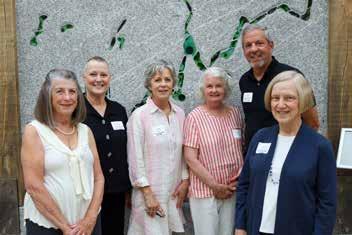
Wahlstrom is one of six members who make up the commission at the hospital. The group is in charge of acquiring art, as well as rotating art exhibits, permanent collections, sculptures, music, and performances. They are also the ones who manually remove art and hang up new work; all of which are created by artists from Vacationland.
“There are so many great Maine artists that don’t get the recognition they deserve so it was important to us to use Maine artists,” explained Hollister. “I think what is important to us isn’t necessarily stylistically what the artist creates, but the quality of the work. We look for artists who do quality paintings, prints, drawings, and photographs that will relate to the people who will visit the hospital.”
Some of the art displayed is owned by the hospital; other pieces are on loan from the artists themselves. There are rotating exhibits at the gallery at St. Joseph Internal Medicine located at 900 Broadway. Meanwhile, inside the main hospital at 360 Broadway, patients, visitors, and staff will
see colors bursting from pieces located in the small lobbies outside the elevators on the fourth, fifth, and sixth floors. There you will find artwork of flowers in various stages of bloom by artist LeAnne Mallonee and landscapes filled with trees, green grass, and water by artist James Linehan.
“The group of paintings I painted is from the 1990s in [the village of] Isleford,” Linehan said. “I gave the paintings to the hospital in honor of my parents, John and Maryrose Linehan of Cape Elizabeth.”
According to mayoclinic.org, visual art like drawings or paintings can provide enjoyment and distractions from things like pain and anxiety, while listening to music might help improve blood pressure and sleep quality and can even help keep one calm and relaxed during a medical procedure.






Besides being an artist, James Linehan spent four decades of his 47 years teaching art at the University of Maine. He was also a patient at St. Joseph Hospital on the very floor his artwork is displayed.
“It was so nice to revisit these paintings when I was recovering,” said Linehan. “I feel such a kinship with the place.”
As much as he enjoyed teaching, Linehan said he is very happy to be retired and now painting fulltime.
“I admire the hospitals’ program of holistic healing and using art as one of the tools for aiding healing,” he said. “I commend the Healing Arts Commission for doing a great job and being a great host for artists in the region.”
The Healing Arts Program at St. Joseph Hospital also has a partnership with the Bangor Symphony Orchestra, where a cellist and violinist play for patients, visitors, and staff each week.
“I can give medication. I can reposition a patient. But when the BSO plays their beautiful music, they give something to a patient that no amount of nursing skills can provide,” said staff nurse Naomi Freedberg. “I choose to work on Tuesdays because I know that is when they always come. When I see the BSO musicians show up on our floor, it creates a calmness for me in addition to what I know it’s going to do for patients.”
Wahlstrom and the other members of the Healing Arts Commission met recently to hang up new pieces. He said it’s not uncommon to overhear people remark on the artwork while traveling through the hospital corridors.
“It’s really rewarding to see how excited people are and how much they appreciate it,” Wahlstrom said.
“It’s also exciting to see the looks on their faces as they make their way down the hallways sometimes to an appointment they don’t want to go to and are not looking forward to and they have an opportunity to see some of the best art in the state.”
A Maine hospital teaming up with Maine artists, all in the hopes of offering comfort and improving the health and wellbeing of patients, visitors, and healthcare workers alike.


A portrait of “Bangor’s First Surveyor” Park Holland hangs in the Bangor Historical Society. (Right) Holland’s 1797 Field Book. “PARK HOLLAND’S FIELD BOOK 1797” IS COURTESY OF THE BANGOR PUBLIC LIBRARY. AVAILABLE FOR VIEWING AT DIGICOM.BPL.LIB. ME.US/BOOKS_PUBS/4.



By Stephanie Bouchard


the Bangor Historical Society reopens in May, it will unveil a new exhibit marking the nation’s 250th anniversary.
Among the memorabilia are items belonging to a Revolutionary War soldier who took part in some of the conflict’s most significant operations and whose contributions to Bangor are still evident today.
Park Holland was 23 years old when in the fall of 1776, he left his home in Petersham, Mass., and took part in the military actions known as the battles of Long Island, Harlem Heights, and White Plains.
An officer of the 5th Massachusetts Regiment, Holland would later take part in the Battles of Saratoga and witness the British surrender there. He helped build Fort Putnam at West Point, telling his nephew in a letter written in 1832, “Your father and myself both then being subaltern officers, with fifty men struck the first stroke towards building this fort.” And he was present for the construction and placing of the ingenious iron chain across the Hudson to block British ships.
He was stationed at White Plains, N.Y., when the British surrendered at Yorktown, Va., effectively ending the war.
“The consequences,” he wrote to his nephew, “are known to every American, but very few can now realize the joy and gratitude which that event caused every heart to feel.”
Holland’s intersection with significant historical events of our country’s founding didn’t end with his Revolutionary War service. Back home in Petersham, Mass., he was chosen to be the captain of the local militia, and when Daniel Shays and his Regulators ended their “rebellion” in Petersham, he was on hand for the surrender.



But it was the relationships Holland formed during his war service that would shape the rest of his life. In the years immediately after the Revolution, they led him to a new line of work that would leave a lasting mark on the city of Bangor.
That work was surveying. His first surveying foray into Maine was in 1783, when he joined his former regimental commander to survey the area around the St. Croix River and Passamaquoddy Bay. In the years that followed, he surveyed a number of other locations in Maine, but it was his survey of the settlers’ lots in Bangor in 1797 that earned him the moniker of “Bangor’s first surveyor.”
His survey of the lots of the city’s first settlers form the basis of Bangor’s land records and still impact land transactions and legal descriptions today.
“If you own old property in Bangor,” said Matt Bishop, Bangor Historical Society’s curator and operations manager, “a lot of them are still kind of using his same original survey.”
Holland’s survey of Bangor influenced the placement of streets and the overall design of the city, Bishop said. Without Holland’s survey, he said, “the city might not be laid out the same… Bangor might look a little bit different.”
Holland also surveyed many communities in the area, including in and around Orono and Hampden, so his impact across the region is wide-ranging, Bishop said.
“He definitely did leave a lasting legacy.”
Holland’s survey map of Bangor and a portrait painted of him a handful of years before his death in 1844 will be on display as part of the historical society’s exhibit opening, Bishop said.
The Bangor Public Library also has some Park Holland materials, including his 1797 field book, which can be accessed by the public by going to the library’s local history and special collections section. The field book is also available for viewing online by going to digicom.bpl.lib.me.us.
Park Holland is buried near the bell tower in Bangor’s Mount Hope Cemetery, a location he surveyed. In 1888, the Massachusetts Society of the Cincinnati, an organization formed by commissioned officers who served in the Continental Army or Navy during the Revolutionary War, placed a memorial stone at his gravesite. Descendants of those officers, including Park Holland’s, are members of that society to this day.

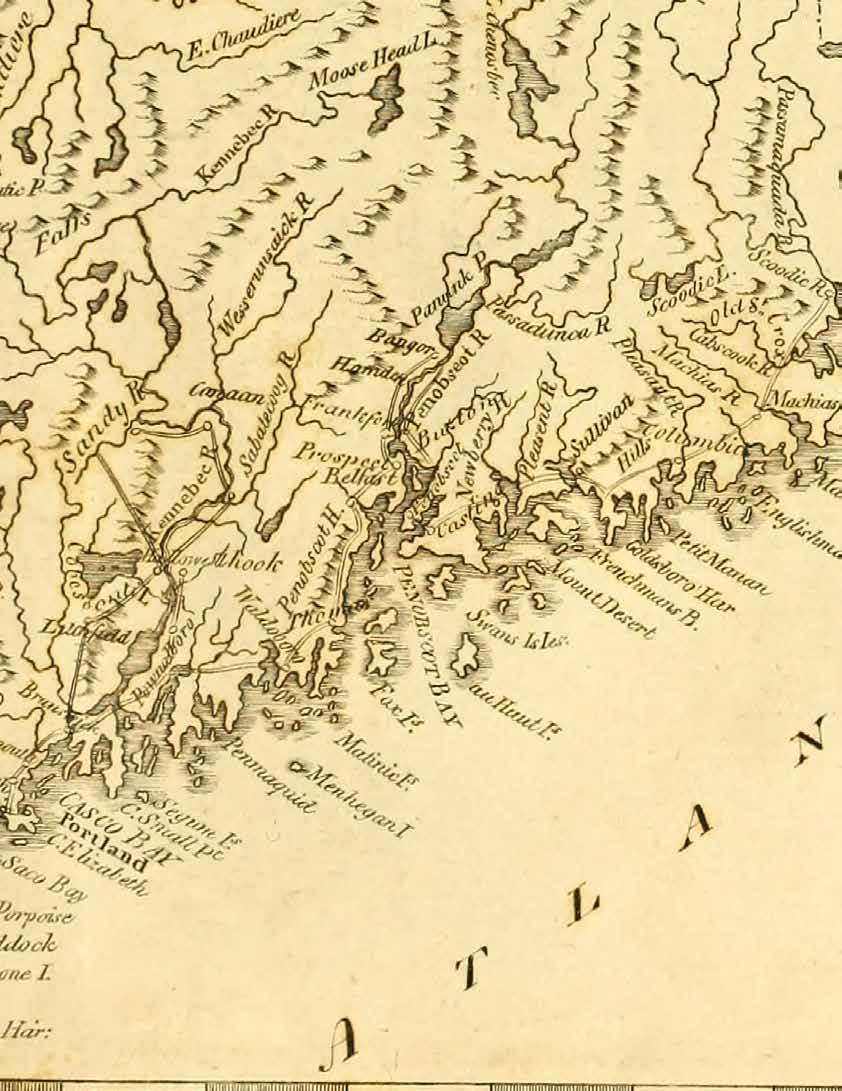





By Richard Shaw
only 10 Revolutionary War patriots from Eastern Maine to honor is like trying to pick your favorite child.
Every town seems to have sent good men off to fight in the seven-year struggle. The fortunate ones who returned became honored members of their communities, marching as grand old citizens in Fourth of July parades.
The exact number of men from the District of Maine (then part of Massachusetts) who fought in the Revolutionary War is not specifically known, but records indicate a significant number participated across various units, and according to Maine.gov, about 1,000 Maine men lost their lives during the conflict.
Approximately 198 men of color fought in Maine units, alongside Native Americans and other minorities. The Maine Old Cemetery Association is a good source for further research, along with local libraries, museums, and historical websites. The Bangor Historical Society will resume Mount Hope Cemetery walking tours in the spring. Sharp eyes might spot the grave of a patriot or two.

The founder of his town’s first newspaper, the Bangor Register, in 1815, Edes was an early advocate of independence. Arrested by Gen. Thomas Gage after the Battle of Bunker Hill, the Boston native was taken prisoner on June 19, 1775. He later settled in the Maine frontier.
Burial: Mount Hope Cemetery, Bangor
Before establishing the community now named Eddington in 1784, this military officer served in the French and Indian War and American Revolution. While living in Nova Scotia, he resisted King George III's rule, and later led the Battle of Machias in 1777.
Burial: Jonathan Eddy Cemetery, Eddington
Last year’s news that the Kennebec Road home of a Revolutionary War officer from Hampden was added to the National Register of Historic Places had people reading his impressive war record. Check out the graves of two British soldiers, who died in the War of 1812, while visiting Johonnot's remains.
Burial: Old Burying Ground, Hampden
This patriot’s gravestone inscription relates his military service in unusual detail, chronicling his life from being born in Boston, enlisting on April 19, 1775, and in May 1787, then emigrating to Brewer. Blake served in the militia, from lieutenant to major general.
Burial: Tomb Cemetery, Holden

Corinth’s first settler in 1793, Skinner previously saw extensive Revolutionary War service. The future farmer was a corporal in Capt. Samuel White’s company and a sergeant in Col. John Daggett’s Massachusetts regiment.
Burial: Boutelle Cemetery, West Corinth
This town founder was much more than the local justice supposedly cursed by a witch whom he sentenced to death. An outline of her leg and foot famously appear on his tombstone. Serving in the 5th Maine Regiment, he guarded Fort Pownall and helped lead the illfated Penobscot Expedition in 1779.
Burial: Buck Cemetery, Bucksport


Someone should make a movie about this patriot’s exciting life. He witnessed the 1779 siege of Bagaduce, now Castine, then returned to Sullivan, where British sailors burned his home and took him prisoner. Released from Halifax and New York prisons, he died en route back home in 1781.
Burial: Doanes Point Cemetery, Sorrento
A Scottish-born officer with the Massachusetts militia, this patriot served under George Washington during the Revolutionary War, when he recruited Indian tribes in Eastern Maine, and urged them to ally themselves with Americans during the war.
Burial: Treat Island, Passamaquoddy Bay
Six ships and a bridge have been named in honor of this legendary military officer. Among his exploits was the 1775 capture of the British schooner HMS Margaretta, which inspired a history-based festival held each June in Machias.
Burial: O’Brien Cemetery, Machias
This amazing patriot began his coastal service at age 15, and lived to be 101. He served in Col. Samuel McCobb’s Massachusetts Militia, was one of the last six surviving Revolutionary War veterans, and one of the few to be photographed.
Burial: William Hutchings Cemetery, Penobscot















































































































Then & Now
By Richard Shaw
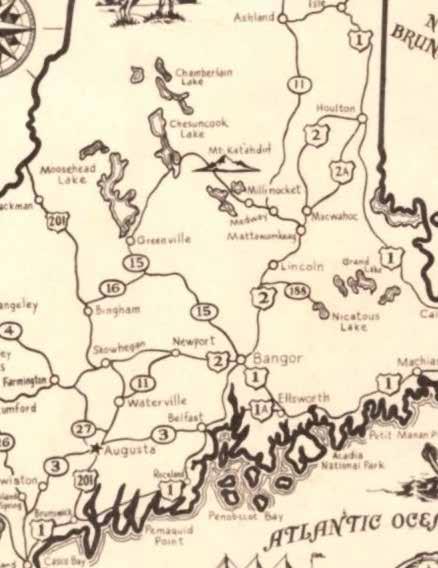
(Background) Popular souvenir Maine map postcard, circa 1952.
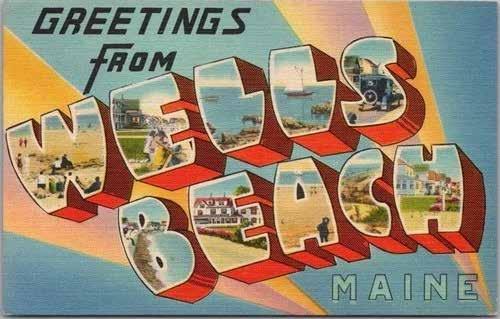
(Top right) A 1953 postcard from Wells Beach in York County.
(Right) A multi-paneled picture postcard circa 1925 from Bath. IMAGES COURTESY OF RICHARD SHAW

around Maine today and you might think the British never surrendered control of the 13 original colonies in 1783 with the Treaty of Paris.
Five of our 16 counties — Cumberland, Oxford, Somerset, York, and Lincoln — were inspired by U.K. locations, as were numerous mountains, lakes, and avenues.
Apparently these names were so well known by the American Revolution’s end that most of them remained on pre-GPS maps and signs. In Bangor alone, which sent soldiers off in the seven-year conflict, several streets bear British-inspired Maine county names, in addition to Essex, a ceremonial east England county.
The state’s two other largest cities, Portland and Lewiston, also share British street names. Included are Avon, Berkeley, Epping, and Nottingham. The list may grow as subdivisions are added with lanes and cul-de-sacs that bear exotic foreign names. Apparently all is forgiven from a war that claimed an estimated 25,000 patriots, some from the frontier of Maine.
“... Many of Maine's earliest towns (such as our first three towns, Kittery —
named after a manor in Devon in southern England — and York and Wells) are named for places in England,” explained Nora Flaherty in a 2015 Maine Public commentary. “Yet other towns — such as Leeds in Androscoggin County — are named after English cities and towns in honor of people the settlers knew...”
“Sadly, we don’t know — or at least we don't know for sure — the reasons why several Maine towns and cities were named after the foreign places they were,” Flaherty continued, citing Ava Harriet Chadbourne’s book “Maine Place Names and the Peopling of its Towns” as her source. “These include a lot of English town names (such as Acton, Argyle, Guilford, Falmouth, Newcastle, and Portland)...”
The list is seemingly endless, but notably, no British name appears on the much-parodied international sign post in Lynchville, erected in the 1930s to boost tourism, while such Maine places as Mex-


ico, Peru, China, and Denmark stand out among the nine that do.
Many historians would probably name the following places as among the state’s leading British-inspired locales. It is no coincidence that all are located in midcoast and southern Maine, the first regions to be settled by Europeans.
Home to Bath Iron Works and the Maine Marine Museum, this Sagadahoc County community of more than 8,800 was settled as a town in 1781 and as a city in 1847. Its British sister city, Bath, Somerset, population 94,000, is famous for its Roman baths.
Incorporated as a town in 1775, this Lincoln County town of more than 1,800 was settled in the 1630s by fishermen and about 50 families. Its most famous native daughter, FDR Cabinet member Frances Perkins, was honored in 2024 when her ancestral home here was named a national monument.
Wikipedia describes this town of more than 2,800 as a fishing and resort area. Included in its archaeologically rich boundaries are New Harbor, Pemaquid, Round Pond, Bristol Mills and Chamberlain, all located in Lincoln County.
(Top) A 1920’s postcard from Phillips, incorporated in 1812.
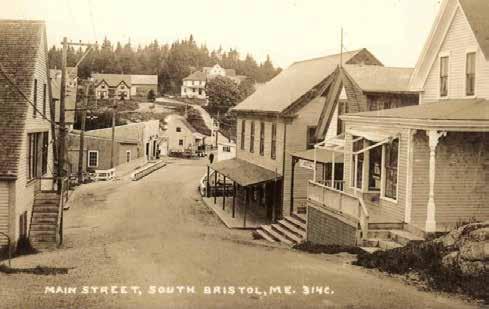
(Middle) Image of South Bristol, circa 1920.
(Left) A Scarborough Downs souvenir postcard postmarked 1955.
IMAGES COURTESY OF RICHARD SHAW
This Cumberland County town of nearly 9,000 was incorporated in 1849. It is home to North Yarmouth Academy and 12 properties listed on the National Register of Historic Places. Cousins Island and its proximity to Freeport and Portland are among its selling points.
Just south of Portland lies Maine’s most populous town, listed in the 2020 census as having a population of more than 22,000. Settled in 1635, incorporated in 1658, its history dates to the 1675 King Philip’s War. The former Scarborough Downs Race Track has been converted to a multi-use facility.









By Richard Shaw
sign on the counter of a Bangor-area convenience store hit me like a ton of bricks, or should I say a bag of quarters.
“Goodbye pennies!” it announced. “We are now rounding your change. Cash rounded up or down to the nearest nickel.”
I had already heard the news that the last U.S. penny, after a 232-year run, was being minted in Philadelphia on Nov. 12, 2025. Every president in my lifetime seems to have spelled doom for the Lincoln head coin, but it took our 47th chief executive to finally signal curtains for Honest Abe.
“For too long, the United States has minted pennies,” Donald Trump said, “which literally cost us more than 2 cents. … Let's rip the waste out of our great nation’s budget, even if it’s a penny at a time.”
Without getting into the weeds of politics and economics, allow me to share a few memories of the shiny penny. I wish I had a nickel, or even a one-cent piece, for every time I have picked up that coin off a sidewalk. Each penny had a special place in my glass jar, and when it was full, I would deposit them in a savings account.

In the late 1950s, while growing up on the Queen City's East Side, I learned how far a Lincoln Wheat Cent could be stretched. Percy Cameron, proprietor of the Little City IGA on Center Street, allowed me and my friends to paw through root beer barrels and jaw-breaker candy, which we would consume in the
Longfellow School playground. Three cents bought a thin chocolate bar, and 15 cents a bottle of soda.
John Nelligan, a lifelong Bangor resident, recalled the day a man walking on his street saw him picking up a penny off the pavement. Although only a boy, the memory never left him.
“He looked at me and said, ‘Young man, when you find 99 more of those coins, you will have a dollar,’” he recalled. “And another thing about the penny — that is what a returnable bottle was worth at the time.”
Children of another generation found odd ways to use the penny. One game involved placing a copper coin across a trolley track and seeing how contorted Lincoln’s face became after a car ran over it. Even Bangor’s Hannibal Hamlin, Abe’s first vice president, might not have recognized him.
The penny found itself at the center of many local events, not always happy ones. After a December 1933 Hampden fire claimed the lives of four marathon dancers, coins from a cash box were found melded into a cross measuring 3.75 by 4.5 inches. When it was displayed in a downtown window, many of the thousand spectators remarked on its religious significance.
In downtown Bangor, pennies also figured in the October 1937 shooting




of the Brady Gang by FBI agents. When funeral home workers tossed leader Al Brady’s bloodied body into a police wagon, stolen coins fell from his pockets onto Central Street. The compulsive gambler may have kept pennies with which to win, or maybe he liked having them for good luck — which ran out in Bangor.
Quotations about the penny are numerous. Perhaps my favorite is by political satirist P.J. O'Rourke, who said, “A penny will not buy a penny postcard or a penny whistle or a single piece of penny candy. It will not even, if you're managing the U.S. Mint, buy a penny.”
I have a hunch, though, that we will miss dropping that coin onto store counters, or picking it up off supermarket parking lots. When it stops circulating, that is, which may be far into the future.

COURTESY
PUBLIC LIBRARY
(Top right) Pennies from a dance hall fire melted into cross. Story from Bangor Daily Commercial, Dec. 13, 1933.
COURTESY OF BANGOR
PUBLIC LIBRARY


BY EMILY MORRISON
I WAS THE KID who always wanted to unwrap a dog for Christmas. Every year, I inspected the packages under the tree, hoping to find one bigger than a breadbox with a few airholes in it. Eventually, I read the writing on Santa‘s wall — he was never gonna deliver a dog, but if I wrote a report about responsible cat ownership, my parents might take me to the humane society to rescue an impoverished kitten.
Apparently, my research impressed them so much that, for 16 glorious years, Aggie called my parents’ basement in the winter and the garage in the summer “home.”
And I called myself a cat person.
After Aggie passed, I was old enough to buy my own puppy for Christmas, and when I saw that golden retriever in the arms of one of my students (she brought in the last one in the litter as a discount puppy), I fell in love for the second time in my life.
Unfortunately, eight short years after Ryan stole our hearts, he passed away. By then, I was a mother of three and full-on dog lover. We had added to our brood with a lovable labradoodle named Benny, who wasn’t as well-behaved as Ryan, but Ben had a goofy kind of grace that made you forgive him for rummaging through the trash and emitting the world’s most noxious dog-gas (due to the rummaging).
For the last decade, Ben has been the peanut butter to our family’s jelly. He’s the savory substance that gives us unconditional love and makes our lives deliciously complete.
Recently, after an idyllic run through the blueberry fields, Ben limped a little. Though it doesn’t happen often, Benny occasionally favors his back leg, so I chalked it up to arthritis and moved on.
When his limp lingered, we took him to the vet, only to discover a partial tear in his right hind leg and a full tear on his left. Our options were to pay for an expensive tibial plateau leveling osteotomy (TPLO) or let it go and see how well our dog could compensate with a shaky back leg or two.
I should tell you that I’m not the kind of person who can actually “let things go.” I love my dogs as much as my children,
so there was really no debate. As a dog mom, I’ve discovered a strange sort of symmetry to my life.
Santa may not have brought me a puppy, but he gave my children Benny’s knee surgery for Christmas.
Light on presents and heavy on dog duty, my daughters split the day shift; my son took the afternoon; and my husband and I handled the overnights (though one of us slept with noisecancelling headphones and needed to be reminded that there is no “I” in “We”).
One chore, med, and ice chart later, the Christmas gift that kept on giving turned into a solid 8-12 weeks of doggie daycare.
Around this same time, my son discovered his creaky knees weren’t holding up so well. More pain medication, ice, stretches, and charts ensued.
Here’s a true fact: when your 18-year-old kid shares the same ice pack as your 10-year-old dog, you realize motherhood is kinda like nursing. Add in two or three basketball games a week, early morning dog walks, menopausal mood swings, and that’s where I’m at — the seventh circle of mid-life.
But this doesn’t mean I’m not happy.
Since my 22-year-old daughter graduated from college and moved back home with her chef partner, I’ve eaten well. How many people can say at the end of every day that their three grown children, plus one bonus kid, share a meal and a movie before bed?
Probably not many, but I can. Honestly, these two- and fourlegged creatures are the best present I’ve ever received.
Yes, trying to be a good dog- and human-mom is hard, but when my husband takes the noise-canceling headphones off and the dogs out before setting the coffee beside the bed, I feel like I can wake up and do this taking care of pups and people all over again.
And it’s better than Christmas.