































By Elsie Griffiths, Bangkok Patana Student, 2010-2025

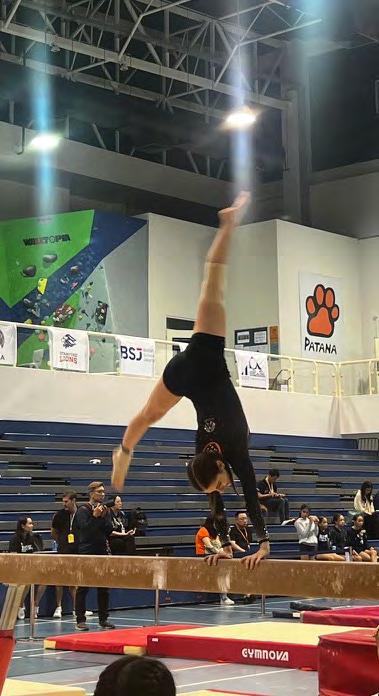
Iwas three when I moved to Bangkok, and it was the best place my parents could have moved us to. The city and school have been invaluable to my personal development. I have had many opportunities to explore all my passions and try new things which have ultimately shaped who I am. From dressing up as an Egyptian to being knee-deep in the Kaeng Krachan river, these are just a couple of the experiences I have encountered at Bangkok Patana. Spending many hours in the gymnasium has been a huge part of my childhood. Being mentally and physically pushed taught me dedication and commitment. The close relationships I’ve formed with my coaches mean the world to me. They taught me Thai, helped me balance my training hours with school, always made me laugh and have supported me like family. I would not
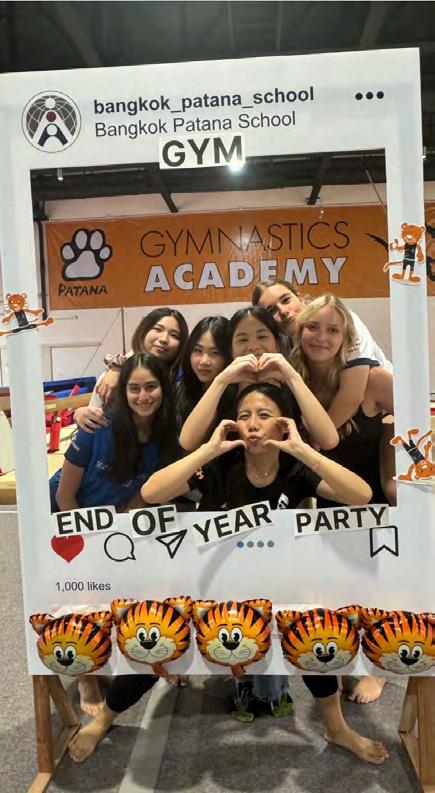
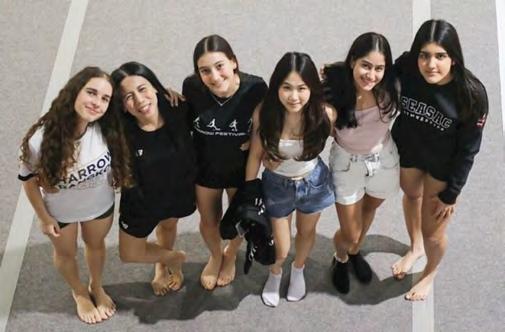
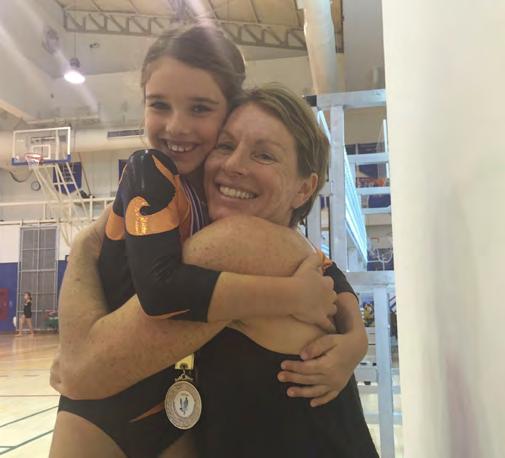
be the strong person I am without them. I will miss this team a lot when I leave, but I know my second home will always be here for me.
Some of my favourite memories come from the small interactions I have had with people in the community. Dancing to Thai songs with the housekeeping staff when I stay late in Seniors and chatting with the lovely canteen ladies, make Patana so special to me. The same can be said for the wonderful art technicians who always support me when I’m rushing around trying to perfect my pieces (sometimes fuelling me with my favourite Thai desserts!).
Another thing I love is the global community. I have formed strong relationships with other international school students through Drama and Gymnastics trips abroad, and I will treasure these friendships for life.
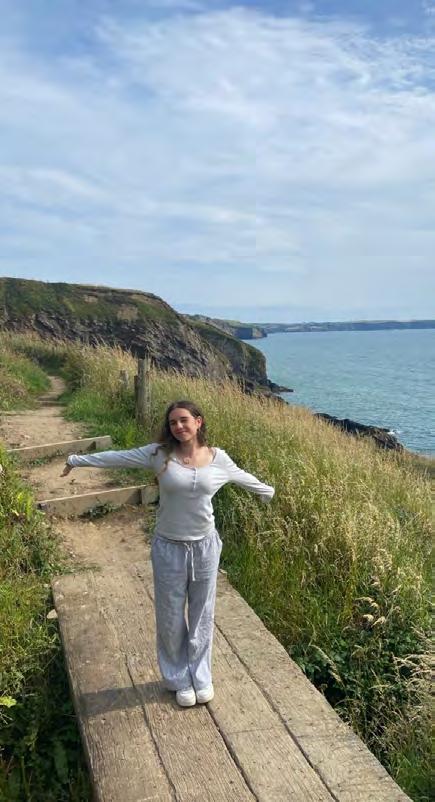
Even the rigour of the IB has shaped the way I think and how I approach challenges, encouraging me to think critically and be resilient.
After fifteen years here, Patana has set the bar incredibly high for what a school can be. I am so grateful for all my teachers, coaches and especially my parents, who have supported me through every performance and competition. As I get ready to walk across the stage and graduate, I am filled with pride and accomplishment and I am excited to carry everything I’ve learned here into the next chapter of my life. Perhaps one day, I might be one of the Alumni stories as featured here. The articles also chronicle the experience of our community and I hope they give you good insight into spirit of Patana.
643 Lasalle Road (Sukhumvit 105)
Bangna Tai, Bangna
Bangkok 10260 Thailand
Tel: +66 (0) 2785 2200
Email: reception@patana.ac.th www.patana.ac.th
Editor: Sneha Mathew
Tel: +66 (0) 2785 2411
Email: snma@patana.ac.th
Advertisement: Finn Balslev
Tel: 081-866-2577
Email: finn@scandmedia.com
Design & Production: Scand-Media Corp., Ltd.
Tel: +66 (0) 2943 7166-8 www.scandmedia.com
Bangkok Patana Magazine is the termly publication of Bangkok Patana School published three times per year and distributed to 2,000 members of the School community. Reproduction of articles, artwork and illustrations by written permission only. This magazine is printed on recycled paper.
Bangkok Patana School


By Navina Ongvasith, Nutsha Charatkulangkun, Rinradeekarn Ratanatraiphob, Year 11

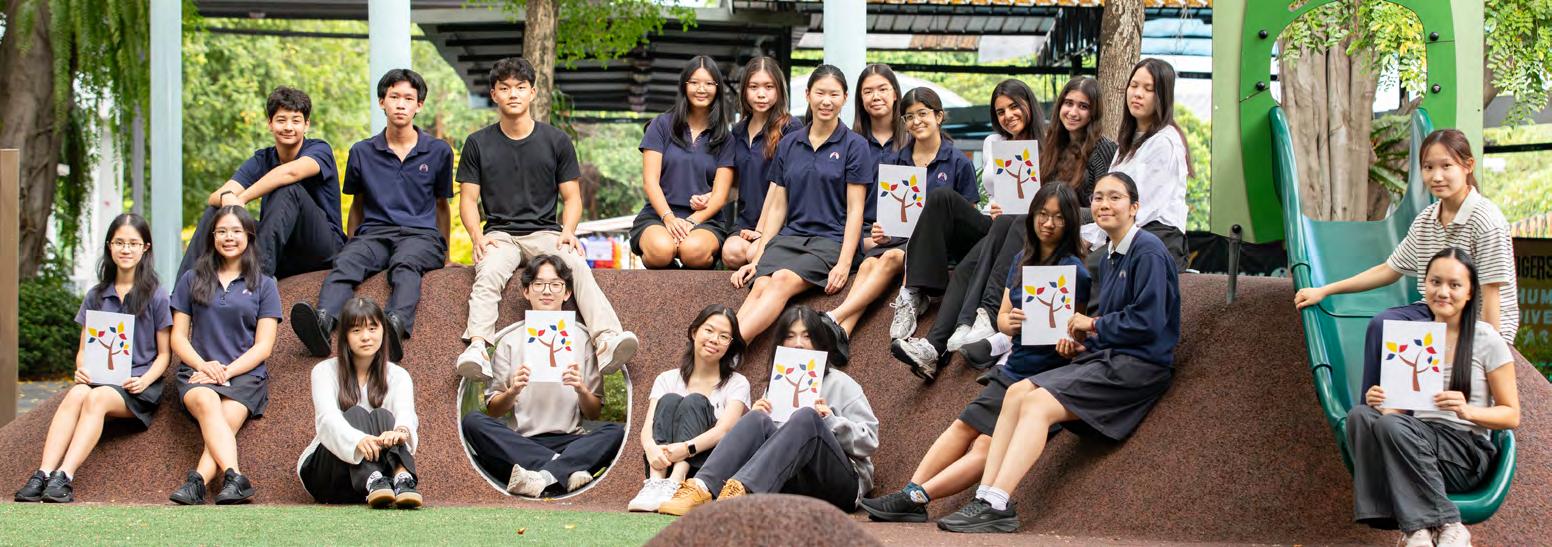
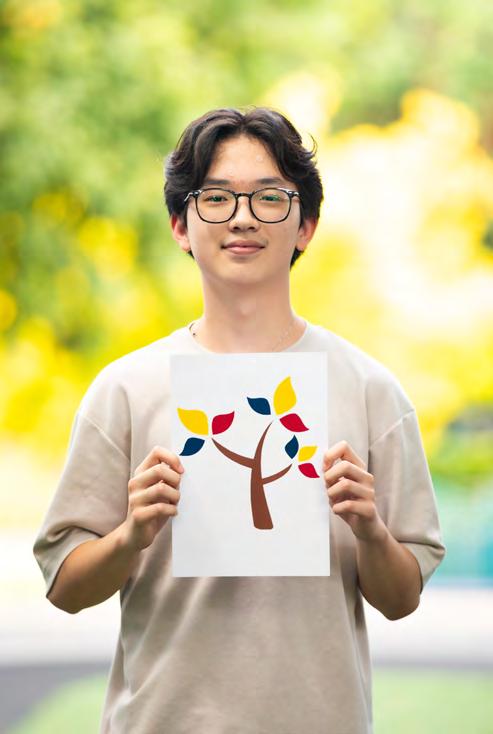
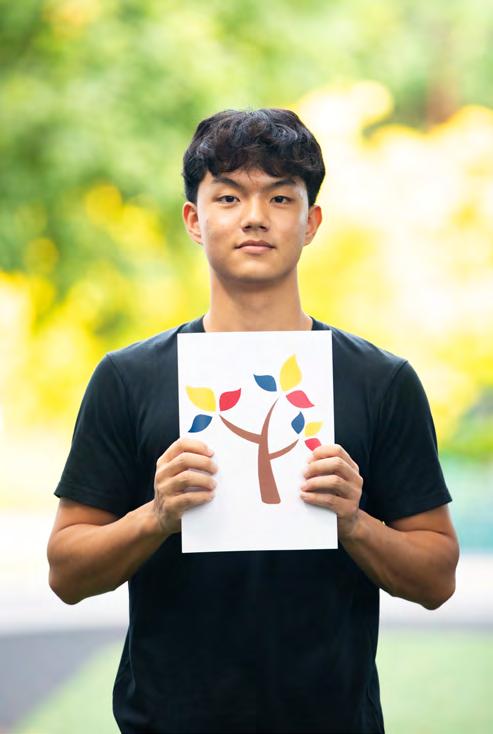
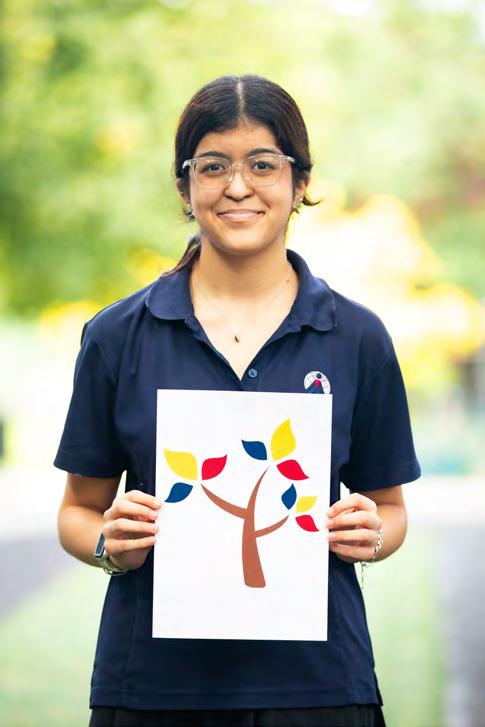
We are excited to introduce the new cohort of Well-Being Ambassadors (WBAs) for the 2025/26 academic year. This student-led programme includes representatives from Years 10 to 13 who are passionate about supporting the well-being of the Bangkok Patana community.
As ambassadors, we aim to be a supportive presence for our peers; offering meaningful guidance or simply being a listening ear. All members have completed two terms of training with the school’s Social and Emotional Counselling department, equipping us with the tools to provide thoughtful, empathetic support to those who may seek it. Now entering its third year,
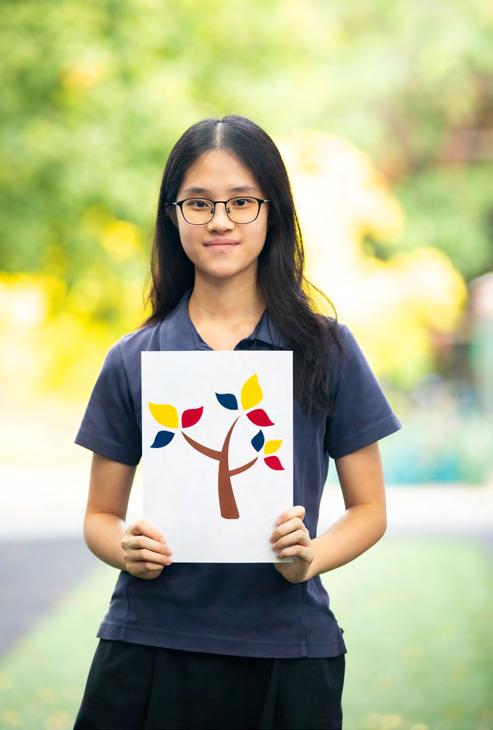


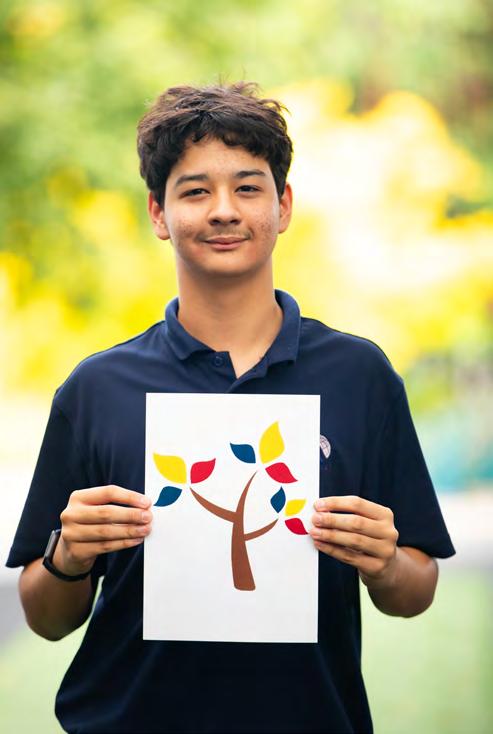
the programme continues to grow and evolve. Our goal is to help foster a school environment where every student feels heard, respected, and valued.
Being a Well-Being Ambassador is much more than a title. While we are primarily based in the Hub, our role extends beyond any one space. We strive to maintain a welcoming, safe environment where students can feel comfortable sharing their experiences and connecting with others.





Many students will already be familiar with the Hub, especially during lunchtimes, where we host board games, puzzles and casual conversations. WBAs actively take part in these activities while also being available to talk or offer support. This setting encourages meaningful interaction across year groups and strengthens the sense of community within the school.
In addition to our presence in the Hub, WBAs play an important role in helping Year 7 students transition from Primary to Secondary School. Each year, we introduce ourselves to the new cohort through our fun-filled Well-Being Ambassador games. These activities not only bring the Year group together but also highlight the support networks available to them from Day One.
Well-Being Ambassador trainees receive strong support and guidance throughout their time in role. Under the mentorship of the senior well-being team, new members attend weekly onehour sessions over two terms. The training covers a wide range of topics, including bullying, exam stress, friendship challenges and family issues.
We also engage in scenario-based training to prepare for real-life situations we may encounter. Sharing personal stories fosters empathy and encourages active listening, two key qualities for any Ambassador. A critical focus of our training is safeguarding and confidentiality, both of which are essential to maintaining trust within the community. In short, being a WellBeing Ambassador is a serious responsibility, and one we are proud to carry.

We are especially looking forward to the Year 7 Well-Being Ambassador Games taking place on 23rd January. This will be an opportunity for the whole of Year 7 to take in a fun and completive activity led by the Ambassadors. This will be an opportunity for the Ambassadors to make themselves known and promote Well-Being across the school whilst hopefully having a blast! In a more peaceful note, we are also planning to introduce Morning Meditations to the HUB before registration - this will be an opportunity for some calm and tranquility before the start of what can be hectic school days, we will be advertising this to all year groups shortly through the daily bulletin.



28th September 2025









By Carly Peart, Cross Campus Vice Principal, Professional Learning and Rachel Preston, Vice Principal, Learning and Curriculum, Primary School
Simone Biles is undoubtedly a phenomenal gymnast, with 11 Olympic medals and 30 World Championship medals to her name. Yet, despite being arguably the best gymnast in the world, she still trains every day to hone her skills. It’s hard to imagine she needs it, but that constant drive to refine and improve is what keeps her at the top of her game. The same is true in most professions: Taylor Swift still does daily vocal training even after years of performing and actors rehearse for hours before stepping on set despite decades of experience.
Teaching is no different. As Jim Knight reminds us, “When teachers stop learning, so do students.” At Bangkok Patana, this belief underpins our approach. The quality of a child’s education is inseparable from the professional growth of their teachers and just like elite athletes or artists, our teachers continually sharpen their craft to meet the evolving needs of our students. Pedagogy is more than a synonym for teaching: it’s about understanding how children learn best and using research-based strategies to help every child succeed.
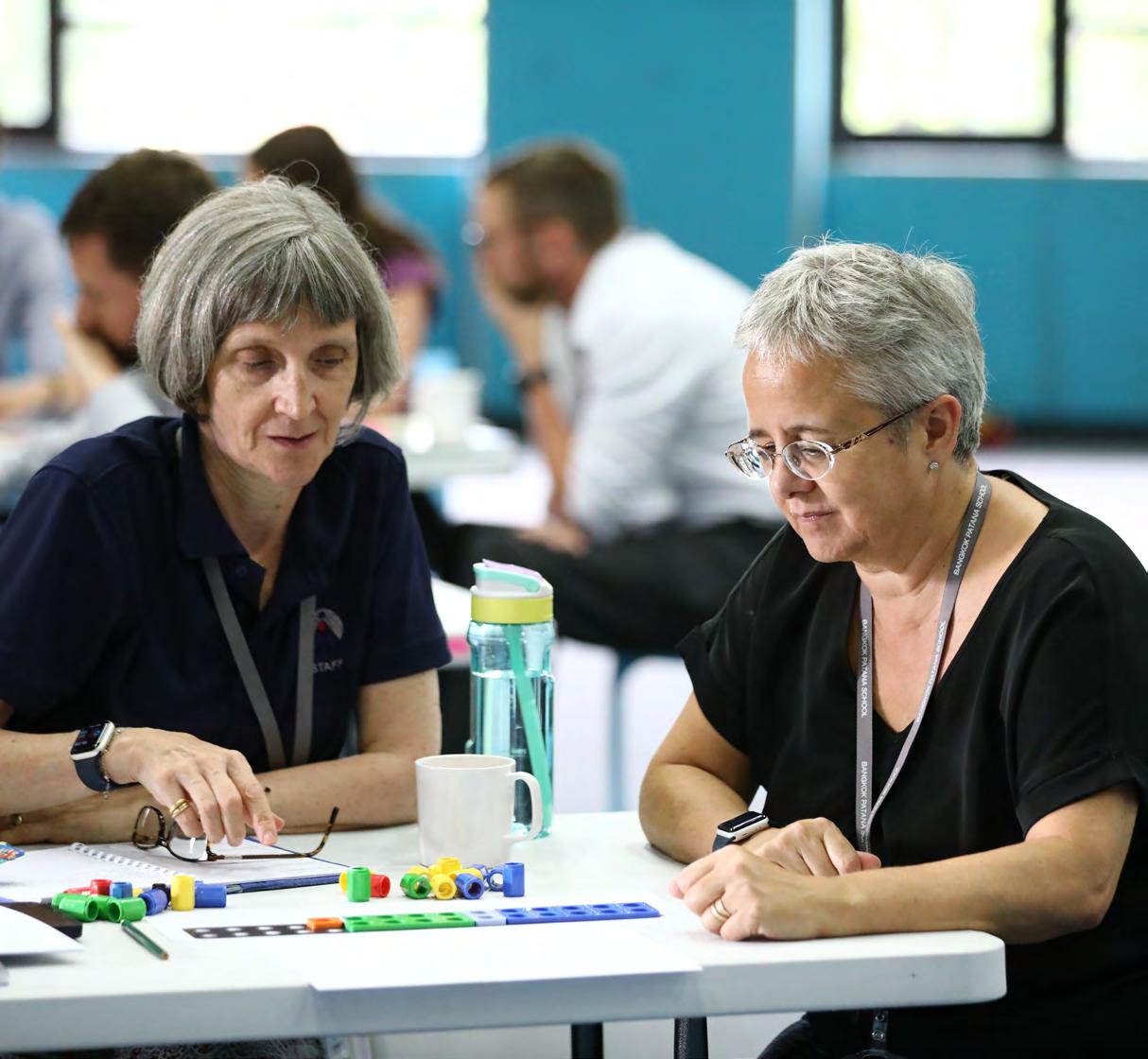
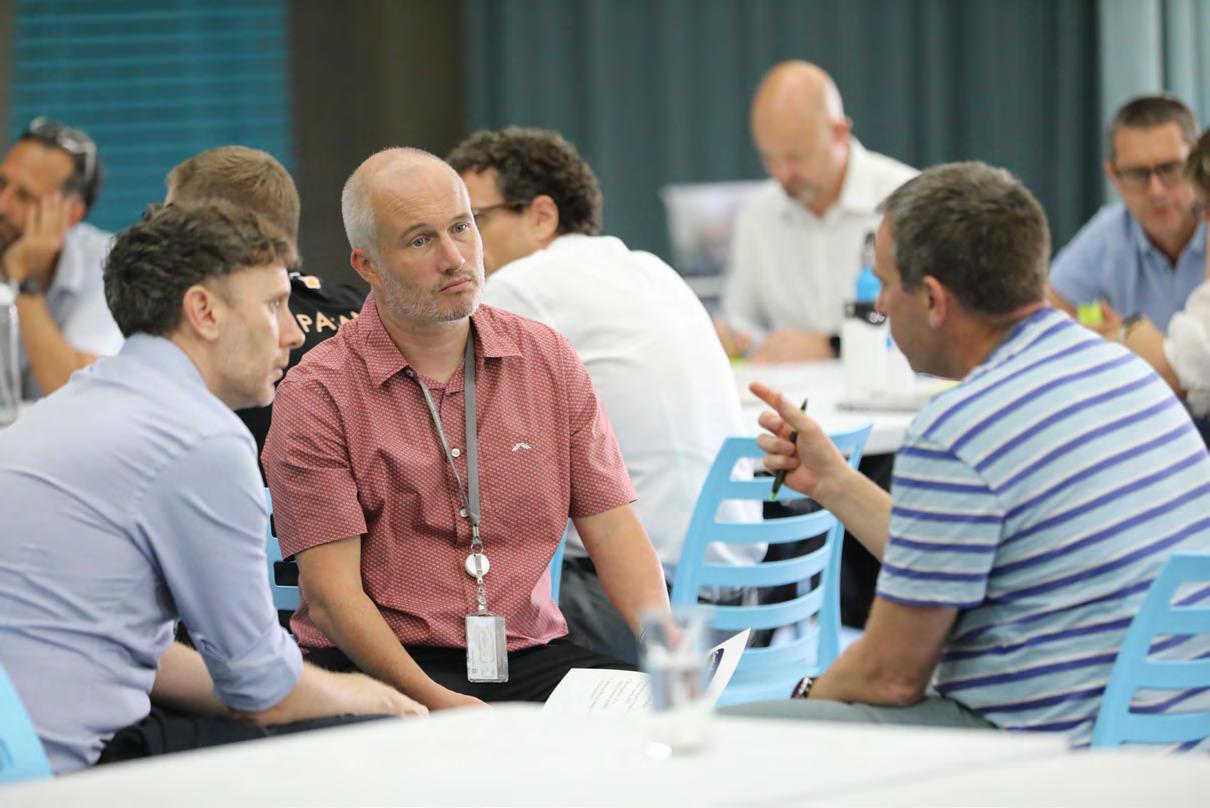
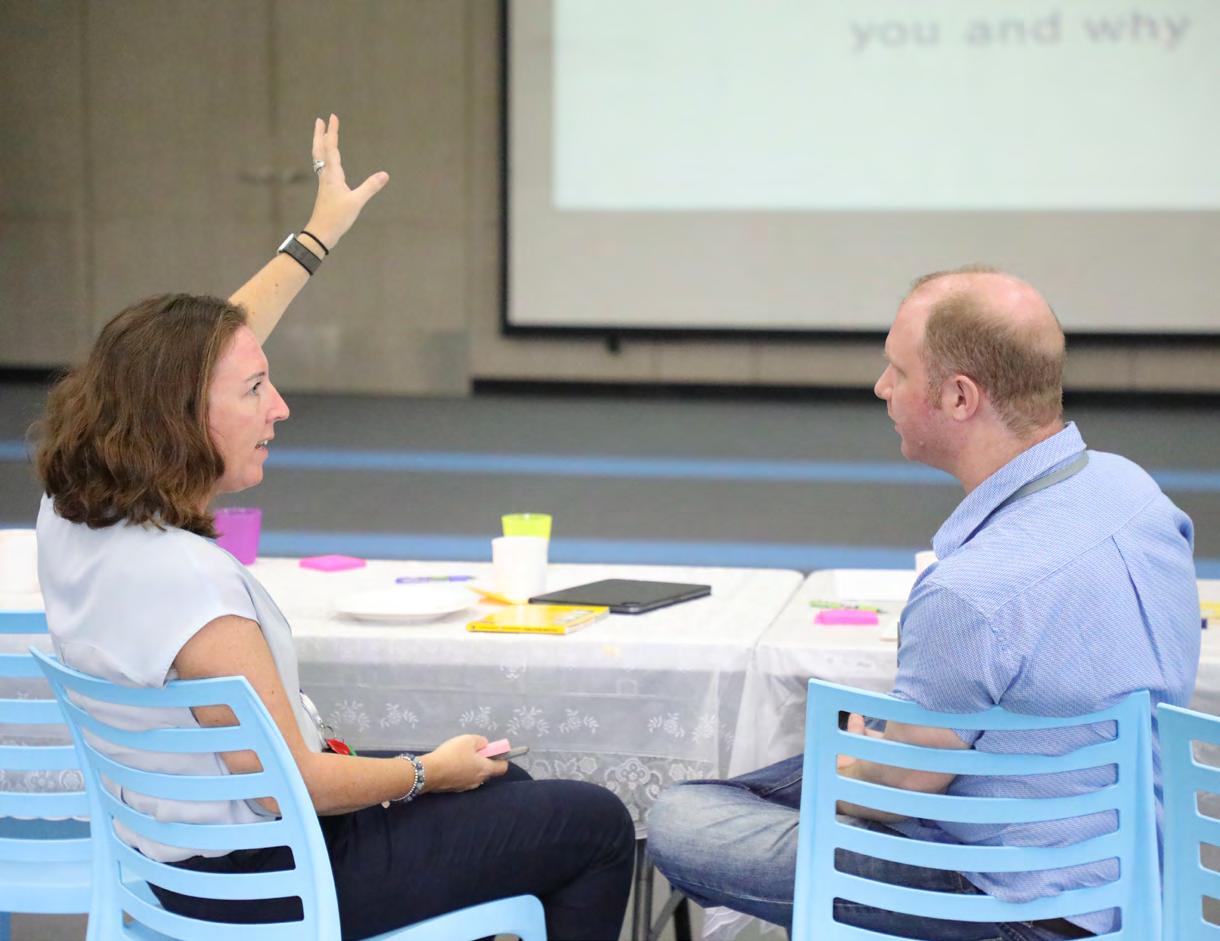
Professional growth at Patana is woven into daily practice through coaching, peer observation and ongoing reflection. Teaching here is a collaborative endeavour where peer learning and shared expertise are central to refining practice. All of our teachers have completed rigorous initial training, whether that’s a Bachelor of Education, a Postgraduate Certificate in Education (PGCE), or another pathway, but their learning doesn’t stop there. Just as children are encouraged to stretch and grow, our teachers continually ask themselves, “How can I do this even better?” We know that one of the biggest factors in student success is the quality of teaching, which means giving our staff the tools, time and culture to keep developing their craft.
With this foundation in mind, the next sections explore how professional growth takes shape within our Primary and Secondary Schools; two settings with one shared commitment to continual improvement.
This journey of professional growth began in the Primary School with the Patana 7, seven core strategies that became the foundation of our shared practice. Over time, these strategies were embedded through coaching, reflection and collaboration. Teachers set goals, explored strategies, and reflected on their impact, often using video to observe and refine their practice. This culture of openness and inquiry laid the groundwork for our current framework.
Instructional coaching itself, guided by Jim Knight’s Impact Cycle, became central to the Primary approach and continues to thrive across the school. One teacher reflects: “Coaching has helped me focus in on small changes that really do make a difference day to day. The Walkthrus give me clear strategies and talking them through in coaching makes them feel much more attainable in my own classroom.” All school leaders and
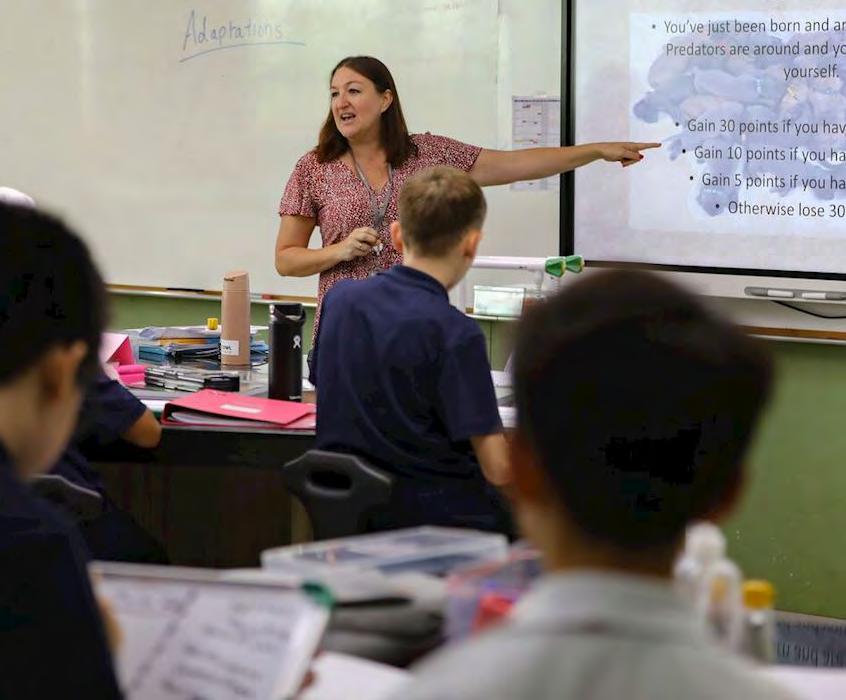

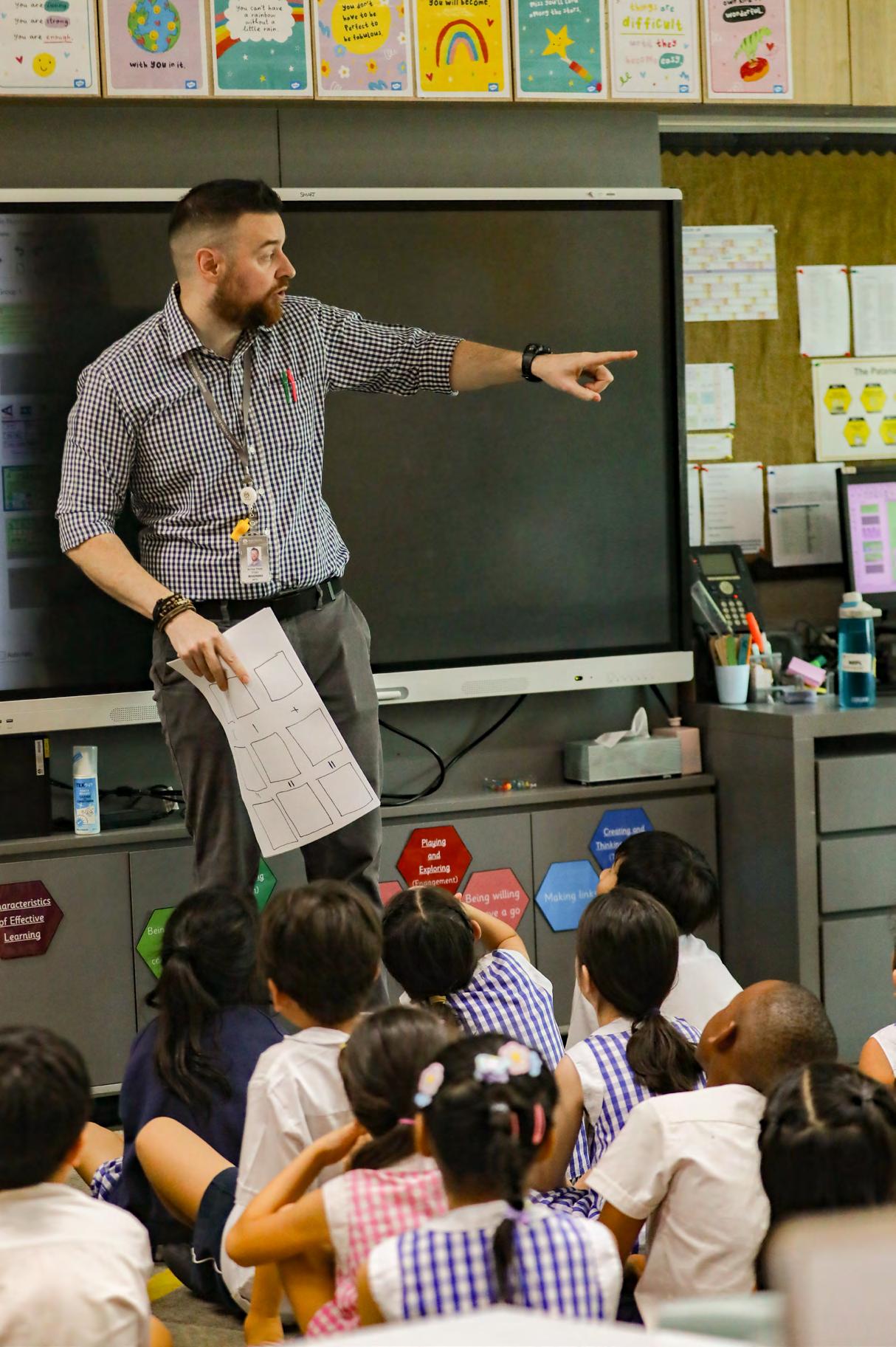
a number of teachers are trained to coach one another using this model, and this year, ten new coaches are being trained, while thirty coaching pairs are working together across the school. Staff are happy and confident to be filmed, have drop-in visitors, to co-teach and to share their practice. Video reflection, much like athletes reviewing game footage, is a regular part of this process, supporting teachers to see their strengths and identify areas for growth.
This collaborative and open culture leads to visible gains in teaching practice and, ultimately, improved academic attainment for our students. The motivational aspect of coaching is significant; when teachers decide their own focus, motivation drives lasting outcomes. As Jim Knight writes in Better Conversations, “Effective goals need to compel people to action by moving them emotionally.” Contemporary research demonstrates that intrinsic motivation and external incentives can jointly improve performance (Cerasoli et al., 2014), building on the foundational work of self-determination theory (Deci and Ryan, 1985).
The Patana 7, our core set of teaching strategies, are now deeply embedded in our culture though the use of coaching. For example, focusing on ‘Say it Again Better’ led to staff introducing visual prompts to encourage students to answer in full sentences and participate in group discussions. ‘Signal Pause Insist’ is evident in every Foundation Stage tambourine shake, Key Stage 1 lunch hall hand clap, or PLT member’s signal whistle, ensuring safety, time efficiency and smooth transitions. Think Pair Share and Cold Calling, often seen through use of lollipop sticks to randomly select students, have become powerful tools for ensuring participation. Expectations Establishing is a key focus at the start of every school year, anchoring our collective approach and supporting new staff as they join our community.
Selected from Tom Sherrington’s WalkThrus, these are stepby-step guides that break down effective teaching strategies into manageable actions. Each Walkthru is explicitly built on a foundation of cognitive science and proven pedagogical principles. Its credibility comes from translating the work of respected researchers into practical classroom actions. Our application of these is then to apply them through a coaching lens to identify, learn and improve a strategy, with a student focused goal in mind.
There is a wealth of research indicating a need for ‘microlearning’. Cognitive Load Theory as proposed by Sweller (1988) reminds us that our brains can only take in a little bit of new information at a time. By providing learning in small, manageable chunks, we avoid overload and help learners remember more for longer. Ebbinghaus’ Forgetting Curve from the late 19th century indicated that we forget most new information quickly unless we revisit it. When we provide learning incrementally, we build upon and strengthen the preexisting foundations. For our staff, that means identifying a small change we personally feel motivated to make, for the benefit of our students, and acting upon this back-and-forth with a coach over a period of weeks – an impact ‘cycle’.
One of the most powerful examples of how an impact cycle can lead to meaningful improvement comes from my own experience with the “Check for Understanding” WalkThru. Initially, I realised that instead of simply asking if students understood, I needed to probe more deeply, by asking what they understood, not just if they did. This shift required me to rethink my questioning, and it wasn’t easy at first. By recording my lessons and watching them back, I could see moments where I missed opportunities to involve more students and to keep everyone following the thread of the discussion. Through this process of video reflection, I began to experiment with strategies like using ABCD hand signals for instant feedback, improving the way I structured talk partner work, and refining my approach to class discussions. Each small adjustment, informed by honest self-reflection and supported by coaching conversations, helped me engage more learners and check for understanding more effectively. As K. Patricia Cross observes, “Learning is not so much an additive process...as it is an active, dynamic process in which the connections are constantly changing and the structure reformatted.” This is as true for passionate professionals as it is for our youngest learners.
The impact of these strategies and our coaching approach is apparent in our staff survey data: staff overwhelmingly reported being confident or extremely confident in each Patana 7 strategy. It is also evident in improved pupil outcomes, and in the innovative way our staff continue to collaborate and share their expertise.
Following our surveys, we decided to expand from the original seven strategies to the ‘Patana 7s’, a series of 7 Walkthrus linked to each quadrant of our new Teaching & Learning Framework. The framework itself is structured around four interconnected areas: Fostering Belonging, Portraying the Curriculum, Ensuring Participation, and Informing Learning. These quadrants provide a shared language and practical toolkit for teachers to reflect, refine, and connect their practice with colleagues across the school. In a large, diverse community, this clarity helps unify our efforts and amplify our impact.
A working party of 12 middle leaders came together to identify which of Sherrington’s 150 strategies best fit our framework, aligning these against what our students would most benefit from. We then identified the next 28 Walkthrus to be explored, and this term we have begun to develop these more intentionally throughout the primary school. Staff training is focused around these areas, as are staff member’s ‘Professional Growth Cycles’. This has given staff a richer toolkit and a more nuanced shared language for discussing pedagogy and practice.
As part of this next evolution in the development of our Walkthru work, we are this year launching ‘Communities of Practice’, which further support professional growth by bringing teachers together around shared interest. These groups will meet regularly to share experiences, observe each other, and build expertise together. Each member will study a WalkThru in depth, try it out, and share their learning with the group, multiplying expertise and improving learning for all students.
Although our new framework is still in its early stages, it builds on a strong foundation of collaboration, coaching, and shared expertise. The impact of the Patana 7 and the Impact Cycle is already visible in our classrooms and in our culture. As we continue this journey, we look forward to sharing more stories of growth and impact, always with our students’ learning and wellbeing at the heart of everything we do.
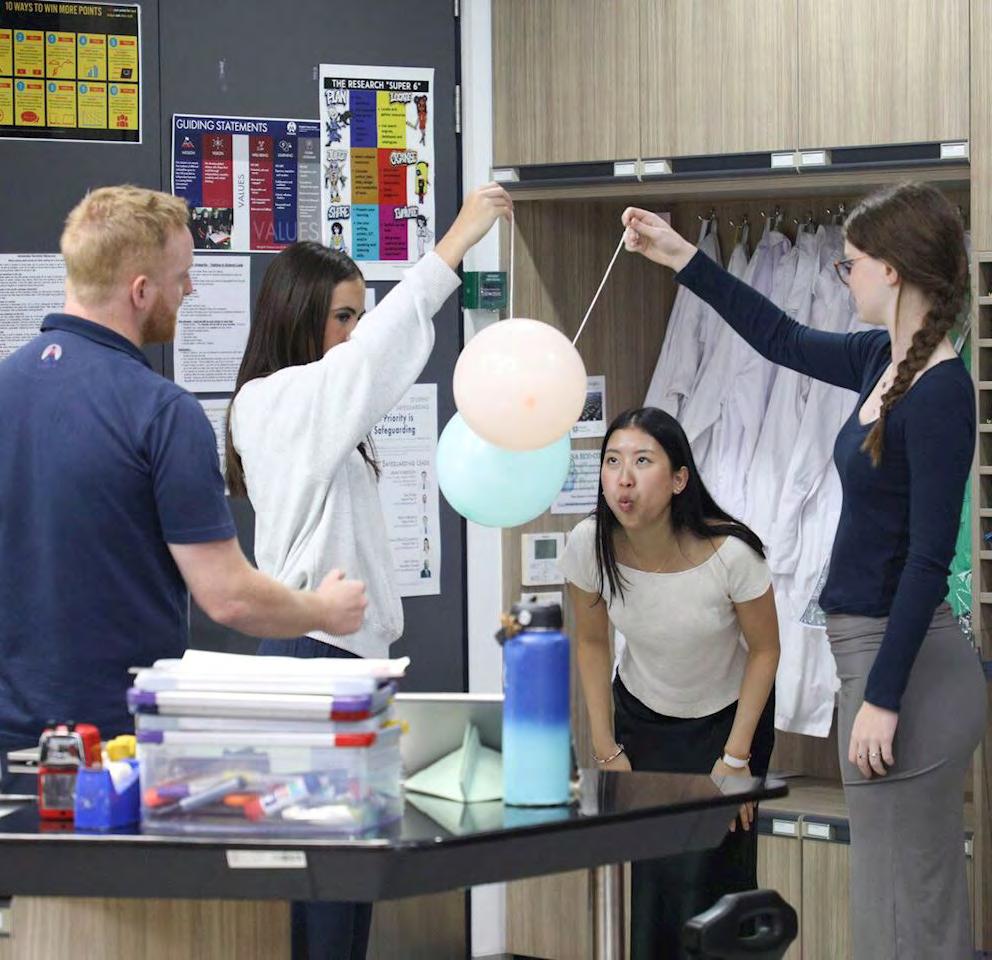
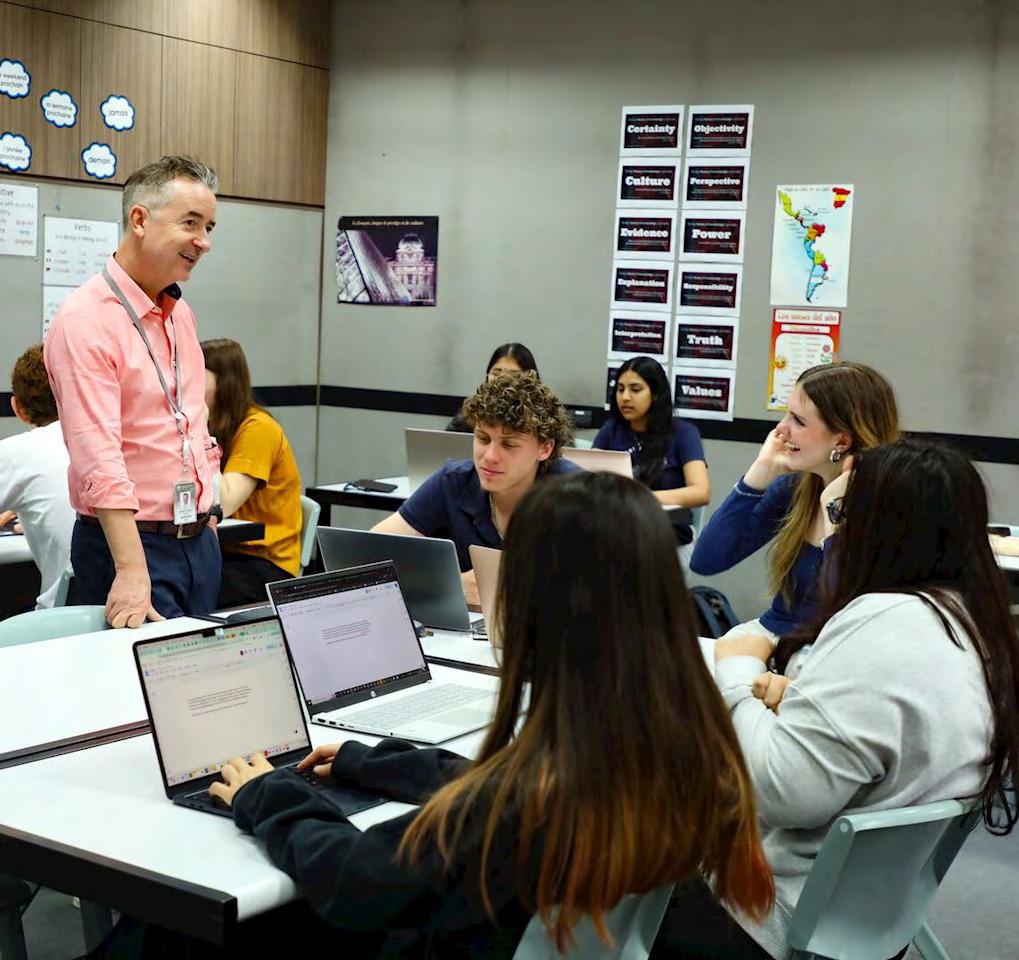
Within the Secondary School, staff use an evidence-based platform called The Great Teaching Toolkit (most commonly referred to as ‘the GTT’). It serves a similar purpose to the Primary Teaching & Learning Framework but is designed specifically for older learners. A distinctive feature is its use of direct student feedback: regular surveys give teachers a clear picture of how students experience their lessons and where improvements could be made. This makes the GTT a powerful framework for thinking about the entire learning environment rather than just individual lessons.
The GTT breaks down great teaching into four key dimensions:
• Understanding the content
• Creating a supportive environment
• Maximising opportunity to learn
• Activating hard thinking
So why does this matter to you? How is this relevant? Because it shows how seriously we take teaching and learning. It’s at the core of what we do as educators. And recently, because Bangkok Patana was recognised as a ‘Great Teaching Centre’ by the founders of the GTT, one of only six schools worldwide highlighted for using their framework most effectively to improve teaching and learning.
This recognition means:
• We’ve created the conditions for every teacher to keep improving, embedding either the GTT into everyday practice.
• We’ve continued to cultivate a culture of professional growth.
• We’ve demonstrated sustained implementation; both WalkThrus and the GTT were introduced around four to five years ago and have grown and developed significantly since then.
Secondary teachers use surveys with their students to gain feedback: what do students think their teachers are doing well, and what could be improved? Teachers then use this feedback to inform their practice moving forward and we’re delighted to see that Patana teachers are doing this exceptionally well. In other words, the process is not about ticking boxes; it’s about listening, reflecting and improving, just as a top athlete might watch footage of their performance to see what could be sharpened.
So what does being a ‘Great Teaching Centre’ mean? Well, it highlights us as a centre of excellence among other schools using the GTT. We get to celebrate what our staff have achieved, share our experiences with others and explore what’s next. It’s a chance for Patana to play a leading role in shaping professional development across the region, not just within our own walls. Because, even with this recognition, we’re still asking the same question we encourage our students to ask: how can we be even better? How can we further support our teachers so that your children get the very best learning experience possible? As parents, you can feel reassured that your child’s teachers are not only highly qualified but also part of a vibrant professional culture that is constantly striving to improve. And if you ever see a yellow hexagon or hear your teenager talking about a survey they filled in about their lessons, you’ll know it’s all part of this ongoing commitment to excellence, a quiet but powerful engine driving your child’s learning forward.
By Tanawat Ubonrat, Outdoor Learning Space Technician, Secondary School
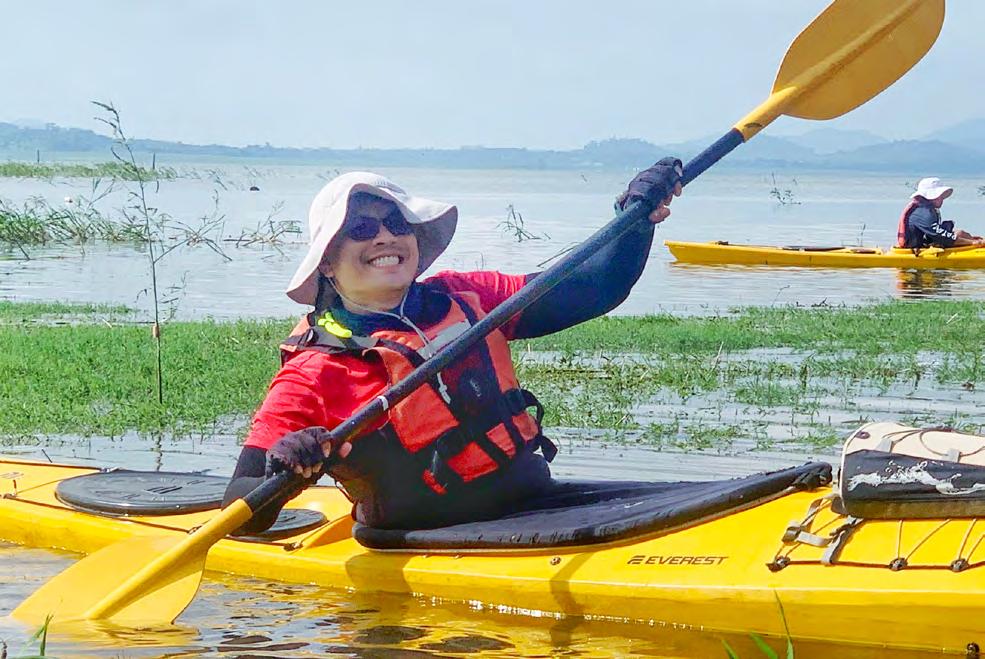
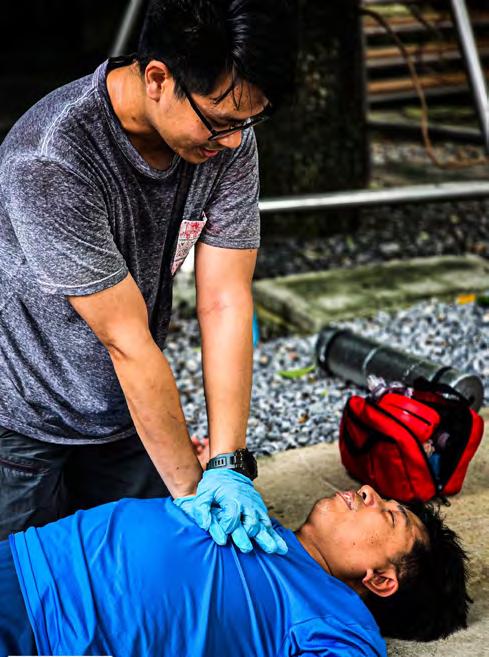

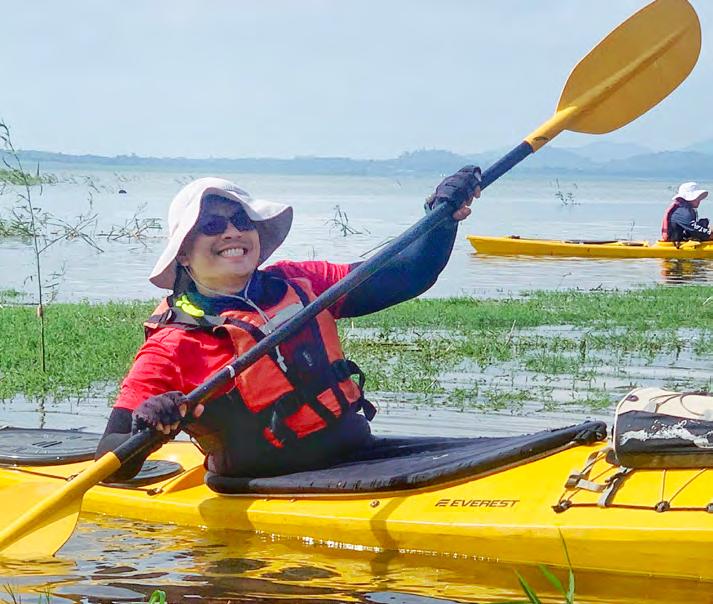
When people hear ‘Science Outdoor Technician’, they usually imagine pond dipping, data collection and maybe lots of mosquitos and red ants. What they probably don’t picture is me rock climbing, kayaking for days or lying on the ground covered in fake blood while my teammates rush to ‘save’ me. But that’s exactly what happened during my 21-day training course, a programme packed with outdoor skills, leadership lessons and a lot of very realistic wilderness first aid scenarios.
Bangkok Patana has a well-used Outdoor Classroom on the other side of the main campus with a technician like me ready to support the learning. The other part of my job is to go on International

Award trips where students learn resilience, teamwork and problem-solving while getting a little muddy along the way. But as any parent knows, adventure comes with risks. That’s where leadership training comes in.
The training focused on balancing fun with safety, ensuring that challenges are meaningful. We spent a lot of time working on providing students’ safety and safe space, both physically and emotionally. Parents can rest assured that when students are out exploring, they’re guided by someone trained to anticipate, adapt and support them every step of the way.
Of course, no outdoor training would be complete without some hands-on skills. It was a full week developing my

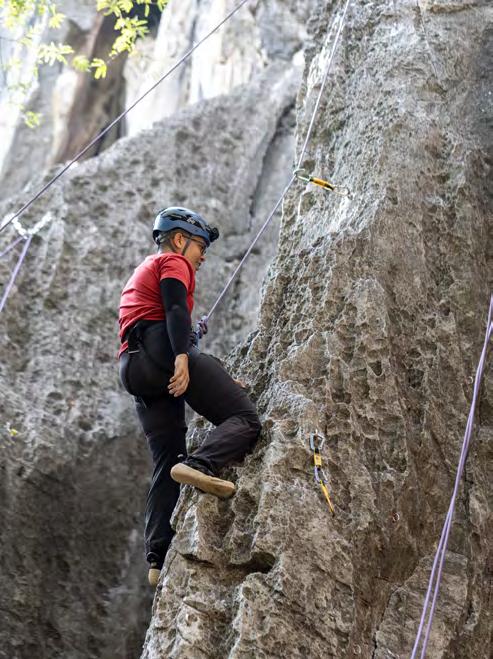
kayaking technique, improving my rockclimbing ability and spending plenty of time with a backpack on my shoulders. We practiced navigation, set up camp in different conditions, and even learned tricks for keeping spirits high when the rain just won’t stop.
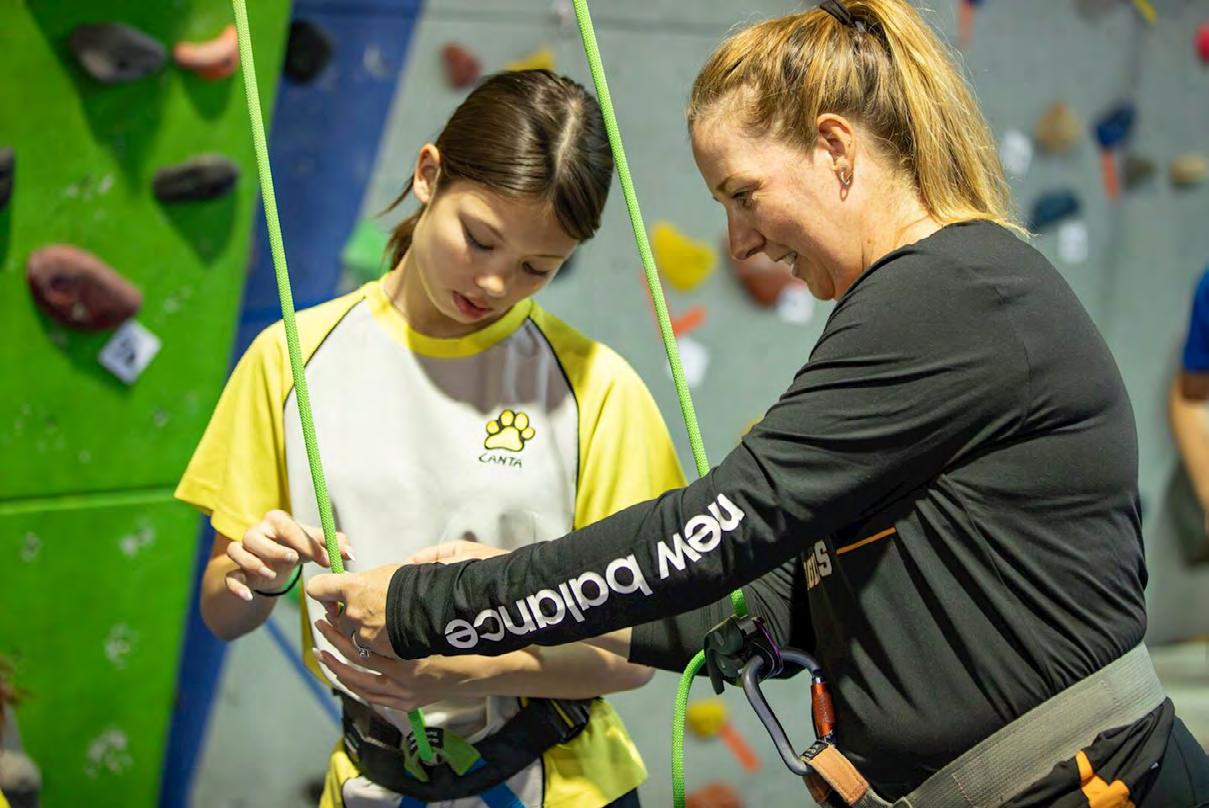
One of my favourite outdoor activities is rock climbing. There’s something about being clipped onto a rope, staring up at a rock face and knowing your safety depends on your skills and trusting your partner. The same goes for kayaking - when you’re on the water, every stroke matters and teamwork can make the difference between gliding smoothly or spinning in circles. Each of these activities wasn’t just about personal skill but about learning how to support others and build our trust along the journey.
The Wilderness First Aid Experience (a.k.a. Fake Blood Everywhere)
Perhaps the most dramatic part of the training was earning my Wilderness First Aid certification through WMTC (Wilderness Medicine Training Center). Unlike a regular first aid class, this one took place outside, with ‘patients’ who screamed, fainted or pretended to be in shock. And yes, there was fake bloodlots of it.
We learned not only how the body works, but how to keep it working when far from a hospital. Imagine carrying a heavy backpack and twisting an ankle on a trail, or getting stung by something you can’t identify, or simply dealing with dehydration under the hot sun. These are the kinds of situations we practiced over and over again.
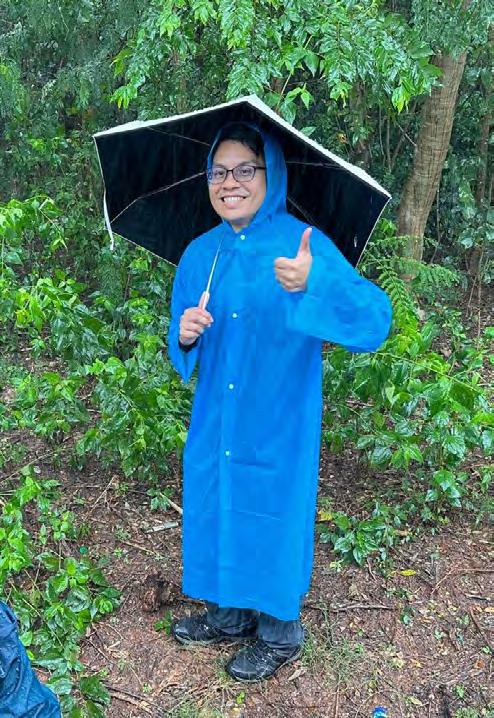
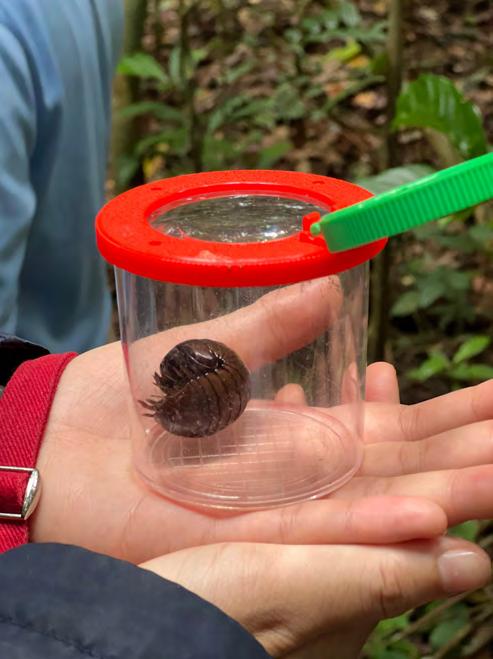
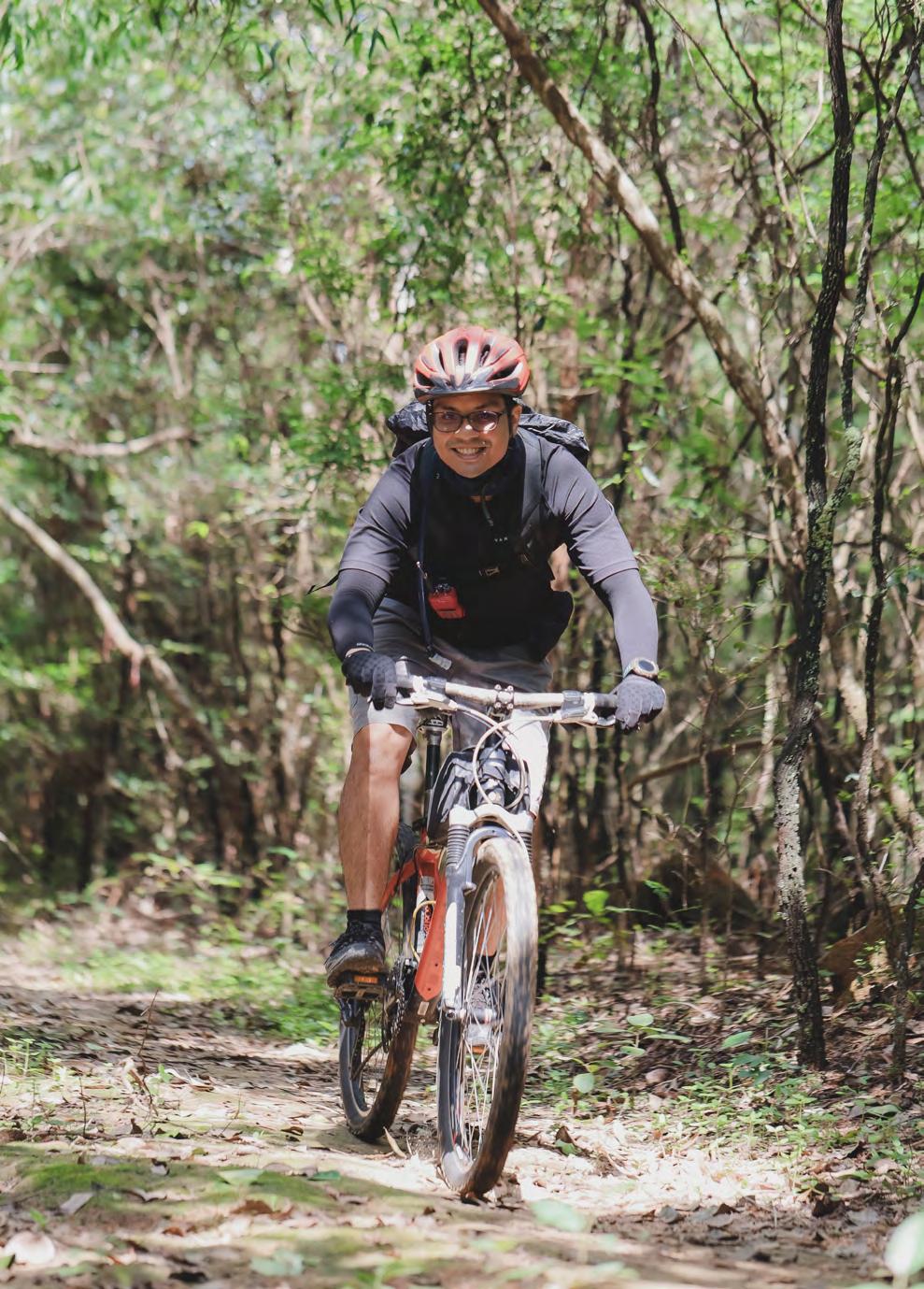

The scenarios were so realistic that at one point I forgot I was just ‘acting’ and felt a surge of real adrenaline while trying to stop bleeding and evaluate whether evacuation was needed. We were trained to think clearly, act quickly and keep everyone safe, even in unpredictable situations. That’s the point - the training built muscle memory, so if something truly happens on a trip, the response is second nature.
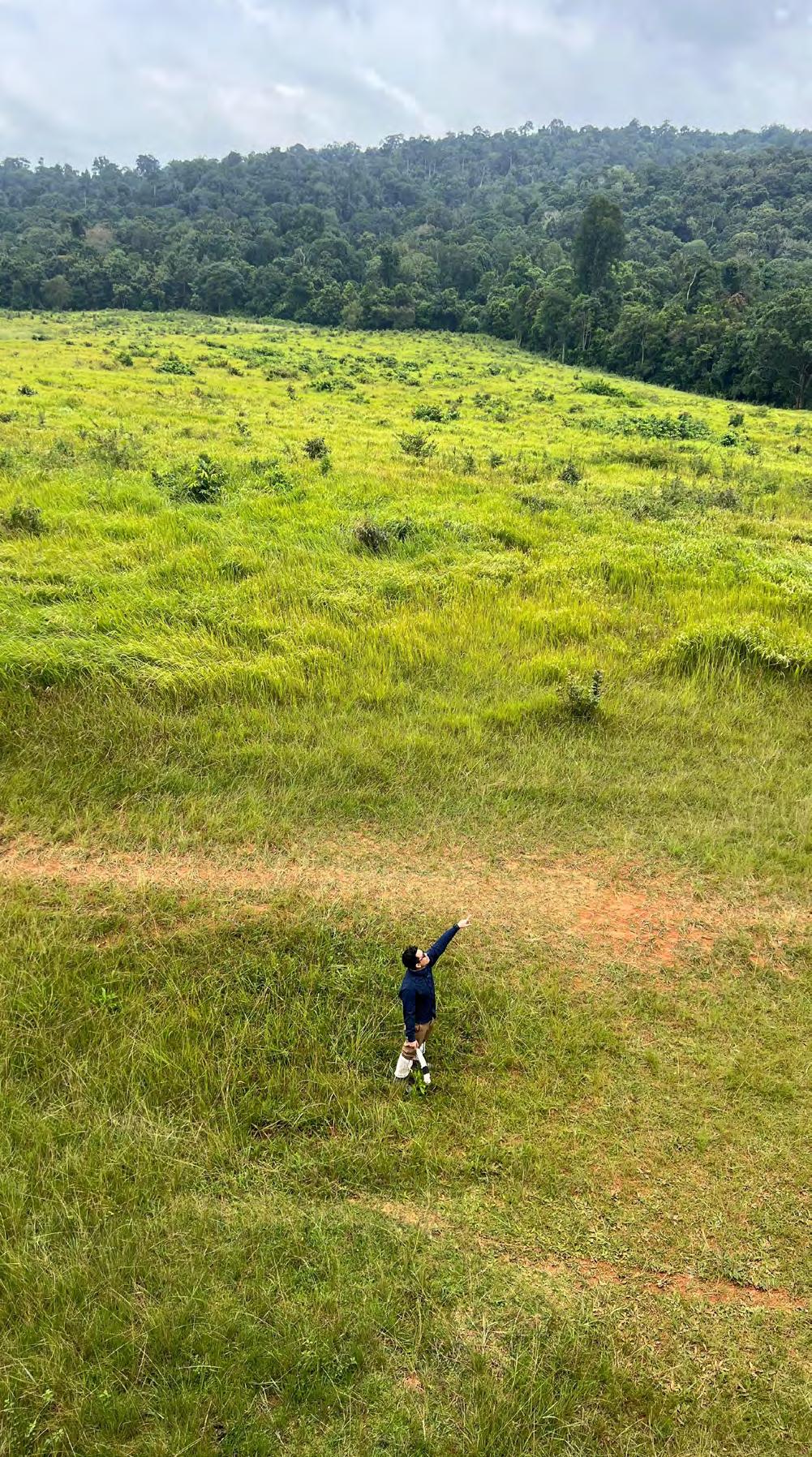
All this training comes back to one goal: creating safe, powerful learning experiences outdoors. As a science technician, I can see that we can learn from the outdoors. Students don’t just learn science from books, they feel it under their feet when they cross a stream, they see
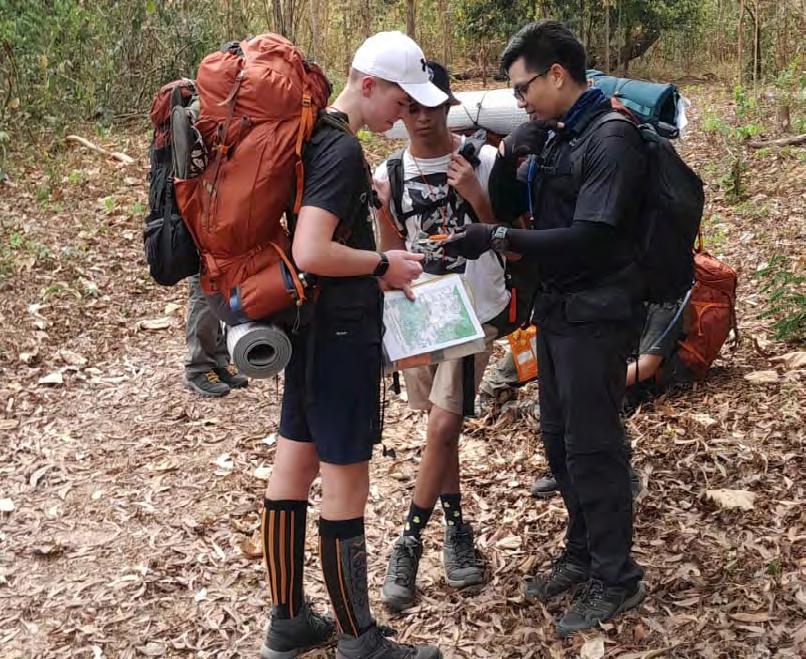
it in the sky while navigating by the stars and they test it when they figure out why a tent stands (or doesn’t) against the wind.
As Sir Edmund Hillary, the first climbers confirmed to have reached the summit of Mount Everest, once said, “It is not the mountain we conquer, but ourselves.” That’s exactly what outdoor adventures give: the chance to discover strength, courage and curiosity within yourself.
I can see students feel a big achievement when they arrive home muddy with a big smile after an outdoor trip. I hope I can support the outdoor learning experience using the skills that I trained in over 21 days – hopefully no first aid skills will be needed.
By Alice Curwood, Cross Campus Vice Principal and Joseph Denton, Cross Campus Head Swim Coach

Earlier this year, Ethan, a Year 13 student at Bangkok Patana, proudly represented Thailand at the International Powerlifting Federation (IPF) Subjunior and Junior World Classic Powerlifting Championships in Costa Rica. Competing in the Subjunior category (Under 18), he tested himself against some of the strongest young lifters in the world in the three classic events: squat, bench press, and deadlift.
The format of the competition was simple yet intense—three attempts per lift, with the best results across all three determining the overall rankings. For Ethan, this was not his first time on the world stage. He had previously competed at the 2023 World Championships in Malta, but Costa Rica marked a significant step forward in both performance and confidence. By the end of the meet, Ethan earned Bronze in Squat, Gold in Deadlift and Bronze overall in his weight class, a remarkable achievement for an athlete who has only been powerlifting seriously for two and a half years.
Ethan described the event as both exhilarating and rewarding. “It was really fun, especially because you get to meet a lot of new people. I made more friends this year than last, and it’s great to stay connected with others who are on the same journey.”
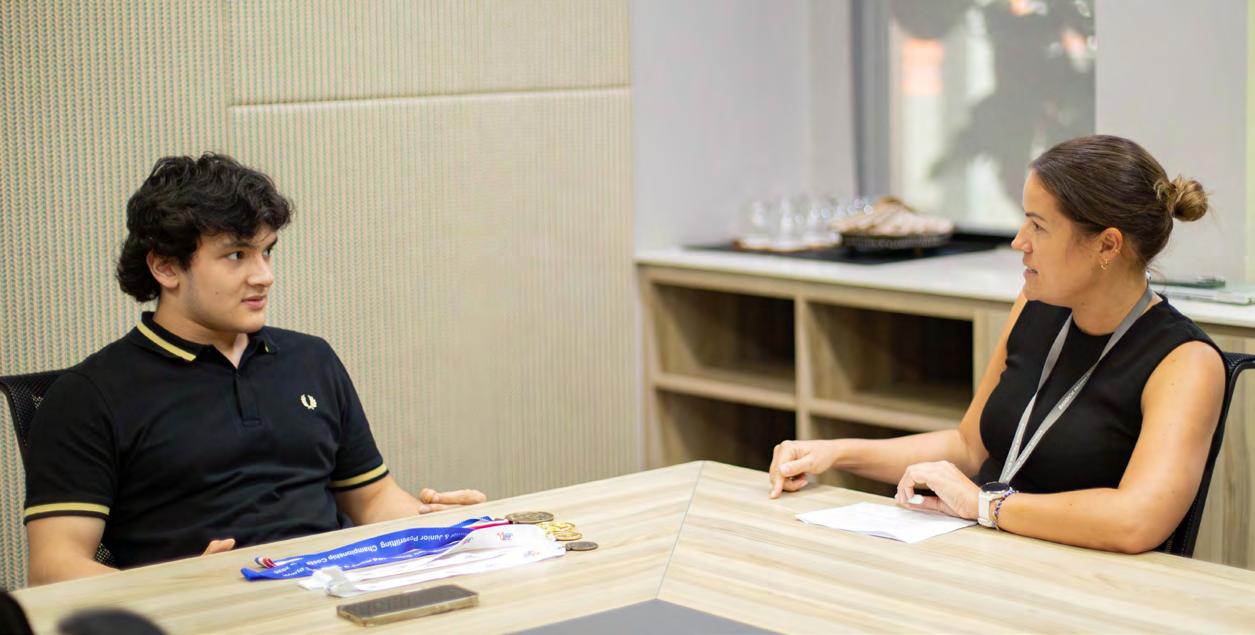


He said that compared to local meets, the pace at Worlds felt quicker, with shorter breaks between lifts.
His preparation, though steady, wasn’t without obstacles. An early-summer injury required careful rehab, and the long-haul journey left him jet-lagged before competition day. Fortunately, he had five days to recover, during which he prioritised rest, light tapering sessions and maintaining consistent nutrition.
Powerlifting, Ethan believes, has taught him more than just strength. “It is a sport that requires extensive training over time to see significant progression in performance.” He’s applied that same discipline to academics, especially mathematics, where steady, structured revision mirrors his training schedule.
The journey has also helped Ethan grow personally. Last year, he admitted to being more introverted and sticking closely to friends from Thailand. This year, however, he expanded his circle, building connections with fellow competitors and coaches from across the globe.
Looking back, one highlight was his gold-medal deadlift, which came with a stroke of luck when his closest rivals faltered.
“I’m grateful for what happened—it was kind of a blessing. The lesson is to just be happy to be there.”


As he prepares to move into the Junior category (18–23 years), Ethan remains focused on steady progress. His advice to younger athletes is simple but powerful: “Don’t forget to have fun and take in the moment. International competitions don’t happen often, so meet new people, enjoy the experience, and make it count.”
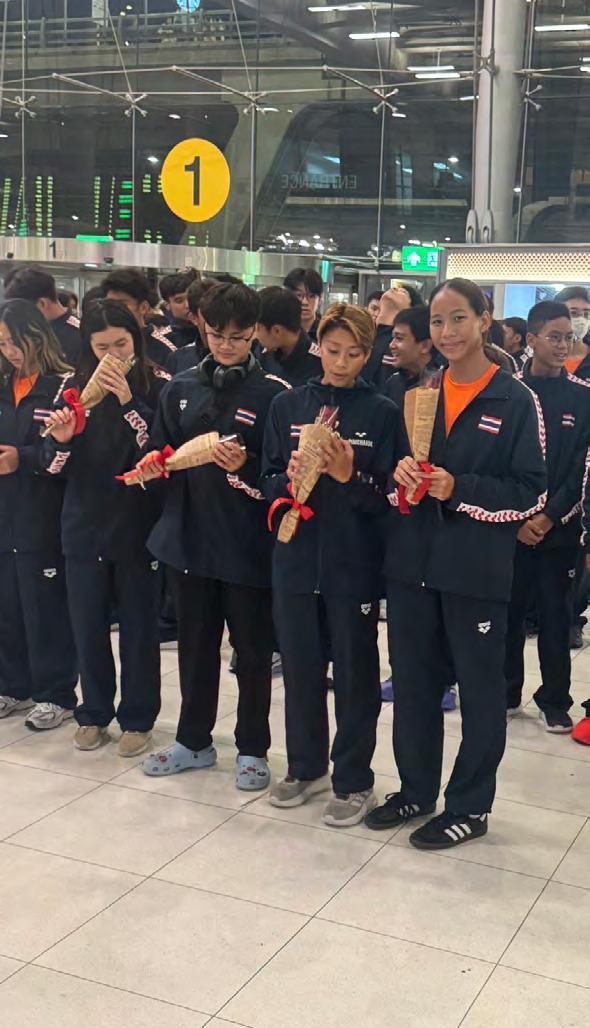
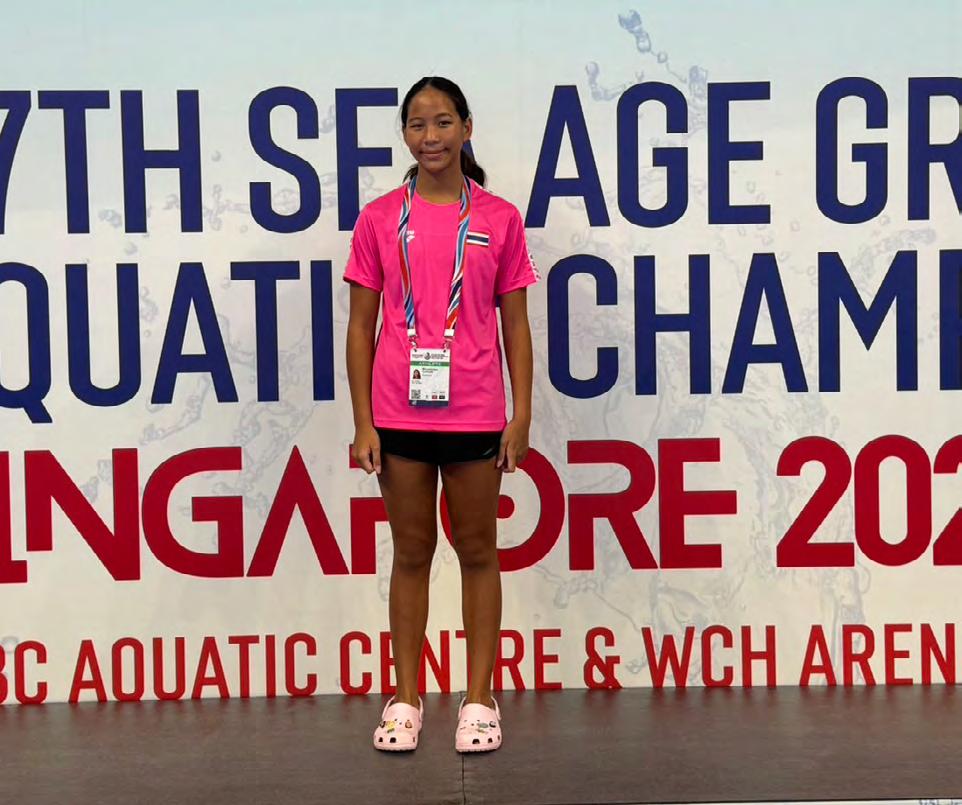
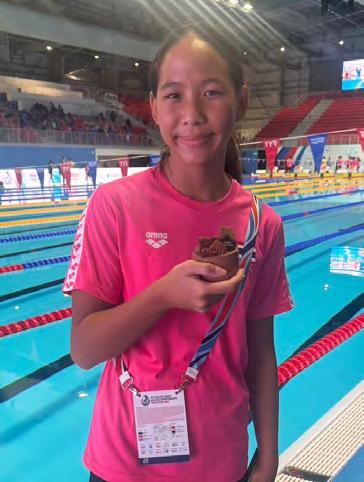
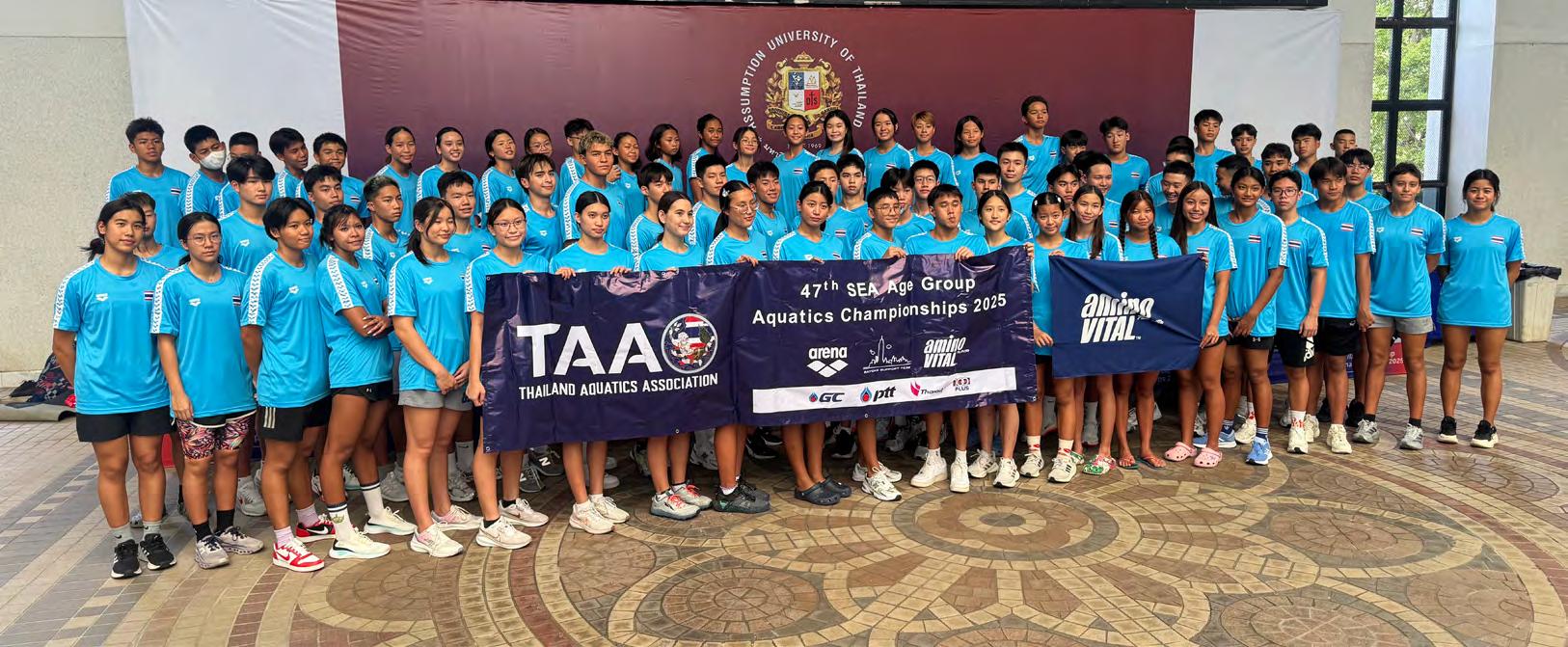
Earlier this year, Katie, a Year 9 student at Bangkok Patana School, represented Thailand at the 47th Southeast Asia Age Group Swimming Championships in Singapore. She became the third swimmer from the school’s TigerSharks programme to compete at junior international level, following Prin C. (2018) and Prim P. (2019).
Katie qualified for the national team after her performance at the Thailand Age Group Nationals in April, where she won Gold in the Girls’ 12–13 50m Backstroke and Bronze in the 100m Backstroke. These results met the medal standard qualification times set by the Thailand Aquatics Association (TAA), earning her a place on the national squad. Bangkok Patana’s Assistant Head Coach, Coach Aek, was also selected to join the Thailand coaching team for the event.
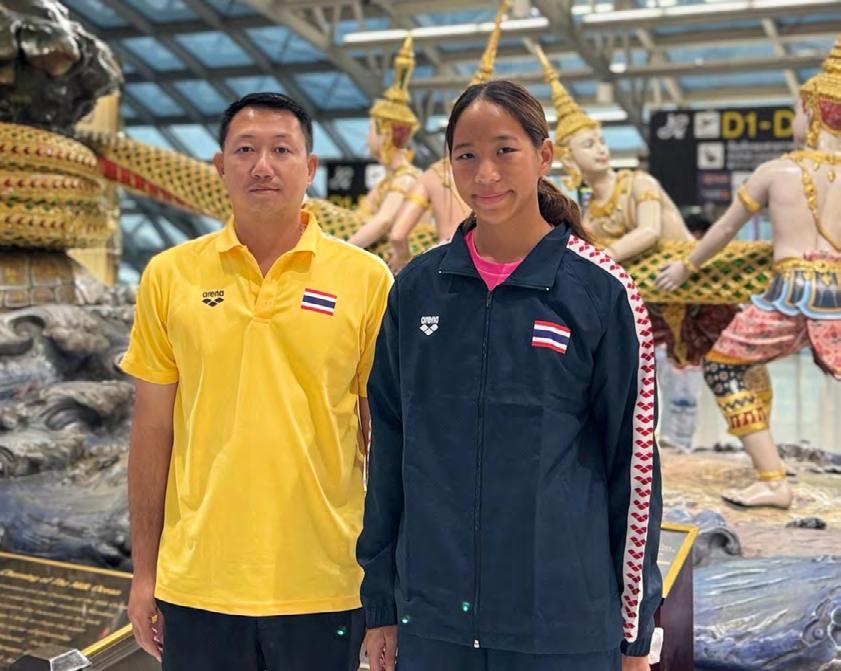
The SEA Age Championships were held at the WHC Arena in Singapore, a venue that had recently hosted the 22nd World Aquatics Championships. Katie’s preparation began with a national team training camp, where she trained alongside teammates and coaches in the lead-up to the competition.
Katie competed in two events: the 100m Backstroke and the 50m Backstroke. In the 100m, held on the first day of competition, she improved her personal best and set a new school record, finishing 6th overall in her age group—one place higher than her pre-race ranking. After a rest day, she returned for the 50m Backstroke, where she had previously won gold at nationals. In a tightly contested field, she finished 5th, just 0.06 seconds off her personal best.
Throughout the meet, Katie remained engaged with her team, supporting fellow swimmers and gaining experience at the international level. Her performance in Singapore reflects both her individual progress and the strength of the school’s swimming programme. She now sets her sights on future opportunities to represent Thailand at the SEA Age Championships.

Jonathan Broadbent, Grad’17 is transforming drug discovery at Sanofi by merging computational power with molecular science.
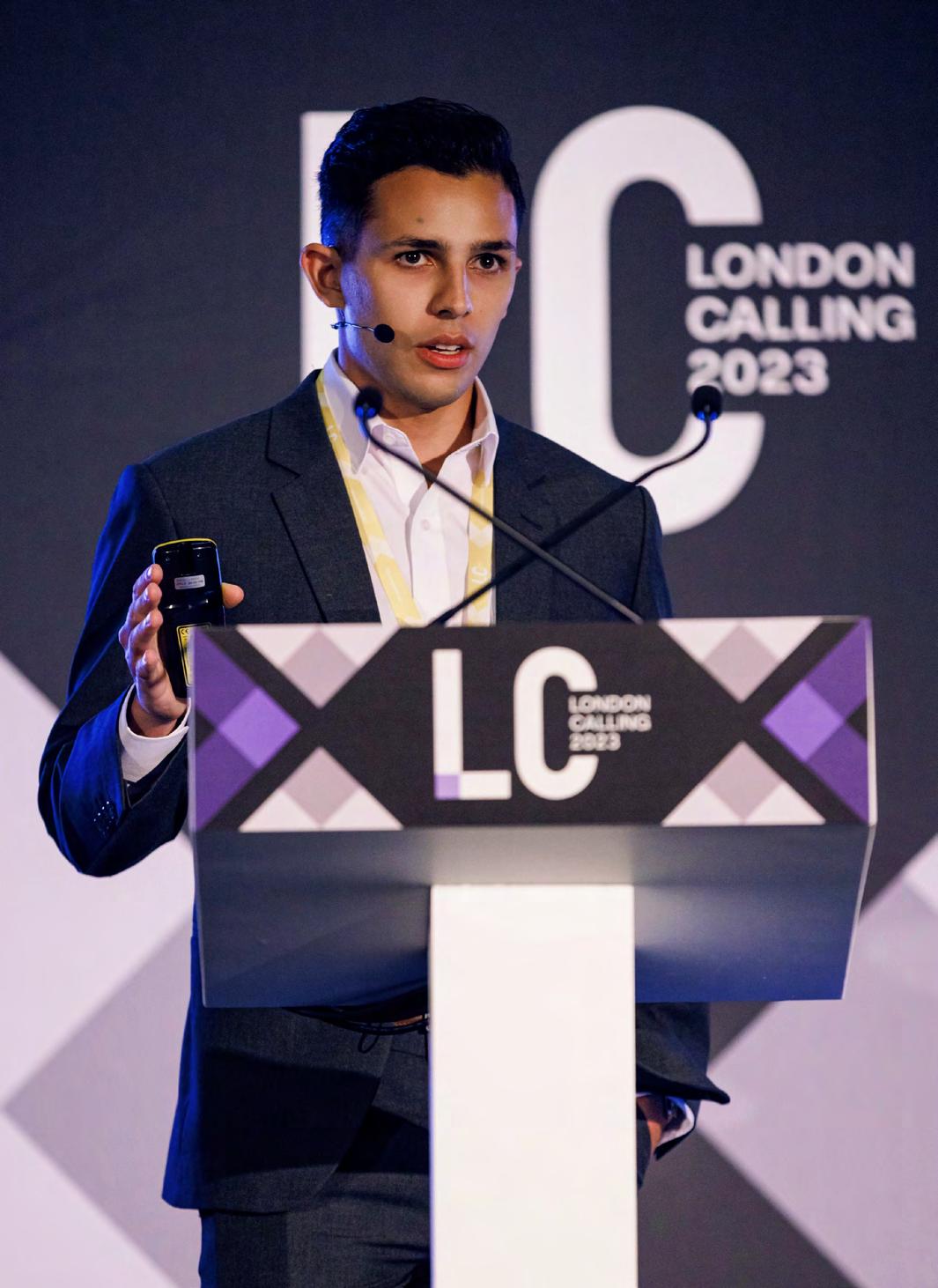
Jonathan Broadbent’s journey as a data scientist is a blend of passion for computational science and a deep interest in biology. A part of Sanofi’s prestigious Catalyst Programme, Jonathan is accelerating drug development through the power of data and AI. This two-year programme allowsed him to rotate across different teams, giving him exposure to various facets of the pharmaceutical world before choosing a team to join. In his first rotation with the unstructured data search team, Jonathan found himself working on cutting-edge technology aimed at optimising molecular design. Here, he contributed to developing lipid nanoparticles (LNPs), which are critical in delivering mRNA vaccines to the correct cells. His challenge was designing an algorithm to predict whether an LNP would efficiently deliver vaccines. Remarkably, Jonathan and his team


adapted a large language model architecture, similar to ChatGPT, but trained it to understand the language of chemistry, SMILES, to represent molecules. This was a breakthrough for early-stage drug development.
From there, Jonathan moved to the integrative clinical data (ICD) team, where the stakes were even higher. Working directly with stakeholders in clinical trials, he focused on speeding up one of the most cumbersome phases of drug development: clinical trials, which can take up to 15 years to complete. Jonathan developed pipelines that could predict the efficacy of oncology drugs by analysing real-world data from patients who had been treated with similar medications. His contributions helped streamline the trial process, making it easier to organise and gather crucial insights.
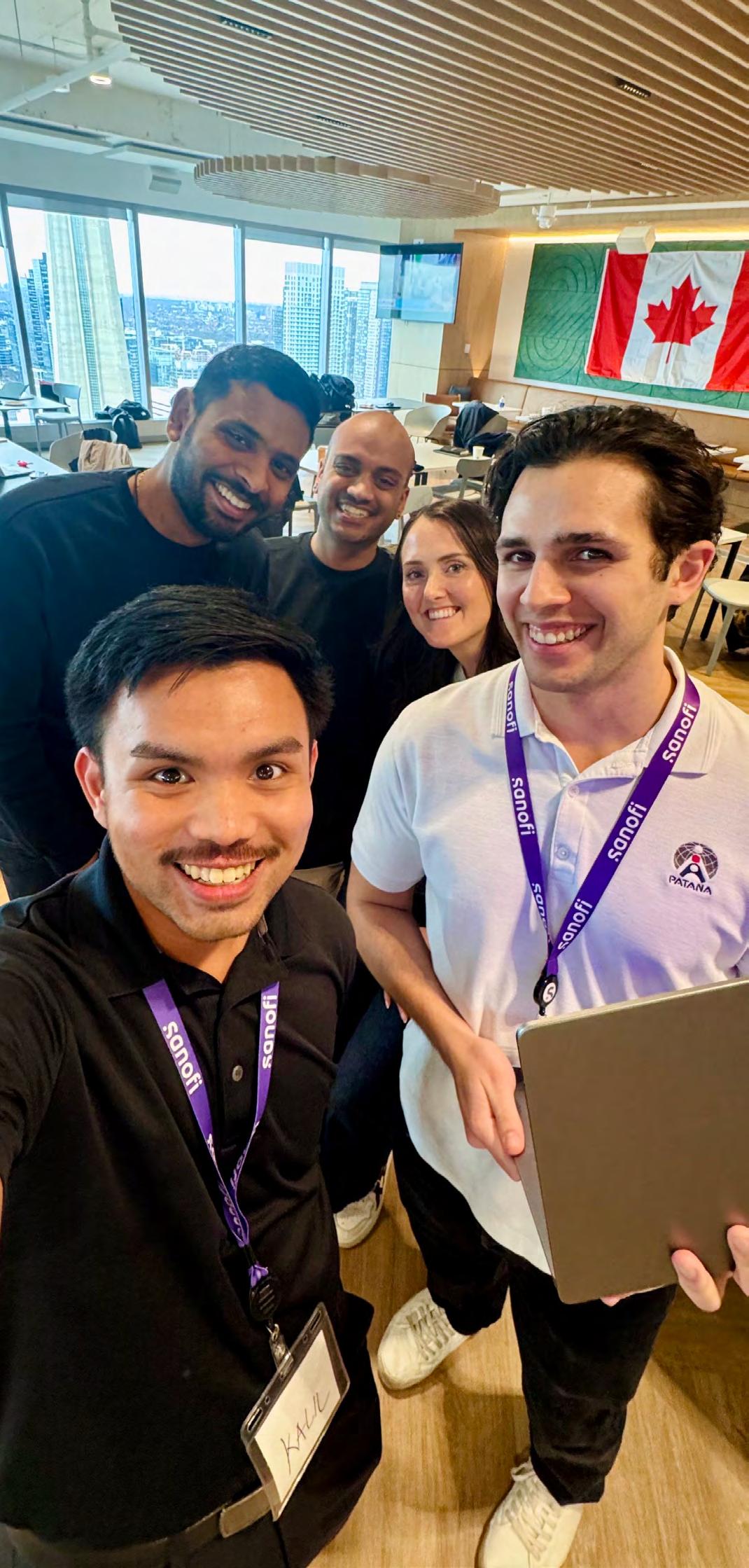
What Jonathan loves most about his job is the autonomy to innovate, paired with the extensive resources at his disposal. “Training a large language model needed a computer the size of a building,” Jonathan recalls, “and I had that on demand at Sanofi.” His passion for computational biology, nurtured since his Bangkok Patana School days, continues to thrive at Sanofi, where he engages in rich scientific conversations and delivers tangible results.
Jonathan’s academic journey was shaped by a love for biology, initially sparked by his high school teacher, Ms Thew. But it was during university in Canada that he discovered a passion for mathematics and computer science, leading him to pivot from biology to computational science. Reflecting on his time at

Bangkok Patana School, he notes how Patana students are “built to be risk-takers and open-minded,” qualities that helped him embrace change and forge a path in interdisciplinary science.
As he looks to the future, Jonathan envisions staying at Sanofi, continuing to build his network and advancing his career in Toronto. Although he once considered moving to the US for more opportunities, he now feels that his place is in Canada, where the pharmaceutical industry is well-funded and his passion for computational science can flourish.
Beyond his professional achievements, Jonathan remains connected to his roots at Bangkok Patana, where the friendships and community formed during his school years continue to provide him with a sense of belonging, no matter where life takes him.
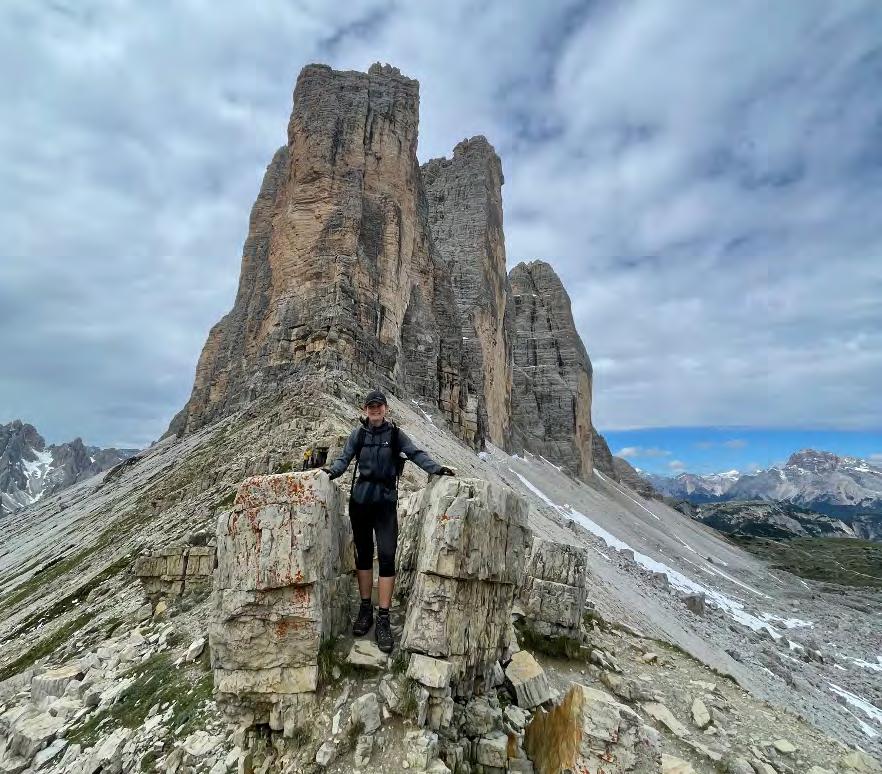
The stage lights at Bangkok Patana’s theatre had a way of cutting through the dark. For Stephanie Richt, that space was more than a venue for musicals. It was a rhythm she returned to, afternoon after afternoon, weekend after weekend.
She joined around four musicals with the choir and several Patana Unplugged concerts. The rehearsals were long and repetitive, but there was something about those hours, running the same lines and harmonies, that felt grounding. “It was tedious at times,” she admits, “but it was also quite relaxing to have dedicated hours to just be creative. I formed really special friendships through those shows.”
Standing on stage, hearing the applause and cheers, she felt something she describes as quietly electric. Beyond performance, it was about being part of something carefully built over weeks and then shared in one collective moment with an audience. “It’s a feeling I will unlikely be able to recreate in my adult life,” she reflects, “I’m so glad I got to experience it so many times in school.”
Away from the stage, the IB programme was shaping her mind in quieter ways. Critical thinking was not treated as a separate skill but was woven into every essay, project and discussion. By the time she arrived at university in the UK, where analysis and evaluation are at the core of assessments, she realised she had already been trained for it.
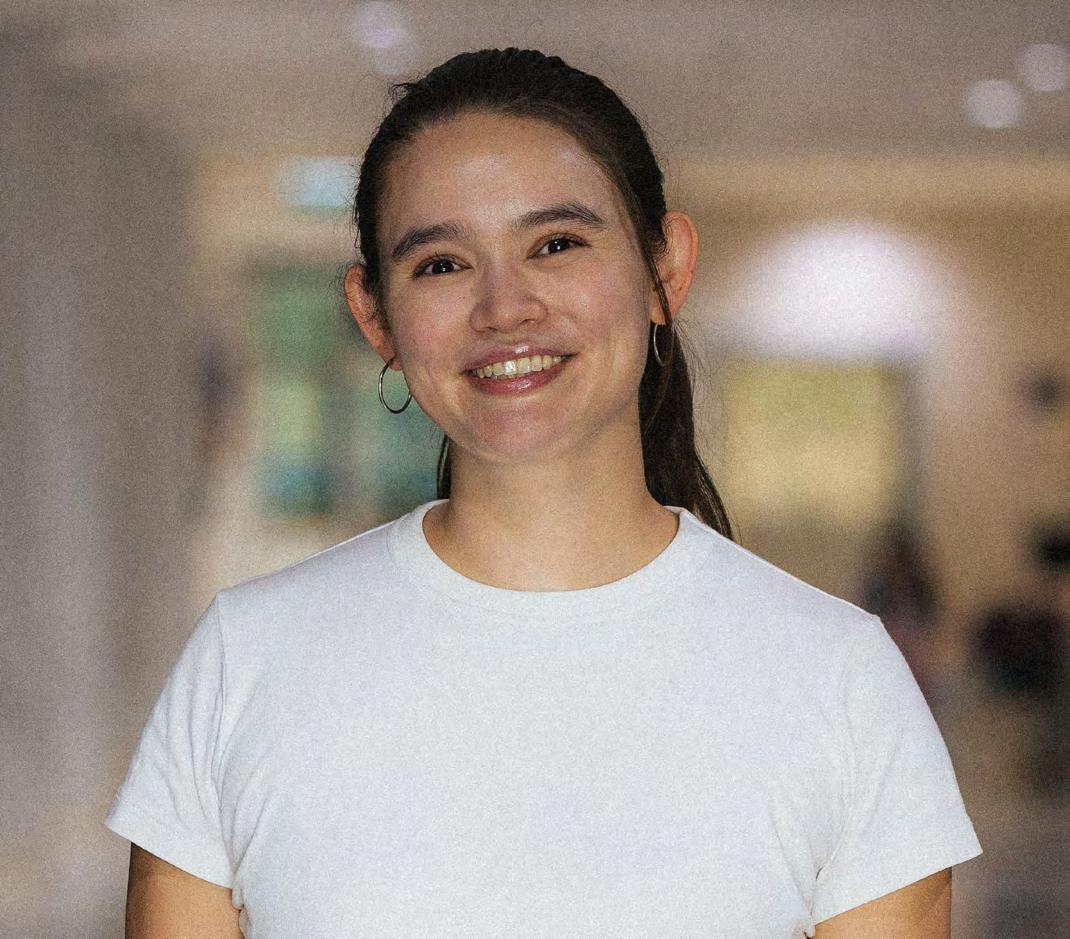
That habit of questioning stayed with her. It became how she processed the world, filtering information, challenging assumptions and forming opinions with intention. Later in her professional life, it helped her assess whether existing methods truly worked. Often, they did not.
Stephanie chose Nutrition and Medical Sciences at UCL because it interested her and combined her love for biology and chemistry. “Maybe not the most inspiring answer,” she says with a laugh, “but I think there should be less pressure on students to choose something that defines their entire future. I studied Nutrition, then worked in supply chain operations, and now I’m in investment banking technology. Your degree does not box you in.”
Her undergraduate studies sparked an unexpected interest in how technology shapes medicine, particularly preventive care. This curiosity deepened during her master’s degree, where she focused on digital health and explored how wearable devices could integrate into national healthcare systems. She is not working in healthcare at the moment, but that interest remains part of her long-term path.
Stephanie’s move into technology began in the operations department of an e-commerce start-up. Her manager introduced her to low-code automation tools, and she started automating processes because it made sense. She saw how a small technical change could improve the way a team worked.

That experience led her to the London School of Economics, where she completed a Master’s in Management of Information Systems and Digital Innovation. It was a clear step toward work that combined systems thinking with strategic problem solving.
Today, Stephanie works as an IT Business Analyst in the investment banking division of a private bank. Her role sits between trading desks and technology teams. When the bank decides to trade on a new platform or update reporting processes, she analyses requirements and coordinates the changes.
Through the global technology graduate programme, she rotated through multiple IT teams, each with its own priorities and language. “As someone who is not a software developer, it has been eye-opening to see the level of thought behind every feature change,” she says. She has learned to navigate the gap between users who want quick solutions and developers who work within complex systems. Translating those needs and managing expectations has become central to her work.
The most difficult part of her journey was not academic or technical. It was internal. Stephanie spent years believing that at some point she would “know enough” to work confidently. That moment never arrived. Entering the workforce, she felt unprepared and convinced she was the least knowledgeable person in every room.
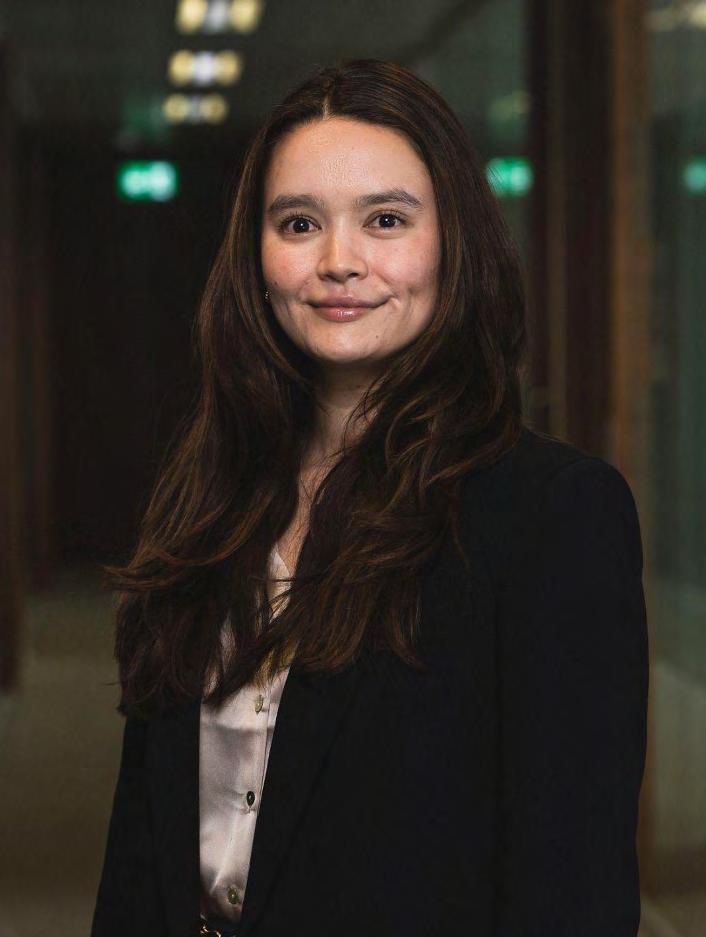
“I held onto that mindset for a long time,” she says. “Then I realised even my senior colleagues did not have all the answers. Everyone is learning as they go.”
This realisation changed how she approached her work. She began asking questions without hesitation and her learning accelerated. Confidence, for her, was built through a series of quiet steps: leading her first meeting, presenting an idea to senior management, speaking at a company-wide event. Each step felt intimidating at the time, but together they shifted how she saw herself.
Stephanie does not frame her story as a perfect sequence. It is a collection of choices made out of interest, opportunities taken with an open mind, and lessons found in places she did not expect.
For current students and recent graduates, she offers a clear perspective:
• Choose what you enjoy, not what you think will look best on paper.
• Say yes to opportunities, even if they do not match your original plan.
• Ask real questions. People notice when your interest is genuine.
Her path has taken her from the stage to the lab to the heart of banking technology. Each chapter has shaped the next in its own quiet way.
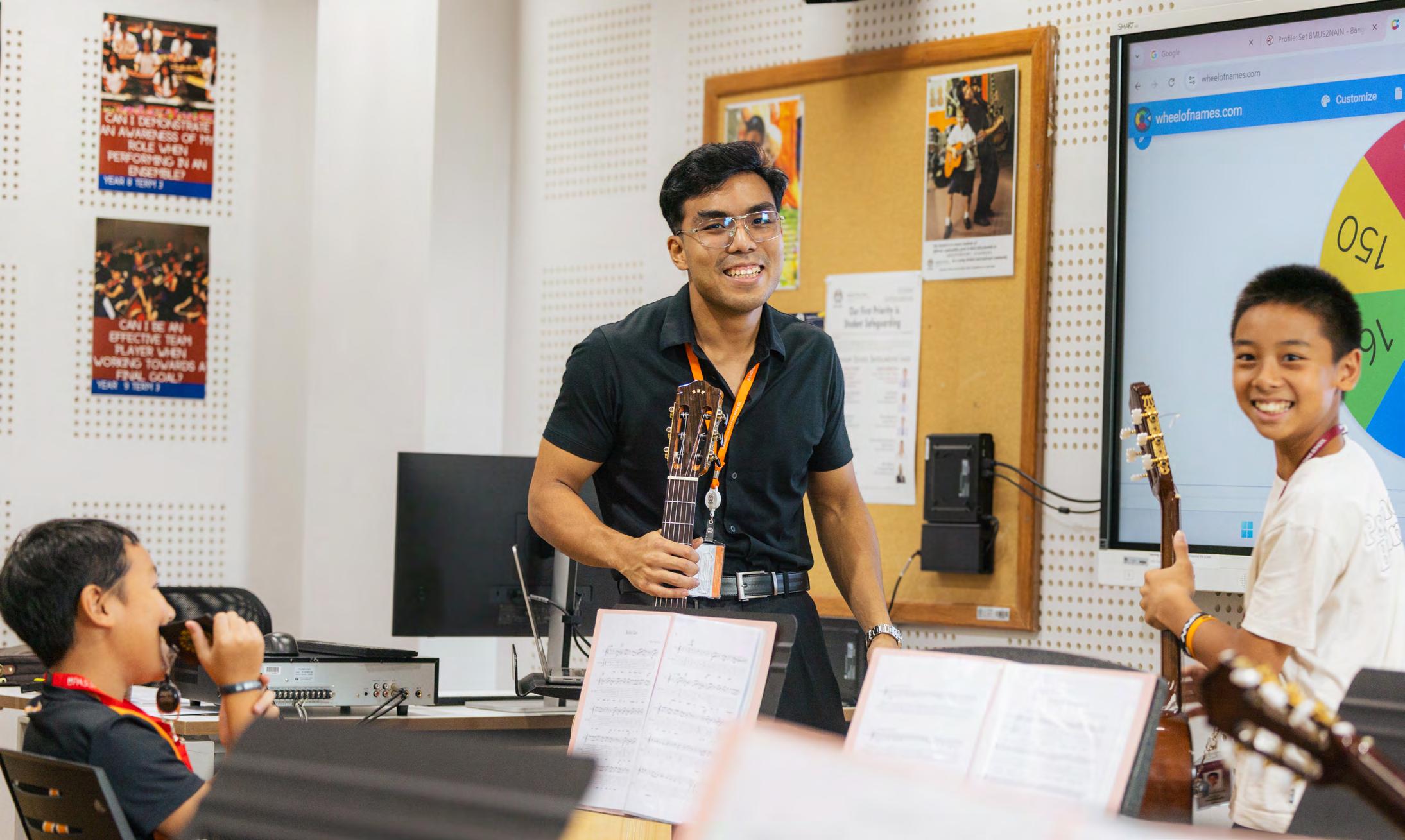
In a sunlit music room at Bangkok Patana School, the hum of guitar strings fills the air. Behind the desk sits Chopin, not the 19th-century composer, but a young musician whose journey from Bangkok Patana as a student to teacher has come full circle.
“I was also studying in that room,” he says, gesturing to the space where he now teaches, “I was sitting on the other side and now I’m behind the desk. It’s a full-circle moment.”
Chopin, a Bangkok Patana alumnus, returned to his alma mater after years of study and performance abroad. His teaching style is rooted in empathy and experience. “As a former Patana student myself, I knew what resonated with me and what didn’t so I try to put that into consideration when preparing materials for my students. So I ask my students what songs they want to play and I write guitar arrangements for them.”
For his Year 8 class, that meant a Charlie Puth song. “They really enjoy it and practice hard,” he says, “When
students recognise a song from YouTube or Spotify, they’re more inclined to play it. It’s all about exploration - it’s not music college. It’s supposed to be fun.”
His philosophy is simple: keep it light, keep it engaging. “You’re introducing them to a new instrument. You have to develop that interest so they continue liking guitar.”
Chopin’s musical journey began in Year 2 with piano lessons, but guitar quickly took center stage. “My dad collected guitars, so there were a lot lying around the house,” he recalls, “He taught me first. I couldn’t read music—I just heard it.”
His mother noticed his talent early on. “Apparently, I could pick up songs pretty fast. I’d hear something and play it back. She said, ‘We should invest in music.’ That was a good choice.”
By Year 5, Chopin was playing Guns N’ Roses at school assemblies. “We had lunchtime concerts by the pool, informal recitals after school. It really helped build confidence.” He credits Bangkok
Patana’s emphasis on performance for that. “Everyone in Years 7 to 9 has to get on stage at least once—whether it’s music, public speaking, or presenting. It’s a good life skill.”
The decision to pursue music professionally came during his (i)GCSE years. In Key Stage 3, we would get to explore many different subjects such as math, science, drama, geography and many others but I realized that music was my calling when homework didn’t feel like ‘work’ at all! I was always eager to practice guitar because to me, practicing guitar is like learning a new skill, a personal challenge and it gives me discipline.
Chopin eventually decided to pursue his higher education at Berklee College of Music after receiving a scholarship from Berklee’s 5-week summer program during his summer break in Year 12. He graduated with a magna-cum-laude in Bachelor of Arts degree with a specialisation in Music Production & Engineering.

He followed up with a one-year master’s in songwriting and production, and then joined the Berklee (NYC Campus) post-graduate fellowship program on scholarship with a specialisation in Live Music Production & Design (LMPD). “I taught live sound—logistics, lighting, wiring a concert venue. It was my first teaching experience and I was the youngest in the program.”
Berklee was not an easy ride. “I was expected to practice six hours a day for four years.” He also discovered his love for music production during this time. “I always wondered about how a simple idea in one’s head can turn into a song. I wanted to know how to translate my musical ideas into a piece of art for everyone to listen to.”
After graduation, Chopin worked as a freelance music producer, arranger, composer and professional guitarist in New York City for one year. After learning the ropes in the music industry, Chopin decided that it was time to use these skills back home in Bangkok.
Returning to Thailand was a deliberate choice. “I wanted to break into the Thai music scene. I already had one year of
work experience, and I still work online with people in New York.”
At Patana, he’s found a rewarding rhythm. “Students tell me I’m chill and that I understand them. I know what they don’t want to play and what’s fun. I write exercises that are secretly scales, but they think it’s just a cool riff.”
Outside of teaching, Chopin is a freelance music producer, singer-songwriter and arranger. “I write songs for Thai artists, TV shows and ads.“ There are many different formats when it comes to my work. For example, I wrote the lyrics for the OST of ‘Love and Destiny’ a Channel 3 Thai TV series that is currently in the filming process.”
He recently arranged music for the Golden Song TV show, a popular Thai program featuring oldies from the 1940s and ’50s. “I arranged some of the songs and was also the playback engineer for the show blending ethnic instruments with live ensembles.”
His technical background from Berklee helped. “The major was very techie, setting up speaker systems, lighting, connectivity. That experience was crucial.”
When asked about his current musical
tastes, Chopin lights up. “I love R&B, soul, hip hop and neo-soul. But I have a background in classical, rock and jazz. I use jazz techniques to make my rock playing more sophisticated.”
His playlist includes artists like Tom Misch and Yussef Dayes. “I don’t just listen to guitarists, I’ll listen to a saxophonist or a Spanish classical guitarist from the 1800s.”
For live music in Bangkok, he recommends Saxophone Pub near Victory Monument. “It’s the best place for serious live music—four trumpets, four saxophones. “It is for music lovers that seek a truly incredible experience.”
He also mentions The Commons in Thonglor, where some of his Berklee friends perform. “It’s more indie and underground, but not as solidified.”
Chopin’s journey—from a student playing Guns N’ Roses at school assemblies to a teacher shaping the next generation—is a testament to passion, perseverance and adaptability.
“I think it’s all about connecting,” he says. “Whether it’s with students, audiences, or collaborators. Music is the medium—but the goal is always connection.”




By Amy Soukvilay, Year 12 Student

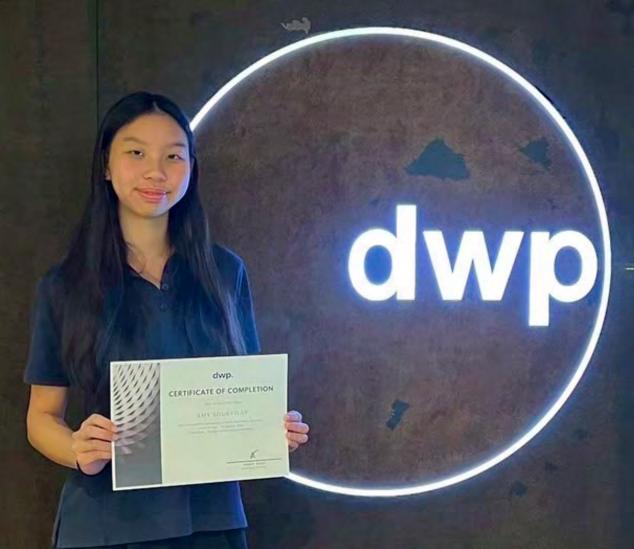
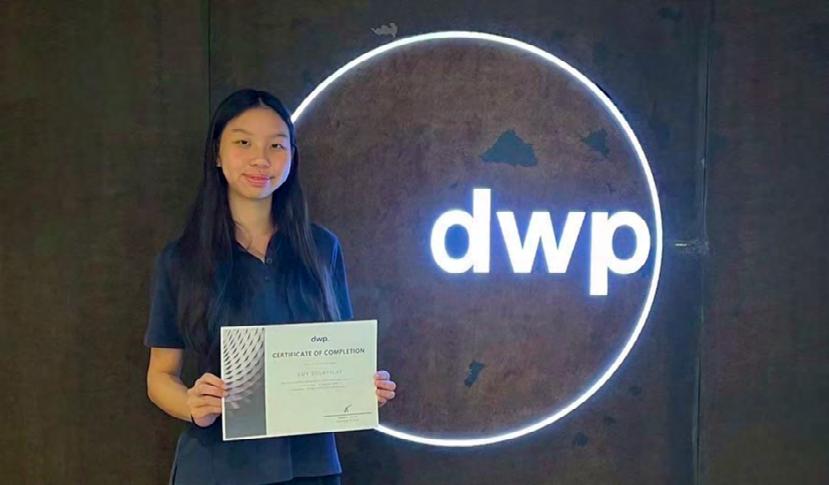
Since an early age, I have been interested in creative subjects such as DT and Art, which sparked my interest in architecture. I have always been fascinated by how design shapes memories and experiences of each individual in different ways. Seeing how design can connect and inspire people, made me want to design spaces that are sustainable and unique. I am drawn to architecture because it combines creativity with problem-solving; key skills that I want to continue to develop in the future. This interest led me to pursue a 5-week internship made possible with the support of my career counsellor, Mr Haughton. He helped me prepare by conducting practice interviews before doing an online interview with the architecture firm DWP (Design Worldwide Partnership).
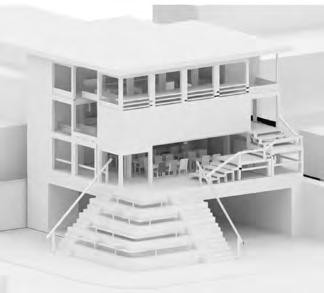
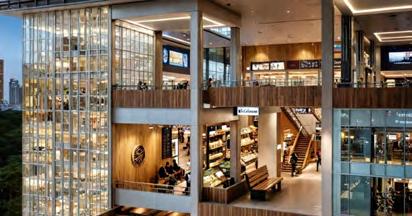
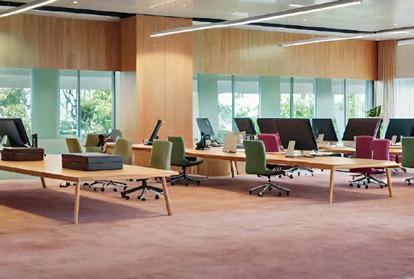
DWP is a global architecture firm with studios across Asia, the Middle East and Europe, known for its focus on sustainability and digital innovation. During my internship, I learned how to integrate artificial intelligence such as Midjourney and PromeAI to render architectural images and assist my mentor on client projects. This helped me gain a valuable insight into how artificial intelligence may be used to enhance design processes and serve as a creative partner rather than a replacement in the future. Furthermore, I was taught how to master a 3D modeling software called ‘Rhino’ to model existing buildings, design objects and create my own community space concept which I later refined using Photoshop. This helped me understand how digital tools can bring architectural images to life.
During this experience, I developed a range of skills with the help of mentors and staff. Interning at DWP wasn’t just about learning software, but also building new friendships and learning how to share my thoughts whilst being proactive in meetings. Communication and collaboration were key skills I learnt, along with the value of teamwork and ambition, qualities which shape DWP’s work environment. Towards the end of the internship, I presented my final projects and models to the creative director and other employees. Overall, my internship at DWP inspired me to continue my journey to becoming an architect and gave me a deeper understanding of the work environment in architectural fields and the growing role of artificial intelligence.
Before DWP, I had completed a 2-week interior design internship at Abacus Design. I shadowed professional interior designers and visited places such as Jim Thompson and IKEA to study materials, textures and layout concepts. At the workplace, I worked on redesigning my own room, which involved taking room measurements, choosing fabrics, and experimenting with colors and tones that complemented each other. I also researched furniture options and learned the importance of how material options could shape atmosphere and moods which was a concept that I later applied to my architecture internship. Both of these internships have influenced me to continue pursuing fields of design and have shown me how creativity, technology and teamwork are key aspects that shape future designs.

Join us for a workshop designed to provide you with the most supportive and relevant information for your pregnancy journey. We believe in providing personalized care, which is why each session is thoughtfully crafted to meet the unique needs of your community.
Venue: The Forum, M Floor, MedPark Hospital
Please register for the session most appropriate for you.
October 4, 2025
November 1, 2025
November 5, 2025
November 8, 2025
November 15, 2025
November 22, 2025
December 1, 2025
December 13, 2025
December 20, 2025



English-speaking participants
(For Expats)


Thai-speaking participants
Japanese-speaking participants
Thai-speaking participants
English-speaking participants
(For Expats)
Chinese-speaking participants
Japanese-speaking participants
English-speaking participants
(For Expats)


Chinese-speaking participants
Register now to reserve your seat.
Note: