DAUNTLESS
Bold African Stories
Issue 12 • May 2017 R35,00 (VAT included)
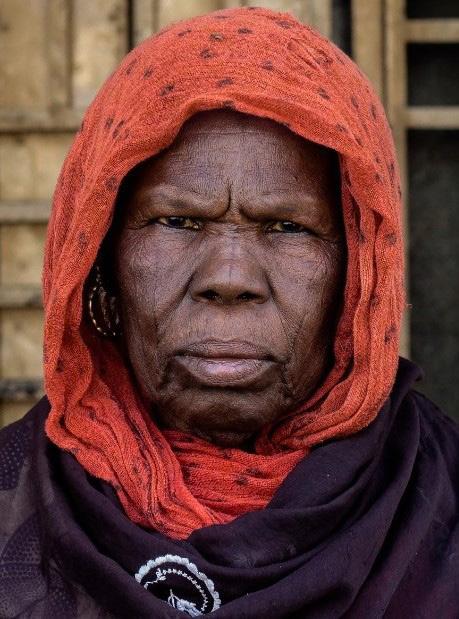
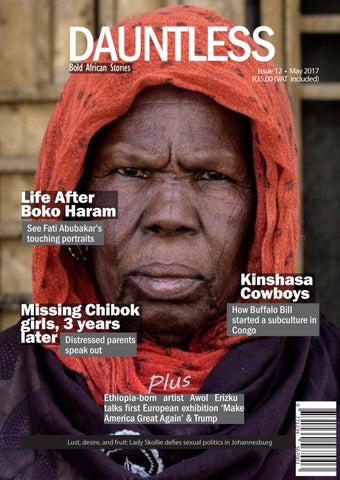
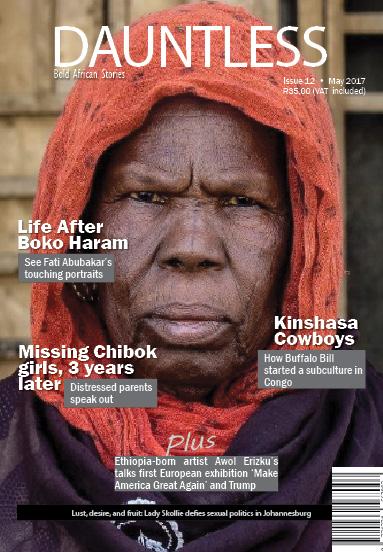
Life After Boko Haram
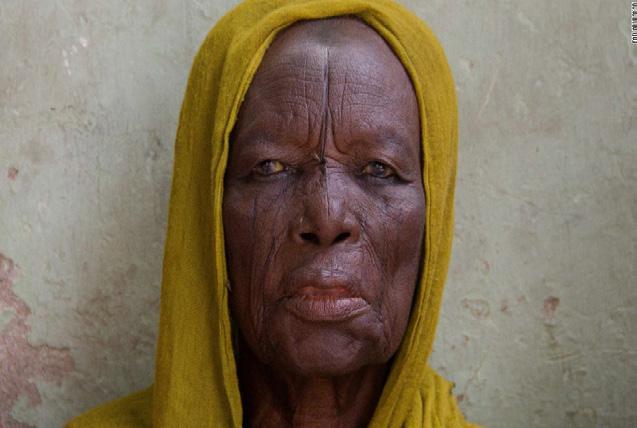
See Fati Abubakar’s touching portraits
Missing Chibok girls, 3 years
later Distressed parents speak out
Bold African Stories
Issue 12 • May 2017 R35,00 (VAT included)
See Fati Abubakar’s touching portraits
later Distressed parents speak out
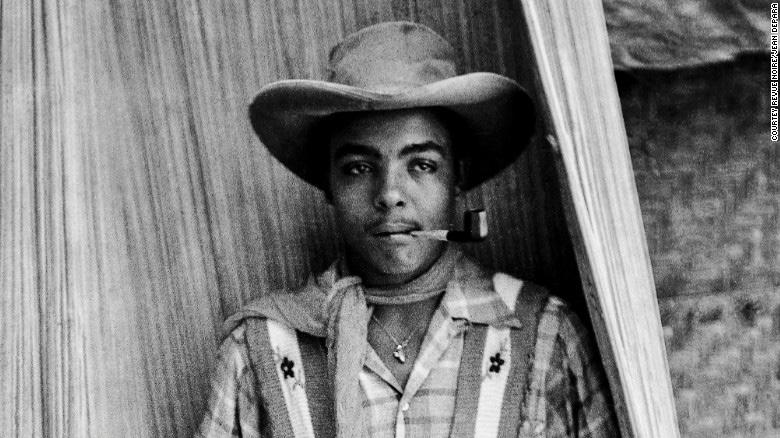
How Buffalo Bill started a subculture in Congo
Ethiopia-born artist Awol Erizku talks first European exhibition ‘Make America Great Again’ & Trump
Lust, desire, and fruit: Lady Skollie de es sexual politics in Johannesburg
04 Missing Chibok Girls
Distressed parents speak out
08 Life After Boko Haram

Fati Abubakar’s touching portraits
Border Denials
Africans wary of U.S. travel
The Kinshasa Cowboys
How Buffalo Bill started a subculture
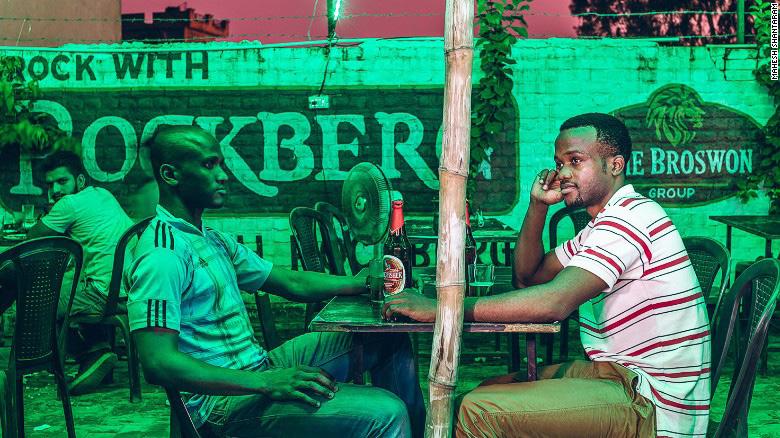
19 Mahesh Shantaram
Giving Africans in India a voice
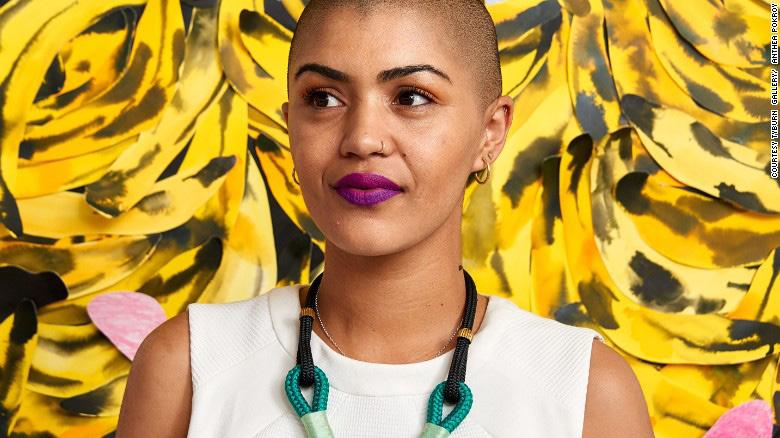
22 Lady Skollie
Defying sexual politics in Joburg
24 Internet Sensation
Sibu Mpanza living off the net
27 Tony Gum
Artist in learning
LIFESTYLE 29 Ocean Life
Discarded flip-flops huge hazard
Good Mood Boost
Six Brain-healthy ingredients
35 For Wine Lovers

The best vineyards in South Africa
37 All Abroad
Chinese-funded railways linking Africa
39 Maria Borges
1st Black African to cover Elle
40 Edward Enninful
Vogue’s 1st Black African male editor
42 The Nigerian Inventor
Building a flying jet car
Building a flying jet car
Oh, my, you may be wondering, what on earth have you
done? I know how protective readers can feel about the magazines they love, and I respect that. A serious, loyal readership may be our most precious asset. We’d be fools to trifle with it by making change for change’s sake. But there’s also the puzzling question, in this moment of technological upheaval, of how to intensify the experience of reading a print magazine. We remade the table of contents, the letters page, the opening essay, the interview, the lifestyle and the food section. We revived a dormant feature called Bold Africans because we wished it had never gone away. We invented a new photo essay and a new critics’ page. We even tinkered with the cover: the logo, by which I mean the scripted words DAUNTLESS, has shifted from the left to the middle.
Every tiny aspect of the redesign represents a decision we debated, sweated over and second-guessed until we ran out of time and had to send it off to the printer. But what you see here is not a new formula. It’s a beginning. Our aim is to make everything sharper, clearer, more alive and dynamic — while not altering the foundation of the magazine. DAUNTLESS is based on long-form narrative journalism, and this week’s cover photo story, by Fati Abubakar, is a prime example. We’ve added a page called You Are Here, in which a writer offers a short dispatch from a particularly interesting part of Africa.
Our overarching goal with this redesign is to monopolize as much of your love for African culture as we possibly can, but it doesn’t stop there. This is the first step in what will eventually
be a new web presence for the magazine. Everybody on staff will contribute now and then. We hope you’ll check it out and start talking back to us – we love hearing from you.
The new Editor in Chief for DAUNTLESS MAGAZINE
Editor In Chief
Banathi Mgqoboka
Associate Editor
Nobuntu Maake
Phoebe Parke
Stephanie Busari
Ibrahim Sawab
Art Director
Sipho Ngwenya
Graphic Artist
Thembeka Moloi
Circulation Officer
Out of the Box Circulation
Sales Officer
Media One
BY STEPHANIE BUSARI AND IBRAHIM SAWAB
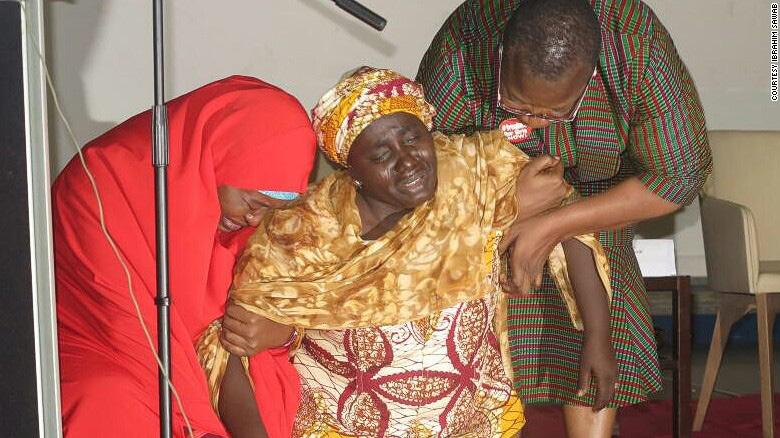
Her face etched in pain and her grief palpable, the mother of one of the missing Chibok girls sunk to her knees and begged for the safe return of her daughter.
Rebecca Samuel Yaga was one of dozens of parents of the Chibok schoolgirls who attended an inaugural lecture Friday to commemorate the three-year anniversary of their kidnappings.
Boko Haram seized 276 students from the Government Girls Secondary School in Chibok on April 14, 2014. Fifty-seven managed to escape almost immediately, while two others were found by the army.
Twenty one girls were released in October 2016 following negotiations in a deal brokered by an unnamed Swiss contingent and Nigerian authorities. Those negotiations are ongoing to free the remaining girls, the government said.
“The government is in constant touch through negotiations, through local intelligence, to secure the release of the remaining
girls and other abducted persons unharmed,” Nigerian President Muhammadu Buhari said in a statement Thursday.
“On this solemn occasion, my appeal is that we must not lose hope on the return of our remaining schoolgirls.”
The lecture held at Abuja was one of a series of events and rallies held Friday to remember the 195 that are still missing. It was given by the Emir of Kano, Muhammed Sanusi, and was organized by the Bring Back our Girls group, which has long campaigned for their safe return.
Oby Ezekwesili, a co-founder of the movement, vowed Friday that they would continue to protest until the rest of the Chibok girls are brought back.
In Chibok, about 100 parents gathered at the secondary school for a multi-faith meeting with Muslim and Christian clerics to hold prayers for the safe return of the missing girls.
On this solemn occasion,my appeal is that we must not lose hope on the return of our remaining school girls.”
It was the first time the parents had met at the school to hold a prayer session since their daughters were kidnapped.
Yana Galang, the women’s leader of the association of Chibok girls, told CNN: “Only a few parents got their daughters back. Over 100, including myself and my husband, are still groaning for... those who were not found.”
Nigeria
BY STEPHANIE BUSARI
A meningitis outbreak has killed 489 people in Nigeria this year, the World Health Organization (WHO) said Thursday. The country’s Center for Disease Control reported 4,637 suspected cases.
Meningitis is a serious infection of the thin lining that surrounds the brain and spinal cord, which can cause brain damage. “Stereotype C,” a new strain of meningococcal meningitis, emerged in Nigeria in 2013.
Untreated, meningococcal meningitis, the bacterial form of the disease, is fatal in 50% of cases.
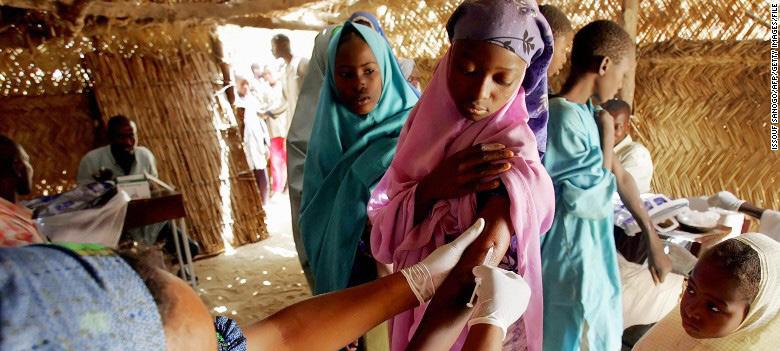
The WHO also said that a vaccination campaign organized by the International Coordinating Group on Vaccine Provision is underway in Nigeria.
The coordinating group which is managed by the WHO, Médecins sans Frontières, the International Federation of Red Cross and Red Crescent Societies, and the United Nations Children’s Fund is tasked with provision of emergency vaccine supplies during outbreak emergencies.
Last month, Nigeria’s Center for Disease Control warned that there were not enough
vaccines.
“There is a vaccine available,” Chief Executive Chikwe Ihekweazu said, “but it is not commercially available for the stereotype involved in this specific outbreak, and we have to make application to the World Health Organization for the vaccines.”
However, in a press release on April 1, Health Minister Isaac Adewole said that up to 1.3 million vaccines had been acquired, including 500,000 doses of meningococcal vaccine provided by the WHO.
An additional 820,000 units have been donated by the British government, according to the WHO.
As part of the campaign, an emergency response team has been sent to the five states in the northwest of the country that have been hardest hit by the outbreak.
Along with vaccines, 20,000 vials of antibiotics have been sent to treat people with the disease.
According to the WHO, even when the disease is diagnosed early and adequate treatment begins, 5% to 10% of patients die, typically within 24 to 48 hours of the onset of symptoms.
Common symptoms include stiff neck, high fever, sensitivity to light, confusion, headaches and vomiting.
Nigeria is one of the 26 countries within the extensive region of sub-Saharan Africa known as the “meningitis belt,” where large epidemics occur. The outbreaks peak in the dry season in certain states due to the low humidity and dusty conditions and usually end as the rainy season approaches, Ihekweazu said. Nigeria records some of the highest incidences of the disease on the continent.
“Meningitis is a tough disease, especially during this period, and it is associated with overcrowding, understanding the living conditions in the country, people must keep their building ventilated,” he said.
“We believe that our concerted efforts will bring this outbreak under control, as we also work towards preventing outbreaks of this scale in the future,” the Center for Disease Control said as local and international organizations work together to manage the epidemic.
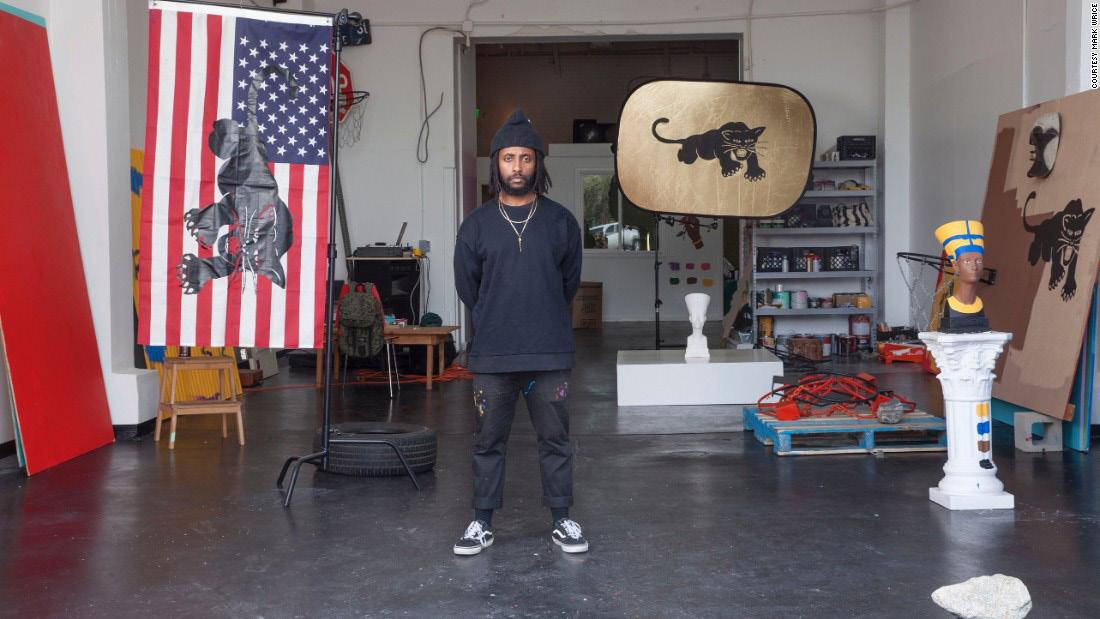
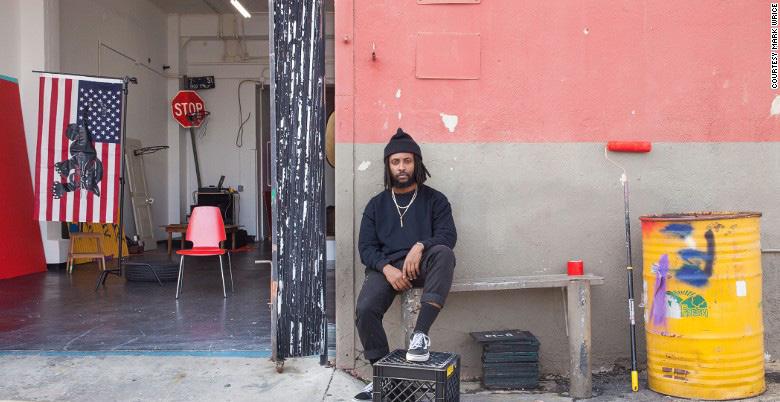
Los Angeles artist Awol Erizku’s first European exhibition ‘Make America Great Again’ has opened in London but if you are expecting a pro-Trump theme, think again.
By PHOEBE PARKE
The Ethiopia-born artist, who is also responsible for Beyoncé’s iconic pregnancy shoot, shares his thoughts on the current political situation in America through art -- and he’s not worried about hurting anyone’s feelings.
“As he [Trump] rose to power, I just felt more and more compelled to make a body of work to say something about his rise,” Erizku told CNN in an interview before the exhibition opened.
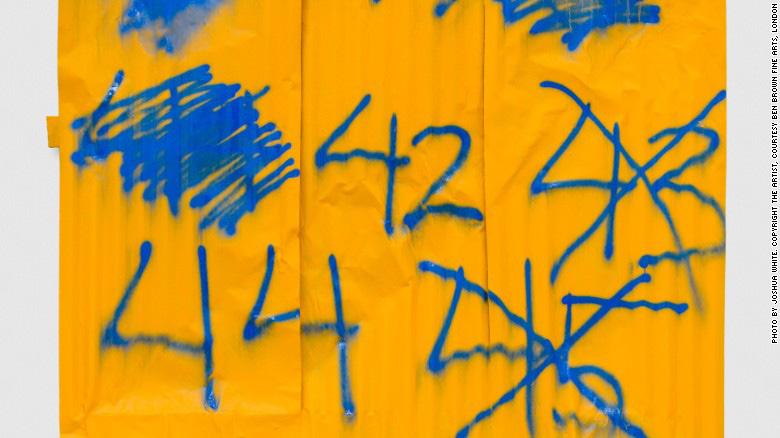
As Erizku stands in front of a sheet of corrugated metal with numbers spray painted on them (a piece called ‘How Could
I Not’) he explained that the numbers relate to the American presidents; “When I first started this series of paintings in California, they were infamously called the gang paintings because a lot of the numbers were direct references to street gangs in LA.”
“The numbers in this particular painting refer to the presidents, so you have number 42 and number 44 that are not crossed out, who are my favorite presidents -- that is Bill Clinton and Barack Obama -- and 45 being Trump.”
Erizku said he can’t remember what specific event made him want to start working
As he [Trump] rose to power, I just felt more and more compelled to make a body of work to say something about his rise’’
on pieces about Trump, but that he felt he had to do something; “He’s always doing some outlandish things in the media so I can’t even tell you when this happened, but I think it was probably the first time he was talking about building a wall in Mexico, or banning Muslim countries or something.”
“I’m Muslim, I’m black, I live in California, a lot of the people there are Mexicans, so a lot of my friends are Mexicans,” Erizku said. And there are other pieces about Trump too.
In the middle of the exhibition there is a piece called ‘Them Changes’ - a door with
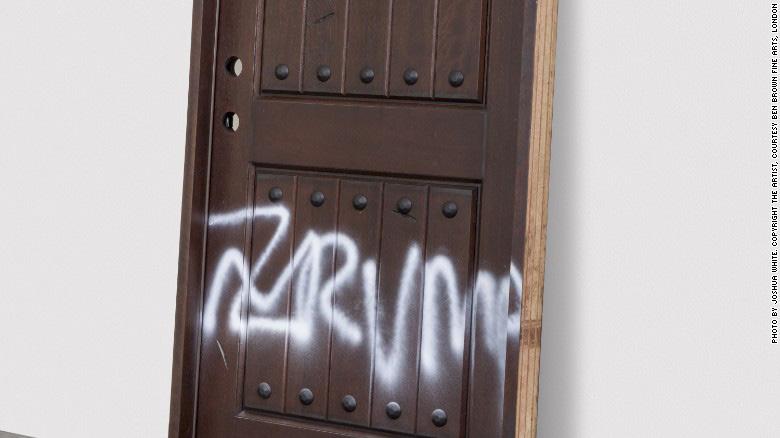
a barred window, scratches all over it and the word ‘Trump’ spray painted on the bottom, but in the place of a ‘T’ is a swastika.
“I feel like I have to talk about this piece right here, because of the use of the swastika,” said Erizku.
“On the eve of the election I was driving back home one night and I just saw this whole wall, and it said ‘F*CK TRUMP’ and the ‘T’ was a swastika and I thought that was a really interesting thing.” Although Erizku moved to America when he was very young, he has tried to connect with his Ethiopian roots; “I went back three or four years ago to do a body of work called ‘The Reclining Venus,’ where I went
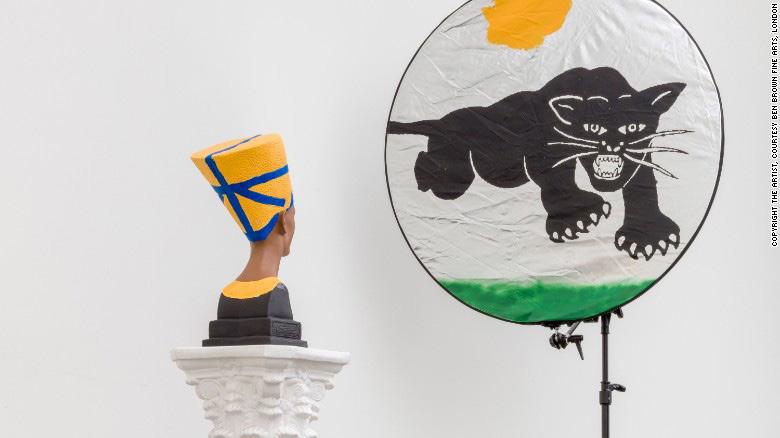
to four different cities in Ethiopia and worked with the sex workers there and I photographed them. ”During that trip one of the first things that I did was I stopped by Egypt and I went inside a pyramid and I had this visceral feeling, I can’t really explain it, other than to say I think Egypt is really important for me.
“Ever since that trip I’ve been more and more in touch with my roots and trying to use it in a way that makes sense for me -- I’m an American artist but I have African roots so I’m trying to marry the two, and trying to make something new. I think it gives me this advantage of having this unique perspective.”
As with all his exhibitions, Erizku has a mixtape to accompany the show, he says his work feeds off it.
“My work does borrow from contemporary music” said Erizku. “With the number 12 piece [Wave Brake], in contemporary rap music number 12 makes reference to the police. It’s my way of marrying abstract art and contemporary music and creating a new vernacular for myself.
“With a lot of these works, the title of the piece is from a song that sometimes I’m playing in the studio, and then ultimately they make it into the mixtape that’s accompanied by sometimes a narrative, sometimes a soundbite that I think is important to the entire show.”
“A lot of the songs in the mixtape are very political, there’s Kendrick Lamar on there, Joey Bada$$, Solange is in there and if you know the culture and you know what these artists bring to music then I don’t have to explain it.
“In Kendrick’s case, he has a grip on what’s happening in America and he’s become the voice of our generation in a lot of ways, and Joey Badass’s album that he just put out is very amazing and it’s his version of this, it’s his version of ‘Make America Great Again.’”
Awol Erizku’s exhibition “Make America Great Again” is on show at Ben Brown Fine Arts, London from April 20 - 2 June 2017.
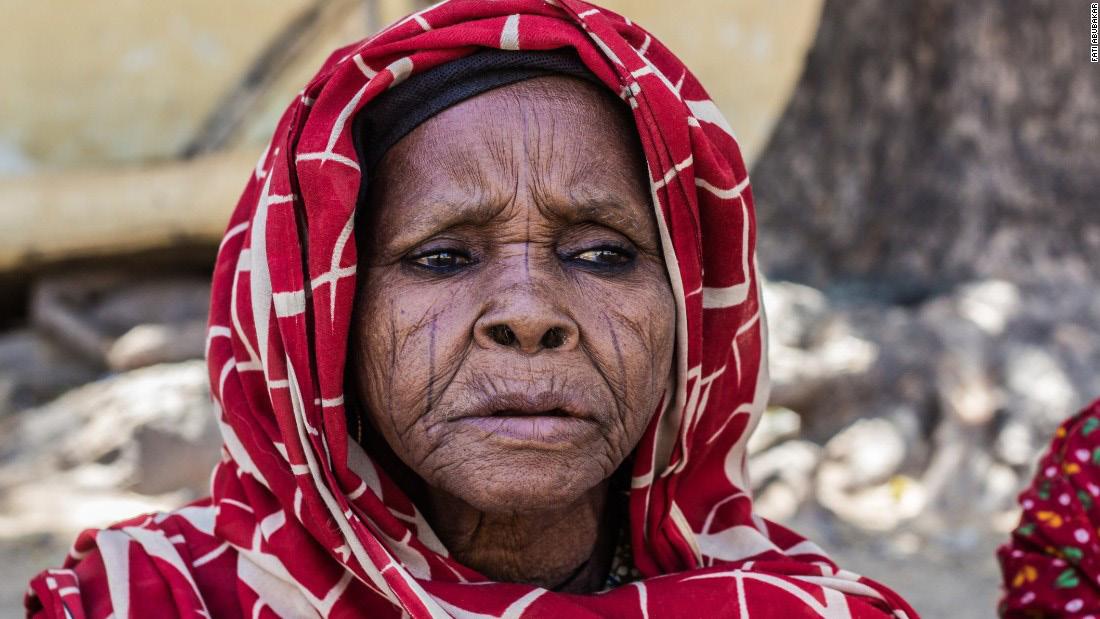
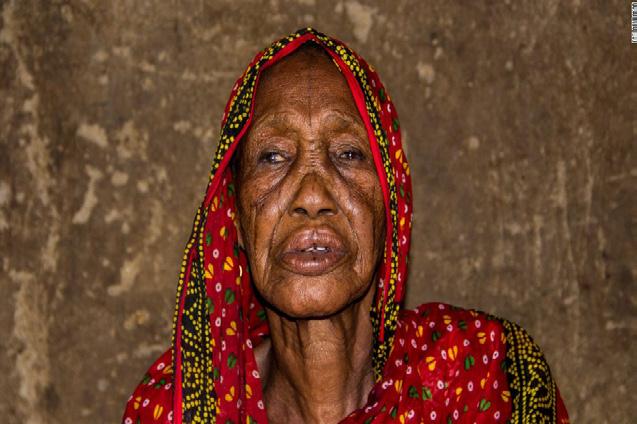
Ya Hajja –“Boko Haram attacked our village, Malari in Konduga Local Government, and killed my son. So my friend and I found a car and came to Maiduguri. We live with my other son, but he can’t feed us all the time, so we beg on the street.”
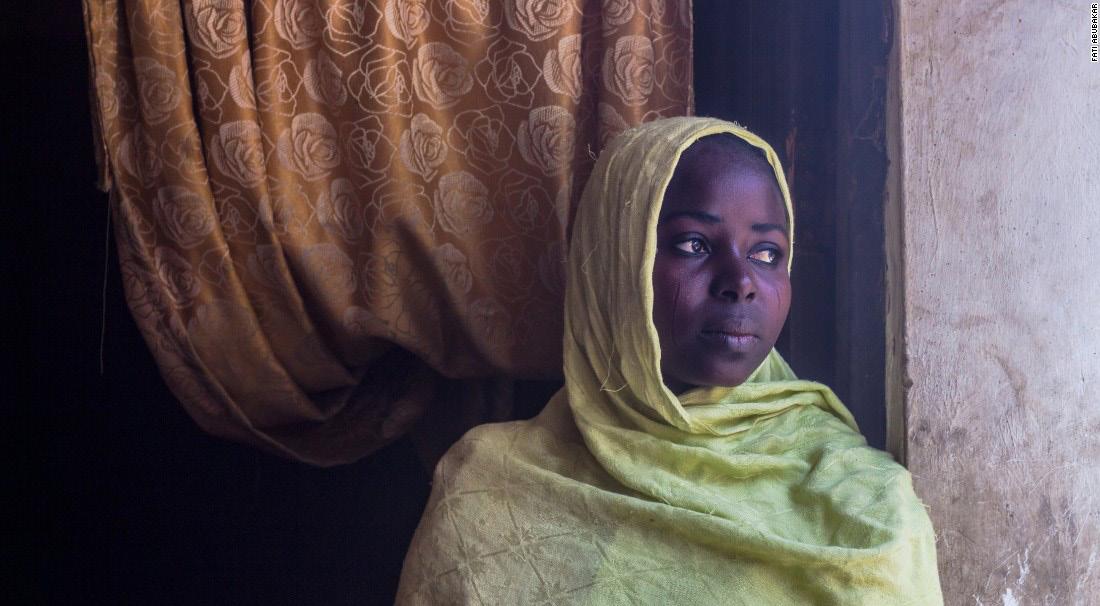
Baana Hajja – “The Boko Haram terrorists went away with two of my siblings and my brother was shot on our way to Maiduguri. Even after fnding safety here, we have lots of problems. Food, rent. We’ve too (many) issues. And there’s not much trade. I sew caps but sometimes you can’t even buy the thread because there’s no money. The government and NGO food distribution is yet to reach our neighborhood.”
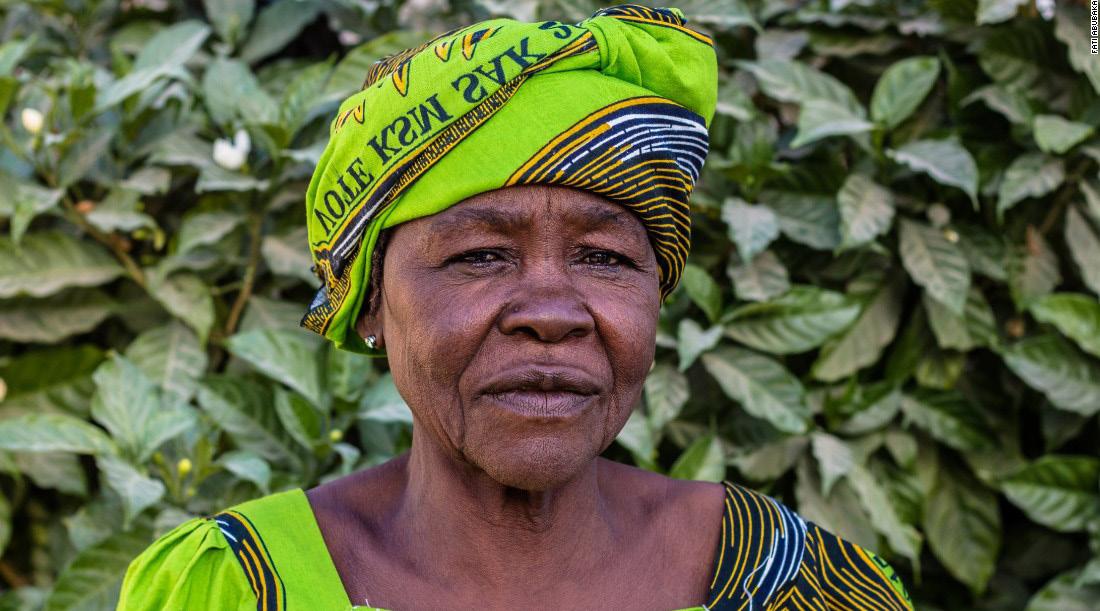
Fatime – “(Boko Haram) didn’t touch me because they said I was old. So they left with the other women in the town, I heard the women screaming. I didn’t sleep for days. But I continued living in the neighborhood, selling groundnut. The (Boko Haram) boys used to come and buy the peanuts as they passed. Day and night I thought of ways to leave the town. Eventually I ran. It took me a week to walk from the village in Baga to Maiduguri.”
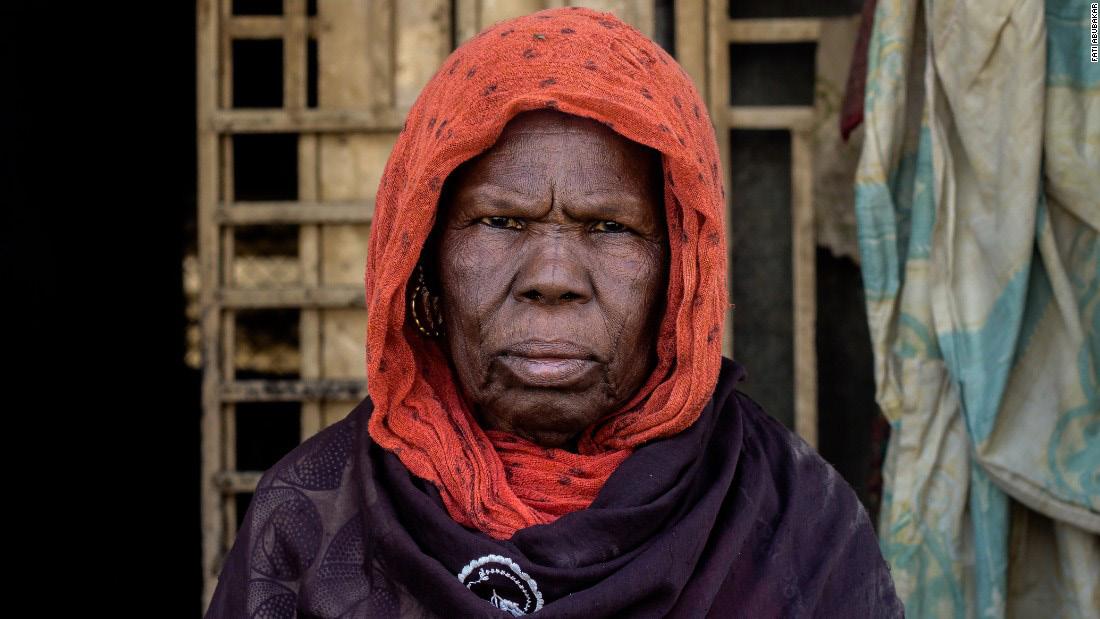
Kellu –“Myself, my sons, their wives, and their children ran to Maiduguri. It’s 16 of us in four rooms. We’ve left everything behind. We don’t have money anymore. Not even food. I want my sons to fnd jobs so the family can survive.”
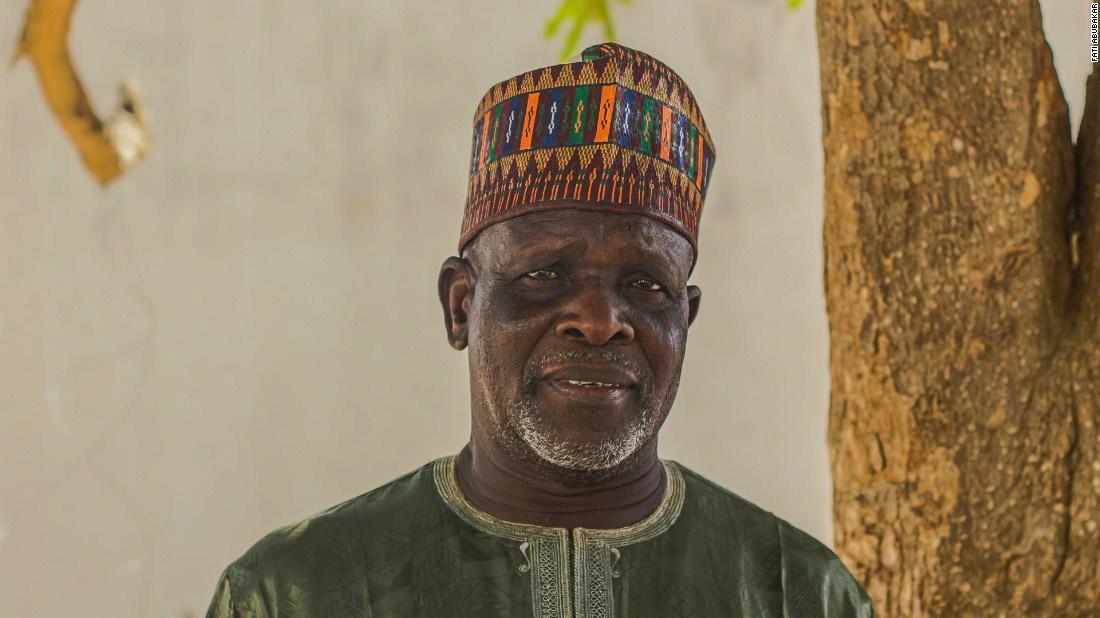
Sergeant Lawan – “I was an ex-soldier living in Bama when the Boko Haram terrorists came. They burned all of my property, my animals and killed my two sons. My son had married June 15th, 2013 and he was killed 1st September, two months after his wedding. We walked to Maiduguri and have been living here for some time now, but I struggle with food, clothing and a mattress to lay my head on. I still don’t have food.”
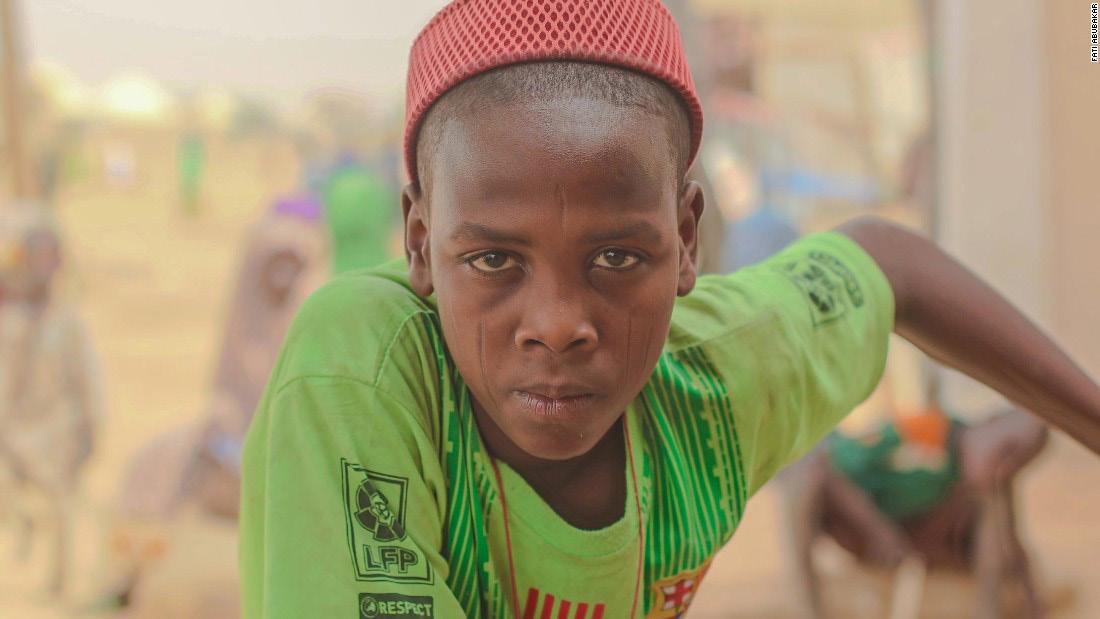
Ibrahim –“I don’t know where my parents are. I don’t know whether they died or are somewhere else after we all ran from our village. But some of my aunts are in another camp. I visit them occasionally. I live here in Kusheri (a new community that moved to Maiduguri). The Bulama (traditional leader) gave me a room. His family feeds me. I don’t go to (formal) school but I have joined the other kids in the Islamic school in the neighborhood.”