Baked Magazine - Fall 2025

Page 1


Fall 2025 baked

Arietta Hallock editor-in-chief

Delia Rangel managing editor

Cayla Israel creative director

Allie Alongi illustration director

Julia Favaro managing editor

Kira Donegan digital director

Alicia Hoppes photo director

Abbey Fitzpatrick social media director

Editorial

senior editors Daisy Polowetzky, Ava Bartholomew asst. editors Abigail Green, Helena Sauriat print writers Arietta Hallock, Julia Favaro, Delia Rangel, Caitlyn Begosa, Mara Greene, Madison Sottile, Boone Gross, Eliana Hebert, Lily Matthews, Isabella Flores, Yoonji Lee

Digital

social media team Lucy Upton, Eleanor Unsworth, Cindy Gao, Caitlyn Costello, Jaclyn Mars, Lucy Savarie, Sydney Goldberger, Caitlin Shepherd, Julia Favaro, Savanna Sussman, Carolyn Ellis, Lucy Griffiths, Bella Salerno

digital writers Sydney Goldberger, Isabella Flores, Milena Chiari, Emilie Oestreicher, Izzy Giacoppo, Claire Peretta, Izzy Keating, Madison Sottile, Caitlyn Begosa

faculty advisor Aileen Gallagher

Design

head designer Rylee Dang designers Briana Salas, Sam Kurland Angie Houissa, Celia Heisey, Chrissy James Cayla Israel, Rylee Dang, Willa Russell Lucy Savarie, Yole Barlatier, Julia Cuomo

Illustration

assistant illustratrion director Brynne Baird illustrators Brynne Baird, Anabel Patino, Flynn Ledoux, Kelsey McMillin, Jade Booker Emma Soto, Maria Masek, Madison Denis Gabe Krakauer, Isabella Stewart Hannah Mesa, Mia Fienberg

Photo

assistant photo director Ola Czartoryjska photographers Taite Paradise, Alicia Hoppes, Eliana Hebert, Sean Sterling, Ola Czartoryjska, Dhwani Nair, Kate Situ, Celia Heisey, Liz Bukh

Baked is Syracuse University’s student-run food magazine. Founded in 2011, Baked aims to widen food options for SU students by introducing kitchen amateurs to cooking, highlighting local businesses and eateries, and connecting readers to the greater Syracuse food community. Baked publishes one issue each semester.

bakedmagazine.com

@bakedmagazine

@bakedmagazine

TABLE OF Contents

Dear Reader,

When I studied abroad in London this spring, the most spectacular sight I saw wasn’t Big Ben or the London Bridge—it was the local supermarket.

With fluorescent-lit aisles filled with foreign foods, I was a frequent flyer at the grocery store near my flat. Without a car—and with fewer preservatives across the pond—trips to the market were smaller and more frequent.

I’d stroll home past lively pubs with overflowing armfuls of tasty treasures to try with roommates. In search of a joyful little project, I’d often walk back home with a pomegranate in my pocket. I was always delighted to crack it open and unearth the jewel-like arils inside.

I haven’t stopped digging in and exploring since returning to New York. The beauty of food is that you can experience the cultures of faraway places without having to fly across the world. Whether it’s finding a new recipe on TikTok, trying global teas, or checking out a new local restaurant, there’s no shortage of new tastes to discover. In this issue, we’re exploring that theme of discovery.

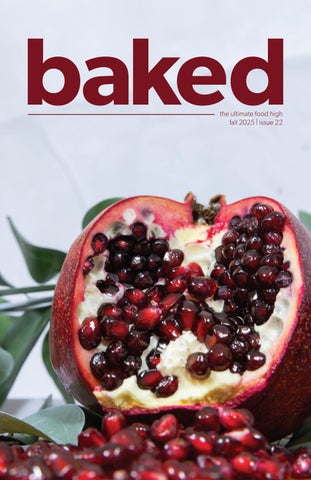
The pomegranate on our cover embodies exploration. Whether it's cracking open a winter fruit or flipping open a food magazine, we can’t wait to see where our curiosities and cravings lead us next.

We’re so glad you’ve chosen to explore with us.

Tastefully yours,

Arietta Hallock and the Baked Team

Photo by Rayna Hameed
Julia Favaro, Managing Editor Cayla Israel, Creative Director Delia Rangel, Managing Editor

FEED FORK TO FROM

A Collection of Our Executive Team’s Favorite New Food Trends

by

Illustrations by Flynn Ledoux

This Fall, fun twists on Focaccia filled my social media feeds. @inesanguiano topped hers with juicy tomatoes and @_lacebakes_ folded in flavors of apple strudel. With the help of my favorite food editors and influencers, I spent my weekends dimpling sweet and savory toppings into bubbly dough.

Designed by Cayla Israel

As someone from New Jersey, I love a fresh bagel. Greek yogurt bagels immediately caught my eye on TikTok as an easy and nutritious homemade bagel that actually tastes good. I had a lot of fun playing around with different bagel flavors including cinnamon raisin and almond. Nothing tops a classic New Jersey bagel, but these were very fun to make!

Border courtesy of Keikoya on Adobe Stock

Delia Rangel, Managing Editor

A fun drink is always on the menu. My feed is constantly filled with new drink ideas (thanks, algorithm!) that I’m dying to test out. This summer, I kept a pitcher of plain green tea in my fridge waiting to be dressed up differently with each glass. Sparkling coconut water, mango purée, cranberry juice, fresh mint—you name it. Every glass felt like a new signature drink. This fall, my new canvas is apple cider. I recommend it iced with caramel!

Cayla Israel, Creative Director

One of my favorite discoveries this year has been smashed chicken caesar tacos. I never imagined that merging two staples—caesar salad and tacos—could result in such an addicting and delicious combination. This dish has quickly become a favorite in my apartment, and my roommates and I give all our thanks to TikTok for the inspiration!

Alicia Hoppes, Photo Director

As a vegetarian, I’m always looking for fun ways to get more protein in. My family has been obsessed with a no-bake energy ball recipe ever since my sister saw it online last year. The recipe includes all of my favorite things: peanut butter, chocolate chips, and honey. They’re great to snack on, versatile, and are super easy to make!

Rylee Dang, Head Designer

Over the past year, I’ve been obsessed with watching @_gloyoyo_ experiment in her kitchen, finding new ways to spice up her daily sweet treats. One of her quests was to make the perfect coffee milk, and her recipe is now one of my favorite ways to elevate my coffee routine. I love any opportunity to try a new coffee combo, and she makes sure I never run out of inspiration!

Allie Alongi, Illustration Director

I have recently been on a journey toward the perfect iced cold brew. Through TikTok and my roommate, I learned how to make my own cold brew at home with just coffee grinds and a jar. By making cold brew at home, the batches are not only delicious but also costeffective—and environmentally friendly!

Kira Donegan, Digital Director

Finding gluten- and dairy-free baked goods has been a goal of mine, so I was so excited to see more awareness on social media. I recently got a cookbook from @theloopywhisk dedicated to free-from recipes, and can’t wait to try some out. As an avid lover of fall food, I am also excited to experiment with all the variations of pumpkin and apple-based treats she posts, including a fluffy pumpkin roll!

Brynne Baird, Assistant Illustration Director

Earlier this year, my mom and I discovered a recipe for chicken piccata meatballs, made with a rich and flavorful sauce of lemon, capers, white wine, and butter. We instantly fell in love with it the first time we made it for a party, and since then, it’s become a favorite! The meatballs are even more delicious with a slight crisp on the outside, and they make fantastic leftovers too.

Ola Czartoryjska, Photo Assistant

As the weather gets colder and the school year gets busier, there’s nothing I want more than a quick but warm and hearty meal. When I found the dumpling bake trend on TikTok I immediately fell in love with the simple yet delicious recipe. The spicy red curry paste mixed with coconut milk makes an addictively creamy sauce that manages to be both spicy and refreshing. I especially love its versatile but pantry stable ingredients.

Gettingthe B allRol l gni !

by Madison

Illustrations by Kelsey McMillin

Designed by Celia Heisey

A staple in kitchens across the world, meatballs are a classic comfort food that are simple to prepare. From Scandinavia to the Middle East, cultures around the world have discovered how to make their meatballs special!

Swedish Meatballs with Gravy

Reminisce on your favorite Swedish furniture store and prepare this familiar meal that has warmed hearts around the world.

Recipe Credit: Allrecipes.com

Ingredients

• 2 slices day-old white bread, crumbled

• ½ cup heavy cream

• 1 teaspoon butter

• 1 small onion, minced

• ²/₃ pound ground beef

• ¹/₃ pound finely ground pork

Instructions

Meatball Instructions

• 1 large egg

• 1 tablespoon brown sugar (optional)

• 1 teaspoon salt

• ¼ teaspoon ground black pepper

• ¼ teaspoon ground nutmeg

• ¼ teaspoon ground allspice

• 1 tablespoon butter

• ¼ cup chicken broth

• 3 tablespoons all-purpose flour

• 2 cups beef broth

• ½ cup sour cream

1. Preheat the oven to 350 °F. In a bowl, mix breadcrumbs with heavy cream. Let sit for 10 minutes.

2. In a skillet on medium heat, melt 1 teaspoon butter. Add diced onion and stir until light brown, then set it aside in a mixing bowl.

3. Combine ground beef, ground pork, egg, brown sugar, and spices with the onion in the mixing bowl. Then mix in the soaked bread crumbs.

4. In a large skillet on medium heat, melt butter. Scoop heaping tablespoons of meat mixture and form into balls. Place meatballs into the skillet and cook, rotating often until browned.

5. Place the cooked meatballs into a baking dish, pour in chicken broth, and cover with foil.

6. Bake in the oven until the meatballs are tender, around 40 minutes. Remove meatballs and place in a serving dish.

Gravy Instructions

1. Pour pan grease into a saucepan over medium heat. Gradually whisk in flour, then beef broth.

2. Bring to a simmer, stirring constantly.

3. Turn off the stove, season with salt and pepper, and whisk in sour cream. Serve the gravy with meatballs and lingonberry jam for extra sweetness!

Italian Meatballs with Tomato Sauce

Meatballs and tomato sauce are a match made in heaven!

Recipe Credit: Allrecipes.com

Ingredients

• ¹/₃ cup plain bread crumbs

• ½ cup milk or beef broth

• 2 tablespoons olive oil

• 1 onion, diced

• 1 pound ground beef

Instructions

1. Preheat the oven to 425 °F.

• 1 pound ground pork

• 2 large eggs

• 2 tablespoons grated parmesan cheese

• ¼ bunch fresh parsley, chopped

• 3 cloves garlic, crushed

• 2 teaspoons salt

• 1 teaspoon ground black pepper

• 1 teaspoon dried Italian herb seasoning

• ½ teaspoon red pepper flakes

2. Line a baking pan with foil and oil lightly. Soak bread crumbs in milk in a bowl for around 20 minutes.

3. Heat the olive oil on medium heat in a skillet. Cook the diced onion, stirring often, until translucent. Switch to low heat and continue until the onion is tender.

4. In a large bowl, combine the beef and pork. Add cooked onions, bread crumb mixture, eggs, parmesan cheese, parsley, crushed garlic, salt, black pepper, Italian herb seasoning, and red pepper flakes. Mix until completely combined, cover, and refrigerate for an hour.

5. Form the mixture into about 1 ½ inch balls. Place on the prepared baking pan.

6. Bake until browned, around 15 to 20 minutes.

7. Serve with homemade or store bought tomato sauce!

Turkish Meatballs with Yogurt Sauce

These spicy Mediterranean meatballs and tart yogurt sauce are a great way to spice up your table!

Recipe Credit: themediterraneandish.com

Ingredients

Meatballs:

• 1 pound ground beef

• 1 slice of toasted bread

• 1 onion, diced

• 2 cloves of garlic, minced

• 1 ½ teaspoon Aleppo pepper

• 1 cup parsley, finely chopped

• 1 egg

• 1 teaspoon cumin

• 1 teaspoon coriander

• 1 teaspoon Urfa biber (A Turkish chili pepper)

• 2 tablespoons water

Instructions

1. Preheat oven to 425 °F.

2. Soak toasted break in water until soft, wring out, and tear into small pieces.

3. In a large bowl, combine the bread with ground beef, onion, garlic, parsley, egg, and seasonings.

4. Form mixture into 18-20 meatballs and place on a lined baking sheet.

5. Place in the oven and bake until the meatballs are cooked through, around 15 minutes.

6. In another bowl, whisk together the cornstarch and water until combined. Add the egg and Greek yogurt. Season with salt and pepper.

7. In a saucepan, bring the chicken broth to a boil. Lower the heat and slowly pour in the yogurt mixture, stirring continuously. Simmer, stirring often, until thickened. Let cool.

8. Place meatballs on a platter and drizzle with yogurt sauce and oil. Garnish with pickled red onion and enjoy!

The Taste of

Belonging:

Finding Home in Syracuse’s Korean Food Scene

When my mother dropped me off for my freshman year at Syracuse University, she insisted on putting “one last good meal in me” before traveling 2,700 miles back home to San Diego. Much like a twisted rendition of The Last Supper, this meant feeding me the closest thing she could find to her home cooking before I’d be condemned to months of microwavable mac and cheese and questionable dining hall food.

Our quest to find a Korean restaurant led us to Chorong House on East Lafayette Street. Chorong House, a cozy, blue brick building, is a fitting name for a restaurant that makes you feel as if you’re dining in someone’s home. Family owned and operated, the first floor functions as a restaurant while the second floor serves as a residence for the owners.

As we sat down, we were greeted by a smiling Korean lady who asked us what we wanted to order. The menu was full of comfort foods and I saw dishes that reminded me of the plates my mother often cooked for me back home. We ordered, and my mother, happy to see a familiar Korean face, asked the server if she spoke Korean. My mother mentioned I was starting my first year at SU, and the lady informed us that she also had a child away at college. As they found common ground, my mother, half-joking, half-truthful, asked her to look after me whenever I came in.

This moment, in essence, captures one of the core aspects of Asian food and its culture. Food is an integral part of many Asian cultures, and functions as more than just a means of fulfilling sustenance. Food has deep-rooted communal significance parents make their child’s favorite dishes when it’s too difficult to say the words, “I’m sorry.” My grandmother taught my mother the family’s kimchi recipe when she married, learning to preserve not only vegetables, but also thousands of years of culture and tradition through a single fermentation method. Meals are often served “family-style,” large plates of food shared in a communal dining experience. Food works as a marker of our identity, a language of love and belonging. It means we look after each other.

As I finished my meal that day, I noticed the soft buzz of different Asian languages blending around our table.

As I finished my meal that day, I noticed the soft buzz of different Asian languages blending around our table. There were several other Asian students, of all backgrounds, who had chosen to eat there. Maybe they had come simply because the food was good. Or maybe, like me, they were able to find comfort in what they were missing at Syracuse. Did they find solace in the similar spices and flavors, even if the food wasn’t exactly like their cuisine back home? The food and atmosphere of Chorong House created a collective identity and community. This is reflected in the menus of many Asian restaurants I’ve encountered in Syracuse that include cuisines and dishes other than their own. These restaurants become more than just a place to enjoy a meal, but a space for students to gather, find community, and be reminded of home.

As I enter my final year of college, I’ve dined at countless Korean restaurants in Syracuse, whether it be Chorong House, Gangnam Style, Spoon and Chopsticks, or other Asian-fusion restaurants in the area. These restaurants have become more than just a place to eat: they’ve become a space of comfort, familiarity, and emotional connection for me, and other students far from home.

Korean restaurants are more than just a part of Syracuse’s food scene; they’ve been an integral part of my time spent at Syracuse. I find myself craving a warm, homemade Korean meal when I inevitably catch whatever bug is going around that month, during the late nights at Bird spent studying for a seemingly impossible exam, or simply during the nights I just miss home a little more. On those nights, as I spoon warm soup into my mouth, I’m reminded that home can be found in a bowl of stew halfway across the country.

As I enter my final year of college, I’ve dined at countless Korean restaurants in Syra cuse, whether it be Chorong House, Gangnam Style, Spoon and Chopsticks, or other Asian-fusion restaurants in the area. These restaurants have become more than just a place to eat: they’ve become a space of comfort, familiarity, and emotional connection for me, and other students far from home.

Korean restaurants are more than just a part of Syracuse’s food-scene; they’ve been an integral part of my time spent at Syracuse. I find myself craving a warm, homemade Korean meal when I inevitably catch whatever bug is going around that month, during the late nights at Bird spent studying for a seemingly-impossible exam, or simply during the nights I just miss home a little more. On those nights, as I spoon warm soup into my mouth, I’m reminded that home can be found in a bowl of stew halfway across the country. A plate of Kimbap, a traditional Korean dish with rice rolled in seaweed paired with kimchi and fish ape.

Pickled.

Pickling has been around for nearly 4,000 years as a way of preserving foods yearround, but recently new and trending pickle brands have taken off on social media. Brands like Grillos, Wickles, and Oh Snap! boast over 300,000 followers combined on Instagram. Some even sell pickle-themed merch. It’s about time we get back to the basics though, because while the $7 store variety is delicious, a jar of vegetables in brine can be easily made for cheaper at home!

Ingredients

- 4 garlic cloves, halved

- 2 teaspoons mustard seeds

- 2 teaspoons peppercorns

- 3 dill sprigs

- 2 cups water

- 2 cups distilled white vinegar

- ¼ cup cane sugar

- 2 tablespoons sea salt

Instructions

Cucumber

1. In a large saucepan, heat the water, vinegar, sugar, and salt on high until boiling. Remove from heat and let cool.

2. Slice cucumbers into spears or your shape of choice.

3. Divide into jars and nestle in the garlic cloves, dill, and spices.

4. Pour the cooled pickling mixture over the jars.

5. Refrigerate for two days, and they’re ready!

Onion

Basic Ingredients

- One large red onion

- 1 ½ cups white vinegar

- Salt to taste

Persian Inclusions

Source: turmericsaffron.blogspot.com & labsalliebe.com

- 1 tablespoon allspice berries

- ½ teaspoon whole cloves

- 5–6 bay leaves

- 3 sprigs fresh thyme

- Cinnamon stick

- ½ cup lemon juice

- ½ cup sugar

A favorite in Vietnam and Japan, pickled carrots are easy and delicious! They often accompany larger dishes like bun cha or tamago kake gohan, but can be a perfect snack on their own, or a topping on poke bowls.

Crunchy Japanese Pickled Carrots

Source: norecipes.com

Ingredients

- ¾ cup soy sauce

- 6 tablespoons water

- 1 ½ tablespoon coconut sugar

- 3 dried chili peppers

- 3 grams kombu

Instructions

1. Slice carrots into thin spears.

2. Mix all liquid and dry ingredients in a large plastic bag. Swish to dissolve the sugar.

3. Add the carrots, press out excess air, and seal.

4. Let pickle in the fridge for 2 days.

Red onion is a trending build-your-own bowl topping at Mediterranean and Mexican food chains like CAVA and Qdoba. As a side, a topping, or on its own, try making these easy pickled red onions.

Instructions

1. Bring a pot of water to a boil.

2. Prepare a bowl of ice water nearby.

3. Blanch the red onion slices by submerging in boiling water for 10-15 seconds, then transfer to the ice bath.

4. Strain and transfer the blanched red onions from the bowl to a jar. Pour the vinegar over the onions and salt to taste.

5. Add inclusions of choice.

6. Cover and chill.

Carrots

Vietnamese Pickled Carrots & Daikon

Source: Ingredients

- 2 medium carrots

- 2 large peeled and cut daikon

- 4 ½ cups boiling water

- 1 ½ cup white sugar

- 12 teaspoon cooking / kosher salt

- 2 cups rice wine or apple cider vinegar

Instructions

1. Bring water to a boil. In a large bowl, stir the salt, sugar, and vinegar into the hot water.

2. Submerge the carrots and daikon in the hot liquid and cover, unrefrigerated, for 2 hours.

3. Store in the fridge in an airtight glass jar for up to 2 months.

It's Friday night in Syracuse. There is a moment, between 6 and 9 p.m., when golden hour shines and the streets fall silent save for a September breeze rustling the leaves. As darkness takes hold, the intermission breaks, and partygoers flood the streets. Frats come alive, bars illuminate, and the dingy caverns of house show venues fill with people and sound. For Ali Baba food truck owner Mohanad Breaka, Friday night is prime business hours.

It's 9:30 p.m., and with the roar of a generator Mohanad clocks in. The Ali Baba food truck has stood as a gathering point for partygoers and late-night scholars alike at Syracuse University for over five years now, since its original owner, and Mohanad's father-in-law, decided to revive a side hustle from his student days at ESF in the 1980s. With a fusion menu of simple Mexican dishes and authentic halal food, the truck caters to an audience of the generally inebriated, cold, and tired. In a strapped economy, it certainly doesn't hurt the truck's beloved status that a lamb gyro will set you back only $11.50. Thursday to Saturday from 9:30 to 4 (that's p.m. to a.m.), the truck sits on the strip of Euclid.

"The students are my family," Mohanad says as he putters around the truck preparing for the onslaught due to come in the wee hours of the morning.

"During the summer, my wife asks me, ‘Why are you sad?’ I tell her, 'I'm sad because my family, the SU students, are not here.'"

To Mohanad, the truck is weekend fun. It might be the only possible explanation for his devotion to the job; it is a grueling shift. The hours mean sleep is an afterthought, and in the winter, the weather makes no allowances. But even on nights when the winter wind thrashes, there is still a line spilling out the window, and Mohanad is still dishing gyros. The first few hours are slow; a late-night studier grabbing a bite on the way home, a straggler

A Night in the Truck

Riding Along With One of Syracuse’s Halal Vendors Through The Night Shift

having second thoughts about a night out, or a victim of a pregame trying to soak up their libations with cheesy fries. It's 11 p.m., and Mohanad and his two best friends, who work with him on the truck, are slicing tomatoes and keeping the ovens hot. The heat of the various cooking methods in halal cuisine permeates the truck with a forceful warmth that beads the temples with a persistent sweat. It’s like that first blast of heat when you open the oven, but constantly. Mohanad talks about cooking methods and his home country, Palestine.

"I stayed in Palestine for over 30 years. So all of my life was there. And I came [to the] United States as an immigrant," He says, leaning against the counter in a moment between prep.

"I used to live on the Gaza Strip in Rafah, and I [grew up] there, finished my college there, my high school, and college master's degree there. I graduated from engineering college there. When I was there, I liked the food. So I used to go to a lot of restaurants there, [and I] take the experience of that food, and try to reflect this experience to this truck."

Halal food is not just a regional cuisine; it is a code. The Arabic word "halal" literally translates to "permissible" and is used to define the rules of the Quran. What makes meat halal is the treatment of the animal before and during slaughter. An animal that was treated with cruelty is immediately considered to be "haram" (unlawful). The cooking methods for these meats vary across Mediterranean culinary traditions. One of the most famous, though, is the kebab, which Mohanad uses as the base of his two most popular dishes: the lamb gyro and the lamb rice bowl. A large donër kebab rotates in the rotisserie. Mohanad sets to work shearing thin strips off the cone to set aside. The other star player for Mohanad is his chicken.

"The key thing about our food, it's the spices," he says with a sly grin. "It's very specific and very special spices related to chicken."

It's 1 a.m., there's a line, or more accurately, a blob working on an honor system. In the truck, the boys work furiously. The once thick loin of ground lamb curing in the Donër machine has been shorn to a less prodigious size. The pace is fast, but the faces are calm. The three friends make small talk in Arabic while they work. Despite the rapid and ruthless efficiency of his kitchen, Mohanad isn't a cook; he is a water systems engineer by day. Before immigrating to the U.S., he worked as an engineer for UNOPS, a U.N. organization dedicated to building infrastructure in developing nations or those affected by war, in his native Palestine. Mohanad doesn't mind talking about home, but he prefers not to discuss politics, especially not the war. He's lost friends, his house was hit by shelling, and his parents, his five siblings, and their families are still there.

"No one's safe. They are living in different spots and different tents." He says with his trademark smile falling from his face. "I've been a United States citizen for around seven months. I worked in a very, very, very high rated job [in Palestine]. And I left that job and came to the United States for one reason. I dream of living in peace. That's it."

As the clock hits three, the inebriated crowd reaches a fever pitch. Many of Mohanad's friends express doubts about his customer base.

“Everyone is asking me, 'Hey, you are working overnight; you are working after normal hours. You are dealing with the drunk, so you have to increase your price just, just to be fair, yeah?' I always say, 'No, I will not do that.' I will not increase anything.’ Why? I deal with everyone as a specific case; he's my friend, he's not my customer."

Every weekend night, 100 customers or more will stop at Ali Baba at least once; many are high, drunk, or some combination of the two. The unpredictable customer base is just one of the reasons running a food truck is not easy business, Bassam Baioumy, one of Mohanad's competitors who runs another halal truck a block away, can attest, "We must have a travel license, we must have a permit, a food license, a travel license" he says through a translation software from his native Arabic. Owning a food truck means twice the permitting and mechanical breakdowns.

"I remember three weeks ago we [weren't] here [on Friday]… We [are] supposed to be a good business, but we weren't here," Mohanad says, frustration creeping into his smile.

"Why? Because the water pump is broken. To be here on Saturday, I pay triple to park. Triple to the worker who fixed that water pump… triple it for everyone just to be committed to my schedule."

It's 3:30 a.m. The once proud Donër Kebab has been pared to a nub. The line has subsided to a steady presence of five to 10 late-night stragglers. Mohanad begins preparations to close down.

"This street, both sides, should be clean after I'm done," he says through a tired lilt.

"Even a small empty packet of ketchup, even the trash that doesn't belong to us. We clean the street."

Mohanad has completed the shift, but he is not completely happy. The Euclid strip is not where the Ali Baba food truck has always been; in fact, for nearly five years, it sat outside Ernie Davis Hall, catering primarily to frat row and dorm residents coming home, a heavily trafficked crossroads. But a few weeks ago, DPS removed Mohanad from his usual spot. Mohanad is still unsure why. DPS neglected to respond to requests for comment. Mohanad believes he has a third of the customers in his new spot on Euclid.

"I never make any problem. I never make any conflict with anyone," he says deflatedly.

"We keep making money, but I don't trust this margin of profit. It should be much more to continue our service to this community."

But Mohanad doesn't have much time or energy to dwell on that. Right now, he's focused on getting home to his wife and two young sons, aged three and seven.

"They want to come work with me. I told them you are still very young. When you grow up you will be here working with me," he says with a watermelon-slice smile.

"Every day before I'm leaving and when I'm coming, they are waiting at the window, waiting when that truck is full stop."

Meal Major

Dine your way through Syracuse for a day, and I’ll tell you your major. Every bite you choose reveals something about your personality, so choose wisely. Hungry to find out where you belong? Let’s dig in!

Illustrations by

Designed by Cayla Israel

2

4

1. A breakfast sandwich

2. A dining hall omelette

3. A College Town bagel

4. A Purple Banana bowl

1

Where are you getting your coffee?

1. Salt City Coffee

2. Pages Cafe

3. Schine Dunkin'

4. People’s Place

3

Choose a breakfast. Have lunch. Eat dinner.

5

1. Five Guys

2. Panda Express

3. Chipotle

4. Oishi Sushi

1. A Strong Hearts sandwich

2. A Corelife salad

3. A Halal Shack wrap

4. A dome dog

What's for dessert?

1. Mochi Mochi donuts

2. Frozen D Lite froyo

3. Insomnia Cookies

4. Sadler cookies

Let's see your results!

If you picked mostly 1’s, you’re a creator or communicator!

Your major is in VPA, Newhouse, or the School of Architecture! You’re a storyteller, performer, designer, or someone who thrives in creative expression.

If you picked mostly 2’s, you’re a problem solver or builder!

Your major is in the iSchool, College of Engineering and Computer Science, or College of Law. You’re logical, inventive, and thrive on tackling challenges. You think like an engineer, a lawyer, or a tech innovator.

If you picked mostly 3’s, you’re a leader or change-maker!

Your major is in Whitman, Maxwell, or the College of Professional Studies. You’re drawn to leadership, policy, and making an impact on the world. You see yourself building systems, guiding people, and shaping the future.

If you picked mostly 4’s, you’re a scholar or humanist!

Your major is in SOE, Falk, or the College of Arts and Sciences. You’re passionate about people, knowledge, and helping others. Whether through science, teaching, or health, you put humanity at the center.

Prep

SCHOOL

Easy make-ahead recipes that hang out in the fridge until you’re ready to grab and go.

Overnight Oats

*Serves 1

My ultimate easy grab-and-go breakfast that I prep the night before. Just mix everything in a jar, chill overnight, and grab it in the morning for a ready-to-eat meal that keeps you going through those 8 a.m. classes.

Ingredients:

Base

• ½ cup rolled oats

• ½ cup milk (dairy or plant-based)

General Add-Ins

• ¼ cup Greek yogurt

• 1 tablespoon chia seeds (optional for thickness)

• 1 tablespoon sweetener (honey or maple syrup)

• ¼ teaspoon vanilla extract

Variations:

Apple Pie

• ½ small apple, diced or grated

• 2 teaspoons maple syrup

• ¼ teaspoon cinnamon

• Chopped pecans, optional

Blueberry Lemon Muffin

• ¼ cup blueberries

• 1 tablespoon lemon zest

• 2 teaspoons honey

• Pinch salt Instructions:

1. In a mason jar or container, add all ingredients and mix until combined.

2. Seal and refrigerate overnight.

3. Wake up, grab, and eat like you remembered to study.

by
Matthews
Photographs by Taite Paradise | Designed by Angie Houissa

Mason Jar Salads

*Serves 1

I always prep these mason jar salads ahead so I’ve got a fresh, ready-to-go lunch. The layers stay crisp, the flavors vibrant—just shake and enjoy!

Ingredients:

Base

• 2 tablespoons dressing of your choice

• ½ cup veggies (cucumber, bell pepper, or carrot)

• ½ cup protein (more if you’re on the protein grind)

• 2 tablespoons cheese (feta, shredded cheddar, or mozzarella)

• 1 cup leafy greens (spinach, romaine, or arugula)

• Optional: nuts, seeds, or croutons for topping

Variations:

Mediterranean

• Greek vinaigrette/dressing

• Veggies: cucumber, cherry tomatoes, red onion

• Protein: grilled chicken or chickpeas

• Cheese: feta

• Toppings: olives

Instructions:

1. In a mason jar, pour the dressing first, then layer veggies, protein, cheese, and leafy greens on top.

Tex Mex

• Dressing: Lime-cilantro or ranch

• Veggies: corn, bell peppers, tomatoes

• Protein: grilled chicken, ground beef, or black beans

• Cheese: shredded cheddar

• Toppings: tortilla strips, avocado

2. Seal and refrigerate overnight.

3. When you’re ready to eat, shake the jar to coat everything in the dressing and enjoy while dreaming about your weekend plans.

LumpiaShanghai

The origins of the underrated spring roll

Growing up Filipino, birthdays, Christmases, and Easters weren’t a party until the lumpia came out. Lumpia, or more specifically lumpia Shanghai, are Filipino-style spring rolls that are essential to Filipino cuisine. I grew up eating these crispy, bite-sized appetizers at family gatherings thrown at my Aunt Jen’s house. Personally, I think my Aunt Jen makes the best lumpia Shanghai, so much so that I always make sure to get to her parties early to “taste test” the lumpia before anyone else can get their hands on them. And while my Aunt Jen has mastered the art of lumpia making, she definitely did not invent the dish.

According to Jocyl’s Food Products, a Filipino meat company, lumpia first originated in China as “Chun Juan,” or Chinese spring roll. Chinese spring rolls were stuffed with bamboo shoots and shredded pork. In the 19th century, Chinese immigrants brought the spring roll mushrooms with them to the Philippines.

Over time, the Chinese spring roll evolved to fit the taste of Filipinos, using rice flour wrappers, ground pork, carrots, and onions.

I’ve included a copy of my Aunt Jen’s lumpia Shanghai recipe to enjoy below. The recipe was passed down to my aunt from my grandmother, Gloria, and, like many Filipino family recipes, includes slight modifications from traditional recipes. My Aunt Jen calls the recipe “modern traditional.” Lumpia making may be tedious, but these little spring rolls are packed with big flavor.

Filipino Garlic Vinegar dipping sauce

Ingredients

Instructions

• 1 cup Filipino cane or coconut palm vinegar (Sukang Maasim or the less acidic Sukang Paombong)

• 12 cloves garlic, minced

• 1 tablespoon ground black pepper

• 1 teaspoon salt

• About 3-4 Vietnamese birds eye or Serrano chiles, chopped small

1. Mix all ingredients together, and adjust to taste. The key is to use more black pepper than you would think.

My Aunt Jen’s “Modern Traditional”

Lumpia Shanghai Recipe

*Makes about 300 small spring rolls*

Ingredients

• 4 tablespoons vegetable oil, plus more for frying

• 3 large onions, chopped small

• 1 29 ounce can sliced water chestnuts, chopped small

• 6 large carrots, chopped small

• 3 pounds ground beef (80% or 85% lean)

• 3 pounds ground pork

• 2 tablespoons garlic powder, plus more to taste

• 2 tablespoons black pepper, plus more to taste

• 2 tablespoons salt, plus more to taste

• 2 tablespoons MSG (optional)

• Spring roll wrappers (Wei Chuan brand)

Hint: To chop the onions, carrots and water chestnuts, my aunt uses a food processor to make it easier.

Instructions

To make meat mixture:

1. In a large pot, heat 4 tablespoons vegetable oil on medium-high heat.

2. Add onions and cook until translucent.

3. Add ground pork and ground beef. Cook until no longer pink.

4. Add carrots, water chestnuts, garlic powder, black pepper, salt, and MSG.

5. Let simmer for about 10 minutes, or until juices form. Adjust seasoning based on taste.

6. Cook for another 10 minutes allowing flavors to cook through.

Hint: The meat needs to be very flavorful (almost over seasoned) before wrapping and frying, or else the lumpia will be bland after frying.

To Fry:

• Heat oil to high heat in either a deep fryer (follow instructions for filling the deep fryer with maximum amount of oil) or in a non-stick fry pan (about ³/₄ inch high of oil). Place spring rolls in oil and cook until light golden brown. If cooking in a fry pan, be sure to turn and cook both sides evenly to a light golden brown.

• Drain on paper towels that are lining a high-sided dish, like a casserole dish or ½-size foil steam pan. Make sure to drain the spring rolls standing up against the sides of the dish. This prevents them from getting mushy and staying oily as they cool.

• Serve warm with dipping sauce (garlic vinegar sauce or sweet chili sauce are the typical types of dipping sauces served with lumpia). My aunt likes to eat hers with freshly cooked white jasmine rice and the vinegar dipping sauce.

American Girl Doll Dinner

Doll Dinner Party

I grew up attracted to New York City for one thing: the American Girl Doll store on Fifth Avenue. Dressed in a new outfit and clutching my specially chosen doll, my parents and I would take the ferry into the city for the American Girl Doll Store. After long hours of shopping and deciding which new holiday outfit to buy, there was only one place suitable for lunch: the American Girl Doll Restaurant. I was always buzzing with excitement to eat in the bright pink booth surrounded by floral pink decor with my doll getting her own seat next to me. Just as I did, many others grew up beaming with joy from the experience of the American Girl Doll Store. My American Girl Doll Dinner Party is inspired by the classic menu at this restaurant—with a few adult twists.

Drink: Sparkling Pink Lemonade Cocktail

Recipe credit: Adored by Alex adoredbyalex.com

Ingredients

- 4 ounces sparkling pink lemonade

- 1 ounce vodka

- Half a lemon, juiced

- 1 ½ ounce prosecco

- ¼ teaspoon edible pink luster dust

- Ice

Ingredients

Dough

- ¾ cup milk, warmed

- 3 cups all purpose flour

- ¼ cup sugar

- 2 eggs, room temperature

- 2 sticks salted butter, softened

- 1 pack instant yeast

Instructions

1. In a cocktail shaker, combine ice, sparkling pink lemonade, vodka, and lemon juice and shake.

Filling

- 1 ½ cups light brown sugar, packed

- ¼ cup cinnamon

- 2 sticks salted butter

Icing

- ¾ cup powdered sugar

- 1 ½ tablespoons milk

- ½ teaspoon vanilla extract

2. Fill ¾ of a glass with mixture.

3. Stir in luster dust.

4. Add prosecco.

Appetizer: Mini Cinnamon Rolls

Recipe credit: American Girl americangirl.com

Instructions

1. In a standard mixer, combine flour, sugar, salt, egg, and butter. Add warm milk and yeast. Mix on low until dough forms.

2. Move dough to a larger bowl and cover with a damp towel at room temperature. Let rise for 4 hours.

3. For the filling, mix brown sugar, cinnamon, and butter in a bowl until combined.

4. For the icing, mix together the powdered sugar, milk, and vanilla.

5. Take the risen dough and place it on a floured surface. Form the dough into a rectangle and divide in half. Cover one half with plastic wrap and set aside. Roll out the remaining dough into a rectangle.

6. Spread half of the mixture to completely cover the dough.

7. Roll the dough into a log. Use a sharp knife to cut the log into 24 pieces.

8. Preheat the oven to 325 °F. Grease muffin tin with butter and place cinnamon rolls in. Bake for 20 minutes. While they bake, prepare the second batch to go in.

9. Remove when golden and bubbling. Allow them to rest for 5 minutes. Scoop them out and drizzle with icing.

Ingredients

- 2 pounds ground beef

- 2 large eggs

- 1 cup freshly grated

Pecorino Romano cheese

- 1 ½ Tablespoons Italian parsley, chopped

- 1 garlic clove, minced

- Sea salt

- Freshly ground pepper

- 2 cups Italian breadcrumbs

- 2 cups water or milk

- 1 cup quality olive oil

- Your favorite pasta sauce

- Bowtie pasta

Entrée: Bow Tie Pasta and Meatballs

Recipe credit: Christine Favaro

Instructions

1. In a large bowl, combine the beef, eggs, cheese, parsley, garlic, salt, and pepper using your hands.

2. Add the breadcrumbs and mix until combined. Gradually add in the water.

3. Shape the meat into balls (about 24).

4. In a large sauté pan, heat the oil and fry the meatballs in batches.

5. Once the bottom of the meatball is browned, turn and cook the other side (4-5 minutes).

6. Remove meatballs from the pan and let rest on paper towels.

7. In a large pot, heat your pasta sauce and add in the meatballs.

8. While they cook, boil a pot of water and prepare your bowtie pasta.

9. Serve with freshly grated pepper and cheese.

Dessert: Chocolate Mousse Flower Pot

Recipe credit: Broma Bakery bromabakery.com

Ingredients

- 8 ounces semisweet chocolate, finely chopped

- 1 teaspoon espresso powder

- ¼ cup water

- 1 egg, room temperature

- 2 teaspoons vanilla extract

- ²/₃ cup + ½ cup heavy cream, cold

- Sea salt

- 6 Oreo cookies

- Fake or real flowers for decoration

Instructions

1. In a blender, combine chocolate, espresso powder, and egg.

2. In a saucepan, bring water to a boil. Gradually add to the chocolate. Blend until smooth.

3. Heat ²/₃ cup of the heavy cream until hot, but not boiling. Slowly pour it into the chocolate mixture. Continue to blend. Add vanilla and salt. Blend on high for 1 minute until creamy.

4. In a standard mixer, whip ½ cup cold heavy whipping cream until it’s whipped cream. Pour the chocolate mixture into the whipped cream. Fold until combined.

5. Divide the mixture into colorful little bowls. Refrigerate for at least 3 hours.

6. To make the “dirt”, remove the cream from the Oreo cookies and crush them in a bag. Sprinkle on top of the mousse pots and top with a flower.

from a BBQ Vet Slow -CookedLessons

A Q&A with Dinosaur Bar-B-Que’s pitmaster turned CEO, Mike Nugent.

As told to Arietta Hallock, Editor-in-Chief

Photographs by Ola Czartoryjska

Designed by Rylee Dang

2025 marks 25 years since you began your journey on the kitchen line at Dinosaur Bar-B-Que. Now as the CEO, can you reflect a bit on your early career in food service?

I started at Dinosaur kind of on a whim. I originally grew up in the Albany area. After high school, I moved to Rochester to go to school for culinary arts but figured out quickly that it wasn't working for me. I needed to kind of just get in there and get my hands dirty in the industry. So I really dug in and I was fortunate enough to get a job at Dinosaur Bar-B-Que.

I tried all positions throughout the kitchen for my first two years here. And then I got promoted to kitchen director, which was overseeing the operations of the kitchen. So I got to learn the ins and outs of what Dinosaur Bar-B-Que does. I got very intimate with not only our food, but how to produce it in the right way, how to handle it with care, and how to execute it to our customers in the best way possible.

I did that for four years and I was fortunate enough to get promoted to managing partner of Syracuse, our flagship store, for six years. It was a lot of fun. Working in the flagship store, the original, the “mothership” was just a fantastic opportunity to see Dinosaur Bar-B-Que, how it originated from the beginning. So that was a tremendous experience for me.

I got promoted to CEO three years ago. I’ve worn many, many hats in the company. I've had so many titles, it's unreal. It really gives a full circle perspective for me. We’ve never lost sight of taking care of our team and taking care of that beautiful barbecue.

So it’s safe to say you’re an expert?

As good of one as I can be. I think, in this industry, you're always seeking to grow and do more. This business changes so quickly from how we handle our food, to the increase in commodity costs, to what our consumers are looking for. I’m always learning.

Speaking of expertise, I must ask… what is the go-to order you’d recommend for a first-timer?

Well, hands down, the students in particular, you've got to have the wings. Start the meal with those smoked, perfectly rendered wings. It's like sinking a hook in to start!

And then, what I would do is I take you into a three-meatthree meat combo– you have to try the brisket. It's smoked for 12 to 14 hours and handled with the utmost care. It’s one of our OGs that's been with us from the very beginning. And then the ribs! You’ve got to have the ribs, smoked for four hours. Just kissed on that grill to get a little bit of rendering on those reds and then sauced. Perfect!

Photo courtesy of Mike Nugent.

Dinosaur Bar-B-Que is a local crowd favorite, especially on SU game days. What’s that energy like for someone who has never stepped inside?

Expect probably to wait. Syracuse in particular, we don't take reservations. So it's firstcome, first-served which kind of adds to the drama of the experience, right? So you get yourself situated with a drink out in our boneyard, which is our parking lot that we turn into an outside bar for our guests. And then, when you hear your name getting called over a loudspeaker, you come in and you really start the culinary experience.

From there, it shifts. It's the setting, the atmosphere, the music. It's not a huge dining room, but it packs a lot of energy and we pack a lot of people in there– really up to the rafters if we can. Whether it's game day or a Saturday night or a Monday lunch, you're in for a good time.

Crumbles How the Kukkī

Iwas lucky enough to visit Japan this year, and the most incredible aspect was the food. I explored innovative food trends like mango frappuccinos at Starbucks, banana and matcha donuts at Krispy Creme, and kakigori, a fruity shaved ice. Traditional Japanese flavors of matcha, sesame, miso, and yuzu have recently become a trend in the West. What better way to embrace these Japanese flavors than through homemade cookies!

Sesame cookies with a honey-miso icing drizzle

Recipe credits: The Vanilla Bean Blog, Of Batter and Dough, Cleverly Simple Perfect for winter, this chewy and nutty cookie combines flavors of white sesame, miso, and honey. It pairs great with a cup of tea!

Ingredients:

Dough

- 2 cups all-purpose flour

- 1 teaspoon baking powder

- ½ teaspoon baking soda

- 9 tablespoons unsalted butter at room temperature

- 1 cup dark brown sugar

- ½ cup granulated sugar

- ¾ teaspoon salt

- 1 large egg

- 1 large egg yolk

- 2 teaspoons pure vanilla extract

- ½ teaspoon toasted sesame oil

- ½ cup black sesame seeds

Icing

- ¾ cup powdered sugar

Instructions:

1. Preheat the oven to 400 °F, line two sheet pans with parchment paper.

2. In a medium bowl, whisk together the flour, baking powder, and baking soda.

3. In a stand or handheld mixer, beat the butter on medium speed until creamy, about 1 minute.

4. Add the sugars and beat on medium speed for 2 to 3 minutes.

5. Scrape down the sides of the bowl, add the egg, yolk, vanilla, and sesame oil. Mix until smooth.

6. Add the dry ingredients and beat on low speed until just combined.

7. Form the dough into balls, about 2 tablespoons each, and roll in sesame seeds.

8. Bake for 10 minutes rotating halfway through.

9. For the icing, combine the honey, milk, powdered sugar, and miso in a small bowl, whisking with a fork. Set aside.

10. Take the cookies out and let them rest on the pan for 5 minutes, before transferring to a wire rack to finish cooling. Top with icing and enjoy!

Matcha cookies with yuzu-mango frosting

Recipe credits: Love & Lemons, Cupcake Project, Sift & Simmer

This matcha cookie recipe is an all-time favorite of mine, and has even been enjoyed by those who argue matcha tastes like grass. Combined with the yuzu-mango frosting, this cookie might just attract a new group of matcha lovers.

Ingredients:

Dough

- ¾ cup cane sugar

- ¼ cup light brown sugar (packed)

- 2 ½ tablespoons matcha powder

- 1 cup melted coconut oil (substitutes: vegetable or canola)

- 2 ½ cups all-purpose flour

Instructions:

- 1 large egg

- 1 large egg yolk

- 2 teaspoons vanilla extract

-½ teaspoon baking soda

- ½ teaspoon sea salt

Icing

- 5-6 tablespoons Yuzu marmalade (or Korean Citron tea)

- 1 cup heavy whipping cream

- ¹/₃ cup sugar

- 1 medium mango, diced into ½ inch cubes

1. Preheat the oven to 375 °F, line two sheet pans with parchment paper.

2. In a large bowl, whisk together the cane sugar, brown sugar, and matcha powder. Add the oil and whisk until well combined.

3. Add the egg, yolk, and vanilla. Whisk until combined.

4. Whisk in the baking soda and salt, then gently fold in the flour.

5. Scoop the dough in heaping tablespoons and roll into balls on the baking sheets.

6. Bake for 8 minutes, then let rest 5 minutes before transferring them to a wire rack to finish cooling.

7. For the frosting, add the heavy cream and sugar into a medium bowl and whip using a stand or handheld mixer for 5-6 minutes.

8. Using a blender or food processor, blend the mango cubes until a puree forms.

9. Once the cream has reached soft peaks, fold in the mango puree and yuzu marmalade.

10. Ice on the frosting and enjoy!

Kinako Sesame Meringues

Recipe credits: The Baking Spoon, Sugar Spun Run

With the leftover egg whites from the past two recipes, we can make some crunchy and flavorful meringues. Kinako is roasted soybean flour. This flavor is less well known in the West, but is traditionally served with mochi and dango.

Instructions:

1. Preheat oven to 225 °F.

2. In a large bowl, combine egg whites, cream of tartar, and salt.

Ingredients:

- 4 room temperature

egg whites

- ½ teaspoon cream of tartar

- ¹/₈ teaspoon salt

- 1 cup granulated sugar

- 1 teaspoon vanilla extract

- 5 tablespoons kinako

- ¼ cup black sesame seeds

- ¼ cup kuromitsu (optional)

3. Use an electric whisk or a stand mixer with the whisk attachment on low speed until mixture becomes foamy, about 2 minutes.

4. Increase speed to high and gradually add the sugar, 1 tablespoon at a time.

5. Beat until stiff peaks form.

6. Fold in the vanilla and kinako.

7. Use a piping bag or spoon, place dollops of meringue on a baking tray lined with parchment.

8. Sprinkle with the sesame seeds.

9. Bake for 1 hour, then let them sit in the oven for 2 hours after turning it off. Be sure to not open the oven door!

10. Optionally dip them in kuromitsu for a traditional flavor combination, and enjoy!

More than a

Snack

Elote and the street vendors who keep tradition alive

by
| Photographs by Eliana Hebert
Illustrations by Isabella Stewart | Designed by Briana Salas

In my California hometown, the blare of a bike horn isn’t an annoyance; it’s a call. It’s a signal to the neighborhood that we all have about 90 seconds until the promise of steaming elote and ice-cold raspados slips away.

As a kid, and honestly, still today, I’d leap off the couch, scramble for whatever cash I could scrounge up, and race outside. More than once, I found myself chasing the street vendor on his bike—who I affectionately knew as “the corn man”—down the block, desperate to flag him down.

Once I got him to stop, I knew I was in for the best midday snack in town: an elote.

A warm, steaming piece of bright golden corn on a wooden stick, slathered in mayonnaise and coated in cotija cheese. Chili powder and Valentina hot sauce optional, but highly recommended.

My mom usually made me pick between a raspado and an elote—an impossible task. But sometimes, she’d let me get both. Those were the best days. My go-to was a cherry raspado (Mexican shaved ice) and an elote, obviously.

“The corn men,” or Eloteros, are staple members of communities across California and beyond.

They brave the summer heat and work tirelessly to survive. They cycle throughout neighborhoods for hours on end, stopping for anyone who asks.

With their carts attached to bicycles, they’re keepers of tradition—bringing flavor, comfort, and history with every horn blast.

As President Donald Trump continues to carry out his deportation campaign promises, many beloved street vendors are going into hiding, fearful of Immigration and Customs Enforcement raids. The June ICE raids in Los Angeles arrested more than 2,000 immigrants, The New York Times reported.

Street vendors across LA closed their stands, worried not only for their own safety but for the safety of the communities they serve, Eater reported. The harsh reality is that these raids threaten more than livelihoods—they chip away at cultural traditions, neighborhood rituals, and the daily joys that food vendors bring to the streets.

An elote isn’t just a snack; it’s a livelihood and a cultural experience that defined my and so

If you’re not in the vicinity of an Elotero, try this recipe at home for the next best thing.

Boil your corn for about 30 minutes. Once cooked, cover each cob in a thin layer of mayonnaise and roll the corn in cotija, covering the entire piece. Sprinkle chili powder over top and drizzle Valentina.

What's Up, Dog?

More than just stadium food, the “dome dog” is a bite of nostalgia that has become a staple for Syracuse game days.

ay what you want, but here at Baked, we agree that the JMA Wireless Dome’s hot dogs are iconic. Nothing says Syracuse game day more than a dome dog in one hand, and a beer in the other, begging the football team to score a touchdown.

How did these hot dogs become such a sensation? The Hofmann Sausage Company was born when Frank W. Hofmann came to New York in 1861, bringing along his German recipes and roots.

It wasn’t until 1879 that he and his family settled in Syracuse and established the company that has blessed us with the iconic dome dog. In 2024, Hofmann Sausage Company was acquired by Miami Beef of Florida, a family-owned business started in the 1970s. Hofmann's products are still made in Syracuse with no changes to the recipe.

So how did it become such a sensation? There are many concessions to choose from, like nachos, pizza, and pretzels, so why hot dogs?

by Isabella Flores

Illustrations by Gabe Krakauer

Designed by Angie Houissa

Baked Magazine interviewed SU students about their thoughts on the hot dog everyone raves about.

For journalism senior Max Sanchez Josa, these hot dogs are a reliable and cheap bite to purchase at games.

“ ”

They’re relatively affordable. I wouldn’t be surprised if the reason why most people have them is because they are one of the cheaper things. And at the end of the day, they taste pretty good.

Journalism senior Alex Calabrese has tasted hot dogs from many stadiums, but agrees that the dome dogs aren’t your average hot dog.

“Having been to quite a few stadiums, in quite a few countries, they are pretty decent. They’re on the better side at least in the U.S. in terms of stadium hot dogs,” Calabrese said.

When asked about the name “dome dogs,” Calabrese said that the catchy title has helped with the marketing of the food item.

“I think the name, people calling them the dome dogs, definitely helps in that area. fun to say, it’s catchy,” Calabrese said

It’s an easy item to grab and bring with you. If you have a beer in one hand, and a hot dog in the other, it’s much easier than carrying a burger or nachos.

Now, it’s no secret that the $1 hot dogs at the fourth quarter of the football games are a popular attraction for students.

Calabrese agreed that in a game that’s not going our way, the cheap hot dogs encourage students to stay until the end.

“I think it’s definitely a good mechanism that they put in to encourage students to stay the whole game,” Calabrese said.

Teas World of the

From chai, matcha, English breakfast, and more explore how every culture brews its own twist on tea, showing that it's more than a drink it's culture, comfort, and connection around the world.

College students run on caffeine. Most of us grab a coffee on the way to class, but tea offers a whole world of flavors, rituals, and traditions that coffee just can’t match. From bold black teas to calming herbals, every culture has its own way of brewing a cup. Here’s a world tour of the most beloved teas to see if they belong in your daily rotation.

English Breakfast: The Bold Classic

A personal favorite, English Breakfast is like the reliable best friend of teas strong, malty, and robust. Traditionally enjoyed with milk and sugar (though you can sip it straight if you feel like angering the English), it was first blended in the 19th century to complement a hearty English breakfast. Now a global staple, it’s the perfect pick-me-up for rushed college mornings or a slow afternoon.

Chai: Spiced and Social

In India, “chai” just means tea, but the spiced masala chai has taken the world by storm and become my go-to cafe order. Black tea simmers with milk, sugar, and spices like cardamom, cinnamon, and ginger for a warm, fragrant brew. More than flavor, chai is about community it’s often served to guests as a social ritual. And on cozy afternoons, a chai latte is the perfect fall drink to sip while watching Gilmore Girls.

Matcha: Green and Trendy

If you haven’t heard of matcha, you’ve been living under a rock. This powdered green tea is as much about ritual as flavor whisked into a frothy drink in Japanese tea ceremonies, or turned into lattes and desserts in the U.S. Its bright, earthy taste comes with a gentle caffeine kick, perfect for mornings when you want to focus without the crash. Whether in a traditional bowl or your oat milk latte, matcha is energizing, indulgent, and always picture-worthy.

Yerba Mate: South America’s Energy Boost

Popular in Argentina, Paraguay, and Uruguay, yerba mate is a traditional South American drink made from dried leaves. Served in a hollowed gourd with a metal straw (called a bombilla), it’s earthy, grassy, and naturally caffeinated. Drinking mate is a communal ritual where you pass the gourd around and share. On campus, it’s a buzzy alternative to coffee, and my friend swears by Guayaki Yerba Mate from Target.

Chamomile: Rest and Relaxation

Chamomile isn’t technically tea, it’s an herbal infusion made from chamomile flowers, but it deserves a place on this list. With its naturally caffeine-free, calming effect, chamomile is basically self-care in a cup. It’s perfect for winding down before bed or soothing nerves before an exam. Think of it as your go-to “everything will be okay” drink.

Earl Grey: Citrusy Elegance

A recent favorite of mine, Earl Grey is one of the most elegant and aromatic teas. Its black tea is infused with bergamot oil, giving it that distinctive citrusy aroma. Popularized in 19th-century England, it has a flavor that’s both refined and refreshing. Pro tip: Brew Earl Grey, add steamed milk and vanilla syrup, and you’ve got a “London Fog” latte a fall/winter favorite you can totally make in your dorm.

Jasmine Tea: Fragrant and Floral

Jasmine tea, made by scenting green tea leaves with jasmine blossoms, is a staple across China and Asia. Its light, floral aroma creates a perfect balance of flavor and fragrance. Sipping it is like lighting a scented candle: calming, uplifting, and ideal for a tranquil morning or a late-night study session.

Darjeeling:

The Champagne of Teas

Nicknamed the “Champagne of teas,” Darjeeling is grown in India’s Himalayan foothills and prized for its delicate, floral flavor. Depending on the harvest, it can taste light and muscatel (grape-like) or a bit more robust. It’s the tea you drink when you want to feel fancy but are still a broke college student.

Tea as a Passport

What’s cool about tea is that it doesn’t just quench your thirst it tells a story. Whether it’s the warmth of chai, the refined elegance of Earl Grey, or the late-night calm of chamomile, every cup carries a piece of culture with it. So, the next time you’re craving something more interesting than coffee, grab a tea bag, steep it, and take a sip. You might just find your new favorite ritual and maybe even a little connection to the rest of the world.

The Art ofSobremesa Learning to Linger, Not Leave

The restaurant industry in the United States is nothing if not busy, fast-paced, and highstress—I should know, I’ve worked in one for the last three years. The service is quick; the food is quicker. As soon as you’ve taken your last bite, the check appears and taking more than a few minutes to settle it is inconsiderate. This is not to fault the server, whose shoes I’ve walked in many times, as this is how the industry runs, relying on constant turnover. Still, it does create an undeniable sense of urgency among all parties involved.

And yet, this is not the case everywhere. Across the Atlantic Ocean, Spanish restaurants present an experience that often leaves American diners dumbfounded. There, the end of a meal is not a cue to leave, but an invitation to stay. This unhurried, deeply social time is called “sobremesa,” and it reflects something much more than a different way of dining: it’s a different way of living.

The word “sobremesa” literally translates to “over table”—a perfect description of this cultural practice. Conversation, laughter, nostalgia, genuine connection all unfold over the table, continuing beyond the presence of a meal. It’s a prioritization of relationships and presence over urgency and productivity.

My first true restaurant experience in Spain was in Valencia, with a group of 21 strangers and a last minute reservation. As a server, I felt anxious just thinking about the space we were going to take up and the servers we would overwhelm, not to mention the bill that was bound to come.

But over the course of the meal and good conversation—dish after dish, story after story—I soon forgot about my worries. It was not until long after we had finished our many plates and strangers turned into friends, that the bill was even mentioned.

I have long believed that cooking for someone is the greatest expression of care—that the love and labor that goes into preparing food is what makes it special. I think the stress and speed that comes with working in restaurants had taken some of that belief from me. Coming to Spain reminded me of what I had forgotten: that a warm meal can be about more than just fuel. It can be a moment, a memory, a shared experience. In the unhurriedness of sobremesa, a meal is meant to nourish not just the body, but also the soul.

We may not always have time for three hour meals. But perhaps there is something to be learned from sobremesa—to let the meals linger just a little longer, to save space at the table for more than just food.

Written by Julia Favaro | Photographs by Celia Heisey and Liz Bukh | Designed by Celia Heisey
Right Around the Corner Skaneateles

You’ve never been to Skaneateles?! Skaneateles (Skan to some) is the perfect getaway for when you need a break from Syracuse or a gorgeous day of lake views, shopping, and lunch. Just 30 minutes away from campus, Skaneateles is a bustling town along the shimmering blue lake lined with captivating houses of Victorian and Greek revival architecture. Eating at Doug’s Fish Fry was my gateway into the food scene of Skaneateles and I haven't turned back. If I am going out to eat, chances are you’ll find me along the shores of Skaneateles Lake.

Blue Water Grill

My Order: Salmon poke bowl (half rice, half mixed greens)

The Blue Water menu provides an enticing range of options that will leave you asking the waitress for a few more minutes before ordering. It's one of the only restaurants in the area where you can be stuck between a Nashville hot chicken sandwich and a fresh spicy salmon roll. Blue Water Grill is made up of different dining rooms each with their own ambiance. My favorite spot is on the outdoor deck sipping on a summer cocktail with a grilled salmon BLT.

Doug’s Fish Fry

My Order: Fish dinner (because you need the coleslaw), with a heaping side of cocktail sauce and lemon

Strolling down Jordan St. you’ll see a red awning reading “GOOD FOOD” how you’ll know you're at the right place. During the day, people pour in and out of Doug's for a platter of fried fish and homemade coleslaw and at night are seated on the bench outside enjoying Doug’s ice cream. My first time eating at Doug’s I felt like a tourist taking pictures of every piece of nautical decor that covered the walls, but my favorite part was the model train that circled the ceiling. Before you leave Doug’s, make sure to grab one of their classic red and white bumper stickers.

Elephant and The Dove

My Order: Burrito smothered in rojo sauce

Elephant and the Dove was founded by Owego native Adam Weitsman in 2019. Although Weitsman has previously stirred up some drama with the Syracuse University community, his restaurant is nonetheless worth a try. This casual Mexican joint is designed by Thom Filicia from the original Queer Eye for the Straight Guy. Filicia took inspiration from Mexican artists Diego Rivera and Frida Kahlo with the restaurant's gold accents and floral theme. Its upstairs dining room is the perfect spot to watch the hustle and bustle of Skaneateles while munching on their cheese empanadas and Romesco dip.

Skaneateles Bakery

My Order: Cold brew with oatmilk and a donut

Skaneateles Bakery is the local spot for a good coffee, homemade whoopie pie, or a fresh sandwich. It was founded in 2011 by Katie Brennan, who had always dreamed of owning her own bustling eatery, and her husband Chris Grilli. Over 10 years old, the bakery has become a hot spot in Skaneateles with people constantly filing in and out to see which fresh donuts are in the display case. Waiting in line will be well worth it when you're walking through downtown Skaneateles with the perfect iced coffee and a bright smiley face cookie in hand.

BITTER SWEET meets

With the smell of espresso in the air, cozy seating, friendly chatter, and a perfectly curated playlist, it’s no wonder I’m tempted to stop at my local coffee shop every morning for my caffeine fix. With signature flavors that go well beyond vanilla and caramel, it’s hard to resist a hand-crafted beverage.

However, this daily habit quickly turns into a daily splurge when my coffee order costs around $8 (and that’s on a good day). Channeling my inner barista, I’ve turned to making my own coffee syrup to accompany my cold brew and espresso at home.

At the core of every syrup is a simple base: equal parts water and sugar, gently heated on the stove until the sugar is fully dissolved. Whether I have overripe bananas, a jar of jam to use up, or a craving for something I saw on a chalkboard menu last week, homemade syrup is all about customization.

Here are some of my favorites:

Ube

This purple yam adds a rich, nutty flavor and a vibrant purple color to any drink.

Ingredients:

- 1 cup water

- 1 cup sugar

- 1 tablespoon of ube extract

- ½ teaspoon of vanilla extract

Instructions:

1. Combine sugar and water in a saucepan over medium heat.

2. Stir until sugar dissolves completely.

3. Remove the simple syrup from the heat and add the ube and vanilla.

4. Simmer again for 5 minutes. Let the syrup cool to room temperature before using.

Apple Jam

This syrup is perfect for fall mornings, using apple jam for a spiced fruit-forward finish.

Instructions:

1. Heat water and sugar until dissolved.

2. Stir in apple jam and spices, and simmer for 5 minutes.

3. Strain the syrup to remove any pulp.

4. Cool and refrigerate before use.

Ingredients:

- 1 cup water

- 1 cup sugar

- 3 tablespoons apple jam or apple butter

- ½ teaspoon ground cinnamon or nutmeg

Rose

Cardamom

Floral with a hint of spice, this syrup adds elegance to any drink.

Ingredients:

- 1 cup water

- 1 cup sugar

- 1 tablespoon dried rose petals

- 6-8 lightly crushed cardamom pods or ¼ teaspoon ground cardamom

Tahini Honey

Deviating away from the simple syrup base, this sweet and savory combo is the perfect compliment to any bitter brew.

Instructions:

1. Whisk the tahini and honey together in a bowl.

2. Slowly add hot water, whisking until smooth. This texture will be thicker than a typical syrup.

3. Add a pinch of salt, and mix the syrup before each use.

Instructions:

1. Combine all ingredients in a saucepan and heat until the sugar dissolves.

2. Simmer for 10 minutes on low heat.

3. Strain the syrup and cool before using.

Ingredients:

- ½ cup tahini

- ½ cup honey

- ½ cup hot water

- Pinch of salt

TheCrimsonGarden

A botanical refresh that blooms year-round

Cocktails often fall into seasonal categories. We drink light spritzes in the summer, warming blends in the winter, bright citrus in the spring, and rich spices in the fall. But every so often, a drink emerges that transcends the calendar. The Crimson Garden is one of those rare creations. It’s distinctly botanical, refreshing yet complex, and perfectly suited for sipping throughout the year. The drink takes its name from its striking color and layered botanical profile. In the glass, the Crimson Garden glows like a jewel, a ruby-red base lifted by a crown of golden bubbles. On the nose, the rosemary and grapefruit deliver a crisp, aromatic first impression that lingers long after the first sip. It’s a cocktail that looks and smells like it belongs in a garden at peak bloom, yet it feels at home just as easily in a candlelit dining room.

At its heart, the Crimson Garden is a celebration of balance. The citrus from orange liqueur and grapefruit juice adds brightness, while bold pomegranate juice deepens the palette with a tart, rich vibrance. Cucumber gin lays down a crisp, herbal foundation, while rosemary ties the whole drink together with its fragrant greenery. A whisper of ginger syrup rounds everything out with gentle warmth, and prosecco crowns the drink with lively effervescence. Every component has its role. No single flavor dominates, but together they create something memorable. What makes the Crimson Garden truly special is its versatility. In the heat of summer, it refreshes with garden-fresh zestiness, while in the depth of winter, its color and depth feel celebratory and festive.

Whether enjoyed under the shade of a summer umbrella, by a fire in winter, or anywhere in between, this cocktail invites you into its garden all year long.

To make your own Crimson Garden at home, you will need:

Ingredients:

- 1 ½ ounces of pomegranate juice

- 1 ounce of cucumber gin

- ½ ounce of orange liqueur

- ½ ounce of ginger syrup

- ½ ounce of ruby red or pink grapefruit juice

- 3 ounces of prosecco

- 1 sprig of rosemary

- Ice

Directions:

1. To a shaker, add your pomegranate juice, cucumber gin, ginger simple syrup, grapefruit juice, and orange liquor.

2. Shake & pour over your favorite ice (I recommend crushed)

3. Top with prosecco and swirl in a sprig of rosemary. Enjoy!

Turn static files into dynamic content formats.
Create a flipbook
Issuu converts static files into: digital portfolios, online yearbooks, online catalogs, digital photo albums and more. Sign up and create your flipbook.