
Be aware about Somalia!
Don’t forget those who are suffering, but imagine you are there with them.
Hebrews 13:3b
Suppose there are brothers or sisters who need clothes and don’t have enough to eat. What good is there in your saying to them, “God bless you! Keep warm and eat well!” – if you don’t give them the necessities of life?
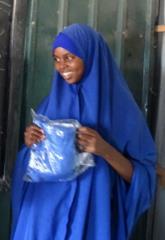
James 2:15-16This is Fawzia have a guess:
• What is her favourite colour?
• What is her favourite food?
• How old is she?
• What is her favourite thing to do?
• What is her favourite animal?
But do we really know or are these just guesses?
Are we just deciding what she likes based on what she looks like? Or on where she comes from?
Do we even know where she comes from?
What makes it hard/easy to guess?
Usually, people will make guesses about people based on clues like gender, age, what they look like and where they are from
You see, Fawzia lives in Somalia where life is very different to ours…where her opportunities are different…where everything is different
EXCEPT
That she is a person just like you and me…with needs, hopes and dreams. Living in poverty though…in a country like Somalia with so much hardship…has it been easy?
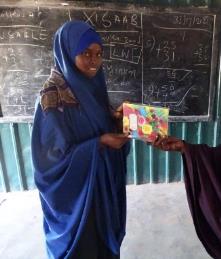
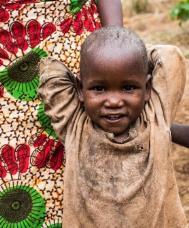
Fawzia says…“Myparenthaddifficulttimetogetdailybread,therehadbeena lotofpressuretofindthebasicneedssuchfood,shelterandclothing.
Iwaslefttotaketheresponsibilitytokeepthechildrenandhelpparentswithdomesticwork,andeven sometimesIhadtodochildlabour,toworkasmaidinfardistanceplaces,whichhadrisksofabduction.”
Can you even imagine what it must be like:
Not to know if you will eat today?
Not to have clean water?
Not to feel safe?
Not to be included?
Not to have so many things that we take for granted?
Not having these things or even a way to get them, means life feels so unfair. You not only miss out on physical things but what about feeling unloved, forgotten and unworthy?
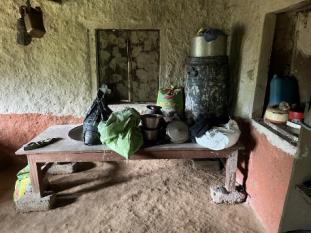
Can you imagine not even knowing that you had rights?
“Poverty is like punishment for a crime you didn’t commit.”
Eli KhamarovAnd in Somalia it is all of this…
Nearly 7 out of every 10 people in Somalia live in poverty. In fact, Somalia is one of the poorest countries in the world.
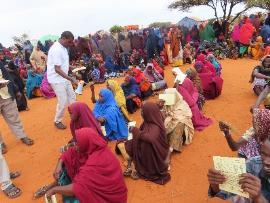
If Somalia were your home, life would be so different:
You might only live to be about 52 years old, in Australia it is 82.
You might only earn $600 in a whole year, instead of $50,000 like in Australia.
You might be one of the more than 3 million people who often go a day or more without eating and have sold their possession just to survive. That’s like all the people that live in Adelaide and Perth together not having enough to eat.
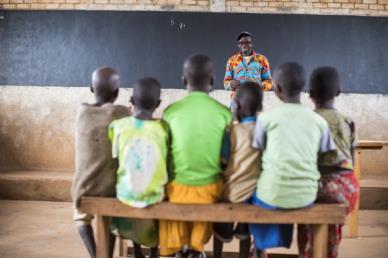
You might never have been to school because you had to leave your home.
You might never have been to school because you were a girl. You might not even realise you had rights – the right to go to school, the right to a safe home, the right to have a name and friends, even the right to enough food and clean water
It’s hard to imagine, isn’t it?
So, what might poverty or being this poor actually feel like?
You could try an activity…click here to see what it is
In Somalia right now many people are experiencing a devastating famine. Over the last 2 years there has been a severe drought and more than 21 million people can’t find enough food for their families. That’s like everyone who lives in Australia - except for Melbourne!
A drought can last many months, even years. With no rain, how do crops grow, how do people have safe drinking water?
When a drought happens, it can leave farmers in a situation where nothing will grow which then means no food for their families or to sell.
This can mean families are hungry and looking for any way to survive or it can mean families need to move on to a place where the drought is not as bad.
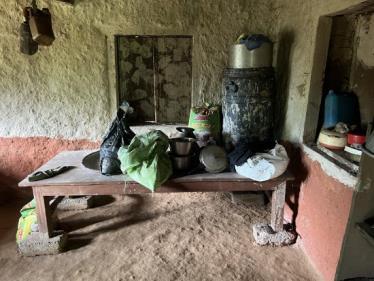
How would that feel? What would you need to give up? What would you need to leave behind? What would you miss the most?
What if it was your grandparents that you needed to leave behind…and you left thinking you might never see them again!
In Somalia, the drought has forced over 1.3 million people to abandon their farms, leave their homes and find safety in a camp for displaced people.
If all those 1.3 million people stood in a line, COVID 1.5 metres apart, the line of people would be 2,000 kms long – about from Adelaide to Brisbane by road.
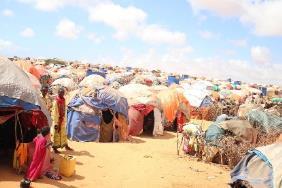
Hani is 15 years old. She has two brothers. The family left their home, three years ago because of drought, flooding and a long war that made it very unsafe to live there.
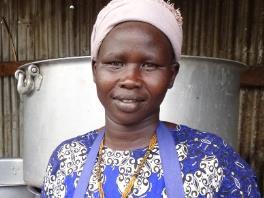
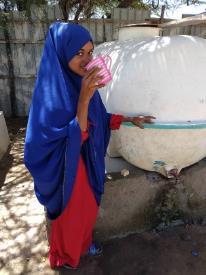
The drought was harsh and all the livestock in the area died. People became unsettled, not knowing what to do or how to feed their families or earn money. This caused the whole town to flee to other areas where they could get manual labour to try and support their families.
But many people moved there, and with more and more arriving, there was less chance of getting work.
Hani said, “Myfathertookustoacampwherehugenumberofpeoplewerealreadyliving.Myfather becomeaporter.Lifewasextremelydifficult,mostofmyfriendsworkedasahousemaiddoingtedious domesticchore.Isupportedmymotherindoingdomesticchores.”
When drought hits, and there is no food: what choice do so many have but to leave?
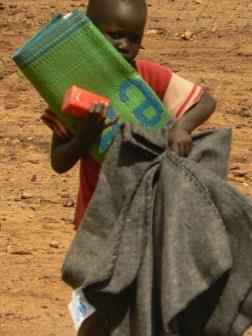
And even more: when war comes how do you keep your family safe?
There are many places around the world that are at war with others or even within their own country. Here in Australia, it is hard to imagine what that must feel like but in places like Somalia this conflict and unrest has been happening for many years.
So again people may need to leave their homes…just to stay safe.
Some people are even forced to leave their country to stay safe. These people are called refugees
Others stay in their own country, like what’s happening in Somalia. These people are called Internally Displaced People.
Did you know?...
• 1 person every 2 seconds is forced to leave their homes.
• 1 in every 88 people around the world have had to leave their homes.
• People can walk for days, months or even years to find the safety of a refugee camp.
Can you even imagine what this must be like…to feel so unsafe…or to have nothing due to drought… to be in a situation where you have no other choice?
It is so important they can arrive at a place where they feel safe.
People move either into refugee camps…like Kakuma in Kenya, or into Internally Displaced People’s camps like in Somalia.
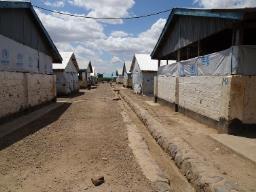
LE VITICUS 19:33-34a
When refugees settle in your land with you, you are not to harm them. Refugees who live with you must be treated just as if they were nativeborn like yourselves and you are to love them as you love yourselves.
You could try an activity…click here to see what it is
Remember Fawzia? We didn’t know much about her earlier but compare her life to yours
“Myparenthaddifficulttimetogetdailybread,therehadbeenalotof pressuretosecurethebasicneedssuchfood,shelterandclothing.Asa resultofthisburden,Iwaslefttotaketheresponsibilitytokeepthe childrenfromandhelpparentswithdomesticwork,andevensometimesI wasengagedinchildlabour,toworkasmaidinfardistanceplaces,which mayposeriskssuchasabduction.”
Fawzia and her parents fled when the war and severe droughts forced them to look for ways to survive.
“Lifeinthecampwasunbearable,wedidnothavefoodandshelter,ourchildrenweresleepingunder sackswithoutanyblanket,Iusetohelpmother,tokeepouryoungsiblingwhensheisaway,insearch ofalivingforthefamily.”
In these camps there is some hope. In Somalia the camps are closer to healthcare and to schools. Some children who have never been able to go to school before get the chance for the first time.
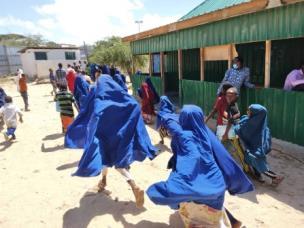
Many have seen their homes and farms and villages burned in attacks by armed bandits or the terrorist group Al Shabaab. They may have lost family members; or seen friends, family and neighbours killed
Families may have no choice but to leave behind those who are weak, so there is a chance someone stronger might survive.
It’s no wonder that when families finally reach safety at the camps, many children are suffering trauma.
This is where school can be a lifesaver:
School shows children that life can be ‘normal’ again.
They learn, make new friends, have a routine they can rely on, a teacher who encourages them.
They play, laugh, sing ...
... and day by day healing from hurt begins.
Abdirahim was enrolled as one of the learners of ALP school.
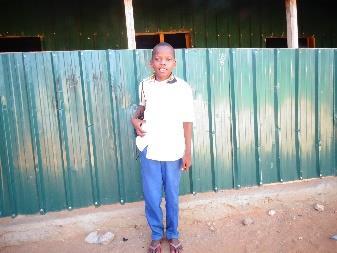
“IneverhadachanceforeducationnowIamverygladandhappy, thankstoLWFforgivingmeasecondchance”.SaidAbdirahim
Abdirahim is one of many learners who benefited from an accelerated learning program that’s funded by the Australian government through ALWS and implemented by LWF (and this is something you or your school can do too!! – You’ll hear more soon )
He received free education and was given exercise books, pencils, school uniform; and he could take part in the school feeding program. Sometimes the meal the children get may be the only or the best meal they get each day.
The school also has safe drinking water and toilets.
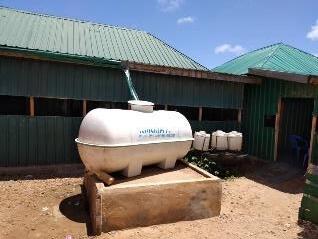
Abdirahim completely changed as he gained education, compared to his previous life. He had hope…
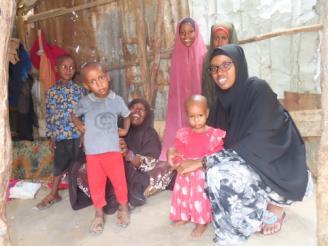
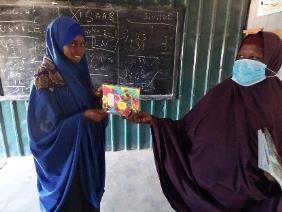
“Iwasgivenfreeeducationandmyhopesinfutureistobecomeadoctorso thatIwillequallyhelpmycommunitybytreatingthemfree”.
The meal Abdirahim is talking about is a daily meal of Fortified Porridge.
Commented [MS1]: Abdirahim has not talked about a meal. [Continuity error] Commented [VG2R1]: @Martin Scharnke the narration above the pic of the water tank does.The recipe is simple: grain + legumes + vegetable oil + dried skim milk + sugar to add energy (if it is available).
It can be their best meal of the day, and a powerful protection against hunger and the threat of famine.
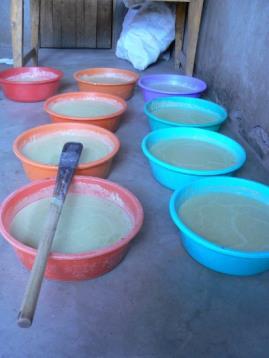
The porridge gives children energy, so they can concentrate at school (Teachers: you might like to make this with you students to see what it would be like.)
Parents also know their children get a meal at school, so they are more likely to send their children to school, rather than make them stay at home to work.
This is a great danger for girls.
In Somalia, girls suffer worst.
Girls are often forced into domestic duties and denied the chance to go to school.
This takes them away from opportunities
This takes them away from safety. Many girls feel this, as they will say they were scared they were going to be kidnapped. This might sound hard to believe for us, but it happens often in Somalia Girls are often taken and forced into domestic labour, far from their homes or even into early marriage.

Nearly half of all the girls living in Somalia are married before they turn 18
Nearly all suffer genital mutilation which is too awful to even want to talk about.
Teachers: if you would like some more information on this then please click here.
And then there is the education that is denied…
75% of females in Somalia have received no education.
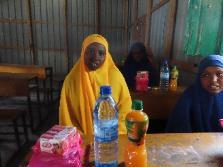
Sahra said…
“Inourcommunityfromdawntoduskwegirlsarealwaysburdenedwithdoing something Girlsarenotgivenanopportunitytolearn.Someofusarenoteven allowedtoattendschools.”
Education is the most powerful way to fight back against the suffering girls in Somalia go through simply because of their gender.
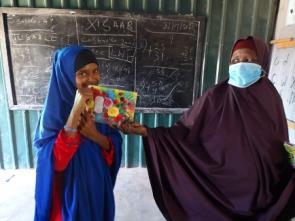
Going to school develops new skills and builds confidence.
Girls and young women can see a different and better future for themselves ... and have the strength and support to fight for it.
“IamdelightedtoLWF/ALWSformakingmydreamtrueandfulfillingmywishesin education”, Fawzia’s education gave her hope!
Commented [MS3]: What is a great danger? Is it "staying at home to work?"
Commented [VG4R3]: @Martin Scharnke yes you are right. That is taken straight from JK's Somalia stuff
As she is now in school, she understands the importance of education, and what is good for her, her family.
“Wehaveallservicesinschoolandourbiggestproblemgetdecreased”,said Fawzia Fawzia hopes to become one of the professionals in the education sector, and to be in the country’s leadership and advocate for girl’s education in Somalia.
“IthankLWF,fortheircontributioninsupportingusallaccessservicesineducation,”said Fawzia. You could try an activity…click here to see what it is
Can it get any harder than this? Sadly, the answer is yes.
Refugees and Internally Displaced People living with disability are some of the most vulnerable people on earth.
Countries like Somalia can be too poor to have support systems for children with disabilities.
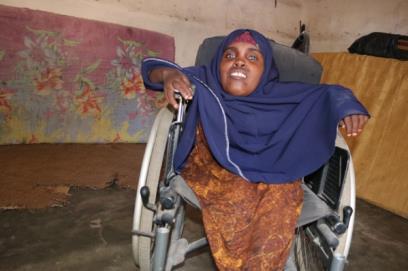
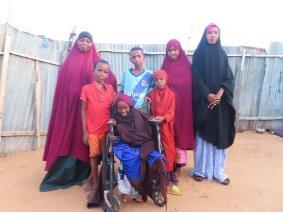
Too often, these children suffer teasing, rejection, abuse ... and their families may hide them away because of shame or fear.
Children like Bishaaro…
Her mum said “MydaughterBishaarowho’stheonlygirlinourfamilywasbornwitha disability.Inoticedthatshecouldnotsitonherown,couldnotcontrol herneckmovements,andcouldnotcommunicateatall. Itmademefeelhopeless,especiallyafterrepatriatingtoSomaliafrom Kenya,whereIcouldreceiveservicesfromfacilitiesinthecamp.”
And Fadumo said, “Ihaveachildwithadisability Aadenismy3-year oldsonwithdisabilitywithpoorpostureandgait.Healsosuffersfrom generalbodyweaknessduetoseveremalnutritionandthisledto delayeddevelopmentalmilestones.
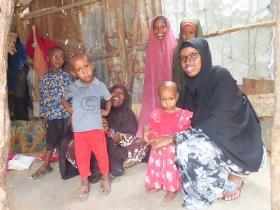
WetookhimtodifferenthospitalswithinKismayobutcouldnotget bettertreatmentorrehabilitation.Doctorsoptedforreferralto Mogadishuorabroadbutwecouldnotaffordtheentireexpenses. Aadencouldnotwalkallalonehaddevelopedbreathingdifficultiesand gotfatiguedafterevery5-minutewalk.
Wereallygotworriedbecausewehadexhaustedalloptionsandhopesforourson.”
LWF works hard to identify these children and then works even harder to provide them with the support and care they need…for free!
Bishaaro’s mum said “Mylifechanged.Myotherchildrenreceived servicesrangingfromscholasticmaterialsandwereenrolledinnearby schools.IamverygratefulandhappythankstoLWFforrestoringhope tomydaughter.
Oneofmysonswhoreceivedsomeoftheserviceswantstobeanurse tosupportchildrenwithdisability.
Iwillbeforevergrateful,mydaughtercannowaffordasmileandShe cannowsitonherown,herneckcontrolimprovesdaybyday.”
When this kind of support is given to some of the most vulnerable people in the world it gives so much hope…hope that we can’t even imagine here.
Ayaan, a 14 year old girl is one of the displaced children who lives in IDP camp with her family. The eldest child is disabled. The family has been displaced from a village alongside a river They left because of drought Their animals and crops dies but they were also afraid of attack of armed militia who are forcing young girls into early marriage and child soldiering.
“TherewasnobasicneedsandtheonlysourceofincomethatIused tofeedmychildrenwasbyfarm,andrainingseasonshavestoppedforthelast2yearsandbesidesthe securityisatstake.”said Ayaan`s mother.
Ayaan’s father’s source of income is by wheelbarrow, but when things get tough the mother goes to town as a domestic worker like washing clothes, utensils and cleaning houses.
“Lifeissodifficultwhenyouhavenopermanentjob.It’sonandoff thingandthat’showwelive,sometimeIandmyhusbanddon’teat forthesakeofourkids.”said Ayaan’s mother.
Ayaan and her elder sister benefited from an ALWS project which is implemented by LWF. LWF built 7 classrooms, 5 toilets, trained teachers and gave out school materials free uniforms and school meals.
“IamverymuchgratefulforwhatLWFhasdoneforourcommunity.Theyprovidedeverythingourkids neededforthemtolearnandgeteducation,evenmyeldestdaughter,isgettingherclassesathome despiteherdisability,”Ayaan’s mother said
Ayaan is an active member of Child-to-Child club that encourages out of school children to have a second chance again and every child has the right to education.
“BeforeIenrolledatschool,Iusedtothinkofwhenandwheretogeteducation,andthatcameto realitywhenLWFcametoourdoorsteps,” said Ayaan.
The elder sister to Ayaan is a disabled child She has been provided with a wheelchair, uniform, learning materials and assigned a special teacher to give her lessons in her home.
“IamverygladbecauseIamnotleftbehinddespitemynaturalcondition;LWFhasgivenmeachance tolightupmyfuture,”she said emotionally.
“
Mydreamistobecomeadoctorinthefuture,Iwanttohelpmy sistertostandonherfeetonedayandhelptoimprovethehealth conditionofmycommunity,acknowledgingtheimportanceof keepinghygieneallthetime,”Ayaan said with a smile.
“
InthefutureIwanttohelpthedisabledchildrenwhoneverhada chancetoeducationandIwillmakeadifferenceoneday,”said her sister.
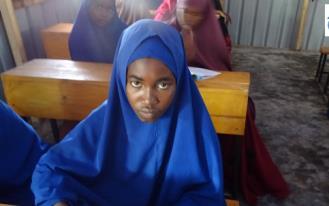
“OnbehalfofmysisterandmyfamilyIwouldliketotakethisopportunitytothanktheentireteamof LWFwhoworkedtirelesslywithourcommunityleadersandparentsforthechildrentogeteducation regardlessoftheirstatusandthatchangedourlife.Thankyoumilliontimeswecan’trepayyouback,” said Ayaan.
You could try an activity…click here to see what it is
So, you might think that there is not much good news that comes out of Somalia…
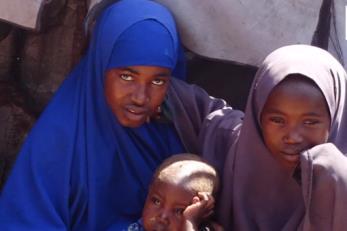
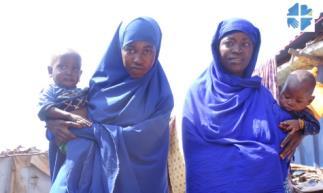
But now there is and you could choose to be a part of that good news!
You know about the drought and the threat of famine.
You’ve heard about the conflict and terror attacks.
You understand that children are the innocent victims, and that girls, and children with disabilities suffer worst of all.
Today, at last there’s GOOD news!
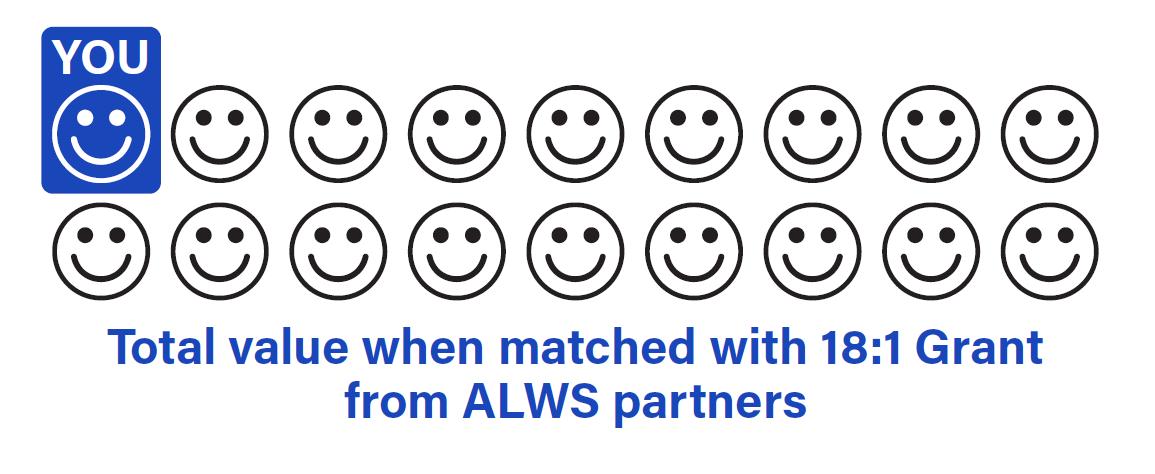
ALWS has locked in an 18:1 Matching Grant to INCREASE your care for children in Somalia!
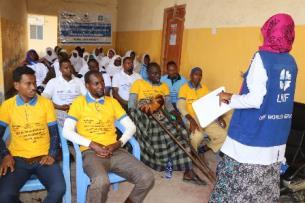
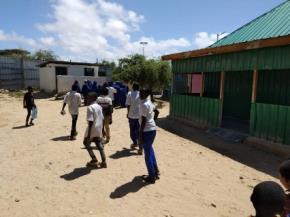
This means your donation right now can supply everything a child needs for school ...
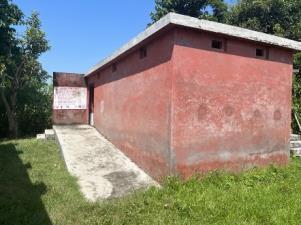
... plus be matched to increase your impact 18 TIMES!
HOW YOUR 18:1 MATCHING GRANT WORKS
Can we have an 18:1 image of some kind in here?
You may know that ALWS already receives grants from the Australian Government.
This 18:1 Matching Grant for your ALWS work in Somalia comes from aid agency partners in Europe and the United States. We link up together, with our ALWS share being 1/18th.
LWF has also identified 1,373 children with disabilities who need extra help so they don’t miss out on school.
Your 18:1 donation will give children with disabilities the practical support they need to overcome their disadvantage:
... ramps and assistive devices (like Braille machines)
... training for teachers in Special Needs Education
... awareness-raising in communities about inclusion
... ongoing love and care that shows children they are precious.
This partnership means your personal impact is 18 TIMES your donation!
Commented [MS5]: Inconsistency: either it is 17:1 and give 1/18th, or it is 18:1 and we give 1/19th.
Commented [VG6R5]: @Martin Scharnke again straight from JK's stuff so will leave
So let’s think about $10.
It might take an adult about 15 or 20 minutes to earn $10
It might take you a bit longer if you are doing some jobs around the house Maybe you might need to fold the washing, tidy your room, vacuum the house and weed the garden …but in Somalia that might be everything you earn for a whole week!
And then what can you buy for $10?
• A box of cereal and some milk
• 2 pairs of socks
• A burger and fries
But if you give $10 to Somalia campaign and then the grant makes it 18 times bigger…that’s $180!! That’s a lot of cereal and socks and burgers for us …but for Somalia that might mean 200 meals for school children…or a new school uniform or… OR
Sending 1 child to school for a whole year! This means they get :
• daily school meals
• school uniform
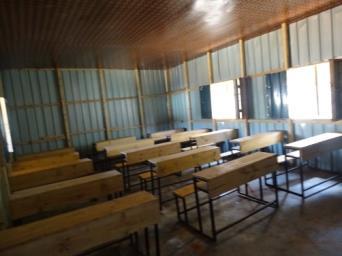
• school desk
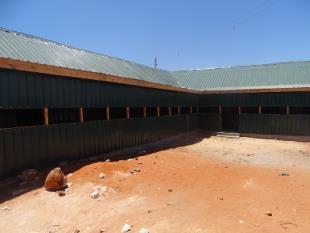
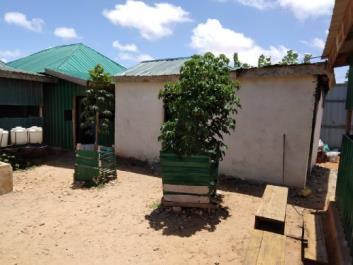
• renovated classrooms
• training for teachers
• disability-friendly buildings
• assistive devices for children with disabilities
• transport to school, if necessary
• Dignity Kits for girls
• trauma healing and counselling
The cost to do all this for one year for one child is around 50 cents a day ($184 for the whole year).
Even train teachers!
The Jubaland Teachers Training College, set up by LWF, has special expertise in training teachers to cater for children with special needs – who, too often, are forgotten.
Abdinasir Mohamed is one of the 500 teachers who have already graduated: “BeingaSpecialEducationteacherisnoteasy-butit’ssorewardingtoseethe growthinmystudentseachday.Thevarietyoftheworkandthechallengetohelp mystudentslearnandbesuccessfulinlifeiswhatIenjoythemost.
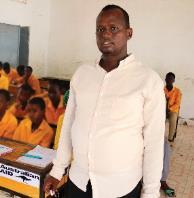
“Helpingshapethemindsofthefuture,andnurturethegeniusesoftomorrow, makesmefeelIamdoingthegreatesttaskofall.”
Here’s a challenge for you…
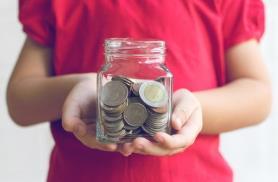
What if you each did one thing extra at home to earn 50c each week?
What if you could:
• Sweep the kitchen floor each day
• Empty the bins
• Make your own lunch each day
• Walk the cat
• Feed the bird... or
• Do your laundry each week
Then you brought that 50c to school each week…
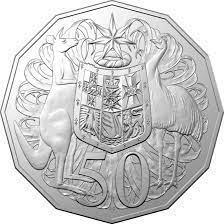
…and you kept bringing 50c to school each week....in one year that adds up to $20 for you, and if your class of 20 each brought in 50c per week, it adds up to $400!
But then the really great thing is that you times that by 18!
So…
All by yourself, you could take the $20 you made in a year, times it by 18 to make it $360, and send two children in Somalia to school for a whole year!
Or, your whole class could take the $400 you made in a year, times it by 18 to make it $7200, and send forty children to school for a whole year!
How exciting that you have done that but even more amazing is that boys…girls…children with a disability get to go to school perhaps for the first time ever!!
Thank you for partnership with ALWS to show love to the children of Somalia. You are a blessing always!
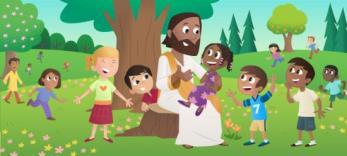
Matthew 19:14
But Jesus said, “Let the little children come to me. Don’t stop them, because the kingdom of heaven belongs to people who are like these children.”
Things you can do in your classroom…
Let’s do something…
ACCESS TO RESOURCES (for primary students)
You will need a box of building materials for each group. Arrange the boxes so that the contents are noticeably uneven, such as a few rough off-cuts; ten identical blocks; a small selection of blocks; a bigger selection of assorted blocks and a big box of blocks with farm animals and plastic people.
Put students into groups. Give the task of building something (a house?) as a group, with only the blocks they are given. Give a box of materials to each group.
Record some of the responses as students build, including any reactions to what the other groups have. Pack up and form a sharing circle.
Discuss:
How did that feel for you?
What does that show us about how things are shared equally in our world?
Did you have a choice?
Do people in poverty have a choice?
THINK, PAIR, SHARE (for secondary students)
Conduct a think, pair, share activity on one of the following topics:

1. It is not people’s fault that they are born into poverty.
2. Why don’t we just give poor people money?
3. How can education help people living in poverty?
Form one of these ideas into a class debate.
Activity….THANK YOU POSTER/PLACEMAT (for younger children)
Ask students to consider what they are thankful for, and what children living in refugee camps may be thankful for. With the students, collect pictures of things for which they are thankful. Have them consider what children in refugee camps might be thankful for and collect pictures of those things. Have the children glue the pictures onto light cardboard. If they are able, have the students write captions under each picture to show what they are thankful for, and what refugee children may be thankful for. To make a placemat laminate the poster.
This activity works well in pairs. Ask students to write down as many reasons as you can why people move from their homes. Now sort the reasons into two columns:
• Reasons people move voluntarily
• Reasons people move against their will
• Discuss your lists with the whole group. This activity will help students to understand the difference between a migrant and a refugee.
REFUGEES IN THE MEDIA (for secondary students)
After exploring and researching key definitions, students collect news items from television, newspaper or online sources which mention refugees.
In class, or in smaller groups, they can discuss what attitudes are evident towards refugees and displaced people
Is the word ‘refugee’ always applied correctly? Why or why not? How are refugees and displaced people portrayed?
RUN A REFUGEE CAMP (for all ages)
Have a day where students take part in a refugee camp. They must build a house, cook food, collect water, ‘go to school’, dig a toilet. This could take part outside on the school oval. This can be extended to include things like sleeping overnight, registering like they would in a refugee camp, getting rations etc.
GOING TO SCHOOL..OR NOT?? (can be adapted for
younger and older students)
Group Discussion (maybe as a whole class activity if you prefer)
In groups list all the things that are good about school – (eg being with friends / certain subjects etc) Share as a class.
Then in groups go back to your list and brainstorm how you would: do that activity or learn that if you weren't at school
Share as a class. How might you overcome some of these difficulties?
In groups list all the things they might like to do when they leave school. All the occupations. Share and record as a whole class on board/screen
Which ones need you to go to school?
Try to then list the sort of jobs you can get with no education / no school. (With older students they can use the job guide websites etc)
What would that be like? Is this what you see for your life when you leave school?
Discussion : options for those children who don’t get a chance to go to school
With older students they could brainstorm what their lives would look like in 5 years time if they left school now.
What would they do to fill their time. What would they do in 5 years time?
In 10 years time?
Really get them to think about long term impact and lack of choices. What would their lives really look like?
What about if you couldn’t go to school because you were a girl. (See Education and Girls info in pack) Ask the girls how they feel? Ask the boys how they feel? Is this fair? What does this mean for the girls lives in the future? What does this mean for families? For the children?
EVERY DAY LIFE WITH A DISABILITY AND ITS CHALLENGES
Students are going to do an audit of their school. (this could also be a HW task – of their own neighbourhood/local area)
What are the things that are in place to facilitate a disability (ramps/toilets etc)
What things might be harder to navigate if you do have a disability (stairs/doors etc)
Think about a number of different disabilities –mobility impairment, visual impairment, hearing impairment, sensory issues…
Divide students up into groups of 2-4
Make sure they have some way of recording this information – both the positives and the improvements
Allow 10-15 mins
Come back together and report to the group. Put it up on board/screen
Discussion: Are there any areas that could be improved? What would happen if some of the adaptations weren’t in place.
Talk about other situations in our local areas that might cause challenges for people with a disability. What might the issues be in developing countries?
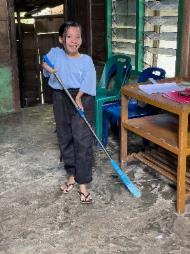
If appropriate, your class might like to take their list of observations to senior management or Student Representative Council.
ACTIVITY 2
entire lesson. (half class at a time)
Discussion about what they learnt, how they felt, how this would impact/change their lives if it was real. Etc
WHAT DOES THE WORLD THINK ABOUT WHAT IS HAPPENING IN SOMALIA…WELL LET’S FIND OUT
MEDIA
Ask students to bring in newspapers, collect information from news web sites etc over a period of time. Find as many articles about poverty, hunger or development as they can find. Find anything in the media about what is happening in Somalia.
Did you find anything?
Make up a poster with what they find.
Discuss: What does this say about poverty in our world? Does the media think it is a serious issue? Why would there not be more articles if it affects so many people? Should there be more articles to teach people about world justice issues?
Why is it not important to share the difficulties of living in a country like Somalia
CHRISTIAN STUDIES ACTIVITIES
Commented [MS7]: Do we mean "why is it not important to the media to share …" or "why is it [sic] important to share …" ?
JESUS WAS A REFUGEE
In Matthew’s Gospel we read that King Herod was visited by the Magi. They were looking for a new-born king. Once the magi had left King Herod - so that they could present Jesus with their gifts of gold, frankincense and myrrh - Herod flew into a jealous rage. He ordered that every boy under the age of two be killed. His soldiers marched into Bethlehem and slaughtered them.
The Holy Family fled from Judea and sought asylum in, of all places, Egypt. That’s where in the time of Moses the Jewish people had been enslaved - something remembered even to this day in every Passover. And yet, Egypt was the country that gave protection to Jesus and his parents. Imagine how scary it would have been to leave home, family, friends and everything else behind as you flee to another state or foreign country.
DISCUSS WAYS THAT YOU CAN WELCOME THE STRANGER, IN YOUR OWN COMMUNITY. THEN, IF POSSIBLE, GO OUT AND DO IT!
THE GOOD SAMARITAN
Read the Good Samaritan. Luke 10:25-37.
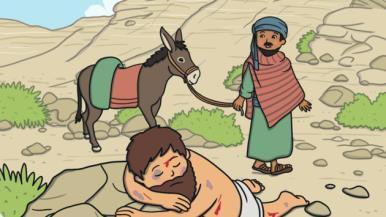
Jesus told us to “go and do the same”. All of God’s people are our neighbours and we must love them just as the Samaritan man did!
How can we be the Good Samaritan to people around us?
Brainstorm ideas and then refine to work out what is appropriate for your community. Attempt to act on one every/day/week/term.
Each day in your class pray for the people of Somalia
Pray for:

• Peace to come to Somalia to stop the fighting
• Girls to have access to education and for them to realise just how valuable and special they are
• The work of ALWS and LWF to support these special people
• for the health of children living with disability in these difficult situations
• strength and peace for parents
GOD’S WORD REMINDS US...
Make posters using a variety of mediums for the following Bible verses, or other verses of your choice.
Use these posters to remind your school community of the situation for people living in Somalia. Include ways that your school can be involved.
• Luke 10:27 “... that you love the Lord your God with all your passion and prayer and intelligence and muscle - and that you love your neighbour as well as you do yourself.”
• John 13:35 “Let me give you a new command. Love one another. In the same way as I loved you, you love one another. This is how everyone will recognise that you are my disciples-when they see the love you have for each other.”
• Galatians 5:13,14 “Use your freedom [in Christ] to serve one another in love, that’s how freedom grows. For everything we know about God’s Word is summed up in a single sentence. Love others as you love yourself.”
• Deuteronomy 15:10 “So be sure to give to the poor. Don’t hesitate to give to them, because the Lord your God will bless you for doing this good thing. He will bless you in all your work and in everything you do.”
BIBLE STUDY
In the Bible can you find:
• A story about poverty
• A story about Jesus helping someone who is poor
• A Bible verse telling us how we should treat poor people
• A Bible verse or story about how Jesus feels about us and the poor
• A proverb about poverty
• A psalm about God being
Share the story of the Good Samaritan from the Bible. The question is asked ‘Who is your neighbour?’
In the Samaritan’s response to the man in need, he gave practical help with no expectations of repayment. We have neighbours in our class, homes, and also as a country. Talk about some of the challenges the people in Somalia are facing right now. How can we help these neighbours?
Have students write prayers for the specific challenges of Somalia – place them on cross. Because of support and we can offer prayers of thanks – our actions/responses DO make a difference.
Commented [MS8]: Is a participle like "caring" or "compassionate" missing here?
WARNING: YOU MAY FIND THIS DISTRESSING
Attitudes and Beliefs: Background for teachers
Many Somalis mistakenly view this procedure as a religious obligation. The concept of family honour is also involved. It is carried out to ensure virginity. Because virginity of daughters and family honour are related, it is believed that the family’s honour will also remain intact if the daughters are subjected to this procedure. Women who have not undergone this procedure may be thought of as having loose morals. A girl who has not undergone it will result in less bride wealth for her father and brothers.
There are several other rationales expressed for the practice in Somalia. Some men claim the artificial tightness heightens sexual enjoyment. Some say the smoothness of the scar is aesthetically beautiful.
The CARE study showed a difference in attitude toward this practice between rural and urban women. A higher number of urban women than rural women felt there was nothing good about the practice. Forty percent of all women interviewed felt there was nothing bad about the practice. Eleven percent of those interviewed did not want their daughters to undergo this procedure.
Female Genital Mutilation in Somalia
99% of girls and women aged 15 – 49 in Somalia have undergone Female Circumcision – the partial or total removal of external female genitalia for non-medical reasons.
This normally happens between infancy and age 15.
There are no health benefits. This Female Genital Mutilation (FGM) can cause severe bleeding, problems urinating, complications in childbirth and increased risk of newborn deaths. Victims may suffer tetanus, shock, death, ongoing psychological trauma.
The World Health Organisation classifies four types of FGM. Type 3, also known as Pharaonic Circumcision, is the worst. It involves the removal of the inner and outer labia, removal of the clitoris, and having the vagina sewn closed.
64% of girls and women in Somalia aged 15 – 49 suffered Type 3.
Source: Directorate of National Statistics, Federal Government of Somalia, The Somali Health and Demographic Survey 2020