D E C E M B E R 2 0 2 2

Greetings and welcome to the last Share Learn Grow of 2022. First of all, we would like to thank you all for this past year of rich and fruitful partnership. We have valued our increased online interactions and appreciated the opportunities for in-person engagements with the opening up of international travel.
In this edition, we have lots of highlights from 2022 to Share with you, as well as a success story of how our partner LWF Nepal are using technology to help farmers
You will Learn about how LWF Myanmar is supporting staff in Humanitarian Programming through their newly developed Humanitarian Programming Manual and an associated Training Guide to continue building staff capacity in this area in future years - read all about it on page 4.
We are also happy to Share about sustainable development evidenced through the success of a graduated Cooperative in Burundi. Finally, we are happy to Grow alongside World Service through a series of workshops for Country Program staff to engage with the draft LWF Guidelines and Toolkits for Child Protection and Child Safeguarding. Find the links on page 6!
And we look forward to Sharing, Learning and Growing together in 2023!
ALWSProgramDirector
A M E S S A G E F R O M T H E P R O G R A M D I R E C T O R
HappyReading! LeahOdongo
Share, Learn, Grow SHARE How technology is helping farmers in Nepal 2 SHARE Highlights of 2022 3 GROW LWF Child Protection and Child Safeguarding LEARN LWF Myanmar – Humanitarian Programming Resources 6 4 5 LEARN Graduation in Burundi - a case study
Highlights for
workshops were run on Child Safeguarding and Child Protection by technical consultants with partners from over 13 countries
Gender Responsive Programming workshops held between March and August 2022. We had on average 22 participants from our partner offices participate. We will keep you updated about plans to run these again in 2023!
visits to partners and projects now that travel is back on! ALWS staff were able to engage with our partners in Kenya, Burundi, Indonesia, Nepal and PNG. A huge thank you to our partners for having us! new programs staff joined our team - we are now the most resourced Programs Team in ALWS history! Welcome Javed Houssain and Peter Egesa!
1 gold star to all of our amazing supporters, the Australian public, and the Australian government who have enabled us to continue supporting our long-term development programs and a record number of emergency responses this past year
S H A R E
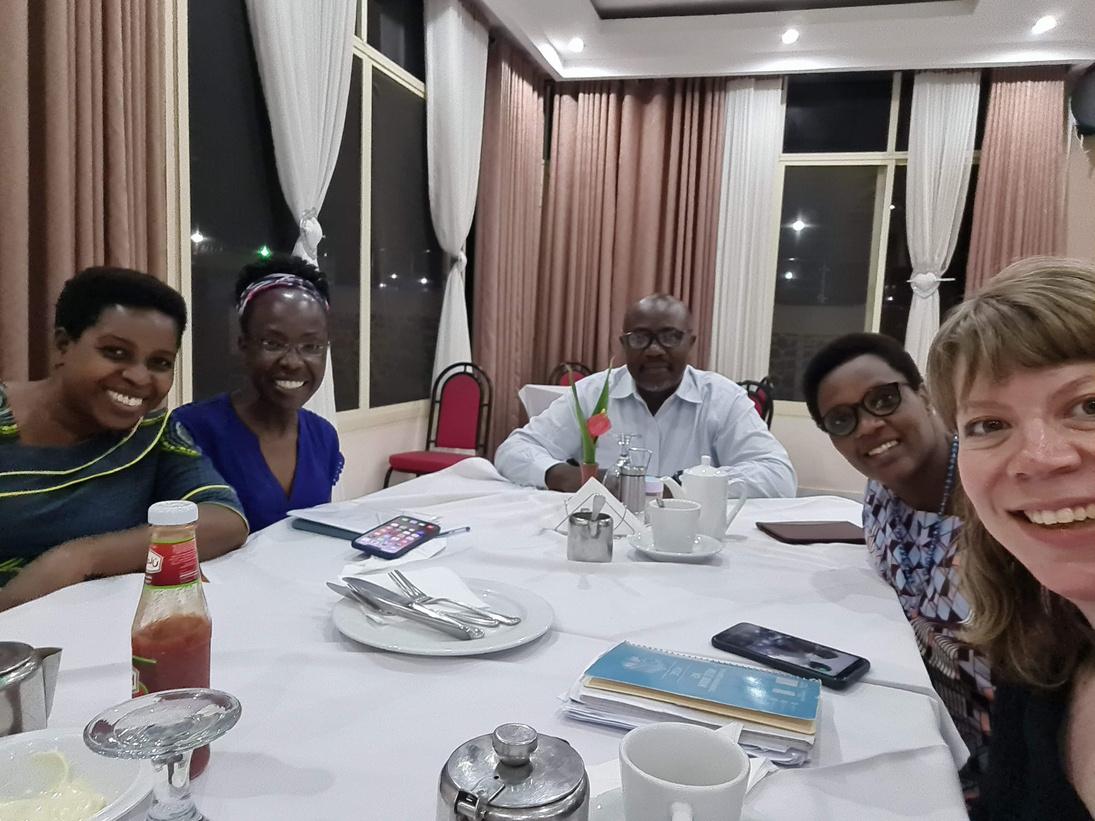
A picture from our visit to Burundi! From left to right Claudette Nzohabonimana, Leah Odongo, Dismas Masirika, Jacqueline Nizigama, Jacinta Harford.
Success Story from Nepal - how accessing technology helps farmers
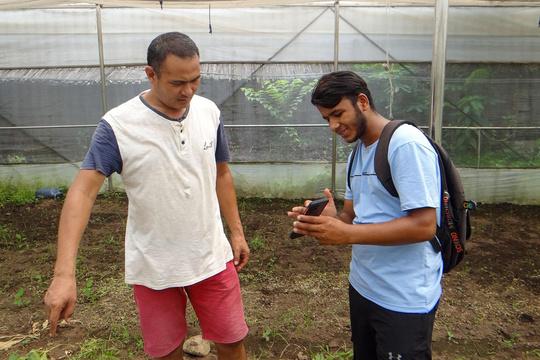
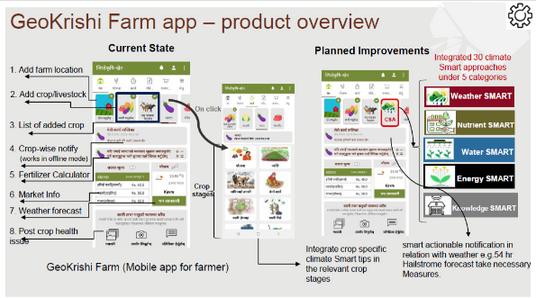
The Lutheran World Federation (LWF) is supporting farmers in Nepal with an agricultural and livestock app - Geokrishi - in a revolutionary effort to increase access to technical support and provide guidance on sustainable practices that will assist local farmers in expanding their livelihoods.
The Geokrishi App uses precision agriculture through digital technologies to enhance sustainability through more efficient use of land, water, fuel, fertilizer, feed, and pesticides, thus reducing both the cost and environmental impact of farming. TheGeoKrishiapp provides access to essential updates on market price, 5-day weather conditions or forecasts, and existing information and tools like day-to-day farm activities or crop scheduling. A Q+A feature allows farmers to text questions about pests, weeds and animal health to GeoKrishi’s on-call technical experts. Customized recommendations are provided for each geotagged farm using the mobile app. LWF have a partnership with GeoKrishi to use the GeoKrishi app and provide input for design and content – funded by ALWS and the Australian Government.
In a recent monitoring visit, Anne Fitzpatrick, Program Coordinator from ALWS, heard from farmers about the impact of using the GeoKrishiapp. One female farmer in Kailali reported she had tripled the yield of her maize crop since using the app due to guidance and timed reminders from the app on when to plant, weed and irrigate and how much fertiliser to use Other farmers had successfully prevented crop disease such as potato blight with guidance from Geokrishi.
S H A R E
Photo credit: LWF Nepal
Watch this great video explaining the innovative approach.
LWF Myanmar: Humanitarian Programming Resources
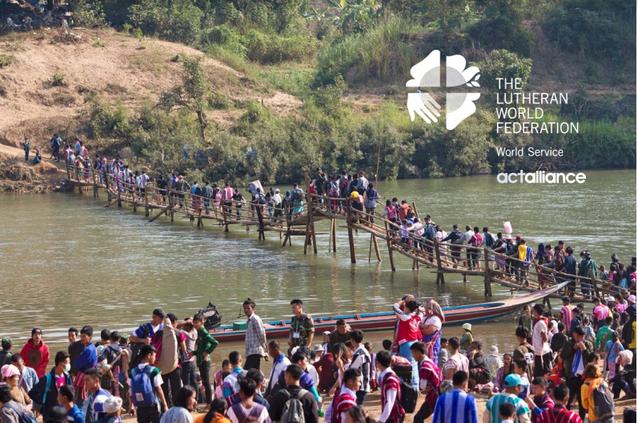
Since 2019, ALWS has made available funds to support partners with capacity building priorities. In 2022, through these funds, LWF Myanmar identified the need for its staff to be trained on Humanitarian Response through a rights-based lens and developed a Humanitarian Programming Manual with accompanying Training Guide. The manual includes content on the following topics:
Humanitarian Context of Myanmar and Coordination Mechanisms Policies and Principles Program Management, including Emergency Preparedness and Emergency Response Operations Management
The Humanitarian Training Manual was developed in June 2022 with contributions from LWF Myanmar staff, partner organizations and Humanitarian clusters in the country Each module has specific sessions, tools, and guidance notes to get more understanding of the way to work in emergencies.
The Humanitarian Programming Manual provides simple steps for managing a rapid response within 72 hours of an emergency, as well as the overall steps needed to plan a response and manage the scaling up of emergency operations. The manuals have been adopted as guidance documents for training both LWF and local partner staff. By developing the manuals and using them for training staff, skills and understanding of humanitarian programming have improved.
L E A R N
You can find the resources here: Humanitarian Training Manual Humanitarian Programming Manual
Sustainable impact through graduation in Burundi
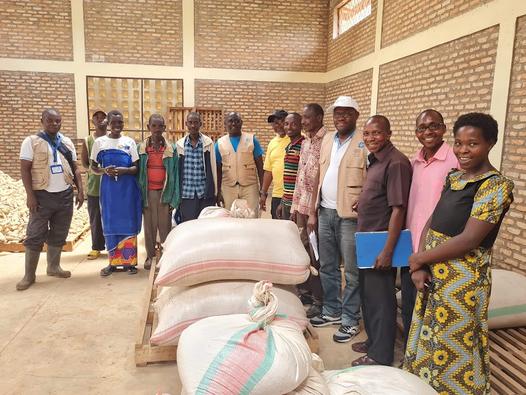
In a recent visit to LWF Burundi's Community Integrated Development Project (CIDP), Leah Odongo and Jacinta Harford from ALWS met with DUKINGIRUMWIMBU
Agricultural Cooperative, which graduated from the CIDP program in 2018.
LWF started interventions in the area in 2007 – their approach is to work in partnership with the community to organize individuals into functioning cooperatives that can manage themselves.
With the DUKINGIRUMWIMBU Cooperative, LWF conducted training on modern farming techniques and organised exchange visits between provinces. For example, some members of the group visited provinces with well organised farming groups who were planting trees and harvesting palm oil. When the members returned, they were able to share this knowledge with others - and asked LWF for support with seeds. After their success in growing these - with the trees bearing fruits – LWF supported the cooperative with a machine to process the fruits into oil. The group was then able to produce oil, make soap and feed the waste to their animals. The community was also supported with Savings and Loan training.
The area graduated in 2018 and no longer receives support. When we visited in November 2022 the group is not only still running but are thriving and have saved enough to invest in their piece of land to cultivate oil palm trees. This shows that the programming is real, sustainable community development involving the community in deciding what they need, and ensuring they are well equipped to make their success possible.
We congratulate LWF Burundi on their sustainable, community focused development, and we feel so proud to support the project. Well done!
S H A R E
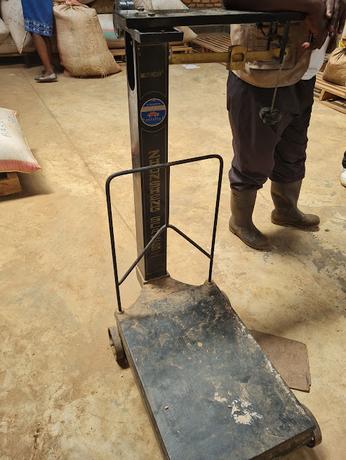
Scalesprovidedtothegrouptoweigh produce Photocredit:ALWS
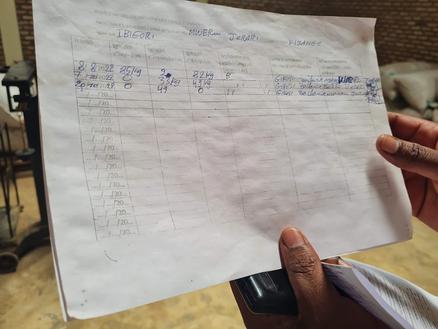
Paperwork maintained by the group
The management committee –with their President Ms Denise Nahimana to the far right
Safeguarding Guidelines & Toolkits
Over the past few months, LWF has held a series of workshops for Country Program staff to engage with the draft LWF Guidelines and Toolkits for Child Protection and Child Safeguarding. The workshops have given overviews of the contents of the resources, and also given space for LWF staff to give feedback and suggestions for the finalization of the documents (which will be released early in 2023).
In early 2023, as well as the finalised guidelines and toolkits, the recorded workshops will be available online, along with learning modules on Fabo for the following topics.
On Child Protection:
Definitions and Terms
Primary, Secondary and Tertiary Prevention
Applying a systems approach to Child Protection Child Protection Mapping and Analysis Working with Stakeholders Applying a life-stage approach to Child Protection Ethical Practice in Child Protection programming Project design, monitoring, evaluation and reporting Child Protection in Emergencies Child Protection Mainstreaming Child Protection Advocacy
If your program or project has any experiences you could share about Child Protection Programming, please download the template at hshorturl.at/cej28true and email the case study to jackierobertsonfj@gmail.com.

The Child Safeguarding resources will include content on:
Recruitment and engagement of staff Train Digit Risk Repo
G R O W World Service Child Protection & Child
H A V E Y O U G O T F E E D B A C K , C O M P L A I N T S O R C O N C E R N S A B O U T A L W S ' W O R K O R S T A F F ? Y O U C A N M A K E R E P O R T S V I A O U R C O M P L A I N T S M E C H A N I S M A T C O M P L A I N T S @ A L W S . O R G . A U