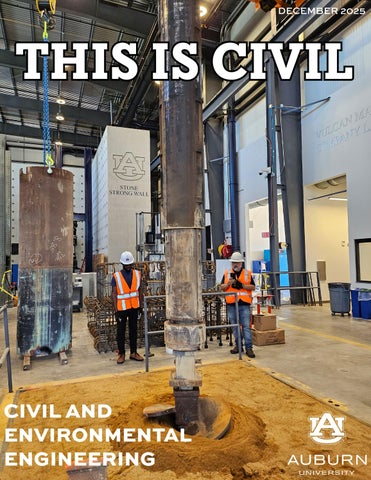
THIS IS CIVIL
CIVIL
AND ENVIRONMENTAL

AND ENVIRONMENTAL
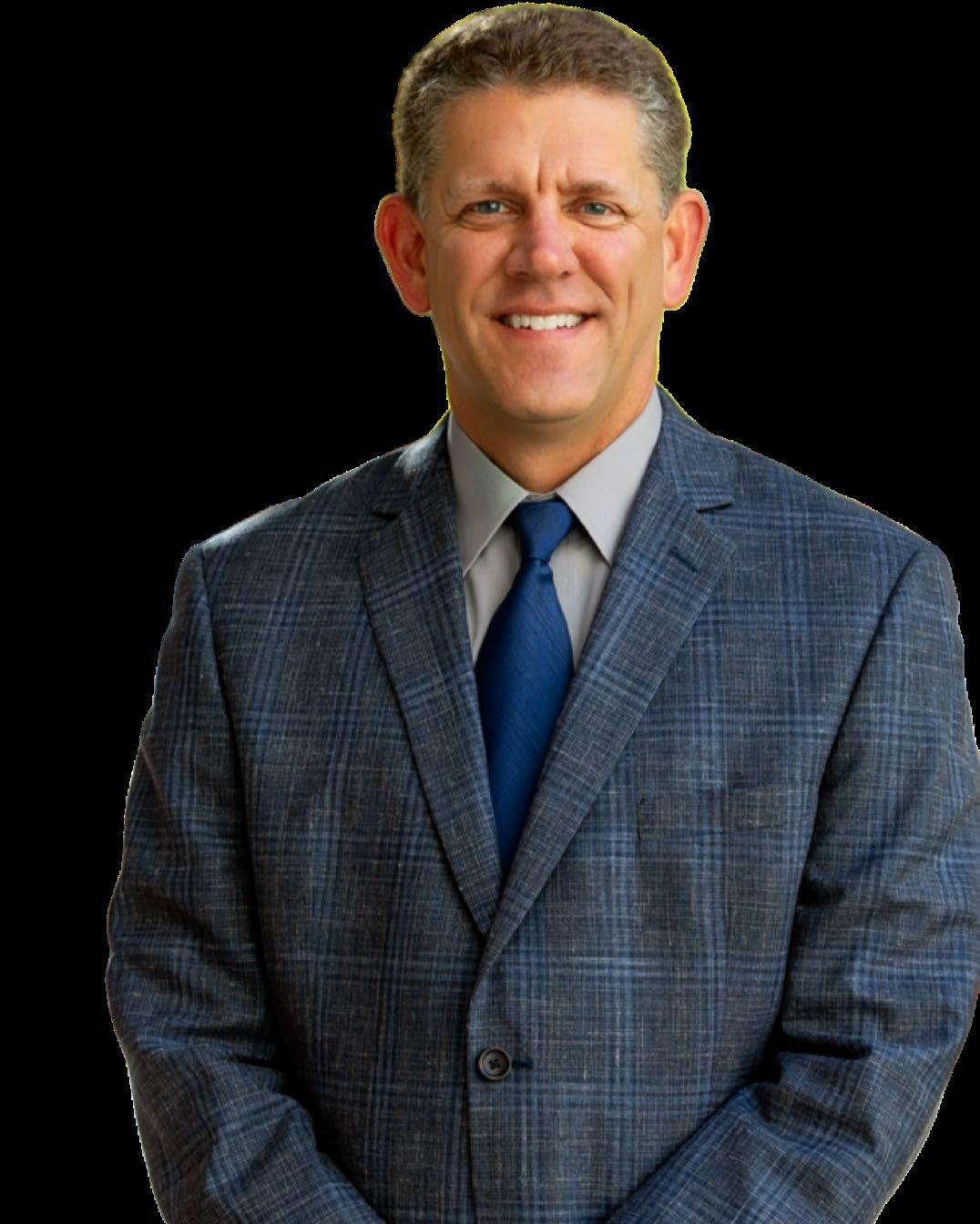
As we close out another remarkable year in the Department of Civil and Environmental Engineering, I am proud to reflect on the extraordinary momentum that continues to define our program. Across our teaching, research, service, and student accomplishments, 2025 has reaffirmed the strength and trajectory of Auburn CEE.
One of our most significant milestones is yet another record year of undergraduate enrollment. This fall, we enrolled 140 more students than just two years ago, an unprecedented rise that speaks to the quality of our program and the demand for Auburn-trained civil and environmental engineers. This growth is a testament not only to student interest, but also to the dedication of our faculty and staff, whose commitment to excellence is shaping the next generation of engineering leaders.
Our research enterprise continues to expand in depth and influence. This year marked the 40th anniversary of the Highway Research Center, a four-decade legacy of innovation, partnership with ALDOT, and national leadership in transportation research. From large-scale structural testing at ASEL to stormwater advancements at the Auburn University–Stormwater Research Facility, our faculty and students continue to make meaningful impacts on safety, sustainability, resilience, and infrastructure performance.
We also welcomed Dr. Neha Sharma to our environmental engineering faculty, whose cutting-edge research in nutrient cycling and water quality promises to strengthen Auburn’s position in sustainable water infrastructure solutions. Faculty across all areas earned significant national recognition, from ASCE and ACI fellowships to prestigious research awards, editorial appointments, and major national committee roles—reflecting the caliber of scholarship that defines our department.
Our students continue to shine, excelling in national competitions, presenting award-winning research, and demonstrating leadership across our many thriving student organizations. Whether it is ASCE advancing communitybased initiatives, ACI earning top placements at international competitions, AAPT launching new pavement-focused engagement efforts, or our other organizations expanding outreach and professional involvement, our students are building a legacy of achievement that enriches the CEE community.
Traditions such as the Hard Hat Ceremony and the Graduates Recognition & Awards Banquet continue to grow as signature experiences that bring together students, faculty, alumni, and industry partners. These events reinforce the values of our profession—integrity, diligence, and service—and celebrate the accomplishments of the outstanding students who represent Auburn Civil and Environmental Engineering with distinction.
As we look ahead, I am energized by our collective trajectory. Momentum is on our side—driven by enrollment growth, research impact, industry partnerships, alumni engagement, and the passion our students bring to their work every day. Thank you for being part of the Auburn CEE family and for supporting the mission that binds us together: advancing Civil and Environmental Engineering for the betterment of our communities, our state, and our world.
War Eagle,

Anton Schindler
MOUNTAIN SPIRIT PROFESSOR
Ph.D. Civil Engineering, University of Texas
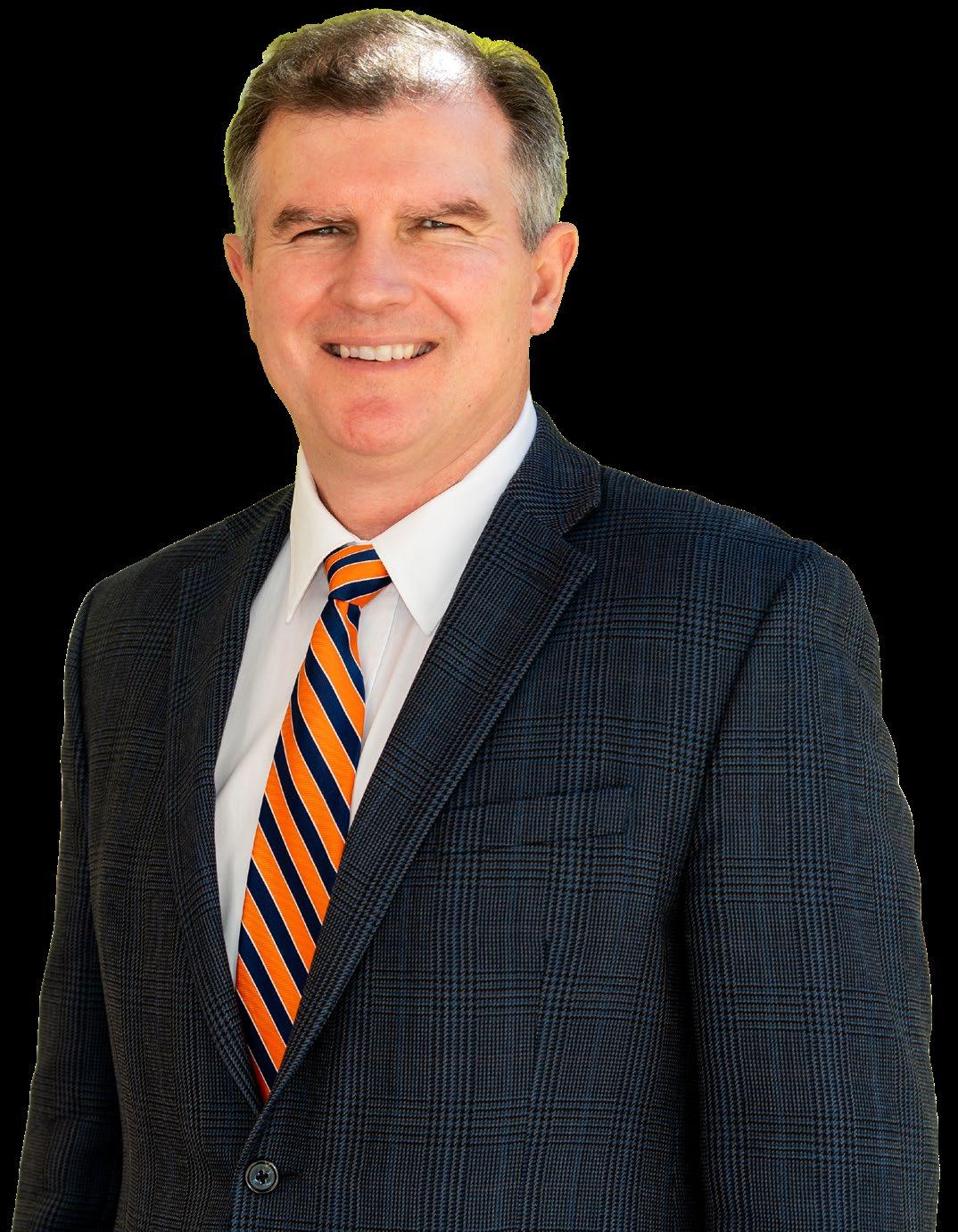
Dr. Anton K. Schindler is the Mountain Spirit Professor and Director of the Highway Research Center at Auburn University (AU), where he teaches courses in reinforced concrete design, structural repair, and concrete materials in the Department of Civil and Environmental Engineering. He received his M.S.E. and Ph.D. degrees in Civil Engineering from The University of Texas at Austin. He received a B.S. degree and Honors (Structural Engineering) degree from The University of Pretoria, South Africa. Before returning to graduate school, he worked as a structural design engineer for nearly four years. He is a licensed professional engineer in the state of Alabama and, as detailed below, one of our most highly decorated faculty members.
Dr. Schindler has served on the AU faculty for more than 23 years, and he has twice been selected by students as the department’s Outstanding Faculty Member. He also received the College of Engineering’s Walker Merit Teaching Award in 2012. He helped establish the AU American Concrete Institute (ACI) student chapter and has served as its faculty advisor since 2014.
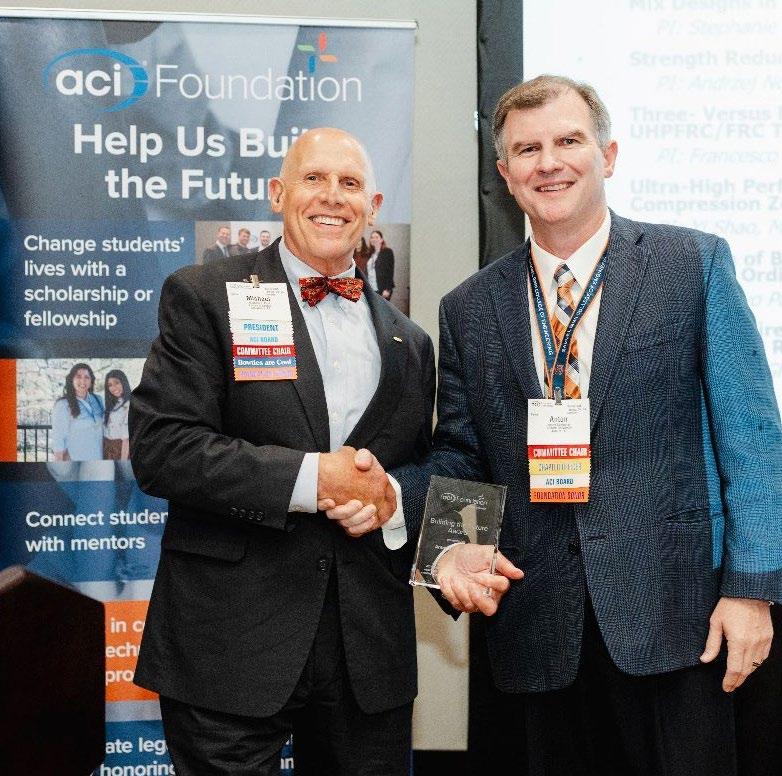
Dr. Schindler was elected as member of the Academy of Distinguished Alumni of the Civil, Architectural, and Environmental Engineering Department at The University of Texas at Austin in 2020. He was also elected ACI Fellow and ASCE Fellow in 2013 and 2019, respectively. He received the ACI Foundation Building the Future Award in 2025, the ACI Delmar L. Bloem Distinguished Service Award in 2021, the ACI Cedric Willson Lightweight Aggregate Concrete Award in 2017, and the Erskine Award from the Expanded Shale, Clay, and Slate Institute in 2013.
He received ACI's Wason Medal for concrete materials research in 2006 and 2011. He was a Fulbright U.S. Scholar in Finland in 2015-2016 to research the development of durable concrete infrastructure for the long-term storage of waste nuclear fuel.
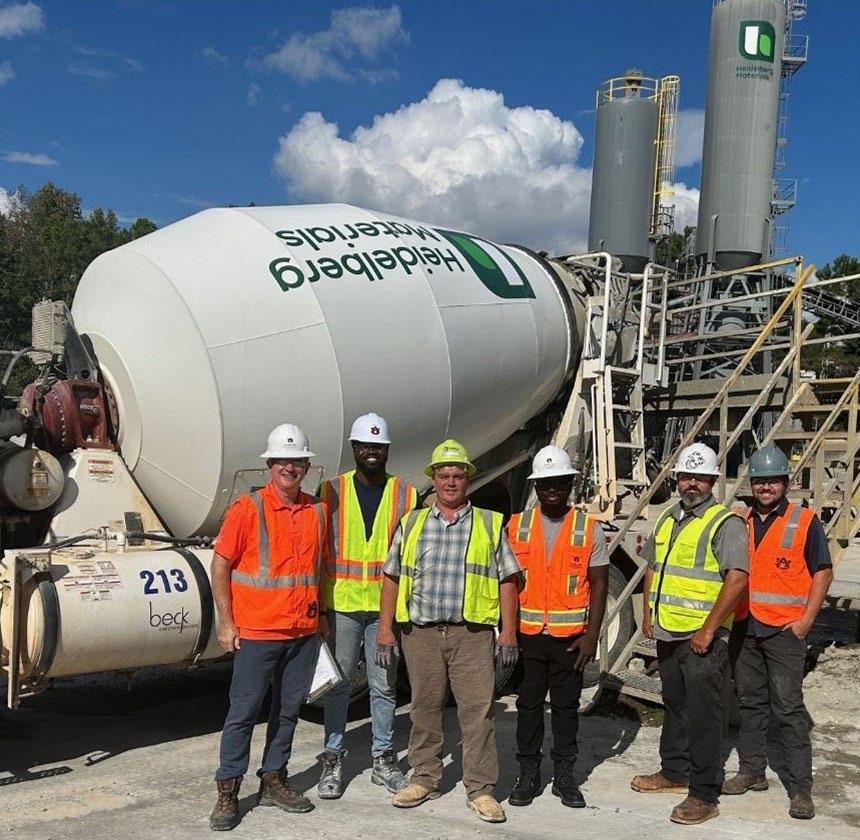
Dr. Schindler is currently a voting member of ACI Technical Activities Committee (TAC), ACI Financial Advisory Committee (FAC), ACI Awards for Paper Committee (CAP), ACI Committee 237 (Self-Consolidating Concrete), ACI Committee 231 (Properties of Concrete at Early Ages), and the ACI Foundation’s Scholarship Council. He is a past member of the ACI Board of Direction. He is the past chair of ACI Committee 237 (Self-Consolidating Concrete), ACI Committee 231 (Properties of Concrete at Early Ages), and the ACI Foundation’s Scholarship Council. He served as chair for the Transportation Research Board Standing Committee AKM50 (Advanced Concrete Materials and Characterization) from 2023 to 2025, and is currently a member of the Transportation Research Board Standing Committee AKH12 (Concrete Bridges and Structures). He is also a member of the American Society of Civil Engineers (ASCE) and American Society for Testing and Materials (ASTM).
Dr. Schindler has developed and presented many workshops and training courses for the concrete industry, state departments of transportation, and private industry. His research interests include structural concrete; modeling of concrete behavior; early-age behavior of concrete structures; high-performance concrete; concrete durability; non-destructive testing; structural repair; and concrete production, testing, and properties.
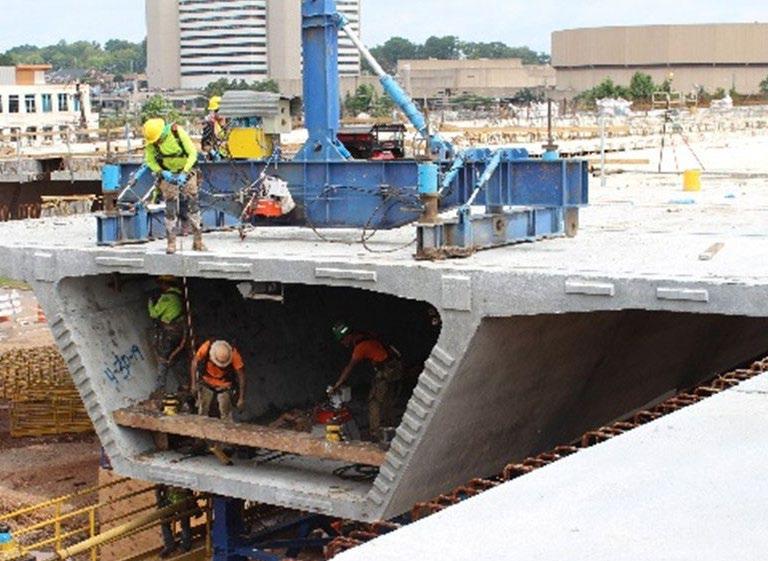
Installation of bridge segments for the I-59/I-20 bridge in Birmingham and an HRC research project assessed the long-term creep and shrinkage of this concrete.
Courtesy: Dr. Anton Schindler
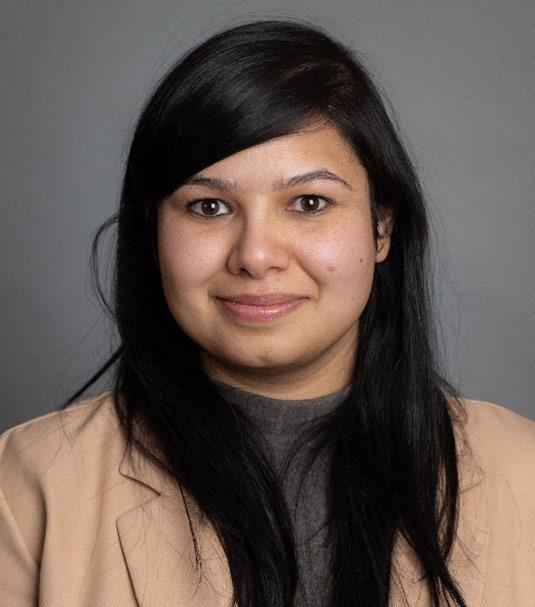
Dr. Neha Sharma is the newest faculty member to join the environmental engineering group. Dr. Sharma's research is dedicated to advancing sustainable water and nutrient management. Growing up along the polluted Yamuna River in India inspired her lifelong commitment to developing practical solutions to environmental challenges. Dr. Sharma received her B.S. in Civil Engineering from PEC University of Technology in India. She also holds a master’s degree in Environmental Engineering from the Indian Institute of Technology, Bombay, where she was awarded Rajit Bhagwati Memorial Gold Medal and Institute Silver Medal for her excellent performance in research and academics.
Dr. Sharma was a McDonnell International Academy Scholar at Washington University in St. Louis where she received her Ph.D. in Environmental Engineering. Her dissertation research focused on delineating the role of trace metals in the release of greenhouse gas emissions from natural aquatic systems. She has been awarded Graduate Student Award from ACS Environmental Chemistry Division for her outstanding research productivity. During her postdoctoral training at Stanford University, Dr. Sharma pivoted towards applied environmental engineering, advancing electrochemical separations for selective nutrient recovery. Proximity to the Stanford Synchrotron Radiation Lightsource (SSRL) enabled extensive use of advanced pro-
Ph.D. Environmental Engineering, Washington University in St. Louis
cesses at solid–water interfaces. In recognition of her contributions to environmental engineering, she was selected for the CEE MIT Rising Stars Workshop, which brings together the next generation of CEE academic leaders for two days of scientific exchange and career-focused discussions.
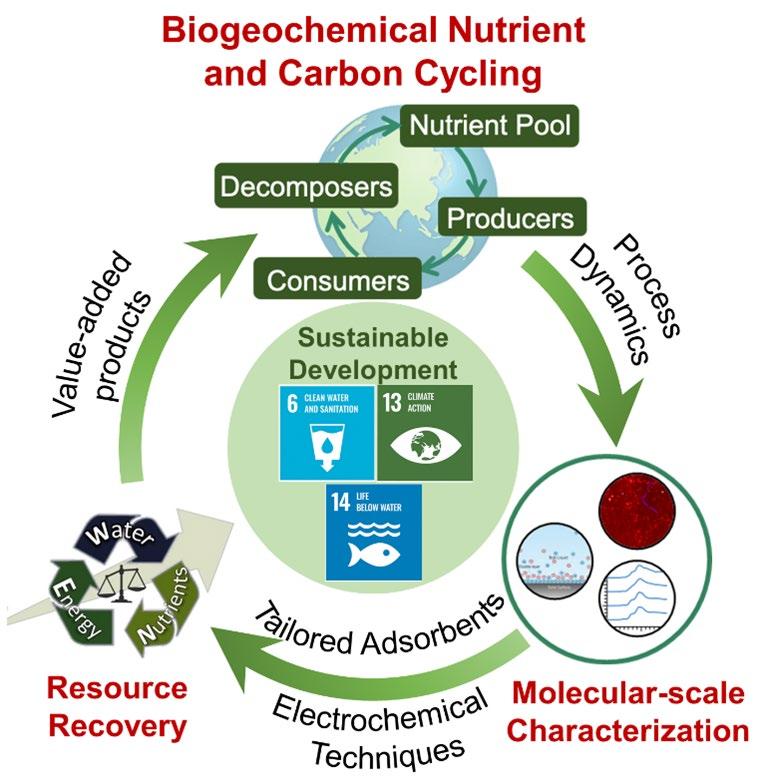
Through her research, Dr. Sharma aspires to tackle the complex challenge of nutrient pollution through an interdisciplinary lens that bridges environmental engineering and geochemistry. Her research spans lab-scale experiments and field investigations to understand nutrient fate and transport in both engineered and natural systems. Using advanced synchrotron-based techniques and geochemical speciation modeling, Dr. Sharma envisions probing molecular-scale interactions that control nutrient transformation, mobility, and retention. By exploring nutrient flows within the broader Resource–Energy–Nutrient–Water (RENuW) nexus, her work advances integrated solutions that reduce waste, recover value, and strengthen the resilience of both ecosystems and communities.
Mission Statement: Advance sustainable technologies that transform waste into valueadded products, safeguard water quality, and close elemental cycles to build a resilient circular economy.
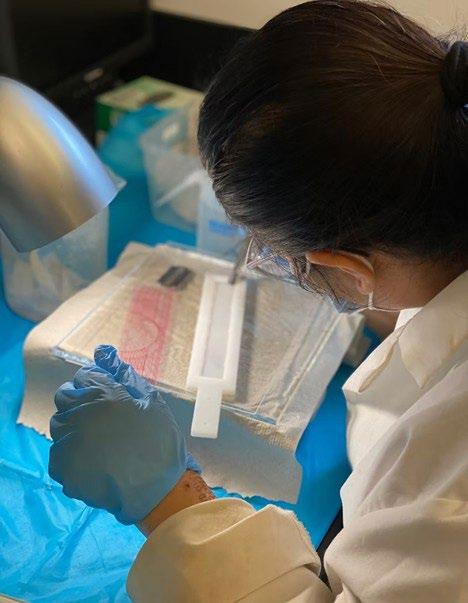
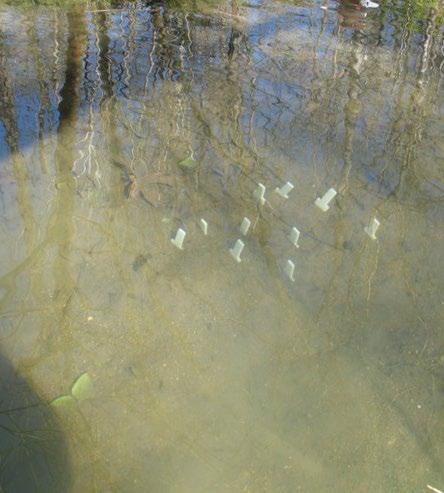
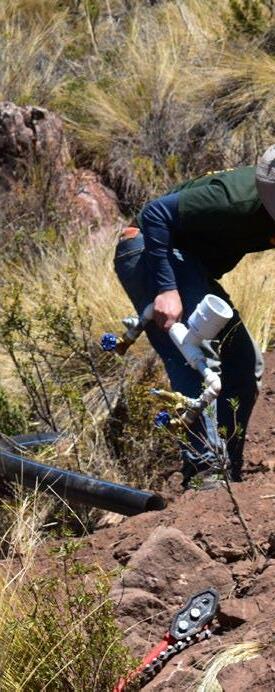
(A)Passive sampler fabrication for determining trace metal availability (B) Deployment of passive samplers in subsurface aquatic systems.
Courtesy: Dr. Neha Sharma
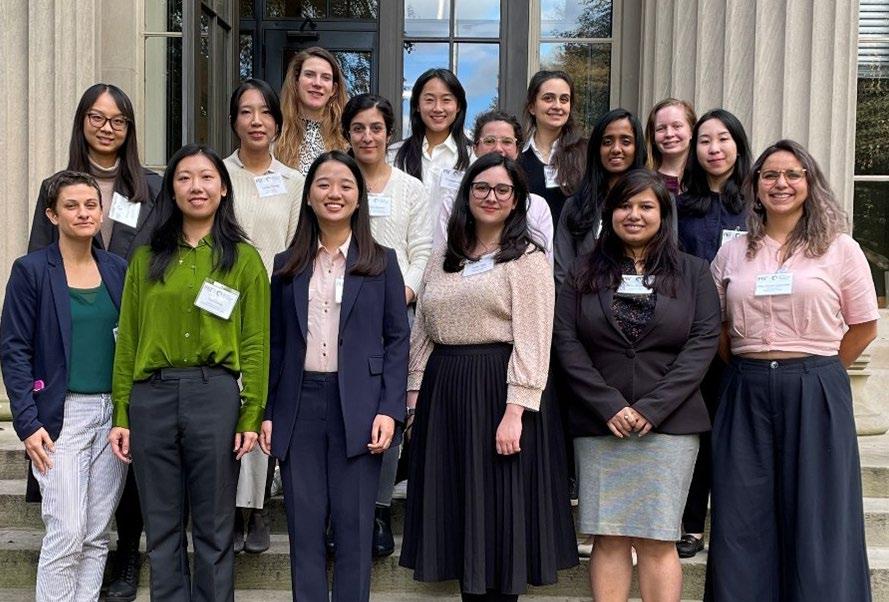
(Left) Dr. Neha Sharma attending the MIT Civil and Environmental Engineering Workshop in 2023.
Courtesy: Dr. Neha Sharma
Research at Sharma Lab: Leveraging biogeochemical cycles to deliver circular, resilient solutions.
Courtesy: Dr. Neha Sharma
By: Dr. Anton Schindler
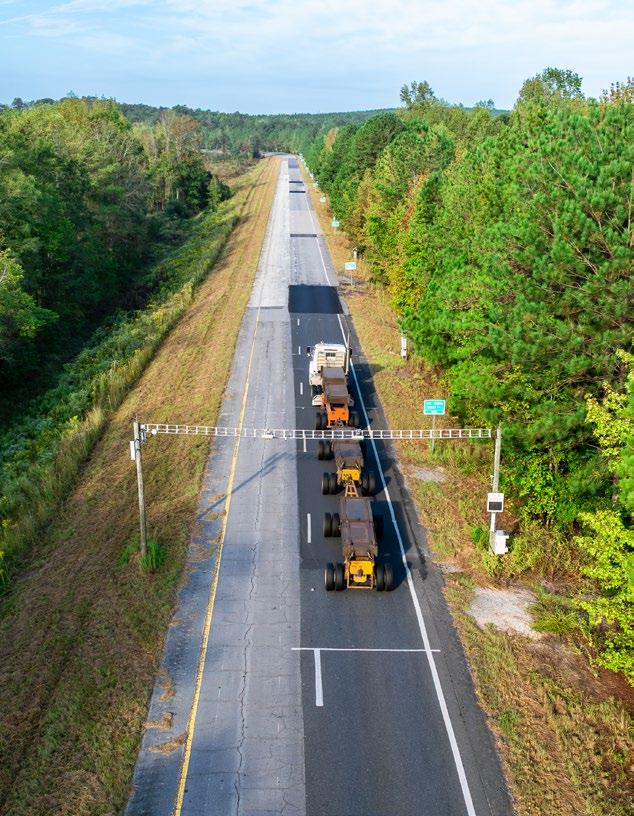
The HRC — part of the Department of Civil and Environmental Engineering — is leading the charge in Alabama and the United States to ensure industry professionals have the latest technologies and guidelines for designing, constructing, and maintaining highways and bridges.
The HRC covers sustainability, resilience, safety, bridge engineering, geotechnical engineering, large-scale testing, materials, stormwater management, construction management, traffic operations, roadway design and workforce development associated with the transportation system.
Established in 1985, the HRC supports Alabama's highway industry through a coordinated research program. Many projects within the HRC partner with the Alabama Department of Transportation (ALDOT), but others are with the U.S. Department of Transportation, other national transportation agencies and other universities. This year is the HRC’s 40th year of leading transportation research in Alabama, and many of the HRC’s accomplishments would not have been possible without the contributions and support of ALDOT. On behalf of the HRC, we thank ALDOT for collaborating with us for the past four decades.
Dr. Anton Schindler, director of the HRC and Mountain Spirit professor in the Department of Civil and Environmental Engineering, said the HRC makes transportation more efficient, safe, resilient, and durable in Alabama.
Students from Auburn’s Department of Civil and Environmental Engineering that collaborate with the HRC can work with renowned faculty and the best facilities in the world, including the Advanced Structural Engineering Lab (ASEL) and the Stormwater Research Facility. The HRC also annually offers a graduate student scholarship in honor of Mr. Buddy Cox, a U.S. Air Force veteran, Auburn alumnus, and 25-year ALDOT engineer. The HRC each year supports students' attendance at the Annual Meeting of the Transportation Research Board in Washington, DC, which allows them to present their research at a national level.
The HRC is responsible for organizing the technical program for the Alabama Transportation Conference, which was held for the 68th time in 2025 and hosted about 1,000 transportation professionals.
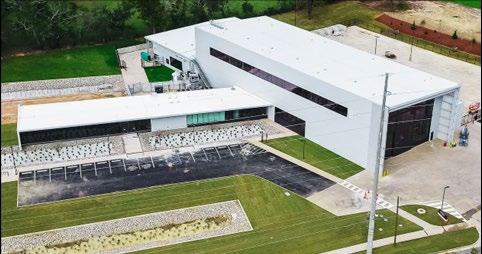
Whether it’s faculty developing a wrong-way driving guide to be distributed nationwide, making recommendations on avoiding sinkholes, testing bridge components, developing national design guidelines, keeping our construction stormwater clean, or working to develop the highway construction workforce by providing CDL licenses, the HRC is engaged in all things transportation.
“We're civil and environmental engineers by nature, and by being practical and applying sound engineering principles, we design our transportation system to make our world a better place," Dr. Schindler said. "That's what we do here at the Highway Research Center."
(Top Left) The HRC's 40th Anniversary Logo, Courtesy of Danny Doyle, SGCOE.
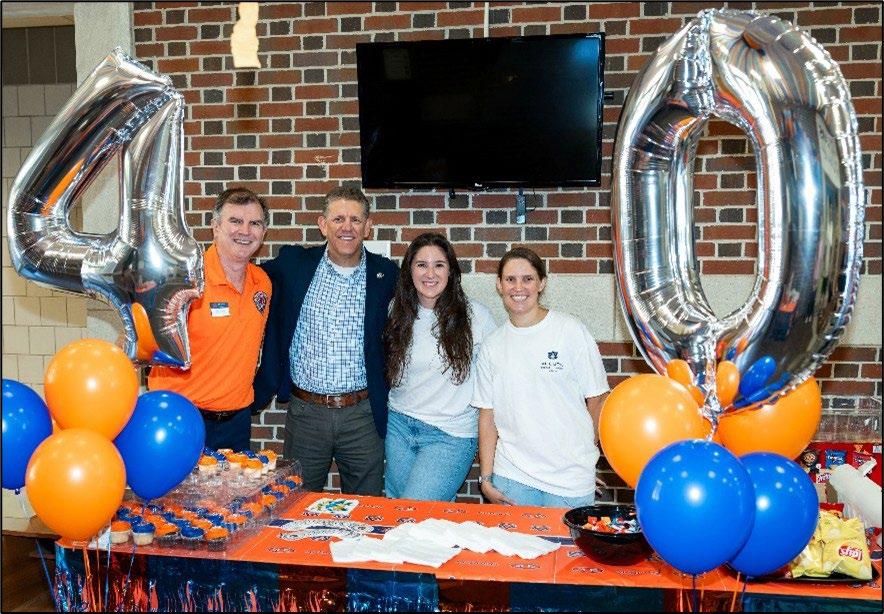
HRC and CEE personnel having fun at the HRC’s 40th Birthday celebration, Courtesy of Marcus
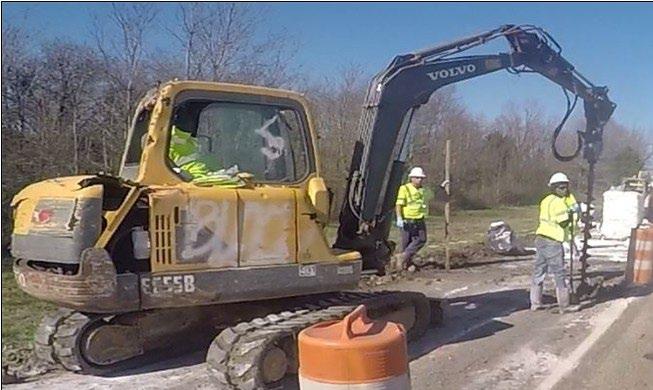
Installation of lime columns on AL5 to remediate shrinkswell clays for an HRC research project.
Courtesy: Dr. J. Brian Anderson
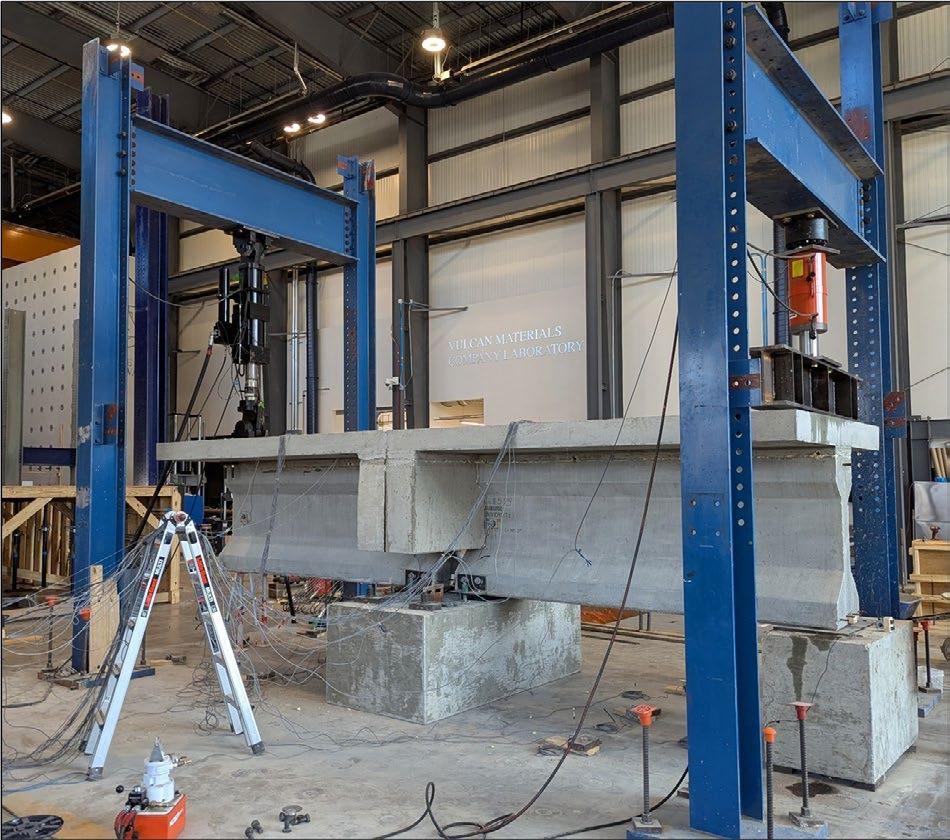
Testing the performance of a continuous bridge deck connection detail at ASEL for an HRC research project.
Courtesy: Dr. Matthew Yarnold
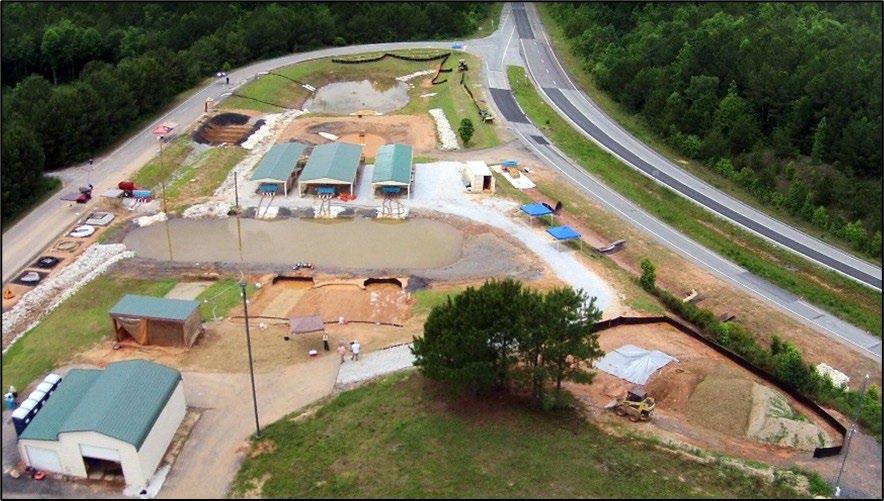
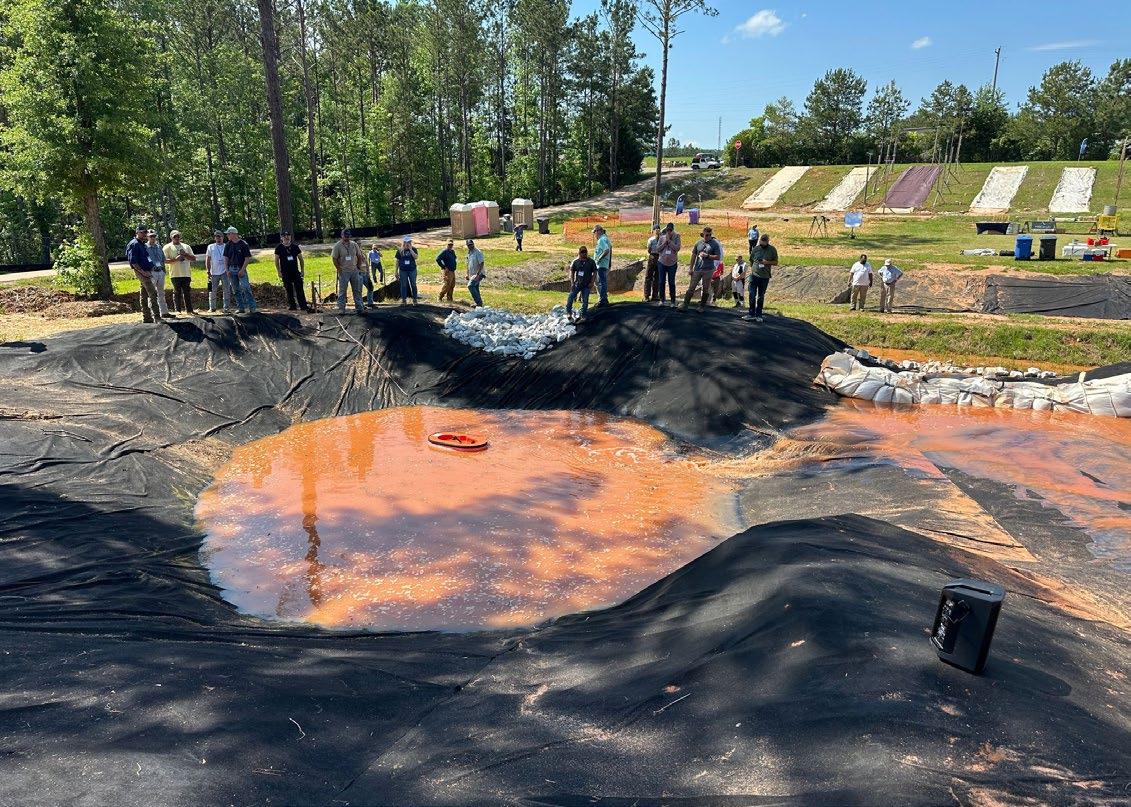
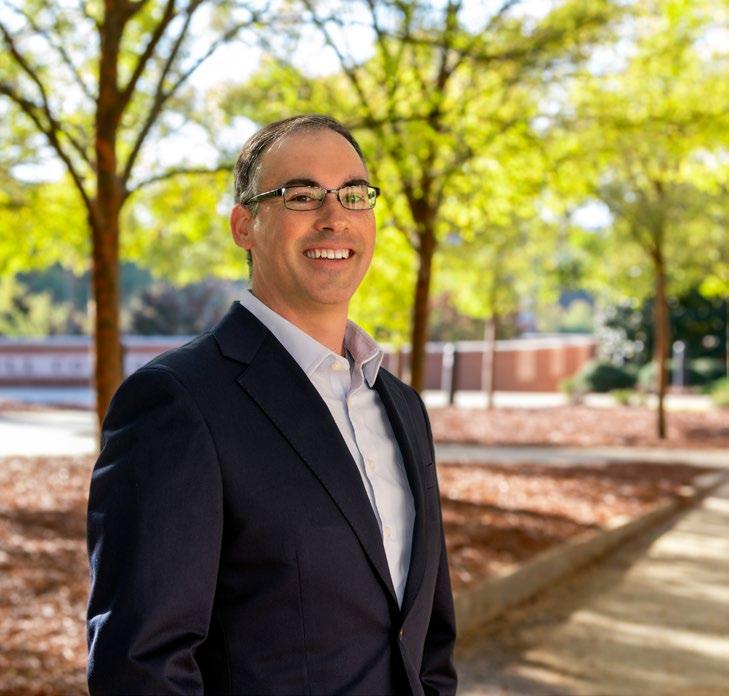
Full-scale evaluations to improve practices and products used to manage stormwater runoff are researched during many HRC research projects at the AU Stormwater Research Facility that is directed by Dr. Michael Perez.
Courtesy: Dr. Michael Perez

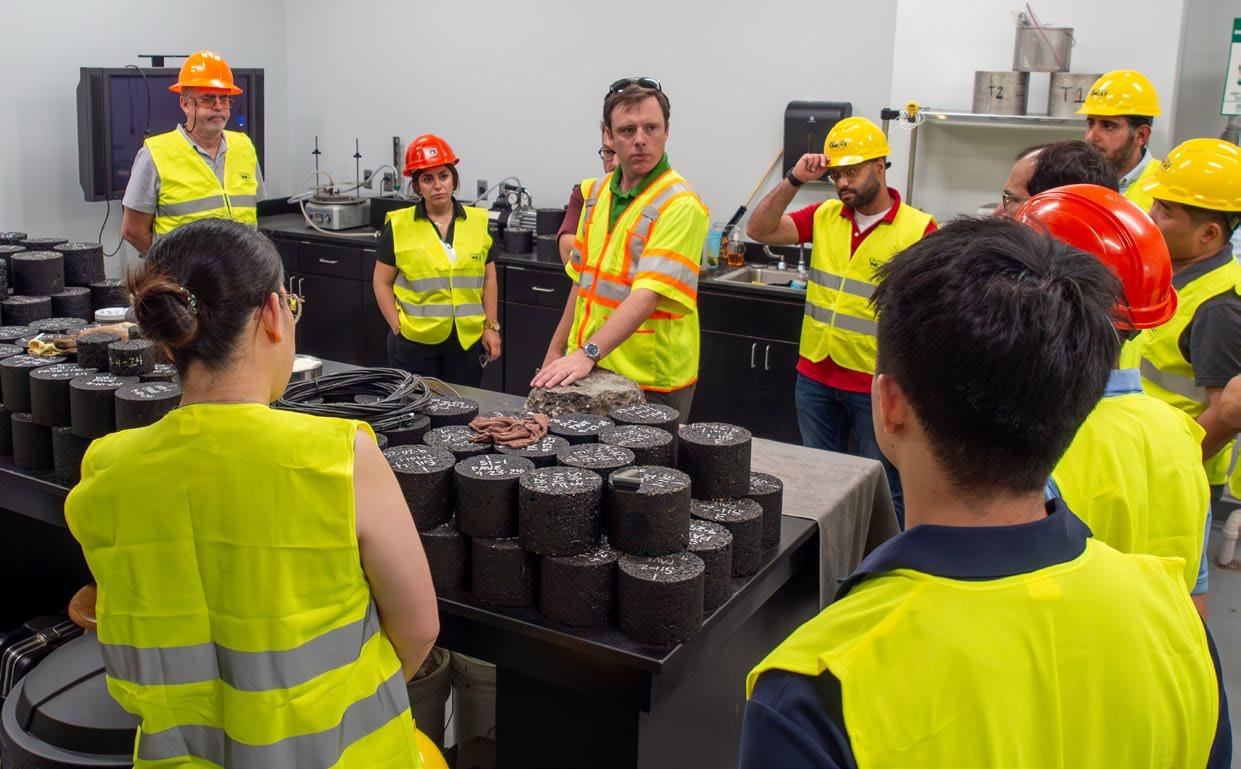
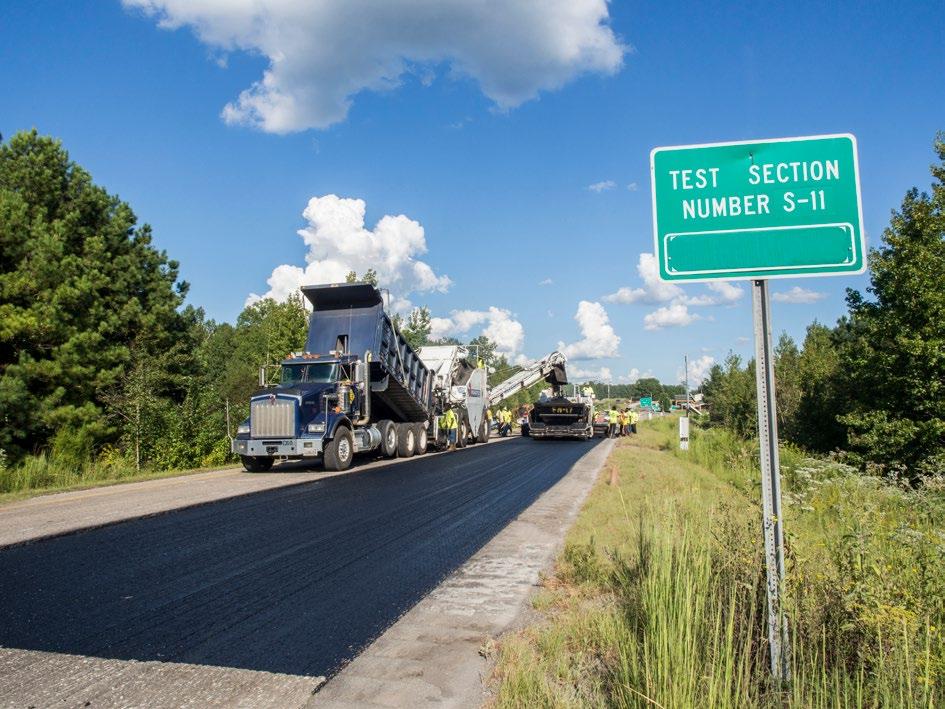
The National Center for Asphalt Technology (NCAT) at Auburn University is a leading research institution focused on advancing asphalt pavement technology. Established in 1986 in partnership with the National Asphalt Pavement Association, NCAT’s mission is to conduct innovative, relevant, and implementable research, technology development, and education that improve the safety, durability, and sustainability of asphalt pavements. NCAT also offers major laboratory testing capabilities, workforce training programs, and education for students and industry professionals. Its research influences specifications and designs used by transportation agencies worldwide, helping to build longer-lasting, more cost-effective roads.
27 graduate students

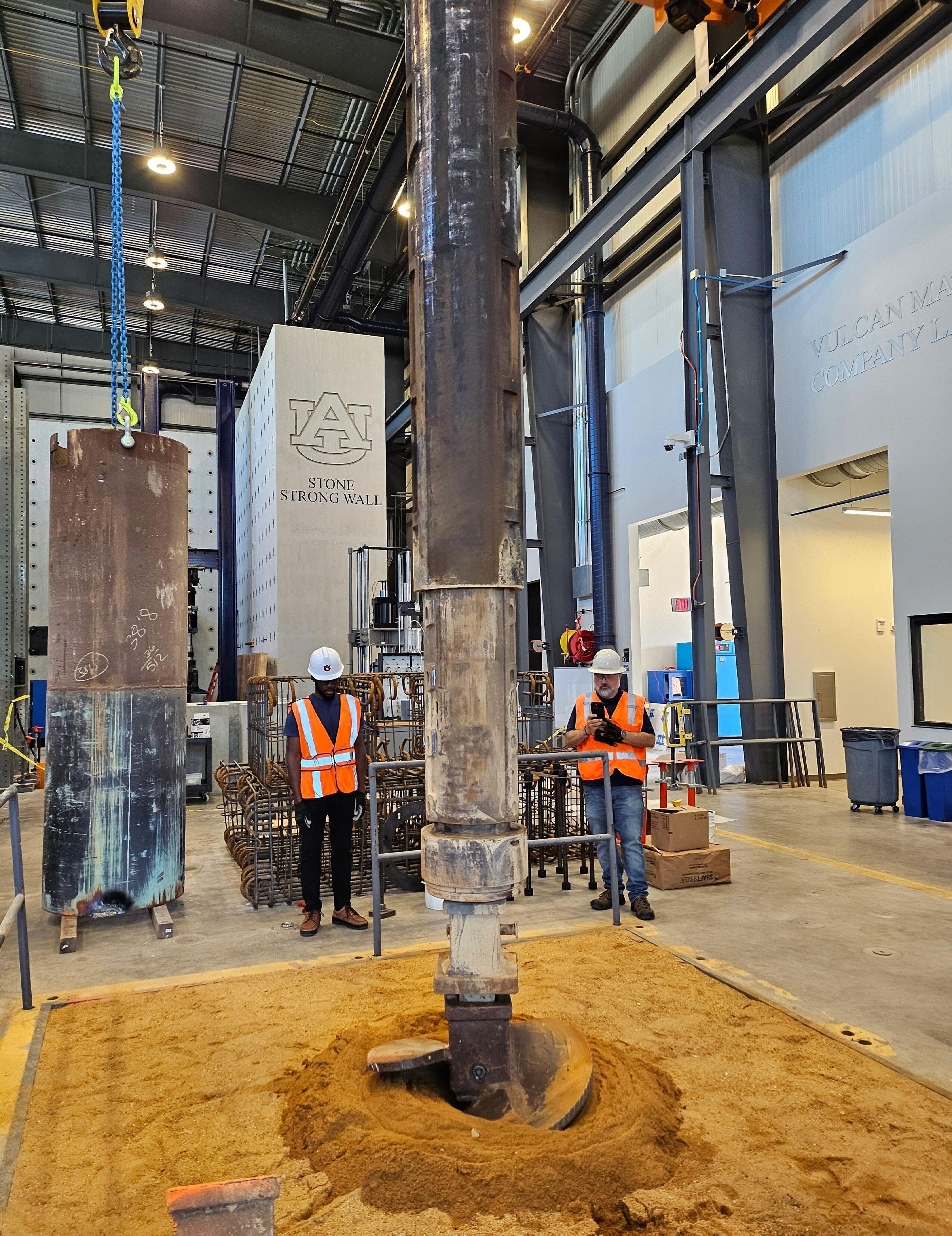
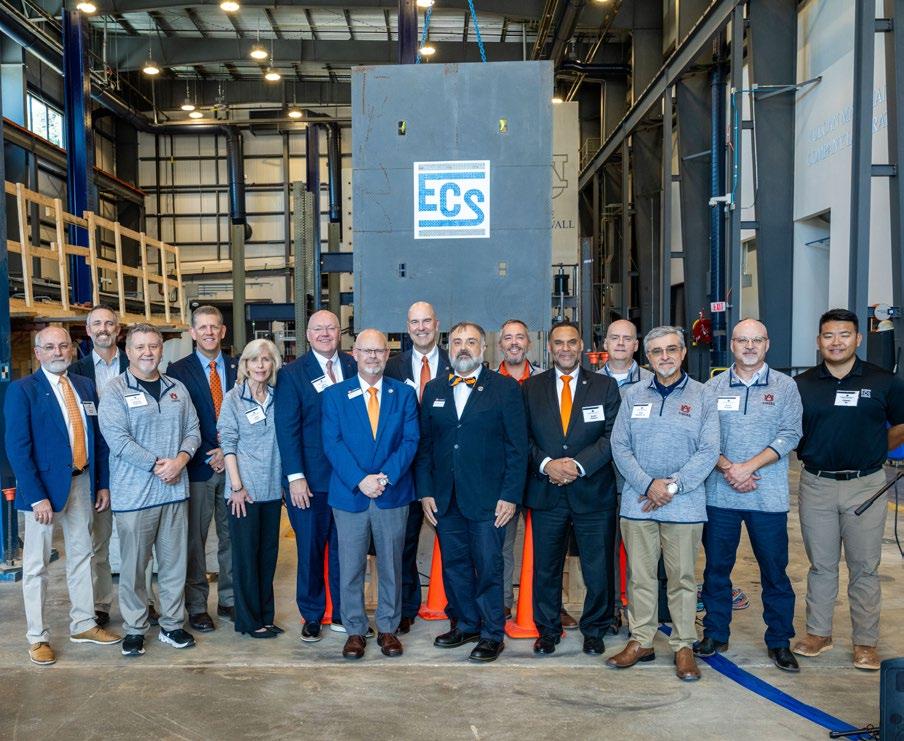
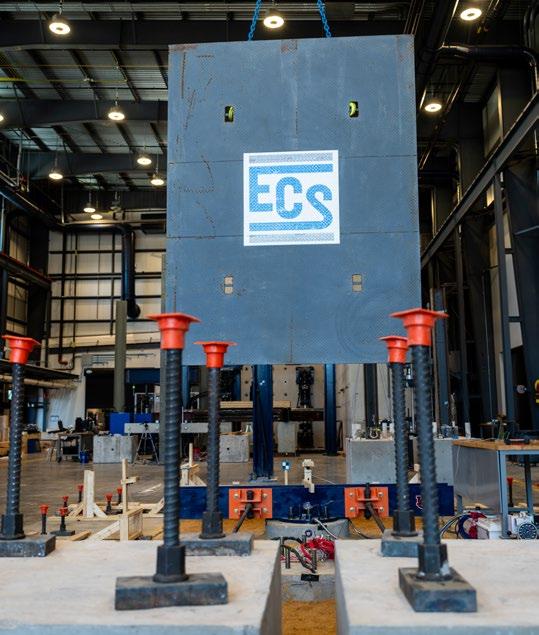
The ECS Geotechnical Chamber at the Auburn University Advanced Structural Engineering Laboratory (ASEL) is a game-changing research facility in the soil-structure interaction space. It is a 24ft long x 10ft wide x 20ft deep recess within the strong floor, which makes it unique among laboratories globally at full-scale failure level testing at the boundary of soil and structure.
The geotechnical chamber has hosted work on earth retention, shallow and deep foundations, and slope stability and has many projects across the geo-structural realm in queue and proposed.
The generous naming contribution from the ECS Group of Companies acknowledges the impact that the Geotechnical Chamber has and will continue to have on future geo-structural research. Tony Fiorillo (President and CEO) and Derek L. Clyburn (President, ECS Southeast, LLP) have shared bold vision for a strong partnership with the Auburn Geotechnical Group.
(Top Left) Leaders from ECS and Auburn University gather to celebrate the newly named ECS Geotechnical Chamber at ASEL.
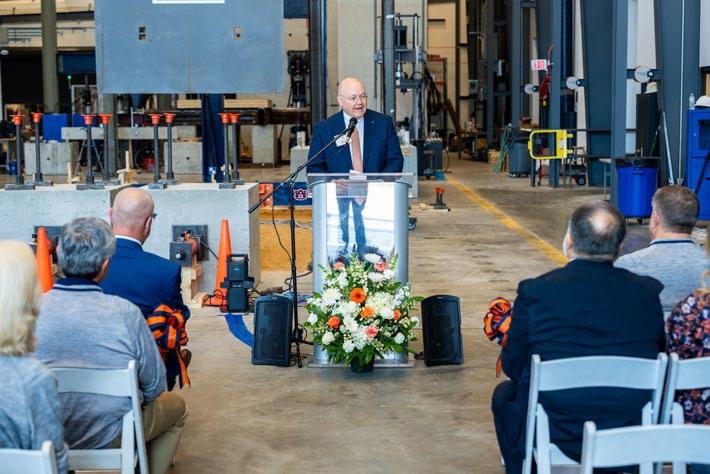
President Chris Roberts at the ECS Geotechnical Chamber Dedication.


DR. JILLIAN MAXCY-BROWN participated in the 2025 Auburn Across Alabama (AAA) Faculty Experience hosted by University Outreach and the Alabama Cooperative Extension System.
DR. J. BRIAN ANDERSON in coordination with Alabama Department of Transportation (ALDOT) and Russo Corporation, conducted drilling and concrete operations at ASEL which included construction of two fully instrumented drilled shafts inside the Geotechnical Chamber.
DR. DAVID ROUECHE provided his expertise on current building practices potential to withstand hurricane winds (Read More).
The AUBURN UNIVERSITY - STORMWATER RESEARCH FACILITY hosted more than 275 stormwater professionals during Stormwater Week (Read More).
The NATIONAL CENTER FOR ASPHALT TECHNOLOGY celebrated National Asphalt Day on May 15th (Read More).
AUBURN UNIVERSITY TRANSPORTATION RESEARCH INSTITUTE (AUTRI) and ALDOT hosted the Southeast Transportation Consortium (STC) Peer Exchange (Read More).
The HIGHWAY RESEARCH CENTER celebrated 40 years of engineering innovation and statewide impact (Read More).
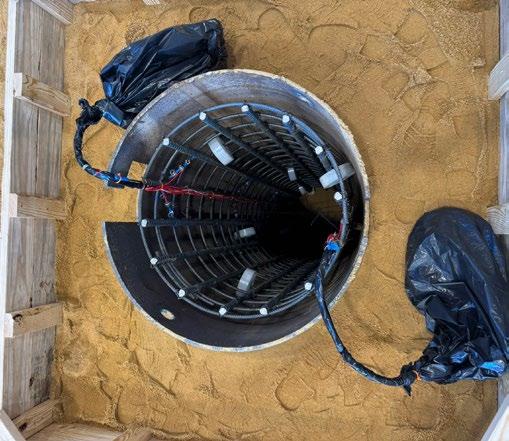
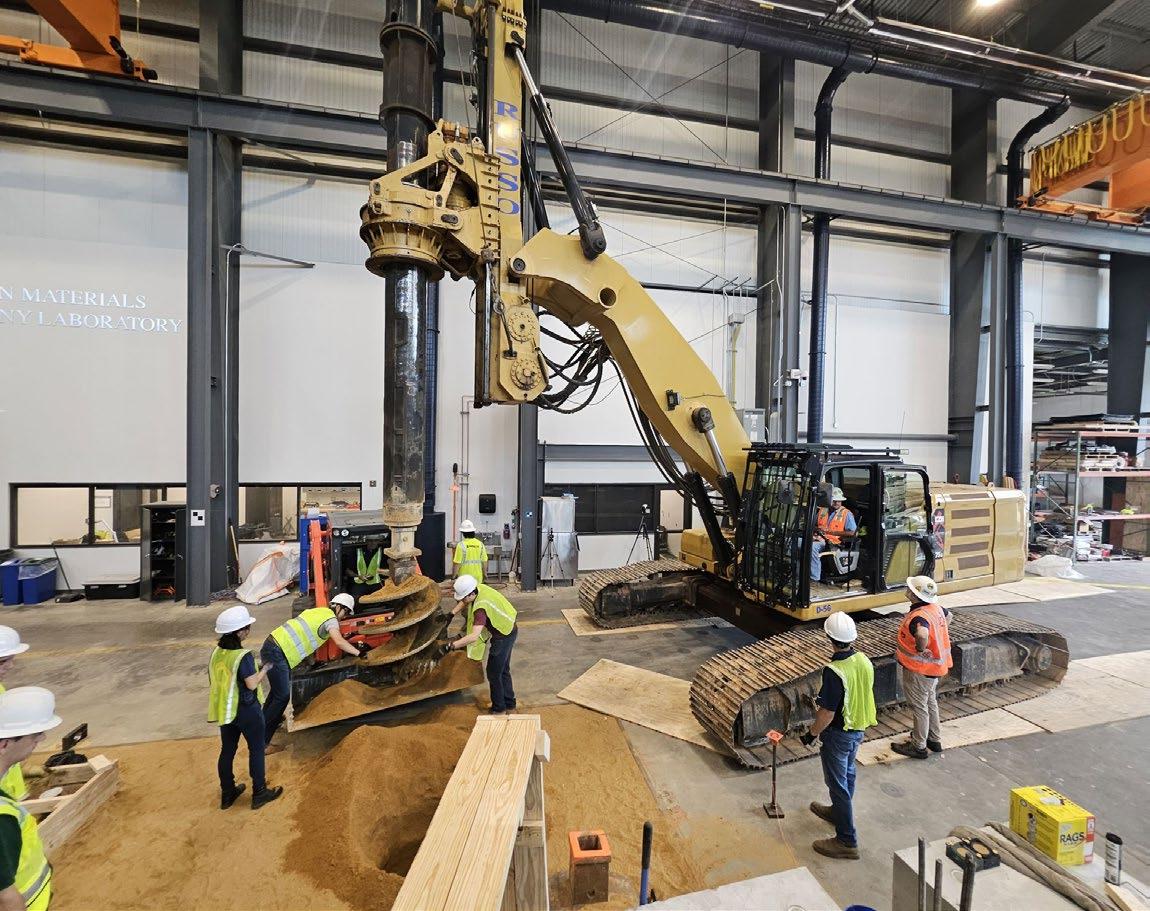
(Left) Large auger used during the drilling and concrete operations at ASEL with Dr. J. Brian Anderson, ALDOT, and RUSSO Corporation. (Right) Looking into an instrumental drilled shaft in the Auburn Geotechnical Chamber just before concrete placement.
Courtesy: Geotechnical Society at Auburn, Linkedin.
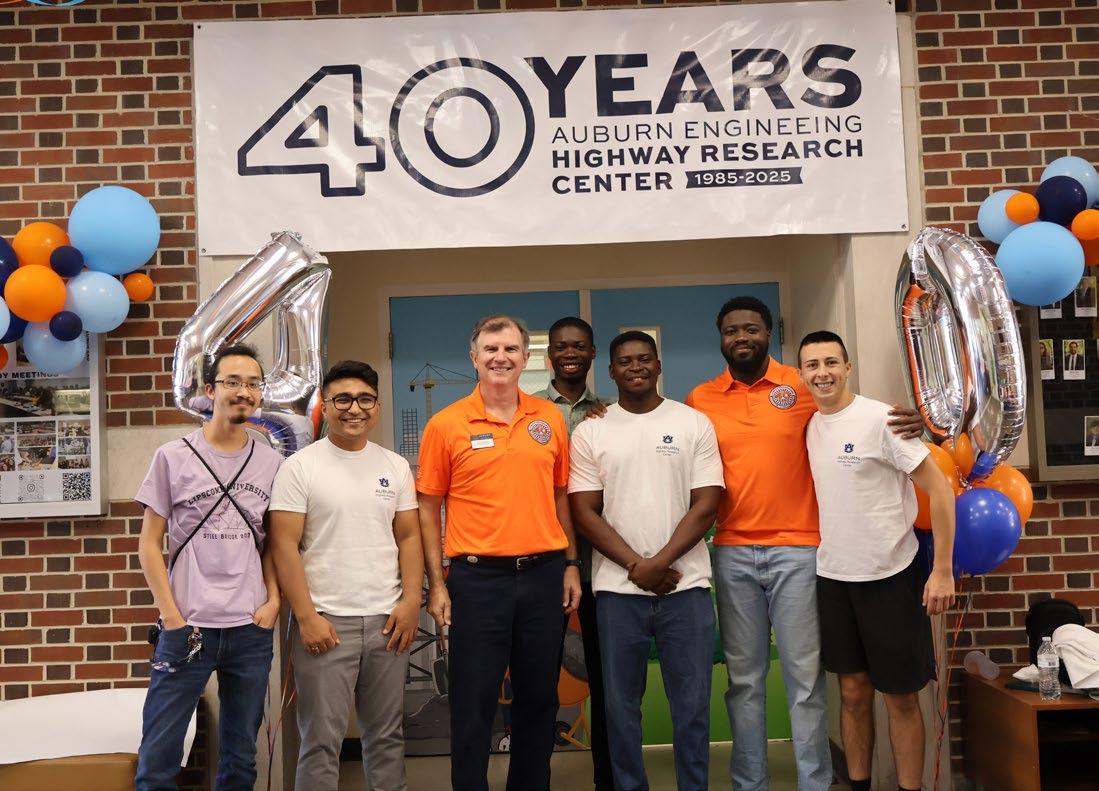
(Above) Dr. Anton Schindler and students during the Highway Research Center's 40 Years Celebration.

(Left) During Stormwater Week, participants were able to learn about successful installation and implementation of construction stormwater practices.
Courtesy: Auburn Stormwater, Linkedin
Excellence
Faculty).
DR. BENJAMIN BOWERS had a paper published in Nature Reviews Earth and Environment (71.5 Journal Impact Factor).
DR. JEFFREY LAMONDIA was the recipient of the 2025 President's Award for Distinguished Faculty.
DR. JACK MONTGOMERY received the 2024 Editorial Board Member Award for Soils and Foundations, the journal of the Japanese Geotechnical Society. He was also appointed as an Associate Editor for the ASCE Journal of Geotechnical and Geoenvironmental Engineering, one of the leading journals in geotechnical engineering. Further, Dr. Montgomery was appointed to the technical committee on Earthquake Geotechnical Engineering and Associated Problems for the International Society for Soil Mechanics and Geotechnical Engineering.
DR. ANDRZEJ NOWAK was awarded the 2026 ACI Foundation's Arthur J. Boase Award of the Concrete Research Council.
DR. KADIR SENER and DR. LYNNAE STYPULKOWSKI were both selected to attend the 2025 ASCE ExCEED Teaching Workshop held at Colorado State University.
DR. DAVID TIMM and DR. MATT YARNOLD were elected as ASCE Fellows.
DR. ROD TUROCHY has been named a Fellow of the Institute of Transportation Engineers (ITE), a Community of Transportation Professionals.
DR. HUAGUO ZHOU's proposal for the National Cooperative Highway Research Program (NCHRP) Project 15-86: Assessing Pedestrian Sight Distance for Crossing Decisions has been selected as the first choice by the project panel.
2025 Samuel Ginn College of Engineering Research Awards:
Community Impact Award: DR. MARK BARNETT
Graduate Student Mentorship Award: DR. HUAGUO ZHOU
Industry Partnership Award: DR. NAM TRAN
Civil & Environmental Engineering Research Award for Excellence (Senior Faculty):
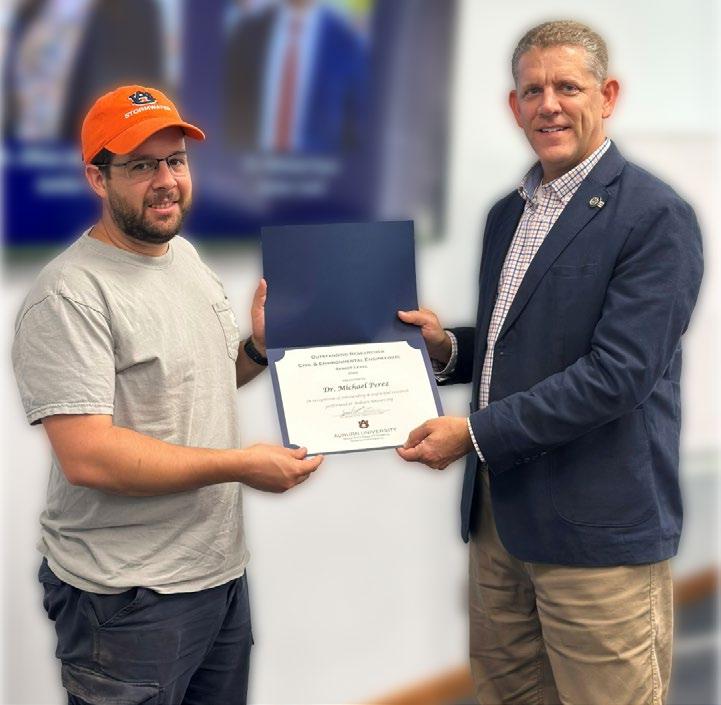
DR. MICHAEL PEREZ
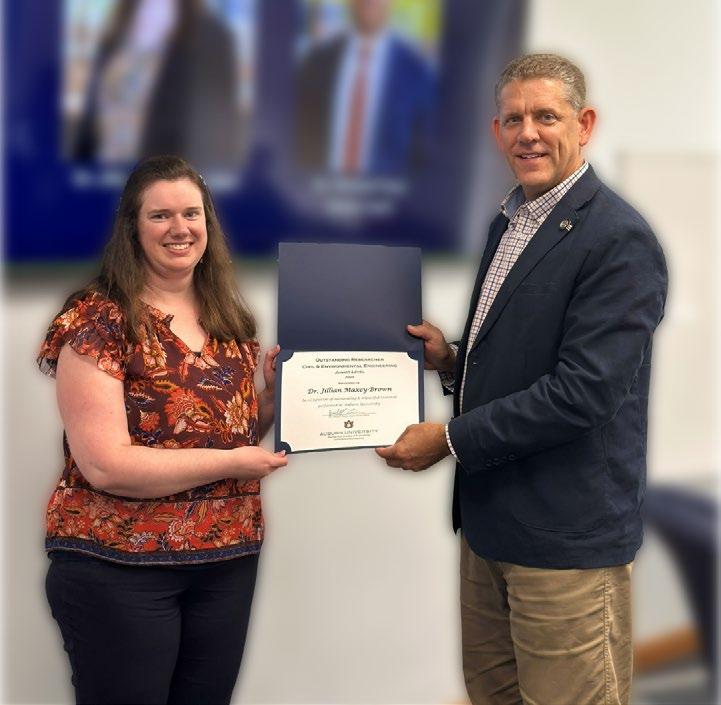
Civil & Environmental Engineering Research Award for Excellence (Junior Faculty):
DR. JILLIAN MAXCY-BROWN

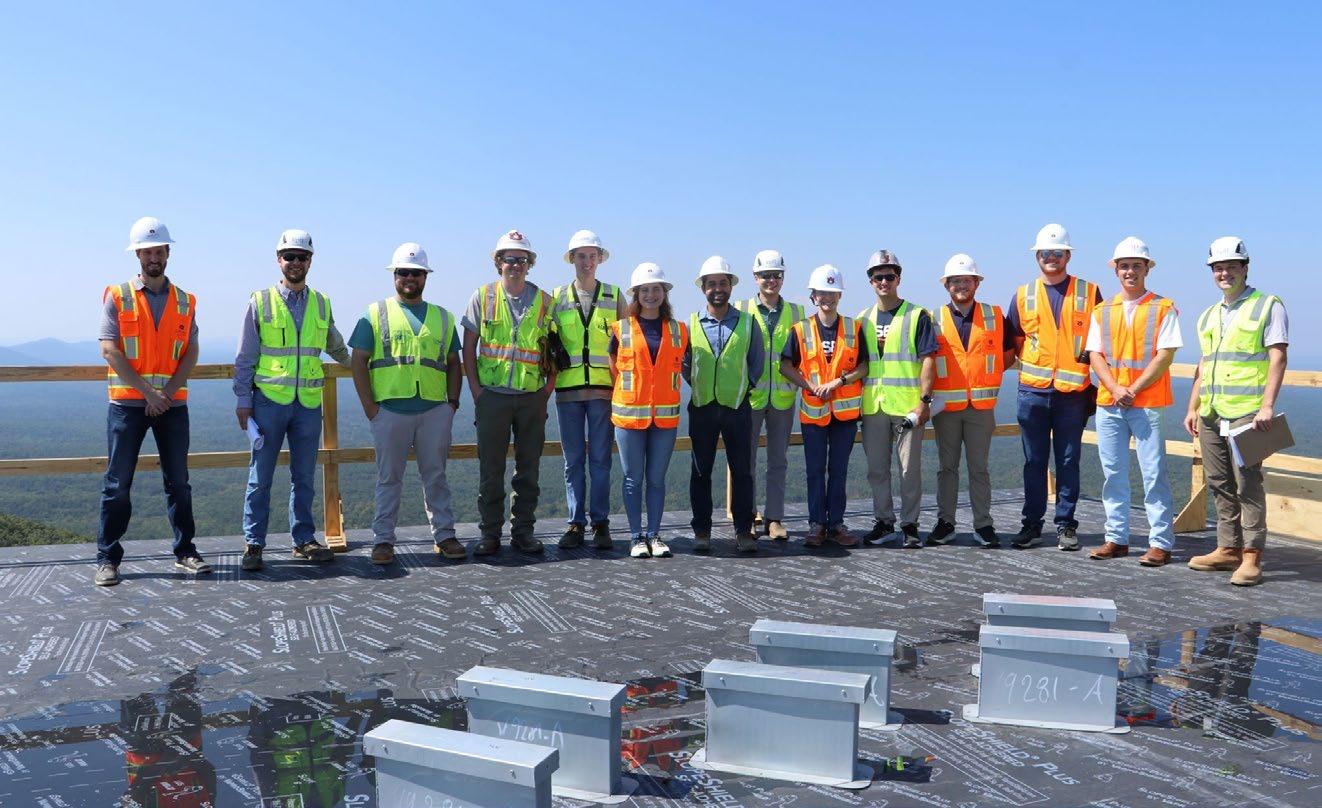
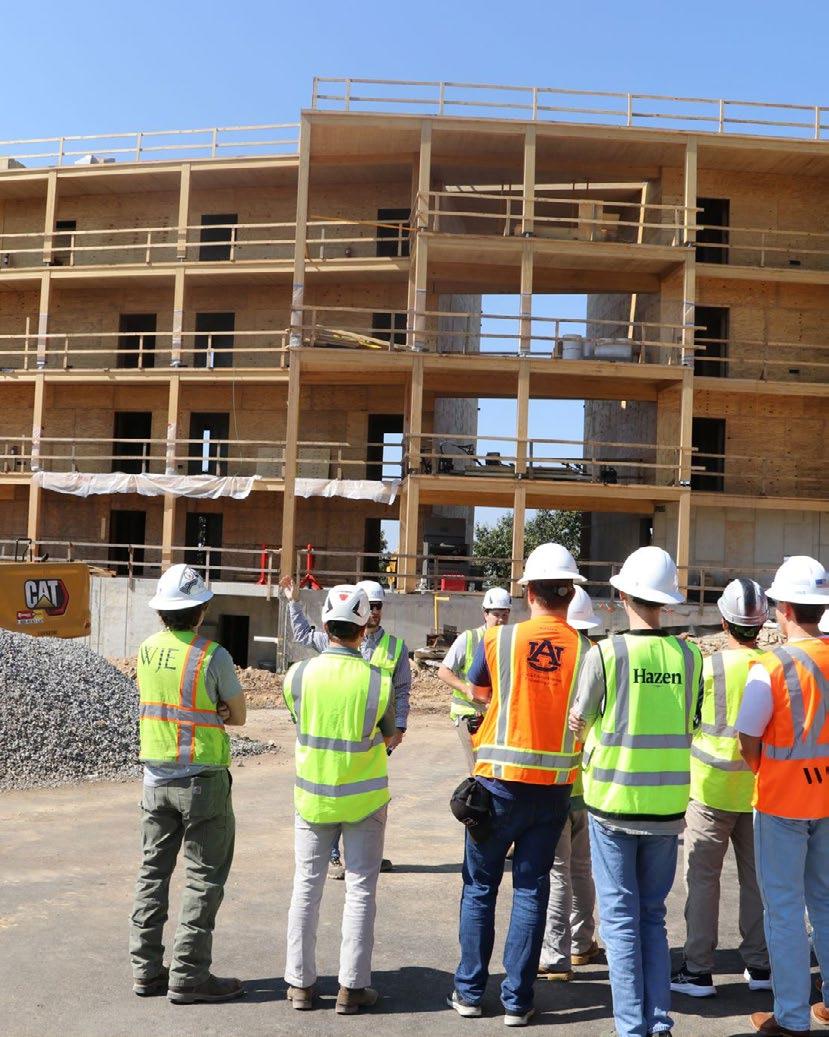
Dr. Roueche's Timber Design class had the privilage to visit the new lodge under construction at Mt. Cheaha State Park. Thank you, KPFF Consulting Engineers, specifically Cole Hassler and Joseph Broderick, for all the design insights, and Murray Construction for facilitating access.
Courtesy: Dr. David Roueche, linkedin
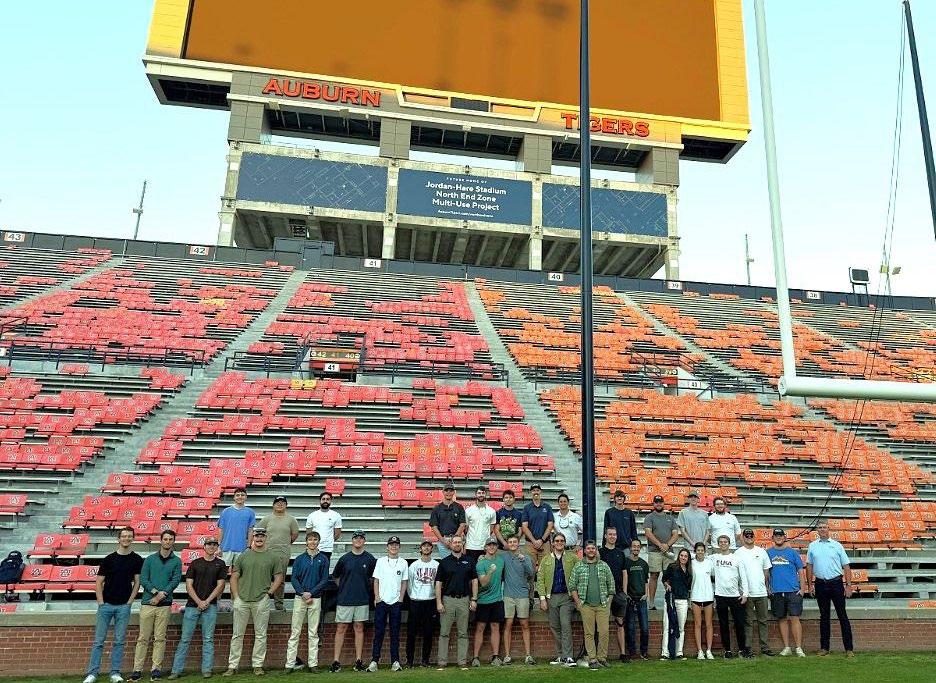
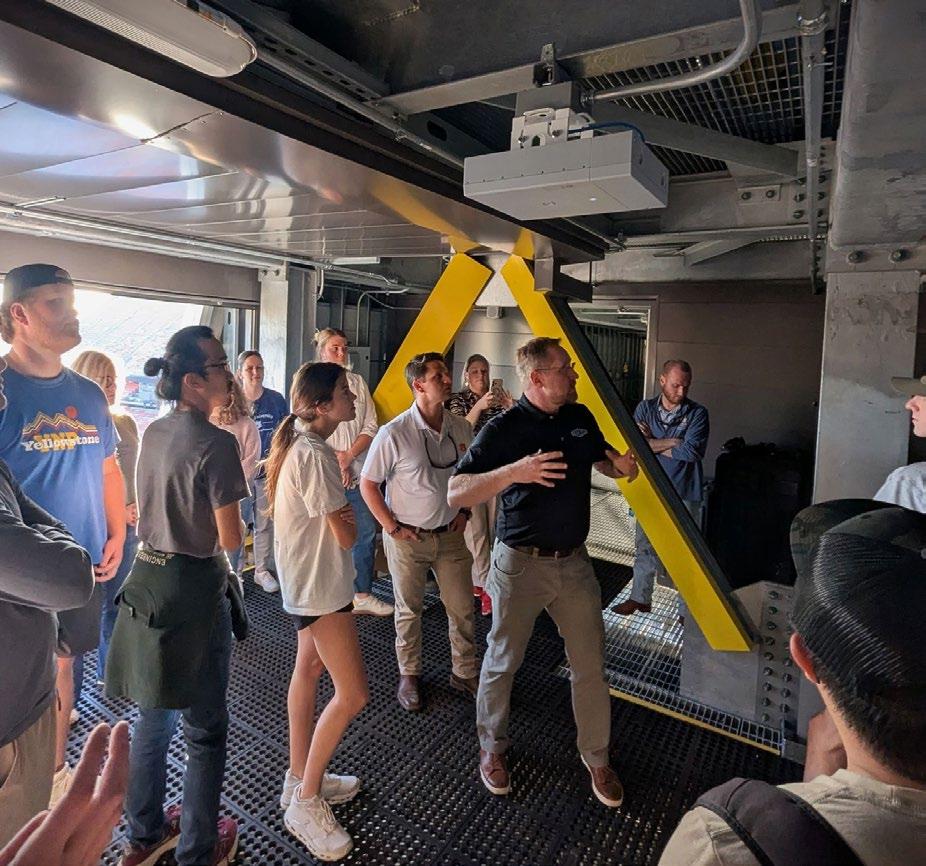

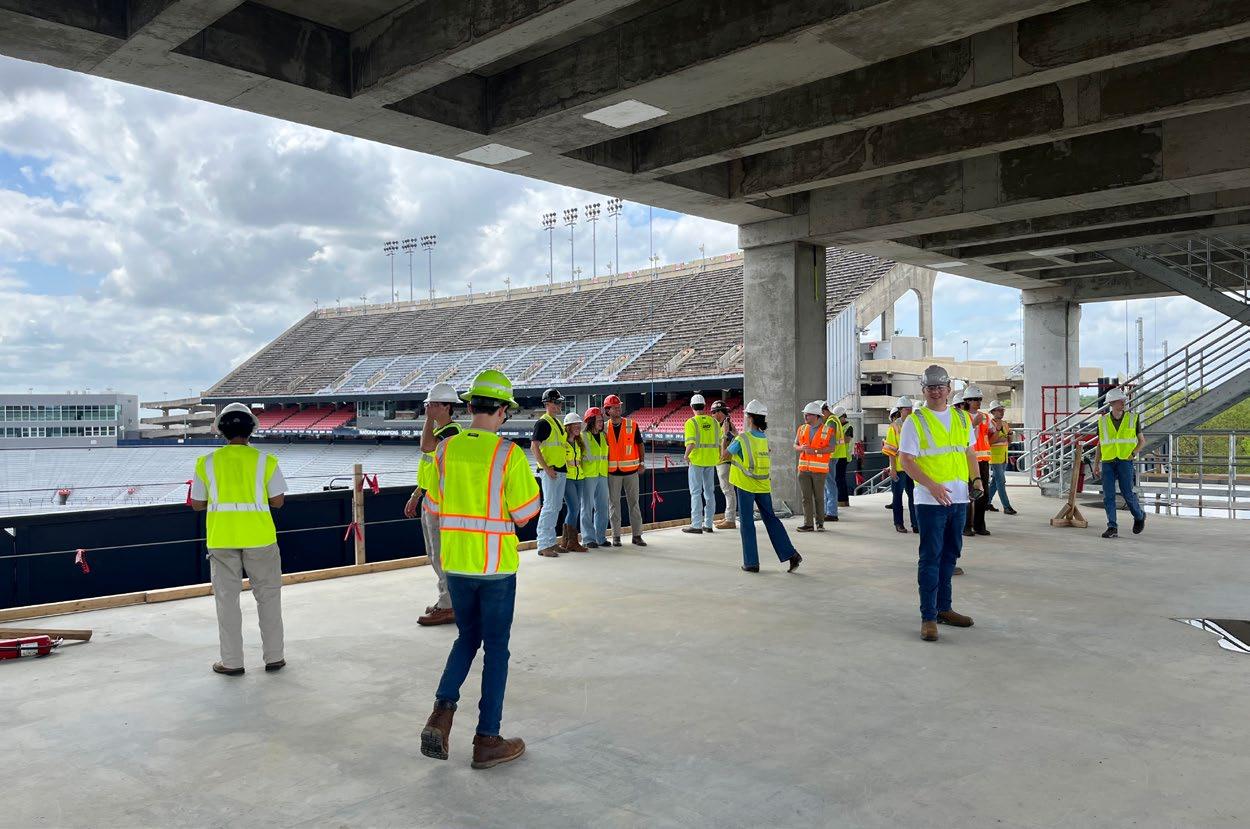
Dr. Yarnold's Structural Steel Design class had the opportunity to tour the NEW North Endzone Video Board project. Thank you, Qualico Steel Company!
Courtesy: Dr. Matthew Yarnold, linkedin
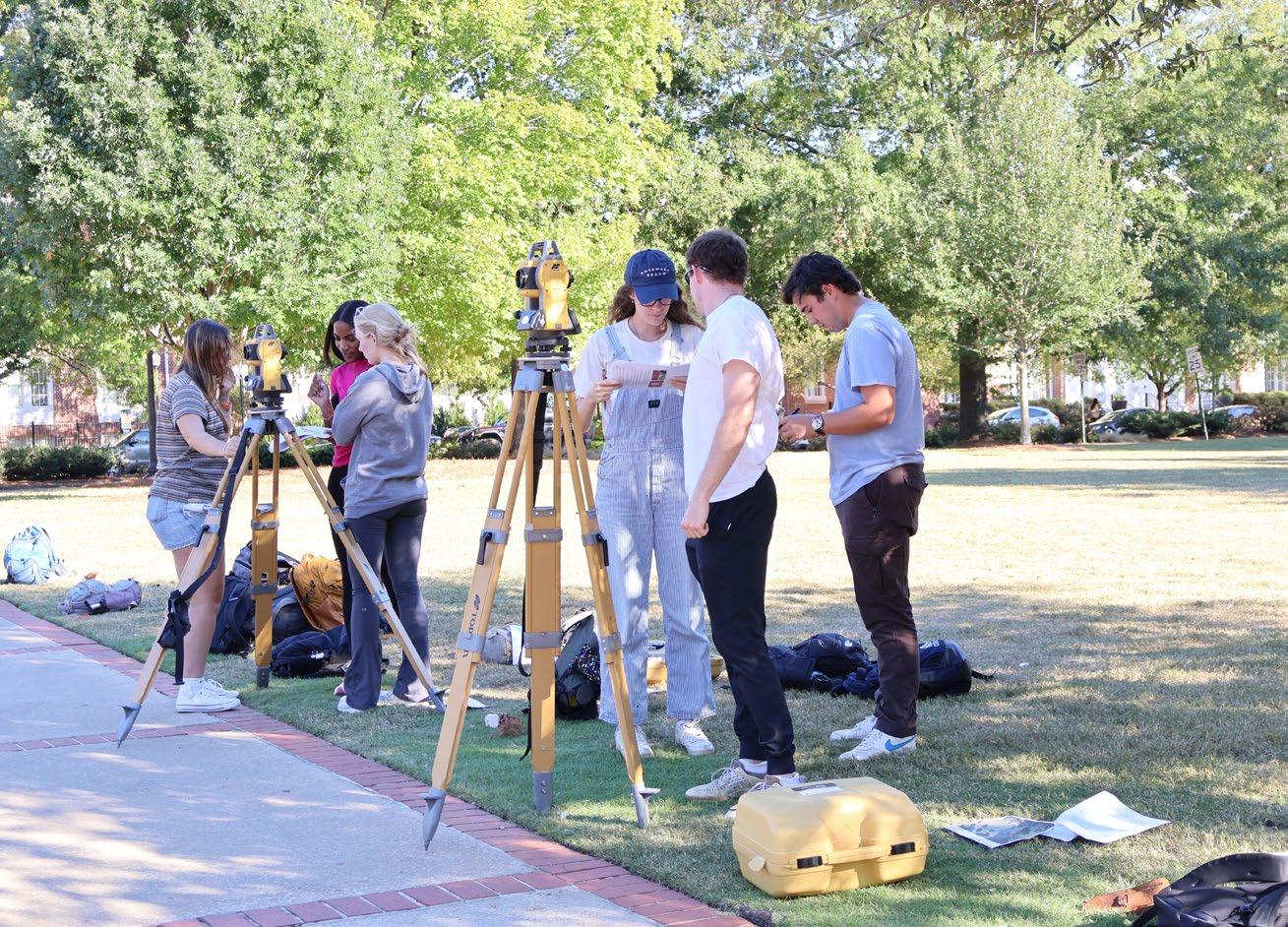
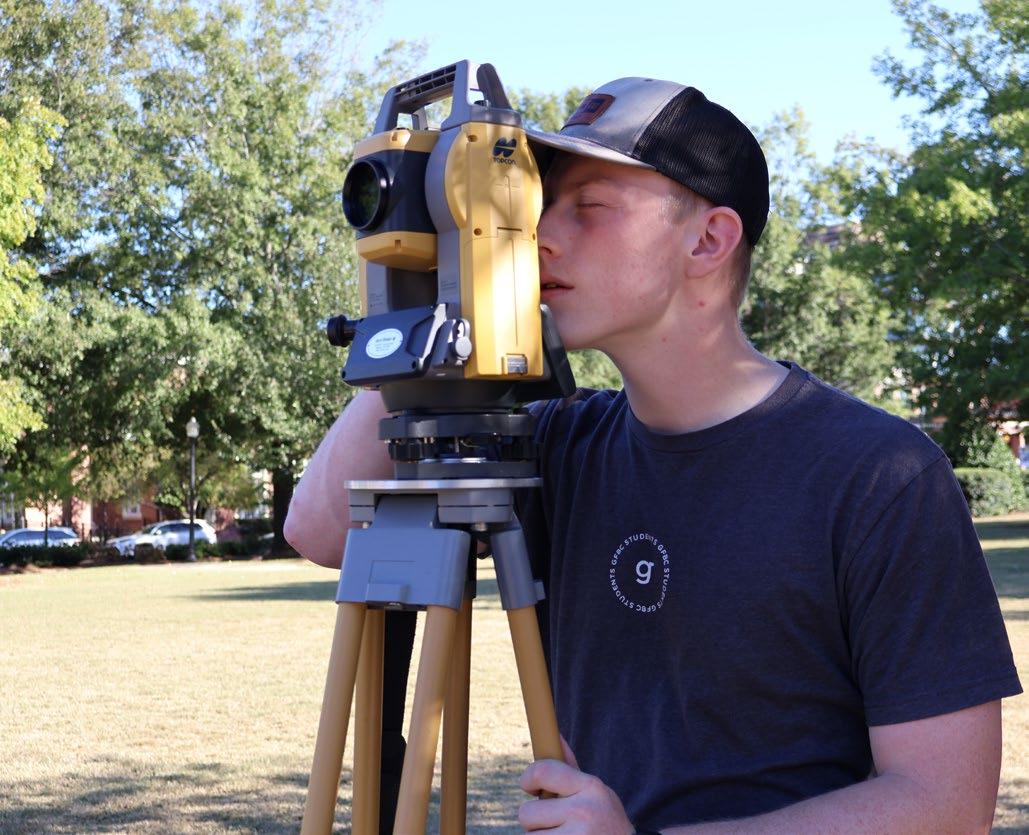
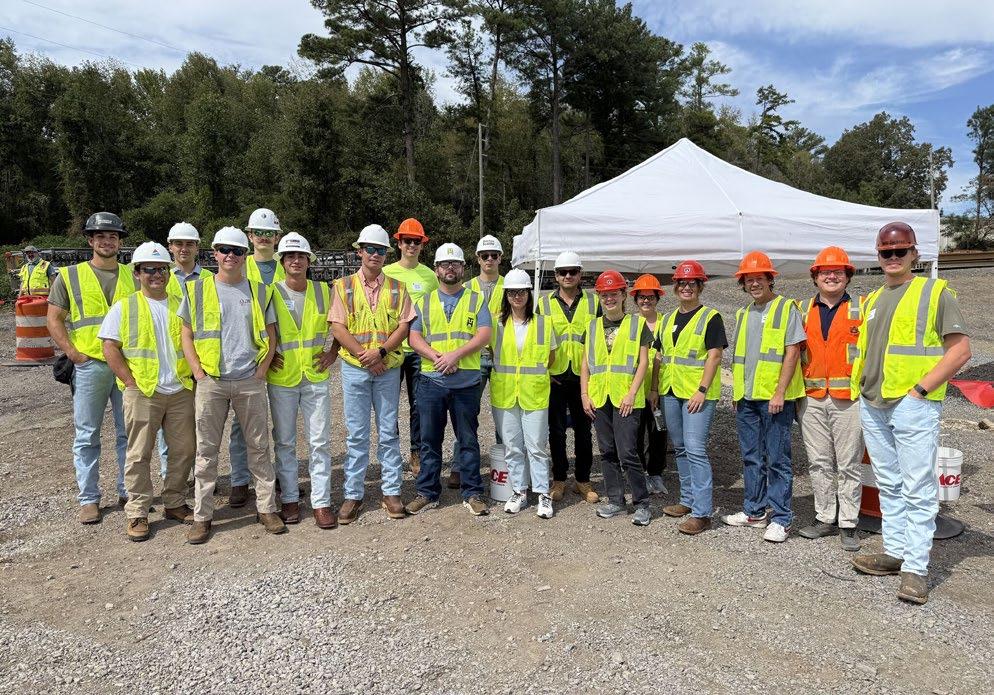
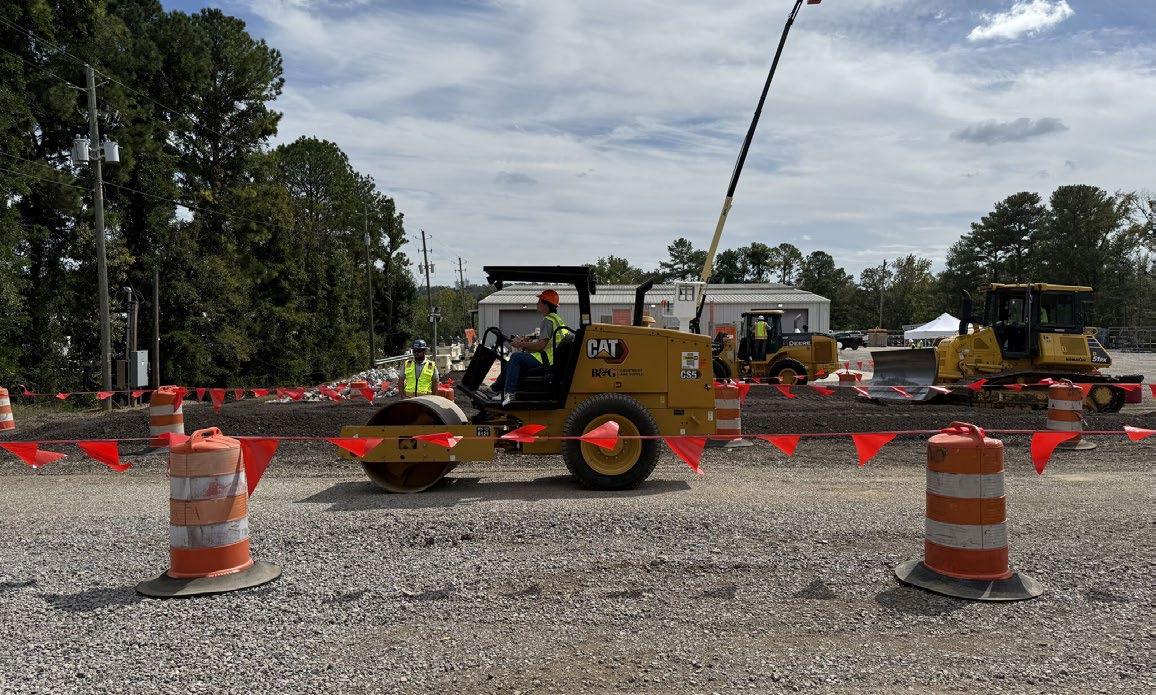

The Construction Equipment class was invited to participate in Demo Day 2025. According to Ann Moore, Lecturer and Online Program Coordinator for Construction Engineering and Management, "we were able to learn more about equipment management and supply, equipment tracking, and equipment capabilities. While that was great, the big adventure was getting 'the keys' to that equipment. Trainers and operators gave their time to allow our students the chance to operate doziers, miniloaders, skid steers, and front end loaders. For the brave souls, a very harnessed ride in the boom lift 85 feet up. Students drove as many as they wanted as many times as they wanted."
Courtesy:Ann Moore, Linkedin
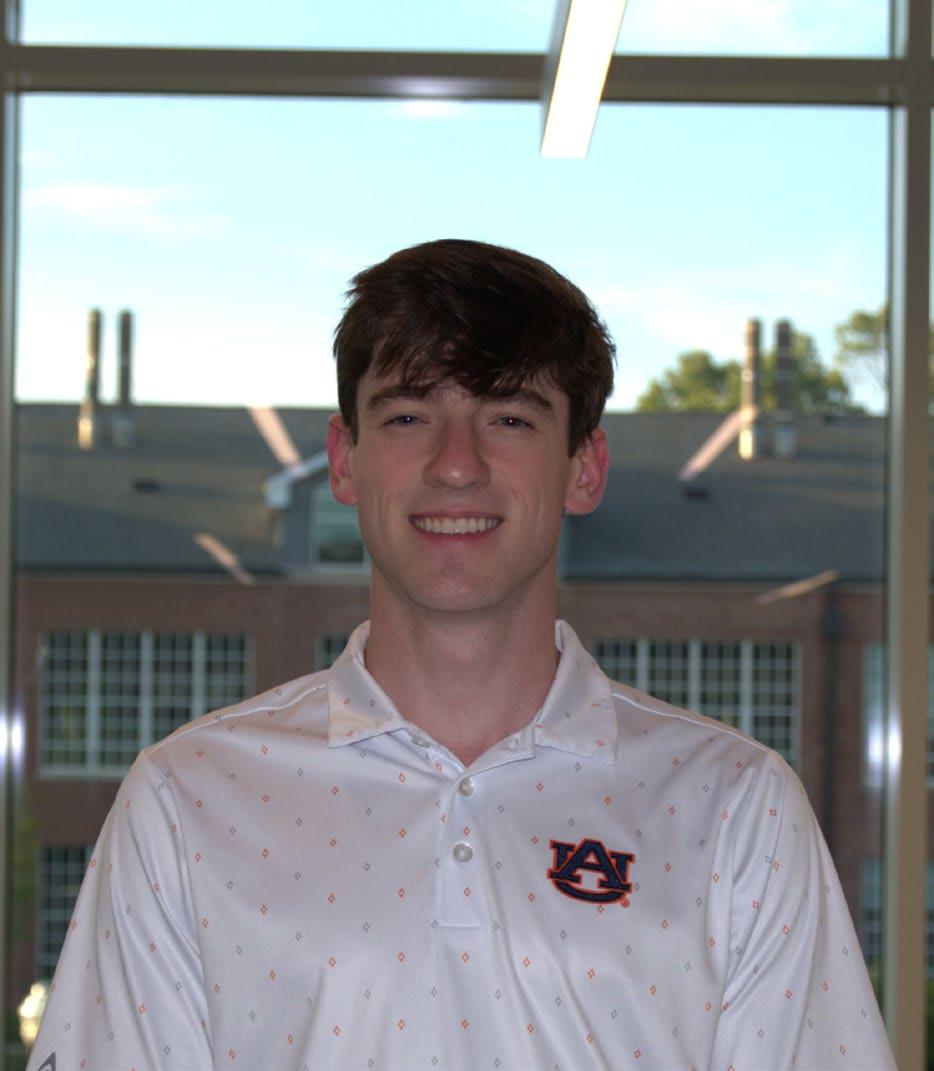
Hunter Desmond is originally from Birmingham, Alabama, and Auburn has been a part of his life for as long as he can remember. With both parents being Auburn alumni, he grew up an Auburn fan through and through. Although he always enjoyed math and science, the rigor of his high school’s engineering academy once made him question whether engineering was the right path. Fortunately, during his senior year, his calculus and physics teachers helped him rediscover his love for problem-solving and understanding how the world works.
When it came time to choose a university, Auburn was an easy decision—not only because of his family’s legacy, but also because of its strong reputation for offering an outstanding engineering student experience. Hunter chose civil engineering in part because several of his uncles work in engineering and construction, including one who is a structural engineer in Chicago. Before Hunter’s senior year of high school, that uncle took him on a tour of several of his projects. Seeing the impact of those structures sparked something in Hunter, and from that moment, he knew he wanted to help build the world around us.
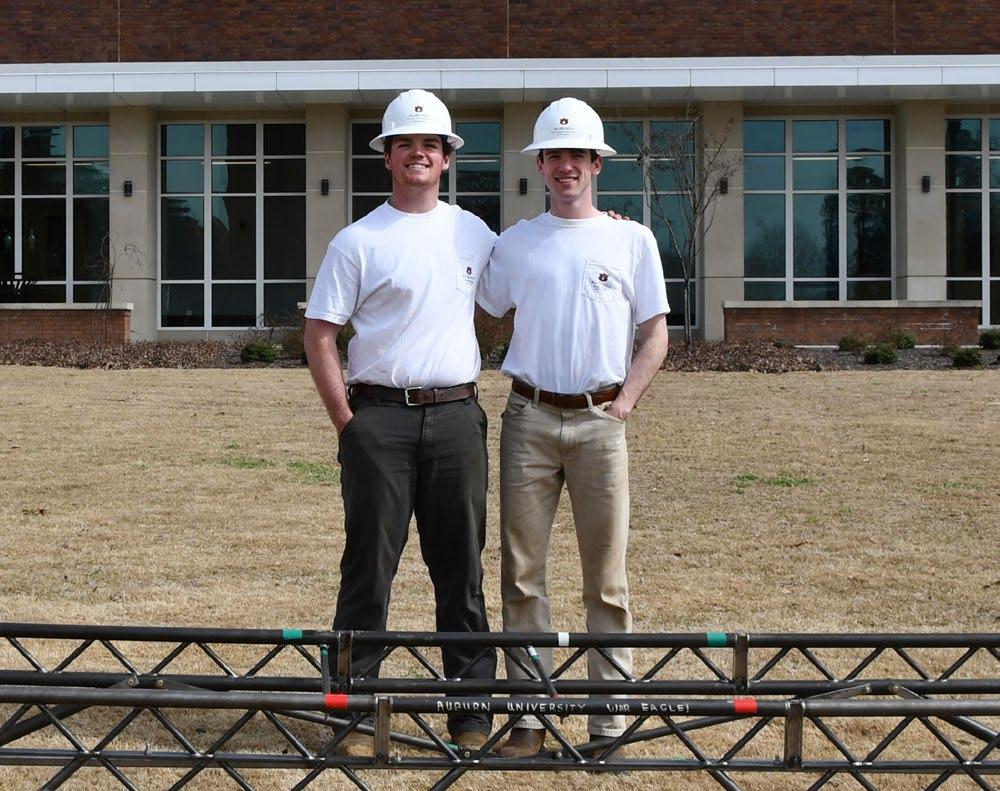
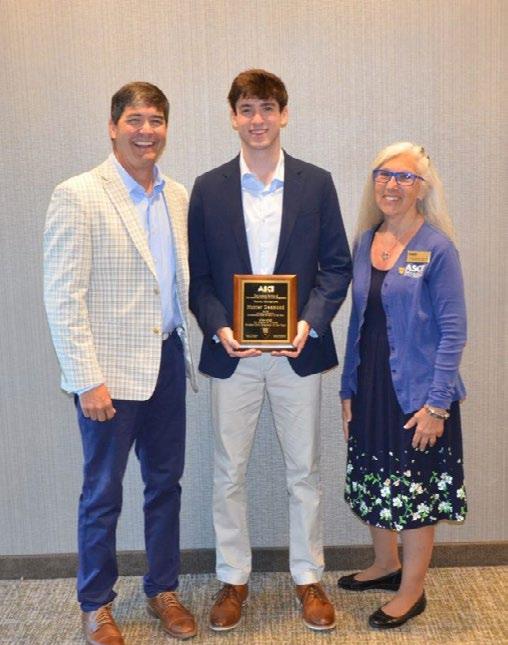
At Auburn, his passion has only grown. After attending an American Society of Civil Engineers (ASCE) meeting sophomore year, Hunter joined the Steel Bridge Team and quickly immersed himself in designing, analyzing, and constructing Auburn’s first bridge to ever qualify for Nationals in 2024. The following year, he served as co-captain, leading the team back to Nationals. He now serves as Treasurer for ASCE, a role that has strengthened both his leadership skills and the friendships he’s formed. This past summer, Hunter was honored to be named the ASCE Student Civil Engineer of the Year by the Alabama Section—an award especially meaningful because it came from an organization that has inspired and supported him throughout his collegiate journey.
Looking ahead, Hunter is eager to continue his path in structural engineering. He plans to pursue a master’s degree at Auburn to deepen his technical expertise in a challenging and rewarding field. His internship experiences have given him valuable insight into the professional
world and reminded him how much there is still to learn. His favorite line of the Auburn Creed reads, “I believe that this is a practical world and that I can count only on what I earn. Therefore, I believe in work, hard work.” In structural engineering, nothing comes easy. There are no shortcuts, and every achievement must be earned. Inspired by the words of George Petrie, Hunter is ready to keep working hard toward the dream that Auburn helped bring to life.
Liz Valença was born and raised in Brazil. She earned her bachelor’s degree in Civil Engineering from Brigham Young University–Idaho, before pursuing her master’s degree at Auburn University. Currently, she is wrapping up her master’s program and is preparing to remain at Auburn for her PhD. She conducts her research at the National Center for Asphalt Technology (NCAT) under the guidance of her advisor, Dr. Fan Yin, and co-advisor, Dr. Chen Chen.

Liz’s research centers on the characterization of Reclaimed Asphalt Pavement (RAP), which is recycled asphalt. In her thesis project, funded by the National Cooperative Highway Research Program (NCHRP), she is helping develop a testing framework to evaluate RAP quality properties without relying on solvent extraction—the standard procedure currently used in the field. By eliminating this hazardous, time- and labor-intensive method, her work has the potential to offer safer, more efficient, and environmentally responsible approaches for incorporating recycled materials into pavement design.
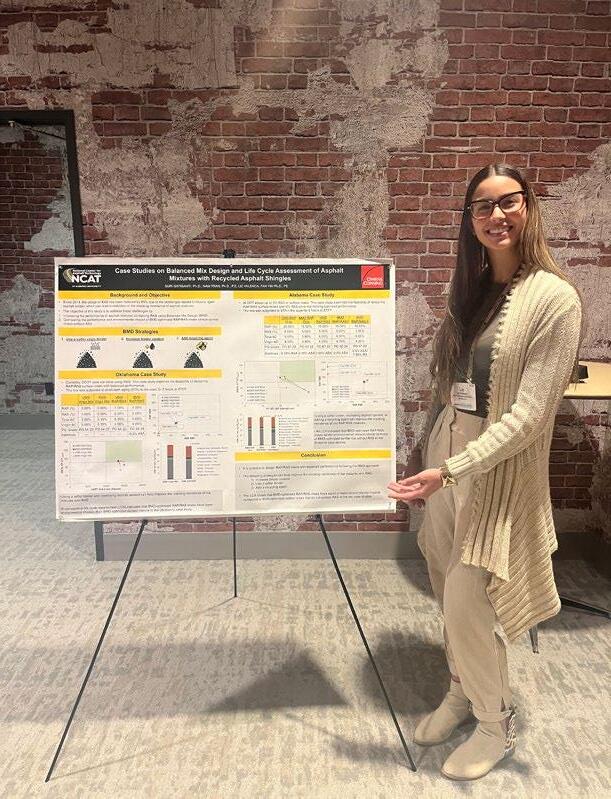
(Left) Poster Presentation at the Association of Asphalt Paving Technologists (AAPT) National Conference, 2025 in Reno, Nevada.
(Below) Liz is Sampling Aggregate Material at the Asphalt Plant for Laboratory Testing.
Courtesy: Liz Valença
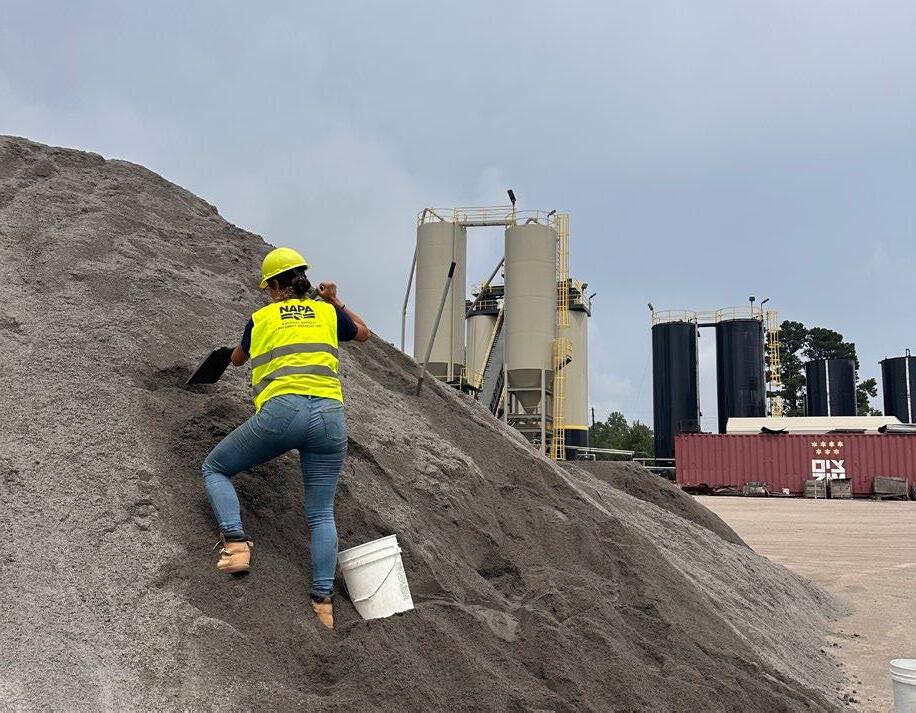
Beyond her thesis, Liz has taken numerous pavement-related courses that have deepened her passion for asphalt materials and pavement engineering. Auburn and NCAT have provided exceptional opportunities for her to strengthen her expertise, including presenting her research at national conferences such as TRB and AAPT and collaborating on industry-sponsored projects
centered on recycled pavement technologies. She is deeply grateful for the mentorship, support, and encouragement she has received from faculty, staff, and colleagues throughout her academic growth.
In addition to her research, Liz has played a key role in establishing Auburn’s new student chapter of the Association of Asphalt Paving Technologists (AAPT), an extension of the national AAPT organization. The student chapter aims to connect students with industry professionals, expand learning opportunities, and foster a community of future leaders in asphalt technology. Liz has found it rewarding to help build this chapter alongside her peers and looks forward to seeing the positive impact it will have for future students.

OLANIYI AFOLAYAN was selected as a fellow for Purdue's Trailblazers in Engineering (TBE) program.
NSONGERNEST ASIEDU and MD ROKNUZZAMAN were winners of the prestigious ITS world Congress 2025 Essay Contest for the Americas region.
HUNTER DESMOND was selected as the 2024-2025 Student Civil Engineer of the Year by the Alabama Section of ASCE.
SAMANTHA MARIANO was selected as an Honorable Mention in the Graduate Engineering Research Showcase (GERS) hosted by the CEGS at Auburn University. She was also selected as a Water Environment Federation (WEF) Inflow Scholar. Additionally, Samantha was the 2025 recipient of the Arthur S. Tuttle Fellowship by the American Society of Civil Engineers (ASCE).
CONNOR MAY was selected to represent the Samuel Ginn College of Engineering as Undergraduate Graduation Marshal during Fall 2025 Commencement Ceremonies.
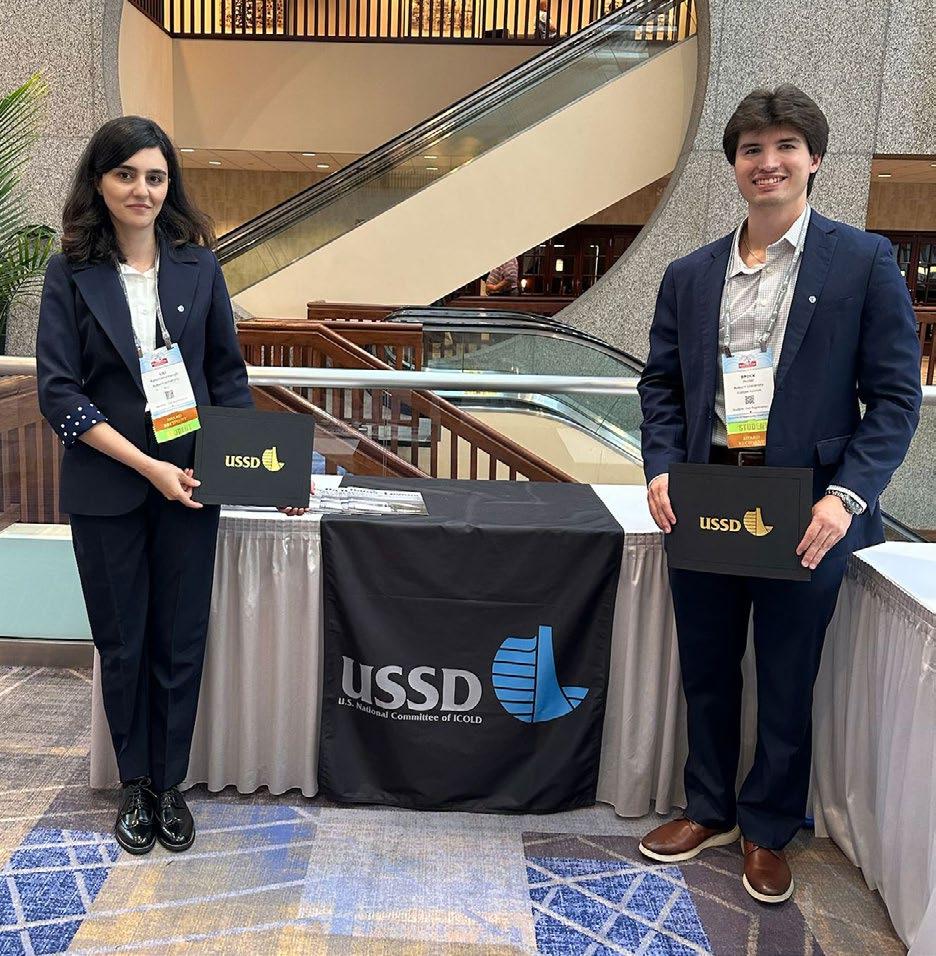
SASIN PRAJAPATI was awarded a 2025 Master of the Trade Scholarship from Modjeski and Masters, Inc. LILI RAHIMIKHAMENEH and BROCK HUNER were both selected for United States Society on Dams Kim de Rubertis Student Scholarships.
CAROLINA TRIBONI placed as Graduate Finalist #1 in the 2025 AUSome Science in 60 Seconds Competition.
DANIEL YAHYA was awarded a 2025 NCSEA Diversity in Structural Engineering Scholarship.
Teams from the ASCE STUDENT CHAPTER placed 1st overall at the regional 2025 competition. Additionally,
The STEEL BRIDGE TEAM finished 21st nationally. and the SUSTAINABLE SOLUTIONS TEAM finished 18th nationally.
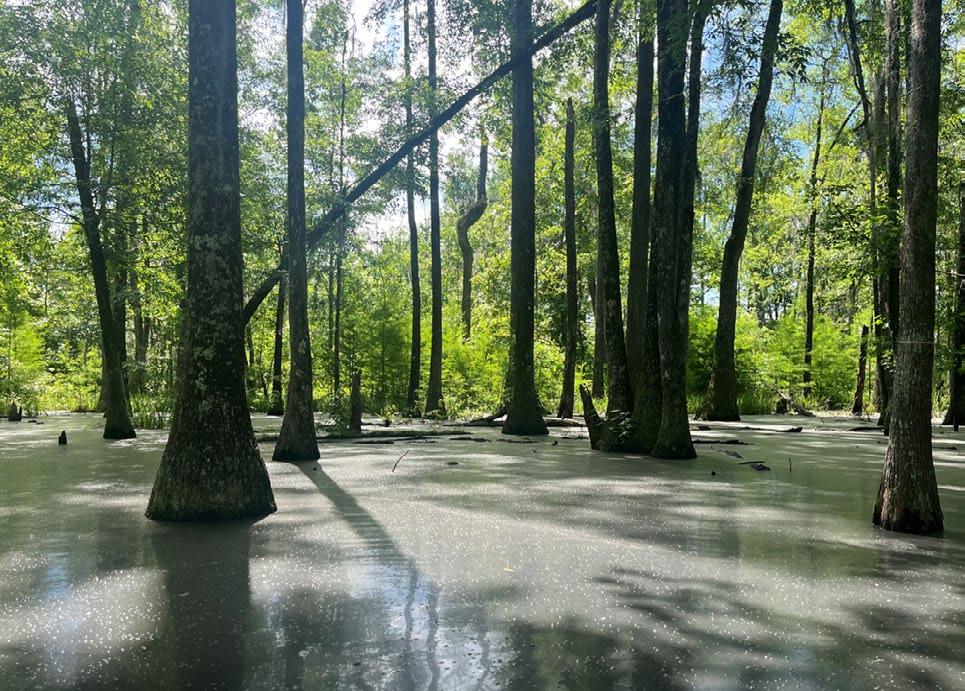
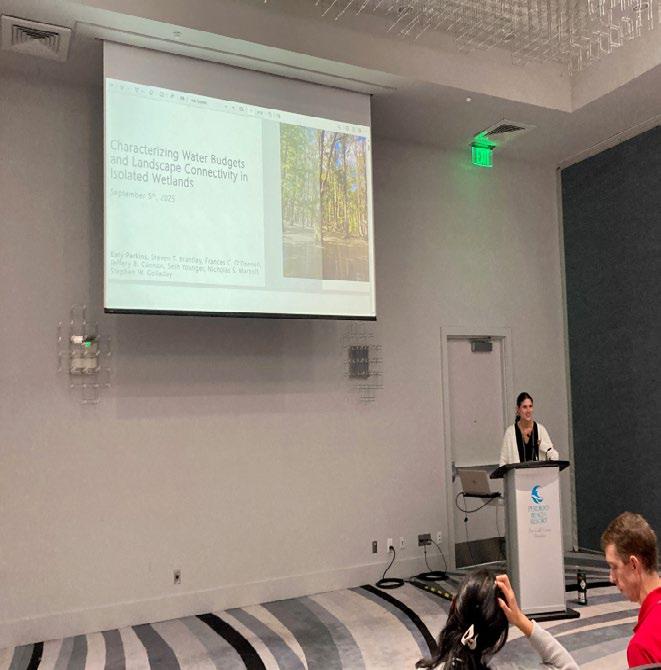
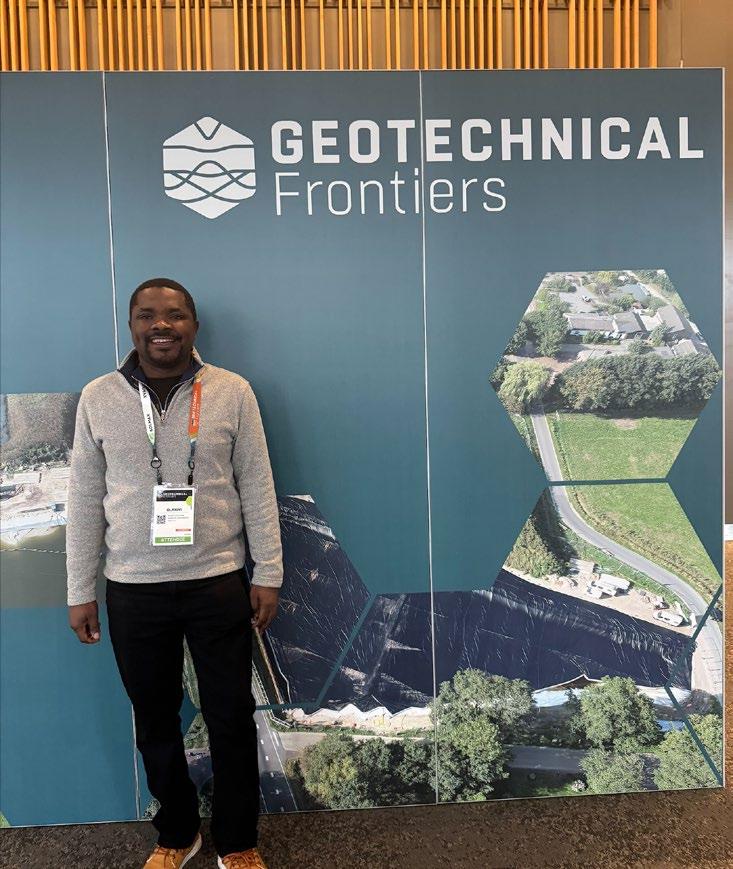
KATY PERKINS and SURANJANA CHATTERJEE
were featured in an article in The Jones Center at Ichauway newsletter for their work on Wetland Hydrology (Read More).
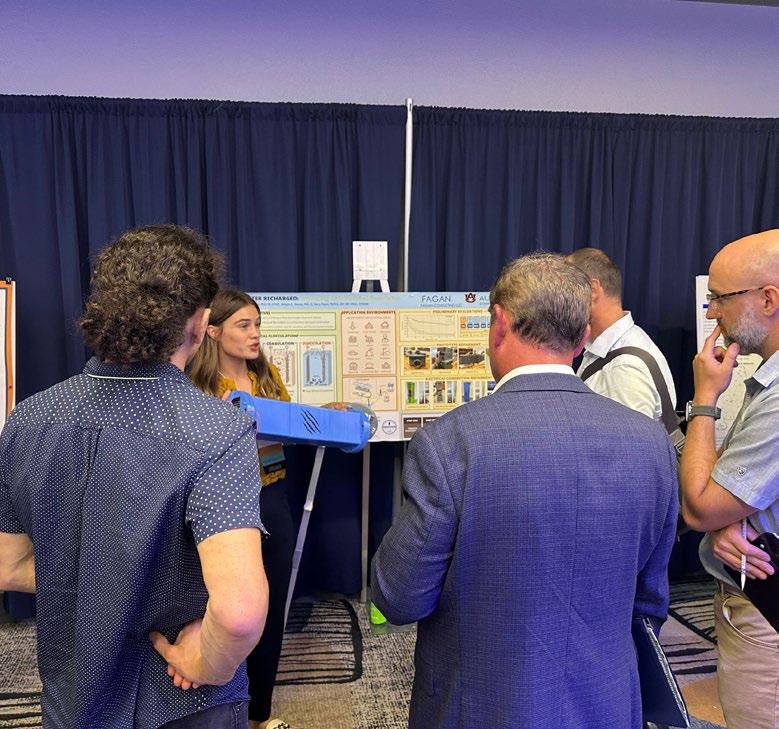
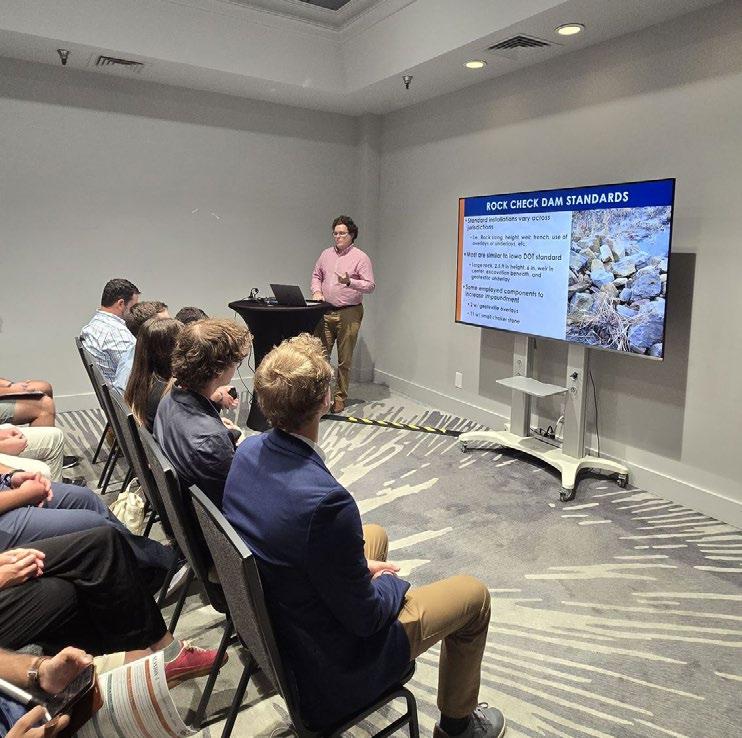
Multiple students won awards at the Alabama Water Resources Conference, In the Oral Presentations category:
1st Place - GRACE KERR
3rd Place - BRIAN ROCHE
3rd Place - KATY PERKINS
In the Poster Presentation category: 1st Place - ASHMITA POUDEL
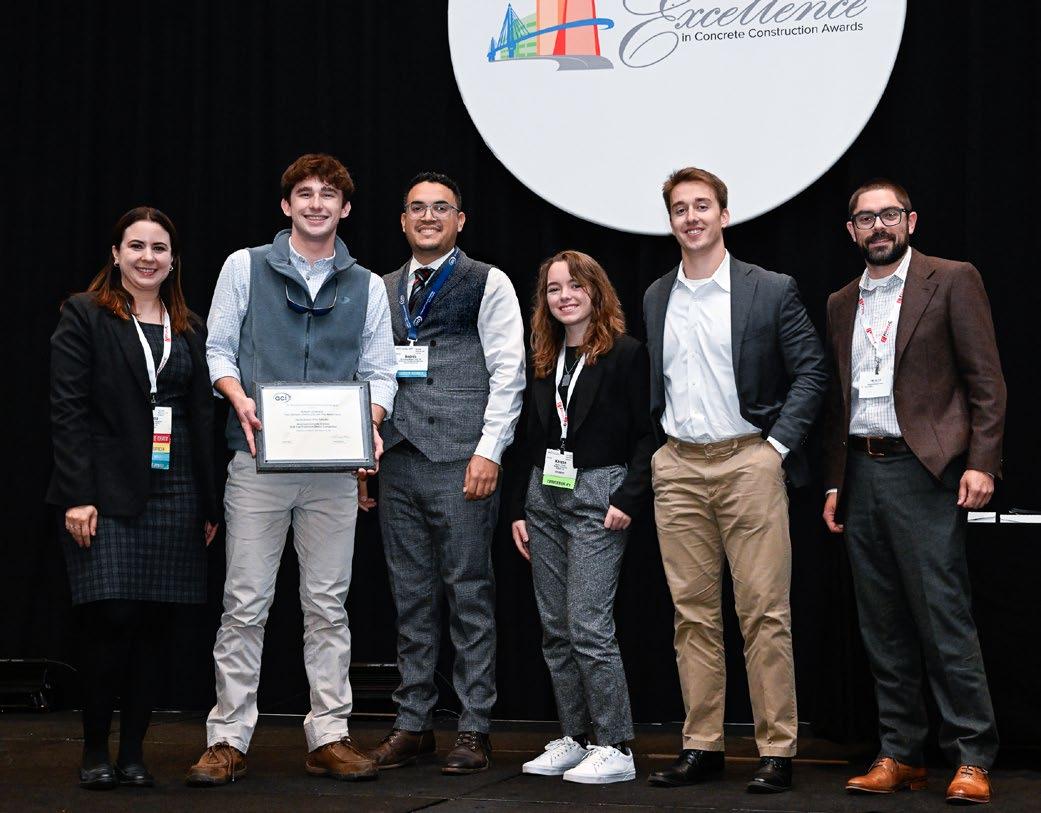
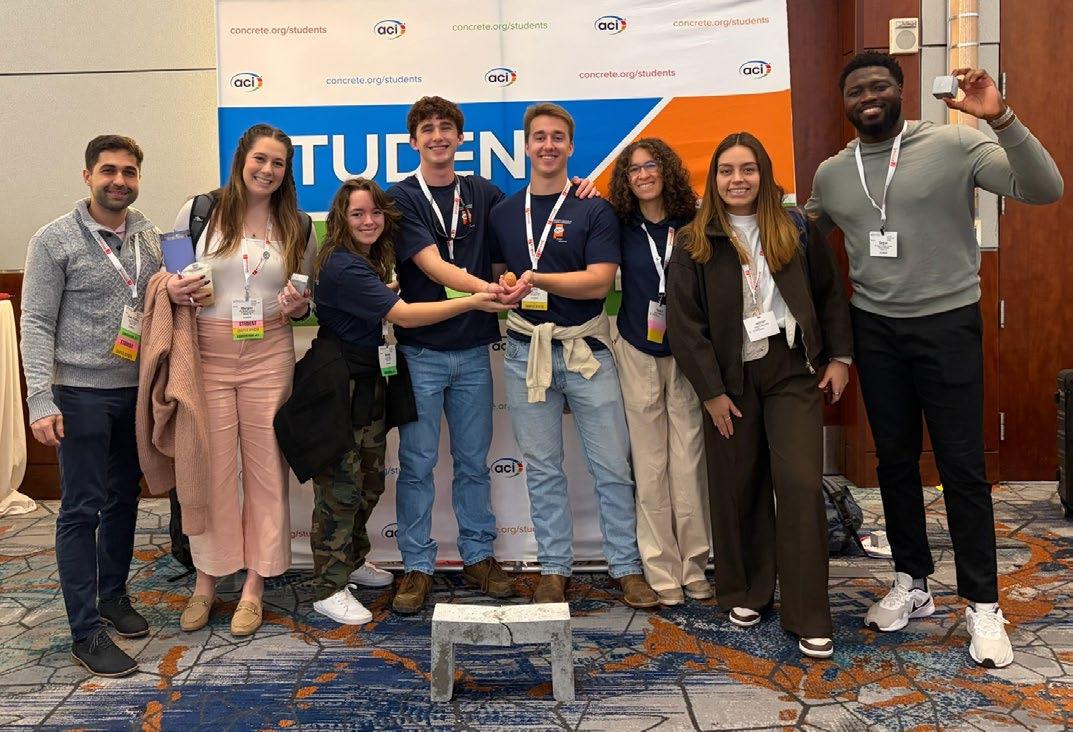
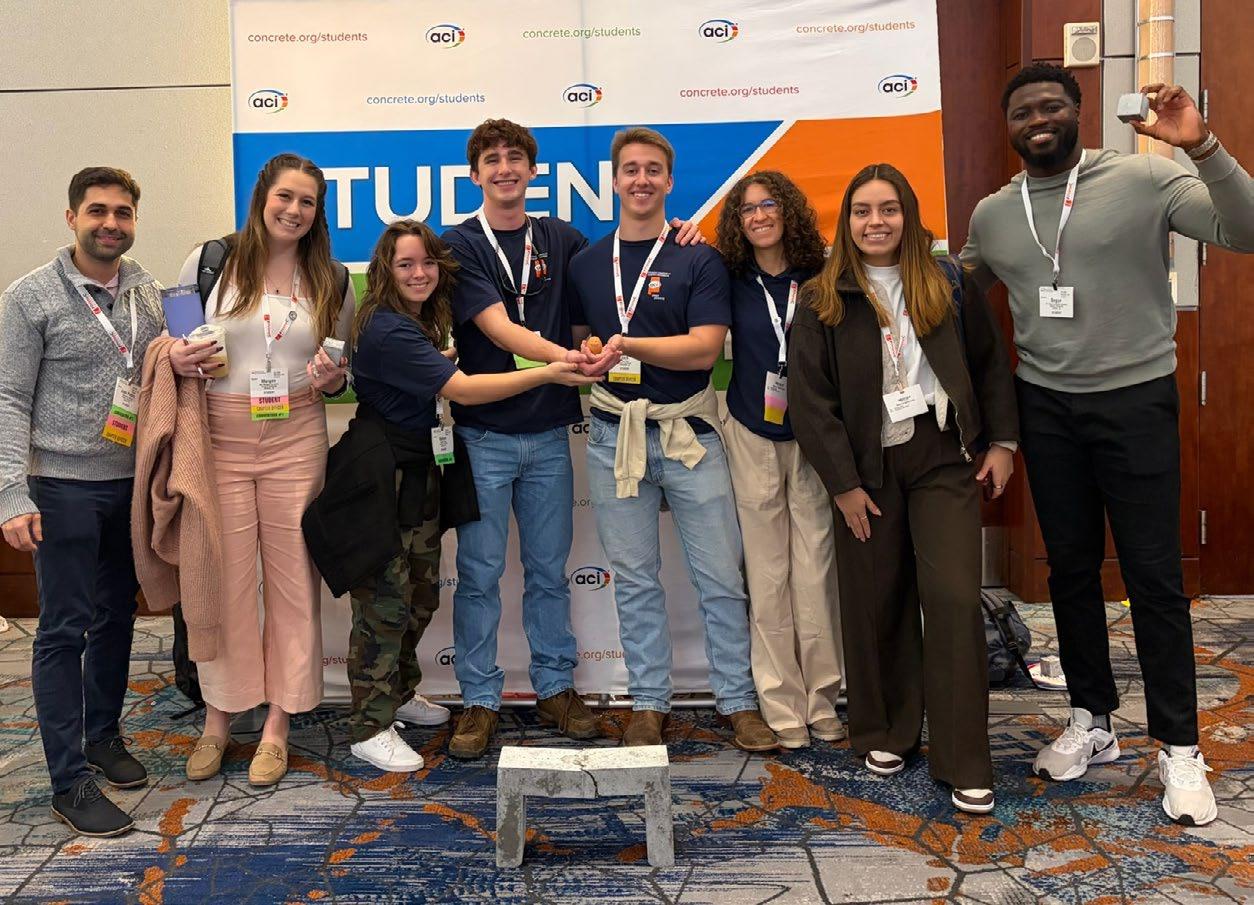
A team from the ACI STUDENT CHAPTER earned 2nd place overall (among 38 entries from all over the world) and 1st place among all U.S. teams in the ACI Egg Protection Device Competition at the ACI Concrete Convention in Baltimore, Maryland.
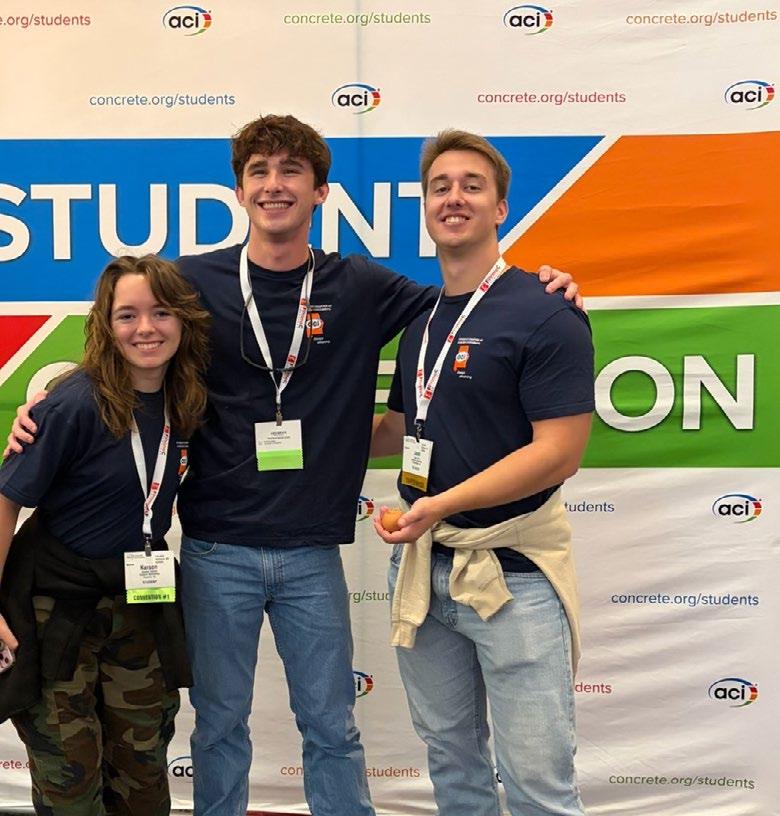
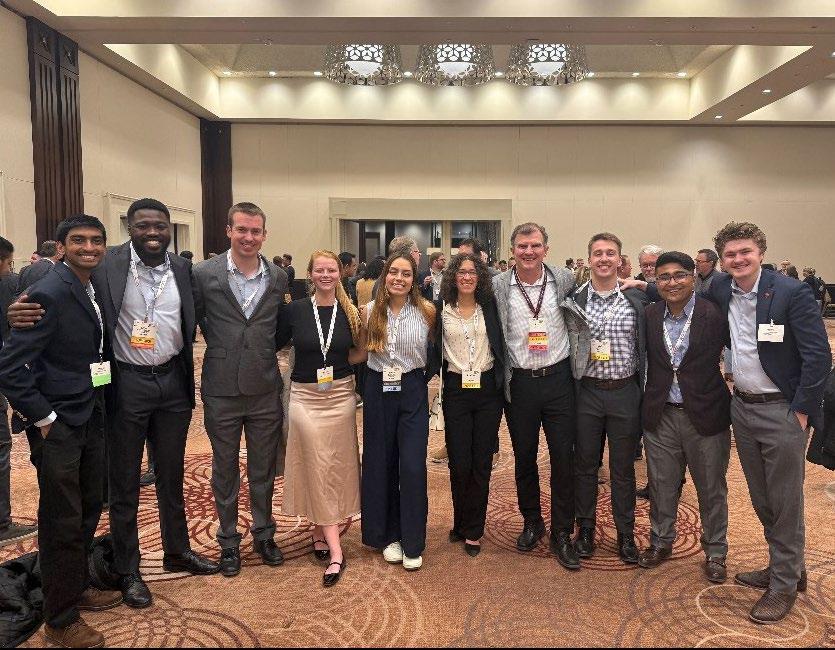
(Top Left) The ACI Team, Karson Helms, Andrew Laird (captain), and Jack Patty with their egg.
(Top Right) All the ACI Student Chapter attendees at the ACI Concrete Convention in Baltimore, Maryland.
(Left) The ACI Egg Protection Team at the award ceremony.
Courtesy: Dr. Anton Schindler
By: Dr. David Timm
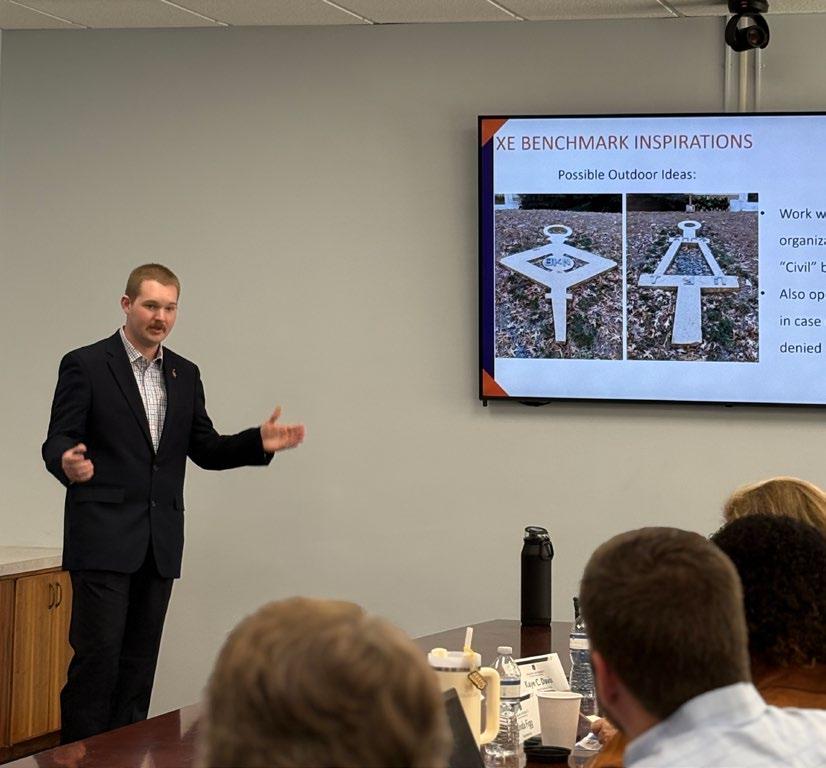
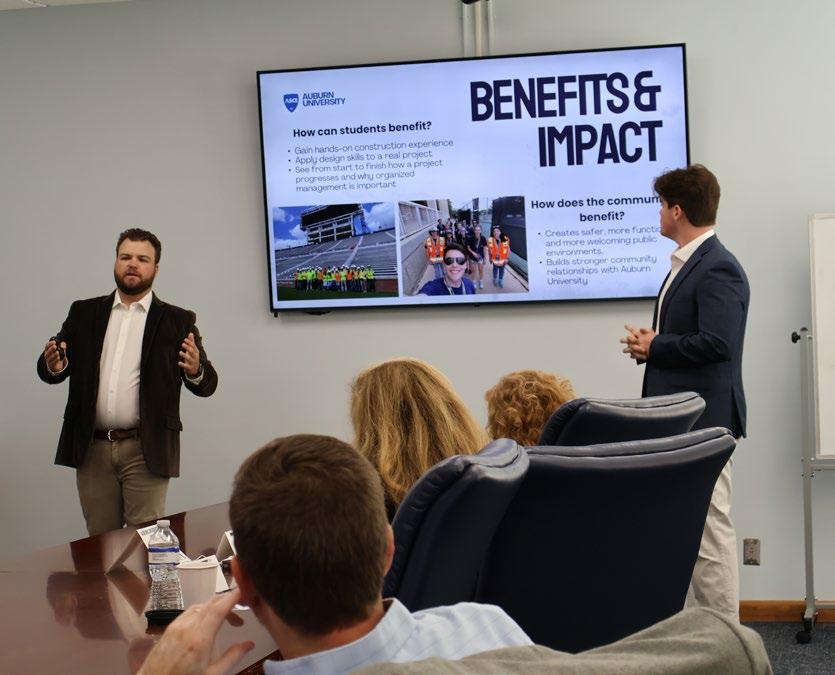
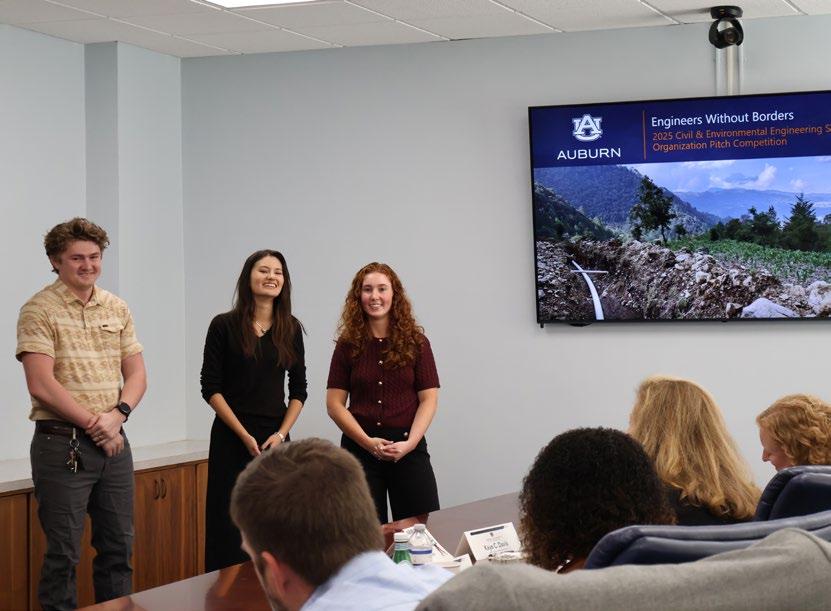
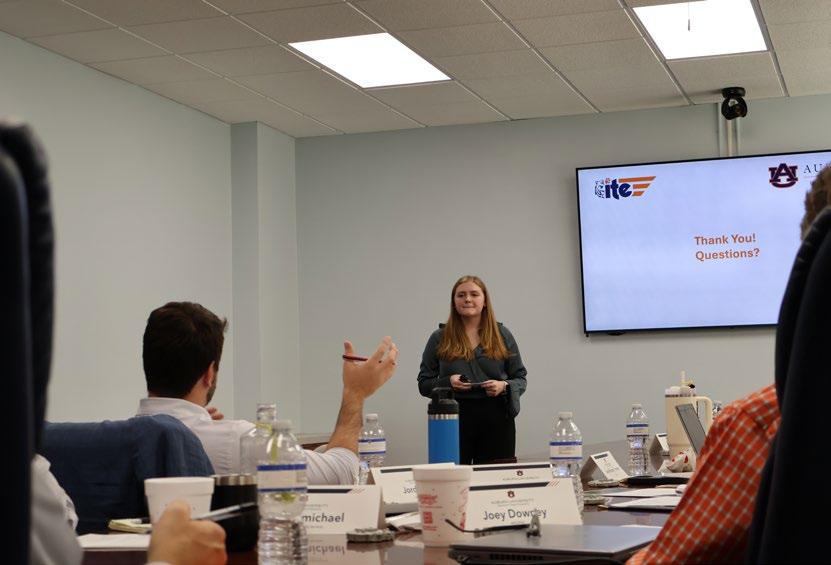
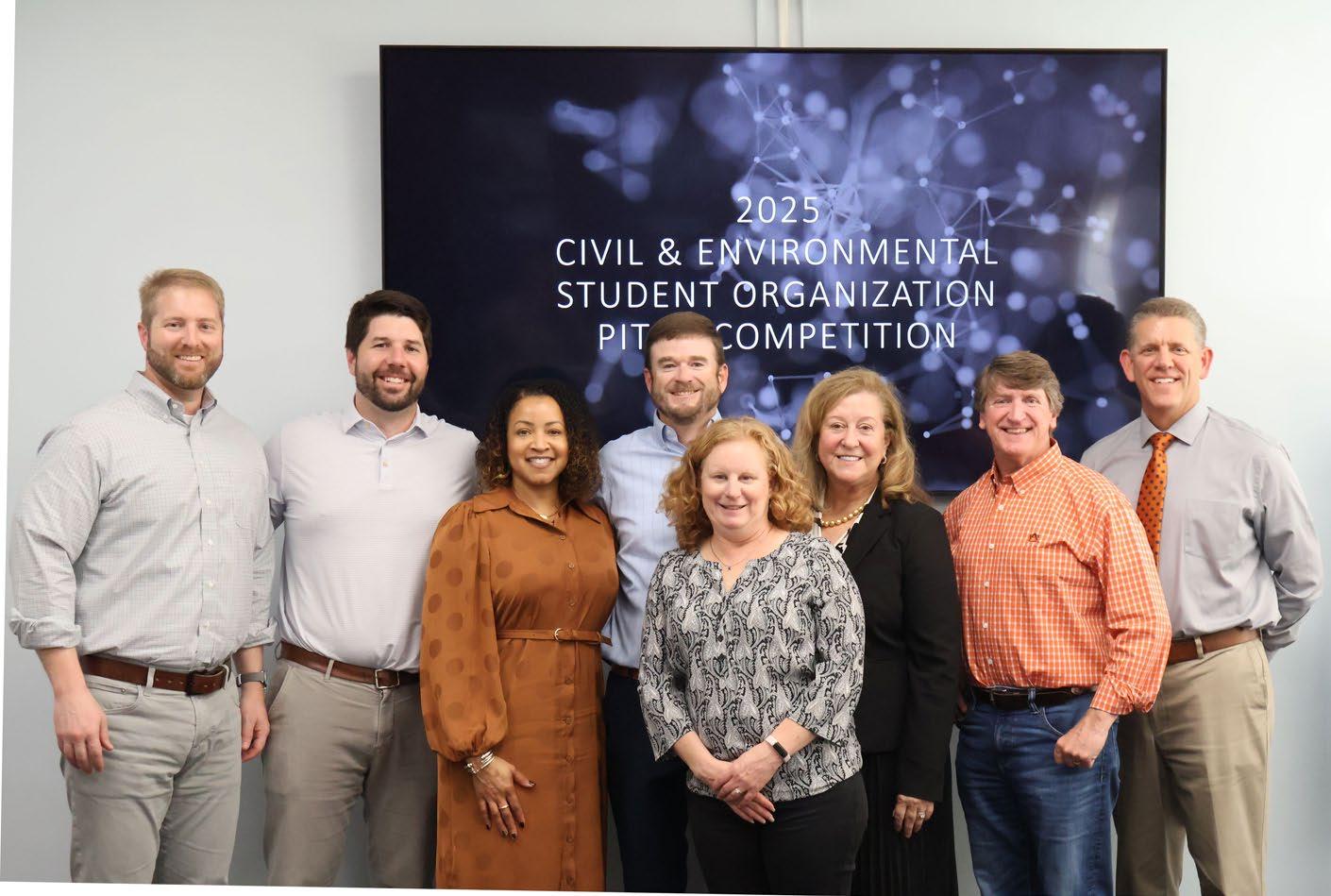
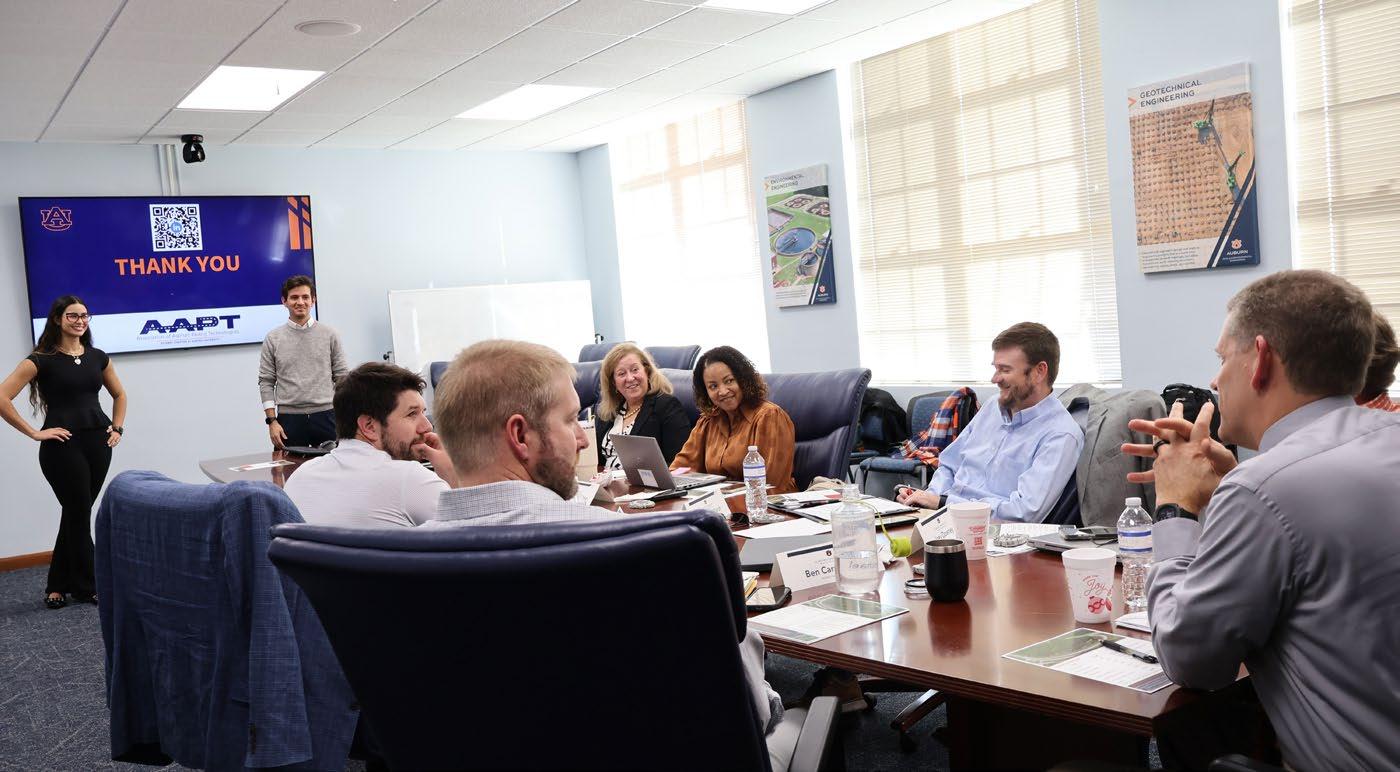
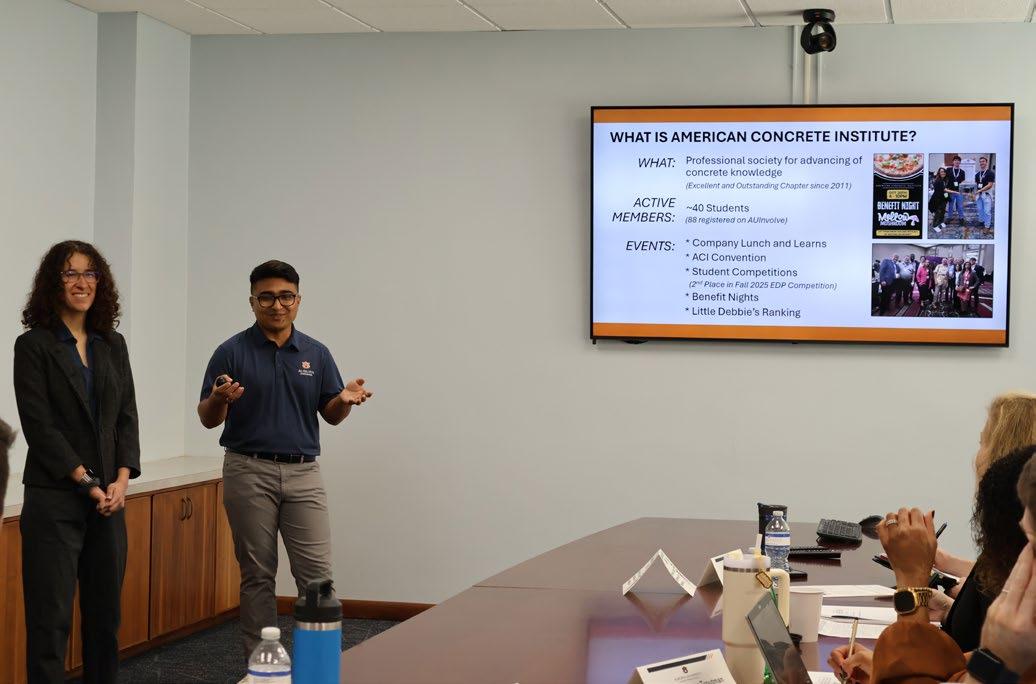
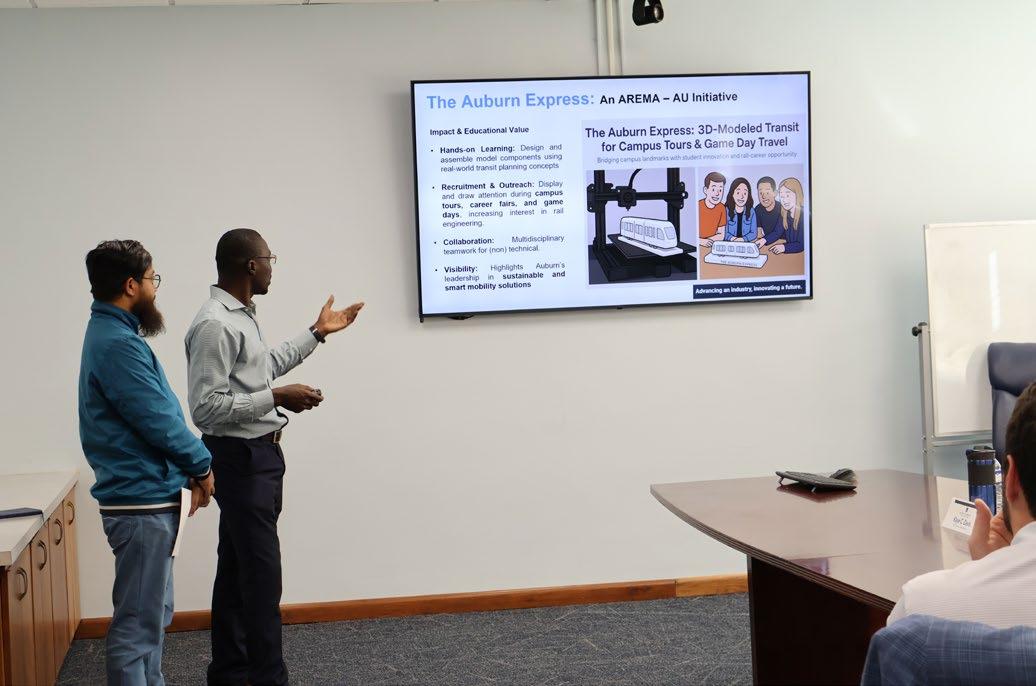
CEE hosted its 2nd Annual CEE Student Organization Pitch Competition in collaboration with the Alumni Advisory Board on November 13, bringing together seven student organizations for a day of creativity, purpose, and professional excellence. Building on the success of last year’s inaugural event, this year’s competition highlighted the breadth of student-led initiatives across CEE and the growing momentum behind hands-on, student-driven engagement. In the week leading up to the competition, students participated in virtual mentoring sessions with professionals deeply connected to the department. Mentors included Ben Carmichael, Joey Downy, Derrick Vincent, George McGlamery, Justin McDonald, and Alison Frazier, who offered guidance on project development, communication, and organizational strategy. Their feedback helped sharpen proposals and prepare students for the formal pitch setting.
During the competition, each organization delivered a 10-minute pitch, followed by a round of questions from a distinguished judging panel representing the CEE Alumni
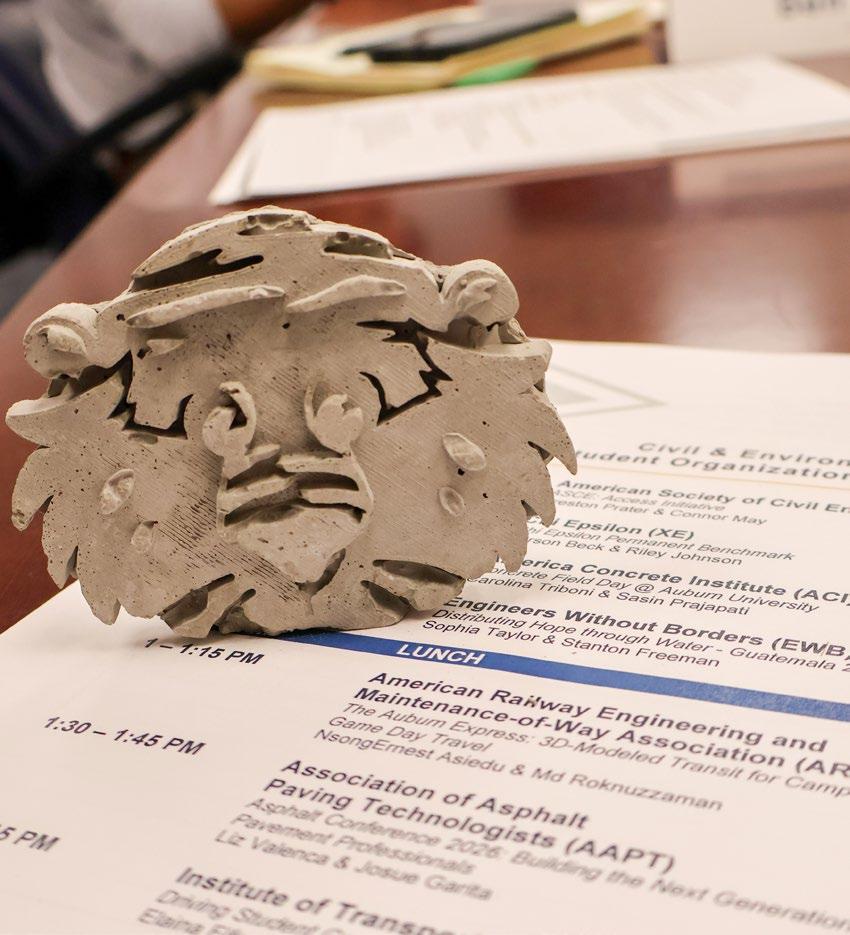
Advisory Board. This year’s judges—Linda Figg, Charles Marsh, Casey Robinson-Troutman, Jordan Ross, and Kaye Davis—brought decades of industry leadership to the table and were impressed by the professionalism and preparedness shown by all teams. Thanks to the remarkable generosity of the CEE Alumni Advisory Board, along with a $5,000 matching contribution from the department, the competition provided over $12,000 to directly support student initiatives. Every participating organization received funding, reflecting the judges’ belief that each organization and proposal carried meaningful value to the CEE community and beyond. After thoughtful deliberation, three teams were selected as this year’s competition winners:
•American Society of Civil Engineers (ASCE) — ASCE: Access Initiative, a project focused on providing ADA accessibility improvements to a local church.
•Association of Asphalt Paving Technologists (AAPT) — Asphalt Conference 2026: Building the Next Generation of Pavement Professionals, aimed at expanding student engagement in asphalt pavement engineering featuring, among many other activities, a 5k fun run on the NCAT Test Track.
•Chi Epsilon — A multifaceted initiative supporting FE review sessions, student mentoring, and member initiation efforts.
The 2025 competition underscored the passion, vision, and professionalism that define CEE students. With continued alumni support and strong student leadership, the department is poised for another year of impactful, student-led initiatives. The alumni and student organizations are already looking forward to the 3rd annual competition that will be held in November 2026. Donations to this worthy effort are welcome at any time using this link


SCAN THE QR CODE TO DONATE

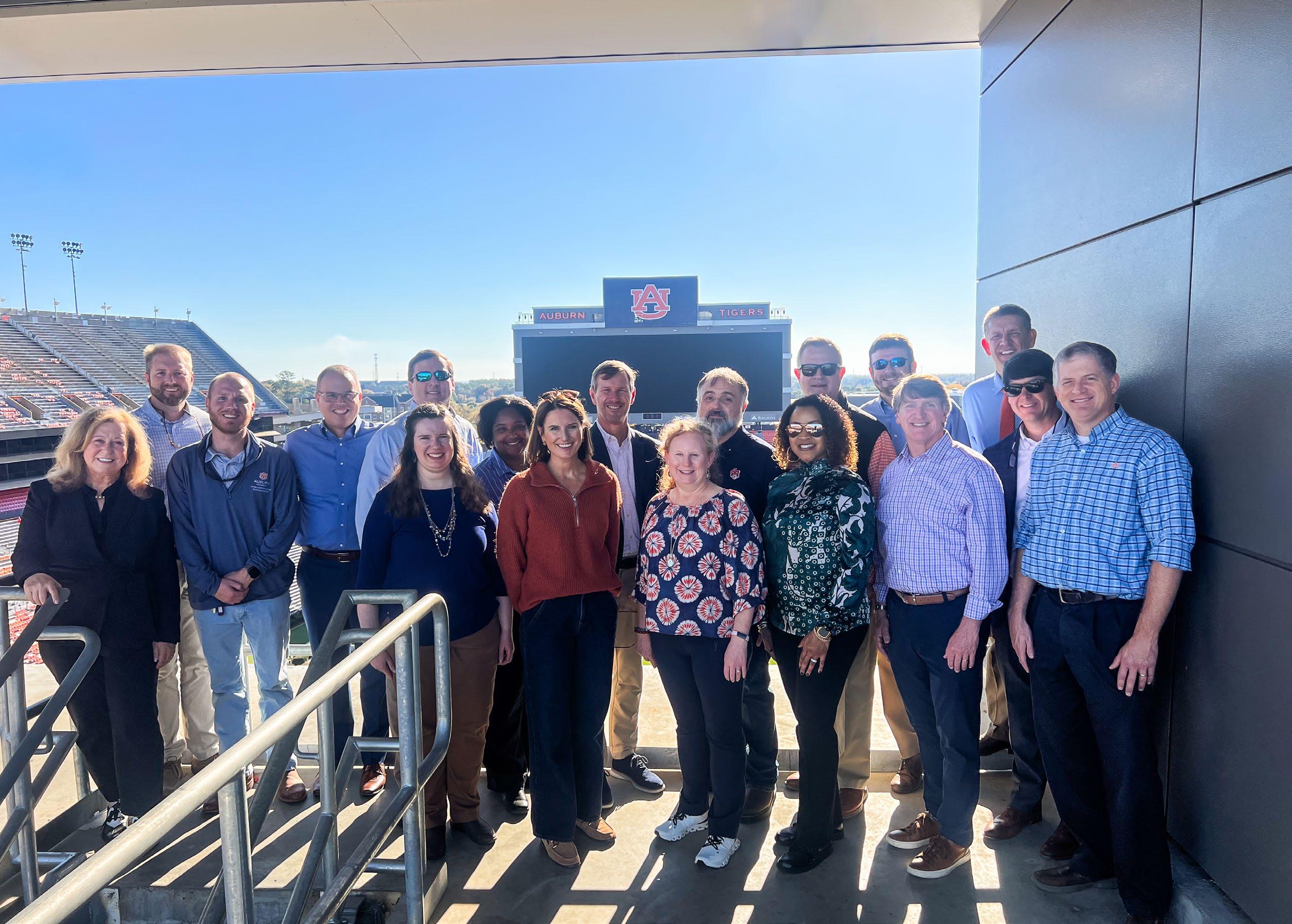
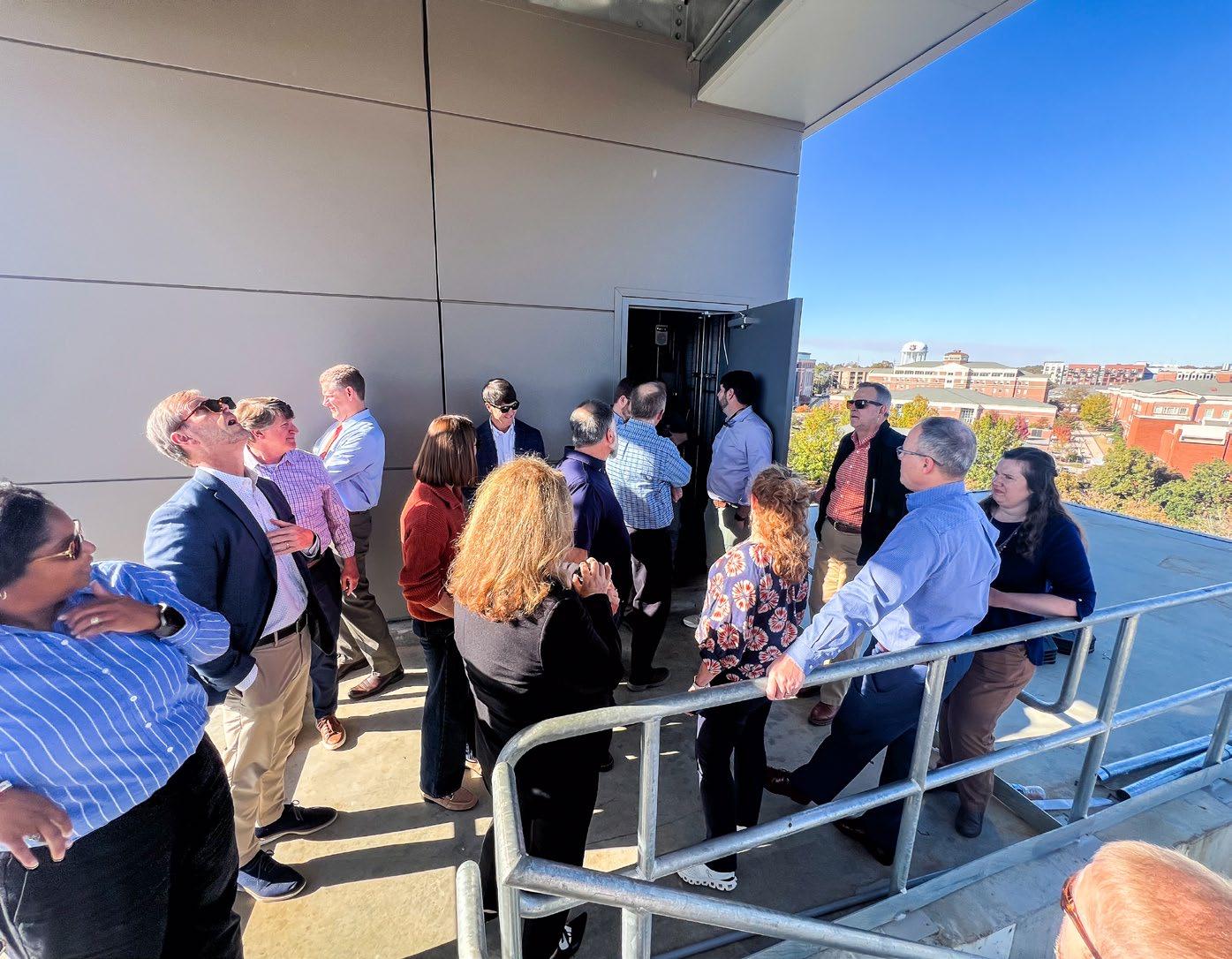
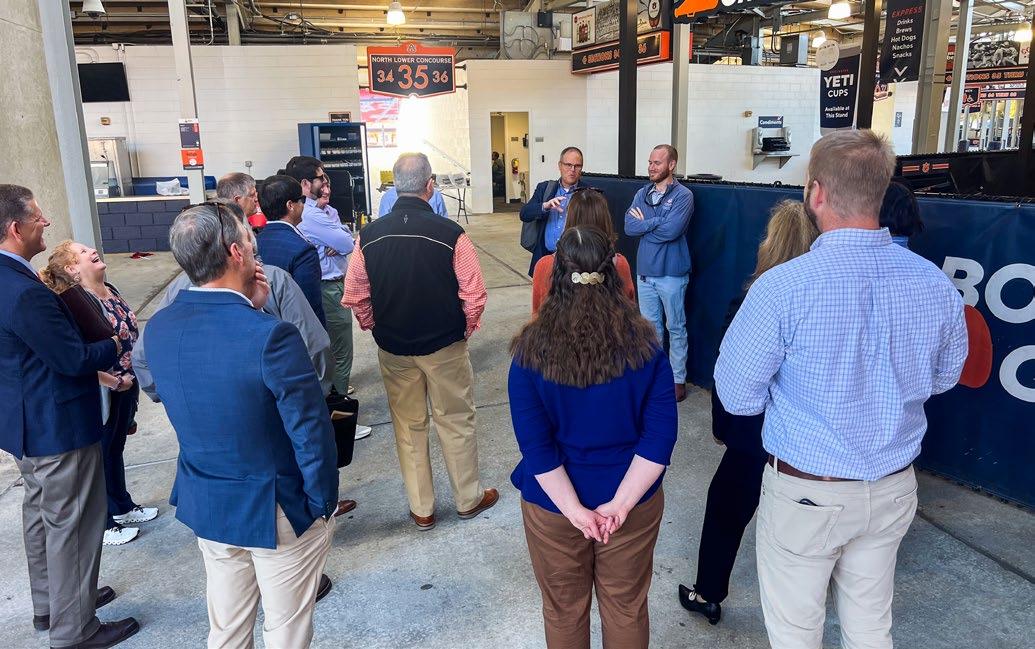
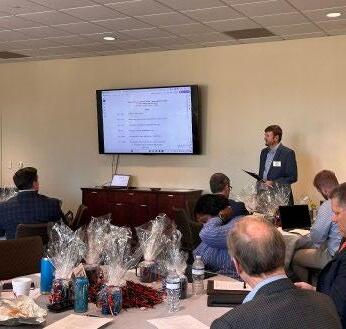
The CEE Alumni Advisory Board held a well-attended meeting on Nov. 14, bringing together board members, faculty, and departmental leadership for discussion and updates. The board welcomed new member Hayley Sistrunk and expressed its appreciation to Alison Frazier for her years of dedicated service as she rotated off. This meeting also marked Charles Marsh’s final session as board chairman, with the board voting for Ben Carmichael to assume the chairmanship at the Spring 2026 meeting. Attendees received a departmental update from Dr. Timm and recognized several faculty achievements.
The department also introduced Dr. Neha Sharma, who highlighted her research program and shared her vision for developing an Industrial Wastewater Treatability Research Center at Auburn. The day concluded with a tour of the Jordan-Hare North Endzone Video Board project, led by Brad Christopher, giving board members an inside look at one of Auburn Athletics recent major construction efforts.
Edward Austin
Alabama Department of Transportation Auburn ‘91
Ben Carmichael
Nuclear Development
Southern Nuclear Operating Company Auburn ‘00
Jonathan F. Childs
Director -State and Local
Government Client Center
Senior Vice President
BARGE Design Solutions Auburn ‘94, ‘96
Brad Christopher
President LBYD, Inc Auburn ‘91, ‘93
Jim Cooper President
Cooper Construction Auburn ‘81
Kaye C. Davis
Bureau of Materials and Tests
Alabama Department of Transportation
Auburn ‘94, ‘96
Joe Downey
Managing Principal
ARDURRA
Auburn ‘85, ‘88
Linda Figg
President/CEO
Figg Bridge Group
Auburn ‘81
Christopher Kramer
Brasfield & Gorrie, LLC
Auburn ‘94
Charles A. Marsh
Territory Manager
ACIPCO
Auburn ‘01
Justin S. McDonald
Coastal Resiliency Program Manager
USACE, Mobile District
Auburn ‘05, ‘07
Frank McFadden
McFadden Engineering, Inc.
Auburn ‘81, ‘84
George McGlamery
Senior Commercial Consultant
ExxonMobil Global Services Company
Auburn ‘86
Guy O’Connor (Emeritus)
Auburn ‘85
Casey Robinson Troutman
Georgia Power
Auburn ‘00, ‘04
Jordan Ross
Senior Preconstruction Manager
Hoar Construction
Auburn ‘09, ‘12
Hayley Sistrunk Brasfield and Gorrie, LLC Auburn ‘10
David Stejskal JACOBS
Auburn ‘00, ‘02
Jeff Stone (Emeritus) Brasfield and Gorrie, LLC Auburn ‘79
Donald W. Vaughn (Emeritus) Auburn ‘71
Derrick D. Vincent
JACOBS
Auburn ‘99
Jordan Watkins CEO
PTAC Consulting Engineers
Auburn ‘12
Dale York (Emeritus)
Auburn ‘76, ‘78
By: Dr. David Timm
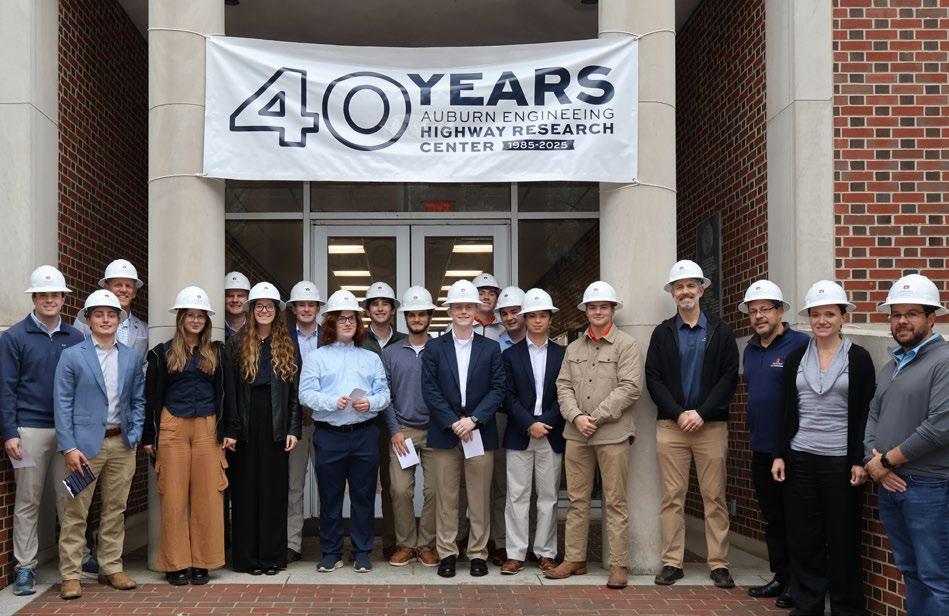
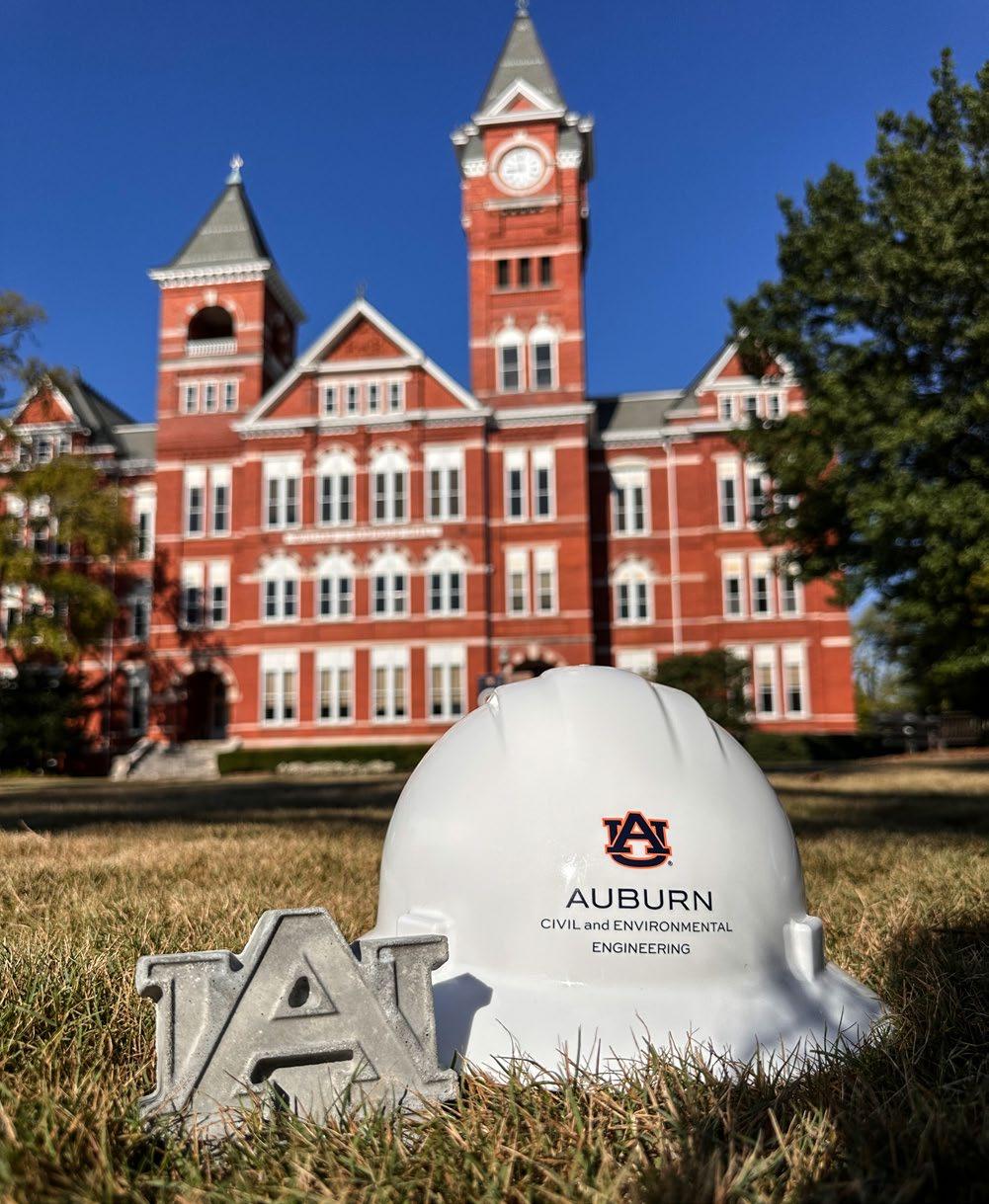
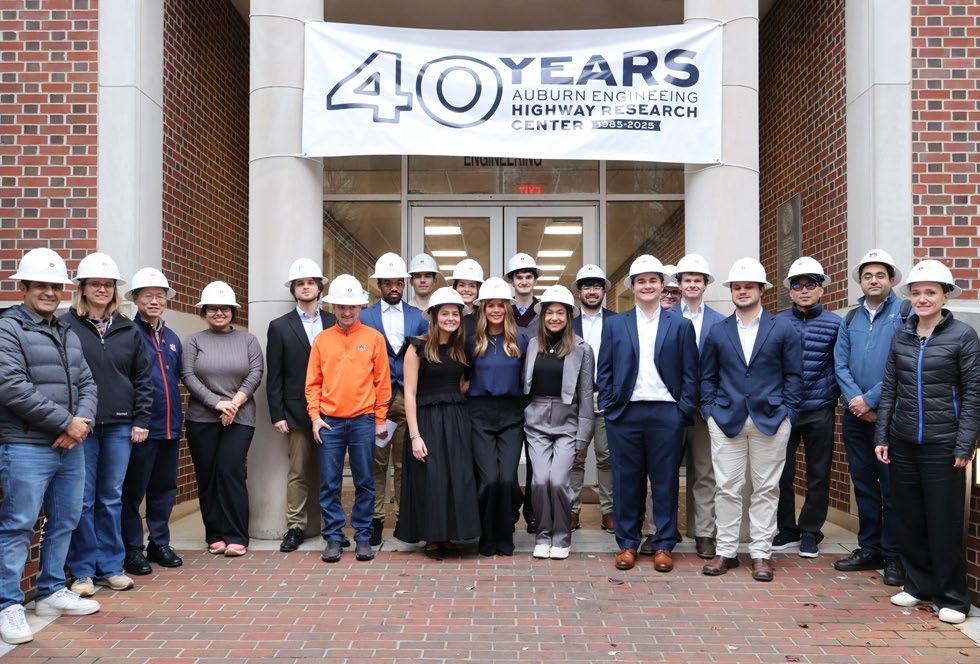
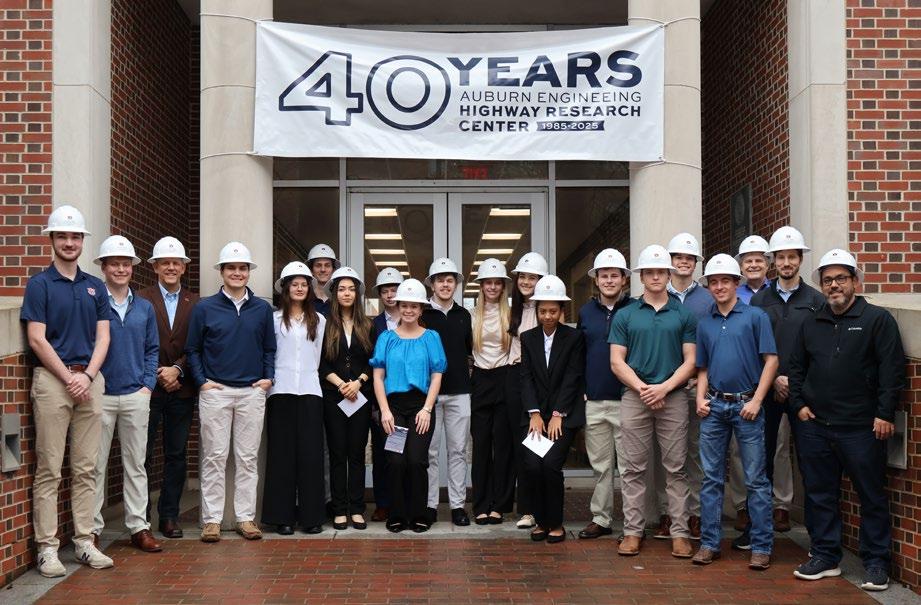
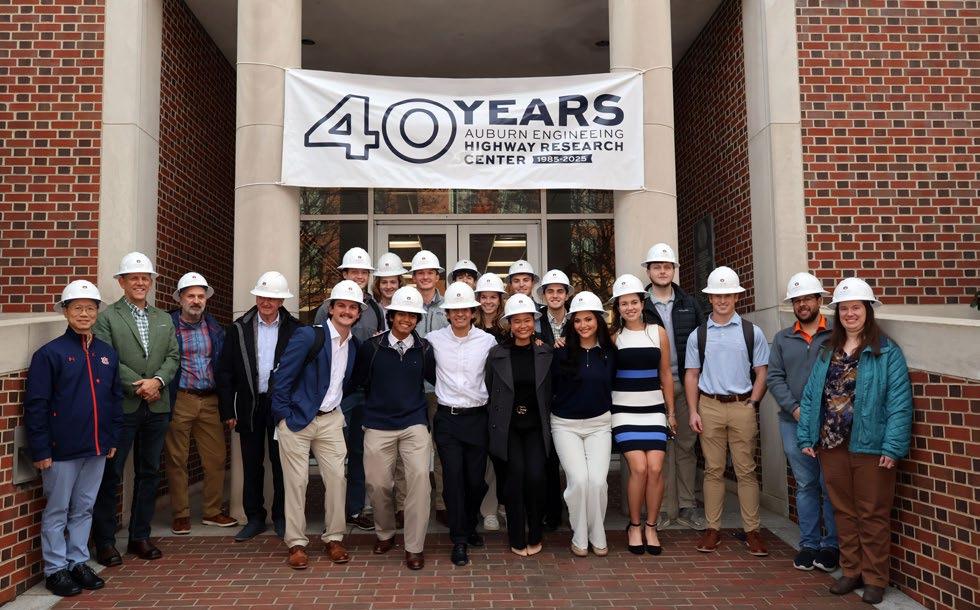
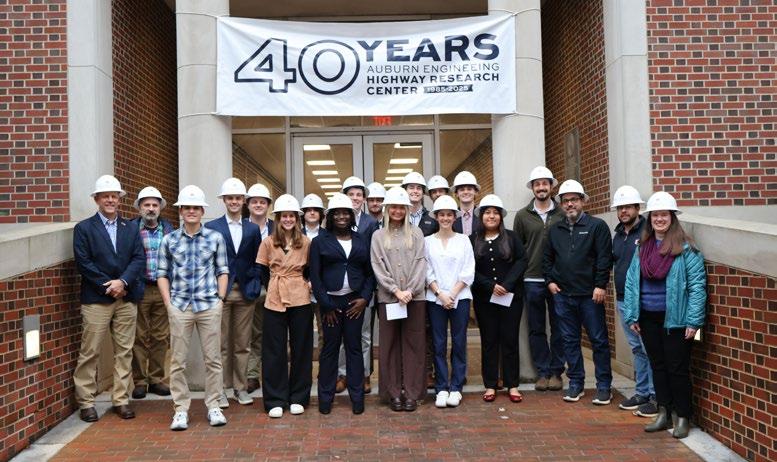
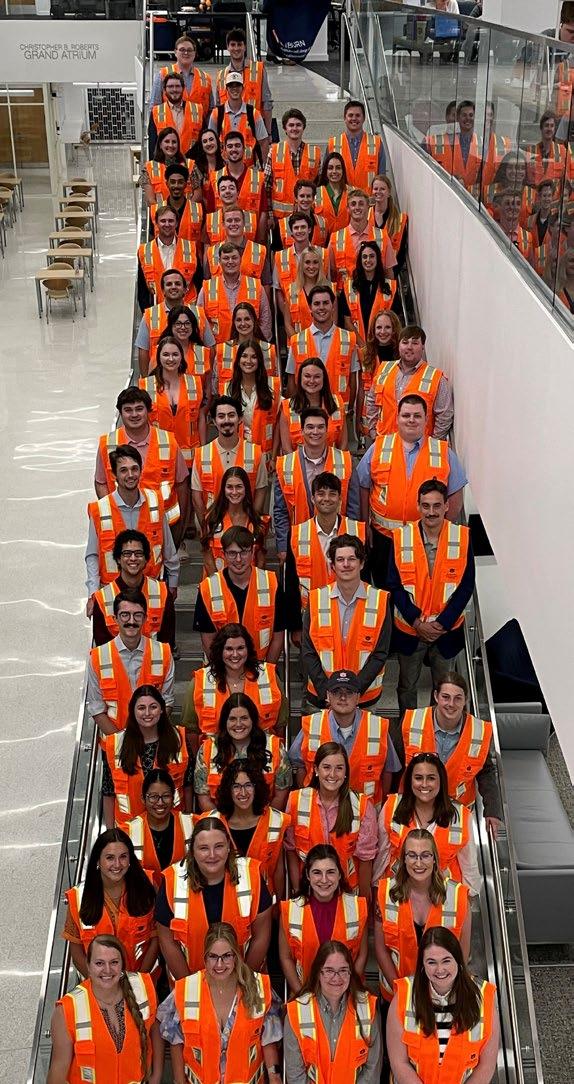
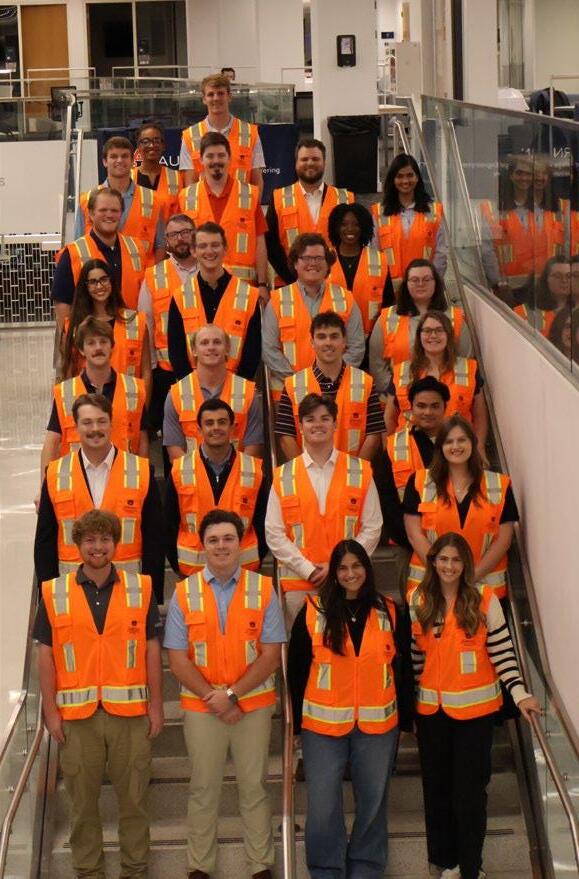
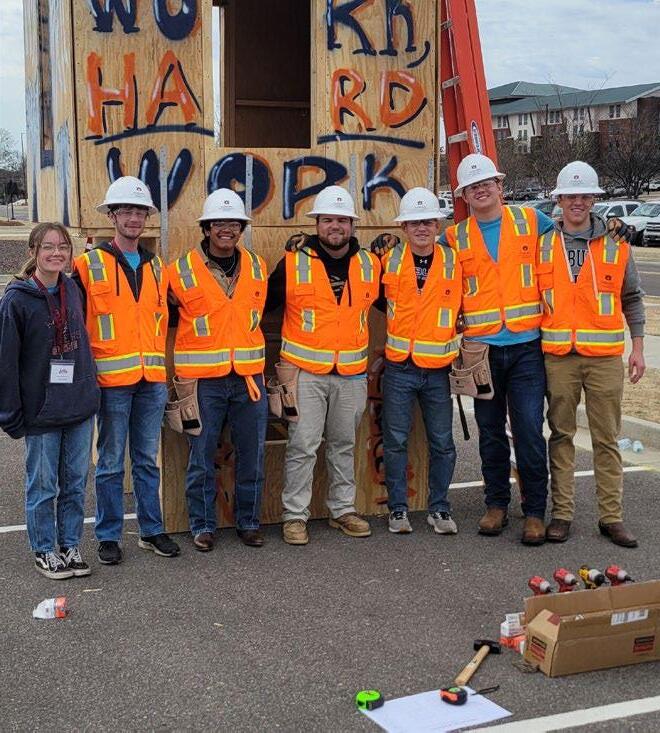
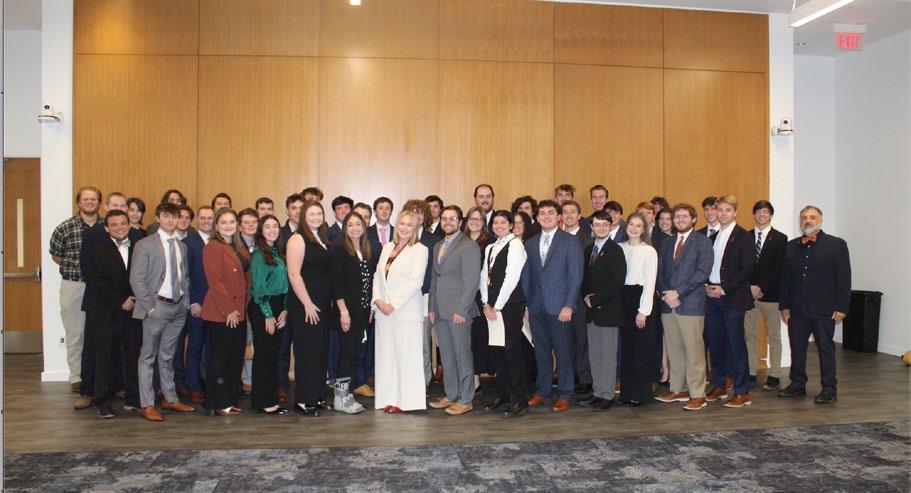
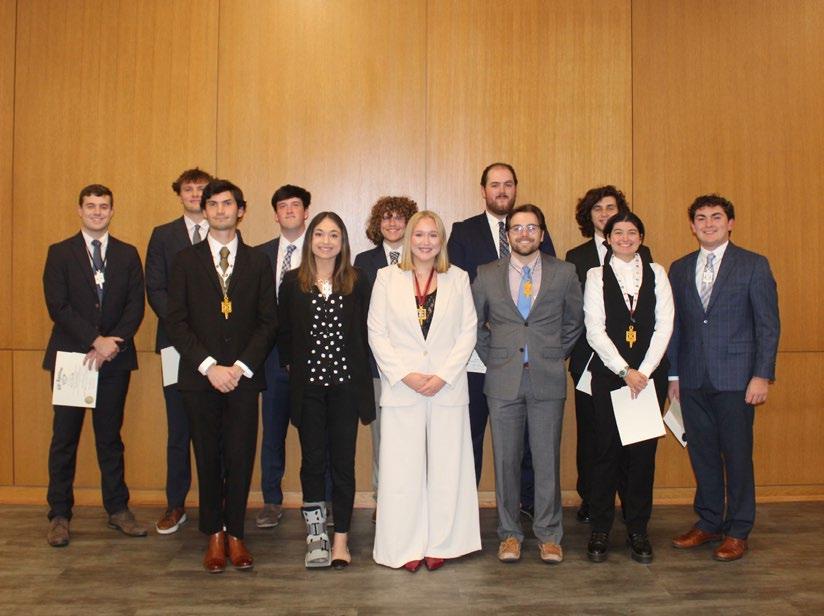
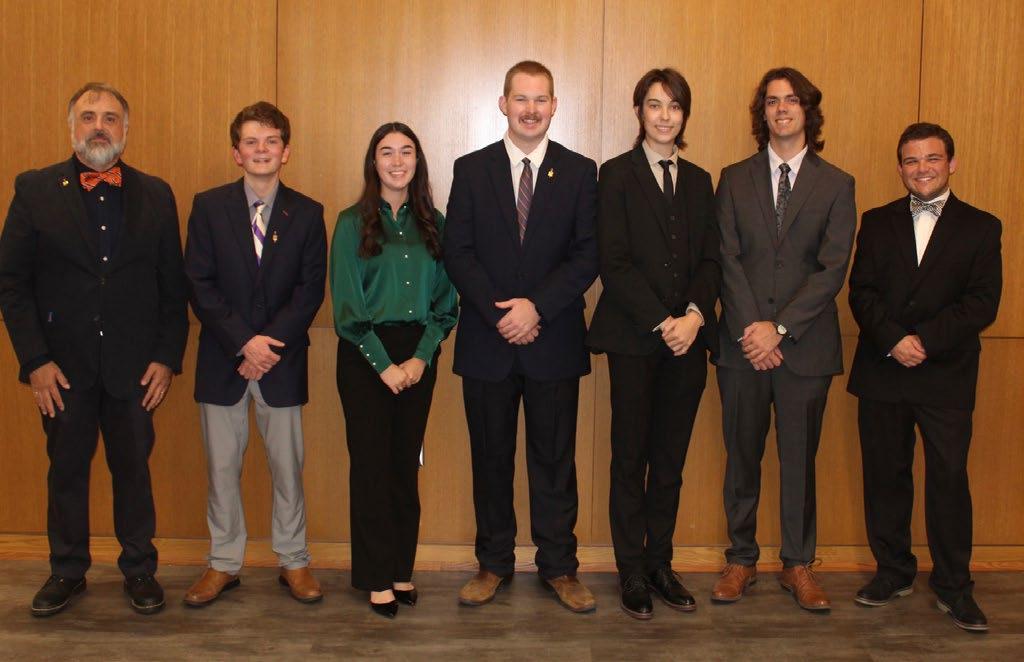
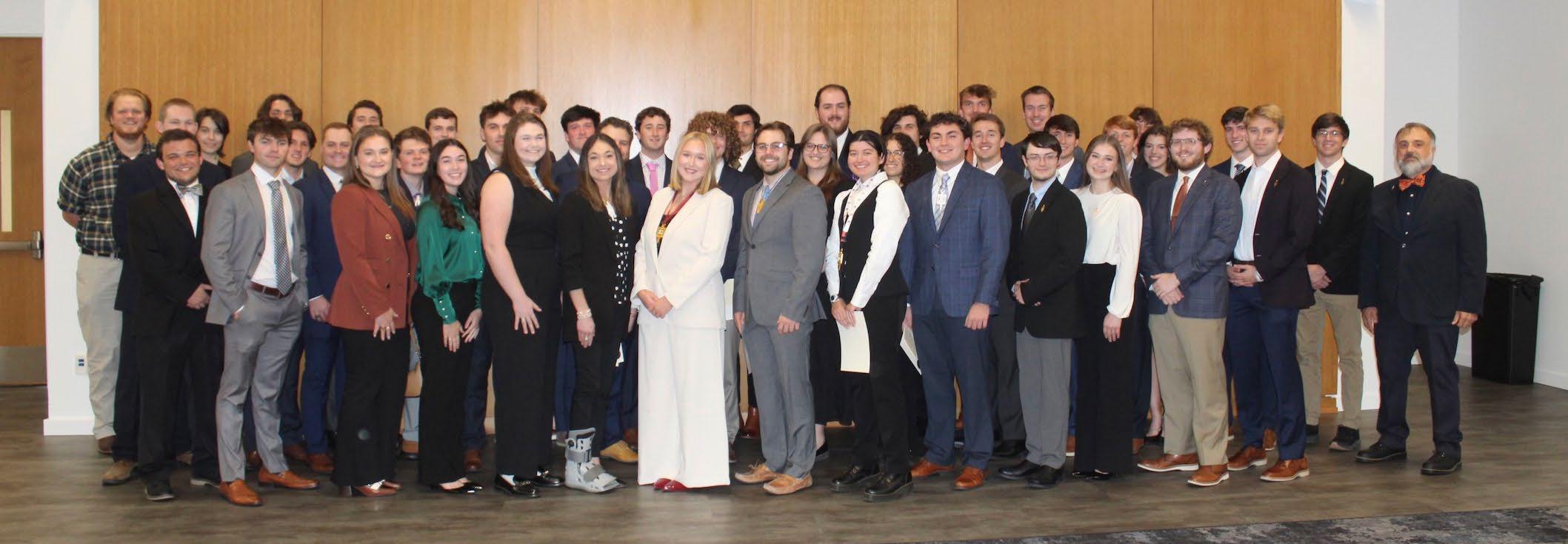
The Department of Civil and Environmental Engineering proudly hosted its biannual Hard Hat Ceremony this semester, a signature tradition held each spring and fall to celebrate students’ entry into the major. Between the Spring 2025 and Fall 2025 events, 138 students were officially welcomed into the CEE community after completing Surveying (CIVL 2010), their first hands-on course in civil engineering. Faculty and staff gathered to congratulate the students on reaching this important milestone and to affirm their commitment to guiding them through the journey ahead. During the ceremony, faculty reminded students of the profound responsibility that comes with becoming a civil engineer—namely, the duty to lead with integrity, protect the public welfare, and never compromise on safety. Each student received a hard hat, symbolizing their transition from classroom learners to emerging professionals. More than a ceremonial gift, the hard hat is a practical tool the students will soon rely on during field trips, co-ops, and internships. It also serves as a constant reminder of the profession’s call to serve communities through safe, thoughtful, and resilient design. The Hard Hat Ceremony continues to reinforce the values at the heart of Civil and Environmental Engineering while celebrating the accomplishments of the next generation of engineers.
I believe in work, hard work.
By: Dr. David Timm
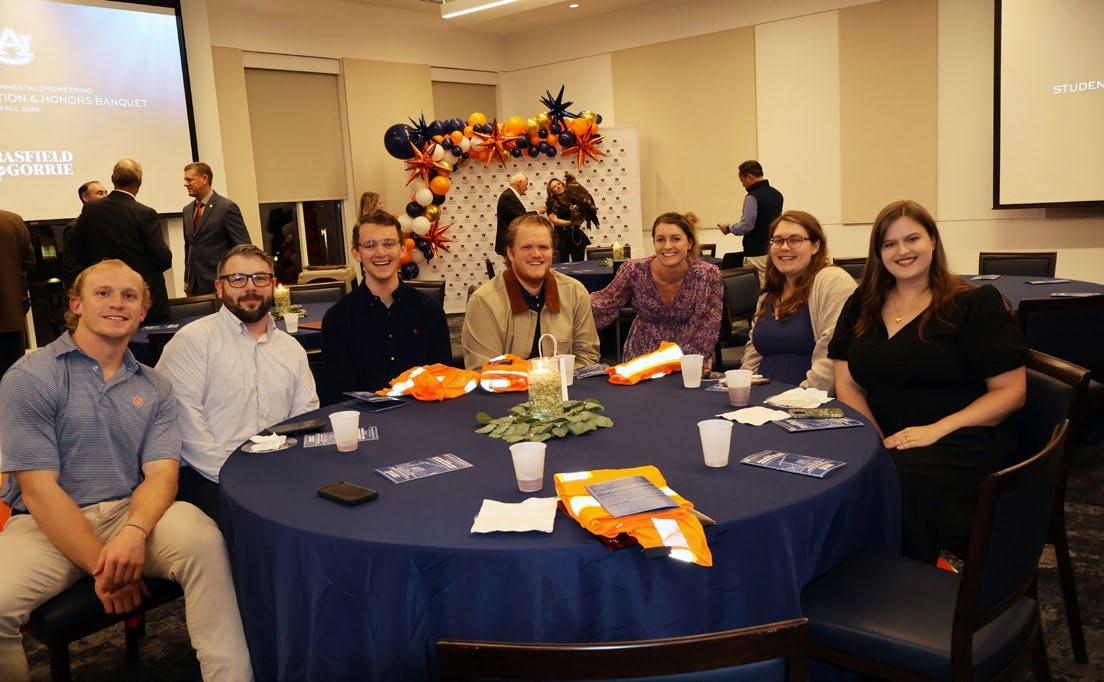
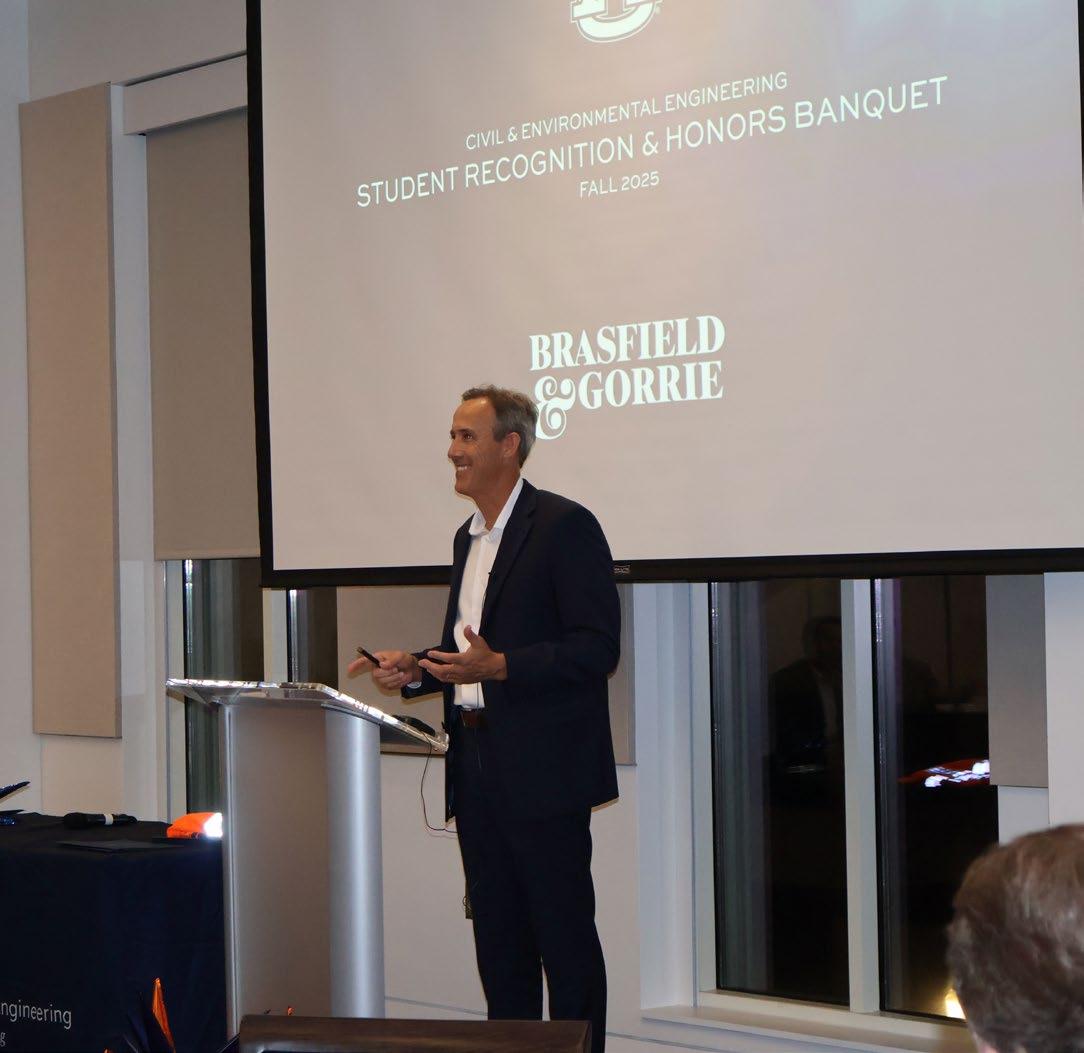
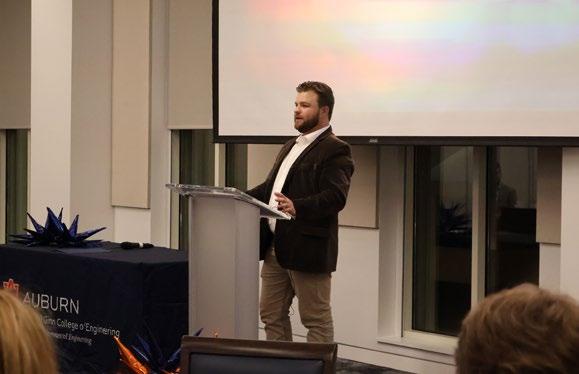
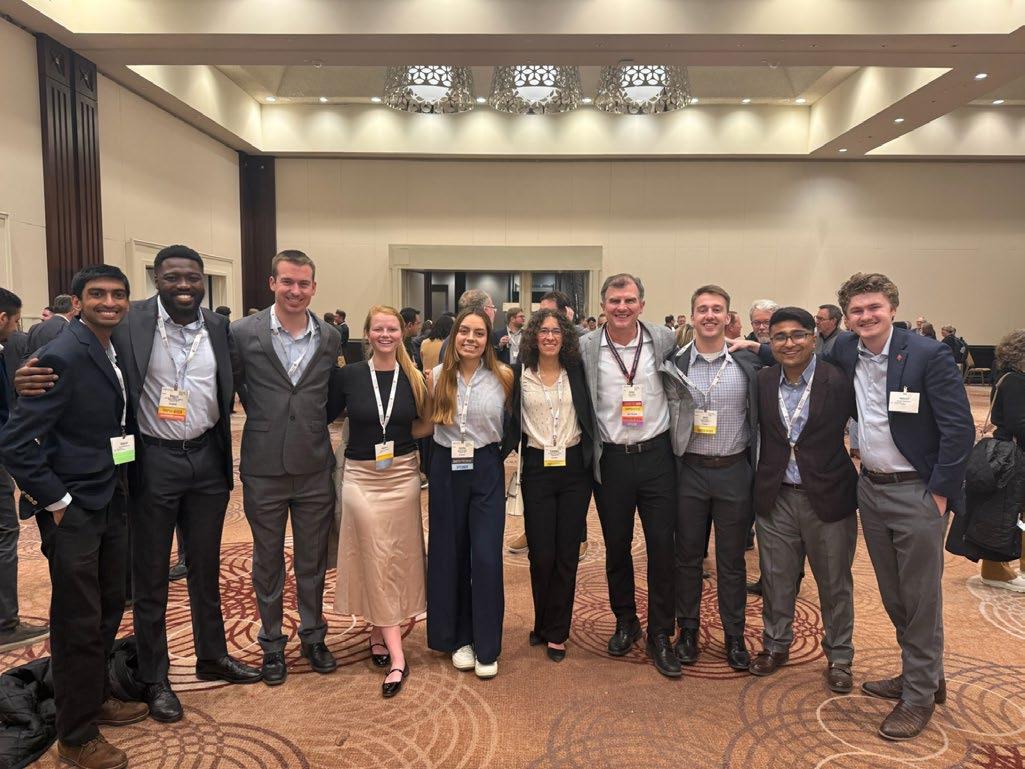
A beloved new CEE tradition is the Graduates Recognition and Honors Banquet, a biannual celebration bringing together graduating students, faculty, staff, and CEE alumni. The event recognizes student achievement, celebrates graduation, and formally welcomes students into the CEE Alumni Family. A highlight of the banquet is the presentation of AU-CEE branded safety vests—available only to graduating students—symbolizing their readiness to enter the profession. The Spring 2025 banquet, held on April 22, featured alumni speaker Charles Marsh, who reflected on growing up as an Auburn fan, his formative years as a CEE student, and his extensive career with American Cast Iron Pipe Company. He shared thoughtful advice for graduates as they begin their professional journeys. Student speaker Carolina Triboni delivered an inspiring message about the strong bonds formed among classmates and her hopes for the future. The Fall 2025 banquet, held on Nov. 13, welcomed alumni speaker Greg Forthofer, AU Associate Athletic Director for Capital Projects. He shared insights from his varied career path and encouraged graduates to find meaningful work, pay attention to detail, communicate effectively, and volunteer for the tough assignments. Student speaker Preston Prater wove the Auburn Creed throughout his address, challenging his peers to carry its principles into their professional lives. Across both events, the department proudly honored 116 bachelor’s graduates, 21 master’s graduates, and 16 Ph.D. graduates. The department is grateful to Brasfield & Gorrie for becoming the title sponsor of this important event.

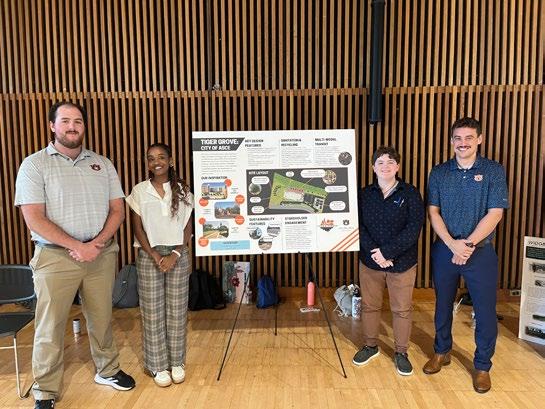



By: Preston Prater
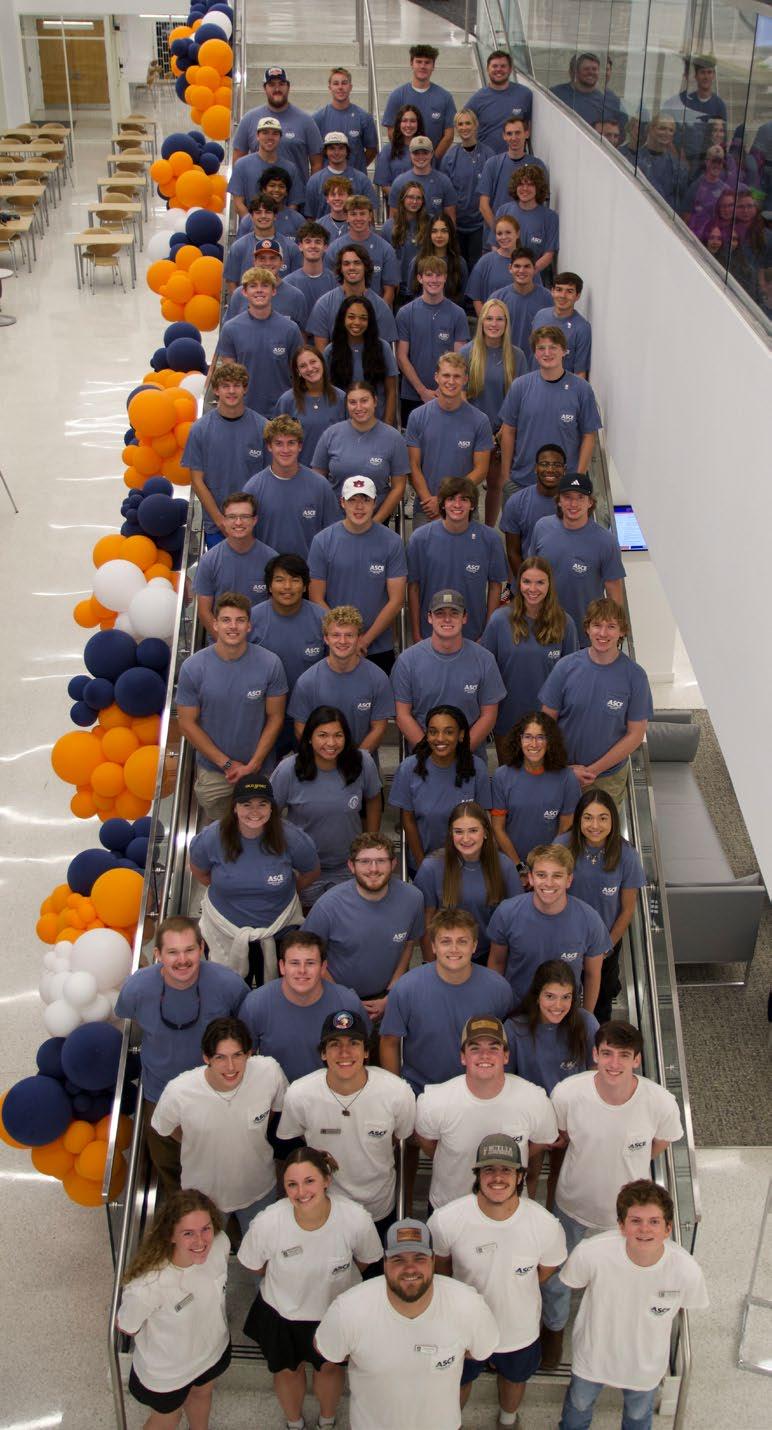
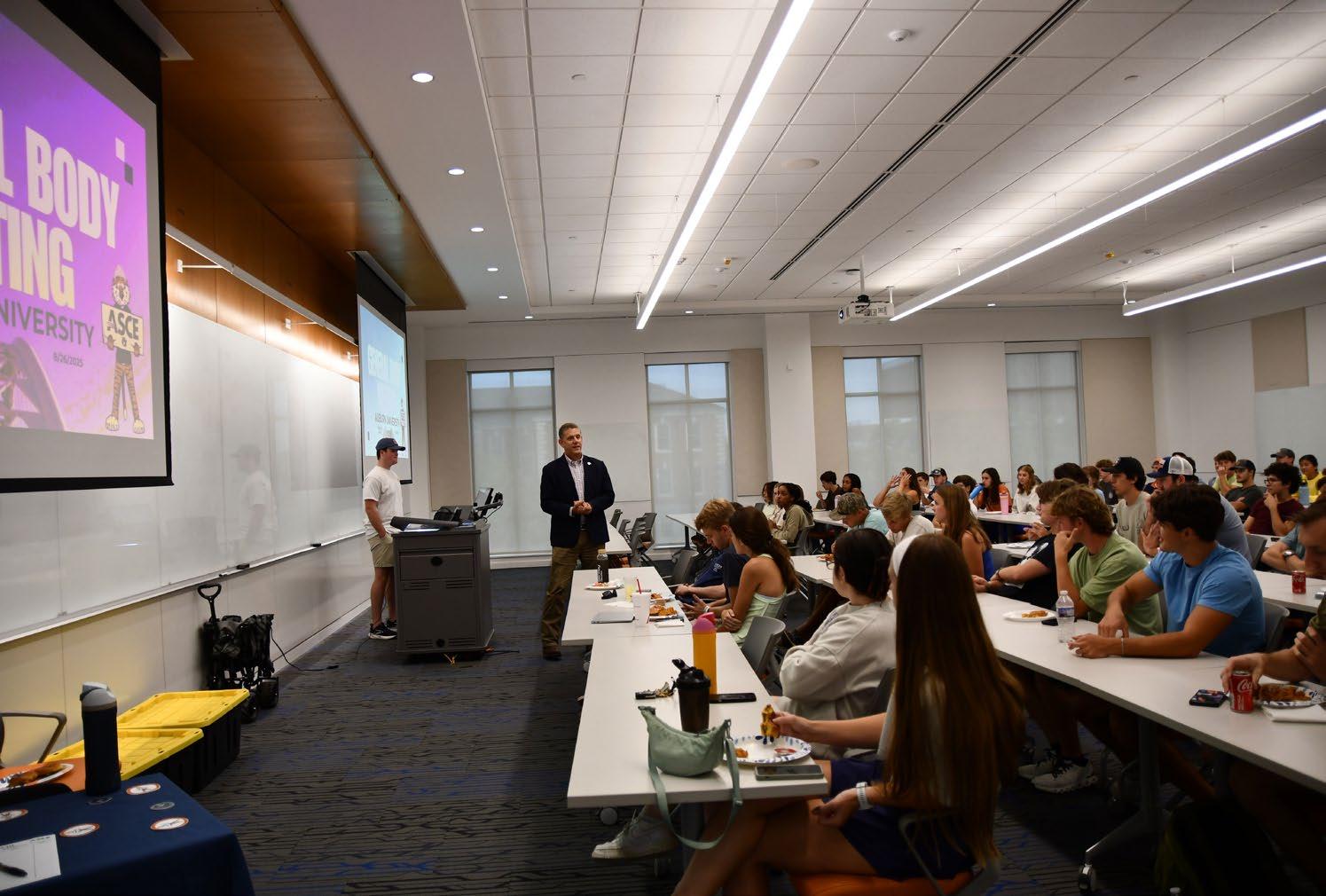
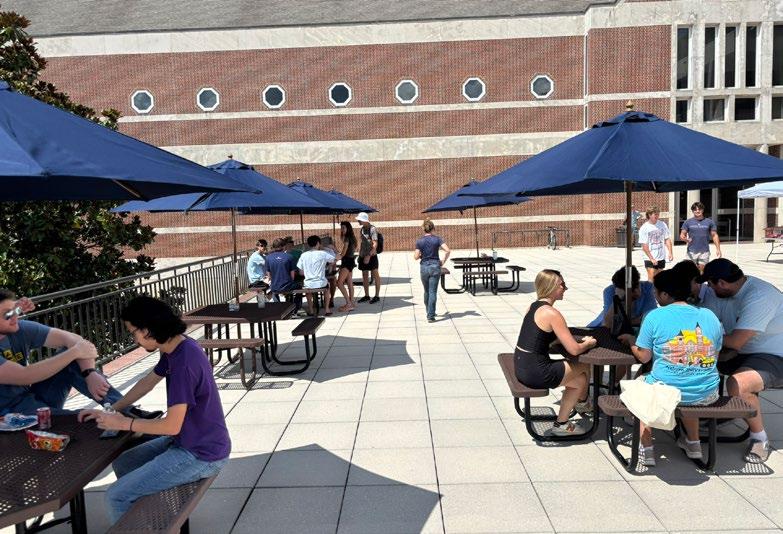
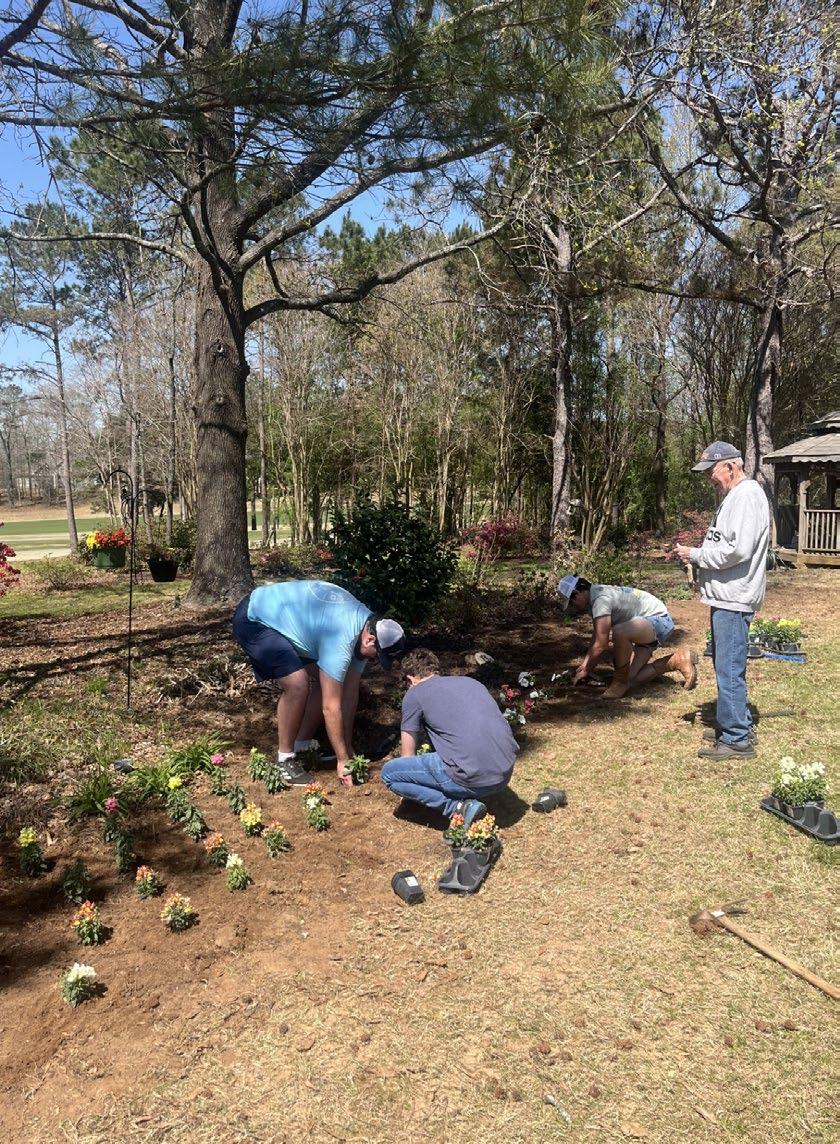
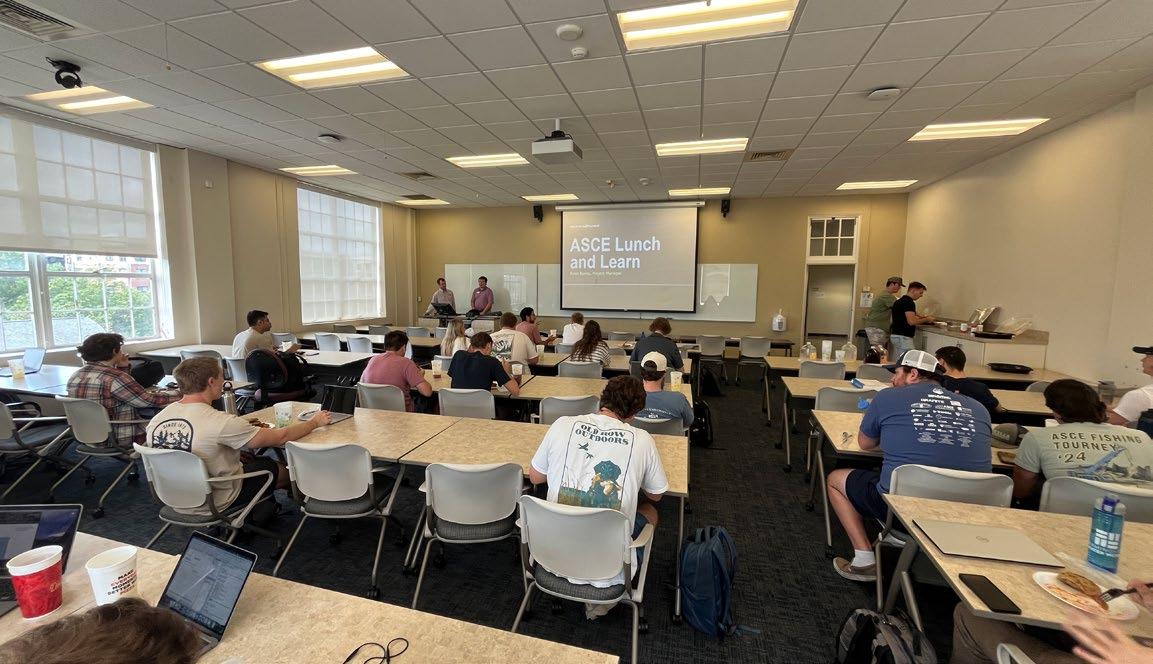
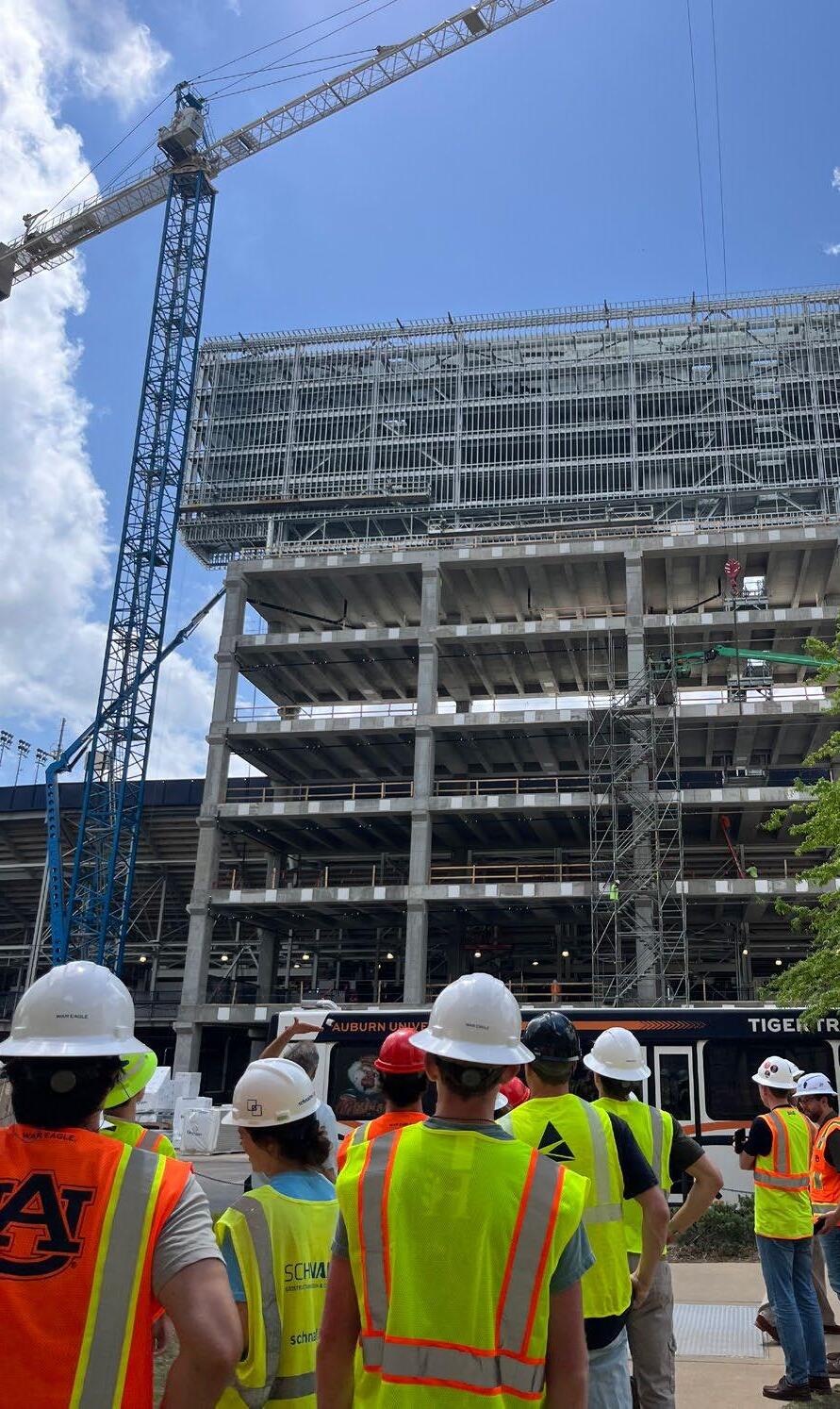
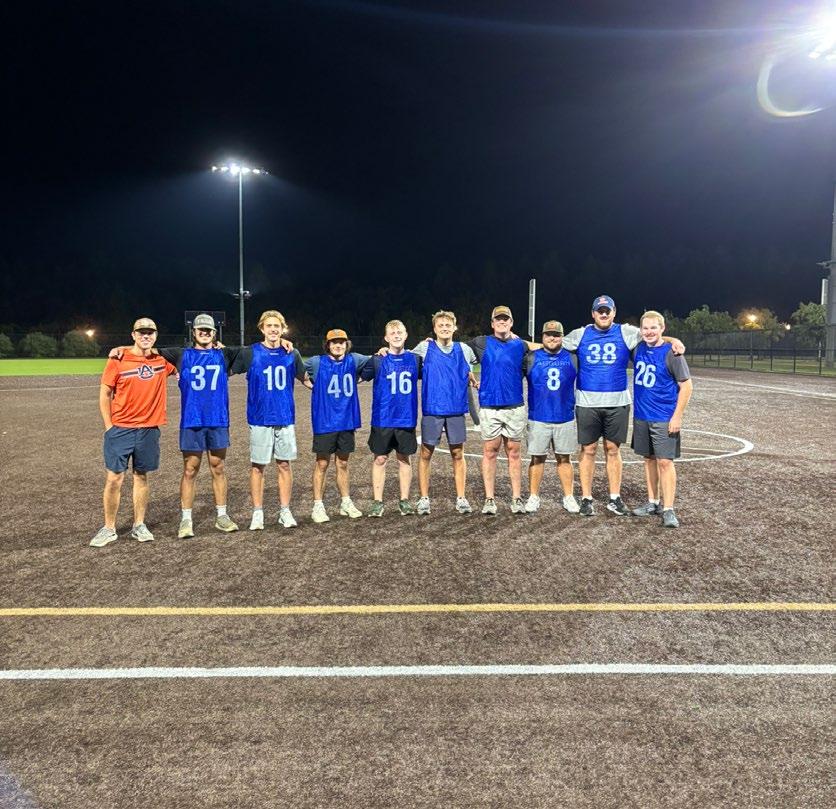
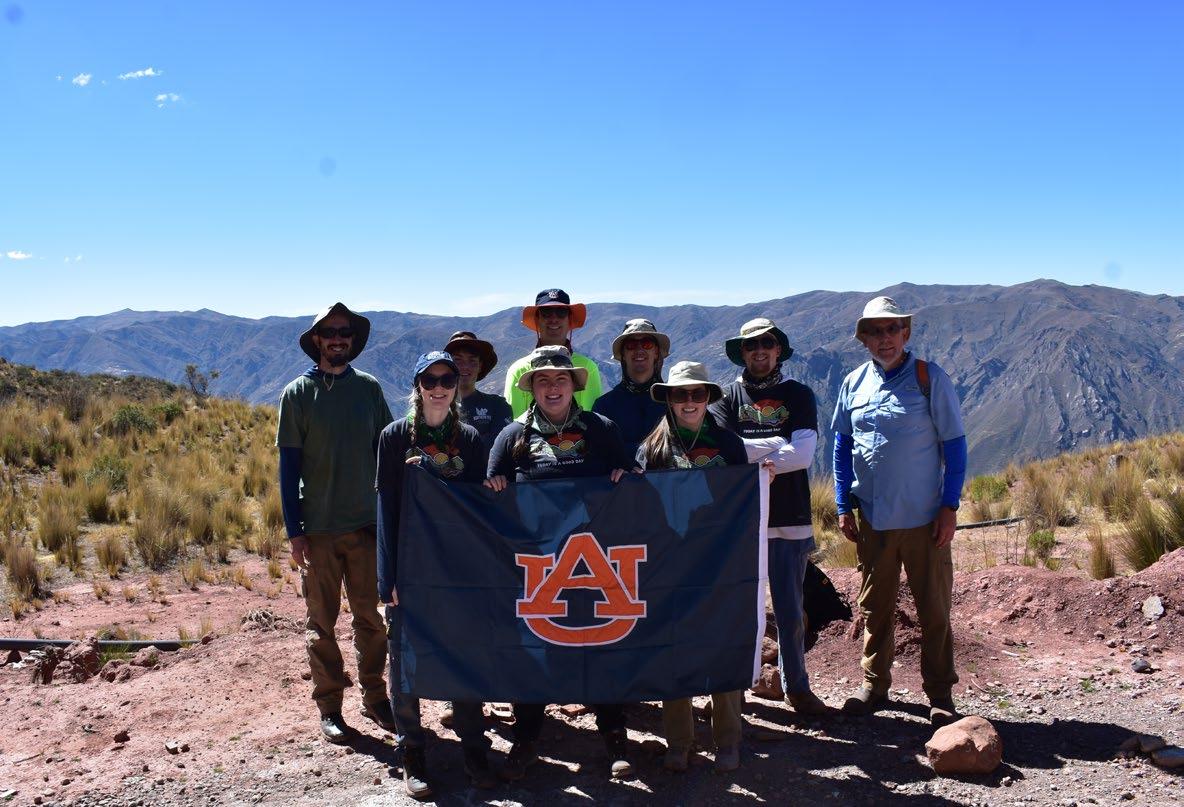
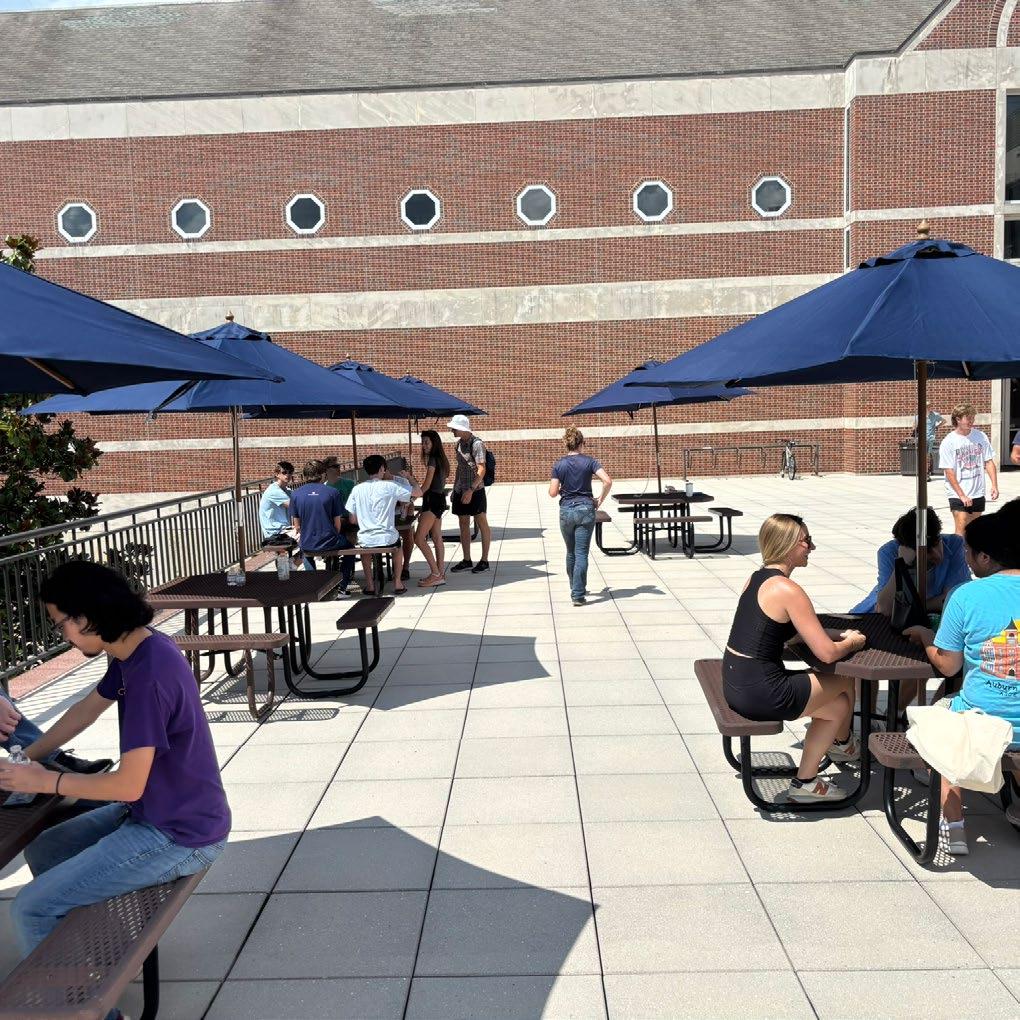
The Auburn American Society of Civil Engineers (ASCE) Student Chapter placed a strong emphasis on strengthening member relationships this semester through a variety of engaging social events and partnerships. In addition to hosting tailgates for home football games alongside the University of South Alabama’s ASCE Student Chapter and Auburn’s Chi Epsilon chapter, members have also come together outside the classroom to participate in intramural sports such as softball and sand volleyball.
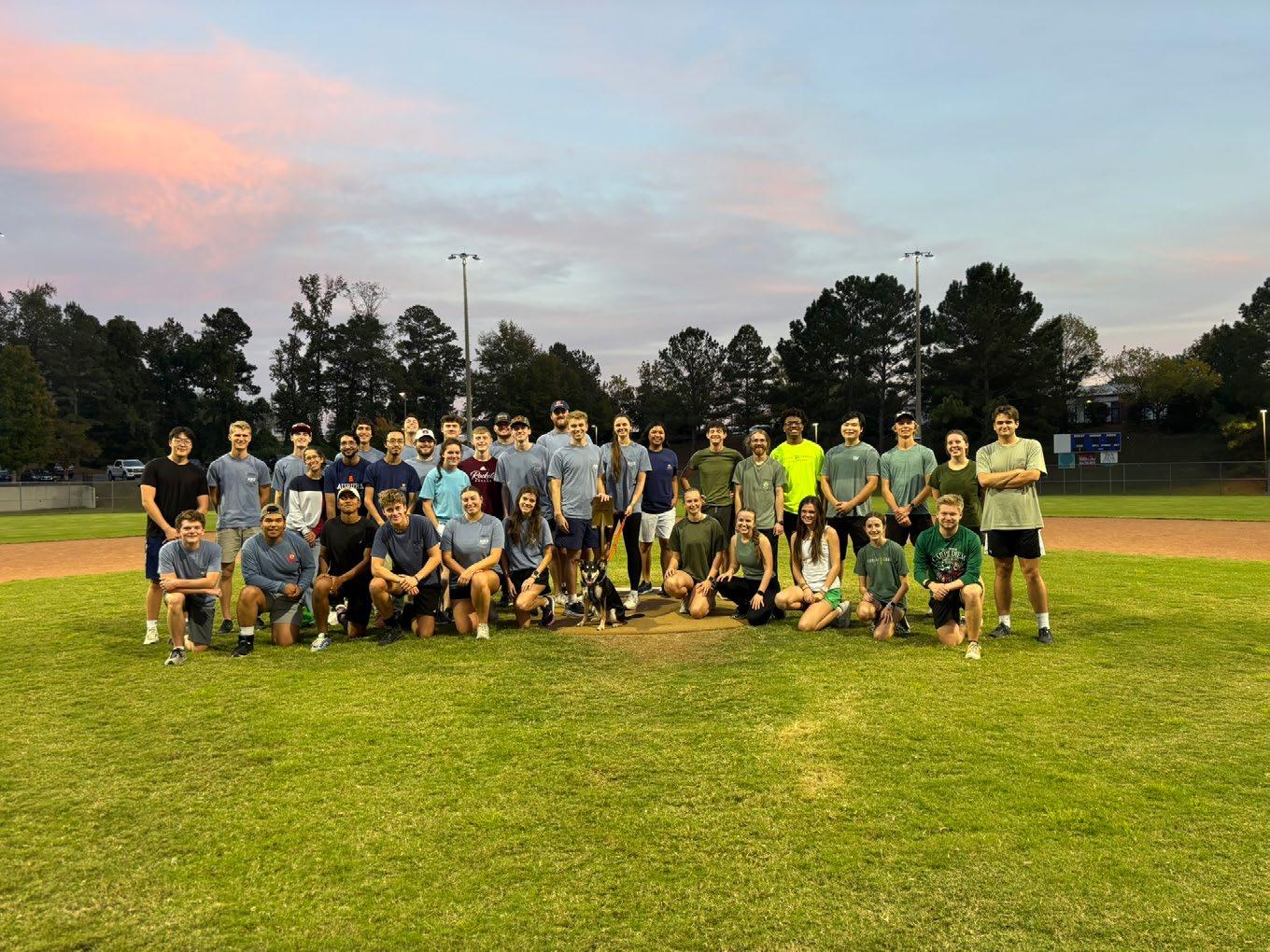
The sense of community within Auburn ASCE shines especially bright at the annual Civil vs. Biosystems Kickball Game, where Civil proudly claimed the Golden Shovel Trophy for the third consecutive year. This semester, the chapter has seen remarkable growth in both attendance and participation, highlighted by a record-breaking turnout of more than 400 students at the ASCE–ASABE Civil & Environmental Engineering Fall Career Fair, and a marked increase in attendance at weekly Lunch and Learns. The continued enthusiasm and involvement of members emphasize ASCE’s commitment to professional development, collaboration, and camaraderie within the Auburn Engineering community.
Courtesy: Preston Prater
By: Sasin Prajapati
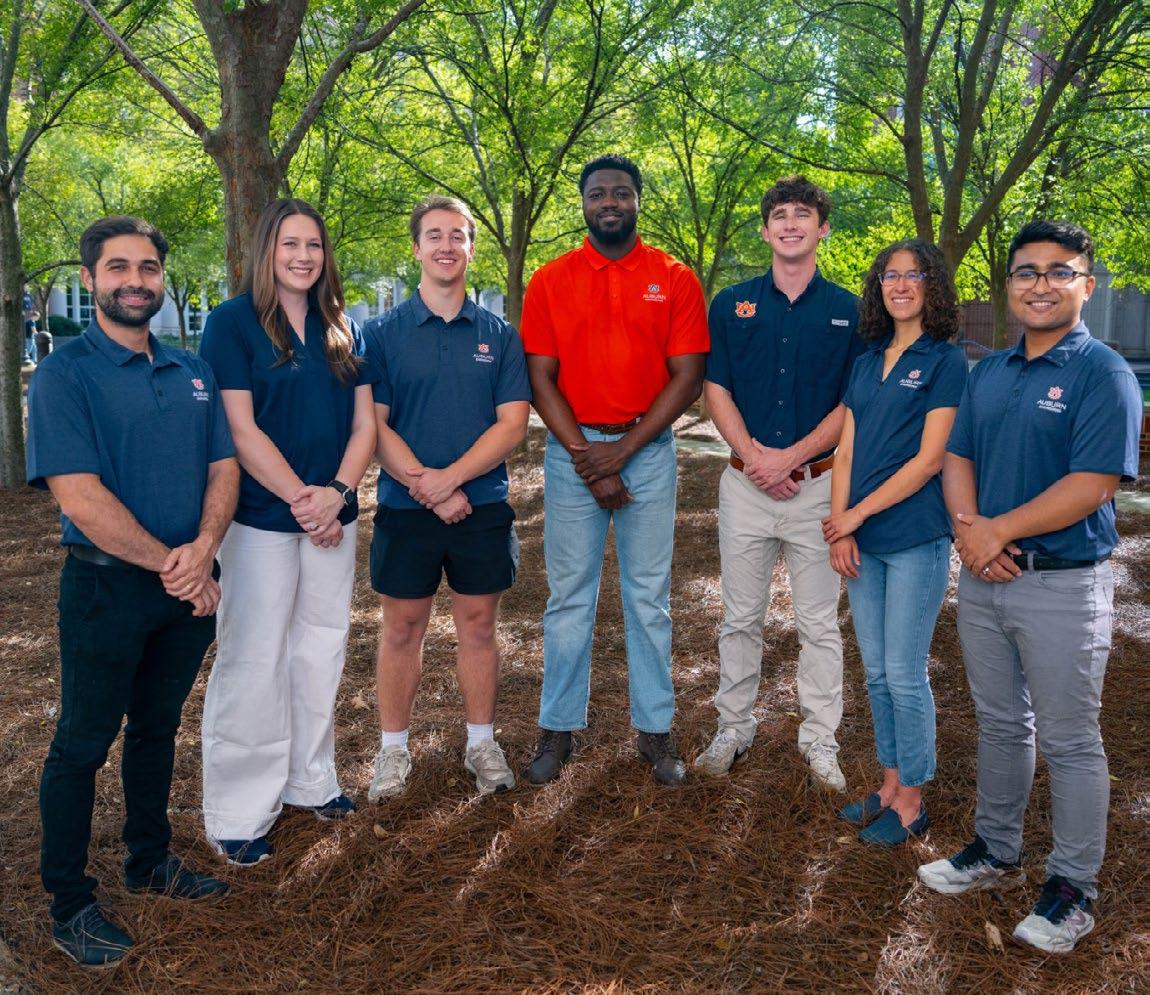
The Auburn University Student Chapter of the American Concrete Institute (ACI) has been making concrete progress, literally and figuratively. This fall, the chapter continued its biweekly “Lunch and Learn” series, held every other Thursday, bringing leading civil and structural engineering firms to campus to share insights with undergraduate and graduate students. Recent sessions have featured professionals from WJE and CTS Cement, covering topics ranging from concrete mix design to forensic structural engineering. These gatherings offer students invaluable opportunities to interact with experts, ask questions, and explore future career paths.
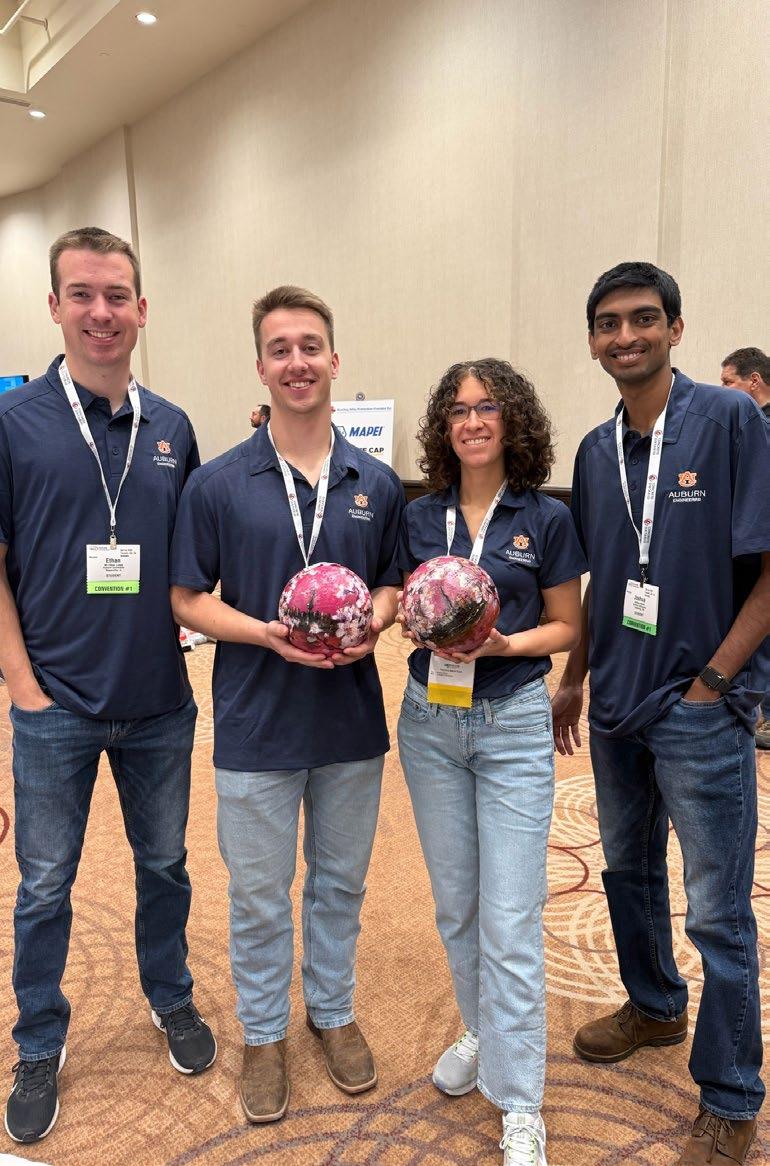
This past spring, Auburn’s ACI team proudly represented the university at the ACI Spring Convention in Toronto, Canada, earning an impressive 8th place among more than 50 national and international universities in the Bowling Ball Competition. Building on that success, another team headed to the ACI Fall Concrete Convention in Baltimore, Maryland (Oct. 26–30, 2025), where they competed in the Egg Protection Device Competition and won 2nd place overall!
With more than 30 active members and growing momentum, the ACI Auburn Chapter continues to bridge the gap between classroom learning and professional practice.
By: Liz Valença
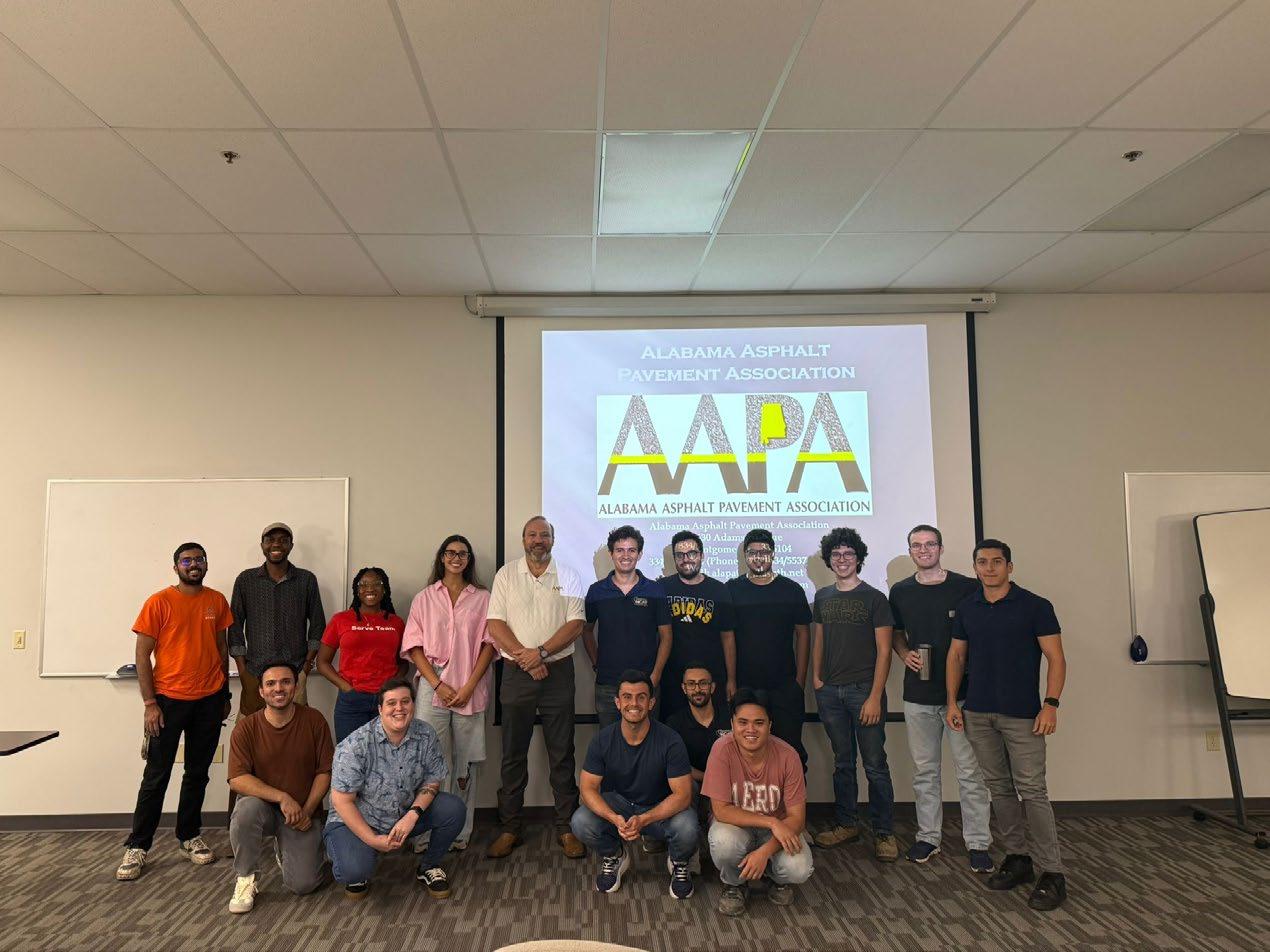
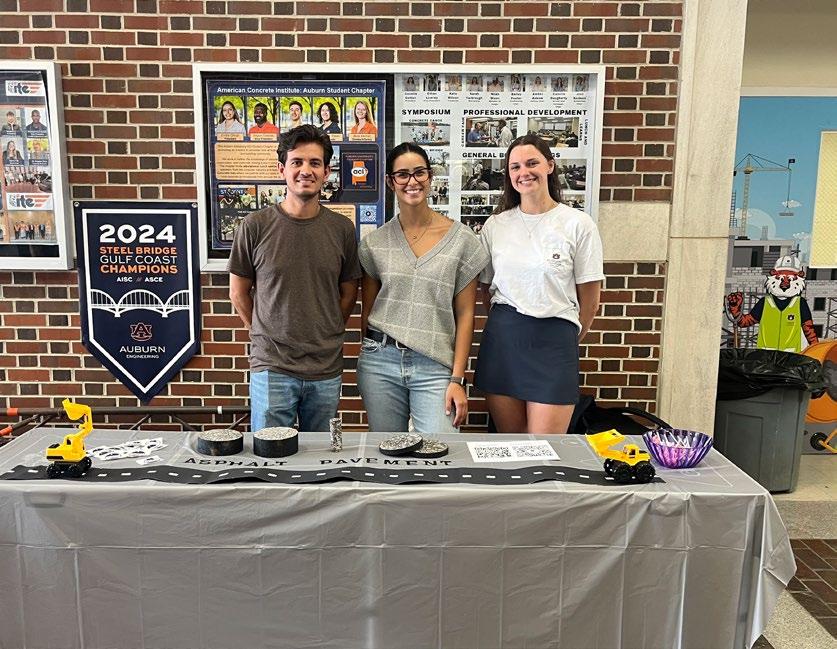
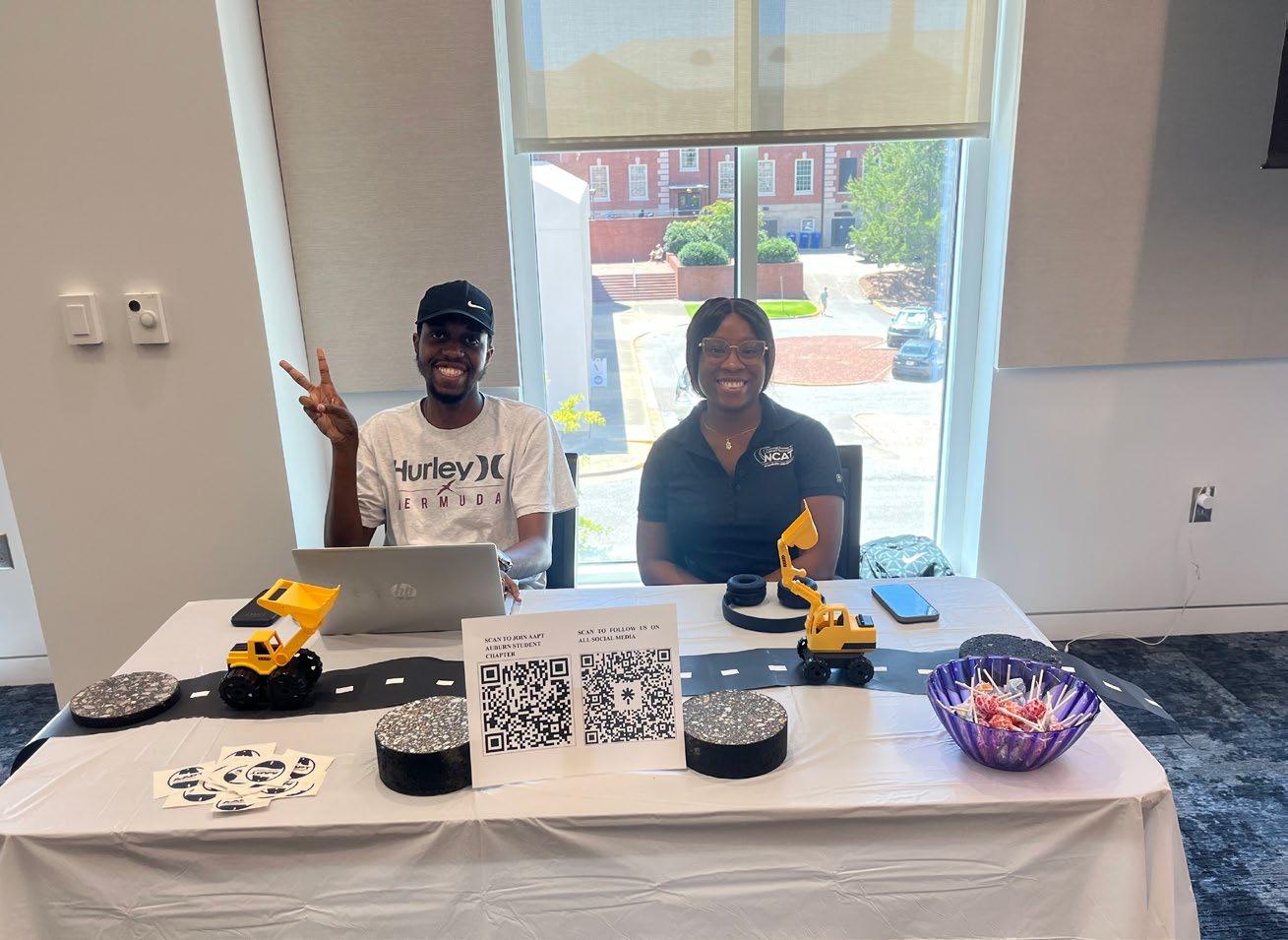
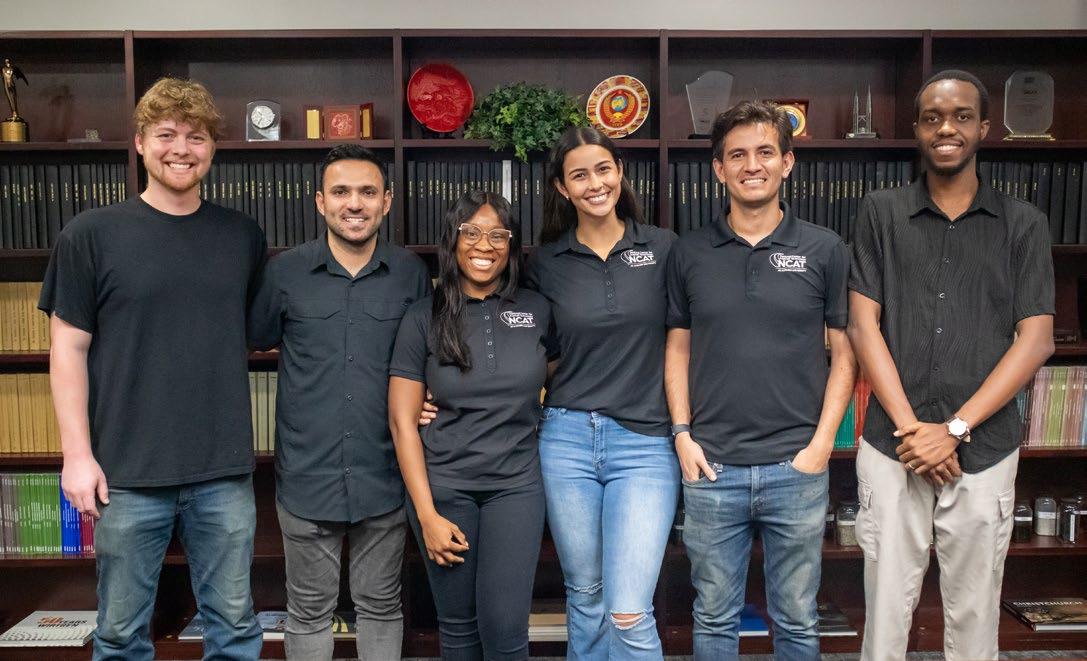
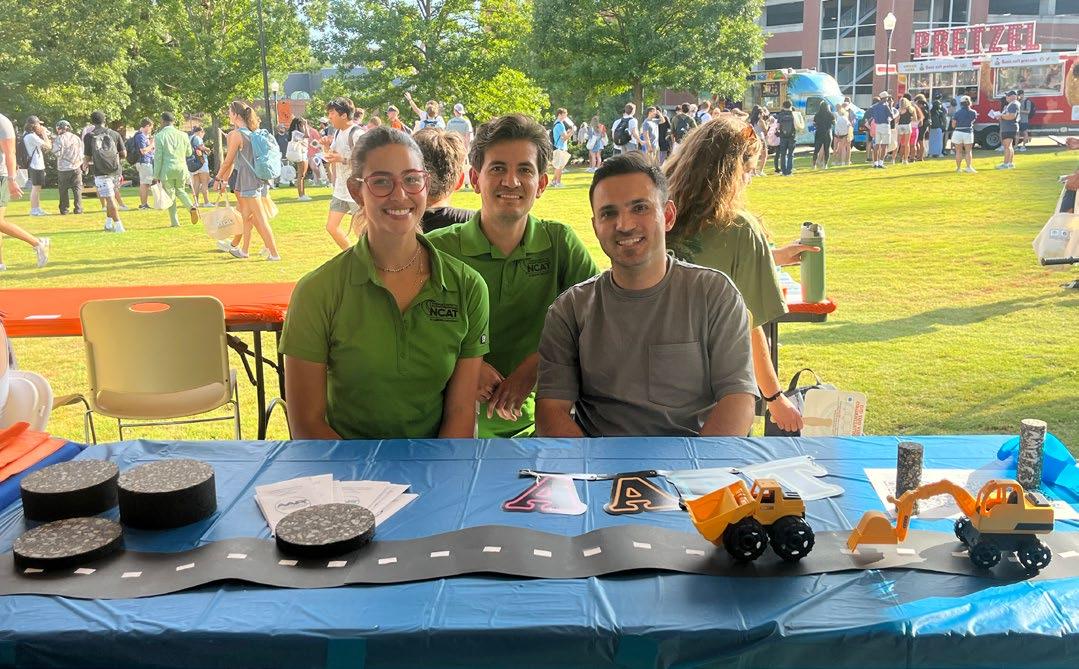
The Association of Asphalt Paving Technologists (AAPT) at Auburn University officially became a registered student organization in Summer 2025. Since then, the group has actively engaged students and industry professionals to promote innovation and collaboration in asphalt pavement technology. AAPT Auburn has participated in several tabling events, particularly those in the Department of Civil and Environmental Engineering, at the College of Engineering and the Involvement Fair. The organization launched The Hot Topic, a newsletter that explores key trends and emerging topics in asphalt engineering through insights from students, faculty, and industry partners. AAPT Auburn also hosted several Lunch & Learns during Fall 2025, including with representatives of Alabama Asphalt Pavement Association (AAPA), APAC, Ingevity and ER Snell, providing students with valuable exposure to industry perspectives. Moving forward, the chapter plans to expand its outreach through more Lunch and Learns, interactive tabling events, and future newsletter editions, all aimed at strengthening connections between Auburn students and the asphalt community.
By: Will Neville
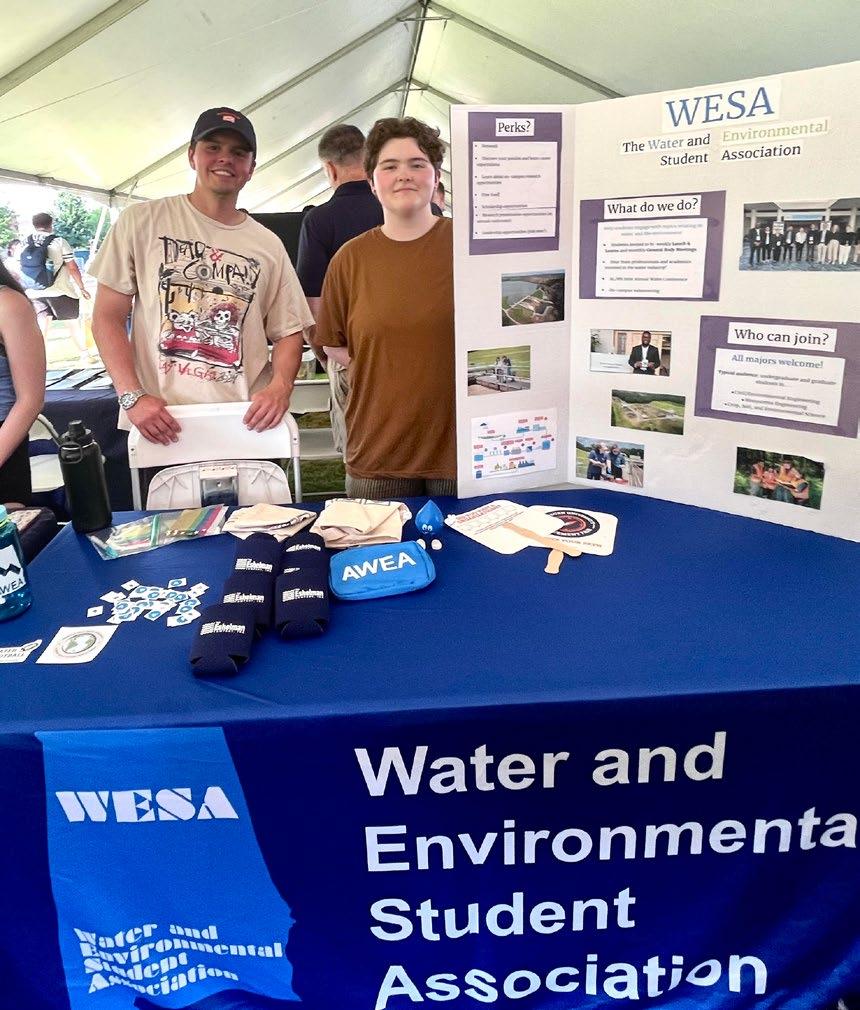
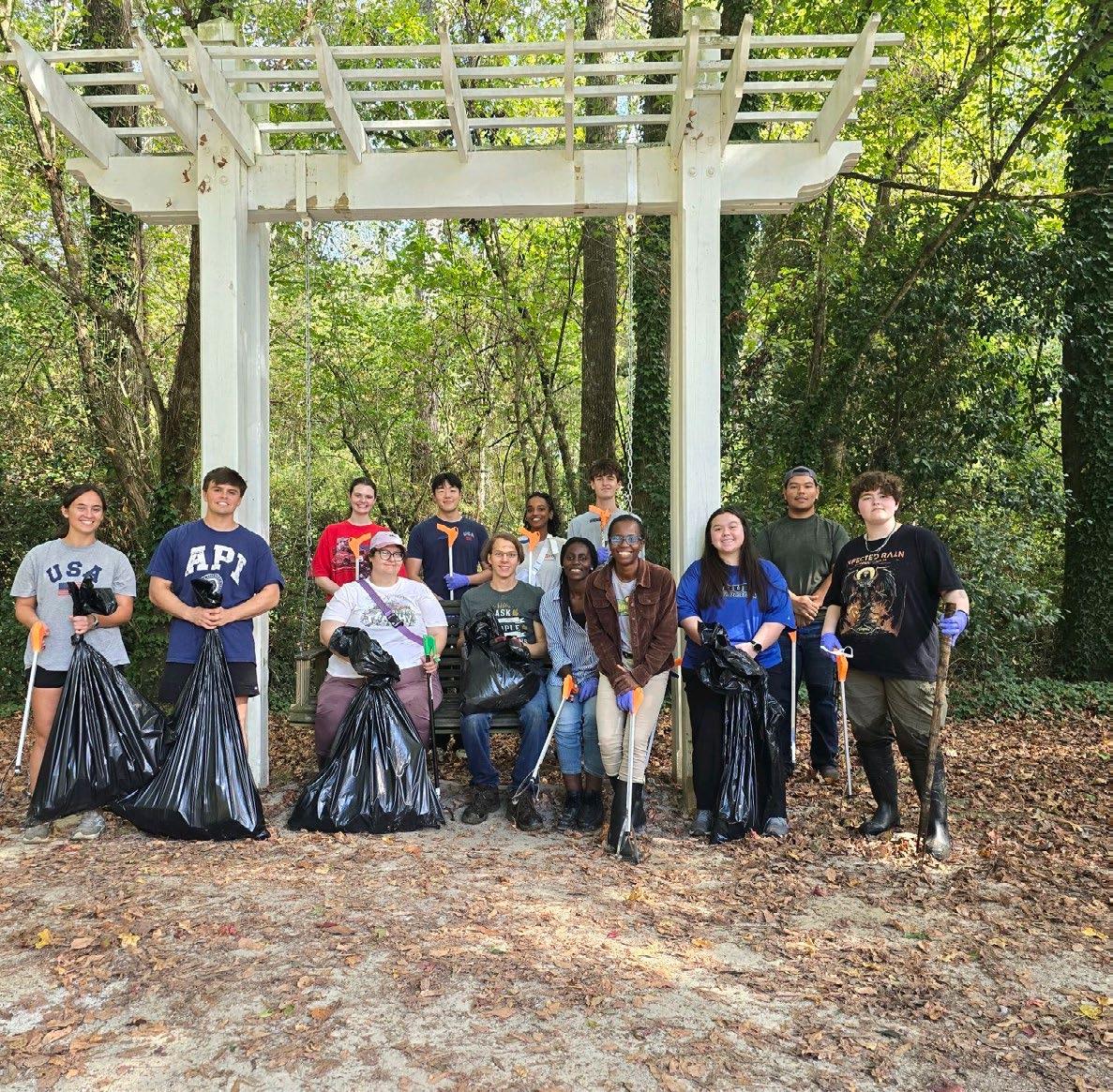
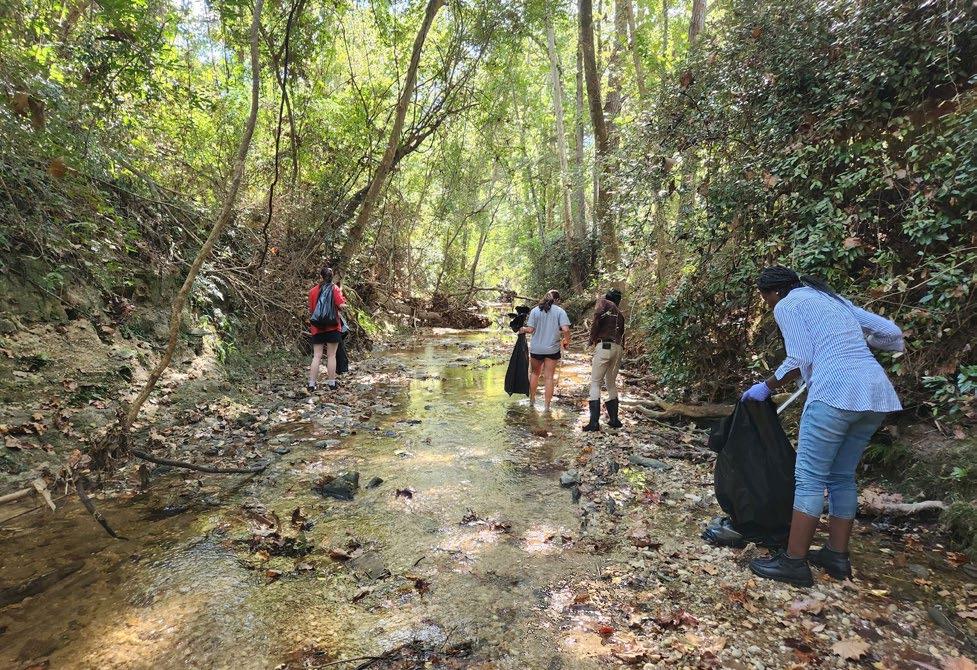
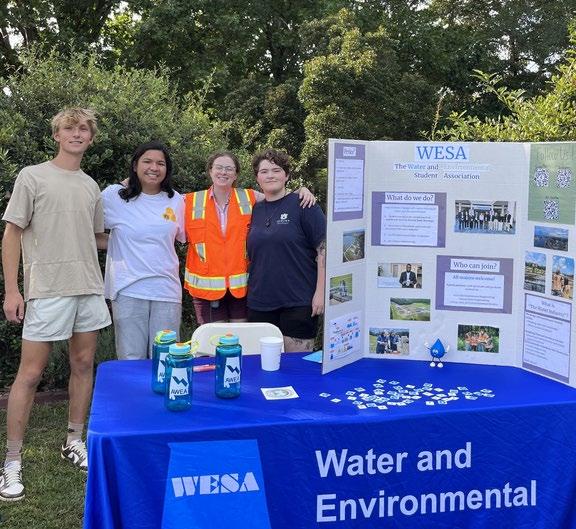
This fall has been an exciting semester for WESA. To kick off the semester, WESA was tabled at the Student Involvement Fair and the Sustainability Picnic. This was an extremely rewarding experience for the exec team to get out and meet potential members. Throughout the semester WESA hosted general body meetings and lunch and learns to help students get a firsthand look at working in the water industry. Friday, October 3rd, students of WESA visited Town Creek Park in Auburn to participate in a stream cleanup. Twenty participants came together to help preserve the natural beauty of Auburn; it was a very successful event with several bags of trash filled. One student even rescued a baby catfish from netting. WESA is very thankful and proud of its members for coming together to help keep Auburn's streams clean. This fall, WESA’s External VP, Samantha Mariano, had the incredible opportunity to participate in the Water Environment Federation’s (WEF) InFLOW Scholar Program, where she was sent to WEFTEC25 in Chicago as a scholar representing Auburn University and its WEF chapter, WESA. In fact, Samantha served as the first-ever InFLOW scholar that represented Auburn University. As the semester is coming to an end, WESA is looking forward to attending the 2026 AL/ MS Water Joint Annual Conference next April.
By: Elaina Fife
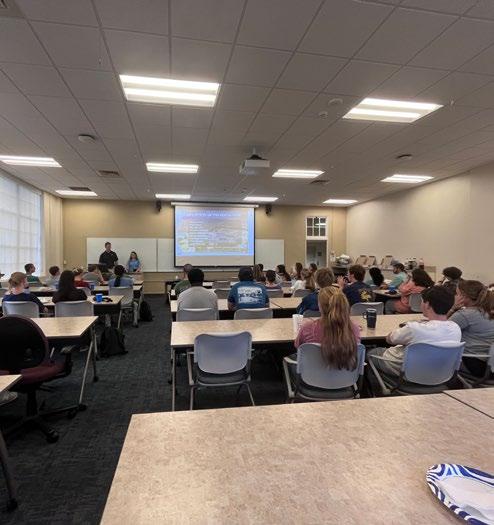
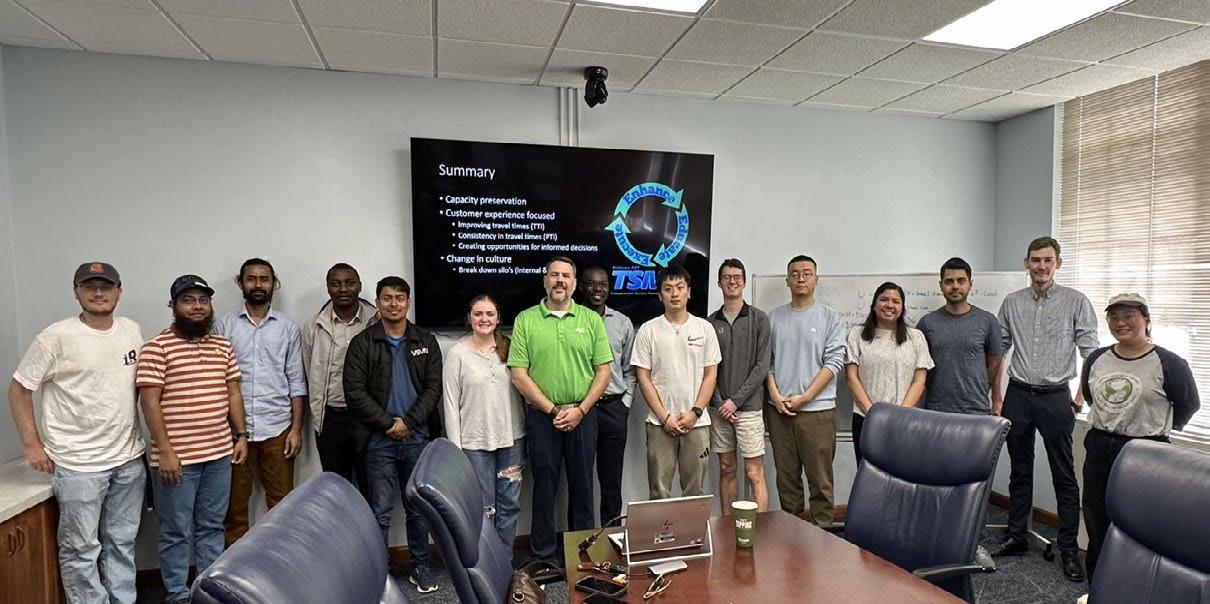
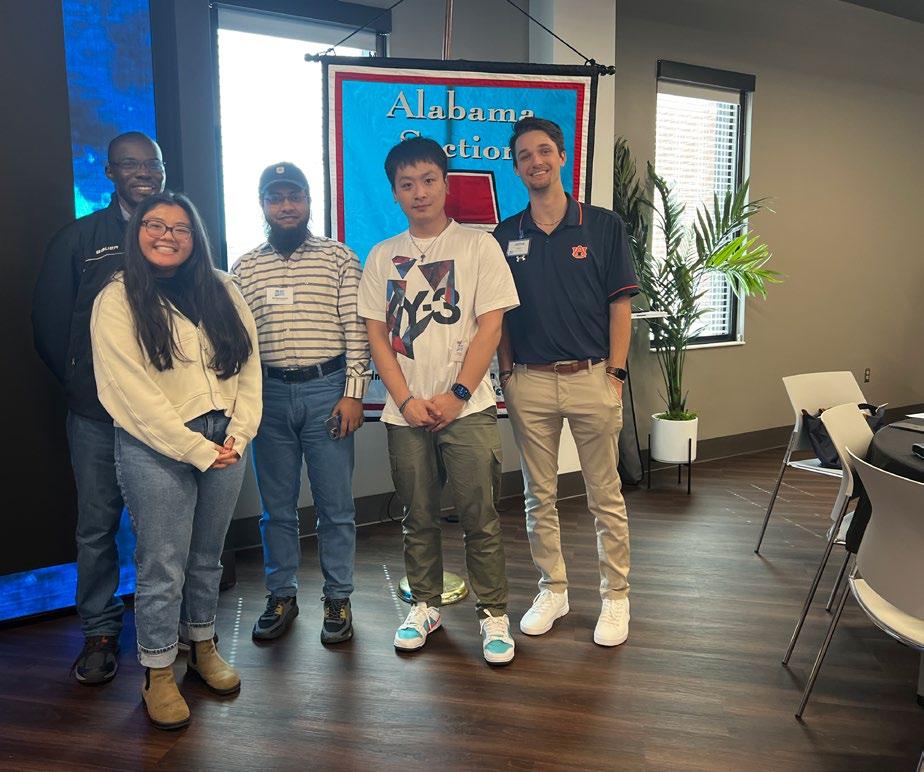
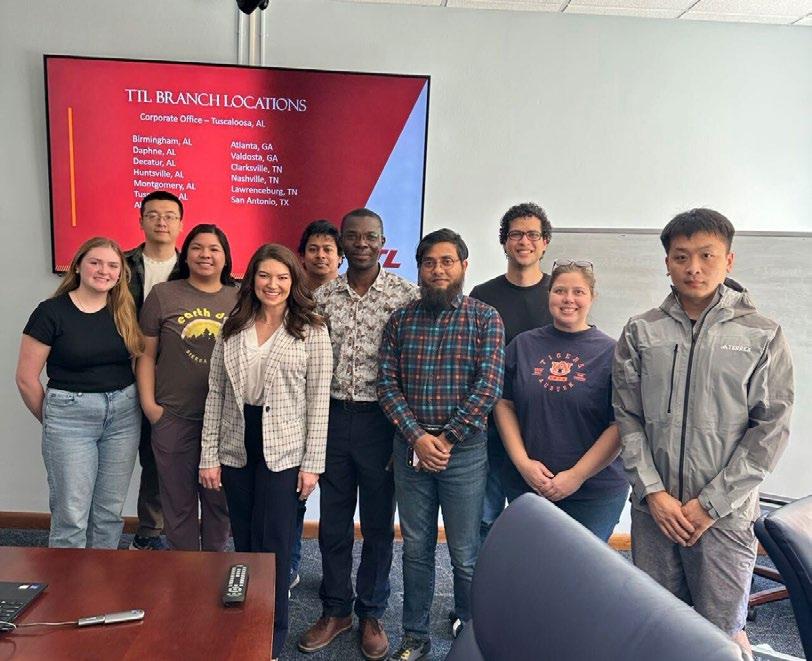
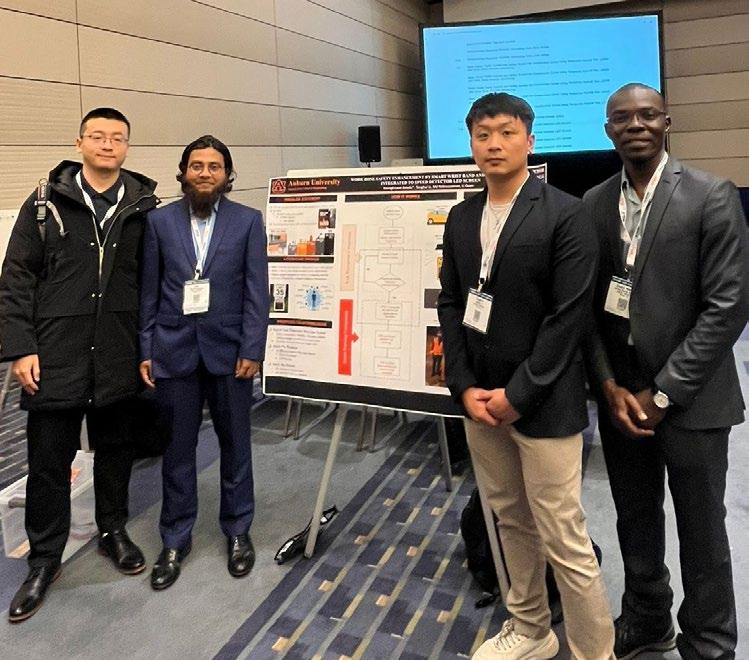
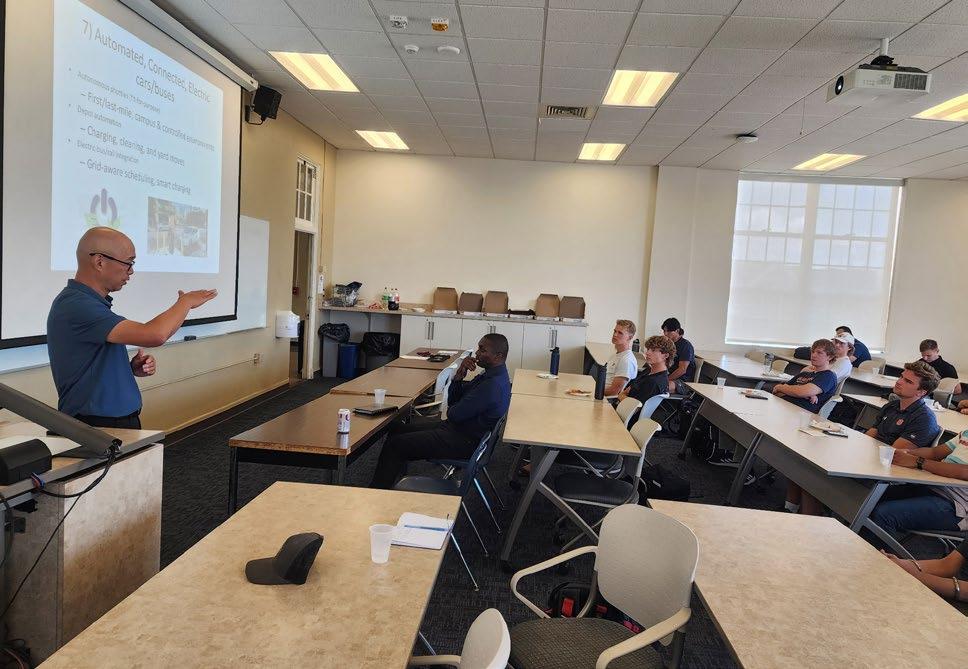
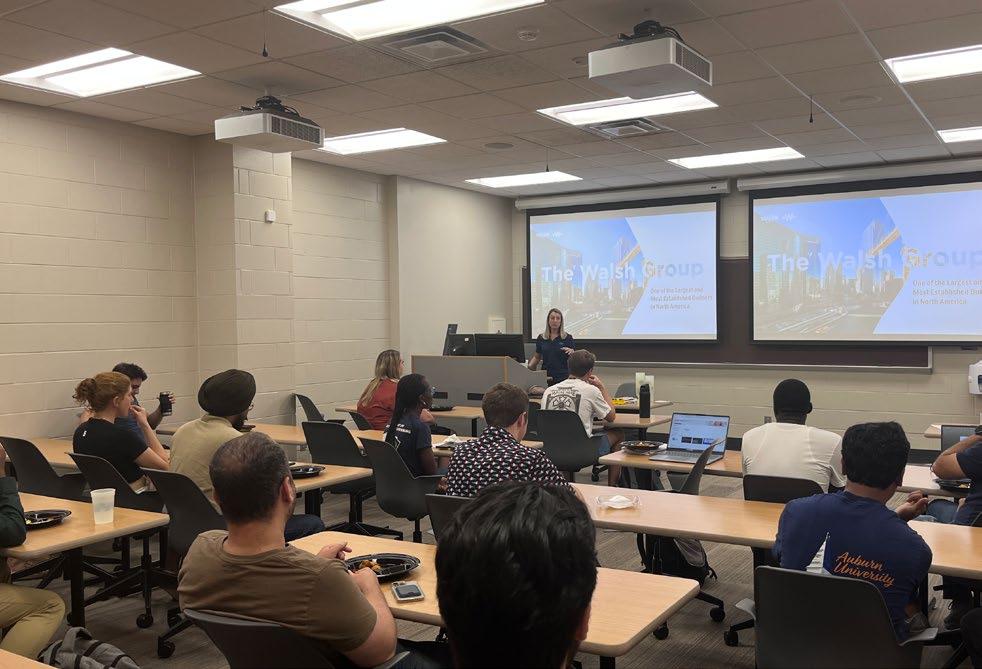
The Auburn University Institute of Transportation Engineers (AUITE) Student Chapter kicked off the fall semester by announcing its newly elected officers for the year: Elaina Fife as President, Nazmus Sakib as Vice President, Jacob Schaefer as Treasurer, and Caroline Breaux as Secretary. These officers are tasked with leading the chapter into the mission of fostering professional growth and engagement in transportation engineering. Throughout the previous semester, AUITE organized various lunch and learn meetings, inviting speakers from ALDOT, consulting firms, and academia to discuss diverse topics in transportation engineering. Topics included traffic safety, analysis, and emerging technologies, offering students insights into the latest industry trends. The interactive format, including Q&A sessions, encouraged student participation. Shown below are lunch and learn meetings featuring Holly Ericksen with TTL, Brett Seller with ALDOT, and Dr. Zhou with Auburn University’s Civil and Engineering department.
By: Carson Beck
Beginning in the Fall 2025 semester, Chi Epsilon transitioned to new leadership with a fully refreshed executive team. The new officers include John Huff as Marshall, Brady Patterson as Treasurer, Riley Johnson as Editor, Grace Cancel as Secretary, Zach Baldwin as Vice President, and Carson Beck as President.
The executive board has already seen early success, most notably through the smooth execution of the Fall 2025 Initiation held on Wednesday, Nov. 5. Chi Epsilon also supported departmental outreach by participating in tours for freshmen enrolled in ENGR 1110: Introduction to Civil Engineering. Officers and volunteers guided prospective civil engineers through the Harbert Center and offered valuable insight into the opportunities within the discipline.
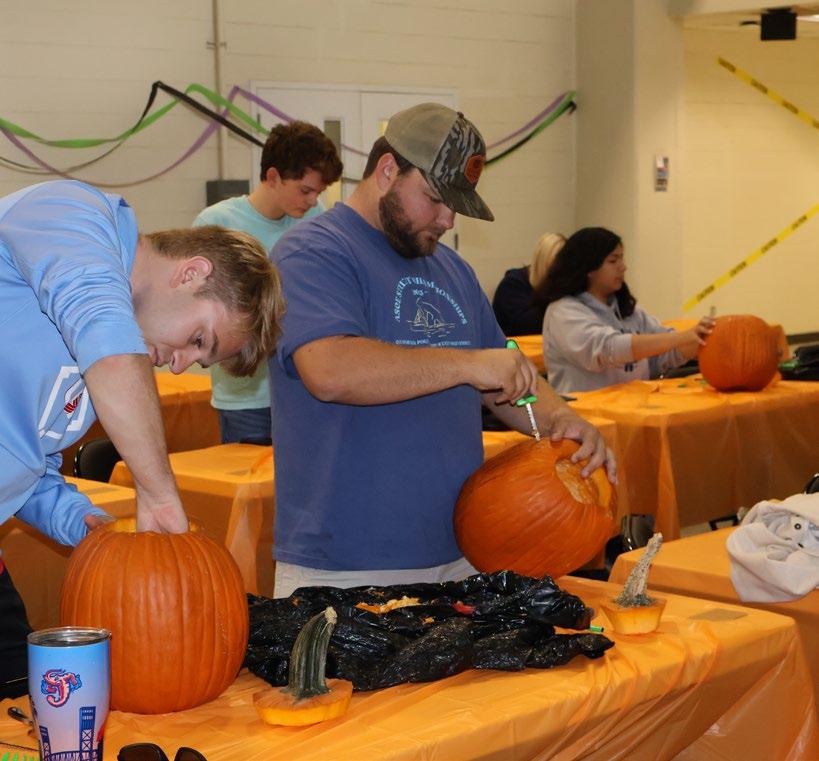
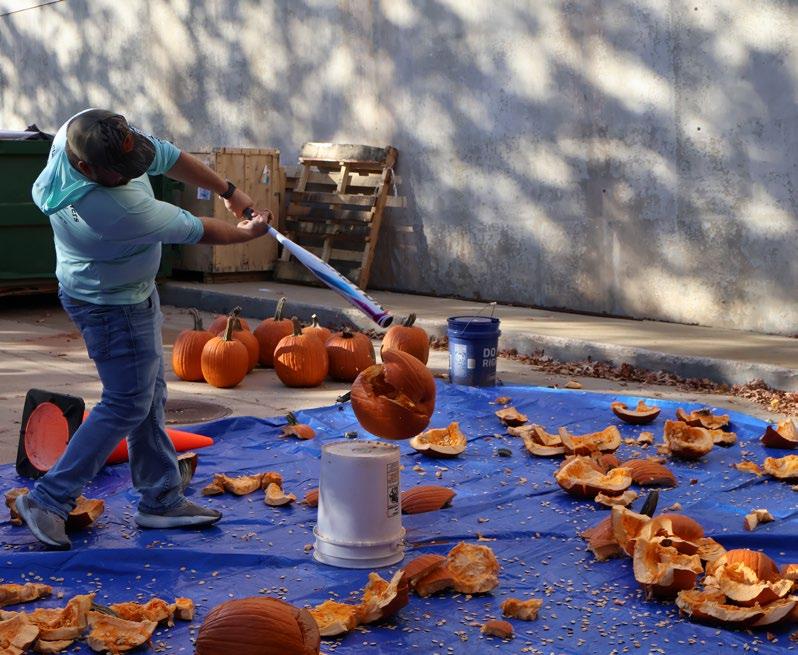
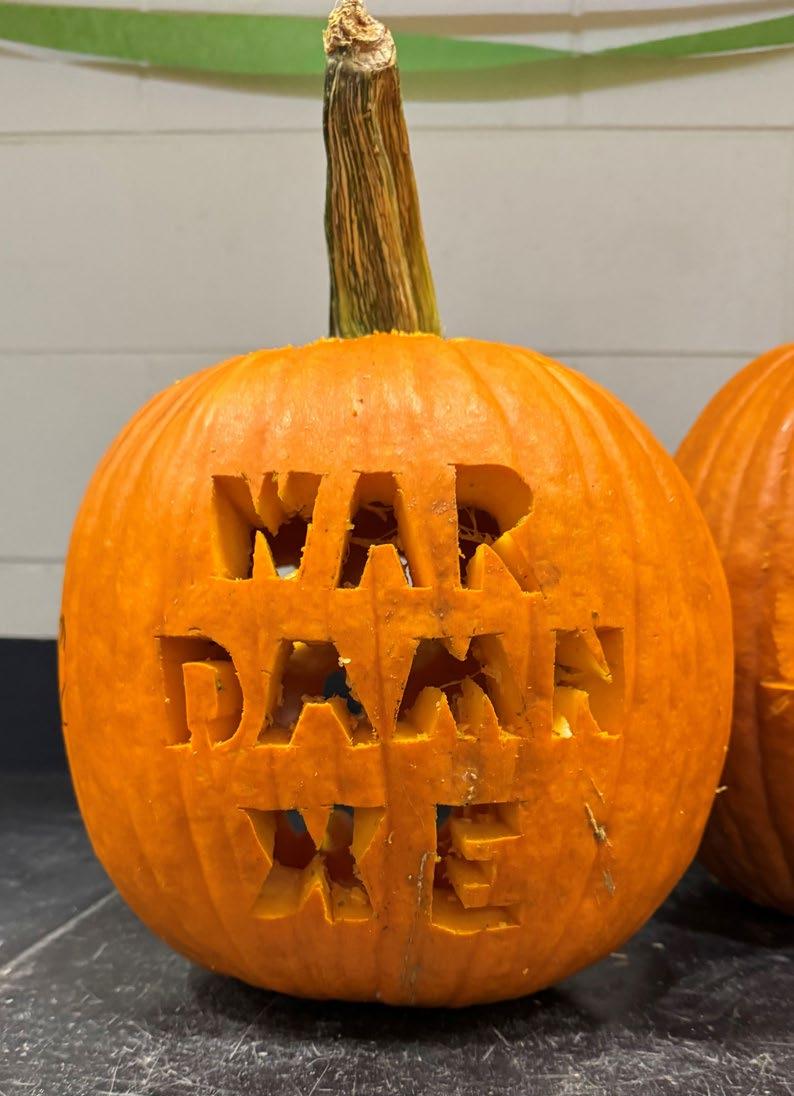
In addition, Chi Epsilon represented Auburn University at the 29th Annual Auburn University Civil and Environmental Engineering Scholarship Endowment Golf Tournament. The chapter also partnered with ASCE to host a tailgate for the Auburn vs. Missouri game and co-organized the ASCE/XE Pumpkin Carving Contest.
As the semester draws to a close, Chi Epsilon is preparing to host its annual social event (details forthcoming) and has already begun early planning for a special E-Day 2026 celebration.

By: NsongErnest Asiedu
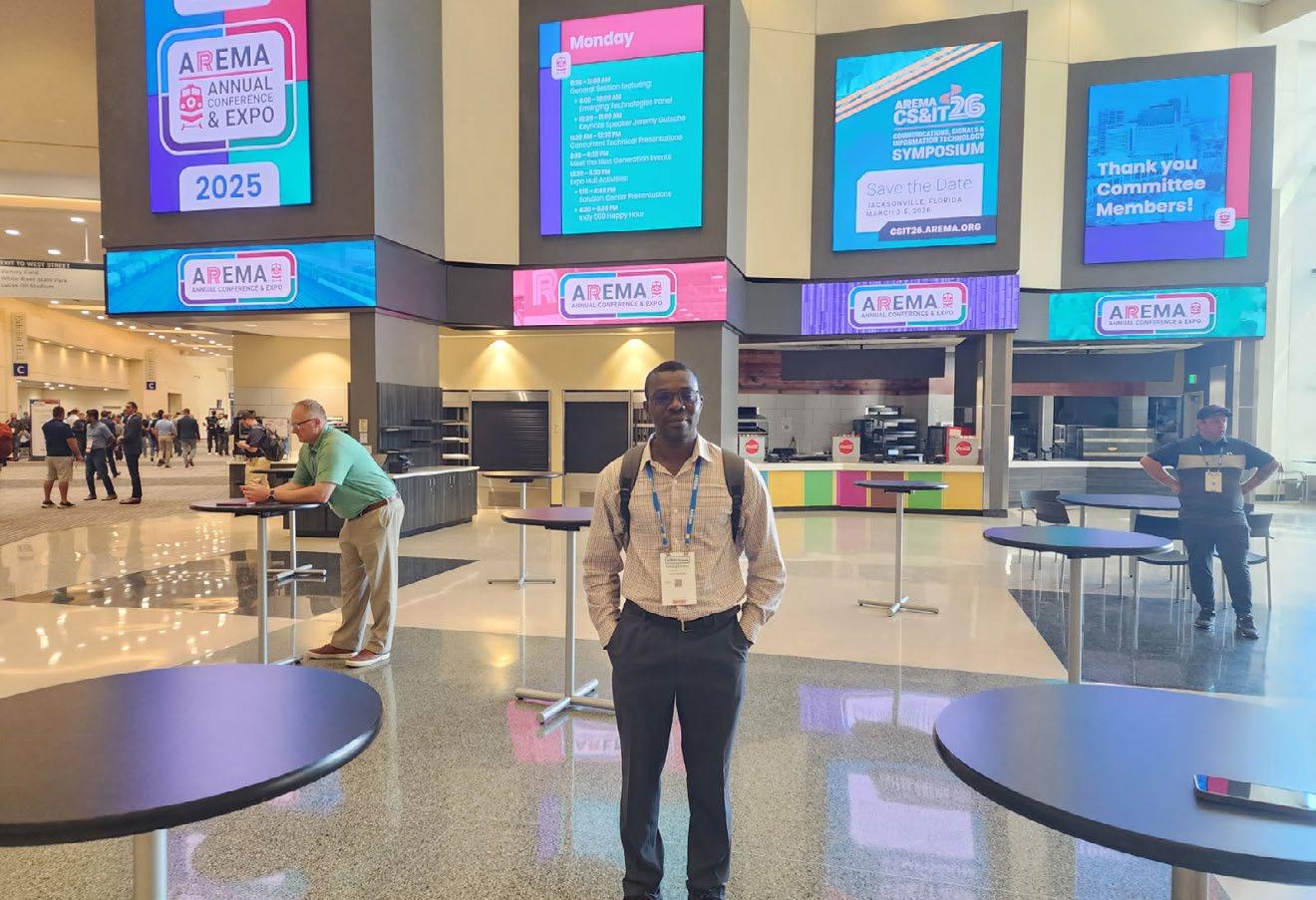
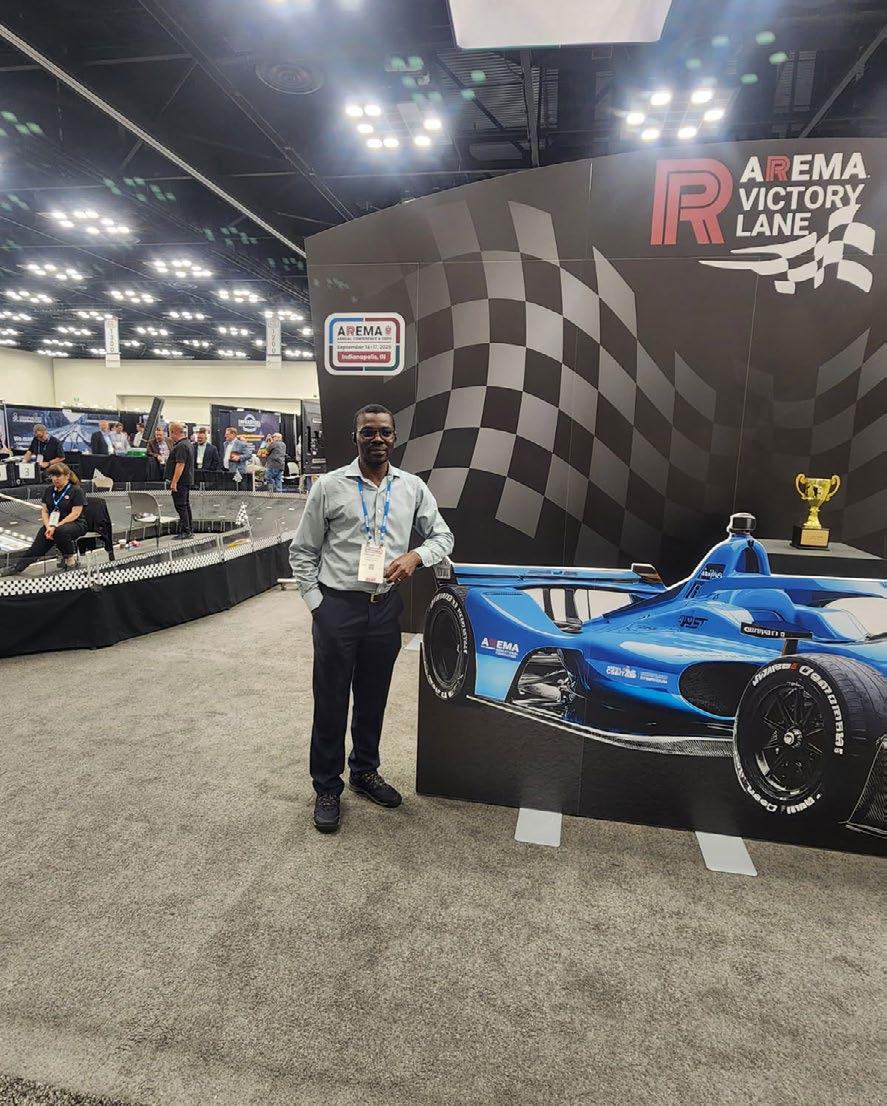
The Auburn University AREMA Student Chapter reached an exciting milestone this year after receiving sponsorship from the American Railway Engineering and Maintenance-of-Way Association (AREMA) to attend its Annual Conference and Expo, held Sept. 14–17, 2025, in Indianapolis, Indiana.
Representing Auburn, chapter president NsongErnest Asiedu, a Ph.D. student in Transportation Engineering, attended the conference for the first time. The event offered valuable opportunities for leadership development, networking, and exposure to innovations in the rail industry. Students received a curated schedule highlighting key events, including networking at the Welcome Reception, attending emerging technology sessions, participating in the Meet the Next Generation event, and engaging in technical presentations from AREMA’s six functional groups. Leadership workshops provided practical coaching to build professional communication skills. A highlight of the trip was the Meet the Student Lunch, where NsongErnest hosted AREMA's Global President at his table, sparking meaningful discussions about the future of rail. He also valued sessions connecting students with young professionals across the industry.
Looking ahead, NsongErnest and fellow members plan to participate again when the conference moves to Missouri. With support from faculty advisors and Auburn alumni, the chapter aims to expand hands-on learning opportunities in railway technology and safety.
By: Matthew Wisenden
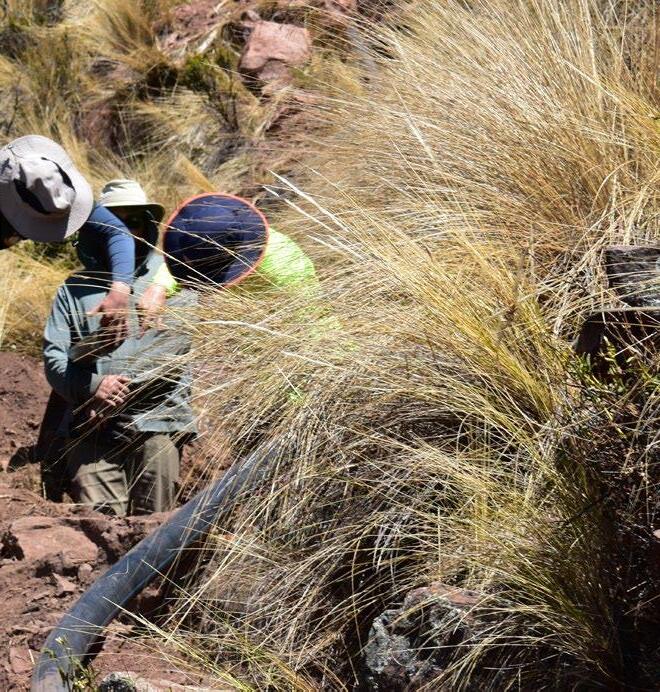
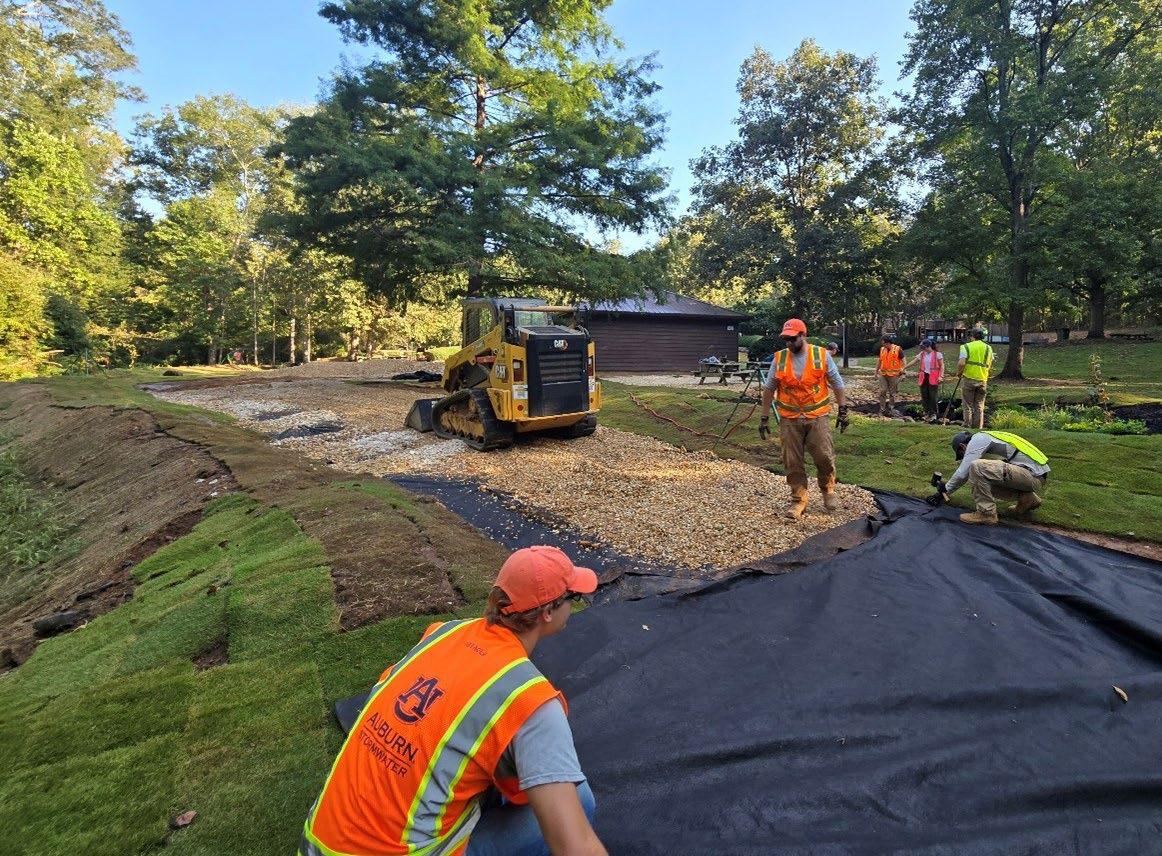
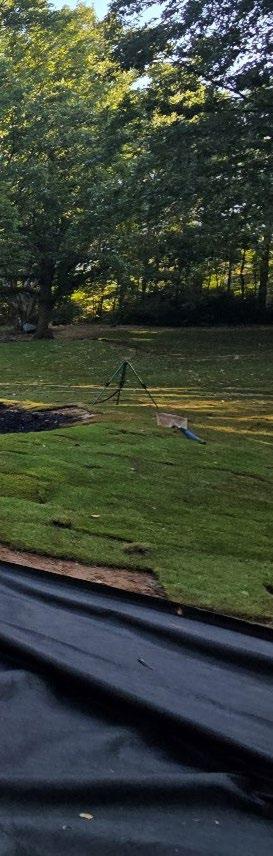
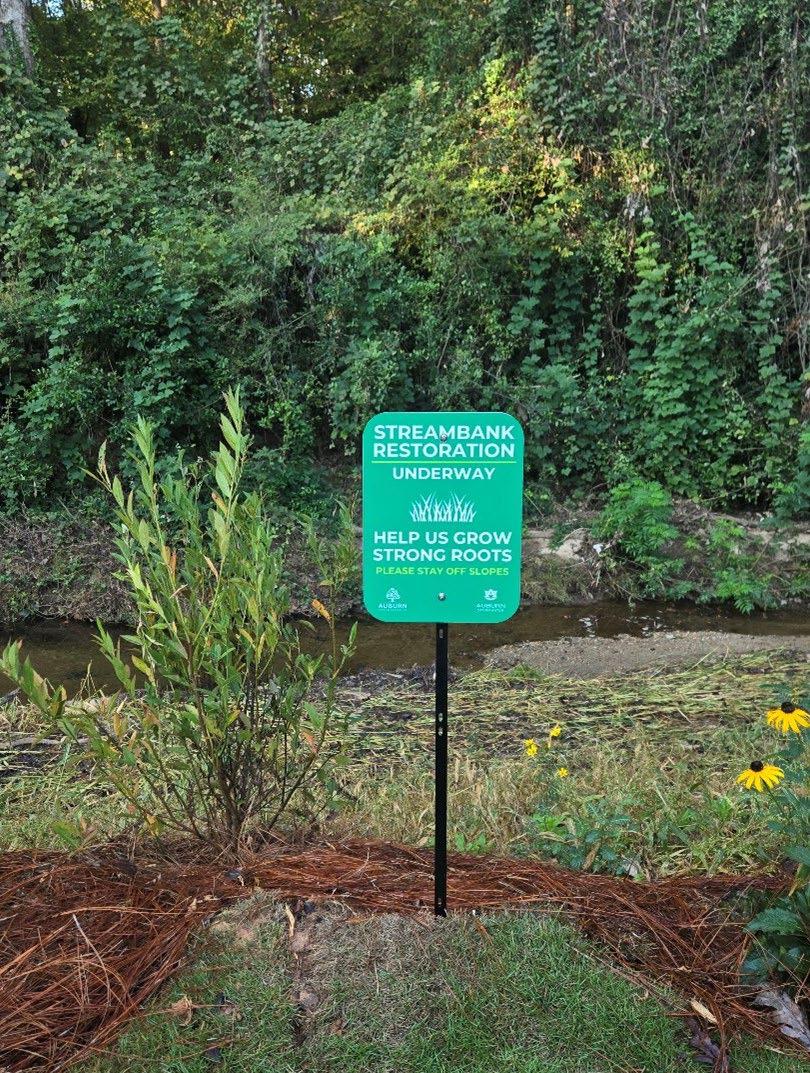
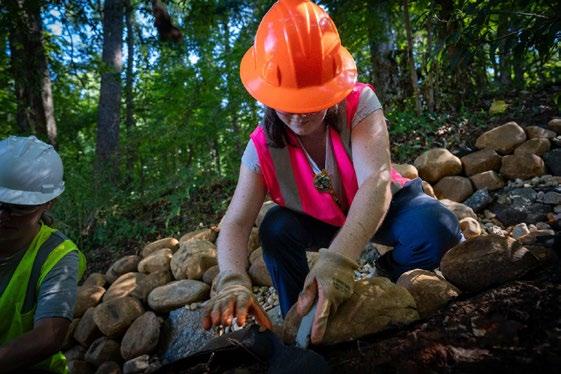
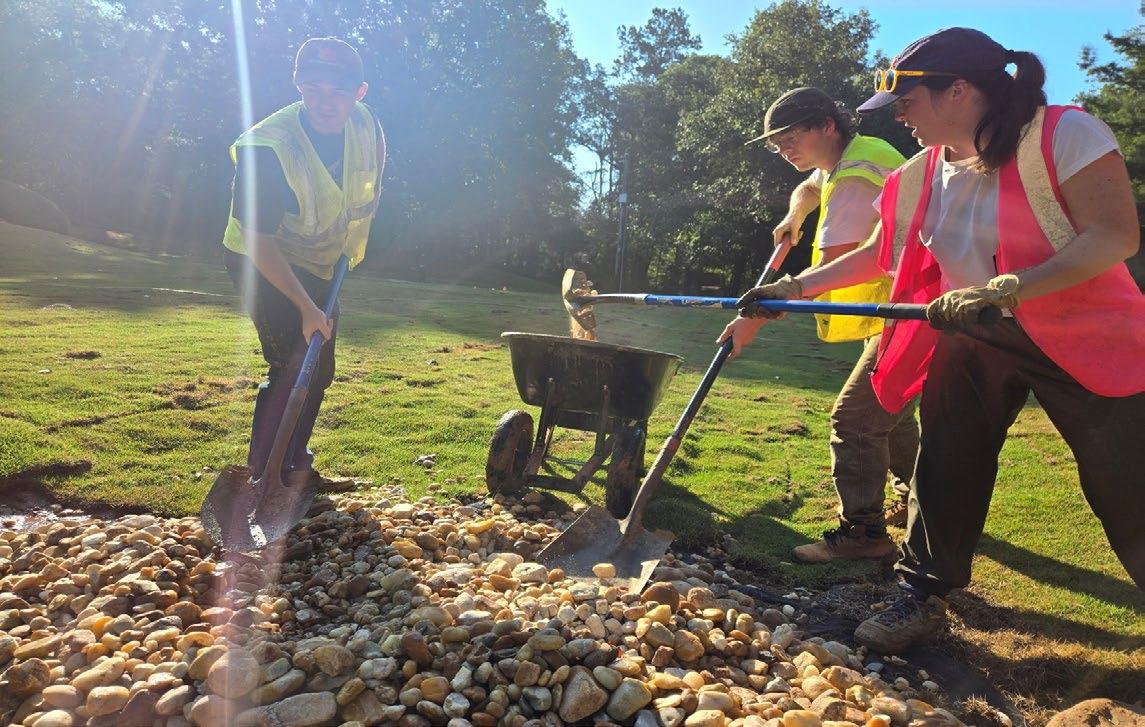
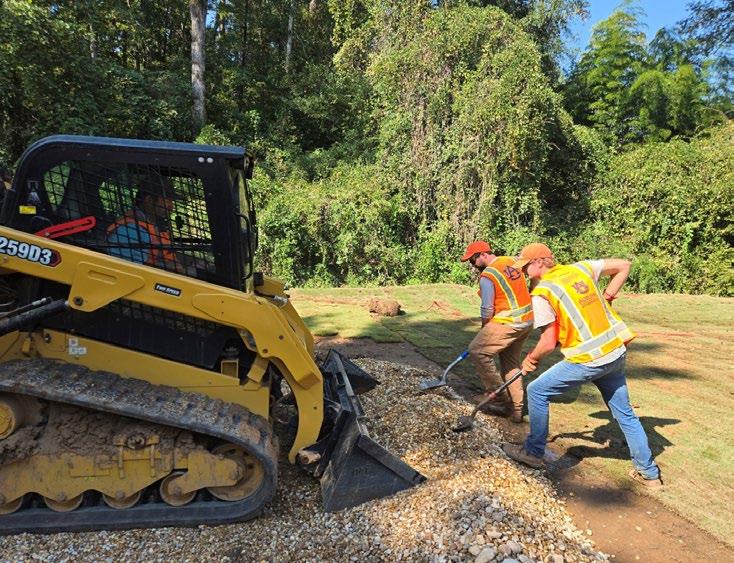
This summer, the Auburn University–Stormwater Research Facility (AU–SRF) and the City of Auburn partnered to implement multiple Low Impact Development (LID) stormwater practices across Lee County through an Alabama Department of Environmental Management (ADEM)-funded 319 grant. One project was the stabilization of Hickory Dickory Park, where multiple LID features such as bioretention cells, permeable walking paths, cisterns, native butterfly gardens, pet waste stations, and infiltration swales were installed to treat urban runoff. The park is bordered by an upper tributary to the Sougahatchee, which is impaired for pathogens. The LID measures installed here not only addressed pathogens, but other stormwater concerns that were present at the site. Before the project, severe erosion was occurring throughout the property, specifically on the streambank. The AU-SRF re-graded the slope of the streambank to lessen soil loss and installed erosion control measures such as native plantings to stabilize the bank. The park was overlain with shade- and flood-tolerant sod as well as an irrigation system to ensure the vegetation’s longevity, further mitigating erosion. Informational signage was placed around the property to help parkgoers learn more about the LID practices onsite.
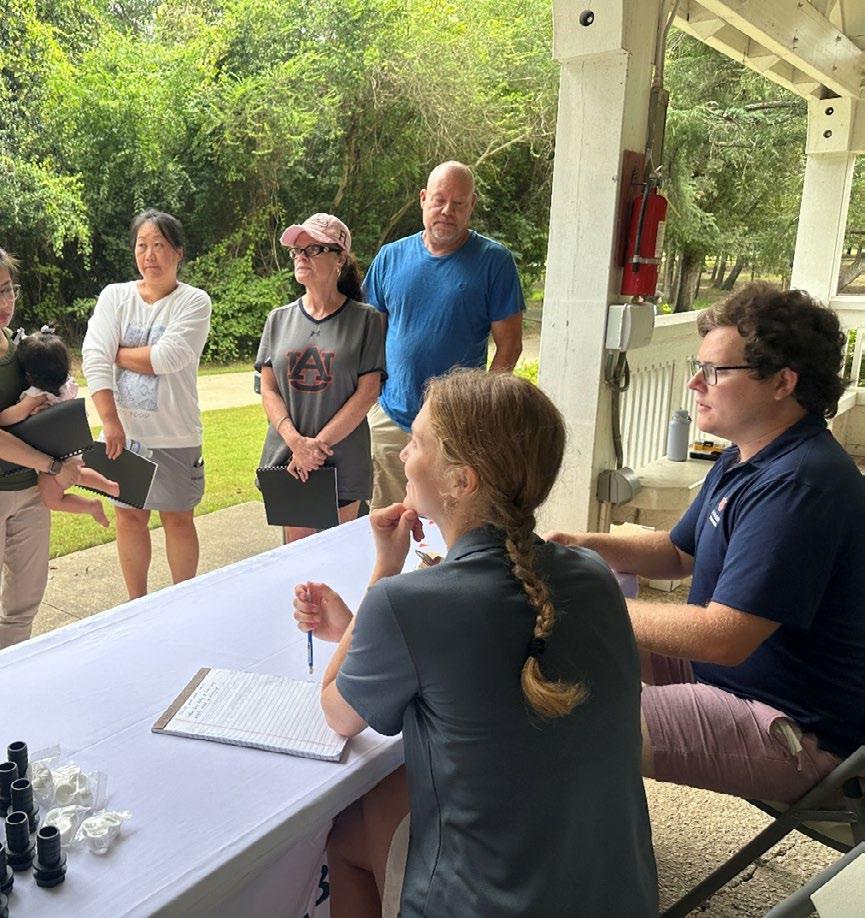
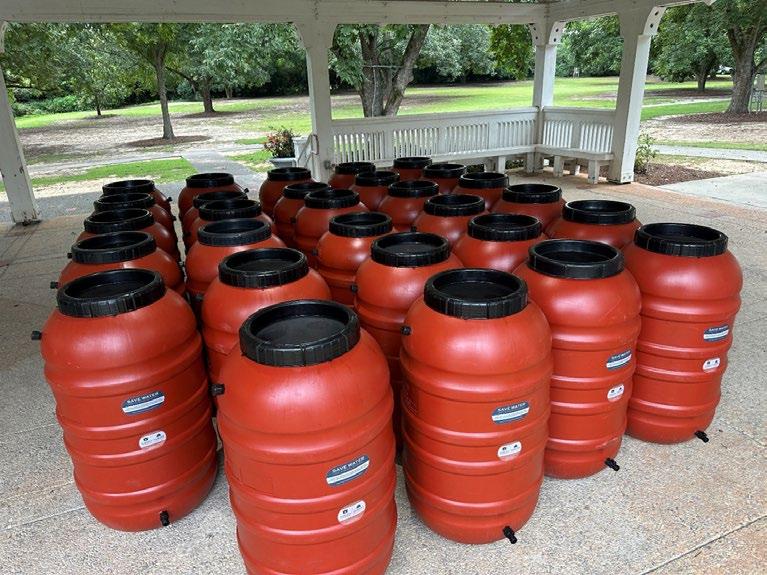
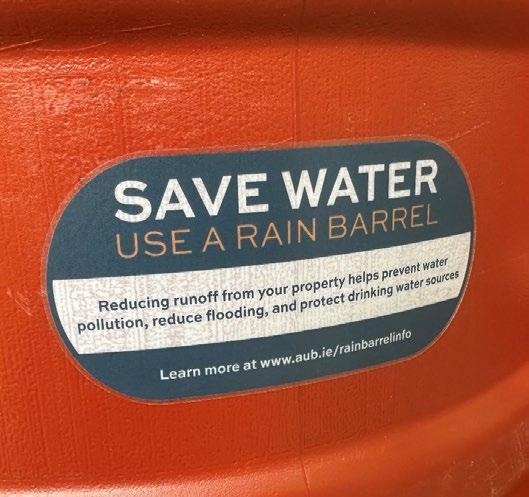
Another project completed through this grant was the successful delivery of four free rain barrel workshops to more than 150 Lee County residents. At these workshops, attendees learned the basics of stormwater harvesting and given their own free rain barrel, provided by Home Depot, to use at home. Workshops covered rain barrel installation, maintenance, and troubleshooting, and highlighted the environmental, economic, and societal benefits of rainwater harvesting. The Auburn community has a strong connection to water resources, with Alabama’s immense annual precipitation and unique aquatic biodiversity, and the reception to the workshops was overwhelmingly positive. More than 1,000 people registered for workshops, far exceeding the 160-person threshold. Aside from providing information about rainwater harvesting, the workshops acted as a gathering space for Lee County residents to bond with their fellow community members.
From start to finish, both projects were completed concurrently in less than two months, demonstrating the AU-SRF’s ability to deliver large-scale projects in a short period of time. The success of both the Hickory Dickory Park Project and Free Rain Barrel Workshops established a framework for future partnerships between AU–SRF, ADEM, and the city. These LID projects provide a tested blueprint for implementing similar practices across Alabama, protecting the state’s invaluable water resources, strengthening community connections, and promoting environmental stewardship.

SCOTT CUMMINGS, ‘87 and '95 civil engineering, has been designated as a Water Environment Federation (WEF) Fellow.
VERONICA RAMIREZ '17 civil engineering, was selected as one of the ASCE Region 5 2025 Young Civil Engineers of the Year. She was also named a 2025 Young Leader to Follow by the Institute of Transportation Engineers.
Research regarding the impact of high groundwater tables on roads in coastal areas, by DR. BRUNO SOUSA, '25 civil engineering, is gaining national attention through the NOAA National Centers for Coastal Ocean Science Program (Read More).
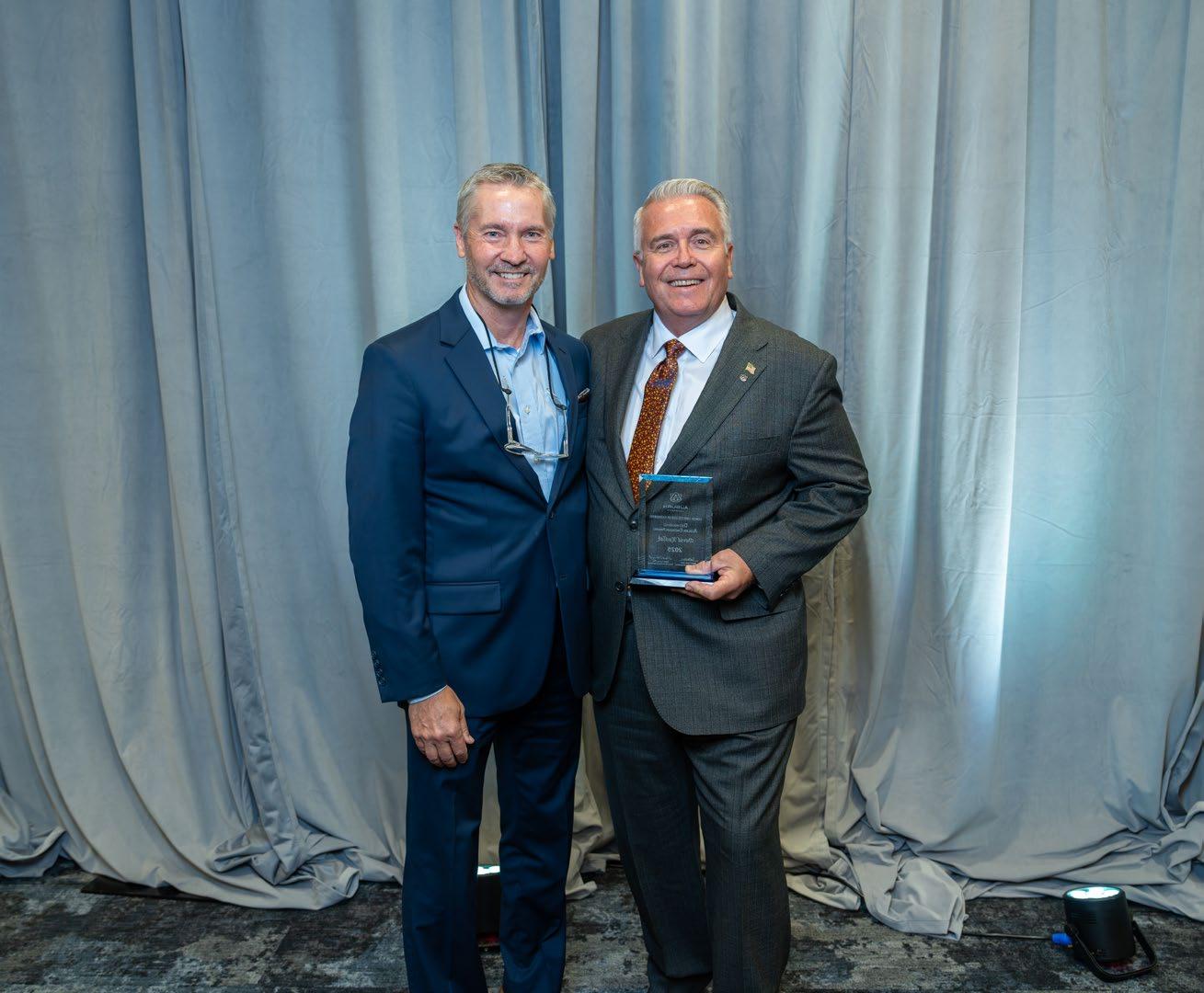
The Auburn Alumni Engineering Council awarded the Distinguished Auburn Engineer Award to:
BRAD CHRISTOPHER, '91 and '93 civil engineering, president/general manager of LBYD.
DAVID KUDLAK, ‘86 civil engineering, vice president and director of operations for South Atlantic Water at Jacobs.
The Auburn Alumni Engineering Council awarded the Outstanding Young Auburn Engineer:
HAYLEY SISTRUNK, ‘10 civil engineering, Chief Preconstruction Manager at Brasfield & Gorrie, LLC.
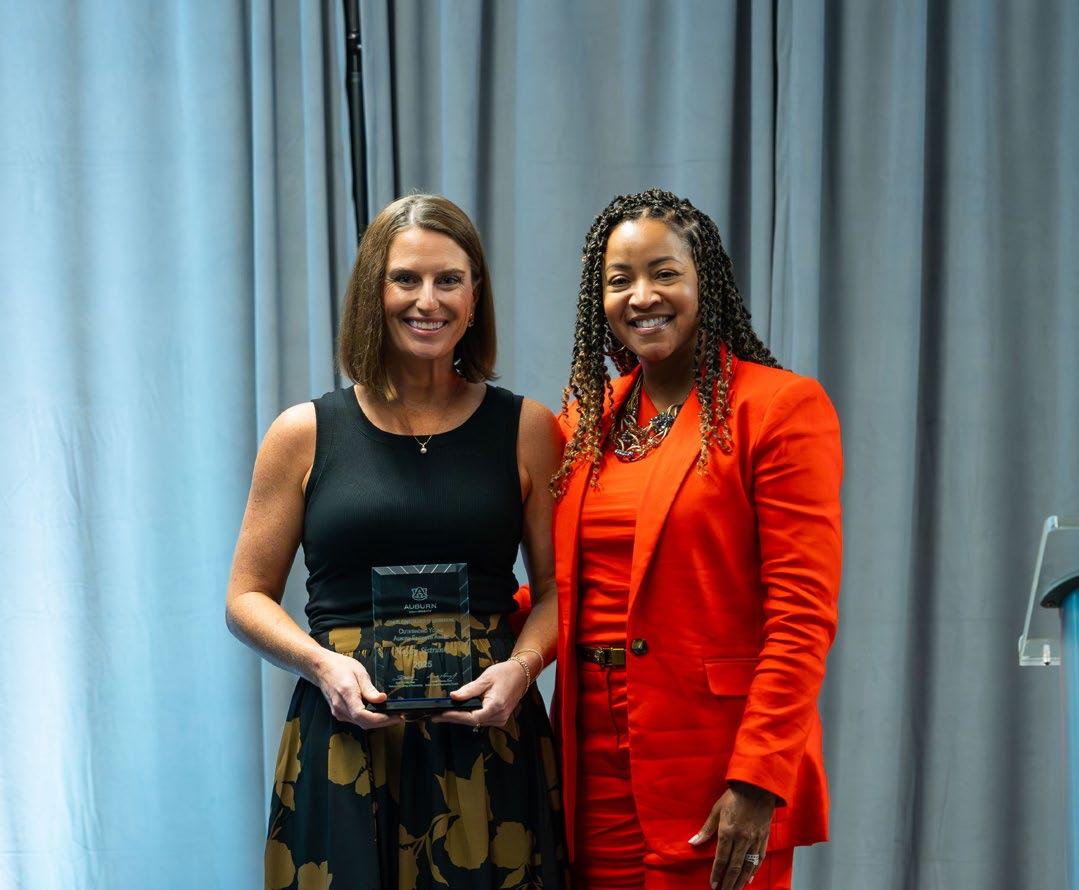
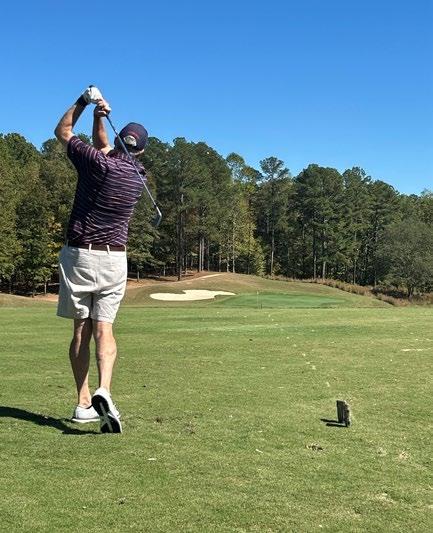
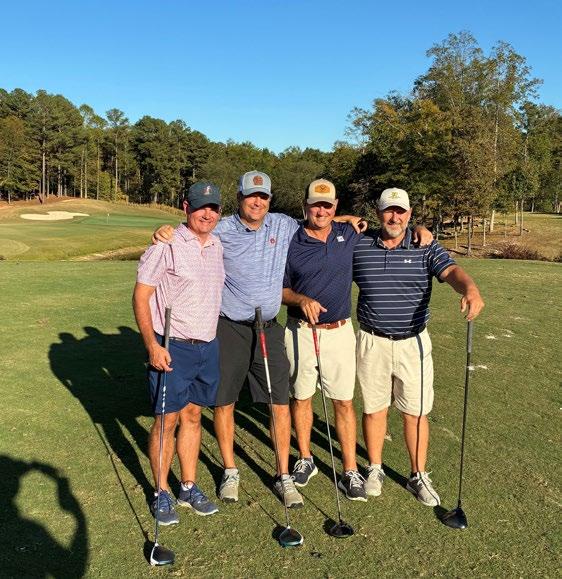
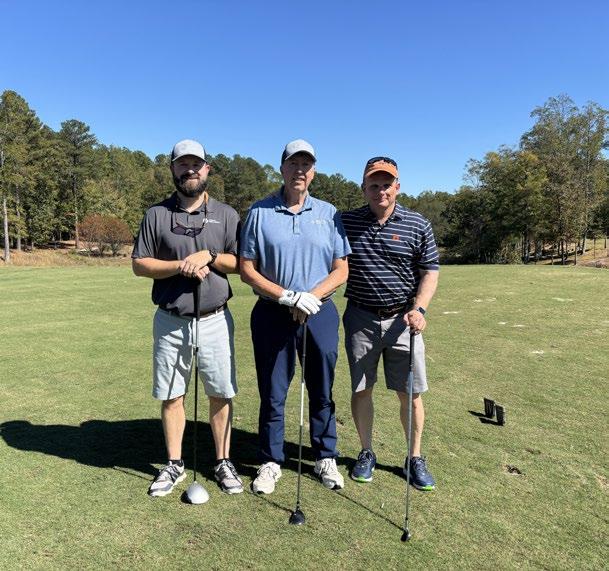
The 29th Annual Auburn University Civil & Environmental Scholarship Endowment Golf Tournament was held on Oct. 16, 2025, at the Ballantrae Golf Club in Pelham, Alabama. As the longest-running fundraising event in the department’s history, this year’s tournament continued its proud tradition of supporting CEE students through scholarship funding. A total of 104 players participated in the 4-person scramble format, contributing to an outstanding day of camaraderie, competition, and generosity. The event successfully raised a record high $32,000 for CEE scholarships, helping ensure continued support for Auburn’s next generation of civil and environmental engineers. Congratulations to this year’s winning team—LBYD, consisting of Brad Christopher, Ben Metzger, Chris Bailey, and Casey O’Toole—for their impressive performance on the course! The success of this event would not have been possible without the continued dedication of the tournament co-chairs: Brad Christopher, Guy Locker, Charles Marsh, Shane Swords, and Scott Sheumaker. Their leadership and commitment were instrumental in making the tournament a memorable and impactful occasion. Special appreciation also goes to the Tournament Level Sponsors whose generous support made this event possible: Alabama Water Utilities, American Cast Iron Pipe Co., Brasfield & Gorrie, HDR Engineering, Inc., Pump and Process Equipment, Inc., and Jim Cooper Construction. Looking ahead, the event co-chairs are already preparing for a milestone celebration—the 30th Annual CEE Scholarship Endowment Golf Tournament, scheduled for October 2026.






If you have an article, award or upcoming event that you would like to feature in future issues of the CEE Newsletter please contact ceenews@eng.auburn.edu