Atlantic Council
FREEDOM AND PROSPERITY CENTER
Atlantic Council
FREEDOM AND PROSPERITY CENTER
The Freedom and Prosperity Center aims to increase the well-being of people everywhere and especially that of the poor and marginalized in developing countries through unbiased, data-based research on the relationship between prosperity and economic, political, and legal freedoms, in support of sound policy choices.
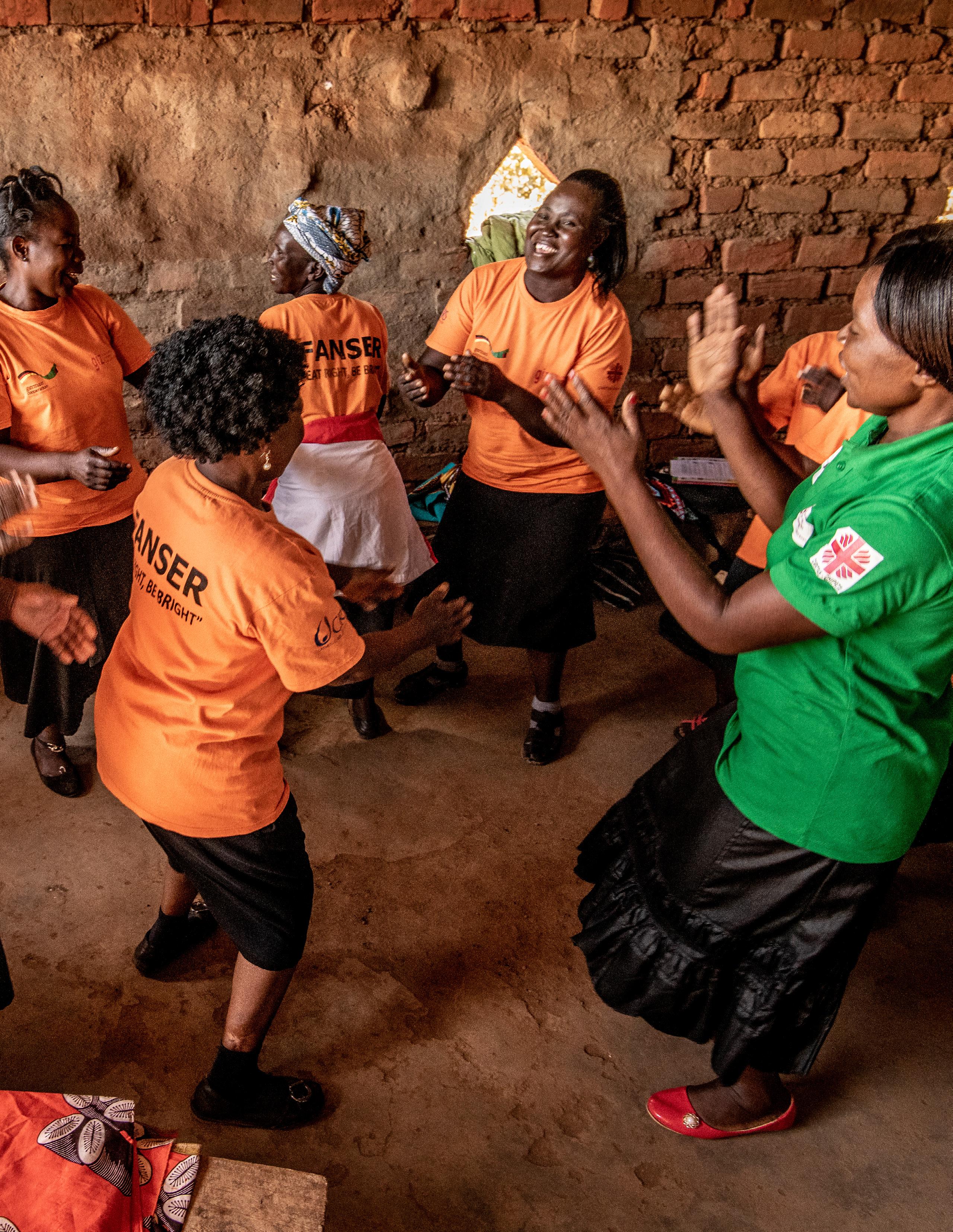
Cover: Volunteers come together at a nutrition program meeting in Petauke, Zambia. Reuters/Science Photo Library.
© 2026 The Atlantic Council of the United States. All rights reserved. No part of this publication may be reproduced or transmitted in any form or by any means without permission in writing from the Atlantic Council, except in the case of brief quotations in news articles, critical articles, or reviews.
Please direct inquiries to:
Atlantic Council
1400 L Street NW, 11th Floor
Washington, DC 20005
February 2026
Authors
Elton Skendaj, director, Democracy and Governance Program, Georgetown University
Peter Mandaville, nonresident senior fellow, Freedom and Prosperity Center, Atlantic Council
Ibrahima Bokoum, executive director, Eastern Congo Initiative
Editors
Nina Dannaoui-Johnson is the deputy director of the Atlantic Council’s Freedom and Prosperity Center
Will Mortenson is a program assistant at the Atlantic Council’s Freedom and Prosperity Center
By Elton Skendaj, Peter Mandaville, and Ibrahima Bokoum
Traditional models of development and democracy-promotion, largely designed and driven by international donors and external actors, have often failed to deliver sustainable and meaningful outcomes. Overly technocratic, externally imposed approaches tend to overlook local realities, sidelining the voices, knowledge, and agency of the communities most affected. As a result, reforms remain fragile, trust and legitimacy erode, and cycles of dependency and disillusionment persist.
Empowering local actors to define their own priorities, shape strategies, and lead implementation not only improves the relevance and sustainability of interventions but also strengthens legitimacy, social cohesion, and resilience. This report is intended for donors, policymakers, and development practitioners seeking to enhance the impact, credibility, and sustainability of international democracy and development assistance. It is organized around three complementary essays, each illustrating a different dimension of the power and potential of localization.
The first essay focuses on community-led democracy and governance reforms, showing how local ownership is essential for effective human rights and governance programming. Drawing on examples from fragile states such as Armenia, Sudan, and Kosovo, it highlights the importance of participatory, decentralized processes that build citizen trust and government responsiveness, while navigating complex political and operational challenges. The second essay explores the vital role of faith-based organizations (FBOs) as trusted and embedded local actors. These organizations and their leaders bring profound moral authority, deep contextual insight, and a long-term presence that many secular actors cannot match. Through case studies from West Africa, Haiti, and beyond, it demonstrates how faith-based actors foster community trust, culturally adapt programming, and sustain development efforts through crises and recovery. The third essay analyzes fai-
lures of externally imposed reforms in fragile, conflict-affected contexts, with a particular focus on the Democratic Republic of Congo. It underscores the necessity of adaptive, inclusive, and locally-negotiated approaches to creating sustainable economic opportunity—models that reject one-size fits all solutions and center local agency.
Taken together, key lessons emerge that cut across contexts and sectors: Trust and legitimacy are deeply local phenomena; standardized, donor-driven models frequently clash with local realities and risk elite capture; and the sustained presence of local actors through cycles of crisis and recovery ensures continuity and adaptive learning beyond short-term donor funding. Moreover, genuine participation demands more than consultation—it requires authentic power sharing and cocreation.
Based on this collective evidence, the report recommends that donors and development practitioners decisively shift decision-making power to local actors, invest in mutual capacity building that honors local expertise, foster participatory processes grounded in dialogue and accountability, and build domestic constituencies that support international democracy and development aid grounded in shared values.
Supporting this type of local ownership of decisions and accountability is not only a matter of operational effectiveness but also a moral and strategic necessity. Local actors bring irreplaceable trust, knowledge, and resilience to development and governance reforms. Donors, policymakers, and development practitioners must move from controlling roles to enabling ones, redefining success in terms of outcomes that are genuinely rooted in and sustained by the communities themselves. Embracing this locally-led, participatory paradigm offers the best chance to break the cycle of fragile reforms while building more just, inclusive, and resilient societies.
By Elton Skendaj, director, Democracy and Governance Program, Georgetown University
Despite nearly eighty years of effort, investment, and learning, democracy and governance reforms still often fail or underperform. For more than a decade, critics and advocates of more effective development assistance have promoted local ownership of these programs as a promising approach to shore up program effectiveness, legitimacy, and sustainability of the outcomes achieved.
This essay offers guidance to donors and development practitioners—including government agencies, philanthropic donors, implementing organizations, and advocates for reform— on how to strengthen democracy and governance reforms through locally-led, participatory approaches. It reviews the case for local leadership in development, particularly in democracy and governance reform programs, drawing on lessons from programs in Armenia, Sudan, and Kosovo—all of which pursued local ownership with varying degrees of success. The essay closes with observations about the challenges facing local leadership of democracy and governance assistance that these programs attempted to address and recommends several promising ways forward. At its heart, local ownership depends not on a change in donor rhetoric, but on practical, rubber-meets-the-road operations grounded in mutuality, respect, and intentional power sharing among donors, implementers, local organizations, and constituencies supporting prodemocracy reforms both abroad and at home.
International actors seek to provide funding, technical expertise, and legitimacy to local actors that support democracy, human rights and governance (DRG) goals. However, these goals are often in tension with the power relationships and practical approaches typical of development assistance. Whereas donors generally hold the prerogative to drive accountability and compliance, the goal of strengthening bottom-up demo-
cracy necessarily entails local actors—that is, the constellation of host country governments, civil society, private-sector entities, and their domestic constituencies—setting the agenda regarding what efforts are funded, how they are funded, and directing the design, implementation, and monitoring of development programs and political reforms. Among all the development sectors, local ownership is particularly crucial for effective DRG programming.
Recognizing this, the field has shifted from framing itself as “democracy promotion,” which draws attention to the donor’s role and priorities, to “democracy assistance,” in which international actors intentionally position their efforts as secondary to and supportive of the efforts of local prodemocracy actors.1 Such reframing is a useful first step, but a more rigorous, operations-minded reconsideration of the role of external donors is needed to align DRG support with its own philosophical commitments and practical goals. International actors and donors may—whether systemically or inadvertently—misinterpret local contexts, impose their own priorities and frameworks, and substitute external priorities and prerogatives for local agency. Yet it is local actors who possess direct, first-hand, culturally-informed knowledge of their own priorities, needs, and contexts. To be effective, DRG programs must leverage both the best available evidence and this local knowledge. For this to happen, power dynamics around decision-making and resource allocation must be intentionally structured to support local leadership.
Many donors and advocates for local ownership have framed local leadership of development efforts as existing along a spectrum. These spectrum-based frameworks typically categorize programs as ranging from no or minimal local involvement—where international organizations control rules for funding allocation and project-level design and governance structures—to full local ownership, where local actors independently set their own agendas, mobilize resources, define success, and manage implementation processes, with exter-
1. Thomas Carothers, “Democracy Assistance: Political vs Developmental?” Journal of Democracy 20, 1 (2009), https://www.journalofdemocracy.org/articles/democracy-assistance-political-vs-developmental/.
nal actors and outside assistance playing only a minimal or supporting role.2 3
Conflict sensitivity and “Do No Harm” processes are also essential components of DRG work in all contexts, but they are particularly critical in fragile and conflict-affected states. Because these states are in danger of slipping back into war, unrest, or electoral violence, international actors must carefully attend to local dynamics, create space for communities’ needs and priorities, and incorporate local knowledge into political negotiations that bring together elites and international stakeholders.4
Approaches for supporting local solutions in fragile states include participatory processes such as dialogue, co-creation, and collective problem-solving. These approaches have the potential to build citizen trust in institutions and enhance government responsiveness when they are sustained over time. For international programming to adapt to changing local
conditions, longer-term investments, transparency and accountability toward local constituencies, and a commitment to flexibility are essential.
Challenges to local ownership models arise from power dynamics at all levels. Key manifestations of these challenges include donor bureaucratic systems, mismatches between external models for change and local contexts, and elite capture. Donor systems for procurement, compliance, performance management, and managing risk typically generate complex operational requirements that come with high burdens for small, local implementing organizations. These organizations require specialized training to apply and report on such procedures. However, local organizations often lack such training and capacity, and therefore end up serving as subcontractors and service providers to large development organizations that receive major contracts from funders in the United States and the European Union (EU). Such burdensome accountability
2. Elton Skendaj, “International Insulation from Politics and the Challenge of State Building: Learning from Kosovo,” Global Governance 20 (2014), https://www.jstor.org/stable/24526225.
3. “Measuring Progress Towards Locally Led Development Co-operation: Towards a Shared Framework,” Organisation for Economic Co-operation and Development, Development Co-operation Directorate, September 6, 2024, https://one.oecd.org/document/DCD(2024)27/en/pdf.
4. Erol Yayboke, et al., “A Policymaker’s Guide to the Global Fragility Act,” Center for Strategic and International Studies, May 6, 2021, https://www.csis.org/analysis/policymakers-guide-global-fragility-act.
requirements create difficulties for flexible, multi-year funding and impede local experimentation and learning.5
Efforts to strengthen local capacity are often circumscribed by these bureaucratic demands, supporting NGOs principally as service providers to donors and their intermediaries. Such programs are designed and incentivized in ways that neglect individual organizations’ self-identified needs and priorities, while failing to engage and strengthen the capacity of broader networks of community-level groups and resource organizations.
Donor efforts to navigate these challenges require the patience to cultivate longer-term relationships, the flexibility to think beyond individual interventions or “projects,” and at least some appetite for incremental progress, locally-led adaptation of objectives and operations, and potential failure. For example, efforts to decentralize planning, budgeting, and implementation through participatory processes can—like any development objective—be pursued through approaches that are more or less grounded in local priorities, operational and resource realities, and accountability structures. It is now a well-worn truism that cookie-cutter approaches are rarely if ever appropriate—but what does locally-led decentralization assistance in a conflict-affected environment look like in practice?
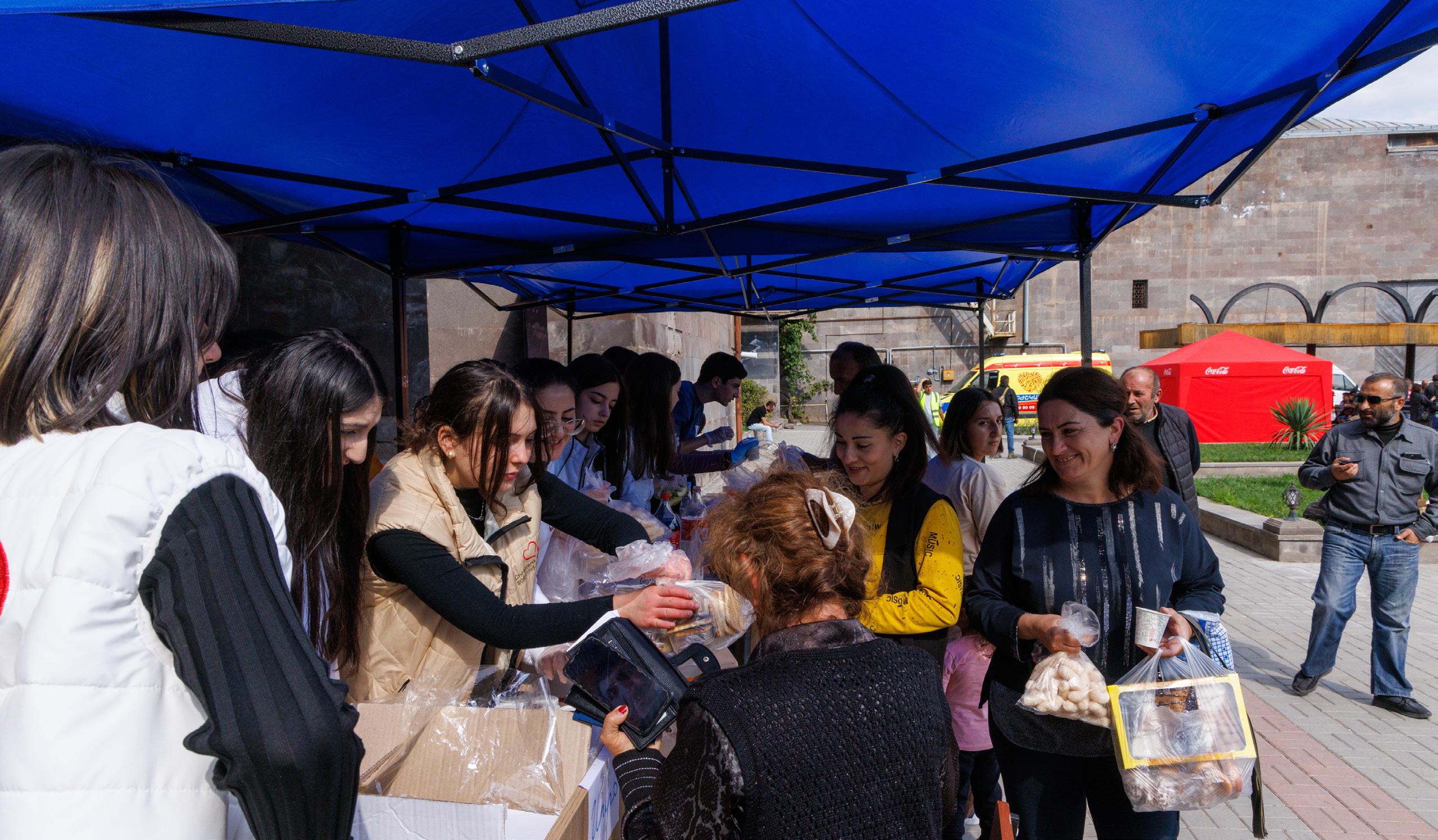
In 2015, the government of Armenia launched the Territorial Administrative Reform of Armenia, an initiative that sought to strengthen the administrative and fiscal capacities of Armenian municipalities in preparation for the decentralization of powers and functions administered by the central government. Among efforts by other bilateral donors, the United States Agency for International Development (USAID) sought to assist the national government’s decentralization effort by strengthening the capacity of the newly consolidated communities to plan and resource their own strategic development priorities and by enhancing citizen engagement and oversight in community-led decision-making processes. In a period of declining funding for DRG programs, USAID’s Local Works program provided important flexibility in funding availability and grantee eligibility to address this challenge. Local Works was an initiative mandated by Congress to provide direct, flexible, small grants to community-led organizations that could not otherwise compete effectively for USAID funding, in order to sustainably address locally-defined priorities.
Through Local Works, the USAID Mission in Armenia invested in direct community listening sessions—held virtually due to the COVID-19 pandemic—and a multi-round co-creation workshop engaging both potential applicants and community representatives. This co-creation process produced a set of four grant awards made directly to local organizations in newly consolidated communities outside the capital Yerevan, including one grant specifically targeted at the areas hardest hit by fighting in the Nagorno-Karabakh region in late 2020. Through late 2023, as ongoing displacement from Nagorno-Karabakh continued to impact communities throughout the country, flexible grant language and a close, collaborative relationship with staff in the USAID Mission enabled local partners to repurpose resources to address emerging needs—even as they continued to engage community members in planning processes focused on long-term development and resilience to future shocks.
The grantee organizations reported that the close collaborative relationship with donor-side staff was essential for minimizing bureaucratic burdens in managing and reporting on awards and for streamlining approvals, which allowed them to pivot resources in response to the conflict’s evolving effects on their communities. Prior to the rapid and unplanned shutdown of USAID programming in Armenia in early 2025, the grantees, the donor agency, and the decentralization process had all benefited from the ability to demonstrate an effective and inclusive participatory planning process, as well as from the capacity of newly consolidated community governance structures to respond in real time to evolving community needs.
In active conflict settings, traditional donor models for delivering humanitarian assistance through international intermediary organizations may be untenable when violence is pervasive. These models may also fail to invest in the systems, governance structures, and social capital needed to rebuild a peaceful and democratic society once the fighting stops. When large-scale violence and the ensuing humanitarian crisis broke out in Sudan in 2023, USAID staff once again sought to leverage flexibilities under the Local Works legislation to directly fund volunteer-based local organizations already operating in areas that international organizations could not reach. Known as Emergency Response Rooms (ERRs), these community-led organizations are composed of volunteers and democratic activists from Sudanese resistance committees, unions, cooperatives, service and change committees, women’s and youth groups, community-based organizations, and local activists. Grounded in the concept of “nafeer”—a Sudanese tradition of neighborhood-based community support rooted in values of mutual aid, solidarity, and trust—the ERRs work to ensure the continuity of basic services by organizing community
5. George Ingram, “Locally Driven Development: Overcoming the Obstacles,” Brookings, May 2022, https://www.brookings.edu/ articles/locally-driven-development-overcoming-the-obstacles/.
Local
clinics, delivering medicines, coordinating evacuations, restoring water and electricity services, managing soup kitchens, distributing food to vulnerable households, and facilitating the creation of local markets.
USAID used Local Works’ flexibilities to co-create a grant to fund a consortium of ERRs, coordinated via a localization council composed of said ERRs and local civil society organizations (CSOs). The grant would support these existing mutual aid systems through locally-led collaboration among groups with a demonstrated commitment to future democratic peacebuilding. Recognizing the limits of traditional, international intermediary-based assistance models, USAID was willing to adopt (and defend before its funders in Congress) a more flexible risk profile with the understanding that sustained, locally-managed emergency response would increase trust and legitimacy of community-led responders while helping repair the social fabric at the grassroots level. Through a hybrid co-creation process engaging ERR representatives and volunteer members, CSO partners, and a limited number of USAID staff participants, the consortium of ERR partners and a Sudanese intermediary CSO invested the time necessary to build internal consensus and understand USAID’s award requirements. Given this intentional time and space in a locally-led co-creation process, the stakeholders were able to collaboratively design a program that USAID could fund while supporting—rather than disrupting—the ERRs’ existing objectives and ways of working.
The grant was close to being finalized when the second Trump administration—through its Department of Government Efficiency—halted US foreign assistance in early 2025, and it was ultimately cancelled without being signed. While this initial award represented only a tiny fraction of the nearly $4 billion funding shortfall needed to address the humanitarian disaster in Sudan at the time of writing, the harm caused by the loss of trust among Sudanese democracy advocates—and the damage to US credibility and influence in the region resulting from retreating from its commitments—cannot be overstated.
Elite capture in fragile environments can also undermine governance reforms when building state capacity at the national level, especially in postwar contexts. In Kosovo, several former Kosovo Liberation Army commanders transitioned into prominent political roles after the war ended in 1999, forming and leading political parties that won seats in parliamentary elections since 2001 and joined coalition governments. These political parties used personalistic and politicized patronage networks to provide jobs to their followers in various central government ministries. Such clientelistic employment in central government led to poorer provision of public services, more
employee turnover, and lower effectiveness of international technical expertise aimed at increasing bureaucratic capacity. In contrast, the customs and police services in Kosovo were relatively effective at managing trade, raising revenue, and providing for citizen safety. This was due to the merit-based hiring and promotion process implemented by the EU and the Organization for Security and Cooperation in Europe (OSCE) during the 1999–2008 UN international administration. When Kosovo declared its independence from Serbia in 2008, all the bureaucratic institutions were staffed by Kosovars, but those built upon merit outperformed the patronage-driven organizations. Thus, for state-building, local ownership of the new state institutions remained the relevant goal despite the intrusive early involvement of international organizations in hiring and promotion processes.6
Local ownership led to stronger democratization outcomes in Kosovo as citizens directly mobilized through elections and nonviolent movements that resisted Serbia’s dominance. Civil society involvement in nonviolent movements and the frequent turnover in power due to free and fair elections in Kosovo demonstrate local agency. International actors played a supportive role in election management and security.7 Thus, international and local actors in Kosovo had to navigate the tensions between committing to participatory democratic processes while supporting merit-based bureaucratic processes for state capacity building.
While the examples from Armenia, Sudan, and Kosovo illustrate distinct challenges in conflict and postwar state-building contexts, they also highlight broader systemic obstacles that confront donors seeking to support local democratic actors effectively. Across the sector, serious donor efforts to directly and credibly support local democratic actors and advocates must now address fundamental operational and existential constraints. Exclusively donor-centric models of accountability and risk management give rise to bureaucratic demands that drain local organizations and activists’ resources and attention away from their own, locally-informed efforts and priorities, reducing the focus and resources available to manage feedback and accountability with local constituencies. Over successive rounds of localization reform efforts, USAID put significant effort and investment into addressing the bureaucratic and risk-management demands it imposed on its partners in order to better engage local partner organizations. These efforts stretched over a period of more than a decade, from Implementation and Procurement Reform and the Local Solutions initiative under successive Obama administrations, to the Journey to Self-Reliance (J2SR) reforms under the first
6. Skendaj, “International Insulation from Politics and the Challenge of State Building.” 7. Ibid.
Trump administration, to localization targets and supporting initiatives under the Biden Administration. On balance, efforts to increase the capacities of local entities to meet donor financial management and reporting demands were relatively more straightforward to operationalize, as these could be implemented through the familiar instruments of foreign assistance—namely contracts and grants to international and US-based intermediary implementing partners to conduct and report on capacity building activities. Concurrent efforts to improve USAID’s institutional flexibility, staff incentives, and culture for working effectively with local organizations were notably slower to take root.
Moreover, evidence of effectiveness and the artifacts of accountability efforts rarely find their way into the awareness of public constituencies either in the donor country or in the receiving local communities. Like nearly all institutions, donor organizations seek to sustain themselves. For bilateral assistance agencies and other publicly funded organizations prior to 2025, the legacies of high-profile, failed efforts (e.g., Afghanistan) and the fear of reduced funding levels did not drive a more vocal and public-facing defense of DRG programs. Investments in evidence-building have sought to justify the continuation of funding levels to ever-narrower audiences. Meanwhile, investments in programs themselves remain highly projectized, tied to donor funding cycles, often intensifying around time-bound, binary-outcome events like elections, and receding in “quieter” periods when investments in sustainability, systems change, and capacity strengthening are sorely needed. Even before the recent radical decline in funding and support for the sector, this recurring ebb of resources and interest in democracy support by donors contributed to the “starvation cycle” of funding faced by local organizations and undermined trust in funder commitment to democratic advocates and efforts.
Likewise, efforts to build evidence for and publicly justify locally-led programs have faced multiple constraints, primarily rooted in a donor-centric accountability culture and the fear of reduced funding. Locally-managed efforts are often painted as inherently riskier than programs managed by international implementers. At the same time, country- and community-based organizations with smaller operating budgets are assumed to be unable to deliver “impact”—a term whose meaning varies greatly depending on what outcomes are considered important—or to provide similar value for each dollar invested compared to their international counterparts. Like the programs themselves, efforts to address these gaps in evidence and communication around USAID programs were abruptly cut short in early 2025.
When funding decisions are made in political environments where leaders and democratically elected representatives are unwilling to make the case that DRG assistance aligns with their constituents’ values and is effective, simply publicizing performance data and audit findings is not sufficient to main-
tain public support or legitimacy for such programs on either end of the “local” divide. In the United States especially, public willingness to support democratic allies abroad based on shared values can no longer be assumed—it must be deliberately cultivated and earned. A political narrative that reports the facts with integrity while making a compelling case for the value of such programs—tailored to what both domestic and foreign constituencies care about—is essential to sustaining these efforts. Ultimately, support for locally-driven democracy and governance reforms must begin where it always has: at home.
Among the many strategies available to those working to advance locally-led DRG solutions in fragile states worldwide, four stand out as especially relevant and promising:
1. Shift decision-making power to local actors. Policy efforts and operational practices should foster genuine local ownership, with local actors setting agendas and leading the design, implementation, and evaluation of their activities. Achieving this requires donors and implementers to prioritize transparency and accountability toward their partners, program participants, and local constituencies.
2. Foster mutual capacity sharing. Funders and implementers should invest in reciprocal capacity building between international and local actors. This means strengthening local organizations’ ability to manage programs while also sustaining themselves, recognizing that learning and knowledge flow in both directions. Efforts must be guided by local priorities for capacity development—not just by donor compliance requirements.
3. Embed feedback and participatory approaches. Donors and implementers must commit to listening and adapting through mechanisms such as dialogue, co-creation, and collective problem-solving. Strong partnerships between local and international actors are essential to building mutual accountability and fostering learning.
4. Build constituencies in donor states. it is critical to engage, persuade, and cultivate public and political support in the United States and the EU for democracy and development assistance.
To ensure that local priorities drive democracy and governance activity in fragile states, securing support for these strategies within donor states—and encouraging practical changes among donors and implementers—will be of paramount importance going forward.
By Peter Mandaville, nonresident senior fellow, Freedom and Prosperity Center, Atlantic Council
The global development field is increasingly guided by the principle of localization, advocating the transfer of power, funding, and decision-making to local actors deeply embedded in communities. Yet, faith-based organizations (FBOs)—along with other religious actors and institutions such as churches, mosques, temples, and spiritual leaders—are often overlooked in localization dialogues. These actors are present across cultures worldwide and wield profound moral and social authority, serving as the connective tissue of communities. More than that, social science shows that religion matters. In a well-known poll conducted in 2010, the Pew Research Center found that 5.8 billion people—84 percent of the world’s population at the time—reported some affiliation with religion.8
Religious actors are uniquely positioned to champion localization through three core strengths: deep trust from the communities they serve, contextual insight into local needs, and longterm presence across development and crisis cycles. Drawing on evidence from COVID-19 vaccination campaigns, West and Central African Ebola responses, and strategic religious engagement literature, this essay argues that FBOs should not be treated as mere logistical partners; rather, they should be recognized as full partners in development—capable of advancing human dignity, social resilience, and moral legitimacy.
The case studies highlighted here offer practical guidance for donors and development practitioners—including government agencies and implementing organizations—on how to integrate FBOs into localized development strategies.
Trust and access: Gateways to hard-to-reach communities
Trust is the foundational currency of effective development. In many contexts, FBOs hold a level of legitimacy that secular actors struggle to achieve. Their moral authority—grounded in spiritual leadership and long-standing relationships with communities—enables them to reach populations that might otherwise resist outside influence. This dynamic was vividly demonstrated during the COVID-19 pandemic. In Uganda, for example, Muslim and Christian religious leaders worked closely with health authorities to promote vaccination, using religious messaging that emphasized both parental duty and communal responsibility. These leaders influenced behavior not solely because of their social status, but because their messages were perceived as consistent with cultural and spiritual values.
A systematic review of thirty-seven studies confirmed that FBOs significantly improved vaccine uptake across global contexts by tailoring public health campaigns, addressing vaccine hesitancy, and serving as trusted interlocutors in contested public spaces.9 This trust extends beyond public health crises. During the Ebola outbreaks in West Africa and the Democratic Republic of the Congo (DRC), FBOs played a pivotal role in reshaping community behaviors—particularly around culturally sensitive practices such as burial. In Guinea, Liberia, and Sierra Leone, religious leaders helped counteract widespread fear and misinformation by framing safe burial practices as a spiritual obligation to protect life and honor the dead.10 Similarly, an analysis of health intervention data found that programs delivered by FBOs provided roughly equal quality to those delivered by government agencies—often more efficiently and with greater community trust.11
8. “The Global Religious Landscape,” Pew Research Center, December 2012, https://assets.pewresearch.org/wp-content/uploads/ sites/11/2014/01/global-religion-full.pdf.
9. Uzma Syed, et al., “The Role of Faith-Based Organizations in Improving Vaccination Confidence & Addressing Vaccination Disparities to Help Improve Vaccine Uptake: A Systematic Review,” Vaccines 11, 2 (2023), https://pubmed.ncbi.nlm.nih. gov/36851325/.
10. “Keeping the Faith: The Role of Faith Leaders in the Ebola Response,” Christian Aid, July 2015, https://www.christianaid.org.uk/ sites/default/files/2022-11/keeping-the-faith-research-report-jul-2015.pdf.
11. Ritva Reinikka and Jakob Svensson, “Working for God?” Centre for Economic Policy Research, February 2004, https://papers. ssrn.com/abstract=508042.
Trust, however, is not merely an instrument to deliver services; it is relational and ethical. FBOs often build their credibility over decades of consistent service provision, pastoral care, and social support. They are frequently the first point of contact during times of personal or communal crisis. This embedded trust is what enables FBOs to intervene in sensitive areas such as mental health, domestic violence, and sexual and reproductive health—topics that may be stigmatized or taboo in many communities. In these cases, the messenger is as important as the message. When trusted faith leaders deliver development interventions, those efforts gain moral weight and communal legitimacy.
In fragile and conflict-affected areas, FBOs often represent the only functioning institutions. They serve as vital intermediaries between international organizations and populations skeptical of external influence, ensuring that development programs extend beyond urban centers into marginalized rural communities. In parts of northern Nigeria and rural DRC, churches and mosques continue to provide essential services such as education and health care in the near-complete absence of the state. Their role is far beyond logistics—they mediate access, confer legitimacy, and ensure that aid is delivered with dignity.12
FBOs as local knowledge hubs FBOs do more than deliver services—they interpret and contextualize them. Through their sustained engagement with communities, religious actors develop detailed knowledge of local social dynamics, power relations, and cultural norms. They act as informal “think tanks,” gathering granular information and generating insights that are often inaccessible to external actors. This role as brokers of local knowledge is essential for designing context-sensitive programs.
During the Ebola outbreak in West Africa, FBOs collaborated with health officials to align interventions with religious and cultural expectations. Their involvement prompted adaptations to burial and caregiving practices that had previously clashed with infection control guidelines. By partnering with religious leaders to reinterpret sacred rituals, public health officials were able to foster behavior change without alienating local communities. This cultural translation—which framed infectioncontrol measures as religious obligations and acts of communal care—was critical to the success of the Ebola response.13
Moreover, FBOs often serve as early barometers of community sentiment. Owing to their deep ties and consistent engage-
ment, they are often the first to detect shifts in public mood, social cohesion, or emerging grievances. This local intelligence is especially valuable in conflict-affected settings, where early warning and rapid response can prevent escalation. In many cases, individuals bring sensitive concerns to religious leaders long before they surface in public. Such proximity enables FBOs to identify risks and opportunities that conventional assessment tools might overlook.
FBOs also play a pivotal role in facilitating reintegration and social cohesion in the context of displacement and migration. Religious actors assist migrants not only through services but also by mediating identity, rebuilding social trust, and facilitating spiritual healing.14 They create spaces for displaced individuals to reconnect with cultural traditions and community networks, fostering a sense of belonging that formal institutions may struggle to provide. This role becomes even more critical in protracted crises, where return, reintegration, and reconciliation are drawn-out and complex processes.
In many contexts, faith actors serve as crucial mediators in post-conflict reconciliation. In post-genocide Rwanda, for example, church-led truth and reconciliation initiatives helped facilitate local dialogues and rebuild trust between Hutu and Tutsi communities. Similarly, in South Sudan and the Central African Republic, interfaith councils have helped defuse tensions, advocate for peace, and promote forgiveness and coexistence. These examples underscore the potential of FBOs to contribute not only to development outcomes but also broader goals of social harmony and justice.
Continuity and sustainability: The long-term role of FBOs
The contributions of FBOs to development are not confined to emergency response. One of their most significant assets is their enduring presence. Unlike international NGOs, which are typically constrained by project cycles and donor priorities, FBOs are deeply embedded in their communities, often for decades. They are present before crises, are among the first responders when emergencies occur, and remain engaged long after international attention has shifted elsewhere.
For example, the Tzu Chi Foundation in Taiwan mobilized within two hours of the 1999 Chi-Chi earthquake—drawing on pre-mapped volunteer networks organized during peacetime. Their response went beyond relief; they executed the “Project Hope” school-rebuilding initiative, demonstrating how strong local networks can accelerate comprehensive recovery.
12. Robert Leurs, “Are Faith-Based Organizations Distinctive? Comparing Religious and Secular NGOs in Nigeria,” Development in Practice 22, 5–6 (2012), 704–720, https://www.jstor.org/stable/41723133.
13. “Responding to the Ebola Epidemic in West Africa,” Berkley Center for Religion, Peace, and World Affairs, Georgetown University, May 16, 2016, https://berkleycenter.georgetown.edu/publications/responding-to-the-ebola-epidemic-in-west-africa-whatrole-does-religion-play.
14. Susanna Trotta, “Local Faith Actors and the Migration–Development Nexus: A Literature Review,” Religion and Development 2, 2 (2023), 261–284, https://www.sciencedirect.com/org/science/article/pii/S2750794723000118.
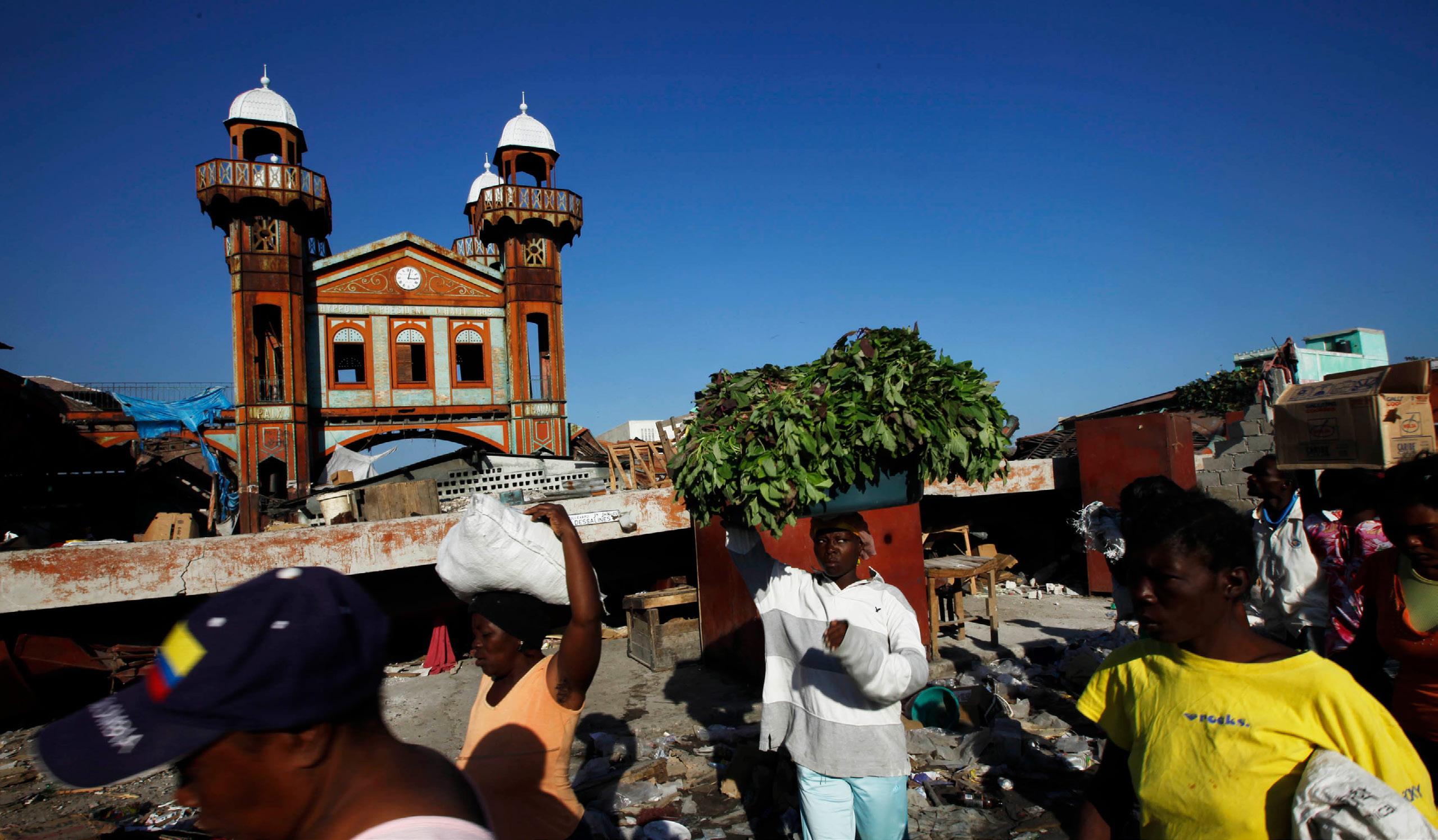
Haiti offers another illustrative case. Following the 2010 earthquake, religious organizations provided immediate relief and sustained their support long after many humanitarian actors had left. Catholic and Protestant groups helped rebuild homes, reopen schools, and provide psychosocial support to traumatized populations. Similarly, in Indonesia’s Aceh province, Islamic boarding schools—so-called pesantren—were instrumental in post-tsunami reconstruction. Their established infrastructure, social networks, and moral authority made them ideal hubs for distributing aid, providing education, and supporting long-term recovery.
In the Philippines, Islamic and Christian organizations responded to Typhoon Haiyan with both material assistance and long-term accompaniment. They helped families restore housing, restart schools, and address trauma. Their approach was holistic—acknowledging that reconstruction is not just physical but also psychological and spiritual. Faith-based programming combined prayer, pastoral care, and community storytelling alongside construction and livelihood grants.15
In Sierra Leone, Liberia, and Guinea, FBOs remained active in communities devastated by Ebola—supporting orphaned children, providing trauma counseling, and working to restore trust in health systems. In many cases, they maintained maternal health and education services that had collapsed during the crisis. The enduring presence of these organizations ensures that development gains are preserved when emergency programs end.16
Sustainability also involves nurturing local leadership. FBOs often cultivate leaders through theological education, lay training, and youth mentorship. Such efforts produce a cadre of community leaders who are not only spiritually grounded but also equipped to address development challenges. Unlike externally funded staff who may leave when projects end, these leaders remain rooted in their communities, providing a stable and continuous presence.
Moreover, FBOs are uniquely positioned to foster lasting behavioral change by embedding development objectives in moral and spiritual narratives. Whether by promoting environ-
15. “Doing Cash Differently: How Cash Transfers Can Transform Humanitarian Aid,” Overseas Development Institute and Center for Global Development, September 2015, https://media.odi.org/documents/9828.pdf.
16. “Ebola: West Africa, March 2014–2016,” World Health Organization, 2016, https://www.who.int/emergencies/situations/ebola-outbreak-2014-2016-West-Africa.
mental stewardship, gender equity, or child protection, they connect these goals to religious teachings and values, reinforcing their legitimacy and sustainability. This narrative framing enables FBOs to cultivate intergenerational norms and strengthen community ownership of development outcomes. When communities view development as consistent with their values, they are more likely to invest in and sustain those gains over time.
While FBOs offer numerous advantages, their inclusion in development efforts requires careful consideration. Faith-based engagement entails ethical complexities, including the risk of exclusionary practices, proselytization, and alignment with political agendas. Not all religious actors are equally committed to inclusivity, and some may resist development goals related to gender equality, LGBTQ+ rights, or religious pluralism.
For that very reason, religious engagement requires strategic clarity. Partnerships with FBOs must be grounded in shared values, transparency, and accountability17—and donors and implementing agencies should vet potential partners carefully, ensuring they uphold humanitarian principles and respect diversity. This vetting process should extend beyond institutional affiliations to include assessments of community perceptions and internal governance.
Importantly, not all FBOs are conservative or resistant to change. Many are progressive actors who champion inclusive development. Women’s religious organizations, interfaith networks, and reform-minded clerics have often led efforts to challenge discriminatory norms within their communities. Engaging with these actors can amplify voices already working to align religious values with human rights. The Catholic Church’s Caritas Internationalis, for example, is a strong advocate for social justice, human dignity, and the rights of migrants and refugees.
It is equally important to recognize that the concern about exclusionary practices can go both ways. Governments and donors seeking to engage religious actors often gravitate toward religious elites and senior figures in faith institutions who hold formal titles or positions of authority (e.g., bishop, rabbi, mufti). Such an approach almost always confines religious engagement to men—and typically to older men. In many faith traditions around the world, women constitute highly influential—if often informal—sources of authority within religious communities. Likewise, younger religious leaders may remain silent in the presence of senior colleagues, even when they have
better insight into community priorities and dynamics by virtue of being much closer to the median age.
When engaging religious actors and local FBOs, donors and government agencies must be alert to the significant power asymmetries that may arise in such partnerships. Instrumentalization and exploitation are a persistent risk, as is the possibility that religious actors will face direct safety threats if they are accused of serving as agents of specific governmental or political agendas.
Capacity building is hence essential to ensure that FBOs can participate effectively in development partnerships. While they bring moral capital and social legitimacy, some lack the technical capacity to meet donor requirements related to financial management, safeguarding practices, or monitoring and evaluation. Investing in these areas not only strengthens the effectiveness of FBOs but also enhances their long-term autonomy and resilience.
Bilateral and multilateral donor agencies such as the United Nations, the EU, and the now-defunct USAID have developed guidelines to support ethical and effective religious engagement. These frameworks—for example, USAID’s 2023 guidelines18—promote inclusive practices, safeguard against coercion, and encourage collaboration across faith and secular actors. They also emphasize the importance of continuous dialogue and joint learning, thereby creating spaces where differences can be navigated constructively and common goals advanced.
Finally, ethical engagement requires humility and self-reflection on the part of secular development actors. It involves recognizing that faith perspectives may offer valuable insights into human well-being, community, and justice—insights that can enrich, rather than undermine, development practice. By approaching faith-based engagement as a dialogue rather than a transaction, development practitioners can build more authentic and transformative partnerships.
1. To realize the full potential of FBOs in localized development, their integration must be intentional, structured, and sustained. This begins with systematic mapping— identifying the religious actors already engaged in service delivery, advocacy, and community organizing. Mapping should consider not only formal organizations but also informal leaders and networks that command local respect and influence.
17. Olivia Wilkinson, “Putting the ‘Strategic’ into Strategic Religious Engagement,” Review of Faith and International Affairs 19 (2021), 78–84, https://www.tandfonline.com/doi/full/10.1080/15570274.2021.1983361.
18. “Building Bridges in Development: USAID’s Strategic Religious Engagement Policy,” US Agency for International Development, September 2023, https://berkley-center.s3.us-east-1.amazonaws.com/USAIDStrategicReligiousEngagementPolicy.pdf.
2. Following mapping, capacity strengthening becomes critical. Training programs should focus on financial accountability, digital literacy, safeguarding practices, and results-based management. These investments enable FBOs to meet donor standards while maintaining their distinctive identity and relational strengths. Joint workshops and mentoring initiatives can also foster trust and mutual understanding between secular and religious actors.
3. Integration does not always require funding. Sometimes the most effective form of engagement involves inclusion in planning processes, co-design of interventions, and participation in multi-stakeholder platforms. For example, in South Sudan, interfaith councils were brought into humanitarian coordination forums, improving information flow and the cultural adaptation of programs.19
4. Localization demands a shift in mindset. It is not only about transferring resources but about recognizing and valuing local epistemologies and moral worldviews. FBOs bring what has been described as “moral capital” and “spiritual capital”—resources that can deepen community commitment and resilience.20 When faith-based values align with development objectives, they can provide powerful motivational frameworks that sustain progress over time.
5. Donors must resist the temptation to instrumentalize FBOs for crisis response and instead cultivate long-term partnerships rooted in mutual respect and co-creation. This involves strategic accompaniment—walking alongside FBOs through dialogue, joint reflection, and shared learning. By doing so, development actors can foster locally-rooted change that is both ethically grounded and operationally effective.
6. Finally, to be successful in faith engagement for localized development it is vital to ensure that we “right
size religion.”21 In practice this means neither placing undue emphasis on the role of religion or religious actors in a given context, nor dismissing their importance outright. It also means recognizing that as an integral part of broader civil societies, religious actors have relevance and exert influence in sectors far beyond what is conventionally defined as the realm of “religion.” Among other things, they are deeply involved in local economic development, community education, health service delivery, and peacebuilding—in other words, core areas of development.
FBOs are not peripheral to the localization agenda: in many contexts, they are its most authentic expression. Their presence, trust, and contextual knowledge position them as key agents of sustainable, community-driven development. However, realizing this potential requires intentional and principled engagement, strategic capacity investment, and a rethinking of how development systems value different forms of expertise.
As the field of strategic religious engagement matures, development practitioners have an opportunity to reshape the localization agenda around actors who are already deeply invested in the well-being of their communities. Doing so will not only enhance the effectiveness of development interventions but will also foster the kind of locally-rooted, morally resonant change that can endure beyond any single program or funding cycle.
What is ultimately at stake is not only the efficiency or reach of development programs, but the moral legitimacy and resilience of the development project itself. Faith-based actors offer a relational infrastructure, a moral vocabulary, and an enduring social presence that are indispensable to the localization of development. Their integration into development practice must be rooted in mutual respect, critical engagement, and a shared commitment to human dignity.
19. Florine de Wolf and Olivia Wilkinson, “The Triple Nexus, Localization, and Local Faith Actors,” Joint Learning Initiative on Faith and Local Communities, 2019, https://jliflc.com/wp-content/uploads/2019/10/TripleNexus_SouthSudan_ReviewOfLiterature.pdf.
20. Katherine Marshall, et al., “Religious Engagement in Development: What Impact Does It Have?” Review of Faith and International Affairs 19 (2021), 42–62, https://www.tandfonline.com/doi/full/10.1080/15570274.2021.1983347.
21. Peter Mandaville, “Right-Sizing Religion and Religious Engagement in Diplomacy and Development,” Review of Faith and International Affairs 19 (2021), 92–97, https://www.tandfonline.com/doi/full/10.1080/15570274.2021.1983345.
By Ibrahima Bokoum, executive director, Eastern Congo Initiative
“I’ve never seen gold, but the country is full of it. I’ve never seen iron or cobalt. You can’t eat that.” This observation from Congolese business leader Valéry Namuto highlights a critical paradox: while international attention gravitates toward the Democratic Republic of Congo’s mineral wealth, ordinary Congolese communities focus on survival, food, water, education, and peace.
Eastern Congo’s trajectory cannot be reduced to resource extraction or conflict alone. It is shaped by a complex interplay of demographic growth, fragile infrastructures, climate shocks, and uneven access to basic services. Rapid urban migration and shifting livelihoods place enormous pressure on social systems. Yet within these constraints, communities innovate, adapt, and build resilience.
For decades, international assistance has played an important role. However, over-reliance on external actors has exposed vulnerabilities, particularly when funding priorities shift abruptly. The challenge now is not to disengage, but to realign investments in ways that strengthen local systems and institutions, ensuring durability and autonomy long after international presence fluctuates.
Evidence consistently demonstrates that initiatives rooted in community participation are more sustainable. A World Bank study found that projects with high levels of local ownership are approximately 60 percent more likely to endure after external support ends. Research by the international NGO Ground Truth Solutions summarizes the lesson succinctly: “Everything you do ‘for me’ without me, you do against me.”
For fifteen years, the organization I lead, the Eastern Congo Initiative (ECI), has placed this principle at the center of its approach. Long before “localization” became a global development priority, ECI embedded itself in communities across North and South Kivu, working with farmers, cooperatives, entrepreneurs, and women’s groups to design solutions that are relevant, adaptive, and resilient.
By supporting Congolese actors rather than substituting for them, ECI has helped foster durable markets and institutions: food systems that circulate within the province, women-led cooperatives that reinvest earnings into education and healthcare, and youth-driven enterprises that transform waste into energy or improve climate resilience.
Across Eastern Congo, communities are demonstrating that economic empowerment and resilience are possible even in fragile environments. The following examples illustrate how local actors are designing solutions that address urgent needs while laying the foundation for long-term growth:
y Turning waste into power: Bing Ecology, a local startup in Goma, addresses both deforestation and displacement by producing ecological charcoal as an alternative to wood. With modest, flexible support, the enterprise scales production by many folds in under a year, providing sustainable fuel, reducing carbon emissions, and creating jobs for youth and women.
y Women leading food security: In South Kivu, the Maman Katana cooperative emerged after devastating floods. Led entirely by women, it not only restored food supplies but integrated aquaculture with agriculture, developing a circular system that maximizes resources and eliminates waste. Within months, seven hundred women joined the initiative, creating both economic opportunity and community resilience.
y Building durable systems with the Asili Model: The Asili initiative illustrates how long-term, community-centered design can outlast crises. Conceived through deep consultation with Congolese communities, Asili reimagined aid as catalytic capital for essential services—healthcare, clean water, and agricultural cooperatives. From the outset, the goal was not dependency but transfer: enterprises built for and by Congolese, sustained through local leadership. Today, Asili operates as an independent Congolese enterprise. Its water systems serve nearly 400,000 people across ninety-eight miles of pipeline, and its clinics have grown into comprehensive health centers, even piloting new diagnostic services. Its agricultural arm, COOPABU, introduced disease-resistant potato seeds, raising productivity and income for rural farmers. Crucially, Asili survived the 2024 displacement crisis, when international NGOs evacuated; because it was rooted locally, its staff adapted operations and continued serving hundreds of thousands of people at the height of instability.
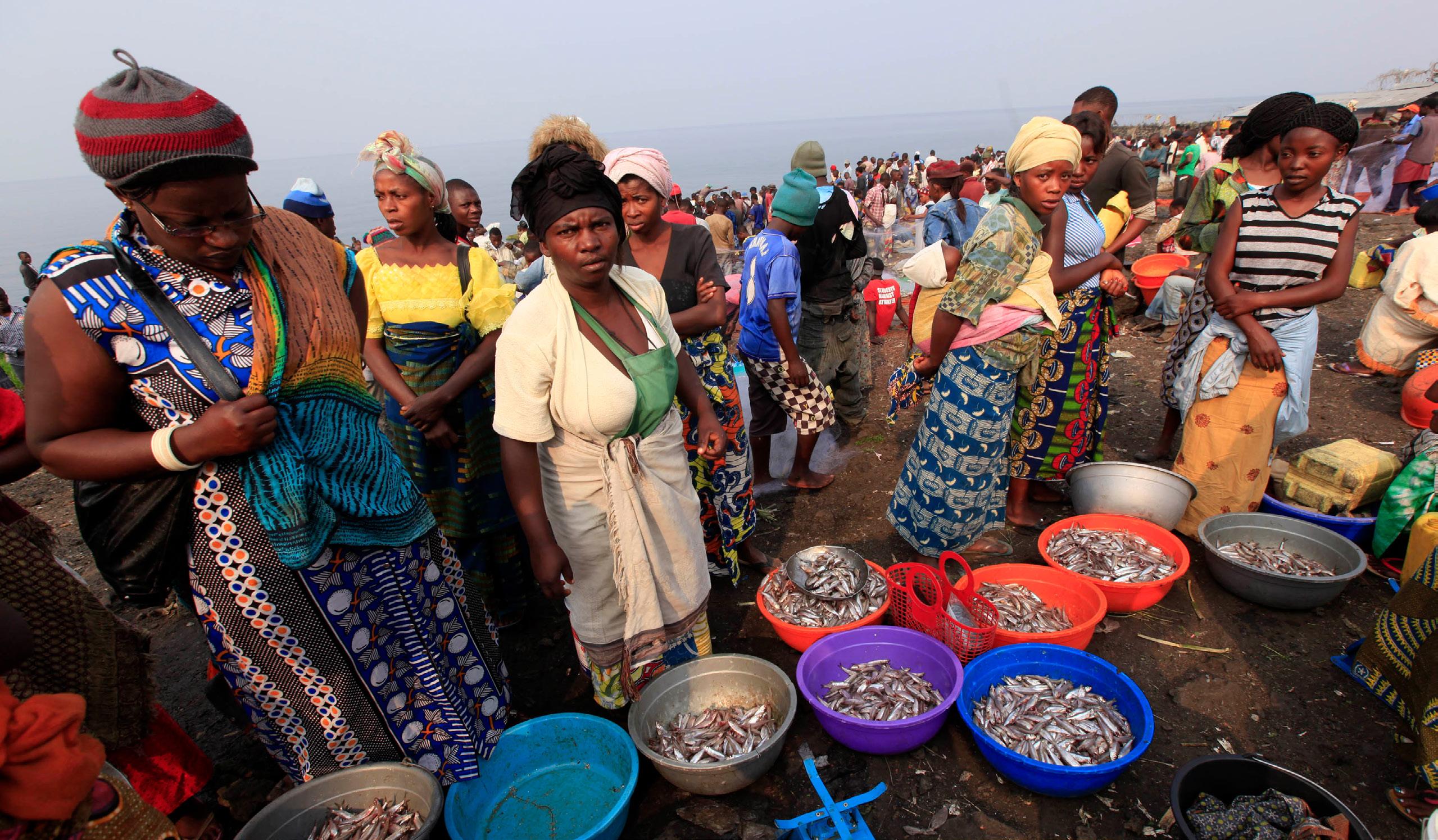
These examples underscore a vital truth: stability is not a prerequisite for economic development. On the contrary, innovation often emerges most forcefully in fragile environments. Economic empowerment nurtures resilience, which in turn creates conditions for stability and peace.
The lesson is clear: localization is not a risk; it is a long-term investment in resilience.
For international development to be effective in fragile contexts, three shifts are necessary:
1. From implementation to leadership. Local actors must not only implement but also design, govern, and evaluate initiatives. International partners should invest in institutions, not just projects, ensuring communities retain agency over priorities and strategies.
2. From outputs to systems change. Success must be measured by sustainability, self-reliance, and systemic transformation, not simply by the number of wells dug or people reached. Monitoring and evaluation frameworks must adapt to these metrics and prioritize community voice.
3. From short-term cycles to long-term commitment. Development requires patience. Crops like coffee
take years before benefits accrue. Sudden funding withdrawals leave farmers in debt and weaken cooperatives. Policy frameworks must extend timelines, align humanitarian response with long-term development, and provide the flexibility to adapt as contexts shift.
As Eastern Congo faces ongoing challenges, its greatest resource is not its minerals but its people—the ingenuity of youth, the resilience of women, and the leadership of communities determined to chart their own future.
The experience of ECI demonstrates that resilience cannot be imported; it must be cultivated locally. Durable systems emerge when policies and partnerships recognize local knowledge, empower institutions, and invest in long-term capacity.
As the international community considers its role in fragile states, Eastern Congo offers a powerful case study: sustainable peace and development emerge when communities own both the vision and the means of implementation.
By investing in Congolese leadership, building adaptable systems, and aligning international support with community priorities, we can move beyond temporary interventions to lay the foundations of a society that is resilient, inclusive, and innovative. Eastern Congo’s future will not be written by external actors alone, but by the women, men, and youth who call it home. The role of international partners is to accompany—not replace—them on this journey.
Sustainable development and durable democracy cannot be achieved through externally imposed solutions alone; they depend on local ownership and leadership. Lasting results come when local actors are empowered to set priorities, craft strategies, and lead implementation. Communities possess the knowledge, networks, and moral authority that external actors cannot replicate, and development initiatives that leverage these strengths are far more likely to endure and generate meaningful impact.
Experience from fragile and conflict-affected contexts shows that trust, contextual understanding, and sustained engagement are indispensable. Whether through community-led governance reforms, FBOs bridging cultural and social divides, or
adaptive approaches to stabilization, development succeeds when it aligns with the lived experiences and aspirations of local populations.
Policymakers, donors, and practitioners must shift from directing change to enabling it: investing in local capacity, cultivating genuine partnerships, and prioritizing long-term outcomes over short-term outputs. By centering local agency and embedding development within social, cultural, and ethical contexts, the international development enterprise can move beyond fleeting interventions to build societies that are resilient, inclusive, and capable of sustaining their own progress across generations.
CHAIRMAN
*John F.W. Rogers
EXECUTIVE CHAIRMAN
EMERITUS
*James L. Jones
PRESIDENT AND CEO
*Frederick Kempe
EXECUTIVE VICE CHAIRS
*Adrienne Arsht
*Stephen J. Hadley
VICE CHAIRS
*Robert J. Abernethy
*Alexander V. Mirtchev
TREASURER
*George Lund
DIRECTORS
Stephen Achilles
Elliot Ackerman
*Gina F. Adams
Timothy D. Adams
*Michael Andersson
Alain Bejjani
Colleen Bell
Sarah E. Beshar
Karan Bhatia
Stephen Biegun
John Bonsell
Linden P. Blue
Brad Bondi
Philip M. Breedlove
David L. Caplan
Samantha A. Carl-Yoder
*Teresa Carlson
*James E. Cartwright
John E. Chapoton
Ahmed Charai
Melanie Chen
Michael Chertoff
*George Chopivsky
Wesley K. Clark
*Helima Croft
Ankit N. Desai
Dario Deste
*Lawrence Di Rita
*Paula J. Dobriansky
Joseph F. Dunford, Jr.
Richard Edelman
Stuart E. Eizenstat
Tara Engel
Mark T. Esper
Christopher W.K. Fetzer
*Michael Fisch
Alan H. Fleischmann
Jendayi E. Frazer
*Meg Gentle
Thomas Glocer
John B. Goodman
Sherri W. Goodman
Marcel Grisnigt
Jarosław Grzesiak
Murathan Günal
Michael V. Hayden
Robin Hayes
Tim Holt
*Karl Hopkins
Kay Bailey Hutchison
Ian Ihnatowycz
Wolfgang Ischinger
Deborah Lee James
*Joia M. Johnson
*Safi Kalo
Andre Kelleners
Brian Kelly
John E. Klein
Ratko Knežević
*C. Jeffrey Knittel
Joseph Konzelmann
Keith J. Krach
Franklin D. Kramer
Laura Lane
Almar Latour
Yann Le Pallec
Jan M. Lodal
Douglas Lute
Jane Holl Lute
William J. Lynn
Mark Machin
Marco Margheri
Michael A. Margolis
Chris Marlin
William Marron
Roger Martella
Gerardo Mato
Erin L. McGrain
John M. McHugh
*Judith A. Miller
Dariusz Mioduski
*Richard L. Morningstar
Georgette Mosbacher
Majida Mourad
Virginia A. Mulberger
Mary Claire Murphy
Julia Nesheiwat
Edward J. Newberry
Franco Nuschese
*Ahmet Ören
Ana Palacio
*Kostas Pantazopoulos
Alan Pellegrini
David H. Petraeus
Elizabeth Frost Pierson
*Lisa Pollina
Daniel B. Poneman
Robert Portman
*Dina H. Powell McCormick
Michael Punke
Ashraf Qazi
Thomas J. Ridge
Gary Rieschel
Charles O. Rossotti
Harry Sachinis
Curtis Michael Scaparrotti
Ivan A. Schlager
Rajiv Shah
Wendy R. Sherman
Gregg Sherrill
Jeff Shockey
Kris Singh
Varun Sivaram
Walter Slocombe
Christopher Smith
Clifford Sobel
Michael S. Steele
Richard J.A. Steele
Mary Streett
Nader Tavakoli
*Gil Tenzer
*Frances F. Townsend
Clyde C. Tuggle
Francesco G. Valente
Melanne Verveer
Tyson Voelkel
Kemba Walden
Michael F. Walsh
Ronald Weiser
*Al Williams
Ben Wilson
Maciej Witucki
Neal S. Wolin
Tod D. Wolters
*Jenny Wood
Alan Yang
Guang Yang
Mary C. Yates
Dov S. Zakheim
HONORARY DIRECTORS
James A. Baker, III
Robert M. Gates
James N. Mattis
Michael G. Mullen
Leon E. Panetta
William J. Perry
Condoleezza Rice
Horst Teltschik
William H. Webster
*Executive Committee Members
List as of July 2025