LUIS ENRIQUE MENES MEDELLÍN
ARCHITECTURE PORTFOLIO
“Architecture starts when you carefully put two bricks together. There it begins.”
- ludwig mies van der rohe
CONTENT MULTIPURPOSE BUILDING AT VALENTÍN GÓMEZ FARÍAS 19...............................................................................................................................................4 SAN FERNANDO HOTEL+HOSTEL............................................................................................................................................................................................7 SEAGAL METHOD.....................................................................................................................................................................................................................17 BORLETTI FACTORY................................................................................................................................................................................................................20
MULTIPURPOSE BUILDING AT VALENTÍN GÓMEZ FARÍAS 19
ITESM CSF

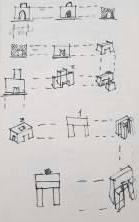
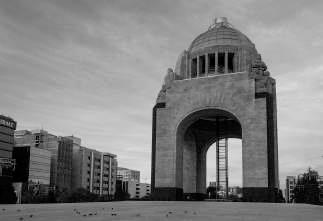
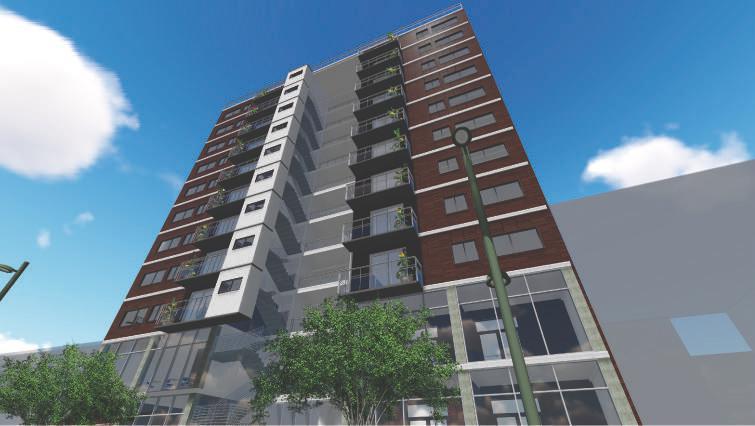
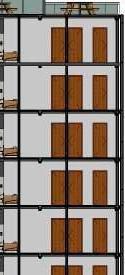
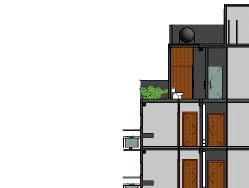
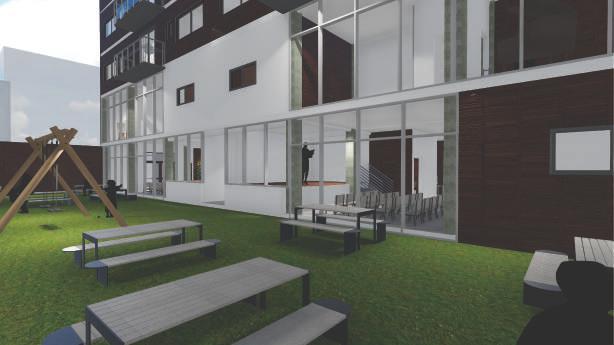
One of the most emblematic monuments in the country is the Monument to the Revolution, located in the Colonia Tabacalera in Mexico City. This monument was designed by the mexican architect Carlos Obregón Santasilla and its construction was completed in 1938. The concept in which the Multipurpose Bulding at Valentín Gómez Farías 19 is based is in the main form of this structure.
VALENTÍN GÓMEZ
EXPECTADORES ESCENARIO AULA AULA AULA BAÑOS VESTÍBULO PASILLO BODEGA EXPECTADORES ESCENARIO AULA AULA AULA BAÑOS PASILLO BODEGA RECEPCIÓN VESTÍBULO RECEPCIÓN VESTÍBULO PRINCIPAL C.V C.V RECEPCIÓN AULA AULA AULA AULA BAÑOS BAÑOS VESTÍBULO VESTÍBULO CABINA DE GRABACIÓN RECEPCIÓN AULA AULA AULA AULA BAÑOS BAÑOS VESTÍBULO VESTÍBULO SALA DE EXPOSICIONES VESTÍBULO PRINCIPAL C.V C.V Lower level Level 1 Level 2 Type floor v C.S K C S R B v C.S K C S R B C.V P C.V T T v C.S K C S R B v C.S K C S R B P T T VESTÍBULO PRINCIPAL BODEGA C.V C.V BAÑOS/ VESTIDORES BAÑOS/ VESTIDORES CARDIO PESAS BODEGA Level 12
MULTIPURPOSE BUILDING AT
FARÍAS 19
Monument to the Revolution Free Area Circulation/ Parking Academies Apartments Amenities 5 CLASSROOM TERRACE TERRACE TERRACE TERRACE ROOM ROOM ROOM ROOM ROOM ROOM ROOM ROOM ROOM ROOM ROOM BATHROOM BATHROOM BATHROOM BATHROOM BATHROOM BATHROOM BATHROOM BATHROOM RESTROOMS RESTROOMS GYM GYM STORAGE ROOM STORAGE ROOM BATHROOM BATHROOM LIVING ROOM LIVING ROOM LIVING ROOM LIVING ROOM LIVING ROOM LIVING ROOM LIVING ROOM LIVING ROOM LIVING ROOM DINING ROOM DINING ROOM DINING ROOM DINING ROOM DINING ROOM DINING ROOM DINING ROOM DINING ROOM DINING ROOM KITCHEN KITCHEN KITCHEN KITCHEN KITCHEN KITCHEN KITCHEN KITCHEN KITCHEN HALL HALL HALL HALL HALL S.R. S.R. S.R. SERVICE ROOM SERVICE ROOM CLASSROOM CLASSROOM CLASSROOM CLASSROOM CLASSROOM CLASSROOM CLASSROOM CLASSROOM CLASSROOM CLASSROOM CLASSROOM RESTROOMS RESTROOMS RESTROOMS RESTROOMS RESTROOMS RESTROOMS STAIRS/ ELEVATOR STAIRS/ ELEVATOR STAIRS/ ELEVATOR STAIRS/ ELEVATOR STAIRS/ ELEVATOR STAIRS/ ELEVATOR RECORDING BOOTH STORAGE ROOM STORAGE ROOM SPECTATORS SPECTATORS SCENARIO SCENARIO RECEPTION RECEPTION CLASSROOM CLASSROOM LOBBY LOBBY LOBBY LOBBY LOBBY LOBBY HALL HALL RECEPTION RECEPTION MAIN LOBBY MAIN LOBBY MAIN LOBBY STAIRS/ ELEVATOR EXHIBITION ROOM VESTIBULE VESTIBULE VESTIBULE VESTIBULE VESTIBULE TERRACE TERRACE TERRACE TERRACE TERRACE STAIRS/ ELEVATOR STAIRS/ ELEVATOR
1 150
Scale
Número de plano
deberá ser notificada antes del inicio de la obra.
otro tipo de planos relevantes para la construcción
Cualquier discrepancia entre el plano arquitectónic o y
Las cotas rigen sobre el dibujo.
Todas las dimensiones deben ser revisadas en sitio.
Medidas en metros.
Notas



17 Proyecto:
Profesor Fecha Alumno
Valentín Gómez Farías
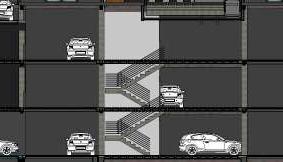
Corte D-D' Luis Enrique Menes Medellín

C.S.
BAÑO TERRAZA
ACADEMIA DE DANZA TEATRO RECEPCIÓN


Arq. Luis Enrique Mendoza A15 VESTÍBULO

C.S. DUCTO C.S.
C.S. DUCTO C.S.


C.S. DUCTO C.S.
C.S. DUCTO C.S.
GRABACIÓN JARDÍN ESCENARIO
AULA

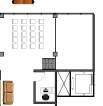
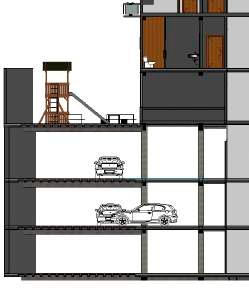
Lower level. Dancing and theater academies.


C.S. DUCTO C.S.
C.S. DUCTO C.S.
BAÑO
AZOTEA AZOTEA DUCTO

AULA ACADEMIA DE MÚSICA BODEGA
15% AULA ACADEMIA DE ARTE BODEGA AULA AULA


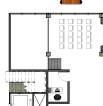
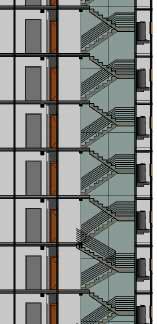
Level 2. Music and arts academy.
C.S. DUCTO C.S.
C.S. DUCTO C.S.
DUCTO C.S.




DUCTO
DUCTO DUCTO DUCTO DUCTO
VESTÍBULO PRINCIPAL ESTACIONAMIENTO ESTACIONAMIENTO ESTACIONAMIENTO
C-C'


BAÑO
RECÁMARA RECÁMARA RECÁMARA PASILLO -D'

-B' DUCTO



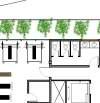
GIMNASIO TERRAZA


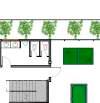
CUARTO DE JUEGOS


3/30/2018 12:06:24 PM
9 de noviembre de 2017 AULA AULA AULA
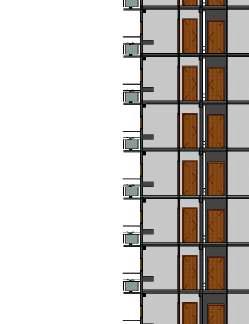
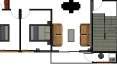
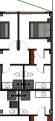
Levels 3-11. Apartments
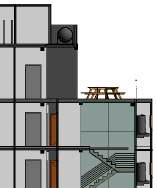
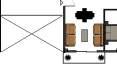
Level 12. Gym, gaming area, terrace.
MULTIPURPOSE BUILDING AT VALENTÍN GÓMEZ FARÍAS 19 6
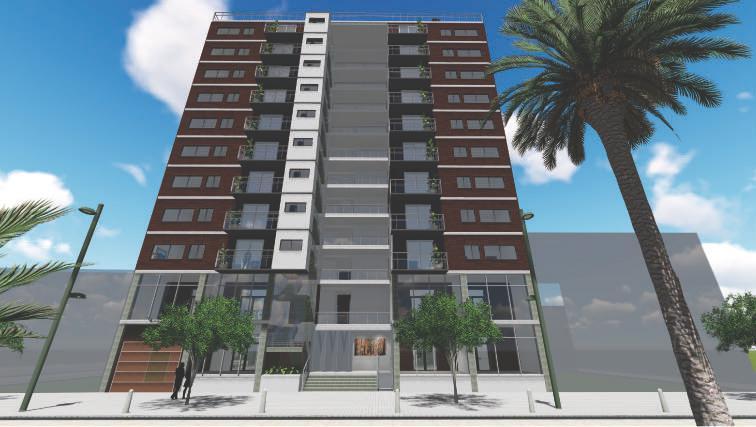
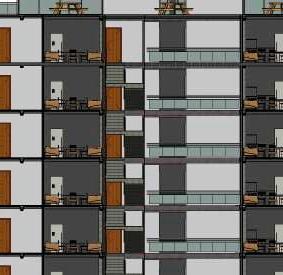
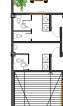
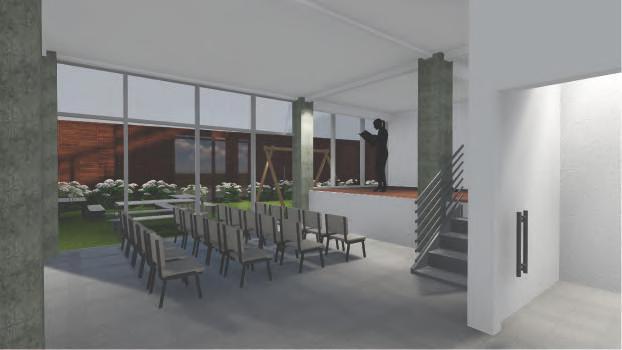
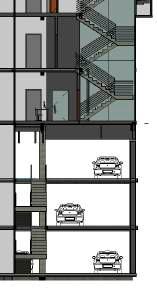
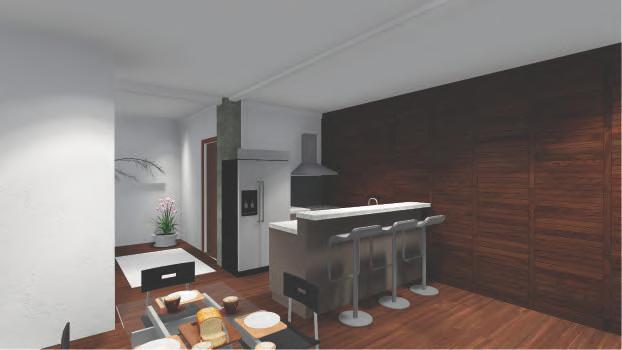
The shape of the monument was extracted in an abstract form in both plan and facade to create a very atractive and functional geometry. In addition, the shape is not the only concept of the building, its architectural program includes four academies: dancing, acting, music and art. The reason: the Mexico’s City Center has always been an area of great social contrast; its history is filled with all of these cultural activities. This is why its decided to continue with artistic activities, so that the residents of the Tabacalera and the nearby areas have a space where they can continue practicing the activities that have been the main identity of the area.
SAN FERNANDO HOTEL+HOSTEL
ITESM CSF
SAN FERNANDO HOTEL+HOSTEL
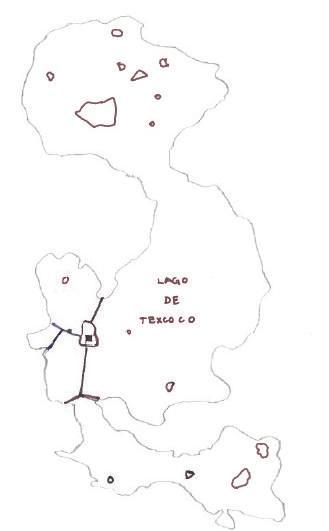
Historic analysis
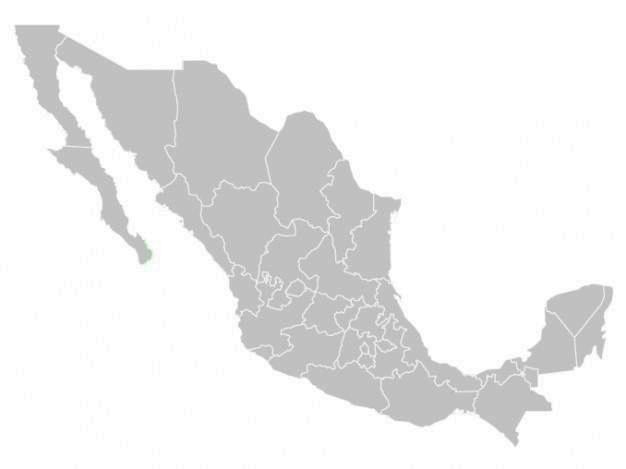
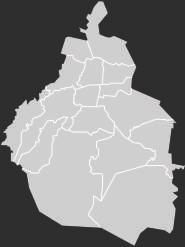
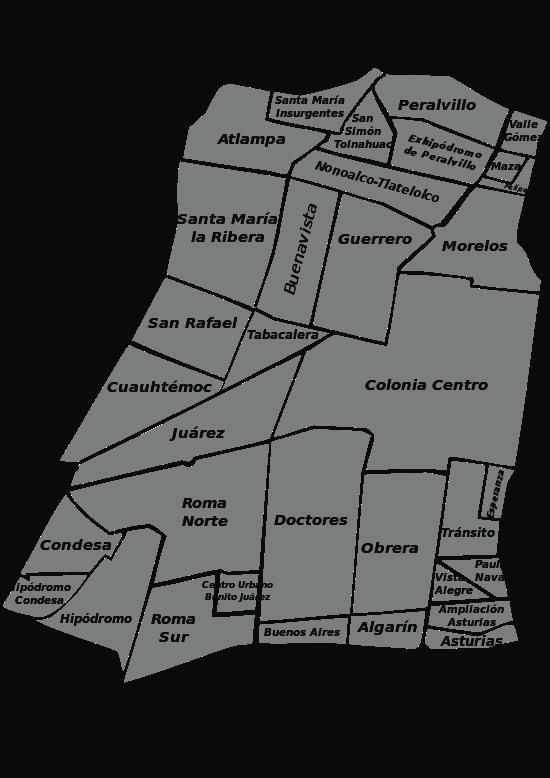
The San Fernando Hotel+Hostel is the result of an extensive historic and urban analysis. According to the needs of the area, a solid proposal that responds to the context was realized. Located in one of the most historic neighbourhoods in Mexico City, the Colonia Guerrero, where the develpment of the city began and has been a crucial spot for its growth.
The main road, the Calzada de Tacuba is one of the first avenues in Latin America which is why its importance played a great roll in the project.
Mexico City, Mexico
1) San Hipólito Church and Hospital
2) San Diego Church and Convent
3) Alameda
4) Juan de Dios Church and Hospital
5) Casas de Cavildo
6) Arches/Aqueduct
7) Santa Isabel Church and Convent
8) San Francisco Church and Convent
9) San Andrés
10) Santa Anna Church
11) Santa Clara Church and Nun’s Convent
12) Espíritu Santo Church and Convent
13) Colisseum
14) Alcaicería
15) Arzobispado
16) Palace
17) Santa Inés
18) Ermita de la Santísima Trinidad
19) Concepción Church and Nun’s Convent
20) San Lorenzo
21) Tlatelolco
22)
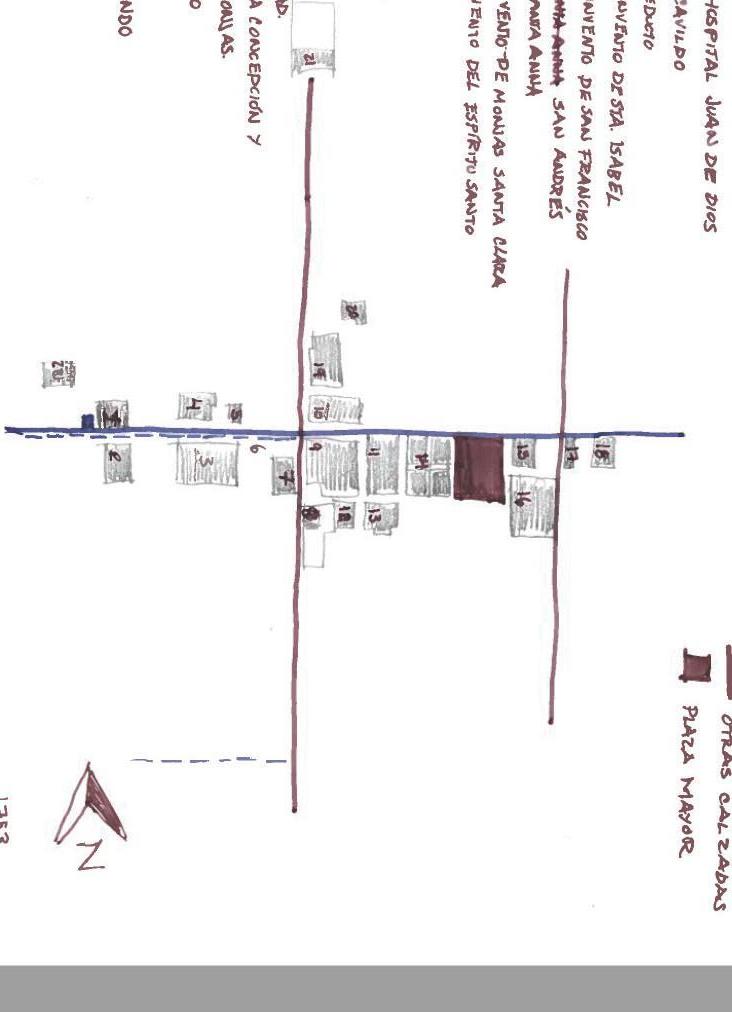

Project Location Aqueduct Calzada de Tacuba Calzadas del Tepeyac, Ixtapalapa Plaza Mayor
10 5 miles Project Location Aqueduct Calzada de Tacuba Other Roads Plaza mayor
Delegación Cuauhtémoc Colonia Guerrero
0
meters Valley of Mexico 1753 Mexico’s Valley 1521
San Fernando
8

SAN FERNANDO HOTEL+HOSTEL SITIO VIALIDADES LUIS ENRIQUE MENES
Ricardo Flores Magón Eje 1 Norte Av Hidalgo Madero Av Puente de Alvarado Circuito Interior Insruge n t es Sur Insruge n t es Norte C alle Gue r r e r o Eje C e n t r al incipal secundaria COLONIA GUERRERO Road Analysis Urban Analysis Land Use People’s Flow Street Continuity Relationship between plazas, avenues and historical buildings Avenue Plaza Historical Monument Project Location Main Avenue Secondary Avenue Project Location Castillo de Chapultepec Ángel de la Independencia ReformaSur
Madero Insurge n t es Sur Eje C e n t r al Insurge n tes norte Eje C e n t r al Monumento a la madre Plaza de la República/ Monumento a la Revolución Alameda/ Bellas Artes Biblioteca Vasconcelos Plaza de las Tres Culturas Garibaldi Catedral Palacio Nacional Centro Histór co Panteón San Fernando Plaza San Fernando Commerce Commerce/Living Hotels Street Trading Project Location TABACALERA REVOLUCION REVOLUCION COMERCIO COMERCIO/VIVIENDA HOTELES COMERCIO AMBULANTE People Crosswalk Project Location Project Location TABACALERA REVOLUCION Dangerous Crosswalk Discontinuity TABACALERA REVOLUCION
9 meters meters meters meters meters
ReformaSur ReformaNorte
ReformaNorte
ReformaSur
SAN FERNANDO HOTEL+HOSTEL Sidewalk widths Street Sections Facade Analysis Road Circulation Public Transportation 0-3m 3-5m + 5m Project Location Av. Puente de Alvarado Av. Hidalgo Calle Tacuba Project Location Project Location BUENAVISTA GUERRERO SAN RAFAEL MORELOS CENTRO TABACALERA REVOLUCION BUENAVISTA GUERRERO SAN RAFAEL MORELOS CENTRO TABACALERA REVOLUCION BUENAVISTA GUERRERO SAN RAFAEL MORELOS CENTRO TABACALERA REVOLUCION LÍNEA LÍNEA LÍNEA LÍNEA LÍNEA LÍNEA LÍNEA LÍNEA LÍNEA CEUSA LÍNEA LÍNEA LÍNEA LÍNEA LÍNEA LÍNEA LÍNEA LÍNEA LÍNEA LÍNEA LÍNEA LÍNEA LÍNEA LÍNEA LÍNEA LÍNEA LÍNEA LÍNEA LÍNEA LÍNEA Metro Trolebus Microbus RTP Metrobus Project Location ReformaSur ReformaNorte Av. Hidalgo Calle Tacuba
ReformaSur ReformaNorte Av. Hidalgo Calle Tacuba
ReformaSur ReformaNorte Av. Hidalgo Calle Tacuba Av.PuentedeAlvarado 2-2’ 3-3’ 4-4’ 5-5’ 6-6’ 1 2’ 5 3’ 4’ 6’ 1’ 2 3 4 5’ 6 1-1’ SALÓN HIDALGO 10 meters meters meters meters meters
Av.PuentedeAlvarado
Av.PuentedeAlvarado
The Calzada de Tacuba, one of the oldest avenues in Latin America, has lost its importance and become a road axis, transforming into a urban wall for pedestrians. Besides of its variaty of land use, where commerce and living prevails, the Colonia Guerrero has been segregated, where an insecure atmosphere stands besides having several historical monuments, such as the Panteón San Fernando, a place where many ex-presidents lay as well as many important Mexican characters. Street trading, centralized mainly on the public transportation stops, reduces in a significant way the space over the sidewalk, generating a complicated circulation for pedestrians. Nevertheless, its an area located in the City Center, making it a very well connected space through the principal metro, metrobus and microbus lines. Through the facade analysis, we realize that most of them keep its historical value creating a harmony between them. On October 28, the San Judas Day takes place, a tradition in which thousands of catholics from all over the country unite at the Ex Convento de San Hipólito to pay tribute to San Judas Tadeo, the “Lord of the lost causes”. Most of the people that asist to this event are from a low social-economic level and gather on the streets near the Temple, which is located a few meters from the San Fernando Hotel+Hostel project, on the southern entrance of the Colonia Guerrero. Because of this tradition, people gather every 28th day of each month in the Temple.
HOTEL + RESIDENCIAS SAN FERNANDO 11
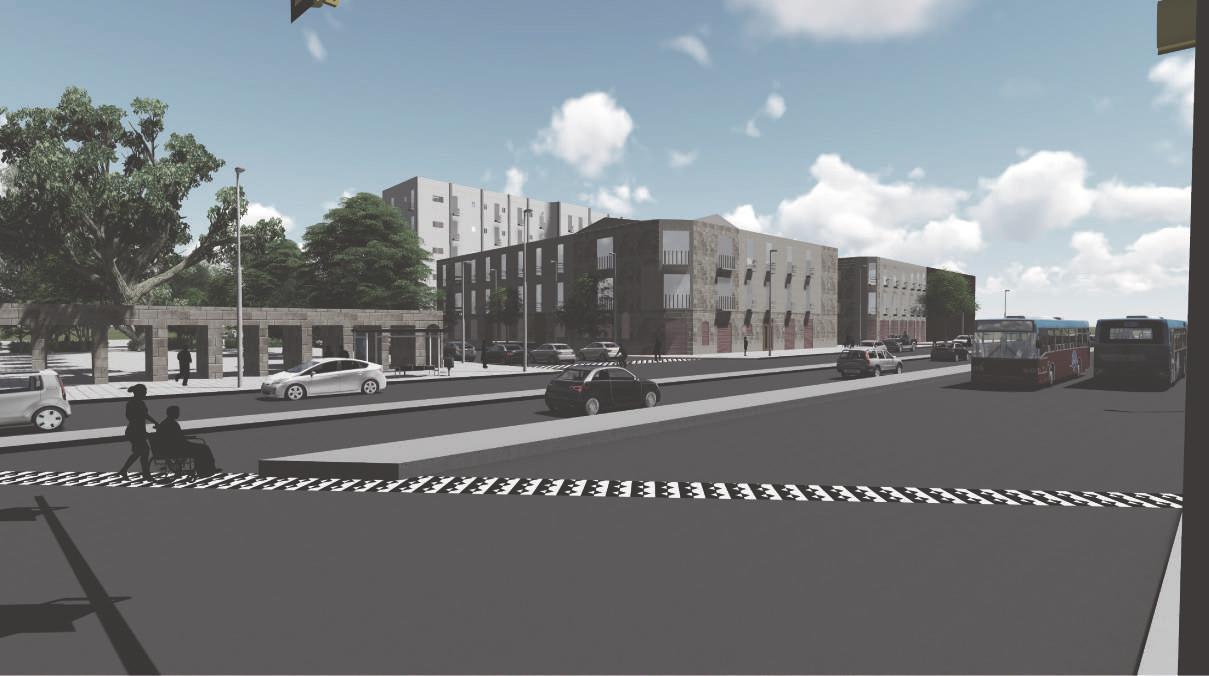
SAN FERNANDO HOTEL+HOSTEL Project Location Sidewalks Metrobus Lane Project Location Sidewalks Metrobus Lane Project Location Sidewalks Metrobus Lane Av. Puente de Alvarado Av. Hidalgo Calle Tacuba Actual state of Hidalgo and Puente de Alvarado Avenues Urban Project 12 m m m
Because of the width of the street sections, a relocation of the Metrobus Lane is proposed, because in its actual state (being located on the center of the avenue) contributes in an important way to the urban wall. Also, the sidewalks are enlarged, a bike lane is created and the amount of car lanes is reduced. In this way, the historical meaning is returned to the Avenida Hidalgo and Puente de Alvarado, equalizing the functionality of the Calle Tacuba. The goal of this proposal is to create a space mainly for pedestrians and cyclists, unlike how it is nowadays. If the number of car lanes is reduced, not only the importance of the pedestrian rises, but a bigger use of public transportation is fomented, as well as the use of bicycle as a transportation method.
HOTEL + RESIDENCIAS SAN FERNANDO
13
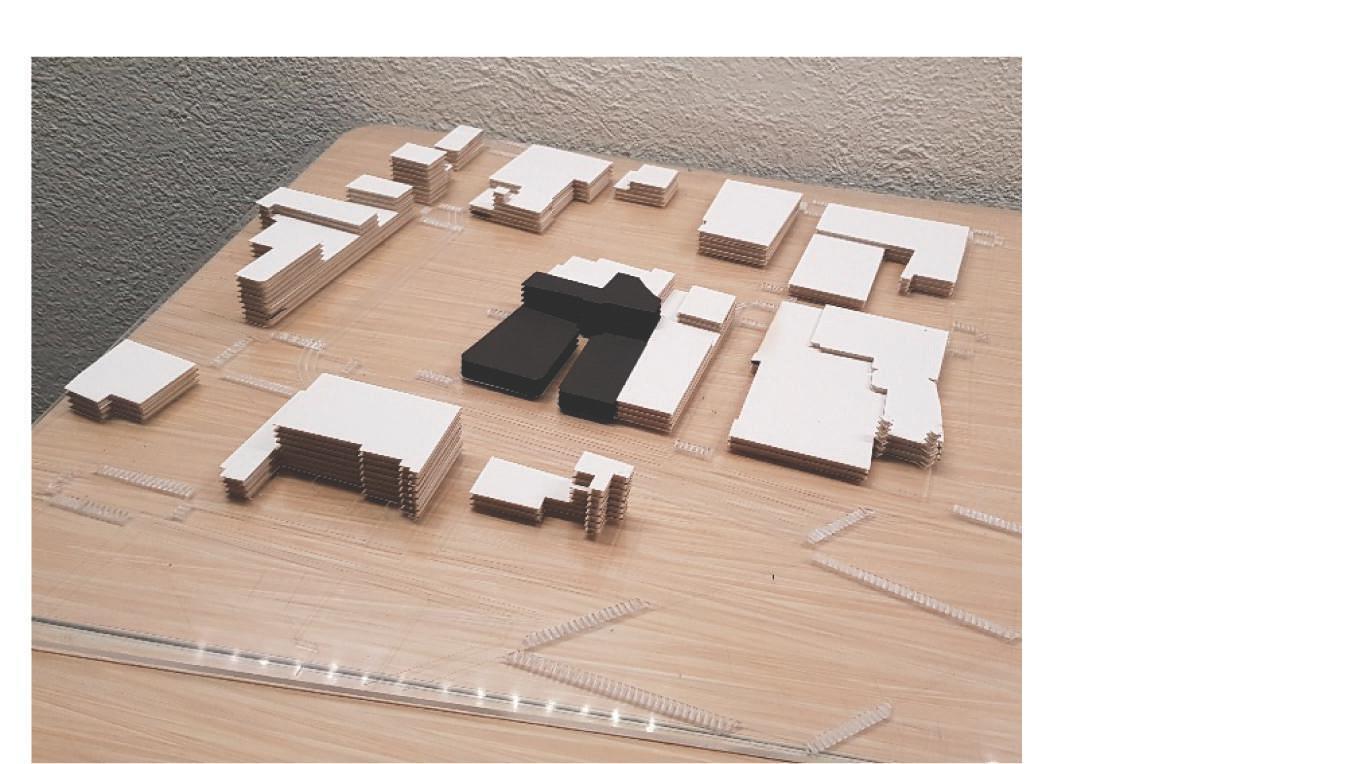
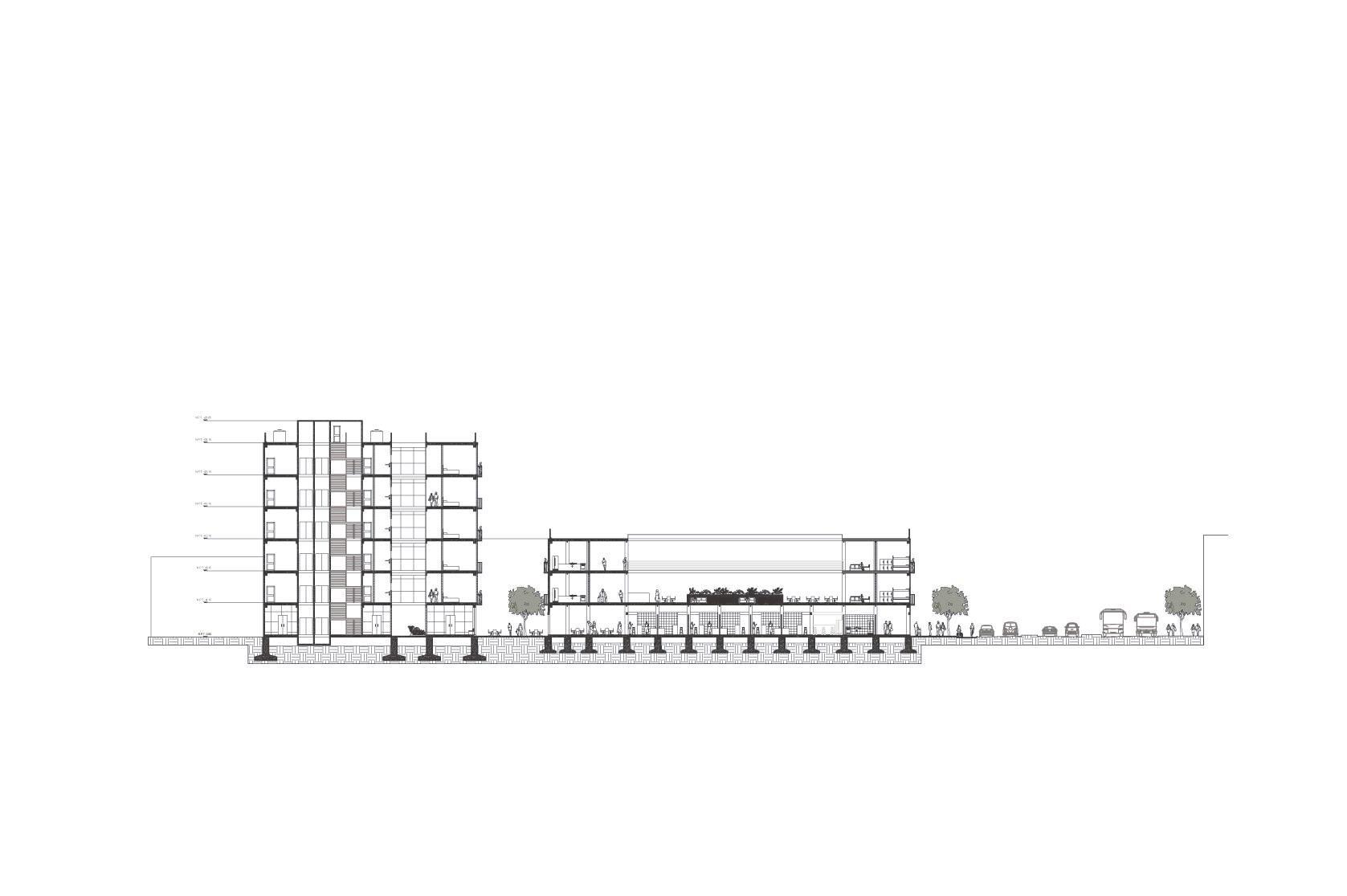
SAN FERNANDO HOTEL+HOSTEL Hostel Hotel Commerce Free Area Metrobus Lane Hotel Service Rooms Commerce Areas Total: 4,224.55 m2 West Building: 1,412.78 m2 East Building: 1,002.23 m2 North Building: 927.90 m2 Free Area: 881.34 m2 Commerce: 1,200 m2 Hostel Rooms: 1,360 m2 Hotel Rooms: 2,100 m2 Service Rooms: 383.89 m2 Free Area Circulations Hotel Rooms Hotel Rooms Service Rooms Hostel Rooms Circulations Lower Level Levels 1 and 2 Levels 3 to 5 ARCHITECTURAL PROPOSAL 14 m m
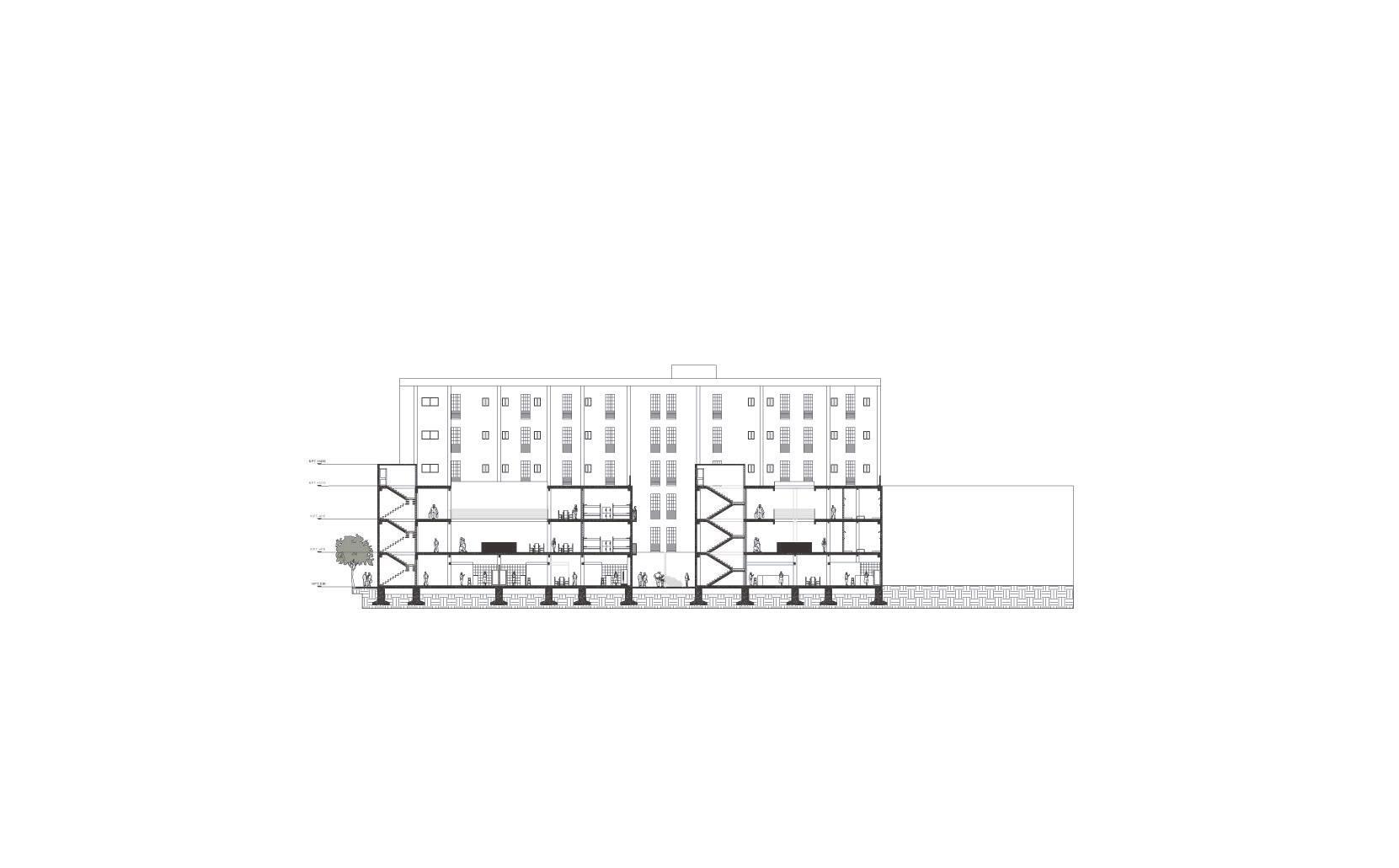
SAN FERNANDO HOTEL+HOSTEL West Facade South Facade Hotel Facade Cross Section Cross Section Site Plan 15
TABACALERA REVOLUCION
By understanding the needs of the area and how it works, the San Ferando Hotel+Hostel answers to an evident problem in the Colonia Guerrero. The two buildings in the southern part of the project are cataloged by the INAH (National Institute of History and Antropology) which is why its facades must remain untouched. Its construction took place in the year 1908 and were designed by the Mexican Architect Genaro Alcorta. The buildings hosted an Insurance company during the Porfiriato and kept itheir neo-classical elements. Years later, they were bought and used as a commercial area on the lower level and appartments were held in the upper levels. Today, these buildings are abandoned.
Starting from this point, a restoration project was proposed in both buildings by keeping their facades and internal concrete structure untouched. Because of the problems generated by the street trading, a relocation of the food stalls will take place in the lower level of the existing buildings, with a plaza that will atract a great amount of people due to its location near the public transportation stops, resulting in a significant income.
On the two upper levels, there will be a Hostel mainly for toursts and the Catholics that gather near the San Hipólito Temple. It will have rooms that can host up to eight people with shared kitchens and bathrooms. Today, the rest of the area has a low used parking lot, which is why a mid-class Hotel is proposed as a compliment of the Hostel. Through this design, long halls between the buildings are created, having access to the plazas and creating a nice and comfortable atmosphere.
In this way, the San Fernando Hotel+Hostel contributes to the solution of an abandoned space, which is part of the entrance to one of the most historical neighbourhoods in the city, but that has been segregated through the years. This project attracts tourists and local people in a friendship way by taking advantage of its location within the city, and along with the urban propsal, it returns the life and importance of one of the first avenues in Latin America.
SAN FERNANDO HOTEL+HOSTEL 16
SEGAL METHOD
ARCHITECTURAL DESIGN STUDIO II, POLITÉCNICO DI MILANO, ITALIA IN COLLABORATION WITH ARCHITECT KILIAN SCHWARTZE
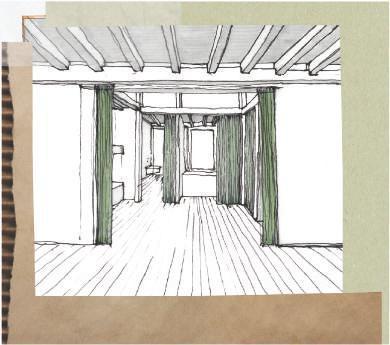
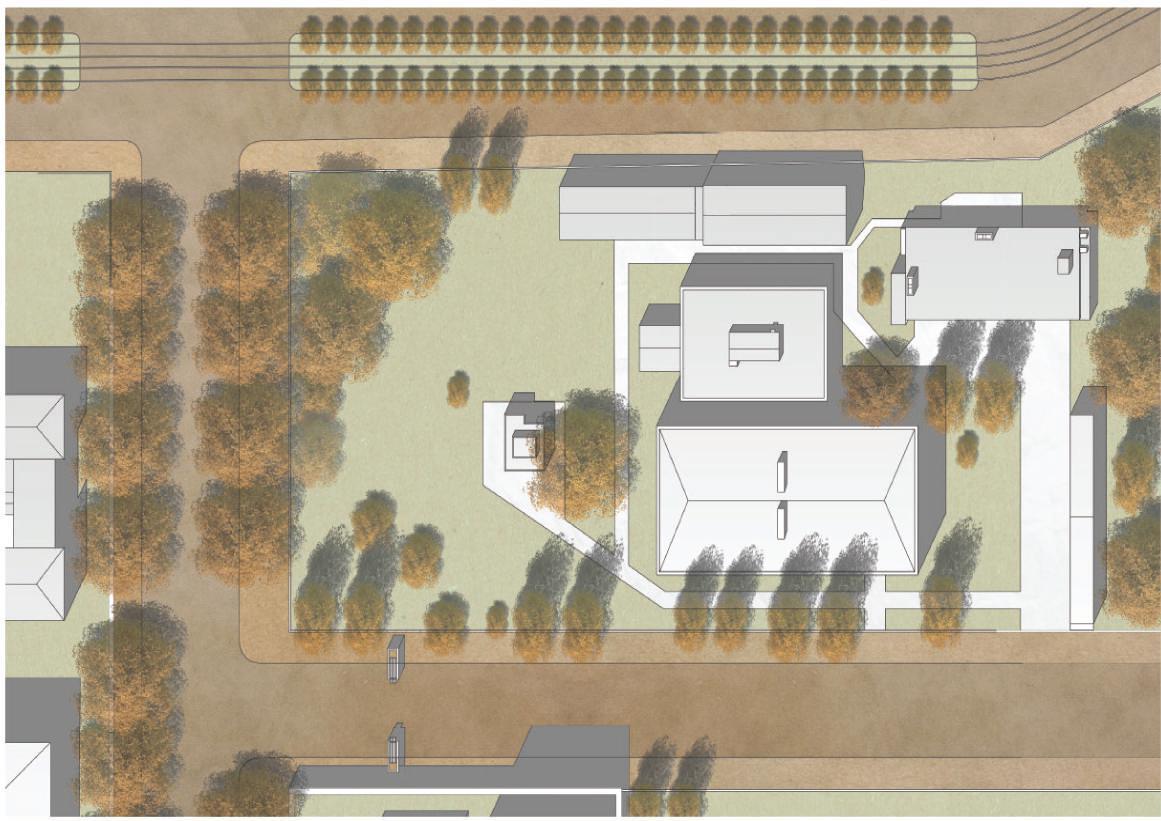
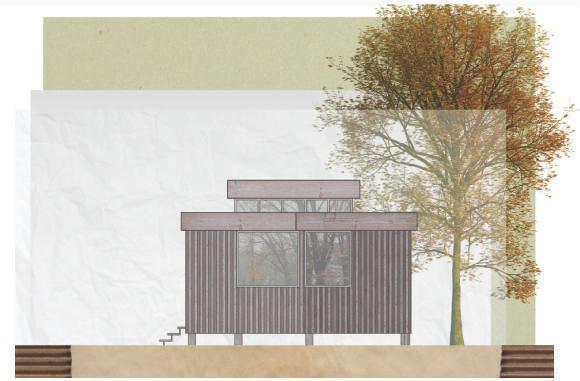
Located in the middle of the Politecnico di Milano, at the Leonardo Campus, this housing project was designed to host university students for a short or long term period. The structural method was developed by Walter Segal in the beginning of the 1970s and was meant to make it affordable even for people with a lower income to build their own houses. It is a do-it-yourself system that saves the high costs for construction workers on one hand and leads to a strong relationship between the house and its future inhabitants; it consists of simple wooden frames attached to concrete foundations.
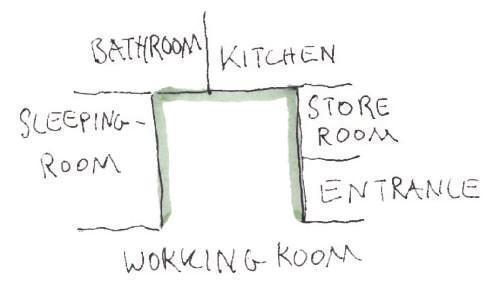
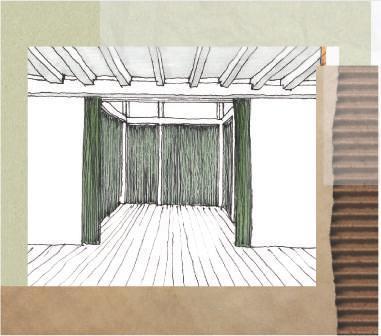
Even though the total living space is smaller than 50 square meters, the pavilion fulfills any desire of young people that need to have a constructive working and living atmosphere. The goal was achieved by thinking on a flexible solution. Instead of having ordinary walls and rooms, it was decided to take curtains as space dividing elements. The result is a big light living and working space.
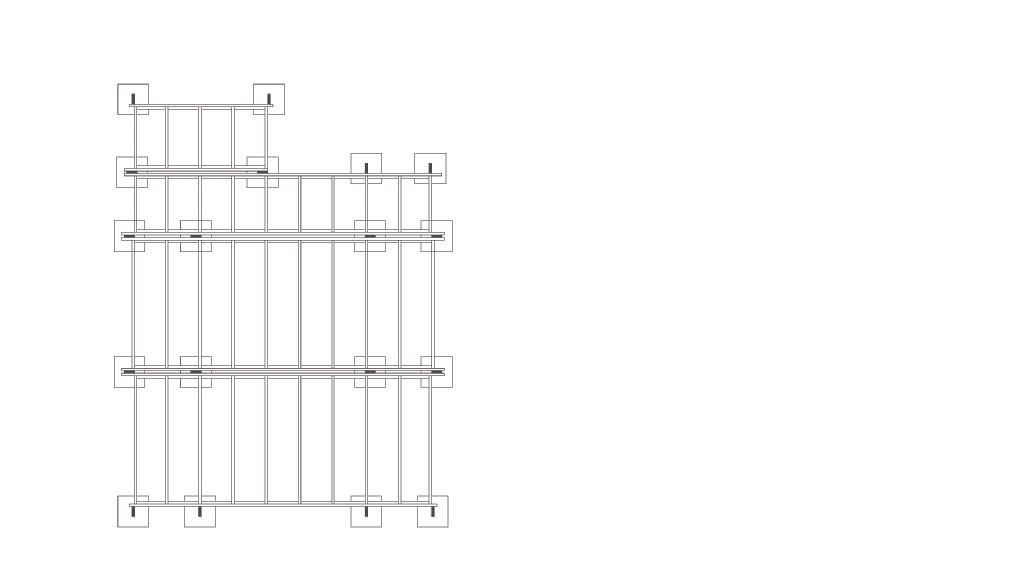
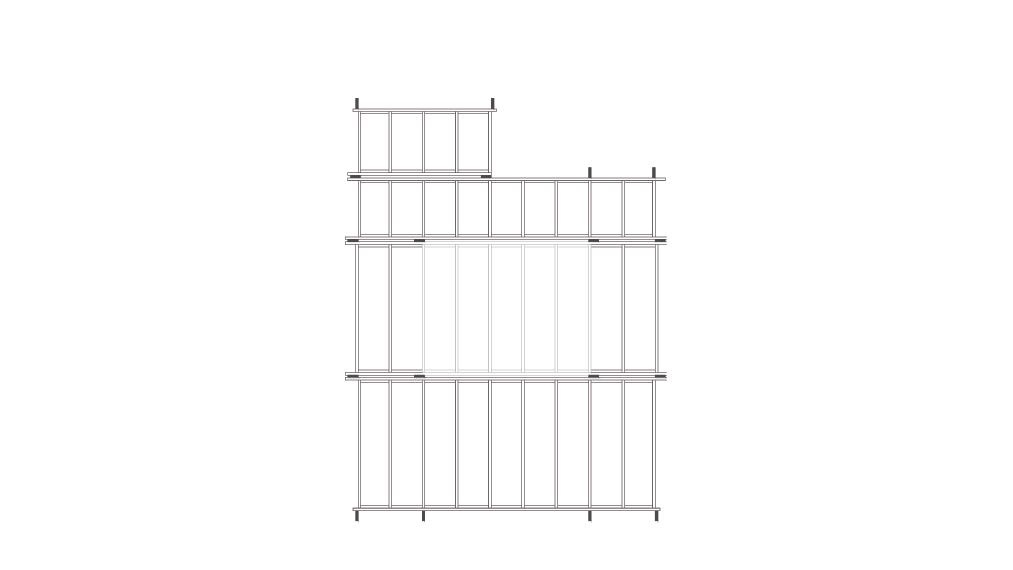
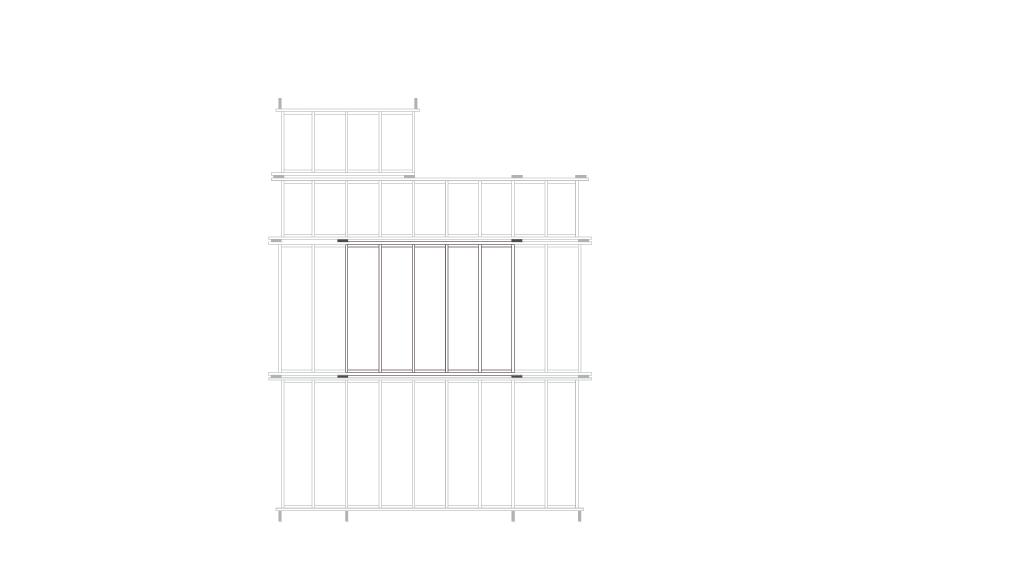
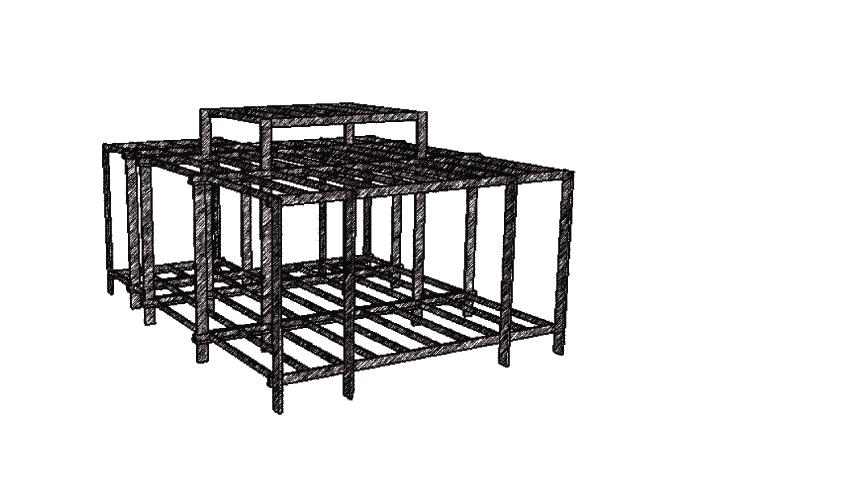
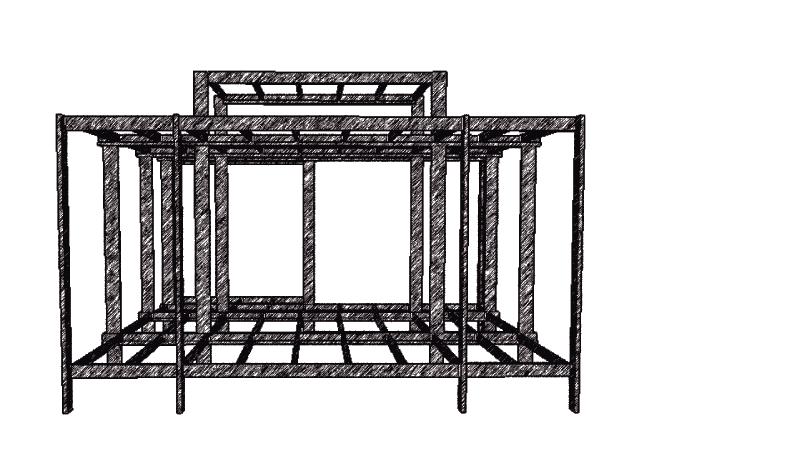
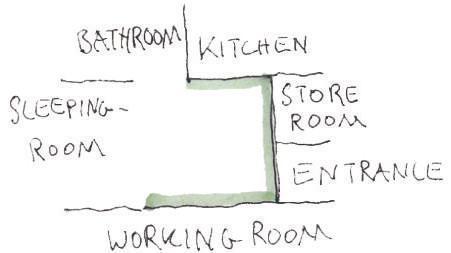
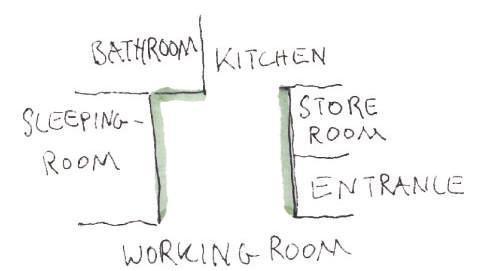
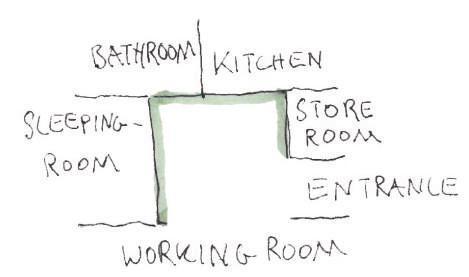
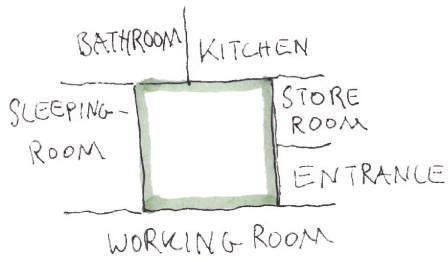
Floor Structure and Foundations Roof Structure Skylight Structure 18
SEGAL METHOD
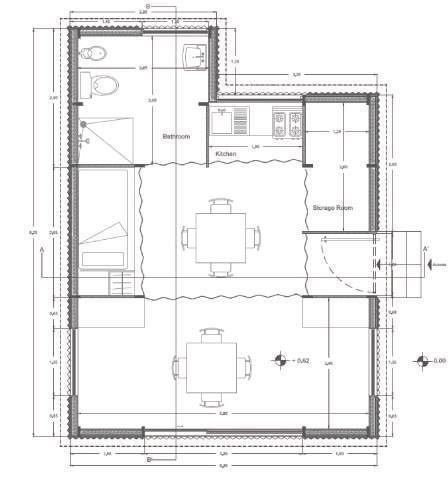
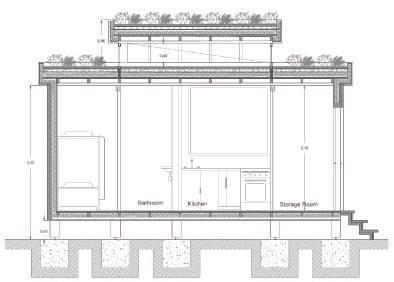
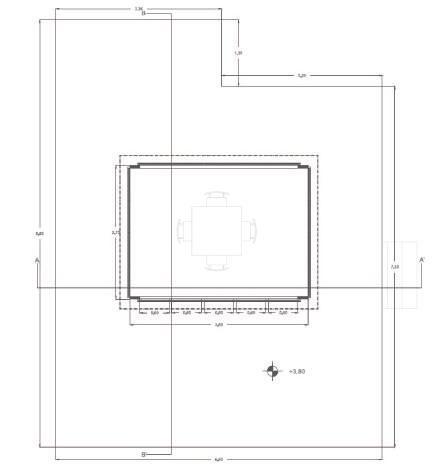
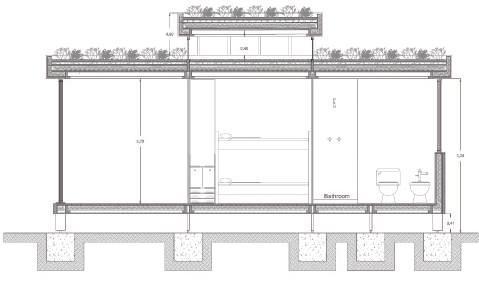
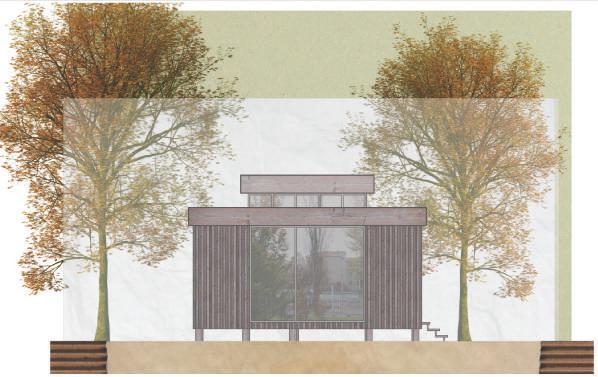
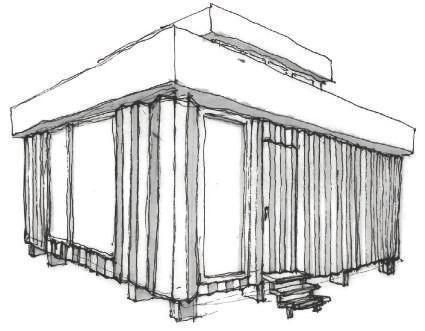
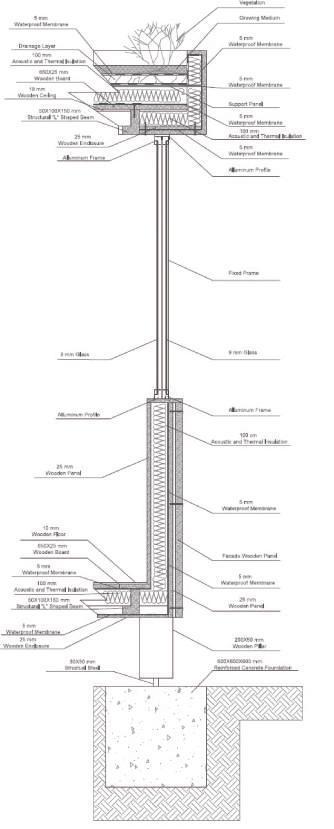
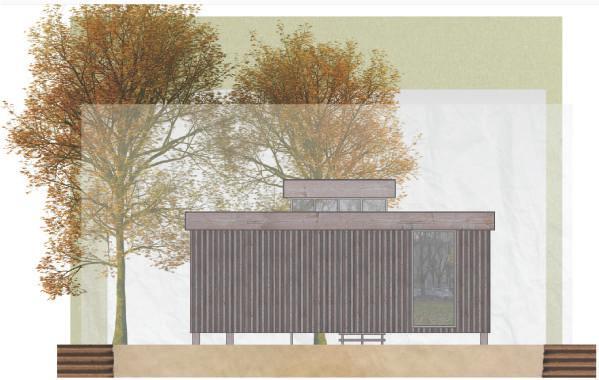
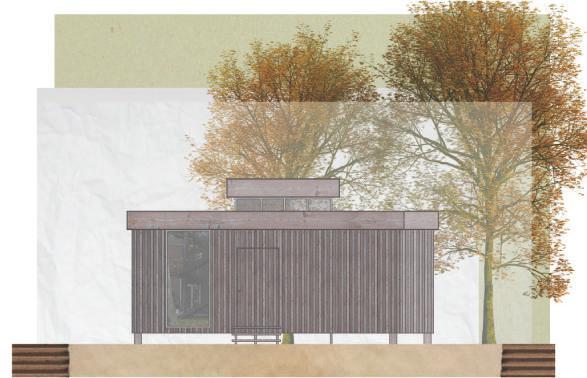
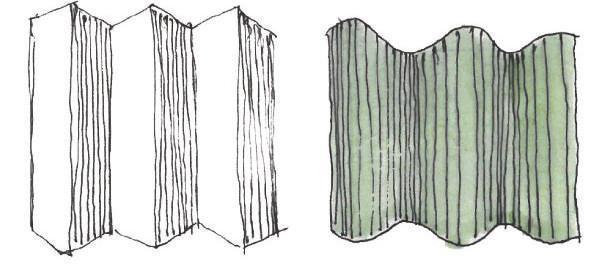
SEGAL METHOD Floor Plan Section A-A’ West Elevation South Elevation North Elevation Facade System Curtain System East Elevation Section B-B’ Section Detail Site Plan Roof Plan with Skylight 19
BORLETTI FACTORY
ARCHITECTURAL DESIGN STUDIO II, POLITÉCNICO DI MILANO, ITALIA IN COLLABORATION WITH ARCHITECT KILIAN SCHWARTZE AND ARCHITECT ROSSELLA SCALISE
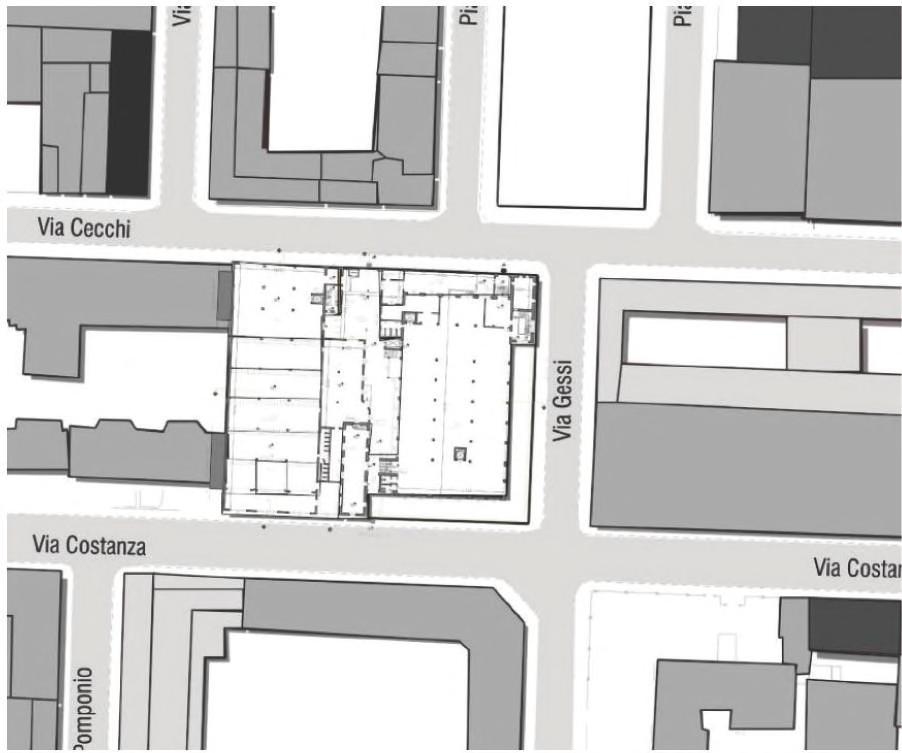
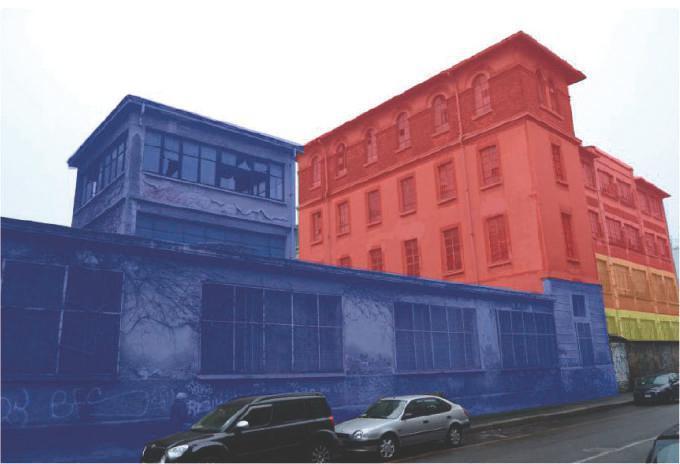
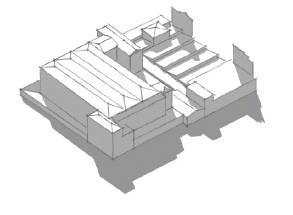
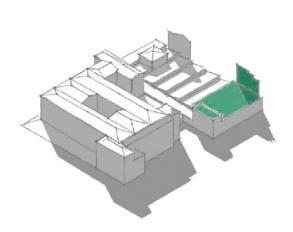
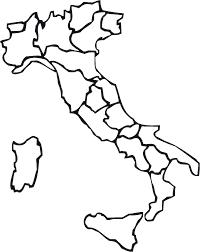
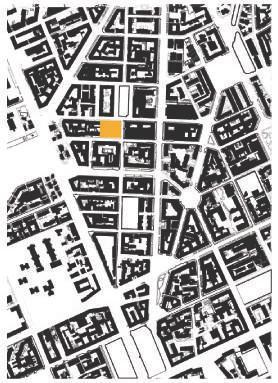
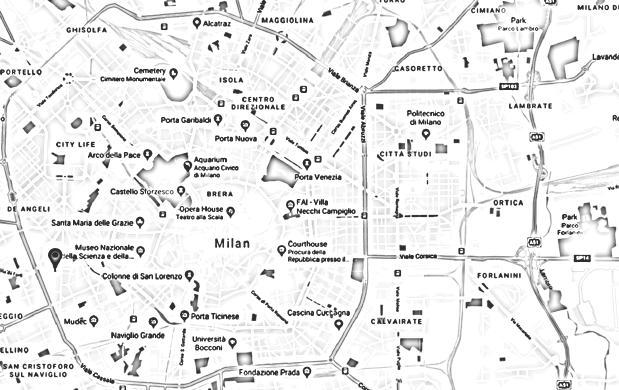
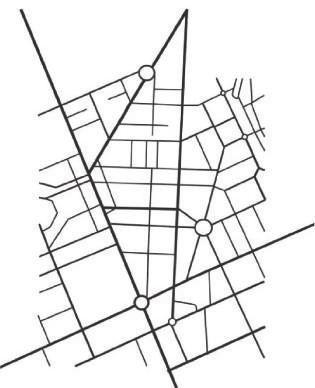
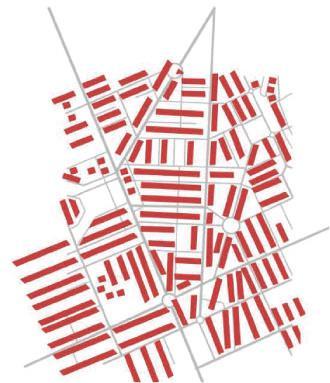
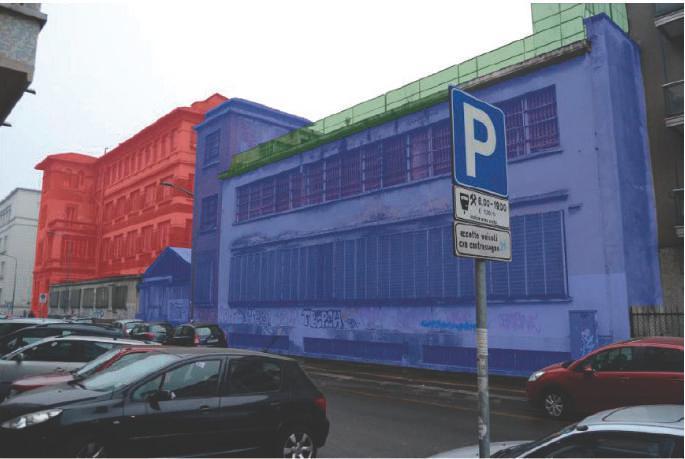
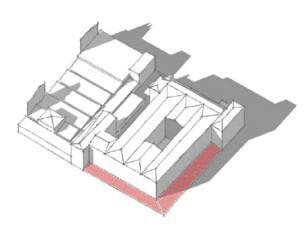
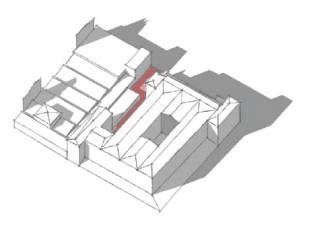
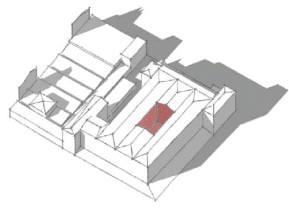
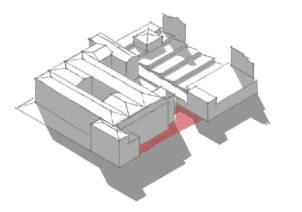
BORLETTI FACTORY Residential Location Masterplan Actual View Proposal Green Spaces Street System Block Composition O ces/Residential Kindergarden Commerce Roof garden 21
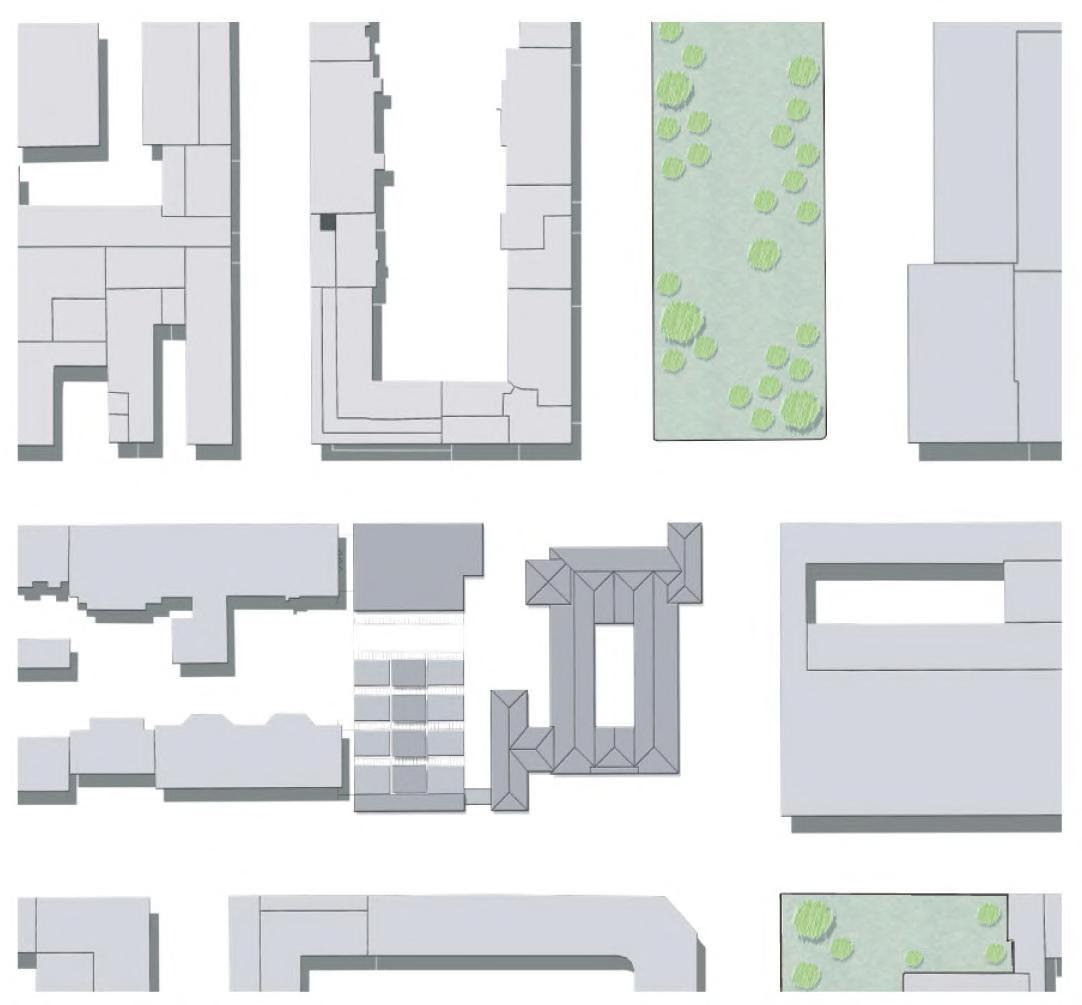
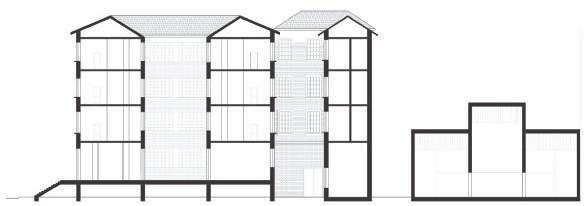
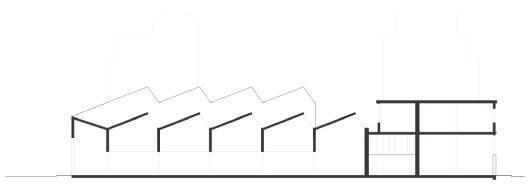
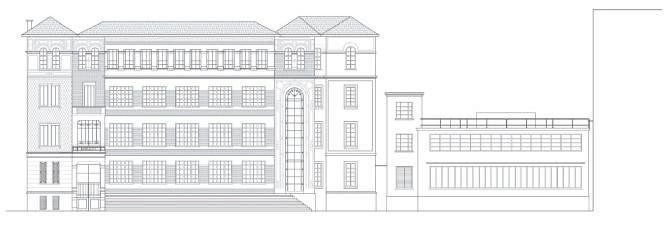
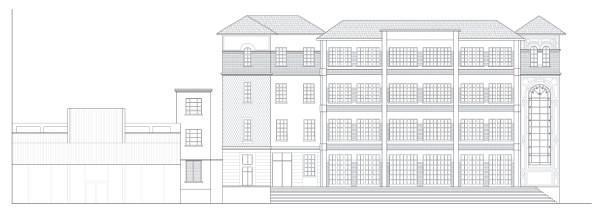
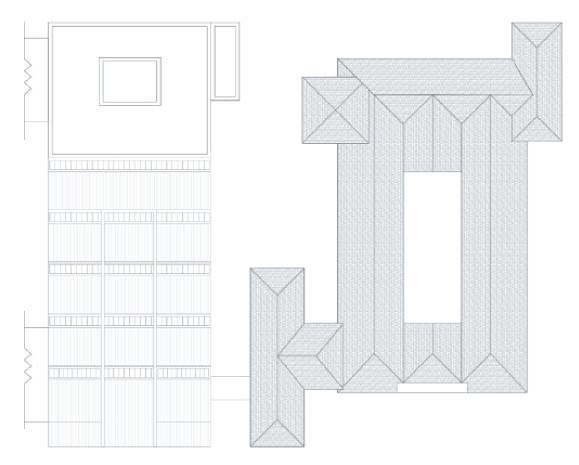
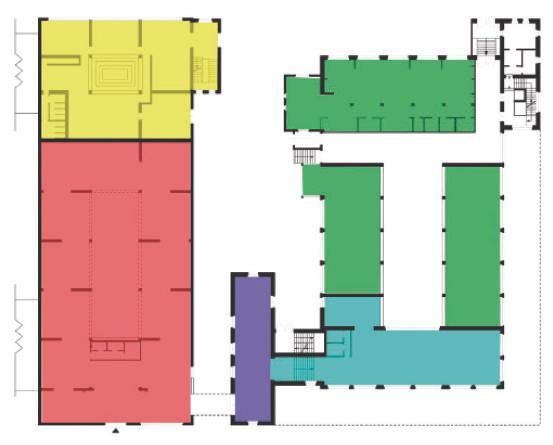
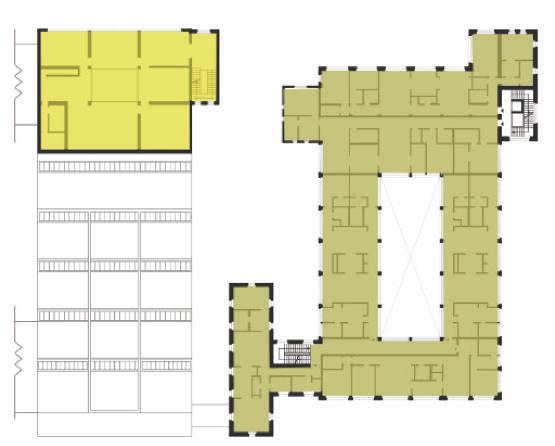
BORLETTI FACTORY Masterplan Lower Level Type Floor Plan Roof Plan Sections North Elevation West Elevation South Elevation Museum Kindergarden Library O ces Cafeteria Residential Main Structure Secondary Structure 22
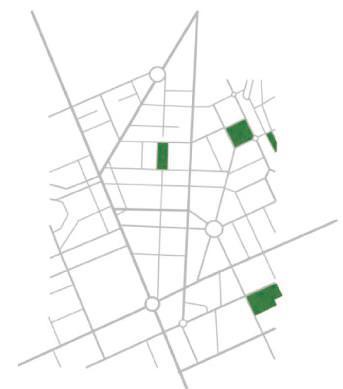
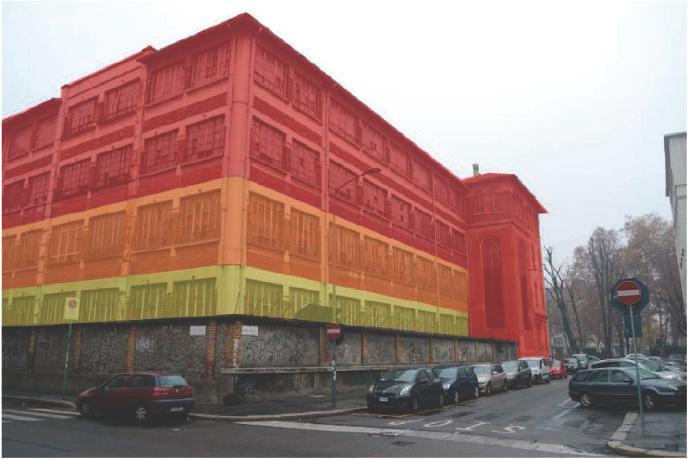
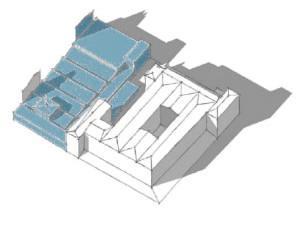
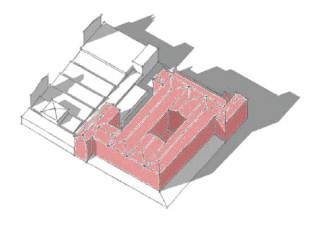
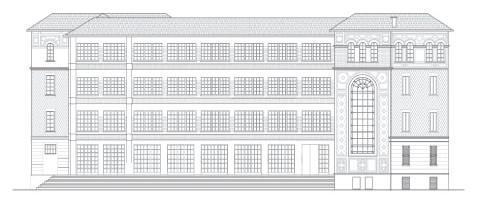
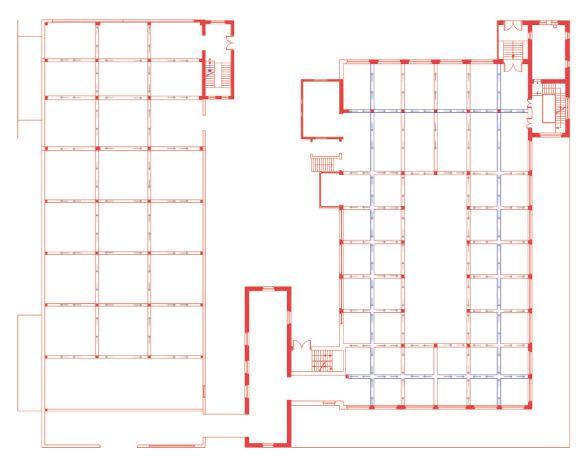
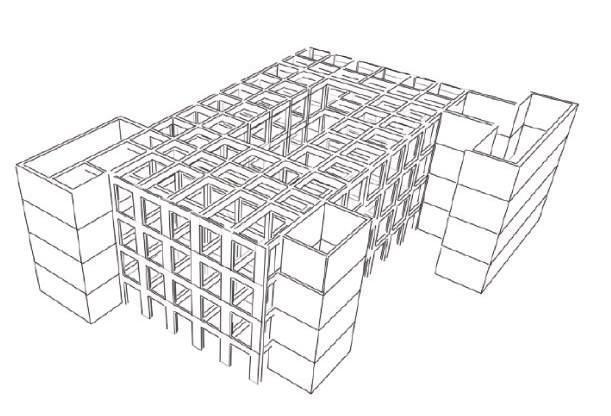
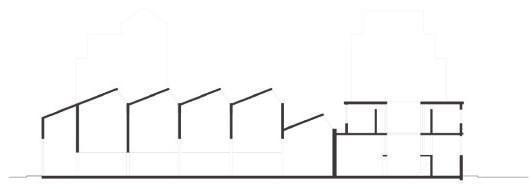
The Borletti Factory is an outstanding and unique building in the western area of Milan. It reflects the importance of the city’s history. The project is based on the intervention of the abandoned factory with the purpose of revitalizing the area. One of the main goals is to keep the urban context and the architecture design of the factory, which is why the facades remain untouched. According to the surrounding needs, the lower level was adapted in both buildings for a public and semi-public use, giving priority to culture and education. It was decided to eliminate the walls on the factory’s perimeter and to build stairs around it, incorporating the project to its surroundings, resulting on a more fluid transit. A playground was created in the center of the main building to have more light and ventilation for the residential and office area.
BORLETTI FACTORY 23