Non – Institutional Building
81 Bay Street Pedestrian Bridge
1. Location: Pedestrian skywalk at downtown Toronto
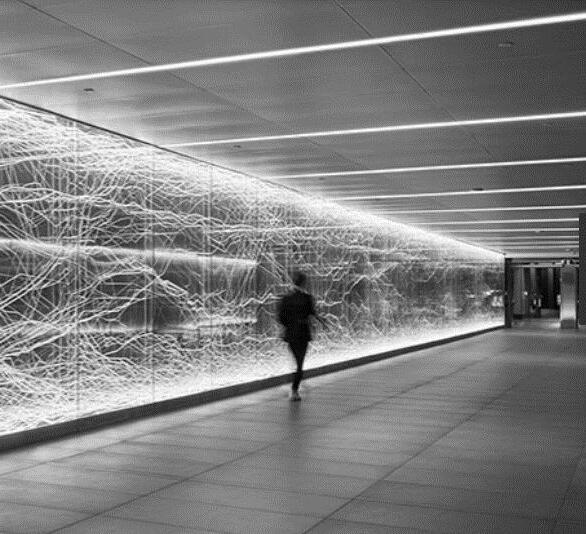
2. Unique design: the placement perpendicular to the mouth of the existing tunnel, contrasts created by lighting; transcends engineering into a work of art
3. Characteristics: 40m long Scotiabank Arena Bridge, with a full height glass wall on the south side (no structure), spanning across Bay Street to the arena
4. Technology: Complex structural and lighting systems custom designed for the project
5. Branding: Embodies Toronto’s complex network of PATH and draws attention by creating delight for the pedestrians on the road and within the bridge
References
1. Ontario Association of Architects. (2016, February 19). Toronto Reference Library (1977). Retrieved from Whats On Bloaag: https://oaa.on.ca/whats-on/bloaag/bloaag-detail/TorontoReference-Library-1977
2. V, B. (2017, November 2). Toronto Reference Library at 40: Raymond Moriyama and the original Architecture. Retrieved from Toronto Public Library: https://torontopubliclibrary.typepad.com/trl/2017/11/were-turning-40-and-we-look-good-.html
3. [d]arc Awards. (2021). Mycelium – Bay Street Bridge, Canada. Retrieved from Darc Awards: https://darcawards.com/portfolio/illuminated-art-wall-scotiabank-bridge-canada/
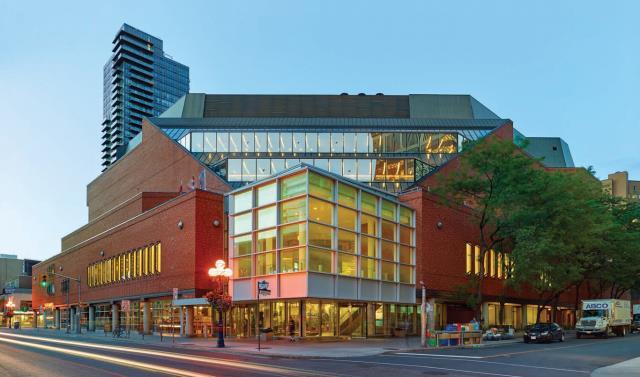
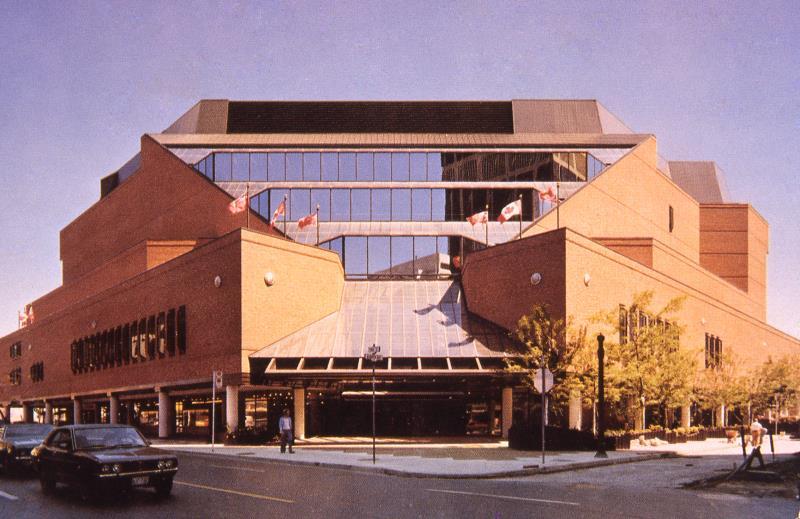
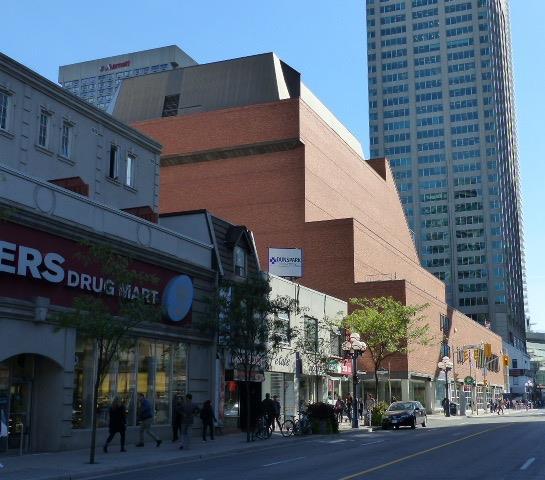
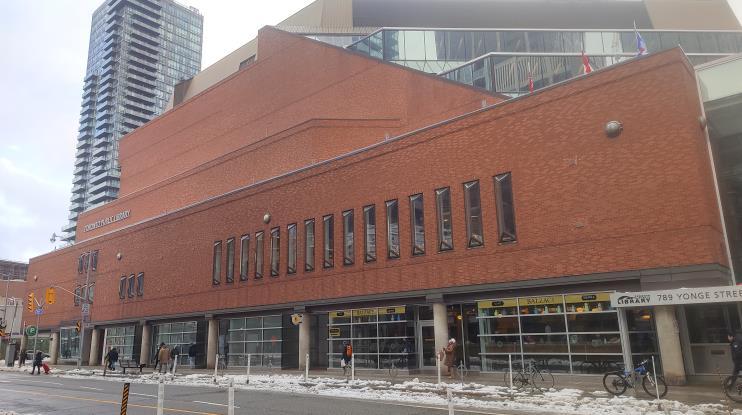
Fig 4 The Toronto Reference Library, street corner view and massing (OAA, 2016)
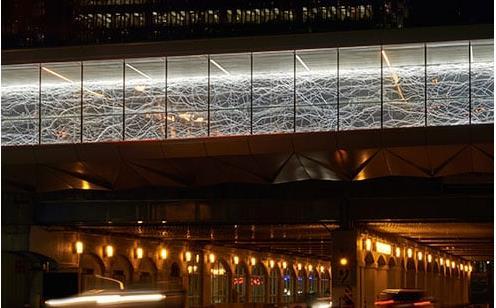
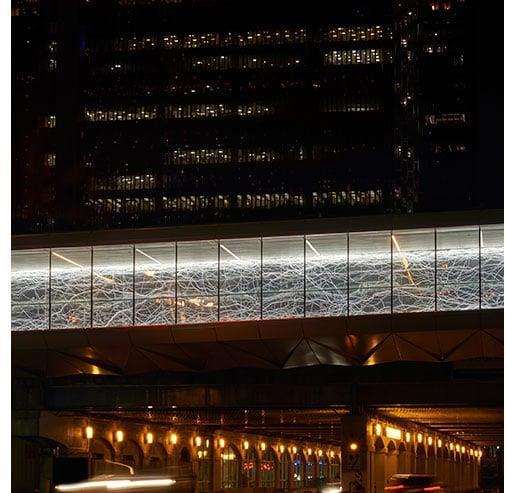
Fig 5 The 81 Bay Street pedestrian bridge at night
1
2 OVERVIEW : WHAT MAKES THESE BUILDINGS ICONIC CKAR310 Materials and Methods | Assignment 1 | Shreya Menon 2
Architect
Moriyama and Teshima
Architects and Planners
Type of Building
Institutional
Building Use/ Programme
Public Library
Construction date
1974 (official opening in 1977)
2014 (Renovated)
Size (Area/ Height)
429,000 Sq.ft | 5 ‘double’ storeys
• The library, a Toronto architectural landmark with its rich history, reflects Ontario’s ever changing political and social landscape.
• It also illustrates the important role architects can play in the site selection process and determining a successful programmatic mix besides design.(OAA, 2016)
• In 1973, Moriyama unveiled his initial design – a building completely clad in mirrored glass; reflecting everything during the day and revealing interior activity at night. This was rejected by the Toronto City Council.
• Four months later, Moriyama revealed the new proposal - from sheer walls to an orange brick facade, echoing the surrounding’s materiality; successively recessed tiers on both Yonge and Asquith, with the lowest tier at street level mimicking the height of the surrounding historical buildings. The building was also moved closer to the lot line, but arcades were provided along Yonge and Asquith and street-friendly programming.
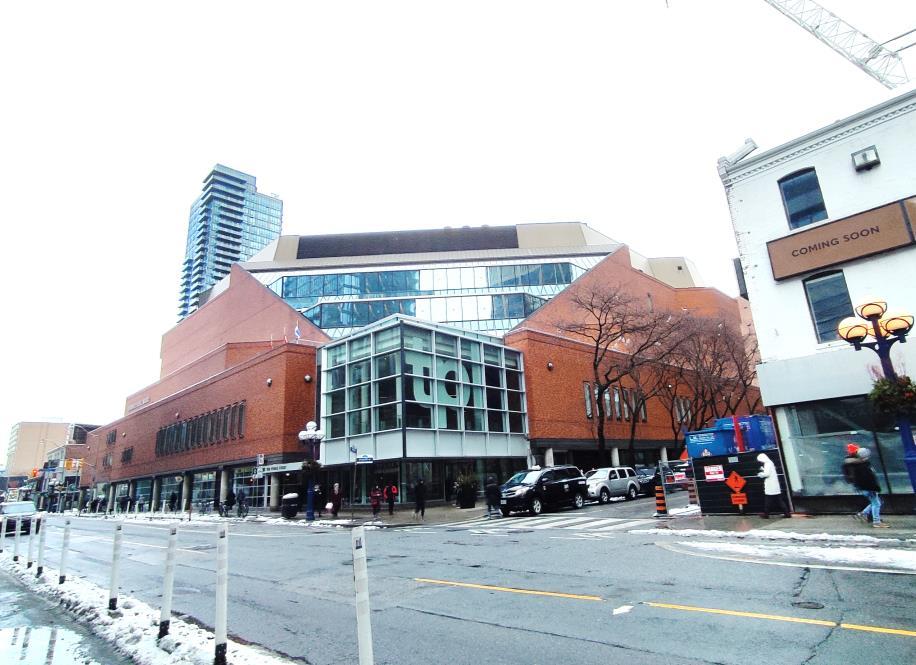
• In 2014, the library was renovated adding a new glass entry foyer besides renovated spaces and technology. (Moriyama & Teshima Architects, 2014)
References
1. Ontario Association of Architects (2016, February 19) Toronto Reference Library (1977) Retrieved from Whats On Bloaag: https://oaa on ca/whats-on/bloaag/bloaag-detail/Toronto-
Reference-Library-1977
2. Moriyama & Teshima Architects. (2014). Toronto Reference Library Revitalization. Retrieved from Moriyama and Teshima Architects Projects: https://mtarch.com/projects/torontoreference-library-revitalization/#
INTRODUCTION : TORONTO REFERENCE
YORKVILLE
LIBRARY,
Fig 7 The library today, since renovation in 2014 and addition of a Glass box that is both entry and a threshold
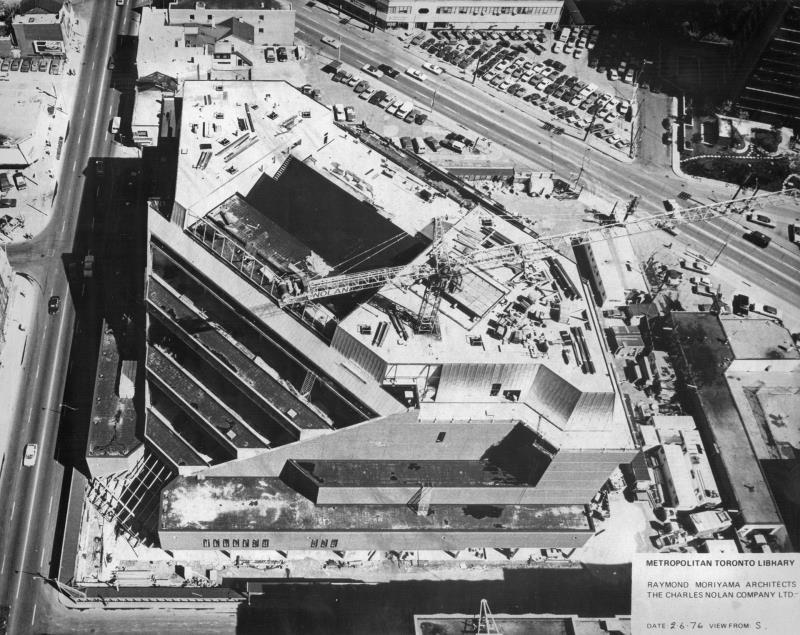
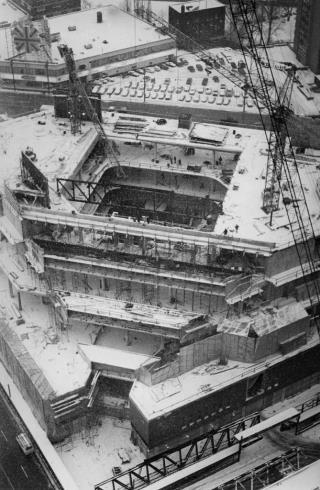
Fig 8: Exterior construction view . Toronto Star Archive Photo
CKAR310 Materials and Methods | Assignment 1 | Shreya Menon 3
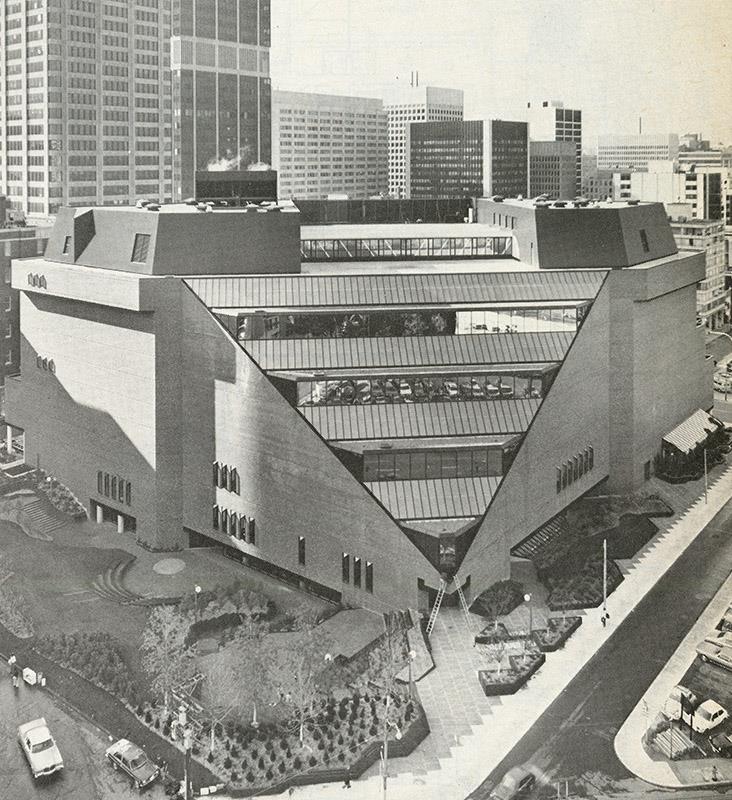
Fig 6 The iconic Toronto Reference Library, formerly the Metropolitan Reference Library; a double brick building constructed in 1974 (V, 2017)
The major design features include:
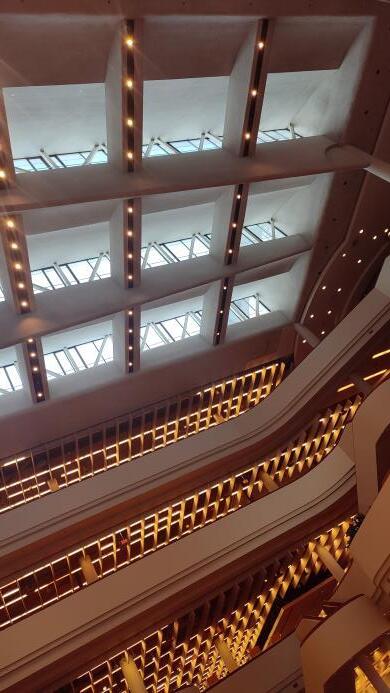
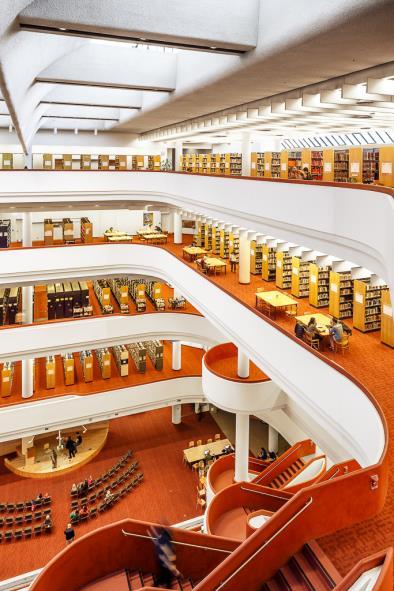
• A large atrium or well soaring up from ground level to a glassed roof and surrounded by balconies
• Open and inviting atmosphere to make the library users aware of the collections in the entire library
• Objects which invoke nature such as plants and reflecting pools to create a pleasant environment as well as to control sound and security
• books and other materials on open Shelves so that they are readily available to visitors
• complete accessibility for people in wheelchairs, on
etc. (Metropolitan Toronto Library Board, 1977)
• A dramatic new entrance; a transparent Glass Box that is both gateway and threshold, and a lens into the heart of the building
• The building redefines the traditional library experience through state-of-the-art design and technology (Moriyama & Teshima Architects, 2014)
• Innovative, custom designed study pods, learning labs and meeting rooms that offer cutting edge technologies
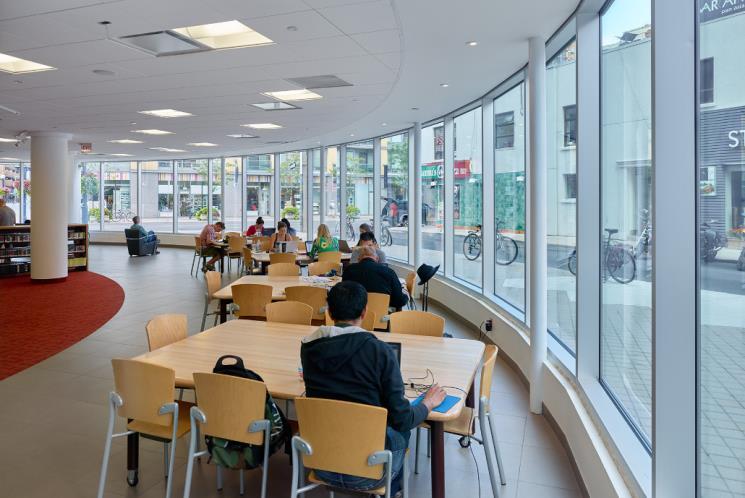
• Division of spaces which cater to the individual or a group, both as workstations/ reading zones/ study pods
References
1. V, B. (2017, November 2). Toronto Reference Library at 40: Raymond Moriyama and the original Architecture. Retrieved from Toronto Public Library: https://torontopubliclibrary.typepad.com/trl/2017/11/were-turning-40-and-we-look-good-.html
2. Metropolitan Toronto Library Board. (1977). Official opening of Metropolitan Toronto library. Toronto: Metropolitan Toronto Library Board.
MASSING AND DESIGN RATIONALE:
REFERENCE
TORONTO
LIBRARY, YORKVILLE
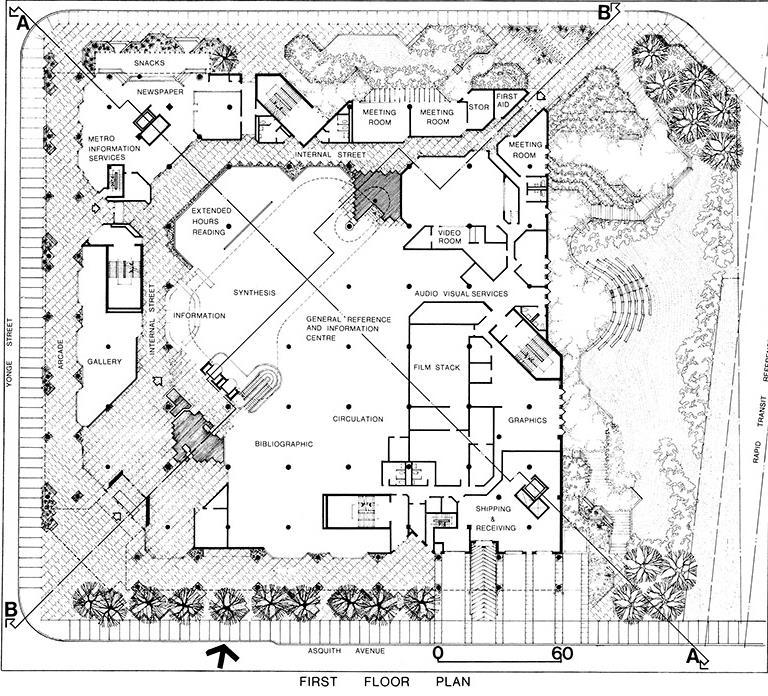
Fig 9 1977 original floor plan with landscape for first floor Metropolitan Toronto Reference Library (V,2017)
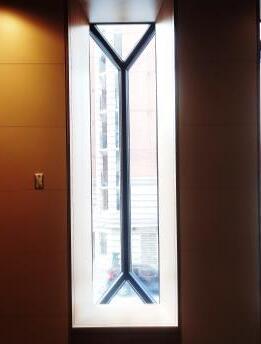
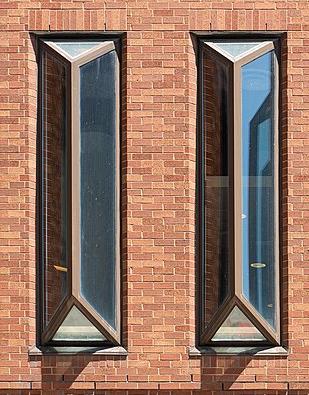
Fig 10 Moriyama broke up the large warm brick expanses with diamond/pyramid shaped windows. They are placed along the volume on the Yonge and Asquith sides.
CKAR310 Materials and Methods | Assignment 1 | Shreya Menon 4
Fig 11 Recessed step backs created after initial 3 storeys to relate to the roofline of Yonge street (V,2017)
Fig 12 Glass façade at the street level connects the user to the outside and offers a café-like ambience. Spaces evolving to the needs of the current day user.
crutches,
Internal Path
~45ft
Fig 13 The structural system is concrete with columns spaced at 30 feet intervals. The main building construction is steel reinforced concrete with red brick façade (V,2017)
Fig
provides ample natural light in the interior and urban views from the windows. An internal heat source pump system recovers heat generated by the light, people and solar radiation through the windows and uses it to heat and cool the building. There is a back-up system should temperatures fall. (V,2017)
Fig
fixed windows with an outward protrusion helps in regulating temperatures while letting light in
Fig
topped by a skylight, allows for air to circulate freely ; general illumination in the central atrium space is via rows of 1000W mercury vapor spotlights installed across the ceiling trusses (V,2017)
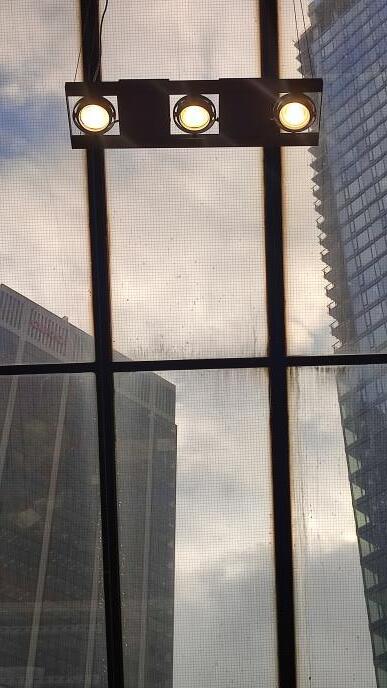
double glazed with a metal mesh interlayer to reduce solar transmission; task lighting attached to the metal framework.
The crown jewel of the library renovation is the Special Collections Rotunda which houses and showcases the wealth of the Toronto Reference Library’s collection in a unique space that is both highly visible and accessible. To protect the collection, the rotunda has been outfitted with an air-handling unit that works to control the environment inside the rotunda. The rotunda’s rich material palette - concrete, titanium and dark wood – is both modern and timeless, recalling the feeling of stately old libraries. (OAA, 2016)
References
1. Allen, E., & Iano, J. (2019). Funadamentals of building construction : Materials and Methods. New Jersey: john Wiley and Sons Inc.
2. V, B. (2017, November 2). Toronto Reference Library at 40: Raymond Moriyama and the original Architecture. Retrieved from Toronto Public Library: https://torontopubliclibrary.typepad.com/trl/2017/11/were-turning-40-and-we-look-good-.html
STRUCTURAL AND EXTERIOR WALL SYSTEMS : TORONTO REFERENCE LIBRARY, YORKVILLE
CKAR310 Materials and Methods | Assignment 1 | Shreya Menon 5
Fig 17 Metal and glass curtain wall
14 The pyramid shape
15 Non-flange
16 The central atrium,
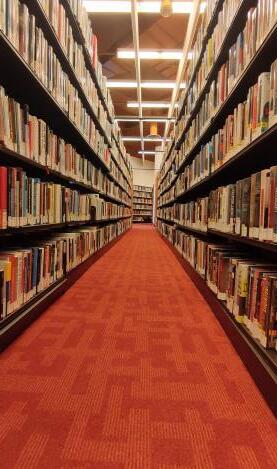
Bookshelves with ample lighting
YORKVILLE
• Floors are polypropylene carpets glued to the floor
• Vertical balustrades and interior stairs, earlier carpeted balustrades are now of Coloured cement plaster finish
• Ceilings in the public areas comprise 16 inch fiberglass panels (baffles). These are suspended from a ceiling T-bar grid system.
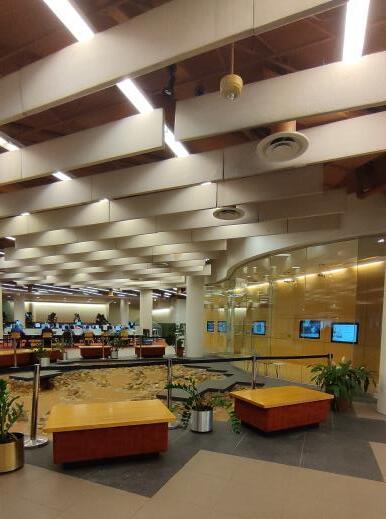
• The interior finishes were coordinated colour range throughout, with carpet tones of deep rust to golden orange, with red oak furniture and chocolate brown shelving and cabinets
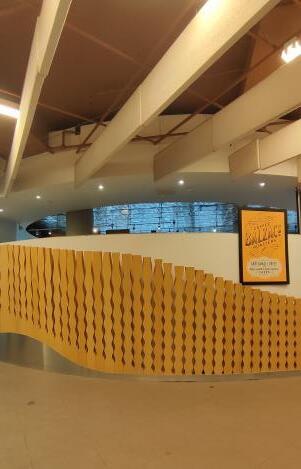
• The wooden screen each of 2" x 6" x 7" red Oak and made on a milling machine devised specifically for this project. To install the screen, the pales were temporarily wedged into position in the steel beams (channel) in the floor, then final adjustments were made to their angles. They were fixed permanently with a pouring of epoxy grout into the steel beams which were finished with cement and field stones
• Moriyama was an early advocate of accessibility, a small but telling detail here - the entry to the library was not through turnstiles but rather push bar to make wheelchair access easier. Similarly, counters and inquiry desks were kept low. (V,2017)
• When Raymond Moriyama designed the foyer of the building he created with its lower ceiling and waterfall/pond (and the original mirrored wall to the south- east side) the foyer was intended to act as a calming element in the transition for library users coming in from the busy street to acclimatize them to the library.
CONCLUSION
The Toronto reference Library is a building that has transcended time and stands tall as an icon. The constant growth of the spaces to include the needs of the community has ensured that it stays a relevant ‘brand’
References
1. Allen, E., & Iano, J. (2019). Funadamentals of building construction : Materials and Methods. New Jersey: john Wiley and Sons Inc.
2. V, B. (2017, November 2). Toronto Reference Library at 40: Raymond Moriyama and the original Architecture. Retrieved from Toronto Public Library: https://torontopubliclibrary.typepad.com/trl/2017/11/were-turning-40-and-we-look-good-.html
MATERIALS AND
OTHER COMPONENTS: TORONTO REFERENCE LIBRARY,
CKAR310 Materials and Methods | Assignment 1 | Shreya Menon 6
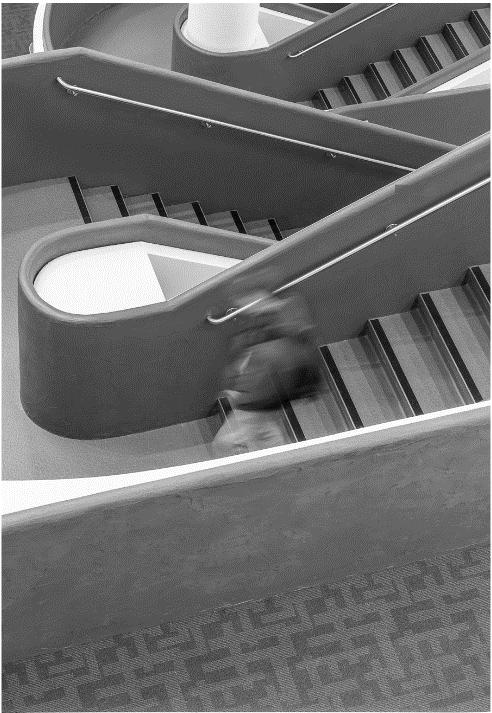
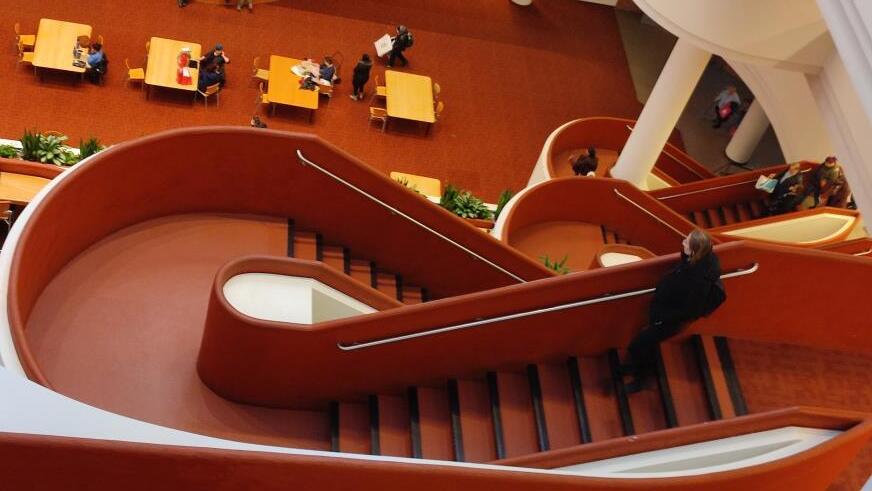
Fig 18 The stair system is designed like an extension of the floor, continuous and rotating. Finished in coloured cement plaster – a very strong visual element
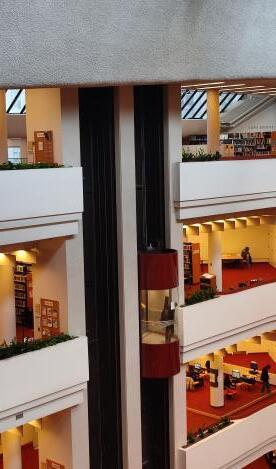
Fig 19 Glass elevator colour coordinated
Fig 21 Wooden screens made by Stephen Hogbin
Fig 20
Fig 22 The floorplates are inspired from the Hanging gardens of Babylon and are stacked in rhythm
Fig 23 Water feature designed as part of the initial design
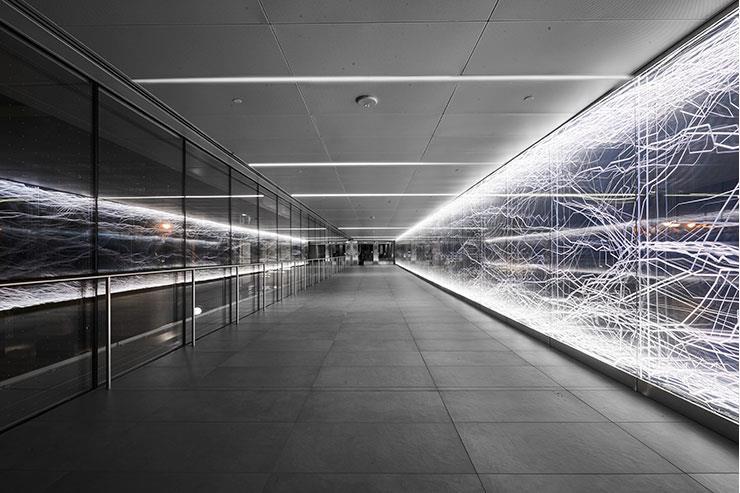
looks like a glowing beacon of light being hoisted on sturdy columns who have a yester years aesthetic. The lighting within the bridge looks futuristic and is an icon of the nature of the city of Toronto.
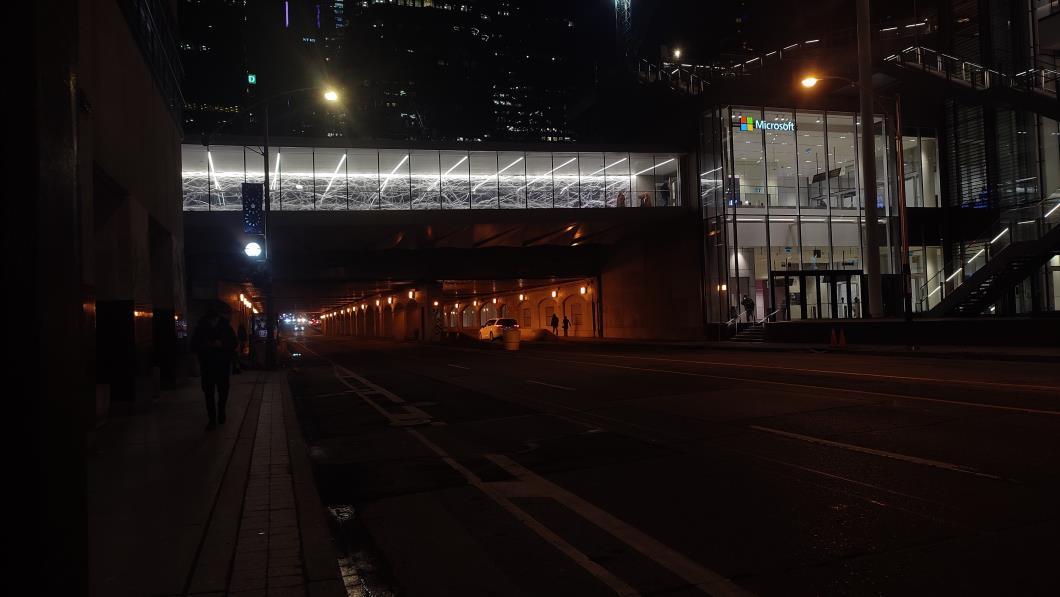
It is the invisible lines created by the apt placement of the structure which gives the building the stature of an icon
Architect Wilkinson Eyre and Adamson Associates, UK
Lighting Design
GPI Design, USA
Type of Building
Non Institutional
Building Use/ Programme
Public Transit building | PATH
Construction date 2020
Size (Area/ Height)
129’ long
5.8 m clearance over the centre line of Bay Street.
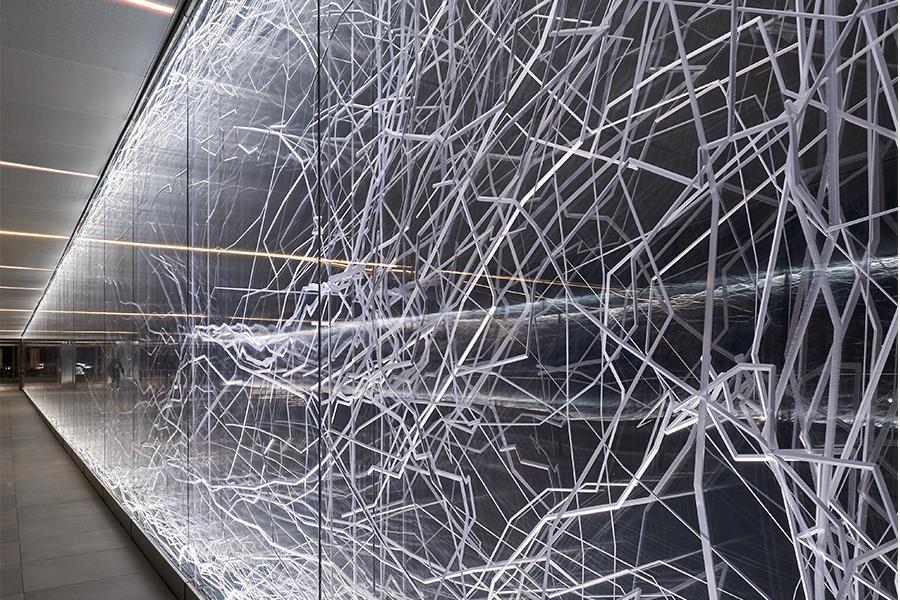
The pedestrian bridge connecting Scotiabank Arena and the Union Station Bus Terminal to the new CIBC SQUARE opened to the public December 2020. The artwork concept for the footbridge was created by Montreal born artist, Nicolas Baier. When explaining his concept, Baier states, “The work refers to mycelium. The filaments of this natural network, formed of elongated and partitioned cells, are everywhere in the ground where they can cover thousands of meters or even several square kilometres. They are earth’s biggest living organism. This work is, so to speak, in symbiosis with the complex. It gives to it a subtle symbol, it exposes its reason for being, it allows the CIBC Square to carry its own emblem high and proud.” Baier also correlates the etchings on the acrylic to the sport that CIBC SQUARE houses, the Toronto Maple Leaf’s ice hockey, adding further depth and meaning. ([d]arc Awards, 2021)
References
1. [d]arc Awards. (2021). Mycelium – Bay Street Bridge, Canada. Retrieved from Darc Awards: https://darcawards.com/portfolio/illuminated-art-wall-scotiabank-bridge-canada/
2. Barry, S. (2014, October 27). Planning Documents Reveal More Details on 45 Bay Development. Retrieved from Urban Toronto: https://urbantoronto.ca/news/2014/10/planningdocuments-reveal-more-details-45-bay-development.14212
CKAR310 Materials and Methods | Assignment 1 | Shreya Menon 7
INTRODUCTION AND DESIGN RATIONALE : 81 BAY STREET PEDESTRIAN BRIDGE
CIBC Square Scotiabank Arena
Union Station
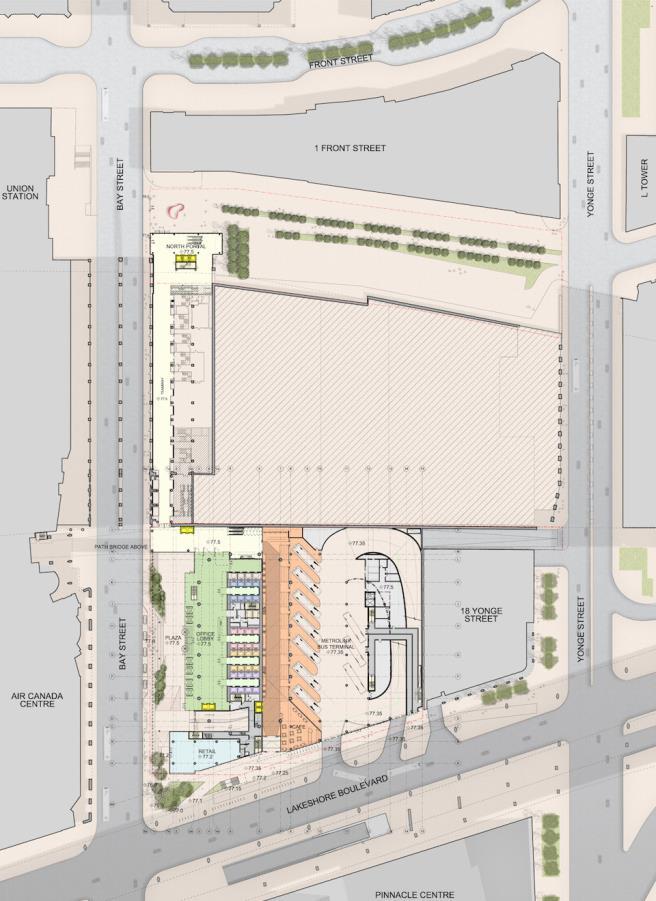
Fig 24 Schematic location of the pedestrian bridge(Barry, 2014)
Fig 25 View from the street for a pedestrian travelling along Yonge Street. The footbridge
• The 40-m long Scotiabank Arena Bridge, with a full height glass wall on the south side (no structure), spanning across Bay Street to the arena The ‘open C channel’ structure required complex analytical modelling to optimize stresses for a cost-effective design that carefully considered accelerations due to walking vibrations. (RJC Engineers, 2021)
• The design provides strong views towards Lake Ontario and connects the public between the tower, the transit system and its surroundings
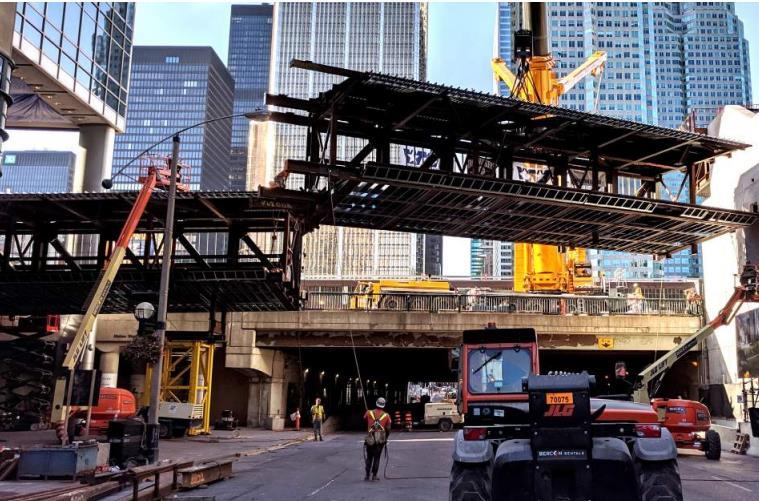
• Due to the heavy equipment required to lift the bridge and the presence of critical underground infrastructure, the bridge could only be craned from the Bay Street viaduct, at rail level. A condition assessment of the bridge was carried out and it was proved that the 100year-old bridge was able to support these loads and monitor the deflections – all on the most used track in Canada.
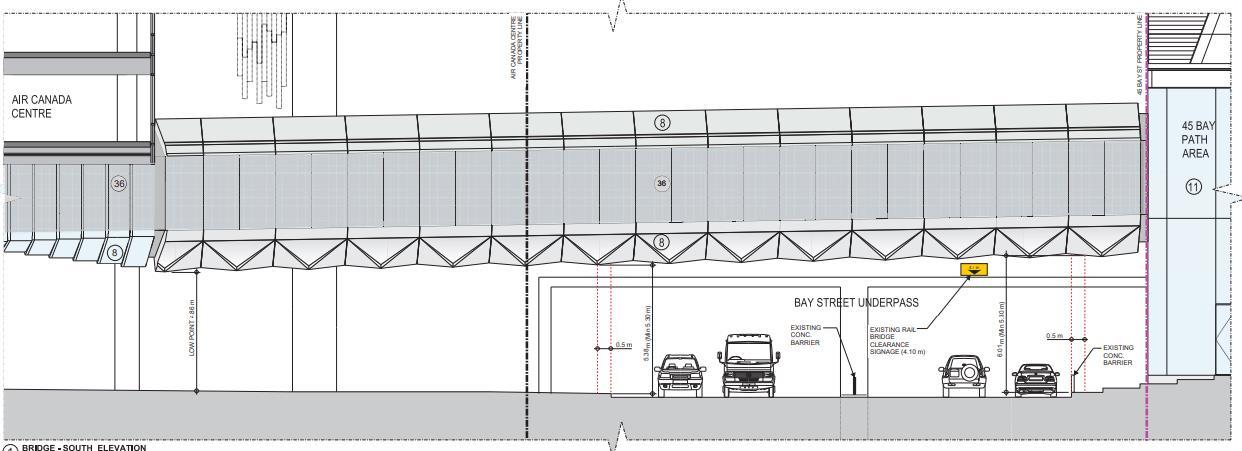
• Existing rail bridge clearance is 4.10m, but the clearance required for the new pedestrian bridge is 5.30m
Structural details
1 Metal planel cladding with high gloss coating
2 Structural glazing system
3 Ceramic frit to achieve bird friendly glazing requirements as per Toronto Green Standards
References
1. GPI Design. (2021, July 23). Illuminated Art Footbridge | Bay St. Bridge. Retrieved from GPI Design: https://gpidesign.com/2021/07/illuminated-art-footbridge-scotiabank-bridge/
2. RJC Engineers (2021) 81 Bay Street Toronto: RJC Engineers
3. City of Toronto. (2019). Report for Action: Pedestrian Bridge connecting 45 Bay Street to the Air. Toronto: City of Toronto.
CKAR310 Materials and Methods | Assignment 1 | Shreya Menon 8
STRUCTURAL AND EXTERIOR WALL SYSTEM : 81 BAY STREET PEDESTRIAN BRIDGE
Fig 26 During construction (RJC, 2021)
1 1 2 1 3 3
Fig 27 Sectional elevation of the proposed pedestrian overbridge (City of Toronto, 2019)(
• A custom designed and highly complex hidden structural system houses multiple layers of precisely machined acrylic panels with a mirror-finish back, creating the illusion of infinite movement and energy without detracting from the aesthetic. These illuminated acrylic panels create a stunning visual experience in this space.
• Multiple layers of double etched acrylic with a mirror back finish illuminated with GPI’s Infuse™ Complete LED Backlighting System has been used
CONCLUSION
The Mycelium, 81 Bay Street Pedestrian bridge is an icon through Location and the use of technology which helps connect the community visually and as a mode of transit that invokes the feeling of awe
References
1. GPI Design. (2021, July 23). Illuminated Art Footbridge | Bay St. Bridge. Retrieved from GPI Design: https://gpidesign.com/2021/07/illuminated-art-footbridge-scotiabank-bridge/
2. RJC Engineers (2021) 81 Bay Street Toronto: RJC Engineers
3. City of Toronto. (2019). Report for Action: Pedestrian Bridge connecting 45 Bay Street to the Air. Toronto: City of Toronto.
CKAR310 Materials and Methods | Assignment 1 | Shreya Menon 9 MATERIALS AND OTHER COMPONENTS: 81 BAY STREET PEDESTRIAN BRIDGE