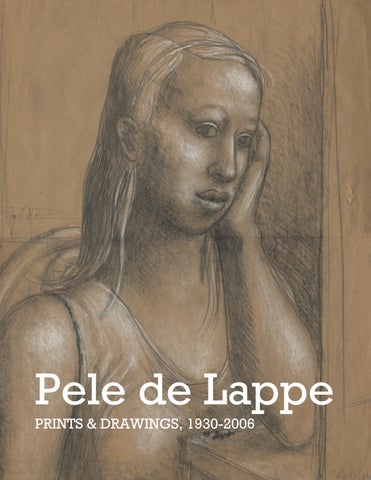
Pele de Lappe PRINTS & DRAWINGS, 1930-2006
Phyllis “Pele” de Lappe, artist, illustrator, and political activist, was born to Wesley and Dorothy de Lappe in San Francisco, California on May 4, 1916. Her father was a commercial artist and ardent Marxist, and her mother was a musician and civil rights activist. Both inspired Pele’s journey toward visual art and social activism. De Lappe began her formal art studies in 1930 at just fourteen when she enrolled in the California School of Fine Arts, studying under Arnold Blanch.
The following year she moved to Woodstock, New York to continue her studies at the Art Students’ League under Edward Lansing, Kenneth Hayes Miller, John Sloan, and Charles Locke. She learned the technique of lithography from Adolf Dehn. At this time De Lappe also worked with Mexican artists David Siqueiros and Diego Rivera, for whom she modeled and assisted with the Rockefeller Center murals in New York.
Returning to San Francisco in 1934, Pele found herself in the midst of a maritime strike. She got involved by joining the Marine Workers Industrial Union Ladies Auxiliary, walking the picket lines, raising money for the strikers and drawing cartoons for the union newsletter. In the meantime, she continued to create her own work and she held her first solo exhibition in 1935 at the Art Center Gallery in San Francisco. De Lappe’s work focused on the working class, and she made a meager living by drawing for the Daily Worker, New Masses, L'Unita Operaia, West Oakland Beacon, and the San Francisco Chronicle During the 1940s she was a feature editor and cartoonist for The People’s World In 1952 she cofounded the Graphic Arts Workshop in San Francisco.
A resident of Berkeley, California for many years, de Lappe moved north to Petaluma in the 1990s at the encouragement of her friend and fellow artist, Byron Randall. During the next few years she penned her autobiography, Pele: A Passionate Journey through Art and the Red Press, which she published privately in 1999. Her work is included in the collections of the Achenbach Foundation for the Graphic Arts, Syracuse University, Woodstock Art Association and the Library of Congress.
Pele de Lappe died in Petaluma, California on October 10, 2007.
The Annex Galleries presents a selection of de Lappe’s prints and drawings, beginning with one of her earliest works – a self-portrait at age fourteen – and ending with one of her final lithographs from 2006. These works show Pele de Lappe’s humor, compassion, and multifaceted talent in equal measure. For more information on the works or to read a more in depth biography, visit www.annexgalleries.com.
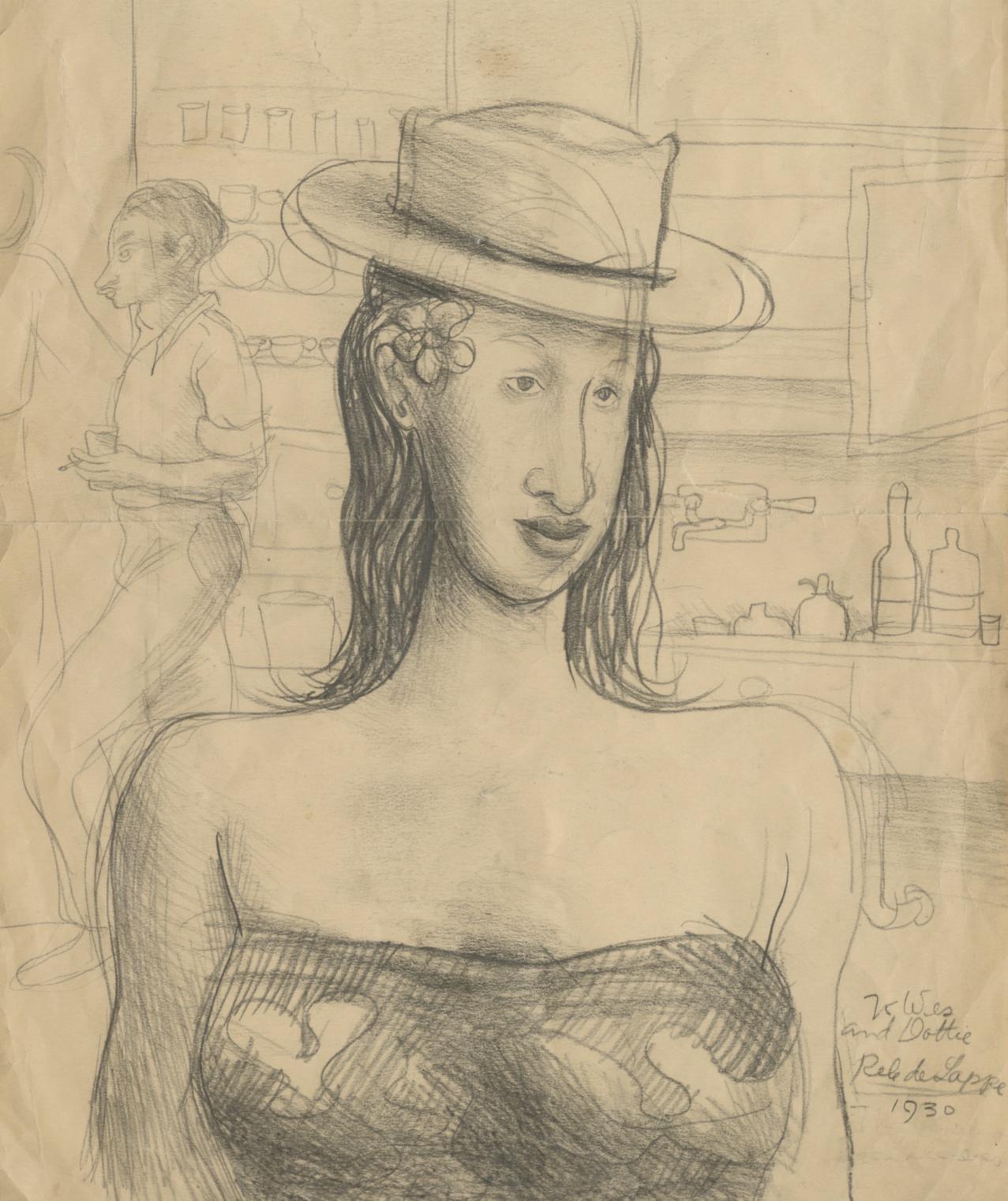
Untitled (Self-portrait at fourteen years old)
Graphite drawing, 1930; pencil signed, dated, and dedicated: “To Wes and Dottie,” lower right. On cream wove paper. Inventory number 24508.
De Lappe refers to her parents as “Wes and Dottie” in the dedication of this young self-portrait
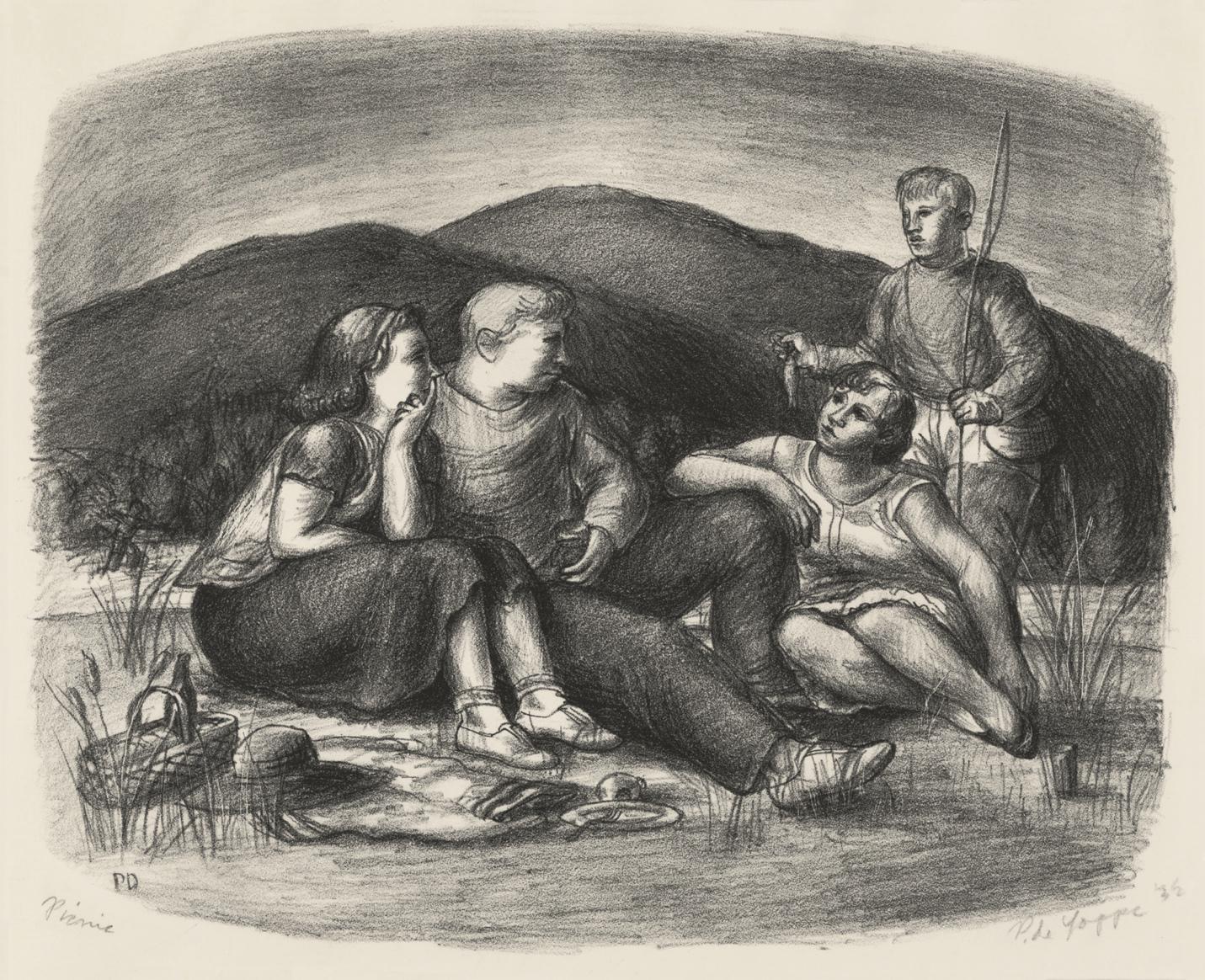
“Picnic” (also called: “The Blanches and the Lees”)
Lithograph, 1932; pencil signed, lower right, and initialed in the stone, lower left; pencil titled and dated; printed by Bolton Brown on ivory wove; edition not stated, likely around 12. Inv. no. WECA103.
A depiction of four noted Woodstock artists, the couples Arnold and Lucile Blanch and Doris and Russell Lee. The two couples would eventually divorce, allowing Arnold and Doris to marry An impression of this image is included in the New York State Museum’s Arthur A. Anderson Collection, in the “Bolton Brown and Lithography” section.
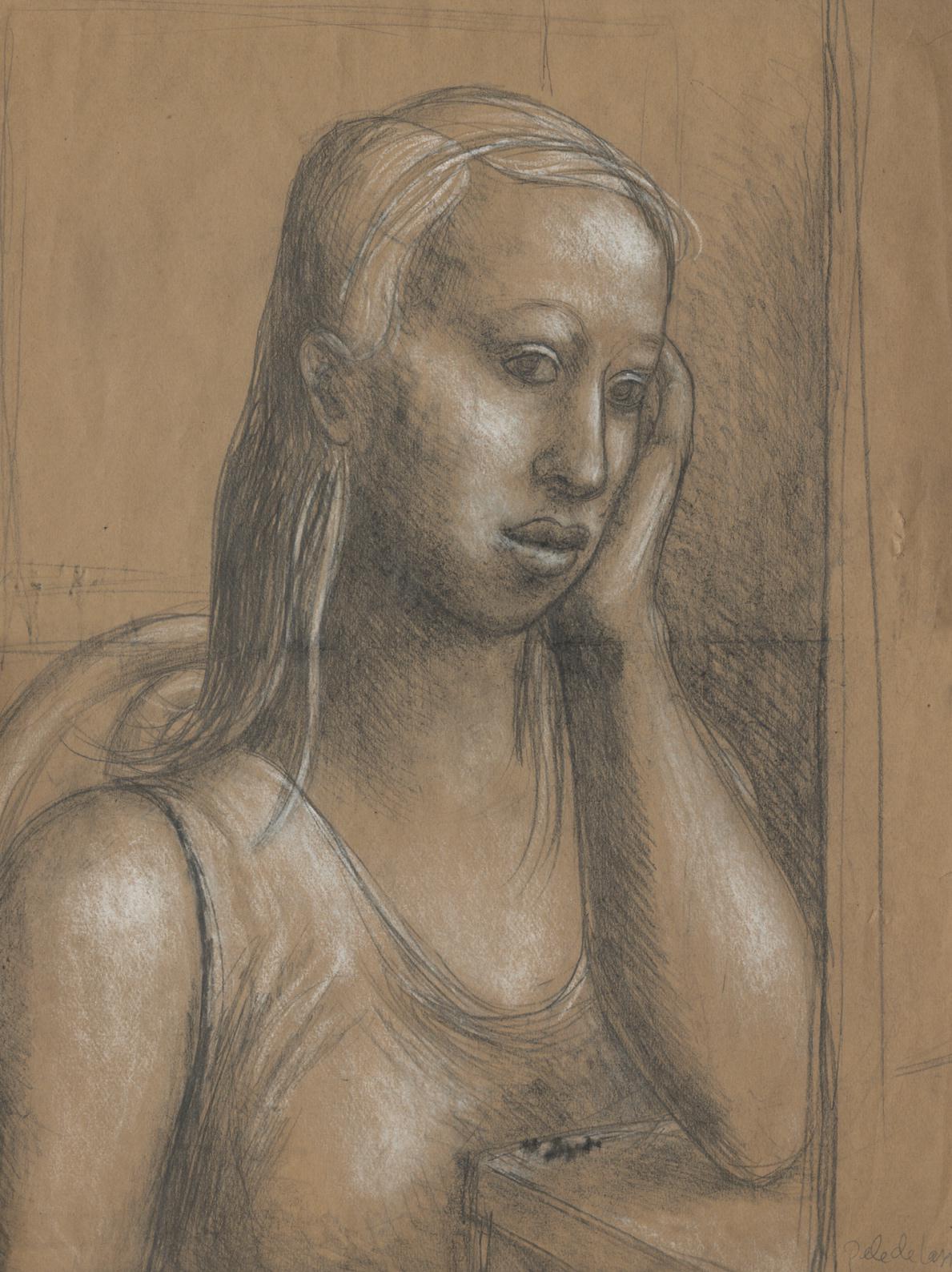
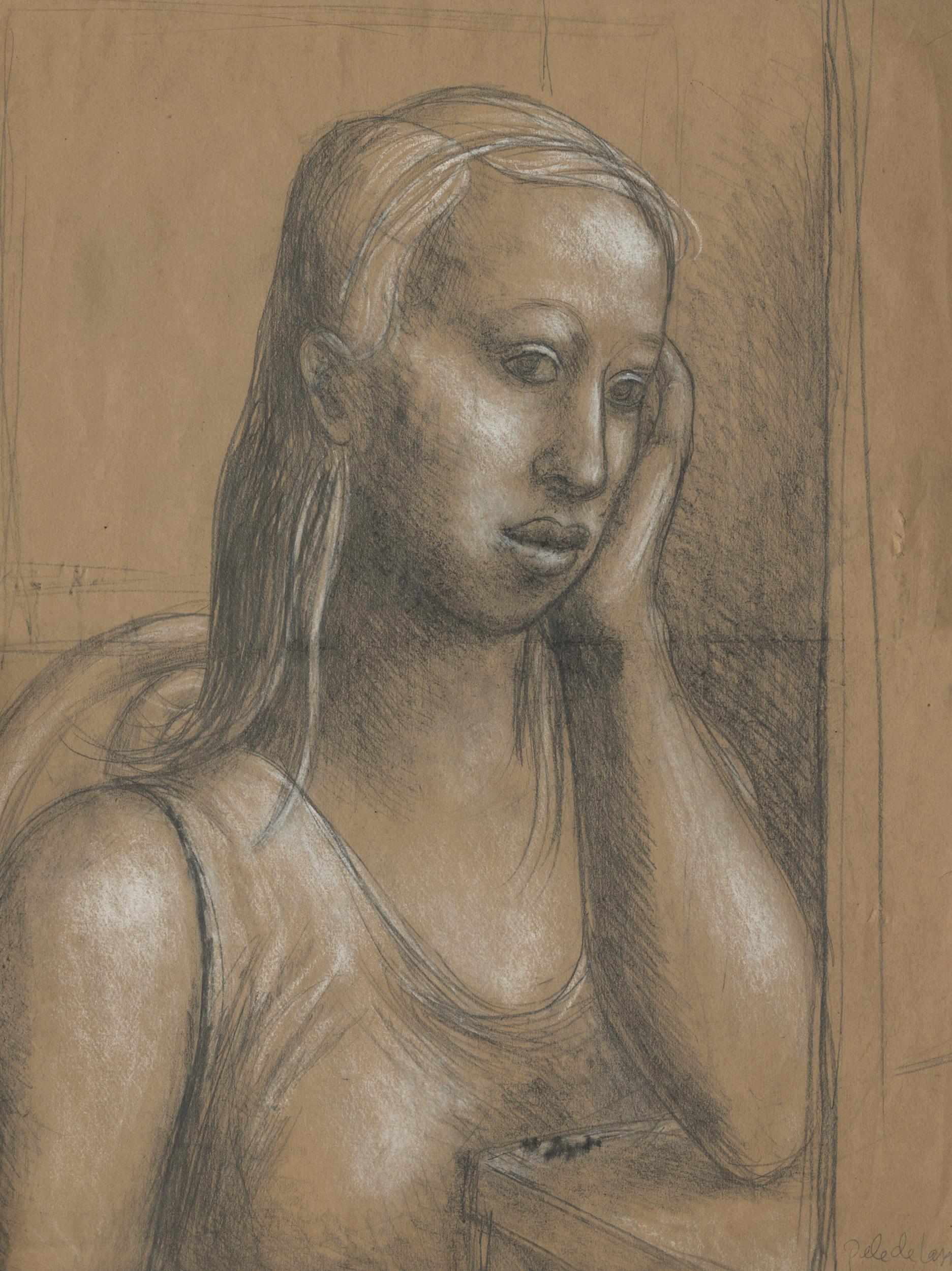
Untitled (self-portrait)
Graphite and conté crayon drawing, ca. 1935; pencil signed in lower right sheet corner; on tan wove. Inv. no. WECA117
De Lappe continues what would become a lifelong study of the self, creating this pensive portrait at around age twenty.
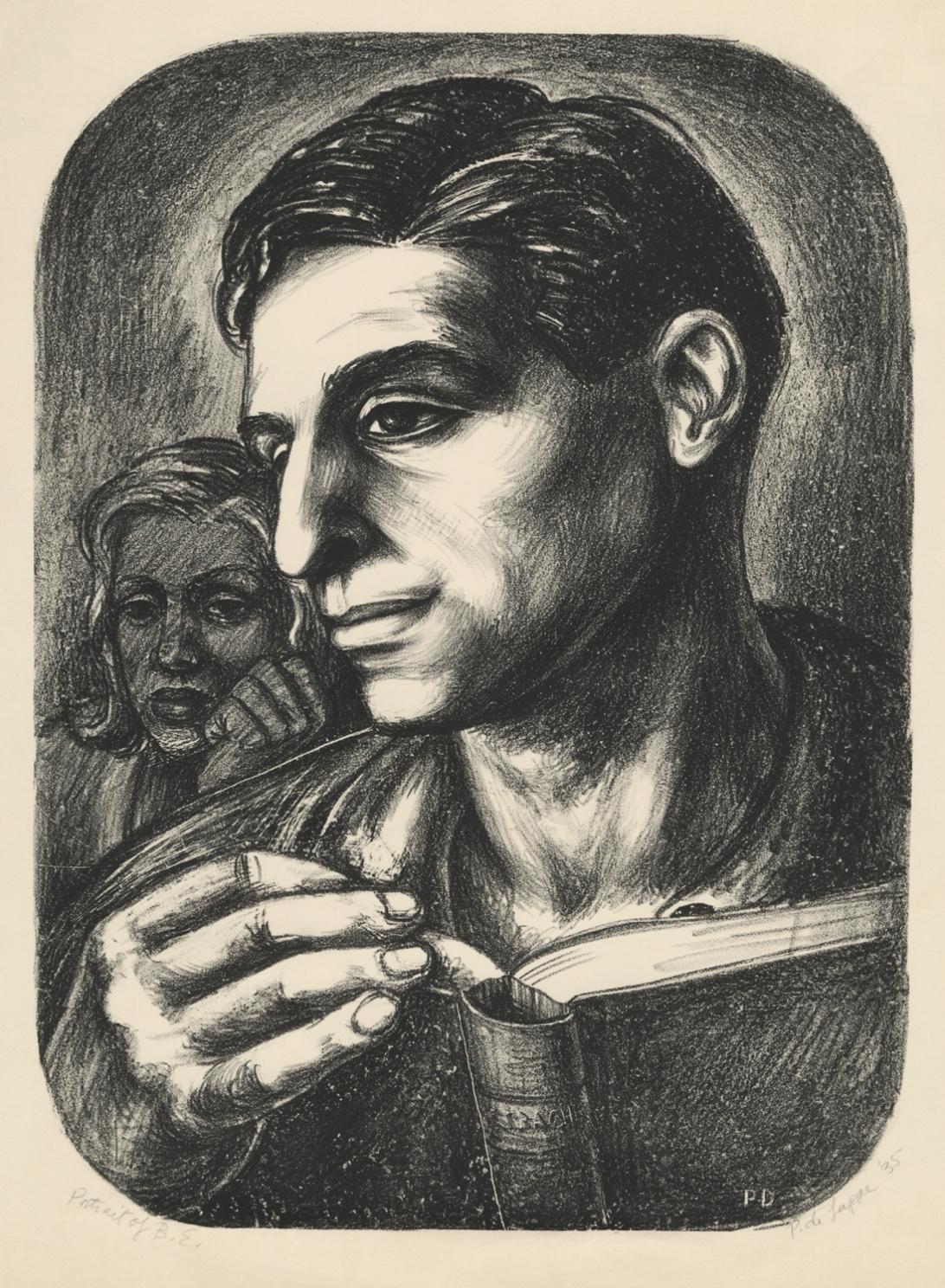
“Portrait of B.E. [Bertram Edises]”
Lithograph, 1935; pencil signed, lower right, and initialed in the stone, lower right; pencil titled; edition size not stated; printed by the artist on cream Rives watermarked wove; reference: illustrated page 24 of her privately published autobiography, A Passionate Journey Through Art and the Red Press. Inv. no. WECA101.
Bertram Edises was a prominent civil rights attorney in the San Francisco Bay Area for fifty years, and one of the founders of the Criminal Courts Bar Association of Alameda County. He was de Lappe’s first husband, marrying in 1935.
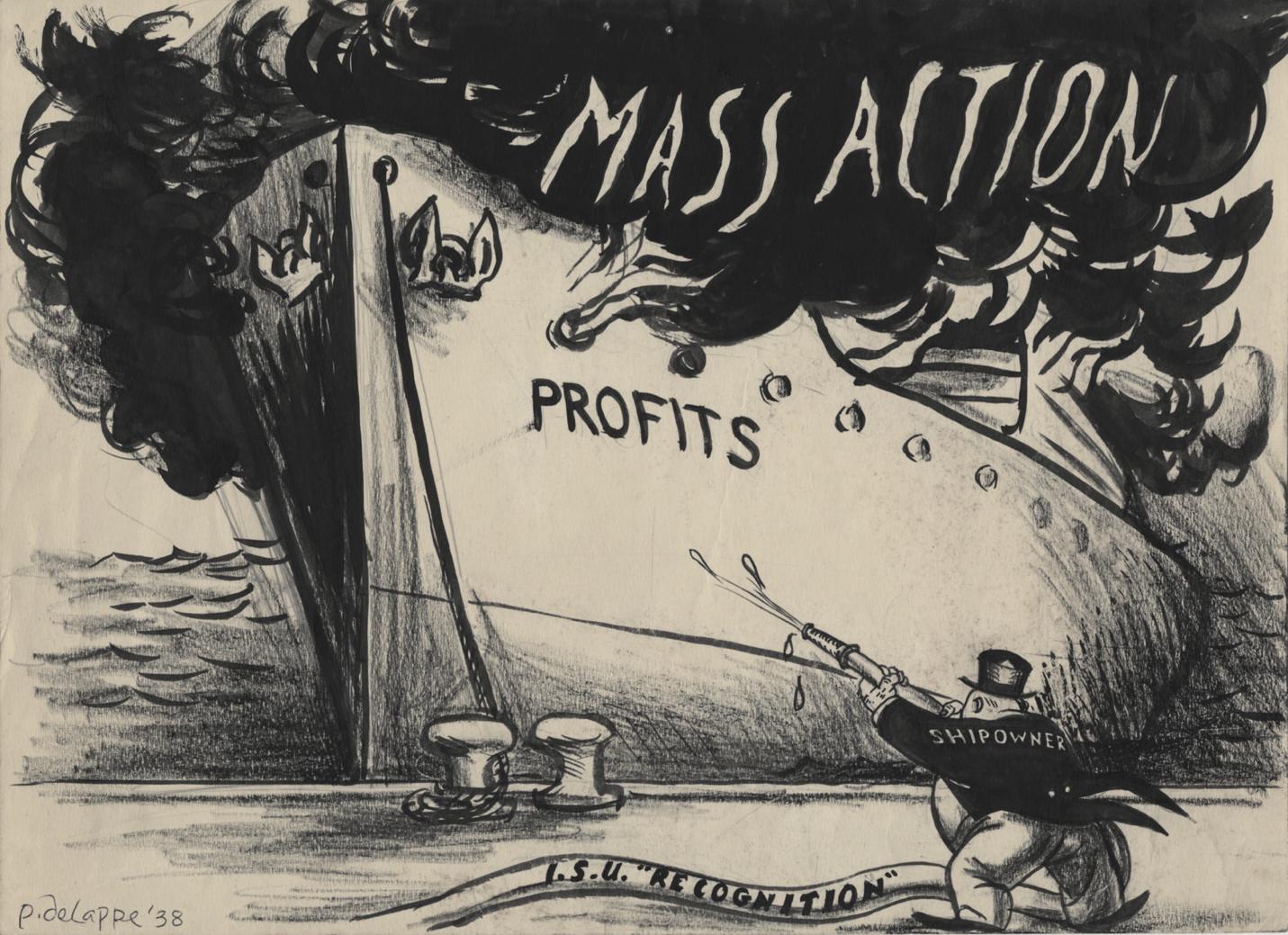
“I.S.U. ‘Recognition’” (single-panel editorial comic)
Ink drawing 1938; pencil signed, lower right; pencil dated; on cream wove. Inv. no. WECA107.
“I.S.U.” refers to the International Seafarer’s Union. In the San Francisco Bay Area, the union experienced upheaval due to the economic slowdown of the Great Depression and the union’s antiCommunism stance. After losing its charter in 1937 due to plummeting membership, a new union emerged in October of 1938: the Seafarers International Union. De Lappe, who had previously been a member of the Marine Industrial Union Ladies Auxiliary before it dissolved in 1935, worked as an illustrator for various union newsletters; this comic was likely drawn for one such publication
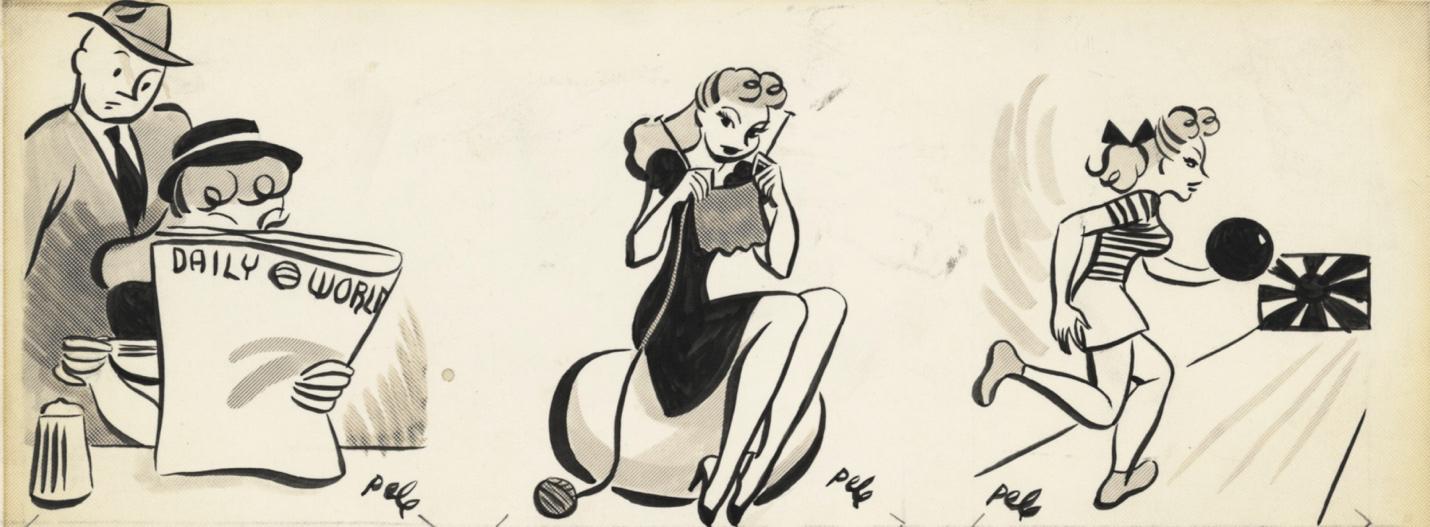
“Vicky
Says” comic vignettes for People’s World
Ink drawing with ink-pattern transfer, ca. 1945; each vignette is ink signed in the lower margin; includes directional layout marks at edges of sheet; on Craftint Doubletone No. 29 cardstock. Inv. no. WECA105.
In her self-published autobiography, Pele: A Passionate Journey Through Art and the Red Press, de Lappe wrote, “Mike Quinn, author of the definitive account of the ’34 strike, The Big Strike, had a regular column in the [People’s World]. …He was the ‘father’ of my little creation, Vicky Says, a daily single column-sized cartoon. Vicky (for ‘victory’) was a leggy female who, with limericks, exhorted readers to speed the war effort. …My FBI files noted duly noted that ‘Vicky’ was one of my subversive activities on the PW.”
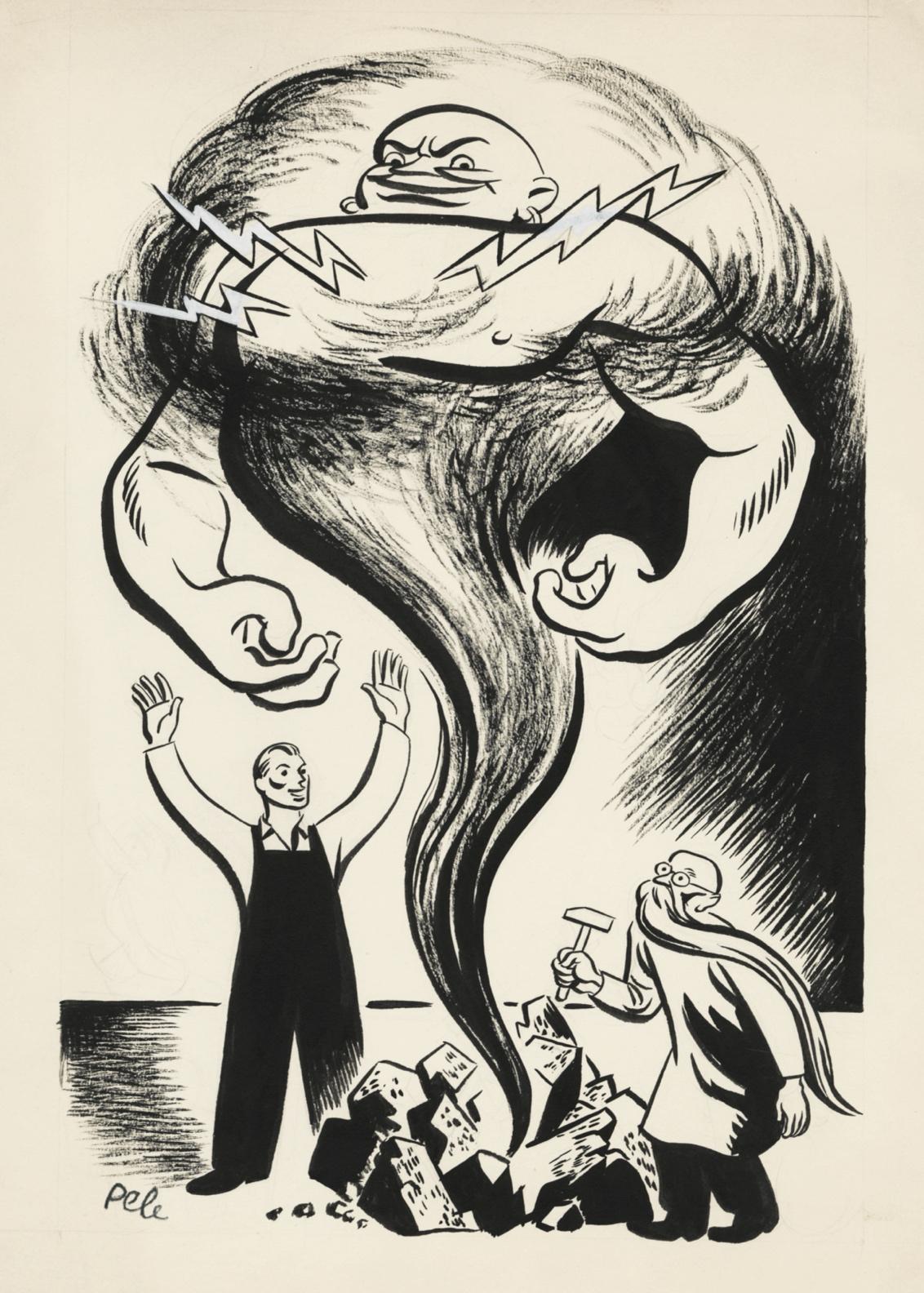
(Single-panel editorial comic)
Ink with white acrylic edits, ca. 1950; signed in the image, lower left; on cream wove. Inv. no. WECA104
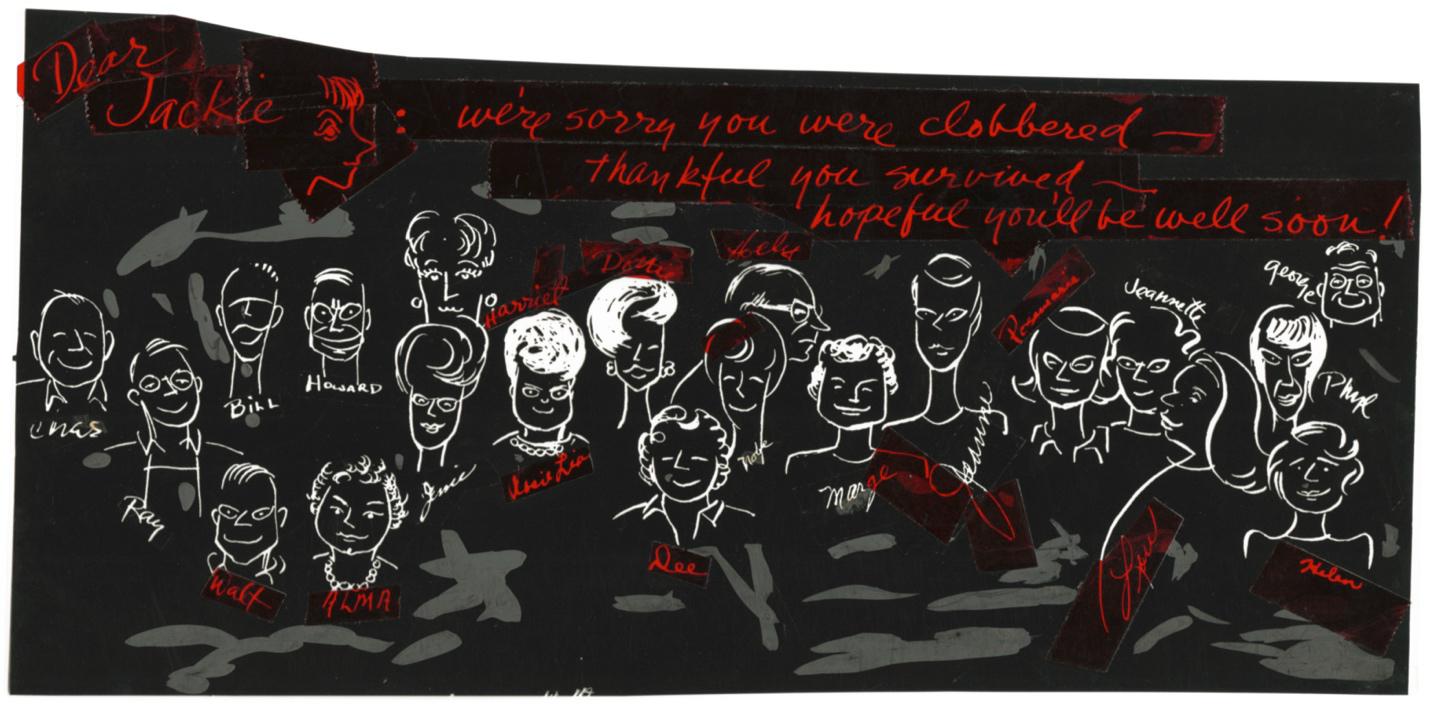
“Dear Jackie: We’re sorry you were clobbered…”
Scratch drawing on inked acetate with red tape attached at verso for coloring, possibly to be copied and printed onto a card, ca. 1960; signature scratched into the image “Phyl,” right. Inv. no. WECA106
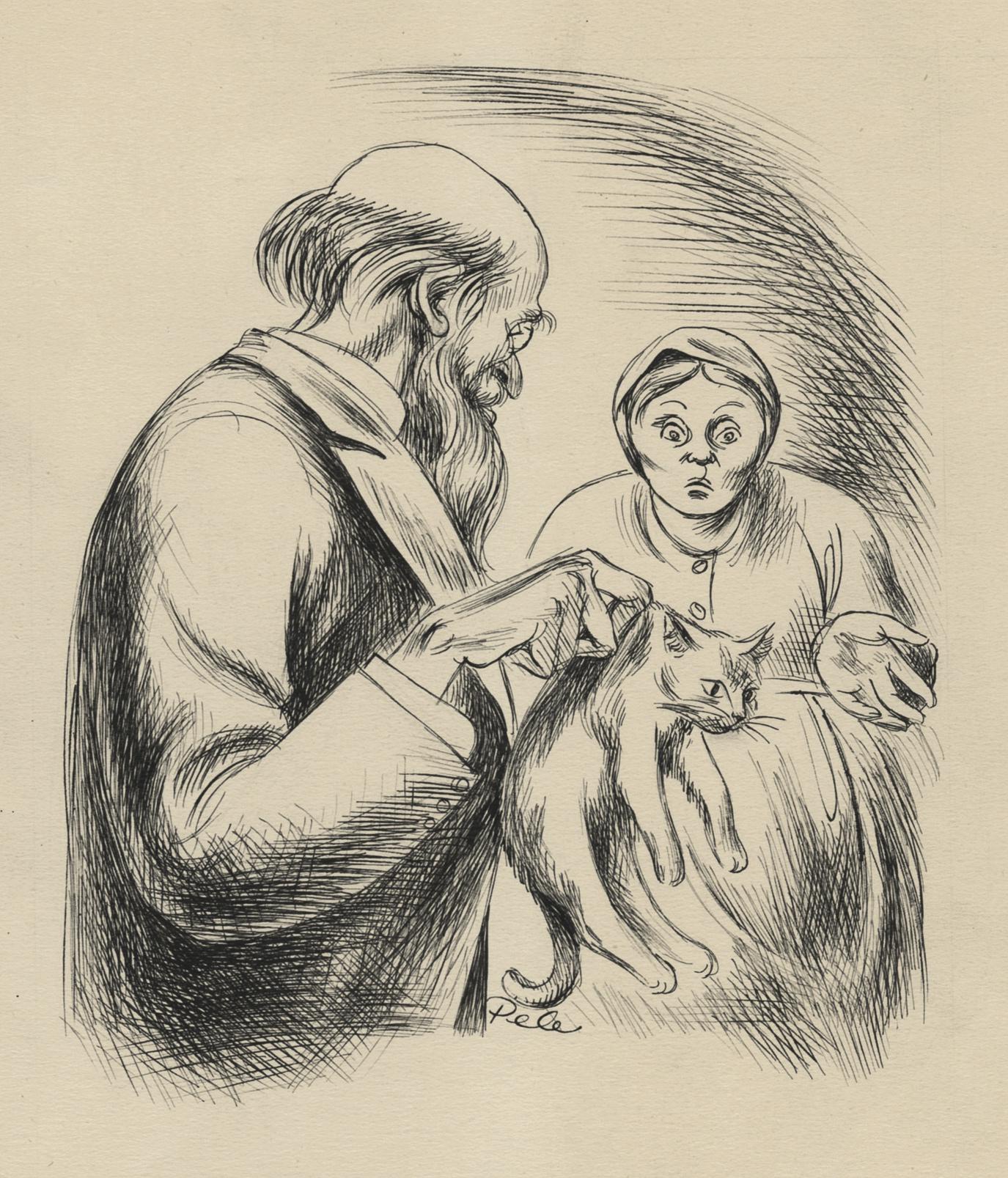
(Editorial comic for People’s World)
Ink drawing on ivory wove paper, ca. 1960; ink signed, lower center. Inv. no. WECA112.
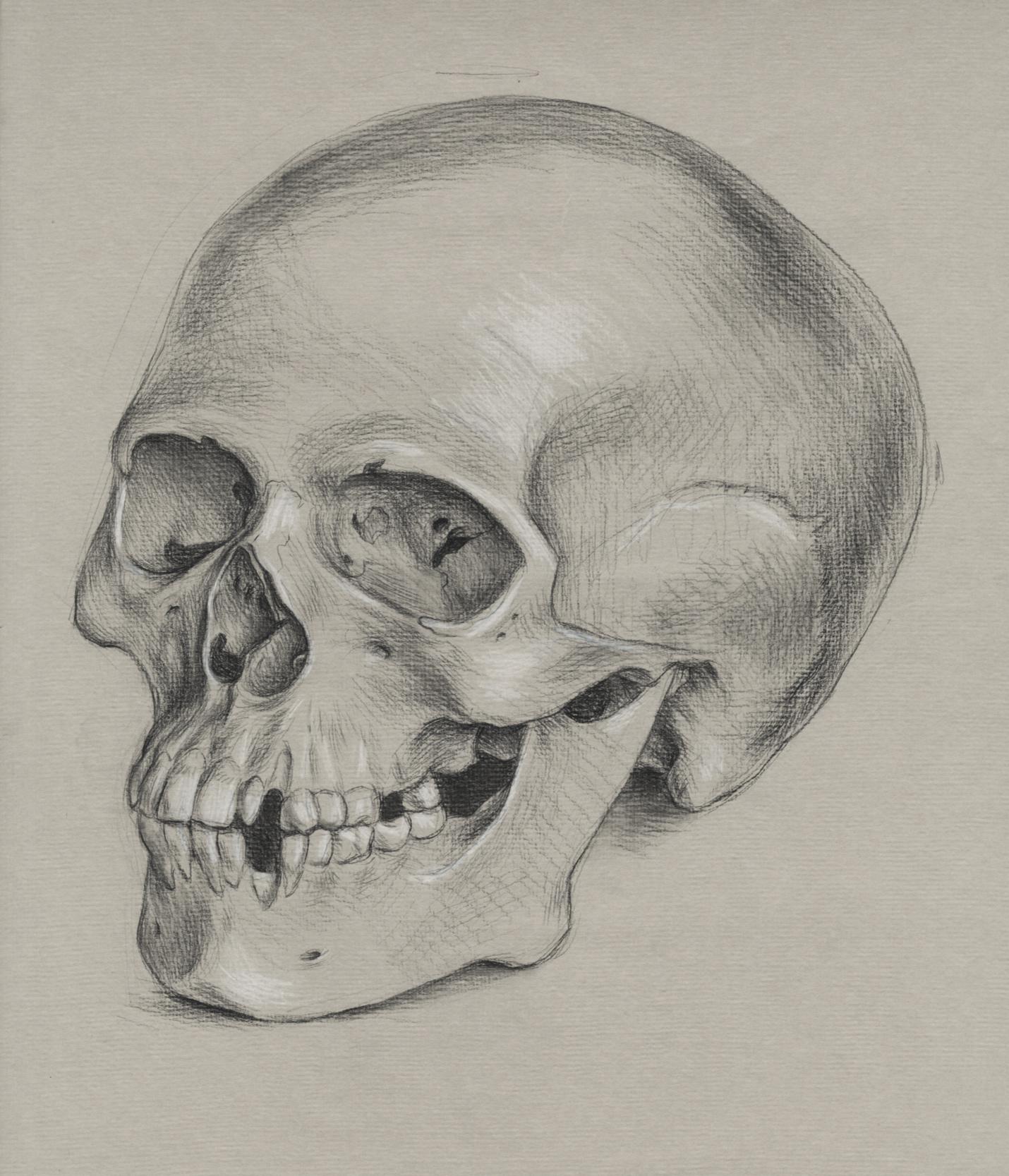
Untitled (skull study)
Graphite and charcoal drawing on tinted wove, ca. 1965; unsigned. Inv. no. WECA118. Likely drawn at the same time as “Study of bones” which she did in an anatomy class at University of California, Berkeley.
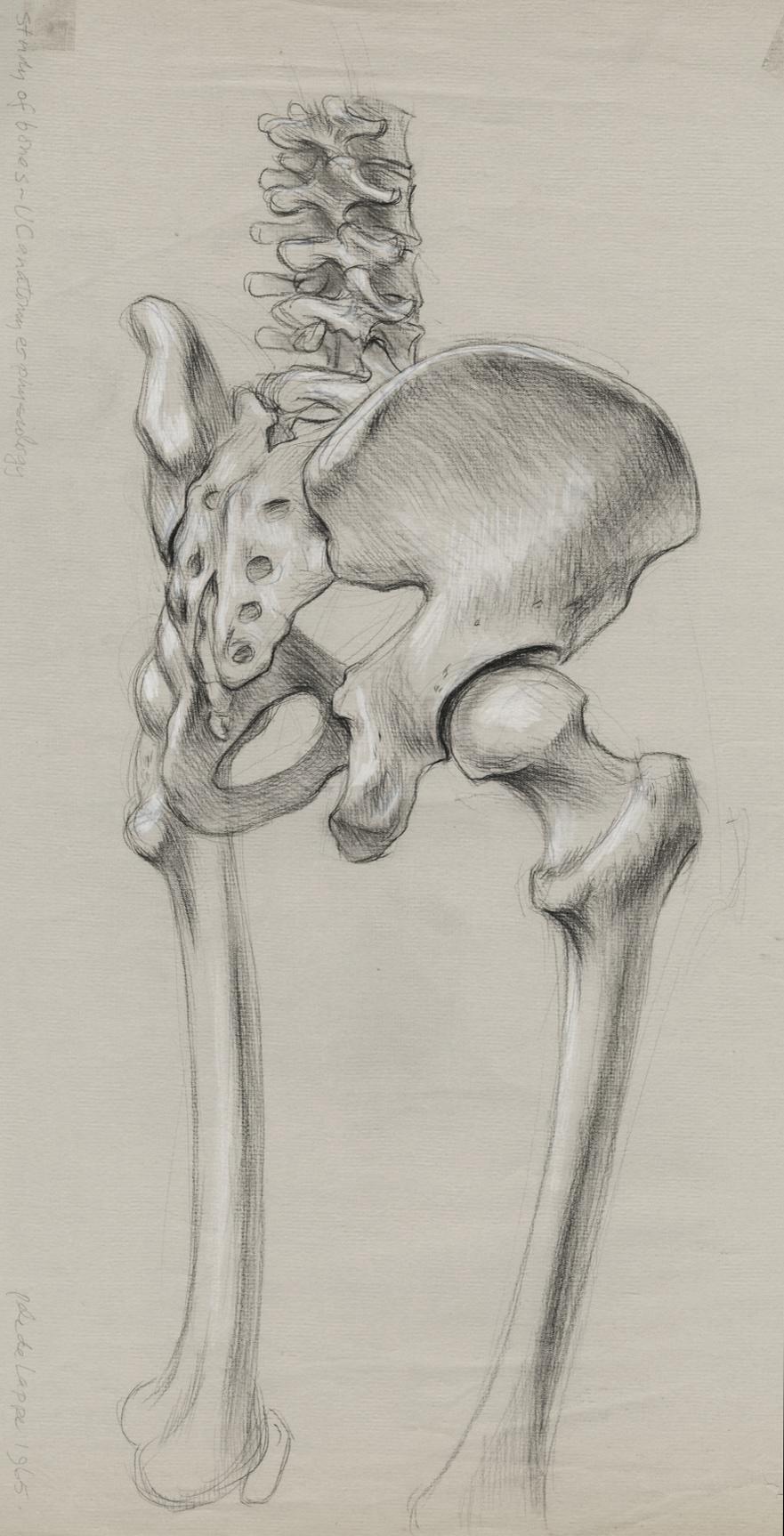
“Study of Bones – UC anatomy & physiology”
Graphite and charcoal drawing on tinted wove, 1965; pencil signed vertically, lower left paper edge. Inv. no. WECA119.
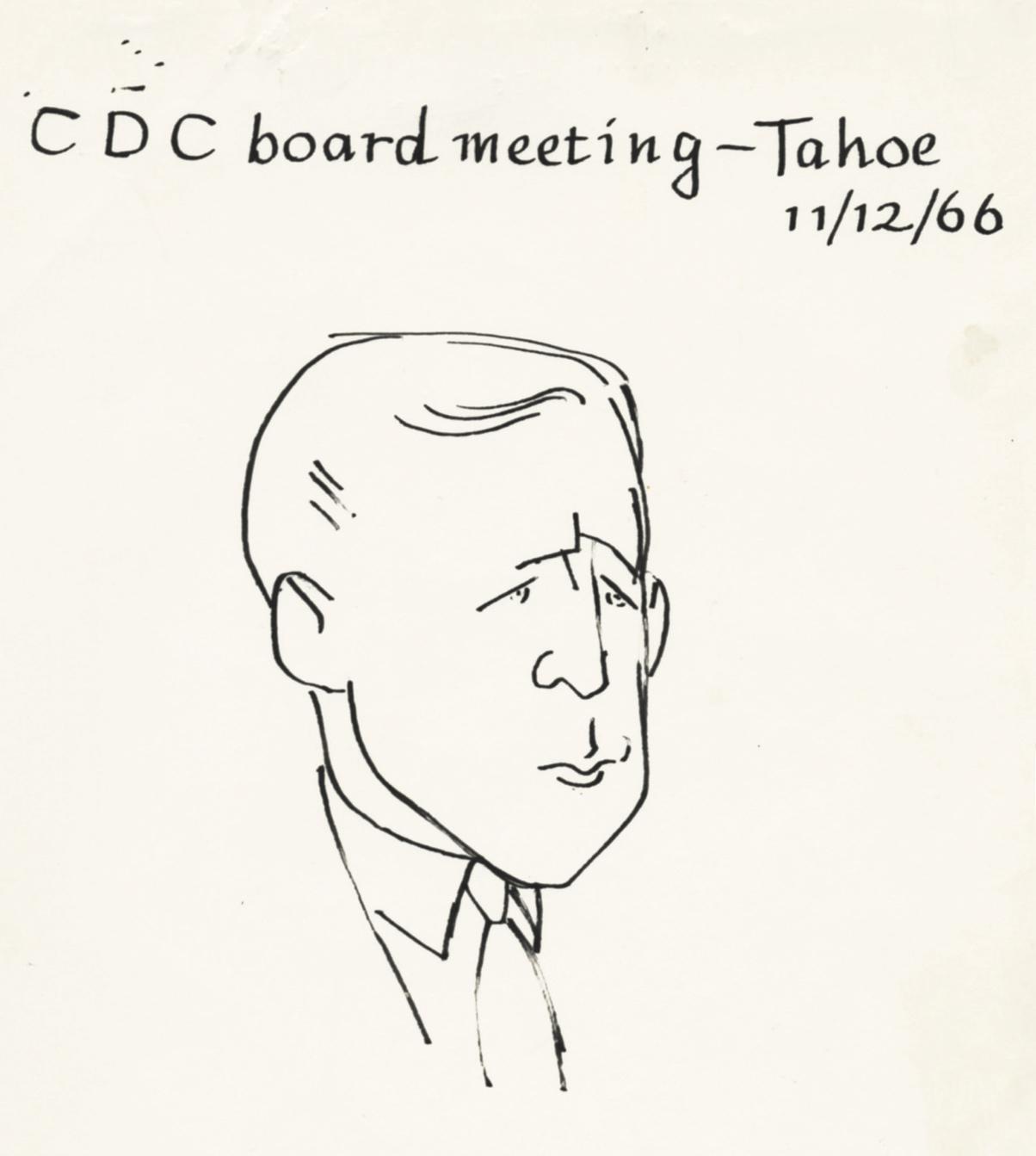
“CDC board meeting - Tahoe” (Gerald Hill, President, California Democratic Council)
Ink drawing, 1966; unsigned; ink dated. Inv. no. WECA111.
A caricature portrait of former attorney, university teacher, writer, and Democratic political and civil rights activist Gerald N. Hill. At the time of this drawing, he was the President of the California Democratic Council (CDC), and he would become one of the first major officials to publicly oppose the Vietnam War. He and his wife, Kathleen Thompson Hill, would teach college courses together and write several books and guides. This was done at a CDC conference in Tahoe, California.
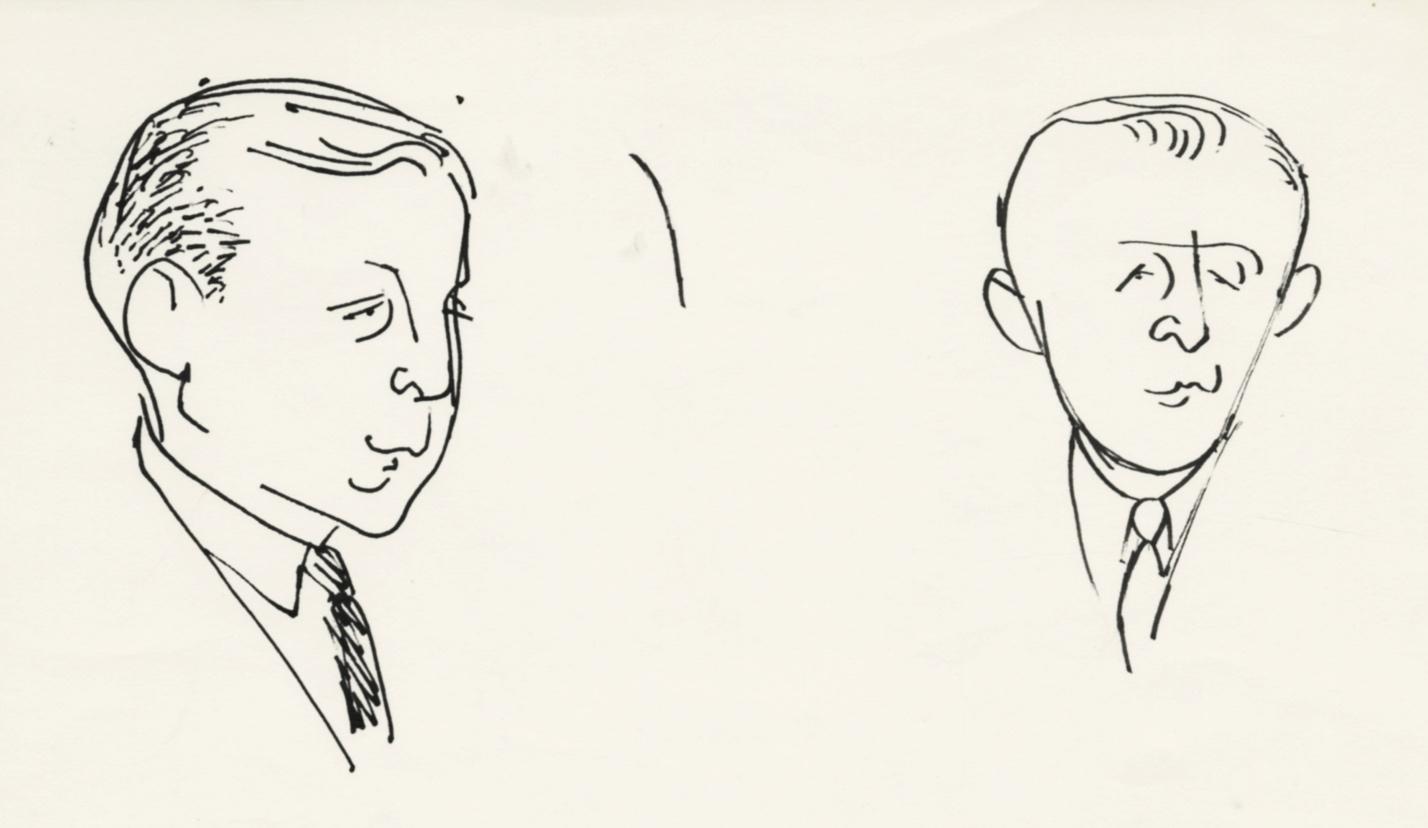
Further sketches of Gerald Hill, President, California Democratic Council, Tahoe, 1966)
Ink drawing, 1966; unsigned. Inv. no. WECA110
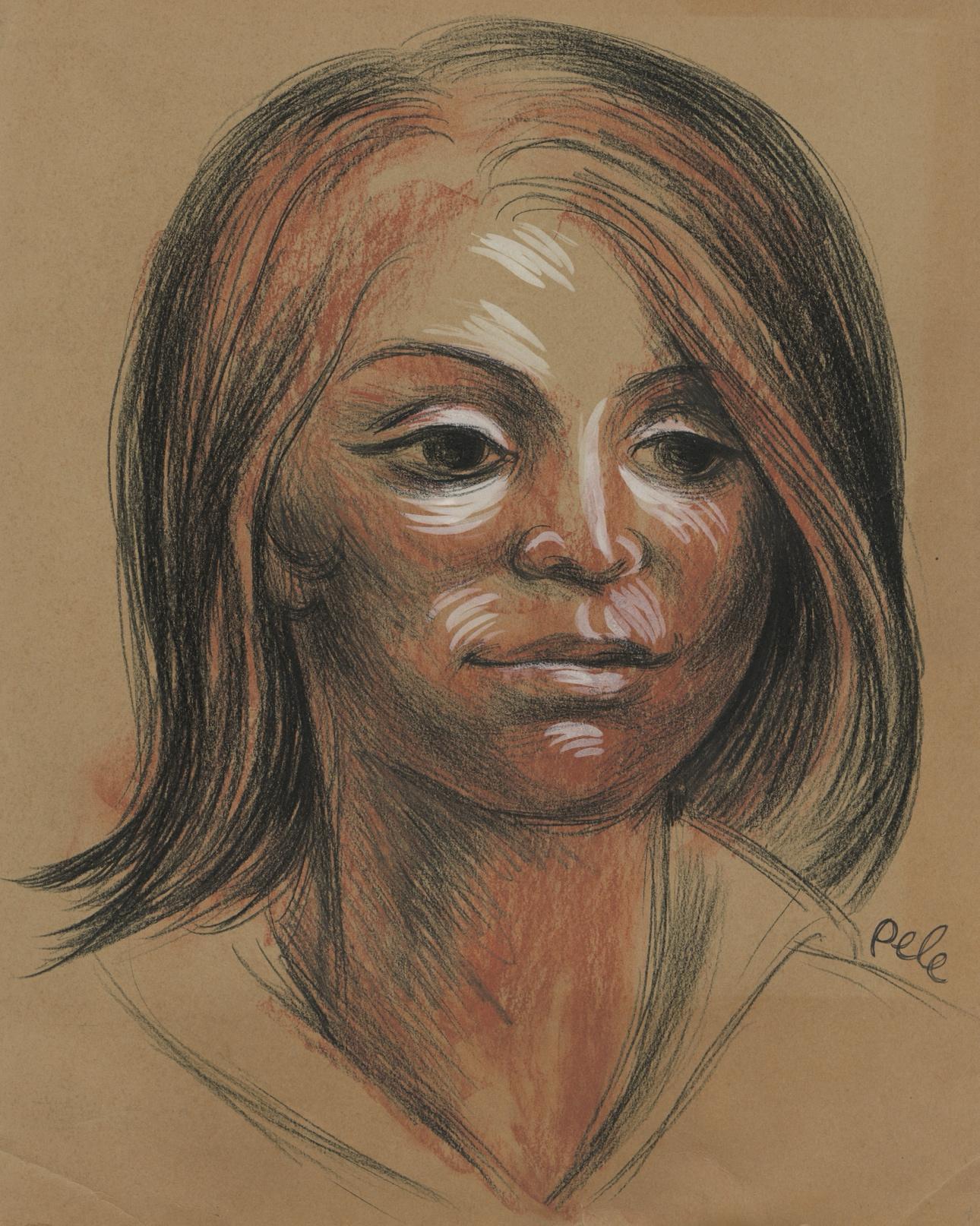
(Portrait of a woman)
Charcoal and conte crayon drawing with gouache highlights, ca. 1970; crayon signed, lower right. Inv. no. WECA120.
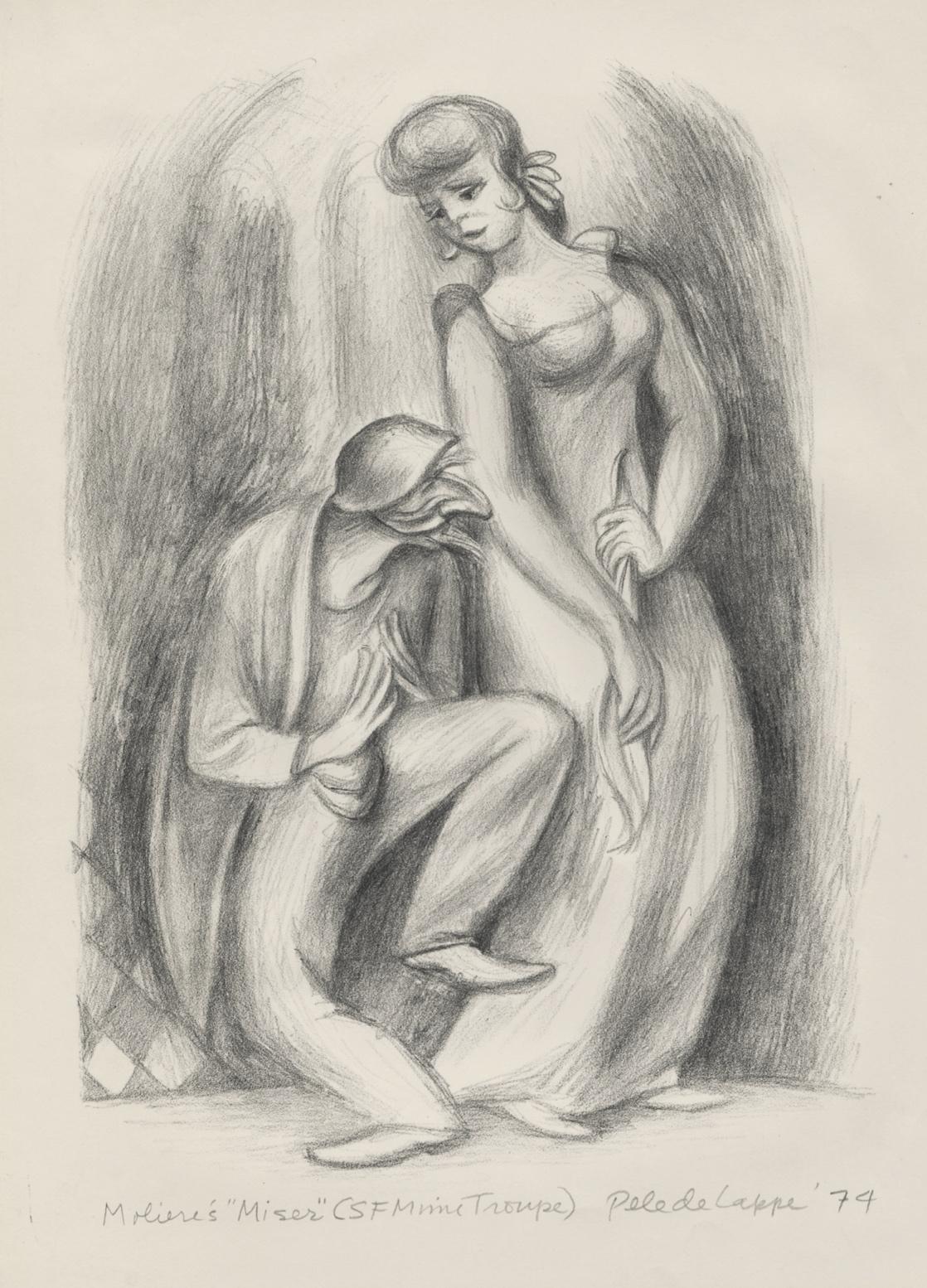
“Moliere’s ‘Miser’ – SF Mime Troupe”
Lithograph on cream Warren Olde Style wove, 1974; pencil signed, titled, and dated; from an edition of 10. Inv. no. 18404.
The famed commedia dell’arte San Francisco Mime Troupe first performed Moliére’s 1668 comedy, The Miser, in 1966. In this image de Lappe depicts the Pantaleone character, Harpagon, courting his son’s love interest, Mariane. The San Francisco Mime Troupe, founded in 1959, performed political satire combined with live rock and roll in the 1960s and ‘70s. Among the featured bands were the Grateful Dead, Jefferson Airplane, and Moby Grape, among others. The troupe operated until 2019.
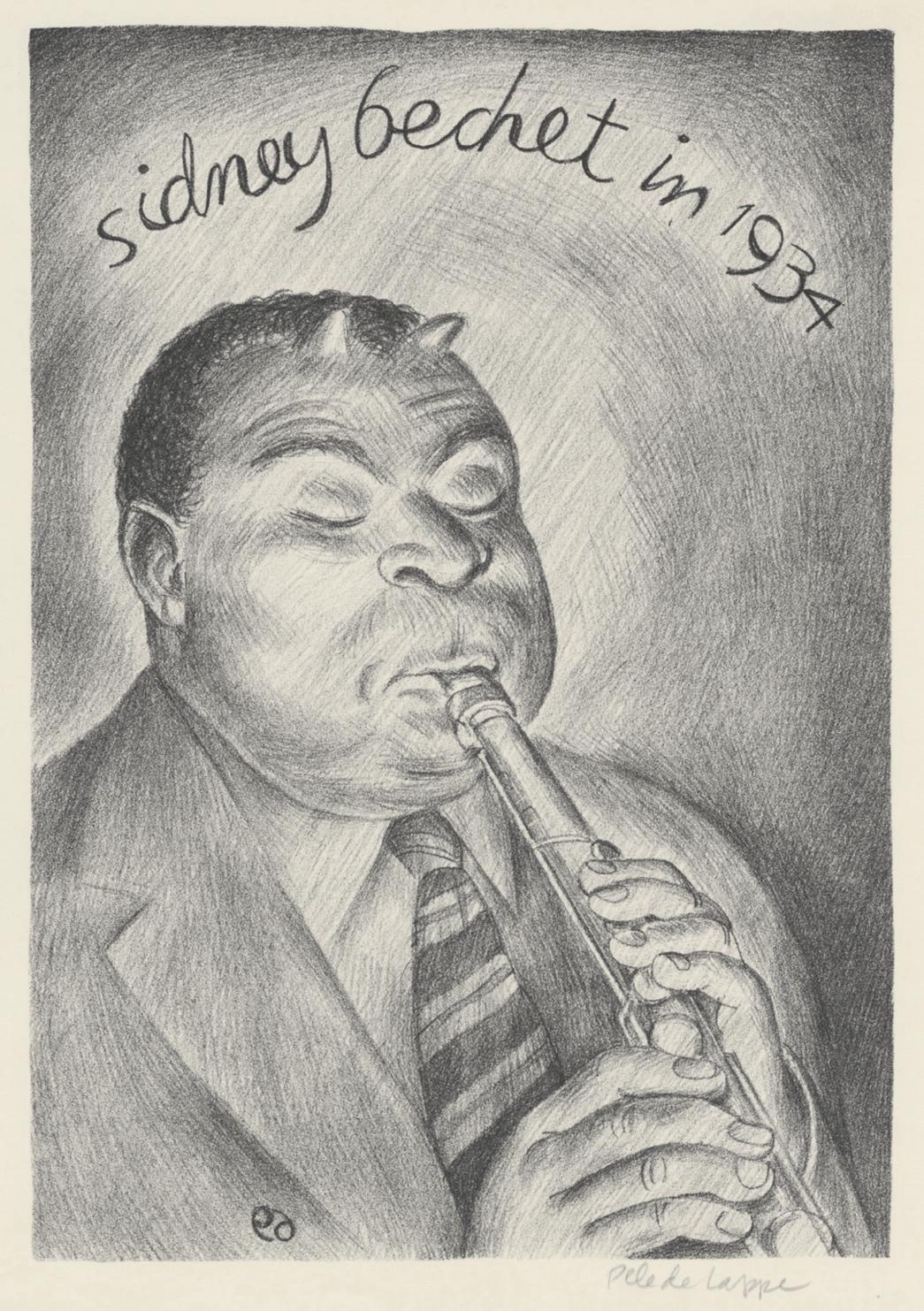
“Sidney
Bechet in 1934”
Lithograph after a drawing, on thin ivory wove, 1988; pencil signed, lower right; initialed in the stone, lower center-left; edition not stated; reference: illustrated p. 17, Pele: A Passionate Journey Through Art and the Red Press. Inv. no. WECA102.
In her autobiography, de Lappe wrote that in 1933 she visited a jazz club in Greenwich Village, New York, called Pod and Jerry’s Log Cabin. There she was introduced to Sidney Bechet, “a gentle man who operated a tailor shop days and played soprano sax at night. I drew him as a jovial satyr with little horns. In appreciation he had the drawing made into tiny stamps for his stationary.” This appears to be her lithographic reproduction of the drawing, made in Bechet’s honor some fifty four years later.
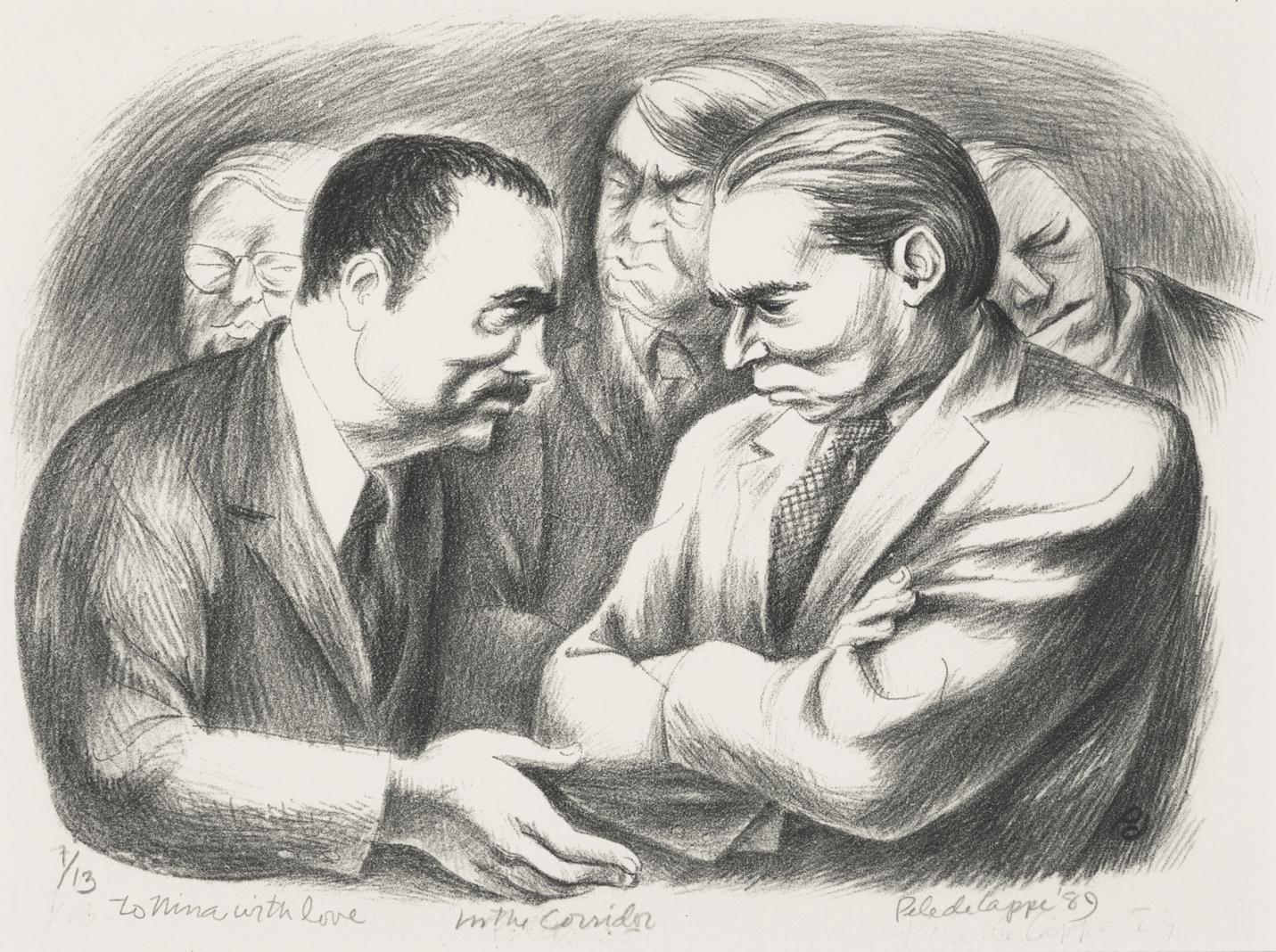
“In the Corridor,” a.k.a. “Politicos”
Lithograph on ivory Arches watermarked wove, 1989; pencil signed, lower right; initialed in the stone, lower right; pencil titled, dated, and editioned, 7/13; dedicated “To Nina with love” after editioning ; reference: illustrated p. 47, Pele: A Passionate Journey Through Art and the Red Press (dated 1992 in the book). Inv. no. WECA124.
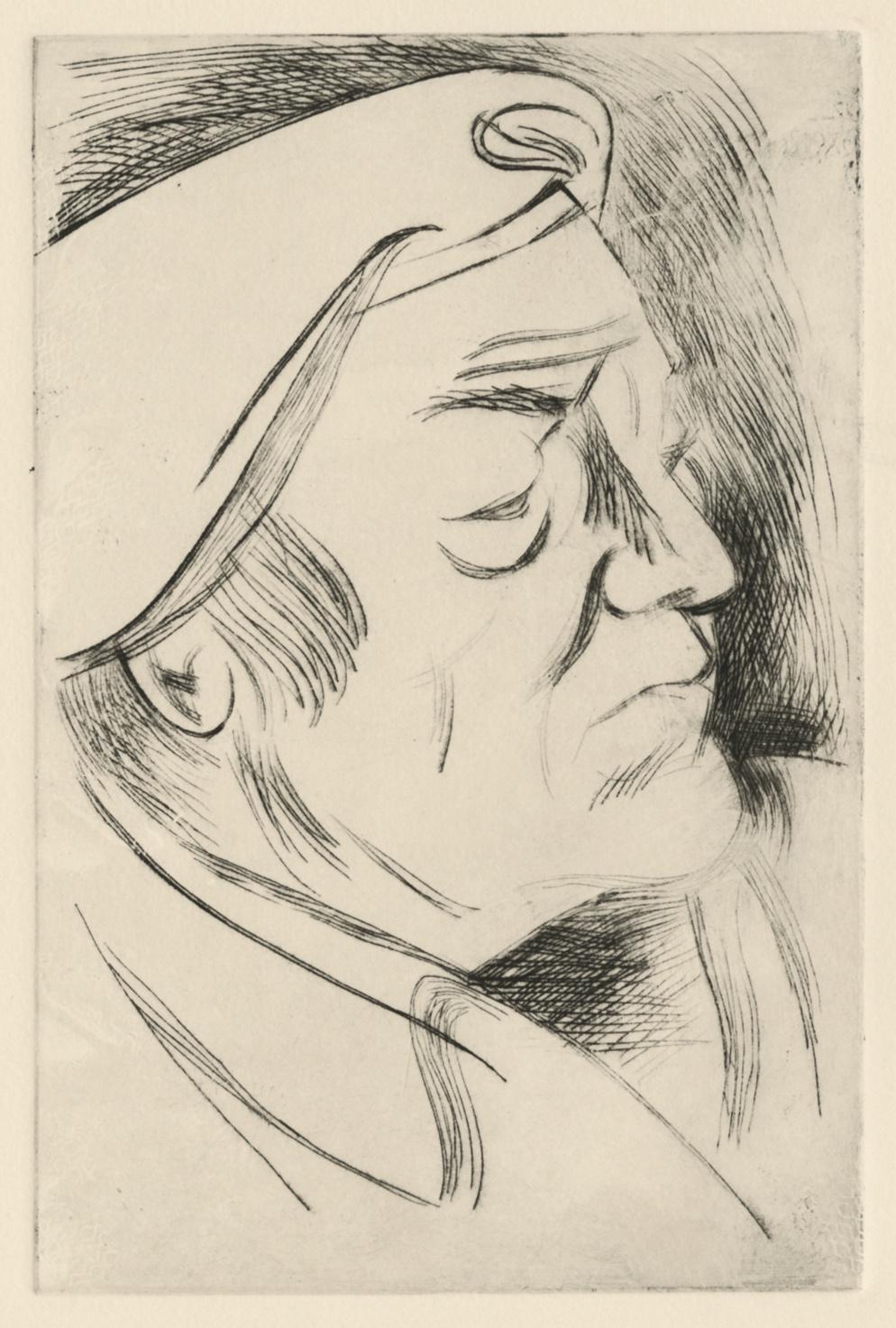
“Byron Randall”
Etching and engraving, 1991; unsigned; edition size not stated; printed by the artist on ivory wove; reference: illustrated p. 58, A Passionate Journey Through Art and the Red Press. Inv. no. WECA108.
A portrait of Byron Randall, an artist and social activist who met Pele when he settled in San Francisco in the mid 1940s. He was known for his murals at famed North Beach bar Vesuvio’s. However, as McCarthyism gripped the nation, Randall, a Communist, fled with his family to Canada in 1953. Much later, Randall and deLappe would reconnect in Marin and Sonoma Counties, north of San Francisco, and would remain partners – living separately – until Randall’s death in 1999.
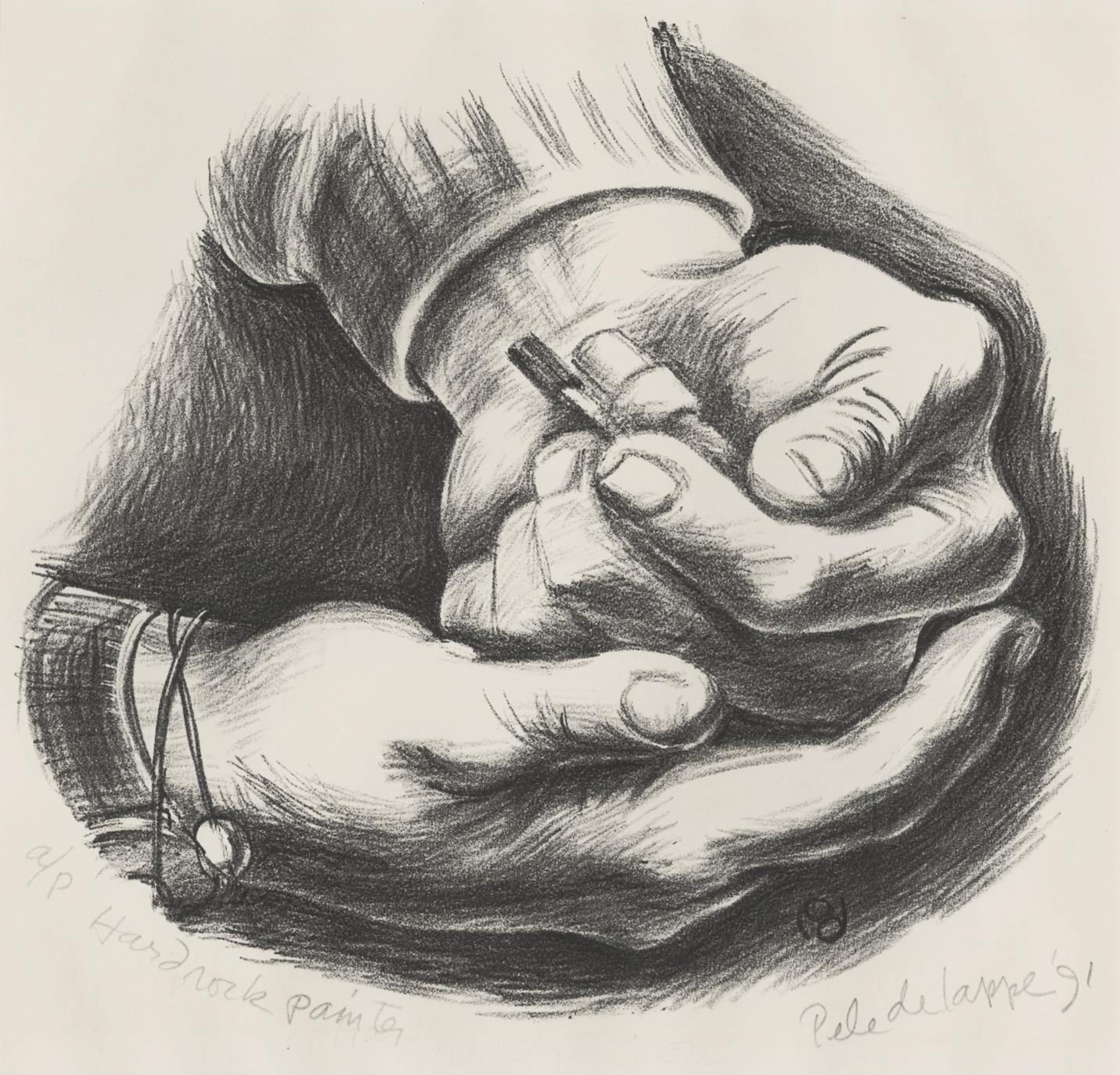
“Hard rock painter” (Byron Randall’s hands)
Lithograph on cream wove, 1991; pencil signed, lower right; initialed in the stone, lower right; pencil dated and editioned, A/P. reference: illustrated p. 46, A Passionate Journey Through Art and the Red Press Inv. no. WECA123.
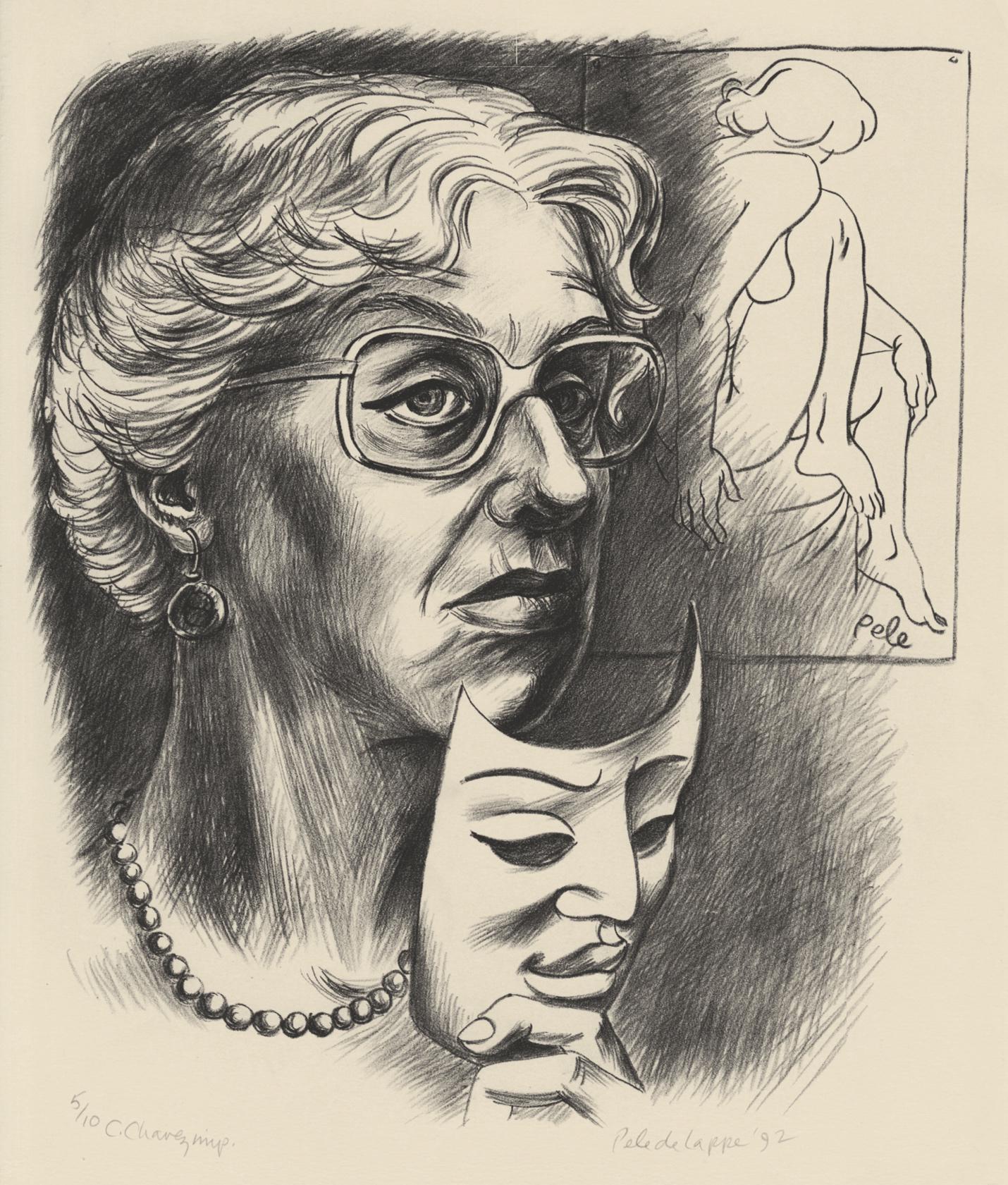
“On
Being Female”
Lithograph on tinted wove, 1992; pencil signed, lower right; initialed in the stone, upper center-right; pencil titled, dated, and editioned, 5/10; from the second state (proofs printed 1991). Inv. no. WECA116.
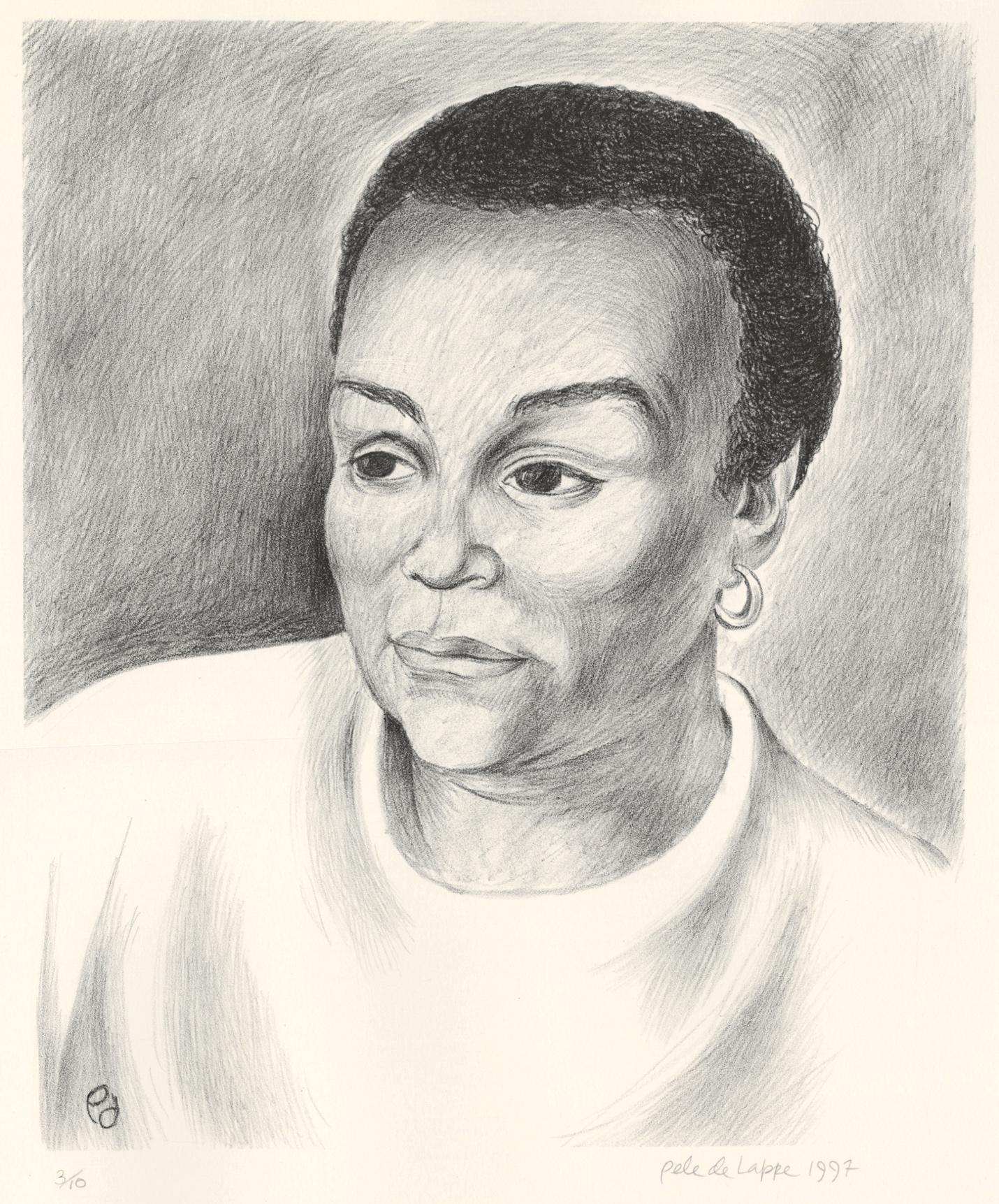
“Pat
Scott”
Lithograph on ivory Arches France watermarked wove, 1997; pencil signed, lower right; initialed in the stone, lower left; pencil dated and editioned, 3/10. Reference: Oakland Museum of Art obj. no. 2001.32.3. Inv. no. WECA121.
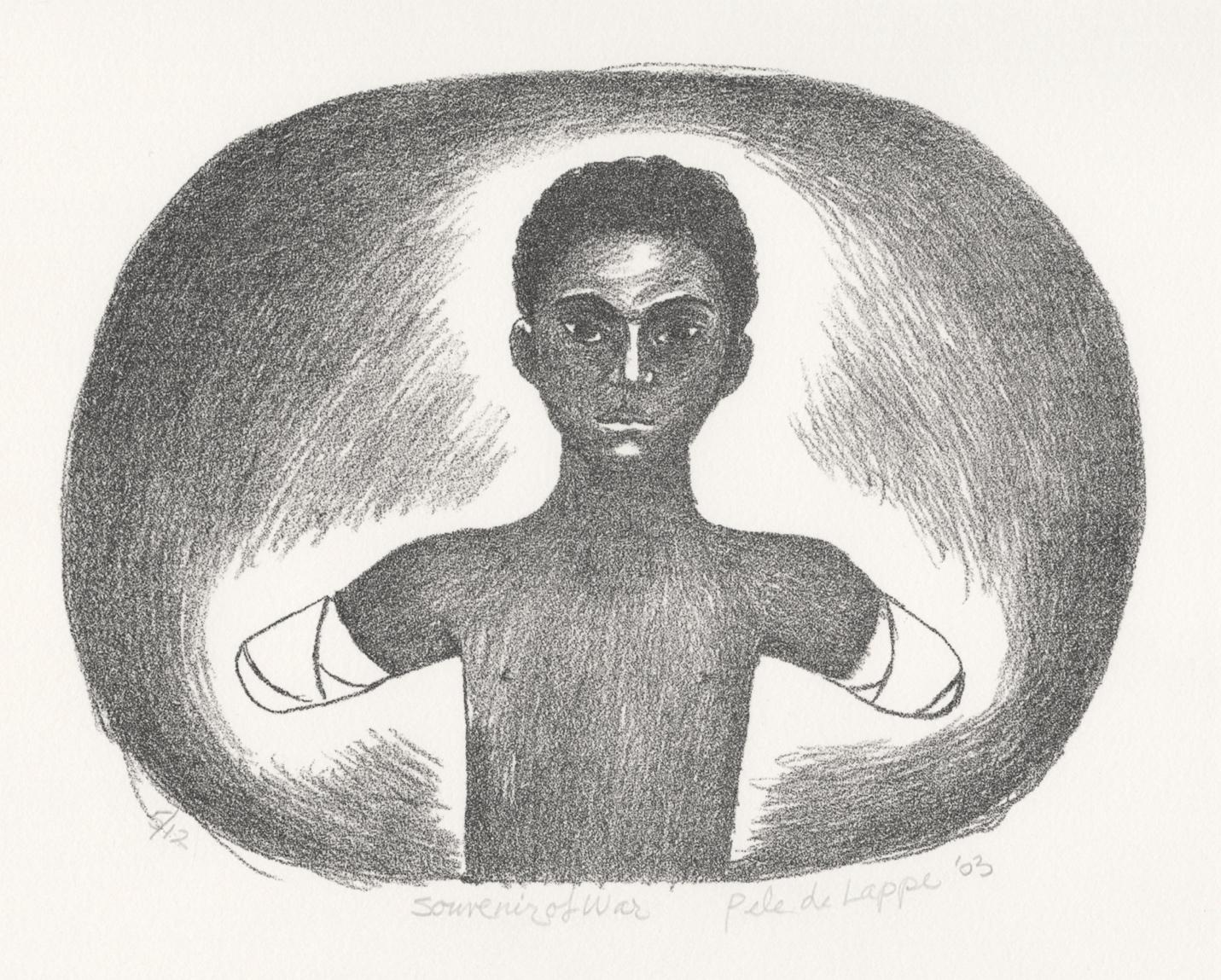
“Souvenir of War”
Lithograph on ivory wove, 2003; pencil signed, lower right; pencil titled, dated, and editioned, 5/12. Inv. no. WECA114.
This image was created in response to the U.S. invasion of Iraq.
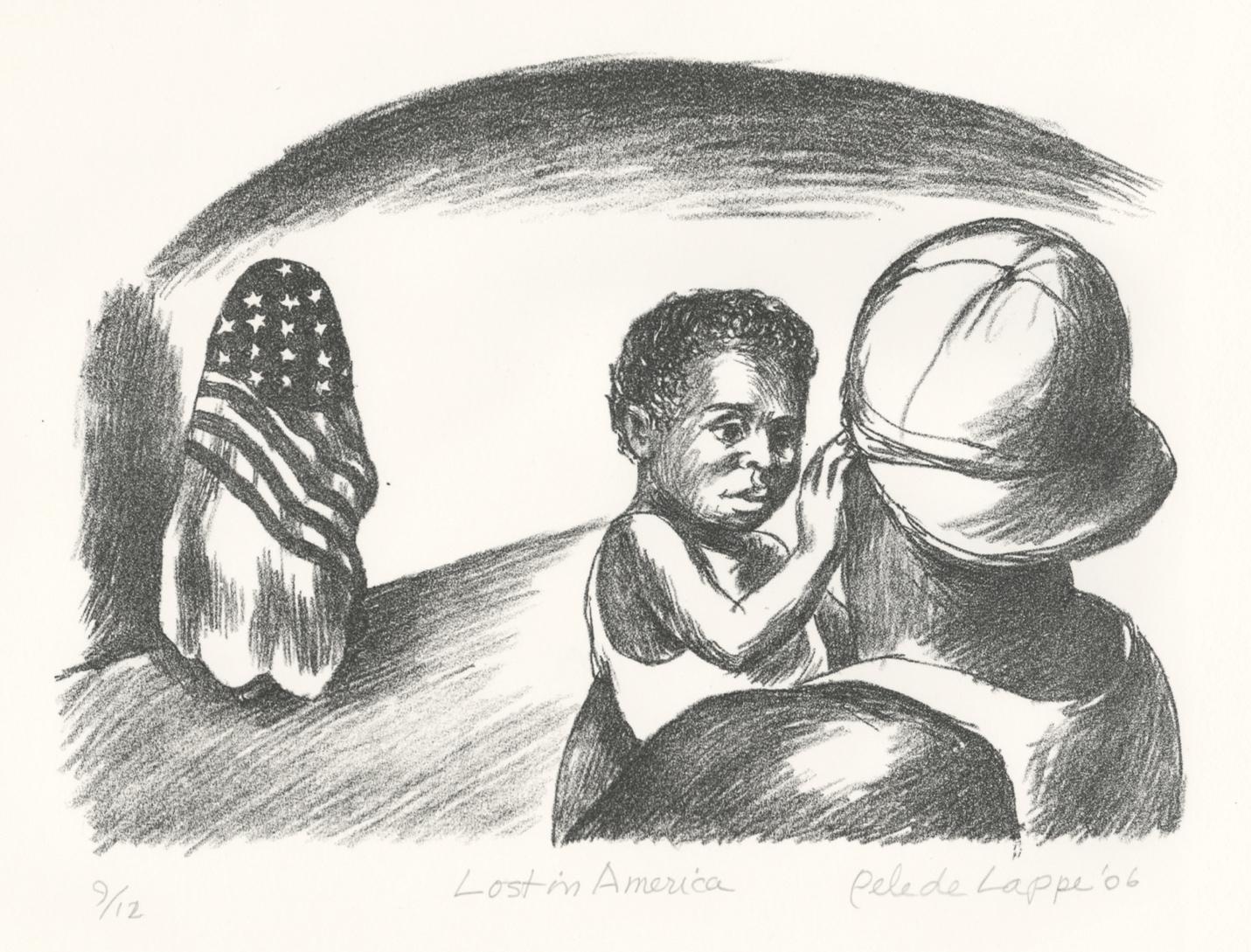
“Lost
Lithograph on cream wove, 2006; pencil signed, lower right; pencil titled, dated, and editioned, 9/12. Inv. no. WECA113.
This image was created in response to the 2005 Hurricane Katrina disaster, and its sociopolitical fallout, in New Orleans, Louisiana.