Saul Chernos, Doug Younger, Nelson Dewey, Matt Jones, Judy Mellott-Green
GROUP PUBLISHER | TODD HUMBER thumber@annexbusinessmedia.com
COO | SCOTT JAMIESON sjamieson@annexbusinessmedia.com
PUBLISHED BY ANNEX BUSINESS MEDIA 105 Donly Drive South, Simcoe, ON N3Y 4N5
Crane & Hoist Canada is published six times a year by Annex Business Media. Reference to named products or technologies does not imply endorsement by the publisher.
Subscription rates (six issues)
Canada: $37.00 + tax per yea • USA: $37.00 USD Send cheque or VISA/Mastercard number to Subscription Department, Crane & Hoist Canada, 111 Gordon Baker Rd., Suite 400, Toronto ON M2H 3R1. Fax orders to 416-5106875. Or subscribe online at www.craneandhoistcanada.com
RETURN UNDELIVERABLE CANADIAN ADDRESSES TO: Crane & Hoist Canada. CIRCULATION DEPT. 111 Gordon Baker Rd., Suite 400, Toronto ON M2H 3R1
PRINTED IN CANADA ISSN 1923-788X Publications Mail Agreement #PM40065710
In case you hadn’t noticed by the time you got to this page, Crane & Hoist Canada magazine has a brandnew look! Other than a more stream-lined size, layout, and glossy pages, you can expect the same great industry content from across the country you’re used to seeing from us.
We would be silly to think all the concerns of 2020 will disappear in the new year—but hopefully this new design brings a little joy to you our readers as it has done for the team here.
The industry has seen a lot over the last 12 months – crazy to think it’s been almost one year since the world was hit with a global pandemic. But that doesn’t overshadow the accomplishments and successes the industry has seen, or the several different ways it has risen above the challenges of 2020. CONEXPO-CON/AGG 2020 was a great time to network and meet some faces across the industry, although attendance was lower than usual. And we also saw other great initiatives, including a monthlong celebration of International Women’s Day, a full day of celebrating the lifting industry with #GLAD2020, several new appointments and hires, new rules and regulations, a big push on training with crane simulators, a ‘crane’ in space, and more. Last year was an interesting year but it didn’t seem to slow down what the lifting industry does best.
Which is how we are going to kick off this year’s first issue too, showcasing some of the country’s biggest heavy lifting projects and other initiatives. The Crane
Rental Association of Canada has been working on getting some of its new committees more active and one of them is its Diversity & Inclusion Committee. The team and its board have been very active in shining a spotlight on how the industry can better engage and maintain business relationships with Indigenous communities and companies across Canada. In this issue we’ve also got a wrap-up of some digital events that have taken place over the last few months, a profile on a lifting company in B.C., a new Anti-Racism Roundtable, and our cover story by Saul Chernos – how companies have been maintaining dealer relationships during the pandemic.
In very recent news, Manitowoc’s petition to withdraw its petition to start an investigation into mobile crane imports has been granted, and the initial petition has now been terminated by the U.S. Department of Commerce. I spoke with Manitowoc’s vice president of marketing and investor relations shortly after the announcement and he said this is a positive step in the right direction as the company moves on from its initial petition. Adding that an investigation is likely not in the industry’s best interests right now and Manitowoc has no plans to visit it again.
Grab a coffee or hot drink of some sort and take some time to enjoy the new issue. Let us know online what you think about the new look – Facebook, Instagram, Twitter, LinkedIn, we’re easy to find!
jkoblun@annexbusinessmedia.com
ADVERTISERS INDEX
Next Advertising Deadline: January 29, 2021 Don’t miss the opportunity to be part of this exciting new industry publication. For more information, or to reserve space in the next issue, call Laura Goodwin at our Advertising Department Tel: +1-289-928-8543 lgoodwin@annexbusinessmedia.com
Next Editorial Deadline: January 29, 2021 For writers’ guidelines and submission requirements get in touch with the editor, Jay Koblun, at +1-519-410-0600 Email: jkoblun@annexbusinessmedia.com
Bridge cranes used in new B.C. facility for Food Process Solutions
Food Process Solutions (FPS) is an expanding company that specializes in the design and manufacture of large refrigeration vessels for the food processing industry worldwide. Overhead lifting is an essential part of its operations, offloading incoming materials, during the fabricating process, and when handling finished products.
Norelco, distributor for R&M Materials Handling in Canada, was tasked with providing the lifting capacity at FPS’s new manufacturing facility. Its new 80,000-square-foot facility in Richmond, B.C., increases the company’s production area by 80 per cent with a 50 per cent uplift in capacity anticipated once fully utilized.
Over the last few years, Norelco has supplied FPS manufacturing sites with more than 20 R&M QX bridge cranes with capacities ranging from five to 10 tons. For this project, Norelco received an order for 18 QX 10-ton bridge cranes and runways to drive FPS’s enhanced manufacturing capacity.
“Not only are there 18 cranes to manufacture but also included in the contract were all of the crane runway beams, rails and down shop conductors,” said Keith Ellis, general manager at Norelco.
The scale of this project provided its own challenges to Norelco, such as sourcing the steel to fulfil the job, storing six 200-foot crane runways, and storage of the R&M hoists and components until the cranes were ready to be assembled.
Eric Lau, plant operation manager at FPS, noted that different production teams are located at different bays around the facility. Different teams will make their own parts, before final assembly and packing. Each bay must have overhead cranes to support the progress of jobs through manufacturing.
All 18 cranes and runways have now been installed to drive FPS’s enhanced manufacturing capacity. Norelco designed, manufactured and installed complete crane systems in collaboration with the building engineer to incorporate the crane runways into the building.
Norelco initially supplied FPS with two 10-ton x 55-foot span R&M QX top running single girder (TRSG) cranes. Ellis notes that FPS was impressed by the performance and reliability of the R&M SX hoists and now specifies R&M for all new additional cranes.
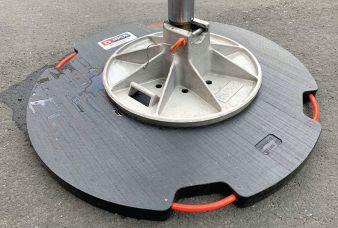
Outrigger Pad Basics: Safety Series
DICA’s new safety series, Outrigger Pad Basics was developed in partnership
with NBIS, insurance provider for crane and rigging, concrete pumping and heavy haul equipment. The essential tips for outrigger pad safety are helpful companions to jobsite responsibilities outlined in OSHA 1926:1402.
1. Always use outrigger pads
• Use outrigger pads on every job and every set-up.
• Always place outrigger floats in the centre of outrigger pads or crane mats. Caution! Not centring the outrigger float will cause off-centre loading which can may lead to a tip over.
2. Avoid the void
• Do not use outrigger pads or crane pads to span depressions or voids.
• Pads and other supporting materials should always be set-up on compacted, drained, flat and level surfaces.
3. Inspect your supporting materials
• When using pads, mats or other supporting materials, always inspect them for cracking, warping, rotting, or other signs of possible failure.
• Do not use any products or materials that show signs of cracking, warping, rotting or other signs of possible failure.
4. Test the ground
• Always use a roll or plate proof test to check the ground’s capacity and stability before operating.
• If excessive settlement occurs; 1. Find a better location to work from, or 2. Increase the area with additional matting and pads to reduce ground bearing pressures.
Canada’s largest, most complex marine crane unveiled in Nova Scotia
Hawboldt Industries, based in Chester, N.S., unveiled the country’s most advanced marine crane. The HAW66-300K is believed to be the largest, most complex marine crane ever built in Canada. The HAW66-300K will be installed on the CCGS Vincent Massey.
Virtual Reality holiday parties
For companies that won’t be able to meet in person for their annual end-of-year celebrations, VR Conflux-Holiday Party offers an alternative.
A1A Software announced a new Holiday Party version of VR Conflux, a virtual meeting platform for large groups. VR Conflux is a unique experience for conferences, trade shows, and networking where attendees create personalized avatars. Attendees can direct the movement of their avatar and audibly speak to each other in real time in the simulated environment.
“The experience is designed to enable more organic networking and socializing than is possible in a traditional tele-video conference format,” said Tawnia Weiss, president of A1A Software. Participants can either launch a computer desk top version or download the VR Conflux app from Google Play or Apple’s App Store to launch on a phone or tablet. VR headsets are not required, but are available as an option. VR Conflux-Holiday Party is available for $10 per person, with a minimum of $500 plus customization.
Eighteen cranes and runways have now been installed to drive FPS’s enhanced manufacturing capacity.
SALES, PARTS AND SERVICE
Offering a full line of equipment from the industries top manufacturers. Including Manitowoc, Grove, and National Boom Trucks, Western Pacific has the crane to get the job done.
24 hour phone service and same day shipping capability, backed by the latest in inventory management to assure that the parts you need are quickly available.
Our factory trained service technicians are trained on the full product line in both new and older equipment models — ensuring quality service of your equipment to minimize machine down time.
Capable of accommodating up to 150 guests per room, the virtual reality platform includes a gathering place for socializing where guests will mingle upon logging in. When dinner is ready, corporate meeting planners can choose a single large ballroom or multiple smaller dining rooms for more intimate conversation, divided by company department or business unit. Once guests enter the dining room, a video screen enables you to stream a live or pre-recorded message.
SC&RA moves events to late 2021 due to COVID-19 restrictions
With COVID-19 numbers increasing and some states already imposing travel and gathering restrictions, the SC&RA board has approved an alternative plan for in-person meetings in 2021.
Lifting Equipment Training: OETIO with Vortex simulators
OETIO (Operating Engineers Training Institute of Ontario) operates two training facilities in Canada, offering crane operator, heavy equipment, and construction safety training programs. When OETIO modernized their training classroom with Vortex simulators and instructor stations for operator training, the company said the benefits ranged from faster practical training time to increased trainee engagement and more.
“Being responsive to members’ input on the desire and need to return to live events and not lose sight of the very real practical health considerations, the SC&RA board of directors has approved the formulation of a back-up plan that involves rescheduling our live meetings to later in 2021,” said CEO Joel Dandrea. “This adjustment would affect the dates for the January Board & Committee Meeting, the Specialized Transportation Symposium, and the Annual Conference. The Crane & Rigging Workshop, however, would be held as scheduled in September.”
Currently, SC&RA is working with hotel partners to assess open dates later in the year.
“We fully recognize and appreciate that moving dates may not be ideal or viable for all participating members, but the fact is, no matter what we do under these unusual and extraordinary times, we’re not going to satisfy 100 per cent of the members 100 per cent of the time,” Dandrea acknowledged.
Until firm plans are in place, SC&RA will keep registration open for the January Board & Committee Meetings and the Specialized Transportation Symposium. Once dates are confirmed, registrants will be notified.
Individuals holding existing registrations need not take any actions at this time. SC&RA will retain and transfer the registration or accommodate those individuals who will be unable to attend the events once rescheduled. Those registered will be receiving additional information from the SC&RA meetings department shortly. For more information, visit www.scranet.org/SCRA.
70 per cent of Canadian construction firms as or more productive than before the pandemic
Procore revealed the results of its How We Build Now Canada survey, which showed that more than 70 per cent of Canadian construction companies responding had as many or more projects during the first six months of the COVID-19 pandemic compared to before. The survey explores unified technology for on-site and remote workers in today’s safer construction environment.
Despite the challenges created with provincial shut downs and social distancing regulations, 10 per cent of the construction professionals surveyed report being much more productive than before the pandemic struck; 17 per cent are edging ahead of pre-pandemic levels and 44 per cent remain as productive during the pandemic.
Twenty-six per cent of the construction professionals surveyed were less (24 per cent) or much less (two per cent) productive than before the pandemic. Forty-three per cent say they expect to increase projects over the next year.
“These results of Procore’s How We Build Now Canada survey provide a snapshot of an industry in transition,” said Jas Saraw, vice president, Canada at Procore. “The high productivity reported is good news for construction, but belied by the continuing challenges of enhanced on-site safety protocols and external factors impacting the industry. Construction is very resilient, and Canadian builders will continue to look for, and implement, new solutions that will propel them through the pandemic.”
In spite of being able to adapt to new regulations and procedures, survey results show construction organizations need to better align employees to work efficiently on-site and remotely by using technology such as a unified platform that contains all information in one place. Eighty-three per cent of respondents agree they would employ a single, integrated platform technology, drawn by the benefits of more transparency, visibility and collaboration across projects.
Almost seven out of 10 (68 per cent) respondents believe what could help the construction industry excel after COVID-19 is to have one platform that connects all their people, projects and tools to increase productivity and efficiency, reduce reworks and delays, improve safety and compliance and provide more financial transparency.
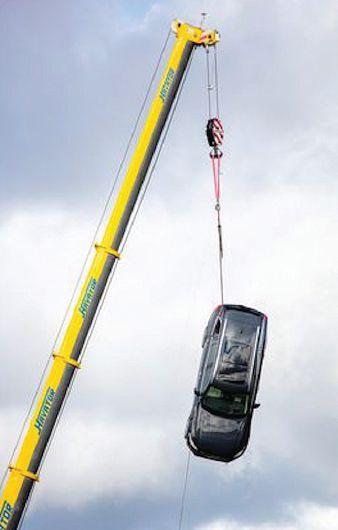
Volvo’s ‘most extreme’ crash test involves a 100-foot crane drop
Volvo knows how to get our attention when it comes to safety issues. The latest example is a series of crash tests involving 10 new Volvo vehicles. But, unlike controlled laboratory tests with high-speed cameras and dummies, these tests involved dropping cars from a crane 30 metres in the air.
Terex shares Q3 results
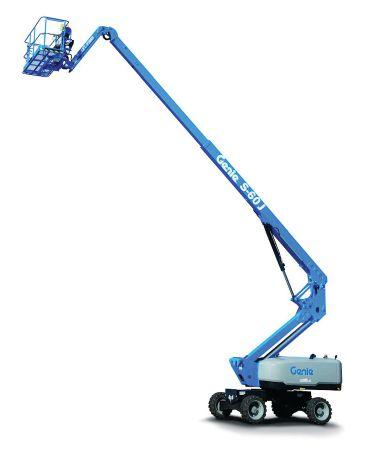
Terex released its third quarter 2020 results with an update on its Aerial Work Platforms (AWP).
Terex announced a third quarter 2020 income from continuing operations of $22 million, or $0.31 per share, on net sales of $765.6 million. In the third quarter of 2019, the reported income from continuing operations was $52.4 million, or $0.73 per share, on net sales of $1.0 billion. This compares to income from continuing operations, as adjusted, of $58.9 million or $0.82 per share in the third quarter of 2019. The Glossary at the end of this press release contains further details regarding these non-GAAP measures.
“Our ability to execute and safely serve customers during this uncertain time drove sequentially stronger financial performance,” said John L. Garrison, Jr., Terex Corporation chairman and CEO. “Our results demonstrate the progress we are making to align our cost structure with the current customer demand environment. We are strategically reducing spending and consolidating our company-wide footprint. These actions will enable us to maintain a competitive cost structure and position us for growth.”
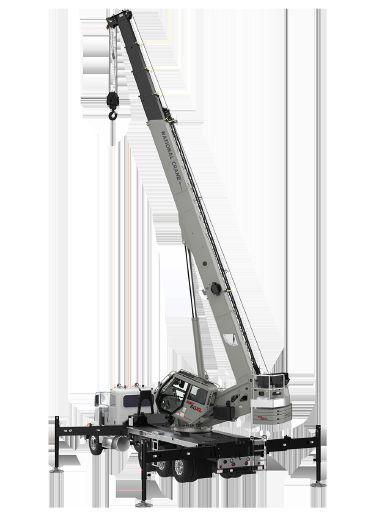
New NBT60XL
• Capacity: 60 USt (54.5 t) rating
• Main boom: 151 ft (46 m) five-section
• Max tip height main boom: 196 ft (59.7 m)
• Optional 36 ft (11 m) fixed offsettable lattice jib: 0, 15 or 30 degrees
• Operator focused design
• Available NTC Performance package
• Operator focused design
Garrison commented on AWPs.
“Aerial Work Platforms improved its operating performance delivering three per cent operating margin reflecting the gradual sequential improvement in business activity. In addition, both Genie and Terex Utilities are seeing improved utilization levels of their equipment,” he said.
Based on the Company’s current expectations of the markets, overall revenue expectation for 2020 remains unchanged from our outlook communicated in July.
“Finally, I am very proud with how our global team is managing through this challenging year. We are on the path to enter 2021 as an even stronger company,” Garrison concluded.
CORRECTION
In the November/December issue of Crane and Hoist Canada, an article on pg. 4 stating that Falcon Equipment in Surrey, B.C., will now be offering Saturday service had content from a different article in the story. The correct information is:
Falcon Equipment announced its Surrey, B.C., service shop will be open for bookings on Saturdays. The Saturday shift will consist of a full team of four heavy-duty mechanics, an experienced customer service representative and a parts representative.
Day Shift: Monday to Friday from 7:00 a.m. to 5:00 p.m.
Night Shift: Monday to Thursday from 3:30 p.m. to 2:00 a.m.
Saturday Shift: 7:00 a.m. to 4:00 p.m.
Service Truck Shift: Monday to Saturday throughout B.C.’s lower mainland
Falcon Equipment is looking forward to welcoming their customers in on Saturdays. For more information visit, www.falconequip.com.
BEST OF BOTH WORLDS
The NBT60XL provides the best possible capacity and reach combination of any 60 ton crane on the market – boom truck or truck crane – all while maintaining easy to road characteristics.
BEST OF BOTH WORLDS
The NBT60XL provides the best possible capacity and reach combination of any 60 ton crane on the market – boom truck or truck crane – all while maintaining easy to road characteristics.
BEST OF BOTH WORLDS www.strongco.com
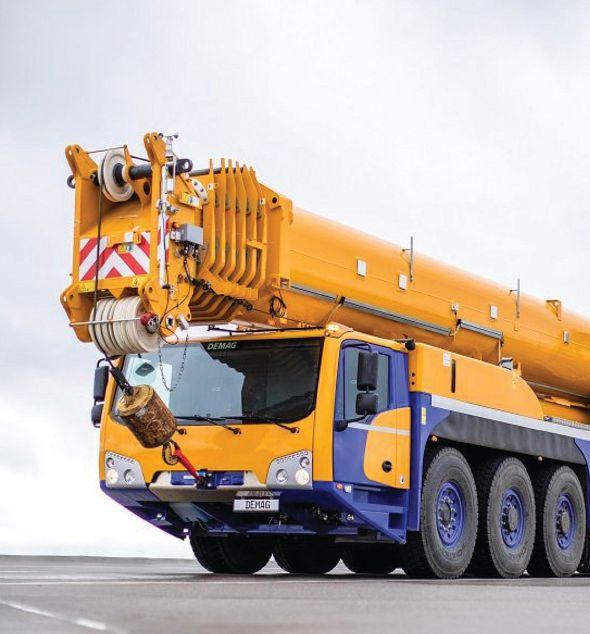
New Demag AC 450-7 All Terrain Crane
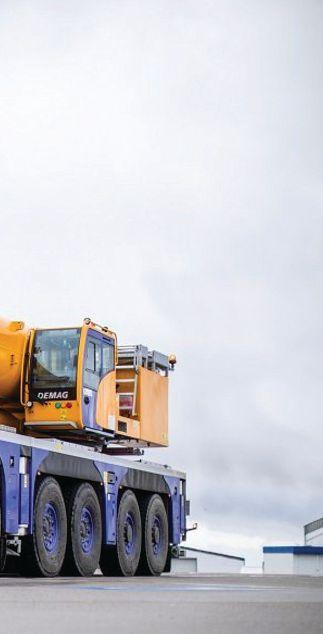
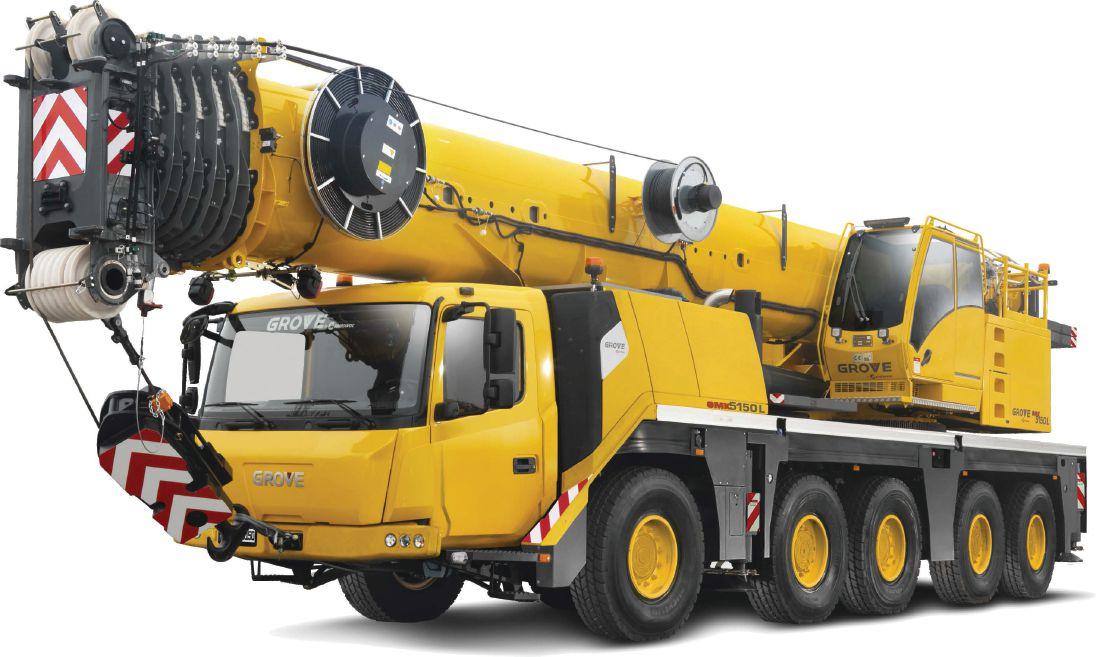
Tadano Demag launched its new AC 450-7 all terrain crane. Tadano Demag wanted to “give wheels” to a more powerful alternative to its existing six-axle cranes, with the objective to keep it as compact as its counterparts despite the additional axle.
The AC 450-7 meets this criterion, having a carrier length of just 52.5 feet, a 27.7 foot outrigger base, and a total length of 57.8 feet.
“In other words, it doesn’t need more space than a six-axle crane at a work site, and yet it offers significantly better lifting capacities,” says Demag product marketing manager Michael Klein.
The new crane features a 262.5-foot main boom with a maximum lifting capacity of up to 212.8 USt. If the main boom’s length is not sufficient, it can be extended using a luffing jib with a maximum length of 265.7 feet. The crane’s maximum system length is 433 feet. The luffing jib can be “divided up” in 9.8-foot segments from 78.7 to 265.7 feet. In order to make it easier to transport the luffing jib, two system dimensions are used, making it possible to slide the extension’s individual parts into each other.
“It doesn’t need more space than a six-axle crane at a work site, and yet it offers significantly better lifting capacities.”
Manitex International
TC65159 Truck-Mounted
Crane
Manitex International launched the TC65159 truck mounted crane. The TC65159 will feature a 65-ton base rating and five-section 159-foot, full power, proportionally extended boom with 168-foot, tip height and 206-ft. tip height when equipped with a one-piece, 38-ft. offset lattice jib.
The new longer boom will provide excellent relative stiffness in long-reach applications making it attractive to steel erectors and other duty cycle applications where production work is key. The TC65159 will offer asymmetrical outrigger positioning and increased ground penetration allowing the operator more flexibility to set up in confined spaces and uneven terrain.
Jekko launches new JF545
V-Max
The TC65159 will offer asymmetrical outrigger positioning and increased ground penetration allowing the operator more flexibility to set up in confined spaces and uneven terrain.
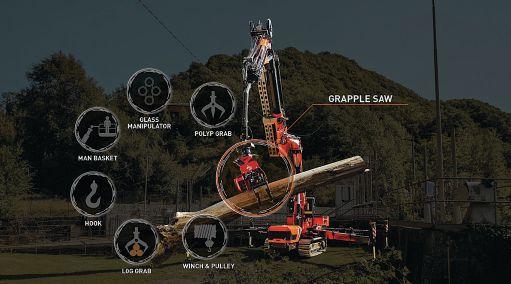
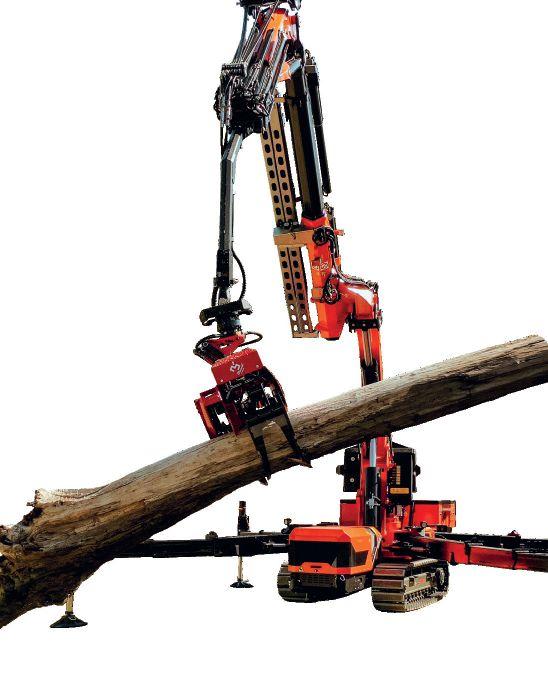
The new version of the JF545 articulated crawler crane has a jib fitting a wide range of tools whose operation require elevated quantity and pressure of oil such as an auger, a grapple saw or a clamshell bucket.
The V-Max version features all the characteristics of the JF545 standard model: multiple stabilization configurations, compact size for maximum accessibility in confined spaces, lifting capacity of 15.5 tons, combined with a 28-metre reach, elevated maximum operating height of 30 metres, triple articulated boom (when the jib is installed), removable counterweight, precise and smooth operation for the most delicate tasks. The use of all the options available for the JF545 is still possible: the work platform and the man basket, the vacuum manipulator for glazed panes and the winch, among many others.
The operator of a JF545 V-Max can choose from a wide range of applications. The standard model is already versatile and it easily adapts to manifold operational environments but the V-Max version allows for even more vast and varied applications: from its traditional use in constructions, industry, logistics and handling or laying in confined spaces to more innovative uses with the grapple saw such as in green areas maintenance.
Palazzani presents RPG 2900 mini crawler crane
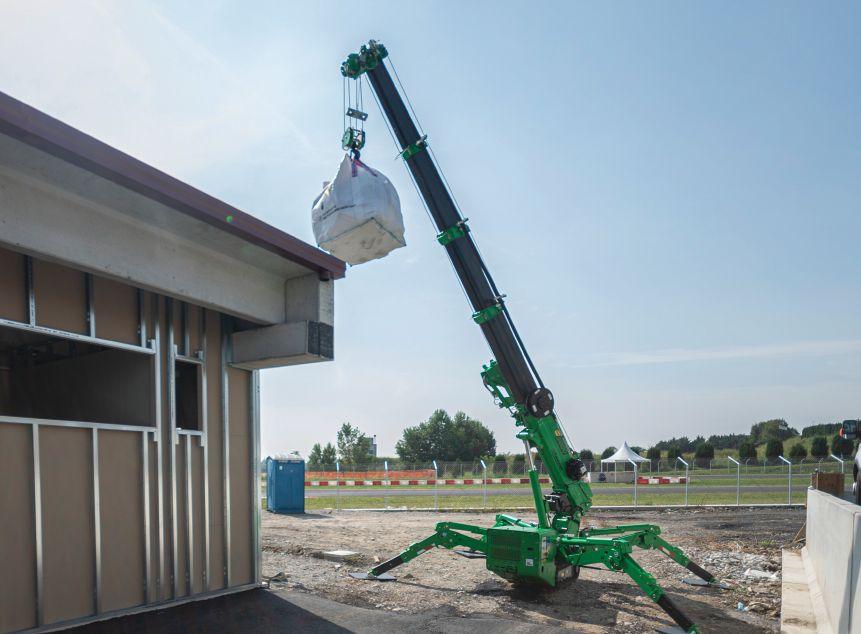
Palazzani has recently entered the mini crane market introducing the RPG 2900 Model. The RPG 2900 includes the double motorization: Diesel engine + AC electric motor of 380 or 230V on request to operate both indoors and outdoors
The lifting height is 9.5 metres with the standard boom and 13.6 metres, with 600-kilogram lifting capacity, with the hydraulic jib. Thanks to the stabilizers with free variable set-up, the stowed dimensions, and the reduced weight, RPG 2900 is a flexible and agile solution to difficult lifting access.
This mini crane is also the only one in its category offering the Pick and Carry function. Equipped with innovative solutions to ensure the safety of the operator and the load,
This mini crane is also the only one in its category offering the Pick and Carry function. Equipped with innovative solutions to ensure the safety of the operator and the load, the RPG 2900 also provides the functions of self-loading, return to home and working areas limitations. Finally, the electrical and hydraulic connections located at the head of the main boom allows the RPG 2900 to connect a wide range of attachments.
It’s time to shine the light on Canada! The Crane Rental Association of Canada welcomes your application. Visit www.crac-aclg.ca for Awards’ criteria and information.
1 Tadano Demag’s new AC 450-7 all terrain crane
2 Jekko’s new JF545 V-Max
3 Palazzani’s new RPG 2900 mini crawler crane
Building Indigenous relations in construction and heavy lifting sectors
By Claire Belanger Parker
Afew years ago, the Truth and Reconciliation Commission (TRC) presented its report and along with it, 94 recommendations. How far have we come is creating positive changes in our relationships with Indigenous Nations? What story will our descendants share in the next 150 years?
Everyone would agree that the TRC revealed a dark history, but it does not have to define our future, on the contrary, Canadians and Canadian companies can influence positive changes for the future.
In a past interview, the Honourable Paul Martin summed it up beautifully: “In terms of this idea of guilt we should know our history and our history is not very pretty. I can’t answer for what happened 50 years ago, but if my grandchildren ask me what I did in my life in terms of this issue and there hasn’t been an improvement, then I certainly should feel guilt and I don’t want to and I don’t think any Canadian wants to.”
Earlier this year, leadership of the Crane Rental Association of Canada (CRAC) answered the call to action and began working toward Indigenous engagement. It started with a conversation that led to a greater understanding of the 630 First Nation communities in Canada.
As CRAC-ACLG continues on this journey, it is important to remember that simple actions can produce great results. If an organization is ready to embark on a discovery journey, here are some ideas to consider:
• The Government of Canada and the University of Alberta have excellent online learning tools, free of charge.
• Signing up for Indigenous newspapers and magazines and having them available in your staff room will create awareness of surrounding communities.
• Watching APTN to gain a better understanding of the news coverage Indigen-
Claire Bélanger-Parker, executive director of the Crane Rental Association of Canada.
“We should know our history and our history is not very pretty. I can’t answer for what happened 50 years ago, but if my grandchildren ask me what I did in my life in terms of this issue and there hasn’t been an improvement, then I certainly should feel guilt and I don’t want to and I don’t think any Canadian wants to.”
ous people are watching will give you great insight.
• Listening to Indigenous radio stations and engaging in the conversation may create new opportunities.
• Placing advertising in local and national Indigenous media will get you visible.
• Including Indigenous interesting facts in your internal newsletters will keep your staff informed and interested.
• Showcasing Indigenous artists by purchasing their works of art and prominently displaying them in their places of business.
• Creating a bursary or scholarship for Indigenous students that aligns with your business could build your future workforce.
• Sponsoring Indigenous events or activities will create visibility.
• Fostering an internal culture that encourages staff and business associates to reach out and become better informed about the Indigenous community.
• Learning more about the environmental needs of Indigenous communities and supporting them.
• Supporting initiatives that support the well-being of Indigenous youth, Elders and other community members.
• Reaching out to a nearby First Nations or Métis Community to organize a virtual luncheon conversation can still provide great learning opportunities during the pandemic.
Call to action no. 92 is dedicated to the corporate sector, a call that hundreds of corporations are embracing and slowly transforming their corporate culture. We have a lot to gain by fostering better relationships with Indigenous communities and when things get difficult, like any other interactions, it is much easier to mend the fence when you have established a respectful relationship.
The Crane Rental Association of Canada will continue to encourage its members to learn more about Indigenous partnerships, invite Indigenous crane rentals companies and suppliers to connect.
Photo courtesy of CRAC
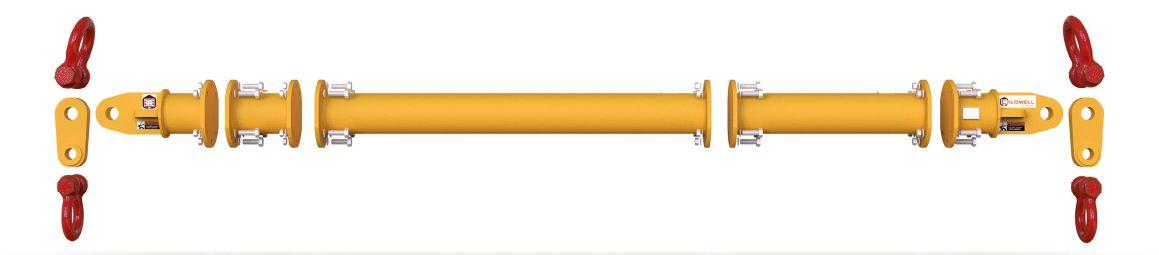
Dura-Mod Modular Spreader Beam
In an effort to add to our large range of below-the-hook lifting devices, Caldwell is proud to introduce the Dura-Mod Modular Spreader Beam. Our new product will come in a variety of sizes that allow the user to configure a spreader beam suitable for different projects and applications depending on the desired capacity and spread.
Lightweight in comparison to fixed/multiple point beams.
Easy to transport & store; single longest component is only 20’!
Two end units, drop links, and spreader sections make it fully customizable.
Distributors are able to keep them stocked, offering customers quick ship access to certified spreaders.
World-renowned Caldwell brand name on a modular spreader system.
Components can be added and bought separately; take what you need now, add later!
Dura-Mod can be used with corner fittings to create box and rectangular configurations
All of the Dura-Mod spreaders conform to ASME B30.20, BTH-1, DESIGN CATEGORY B, CLASS 0.
For additional Dura-Mod information, contact Caldwell or scan the QR code!
Crane work begins at hotel construction downtown Toronto
By Matt Jones
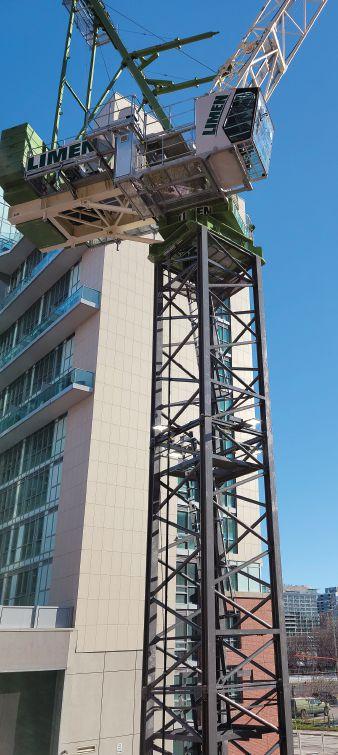
Construction is underway for a new hotel and apartment complex downtown Toronto – the Hyatt Place and 203 Residences, at the corner of Jarvis and Shuter. The building is tentatively scheduled to open in May 2023, but a crane has already been spotted on site as the building’s four underground floors are nearly complete and the erection of the building is ready to begin in earnest.
The project is being undertaken by Manga Hotels, a firm that builds, acquires and manages hotels in Canada and the United States. The actual crane work has been subcontracted to Toronto-based Limen Group.
The site will be the first new hotel development in the area in several years.
Jack Landau, assistant editor at UrbanToronto.ca noted in a blog post that the Hilton Garden Inn and the Primrose hotels were recently lost, and that demolition was underway on the former Grand Hotel.
“Downtown Toronto has done very well the last number of years, but not much supply came into the market except for
The building will have a hotel on the lower floors and a residential complex on the upper floors with a restaurant, meeting space and other amenities that would be shared by both in the middle.
upscale, like the Four Seasons,” says Sukhdev Toor, president and CEO of Manga Hotels. “Nothing in midscale. Occupancy was very high and rent came up quite a bit, comparable almost to New York and Chicago and those areas. So, the demand was in downtown to build.”
Upon completion, the building will have a hotel on the lower floors and a residential complex on the upper floors with a restaurant, meeting space and other amenities that would be shared by both in the middle.
One of the complicating factors for the project is that the building is near the flight path for medical helicopters travel-
ling to St. Michael’s Hospital. That was one of the reasons Limen Group were selected for the job, Toor says, because they had cranes that logistically could complete the job without going too high into the airspace.
“They’re going to use one crane up to a certain point and then they’re going to add another one,” says Toor. “They can’t swing very high, it has to be flat.”
Toor says that the cranes will be used both for the actual construction itself and also for moving workers and equipment around the job site.
Limen Group did not respond to media inquiries as of press time.
The Hyatt Place and 203 Residences on Jarvis Street in Toronto will be the first new hotel development in the area in several years. PHOTO: SEAN MARSHALL
SUBMITTED PHOTO
NEXT GENERATION ROUGH TERRAINS
SAFETY. PERFORMANCE. COMFORT.
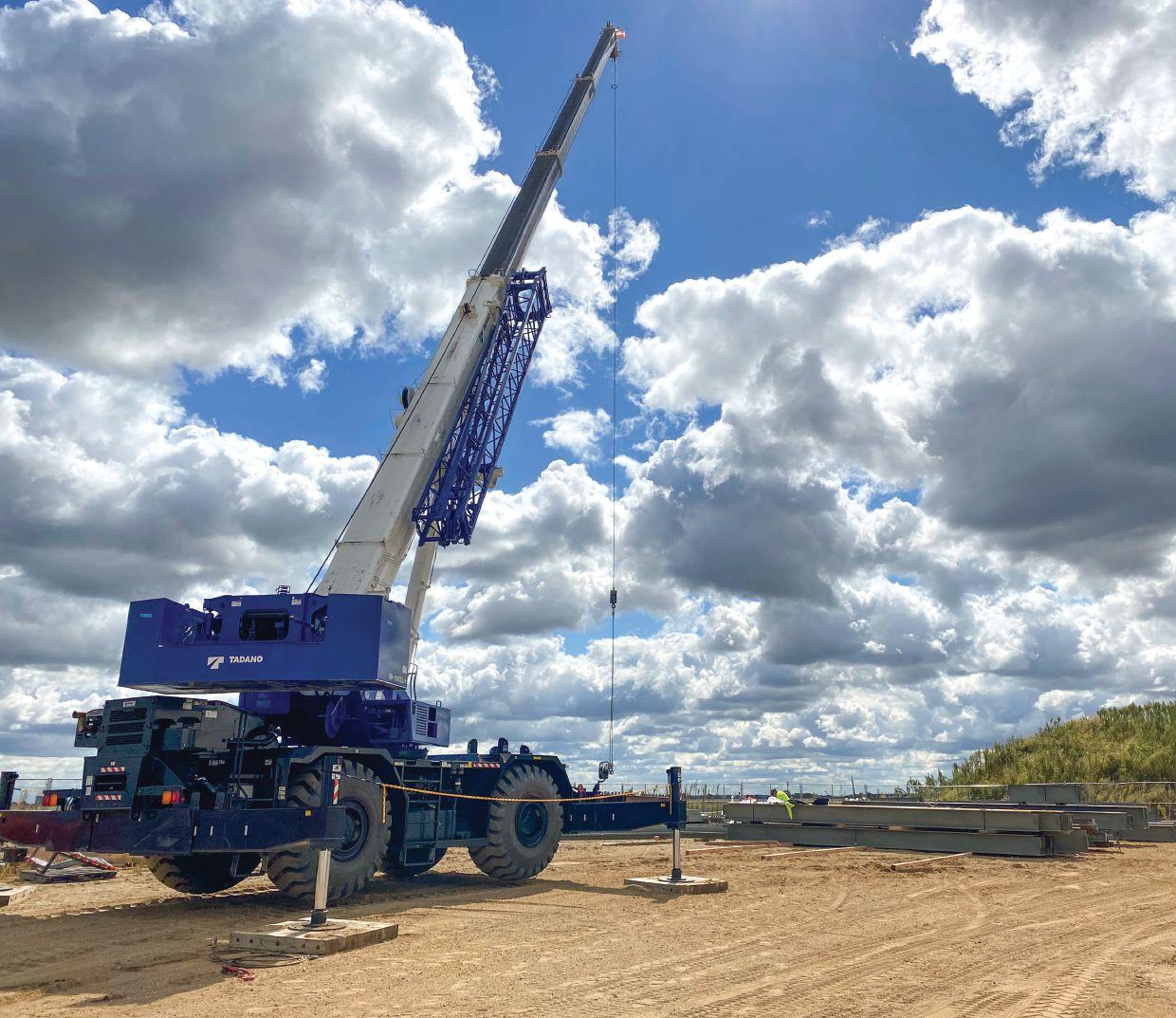
Tadano’s new line of Next Generation Rough Terrain cranes was specifically designed with high-pressure situations in mind where reliability can’t be compromised. The narrow and confined spaces of refineries, active urban environments with strict safety requirements, and bustling commercial construction sites are where Tadano’s new GRs perform best.
The GR-1000XLL-4, GR-1000XL-4, and GR-800XL-4, all include a high performance transmission powered by a dual compliant Cummins Tier IV engine that reduces emissions, improves fuel economy, and minimizes noise. With a redesigned tiltable cab that facilitates greater efficiency, operability, visibility, and safety, Tadano’s latest GRs offer one of the best operator experiences in the industry. Innovative features, such as the Tadano View System--a multi-camera system created to increase visibility and obstacle detection--enhance safety on the way to and at the job site.
Call or visit our website to learn more about the Safety, Performance, and Comfort of Tadano’s Next Generation Rough Terrain Cranes.
Learning to speak your truth effectively at work and at home
She said Facts are based on your intellect and is mind-based. Helping you tell a story based on what actually happened. Story is based on your emotions attached to an event and can be heavyladen with feelings. And embodied wisdom McGregor explained as inner knowing, or intuition. It has less to do with facts and could also be called your inner guide or gut feeling.
What is your truth
1. Facts – intellect, mind based.
2. Story – emotion, laden with feelings, upheavals.
3. Embodied Wisdom – inner knowing, intuition, doesn’t have to do with facts, inner awareness, guide.
The speaker then explained seven different traits of the mind that if unattended to can cause problems as we deal with people in our lives and workplaces. She then split the attendees up in smaller breakout rooms using the Zoom application and asked each individual to share, “What are the things getting in the way of you expressing your truth in a loving, positive, joyful way? How does it impact the people around you? How does this impact your family or colleagues?”
By Jay Koblun
The Crane Rental Association of Canada (CRAC) has often included partners and spouses in its special activities and did so again during its latest virtual event held this week.
The event, “How to speak your truth and be an inspiration to others” on Nov. 25, was designed by leadership and influence expert Karen McGregor to teach how you can be a voice of inspiration and share your truth, whether for your children, grandchildren, in a boardroom or on a stage.
“We all have been inspired by the words of others at various points in our lives. Because of these words, we’ve been excited about making a greater impact on our family or community or even globally. In the past, many people have chosen to stay silent and repress their truth, but this is rapidly changing,” said McGregor.
McGregor helps business professionals and entrepreneurs have the greatest impact and influence they can through the integration of ancient wisdom teachings. She built her own company seven years ago from the ground up as a single mom; through her own challenging journey and struggles with her Type A personality, McGregor shares how to access deep inner wisdom and harmony while getting extraordinary results professionally and personally. She has presented to thousands of people in a variety of industries and is respected as a speaker who motivates and inspires audiences to act.
McGregor started by letting listeners know that this was going to be a very interactive and engaging online event and then explained what ‘truth’ is to her and how it can cause problems when you have a hard time explaining your story effectively and several ways you can do so easier by getting to know yourself first.
“Truth is broken up into three pillars,” said McGregor. “Fact. Story. And Embodied wisdom.”
“To be in full-truth you have to be in the present moment. Can’t make things from the past come into the present to create your current reality,” she added.
Seven traits of the mind
1. The mind is a problem-seeker
• Always potential for the mind to look for a problem instead of relaxing in a moment.
2. The mind is a storyteller
• Walking into a room, what kind of stories do you make up about people whether true or not?
• Are they flirting? Enjoying themselves? Gossiping? Reserved? Engaged?
• How do we perceive tone in a text message?
3. The mind is the judge
• Mind quickly makes judgments.
• Every time we see something our mind wants to make a quick internal judgment.
4. The mind is defensive
• When in traffic if someone honks at you, the first thing we tend to do is to get defensive.
• With colleagues or your children or partner is it easy to become defensive if you don’t like what they say.
5. The mine is reactionary
• Can be forceful, or withdrawn. You will always react in some way.
• Take a step back and watch how you react.
6. The mind is easily distracted
• Be present when speaking with someone.
“We all have been inspired by the words of others at various points in our lives. Because of these words, we’ve been excited about making a greater impact on our family or community or even globally. In the past, many people have chosen to stay silent and repress their truth, but this is rapidly changing.”
– Karen McGregor
4. The Cockatoo
• Requires relationship to stay alive and thrive.
• Usually the life of the party
• Has a very hard time in solitude. Negative
• Easily hurt by other people.
• Can easily fall into a deep sadness and depression.
• Difficult to be with a cockatoo at their lowest moment.
• Everything looked at through a lense of negativity.
• Allow them to feel heard.
• Remove distractions: phone, TV, etc.
• How relate to truth? Have to practice being more present to each other.
7. The mind clings to the past
• Partner or colleague reminding you of something negative from the past.
• Can lose touch in what is happening in the present.
• Mind making up stories about what may or might happen before it happens.
There were about 30 attendees from the event and when the breakout room chats ended the group discussed lessons they learned from their conversions and it was agreed that all of these factors are intertwined with one another and could help in improving relationships with nearly everybody we interact with on a day-to-day basis.
Before bringing the event to a close McGregor shared what she calls the four power archetypes each individual has. Saying that each individual has one default or innate archetype but may also by a hybrid of one or more.
“It’s helpful to understand your archetype,” she said. “Each one I’m about to list off has wonderful traits about themselves but also comes with negative or ‘shadow’ qualities as well.”
Power Archetypes
1. The Boar
• Can be focused, hardworking, follow-through on tasks.
• Very goal-orientated people.
• Successful in life and business. Negative
• Can become highly controlling.
2. The Butterfly
• Extremely charismatic in a good and genuine way.
• Very magnetic. People love when they are present. Listen well. Beautiful spiritual quality.
• Float around room and people love them. Negative
• Tend to not be committed to partner or business partner.
• The tend to ‘land’ but don’t stay long.
3. The Armadillo
• Intelligent and sensitive.
• If bullied will retract into protective shell.
• May not speak up even if smartest in the room.
• Feel safest by withdrawing from the world.
“When you choose to tell your truth, look at your stress patterns,” said McGregor. “It’s very hard to express your truth in a way that you feel heard and, in a way, that the other person feels received. Which archetypes do you live with? How is this a blessing or challenge in your home or workplace and where do we go from here?”
As a 2018 TEDx speaker with more than one million views and an international speaker McGregor knows how to inspire others to become influential in the boardroom, in their communities and on the global stage.
Karen McGregor is a leadership and influence expert, international keynote speaker, and the bestselling author of several books, her latest being The Tao of Influence: Creating Lasting Change for a Better World.
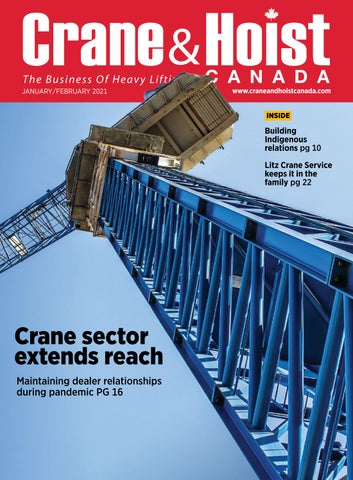
Relationships matter: Crane sector extends reach
Maintaining dealer relationships during pandemic
By Saul Chernos
With measures designed to contain COVID-19 putting conventions, trade shows and other face-to-face meetings on pause, players in the crane sector are finding new ways and relying on age-old standbys to build and reinforce strong business relationships across the supply chain.
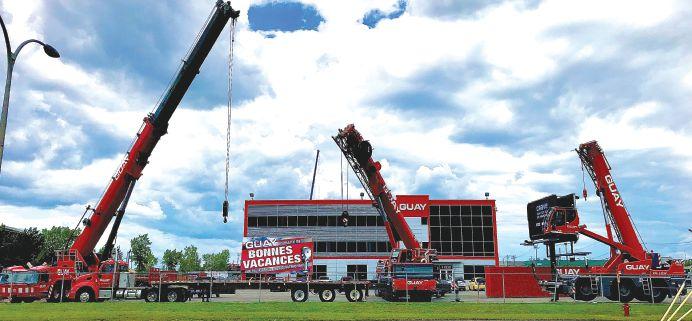
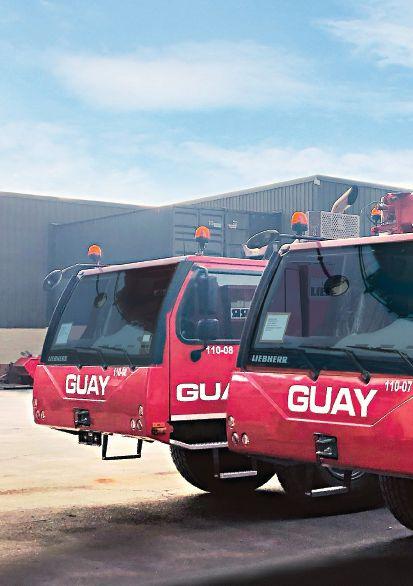
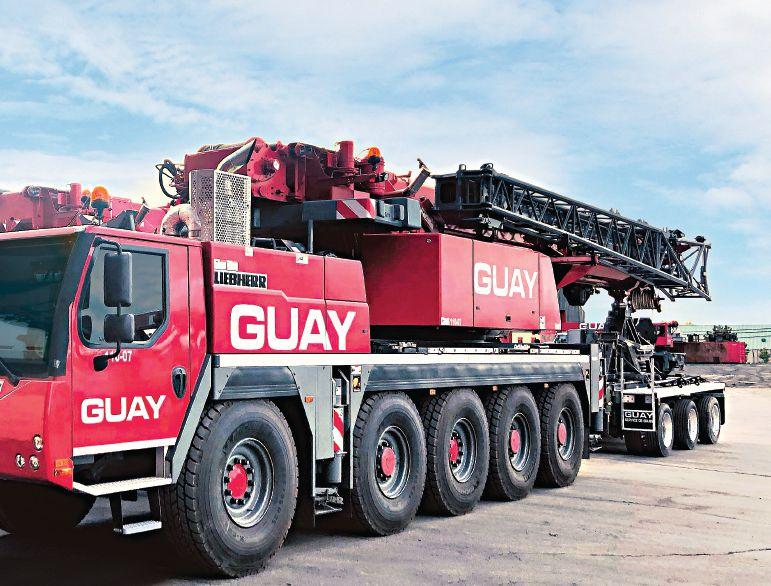
Québec City-based crane rental and services provider Grues Guay is a case in point. Vice-president Guillaume Gagnon says representatives routinely attend events such as Bauma, CONEXPO-CON/ AGG and the annual meeting of the Crane Rental Association of Canada (CRAC) in order to meet with manufacturers, often for the first time, and see their wares. Grues Guay personnel also visit factories directly, chatting up sales personnel, watching equipment in various stages of production and at least metaphorically kicking the tires. And Grues Guay hosts manufacturers wanting to visit to better
understand the Québec market and gain a firsthand view of the company’s operations and needs.
“We see crane manufacturers as a team member,” Gagnon says. “If they didn’t develop their products, we wouldn’t be able to rent cranes to our customers.” More to the point, however, a front-line company like Grues Guay relies on manufacturers whenever equipment needs troubleshooting or repair, so close relationships help ensure strong manufacturer support so Grues Guay can meet customer expectations. “We’re only as strong as the weakest link in the chain, so we really rely on them not only for building their product but also doing after-service,” Gagnon explains.
Of course, COVID has hampered faceto-face connectivity. “It’s become more virtual,” Gagnon says matter-of-factly, acknowledging his company now relies on webinars and other forms of online communication. “We have to do it,” Gagnon says. “There’s no other choice.”
With measures designed to contain COVID-19, players in the industry are having to find new ways to engage one another.
While moving existing business relationships online is challenging, forging new contacts can be even more daunting. “If you don’t know a particular manufacturer, it’s hard to start just by phone or a conference call,” Gagnon says. “We miss the human contact and hope the situation will come back to normal as quickly as possible.”
The current health crisis highlights the imperative of building and maintaining solid business relationships and laying the groundwork when times are good. “The strong relationships we’ve built over time have allowed us communicate by phone, videoconference or e-mail without the need to present ourselves,” Gagnon says.
An additional challenge for Grues Guay—and for many other crane rental and services providers—is that relationships with manufacturers are generally not exclusive. Gagnon lists close to a dozen brands the company carries and says versatility is crucial. “When you need a crane suddenly, you need to have more options because timing is important.” Also critical are a machine’s dimensions, lifting capacity, load chart specifications and innovative abilities, as well as price, availability and reliability. All these factors help justify a strong business relationship with suppliers, Gagnon says. “If a crane breaks down, you need somebody who’s going to be proactive, help you out and help mitigate downtime for your customer. If a crane is broken during a refinery shut down, your customer will be
An additional challenge for Grues Guay and for many other crane rental and services providers is that relationships with manufacturers are generally not exclusive.
really unhappy if they’re losing a million dollars a day of production.”
Don Hnatuk, president of Prairie Crane in Saskatoon, says it’s vital to do preliminary research before purchasing anything significant, and to follow that up by checking with trusted business colleagues for references. “We do a lot of footwork beforehand and know where in the market we want to be, and then we go to the people we know are going to give us the best products and services.”
Prior to purchasing two new all-terrain cranes a few years ago, Hnatuk made multiple inquiries with colleagues to scope out a manufacturer’s reputation. For a modest-size service provider these represented a significant investment, so it was especially important that the manufacturer, with which Hnatuk dealt directly, would be reliable and the machines would meet Prairie Crane’s needs. “We were told they looked after (customers) and the parts would be accessible when needed,” Hnatuk says. When the salespeople finally came calling, it was clear the manufacturer wanted the business, and the effort has since met expectations, he adds.
On the other hand, less than stellar experiences include distributors not always returning phone calls or providing prompt service. “We asked for a quote about a week and a half ago and we still don’t have it,” Hnatuk says. Sometimes, distributors don’t answer or return calls on weekends. “Our industry is 24/7, and if they are going to offer after-hour services then they should be available,” Hnatuk says.
An additional sore point is that some distributors rent directly equipment, albeit without an operator, to end users. This effectively bypasses service providers like Prairie Crane, who are also customers, Hnatuk says. “We’re competing against the guys I want to rent or purchase it from. That’s happening in the marketplace a little bit, and it’s not a good thing.”
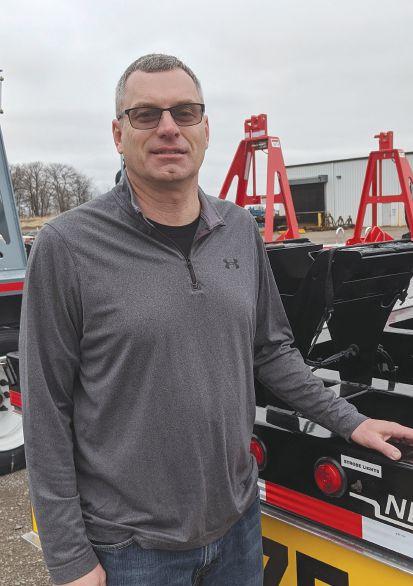
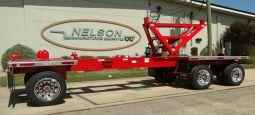
Tony Niese, president of Ottawa, Ohiobased Nelson Manufacturing, says a straightforward approach to relationships can help when conflicts and complexities arise. “We have open communication with our dealer network, and if an end user is trying to go around them we’re in communication with them and we try to be up-front about it,” Niese says.
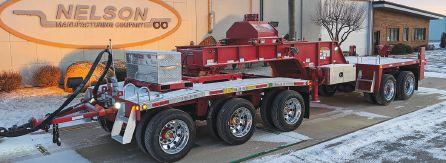
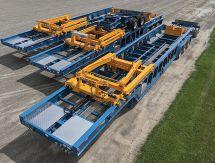
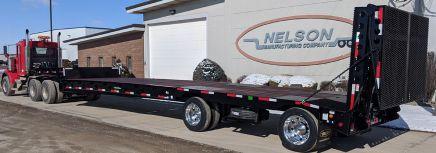
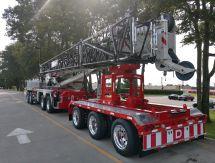
Nelson Manufacturing builds crane dol-
“With online communications, we can get more people involved than if we’d tried to do a face-to-face meeting. We can share pictures, videos and 3D CAD models and go over how we want something to work and collaboratively come up with solutions.”
lies, boom launch trailers and related accessories and does enough business in Canada that Niese recently joined CRAC’s board of directors. “We’ve been a member for 15 years or so,” Niese says, explaining the value of attending association and other industry events or, alternatively due to COVID, keeping in virtual contact with crane rental and service providers north of the border.
CRAC and other industry groups attract upper management personnel and owners and present Niese and his team with a myriad of opportunities to discuss issues such as rigging, oversize loads and permitting and to hear from customers and non-customers alike. “It helps us stay attuned to what’s going on,” Niese says.
While Nelson personnel routinely visit new customers to train them on-site, Niese says relationships are a two-way street and it’s crucial to hear what end users have to say. “In some cases, our customers know more about our product than we do. They know how it performs, they know if they’re happy with it, and they know what they want it to do better, so we need to get that information from them.”
With COVID-related travel restrictions, webinars can bring engineers, salespeople and end users into the same virtual room. “In years past the sales guy would stop in,” Niese says. “With (online communications), we can get more people involved than if we’d tried to do a face-to-face meeting. We can share pictures, videos and 3D CAD models and go over how we want something to work and collaboratively come up with solutions.”
Tony Niese, president of Ottawa, Ohio-based Nelson Manufacturing.
CRAC UPDATE Not slowing down amid pandemic
By Jay Koblun
The Crane Rental Association of Canada (CRAC) has yet to slow down its operations and planning during COVID-19. Executive administrator Claire Bélanger-Parker says she and the CRAC board of directors have been very busy organizing webinars and moving forward with its two committees; the Boom Dolly Research Committee, and the Diversity & Inclusion Committee.
“We seem to have taken this time away from planning our live events and channelled it into digital items. We’ve prepared more webinars and other methods of learning,” says Bélanger-Parker. “We’ve also been able to continue work on our committees.”
The Boom Dolly Research Committee has been mandated by CRAC to:
• Access existing or commission research to support crane rental companies.
• Research and gather all material related to boom dolly.
* Rigging * Construction * Heavy Haul * Oversize * Aerospace sales@nelsontrailers.com www.nelsontrailers.com Phone: 419-523-5321
• Research and gather material related to weights and dimensions.
• Advocate on behalf of CRAC members to increase weights and dimensions where appropriate.
• Develop a relationship with the international crane industry and share best practices.
• Support research and development of smart technology for cranes and dollies.
• Define and formulate strategies and recommendations and report to the BOD.
“The Boom Dolly Research Committee was created to gain government and industry support to reach weights and dimensions regulations to ensure the maximum safety of crane operators, drivers and the general public, during travel to and from job sites,” says Bélanger-Parker. “Also, to make recommendations to establish a standard weight increase for cranes according to industry recommendations and develop best practices for crane and dolly combinations.”
Another committee objective is to increase the participation of manufacturers in the development of smart technologies.
CRAC has also been focusing a lot of its attention on its Diversity & Inclusion Committee.
“Building relationships with Indigenous communities and construction companies in Canada has always been important but especially now in light of what has been happening across the country,” says the executive director.
The Diversity & Inclusion Committee is a standing committee of the Board. The members of this committee are committed to creating awareness of the importance of diversity and inclusion at all levels of member organizations.
The Diversity & Inclusion Committee established objectives are:
• Advise the Board on matters relating to diversity and inclusion in the crane industry.
• Advocate for individuals in or seeking to join the crane industry.
• Develop strategies to increase diversity & inclusion in the industry.
• Provide networking opportunity among the industry.
• Encourage diversity and inclusion on the CRAC Board, Committees and at the Conference.
• Become an information resource for people interested to enter the crane industry.
• Recommend expert speakers for the annual conference relating to diversity & inclusion in the crane industry.
• Encourage media platforms to profile a diverse workforce.
“We haven’t slowed down yet,” says Bélanger-Parker. “The year 2020 has been one of my busiest years on the team and we’re all learning to roll with what’s taken place this year and doing our best to learn as we go.”
New COVID-19 screening app for businesses and organizations
As businesses across Canada adapt to new COVID-19 restrictions, a northern Ontario company has created a mobile tool to help organizations implement the necessary contact tracing and health screening protocols.
Fully secure and using unique QR codes, saniTrakr is a webbased app that allows organizations to manage both the health and contact information of any visitor whether an employee, client, participant or customer prior to the point of entry.
The program offers health screening and contact tracing in one inclusive platform. With a built-in screening capability, organizations of any size can use saniTrakr to offer mobile health questionnaires pre-arrival. For businesses only requiring contact tracing, saniTrakr uses unique QR codes and any smartphone device to obtain visitor contact information.
Upon completion of a questionnaire or submission of contact information, all data is securely stored and can be accessed through an Online Management Console allowing an assigned administrator to track historical data and submit reports to local public health units.
“Each organization has its own requirements for capturing COVID-related information,” says saniTrakr co-founder, Robbie Saunders. “Whether it’s a manufacturer ensuring safety protocols are being met for employees, a medical office checking in patients, a sports organization or school taking attendance, or a restaurant welcoming guests, saniTrakr is a contactless solution for any organization or business, regardless of size. The customizable platform allows organizations to speed up their pre-screening process, eliminate paperwork and securely access records for future reference. It’s simple, efficient and affordable,” he says.
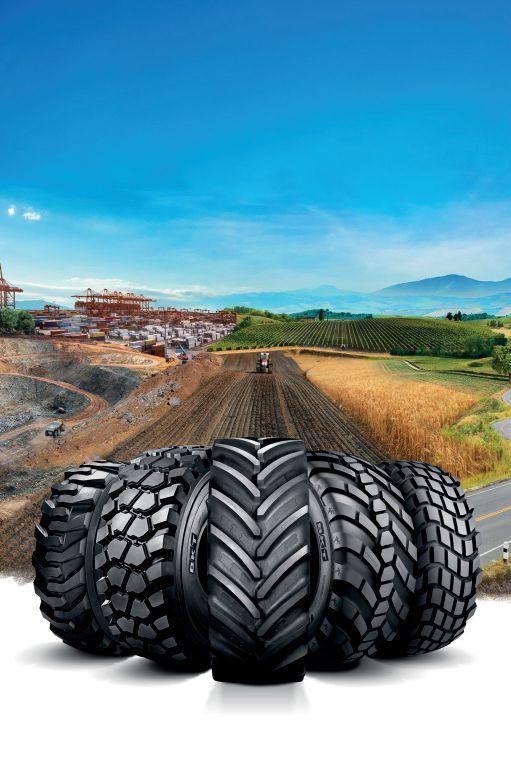
A LONG WAY TOGETHER
WHEREVER YOU ARE, BKT IS WITH YOU
No matter how challenging your needs, BKT is with you offering an extensive product portfolio for every field such as agriculture, OTR and industrial applications.
BKT provides concrete, reliable and high-quality solutions to your requests and working needs.
Wherever you are, BKT is with you.
For info: Western Canada 604-701-9098 Eastern Canada 514-792-9220
Anti-Racism Roundtable formed to fight acts of racism in Ontario’s construction industry
By Jay Koblun
The Residential Construction Council of Ontario (RESCON) and 21 industry partners have formed the Anti-Racist Roundtable to combat and address racism in the construction industry.
“After the events this summer, we knew we needed to do something immediately to address the obvious racism in construction,” says RESCON president Richard Lyall. “This is a long-term initiative, but there are immediate things we can do, like make racism a part of the conversation in construction. We have a lot of policies and programs and laws, but what else can we do to reach the people who think they are better than others by virtue of creed or class or race?”
Lyall says a workplace focused on anti-racism is about caring for your fellow worker, citizen and contributes to changes in society. Amina Dibe, policy and programs analyst at RESCON, is the chair of the roundtable and said RESCON wanted to do more than simply voice their disapproval of racism on social media.
“We couldn’t just issue a statement and put it out on social media. We chose to bring the industry together so we could all start to think about how we’re going to do more,” she says. “And I think that’s what the roundtable is. It really starts from the top in terms of anti-racism, diversity and inclusion. And this roundtable really serves as a tool to think about what more can we
“This is a long-term initiative, but there are immediate things we can do, like make racism a part of the conversation in construction.”
“Decisions will come from our three subcommittees, one of the subcommittees is training and education, the second is communications and marketing, and the third is policy and legislative requirements.”
do in terms of training, education, communications, employer policies and more.”
The roundtable is made up of employers, unions, employment agencies, educators, organizations representing contractors, the provincial and municipal governments, and the health and safety sector. The first roundtable meeting was held Oct. 15 to establish the ground rules for the organization. Dibe says the meetings will very likely all be held virtually.
“Decisions will come from our three subcommittees,” she says. “One of the subcommittees is
Richard Lyall, RESCON president
Amina Dibe, policy and programs analyst at RESCON and chair of the roundtable
PHOTO: KALI9 / E+/ GETTY IMAGES
“We’re trying to incorporate anti-racism into health and safety training. If we’re putting something out on social media showing our disapproval, that’s great, but not necessarily reaching the site level, so, it’s a combination of both. We’re going to continue pushing at this issue.”
training and education, the second is communications and marketing, and the third is policy and legislative requirements. A lot of our decisions and initiatives, short and long-term, will come from the subcommittees.”
Lyall says RESCON is taking a strong stance on racism saying if it comes to light an individual is confirmed having committed a racist act or said a racist comment they will be terminated.
“We take the position that anyone caught doing stuff like that will be terminated. Originally, I actually used the word ban. Some people may say, ‘well, you can’t ban people from an industry.’ But I did use that term—we don’t want people like that in the industry, period. Many people in the industry quickly adopted the same stance.”
Dibe and Lyall both say the challenge is going to be changing behaviours and how to measure whether the roundtable is being effective.
“The culture of construction is what we are trying to change,” says Dibe.
“I really think that it will be hard to measure the success of that change, but changing the culture is definitely going to be built into this new training and education.”
Lyall says the culture that needs to change is the learned behaviours that race-based jokes, comments, questions, and microaggressions are OK.
“Sometimes it’s very subtle and can come down to a look, or joke, or thinking that it’s funny and acceptable because you may be chums, or that you have the right to say it because you have family members who are people of colour,” says Lyall.
“There has to be a way to reach people and make them aware that it’s not acceptable
in our industry,” Lyall.
Dibe says part of the roundtable’s training will be focused on informing and reminding construction workers on those subtle and obvious aspects of racism.
“How do we inform construction workers that, for example, X, Y and Z are not acceptable? I think part of it is that some people actually don’t know what it means to be racist. A lot of it is increasing awareness about what is considered racist and what isn’t acceptable— microaggressions included.”
The Oxford English Dictionary defines a microaggression as a statement, action, or incident regarded as an instance of indirect, subtle, or unintentional discrimination against members of a marginalized group such as a racial or ethnic minority.
“We’re trying to incorporate anti-racism into health and safety training. If we’re putting something out on social media showing our disapproval, that’s great, but not necessarily reach ing the site level,” says Dibe. “So, it’s a combination of both. We’re going to continue push ing at this issue.”
RESCON kicked-off a Con struction Against Racism Everywhere (CARE) cam paign earlier this year, with the hashtag #RESCONCare. Stick ers are being distributed to construction employers and the industry for workers to post on their hard hats and around construction sites.
“The stickers, while they’re certainly not going to solve the issue of racism in construction, they do foster solidarity,” says Dibe. “If I were to see someone on a construction site wearing that, or an entire crew, it shows that you are an ally in this and that you won’t tolerate racism in construction.”
CRANE ROPE CENTRES
Canada’s Largest Inventory in Metric and Imperial sized Crane Ropes.
We install sockets, crane buttons and aluminum loop back sleeves in strict accordance to ASME B30.30 and EN 13411
Available Proof Testing of any end fitting on any crane rope.
For over 50 years we have been the industry experts on rope selection and application.
Litz Crane Service keeps it in the family
By Matt Jones
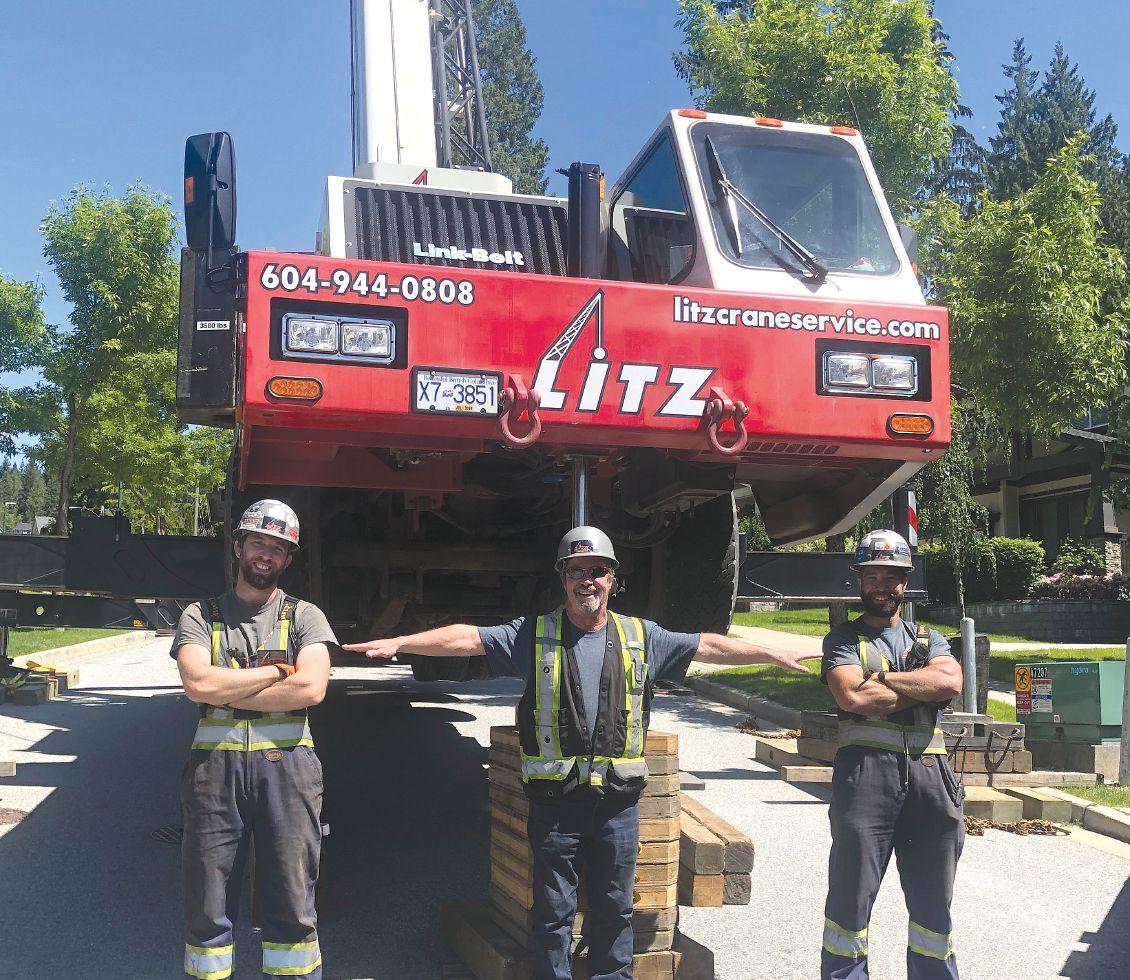
After almost 25 years of running British Columbia’s Litz Crane Service Ltd., Gord Litz is eyeing a retirement within the next year. However, he expects to still be involved in some capacity with the business when his sons Jared and Michael take over for him.
“I’ll still be hanging around and bugging these guys,” says Gord with a laugh. “Once I started the company, I always said it would be nice if I got the boys involved. Both of them are doing a bang-up job and I couldn’t be prouder.”
A family tradition
Gord, a third-generation crane operator, started with his father’s business, Litz and Sons Company Ltd. in Winnipeg – now closed, the company was recently in the news after their former CFO was sentenced to prison for defrauding the company of more than $4.2 million. After leaving the family business, Gord was working for a large crane rental company in Vancouver when he decided to make a go of running his own crane business. In 1996, he remortgaged his home and bought his first crane.
“I just figured, I’m doing it for this guy or that guy, so why not do it for myself?” says Gord. “Nothing ventured, nothing gained. I was turning 35, I figured if I wait till 40 I’ll never have the balls to do it. So I figured I’ll give it a shot and see how it pans out. But it was a nerve-wracking summer of ‘96, because I didn’t know if it was going to work out or not.”
A varied customer base
Litz Crane Service does ‘taxi work’ where the crane and operator are hired as a package deal. The company generally
doesn’t undertake long term jobs that would keep them tied up for years at a time, but they work in all facets of the industry – industrial, civil, commercial and occasionally residential.
“We do a lot of water work – new piping and this and that and we have a few different industrial plants that we work at,” says Gord. “But a lot of small stuff – small air conditioning companies, small steel outfits; that type of thing. We try to spread it around and do as much for as many different people as we can.”
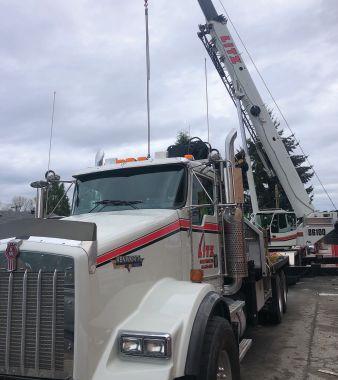
To accommodate those varied customers, they own and operate 60, 70 and 100-ton mobile hydraulic cranes. For jobs requiring something further, Litz have some trusted partner companies who can provide cranes up to 270 tons.
“All our cranes are truck cranes,” says Gord. “We just bought a little 20-tonne knuckle boom – that’s something new for us. We bought that more to use as an inhouse crane for hauling counterweights and stuff. But, lo and behold, we’re starting to pick up little jobs for that too.”
As he nears retirement, Gord notes that the company has evolved and grown over time – from just himself to a six-person team, and from just a single crane to now four mobile cranes and a boom truck. But his approach to the business has been consistent throughout.
“We just go out and try and do the best job we can and provide good service,” says Gord. “We’ll look at any job that anybody wants us to look at and make sure they get the right crane that’s going to handle the job. We want our customers to know they can rely on us.”
The fourth generation
Both of Gord’s sons worked in other fields before joining the family business. Each kept crane work as a fall-back plan, but over time it became a more and more attractive option.
“When I was young and growing up, my dad always said ‘you should join the family company,’” says Michael. “As a youth, you’re always like ‘No, I’m going to do something different,’ and you don’t really see sometimes the opportunity that’s been placed in front of you. I really love the job. It’s allowed me to have a pretty good life at age 29.”
Both brothers’ current job title is simply ‘Sales and Operations,’ though Jared says that he runs more of the day-to-day oper-
ations and Michael handles more of the behind-the-scenes work, such as taking care of billing and permits. The two have yet to determine what their titles will be
after Gord’s retirement, but they have started assigning the duties that had been their father’s.
“He is still very much in the day to day operation,” says Michael. “We’re not cutting my dad out because he doesn’t want that quite yet. He wants to see that the company is going to do well without him.”
Neither brother is anticipating making drastic changes to the company when they take over – the business is successful and they aren’t going to mess with a winning formula. The brothers have discussed perhaps adding another crane in the 40 to 50-ton range, but are happy to remain a relatively small family company.
“I want to focus more on providing better service and having better equipment and more diverse rigging – focusing more on quality over quantity,” says Jared. “I’d like to see us break into the all-terrain category of cranes at some point. But the goal isn’t necessarily to get the company really big. I enjoy the job itself, so I don’t want to get too big so I get put in an office and don’t get to go to the job every day.”
The third and fourth generations of Litz family crane operators – (from left) Jared, Gord and Michael.
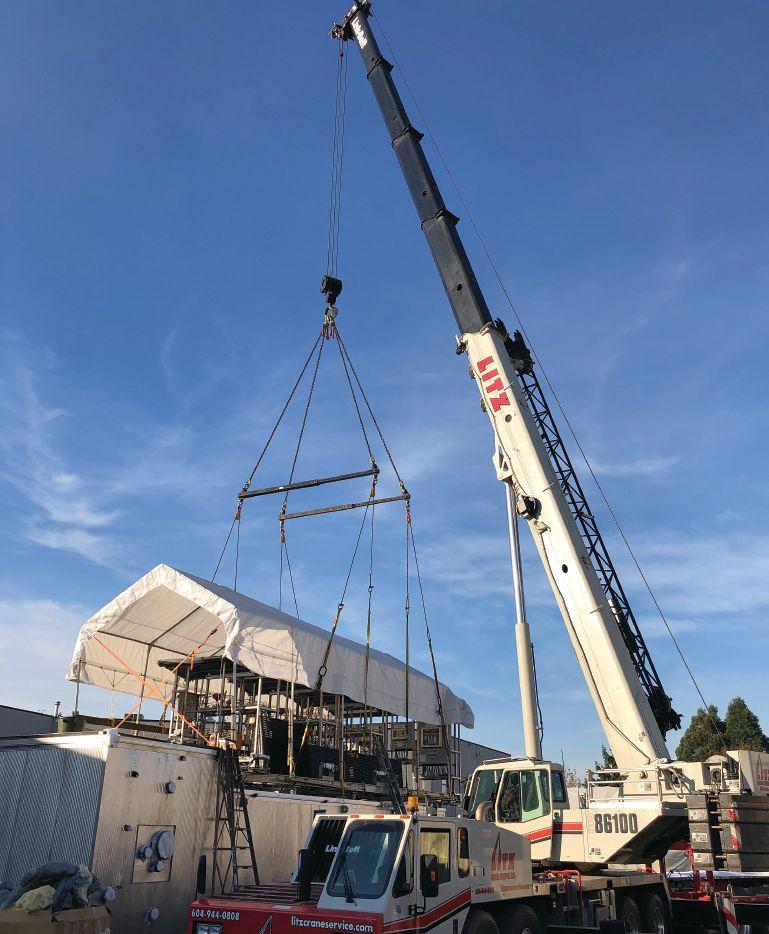
Litz Crane Service provides taxi-style crane work for a variety of customers in British Columbia in the industrial, civil, commercial and residential sectors.
Over a quarter-century, Litz Crane Service has evolved from a single operator with a single crane to a six-person team with a variety of mobile hydraulic cranes.
Investigation into U.S. crane imports terminated
By Jay Koblun
U.S.
Secretary of Commerce Wilbur Ross announced that the Department has terminated a Section 232 investigation into mobile crane imports.
The investigation had been requested by Manitowoc and its former chief executive Barry Pennypacker in 2019 and was filed under Section 232 of the Trade Expansion Act. The investigation was to look into whether imports of mobile cranes threatened to impair U.S. national security.
The investigation was terminated on November 23, 2020, following a September 8th request from Manitowoc.
“In September we petitioned to withdraw the petition we had initially submitted on Dec. 19, 2019,” said Ion Warner, vice president of marketing and investor relations at Manitowoc. “And as of last week, it has been withdrawn. Secretary Ross agreed to terminate our initial petition and an investigation.”
“It is not in the best interests of our customers to move forward with an investigation, especially in today’s environment, the current market situation, due to the effects of COVID-19, would not benefit from it [the investigation] and Manitowoc does not want to hurt overall crane demand.”
Warner said Manitowoc has had a change in management and the new CEO, Aaron Ravenscroft, is taking the company in a different direction and wants to move on from the previously proposed investigation.
“It is not in the best interests of our customers to move forward with an investigation, especially in today’s environment,” said Warner. “The current market situation, due to the effects of COVID-19, would not benefit from it [the investigation] and Manitowoc does not want to hurt overall crane demand.”
Warner told Crane and Hoist Canada magazine this should be good news for the crane and heavy lifting industry in North America.
“We think this is a positive step in the right direction and we are looking to move on from the actual petition,” he said. “We want to continue serving our customers, building and designing cranes, like we always do and have been doing since 1902.”
After consideration of Manitowoc’s request for withdrawal, the Secretary determined that it was appropriate to terminate the investigation. The Department of Commerce announced it will publish a Federal Register notice informing the public of this decision.
A crane downtown Hamilton, Ont. PHOTO: JAY KOBLUN
MI-JACK CANADA offers unsurpassed customer support, led by the best Factory Trained Service Technicians, the most knowledgeable Parts Professionals, all backed by North America’s leading equipment group. As a part of the Lanco Equipment Group, along with Walter Payton Power Equipment and Western Pacific Crane & Equipment, we are now part of the World’s Largest Manitowoc Dealer group. MI-JACK CANADA stocks Manitowoc and Grove cranes and is part of North America’s largest parts inventory, on-hand and ready to ship.
New and Used sales along with Rental Purchase options, MI-JACK CANADA is your source for Immediate Availability on the full line of Manitowoc and Grove cranes.
Your Authorized Distributor in Alberta and Saskatchewan for Manitowoc and Grove
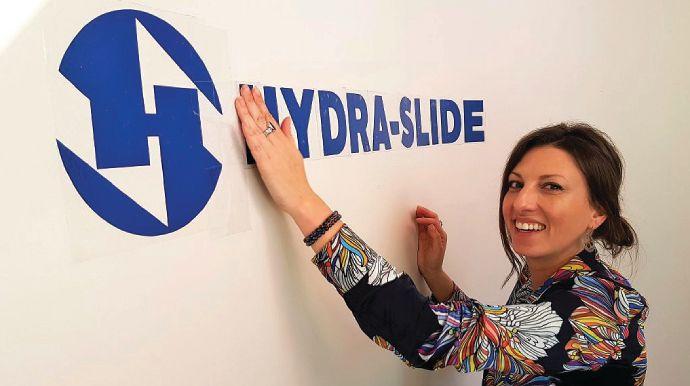
Hydra-Slide rebrands and launches new website
Hydraulic skidding equipment manufacturer Hydra-Slide unveiled a new brand image and website.
The company says a vibrant new logo represents a fresh and modern reimagining of the company’s founding identity. The logomark itself is composed of elements that reflect Hydra-Slide’s corporate identity and core products in a way that is both striking and instantly recognizable. The bold “H” is a direct signifier of the company name, formed by the activated negative space within the logomark circle.
The negative space creates angled “tracks”—a subtle nod to the hydraulic tracks that Hydra-Slide manufactures. The colours are a subdued and sophisticated update of the company’s previous colour palette, which was important to preserve. The dark blue and gold maintain the previous palette’s contrast and colour signature while introducing additional elements of professionalism and reliability.
Hydra-Slide said Thrive Creative and itself agreed that as technology plays a more comprehensive role throughout the industry, companies on every level are finding it harder to distinguish themselves and be seen by customers. In an increasingly noisy, crowded marketplace, no longer does the handshake simply get (or keep) the business. In order to be seen, trusted, and recommended in the appropriate market, modern companies need a brand that connects with their audience visually, strategically, and emotionally—a brand that reflects not just superior ability, but authenticity.
SC&RA
members partner together for new product
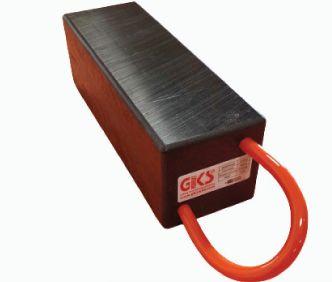
The Jack and Roll Block is an engineered block that replaces scrap wood to block heavy machinery.
“In partnership with GKS, DICA is pleased to have the opportunity to manufacture a safer, more durable blocking solution for the industrial market,” stated Joy Johnson, DICA’s VP sales and marketing.
The Jack and Roll Block, manufactured by DICA, is made of an engineered thermoplastic and has a rated capacity of 20 tons each.
The partnership allowed for the two companies to come together and create a safer solution for blocking. This partnership helps tie various sections of the industry together, combining different assets and skill sets to introduce products such as the Jack and Roll Block.
The seven-pound Jack and Roll Block has a rated capacity of 20 tons per block and features DICA’s patented TuffGrip handles for easy transportation. Thanks to the teamwork between the two SC&RA members, machinery moves with wood are a thing of the past.
OZ Lifting launches stainless steel trolley
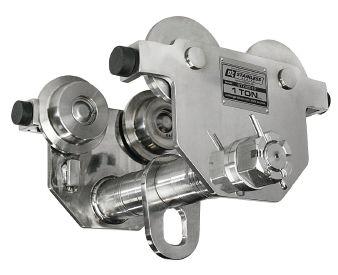
OZ Lifting Products has launched the second in a new range of stainless-steel products—a push beam trolley. The launch of the trolley, available in 1-ton and 2-ton capacities, follows the manufacturer’s recent unveiling of a stainless steel chain hoist, designed for lifting and pulling. The products will commonly be purchased together as part of an overall system. Both items are in stock and available for delivery to OZ Lifting’s network of regional dealers.
depending on the application,” said Steve Napieralski, president at OZ Lifting.
The trolley is adjusted using washers that are supplied with each shipment. The push beam trolleys (they weigh 26.5 lbs. and 43 lbs. respectively) fit most common I-, S- and W-beams; end users have different types of beams depending on the construction
requirements of the building or structure where the lifting equipment will be installed and employed. Each beam offers unique properties that ensures an appropriate level of support in each instance. The trolley is accordingly adjusted using washers that are supplied with each shipment, in addition to an owner’s manual and test certificate.
OZ Lifting launches stainless steel chain hoist
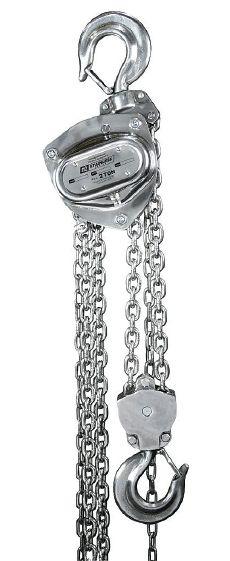
OZ Lifting Products launched a chain hoist, designed for lifting and pulling. The first in a new range of stainless-steel products.
USA.
“Much fanfare greeted the launch of our [stainless steel] hoist and our distributors have welcomed rapid expansion of the range. The benefits of Grade 304 stainless steel are well known in and out of industry, and we anticipate interest in individual units, hoists and trolleys, and multiples thereof,
The chain hoist, available in 1-ton and 2-ton capacities, is designed for use in corrosive environments where the properties of stainless steel make it a preferred material. Essentially, the composition of the metal prevents rusting and serves as heat resistance. Coastal and marine industries are
The Jack and Roll Block was created through a partnership between Specialized Carriers & Rigging Association (SC&RA) members GKS Lifting and Moving Solutions and DICA
Janine Smith, vice president at Hydra-Slide, unveils the new logo.
A 1-ton capacity version of OZ Lifting’s new stainless steel push beam trolley.
PHOTO BY OZ LIFTING
PHOTO BY OZ LIFTING
“Originally, we were unsure as to the extent to which such a product would be required but there are actually a multitude of applications, such as lifting components during equipment maintenance; placing a load, say, onto the third floor of a building in a construction environment; or lifting a partial width roll of material where a monorail crane is centred for full rolls. We anticipate finding other uses for the beam once word spreads,” Dan Mongan, senior sales engineer at Caldwell said.
among the many sectors where lifting products are integral to operations in extreme environments that place added demands on equipment.
The manufacturer offers the stainless-steel chain hoist with standard heights of lift of 10 feet, 15 feet, 20 feet and 30 feet; the larger unit has two chain falls compared to the smaller hoist’s one. However, it does provide custom lengths to meet the requirements of the application. The net weights of the hoist heads are only 28.7 pounds and 43 pounds respectively.
Additional features include fully enclosed gearing; fully machined lift wheel; weather-proof holding brake; individual test certificate and serial number; and forged stainless steel hooks and safety latches. OZ Lifting offers a free spare set of latches, located on the bottom hook. Napieralski also pointed out the fact that all gears and shafts run on roller bearings.
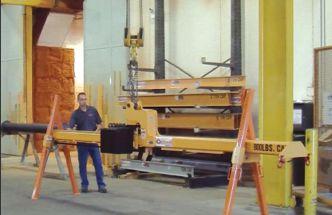
New Caldwell Overhang Lifting Beam
The Caldwell Group launched a custom lifting beam for applications where a crane cannot be positioned over a load due to limited travel or obstructions.
Caldwell was initially approached by an automotive manufacturer that had a requirement to lift a load during periodic maintenance that couldn’t be reached by its overhead crane. Subsequent inquiries indicated that there was a wider necessity for the concept, which was reinforced by feedback from a digital Associated Wire Rope Fabricators (AWRF) audience earlier this year.
Integral to the overhang lifting beam is a counterweight system that can move or be held in a fixed position; movement is powered or manual. A powered trolley should be specified if several lifts per day are made, the lifter cannot be rested on the floor during adjustment, or the adjustment must be made quickly.
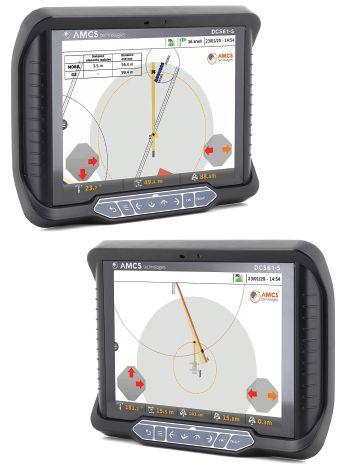
Manage anti-collision between tower and mobile cranes
AMCS technologies unveiled its anti-collision solution between tower cranes and mobile cranes internationally. The new DCS 61-S automatically detects the movements of mobile machine and integrates the control of tower cranes.
The DCS 61-S placed on tower and mobile cranes communicate their information via a radio network and constantly know the
position of each of the machines thanks to geolocation antennas. When mobile cranes move and reposition themselves in a different area to work, the tower crane devices automatically know their positions and the system creates an area of interference for the machines involved. The device calculates in real time and in 3D the distances between each element of the cranes, including the position of the cabin, as well as the movement speeds. This is to intervene on the cranes control mechanism to ensure a slowing down, followed by a complete immobilization of the crane at a pre-set distance from the mobile crane. For the mobile crane, the device emits an increasingly loud audible signal when approaching the prohibited overflight area. The DCS 61-S keeps its two other essential functions for maintaining productivity and site safety; zoning and data logging.
The chain hoist, available in 1-ton and 2-ton capacities, is designed for use in corrosive environments.
One year later, still no report on Halifax crane collapse
By Matt Jones
Over one year has passed since the tallest crane in Halifax, N.S., collapsed onto the roof of a nearby building and the official report into the incident has still not been released.
“As you can appreciate, the crane incident is complex and requires a thorough investigation,” said a representative of the Department of Labour and Advanced Education (LAE). “LAE has committed to releasing a summary report once our investigation is complete, which is expected in the coming months. Our investigation is ongoing. We have no further information to share at this time.”
Sue Uteck, executive director of the Spring Garden Area Business Association, says she knows it’s common for this sort of report to take a year or two to complete. But given the circumstances, she expected that more information would have been released by now.
“I’m a little disappointed that it’s taken this long,” says Uteck. “And I’m disappointed that there’s just been zero communication on why it’s taken this long or an estimated report date.”
The crane collapsed on September 7, 2019, as Halifax was hammered by Hurricane Dorian. While LAE’s forthcoming report will hopefully determine exactly
what caused the collapse a heavily-redacted engineer’s report that was obtained by Global News in January could shed some light onto the incident.
The review of the collapse prepared by BMR Structural Engineering noted that the turntable of the crane had malfunctioned in May of 2019 and that the “top kit of the original crane was removed and a new top kit from a different crane was installed.”
One of the largest sections of the report titled, “reasons for collapse” was redacted.
The removal of the collapsed crane was delayed for weeks as the various involved parties attempted to determine which would be liable. Eventually, the province declared a localized state of emergency, assuming liability for the clean-up so that it could proceed, with the intention of recovering their costs in the future. The removal was finally completed in November.
A class-action lawsuit has been filed on behalf of businesses and residents who were displaced in the aftermath of the collapse. Along with W.M. Fares Architects Inc. and W.M. Fares and Associates Inc., the suit also names the owner and operator of the crane, Lead Structural Framework Ltd., and the designer of the crane, The Manitowoc Company Inc.. as defendants. The suit alleges that the plaintiffs have suffered financial and psychological harm and that the defendants are responsible for “losses, injuries and damage.”
“September is the busiest time because we have the return of the students and this is when we get the biggest volume of cruise ships in,” says Uteck. “Normally in September, we have around 72 cruise ships, so there were all those tourists. The crane itself became a bit of a photographic marvel for visitors, but not for the merchants who couldn’t get access.”
While no businesses in the area actually went out of business due to the collapse (Uteck notes that a café did close, but that the COVID-19 pandemic was a major factor), it was a significant financial hit for the area. However, at a time when those businesses are struggling through pandemic-related downturns in businesses, recompense would be very timely.
A class-action lawsuit has been filed on behalf of residents and businesses affected by the Halifax crane collapse and the extended removal effort. PHOTO CREDIT: BRENDAN MAGEE
Mobile cranes from Liebherr
Top capacities in all lifting classes
Long telescopic booms with variable working equipment