Little Brush Creek Hunting & Timber Investment Perry County, Alabama, 391+/- Acres
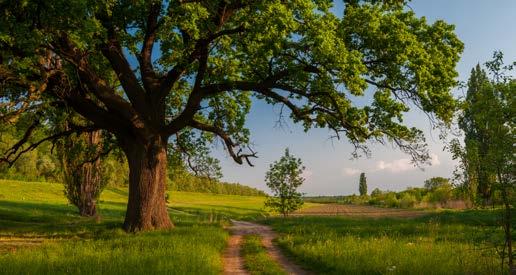
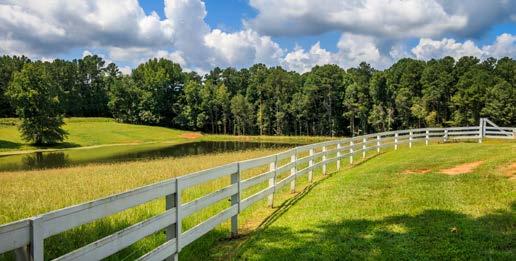
This well-stocked timber and hunting property is located just west of the community of North Perry, an hour from Tuscaloosa, 90 minutes from Birmingham, 25 minutes to Greensboro, and 20 minutes to Marion.
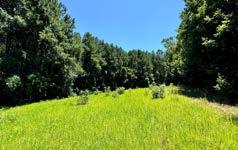
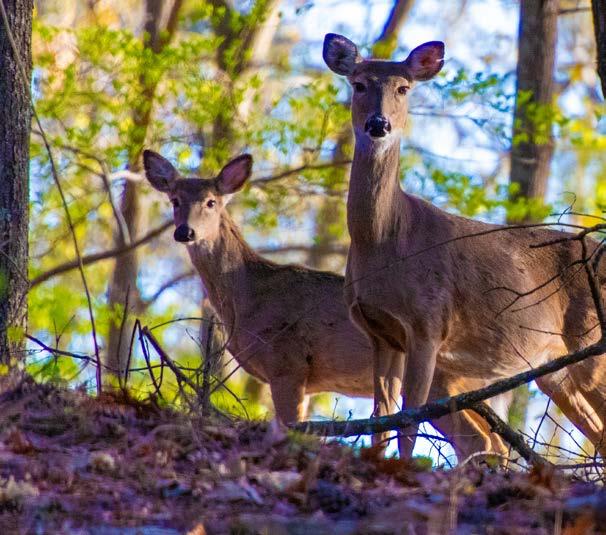
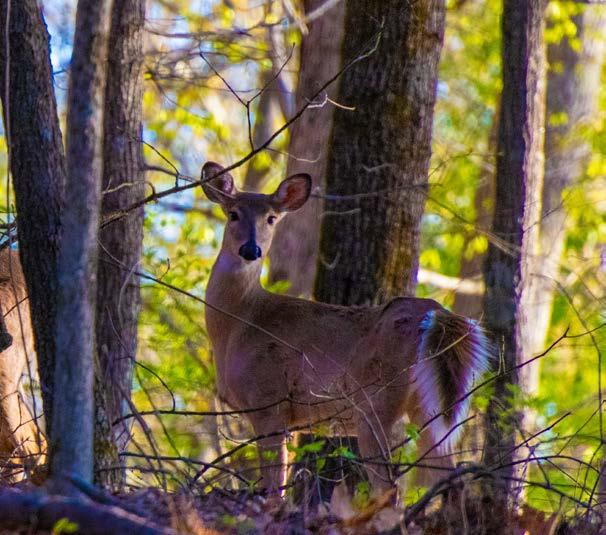
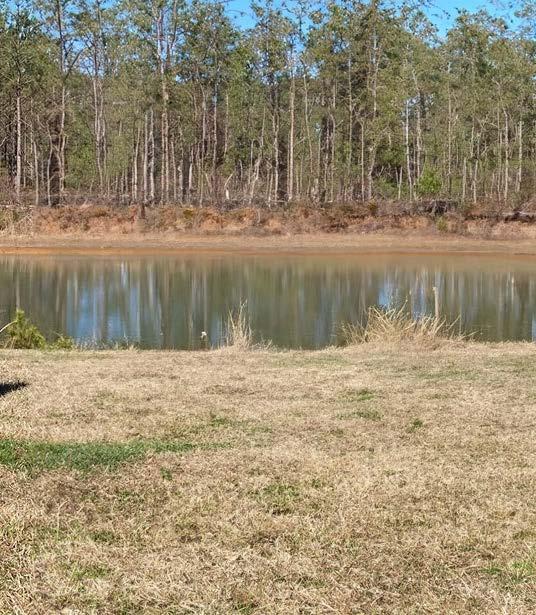
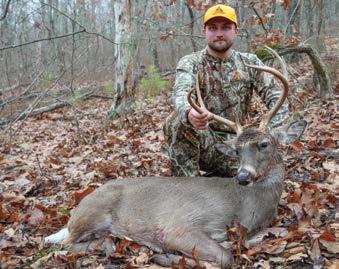
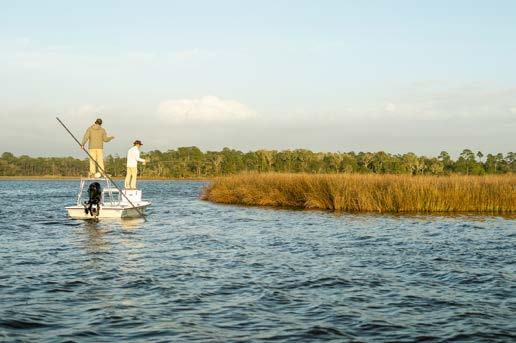
Enjoy immediate tax-free income opportunities from several age classes of merchantable pine plantations that all need thinning, large stands of mature hardwood, several possible fishing lake sites, established food plots, multiple campsites, and easy access from frontage on Fellowship Cemetery Road. Little Brush Creek crosses the property, providing a water source for the abundant deer, turkey, and other wildlife present on the property. Tracts rarely hit the market with both this much timber and excellent hunting opportunities. Don’t miss your chance to see this one.
Sawtooth Farm High Fence Hunting & Recreational Tract with Lodge Sumter County, Alabama, 568+/-Acres
Discover this exceptional 568± acre high-fenced property in Sumter County, a true haven for outdoor enthusiasts nestled in the heart of the Blackbelt! This private retreat offers year-round recreational adventures, including spring turkey hunting, stocked lakes for fishing, dove fields, a duck pond, and the opportunity to pursue world-class whitetail deer.
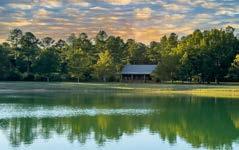
The centerpiece of the property is a charming, rustic cabin built in 2016. Featuring 4 bedrooms and 2.5 baths, it boasts a wood-burning fireplace and elegant finishes of cedar, tile, and granite throughout. Relax on the expansive covered porch overlooking one of the lakes and dove fields—an ideal spot to unwind.
BEST BETS FOR DECEMBER
These are our top targets for hunters and anglers this month! BY GREAT DAYS OUTDOORS EDITORS
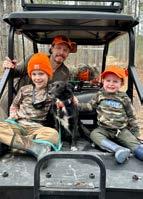
HUNTING WITH SMALL KIDS
Little kids are terrible hunting partners. They have little legs, short attention spans, and a knack for finding weird things to put in their mouths. They’re lousy shots, worse callers, and are zero help when it comes time to drag a deer out of the woods. And if they’re not cold, you can bet your last snack cake they’re hungry.
But there is one thing little kids do better than adults. Live in the moment. Grown ups spend most of their time remembering the past and planning for the future. Their brains are largely separate from their body and their five senses. And they’re excellent at ignoring things. If Dad is looking for a deer, he’s unlikely to notice a barking squirrel, a cool stick, or a dead raccoon skull.
Kids notice these things, and become enraptured by them. And a smart hunter will let them. If you’ve spent previous Decembers with kiddo locked in a shooting house, earphones plugged into an iPad and surrounded by snack wrappers while you curse under your breath at their feet kicking against the walls, change it up this year. Sleep in, make a good breakfast (outside with their “help” if you can), shoulder your squirrel gun, and go for a walk behind
AFTERNOON FARM PONDS
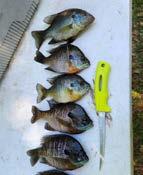
In his excellent book Bass Bug Fishing, William G. Tapply noted that the best time to go topwater fishing for bass in the shallows was when the weather made it impossible to stay indoors. In the summer months, anglers know that cool mornings can make magic happen on weedy farm ponds. What’s perhaps less well known is that warm afternoons can be just as good.
December always has a few unseasonably warm days with t-shirt afternoons. On bright, sunny days, give the woods a rest and hit up your local pond. Bass and bluegill don’t have calendars, and the warming shallows will be flooded by fish in a “spring” mood. Small baits are usually the most productive, with Rebel Crickhoppers, Mepps Spinners, and a 2” Berkeley Curly-Tail Grub being personal favorites. For fly anglers, small poppers and downsized wooly buggers can be magical.
camp. Let the kid lead the way. Let them pick up the cool stick and poke the dead racoon skull with it, and if you get a bead on him, shoot that squirrel for show-and-tell. Junior has the rest of his life to sit still and be quiet.
SALTWATER RIVER FISHING
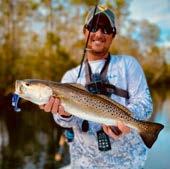
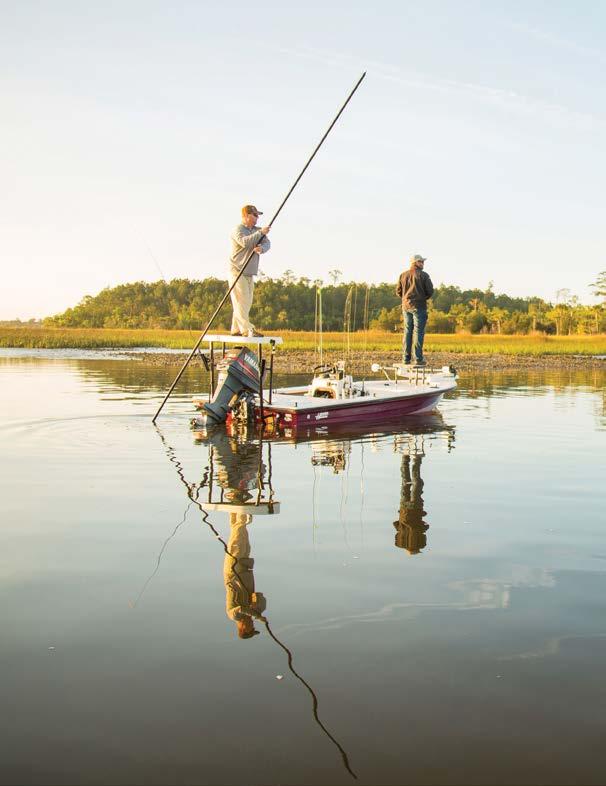
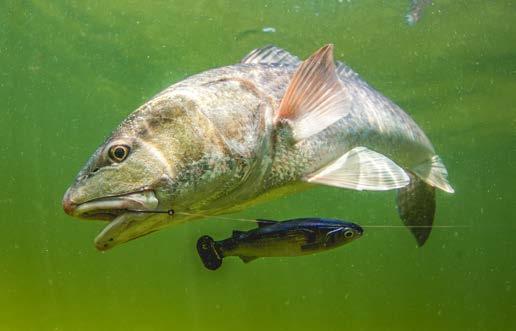
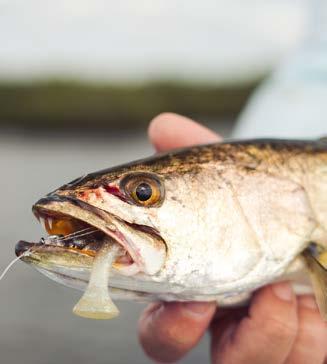
Saltwater river fishing during the colder months can be a highly rewarding experience, especially for those targeting speckled trout and redfish. These fish tend to gather in tidal rivers and estuary systems, where the deeper waters offer stable temperatures and salinity, even in harsh weather. While winter fishing might seem daunting, anglers who brave the cold can find success using techniques suited to the season. Jigging with heavy lures in deeper water after cold fronts, or using finfish imitations like the Slick Lure in shallower areas, can yield great results. With the right gear and preparation, cold weather saltwater river fishing can turn a winter day into a memorable fishing trip.
VOLUME 28 ISSUE 12 DECEMBER 2024
PUBLISHED BY:
Great Days Outdoors Media, L.L.C.
PUBLISHER/EDITOR-IN-CHIEF: Joe Baya
EXECUTIVE EDITOR Butch Thierry
MANAGING EDITOR: Nick Williams
GENERAL MANAGER: Samatha Hester
CREATIVE DIRECTOR: Kevin Burton
DIRECTOR OF DIGITAL MARKETING: Jarod Bosarge
COVER PHOTO: Dakota Thigpen
Great Days Outdoors (USPS 17228; ISSN 1556-0147) is published monthly at P.O. Box 1253 Santa Rosa Beach, FL 32459 Subscription rate is $36 for one-year, $60 for two-years. Periodicals Postage Paid at Mobile, AL and additional mailing offices.
POSTMASTER: Send address changes to Great Days Outdoors PO Box 472 Williamsport, PA 17703
SUBSCRIBERS: All subscriptions begin the first issue for the month following receipt of payment, if payment is received by the 15th. Great Days Outdoors assumes no responsibility for delivery after magazines are mailed. All delivery complaints should be addressed to your local postmaster.
CONTACT US:
EDITORIAL | JoeBaya@greatdaysoutdoors.com
ADVERTISING | SamHester@greatdaysoutdoors.com
SUBSCRIPTIONS | greatdaysoutdoors@pcspublink.com
Great Days Outdoors Media LLC P.O. Box 1253 Santa Rosa Beach, FL 32459 877. 314. 1237 info@greatdaysoutdoors.com greatdaysoutdoors.com
All rights reserved. Reproduction of contents is strictly prohibited without permission from Great Days Outdoors Media, LLC.
December and the holiday season hold a special place in our hearts for many reasons. It’s a time of celebration and tradition, filled with gatherings, gift-giving, and festivities. The season offers moments to connect with family and friends, allowing people to pause from the daily grind and focus on what matters most.
For me, one of the greatest joys of the year is duck season, which in Alabama opens on Thanksgiving weekend. December brings the sounds of whistling wings and the feel of leaky waders. My perfect December day begins with a 2 a.m. alarm, followed by a cold boat ride or long hike to a timber hole. It smells of coffee, wet dog, and gunsmoke. After a successful hunt, my dog and I load up and head home, clean the birds, shower, and change into our street clothes. If we’re lucky, my wife will have leftovers warmed up for us, and after lunch and a nap, it’s time to visit family or drive around looking at Christmas lights. If I’ve saved a little time off, I’m back out the next day to do it all over again.
For thousands of hunters like myself who live between flyways, wood ducks are our bread-and-butter bird. And that’s just fine by me. Wood ducks are good sport and beautiful to boot. I was thrilled when the daily limit in Alabama was raised from two birds to three, but lately I’ve started to wonder if shooting three birds a day is something I’m comfortable with.
According to the USFWS annual waterfowl survey, wood duck populations were down 10% nationwide this year compared to last. Whether it’s due to habitat loss,
global warming, or a La Niña winter, the reality is that there are fewer birds in my local swamp now than this time last year. It’s mid-November, and daytime highs are still hitting the eighties and nineties. The drought has cut down on aquatic vegetation, and the migration hasn’t yet arrived, leaving the local population thin.
I believe our federal and local wildlife management agencies do a good job, overall, setting seasons and bag limits. But I also know that government agencies can be slow to respond. I’m no biologist, but my gut tells me that the increase in wood duck numbers we’ve enjoyed for decades is leveling off. I’ve seen too many wetlands developed to believe otherwise. And although hunter numbers are declining, access is decreasing even faster, often leading to more hunters per square mile in accessible areas. With Baldwin County, Alabama, being one of the fastest-growing areas in the country, the increased pressure on my home swamp is noticeable.
Far be it from me to tell others how many birds to shoot, but this year I’ve decided to impose a “gentleman’s limit” of two birds in my home swamp. Could future surveys prove my concerns unfounded? Hopefully. Will my restraint make a difference? Probably not. But I’ll sleep easier knowing that I “left some for seed” in case my daughter decides to follow in my bootprints as she grows older.
And who knows? Maybe if we keep up the tradition of hunters as conservationists, the next generation can enjoy a four-bird limit instead of three.
HOLIDAY GIFT GUIDE
BY NICK WILLIAMS
High ‘N Dry Waist Waders
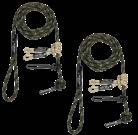
8mm Predator™ Sewn Tether & Lineman’s Package
This Tether/Lineman’s Package offers saddle hunters a high-quality, affordable solution without compromising on features. This versatile setup includes two 8-foot ropes with 5-inch sewn eyes, ensuring strength and reliability. It also comes equipped with sewn TRC eye-to-eye connectors and an Amsteel®-Blue Prusik Tender, making adjustments quick and easy. With a Predator™ Sewn Eye boasting a minimum breaking strength (MBS) of 4,420 lbs, this package is third-party tested and proudly made in the USA. It’s a dependable, budget-friendly option for hunters looking for performance and safety in the field.
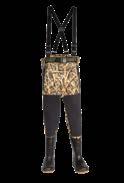
The new waist wader is designed for anglers and water enthusiasts who demand durability, comfort, and performance. Constructed with a 4-layer breathable fabric, sonic-welded seams, and multi-layer seam sealing, it offers unmatched protection and flexibility. Reinforced Kevlar knees backed with neoprene provide extra durability, while the natural rubber boots, lined with neoprene and 800g Thinsulate™ insulation, ensure warmth and comfort. With two large waterproof pockets featuring Ti-Zip® zippers and adjustable, removable elastic shoulder straps, this waist wader adapts to your needs. Available in men’s sizes 7-15 in Regular, Tall, and Stout, it’s perfect for any outdoor adventure.
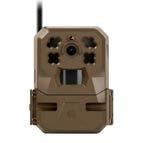
Moultrie Edge Trail Camera
The Moultrie EDGE Cellular Trail Camera sets a new standard for trail cameras, offering hunters and outdoor enthusiasts unmatched performance and convenience. Its innovative Auto Connect feature eliminates carrier issues by connecting to multiple networks, while builtin memory and unlimited cloud storage remove the need for SD cards. Capturing stunning 33MP images and 720p HD video with audio, the EDGE boasts an 80-foot detection range, fast 0.65-second trigger, and low-glow infrared flash for discreet monitoring. With a rechargeable battery offering up to 25% longer runtime, plus the foldable Cellboost antenna for easy setup, the EDGE is a game-changing tool for tracking wildlife.
Toadfish Stowaway Surf Spike
Biskit Built 3D Decoy Doctor Conversion Kit
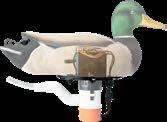
The new Decoy Doctor Conversion Kit from Biskit Built 3D converts any standard size floating decoy into a swimming decoy. Made in the USA, the conversion kit gives you the components you need to build your own motion decoy for less, using your favorite decoy, a lithium battery, and a bilge pump. Once assembled, you can move the kit from one decoy to another using additional mounting rings, saving you money and allowing you to switch from puddle ducks to divers in just a few minutes. The kit uses quality components and is designed for hard use, even in saltwater.
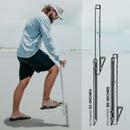
The Stowaway Surf Spike revolutionizes surf fishing with its collapsible, adjustable design, offering anglers customizable spike height up to 52 inches. Built with tough stainless steel for enduring saltwater conditions, it features a rod stopper pin, reel notch, and foot push, making it easy to plant and remove from the sand. Its stowaway design allows it to collapse to 30 inches for convenient transport and storage. Ideal for anglers seeking a durable, easy-to-use surf spike, the Stowaway sets a new standard in surf fishing gear.
ResQFlare
Outdoor Edge Razor EDC Lite
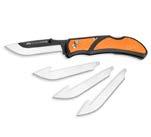
The RazorEDC Lite combines the cutting-edge performance of the RazorSafe™ System with everyday practicality. Featuring a durable Grivory® handle with rubberized TPR inserts for a secure grip, this lightweight knife includes four replaceable blades and a pocket clip for easy carry. Its innovative design allows for quick blade changes at the push of a button, while the blade holder ensures the strength of a traditional knife. Made with Japanese 420J2 stainless steel, it’s ideal for those who need reliability on the go. Available in a 3.5” or 3” model, with additional blades sold separately.
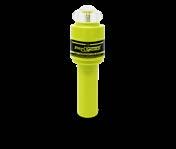
The ResQFlare is a USCG-approved electronic flare kit designed for safer and more convenient distress signaling on the water. Unlike traditional pyrotechnic flares, it has no expiration date and avoids hazardous disposal requirements, making it a costeffective, long-term solution. The ResQFlare emits a bright 360° SOS signal visible for over 6 miles, maintaining peak intensity for more than 20 hours—three times longer than USCG standards. Its compact, waterproof, and buoyant design runs on userreplaceable C batteries. Paired with a certified Distress Flag for daytime signaling, it offers a complete and reliable alternative for boats up to 65 feet, eliminating the need for traditional flares.
Ice Mule Classic
The ICEMULE Classic™ Medium soft cooler offers a versatile 15-liter capacity, making it perfect for both beach outings and trail hikes. Its flexible design ensures it can easily carry your essentials while remaining portable and convenient. With dimensions of 10.25”x10.25”x18” when closed, and expanding to 22” when open, this cooler provides ample storage while maintaining a compact profile. Ideal for outdoor enthusiasts, the ICEMULE Classic keeps your food and drinks cool wherever adventure takes you.
Sting-Kill Sting Relief Swabs
Sting-Kill Disposable Swabs offer fast, effective relief from the pain and itch of bee stings, mosquito bites, and jellyfish stings. Using a powerful formula of benzocaine and menthol, these swabs provide maximum-strength, instant comfort. The convenient, easy-to-use design lets you simply crack, shake, and apply for quick relief. Each box contains five disposable swabs, making it a handy addition to any outdoor adventure or first aid kit. At just $5.49, Sting-Kill ensures you’re prepared for whatever nature throws your way.
Toadfish Non-Tipping Universal Can Holder
The new Universal Non-Tipping Can Cooler combines an upgraded design with enhanced suction to keep your drinks secure and cold. Its innovative SmartGrip technology prevents tipping while remaining easy to lift, perfect for boats, outdoor adventures, or even around pets. This all-in-one cooler fits 12oz cans, slim cans, and bottles, offering double-wall vacuum insulation to keep drinks icy cold for hours. Made from durable stainless steel with a removable rubber locking gasket, it’s puncture and rust-resistant, ensuring long-lasting use. Enjoy spill-free, chilled drinks wherever you go with this next-generation can cooler.
Kayak Crate Kit
LEM Jerky Slicer
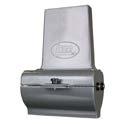
The Big Bite 2-in-1 Jerky Slicer/Tenderizer Attachment transforms your Big Bite Meat Grinder into a versatile meat prep tool. It slices meat up to 1-1/4” thick into 14 uniform 1/4” strips in seconds—perfect for jerky, cheesesteaks, or fajitas. With an easy-off top, you can quickly switch from the slicer roller to the tenderizer roller to soften even the toughest cuts of meat. Made from durable powder-painted aluminum, this attachment is easy to disassemble and clean without any tools, making it a must-have for anyone who loves homemade meat dishes.
The YakGear Milk Crate Kit provides a practical and customizable storage solution for kayaks, canoes, and paddleboards. The 13” x 13” YakGear Black Milk Crate fits most kayak tank wells, offering ample interior storage without the need for pricey systems. Its honeycomb design is compatible with YakGear’s crate rigging accessories. This kit also includes two Build A Crate Single Rod Holders, allowing you to maximize exterior storage for rods or anchors, and a YakGear Accessory Pouch for organizing tackle, pliers, and other essentials. Complete with stainless steel hardware and easy installation, this kit is a must-have for paddling and fishing enthusiasts seeking better storage on the water.
Southern Rivers by R. Scot Duncan
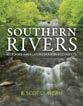
Southern Rivers by award-winning biologist R. Scot Duncan offers an urgent exploration of the Southeast’s imperiled rivers and the critical need for their preservation. These waterways are a global biodiversity hotspot, home to species like mussels, turtles, and fish that are vital to both the ecosystem and southern culture. Centuries of development, compounded by the effects of climate change, have severely compromised the rivers’ health and ability to support essential human needs like drinking water and power. Duncan skillfully demonstrates that conservation is not a choice between nature and human needs but a necessity for both. Offering actionable solutions, Southern Rivers is an insightful guide for anyone invested in protecting these vital ecosystems.
Fishbites EZ-Ghost Shrimp
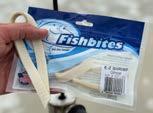
Fishbites® introduces its new Ghost Shrimp bait, a durable, scent-based synthetic designed to mimic one of the most effective but elusive natural baits for species like Florida pompano. Part of the Longer Lasting collection, this bait gradually releases fish-attracting scents into the water, thanks to advanced research by a team of scientists who replicated the metabolites of real ghost shrimp. Enhanced with a cloth binder, it stays securely on the hook, making it perfect for anglers battling bait stealers. With Fishbites®’ signature flavor and scent technology, Ghost Shrimp offers a consistent, reliable edge for anglers worldwide.
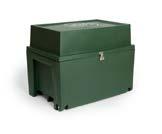
Yoke Outdoors Chuck Box Camp Kitchen
The Chuck Box Camp Kitchen simplifies outdoor cooking with an all-in-one design that stores, organizes, and transports your camp kitchen essentials. Made in the USA and crafted with rugged, roto-molded construction, it’s nearly indestructible, making it a trustworthy companion for any adventure. Say goodbye to the hassle of packing for camp—this durable box keeps everything packed and ready, so you can grab it and hit the road anytime. Backed by a lifetime guarantee, the Chuck Box makes spontaneous getaways and organized outdoor cooking easier than ever.
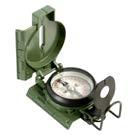
Cammenga Tritium Compass
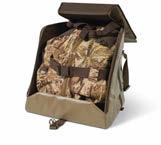
First Lite Ruddy Duck Wader Bag
The Ruddy Duck Wader Bag is a game-changer for waterfowlers looking to protect and preserve their waders. Designed for convenience and durability, it features a removable molded boot tray that traps mud and cleans easily, while heavy-duty TPU boot straps ensure hassle-free on/off transitions and secure upside-down drying. With both top and bottom handles for versatile hanging options and a fold-down, cushioned platform for field use, it simplifies wader care in the toughest conditions. Plus, an internal zippered pocket keeps essentials like patch kits within reach. Safeguard your investment and extend the life of your gear with this innovative wader bag.
The Cammenga Tritium Compass 3H in Olive Drab is the U.S. Military’s trusted tool for reliable navigation in any environment. Featuring self-powered Tritium micro-lights that provide over 12 years of continuous illumination without recharging, this compass ensures visibility day or night. Built to withstand the harshest conditions, it’s shockproof, waterproof, and sandproof, with a durable, powder-coated aluminum frame. Its non-liquid filled needle housing and copper induction-damping ring provide precise, quick stabilization in extreme temperatures ranging from -50°F to 150°F. Proudly made in the USA, this battle-tested compass offers unmatched accuracy and durability for serious adventurers.
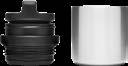
Yeti Rambler Bottle 5 oz. Cup Lid
The YETI Rambler Bottle 5 oz. Cup Cap is a versatile, space-saving upgrade for your Rambler Bottles, combining a heat-locking insulated cap with a handy cup. Compatible with all Rambler Bottles, the Cup Cap keeps your drinks—whether it’s coffee, tea, or something stronger—at the ideal temperature. Twist it off, and you’ve got a double-wall vacuum-insulated cup for on-thego sipping. Made from durable 18/8 stainless steel, it’s dishwasher safe, 100% leakproof, and designed with YETI’s signature No Sweat™ and Fatlid™ insulation to make every adventure more convenient.
Attracting the Herd Comparing the
eer feeders are essential tools in wildlife management and hunting, helping to attract deer to specific locations and ensuring they receive adequate nutrition. This article aims to compare the pros and cons of various types of deer feeders to help hunters and wildlife enthusiasts make informed decisions.
Dumping feed or corn directly on the ground is a bad idea. A pile of corn in the dirt is subject to spoilage and bugs, and can be eaten
by any animal that comes across it. Wet piles of corn are also an ideal environment for Aspergillus flavus and Aspergillus parasiticus, two common southeastern fungi that produce harmful and even deadly aflatoxins. These toxins can cause liver damage, cancer, immune system suppression, and reproductive issues, leading to reduced fertility, birth defects, and lower survival rates for wildlife offspring. Additionally, aflatoxins can weaken the immune system, making animals more susceptible to diseases and infections.
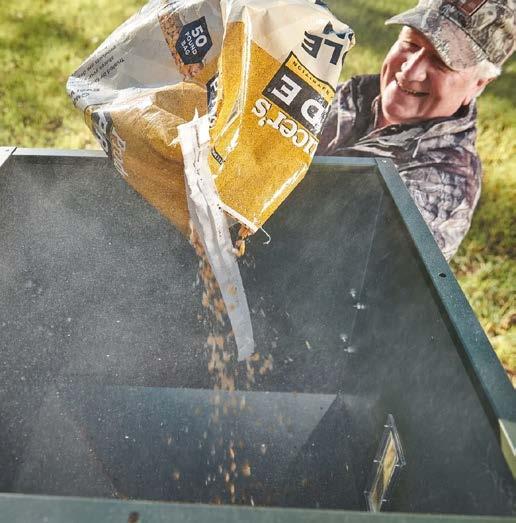
In order to prevent wasting feed, feeding non-target animals, and poisoning wildlife, hunters can turn to a variety of feeder styles to keep corn and deer feed dry, off the ground, and available to targeted species. Broadly speaking, these are gravity feeders, trough feeders, and automatic or spin-cast feeders.
GRAVITY DEER FEEDERS
Gravity feeders are as simple as they sound. Feed is poured into a reservoir and gravity
the Pros and Cons of Different Deer Feeders
By Great Days Outdoors Staff
forces it to flow down to a feeding port. As deer eat the feed, more flows from the reservoir to the feed port. Deer have access to as much feed as they want, whenever they want it. This type of feeder is commonly called a “free choice” feeder. Free choice feeders are popular with wildlife managers who are looking to increase body weight and antler size in deer by providing them with maximum access to high-protein feed and mineral supplements.
The first deer feeder I ever saw was the
ubiquitous and classic “pipe feeder” which is a simple gravity-style feeder made from a section of inexpensive 4” PVC drain pipe and a few fittings. This style of feeder is popular because it’s inexpensive to build or buy, and requires practically no maintenance beyond filling. However, they do little to nothing at all to prevent raccoons, opossums, squirrels, bears, and insects out of your feed. Improperly designed models also do a poor job of keeping moisture out of feeding ports, meaning that feed is prone to getting wet, which increases spoilage and
aflatoxin contamination.
TROUGH FEEDERS
Another simple, free-choice design, troughstyle feeders are exactly what they sound like. A trough feeder keeps feed up off of the ground and, assuming it has a roof over it, reasonably dry. Trough feeders are inexpensive, simple, low maintenance, and allow multiple deer to feed at once, something that most gravity feeders don’t do. However, just like gravity-fed feeders, trough feeders do nothing to keep non-target critters out of
your feed.
AUTOMATIC (SPIN-CAST) FEEDERS
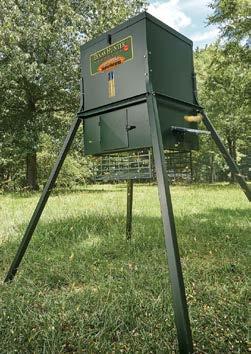
Spin-cast, sometimes referred to as automatic feeders, do a much better job of keeping feed safe from spoilage and varmints than trough and gravity feeders. They are not typically regarded as freechoice feeders. Instead of the feed being “on tap” for wildlife, it stays contained in a hopper, and hunters can program when and for how long they want the feeder to distribute material.
This design has its advantages. For starters, feed in an automatic feeder is much more reliably protected from the elements than in other types of feeders. Controlled distribution means that only a little feed is broadcast each day. If set properly, just enough food to attract wildlife is broadcast, and no waste feed is left to spoil or attract nuisance animals.
Being able to set a feeding schedule also means that hunters can control when deer have access to corn or other bait. Deer, when free to make the decision for themselves, will usually choose to frequent bait under the cover of darkness. But hunters and wildlife managers can set automatic feeders to go off at specific times. Dropping a relatively small amount of corn or feed at strategic times of the day can create competition amongst the herd for the food, making it more likely that they frequent the feeder during daylight hours.
While they’re not true free-choice feeders, property owners can always increase the frequency and duration of feeding windows. A common strategy is to increase feeding during critical times of the year when deer need nutrients (such as when bucks are growing antlers and does are recovering from birthing fawns and nursing) and reducing it during hunting season when the goal is to harvest deer.
Automatic feeders do a better job of keeping feed safe from spoilage and varmints.
The downside to automatic feeders is that they are more mechanically complex that gravity and trough feeders, which increases cost and potential for failure. Unless properly protected from the elements, electric motors, batteries, and circuitry will quickly fail when left outside. Since feeders are often in remote locations, a burnt-out motor or shorted circuit can mean hungry deer and souring feed.
CHOOSING THE BEST FEEDER
Mechanical failures or design failures are common with cheap feeders. As we’ve seen, they can lead to spoiled feed, wasted money, sick deer, and missed hunting opportunities. This is why, no matter which feeder design you go with, it’s important to buy quality.
Manufacturers like Texas Hunter go the extra mile to make sure that your feeders remain dependable and trouble-free for years to come. Their gravity and automatic feeders are carefully designed with quality materials, and feature rugged latches and quality seals to keep feed safe and dry. You’ll pay more upfront but the investment pays off in the long run by reducing wasted feed and avoiding the headache of constant repairs. Whether you’re a wildlife manager looking to improve herd health or a hunter wanting to increase your chances during the season, choosing a high-quality feeder is crucial.
Feed in an automatic feeder is more protected from the elements.
Another factor to consider when selecting a feeder is the specific needs of your property and wildlife. For instance, if your primary goal is to boost nutrition year-round, a gravity feeder might be the best option due to its free-choice feeding style. On the other hand, if you want to control feeding times and reduce waste, an automatic feeder would be a better fit.
It’s also worth considering the type of game you’re targeting. If you’re in an area with high raccoon or bear populations, a spin-cast feeder with a secure, lockable hopper might be essential to prevent non-target animals from consuming your feed. Additionally, think about the environmental conditions of your location. In particularly wet or humid climates, the ability of a feeder to keep feed dry becomes even more critical to prevent spoilage and the growth of harmful molds.
In conclusion, there isn’t a one-size-fits-all solution when it comes to deer feeders. Each type has its own advantages and disadvantages depending on your specific needs and the conditions of your hunting area. Gravity feeders are great for those who want to provide constant nutrition, while automatic feeders offer more control over feeding times and reduce waste. Trough feeders provide simplicity and accessibility but may fall short in protecting feed from non-target animals and the elements. Ultimately, choosing the right feeder involves balancing cost, maintenance, and the specific needs of your wildlife and environment.
Investing in a high-quality feeder, like those from reputable manufacturers such as Texas Hunter, ensures that you’ll have a dependable, long-lasting tool that not only attracts deer but also contributes to the overall health of your local deer population. With the right feeder in place, you’ll be better positioned to enjoy successful hunts and support sustainable wildlife management on your property.
Sipsey Fork
A Cold-Weather Hotbed for Trout
By Nick Williams
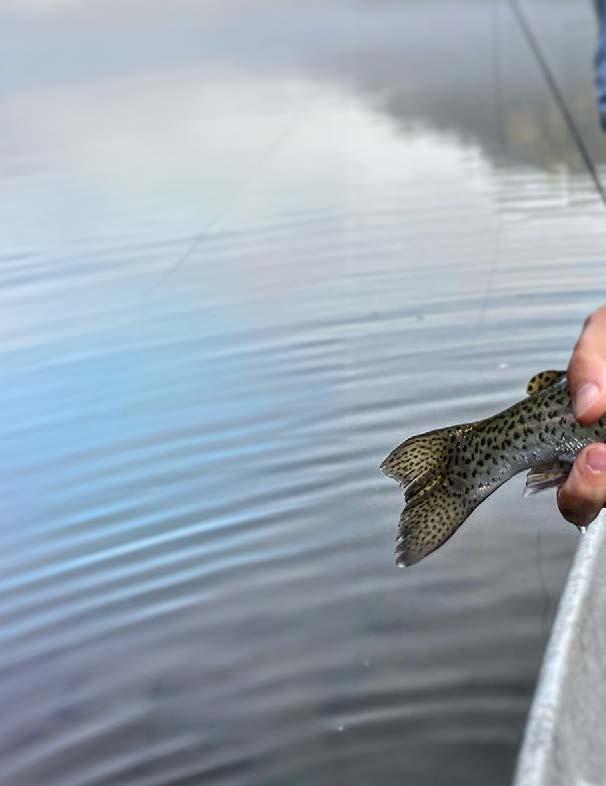
As the temperatures drop and most fishing spots wind down for winter, one place remains a haven for anglers looking for year-round action— Sipsey Fork. Located below the Lewis Smith Dam, this stretch of the Black Warrior River offers a unique cold-water environment perfect for trout fishing, even in the heart of winter. For many, this makes it one of Alabama’s best-kept secrets. Brandon Jackson, owner of Riverside Fly Shop, is an advocate for winter fly fishing on Sipsey Fork, and for good reason. According to him, the colder months are when the trout bite best.
“Even in the coldest part of the year, the water here stays cold enough to keep the trout happy and active,” Brandon says. The Lewis Smith Dam pulls water from the bottom of the reservoir, ensuring a steady release of cold water into the river. “The dam releases water at around 50 to 60 degrees Fahrenheit year-round, which is ideal for trout.”
For those willing to brave the cold, winter fishing here can be rewarding. With fewer people on the water, there’s less pressure on the fish, meaning more opportunities for anglers to land something special. “The winter months actually see less fishing pressure, so the trout are more likely to bite,” Brandon explains.
WHY WINTER FLY FISHING?
While trout are active throughout the year, winter brings its own unique set of challenges and rewards for fly anglers. Brandon emphasizes that, in winter, trout behavior shifts. They’re more selective about what they eat, so anglers need to adjust their approach. “The key to
winter fishing is switching to smaller flies. The fish are more selective, and they’re mostly feeding on midges and smaller insects.”
Techniques also change with the season. Instead of relying on dry flies, which are more common in warmer months, anglers often need to focus on nymphing—a technique that involves presenting the fly below the surface of the water. “In the colder months, you’re going to have more success with nymphing. The fish aren’t rising to the surface as much, so you’ve got to get down to where they are,” he advises.
Brandon’s tips come from years of experience on Sipsey Fork, where he has helped countless anglers refine their winter techniques. “Presentation is everything. In winter, trout can be picky, so you need to be patient and make sure your fly looks as natural as possible.”
SIPSEY FORK IN WINTER
What sets Sipsey Fork apart from other fisheries, especially in the winter, is the serene beauty of the location. As Brandon describes it, the combination of mist rising from the cold water and the quiet of the river creates a peaceful, almost mystical atmosphere. “It’s something special out there in the winter. You’ve got the mist coming off the water, and it’s so quiet you can hear your own heartbeat.”
The winter months also offer anglers a chance to escape the crowds that flock to the river during peak seasons. This solitude is one of the main draws for many experienced anglers, who appreciate having the river to themselves. “There’s a different kind of calm on
Sipsey Fork on the Black Warrior River offers bountiful fishing for trout during the winter months.
Winter fishing on Sipsey Fork is some of the best fishing you’ll have all year.
Sipsey Fork: A Cold-Water Hotbed for Trout
the river in winter. You can take your time, focus on your casting, and really enjoy the surroundings,” Brandon says.
VISIT RIVERSIDE FLY SHOP
For those new to Sipsey Fork or looking to improve their skills, Riverside Fly Shop is the perfect winter headquarters. Offering everything from gear to guided trips, the shop is a hub for all things trout fishing. Brandon and his team are always ready to offer advice, particularly for anglers tackling the colder months. “We’ve got everything you need to make winter fishing successful. From the right flies to gear recommendations, we make sure you’re prepared,” he says.
But it’s not just about the gear. Brandon stresses the importance of understanding the river’s conditions during winter. “Winter fishing isn’t just about catching fish—it’s about learning how to adapt to the conditions. You have to pay more attention to things like water temperature, insect activity, and how the fish are behaving.”
For anglers serious about improving their winter trout fishing, Riverside Fly Shop offers guided trips that focus on honing skills specific to the season. “A lot of people don’t realize how different winter fishing can be. We help them understand the subtleties and get them comfortable with techniques like nymphing and proper fly selection.”
FISHING IN COLD WEATHER
If you’re planning to head out to Sipsey Fork this winter, having the right gear is critical. According to Brandon, staying warm and comfortable is just as important as choosing the right fly. “If you’re wading, you’re standing in that cold water for hours, and you want to make sure you’ve got good insulated waders and plenty of layers.”
For fly selection, winter calls for a different approach. Brandon recommends smaller flies like midges and nymphs, which mimic the insects trout feed on during the colder months. “Smaller flies are the way to go in winter. The trout aren’t as aggressive, so you need to match what they’re actually eating,” he says.
Safety is another key consideration. The cold conditions can be challenging, and Brandon always advises anglers to be prepared. “You’ve got to respect the cold. Make sure you’ve got the right gear and know how to stay warm, especially if you’re going to be on the water for an extended period.”
FLY PATTERNS FOR SUCCESS
When it comes to specific fly patterns,
Brandon Jackson has a few favorites that consistently perform on Sipsey Fork during the winter months. His recommendations cater to the trout’s selective feeding habits in colder weather, focusing on smaller insects and nymphs that mirror what’s naturally present in the river.
“One of the most reliable patterns for winter is the Zebra Midge,” Brandon says. “It’s small, simple, and really effective when the trout are keying in on tiny midges.” The Zebra Midge, typically in sizes 18-22, mimics the midge larvae that make up a large part of the trout’s diet during winter.
Brandon also highlights the importance of having Pheasant Tail Nymphs in your fly box. “Pheasant Tails are great all-around nymphs, especially in winter. They imitate a wide range of insects, so they’re versatile and can work in different conditions.” He suggests fishing them in sizes 16-20, either on their own or as part of a tandem rig.
Another pattern Brandon often recommends is the RS2, which imitates small emergers. “The RS2 is perfect when the trout are feeding just below the surface but aren’t rising for dries. It can be a game-changer in those
tricky moments,” he adds.
For anglers looking to mix things up, Brandon also suggests trying soft hackle flies. “In winter, a soft hackle fished just under the surface can trigger a bite when nothing else is working. It imitates an emerging insect, which is something trout are always on the lookout for.”
A COLD-WEATHER HOTSPOT
For those looking for a winter adventure, Sipsey Fork offers some of the best trout fishing in Alabama—even when temperatures dip. With its cold, clear waters and peaceful setting, it’s a hidden gem that’s perfect for winter fly fishing. And thanks to the guidance from Riverside Fly Shop and experts like Brandon Jackson, anglers can make the most of this winter hotspot.
“Winter fishing on Sipsey Fork isn’t just something to get through until spring—it’s some of the best fishing you’ll have all year,” Brandon says. “Once you experience it, you’ll see why it’s worth bundling up and getting out there.”
If you’re looking to keep the fishing action going through the winter months, Sipsey Fork should be at the top of your list.
Sipsey Fork: A Cold-Water Hotbed for Trout
The winter months give anglers a chance to escape the crowds that flock to the river during peak seasons.
BIG BUCKS TOP 12 STATES FOR HUNTING
BY JOSH HONEYCUTT
Quantifying the best states for big bucks can produce a wide range of results. The rankings depend on the metrics used, which can vary greatly. There are many elements to consider when evaluating a state’s hunting quality, including hunter numbers, deer population, buck age structure, antler quality, and record-book entries. Other factors, such as tag availability and public hunting land, also play a role. Here are the top 12 states for big bucks, in no particular order.
1. ILLINOIS
The Land of Lincoln ranks high for big bucks. Numerous counties are in the top 20 nationwide, and the state is home to the Luke Brewster buck, which scored 327 7/8 inches, the state record non-typical and No. 3 all-time. Illinois has about 825,000 whitetails, many of them trophy bucks. Hunting here isn’t cheap—non-residents should expect to pay nearly $400 or more. With more than 1,600 Boone & Crockett (B&C) entries, Illinois is a prime destination.
2. INDIANA
Indiana was once under the radar for big bucks, but it’s gaining recognition. More than 300,000 hunters pursue whitetails here. Non-residents pay around $300 to $400 for licenses, depending on specifics. With over 1,000 B&C bucks recorded, it’s a state worth the investment.
3. IOWA
Iowa is famous for producing giant bucks. Hunters from across the country wait three to four years for a non-resident tag. Iowa has about 375,000 deer and 150,000 hunters, offering a good hunter-to-deer ratio. Although non-residents must wait and spend more than $500 on licenses, tags, and preference points, Iowa’s 1,500-plus B&C entries make it worth the effort.
4. KANSAS
Kansas deer hunting isn’t a secret, though it’s not as productive as it once was. Still, it consistently produces topend bucks. The state has about 750,000 deer and 120,000 hunters. Non-residents pay around $600 for a license and
tag. With over 1,000 B&C whitetails, Kansas remains a solid option.
5. KENTUCKY
Kentucky is known for early-season velvet whitetails and good antler genetics. It ranks among the top five states for modern trophy buck opportunities. The state has about 1 million whitetails and 320,000 hunters. Non-residents pay more than $300, but with over 1,200 B&C entries, Kentucky offers good odds for trophy hunters.
6. MINNESOTA
Minnesota is one of the nation’s most underrated whitetail states. The north-central and southeastern counties are the best for trophy bucks, with St. Louis County being especially productive. Minnesota has nearly 800,000 deer and 475,000 hunters. Non-residents can hunt for under $200, a rare bargain in big-buck states. Minnesota boasts over 1,300 B&C bucks.
7. MISSISSIPPI
Mississippi may be better known for waterfowl, but it’s also a top state for mature whitetails. Around 80% of bucks harvested here are at least 3½ years old, thanks to Mississippi being one of the first states in the southeast to implement wide-spread antler-restrictions on public land. With a deer herd of about 1.5 million and fewer than 200,000 hunters, Mississippi sees relatively low pressure. Hunters looking for giants would do well to investigate the state’s Delta region, where fertile Mississippi River floodplain soils grow ample soybeans, corn, and acorns that bucks need to pack on the mass. For more details on deer hunting in Mississippi, visit Visit Mississippi.
8. MISSOURI
Missouri consistently produces giant bucks, especially in the northern half of the state. It’s a popular spot for rifle hunting during the rut. Missouri has over 1.5 million whitetails and nearly 500,000 hunters. Non-residents pay close to $300 for a license and permit. The state has about 1,000 B&C entries, along with many more Pope &
States that hold rifle seasons during the rut usually don’t have as good of deer hunting. (But that isn’t always true.)
Young bucks.
9. OHIO
Ohio is a top destination for whitetail hunters, especially in the Midwest. It offers diverse habitat and good buck age structure throughout the state. Ohio has around 750,000 deer and 300,000 hunters. Non-residents pay about $250, and with nearly 1,300 B&C bucks, Ohio provides excellent hunting opportunities.
10. OKLAHOMA
Oklahoma has gained respect as a big-buck state in recent years. The state has about 725,000 deer and nearly 500,000 hunters. Hunting pressure has increased, prompting the state to raise non-resident license fees, which now exceed those of many other states. Oklahoma has more than 100 B&C bucks, making it a worthwhile destination.
11. TEXAS
Texas makes this list due to its sheer size and the abundance of large whitetails. The southern counties, particularly those near the Gulf, are known for producing trophy bucks. With over 5 million whitetails and more than 1 million hunters, Texas offers plenty of opportunity. It has around 900 to 1,000 B&C entries, giving hunters a fair chance at a record buck.
12. WISCONSIN
Wisconsin is a premier big-buck state, with Buffalo County being one of the top producers in the nation, according to the Boone and Crockett Club. Interestingly, the five biggest bucks came from less renowned areas, showing that the entire state has trophy potential. Wisconsin has about 1 million deer and 500,000 to 600,000 hunters. Non-residents pay around $200 for a license, and with more B&C bucks than any other state, Wisconsin is a top choice for serious whitetail hunters.
Fishing the Depths
Mastering Offshore Flounder
By Tanner Deas
When discussing flounder fishing, many anglers think of inshore waters such as barrier islands, bays, bayous, rivers, and creeks. Inshore fishing for flounder often involves depths ranging from less than 1 foot to around 20 or 30 feet, particularly near bridges, deepwater river bends, and ship channels.
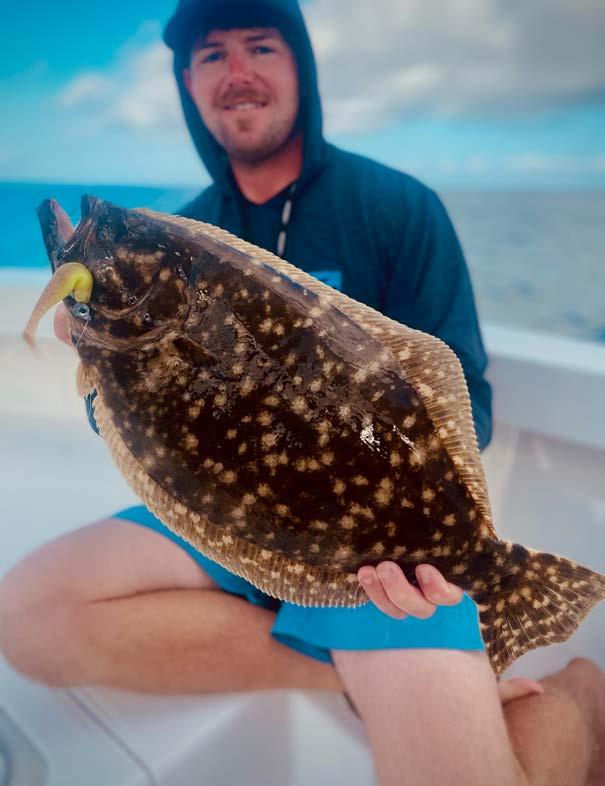
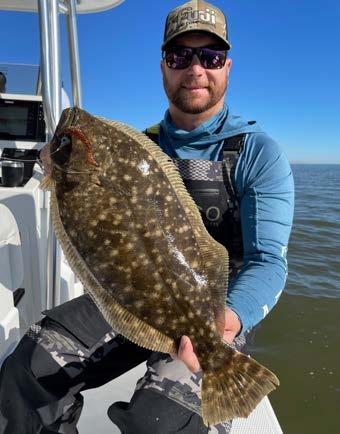
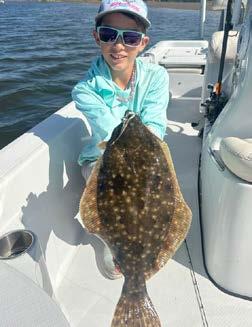
Despite the success of inshore fishing, there is a significant population of flounder—Southern Flounder, Gulf Flounder, and other smaller subspecies—that live in offshore waters. These fish can be found at depths ranging from 20 feet to 80 or even 100 feet and tend to be larger, with a distinct fierceness compared to their inshore counterparts. This is likely due to the harsher conditions they face offshore, where there are more predators and larger prey. These offshore flounder have thicker bodies, broader shoulders, and larger teeth, making them seem almost mythical.
For many anglers, catching one of these offshore flounder is a memorable trophy. We spoke to Capt. Blake Nelson of Last Cast Charters to learn about his tactics for targeting these fish offshore.
IDEAL LOCATIONS
There’s an old saying: “The key to catching fish is fishing where the fish are.” This could not be more true, especially when targeting offshore flounder. It’s important to think about the habitat that flounder prefer inshore—rocks, docks, sea walls, grass lines, and other structured areas— and apply that knowledge offshore. When fishing for flounder offshore, anglers should look for structures such as wrecks, reefs, and
rock piles.
These areas are productive for offshore flatfish. It can also be useful to fish just down-current or slightly off the structure when targeting these fish.
Another thing to keep in mind is the potential bycatch in these areas. While trying to catch flounder, you may encounter red snapper, mangrove snapper, vermilion snapper, triggerfish, sharks, other reef fish, and even grouper. This bycatch can be both a pro and a con—it may be frustrating when you’re specifically targeting flounder, but it can also lead to cool catches and fish in the box. Capt. Blake focuses on areas between 40 and 100 feet deep and has consistently caught fish in this range.
WEATHER CONDITIONS
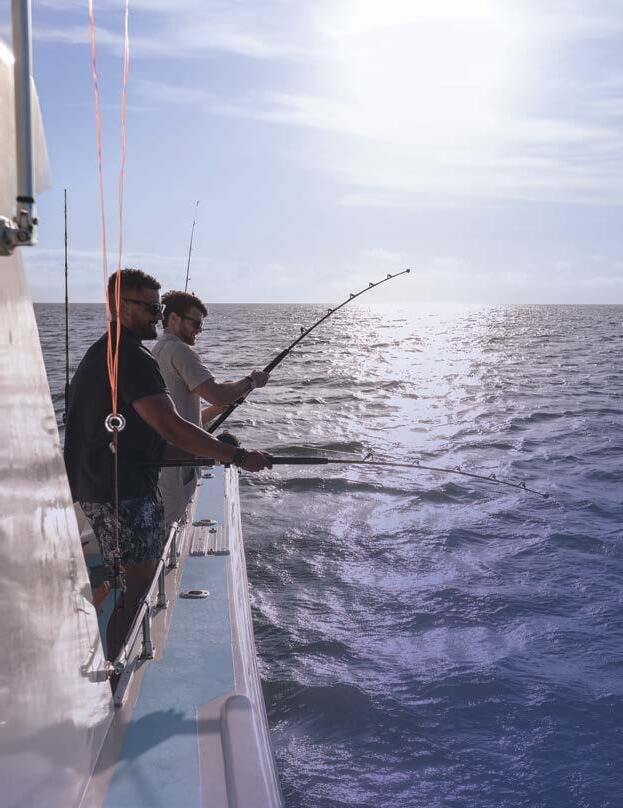
When targeting offshore flounder, weather conditions, tides, and currents play a much more significant role than they do inshore. Inshore, anglers can often hide from wind, heavy currents, and low tides by finding sheltered locations. Offshore, however, the weather and sea conditions must be safe and optimal to ensure a successful and safe trip home, as with any offshore fishing adventure.
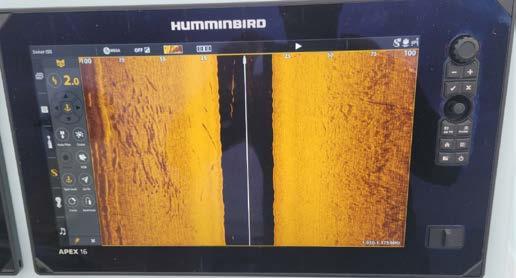
Current conditions offshore have a large impact on the ability to fish effectively. If the current is too strong, it may be impossible to use a trolling motor’s spot-lock feature to hold position. Anchoring can help, but anchors are easily lost when fishing around wrecks, reefs, and other offshore structures. Without being able to hold position over a structure, anglers may be limited to drifting, which is often short-lived unless the
Weather conditions, tides and currents play a big role in your success catching offshore flounder.
wreck or reef is large enough to allow for multiple drifts.
Capt. Blake prefers moving water. While it’s easier to hold position on a neap tide or a day with low tidal movement, he has noticed an increase in bites when there is good water movement.
GEAR
Capt. Blake’s recommended gear for offshore flounder fishing is similar to inshore setups, but with slightly heavier reels and stronger rods due to the potential bycatch. You never know what might bite, so it’s wise to beef up your tackle in case a cobia or a large mangrove or red snapper takes your bait.
Lighter setups, such as a 2500 to 3000-sized spinning reel, will work fine, but using a 4000 to 5000-sized reel offers more security with larger hookups. Rod ratings from medium to medium-heavy with fast to extra-fast action are ideal. Reels should be spooled with 10-30 lb. mainline and a 15-40 lb. leader, depending on water clarity. Capt. Blake reminds anglers that lighter line cuts through water better on days with heavy currents.
For terminal tackle, Owner Hooks SSW sizes 2/0 to 4/0 work well, as do circle hooks of the same size. For artificial fishing, jig heads from 3/8 oz. to 2 oz. are suitable, depending on the current. For live baiting, 1/2 oz. to 3 oz. weights can be used.
EFFECTIVE BAITS AND LURES
There are many effective baits and lures for targeting flounder. Live baits such as finger mullet, menhaden, croaker, pinfish, LY, cigar minnows, and white trout are all great options. These baits should be in the 3-5 inch range—small enough to entice bites, but not too small. Don’t be afraid to use larger baits, as big flounder will not hesitate to eat a substantial meal. Capt. Blake’s favorite live bait is cigar minnows, especially when he finds them on his fish finder near reefs and wrecks.
For artificial lures, Capt. Blake prefers using Z-Man Fishing Products, especially the 5” Scented Jerk ShadZ and the 4” DieZel Minnow. He also recommends adding ProCure Bait Scents to increase effectiveness. Z-Man’s soft plastics are durable enough to withstand bites from other reef fish, such as triggerfish and snapper, which can destroy most lures. When bycatch becomes overwhelming, artificial lures are often the best option, as live bait will usually get destroyed before it even hits the bottom.
Another effective technique for offshore flounder fishing is slow-pitch jigging with mi-
cro jigs, appropriately weighted for the depth.
CONSERVATION
When fishing offshore, it’s important to recognize that many of the flounder caught are larger and of better quality than those caught inshore. These offshore fish are critical to the breeding population, as they migrate offshore each fall to mate with inshore flounder. Without this offshore population, the inshore flounder fishery would not be as healthy as it is today.
Larger fish should be treated with respect. Programs like Release Over 20 encourage anglers to release flounder over 20 inches to preserve the breeding stock. Although this is a voluntary program, practicing catch and release for larger flounder is an important way to protect the fishery for future generations.
Capt. Blake has noticed a decline in flounder numbers over the last 10 years in the Choctawhatchee Bay system in the Florida
panhandle. Other states, such as Alabama, have seen a resurgence of flounder populations. Programs funded by the state, changes in angler attitudes, and the efforts of groups like CCA Alabama have helped. However, it’s essential to check local regulations and follow them when fishing offshore to avoid fines and contribute to sustainable fishing practices.
CONCLUSION
Flounder never cease to amaze, whether caught in 6 inches of water or at 60 feet. Their adaptability and aggressive nature make them a challenging and rewarding catch. The next time you’re planning an offshore trip, consider trying for offshore flounder. Some anglers may doubt the possibility, but with time and effort, you can prove them wrong. Just remember to respect these special fish, release the big ones, and always be open to new tactics. After all, that’s how we grow as anglers and how we catch the next trophy fish.
There are lots of effective baits to catch flounder.
Hunting HoGs with Rimfire Rifles
by nick williams
if you spend much time hunting public land in the Southeast, you’ve probably at least considered hunting hogs with small-game arms and ammunition. In Alabama, hogs can be hunted “during any open season, using arms and ammunition legal for that season” throughout most WMAs. Since even tungsten small game shot is too light to do the job, that mostly means rimfire calibers. For most of us, that means .22LR, .22WMR, .17HMR, and .17WSM.
First, a disclaimer: all of these rounds are poor choices if you’re legally able to carry a centerfire rifle. Hunting animals that average between 50 and 150 pounds, and that can grow as large as 300 to 400 pounds, with a 20-40 grain bullet surprises me as something state conservation agencies allow. But rules are rules, and while it’s not ideal, you can harvest pigs with these rounds.
No doubt you’ve heard the standard advice on shooting hogs with rimfire rifles. It goes something like this:
“A .22 will kill any hogs in the woods, yessir. My (take your pick—daddy, uncle, cousin, barber) used to do it all the time. Shoot ’em right behind (or is it in?) the ear, or dead between the eyes. Drops ’em every time. Course, every now and then one of ’em will charge ya! Gotta know which tree you’re gonna climb before you pull the trigger!”
I’ve read this hundreds of times on dozens of outdoor forums. After several years of shooting, and mostly losing, hogs to ear, eye, and neck shots, I abandoned the idea of hunting hogs with rimfire rifles. A hog’s brain is much smaller than most people realize. A pig’s head is also almost constantly in motion as it roots around, and the skull is much thicker
than that of other animals. I’m not calling anyone a liar, but as a hunter and writer I’m extremely familiar with truth-stretching and yarn-weaving.
At the risk of offending readers, I’ve dubbed the “Brain Shot Technique” the BS Technique. I’m sure hogs have been killed with rimfire rounds to the head, mostly in pens or when held by hog dogs. But as an above-average shot with a below-average level of jitters when shooting at animals, I was never able to make it happen consistently in the field. I’ve also never encountered a hunter dragging out a hog that was shot in this manner.
Eventually, I did come across someone who talked about consistently killing hogs with rimfire rifles. The late Glenn Solomon, best known for his regular contributions to the Georgia Outdoor News magazine, blog, and web forum, regularly offered advice to those asking about the feasibility of hunting hogs with rimfire arms on Georgia public land.
Glenn’s advice caught my attention. It was simple. He claimed to have killed hundreds of hogs with a .22WMR rifle, loaded with a 40 or 50 grain FMJ bullet. A solid bullet, he claimed, penetrated better than a hollow-point or polymer-tipped varmint round. Instead of aiming for a brain shot, Glenn matter-of-factly stated he could kill any hog that walked with a shoulder shot. And he had pictures to prove it! He advised limiting shots to about 60 yards, and cautioned that you wouldn’t have a blood trail. But, he assured folks, you wouldn’t need one. Most of the hogs he shot either dropped in their tracks or at best managed a short dash and were easily recovered in the thick Georgia brush.
After reading Glenn’s articles, I bartered my way into a .22WMR and started carrying it into the woods
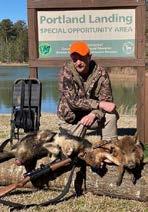
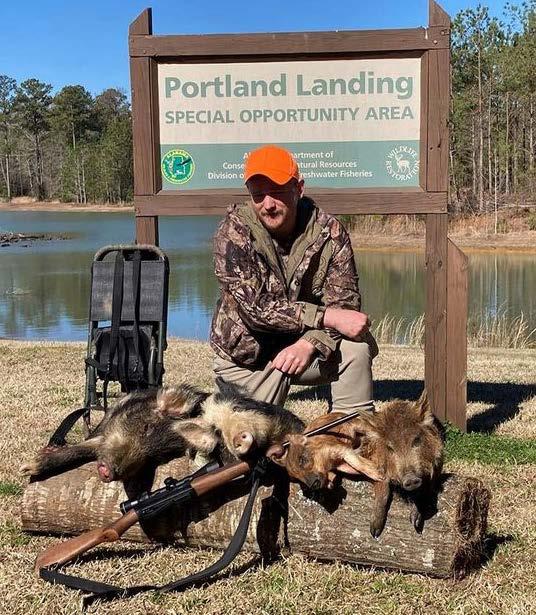
A hog and the round that killed it. In a few minutes, this pig will be quartered up and riding home in the pack seen in the background.
on hog hunting trips. My first foray with the gun was at the Portland Landing Special Opportunity Area in Dallas County, Alabama, on a small game hunt. I had hunted the unit before and knew it was loaded with hogs. By the hunt’s end, I had killed five hogs with five shots, ranging in size from a shoat to a full-grown boar that was too big for me to drag.
Since then, I’ve killed many more hogs with the ol’ “twenty-two mag.” On thousands of acres in my home state, I can legally chase hogs with this mini-but-mighty round from September 14 through March 2 each season. That’s five-and-a-half months of bacon-making, with a good bit of time before and after deer and duck season for those who don’t want to miss out on those species.
TIPS FOR HOG HUNTING ON PUBLIC LAND
Hog hunting with rimfire rifles on public land isn’t difficult, but it’s much different from what most hunters are accustomed to. Hogs are not deer, although many hunters try to treat hog hunting like deer hunting.
For starters, hogs are more nomadic than deer. Deer have a relatively well-defined home range, which they’re reluctant to leave even under pressure. They typically travel the same routes year after year, moving between bedding areas and seasonal food sources. You can pattern deer fairly easily.
Hogs, on the other hand, are here today, gone tomorrow. They breed
prolifically, forming large sounders in short order. Hungry hogs can devastate a forest or swamp’s food supply quickly. This means the place where you shot hogs last year may not see another hog for several years.
Hogs also leave much more sign than deer, which looks fresher for longer. Again, hogs typically travel in tight groups, whereas familial deer herds are smaller and “looser.” Hog rooting, wallows, and mud rubs on trees can remain identifiable for years, easily misleading new hog hunters into thinking they’ve hit the motherlode.
That’s the bad news. The good news is that hogs are much less cautious than deer. I have stalked a couple of deer during my hunting career. Doing so requires skill, luck, and a bit of rain or wind to mask your approach. Hogs, however, can be walked up on with surprising ease. I attribute this to the fact that hogs typically travel in groups. They’re used to hearing other hogs crash through brush and break sticks, so they generally ignore a hunter doing the same. I can’t prove it, but I believe hogs assume the rest of the group is keeping watch, resulting in a sounder blissfully unaware of their surroundings. They also just don’t see that well. As long as you watch your scent cone as you slip through the woods, getting within distance of a sounder is a pretty simple affair.
With this in mind, my favorite way to hunt hogs is to “walk ’em up.” In swampy areas, I walk river or creek banks, swamp ridges, or the edges of tupelo swamps, cane brakes, or palmetto flats. On upland
Hunting for Hogs with Rimfire Rifles
properties, I cruise creek bottoms, old firebreaks, thicket edges, and the edges between two different age classes of timber. Young pine thickets can be especially productive.
I travel light when hog hunting. The idea is for the pack to be empty at the start of the trip and full at the end! I carry little aside from bug spray, toilet paper, a spare compass, a headlamp, and a kill kit. The kit includes disposable gloves, a replaceable blade knife with extra blades, pillowcases as game sacks, wet wipes, and hand sanitizer. Having the ability to pack hogs out quartered, if legal, makes the job easier, as they’re often found far from the road.
Hogs have thick skin and tough guard hairs and are usually covered in cakedon mud or dirt from wallowing. Disposable blades and cutting from the inside out when skinning is the best way to ensure a sharp blade and keep the meat free of dirt and hair.
Gloves, wipes, and sanitizer are nice-tohave for deer but essential for hogs. Due to their long history of domestication, hogs carry several diseases that can infect humans, such as brucellosis, tuberculosis, listeria, and trichinosis. Keep your hands clean in the field, and use a meat thermometer when cooking them.
BEST ROUND FOR PIGS
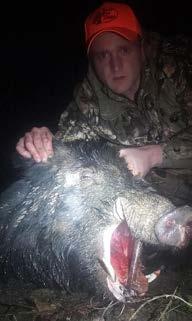
A large Alabama boar taken on public land with a .22WMR.
hunter, it’s baked into my brain to avoid that heavy shoulder bone. Deer have large vitals that extend well-back in their body cavity, and gut shot deer are much more likely to be recovered than ones who managed to deflect an arrow off their shoulder. Besides, I hate shooting up a perfectly good pot roast!
The opposite is true when hunting hogs with a .22WMR. Pig vitals are very far forward, and while a gut shot pig will eventually die, your odds of finding him are effectively zero. If you can teach yourself to consciously attempt to break the shoulder, you’ll be a much more effective pig-killer. My experience is that a .22WMR solid at close range will break the near-side shoulder and have plenty of energy left to penetrate vitals, and will usually be found lodged in the far-side shoulder assuming a broadside shot. Breaking the shoulder almost guarantees that you hit the vitals, and it has the added advantage of inflicting a mechanical injury, meaning that the hog will make less progress on its final dash.
While I’ve tried different rifles, I’ve stayed faithful to Glenn Solomon’s recommended round, a 40-grain solid bullet. His theory was that a solid slug holds together and provides better penetration on a hog than a hollow point or frangible bullet. I’ve shot both Winchester’s 40-grain FMJ and CCI’s Maxi-Mag FMJ, and both performed admirably on shoulder shots. Pass-throughs are rare, but the bullet usually lodges itself in the far shoulder after passing through the chest cavity.
That said, I have a few boxes of hollow points in my safe, and on the typical “eating-size” hogs one usually encounters, I doubt the performance difference would be noticeable. I have killed a few hogs with a regular .22LR, and they also fell to a standard behind-the-shoulder shot.
I once had an interesting experience at the range that made me question if other calibers aren’t just as capable of killing pigs as the .22WMR. A friend shot at a rimfire gong target I was plinking with my squirrel gun, and later we realized he had blown a roughly .30-caliber hole through the steel with his .17WSM! The small, 20-25 grain bullets this caliber uses make me hesitate, but the muzzle energy is higher than Glenn’s preferred .22WMR. If any readers have experience hog hunting with it, I’d love to hear from another primary source!
SHOT PLACEMENT AND RECOVERY
Before we wrap up, I want to hammer home one final point. I can honestly say that out of the dozens of pigs I’ve shoulder-shot with a .22WMR, I’ve never lost one. However, I have lost almost every single pig that was hit too far back. As a longtime archery deer
It’s been my experience that a well hit hog will manage, at best, a 50-60 yard dash before collapsing. But anybody who has hunted hogs knows that they live in areas where even a short run can put them out of your sight. Recovering a hog usually involves a little crawling and cursing!
When you shoot a hog and it runs, pay very, very close attention to it. You want to mark “last contact” with that pig, whether visible or audible, as it flees. Take a compass bearing on that point, sit down, and wait a few minutes. I like to set a 10 minute timer on my wrist watch and drink a bottle of water. While I sip, I listen. Sometimes the pig will die immediately, but sometimes it will take it a while to expire. Usually, within a minute or two of it running off, I’ll hear the hogs final moments in the form of a last squeal or a few seconds of thrashing. If the direction of that noise is different from the compass bearing, I’ll retake it, and walk in that direction. Usually, finding the pig is pretty straightforward. Binoculars can help to see through bushes better and to inspect suspicious lumps on the forest floor.
CONCLUSION
It’s important to remember that even the “powerful” .22WMR is still “weak medicine.” I was surprised to learn that it generates about 300 ft/lbs of muzzle energy, close to what a 9mm produces. It will get the job done at close range, but keep in mind that the arguably outdated and “underpowered” .30-30 produces a whopping 1,700-2,000 ft/lbs of energy! Keep your shots close, and aim for the shoulder without trying to smash bone like you would with a centerfire round.
Finally, while you can kill big boars with a .22WMR, I rarely aim for the largest hog in a sounder. The 50-150 pounders are easier to clean, eat better, and are easier prey for the mighty magnum.
If you keep all this in mind, you can have lots of cheap fun on public land with a rimfire rifle. The rifles and rounds are inexpensive, and it’s usually easier to fill a freezer with pork than venison.
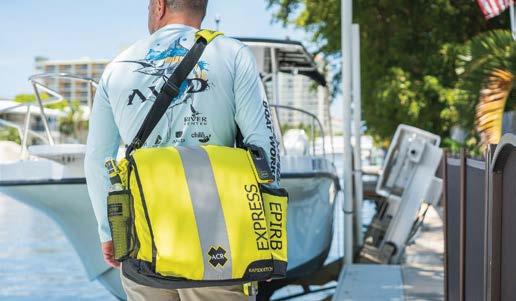
A ditch bag is a compact, waterproof kit that holds essential safety gear.
Preparing a Ditch Bag for Boating
Essential Safety Tips from an Expert
By Butch Thierry
There is nothing like getting out on the water, the anticipation the night before a trip, the preparation of rigging rods and re-tying leaders, knots and strategizing which species to target, how to target them and where. These are all things that we enjoy about fishing. However, as thrilling as it can be, getting on the water comes with risks, particularly when venturing offshore. There is no substitute for being prepared when something goes wrong on a vessel.
It is not the sexiest of topics, but one that needs to be addressed, nonetheless. One of the most critical preparations any boater can make is having a properly equipped ditch bag—a compact, waterproof kit that holds essential safety gear in case of an emergency. To guide us through what should be in a ditch bag and why it’s so important, we spoke with Mikele D’Arcangelo, Vice President of Marketing at ACR Electronics, a leader in marine safety technology.
WHAT IS A DITCH BAG?
Simply put, a ditch bag is a bag full of lifesaving equipment that is easy to grab in case you need to abandon ship. D’Arcangelo stressed the importance of having all essential safety gear in one place.
“You don’t want to be scrambling for life jackets, flares, and first aid kits scattered all over the boat when seconds matter,” he explained. Emergencies happen fast—boats can sink in less than a minute, as seen in real-world rescues D’Arcangelo has encountered. A properly prepared ditch bag ensures you can focus on getting everyone off the boat rather than gathering supplies in a moment of chaos.
WHY EVERY BOATER NEEDS ONE
Even seasoned boaters can fall into the trap of thinking a serious accident won’t happen to them. But as D’Arcangelo points out, “Accidents are called accidents for a reason.” Whether it’s a medical emergency, an engine failure far from shore, or a sudden sinking, having a ditch bag can make the difference between life and death.
During our conversation, D’Arcangelo shared the story of a group of fishermen in the Gulf of Mexico whose boat sank in under a minute. Thanks to one of the fishermen’s personal locator beacons (PLB), they were rescued before it was too late. Without that single piece of gear in a ditch bag, the outcome could have been much worse.
THE
MUST-HAVE
ITEMS FOR YOUR DITCH BAG
So, what exactly should go into your ditch bag? Here’s what D’Arcangelo and the team at ACR Electronics recommend:
Personal Locator Beacon (PLB) or EPIRB (Emergency Position Indicating Radio Beacon): These devices are at the top of the list. While not mandated by the Coast Guard, they are highly recommended. “An EPIRB or PLB sends out a distress signal with your location, letting rescuers know you need help,” D’Arcangelo said. The difference between the two comes down to battery life and range—EPIRBs are typically designed for marine environments and have longer battery lives (up to 48 hours) compared to PLBs (24 hours).
VHF Radio: A portable VHF radio allows you to communicate with
other vessels in the area. If you’re not within range of shore-based systems, this could be your best chance to signal a nearby boat.
Flares or Electronic Distress Signals:Flares are still a staple for marine emergencies, but many boaters are now opting for Coast Guard-approved electronic distress signals, which are easier to maintain and don’t come with the disposal issues of pyrotechnic flares.
First Aid Kit: A good first aid kit is essential. Make sure it includes supplies for stopping major bleeds, as injuries from falls or accidents on deck are common.
Strobe Lights: Attaching strobe lights to your life jackets or having one in your ditch bag will make you more visible in low-light conditions, especially if the search for you takes place at night.
Signaling Devices: A distress flag for daytime emergencies and a whistle can help draw attention to your location.
Personal Items (IDs, Wallet, Medications): D’Arcangelo shared a valuable tip: include your ID, passport, and any important medications in the ditch bag. If you’re rescued by a commercial vessel, you might end up far from home and need these to return safely.
Food and Water: Depending on how far offshore you plan to go, pack basic rations. “It’s better to be over-prepared,” D’Arcangelo advised. Even a small stash of granola bars and water can keep you going while waiting for rescue.
ACCESSIBILITY AND PRACTICE
One of the key points D’Arcangelo emphasized was the importance
of accessibility. “Your ditch bag should be within arm’s reach, and everyone on board should know where it is,” he said. Keeping it in the same compartment as life jackets is ideal. He also recommends labeling the bag clearly and walking your crew through its contents before heading out.
the money spent on turkey permits, which is part of the licensing requirement to hunt turkeys in Florida, goes into that fund.
“Many hunters and NWTF members are heavily involved in raising funds for the wild turkey and its habitat by participating in NWTF hunting heritage banquets, whereby a portion of those funds raised goes into the cost-share program,” Nicholson said. “Hunters’ purchases of hunting equipment also helps support wildlife conservation through the Wildlife and Sport Fish Restoration Program, which brings federal grant funding to state wildlife management agencies such as the FWC.”
Another crucial factor is familiarity with your gear. Similar to an emergency action plan in sports medicine: when things go wrong, you fall back on your training. Practice using the equipment in your ditch bag, from testing your PLB or EPIRB to ensuring your flares work. Emergencies are no time to learn on the fly.
WHY OVER-PREPARED IS THE RIGHT MINDSET
Through this combined effort from the NWTF, FWC, FFS and Florida turkey hunters, the wild turkey population is healthy and flourishing in Florida. And, if you’re a turkey hunter, then you must be getting excited because spring turkey season and the youth turkey hunt weekends are just around the corner.
Many people hesitate to invest in safety equipment because they believe they’ll never need it. However, as D’Arcangelo pointed out, even the most experienced boaters aren’t immune to accidents. “It’s not just about you,” he said. “If you’re going to ask someone to come rescue you, you owe it to them to make their job as easy as possible.” The cost of an EPIRB or a properly outfitted ditch bag pales in comparison to the risk of being unprepared during a crisis.
FINAL THOUGHTS
Contact Information
As you prepare for your next boating adventure, remember that safety should be your first priority. Emergencies happen quickly, and being ready with a well-stocked ditch bag can give you and your passengers peace of mind—and potentially save your lives.
Wild Turkey Cost-Share Program
Florida State Chapter of the National Wild Turkey Federation (NWTF)
Florida Fish and Wildlife Conservation Commission (FWC)
Florida Forest Service (FFS)
Before getting underway, consider revisiting your emergency equipment and updating your ditch bag with the latest safety technology. Your next trip could be a memorable one for all the right reasons—so long as you’re prepared.
Green Swamp Wildlife Management Area (WMA)
Gulf Coastal Plain Ecosystem Partnership
Wildlife and Sport Fish Restoration Program
Cast Far, Dream Big
6 Bucket-List Destinations for Fly-In Fishing Adventures
By Ed Mashburn
Ready to plan your dream fly-fishing vacation? Be sure to put these six destinations on your short list.
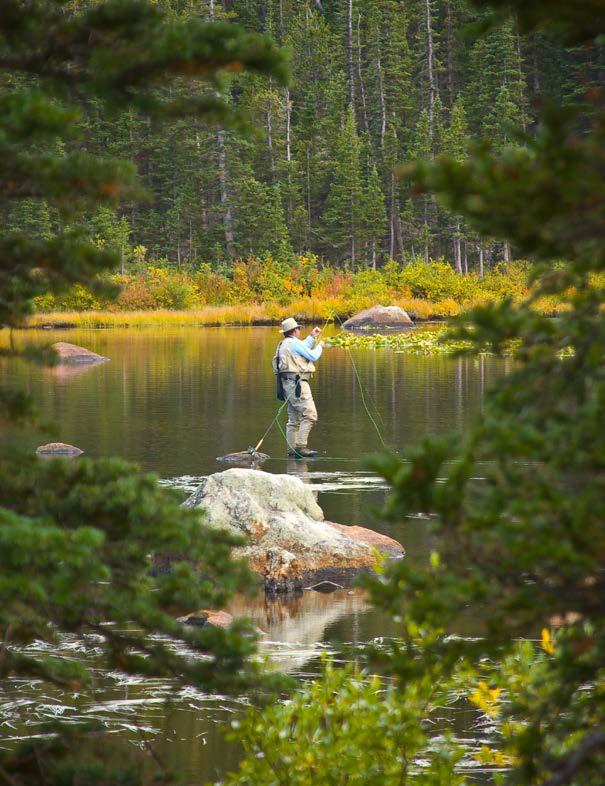
hile much can be said for fly fishing in local waters, many anglers dream of far-off destinations. For most, a fly-in fishing trip will be a once-in-alifetime adventure. However, these trips are not cheap and require careful planning, which, for many, is part of the excitement. Long-distance fly-in trips are not spontaneous, jump-up-and-go adventures, but the rewards are worth it. Picture snowy mountains and cold, clear trout streams, or warm tropical waters with bonefish, snook, and tarpon. Whether it’s the Everglades’ mangroves or the Florida Keys, each angler’s dream is unique.
Here are a few destinations to consider, accessible via commercial flights and local transportation, such as rental cars or float planes. Although specific contacts for fly fishing services are provided, many other lodges, guides, and transport services may better suit individual preferences. Tailoring the trip to your needs is key. So, let’s explore some dream destinations and start planning.
CANADA
Our neighbor to the north offers fantastic fly-in opportunities, particularly in Alberta, known for its big river fly fishing and large, colorful rainbow trout. The Waterton River in southern Alberta, near the Rocky Mountains, is renowned for wild trout.
Eastslope Lodge, located near the US border, provides access to unpressured fisheries, where big fish readily take flies. Anglers can choose between undammed freestone streams and tailwater fisheries, catching cutthroats, browns, and rainbows.
Since fly-in trips to Canada are seasonal, plan ahead by contacting lodges. Fly into Calgary International Aiport (YYC) and rent a car for the hour-long drive to the lodge.
COLORADO
Once in Colorado, fly anglers have many do-it-yourself options. Although some prefer full-service lodges, Colorado is ideal for independent trips. Denver International Airport (DIA) is the main gateway, but smaller airports may suit your needs. Upon arrival, it’s easy to rent a vehicle and drive to prime fishing locations, including the forks of the Platte River.
mended. The nearby Everglades, within easy driving distance of the Keys, offers exceptional fly fishing for snook, tarpon, and non-native species like peacock bass and cichlids.
Fly into Key West International (EYW) or Miami International (MIA) for easy access to both the Keys and the Everglades. A hidden gem for fly anglers is the roadside ditches along the Tamiami Trail, offering exciting fishing for baby tarpon and snook—just be mindful of your backcasts!
WYOMING
Wyoming’s sparse population means less crowded streams, which is a big advantage for fly-in anglers. The state also offers some of the best fly fishing in the country, with plenty of wild trout. Commercial flights to Casper (CPR), Cody (WYS), and Jackson (JAN) from major airports make Wyoming easily accessible.
PLAN YOUR TRIP
Alaska
All Alaska Outdoors Lodge Soldotna, Alaska 1-907-953-0106
Alberta, Canada Eastslope Adventures 800-669-3474
Belize
Yellow Dog Fly Fishing 888-777-5060 yellowdogflyfishing.com
The South Platte River offers both meandering meadow sections and rugged canyon waters, where anglers can target rainbow, cutthroat, brown trout, and even kokanee salmon. The North Platte River, designated as Gold Medal waters, is another great option for wading anglers, especially near Northgate Canyon.
FLORIDA KEYS AND THE EVERGLADES
The Florida Keys are famous for offshore fishing, but fly anglers will enjoy the inshore backwaters, where smaller tarpon, snapper, barracuda, and jacks abound. There are numerous lodges and hotels to suit all preferences, and hiring a local guide is highly recom-
Yellowstone National Park, although crowded at peak times, has superb fly fishing. A short drive will lead to less-pressured waters along the Yellowstone River and its tributaries. The Snake River, especially the Emily Stevens Park area, offers excellent DIY opportunities, with easy access and abundant fish.
BELIZE
Belize, located on Central America’s eastern coast, is a top fly fishing destination for anglers targeting a variety of species, including monstrous snook. English is the primary language, which simplifies travel for visitors. The country’s saltwater flats are among the best in the world, offering exceptional fishing opportunities.
There are daily flights from the U.S. to Belize, and it’s highly recommended to work with a full-service lodge for accommodations, guides, and transportation.
ALASKA
For many, Alaska is the ultimate fly-in fishing destination. Its breathtaking scenery and world-class fly fishing for native rainbow trout, char, and multiple salmon species make it a dream location. Alaska’s fly-in trips are best planned through full-service lodges, which provide advice on travel, lodging, gear, and floatplane flights.
All Alaska Outdoors Lodge, for instance, offers a multi-location expedition where a plane, pilot, and guide stay with you all day. Depending on the season, anglers may catch limits of salmon and other species. Start planning early, as Alaska’s short fishing season fills up fast, and trips often need to be booked a year in advance.
LIVE THE DREAM
The world is full of remarkable fly-in fishing destinations. Although these trips require planning, the experience is unforgettable. To make your dream trip a reality, reach out to the guides and lodges listed. They are ready to help you plan the ultimate fly-in fishing adventure of a lifetime.
MY
SON’S CLOSE CALL
Lessons from a Cottonmouth Bite
BY JOE BAYA
On July 2, 2022, a peaceful Fourth of July weekend at a hunting camp in Barbour County, Alabama, quickly turned into a life-threatening emergency. After a long day of work, my family and I—my wife and two young sons—decided to cool off in Martin Creek. The water, normally clear with a sandy bottom, was murky after recent rain, but we pressed on. The heat was relentless, and the creek offered a chance to escape it.
We loaded up the buggy and made our way down to the creek. As I waded into the water, I checked for any debris that might hurt someone. Confident the area was safe, I grabbed my four-year-old son and placed him in the shin deep water next to me. In a split second, our calm afternoon turned into chaos. My son screamed—a sound that, as a parent, you sometimes brush off as minor. This time was different.
THE INCIDENT
Initially, I thought my son had stepped on something sharp.
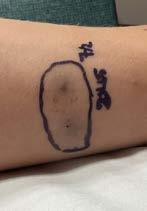
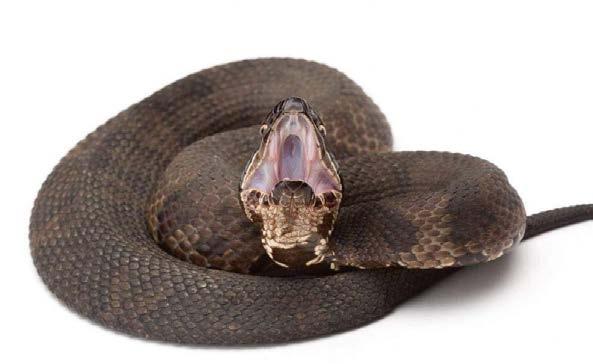
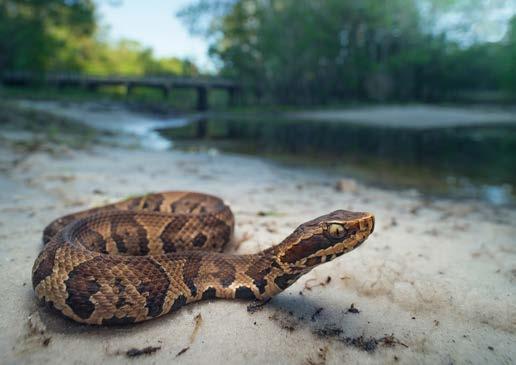
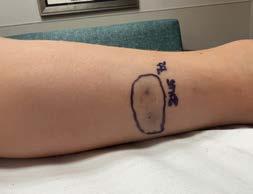
But as I lifted him from the water, I saw two small puncture wounds on his calf, swelling quickly. My stomach elevated into my throat as I realized what had happened—he had been bitten by a snake. I knew from the distinct bite marks and rapid swelling that it was venomous. The urgency hit me like a truck. There was no time to waste.
THE RACE TO THE EMERGENCY ROOM
Adrenaline took over. I don’t remember many details after I realized the situation. My focus narrowed to one thing: getting my son to a hospital as fast as possible. Despite trying to stay calm outwardly, I was anything but. Inside, I kept replaying advice I’d been given as a child—stay calm after a snakebite to keep your heart rate down. Venom spreads faster when the heart pumps harder. It was difficult to keep that in mind while speeding down dirt roads toward the nearest emergency room.
We reached the camp, jumped into the truck, and my wife called ahead to the nearest hospital. They didn’t have the necessary anti-venom. Panic started to set in again, but I
Photo courtesy Derek Hauffe
had no choice but to push forward. We called a hospital in Auburn, which had the anti-venom we desperately needed, and I drove there as fast as humanly possible, covering what should have been a 45-minute drive in just under 30.
MEDICAL TREATMENT
At Auburn’s emergency room, the staff quickly took over, administering anti-venom and keeping both my son and wife calm. The doctors informed us that, fortunately, my son hadn’t been fully envenomated, but they transferred him to a snakebite specialist in Birmingham for further observation.
In Birmingham, he received another round of anti-venom under the care of one of the top snakebite specialists in the Southeast. The entire ordeal—from the bite to reaching Auburn’s emergency room where he received his first round of anti-venom—took about an hour. Considering how remote we were, that was quick. The trip to Birmingham took another two hours, but that journey was much more “relaxed” than the initial rush to the ER. Thankfully, my son fully recovered within 24 hours, but the experience left a lasting impact.
HOW PIT VIPER VENOM WORKS
In the aftermath of my son’s snakebite, I had a chance to speak with herpetologist Jimmy Stiles, A PhD student in the College of Forestry, Wildlife, and the Environment at Auburn University. In his own words, Jimmy’s area of expertise is “minimizing human/snake conflict.” For the past seven years, Jimmy has taught workshops on venomous snakes to first responders and others likely to encounter snake bites. I started by asking Jimmy what exactly a pit viper is. He explained, “In Alabama, we have six venomous snakes, five of which are considered pit vipers. These include three types of rattlesnakes—the pygmy, timber, and eastern diamondback—along with the cottonmouth and the copperhead.” Jimmy clarified that pit vipers get their name from the heat-sensing pits located on their faces, which help them “see” infrared heat signatures.
I asked Jimmy what a pit viper bite looks like initially. He explained that the first sign is often swelling, which can occur rapidly. Another typical indicator is bleeding from the puncture marks, as many pit vipers have anticoagulants in their venom. “If you wipe the bite and it continues to bleed, that’s a pretty good sign you’ve been bitten by a pit viper,” he noted.
TIMING AND MEDICAL INTERVENTION
For those wondering how soon you should get to the hospital, Jimmy said, “As quickly as possible, but if it takes an hour or two, that’s fine. Most people are within a couple of hours of a hospital.” He reassured me that while a snakebite is a serious medical emergency, not all bites are life-threatening, especially those from cottonmouths or copperheads, which tend to have less potent venom compared to rattlesnakes.
MISCONCEPTIONS AND SNAKE SAFETY
Lastly, Jimmy outlined what not to do after a bite. “Forget about snakebite kits, tourniquets, or trying to suck out venom,” he advised. “Those kits that they sell with the razor and the syringe are ineffective at best, and there’s actually a push to make them illegal.” These methods don’t work and can actually make the situation worse. He also warned against an old myth that electrical shocks can neutralize venom—this is both ineffective and dangerous.
From our conversation, one of the clearest lessons was how important it is to act quickly but calmly after a bite. Getting to a hospital that has anti-venom is crucial, but there’s no need to panic or rush in a way that endangers yourself or others. The priority is to avoid any additional harm while seeking treatment. Jimmy also offered one final piece of advice if bitten by a venomous snake.
The first sign of a pit viber bite is swelling, which occurs rapidly. Another telltale sign is bleeding from the puncture marks.
Pit vipers are far and away the most common venomous snake in my home state, and this is true throughout North America. As I learned in the hospital, the same antivenom is effective on all pit viper species.
“A lot of people have heard that you need to positively ID a snake if you’re bitten,” Jimmy said, “but that’s really not the case. If you can quickly and safely get a picture of the snake, then that can be helpful, but it’s not going to impact your treatment. There are basically two types of antivenom out there, and while there are some differences between them, what the facility has on-hand is what you’ll get, and either will be effective. There’s definitely no need to put yourself at risk of another bite by trying to capture the snake, and whatever you do, don’t bring it to the hospital with you! It’s just not true that they need to know exactly what snake bit you to provide treatment.”
HOW PIT VIPER VENOM AFFECTS THE BODY
Jimmy went on to break down how pit viper venom works. Years ago, people used to categorize venom as either hemotoxic (affecting blood) or neurotoxic (affecting nerves), but research has since shown it’s much more complex. “Pit viper venom is a mix of many different compounds,” he said. “Some affect blood pressure, some break down tissue, and others can impact the nervous system.” This complexity explains why bites can be so dangerous, with effects ranging from tissue damage to blood clotting problems.
“People don’t think about this, but pit viper bites cause a lot of swelling. It’s a good idea to go ahead and remove any tight-fitting clothing, such as boots or a wedding band, as soon as possible if you’re bitten. Otherwise, there’s a good chance that they’re going to have to cut those items off of you.”
KEY LESSONS LEARNED
In this article, I’ve told you my own personal snake bite “horror story,” and we’ve also talked with one of the leading experts on snake and human conflict. So the question now is, “What can we learn from this information?”
The biggest takeaway, in my mind, should be the importance of having an emergency action plan in place when spending time in remote areas. If you’re hunting, fishing, or simply enjoying the outdoors in a secluded place, a plan is critical. Everyone in your group should know what to do in an emergency, particularly if the injured person is incapacitated.
One key takeaway from this incident is the need for access to timely medical care in remote locations. My son was lucky in many ways. Had the snake fully injected its venom, if my son had been younger, or if he had been bitten closer to his heart, the situation could have been much worse.
Cottonmouths are common in the South, especially in Florida.
We were also fortunate that the bite happened just a few feet away from our buggy and that we were only a few minutes away from my truck. On my small acreage, getting back to the truck could sometimes entail a 30-minute walk. While we were fortunate to be able to drive to the nearest hospital quickly, many people are much further from help. I have hunted in areas where we were potentially an hour or more walk away from the nearest vehicle.
WHAT TO TEACH CHILDREN ABOUT SNAKES
After this incident, conversations about snake safety became a regular topic with my children. It’s not about instilling fear, but respect. Snakes aren’t something to fear irrationally, but they are certainly something to be cautious of, especially in areas where they are common. We now talk about the places snakes like to frequent—under woodpiles, near water, but most importantly we’ve taught our boys to always stay vigilant. It’s also important to keep in mind that snakes are particularly active at night. Even in areas where you feel comfortable, like around camp and even in your own backyard, it’s a great idea to keep a flashlight handy for walking around at night.
CREATING A PLAN FOR NEXT TIME
My son’s cottonmouth bite, which he received underwater. The fang marks are very wide, indicating a large specimen.
In addition to having an emergency action plan, it’s important to know the nearest hospitals, particularly those that carry anti-venom. Not every facility is equipped for specific emergencies like snakebites, and time is of the essence when dealing with venom. At my camp, we share a note on our phones with all visitors that contains information about the nearest ERs, as well as other pertinent emergency details such as tornado protocol. The first thing I do when I have guests at my camp is make sure that they know where this information is.
Snakebites are just one of a list of emergencies that can happen in remote areas. Thankfully, we were able to make our way to the emergency room quickly in our vehicle. If you find yourself in a more debilitating circumstance, an air ambulance ride may be the fastest way to get yourself to emergency care. Air ambulance rides can be incredibly costly, and I’ve recently learned that insurance doesn’t typically cover them, but that should be the last thing on your mind in a crisis. One element of an emergency action plan you should consider is an air ambulance network membership. Recreating in
remote areas brings the potential for needing a life flight to reach care quickly. An air ambulance membership, like the one offered by AirMedCare Network (AMCN), becomes invaluable. AMCN, the country’s largest air ambulance membership provider, ensures that when you are treated and transported by their network’s highly qualified emergency medical crews, you pay nothing out of pocket. You can get peace of mind now for a relatively low cost compared to the potential out-ofpocket expense.
CONCLUSION
Looking back, it’s clear how fortunate we were. Had we been deeper in the woods, further from our vehicle, or in a more isolated location, the outcome could have been worse. Emergencies happen when you least expect them, and the key to minimizing risk is having a solid plan in place and staying calm under pressure.
Being prepared—mentally and logistically—can make all the difference when the unthinkable happens. I hope this article encourages you to take the time to make an emergency action plan for your family and to think about what you can do to keep your family safe in the great outdoors.
KNOW YOUR SNAKES
If you’d like to learn more about venomous snakes and how to stay safe around them, Jimmy Stiles shared some resources with us in our interview.
“There are some great resources out there when it comes to snake identification and what to avoid,” he said. “One important resource for Alabamians is the Alabama Reptile and Amphibian ID and Education page on Facebook.
“Another invaluable resource for snake bites is the National Snakebite Support Group. This group is run by the nation’s leading toxicologists and experts who deal with snake bites daily. They provide a wealth of knowledge and can even guide you through what to do if you’re bitten. They’ll consult with your doctor and, in cases where you’re in a rural hospital or a place unfamiliar with snake bites, they can advise you on what treatments should be admin-
istered and what questions to ask to advocate for yourself.
“The National Snakebite Support Group is an incredible resource. Additionally, your state’s Poison Control group can be another excellent source of information.”
For first responders in the Alabama area, Jimmy offered some additional resources
“Alabama Cooperative Extension System is also offering free workshops to emergency responders, including law enforcement, EMS, and fire departments,” he told us.
“These workshops cover how to handle venomous snakes and snake bites. We have workshops scheduled in Springville and Montgomery right now, and you can find details on the Alabama Extension website.”
MASTERING DEEP DROP FISHING WITH CAPT. ADAM PEEPLES
BY JOE BAYA
Deep drop fishing may seem like a niche sport, but for those who are passionate about offshore angling, it opens up an exciting world of possibilities. Capt. Adam Peeples, a seasoned charter Capt. based in Destin, Fla., is no stranger to the depths. With over a decade of deep drop experience, he’s mastered the art of fishing in 500 to 1,000 feet of water. In a recent interview, Capt. Peeples shared insights on the gear, techniques, and strategies that have helped him consistently haul in delicacies from the deep.
THE ALLURE OF DEEP DROP FISHING
Deep drop fishing offers an opportunity to catch species that are often overlooked in traditional offshore fishing trips. As Peeples explains, one of the main draws of this method is the sheer variety of fish you can target.
“I love yellowedge groupers—they’re probably my favorite bottom fish to eat. Barrelfish are right up there, too. It’s hard to pick between them,” Peeples shares. These species, known for their excellent table quality, can be caught in deeper waters year-round, making deep-drop fishing a prime option even when other fisheries are closed or limited.
Peeples is quick to point out that you never know what might bite on a deep drop line. “You catch some oddball stuff, too. On almost every trip, you’ll bring something up from the depths that you weren’t expecting,” he adds. This unpredictability is part of the fun, and it’s what keeps
anglers like Peeples hooked on the sport.
DEEP WATER SPECIES
The fish you target in deep drop fishing depend largely on the structure and depth of the area you’re fishing. Peeples breaks it down simply: groupers tend to hug hard bottom areas like ledges or crevices, while tilefish prefer muddy flats.
“For groupers, I’m usually fishing between 350 to 700 feet,” Peeples says. “You’re looking for hard bottom— places with ledges or cracks. For tilefish, you want big mud flats where you can see some ‘fuzzy bottom’ on the sonar, indicating bait and fish activity.”
While it might sound straightforward, Peeples emphasizes that understanding the bottom structure is crucial for success. “You’ll feel it when your weight hits rock or mud. That’s how you confirm what you’re seeing on your sonar,” he advises. Knowing how to read your sonar and bottom machine settings is one of the most critical skills for deep-dropping.
DIALING IN YOUR EQUIPMENT
One of the most common mistakes Peeples sees from inexperienced deep drop anglers is using gear that isn’t up to the task. Deep dropping requires specialized equipment to handle the extreme depths and heavy weights needed to get your bait down.
Electric reels are a must for most anglers. Peeples uses
grouper can be caught in deeper waters year-round.
Yellowedge
Timing plays a crucial role in deep-dropping.
Mastering Deep Drop Fishing with Capt. Adam Peeples
the Daiwa Tanacom, which he praises for its durability and ease of use. “I’ve abused the heck out of these reels, and they just keep on ticking,” Peeples says. He recommends pairing your electric reel with an 80-pound braided line and a 130-pound monofilament top shot to give you the strength and flexibility needed for deep water.
For the rod, Peeples prefers something with a soft tip that allows him to see bites clearly and prevents fish from shaking the hook. “You want a rod with plenty of parabolic action, so you don’t pull fish off as they come up,” Peeples explains. A rod that’s too stiff will cause you to lose fish as they thrash around during the long fight to the surface.
THE ART OF THE RIG
When it comes to rigs, simplicity is key. Peeples often uses a two or four-hook setup, depending on the species he’s targeting. He typically runs two larger hooks on the bottom for slab baits like bonito and smaller hooks on top with squid to target a variety of fish on each drop.
“I’ve caught a lot of groupers on a 10/0 Mustad hook. You don’t need anything too fancy—just good-quality bait and a reliable rig,” Peeples advises. He stresses the
importance of fresh bait, whether it’s cut bonito for groupers or whole squid for tilefish. Avoid store-bought squid strips, which Peeples says aren’t nearly as effective as fresh bait. “Those squid strips are garbage—fish just don’t bite them,” he warns.
BOAT POSITION AND CURRENT
Staying in position over deep water structures can be one of the biggest challenges in deep dropping. Peeples has recently begun experimenting with a spot-lock trolling motor to help hold the boat in place over his fishing spots. “It works wherever I press the button. It’s a game changer for precise deep-drop fishing,” he says.
However, in areas with heavy current, drifting may be the better option. “In strong currents, it’s often better to drift your bait across a broader area rather than trying to stay locked in one spot,” Peeples explains. The key is to adapt to the conditions, whether you’re holding a position with a trolling motor or allowing a natural drift to cover more ground.
TIMING AND CONDITIONS
Like all types of fishing, timing plays a crucial role in deep-dropping. Peeples emphasizes the importance of considering moon phases and tidal movements.
Inshore Fishing Charters For All Skill Levels
“Fishing on a high-pressure day with an active moon phase can make all the difference,” Peeples says. He also stresses the importance of fishing when the tide is moving, as this will bring baitfish—and the predators that feed on them—into your target areas.
Despite these guidelines, Peeples acknowledges that deep-drop fishing can be hit or miss. “There are days when you’ll go out and scratch your head, wondering where the fish are. It’s part of the game,” he says.
FINAL THOUGHTS
Deep drop fishing offers a rewarding challenge for anglers who are willing to invest in the right gear and develop the necessary skills. Capt. Adam Peeples’ advice is clear: start simple, master your equipment, and adapt to the conditions. With a little patience and the right strategy, deep-drop fishing can yield some of the most delicious catches you’ll ever bring aboard in a time of year when other species are not open for keeping.
As Peeples puts it, “You don’t have to make it complicated. Keep it simple, put in the work, and you’ll be rewarded with some amazing fish.”
Capt. Shane Traylor
SOUTHERN SCRAPES AND SCRAPE HUNTING
BY ANDREW MAXWELL
Ieased my way up through the mountain laurel-choked drainage, flanked on both sides by saplings mangled by testosterone-laden bucks. I was headed to an interesting terrain feature I had found on OnX—a knob that jutted off the bottom third of a tall ridge.
The terrain extended about 300 yards from the main ridge, abruptly protruding from the steep mountainside and forming a flat spot above the valley floor. The surrounding area was otherwise steep, rocky, and thick, making this topographical anomaly especially intriguing.
As I snuck closer to the knob, a cold breeze brushed my face; the thermals were falling, perfectly in my favor. The breeze carried an unmistakable scent—that warm, barnyard odor that lets you know deer are close. I slowed my approach, knowing that this scent usually means deer are nearby, not just passing through.
I slid out of the drainage like a bobcat, careful not to step on anything that might make noise, my eyes scanning ahead for movement. I had my rifle ready, hoping I might slip up on a buck tending a doe.
No deer. They must have seen me coming and slipped off the backside of the knob. That’s often the case in these big woods— these deer don’t need to crash through the nearest thicket to avoid you. They simply melt away, sneaking into the vast forest instead of bolting.
But what was I smelling? A quick scan of the knob revealed the culprit: a patch of bare earth, about the size of a queen bed. It was the biggest scrape I had ever seen, especially in Alabama!
The scrape was nestled under a shortleaf pine, about 12 feet tall and as thick as a baseball bat. The tree leaned over, providing several ideal licking branches.
Deer were coming up from both the drainage I had just emerged from and the drainage on the other side of the knob. They came straight up the point of the knob and angled down from multiple directions off the higher mountainside. This spot reminded me of a large highway interchange, with multiple off-ramps and intersecting roads.
I placed a camera on my newfound honey hole and continued scouting. Starting just a few hours after I left, multiple mature bucks visited the scrape several times per week, including during daylight. Does and younger bucks frequented the scrape as well.
I found the scrape about three weeks before the rut kicked off in this area. Due to its heavy use, I decided to spend some time hunting it. I took my “rut-cation” just as I suspected the first does were coming into heat, and on day three of my hunt, I connected with a nice 4.5-year-old mountain buck.
THE TACTICS
I believe there are a lot of misunderstandings about scrapes. I often hear hunters claim that scrapes are “only used at night” or that they’re unproductive for hunting. These arguments are only partially correct.
There are different kinds of scrapes. Some folks categorize them into primary scrapes, community scrapes, rut scrapes, and so on. While these distinctions hold some validity, I think they risk overcomplicating something fairly simple.
When I first became interested in scrapes,
I was fixated on the scrape itself. Oddly enough, I focused more on the scrape than the deer. I would find a nice scrape and disregard other signs like trails, rubs, and scat.
Eventually, I realized my tactics were backward. The scrape exists because of the deer, not the other way around.
This shift in thinking led me to analyze scrapes differently. What was a scrape’s location and intensity telling me about the bigger picture?
We’ve all come across those scrape lines along logging roads, each about the size of a basketball. I call them “basketball scrapes.” What do they tell me? Likely, they indicate trails crossing the road at multiple points, with a buck crossing those trails and scraping at each one.
But what did the mountain scrape tell me? Its sheer size suggested many deer were using it. The scent confirmed frequent
Scrapes come in different types, often categorized as primary scrapes, community scrapes, rut scrapes, and more.
BY HANK SHAW
https://honest-food.net (Image courtesy of Holly A. Heyser)
Italian Venison Meatballs
Prep: 1 hr • Cook: 20 mins • Total: 1 hr 20 mins
Ingredients
• 2 1/2 lbs. lean venison, or other meats
• 1 lb. pork belly or fatty pork shoulder
• 2/3 cup milk
• 3 slices bread, crusts removed
• 2 eggs
• 1 tbsp. Kosher salt
• 1 tbsp. black pepper
• 1 tsp. fennel seeds (optional)
• 1 tsp. dried oregano
• 2 cloves garlic, minced
• 4 tbsp. grated cheese, pecorino or parmigiana
• 1 1/2 cups bread crumbs
• olive oil for frying
Instructions
Chill the venison and pork fat until it is almost freezing (about an hour). Cut both the meat and fat into chunks that will fit in your grinder. Grind through your fine die.
1. Pour the milk into a pot and set it on low heat. Cut the crusts off the stale bread and break it into pieces. Add it to the pot. It will begin to absorb the milk. When it does, turn off the heat and mash everything into a paste. Let it cool to room temperature.
2. Put the ground meat into a large bowl, add the salt and spices and herbs, as well as the cheese. Crack the eggs into the bowl, then pour the bread-milk mixture in. With clean hands, gently mix everything together. Do not knead it like bread. Just gently work the mixture — think cake, not bread.
3. When it is mostly combined — you need not get everything perfect — grab a palm-full and roll it into a ball with your palms, not your fingers. You want meatballs about 1 1/2 to 2 inches across.
4. Gently roll the meatballs in the bread crumbs. You may need to reshape them before putting them onto a cookie sheet lined with wax or parchment paper.
5. When the meatballs are all made, get a large pan ready; I use a big, old cast-iron frying pan. Fill it with about 1/4 inch of oil. I use cheap olive oil. Bring it up to temperature over medium-high heat. You are looking for about 325°F. Set the meatballs in the hot oil, not touching, to fry.
6. You want the oil to come up halfway on the meatballs. Add a little oil if need be; don’t worry, you can reuse it later. Fry until nicely browned, then turn them over to brown the other side.
7. When cooked, set the meatballs on a paper towel or wire rack to drain. They can be used right away or cooled and then refrigerated for a week, or frozen for several months. How to serve? You could do worse with a marinara sauce, or tomato sauce with fennel.
use, detectable from a decent distance. The scrape’s location on a terrain feature that acted like a hub for deer movement across the mountainside was also significant.
This was a completely different situation from the “basketball scrapes,” typically found outside any defined travel corridor. I usually find smaller scrapes in “flow areas,” a term I learned from Southern hunting legend Warren Womack. In these areas, deer are passing through, but nothing concentrates them—think of a wide stand of pines. Deer travel through, but their movement is spread out over the entire area rather than funneled into a narrower path.
The knob where I found my mountain scrape concentrated deer movement across a large area, focusing them on one small spot compared to the larger mountainside. This concentrated the scrape activity as well.
The scrape was significant because of the location, not the other way around. A large scrape is a symptom of overall deer movement in a spot. Travel corridors converged on this knob, near thick cover and rugged terrain, creating the perfect location for deer to scrape and check in on the local activity.
WHAT MAKES A SCRAPE THE ‘RIGHT’ SCRAPE?
After running cameras on many scrapes over the years, a few things excite me and signal I’ve found a valuable scrape:
Does visiting the scrape: If I consistently see does visiting a
Scrapes are one of the first things I seek when tackling a new hunting club or public ground.
scrape, that’s a great sign. They don’t always need to work the scrape; just their presence suggests bucks will eventually swing by to check on them. When a doe works the scrape and urinates in it, especially close to the rut, a mature buck usually follows within a day or two.
Multiple, large licking branches:I like to see more than one licking branch, ideally showing signs of years of use—twisted and broken from repeated attention.
Multiple scrapes: I prefer finding a large scrape with multiple licking branches, accompanied by a secondary scrape nearby. My theory is that bucks like to make their own mark. When they encounter a preexisting scrape, they often work off to the side, kicking out their own patch of dirt.
Scrapes are one of the first things I seek when tackling a new hunting club or public ground. I’ll hunt them if the situation makes sense, like during my mountain hunt. Beyond using scrapes to hunt, my favorite reason to locate them is that they’re the best buck inventory tool I’ve found. A few well-placed trail cameras on the right scrapes can provide a wealth of information: what bucks are in the area, when they become active during daylight, the exact
My mountain scrape has had a camera on it for two full seasons now.
My mountain scrape has had a camera on it for two full seasons now. Two years in a row, does have worked the scrape within a three-day period in December, with bucks following shortly after. This data is invaluable, helping me plan my deer season with precision—I know exactly where I’ll be hunting during that critical week!
dates those traveler bucks swing through, and when particular does start coming into estrus.
Winter Cats
How to Reel in Trophy Catfish This Season
By Ed Mashburn
Fishing below the big dams can be productive and exciting.
Many people think that catfishing, especially for big cats, is primarily a summertime activity. While it’s true that many large catfish are caught during the warm months, winter can actually be one of the best times to catch trophy-sized catfish. When the wind turns cold and the water temperature drops, the chances of landing a big catfish often improve.
During warmer weather, catfish of all kinds tend to be dispersed throughout the lakes or rivers they inhabit. In cold weather, however, catfish seek out spots where the water is slightly warmer, gathering in large concentrations. This can make winter an excellent time to target big catfish, as they congregate in more predictable places.
Although the same techniques and tools used for summer catfishing can be effective in winter, some important adjustments need to be made.
Anglers seeking big winter catfish should focus on fishing deep and moving slowly. Once the fish are located, the bite can be surprisingly active, as the cats tend to be more concentrated than at other times of the year.
CATFISH BEHAVIOR IN WINTER
To catch catfish in winter, focus on deep, slow-moving waters where catfish retreat for warmth and stability. In cold weather, catfish are highly sensitive to water temperature and will do everything they can to find the warmest water available. The warmest spots in lakes or rivers are usually deep “wintering” holes, which are significantly deeper than the surrounding areas. Catfish will gather in these holes, sometimes in the hundreds.
If you can locate a warm-water discharge from a power plant or a waste-water treatment facility, you’ll find water that’s warmer than the surrounding lake or river. These artificially warm areas
BY HANK SHAW https://honest-food.net (Image courtesy of Holly A. Heyser)
Poached Catfish
Prep: 15 mins • Cook: 10 mins • Total: 25 mins
Ingredients
• 1 lb. catfish, or other fatty fish
• 2 cups sake
• 1 cup fish, shellfish or chicken stock
• 3 bay leaves
• Salt
• Sesame oil, soy sauce and togarashi to tasteng
Instructions
1. Cut pieces of sablefish to serve. Leave the skin on.
2. Bring 2 cups sake, 1 cup fish or chicken stock, 3 bay leaves, pinch of salt to a boil. Let this simmer at least a few minutes and up to 20 minutes.
3. Turn off heat. Set a saucer in the pot then place the fish, skin side up, on it, making sure the fish is submerged. Cover the pan and let sit about 6 to 10 minutes.
4. Very carefully remove the saucer, then carefully set the fish on cutting board to rest for 3 or 4 minutes. Peel off the skin.
5. Serve the fish with greens of your choice, (pickled mustard greens in my case), a little sesame oil, soy sauce and togarashi, which is a Japanese spice mix. If you can’t find togarashi, which is in the Asian aisle in many supermarkets, toasted sesame seeds are a nice touch.
Clearly this recipe has a Japanese feel to it, but you can alter the poaching liquid and finishing ingredients and get very different effects.
• A British take might be to poach in a light ale – something malty, not hoppy – then add a bit of melted butter, Worcestershire and black pepper.
• A French rendition would be to poach in white or rosé wine, then hit it with butter or crème fraiche, then perhaps pepper or even quatre epices.
• And obviously the classic poached fish cooking liquid is a light fish or shellfish stock, with a little wine added in for acidity.
Wintertime is the right time to find and catch some mega-catfish.
can attract some of the biggest catfish of the year.
Creek mouths where smaller streams enter larger lakes or rivers are also great places to find concentrations of big catfish. These spots typically have deeper water, and cats like to hold in these areas, especially if there are steep drop-offs or cover like brush or tree trunks. Using a good sonar fish finder can be invaluable for winter catfishing. A fish finder will help you locate deep drop-offs and other areas where catfish congregate. By slowly working along shorelines or old creek channels, anglers can often find those deeper zones where big cats are likely to be.
On warmer-than-usual winter days, catfish may move from the deep water up to surrounding shallower flats to feed. During these sunny days, you might find big, aggressively feeding catfish in the shallows. However, as soon as the sun dips behind a cloud or the wind picks up, they’re likely to head back to the deeper water.
Fishing below dams on major river impoundments can also be highly productive in winter, but the fast-moving water released by the dam can be dangerous. Anglers should take extra care when fishing below dams during the colder months.
TACKLE AND GEAR RECOMMENDATIONS
In winter, catfish anglers should use heavier setups to handle larger fish and to accommodate the heavier weights needed for deeper fishing. If you typically use 25-pound line in the summer, consider stepping up to 30- or 40-pound line in winter. Heavier-duty hooks are also recommended, as winter catfish, especially the super-large blue cats, require stronger gear.
The same rigs that work in warm weather can be used in winter, but winter catfish tend to be larger, so gear should be adjusted accordingly. A good rod and reel combination for big winter catfish is a heavy-action casting rod with a light tip for sensitivity and strong backbone for power. Pair this with a bait-casting reel that holds at least 200 yards of 30-pound-test line. The reel should have a solid drag system that can be tightened to handle a big hooked catfish.
BAIT FOR WINTER CATFISHING
When chasing big catfish, nothing beats fish for bait. Some of the most productive baits include gizzard shad, threadfin shad, skipjack herring, and blueback herring. These baits can be used live, or they can be chunked or cut into strips.
Nightcrawlers and other worms can also be effective in winter and are readily available year-round at bait shops.
Winter
A frisky live fish can entice heavyweight cats better than most other baits. Some of the best live baits include 3- to 4-inch-long sunfish, suckers, and chubs, which can easily be caught in winter using a small hook and a piece of worm.
In areas known for trophy-sized catfish, larger baits are often a good idea. Store live bait in a bucket filled with water from the lake or stream where they were caught to keep them fresh and lively.
A three-way rig works well for fishing these baits. Tie the main line to one eye of a threeway swivel, and then add two drop lines, one 12 inches long and the other 24 inches long, to the other eyes. Attach a hook to the longer drop line and a sinker to the shorter one. Thread the bait on the hook and cast it to a likely spot.
EFFECTIVEAND SAFE FISHING
When fishing for winter catfish, it’s important to understand the behavior of different species in cold water.
Big blue catfish tend to be very active in winter and bite well even in the coldest conditions. Channel catfish are also active, though not as much as the bigger blues. Flathead catfish, on the other hand, become quite lethargic in cold water. While they will
A winter set-up of multi rods and baits can often show what the cats [prefer to eat on a particular day.
still bite if bait is presented to them, they are not as aggressive as they are in warmer weather.
No matter which species you’re targeting in winter, the key to success is fishing low and slow. It may take time to locate where the big cats are holding, but once you do, the bite can be fast and furious.
Anglers should always dress warmly and
wear weight-appropriate personal flotation devices (PFDs). Winter water is extremely cold, and falling in can quickly lead to hypothermia. Safety should always come first.
That said, the excitement of hooking a massive catfish will warm up any angler. Winter catfishing can be an exhilarating experience, and landing a big catfish in the cold months is a reward in itself.
Unparalleled Hunting inSoutheastern Wyoming
EXCLUSIVE HUNTING EXPERIENCES
157 Outfitters offers exclusive hunting experiences on 100% private leases in Southeastern Wyoming. Specializing in waterfowl, pronghorn, whitetail deer, and mule deer, our hunts take place in one of the most consistent waterfowl hunting destinations in the U.S.
Stay at one of our two lodges on the North Platte River. Enjoy amenities like firearms, ammo, and a private chef (arranged prior to your arrival). Thanks to our unique access, we can draw a license for you and get you hunting within a year!
Ready for the hunt of a lifetime? Book now before spots fill up!
157 Outfitters 2773 State Hwy 157 Lingle, WY 82223
Marsh edges are often a good target when looking for large trout, particularly around creek mouths.
SEATROUT on the Emerald Coast
BY FRANK SARGEANT
Before discussing the technicalities of using line-through soft plastic swimbaits, it’s essential to understand the habits and preferences of the spotted seatrout (Cynoscion nebulosus), often referred to as “specks.” These predatory fish are commonly found in estuaries, bays, and coastal waters, where they hunt baitfish such as mullet, pinfish, and menhaden. In North Florida and Mobile Bay, spotted seatrout frequent shallow flats, grass beds, and areas around oyster bars, particularly in cooler months when they move to deeper channels and drop-offs.
WHY SWIMBAITS?
Line-through soft plastic swimbaits are relatively new in saltwater fishing but have proven effective for catching inshore fish, especially large trout. These lures mimic the natural swimming action of baitfish, with a design that allows the line to pass through the lure’s body and connect to a treble hook positioned on its belly. This setup lets the swimbait move freely on the line, creating a more lifelike motion that increases the likelihood of attracting larger, cautious fish.
Additionally, when a fish strikes, the soft plastic body slides up the line, away from the hook. This feature not only prevents damage to the lure, extending its usability, but also ensures the hook remains securely in the fish’s mouth, improving hookup ratios.
CHOOSING THE RIGHT SWIMBAIT
When selecting a line-through soft plastic swimbait for spotted seatrout, consider the following factors:
Size: For targeting trophy trout, swimbaits in the 4- to 6-inch range are ideal, effectively imitating primary prey species like mullet and pinfish, which are preferred by larger seatrout.
Color: Matching the hatch is key. In the clear waters of North Florida and the slightly stained waters of Mobile Bay, natural colors such as silver, white, pearl, and shades of green or brown work well. In low-light conditions or deeper waters, swimbaits with brighter accents or reflective properties can enhance visibility.
Action: The swimbait’s action is crucial. Opt for models with a wide tail kick and a natural swimming motion. The line-through design should enable the lure to main-
BY HANK SHAW https://honest-food.net
(Image courtesy of Holly A. Heyser)
Potato Fish Cakes
Prep: 15 mins • Cook: 15 mins • Total: 30 mins
Ingredients
• 2 cups cold mashed potatoes
• 1 lb. cooked, flaked fish (smoked or fresh, or crab)
• 1 egg, lightly beaten
• 1 tbsp. minced parsley
• 1 tbsp. minced chives
• 1 tbsp. minced celery leaves
• Salt and black pepper to taste
• 1/2 cup flour or fine cornmeal, for dusting (optional)
• Oil for frying
Instructions
1. Set your oven to “warm” and put a cooling rack set over a baking sheet in the oven. Mix all the cake ingredients together in a large bowl. I make pretty smooth mashed potatoes, so there aren’t lumps. If you have lumpy mashed potatoes, you might want to crush them with your fingers.
2. Form into patties of whatever size you like. I prefer about 2 to 3 tablespoons, up to 1/4 cup. But even 1/2 cup fish cakes are nice. Set them in the fridge for a few minutes to set.
3. Heat enough oil to come halfway up the fish cakes (you’ll need to guess on this one), and bring the oil to between 325°F and 340°F. You don’t want things super hot here.
4. Fry the cakes, making sure they don’t touch each other, over medium-high heat, until they are nicely browned — about 2 minutes per side without a dusting of flour or cornmeal, about 3 minutes with it. Set the finished cakes on the rack in the oven.
5. Serve with the sauce of your choice, a salad, and a glass of white wine or a beer.
Notes
If you skip the cornmeal or flour, the cakes will brown very quickly, so you will have to watch them closely so they don’t burn.
The Mulletron is nearly a dead ringer for the real thing.
tain its action even at slower retrieval speeds, often necessary for targeting larger, more lethargic fish.
RIGGING
Proper rigging of the line-through soft plastic swimbait maximizes its effectiveness. Here’s a step-by-step guide:
Threading the Line: Start by threading your fishing line through the nose of the swimbait using a rigging needle or wire. Most line-through swimbaits have a pre-drilled channel to guide the line through the body. Pull the line through until it exits the lure’s belly.
Attaching the Hook: Tie a small split ring or a loop knot to your line just below where it exits the swimbait. Attach a treble hook to the split ring or loop, ensuring the hook rests naturally in the belly slot of the swimbait.
Securing the Knot: Ensure the knot is secure and trimmed to prevent unwanted tangles. Check that the swimbait slides freely along the line, allowing it to move naturally during retrieval.
Testing the Setup: Before casting, test the swimbait’s swimming action near your boat or the shoreline to confirm that it moves realistically and that the hook is positioned correctly.
FISHING TECHNIQUES
With your swimbait properly rigged, it’s time to hit the water. Here are some effective techniques for catching large spotted seatrout in North Florida and Mobile Bay:
Slow and Steady Retrieve: Large spotted seatrout often prefer a slow, steady retrieve. Cast your swimbait beyond the target area, let it sink to the desired depth, and reel it in slowly, keeping the rod tip low. This technique maintains the swimbait’s natural swimming motion, mimicking a baitfish and drawing in predators.
Pause and Flutter: Adding intermittent pauses to your retrieve allows the swimbait to flutter down, imitating a wounded or dying baitfish. Spotted seatrout are opportunistic feeders and will often strike a lure that appears to be an easy target. Experiment with different pause lengths to discover what triggers the most strikes.
Drift and Cast: In areas with strong currents or tidal flows, such as the passes and channels of Mobile Bay, drifting can be effective. Let your boat drift with the current while casting your swimbait ahead and working it back toward you. This method covers a lot of ground and helps locate schools of seatrout.
Targeting Structure and Drop-Offs: Large spotted seatrout often hold near structures like oyster bars, submerged grass beds, and dropoffs, especially during colder months. Position your boat parallel to the structure and cast your swimbait along the edge. Retrieve the lure slowly, allowing it to swim just above the structure where trout are likely lurking.
BEST TIMES AND CONDITIONS
While spotted seatrout can be caught yearround, the best time to target larger fish with line-through swimbaits in North Florida and Mobile Bay is during the cooler months, from late fall through early spring. In these months, lower water temperatures push fish into deeper channels and holes, where they can be more easily targeted with slow-moving baits.
Early mornings and late afternoons, especially during a moving tide, offer prime opportunities for catching big trout. Overcast days or murky waters can also be advantageous, as reduced visibility encourages trout to be more aggressive in striking at lures.
By understanding the habits of spotted seatrout and choosing the right tackle and techniques, anglers can increase their chances of landing a trophy fish. Line-through soft plastic swimbaits offer a lifelike presentation and proven effectiveness, making them an excellent choice for targeting these prized inshore fish.
Redfish like line-through swimbaits like the Z-Man Mulletron LT just as well as trout.
Big trout inhale the Mulletron thanks to the soft, pliable body.
Dialing In Your Sidescan For Various Scenarios
BY JOE BAYA
When it comes to improving your skills with sidescan sonar, Capt. Justin Leake is one of the most knowledgeable voices in the industry. Spending decades fishing the waters of Panama City, Leake has fine-tuned his techniques to make the most out of his electronics. In a recent interview on the Northwest Florida Fishing Report, he shared detailed insights on how to dial in your sidescan sonar for various fishing scenarios, from chasing bull redfish near bait balls to finding structure in deeper waters.
Leake’s expertise covers everything from basic settings to advanced strategies that can help any angler make the most of this powerful tool. As he explains, using sidescan sonar effectively isn’t just about turning it on—it’s about knowing when and how to adjust your settings depending on the situation.
CHOOSING THE RIGHT FREQUENCY
The first thing any angler needs to understand about sidescan is that frequency plays a major role in what you’ll see on your screen. The right frequency can mean the difference between spotting a bait ball or missing it altogether. According to Leake, the general rule is that high frequencies offer more detail, while low frequencies provide greater range.
“High-frequency settings like Mega Imaging are what I rely on when I’m fishing shallow waters or need extreme detail. If I’m targeting fish near bait schools around the bridges, I’ll set my frequency to the highest possible setting, and that lets me see incredible detail—sometimes down to the shape of the fish,” says Leake.
However, when Leake heads into deeper waters, he switches to a lower frequency. “When I’m offshore, especially in 70 feet of water or more, I drop my frequency down to 455 kHz. It lets me cover more ground without losing track of structure or fish. Sure, you lose some detail, but you can see a lot more area, which is key when you’re fishing for pelagic species,” he adds.
BAIT BALLS AND PREDATORS
One of the biggest advantages of sidescan sonar is the ability to locate bait balls and the predators chasing them. Leake explains that, contrary to what many might think, predators don’t hang out in the middle of the bait school. Instead, they patrol the edges or hover underneath, waiting for an easy meal.
“I never throw directly into the bait ball,” Leake advises.
“Predators like redfish are almost always on the perimeter or just below. I like to cast just outside the bait ball and work my lure so it passes near the edges. That’s where the action is.”
Leake also emphasizes the importance of paying attention to how baitfish behave. “When you run your lure near a bait school and see all the bait scatter, it actually works in your favor. It makes your lure stand out because predators are looking for wounded or panicking baitfish.”
ADJUSTING YOUR SIDESCAN
As conditions change, so should your sidescan settings. Leake highlights how range and depth interact when using sonar, offering a simple rule of thumb: set your range to about three times the depth of the water.
“In shallow waters like around the Panama City bridges, where it’s 30 feet deep, I set my range to 100 feet. That gives me a clear picture without losing detail. But if I’m out in the Gulf in 70-plus feet of water, I’ll set my range to around 200 feet, because I need to cover more ground,” he says.
Another key point Leake brings up is understanding the balance between range and detail. “You get better detail with high frequency, but you lose range. So if you’re trying to scan a large area, especially offshore, it makes sense to drop your frequency. But when you need that fine detail—like spotting tarpon near bait balls close to shore—you crank up the frequency to Mega,” he explains.
VISUAL CUES AND SONAR WORKING TOGETHER
While sidescan sonar is a fantastic tool, it’s not the only thing Leake relies on. He often combines what he sees on his sonar with visual cues, such as flying fish or diving birds, especially in calm offshore conditions.
“When the Gulf is flat and glassy, I keep an eye out for any surface activity—whether it’s birds diving or flying fish scattering. It’s a sure
sign that there’s something chasing bait, and that’s when I’ll use my sonar to pinpoint exactly where the fish are,” he says.
In fact, he’s seen situations where flying fish were the key to locating bigger fish like tuna, sailfish, and even dolphin (mahi-mahi). “Sometimes you’re out on a reef, and all of a sudden you see flying fish darting out of the water. That’s when you know something’s going on. I’ll immediately turn on my trolling motor, start heading in that direction, and get ready to cast.”
CONSERVATION AND RESPONSIBILITY
Despite all the advantages that sidescan sonar and other modern technologies bring, Leake is quick to stress the importance of conservation. With greater effectiveness comes greater responsibility. “With the technology we have today, everyone has access to the same information. It used to be that experience and local knowledge gave some anglers an edge, but now the playing field is leveled. That’s great in a lot of ways, but it also means we have to be careful about how much pressure we put on the fishery,” he explains.
Leake encourages anglers to take what they need and release the rest. “Just because you can catch a lot more fish doesn’t mean you should keep them all. We all need to think about the long-term health of the fisheries and make sure there are plenty of fish for the next generation,” he says.
FINAL THOUGHTS
Capt. Justin Leake’s approach to using sidescan sonar is as much about precision as it is about understanding the bigger picture. By dialing in your frequency, adjusting your range based on depth, and combining visual cues with sonar readings, you can consistently find and catch more fish. But as Leake reminds us, it’s important to use these tools responsibly to ensure the sustainability of our marine resources.
With a few adjustments to your sidescan settings and a mindful approach to conservation, you can take your fishing trips to the next level—just like Capt. Leake aims to do day in and day out.
A school of redfish against the base of the jetties on the port side. (Photo courtesy Justin Leake)
The fish are biting all along the Mississippi coast, which means it’s the perfect time to plan your next guys’ trip. Start things off with some deepsea fishing, and then hit our casinos for nonstop gaming, live music, and a round of Topgolf – or, if you prefer, zombie dodgeball (which you’ll be glad to know is just a simulation). Learn more at VisitMississippi.org/GuysTrip.
Skipper Charters | Biloxi, Mississippi
#WanderMS
Acorns are a valuable but often underutilized resource for landowners looking to improve their wildlife habitat. When I consider planting oaks on my property, it’s not only to create variety within my habitat and provide a food source for wildlife, it’s also to provide oaks that drop at various times throughout the season. To provide expert insights on harvesting and planting acorns, we spoke with Iain Wallace from Chestnut Hill Outdoors, a leading authority on oak trees, Dunstan chestnuts, and other wildlife-friendly species. This guide offers step-by-step advice to help you successfully grow oak trees from acorns, turning your property into a year-round haven for wildlife.
THE IMPORTANCE OF OAK TREES AND ACORNS
Oak trees play a central role in creating thriving ecosystems, providing essential food sources—known as hard mast—for a wide range of wildlife, including deer, turkey, and squirrels. According to Iain, “Oaks are a keystone species for all kinds of wildlife, not just deer. Squirrels, turkeys, hogs, and even birds, all benefit from the acorns. Healthy bird communities, for example, rely on the insect populations that live in oak trees, feeding thousands of caterpillars to their chicks during nesting season.”
Many landowners favor oak trees because of the wide variety of acorns they produce, which drop at different times of the year. Iain
explains, “The different oak species drop their acorns at various times. For example, white oaks tend to drop early in the fall, while red oaks can last well into the winter. This variation helps provide food throughout the year for wildlife on your property.”
When comparing oak trees to other mast-producing trees, like the Dunstan chestnut, Iain highlights the differences: “Dunstan chestnuts are much more palatable than acorns because they have almost no tannin. Acorns, especially from red oaks, can be quite bitter due to their tannins, whereas chestnuts are sweet and high in carbohydrates. Deer can smell a chestnut from far away and will choose it over most acorns.”
HARVESTING ACORNS: BEST PRACTICES
Timing is everything when it comes to harvesting acorns. “You want to collect them as soon as they fall,” Iain advises. “If they sit on the ground too long, they can rot or become infested with weevils.” A common method for ensuring acorn viability is the float test. “Healthy acorns will sink in water, while damaged or hollow ones float,” he explains. This simple test can help you sort through
How to Successfully Harvest and Plant Acorns From Your Oak Trees
BY JOE BAYA
a large batch of acorns to find the best ones for planting.
Collecting acorns in bulk is encouraged, as not all of them will sprout successfully. “It’s always good to gather more than you think you’ll need,” Iain says. “Acorns are like eggs; they hold the potential to become trees, but not every one will make it.”
PREPARING AND PLANTING ACORNS
Once you’ve harvested your acorns, proper storage is critical. “Acorns need to be kept cool and in a breathable environment. If they’re stored in a sealed
Oak trees thrive with good sunlight and well-drained soil.
plastic bag, moisture can build up and kill them,” Iain warns. Instead, he recommends placing them in a shady area in moist potting soil to keep them viable until you’re ready to plant.
Planting acorns can be done either directly into the ground or in containers, but Iain suggests starting them in pots for more control. “By growing them in pots first, you can manage the water and soil conditions better. Ideally, you want to wait until the seedlings are at least 18 to 36 inches tall before transplanting them into their final location,” he says.
Site selection is crucial for the long-term success of your oak trees. “Make sure you choose a spot with good sunlight and well-drained soil,” Iain advises. “For wetter areas, species like the swamp chestnut oak are ideal because they can tolerate the moisture better than other oaks.” He also stresses the importance of protecting young trees from wildlife: “Deer love to browse on tender new growth, so using tree tubes or fencing around your seedlings is a good idea.”
BEST PRACTICES
Growing oak trees from acorns requires patience and careful attention. Iain points out that common mistakes can significantly reduce success rates. “The most frequent problem we see is improper storage,” he says. “If acorns dry out or get too wet, they won’t survive. Keeping them in the right conditions is essential.”
Another challenge is ensuring that the acorns sprout successfully. “If you watch them closely and manage the stratification process properly—keeping them cool and moist through the winter—you can achieve an 80-90% success rate in getting them to sprout,” Iain shares. However, he notes that this can vary depending on the quality of the acorns and environmental conditions.
For some landowners, buying oak seedlings from a nursery may be a more practical option. “It’s a long game with acorns,” Iain says. “Oak trees can take 10 to 20 years to produce acorns, but if you buy established seedlings, you’re already a few years ahead. It’s a good option if you want faster results or if you’re looking for specific oak
varieties that aren’t native to your property.”
RESOURCE FOR OAK TREES
Chestnut Hill Outdoors offers a wide variety of oak species, including white oaks, swamp chestnuts, and sawtooth oaks. As Iain highlights, “We provide different oak varieties because diversity is important. You want trees that will drop acorns at different times to keep wildlife fed year-round. Plus, oak trees support so many other parts of the ecosystem, like insects and birds.”
For those looking to improve their land’s habitat, Chestnut Hill Outdoors’ Learning Center is a valuable resource. “We have detailed guides on everything from soil preparation to caring for young trees,” Iain says. “Whether you’re starting from acorns or buying seedlings, we can help you create a thriving environment for wildlife.”
In conclusion, harvesting and planting acorns is a rewarding process that requires careful planning and patience. By following Iain’s expert advice, you can successfully propagate oak trees and create a lasting habitat that will benefit your property for generations. For more detailed information and resources, visit Chestnut Hill Outdoors and explore their Learning Center to get started on planting oaks on your property.
Raw Land Loan Rates 2024
BY JOE BAYA
Investing in raw land can be an exciting opportunity for those looking to build their dream home, start a farming venture, or develop a hunting property, amongst other things. Purchasing raw land often requires a substantial financial commitment, and many individuals may need to secure a raw land loan to make their vision a reality. In this article, we will explore the world of raw land loans and discuss the current raw land loan rates in 2024. We will also provide tips for choosing the best loan option, and outline the process of obtaining a loan for raw land.
RAW LAND LOAN RATES
Since its founding over 100 years ago, First South Farm Credit (FSFC) has been financing all types of rural land. FSFC now has grown to over 40 branches with 9,000 members in Alabama, Louisiana, and Mississippi. First South Farm Credit basically lends money to people for pretty much anything that they want to do “in the dirt”. That could be row cropping, raising livestock, growing timber, farming for wildlife, or raw land. We catch up with them frequently on the Huntin’ Land Podcast to learn about all aspects of land financing as well as keep an eye on the current raw land loan rates.
As of the time of this writing, raw land rates for real estate terms of 10 – 30 years are in the high 7’s to mid 8’s range, depending on the financial position of the borrower and the terms of the loan. When you borrow money from FSFC, you become a member and that means you own part of the business. That ownership entitles you to share in the profits through their Patronage Refund Payment Program. In other words, First South Farm Credit gives its members money back. While it can’t guarantee payments back to you or the exact rate of return, as long as it remains profitable and well-capitalized, FSFC is committed to sharing its profits and has made patronage payments for the past 23 consecutive years.
RAW LAND LOAN OPTIONS
Raw land loans, by definition, are land loans for tracts that are unimproved, meaning, in general, there are no sewers, roads, electricity, etc. While many lenders will not have anything to do with raw land loans, lenders who are affiliates of the National Farm Credit System, such as First South Farm Credit, are well-versed in providing financing for these types of properties
The National Farm Credit System is a network of borrower-owned lending institutions, and First South Farm Credit specializes in providing credit for farming operations that include crops, livestock, land, and timber. FSFC is also chartered to help with financing lifestyle farms, rural home sites, or rural land tracts for enjoyment or investment purposes.
“First South can make loans for anything a landowner wants to do to develop his property or its habitat or the amount of wildlife there. If you’re playing in the dirt,
we want to be in there with you, as long as you’re improving the value of the dirt, which is the collateral of the loan,” says Taylor Hart, the branch manager of First South Farm Credit in Opelika, AL.
“First South Farm Credit can make construction loans and, if needed, can turn those loans into long-term loans. Some landowners are building secondary homes, hunting cabins or lodges, and others want to put their primary residences on 20 to 30 acres. Perhaps that person wants to sit on his or her back porch and look at a pond and we make loans for pond construction as well,” Hart said.
HOW TO GET A LOAN FOR LAND
While you may have heard that getting a land loan is more arduous than other loan applications, the fact is that when working with the right institution it is not much different than how you may have gotten other loans such as those for your primary residence. Down payments are typically in the 20% range and there are even options for buyers who want to buy land with no money down. Be prepared to share the following with your lender:
• Current Financial Statement Information
• Balance Sheets for Entities you own or are a major shareholder of
• Complete tax returns or another form of Income verification such as recent paystubs
• Balances of Investment and Liquid Asset Accounts
THE IMPORTANCE OF LAND PRE-APPROVAL
In my time as a land real estate agent, I have seen the heartbreak from willing buyers when they miss out on their dream property. The most common reason I see buyers miss opportunities is because they do not have their financing in order. When a landowner is ready to sell their property, they want to go under contract with a buyer who is almost 100% guaranteed to close. When you come to the offering table and are in competition with another buyer who has fewer contingencies (or none at all) the landowner is more likely to go with the sure bet, even if that buyer’s purchase offer is slightly lower than the other with all of the contingencies.
Today’s land market is more competitive than ever. Drone Tours, interactive mapping, and stunning online photography mean that shoppers are more prepared than ever to make an offer as soon as they confirm a property is what it looked like online. Don’t let a simple bit of paperwork be the reason you miss out on your dream. If you are considering buying raw land, do yourself a favor and reach out to your local National Farm Credit Affiliate like First South Farm Credit, and get approved before you are ready to make an offer. In addition to financing land, FSFC can finance your land improvements, new and used tractors, and other equipment that is used to maintain and enhance your rural property.
Cumberland Sauce with Venison
You would be surprised how easy it is to find red currant jelly in su permarkets. Every decent-sized one will carry it, and I’ve even found currant jelly in towns as small as Fayette, Missouri, and Ashley, North Dakota. If you really can’t find it, though, use lingonberry or cranberry jelly. Raspberry is not as good a substitute. Oh, and if you can find syrup of any of these fruits, get that — it dissolves easier in the sauce.
Prep: 30 mins • Cook: 15 mins • Total: 45 mins
INGREDIENTS
Venison
• 1 to 1/2 lbs. venison backstrap, in one piece
• Salt
• 3 tbsp. unsalted butter, duck fat or cooking oil)
Cumberland Sauce
• 1 shallot, minced
• Salt
• 1/2 cup Port wine, or red wine
• 1/4 cup Demi-glace, or 1 cup regular stock (unsalted stock if possible)
• 1/2 tsp. dry mustard
• 1/4 tsp. cayenne
• Zest of a lemon and an orange
• 1/3 cup Red currant jelly (or similar, see headnotes)
• Freshly ground black pepper
INSTRUCTIONS
VENISON
1. Take the venison out of the fridge and salt it well. Let it rest at room temperature for 30 minutes.
2. Melt the butter over medium-high heat in a saute pan large enough to hold the venison. When it’s hot, turn the heat down to medium. Pat the meat dry with paper towels, then brown the venison on all sides. Use the finger test for doneness to cook the meat to the level you want. I prefer medium-rare. Remember it will continue to cook as it rests, so take it out a little before it reaches the doneness you want. Move the meat to a cutting board, grind black pepper over the meat, and let it rest while you make the sauce.
CUMBERLAND SAUCE
1. When your meat has come out of the pan, make sure there is at least 1 tablespoon of butter or oil in it. If not, add more. Saute the shallot over medium-high heat for 2 minutes, just until it softens. Don’t let it burn. Lightly salt the shallots.
2. Add the Port wine and use a wooden spoon to scrape up any browned bits stuck to the pan. Let this boil furiously until it is
reduced by half. Add the demi-glace (or stock), the citrus zest, mustard and cayenne and let this boil for a minute or two. Stir in the red currant jelly and the black pepper. Let all this boil down until it is thick, but still pourable. You want a wooden spoon dragged through it to leave a trail for a moment. You can strain the sauce if you want it more refined.
3. Slice the venison into medallions. Pour any juices that have come out of the meat into the sauce and stir to combine. Serve with the sauce either over the meat or alongside.
NOTES
I make my own demi-glace (really glace de viande), but it takes some time to make. You can buy it at specialty markets (it’s shelf stable), or you can buy it online.
Cumberland sauce stores well for a couple days, and is surprisingly good cool or at room temperature; the English serve it cool with cold meats.
Beer Sauce with Duck
INGREDIENTS
• 1 1/2 lbs. duck
• 1 cup dark, malty beer
• 1 small onion, minced, about 3/4 cup
• 1 bay leaf
• 2 tsp. peppercorns
• 5 juniper berries, smashed
• 2 tsp. salt
• 2 tbsp. beer vinegar or malt vinegar
• 1 tbsp. duck fat, lard, butter or cooking oil
• 3 cups duck stock or beef stock
• Handful of currants, lingonberries, cranberries or other tart berry
• Smoked salt (optional)
INSTRUCTIONS
1. In a lidded container large enough to hold all the duck breasts in one layer, stir together the beer, onion, bay leaf, peppercorns, juniper berries, salt, and beer or malt vinegar. Add the duck breasts skin side up. Ideally, you keep the skin out of the marinade; this will help it crisp better later. Cover and refrigerate for at least 1 hour and up to overnight.
2. Remove the duck breasts from the marinade and pat dry with paper towels. Pour the marinade in a pot with the 3 cups of stock and turn the heat to high. You want to boil this down 10 about 1 1/2 cups, for the pan sauce.
3. While the marinade is boiling, heat the duck fat in a large sauté pan set over medium-high heat. Sear the duck breasts in the usual way, and set on a cutting board to rest.
4. Taste the sauce as it boils down so it doesn’t get too salty; store-bought broths and stocks can be really salty, and you don’t want to ruin your sauce. It will be a little bitter -- that’s the beer. Once the salt content is to your liking, turn off the heat and adjust with a little more beer vinegar.
5. To serve, slice the duck breast and salt it with the smoked salt. Pour some of the sauce down on the plate, top with the duck and toss a handful of berries on the plate. Serve with dark, crusty bread or with mashed root vegetables or potatoes.
CAMPER CITY TRUCK ACCESSORIES
Consider taking more does during the “December lull.”
Managed harvest of female deer can lead to a healthier deer population
BY CHRIS BLANKENSHIP Commissioner Alabama Department of Conservation & Natural Resources
Deer hunters in Alabama have become accustomed to what is called the “December Lull” when the bucks seem to go into hiding until the rutting activity starts.
Hunters who actively manage their deer herds take this time when the bucks are scarce to remove some of the does from the landscape for a more balanced herd, which helps with carrying capacity and provides the opportunity for the bucks to get bigger. That doe harvest provides more delicious and nutritious venison in the freezer. I know those backstraps from a doe I harvested last year and ate last week were every bit as good if not better than the backstraps from a buck I also took last year.
The Alabama Department of Conservation and Natural Resources’ (ADCNR) Wildlife and Freshwater Fisheries (WFF) Division does a great job of providing opportunity for hunters to harvest deer while still maintaining the health of the population. After multiple deer
herd surveys and fetal and harvest studies, WFF has used that information to tailor the white-tailed deer season to fit the specific characteristics of the herds in the different regions of the state.
Deer hunting is divided into five zones with different season dates and bag limits. A threebuck limit is in effect for most of the state. One of those three bucks must have four antler points at least 1 inch long on one side. In Barbour County, each buck harvested must have a minimum of three points on one side. The doe harvest is much less restrictive with a harvest of a doe a day allowed in much of the state. Go to www.outdooralabama.com/seasons-and-bag-limits/deer-season for details on the five zones with season dates and bag limits.
WFF’s White-Tailed Deer Management Assistance Program (DMAP) is a tool that landowners and leaseholders have used for
ONLINE RESOURCES
Visit www .outdooralabama .com/seasons-and-bag-limits/waterfowl-season for the specifics on the species allowed in the bag limit and other waterfowl regulations.
If you’re buying a license for someone with a valid Alabama driver’s license, you can go to other local license agents or visit online at www .outdooralabama .com/license-information and click on the Purchasing a Lifetime License link to determine what is needed to purchase the license. You can also call 888-848-6887 (additional charges apply).
years to improve the deer population statewide with sound management practices. At the same time, DMAP provides maximum hunting opportunity to the public without negatively impacting the resource.
To ensure Alabama’s deer resources are managed to the benefit of the resources and hunters, WFF biologists provide technical assistance to managers on private and public lands, conduct seminars, speak publicly, write articles for professional publications, conduct statewide disease surveillance, and work with Auburn University on deer research projects.
WFF biologists provide technical assistance on various local, state, and federal public lands across the state. The biologists assist on the state’s Wildlife Management Areas (WMAs), where the work includes habitat recommendations, deer harvest analysis, reproductive health evaluations, population surveys, deer disease surveillance and regulation recommendations.
Participants in DMAP collect deer harvest information including sex, age, weight, lactation rates and other attributes in the active deer management plan. DMAP provides the data collection sheets, and the data is used to develop site-specific harvest and habitat recommendations.
If you take a break from deer hunting, you might want to try to harvest that Christmas goose, or duck, if so inclined. Hunters are allowed to take five dark geese (Canada, white-fronted, Brant) per day from Dec. 6, 2024, through Jan. 31, 2025. This would be a great time to take some of those nuisance geese and turn them into a Christmas meal. The last segment of duck season also runs Dec. 6, 2024, through Jan. 31, 2025, with a daily bag limit of six ducks.
When you’re shopping for the perfect Christmas gift, don’t forget what ADCNR has to offer, including lifetime hunting and fishing licenses.
Although the cost may seem substantial compared to an annual license, lifetime licenses for hunting and fishing are really a bargain for young people in the family. And once you’ve purchased a lifetime license for that family member, it is not affected by the price of licenses in the future, and the lifetime license remains valid if the family member moves out of state.
If you’re buying the lifetime license for a minor (under 18) who does not yet have a valid Alabama driver’s license or for an Alabama resident possessing an Alabama Non-Driver’s ID card, you will need to provide proof of residency before the purchase. You will take this information to your county probate/license commissioner’s office, select WFF locations, or our Marine Resources Division offices at Dauphin Island or Gulf Shores.
When it comes to an outdoors experience, it’s hard to beat a trip to experience Alabama State Parks’ beautiful and diverse properties.
Our top-rated State Parks system provides opportunities to enjoy nature and peaceful surroundings from the Appalachian foothills to the Gulf of Mexico.
A great Christmas gift would be an Alabama State Parks gift card, which can now be purchased online at www.alapark.com/activities/ gift-cards. The Parks gift cards also can be purchased onsite at several of our 21 State Parks. The cards can be used at State Parks campgrounds, for cabins and lodge rooms (excluding those at Gulf State Park), at gift shops, and to rent boats, canoes and kayaks at numerous Alabama State Parks.
If you just want to get away from all of the holiday hustle and bustle, spend time camping at one of our great parks during Christmas break.
If you’re in south Alabama, visit the newly rebuilt Gulf State Park Pier to experience the holidays in a whole new way. If you head out at dusk, you can walk to the Octagon on the end and check out the Christmas lights on the shore from Gulf Shores on the left and Orange Beach on the right. It’s definitely worth the walk.
Managing Tournament Mortality: Why Stocking Bass Isn’t the Solution
BY CHUCK SYKES Director
The November article written by Assistant Fisheries Chief Damon Abernethy highlighted a problem facing many bass fisheries in Alabama. Due to questions received, I’ve asked him to go into a bit more detail this month. The intent of this article is for him to present possible solutions to the problem.
Anglers often suggest stocking to mitigate the effects of tournament mortality. Unfortunately, it’s not that simple. Consider the answers to these questions: How big are the baits in my tackle box, and how big is a fingerling bass? Heck, even bream can eat them. Bass have evolved to produce thousands of offspring every year because survival is extremely low. High reproductive rates are needed to maintain the 1:1 lifetime replacement ratio necessary to maintain the population density.
Still, many anglers refuse to believe that stocking is a waste of time and money. For example, late last summer, a fundraiser tournament was
held for a restocking effort on one of the popular Coosa River reservoirs. Tournaments like these are actually the opposite of a conservation effort, and I’ll explain why.
Ninety anglers contributed $25 apiece, which raised enough money to buy approximately 1,500 fingerling bass. According to Auburn University’s delayed mortality estimates, the tournament killed 36 Largemouth Bass averaging 2.38 pounds (4.76 years old). Based on mortality estimates, the current cost of fingerlings, and our stocking contribution models, this fundraiser tournament generated enough money to replace, at best, less than 3% of the Largemouth Bass killed during the fundraiser tournament.
This is important because it underscores that stocking is not a viable solution to the tournament mortality problem. In most cases, stocking can be accurately described as Fake News. It feels good and looks good, but it cannot compensate for the effects of tournament mortality.
Alabama Division of Wildlife and Freshwater Fisheries (WFF)
The Wildlife and Freshwater Fisheries staff is working to develop management recommendations designed to reduce tournament mortality and improve fishing.
To improve fishing, fewer bass must suffer the mortality associated with live weigh-in tournaments. So, the most obvious solution would be to reduce the size and/or number of tournaments. Since tournament pressure varies from lake to lake and the total number of bass in each reservoir is determined by its size and fertility level, tournament activity would have to be limited on some reservoirs more than others to achieve similar results.
Another option would be to limit tournaments based on water temperatures. We know that mortality increases as water temperatures increase, so limiting tournaments to the cooler months would also improve the quality of our fisheries. Prohibiting tournaments from May 1 – September 30, when mortality is highest, could significantly reduce the impact of delayed tournament mortality.
Bass tournaments also impact other users. Exceeding the capacity at a boat ramp leaves non-tournament users with nowhere to park or requires them to launch at 4:30 a.m. to get ahead of the tournament crowd. This discourages, not encourages, many anglers from participating in the pastime. Some states have responded by limiting tournament size to a percentage of the parking lot capacity to ensure that other users also have an opportunity to utilize the facilities. Having tournament blackout dates would accomplish the same thing. Both would have the additional benefit of reducing tournament mortality and improving the quality of our fisheries.
The option that would probably have the greatest impact on the resource is to mandate catch-weigh-release tournament formats. This would eliminate all mortality associated with lengthy livewell confinement, culling, and live weigh-ins. The immediate release of bass would lower tournament mortality to near zero, even during times when water temperatures are high.
Traditional length and bag limits that were designed to manage harvest have little impact when fish are being released following the weigh in. However, there may be some creative length limits that could help lower tournament mortality. Extensive population modeling will reveal whether this approach has any merit.
A modification of the point system being used by most tournament trails could also improve our fisheries. The vast majority of tournament mortality is being caused by anglers who don’t even have enough weight to earn a check. They’re essentially killing fish to earn participation points. There has to be a better way.
Off-site weigh-ins and release boats/trailers are another major issue.
Because these fish are being held rather than immediately released, a number of avoidable problems are introduced. These critical fish care variables are not known until it’s too late to make adjustments: 1) the average size of fish, 2) the total number of fish, 3) the dominant species, 4) the tank water temperatures, and 5) the duration of the weigh-in. But it gets worse. Healthy fish are sharing water with diseased fish. And anglers often wait in line with boats on the trailer rather than in the water where they have access to fresh water.
Literally hundreds of things can go wrong in these scenarios, and few of them can be corrected after the problem is identified. Failing to accurately estimate and account for all these variables has led to many mass mortality events. Professional hatchery managers only crowd and haul fish during cool seasons for a reason. Tournament directors should follow their lead.
It is WFF’s responsibility to manage the state’s resources for all users and to regulate any activities that threaten them. For instance, in the 1970s, the statewide daily bag limit was reduced to 10 fish/day to prevent overharvest. Then, in the 1990s, we began using length limits to improve size-structure. Managing tournament mortality in the 2020s is just the next step in the evolution of fisheries management. Bass tournaments have been around for more than 50 years, and we hope they always will be. However, failing to regulate their negative impacts will endanger our resources for the generations to come.
The Wildlife and Freshwater Fisheries staff is working diligently to develop management recommendations designed to reduce tournament mortality and improve fishing for all Alabama bass anglers. The best approach may include a combination of several of these management options. It’s important to understand that if tournament practices don’t change, our fisheries will not improve.
Anglers often suggest stocking to mitigate the effects of tournament mortality.
Alabama & NW Florida
SALTWATER FISHING FORECAST
Sheepshead can be found near the surface on barnacles and crustaceans, and often times deeper, closer to the bottom.
anta Claus arrives this month, hopefully bringing plenty of new fishing gear and a month filled with time on the water. With changing weather and regular passing fronts, spending time on the water is the best way to stay on top of the fish you want to catch. When family plans and weather permit, there are plenty of opportunities to fish despite the colder days settling in. It’s time to focus on those winter patterns and opportunities.
INSHORE
With the changing seasons and harsher conditions due to passing fronts, inshore fishing can be tougher this time of year. Fish are on the move, getting ready to settle into their winter patterns. This shift brings different target species and fishing tactics. In coastal areas, Sheepshead becomes the prime target, while in rivers, creeks, and bayous, Speckled Trout dominate. While occasional bycatch occurs, these two species are often the main focus for anglers in winter.
BY TANNER DEAS
Sheepshead, also known as “Convicts” for their bait-stealing habits, are now more abundant in areas like rock jetties, gas rigs, docks, wrecks, and other structures. These fish can be found feeding throughout the water column, sometimes near the surface on barnacles and crustaceans, and other times deeper, closer to the bottom. Ideal baits for Sheepshead include fiddler crabs, live shrimp, hermit crabs, barnacles, and oysters. These baits work well with various rigs, such as Frisky Fins swing jigs, Carolina rigs, or slip cork rigs.
For Sheepshead, spinning reels ranging from 2500 to 5000, or baitcasters between 150 and 300, paired with a medium-fast or medium-heavy fast action rod, are good choices. Braided lines from 15 to 30 pounds, matched with 15 to 40-pound leader lines, are ideal depending on water clarity and structure. Bycatch while targeting Sheepshead may include Redfish, Black Drum, Mangrove Snapper, and occasionally Speckled Trout or Flounder.
With water temperatures likely dropping into the lower 60s, creeks, rivers, and bayous are prime spots for Speckled Trout. Focus on areas with good current, deeper holes, and points or flats near deeper water. Look for bait in these areas, as their presence often indicates trout. Live bait, such as shrimp or mullet, works well but may limit your ability to cover water. Soft plastics like Z-Man Scented Jerk ShadZ, Zoom Fluke, or Down South Lures Super Model are popular for covering water efficiently. Jigheads between 1/8 and 3/8 ounces are effective, depending on depth. Slowing your presentation, especially on cold mornings, can increase bites. Bycatch while targeting trout can include Redfish, Striped Bass, Flounder, and Sheepshead.
NEARSHORE
Nearshore fishing in December continues to revolve around Red Drum. These fish are found around structures, bridges, passes, and bars on the front beach, as well as in Pensacola and Mobile Bay. Running and gunning is a popular tactic for targeting Red Drum on the surface by casting large swimbaits or poppers at feeding schools. Subsurface tactics are often more productive in cooler temperatures, with fish marked on bottom machines or side scan and fished using live or dead baits like mullet, menhaden, and shrimp.
When targeting Red Drum, beef up your gear to protect the fish’s health and avoid break-offs. A heavier setup will shorten the fight
and prevent predators from taking the fish. In Alabama, anglers can harvest one Red Drum over slot size, but many encourage releasing these breeder-sized fish to support future generations. Bycatch while fishing for Red Drum often includes Black Drum and Sharks.
OFFSHORE
Offshore fishing in December can be hit or miss due to passing fronts and rough conditions. However, when the Gulf calms down, the opportunities are fantastic. Tuna, Wahoo, and Swordfish are the primary targets, along with bottom fishing for Vermilion Snapper, Mangrove Snapper, Almaco Jacks, and Grouper species.
Monitoring conditions on tools like Hilton’s Realtime-Navigator is essential for offshore trips, as it helps predict weather and track water clarity, temperature, and current patterns.
Gas and oil rigs in blue water are hotspots for Tuna, while FADs also produce consistent action. Although Tuna are the main focus, anglers occasionally catch Mahi or billfish, depending on water temperature.
High-speed trolling for Wahoo at 11 to 20 knots is a popular technique, with rigged ballyhoo as bait. Steel leaders are necessary due to Wahoo’s sharp teeth. Bent-butt rods paired with 50 or 80-wide reels are recommended for targeting these fish.
Swordfish are also a solid target in December. Dropping whole squid or eel baits with glowing lights into depths up to 1,700 feet can produce great results.
Bottom fishing for Vermilion Snapper, Mangrove Snapper, and Grouper is productive this time of year. Vermilion Snapper are typically caught on two-hook chicken rigs using cut squid or Fishbites strips, while Mangrove Snapper respond well to live or dead baits like shrimp or finger mullet. Grouper prefer live baits or slow-pitch jigs and are often found around natural bottom structures or heavy structures, although these areas can make them difficult to land For all slow-pitch jigging gear and tactics, check out Johnnyjigs.com for a complete breakdown of this effective technique.
Photos by Tanner Deas
Red Drum are found around structures, bridges, passes and bars on the front beach.
Pier & Shore FISHING OUTLOOK
Nothing warms December’s chill quite like catching fish from shorebound venues along the Emerald Coast. Even though water temperatures have cooled and pelagic species are long gone, plenty of options remain to lure anglers to the piers or beaches. Resident fish species offer excellent angling pursuits and some great eating for those so inclined.
Dressing in layers is key to comfort, as the low angle of the sun makes for chilly mornings but mild afternoons. Surf fishers often shed long pants as the sun warms them by reflecting off the white sandy beach. However, it’s wise to keep
jackets and long pants close at hand in case the sun becomes obscured or the breeze picks up—a chill from the cool, 60-degree waters is always ready to reassert itself.
BY DAVID THORNTON
Limiting fishing to the days between fronts is a tradition among Emerald Coast anglers, and it closely follows the behavior of fish species adapted to the environment. Being cold-blooded, these fish tend to feed best during sunny, mild periods when the sun can warm the shallower waters and stimulate their bite. Even a slight rise or drop in water temperature can profoundly affect fish feeding during this time of year. With December
having the shortest daylight hours of the year, the amount of light becomes an important factor influencing fish feeding times.
TIDES AND WATER MOVEMENT
Tides become increasingly important in December, as the strength and direction of tidal flow significantly affect fish orientation and behavior, especially near passes. These areas focus tidal flow, which can be easily disrupted by wind effects on water movement. Tides also influence water temperature and salinity at specific locations. Incoming tides generally bring warmer, saltier, and clearer water, while outgoing tides drag cooler, fresher, and murkier water inland.
The days around neap tides (December 8–9 and 22–23) will see less tidal flow
Photos by David Thornton
An Alabama limit of pompano surely warms a chilly December beach day.
and water level fluctuation compared to the weeks in between. While less current may make some areas that are usually unfishable more manageable, it can also stymie a bite on the Gulf beaches unless there is enough breeze or waves to create localized currents where fish concentrate to feed. During winter, low tide typically occurs from mid-morning to midday. This means the water near shore is often coolest in the morning but may warm by several degrees in the afternoon, potentially stimulating fish to feed later in the day depending on tide, wind, and other factors like sunlight and water clarity.
FAKING IT
Opportunities to catch actively feeding fish with lures are relatively rare in December, but they do exist. Pompano can still be caught on jigs if they are fished slowly and kept close to the bottom. Savvy anglers often tip their jigs with fresh shrimp or Fishbites, as fresh sandfleas are hard to come by this time of year. Bluefish and even bonita (Little Tunny) may also be around, striking at lures—especially in the early morning or at dusk. For bonita, jigs or diving plugs like the Rapala X-Rap work best, while spoons, diving plugs, or even topwater plugs may work for bluefish.
Speckled trout can be found in back bays or on the beach fronts of Alabama and Mississippi, depending on the salinity of coastal rivers. They can be caught on lures, with suspending jerkbaits that imitate small mullet working well. Soft plastics, especially those used with lead-head jigs, are also effective. Fishbites Fight Club and Dirty Boxer curly tail grubs or paddle tails work well for flounder, which are available for harvest in December if you can find them.
AU NATUREL
Natural baits, especially fresh or live ones, are generally preferred by both fish and fishermen. However, bad weather and high demand often make live bait scarce in December. This is where alternatives like lures or naturally gathered baits, such as ghost shrimp, come in handy. Two to three dozen ghost shrimp per angler can usually be gathered in less than an hour, enough to last the day. They are best “slurped” with a ghost shrimp pump at low tide in shallow, calm, clear waters where their tunnels are visible. Long-legged shorebirds like curlews, godwits, and avocets, which feed on benthic invertebrates like ghost shrimp, can help anglers locate active beds of this bait.
Ghost shrimp, being soft-bodied, are notorious for coming off the hook during casting. Using bait wrap like Miracle Thread
can help keep them on the hook until a fish bites. One effective method is tying a 6-inch piece of thread to the hook’s eye, wrapping it around the bait, and securing it with another half hitch. This keeps the bait on longer and reduces the time spent retying. This method works well on both double-drop pompano rigs and single-hook Fishfinder rigs. Complementing the natural ghost shrimp with a piece of Fishbites’ new ghost shrimp flavor bait strip can also improve success, as species like pompano, whiting, redfish, and black drum all relish ghost shrimp.
Even pier and jetty anglers use ghost shrimp with great success, particularly when targeting sheepshead. As inland waters cool, more sheepshead move toward the relatively warmer Gulf waters, congregating near pass jetties and beach piers. Sheepshead feed along pier pilings or rock rip-rap, searching for algae and invertebrates. Their diet includes barnacles, mussels, small crabs, and shrimp, making
Large black drum are a common bycatch for beach pier anglers in December.
these ideal baits. Fiddler crabs and small live shrimp are the most commonly used baits for sheepshead, but ghost shrimp also work well when fished near the bottom with a Carolina rig.
TARGETING LARGER DRUM
Some pier and surf anglers aim for large drum (red or black) with Fishfinder rigs baited with cut mullet or half a blue crab. This approach calls for longer rods, larger reels, and heavier tackle to cast big baits and weights farther from shore. The same setup can target pompano if the fish are farther from shore or away from the pier. However, pompano and whiting often venture closer to shore, allowing anglers to use lighter tackle and rigs for a more enjoyable fishing experience.
As winter arrives, anglers still have plenty of fish to catch. With the right gear and bait— and a few extra layers for warmth—fishing from piers and beaches can still make for great days outdoors!
Regional Freshwater FISHING OUTLOOK
Although December marks the end of comfortable fishing conditions in many parts of the country, anglers in the Deep South can still enjoy great fishing in relatively pleasant weather. For some, a day spent on the water in December catching fish is the perfect Christmas gift for an angler.
Let’s see what some of the top anglers in our region have to say about fishing in December.
FLORIDA WATERS
LAKE TALQUIN
“The primary target for most anglers on Talquin in December is speckled perch,” says Jeff DuBree of Whippoorwill Lodge, a long-time resident and angler. “Typically, perch fishing picks up in December, with large slab speckled perch found in creek mouths and on humps in the lake’s main body.” Trolling jigs remains a reliable method for catching these slabs in winter.
Bass anglers, however, should check the recent weather before heading out. If it’s been cold, bass will be on deep ledges and respond to Carolina-rigged finesse lures. If the weather has stayed warm, the bass will still be shallow. As December progresses, big bass begin to appear in eight to twelve feet of water, feeding up for the spring spawn. DuBree suggests Texas-rigged worms and Rat-L-Traps for those targeting larger bass at this time of year.
LAKE JACKSON
Rob Baker, a kayak fishing guide and seasoned Forgotten Coast angler, recommends slowing down presentations if the weather gets chilly. Though the lake’s vegetation will thin in December, anglers should focus on what remains. Old lily pads and shoreline cover are prime spots to find bass. Baker advises using large paddletails and buzz frogs over cover or adding weight to these lures to target deeper ledges. Early mornings and late afternoons continue to be the best times to fish Lake Jackson, with cloudy days
Some first-rate crappie can be caught in December holding near deep structure.
offering the most productive conditions.
ALABAMA WATERS
MOBILE DELTA
BY ED MASHBURN
“In December, most anglers focus on creeks,” says Capt. Wayne Miller, a veteran guide and tournament angler. “When strong winds and low water conditions occur, small creeks offer both protection and plenty of fish.” By the end of December, most bass have moved into creeks near the larger bays and rivers, staying there until spring.
Miller advises targeting deeper water with wood cover, where bass often hold in December. Crankbaits, spinnerbaits, and soft plastics in shad or crawfish colors are effective, as
Delta bass feed on crawfish year-round, even in December.
LAKE GUNTERSVILLE
Long-time Lake Guntersville guide Capt. Jake Davis says December marks the beginning of the winter transition. Bass are most often found in three to seven feet of water along old grass lines and creek channels. Rat-L-Traps, jigs, and jerk baits are all effective for targeting these fish. “Look for pinch points where water depth drops, and current might be present,” Davis advises. Crappie anglers should focus on bridges, using minnows or small jigs to catch crappie following schools of shad.
SIPSEY FORK
Randy Jackson of Riverside Fly Shop notes that anglers can find success on Sipsey Fork in December by adapting to changing weather and water conditions. Midges and blue-winged olive mayflies hatch period-
Photos by Ed Mashburn
ically, with smaller flies, usually size 18, working best. For those using spinning gear, Jackson suggests using a light bubble float rig with the same flies as fly anglers. Trout Magnet jigs in various colors also work well for spin fishermen. Riverside Fly Shop continues to offer guided trips for those looking to experience Alabama’s only cold-water fishery, where stocked trout remain highly active in December.
WEISS LAKE
Capt. Lee Pitts, a veteran guide and Weiss Lake resident, recommends fishing deep lake ledges with bottom-bouncing rigs for crappie. Once anglers locate the crappie, they can often catch large quantities of big, fat fish feeding heavily on shad. For bass, anglers should target river channels and deeper holes, with spinnerbaits proving effective in shallow water if the shad are present. Pitts suggests using gold-bladed spinners for the best results in winter.
LAKE EUFAULA
When cold weather hits Lake Eufaula, bass are best found on ledges and humps in the main lake body. Soft plastics and jigs work well for these deeper fish. Crappie anglers can use multi-rod spider rigs with jigs tipped with minnows to slow-troll likely spots. Capt. Sam Williams advises looking for remaining cover, such as blowdown trees and lily pad stems, as these spots attract crawfish and the bass hunting them. During cooler conditions, anglers should target riprap on bridges, focusing on the sunny sides where water tends to be warmer.
MILLER’S FERRY
In December, cooler temperatures push
White bass, stripers, and hybrids will be chasing shad below the big dams and will provide fast action.
fish off the shallow spots of fall into their winter areas. Joe Dunn recommends fishing ledges that drop into deeper water—about 18 feet—where crappie will concentrate. If the weather turns particularly cold, crappie may move even deeper, into 25 feet of water. Bass on Miller’s Ferry will be pre-spawn staging in 10 to 12 feet of water, moving shallower if the weather warms. Anglers should look for shad in deeper sloughs, with chatterbaits and crankbaits working well over ledges.
WILSON LAKE/PICKWICK LAKE
“It’s big catfish time,” says Capt. Brian Barton. “In December, catfish move to deep river ledges on Wilson Lake, schooling up in multiple numbers.” Barton recommends using cut skipjack herring, cut shad, or live bait to target trophy-sized catfish. Anglers can also find smaller, eating-sized cats along straight-wall bluffs, points, and
ledges. For hot action, Barton suggests drifting live shad for smallmouth and striped bass below Wheeler Dam.
Crappie fishing on Wilson and Pickwick Lakes is productive in December, with anglers targeting standing timber and blowdowns in 25 to 40 feet of water. Black, chartreuse, or pink jigs work well for casting, while live minnows are ideal for fishing directly over cover. Smallmouth bass remain a top pick, particularly around rock piles, dikes, and channel ledges between Riverfront Park and Natchez Trace Parkway.
In conclusion, December offers excellent fishing opportunities across the Deep South. Whether targeting bass, crappie, trout, or catfish, anglers can enjoy success by adapting to weather conditions and focusing on seasonal patterns.
Fowl River Fort Morgan Perdido Pass Mobile River
Pensacola Bay Destin East Navarre Beach Panama City
Chris Stewart hooked this tuna out of Gulf Shores, Ala.
Barry Williams
grouper
Fla.
Ben Knight caught this 41-inch snapper just south of Perdido Pass.
Trey Williams doubled up on red snapper while freediving with his spear gun out of Orange Beach, Ala.
Clint Chism scored
TROPHY ROOM KIDS’ CORNER
Christian Gould caught his first fish, a largemouth bass, in Virginia with a little help from his dad, Gary.
Gaines Walker celebrates his first fish.
Easton Norton caught this redfish just south of the Causeway.
Pierce Howard hooked this tripletail in Mobile Bay. 1ST Fish 1ST Fish
Thomas Brock got his first buck in Baldwin County with an 8-yard bow shot from a ground blind.
Cooper Forbes scored this Missouri buck during youth season.
Walker Brock bagged his first Alabama buck with a bow in Baldwin County, Ala., with a 15-yard shot from a treestand.
Cooper Garmeson won first place at an October ACFA tournament with this impressive flounder.
December Fishing Tip
BY THE EDITORS
Redfish can be more difficult to catch when it gets colder.
Try the ‘Straight 8’ Rig
Winter fishing in Choctawhatchee Bay presents unique challenges, but with the right approach, anglers can still find success. Capt. Blake Nelson of Last Cast Charters shares his strategies for fishing during the colder months, focusing on his “Straight 8” technique—using 8-pound monofilament line. As temperatures drop, inshore species like redfish and speckled trout become less active.
Capt. Blake explains that even when fish are located, the bite can be slow and lethargic. “You really have to soak live bait for a considerable amount of time,” he says, with some fish taking up to 10 minutes to strike. This time of year, patience and a slow approach are key.
In winter, the water is often gin-clear, making fish more skittish. Capt. Blake’s solution is to use lighter setups like his “Straight 8” rig. This involves 8-pound monofilament with minimal weight, such as a couple of split shots or even fly-lining the bait. He’s found that going lighter dramatically increases the number of bites, especially when compared to heavier setups.
“I’ve noticed that when I go down to a 12-pound leader, even though you risk breaking off, you get more bites,” he explains. Mono’s natural stretch and invisibility give it an edge over braided line in cold, clear water, helping avoid spooking cautious fish.
For his winter setups, Capt. Blake prefers
Andy mono in clear or backcountry blue. He rigs a couple of rods specifically for Straight 8 fishing, usually pairing them with a 6’6” medium-light rod for added flex. This flexibility helps prevent line breakage, especially when targeting larger fish in deeper waters or near structure. Using mono also allows for forgiveness when reeling in fish, as the stretch reduces the chances of losing them.
Winter fishing can vary from year to year, with some seasons being more productive than others. Capt. Blake recommends targeting deeper waters rather than the shallow flats, especially around structures like bridges and jetties. Patience is essential, as the bite can be slow.
When fishing bridge pilings, he employs a runand-gun strategy, spending no more than five minutes at each spot before moving on. “Typically, once you’re around a piling with fish, you’ll get a bite on the first drop,” he notes.
Capt. Blake’s winter fishing philosophy revolves around adjusting to lighter setups, being patient, and focusing on deeper waters. His “Straight 8” approach—using ultra-light monofilament tackle—proves that even in the colder months, a successful day on the water is possible.
For anglers looking to improve their winter game, going lighter, soaking bait, and focusing on structure can lead to more bites. To book a trip, contact Capt. Blake Nelson at Last Cast Charters at 850-499-3811.
Water in Your Waders
BY JIM MIZE
The arrival of duck season brings with it many firsts. The first time for getting the retriever in the field. The first time for bringing home the essential ingredient for duck kabobs. And the first time I have checked my waders for leaks since I hung them up almost a year ago.
As you might guess, my waders pass this test about as often as I did my college calculus exams when I forgot to study. Or went duck hunting instead. The main difference in these two is that I discover the error of my ways a lot quicker with waders.
Over the years, I have gone through many pairs of waders and can assure you that all eventually leak. I confess that I tend to use them as long as possible primarily because I don’t like opening my wallet and I do it so infrequently that sometimes moths fly out.
Still, I have studied the tendencies of leaking waders and have discovered three factors that contribute to their failure.
First, as you might guess, is water temperature. When water temperatures drop below forty degrees my waders leak like they are trying to drain the swamp.
You can always tell when this happens to someone as they inhale long and loud. I’ve never figured out where all this air goes as it doesn’t seem to come out.
The second factor that contributes to wader leaks is water depth. Chest waders are particularly vulnerable. Try actually wading chest deep without your waders leaking and you will take on so much water you will leave looking like the Pillsbury Doughboy.
And there is a big difference between having a boot full of water and being submerged up to your car keys. When your wader belt is preventing water from moving higher on the inside, you know you have a problem.
The third factor I’ve found that contributes to wader leaks is when it’s a long way to the truck. Or worse yet, if someone dropped you off. Combine all three of these factors and you are sure to fill your waders whether they leak or not.
As you might guess, I have proof.
Years ago, I was duck hunting with my son on a piece of public land with limited access. You could only get a blind by signing up in advance for a lottery. We were picked and arrived in the wee hours with a few other hunters.
Our host drove us out to our blind with plans to pick us up just before lunch.
That was clue number one.
As it slowly became light on the horizon, I noticed our breath forming when we exhaled. My mustache was becoming white with ice. A thin glaze froze on the edge where the water was undisturbed. That was clue number two.
We were hunting over a flooded paddock that was once a rice paddy. Our host had told us that the water in front of the blind was knee-deep. In normal circumstances, this would have assured me that my waders would be fine. But these weren’t normal circumstances.
At shooting light, ducks began to drift in to our decoys, first as singles and then in small squadrons. The shooting was steady and quickly I forgot about the cold.
After that initial flurry of ducks, a single came drifting over our decoys and my son and I both swung and fired at the same time. The duck dropped on the far side of the paddock.
We looked at each other until he spoke. “Who hit it?” Meaning, who has to go retrieve it.
I replied, “The one who goes and picks it up.”
Anxious to add to his count, my son bounded off across the water sloshing furiously to reach the duck. Just as he stepped within reach of it, he dropped out of sight.
As it turns out, he had found the canal where water flows to drain and fill this small impoundment.
He bobbed up, grabbed the duck, and headed back to the blind. His waders had taken on so much water that he wobbled with the imbalance when he reached land. He had no choice but to remove the waders and dump them. Enough water ran back into the pond to float a kayak.
Once the waders were empty, he donned them again and came back into the blind. I had already taken his gun apart and made sure the barrel and action were clear. But with no truck to drive back, our only choice was to continue hunting.
Unfortunately, the ducks had decided to take the rest of the day off. It’s one thing to be wet and cold while shooting ducks; it’s another to be wet and cold while not shooting ducks. By the time our ride came, he was shaking like he was tap dancing.
On one hand, you could claim this incident doesn’t actually qualify as a wader leak. But I disagree.
When all the factors are in place, namely cold, depth, and distance to the truck, water will find a way into your waders even if they have to come in over the top.
It’s a law of nature, or at least, of duck hunting.
JIM MIZE has had so many leaks in his waders that his toes are permanently pruned You can purchase Jim’s award-winning book, The Jon Boat Years, at https://uscpress .com/The-Jon-Boat-Years or buy autographed copies at www .acreektricklesthroughit .com .
n MANDATORY CWD SAMPLING OF HUNTER HARVESTED DEER ON SPECIFIED DAYS WITHIN CHRONIC WASTING DISEASE MANAGEMENT ZONE (CMZ)
n NO TRANSPORT OF WHOLE DEER OR DEER (CERVID) BODY PARTS OUTSIDE OF CMZ OR IMPORTED FROM OTHER STATES UNLESS COMPLETELY DEBONED
n NO BAITING OR SUPPLEMENTAL FEEDING OF WILDLIFE IN THE CMZ