
The Inquirer Meets The Alvernian
Kyle Rudart Contributing Editor
Alvernia students, including those who work at the Alvernian, had an opportunity to meet with staff members from the Philadelphia Inquirer on October 16 and 17. Among the staff members, students met with Molly Eichel, the deputy managing editor. The meeting was arranged by Alvernia University staff for the benefit of journalism and digital media marketing students.
On October 16, students sat in on the Philadelphia Inquirer’s 1:30 p.m. news meeting via Zoom. During the news meeting, staffers decide what items they should publish later in the day and early the next morning. Molly Eichel, along with the rest of their team, had this to say about the importance of what they cover, and how to determine the order of things.


“I take a deep breath, so that way if I am calm, then everyone else is calm,” Eichel said. “So, then I decide who needs to go to the scene, and how many should go to the scene, and who is the closest? Then, I discuss with my deputy if the story is better than the live blog or a straight story, and we spend a lot of time communicating what the plan is.”
Eichel compared the feeling to being ‘in the weeds’
working in the service industry on a Saturday night because of how hectic it feels.
The students who attended these meetings heard Eichel’s words and found the time truly well spent. One of the students, Jordan Thompson, took part in these meetings and commented on what it meant to her. “Everyone had an area that they specialized in. I found it interesting how each person uses their talents to contribute to the final product of a published article. I appreciate the opportunity provided by the Philadelphia Inquirer staff and Alvernia Community News Lab.”
The Inquirer’s meeting covered topics like SEO, which is short for Search Engine Optimization. SEO is important for the publication to consider as it helps what articles are driving readers towards the website, which in turn decides what things should be placed on the front page.
Ross Maghielse, another one of the managing editors for the Philadelphia Inquirer, talked about how the paper is formed and what takes precedent . While every story matters, Maghielse said for the business it is about looking at what directs eyes to their work.
“Data does play a role, but it is not driving every decision,” he said. “The audience for a Philadelphia Eagles story is higher than that for a fine arts story. And it’s totally okay, and it should not mean we do not do the fine arts story.”
The stress that comes from conveying news on a constant and live basis is a hard task to complete. Fortunately, the employees of the Inquirer are eager to reach out and help the new generation of journalists in a competitive business.
First of its Kind, One of a Kind
Anthony Parsons
Contributing Editor
The first group of Digital Media Marketing (DMM) students will be graduating in the spring. The Digital Media Marketing program was put into place in the 2021-2022 school year, and combines business, communication, and art courses in a single bachelor’s degree.
“I think it’s a unique opportunity to study a program like Digital Media Marketing,” Anthony Parsons, a senior DMM major, said. “You really get to collect such a wide range of skillsets from different careers.”
DMM helps students get an edge in the digital marketing world, particularly in social media and content creation. The courses develop skill sets in design, creative writing, and basic marketing and business, enabling students to grasp the fundamentals of creative careers.
“This degree provides students with the opportunity to develop high-level professional skills alongside exposure to a variety of fine arts,” Dr. Ryan Lange, chair of the communication and digital media department,

said. “Our program is unique insofar as many DMM-like programs only contain business and communication courses. Our fine arts coursework adds liberal arts distinctiveness to our graduates.”
Students take business classes like Intro to Sales and Marketing Principles to get a basic understanding of marketing in business, while communication classes like Multimedia Creation, Digital Storytelling, and Social Media Marketing build skills in creative writing and an understanding of social media. During the program, students gain hands-on experience in Adobe programs in courses like Digital Drawing and Photography, which allows students to work with the same tools as professionals
in the field. Because of the wide range of courses, it also allows room for students to minor in Business, Communication, and/or Art, since the overlap is so large, students would have to take only a few more classes from each program.
“Our experiential, hands-on learning within DMM ensures that every student who leaves the program does so with practical, current skills in content creation and social media marketing,” Dr. Lange said. “We are a market-driven, practitioner-focused program that is responsive to industry needs without sacrificing our unique Franciscan identity.”
The program was ranked 4th in TechGuide’s list of Bachelor’s in Digital Marketing degree programs in 2024. The program
ranked above schools like Arizona State University and Louisiana State University, putting the school on the map in terms of digital marketing. In an era where online entertainment and social media are dominating the marketing space, with platforms like X, TikTok, and Instagram leading the charge of short-form content, it’s important for students interested in the marketing space to get a head start. Digital marketing is a newer, yet effective way to market not just a business or product, but also yourself. Content creation and influencers have also taken over the online space, with online personalities connecting with people all over the world. There are younger kids and even college students who want a piece of that fame and creativity. The Digital Media Marketing program is fit for students who want to develop and improve their digital storytelling capabilities and expand their creativity to more types of media.
Picture of the Lower Level of The Post Center in the downtown area of Reading. Credit: Anthony Parsons
Headshot of Molly Eichel, the Deputy Managing Editor of the Philadelphia Inquire
Cole’s ComiCs Corner
November/December 2025
the alvernian Revolutionizing the Comic Industry: Watchmen Comic Book Review
Managing Editor/Layout
Grace Wanner
Section Editors
Cole Windsor
Morgan Brown
Hector Malave
Kyle Rudart
Albert Vargas
Anthony Parsons
Contributing Writers
Kendall Miller
Sean Jordan
Ryann Healey
Quinn Harter
Spencer Hahn
Jennifer De la cruz
Janye Stanley
Faculty Advisor
Dr. Ryan Lange
something special.
The Alvernian is the official student newspaper of Alvernia University.
Articles submitted for consideration into The Alvernian should be written in some semblance of AP style. Letters to the editor, requests for advertisements, and general comments and questions may be submitted to ryan.lange@alvernia.edu.
The editors reserve the right to edit submissions for clarity, accuracy, and length.
The views expressed in The Alvernian are those of the individual writers and do not necessarily reflect the student body, faculty, staff, administration, or sponsors.
In the late 80s, Alan Moore set out to write a story that pushed comic books to their furthest potential. Moore felt that comics were an amazing and underrated medium of art that was unfairly disrespected by critics. Moore teamed up with artist Dave Gibbons to create Watchmen, with the first issue released in 1986 by publisher DC Comics. In an interview after Watchmen’s completion, he was asked if he knew Watchmen was going to be influential. Moore said, “We planned to do just a very clever, exciting superhero book.” He went on to say that, around the third issue, he realized that they had
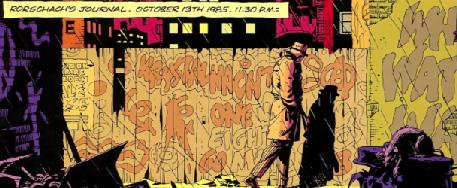
Watchmen revolutionized how comics were made and pushed the boundaries of the medium. Moore and Gibbons created a unique story and worked with colorist John Higgins on visual art to match. While some people see comic books as a glorified storyboard, Watchmen established comic books as art.
Watchmen follows a group of crime fighters after their glory days. The U.S. Government outlawed superheroes, excluding the ones who specifically worked for the government and military.
Moore and Gibbons set out to realistically depict a world where superheroes

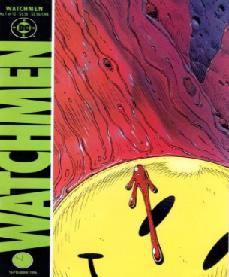
exist. Their take is that for someone to go out in tights to fight crime, they must be a little crazy. Watchmen follows these characters as they deal with someone murdering former heroes in the backdrop of rising Cold War tensions. The dark tone of Watchmen is v isually shown through Gibbons’ deep shadows. His art is clearly inspired by a classic noir comic style, adding to the dim atmosphere. The panel layout sticks to a classic nine-panel layout, only breaking out of that to create larger panels to expand the detailed artwork. This simple layout allows the story and visuals to stay consistent, keeping the reader engrossed in the story. This helps the reader get lost in the story, almost forgetting they are reading a comic book. Higgins contrasts the dark tone of the story with bright and rich coloring. The lush colors helps emphasize specific subjects of the panels and pays homage to comic book history.
Moore uses each character in Watchmen to discuss different social themes throughout the entire story. Rorschach is a detective character, used to discuss moral absolutism. Rorschach’s black and white view of morality shows his hypocrisy. He hates the criminals on the streets but will assault and kill them to get the “justice” he thinks they deserve.
Dr. Manhattan is the only superhero in Watchmen with superpowers. His powers are close to limitless, being able to manipulate matter in any way he pleases. He also views the universe without time, meaning everything that has happened or will happen happens all at once for him.
“The way Alan Moore uses
these characters allows him to discuss multiple different social issues through the lens of superheroes all in one story,” Alvernia Student, Nicholas Windsor, said. Dr. Manhattan discusses the meaning of his own personal life, being so disconnected from humanity. Moore used Dr. Manhattan to show that if a superpowered being like Superman were real, they probably would not care about humanity. They would feel a disconnect because of their inability to relate. Other characters like Owlman, Silk Spectre I and II, and the Comedian are used to discuss topics of sexism and the romanticization of war and vigilantism.
In 12 issues, Moore discussed many complex topics. Unlike film and TV, comics do not have the same pacing restraints, allowing Moore to discuss these topics thoroughly. Comics allow the reader to create their own pacing, giving more room for detail and nonlinear storytelling.
Watchmen perfectly combines the benefits of both film and literature to tell a visual story. Moore and Gibbons discuss important real-world topics of the time. They reflect the real-world fear of nuclear annihilation, while still keeping topics understandable enough for later generations.
Time Magazine included Watchmen on its list of the 100 greatest books of all time, showing that even outside of the genre of comics, Watchmen is an undeniably masterpiece.
Cole Windsor Contributing Editor
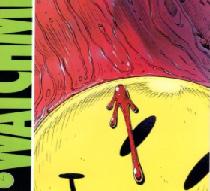
I. Watchmen Issue #1 Cover by Dave Gibbons, with color by John Higgins
Rorschach walking down a back alley. Dave Gibbons and John Higgins.
Community news
November/December 2025
Alvernia’s Community News Lab Feature: Thanksgiving Break Through the Eyes of Alvernia’s International Students
Laura Schlichting Espindola News Lab Writer
Thanksgiving Break at Alvernia University didn’t look like the holiday most Americans describe. While many students packed their bags and left campus to spend the long weekend with family, most international students stayed. Not because we wanted to skip the celebration, but because going home isn’t really an option when your family is thousands of miles away. For students from Brazil, Peru, Ecuador, and other countries, Thanksgiving isn’t something we grew up celebrating, so it doesn’t carry the same sentiment. Still, the week didn’t feel completely empty. Like every year, Pearl, the International Student Coordinator, organized activities so international students wouldn’t spend the break isolated in their dorms.
Originally from Hong Kong, Pearl knows exactly what it feels like to be far from home during holidays that everyone around you seems excited about. She attended all the activities with her husband and children, staying with us the whole time. “Our goal is always to make sure the students don’t feel alone. If they can’t be with their families, we try to create our own little community here,” Pearl said. Having her there and checking in with everyone, made the environment feel more comfortable. It didn’t replace home, of course, but it created a warm atmosphere that helped a lot.
Even though campus was way quieter than usual, the university still offered simple but meaningful activities. There was a Thanksgiving lunch, a movie day, where we got tickets to watch Zootopia 2 or the second part of Wicked, and a Black Friday trip to the King of Prussia Mall. For many of us, it was the first time experiencing these traditions in person. Some students had only seen Thanksgiving in movies or online. The break gave us a chance not only to participate but to understand how Americans actually spend the holiday, which is different from what you imagine when you only see it as an outsider. Hermione, one of the Brazilian students, shared something that a lot of us related to. “If this were Christmas, it would be much
harder. Thanksgiving isn’t ours, so we don’t really have that emotional connection. But when you see everyone around you celebrating, you do feel a little left out. The activities help a lot with that sense of belonging,” she said. And it’s true, even if you don’t celebrate it, being surrounded by a campus that suddenly becomes quiet reminds you that you’re far from home.
One of the highlights of the break was the Black Friday trip. The long lines, crowded corridors, and huge discounts showed us a very intense, very American version of Black Friday. Steve, a student from Peru, laughed and said, “We have Black Friday in Peru, but it’s not like this. The discounts are smaller, and sometimes the prices go up before they go down. Here, the sales are actually real.” Cláudia, also from Peru, agreed. “I thought the videos online exaggerated everything, but it’s actually huge. You understand why Americans take it so seriously.”
As a Brazilian, I had the same reaction. In Brazil, it’s common for stores to raise prices before the holiday, and everyone jokes about it. Seeing real discounts was surprising and honestly exciting. Even if you didn’t buy much, the whole experience felt like a cultural
moment of its own.
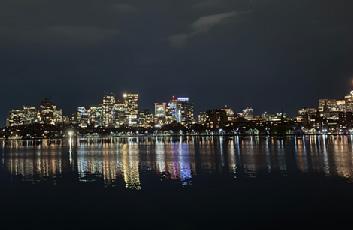
While some students stayed on campus, all the Brazilian students decided to use the long weekend to travel. Me, Pedro, and Hermione went to Boston, walking through historic neighborhoods and exploring a city completely different from Reading. What stood out the most was the strong British influence everywhere. It was in the buildings, the narrow streets, and the colonial landmarks. It felt like stepping into a different world, and it showed how diverse the United States can be depending on where you go. The trip wasn’t planned to be educational, but we ended up learning a lot about early American history just by walking around.
For international students, Thanksgiving break isn’t about turkey, football, or big family gatherings. It’s about figuring out what to do during a holiday that isn’t part of our culture, while still trying to enjoy the time away from classes. Traveling, participating in activities, or even just spending time with other international students gave us a sense of connection. Instead of feeling stuck on campus, the week becomes a chance to explore, learn, and experience the country in different ways.
Being an international student means learning from every moment, even the ones that aren’t connected to your own traditions. This Thanksgiving break at Alvernia was a good example of that. From watching how Americans celebrate, to navigating Black Friday, to exploring Boston.
Each experience, whether big or small, became part of our cultural exchange. Even though we were far from home, we still found connection, company, and moments that made the break meaningful in our own way.
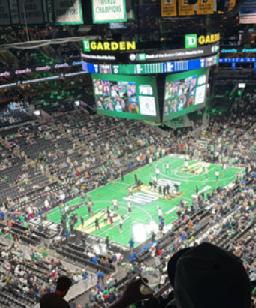
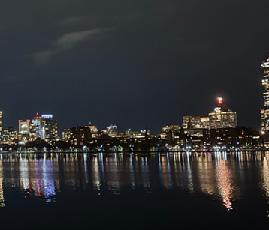
Image of Boston Skyline. Picture by Laura Schlichting Espindola
Image of Boston Celtics Game. Picture by Laura Schlichting Espindola
Community news
November/December 2025
Alvernia’s Community News Lab Feature: Golden Wolves vs. Roadrunners
AJ Salio News Lab Writer
Aston, Pennsylvania- A Saddening Turn of Events after Ramapo College breaks the 2-2 tie with a minute left in the Second period, sealing the deal with two more goals, leading to a 5-2 loss for Alvernia.
On November 21, 2025, the Alvernia club hockey team took on the Division II Ramapo Roadrunners from Ramapo College in one of their tournament games in their East Coast showdown tournament.
This tournament provides the team with an excellent opportunity to face opponents they wouldn’t normally encounter. The tournament features a non-traditional league competition that allows Division II and Division III schools to compete against each other.
Alvernia has won the title of this tournament three times in its past, dating back to 1970. This loss was the team’s second loss to Ramapo in this tournament, in what could’ve been anyone’s game.
Ramapo got to it first, scoring the first goal just over seven minutes into the period. The opening goal was quickly answered by a beautiful passing play from Evan Connibeer to Dom Garcia, with Logan Buch making the net fly. Connibeer received the puck from Reese Wilson and skated it up the ice. He ran into trouble and looked to Dom Garcia, dishing him a beautiful backhand pass. Garcia took the puck and
sent it cross-net to Buch, who put it right where it needed to be. Ramapo answered with a power-play goal, tipping the ice and gaining a 2-1 lead to end the first period.
The Wolves came into the second period hot with a top-shelf one-timer goal from Logan Buch, assisted by Evan Connibeer and Ben Mauer in the first minute of the second period. Phil Juzwick kept the puck and dumped it down to Mauer, who collected it and sent it up to Connibeer. Connibeer pitched it back to Mauer, who sent it across to Buch and into the net.
Unfortunately for the Wolves, the Roadrunners ran the clock down to the last minute, putting another one in the net with just under a minute left in the second period. The teams did an excellent job keeping the pressure on and thinking quickly on their skates.
With a total of 18 shots from both teams, the score went to 3-2 at the end of the second with the Roadrunners in the lead. During the intermission after the second period, Ian Dumas and AJ Salio spoke to resident hockey expert Joe Ciccarelli, who connected the team’s game from the day before to the matchup.
“The two-week rust that we had showed a little bit,” Ciccarelli said. “Today’s a completely different game. You can see it in the kids, you can see it in everybody. Everybody is on their game, I think everybody is playing their heart out right now. It’s a great game to watch.”
“This could be a four-two game,” he said. “It’s going to switch either way at this point. Whoever scores next, that’s who wins this game.” Ciccarelli was right.
Going into the third, Ramapo came in hot with a breakaway goal just under two minutes into the third. The Wolves maintained their aggression and kept putting it on net, but it wasn’t enough. Ramapo was able to collect the puck at center ice and pass it up for a quick twoon-one goal just two minutes after their previous goal. The pressure remained, and the shots kept coming, but the time was running thin. A hattrick’s worth of goals were needed to tie the game, but nothing came.
The game ended with a final score of 5-2 in favor of Ramapo, with 28 total shots from Ramapo and 29 from the Golden Wolves.
The Wolves held together strong against a Division II team, staying neck and neck until the exhaustion of the third. Alvernia will continue showing DII teams that they have what it takes to compete in this tournament. The Wolves will continue to push it on the ice, and they will fight their way to the top, giving it everything they’ve got.
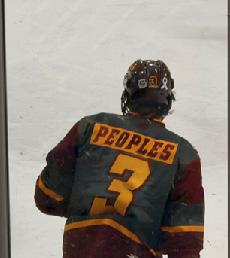
Image of player number 3, Haden Peoples, in action during the game. Photo by AJ Salio
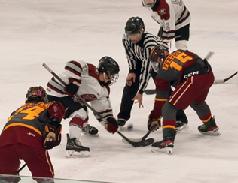
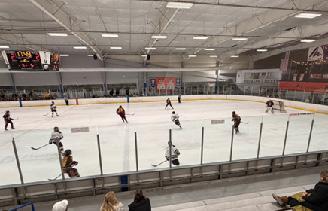
Action shot of the game. Photo by AJ Salio
The close game took place on Nov. 21st in the East Coast showdown. Photo by AJ Salio
Community news
November/December 2025
Alvernia’s Community News Lab Feature: How to Confidently Navigate the Alvernia Degree Audit
Alexis Oliveira News Lab Writer
Are you unsure how to use the Alvernia degree audit system? In this article, you can review step-by-step instructions to help you confidently navigate Alvernia University’s uAchieve degree audit system.
First, log in and access the audit. Go to MyAlvernia (my.alvernia.edu) and sign in with your Alvernia username and password. Once on the portal homepage, look for the “Self-Service” tile. For newcomers, it’s usually a blue or green box. Click the box.
After you’ve logged in, in Self-Service, click the “Student” tab at the top, then choose “Student Records.”
From the dropdown menu, select “Degree Audit (uAchieve).” You might also see a direct “Run Degree Audit” link on the Student Records page. Either route takes you to the same place. If it’s your first time, the system may prompt you to select your current program
(major, minor, concentration). You should be sure you pick the correct one. You are now ready to run a new audit.
On the uAchieve landing page, click the green “Run Declared Programs” button. Doing so will generate an audit for your official declared major(s) and any minors or concentrations.
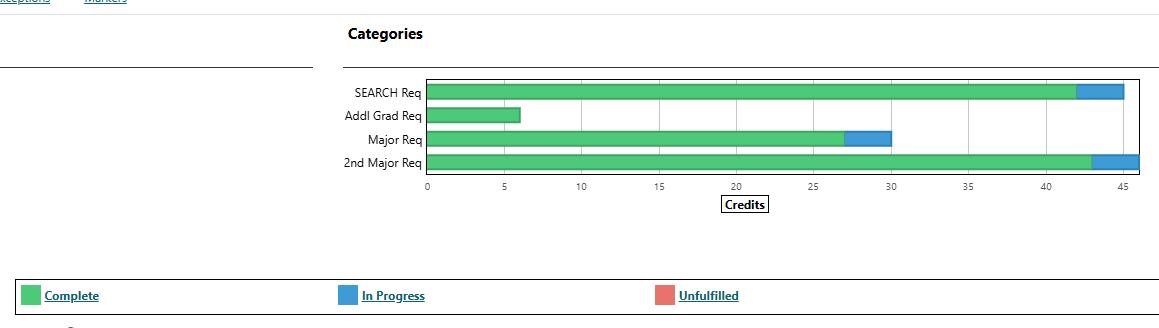
After a few seconds, your audit will load. At the top, you’ll see an overall progress bar (e.g., “92% complete”) and your expected graduation term.
Below the header are color-coded sections: Green checkmarks mean the requirement is fully satisfied, blue circles mean it’s in progress (registered or in the current semester), red boxes mean it’s still needed, and yellow diamonds usually indicate exceptions or substitutions entered by your advisor or the registrar.
Each major, general education (CORE), minor, or additional requirement appears as its own collapsible section. Click the small arrow or plus sign next to any
section to expand it.
Inside each expanded area, you’ll see exactly which courses satisfy each requirement, what’s still needed, and how many credits remain. Pay special attention to the “Still Needed” lines in red.
If a course you’re currently taking or planning to take should fit, it may show up under “Courses in Progress,” or you can use the “What-If” feature (top menu) to test how future courses would apply. Always check the “Notes” column too. Advisors often leave important messages about substitutions, transfer credits, or special permissions.
If you want to see the impact of changing your major might be on your progression, you can use the “What-If Audit” to test different majors or minors to see how your credits would apply. The “Planner” tab allows you and your advisor to map out future semesters. You can save or print your audit as a PDF by clicking the printer icon at the top.
If something looks wrong (missing transfer courses, a requirement showing dissatisfaction even though you took the class, etc.), don’t panic! Contact your academic advisor or the Registrar’s Office immediately. They will help you figure out what to do next.
In general, running a fresh audit before and after every registration period is a good way to stay on track toward graduation.
“You should know your program,” Dr. Ryan Lange, chair of communication and digital media, said. “You should understand your degree requirements. These requirements are clearly listed in the course catalog, which you are required to understand.”
In the section of the course catalog labeled “Student Academic Responsibility” is the following text, listed in italics for clarity:
Students are solely responsible for assuring that their academic program complies with the policies of the university. Advisors are provided to assist students
in planning their academic program and they assist with course selection and registration. Advisors are not authorized to change the established policy of the university.
“This statement applies to you,” Dr. Lange said. “Your continued enrollment here is your informed consent to these terms and conditions.”
Still, learning the ins and outs of the academic catalog can be difficult. Grace Weissenberger, first-year occupational therapy major, said the degree audit can be confusing and difficult to navigate. Fortunately, students can always ask faculty and staff for help.
Associate Registrar Allison Novak advises students to check their degree audit once per semester to ensure that they are on track and to avoid surprises later. She encourages students who are unclear about anything in their degree audit to contact their Navigator, their faculty advisor, or the registrar’s office directly for assistance.
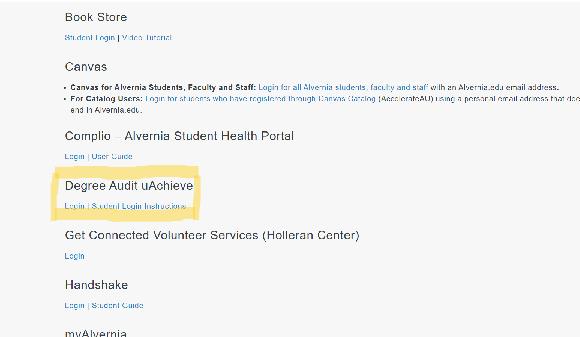
Screenshot of Alvernia’s Login page, location of link to the degree audit. Screenshot by Grace Wanner.
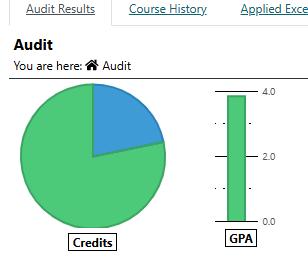
Image of degree audit’s credit completion pie chart. Screenshot from Grace Wanner’s degree audit.
Image
November/December 2025
Hector Malave
Contributing Editor
When I booked my solo trip to Las Vegas, I wasn’t chasing the bright lights, the nightlife, or the chaos. I was chasing silence. Maybe even something spiritual.
Instead of gambling tables and neon signs, I wanted to stand beneath the stars, far away from everything familiar. That’s how I found myself on a 14-hour tour through Death Valley National Park, a place so vast and otherworldly it feels like the Earth stripped bare.
I’d read about Death Valley before its record-breaking heat, its unforgiving terrain, its eerie beauty. But nothing could have prepared me for the way it felt to be there, surrounded by nothing but wind, rock, and light. This was more than a road trip but a pilgrimage into stillness.
The random passengers and the tour guide we left Vegas before sunrise. The city faded quickly, replaced by endless stretches of desert. The sky shifted from black to deep blue, then to gold as the sun climbed. When we reached the Death Valley National Park Sign, the first official stop, everyone piled out to take photos to prove that we’d crossed into another world. The guide told us about early settlers who nearly died trying to cross this landscape, about the salt flats and ancient lakes that once covered it.
I stood there a bit longer than the rest, looking at the endless road ahead. The silence pressed against my ears. Even my thoughts felt louder here. It was a feeling I didn’t know I’d been missing: the sense of complete solitude.
We got back on the road. The road wound ever-higher until we reached Dante’s View, perched over 5,000 feet above the valley floor. The moment I stepped out, the wind hit me like a cold wave. Below, the Badwater Basin stretched endlessly as a white, cracked mirror under the morning sun. I walked toward the edge of the overlook and just stood there. From this height, everything, even the mountains, looked small. The view was humbling in a way no photograph could ever capture. I thought about how long it had taken nature to sculpt this place, about how tiny our human lives are in comparison. For
travel
Alone in the Desert
thirty minutes, I barely spoke. I didn’t need to. The desert didn’t demand words, only attention.
After descending from Dante’s View, we arrived at Furnace Creek, an oasis in the heart of Death Valley. We stopped for a quick fifteenminute break, just enough time to grab some cold water and find some shade. The temperature had already soared to 115 degrees. I sat on a bench under a palm tree, watching the shimmer of heat rise from the ground. The desert had a rhythm: Slow, deliberate, eternal. It didn’t care about human schedules, phones, or noise. It just existed, unapologetically vast and patient.
Our next stop was Badwater Basin, the lowest point in North America at 282 feet below sea level. The salt flats stretched for miles, white, fractured patterns glowing beneath a relentless sun. As I stepped onto the salt, a strange calm washed over me. Every sound, from footsteps to voices and wind, seemed to be swallowed by the open space. I walked farther out until the group faded into tiny silhouettes behind me. It was just me and the Earth. The air shimmered. The horizon looked infinite. It struck me how alive silence can be. In cities, silence feels heavy, like something’s missing. But here, it felt packed full of history, of time, of something ancient breathing just beneath the surface. I bent down, touched the crystallized ground, and whispered a small thank-you to the desert.
By the time we reached the Artists Palette, the sunlight had softened, and the colors began to glow. The hills looked painted shades of rose, turquoise, and lavender swirling like brushstrokes. The guide explained how volcanic minerals created the colors, but it felt more magical than chemical.
I wandered alone through the paths, the rocks shifting from pink to gold as the light changed. Every turn revealed a new composition. It reminded me of filmmaking, how lighting, color, and texture tell stories without words. I felt an urge to capture it all, not just with my camera but with my heart.
It was in that moment that I realized this wasn’t just sightseeing, it was an act of worship. The desert was my cathedral. We returned to Furnace Creek for lunch, an hour to recharge and reflect. I found a shaded table and opened my journal. Words poured out: How the silence had changed me, how the land spoke in whispers, and how beauty can exist in the harshest places. I thought about how often I rush through life from classes to rehearsals to deadlines and how rarely I stop to breathe. Out here, there was nothing to prove. Just space to exist.
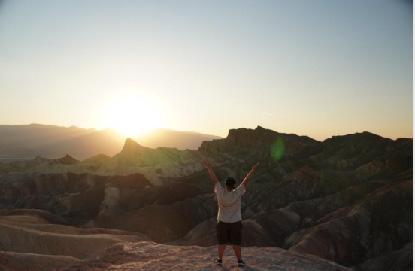
If Dante’s View showed the valley’s scale, Zabriskie Point showed its soul. As we climbed the hill, the sun began its descent. The golden light bathed the landscape, turning the badlands into rippling waves of bronze and honey.
I found a spot on a ridge and sat alone as the sun sank

turned off the van lights, and suddenly, the world went dark in a way that makes you hold your breath. Then I looked up.
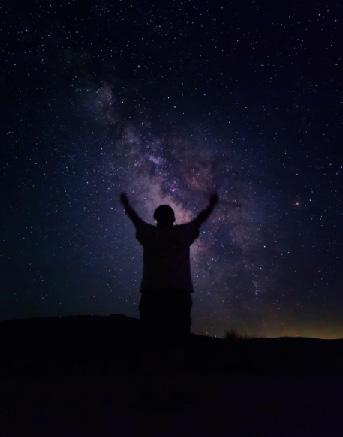
The Milky Way stretched across the sky above me like a river of diamonds. Billions of stars, each one alive and burning, older than anything we could imagine. It felt like standing beneath eternity.
No camera could capture it. No words could describe it. I just stood there, eyes wide, heart whole, realizing that every fear, every stress, every doubt back home was microscopic compared to the universe above me. That was the second magical moment, the one that made the entire trip worth it.
lower. The colors deepened orange, pink, violet, the sky on fire. It was one of the most magical moments of my life. Everyone was happy and hugging their family. Despite being alone, I was able to accomplish my goal and accept that loneliness can help you find yourself. Even the wind seemed to pause. I realized I wasn’t just watching a sunset. I was watching time itself, the Earth spinning beneath a glowing sky, reminding us that beauty doesn’t last forever, but that’s what makes it sacred.
Night fell as we made one last stop at a viewpoint deep within the valley. The guide
As the van rolled back toward Las Vegas, I stared out the window, replaying every image in my mind: The salt flats, the painted hills, the sunset, the stars. I’d gone into the desert alone, but I was leaving with something profound peace. Death Valley wasn’t lifeless. It was the opposite, alive with silence, color, and timelessness. It reminded me that sometimes, the best stories aren’t found in the noise of cities or crowds, but in quiet places where you can finally hear your own heart. When people ask what I did in Vegas, I tell them I saw the lights, just not the ones they expect.
Sunset View at Zabriskie point: Photo credit by Hector Malave
Admiring the Milky Way
Photo Credit: Hector Malave
November/December 2025
sports
NIL Deals Are Changing the Game
Janye Stanley Contributing Writer
Name, Image, and Likeness (NIL) has been a big thing in college for the last 3 years, ever since they passed the bill that college players are now able to get paid. College players can now get paid in college based on their fame, and how well-known they are, and many college athletes, mainly at the higher D1 levels, are making so much money off NIL.
Over the past few years, NIL has transformed college sports by giving athletes financial independence, reshaping recruitment strategies, and blurring the lines between college and professional athletics.
Before NIL, college athletes were prohibited from earning money from endorsements, social media promotions, or business ventures that use their name or image. Many athletes faced financial struggles despite generating millions of dollars for their universities and athletic programs.
The introduction of NIL rights has given athletes opportunities to make money from their talents and their hard work. For many athletes, NIL is more than just a paycheck. NIL is a chance to build a lasting personal brand that extends beyond their college careers.
The shift has also changed how college programs recruit and retain players. NIL deals have become a major factor in an athlete’s decision about where to play, as schools with stronger marketing networks can help athletes get bigger
sponsorships.
While this excitement and opportunity, critics argue that it has created an uneven playing field, favoring schools with larger budgets and media exposure. Still, questions remain about fairness and regulation.
The NCAA has faced backlash for setting national guidelines, as state laws and school policies vary widely. NIL could turn college athletics into a businessfirst environment, which defeats the purpose of college sports. Others see it as a long-overdue correction to a system that is outdated, that profited from unaided labor.
One thing is certain: college sports will never be the same. Athletes now hold more power than they ever have, and universities are adapting to a new kind of marketplace. Fans are witnessing a generation of players who are not only competing to win but also building their image and brand. The NIL movement has reshaped college athletics into a fast-evolving industry where opportunity is bigger than ever, and it is only going to continue to grow as the years go on.
“Do you think NIL is a good thing for college athletes?”
“I think NIL is a great thing because it allows students to get rewarded for the hard work that they put in. If you ask me, I think college sports are like a full-time job, and you have to be really committed to it, so I think it is a good thing that they are finally getting paid. I do think there should
be a limit on certain things, but overall I think it is really good and helpful,” Toron James said.
Beyond opinions, NIL has created both new opportunities and new challenges for college athletes. Some have used their platforms to start businesses, support charities, or give back to their communities.
For example, several athletes have partnered with local companies to promote small businesses or launched their own clothing brands. This shows that NIL isn’t just about money, but rather entrepreneurship, leadership, and using influence for a positive impact, because a lot of the time these student athletes have people who look up to them.
However, NIL also comes with pressure. Athletes now have to balance schoolwork, performance, and brand responsibilities, which sometimes feel more like a professional than a student. There are also a lot of risks of exploitation from companies looking to take advantage of players, especially the younger players. As NIL continues to grow, education and guidance will be crucial so athletes can make good long-term decisions.
“Do you think NIL comes with pressure?”
“NIL definitely comes with a little bit of pressure because if you are getting paid a lot of money and you aren’t living up to it or playing well, then the fans aren’t going to be
happy, which then leads to hateful comments and a lot of backlash, so I do think it comes with a lot of pressure. Even for the coaches, because their job is on the line, and if they are paying you a lot of money to come to their school, that means they really want you and trust you to lead their program,” Joshua Stewart said.
So would you say that college sports are now professional?
“College sports is definitely more professional now just because of NIL and now players are literally choosing their school based on NIL so I feel like college is definitely professional now, but I like what they are doing mainly because it makes it more competitive on the fact that now the top players aren’t going to big named schools anymore which gives them a chance to go far and win the national tournament as underdogs,” Joshua Stewart said.
In the future, NIL might even inspire more equality in college sports. Female athletes, in particular, are starting to gain more recognition
through social media sponsorship, where personal branding matters just as much as performance. This new era gives every athleteregardless of sport or gender- the chance to shine in ways that weren’t possible before.
While the debate continues, one thing is for sure: NIL has forever changed the college sports landscape. It has opened doors, sparked conversations about fairness, and given athletes the voice and power they deserve. As more athletes take control of their image, their stories, about their futures, the next generations of college sports will look very different.
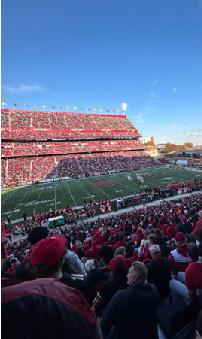
UMD VS Indiana Football Game: Pictures taken by Janye Stanley
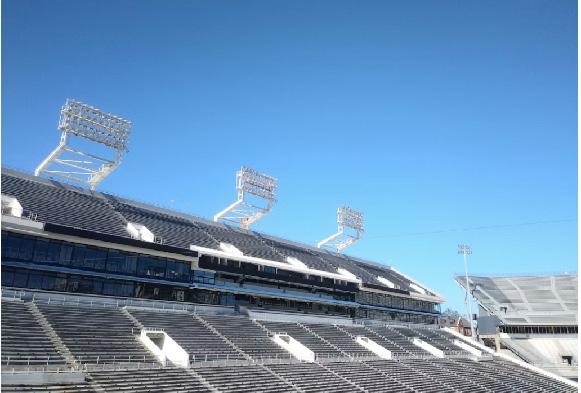
Picture of college football stadium. Photo from Unplash by Alex Ip.
November/December 2025
sports
UNDERNEATH THE HELMET: The Mental Side of Softball No One Talks About
Ryann Healey
Contributing
Writer
Softball is known for its physical toughness, diving catches, smashing balls over the fence, and pulling through for your team in high-stakes situations. These moments are what make the game exciting and worth the effort that players exert into their craft. However, behind the gear, the smiles, and the cheers, some players battle anxiety, burnout from long hours and performance pressure, and even depression. Despite their equal importance to the wellbeing of an individual, these negative effects on mental health are often sidelined by the physical aspect of the game.
Common Struggles in the Game:
In the words of softball star Jennie Finch, “softball is a game of failure.” Hitting with a .300 batting average (which is considered good by many coaches and players) means failing at the plate 7 out of 10 times. The constant lack of success becomes mentally draining to those who are judged by their stats in every game.
As with other sports, performance anxiety plays an integral role in the fluctuation of an athlete’s mental capacity. The growing pressure of looking good and not letting teammates down often creates noise in the heads of players who are already struggling mentally.
Injuries can also go together with anxiety caused by softball. A torn ACL or shoulder pain in your throwing arm takes you out of the game both physically and mentally. Watching other girls have their moments to shine while you sit off to the side can generate an identity crisis and leave players feeling out of place or useless.
“I am so cheerful and supportive of everybody out on the field, but secretly deep down inside I suffer from serious depression,” Mikayla Eckman, a sophomore softball player at Alvernia, said. Eckman developed a bursa on her rotator cuff from overuse on her throwing shoulder. Because of her injury, she has not been able to contribute to her team pitching on the mound as much as she had hoped. Lastly, most girls begin
their competitive softball careers at a very early age. Beginning from the age of 6 and playing year-round can grow tiring for many individuals who simply need a break. The lack of rest in one’s body directly correlates with the mental fatigue that soon follows. Other factors, such as toxic coaching, comparisons to other players, or team dysfunctions, can also lead to athletes growing tired of the game.
“There have been times where softball has prevented me from doing other things in life. But I wouldn’t be where I am today if it wasn’t for my dedication to this sport,” Angelina Sponheimer, softball player at Alvernia, said.
The Resources We Have:
Alvernia University’s softball program does an excellent job at prioritizing its athletes’ mental health equally as much as they do physically. During practice, their coaches have implemented mental health stations where the team talks about their days and catches up with each other. In the winter months, they set goals for the upcoming season and write about their strengths and what they think they can work on. These exercises are helpful in easing the mind and hearing the individual voices of all the players on the team. “I think our mental health stations during practice are a great way for us to unwind and talk about our day. It brings us together as a team and helps us learn more about each other,” Allie
Cirigliano, an Alvernia softball teammate, said.
As a college in general, Alvernia offers so many resources to students to seek help when struggling mentally. There is always access to mental health professionals at the counseling center on the main campus inside the Penn Medicine building. In addition, coaches, teammates, friends, and professors are all alternatives when you find yourself in need of someone to talk to.
You Are Not Alone:
“The stigma around mental health needs to be eliminated, especially in athletes,” Kira Del Grippo, a sophomore softball player at Alvernia, said.
She has recently taken on a new leadership role as an ambassador for the Morgan’s Message Program.
Morgan’s Message is a nonprofit organization created in honor of Morgan Rodgers, a former Duke lacrosse player, who tragically died to suicide in July 2019 after battling mental health challenges stemming from a sports injury. The organization, founded by friends, fellow teammates, and family members, works to showcase the stories of student athletes and encourage those hard conversations about mental wellness in athletics.
Through her advocacy, Kira hopes to honor Morgan’s legacy by creating a campus extracurricular activity where mental health is viewed as equal to physical health.
Closing Statement
All in all, mental health awareness does not make a player weak. The most powerful teams are made up of those who are strong physically and mentally, both on and off the field. As much as looking after bodily health is important, ensuring athletes are in the right state of mind is the most crucial contributor to performance in softball.
“Softball has the potential to be more than just a game; it can be a vehicle for change. By educating ourselves and others, supporting one another, and providing resources, we can make a significant impact on the lives of athletes facing mental health challenges,” Bonnie Eads, Extra Inning Softball, said.
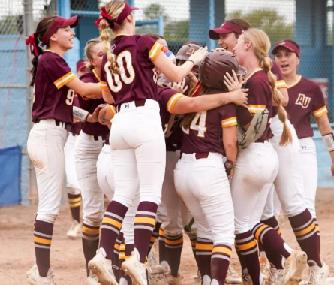
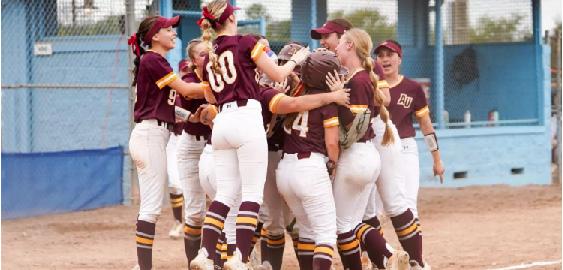
Alvernia University 2023-24 softball team celebrating their walk-off win against Penn State Berks on March 4, 2024photographed by Marisa Lombardo (Director of Sports Information)
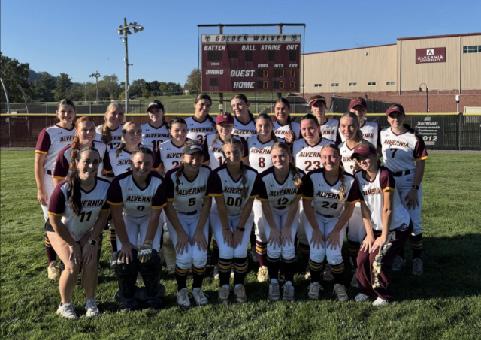
Alvernia University 2025-26 softball team on October 4, 2025, all smiles before their games against Dickinson – photographed by Jennifer Shroeder (Assistant Softball Coach)
sports
Philadelphia Union: Beast of the East
Spencer Hahn
Contributing Writer
Expectations for the Philadelphia Union were not high going into the 2025 Major League Soccer (MLS) season. Finishing 12th in the previous campaign, and with a new head coach going into the 2025 season, many wondered whether the club could ever get back to its historic peak. What the club ultimately delivered was not just a run of good form, but a statement win in the MLS Supporters’ Shield, and a side primed for a serious run in the MLS Cup Playoffs. How did they do it?
Since many readers may be unfamiliar with the Philadelphia Union, it’s essential to understand the club’s identity and history.
The Philadelphia Union was awarded an MLS expansion slot in 2008, and began playing in the league in 2010. Through coaching changes, the club gradually built a more stable path to success. Under head coach Jim Curtin, the Union finally found success with multiple playoff runs.
“Though we only won the single Supporters Shield, anyone who watched those teams under Jim Curtin will tell you we deserved much more.” said user Sneaky_Ben
The Union secured the 2020 Supporters’ Shield, which was the club’s first
major trophy. The Supporters’ Shield is a trophy given to the team with the best regular season record across both the Eastern and Western conferences.
“This was the first step towards the Union becoming a peer of the other great teams in this city.” said user Philly _Spurs
Another core element of the Union is the focus on youth development.
Philadelphia Union shares its facilities with the first team, Union II, and the youth academy. The Union boasts one of the best academies in the MLS, with several homegrown players graduating into the first team. This structure gives the Union an identity, as well as internal stability for things such as head coach changes.
“No one has close to the academy we do... Just because we aren’t getting retired Eurostars doesn’t mean we can’t win.” said user wavygr4vy.
Before the 2025 MLS season had even started for the Union, there was a significant coaching change.
On January 2, 2025, head coach Bradley Carnell was hired to replace Jim Curtin. Carnell was a coach with a reputation for an energetic and attacking play style and someone flexible with their tactics.
One of the biggest tactical
four draws, and three losses. This put them in a tight spot at the top of the overall MLS standings.
On October 5, the Union clinched the Supporters’ Shield with a 1-0 victory over New York City FC. The Philadelphia Union enters the MLS Cup Playoffs as the overall number one seed. The MLS Cup Playoffs format includes the top nine teams from each conference, with seeds eight and nine playing a single-elimination Wild Card match. The winner of the Wild Card advances to face the top seed.
The first round is a best-of-three series, while the Conference Semifinals, Conference Finals, and MLS Cup Final are singleelimination matches hosted by the higher seed. The Union has only reached the MLS Cup Final once in their history, in 2022, where they played a 3-3 draw after extra time, and then fell short 3-0 on penalties.
“2022 hurt, but I’d rather lose the MLS Cup in heartbreaking fashion, than go back to being irrelevant and/or embarrassing. We will be back there.” said user drewuke
With the MLS Cup playoffs right around the corner, there’s no better time to start supporting the Union on their journey through them. With many Philadelphia sports teams having their seasons come to a disappointing end or not looking promising for their upcoming season, the Union looks to close out 2025 with one more triumph for Philly sports.
changes for the Union was Carnell’s deployment of a 4-2-2-2-2 formation. This shape features two holding midfielders providing cover, two attacking midfielders ahead of them, and two forwards to press, stretch the defenders, and find space in the backline.
The Union thrived on vertical attacks and quick transitions. They’d use high or mid-block pressure to win possession back and attack before the opponents could reset. At the same time, the Union maintained compact defensive organization and effective width through overlapping fullbacks, balancing aggression with tactical control.
“The Union has been a breath of fresh air this year. We are much more fluid in our attack compared to last season.” said user Jas114
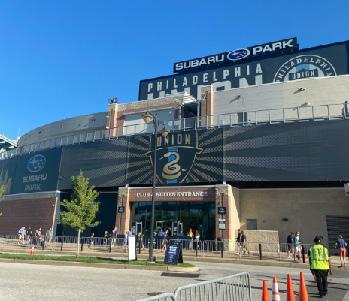
The Union kicked off the 2025 campaign on February 22 at Orlando City, SC. Their home opener came on March 1 vs. FC Cincinnati at Subaru Park. The season closed on Decision Day, October 18, away to Charlotte FC.
Straight from the early days of the season, the Union had a great run of form, which gave them momentum and confidence throughout the year. Midway through the season, the Union sat atop the Eastern Conference, boasting a record of ten wins,
The main entrance of Subaru Park, the stadium that the Philadelphia Union plays their home games at. Photo by Spencer Hahn
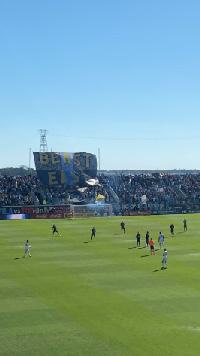
The Philadelphia Union is playing a match, while the supporters section displays a “Beast of the East” tifo. Photo by Spencer Hahn
November/December 2025
tutorials
Too Easy: How to be a Sports Graphic Designer
Sean Jordan
Contributing Writer
Graphic designing is one of the most fun skills to have. As complex as it looks, you can master it with practice. Using Adobe Photoshop may look very scary at first, seeing the many toolbars or layers panel may make you panic without giving it a try.
This will be a step-bystep article on how to make a sports graphic like a professional, giving you the key tools and using certain effects to make it look awesome. To start a graphic, obviously you need to have a subject. Once you have selected a subject, use the Selection Tool to select the subject from the image you have chosen. Once you have selected the subject, you may either hold the Shift key or click Select and Mask in the top middle tab. Holding the shift key will add to the subject, but if you use select and mask option, it will show you areas that are not filled in. You can use the Add brush

to get any areas the original mask missed.
After you have finished outlining the subject with the selection tool, use the keyboard shortcut CNTRL + J for PC users. For Apple users, you will use COMMAND + J. These shortcuts will make a copy of the exact subject you outlined.
Next is creating a dynamic background. Go to the Layers tab and click on the little circle button that is half filled in, which is called Create New Fill. It will give you a bunch of options, but clicking on Solid Color is a good starting place. A solid color will give you the freedom to choose any color as your background.
After the background has been created, use the
Rectangle Tool located on the tool bar on the left side of the screen. The Rectangle Tool is usually the third to last tool. If it’s not the third to last, look for the tool in the shape of a rectangle. You will then use the rectangle tool to make a thick white rectangle and a skinny blue rectangle just like the one in the graphic shown. Once you like how the shapes look and they are centered, use the keyboard short for copy and paste, Free Transform, Perspective and drag the bottom corners. Using the Perspective tool will give you the freedom to move the second set of rectangles to make it look like it is on the ground, creating the foreground. Once all of that is lined
up and centered with the first set of rectangles, grab a picture and blend it into the background by using the Blend Tool located above the layers. The default mode is “normal,” which is fine Now you are ready to move on to the text effect with vanishing points. Setting up text in Photoshop can be tricky, so take your time when you get to this point. First, type anything using the text tool located in the tool bar. Go to the layers panel and right click on the text layer. Once you right click on the text layer, select Rasterize, New Layer, Filter, and Vanishing Point. Be sure at this stage that the new layer is above the rasterized text layer, or it will produce unwanted results. You can always “undo” if things don’t look right to try again.
After following those instructions, create where you want your vanishing point/s by clicking anywhere on the screen. After your vanishing point/s are set,
Cocktails To Fall for

copy the text you have and use the Rectangle selection tool located in the tool bar. Rectangle selection looks like a dotted rectangle. Click and drag over where your vanishing point/s is.
Once you have done that, go back to filter and vanishing point, paste the text into the point, and then drag it into where you have created your vanishing point. You can play around here and make it as big or small as you want. That part might have seemed tricky, but you will get the hang of it.
Once that layer is created, click on FX located in the layers area and play around with different types of effects such as Bevel and Emboss, Stroke, Drop Shadow, etc.
When you’re finished, you should an awesome sports graphic that just needs finishing touches.
This may look overwhelming at first but follow these steps and you will be able to make a graphic like a professional.
Wanner
Grace
Managing
Editor
Bottoms up! It’s a beautiful cozy autumn at the university, making it the ideal time to shake things up with a perfectly curated Alvernia themed fall cocktail list.
These autumn concoctions will have a virgin and spiked option, so everyone of all ages can enjoy. If you’re interested in the new Alvernia signature cocktail, read to the end: It’s worth the wait.
Starting off slow and low with a twist on an old classic: Bernie’s Sloe Gin Fizz.
If you’ve never heard of sloe gin, it’s no trick, just a treat! Sloe gin is a gin infused with sloe berries, and while it is a liqueur, its alcoholic content is on the lower side, typically around 25%.
You’ll need:
1.5 ounces of sloe gin
Ice
Sprite
Frozen cranberries
Cranberry juice
Edible gold flakes (for the ‘gram)
Instructions:
Take a glass of ice and pour around 1.5 fl oz of sloe gin. Then pour equal parts
cranberry juice and Sprite. Top with frozen cranberries and edible gold flakes and voilà!
For the non-alcoholic version, omit sloe gin and consider non-sweetened cranberry juice.
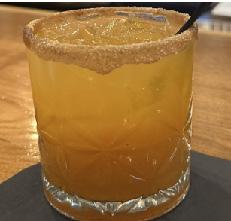
Next up, sticking with the classics, is the Fall Franciscan Old Fashioned. This drink features hints of cinnamon and pumpkin to give it that signature fall flavor paired with your favorite bourbon. What could be better on a cool November night? You’ll need:
3 fl oz of your favorite bourbon or whiskey (use Fireball for a cinnamon kick!)
1 spoonful of pumpkin puree
3-4 dashes of bitters
.75 fl oz of triple sec
Cinamon brown sugar for a sugar rim for the Franciscan “crown of glory.”
Instructions: Take a chilled glass and wet the edges for the cinnamon sugar rim. Roll the top of your glass in the cinnamon brown sugar until sufficiently coated (just a little past the lip is more than enough).
Keep it Franciscan and muddle a cherry at the bottom of your glass before icing lightly (a few cubes are adequate, or one big one).
Then pour 3 fl oz of your alcohol of choice, ice, triple sec, bitters and pumpkin puree into a shaker. Shake thoroughly, then gently pour into your glass. For a virgin version, replace the alcohol with either cold brew or apple cider! “It was a refreshing twist to an old
fashioned. The sweetness wasn’t overwhelming like I thought it might be. It was the perfect fall drink,” Trey Kirkpatrick, a local Berks County resident said.
Finally, for the Alvernia signature cocktail: An AU Royale. This drink is an elegant cocktail that features a touch of glitter from Goldschläger. It is a perfect balance of sophistication and fun while incorporating a dash of classic Alvernia gold.
You’ll need:
1 oz whipped or vanilla vodka, 1/2 tbsp Goldschläger, chilled champagne to top. Gold decorating sugar
Instructions:
Take your champagne flute and dip the rim of a champagne glass in water or vodka, then in gold decorating sugar.
Add the vodka, then Goldschläger, and finally top with chilled champagne of your choice.
Add a splash of vanilla syrup and edible gold flakes for the sparkle. For a non-alcoholic version, skip the vodka and Goldschläger and swap the champagne for sparkling cider.
If you decide to make any of these drinks, please enjoy responsibly. More importantly, if you make any of these cocktails, take a picture and tag us on social media! Cheers!
(Credited to Sean Jordan for designing this Graphic, Gator Designs is his company name on Instagram and TikTok)
The Franciscan Old Fashioned with a crown of glory sugar rim. Pictured by Grace Wanner.
November/December 2025
pop Culture
Applause and Backlash: The Divide over The Life of a Showgirl
Morgan Brown
Contributing Editor
Taylor Swift released her 12th album, The Life of a Showgirl, on October 3. She wrote much of this album during her 2024 European leg of the “Eras” tour. The album includes 12 songs, all drawing from Swift’s own life of fame, love, and performance. The album was released in coordination with Swift’s documentary entitled The Official Release Party of a Showgirl, which was showed in theaters throughout the country over the weekend of October 3. “I was so excited for her new album to come out,” Alvernia student Camille Griesser said. “I really didn’t expect a new album this soon.”
Musically, The Life of a Showgirl is a mix of soft rock and pop with upbeat tones. This track drastically differs from Swift’s last album, The Tortured Poets Department. The general sound of the album is energetic, polished, and confident.

“It is definitely a lot different from the last album,”
Alvernia alum Brianna Burkholder said. “This one is more upbeat and a totally different vibe.” Lyrically, the album is a journey from public performance and private emotions. This is evident in tracks such as “Father Figure,” where Swift flips expectations by asserting that the showgirl who is often perceived as the spectacle wields control: “This empire belongs to me,”. one lyric in “Father Figure” reads. Additionally, the title track featuring Sabrina Carpenter further explores resilience in the face of criticism, and despite the fame, she remains undeterred: “And all the headshots on the walls /
Of the dance hall are of the bitches / Who wish I’d hurry up and die / But I’m immortal now, baby dolls.”
Other songs on the track list include “The Fate of Ophelia”, “Opalite”, “Elizabeth Taylor”, “Wi$h Li$t”, “Wood”, “Actually Romantic”, “CANCELLED!”, “Eldest Daughter”, “Ruin The Friendship”, and “Honey”.
“My favorite song off the track is ‘The Fate of Ophelia’,” Alvernia student Caroline Martin said. “It has a catchy rhythm to it”.
The album debuted at the top of the Billboard 200 with more than 3 million dollars in album sales. The 12 songs also took the top 12 spots on the Billboard Hot 100, with “The Fate of Ophelia” taking
number one.
“Initially I didn’t know what to think,” Burkholder said. “But the more I listened to it the more I liked it.”
However, the album has also received a lot of criticism with many fans describing the lyrics as “cringe’ or “superficial”. Many Swifties also had expectations of the lyrics being more poetic and narrative-driven like in past albums. The songs also didn’t live up to fans’ expectations of the glamorous and dramatic imagery used throughout the marketing.
Many listeners felt the presentation led them to expect a darker and more revealing album. Some longtime fans have also expressed that the album is less emotionally connected to Swift than it typically is. Additionally, critics have described the album as lacking narrative depth with some even accusing Swift of using AI. “I really didn’t like it at all,” Griesser said. “It seems very rushed and is not her
best work.”
Swift has welcomed criticism, framing the disapproval not as failure, but a part of the art making process. The artist has also expressed that this album was meant to be different from past works as she is exploring a more fun, scandalous, and flirty side of her persona. “I was really disappointed with the album” said Alvernia student Makayla Biddle. “I felt like none of the songs really fit together as there was no real story being told. “I felt really disconnected from her.”
Despite what critics, fans, and the media have been saying about The Life of a Showgirl, the album has undoubtably already seen success, already the fastestselling album of the century. Ultimately, the album stands as a bold pivot in Taylor Swift’s career, embracing the spectacle and provoking debate, reminding us that in art, not everyone has to clap for the show to go on.
Bad Bunny Breaking the ‘Bowl
Jennifer De la cruz Contributing Writer
On February 8, 2026, the Super Bowl halftime show will be led by Puerto Rican artist Bad Bunny, which will be the first time it hosts a male Latino headliner.
This year’s Super Bowl will be held at Levi’s Stadium in Santa Clara, California, the first time it has been there since 1985.
The joint announcement between the NFL and Bad Bunny lit social media on fire. Thousands of fans shared their excitement, while others critiqued Jay-Z for choosing a Spanish-speaking performer for an English-speaking audience.
Baseless claims about Bad Bunny not being a U.S. citizen and not being able to perform in English are in turn raising debates about belonging, identity, and what it means to be “American.”
“To me, having Bad Bunny on stage means showing the world, and specifically America, that not everybody is bad.” Shantelle Duarte said.
“Some people just want to do some good, and the picture that people in power are making, isn’t the real picture.”
Bad Bunny is no stranger to the Super Bowl Half Time Show. In 2020, fellow Puerto Rican Jennifer Lopez headlined the 54th Half Time Show, accompanied by Bad Bunny, as well as Columbian natives Shakira, J Balvin, and her daughter, Emme Muñiz.
The Super Bowl has also welcomed Venezuelan Gustavs Dubamel and the British band Coldplay in 2016. Jaime Luis Gomes of the Black-Eyed Peas hails from Mexico also performed at the Super Bowl in 2011.
Puerto Rico has been an American possession since the end of the 19th century. In 1898 the Treaty of Paris was signed, ending the Spanish American War and ceding Puerto Rico to the United States.
Following this event, in 1917, the Jones-Shafroth Act was signed, granting U.S citizenship to Puerto Ricans at birth. Since 1952, Puerto Rico has been like a statehood, but without the right to vote if you are a resident on the island.
The Super Bowl will be Bad Bunny’s only performance in the U.S. as the rest of the stops on his Debí Tirar Más Fotos world

tour will be outside of the country. Bad Bunny has said he has been concerned about Immigration and Customs Enforcement (ICE) targeting undocumented fans at his concerts.
“I think that is good that he is not doing any tours in the U.S. if he really thinks about immigrants,” Fernando Mejia said. “That way he doesn’t take bad credit from Latino community.”
Bad Bunny is controversial among conservatives. By singing primarily in Spanish, he is part of a cultural movement celebrating Spanish-speaking countries and elevating Latino identity. Doing so at one of the world’s biggest stages has upset people who believe America should be a white Englishspeaking ethnostate.
Despite racially motivated complaints and attempts at character assassination by right-wing media, Bad Bunny decided to stay authentic to his language and culture, proving that Spanish music can dominate charts and stadiums without translation.
“Being an American means being diverse. It means not fitting into any category. This country was made by immigrants.” Shantelle Duarte said.
“Nobody other than Native Americans are originally from America. So, anybody who thinks that they are American in some way, shape, or form are an immigrant.”
What does it truly mean to be American in a country as diverse as the United States? Can other cultures take the stage?
We will see if the backlash against Bad Bunny will materialize in a measurable form, or whether it’s only artificially generated racist outrage.
Taylor Swift singing “Delicate” at The Eras Tour (Vancouver, Canada) 12/07/2024 image by Morgan Brown
Image source from SAXS. Shows Bad Bunny’s announcement that he will be performing at the 2026 Super Bowl.