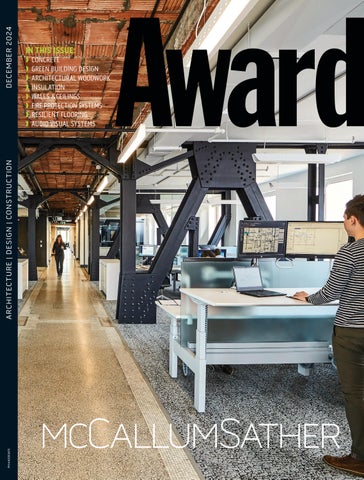
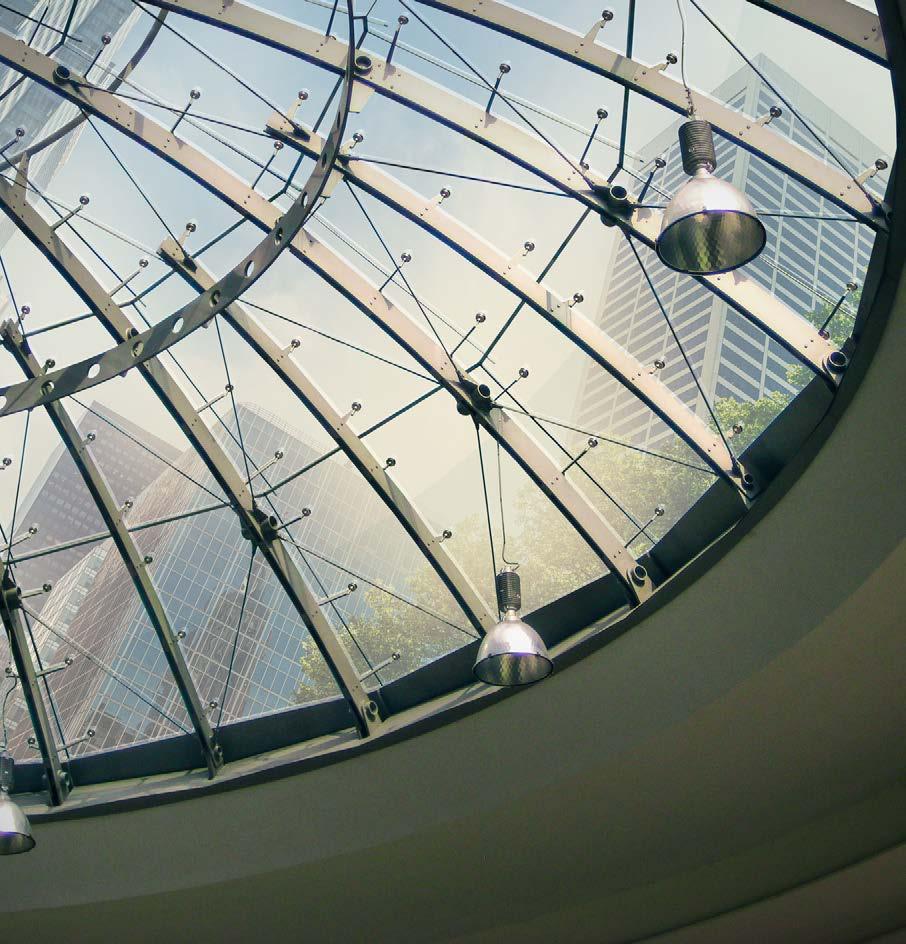
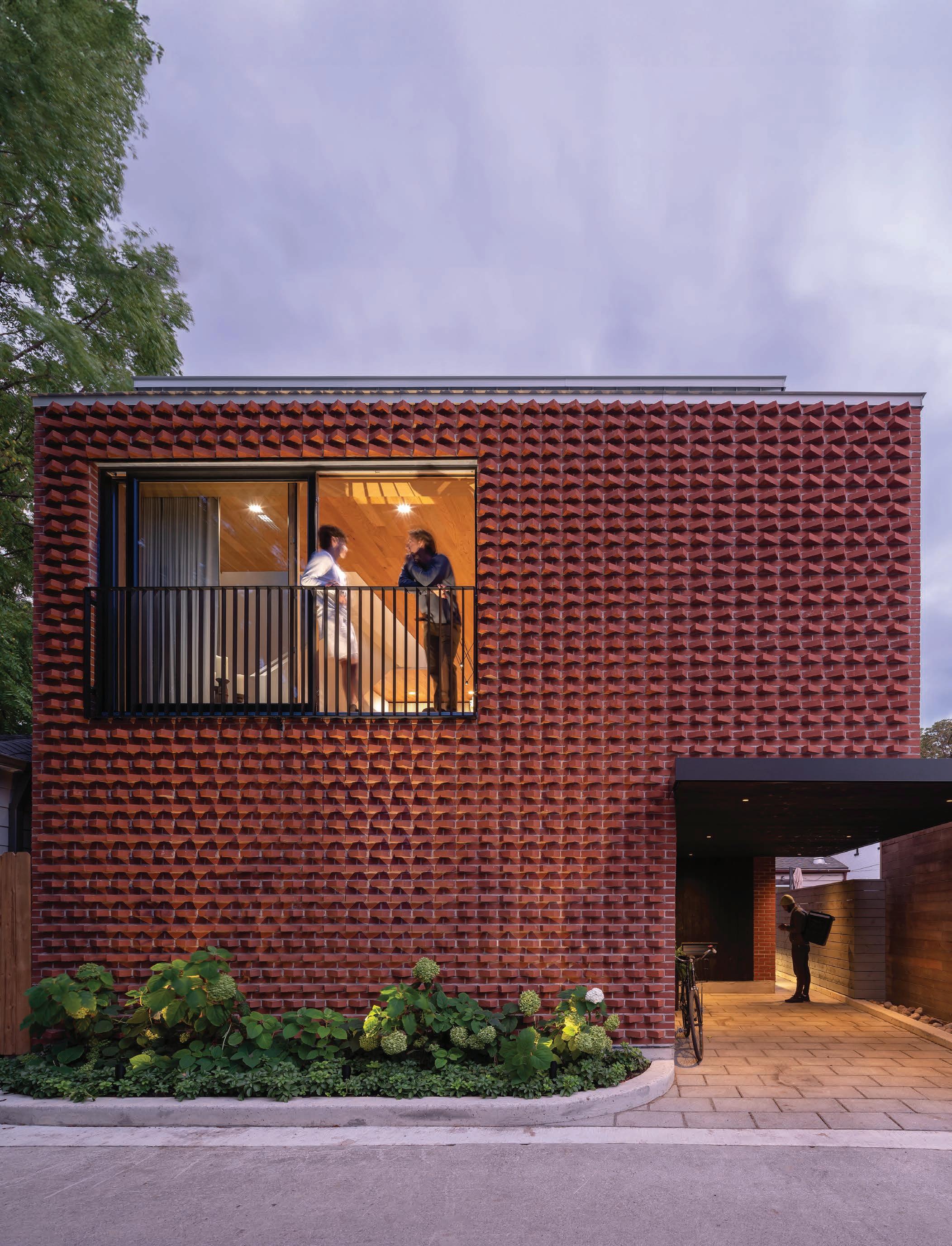
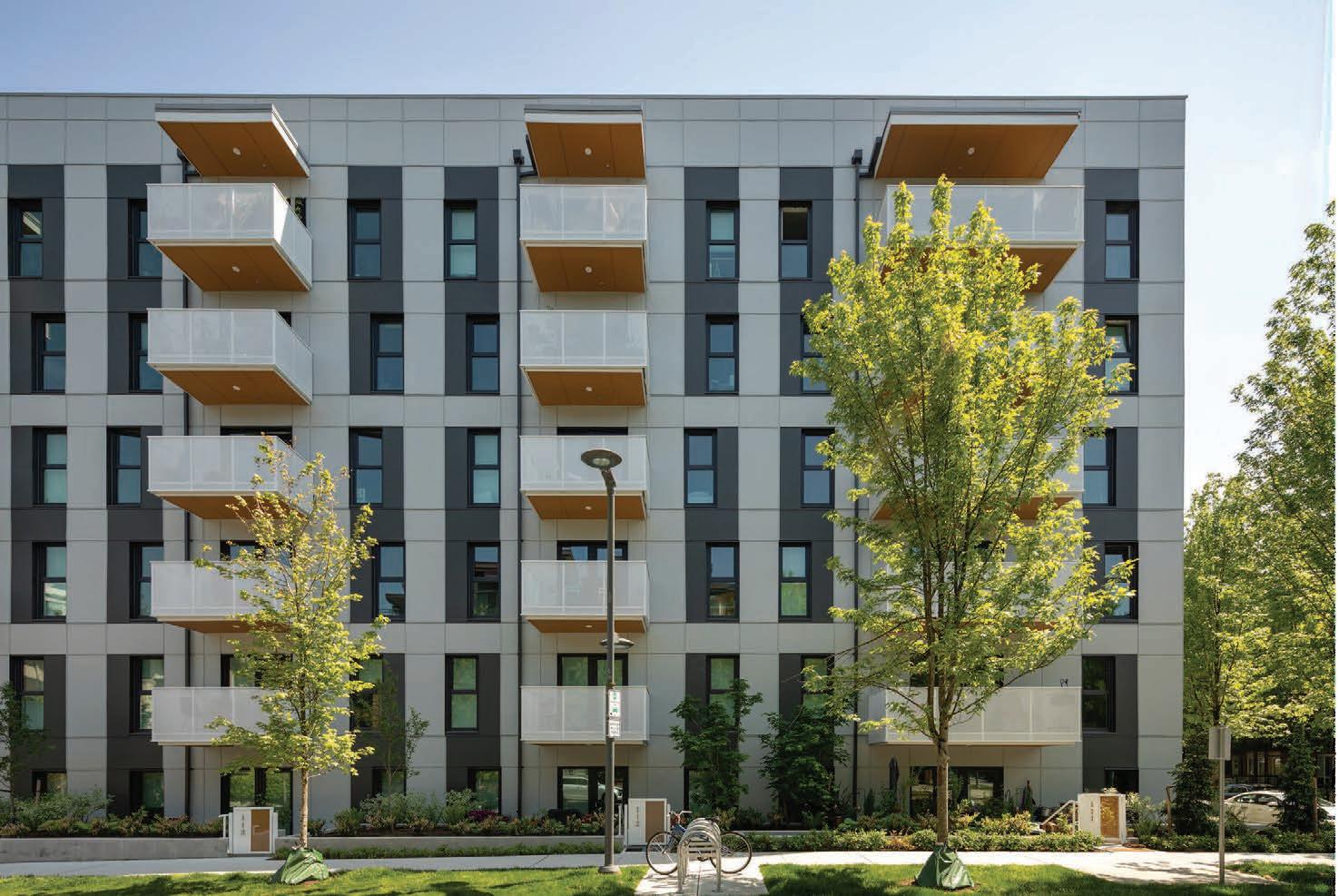
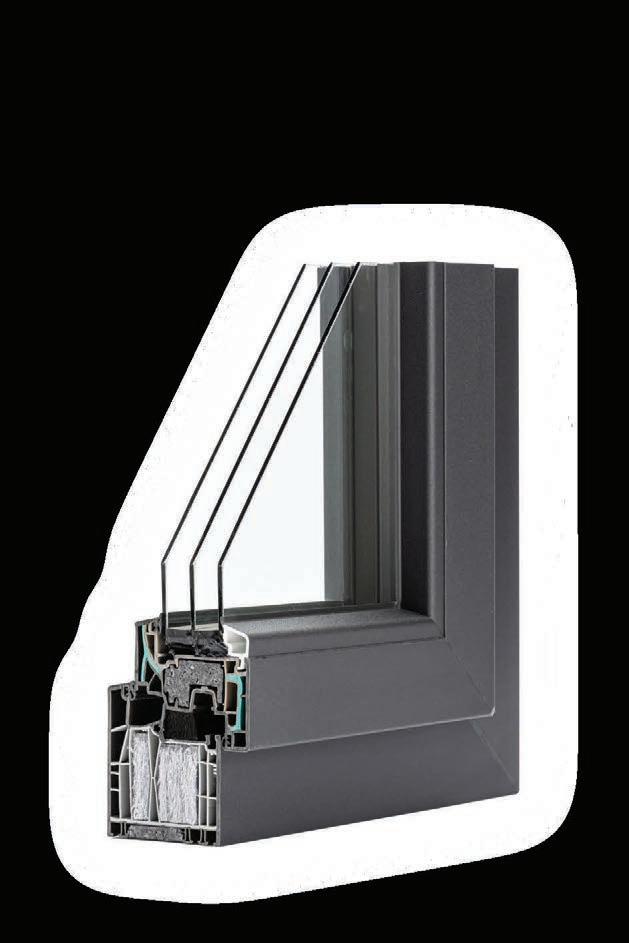
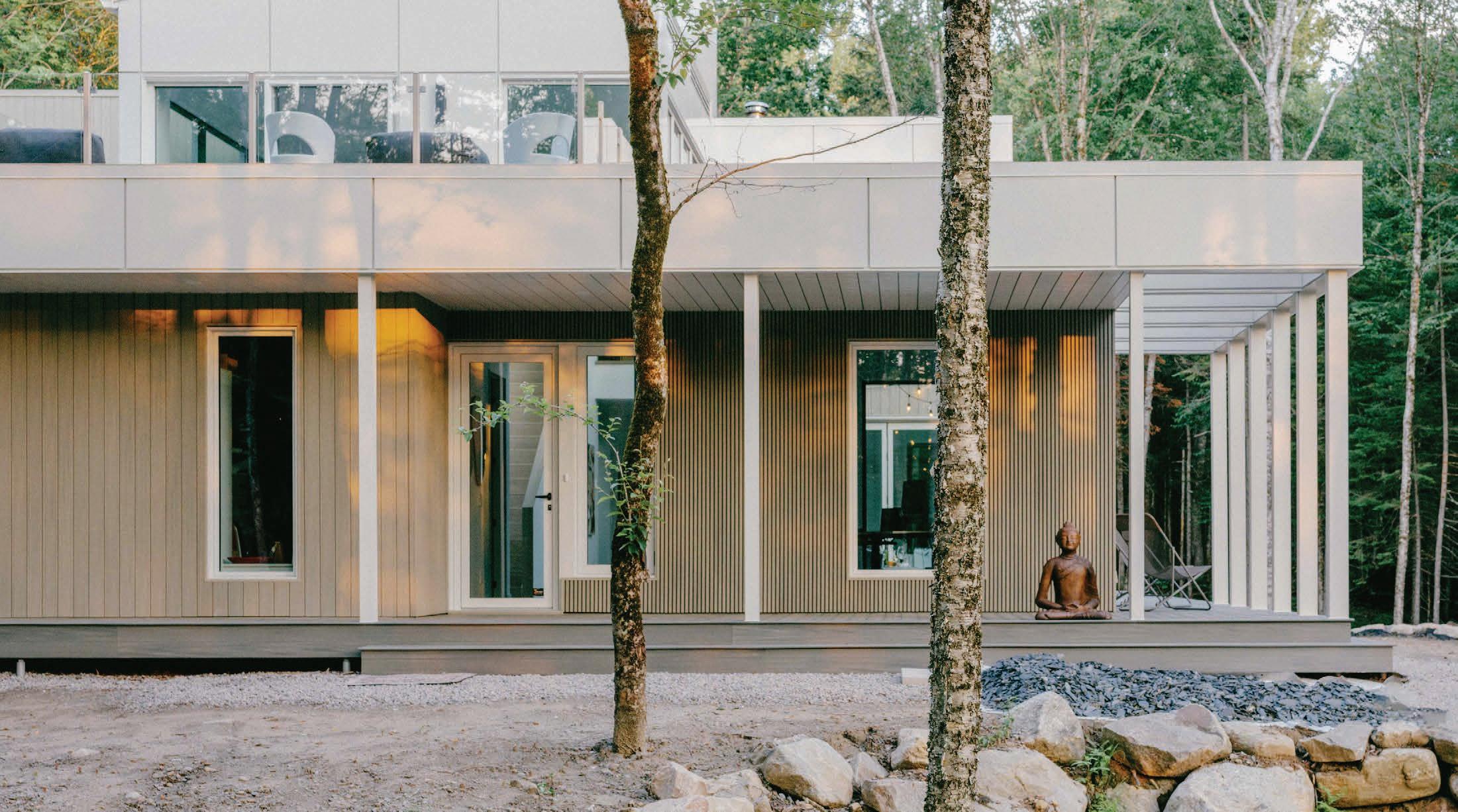
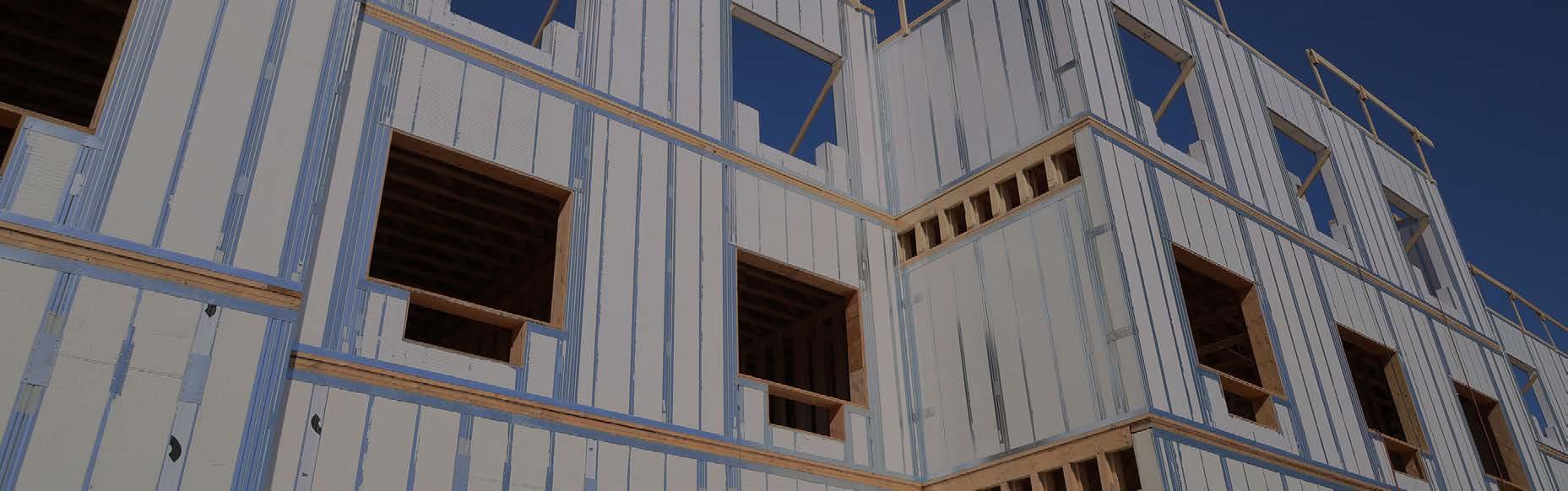
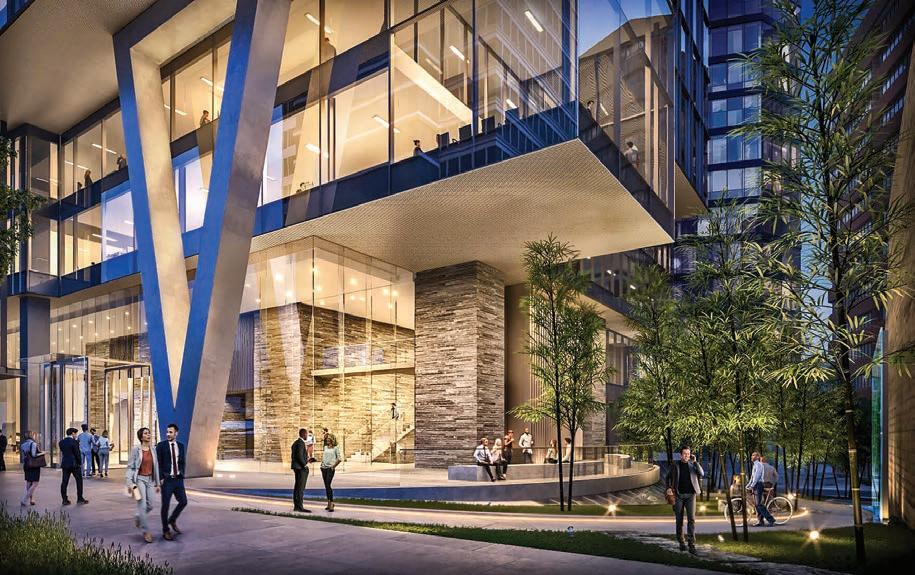
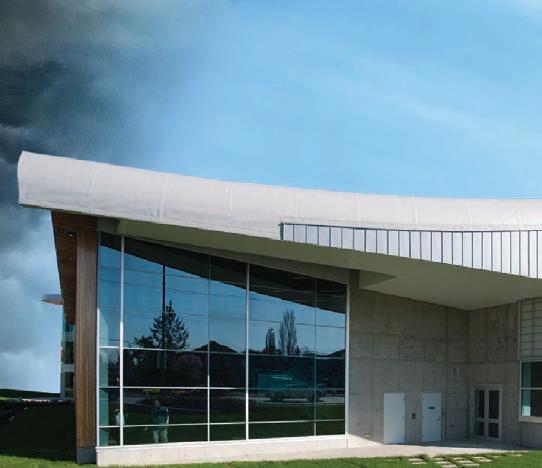
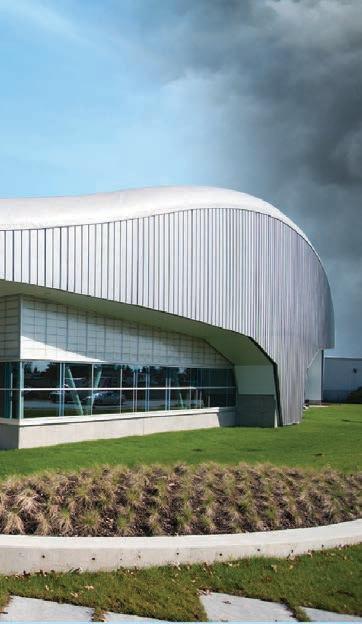
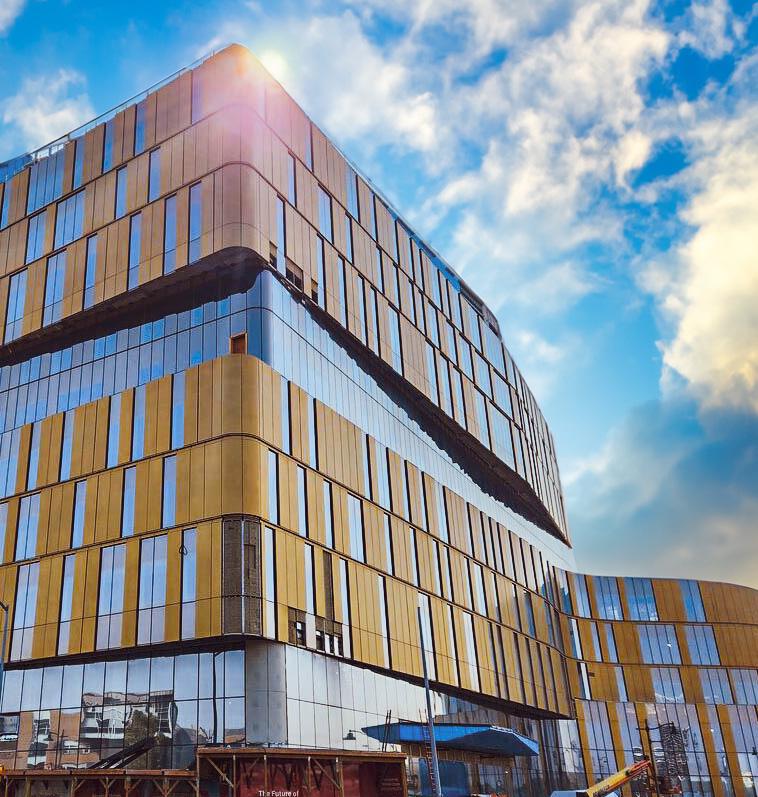
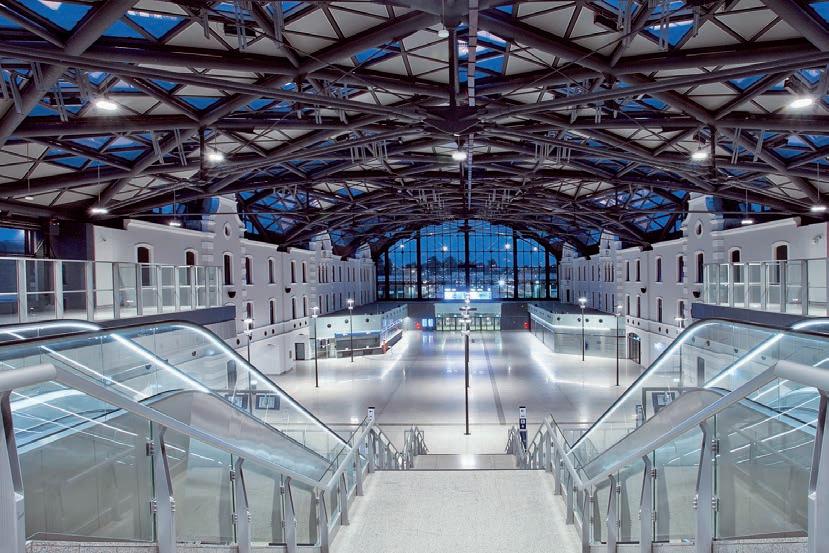
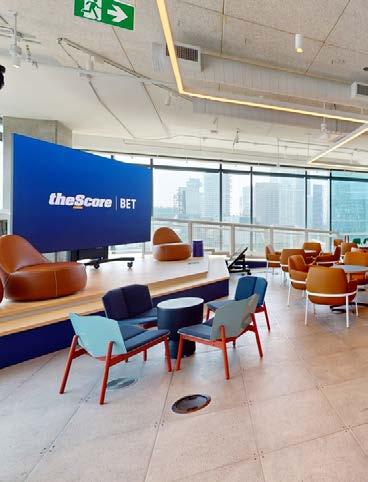
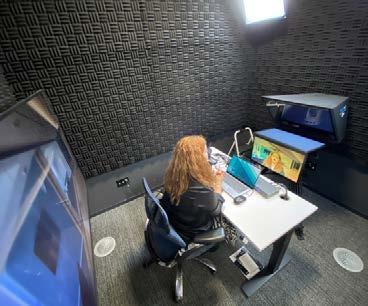
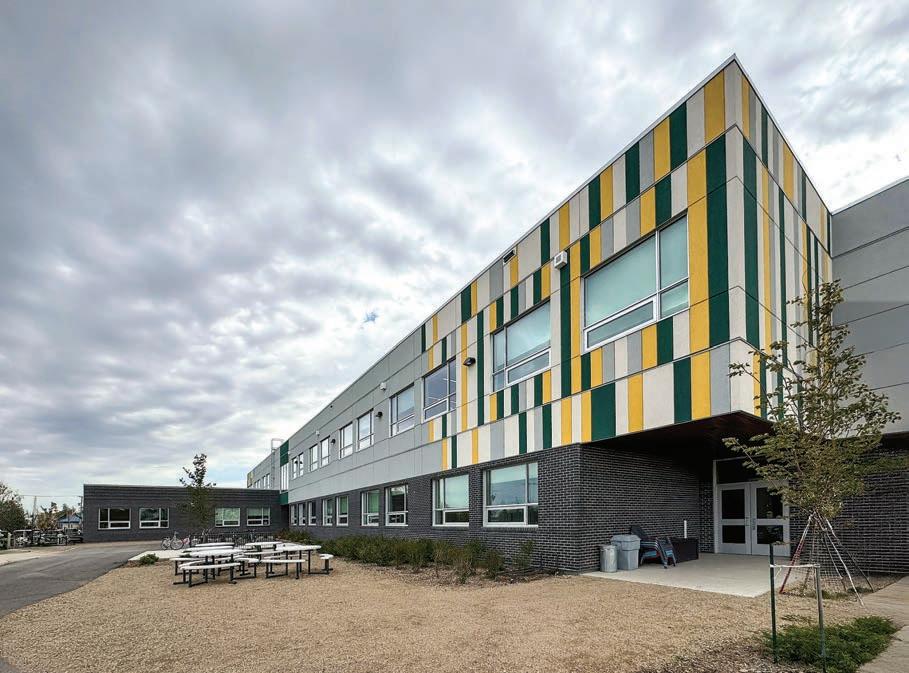
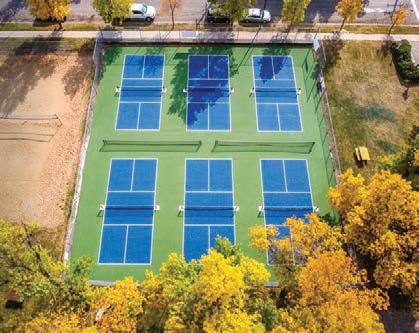
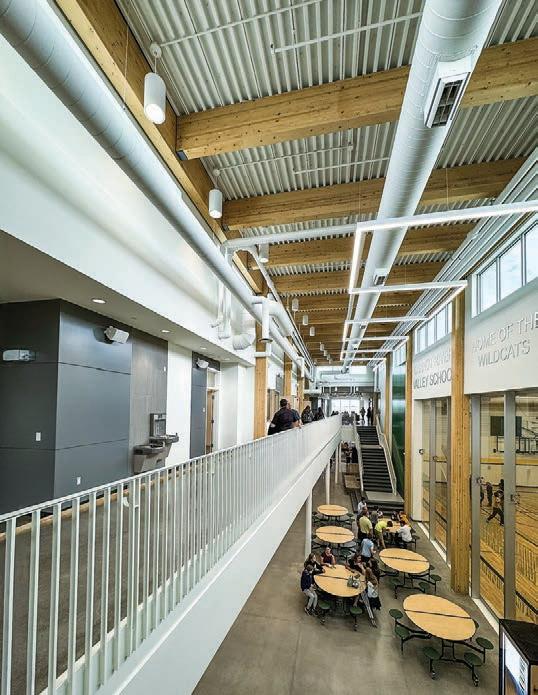
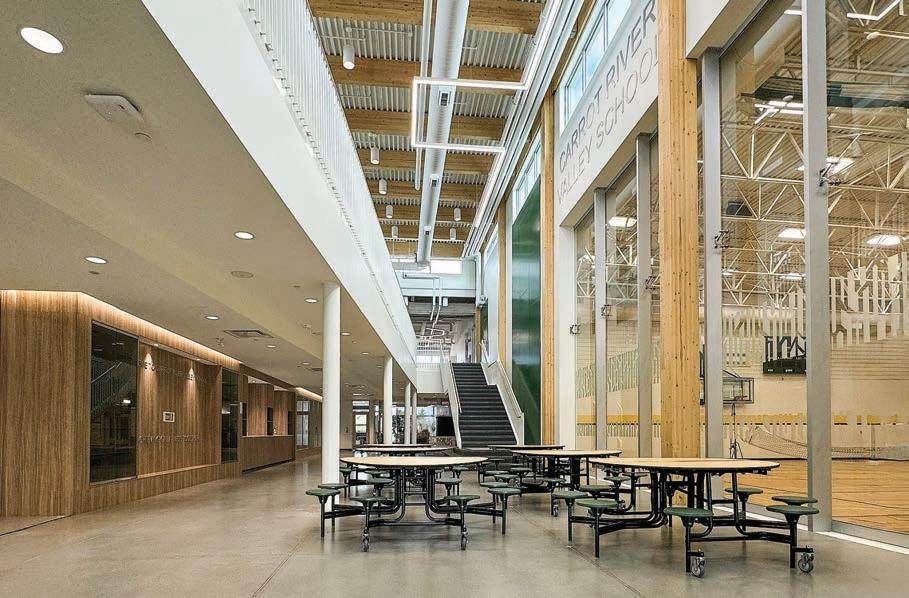
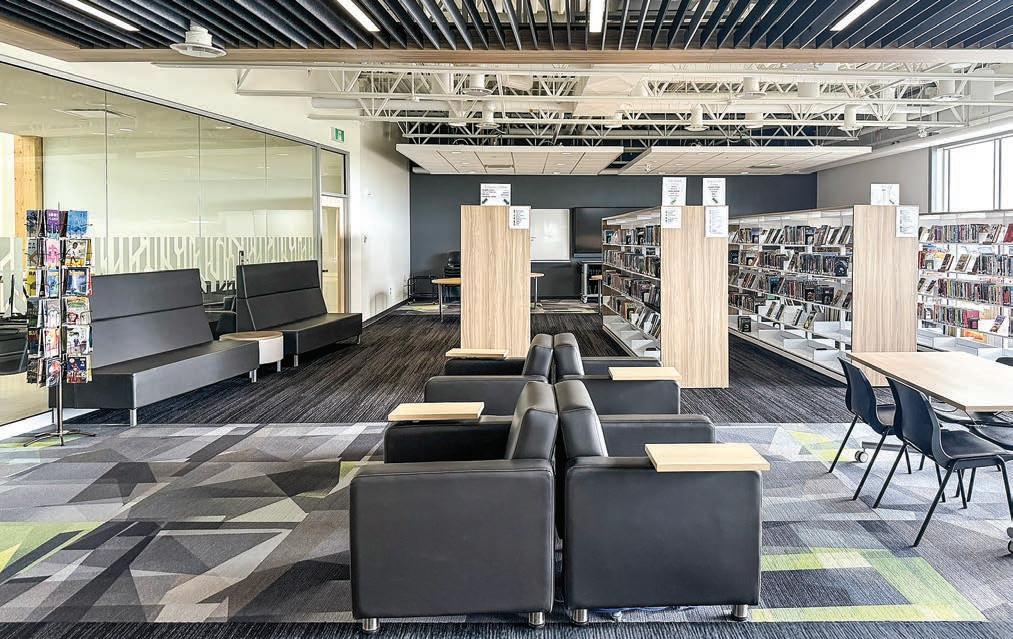
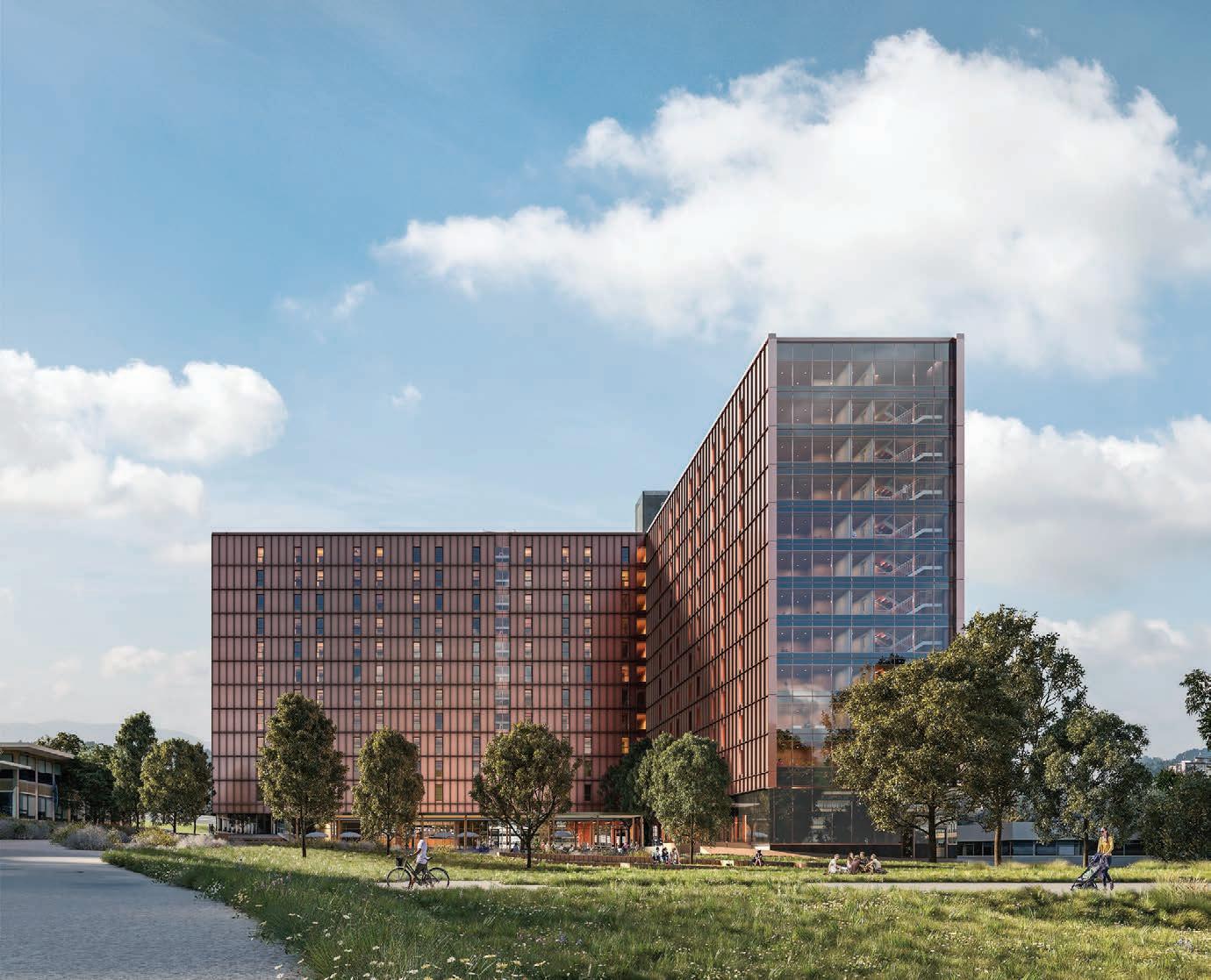
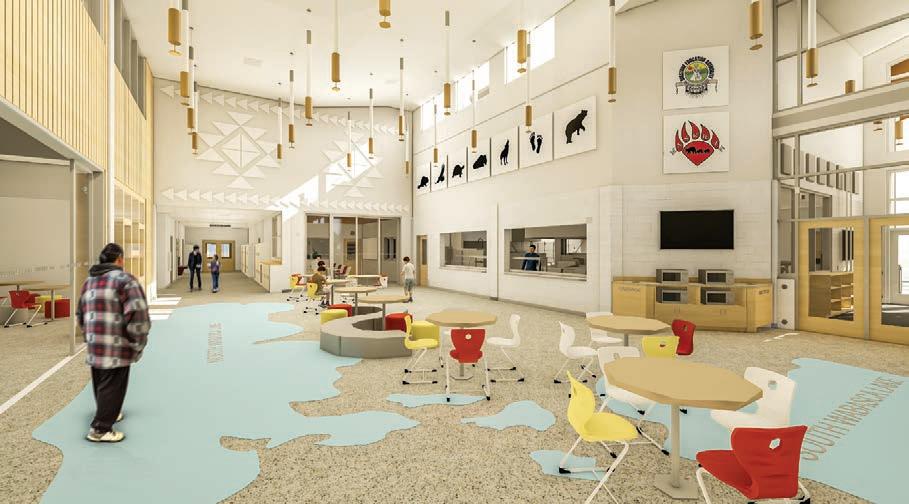
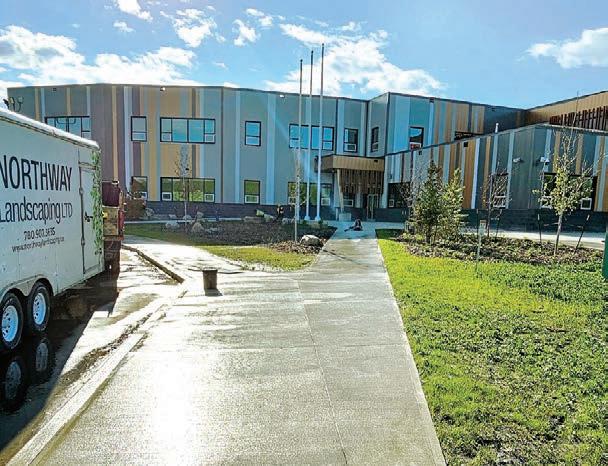
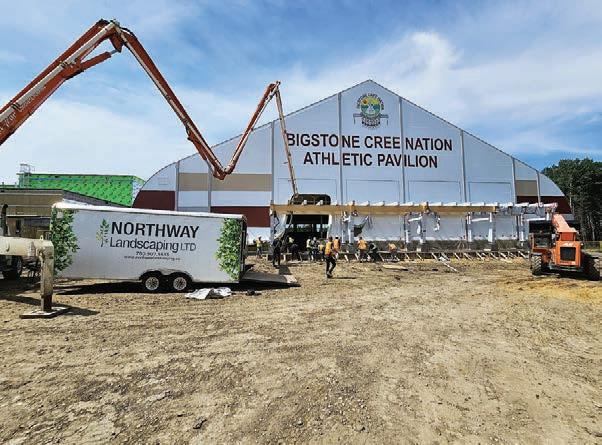
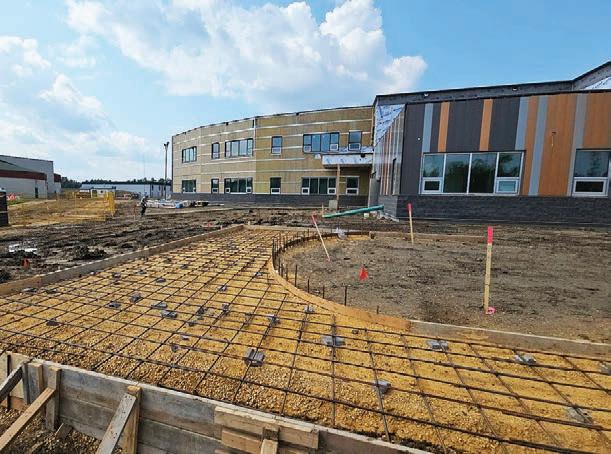
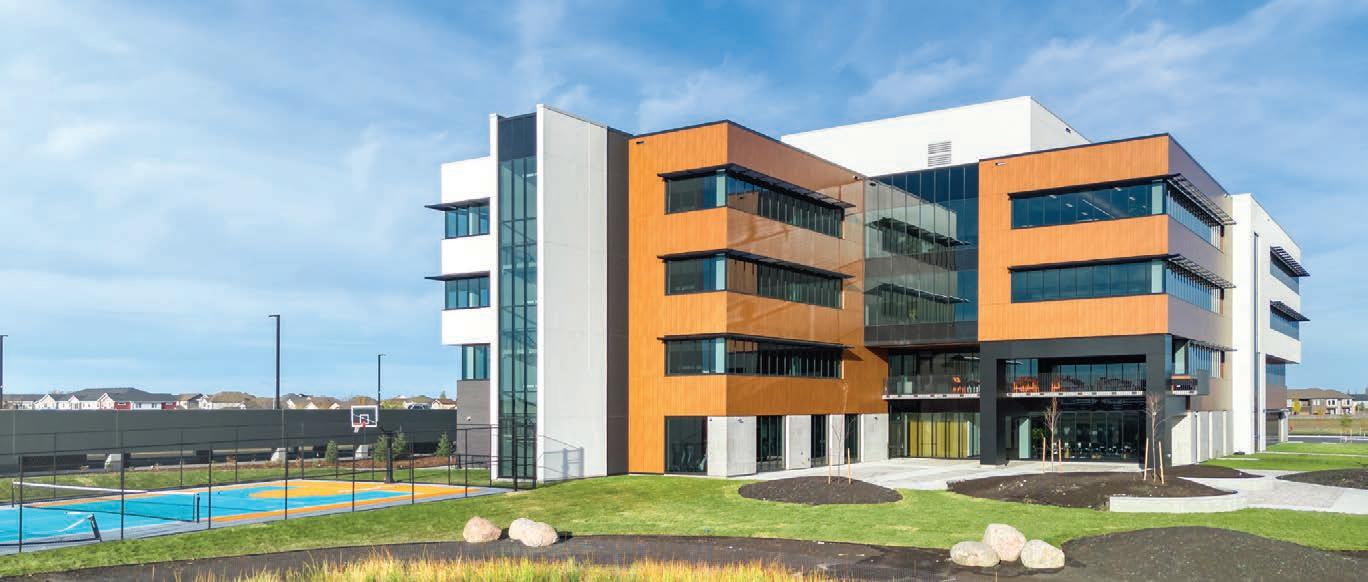
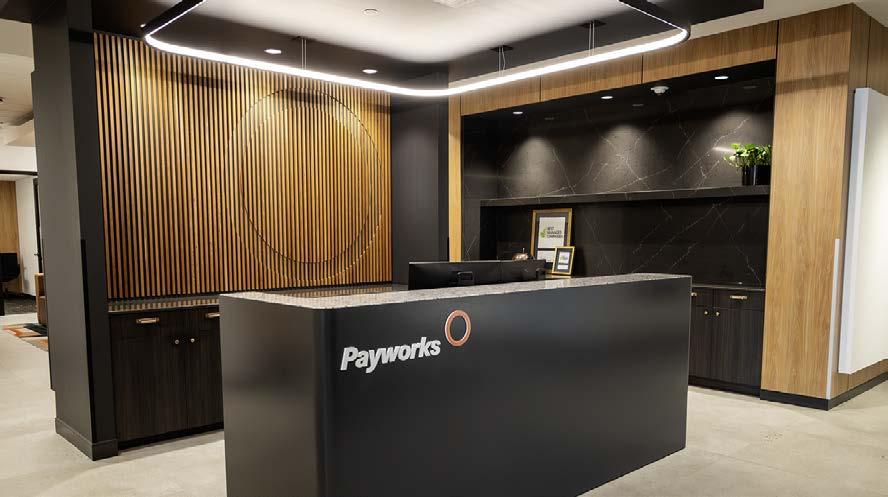
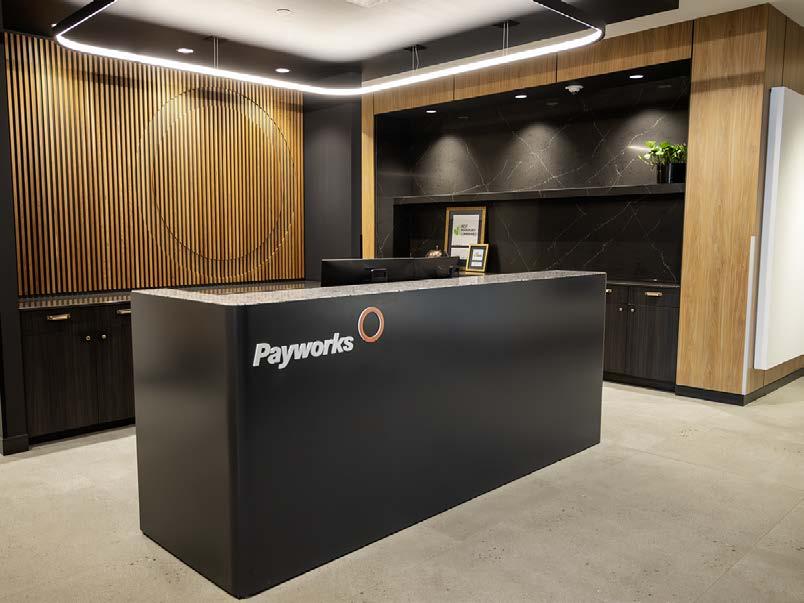
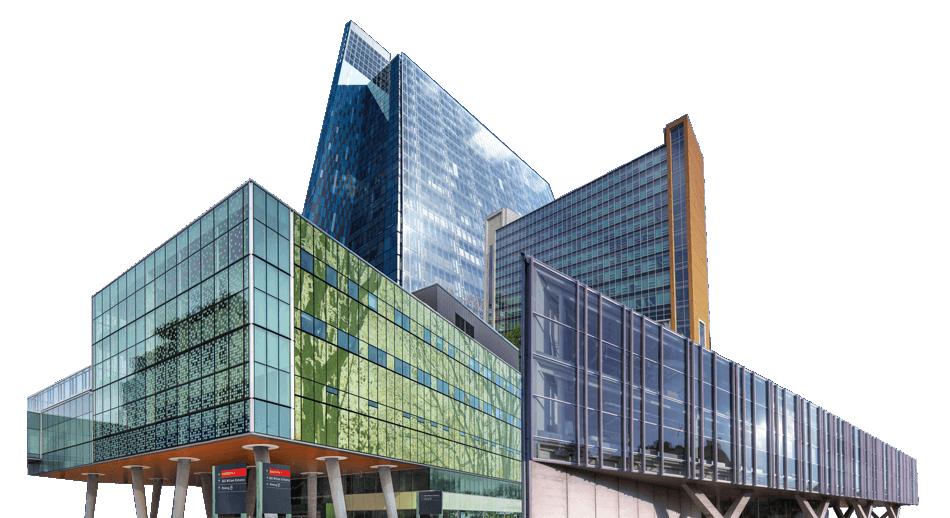
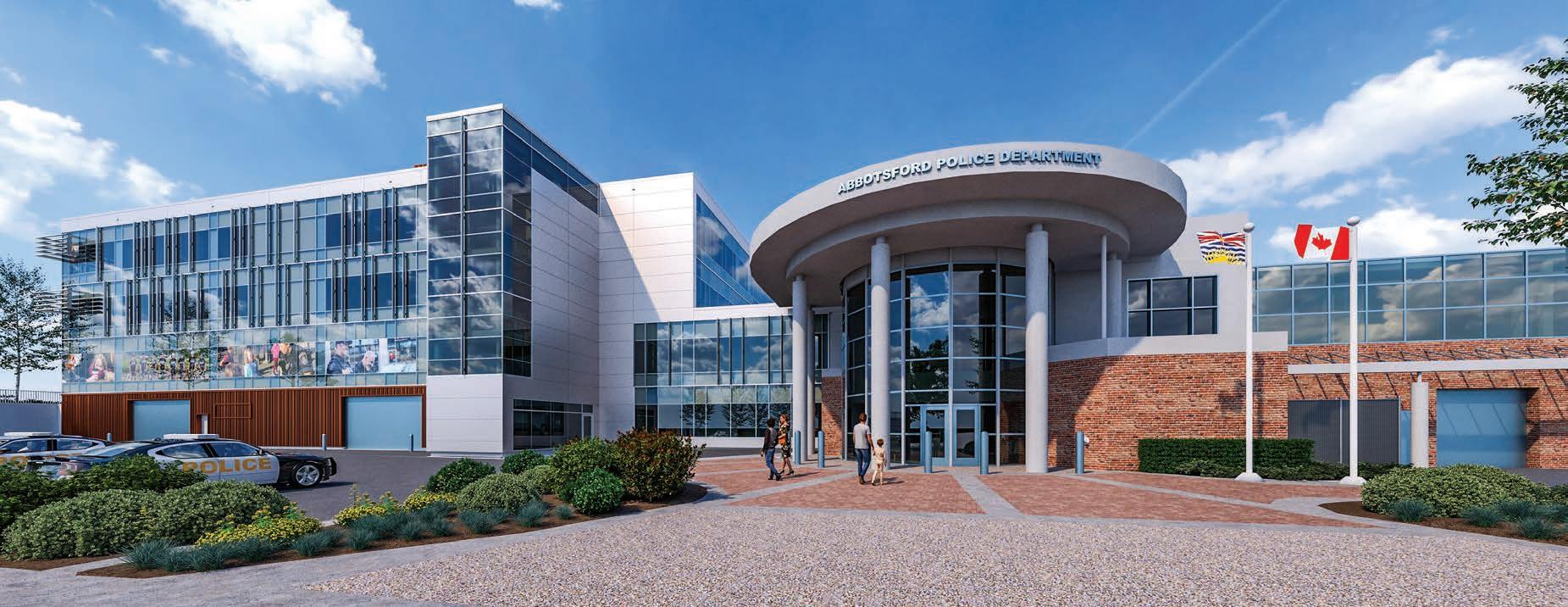
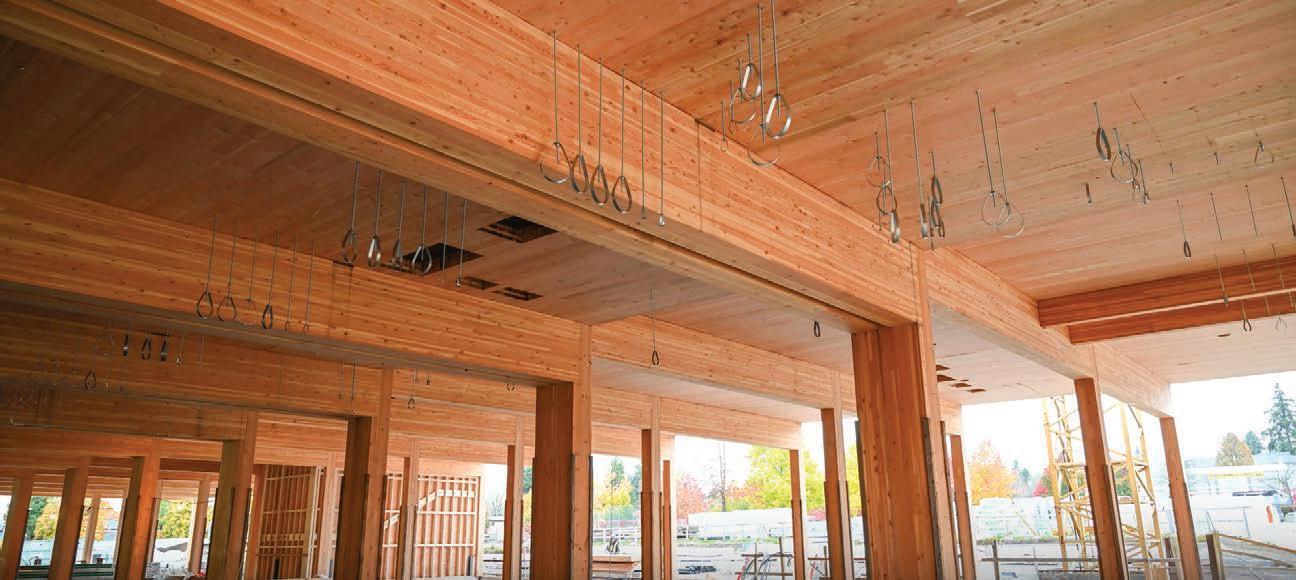
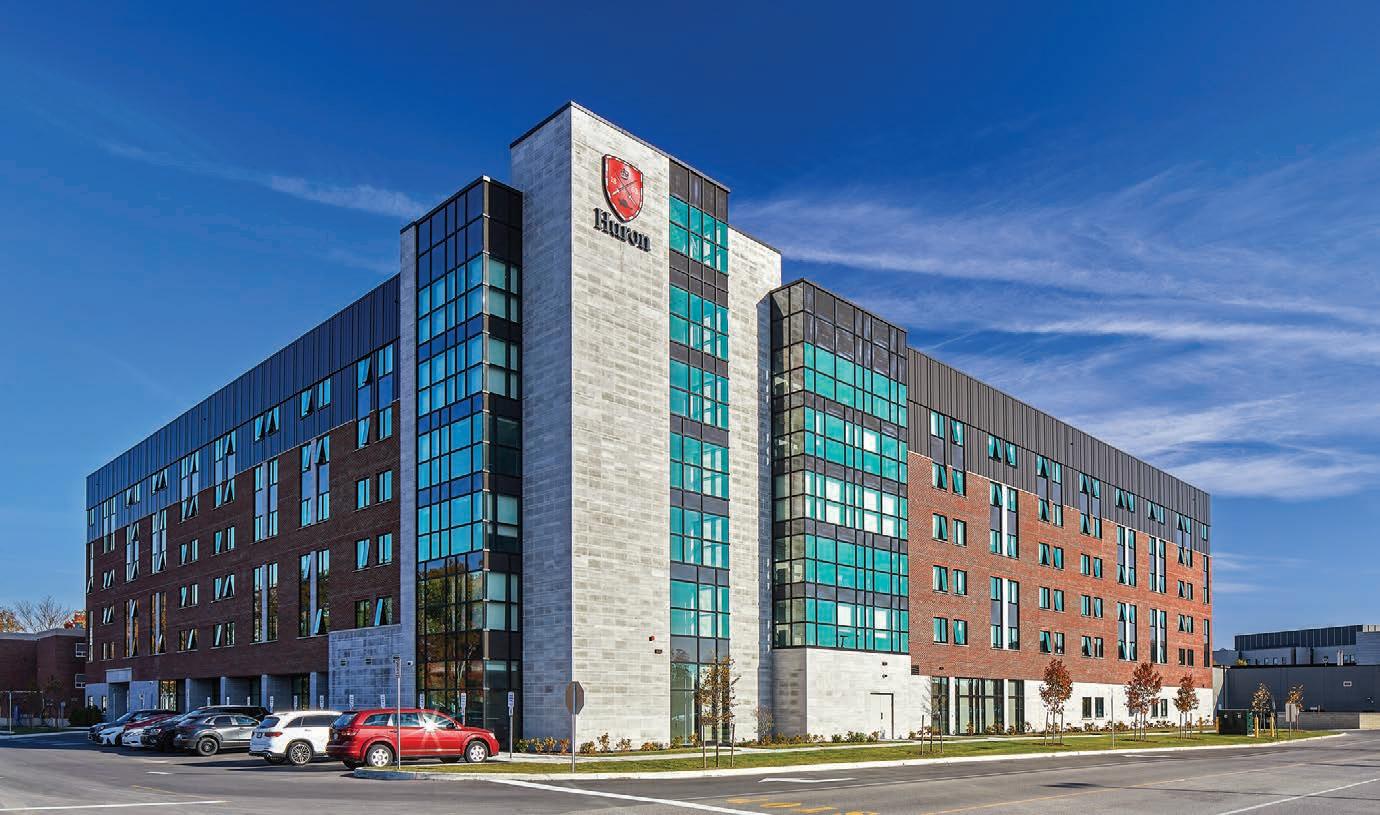
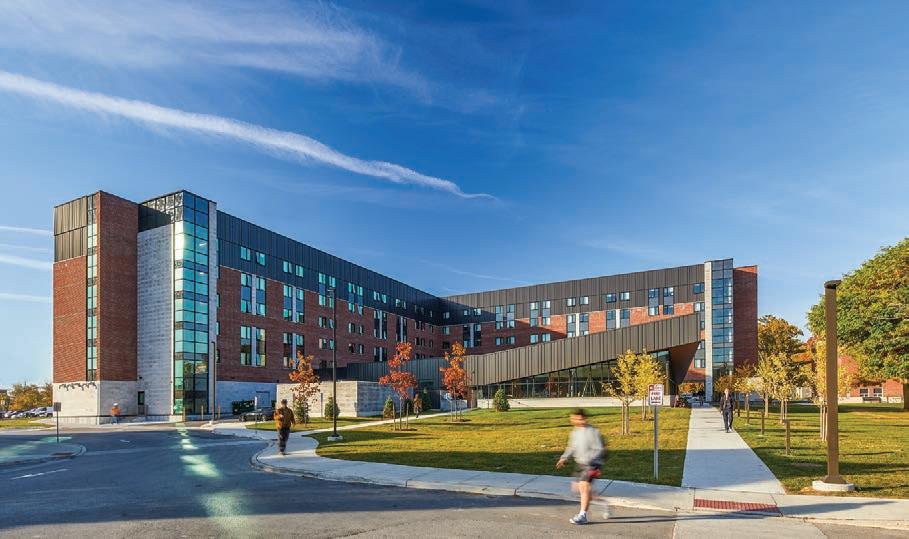
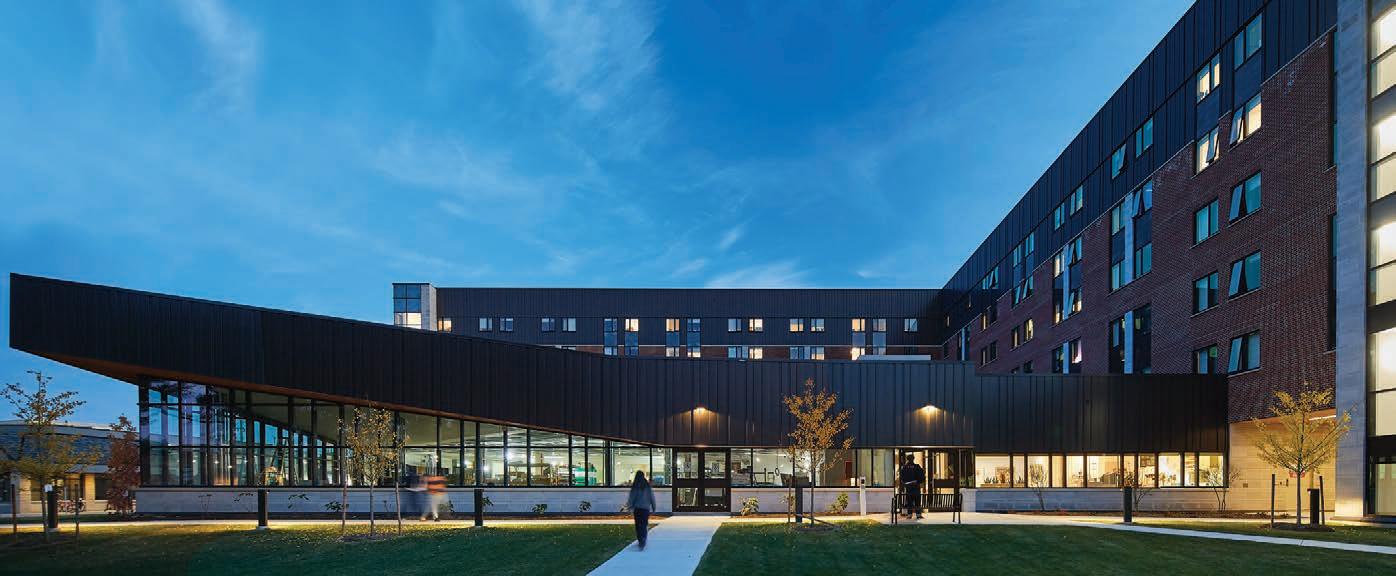
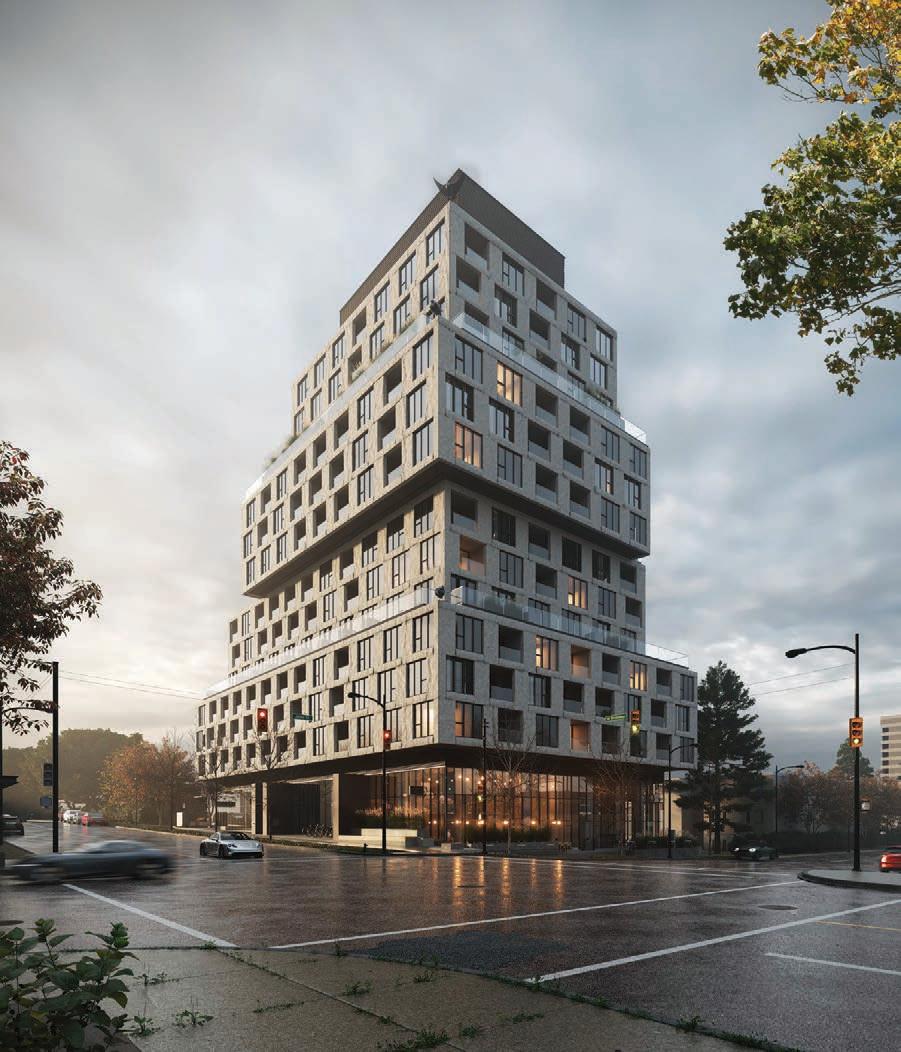
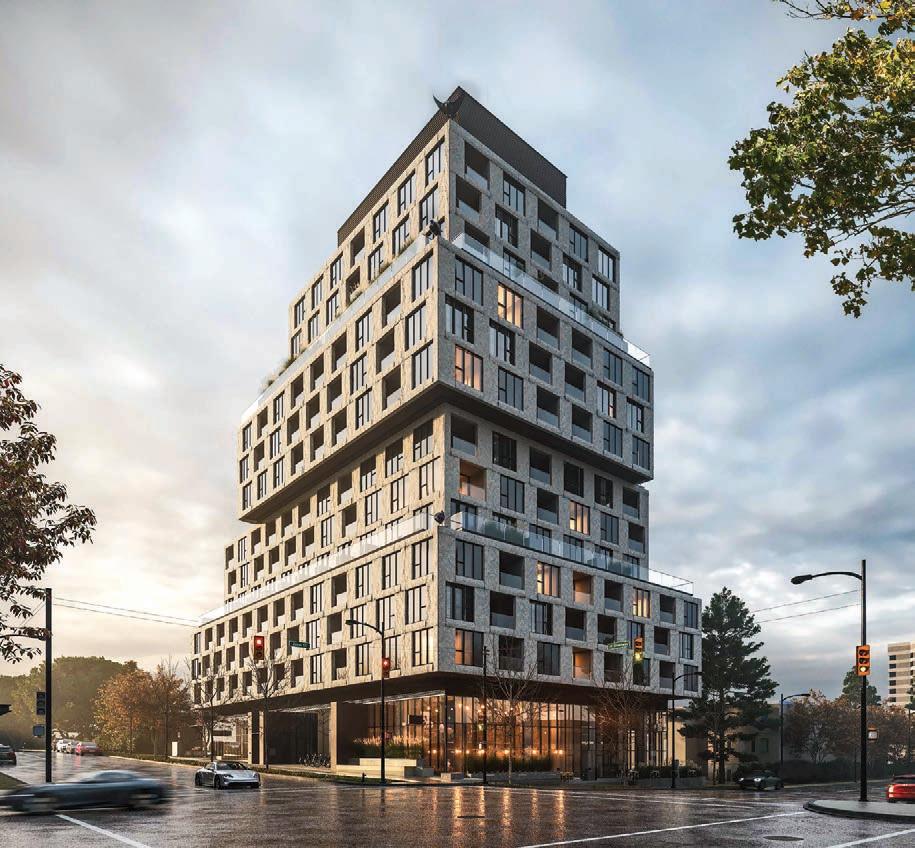
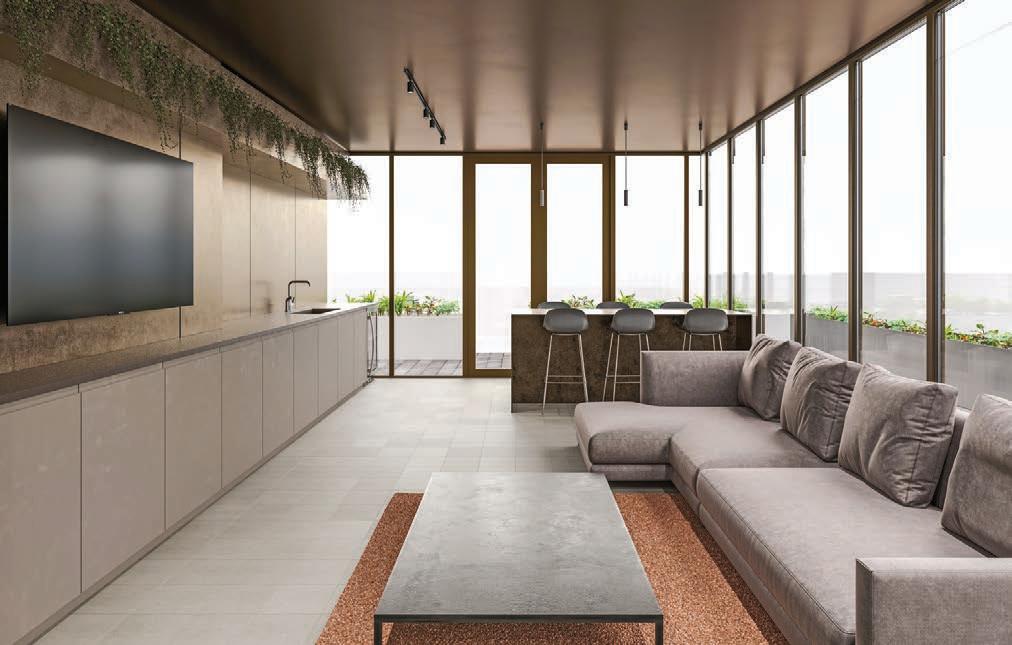
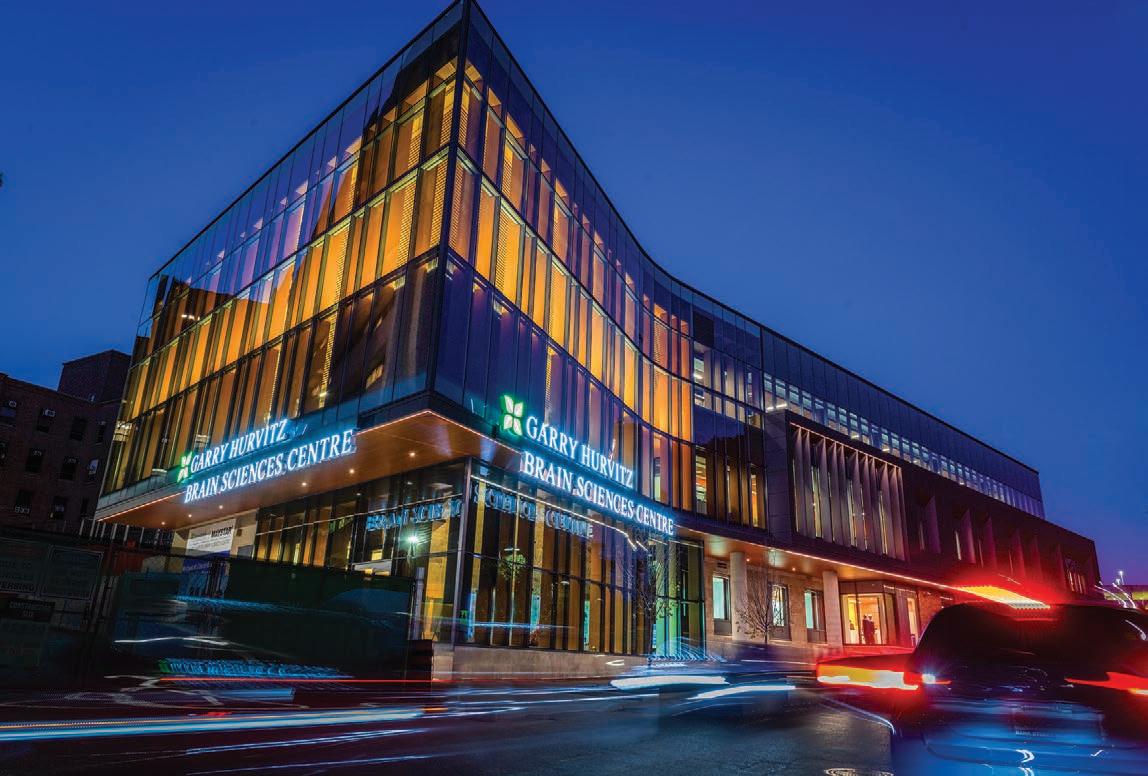
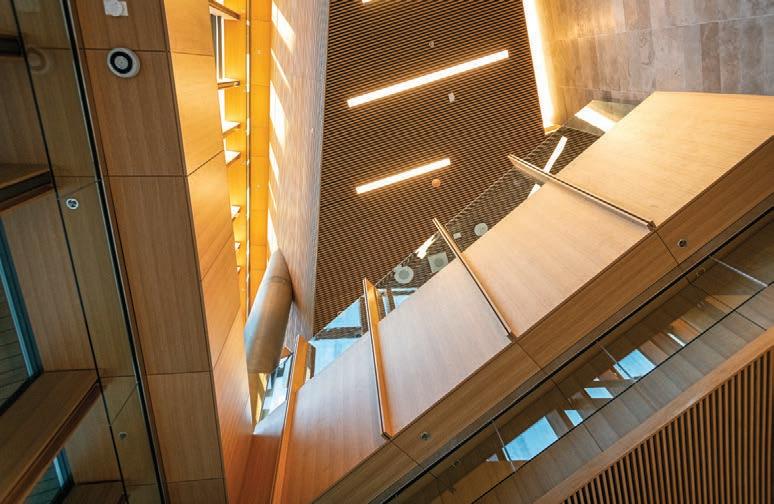
Green building design experts innovate with resilient construction practices to enhance sustainability and well-being. 27
AGAINST THE GRAIN
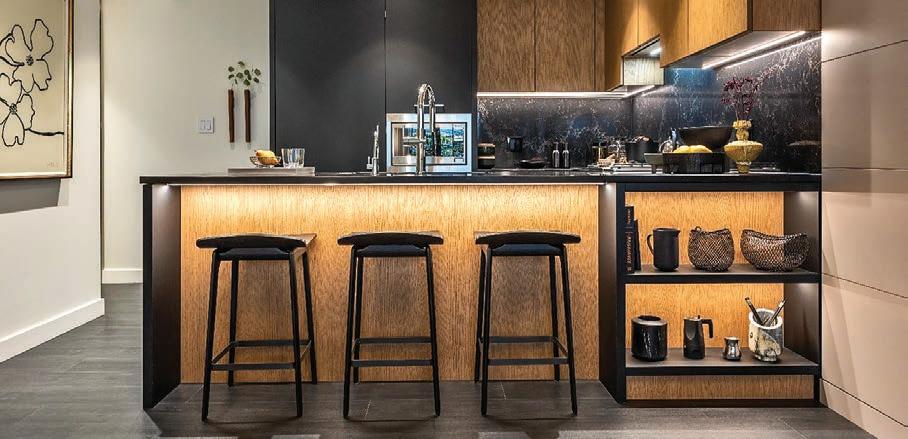
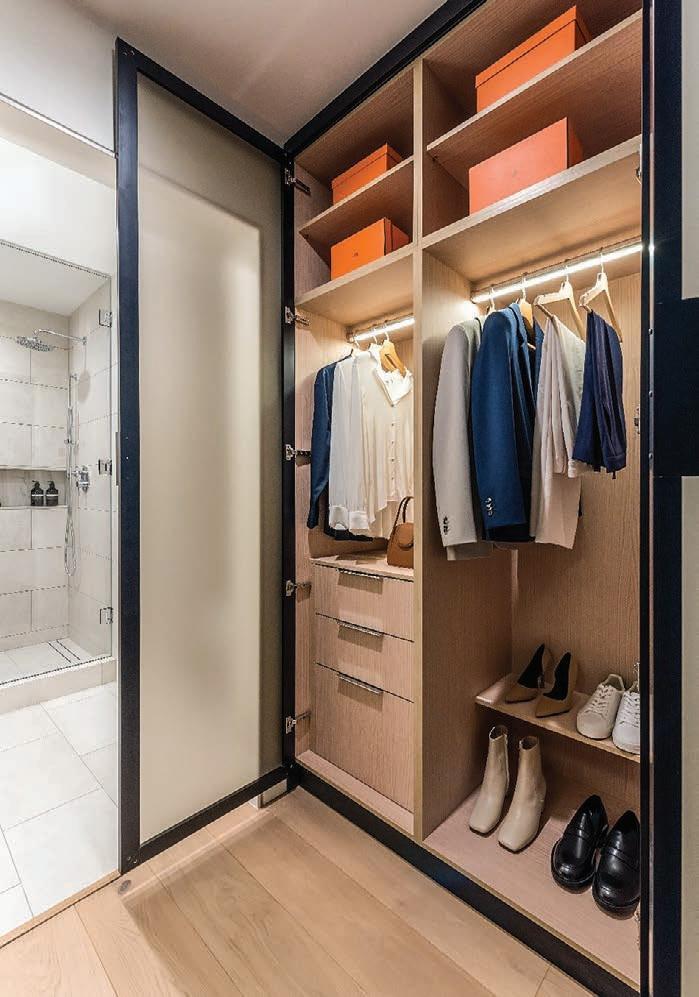
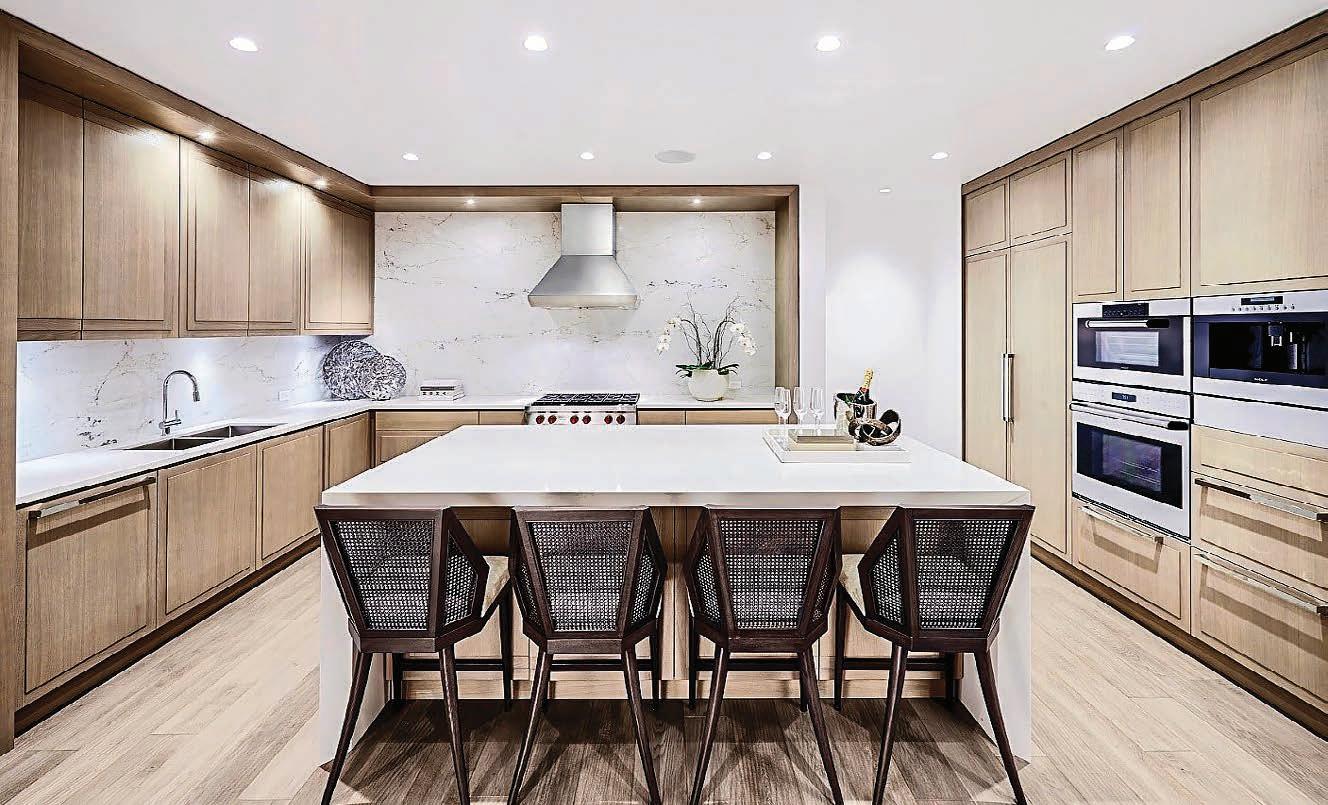
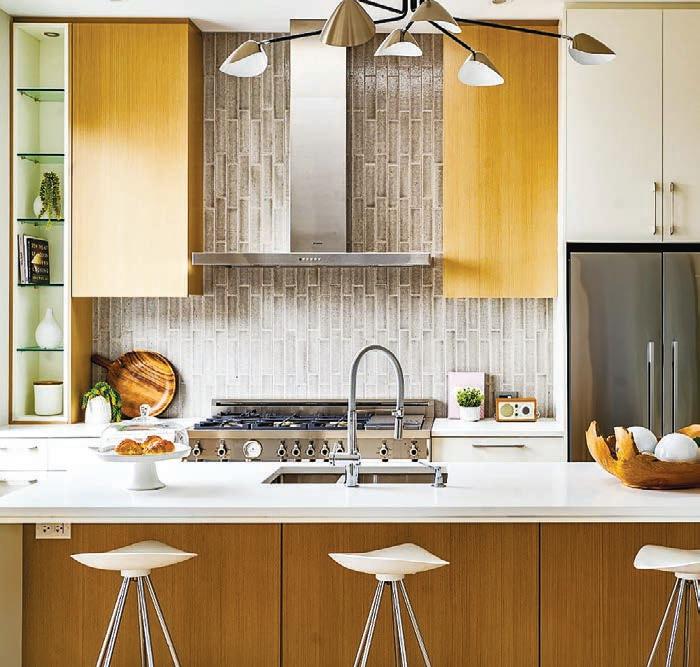
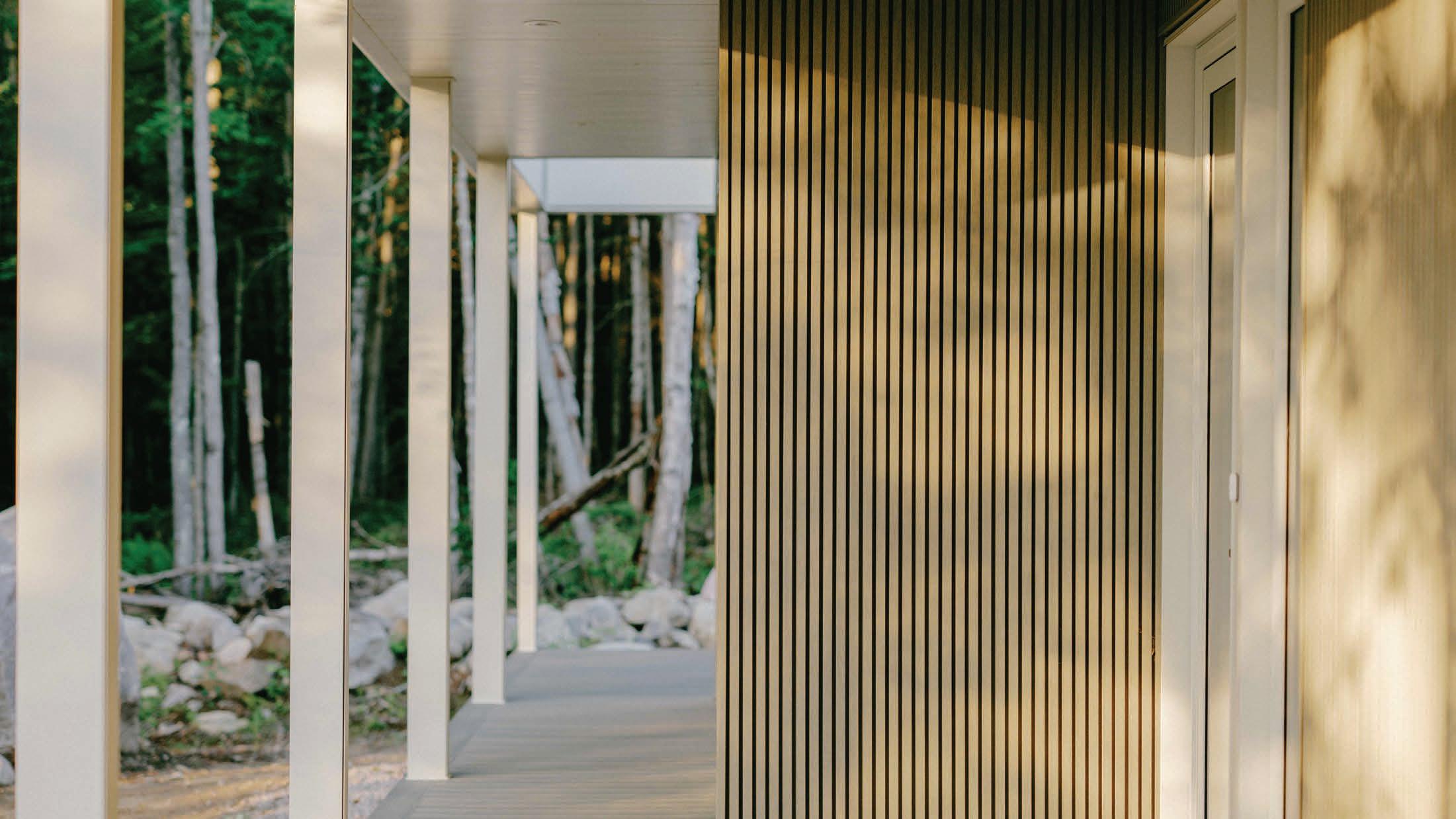
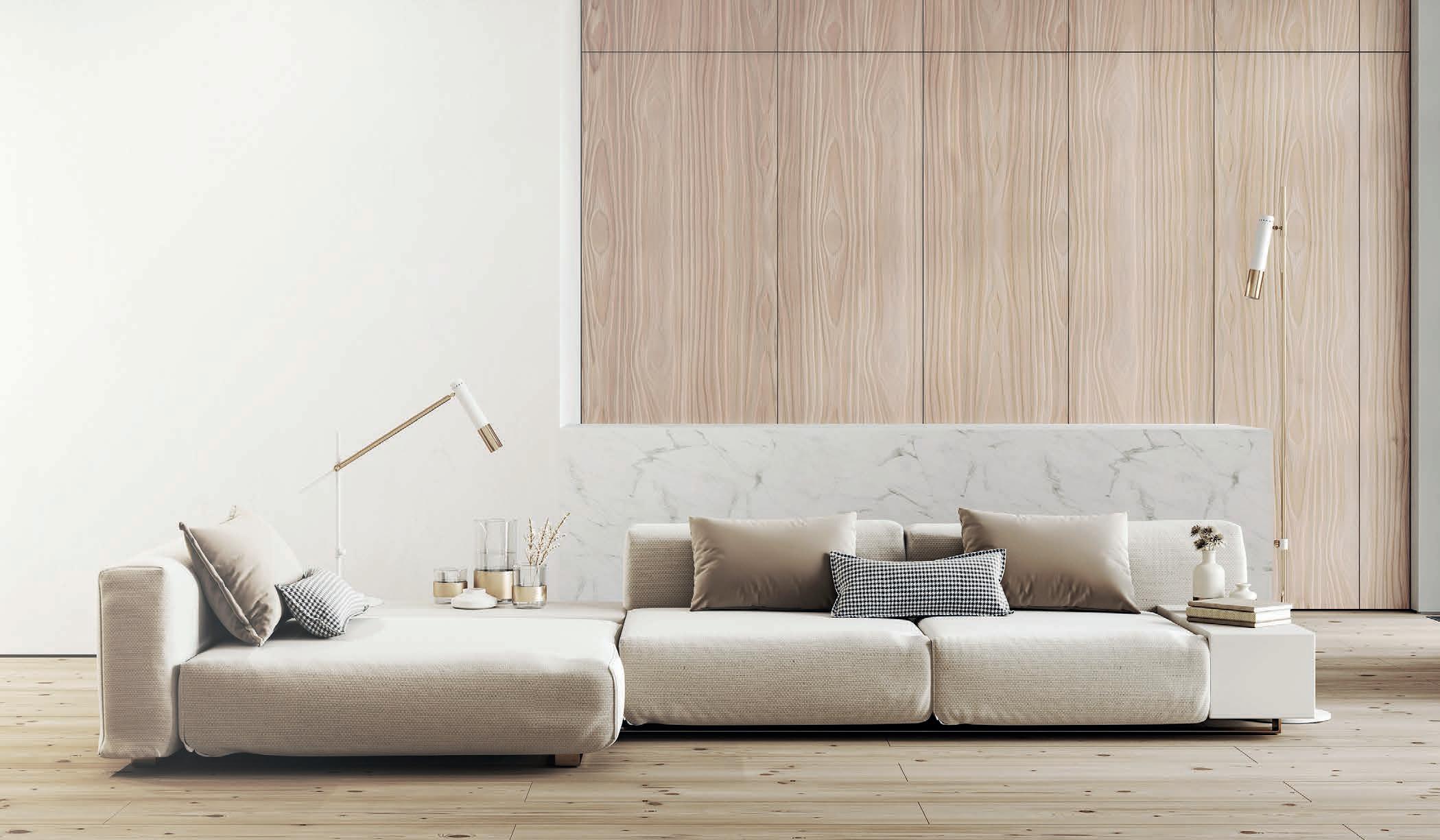
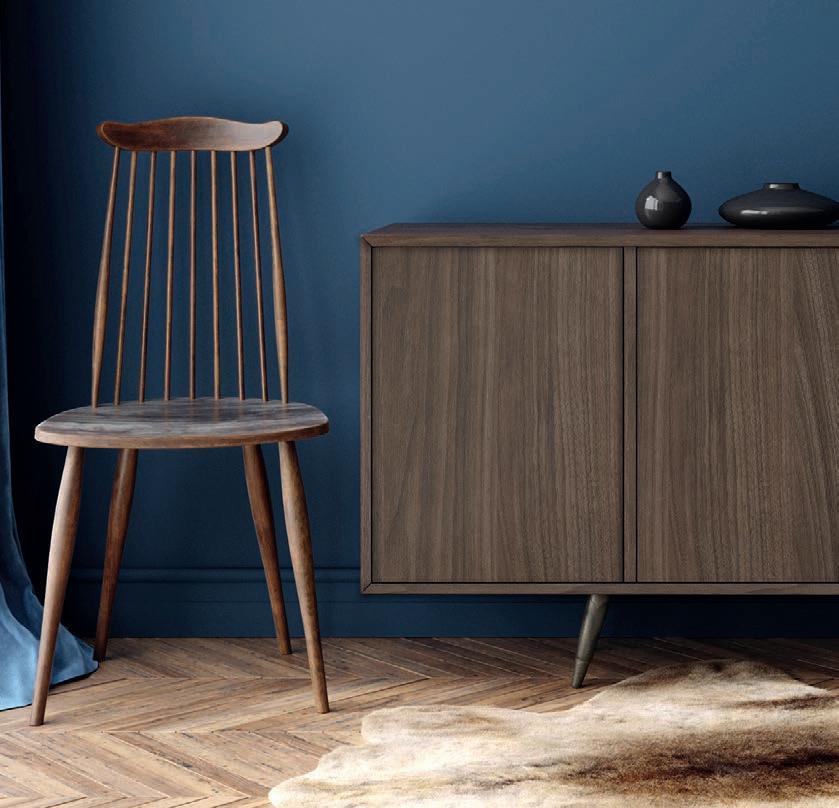
As architectural woodwork reclaims its place in modern design, skilled craftspeople are shaping everything from grand condos to cozy rentals.
BOUND BY BARRIERS
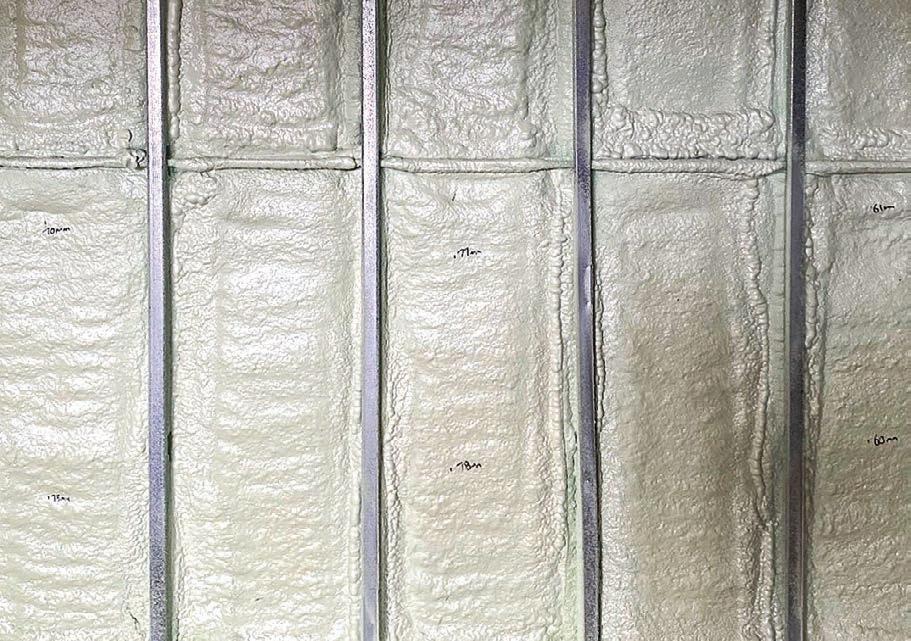
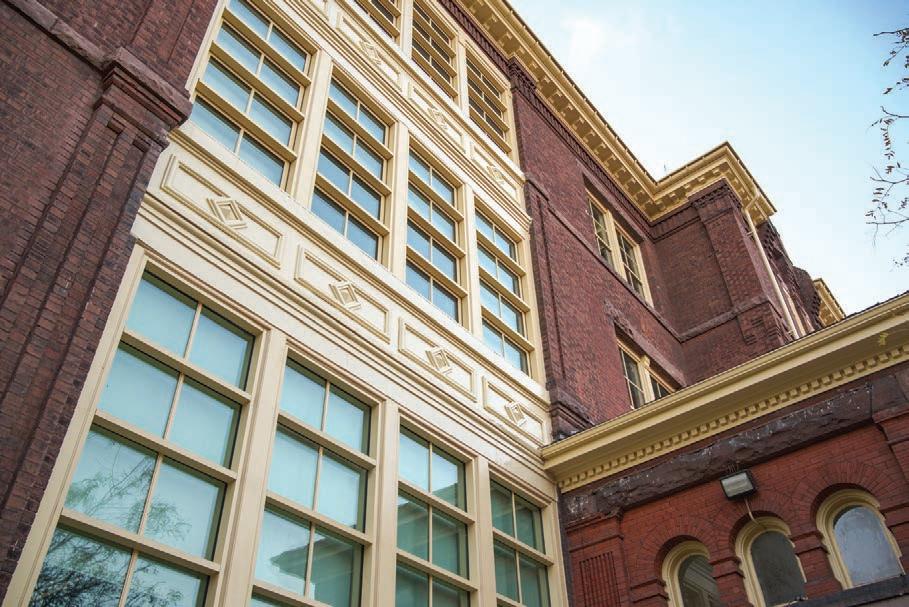
Next-gen insulation products are revolutionizing construction and driving sustainable innovation.
BRINGING THEIR A-FRAME
This year, walls and ceilings experts deliver innovations that master acoustics and elevate design.
AMPED UP!
Innovative audio visual systems are revolutionizing experiences and crafting truly immersive environments.
FOUNDATIONS
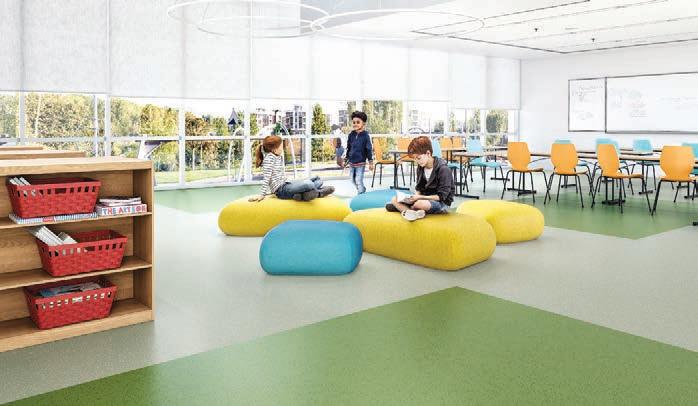
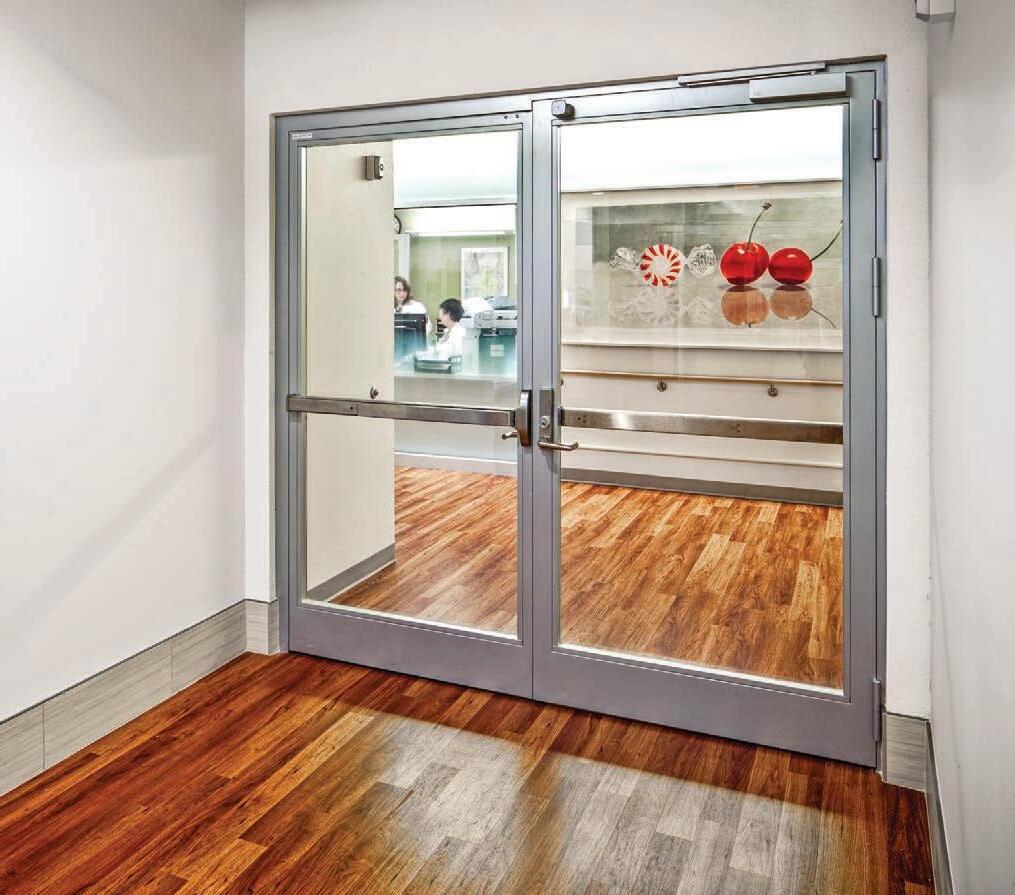
Resilient flooring transforms spaces, from vibrant designs to neurodiverse solutions.
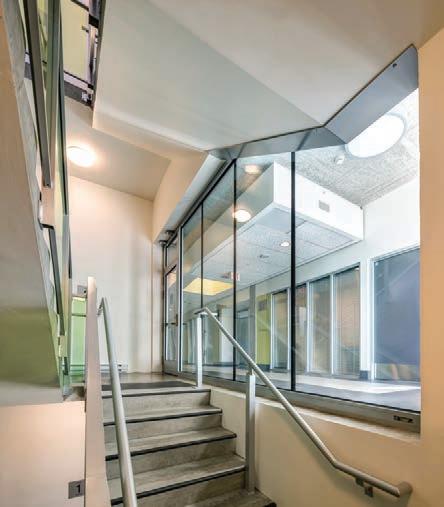
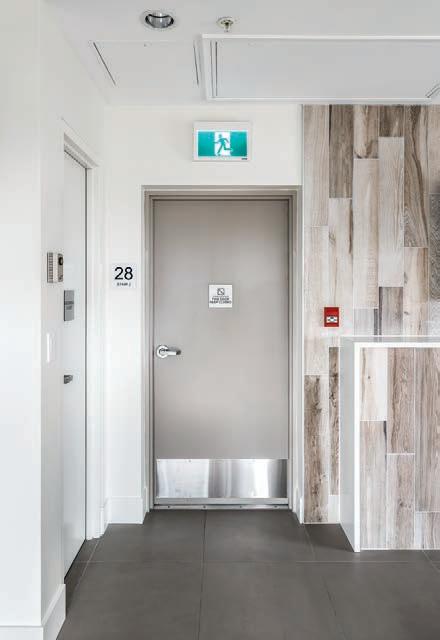
Game-changing fire protection systems are transforming safety, security, and design in all buildings.
PUBLISHER
Dan
dchapman@canadawide.com
604.473.0316
EDITOR
Bruckner nbruckner@canadawide.com
SENIOR
604.299.2116
Thinking differently to shape the future
Stepping into the role of chairman of the board is an honour, and a responsibility I embrace with the utmost seriousness. Especially now, as the landscape of our profession shifts, this role has taken on a new urgency. By the end of this mandate, I will have dedicated 30 years to architectural practice and involvement in various professional organizations. Over these years, I have witnessed – and actively contributed to – a profound transformation within our century-old institution. This shift, characterized by growth, adaptation, and a reimagined mission, fills me with a deep optimism. It is with this spirit that I am committed to implementing our 2025-2027 strategic plan – an effort that has been a truly collective endeavour, uniting diverse voices and visions.
As an architect, I see our profession at a pivotal moment. The ecological challenges we face today are more than just another design consideration – they are a fundamental necessity that demands a rethinking of how we work. Adapting our practices to these new realities is essential. As a community, we have the power to tackle challenges at a national scale while honouring the regional and cultural nuances that shape our work. Our past achievements provide a foundation, but it’s our adaptability and creativity that will ensure architecture remains a dynamic and integral part of broader societal conversations.
This moment is about more than simply keeping up with change –it’s about embracing a bold new direction. With our dedicated team and
valued partners, I aim to foster a culture where creativity and diverse excellence drive us forward. As we navigate an era of rapid technological advancement, this culture will help our community elevate design to new heights, solidifying our role as thought leaders and innovators. A critical part of this journey is making sure our message resonates. To ensure that our voice is heard, we must communicate clearly about the value of our work. Building a compelling value proposition is key to promoting our profession, elevating our brand, and increasing our visibility in the market. We need to engage with a broad range of stakeholders – our members, policymakers, academics, and professional peers. Most importantly, we must connect with the public and our industry partners, who trust in our expertise and vision.
WE ARE THOUGHT LEADERS
I firmly believe that all together, we can achieve remarkable outcomes. By fostering a confident design culture, we elevate the architectural community to cultivate innovation and diversity, enhancing the appreciation of design across all sectors. In embracing our evolving role as thought leaders, we contribute not only to the built environment but to broader societal conversations that shape our collective future. Through our creativity and shared vision, we have the power to address today’s challenges and to redefine the impact of architecture across Canada. The opportunity before us is immense, and I am eager to see how we will rise to meet it.
by JONATHAN BISSON, firac
RAIC President
Pioneers Of Purpose
With
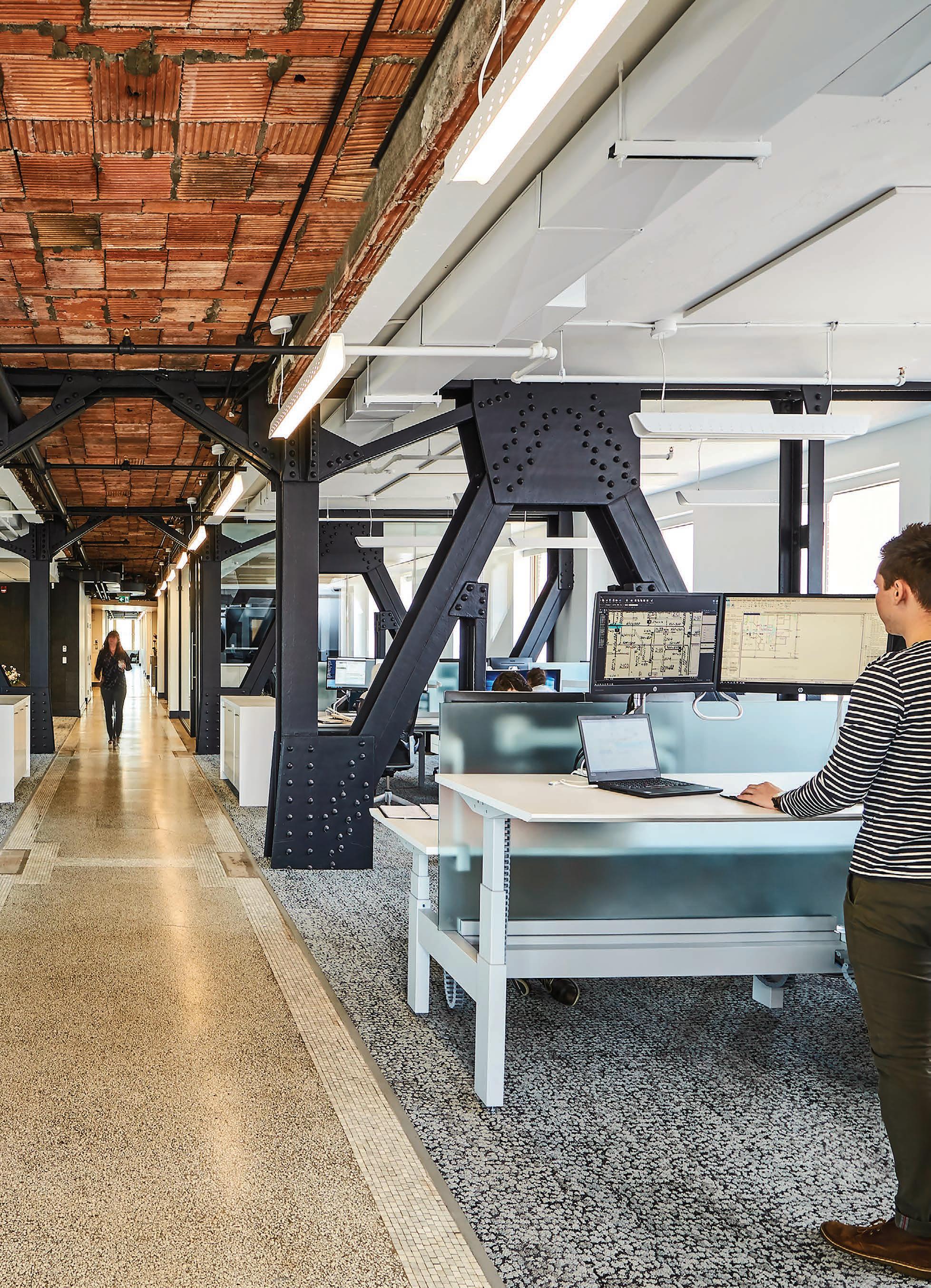
by NATALIE BRUCKNER | photography & rendering courtesy mc CALLUMSATHER
In 1996, while many still saw sustainable architecture as a secondary concern, Joanne McCallum and Greg Sather dared to dream differently. They founded mcCallumSather not merely as an architecture firm, but as a bold reimagining of how buildings interact with their surroundings.
“We started as a small firm with no built work to show,” recalls Joanne McCallum, CEO, director, and co-founder. “But we persisted in explaining our thinking and concepts to our clients, and in each project, we moved the needle towards more thoughtful and efficient design.”
From these humble beginnings, mcCallumSather made sustainability its cornerstone, defining it not as a fleeting trend but as the essence of thoughtful design. This principle has since propelled the firm to the forefront of architecture, crafting buildings that stand for a purpose.
Early on, mcCallumSather committed to innovating in sustainable design and promoting collaborative construction. “Over time, we have refined our mission and vision to ensure relevancy in today’s evolving market,” McCallum notes. The firm consistently challenges clients and consultants to build more resilient and regenerative communities. As McCallum emphasizes, “The need
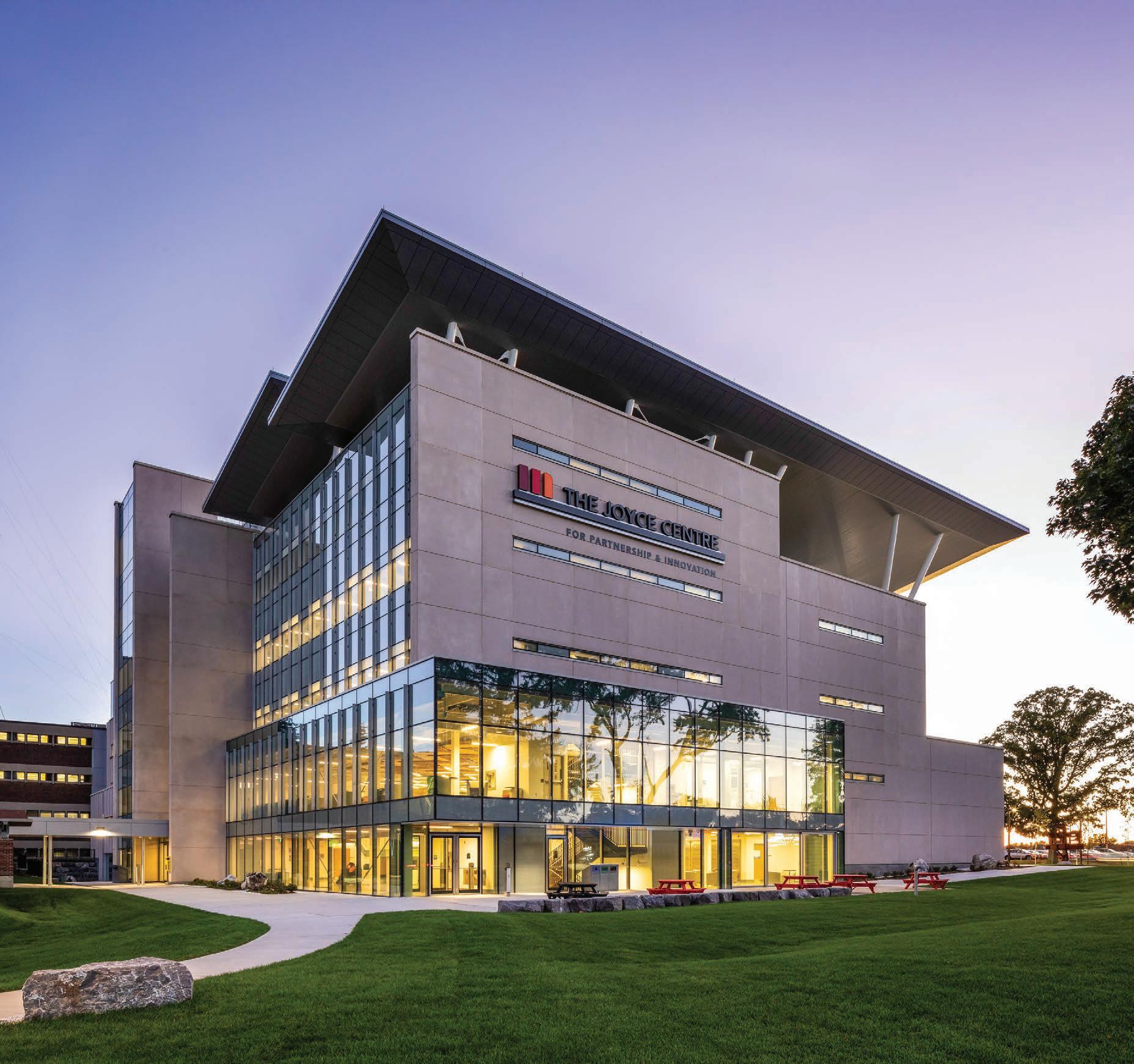
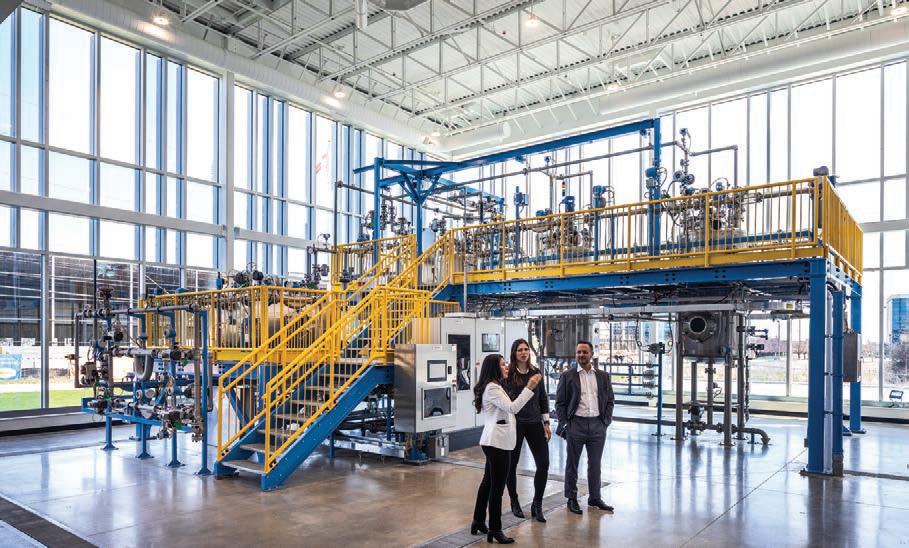
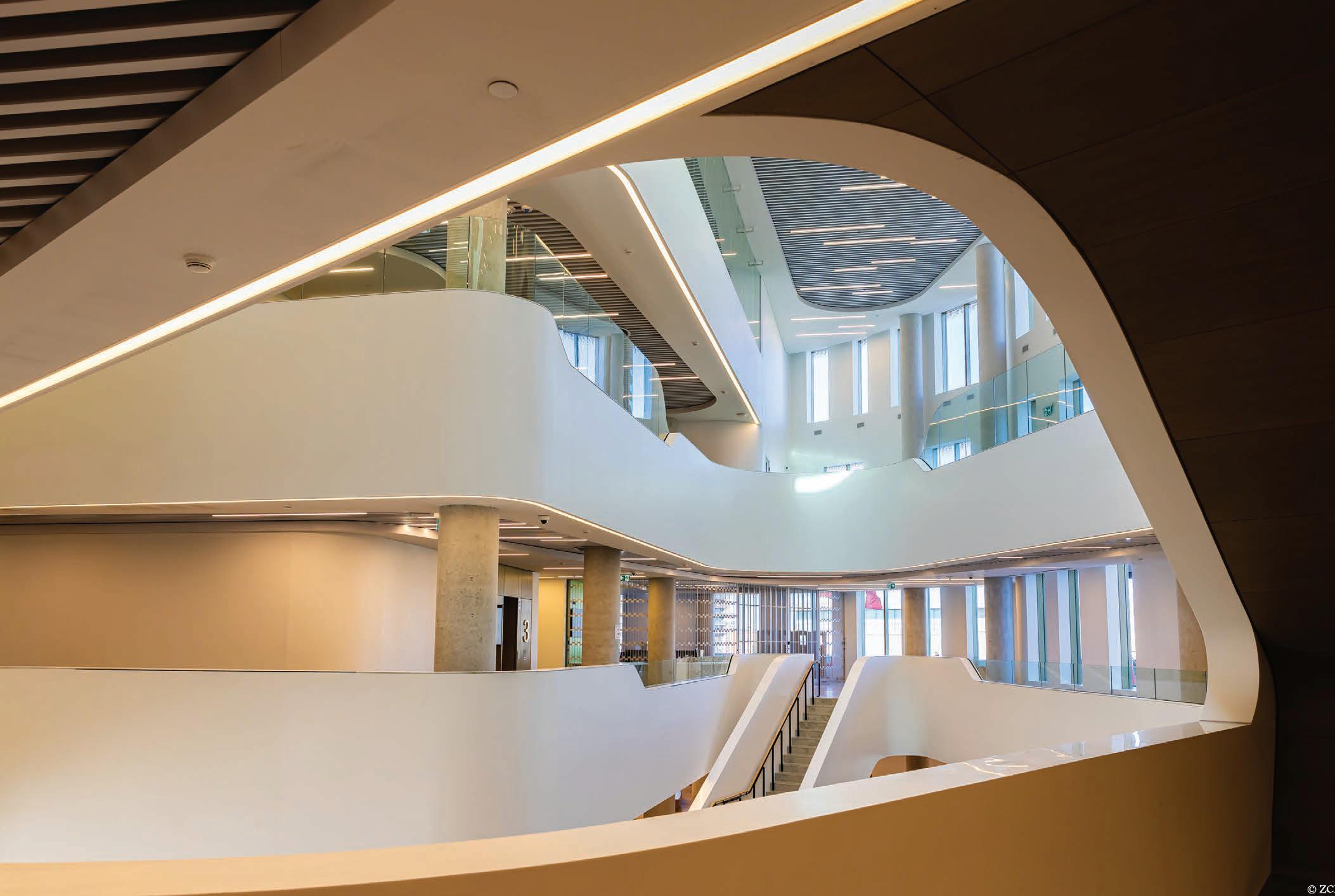
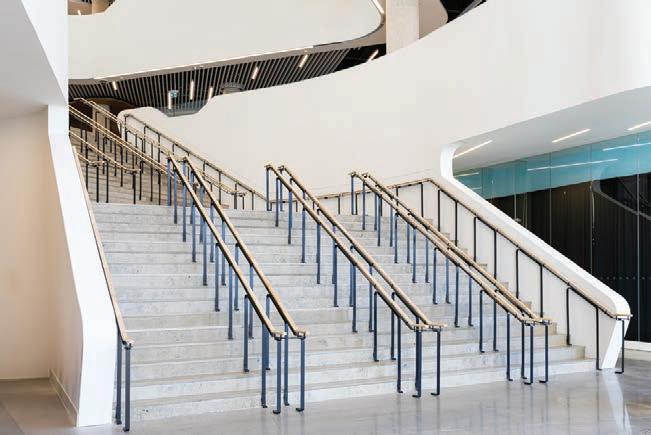
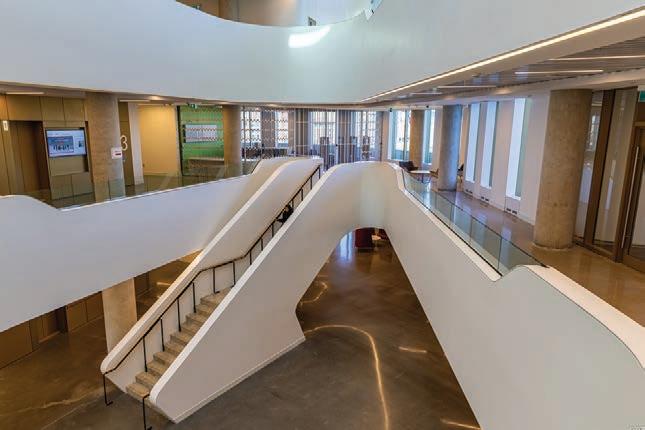
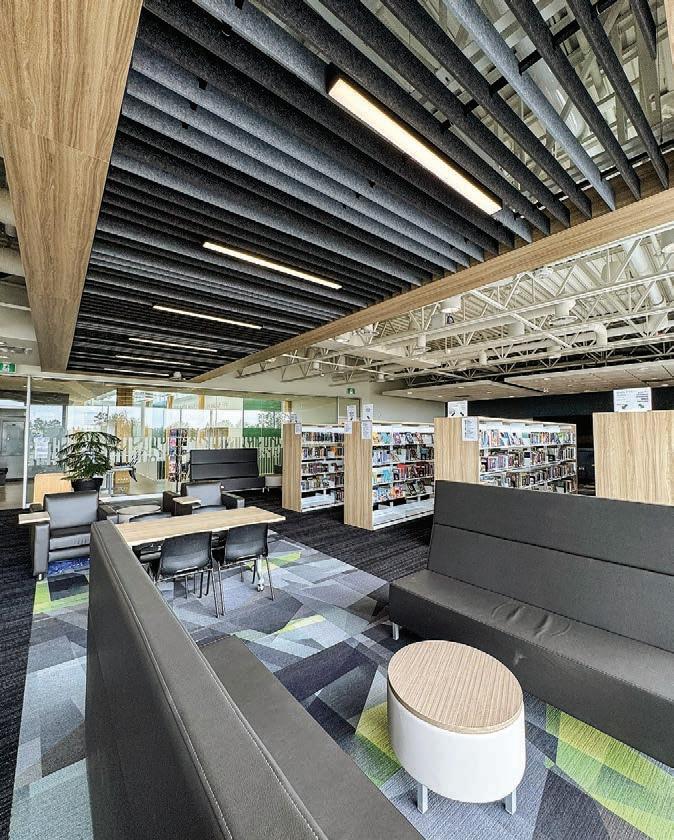
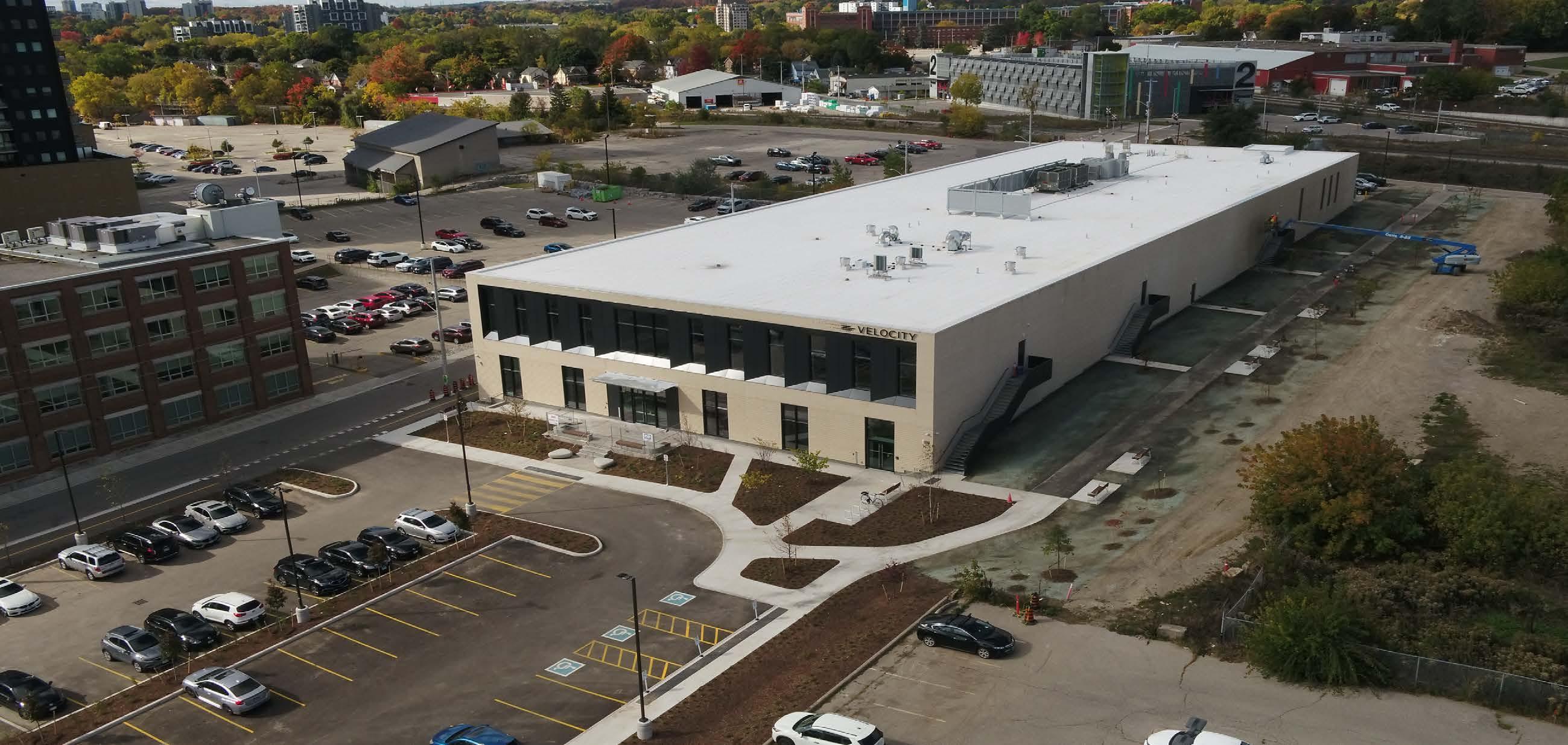
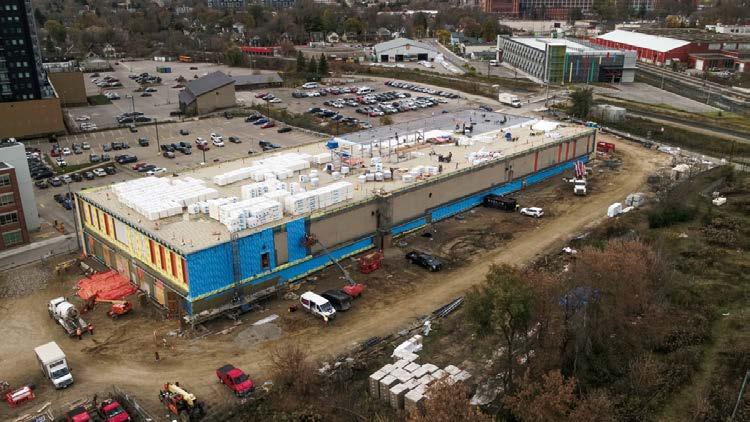
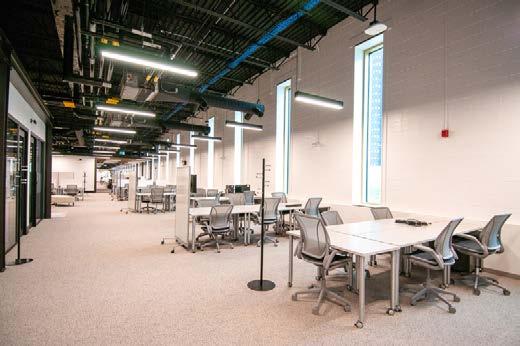
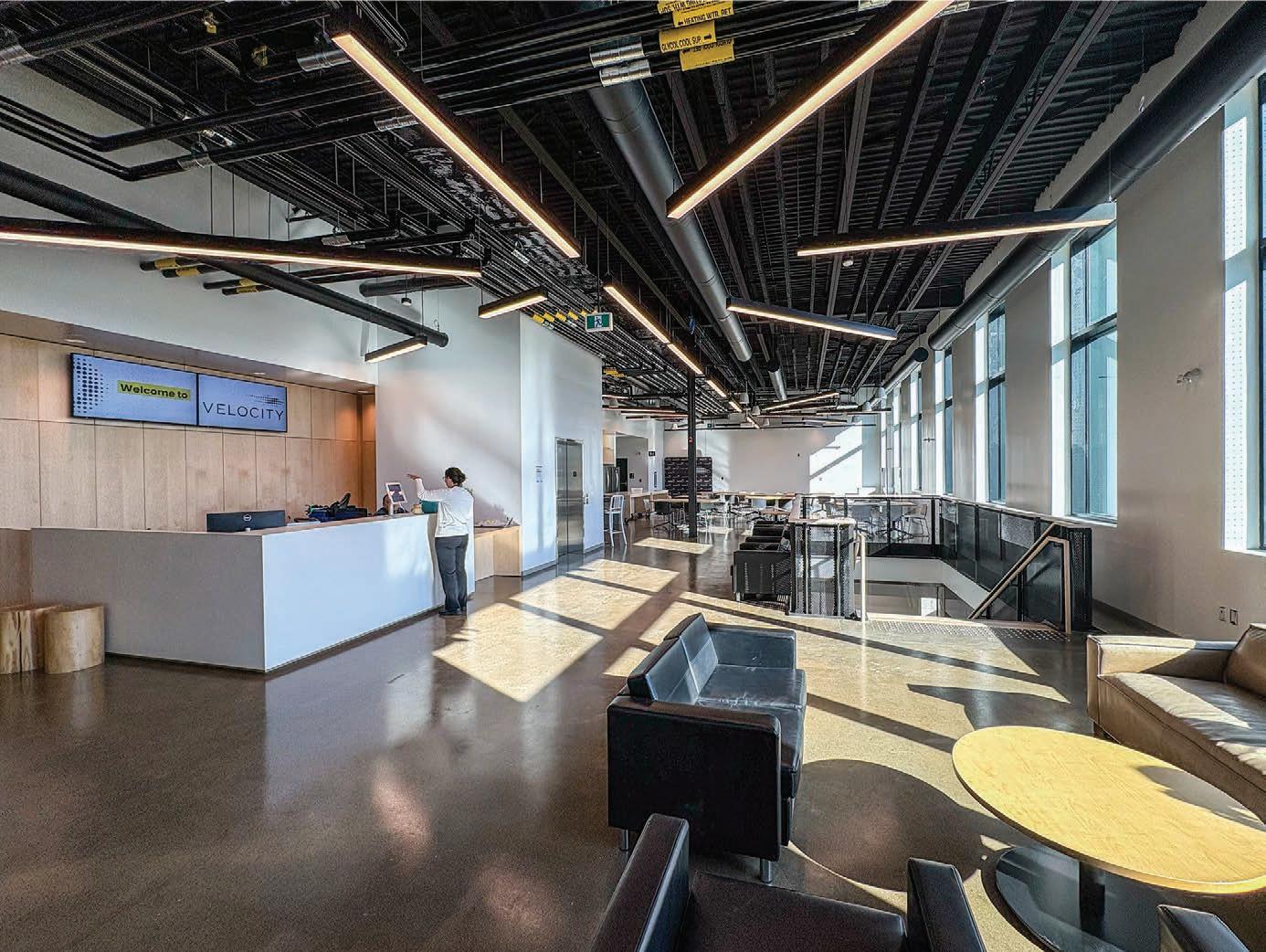
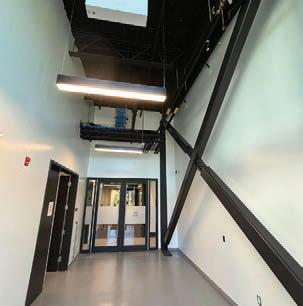
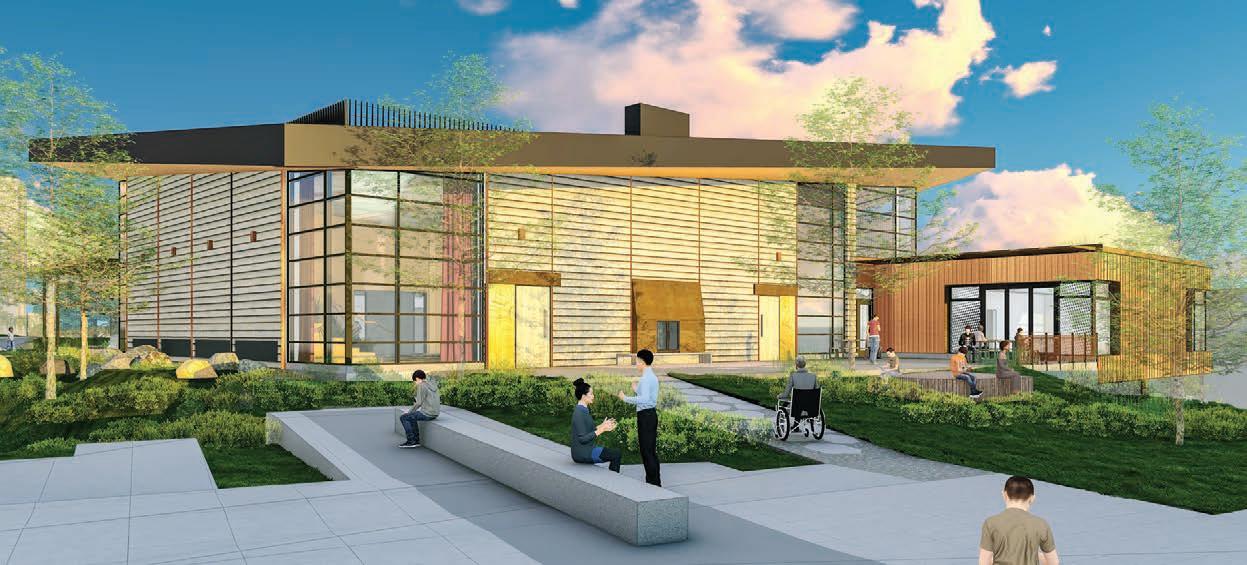
The Joyce Centre for Partnership and Innovation, Mohawk College, Hamilton, ON
for our profession to bring critical thinking to the foreground and engage in integrated design processes has never been greater.”
Matt Bolen, managing principal, underscores this commitment, stating, “The vision has always been to make the built world around us more environmentally sustainable and equitable for all. From my perspective, the evolution of this has been in how this ambition can be continually pushed and executed through deep and authentic collaboration with aligned parties such as clients, governments, and colleagues.”
Over the years, mcCallumSather’s portfolio has grown significantly, showcasing a multi-disciplinary team offering architecture, mechanical engineering, and interior design. An early collaboration with Enermodal Engineering on the 77 Governor’s Road six-storey condominium project marked a turning point with the introduction of an integrated design process – a departure from traditional methods. “The project drew significant interest, even attracting representatives from NRCan and CMHC [Canada Mortgage and Housing Corporation] to our design workshops in Hamilton,” McCallum notes, solidifying mcCallumSather’s reputation in integrated, sustainable design.
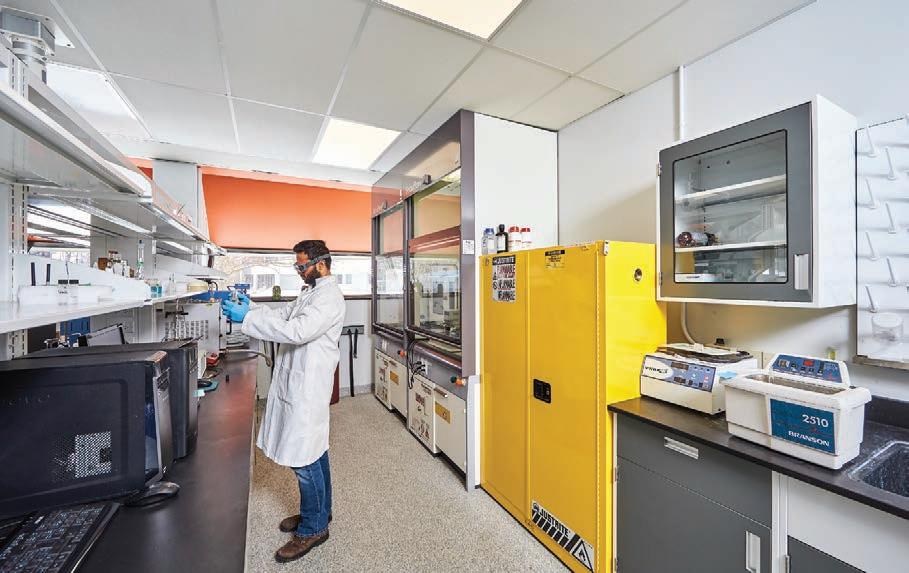
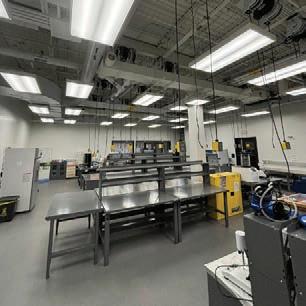
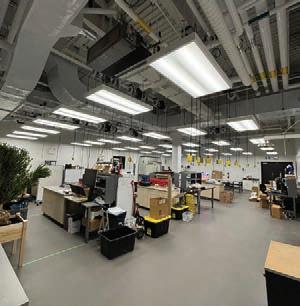
For Mary Georgious, principal and mechanical lead, a significant milestone was the SIF-funded lab projects at the University of Guelph, particularly the MacNaughton Building and the Food Innovation Building. These projects marked a turning point for the mechanical department. “These complex, large-scale projects pushed the boundaries of what our team was capable of,” she shares. “We set a goal to design sustainable labs, collaborating closely with the architecture team to successfully deliver on that vision. Our work on these projects has set a precedent, and we continue to design energy-conscious labs that reflect our commitment to sustainability.”
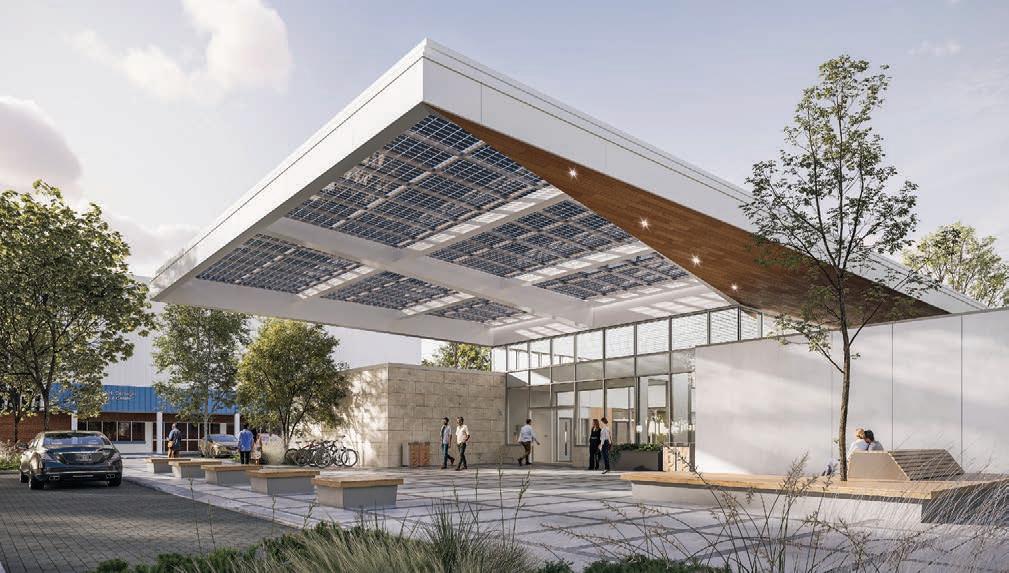
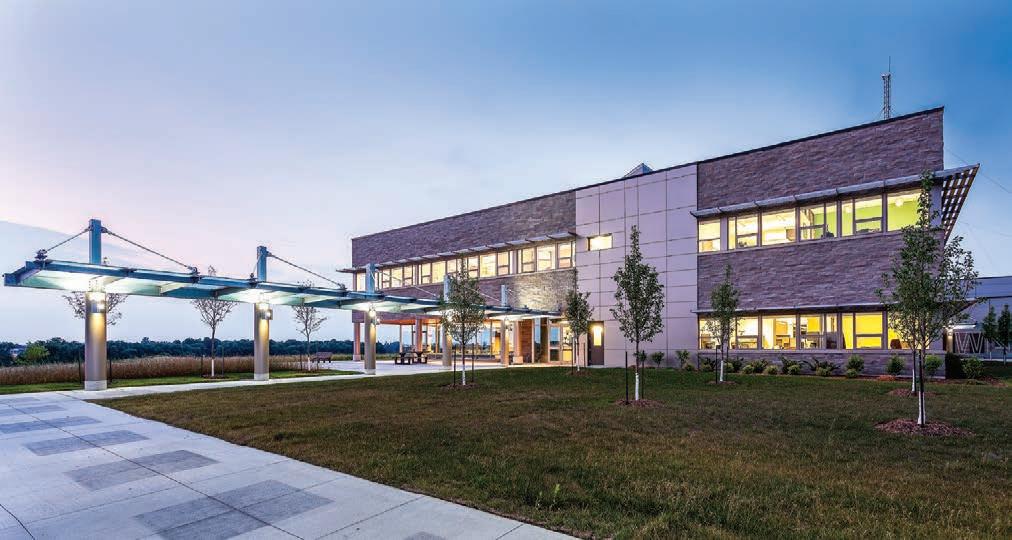
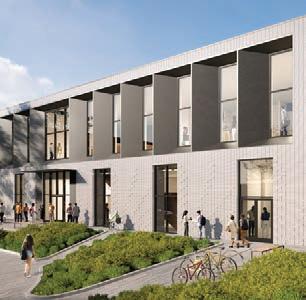
McCallumSather’s diverse portfolio, including The Joyce Centre for Partnership and Innovation at Mohawk College and the Endress+Hauser Customer Experience Centre, showcases the firm’s dedication to sustainable design with their groundbreaking achievements in net-zero energy standards. Other notable projects, such as the Region of Waterloo North Hydro Headquarters and Fleet Services Centre and North Hamilton Community Health Care, which all hold LEED certifications, further illustrate that sustainability is achievable across various building types. “These projects demonstrate significant reductions in building operational costs and enhanced occupant wellness based on measurable improvements in interior thermal control and indoor air quality, access to views, natural light, and natural ventilation,” McCallum explains.
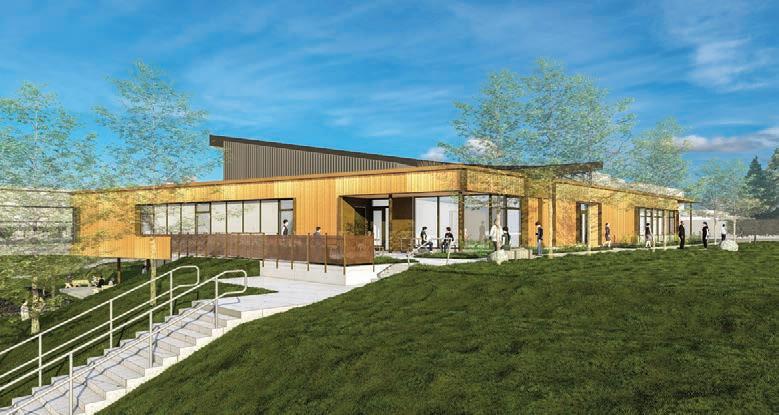
The firm continues to push the boundaries of sustainable design with current projects like two Net Zero libraries in Kitchener and Toronto, affordable housing units using mass timber construction, and the Biindigen Well Being Centre – a collaborative initiative with Indigenous partners. “This project allows us to hone our design approach with deeply held cultural values that honour Indigenous heritage and foundational knowledge of respecting the earth. It promises to be an exciting journey,” McCallum notes.
Collaboration is central to mcCallumSather’s culture, both within the firm and in its external partnerships. “Our culture is rooted in care taking,” says Bolen. “We aim to support every team member, celebrating successes and tackling challenges together through shared experiences and collective knowledge.”
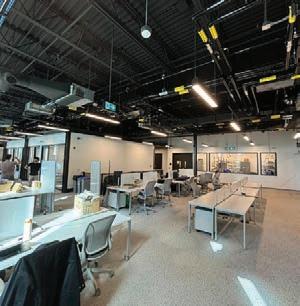
The firm’s commitment to “walking the talk” in its everyday office environment resonates deeply with its team and attracts many, including co-op students who have gone on to build impressive careers both in Canada and abroad, advocating for environmental protection while upholding design excellence.
A significant part of mcCallumSather’s growth has been the development of its own mechanical engineering group. The firm excels in driving energy efficiency in complex projects, particularly laboratories, through both renovations and new builds. Its interiors team complements this by creating environments with sustainable materials and furnishings. This integrated expertise shines in mcCallumSather’s own LEED Gold CI-certified office, a multi-award-winning space reflecting the firm’s strengths in architecture, mechanical, and interior design. Today, mcCallumSather has offices in Hamilton, Kitchener, Toronto, and Kincardine.
Looking ahead, the firm’s future direction is clear: to expand its national presence while preserving deep, personal connections within the communities it serves. “We aim to become a firm with a national reach yet remain rooted in the values that have defined us from the start,” Bolen remarks. For mcCallumSather, the next decade promises growth, innovation, and an unwavering dedication to creating built environments that honour and respect the earth.
As they continue to push the boundaries of what’s possible in sustainable design, mcCallumSather stands as a testament to the power of vision, collaboration, and a relentless commitment to making the world a better place – one thoughtfully designed project at a time. A
PHOTOGRAPHY BY PHILIP CASTLETON
PHOTOGRAPHY BY JESSE COLIN JACKSON
Endress +Hauser Customer Experience Centre, Burlington, ON
Toronto Public Library , Toronto, ON
Region of Waterloo North Hydro Headquarters, Waterloo, ON
MacNaughton Building, University of Guelph, Guelph, ON
Lower the carbon footprint of your next construction project
EcoCem® was developed as part of our ongoing commitment to significantly diminish CO2.
The use of EcoCem® reduces CO2 emissions in concrete by as much as 10% to 22%. When using EcoCem®PLC or EcoCem®PLUS from Heidelberg Materials, you’re able to produce concrete with the same level of strength and durability as that manufactured with ordinary portland cement. Designed for use in the production of concrete block and pavers, concrete pavement and soil stabilization and advantageous for all ready mixed concrete applications.
Visit our website to learn more about our sustainable products:
Under Pressure
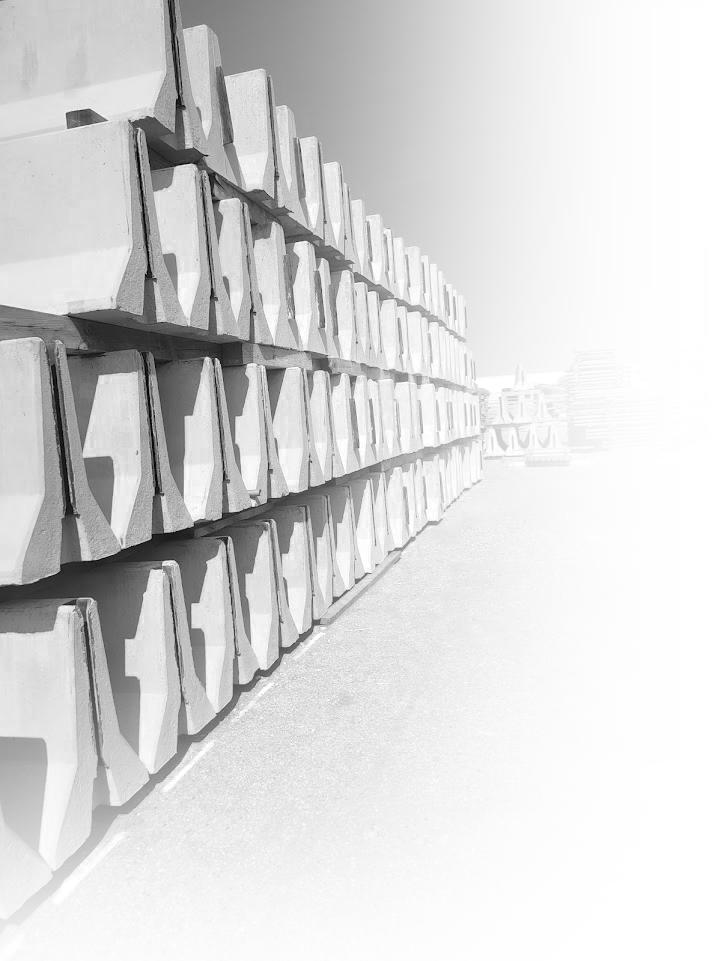
The term may be overused and maddeningly vague, but sustainability seems to be on the minds of most concrete producers, whether their discipline is cast-in-place, precast, pre-stressed, or in the additives and admixtures sector.
With the growing demand for low-carbon concrete and customers seeking materials that reduce embodied carbon without compromising strength and durability, companies are responding by transitioning to more environmentally friendly production methods and providing customers with environmental product declarations (EPDs). Also, some producers are leveraging AI technologies in order to tailor mixes to specific project requirements, while minimizing carbon emissions.
Technological innovation is especially prevalent in the cement and cast-in-place sectors, a case in point being Heidelberg Materials, which is experiencing more interest than ever for its evoBuild mixtures.
Shane Mulligan, Heidelberg Materials’ Calgarybased area technical sustainability manager, points out that his company and evoBuild are ideally suited to support developers as they face new regulations
regarding embodied carbon, a prime example being the City of Vancouver’s bylaw requiring a 10 percent reduction in embodied carbon for all high-rise developments in its jurisdiction. The bylaw takes effect in January.
“Such reductions are achievable using low-carbon concrete strategies alone,” he says. “Concrete typically represents 50 percent of a building’s total embodied carbon footprint, meaning if concrete’s contribution can be reduced by 20 percent, the overall project target is achieved, and the local market including Heidelberg Materials has these types of concrete products available, along with the supporting documentation using EPDs.”
A recent example of evoBuild’s use in Vancouver is the Henry Hudson Elementary School project in Kitsilano, for which approximately 2,700 cubic metres of evoBuild low-carbon concrete was used. This decision aligned with the City of Vancouver’s specifications, particularly focusing on Global Warming Potential (GWP) values for each concrete element, ensuring sustainability and performance goals are met.
Heidelberg Materials in other locales continues to achieve innovations related to the environment. In June it announced the successful conversion of
its cement plant in Speed, Indiana to a slag grinding facility, the switch reflecting the company’s commitment to achieving net-zero emissions across North America – and to generate 50 percent of its revenue from sustainable products that are either low-carbon or circular by 2030.
The following month, Heidelberg Materials was selected to receive up to $5 million in funding from the U.S. Environmental Protection Agency (EPA), to create a cloud-based tool that can help concrete, cement, and aggregates producers facilitate the creation of high-quality EPDs. The project aims to introduce a tool that significantly enhances the EPD creation process by implementing full AI-based automation capabilities, thus reducing the amount of time-consuming manual tasks.
Holcim enjoyed a busy 2024 on the low-carbon front. In September it announced that it had invested in Sublime Systems, a leading low-carbon cement technology start-up, to expand its range of highly engineered solutions to decarbonize buildings at scale. The partnership will advance Sublime’s first commercial manufacturing facility in Massachusetts, giving Holcim a large share of Sublime cement produced there through a binding
Henry Hudson Elementary School, Vancouver, B.C.
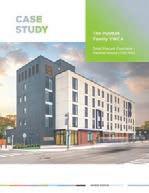
Total Precast Concrete Key Attributes to Passive House Development are:
· Manufactured in local precast facilities under controlled conditions
· The whole building envelope in one composite panel; air barrier, moisture control, insulation and the structure
· Hollowcore floor slabs allow for a much lower depth to span ratio
· Hollowcore provides the lowest GWP per m2 of concrete floor area
· Precast concrete dramatically reduces the construction schedule, site congestion, noise and environmental impacts
For more information and educational presentations check out Learn on Demand, a 24/7/365 Educational Platform. Visit: cpci-learnondemand.com/
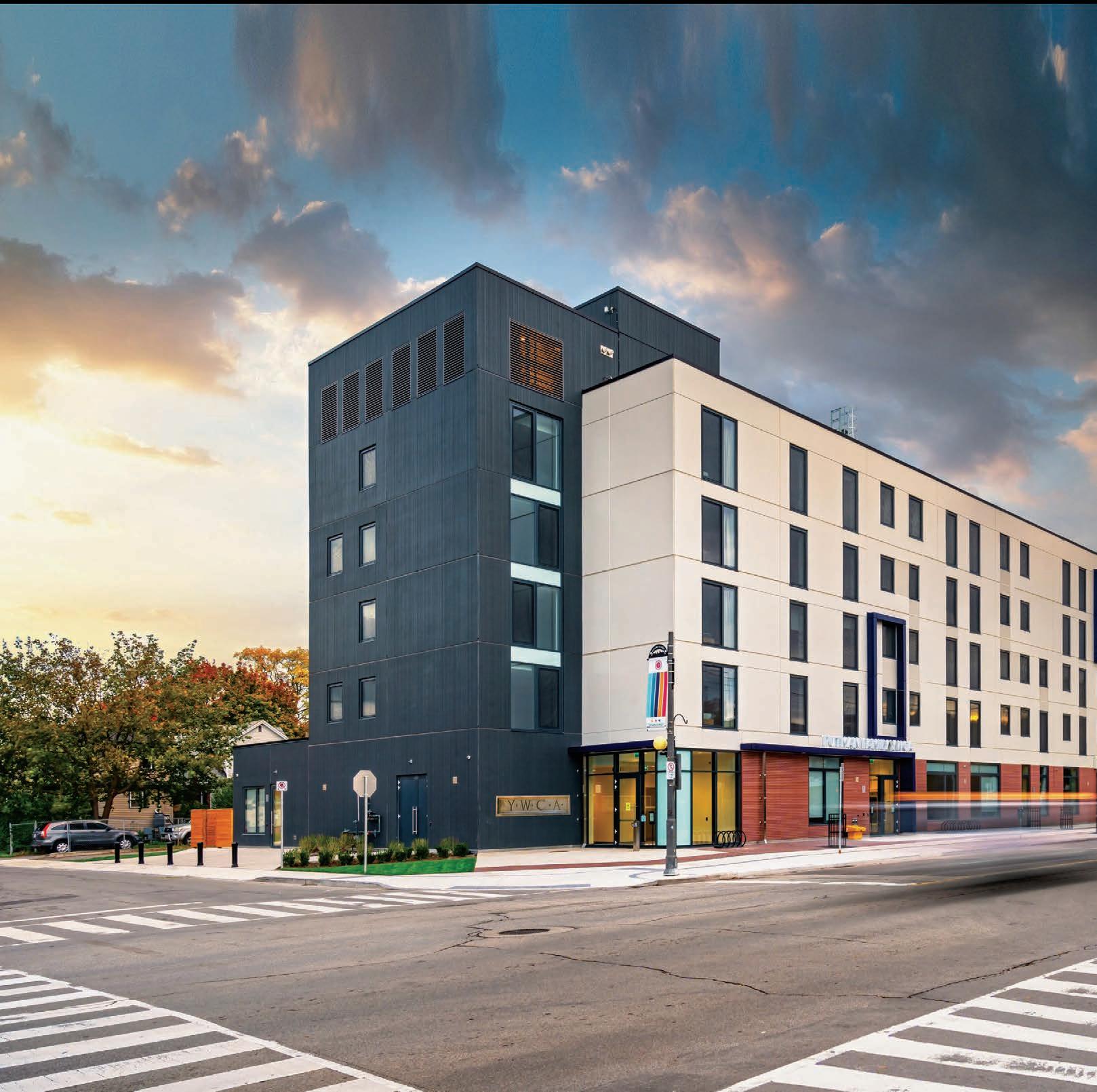
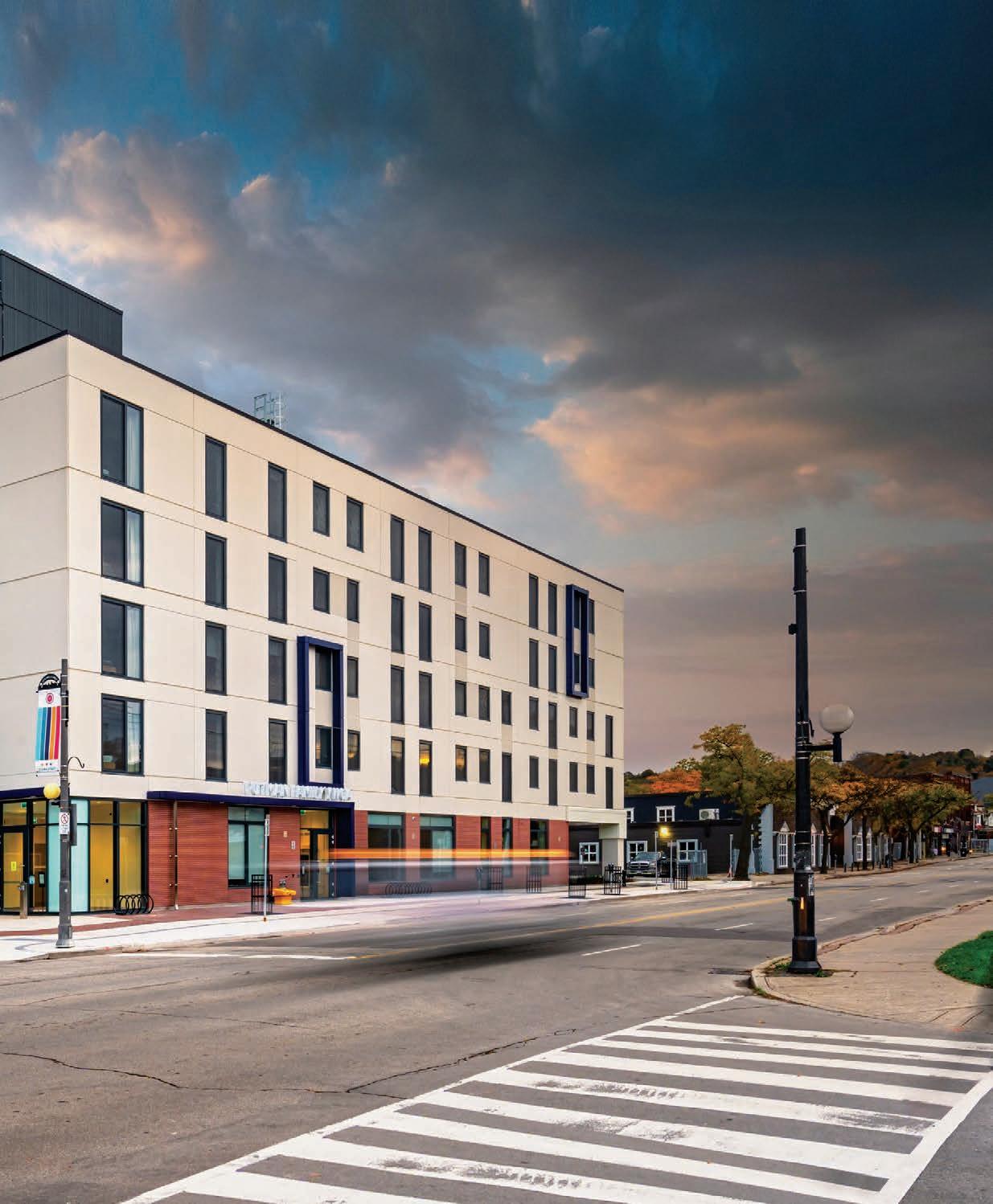
For more information on Passive House Total Precast Concrete, visit www.cpci.ca/publications to download your free copies of the Structural Solutions Guide and the Putman Family YWCA Total Precast Concrete Case Study.
Project: The Putman Family YWCA, Hamilton, ON Architect: Kearns Mancini Architects Inc., Toronto, ON
off-take reservation. The two partners have established a dedicated project team to co-develop further facilities that will commercialize Sublime Systems’ technology for swift market deployment.
This came on the heels of Holcim in July successfully placing its first 99.2 percent clinker-free concrete pavement in North America. In collaboration with Stoneway Concrete, the project resulted in 74.7 percent lower CO2 emissions than standard concrete using Type IL cement available in the market. “As a leader in our industry, we believe in setting the standard for product innovation and sustainability,” says Cory Cannon, VP of cement sales and logistics. “This product exemplifies our ability to swiftly introduce eco-friendly building solutions, and we’re pleased with the positive reception from our customers, showing the industry’s readiness to embrace these advancements.”
The 30 cubic metre slab-on-grade concrete pad was poured at Holcim’s Seattle plant in May 2024 and engineered to withstand heavy truck traffic. Holcim’s approach in this project substituted clinker, traditionally the primary component in cement production, with a slag activator, decreasing the energy required and resulting in a much lower carbon footprint.
Meanwhile, Lafarge Canada Inc., a member of Holcim Group, in June announced the launch of Hyperion’s patented Tandem Carbon Recycling System pilot, a process that advances circularity by capturing and transforming carbon emissions into high-performance mineral components used to make sustainable building solutions such as lowcarbon concrete.
The pilot project at Lafarge’s Bath Cement Plant in Ontario involves the testing of Hyperion’s netzero mineral solutions for advanced concrete such as Lafarge’s ECOPact, the broadest range of low-carbon concrete globally, which can lower embedded carbon between 30 and 90 percent compared to standard concrete, without any compromise in performance.
Brian Hall, managing director at the Canadian Precast/Prestressed Concrete Institute (CPCI), notes that since ASTM published the Canadian precast concrete industry’s first industry average Type
III EPD for the Canadian precast concrete industry in 2015, Canadian precast concrete EPDs have undergone two more rounds of updates, in 2019 and 2023, to capture the latest emissions data from the industry. “The newest round of EPDs from 2023 introduced a more detailed regional emissions breakdown than just a national average,” he says. “Four product categories were reported: architectural precast products, insulated wall panels, structural precast products, and underground precast products.”
Ultra-high performance concrete precast panels, Hotel X, Toronto, ON.
Hall adds that since the publication of the first CPCI industry-average EPDs in 2015, “the Canadian precast concrete industry has made significant strides, achieving a remarkable 22 percent reduction in our A1-A3 embodied carbon. This reduction underscores our unwavering commitment to sustainability and the potential of prefabricated precast concrete to lead
the charge toward decarbonization in construction. This reduction in embodied carbon is a promising sign for the future of sustainable buildings.”
As the year winds down, John Carson, executive director at AltusGroup, comments on the precast sector, saying, “Overall, business in Canada and the U.S. remains strong, with multi-family and high-rise
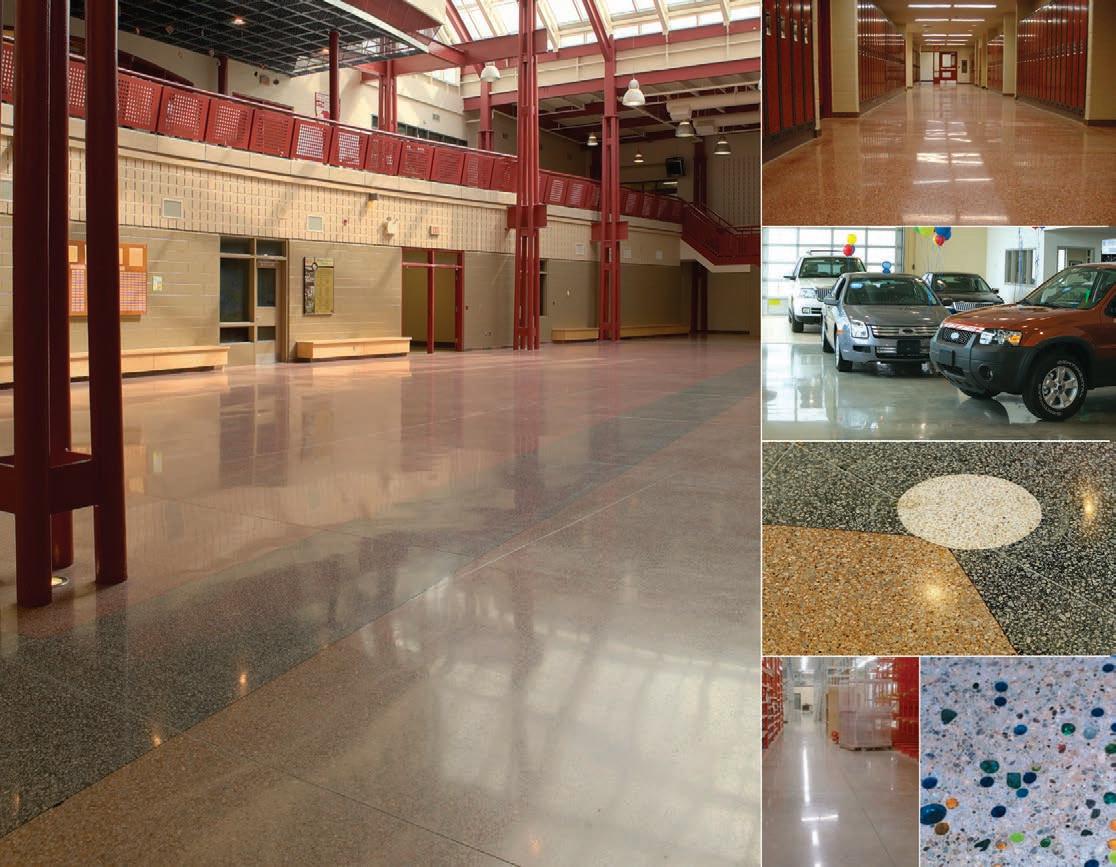
Diamond Polished Concrete.
housing continuing to be a driver in the former country. In the U.S., growth in 2024 was dominated by AI data centres and a surge in manufacturing and distribution demand over a wide geographical expanse.”
Carson is cautiously optimistic about the continued health of the sector moving forward, partly due to the U.S. Federal Reserve’s decision to start cutting interest rates. “Hopefully that will trigger the start of many projects that have been put on hold due to financial concerns,” he says, adding that, “automation and process control to eliminate trades, labour, and speed building erection and envelope enclosure scheduling remain priorities for those tasked with controlling costs and schedules.”
Carson also acknowledges that the industry will be focused on sustainability for the foreseeable future. “Contractors and producers continue to demand economical, green, and resilient lowcarbon footprint building systems and solutions, and cement producers are offering new technology possibilities, while academics continue to pursue innovative alternatives to the CO2 footprint scene,” he says.
A prime example of such a company is Peikko Canada, which since 2007 has focused primarily on the Deltabeam Composite Beam system that has been used in the construction of over 250 buildings and received a wide range of approvals, including UL and ULC ratings.
Mark Johanson, Peikko’s technical sales representative, says, “There’s enormous demand for the hollowcore systems, with retirement homes being a particularly prominent type of project – to the
Diamond Polished Concrete is a unique, advanced flooring system that brings out the natural beauty of concrete, helps reduce maintenance costs and enhances the natural durability of concrete surfaces. The Tri-Con Diamond Polish System employs an innovative 7-step grinding and polishing process that utilizes progressively finer diamond grinding heads. This system also uses the most advanced penetrating sealer technology.
Tri-Con Concrete Finishing is an industry leader with more than 30 years experience in the concrete industry. We are a one-stop supplier capable of pouring new floors to exact specifications as well as restoring existing concrete surfaces with endless versatility. We guarantee that we deliver on time, on budget and on spec every time.
Deltabeam Composite Beam system installation at the Rosecrest Meadows long-term care home, Halifax, NS.
degree where it represents almost half of our business. In fact, we recently presided over a retirement home project in Halifax, our first ever job in that city, which has traditionally been a cast-in-place market, but like so many other parts of Canada has had to adjust in order to save time and money.”
The Halifax project in question is Rosecrest Meadows, a long-term care home developed by the Stevens Group of Companies, currently in construction using prefabrication for the building structure. The building combines hollowcore plank, tilt-up walls, steel columns, and Deltabeam.
Andrew Allan, operations manager for Stevens Group, says, “Our goal with prefabrication for Rosecrest was to reduce labour onsite and accelerate the construction schedule. With precast concrete, we can erect quickly with a small crew, and with Deltabeam we have a flat ceiling that facilitates the work of other trades as well as minimizing the fireproofing trade onsite.” Deltabeam is being used as a continuous beam combined with single storey columns; this allows for unique geometry, such as four beams connecting to the same columns at different angles, while maintaining the flat ceiling.
Another interesting feature of Rosecrest is sleeving: openings were integrated through Deltabeams at the shop drawing stage, and with the precise location and prefabrication of sleeves, construction onsite is again accelerated and labour reduced.
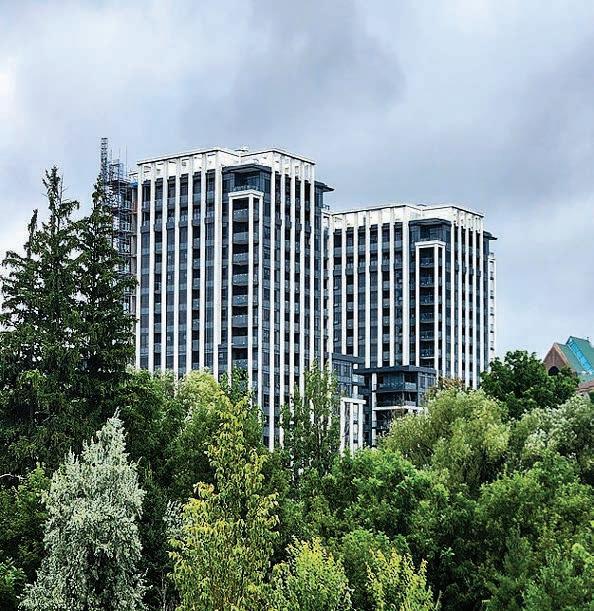
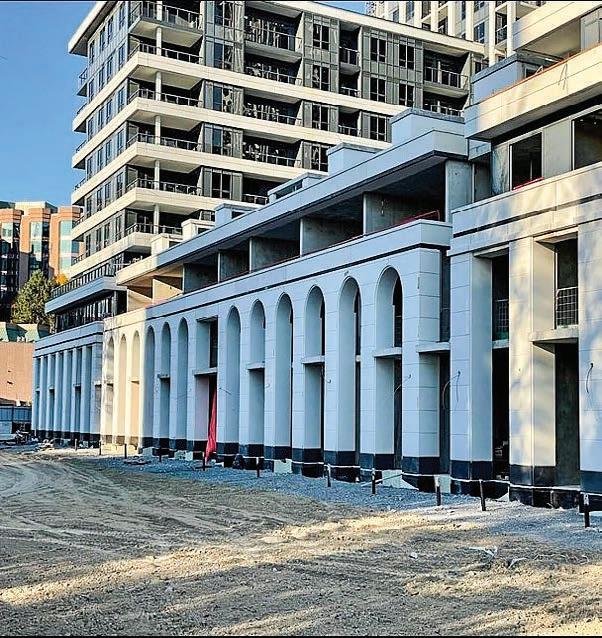
TKL Group’s prominence as a precast specialist is well-known, and one notable project in 2024 it served was Vendôme Condos in Markham, Ontario, consisting of two 18-storey residential towers
BESISTA ®
It’s in the details
situated at the north and south locations, connected by a row of three-storey townhouses along the west side, and a large, raised courtyard on level three with indoor parking levels below.
Vendôme’s architectural style is a modern interpretation of art deco precast concrete, which also conforms to the City of Markham’s design language. To achieve this aesthetic as well as provide a feel of solidity and grandness, precast concrete panels were selected.
The superstructure of the building is cast-in-place concrete, and the panels were connected directly to the cast-in-place structure, taking the loads of the
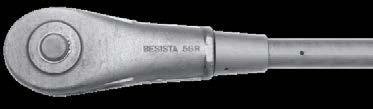
Peikko BESISTA® tension rod and compression bar systems set the standard for seamlessly bracing buildings and other load-bearing structures. With detailed aesthetics and patented safety and installation features, BESISTA is your first choice for load-carrying connections that boldly stand out.
The art deco-inspired precast concrete of Vendôme Condos, Markham, ON.
windows in certain situations where they could not bear on the slab as well as railing loads. Precast concrete double-height columns and spandrel pieces were also provided, and archway panels were crafted using CNC technology, for precision. By nature, the admixture sector advances the objectives of sustainability – and as such it is thriving. Kevin Yuers, VP of product development at
Kryton International Inc. (well known for its crystalline waterproofing, cement hardening, and many other products), remarks, “This year’s business was somewhat slow, but it recently picked up, and the expectation is that 2025 will be a full return to normal. We also continue to get further involved in infrastructure projects – they’re a lot more resistant to economic downturns than, say, multi-family
residential work – and we have a new territory manager based in New York to expand our presence in that part of North America.”
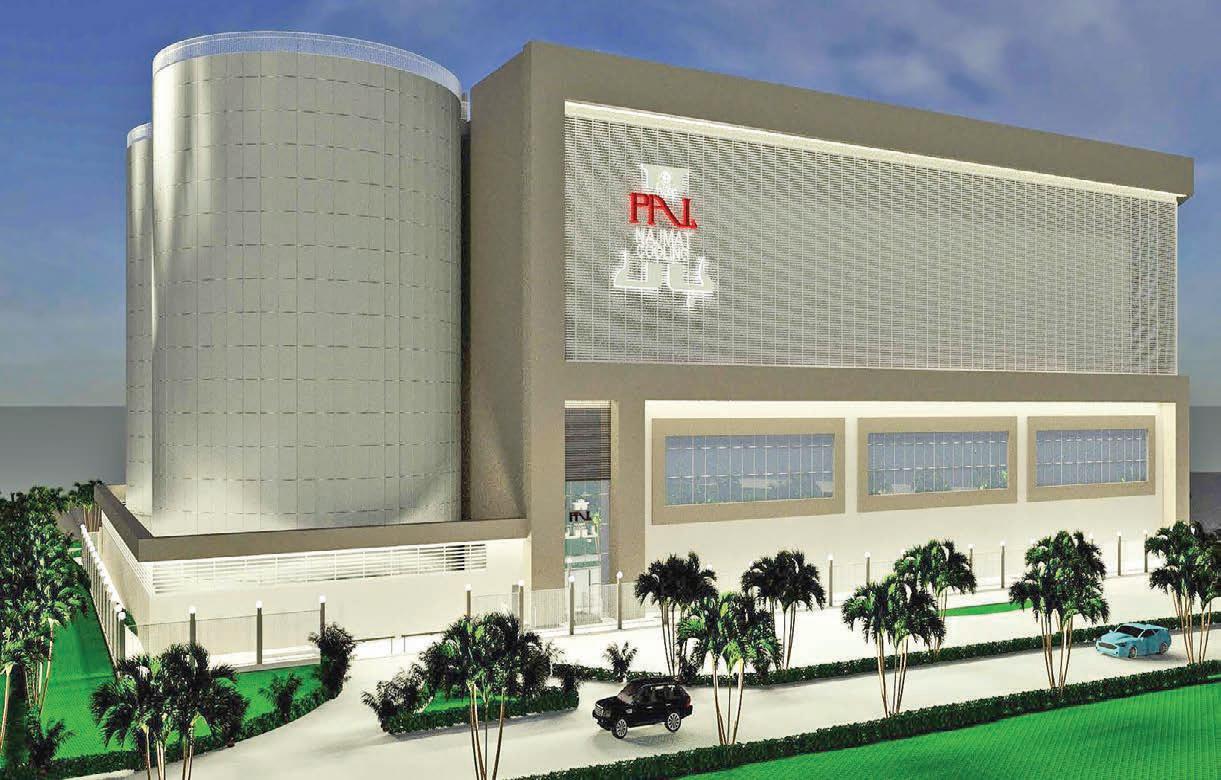
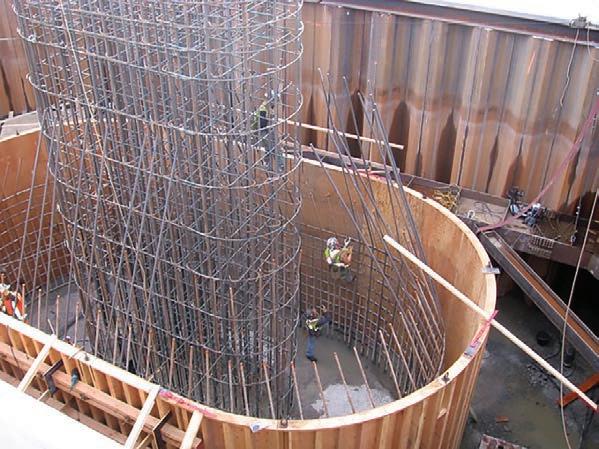
Two recent projects reflect Kryton’s value to infrastructure work. The Najmat Development District Cooling Plant in Al Reem Island, Abu Dhabi, is one of the largest district cooling plants in the United Arab Emirates and designed to provide a sustainable cooling solution to that region. For this project, Kryton provided a full integral tanking system consisting of jointing, repair, and 80 tons of Krystol Internal Membrane (KIM), a hydrophilic crystalline admixture used to create permanently waterproof concrete.
KIM lowers the permeability of concrete and is used in place of surface applied waterproofing membranes. By stopping the transmission of water through concrete, KIM adds durability and longevity to concrete by protecting it against chemical attack and corrosion of reinforcing steel.
Kryton also supplied its expertise and products on behalf of the John Hart Dam on Vancouver Island near Campbell River. “The developers are adding Hard-Cem to the new spillways to provide protection against erosion, and a few hundred metric tons of Hard-Cem will be supplied in total,” Yuers says.
Unlike post-applied surface treatments that delaminate over time, or high-strength concrete that’s prone to curling and cracking, Hard-Cem integral admixture significantly reduces replacement and repair requirements and more than doubles the concrete’s wear life — lowering its embodied carbon footprint over its lifetime. A
Najmat Development District Cooling Plant in Al Reem Island, Abu Dhabi
*(CPCQA) CERTIFICATION PROGRAM BY PROCESS OFFERS KEY BENEFITS TO ARCHITECTS, CONTRACTORS, ENGINEERS, GOVERNMENT AUTHORITIES AND OWNERS.
Project: Champagne Quarry Park, Calgary, AB Architect: Gibbs Gage Architects
We’re finding low-carbon energy in unlikely places
energy in unlikely places
Like biogas captured from cow manure to create Renewable Natural Gas1 (RNG). It’s a low-carbon2 energy that can help reduce overall greenhouse gas emissions, with more RNG projects underway.
Like biogas captured from cow manure to create Renewable Natural Gas1 (RNG). It’s a low-carbon2 energy that can help reduce overall greenhouse gas emissions, with more RNG projects underway.
Customers can sign up for the voluntary RNG program to designate five, 10, 25, 50 or 100 per cent of the gas they use as RNG.
Customers can sign up for the voluntary RNG program to designate five, 10, 25, 50 or 100 per cent of the gas they use as RNG.
Find out more about RNG at fortisbc.com/rngbuild.
Find out more about RNG at fortisbc.com/rngbuild.
Building For Tomorrow
Green building design experts innovate with resilient construction practices to enhance sustainability and well-being
by NATALIE BRUCKNER
Green building design is entering a bold new chapter, driven by the relentless pursuit of zero carbon and innovative sustainability standards. With the release of the updated Zero Carbon Building – Design Standard v4, experts in the industry are harnessing cutting-edge technologies to slash emissions and transform the built environment. This year, the industry’s focus sharpens on adaptability and human well-being, setting the stage for an era where sustainable design is more than a goal – it’s the blueprint for the future.
ARCHITECTURAL FOCUS
Lindsay Oster, principal architect at prairie architects, says that when it comes to green building design there is continued focus on eliminating greenhouse gases and incorporating lifecycle analysis, with embodied carbon increasingly influencing design decisions.
“Many of the RFPs we are seeing emphasize these aspects,” she notes. Oster adds that many of their projects are pursuing funding from agencies like CMHC’s National Housing Strategy, Affordable Housing Fund, and the Green and Inclusive Community Buildings fund. Each has strict requirements for energy efficiency and carbon reduction, aligning with the broader trend toward net-zero design.
However, she emphasizes that as projects move toward energy and carbonfocused certifications, there is a need to balance these with human health and well-being considerations. “We are selectively choosing metrics from various certification frameworks to ensure both environmental and human factors are prioritized in future projects,” she explains, reflecting a nuanced approach to sustainable design.
SUSTAINABLE HEALTH-CARE DESIGN
Parkin Architects is at the forefront of participating in the collaboration of integrating green building design into health-care architecture, addressing the evolving demands of both the industry and the environment. Their designs reflect a collaborative commitment between the design team, contractors, and owners to minimize operational and embodied carbon while promoting wellbeing for patients and staff. Key innovations developed by teams include using high-performance mechanical systems like Heat Recovery Ventilators (HRVs), and fully electrifying facilities to reduce reliance on fossil fuel.
One standout project is the Cowichan District Hospital Replacement in B.C., a collaborative effort that is set to be the province’s first all-electric health-care facility. Designed with future climate resiliency in mind, it targets the CaGBC Zero Carbon Building standard. This hospital also pioneers the first ‘embodied carbon pain share/gain share model,’ which incentivizes lower carbon approaches throughout the design and construction phases.
Looking ahead, Parkin is focusing on regenerative design. The goal of Parkin’s Sustainability Team is to collaboratively develop public buildings that give back to their ecosystems, generating more energy than they consume and implementing water treatment solutions that support local marine life. Through bio-based materials and circular design principles, Parkin aims to reduce the environmental impact of their projects while setting new standards for sustainability in health-care design across Canada.
CARBON REDUCTION STRATEGIES
As climate goals tighten and demand for housing increases, architects face a growing challenge: building more while emitting less. Jeff Mitchell, senior associate at Diamond Schmitt (dsai), highlights the importance of leveraging existing building stock and retrofitting to meet these goals.
“Clients are now considering reusing their own existing buildings because it has an embodied carbon benefit,” Mitchell explains. “If it’s not in the regulation yet, it soon will be.” He notes that embodied carbon limits, along with balancing whole life cycle emission, are becoming critical considerations in green building certifications like the CAGBC Zero Carbon Design Standard.
Diamond Schmitt has been at the forefront of sustainable design, incorporating low-carbon materials in projects like the Humber Cultural Hub – which uses mass timber on top of a new concrete structure – and the renovation of Thompson Rivers University Faculty of Law. Then there’s the National Arts Centre in Ottawa – a mass timber renovation project. These renovated buildings inherently lower embodied carbon. “The big decisions on structural material account for 50 percent of a project’s carbon footprint. Lightening the structure and reusing existing buildings have a huge impact.”
CLIMATE RESILIENCE
As climate change intensifies, buildings must adapt to more frequent extreme weather events. Eric Campbell, engineer and sustainability advisor at Introba, emphasizes the urgency of rethinking building design, noting that “designs relying on current codes based on outdated weather patterns are showing their limitations.”
To address this, he says resilience planners are stepping in to help building owners and project teams assess location-specific climate risks. They translate these risks into practical Climate Adaptation Measures (CAMs) to safeguard buildings from heatwaves, floods, and other climate impacts. According to Campbell, “Measures like adding external shading or moving electrical systems away from flood-prone areas not only protect against extreme weather but can also reduce carbon emissions.”
Cowichan District Hospital Replacement, Duncan, B.C.
This low carbon resilience approach integrates energy-saving strategies with resilient designs, ensuring that buildings are not just surviving, but thriving in a changing climate. “In the long run,” says Campbell, “this boosts both safety and value.”
HIGH-PERFORMANCE SOLUTIONS
Innotech Windows + Doors is making significant strides in green building design through its involvement with the Brightside Community Homes Foundation project in East Vancouver. Innotech manufactured and installed 375 Passive House Institute (PHI)-certified windows and terrace doors in 19 different configurations for Brightside’s two new buildings, Timbre and Harmony. These high-performance windows not only support the project’s ambitious Passive House certification goals but also provide exceptional sound resistance, ensuring comfortable and healthy living environments for seniors.
Jessica Owen, brand champion at Innotech, highlights the company’s commitment: “Our PHI-certified windows play a key role in creating sustainable, energy-efficient homes that meet stringent Passive House standards.” By contributing to this 157-unit not-for-profit rental development designed by Ryder Architecture, Innotech is at the forefront of low-carbon, high-performance building solutions, helping to shape more sustainable, resilient housing for the future.
INNOVATIVE ENGINEERING
Glotman Simpson Consulting Engineers remains committed to continuously reducing embodied carbon in its designs by leveraging collaboration between the Sustainability Committee and the Automation and BIM teams. They have developed integrated technology tools for building design that redefine project possibilities by providing essential information about embodied carbon and reduction strategies from the early phases of design. This approach allows the firm to establish internal benchmarks while encouraging others in the industry to adopt similar practices.
The firm’s achievements in 2023 represent just the initial steps in a long-term effort to reduce emissions, aligning with the United Nations Intergovernmental
Glotman Simpson is proactive in adapting to evolving green building regulations, particularly in B.C. Recent updates to the Vancouver Building By-law and CALGreen codes have prompted a reassessment of design workflows, incorporating a comprehensive view of embodied carbon at both the elemental and whole building scales.
Recent projects highlight this commitment to sustainability, such as a postsecondary school project where optimizing the concrete mix resulted in an 11 percent reduction in embodied carbon, showcasing the firm’s dedication to combining structural efficiency with environmentally friendly principles.
RETROFITTING FOR SUSTAINABILITY
The experts at RJC Engineers continue to see ever growing emphasis placed on carbon reduction over energy efficiency in green building design. “Historically, energy has been top priority, but carbon emissions, especially embodied carbon, are now understood as top priority,” says Wendy Macdonald, sustainability consultant at RJC.
Retrofitting existing buildings has become central to reducing both operational and embodied carbon. “Keeping structures intact is key,” says Macdonald, emphasizing the environmental and financial benefits. Collaborative efforts, like SE 2050 and the Responsible Buildings Pact, are helping the industry address these challenges together.
RJC’s commitment to sustainability is reflected in its work with a postsecondary institution in B.C., where they’re advising on new student housing.
“This is a massive investment that will shape the campus for decades,” says Terry Bergen, managing principal at RJC. Using tools like RJC Aspire – a concept stage tool designed to enable holistic, carbon-conscious building design – they assessed factors like massing, energy efficiency, and carbon impact in just hours, a process that once took months. RJC’s work in sectors like rental housing also underscores the growing demand for cost effective, climate-friendly construction.
The speed of adaptation, however, remains a challenge. “The industry is traditionally cautious, but we’re being pushed to adopt new methods quickly,” Macdonald explains. New initiatives and shared data are helping establish clear benchmarks as the industry moves toward low carbon, resilient buildings. Ask us about the Defender 88PH+ XI: the rst Passive House Institute (PHI) cold climate certi ed window system manufactured in North America!
Windows + Doors for Passive House Projects
Innotech Windows + Doors is a Canadian manufacturer of high-performance windows and doors. The Defender 88PH+ System combines decades of fenestration knowledge to deliver a robust window and door system that is not only Passive House Institute certi ed, but that also delivers the air, water and structural performance required for highly sustainable housing developments.
innotech-windows.com
EVOLVE IN VANCOUVER, BC
Passive House Multi-Family Project by ZGF Architects and Peak Construction.
GALVANIZE BETTER.
Corbec is the Leading Hot-Dip Galvanizer in Canada
Unrivaled Service | Unparalleled Expertise | Bold Innovation
Why Galvanize?
✔ Maximum Protection
✔ Durability & Adaptability
✔ Longest Life Coating
✔ Best Return on Investment
✔ Eliminate Maintenance
Corbec Specializes in Galvanizing a Wide Range of Structures and Metal Products, Including: and more!
Buildings
Bridges
Galvanized Rebar
Towers & Electric Power Grids
Steel Structures
OEM Products
To Corbec What Matters Is:
▪ Galvanizing Better
▪ Quality & Innovation
▪ Expertise & Quality Assurance
▪ Service - Pre-During and After the Project
▪ Collaboration and Assistance to the Project Team
State-of-the-art Facilities
Hamilton | Montreal | Quebec | Halifax
Publishing with CSA, the first-ever Environmental Product Declarations (EPDs).
The first in Canada for Galvanized Steel
The first in North America for Galvanized Rebar
Environmental Product Declarations (EPDs)
EPDs are critical in assessing the environmental footprint of materials, assisting in making informed decisions and effects the scope for considerations and design for sustainable construction projects. Why EPDs Matter?
The Advantages of Using EPDs
▪ Leverage long-term cost savings
▪ Gain a competitive edge
▪ Reduce Environmental Footprints
▪ Enhanced Life Cycle Assessment
▪ Achieve Green Building Certifications
▪ and more
Utilizing EPDs in Your Project
▪ Material Selection
▪ Design Optimization
▪ Establish Clear Sustainable Targets
▪ Life Cycle Assessment
▪ Transparent Reporting
PRACTICAL APPLICATIONS
The demand for new construction is growing in B.C., as is the requirement to build homes and buildings to higher efficiency standards. Michael Lui, energy solutions manager, FortisBC, is seeing builders and developers embrace innovative technologies and designs to achieve higher levels of B.C.’s Energy Step Code, while prioritizing energy-efficiency as well as resiliency and affordability.
For example, Lui is seeing integrated dual-fuel systems emerge as one of the preferences for builders. These systems use both a heat pump and highefficiency furnace to heat and cool the home. This allows new construction projects to remain connected to the gas system, while helping to lower energy use and overall greenhouse gas emissions.
As both a gas and electricity provider, FortisBC encourages builders to work with them early in the design process to identify energy capacity needs as well work together to optimize building performance. Working together across B.C.’s diverse climate zones is providing valuable lessons on the flexibility, support, and funding needed to help design and build high-efficiency new homes in more affordable and practical ways.
SMART SOLUTIONS
Williams Engineering continues to stay ahead of trends in green building design by embracing advanced technology that enhances both sustainability and efficiency.
Experts at Williams say that tools like Twinmotion, Navisworks, and BIM 360 have revolutionized how architects and engineers conceptualize, collaborate, and execute projects. Twinmotion’s real-time rendering capabilities enable designers to visualize sustainable infrastructure solutions, facilitating more informed decision-making. Navisworks enhances project co-ordination through clash detection, significantly reducing rework and delays. Meanwhile, BIM 360, a cloud-based platform, promotes real-time collaboration, ensuring that all stakeholders have access to the most current project data.
Emerging technologies such as virtual reality, augmented reality, and digital twins are pushing these boundaries further. Looking ahead, the integration of machine learning and artificial intelligence is poised to transform design processes, ensuring that future green buildings are smarter and more responsive.
DECARBONIZATION LEADERSHIP
WSP has been named a leader in Verdantix’s Green Quadrant: Building Decarbonization Consulting 2024 report, which evaluates firms working to reduce carbon emissions in existing structures. With 80 percent of current buildings expected to remain in use by 2050, decarbonization strategies are becoming increasingly urgent.
WSP’s comprehensive, data-driven approach focuses on identifying highpotential assets and implementing interventions that maximize impact while minimizing disruption. Tom Smith, global director of property and buildings at WSP, highlights, “Collaboration between asset owners, the construction profession, and the supply chain is critical in meeting net-zero commitments.”
INDUSTRY MILESTONES
Corbec Inc., a leader in Canada’s galvanizing and construction sectors, recently shared what could be considered a rather groundbreaking development at the Transportation Association of Canada (TAC) Conference in Vancouver.
During a plenary session, Hellen Christodoulou, executive VP of engineering and sustainability, revealed that Corbec will be publishing third-party verified Environmental Product Declarations (EPDs) with the CSA Group. This makes them the first galvanizers in Canada to release EPDs for galvanized structural steel and the first in North America for galvanized steel rebars – a significant milestone for the industry.
This move comes at a crucial time for the bridge construction sector, where EPD results confirm galvanized rebars have the lowest global potential over their life cycle, performing better than glass fibre reinforced and stainless steel rebars.
Since 1965, Corbec has remained dedicated to top-tier service and quality in steel protection, working closely with clients and pushing the boundaries of innovation to meet the evolving needs of the construction industry.
Hellen Christodoulou emphasized the importance of this achievement: “Corbec has set a new standard for the Canadian construction industry. It is now proven that choosing galvanizing for corrosion protection offers designers and specifiers the lowest carbon footprint solution with the highest ROI, helping them achieve their project performance goals.”
Against the Grain
As architectural woodwork reclaims its place in modern design, skilled craftspeople are shaping everything from grand condos to cozy rentals
by ROBIN BRUNET
The architectural woodworking sector in 2024 saw the continuation of various trends, driven by interior designers increasingly turning to wood as a sustainable construction material. The use of local and unique woods was prevalent in high-end projects, and the demand for bespoke woodworking in different sectors remained strong. Also, in some cases, craftspeople concerned with sustainability found themselves sourcing lesser-known species of wood, an example being the substitution of American cherry or applewood instead of mahogany.
Benson Cabinetry & Millwork (BCM) has been a key player in the multi-residential and high-rise interior trade since 1976, but the company has entered a new phase since its transition of ownership in 2018.
Tim Benson, the current president and CEO, aims to reshape the company – formerly known as Benson Industries – into a trusted partner for both existing and new clients. BCM emphasizes end-toend customer service and team integration, backed by a strong track record of executing large, complex projects on time, and with a commitment to quality. This dedication has solidified BCM’s position in the West Coast market for 2024-2025.
Like many local service providers, BCM is navigating the challenges of inflation and market fluctuations. According to Benson, the presence of low-cost, low-quality import goods in high-rise projects has added pressure, as has the local hiring challenges stemming from limited interest and training for young people in manufacturing and trades. Coupled with a low Canadian dollar and high living wage demands in B.C., the past five years have posed unique challenges compared to the previous 43 years before the acquisition.
Open dialogue and transparency are essential for fostering productive relationships among all stakeholders. “It’s important for government entities to consider the cost implications of the electoral initiatives being proposed at the provincial level,” says Benson. “While import goods will remain part of the market landscape, BCM hopes that federal and
provincial regulators will recognize that ensuring a quality of life for local workers relies on maintaining local jobs and fair competition.”
Despite these challenges, Benson says BCM is experiencing growth in B.C., with a robust order book filled with provincial projects, unlike previous years when it often had to look outside the province or country for work.
The opposite of a company such as Benson’s in terms of size is Oake & Rowan Millwork Design Ltd., launched in 2021 by Ciaran and Naomi Adams in Cobble Hill, B.C., to address the need they saw for a skilled and agile shop focused primarily on architectural millwork – they guarantee that each cabinet and millwork project will finish as a work of art in wood, brought to life through a detail-oriented approach.
Ciaran Adams agrees that inflation has taken its toll, however, as a relatively small firm with a particular focus, “We’ve been busier than we know what
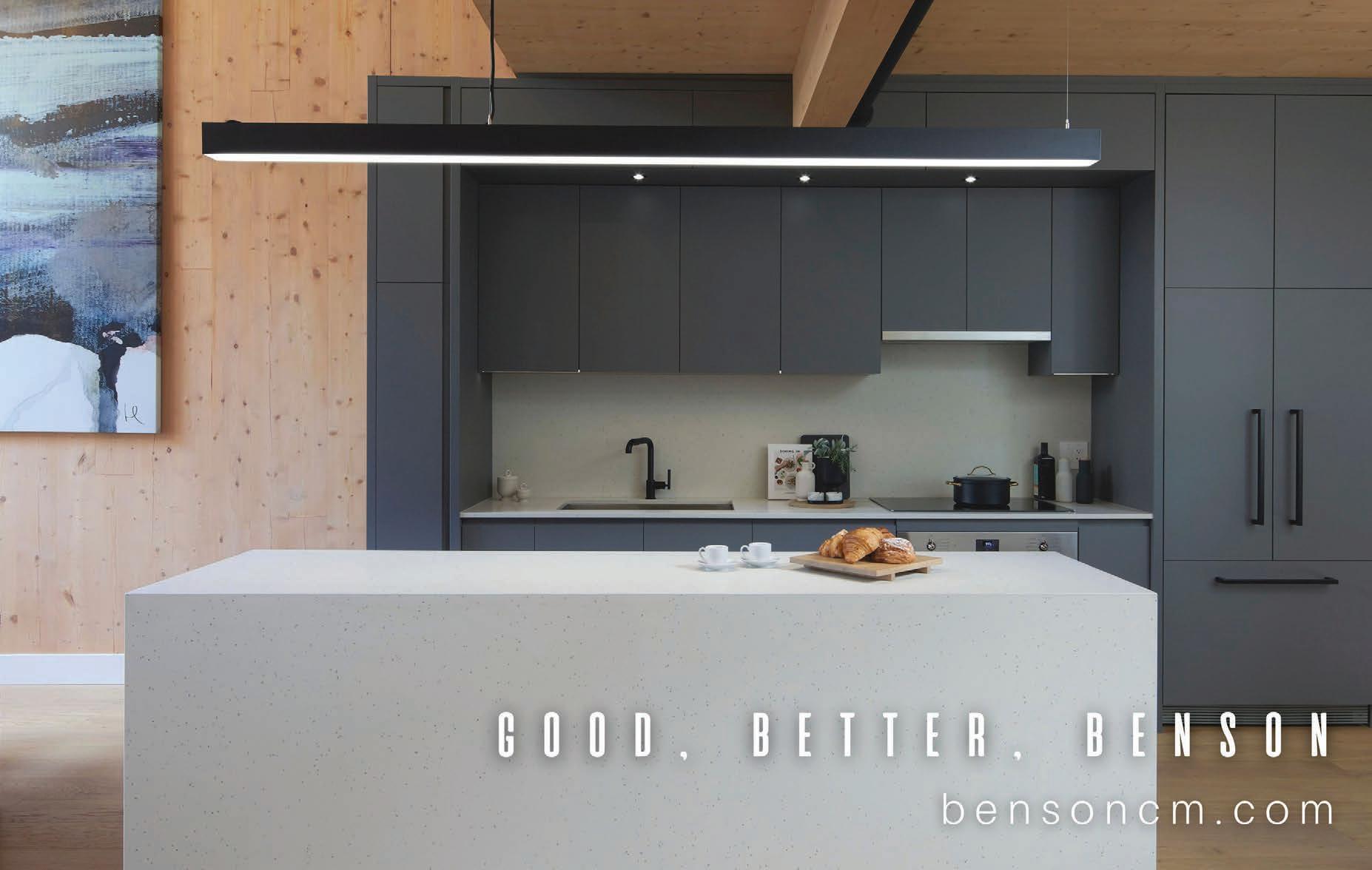
Bespoke woodworking by Benson Cabinetry & Millwork.
Wood Composite
Siding · Decking
Fencing · Beams
95% recycled materials
Maintenance-free
Sustainable · Fade resistant
to do with in 2024, thanks to focusing on commercial projects, which not only gives us consistent work compared to the residential sector but also allows us both more creativity and the chance to specify the
highest quality materials,” he says. “We collaborate with Stantec quite a bit, and even though they’re an iconic architectural firm, they’re always open to ideas, so it’s a great relationship.”
One project that is both fulfilling and ongoing for Adams’ team is Nanaimo Airport’s 20-year plan to expand its operations, terminal, and services.
“We have supplied all the millwork for the facility’s car rental reception as well as the new Pacific Coastal Airlines reception, and we are currently designing a full-service boarding lounge coffee bar with the staff at YCD Nanaimo,” he says, adding that such jobs have been aided by the fact that “material availability has increased and costs have decreased from the high levels of the pandemic.”
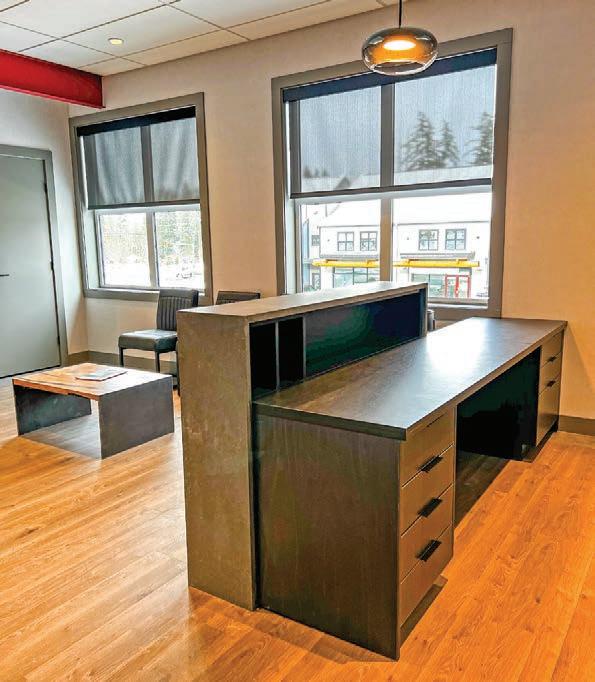
Reception – Oyster Bay Professional Offices.
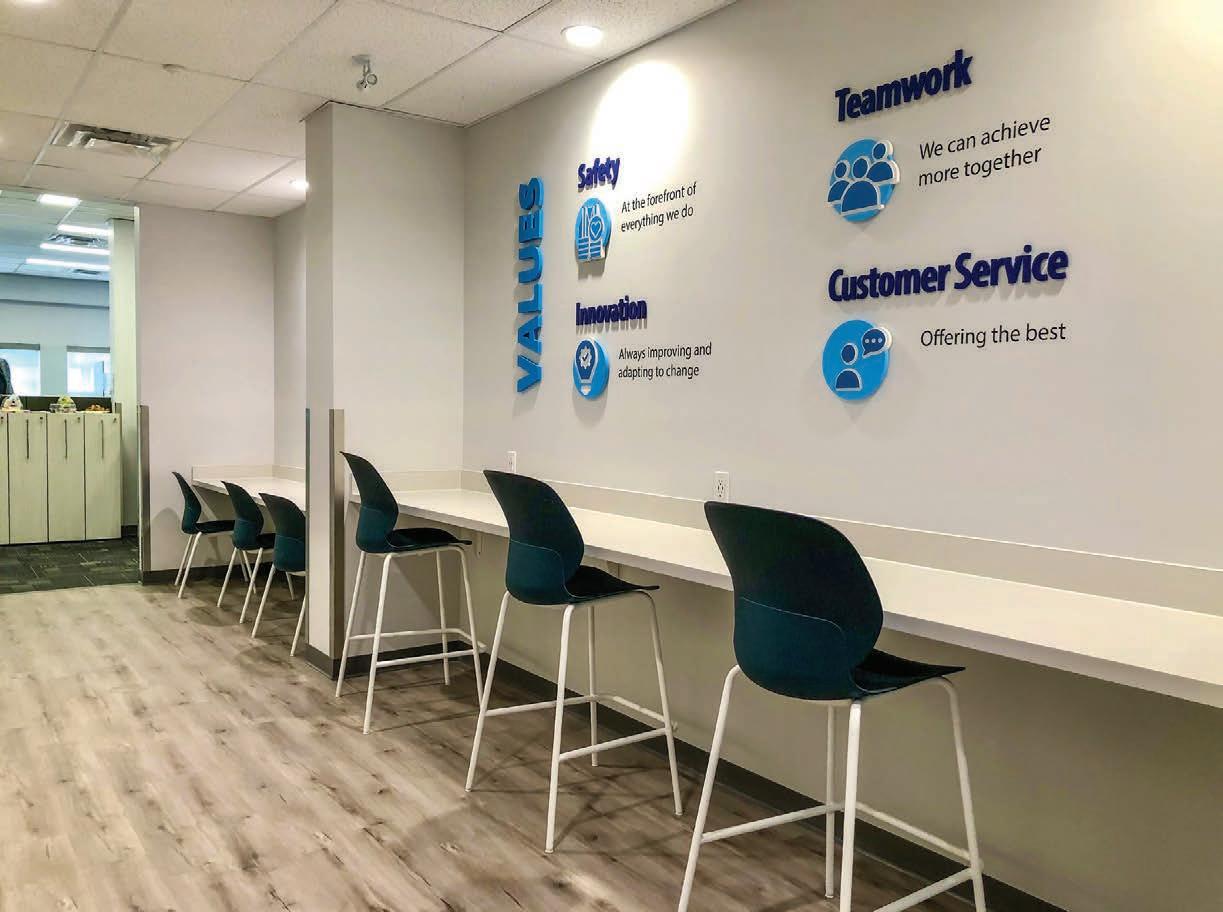
Lunchroom – BC Transit Victoria office renovation.
Benson Cabinetry and Millwork.indd
Dare to Accelerate Change
BUILDEX
A lean production management-based approach is the key to Calgary-based Executive Millwork’s project delivery. This approach has allowed it to maximize value and minimize waste without sacrificing quality – as exhibited by projects such as Delta Hotels Calgary Airport, Shane Homes YMCA at Rocky Ridge, and Calgary Central Library.
Executive Millwork’s approach to business has also enabled it to weather the challenging economy. “Inflation affected us in wages and material costs as well as general overhead, but wood product prices are settling down and there are plenty of opportunities ahead, to the extent we’re already 50 percent booked for the New Year,” says business manager Kyle Roll.
Roll goes on to remark that, “We’ve been consistently busy wrapping up large projects and starting new ones, and a big trend that continues to benefit us is renovations of downtown office lobbies.”
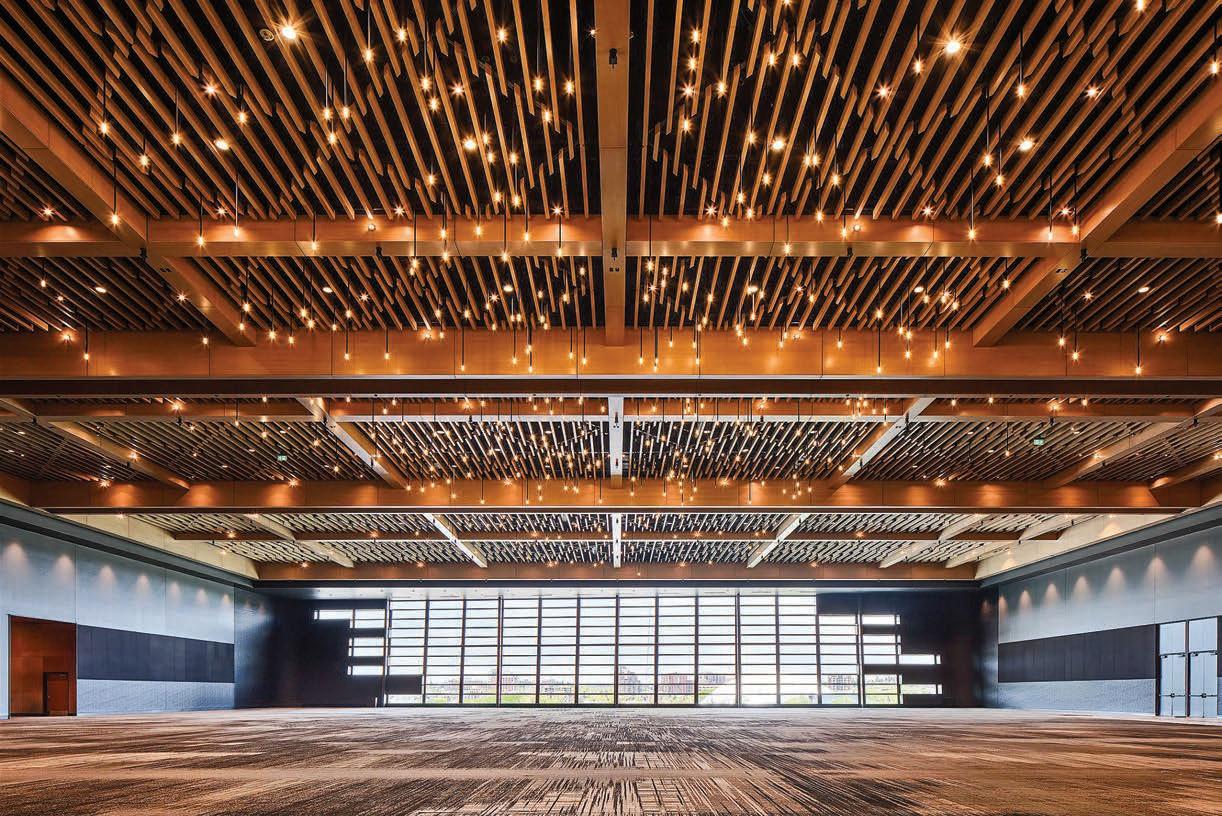
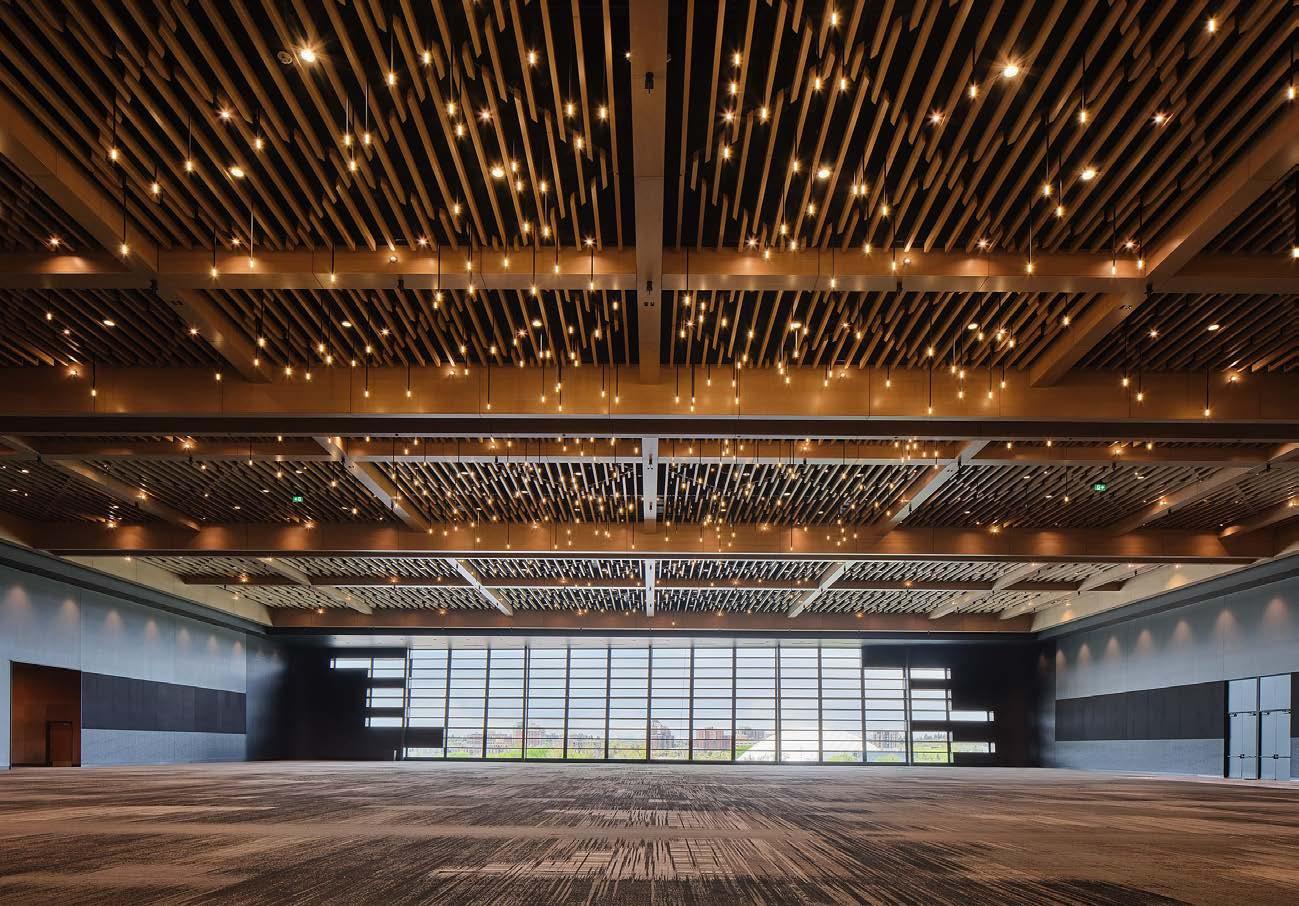
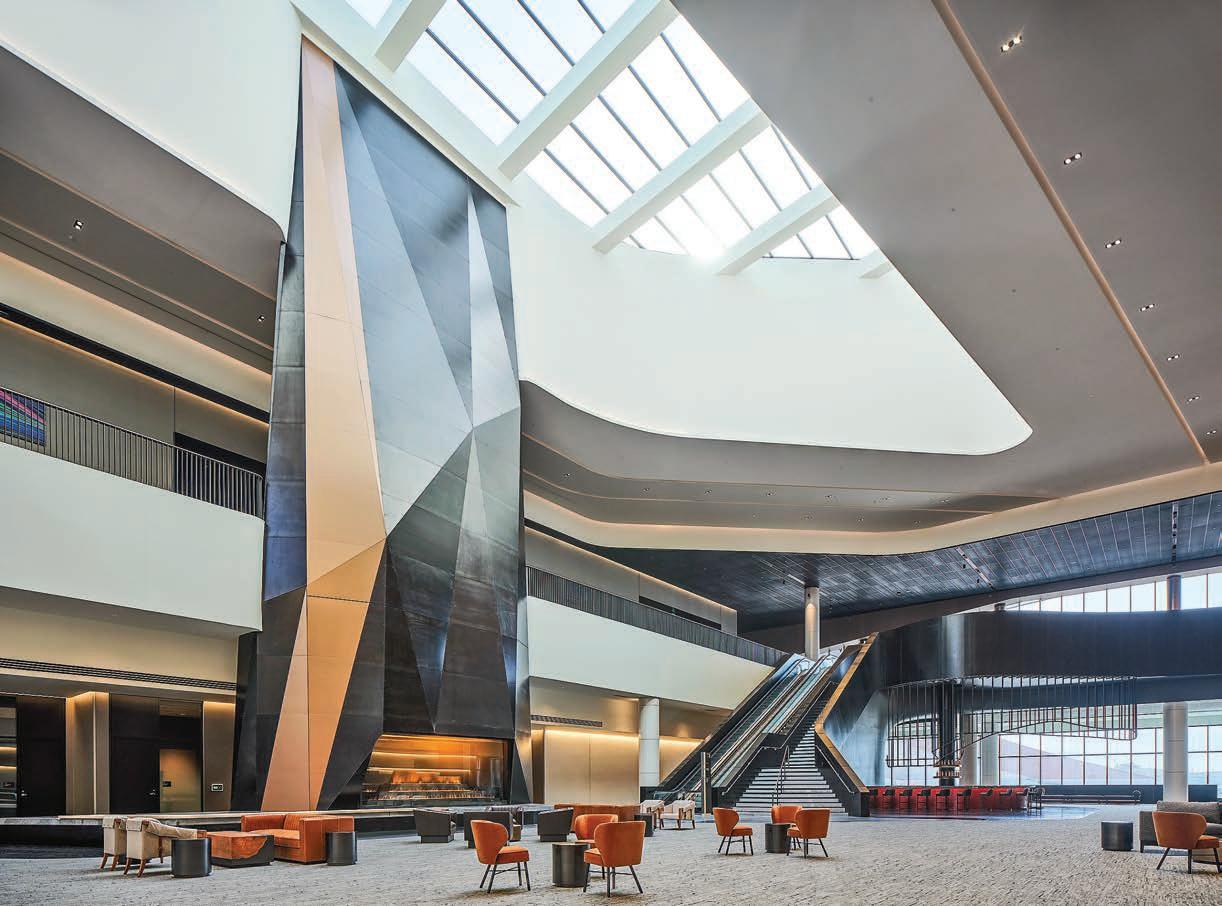
The Calgary Stampede has also been a significant source of work for Executive Millwork, with the newly expanded BMO Centre expansion featuring three floors of tradeshow and convention space, including new exhibition halls, two ballrooms, and a central hub. “That was a great project which included casework, wall panels, ceilings, and wooden landscape features” Roll says.
Champions Ballroom, BMO Centre.
Wood-panelled wall, BMO Centre.
System.
Everything. Except ordinary .
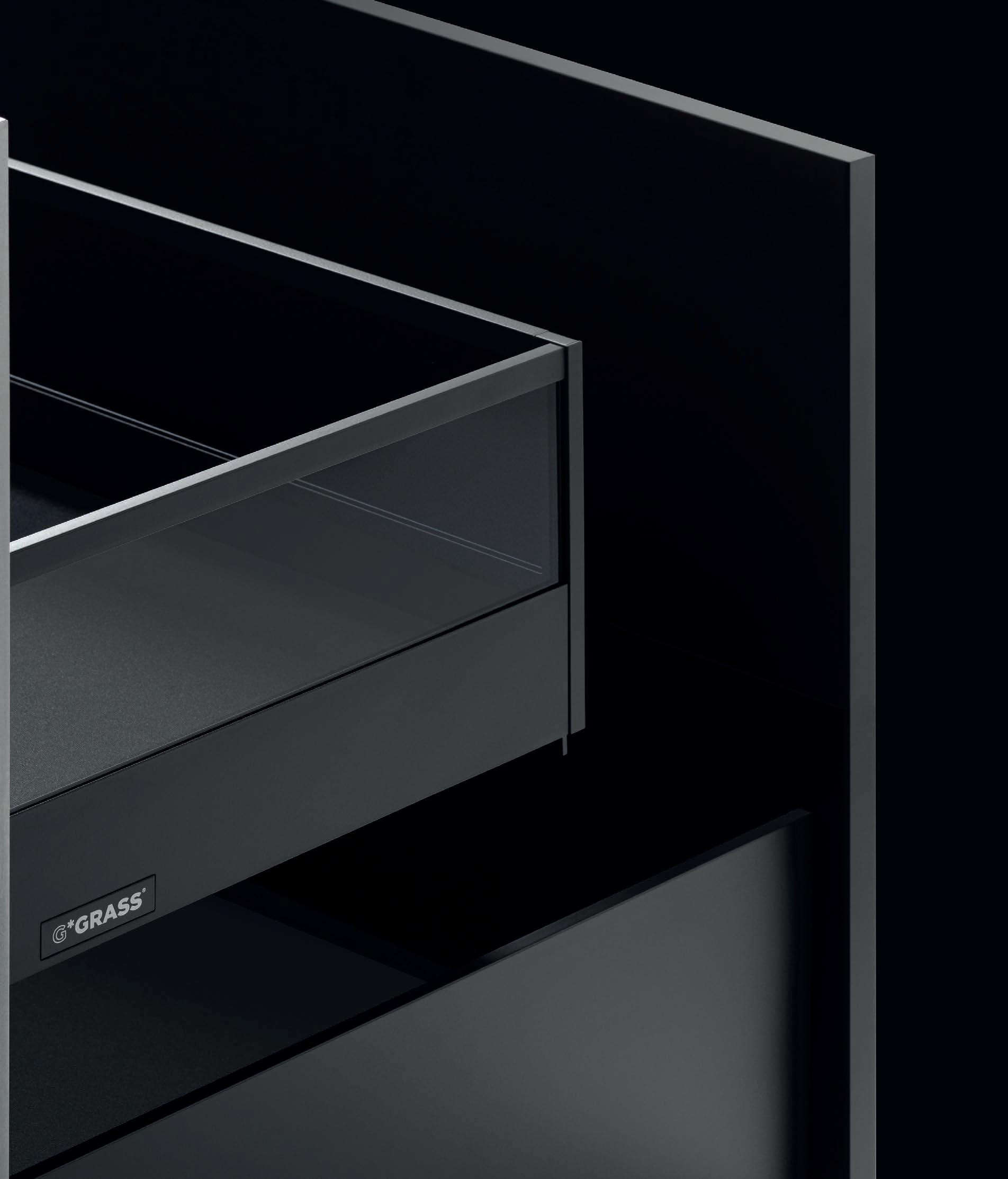
Until recently, the very idea of reducing a drawer side to 8 millimetres and, above all, making industrial production commercially viable would have been unthinkable. The new slim drawer system not only offers the only 8-millimetre one-piece steel drawer side in the world – Vionaro V8 is also the first pure-metal drawer side with no plastic elements. All parts are made of steel and joined using cutting-edge laser welding technology. That produces maximum stability plus longevity and ensures an almost 100 per cent recycling rate.
Vionaro V8 Slim Drawer
Vionaro V8 Slim Drawer System
Also, for the Stampede, Executive Millwork was involved in the construction of the Sam Centre, which Diamond Schmitt and FAAS modelled after the wooden barns dotting Alberta’s landscape, as well as the historic Post Office building on Stampede Park. This year-round immersive experience features 30,000 square feet of space on one level with access from the historic Rundle Ruins as well as Enbridge Plaza. “This was a fun and interesting project. We were involved with the base contract, as well as the design build of a restaurant with a western design,” Roll says.
Another major source of opportunity is conversions. Roll explains, “With office buildings only 20 to 30 percent occupied, developers are converting these facilities into mixed-use residential.”
As Executive Millwork prepares for a busy 2025, a variety of big budget projects are on Roll’s radar. “Calgary’s Scotia Place is breaking ground as we speak, and the new SAIT Taylor Family Campus Centre, which is being constructed by Bird, is one of several such facilities that may require extensive architectural millwork,” he says.
In the realm of hardware, 2024 has seen the usual catalogue expansions from familiar suppliers. Richelieu Hardware, a leader in specialty hardware, unveiled Triade Pro, which sets a new standard in the stability of floating shelf support, crafted with precision engineering and durable materials so that the system supports even the heaviest items.
It was an especially busy year for Formica Canada. In August it announced InDepth Surfacing, a premium product category that revolutionizes
the naturalism available through laminate surfaces. With a new precision inline print technology, the line delivers new levels of texture and visual dynamics to laminate surfaces. The technology creates a synchronized embossed matte texture with light-reflecting details, and the result is a visually dynamic, high-performance textured surface suitable for vertical, horizontal, post-formed, and flat applications in high-end residential and commercial environments, including hospitality, higher education, and luxury office spaces.
Formica Canada also released its 2024 Living Impressions Collection featuring a harmonious
blend of luxe pattern and colour. This array of sophisticated surfaces draws inspiration from three emerging design trends, resulting in seven elevated, large-scale 180fx stone patterns, and six Formica Laminate patterns.
For the record, the trends are: Modern Minimalism (warm whites and minimal patterns that are understated and soft without losing their edge); Casually Biophilic (nature-inspired elements that emulate the healing of the outdoors for indoor spaces); and Contemporary Classic (classic stone patterns reimagined with a modern twist). The stone patterns include Prosecco Quartzite; Fractured Marble; and Hazelnut Travertine, while the laminate patterns include Taj Mahal; Patine Chalk; and Patine Stone. “With the 2024 Living Impressions Collection, residential property owners can create ambiences that reflect their image, using durable, low-maintenance surfaces that meet their budgets,” says Christelle Locat-Rainville, marketing director at Formica Canada.
Yet another Formica Canada 2024 offering was five new designs added to its DecoMetal Laminates line, giving architects and interior designers more options than ever to incorporate creative metal finishes into their plans. The designs are: Metallic Gray; Metallic Gilt; and Metallic Black (for the Metallic Series), and Wax Rubbed Brass and Oil Rubbed Brass (under the Rubbed Series).
Locat-Rainville says the DecoMetal collection “Continues to be a favourite of designers and architects for its ability to enhance any space, no matter the desired style.”
InDepth Surfacing from Formica.
BOUND BY BARRIERS
Next-gen insulation products are revolutionizing construction and driving sustainable innovation
ROBIN BRUNET
The seemingly endless demand of regulatory bodies to improve the energy efficiency of residential, commercial, and industrial buildings may be a headache for developers, but one thing is undeniable: it’s keeping insulation providers and manufacturers busy and driving product innovation.
A prime example is Soprema, which for over a century has developed high-end insulation solutions for the construction industry. Its Sopra-XPS extruded polystyrene thermal insulation panels are primarily used as thermal insulation for foundations, walls, parking decks, and inverted roof systems, including plaza decks and green roofs. Also, Soprema’s Sopra-Cellulose is a thermal and acoustic product used to insulate interior and exterior walls, attics, floors, and ceilings.
But the real noteworthy aspect of these products is that they were made possible by a unique initiative implemented by Soprema and named Sopraloop, which recycles and recovers certain residual materials by transforming them into high-performance insulation products. Hence, the entire Sopra-XPS line consists of up to 70 percent recycled and recovered content, while SopraCellulose is made from over 80 percent recycled paper and cardboard and 15 percent flame-retardant materials.
Sopraloop is a collection and recycling program for residual materials from paper, cardboard, glassine, and polystyrene. These materials are then transformed into thermal and acoustic insulation products at Soprema’s Sherbrooke
and Sainte-Julie plants, in Quebec. Due to this process, nearly 25,000 tonnes of paper, cardboard, and glassine, along with about 10,000 tonnes of polystyrene are recycled in that province, making Soprema one of the largest polystyrene recyclers in North America.
Concrete continues to be regarded as a material that helps achieve everstringent energy efficiency requirements, and Brian Hall, managing director at the Canadian Precast/Prestressed Concrete Institute (CPCI), points out that the R-values of the Double Wythe Insulated Precast Concrete Wall Panels long endorsed by his organization “range from R-5 to R-50. The vast majority of the insulating properties come directly from the insulation; however, concrete also has some insulating properties.
“Compared to other construction materials, these panels have a high thermal mass [the ability of materials to absorb, store, and release heat]. Concrete’s natural capacity to absorb and store heat and cold helps precast concrete insulated panels delay and reduce HVAC loads. This may lower the initial construction cost, since a lower-capacity HVAC system is enough for a structure.”
Hall adds, “The energy efficiency of Double Wythe Insulated Precast Concrete Wall Panels is a crucial advantage. The slowed release of heat and cold means the concrete’s thermal mass can shift demand to off-peak times when utility rates are lower, reducing energy costs. Precast structures are energy efficient because of the exceptionally tight building envelope produced by insulated precast concrete panels along the connectors with low heat conductivity. Heat transfer from the interior concrete wythe to the exterior and vice versa is reduced by low heat conductivity wythe connectors. As a result, heat is retained indoors during the winter and outside during the summer.”
Another notable insulation product is stone wool manufactured by The Rockwool Group. This system is made from volcanic rock and has many inherent strengths that make it desirable for use in insulation, acoustic, design, and other applications. It is also fully recyclable and sustainable, and the company
Toprock DD high-density uncoated stone wool insulation board for low-slope roof applications.
Where SUSTAINABILITY meets SUPERIORITY.
High performance
Bio-based building materials
PERFECT COMBINATION
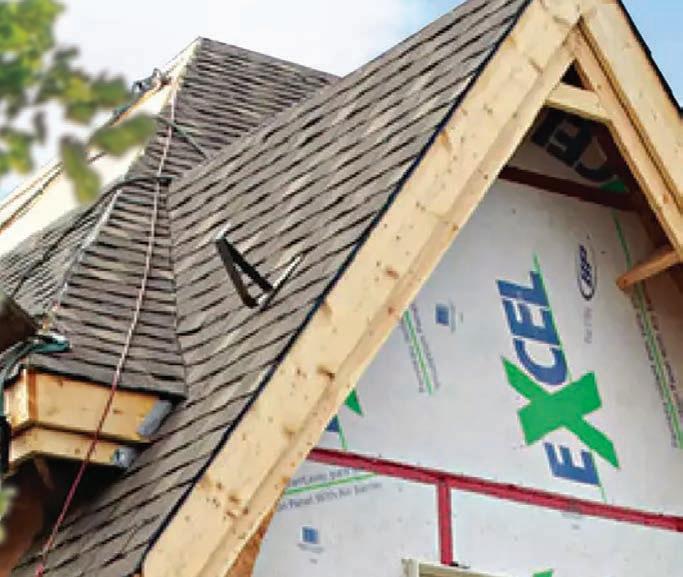
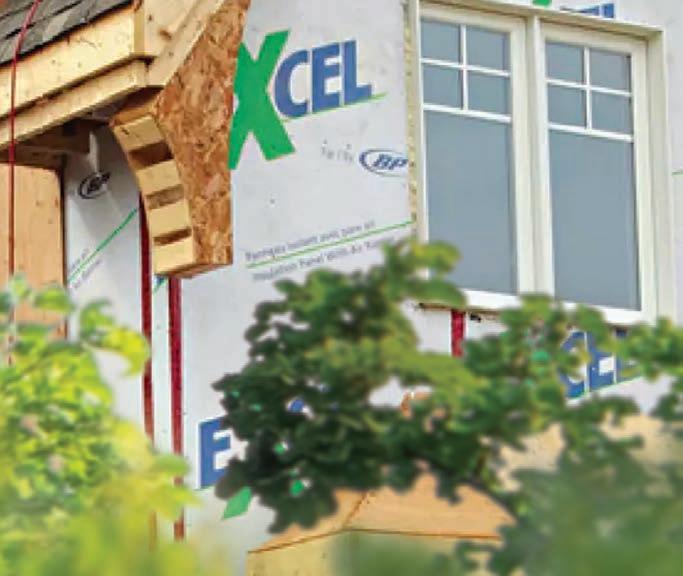
BP’s R-1.5 exterior sheathing panel provides structural strength, noise reduction, superior water vapour permeance at 37 perms, and a remarkably low carbon footprint, at a value based pricing. R-1.5 Continuous superior water vapour permeance – a perfect combination for our canadian climate.
DISCOVER BP’S WOOD FIBRE INSUL-SHEATHING PANELS
Recycled wood fibre sourced from post industrial and post consumer origin
REDUCE MATERIAL and LABOR COSTS
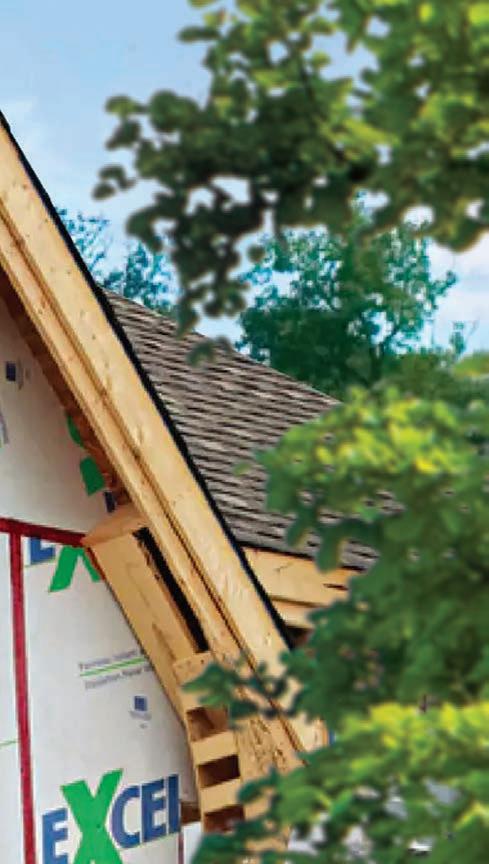
BP’s Excel exterior sheathing panel provides R-1.5 of continuous insulation while providing superior structural strength, weather resistive and air barrier properties ensuring that your walls remain warm and dry, mitigating moisture entrapment in the wall cavity.
PERFORMANCE and STRENGTH
BP’s R-5 XP exterior sheathing panel provides R-5 of continuous insulation using Dupont’s low GHG STYROFOAM™ Extruded Polystyrene, laminated to a ½" high performance wood fiber panel. The overall panel assembly provides a water vapour permeance rating of 2 perms, ensuring an optimal performance of your overall building envelope.
estimates that the stone wool building insulation it sold in 2023 will, over its lifetime, save 100 times the energy consumed, and carbon dioxide emitted during its production.
So significant is the product’s success that in March of this year Rockwool announced that it had signed an agreement to acquire 250 acres in Walla Walla County, Washington, with the intention to build a state-of-the-art manufacturing facility featuring proprietary electric melting technology for its stone wool systems. Although no construction timeline has been announced for the new facility, this will be Rockwool’s fifth North American manufacturing facility and will support growing demand for stone wool solutions in the western U.S.
BASF’s contribution to the spray foam insulation market is noteworthy, considering the company’s specialty of creating chemistry for sustainable construction results in products and expertise that meet the challenges of increasingly more stringent building codes. BASF’s Walltite is a purple, closedcell, medium density, polyurethane foam insulation/air barrier system designed
Need Solutions to Help with Your Innovative Design?
to improve the energy efficiency of any type of building. It has been evaluated by the Canadian Construction Materials Centre (CCMC) as both a spray polyurethane foam thermal insulation conforming to CAN/ULC S705.1 and as an air barrier system complying with the current National Building Code of Canada.
Walltite is for residential, commercial, industrial, and institutional building applications. The latest Walltite chemistries were developed using blowing agents based on hydrofluoroolefins (HFOs) with lower global warming potential compared to previous hydrofluorocarbons-based (HFCs) chemistries. It can be used above or below grade, for interior or exterior building envelope applications including exterior, cavity, and foundation walls, between steel or wood framing, under floor slabs, in cantilevered areas, and in specialized applications.
Huntsman Building Solutions enjoyed a busy 2024, including a change of leadership. In September Doug Brady succeeded Simon Baker as its president, causing Huntsman’s polyurethanes division president, Tony Hankins, to remark that he is excited by the appointment: “Brady has deep market expertise and a strong track record of success. Moving forward, we’re optimistic about the opportunities for the business. We aim to expand spray foam markets, reduce energy costs, and improve home affordability within the new building code landscape.”
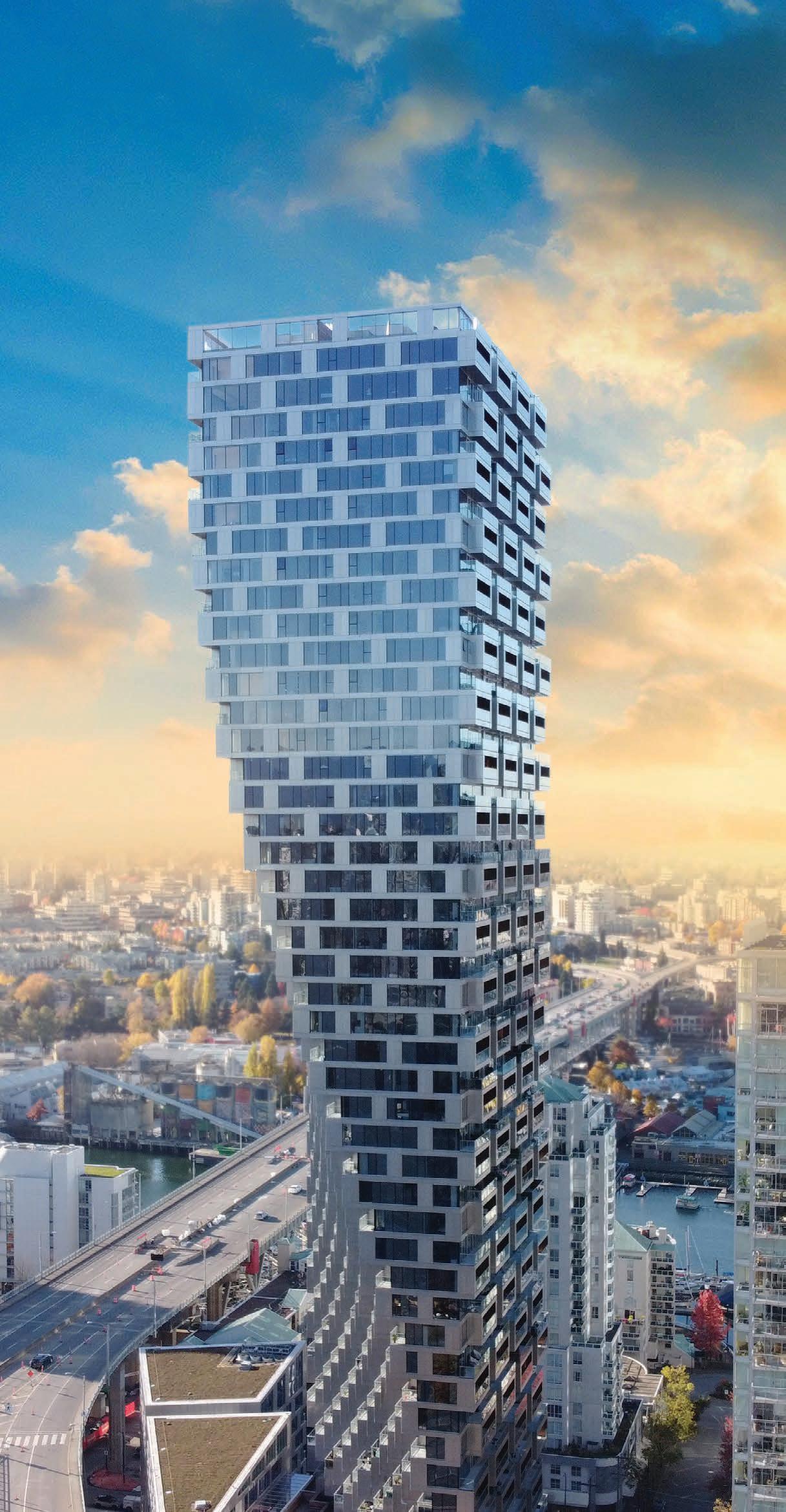
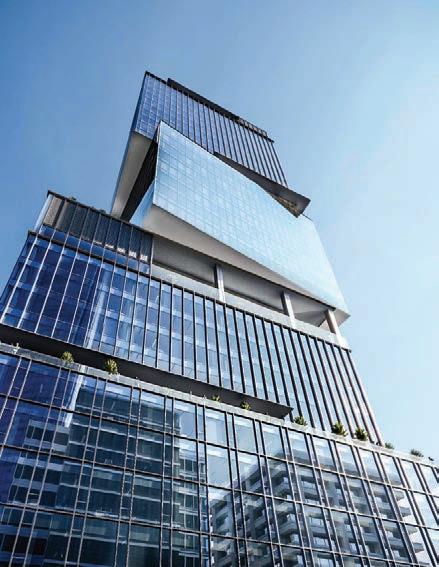
Huntsman Building Solutions is a global leader in high-performance, sustainable building envelope solutions, and one recent notable Canadian project it worked on was The Stack in downtown Vancouver, a 37-storey, 550,000-square-foot skyscraper with a distinctive box design.
The Stack is also Canada’s inau-
The Stack, Vancouver, B.C. Walltite closed-cell, medium density, polyurethane foam
Made in Canada
DISCOVER YOUR DARK SIDE.
INTRODUCING THERMAFIBER RAINBARRIER DARK
Welcome to the dark side of continuous insulation — where designs are quicker, easier and a whole lot more aesthetically pleasing.
RainBarrier ® Dark™, our newest CI portfolio offering, provides the same exceptional moisture mitigation with a brand-new darker facing — letting you design with a dark side.
Building – Design Standard certification, plus it is on-track to receive the LEED v4 Core & Shell Platinum certification. Key to securing this designation is the use of materials upholding the highest standards of sustainable construction, and on that score Westcor Thermal Inc., the spray foam installation contractor for the project, selected Huntsman’s Heatlok Soya HFO (a spray foam with a Global Warming Potential of 1, which is 99.9 percent lower than traditional blowing agents) over alternatives such as fibreglass and mineral wool.
Westcor president Marcus Hamm says, “We recognized early on that for The Stack to truly stand out and meet our sustainability goals, Heatlok Soya HFO was the product to spec,” and he adds that Huntsman’s “readiness to provide technical support made the decision straightforward.”
Heatlok Soya HFO played a pivotal role in The Stack, providing consistent thermal insulation, acting as an air and moisture barrier, and seamlessly integrating with the building’s diverse architectural elements, with its inherent flexibility ensuring that the distinctive design remained intact.
Finally, Johns Manville, a Berkshire Hathaway company, is a leading manufacturer and marketer of premium-quality building and specialty products with 44 manufacturing facilities in North America and Europe. Earlier this year it announced the release of a new High Yield Open-Cell (HYOC) spray foam, which in conjunction with JM’s line of spray foam products, gives installers an even broader range of choices.
HYOC SPF is designed for interior commercial, residential, and industrial applications, and it distinguishes itself by enabling installers to achieve exceptional yields: 20,000 average BFT sprayed on a clean, dry, sound OSB substrate at 75°F. Like other Corbond SPF products, HYOC has low odour and superior sprayability.
Johns Manville’s complete line of SPF products provides superior thermal energy efficiency, as well as advanced air and sound control. JM Corbond open cell SPF insulation covers gaps and voids to virtually eliminate air leakage, and it can exceed the performance of traditional fibreglass insulation. With the introduction of HYOC SPF, “This positions JM as a fully competitive manufacturer in the spray foam market,” according to Tom Calzavara, JM senior manager, SPF and technical services. A
The Stack, Vancouver, B.C.
Heatlok Soya HFO spray foam insulation application at The Stack.
Our Italian-designed Thermo-Structured Surface offers unbeatable durability and versatility while enhancing any style of decor. Resistant to scratching and sun fading, Nature+ has endless application possibilities and comes in twelve distinguished textures featuring natural wood grains and abstract motifs.
A-Frame Bringing Their
This year, walls and ceilings experts deliver innovations that master acoustics and elevate design
by LAURIE JONES
Designers and suppliers of unique wall and ceiling systems have all brought their A-game to options for 2024/2025 with new technology and imagery that will last well into the future.
CGC Inc.’s renovation of Calgary’s BMO Centre – the largest convention centre in Western Canada – introduces a remarkable expansion, adding a cutting-edge 565,000 square feet to its one-storey, above-ground facility. This modern 1,350,000-square-foot structure, including a conference centre and stadium, now positions Calgary as a major player in the global convention scene. The addition to this space significantly boosts the conference centre’s capacity to host large-scale conventions and events.
“The BMO Centre has already seen an influx of scheduled events; over 500 have been scheduled, with the first being the Global Energy Show in June 2025,” says Céline Downer, integrated marketing specialist at CGC. “To help bring this project to life, CGC incorporated the USG Ensemble Acoustical Drywall Ceiling.”
Executed by the Calgary-based team, Populous (USA), Stantec, and S2 Architecture, the scale of this project, along with the use of advanced materials, demonstrates the innovative spirit behind the renovation. “The USG Ensemble Acoustical Drywall Ceiling offers a unique combination of acoustic performance, aesthetic appeal, and design flexibility,” says Downer. “This ceiling system provides a seamless, monolithic look, essential for a modern, state-of-the-art facility that prioritizes visual appeal and contemporary design.”
She explains one of the standout features is its high acoustic performance, offering an NRC of up to 0.80 and a CAC of up to 45. “This makes it a perfect choice for large, multi-purpose spaces such as conference halls and stadiums, where controlling noise levels is crucial for ensuring clear communication and a comfortable environment for attendees.”
The City of Calgary has posted glowing reviews on LinkedIn, celebrating the completion of this significant project, which was finished just in time for its first event in June.
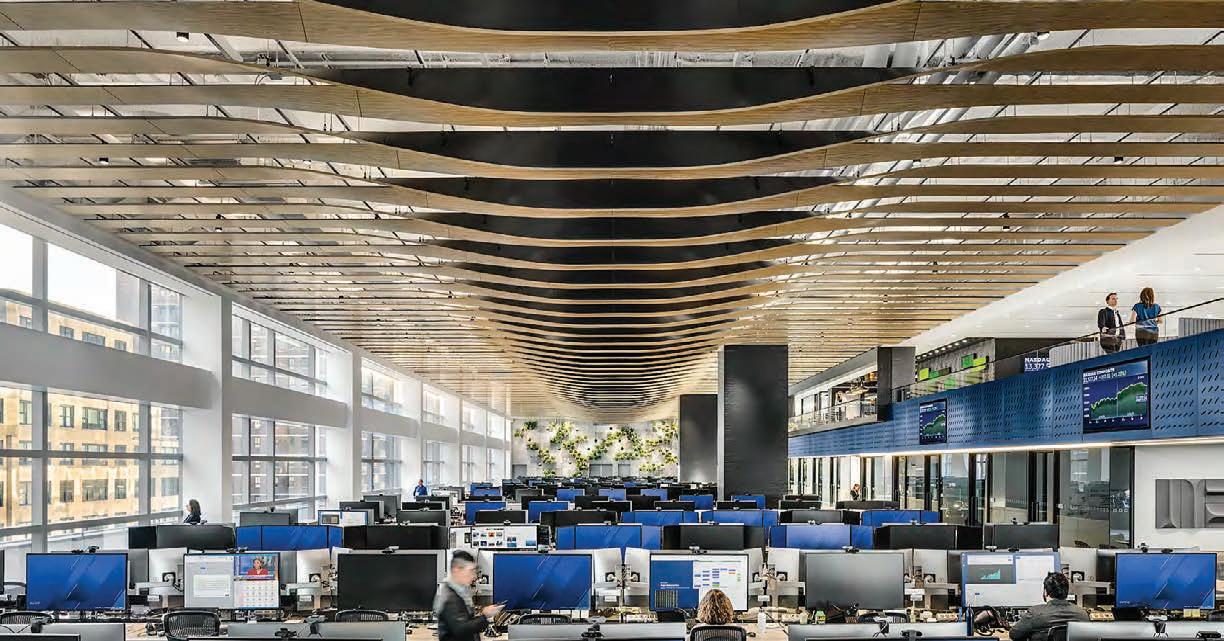
Sound Solutions represents and distributes an extensive line of beautiful, functional, and costeffective products for architects and designers to select from to finish the walls and ceilings of any type of project. One of these products was used in a unique SAS International’s project for the headquarters of a confidential financial firm in New York City
that featured ‘ribbons’ spanning across the soffit of the trading floors. Situated on the prestigious corner of Central Park, the architect’s inspiration was to replicate the movement of trees and nature within the large floors, with each differing viewing angle providing an alternate experience, replicating the four seasons of nature itself.
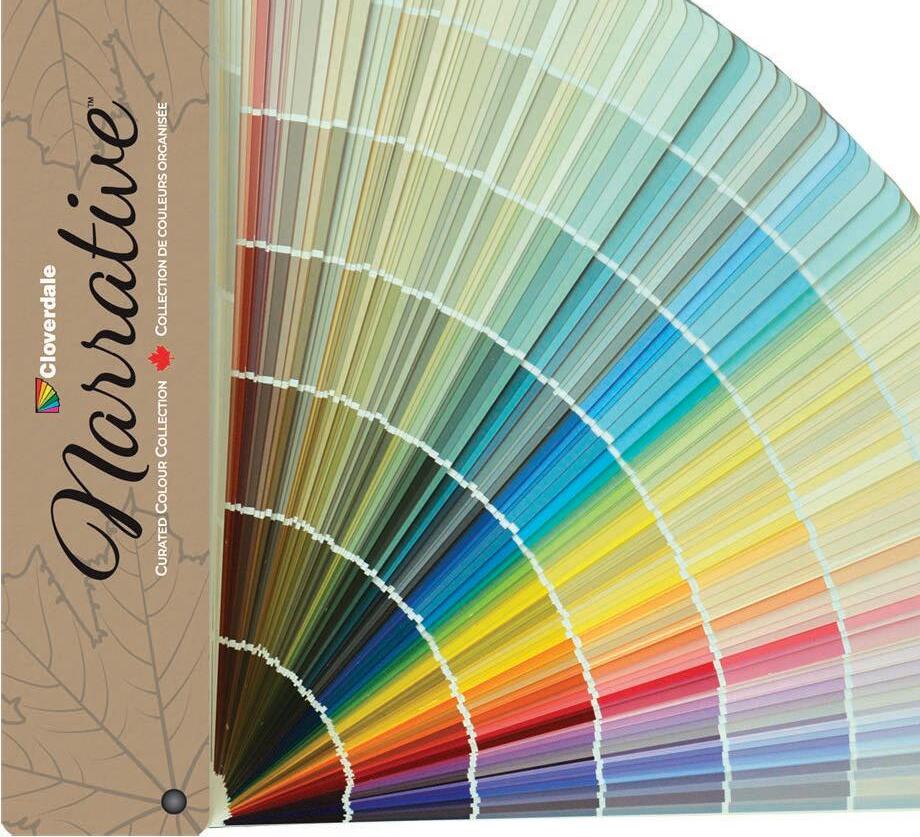
WHAT’S
YOUR
Colour Narrative?
Urban or Rustic?
Neutral or Colourful?
Modern or Classic?
Find your Colour Narrative in our fullspectrum palette that captures more of the widely specified paint colours from across Canada, determined by our Customers and Colour Experts.
At a typical size of approximately 55-feet long and 18-inches wide, the ribbons start horizontally at one end of the run, before curving, in two planes, to meet a vertical position centrally before then returning to the horizontal position. Each panel features a dyesublimated custom wood finish on one side and a polyester powder-coated finish on the other.
As you would expect, acoustic control is important within trading floors and as such the original design for the space included the provision of acoustic treatment directly to the structural slab, above the ribbons. “We pressed SAS for innovative and creative solutions for a complicated and intricate design that also included acoustic performance categories. From the actual design process to the implementation for construction, the process felt very collaborative,” says Sara Silvestri, associate designer, Gensler NYC. SAS’s innovative design allowed the panels to be micro-perforated and supplied complete with an acoustic infill that negated this additional treatment, thereby providing the client with savings in terms of budget and schedule.
Richelieu’s offerings for wall coverings – used in residential, institutional, and commercial settings –span a wide range of colours and materials. For solid surfaces, including walls, the Meganite Collection features antimicrobial properties beneficial for bathroom and kitchen designs. The Meganite Sheet products are available in colour categories such as Movement and Terrazzo, Solid and Mist, Stone and Granite, and Ice and Shell. New to the line up are Mont Blanc for lighter designs and Himalaya greytoned layouts.
The Richelieu Syncron collection panels provide a unique combination of design and texture, with the appearance of realistic materials. Also with antimicrobial properties, designers can take advantage of the thermo-structured panels imitating stone, porcelain, wood, and other natural looks. Durable and easy to clean, Syncron selections create a natural, decorative look with practical and healthy advantages.
Adding to the wall design options are the Nature Plus decorative panels, featuring ABS and PVC Edgebanding, and the selection of laminates featuring contemporary motifs and textures. The Silencio slatted wood panels not only create a warm and inviting appearance to rooms, but this option also improves sound quality. Available in white oak and walnut colours, the Silencio panels have
solvent-free, low-VOC finishes that are formaldehyde free and antimicrobial, making them a good choice for restaurants, conference rooms, music rooms, and residential applications.
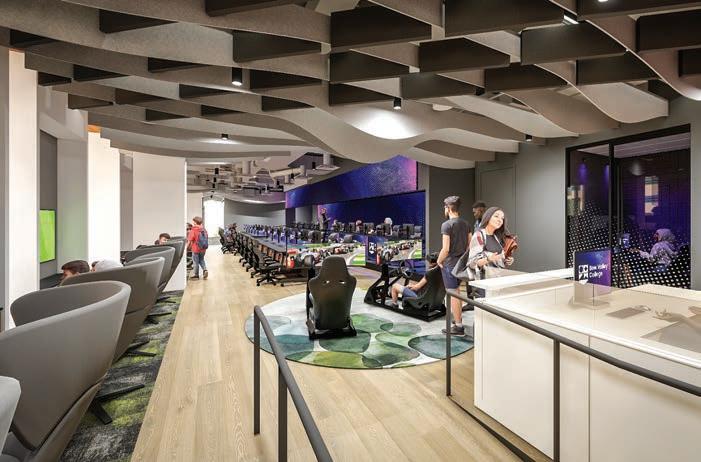
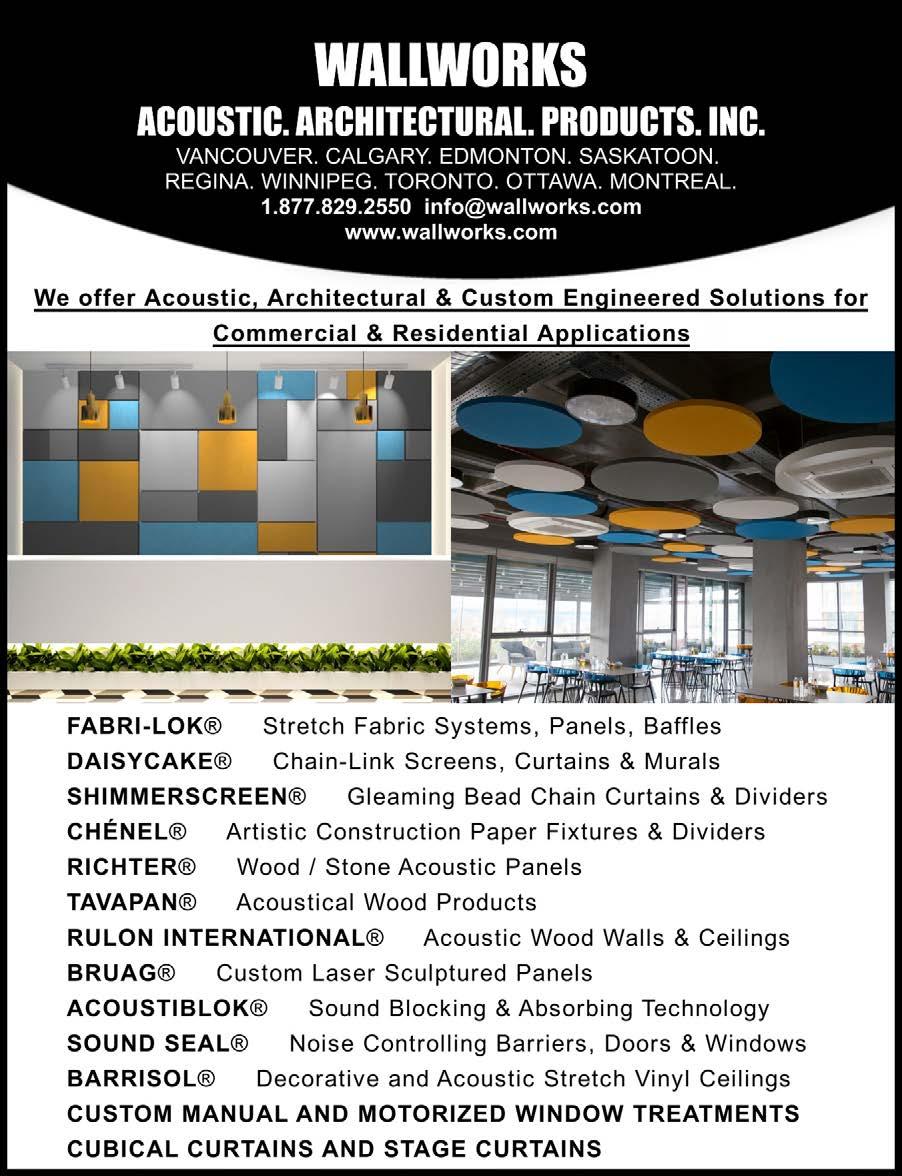
Wallworks Acoustic Architectural Products recently worked with CANA Construction in Calgary in the construction of the Esports Arena, one component of Bow Valley College’s Digital Entertainment Nexus, formerly the Calgary Entertainment Arts Production Hub. “As you might imagine, an Esports Arena has the potential to be quite a noisy environment when all the stations and games are in use,” says Lyle Fuller, Wallworks general manager.
“The Stantec Architects Calgary designers asked us to work with them to provide some very cool artistic sound baffles and panels, which are now functioning brilliantly in the varied spaces of the arena and provide the sound environment they expected would be essential,” says Fuller. “These eKoR P.E.T. acoustic products allow considerable design and suspension flexibility, which was necessary to accommodate the inordinate amount of wiring, conduit, electrical connections, boxes, vents, and cooling required on the ceiling, walls, and floor. It allowed changes to be made quickly and fluidly during the build to accommodate unforeseen construction variables and still meet the very tight schedule.” He adds this new Esports Arena is the first of its caliber in Alberta and is expected to provide an international scale facility for education, recreation, and competition.
The 3,500-square-foot arena on the Bow Valley College’s South Campus features 40 competitionready gaming stations, two full motion-rigged racing simulators, a state-of-the-art broadcast suite, and dedicated varsity esports training room. In 2023, the Opportunity Calgary Investment Fund gave the College’s Digital Entertainment Nexus $5.5 million to fund the project, which allows for the training of 675 people. An anticipated growth of 125 companies by 2028 will support Canada’s $.5-billion gaming industry.
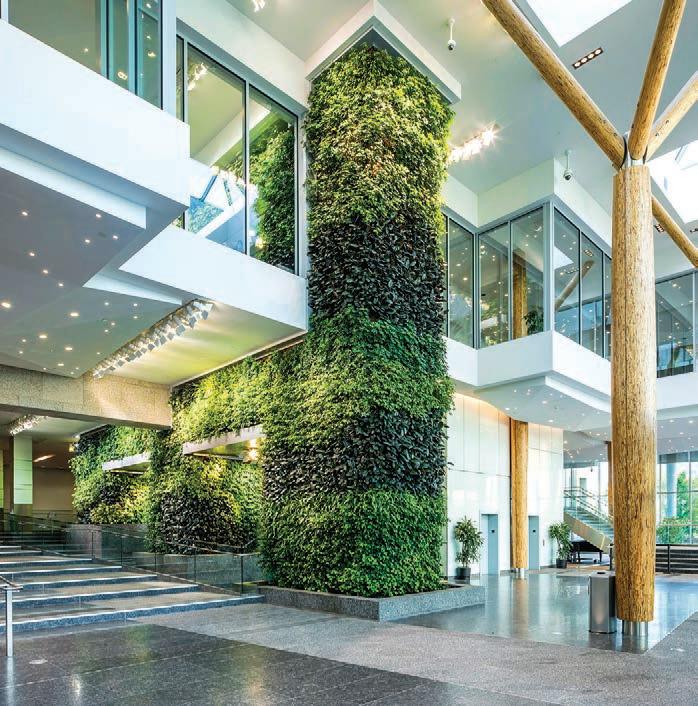
LIVING WALLS
Nedlaw Living Walls, a leader in sustainable building design, offers cutting-edge solutions to improve indoor air quality in institutional, commercial, and multi-unit residential environments. Their living wall system goes beyond aesthetics, serving as an
active biofilter that enhances the health and sustainability of indoor spaces. “At the heart of the Nedlaw system is biofiltration,” says Arjun Binning, client success consultant.
“Unlike traditional green walls, which are primarily decorative, Nedlaw’s living walls actively draw in indoor air and filter it through the plant root zone. Beneficial microbes on the plant roots break down pollutants like volatile organic compounds [VOCs], rendering them harmless. This natural filtration process purifies the air, contributing to a cleaner and healthier indoor environment, a crucial factor for buildings where air quality is of utmost importance, such as hospitals, offices, and schools.” He adds the hydroponic technology integrated into the system ensures efficient water use. Instead of soil, the plants are grown in a special substrate, and water is circulated in a closed-loop system. “This minimizes waste while providing optimal hydration and nutrient delivery, making it an eco-friendly solution.” This system requires less maintenance than traditional soil-based green walls. Its longevity is ensured by durable construction and efficient resource management.
Nedlaw Living Walls also provides aesthetic and biophilic benefits, creating lush, visually appealing green spaces that promote mental and physical well-being for occupants. “Our walls can be tailored to various architectural designs, integrating seamlessly into HVAC systems or standing alone to meet a building’s specific needs,” says Binning. From office buildings and hospitals to multi-unit residential complexes, Nedlaw’s living walls deliver cleaner air, improved occupant health, energy savings, and enhanced indoor environments. For designers and developers aiming for sustainable, innovative building solutions, Nedlaw offers an unmatched combination of functionality and beauty. A
Nature Plus decorative panels.
Living Wall systems provide aesthetic and biophilic benefits.
Esports Arena, Calgary, AB
Amped Up!
Innovative audio visual systems are revolutionizing experiences and crafting truly immersive environments
by ROBIN BRUNET
When the 1903 film The Great Train Robbery was first screened, the jittery footage of an oncoming train caused audiences to bolt from their seats and run for safety.
Now, 121 years later, companies such as GAV MGMT cause people to forget they’re in a room as they take in breathtaking outdoor vistas, courtesy of Samsung’s The Wall microLED video wall – which is said to be the ultimate in immersive experiences.
As GAV MGMT notes, the ‘you-are-there’ sensation is the result of the transference of micrometre-scale LEDs into LED modules, resulting in what resembles wall tiles comprised of mass-transferred clusters of almost microscopic lights. Mounted together as a uniform canvas and plugged in, they create a visual experience similar to that of premium QLED TVs.
Better still for end-users in the residential, commercial, and other sectors, the visual purity of the latest models of The Wall are leaps ahead of the version first unveiled in 2018 – and gives companies such as GAV MGMT more tools in their arsenal for companies seeking audio-visual, digital signage, and communication technology solutions.
Another technological evolution that startles first-time audiences is offered by ClearLED. ClearLED rose to prominence by specializing in transparent digital displays, a groundbreaking way to deliver creative content and reinforce brand recognition. Its suite of displays ranges from portable window-size digital posters to giant custom high-resolution LED video walls and have been installed both indoors and outdoors around the world.
In June, ClearLED’s MicroMesh poster won the prestigious ‘Best New Video Wall Product’ award at InfoComm 2024, for technology that sets new industry standards. The poster achieves up to 93 percent transparency yet seamlessly integrates into any environment without obstructing natural light. A 3D printed mask protects the LED covering on both the front and back, ensuring durability and longevity, and its lightweight design ensures easy installation and maintenance, making it perfect for both temporary and permanent setups for retail settings or large-scale events.
Over at AVI-SPL (whose goal is to deliver digital workplace collaboration and meeting solutions that connect physical work areas, virtual collaboration spaces, and remote workforces), director of campaigns and content Nancy Lussier says her main task these days is using technology to lure people back into physical spaces.
She explains: “The dream of everyone working from home has pretty much been left at the wayside, so businesses are trying to make offices a desirable place to be, and one way to do that is to augment them with the latest technology that is also very easy to use.”
Lussier credits the rise of AI for simplifying many familiar systems in the audio and video realms. She cites as an example Signature Microsoft Teams Rooms with Front Row view. This technology solves the problem of remote attendees not being able to detect subtle details of one’s face and body language during a hybrid meeting. Microsoft Teams Rooms are equipped with a concise arrangement of displays, cameras, audio devices, and specialized tables to create an enhanced hybrid meeting experience for everyone.
Further, the furniture is arranged so that in-person and remote attendees face each other. The Front Row display option in Teams Rooms allows remote attendees to be eye level with those in the meeting room during hybrid meetings; and with a 21:9 aspect ratio display, content can be projected, remote attendees can participate, and chat rooms can be used.
Another development from AVI-SPL is the company’s virtual reality design services, which helps clients envision, validate, and get feedback on room designs and technology integrations before they are invested in and built. “It’s also helpful in achieving design consensus, which is becoming increasingly complex as more people in a variety of businesses are charged with giving input,” Lussier says.
Sound masking in the workplace is a constant need even if the hybrid work model is still alive and well, hence the professionals at Vibra-Sonic Control were as busy as ever in 2024. Vibra-Sonic is one of Canada’s leading solutions providers of vibration isolation products as well as sound masking systems, with the solutions ranging from floating floors and acoustical foams to sound masking and noise control products.
On the latter score, Vibra-Sonic partner Danielle Macey reports that “AtlasIED recently came out with something really neat called Atmosphere, a whole platform for a variety of uses: masking, playing music, paging, and so forth. It’s an extremely flexible system, and its complex ecosystem of features makes it ideal for a wide variety of settings and purposes.”
Among many other things, the Atmosphere Audio Processing and Control Systems provide AI-based ambient noise compensation patented technology that continually analyzes acoustic information from the environment and automatically adjusts audio levels. Sound masking is available in up to eight zones and works with an array of plug-and-play accessories that give the user control via digital wall mount panels or virtually through their own personal device. Plus, Atmosphere is easy to install; and Atmosphere Cloud provides installers the ability to monitor and control their Atmosphere system deployments from the Internet while off-site.
But for all the advanced AV products that dominated the 2024 landscape, companies such as Commercial Electronics found themselves catering to a certain portion of the entertainment-loving public that crave a return to more basic technology.
“I never thought we would see us stocking CD players after streaming rendered physical media all but obsolete, but we do now,” says the company’s general manager John Madison.
The Front Row display option in Teams Rooms.
Madison acknowledges that this trend is partly driven by retro-loving folk who defiantly boast about retaining their vinyl record collections; but it is also driven by people who simply prefer the tactile attributes of physical media as well as an appreciation that ‘outdated’ technology such as CDs and Blu-ray is resilient and delivers quality visual and auditory value.
Madison says, “In the residential realm at least there is a palpable return in the popularity of physical media. Our focus at Commercial Electronics is on stereo and speakers to cater to a big uptick in demand for two-speaker stereo setups in designated listening areas – even for people who have multiple speakers and various streaming services elsewhere in their homes.”
Companies such as Sony provide players that satisfy high-tech lovers as well as retro enthusiasts. For example, Sony’s 4K Ultra Blu-Ray Player UBP-X800 enables users to enjoy a 4K High Dynamic Range viewing experience (with Dolby Atmos and DTS:X sound), and thanks to its Hi-Res Audio with DSEE HX it boosts the frequency and dynamic range of CDs to near high-resolution quality. “We have a variety of such machines, and with the Sony selling for just $399.99 customers can improve their home entertainment experience without breaking the bank,” Madison says.
Finally, Mike Chorney, president at La Scala Home Cinema, says, “High-end digital streaming systems are being incorporated into audio components, and yet it’s not unheard of for people who own such machines to also own turntables for their vinyl record collections.
“I don’t buy into the argument that people who cling to old technology are snobs; rather, they want flexibility in their delivery of home entertainment.” As such, Chorney notes that his company has provided more high-end audio systems for playing physical media over the last two years than in the previous 11 years combined: “Let’s face it, for all of the advances in technology, the sonority and warmth of vinyl records is not easily replicated.”
But in other realms, advancements are being made at such a rapid clip that Chorney and his team go out of their way to be one step ahead. “Our commitment to education is fierce, and our managers are always attending trade shows and meeting with key industry leaders,” he says.
Such diligence has enabled La Scala to predict and take advantage of how AI enhances the AV world. “This is especially evident in Smart homes,” he says. “AI’s ability to think and make choices is taking the clunkiness out of communicating with home systems. Today, these systems can respond to, and act upon, complex request streams, not just one. Cumulatively, this will contribute to the shift of residential environment systems becoming an expectation instead of a want.”
Ultimately, smart technology could result in societal gains far removed from home entertainment. Chorney explains, “The main problem with the push by various governments for EVs to replace gasoline-powered automobiles is that the sheer number of electric vehicles would require massive amounts of new power generation – which would be prohibitively expensive.
“So instead, organizations such as BC Hydro are looking at ways to repurpose energy rather than create more energy, by studying exactly how power is used in residences and at what times. And the way to do this is to deploy smart panels and breakers to residences and monitor them. Eventually, it could well be that energy waste in every home is minimized and diverted towards home EV charging stations, and in other instances the power of an EV could be used to run certain home appliances in the event of a power outage. The prospects are many, and it’s an outcome of smart technology in residences shifting from a want to a necessity.” A
Marmoleum connects with modern nature through climate positive ooring and contributes to everyone’s well-being. An endless source of inspiration, from the natural materials we use, to the colors and designs we o er.
We invite you to create sustainable spaces that have a positive impact on everyone and everything.
View our new Marmoleum Solid collection at www.forbo ooringna.com/stepintomodernnature
Resilient flooring transforms spaces, from vibrant designs to neurodiverse solutions
by LAURIE JONES
From environmentally-friendly, colourful designs to advancing learning spaces and international award-winning recognition, resilient flooring manufacturers and suppliers continue to offer a wide range of options for designers, builders, and consumers.
Nature’s story unfolds with Forbo’s new Marmoleum Solid linoleum collection, a climatepositive floor that fosters well-being. In a world where we spend on average 85 percent of our time indoors, it feels only natural to give full focus on improving the quality of our indoor environment. Marmoleum Solid creates a seamless connection between our living spaces and the natural world, forming the basis of healthy spaces to work, learn, heal, play, and relax. The Solid collection is minimalistic, pure, and timeless, providing a long-lasting foundation that never goes out of style. Comprised of 72 colours, Marmoleum Solid features four sub-collections: Walton, Cocoa, Concrete, and Piano.
“Whether it is the grounding solid of Walton, the organic flecks of Cocoa, the subtle marbling of Concrete with shimmering accents, or the enduring Piano structure, the Marmoleum Solid
collection offers solutions for all market segments and aesthetics,” says Lori Litts, lead designer North America. “Used individually or in a combination of structures, complementary colour palettes and modular format expand and elevate the design possibilities.”
Litts adds Marmoleum Solid embraces the ethos of sustainable design with its combination of circularity and beauty. Through the use of rapidly growing natural raw materials and renewable electricity, the weighted average of the Marmoleum portfolio is carbon positive, cradle to gate, without the need to offset. Marmoleum’s natural ingredients also provide its inherent antimicrobial and antistatic properties, contributing to healthier indoor environments.
Designed for real life, Marmoleum Solid’s Topshield Pro finish provides the best in durability with lasting wear performance and improved stain-resistance, including those from hand disinfectants. Topshield Pro is easy to clean and maintain, providing occupancyready installation. It can be repaired or refreshed in cases of accidents or after years of use, keeping your floors looking beautiful for longer. Marmoleum Solid offers a naturally healthy, climate positive floor that contributes to a sustainable future, bringing the best from nature to indoor surroundings.
Torlys offers two distinct flooring products that will resonate with a variety of clientele – EverWood Luxury Vinyl and Cork. Featuring some of the longest planks in its class (up to six feet) and widest (up to nine inches), EverWood is accompanied by realistic wood visuals and textures that could appeal to design connoisseurs. “From a performance perspective, EverWood collections are so incredibly stable they enable owners to achieve transition-free living, with no more speed bumps in doorways or long hallways,” says Ryan Galick, marketing and creative services manager. “This flooring is available in beautiful colours and is built for everyday life. It is warm, durable, quiet, and easy to maintain.”
Galick adds that as part of Torlys’ continuing pursuit of initiating change and inspiring environmental responsibility, there is no product that demonstrates this quite like cork flooring. “Torlys Cork and CorkWood are made without cutting down a single cork oak tree, ensuring forests remain undamaged for years to come.
The Cork collections are the perfect fit for any room as they feature comfort, warmth, and a waterproof surface, making them ideal for bathrooms. Available in traditional and contemporary
cork patterns, they offer better performance, smarter design, and are even more sustainable than conventional cork floors. “Taking this concept further, CorkWoodXP offers even more vivid realism utilizing cutting-edge printing technology to accentuate the beauty of hardwood with the durability of laminate and the comfort of cork,” says Galick. Both lines feature the industry-leading glueless locking system by Uniclic – the most advanced, gap-resistant joint system available today.
American Biltrite launched the Abpure Infinity line, a three-millimetre rubber sheet flooring that features an elegant tone-on-tone chip visual. “Our research and development team investigated several ways to make this new product line carbon-neutral without purchasing carbon credits,” says Laurence Aubé-Comeau, marketing leader. “The clear solution
was to manufacture Abpure Infinity using renewable natural gas [RNG] derived from organic waste. It is a new energy source produced locally by collecting society’s organic waste and transporting it to biomethanation farms, where the waste is fermented into purified gas and converted to RNG. The full amount of RNG made from 100 percent organic waste is used to offset Abpure’s cradle-to-gate carbon footprint, as measured in our Environmental Product Declaration [EPD].”
Using renewable natural gas made from organic waste to manufacture Abpure Infinity has an actual and direct impact on reducing greenhouse gases at
CorkWoodXP Elite by Torlys.
Abpure Infinity by American Biltrite.
Marmoleum Solid by Forbo Flooring.
the source. Abpure Infinity is perfectly aligned with the industry’s desire to improve its carbon footprint by contributing to buildings’ embodied and operational carbon footprint reduction. On the one hand, carbon-neutral materials help to reduce the carbon incorporated into buildings. On the other hand, a durable floor covering that is easy to maintain and disinfect without aggressive chemicals such as wax, also helps to reduce the operational carbon footprint of buildings, which is the case with Abpure.
An elegant tone-on-tone visual in 20 earth-centric colours, the Infinity colour system was designed to create a timeless collection of neutral shades, perfect for crafting comforting environments.
“The palette features a range of foundational field colours, from light to dark that ensures harmonious tonal combinations,” says Aubé-Comeau. “It includes a sophisticated selection of quintessential greys and beiges, environmental blues and greens, and uplifting accent colours. This nature-inspired collection offers soothing colours specifically tailored for modern care environments.”
Altro, a global leader in commercial floors and walls innovation, is making headlines with a groundbreaking installation designed to enhance neurodiverse learning environments. Schools encompass a variety of spaces, each with unique demands. From classrooms and corridors to faculty lounges and science labs, these areas require tailored solutions that offer lasting value.
Designing classrooms with neurodiversity in mind is a transformative approach that architects use to help improve education. Every student
deserves an equal, accessible, and supportive learning environment. Creating such spaces leads to happier, healthier lives beyond school.
The Dr. Rick DeCristofaro Learning Center in Quincy, MA, aimed to craft a supportive space for students needing significant assistance in communication, academics, and social-emotional development within small, specialized classrooms. “Considering the unique needs of this population, great care was taken to ensure that the flooring was environmentally friendly and easily maintained with a maximum life expectancy,” says Linda Works, Wessling Architects interior designer. “Of additional importance was the reduction of sound and increased protection from vibration resulting from the movements of furniture and activities of young children. Altro vinyl sheet was selected as the flooring for all classrooms, corridors, therapy, and staff rooms for meeting these criteria as well as providing a smooth, comfortable, and slip-resistant surface.”
She says the feedback from the school has been remarkable. “The students are more engaged and comfortable, and the themed neighbourhoods have created a vibrant and welcoming atmosphere.”
The Quincy Public School Department asked that each of the five floors of classrooms have a different themed “neighbourhood” that the children could identify with. These neighbourhoods – Storybook, Seasons, Rainforest, Garden, and Waterworld – are defined through the use of colour, materials, and patterns in classrooms and corridors. Altro’s wide range of colours and design flexibility ensured that each neighbourhood would have its own identity.
Elements such as curves in the flooring layout of classrooms and corridors encourage a sense of calm. Angular patterns are used where children will be permitted to be more active.
In September 2024, Tarkett, known for its sustainable flooring and sports surface solutions, announced the renowned sustainability rating platform EcoVadis awarded the company a Platinum Medal. Each year, EcoVadis evaluates companies’ environmental and social maturity – including ethics, sustainable procurement, labour, and human rights. Tarkett joins the top one percent of the over 130,000 companies assessed by EcoVadis across 180 countries.
Tarkett is the only company in the flooring and sports surfaces industry to achieve this level of ESG rating at EcoVadis. With sustainability at the heart of its strategy, the company surpassed its previous achievements, improving its score from 77 to 81/100. “This recognition confirms that we are on the right path for our ambitious 2030 sustainability roadmap,” says Arnaud Marquis, Tarkett’s chief sustainability officer. “In a collaborative spirit with our teams and partners, we will continue delivering this level of excellence to offer the most circular solutions with the lowest carbon footprint in our industry.”
In early 2023, Tarkett’s climate roadmap was approved by the Science Based Targets initiative (SBTi). Since 2023, the company has been included in the annual Europe’s Climate Leaders Ranking by Financial Times and Statista. Additionally, CDP, regarded as a reference for environmental reporting, has awarded Tarkett’s climate action with a leadership level A- score for the last two years. A
Cool It
Game-changing fire protection systems are transforming safety, security, and design in all buildings
by ROBIN BRUNET
As always, the face of fire protection systems (which includes detection, prevention, and fireproofing) continues to change, driven in equal measure by technological developments and an increasing emphasis on safety regulations, as urban areas and suburban neighbourhoods expand.
Technical Glass Products (TGP) has spent nearly 40 years establishing an array of UL-classified and labelled fire-rated glazing products, from ultra-clear fire-rated glass ceramic products that provide impact safety to transparent fire-rated glass wall panels that meet stringent security demands.
One of its many solutions is FireLite Plus, which consists of two pieces of FireLite glass ceramic laminated together. Because FireLite is made from transparent glass-ceramic, it differs in colour from float glass. FireLite has a warmer earth tone when compared to the blue-green tint of typical float glass; however, like float glass, the ceramic will not demonstrate a highly perceptible colour once installed in a frame. Additionally, ultraHD Technology is utilized to improve surface quality, clarity, and colour.
David Vermeulen, North American sales director at TGP, says of 2024, “The big news for us was continuing to implement elements that have resulted in streamlined operations and reduced lead times; in other words, much quicker service for clients.”
Also, Allegion, which counts TGP as one of its brands, acquired Quebecbased Unicel Architectural Corp., a manufacturer of glass, timber, and aluminum building solutions. Unicel’s products are installed in health-care, education, government, and other non-residential facilities.
As for trends in his sector, Vermeulen points out that due to recent innovations, fire-resistant glazing can now provide another layer of protection in the security realm. “This is a growing focus for us especially as it applies to schools,” he says. “We’re increasingly becoming involved in what we call multi-functional projects whereby the glazing we supply is fire-rated as well as resistant to bullets and forced entry.”
These systems are made from compatible components or have been tested as complete systems to multiple protocols. They can be employed where design teams want to meet safety and security concerns without compromising the ability for the assembly to safeguard occupants from fire emergencies. Additionally, whether an application needs to provide multiple forms of protection or only one, designers can meet their life safety design goals and building code requirements without sacrificing occupant comfort by choosing rated frames with narrow profiles. Not only do narrow-profile frames increase the area of glass in an assembly, they can also provide a close visual match to adjacent, non-rated systems. Plus, they can be capped with different materials, further contributing to a cohesive design while maintaining code-driven life safety.
Vermeulen cites Candy Lane Elementary School in Oregon City, Oregon, as an example of a school adopting multi-functional systems. In this case, Fireframes Heat Barrier Series doors and frames with Pilkington Pyrostop firerated glass from TGP laminated to School Guard Glass from LTI Smart Glass, Inc. were installed. School Guard Glass meets H.P. White 5-aa1 and ASTM F1233 Class 1.4 standards, which means that in testing, after being shot five times in a concentrated area, it could defend against violent attacks for over 12 minutes. It is also compatible with fire-rated glazing.
Building code requires this specific application to be fire-rated up to 120-minutes to provide staff and students an extended window to escape fire and to allow
first responders the ability to enter and exit the building. In addition to meeting this requirement, the multifunctional, fire-rated glazing system also withstands forced-entry attacks and can offer up to Level III bullet resistance.
Out of the box thinking was very much evident among fire safety product providers in 2024. Safti First is relied upon for its fire protective and resistant glass, fire-rated doors and walls, as well as fire-rated floors and fences, but 2024 saw the California-based company undertake a unique initiative aimed at improving another aspect of school safety.
Specifically, it launched a newly redesigned website organized as a resource for school superintendents, facility managers, parents, and others who use and interact with these facilities on a daily basis, long after they have been built. Videos, articles, industry updates, and other website information allow them to understand how to enhance the safety and security of schools and other educational facilities by incorporating advanced glass products.
Another progressive company in the fire protection realm is Aluflam North America, a recognized leader in fire-rated aluminum/glass construction thanks to its top-of-the-line vision doors, windows, and glazed wall systems.
Due to Aluflam’s expertise and innovation in its chosen field, aluminum is now regarded as a core material for fire-rated construction. As such, the company has become a key supplier for fire-resistive curtain walls for clients such as the Toronto District School Board, the largest school board in Canada. Many of these projects, facilitated by the engineering firm Eng-Link, involve the retrofitting of old schools and structures where protected openings are required.
Aluflam of late has also fulfilled an increasing number of orders for higherperforming resistive products in parkades of high-end residential buildings: five such projects have been supplied in the last two years in the Toronto area, driven by property owners who want something other than drab S106 hollowmetal protective doors.
FireLite Plus ultra-clear fire-rated glass door assembly.
Retrofitting of older schools with fire-resistive glazing.
For decades, Vetrotech SaintGobain has produced superior fire-resistant and fire-protective safety glass, including fire-rated doors, systems, and curtain wall, intruder, impact-, bullet- and hurricane-resistant glass, and a full line of clear fire-rated glazing products that protect from 20 to 180 minutes. As the company sets it sights on being a full-value partner to both glaziers and architects alike, it highlights the value of its VDS framing systems, from performance and aesthetics to installation and decarbonization.
Vetrotech’s VDS framing collection offers a comprehensive range of highquality, fire-rated assemblies that meet code requirements. Their integrated solutions unite framing, doors, and glazing to create an all-inclusive fire-rated barrier that embodies the signature design support and aesthetic excellence of Vetrotech Saint-Gobain North America.
VDS steel frames are waterproof with gaskets for long-term durability. They feature slim sightlines, tight tolerances, and design versatility with custom shapes and finishes. VDS frames also simplify the installation process like no other system available on the market today, arriving fully fabricated, knock-down with the fewest parts to manage, the fewest steps to install, and with no parts to cut on-site.
VDS frames are backed by EPDs, demonstrating Vetrotech’s commitment to transparency and sustainability. VDS frames are made in the U.S. at Vetrotech’s new Faribault, Minnesota manufacturing facility, which has also put decarbonization and recycling initiatives into practice. Steel frame scrap from VDS production is recycled by local partners into new steel. Glass cullet from the Faribault campus, shared with SageGlass, as well as the cullet from numerous other Saint-Gobain North America facilities is recycled and repurposed into the group’s insulation products.
Vetrotech’s new facility also extended its REC contract through 2029 to ensure its manufacturing processes are powered by 100 percent renewable wind energy, marking another step toward Vetrotech and Saint-Gobain’s goal of achieving carbon neutrality by 2050. RECs symbolize one megawatt hour of renewable electricity generated.
Finally, Elise Mayberry, VP of marketing at Allmar Inc., speaks to the fundamental importance of companies such as hers in the construction sector – not just for products, but also for follow-up service. “The safety of buildings depends on construction products that meet fire and life safety codes, as well as regular inspection and maintenance of fire-rated doors and architectural hardware that is rated to work with these doors,” she says. “Architectural hardware that stands up to pressure in a fire, acts as a barrier with the door, or locks or unlocks to provide access or egress supports safety and security and a strong fire prevention plan.”
Mayberry goes on to note that “with building owners and managers and Canadian federal buildings responsible for maintenance and care of fire rated assemblies, it’s important that buildings perform an annual inspection by a certified professional. Provincial governments are expected to adopt the National Building Code over the next several years, which will require annual inspection of provincial buildings as well.
“At Allmar, our knowledge of building codes, experience with doors and hardware, and staff who are certified to inspect fire door assemblies grant us the expertise and authority to ensure that fire-rated doors are inspected regularly, function properly, and that requirements for annual inspection are being met. Ongoing inspection and maintenance of fire and egress doors helps prevent loss of life, while reducing property damage and insurance premiums, and all of Allmar’s fire door inspectors are certified through the Door and Hardware Institute’s Fire and Egress Door Assembly Inspection program.” A
assemblies.
PROUD TO HAVE PLAYED A VITAL ROLE IN THE INSTALLATION OF THE GRANITE PANELS AND ARCHITECTURAL MASONRY OUTSIDE YORK UNIVERSITY'S NEW MARKHAM CENTER CAMPUS.
HERITAGE MASONRY & STRUCTURE
IN EASTERN CANADA
MARKHAM CENTRE CAMPUS – YORK UNIVERSITY
by CHRISTINA MORRISSEY
The Markham Centre Campus (MCC) at York University represents a significant leap forward in integrating education, innovation, and community. Located in one of the most diverse and dynamic urban communities in the province and country, this new campus is poised to transform the educational landscape, establishing itself as a landmark destination for learning and growth.
With a commitment to accessibility and experiential learning, the MCC inspires the next generation of students while fostering a collaborative environment that bridges academia and industry. The first building (one of three in total) will serve as a gateway to the new York University Markham Campus (YUMC), accommodating diverse undergraduate and graduate programs tailored to York Region’s post-secondary community.
Designed to accommodate up to 4,200 students, the campus features spaces crafted to encourage collaboration among students, faculty, and various programs. This initiative cultivates an interactive and supportive community, while providing easy access to the larger multi-campus York network.
The vision for the MCC was clear: to create a dynamic educational hub that serves students and strengthens the community. As the first university campus in York Region, the MCC embodies the Ontario government’s updated Major Capacity Expansion Policy Framework, marking a vital advancement for post-secondary education in the area. Hosting a wide range of programs – including arts and media, information technology, engineering, environmental studies, and business – the campus collaborates closely with local institutions and industries to enhance experiential learning opportunities.
Spanning approximately 4.5 acres, the campus is strategically located near Enterprise Boulevard and Rivis Road, placing it within a transit-integrated, mixed-use, high-density urban core.
The design, led by Diamond Schmitt Architects in consultation with York University, embraces sustainability and social justice values, creating a seamless and inclusive environment. Architectural principles are grounded in accessibility, impact, and excellence, aligning with York University President Rhonda L. Lenton’s overarching vision for the campus.
As the first facility on campus, this building symbolizes connection –between YUMC and Markham, between formal and informal spaces, and among all members of the York community. Designed as a five-storey podium with a five-storey tower, the structure accommodates student programs at grade level and supports a welcoming entry from Enterprise Boulevard, maximizing natural light. The cantilevers and curves animate the building, creating fluid, interactive spaces conducive to teaching and research.
The architectural design establishes a robust campus identity within the emerging Markham city-centre district. Notable features include high floor-to-floor heights, transparency at
LOCATION
1 University Boulevard, Markham, Ontario
OWNER/DEVELOPER
York University
ARCHITECT
Diamond Schmitt Architects
GENERAL CONTRACTOR
Bird Construction
STRUCTURAL CONSULTANT
RJC Engineers
MECHANICAL/ELECTRICAL CONSULTANT
Smith + Andersen
LANDSCAPE ARCHITECT
PFS Studio
AUDIO VISUAL CONSULTANT
SpecTech Technology
TOTAL SIZE
400,000 square feet
TOTAL COST
Undisclosed
ground levels, and varied patterns of vision glass paired with bronze anodized aluminum panels. Deep recesses and curved lines further distinguish the university building within its context.
Emphasizing fluidity and interaction, the design promotes natural light and engaging spaces for teaching and research. High ceilings and transparency at ground levels foster visual connections to the bustling urban environment, reinforcing a vibrant campus identity.
The sloped campus commons serves as an informal outdoor assembly space
and a focal point for the campus. The building entrances integrate landscaped areas, fostering a continuous sequence of informal public spaces. Inside, 10 floors of flexible teaching and learning spaces cluster around the dynamic multi-storey atrium, known as the Bratty Family Atrium. Commons areas throughout the building provide ample opportunities for students to study, meet, and collaborate, cultivating a collegial academic community. A multi-faith space, Indigenous learning circle,
PROUD TO HAVE BEEN MISC. METAL & STRUCTURAL STEEL CONTRACTOR ON THE MARKHAM CENTRE CAMPUS - YORK UNIVERSITY PROJECT
and enhanced accessibility features create a welcoming environment.
Prioritizing sustainability, the design maximizes natural light and open spaces. The main building’s four levels feature green roofs visible from higher floors, while interiors utilize low-emitting, sustainable materials, including low-mercury lighting and high-performance window glazing. Sustainable practices are evident in the use of Forest Stewardship Councilcertified wood, salvaged materials, and natural stone throughout the construction. The campus is designed to achieve LEED Gold certification.
Accessibility is a cornerstone of the design philosophy, featuring induction hearing loops, tactile warning strips, and universal washrooms on every floor. The transparent and open design fosters a sense of community, linking multi-storey spaces to the sloping Campus Green, an informal gathering area that promotes social interaction and Indigenous learning.
Bird Construction began work on the Markham Centre Campus in July 2020, with significant contributions from the City of Markham and York Region. BIM was integrated as a key component of the construction process, using visualizations to illustrate
the building’s development at each stage of the project.
The campus welcomed its first cohort of students on September 4, 2024, and held its first Community Open House on November 16. As of October, over 400 students were enrolled, with opportunities for students from York’s Keele Campus to attend classes at this new location.
The opening of the MCC marks a pivotal moment for York University and the City of Markham, laying the foundation for innovative educational practices while reinforcing the region’s status as a hub for technology and entrepreneurship. As Mayor Frank Scarpitti noted, “The York University Markham Campus fits perfectly with the vision we have for Markham Centre; building on Markham’s highly skilled, highly educated, and diverse workforce. This will strengthen our position as a hub for innovation while driving the prosperity of the Province, York Region, and the City of Markham.”
The Markham Centre Campus signifies a transformative approach to education and community development, paving the way for future generations to thrive in a vibrant, interconnected learning environment. A
Markham Centre Campus
CARROT RIVER VALLEY SCHOOL
by ROBIN BRUNET
As with any rural community, educational institutions in Saskatchewan’s Carrot River (with a population of less than 1,000 people) are vitally important to youth, and the new Carrot River Valley School is a model of efficient design and development. It combines the community’s old elementary and high schools into one building for 165 Kindergarten to Grade 12 students (secondary school on the upper level, elementary on the first level).
Jeff Zenner, manager of facilities at North East School Division No. 200, says, “Our elementary school wasn’t worth renovating, whereas our high school, which had been built in the 1950s, was surrounded by some spare land and had an existing gymnasium that had most recently been renovated in 2005. So, in 2020, the decision was made to keep the gym and build fresh on the spare land in collaboration with aodbt architecture + interior design.”
Fortunately, North East School Division had worked with aodbt on other projects. “We had developed a great working relationship,” Zenner says. “They brought great ideas to the table and showed us what could and could not be done, and that relationship was exactly what we needed to develop the new school.”
Zenner adds, “Our familiarity with each other was also important given that the design process unfolded during the height of the COVID lockdowns: for two years, our interactions were confined to Zoom meetings.”
Jason Hurd, principal architect and partner with aodbt, decided early on that the design of Carrot River Valley School would centre around a student commons area, which he
describes as “a double-height space with a lot of natural light acting as the heart of the building: everyone will cross paths in that space at some point. We even punched through the wall of the existing gym and added glazing for additional connectivity.”
Aodbt’s goal was to create a clean, modern backdrop for program delivery, with 21st-century learning features taking the form of flexible library space, multipurpose rooms that could open onto the commons, a variety of seating zones and informal learning spaces, and plenty of natural light (clerestory glazing was developed along the full length of the commons). “We also created a second multi-purpose gym and performing arts space, as well as a fairly large industrial arts area,” Hurd says.
The school’s green and gold colours were represented in the palette for the exterior cladding, along with white and grey. “We used colour to articulate entrances, a pleasing contrast to the darker brick used on the exterior at the main floor,” Hurd says. “Additionally, since Carrot River has a rich lumber history, we used a wood grain material in the gym and natural wood timbers along the clerestory spine.”
COVID-era materials costs were such that the project came in at $5.5 million over budget, and Wright Construction Western Inc. worked with North East School Division to develop alternative strategies (roofing and cladding systems were changed) without sacrificing quality. “We brought the excess down to $2 million but had to remove the clerestory and air conditioning,” Zenner says. “Fortunately, the Novak family,
LOCATION
2201 2nd Street West, Carrot River, Saskatchewan
OWNER/DEVELOPER
North East School Division No. 200
ARCHITECT
aodbt architecture + interior design
GENERAL CONTRACTOR
Wright Construction Western Inc.
STRUCTURAL CONSULTANT
Prakash Engineering Ltd.
MECHANICAL CONSULTANT
Daniels Wingerak Engineering Ltd.
ELECTRICAL CONSULTANT
ALFA Engineering Ltd.
LANDSCAPE ARCHITECT
HTFC Planning & Design
ENERGY CONSULTANT
Thurston Engineering Services
TOTAL SIZE
5,330 square metres
TOTAL COST
$28.4 million
owners of our regional sawmills, donated $1 million to the school, which provided enhancements to the performing arts and industrial arts area for the education program. Our school board also re-routed money into the project, allowing us to keep the clerestory, A/C, triple pane windows, and some miscellaneous items.”
Ground broke on the site in July of 2022, and Wright Construction project manager Denin Kidd notes that “by that time we had escaped the worst of the lockdowns in terms of materials shortages and costs.
However, Carrot River is a threehour drive from our home base of Saskatoon, so we had to ensure that our people and the subtrades had places to stay in the community and nearby regions. The one hotel in Carrot River was booked solid for the entire construction duration.”
Kidd also notes that considering the existing functioning high school was just four feet away wall-to-wall from the new construction in certain areas, “safety was a priority; we completed and turned over the new school in phases, with the students and schooling activity segregated next door from what we were doing.”
Although the 2005 gym was retained, all of its finishes were renovated, Kidd says. “We reinforced the roof trusses and replaced the floor, as well as turned some offices into fitness spaces and storage.”
Zenner echoes the sentiments of his colleagues by saying of the completed school, “We’re extremely happy with the outcome. Carrot River Valley School is an important addition to our community; as for the original elementary school, it will likely be used for a different community purpose. So it’s a win-win for everyone involved.” A
ALIGN – UNIVERSITY OF MANITOBA
by ROBIN BRUNET
When the Campus Suites and Architects + Research + Knowledge Inc. (ARK) were developing The Arc student residences for the University of Manitoba (U of M) some years back, the consensus was that although the gracefully curved structure represented a gateway to the campus, a second residence would truly complete the effect – as well as bring more much-needed housing to U of M. Enter Align.
Align is a 16-storey, 554-bed mixed-use student-oriented housing community located next to its sister property, The Arc. The suitestyle units feature contemporary furniture and a kitchen or kitchenette. The fully amenitized building fulfils socialization, fitness, and functional needs with spacious lounges, a resort-quality gym, and multiple commercial businesses. There is also a communal kitchen for larger gettogethers, and underground parking.
The need for Align is identical to that of The Arc: up until recently, the University had the lowest number of on-campus housing of all the large Canadian universities, but its domestic and international student enrolment rate is steadily increasing.
Josh Morton, VP of Campus Suites, says, “While we were building The Arc we used a former Subaru dealership on acreage next door as our construction office, and we hoped the owner would sell that land so we could proceed with
Align – about three years ago, the owners told us they wanted to participate.”
Guela Solow, managing partner at ARK, says, “We and Campus Suites wanted Align to have similarities with The Arc but also be distinctive in its own right. The synergy of the two buildings is derived from the fact they are both 16-storeys tall and define the street edge with transparency, plus they share black and white cladding with similar patterning. Inside, we used colour as wayfinding.
“The differences, apart from Align having a double rectangular form instead of The Arc’s curve, are that the amenities spaces for the former are on the top floor instead of on the second, as is the case of the latter.”
This contributed to fulfilling Align’s goal of reimagining student living. “Whether working out in the
gym or sitting in the lounge, people have clear views of the entire campus and surrounding region,” Morton says. “The suites and layout are also
LOCATION
2537 Pembina Highway, Winnipeg, Manitoba
OWNER/DEVELOPER
Campus Suites / Woodbourne Capital
PROJECT MANAGER
Ferguson Gunn Consulting
ARCHITECT
Architects + Research + Knowledge Inc. (ARK)
GENERAL CONTRACTOR
Bockstael Construction
STRUCTURAL CONSULTANT
RJC Engineers
MECHANICAL/ELECTRICAL CONSULTANT
Epp Siepman Engineering Inc.
CIVIL CONSULTANT
Sison Blackburn Consulting Inc.
LANDSCAPE ARCHITECT
Scatliff + Miller + Murray
TOTAL SIZE
230,400 square feet
TOTAL COST
$108,400,000
different than those of The Arc, which had to adapt to the building’s curve. Align contains one-, two-, and fourbedroom suites with more bed-bath parity, and frankly I think our fourbedroom four-bathroom units are the best units we’ve ever done.”
Christophe Gauthier, partner at ARK, discusses other elements that reimagine student living and contribute to Solow’s aim to foster a sense of community within the building. “We designed every floor to have a central study room: a common area with writeable walls, visible to everybody thanks to it being enclosed by glass.”
Contributing to the objective of creating a spacious ambiance were Align’s windows: “They are a large 1.8 by 2.2 metres and operable,” Gauthier says.
Solow goes on to note that Align reimagines the street level pedestrian experience. “Instead of putting parking in the front of the building it is located in the rear. We developed a robust weather protected sidewalk, and retail and food offerings at street level encourage activity,” she says. Landscape design relied heavily on stone and other minerals to complement the building’s colour scheme. Finally, Align was designed to operate 40 percent more efficiently than the National Energy Code 2017 requirements. “This was achieved
mainly through a good, tight building envelope,” Gauthier says. “It’s quite an achievement considering how large the windows are.”
Bockstael Construction broke ground on the site in May of 2022, and the cast-in-place structure rapidly took shape. “Thankfully we escaped the worst of the COVID lockdowns, but we locked in pricing and ordered
materials early anyway to be able to hit the ground running,” Morton says. The completed project is something all parties are proud of. “The City of Winnipeg supported us tremendously,” Solow says, to which Morton adds, “We had a great general contractor, the design was extremely well-thought-out, and now the University has a true gateway recognizable from a distance.” A
Moxy Hotel Canalta Hotels | Banff, AB
INNOVATION ARENA –UNIVERSITY OF WATERLOO
by ROBIN BRUNET
The Innovation Arena is the latest collaboration space from the University of Waterloo. Located on the Health Sciences Campus in downtown Kitchener, its 90,000 square feet of workspaces and labs are intended to streamline commercialization, fasttrack entrepreneurs, and drive Canada’s next wave of economic growth.
In terms of its design, Diamond Schmitt Architects fully modernized and converted an existing storage facility (originally the Ontario Seed Warehouse, built in 1964). This was no small feat; made of concrete, the windowless building was considered an eyesore.
The revamped facility is also vitally important to the City of Kitchener, which invested $8.5 million into the $35-million project. Adrien Côté, executive director at Velocity (Waterloo’s signature entrepreneurship program) regards Innovation Arena not only as Velocity’s new home but also a facility that “will expand our growing health technology startup and scale-up ecosystem, both locally and provincially.”
In order to guide Diamond Schmitt’s work, Côté and his colleagues spent a month developing a ‘needs’ list based on lessons learned from their support of 400 startups. This enabled the architects to
translate innovation, acceleration, and meaningful community engagement into architectural expressions that reflect these objectives, while meeting the university’s sustainability goals.
Michael Szabo, principal at Diamond Schmitt, says, “Our approach was to upgrade this rudimentary structure and turn it into a high-performing building by insulating it to a high level, providing triple glazing, and then cladding it with a masonry brick that is a contemporary interpretation of the original context in which it sits.”
Rob Hunsperger, senior director, planning, design, and construction at the University of Waterloo, says there were numerous advantages to revamping the old warehouse rather than building fresh. “Tearing it down would have created a substantial embodied carbon footprint and would have been expensive, given that the floors and other components were incredibly thick,” he says.
Since drawings for the facility no longer existed, substantial drilling and coring was undertaken to understand the structure. “A lot of the preloaded slabs were also deformed, so we had to level them off,” Hunsperger says.
Diamond Schmitt’s design activates the building via a dynamic sawtooth
LOCATION
280 Joseph St., Kitchener, Ontario
OWNER/DEVELOPER
University of Waterloo
ARCHITECT
Diamond Schmitt Architects
GENERAL CONTRACTOR
Melloul-Blamey Construction
STRUCTURAL CONSULTANT
RJC Engineers
MECHANICAL/ELECTRICAL CONSULTANT
Smith + Anderson
AUDIO VISUAL CONSULTANT
Design Electronics
LANDSCAPE ARCHITECT
Shift Landscape Architect
TOTAL SIZE
90,000 square feet
TOTAL COST $35 million
Congratulations to the university of Waterloo, DiamonD sChmitt arChiteCts anD melloul-Blamey ConstruCtion on the suCCessful Completion of the innovation arena - university of Waterloo.
Proud to have completed the structural steel, miscellaneous metals, and metal deck contracts for the Innovation Arena - University of Waterloo project.
façade to the southeast. This opens into a large two-storey atrium that marks the Arena’s community space, an area where companies can display their work and for Velocity to mentor current members. With the atrium as a focal point, the interior is an open interconnected floor space that fosters cross-fertilization between users. Szabo likens the revamped building to a village, where on one side of the street are the start-ups and on the other side are labs and manufacturing studios, all tied together by a spine down the middle with the atrium as its ‘town square’ terminus.
In November of 2022, MelloulBlamey Construction began stripping the interior of the old warehouse, leaving a blank canvas for fit-outs. A full range of product development spaces including biotech and chemistry laboratories, electronic shops, product manufacturing facilities, and collaborative office/ meeting spaces were constructed to promote maximum flexibility.
Hunsperger says, “A corridor runs the length of the building behind the labs, connecting to a loading dock and elevators, which allows for the transportation of materials and equipment without disrupting lab space,” he says.
“This is an incredibly useful element yet very rare in facilities of this kind.”
The fact that the warehouse walls were un-reinforced concrete block necessitated a conservative window-to-wall ratio along the sides of the building. Also, in constructing the double-height rectangular glazed main atrium entry, special steel frames had to be erected so the old block wall could be removed.
Considerable debate revolved around whether to have interior glazing looking into the labs. “We decided that potential intellectual property issues are well managed, so the glazing was installed and it has become instrumental in showing the business community how innovation gets done,” Côté says.
The University of Waterloo expects the completed Innovation Arena will help anchor a growing number of health-tech firms in southwestern Ontario, contributing to regional growth, while attracting international start-ups. “As of October, we’ve already conducted countless tours, and the facility is sparking plenty of curiosity and interest,” Côté says. “The Arena represents a new era of manufacturing for Kitchener, and it’s a major addition to our downtown campus.” A
P and G Renovation LTD. is proud to have contributed to transforming the University of Waterloo’s Innovation Arena in Waterloo, Ontario. This project required the maximum attention to detail to ensure all the areas were completed as needed.
As a painting and coatings industry leader, we are honoured to have been entrusted with all painting services for this visionary project. Our work ensures a vibrant and inspiring environment for innovation.
Successfully completing this large-scale project demonstrates our capability to handle high-profile projects and underscores our unwavering commitment to delivering exceptional results, ensuring the highest quality in every aspect of our work.
This collaboration marks an exciting chapter for P and G Renovation LTD. As we look forward to continuing our journey of growth and recognition as a trusted partner in the Canadian renovation industry, we are filled with optimism and readiness to bring our expertise to future endeavours of similar magnitude, and we can’t wait to see what the future holds.
Congratulations to BCIT and Ledcor Construction. CRS is Proud to have supplied the Structural and Miscellaneous Steel for the BCIT Tall Timbers project.
TALL TIMBER STUDENT HOUSING – BCIT
by NATALIE BRUCKNER
In a groundbreaking shift towards sustainable living, the BCIT Tall Timber Student Housing project is redefining how we approach mass timber construction. The 12-storey building, which will house 469 students and more than double the supply of on-campus housing, is a testament to innovative thinking.
“BCIT worked closely with the Province to address the student housing needs. In addition to education services, our students need wraparound services to be successful. Having housing on-campus resolves not only much-needed housing demand, but it also brings vibrancy to our campus and provides a sense of belonging and comfort to students,” explains Danica Djurkovic, associate VP of Campus Planning and Facilities. Djurkovic adds that the new space will offer contemporary and comfortable housing, as well as social indoor and outdoor spaces for students to thrive. “This is the first tall mass timber building in Burnaby, with a high level of sustainable performance, including CaGBC [Canada Green Building Council] and targeted for Net Zero certification.”
Through its bold use of mass timber and steel, this facility represents a revolutionary approach to building design, emphasizing efficiency, aesthetic appeal, and ecological responsibility.
The large mass timber panels, measuring three-and-a-half metres wide, have been engineered for swift installation, enabling an expedited construction timeline. The choice to use Western Hemlock highlights a commitment to local resources.
“Efficiency and cost were important for this project since affordability was a priority for BCIT,” explains Jana Foit, principal, Perkins&Will Canada Architects Co. “Key material choices were a mass timber floor structure, which aligned with provincial funding requirements. We introduced steel vertical cores and load-bearing structural columns for faster erection and a smaller cross section, providing more usable space.”
For the exterior envelope a metal panel was chosen for its lightweight application. “We selected a warmer terracotta colour to create a less institutional feel. Because of building code regulations, we couldn’t expose the mass timber structure, but we
included interior finishes to showcase wood,” adds Foit.
The project site, a former parking lot near BCIT’s SW3 building, once housed portable classrooms. It is ideally situated, as Djurkovic explains, because it is adjacent to transit and a future rapid bus line. “It’s in a quieter campus zone, close to recreation activities, open space, and natural wooded areas,” Djurkovic adds.
Building on an active campus presented challenges, but the project team developed an effective traffic management strategy through meticulous planning. “We created traffic circles and redirected flows to minimize disruption,” Cole Edwards, project manager at Ledcor, explains, highlighting the importance of maintaining a clean and organized construction site. By utilizing a just-in-time delivery method for materials, the team reduced clutter and enhanced safety.
Prefabrication played a key role in both the CLT and steel superstructure. “This kind of pre-planning is essential for these types of buildings,” Edwards remarks, noting the collaborative effort before on-site mobilization. “We had already ironed out potential
LOCATION
3700 Willingdon Avenue, Burnaby, B.C.
OWNER/DEVELOPER
British Columbia Institute of Technology
ARCHITECT
Perkins&Will Canada Architects Co.
GENERAL CONTRACTOR
Ledcor
STRUCTURAL CONSULTANT
Fast + Epp
MECHANICAL CONSULTANT
Introba
ELECTRICAL/COMMUNICATIONS/ AV CONSULTANT
WSP
CIVIL CONSULTANT
McElhanney
BUILDING ENVELOPE CONSULTANT
RDH Building Science
LANDSCAPE ARCHITECT
HAPA Collaborative
TOTAL SIZE
18,914 square metres
TOTAL COST
$120 million
issues,” he adds, which led to substantial time savings.
Foit adds that the design celebrates the innovative aspects of prefabrication integral to a mass timber building in B.C., while reflecting BCIT’s values as an innovative technical institution serving the needs of the BC industry.
“The building massing is organized into two residential wings positioned at 90 degrees, sitting above a semipublic ground floor. Intended to frame a southeast-facing outdoor commons, the project is designed to activate the campus and public realm. In contrast, the ends of the building are fully glazed to emphasize the ‘skin,’ differentiating bedroom programs from shared programs and vertical circulation, which also extends to the fully glazed ground floor.”
Foit adds that student housing buildings are typically highly modular, with repetitive bedrooms stacked vertically along a double-sided corridor. “The façade embraces this repetition with a modular expression, featuring equally spaced deep vertical and horizontal projections that create a three-dimensional play of light and shadow,” Foit adds.
Once inside, students will discover thoughtfully designed living spaces that prioritize comfort and convenience. The wide-format CLT panels allow for efficient unit configurations. “A small but livable single-occupancy suite can be sized within an 11’-6” wide panel,” Sullivan explains, emphasizing design adaptability across floors.
Jamie Pobre Sullivan from Fast + Epp highlights that eliminating columns within suites helps maximize living space. “Going column-free increased the functionality of interior spaces,” she explains.
Sustainability is at the heart of the Tall Timber project. “With carbon calculations, wood is often a preferred material because it sequesters carbon,” Edwards states, adding that the concrete foundation’s carbon footprint is higher than that of the rest of the superstructure.
The integration of steel enhanced construction speed and minimized waste. “Simplicity in connections and prefab meant less overall waste,” Sullivan explains. This strategy reduced concrete use and lowered the building’s overall embodied carbon footprint.
As the project nears completion, it sets a new benchmark for future mass timber buildings. The collaboration among the client, architect, engineers,
and construction teams has resulted in a functional and visually stunning building that meets student housing needs and affordability. “The success of this project is a testament to the strong teamwork and planning involved,” Edwards says.
Djurkovic concludes: “The Tall Timber Housing project is bringing more affordable student housing units and adding vibrancy to the campus. Building the first tall timber building in Burnaby aligns with our vision of being a leader in sustainability and inclusion.” A
Innovation in Action
As a proud, Alberta-based business, Sprung is committed to innovation, growth and delivering exceptional building solutions that support and enhance our local communities. That’s why we’re honoured to have played a part in the creation of Bigstone Cree Nation’s beautiful new high school.
Congratulations to the Bigstone Cree Nation Education Authority and everyone else involved in making this important, state-of-the-art educational facility a reality.
Like what you see? Visit sprung.com to learn why Sprung’s all-season, tensioned-membrane structures are a cost-effective, rapid-build solution for your gymnasium and community center needs.
Manufactured by Sprung, the Bigstone Cree Nation Athletic Pavilion provides a bright and welcoming space where students can enjoy a variety of athletic pursuits. Features include:
• Basketball courts
• A raised running track
• Glazing walls for optimal light
• A dedicated area for fitness equipment
BIGSTONE CREE NATION HIGH SCHOOL
by ROBIN BRUNET
Bigstone Cree Nation High School is a landmark for Alberta-based Bigstone Cree Nation (BCN) as well as the Bigstone Cree Nation Education Authority (BCNEA): it, in addition to the K3 to Grade 9 Oski Pasikoniwew Kamik school, gives BCN, for the first time in its history, the ability to exercise its Treaty Right to Education regarding control of Indigenous Peoples’ education.
The new Grades 7-12 high school includes 14 classrooms, a woodshop, an outdoor classroom, an industrial kitchen for life skills such as dressing game meat, and many design elements that reflect BCN culture as well as the surrounding forests.
BCN in 2017 retained Stantec Architecture Ltd. to conduct a feasibility study that illustrated the need for a secondary school and paved the way for funding, and in November 2019 design work commenced. But the advent of the COVID lockdowns proved to be arguably the project’s biggest challenge, as Stantec principal Heather Bretz explains: “Bigstone has a long history of intense involvement in the design of its schools, and prior to the lockdowns we were meeting with school staff, elders, and community members, in order to develop a school that would embody Cree culture. But the lockdowns ended all that.”
Fortunately, Stantec came up with ways to maintain engagement remotely, one example being the inclusion of drawing competitions and surveys in the homework packages that were sent out by BCNEA to students.
After several iterations, the final design was completed in November of 2021. The most striking aspect of the building is its configuration as an inwardly-curving semicircle. “It’s the core of all the school’s
teachings, in addition to accommodating corridors with clear views of the exterior,” Bretz says.
An entry at the centre of the semicircle leads directly to a learning commons, the visual showcase of which is a Cree tepee (which required a 10-metre cut into the concrete floor to enable the structure to sit at grade).
“We located an elder’s room beside the commons as well as a family room, and the entire area is replete with acoustic panels, the pattern of which mimics that of a blanket given to me by a stakeholder when we were in community consultation,” Bretz says.
Located behind the semicircle is something vitally important to Cree culture: an industrial kitchen with a freezer next to a clean lab. “This allows for the hunting of game, freezing it, then rendering it and serving it to the kitchen,” Bretz explains. A neutral colour palette encompassing a polished concrete floor, while anodized aluminum and wood components were selected for throughout the facility, with splashes of colour derived from a Cree medicine wheel.
Wood was also used for the elaborate outward-jutting cladding adorning the semicircle. “Lots of vertical striping represents the surrounding forest, as do the metal panels with striping that wrap around the building,” Bretz says.
One of the most notable aspects of the new high school is the gym, an all-weather fabric sprung structure that challenged Four Point Electric Inc., which had never installed electrical in such a facility (it collaborated with Stantec and Sprung Structure to develop a wiring method that would work within the confines of the support arches).
Chandos Construction broke ground adjacent to Oski Pasikoniwew Kamik School in early 2022, escaping the worst of the supply and delivery delays of the COVID lockdowns as well as benefiting from a clean site with good soil conditions. Chandos also committed to 15 percent of the hourly craft workers being local Bigstone Cree Nation members, but as of December 2023 the company more than doubled that goal, reaching 32 percent hours of craft workers being community members.
A grand opening earlier this year reinforced the notion that not only did Bigstone Cree Nation now have a beautiful high school, but also an important addition to the community. “It was the first time students had seen the facility, and their jaws literally dropped as they toured the spaces,” Bretz says. “It was a fulfilling experience, to say the least.” A
The success of Peter Ewart Middle School’s seismic upgrades and classroom addition is due in part to the fact that the Langley, B.C. facility used to be a secondary school.
Specifically, there was no available surrounding space for the school to expand to accommodate 900 students in total. But, because the former secondary school contained spaces and programs not needed by middle school students, Langley School District No. 35, Station One Architects, and Unitech Construction Management were able to undertake an extensive transformation of the facility – while classes were still in session.
Marcello Moino, assistant superintendent at Langley School District No. 35, says, “This school has been in constant transition since it first opened in September 2019. With the initial shift from a secondary school to a middle school, then the pandemic, and currently the seismic upgrades in progress, it has been a building that has experienced considerable change. The completed project will bring
consistency and a sense of belonging for students, staff, and families.”
Calvin Lal, the District’s assistant director of facilities, maintenance and capital projects, adds, “Peter Ewart was originally constructed in 1976 and converted to a secondary school in 2019. We launched an options analysis in 2016 with the goal to convert to a full middle school; Station One Architects came on board in 2019, and we received funding for the project in 2022. We were fortunate that such a complex project has gone fairly smoothly, with completion anticipated by February 2025.
“The fact that we managed to add 11 classrooms within the existing footprint was a great plus and came about because spaces such as a photo lab, an audio-visual room, and other program rooms were either outdated or not necessary for middle school learning and could be converted.”
Quintin van Dyk, architect at Station One Architects, says the task was aided by the difference in current learning space sizes in 2024 compared to decades
ago: “Because of the area differences between modules for middle and secondary schools we were able to gain additional learning spaces to make up the shortfall that was required.”
Still, the project was complex, and the District and Station One Architects aimed to spruce up Peter Ewart’s appearance. “We didn’t change the exterior,
which is tilt-up with steel elements, but we enacted subtle changes inside and made things more user friendly with additions such as non-gender washrooms,” says van Dyk. “The interior consisting mainly of block construction is covered up to create a more modern finish. Also, millwork in classrooms is replaced where and if necessary.”
Langley Secondary School
Van Dyk goes on to note that while adding the new classrooms didn’t require many walls to be moved, “the upgrades included brand new floors, ceilings, new lighting, a new sprinkler system, and new mechanical components. Plus, the school’s roof was derelict, so we replaced it with an SBS insulated roof.”
Moino says, “The design allows for many ‘pull out’ spaces outside of classrooms that enable staff to work with students one-on-one or in small groups.”
Moino is particularly happy with the updated student commons, which he describes as “a bright, open hub for students, and a warm, inviting space for the school community.”
Construction began in June of 2023, with portables brought in to accommodate students. Langley School District and Unitech Construction Management broke up the work into five phases, starting in the northeast section of the building, moving into the central region, and progressing to the western end. With each phase, students were moved into the portables and returned when the work was completed.
As for the seismic upgrades, van Dyk describes them as extensive. “A lot of work was required to fortify the footings, and Unitech’s team found themselves
working in crawlspaces while classes were being conducted adjacent to them.
“Arguably the biggest challenge was a familiar one: we were working from drawings from the 1970s, so when walls were opened up there was the occasional surprise. But our company and
Unitech have done so many of these school upgrades that we’re prepared for the unknown.” As of October, four of the five phases had been completed.
Lal concludes, “We are happy with the way things have progressed. There is still work ahead, but we have a much
LOCATION
7755 202A Street, Langley, B.C.
OWNER/DEVELOPER
Langley School District #35
ARCHITECT
Station One Architects
CONSTRUCTION MANAGER
Unitech Construction Management Ltd.
STRUCTURAL CONSULTANT
Bush, Bohlman & Partners
MECHANICAL CONSULTANT
Introba
ELECTRICAL CONSULTANT
Jarvis Engineering Consultants
CIVIL CONSULTANT
KM Civil Consultants Ltd.
TOTAL SIZE
6,382 square metres
TOTAL COST
$38.8 million
safer school with lots of improvements, thanks to our team being at the top of their game as they followed a complex sequencing of phased construction that has allowed students and staff to continue their activities with minimal interruption.” A
As Construction Managers of the Payworks Headquarters project, it is our privilege to work closely with all project stakeholders, and ensure every detail meets the highest standards of accuracy, efficiency and quality – every step of the way.
PAYWORKS HEAD OFFICE
by JESSICA KIRBY
The new Payworks office building in Winnipeg, Manitoba, is a beautifully crafted, four-storey tribute to the company’s focus and priority: its employees. The workforce management solutions company was founded in 2001 and has been headquartered in Winnipeg ever since. The new space allows Payworks to deepen its investment and long-term roots in the city’s south end, and it was designed by MMP Architects to accommodate continued growth.
“Payworks endeavoured to build an engaging and inspiring space in which its employees can collaborate and create,” says Barb Gamey, Payworks cofounder. “The new building doubles the space for its Winnipeg team, which has more than doubled to 350-plus in the past six years, making up more than half Payworks’ national workforce.”
The building is constructed mainly of precast concrete and architectural finishes. It features a separate twolevel precast parkade structure for 330 vehicles and a surface lot, large fitness area, and golf simulator.
Jared Akman, president of Akman Construction, says the building and parkade are mainly precast concrete and structural steel. The team used phenolic cladding, architectural metal, brick, and Tyndall stone on the exterior, as well as a curtain wall system that was new to the company and to the Winnipeg market. “It was interesting and challenging because it was the first time we used it and it is a European system, so the tie-ins were different,” Akman says.
The building’s architectural styling borrows elements from the West Coast
Modern style and features strong contrasts between the solid white and black cladding with stone and wood natural finishes.
Large horizontal sections of glazing wrap around the outside corners of the building, framed by an integrated sunshade system. The third and fourth storeys extend over the front entrance and the outdoor plaza located at the rear of the building, each with second floor balcony spaces.
The building’s form provides both natural lighting and views to the outdoors from all staff workstations, resulting in two offset rectangular wings connected by a central core.
Locating the vertical transportation and service shafts within this core allowed for efficient mechanical and electrical distribution, while maintaining open floor areas for workstations.
The project partners looked at building design trends and models and realized that, following the pandemic, individuals would look for more personal working space and more elbow room within communal spaces. “That became more than 20 meeting rooms, designated quiet rooms, and standing desk meeting spots,” says Dustin Sharrow, principal and architect, with MMP Architects. “There are also a variety of ways to interact and reasons to get up from your desk.”
A mix of individual offices, open work areas, small collaboration spaces, large meeting areas, and designated quiet rooms invite employees to explore a variety of environments to feel their most productive and connected. Both large and small
LOCATION
80 Payworks Way, Winnipeg, Manitoba
OWNER
Payworks Inc.
ARCHITECT
MMP Architects
CONSTRUCTION MANAGER
Akman Construction
STRUCTURAL/ENVELOPE CONSULTANT
Crosier Kilgour
MECHANICAL/ELECTRICAL CONSULTANT
Epp Siepman Engineering
LANDSCAPE ARCHITECT
McGowan Russell Group Inc.
TOTAL SIZE
94,000 square feet
TOTAL COST
$50 million
gathering spaces intersect with major circulation routes, creating pockets of respite for impromptu meetings and socialization with coworkers.
The interior design is driven by a desire for staff to feel welcomed and comfortable. “The feeling we’ve hoped to evoke throughout the building is one of warmth,” says Jaclyn Christie, VP of marketing for Payworks. “We’ve selected natural, textural fabrics – elements of denim, tweed, and more – and a balance of primary and secondary brand colours, with sharp black accents to ground the space within the building’s beautiful natural light. We’ve also integrated plenty of fun, playful twists for the team to discover within the building, which aligns with who we are and what we’re all about.”
“Incorporating a modern but warm aesthetic was very important to the clients,” says Hailey Connor, interior designer with MMP. “We achieved this through the use of wood panelling and dark quartz, paired with more industrial elements including a steel staircase and reception desk.”
The 30,000-pound steel staircase, interstitial between the main and
second floors, is built with precast concrete treads and exposed aggregate, and the underside is clad in wood slats.
Payworks’ corporate branding is subtly integrated into the interior design with radiused corners, circular lighting fixtures, and a circle integrated into the wood plank wall behind the reception.
The project meets a building energy target of 14.8 percent energy savings relative to MECB 2013 with a Building Energy Use Intensity Target of 12.92 ekWh/ft2. The HVAC system features a four-pipe fan coil system and a heat recovery system with associated efficiencies that generate significant energy savings and allow for simultaneous heating and cooling operation.
The building’s highly efficient LED lighting system is network-controlled and programmed to function together with the automatic roller blinds and exterior sunshades to promote natural lighting, while minimizing unwanted glare within the building’s workspaces.
The site features landscaping inspired by northern Manitoba, including raised planter drumlins and pond ‘kettles’ framed by a large
area of native prairie grasses. Staff parking is contained within a two-storey parking structure along the north edge of the property to minimize impact on the site’s landscaping.
The project’s biggest challenge was the pandemic. In 2018, Payworks began searching for acreage that would meet its growing need for space, but the building didn’t start to progress until 2022.
“The pandemic forced us to deal with issues like material price escalation and previously unfathomable product lead times,” says Aaron Simoes, architect with MMP. “Initially planning a steel structure, we pivoted to precast concrete to ensure we maintained cost surety. As a result of this we had to modify our space planning to ensure the interior layouts would work with the much larger columns, for example.”
“Working with our construction management team we were able to make informed decisions about structural framing systems, envelope and exterior claddings, glazing system, and mechanical systems, to manage early procurement of certain materials and equipment through periods of worldwide material shortages and volatile pricing,” Sharrow says.
The scale of the precast work required extensive pre-planning because it is tied to the building permit application process and every penetration has to be confirmed. “It took a lot of design planning and good collaborative sessions to get things organized in advance,” Akman says.
The construction crew had to devise a way to bridge and remove excess silt found on the site. “During the foundation phase there was a lot of dewatering that required extra labour and equipment to remove and replace the soil with some granular rock and dewatering systems,” Akman says.
Once it began, the Payworks project ran on schedule from November 2022 to May 2024.
“The overall building project felt like a win,” Gamey says. “We were pleasantly surprised by how aligned we were with the building schedule and budget that was set into place more than two years ago. I am proud that employees are embracing the opportunity to be in the new building. I hope they enjoy working in the space as much as I’ve enjoyed being part of its creation.” A
FIRST PEOPLES’ GATHERING HOUSE – SFU
by NATALIE BRUCKNER
The First Peoples’ Gathering House at Simon Fraser University (SFU)’s Burnaby campus is more than an architectural masterpiece – it’s a sacred space dedicated to cultural exchange, ceremony, and the celebration of Indigenous knowledge. With its powerful presence, this space symbolizes SFU’s commitment to reconciliation, offering a welcoming haven for Indigenous peoples while fostering connection, tradition, and healing.
For Indigenous communities at SFU, the Gathering House represents a long-awaited vision come to life. Ron Johnston, director of SFU’s Office for Aboriginal Peoples, shares the journey: “This project has been a 20-year vision for Indigenous people at SFU. I’ve been connected to this idea since the 1990s, back when I was a student here. At the time, UBC had a similar space and we felt strongly that SFU needed one as well. There was significant grassroots support, especially from faculty members like archaeology professor Phil Hobler who recognized the need for creating gathering and study space for Indigenous students, as well as professor Eldon Yellowhorn, who eventually became the founding director of SFU’s Indigenous Studies Program.”
Historically, educational institutions have been viewed by Indigenous Peoples as places of assimilation. Chris (Syeta’xtn) Lewis, SFU Indigenous executive lead, explains: “The call for safe, welcoming spaces where we can celebrate our identity has always been strong. For Coast Salish people, the longhouse or gathering house holds deep meaning – it’s where we come together for ceremony, governance, and the transmission of knowledge.”
The ultimate creation of this sacred space arose from SFU’s Aboriginal Reconciliation Council (ARC), which outlined a series of Calls to Action in its 2017 report Walk This Path With Us Among the priorities was the need
for culturally appropriate ceremonial spaces. The First Peoples’ Gathering House became a cornerstone of ARC’s commitment to reinvigorating long-delayed plans for a ceremonial hall where Indigenous students, staff, and community members could gather. By 2015, ARC initiated a year-long engagement process to highlight the urgency of this vision.
In 2020, the project was officially announced, supported by $11.4 million in Provincial funding, $8.6 million from SFU, and an additional $5 million from the City of Burnaby in 2023, reinforcing the importance of this space, not just for the University but for the broader community.
Selecting the right site was essential. Ouri Scott, principal at Urban Arts Architecture, explains her early involvement: “I worked with campus planning to engage Indigenous faculty, staff, and students. We identified three potential sites and gathered input on which location best met their needs.”
Ultimately, the chosen site – situated along the ceremonial walk at the highest point of the campus –held profound significance. As Lewis notes, “Our elders and ancestors say, ‘All great journeys in life start in the mountains at the highest point.’ This location embodies that journey.”
Construction by Scott Construction began in March 2023, with the sloping site embraced as an opportunity rather than a challenge. “The slope on the south side was steep and abrupt, but we carved the building into the hillside, creating beautiful gathering spaces. The ceremonial walkway allows people to enter at one level and exit way down at grade, where there’s a cherry orchard,” says Scott.
The design of the building, a modern interpretation of a Coast Salish longhouse, honours the unceded lands on which it stands. Johnston notes, “It was important to incorporate traditional elements like the shed roof design and natural materials to create
a warm, inviting space.” The building’s alignment – approximately 13 degrees off the cardinal axis – further connects it to Indigenous traditions. “That shift felt like a realignment with Indigenous values, particularly around ceremony,” says Meghan Froehlich, principal at Urban Arts.
The building features a dynamic roof visible from both directions along the ceremonial walkway, and its natural materials echo the traditional Squamish name for Burnaby Mountain, Lhuḵw’lhuḵw’áyten, which means ‘where the bark gets peeled in spring.’ The use of Arbutuslike metal cladding and cedar around the Great Hall honours the significance of the land. Scott adds, “We also designed the glazing to reflect the sky, connecting the building to nature.”
Inside, the heart of the Gathering House is the Great Hall, accessed through large, beautiful wooden doors. It is a ceremonial space for 300 people. The hall features four house posts representing the xʷməθkʷəy̓əm (Musqueam), Sḵwx̱wú7mesh Úxwumixw (Squamish), səl̓ilw̓ətaʔɬ (Tsleil-Waututh), and kʷikʷəƛ̓əm (Kwikwetlem) Nations. A woodburning fireplace accessible from both inside and out holds ceremonial significance, as Johnston explains: “For many, ceremony begins when the fire is lit, and the smell and sight of smoke becomes a calling.” The building also supports sacred practices like smudging, with rooms designed for ceremonies.
Additional spaces include an Elder’s Room, a wellness room, a multigenerational Indigenous Peoples’ lounge, offices, and a servery kitchen. “We wanted the maker space to be meaningful – a place for gathering, learning, and sharing culture,” says Scott.
Outdoor spaces further reflect Indigenous pedagogy, linking the indoors with nature and offering areas for reflection and learning.
“The design allows the house to change and grow with us, meeting the evolving needs of Indigenous students, faculty, and staff. This adaptability is a beautiful aspect of the building that everyone can take pride in,” says Lewis.
The Gathering House is a significant milestone in SFU’s reconciliation journey, but Johnston emphasizes that it is just the beginning: “This building marks a turning point, but it’s part of an ongoing effort to integrate Indigenous ways of knowing into the university fabric.”
“There’s a fictional story in the ARC report about a student, Jesse, from one of the local Nations walking onto campus and feeling welcomed by the new building and the sound of the drumbeat. That story was a guide for our design. I re-read that recently and I feel proud that we’ve achieved that,” reflects Scott. A
LOCATION
SFU, Burnaby, B.C.
OWNER/DEVELOPER
Simon Fraser University
ARCHITECT
Urban Arts Architecture Inc.
GENERAL CONTRACTOR
Scott Construction Group
STRUCTURAL CONSULTANT
RJC Engineers
MECHANICAL/ELECTRICAL/ SUSTAINABILITY CONSULTANT
WSP Canada
CIVIL CONSULTANT
Kerr Wood Liedel Consultants
BUILDING ENVELOPE CONSULTANT
Morrison Hershfield (now Stantec)
ACOUSTICS CONSULTANT
BKL Consultants
ART CONSULTANT
Janice George and Buddy Joseph
LANDSCAPE ARCHITECT
PWL Partnership Landscape Architects
TOTAL SIZE
14,485 square feet
TOTAL COST
$28 million
THE NARROWS
by LAURIE JONES
Like many cities across the country, Vancouver has seen a renaissance of neighbourhoods, repurposing buildings that had a well-known history but are now stand-out structures with a new function. Such is the case with The Narrows, state-of-the-art rental apartments on East Hastings Street. What was once the iconic A&B Sound’s east Vancouver flagship store and satellite office has a new purpose that will not only benefit residents of the growing city, but also add a contemporary vibe to the Hastings-Sunrise district.
“We’ve been transitioning all the A&B Sound legacy assets into new ventures, with either restoration, adaptive reuse of existing buildings, or tear down and rebuild such as The Narrows, and that was elected based on the form of construction,” says Jake Steiner, special projects manager at Steiner Properties. “The legacy property was a big, awkwardly shaped concrete building situated mid-block between two other mid-rise buildings, so it would have been tricky to repurpose it the way it existed. But the market lined up and the timing made sense for us to do this. Rental homes are in high demand so that was the main motivation behind this project.”
The six-storey, wood-frame building features 48 units from studio to three-bedroom suites. Sizes range from under 400 square feet to almost 900 square feet, with views of the North Shore mountains or downtown Vancouver. A key component of the project is the Passive House design, aimed at meeting high energy-efficiency standards. “The project features airtight insulation, a two-by-eight stud wall with Intello vapour control,
and a service cavity for wiring,” says Scott Kennedy, principal, Cornerstone Architecture. “Ventilation systems for the north and south suites provide continuous fresh air, and the building uses a CO2 heat pump system for hot water, reducing greenhouse gas emissions.” He adds the project is monitored for energy use under Better Buildings BC and is awaiting final Passive House certification.
With the tight parametres of the site – only four inches to the adjacent buildings – the construction team faced several challenges. “We had no staging area on site so we had to call in police services on Hastings Street during the crane erection, and at the same time we had to remove hydro lines,” says Trent Berger, project manager at Scott Construction. “This involved making communication with both local businesses and residents a priority.”
Prefabricated panelized walls were assembled on site, and each panel had to be inspected before hoisting. In order to ensure materials were kept dry and safe, they were stored in the parkade. Adding to the efforts to ensure the Passive House certification requirements were met, Scott Construction assigned a dedicated air barrier co-ordinator to be responsible for quality control.
The colour scheme of The Narrows pays homage to the history of the Ironworkers Memorial Bridge (formerly known as the Second Narrows Bridge) that connects Vancouver and Burnaby to the North Shore communities. The exterior has natural weathered iron, giving it a rusted orange hue. Inside, the décor includes dark woods, black accent features,
and dark cabinetry. Local artwork will be integrated, focusing on the region’s history and culture. A local artist created murals on both the east and west sides of the building, showcasing the history of the Second Narrows Bridge, which sadly involved loss of life during its construction.
A unique offering for the tenants in the building who sign a lease is the option to create their own look in the suite. “I’d like to offer a type of supportive package where people could engage interior design services and spread the cost out over 12 months, or however many months they sign a lease,” Steiner explains. “This would be a new approach to turning a basic rental suite into more of a home.”
Located near the Cassiar Connector, The Narrows offers walkability to local amenities, a nearby skate park, and soccer fields. Local transit and access to roads leading to downtown and Vancouver’s North Shore for activities such as hiking, skiing, and biking add to the lifestyle opportunities for residents. The building features a rooftop deck and second-floor amenity room. Also on the rooftop are cedar planter boxes for residents to tend to personal gardens.
“I think the nature of The Narrows combining Passive House design with rental homes is showing that we prioritize sustainability and are giving the community what they need,” says Steiner. A
LOCATION
3455 East Hastings Street, Vancouver, B.C.
OWNER/DEVELOPER
Steiner Properties
ARCHITECT
Cornerstone Architecture
PROJECT MANAGER
Metro-Can Projects Inc.
CONSTRUCTION MANAGER
Scott Construction Group
STRUCTURAL CONSULTANT
Weiler Smith Bowers
MECHANICAL/ELECTRICAL CONSULTANT
Smith+Andersen
CODE CONSULTANT
Camphora Engineering
INTERIOR DESIGN
Port + Quarter Interior Design
LANDSCAPE ARCHITECT
Forma Design Ltd.
TOTAL SIZE
39,683 square feet
TOTAL COST
$20 million
Subcontractors supplying steel stud, insulation, drywall and acoustical ceilings. One of the leading full service drywall
Power Drywall is proud to be part of Scott Construction Group’s team on The Narrows, SFU- First Peoples’ Gathering House and other outstanding innovative projects.
ABBOTSFORD POLICE DEPARTMENT EXPANSION
by NATALIE BRUCKNER
As Abbotsford’s population surges toward 165,000, the demands on its police force have grown exponentially. To meet these challenges, the City of Abbotsford and the Abbotsford Police Department (AbbyPD) have embarked on a major expansion of its headquarters on Justice Way. Originally built in 1987, the outdated facility is being transformed into a state-of-the-art hub that consolidates staff, leverages advanced technology, and streamlines operations to better serve the city’s evolving needs.
According to a City spokesperson, the AbbyPD has operated from multiple locations in recent years, resulting in inefficiencies due to decentralization. The new expanded facility aims to enhance communication, improve workflows, and foster greater collaboration across the department by consolidating operations under one roof. Additionally, this expansion will reduce the department’s overall physical footprint within Abbotsford’ s Civic Precinct, improving site efficiency and freeing up valuable parking space.
“In keeping pace with community growth, the AbbyPD, established after the amalgamation of Matsqui and the District of Abbotsford, has tripled its number of officers and staff since its inception,” says a spokesperson from the City. “As a result, our jail services are often at capacity, halls and corridors are being used as storage areas, and change rooms are cramped and overflowing with gear.”
Designed by Stantec Architecture Ltd., the expansion is a four-storey facility that seamlessly blends modern design with functional adaptability.
Hemna Marwah, project architect at Stantec, explains that Stantec worked closely with the AbbyPD and the City to create a facility that promotes healthy and productive work environments, ensures distinct public, private, and secure spaces, and incorporates strategies for future growth and adaptability.
One of the key features of the expansion is a new 30-bed cell block designed with advanced safety measures, including gender-sensitive accommodations and suicide prevention features. Additionally, a two-level, secure parkade with 52 spaces will enhance access for staff and emergency vehicles, improving overall operational efficiency.
Unitech Construction Management began construction in the fall of 2022, facing logistical challenges due to the site’s location on an active emergency response route. “The biggest challenge was maintaining access to emergency services,” explains project manager Jarrett Scott. Since any road closures were strictly prohibited, Unitech constructed an elevated, temporary access road across Thunderbird Square to ensure construction proceeded without disrupting police and fire services. Unitech also introduced Tact planning, a method that divides the project into zones and organizes trades to work in tandem, ensuring smooth transitions and maintaining the construction schedule.
Sustainability was a priority for the design, both in construction and future operations. The four-storey concrete structure features an energy-efficient exterior made of aluminum curtain walls and
metal cladding. “The exterior finishes were chosen by the architect to mirror the colours of the existing adjacent headquarters which is to be renovated next year as the second phase of the project,” notes Scott. Internally, the new facility blends functionality with accessibility, creating a seamless environment for both public use and police operations. Secure spaces for the public are balanced with future-proof designs for the police, allowing efficient workflows that adapt to evolving needs. Once completed, the renovated original building will integrate seamlessly with the new structure to create a cohesive working environment.
The AbbyPD expansion is also designed as a Post Disaster Building, with two backup generators and an uninterruptible power supply (UPS) to ensure continuous operation during emergencies or severe power outages. Heating is provided by energy-efficient heat recovery ventilators (HRVs), further reducing the facility’s environmental footprint.
Inside, the new headquarters will house advanced investigative project rooms, a modern forensics lab, and space for digital forensics. By consolidating these units into a single location, the AbbyPD can better respond to both traditional and digital investigations – a growing aspect of modern policing.
For officers, the facility includes upgraded locker rooms, gyms, and classrooms, allowing for onsite training opportunities. “Police departments need advanced training in both soft and hard skills,” the
City explains. “Having training spaces on-site means more opportunities for officers to develop their skills without the need for external facilities.”
With 12,000 square feet of shelled space included in the design, the facility has the capacity for future growth. This forward-thinking addition ensures the department can scale up as the city continues to expand, without the need for further building projects.
The expansion of the Abbotsford Police Department marks a pivotal step in preparing the city’s emergency services for the future. “The updated building will provide officers and civilian staff with the space and tools to do their jobs safely and effectively as they strive to make Abbotsford the safest city in B.C. by suppressing violent crime, reducing property crime related offences, engaging with our diverse community, and more,” concludes the City of Abbotsford spokesperson. A
LOCATION
2838 Justice Way, Abbotsford, B.C. OWNER/DEVELOPER City of Abbotsford
ARCHITECT
Stantec Architecture
CONSTRUCTION MANAGER
Unitech Construction Management
STRUCTURAL/MECHANICAL/ELECTRICAL/ CIVIL/SECURITY/GEOTECHNICAL/ LAW ENFORCEMENT CONSULTANT
Stantec
TOTAL SIZE
105,000 square feet (expansion)
TOTAL COST
$76 million
MAPLEWOOD FIRE HALL & TRAINING FACILITY
by ROBIN BRUNET
Everything spec’d to the nines: that was the overall approach to the design and development of the Maplewood Fire Hall and Training Facility in North Vancouver, which replaces a fire hall in Lynn Creek and a training centre elsewhere in the neighbourhood.
When the project was first announced in 2019, the District of North Vancouver referenced a report from its fire chief that the existing facilities were 40 years old, outdated, in poor condition, plus used twice as much energy and emitted far more greenhouse gas emissions than what was the standard.
As designed by S2 Architecture, the new fire hall is also the department headquarters and includes offices and workspaces for administrative staff. An indoor/outdoor training facility is an integral part of the design and includes a training tower, cell tower, and two fire simulation buildings, among many other components.
Early on in the development process, S2 Architecture and the owners decided the building would be constructed with heavy timber and locally sourced stone; it would also embrace LEED, passive house, and passive solar design principles.
S2 Architecture’s design was further driven by the facility’s need to serve as a post-disaster hub. Hence, backup systems and emergency protocols were developed to provide continual emergency
services. “It exceeds both federal and B.C. standards in terms of seismic preparedness, post-disaster response, energy efficiency, and greenhouse gas performance,” according to the architects.
A 28kw solar photovoltaic array on the roof would provide an added level of resilience, and electrical/mechanical consultants Introba (which provided mechanical, electrical, fire protection, and energy modelling services for the project) calculated a five percent annual energy offset through on-site renewable generation.
A mechanical plant system was developed consisting of air-source heat pumps supplemented with electric boilers, to assist in meeting the District’s goals of reducing greenhouse gas emissions. High-efficiency heat recovery ventilators also helped the District achieve a goal of 30 percent energy savings compared to code.
More design efficiencies included a lighting system of LEDs coupled with occupancy and daylight sensors to further reduce energy consumption. Eight level 2 electric vehicle charging stations and one level 3 super-fast charging station were included in the electrical design.
The land upon which the new fire hall would sit was originally an underutilized parcel from a contaminated landfill, overgrown with invasive flora species. “Remediation was required prior to us breaking ground in February of 2022, but the advantage
LOCATION
900 St. Denis Avenue, North Vancouver, B.C.
OWNER/DEVELOPER
District of North Vancouver
ARCHITECT
S2 Architecture
GENERAL CONTRACTOR
Chandos Construction
STRUCTURAL CONSULTANT
Equilibrium Consulting Inc.
MECHANICAL/ELECTRICAL CONSULTANT
Introba
LANDSCAPE ARCHITECT
PFS Studio
GEOTECHNICAL CONSULTANT
Kontur Geotechnical Consultants Inc.
TOTAL SIZE
46,500 square feet
TOTAL COST
$43 million
of this site was we had plenty of space, none of the usual restrictions associated with urban construction,” says Michael Masinovsky, project manager at Chandos Construction. The Chandos team removed contaminated soils from the gravel aquifer, reducing potential threats to the quality of the local water and nearby bird sanctuary wetlands downgradient.
While the project earned media attention for its mass timber elements, Masinovsky says, “It’s really a steel building: concrete foundations, steel substructure, and the mass timber on level three where the offices are located.”
Essentially, the fire hall uses a glulam column and beam structure supporting CLT floors; Kalesnikoff Lumber Co. Ltd. of Castlegar provided custom beam connectors for pre-cut glulam beams and columns, custom panel sizing, and daps cut for spline connections.
Masinovsky says of the post-disaster design requirements, “Actual construction is basically the same, but everything is a super-heavy gauge: steel beams, columns, plates, seismic tie-downs, even wall tape.
“In terms of challenges we were coming out of COVID, so there were still supply issues. We had to procure roofing, windows, and some finishes a year in advance to avoid delays and price hikes. Fortunately our construction site was surrounded by forest, so it was safe to store. About the only interruption was a bear walking through the property and deer eating the landscaping.”
Masinovsky adds, “We’ve worked on fire halls elsewhere in Canada, but this is the most intricate one of its kind in the Vancouver region. It’s built like a fortress – but at the same time it’s an attractive building that will serve the community for decades to come.” A
FOURTH STREET LOFTS
by ROBIN BRUNET
For many patrons, Red’s Diner on Fourth Street in Calgary (in the 1928 brick Queen’s Dressmaker’s studio) makes the best breakfast in the city. It’s a beloved neighbourhood institution, but it doesn’t have heritage status. Yet, when Western Securities decided to redevelop Williams Block in which the eatery is located, Red’s was preserved – and inspired the design of the new Fourth Street Lofts that now occupies the site.
Consisting of 272 apartments and 3,500 square feet of new retail space, Fourth Street Lofts is described by Fergal Duff, SVP development and construction at Western Securities, as “a modern, edgy apartment building that maintains the historical charm of the Beltline district. With a walk score that is off the charts, it is the perfect fit for a youthful demographic, close enough to walk to work downtown and surrounded by restaurant and nightlife, while enjoying views of the mountains.”
Early on, GGA-Architecture was retained for the project, having worked with Western Securities on the master plan and overall design of UXBorough, a revitalization of the Stadium Shopping Centre lands in the northwest part of Calgary. “When we conducted the initial public consultations for Fourth Street Lofts, it was immediately obvious that the community had a deep love for Red’s Diner, so even though it wasn’t a heritage structure, we treated it as such,” says Mike Brescia, partner at Western Securities.
Jonny Hehr, partner at GGA, says, “The retention of Red’s set up the design language inasmuch as it acted as an anchor for the new development and motivated us to complement instead of mimic the old brick structure, by creating a street level black brick and steel structure beside it that responds to its scale and the street.”
Thanks to this approach, the outside brick wall of Red’s Diner became the interior wall for the retail space.
Black and white patterning for the tower provided a timeless graphic statement in the urban landscape, with black brick as another unifying element extending from the retail levels up to the tower on all of the patios and on the north side of the tower, from the second floor to the top.
Yet another nod to existing neighbourhood aesthetics was a mural called ‘After the Flood’ that had been painted on the exterior of a Williams BlockWinston Manor, an old apartment building scheduled for demolition to make way for the tower. “The artist used to live in an apartment above Red’s Diner, so we hope to retain him to create a new mural, approved by the city, that will adorn Fourth Street Lofts,” Hehr says. A second mural will be painted for the top of the tower.
Special focus was paid to articulating the lane running through Williams Block. “We pulled our building back enough to create a six-stall parking area for retail during the winter; the same space can be converted
LOCATION
508 15 Avenue SW, Calgary, Alberta
OWNER/DEVELOPER
Western Securities
ARCHITECT
GGA-Architecture
GENERAL CONTRACTOR
ITC Construction Group
STRUCTURAL CONSULTANT
Entuitive
MECHANICAL CONSULTANT
Reinbold Engineering Group
ELECTRICAL CONSULTANT
Nemetz (S/A) & Associates Ltd.
INTERIOR DESIGN
METAFOR
TOTAL SIZE
60,500 square feet (including Red’s Diner)
TOTAL COST
Undisclosed
into an outdoor patio during the summer, activating the laneway as an urban space,” Hehr says.
Construction began in the spring of 2023 with Red’s Diner continuing to operate. Special care was taken to ensure the parkade space didn’t undermine the foundations of the diner, which required the eatery to be equipped with new services.
Complex shoring was also required after ITC Construction Group hit bedrock early in the excavation. “But ITC is very well versed in dealing with such challenges, and we’re anticipating the entire project to be completed by next July,” Hehr says, adding that construction has been aided by the fact that above the lofts, the floor plates of the tower are the same,
enabling a rapid pace of completion.
Custom Metal Contracting’s panels division supplied Fourth Street’s exterior cladding, including 15,000 square feet of its Series 20 ACP System, 8,000 square feet of corrugated cladding, 1,000 square feet of Longboard siding, and architectural louvers.
As of October, the lower floors of the project were nearing completion. Brescia says, “This was a challenging project but we had an incredible architect and construction crew that achieved our goal of marrying old and new elements in a beautiful way.”
Hehr concludes, “Family-owned Western Securities is very mindful of being good neighbours wherever they build, and Fourth Street Lofts is a prime example of that.” A
HLOCATION
1349 Western Road, London, Ontario
OWNER/DEVELOPER
Huron University
ARCHITECT
Architects Tillmann Ruth Robinson (atrr)
CONSTRUCTION MANAGER
EllisDon
STRUCTURAL CONSULTANT
MTE
MECHANICAL/ELECTRICAL CONSULTANT
Chorley + Bisset Ltd.
CIVIL CONSULTANT
Development Engineering
LANDSCAPE ARCHITECT
Ron Koudys Landscape Architects Inc.
FOOD SERVICE
Kaizen FP&D
TOTAL SIZE
118,000 square feet
TOTAL COST
Undisclosed
NEW STUDENT RESIDENCE – HURON UNIVERSITY
by ROBIN BRUNET
uron University – founding institution and an affiliate of Western University in London, Ontario – notes on its website, “Living in residence gives students countless opportunities to develop lifelong friendships, explore their independence, and immerse themselves fully in the unique experiences offered within Huron’s close-knit community” – and a new 310-bed residence on campus, designed by Architects Tillmann Ruth Robinson (atrr), will now help enhance those goals.
Opened in September of this year, the six-storey, 118,000-square-foot residence is also a key addition to a redeveloped quad, while integrating with the existing neighbouring residences and academic buildings. “It’s a further manifestation of the Campus Master Plan created by us on the heels of our work on the Frank Holmes Centre project, which is also part of the new quad,” says atrr principal Tom Tillmann.
The new residence is unmistakably modern: a clean-lined linear expression, but also in keeping with Huron’s visual aesthetic, hence stone at the base (and rising to the top at the junction of the L-shaped structure), four storeys of red brick, and bronze cladding along the upper level (a nod to the cladding of the nearby Ivey Business School).
After Huron engaged atrr to begin the design process in 2018, the project’s scope changed significantly as the institution ratified the project’s business model. At one point the
residence was to be as small as 180 beds, and at another it swelled to over 400 beds, before the 310-bed count was deemed ideal for the University’s increasing enrolment rates.
Distinguishing this residence from similar facilities on other campuses is the reason why the ground level would contain classrooms, meeting rooms, and an art gallery. This inspired the development of two entries, one from the quad that is a formal student entry and leads to the gallery, and the other a ‘back door’ leading to the classrooms and the rest of the campus. “Also, a 350-seat dining hall is a ground-level anchor for the building,” Tillmann says. The hall is fully glazed on two sides and has a roof that flares up and points to the quad.
The ingress of natural light was an important design objective, and this was accomplished in part with curtain wall for the study areas and fully glazed stairwells on each corner of the building (which also enhances security in these zones). Fritted glass was used extensively to fulfill the University’s mandate of being bird-friendly.
Special focus was directed at the design of the student bedrooms. “We had to get it right because there would be hundreds of them,” Tillmann says. Wood became the primary aesthetic and included wood-style porcelain tile, vinyl flooring with the appearance of wood, and wood furniture.
Also, to bring some of the exterior materials inside, stone and brick augmented the building’s elevator lobby
area; and because Huron calculated that less than 10 percent of students drive automobiles, atrr was able to reduce parking and used the extra space for learning areas.
Finally, a pathway was extended between the new residence and the existing buildings to the east, to provide a visual connection through the campus from Western Road through an opening created in the building to the landscaped car park beyond.
EllisDon commenced excavation and foundation work in November 2022. “The construction site was a 52-space parking lot near an existing road that required fencing, lots of signage, and other safety measures,” says Crystal White, senior project manager, SW Ontario. “Fortunately, the soil conditions were good and we broke the work into two phases as permitting continued and to allow for winter
conditions.” Precast and formed slabs comprise the building’s structure.
As of October, the new student residence was fully operational save for the dining room, scheduled to open in the New Year. “Also, structural provisions have been made to accommodate a stand of trees on the roof, which will be installed in the spring of 2025,” White says.
Both White and Tillmann credit Huron University and their project manager, Scott Durnin, Huron’s VP of infrastructure and facilities, as an ideal collaborative partner, and the latter says he has already been tapped to redevelop an existing dining hall on the quad: “We can’t say enough good things about them and are excited to continue the relationship. This project was long in the making, but the outcome is very fulfilling in its goals to enhance the student experience at Huron.” A
3701 West Broadway - Broadway and Alma, Vancouver (Mixed-Use Social & Rental Housing with Commercial at-Grade)
BROADWAY & ALMA
by NATALIE BRUCKNER
In the context of Vancouver’s pressing housing crisis, Westbank is stepping up with its new mixed-use rental project, Broadway & Alma. This development, located on Vancouver’s West Side, bordered by Kitsilano and Point Grey, delivers 164 units of rental housing, including 33 designated for moderate-income households, along with four ground-level retail spaces.
Broadway & Alma is one of the first projects to participate in the rezoning process under the City of Vancouver’s Moderate Income Rental Housing Pilot Program (MIRHPP). This initiative encourages the development of new rental units that are permanently secured at rates matching the affordability needs of local moderate-income households.
The Broadway & Alma site has been in Westbank’s ownership for more than 10 years, originally housing a single-storey strip mall. The development strategy was rooted in a vision for the long-term potential of the site, given the location along Broadway, a key arterial and active bus route leading to the University of British Columbia. Westbank has a particular interest in projects in proximity to transit hubs. With the Millennium Line Broadway extension announced and the approval of the Broadway Plan, the site became an obvious opportunity for multi-family residential.
Westbank’s design for Broadway & Alma is guided by four key principles: First, the project is transit-oriented,
reducing shading on the neighbouring residential buildings to the north.”
recognizing its site’s future potential as a transit hub; second, creating housing to serve a wide range of incomes with a significant affordable component was crucial; third, diverse housing options, particularly family-sized units were prioritized; and fourth, the building’s location on Broadway aligns with city policy promoting rental housing along arterial streets – a precursor project to the city’s transformative Broadway Plan.
Designed by Leckie Studio Architecture + Design, Broadway & Alma showcases a unique architectural approach with a mixed-use program that combines purpose-built rental units and commercial retail spaces. Michael Leckie, principal of Leckie Studio, notes, “The site called for an iconic building to anchor the busy transit corridor and urban axis.”
The property is a two-lot assembly, with the corner lot zoned for a 14-storey tower and the adjacent lot zoned for a six-storey form. “The architectural form consists of a series of staggered stacked volumes that shift laterally and become incrementally smaller at certain floor levels,” explains Leckie. “Topographically speaking, the site is positioned at the bottom of a steep rise, which allows the building to feel more comfortable in the adjacent landscape. The tallest aspect of the project has been situated at the southeast corner of the site – marking the termination of the Broadway corridor, while also
The building form consists of a transparent volume at grade, upon which a series of four monolithic volumes are stacked. “Each of the upper volumes is laterally offset to break down the massing of the project and allow the form to respond to the specific contextual adjacencies. The cladding, balconies, and fenestration are co-ordinated through a rhythmic approach to openings and porosity that is consistent throughout the entire facade of the building,” adds Leckie.
The building is intended to have a rugged yet refined character, with exposed concrete elements on the interior and a facade system composed of individually articulated prefabricated concrete panels. The building envelope is rigorously standardized to drive efficiency through the construction process, led by general contractor Kanin Construction Management, while maintaining high-quality architectural systems and finishes. The rough-hewn concrete exterior references existing nearby residential towers from a past era.
Broadway & Alma is being constructed to meet the Low Emissions Green Building requirements of the City of Vancouver’s Green Building Policy for Rezoning. The building is also heavily focused on cycling culture, with 273 bicycle storage spaces on underground level two with a bicycle washing and tuning area, as well as a dedicated elevator that connects the secure bicycle storage directly with the lobby. The design also includes a dedicated area for the city’s public bicycle share program at the front entry.
Westbank’s vision for Broadway & Alma extends beyond just housing; the development aims to enhance community life through
various amenities. The design maximizes public and private green spaces, including a rooftop amenity area and a mews park at grade.
A beautiful inclusion at Broadway & Alma is its integration of public art, specifically through the installation ‘Spaal’ (Raven) by local artist Thomas Cannell. The artwork consists of three suspended ravens that serve as guardians of the building, symbolizing the cultural heritage of the Musqueam people. Cannell’s work aims to connect the community to its historical roots, reminding residents of the importance of storytelling and cultural legacy.
Broadway & Alma is a project that successfully balances several priorities – location, design, and housing and affordability considerations. By integrating moderate income homes, innovative design, and a commitment to community values, this project sets a new benchmark for urban development in the city. A
LOCATION
3701 West Broadway, Vancouver, B.C.
OWNER/DEVELOPER
Westbank
ARCHITECT
Leckie Studio Architecture + Design
GENERAL CONTRACTOR
Kanin Construction Management
STRUCTURAL CONSULTANT
RJC Engineers
MECHANICAL CONSULTANT
Ocean Park Mechanical
ELECTRICAL CONSULTANT
Nemetz (S/A) & Associates
CIVIL CONSULTANT
Binnie
LANDSCAPE ARCHITECT
HAPA Collaborative
TOTAL SIZE
123,000 square feet
TOTAL COST
Undisclosed
GARRY HURVITZ BRAIN SCIENCES CENTRE – SUNNYBROOK HEALTH SCIENCES CENTRE
by ROBIN BRUNET
The new Garry Hurvitz Brain Sciences Centre at the Sunnybrook Health Sciences Centre in Toronto is intended to revolutionize the future of brain and mental health care. Designed by HDR, Inc., it occupies 115,000 square feet of new construction and 5,000 square feet of renovated space. Upon completion in the New Year, the facility will bring together interdisciplinary teams from across the brain sciences and mental health fields.
As is the case with the best health-care designs, the three-storey, above-grade building is both attractive and calming, thanks to a translucent envelope that welcomes natural light, while providing privacy where required.
Anton Rabindran, director of capital development at Sunnybrook, says, “The project was challenging on several fronts, but the ability to move people and services out of outdated spaces at Sunnybrook is well worth the effort, and the new building makes excellent use of what used to be a grassy field sandwiched between two other buildings.”
According to HDR, the design team focused on three main objectives: A community face that is more than skin deep; responsive interiors for all ages; and, greatly enhanced natural light despite a tight urban footprint.
To fulfill these objectives, the main entrance to the upper-level
ambulatory space was designed as a light-infused, double-height lobby that separates inpatient and public flow for efficiency in care, with intuitive paths for visitors.
The south-facing corridors were designed to provide expansive views from common therapeutic spaces and a seating area that overlooks the Burke Brook Ravine, intended as a place for quiet contemplation.
Corridors were conceived as therapeutic links, infused with natural light throughout the open common areas and secured with extensive switchable glass, balancing security with a sense of openness to mitigate anxiety and create a more welcoming atmosphere. Focused, saturated colour elements juxtaposed with neutral and wood finishes combat long, grey winters for patients and visitors while easing orientation for older patients.
The new facility was designed to accommodate future expansion vertically while maintaining a connection to the main hospital circulation spine. The vision was to consolidate all of the Brian Sciences Program, currently scattered through the campus, into one unified purpose-built structure, that is connected to the remainder of the campus for continuum of care.
While the design process went relatively smoothly, Rabindran points out that obtaining regulatory approvals preceding construction took longer than expected, creating a delay
in the construction start. “But we’re used to paperwork, and everything was resolved satisfactorily,” he says.
Maystar broke ground at the site in November 2020, excavating to the depth for a double-storey basement and uncovering pipes both active and abandoned – which necessitated design changes in the shoring system. “We installed temporary caissons around the site,” says Siva Nallaiah, senior project manager at Maystar. “The foundations were mainly reinforced concrete structural footings and columns.”
Maystar also had to retain Enbridge to reroute a major gas line supplying all of Sunnybrook away from the construction site, “And the redesign and installation of this new system added another few months to our schedule,” Nallaiah says.
The cast-in-place Hurvitz Centre was built with resiliency and patient safety in mind, “Hence all windows were reinforced with steel frames so they wouldn’t pop out, and interior hardware such as doorknobs and handles that have to either collapse or slip so nobody could hurt themselves,” Nallaiah says.
Although the quantity of change orders were fairly extensive, Rabindran notes with some satisfaction that “we are doing well with regards to contingency usage.”
As the Hurvitz Centre nears completion, Rabindran credits scrupulous
planning for a good portion of the project’s success. “It enabled us to endure union strikes and delivery delays due to COVID; it also helped that when we ordered materials and systems such as the air handling units early and utilized two storage spaces on campus.
“This is a prime example of an important health-care facility coming to life thanks to the leadership of a generous donor, the insightful design input from clinicians, patients, and families, along with architects and trades working at the top of their game. We’re very excited with the end result.” A
LOCATION
2075 Bayview Avenue, Toronto, Ontario
OWNER/DEVELOPER
Sunnybrook Health Sciences Centre
ARCHITECT
HDR, Inc.
GENERAL CONTRACTOR Maystar
STRUCTURAL CONSULTANT EXP
MECHANICAL/ELECTRICAL CONSULTANT
H.H. Angus and Associates Ltd.
CIVIL CONSULTANT
WSP Canada
TOTAL SIZE
115,000 square feet
(new build plus 5,000 square feet renovation)
TOTAL COST
$101 million
SUNSET INDUSTRIAL CENTRE
by ROBIN BRUNET
South Vancouver’s newest industrial facility is unique in several regards. The Sunset Industrial Centre provides an enormous amount of space for prospective owners within a relatively small footprint, also, Shato Holdings Ltd. and TKA+D Architecture + Design Inc. ensured that the two buildings comprising the Centre would be visually pleasing, unlike typical utilitarian structures (for starters, it’s the first of its kind to have a vehicle and pedestrian bridge connecting the two buildings).
The beauty of Sunset Industrial Centre, located on a sloping site, is that its 24 units are stacked on top of each other across two levels totalling 99,051 square feet. Given this layout and the fact that floor loads (for levels two and three) are 350 pounds per square foot, an enormous amount of engineering was required to make the facility work. “The loading requirements were huge, plus the units have 22- to 25-foot ceilings,” says Leo Perez, principal at Pro-Can Construction Group. “To say it had to be built rock-solid would be an understatement.”
The project commenced when it was announced that the White Spot restaurant at SE Marine Drive and Ross Street would close permanently in April of 2021. “We had previously developed a building in the vicinity
with TKA+D that became White Spot’s head office, which meant that its warehouse and supply area on the same site was empty – and since it had been built in the 1960s and had low ceiling heights, it wasn’t attractive to industrial tenants,” says Dan Soos, project manager for Shato Holdings.
“After studying the zoning restrictions we decided we would build an entirely new industrial complex with a retail component – but considering the site was sloped, each unit would have to be stacked,” Soos adds.
Craig Taylor, president and founder at TKA+D, points out that while a sloped site might have been regarded as a challenge by others, “we saw it as an opportunity to create increased density, and we undertook this project having worked on other sloped sites, Ironworks being one of them.”
Craig West, architect and principal at TKA+D, describes some of the opportunities of the grading: “In addition to stacking, we used the slope to develop multiple entries – to the underground parking, to the central loading court, and to the topside parking area.
“To minimize the massing of the retail frontage on SW Marine Drive, we broke the building into two portions and angled the entrances. We also varied the size and appearance of the industrial units in order to
provide prospective buyers with a host of options depending on their needs. Additionally, the development of a vehicle bridge helped eliminate the need for freight elevators: every industrial unit would have its own loading area” – a feature facilitated by each unit equipped with overhead gradelevel loading doors.
Design elements such as a blackwhite cladding colour contrast was inspired by the appearance of the White Spot head office. “This coupled with the new building’s layout and other features resulted in the facility having a community centre ambiance, which we intend to continue in the future as we develop the entire block as an industrial precinct,” Soos says.
Pro-Can Construction Group broke ground in the beginning of 2022, still a time of procurement challenges and hyperinflation brought on by the lockdowns. “There was also a concrete strike going on, but we used a supplier who wasn’t part of the strike, which was fortunate, because this project required lots of concrete and rebar,” Perez says.
Soil issues also had to be dealt with. Foundations were a combination of pad foundations with micro piles; construction consisted of a concrete frame with steel bracing on the upper levels (tilt-up wasn’t an option due to site constraints), with insulated metal
panel and curtain wall comprising the skin of the facility.
As of October of 2024, Soos reports that sales targets had been achieved and occupancy was impending. From Taylor’s perspective, stacking as a solution to light industrial development in Greater Vancouver has great potential. He says, “We’re very excited to pursue this solution with other clients in the future. It makes sense in urban environments.” A
LOCATION
8210 and 8220 Ross Street, Vancouver, B.C.
OWNER/DEVELOPER
Shato Holdings Ltd.
ARCHITECT
TKA+D Architecture + Design Inc.
GENERAL CONTRACTOR
Pro-Can Construction Group Corp.
STRUCTURAL CONSULTANT
WHM Structural Engineers
MECHANICAL CONSULTANT
Jade West Engineering Co. Ltd.
ELECTRICAL CONSULTANT
Liew Engineering Ltd.
LANDSCAPE ARCHITECT
Van Der Zalm + Associates
CODE CONSULTANT
Pontem Group
TOTAL SIZE
99,051 square feet
TOTAL COST
Undisclosed
WEST COAST CONTEMPORARY LINE
A custom home build is quite often the single largest investment in one’s life. This is a tremendous responsibility to entrust to the construction community.
Understanding this concept and exceeding customers’ expectations are what Westeck strives for and is at the core of the Westeck culture.
BIG PRODUCTS FOR ALL SIZES EMBRACE THE PATIO EXPERIENCE INDOOR/ OUTDOOR LIVING VANCOUVER 1480 Kootenay St, 1‑877‑606‑1166 CHILLIWACK 8104 Evans Rd 1‑877‑606‑1166