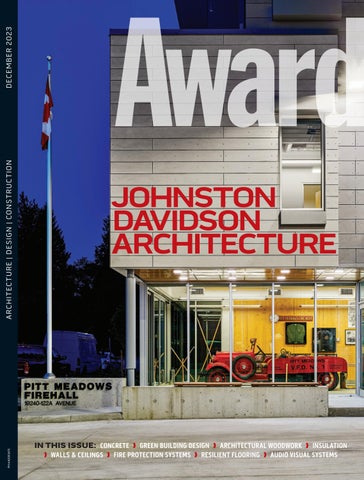
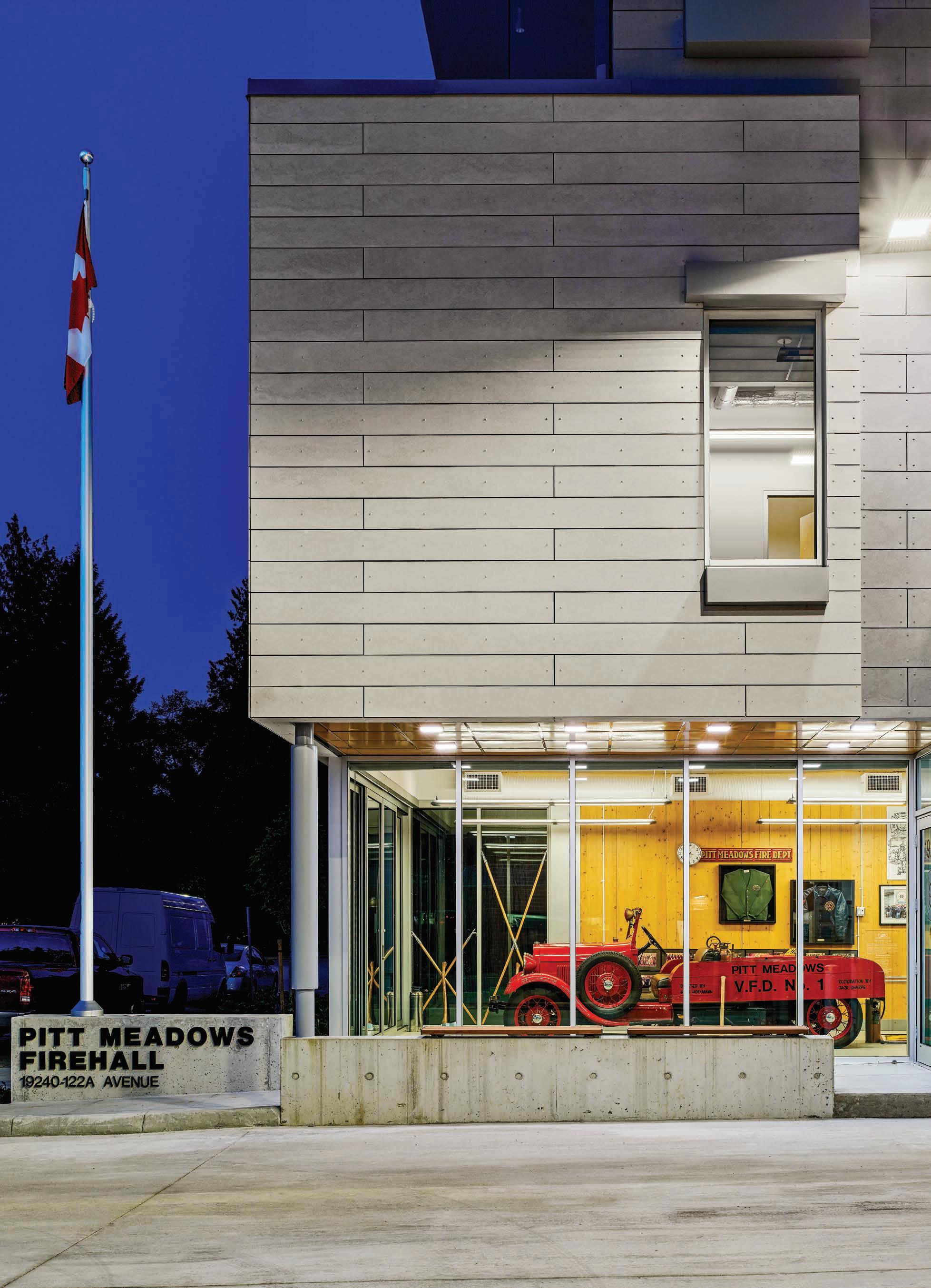
JOHNSTON DAVIDSON ARCHITECTURE

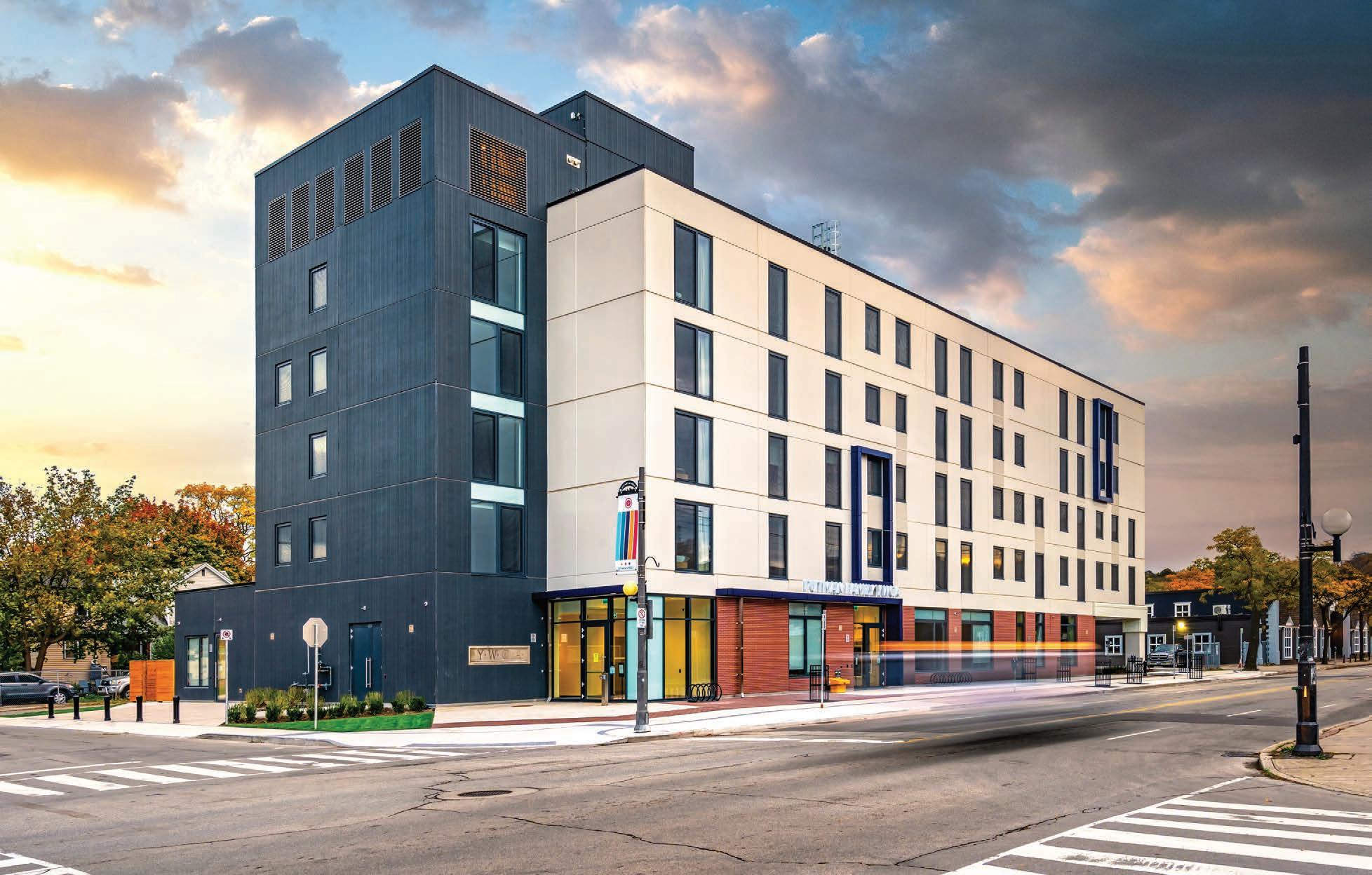
Total Precast Concrete Key Attributes to Passive House Development are:

· Manufactured in local precast facilities under controlled conditions
· The whole building envelope in one composite panel; air barrier, moisture control, insulation and the structure
· Hollowcore floor slabs allow for a much lower depth to span ratio
· Hollowcore provides the lowest GWP per m2 of concrete floor area
· Precast concrete dramatically reduces the construction schedule, site congestion, noise and environmental impacts



For more information and educational presentations check out Learn on Demand, a 24/7/365 Educational Platform. Visit: cpci-learnondemand.com/


For more information on Passive House Total Precast Concrete, visit www.cpci.ca/publications to download your free copies of the Structural Solutions Guide and the Putman Family YWCA Total Precast Concrete Case Study.
Project: The Putman Family YWCA, Hamilton, ON Architect: Kearns Mancini Architects Inc., Toronto, ON


Tracing the crucial links between architecture and Indigenous healing.
Johnston Davidson Architecture continues to score big with remarkable projects and teamwork.
The concrete industry’s resolute journey to net zero and decarbonization.
From panels to foam, insulation is helping solve environmental concerns, one cozy layer at a time.
Green building design is surpassing benchmarks with transformative strategies that are redefining the very fabric of construction.
Unveiling the latest innovations and trends reshaping the walls and ceilings industry.
Leaders in architectural woodwork ensuring wood’s future by taking on complex and innovative projects.
Exploring the rapid advancements and influential developments reshaping the audio visual industry.
A new era in the world of fire protection systems.


The purpose of concrete products in construction sites and their vicinity is to establish safety measures that protect workers and individuals nearby. Concrete jersey barriers, tall wall, concrete blocks, and other such products play a crucial role at minimizing ground disturbance and are an e ective way to provide footings for all types of fence.

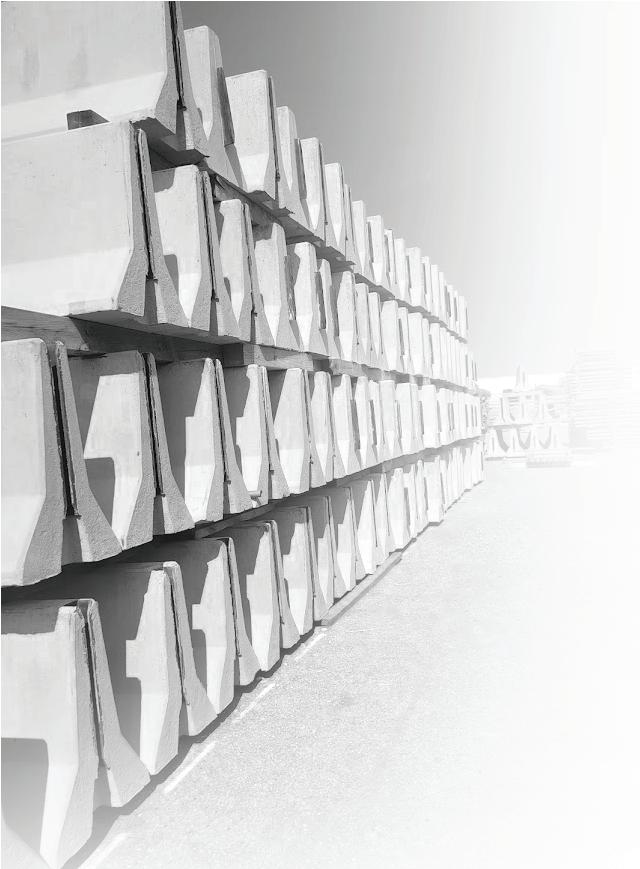
JERSEY BARRIER HALF JERSEY BARRIER
TALL WALL HALF TALL WALL


Tracing the crucial links between architecture and Indigenous healing
he Royal Architectural Institute of Canada (RAIC) recently hosted a two-part online event to mark the 2023 National Day for Truth and Reconciliation. Collaborating with NVision Insight Group Inc., and the RAIC Truth and Reconciliation Task Force, this event served as an opportunity for architects to gain a comprehensive understanding of the historical and ongoing impact of Canada’s residential schools and to contemplate the role architects can play in the reconciliation process.
HISTORICAL CONTEXT AND NOTEWORTHY INSIGHTS
Part one of the event, held on September 26, 2023, provided a historical overview of residential schools and the Indian Act and examined the intergenerational trauma affecting Indigenous communities. An important acknowledgment was made regarding an award given by the RAIC in 1965 to the design of a residential school, as well as the presentation of an interactive map highlighting the locations of historic residential schools across Canada. Additionally, James Bird, a residential school survivor, member of the RAIC Indigenous Task Force and PhD candidate, shared his experiences and his academic pursuit of understanding architectural form through Indigenous languages.
A notable revelation emerged regarding the architectural and planning community’s role in the construction and alteration of residential schools, spanning several decades. This awareness, as evidenced by historical articles and journals from the late 19th and early 20th centuries, sheds light on the moral responsibility carried
EMPOWERING ARCHITECTURE FOR RECONCILIATION
Part two, held on September 27, 2023, shifted the focus to how architects can reconcile with the land and incorporate Indigenous values and traditions into their designs. Naomi Ratte’s (intern landscape architect and consultant with NVision Insight Group) presentation included a documentary about a residential school survivor and showcased the transformation of former school sites into places of ceremony and remembrance. Additionally, Ratte urged the federal government to develop a reconciliation framework, amending the Historic Sites and Monuments Act to include Indigenous representation. An interactive map from the National Centre for Truth and Reconciliation emphasized the significance of land in Indigenous culture and sustenance.
Throughout the event, a central theme emerged: architects must acknowledge their historical involvement in Indigenous trauma and work towards a more inclusive and empathetic future through architecture.
SHORT-TERM AND LONG-TERM IMPACTS
Over 700 members of the architectural community participated in the event, a significant milestone for the RAIC in relation to an educational opportunity regarding Indigenous values, history, and the role of design in their connection with the land.
Long-term impacts include the RAIC’s commitment to identify meaningful actions for the organization to engage in annually in furtherance of reconciliation efforts. The RAIC also plans to make these webinars available on-demand, enabling more of the architectural community having access to education about critical issues. RAIC’s dedication to engaging in reconciliation efforts remains steadfast. This is the 2nd commemoration activity the RAIC has hosted in honour of the National Day for Truth and Reconciliation. This year’s events strengthen the groundwork for architects to play an integral role in the reconciliation process. By addressing their historical involvement and reimagining the future of architecture, these professionals aim to pave the way towards a more inclusive, empathetic, and equitable built environment that honours the diverse cultures and values of Indigenous communities. A
GIOVANNA BONIFACE and LISA JIBSON
It’s A Slam Dunk
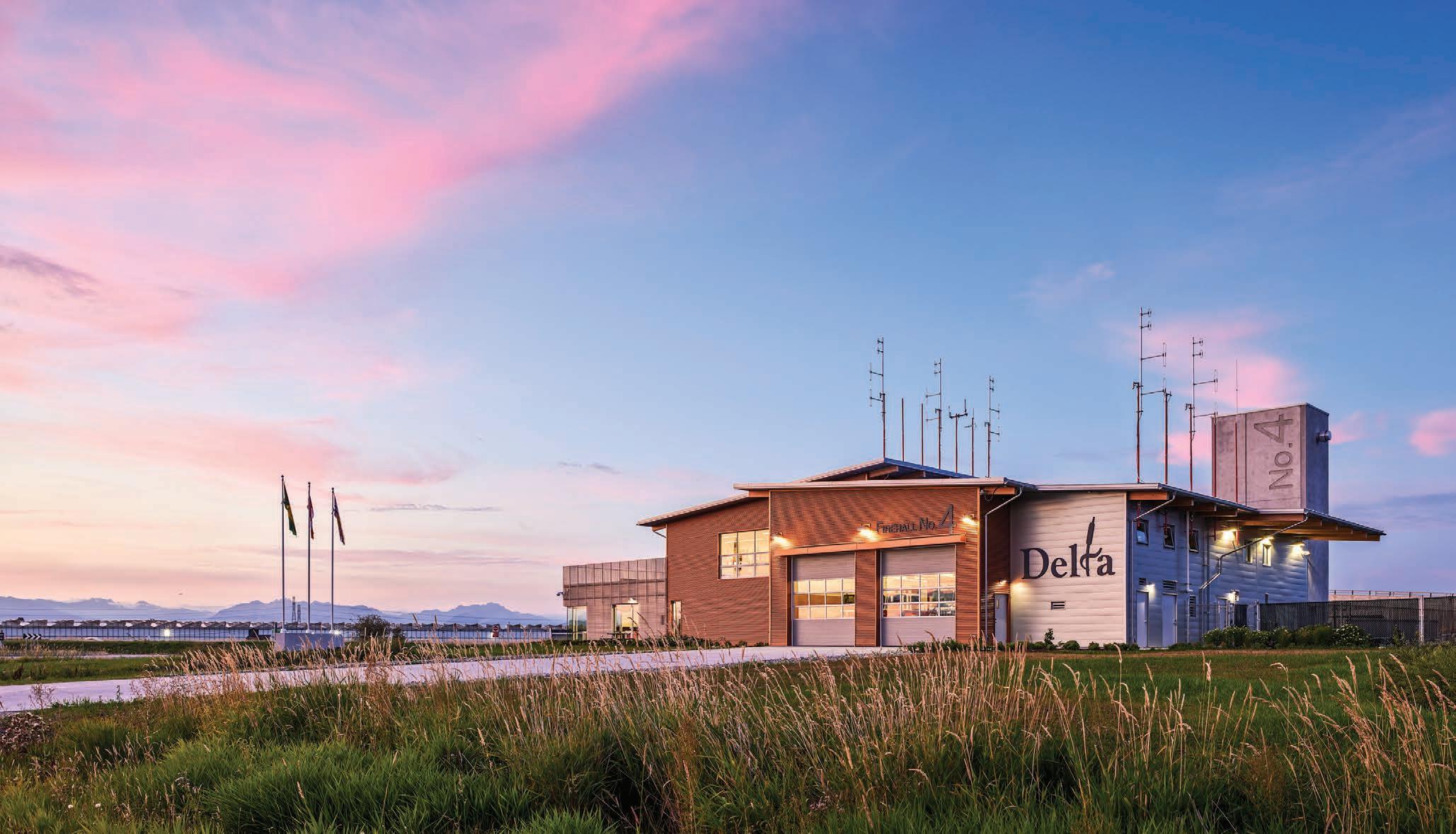
Johnston Davidson Architecture continues to score big with remarkable projects and teamwork
by ROBIN BRUNET | photography courtesy JOHNSTON DAVIDSON ARCHITECTURE
Considering she was on the University of British Columbia’s Varsity Basketball Team and a BC Summer Games’ swim champion, Kimberly Johnston, who is the principal of Vancouver-based Johnston Davidson Architecture (JDa), views project development through a sporting lens.
Recalling her earlier years, she says, “It was a thrill to score, but what I really loved was the teamwork that led to getting the shot. I loved the sensation of passing the ball in an open space, knowing a colleague would catch it.”
This innate appreciation for teamwork informs JDa as Johnston and senior associates John Botelho and Edward Craig guide a company that was founded in 1976 by Johnston’s father, Douglas Johnston, alongside Ian Davidson. It also explains why they are so passionate about working in the Integrated Project Delivery (IPD) realm – to the point where it has become JDa’s specialty.
The friendly and engaging Johnston says, “One of the many things dad taught me was to always work with others to find different solutions – and that’s the essence of IPD.”
Some of JDa’s more notable successes include West Kelowna City Hall and Library; Squamish Fire Hall No. 2; and the recently completed Pitt Meadows Fire Hall, a 26,000-square-foot, mass timber building that contains a dedicated emergency operations centre.
JDa’s focus on protective services is noteworthy, especially at a time when many architects feel compelled to diversify to ensure a steady stream of work.
“We’ve designed over 75 firehalls in B.C., Alberta, and even Prince Edward Island,” Johnston says. “My dad and Mr. Davidson first ventured into this niche with Vancouver Fire Hall No. 12, and the specialty work snowballed from there.”
Craig, who was initially sceptical about the IPD process (“It seemed too Kumbaya to me”), adds, “We’re perpetually busy. The need for protective services is growing as populations increase, existing neighbourhoods expand, and new ones are being built.”
Doug Johnston and Ian Davidson built JDa from the ground up, initially as a two-man team, with the goal of capturing the essence of life in the built form. Also, while they weren’t interested in the “starchitect” mentality, they believed in the value that architects brought to the table and always fought to be heard.
Boundary Bay Fire Hall, Delta, B.C.
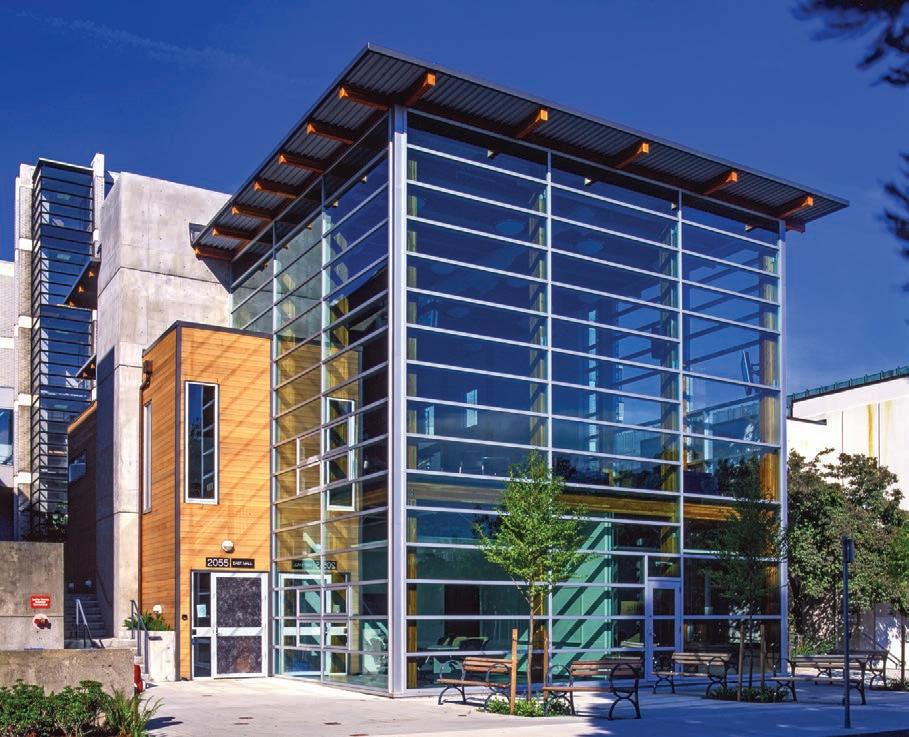
Abdul Ladha Science Student Centre, Vancouver, B.C.



Although friends assumed Johnston’s daughter would make sport her profession, she found the lure of architecture irresistible. “I studied art history at UBC and was fascinated with how life was represented on canvas and other mediums,” she says. “I loved watching dad work in the office – so following in his footsteps seemed natural. He impacted my brother as well, who is an industrial designer.”
Following her father’s passing in 2010, Johnston vowed to maintain JDa’s values; but, realizing the benefits of the IPD process and the growing need for protective services, she focused increasingly on those facets of business. Currently some of their IPD projects consist of working innovatively with the City of Burnaby on fire halls 4 and 8 and well as Fire Hall No. 2 for the District of Squamish, which is designed to accommodate housing above it at anytime.
Johnston also ensured that JDa gained expertise in co-location facilities that mix municipal services with affordable housing and/or other civic operations. The result was designing Vancouver Fire Hall No.5 and housing complex (the first of its kind in Canada), a LEED Gold project in which sustainable and energy efficient design strategies are combined with the specific programmatic needs of the Vancouver Fire Rescue Services and the YWCA. The 21,000-square-foot fire hall includes three apparatus bays and supporting spaces, and the 36,000 square feet of housing includes 31 suites, amenity rooms, and communal rooftop outdoor spaces.
Evolving JDa in this manner invites two key questions: doesn’t working predominantly on municipal/public projects limit one’s creative abilities? And isn’t Johnston, like an actor gaining fame for a specific role, worried about being typecast?
Botelho addresses the former issue. “Working in the public realm has given us lots of creative leeway because we’re relied upon to develop a vision – as opposed to some clients in the private sector who try to impose ideas that aren’t feasible.”
Johnston adds good-naturedly, “I’ve been known to ask some people, ‘Why buy a dog if you’re going to bark yourself?’”
As for being typecast, she says, “Our portfolio is diversified – it even includes over 50 acute care and non-acute health-care projects, university buildings, police stations, city halls, and childcare facilities – but I don’t mind being pigeonholed. It reminds me of an instance when a project manager told us condescendingly, ‘Oh, you’re just suburban architects.’ And I replied, ‘If you mean we’re approachable and like working with people, I can live with that.’”
As JDa’s principals and staff prepare for a busy workload in 2024, Johnston exudes the confidence of presiding over a company that is well-positioned for future opportunities. “We’re in a good place,” she says, smiling as JDa’s canine mascot, Louie, wanders through the office. “The IPD teams we’ve worked with have been fantastic and exciting projects are coming down the pipe.
“About the only thing we’re wary of is expansion: we never want to grow to the point where it would compromise the collaborative approach to work. When I throw the ball into the open air, I always want to know it will be caught by a colleague.” A
Sechelt Justice Building, Sechelt, B.C.
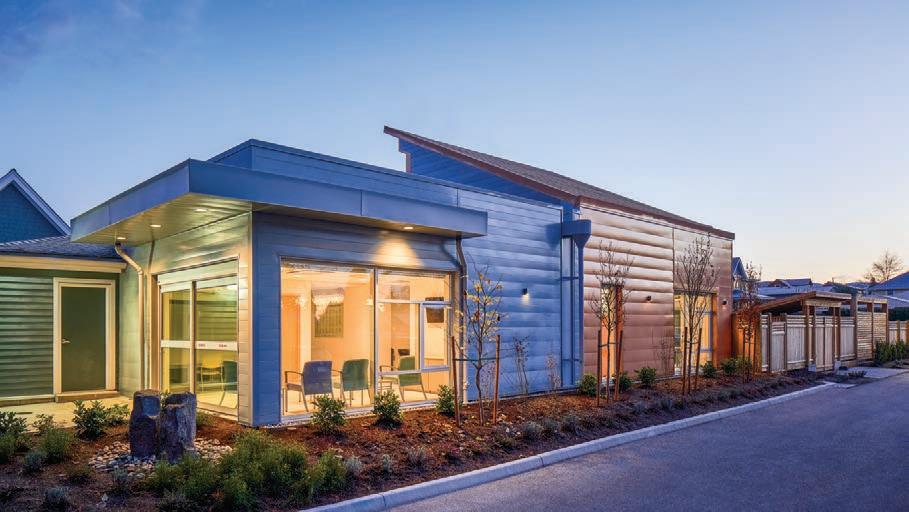
North Shore Hospice, North Vancouver, B.C.
Vancouver Fire Hall No.5, Vancouver, B.C.
Pitt Meadows Fire Hall, Pitt Meadows, B.C.
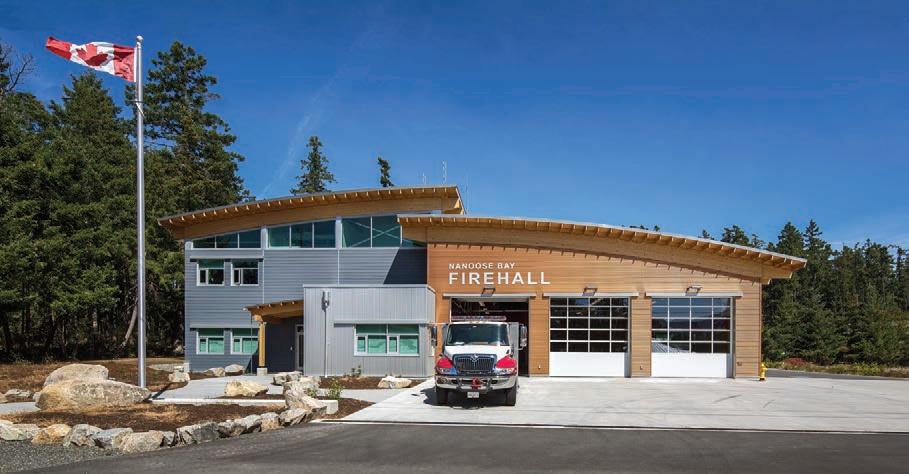
Nanoose Bay Fire Hall, Nanoose Bay, B.C.
PHOTOGRAPHY


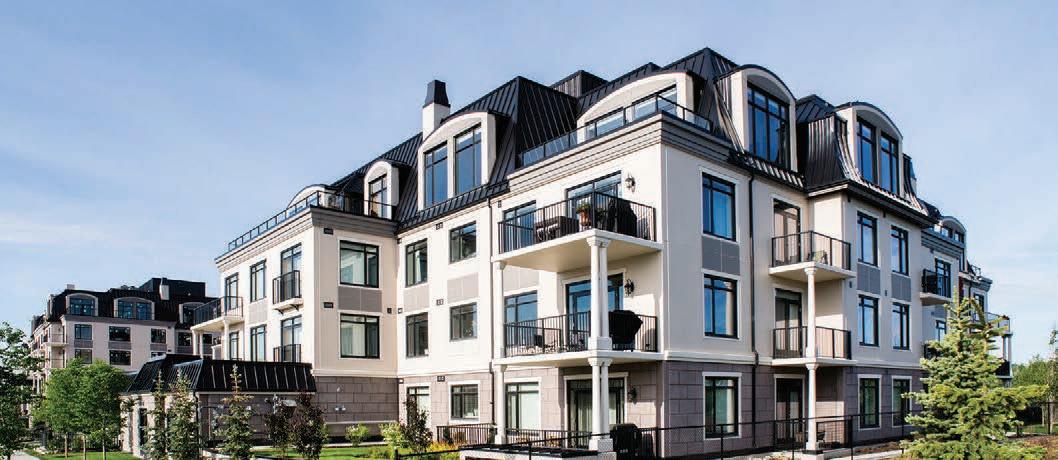
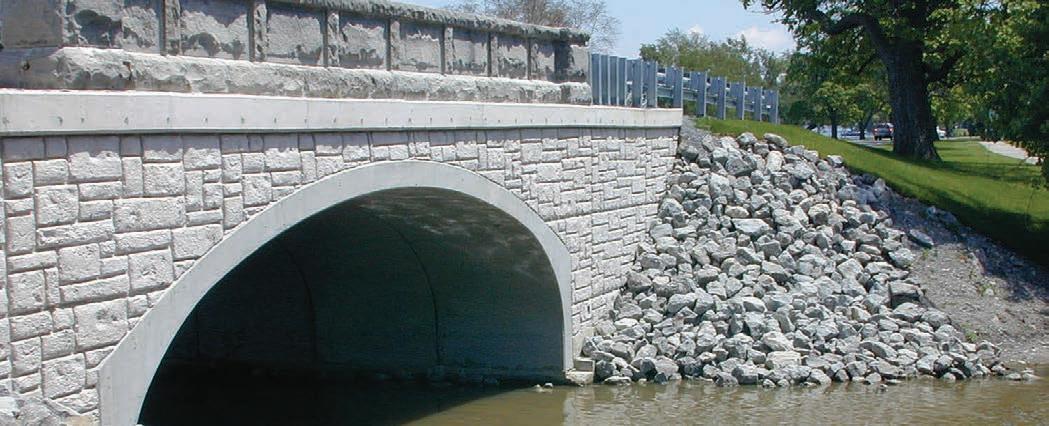
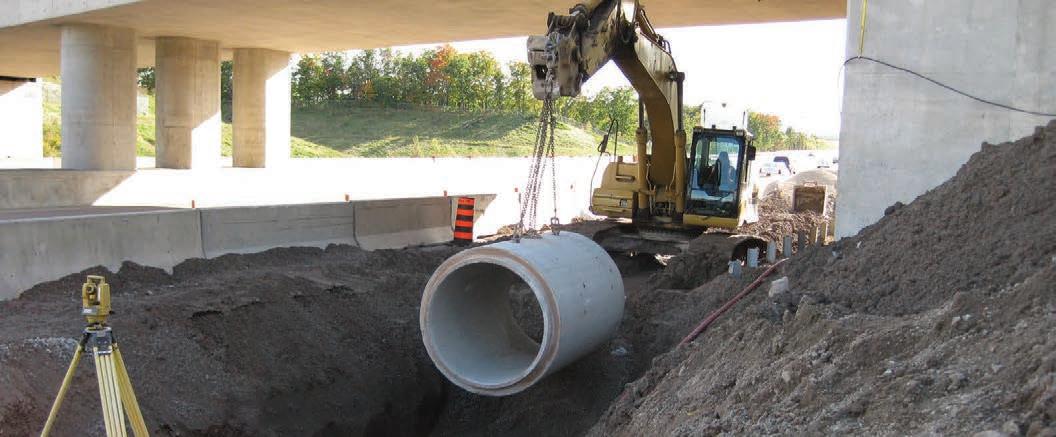
*(CPCQA) CERTIFICATION PROGRAM BY PROCESS OFFERS KEY BENEFITS TO ARCHITECTS, CONTRACTORS, ENGINEERS, GOVERNMENT AUTHORITIES AND OWNERS.
Project: Champagne Quarry Park, Calgary, AB Architect: Gibbs Gage Architects
Mixing It Up
The concrete industry’s resolute journey to net zero and decarbonization
by ROBIN BRUNET
As 2023 draws to a close, the talk within cement and concrete manufacturing circles is all about net-zero and ways to achieve it, with cement companies and concrete associations moving forward to secure a more prominent footing.
That includes the Canadian Precast Prestressed Concrete Institute (CPCI), which in 2023 launched the 2030/2050 Net-zero Roadmap Initiative, a detailed guide for a decarbonized precast concrete industry by 2050. “Five industry working groups were established to develop the initiative, which includes how to execute reductions through facility design improvements, optimization, and acceleration of precast concrete construction, and more,” says CPCI managing director Brian Hall, adding that the initiative will be published before year-end. Also, the CPCI worked with the Global Cement and Concrete Association (GCCA) on a web-based Environmental Product Declaration (EPD) tool that allows members to prepare EPDs (self-declarations) of clinker, cement, aggregates, concrete, and precast elements, and contains new precast concrete LCI data, which a third-party verifier can use
to authenticate and become official public EPDs. “Since the GCCA EPD tool has been pre-verified by an approved EPD International verifier, the overall verification cost of EPDs generated by the GCCA tool decreases significantly,” Hall says. The tool was launched in October.
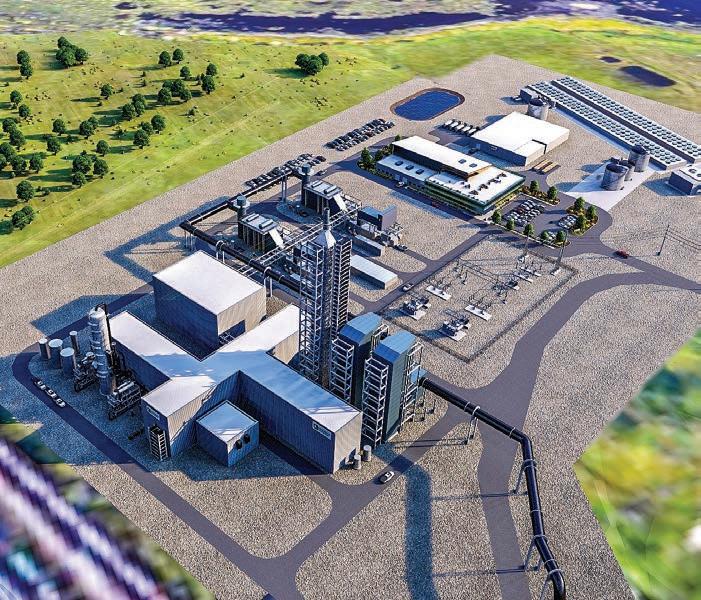
Heidelberg Materials prides itself in leading the decarbonization of the cement industry, thanks to seven major carbon capture projects around the world. One of these projects – the first full-scale carbon capture and storage facility in the cement industry – is taking shape in Edmonton in partnership with the Government of Canada; when it becomes operational in 2026, this new facility will capture more than one million tonnes of CO2).
The Edmonton plant will treat all emissions of flue gas from the kilns. Additionally, the heat and power plant that runs the facility will have its own carbon capture, resulting in the achievement of netzero carbon emissions without the use of offsets.
Many other initiatives contribute to Heidelberg Materials’ decarbonisation push. “Our EvoBuild brand of low carbon concrete is available in a variety of ranges [Bronze, Silver, Gold, and Zero], takes specific targets and budgets into account, and helps ensure there is a sustainable solution to every

Putman Family YWCA, Hamilton, ON
Total Precast Panel construction on the Putman Family YWCA, Hamilton, ON.
The first full-scale carbon capture and storage facility, Edmonton, AB.
Strong, innovative, sustainable


EvoBuildTM is the evolution of sustainable building materials designed to meet today’s sustainability targets.
With knowledgeable experts, science-backed data and sustainable product formulations, we’re able to work alongside you, offering unparalleled service from concept to completion.
EvoBuild™ Low Carbon Concrete is part of Heidelberg Materials’ Evolve™ Family of Products. Learn how these revolutionary products can help your project be part of a greener tomorrow.
heidelbergmaterials.ca
Material to build our future.
project,” says Shane Mulligan, Heidelberg Materials’ sustainability and technical marketing manager. “EvoBuild is focused on working with different stakeholders along the project value chain to highlight the opportunities that exist with lower carbon concrete.”
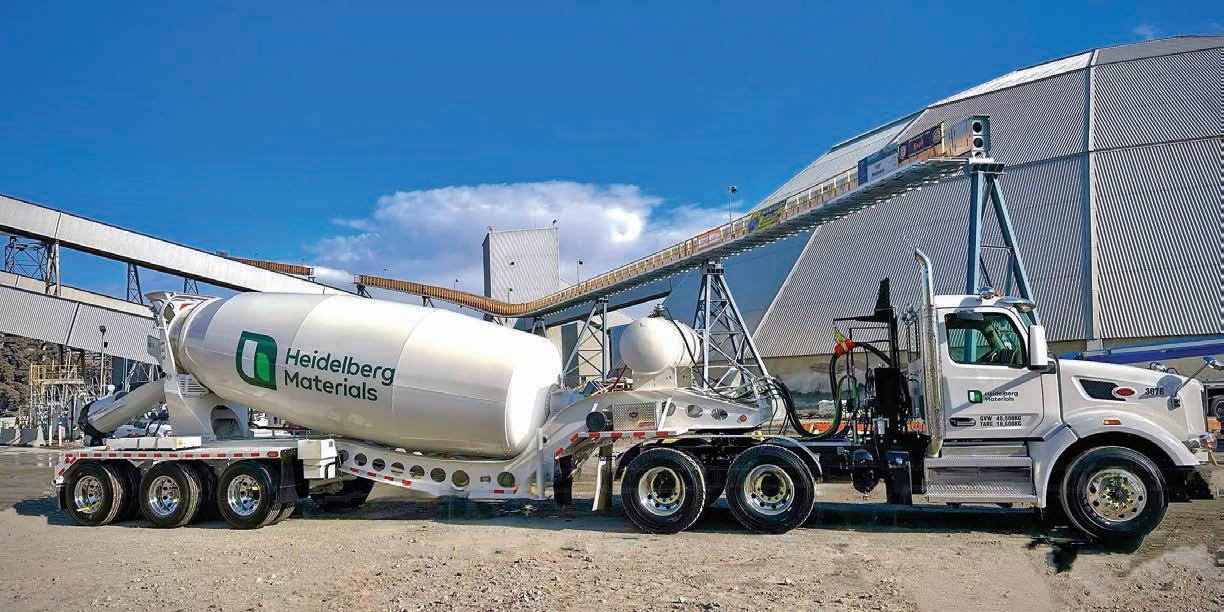
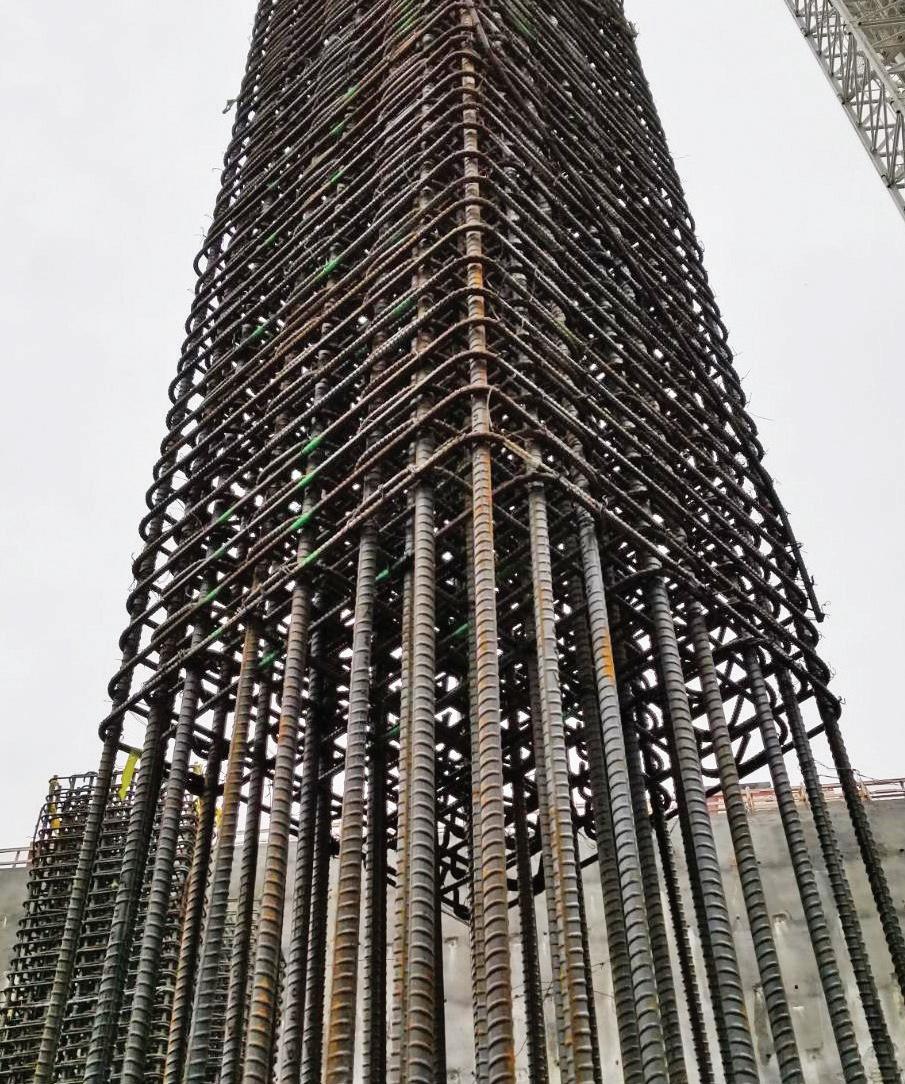
Heidelberg Materials is also involved in load assurance whereby sensors are mounted within the drums of ready mix trucks as well as on rebar in concrete pour jobsites; these sensors gather information on exactly how the substance performs as it is poured and cures. “This allows operators to make adjustments and reduce waste as well as improve batches before they leave the plant,” Mulligan says.
Rob Cumming, head of sustainability and public affairs at Lafarge Canada Ltd., reports that his company continues to enjoy success with its ECOPact brand, the world’s broadest range of low-carbon concrete offering up to 90 percent lower CO2 emissions compared to standard (CEM I) concrete, and with no compromise in performance. The range includes a basic 30 percent carbon reduction solution; ECOPact Prime (over 50 percent reduction); and all the way to ECOPact Zero (total carbon neutrality).
However, Cumming stresses the Pact aspect of ECOPact when discussing Lafarge’s future initiatives. “Pact suggests working relationships, and







that’s what we’re fostering with our customers,” he says. “Increasingly, they are discovering that by consulting with us they can achieve significant reductions in carbon intensity at no or minimal costs. We provide specific solutions – exactly the right concrete properties required for any given job –while assuring they achieve desired performance.”
ECOPact comes with third party-certified quantifiable data that confirms the reduced carbon, calculating improvements based on CO2 values from all of Lafarge’s raw material procurement, transportation, and production.
Cumming adds that such services are becoming vital and cites the Toronto Green Building standard as a regulatory body whose newest mandate requires builders to offset all embodied carbon in construction projects in that jurisdiction. “We’ll continue to see more advancements on these fronts, hence our continued focus on ECOPact.”
But not everyone in the concrete realm was exclusively focused on decarbonisation in 2023. Kingston-based Anchor Concrete Products Limited’s ongoing mission, which it advanced this year by working to secure licensing agreements with developers globally, is unique: CEO Jeff Bradfield wants to spearhead a paradigm shift in the way homes are built – and help solve the chronic housing shortage not only in Canada but also in the U.S., Brazil, Africa, and many other parts of the globe.
He intends to do so thanks to having introduced (in 2021) a modular building system under the name of Lodestar Structures Inc. This building system combines the resilience of precast concrete


Sensors mounted within the drums of ready mix trucks gather information on exactly how the substance performs as it is poured.
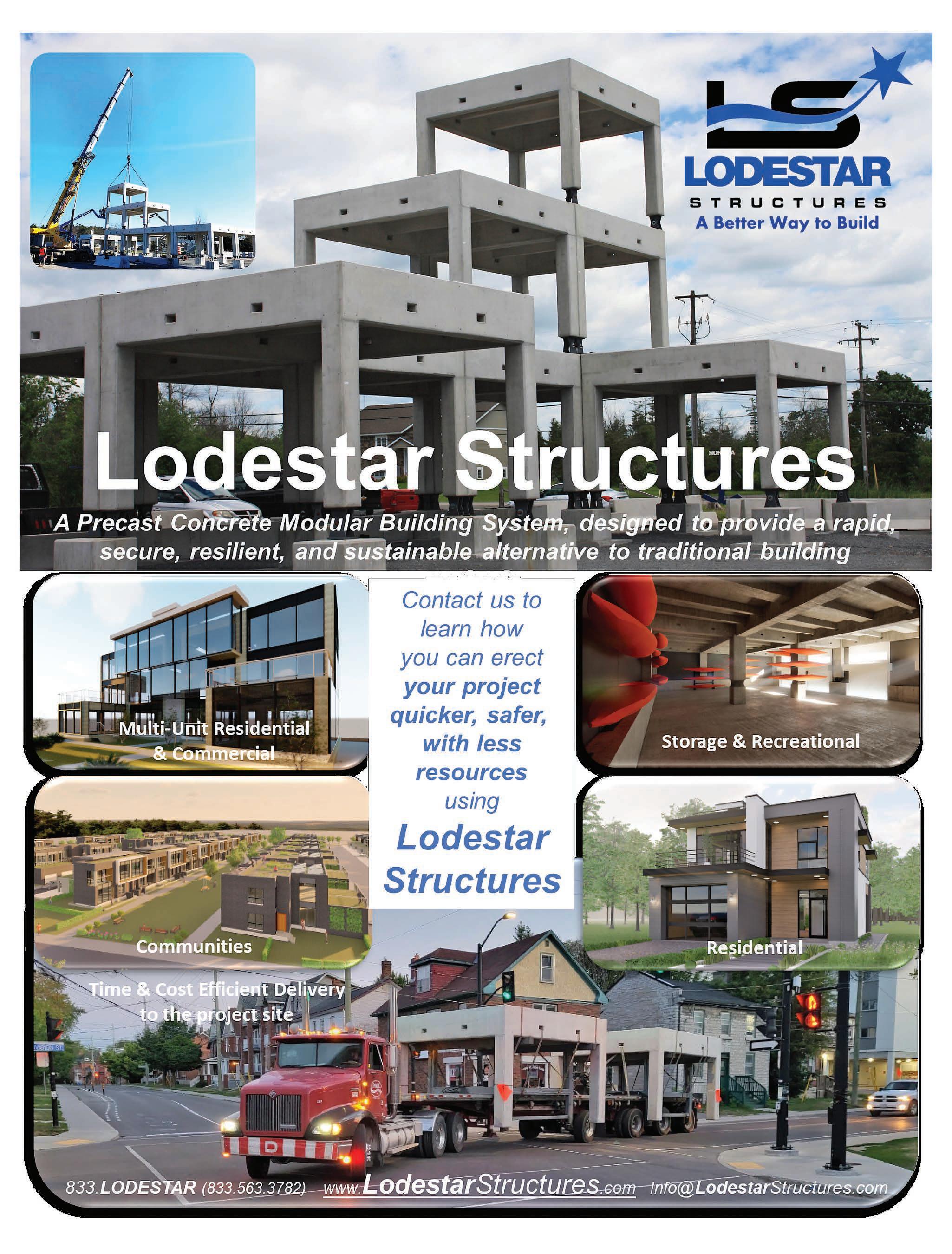
with the efficiency of modular building technology, allowing the primary infrastructure of a home (as well as commercial structures and even mid-rises) to be completed in a fraction of the traditional building time with far less tooling required – and at a cost on par with traditional construction, even though Lodestar buildings are said to be able to achieve a lifespan of several hundred years.
Darrell Searles, president of the Lodestar division, says, “By licensing precast concrete or ready-mix plants near areas where Lodestar structures are required, we supply the moulds and technology required to make structures to build, or re-build entire communities. Each Lodestar structure provides up to a 436-square-foot building footprint consisting of commercial rated support columns and integrated surface slab, and when connected horizontally or vertically they expand the footprint to accommodate up to seven storeys tall and unlimited width and length.”
In the Kingston region over 200 Lodestar projects are at various stages of conceptualization and execution, and major developers and contractors have expressed interest in the system. Inquiries have come from as far away as France, United Arab Emirates, and West Africa.
“Our small Kingston facility of less than 80 people can produce and install up to 6,000 square feet of product – the equivalent of three homes – per day,” Bradfield adds. With the addition of recently released Lodestar Precast Architectural Wall Panels, structures can now be erected and enclosed at a spectacular pace (providing a fire

rating of between 90 minutes and two hours).
To test the efficiency of the construction process, Anchor constructed a Lodestar tiny home combining a Lodestar Base Module, a Lodestar Structural Building Module, and enclosing the structure using Lodestar Precast Wall Panels, a process that took less than a day to complete.
“Licensing will be the key to achieving our mission both in Canada and abroad: any community that has a ready mix or precast plant can have safe, comfortable, and sustainable Lodestar homes, and the sustainability benefits are obvious,” adds Searles.
EXPRESS REBAR

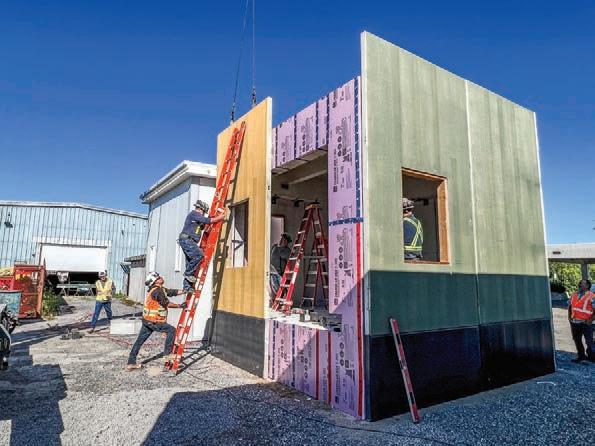




Completion of the Lodestar tiny home.
Lodestar Precast Wall Panels.
Lodestar Base and Structural Building Module.





Diamond Polished Concrete. A Strong & Beautiful Concrete Flooring Solution
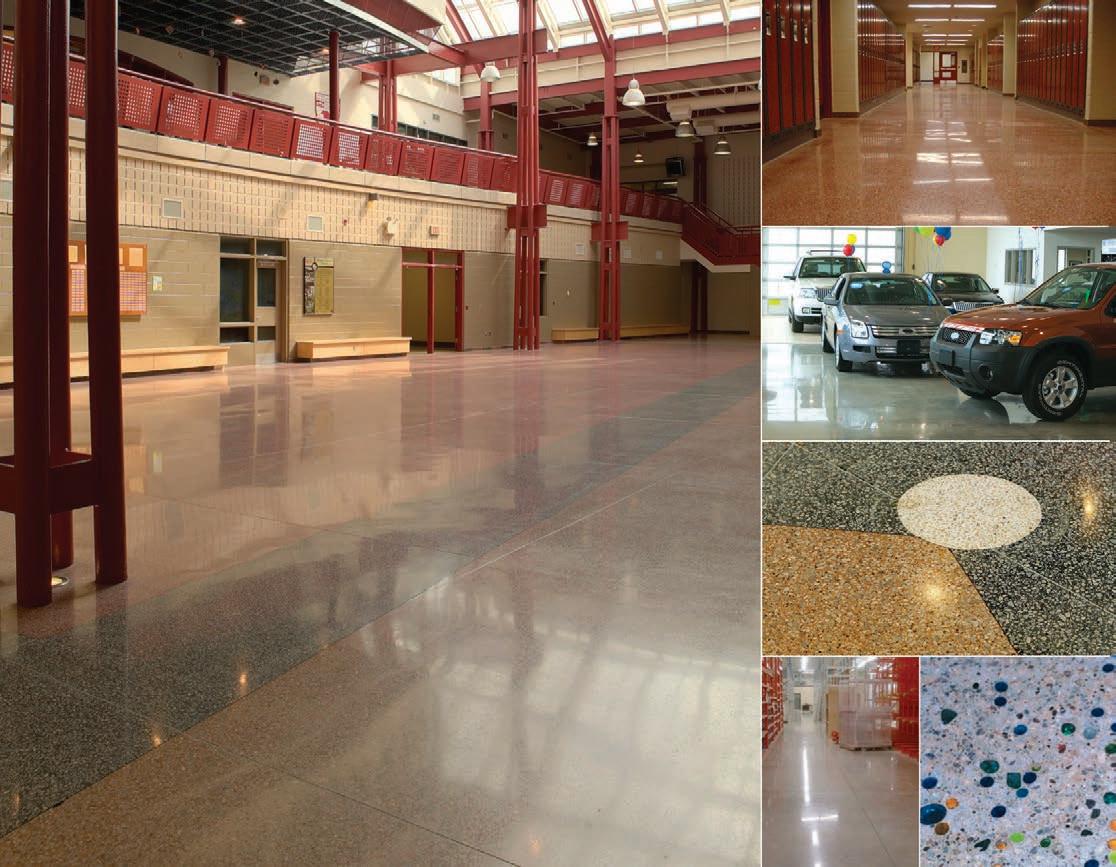
Diamond Polished Concrete is a unique, advanced flooring system that brings out the natural beauty of concrete, helps reduce maintenance costs and enhances the natural durability of concrete surfaces. The Tri-Con Diamond Polish System employs an innovative 7-step grinding and polishing process that utilizes progressively finer diamond grinding heads. This system also uses the most advanced penetrating sealer technology.
Tri-Con Concrete Finishing is an industry leader with more than 30 years experience in the concrete industry. We are a one-stop supplier capable of pouring new floors to exact specifications as well as restoring existing concrete surfaces with endless versatility. We guarantee that we deliver on time, on budget and on spec every time.
ASK ABOUT OUR I.C.I. JOINT FREE CONCRETE FLOORS
Business at Stubbe’s (which includes Stubbe’s Precast, Redi-Mix and Cement) was “better than expected” in 2023 according to managing director Jason Stubbe, with an increase in the commercial warehousing sector and recently in seniors housing. “Plus, we have seen an increase of requests for our Whispercrete sound barrier products and recently completed a 13-metre-tall wall for AIM in Hamilton. Our precast stair and elevator cores for buildings that aren’t total precast have gained popularity as well – they really help cut construction time, save money, and allow for a superior quality and finish in the cores.”
The Whispercrete noise wall systems can be designed using either a single-sided absorptive finish or a double-sided reflective (concrete) finish, depending on the acoustic requirements of the site. As for Stubbe’s Modular Stair shafts, they have the capability to install stairs and elevators up to nine floors in advance. Other building systems, such as steel, CIP, CLT, or any other type of construction material, can then proceed at their own pace. This solution can greatly decrease the overall build time by giving all trades access to all floors as soon as construction begins on each floor.
John Carson, executive director at Altus Group (a collaboration of 14 North American precasters), has this to say about the precast market in 2023 and moving forward: “Business in U.S. and Canada remains robust. Data centre work is still very strong, and government/municipal projects spurred by spending and legislations support geographical needs such as water and education.”
Carson adds that while resilient, the precast industry is still dealing with familiar challenges. “On time delivery and project complexity is paramount, while labour supply remains a critical concern. Schedule slides and slowdowns are occurring as developers and contractors continue to try and cope with significant material cost increases, higher fuel, labour and insurance costs fuelled by rising interest rates, and increasing hurdles to achieve go-aheads.”
It could be argued that sustainability and other green initiatives contribute to the long list of challenges, and Carson notes that “precast producers are doing their part to implement viable practices and technologies in order to deliver realistic, carbon footprint-lowering product solutions like CarbonCast wall panels and precast walls with composite design – both of which can reduce the amount of concrete in a panel. Energy efficiency via mass walls and insulated sandwich panels are delivering performance on this front, in the face of ever-increasing building code regulations and standards.”
In fact, CarbonCast panels with carbon fibre grid reinforcing and integrated insulation can reduce concrete use by 30 percent or more compared to solid panels, and the thermal efficiency of the panels results in higher R-values than other technologies, which reduces operational carbon.
Along with brisk business in the concrete sector comes the inevitable expansion of manufacturing infrastructure. Cresswell Industries, a Peikko Group Corporation manufacturing partner, is investing in a large-scale Deltabeam slim floor structure facility
in Montreal. One of many benefits of this facility is that Peikko’s products will be delivered more quickly to the market.
Manufacturing in the new factory is expected to commence early in the new year; between 100 and 150 Deltabeam Composite Beams are expected to be produced weekly. Deltabeam Slim Floor allows for lower floor-to-floor heights and maximizes the number of floors in a building, and in some cases additional floors can be gained while maintaining the same building height. The composite action between steel and concrete allows Deltabeam to easily span over 30 feet between columns, and since the system is often utilized to support prestressed hollowcore slabs, the spans perpendicular to the beam can exceed 40 feet.
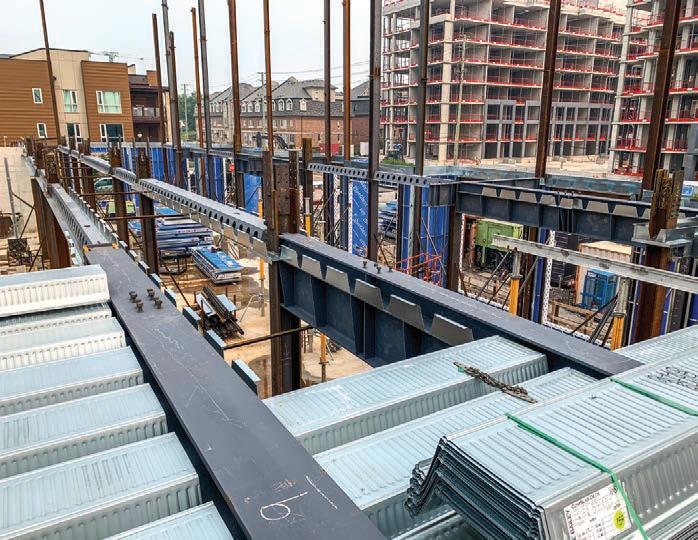
Deltabeam installation at Amica North Oakville, Oakville, ON.


In the additives and admixtures realm, Kryton International continues to provide robust waterproofing and corrosion resistance solutions thanks to its proprietary Krystol crystalline technology. One of the more recent examples of Kryton products being used to solve water ingress problems is the mixed-use condo tower project The Heights on Austin in Coquitlam, B.C. Doug Adam, Kryton’s technical services technician, notes that water ingress from a subterranean river caused significant cracking from the fourth to sixth levels of the east tower’s parkade, the result of not being treated with the high-performing crystalline admixture. Also, steel rails used in conjunction with rebar had been placed with insufficient cover, further contributing to cracks at regular spacing.
The solution was a full-on concrete leak repair system consisting of a rapid setting hydraulic cement, a crystalline grout with advanced fibre

technology and shrinkage-controlling additives, and a surface-applied crystalline slurry treatment. Adam points out that all of these materials were capable of working in synergy with the crystalline waterproofing admixture that had been used in the first three levels of the parkade. A combination of grout and injection repairs were also undertaken, with the entire process taking about six months to complete. The cast-in-place structural walls were left looking pristine and free of any residual water.
Finally, it has been a busy year as usual at Euclid Canada, dealing with complex administrative tasks as well as providing the construction market with a wide range of concrete-strengthening admixtures. National business development manager Brian Salazar explains, “We’ve spent a great amount of time and effort obtaining our EPD certification; as we speak in September our fibre additives produced in our Georgia plant have received designation, and we’re aiming for the additives made in our Canadian plants to follow suit next year.”
It wouldn’t be hyperbolic to describe the paperwork and auditing necessary for the certification as onerous, but the reason for pursuing such a complex process is simple: more and more developers are requiring EPD certified products to be used in a wide range of projects in order to secure LEED points. Whether good or meddlesome, certifications such as EPD have become a business necessity: if a company decides to postpone being designated, sales could be lost.
With Euclid products such as PSI Fiberstrand and Tuf-Strand SF, EPD assures users that the company’s
fibre reinforcement products for concrete do not contain any hazardous substances according to the Resource Conservation and Recovery Act, and do not release dangerous substances to the environment, including indoor air emissions, gamma or ionizing radiation, or chemicals released into the air or leached to water and soil.
For the record, PSI Fiberstrand fibres are synthetic monofilament and fibrillated polypropylene microfibres for concrete, mortar, and grout specifically designed for plastic shrinkage crack control and secondary reinforcing applications for slabs and pre-cast concrete. Tuf-Strand SF is a patented polypropylene and polyethylene synthetic macrofibre for composite steel deck construction and is used for replacement of limited structural steel in pre-cast, slabs on ground, pavements and shotcrete applications. A
The Definitive Concrete Waterproofing & Watertightening Checklists




Application of Tuf-Strand SF for composite steel deck construction.
Completion of a full-on concrete leak repair, The Heights on Austin, Coquitlam, B.C.






Panel
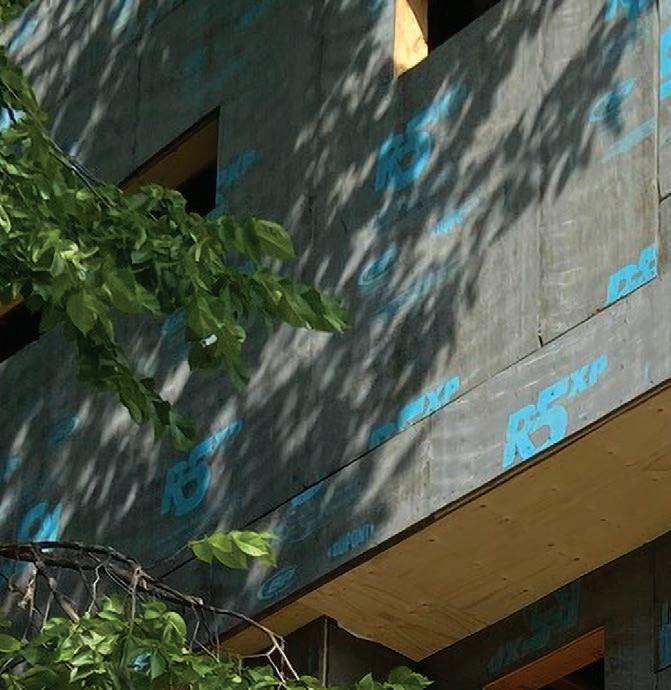
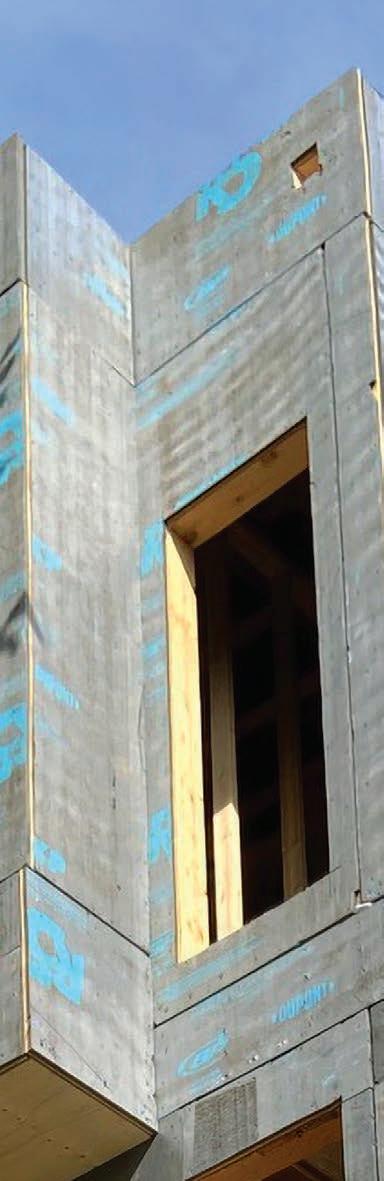
R-5 XP INSUL-SHEATHING PANELS ARE NOW GREY, BUT GREENER THAN EVER
R-5 XP Insul-Sheathing panels are now available with DuPont’s new reduced global warming potential Styrofoam™ Brand XPS formulation. This means that our already eco-friendly panels are now greener than ever — and still provide the same benefits that have made them so popular:
• No additional bracing required
• Integrated air barrier
• Lightweight and easy to install
To make them easy to identify, they are now grey instead of blue. That way, when you see our new GREY panels, you will know instantly that you are looking at a GREENER product.
All-Natural Wood Fibre Panel The Leslieville Laneway house is a project in the Toronto area. This discovery home is built for climate change.
It Features superior woodfibre insulation combined with energy-e cient HVAC and grey water recycling. The innovative design creates e cient spaces for more occupants, resulting in a reduced carbon footprint building. The project is targeting LEED Platinum.




SINCE 1905
A Barbini Design Build (barbini.ca) construction, developed with the assistance of Clearsphere Consulting for Skye Mainstreet Properties Ltd bpcan.com


Beyond The Layers
As with so many other sectors in the construction realm, companies specialising in the manufacture and provision of insulation products in 2023 continued to focus on environmental concerns and the effort to decarbonize – while improving the efficacy of the products themselves.
Matthieu Danis, product manager for wood fibre at Building Products of Canada Corp., says, “We’ve seen a lot of natural disasters such as droughts and heat spells combined with forest fires. As people become increasingly aware of the changes in weather caused by global warming, so is their concern to consume more responsibly, mostly in sectors that have such a big impact on the carbon footprint as construction. For this reason, there is more talk and demand for products with lower embodied carbon and/or with better life cycles.
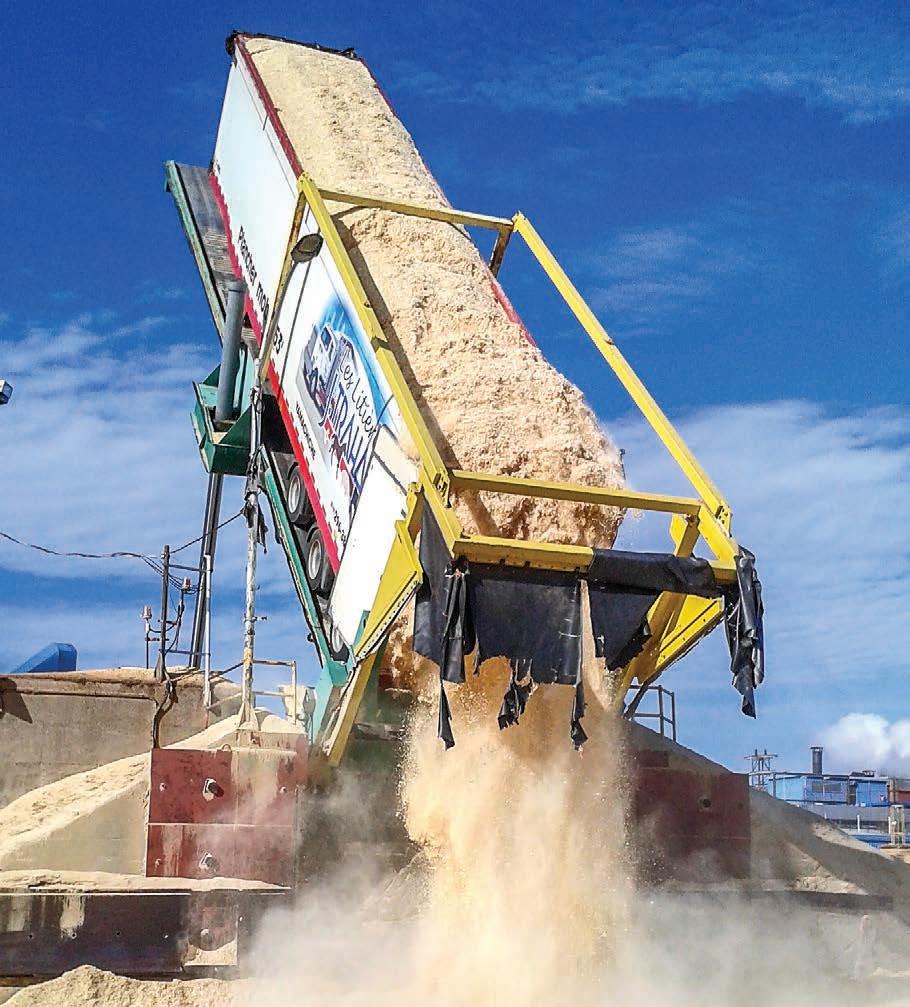
“Fortunately, wood fibre insulation panels check the box on most, if not all these aspects. The wood content used to manufacture these panels comes from recycled sources, making it a good choice for builders wanting to offer a reduced carbon build. Secondly, the wood used is also a huge contributor since the trees they come from have already contributed significantly in reducing CO2 emissions and converting this into oxygen. These panels are literally the perfect product from a carbon footprint point of view.”
Danis points out that while the European market is ahead of North America in terms of incorporating wood fibre insulation into buildings, some products are gradually making their way into North America via LEED and passive house developments. “European manufacturers are using a dry process that results in thicker wood fibre panels in both mats and thick tongue-and-groove decking panels,” he explains. “These products can be used in more applications than the current panel form, since they are using these mats in wall cavities [like fibreglass or mineral insulation batts] and thicker roofing panels as insulated roof decking. These thicker panels are also used as continuous insulation on exterior walls. Although demand for these products is still marginal, due mostly to public perception and different installation techniques, there is enough interest for European companies to invest with North American partners to manufacture these products locally.”
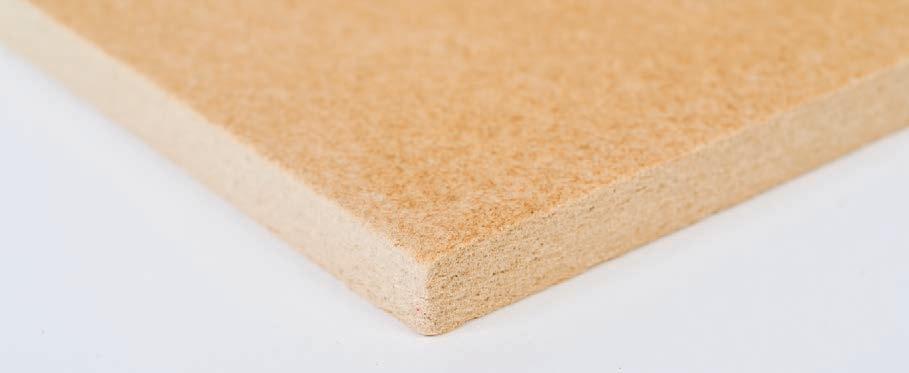
BP’s wood fibre panel manufacturing process is unique, with panels offering higher strength and lower density: a lighter product with a higher insulation value (R-3 per inch). BP wood fibre panels are offered in natural formats ranging from 7⁄ 16 inch to 1 ⁄2 inch in thickness in both four feet by eight feet and four feet by nine feet dimensions. They can help reduce a building’s carbon footprint, partly due to their ease of recycling. “Although we don’t currently offer the thicker wood fibre panels, it’s possible to install these natural panels using a staggered joint installation, further improving the continuous insulation effectiveness by reducing the ingress of cold air in the wall stud and or cavity,” says Danis. To help reduce a building’s carbon footprint by limiting the poured foundation thickness, BP also offers hybrid or laminated panels: wood fibre panels laminated to low GHG extruded polystyrene that provides higher insulation values (R-5 per inch). “Our R-5 XP panel is a half-inch wood fibre panel laminated to a 0.71-inch XPS for a total thickness of 1 3⁄ 16 inches, providing both structural resistance and superior insulation. This leaves plenty of space even for brick veneer siding on an eight-inch poured foundation wall,” Danis says. “Not only does this panel provide superior air barrier properties, but because we are only using 0.71 inches of XPS, the assembled panel also offers a vapour permeance rating of 2, allowing any trapped moisture or humidity from escaping the wall cavity and further reducing chances of mold/mildew development in the wall structure.”
From panels to foam, insulation is helping solve environmental concerns, one cozy layer at a time
by ROBIN BRUNET
But wood is hardly the only substance that contributes to superior insulation properties. The Canadian Precast Prestressed Concrete Institute (CPCI) continues to promote certain concrete products as a superior insulation solution, specifically precast double wythe insulated panels. These panels consist of two reinforced or prestressed concrete wythes with a continuous layer of rigid insulation sandwiched between them. The type and thickness of insulation vary with the RSI value required for each project.
From a developer’s perspective, these panels also contribute to design and construction efficiency. They are mass-produced in standard widths on long line casting beds and can be made with attractive sculptured exterior surfaces,
Building Products of Canada’s wood fibre insulation panels are manufactured from recycled sources.
The finished product.
DISCOVER YOUR DARK SIDE.

INTRODUCING THERMAFIBER RAINBARRIER DARK
Welcome to the dark side of continuous insulation — where designs are quicker, easier and a whole lot more aesthetically pleasing.
RainBarrier ® Dark™, our newest CI portfolio offering, provides the same exceptional moisture mitigation with a brand-new darker facing — letting you design with a dark side.

including thin brick, form liners, and coloured stains on interior faces. Moreover, they can be erected at a rate of up to 120 linear metres per day on concrete or steel frame buildings. Notable clients of CPCI members who have taken advantage of double wythe systems include Amazon, Canadian Tire, AMC Theatres, and Walmart (the latter of which relied on precast concrete insulated Thermowall System panels from Central Precast to enclose a new 40,000-square-foot store in Kanata, Ottawa in just four weeks).
In recent years, the insulation spray foam sector has undergone a seismic change driven by a heightened focus on environmental integrity. Notably, one company recently unveiled the latest eco-friendly closed cell spray foam that delivers the highest R value in the industry.
Huntsman Building Solutions worked closely with spray foam contractors to develop and offer the new Heatlok Soya HP, which has the best R-value of any HFO product on the market with an LTTR value at 50mm of 2.06 RSI (R 11.68).



Recognized for its ease of adhesion and superior insulation value, Heatlok Soya HP leverages Honeywell’s latest Solstice Liquid Blowing Agent, a hydrofluoroolefin agent said to be the most environmentally conscious produced to date. It boasts zero ozone-depletion potential and a global warming potential of less than one.
Doug Brady, chief strategy officer for Huntsman Building Solutions, notes that it took about nine months of development and demos to arrive at Heatlok Soya HP, but the efforts were well worth it. “We launched in September and already it has been very well received by test users in different parts of Canada,” he says. “I’m excited by the product’s potential. It helps contractors by being a more efficient spray, and its proper application results in better building energy efficiency.”
Heatlok Soya HP is an all-in-one product: insulation, air barrier, vapour barrier, and rain screen. Up to eight inches of this spray foam insulation (which has a total of 20 percent recycled plastic and renewable soya oil) can be applied in a single day, boasting a high compressive strength of 37psi. Heatlok Soya HP can be used for a variety of applications: roofs, walls, and sub-slabs. It is ideal for cathedral roofs where ventilation may be challenging, and it also minimizes the penetration of other pollutants, allergens, and airborne irritants, thus contributing to improved indoor air quality and increasing the comfort of a home while considerably reducing heating and cooling costs.
The Canadian Urethane Foam Contractors Association (CUFCA) continues to advocate on several fronts, one being the advantage of unventilated (or conditioned) attic assemblies for residences. “A study we conducted with the University of Waterloo demonstrated a variety of benefits when insulation in homes is changed from the ceiling to along the roofline, one of them being resistance to high winds – because essentially the foam insulation used glues the entire roof assembly together,” says CUFCA executive director Andrew Cole.
Plus, such assemblies mean that if ductwork, air handlers, and sprinklers are located in the attic space, there’s no need to worry about the thermal penalties associated with duct leakage, the moisture penalties associated with induced negative pressures, the durability issues associated with locating equipment in hostile environments, or the freezing pipe issues associated with sprinklers.


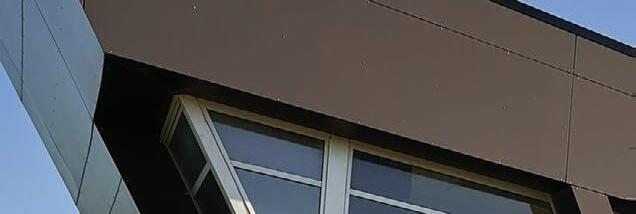
Precast Double Wythe Insulated Panels with pre-installed windows.














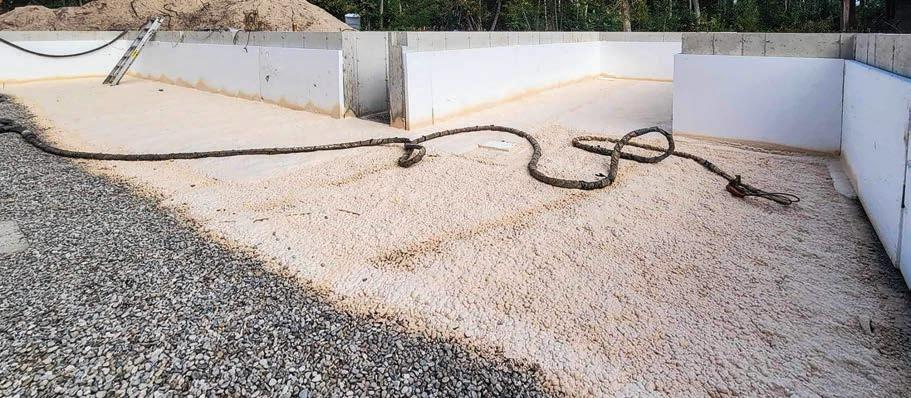
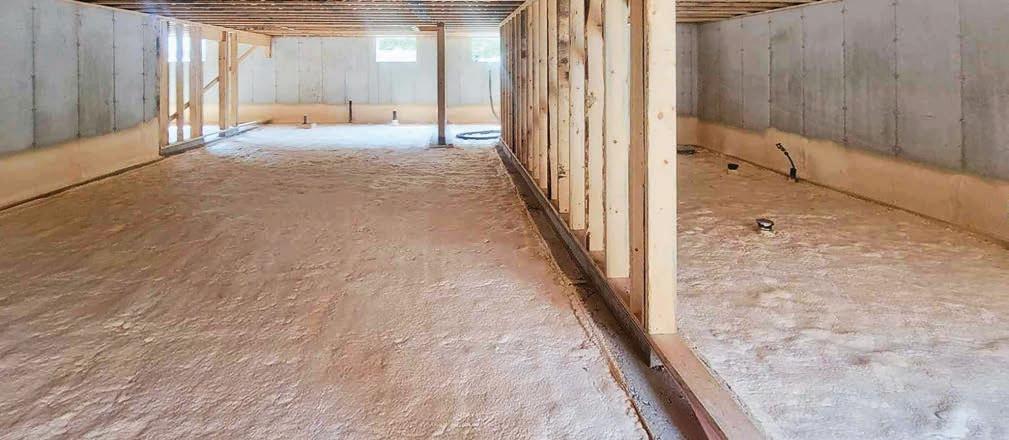
CUFCA is also well known in the construction industry for warning about radon gas accumulation in basements (the second leading cause of lung cancer in Canada), and it was the first organization in Canada to test a radon control system with a two pound closed cell medium density spray foam. “Radon continues to be a hazard, but now CUFCA Certified Contractors can create a gas-proof basement using our tested and ULC evaluated foam system Grizzly Gold HFO by CUSE,” Cole says.
The Grizzly Gold HFO can be a single application process that provides an all-in-one solution of air barrier, moisture barrier, soil gas barrier, plus a high R-value thermal barrier. Once installed, the SPF forms a single monolithic sheet upon which construction crews can walk and use wheelbarrows without any damage to the underlying radon and vapour barrier spray foam. This far exceeds the performance of mechanically sealed sheet or tile alternatives.
As always, insulation is playing a huge role as advanced construction standards continue to become more highly sought in Canada. The Rockwool Group is the world’s leading manufacturer of stone wool insulation, in demand globally in residential, commercial, and industrial projects, and in Canada the new University of Victoria Student Housing and Dining project is a case study of how stone wool can be used to achieve the highest degree of performance standards.
That’s because the 333,681-square-foot, mixed-used complex was built to Passive House standards and intended to achieve rigorous energy targets. The project incorporates eight inches of Cavityrock continuous exterior insulation into the exterior wall system to serve a number of important functions. Primarily, the stone wool meets the need for high insulation levels, which passively work to maintain consistent temperatures inside the building, providing occupants with reliable thermal comfort, while reducing demand on energyreliant mechanical systems.
Stone wool also served to address long-term resilience and durability, particularly as the buildings will need to withstand extreme weather events. Also, because stone wool insulation is vapour permeable and allows any moisture to dry to the outside, it will help keep the wall system dry, mitigating any potential moisture-related issues over the life of the building.
Additionally, stone wool insulation also satisfied the requirement for a fire-rated wall assembly where an exterior canopy was incorporated to create a covered loading area on one of the buildings.
Finally, Johns Manville manufactures premium-quality insulation, commercial roofing and fibres and nonwovens for commercial, industrial, and residential applications. Recently, the company expanded its industrial insulation portfolio with a product that addresses corrosion under insulation (CUI).
Johns Manville Cross-Flo Jacketing is an innovation for ambient and hot systems, designed to help mitigate the potential for CUI. It has an embossed pattern engineered to promote cross-directional flow, providing a path for unwanted liquid to reach the low point of a system and exit the jacketing through a weep hole or drainage port more rapidly.
In addition to numerous technical benefits, Cross-Flo Jacketing has a distinctive aesthetic appearance and comes standard with a three-millimetre-thick polyfilm moisture barrier, heat laminated to the interior surface to provide additional protection against corrosion. A
















Grizzly Gold HFO closed cell medium density spray foam.








We’re finding
energy in unlikely places
Like biogas captured from cow manure to create Renewable Natural Gas1 (RNG). It’s a low-carbon energy2 that can be used in homes and businesses across the province—and we’re adding more to our supply every year.
Our natural gas delivery system can provide RNG to buildings and developments to reduce greenhouse gas emissions. This means buildings can meet strict emissions guidelines without expensive upgrades or retrofits.
Find out more about RNG at fortisbc.com/rngbuild
with us @fortisbc
Greening The Blueprint
Green building design is surpassing benchmarks with transformative strategies that are redefining the very fabric of construction
by NATALIE BRUCKNER
In the ever-evolving landscape of Canadian architecture, the momentum of green building design surges forward at an accelerated pace. As our understanding of environmental challenges evolves, so too does the urgency to innovate within the architectural sphere. It’s no longer about just following rules; it’s about learning to quickly adapt to the changing environment.
Municipalities, regions, and provinces across Canada are fast-tracking the implementation of green building measures, surpassing original 2030 benchmarks, according to Terry Bergen, managing principal at RJC Engineers. They are achieving this by promptly implementing codes and standards that address operational and embodied carbon concerns. Two core strategies underpin these efforts: reducing operational carbon and minimizing embodied carbon.
Bergen adds that design elements such as building shape, form, and use significantly impact both operational and embodied carbon, too. “A building with simple form and few structural transfers will have a more effective thermal envelope and less embodied carbon than a building with complicated form and several setbacks,” Bergen explains.
In green building design, HRV/ERV systems also play a pivotal role in optimizing energy efficiency. “Limiting the design loads the HRV/ERV has to manage is critical,” says Bergen. “This involves thoughtful, integrated design – starting with a highperformance envelope and minimizing unintended gains or losses, while tightening the air barrier to minimize leakage and allow mechanical systems to be designed to known parameters.
“Suite-to-suite or building compartmentalization also becomes a key consideration for design teams. When the exterior envelope is designed and built to exacting standards, interior inequities can become apparent if not accounted for.”
With regard to the energy demand, Bergen says that designing a fully electrified building with capacity for EVs is a challenge designs teams can easily overcome, however, it can require significant electrical supply that may require significant capital cost outside of the building itself. “One of the strategies here again is to limit the loads by designed high-performance, low intensity buildings. Society has a better understanding of the critical importance of reducing the intensity of our buildings, and the importance of reducing this impact to the
greatest extent possible. At RJC we are excited and passionate to help our communities tackle this challenge, for all buildings new and existing.”
MONUMENTAL SHIFTS
According to Lindsay Oster, principal architect at Prairie Architects Inc., green building design is currently experiencing a significant shift in focus, with embodied carbon emerging as a central concern. Oster highlights this growing emphasis on embodied carbon as a pivotal aspect of contemporary design discourse. While operational carbon has long been the primary focus in sustainable architecture, the projection that the global building stock will double in size by mid-century underscores the need to address the carbon footprint of materials and construction processes.
Oster and her team have embarked on a journey to scrutinize the materials and products they specify in their designs, utilizing lifecycle analysis software to gain a more comprehensive understanding of sustainability. This approach goes beyond the immediate environmental impact of a building’s operations and considers the broader implications leading to the climate emergency. “It’s been eye-opening. Using lifecycle analysis software has provided us with a more fulsome picture of what is truly sustainable when taking into account larger consideration of the factors leading to the climate emergency.
The challenges facing the industry are formidable, but Oster sees a path forward. “We really need quite a radical market transformation when it comes to tackling embodied carbon. The more we can educate, innovate, and advocate as architects, the more we can move the dial when it comes to decarbonization,” Oster says.
The team at Diamond Schmitt Architects (DSAI) has also witnessed a monumental shift in the green building design industry, transcending the status of niche specialization to become the overarching imperative of every construction endeavour. This transformation is driven by a collective commitment from industry stakeholders, including fabricators, contractors, clients, and policymakers. Amy Norris, OAA at DSAI says sustainability discussions now permeate every facet of the process, with particular emphasis on energy efficiency and embodied carbon. The advent of planning standards mandating sustainable designs looms large on the horizon, uniting all hands in the mission to create greener structures.
DSAI is at the forefront of this revolution, boasting a portfolio of groundbreaking projects. “In particular, public projects with ambitious targets for operational and embodied carbon are challenging our team to develop innovative solutions for building types that are traditionally very energyintensive: research facilities such as the Atlantic Science Enterprise Centre [ASEC)] in Moncton, NB, and the new City of Toronto Paramedic Services Multifunction Paramedic Station, all of which are targeting Net Zero Carbon,” explains Norris.
Looking forward, DSAI envisions a future marked by heightened collaboration and knowledge sharing. “Generating a sufficiently swift response to the climate crisis requires knowledge development and sharing above and beyond what we have experienced to date. This is true both within the design profession and between design, consultant, and construction teams. It is imperative that we learn from each other and find better ways to organize and communicate the best solutions to the considerable challenges ahead,” says Norris.
FOCUS ON WELL-BEING
Taraah Den Boer, associate at Parkin, says she has also seen some remarkable developments over the past year that reflect a growing commitment to green building design. One notable achievement is the WELL Accreditation earned by the South Niagara Health project, signifying a substantial leap in health-focused health-care building design.
“Another noteworthy project is the New Surrey Hospital, which emphasizes a reduction in the carbon footprint by utilizing wood structures in public areas. Both of these projects in B.C. prioritize the ‘Wood First’ approach to mitigate the carbon footprint,” Den Boer explains.
The West Lincoln Memorial Hospital, another example of Parkin’s commitment to green building design, incorporates advanced features like electrochromic glazing and photovoltaic panels. This design not only prioritizes staff wellness and efficiency but also effectively reduces the building’s carbon footprint, establishing new standards in health-care architecture.
Den Boer acknowledges persistent challenges in the sector, such as supply chain issues and budget constraints for infection-resistant materials and suggests that early alignment of the project team and advocacy for sustainable, infection-resistant



products are the solutions. “Addressing this issue involves ensuring that the entire project team is aligned with key sustainable elements, even in the early stages of project delivery. When manufacturers understand our demand for healthier materials meeting infection control standards and testing requirements, we can utilize products that were previously only available in the European market, known for their inherent sustainability,” Den Boer notes.
ENERGY SAVINGS
Undeniably, green building design has emerged as a potent tool in Canada, revolutionizing energy consumption patterns. Stuart Hood, VP Institutional at Introba, underscores the vital role of green building principles in reducing energy demand and stabilizing energy usage profiles
Hood explains that minimizing the size of the HVAC heat pumps through Passive House design with super insulation and including solar shading in the design make a dramatic difference. “By super insulating the building, the building structure becomes a thermal battery,” he says. “In other words, during times of peak demand heating and cooling, production by the heat pumps can be switched off and the building can coast through these times for many hours or even days without changing temperature. Think of it like a thermos flask keeping your coffee hot for hours compared to a porcelain coffee cup cooling off in 20 minutes.”
All Introba’s Passive House work showcases these technologies, however Hood cites one great example in particular: Vienna House, a near


zero-emissions rental apartment community in East Vancouver that is about to start construction. Vienna House will showcase innovative materials and processes designed to deliver high energy performance with low greenhouse gas emissions. These include prefabricated wall, floor, and ceiling components constructed off-site from renewable materials, building information modelling that will create a “digital twin” of the proposed building, which will in turn allow the project team to optimize all components and systems, and an integrated design process that brings all the partners together at regular intervals to maximize efficiencies and collaboratively solve project challenges as they emerge.
All of these approaches, working together, aim to make Vienna House a potential template for other affordable housing projects across Vancouver, the province, and beyond.
PERFORMANCE GOALS
The past 12 months have welcomed a number of notable trends and innovations, and Greenstone Building Products has remained at the forefront of these developments. Among them is the advancement of panelized construction and Building Information Modelling (BIM). “As energy performance codes are being implemented nationwide, we are thrilled to provide a practical and tested method for achieving any building performance goal,” states Tilda Fortier, business manager at Greenstone. “Although it does require some proactive planning, our process offers the advantage of identifying


errors that would typically go unnoticed until everything is already delivered to the job site.”
One remarkable application of Greenstone’s ICE Panels can be seen in collaboration with Arctic Modular Homes, a company specializing in energyefficient housing for Canada’s northern regions. By incorporating ICE Panels into their modular designs, they achieved the impressive feat of closing in homes within just 10 days.
Another special project in 2023 saw Greenstone ship five eight-plexes and six 12-plexes (a total of 112 residential units) to ICE Panel Partner, NCC Development Ltd., to contribute to the Nunavut 3000 Building Program. Igluliuqatigiingniq Nunavut 3000 is committed to delivering 3,000 new units across the housing continuum in Nunavut by 2030. “ICE Panel construction will assist NCC to meet the energy efficiency requirements of the program, while increasing construction speed in locations with limited building seasons,” explains Fortier.
HOLISTIC SOLUTION
In the past year, FortisBC has made significant strides in its deep energy retrofit program, focusing on transforming existing buildings to align with B.C.’s provincial climate action goals. These efforts encompass various regions, including four multi-unit residential buildings and 20 single-family homes in the Lower Mainland, Vancouver Island, Okanagan, and Kootenays. These initiatives go beyond conventional methods, adopting a holistic approach. By taking a holistic approach that prioritizes the building envelope, these retrofits aim to enhance




Proudly contributing to a more sustainable approach to building in the prairies.
WEST COAST CONTEMPORARY LINE
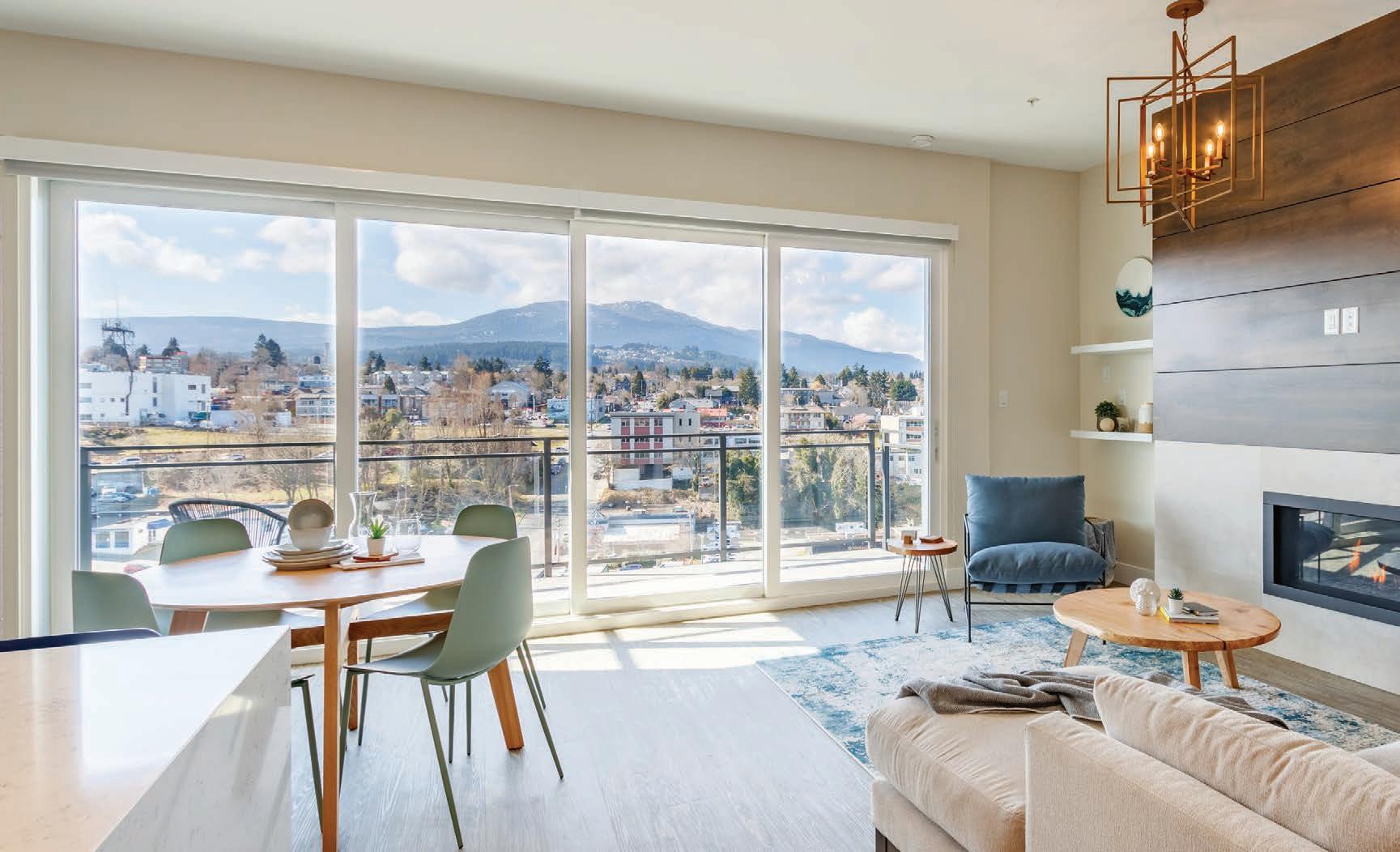


A custom home build is quite often the single largest investment in one’s life. This is a tremendous responsibility to entrust to the construction community.
Understanding this concept and exceeding customers’ expectations are what Westeck strives for and is at the core of the Westeck culture.
BIG PRODUCTS FOR ALL SIZES EMBRACE THE PATIO EXPERIENCE INDOOR/ OUTDOOR LIVING VANCOUVER 1480 Kootenay St, 1‑877‑606‑1166 CHILLIWACK 8104 Evans Rd 1‑877‑606‑1166
westeckwindows.com sales@westeckwindows.com
insulation, replace windows with more efficient models, and increase airtightness. Simultaneously, they upgrade mechanical systems, employing innovative solutions like gas heat pumps and dual-fuel hybrid systems. Such comprehensive upgrades aim to reduce emissions in buildings by over 50 percent, while improving living conditions for residents.
Looking ahead to 2024, FortisBC plans to continue these transformative efforts, lowering energy use and encouraging the integration of Renewable Natural Gas (RNG) to meet the reduced heating needs. This approach not only minimizes emissions but also lowers operational costs, charting a path towards net-zero for buildings where converting to electricity is not feasible.
Currently, construction is underway for all projects, with the goal of completion by the end of 2024. Once finished, FortisBC will monitor and evaluate the energy use of each retrofitted home and building for a year, share the learnings and use the information to develop the next generations of energy efficiency programs. For example, in Vancouver, incorporating gas heat pumps, improving the building envelope, and upgrading windows could potentially achieve a remarkable 77 percent reduction in emissions, demonstrating the program’s positive impact on greening up buildings in B.C.
ONGOING EDUCATION
Williams Engineering, renowned for its forwardthinking approach, continues to lead in green building design by prioritizing continuous education and staying informed. Earlier this year, the team engaged in a pivotal lunch-and-learn session
focusing on the Practice of Regenerative Design in the Buildings Industry. This enlightening session, presented by Genan Hamad, a Ph.D. student and sustainability intern through the University of Alberta’s Adaptation Resilience Training (ART) program, delved into the critical aspects of regenerative design.
The ART Program, aimed at preparing Alberta for the impacts of climate change, provided invaluable insights. Williams Engineering’s participation showcased their commitment to proactive climate risk management. The presentation addressed diverse topics, ranging from how regenerative design can effectively counteract climate challenges to the specific roles and responsibilities associated with it. This newfound knowledge empowers Williams Engineering to seamlessly integrate regenerative design concepts into their infrastructure projects, reinforcing their position as pioneers in sustainable and resilient building practices.
TAKING ACTION, TODAY
Over the past 12 months, the Canada Green Building Council (CAGBC) has witnessed a significant shift towards heightened attention on carbon reduction and retrofitting existing structures. In fact, CAGBC has certified 26 projects under the Zero Carbon Building –Performance standard and 23 under the Zero Carbon Building – Design standard. Notably, the design community is taking a central role in advancing lowcarbon approaches in new constructions and finding innovative solutions for retrofitting existing buildings.
To foster industry growth, this fall CAGBC and its partners are launching the pioneering Low Carbon

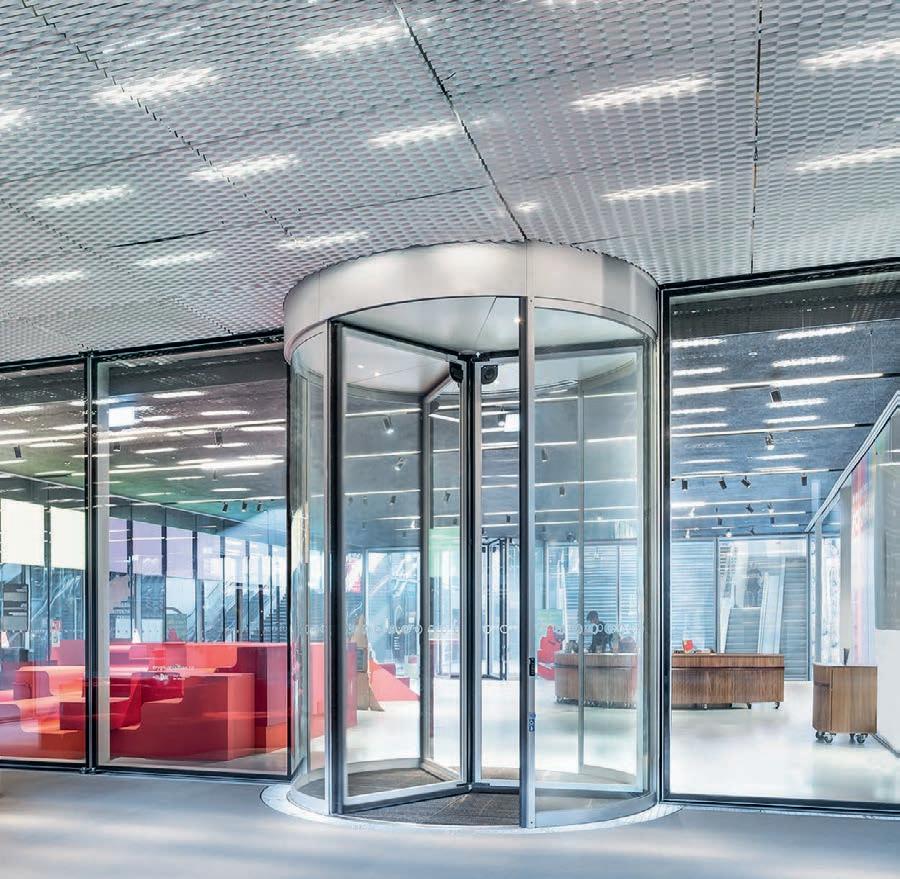
Training Program. Funded in part by the Government of Canada’s Sectoral Workforce Solutions Program, this first-of-its-kind initiative aims to prepare professionals for work on efficient and low-carbon buildings, a crucial step in meeting the increasing demand for green structures. Concurrently, establishing a Canadian low-carbon supply chain is seen as vital, prompting collaboration with the University of Toronto on carbon capture research and the launch of a Sustainable Materials accelerator.
“To achieve zero carbon buildings and retrofits, architects and general contractors need access to a robust supply of innovative and low-carbon materials. Many Canadian companies offer new low-carbon solutions designers can implement – from reused and recycled construction materials to products that capture carbon dioxide through their production. However, companies – especially small and mediumsized manufacturers - can struggle with documenting the benefits of their products. CAGBC is working to level the playing field for these companies and secure the support they need to compete in the Canadian and U.S. markets,” says Mark Hutchinson, VP of green building programs and innovation at CAGBC.
“That is why CAGBC recommends that the federal government create a grant program to support companies seeking Environmental Product Declarations for the products designers need for zero carbon buildings and energy efficient retrofits. Our southern neighbour is investing $250 million USD in this issue through the Inflation Reduction Act, and Canada cannot afford to be on the sidelines,” adds Hutchinson. A
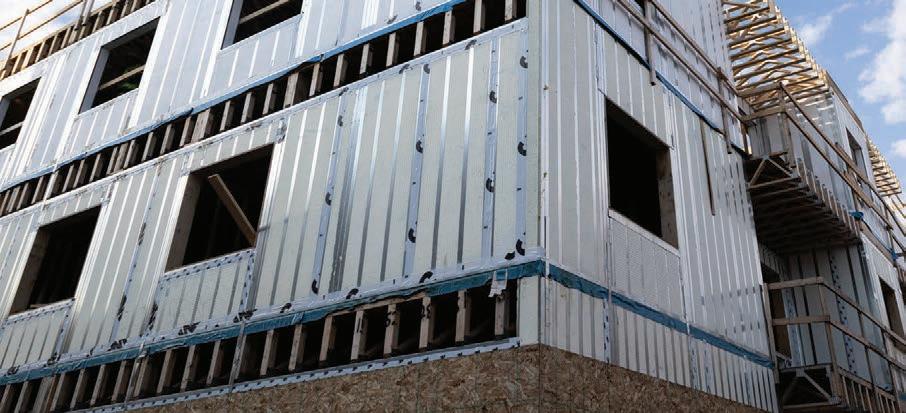








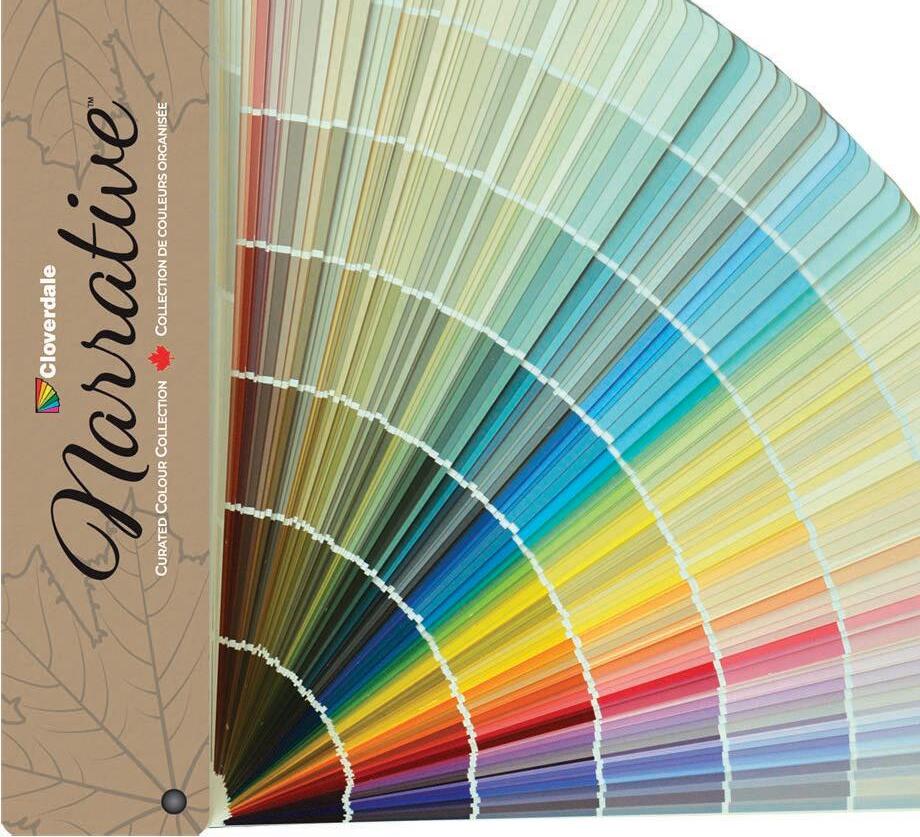
WHAT’S YOUR Colour Narrative?
Urban or Rustic?
Neutral or Colourful?
Modern or Classic?
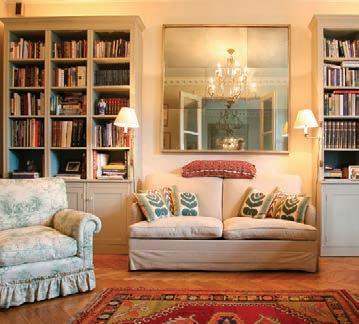
Find your Colour Narrative in our fullspectrum palette that captures more of the widely specified paint colours from across Canada, determined by our Customers and Colour Experts.
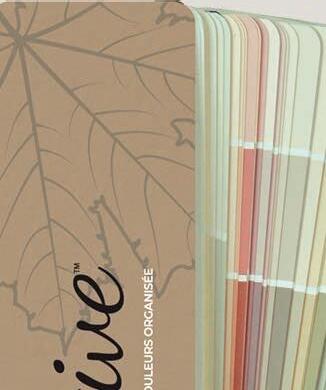












Ceiling The Deal
Unveiling the latest innovations and trends reshaping the walls and ceilings industry
by LAURIE JONES
The rapidly advancing technology landscape has revolutionized the walls and ceilings industry, offering a plethora of stunning options. Precision laser-cut designs are now delivering awardwinning results, while the use of feather-light materials is transforming interiors into jaw-dropping spaces that exceed the benchmarks set by previous installations.
From acoustic fabric panels and acoustic wood panels to blinds and other architectural décor items, Wallworks Acoustic Architectural Products Inc. offers state-of-the-art, head-turning products that create wow factors and acoustic solutions suitable for any type of business or facility.
Procédés Chénel International is one of the many unique specialties carried by Wallworks. Chénel paper creates light and clever applications for both temporary and long-term installations. Some of the more whimsical creations are undeniably avant-garde. Whether employed for banners, dropped lighting features, partition walls, or instant ceilings, Chénel paper exudes a sense of professionalism and sophistication. In its essence, paper proves exceptional for printable concepts, making it suitable for use in schools, museums, or public displays. Portable and sustainable, these products can be used in simple or highly complex and enduring installations.
One of the most unique aspects of the Chénel line is that, despite being made up of paper, the finished product is remarkably stable, as explained by Lyle Fuller, general manager. “It is CAN ULC tested, and suitable for a wide range of draped commercial applications. It consists of different types and weights of anti-static fire tested kraft layer or honeycomb paper and comes in a significant range of standard colours, as well as an expansive custom pallet. In addition, Chénel’s ingenious systems can be set up in minutes to create consulting areas, offices, or private workspaces. Soil resistant and fireproof, whether used whole or in strips, Chénel can be attached to both wall and ceiling designs and plays well with lighting elements,” says Fuller.
Another equally unique product offered by Wallworks is Braug. Crafted with Swiss-made precision using the latest in digital technology, these custom-cut graphic panels yield high-quality finished results. These panels can be used for artistic interiors or spectacular exterior applications, or even integrated as part of an acoustic or lighting system. “Their use of laser technology allows for maximum flexibility in the cutting, providing a level of detail and colour range capable of matching the exact vision of the designer,” says Fuller. “The shape of the panel can also replicate historic patterns and recreate complex and accurate detail.” They can be used against exterior windows or to form entry cladding or railings. When combined with natural lighting, they cast their custom patterns on ceilings and on walls.
At PC350, the company has added a new choice to its Elite Glass Wall Solutions that features designs for enhancing the potential of natural light, acoustic performance, and individual well-being. The collection offers a range of options, including single glass, double glass, and now, curved glass wall solutions. “Our interchangeable product lines offer customizable applications that can radically transform space management, providing endless possibilities,” says Katie Lind, VP of sales and marketing.
Lind explains that the Single Glazed Walls are compatible with any door or standalone and are customizable and transformative. Both the Single and Double Glazed Walls can be integrated seamlessly with most configurations,

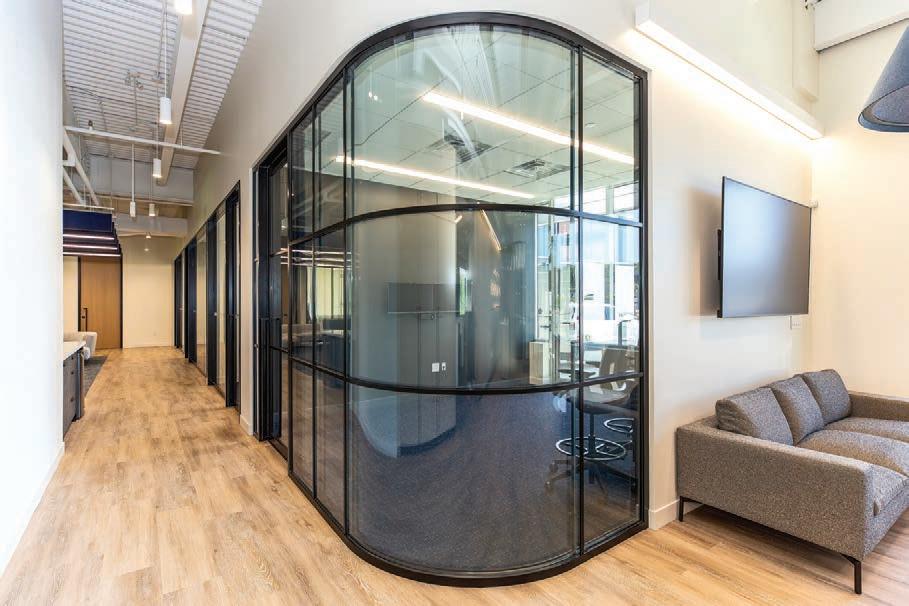

including finished and unfinished walls. “All our walls have a panel height capability of up to 12 feet, with a diverse range of profile options available in various heights and thicknesses for base, vertical, and ceiling conditions. Both the Curved Single and Double Glazed Walls offer a radius range from 20 inches to an unlimited maximum, providing the flexibility to achieve elegant and precise curved configurations.”
Whether opting for Single or Double walls, both seamlessly integrate with swing and sliding door options, offering flexible access to working areas.
The Double Glazed Walls have the added benefit of speech privacy and exceptional acoustical performance. “Your confidential discussions remain securely contained within a space that radiates style,” says Lind. The installation process is seamlessly managed by the dedicated teams at PC350, who proactively oversee every stage of construction to ensure timely installation without any delays.
Partition Systems Ltd. (PSL) based in Edmonton, Alberta, has been crafting Demountable Wall Systems for more than 50 years. Each system features varying wall thicknesses, performance ratings, and aesthetic capabilities. Proudly made in Canada, PSL products are manufactured, supplied, and installed using one single installation subtrade. This streamlines the process and eliminates
Braug custom-cut graphic panels.
Double Glazed Curved Walls.
Executive Demountable Wall.


the need for co-ordination among multiple subtrades on the job site. This efficient method not only simplifies the process but also reduces stress for clients. Steve Nasholm, national director of sales, architectural walls and dealers, explains: “Because our systems are customized and prefabricated, they are delivered to the site and installed as one clean package.”
PSL offers a diverse range of products and among them are three demountable wall selections that can work in any office environment: the Executive Demountable Wall, the Corporate Demountable Wall, and the Corporate Low Glazing. The design options for these panel systems are vast, with finishes in laminate, wall fabric, glass, back-painted glass, or even TV screens mounted in the wall sections. According to Nasholm, the choice of demountable walls significantly influences the acoustical performance of the system. “Our Executive Demountable Wall, with four-and-a-quarter-inch wall thickness, provides the highest level of acoustics [up to STC51], while the Corporate Demountable Wall has a two-and-a-quarter-inch wall thickness. The Corporate Low Glazing also hits that low profile look that clients and architects really strive for. All of our products are made from 100 percent reusable materials, which can ultimately contribute to LEED credits.” Each of the demountable walls can be integrated seamlessly with other selections for a true mix-and-match design option.
Nasholm adds that all solid wall sections can be pre-wired in a more modular configuration to meet clients’ electrical and data requirements. The CSAcertified wiring systems, coupled with removable panelling, result in lower costs compared to traditional electrical installations, and save time during office setup. “The key here is the ability to install construction with Partition Systems and have the ability to reconfigure and reuse these wall systems on future design.”
Sound Solutions – Architectural Products, distributors of innovative interior and exterior architectural products, now offers the Bendheim interior glass cladding system. “These are fully engineered products, including the Turnkey Fusion Light Wall system, and the Turnkey system for Back-Lit Glass Walls and Ceilings,” says Ed Makarchuk, principal.
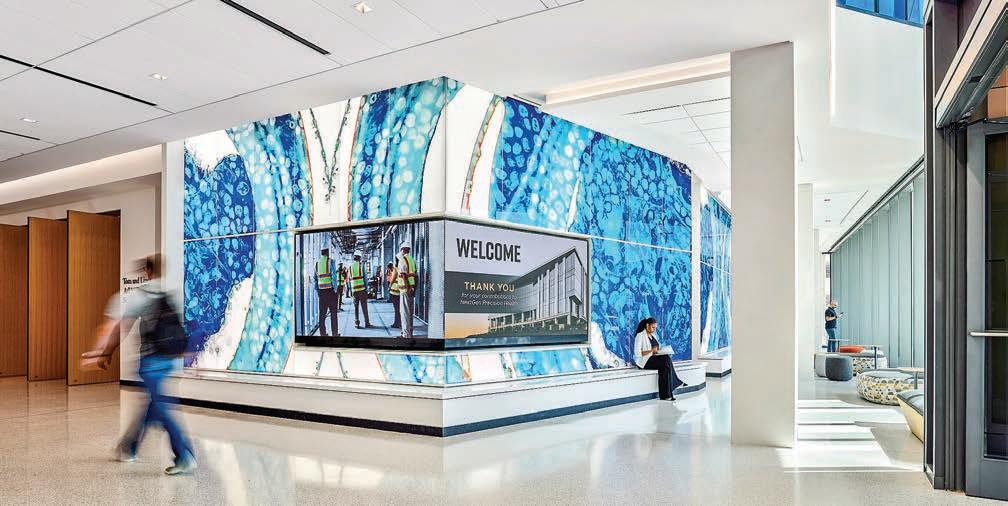
Building on the success of Bendheim’s Turnkey Glass Wall system, the Fusion system offers a completely integrated solution for backlighting. Turnkey Fusion now provides a completely integrated solution for backlighting, with Bendheim’s new Fusion LED panels built right into the system. The Fusion LEDs, along with Bendheim’s innovative LE’Diffusion Safety Glass, are specifically engineered for even dispersion of LED light.
The Turnkey System for Back-Lit Glass Walls and Ceilings boasts an ultra slim design, measuring approximately 1.65 inches deep. “This fast, user-friendly illuminated interior glass cladding is easy to install and maintain,” says Makarchuk. The system features fully reversible mechanical connections, eliminating the need for adhesives or glass drilling. “These panels can be replaced without damaging the walls, offering easy access to systems behind the glass.”
Installed in notable locations such as the Kostali Chicago/The Gwen Hotel and the Extra Butter store in Queens, N.Y., the system for Back-Lit Glass walls can be seen in a variety of industries.
LIVING WALLS
In the quest for a greener and more sustainable future, companies like New Earth Solutions are at the forefront of pioneering environmental technologies. This forward-thinking company has been making waves in the living wall industry by advancing biofilter technology and making it accessible for all types of buildings and businesses. With a mission to transform urban landscapes and
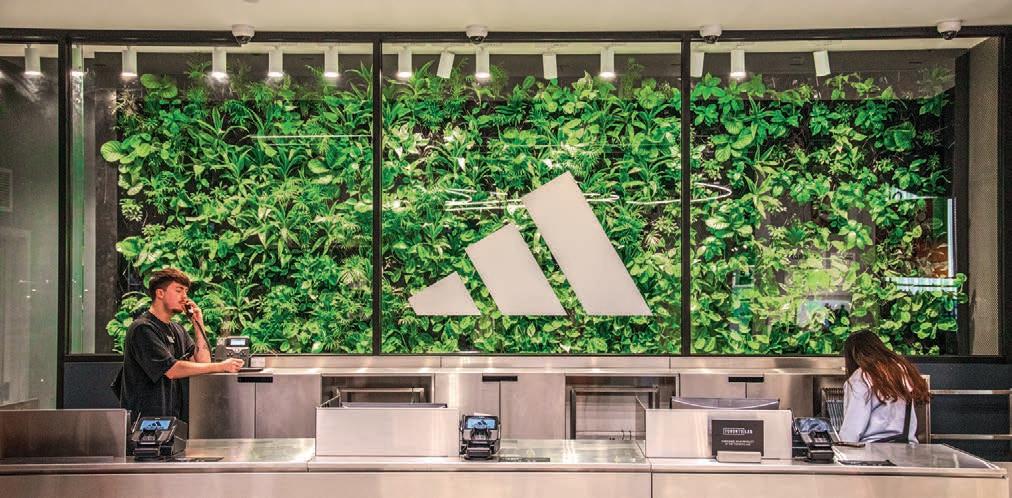
indoor environments, New Earth Solutions is redefining the way people interact with nature in their daily lives.
“At the heart of this innovation is our advanced biofilter technology,” says Sean Ludchen, president of sales. “These living walls are not just visually stunning; they are also efficient air purifiers. The design of New Earth Solutions’ system is unique in that it optimizes a plants natural air-purifying capabilities, allowing them to remove harmful pollutants and toxins from the environment.”
He explains that the key is the system is hydroponic and thereby exposes the root zone of the plant – where the air purifying processes actually take place – to the contaminated air flow. “This design significantly enhances the natural air purifying ability of a plant and greatly improves the indoor air quality, promoting healthier spaces,” he says.
Ludchen notes that what sets New Earth Solutions apart is its commitment to accessibility. “We’ve developed scalable solutions that can be tailored to fit any space, from sprawling corporate offices to small local shops. Our modular system integrates the most advanced living wall technology available, making it easy to install and maintain.”
New Earth Solutions is fervently dedicated to sustainability. Their biofilter technology not only benefits the health of the indoor environment but also contributes to increasing energy efficiency within the building. Additionally, New Earth Solutions can assist businesses in achieving LEED and WELL certifications. By incorporating New Earth Solutions’ biofilter living walls, projects can earn valuable points toward certification while reaping the benefits of improved air quality and reduced energy expenses.
Drawing on years of experience, the GinkgoWalls team designs and installs living walls and facades tailored to each client’s aesthetic and functional requirements. Ginkgo Sustainability offers living walls that are completely mobile, ones affixed to walls that are hand-watered, plus others that are fully automated built-in systems.
GinkgoWalls provides a comprehensive range of services, including assistance with feasibility studies, vertical garden assessments and recommendations, plant information, and LEED credit guidance.
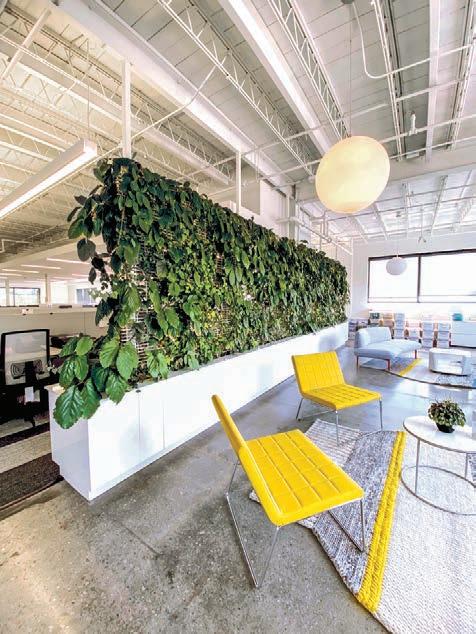
Ensuring the longevity and vitality of a living wall necessitates ongoing care. “Regular plant maintenance, such as pruning, fertilizing, or plant replacement, is imperative to sustain the wall’s health and prevent issues like plant deterioration or overgrowth. Maintenance visits are crucial for monitoring the wall system, assessing water, light, and temperature levels. GinkgoWalls offers maintenance services that not only preserve the living wall’s health but also contribute to the overall success of the wall project, aligning with its aesthetic and functional objectives,” emphasizes Sandy Dos Santos, Living Walls Maintenance Supervisor. The team not only tends to the plants but also conducts systematic checks to ensure the seamless functioning of the entire system. Dos Santos explains: “Without regular maintenance visits, unnoticed issues could lead to system failure, posing risks not only to the plants but also to potential property damage. Addressing these concerns proactively during routine maintenance proves more cost-effective in the long run.” A
GinkoWalls living wall installation.
Turnkey Fusion Light Wall system.




Carving Out Success For 2024
We’re busy in 2023 and there’s more to come in 2024. That’s the sentiment of people in the architectural woodworking sector as the year draws to a close.
Kelly Glanzer, manager at Top40 Woodworks in Kamloops, says, “Life is busy and gratefully so are we: thanks to our wonderful clients, 2023 is completely sold out, 2024 is almost sold out, and we are booking into 2025. This year we’ve been producing a lot of work for hospitality, multi-family, retail, daycare, pharmacy, and office projects for Canada as well as into the U.S.”
Part of Top40’s success is also due to ongoing selfimprovement. “We are always trying to improve our LEAN manufacturing efficiencies with the philosophy ‘What gets measured gets managed,’” Glanzer says. “We have already re-organized many of our internal systems for efficiency and workflow. Expansion plans in the New Year include adding another high-capacity CNC and edge bander with an advanced gluing system for improved quality.
“Plus, over the last year we have rolled out a new web-based, data driven ERP system that gives us amazing forecasting, scheduling, manufacturing, and project management tools with communication between us beyond what we have ever had previously. Being web based it also allows us to employ much needed remote workers and attract quality talent.”
Tom Morin, president of Victoria, B.C.-based Morinwood, reports that “2023 was a solid year and we continue to be busy. That’s due partly to the fact that we’re not involved in residential construction, so the interest rate surge hasn’t affected the institutional market.”
Leaders in architectural woodwork ensuring wood’s future by taking on complex and innovative projects
by ROBIN BRUNET
It’s a far cry from just a few years ago, when the pandemic lockdowns caused huge increases in material and labour prices. As Morinwood heads into the New Year, Morin says material costs have stabilized, “and we’re well equipped to pay even unskilled labour better than Victoria’s living wage of $25 per hour –with skilled labour making between $40 and $50 per hour. If this is the new normal people kept insisting would result from the pandemic, I hope it continues. Tradespeople deserve to make a healthy wage.”
Morin’s company is known for its collaboration on the most challenging projects (the Vancouver Convention Centre and the BC Children’s Hospital are prominent in its extensive portfolio of completed projects), with a preference for design-build, P3, design assist, or IPD delivery methods. It orchestrates interior finishes on institutional projects, and its scope includes architectural millwork, systems furniture, acoustic panelling, wall protection, and specialties.
In the past Morin has commented that when one visits a new elementary school “it’s built like a university building in terms of the level of finishes,” and as such he is enthusiastic about having recently begun work on the new Cowichan Secondary School. “It’s a project whose design incorporates a lot of First Nations themes, and we’re able to use locally harvested wood to build a warm and welcoming environment for the students. My team is so proud to be part of a project that will be the heart of the community for decades to come.”
Morin is also gearing up for a New Year start on the Cowichan District Hospital replacement project, which he describes as “massive in size that will require wood to impart an inviting rather than an institutional ambiance. One highlight of this project will be a beautiful atrium whose design calls for extensive wood use.”

While such projects will keep Morin’s firm busy “for at least the next several years,” there’s no escaping the challenge that has dogged the woodworking sector for many years now: attracting newcomers to the industry. “The irony that we have a skills crisis and yet zero wood shops in high schools is not lost on us,” he says. “The expertise required to work with wood is increasingly rare, which keeps us in demand, but I worry about the future.
“But as always, we’re trying our best to rectify the situation. For the two Cowichan projects we’ll be hiring kids between 18 and 25 and investing in their training in the hopes that they will have long careers in construction.”
Training new talent has become a priority for many millworking companies. Executive Millwork Inc. is committed to a continuous improvement culture that
Indigenous meeting circle.
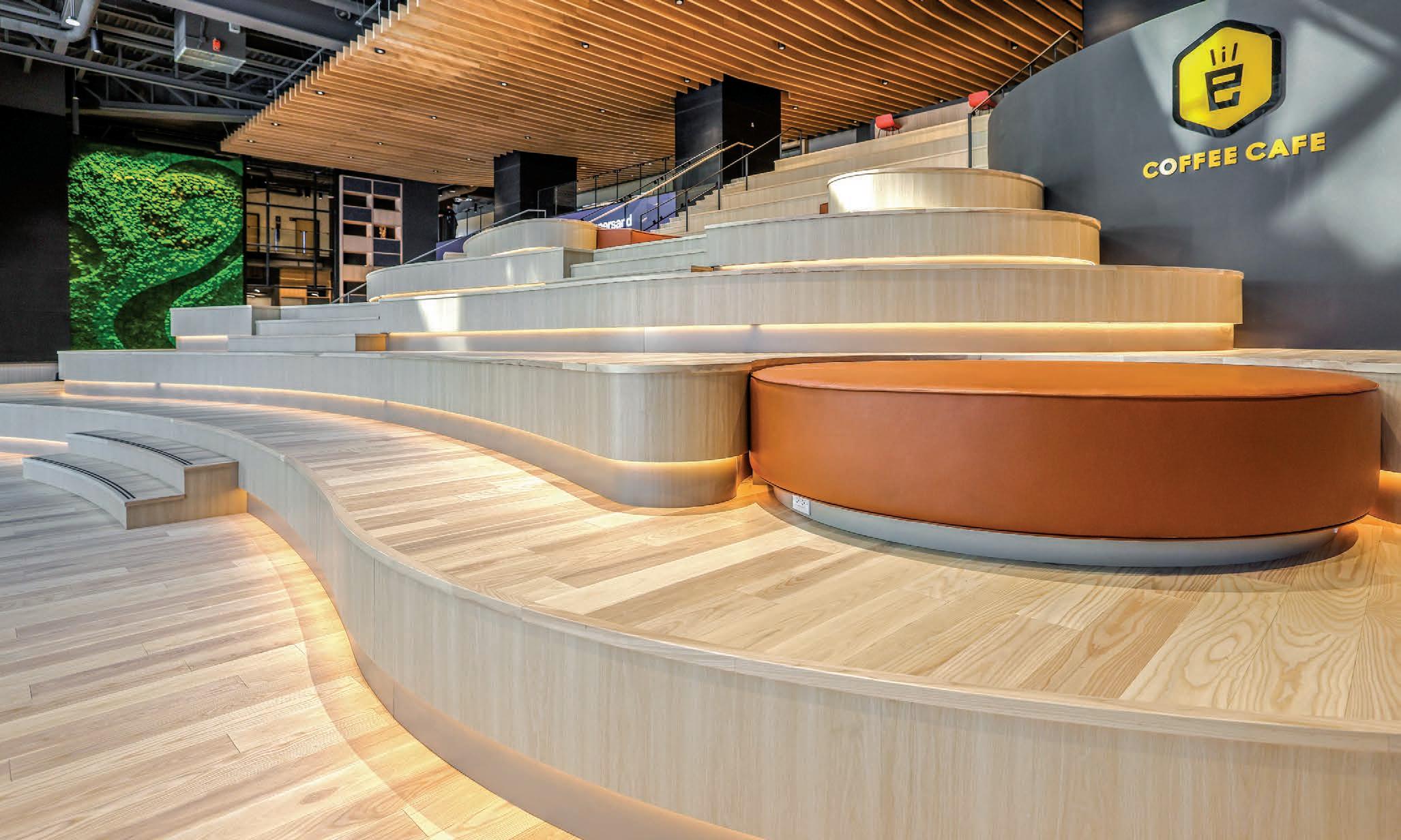
encompasses technology, skill development, product quality, and planning processes. This has resulted in the successful completion of a host of unique projects, among them The Ampersand in Calgary, which features dramatic and unique architectural millworking throughout its 57,000 square feet of space.
All of Executive Millwork’s employees participate in trade related and other selected business skills training. In addition, Executive Millwork actively participates in the provincial cabinetmaker apprenticeship program. Its key personnel are involved in the Calgary Construction Association and the local and national Architectural Woodwork Manufacturers Association of Canada (AWMAC).
Meanwhile, supporting the sustainability aspects of woodworking are product providers, such as The Sansin Corporation, the global leader in environmentally friendly wood protection. Since 1986, Sansin has been focused on creating the best performing, most beautiful waterborne wood finishes, and its Enviro Stains are fast becoming the worldwide choice for a variety of clients.
Sjoerd Bos, managing director of Sansin, says that environmental concerns “are baked into how our company operates on every level. Sansin wood treatments, finishes, and preservatives use water, not petroleum solvents, to deeply penetrate and protect wood naturally, from within. We strive to manufacture products that are as non-toxic as possible, while still being durable and maintainable, and bringing out the beauty of the wood.”
When asked what he anticipates in the New Year, Bos replies, “The rising use of mass timber underscores the need to protect wood before, during, and after construction from moisture, handling, UV rays, and cleaning products, and anything else that could take away from the desired aesthetic on the finished project. Utilizing waterborne, environmentally friendly architectural finishes safeguards mass timber materials during transportation, storage, installation, and beyond.
“Because of the importance of coatings for mass timber, we expect our IRIS program to continue to support professionals to achieve the aesthetic and durability objectives for wood surfaces on commercial products. The program considers the impact of design and environment on wood.”
A great example of the use and benefits of Sansin’s products is the KF Centre For Excellence (the Okanagan Aerospace & Aviation Museum), which recently won the Wood Design & Building Sansin Award. This mass timber structure features state-of-the-art mass timber construction throughout its various components, including a freestanding doubly curved CLT spiral staircase that connects the two levels of the museum. To showcase the beauty of the wood and provide superior protection, the mass timber is finished with a comprehensive system of Sansin’s environmentally friendly protective coatings, including Precision Coat SDF clear on the exterior glulam, KP12W clear on the exterior DLT soffit, KP12 clear on the interior glulam, and lowlustre Purity Glacier on the interior handrails.
As is the case with woodworkers themselves, products related to wood are in high demand. Quebec-based NewTechWood Canada offers numerous benefits to the architectural woodworking sector, mainly the most natural looking composite material on the market made from 95 percent recycled materials with UV protection and no issue with extreme cold (the company states that typically the
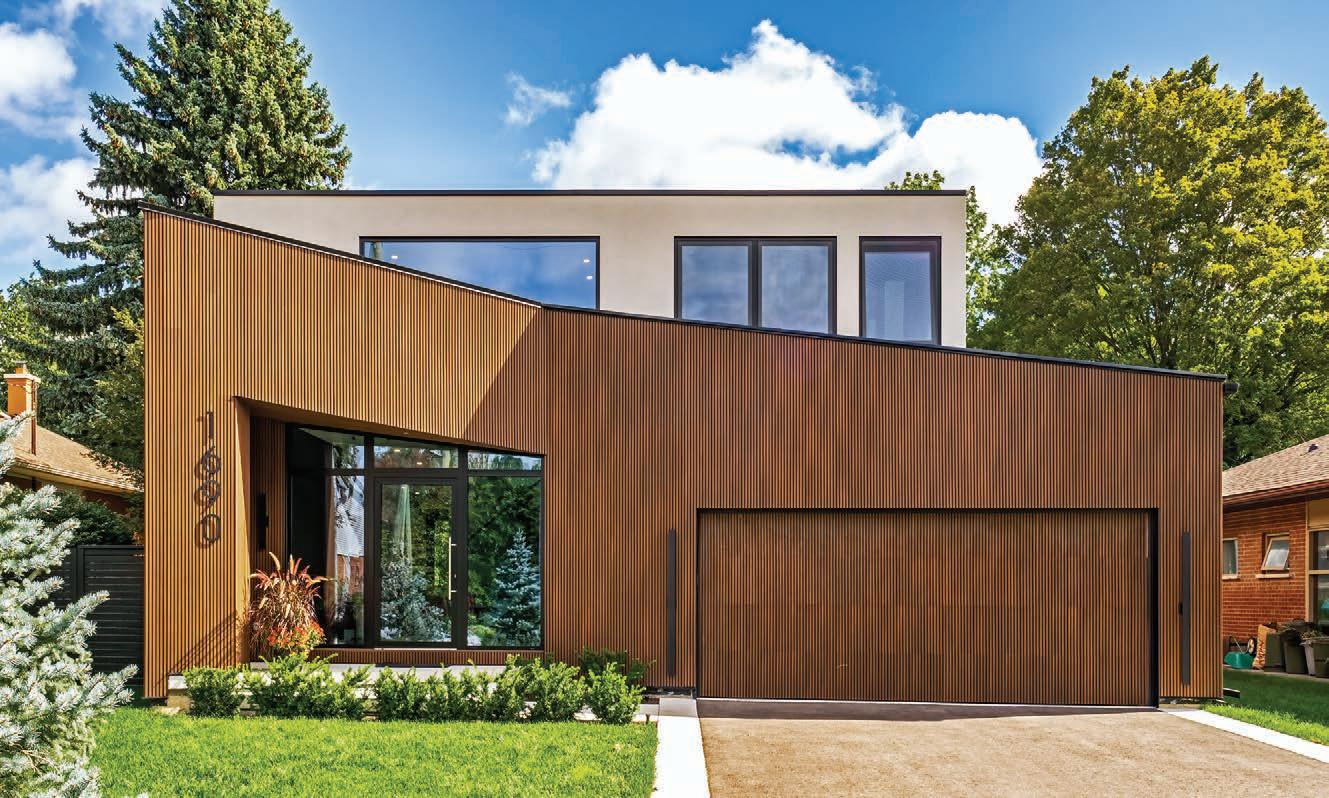
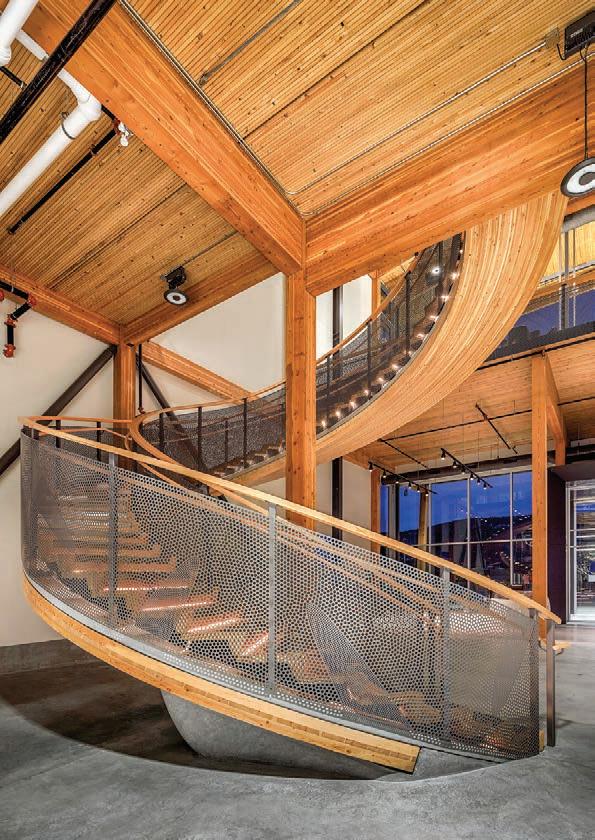
equivalent of 3,000 bags and 1,000 plastic drums are found in 10 feet of its composite wood).
Wall siding, composite decking and fencing are among the products in NewTechWood’s portfolio, and its fluted composite wood wall panels are a good example of the company’s provision of elegance and ease of upkeep: they are available in two models and up to nine colours, allowing the creation of modern accents to indoor and outdoor walls of homes or businesses. Plus, NewTechWood products support creativity in design, case in point: its new Shou Sugi Ban, or “burnt cedar” product that replicates a Japanese technique popular in architecture.
Lucy Traetto, marketing representative for Blum Canada Limited, says of the hardware products her company supplies, “Our new pocket system will be launched in the first quarter of 2024 and is a significant release for us: it’s already available in Europe, and we expect it to be extremely popular in Canada as customers have been asking for it for some time now. We’re also unveiling a new drawer system, a first for us because it is available in four different platforms.”
The pocket system Traetto refers to is called Revego, which opens up new opportunities for

creating multifunctional space. No matter whether single or double door application, the full overlay fronts disappear into a dedicated narrow cabinet (the pocket). The doors are quickly and easily installed: put up, align and mount pre-assembled pockets, install fronts and track, make quick adjustments – and that’s it. Full overlay Revego fronts completely conceal the pocket and furniture units when closed for a perfect gap layout.
The drawer system in question is Merivobox, which can be implemented quickly and easily thanks to the consistent platform concept. The box system has simple, clearly labelled, and easily accessible 3D adjustment features that are the same for every drawer side. The new box system has height, side and tilt adjustment features; accurate adjustment options ensure that perfect gap alignment can be achieved.
As usual with Blum products, Merivobox systems are easy to install. Simply clip the front on, even when the drawer is closed. Wide and heavy fronts can be easily removed by a single person thanks to the holding position.
Also from Blum is my Legrabox, part of a series that gives designers the freedom to personalize metal drawers. Legrabox pure and Legrabox free offer a selection of noble matt colours and a premium look in anti-fingerprint stainless steel. In addition to Legrabox pure with matt, metal finishes, the Legrabox free version allows height C high fronted pull-outs to be customised to individual designs. Meanwhile, the Legrabox Special Edition comes in a special 3D carbon look or a noble rust structured finish. A
teak siding from NewTech Wood.
KF Centre For Excellence, Kelowna, B.C.
Revego pocket system from Blum.
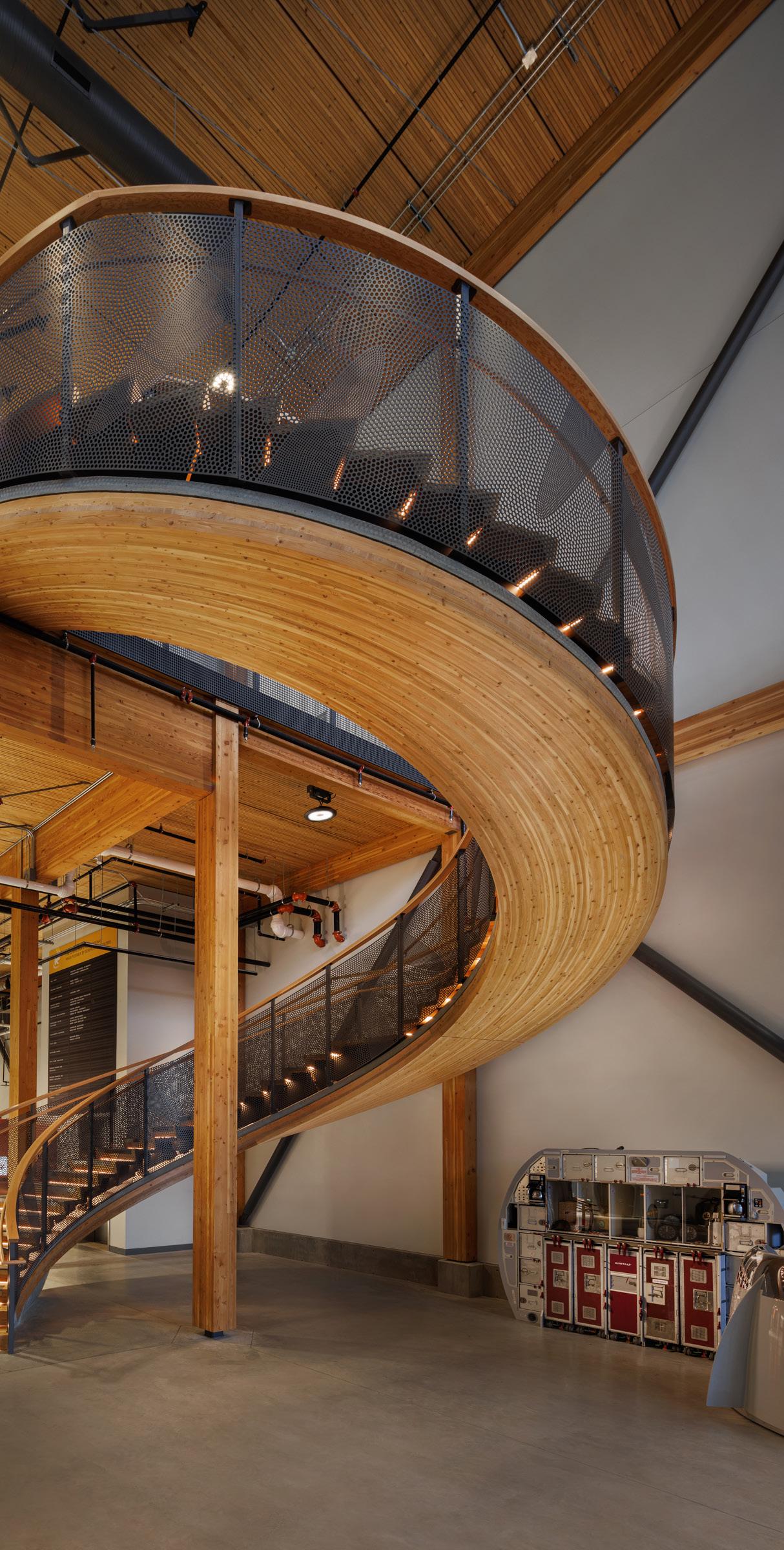

Naturally Perfect® Factory Finishes with Proven Protection and Performance.
Sansin Precision Coat products offer unparalleled beauty and durability in an environmentally friendly formula. Contact us about our specification program so we can help you achieve the perfect finish and protection, every time. Warrantied for up to 20 years, Precision Coat factory finishes deliver the color, transparency and performance that architects, engineers and builders can count on.

Okanagan Aerospace & Aviation Museum Kelowna, British Columbia, Canada











Sonic BOOM!
Exploring the rapid advancements and influential developments reshaping the audio visual industry
by ROBIN BRUNET
Arguably, the industry that continues to undergo the most advancement in the shortest time frame is audio visual, with digital technology growing at a dizzying rate and artificial intelligence (AI) acting as a disruptor that will profoundly change the world.
Mike Chorney, president at La Scala, describes 2023 as “a record year: we accomplished a lot, grew in size and volume, and won a few international awards, including Best Integrated Luxury Home from the 2023 CEDIA Smart Home Awards.”
The accolades were well deserved, considering La Scala’s continued achievements in the residential realm, including a recent solution for a homeowner in a Vancouver neighbourhood where garage space was severely restricted under municipal codes. “The home was in a steep location and required a car elevator rather than a conventional garage,” he says. “We created an interlock system for the elevator that used motion sensors and other systems to make it safe and secure.”
La Scala was also hard at work in the latter half of 2023 creating an automation system for the suites of a new False Creek multi-family residence. “The developer wants the homeowner to be able to call out, ‘I’m leaving now’ and everything will shut down: media will be switched off along with the lights, the temperature will be lowered, and so forth,” Chorney says.
Such capabilities used to be considered luxury, but as the False Creek project demonstrates, they are increasingly common in the mid-range market – and this leads Chorney to mention how AI is influencing his company. “One of the most significant benefits for us is that AI is eliminating the frustrations associated with voice commands,” he says. “We’re in the process of adopting technology whereby AI has the ability to recognize speech derivatives as well as detect exactly where a voice command is being issued – meaning in the near future you will be able to speak normally and no longer need to state where you are.
“AI will also play a pivotal role in the administrative realm as it will help us build and automatically adjust project quotes. That’s just the beginning of how AI will assist technology providers and their clients.”
AVI-SPL Inc. recently received Frost & Sullivan’s 2023 Global Enabling Technology Leadership Award as best in class in the global experiential solutions industry. This came on the heels of AVI-SPL launching XTG, the Experience Technology Group, a new business unit that responds to the world’s largest organizations for immersive experiences. While this serves venues such as museums, visitor centres, libraries, and hotels, perhaps more importantly in this post-COVID age immersive experiences plays a vital role in luring people back to offices.
Julian Phillips, senior VP and managing director at XTG, says, “AV solutions are being used to reinvent the employee experience as well as customer experience, and our projects deliver immersive experiences through the integration of space, content, and technology.” XTG leverages cutting-edge advancements in virtual/mixed reality, advanced visualization, and AI by relying on AVI-SPL’s in-house expertise and a broad ecosystem of partners.
Businesses of all sizes are investing in holistic digital transformation to draw employees back to the office, and XTG offers engaging experiences from the lobby to the boardroom and everything in between. By allowing employees to view and interact with a mix of digital technologies, immersive experiences, and personalization features, it creates a place that fosters employee collaboration.
But this is not at the expense of XTG’s ongoing work in public spaces and institutions. It was recently responsible for creating The Wall, a double-sided digital installation in the foyer of Edmonton’s Stanley A. Milner Library. At two storeys tall and 40 feet wide, its immense scale and touch-interactive capabilities make this a must-see for visitors.
The technical specifications of this 1,200-square-foot installation consist of a Planer 1.8mm TVF LED solution (344 cabinets), along with 26 MultiTaction MTD-556XNB ultra-narrow bezel touch video wall displays. These displays provide a faster, more accurate touch tracking system than any other touchscreen on the market.
ClearLED is a leader in the design, development, and supply of transparent LED displays, meeting the needs of clients who require everything from portable window-sized posters to giant custom LED walls. These systems have become the top choice for storefronts of all sizes as well as events and exhibitions. The systems have also proven to deliver a return on investment because of their spectacular ability to raise brand awareness and increase sales.
Unsurprisingly, ClearLED’s clients include leading global brands such as Land Rover, McDonald’s, and Audi. ClearLED chief marketing officer, Jin Fan, reports that their latest project demonstrates that mainstream retail is a growing sector for such technology: “We are supplying a 9K resolution video wall and LED tunnel for a new Jordan’s Furniture in Connecticut, along with built-in media servers for that store’s new restaurant component.”
Fan adds that Jordan’s Furniture is laying claim to having the largest video wall in the retail sector on the U.S. east coast. Overall, the project heralds the further evolution of retail as a technologically immersive experience, supported by ClearLED’s walls’ numerous benefits: their transparency of up to 93 percent allows daylight to filter through, creating a natural interior atmosphere while still delivering video content. Also, the walls are modular and lightweight, with each module snapping into place in order to create different sizes.
Commercial Electronics remains one of B.C.’s leading providers of the best and most advanced audio-visual systems for home use, and its professional services are heavily relied upon to transform ordinary dwellings into smart homes or upgrade existing systems.
But John Madison, the company’s general manager, points out that in one circumstance at least, customers are less concerned with optimum quality and more focused on consistency. He explains: “A lot of our work consists of multi-zone speaker set ups, and there is a growing demand for having the same level of sound throughout a living space – no spots where the sound is quieter than another. Generally speaking, this means multiple small speakers properly spaced and installed instead of two big speakers in one location.
“The irony is that many clients are not worried about sound quality, they just want whatever is playing through the speakers to be of the same volume throughout the space. These customers are using music as more of a background ambiance than a focused listening experience.” As for speaker appearance, Commercial Electronics has a huge range to consider, from those with decorative grilles to speakers that can be imbedded in walls and mudded over. A
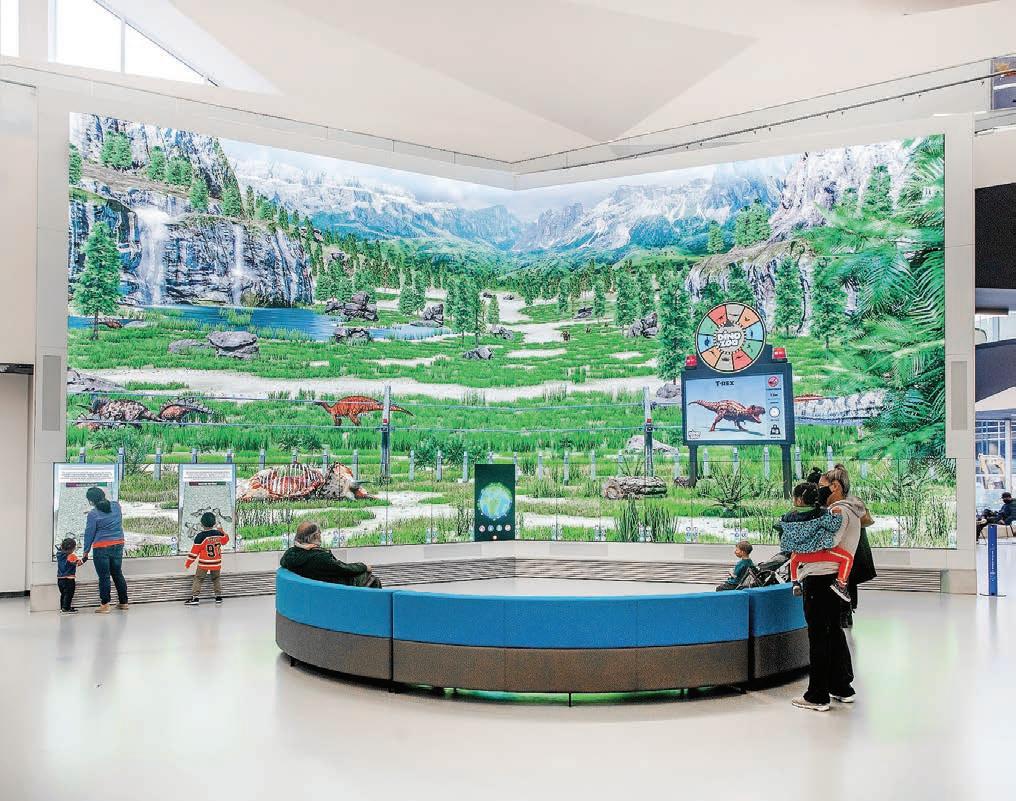
The Wall, Stanley A. Milner Library, Edmonton, AB.
In The Heat Of The Moment
A new era in the world of fire protection systems
by ROBIN BRUNET
Arguably, there is not a single element in the design and construction of commercial, institutional, and multi-family residences that doesn’t address some aspect of fire prevention or detection – especially as the cost of development continues to rise.
Therefore, providing all-in-one service is more important than ever. One example is Vipond and its fire suppression, alarm, life safety and security divisions. Thanks to its breadth of scope and technical expertise, Vipond is able to provide leading-edge design and engineering resources to support ontime delivery and budget targets.
Design teams deliver reliable, code compliant, and economic design solutions (including installation plans and feasibility planning), which further drive efficiency and provide value to customers.
In terms of products, Vipond has one of the largest dedicated sprinkler fabrication facilities in North America (located in Mississauga), with additional facilities strategically located across Canada. This is in addition to fire detection systems, including Notifier systems, optical flame detection, aspirated air sampling detection, linear heat detection, and specialty detectors and signals, as well as comprehensive alarm monitoring.
The technology supporting fire safety advances rapidly, prompting companies well known in the building trades to diversify over the years, incorporating fire safety into their extensive range of services. Houle Electric stands out as a prime example. Rob Pinsent, project manager at Houle, points out that, “Pretty much every job we do has fire protection on it.”
Pinsent adds that growing trends include the use of VESDA aspirating smoke detection solutions (or air sampling products) and linear heat detection. These technologies are increasingly being deployed in accessible areas for ease of maintenance. “Even in accessible areas the use of VESDA has increased, especially when linked to multi-step, pre-action fire alarm systems,” he says.
Common to nearly every project it works on, Houle’s team installs, services, inspects, and repairs fire alarms of all sizes and configurations. This team routinely replaces fire panels and tests new fibre optic communication networks for fire alarm systems. Noteworthy among the large fire alarm projects completed by Houle are the BC Hydro Mica Dam, Royal Inland Hospital, The Stack at 1133 Melville, SFU Stadium, and Clayton Community Centre.
Driving the success of fire prevention/detection companies is the research and development they undertake to bring new solutions to market, and on that score in January Vetrotech Saint-Gobain North America will unveil a new fire rated glass that could be described as revolutionary. Instead of the usual multiple layers of protective glass that dominate the market, Vetrotech has developed 120-minute rated glass with a single interlayer rather than several pieces. “What that does to our carbon footprint alone is incredible, let alone the benefits for anyone having to transport or manoeuvre fire-rated glass systems to a jobsite,” says Kevin Norcross, Vetrotech’s general manager.
The product, which is the third generation of Contraflam, is a monochambered at-any-minute rating fire resistive glass with a new type of interlayer the company calls Hybridcore. Notably, this product is not only lighter but also clearer, affording up to 90 percent light transmission. In a departure from earlier fire-rated glass, Contraflam doesn’t have the product’s previous temperature restrictions. Its range is between minus 40 to plus 40 Fahrenheit. “Even though there’s only one interlayer, the glass will match all existing performance ratings,” Norcross says.
It took more than five years for Vetrotech to develop the new generation of Contraflam, and its importance to the company is such that it will be produced in a new facility in Minnesota for distribution throughout North America. “It will subsequently be available in Europe, and if it doesn’t change the fire glass industry it will certainly change the way people regard our company,” Norcross says. “It will contribute greatly to the sustainability roadmap with 35 percent less embedded carbon, making it desirable for the new LEED 5 requirements and other designations.”
Vetrotech has also advanced its Pyroswiss safety glass to a more versatile range of UL-listed fire-protective and impact-safety 45-minute applications. There are no UV-sensitive interlayers, no films or embedded wires in Pyroswiss 45, allowing the glass to realize a 90 percent visible light transmission in its low-iron option. Sound transmission values are among the lowest for its size on the fire-protective market today, with the added benefit of UV stability.
Aluflam’s long-term relationship with its glass supplier, Vetrotech, has entered a unique phase in 2023 with the two companies working in close co-operation to undertake the testing and qualification of a new variant of Contraflam. Meanwhile,
Aluflam’s fire-rated aluminum window, wall, and door systems continue to be in high demand throughout the North American market.
Aluflam North America is a recognized leader in fire-rated aluminum/glass construction and has become known for its top-of-the-line vision doors, windows, and glazed wall systems. In addition to safety, the products are sought for their crisp lines, narrow frame profiles, superior choice of finishes, corrosion resistance, and ease of installation.
Jerry Cucchi, sales manager at Aluflam, says, “The Ontario market has been very brisk over the past few years – lots of schools and mixed-use developments. An example of the latter is 160 Front Street West in Toronto, a massive project that requires a significant amount of rated material and lots of doors, including 90-minute fire-rated doors in stairwells.” The project in question maintains the façade of a heritage building, while adding a new 47-storey office tower and 12,290 square feet of retail space.
In B.C., Aluflam has been busy supplying doors and windows in the control areas of treatment plants (aluminum holds up well to the corrosive chemicals used in these facilities), and Cucchi thinks that overall “we’re on the cusp moving into 2024 of a growth period as a result of our testing of products as well as backfilling gaps in our product line. We’ve just finished a year that saw a nice mix of projects, and we’ve adjusted our capabilities to better position ourselves and extend our flexibility on behalf of clients.”

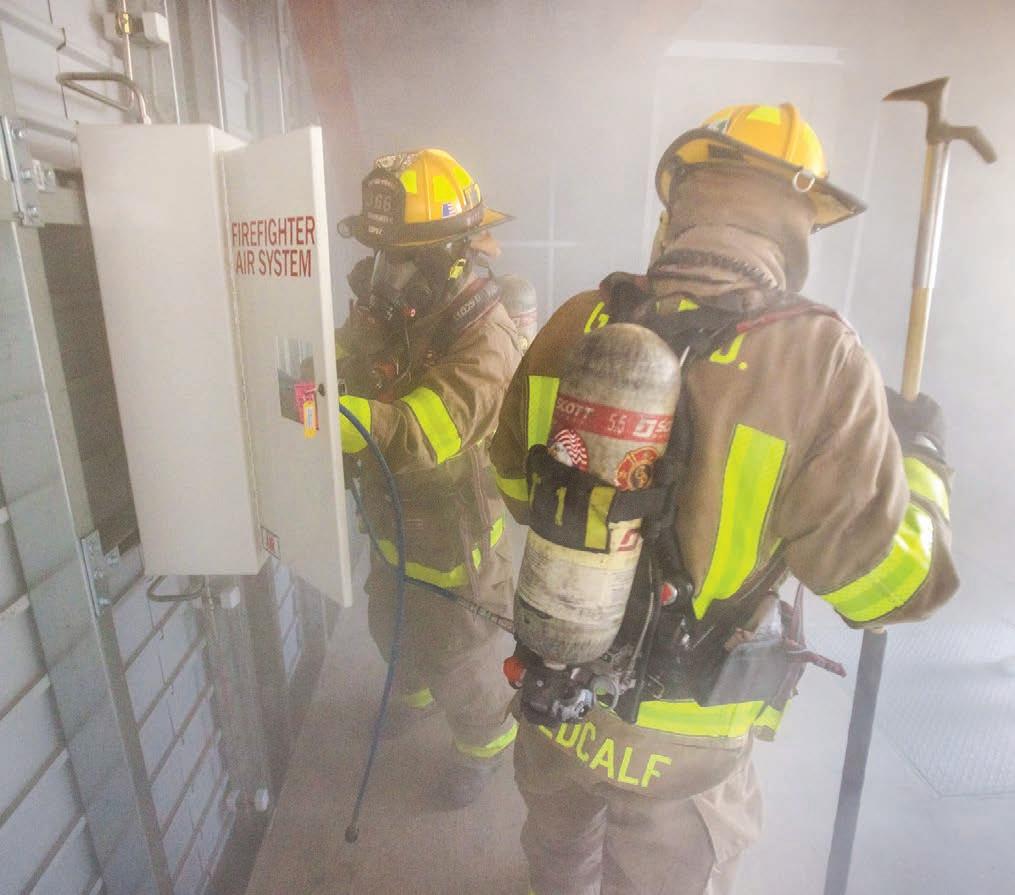
COMING TOGETHER
Mergers and acquisitions play an important role in the advancement of fire safety. Johnson Controls, a leader in creating safe, healthy, and sustainable spaces, provides a suite of advanced connected life-safety services and technologies combined with extensive industry knowledge and training to help ensure improved performance and reliability, code compliance, and operational efficiency of fire and life-safety systems.
Many of Johnson Controls solutions are a result of its merger with Tyco Fire Protection Products, and together they are well positioned to drive new technological innovations – including those that benefit the environment. Case in point: Tyco recently announced it will discontinue the production and sale of fluorinated firefighting foams by June 2024, including Aqueous Film-Forming Foam (AFFF) and related products, and will transition to non-fluorinated foam alternatives.
Chris Eichmann, VP and general manager, Global Fire Solutions, explains, “Recent advances have allowed us to create a portfolio of new, non-fluorinated firefighting foam solutions that are effective against a range of fire conditions.”
Tyco’s firefighting foam products are used to quickly put out and prevent reignition of flammable liquid fires, such as those encountered in the oil and gas industry. Tyco has made significant investments to bring to market next-generation non-fluorinated foam solutions that control and extinguish the most challenging fires. Currently it is partnering with its foam customers to recommend the best solution to meet their specific fire suppression requirements for the future.
Another Johnson Controls innovation made possible through acquisition is firefighter air replenishment systems (FARS) that enable firefighters to refill breathing air bottles within a building during responses. Thanks to acquiring Rescue Air Systems, Johnson Controls presides over the installation of FARS stations that replenish firefighters’ air bottles in less than two minutes using a building’s air standpipe system. Just as water standpipes in buildings provide ready access to water, FARS provide firefighters with quick access to a safer, more constant, and more dependable source of breathing air inside a compromised structure during an emergency.
Meanwhile, in the U.S., fire rated glass and framing systems manufacturer Safti First this year received a patent for its SuperClear 45-HS (hose stream) and SuperClear 45-HS-LI (hose stream low iron) fire rated glazing products, with additional patents pending. These are the first and only American-made, non-wired, tint-free, monolithic, fire protective glazing products for all 45-minute doors, sidelites, transoms, and openings. They also carry high acoustical ratings and can be customized to protect against bullets, forced entry, blast, and hurricane.
Safti First president William O’Keeffe told media earlier this year, “When we first introduced SuperClear 45-HS and SuperClear 45-HS-LI to the U.S. market in January 2019, we knew that it would be a game changer. The fire protective glazing market, typically rated 45 minutes and under, was severely underserved. Wire glass was proven to be unsafe, while ceramics were tinted and had to be filmed or laminated in order to pass safety ratings, adding to its already expensive price.” A

Honor Your Design. Rely on the Right Fire Safety.
Take the worry out of compromising your inspired building design to fire-safety requirements with reliable Aluflam fire-rated doors and windows. This pioneering system is fabricated from true extruded aluminum.
Aluflam’s winning combination of proven technology and insulated aluminum framing delivers proven fire barriers featuring clear, fire-rated glass tested up to 2 hours. Plus, our limitless portfolio comes in many architectural finishes. These coordinate with clean, crisp aluminum perimeter framing to seamlessly produce an uninterrupted surface.
Reward your creativity with Aluflam, the high-performance fire-safety system that works to achieve the design you want.
Firefighter air replenishment systems (FARS).

GETTING CREATIVE WITH YOUR OUTDOOR SPACES
How to make the most of your backyard leading into 2024
It’s no secret that homeowners have been in a unique situation over the past few years. Keeping up with the waves of a volatile economy can be tricky, especially in today’s current condition, where interest rates have continued to rise. With many people staying in their homes longer than expected, we see a new burst of creativity. Homeowners are making the best of their situation and creating beautiful, lasting spaces they can enjoy.
Maximize Space and Create Privacy with Rooms
Taking advantage of the property beyond the four walls of a home is growing in popularity due to this shift in consumer behavior. Investing in your outdoor space can add tremendous value to your home long-term and provide a sense of happiness and relaxation.
Think about what you can do outside that you commonly would do inside. Maybe an outdoor office or workout/yoga area would bring joy to the backyard.

To maximize space, it’s essential to be intentional with each element. Can an outdoor dining table double as an office space, or can a wall double as seating? Belgard Artforms™ is a largeformat modular panel system that can create various shapes and elements. Contractors can use Artforms to build seating, grill areas, fire features, and more. With a product that is so versatile, it can help establish a cohesive aesthetic.
Creating spaces outside of the home does not mean you have to sacrifice privacy. Screening panels and shade structures are just two ways you can separate space and build a mini escape. Accents such as water features and wind chimes can mask intrusive noise, eliminate awkward silence, and make the area feel homier.
Belgard’s unique planning tool, Rooms, takes the hard work out of developing these unique spaces. The tool offers a curated bank of trending outdoor living designs for homeowners to select and customize their space. You can even use the Augmented Reality (AR) feature to download existing plans and project them into your backyard space with the help of a mobile phone or tablet.
Connect with Nature Through Biophilic Design
A part of shifting the mindset of creativity in the backyard is thinking through how to make the most of the resources available. Including biophilic design elements in your spaces can lead to improved physical, mental and spiritual health.
“The benefits of biophilic design are not new, but in recent years, this trend has been resurgent, and people have become more aware and
appreciative of the importance of a well-crafted outdoor space that serves as a respite from the world’s distractions,” says Joe Raboine, VP of Design at Oldcastle APG. “Integrating biophilic elements into your backyard design is much simpler than one might think. Gardens are a great way to mix nature into the space or by including materials reminiscent of earth tones such as Belgard’s new product, Papyrus.”
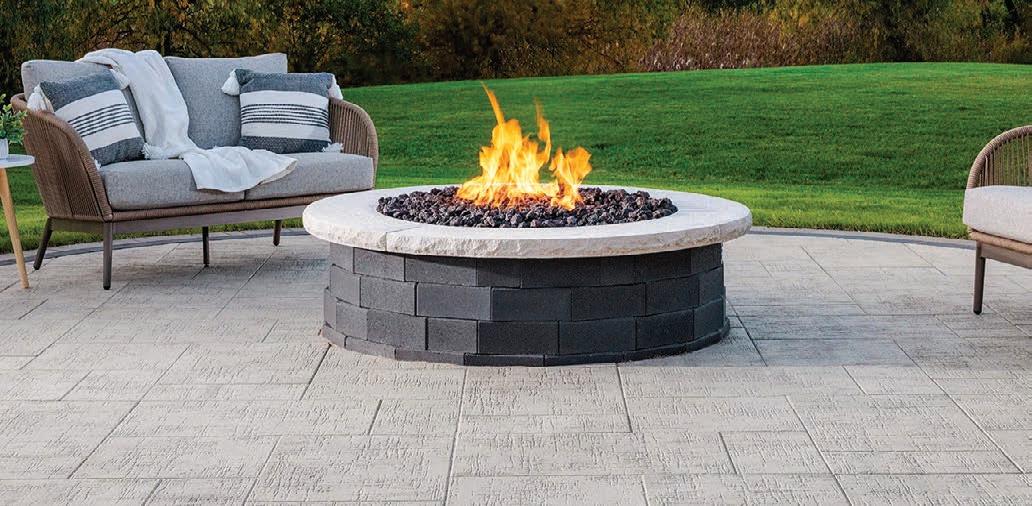
Reminiscent of handmade textiles or dried earth, Papyrus embodies biophilic design. This paver looks natural and seamlessly blends into a space, simplifying the design process. Whether you’re creating a welcoming patio or a pathway in your garden, Papyrus infuses your design with the surrounding landscaping. Papyrus is the perfect solution for those looking for a hardscape to include or elevate their biophilic design.
Pollinator or food gardens, stormwater captures, native planting, zeroscaping and permeable pavers are a few ways homeowners can explore eco-friendly and natural features in their space. More people are valuing simplicity, sustainability and a balanced lifestyle. Such elements require fewer resources, are more natural to maintain, and can even be a fun and easy way to spend time outside.
Add Accessories to Level Up Your Space
When investing in your space, you want to consider all the elements that could enhance usability and make it effortless. You can make any outdoor living space smarter with landscape lighting and built-in electrical. Adding outlets allows you to plug in devices to work or entertain outdoors. Landscape lighting can be energy efficient and controlled with mobile apps, allowing the homeowner to control the color and hue of lighting and optimize electricity usage.
Whether the space is for working, relaxing, cooking, exercising, or carrying out everyday activities, outdoor lighting and access to electricity expand the use of the space and allow homeowners to make it truly functional.
Another fun accessory to consider when investing in the functionality of your space is an outdoor shower. Whether you have a pool, live at the beach, or regularly spend time outdoors with your family, outdoor showers made with hardscapes are durable and can offer a variety of styles to add to the design of the space aesthetically. Specifically, permeable pavers are a top selection for outdoor showers as they mimic how natural land absorbs the water, which has numerous benefits for the homeowner and the community.
Rely on Experts
Belgard products are designed to be cutting-edge and stand the test of time. Products like Papyrus and Artforms lend themselves to these current trends but hold a timeless quality and are an excellent investment when it comes time to sell.


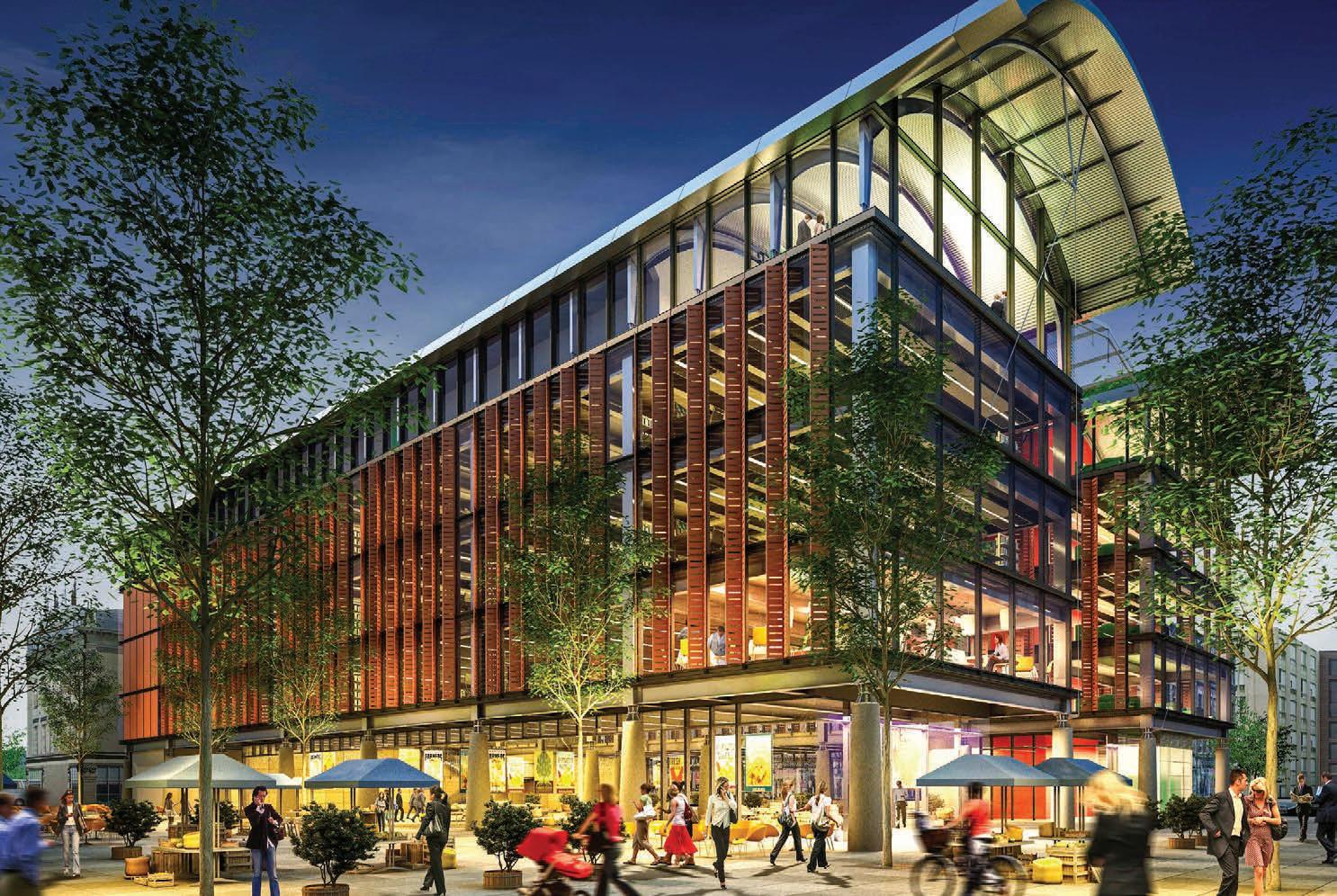
ST. LAWRENCE MARKET NORTH
by NATALIE BRUCKNER
For more than two centuries, the St. Lawrence Market Complex has been a cherished symbol of Toronto’s rich history and a thriving hub of commerce, capturing the hearts of both residents and tourists. This iconic structure, which includes St. Lawrence Hall and the North and South Market buildings, has held a unique significance in the city, however, the North Market building had gradually fallen into underutilization, failing to maximize its full potential.
The decision to redevelop St. Lawrence Market North was not a sudden one; rather, it emerged from a commitment to revive this beloved space, preserving its historical significance while stimulating the economic growth of the surrounding area.
“On December 10, 2008, City Council authorized a design competition to select an architect for the redevelopment of the North Market. The international design competition resulted in the building’s modern design that pays homage to the traditional St. Lawrence Market buildings,” explains Siobhan Kukolic, communications advisor at the City of Toronto.
“On May 15, 2019, City Council approved the awarding of a contract for the construction of the new St. Lawrence Market North building at 92 Front Street to Buttcon Limited/ The Atlas Corporation Joint Venture. Construction of the new market –which would be a three-phase project – began in July 2019.”
The redevelopment of St. Lawrence Market North had a multifaceted vision centred on improving utility, preserving historical significance, and fostering economic development. At its core, this vision aimed to celebrate the beloved St. Lawrence Farmers Market by creating a purpose-built facility for year-round operations.
The building’s purpose extended beyond the Farmers Market. “The building is intended for a variety of additional civic and community uses and will be the centrepiece of a vibrant Market district. On December 10, 2008, City Council endorsed the strategy to redevelop the St. Lawrence Market North property with a multi-storey building, including a ground floor Market Hall, Court Services’ court rooms and administrative offices, and a 250-space below-grade parking garage, maximizing this space to meet local community needs,” explains Kukolic.
The North Market building design by RSHP, with executive architects Adamson Associates Architects, aligns seamlessly with the project’s vision and goals, resolving the tension between civic architecture and market architecture by defining the building as a market building with a courthouse above it. This design harmoniously integrates with the heritage character of the market complex and its surroundings, ensuring historical continuity.
“The structure of the building modulates a large space and encourages visitors to travel through the length of
LOCATION
92 Front Street, Toronto, Ontario
OWNER/DEVELOPER
City of Toronto
ARCHITECTS
RSHP (design architect); Adamson Associates Architects (executive architect); ERA Architects Inc. (heritage architect)
GENERAL CONTRACTORS
Buttcon Limited / The Atlas Corporation (Joint Venture)
STRUCTURAL/BUILDING ENVELOPE
CONSULTANT
Entuitive Corporation
MECHANICAL/ELECTRICAL CONSULTANT
Smith + Andersen Consulting
LANDSCAPE ARCHITECT
Quinn Design Associates Inc.
IT/SECURITY CONSULTANT
Lobo Consulting Services Inc.
TOTAL SIZE
228,227 square feet
TOTAL COST
$118.8 million
the building to the north end to connect to the St. Lawrence Hall. It also creates flexible spaces on both the main level and the mezzanine level for use as a performance space or for smaller gatherings. The market floor is also divisible using the column grid and screening systems,” says Kukolic.
The design successfully connects the North Market, South Market, and Market Hall by opening the market to the streets and public spaces on three sides, an important feature for its users. This creates an indoor street within the market.
“The façade is broken into manageable proportions and has a simple structural grid. The scale, texture, and context are in keeping with the architecture of the district, including the historical precedents. The original market building on this site had similar proportions to this building making this scheme better suited to the area and to a market building,” says Kukolic.
The five-storey atrium, serving as a visual centrepiece, seamlessly connects the three buildings, improving accessibility and connectivity between them. Additionally, the upgraded loading dock resolves previous inconveniences related to street-side loading and unloading, benefiting pedestrians, vendors, and building users. The inclusion of a 250-space underground parking garage significantly enhances accessibility, addressing the previous lack of dedicated parking for the Market Complex.
Mark Butt, CEO, Buttcon Holdings, says of the design: “The overall complexity, detail, and integration of the structural and architectural elements make the project stand out. Taking into consideration the use of self-consolidating concrete tapered columns, architecturally exposed structural steel [AESS] columns, and hidden AESS connections through access panels located in the hollow box columns, the grand arches of the double barrel roof, the north end feature stair, embedded stainless markers delineating the location of the historical sewer water main that all contribute to the uniqueness of the design. The swing-open garage door panels on the east and west sides, and the atriums between the highlevel barrel-vaulted ceiling, will give the market an open-air feel when the weekend vendors are on location.”
The newly redeveloped North Market building also showcases some very distinct features. It surpasses energy efficiency standards by utilizing a geothermal heating and cooling system for enhanced energy savings. Butt adds that utilizing reclaimed stormwater to fill the cooling tower will cool St. Lawrence Market’s North and St. Lawrence Hall. Also, green roofs will absorb carbon dioxide, reduce stormwater runoff, make the roof surface 30 to 40 percent cooler, and reduce heat fluctuations from building to building.
In any complex redevelopment project, challenges are inevitable, and this project was no different. During the planning phase, an archaeological assessment uncovered significant historical remains dating back to the early 19th century, including market walls,

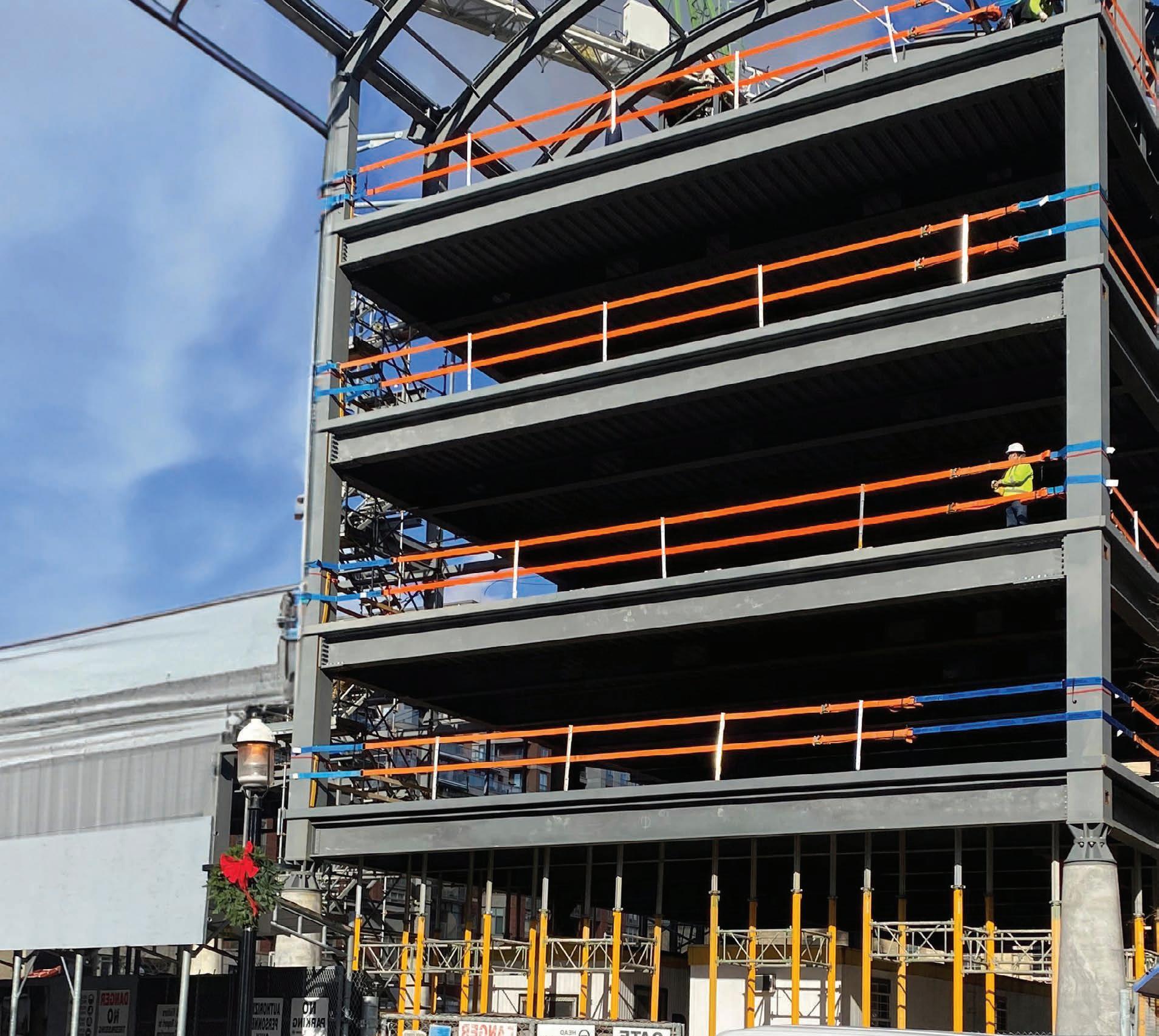
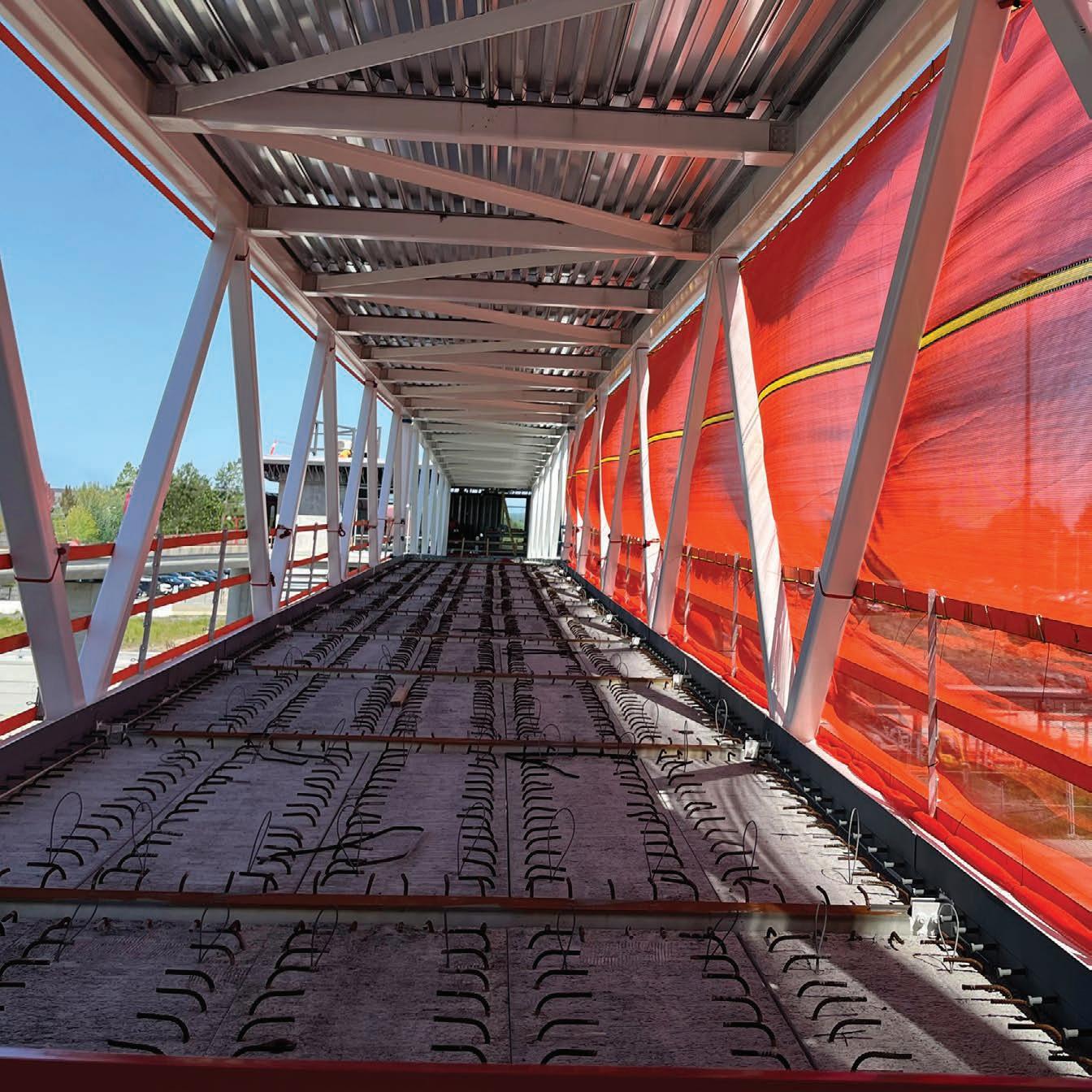

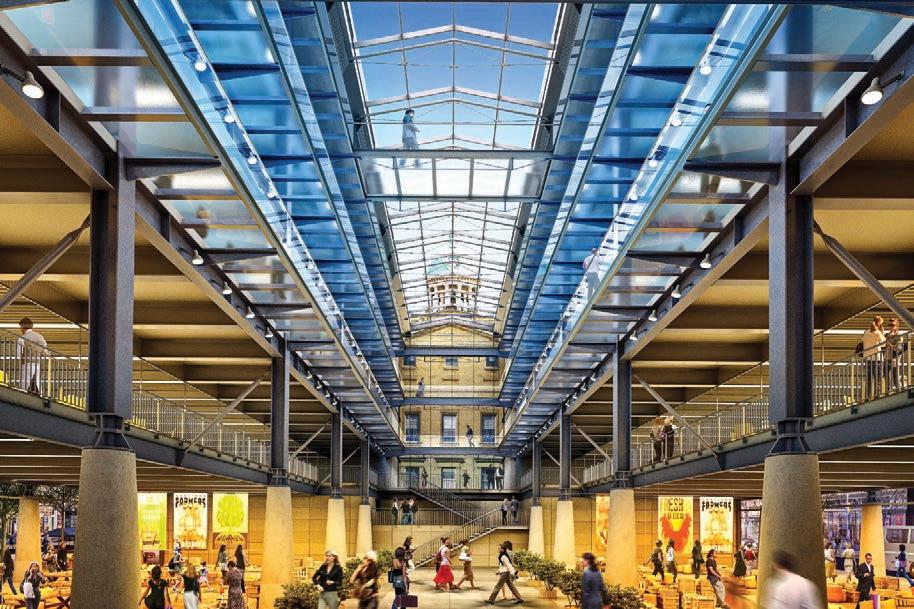
storage cellars, and support columns. This discovery provided a unique opportunity to advance the City’s commitment to historical preservation.
“This archaeology is representative of a rare and important early market period within the original Town of York and is also one of Canada’s earliest commercial markets. Due to the City’s commitment to the historical preservation and public education of artifacts discovered on this important historical site, the construction


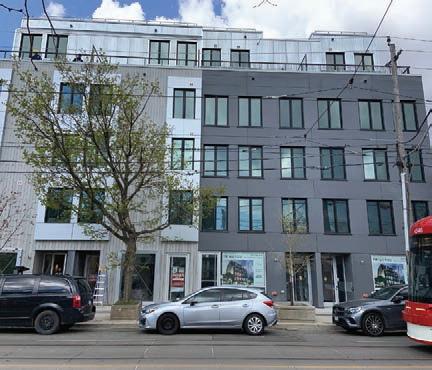
tender call was consequently extended for the new building to allow for the salvage of the remaining archeological findings at the site; and to examine opportunities for incorporating these elements into the new building design.
This archeological discovery has thus impacted existing funding and schedule by adding additional complexity to an already tremendously complex project,” explains Kukolic.
At every stage of the project, safety considerations took precedence. A

noteworthy example is the utilization of the StrapRail guardrail system – an innovative solution that redefines fall protection. Doug Thomas, general manager at Northstar Access, explains that the StrapRail system employs lengthy, hi-visibility orange straps to build a reinforced framework.
“StrapRail is hands down the best possible guardrail for a project and helps make the work environment that much safer,” says Thomas. “Ratchets are used to tension three identical 100-foot straps, to rapidly protect a span of up to 100 feet in one go, with other strap lengths available. Conveniently, the system can be installed on the building’s perimeter columns. If columns are not available at the edge, the system can be installed using the optional bolted steel anchor posts.”
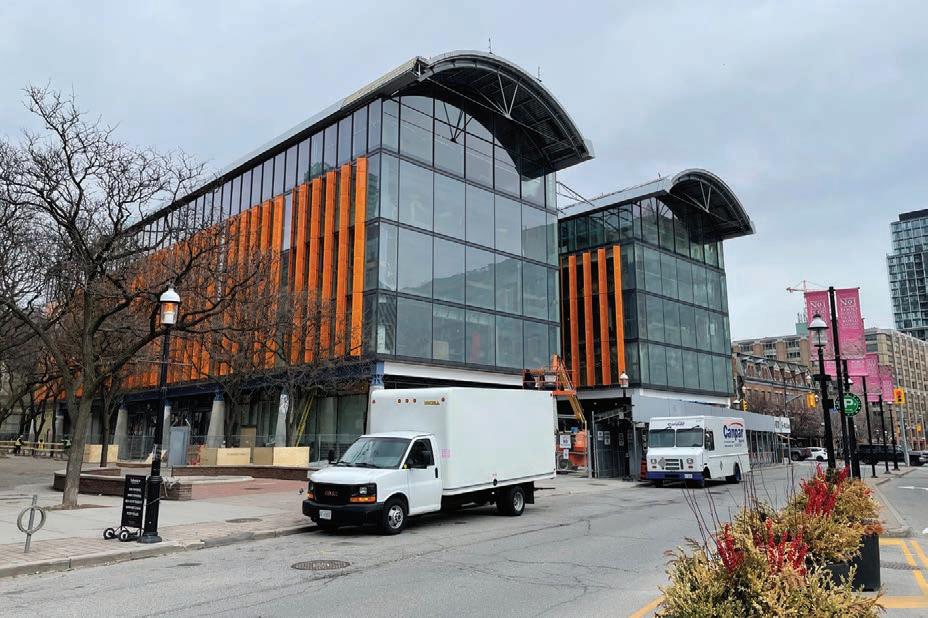
Butt adds that “Co-ordination with the consultants, the attention to detail, and adherence to environmental and safety standards were crucial for the successful completion of this construction project, which aims to integrate sustainability, energy efficiency, and soundproofing for a unique and environmentally conscious building.”
St. Lawrence Market North is a testament to Toronto’s dedication to preserving its history while embracing modernity. This project has breathed new life into the St. Lawrence Market district, offering a space that bridges the past and the present. Kukolic says the response from the public has been overwhelmingly positive: “The public is excited about the beautiful new building which is sure to be a major attraction to the St. Lawrence Market district.” A
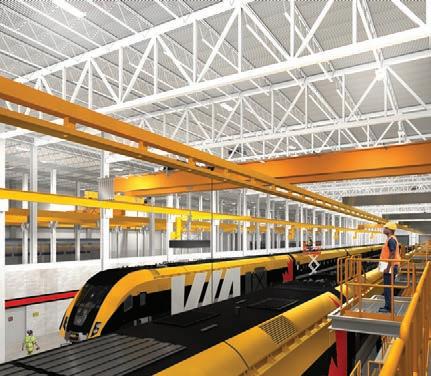
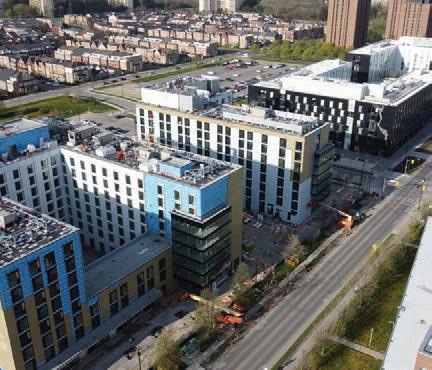

Lorraine Street
Afforddable Modular Housing - Sudbury
Havergal College
VIA Rail TMC Modernization


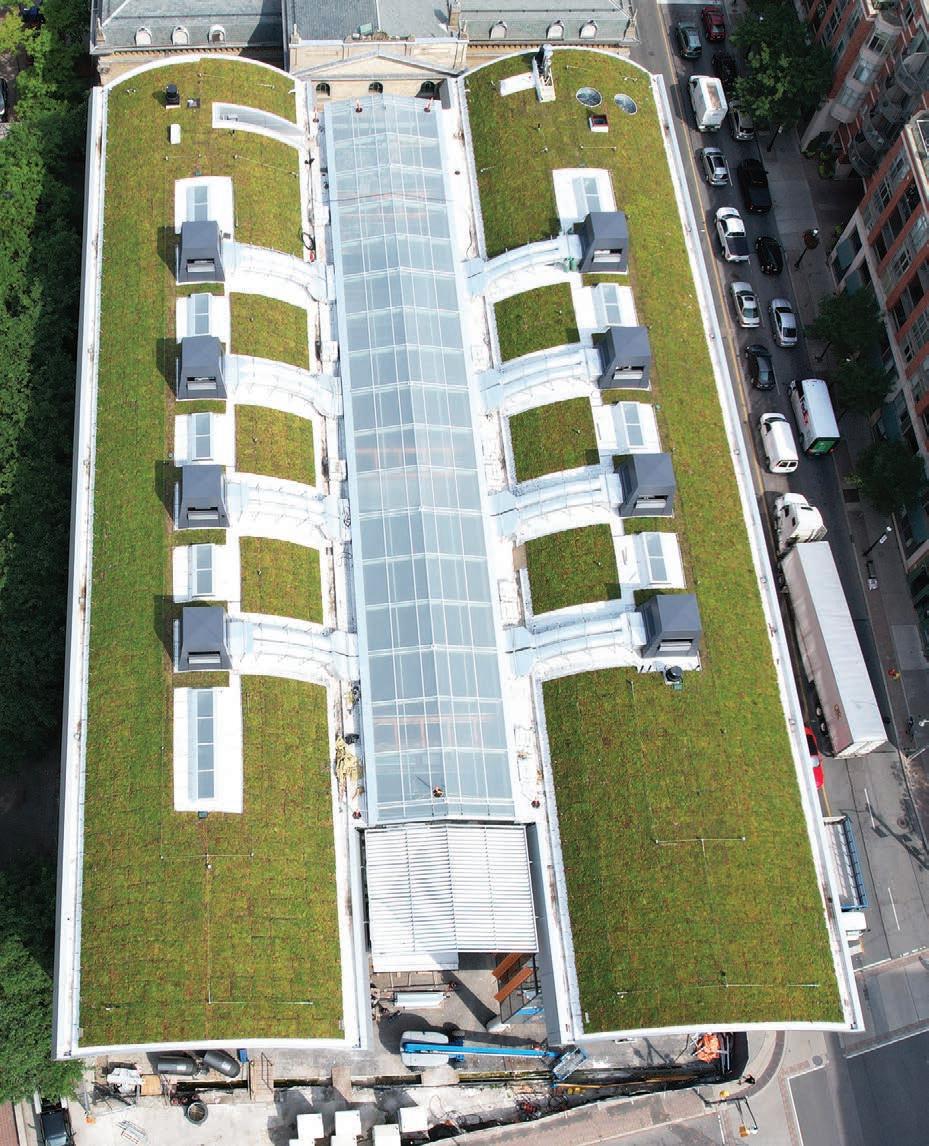



T3 STERLING ROAD
by ROBIN BRUNET

The T3 (Timber, Transit, Technology) building model has been credited as a preferred alternative for tenants who are drawn to brick-and-beam offices in vibrant locations, and, who require an office that has the features and specifications of a brand-new building to help them attract and retain the next generation of talent.
Developer Hines has spearheaded the development of more than 25 T3 projects around the world, the latest being (in collaboration with Hazelview Investments) T3 Sterling Road, a mass-timber creative office development across three buildings in Toronto’s highly transit connected Lower Junction neighbourhood.
Alexandra Khazzam, managing director at Hines, summarizes the company’s passion for T3 by stating that it “brings environmental and social sustainability to the workplace in a sophisticated, elegant way. Made with rapidly renewable, sustainably sourced timber, T3 buildings are clean and quick to construct and poised to meet global climate goals.”
Moreover, “T3’s natural wood interior, paired with wellness-inspired amenities and an exceptional technology platform, creates a unique work environment that fosters productivity and sparks innovation,” says Khazzam. At Sterling Road, this translates to features such as private balconies at every level, rooftop terraces, employee lounges, collaboration areas, a private park, a state-of-theart fitness centre, and best-in-class end-of-trip facilities for cyclists. With 12-foot ceilings on every floor, the building’s interior recreates the
aesthetic of brick-and-beam industrial buildings while performing at the highest levels of operating efficiency.
“T3 Sterling Road is the true definition of next-generation office space. Combining timber, transit, and technology, we’re creating a workplace that is healthy for the planet and enables the modern creative workforce that occupies it,” adds Khazzam.
Stephen Cavanaugh, design leader/ principal at DLR Group (a long-time partner of Hines), notes that neighbourhoods in which T3 developments are located act as a significant design influence. “Our Sterling Road property sat amid a brewery, a bookstore, and a hulking art museum, to name just a few structures. Early on we decided that our project would act as a transition between the relatively small bookstore and other buildings, and the very large museum. This would reinforce the human scale of this vibrant district.”
Both Hines and DLR were attuned to the fact that it’s still a challenge to lure people back to work in this post-COVID era, so T3 Sterling Road designed a large communal social workspace on the building’s ground floor that would act as a central and informal gathering area for all tenants.
Cavanaugh adds, “Hines had developed a park between the museum and our property, so we created an overflow patio space as well as space for a potential retail tenant, plus we oriented our social work space to face the park, all with the intention of maximizing the use of this outdoor area and promoting people interaction.” The park will also
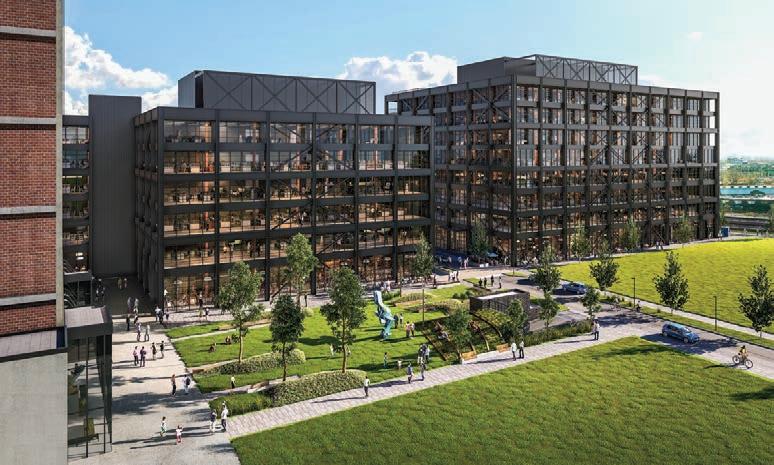

be activated year-round in partnership with the neighbouring Museum of Contemporary Art, providing exciting opportunities for tenants and the community to connect with the local arts community.
One of the biggest challenges of the design was that one of the three exposed mass timber buildings (the west building) was eight storeys tall, but the current code doesn’t allow for any such building taller than six storeys. “So, we had to find a path towards code compliance, and this meant gathering all data on the safety of mass timber structures and presenting it to the City of Toronto, which, after a detailed review, gave us the go-ahead,” Cavanaugh says.
As for exterior accents, Cavanaugh notes that, “We liked the aesthetic appeal of brick but not its weight, so we opted for a metal skin that exhibited a machine-shed turn of the century industrial look.”
With regard to fulfilling LEED Gold objectives, Cavanaugh says, “A high performing envelope of super-insulated metal panels and high-performance glazing contributed to the designation, as did the green roof area with occupyable roof terraces, as well as, of course, the timber and highly efficient power and heating systems.”
The timber structure, which is enough to sequester 3,646 metric tons of carbon, is primarily made from dowel-laminated timber decking and cross-laminated timber columns and beams. EllisDon broke ground in the fall of 2021, and by summer of the following year cladding was nearing completion on
the six and eight storey buildings, the latter of which has a west wall angled to follow the southeastward course of the West Toronto Railpath.
EllisDon also undertook what is standard for T3 mass timber construction: a layer of Blue Skin applied to the exposed timber frame, which creates an airtight vapour barrier and protects the timber during construction. This was followed by a layer of standard insulation, and then the insulating materials were topped with the metal framing that allows the cladding panels to be fixed to the building.
Cavanaugh summarizes the sentiments of his colleagues by saying, “I can’t wait to see everything finished and people using the buildings. This is a new standard for office environments in a post-pandemic world.” A
LOCATION
150 and 152 Sterling Road, Toronto, Ontario
OWNER/DEVELOPER
Hines and Hazelview Investments
ARCHITECTS
DLR Group / WZMH Architects
GENERAL CONTRACTOR
EllisDon
STRUCTURAL CONSULTANT
Magnusson Klemencic Associates
MECHANICAL CONSULTANT
The Mitchell Partnership
ELECTRICAL CONSULTANT
Mulvey & Banani
LANDSCAPE ARCHITECT
Janet Rosenberg & Studio
TOTAL SIZE
423,452 square feet
TOTAL COST
Undisclosed
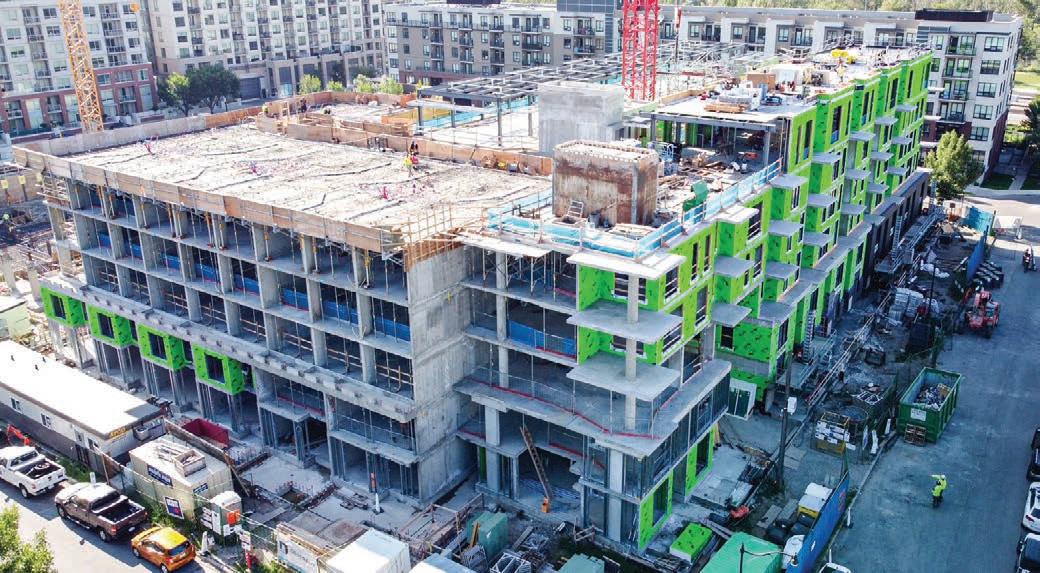
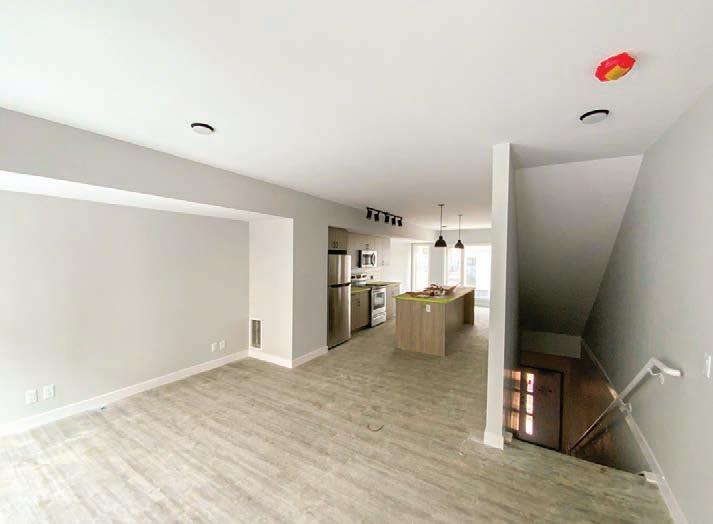
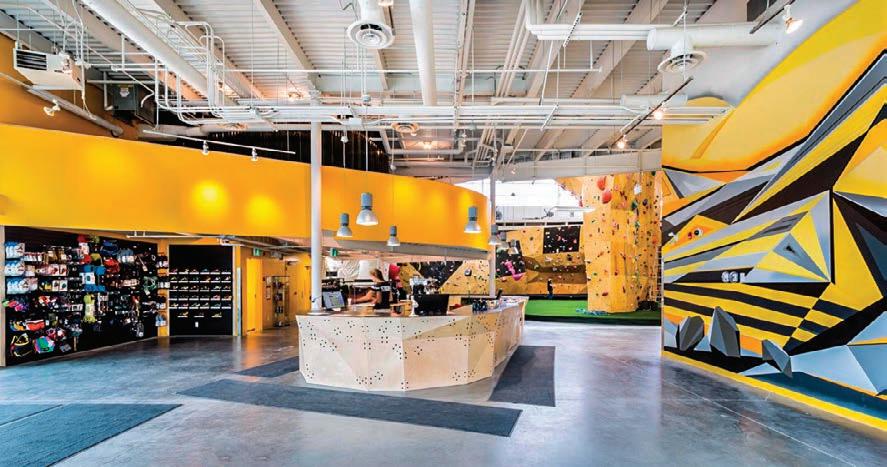


Bridlewood Affordable Housing
Calgary Climbing Center
Seton Retail Stores
NORTH TRAIL HIGH SCHOOL
by ROBIN BRUNET

Requests from parents for a new secondary school may have begun many years ago, but the recent opening of the new North Trail High School in northeast Calgary demonstrates that the wait was well worth it.
David Jaimes, project manager, facility projects with the Calgary Board of Education, says, “The school serves a range of communities in one of the fastest growing areas of Calgary. We initially kicked off the project with a call for working drawings, and then there was a long period in which funding was organized. And then everything was fast tracked, with the project going to tender in November of 2020 and breaking ground in early 2021 – only to run up against the supply chain difficulties created by the COVID lockdowns.”
Monika Oystryk, principal at Oystryk & Team Architecture Ltd. (OTA), says her firm started the design in 2019. “Initially the site selected by the CBE seemed large, but it was between a major road on one side and fields that were off limits to development on the other. Plus, it contained a 13-metre cross slope, meaning only about 20 percent of the site could be developed. Also, a proposed underground parkade was deemed too costly to build, which meant that surface parking had to be worked out.”
North Trail was arranged so that all program areas such as the gym, theatre, shops, and other areas requiring extra height were located on the south end where the site slopes, and all classrooms were located to the north.
OTA designed the school with classrooms in groupings – four forming a pod – arranged around a centrally located shared multipurpose lab area on the main floor and science labs on the second floor. The design allowed for maximum flexibility through operable and movable walls yet retained a high level of acoustic performance.
OTA designed the central part of the learning communities on the second floor as a highly lit area, with harvested light filtering into the interior labs and natural light filtering into the gathering space via screens. The flexible learning commons flanked by computer labs forms the central piece on the second floor. “Below the learning commons on the exterior is the main entrance, which we defined with a canopy and an allglass vestibule,” Oystryk says.
Aiming to make North Trail warm and inviting led OTA to use materials such as terrazzo veneer, feature wood walls, and glulam beams (the latter for the gathering space), which also improved acoustics throughout.
With increasing enrolment in high schools, there was a push to have North Trail ready for the fall of 2023. OTA was asked to cut their schedule for construction documents by about five months. “The delays had already set the project back four months, but we managed to accomplish what was required,” Oystryk says. “Actually, the fast tracking turned out to be beneficial because we largely escaped the huge cost escalations due to the COVID lockdowns.”
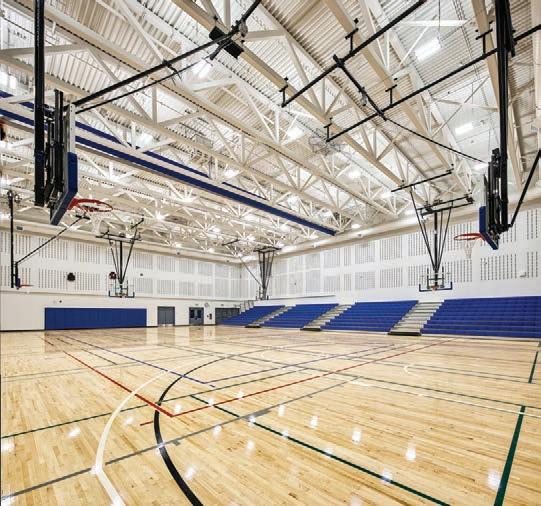
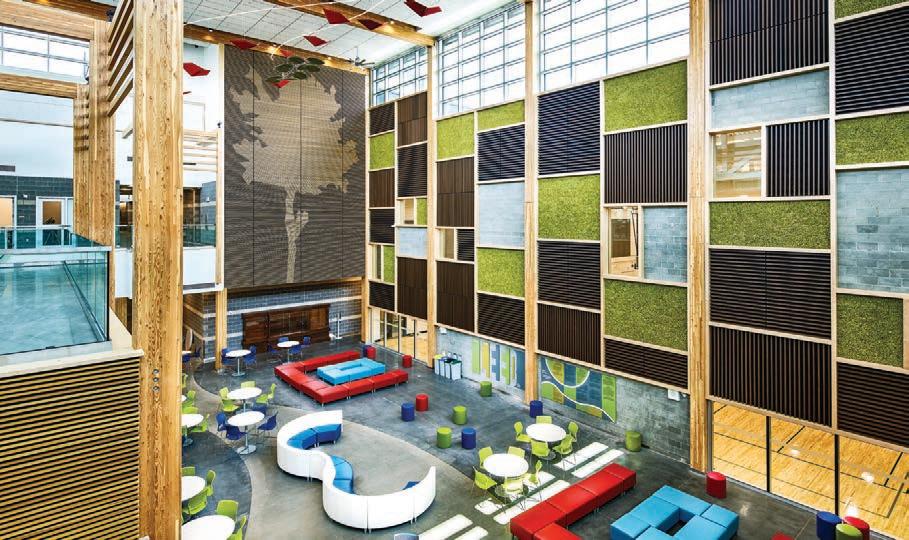
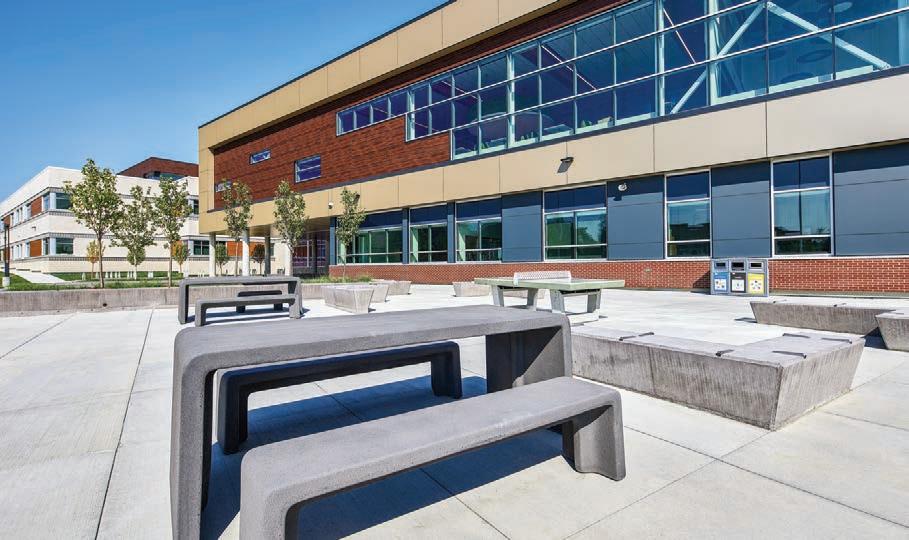
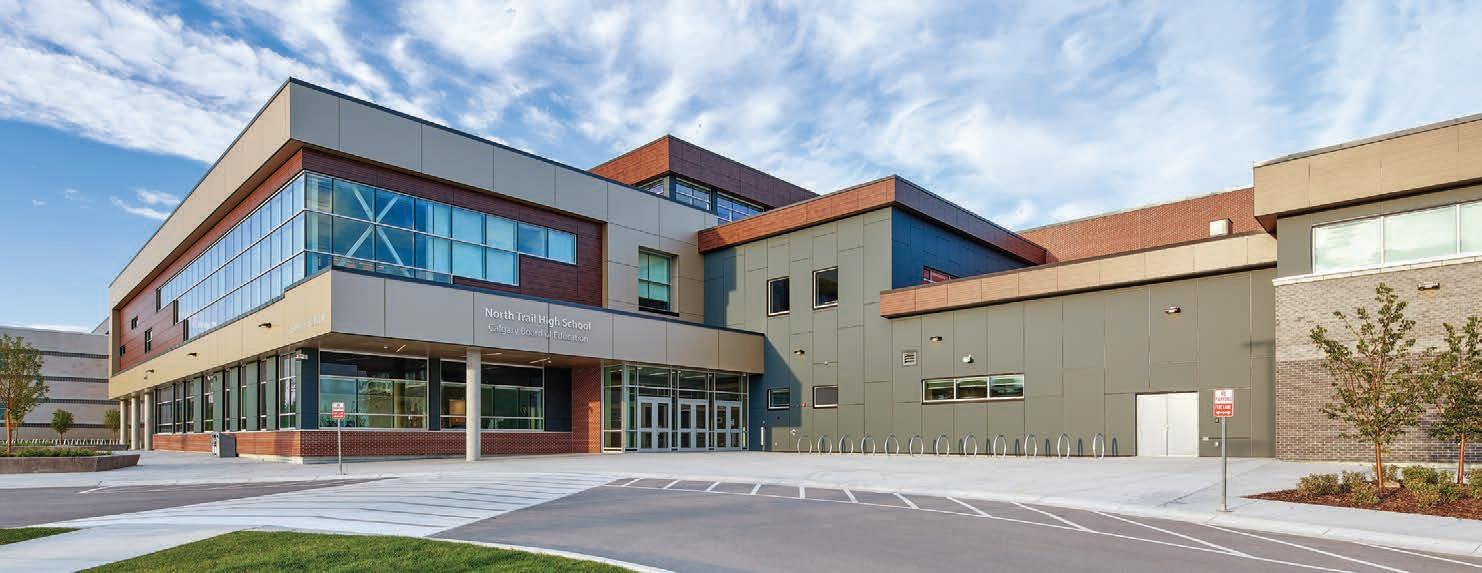
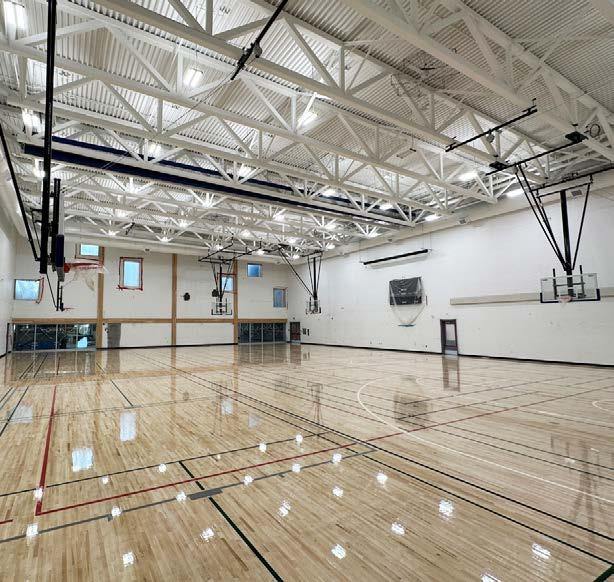



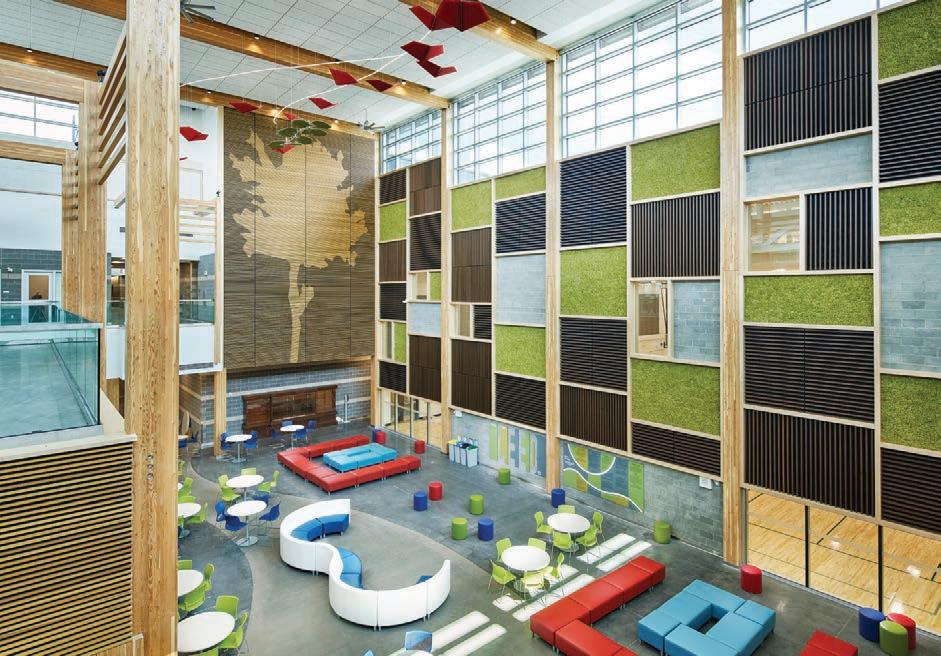
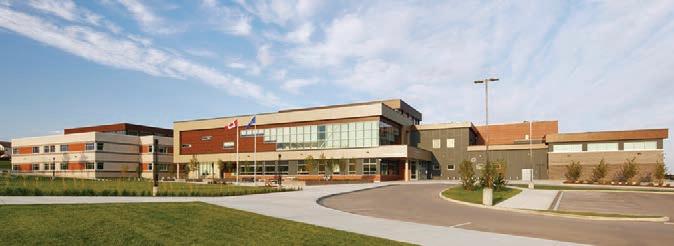
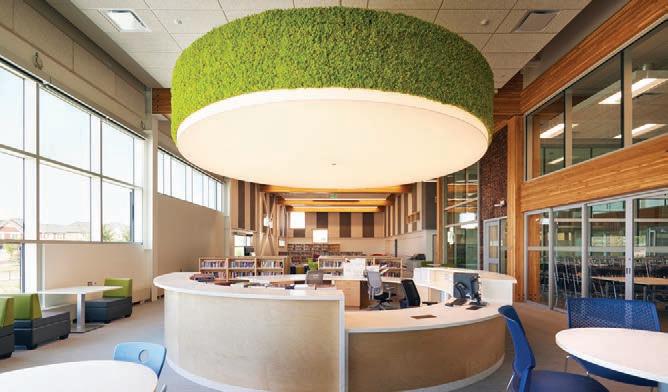
Bird Construction was widely credited for overcoming supply delays and working with OTA to solve onsite problems. “Materials were arriving weeks and even months late, and at the very end of construction some equipment was arriving after being ordered a full year prior,” Jaimes says. “But Bird’s expertise was such that it kept everything on track. They were fabulous to work with.”
In fact, so productive was the Bird/ OTA/CBE collaboration that Jaimes believes it will set the tone for future projects. “The way we communicated, prioritized, and made concessions was extremely productive, and we want to replicate that,” he says, and also give a shout-out to Alberta Infrastructure, “which had a dedicated management team that oversaw the project from beginning to end. They shared our vision of the need and worked tirelessly to ensure the building was ready to welcome students for fall 2023.”
As for the school itself, Jaimes echoes the sentiments of his colleagues by remarking, “The school sits prominently on a hill and looks sophisticated and appealing. We’re getting great feedback not only from teachers and students but from neighbourhood residents – so we’re extremely happy with the outcome.” A

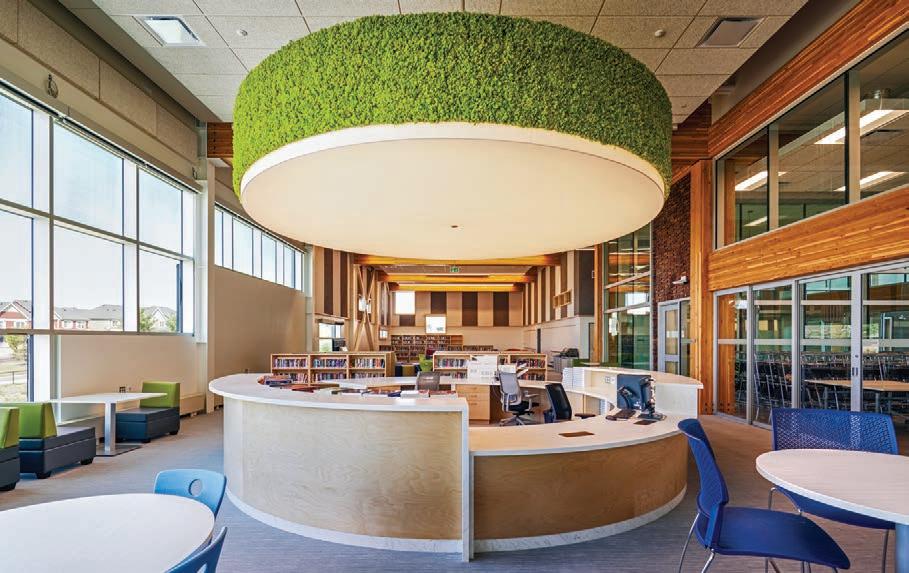
LOCATION
12065 Coventry Hills Way, NE Calgary, Alberta
OWNER/DEVELOPER
Calgary Board of Education
ARCHITECT
Oystryk & Team Architecture Ltd. (OTA)
GENERAL CONTRACTOR
Bird Construction
STRUCTURAL CONSULTANT
BEI Engineering Inc.
MECHANICAL CONSULTANT
Remedy Engineering
ELECTRICAL CONSULTANT
SMP Engineering
CIVIL CONSULTANT
Jubilee Engineering Consultants Ltd.
LANDSCAPE ARCHITECT
People Places Design Inc.
TOTAL SIZE
16,225 square metres
TOTAL COST
$70.5 million

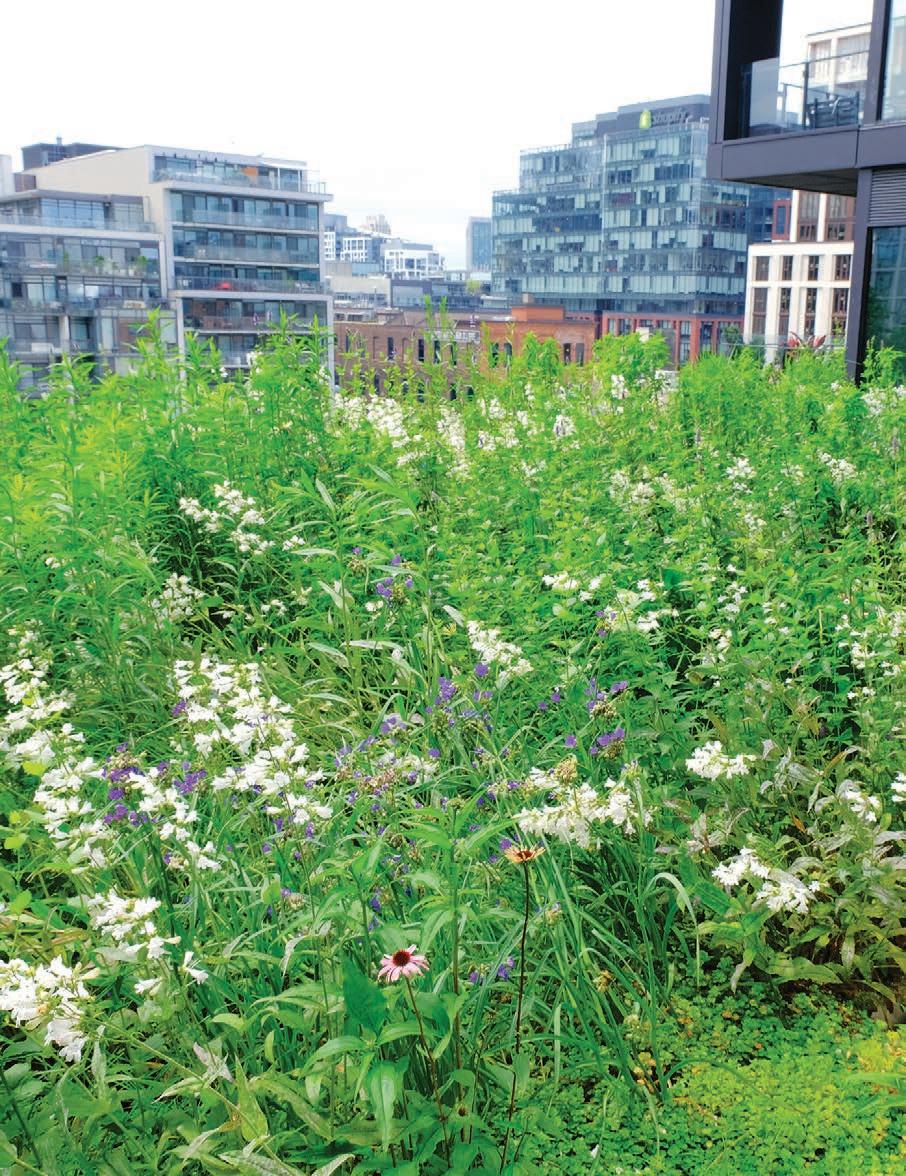
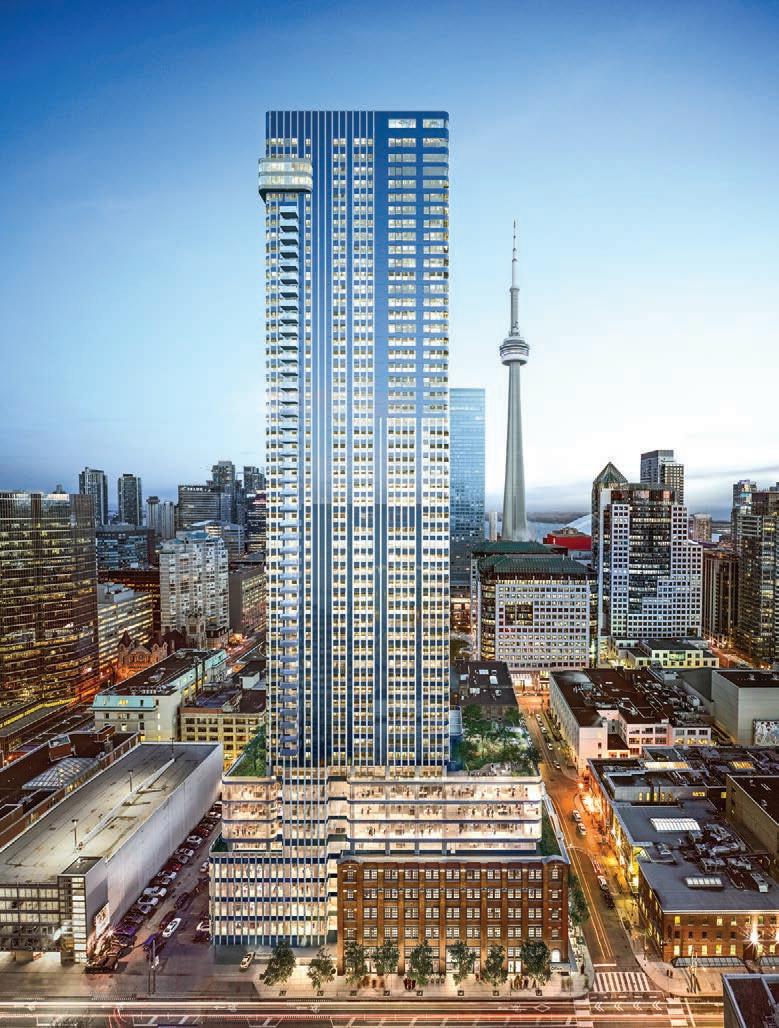
TORONTO HOUSE
by ROBIN BRUNET
Toronto House (at the corner of Duncan Street and Adelaide Street West) not only adds to that city’s inventory of both longterm and short-term stay apartments and commercial space, it achieves in spectacular fashion the difficult task of wedding a new structure with an existing historic building.
Visually, Toronto House is stunning: new podium levels rise up beside the six-storey heritage-designated Southam Press Building, built in 1908. The preserved historic structure is capped by a 58-storey rental residential tower offering 426 rental homes and 38 flexible stay homes. “The project brings all the components of creative life and work – workspace and rental apartments, a private members club, fitness and wellness, retail and dining – together in a ‘collision zone’ that we think will be unique in Canada and something that we can build upon,” states Tyson Parker, VP experiential development at Westbank, which developed the property in a joint venture with Allied Properties REIT.
Westbank’s intention with Toronto House was to build on the success of the Shangri-La Toronto only a few hundred feet away, to further curate this neighbourhood’s built environment. Equally important, with over a quarter of the development assigned to office space (fully leased as Thomson Reuters’ Global Innovation Hub) and


a significant portion of the residences sized for families, Toronto House meets the City of Toronto’s goals to add mixed-use and sustainable density in close proximity to a subway station.
David Pontarini, founding partner at Hariri Pontarini Architects, says, “Realizing the significance of the Southam Press building, we gave careful consideration to retaining its visual integrity. By rebuilding the east and south facades of the heritage building and recessing the four-storey addition above the building to a two-metre setback from the façade, the experience of the heritage building form was preserved along the streetscape. In contrast, the slender, elegant form of the tower dominates the skyline with its modernity.”
The architects also ensured that the street level would be enlivened by creating a restaurant sidewalk patio that would be accessed through new windows and doors, respectfully cut into the existing architecture.
Southam’s red brick cladding with stone, wood, and terracotta was contrasted by vertical fins of varying widths of the new structure running from the base to the top of the tower, intended to provide shade and minimize glare while accentuating the elegant proportions of the building (the fins also enclose two storeys of mechanical structure and cause one’s perception of the building to vary according to different viewing angles).
Pontarini goes on to note that, “The site posed various difficulties due to its narrow north-south orientation, spanning just over 30 metres in total, including a three-metre easement on the southern side. These constraints led to several design and construction challenges. A primary concern was the placement of the tower, as the City’s heritage planning division requested a setback from the heritage building facade on Adelaide, while zoning by-laws required a setback from the south property line. Balancing these conflicting requirements without compromising the tower’s floorplan necessitated close collaboration between Westbank and the consultant team, working with the City to develop a workable solution.”
Ground broke on the project in early 2019 with the Southam building’s north and west walls restored in-situ and reincorporated into the new podium; Icon West’s work was overseen by heritage specialists ERA Architects.
Pontarini says, “The site’s narrowness created access challenges during the construction of below-grade levels, resulting in the removal and subsequent reconstruction of parts of the heritage building after the completion of below-grade construction.”
Demetry Stergiou, designer at Jablonsky, Ast and Partners, points out that retaining the heritage components was a significant structural challenge. “The bricks of the façade
LOCATION
19 Duncan Street (Office) and 255 Adelaide Street W (Residential), Toronto, Ontario
OWNER/DEVELOPER
Westbank Corp. / Allied Properties REIT
ARCHITECT
Hariri Pontarini Architects
GENERAL CONTRACTOR
Icon West Construction
STRUCTURAL CONSULTANT
Jablonsky, Ast and Partners
MECHANICAL CONSULTANT
Lisi Mechanical / Reinbold Engineering Group
ELECTRICAL CONSULTANT
Nemetz (S/A) & Associates Ltd.
LANDSCAPE ARCHITECT
Janet Rosenberg & Studio
TOTAL SIZE
500,000 square feet
TOTAL COST
Undisclosed
were four to five bricks deep and expanded and contracted significantly during the course of a year, so in wedding the new structure to the facade we connected to it only laterally so the new structure and the façade could sway together. Otherwise, they were separate: for example, the new poured concrete floor extends two inches away from the façade.”
Stergiou adds, “As for the new structure, the different usages of interior space meant we designed different structural columns and beams for each space.”
The project was completed with a phased occupancy plan that allowed the office tenant to inhabit the lower 10 levels of the project while construction continued on the residential levels above. Westbank and the consultant team had to closely co-ordinate with city examiners, inspectors, base building contractors, and fit-out contractors to sequence and prioritize construction elements.
By October of 2021 Icon West had progressed construction to the point where the 11th floor – which is the first level of the tower – was beginning to rise above the podium.
Toronto House topped off in October of 2023, and when the project is complete early next year, the result will be a building tailor-made for the growing creative class of Toronto, one of North America’s fastest growing technology hubs. A
PEMBINA TRAILS COLLEGIATE
by NATALIE BRUCKNER

Pembina Trails Collegiate, a cutting-edge educational facility spanning 117,000 square feet, is not just a high school; it stands as a beacon of innovation and a pivotal element in the burgeoning community of Waverley West in Winnipeg’s southwest quadrant.
Designed to accommodate an initial enrolment of 1,200 students, the school prioritizes modern learning amenities, creating an immersive destination that fosters student wellbeing and a strong sense of place, both inside and outside the classrooms. Serving as a pillar for the community’s bright future, Pembina Trails Collegiate shares site access with the neighbouring K-8 school, Bison Run School, and will be adjacent to a future regional recreational centre.
Lisa Boles, superintendent and CEO of Pembina Trails School Division underscores the significance of Pembina Trails Collegiate: “Being the first high school to be newly constructed in Winnipeg in around 50 years, Pembina Trails Collegiate holds a unique position. It was crucial to gather feedback from the community to ensure that we got everything right from the very beginning.”
Penn-Co Construction Canada Ltd. broke ground the day after Thanksgiving in 2021. Despite starting on an open field with ample laydown space, the construction encountered unexpected challenges. Brett Preun, project manager at Penn-Co Construction, recalls, “The weather did not co-operate. The precipitation we received in the winter and spring of 2022 is the most in 50 years. The
project team worked hard to mitigate this, building access roads and pumping water out.”
Preun adds that the building itself employed various construction methods, including piling, structural steel, load-bearing masonry walls, and a steel deck. “It’s a fairly straightforward type of construction, and at its peak, close to 100 people worked on it,” he says.
While community collaboration was essential for this project, the spirit of teamwork extended beyond the school’s boundaries. Jon Trenholm, architect and principal at LM Architectural Group | Environmental Space Planning (LM-ESP), emphasizes the unique partnership with the neighbouring elementary school: “We collaborated closely with Prairie Architects, who were responsible for designing the adjacent K-8 school. Although we were two separate consultant teams, we had to collectively address how the schools would be sited and accessed. It was a collaborative and integrated process,” he explains.
The exterior design showcases thoughtful planning, aiming to foster strong connectivity between the indoors and out, and is anchored by a base crafted from local Tyndall Stone. The stone’s colour variation, achieved through unique quarrying methods, is enhanced with a golden hue in various finishes, imparting richness to the facade. Trenholm notes the artful complement of prefinished metal panels above the stone, introducing variation in profile and colour.
The facilities’ massing is highlighted at its primary entrances that
LOCATION
50 Frontier Trail, Winnipeg, Manitoba
OWNER/DEVELOPER
Pembina Trails School Division
ARCHITECT
LM Architectural Group (LM-ESP)
GENERAL CONTRACTOR
Penn-Co Construction Canada Ltd.
STRUCTURAL CONSULTANT
Crosier Kilgour
MECHANICAL/ELECTRICAL CONSULTANT
Epp Siepman Engineering
CIVIL CONSULTANT
WSP
INTERIOR DESIGN
Environmental Space Planning (LM-ESP)
LANDSCAPE ARCHITECT
HTFC Planning & Design
TOTAL SIZE
117,000 square feet
TOTAL COST
$37.6 million
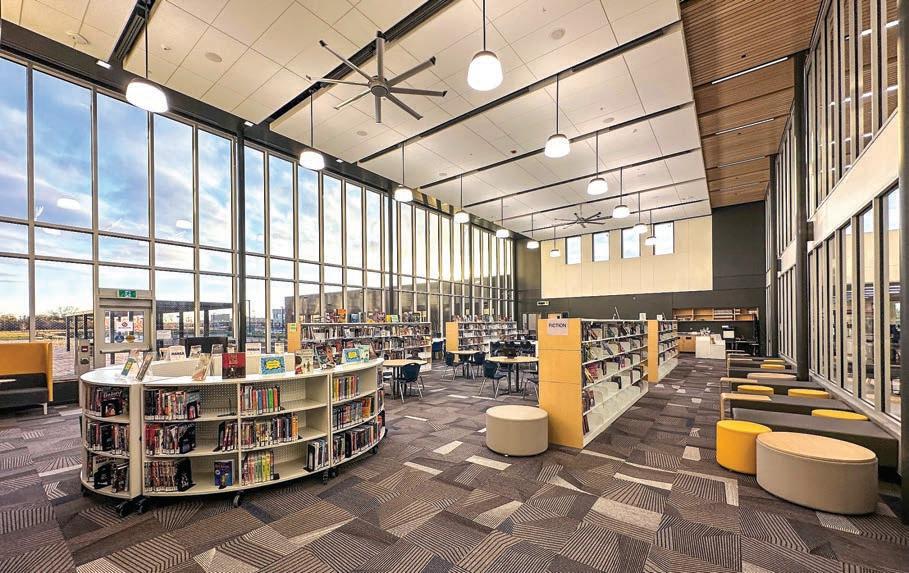
feature distinct colours and panelling, while a projection on the north side emphasizes the computer labs. Trenholm says the siting, outdoor play areas, and shared bus staging area foster connectivity between the two schools, with the south entry doors creating an inviting welcome to the senior years school for its neighbour.
The architectural vision seamlessly transitions into the interior with focal points like the two-storey glass library learning commons adjoining a shared courtyard. This outdoor academic lab, an extension of the science wing, features a trellis structure, picnic tables, and integrated power and lighting, expanding and enhancing the overall learning environment.
The central hub of the school is the two-storey student commons, anchoring four wings and serving various functions, from shared, active school spaces to a versatile lounge.
Trenholm emphasizes the intuitive design, creating visual connections and a sense of intimacy. “Standing in the library learning commons you can look through to the gym. The scale is well-balanced, and despite its size, it creates a more intimate environment,” notes Trenholm. Boles agrees, adding, “The high school features a blend of expansive communal spaces and smaller, more intimate areas. One of the many design elements I love is in the classroom wings, where there are breakout areas for students to collaborate and relax.”
When it came to the interior design, Shelly Slobodzian, principal and professional interior designer at LM-ESP, highlights the emphasis on this connectivity, flexibility, and community: “At the heart of the school we created a vibrant streetscape concept that promotes transparency, connectivity, and security. Natural light
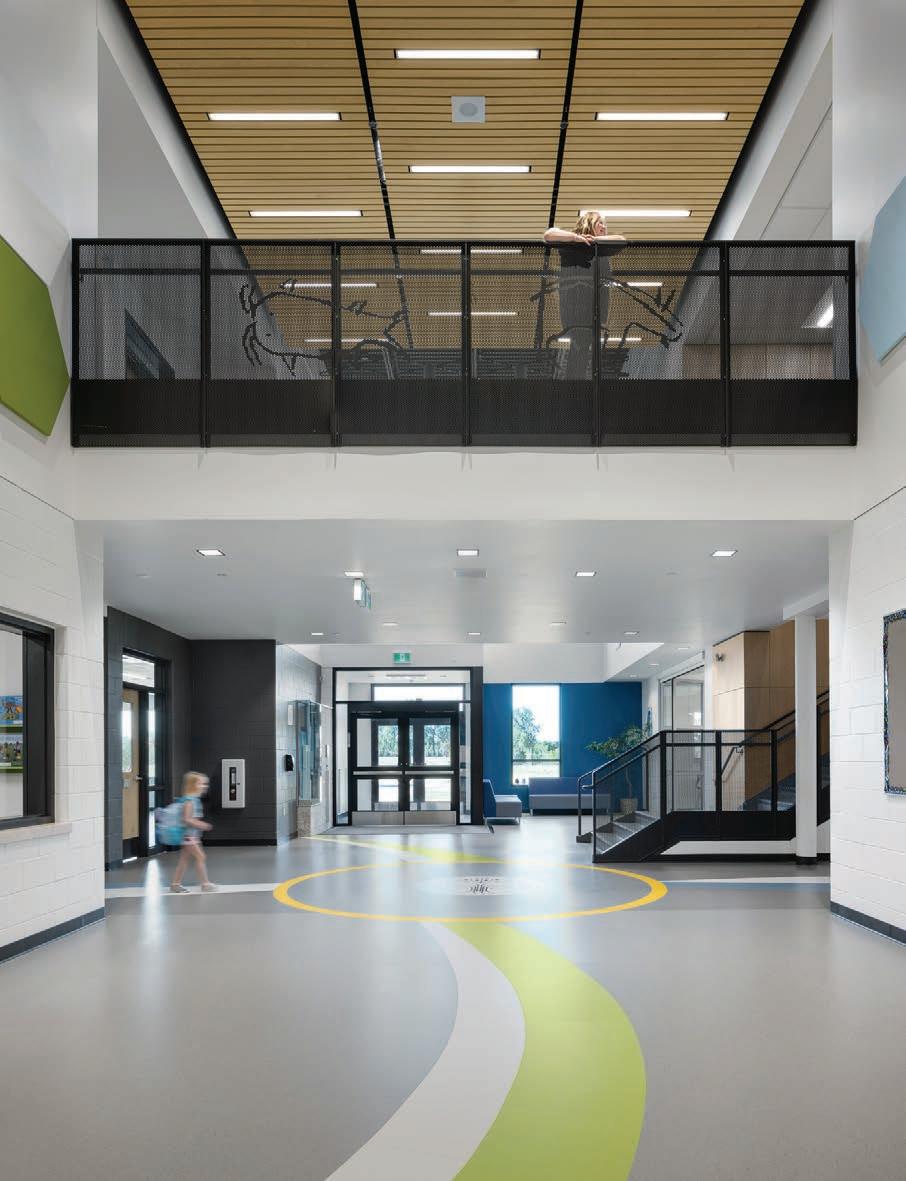




Pembina Trails Collegiate Pembina Trails School Division
LM Architectural Group
Penn-Co Construction
Photo courtesy of LM-ESP
floods these spaces through abundant use of glass, expansive volumes, an open three-storey central stair, and movable walls. The warm, inviting, quiet palette of materials include wood ceilings, grounding dark neutral tones, and high contrast white, punctuated by select bursts of vibrant colour and texture. The students themselves become the dynamic element in the space,” she says.
Having opened its doors in September, it’s fair to say that Pembina Trails Collegiate stands out as truly unique, not only because it is an integral part of this growing community, but because it unfolded amidst the bustling activity of construction for the adjacent elementary school. Despite the potential challenges, all teams involved collaborated seamlessly. Boles commends the teams on both projects, stating, “I’ve really come to appreciate the role of the architects and general contractors in terms of how they were able to work within the confines of a publicly financed building and still do amazing things, making it visually interesting and functional at the same time.”
Pembina Trails Collegiate has not only transformed the educational landscape in Winnipeg but has become


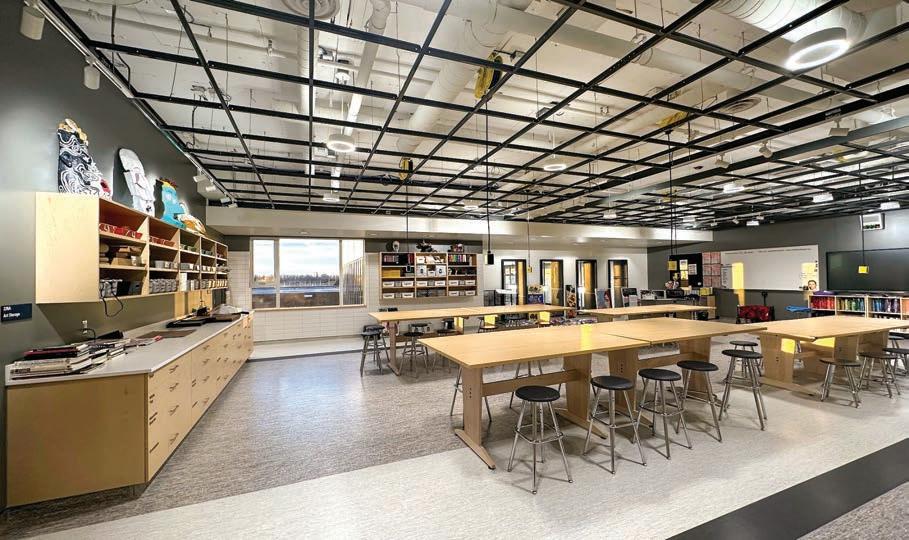




a source of pride for the entire community. Preun reflects, “It’s a beautiful school, and we’re all proud to have helped bring it to life.” Boles echoes the sentiment: “Staff is thrilled, students are thrilled, parents are thrilled. There’s something electric about being part of something new. Both this building and the adjacent Bison Run School give us the opportunity to build culture together.” A




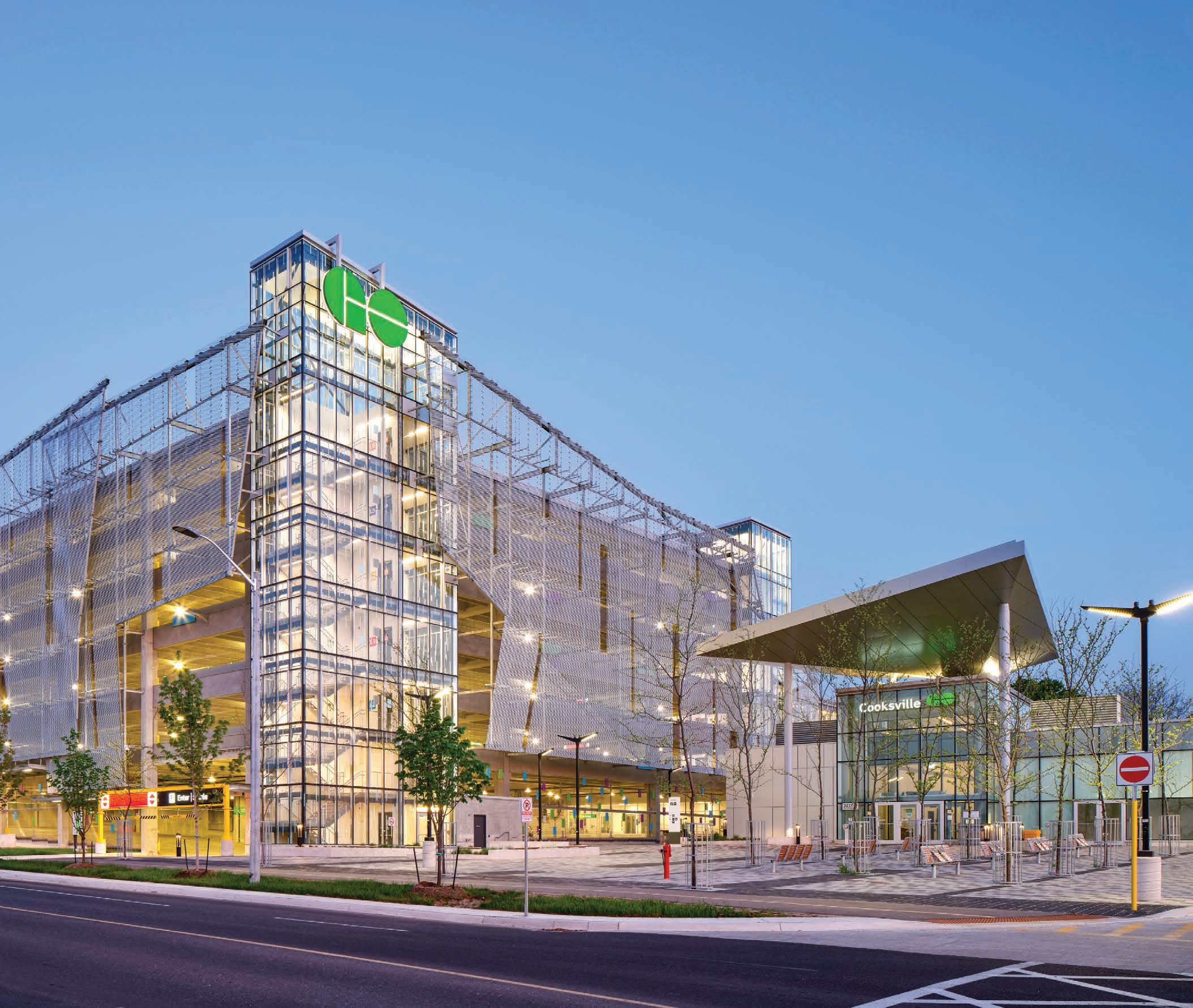
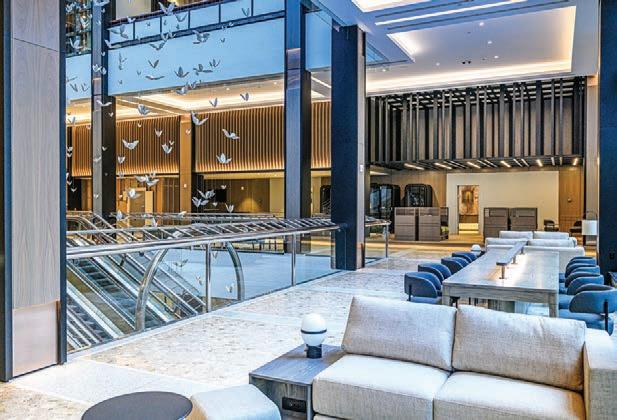

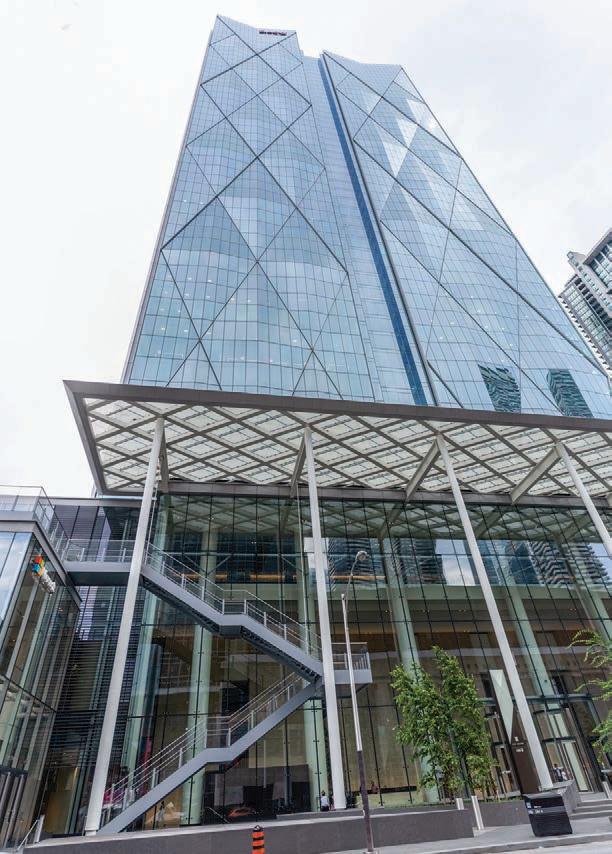
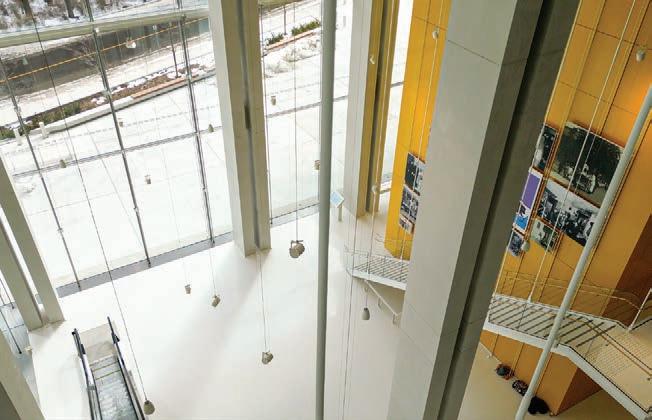

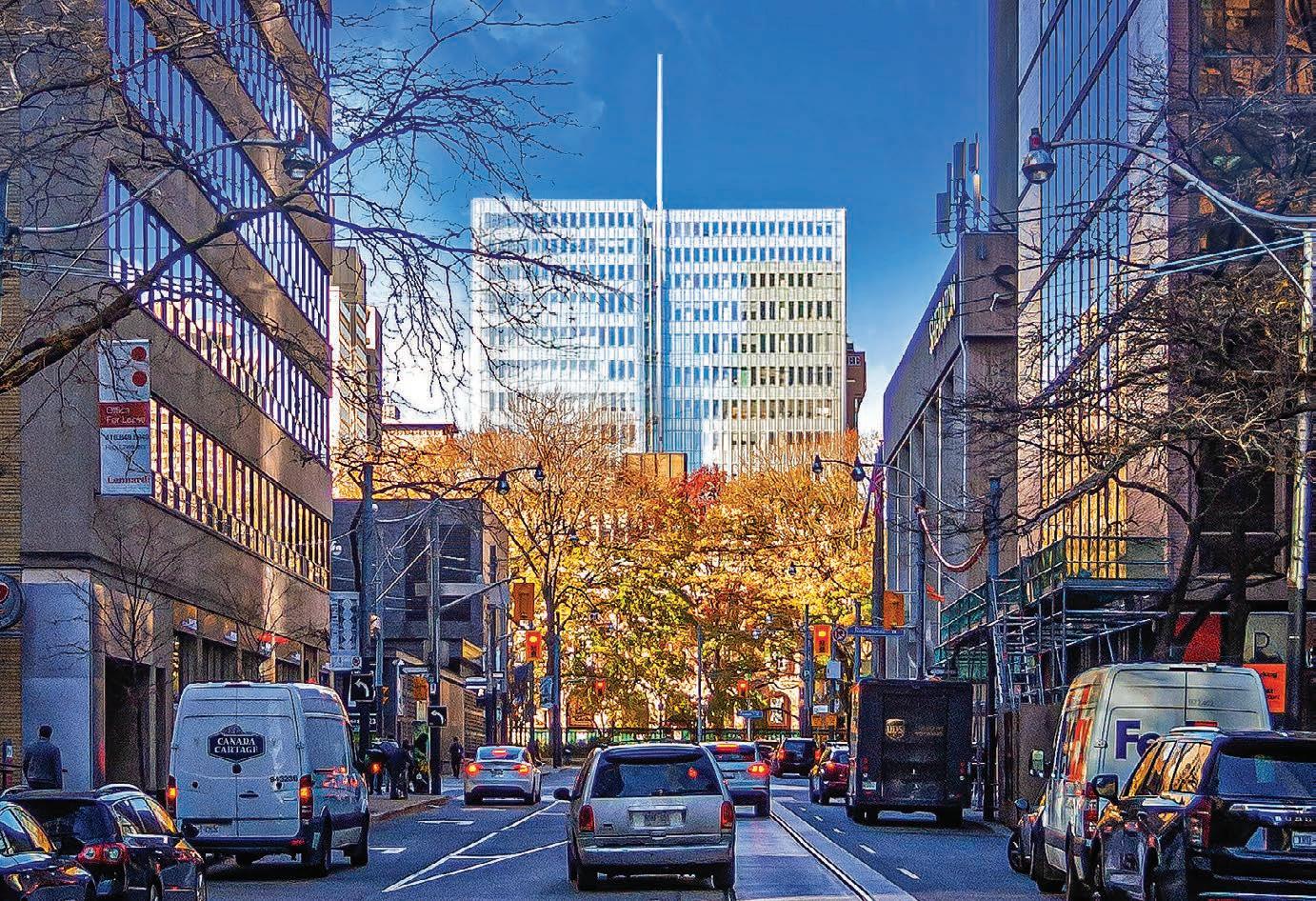
ONTARIO COURT OF JUSTICE – TORONTO
by ROBIN BRUNET
The development of government facilities is always complex and lengthy, especially when the task is to consolidate services. As was the case with Ontario’s new largest courthouse, the LEED Silver Ontario Court of Justice – Toronto. It stands at 17 storeys and houses 63 courtrooms, 10 conference settlement rooms, five intake courts, and various associated support facilities.
Infrastructure Ontario (IO) and the Ministry of the Attorney General (MAG) first issued a request for qualifications for a consortium to design, build, finance, and maintain a new courthouse in 2016. MAG focused on amalgamating court locations in order to better serve people in Toronto, bringing together most of the city’s Ontario Court of Justice criminal court operations and services.
Ian McConachie, media communications manager for Infrastructure Ontario, says of the architectural team: “We had partnered with NORR on various infrastructure projects, but this is the first Renzo Piano Building Workshop [RPBW] project in Canada [the firm is based out of Genoa, Italy, and Paris, France] and we were pleased to work with them.”
In addition, Kleinfeldt Mychajlowycz Architects (KMA) and Montgomery Sisam Architects (MSA) formed the planning, design, and
compliance team for the new courthouse. KMA/MSA prepared project documents, including output specifications that formed guidelines and performance requirements that the building team needed to meet when preparing the project’s design.
“Design milestones throughout the project enabled the team to review
and provide input into the design as it evolved,” McConachie says. Also, “The team consulted with justice participants and the community to consider their needs.”
According to NORR, the design concept was “defined by a desire to reimagine the institutional building and the courthouse in particular as an
LOCATION
10 Armoury Street, Toronto, Ontario
OWNER/DEVELOPER
Ministry of the Attorney General
PROCUREMENT & PROJECT MANAGEMENT
Infrastructure Ontario
ARCHITECTS
Renzo Piano Building Workshop / NORR
DBFM CONTRACTOR
EllisDon Design Build
STRUCTURAL CONSULTANT
Stephenson Engineering
MECHANICAL CONSULTANT
The HIDI Group
ELECTRICAL CONSULTANT
Mulvey & Banani
HERITAGE CONSULTANT
+VG Architects
INDIGENOUS CONSULTANT
Two Row Architect
TOTAL SIZE
780,000 square feet
TOTAL COST $956.4 million
integral civic component within the city that is accessible, dignified, and independent. The project is intentionally compact, staying well below the maximum allowable height, maintaining a respectful relationship to Osgoode Hall, a national historic site, and Toronto City Hall, while having a presence of its own.”
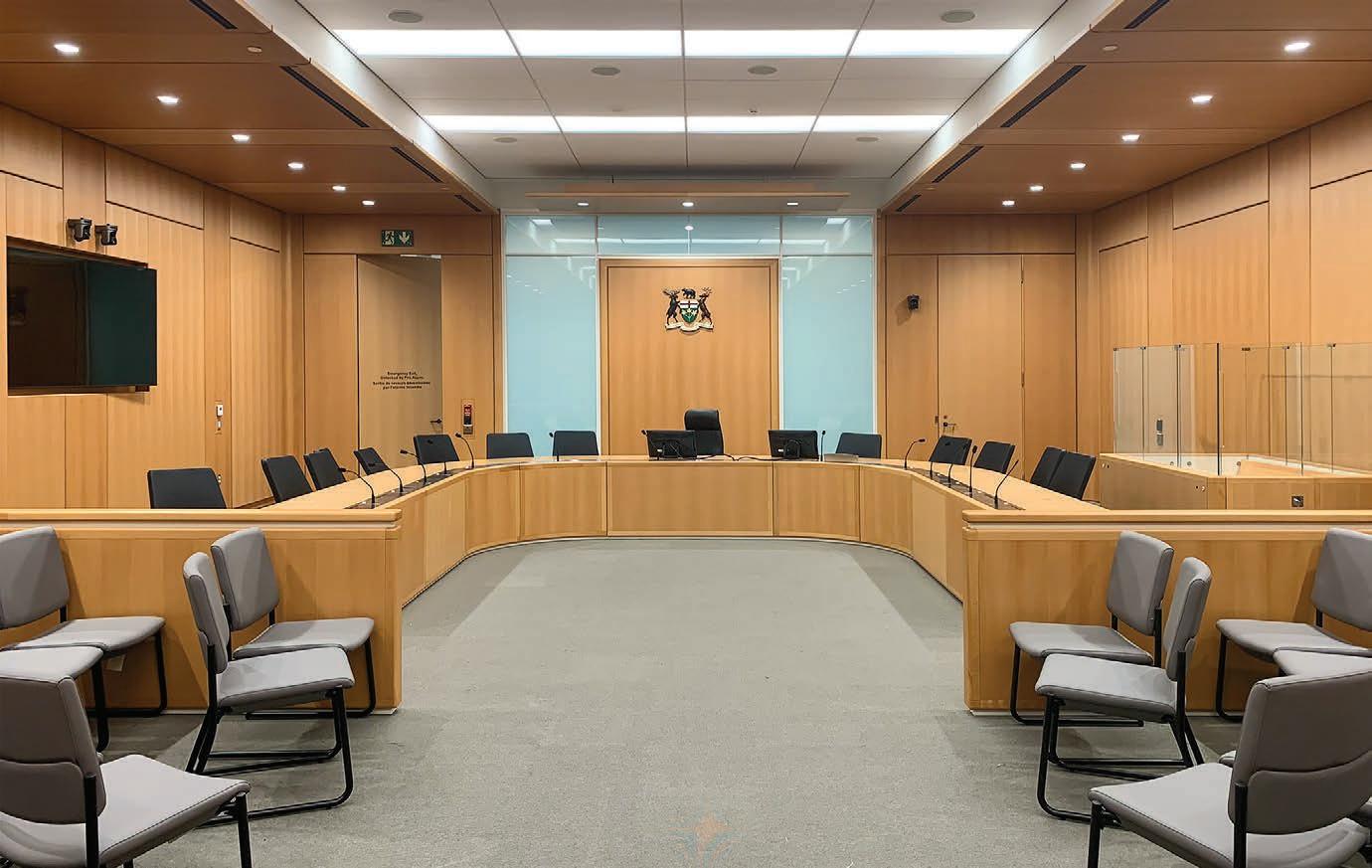

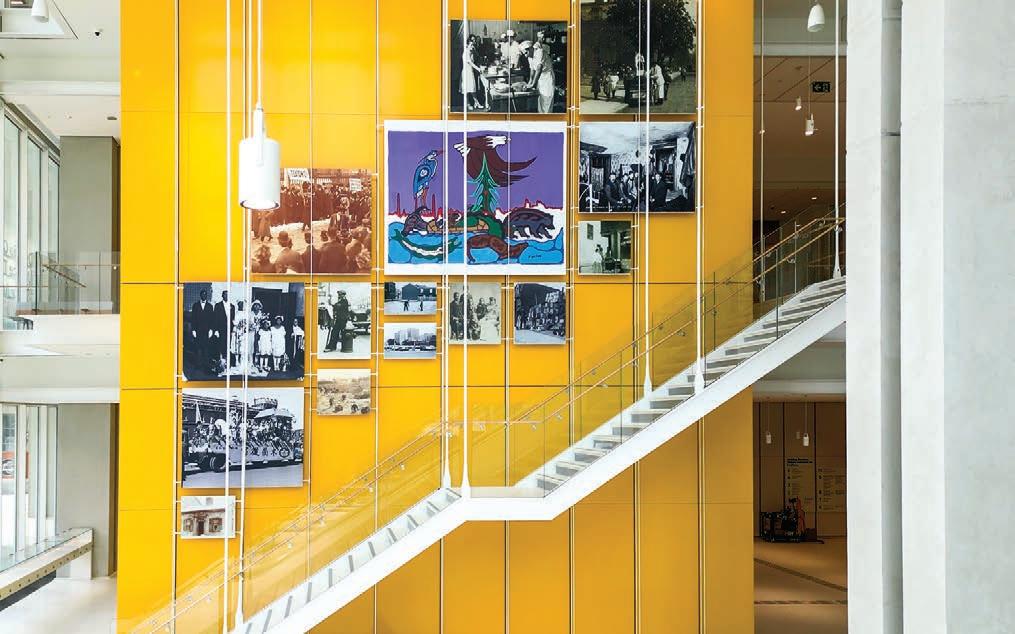
THE DOOR HARDWARE & SECURITY EXPERTS
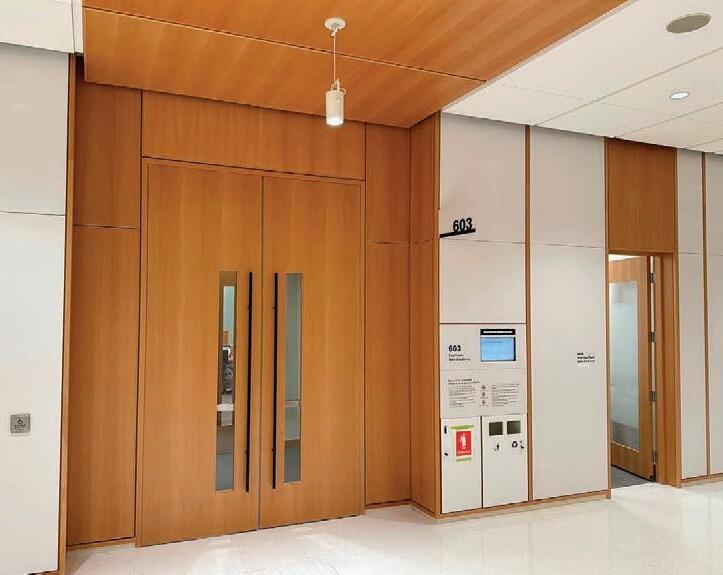
RPBW states that a 20-metre-tall atrium enclosed by a transparent glazed facade “creates an immediate and strong image which extends the public realm into the building, as well as expressing the public nature of the courthouse within the city.”
Above the podium, a clearly legible cubic volume houses the majority of courtrooms and associated services. “This volume floats above the highly glazed lower levels but retains an image of lightness due to the facade design composed of layers of glass and embossed metallic back pans, generating a dynamic and immaterial play of constantly changing reflections and shadows,” RPBW states.
McConachie says, “Several studies needed to be undertaken to ensure sufficient infrastructure provisions exist for the purpose of the courthouse. We also worked with the municipality to re-zone the site for additional height and density needed for a high-rise courthouse.”
Prior to EllisDon Design Build Inc. breaking ground on the project in 2018, IO undertook a complex archaeological excavation that uncovered thousands of artifacts from when the site was part of St. John’s Ward, one of Toronto’s earliest immigrant


settlements. The work ensured that the historical value of the site was documented and preserved, with some heritage elements forming a permanent atrium display.
As for the onset of COVID, McConachie notes that, “When things ground to a halt during the pandemic, construction on projects like this, deemed essential, continued.”
EllisDon achieved substantial completion on January 31 of this year; EllisDon Facilities Services, in partnership with SNC-Lavalin (which were involved through the design development, construction, and commissioning) now operates and maintains the building.
While the completed facility is a striking architectural addition to downtown Toronto, Attorney General Doug Downey reminded media when the province announced the opening of the courthouse that, “The consolidation of resources will permit centralized criminal case management, a greater concentration of expertise, and the effective and efficient scheduling of judges, justices of the peace, Crown attorneys, court staff, duty counsel, and interpreters to support the timely processing of criminal matters.” A

+VG Architects congratulates Infrastructure Ontario on the completion of the Ontario Court of Justice in Toronto. We are proud to have been part of the EllisDon design team with Renzo Piano Building Workshop and NORR Architects.


BISON RUN SCHOOL
by NATALIE BRUCKNER

The Waverley West neighbourhood in southwest Winnipeg is one of the city’s most rapidly growing areas, and so it stands to reason that when Bison Run School opened in January of this year, the community welcomed it with open arms.
The school is also part of the Manitoba government’s commitment to building 20 new schools in 10 years. “Studies have shown that Waverley West is expected to become the size of Brandon. This new school will help alleviate pressures on other Kindergarten to Grade 8 schools in Waverley West. While we still need to transport students into neighbouring schools, that impact has been mitigated by the opening of Bison Run School,” explains Lisa Boles, superintendent and CEO of Pembina Trails School Division.
This state-of-the-art, two-storey facility spans 81,400 square feet and is situated on a 25-acre parcel. It is more than just a school, it’s a community hub designed to foster the holistic development of 800 children from Kindergarten to Grade 8. Additionally, it is part of a community campus for Waverley West, with the construction of Pembina Trails Collegiate adjacent to Bison Run currently nearing completion.
Construction of the project began in August 2021, and as is often the case with projects in the region, the site posed a few more challenges than anticipated due to soil conditions. “It was a greenfield site and presented issues such as floods during the foundation stage. However, with strategic dewatering and silt replacement, the team successfully prepared the site for the foundation,” says Steven SaperSilver, project manager at Bird Construction.
For the building’s design, it was a true community project, with input sought from community members, staff, and students. “Bison Run School was an appealing project to us as it allowed us to design a building and site
that would support the physical and psychological health and well-being of children; foster a sense of belonging and community-building; and flex our creative muscles with flexible and multi-use spaces that together become more than the sum of their parts,” explains Lindsay Oster, principal architect at Prairie Architects Inc.
The exterior design is both simple yet striking, combining metal cladding, glazing, and quarried stone. “A lot of thought and effort was given to the materiality of the school, right down to the Tyndall stone and the location of the visible fossils on the wall,” says SaperSilver. “The exterior materials create an aesthetically pleasing and resilient structure.”
Bison Run School features two entrances: one on the north side, off the bus loop; another on the south side near the parking lot. “The architects strategically used red brick to guide attention toward the entrances. This red element continues into the building and is drawn into the library on the north side, culminating in a feature wall with glass,” explains Boles.
Oster emphasizes that both the north and south entries lead occupants to the heart of the building – the interconnected, two-storey entry commons that is flooded with natural daylight. The abundance of natural light streaming into the building brings it to life.
“We wanted a bright and welcoming atmosphere, considering the school’s pivotal role as a central point in a brand-new community,” says Boles.
Furthermore, as the first building on the site, it was crucial to account for student and staff interaction not only during school hours but also after school, as Oster explains: “Increasingly, schools are expected to operate as community hubs, presenting an incredible opportunity to design with after-hours and flexible use in mind.”

Consequently, the central core of Bison Run School is purposefully designed to serve as a self-sufficient community space. “Through a large operable wall, the commons can be completely opened into the multipurpose room, which doubles as a performance space for the gymnasium. With this and other critical adjacencies to the kitchenette, washrooms, library, and the before-and after-school childcare spaces, the central core of the building serves as a student and community hub for the Waverley West neighbourhood,” says Oster.
The school’s commitment to creating inclusive and engaging spaces goes beyond classrooms, incorporating sound field spaces. “While we place a significant focus on lighting, and there’s ample natural light streaming into the building, I can’t emphasize enough the importance of the sound field system. Our Board supported the integration of sound field spaces in all areas, not just larger spaces mandated by code requirements. It might seem like a minor detail, but its impact is significant, ensuring that everyone can feel engaged and hear,” says Boles.
Boles also underscores the extensive community engagement, with a special focus on incorporating Indigenous elements. The school actively embraces Indigenous ways of knowing, collaborating with a team of Indigenous student success teachers who work alongside educators to infuse these essential principles into the learning environment.
Despite facing an aggressive schedule, the project was completed on time and on budget – a remarkable achievement acknowledged by SaperSilver. He credits the hard work of the entire team, including Emily Foidart, Bird Construction’s project manager who worked on the project and incidentally welcomed a new life into the world on the day of substantial completion.

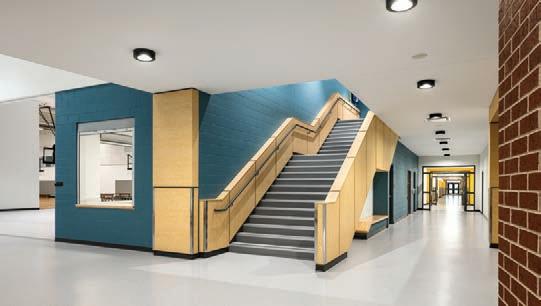
What truly set this project apart was the simultaneous construction of Pembina Trails Collegiate on the same site. This involved different architects and general contractors, making it a rather atypical situation. However, it operated seamlessly, thanks to the dedicated teams involved.
“We are extremely proud to have been a part of a project that had so many moving parts during the design stages. This project came with many challenges, largely stemming from the fact that it was designed and mostly constructed before the surrounding area has been fully built up. The ongoing and extensive collaboration with the design teams and representatives for the neighbouring high school and future community centre, the neighbourhood developer, the City of Winnipeg area councillor, and our client, Pembina Trails School Division and the Government of Manitoba, makes this school especially unique for us and is an accomplishment we are quite proud of,” says Oster. A
LOCATION
60 Frontier Trail, Winnipeg, Manitoba OWNER DEVELOPER
Pembina Trails School Division
ARCHITECT
Prairie Architects I nc.
GENERAL CONTRACTOR
Bird Construction
STRUCTURAL CONSULTANT
Wolfram Engineering Ltd.
MECHANICAL/ELECTRICAL CONSULTANT
SMS Engineering
CIVIL CONSULTANT
WSP
LANDSCAPE ARCHITECT
HTFC Planning & Design
TOTAL SIZE
81,400 square feet
TOTAL COST
29.9 million
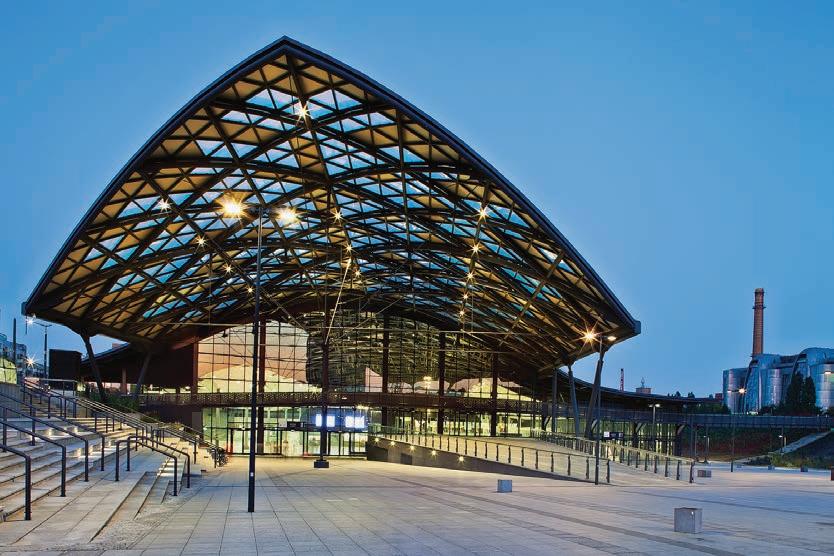

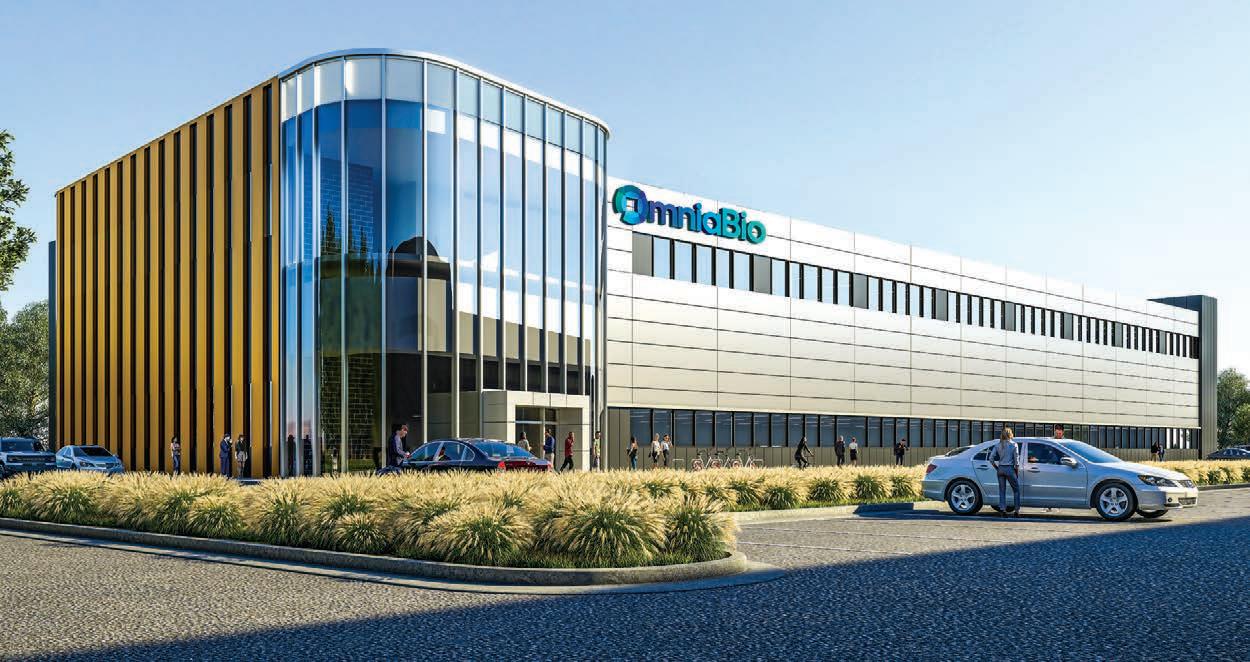
OMNIABIO – MCMASTER INNOVATION PARK
by ROBIN BRUNET
The OmniaBio project faced many challenges, including a fast-track schedule and the hurdles of the COVID lockdowns; but an intense delivery process resulted in success – and a facility that provides the missing infrastructure necessary to keep Canadian cell and gene therapy companies in the country, while attracting foreign firms.
Located at McMaster Innovation Park (MIP) in Hamilton, Ontario, OmniaBio is a commercial-scale cell and gene therapy manufacturing facility designed to advance pioneering medicine with the potential to cure many forms of cancer, cardiovascular disease, and other maladies.
The fast-track nature of the project was such that developers MIP realized it had to be undertaken using the Integrated Project Delivery (IPD) method. Frances Grabowski, VP of design and development at MIP and IPD lead says, “Implementing IPD enabled us to kickstart the project by focusing primarily on the most significant cost factors. We were able to streamline the process through collaboration between architects, builders, and key sub-trades who iteratively shared insights and gained a profound understanding of the facility’s requirements.”
Originally, a design-build prequalification was tendered for a 300,000-square-foot Clinical and Commercial Manufacturing building for CCRM on McMaster Innovation Park property. Multiplex with Arcadis | IBI Group, Arup, and Colliers Project Leaders were shortlisted and ultimately chosen with the ability to pivot and refocus in an IPD structure, allowing the team to build a smaller facility on the West side of the property (100,000 square feet), quicker, and to satisfy the demand to bring cell and gene therapies to the world within two years.
IPD enabled the team to leapfrog and overcome many COVID lockdown-related problems. “For example, we started the project in December of 2021 and ordered the structural steel in March of 2022 with our major trade as a partner, knowing that delivery would be at least 10 months away,” Grabowski says. “In April of 2022 the preliminary design was completed, and the steel arrived in November.”
Grabowski adds that the intense collaboration of IPD also enabled the project’s budget to be reduced from $51 million to $44.75 million.
Steve Donnelly, associate director/ practice lead, architecture at Arcadis | IBI Group, agrees that the IPD method “allowed us to build a complex facility during a time of massive delays and inflation. Everything was considered with risk management in mind, and among many benefits the multi-party agreement provided us with real-time costing and availability of materials, plus lead times.”
Donnelly goes on to point out that the site for OmniaBio “was adjacent to a highway and on the edge of a research park, behind a building with a shared driveway and truck turning requirements. Aesthetically it had to fit in while being distinctive in its own right, as well as being constructed to achieve social sustainability and net zero standards.”
Arcadis | IBI Group created a three-storey horizontal structure encompassing the labs, offices, and manufacturing components, with a spectacular curved entranceway corner of curtain wall at one end. “Long strip windows were designed to run along the perimeter of the building to achieve our goal of having natural light penetrate deep within,” Donnelly says.
Due to availability and quick installation features, insulated wall panel was chosen as the cladding. “In addition
to enabling us to close the building very quickly, the five-inch panels had great R value,” Donnelly says.
The curved entrance is a vertical column that calls attention to itself on the exterior, but despite its massive appearance, the level three lobby space for OmniaBio is more intimate, and on level one there is a same-sized lobby for secure access to the cGMP space. As for colour schemes, Donnelly notes that “Outside is a silver, charcoal, and black palette that exhibits a general coolness of tone in keeping with other facilities in the business park. A similar palette but with warmer tones was chosen for the interior.”
Arup provided the full suite of engineering services for the OmniaBio project, including structural, mechanical, electrical, IT and communications, security, and sustainability services. “We were also huge proponents of the IPD framework, as it allowed us to integrate input from our trade partners into our design from the onset of the project,” says Tudor Munteanu, senior engineer at Arup.
Munteanu points out Arup’s sharing of its BIM models with the structural trade facilitated the early ordering of steel. “Overall, by working together in the same digital environment we were also able to procure long lead items such as structural steel just two months after the start of design. The air handlers and medium voltage equipment followed shortly after and were procured three and five months after start of design, respectively.”
Construction began in the fall of 2022 after a soil management program was completed by MIP. Multiplex’s project team hit the ground running, with an understanding of the time constraints of the tenants’ schedule; the last planner
system was utilized to align with the tight timeline ensuring just-intime delivery.
Stuart McCready, senior manager collaborative construction at Multiplex, shares: “Our knowledge platform and global experience in collaborative delivery models similar to IPD set up the project team for success.” Multiplex’s operational efficiency focused on enclosing the building envelope for the 119,000-square-foot facility to meet critical milestone targets. “By October the building was weathertight and the exterior was nearly complete,” Donnelly adds.
For her part, Grabowski regards the project as a shining example of how an aggressive development timeline can be adhered to through innovation using IPD while maintaining standards and guidelines set by the owner. “We were on schedule for the building to be completed by November 10, which is remarkable,” she says. “We’re very proud of the outcome.” A
LOCATION
Longwood Road South at Aberdeen Avenue, Hamilton, Ontario
OWNER/DEVELOPER
McMaster Innovation Park
ARCHITECT
Arcadis | IBI Group
GENERAL CONTRACTOR
Multiplex Construction Canada
STRUCTURAL/MECHANICAL/ ELECTRICAL/IT/COMMUNICATIONS/ SECURITY/SUSTAINABILITY CONSULTANT Arup
CIVIL CONSULTANT
A.J. Clarke & Associates Ltd.
LANDSCAPE ARCHITECT
SpruceLab Inc.
TOTAL SIZE
119,000 square feet
TOTAL COST
$44.75 million




BIIGTIGONG NISHNAABEG ELEMENTARY SCHOOL
by STACEY MCLACHLAN
The new Biigtigong Nishnaabeg Elementary School is an incredible educational resource for the local students. However the process to just getting to opening day offered at least one key lesson that the team behind this incredible education complex will never forget: it’s never too late to start over.
After an overly ambitious first design fell flat due to cost, the Biigtigong Nishnaabeg development team found themselves starting over with a reduced construction budget and only an eagle-shaped gravel patch to show for it. “The community values education so much. We had such huge dreams and ideas, and it added up,” explains Lisa Michano, education director for the school.
But rather than be defeated by the false start, the team took it as an opportunity to streamline and shed some of the more complicated design elements to create a campus where every detail, every square inch, was purposeful and essential. And of course, the intent of making the best possible educational facility for the kids was still there for Take Two. They deserved it, after decades of studying at the previous, dilapidated campus. “It had seen better days,” says Michano. “There was never a gym.
There was never a real cafeteria.
The basement was being used as a classroom; classes were being held in 20-year-old portables.” In other words: this rebuild was a long time coming.
One look at the new 29,924square-feet campus, designed by Architecture49 (A49), and it’s clear it was worth the wait. The building is clean, bright, and airy, with ample natural light that pours through clerestory windows. It’s not complicated or overly indulgent, but it’s also certainly anything but boring, thanks to warm woods that nod to the community’s deep-rooted connection to nature. “A positive self-identity is reinforced by association with natural materials, nature, and the land on entry to the building,” explains Victor Kolynchuk, architect with A49.
The First Nation’s culture is everywhere you look here. The layout of the flooring will resemble a stream, for instance, and the home economics classroom opens up to a traditional cooking and food-sharing space outside the doors. “Those elements that represent our community, that resemble us, are so important. It’s not just a Plain Jane building,” says Michano.
The building is oriented to the nearby daycare and health centre, cementing its place at the heart of the
community, and the main entrance opens up to a south-facing cafeteria with views of the nature trails beyond. Importantly, the new design finally pulls all the classrooms into one building. “Having everybody under one roof? We’ve never experienced that,” says Michano. “Some of the teachers are laughing, realizing we’ll have an intercom for the first time.”
The playground and sport fields will be just as important to the kids and teachers; when school starts, they’ll also have access to outdoor learning environments, a large fire pit, and outdoor play spaces (like an outdoor ice rink).
Environmental sustainability is another cornerstone of Biigtigong Nishnaabeg’s vision for its new elementary school. The facility was designed with energy efficiency in mind, utilizing cutting-edge technologies and sustainable materials to minimize its ecological footprint. A timber frame design and extensive wood products form the structure; there’s also a high-efficiency HVAC system, including a concrete slabon-grade with an in-floor hydronic heating system.
From interactive classrooms to a vast library and resource centre, the school empowers students and
LOCATION
78 Pic River Rd., Heron Bay, Ontario
OWNER/DEVELOPER
Biigtigong Nishnaabeg
PROJECT MANAGER
Keewatin-Aski Ltd.
ARCHITECT/LANDSCAPE ARCHITECT Architecture49
GENERAL CONTRACTOR
Finnway General Contractor
STRUCTURAL CONSULTANT WSP
MECHANICAL/ELECTRICAL CONSULTANT MCW
TOTAL SIZE
29,924 square feet
TOTAL COST
$21.5 million
educators alike to explore innovative teaching methodologies and embrace a culture of continuous learning. The school is slated to open in December: a dream (finally) come true. “We didn’t want to accept a cookie-cutter design,” says Michano. “We made it everything we could possibly want.” A






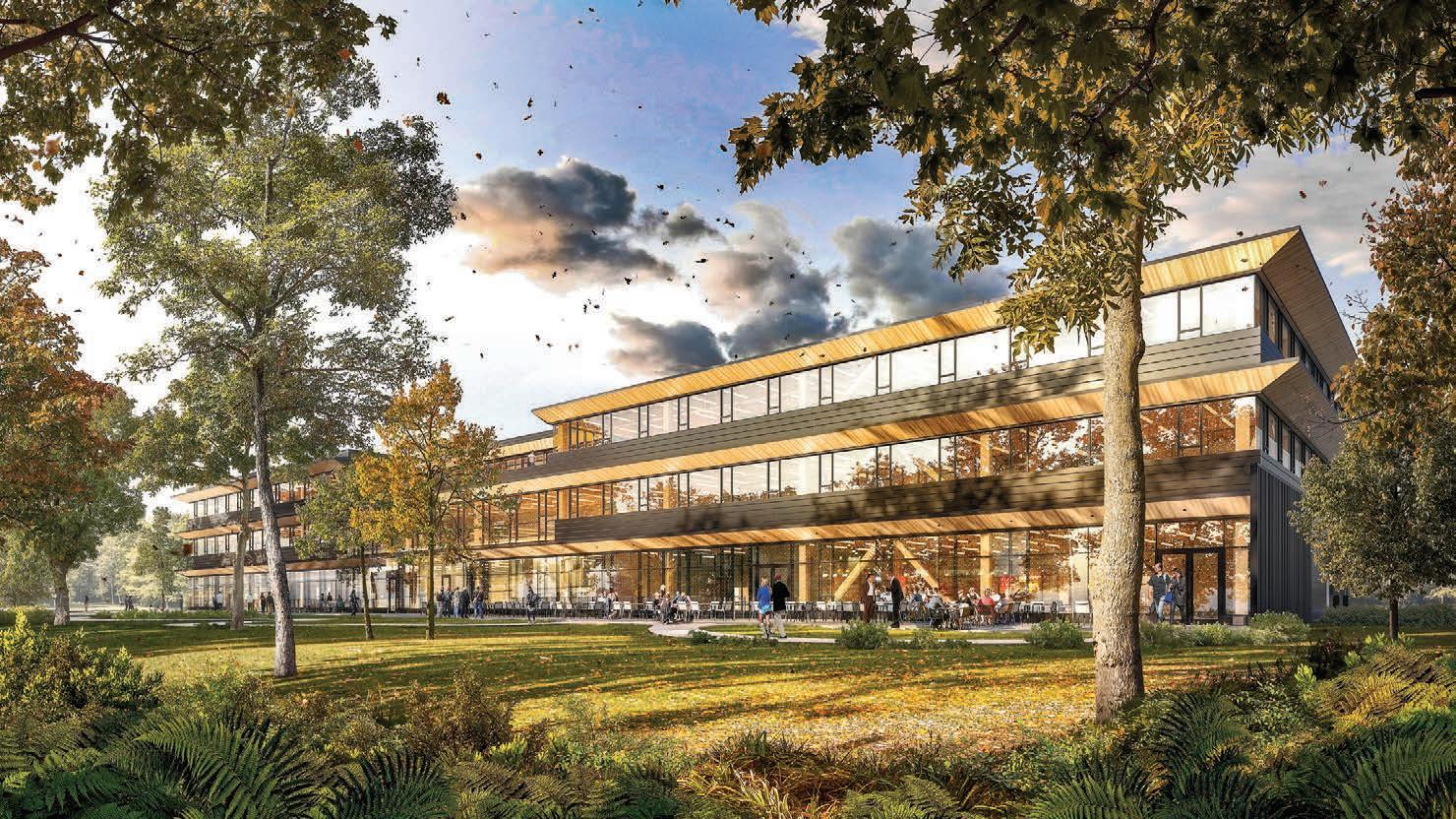
LOCATION
60 Mobile Drive, Toronto, Ontario
OWNER/DEVELOPER
OSSTF/FEESO
ARCHITECT
Moriyama Teshima Architects
CONSTRUCTION MANAGER
Eastern Construction
STRUCTURAL CONSULTANT
Fast + Epp
MECHANICAL/ELECTRICAL/ LEED CONSULTANT
Introba
CIVIL CONSULTANT
Matrix Solutions Inc.
INTERIOR DESIGN
Kasian
LANDSCAPE ARCHITECT
Forrec Ltd.
TOTAL SIZE
124,000 square feet
TOTAL COST
$57 million
OSSTF/FEESO HEADQUARTERS & MULTI-TENANT COMPLEX
by ROBIN BRUNET
Its title may be a mouthful, but the new OSSTF/FEESO (Ontario Secondary School Teachers’ Federation) Headquarters & Multitenant Complex in North York boasts a design that is elegant in its simplicity. It also contains a host of sustainable materials and energy-efficient elements that have contributed to this project targeting LEED Platinum certification (as well as high-energy performance levels at 67 kWhr/m2/year).
Jim Spray, chief financial officer at OSSTF/FEESO, says, “The new facility is the result of us assessing whether we could perform a major retrofit of our original headquarters that had been built in the 1970s and deciding that the cost did not justify the benefits and would not achieve our goals of efficiency and sustainability.
“We sought expertise in achieving these goals, so we hired architect Paul Dowsett at Sustainable.TO. Paul is a strong advocate for zero carbon construction and the use of mass timber as the structure. Paul’s expertise and enthusiasm convinced OSSTF/ FEESO to proceed with these environmental principles. In 2019 we retained Moriyama Teshima Architects and they created a very clean, horizontal form that pleased us so much that we didn’t make any changes apart from some minor size modifications.”
Moriyama Teshima designed a three-storey mass timber building to house the OSSTF/FEESO offices, as well as two floors of leasable tenant space. A central atrium was created as a visual showcase that also served to bring natural light deep into the facility as well as (via a solar chimney) help recirculate fresh air throughout. The architects
also designed shareable spaces on the main floor, including the lobby, café, and main floor terrace, as well as a multipurpose, convertible event area.
Carol Phillips, partner at Moriyama Teshima, notes that the architecture was driven by the goal to promote health and wellness at every level: natural daylighting was maximized thanks to generous structural bays; both through passive natural convection and building automation systems, fresh air would move through the building; large overhangs would reduce solar heat gain and control glare; and geothermal heating, a rainwater harvesting system for toilet flushing and irrigation, green roof, rooftop solar PV panels, and automated daylight dimming controls further contributed to significant energy savings.
In terms of programming, Phillips says, “We flipped the layout of the old headquarters that had offices on the perimeter and administrative staff in the middle by creating open work spaces all around and offices in the middle with glazing so that they too would receive natural light.”
Phillips says of the Cross Laminated Timber floor slabs and Glue Laminated Timber beams and columns, “We sourced mass timber from northern Quebec from a company that uses smaller black spruce dimensional lumber in two-by-four and two-by-six lengths to create the laminates.” The atrium is a showcase for the wood, where pillars rise three storeys and branch into an X pattern to reach a canopy that is reminiscent of the forest adjoining the headquarters. “The OSSTF headquarters is
also situated next to a ravine, and the water flow is represented by vertical wood slats on the feature stair leading to a reflective pool underneath,” Phillips says.
The old OSSTF headquarters was demolished in 2020 after a long period of obtaining regulatory approval. “The new building was to be located next to
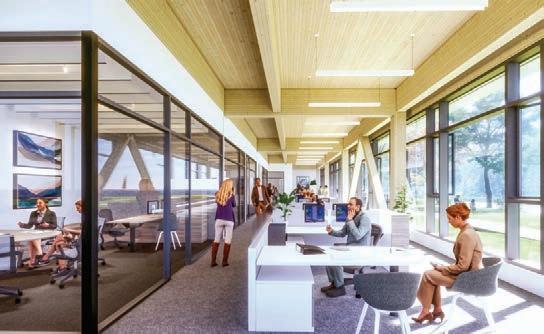
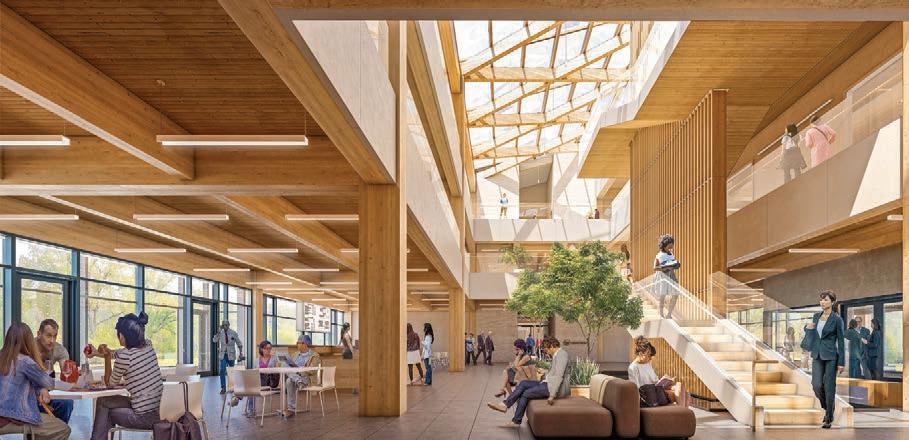
a ravine, so many environmental protocols had to be addressed,” says Ryan Desjardins, project manager at Eastern Construction. “One of these items resulted in the creation of a new spillway – basically a series of baffles – that would allow rainwater surface runoff to reach the ravine more gently.”
In terms of construction of the new headquarters, Desjardins notes that, “About 37 tractor-trailer deliveries of timber were required for the building, and moisture control for the wood led us to develop a drying system that proved very effective and which we hope to use on future projects.”
Eastern Construction also built a temporary facility for OSSTF staff across the road from the building site.
As of October, the building shell was complete and interior millwork had begun, with work crews aiming for completion in early 2024. “To me, if a teachers federation can make the commitment to develop a LEED Platinum facility then so can many other organizations,” Phillips says. “This was an inspiring project for all involved.”
Spray adds, “The lockdowns extended our schedule, but our team of experts, including Eastern Construction, did a fabulous job navigating the COVID-related challenges, and as a result we’re substantially on budget and very close to our original schedule. Better still, we’ve got a product we love. So the effort has been more than worth it.” A
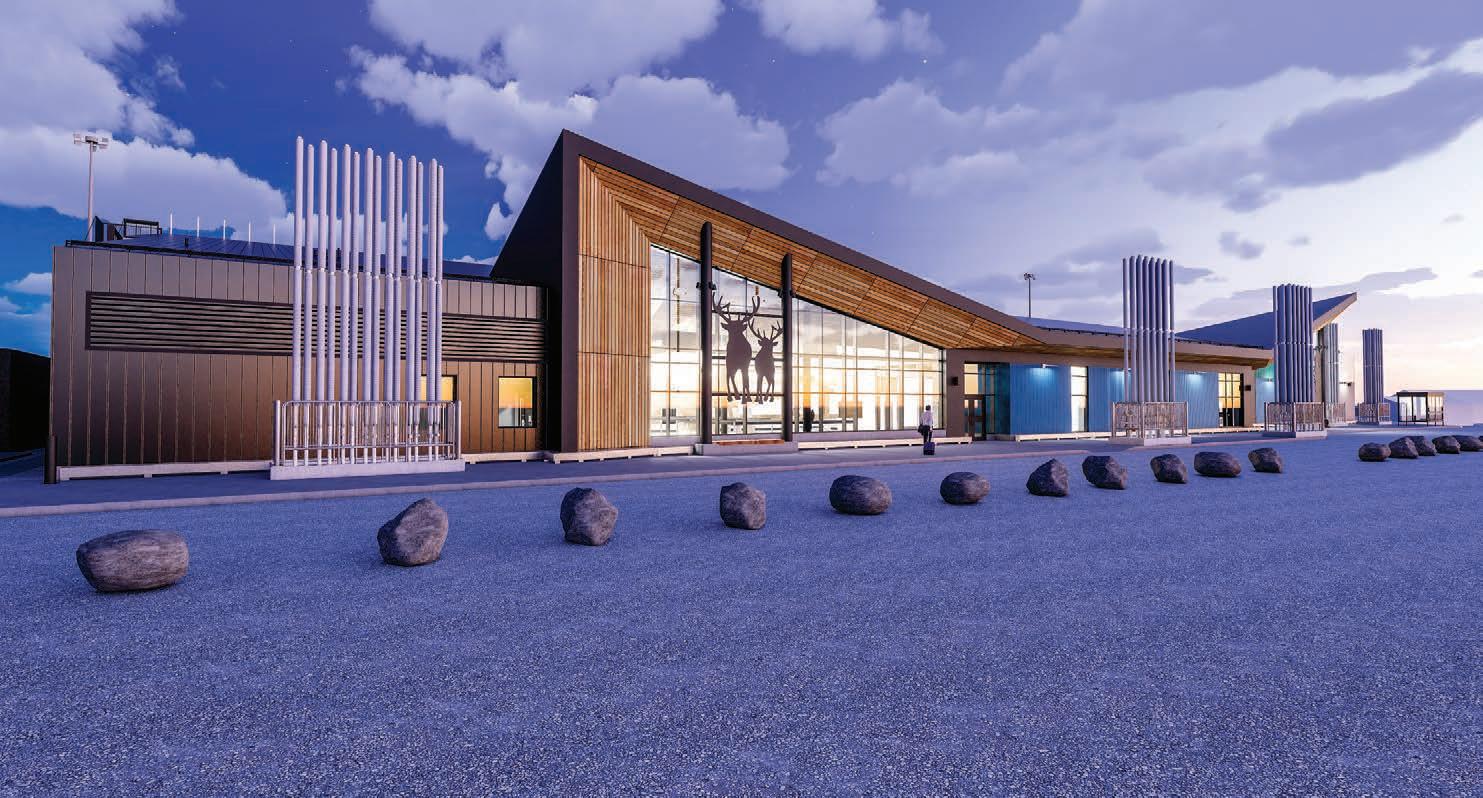
RANKIN INLET AIR TERMINAL EXPANSION
by JESSICA KIRBY
Rankin Inlet is home to 2,850 people in Canada’s north. Its airport, Rankin Inlet CYRT, acts as the gateway to the Canadian arctic from western Canada and as a regional hub for Nunavut’s Kivalliq region. Besides providing essential transportation for residents, it also continues to serve the region’s thriving mining and mineral exploration sector.
That’s why the construction of the new 36,200-square-foot Rankin Inlet Airport terminal is more than a construction project. Indeed, this work, along with a new NAV Canada flight service station on the second level, will meet its technical requirements: accommodating passenger demand during the departure’s peak hour of upwards of 289 passengers and during the arrival peak of upwards of 328 passengers.
But as Darrin Nichol, director, Nunavut Airports, says, the project will meet the growing capacity while considering the region’s unique needs. Living in a remote area means travel is necessary for accessing many services, and travellers often wait for hours, and delays due to weather are common.
“In the Arctic, we don’t have the volume of flights other places have, and other factors can conspire to keep people here for a long time,” Nichol says. “It was critical for us that the terminal space prioritizes comfort and is appropriate and suitable, taking into consideration the realities of living and travelling in the Arctic.”
The work will also add two gates sized for Code C jet aircraft (B737400/700 combi) and three gates sized for Code C regional turbo prop (ATR42/72), along with modern passenger check-in, boarding, luggage, and arrival services. Besides allocating more space and smoother transition areas, the interior design reduces physical barriers, providing robust accessibility.
Travellers will enjoy a warm, inviting environment, starting with abundant natural light through generous glazing and an aesthetic that captures cultural themes and feels appropriate and welcoming for residents.
The exterior consists of multicoloured metal cladding, glass curtain walls, and feature aluminum panels. The cladding design was thought of at two scales. “The airside building elevation was designed to be viewed from the air or at far distances and featured a building cladding with vibrancy and warmth using a striated coloured metal pattern directly inspired from the northern lights and complementary to a collage of colours found on other community buildings,” says Damien Fenez, principal with Prairie Architects. “The landslide pedestrian-oriented building elevation, at both the arrival and departure entrances, featured the image of the caribou, which has a major migratory path running through Rankin Inlet. The image of the old head frame of the nickel mine forms part of the community origins.” The selected images were identified by the community during an open consultation process and were voiced as important symbols to Rankin Inlet.
A key feature of the one-storey conventional steel building with a mezzanine to house the mechanical systems and control tower is the foundation – a massive concrete footing and slab set on eight-inches of rigid insulation placed above a thermosyphon system. “The principal function of the thermosyphon is to maintain frozen ground below the insulation layer,” says Tim Van Bewer, project manager for NDL Construction, Ltd. “This frozen state provides a very stable and reliable base for the entire building at a very low maintenance and operating cost for the full life cycle.”
LOCATION
Unataqtutsait Street North, Rankin Inlet, Nunavut
OWNER/DEVELOPER
Government of Nunavut
ARCHITECT
Prairie Architects Inc.
GENERAL CONTRACTOR
NDL Construction Limited
STRUCTURAL CONSULTANT
Wolfrom Engineering Ltd.
MECHANICAL CONSULTANT
SMS Engineering Ltd.
ELECTRICAL CONSULTANT
KGS Group
TOTAL SIZE
36,200 square feet
TOTAL COST $60 million

Construction is 14 months into a 48-months schedule, and so far, the most challenging element has been logistics. Prairie Architects Inc. developed a multi-phased approach that maintains the operation of the existing terminal and minimizes any impact on passenger travel, medical transport, law enforcement, and the delivery of perishable goods during the full duration of construction.
All project materials are shipped by sealift from Bécancour, Quebec, or Churchill, Manitoba, during the midJuly to early October shipping season that only sees one to three sailing per season, depending on community.
“Once the project was awarded, we signed contacts with our subtrades, issued purchase orders to suppliers, ordered materials, and reserved space on the ships,” Van Bewer says. “Acquiring project materials as early as possible ensured our construction materials were on site when we need them. Issuing purchase orders for equipment and materials well in advance mitigated potential additional expenses and schedule slippage.”
The airport project team had rebar, cement, aggregates, insulation, and various membranes on site prior to the first sealift of the season, which
allowed foundation construction to start in May. As a result, the team will be able to close in the building and heat the space, facilitating work throughout the winter.
“We overlap all the trades so that they start their portion of work, get just far enough ahead of the next trade so they can start their scope of work, and so on,” Van Bewer says.
Speaking of trades, finding the number of skilled trades required for projects this size, even in the largest northern communities, is a major challenge. Tradespersons are brought in from other parts of Canada, and NDL Construction Ltd. partners with local workers to deliver on-the-job training, hires local apprentices, or indentures workers into an apprenticeship program. “They gain the experience and skills that benefit the employee and the company, and we build our local human resources in the community and throughout the north,” Van Bewer says.
“The north is a tough place to do anything,” Nichol says. “There are no roads, there is inclement weather, and most things are brought in by boat. I have been nothing but impressed with everyone involved. We are quite happy and appreciate that we are on track and on schedule.” A





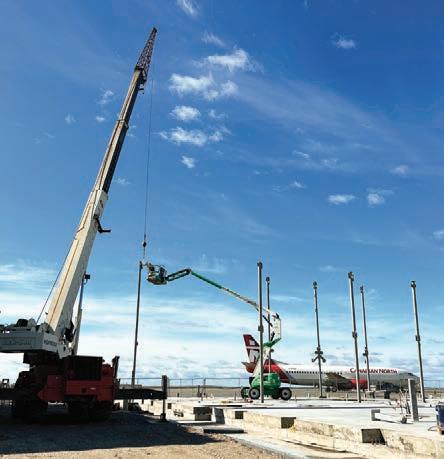


HUMBER MEADOWS LONG-TERM CARE HOME
by NATALIE BRUCKNER
Humber Meadows Long-Term Care Home in Toronto’s northwest catchment area is a testament to innovative design and compassionate care. Designed by Montgomery Sisam Architects, this facility offers 320 licensed long-stay beds, filling a crucial need in the community for long-term care services. With a focus on creating a warm, home-like environment, Humber Meadows sets a new benchmark for long-term care facilities.
In 2020 Montgomery Sisam Architects received an invitation to participate in a program aimed at providing long-term care homes for Humber River and Trillium Health hospitals. “As a national leader in the design of long-term care, we have an acute understanding of the shortage of beds and how it impacts communities. The opportunity to be part of the solution and work for two of the most prestigious hospitals in the province made our decision to participate easy,” says Santiago Kunzle, director and principal at Montgomery Sisam.
EllisDon played a pivotal role in the realization of Humber Meadows LongTerm Care Home, breaking ground in December 2020. The project was executed under an Accelerated Build Pilot Program, designed to expedite the construction of long-term care facilities by harnessing hospital-owned land, streamlining procurement processes, and implementing modular construction techniques. EllisDon’s extensive experience in this field was instrumental in delivering the project successfully. This innovative approach not only significantly reduced the construction timeline but also ensured that the facility met modern design standards.
grain metal panels for the exterior exudes a sense of residential comfort and natural beauty. This theme extends to the interior, where the flooring materials and resident-accessible doors incorporate nature-inspired patterns and colours. The result is a welcoming and soothing environment that stands in stark contrast to the institutional feel often associated with long-term care facilities.
Inside, selected materials with wood-like patterns maintain infection prevention control while offering a high level of maintenance, resilience, and cleanability. The design thoughtfully provides views to the outdoors and interior courtyards, using residentiallooking light fixtures where possible and distributing spaces to encourage socializing within the RHAs. This thoughtful approach ensures that the residents’ experience is both comfortable and aesthetically pleasing.
of compassion and protection for its residents, ensuring they can maintain their independence and dignity. Sadie Friesner, executive director of Humber Meadows Long-Term Care Home, told the media: “Our goal with Humber Meadows has been to establish a truly person-centred long-term care home where compassionate care and protecting the independence and dignity of every resident is at the heart of everything we do. We worked with government and industry partners to efficiently develop and action the plan for Humber Meadows and are thrilled to open our doors to our community. Ensuring our growing and aging population has access to the care they need, close to home, is a top priority.”
When it comes to the architectural design of Humber Meadows Long-Term Care Home it is both a triumph of innovation and functionality. Situated on a tight site east of an existing building, the architects opted for a compact dual courtyard configuration. This design not only maximizes the use of the available space but also enhances the resident and staff experience. “This configuration shortens travel distances to and from any point in the home. It also provides a continuous loop, without dead ends, for those residents that need to wander,” says Kunzle.
The aesthetics of the building are guided by a couple of key principles, as Kunzle explains: “The need to deinstitutionalize the architectural language led us to use a contemporary residential expression, one that can be found in many residential condominium buildings across the city. The desire for the building to be seen as an integral part of the Humber River campus, plus the need for a durable finish at grade, led to the decision to clad the ground floor in brick.”
Creating a comfortable, home-like environment within a long-term care facility can be a complex challenge. To achieve this, spaces are organized to emulate a village setting. The home offers varying degrees of privacy, from large social spaces on the ground floor – akin to a town square – to more intimate lounges, dining areas in individual Resident Home Areas (RHAs), and private sanctuaries within residents’ bedrooms.
The metaphor of a meadow also played a central role in influencing the design, both inside and out. The choice of earthy materials like brick and wood
While the project was originally conceived as a modular building, it was executed using conventional construction technologies. “The early explorations of modular did contribute to a very efficient and disciplined design which benefitted its execution using conventional means,” says Kunzle. “We also maintained the main mechanical and electrical distribution concept that was designed for the modular option with dedicated vertical shafts in the resident home areas.
“The decision to not include a basement was in part influenced by the original modular construction concept, but also because it supported an accelerated construction schedule. Including a basement would have added months to the construction schedule. The lack of a basement also moves staff support areas, that are usually housed below grade, above grade, thereby significantly improving the quality of those spaces.”
Today, Humber Meadows LongTerm Care Home is a place where residents can find comfort, care, and a sense of belonging. It offers a haven
In conclusion, Kunzle says: “We are grateful for the opportunity to contribute, in a modest way, to improving the supply of LTC beds in the community. We are proud that we were able to deliver a project that complements the Humber River Hospital campus and that positively contributes to the fabric of the surrounding community with a mid-rise building that has a decidedly residential character.” A
LOCATION
2109 Finch Avenue West, Toronto, Ontario
OWNER/DEVELOPER
Humber River Hospital
PROCUREMENT & PROJECT MANAGEMENT
Infrastructure Ontario
ARCHITECT
Montgomery Sisam Architects
GENERAL CONTRACTOR
EllisDon Corp.
STRUCTURAL/MECHANICAL/ ELECTRICAL/SECURITY/IT CONSULTANT
exp Services Inc.
HERITAGE CONSULTANT
WalterFedy
CLIENT DESIGN ADVOCATE/ CERTIFYING ARCHITECT
HOK
LANDSCAPE ARCHITECT
Vertechs Design
TOTAL COST
Undisclosed

Dare to Accelerate Change
BUILDEX


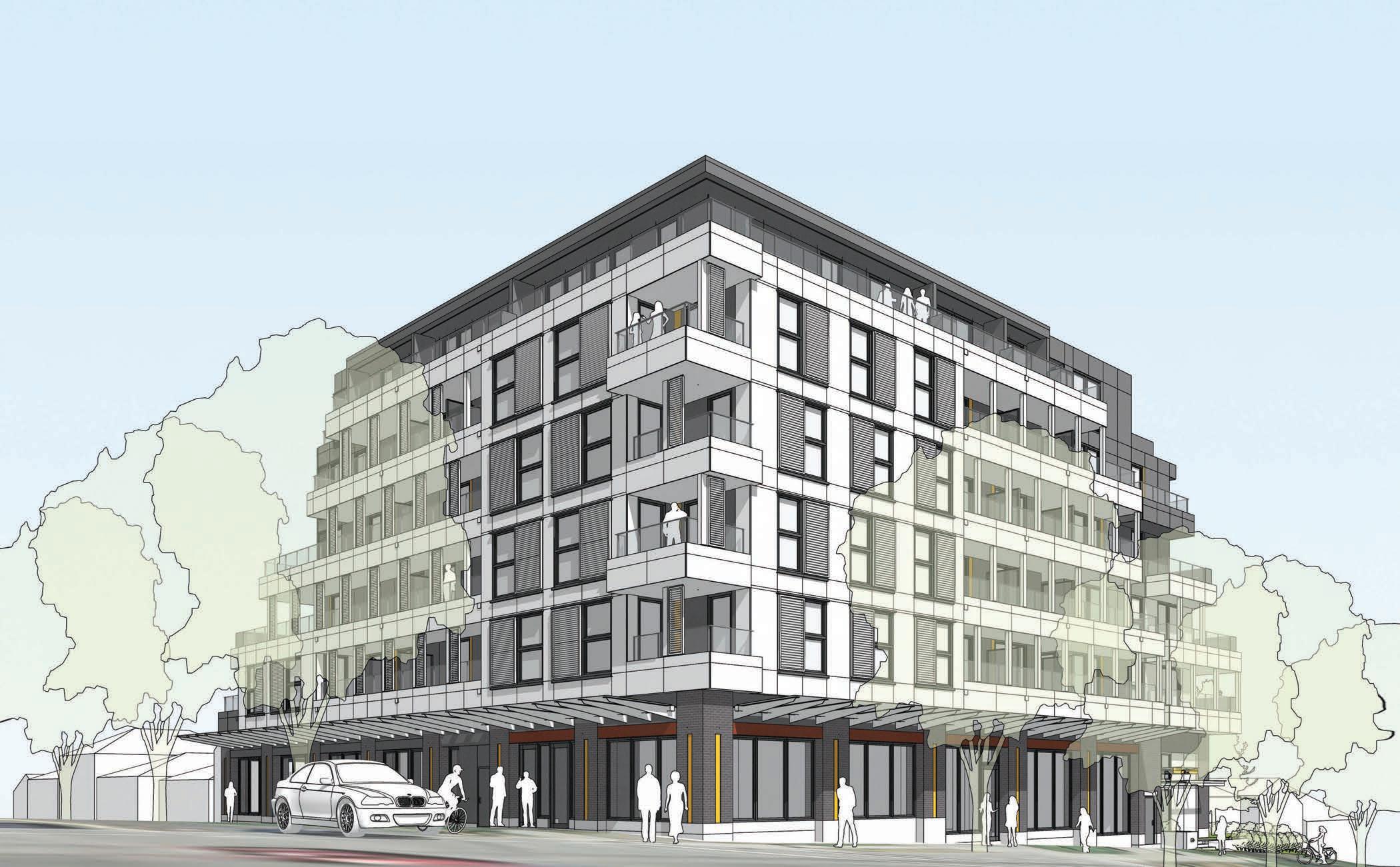





Windows + Doors for Passive House Projects



Innotech Windows + Doors is a Canadian manufacturer of high-performance windows and doors. The Defender 88PH+ System combines decades of fenestration knowledge to deliver a robust window and door system that is not only Passive House Institute certified, but that also delivers the air, water and structural performance required for highly sustainable housing developments.