DESERT HERITAGEMagazine
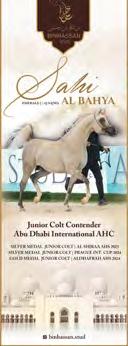
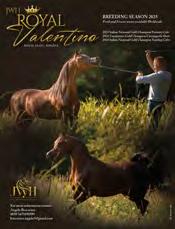
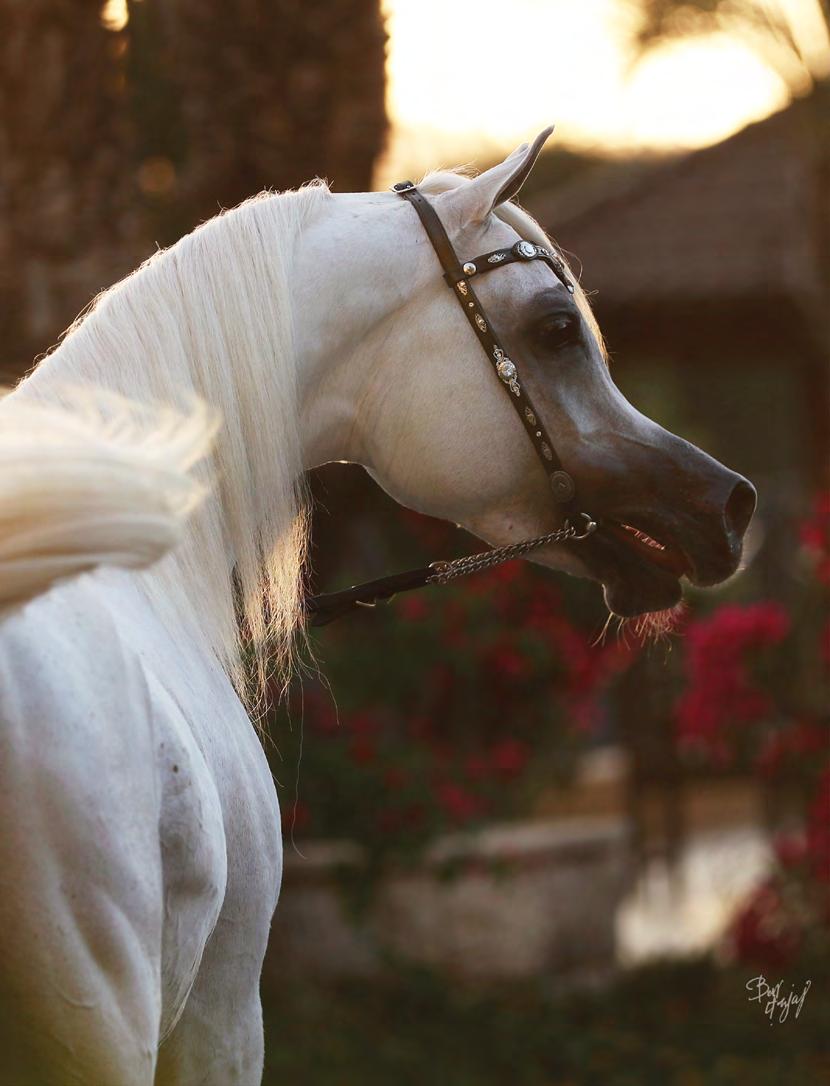
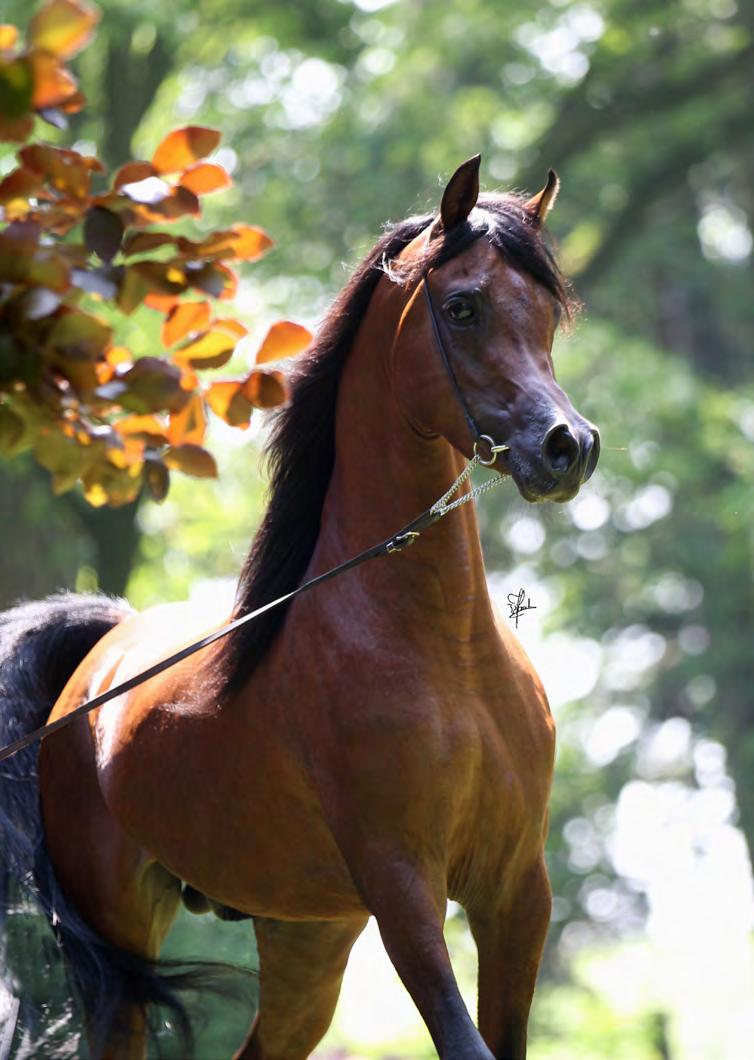
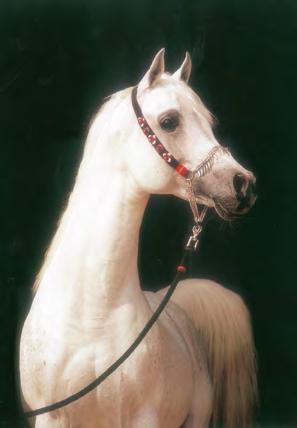
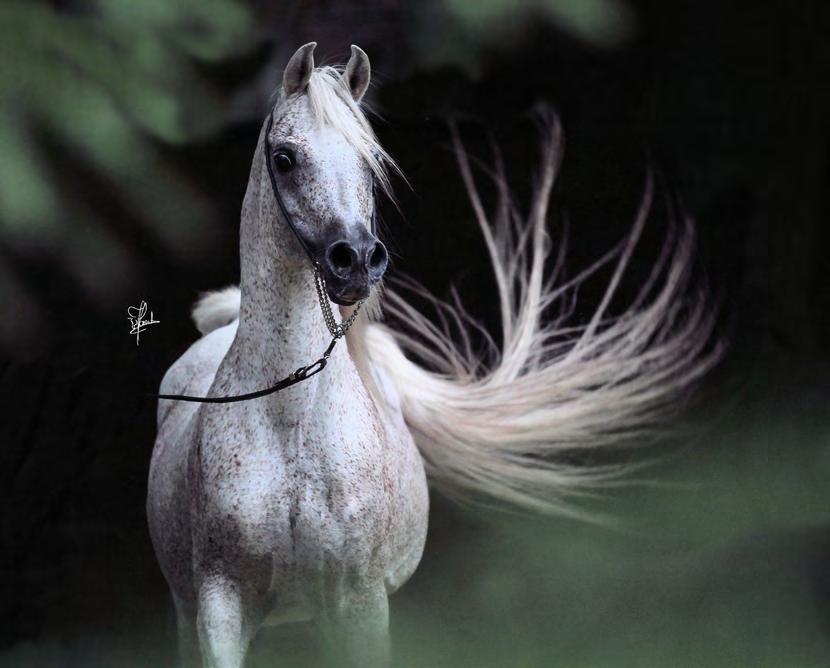
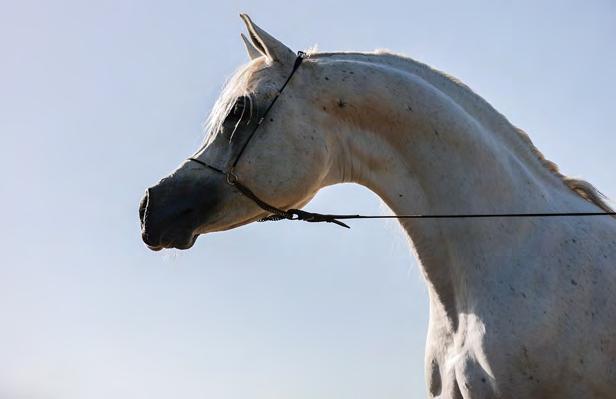
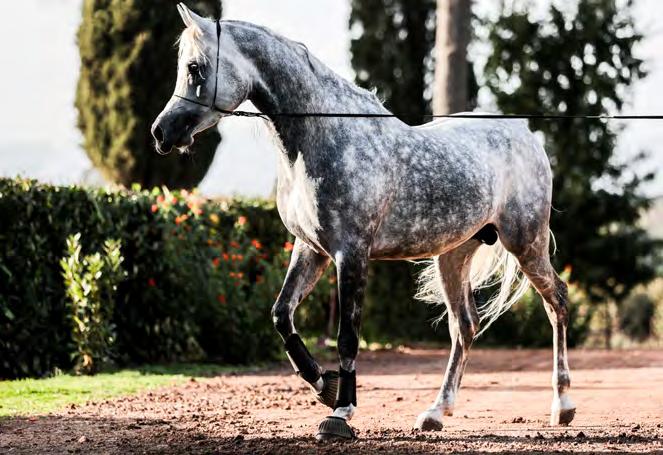
2018 Gold Champion Yearling Colt at the Israeli Egyptian Event
2019 Gold Champion Colt at the Israeli Egyptian Event
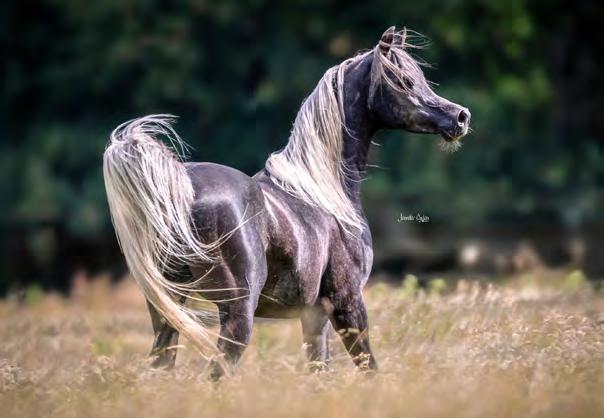
2019 Gold Champion Colt at the World Champion Straight Egyptian, Milano
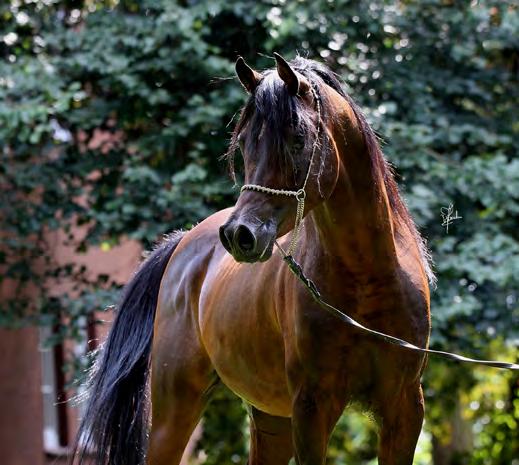
2022 Gold Champion Straight Egyptian Stallion at the Country Life Show, Belgium
2024 Silver Champion Stallion at the Fakhar Al Arab Show, Kuwait
ariela.arabians@gmail.com | www.ariela-arabians.co.il

Everyone talks about the stallions, everyone knows the names of the good ones, they are the face of the big stud farms in the media, on the racetrack and in the show ring. But how important are stallions really in Arabian breeding?
Scientifically speaking, the stallion contributes the semen during fertilisation. The mare contributes the ovum with its cell nucleus, cytoplasm and mitochondria, which also transport genetic material to the foal. The colt benefits from this, but does not pass on the mitochondrial DNA to its offspring. A filly, however, passes on these genetic traits, which is why the female lines can be traced back into the past of breeding. The mare’s hereditary potential therefore dominates that of the stallion. Nevertheless, the use of stallions in breeding is much more significant, because the number of foals a stallion can produce makes all the difference. The best sons, in turn, broaden the influence of successful stallion lines and can dominate a breeding programme.
When Dr Nagel first visited the El Zahraa State Stud in Egypt in 1963, he found around 50 mares and a total of 12 stallions there. Nevertheless, this visit was a ‘revelation’, as he wrote in his publications. “I saw a lighter horse, with fine bones, not so tall, with a dry expression, smaller hooves, some with a dish and a fine mouth.”
Among the many mares and stallions presented to him at El Zahraa, there were two in particular that he could not get out of his mind: the snow-white Morafic and

the chestnut Alaa El Dine. Both were seven years old and each had his own remarkable type. Both were sons of Nazeer, the leading stud stallion at the state stud farm in Egypt.
At that time, it was impossible to know how each of these two stallions would develop as breeding stallions. Many years later, this hidden secret became apparent: Morafic was the clear winner in producing magnificent sons and dominated Egyptian breeding for years, together with the famous Ibn Halima by Nazeer. Alaa El Dine, on the other hand, produced daughters of great quality. They were the best ever born at the El Zahraa stud farm with such consistency.
Dr. Nagel bought his three outstanding broodmares, Hanan, Mahiba, Lotfeia, as foals at that time; all were daughters of Alaa El Dine. To this day, they have remained the three foundation mares of his entire breeding herd and have had the greatest influence on the development history of the Katharinenhof. On the sire’s side, Dr. Nagel only used the line of Nazeer, with Nazeer’s son Ibn Halima having the greatest influence.
Over the next 60 years, Nagel’s breeding strategies were guided by a clearly defined goal: to preserve the historical type of Arabian horse he had first seen in Egypt. To this day, this type has never been lost and is still represented in the most famous stallions of NK Arabian breeding, which can be found in renowned breeding programmes of Egyptian stud farms worldwide.
Monika Savier
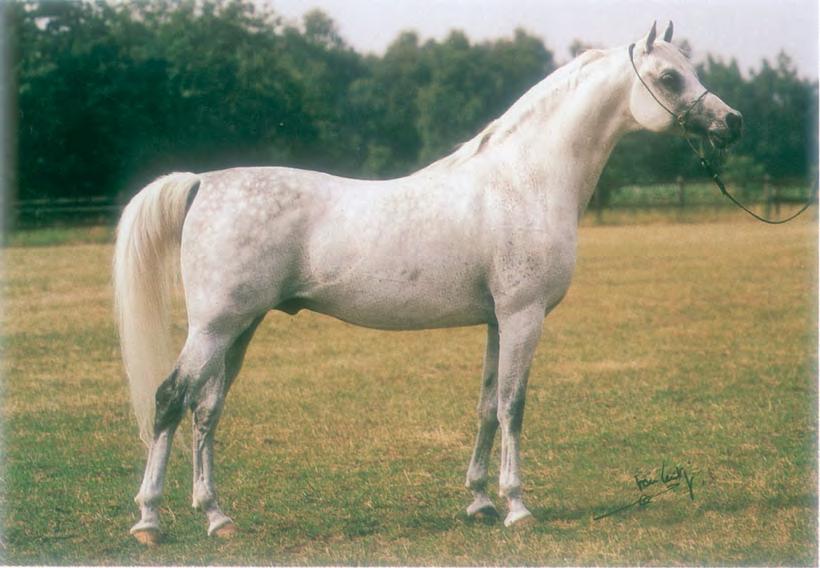
goal. He had been able to search many Arabian countries, through and Europe, and had defined his goal according to what he had
friendly character. He intended to improve the body overall as well, having become aware that his breeding stock could do with a better croup and
Jamil was intended to be the perfect match for the Katharinenhof mares after returning from America, but he died young and mysteriously. So once again, Dr. Nagel
not
Madkour I x Hanan
Malik x Hanan
The most famous stallions born at the Katharinenhof
• Jamil (Katharinenhof Stud and Ansata Arabians, USA) – (Madkour I x Hanan)
• Asfour (Simeon Stud, Australia) – (Malik x Hanan)
• Salaa El Dine (Katharinenhof) – (Ansata Halim Shah x Hanan)
• Safir (Al Rayyan, Doha) – (Salaa El Dine x Aisha)
• Adnan (Ajmal Stud, Kuwait) – (Salaa El Dine x Ghazalla)
• Mubarak (Iran) – Salaa El Dine x Myrna)
• NK Qaswara (Ezzain Arabians, Kuwait) – (Salaa El Dine x NK Nariman)
• NK Hafid Jamil (Katharinenhof, Al Nakeeb Stud, England) – (Ibn Nejdi x Helala)
• NK Nizam (NK Hafid Jamil x NK Nadirah)
• NK Amal El Dine (NK Nizam x NK Abla)
• NK Nabhan (Katharinenhof, Doha Stud Qatar, Al Adiyat Stud, Kuwait) – (NK Nadeer x NK Nerham)

NK Katharinenhof
Dr. Hans J. Nagel
D-26197 Grossenkneten
Am Graeberfeld 15
Germany
mobile: 0049-172-4242968
office: 0049-044331356
email: office@nk-arabians.de
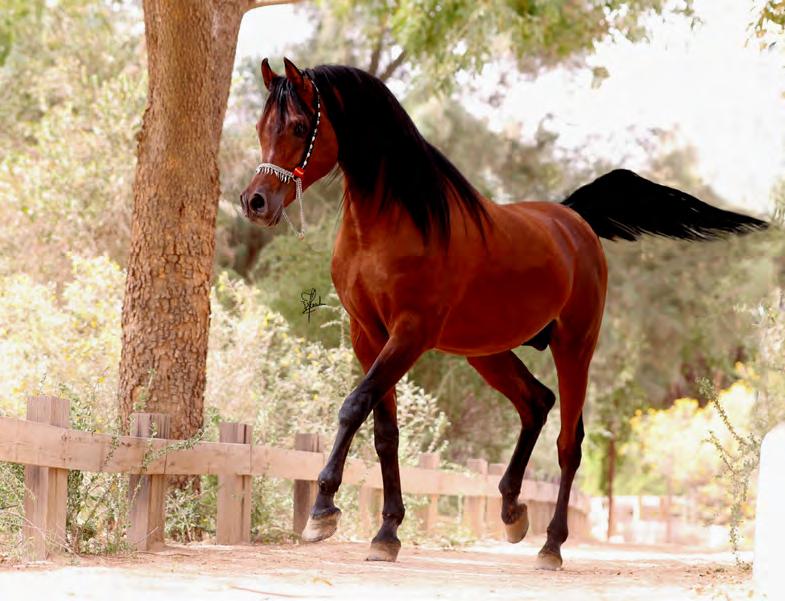
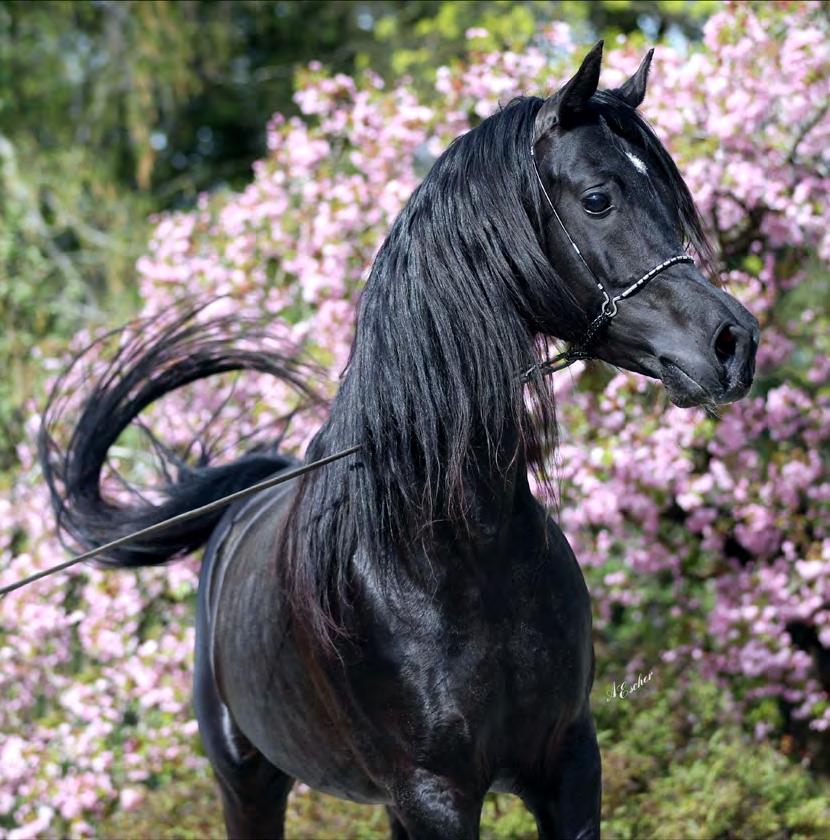
Annette Escher 86653 Monheim (Germany) - tel. +49 0 90913707 email: escher.rothenberg@t-online.de www.RothenbergArabians.com instagram: @RothenbergArabianStud
Desert Heritage Magazine n.72
iscr. trib. di Milano n. 466 del 20/09/02 Expedition in A.P. 70% Milano
Alim Editrice s.n.c. via Ressi, 22 - 20125 Milano (Italy)
e-mail: info@tuttoarabi.it www.desertheritagemagazine.com instagram: @desertheritagemagazine
Publisher Simone Leo mobile: +39 348 5640190 leo.simon@tiscali.it
Editor Alim Editrice snc
Customer Service Fabio Brianzoni fabiobrianzoni56@gmail.com
Account Office/Subscription Office Barbara Belloni amministrazione@alimeditrice.it
Writers
Susan Carden
Urszula Łęczycka Hans J. Nagel Monika Savier
Judith Wenning
Digital Artwork Viviana Castiglioni
Printed by AGF Printing Solutions Srl San Giuliano Milanese Milano (Italy)
Advertising
Alim Editrice s.n.c. via Ressi, 22 - 20125 Milano (Italy) tel. +39 02 36762850 e-mail: info@tuttoarabi.it
www.desertheritagemagazine.com ©
Pag. 23 Al Malak Stud
Pag. 33 Brushstrokes of Majesty Magali Laurent and her Passion for Horses
Pag. 40 Glenn Jacobs and the Living Art of the Arabian Hors
Pag. 56 Judging Arabian Horse
Pag. 77 Rothenberg Stud
Pag. 93 Review of Kaisoon - Biography of a Legend
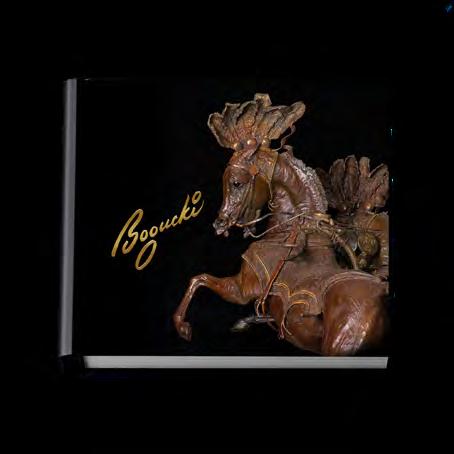
Pag. 100 Edwin Bogucki. Capturing the Vibrancy of Life
Pag. 111 Al Murad Stud






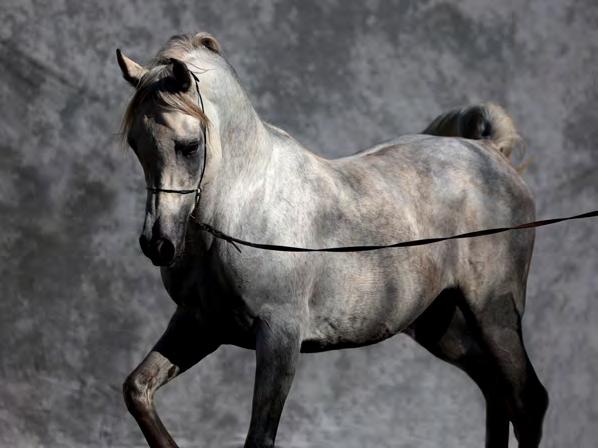
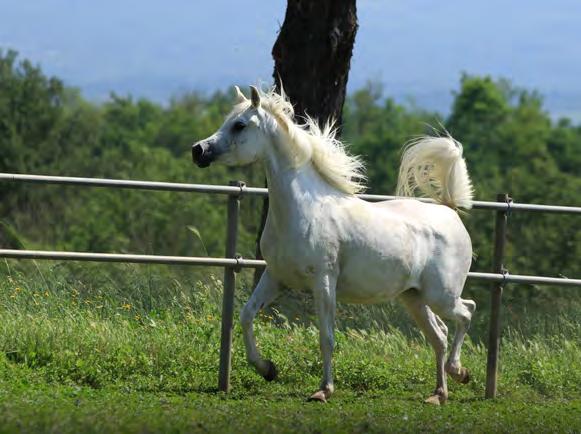
Frasera Mashar x Frasera Bint Nefisa
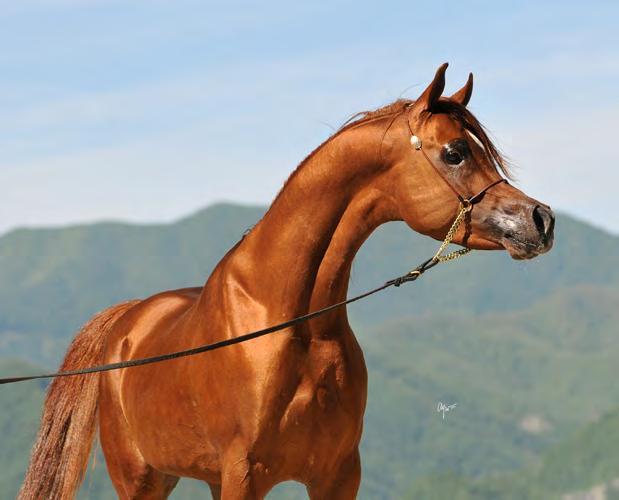
2012 Hadban Enzahi
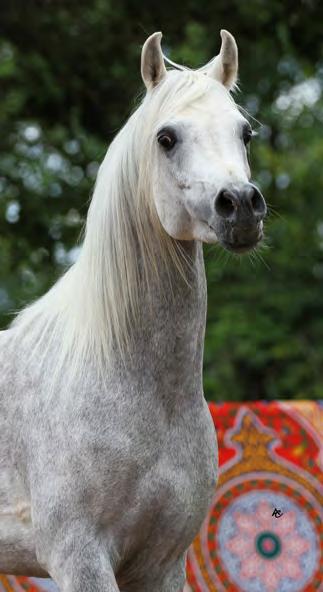
Nabeel al Rayyan x Frasera Mashalla
2017 Kohailan Radban
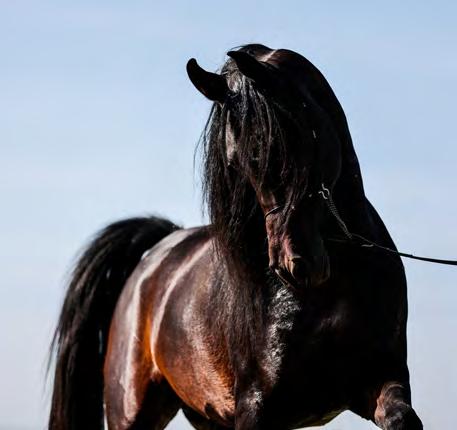
Pharros x Frasera Mashara
2008 Kohailan Radban
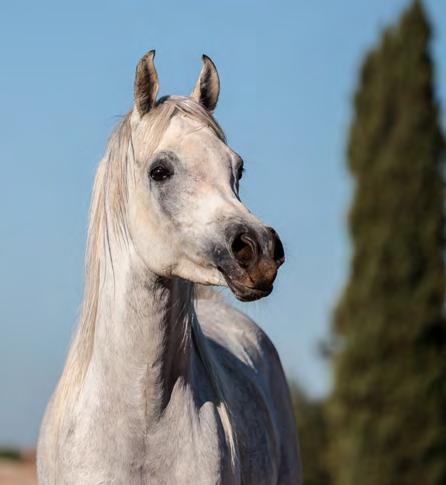
Al Ayal AA x Frasera Madalla
2020 Kohailan Radban
Frasera Mashar x Frasera Carina
2020 Dhama Shawan
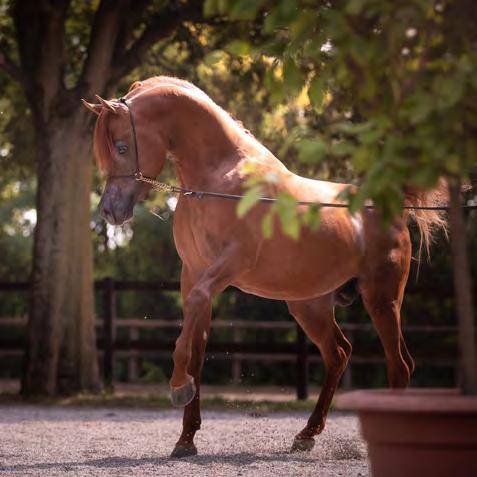
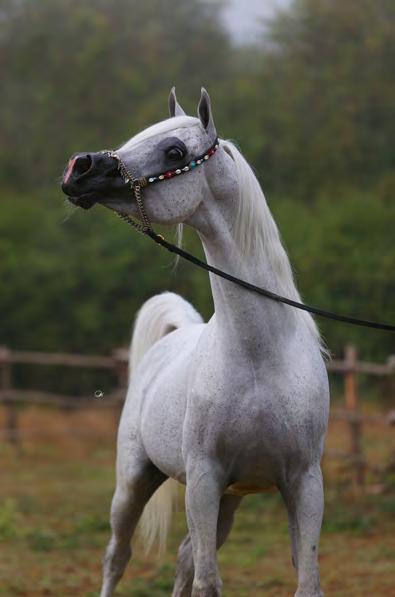
Frasera Ramses Shah x Fasera Wasima 2008 Hadban Enzahi
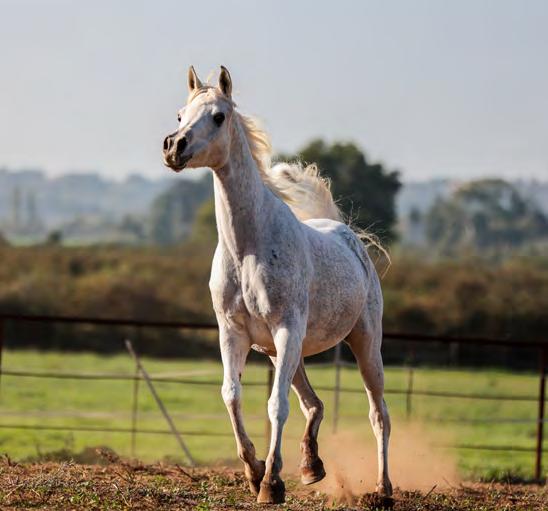
LA FRASERA
Straight Egyptian Horses
Frasera Mashar x Frasera Bint Nefisa 2013 Hadban Enzahi
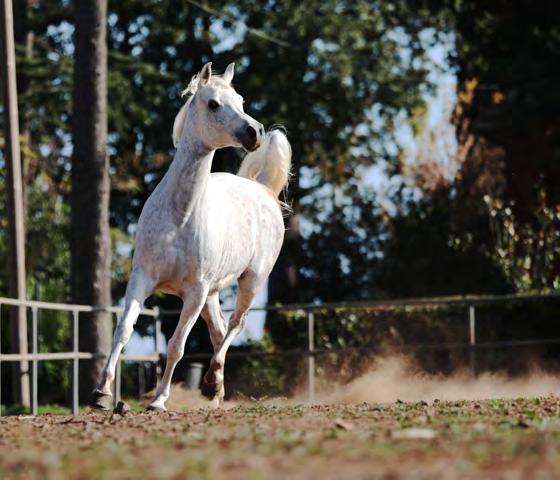
Frasera Mashall x Frasera Madara 2013 Kohailan Radban
Frasera Mashar x Frasera Futura
2013 Dahamah Shawan
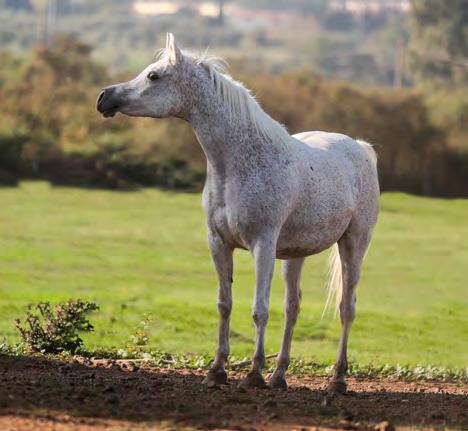
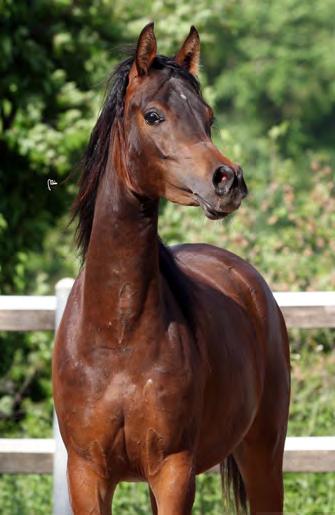
Frasera Mashall x Frasera Magica
2012 Dahamah Shawan
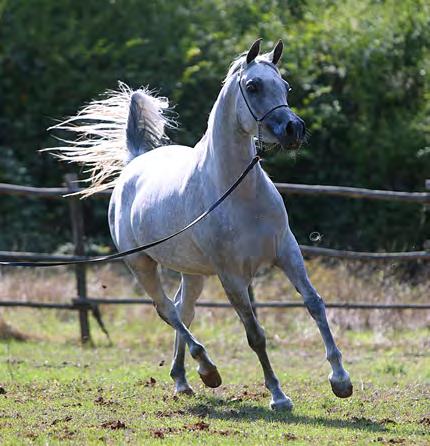
Shahil x Imperial Beveerah
2013 Saqlawi Jedram Ibn Sudan
2017 Kohailan Radban
Cavalli arabi
nella terra dei trulli
arabian Horses in the land of trulli
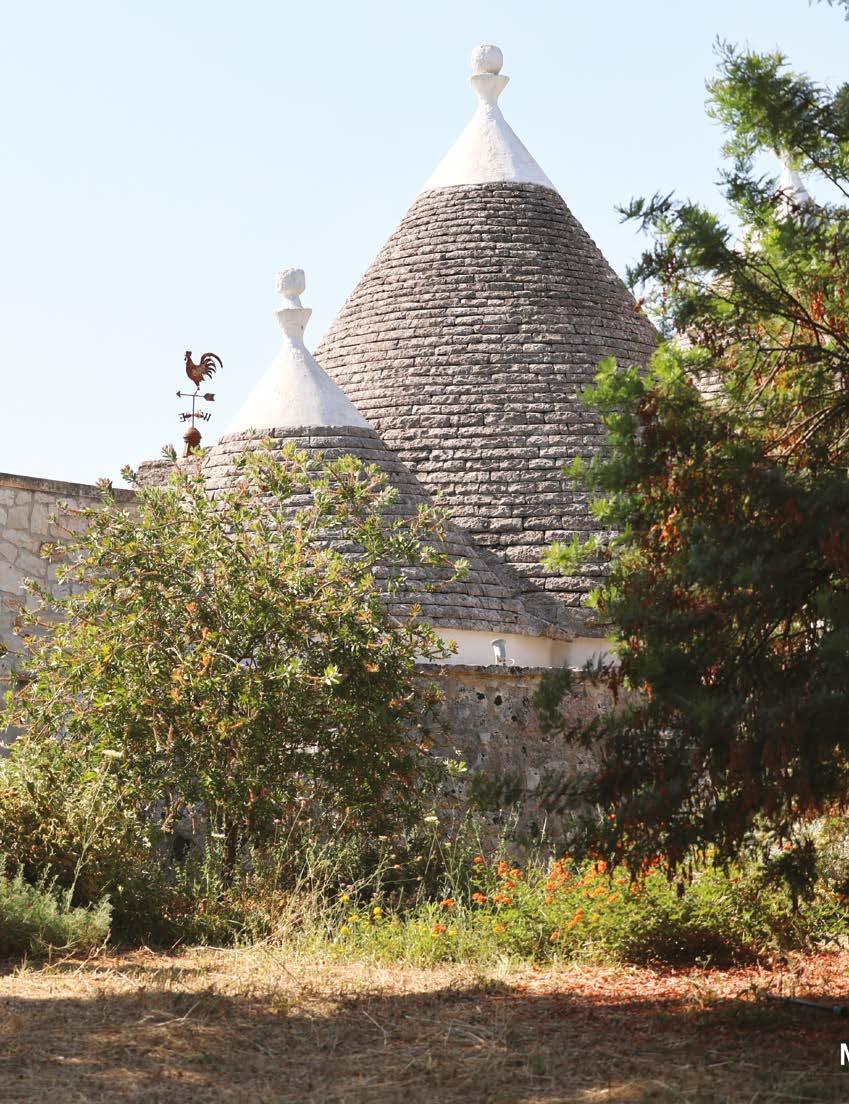
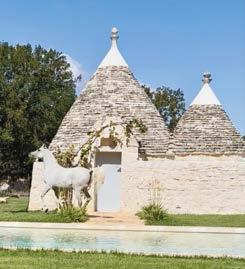
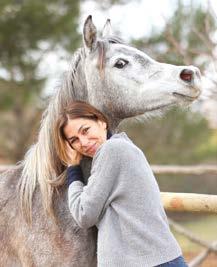
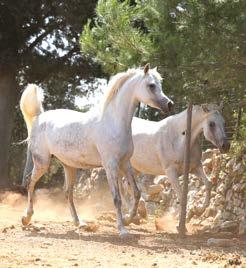
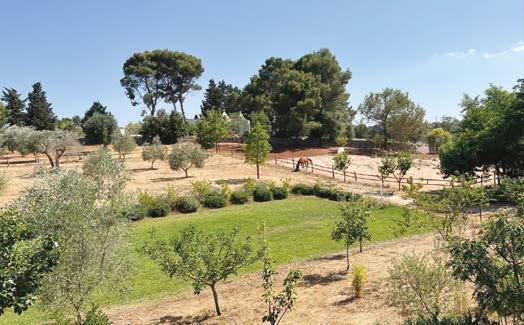
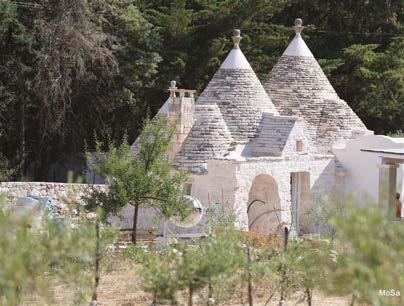
Q Wuando nel 2020 la giovane veterinaria Roberta Siniscalco trasformò, insieme a suo marito Carlo Vernetti, un gruppo di vecchi trulli nella valle d'Itria pugliese in un hotel di lusso, il suo amore per gli animali giocava già un ruolo importante. Il suo sogno era quello di creare da un lato un allevamento di cavalli arabi e dall'altro una casa per animali abbandonati o randagi da fattoria.
Cavalli arabi e trulli? Non c'era forse una parentela storica? Il Mediterraneo era il centro culturale ed economico dell'antichità occidentale. In particolare i Fenici, un popolo di navigatori, commercianti e abili artigiani, che originariamente vivevano sulla costa orientale del Mediterraneo, nell'odierna Siria, libano e Palestina, intorno al 1200 a.C. si espansero con le loro navi e i loro cavalli dalla penisola arabica attraverso la Turchia e la Grecia fino
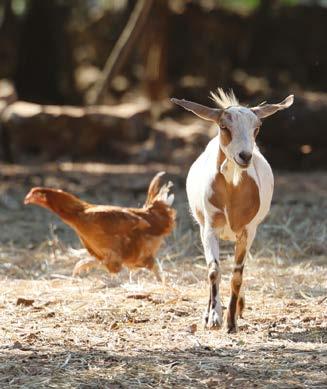
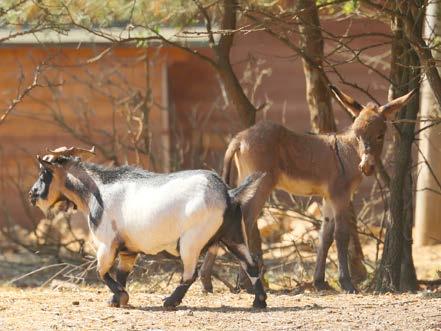
hen, in 2020 the young veterinarian Roberta Siniscalco and her husband Carlo Vernetti transformed a group of old trulli in the Istrian Valley of Puglia into a luxury hotel, her love for animals already played an important role. Her dream was to create beside the trulli hotel, on the one hand, an Arabian horse farm and, on the other, a home for abandoned or stray farm animals.
arabian horses and trulli? Wasn't there a historical connection? the mediterranean was the cultural and economic centre of Western antiquity. In particular, the Phoenicians, a people of navigators, traders and skilled craftsmen, who originally lived on the eastern coast of the Mediterranean, in what is now Syria, Lebanon and Palestine. Around 1200 BC, they travelled with their ships and horses from the Arabian Peninsula through Turkey and
all'italia, colonizzarono Cartagine nell'odierna tunisia, le coste della Sicilia e infine la Spagna. Nell'antico Levante, sulle coste orientali, era già sviluppata l'architettura arcaica delle capanne circolari e delle case con tetto a cupola. Queste erano costruite soprattutto in zone prive di alberi, utilizzando pietre di campo e muri a secco. I tetti erano cerchi di pietre sovrapposti. Nell'antica Grecia erano chiamate “trullos” (cupola) e offrivano ai contadini e ai pastori protezione dalle intemperie in campagna, senza dover costruire complesse capanne con travi di legno. L' u NESCO ha inserito i trulli nella lista dei Patrimoni culturali dell' u manità . Ma quelli dell'epoca dell'età del bronzo non esistono più oggi, la maggior parte dei trulli di oggi si diffuse nel XVII secolo in Puglia.
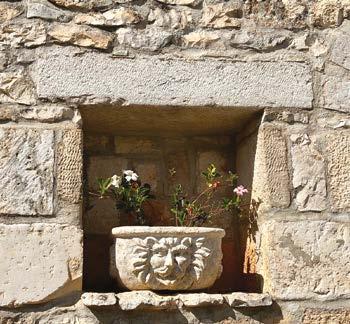
Greece to Italy, colonising Carthage in present-day Tunisia, the coasts of Sicily and finally Spain. In the ancient Levant, on the eastern coasts, the archaic architecture of circular huts and domed houses was already developed. These were built mainly in areas without trees, using dry field stones to create walls. The roofs were made of overlapping stone circles. In ancient Greece, they were called “trullos” (domes) and offered farmers and shepherds protection from the elements in the countryside without having to build complex wooden beams. UNESCO has included trulli in its list of World Heritage Sites. However, those from the Bronze Age no longer exist today; most of today's trulli spread throughout Puglia in the 17th century.
No cavalry could be victorious without horses from the
Nessuna cavalleria vincente poteva fare a meno dei cavalli della penisola arabica che, in seguito, si diffusero in tutto il mondo fino al XX secolo. Nel patrimonio genetico dei cavalli arabi di oggi si trovano le tracce dei cavalli asil (autentici) dell'antichità.
Nel piccolo allevamento Al Malak quattro giovane giumente hanno trovato la loro dimora. Chi è curioso di conoscere l'eredità dei Fenici in Puglia può visitare il Borgo del tempo Ritrovato (www.borgodeltemporitrovato.it) per scoprire i trulli e i cavalli arabi dell'allevamento Al Malak.
Arabian Peninsula, and they subsequently spread throughout the world until the present day. Traces of the authentic asil horses of antiquity can be found in the genetic heritage of today's Arabian horses.
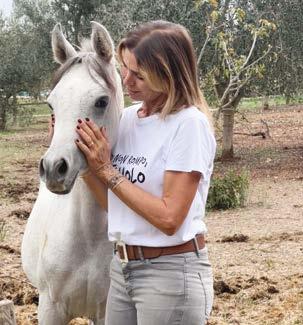
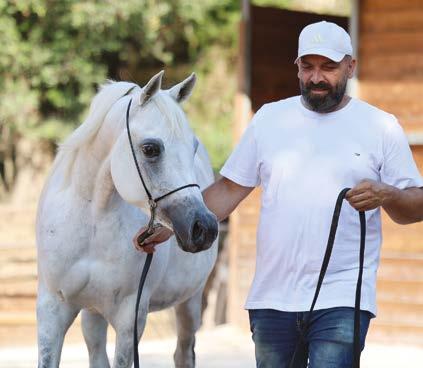
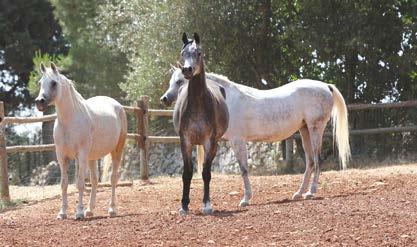
Four young mares have found their home at the small Al Malak stud farm.
Anyone curious about the Phoenician heritage in Puglia can visit the Borgo del tempo Ritrovato www. borgodeltemporitrovato.it to discover the trulli and arabian horses of the Al Malak stud farm.
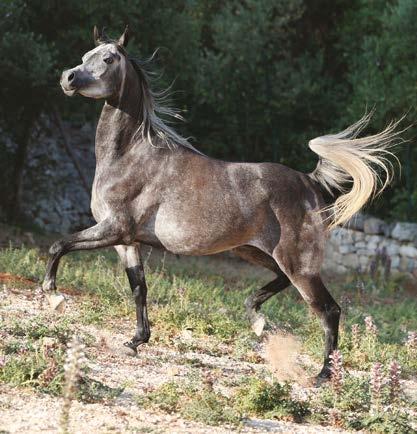
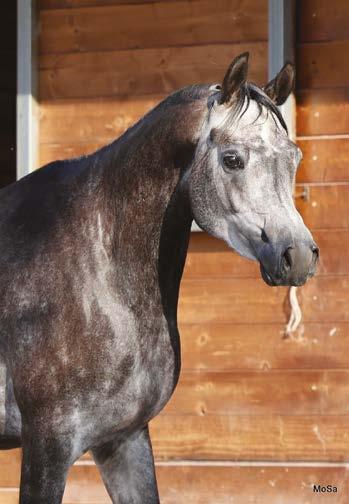
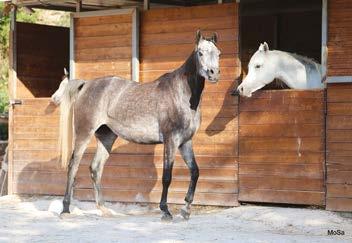
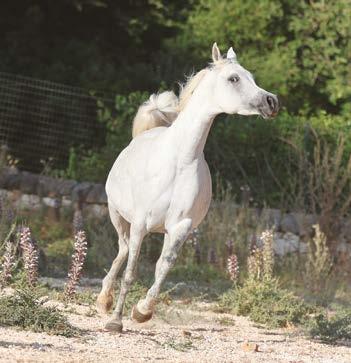
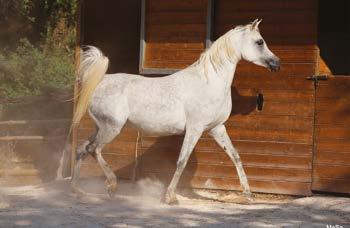
EB AlyAH: This wonderful mare, El Alyah, daughter of Sultan GK and MR Aylin, with powerful movements and great character, was bred for the show world. She is “Egyptian Related” and may well be seen at Arabian shows in the future.
Monika: Hai questo splendido complesso alberghiero di trulli in Puglia insieme al tuo piccolo e raffinato allevamento di cavalli arabi. Quando e come avete iniziato e cosa è venuto prima, i cavalli o l'hotel?
Roberta: Non è affatto facile risponderti, è un po’ come chiedersi cosa sia venuto prima l’uovo o la gallina, mi spiego meglio: i cavalli nello specifico appartengono alla mia anima e ai miei sogni da quando ho memoria, ma che divenissero parte reale della mia vita, nel modo in cui lo sono oggi, era appunto un sogno. Stessa cosa vale per il Borgo Del Tempo Ritrovato, da veterinaria amante della natura ho sempre desiderato vivere in un posto dove armonia, flora, fauna, rispetto, vita e umanità si fondessero, il borgo è tutto questo.
Per rispondere alla tua domanda in modo pragmatico, direi che in primis è arrivato il borgo e con lui tutti i sogni di cui sopra hanno preso forma.
Il come è legato ad un momento non facile della mia vita, in quel momento ho cercato di fare pulizia di cose e persone futili, concentrandomi su ciò che amo e appunto sono.
Dopo la mia famiglia, natura ed animali sono parte del mio essere, così mio marito, uomo speciale, ha deciso di creare qui con me un luogo che mi appartenesse… la Puglia, un territorio dove campagna, mare, natura e bellezza si fondono: è stato il nido in cui è nato il Borgo Del Tempo Ritrovato, il cui nome racchiude un grande significato.
Monika: Che ruolo hanno l'allevamento e gli altri animali che possiedi in relazione al complesso alberghiero?
Roberta: Gli animali del Borgo sono stati salvati dal macello e da situazioni di sfruttamento, qui hanno ritrovato dignità, serenità e libertà… per cui direi che ne sono l’essenza!
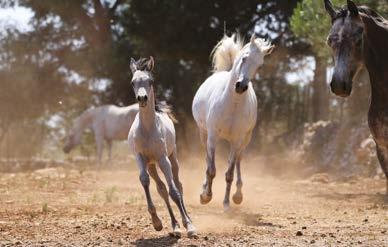
Monika: You have this splendid trulli hotel complex in Puglia, called “Il Borgo del Tempo Ritrovato” together with your small, refined Arabian horse stud farm of Straight Egyptians. When and how did you start, and what came first, the horses or the hotel?
Roberta: It's not easy to answer that question. It's a bit like asking whether the chicken or the egg came first. Let me explain: animals, horses in particular, have been part of my soul and my dreams for as long as I can remember, but for them to become a real part of my life, in the way they are today, was just a dream. The same goes for Borgo Del Tempo Ritrovato. As a veterinarian and nature lover, I have always wanted to live in a place where harmony, flora, fauna, respect, life and humanity come together, and the village is all of that. To answer your question pragmatically, I would say that the village came first, and with it, all the dreams mentioned above took shape.
The how is linked to a difficult time in my life, when I tried to clear out futile things and people, focusing on what I love and who I am.
After my family, nature and animals are part of my being, so my husband, a special man, decided to create a place with me that belonged to me... Puglia, a place where the countryside, sea, nature and beauty come together, was the nest in which Borgo Del Tempo Ritrovato was born, whose name has great significance.
Monika: What role do breeding and the other animals you own play in relation to the hotel complex?
Roberta: The animals of the Borgo have been saved from slaughter and exploitation. Here, they have rediscovered dignity, serenity and freedom... So I would say that they are
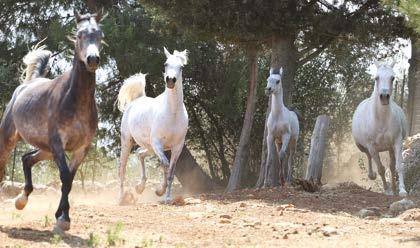
I cavalli purosangue arabi egiziani sono una storia a parte con la loro bellezza, empatia, intelligenza e purezza: sono gli angeli del borgo! Con loro spero di aver dato a chi sa coglierla la possibilità di vivere un’esperienza di introspezione… ti leggono nell’anima e ti pongono dinanzi ad uno specchio. I nostri egiziani non sono cavalli domati, ma esseri con cui vivere un’esperienza alla pari, uno scambio che arricchisce.
Monika: Ti piacciono particolarmente gli arabi purosangue egiziani. È grazie al loro pedigree storico o per quale altro motivo?
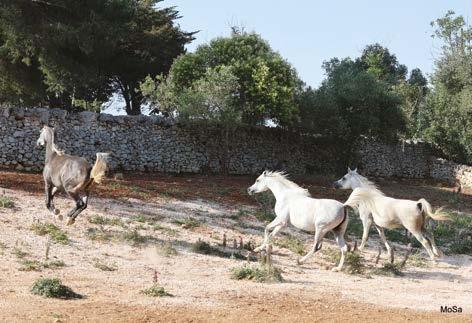
Roberta: La scelta dei Cavalli purosangue arabi egiziani è arrivata dopo il primo incontro con loro, eravamo qui in Puglia in un bosco meraviglioso da amici che li allevavano, dopo un fischio la terra iniziò a tremare ed in pochi secondi i nostri occhi increduli per tanta bellezza, si posarono su una famiglia di cavalli bianchi che fieri, con la coda alta, galoppavano verso di noi, sembrava di essere in un film di fate ed elfi… come non innamorarsi! Da lì iniziò il nostro viaggio nella conoscenza di queste meravigliose creature. La storia del cavallo arabo egiziano va di pari passo con quella dell’uomo e allevarli non
del
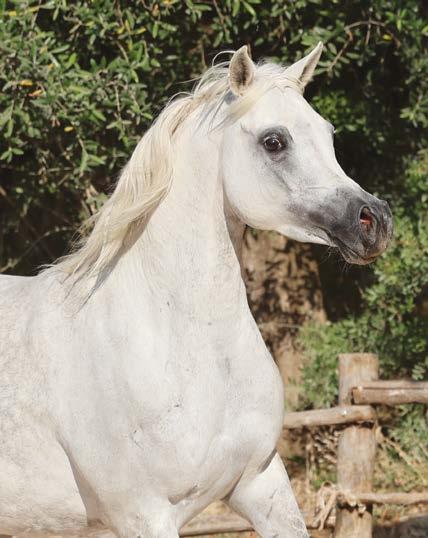
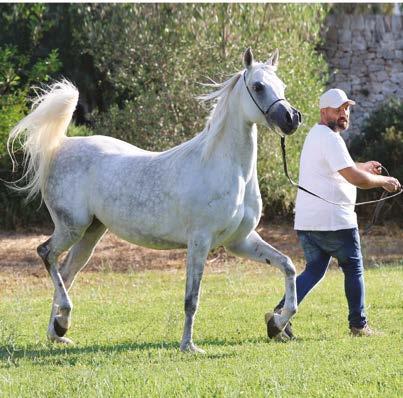
born in Italy, daughter of the famous Abbas Pasha line. These successful Arabians were exported from El Zahraa in Egypt to Babolna and became pillars of Arabian breeding in Europe. Adhua El Nile also descends from the Saqlawi Jedran Ibn Sudan family. She is in foal to Noah O.
the essence of the place! The pure Egyptian Arabian horses are a story unto themselves. With their beauty, empathy, intelligence and purity, they are the angels of the village! With them, I hope to have given those who know how to grasp it the opportunity to live an experience of introspection... they read your soul and place you in front of a mirror. Our Egyptians are not tamed horses, but beings with whom to share an experience as equals, an enriching exchange.
Monika: You particularly like Straight Egyptian Arabians. Is it because of their historical pedigree or for some other reason?
Roberta: The choice of Egyptian purebred Arabian horses came after my first encounter with them. we were here in Puglia in a wonderful forest with friends who bred them, after a whistle the earth began to shake and in a few seconds our eyes, incredulous at such beauty, fell on a family of white horses that galloped towards us, proud, with their tails high, it was like being in a film of fairies and elves... How could we not fall in love! From there began our journey into the knowledge of these wonderful creatures.
può prescindere da questa conoscenza. Detto ciò abbiamo scelto di allevarli anche per le loro caratteristiche morfologiche e caratteriali del tutto particolari. Allevare Cavalli Arabi egiziani significa valutare scrupolosamente aspetti genotipici e fenotipici di ogni soggetto. È una vera sfida con la genetica perché con il cavallo egiziano non ci si può permettere l’improvvisazione. Per progredire nell'allevamento bisogna imparare a conoscere le varie famiglie con le rispettive caratteristiche genetiche e tutto questo mi appassiona molto.
Monika: Il tuo ruolo di allevatrice è per te la cosa più importante o in futuro preferisci puntare sul successo nelle esposizioni o piuttosto sull'equitazione?
Roberta: Ciò che conta per noi è soprattutto l’allevamento, ma allevarli nel rispetto! Oggi è tutto improntato sul denaro ed in nome di questo abbiamo perso il legame ancestrale che lega l’uomo a queste splendide creature da secoli: il mio obiettivo è ridare fiducia a queste creature che tanto ci hanno dato e riportare l’alta genealogia di questa razza, puntando non solo sul genotipo ma anche sul carattere, fattore imprescindibile per una sana interazione e per risultati appaganti.
The history of the Egyptian Arabian horse goes hand in hand with that of man, and breeding them cannot be separated from this knowledge. That said, we have also chosen to breed them for their very special morphological and character traits. Breeding Egyptian Arabian horses means carefully evaluating the genotypic and phenotypic aspects of each individual. It is a real challenge with genetics because with Egyptian horses, you cannot afford to improvise. To progress in breeding, you have to learn about the various families and their respective genetic characteristics, and I find this very exciting.
Monika: Is your role as a breeder most important to you, or is it future success at shows or riding?
Roberta: What matters most to us is breeding, but breeding them with respect! Today, everything is focused on money, and because of this, we have lost the ancestral bond that has linked man to these beautiful creatures for centuries. My goal is to restore trust in these creatures that have given us so much and to bring back the high genealogy of this breed, focusing not only on genotype but also on character, which is an essential factor for healthy interaction and satisfying results.
Monika: What criteria did you use to choose your stallions? Are you more interested in their phenotype or their genotype?
Roberta : I believe that studying a mating and choosing a stallion is an assessment that requires a multifactorial analysis. Certainly, my choices are aimed at evaluating both the genotype and phenotype of a stallion, always taking into account, of course, the characteristics of the mare, which in my opinion plays a fundamental role in breeding.
Monika: Your stud farm is small, but you have chosen your mares with taste and expertise. What is the strength of a small stud farm?
Roberta: The strength of Al Malak Stud is definitely the closeness and contact between the horses and the people who look after them. This allows us to get to know the mares, their character, their strengths but also their weaknesses. It allows me to select stallions that are tailor-made for them. The results provide me with the information I need to learn and improve for the following year. I am happy with our successes and I don't like to leave anything to chance, even though luck plays an important role, as in the case of the birth of the filly Al Malak Qamar.
Monika: In base a quali criteri hai scelto i tuoi stalloni? Ti interessa di più il loro fenotipo o il loro genotipo?
Roberta: Credo che studiare un accoppiamento, scegliere uno stallone sia una valutazione che richiede un’analisi multifattoriale, di certo le mie scelte sono volte a valutare sia il genotipo che il fenotipo di uno stallone tenendo sempre conto, ovviamente le caratteristiche della fattrice, la quale a mio parere ha un ruolo fondamentale nell’aspetto allevatoriale.
Monika: La tua scuderia è bella ma piccola, ma hai scelto le tue giumente con gusto e competenza. Qual è il punto di forza di una piccola scuderia?
Roberta: Il punto di forza di Al Malak Stud è sicuramente la vicinanza e il contatto tra i cavalli e le persone che se ne occupano. Ciò ci permette di conoscere le giumente, il loro carattere, i loro punti di forza ma anche i loro punti deboli.
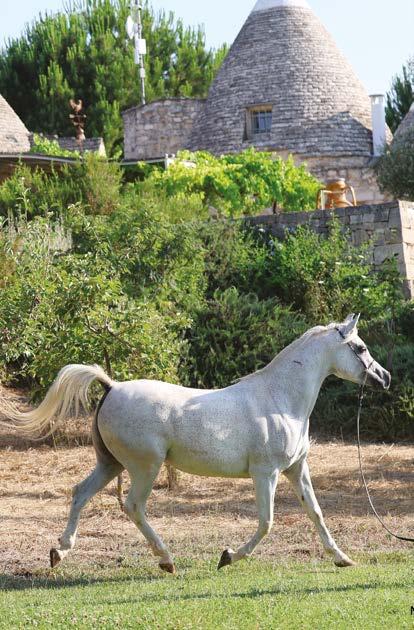
tB MAl AK: One of the cornerstones of Al Malak Farm is the fly-grey mare TB Malak. She is the daughter of Shamekh Al Danat, the Kuwait-bred multichampion sired by Ajamal Al Kout. Her dam is TB Muneera out of TB Hafid El Nil, a successful stallion in Egypt. Her dam line goes back to Moniet El Nefous and belongs to the Saqlawi Jedran Ibn Sudan strain.
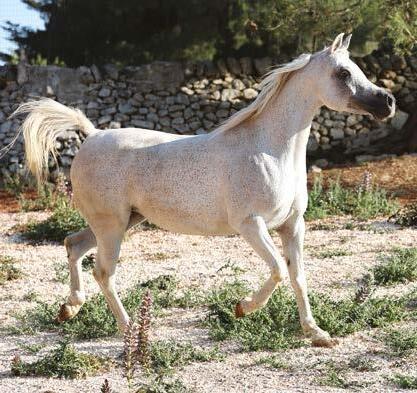
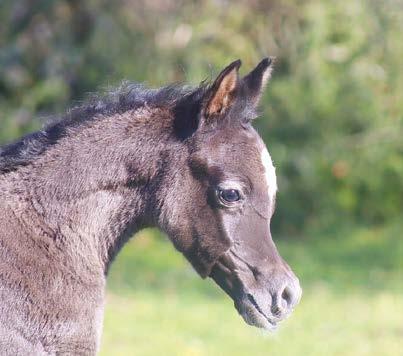
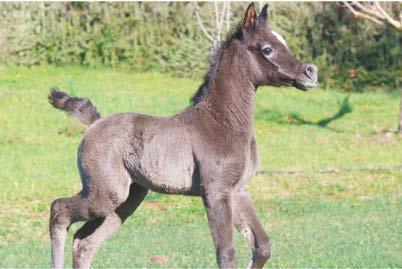
TB Malak’s first foal is the pretty Al MAl AK RABì. Her sire is Basheer al Waab a son of the popular stallion Sinan Al Rayyan. His dam line goes back to Sabah, El Dahma, making this a very promising pairing.
Mi permette di fare la selezione degli stalloni su misura. I risultati mi forniscono le informazioni di cui ho bisogno per imparare e migliorare per l'anno successivo. Sono felice dei nostri successi e non mi piace lasciare nulla al caso, anche se la fortuna gioca un ruolo importante, come nel caso della nascita della puledra Al Malak Qamar.
Monika: Il sud Italia è stato storicamente una zona ideale per l'allevamento dei cavalli arabi grazie al clima e all'alimentazione naturale. Perché oggi ci sono così pochi arabi in Puglia e Calabria?
Roberta: Credo profondamente che il sud Italia sia la zona ideale per allevare cavalli Arabi, clima, qualità dei pascoli e grande tradizione equestre ci hanno fatto scegliere questa terra per il nostro allevamento. Credo che Il motivo per il quale siamo in pochi ad allevare cavalli Arabi sia legato ad
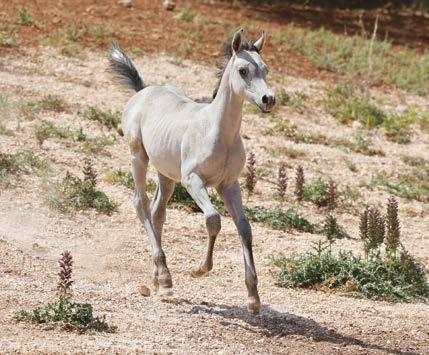
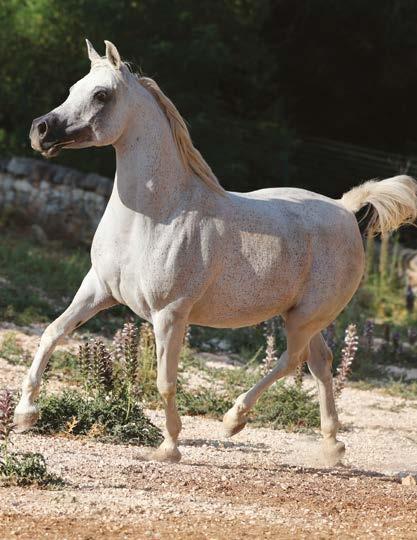
Al MAl AK QAMAR: The first daughter of Adhua El Nile is the sweet filly Al Malak Qamar. Once again, Roberta returned to the successful stallion Shamekh Al Danat and covered Adhua with him. Al Malak Qamar fulfilled all expectations with her type, charisma and floating movements.
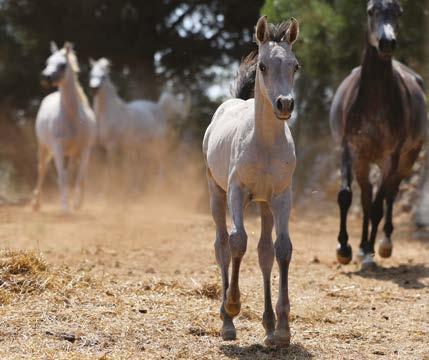
Monika: Southern Italy has historically been an ideal area for breeding Arabian horses thanks to its climate and natural feed. Why are there so few Arabians in Puglia and Calabria today?
Roberta : I firmly believe that southern Italy is the ideal area for breeding Arabian horses. The climate, quality of pastures and great equestrian tradition led us to choose this land for our stud farm. I believe that the reason
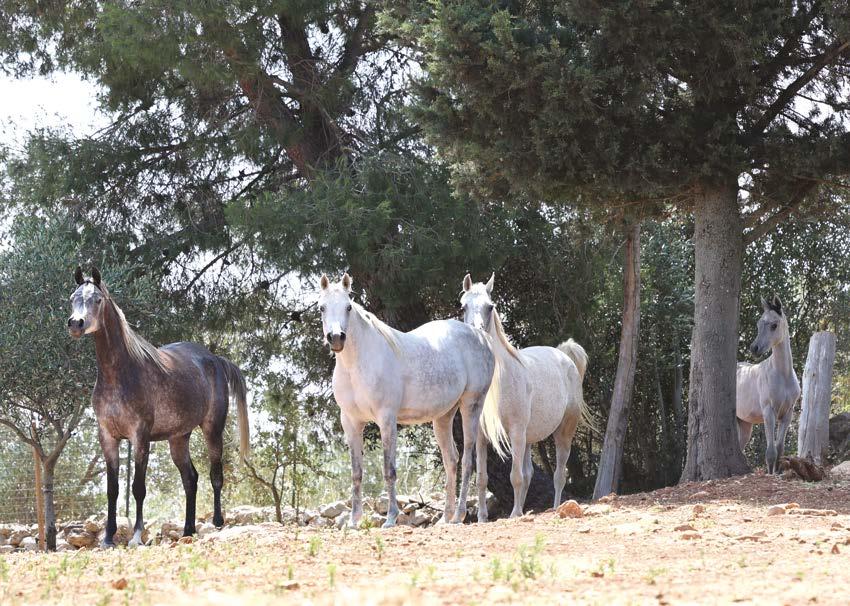
una questione logistica del mercato, alla visibilità, ed alla mancanza di centri di addestramento. Nonostante il sud vanti luoghi meravigliosi, paesaggi mozzafiato, strutture ricettive di altissimo livello, il mondo del cavallo arabo sembra essersi fermato al centro Italia, ma noi puntiamo al sud credendoci fermamente.
Monika: Grazie, Roberta. Spero che questo articolo contribuisca ad attirare l'attenzione degli allevatori arabi internazionali sul tuo meraviglioso progetto nel magnifico sud dell'Italia, che coinvolge i trulli in un ambiente in cui i cavalli e gli esseri umani sono importanti.
why there are so few of us breeding Arabian horses is linked to a logistical issue of the market, visibility, and the lack of training centres. Although the south boasts wonderful places, breathtaking landscapes, and top-level accommodation facilities, the world of Arabian horses seems to have stopped in central Italy, but we are aiming for the south, firmly believing in it.
Monika: Thank you, Roberta. I hope this article will help draw the attention of international Arabian breeders to your wonderful project in the magnificent south of Italy, involving the Trulli in an atmosphere where horses and humans’ matter.
Contrada Foggia di Sauro, Ostuni, Brindisi
Roberta Siniscalco +39 338 99 97 168
www.borgodeltemporitrovato.it info@borgodeltemporitrovato.it
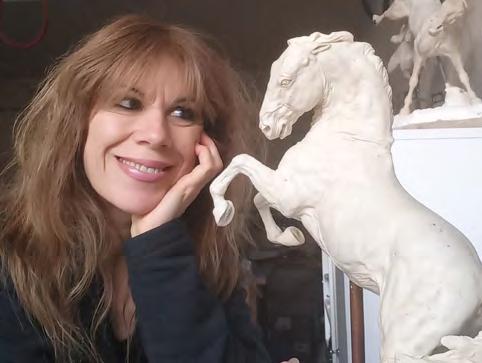
n by Judith Wenning
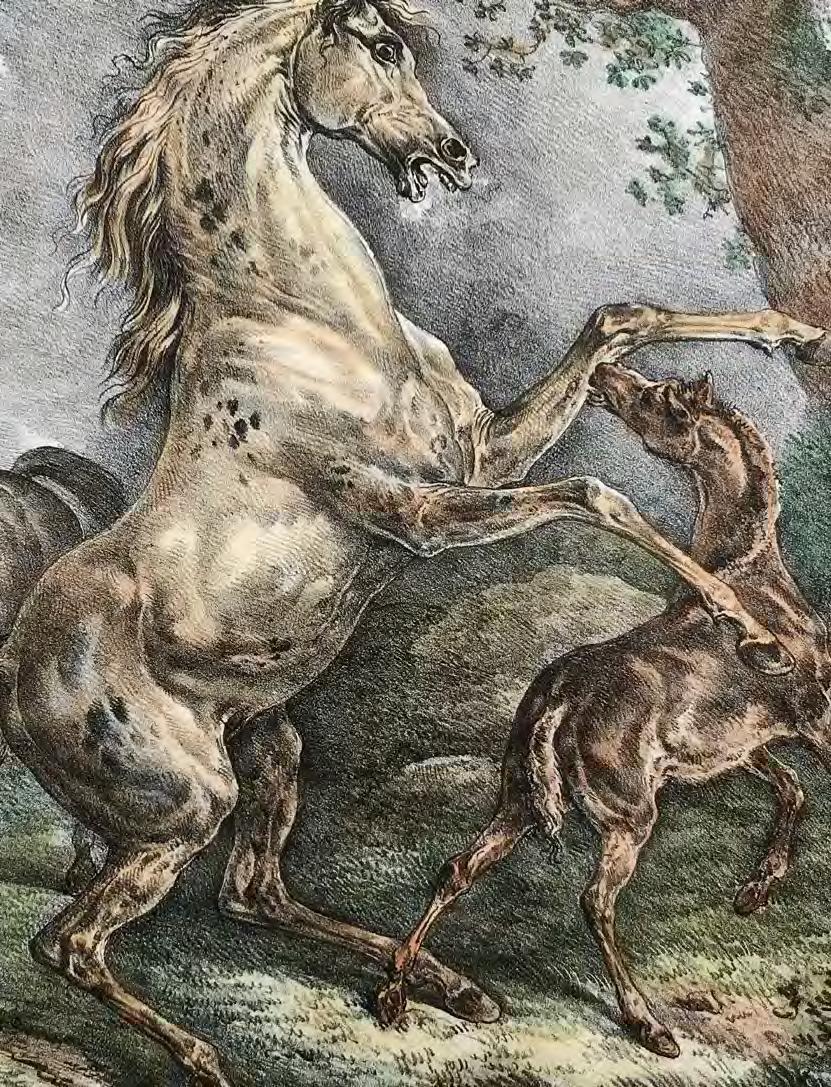
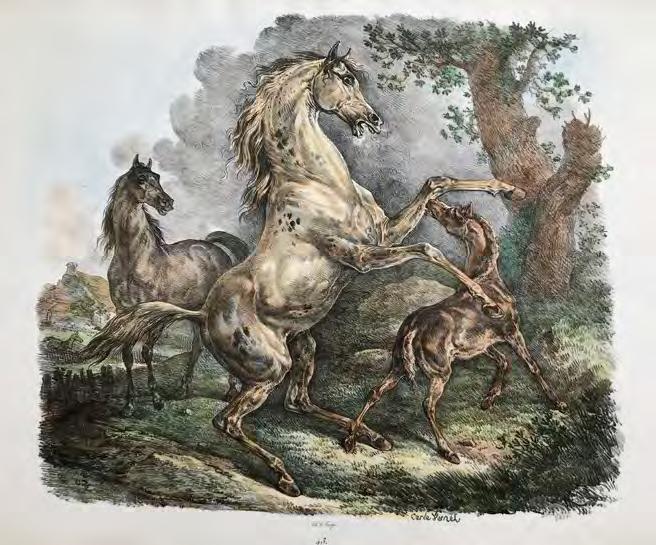
Painting, sculpting, photography, saddlery, breeding … Magali Laurent’s passion for horses knows no boundaries. Her paintings are easily recognizable: vivid colors, lively, powerful scenes, often horses in motion, always elegant and noble. The art of Magali Laurent is a kind of insider tip. Her works don’t look modern, but seem to reminiscent the “good old times” of horse art in the 19th century.
“Together with my husband Alain, I live in the centraleast of France in the countryside, in Nièvre not far from the famous Loire River with our three Andalusian stallions, which are kept at our home”, Magali Laurent relates. “The stalls are just five meters from the house. I love the countryside.”
Then she continues: “This is my typical day: I get up around 7:00 or 7:30 a.m. and immediately go to feed hay to my pure Spanish stallion Zarkam in his stall, then I take care of my cat and have breakfast. I get dressed and
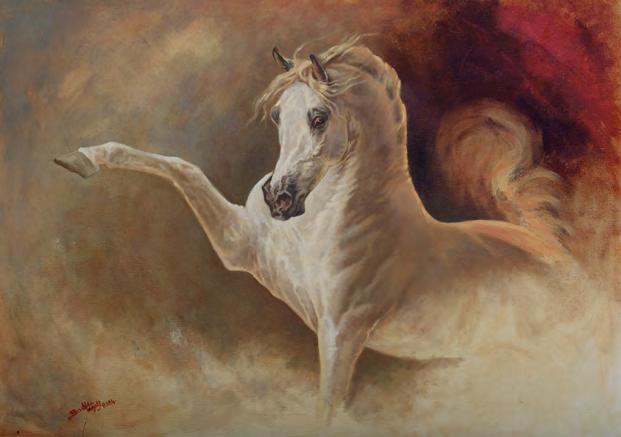
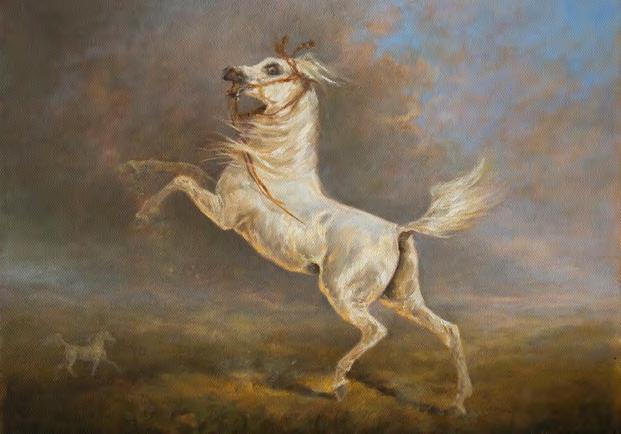
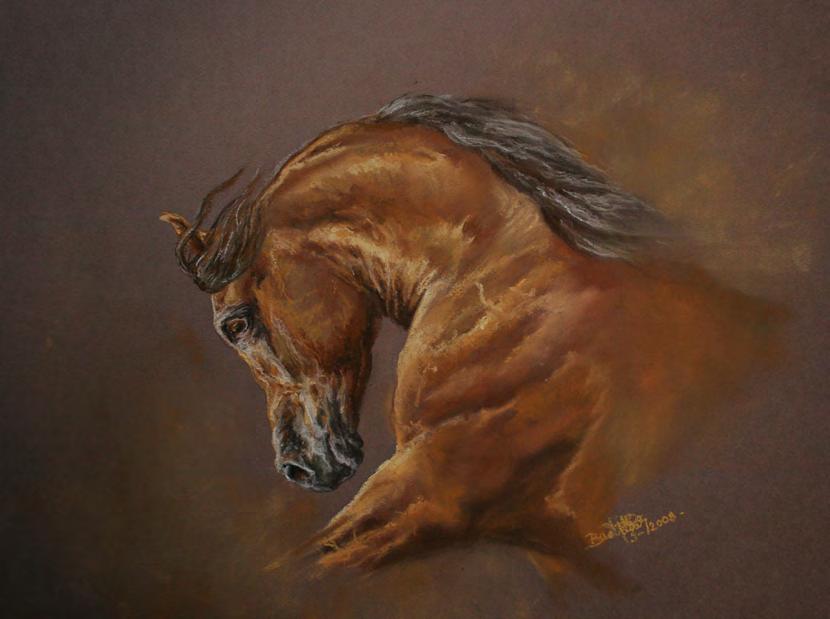
Dry pastels, without title
go outside about an hour later, where I feed Zarkam grain and muck out his stall. Then I go to work in my studio until around 12:30 p.m. I have lunch around 1:30 p.m. and then at 3 p.m. I go back to my studio. Around 5 p.m. in winter and 7 p.m. in summer, I go out to work with my horse, muck out his stall again, and give him his hay for the night.”
Asked when she first encountered Arabian horses, Magali Laurent explains: “I first encountered Arabian Horses at the World Championships in Paris many years ago, and what impressed me most was the fineness of their coats,
their features, and the lightness of their gaits. Before, I liked to paint them for their beauty; today, I try to depict them in their natural environment, in full spirit. The expression in their eyes and nostrils is very important, so I emphasize that and try to be as accurate as possible.”
When asked about her favorite artists, Magali Laurent responses quickly: “Théodore Géricault and Alfred de Dreux. I love Géricault for the power of his paintings and the expressions of his horses, his boldness, his originality. And regarding Alfred de Dreux, I admire the anecdotes present in each painting, the richness of the tones and

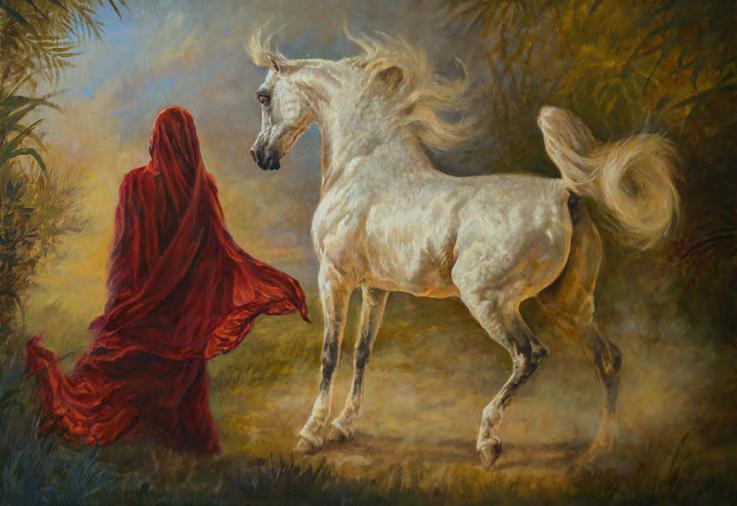
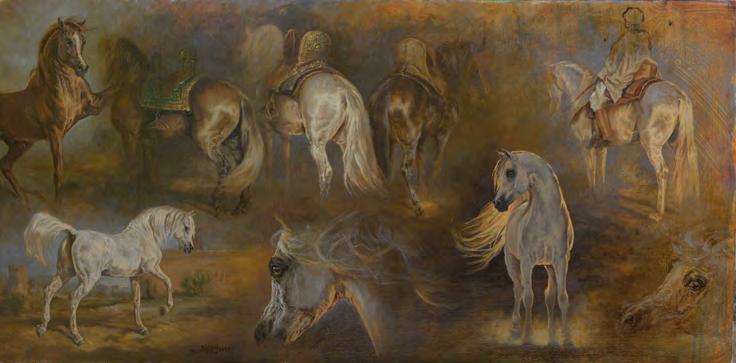

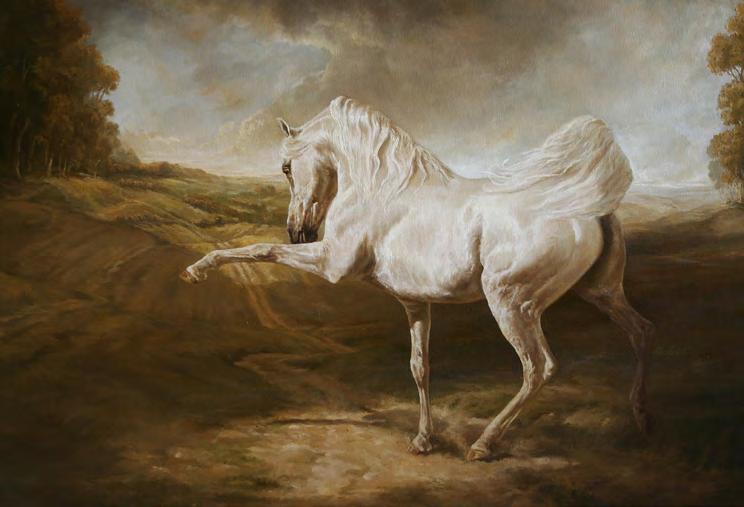
their nuances, the sheen of the horses. I also like Alfred Munnings for his play of light, Rosa Bonheur for the simplicity of her scenes of everyday life and her superb horse painting of a market – such a famous artwork!”
Magali Laurent finds her inspiration everything. Colors, attitudes, an atmosphere, a coat, an expression might find their way in her artwork. Her favorite techniques are almost everything available – oil, pastels, watercolors, pens, charcoal. She uses all techniques except acrylic. In sculpture, she loves plaster, plasticine or clay.
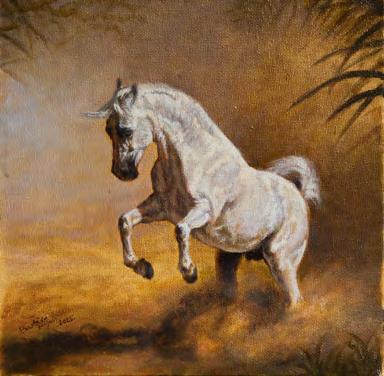
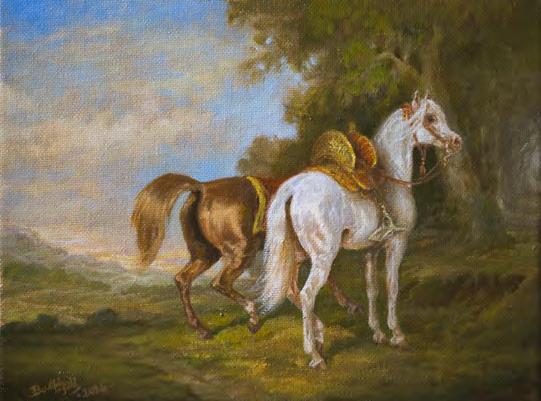
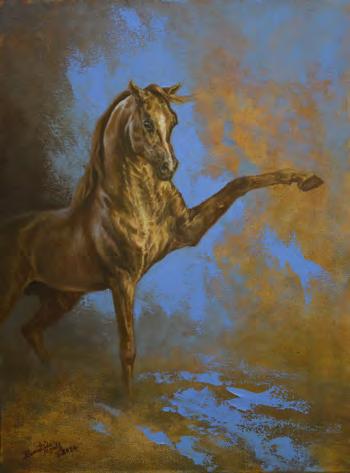
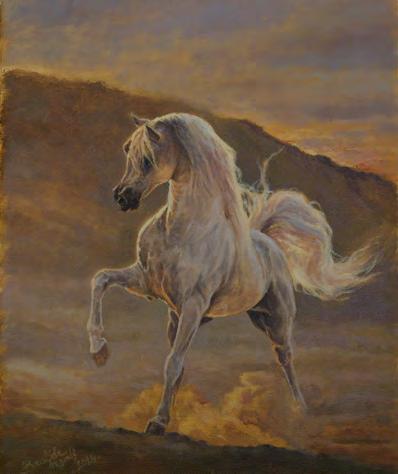
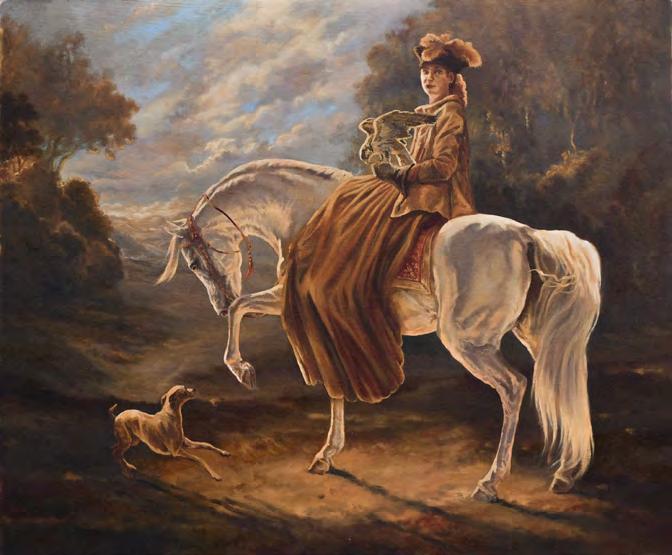
When asked about the most difficult part in her artwork, Magali Laurent responses quickly: “Finding the right shades! Putting the light in the right place; knowing when to stop painting so I don’t go too far. I’d also like to add fewer details and have a stronger touch. Sometimes I manage it, but it’s rare.” With a smile she continues: “Art isn’t work for me, it’s a vital need. I need it, it’s as necessary as eating and drinking. A day without creating is a wasted day for me.”
Magali Laurent has everything she needs at her place. When asked about future projects she remarks: “Maybe I go back to Spain to do some photo shoots. Some
immediate projects are to see Frédéric Jager again, the sculptor I admire enormously and who inspired me to sculpt. And to paint a large three-meter canvas with six horses pulling a chariot. Another project that is very close to my heart is to finish my bronze sculpture of three horses called “Les Racailles”. It’s a fairly large piece that has been sent for casting but is on hold due to a lack of funds.”
Asked about her dreams for the future, Magali Laurent smiles: “Peace, tranquility, and the health I need to continue painting, sculpting, and taking care of my horse.” q
HAREM STUD WISHES YOU A GREAT END OF THE YEAR AND ALL THE BEST FOR 2026

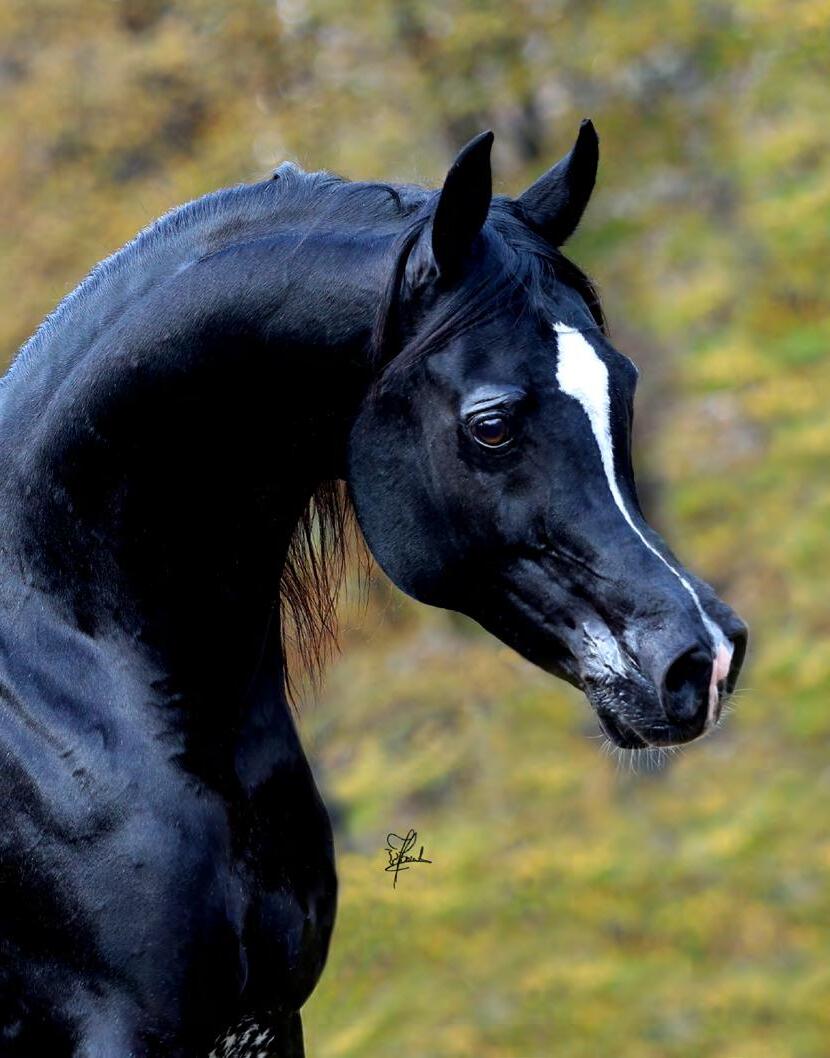

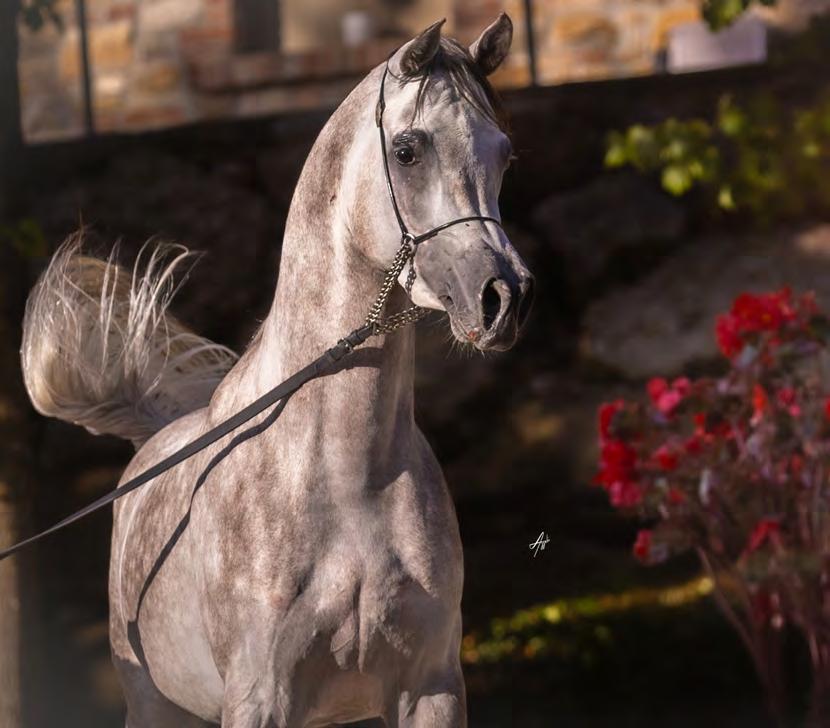
Within all of us lies the power to rise, To dream boldly and soar beyond limits. When you believe, you unlock infinite possibilities. If you can see it, you can achieve it. If you believe, there’s no horizon too far to reach
Le Soleil Arabians embodies the spirit of boundless freedom and timeless beauty. A symbol of strength, grace, and the courage to chase the skies.
Majestic. Timeless. Born to Soar.

Bronze
Gold
Bronze
2019
Gold Champion Seniore Stallions
4th Qatar Nat. Arabian Peninsula Horse Show
Bronze Champion Senior Stallions
9th Qatar Int. Arabian Peninsula Horse Show
2017
Silver Champion Jr Colts - Egyptian Event Europe
Gold Champion Jr Colts - SE World Championship
2016
Gold Champion Jr Colts - Qatar Int. SE Horse Show
Gold Champion Yearling Colts - Egyptian Event Europe
BREEDING SEASON 2026
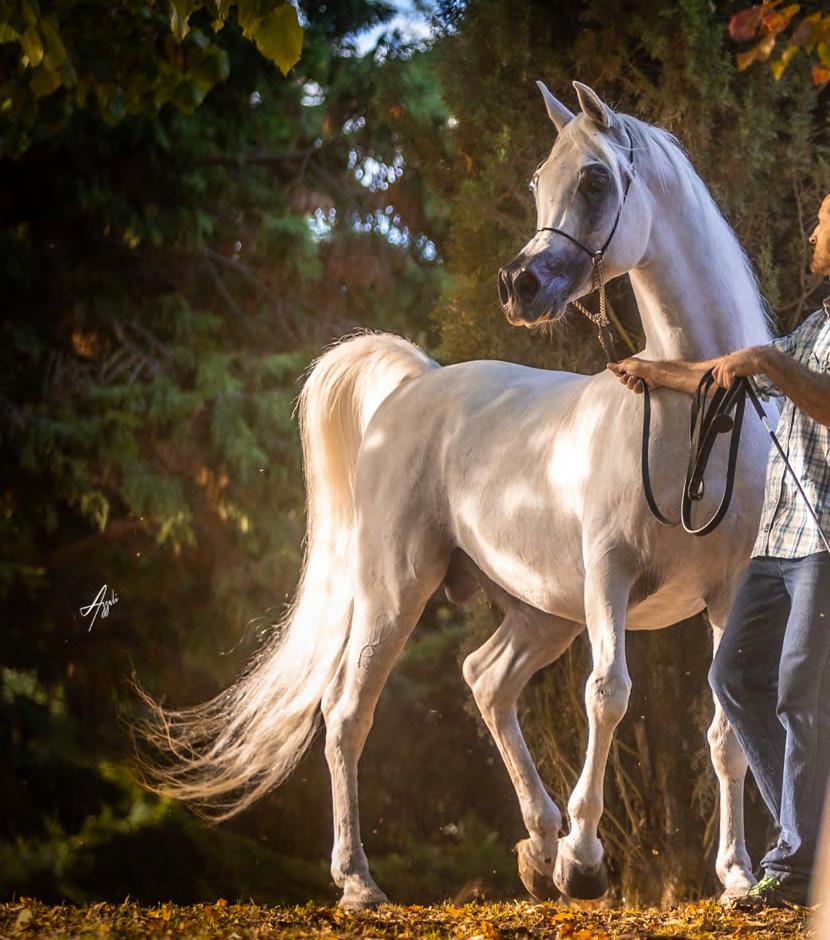
Sinan Al Rayyan | Sharuby HB
2015 Straight Egyptian Stallion
n by Hans J. Nagel
It is quite natural that every horse owner likes to know and be assured that his horse is appreciated. In the first place, it should be appreciated by himself, otherwise why has he chosen it? But to receive also a confirmation by somebody else that he made a good decision would even increase the new owner’s stage of happiness. Nobody is so independent of his surroundings that he does not care about other opinions. There might exist very few breeders who do not care at all and decide their own way. Most people ask questions, and the more they are looking for answers, the more it becomes evident that there must be a common understanding or knowledge and a general consent, why some horses are better or higher evaluated than others.
When it comes to the Arabian horse, this subject remains quite complicated. Arabians are known for their versatility, as riding, racing, show or just as hobby horses. These different disciplines require different abilities and consequently different horses. For some of these purposes, it is not too difficult to make a clear evaluation, if one looks, for example, at the following order:
1. If an Arabian horse is kept for racing, its value and appreciation is determined by its ability to race and its chances to win. The answer is very easy and objective: One can measure the time and count its victories.
2. If an Arabian horse is used as a distance horse and in endurance riding, also in this case its value is determined by its capacity to compete with others at a certain distance. The result is again measured in time.
3. And when it comes to sport horses, to jumping competitions, time factor is second, meters and centimetres come first, but again an objective measurement is at hand. Arabian horses in dressage may be more difficult to evaluate. But there is huge activity in horse dressage, nearly all warmblood breeds compete in this field, and the standards for evaluation are obviously very professional and accepted worldwide.
However, not more than about 2% of the Arabian horse population world-wide participates in such events and competes in these disciplines. 98% of all Arabian horses are in the hands of owners who apparently like their horses for some other reason, and it would be of great interest to know why this is the case. In visiting such breeders and in going through all the different journals appearing in the most important breeder countries, as in America, Australia, England, Germany, Italy or wherever, the most obvious observation is the fact that one is confronted with very different types of horses, but most of them are described with similar comments or even the same overloaded words, when it comes to praise their quality and appreciation.
Could it be true and possible that a majority of Arabian horse owners are not able or even willing to know about the quality and value of their horses or they like them so much that the expression “Love is blind” applies to a human-horse relation.
In introducing the time element into these considerations, it is evident that in the last ten years a change could be noticed. Publications and advertising descriptions became more precise, points of differences are better. The degree of exactness has increased, in total, a better consensus has developed as to how a good Arabian should look like and which one could possibly receive the highest evaluation. There must have been a learning. It is a known fact that never in history there was one single type of an Arabian horse. It should be remembered that the Arabian horse is an old, historical breed; it can only be an Arabian horse if, earlier or later, his ancestors originate from the Arabian countries. Their history is recorded in the so-called pedigrees which at some stage has to refer to the Bedouin breeders in the Arabian Peninsula.
Even at this early time in their own homeland, Arabian horses in the South or North of Arabia, in Saudi Arabia, Iraq or Egypt, always looked different from each other. The stronger ones lived in the North, the smaller and lighter ones possibly more in the South.
Environment, availability of food and definitely the preference of their breeders, altogether created such differentiation. When those Arabians came into the hands of European educated breeders, European methods for evaluation were applied. Here it is a habit and useful in many respects to create standards.
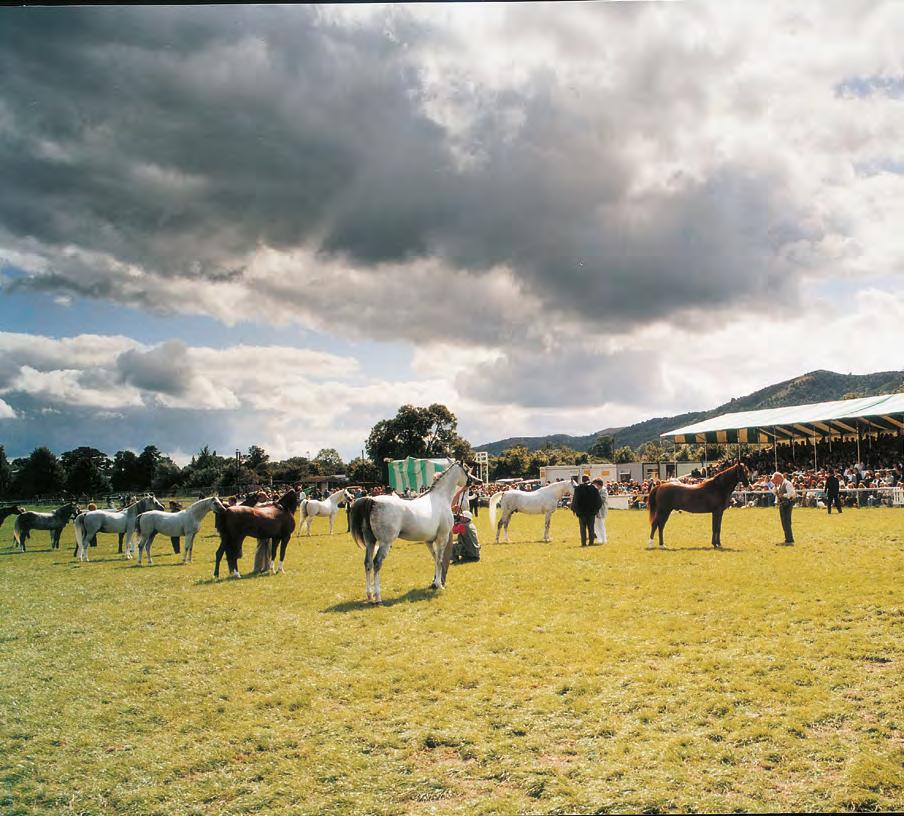
During the last 30 years, the Arabian horse breeding activity nearly reached the status of an industry, and kind standardisation had to be expected sooner or later. The arena where this happened was the show ground. When Arabian horses are presented to the public, they appear in great numbers in these horse shows and in a higher volume than in the other disciplines mentioned before.
To improve breeding of animals for whatever purpose, evaluation standards are needed as a basis for selection. This is the way selection works: a clear description of the envisaged goal. As an example, the great State Studs in Eastern Europe collected once or twice a year their horses in one location and all the foals born in that year were properly examined; at the same time an evaluation was given to their parents in order to understand and to evaluate their breeding potential.
Stallions which gave unsatisfactory foals were taken out of breeding and those ones which produced a wonderful crop were more employed and again chosen for the next season. The same applied for the mares. And not only their features, but also the behaviour and character entered into the evaluation records. This early kind of breeding inspection, which was used later on by different European Arabian horse associations, changed and developed into the horse shows of today. These horse shows finally created their own life, they became disconnected from the previous wider aspects of breeding considerations and each animal as such received only its value and appraisal, as it was presented. History and breeding background as well as mental and behaving aspects were omitted.
Show organisers, breeding experts, judges, finally arrived at a kind of consensus, how to run the shows and how the horses should be judged. There remained a certain difference how the Americans chose their way of judgement and by what judging system the Europeans preferred to separate the good ones from the ones of minor quality, but a certain unanimous opinion is evident.
A further reason for a difference in evaluation and appreciation lies in the education and background of earlier judges. It was interesting to note in Europe that many officials in traditional horse breeding, like certain managers of state studs or of governmental horse organisations, involved with Arabians and took part in Arabian horse breeding organisations. Most of them showed in their judgement the tendency to look for a stronger horse.
For a long time, Arabians were used as improver horses, but still with the purpose to breed a horse stronger in substance than the original Arabian breed. For example, the so-called Shagya-Arabian breed was such a product. It was greatly appreciated by European horsemen. Many of those officials were highly attracted by this type of Arabian, since it was maybe in all its features closer to the general European warmblood-type, which had a solid place in agriculture, transport and not to forget in the army.
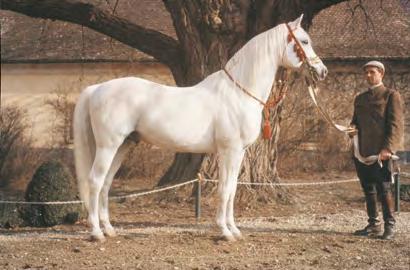
Many of the pure-bred Arabian stallions showed a strong and perfect conformation, as it was highly appreciated in Europe
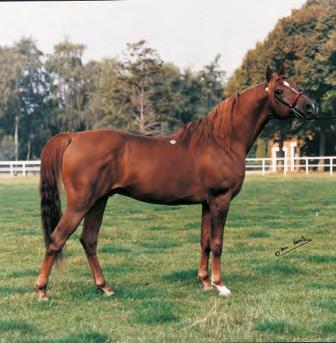
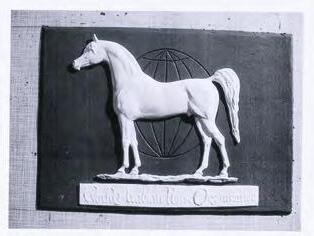
Also in the States, many of the early Arabian breeders appreciated their Arabian for their ability as a useful horse and not just an animal for enjoyment and personal entertainment. It is very obvious that many of these professionals put their stamp of opinion very early also onto the show judging of Arabian horses. They were considered by the majority of the new Arabian breeders as experts and experienced horsemen. Their advice was highly appreciated and many of them were invited to judge. Later on, non-professional horsemen appeared more and more as prominent breeders of Arabians. They gained their own experience and were finally considered as experts as well, but their knowledge was possibly not so much oriented along European developed professional horsemanship, but focused more on features which describe the Arabian horse as an exotic animal, a horse which came as a foreigner with its own history from the Arab countries into the Western hemisphere. There is no doubt that both schools were instrumental in forming and fixing a standard for the Arabian horse, as it can be seen today.
If the Arabian breed and its evaluation is at present more determined by orientally inspired breeders or by those ones which represent the official horse breeding profession in the West is an open question. Both of them created a common standard of evaluation in their mind, but the ranking of features in the scale of appreciation might still remain different.
With the creation of the ECAHO, European breeders decided more or less for one single judging system. This judging system divides the criteria to be judged into 5 categories and is now the most common practice. It replaces the previous type of judging, where normally one judge was asked to put a class of horses into the right order, from the winner in the first position to the loser in the last position.
This system is still widely applied in Great Britain and has also elsewhere many supporters, even on the continent, but the point system, as mentioned above, is the official ECAHO-standard.
Whatever is the education of a judge, he has to follow in ECAHO-Shows this point system.
This point-judging system had a fantastic by-product: it was teaching people. They started to learn how to evaluate their horse and they were now able to follow the judgement in shows and could even apply this system on their own horses at home. Evaluation became easier, since there was now a formula how to do it.
It has led to a better and more precise understanding in all levels of Arabian horse breeding and left clear traces in advertisement and the general publicity.
The above introduction and historical discourse was written in order to understand why there were and are still some basic arguments about a proper evaluation: First, nature and men created by selection different types of Arabian horses, and secondly, a difference in education and background of previous and present breeders and judges has led to differences in preference and ranking.
The five well known categories, as type, head and neck, body and topline, quality of legs and movement are the cornerstones of judging today. Nearly every Arabian horse breeder in Europe knows about them and even when it comes to buy a horse, most of the buyers might think in their mind in these terms before they take a decision. Visiting observers and owners follow in horse shows the known judging procedure in even giving their own points, but still many of them leave the event with a shaking head indicating they could not follow properly why judgement was done this way and not the other.
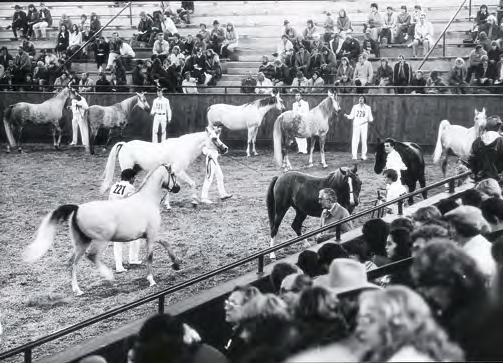
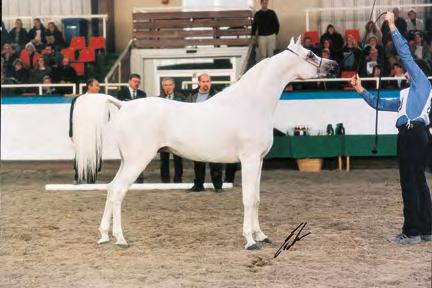
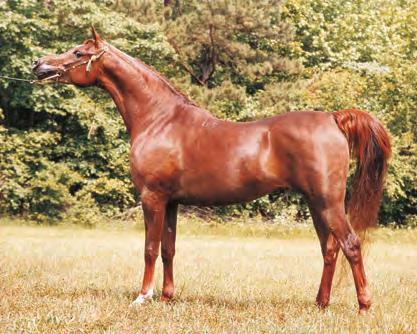
...and a perfectly balanced Arabian brood-mare, highly evaluated by showmen and breeder people
This all indicates that there is plenty of room for interpretation and still more need for explanation as to what is the meaning of each of the 5 categories and how one could come closer to a proper common application and understanding. On the next pages, reference will be made to “type”, “head” and “neck”. The category of type is maybe the most difficult and complex one and common understanding is not easy to reach. The main reason is the fact that no objective measurement exists for type. It cannot be measured in meters, in time or weight. And in addition, type is not a single feature. The word “type” covers a summary of different features. It is a composition of qualities and features which could be ordered as follows:
Words like “balance”, “presence”, “harmony”, “charisma” or “quality” are often used to describe type. All these ones are of a subjective nature and every person will fill them out with his own opinion and according to his own taste. Different evaluations must be expected and nobody should try to eliminate such divergencies completely. They should remain a wellaccepted human privilege. However,
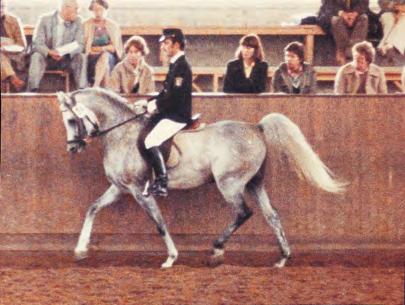
it might be possible to bring such opinions closer together through a learning process which should concentrate on the application of those words on the Arabian breed. The term “balance” is possibly the most important one, “presence” is the next. To evaluate such balance requires observing the horse from a distance. Only then balance can show. Balance as such means to give a certain weight to each part of the horse and these weights should be in a proper relation to each other: Nothing should be too short or too long, too heavy or too light. Head and neck, neck and back, body and legs, all should unite to a balanced entity in itself. A perfectly balanced horse excels in harmony; it comes close to standard. Balance in movement acts like a confirmation of previous judgement. The horse must remain in balance, when it comes into movement and not fall apart when movement stops.
As soon as the horse goes forward, then also “presence” should become more evident. A horse must be able to make himself known even at halter by posing itself in an eye-attractive position. It must look alert, interested and not lazy or sluggish; such presence will be activated when it is allowed and encouraged to move. An Arabian which is unable to express all his fire and presence in movement fails to be a true member of this proud breed. There should be no winning horse which does not express perfect balance and proud presence at halter and in trot Secondly, there are three features which refer directly and only to Arabian horses.
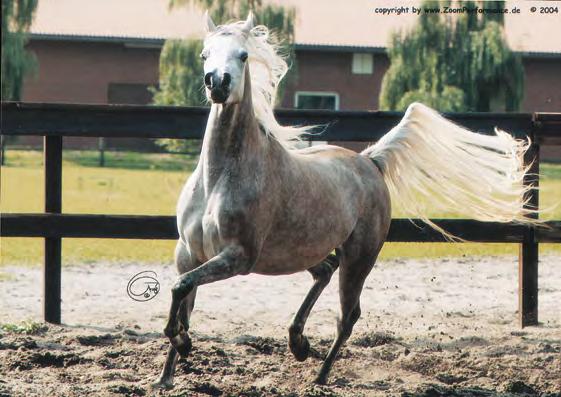
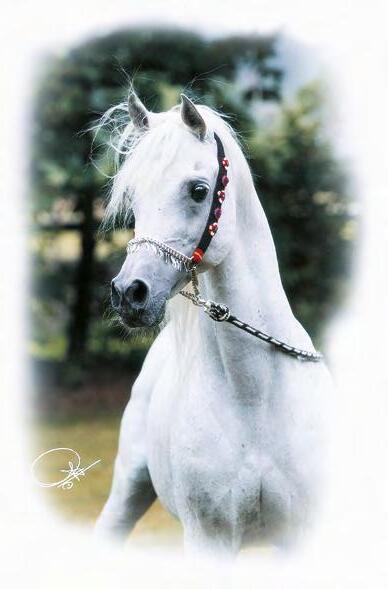
These are the ones which make an Arabian differ from all other horse breeds world-wide and give it a special touch.
The first criterion is the “Arabian head”. No other horse breed ever worldwide in history or at present has a comparable feature. It is this head which made an Arabian unique.
Particularly, the noble society in earlier times as well as breeders, horse lovers and artists of today have been attracted and became amazed by this specific face.
A further second typical Arabian feature is its “tail carriage”. Dedicated Arabian horse breeders always paid highest attention to this genetic historical heritage of an Arabian horse. It is as unique as its head. An Arabian horse which is unable to carry its tail high like a “proud flag” has lost a very important Arabian feature.
Head and tail carriage are two very easily recognisable features. However, there is an additional one, which might be claimed by other horse breeds as well, but it is definitely deeper and more solidly settled within the Arabian breed. This refers to their skin and to the incomparable dryness of this breed. A fine skin must make muscles, bones and veins clearly visible. The skin should be so delicate and fine that all the physical details which are placed and hidden underneath the skin penetrate to outside. An Arabian horse should show texture and should look dry. Accordingly, expressed in a negative way, a thick skin is not in conformity with the Arabian breed. It covers the body like a heavy blanket. Texture creates the impression of life, a flat surface suggests a rather inorganic entity, impossible to animate.
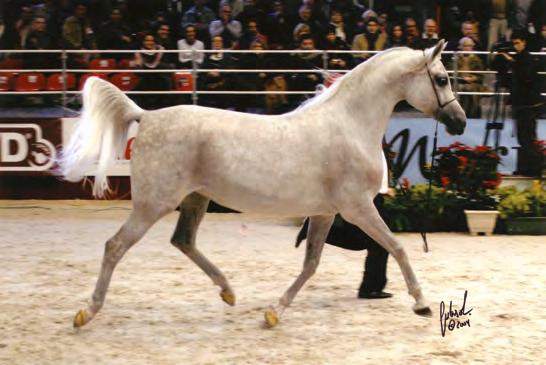
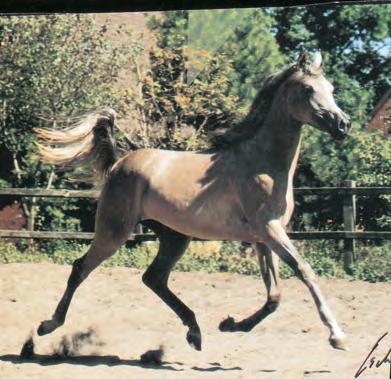
Movement, the next component of type. Previous Arabian breeders did not think so much about halter judging. They liked to see a horse move. “Close your eyes and you should not hear your horse in trot.” So easy, so elastic an Arabian should fly over the ground that hoof beats do not seem to exist. An Arabian is, so to say, a light-weight horse, less than what is ever average, a fine product of desert life and an environmental relative to the gazelle of this region.
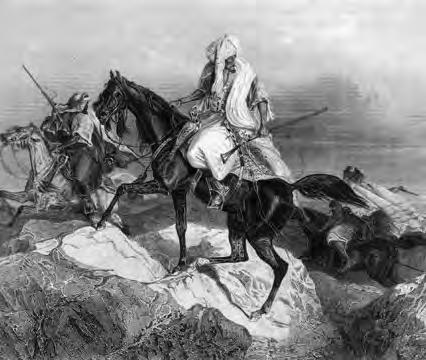
An Arabian was once in its history a war horse. Local smaller wars between Bedouin tribes were fought all the time. Mostly in the dark at moonlight, these Arab riders, themselves of a lighter stature, mounted their mares, alert, obedient and well-trained horses for such attacks, and in absolute silence, avoiding any kind of noise, they approached the location of their enemies. Such desert life was asking for these delicate qualities of their horses in order to fulfil their duties, and without doubt they still exist. Stallions which tended to get excited and make noise did not fit to such surprising raids.
The 4th consideration covers size. There is a common understanding that an Arabian horse should not be smaller than 146 cm. Most State Studs and breeders eliminate all horses less than 146 m height: they do not want an Arabian to be smaller than this, as if it belongs to the pony-breed. It should fit properly into the warmblood family.
But what is the upper limit and why do all breeders want a stallion to be taller than a mare?
Well-known State Studs limit the size of their horses to 156 cm. This should apply to males and females, even if it is preferred that the mares should be 1 to 3 cm smaller than stallions. Size definitely interferes with type. “Things grow out of proportion”, a saying which suggests that harmony gets lost or, with other words, that a certain size does not fit to a certain object any more. Again, the simple words “too big” or “too large” indicate that something starts to be not normal and becomes exceptional. Size belongs to type as a further component, applicable for both, to the lower as well as to the higher side.
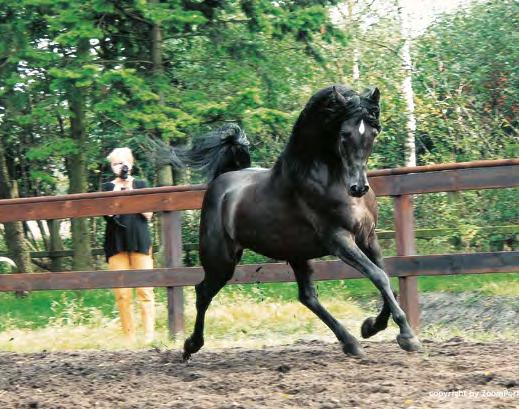
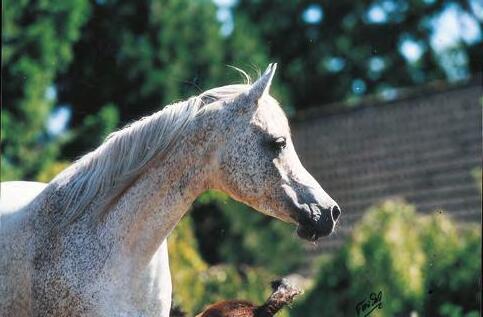
Finally, a last 5th consideration refers to sex appeal. Stallions must look like males and mares as females, clearly and without any doubts recognisable as those. An Arabian stallion should show at least the following prominent masculine attributes: Powerful movement, a well-arched stronger neck and a proud carriage of his head. All three are important features of masculine behaviour. Such proud behaviour of a male in whatever breed, sometimes entering ridiculous dimensions, is one very basic tool of natural features of masculine behaviour. When in great shows the note “20” appears on the screen for “type”, have all these above points been well considered? Judging was perfect, when in this one note all these different components were properly summed up which enter into the evaluation of type, like: Balance and presence, the unique shape of head and carriage of tail, the fine texture of skin, the elegance and balance in movement, the size of their body, the pride of a stallion as well as the sweetness of a mare? The fact that some experienced judges enter their note for type only at the end of the whole judging procedure on their document, indicates that they are on the right track for proper and comprehensive evaluation.
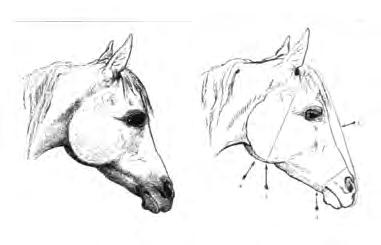
The next category after “type” is named “head and neck”. Why head and neck have been combined under one single note, will remain mysterious and why nobody is courageous enough to change this unhappy combination is mysterious, too. A head can be so pretty and the neck so wrong or vice versa as well. An open door for basic mistakes in evaluation and misleading in breeding. When a breeder wants to improve the heads of his horses, this has nothing at all to do with their necks. Necks can be improved independently; heads may remain the same and vice versa. There is no relation or better, no correlation. If there might be such a correlation, it is just one of those unpleasant accidents which could happen in the big gamble of hereditability. Head and neck should be evaluated separately, because they have also considered each one by itself, when one likes to improve and have to select for them.
The Arabian head is in fact the trademark of this breed. In principle, a trademark in doing this, it is not guaranteeing the quality, but it stamps its product and makes it easy to recognise, and by all means this Arabian head is unique, well known, attractive and can be noticed immediately by any observer, when he approaches the horse. It cannot be overlooked. Nearly all other horse breeds show a convex forehead - a roman nose - or a straight forehead, but none can claim a concave one, the so-called “dished head”.
Many breeders were getting overexcited concerning this dish, and in our days even with an increasing tendency. The more dish, the better until the point that one is inclined to believe and fear that Arabian type and Arabian head would once become synonymous.
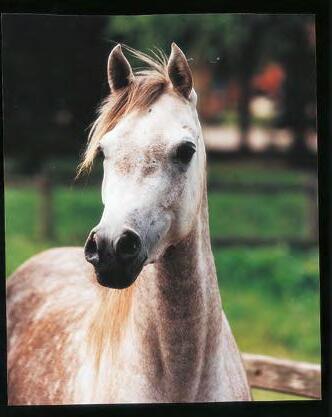
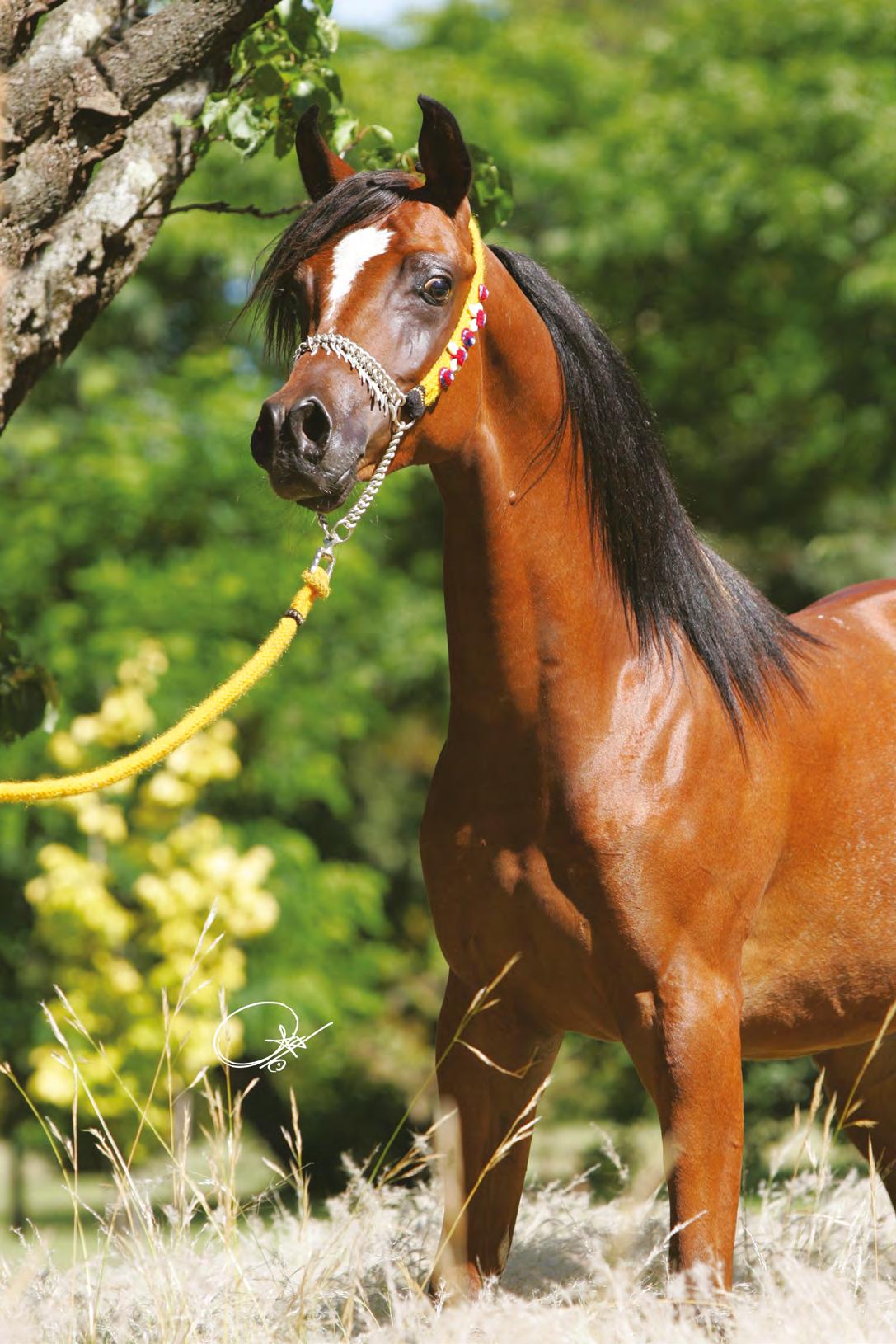
The broad forehead and fine nostrils of an Arabian in the front view
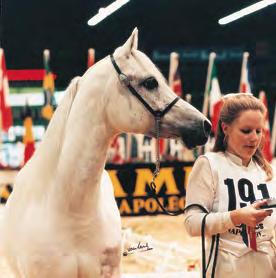
The head should form a triangle, seen from the front and as well from the side. The small mouth-muzzle and the broad front of the upper head, enlarged by clearly extended eye sockets, form this shape as a front view; again, the small mouth/nose combination on the lower part and the properly medium-sized, but round shaped jaws appear as a triangle from the side view. If these triangles appear compact, a shorter head is formed. If they are stretched out, a longer head is the result. But in all cases, the triangle shape must be clearly recognisable and never be lost.
The ears should fit the head. A short head should have shorter ears, a big longer head might have longer ears. However, for both of them too long ears are not much appreciated.
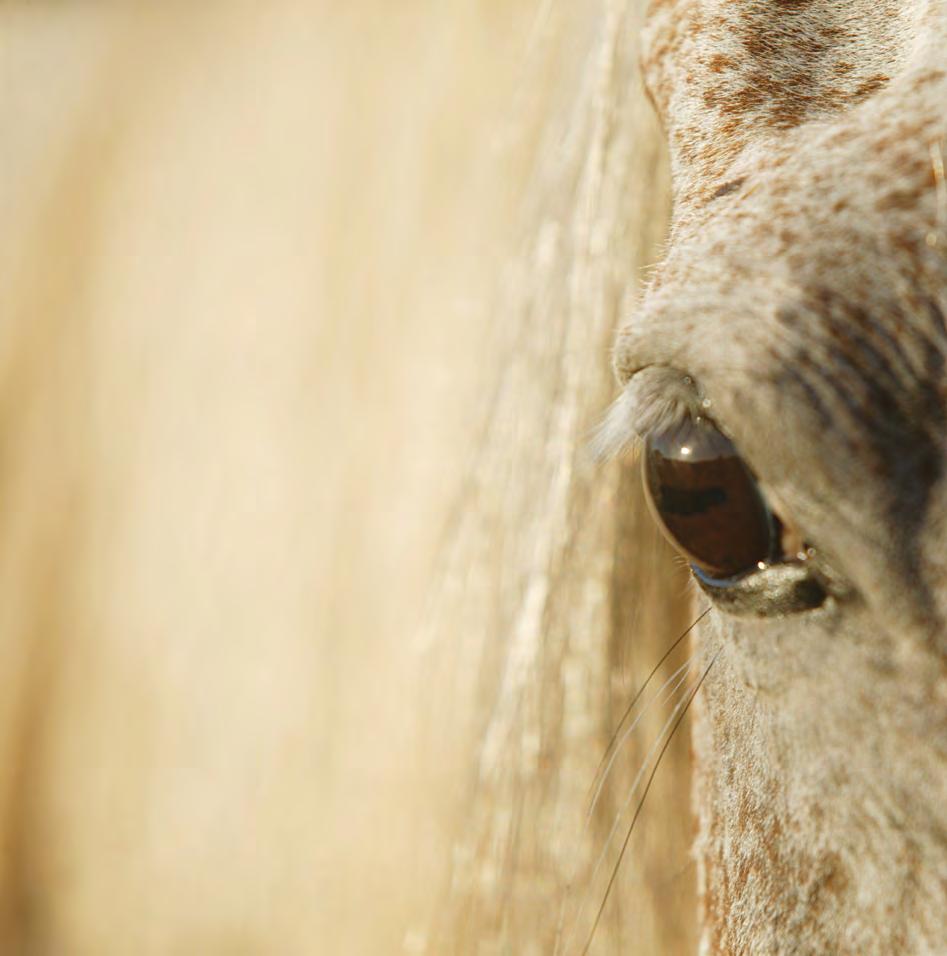
The eyes of an Arabian should be round and by no means show an angle shape. They should not be positioned too much sidewards, rather clearly visible from the front as popped out from the head. Big and black eyes are the most wonderful ones, small and at the same time sidewards placed eyes are not acceptable at all. To differentiate between these two extremes is easy, however, when it comes to the so-called medium-sized eye, arguments may start. Most of the eyes one sees today are of such medium size. To find an Arabian with really big dark eyes became seldom.
There is a strange, regrettable observation: While Arabians with such black, large, wonderful eyes are getting rare, the socalled “dished head” is in advance. It looks like an unfortunate correlation, which should be followed up with care. A big eye is a feature which could be improved by selection.
Finally, when the head is thinly attached to the neck, an important precondition is given for a perfect combination. The finer and thinner is this attachment, the more elegance appears. Type and head are the utmost required Arabian characteristics and there should be no proper Arabian which is missing the one or the other. These two features are stamping the breed and they are and will remain for curious Arabian horse students, for enthusiasts or even fanatics the ideal. The difference between a male- and a female head should be remembered.
Each of the sexes should have its own typical expression. Again, the head of a stallion, more fierce looking, with somewhat stronger bone, and a possibly broader forehead, a female head is finer in structure, maybe a bit longer and comparatively smaller. In principle, the size of the head of each one sex should be seen in balance to the whole horse. A smaller head in relation to the body adds to more grace and especially in mares, such feature will increase their charm, as already mentioned battlefield of arguments when it comes to look for final answers.
From now on the subject of evaluation enters into the more professional horse breeding field and the term of functionality needs to be considered. The evaluation by professional and self-made Arabian horsemen should go into the same direction and have a clear orientation: also, an Arabian horse must remain a useful animal. Horses were not domesticated for their own sake. They had to fulfil a duty and should become a servant of men. The kind of formation of neck falls already under this category. Horses with ideal necks are easier to ride than those ones which are faulty.
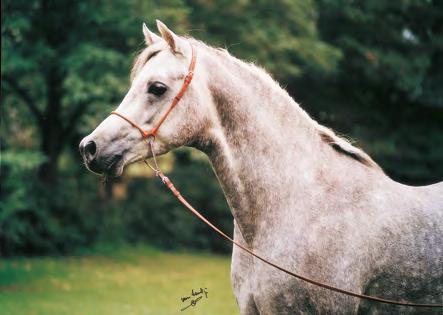
The first critical point in looking at the neck is the connection from head to neck. The Arabs gave this connecting point a special name “Mitbah”. There should be enough room between the two jaws indicating again a nice broad head and seen from the side view a fine connection, without the disturbing loose throat latch and by all means not a broad, thick upper end of neck. A nice small clear throat is the optimum. At the lower end of the neck, a proper laid-back shoulder should act as its base. Such a shoulder allows the horse to carry an upright neck. It prevents, in fact, a neck which starts too low nearly from the middle of the breast, and also the undesired under neck is not as frequent, when a laid-back shoulder is present. In other words, an under neck and a low starting neck is not welcome and indicates to pay attention to the shoulder position.
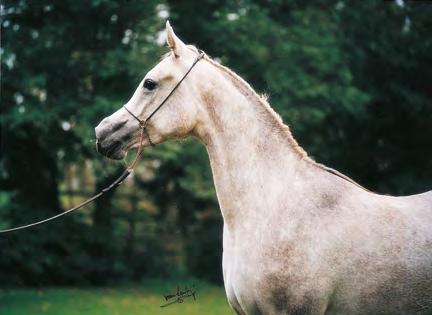
Good necks are not too difficult to breed; they are well settled in several Arabian horse families. However, even good necks can go out of proportions when Arabians are overfed. They get thick and round, since fat gets easily deposited under the skin around the neck. It became a habit to present Arabians well fed and in good condition during show time. When fat is deposited on the hips, loins and quarters it is found consequently and well in abundance on the neck. Sweating by the use of “neck sweats” are the answer; a procedure which is disliked by many people and since a certain time under a very controversial discussion. Like this, the neck is kept lean and the rest of the body shows wellconditioned, a good solution?
The optimal length of the neck is a question of balance. Very seldom are necks in Arabians are too long. There is little fear that this could happen. Mostly they are too short. A nice long neck should always be honoured, it adds to elegance and it increases tremendously the quality of the horse for riding purposes. It is flexible and allows the horse to carry his head in a very attractive collected position.
The upper side of the neck should connect at its lower end to a wither; a smooth line from the neck directly into the back is undesired. And finally, again the sex appeal: a stronger well-arched stallion-neck, proudly carried and maybe even broader and in contrast a leaner, finer and more straight neck of a female.
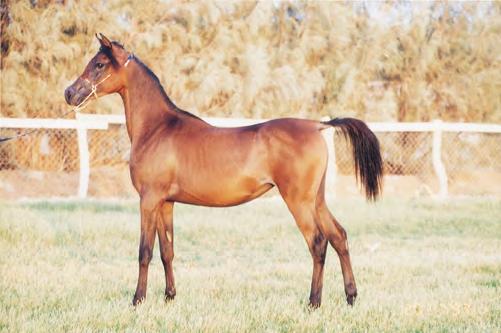
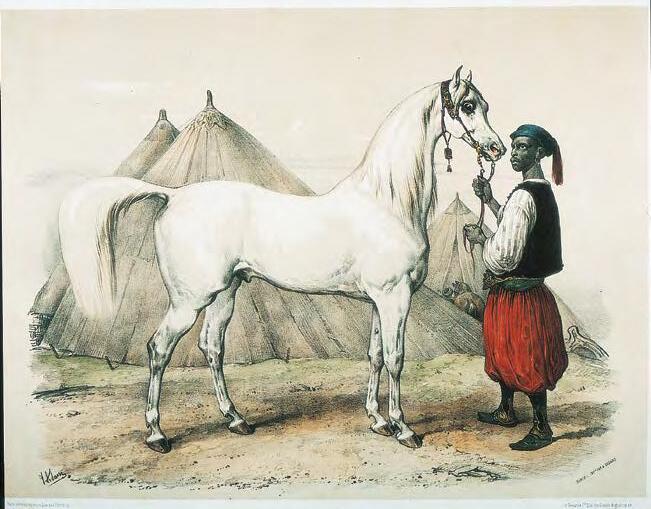
If one remembers a fine dry skin, a leaner and lighter Arabian with a neck, set well on the shoulder, long enough to show a nice curve, a fine attachment to the head and finally a head with a tendency to the smaller side, then additional conditioning may add not much and is not even needed for perfect horses.
When conditioning is building such muscles which are basically needed, this will help the horse and they will stay. When good feeding, however, ends in too much fat and needs correction it is a waste.
In considering all that was explained above, head and neck are doubtlessly physically connected, but concerning their desired qualities, they should be evaluated completely independent of each other, they are belonging to separate categories. The head is representing and exhibits the breed; it makes an Arabian to look as a special breed of its own. The neck, however, fulfils an important function; it is just the same one and without any difference in whatever kind of horse breed. q




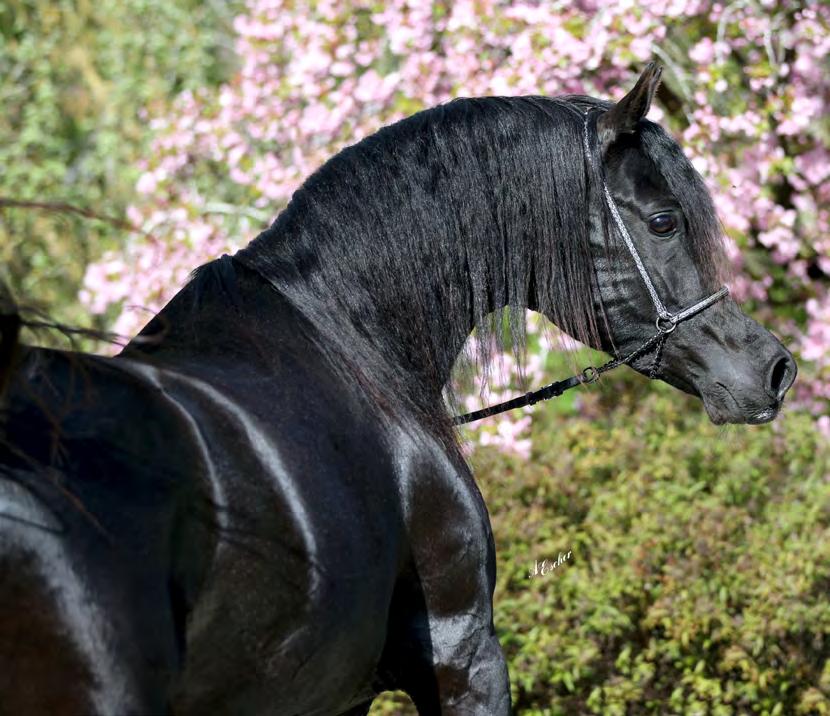
“Do what you love to do with all your heart and force … and never give up!”
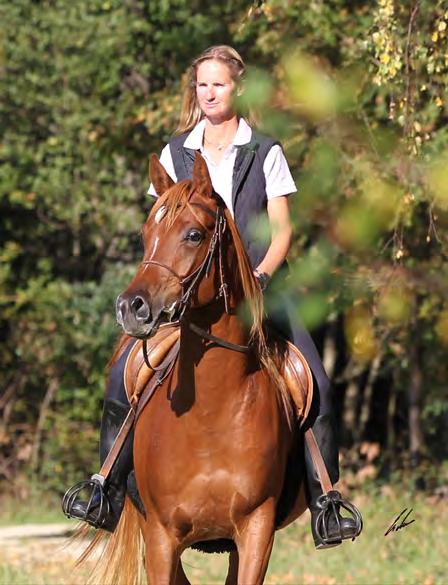
Emotional and inspiring talk with Annette Escher, the woman who keep fulfilling her dreams and reach the success no matter what comes the way.
by Urszula Łęczycka
photos by Annette & Erwin Escher
Urszula Łęczycka: Your farm has been established 35 years ago by you and your husband Erwin. Nowadays you run it all by yourself and Straight Egyptian horses with GR prefix are worldwide known. You also run one of the largest Straight Egyptian black coloured herds in the world – that is in high demand nowadays. Can you tell us more about the idea of establishing your breeding program? Was it the same from the beginning or it has been changing through the years and following the market? What were your first horses and where did you get them from?
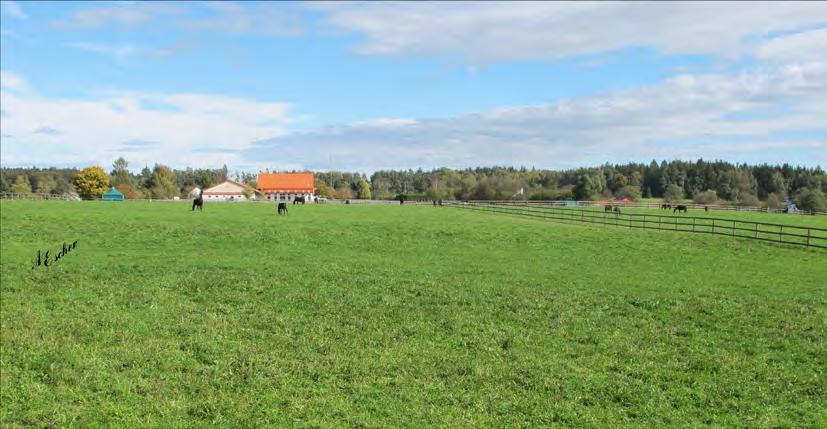
Annette Escher: We started our Straight Egyptian breeding with a small number of horses several years before we could buy the right place and built “Rothenberg Stud” in 1991. In 1992 the stud and pastures was ready and we moved our horses to here … from this time, having place enough, we were looking for the right additions and after we haven’t found most of them in Europe (there was only few Egyptians in Germany / Europe at this time and nearly nothing for sale) we went several times to USA looking at studs and horses driving thousands of
miles weekly. During this time we found and bought the foundation horses for my recent breeding, so the mares like: Halims Asmara (Ansata Halim Shah x Lancers Asmara- US National Top Ten and twice World Res. Champion mare), Dalima Shah (Ansata Halim Shah x AK Bint Dalia II), Ansata Aya Maria (Ansata Shah Zaman x Ansata Aya Halima by Ansata Ibn Halima) –Bukra line and the black Champion mare Maria Halima (Haziz Halim x Chelsea), Then we found the black mare Fasinah (Nahaman x Fatima) in Germany and before 1992 we already have owned the mare Samara (Ibn Moheba x Safiniya by Ibn Galal), I still own her black great-granddaughter GR Samantha which meanwhile is mother herself!
Over the years we sometimes leased a mare or made breeding-cooperation to add foals out of interesting mothers and motherlines – this way we bred our „Queen“ GR Nashidah (by Classic Shadwan) which is the mother of black gold-premium stallion GR Nashad (exp. Kuwait, by GR Faleeh) as well as the black mare GR Layla (meanwhile exp. UAE; by GR Faleeh) who is the mother of our recent broodmare GR Larissa and our young
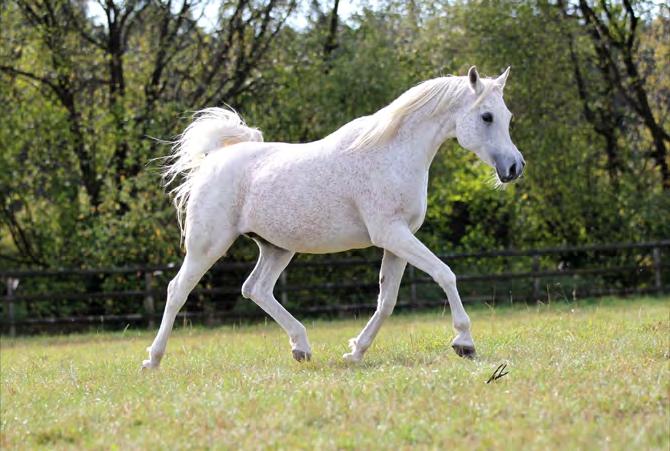
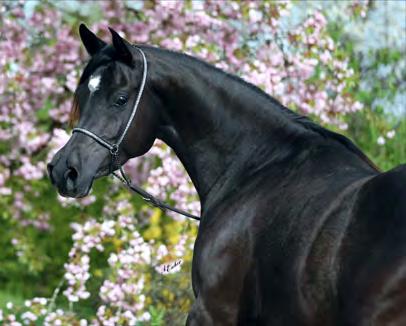
Classic Shadwan (Alidaar x Shagia Bint Shadwan) Multi-Champion, foundation stallion
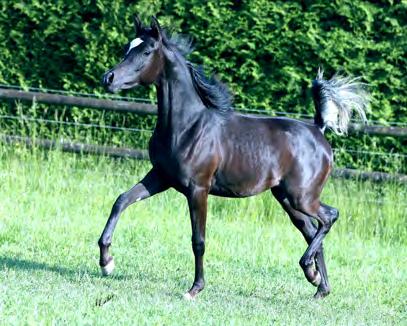
GR Aliyah (GR Faleeh x GR Anastacia by Classic Shadwan) first black out of Halims Asmara line
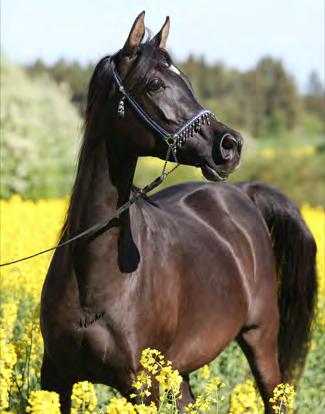
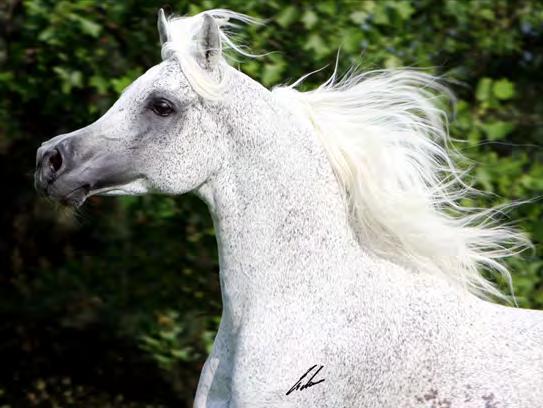
GR Faleeh (Madallan-Madheen x Fasinah) & Annette, the day before GR Faleeh left to Kuwait
stallion GR Layad (both by GR Ishad). This year we expect the first foals by GR Layad, this will be a very exiting foalingseason again! After we moved to Rothenberg Stud we also bought our foundation-stallions: Classic Shadwan (Alidaar x Shagia Bint Shadwan imp. Egypt) which we found in France was four years old at this time and the black MadallanMadheen; when we heard about a very special black colt
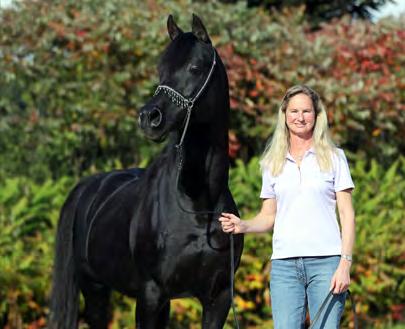
being born 1994 out of special bloodlines we quickly went to see him, and we bought him in age of 6 weeks! He was the very first foundation for our black breeding! MadallanMadheen was not bred to get black, his parents were chestnut (his father Ansata El Salaam) and bay (the famous mare Madinah, mother of Imperial Madheen) but he got black “by accident” and was just bred to be a great horse … and got a
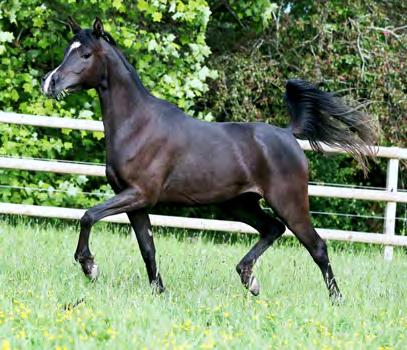
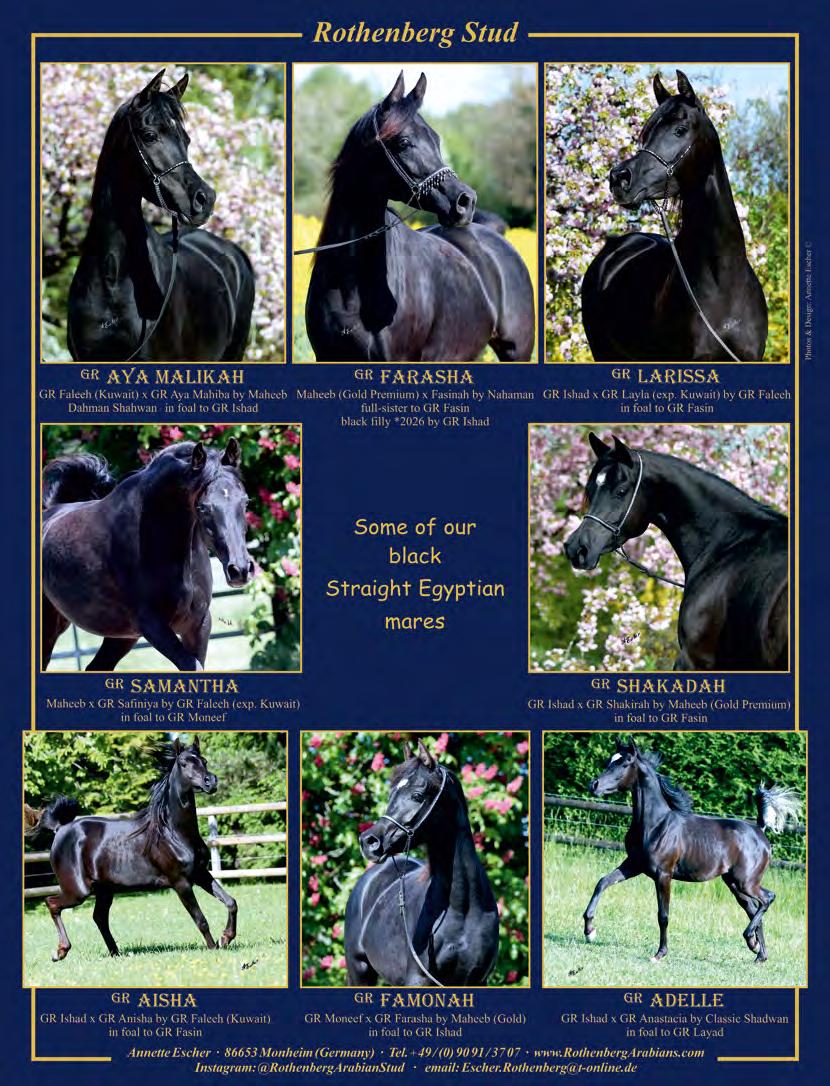
GR Aya Malaika
black mare 2022, GR Ishad x GR Aya Malikah (GR Faleeh x GR Aya Mahiba) goes back to Ansata Aya Maria, Bukra line. In foal to GR Fasin
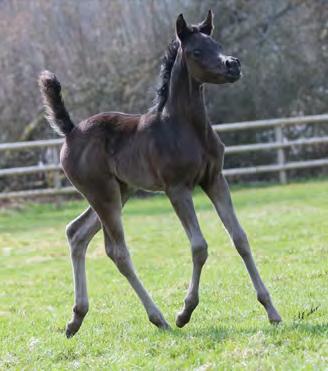
GR Aya Malinah
black filly *2025 (GR Ishad x GR Aya Malikah) goes back to foundation mare Ansata Aya Maria - Bukra line Full-siblings was exported to Egypt, Kuwait, UAE & USA
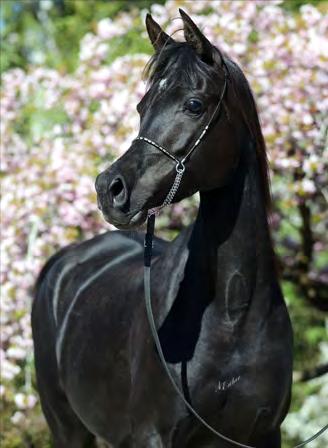
GR Aya Malikah
black mare, by GR Faleeh out of GR Aya Mahiba (Maheeb x GR Aya Farida) goes back to our foundation-mare Ansata Aya Maria from the Bukra line. In foal to GR Ishad
rare gold premium ribbon from the German registry later at the stallion licensing show!
Most of our early blacks were out of non black lines … blacks were seldom and good blacks even more and usually they were impossible to buy! Since I was a child I always was a big fan of black horses but Erwin mostly loved the greys - in the end we love all colors so we only had a few blacks in the first years.
Over the years we got more and more black foals (also Classic Shadwan produced fantastic blacks) and after 35 years I have managed to get fantastic blacks from all our foundationhorses … for several I needed generations but meanwhile I have a fantastic group of black and black producing broodmares, many are already 4th and 5th generation of our foundation-mares!
But color was not most important all the time – we both
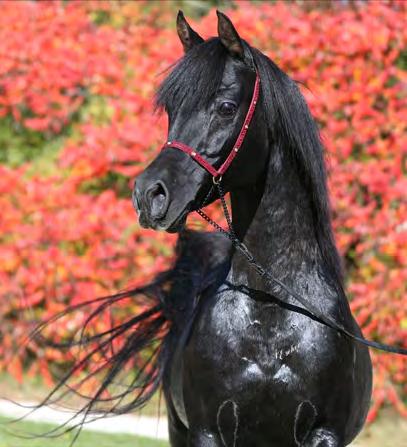
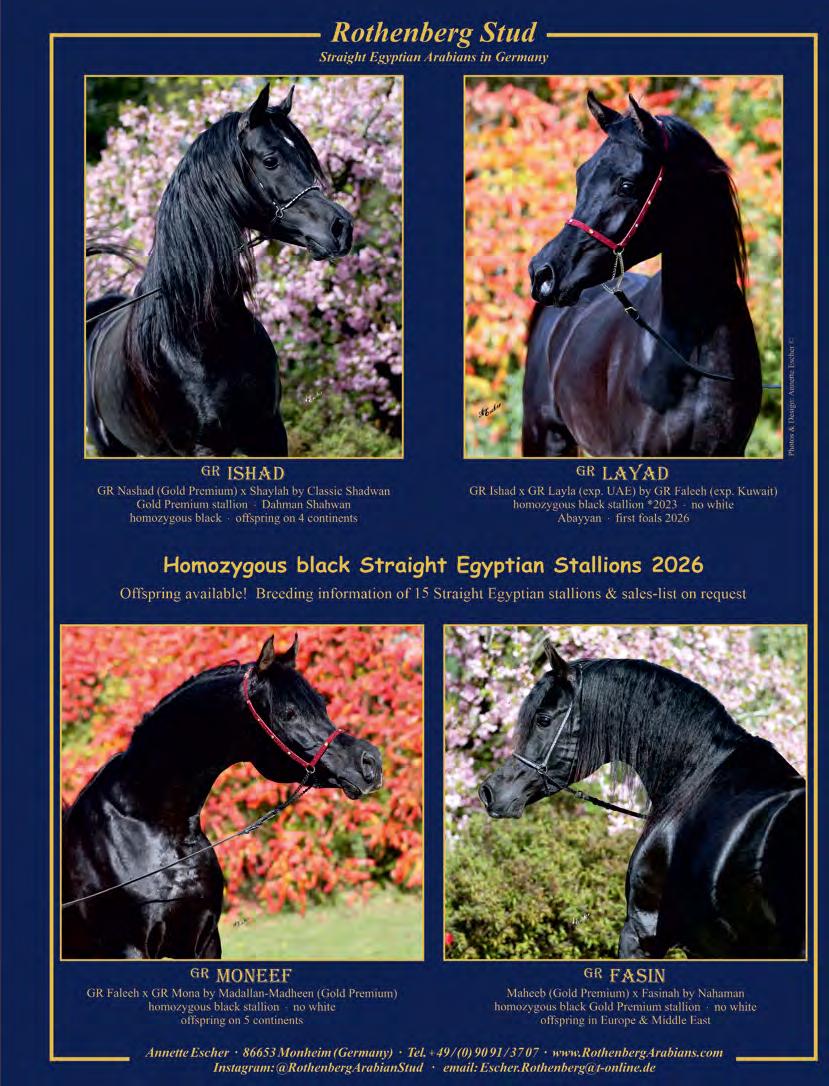
GR Moneef (show-winner GR Faleeh x GR Mona by foundation-stallion Madallan-Madheen) homozygous black stallion
GR Moneef x GR Asmara (GR Lahab x Halims
In foal to GR Layad
loved pretty exotic faces, good (proven) Straight Egyptian pedigrees and as we also were riders since the beginning we wanted to have a solid horse with good body, legs and movements which are able to carry us over the fields! The goal was not to lose any of this points over the years … type, body, movement … and most important at all the fantastic, people loving sweet character the Egyptians are famous for.
UŁ: Straight Egyptian breeding is one of most difficult ones as you must use a very limited gene pool that creates some problems in avoiding inbreeding and breeding overall harmonius and typey horse. Limiting the Straight Egyptian breeding to black colour group only must be even more challenging. How do you find your way to keep breeding beautiful and correct horses with such a limited requirements?
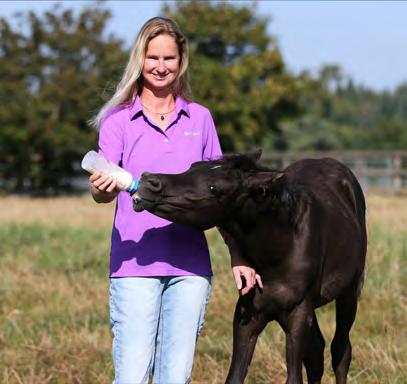
GR Bint Asmara
(GR Moneef x GR Asmara by GR Lahab) 13.9.16 - 4 months after Erwins death
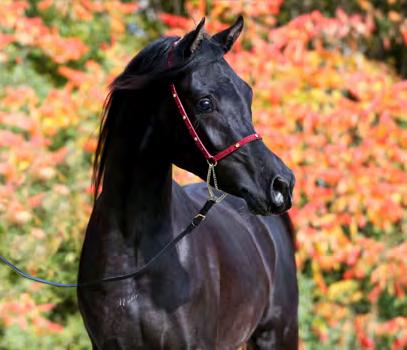
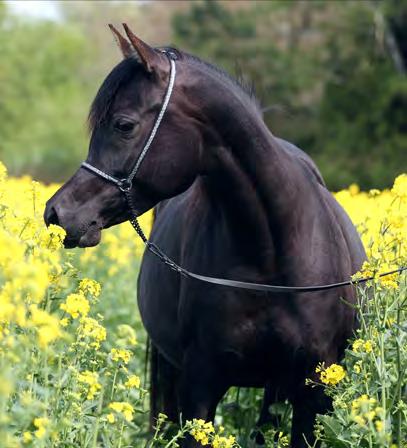
GR Layad
Homozygous black stallion 2023
GR Ishad x GR Layla (exp. UAE by GR Faleeh)
Abayyan line, first foals 2026
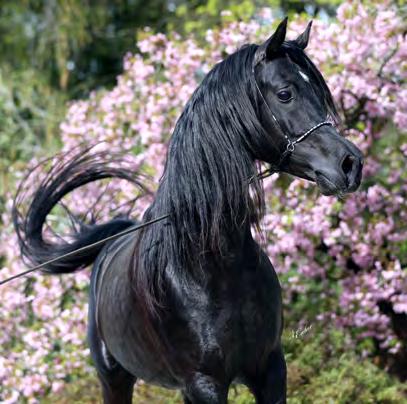
GR Ishad
GR Nashad x Shaylah Bint Iman by Classic Shadwan
homozygous black gold premium stallion
GR Lasin
homozygous black colt *2025
GR Fasin x GR Larissa (GR Ishad x GR Layla exp. UAE)
Future stallion at Rothenberg
AE: Most of our foundation horses were not bred to get black which means they had a bigger gene-pool as if we would bought mostly blacks in the beginning … there were only very few black and black producing lines at this time which already often were inbred. And over the years we always were open to use sometimes outside stallions doesn’t matter the color like World Champion Al Lahab if we thought they would bring us something new in blood and look … in my recent herd I have great mares from this line! We always used the Straight Egyptian bloodlines we liked personally not looking for trends and what other breeders prefer … we went our own way for our own taste and what we loved ourselves!
UŁ: Did you manage to combine your goals of having the bloodlines, the strenght, stamina and also the colour and then keep into the fashion to win the show titles? It had to be extremely difficult task..
AE: Over the years we often showed our horses and many of our foundation horses and their offspring got MultiChampions and gold premium stallions. For example Dalima Shah and her daughter Shadwanah (by Classic Shadwan) as well as Halims Asmara and her son GR Amaretto (by Classic Shadwan) won among other titles the champion titles at the Egyptian Event Europe. Also our first homebred black mares
GR Marietta and GR Marianah (both Madallan-Madheen x Maria Halima) won several championships which was very special at this time as nearly no blacks was shown successfully!
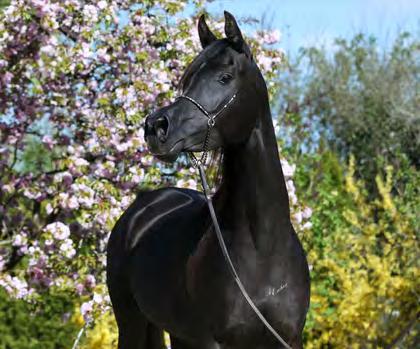
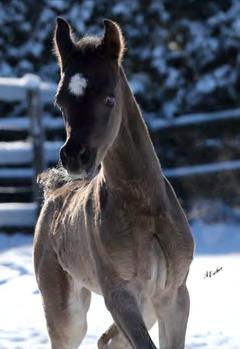
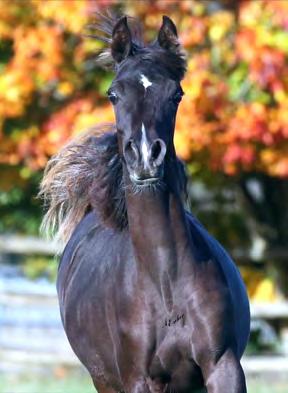
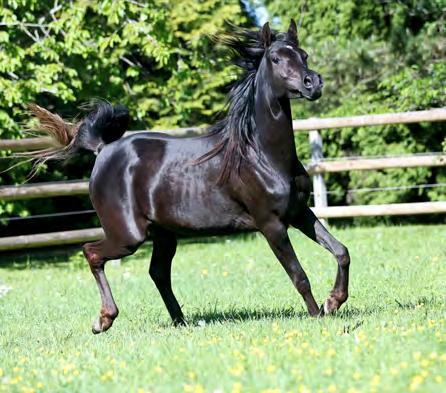
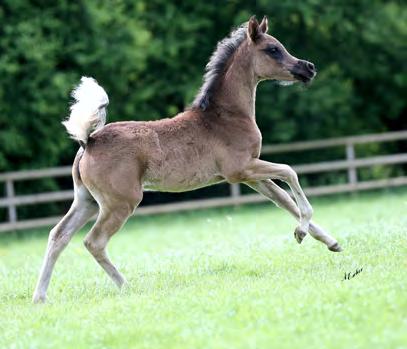
Also later our black stallion GR Faleeh (exported to Kuwait; Madallan-Madheen x Fasinah) was shown successfully as class-winner and Topf Five at the Egyptian Event Europe … and many more.
We sold and I still sell my foals nearly all over the world and many of them won and win a lot for their new owners– many champion titles in halter classes as well as endurance races or riding classes.
Our sold horses live around the world as breeding-horses and produce fantastic foals for their new owners … or are just best friends and great riding-horses to give their new owners fun and happy hours.
We also bred several gold premium stallions at the stallion registration of the registry, for me one of the most difficult gold to get at all!
We got gold premium titles for GR Amaretto (exported to Iran, Classic Shadwan x Halims Asmara by Ansata Halim Shah), his ¾-brother Maheeb (black; Classic Shadwan x Bint Bint Mahiba by Ansata Halim Shah) and for the other black stallions GR Nashad (exported to Kuwait; GR Faleeh x GR Nashidah by Classic Shadwan), his black son at stud GR Ishad (GR Nashad x Shaylah Bint Iman by Classic Shadwan) and also for our young black stallion GR Fasin (Maheeb x
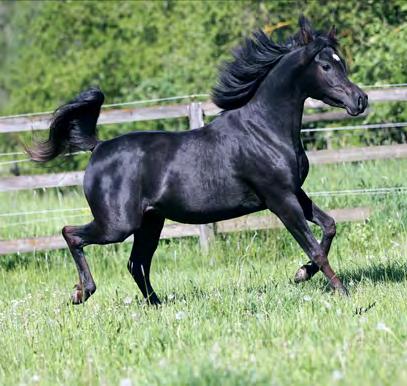
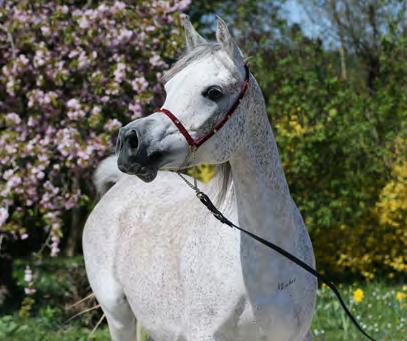
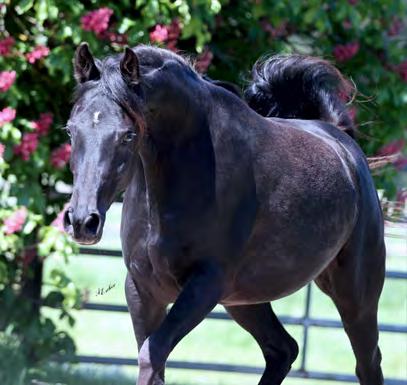
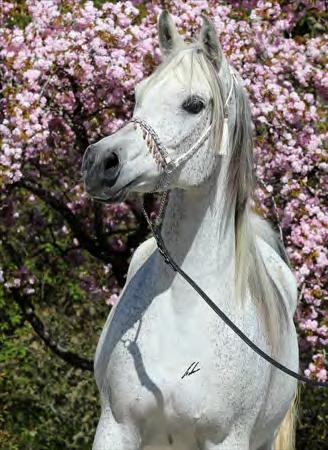
our foundation-mare Fasinah by Nahaman). And I have big hope to continue this fantastic row with my promising young black stallion GR Layad (GR Ishad x GR Layla by GR Faleeh) in the future! He also is homozygous without any white markings and have an extremly dishy head – he is the future of Rothenberg Stud! I eagerly wait to see his first foals very soon!
UŁ: Did you manage to establish some dam and sire lines of your own that you admire until that day and continue?
AE: All of my recent breeding-horses come in direct line from our early foundation horses – and all of them carry either the blood of Classic Shadwan or Madallan-Madheen or both of them!
Over the years I managed to breed fantastic blacks from all of the foundation-mares which made me very happy and proud and I love to see that the sold ones make their new owners happy, too.
UŁ: here is probably no Arabian horse lover in Europe that would not know the photos made by your husband Erwin who passed away 10 years ago. Since that time you keep running the farm by your own with just one helper. Your strenght, passion and achievements could be an inspiration for many woman or girls who dream or
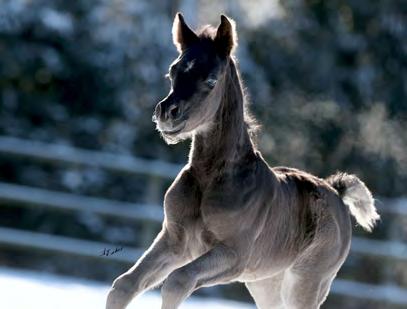
First foal 2026: GR Fadishah
Black filly, GR Ishad x GR Farasha (full-sister to GR Fasin)
GR Nashidah (Classic Shadwan x Nejdschah) mother of our homebred stallions GR Nashad (gold premium stallion; father of GR Ishad) and GR Lahab. Black-bay filly GR Nasinah 2023 (by GR Fasin) beside
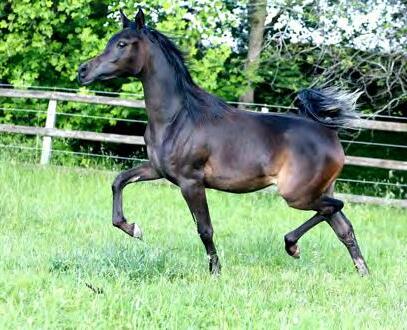
GR Nasirah
black-bay mare 2022, by GR Fasin out of GR Nashidah (Classic Shadwan x Nejdschah). GR Nasirah was the first foal of our young homozygous black gold premium stallion GR Fasin! In foal to GR Layad
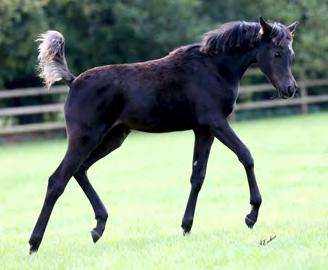
GR Ishadah
black filly 2025, GR Ishad x GR Nashadah (GR Darwan (Maheeb x Dalimah Shah) x GR Nashidah by Classic Shadwan) - the future
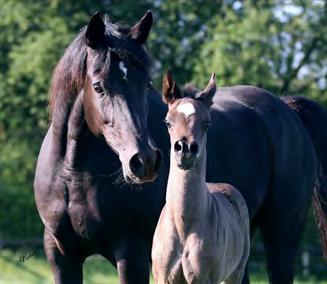
GR Shakirah
2011, black mare (black gold premium stallion Maheeb x GR Shatigah) & her daughter GR Shakadah (by GR Ishad) as a foal
run the horse breeding on their own for different reasons. It must be hard, emotional but probably also satisfying when you manage to breed a great horse at the end? What would you say and advice to the other woman – breeders?
AE: Yes, the death of Erwin for sure was the most terrible time in my life, I thought my life have stopped, too. But the horses helped me a lot because giving up is no solution, you have to go on day by day, they wait for you, they need you!
Additionally, Erwins second favorite mare GR Asmara (GR Lahab x Halims’s Asmara) died a few days after him because
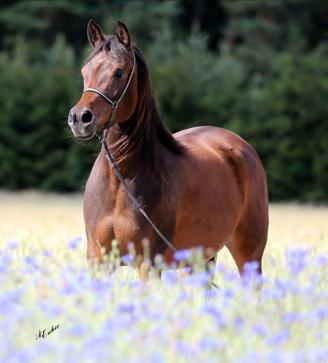
GR Nashadah
2018, bay mare by GR Darwan (Maheeb x Dalima Shah) x GR Nashidah (by Classic Shadwan). Granddaughter of our foundation-mare Dalima Shah
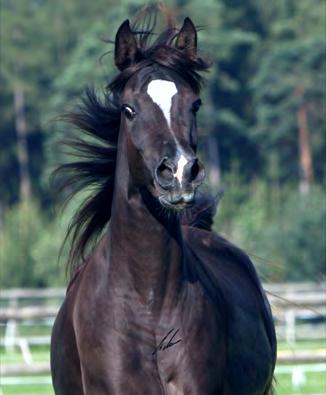
GR Shatigah
black mare 2003 (Pasha Farid x Shadwanah) last daughter of GR Shadwanah at stud; granddaughter of Dalima Shah
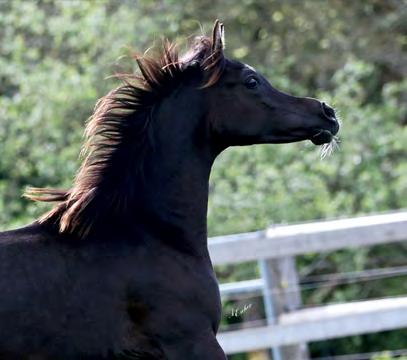
GR Shaminah
black filly 2024, by black gold premium stallion GR Fasin out of GR Shatigah (Pasha Farid x Multi-Champion mare Shadwanah) goes back to our foundation-mare Dalima Shah - the future
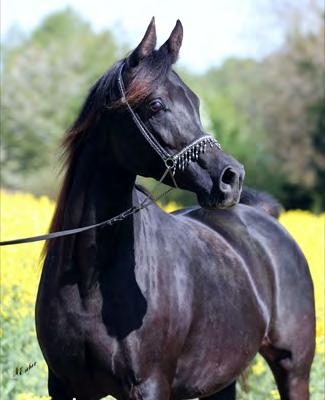
GR Farasha (Maheeb x Fasinah by Nahaman) - full-sister to GR Fasin
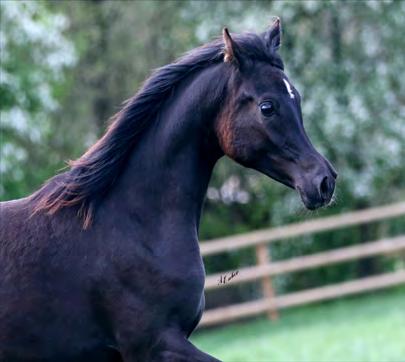
GR Myrella
black filly 2023, GR Fasin x GR Maryah (GR Moneef x black Champion-mare GR Marianah by Madallan-Madheen) goes back to our foundation mare Maria Halima
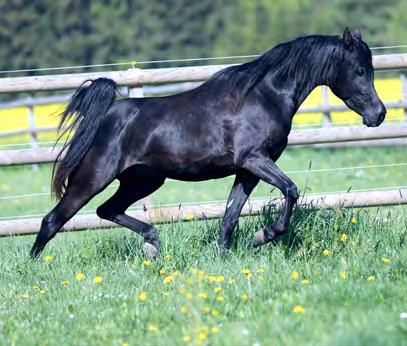
GR Fasin
2019 (black gold premium stallion Maheeb x foundation mare Fasinah by Nahaman) homozygous black gold premium stallion
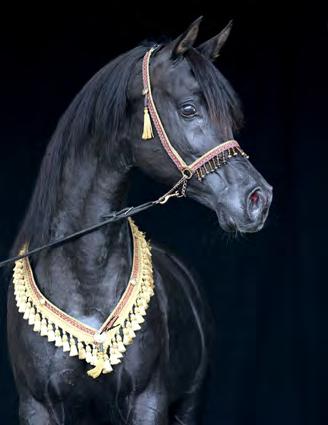
Maheeb
(Classic Shadwan x Bint Bint Mahiba) - black gold premium stallion, sire of many of our breeding-horses
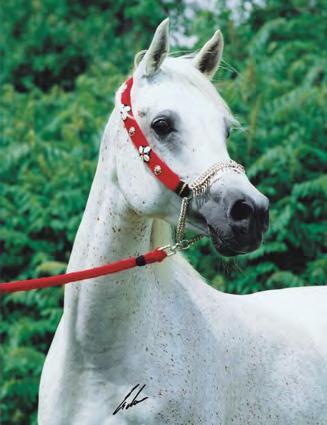
Halims Asmara
(Ansata Halim Shah x Lancer’s Asmara, US National Top Ten and World Res. Champion mare). Multi- & European Champion Res. SE one of our foundation mares
of problems after giving birth and let her newborn filly GR Bint Asmara (by GR Moneef) alone with me. This baby nearly died as well because of substitute milk so I needed to take milk from other mares to feed this baby … you can imagine that I nearly had no time to sleep over months which was very hard but maybe also good for me in this situation. My only aim was that we both need to survive …and we did! Meanwhile GR Bint Asmara gave birth to already four wonderful black fillies by GR Ishad herself which was sold in and outside Europe and one of her black fillies even won Championships for her new owner … all this made me very happy and gave me force to continue! And in 2026 GR Bint Asmara will get one of GR Layad’s first foals!
My advice is to do what you love with all your heart and soul... and never give up!
There are always good and bad times in our lifetime… you need to survive the bad time and grow yourself in the good
Madallan-Madheen
(Ansata El Salaam x Madinah) - black gold premium stallion, foundation-stallion
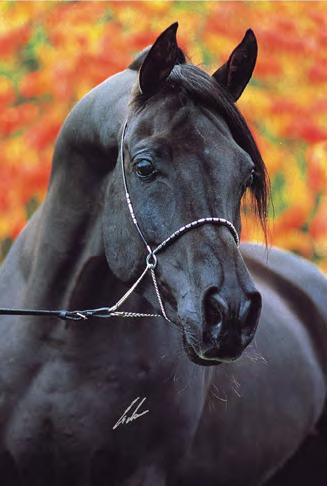
Fasinah (Nahaman x Fatima); black foundation-mare, mother of homebred black show-winner GR Faleeh (exp. Kuwait) and my young black gold premium stallion GR Fasin
time and take it into your heart for the future. Like when my homebred young homozygous black stallion GR Fasin (by Maheeb by Classic Shadwan), the much too early born last foal out of our foundation-mare Fasinah (which nearly died several time during the first weeks of his life) got a gold ribbon from the German registry as breeding-stallion with just amazing high scores in all points. And every new birth when mother and baby are well – just a wonder every time! As a breeder you mostly look forward into the future for the next breedings and the next foals, this keep you running, don’t look back too much! Just important that you love what you do … then even the work makes you happy!!!
UŁ: What an amazing story and the best proof to your words of advice that I would certainly put as a title of this interview! I wish you all the best of luck on reaching your future goals and of course – with mostly those great and happy moments for every breeder.
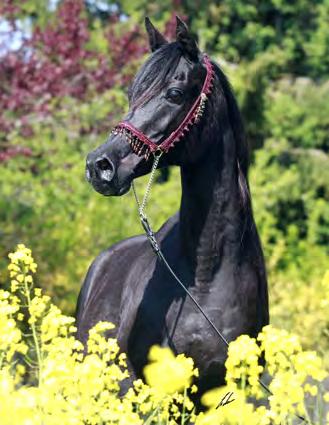
Maria Halima (by Haziz Halim by Ansata Ibn Halima) Champion USA, black foundation-mare mother of black Champion-mares GR Marietta & GR Marianah (grandmother of our black filly GR Myrella)
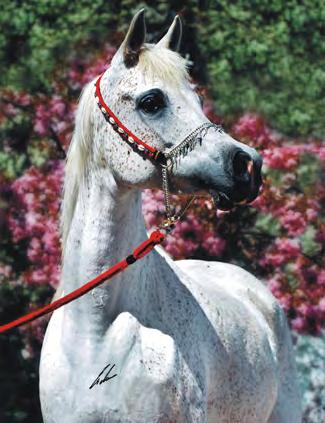
Shadwanah (Classic Shadwan x Dalima Shah); first daughter of both her parents, Multi- & European Champion Straight Egyptian. Mother of black broodmare GR Shatigah
Annette Escher 86653 Monheim (Germany) - tel. +49 0 90913707 email: escher.rothenberg@t-online.de www.RothenbergArabians.com instagram: @RothenbergArabianStud
n by Judith Wenning
With “Kaisoon – Biography of a Legend”, Dr. KarlHeinz Kirsch presents a work that not only fills a gap in the literature on Arabian horse breeding, but is also a deeply personal tribute to an extraordinary stallion. Published in a small print run by the author himself, the book is entirely devoted to the famous crowd favourite, riding and breeding stallion Kaisoon
– a horse that aroused admiration and fascination for decades without ever receiving adequate recognition in book form. “While his half-brothers Hadban Enzahi and Ghazal received appropriate recognition in Germany, Kaisoon came away almost empty-handed,” explains Dr. Karl-Heinz Kirsch. This “vacuum,” as Kirsch himself says, was the decisive impetus for him
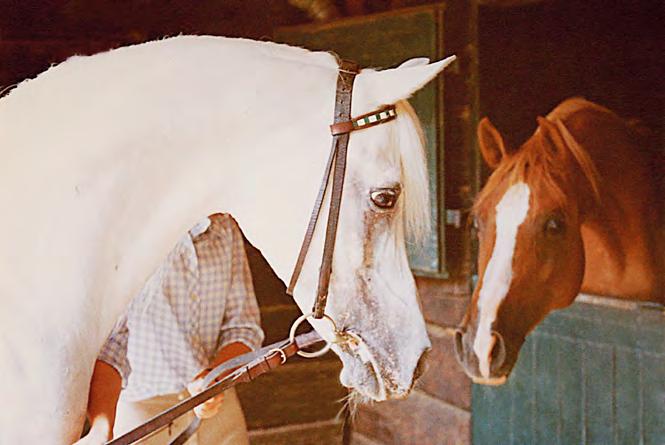
to embark on the two-year project. Dr. Karl-Heinz Kirsch recounts: “After a visit to Duisburg in 2023, the topic was once again ‘on top’ and was tackled in November 2023.”
Structured chronologically, the book written in German language, answers all the questions that have long been on the minds of Arabian horse lovers and breeders: Where did Kaisoon come from? Who were his parents? How did he live? And above all, what was he like as a horse in everyday life? Dr. Karl-Heinz Kirsch succeeds not only in collecting and presenting the facts, but also in painting
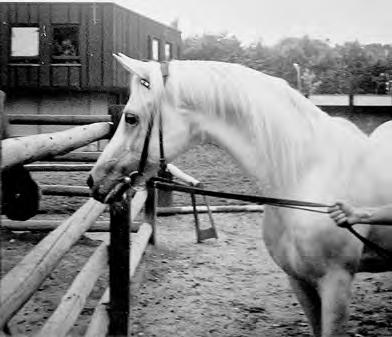

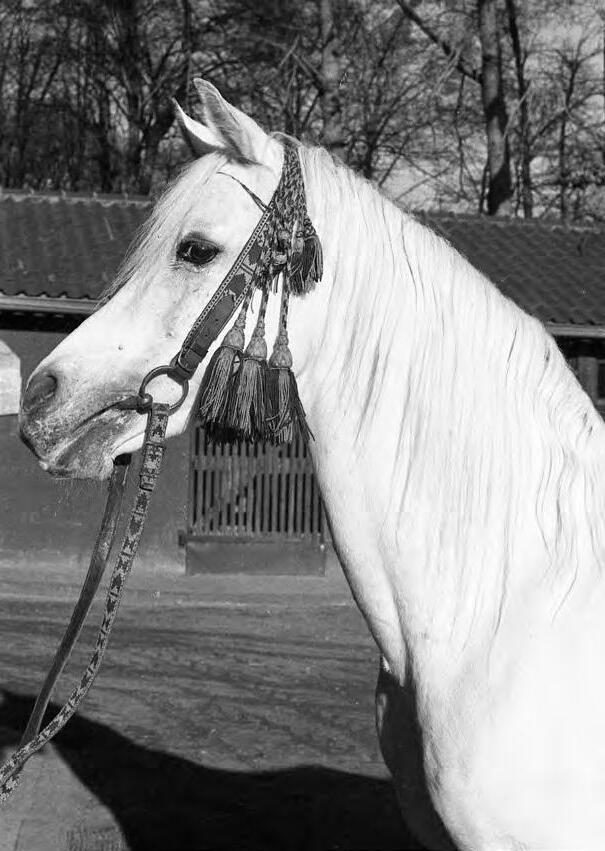
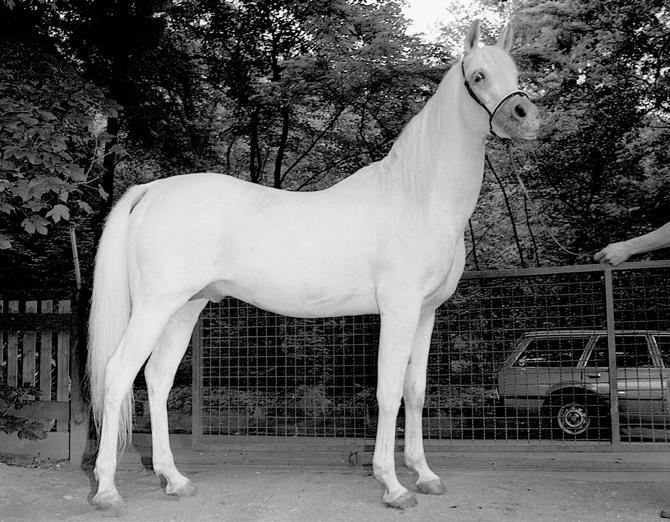
a vivid portrait that appeals to both connoisseurs and newcomers to the world of Arabian breeding. Despite the difficult source situation – Kaisoon lived from 1958 to 1987 – the book presents an astonishingly complete and coherent picture. This is not least thanks to the persistent research of the author and his wife, who tracked down the last pieces of evidence on the eve of going to press. Dr. Karl-Heinz Kirsch recalls: “Digging up documents, finding contemporary witnesses, and motivating people to engage with this long-past topic. Unfortunately, the way things are, we don’t live
forever—we’re talking about the years 1930-1950 here. There are virtually no documents left about the horse. But persistent searching and digging, especially by my wife, kept bringing little bits and pieces to light.”
The work captivates the reader and also evokes a certain nostalgia for times long past. Dr. Karl-Heinz Kirsch writes with a mixture of professional expertise and emotional closeness. His fascination with Arabian horses – their beauty, charisma, rideability, and gentleness –permeates the book and makes it clear that Kaisoon is
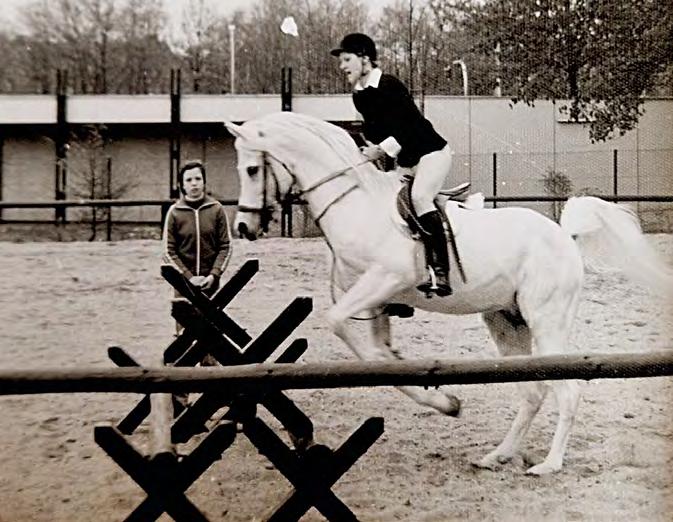

much more than just a memoir. The author, Dr. KarlHeinz Kirsch, lives with his wife Ilona in Essingen in Rhineland-Palatinate, Germany and is a very successful Lipizzaner breeder. He is himself a veterinarian, a longstanding member and board member of the Asil Club e.V., and a proven expert on Egyptian Arabians. “As a native of Duisburg, I first saw Kaisoon in early summer 1964 as a seven-year-old boy at the zoo, where I later took lessons at the children’s riding school. My goal at the time was clearly defined: “to ride Kaisoon.” But I had to wait years for that,” says Dr. Karl-Heinz Kirsch.
When asked how long Dr. Karl-Heinz Kirsch has been involved with Arabian horses, he recalls: “It was a gradual process that developed and manifested itself over the years through my interaction with these horses at the zoo. After graduating from high school, I studied veterinary medicine in Hanover and, towards the end of my studies, I was a member of the breeding commission for Arabian horse foal inspections, first alongside Dr. Saenger in the Hanover area, and later, after changing jobs, together with Dr. Piduch in the Westerwald area. I wrote my dissertation on the Arabian horse (“Blut-
Adel-Leistung” [Blood, Nobility, Performance], Olms Verlag, Hildesheim). What fascinates me about Arabian horses is their exotic beauty, nobility, charisma, rideability, willingness to perform, friendliness towards humans, and gentleness.”
Even though Dr. Karl-Heinz Kirsch himself, as he humorously notes, has never ridden or bred Arabian horses since graduating due to his height of 186 cm, he has remained closely connected to them since childhood – a connection that originated in that first encounter with Kaisoon at Duisburg Zoo in 1964. “In addition, my family owned a wonderful straight Egyptian riding and breeding stallion for almost 30 years,” adds Dr. KarlHeinz Kirsch. Kaisoon is therefore much more than a
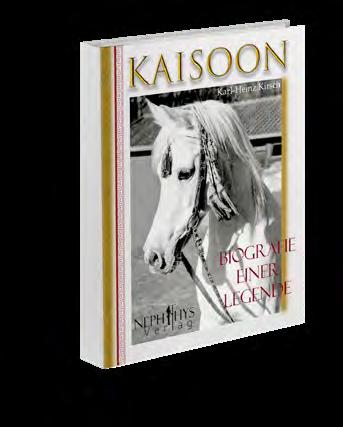
purely historical non-fiction book about breeding. It is a lovingly crafted portrait of the life of a horse that was present in Germany but never received the recognition that his half-brothers Hadban Enzahi and Ghazal enjoyed. With this book, Kaisoon finally gets the stage he deserves.
For anyone interested in the history of Arabian horses, breeding lines, or simply extraordinary animal personalities, this work comes highly recommended— precisely researched, written with passion, and an important piece of Arabian horse culture. Dr. Karl-Heinz Kirsch himself states that this will be his last book on Arabian horses. It seems like a fitting conclusion: a labor of love that not only fills a gap, but also creates a legacy. q
Author: Kirsch, Dr. Karl-Heinz
Hardcover, thread binding, format 17 x 21.5 cm
Pages: 160 with numerous photos, German language Published by Nephthys-Verlag, Essingen 2025 (self-published and self-distributed)
Orders by email to nephthys-verlag@t-online.de
Price: € 35.80 including shipping within Germany



n by Judith Wenning
A new fine art publication, “Bogucki, Capturing the Vibrancy of Life”, offers an intimate and comprehensive look into the extraordinary career of sculptor and painter Edwin Bogucki—an artist whose work was driven by curiosity, discipline, and a lifelong devotion to realism. This impressive book is very touching, definitely a “must have” for anybody interested in equine art. Browsing through the lavishly illustrated work will give the art enthusiast goose bumps. This book was a labor of love and love is also an important element here. Bogucki’s love for his family, for horses, especially Arabians, for art as well as people – all this can be vividly felt and understood when reading the book. It contains a major retrospective of Edwin Bogucki’s work, a selection of personal photos as well as memories and stories from his life. The book manages to not only give an overview of his work but also an impression of Edwin Bogucki’s personality and views.
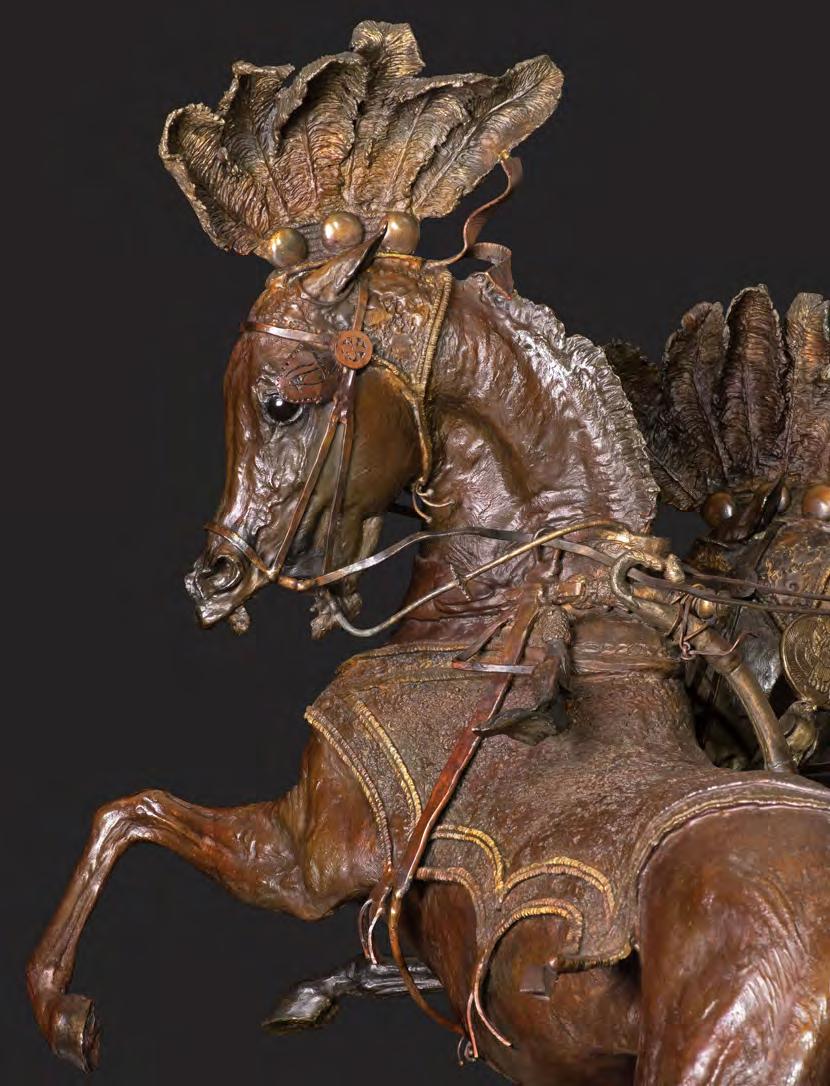
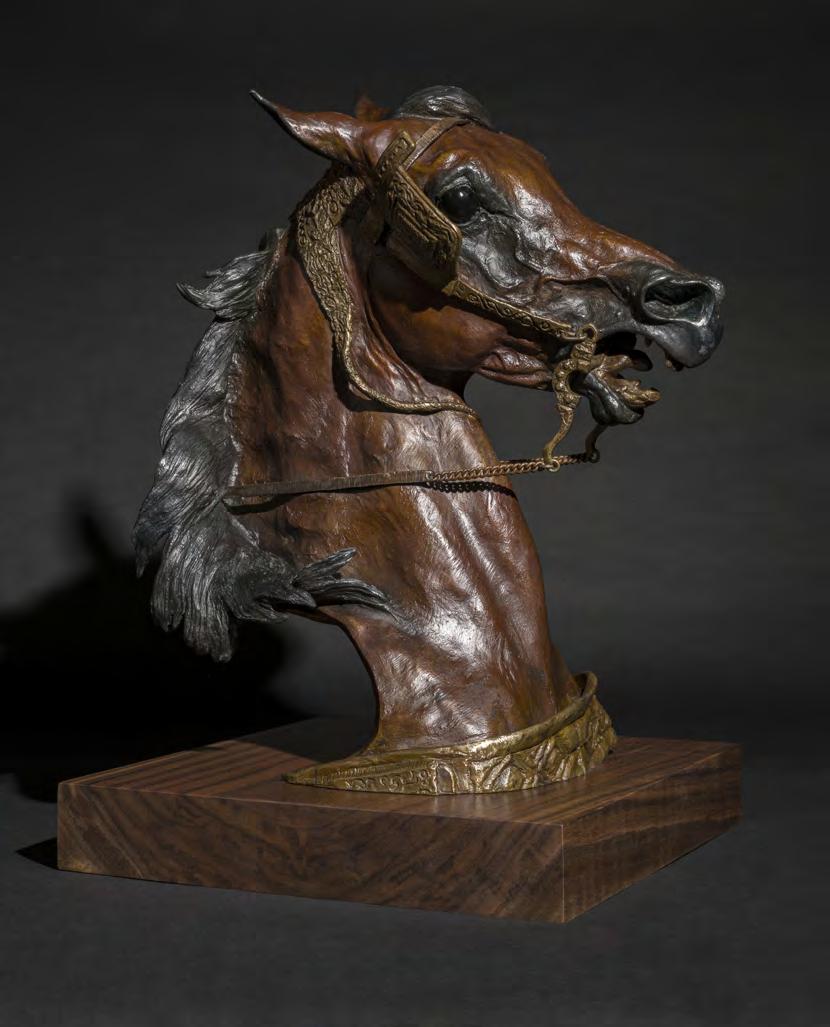
Soft-spoken yet deeply passionate, Bogucki possessed an innate fascination with the world around him and an exceptional artistic gift. Over a career spanning more than 55 years, these qualities shaped a remarkable body of work dedicated to one central pursuit: capturing the vibrancy of life. His sculptures and paintings reveal a profound sensitivity to form and movement, seen always through the eyes of an artist relentlessly committed to truth and realism.
Painstakingly researched and written by Bogucki’s daughters, Sheri and Kathi, the book is both a visual archive and a moving personal narrative. It features more than 1,000 high-quality photographs documenting his sculptures and paintings, interwoven with the inspiring and poignant story of his life. The result is not only a celebration of artistic achievement, but also a deeply personal portrait of the man behind the work.
Issued in a limited edition of 1,000 copies and priced at $185, the book “Bogucki, Capturing the Vibrancy of Life” is now available for purchase. The book stands as a definitive record of Edwin Bogucki’s artistic legacy and an essential addition for collectors, art historians, and anyone drawn to realism at its highest level.
Produced to the highest standards, this premium hardcover volume reflects the quality and seriousness of its subject. The book spans 420 pages and is printed on high quality gloss paper, with fold-out pages, durable Smyth-sewn binding, and a glossy, foil-stamped cover. Measuring 11.75 × 11 inches (29,8 x 27,8 cm) and weighing over six pounds (ca. 2,7 kg), it is a substantial and carefully crafted object-intended as a lasting collector’s piece rather than a casual publication.
More than a monograph, this publication is a tribute-preserving the vision, discipline, and vitality of an artist who devoted his life to seeing, and showing, the world as fully alive.
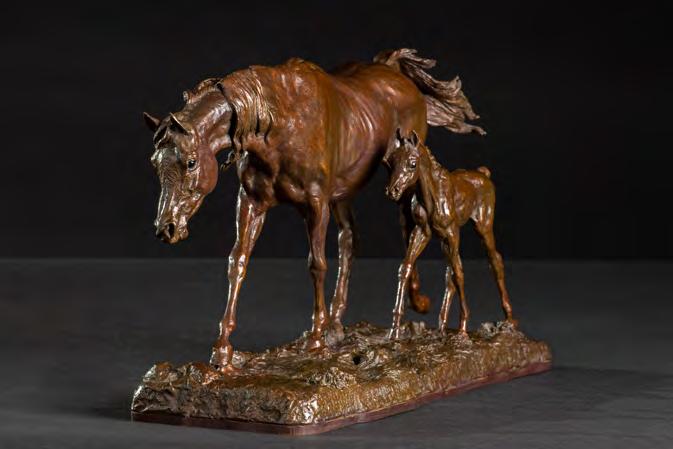
Kathi Bogucki explains: “Sheri and I feel so fortunate that we were able to fulfill our mother’s dream of creating a book about our father and his work. We regret that we weren’t able to complete it before our parents passed away but the entire project took so much longer than anyone had anticipated. Many people told us that we weren’t obligated to finish it after Mom and Dad were gone, but we had made a commitment and a promise to them as well as to each other that we would see the book through to completion. Over the last three years we have devoted the majority of our time to identifying, researching, cataloging, and chronicling our father’s art and the stories of his life. As we worked, our days were filled with the excitement of new discoveries, frustration at the often slow progress, and regret that our parents weren’t here to answer our many questions. We laughed together a lot and did our fair share of crying, too. In many ways, Sheri and I could feel Mom and Dad with us the entire time, quietly sharing the whole experience.”
Kathi continues: “In our quest to include as much of our father’s body of work as we could, hundreds of old photos were scanned and restored one at a time while new digital photos were taken of pieces in the family collection. We cast and finished several sculptures specifically so they could be photographed for the book. While we tried our best to include all of his artwork, there were still at least 30 pieces of that we were unable to include due to poor quality or missing photos as well as thousands of sketches (in pencil as well as clay) many smaller works, and several unfinished paintings and sculptures.”
Edwin Bogucki was not only a phenomenal artist but had also an unforgettable personality. Born on July 5, 1932, in Racine, Wisconsin, Edwin Bogucki grew up in a family of immigrant parents, both coming from Poland. From an early age, he was taught to be self-reliant and resourceful. His independent and inquisitive nature led him to explore the city alone from a young age, and he often said he “lost track of time” as a child, never quite finding it again. Time, it seemed, was never his concern. He marched to the beat of his own drummer throughout his life, following his instincts wherever they led.
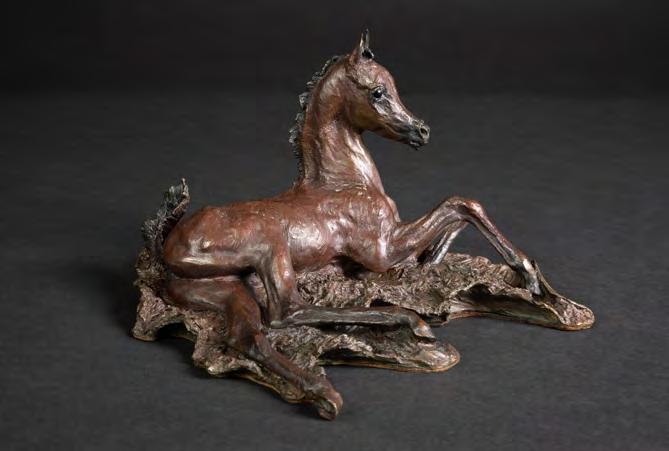
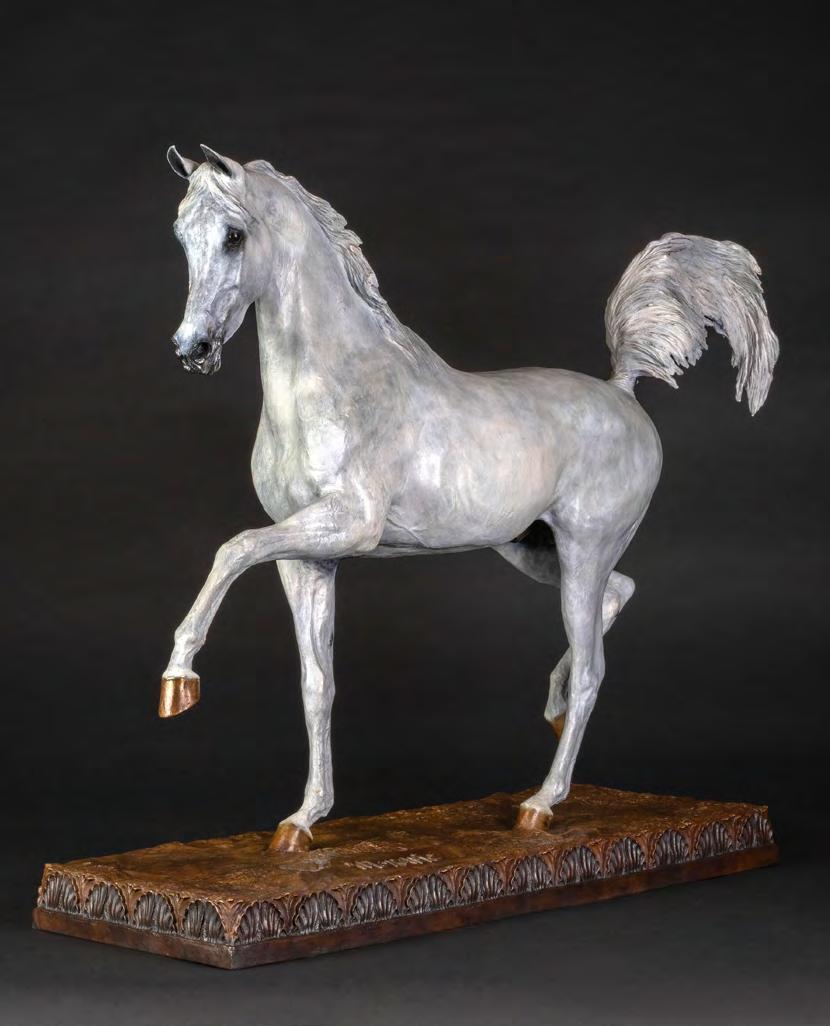
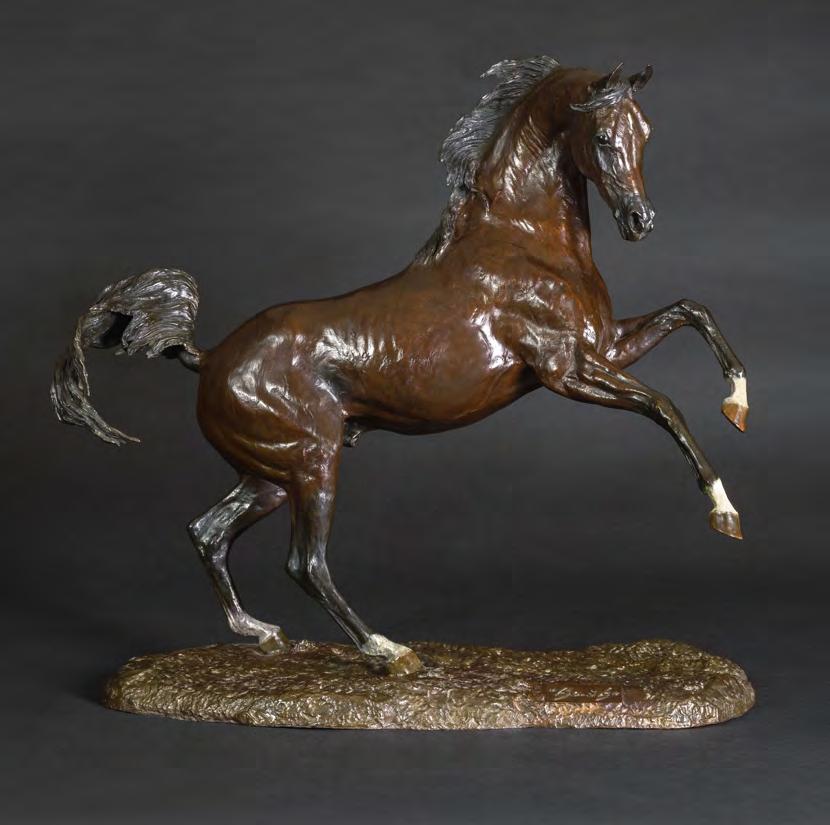
Edwin Bogucki’s lifelong fascination with horses began almost mythically. At just two years old, he encountered a group of escaped circus horses that wandered onto his family’s lawn to graze. The sight filled him with wonder, excitement, and awe—emotions so powerful that they never left him. That early thrill became a guiding force throughout his life and artistic career, inspiring him to recreate that same sense of magic in his work so others could experience it as well.
Horses continued to shape Bogucki’s life in ways he could never have foreseen. One such moment proved deeply personal: In 1952, during the Racine 4th of July parade, he spotted Shirley, the woman who would become his wife,
riding her horse. He was immediately smitten, and they became engaged before he was drafted into the Army. They married on September 1, 1953, and Ed served as an artist in the Counterintelligence Corps during his time in the military. After his discharge, he worked in advertising for a while before reading a book titled How to Make a Living as a Painter, which inspired him to quit his job and pursue a full-time career as an artist.
A defining chapter began in 1954, when Bogucki saw his first Arabian horse. Living with his wife in Baltimore, Maryland, the couple attended a horse show taking place just across the street from their home. Bogucki would later recall the encounter vividly. Tied to a tree stood what he described as the most beautiful horse he had ever seen. The stallion was Indraff, a legendary Arabian from Bazy Tankersley’s renowned Al-Marah Farm. Intrigued, the couple soon visited the farm, where Bogucki found himself completely mesmerized by the horses surrounding him. One scene in particular left a lasting impression. When the farm’s trainer casually handed him the lead rope of a stallion, Bogucki became so absorbed in the animal’s presence that he nearly put himself in danger. The horse, he recalled, “literally led me back to the barn.” Lost in the depth of the horse’s dark eye, the artist in him had taken over. The experience was nothing short of an epiphany. Bogucki spoke of the Arabian horse with reverence, captivated not only by its physical beauty but by its history and spirit. To him, the Arabian was unmatched—beautiful from the skin on the outside to the soul within.
When Bogucki returned to Wisconsin, he began building a reputation as an equine portrait artist, producing commissioned pastel and oil paintings of Saddlebreds and Thoroughbreds. While he appreciated each breed’s unique qualities, the spark ignited by his encounters with Arabian horses never faded. Determined to explore that passion, he immersed himself in research and began creating Arabian-themed works for gallery exhibition. Collectors and admirers of the breed quickly took notice, and demand for his art surged among an entirely new audience.
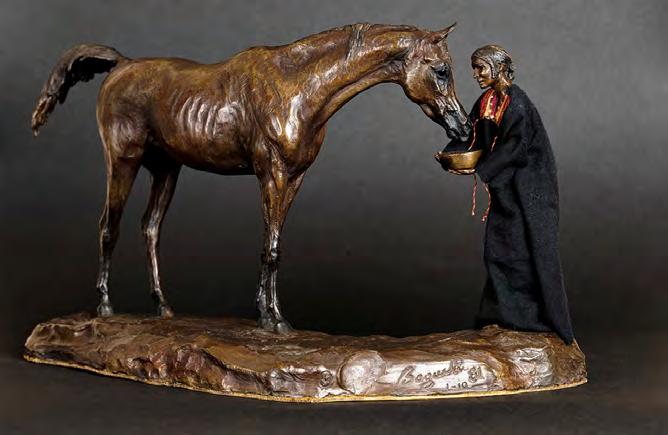
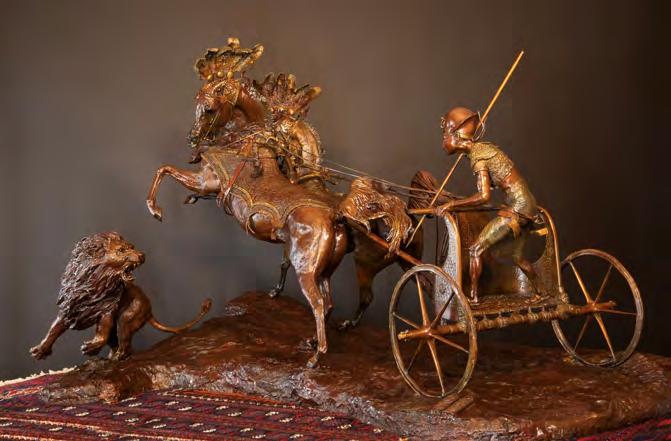
Though his paintings were highly sought after, this new group of patrons offered Bogucki something even more meaningful: the opportunity to fully embrace sculpture, the discipline he loved most. At that time, he had created only four bronze works. Now, his artistic world expanded rapidly, and he soon emerged as one of the most versatile equine artists of his era.
In a gesture that symbolized how deeply his art and life had become intertwined, Bogucki traded one of his prized paintings for his first Arabian horse. Having such a magnificent animal just steps from his studio door was the fulfillment of a long-held dream. Over time, he acquired more Arabians, including an Egyptian-bred mare named Binis Tara. She produced an extraordinary colt by El Mareekh, whom Bogucki named Cairo Mareekh.
Cairo Mareekh—intelligent, expressive, and very typey—became the artist’s greatest muse. The bond between horse and artist was unusually strong and endured for all 32 years of the stallion’s life. This deep connection with Egyptian Arabians ultimately led Bogucki into an intense period of artistic obsession, one that consumed more than a year and culminated in what many consider his greatest masterpiece: Tutankhamen: Pharaoh of Egypt. In that work, as in so much of his career, Bogucki succeeded in capturing not just the form of the horse, but its enduring spirit and timeless beauty.
Edwin Bogucki could easily be regarded as the last of the great Animaliers, a master of capturing the living, breathing essence of animals through art. Grounded in the classic techniques of the old masters, Bogucki took a bold approach to his subjects, breathing new life into a genre that had long been defined by tradition. His work, though rooted in the past, was anything but conventional. By imagining himself as part of the scene rather than merely an observer, he gained an unparalleled understanding of motion and expression. Each of his creations reflects the unique spirit of an artist who followed his creative instincts without fear, always striving toward the sublime.
In his later years, Bogucki’s daughters, Sheri and Kathi, took on the responsibility of preserving his artistic legacy. They established a trust to protect and curate his extensive collection, and they made it a priority to complete the limited editions he had started, ensuring that as many pieces as possible would be finished while the molds were still viable. Although Edwin Bogucki passed away in 2021, the studio remains active, now in the capable hands of Sheri and Kathi, who were mentored by their father throughout their lives. By continuing the tradition of mold-making, wax working, grinding, and patination in-house, they honor the high standards their father set, ensuring that his work remains true to his vision for generations to come.
Despite the formidable challenges of becoming a freelance artist, Ed succeeded in building a reputation as one of the finest artists of his generation. His specialties included painting and sculpting horses, as well as other animals and people, and his works are now part of private and public collections around the world. Though he was unassuming and soft-spoken, Ed had a unique gift for connecting with people. At public exhibitions, visitors were drawn to him, eager to hear him speak about his art and the stories behind his sculptures. He would often be the last to leave an event, whether it was a church service, a school play, or a high-profile gala. “Is there anyone left that I need to talk to?” he would ask his family, always eager to connect with anyone and everyone, from royalty to custodial staff, with the same genuine interest and warmth.
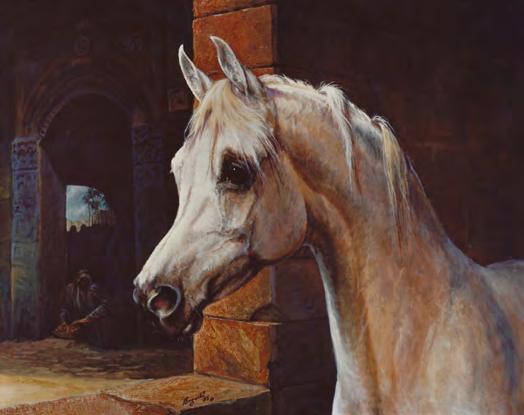
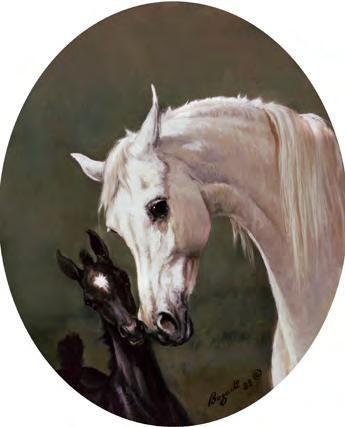
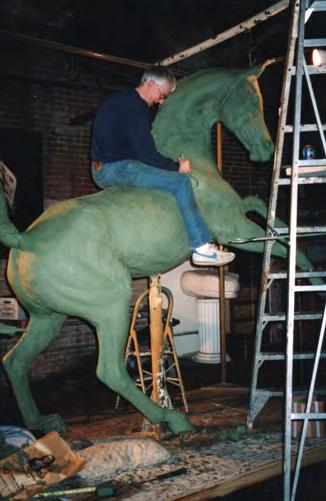
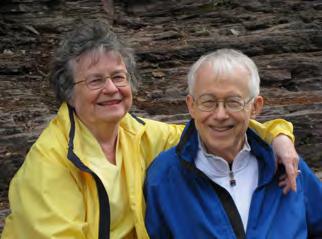
Edwin Bogucki’s legacy as an artist and a man is one of unflinching dedication to his craft and an unwavering passion for life. Through his work and his personal connections, he brought the vibrant energy of the animal world to life, creating art that will continue to inspire and captivate for generations to come. His daughters, Sheri and Kathi, continue to honor his memory and work, ensuring that his artistic spirit endures through their stewardship of Bogucki Studios. q
The book “Bogucki, Capturing the Vibrancy of Life” can be purchased through www.boguckistudio.com
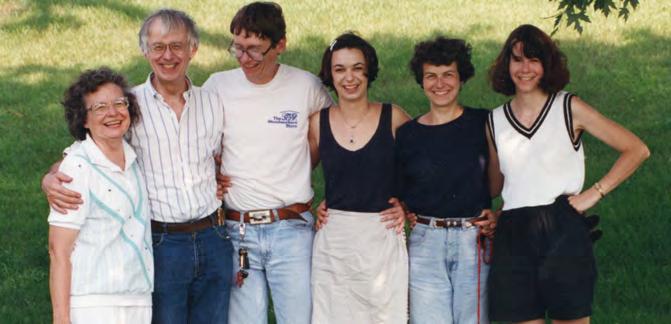
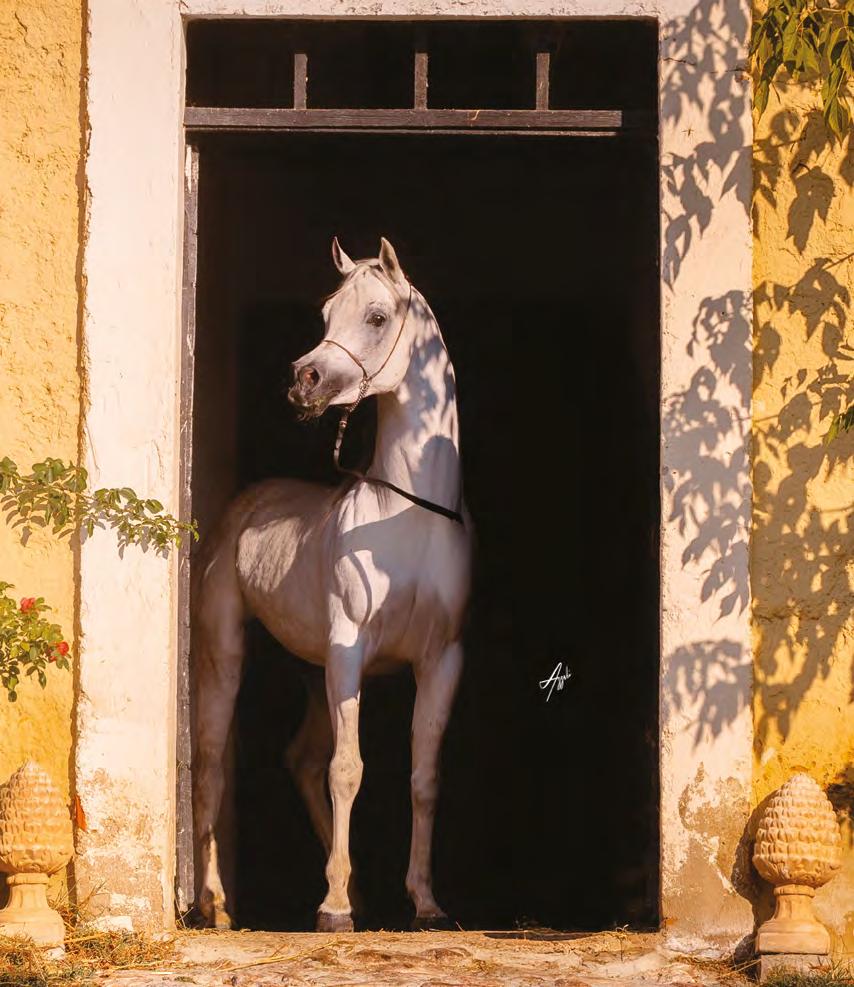
Breeding straight e gyptian a ra B ians in i taly
Mansour a l Murad a top sire who challenges the cha M pions
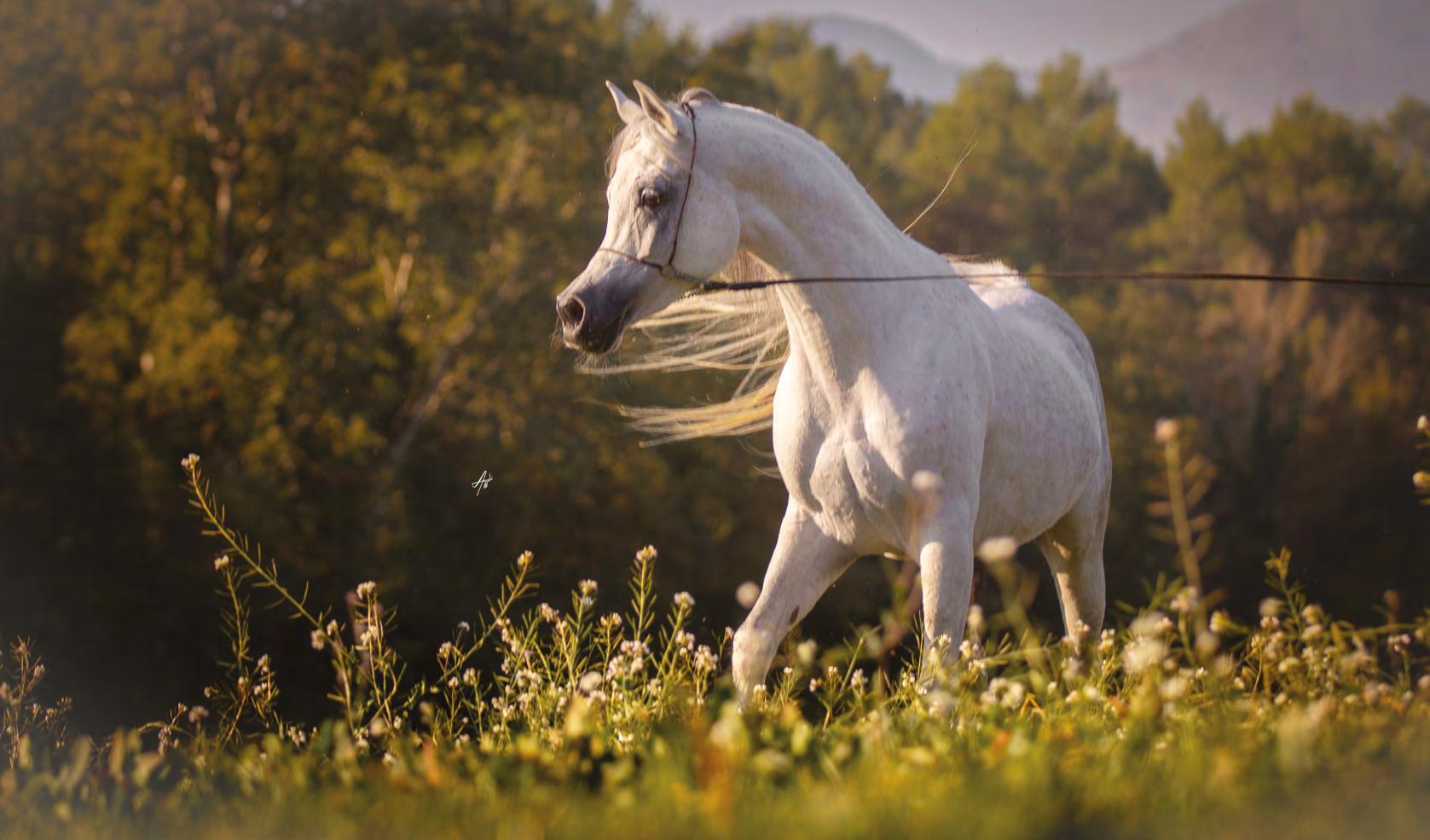
Mansour Al Murad has made the most of his opportunity at Tre Balzane Stud, producing excellent offspring. His outstanding pedigree reflects the crème de la crème of Straight Egyptian history – the journey of his ancestors began in Egypt 100 years ago and continued via the USA and Germany to Qatar. From there, his parents came to Europe. Mansour Al Murad was born in Italy, where many good broodmares of the finest pedigree still live today. Straight Egyptian stallions, asil and blue-listed that have made a name for themselves as type producers are rare today.
* 2017, Italy
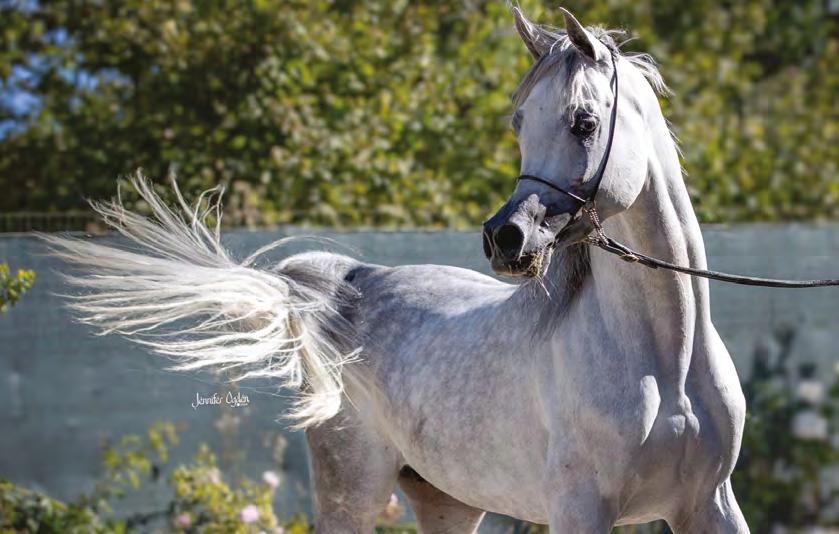
* 2017, I TALY
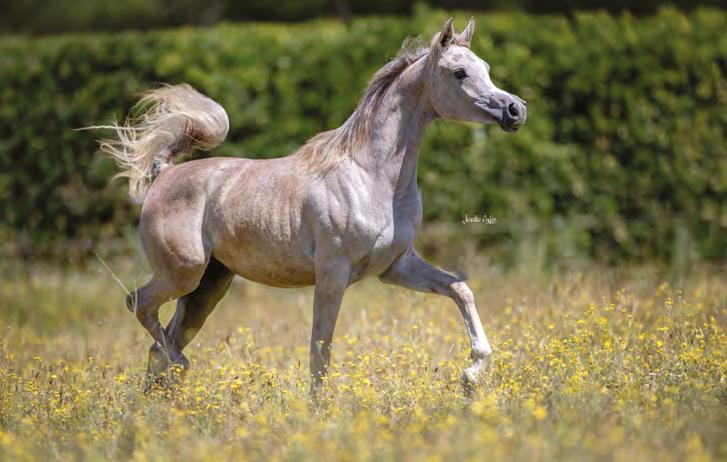
Mansour Al Murad ha sfruttato al meglio l’opportunità offerta dall’ Allevamento Tre Balzane in Umbria, Italia, producendo una progenie eccellente. Il suo pedigree eccezionale riflette il meglio della storia dei purosangue egiziani nel mondo: il viaggio dei suoi antenati è iniziato in Egitto 100 anni fa ed è proseguito attraverso gli Stati Uniti e la Germania fino al Qatar. Da lì, i suoi genitori sono arrivati in Europa. Mansour Al Murad è nato in Italia, dove ancora oggi vivono molte fattrici di ottima qualità e con un pedigree eccellente.
Gli stalloni Straight Egyptian, asil e blue-listed che si sono fatti un nome come produttori di tipo e qualità sono ormai pittosto rari al giorno d’oggi.
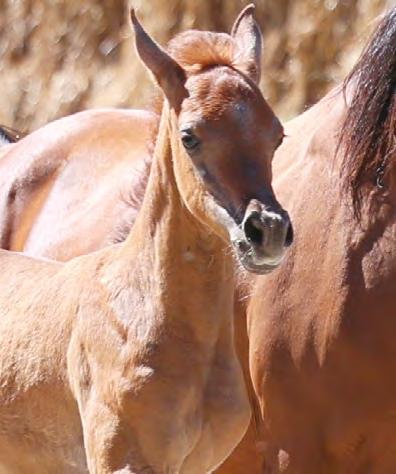
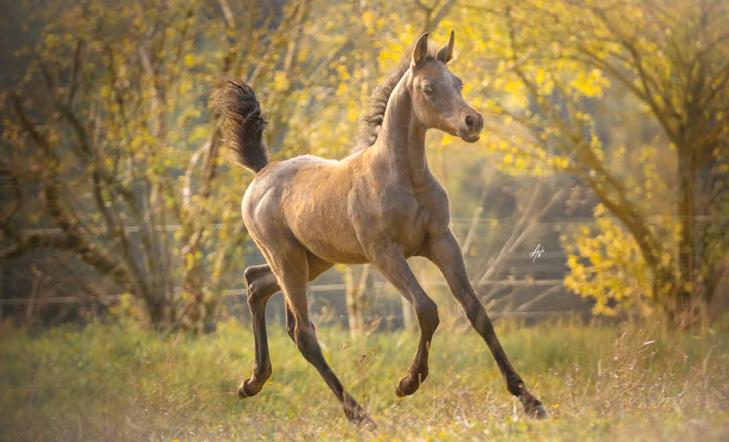
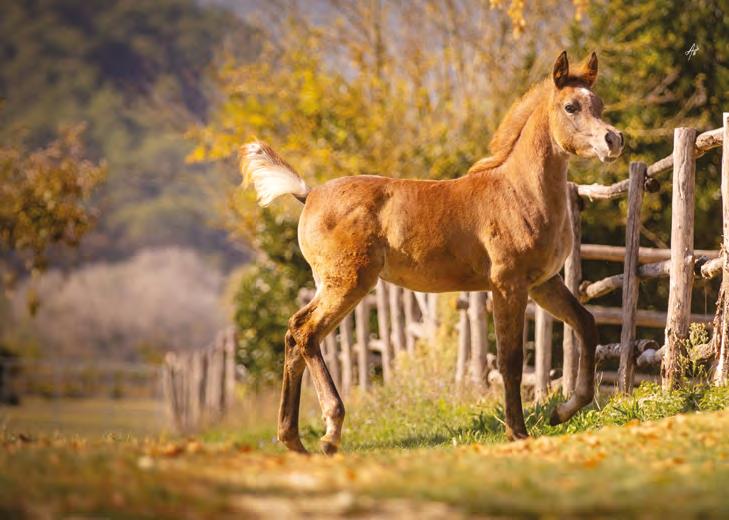
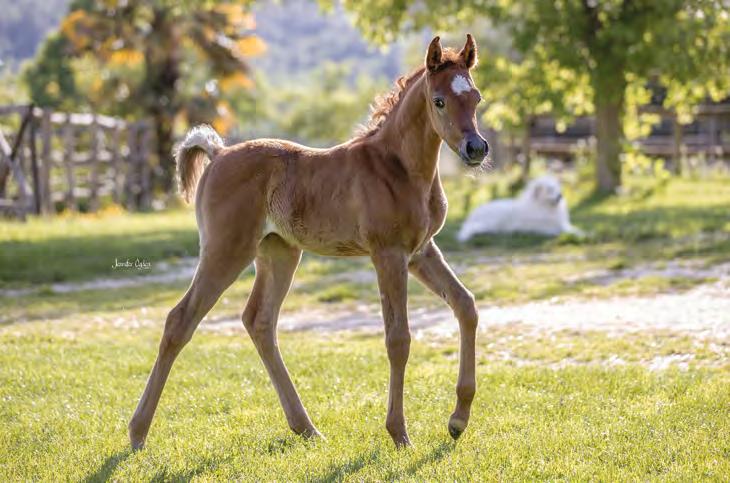
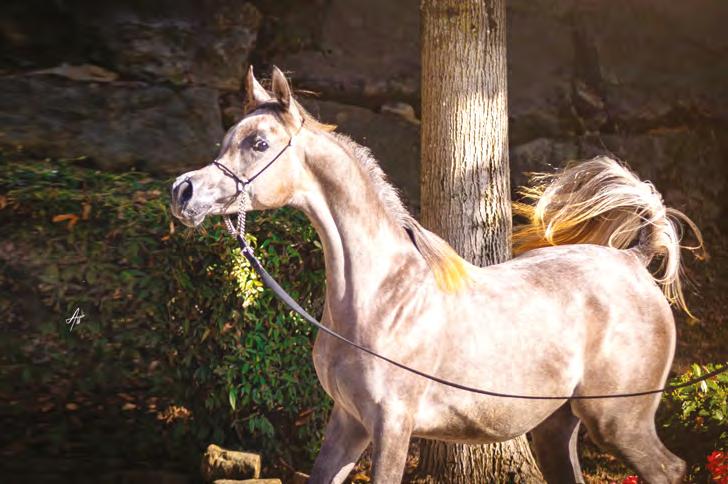
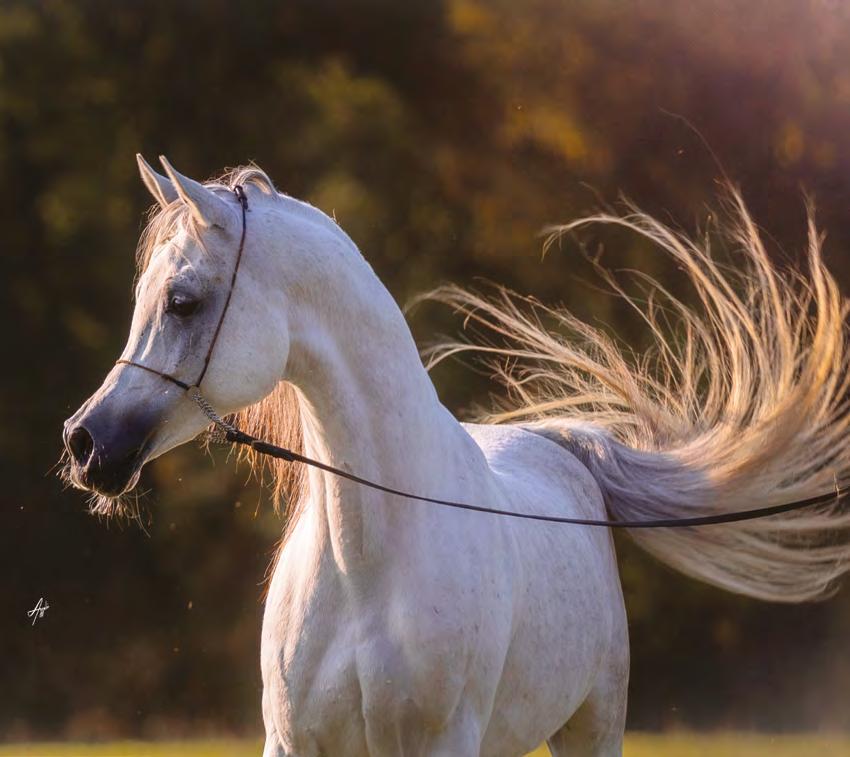
His fresh and frozen semen is of excellent quality and is world-wide available at a fair price. il suo seme fresco e congelato di ottima qualità è disponibile in tutto il mondo a un buon prezzo.
Standing at
TRE BALZANE STUD
Monika Savier
06044 Castel Ritaldi, Umbria - ITALY savier@arabi-egiziani.it / +39 335 5235135

www.arabi-egiziani.it/en/horses/mansour-al-murad/ - www.arabi-egiziani.it/en/gender/al-murad-stud-it/

Abbonamento per l’Italia costo annuale €265 - (costo spedizione tramite corriere espresso DHL incluso)
Subscription Worldwide yearly price
Europe €270 - Arabia/America/Asia/Africa €285 - Australia €295 (Delivery by Post included in the price)
Europe €353 - Arabia/America/Asia/Africa €371 - Australia €384 (Delivery by DHL courier included in the price) info@tuttoarabi.it
Cognome/Surname________________________________________Nome/Name
Indirizzo/Address
Città/City__________________________________Cap/Country Code____________Paese/Country Telefono/Phone________________________E-mail
Firma/Signature
q Versamento su c/c postale n. 20843256 o a mezzo vaglia postale intestato a: Alim Editrice s.n.c. - via Ressi, 22 - 20125 Milano - Italy
q Pagamento con Carta di Credito/Payment by Credit Card q VISA_____________________________________________________________ q Master Card
Scadenza/Expiration________________________Codice di Sicurezza/Security Code
Firma/Signature
Non accettiamo pagamenti con assegno/We don’t accept payments by cheque
Abbonamento per l’Italia costo annuale (9 uscite)
€456 - (costo spedizione tramite corriere espresso DHL incluso)
Subscription Worldwide (9 magazines per year)
Europe €412 - Arabia/America/Asia/Africa €447 - Australia €467 (Delivery by Post included in the price)
Europe €525 - Arabia/America/Asia/Africa €569 - Australia €594 (Delivery by DHL courier included in the price)
info@tuttoarabi.it
Cognome/Surname________________________________________Nome/Name
Indirizzo/Address
Città/City__________________________________Cap/Country Code____________Paese/Country Telefono/Phone________________________E-mail
Firma/Signature
q Versamento su c/c postale n. 20843256 o a mezzo vaglia postale intestato a: Alim Editrice s.n.c. - via Ressi, 22 - 20125 Milano - Italy
q Pagamento con Carta di Credito/Payment by Credit Card q VISA_____________________________________________________________ q Master Card
Scadenza/Expiration________________________Codice di Sicurezza/Security Code
Firma/Signature
Non accettiamo pagamenti con assegno/We don’t accept payments by cheque
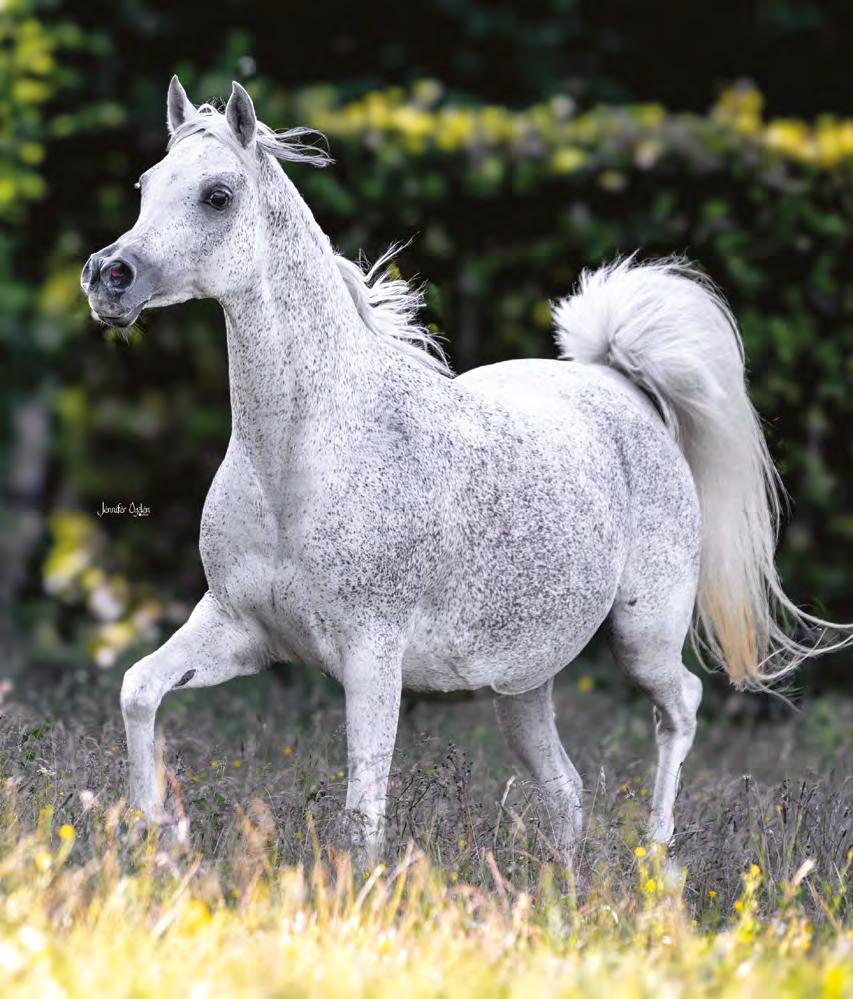
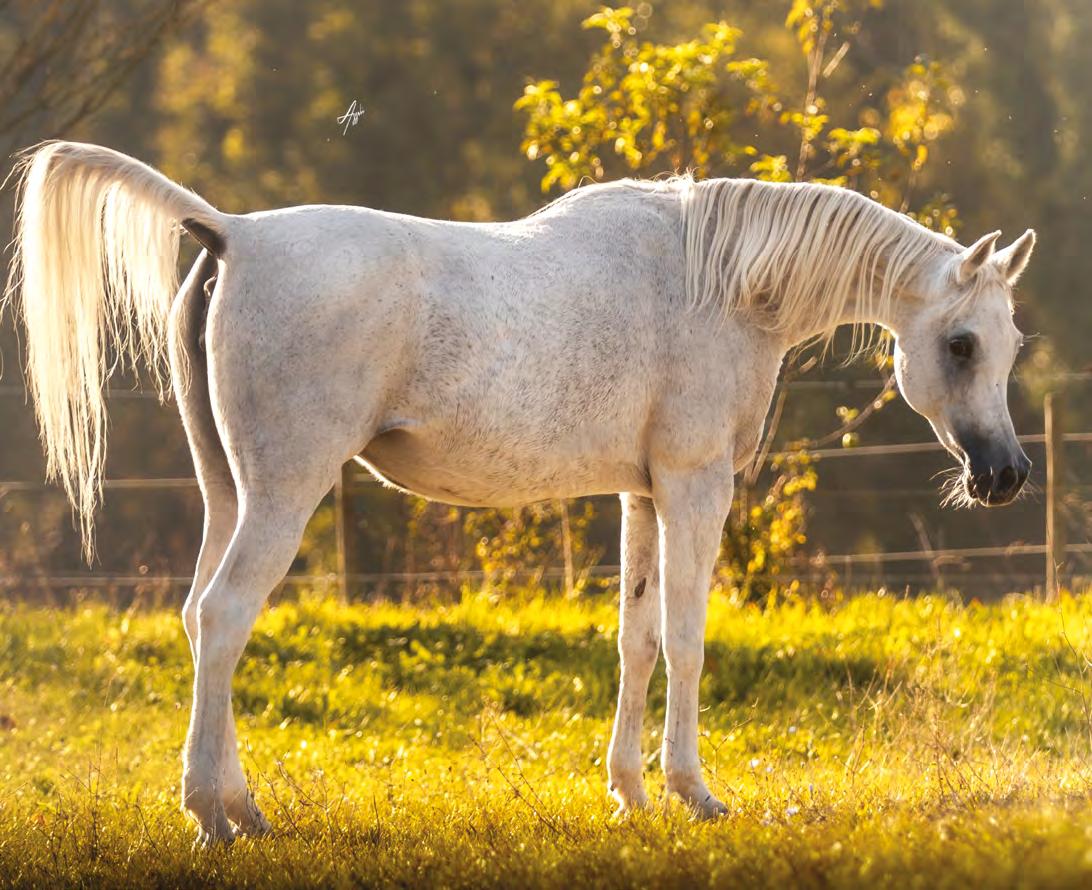
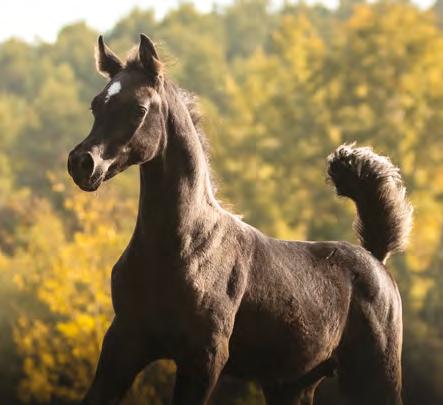
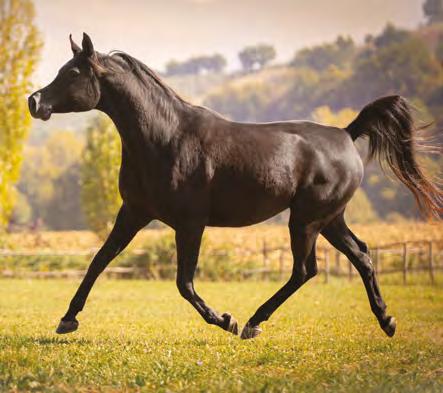
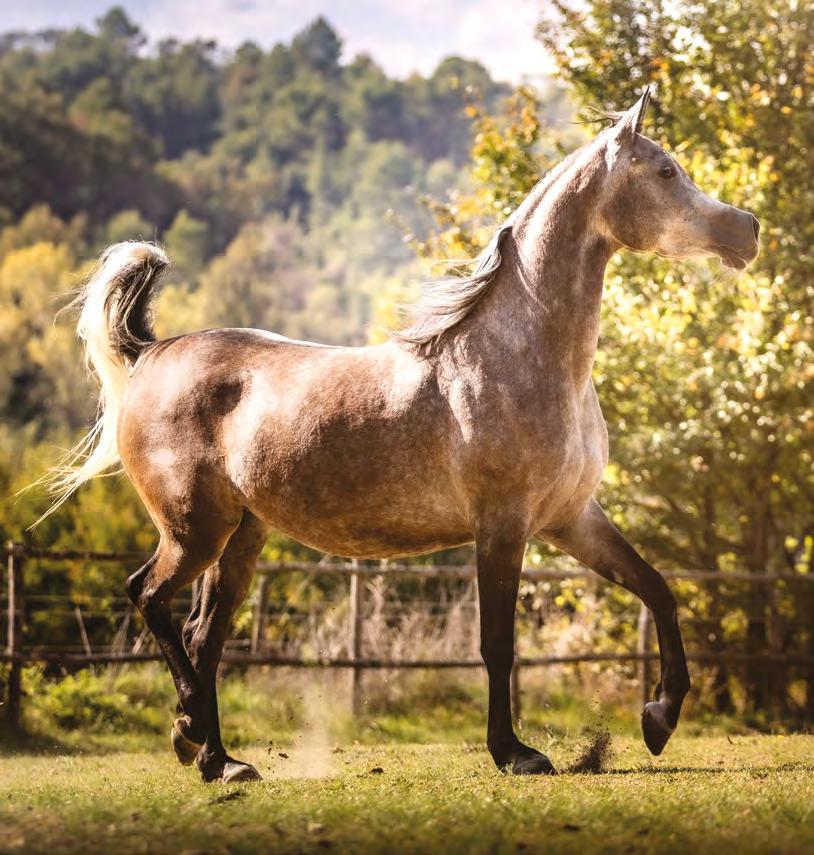
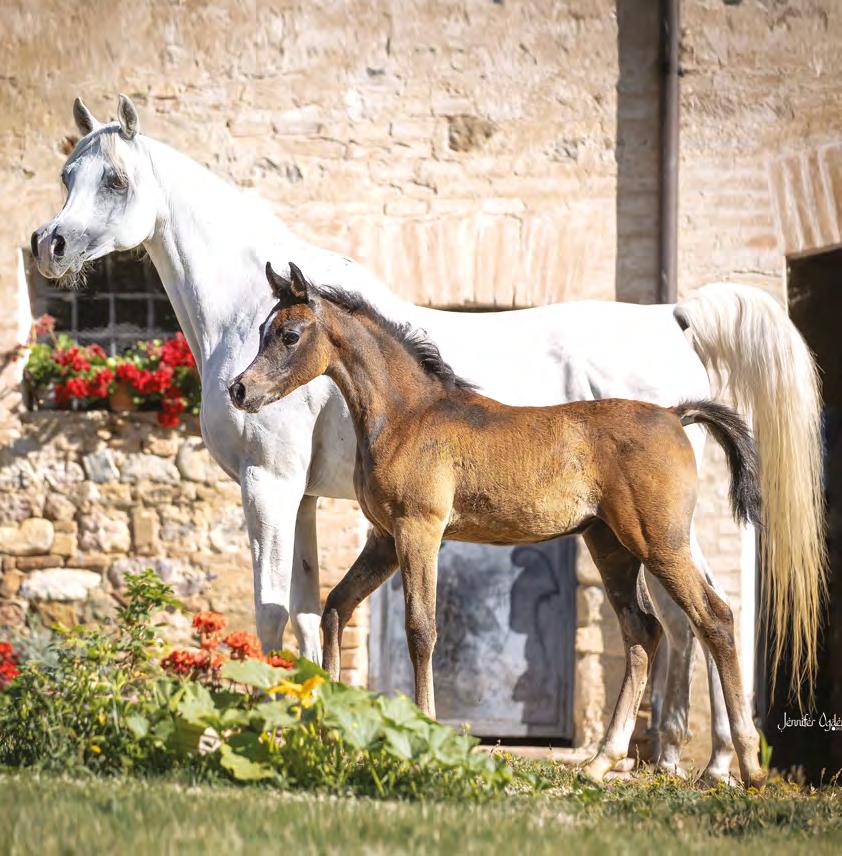
eGypTian amene