






The 2025 AIA New York State Design Awards logo pays homage to a century of Art Deco, the design movement that transformed cities and culture beginning in 1925. Inspired by the bold geometry, symmetry, and fan-like motifs that defined the era, the logo echoes the sleek ornamentation found in New York State’s most celebrated Art Deco landmarks, including the Empire State Building, the American Radiator Building, and Rockefeller Center in New York City. Art Deco emerged on the world stage at the 1925 International Exhibition of Modern Decorative and Industrial Arts in Paris, where architects, artists, and makers showcased a new vision: modern materials, streamlined forms, and a sense of optimism expressed through design. A hundred years later, the movement’s influence continues across New York State, shaping skylines, inspiring restorations, and informing contemporary design. This year’s emblem celebrates that legacy, linking the enduring elegance of Art Deco with the next generation of innovative architecture.
Since 1968, the American Institute of Architects New York State (AIANYS) Design Awards have celebrated the very best in architectural achievement across the state. Each year, this prestigious program recognizes exceptional projects crafted by licensed and registered architects practicing in New York State—work that demonstrates design excellence, technical skill, innovation, and a profound commitment to enhancing the built environment.
In 2025, 25 projects were honored across nine categories, including Adaptive Reuse/Historic Preservation, Commercial/Industrial, Institutional, Interiors, International, Residential, Small Firms, and Unbuilt. Citations, Merit Awards, and Honor Awards were conferred upon those submissions that rose to the top, distinguished by their creative vision, technical ingenuity, and impact on communities.
The 2025 Design Awards jury brought together an established panel of leaders in the field: Jury Chair Karl Daubmann, FAIA, Interim Provost at Lawrence Technological University; Stacy A. Bourne, FAIA, Principal Architect of the Bourne Group; Dennis Stallings, FAIA, Design Director/ Principal at Clark Nexsen – A JMT Company; and Corey Aldrich, Owner and Founder of 2440 Design Studio and Executive Director of ACE! Upstate Alliance for the Creative Economy. The jury process was facilitated by Peter Arsenault, FAIA.
From the distinguished group of award-winning projects, the jury selected the “Best of the Best”, announced during the virtual awards ceremony on December 11.
The jury noted:
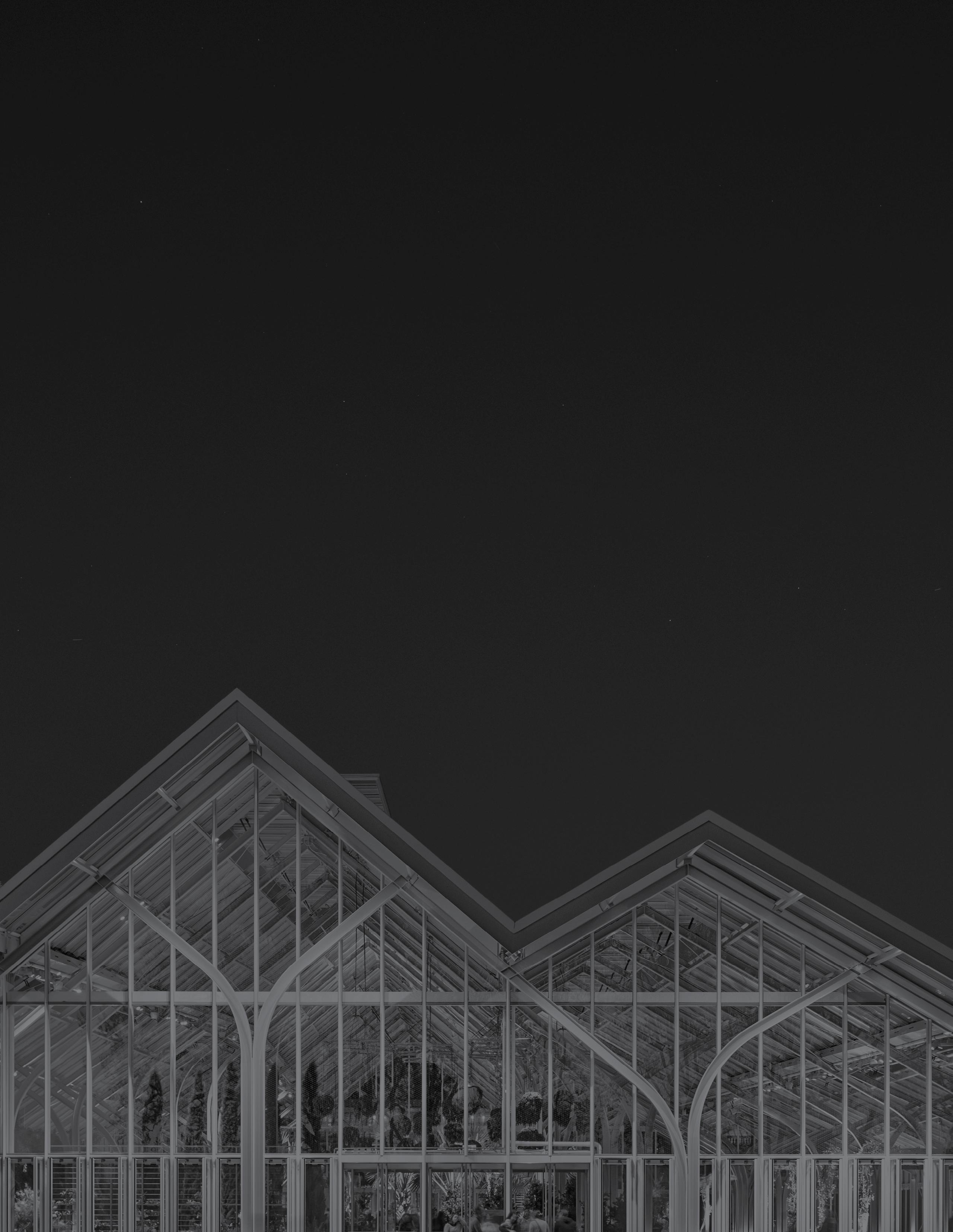
“The 2025 Jury recognized the Longwood Gardens West Conservatory as an exemplary achievement in the integration of architecture, landscape, sustainability, and structural elegance. The West Conservatory pays deep respect to the legacy of Longwood’s historic steel and glass structures through its use of slender, curving steel members that feel both weightless and tree-like.
This project is a masterful act of expansion and synthesis that redefines the guest experience. The new 32,000-square-foot glasshouse thoughtfully extends the public garden spaces across the grounds, seamlessly bridging formal gardens with the open meadows and vistas beyond. Within this enriched setting, its greatest strength lies in the integrated design approach: architecture and landscape operating in harmonious dialogue rather than as independent elements.
The horticultural exhibition and the architectural form coalesce into a single, immersive experience, one that demonstrates the extraordinary potential of interdisciplinary collaboration. Ecologically innovative and emotionally resonant, the Longwood Gardens West Conservatory stands as a timeless contribution to institutional design, setting a new benchmark for uniting architectural heritage with contemporary, sustainable practice.”
AIANYS 2025 President Andrew Harding, AIA, shared, “The AIA New York State Design Awards shine a spotlight on the remarkable creativity and vision of architects across our state. Each honoree represents not only technical excellence, but a deep commitment to shaping environments that elevate the human experience. It is with great pride that we celebrate this year’s recipients and the enduring impact of their work.”
Image: Energy Advancement and Innovation Center at The Ohio State University, Columbus, Ohio
Photo Credit: © Michael Moran






2025 D esign A w A r D s JU r Y
JURY CHAIR | Karl Daubmann, FAIA | Interim Provost, Lawrence Technological University | Karl Daubmann, FAIA, serves as Interim Provost at Lawrence Technological University and is a University Distinguished Professor known for his leadership in digital design and emerging technologies. Previously Dean of the College of Architecture and Design, he has shaped programs that prepare students for an increasingly technology-driven profession.
Karl is founder of the design practice DAUB and co-founder of PLOP, a 2024 prototyping laboratory focused on off-site prefabrication and advanced construction methods. His work consistently pushes the boundaries of digital fabrication and interdisciplinary design. A Fellow of the American Academy in Rome and the AIA, he is recognized nationally for innovation, leadership, and advancing design education.
JUROR | Stacy A. Bourne, FAIA | Principal Architect, Bourne Group | Stacy A. Bourne, FAIA, NOMA, is the founding principal of The Bourne Group, a practice committed to resilient, community-centered architecture. With more than 30 years of experience in the U.S. Virgin Islands and other hurricane-prone regions, she has led major post-disaster recovery efforts, FEMA-funded programs, and resilience-focused policy work.
Her portfolio spans custom homes, commercial renovations, and historic preservation, all grounded in environmental stewardship and the AIA Framework for Design Excellence. Stacy has held numerous leadership roles, including six terms as AIA Virgin Islands President and service on multiple public commissions. Elevated to Fellowship in 2012, she continues to mentor emerging professionals and advocate for inclusive, resilient design.
JUROR | Dennis Stallings, FAIA | Design Director/Principal, Clark Nexsen –A JMT Company | Dennis Stallings, FAIA, is Principal and Director of Design at Clark Nexsen, where he leads the firm’s design culture and guides teams in delivering innovative, elegant solutions for higher education, cultural, and institutional clients. His work has earned more than 100 design awards across his career.
Dennis has been recognized with North Carolina’s highest architectural honors, including the Kamphoefner Prize and the F. Carter Williams Gold Medal. A Professor of Practice at North Carolina State University since 1993, he has mentored generations of designers. He remains deeply involved in professional leadership, frequently serving on AIA juries and contributing to the advancement of design excellence.
JUROR | Corey Aldrich | Founder / Creative Director, 2440 Design Studio | Executive Director, ACE! (Upstate Alliance for the Creative Economy) | Corey Aldrich is a creative strategist and designer with over 15 years of experience supporting artists, cultural organizations, and creative-sector businesses. As founder of 2440 Design Studio, he specializes in brand development, experiential design, and audience engagement for arts and cultural projects.
Corey’s multidisciplinary background spans interior and set design, visual and performing arts, heritage preservation, and event-driven placemaking. Since 2010, he has built a practice centered on elevating the creative economy across the Capital Region. In his role as Executive Director of ACE! Upstate Alliance for the Creative Economy, Corey advocates for the arts as a vital economic and cultural force, strengthening community identity through creative collaboration.
FACILITATOR | Peter Arsenault, FAIA | Peter Arsenault, FAIA, is principal of Peter J. Arsenault, Architect, bringing more than 30 years of experience in high-performance and sustainable design. His work spans institutional, civic, and community-focused projects, with a strong emphasis on building science, energy efficiency, and resilient systems. Peter is widely regarded for his ability to merge technical rigor with thoughtful, people-centered design solutions.
A longtime contributor to AIA initiatives, he has been active in advancing sustainability, professional education, and design excellence at both regional and national levels. As a jury consultant, Peter draws on deep expertise in performance-driven architecture, offering a balanced, insightful perspective that supports the recognition of outstanding design.
Brooklyn, New York
Submitted by: PellOverton Architects
Photo Credit: © Mikiko Kikuyama Photography
M
eri
T A w A r D
“A wonderful example of adaptive reuse which demonstrates how a contemporary intervention can honor a historic structure.”
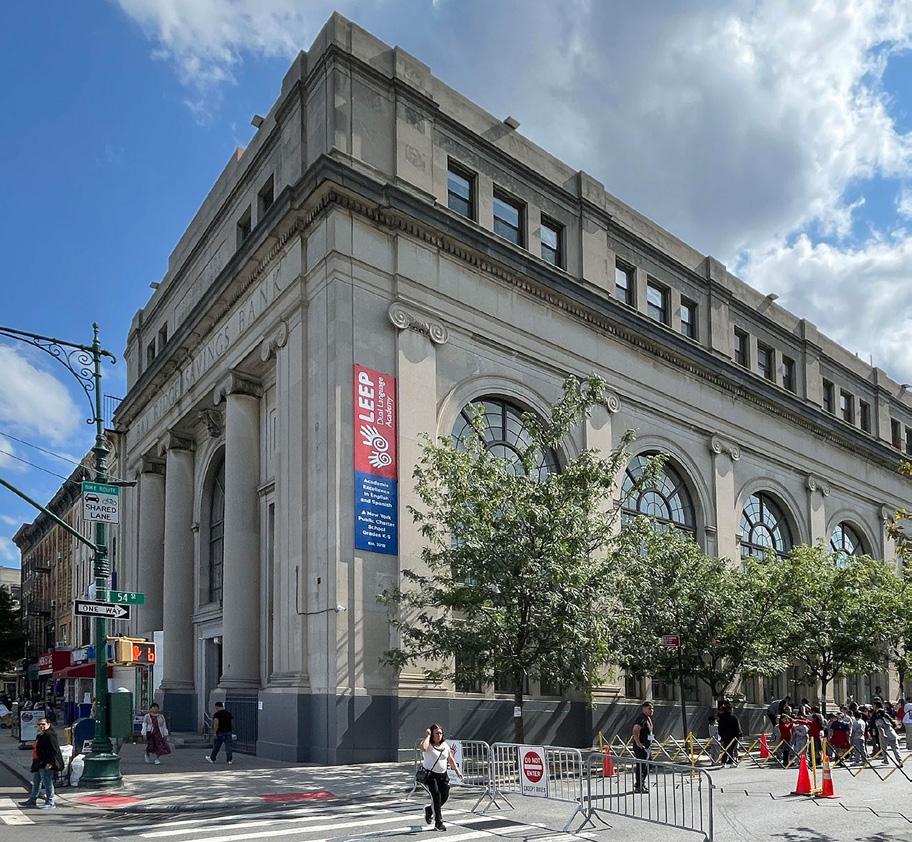
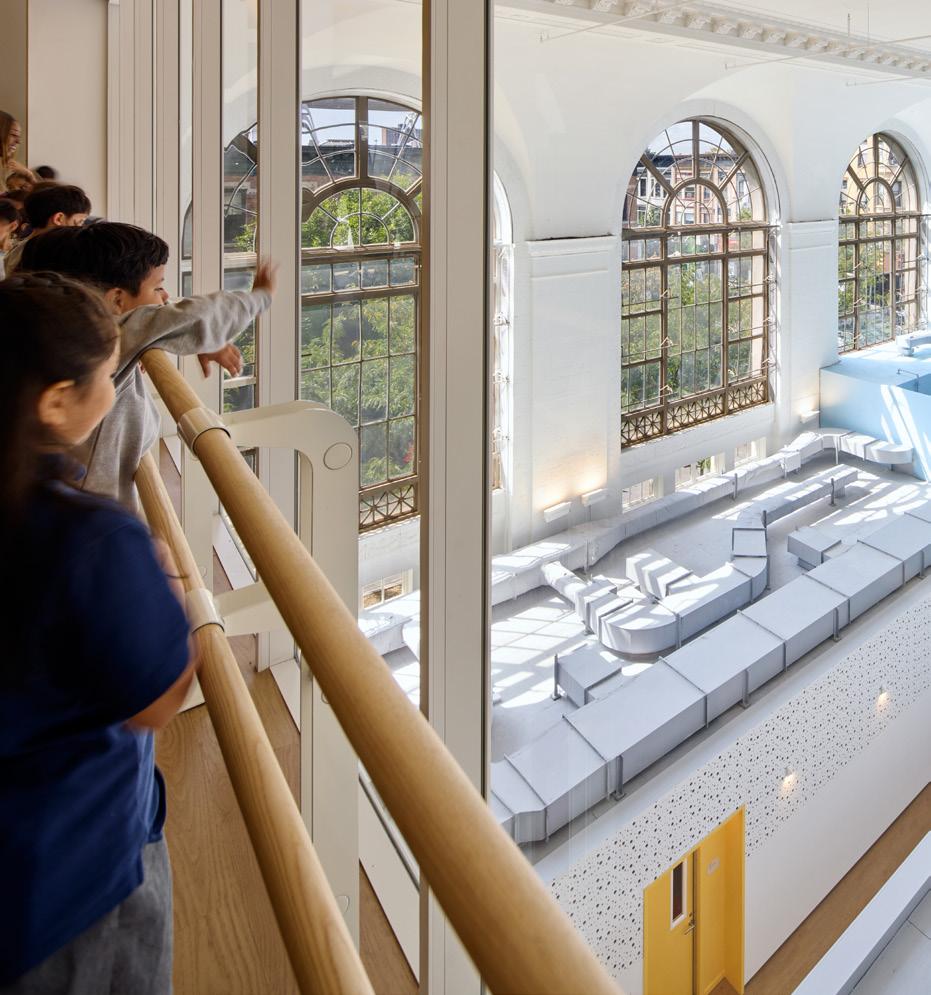
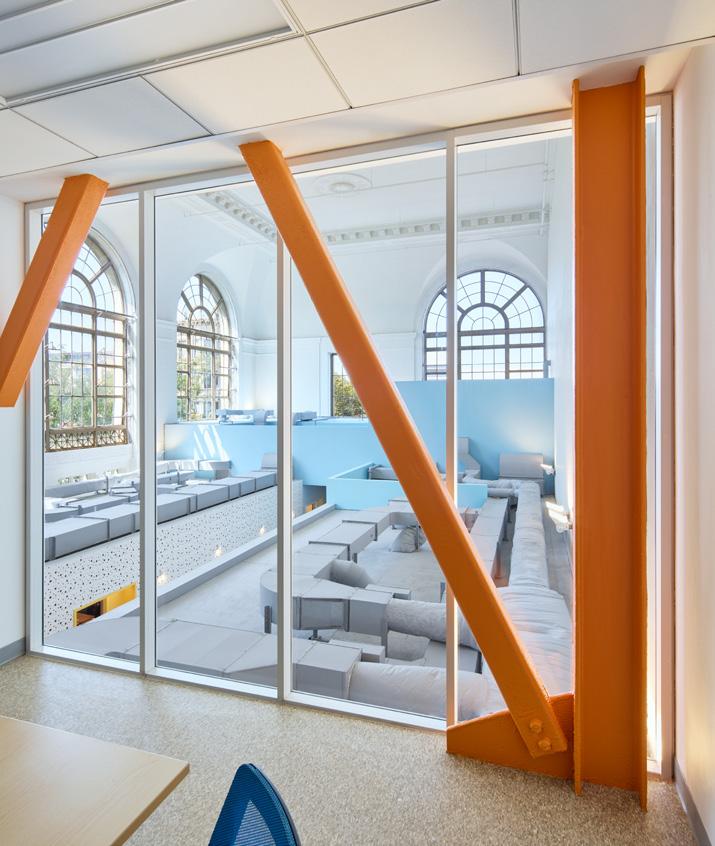
LEEP Dual Language Academy is a K-5 public charter school located on the upper floors of the Bay Ridge Savings Bank, built in 1926 on a prominent corner in Sunset Park, Brooklyn. In 2023, the school leased the main hall previously held by a national bank chain. While the triple-height space provided generous volume, the available floor area was relatively limited. The school and design team were also committed to preserving the grandeur of the original bank while accommodating an ambitious expansion including five classrooms, administrative offices, a reception area, and a large dance studio.
The design inserts a series of modern structures within the historic bank hall, creating a cityscape that extends the neighborhood fabric into the interior. These program volumes gradually step down the monumental scale to spaces suitable for young children. Upon entering the main hall, the triple-height space is flanked on either side by one-story classrooms, while the grand ceiling remains open and daylit through the building’s bay windows. At the far end, a two-story volume, suspended and accessed from the upper levels, houses an additional classroom, conference space, and a new dance studio. This floating program is expressed back to visitors below as a modern interpretation of the Classical Revival details found along Fifth Avenue.
The dialogue between old and new underscores the civic partnership between the school and the historic bank, celebrating both as educational and cultural landmarks. This sensitive adaptive reuse provides LEEP (Leap) with a meaningful connection to its building while preserving an important piece of Sunset Park’s architectural history.


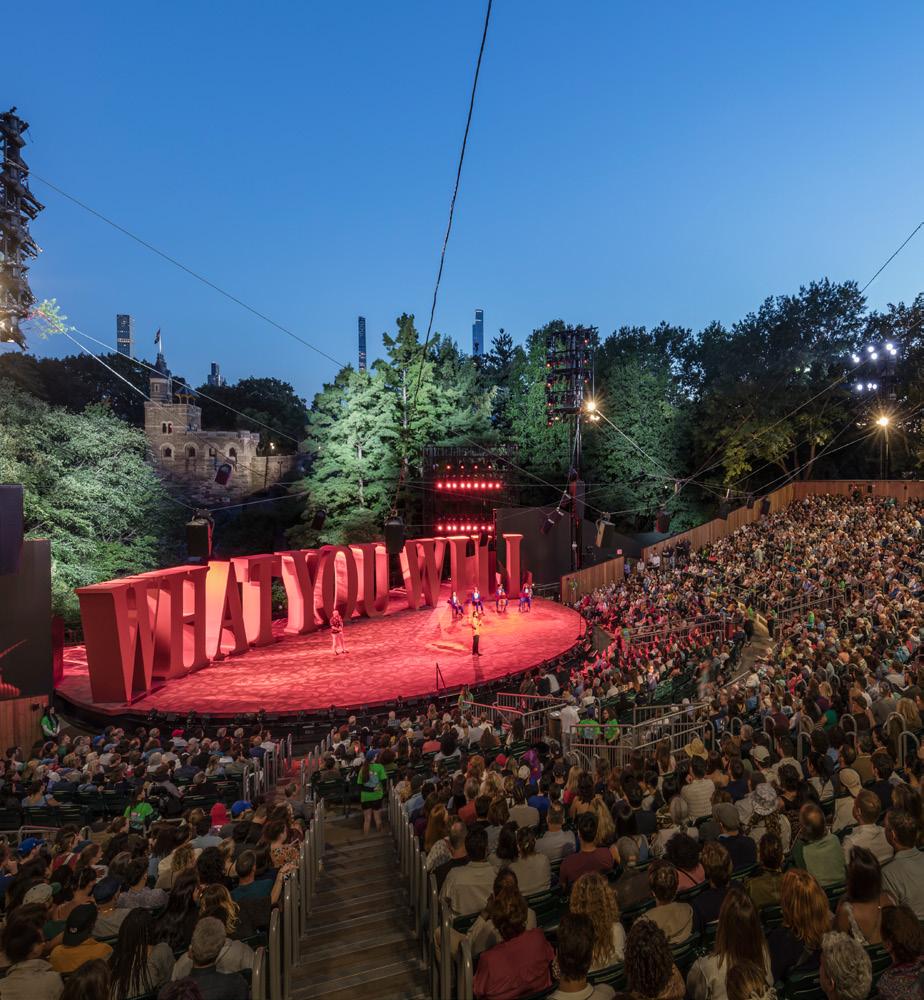
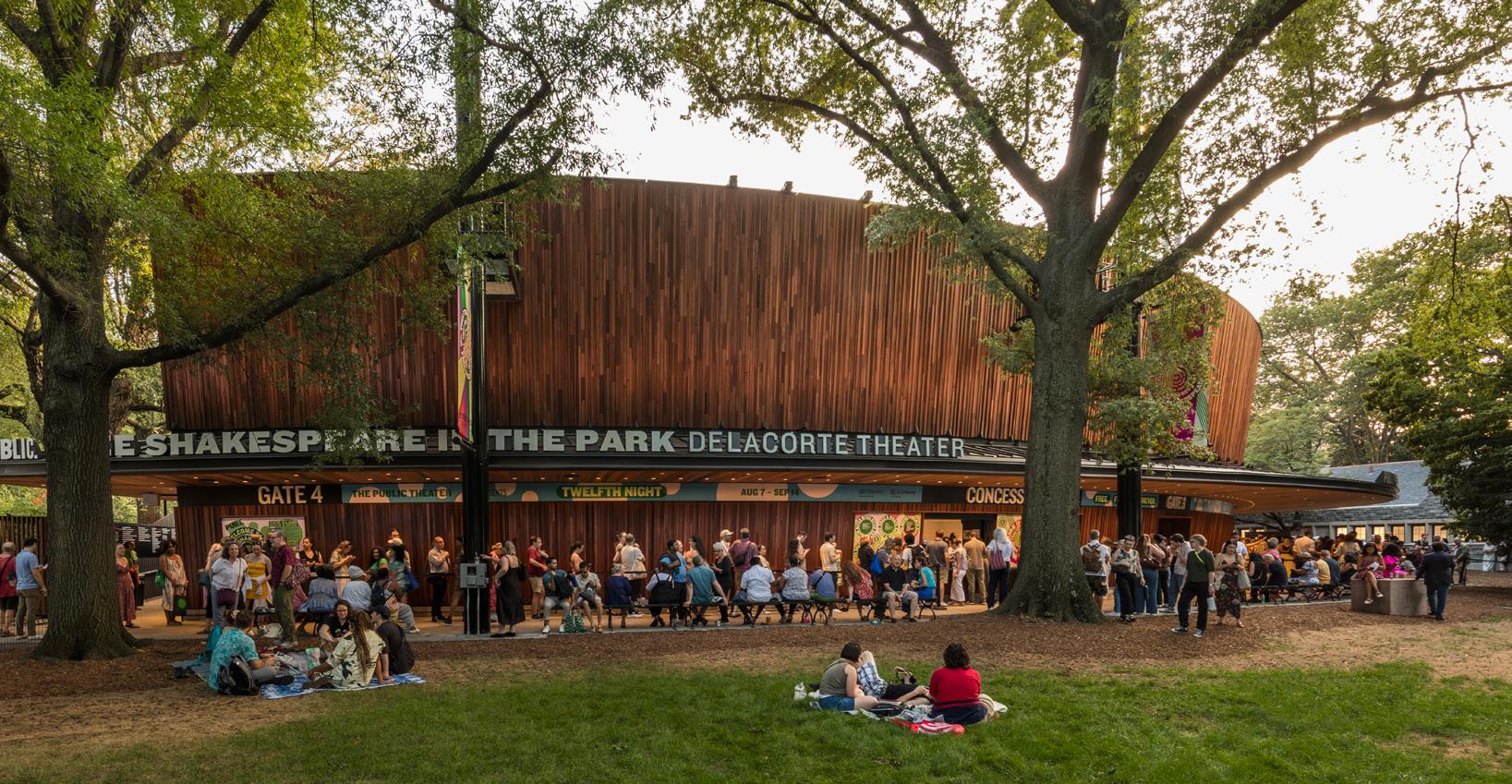
The Delacorte Theater is the legendary open-air home of The Public Theater’s Free Shakespeare in the Park, located at the heart of Central Park. Its recent revitalization marks the most significant renovation in its 63-year history. The renovation introduces new levels of accessibility for attendees, staff, and performers, ensuring this cultural icon continues to serve New York City for generations.
Designing for resilience, the theater’s surroundings informed its approach. The exterior is clad in reclaimed redwood harvested from decommissioned water towers across all five boroughs. Each piece was carefully installed, grounding the structure in the natural landscape of the park and the broader urban context. The vertical textured wood façade plays with light and shadow, contrasting with the smooth geometry of the canopy that sweeps over the entryway, creating a balance between subtlety and grandeur. The reclaimed wood also minimizes heat retention, enhancing sustainability.
Accessibility improvements ensure an elevated experience for all. Two new gates provide accessible entries, while a generous cross aisle offers equitable sightlines. Additional ramps and a lift, serve performers with disabilities. ADA-compliant seating has more than doubled, and bariatric seats have been added. Back-of-house improvements, including expanded hallways, dressing rooms, HVAC upgrades, and new lighting towers, support staff and artists while enhancing the audience experience. A canted exterior wall creates an additional row of seating, further optimizing the theater’s layout.
This renovation strengthens Delacorte Theater’s role as a resilient, inclusive, and iconic cultural venue in Central Park, honoring its legacy while advancing accessibility and sustainability for the future.

New York, New York
Submitted by: Ennead Architects
Photo Credit: © Jeff Goldberg / Esto
“The use of reclaimed redwood from old water towers is admirable. It adds immense warmth and a story rooted in the city’s fabric.”
Troy, New York
Submitted by: Annum Architects, with Ann Beha FAIA
Photo Credit: © Chuck Choi Architectural Photography
n O r A w A r D
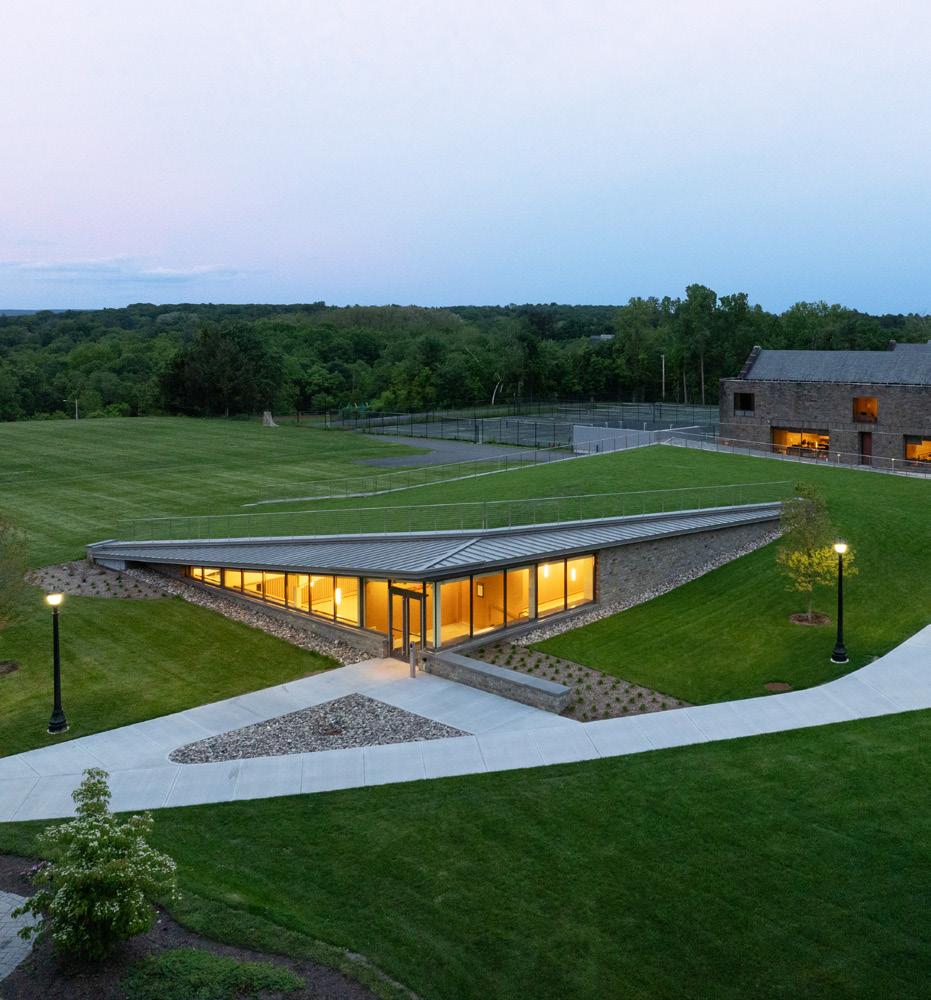
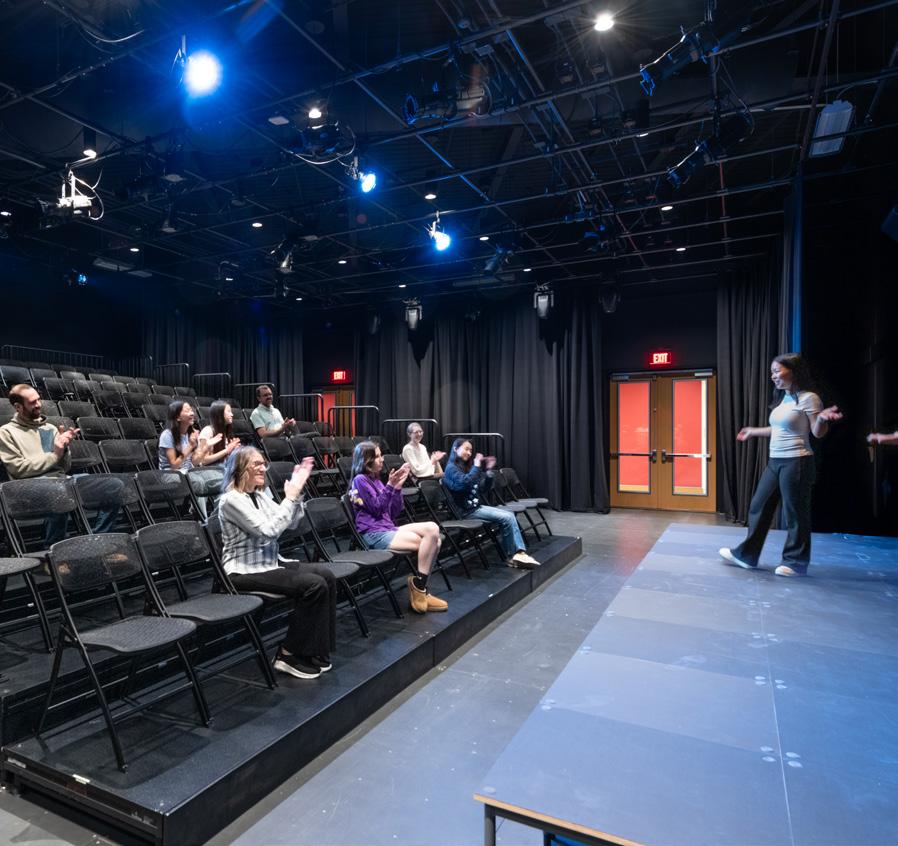

“This project achieves a brilliant dialogue between historic preservation and modern intervention. Carving out a new, two-story theater within the heart of the lovingly restored original building is audacious.”
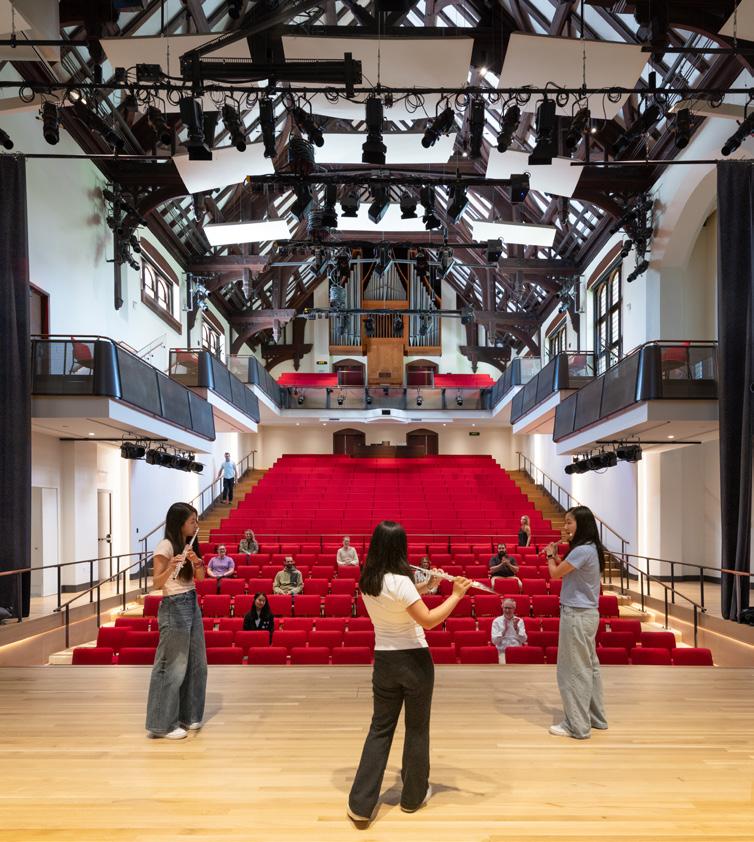
The Alice Dodge Wallace ’38 Center places community and performing arts at the heart of the campus. Founded in 1814, Emma Willard School is a national leader in education for young women. The rolling campus landscape integrates historic structures with contemporary architecture, creating a dialogue between past and present. The project transforms a 1910 gymnasium—later converted to a chapel—into a 500-seat performance hall while adding a connected arts extension without expanding the campus footprint.
The renovation honors original architectural details, optimizing building volume for tiered seating, sightlines, and acoustics. Preservation efforts included a new slate roof, stone restoration, and reconstruction of leaded-glass windows. Floor removal created space for a stage fly system and enhanced performance capabilities. The arts wing features a “planted and pleated” roof, opening clerestories to bring daylight into studios below. Adaptive reuse and sustainability were central: placing the arts wing partially below grade reduces energy use, while the green roof extends native pollinator gardens, mitigating the heat-island effect and preserving campus greenspace.
By combining historic preservation with contemporary design, the Wallace Center supports the school’s curriculum, emphasizes creativity, and provides a sustainable, inclusive performance venue. The project embodies Emma Willard School’s commitment to the arts and to fostering community engagement in a space that bridges history, innovation, and functionality.
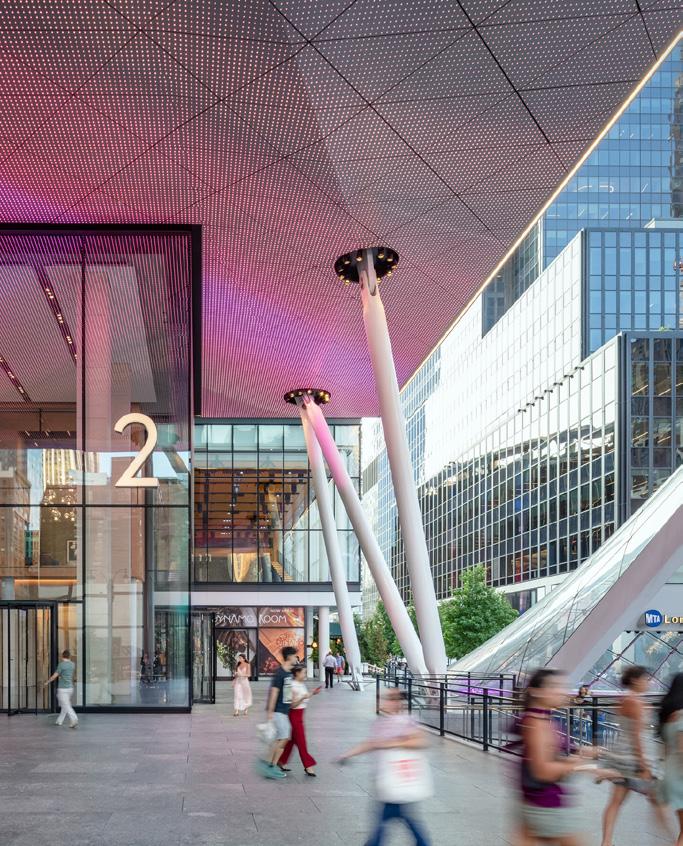
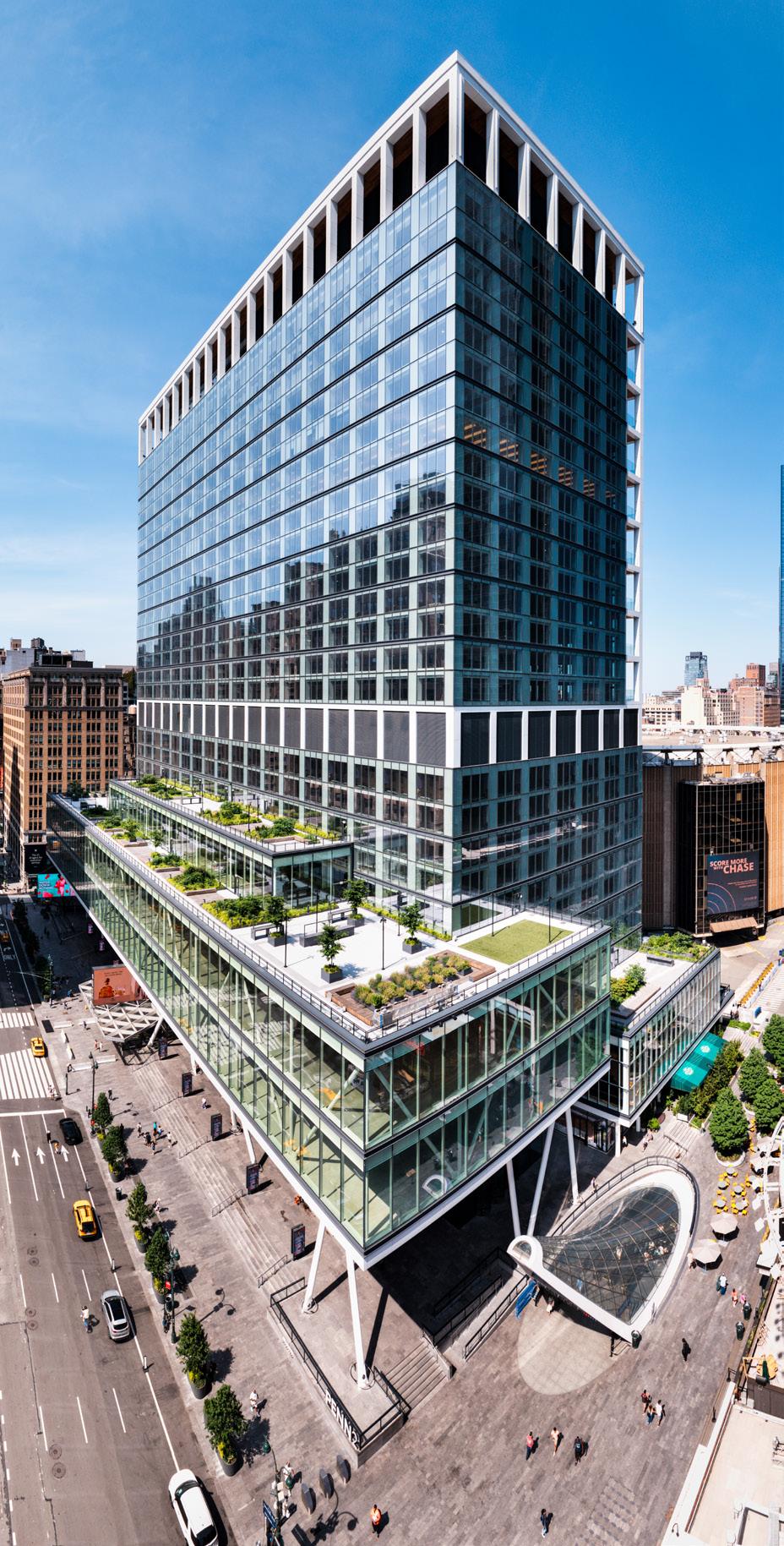
As part of the complete redevelopment of the Penn District, PENN 2 reimagines a 1.75 million square foot workplace directly above Penn Station. The project integrates transportation, entertainment, public activation, and collaborative workspaces, creating a balanced, human-scaled urban center. Recycling the existing structure minimized construction waste and preserved embodied carbon while allowing for a new, fully sustainable building.
The building’s dynamic composition responds to the busy context, with robust amenities, retail, and open spaces that activate the street and surrounding plaza. Material selection emphasizes durability, sustainability, and visual interest. Large, connected atriums and high-performance glazing bring natural light deep into the building, while a variety of collaborative and quiet workspaces support the evolving needs of tenants. Exterior terraces and rooftop spaces extend the office experience outdoors.
PENN 2 exemplifies forward-looking workplace design: it balances monumental scale with a human touch, engages the public realm, and serves as a model of sustainable, high-performance mixeduse development. By merging heritage, modernity, and environmental responsibility, PENN 2 strengthens the Penn District as a landmark destination while elevating the experience of work, transit, and civic life.

New York, New York
Submitted by: MdeAS Architects
HO n O r A w A r D
The juxtaposition of a new hightech factory within the shell of a 150-year-old historic Civil War era shipbuilding warehouse at Nanotronics Smart Factory evokes a whimsical quality to the interior spaces and a truly delightful building. Re-using the existing building greatly reduces the building’s carbon footprint which was further emphasized with the use of sustainably manufactured for the new pods inside the space. In addition, the building is designed to be cleaner and more efficient than traditional factories offering a great example of smart urban manufacturing.
“This project exhibits a beautifully composed envelope that balances an elegantly refined tower with an open and inviting street level. The sectional strategy is brilliant; it creates a cohesive, intimately scaled experience.”
Duarte, California
Submitted by: CO Architects in collaboration with EwingCole
C i TAT i O n
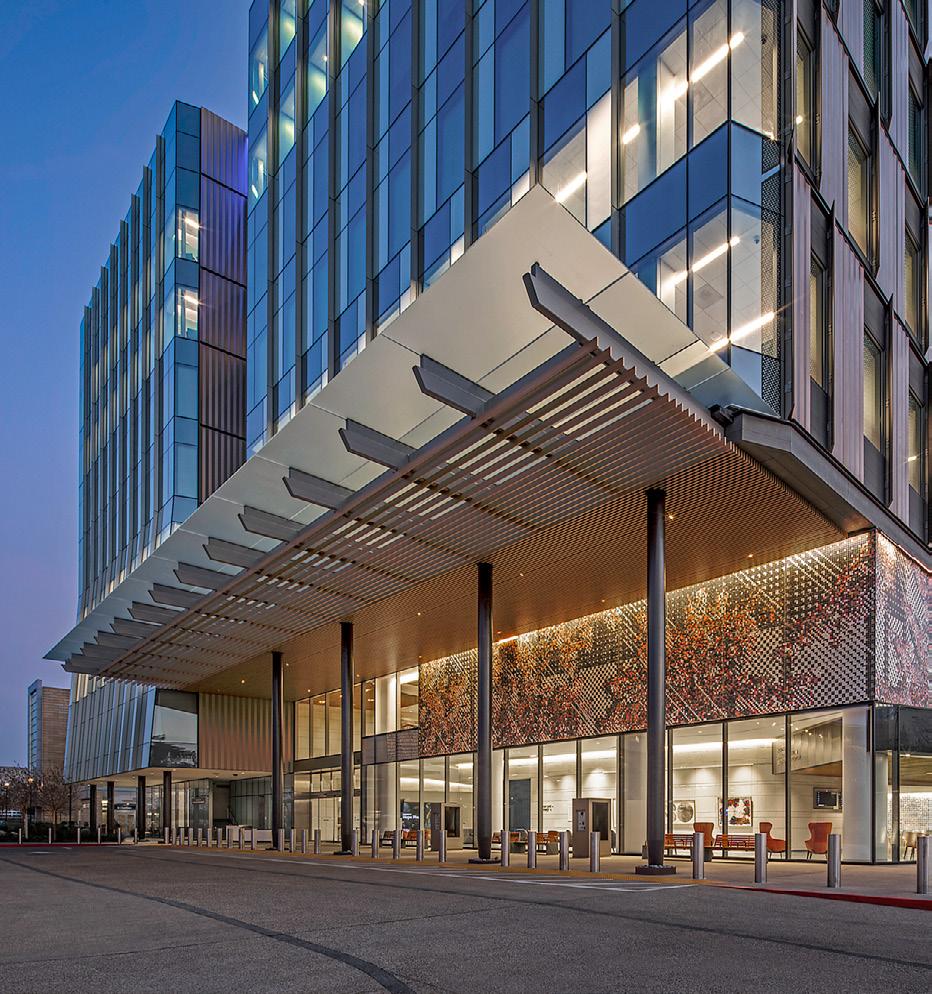
“This project is a powerful testament to how compassionate architecture can support the human spirit. It transcends the typically intimidating nature of an outpatient cancer center to create a sanctuary of light and calm.”
Hope Plaza is part of a larger strategy to enhance healthcare delivery through a patient-centered, healing-focused outpatient cancer facility. The eight-story, 352,000-square-foot project anchors the northeast corner of the campus, providing 110 infusion spaces, radiation oncology rooms, and research laboratories. The design draws inspiration from the surrounding natural environment, positioning the building as a sculptural “boulder” within an “urban river wash” landscape.
Patient experience guided every aspect of the facility. Views of landscaped courtyards and abundant natural light reduce stress, while flexible interior layouts allow seamless clinical workflows. Spaces were designed to integrate multidisciplinary care, blending treatment, consultation, and research. Nature-inspired design elements, including gardens, calming materials, and daylighting strategies, foster physical and emotional healing. The building serves both patients and staff, providing efficient circulation, wellness-oriented spaces, and a sense of connection to the campus environment.
Environmental sustainability is embedded throughout: energy-efficient systems, durable materials, and flexible infrastructure reduce operational impacts. By combining cutting-edge medical facilities with human-centered design, Hope Plaza exemplifies the integration of advanced healthcare technology with holistic, restorative architecture.
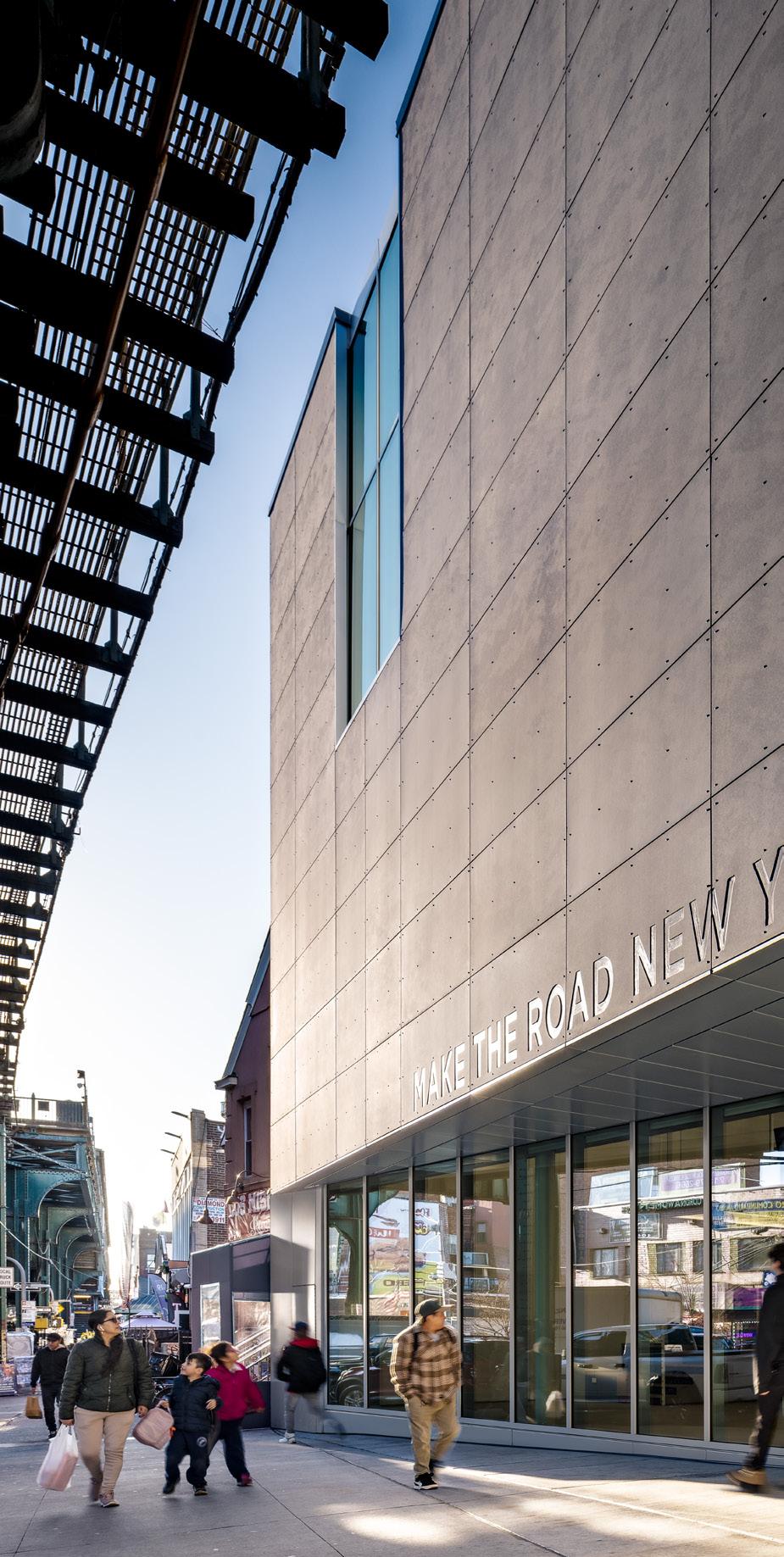
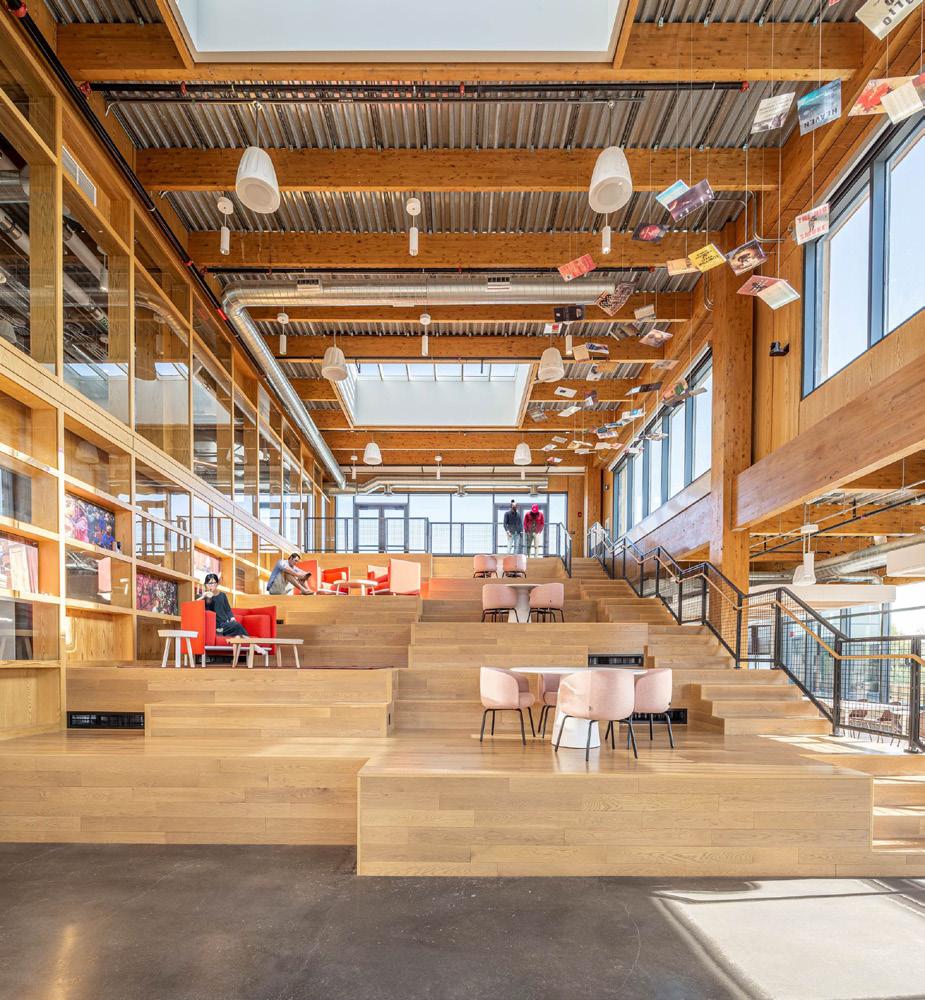
Make the Road New York Community Center serves over 23,000 members and empowers underserved individuals through education, immigration advocacy, health services, and housing justice. The new permanent center embodies the organization’s commitment to community, offering a civic landscape that extends the public streetscape into the building itself. The design establishes an intuitive internal landscape that connects members to resources while promoting interaction, collaboration, and civic engagement.
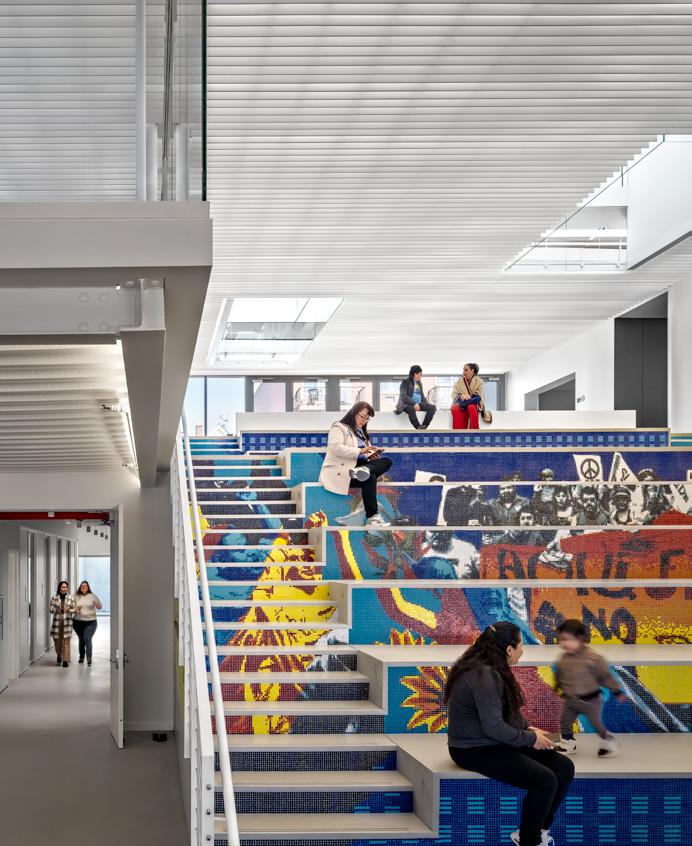
The building’s terraced main hall doubles as a town hall, hosting staff meetings, member gatherings, community dinners, and civic events. Adjacent classrooms are flexible, allowing workshops to operate simultaneously with other programs. A fully equipped basement kitchen supports communal cooking, distributing meals via elevator and dumbwaiter systems, while art and activity rooms provide space for creative programming. The upper floor integrates open workspaces and private offices, with three large light wells flooding the conference and meeting rooms with daylight, and rising above the roofline as visual beacons for the surrounding city. Materiality and circulation are carefully orchestrated to foster connection. Wide stairways, terraced seating, and integrated ramps reinforce accessibility, while the internalized landscape encourages informal gatherings and community interaction. Every space is designed to support the organization’s mission: empowering members and building capacity for positive change.
The new community center embodies the philosophy that a community is built through the empowerment of its individuals. By seamlessly connecting the interior to the neighborhood, Make the Road New York Community Center provides a permanent, visible, and accessible hub for learning, advocacy, and civic life, creating a space where people can meet, work, and engage in meaningful change.
Queens, New York
Submitted by: Andrea Steele Architecture (ASA)
“This project’s vital community program is embodied in its welcoming, intelligent architecture: the way the ground floor folds back creates a transparent storefront that opens into a generous terraced town hall space.”
Princeton, New Jersey
Submitted by: WRNS Studio
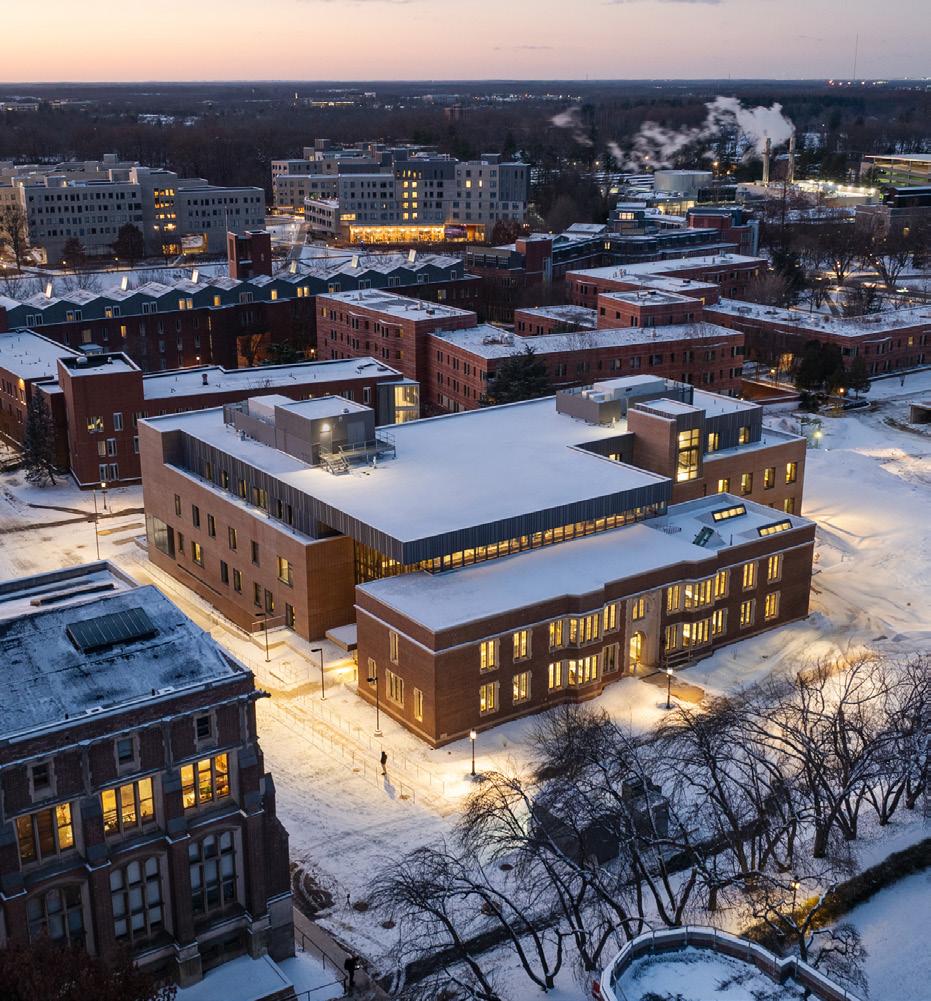
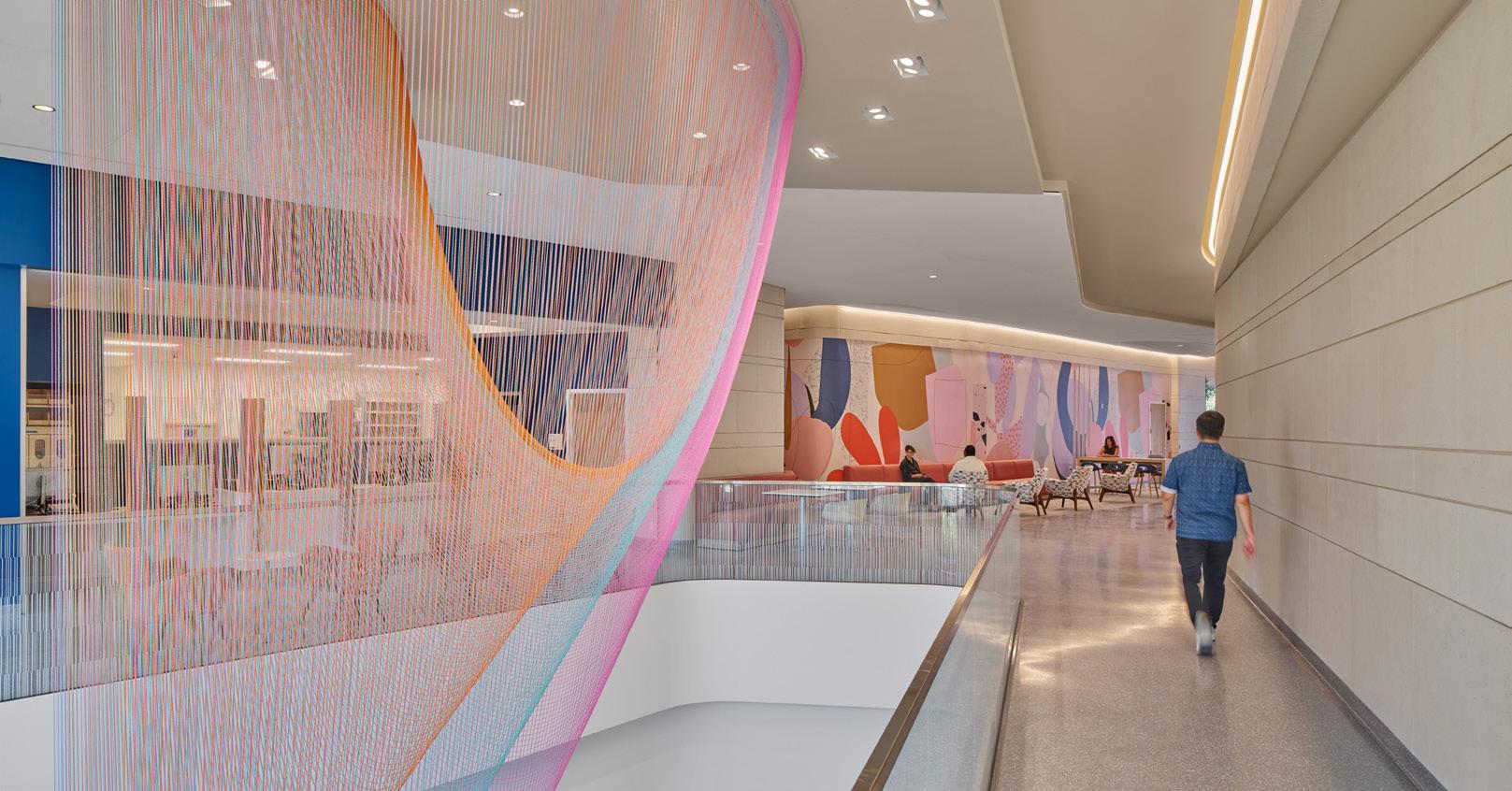
“The quiet but powerful addition creates a wonderful central atrium that emanates a rich dialogue between historic collegiate gothic and modern languages.”
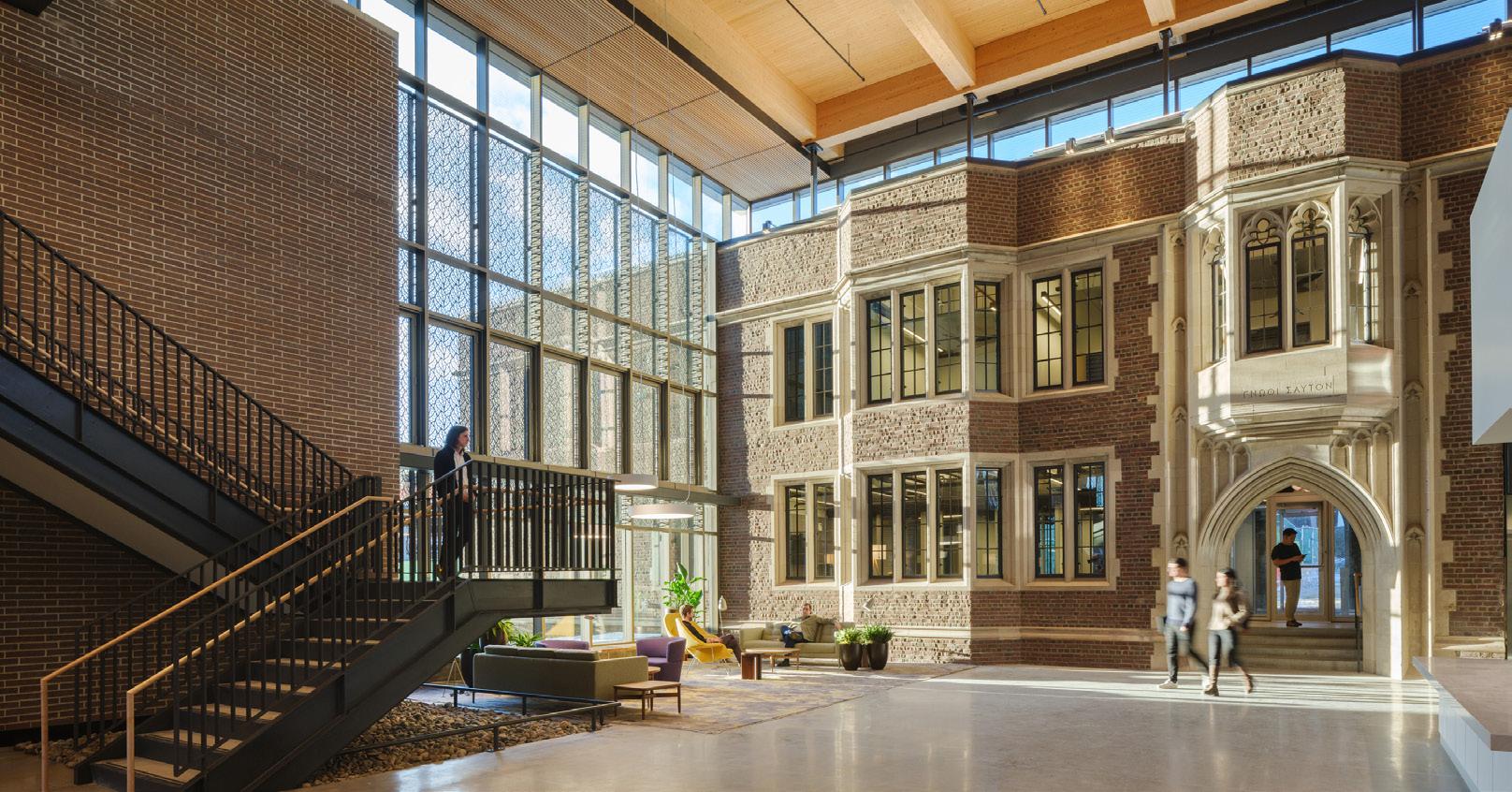
The Frist Health Center is a campus-wide amenity that integrates health and wellness into student life. Designed to advance a culture of well-being, the building consolidates medical, mental health, preventive care, radiology, and sexual harassment and assault resources, doubling capacity while expanding access. The facility combines indoor and outdoor spaces, multipurpose lounges, counseling suites, infirmary rooms, and reflection areas to promote physical and emotional health.
A sixteen week design process engaged over twenty stakeholders, including students, administrators, and sustainability teams, ensuring alignment with Princeton University’s culture and priorities. Environmental stewardship guided every decision: biophilic materials, mass timber, a high-performance building envelope, and adaptive reuse of the historic site minimized embodied carbon and waste. A Dedicated Outdoor Air System optimizes ventilation and supports energy efficiency.
The building’s architecture blurs the boundaries between indoor and outdoor spaces, creating a “living room in a garden” experience. Its human-scaled design, multiple entry points, and calming finishes invite students to gather, recharge, and access care. The health center acts as both a medical facility and a social hub, fostering community while enhancing student well-being.
Since opening, the Frist Health Center has become a central feature of campus life, demonstrating that thoughtfully designed healthcare spaces can support holistic wellness and become integral to a university’s identity.
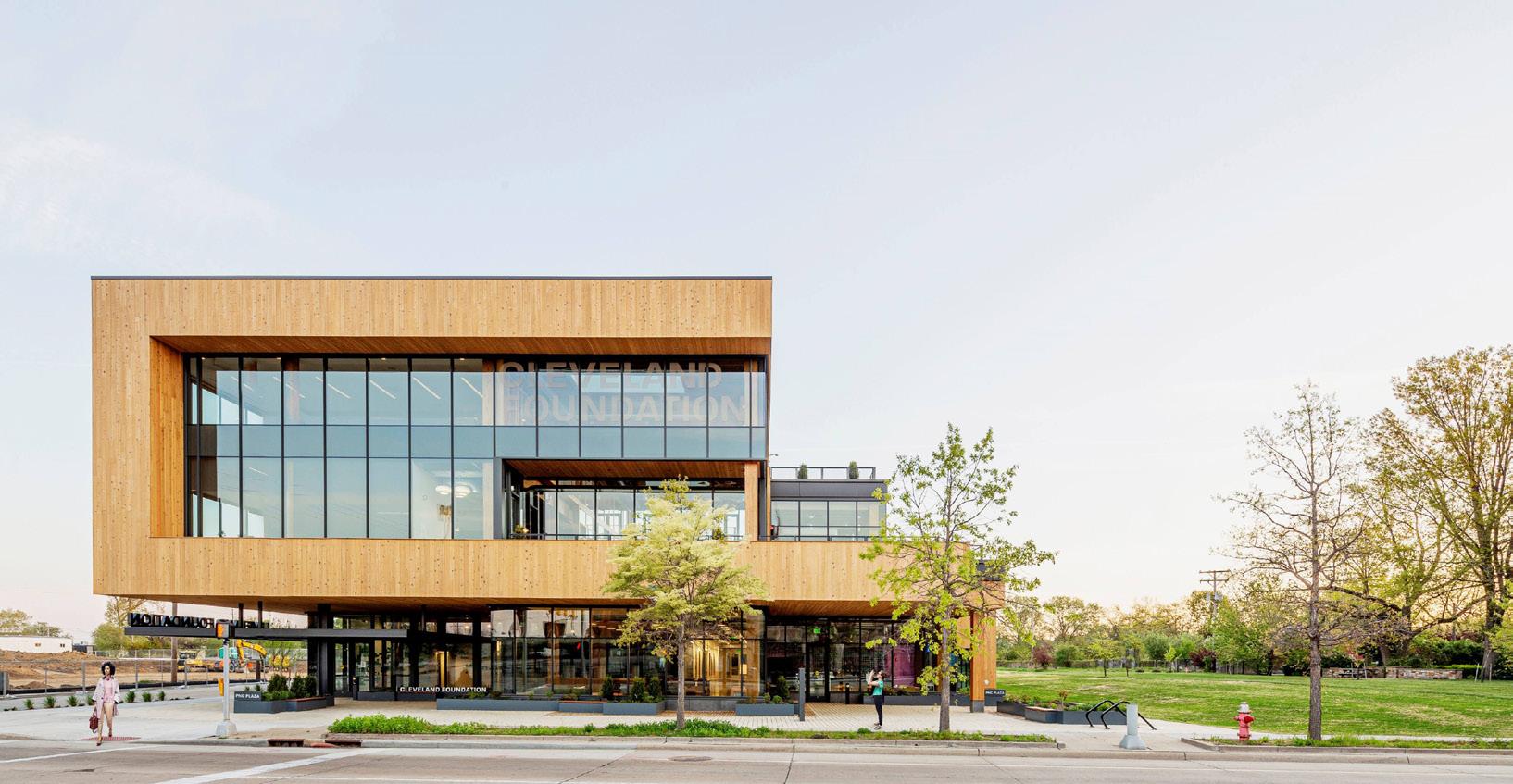
The 50,000-square-foot building is situated in the Hough District and serves as the operational hub for the Foundation, supporting workshops, meetings, community activities, and a café. The design expresses the Foundation’s mission to integrate with the community rather than exist as an isolated object. It bridges three urban conditions: boulevard, street, and park, while the adjacent Dunham Park landscape rises into terraces that continue inside, creating a grand, communal stair.
The Euclid Avenue façade is a cantilevered curtain wall symbolizing transparency and optimism. The industrial grid of the building, reflecting the surrounding neighborhood, is reinterpreted with warm wood finishes, large porous storefronts, and welcoming public entries. The design creates visual and functional connections to the park, street, and civic context, reinforcing engagement with the community.
Interior programmatic spaces prioritize flexibility, collaboration, and public interaction. Workshops, meeting rooms, and community activity areas encourage civic participation, while the central café fosters informal gathering. The building’s orientation, materiality, and landscape design demonstrate a careful balance between heritage, context, and contemporary institutional function. By merging industrial context, human-scale intervention, and landscape integration, the Cleveland Foundation Headquarters exemplifies civic architecture that fosters transparency, accessibility, and community engagement.
Cleveland, Ohio
Submitted by: S9 ARCHITECTURE
Photo Credit: © Peio Erroteta
HO n O r A w A r D
“At once bold and sensitively scaled, this project demonstrates a wonderful street presence and a deep commitment to sustainability and human-centric design.”
New York, New York
Submitted by: Susan T Rodriguez | Architecture • Design with Mitchell Giurgola Architects
Photo Credit: © EarthCam; © STR|A•D; © Richard Barnes
HO n O r A w A r D
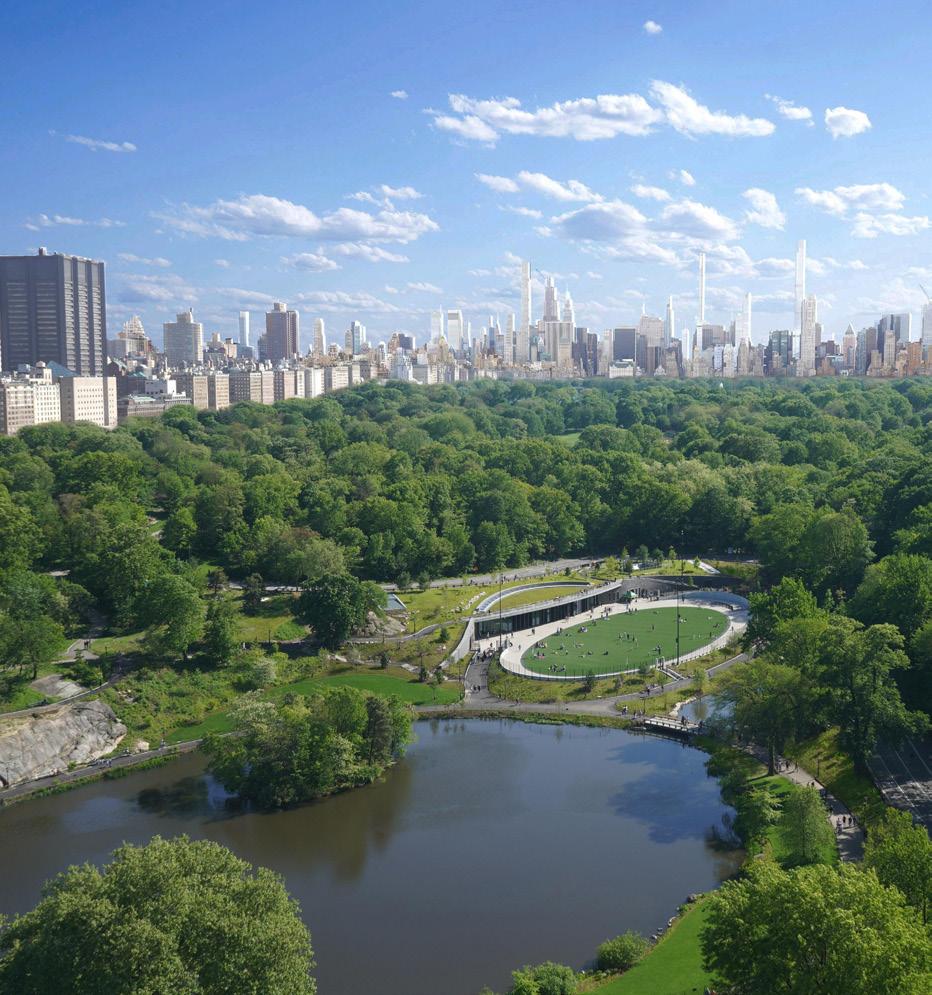
“A curvilinear skylight is expertly deployed to wash the rear wall in light, reinforcing a constant connection to the park. The result is a vital year-round community facility that truly belongs to its place.”
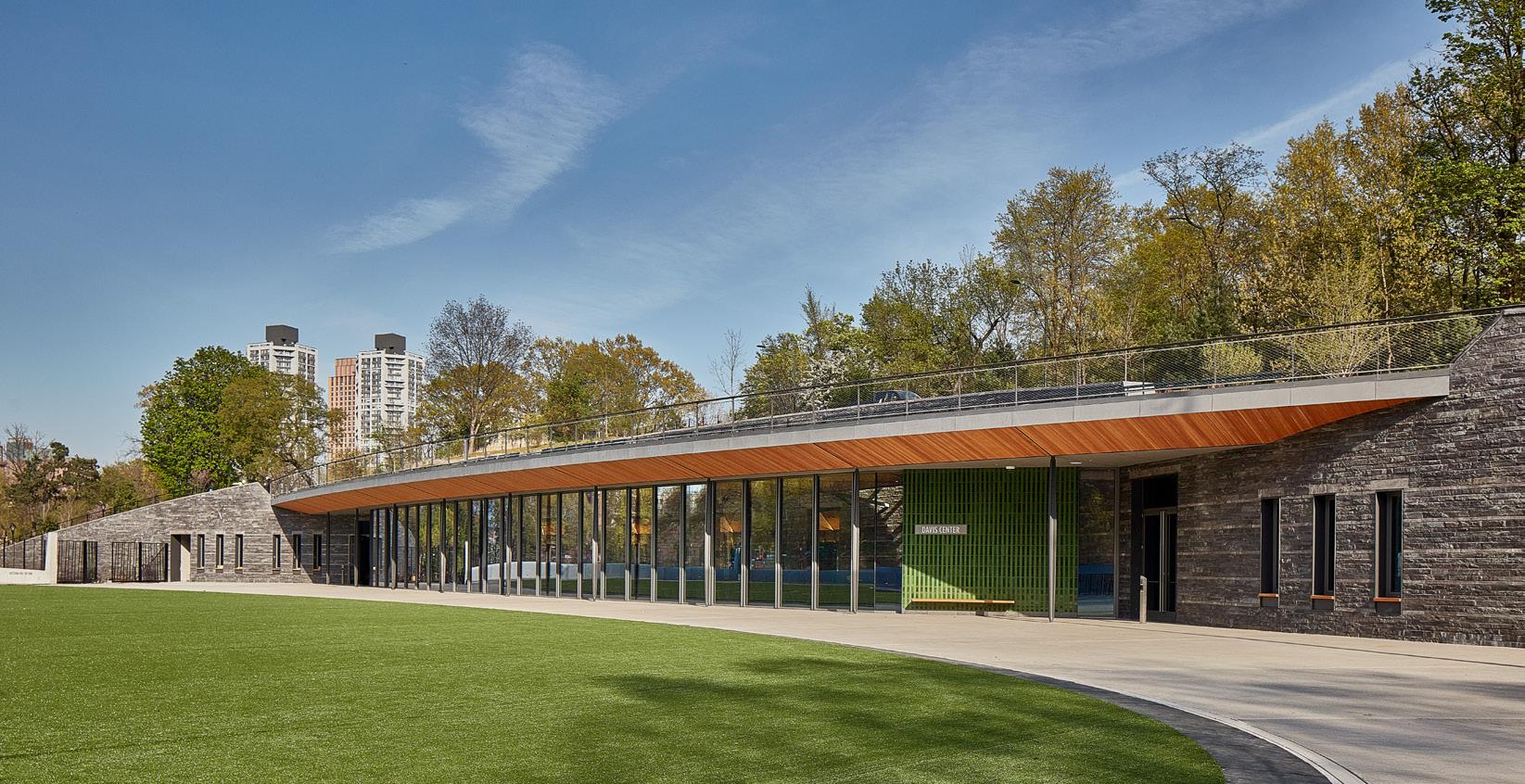
The Davis Center provides year-round recreational access within Central Park, reconnecting the community to the Park through an innovative design integrated into the natural topography. Curvilinear park paths guide the building’s placement, and a green roof blends the structure into the surrounding landscape, creating terraces, overlooks, and a monumental outdoor room that adapts seasonally from a pool to an ice rink and open lawn.
Large pivoting glass doors allow seamless indoor-outdoor connection, while daylight floods interior spaces through skylights and openings in the locally quarried stone walls. Locker rooms, skate rental facilities, concessions, and public restrooms are organized along a sweeping corridor, enhancing circulation and visitor experience. The project reestablishes historic pedestrian connections to the southern Park and incorporates a boardwalk along the Meer shoreline. Sustainable design strategies include passive heating and cooling, energy-efficient systems, water reclamation, birdsafe glazing, and use of local materials. LEED Gold certification is targeted, reflecting environmental stewardship. The Davis Center exemplifies the fusion of architecture, landscape, and community. It transforms access, recreation, and public engagement in Central Park while preserving ecological sensitivity and enhancing the historic park experience.
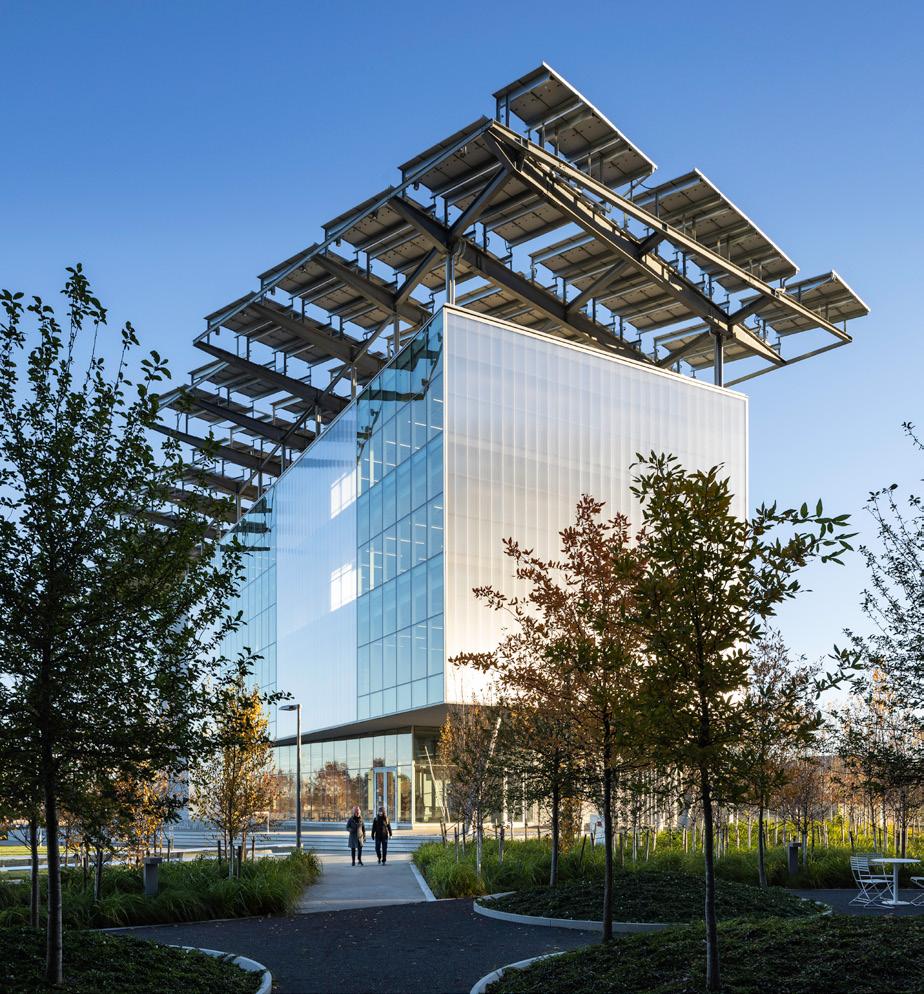
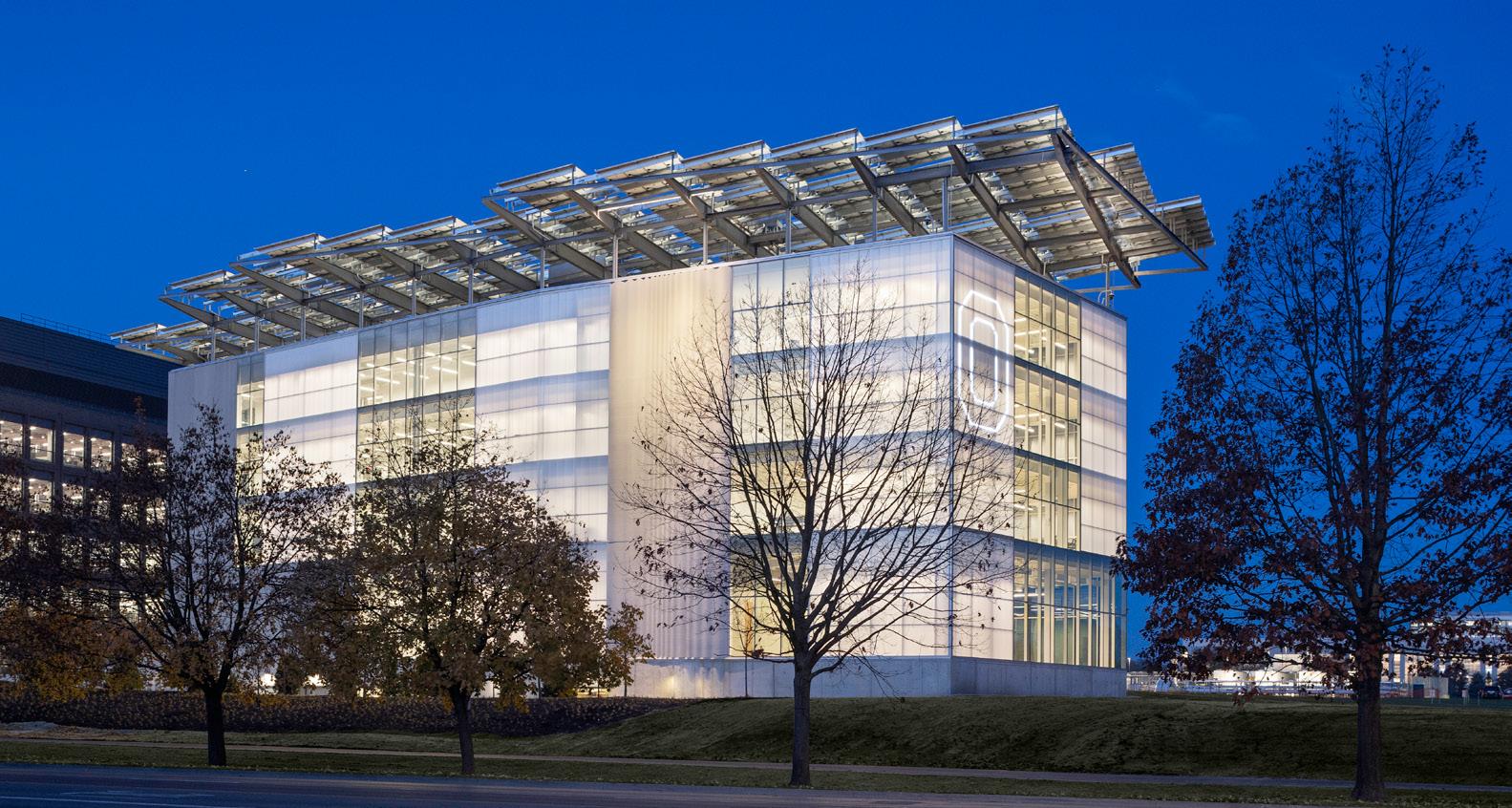
EAIC is a research and innovation hub for energy systems, renewable technologies, and green mobility. The facility promotes collaboration, well-being, and productivity while serving as a living laboratory for smart energy research. The building’s massing and site respond to solar setbacks, ensuring maximum efficiency for its expansive solar canopy and polycarbonate façade, which provides diffuse daylight and thermal performance.
Interior spaces are designed for health and comfort, optimizing air quality, daylighting, and access to outdoor areas. Precast concrete panels with varied textures create a dynamic exterior surface, while high-performance systems support net-zero energy and sustainable operation. Collaborative research zones, flexible offices, and demonstration spaces encourage innovation, with infrastructure technology showcased as part of ongoing experimentation.
EAIC represents a forward-looking model of institutional architecture: combining research-driven functionality, occupant well-being, and cutting-edge environmental performance. The building exemplifies Ohio State’s commitment to sustainable energy solutions and provides a tangible example of design supporting a carbon-free future.
Columbus, Ohio
Submitted by: Smith-Miller + Hawkinson
HO n O r A w A r D
“The sophisticated design is born from a rigorous, datadriven process, where analytical diagrams and sunlight studies directly inform the building’s massing and performance.”
Kennett Square, Pennsylvania
Submitted by: WEISS/MANFREDI Architecture/Landscape/Urbanism
Photo Credit: © Albert Vecerka/ESTO; © Ngoc Minh Ngo; © Sahar Coston-Hardy/Esto
T OF TH e bes T
“From its elegant moment frames to the folded, pleated, crystalline glass skin, every element is impeccably resolved, integrating passive sustainability with high art.” HO
n O r A w A r D
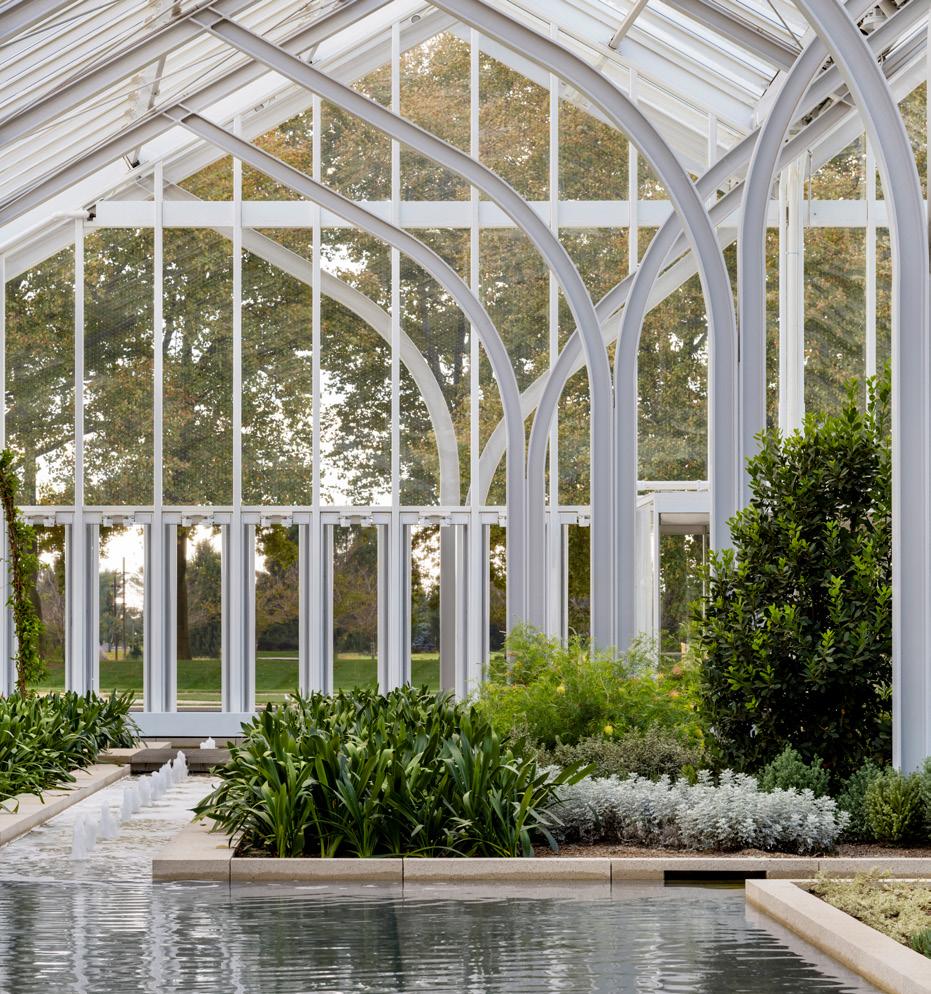
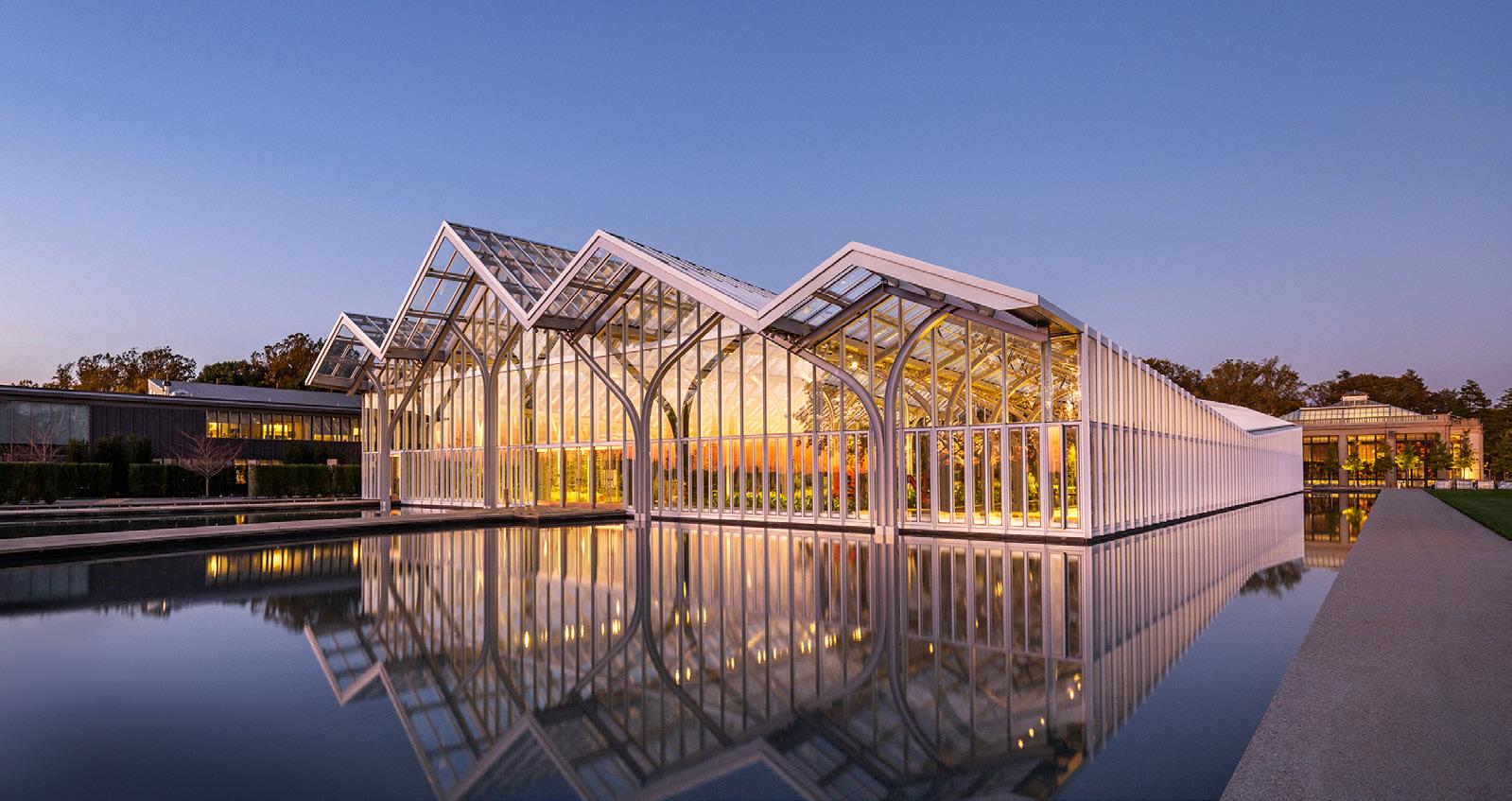
The 32,000-square-foot West Conservatory at Longwood Gardens sits atop a dramatic ridge, hovering over a reflecting pool. Its pleated, undulating glass roof references both the surrounding landscape and the historic Lord & Burnham greenhouses it replaces, creating a modern identity while preserving legacy. Inside, a Mediterranean-style garden offers diverse horticultural experiences, designed to thrive in extreme conditions and anticipate climate change.
The conservatory forms a cinematic sequence of spaces, transitioning from intimate interior garden rooms to expansive terraces with panoramic views of Brandywine Valley. Passive systems include operable windows, automated shading, a thermal blanket, earth ducts, and a geothermal ground-source heat pump. Stormwater is collected and reused throughout the complex.
Curved parametric moment-frames support the roof and structure while foregrounding sustainability and environmental control. Visitors move through an immersive experience, engaging with plant collections, water features, and innovative design strategies. The conservatory integrates historic horticultural legacy with contemporary design, education, and public engagement.
The West Conservatory at Longwood Gardens exemplifies the intersection of architecture, landscape, and ecology, delivering a sustainable, visually compelling, and educational environment that inspires future generations of horticulturalists, designers, and families alike.
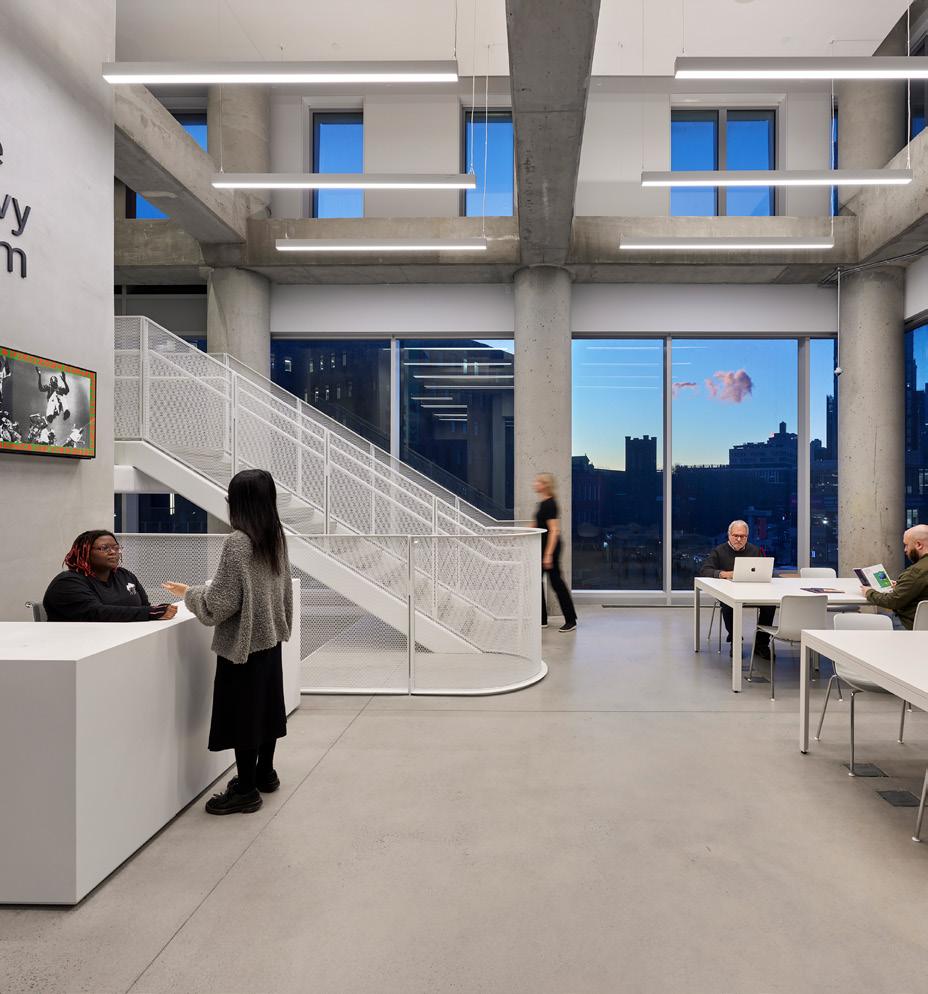
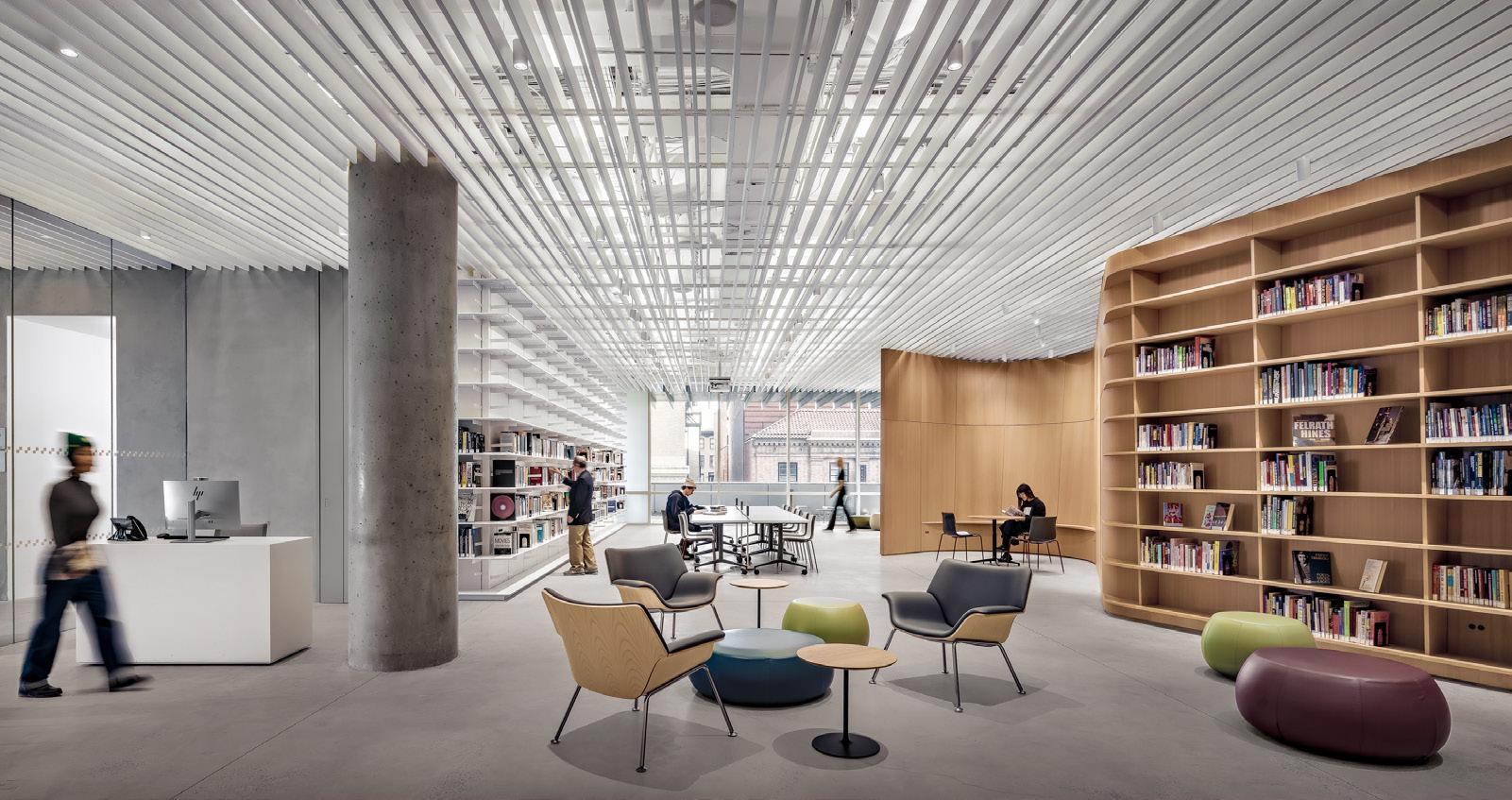
Located at a pivotal intersection in Downtown Brooklyn, the 65,000-squarefoot L10 Arts and Cultural Center serves as a dynamic hub for the Brooklyn Academy of Music, Brooklyn Public Library, Museum of Contemporary African Diasporan Arts, and 651 ARTS. Dedicated to cultural expression and social equity, the center elevates underrepresented voices while providing a platform for creative collaboration.
Occupying floors two through four of a mixed-use development, the building engages the urban context with a transparent façade that visually weaves together multiple program spaces. The design elevates the streetscape, supporting film screenings, dance performances, art installations, and community gatherings while offering direct public access to the cultural landscape within.
Inside, the café serves as a civic gateway, featuring a curvilinear wood wall that replaces conventional barriers, expanding exhibition space and display shelving. This dynamic element guides visitors from bright white walls to warm wood tones, creating spatial continuity while accommodating diverse activities. The adaptable gallery accommodates multimedia exhibitions, offering immersive experiences, while the wood-lined library perimeter integrates books, flexible seating, and display areas into a “theater in the round” that encourages engagement. The wood ribbon continues through adjacent performance spaces, connecting ticketing, concessions, and venues. A double-height glass-enclosed reading room provides views of the plaza and surrounding neighborhood, enhancing the connection to place.
On the uppermost floor, a flexible black box theater with advanced technical features supports diverse programming against the city skyline. The interiors of L10 Arts and Cultural Center serve as a catalyst for cultural dialogue, creative expression, and community vitality, exemplifying how architecture can nurture inclusion, engagement, and artistic innovation.
Brooklyn, New York
Submitted by: Andrea Steele Architecture (ASA)
Photo Credit: © Alan Karchmer/OTTO; © Alexander Severin
“A curvilinear wood wall provides warmth against cooler finishes and artfully defines programmatic spaces within a building that has a strong sectional quality.”
New York, New York
Submitted by: DXA studio
M eri T A w A r
D
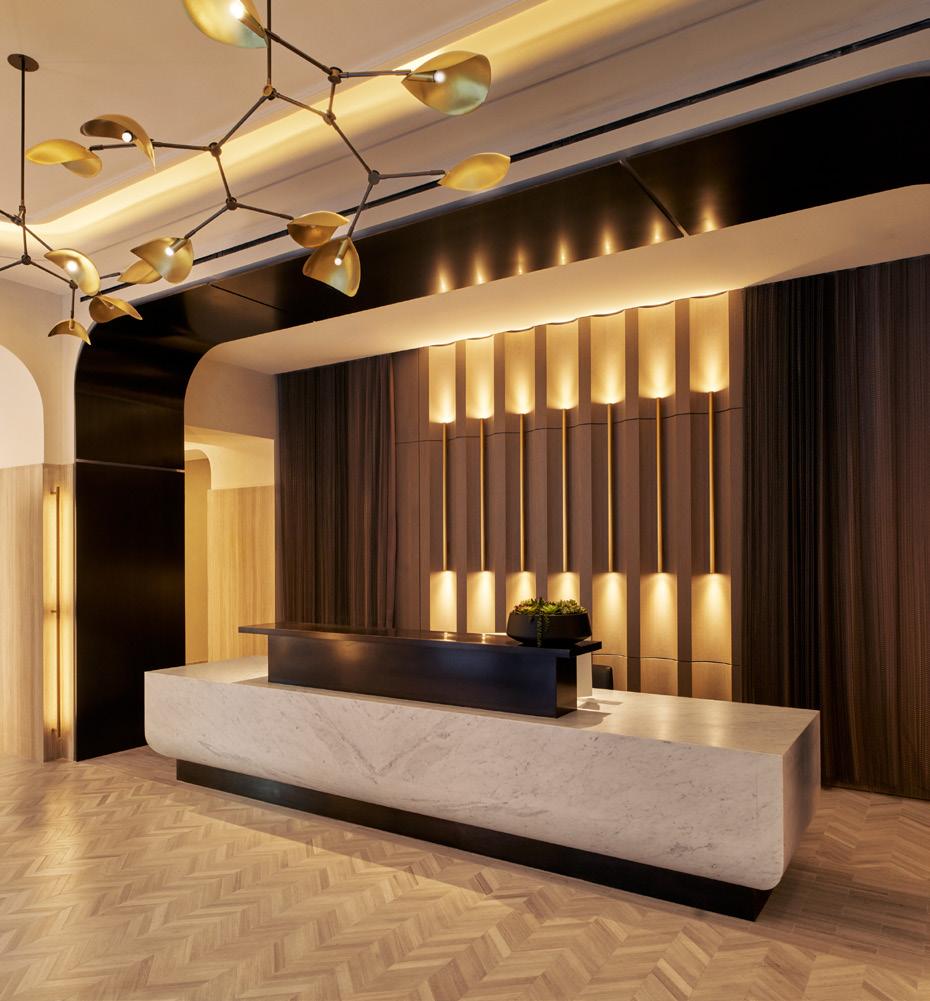
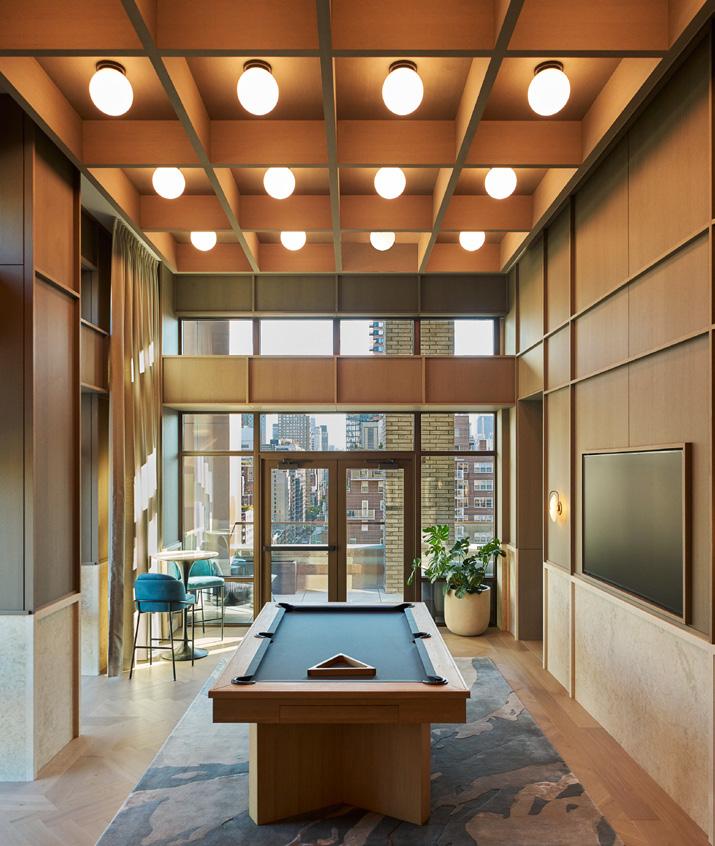
“This project creates an incredible range of experiences masterfully unified by a consistent and elegant palette of materials. The result is a rich, inviting interior that is elegantly executed from the grandest gesture to the smallest detail.”
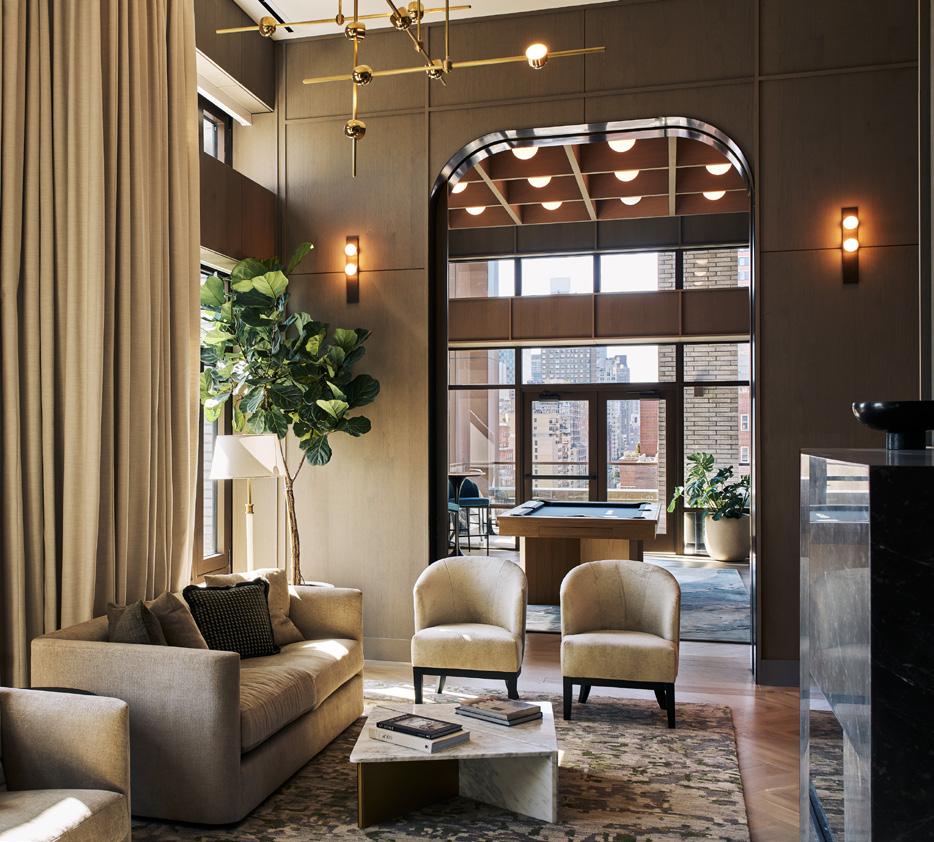
Maison 78 is a 34-story, high-end residential development with approximately 150 rental units. The design encompasses kitchens, baths, and 10,000 square feet of amenities, reinterpreting the elegance of historic Upper East Side townhouses in a contemporary highrise context. Large amenity spaces are subdivided into a series of parlor-like rooms, balancing public and private atmospheres and creating welcoming, flexible environments for residents.
Public interiors feature a palette of bronze, stone, oak, and bronzed glass, while apartment interiors use lighter millwork, stone, and tile accented by black fixtures. Kitchens feature custom oak cabinetry, and bathrooms include custom vanities and medicine cabinets reflecting curves and arched detailing throughout the building.
A below-grade amenity floor includes a gym and yoga room finished in oak and bronzed glass. The children’s playroom, inspired by Central Park, uses playful hues of blue, green, and orange, while a pet spa and leasing office provide additional resident services.
On the 16th floor, an amenity kitchen and dining room, billiards room, library, great room, and co-working lounge with private work pods and terraces offer spaces for social connection and events. Stone wainscot, oak-paneled walls, bronze finishes, and reeded glass complement 360-degree views of the city. The 34th floor hosts a small lounge, bar, and outdoor cooking terrace, ideal for sunset gatherings.
Maison 78 blends townhouse-inspired refinement with modern high-rise functionality, offering residents a sophisticated, comfortable, and engaging environment that encourages community, wellness, and relaxation.
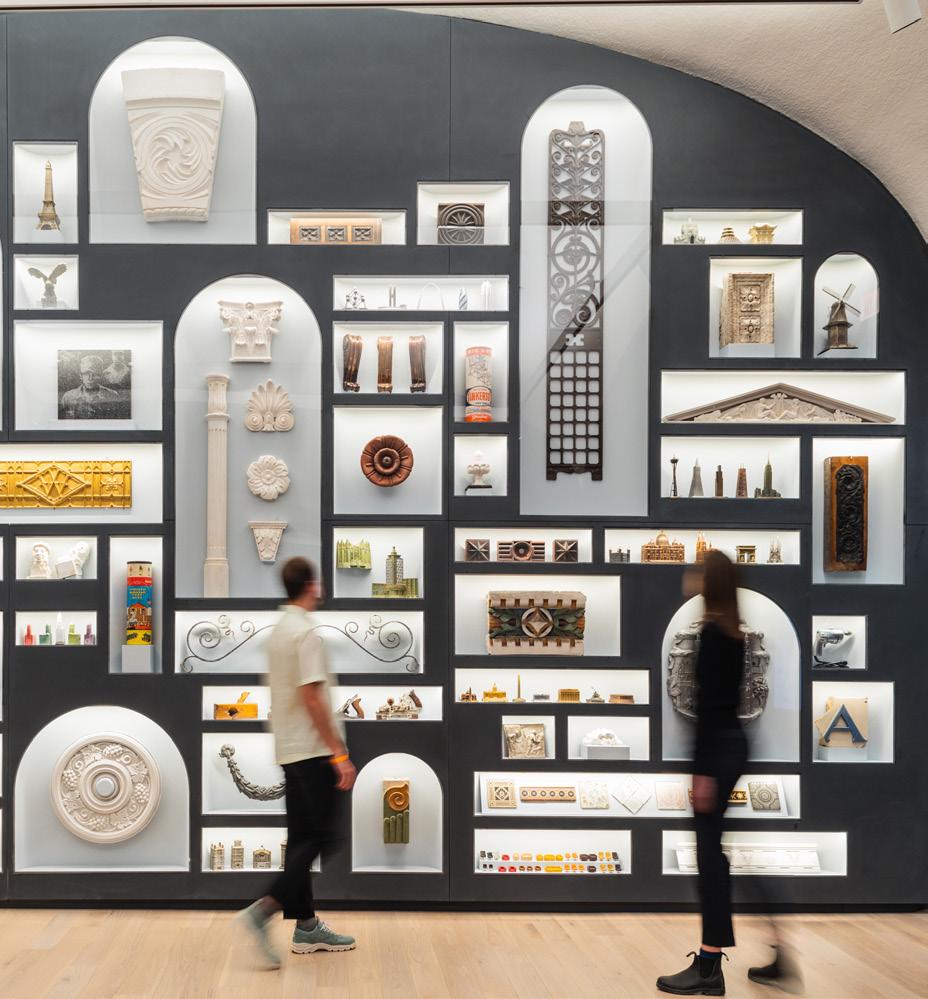
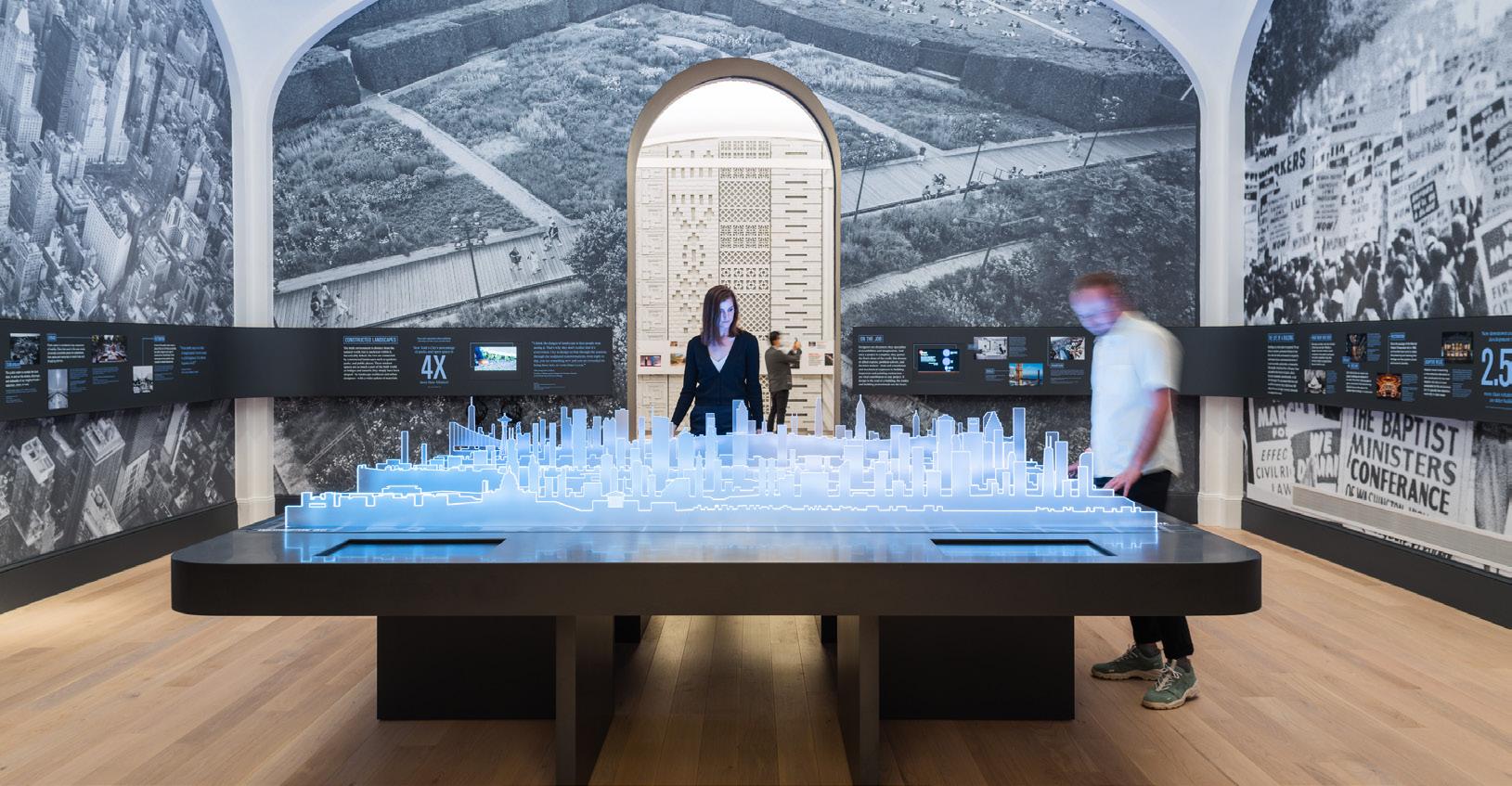
The Orientation Center and Welcome Galleries provides wayfinding orientation, ticketing, membership information, and community education, including interactive learning experiences and exhibits drawn from the Museum’s archive. More than functional, it reflects the National Building Museum’s mission to highlight the building industry’s role in the planet’s ecology and the impact of growing development. Creating this experience required a collaborative design process to translate the narrative into a bold, engaging, and inclusive physical environment. Accessibility features include neuro-sensitive considerations, audio components, and tactile elements, ensuring the space is welcoming for all visitors.
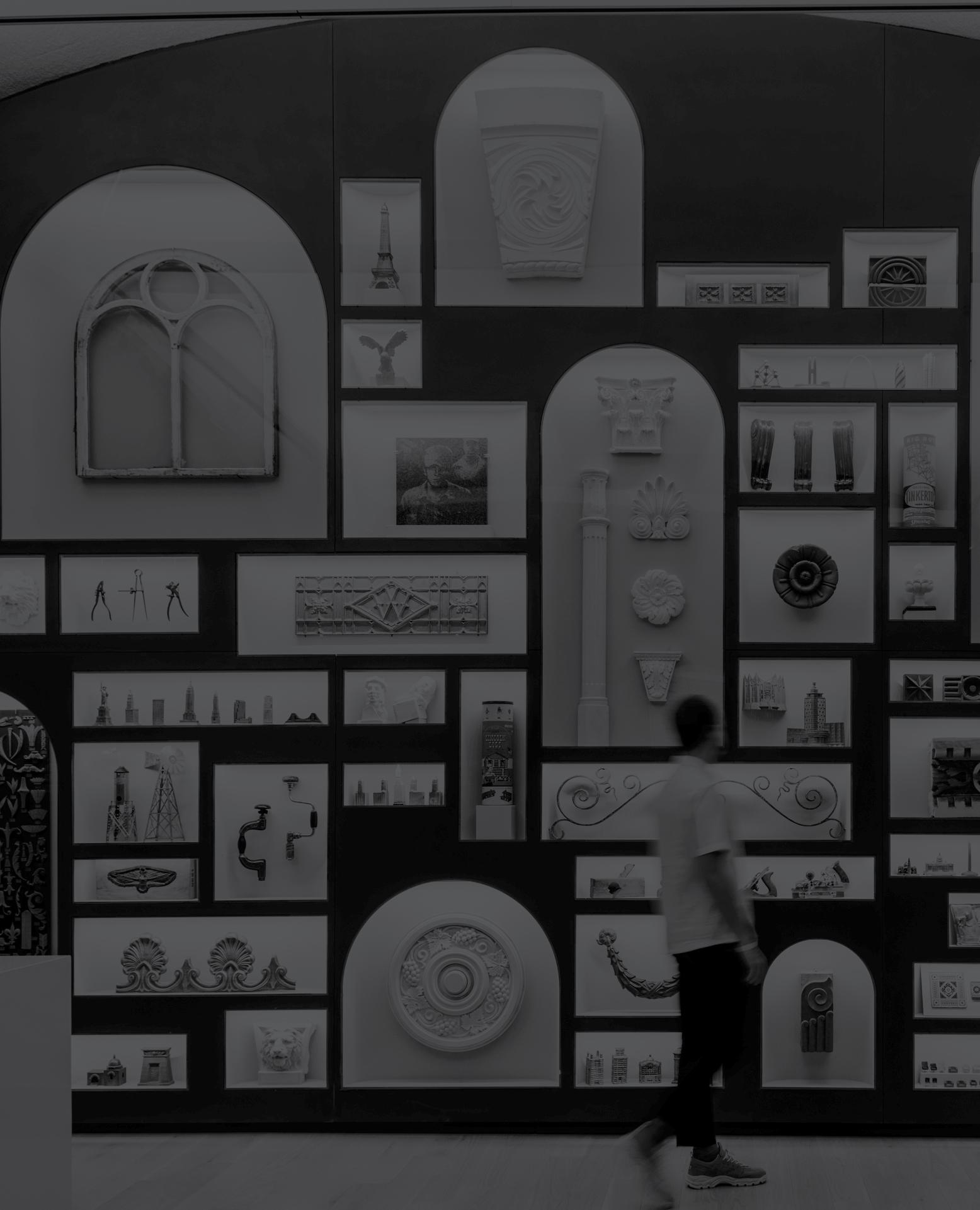
As the first point of engagement for visitors entering the National Building Museum’s vast building, the galleries serve as touchpoints for community interaction. Gallery 1 displays a monumental collection of toys, scale models, architectural drawings, and fragments of façades. The casework, inspired by the Museum’s façade fenestration, incorporates “shadow boxes” with lighting and flush enclosures. Gallery 2 focuses on urban issues, resiliency, and housing, using bold murals and media-driven displays to illustrate the construction industry’s impact on global health. Gallery 3 features full-size building façades in a textured, visceral context, using Zolotone finishes to highlight scale and pattern.
Visitors can hear architects discuss how place, cultural context, use, and site parameters influence their work, while a central table allows hands-on interaction with cutting-edge materials, many with embodied energy, recycled content, or sustainable properties. Together, the Orientation Center and Welcome Galleries create an educational, inclusive experience, inviting visitors to explore the built environment, understand its global impact, and engage with the future of architecture and design.
Washington, DC
Submitted by: Studio Joseph
HO n O r A w A r D
“This well-organized design masterfully uses enfilade, and each gallery offers an intense and beautifully curated experience of light, material, technology, and artifacts, resulting in a creative and powerful welcome.”
Kyabirwa, Uganda
Submitted by: GKG
Photo Credit: © GKG
C i TAT i O n
“This project enhances the campus experience by deeply respecting local cultural standards, which it does with dignity and grace, and with the most modest of resources.”
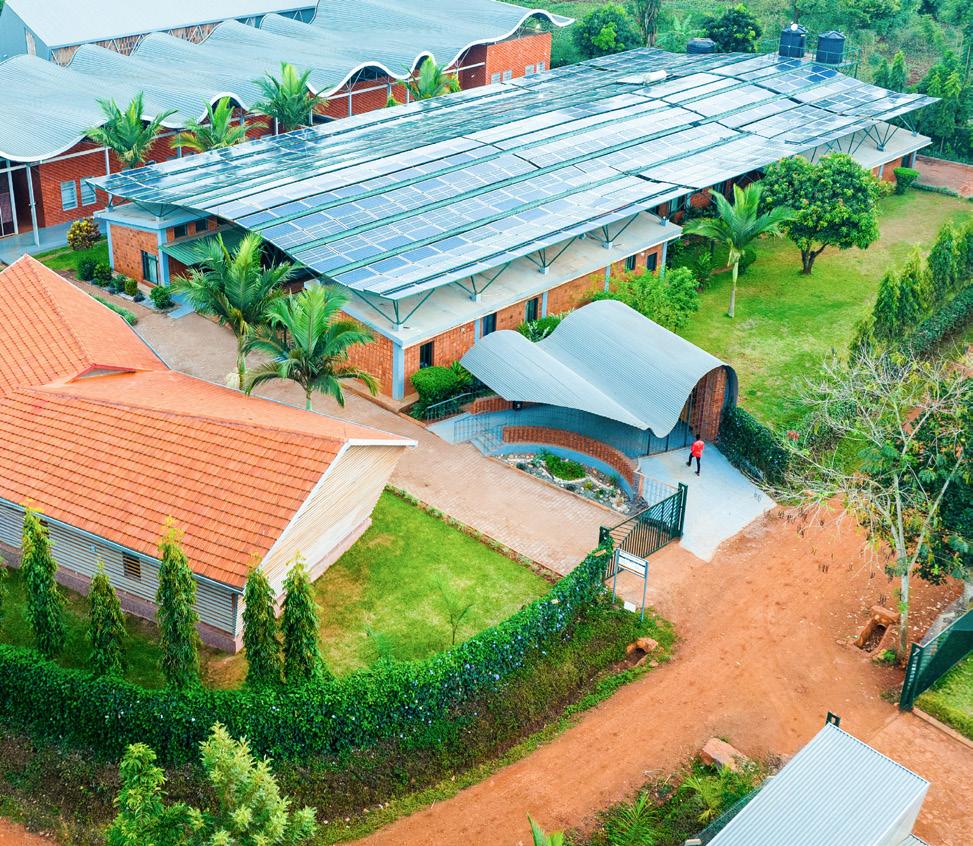
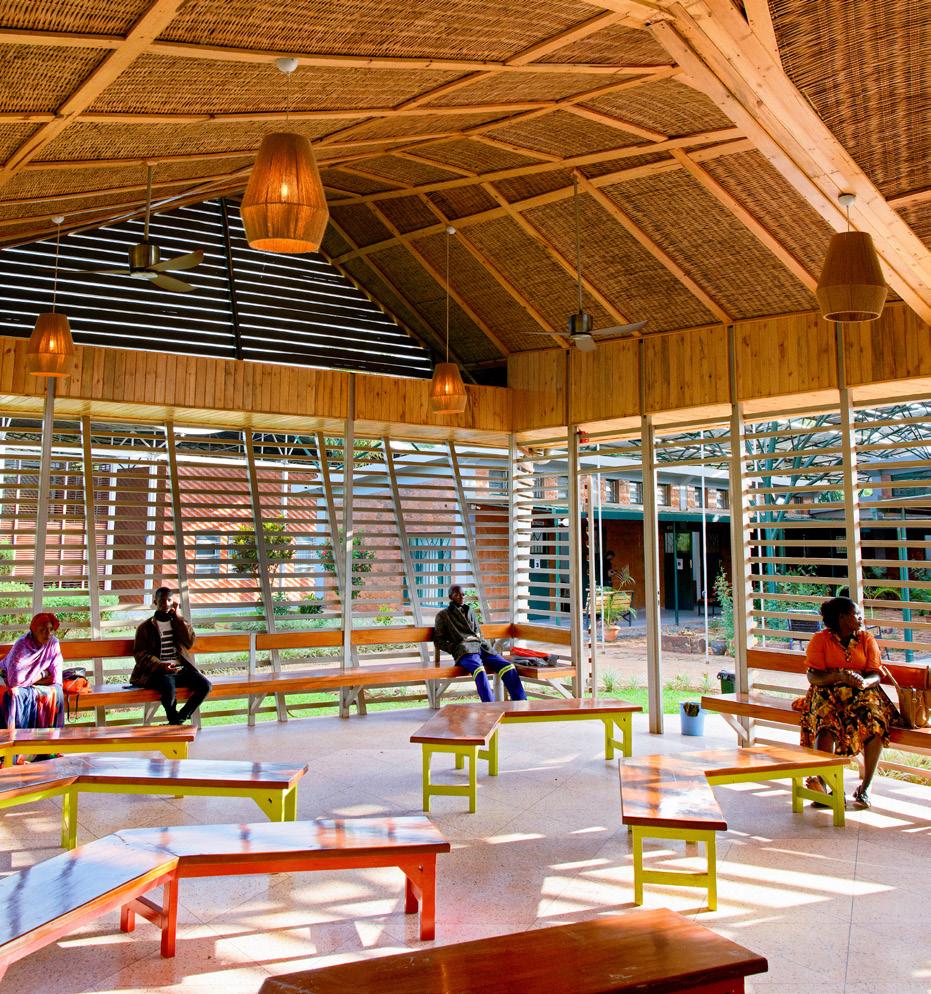
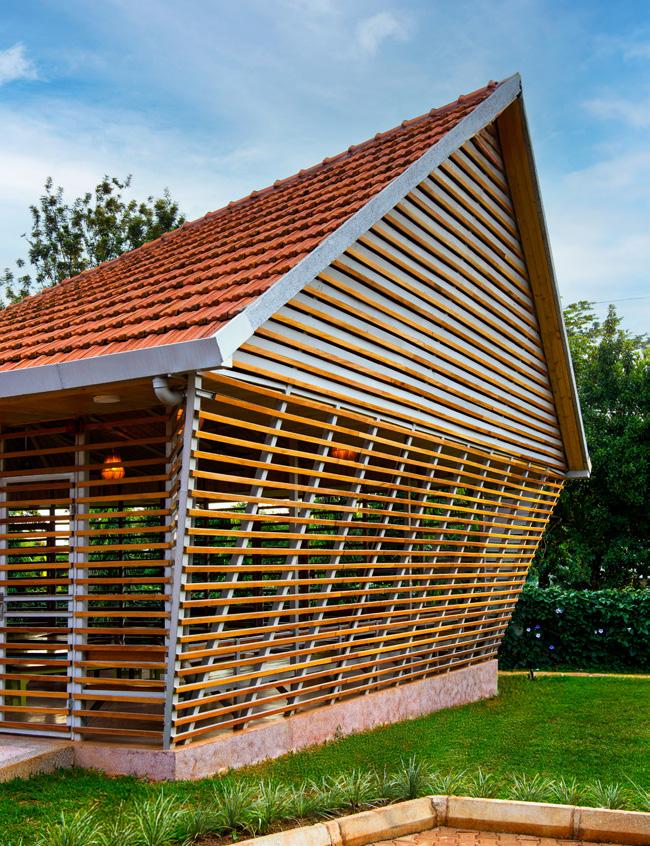
In Ugandan culture, family and community support is essential when individuals face health challenges. It is customary for patients arriving for surgery to be accompanied by several family members and well-wishers. The newly constructed Pavilion provides a welcoming, open, and shaded space for companions to wait comfortably, often for extended periods.
Strategically located near the main entrance with a direct line of sight to medical testing and pre-op rooms, the Pavilion’s layout complements patient flow and integrates harmoniously with the existing campus. Its sloped Mangalore tile roof, common in the region, minimizes solar heat gain and ensures effective climate control.
The Pavilion includes a check-in desk, cashier counter, and two triage rooms. Patients are registered and triaged here, and payments are processed if needed. The space also supports large health education gatherings and staff meetings, emphasizing its multifunctional role within the campus. Sustainable features are embedded throughout the design. Ridge vents in the roof expel hot air, while the underside is lined with locally crafted reed mats for insulation and protection. Louvers surrounding the seating area facilitate cross ventilation and provide privacy. Materials such as CMU blocks, bamboo, reeds, stock steel, and locally manufactured Mangalore tiles reflect environmentally conscious, culturally attuned design.
By blending culturally respectful design, sustainable strategies, and thoughtful functionality, the Kyabirwa, Surgical Center Pavilion creates a welcoming and supportive environment for patients, families, and the broader community, demonstrating how architecture can foster comfort, dignity, and resilience in a healthcare setting.
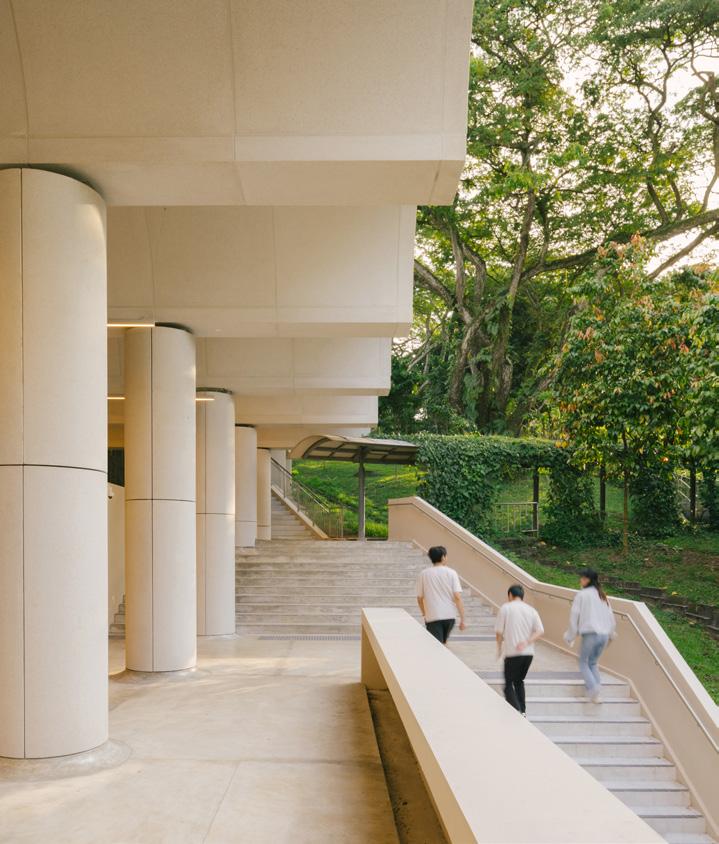
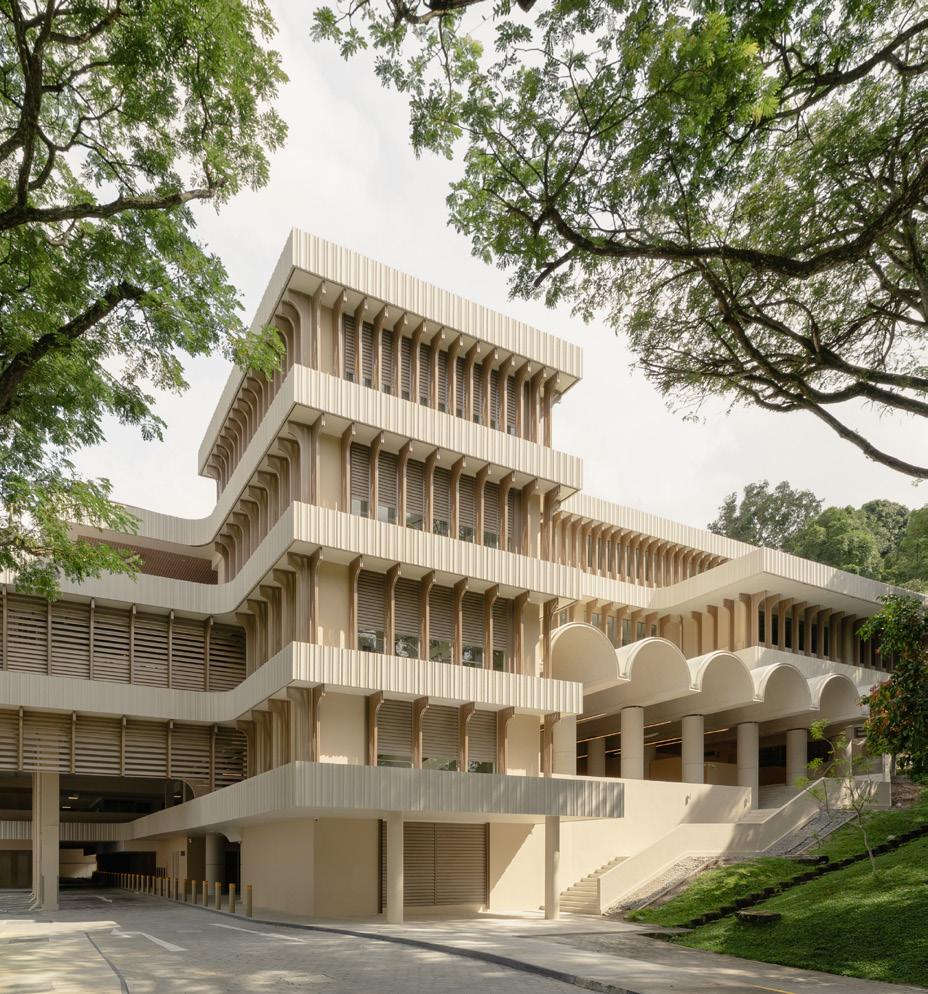
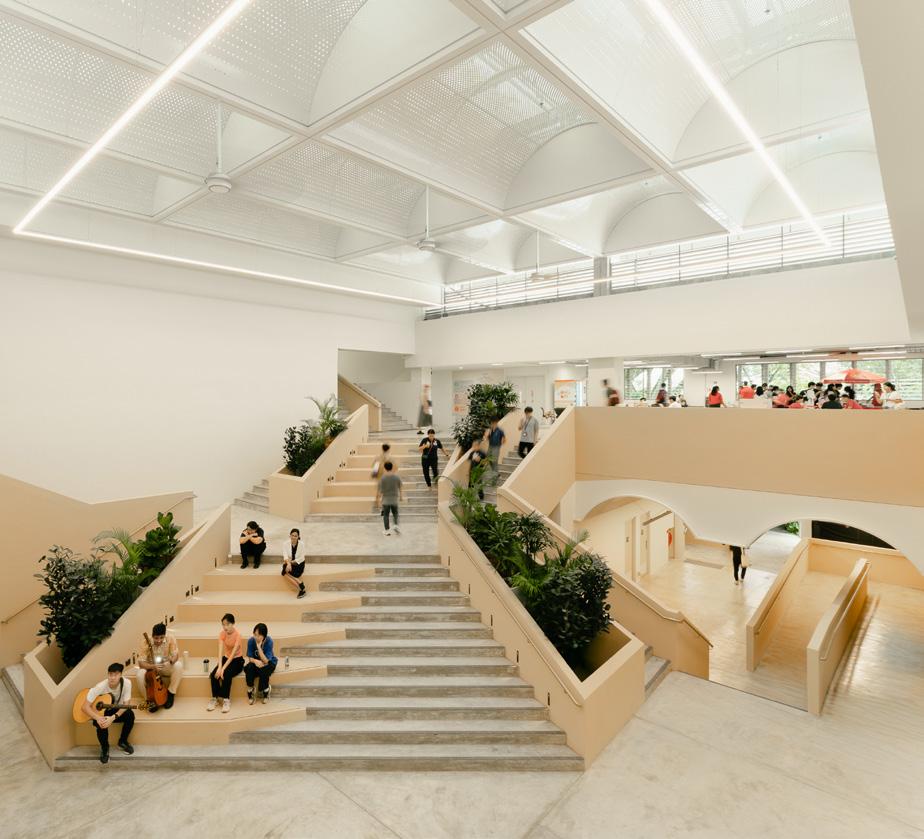
The Equatorial Student Commons adaptively reuses and redesigns a beloved 1970s campus landmark into a vibrant social, climatic, and decarbonized center. Its terraced form steps naturally with Kent Ridge’s jungle slope, while six iconic vaults anchor student life, preserving alumni memory and civic symbolism. The redesign amplifies these qualities, positioning the building as open, accessible, and distinctly tropical.
Sustainability is central to the project’s ethos. Innovative controls, a large photovoltaic array, and a hybrid comfort strategy deliver net-zero energy, making it the first conserved heritage building on the NUS campus to achieve this target. Retaining and upgrading the concrete frame reduces embodied carbon to one-fifth of a comparable new Green Mark building in Singapore.
Six original vaults are extended into passive “climatic straws” that channel hot air into a naturally ventilated atrium, an architectural lung formed by a porous clerestory and perforated vaulted sunscreen. Stack effect, high-volume fans, and thermal buoyancy orchestrate dynamic air exchange across circulation and study spaces, connecting interior life to the surrounding jungle.
Outside, precast fluted panels and perforated vertical fins unify the façade, enhancing shade, privacy, and visual continuity with Kent Ridge topography. The Equatorial Student Commons redefines adaptive reuse, providing a resilient civic interior, net-zero energy performance, and immersive experiences, offering students a socially, environmentally, and climatically responsive heart for the campus.
Singapore
Submitted by: Erik L’Heureux FAIA, with Campus Design Innovations Group, NUS
HO n O r A w A r D
“A transformative act of adaptive reuse, this project’s ingenious use of the building’s six original vaults extending into passive ‘climatic straws’ remakes a dated structure into a vital, human-scaled center for student life.”
Jamaica, New York
Submitted by: Perkins Eastman
Credit: Andrew Rugge © Perkins Eastman
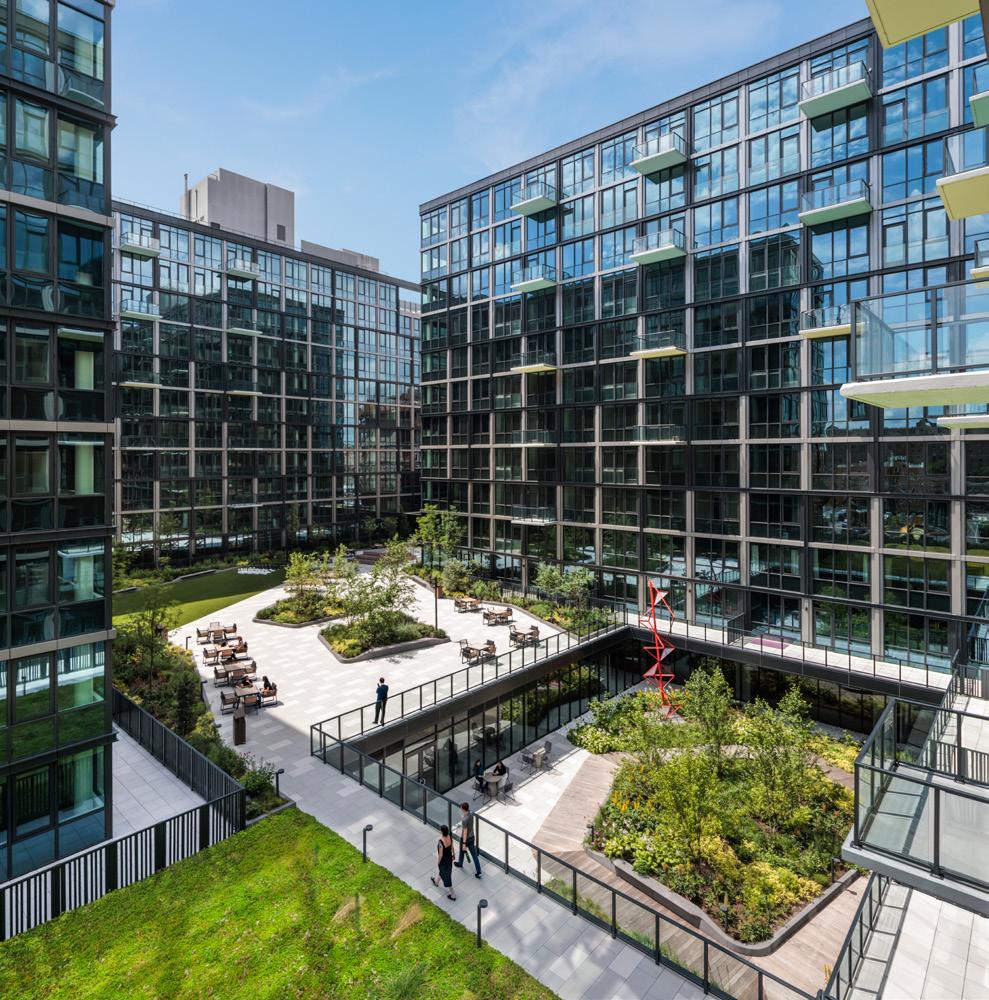
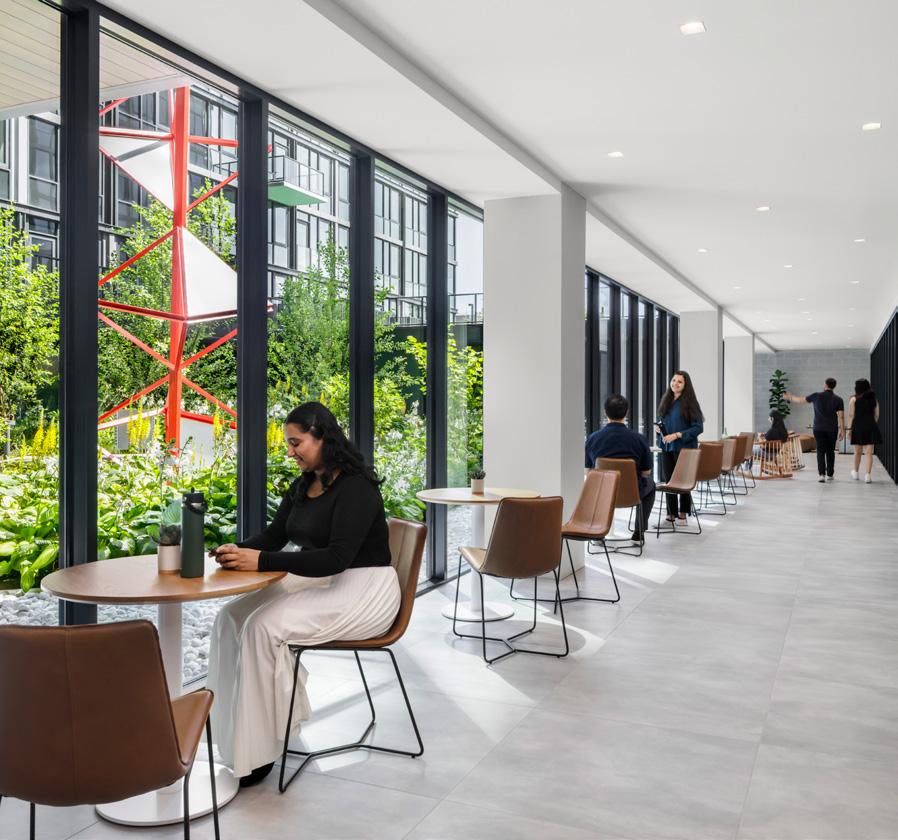
“By organizing the program into two separate l-shaped volumes, the design creates a protected interior courtyard that acts as a social and visual center, bringing daylight deep into the site and into the interior spaces.”
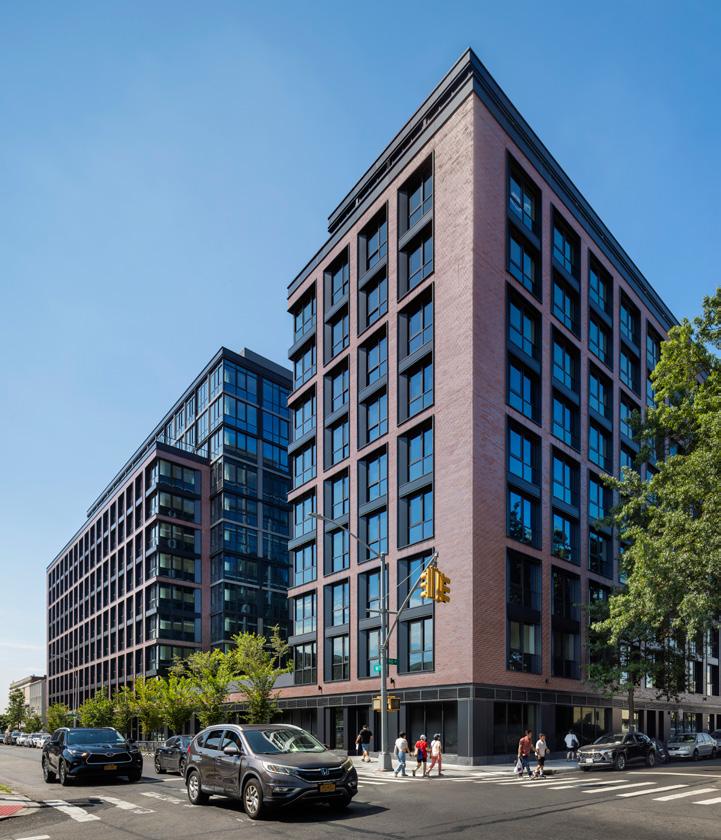
Ruby Square is a transformative 624,000-square-foot mixed-use development in the heart of Jamaica, Queens, just blocks from the major transit hub at Jamaica Station. The project delivers 614 residential units, including 185 affordable units, along with 25,000 square feet of retail space, 5,000 square feet of community space, and over 50,000 square feet of resident amenities. The development provides critical workforce housing while contributing to economic vitality and social cohesion. Amenities include rooftop lounges and terraces, co-working spaces, a stateof-the-art fitness center, an indoor basketball court with viewing area, children’s playroom, pet care facilities, and a turfed dog run. A 24/7 attended lobby and nearly one acre of outdoor space enhance resident wellness and community engagement.
Ruby Square also revitalizes the 168th Street Corridor. Reintroducing the demapped 91st Street as a pedestrian-oriented thoroughfare, the project encourages public activity, featuring programming curated by the Jamaica Center for Arts and Learning. The three slender towers, spaced at least 60 feet apart, reduce visual impact and respect surrounding neighborhoods.
Sustainable practices, high-quality design, and mixed-use programming enhance affordability, activate retail spaces, and energize the pedestrian experience. Resident-focused amenities, public gathering spaces, and cultural programming foster a sense of community while supporting the future of Downtown Jamaica.
Ruby Square exemplifies forwardlooking urban housing, combining density, design sensitivity, and a deep commitment to community-focused placemaking. It demonstrates how thoughtful architecture can create vibrant, inclusive, and sustainable neighborhoods that meet both social and environmental needs.
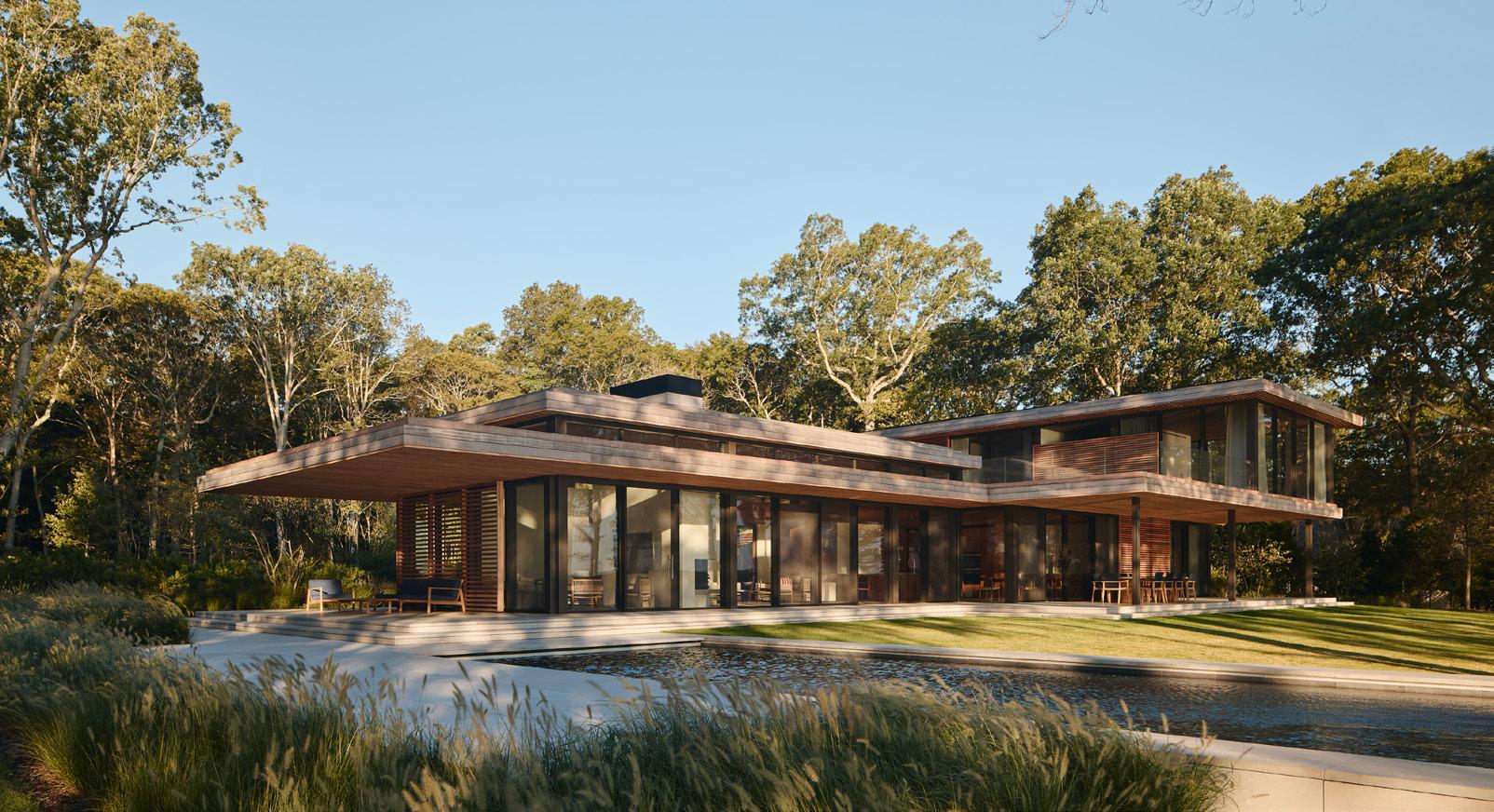
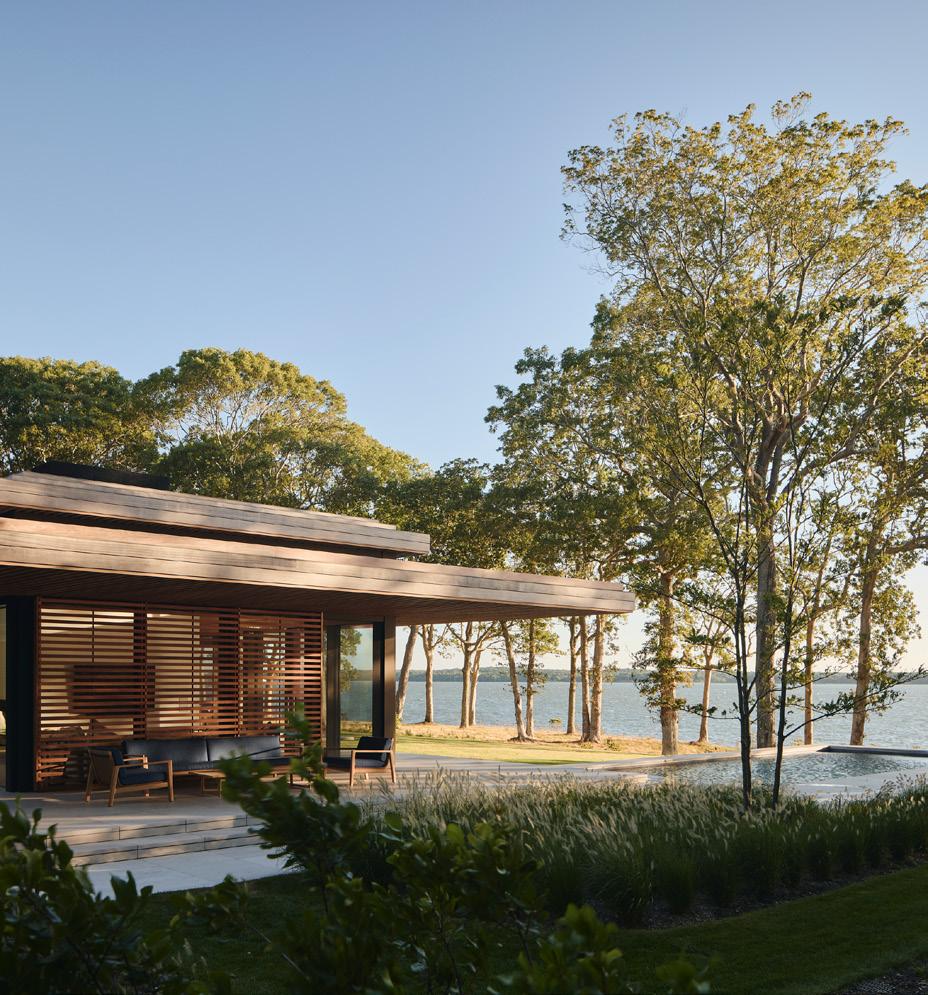
Designed for a multi-generational family, Forest Edge sits on a wooded slope overlooking an expansive bay off Long Island Sound, with views of a protected shoreline. The design emphasizes both enduring structure and intimate family connection. Composed with calm rationality, the geometry steps down in height toward the water, creating a form that lightens gradually. Living spaces open to embrace the view and daylight, while private bedrooms and wings form a sheltered arrival court.
Materials and massing are carefully considered. A combination of wood, stone, and glass balances warmth and transparency, connecting interior life to the surrounding landscape. Terraces, decks, and outdoor rooms extend living spaces into nature, emphasizing continuity between architecture and environment. Circulation is choreographed to support family interactions, with spaces flowing intuitively between communal and private areas.
The home balances privacy and openness. Angled walls, stepped volumes, and carefully aligned sightlines create visual connections while preserving seclusion. Subtle detailing, including custom millwork, built-ins, and integrated lighting, ensures a refined and timeless interior. The architecture encourages both family gatherings and quiet contemplation, cultivating a lasting bond with the natural setting.
Forest Edge demonstrates the power of considered design to enhance daily life. It is a home that harmonizes structure and landscape, intimacy and expansiveness, creating a modern yet enduring residence that respects both the site and the rhythms of family life.
Sag Harbor, New York
Submitted by: Stelle Lomont Rouhani Architects
Photo Credit: © Glen Allsop
“The design is beautifully integrated into the landscape and uses photovoltaics and a geothermal cooling system. The result is a home that is timeless, comfortable, and responsibly built.”
Water Mill, New York
Submitted by: BMA Architects
Photo Credit: © Michael Stavaridis
HO n O r A w A r D
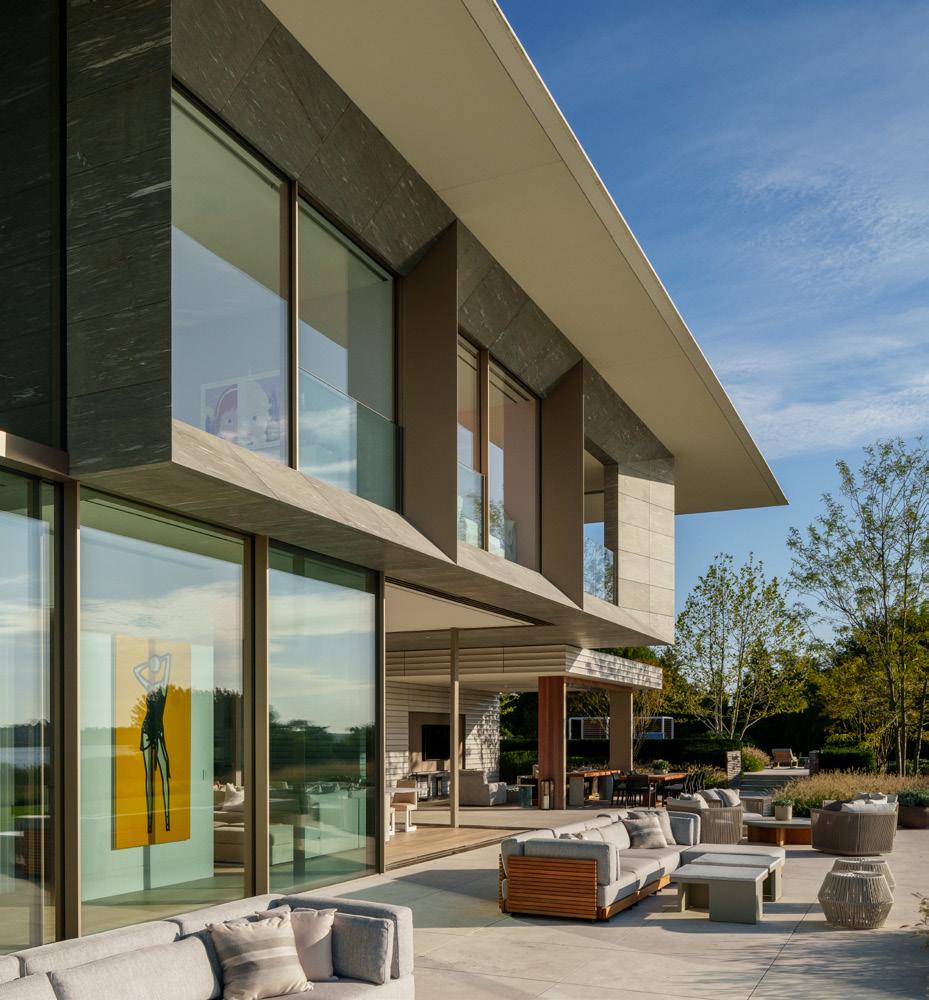
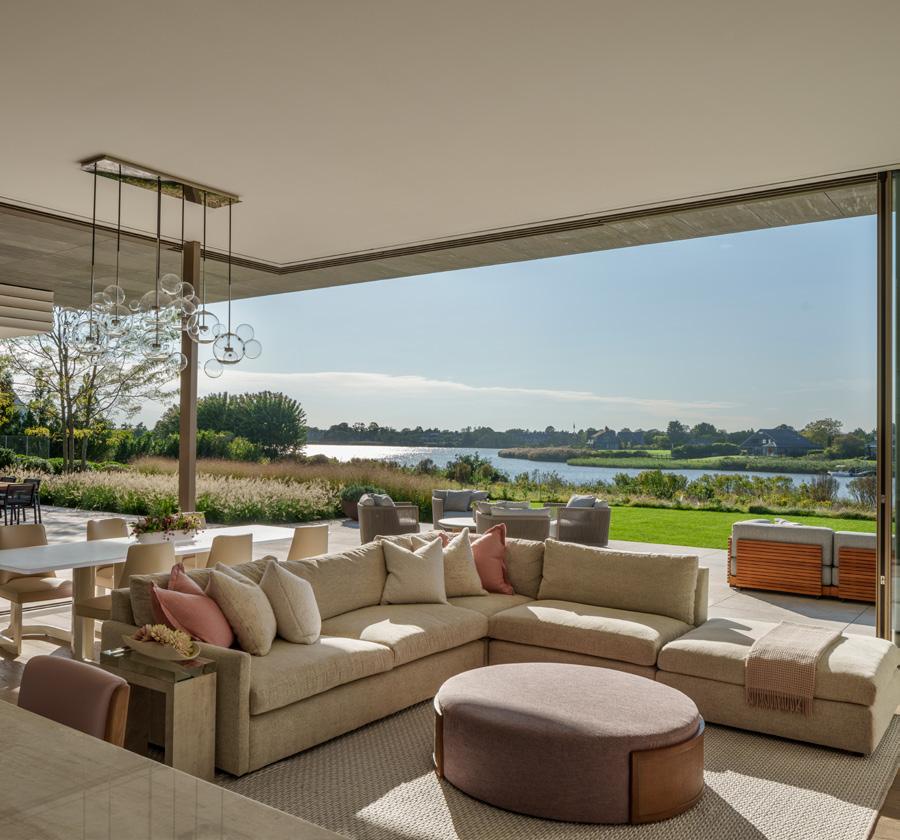
“With a profound connection between the interior spaces, the immediate exterior gardens, and the distant landscape, all rooms offer a well-choreographed exterior view and experience delivered through crisp and beautifully resolved details.”
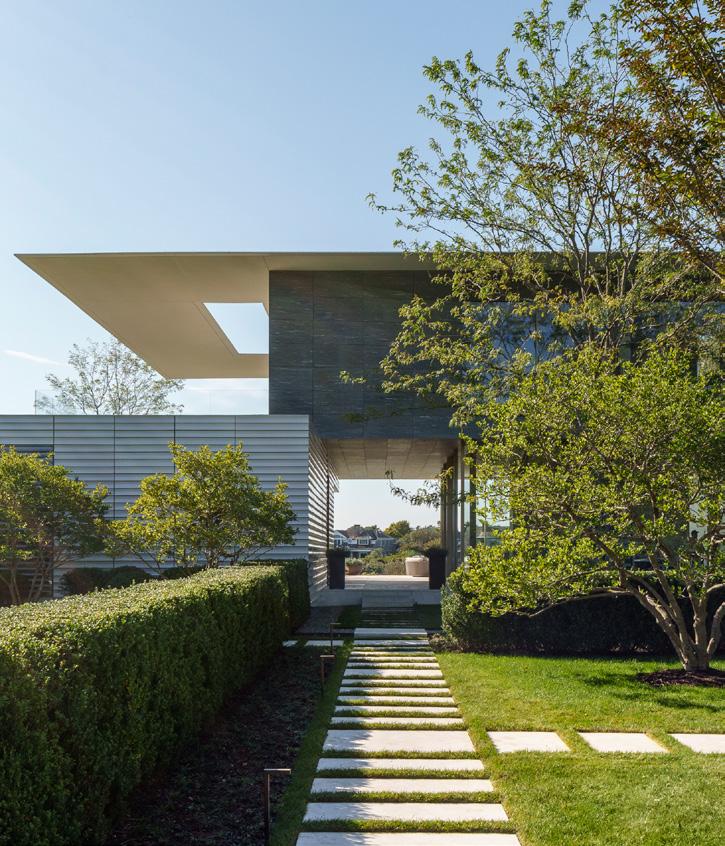
Nestled within a serene landscape, Calf Creek redefines contemporary elegance through a harmonious blend of grounded materials and light-filled spaces. Terracotta-clad pavilions anchor the home, framing intimate areas for family life. Concave-formed terracotta fosters a tactile connection to the land, imparting a timeless quality and sense of belonging.
At the core, a transparent glass enclosure bridges two pavilions, creating an expansive gathering space illuminated by natural light. A breezeway runs between this glass volume and the guest wing, preserving privacy while drawing the landscape through the home’s center. The glass-wrapped core dissolves the boundary between indoors and out, embracing views and daylight rhythms.
Above, a stone-clad volume houses private family and guest suites, hovering above the transparent ground level. This inversion of classical hierarchy conveys weightlessness and modern reinterpretation of timeless design principles. A dramatic roof canopy extends lightly across the structure, providing shade while unifying the composition. At its center, an oculus inspired by James Turrell’s Skyspaces frames the sky, inviting shifting plays of light and shadow.
Through terracotta, glass, and stone, Calf Creek exemplifies refined modern living. Grounded and elevated, intimate yet expansive, it embodies restraint, material richness, and thoughtful design, creating a residence that harmonizes architecture with nature and family life.
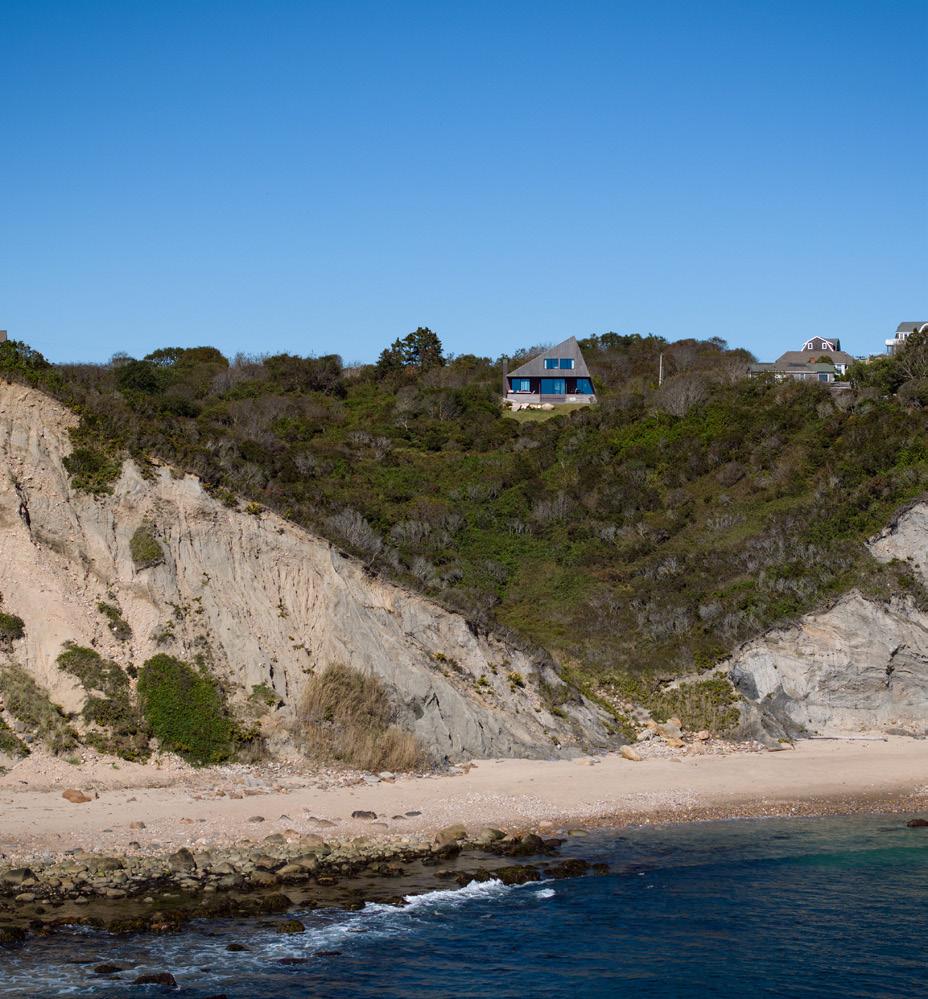
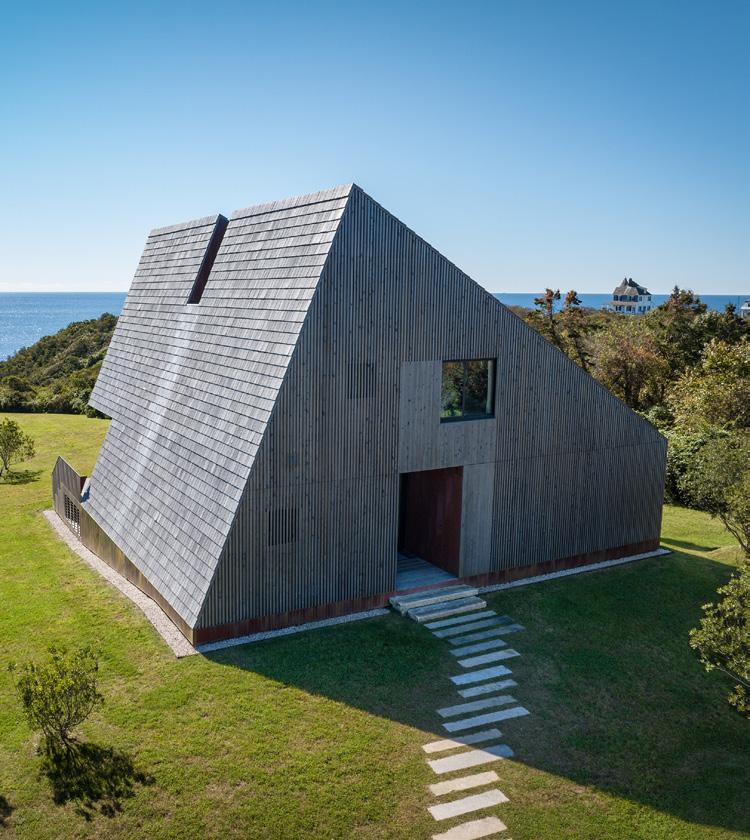
This home responds to the challenges of building on a remote Northeast island with limited access to tradespeople and materials. All equipment and building components must arrive by passenger ferry, with strict size and weight restrictions. The coastal bluff location demands a structure that can endure violent storms while remaining simple to repair.
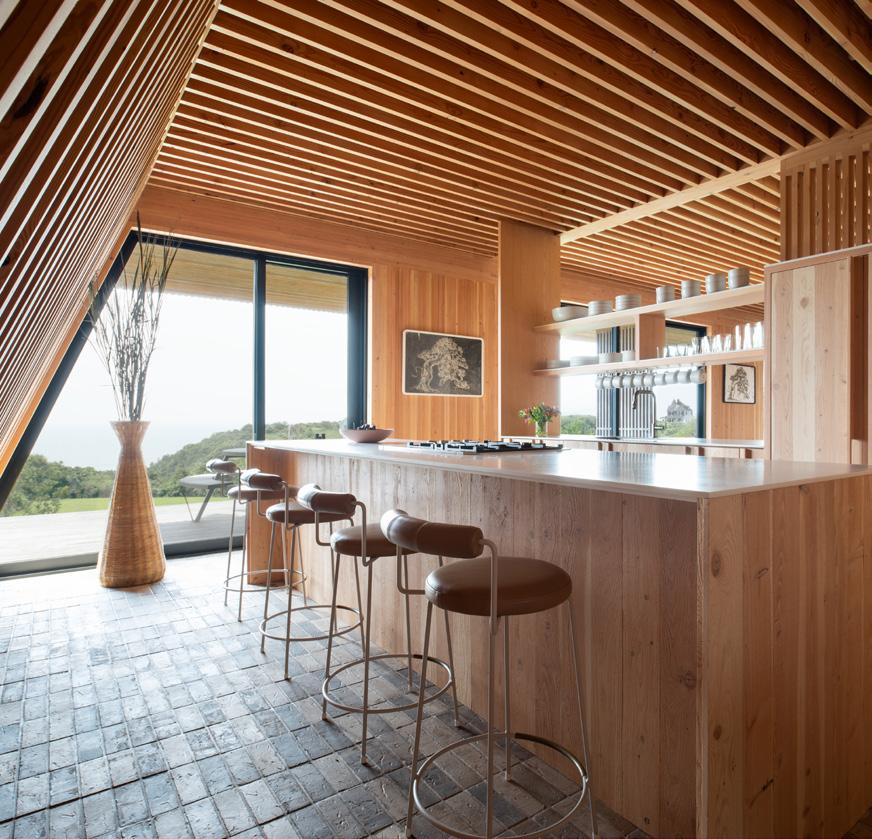
Design strategies emphasize durability, resilience, and material efficiency. Locally sourced and easily replaceable materials form the core of the construction, from cladding to roofing. The house integrates passive strategies to withstand wind, rain, and sun exposure, minimizing maintenance needs and extending its lifespan. Its form is rational, protecting living areas while opening selectively to natural light and views of the surrounding landscape.
Spatial planning accommodates family use, balancing privacy and communal gathering areas. Interiors feature warm, resilient finishes that withstand both environmental and day-to-day wear. Outdoor decks and terraces connect occupants to the landscape, offering protected vantage points and visual engagement with the dramatic coastal scenery.
Mohegan Trail demonstrates thoughtful problem-solving, creating a home that is both practical and elegant. It is a durable, intelligently designed retreat that respects its challenging site while providing comfort, beauty, and a lasting connection to the coastal environment.
RESIDENTIAL SINGLE FAMILY DETACHED, LESS THAN 2,500 SQUARE FEET
Block Island, Rhode Island
Submitted by: Bates Masi + Architects
HO n O r A w A r D
“The challenges of building on this remote site informed a design that is both daring and deeply contextual, with natural materials used in innovative ways to create a bold, sculptural form that feels native to its place.”
SMALL FIRMS DESIGN AWARD
Brooklyn, New York
Submitted by: Dameron Architecture
C i TAT i O n
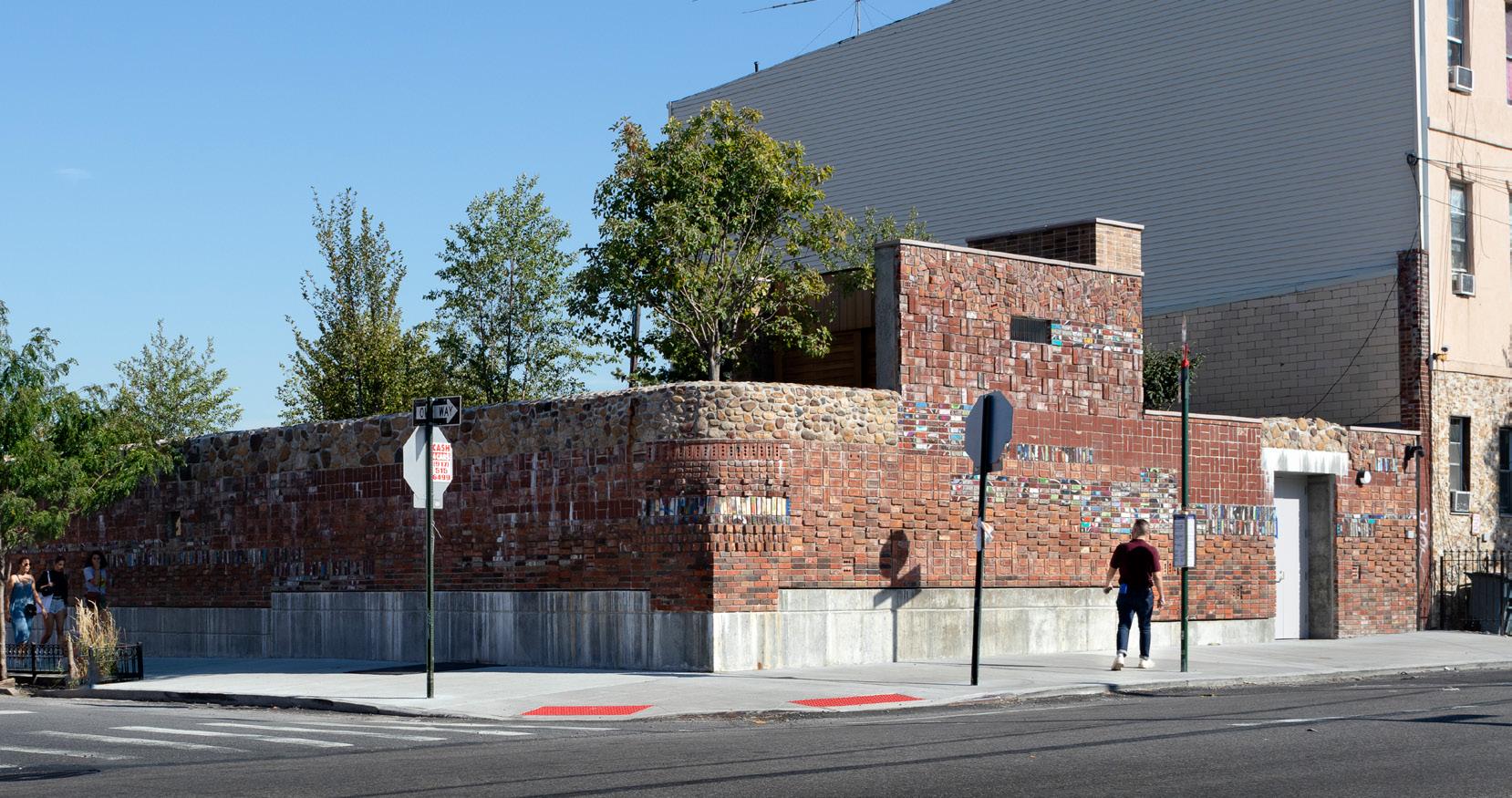
“Materials from a former warehouse structure are woven into a rich tapestry that plays beautifully against newer and more modern machined elements.”
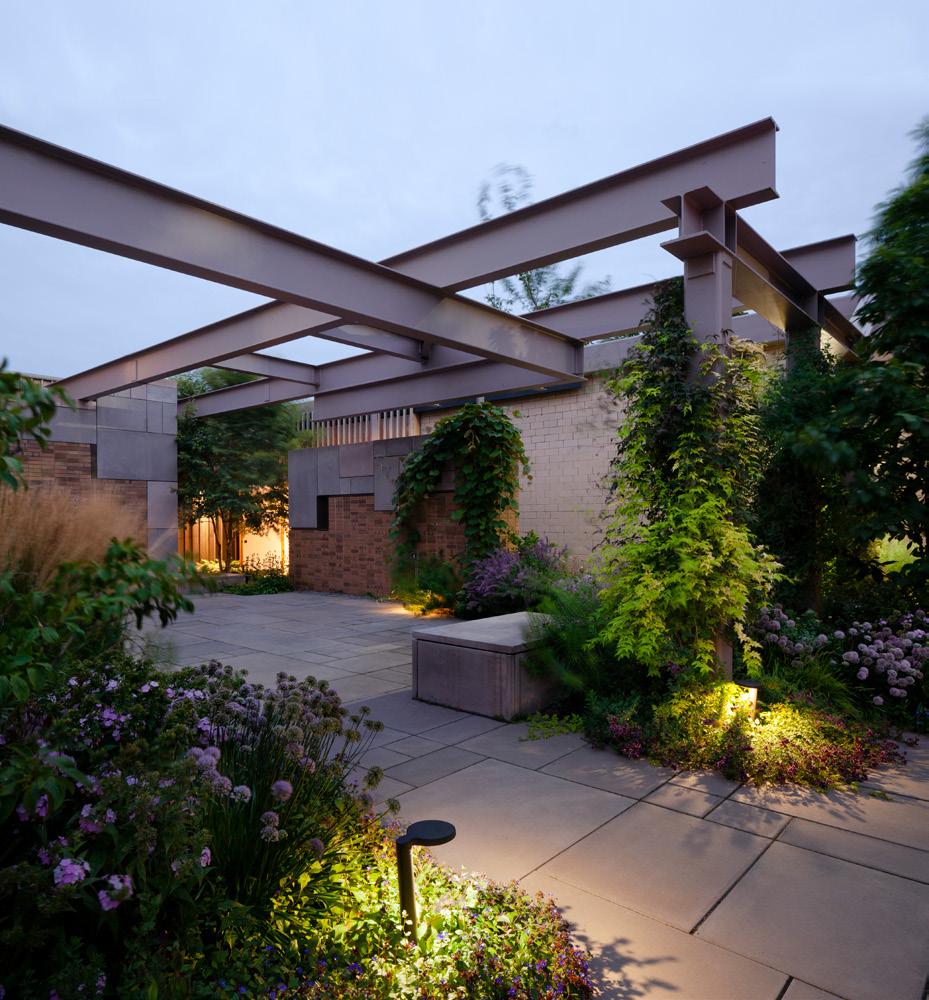
The Carroll Hall Garden and Event Venue brings nature into the urban environment, creating a layered, immersive experience that connects visitors to Brooklyn’s geological and botanical history. Within 10,000 square feet of indoor and outdoor space, guests encounter unexpected moments: moving walls, secret doors, and spaces that unfold like a journey through time. The garden evokes an idealized woodland, populated by plants that resemble those historically found along city edges and farmland. Flowing fountains use recycled water, filling the space with the calming sounds of nature.
Salvaged materials are central to the project’s identity. Over 11,000 bricks from a demolished warehouse were reused to form a 200-foot street wall, a tapestry illustrating the site’s material history. Every architectural and landscape element reflects ecological sensitivity and craftsmanship, from locally sourced wood and stone to carefully considered plantings that invite birds, bees, and butterflies back to the city. Stormwater is captured in a 5,000-gallon subterranean tank, irrigating the garden sustainably. Sensors monitor temperature, humidity, and carbon dioxide, automatically operating windows and skylights to maintain natural ventilation and indoor air quality year-round.
Over a decade of design and construction, the Carroll Hall Garden and Event Venue became a complex and interwoven landscape where architecture, plant life, and human interaction coexist. As the garden matures, layers of meaning reveal themselves, illustrating interdependence between people, wildlife, and built form. The project demonstrates how careful planning and ecological design can transform an urban site into a dynamic, evolving space that engages the senses, fosters connection, and celebrates both history and innovation.
The Carroll Hall Garden and Event Venue is a rare, highly specific formal space in New York City, where ecology, architecture, and imagination combine to create a garden that is alive, instructive, and inspiring for all who visit.

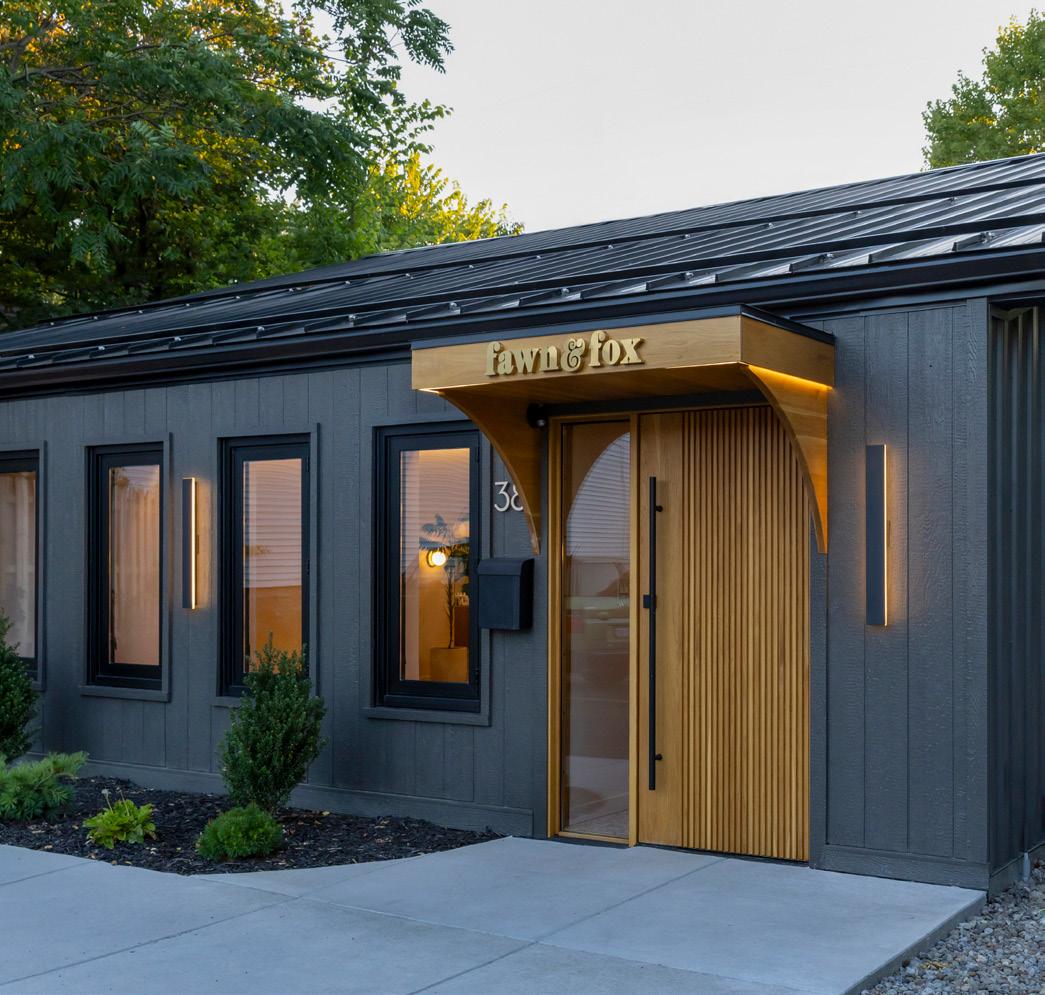
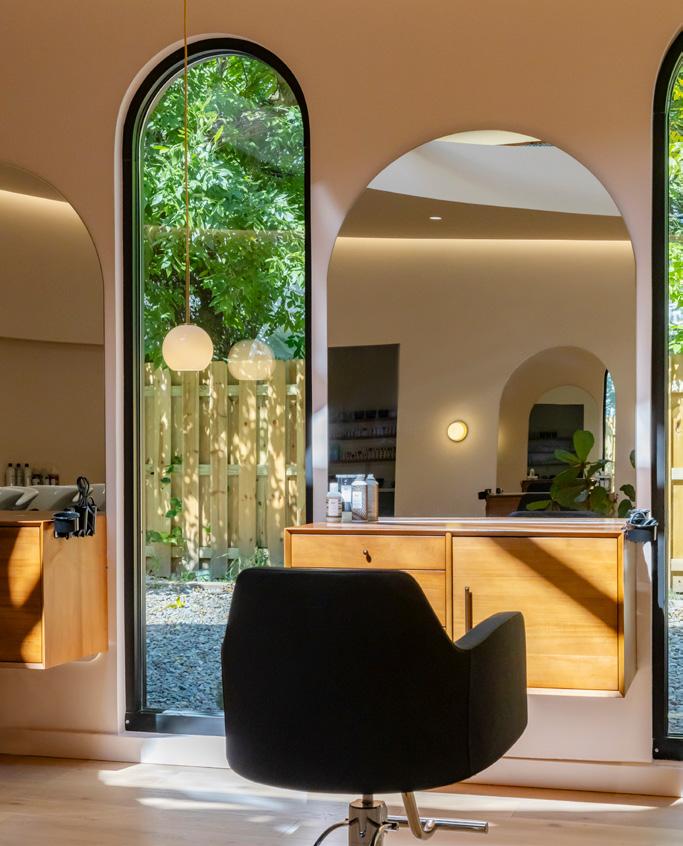
Fawn & Fox Salon transforms a former metal-clad warehouse into a sanctuary of light, intimacy, and community.
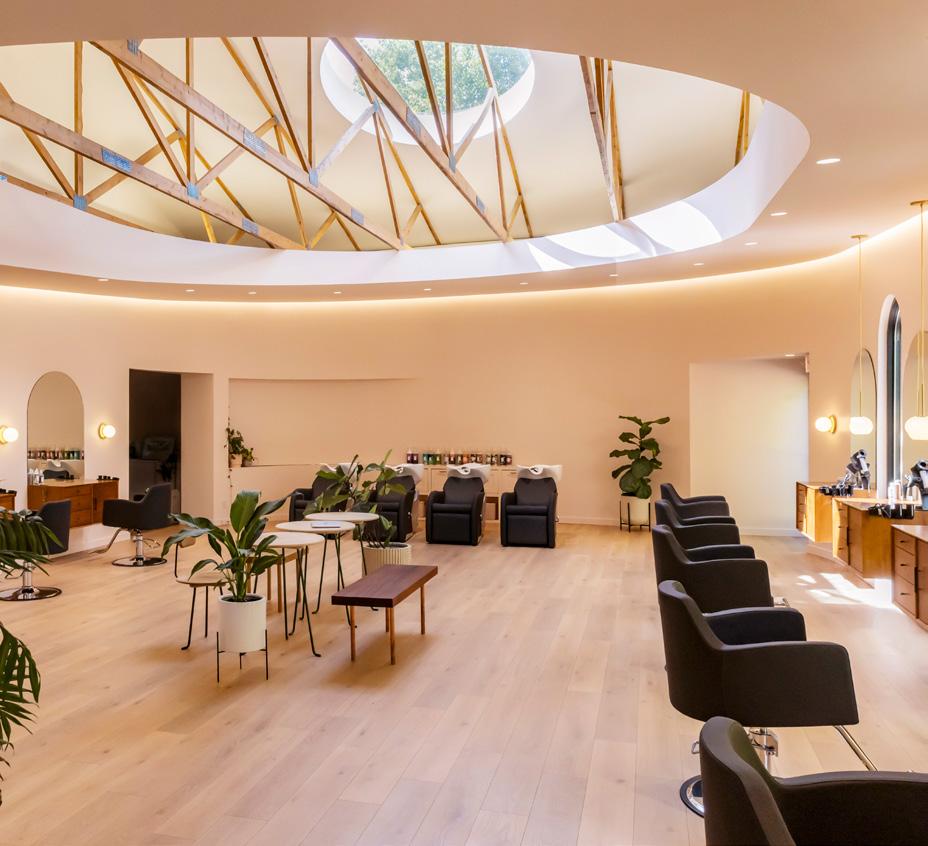
Situated next to the historic H.H. Richardson complex, the project reinterprets the industrial volume through adaptive reuse, carving the space into flowing rooms inspired by courtyard architecture. Curves, framed views, and natural light shape a sequence of experiences that guide visitors from entry to the heart of the salon. An eight-foot oculus in the roof channels sunlight deep into the space, recalling the Pantheon, while arched windows blur the boundary between interior and garden.
Inside, warm materials and gentle curves soften the building’s industrial shell, creating a calming, immersive environment. The entry lowers and compresses the ceiling, offering an intimate prelude before opening into a soaring central room animated by trusses, layered lighting, and a skylight. Functional areas, such as the restroom, are transformed into bold, mural-clad experiences, elevating even utilitarian moments. Every element balances functionality, comfort, and visual delight. The design respects the building’s history, preserving material integrity while overlaying a new identity of care and restoration. Salvaged elements, original structures, and spatial rhythms highlight the past while creating contemporary moments of connection and serenity.
Fawn & Fox Salon exemplifies how adaptive reuse can transform ordinary industrial buildings into spaces of civic and community significance. The project demonstrates that even unremarkable structures can be reimagined to foster engagement, nurture intimacy, and inspire delight in unexpected ways.

Submitted by: Arch&Type
Photo Credit: © Andrea Wenglowskyj
C i TAT i O n
“This is a startling transformation of a simple warehouse into an ethereal salon, made possible by a single, brilliant move: a circular opening to the sky that floods the once-dark interior with ample natural light.”
Kyabirwa, Uganda
Submitted by: GKG
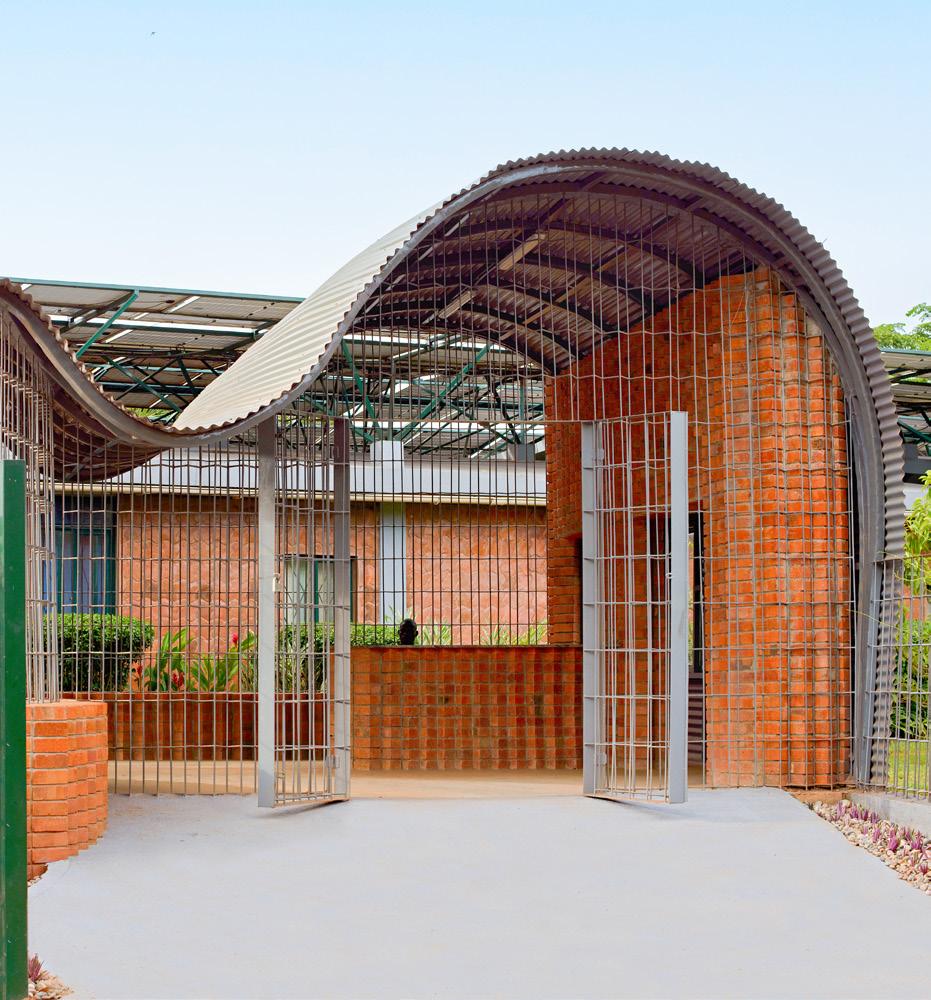
“A rich textural tapestry created from the simplest of materials— corrugated siding, rebar, and locallyproduced brick— demonstrates how thoughtful architecture can bring dignity and delight to the built environment.”
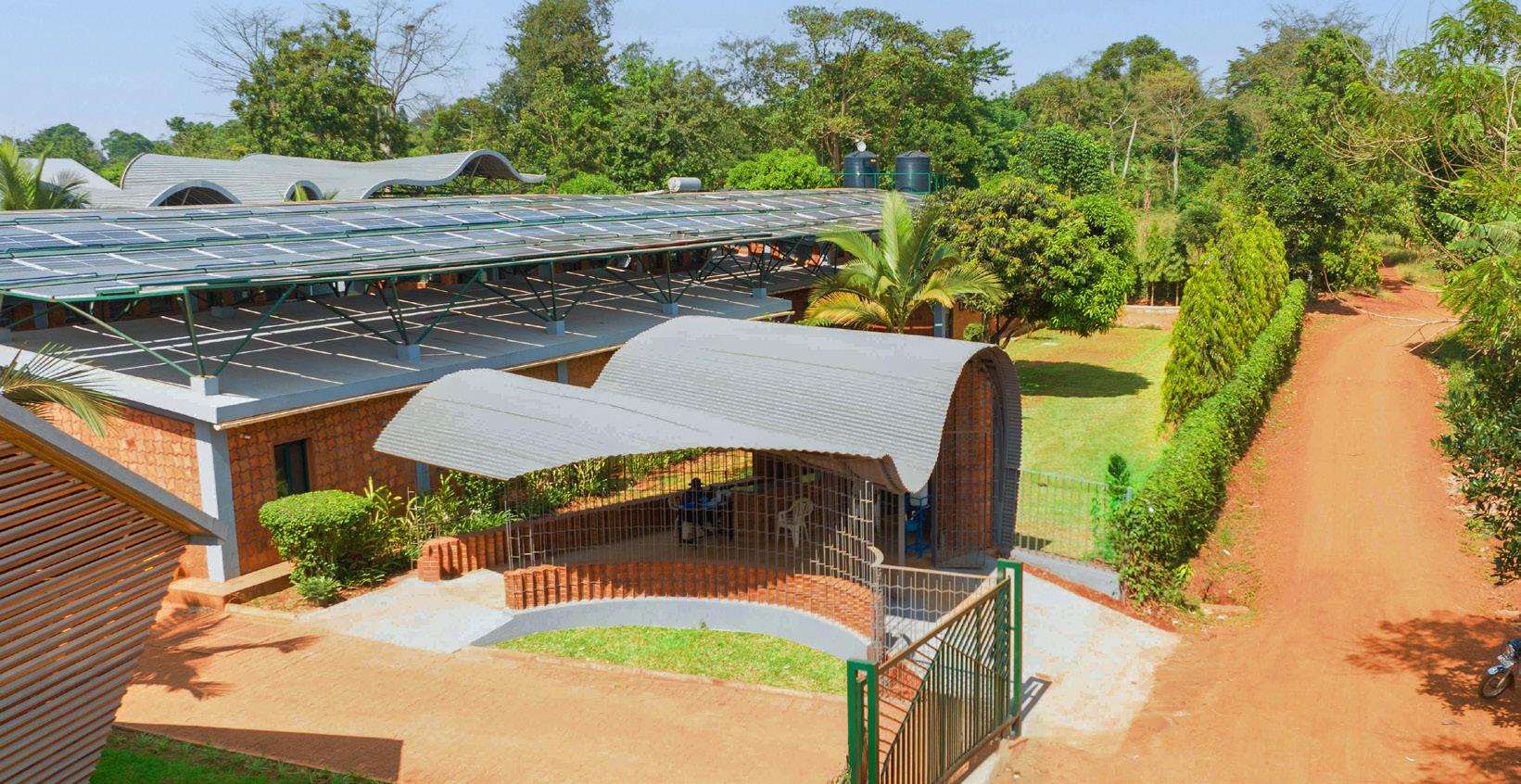
The guard booth serves as the first point of contact for visitors and patients, combining security, comfort, and community connection. Its open lattice structure, crafted from simple rebar, provides unobstructed sightlines in all directions, while locally sourced metal roofing and wirecut brick walls offer durability and warmth. The design is both practical and culturally responsive, creating a welcoming yet secure entry to the Surgical Center campus.
Sustainability and resource efficiency are central to the project. Over 80% of materials—including bricks, steel, and concrete—were fabricated or sourced locally, reducing construction waste, packaging, and transport emissions. The corrugated metal roof is durable, reflective, and recyclable, providing heat protection and longevity. The open-air design promotes natural ventilation, eliminating the need for mechanical cooling and ensuring comfort for guards year-round.
The guard hut operates entirely offgrid, powered by the campus-wide 486-panel solar array, supplying 100% of the site’s energy needs. Rainwater harvesting further reduces reliance on external infrastructure and reinforces environmental resilience. The layout, material choices, and off-grid systems work together to create a highly efficient, contextually appropriate, and environmentally responsible structure.
This modest but thoughtfully designed guard booth exemplifies how architecture can enhance both function and experience. By blending local materials, sustainable design, and culturally informed strategies, the project creates a welcoming, secure, and resilient entrance that integrates seamlessly with the Kyabirwa Surgical Center campus and its community.
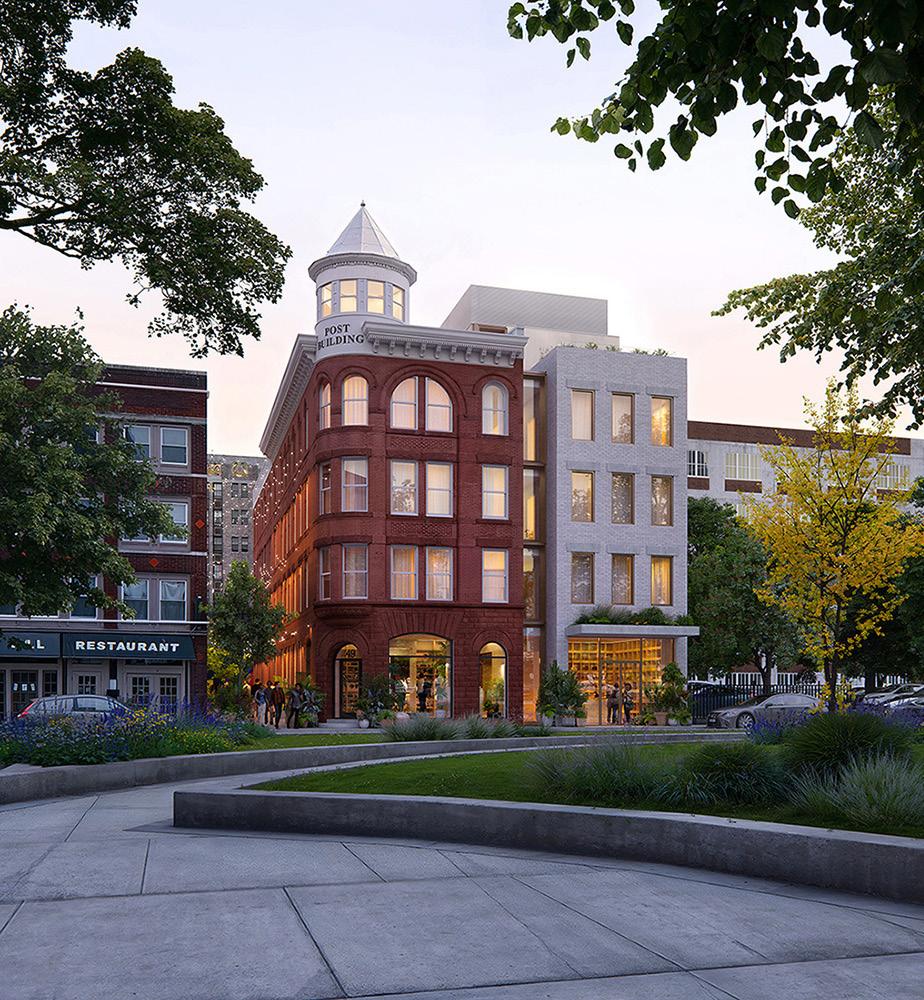
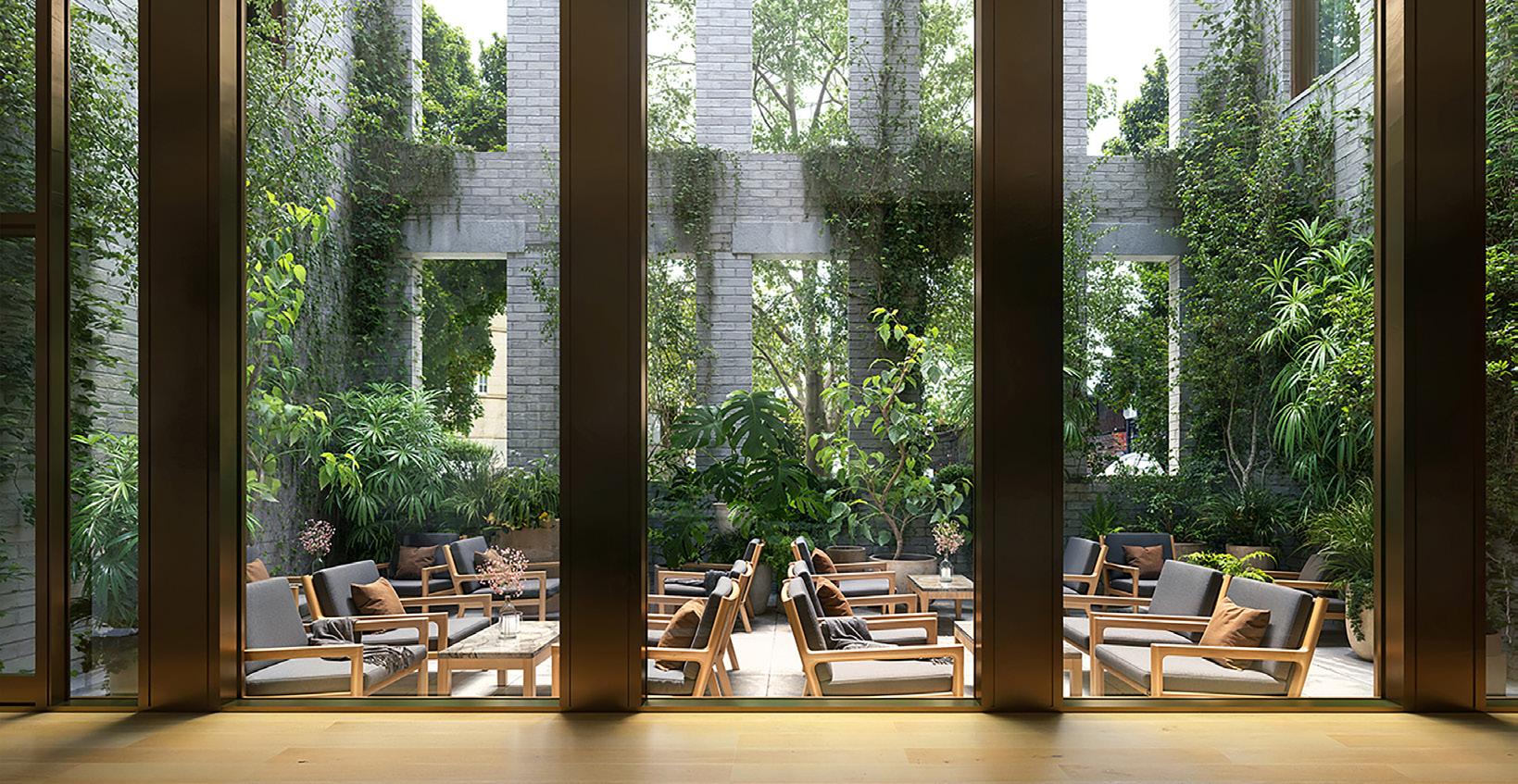
The Post Hotel transforms a historic late-19th-century red brick building through adaptive reuse and a modern addition, creating a 36-room boutique hotel that blends heritage and contemporary design. The project contrasts the ornate classical details of the 1892 structure with the minimalist light-brick façade of the new tower, maintaining the identity of both while visually uniting them with a transparent glass link. This central connector becomes the hotel’s primary circulation route, guiding guests seamlessly between old and new. Public spaces activate the street: ground-floor retail, dining, a lower-level speakeasy, and a rooftop terrace engage both hotel guests and the surrounding neighborhood. The addition extends to a rear plaza, offering outdoor dining and gathering spaces. Large plate-glass windows echo the scale of the historic arched openings, while a landscaped canopy reinforces continuity between the old and new structures.
Historic preservation is integrated throughout. Original windows are restored or replicated, brickwork is maintained, and the composition highlights the site’s layered architectural history. Curated retail—including a flower shop, boutique, sneaker and vinyl store, restaurant, and coffee shop— creates a vibrant civic and social hub. Hospitality experiences are enhanced through thoughtful design, reflecting both local character and contemporary expectations.
The Post Hotel demonstrates how architecture can celebrate the past while creating functional, engaging, and visually dynamic spaces for the community. Approved by the Connecticut State Historic Preservation Office and slated to open in 2026, the project revitalizes downtown Bridgeport, illustrating the potential of adaptive reuse to transform historic structures into thriving cultural and civic destinations.
UNBUILT COMPLETE COMMISSIONED ARCHITECTURAL DESIGN WORK, NOT YET BUILT OR COMPLETED BY ARCHITECTS LICENSED MORE THAN 10 YEARS
Bridgeport, Connecticut
Submitted by: Messana O’Rorke
Renderings: © Sora
C i TAT i O n
“A sophisticated dialogue between historic and contemporary architecture, the careful restoration of the original building is complemented by a contrasting addition in lighter colored brick, creating a harmonious, yet distinct, relationship.”
UNBUILT COMPLETE COMMISSIONED ARCHITECTURAL DESIGN WORK, NOT YET BUILT OR COMPLETED BY ARCHITECTS LICENSED MORE THAN 10 YEARS
New York, New York
Submitted by: Perkins&Will
Photo Credit: © Images Courtesy of Aesthetica Studio
“A sleek transformation is achieved through the addition of a slender new tower that completely redefines the entrance and gives the entire building a new identity.”
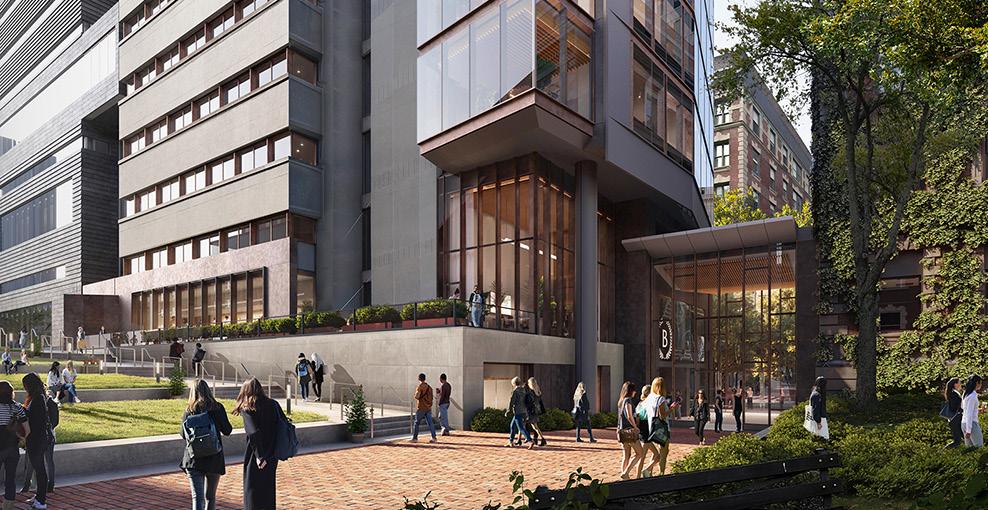
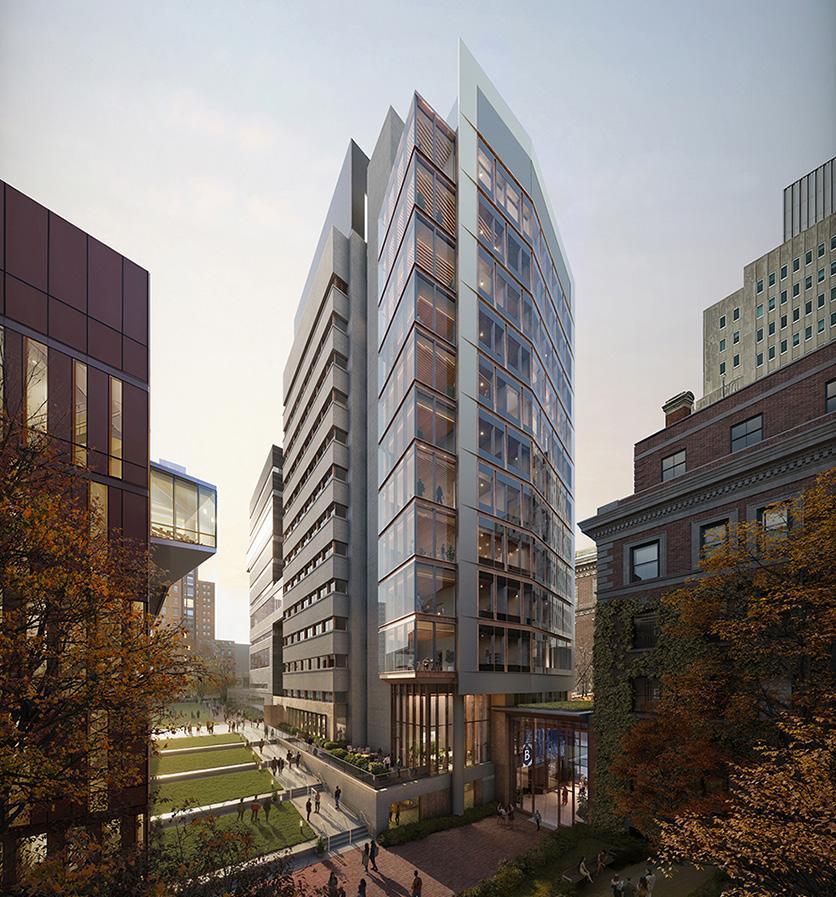
The Roy and Diana Vagelos Science Center reimagines science education at Barnard College, uniting all science departments under one roof to foster collaboration, research, and inclusive learning. Anchored by the comprehensive renovation of Altschul Hall and a 14-story ‘sliver’ addition, the project creates a cohesive academic environment that blends the historic structure with modern, functional space.
Faculty offices and meeting areas relocate to the new tower, freeing Altschul Hall’s central zones for flexible research labs, technology-rich classrooms, and a student-focused science commons. The lower levels open to a bioclimatic gateway, a welcoming space that connects campus activity with the surrounding environment. Circulation, visibility, and transparency are central, reinforcing interdisciplinary collaboration.
Natural light animates classrooms, labs, and communal spaces, highlighting transparency and openness. Glazing emphasizes visual connection, reinforcing the metaphor of light as knowledge. Interior layouts are adaptable, supporting evolving research methods and innovative pedagogies.
Sustainability is integral to the design. The Vagelos Science Center will be New York City’s first all-electric, zero operational carbon-ready academic building, establishing a new benchmark for high-performance educational architecture. The project embodies Barnard College’s commitment to empowering women and historically underrepresented groups in STEM, while promoting environmental responsibility.
The Vagelos Science Center represents a transformative vision for academic science facilities, where architecture, sustainability, and learning converge. It is designed to inspire curiosity, collaboration, and discovery, preparing students to advance knowledge and contribute meaningfully to the 21stcentury scientific landscape.
ORIENTATION CENTER AND WELCOME GALLERIES, Washington, DC