THE AFGHAN JOURNAL
CONNECTING COMMUNITIES · CELEBRATING HERITAGE
There’s nothing like this anywhere else in America. We want to welcome Afghan refugees to St. Louis… to embrace you and celebrate the many ways you strengthen our community.
When I was seventeen, I published my first book, Traveling With the Wind: Memoirs of a Refugee Teen / Immigrant Teenager, which tells my journey from Kabul to the United States.
Balkh is widely recognized as the birthplace of Nawruz, a festival celebrated every year to mark the beginning of the solar calendar. Nawruz holds great cultural and historical significance in the region
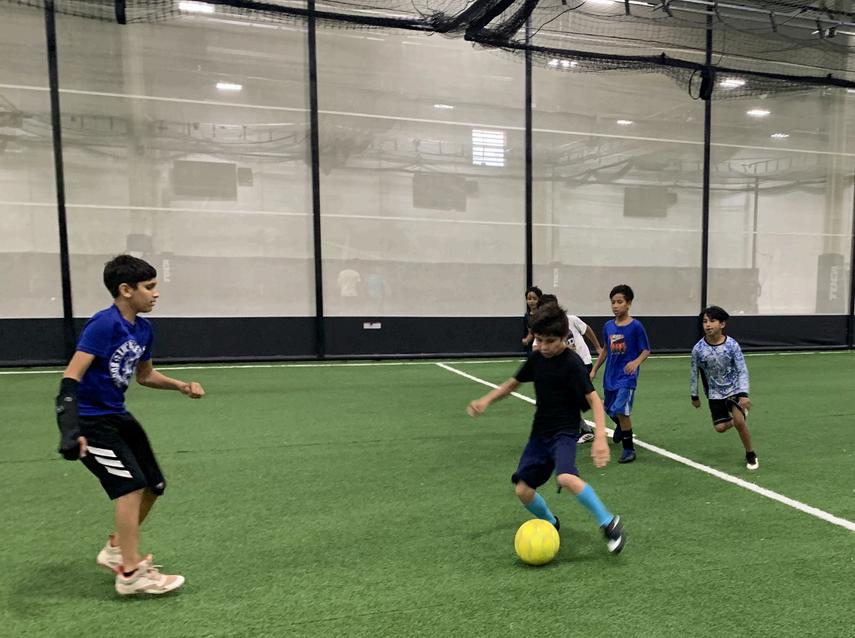
The family’s head soon found work in a local factory, providing stability for their new beginning But for young Hassib, the dream was different. He loved soccer and longed to play, yet he didn’t know where to start.

4 5
7
6 8 9 10 11
H E A F G H A N
O U R N A L

3. Afghan Entrepreneurship Grant Ceremony Celebrates Innovation and Community in St. Louis
4. Opportunities for Sewing Classes at the Afghan Community Center
5. How a Host Community Helped an Afghan Soccer Player Reach His Goal
6. Sediq Shabab: Preserving Culture Through Music and Inspiration
7. How the Afghan Entrepreneurship Grant is Changing Lives in St. Louis
8. Sara Mosavi, a Writer and Medical Student at Saint Louis University
9. Balkh Province, A Historical and Cultural Jewel of Afghanistan 10. My Maplewood High School Experiences 11. Verifying and Assessing Your Educational Credentials in St. Louis
Advertisement
AFGHAN SUPPORT PROGRAM

Welcome to The Afghan Journal, a publication of the Afghan Support Program at the International Institute of St. Louis.
The Afghan Journal is a monthly publication rooted in the heart of St Louis, Missouri, and created as part of the Afghan Support Program at the International Institute of St Louis This journal was established to serve as a trusted platform for stories, voices, and experiences that reflect the Afghan journey past, present, and future. In every issue, we aim to capture the resilience, culture, and dreams of Afghans as they build new lives while staying connected to their heritage.
The Afghan Support Program is dedicated to helping Afghans thrive in their new home. Through access to housing support, job placement services, small business grants, legal guidance, healthcare enrollment, and more, the program offers critical resources to support families during resettlement and beyond. It also focuses on preserving culture and community through educational classes in Pashto, Dari, and Quran studies for children, as well as sewing and vocational opportunities for women. Soccer teams, driving classes, and support with school enrollment are just a few of the ways the program strengthens everyday life.
Importantly, this initiative has also supported the development of key institutions such as the Afghan Community Center and the U S -Afghan Chamber of Commerce spaces where Afghan identity, enterprise, and unity are nurtured Thanks to the collective effort of the Afghan community itself, St. Louis is now home to Masjid Abu Bakr Sediq a proud symbol of faith and self-determination.
The Afghan Journal is published in English, Pashto, and Dari, in print and online. It exists to empower, inform, and inspire. This is your voice, your reflection, and your community. Sign up to receive future issues by scanning the QR code or visiting AfghanCenter.org.
“Together, we are not just rebuilding lives we are building a thriving community, rooted in dignity, culture, and collective strength.” Hamdullah Hamdard, Director of Afghan Support Program
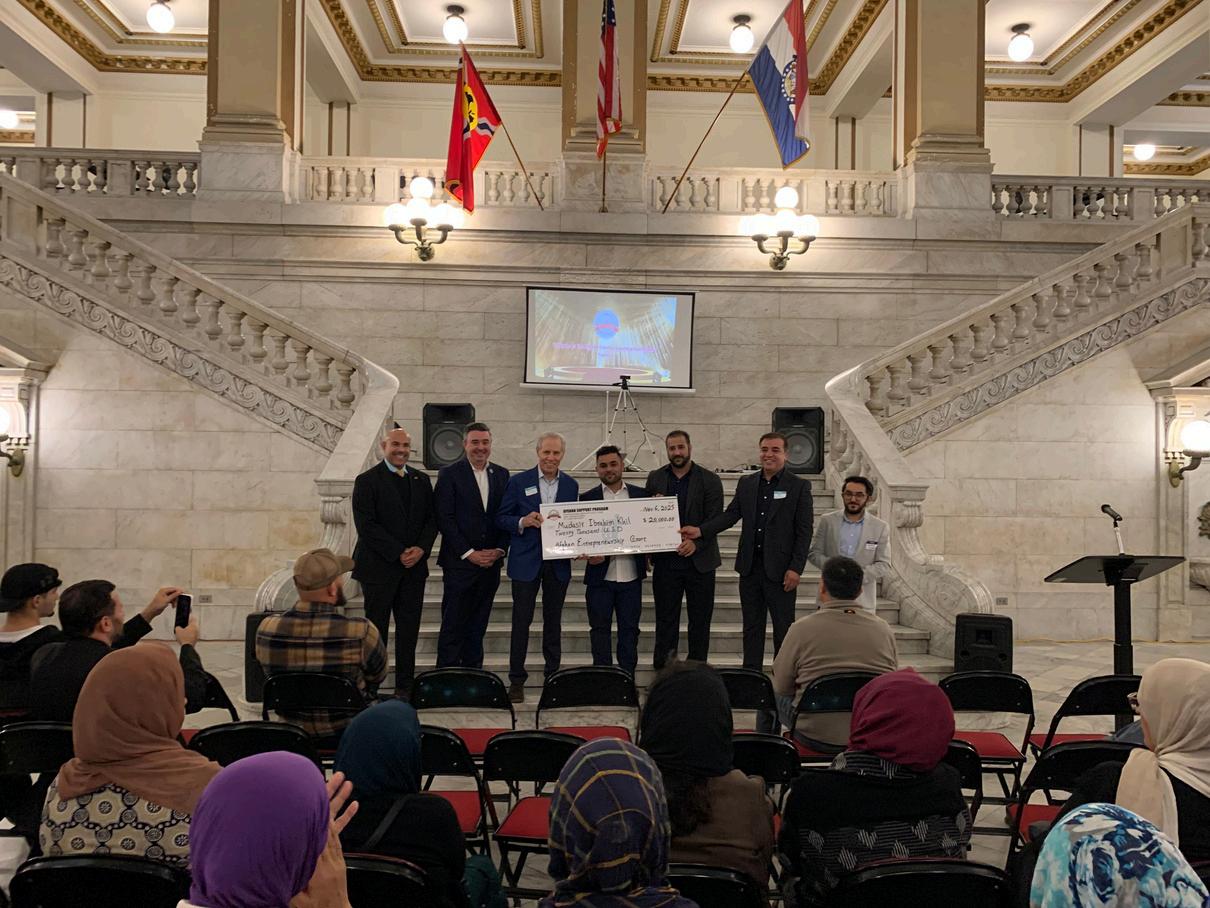
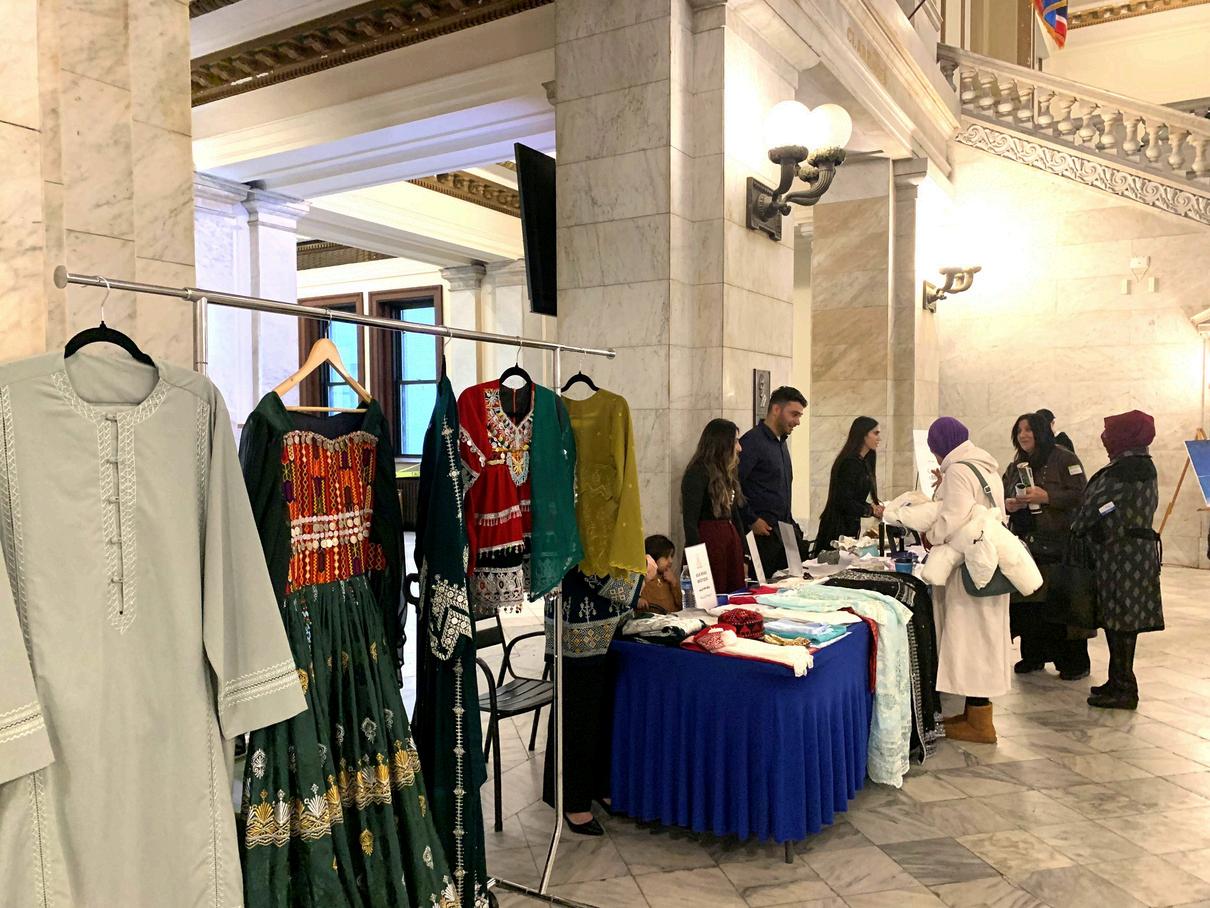
On November 6th, 2025, the International Institute of St Louis proudly hosted the Afghan Entrepreneurship Grant Ceremony at St Louis City Hall, honoring the inspiring Afghan entrepreneurs who are building new lives and businesses in the community. The initiative was made possible through the generosity of Jerry Schlichter, whose words captured the spirit of the event:
“There’s nothing like this anywhere else in America. We want to welcome Afghan refugees to St. Louis… to embrace you and celebrate the many ways you strengthen our community. Your courage, your strengths, and your talents make St. Louis more vibrant and resilient. We’re grateful for all you bring to our city. St. Louis wants you here; you make us stronger ”
Through this grant, Afghan entrepreneurs gain not only financial support but also the encouragement and connections needed to thrive. Immigrants have long been a driving force of innovation and growth in the region, and special thanks were given to Gilberto Pinela, Director of the Office of New Americans in Mayor Cara Spencer’s office, for joining the ceremony and reinforcing the message that St. Louis grows stronger when the community grows together.
Celebrating entrepreneurship, community, and opportunity, the ceremony honored the recipient of the Afghan Entrepreneurship Grant
Afghan Entrepreneurship Grant Ceremony Celebrates Innovation and Community in St. Louis
a program that empowers Afghan small business owners to launch and expand their businesses in St Louis The event celebrated the incredible contributions of St. Louis’s Afghan community and the entrepreneurial spirit shaping the city’s future.
A five-minute video highlighted the impacts of the Afghan Entrepreneurship Grant, featuring interviews with recipients and showcasing their businesses. This video offered attendees a clear understanding of the program’s significance across Greater St. Louis. Special thanks were extended to Owlsion for voluntarily producing the engaging video.
The winner of the latest round is Mudasir Ibrahim Khil, a young and energetic entrepreneur, who will launch his business, Kabul Burger Among ten shortlisted entrepreneurs who presented their innovative ideas to the judges’ panel, Mudasir was selected as the sole winner of Round 9 and awarded $20,000 to establish his business.
The ceremony brought together a large number of community members, officials from the International Institute of St. Louis, the Afghan Chamber of Commerce, St. Louis City Hall, previous grant winners, supporters, partners, artists, family, and friends. The celebration concluded with attendees enjoying delicious meals from the Afghan Kabob House, making it a memorable and meaningful event for all.
Opportunities for Sewing Classes at the Afghan Community Center Opportunities for Sewing Classes at the Afghan Community Center
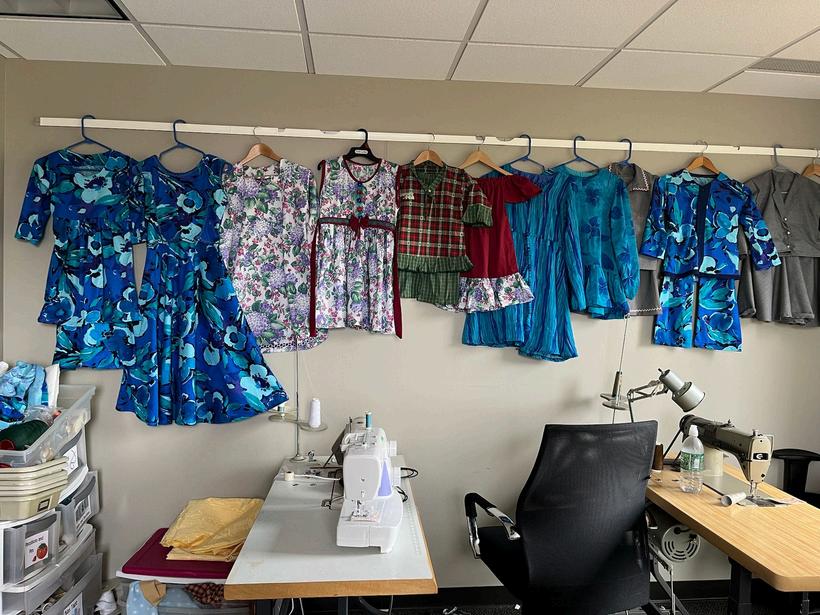
The sewing classes at the Afghan Community Center offer a wonderful and empowering opportunity for Afghan women living in the St. Louis area. These classes are designed to help participants use their sewing skills in a practical waysotheycanbecomemoreself-sufficientand financially independent Many women who have completed both the theoretical and practical parts of the training are now using their abilities tomakeproductsthatcanbesoldinthebroader community.
One of the most successful activities has been the sewing of coffee cozies. After learning the basicsofsewing,anumberofwomenhavejoined a larger circle of community members who create these handmade items. Every week, participants return their completed products, and thanks to the support of kind individuals in thecommunity,theseitemswillbemarketedand sold across the greater St. Louis area. This collaboration not only helps the women earn income but also builds strong relationships and confidence.
The main purpose of the program is to support Afghan women in becoming self-reliant All participants are hopeful that this handicraft will become a meaningful source of income for them and their families. The sewing classes provide a safe and friendly environment where women can learn,practice,andgrowattheirownpace.
During the first session today, participants listened carefully, asked questions, and shared theirneedswiththepartners.
Those who have sewing machines at home can take materials provided by the project leader and continue making their coffee cozies independently. This allows them to remain productive throughout the week while still stayingconnectedtothegroup.
Every Monday, the women gather at the Afghan Community Center to return their products, receive new materials, and enjoy time together These weekly meetings help build community and strengthen friendships In addition to the cozy-making project, there are also women who support small clothing startups by offering customized sewing services for customers. This creates a wonderful opportunity for sewing learners and entrepreneurs to work together andsupporteachother’sdreams.
For anyone who wants to learn more about the skills and abilities of the sewing class participants or for friends and family members interested in joining the Afghan Women’s SewingProgram—theAfghanCommunityCenter and the Afghan Support Program warmly welcome you to contact us. Through these sewing classes, Afghan women are finding confidence, community, and new possibilities forabrighterfuture
The sewing project for Afghan women is supported and administered by the InternationalInstituteofSt.Louis.
For more details about the program, please visit our website: https://afghancenter.org/afghanwomens-sewing-class-2/
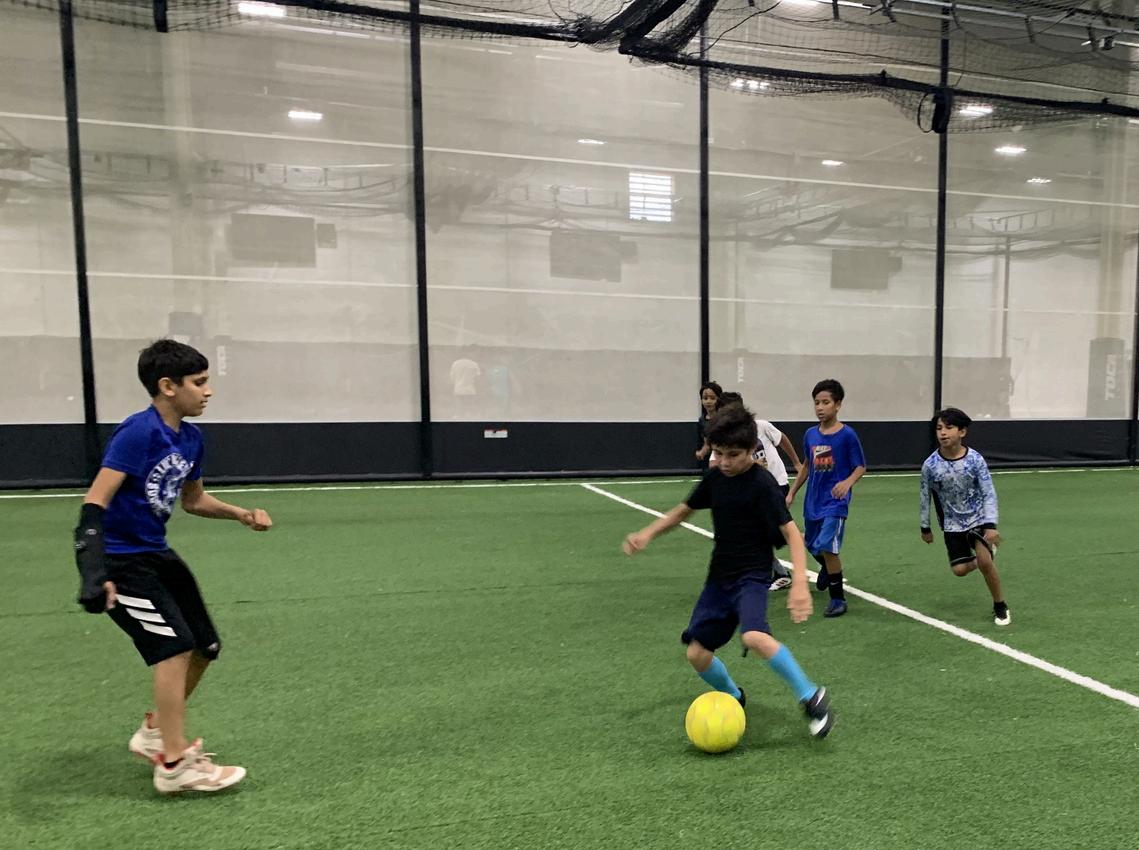
When Rahmani family arrived in St Louis from Afghanistan, everything was new the neighborhood, the language, and even the rhythm of daily life. The family’s head soon found work in a local factory, providing stability for their new beginning. But for young Hassib, the dream was different. He loved soccer and longed to play, yet he didn’t know wheretostart.
That’s when a kind neighbor named Cheryl stepped in. She is part of a group of nine people who have been helping Rahmani’s family. They arranged the family’s plane tickets from Qatar, found housing, raised funds to cover expenses, organized English lessons at home, and took them to doctor’s appointments all the things needed to help themsettle
After getting to know the family, Cheryl learned about Hassib’s interest in soccer and the challenges his family faced in finding opportunities for him to join a team. Wanting to help, she contacted the International Institute of St. Louis to ask about soccer programsforAfghanyouth.
Fortunately, her inquiry came at the perfect time. The Afghan Support Program at the Institutehadrecentlylaunchedayouthsoccer initiative to help Afghan children integrate, build confidence, and connect with others through sports. Cheryl helped Hassib’s family complete the necessary paperwork and submit it to the Institute, ensuring he could jointheprogram.
How a Host Community Helped an Afghan Soccer Player Reach His Goal
There was, however, another obstacle transportation Hassib’sfatherdidnotyethavea car, and the soccer field was several miles away Without hesitation, Cheryl volunteered to drive Hassib to practice every Sunday afternoon. On one occasion, another neighbor showed up with Hassib instead, explaining that she was helping Cheryl while she was unavailable a touching sign of how kindness spreads within a caring community.
“I’vemetCherylseveraltimes,”saidoneprogram facilitator. “She’s incredibly kind and even plays soccer with the Afghan kids when she comes. She’s also eager to learn more about their culture,language,andwayoflife.”
To help the Rahmani family become more independent, the International Institute referred Hassib’s father to a driving class under its EMPOWER program. There, he is learning both theory and hands-on practice using a driving simulator Soon, he hopes to be the one driving HassibtohisSundaysoccergames
The soccer program, part of the Afghan Support Program, continues to bring smiles, friendships, andhopetoAfghanfamiliesacrossSt Louis
If you want to enroll anyone, from your family or friend, please contact at sayedis@iistlorg or use ourWhatsAppnumber(+1(314)403-3530)orvisit ourwebsite:
https://afghancenter.org/soccer-program/

Sediq Shabab: Preserving
Culture Through Music and Inspiration
Sediq Shabab is singer, composer, and producer whose music reflects the richness of Afghanistan culture while addressing the challenges faced by his homeland and the Afghan diaspora Born in Panjshir, Afghanistan, he has carried the spirit of his country through his songs, even while living in exile in Frankfurt, Germany. Music runs in his family; his brother, Tahir Shabab, is also a singer, showing how deeply art is embedded in their lives.
From an early age, Sediq Shabab was drawn to the sounds of Afghanistan folk and traditional music. Over the years, he has developed a style that balances modern pop elements with the melodies, instruments, and rhythms of Afghanistan’s musical heritage. Singing in Persian and Pashto, he has become a prominent figure in Afghanistan pop music, creating songs that entertain, educate, and inspire listeners around the world Shabab’s YouTube channel, “OfficialSediqShabab” serves as a key platform for his growing global audience. With over 60,000 subscribers and more than 50 videos, his music reaches many people across continents. The channel features his latest recordings, music videos, and collaborations, allowing fans to engage with both traditional and contemporary Afghan music. His presence on social media also allows him to share messages of unity, culture, and social responsibility with youth and others who appreciate his work.
Among his most popular songs is “Koh O Kamar”, addresses migration, highlighting the reasons many Afghans leave their homeland and the difficulties they face both abroad and at home This and other songs critique corrupt leadership, emphasize civic responsibility, and reminds listeners that opportunities to rebuild and improve their communities still exist. This approach combining melody with meaningful messages has become a hallmark of Shabab’s music.
Source: www facebook com/sediq shubab
Shabab also explores historical and cultural themes. In “Bote Frang Aain”, he revisits the historyofwiderregion,theEmirateofBukhara, educating listeners about the region’s rich heritage. His Pashto song “Laila Dera Shaysta Da” reflects the daily life and traditions of Afghan villages, preserving cultural narratives thatmightotherwisebeforgotten.Additionally, hiscollaboration with Mir Maftoon onthesong “Mother” celebrates the role of mothers, especiallyinthecontextofmigrationandexile, honoringtheirsacrificesandresilience.
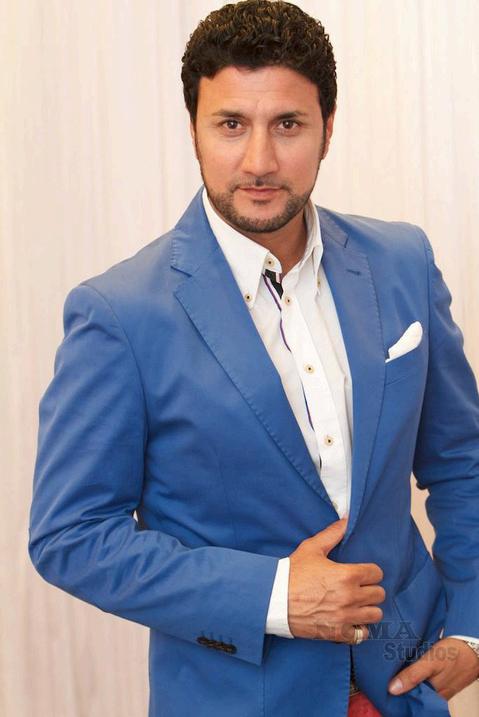
His albums—including “Hayf Hayf”, “Aazaadi”, “Watan”, “Gerda De Lamana”, and “Begana” draw on the literary and poetic wealth of the region, incorporating worksfrom classic poets like Rumi Through his lyrics, Shabab encouragesreflectiononvalues, unity, andthe potentialofAfghansociety.
Sediq Shabab is more than a musician; he is a cultural representative. His songs highlight boththebeautyandchallengesofAfghanistan, raising awareness of social issues, migration, andrefugeestruggles.Heinspireshisaudience to maintain their cultural identity while pursuing personal and communal growth. His commitment to blending entertainment with meaningful messagessets him apart as a true voiceforAfghanseverywhere.
Through his music, Sediq Shabab continues to unite, inspire, and represent the resilience, creativity, and pride of Afghan culture worldwide
HowtheAfghan EntrepreneurshipGrant isChanging Lives in
St. Louis
The Afghan Entrepreneurship Grant has become a source of hope and empowerment for many Afghan entrepreneurs in St. Louis. Among its inspiring success stories is that of Kaihan, a dedicated and skilled auto technician who now leads his thriving business in the city’s automotive industry.
Kaihan operates J & K Auto Body Shop, located at 317 Loughborough Avenue in St. Louis, where he and his team specialize in repairing, restoring, and refinishing vehicles. Through the support of the Afghan Entrepreneurship Grant, administered by the International Institute of St Louis, he received a total of $20,000 in funding to expand his business With the first installment, Kaihan was able to purchase essential tools and equipment, including an auto body frame machine, screwdrivers, and other professional instruments that have improved his shop’s capacity and service quality.
For Kaihan, this grant was more than financial assistance it was a turning point that strengthened his confidence and expanded his opportunities. He recalls one particular experience that deeply motivated him. “One day, a client brought in a Jeep that had been completely damaged after a tree fell on it,” he said.
“The client had already gone to several auto bodyshops,butnoonecouldfixit evenata highercost.ItoldhimIwoulduseallmyskills to restore his car, and I was confident he wouldbesatisfied.”
After hours of meticulous work, Kaihan successfully repaired the Jeep, replaced its front glass, and restored it to perfect condition. When he called the client, named William, to tell him his car was ready, William was astonished. “He said, ‘I can’t believe it! This is great exactly what I wanted.’ He was so happy,” Kaihan shared with a smile Since then, William has referred new customers to Kaihan’sshop,helpinghisbusinessgroweven further.
Stories like Kaihan’s show how the Afghan Entrepreneurship Grant continues to transform lives by helping local Afghans turn their ideas into sustainable businesses. By supporting entrepreneurship, this program not only strengthens families but also contributes to the economic growth and diversityoftheSt.Louiscommunity.
For information about upcoming grant opportunities, visit https://afghancenter.org/grants/.
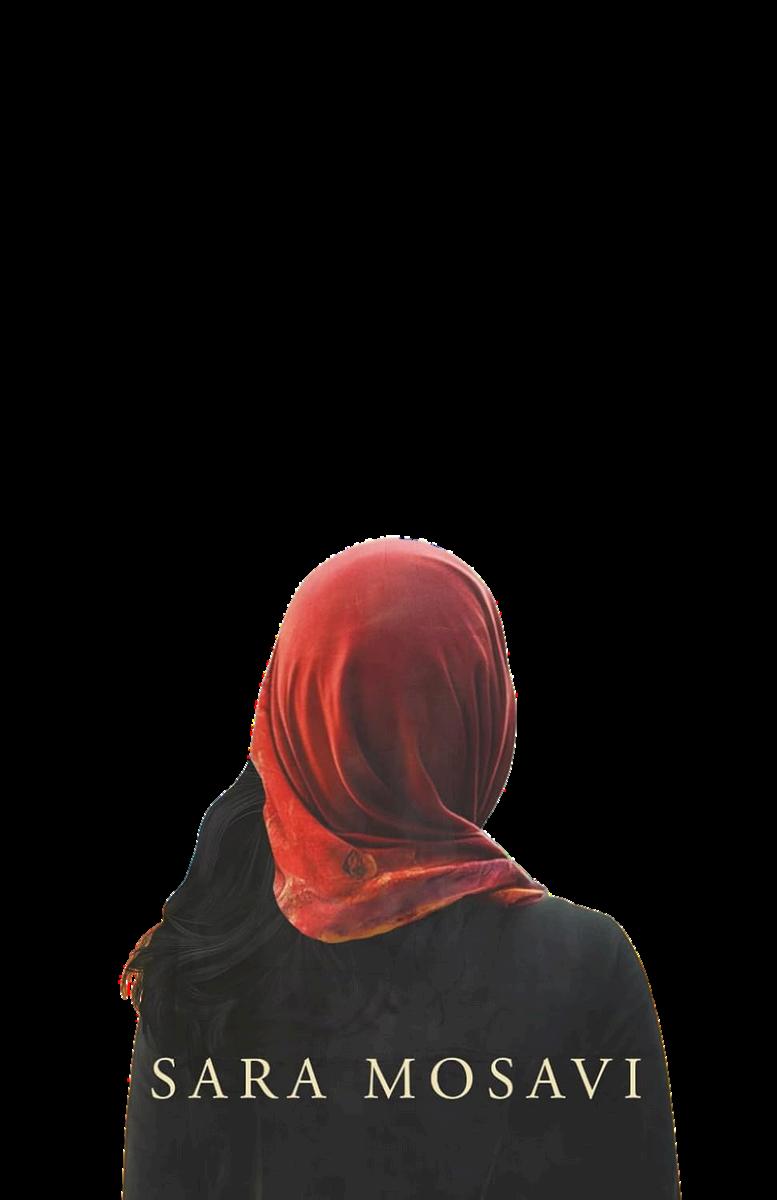
SaraMosavi, aWriter and Medical Student at SaintLouis University
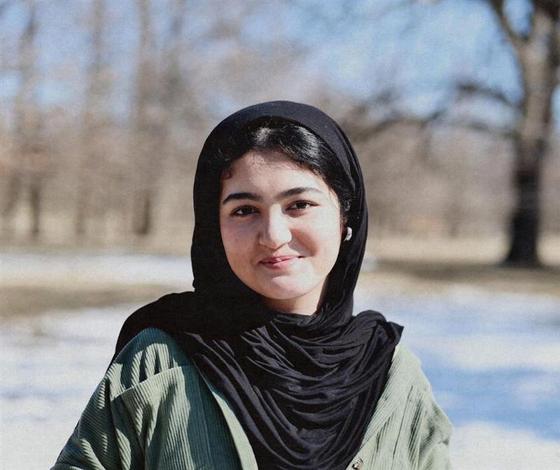
My name is Sara Mosavi, and I am currently a collegestudentstudyingmedicineatSaintLouis University (SLU). I was born in Kabul, Afghanistan, in 2006 and spent the first fifteen years of my life there before moving to the UnitedStateswithmyfamily.
Growing up in Afghanistan shaped who I am today. I experienced both the beauty of my culture and the pain of instability When the Afghan government collapsed and the Taliban returned to power in 2021, my family and I were forced to leave our home and everything we knewbehind.
My father had served in the U.S. Army for eight years,andbecauseofthat,ourliveswereatrisk. Leaving Afghanistan was one of the hardest things I have ever done, but it also gave me the chance to start over in a safer place and build a futurethatoncefeltimpossible.
After arriving in the United States, I faced many challenges learning a new language, adapting to a new culture, and finding my place in a completely different world. But I never let those struggles stop me. I focused on my education, worked hard, and began to write about my experiencesasarefugeeandimmigrant
Writing became my way of healing and sharing my story. When I was seventeen, I published my first book, Traveling With the Wind: Memoirs of a Refugee Teen / Immigrant Teenager, which tellsmyjourneyfromKabultotheUnitedStates.
The book is not just about me it represents the voicesofthousandsofrefugeeswhohavefaced loss and change but continue to hold on to hope
Through my writing, I want to challenge the stereotypes that people often have about Afghans and refugees. We are more than our struggles; we are dreamers, learners, and survivors.
Now, as a medical student at SLU, my goal is to help others through both science and compassion. I want to dedicate my life to servingpeopleinneedandtocontinueusingmy voice to inspire and advocate for refugees and immigrants.
My journey has taught me that no matter where youcomefromorwhatyougothrough,youcan alwaysrise,rebuild,andmakeadifference.
www.saramosavi.com
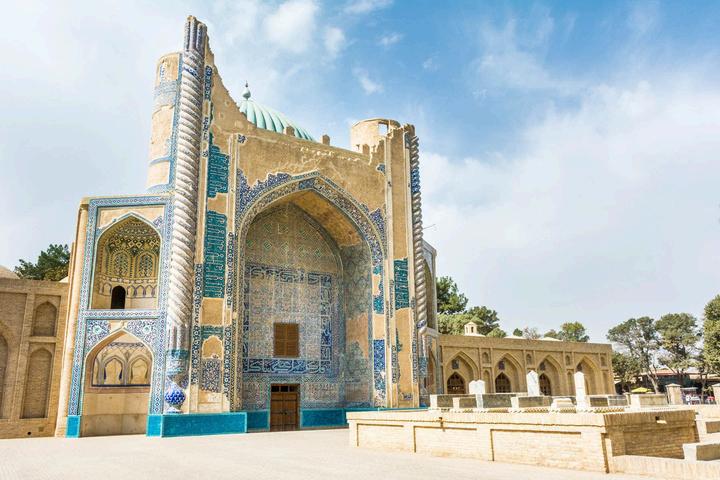
Balkh is one of the 34 provinces of Afghanistan, located in the north of the country. Its capital and largest city is Mazar-e-Sharif. Balkh has long been an important hub on trade routes connecting the Far East, the Middle East, the Mediterranean, and Europe. Known for its famous Blue Mosque, which was once destroyed by Genghis Khan and later rebuilt by Timur, showcasing its resilience and enduring cultural importance Historically, the region of Balkh has been part of various cultural regions, including Ariana and Greater Khorasan, making it a cornerstone of Afghanistan’s heritage. Balkh Province serves today as one of Afghanistan’s main gateway to Central Asia, sharing borders with Jowzjan, Sar-e Pol, Samangan, and Kunduz provinces, as well as the Surxondaryo Region of Uzbekistan to the north, making it the only province in Afghanistan with a border to Uzbekistan. It also borders Turkmenistan, Tajikistan, and other Afghanistan provinces, covering an area of 16,840 km².
Balkh has a rich religious and cultural history. It is known as the hometown of Trapusa and Bahalika, the first disciples of Buddha. The famous Buddhist monastery, Nava Vihara, once housed a gigantic statue of Gautama Buddha and attracted pilgrims and leaders from afar The province also had a vibrant Jewish community, historically granted its own quarter under Timur, and was home to various dynasties, including the Umayyads, Abbasids, Iranic and Turkic rulers, and the Mongols.
Balkh Province, A Historical and Cultural Jewel of Afghanistan Balkh Province, A Historical and Cultural Jewel ofAfghanistan
The province boasts many historical landmarks, such as Nava Vihara, Khwaja Nasr Parsa shrine, the tomb of poet Rabi’a Balkhi, the Nine Domes Mosque (Masjid-e Noh Gonbad), and the tomb of Hazrat Ali. Balkh has been a center for Persian literature and science, producing notable figures such as Mawlānā Jalal ad-Din Rūmī Balkhi, Wasef Bakhtari, Abu Zayd al-Balkhi, Avicenna, and many others.
Balkh is widely recognized as the birthplace of Nawruz, a festival celebrated every year to mark the beginning of the solar calendar. Nawruz holds great cultural and historical significance in the region, bringing together people from different communities to celebrate renewal, nature, and the start of a new year The festival includes traditional music, dances, food, and various cultural activities, making it an important symbol of unity and heritage in the wider region. Balkh Province is divided into 15 districts: Balkh, Charbolak, Charkint, Chimtal, Dawlatabad, Dihdadi, Kaldar, Khulm, Kishindih, Marmul, Mazare-Sharif, Nahri Shah, Sholgara, Shortepa, and Zari. Approximately 66% of the population lives in rural areas, while 34% reside in urban centers. The traditional sport of Buzkashi remains very popular, and natural gas from Sheberghan and Turkmenistan provides energy for the province. Hairatan port connects Afghanistan with Uzbekistan, and Tashqurghan is another important location in Balkh Balkh Province is a vibrant blend of history, culture, and community Its resilience, rich heritage, and diverse population make it a shining example of Afghanistan’s enduring spirit and potential for growth.
Photo credit: www lostwithpurpose com
g y y
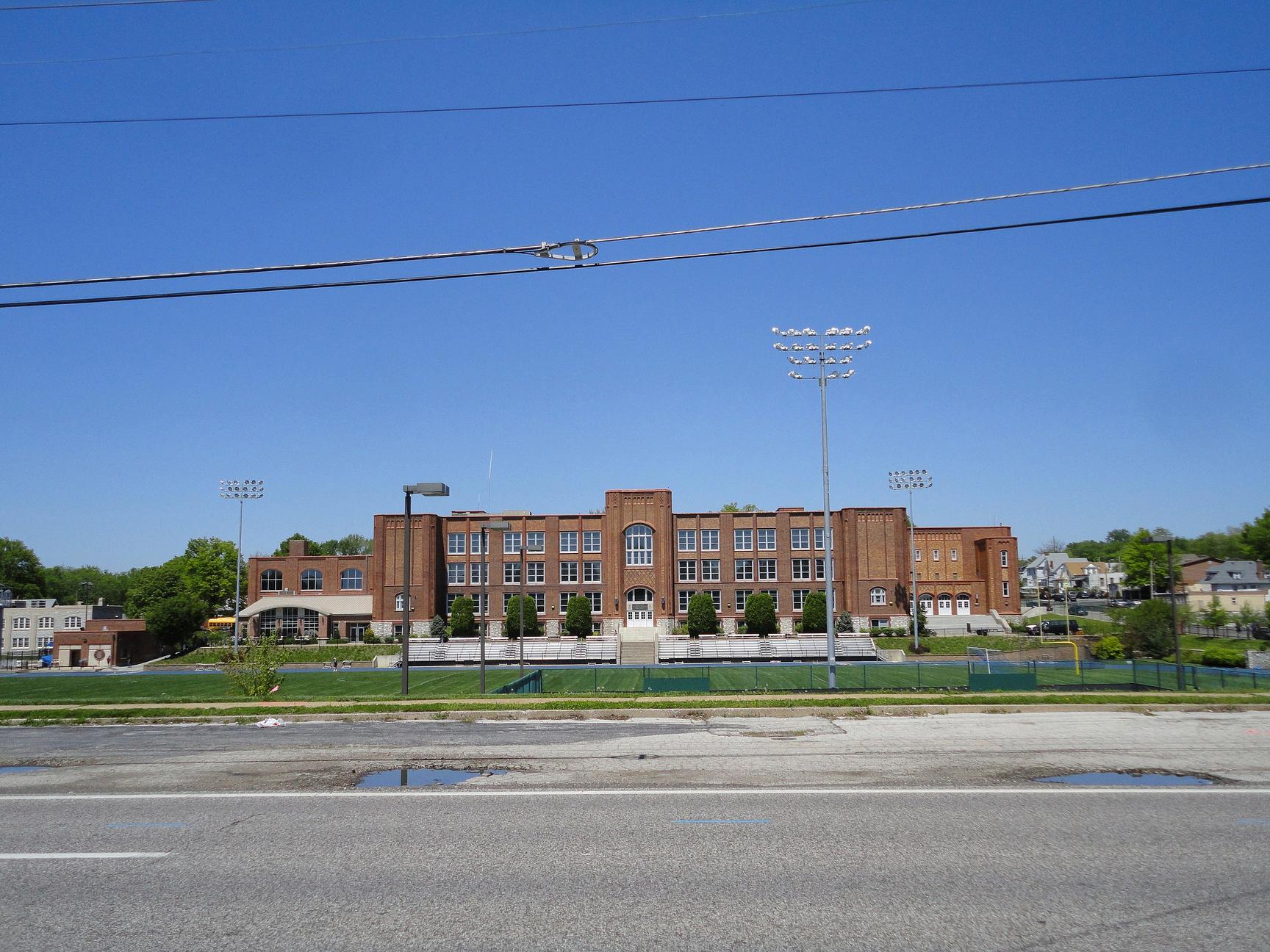
School in America is very different from schools in other countries. When I first arrived here, everything felt new to me. The buildings were large, with many classrooms, lockers, and long hallways. At first, it was a little confusing to find my classes, but after a few weeks, I became more familiar with the school layout. I remember my first day clearly—I was afraid to talk to anyone. Now, I feel comfortable smiling and greeting people in the hallway. Every day, I feel more confident walking through the school and finding my way to class One thing I appreciate about American schools is the wide choice of subjects. We study English, math, science, and history, but we can also take classes like art, biology, and business. I enjoy this because it allows students to explore what interests them most. Biology is one of my favorite subjects, especially when we do experiments and learn how the body works. I want to become a doctor one day, so these lessons inspire me. The teachers here are friendly, patient, and always willing to help. When I don’t understand something, my teachers take the time to explain it again, which makes me feel supported.
Although it felt scary at the beginning, I can see myself improving. When I finish a presentation, I feel proud because I know I tried my best.
School in America is not always easy. There is a lot of homework, and studying for tests can be challenging. But I know these responsibilities help me learn and prepare for my future. When I receive a good grade, I feel proud of the effort I put in. I also enjoy meeting students from many different backgrounds Everyone has a unique story, and I have made good friends who encourage me. Even when school becomes difficult, I try to stay positive and put in my best effort. Overall, I believe school in America gives me many opportunities to learn and grow. It helps me become more confident, responsible, and prepared for the future. I am thankful for my teachers, my friends, and all the experiences I am having. I hope to continue working hard so I can achieve my dream of becoming a surgeon one day. School in America is helping me become the person I want to be.
Photo credit: Wikipedia
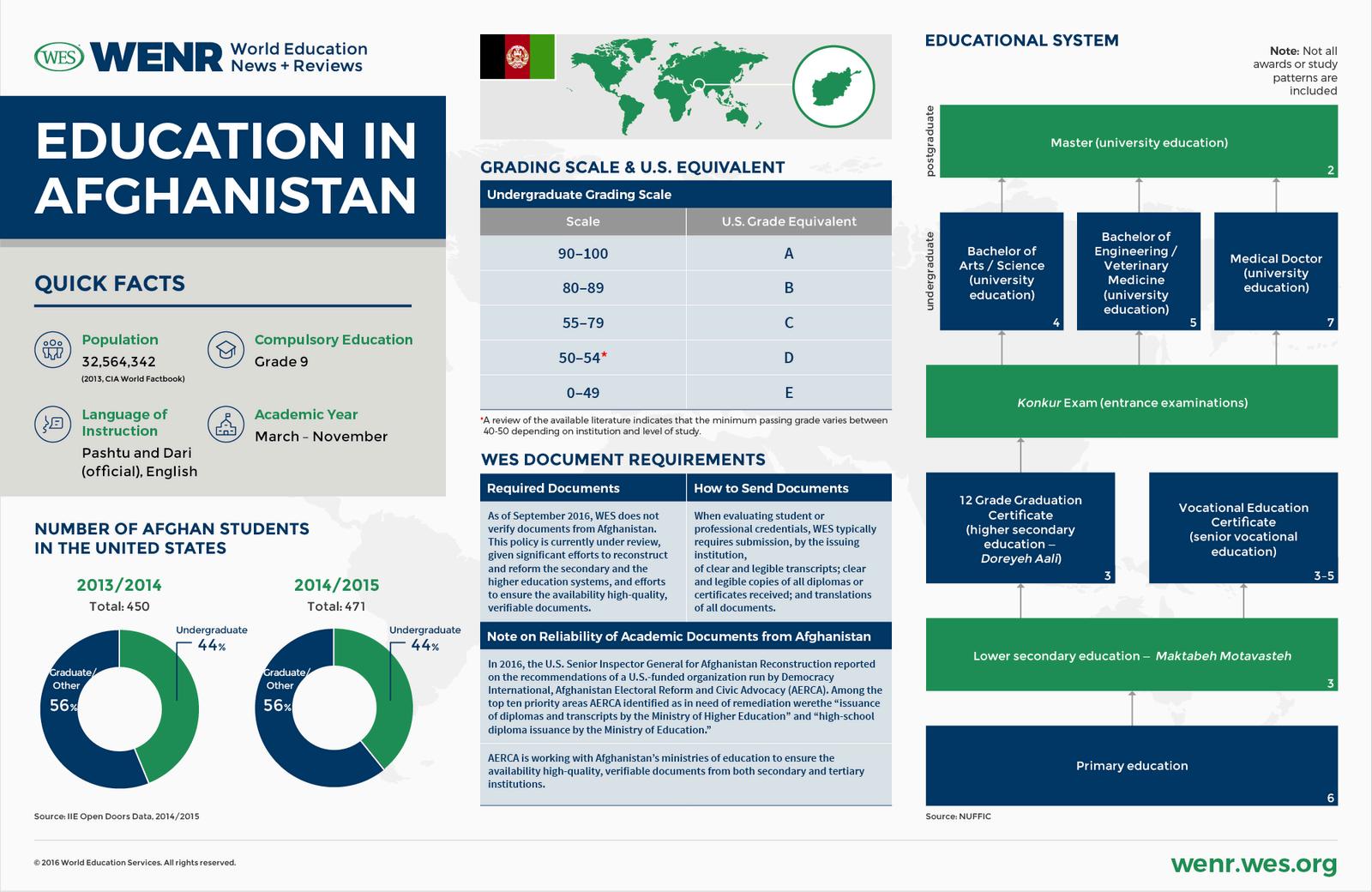
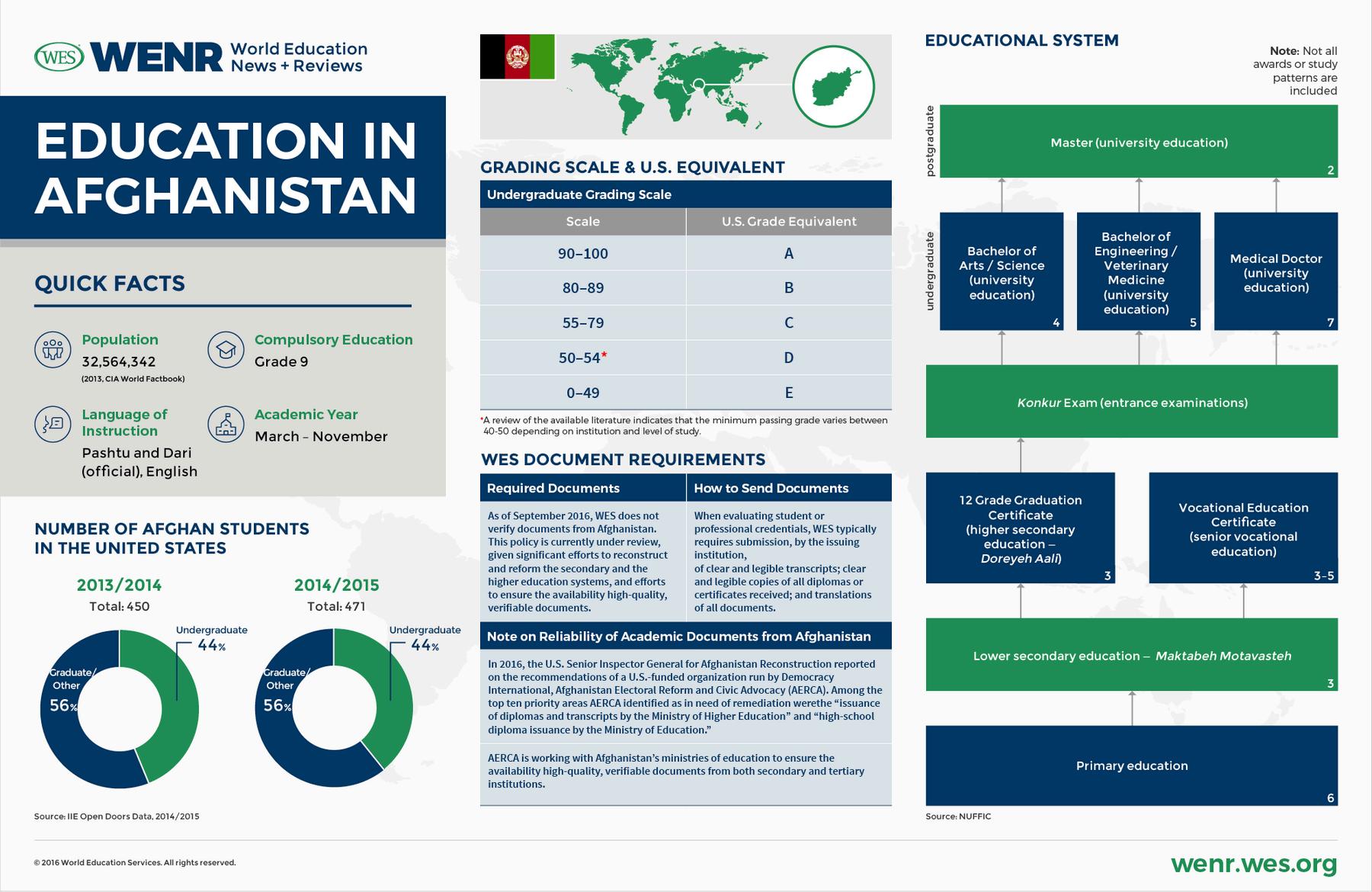
them. Even partial documents, copies, or score reports can be used to participate in this program. The International Institute of St. Louis, in collaboration with the Gateway Program, provides this service completely free of charge, making it accessible for all who qualify.
learn more, contact the International Institute of St. Louis as soon as possible.
Source: https://www.wes.org/