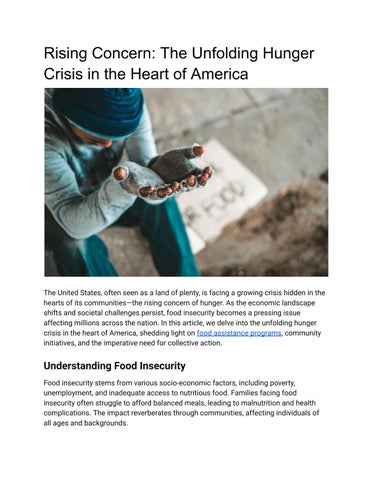
Rising Concern: The Unfolding Hunger Crisis in the Heart of America

The United States, often seen as a land of plenty, is facing a growing crisis hidden in the hearts of its communities—the rising concern of hunger. As the economic landscape shifts and societal challenges persist, food insecurity becomes a pressing issue affecting millions across the nation. In this article, we delve into the unfolding hunger crisis in the heart of America, shedding light on food assistance programs, community initiatives, and the imperative need for collective action.
Understanding Food Insecurity
Food insecurity stems from various socio-economic factors, including poverty, unemployment, and inadequate access to nutritious food. Families facing food insecurity often struggle to afford balanced meals, leading to malnutrition and health complications. The impact reverberates through communities, affecting individuals of all ages and backgrounds.
Causes of Food Insecurity
The root causes of food insecurity are complex, intertwining with systemic issues such as income inequality, lack of affordable housing, and limited access to education and healthcare.
Impact on Communities
Food insecurity not only compromises physical health but also undermines societal well-being, hindering academic performance, exacerbating health disparities, and perpetuating cycles of poverty
Food Banks: A Lifeline for Many
Amidst the challenges, food banks emerge as crucial lifelines for individuals and families facing hunger These nonprofit organizations play a pivotal role in distributing food to those in need, offering a beacon of hope in times of uncertainty
Importance of Food Banks
Food banks serve as vital resources, bridging the gap between food surplus and food insecurity by collecting and distributing donations to local communities.
Services Provided
From fresh produce to pantry staples, food banks provide a diverse array of nutritious options, ensuring that individuals have access to wholesome meals.
Accessing Food Assistance Programs
For individuals seeking assistance, navigating food programs can be daunting. Understanding the avenues available and eligibility requirements is key to accessing vital resources.
How to Find Food Banks Near Me
Utilizing online resources and community networks can help individuals locate nearby food banks and distribution centers.
Eligibility Criteria
While eligibility criteria may vary, many food assistance programs prioritize serving individuals and families experiencing financial hardship or crisis situations.
Challenges Faced by Food Assistance Programs
Despite their noble mission, food assistance programs encounter numerous challenges in their efforts to combat hunger effectively.
Distribution Issues
Logistical challenges, including transportation and storage constraints, can hinder the timely distribution of food resources to those in need.
Resource Constraints
Limited funding and donations pose significant obstacles for food banks, often forcing them to contend with shortages and unpredictable supply chains.
Community Initiatives and Support
Community-driven initiatives play a pivotal role in supplementing the efforts of food assistance programs, fostering solidarity and resilience within local neighborhoods.
Volunteer Opportunities
Volunteers form the backbone of many food banks, contributing their time and expertise to support food distribution efforts and community outreach initiatives.
Donation Programs
Individuals, businesses, and organizations can make a tangible difference by donating food, funds, or resources to support hunger relief efforts in their communities.
Government Interventions and Policies
Government intervention and policy reform are critical components of a comprehensive approach to addressing food insecurity and hunger across the nation.
SNAP Benefits
The Supplemental Nutrition Assistance Program (SNAP) provides essential support to low-income individuals and families, empowering them to purchase nutritious food items.
Emergency Food Assistance Programs
Emergency food assistance programs offer immediate relief to individuals facing acute hunger crises, providing access to food resources during times of need.
Addressing Root Causes of Hunger
To achieve lasting solutions, it is imperative to address the underlying factors contributing to food insecurity and hunger within society
Poverty Alleviation Strategies
Efforts to combat poverty through equitable economic policies and social welfare programs can help alleviate the root causes of hunger and food insecurity.
Education and Employment Opportunities
Investments in education, vocational training, and job creation initiatives can empower individuals to achieve economic self-sufficiency and food security.
The Role of Education in Fighting Hunger
Education serves as a powerful tool in raising awareness, promoting nutritional literacy, and empowering individuals and communities to make informed choices about their food options.
Raising Awareness
Educational campaigns and outreach programs play a pivotal role in raising awareness about the prevalence and impact of food insecurity, fostering empathy and understanding within society.
Promoting Nutritional Literacy
By equipping individuals with the knowledge and skills to make healthy food choices, nutritional literacy initiatives empower communities to prioritize their health and well-being.
Supporting Vulnerable Populations
Vulnerable populations, including seniors, children, and families, face unique challenges in accessing adequate nutrition and support services.
Seniors and Elderly Communities
Elderly individuals often confront barriers such as limited mobility and fixed incomes, making them particularly vulnerable to food insecurity and malnutrition.
Children and Families in Need
Children from low-income households are disproportionately affected by food insecurity, jeopardizing their health, development, and academic achievement.
Conclusion
In the heart of America, the unfolding hunger crisis demands our attention and collective action. By supporting food assistance programs, advocating for policy reform, and fostering community solidarity, we can work together to ensure that no individual goes hungry in our nation. Together, we can build a future where access to nutritious food is a fundamental right for all.
FAQs
Q1. How can I find a food bank near me?● Utilize online directories or contact local community organizations for information on nearby food banks and distribution centers.
Q2. What kind of assistance do food banks provide?
● Food banks offer a variety of food items, including fresh produce, pantry staples, and perishable goods, to individuals and families in need.
Q3. Who is eligible to receive assistance from food banks?
● Eligibility criteria may vary depending on the organization, but many food assistance programs prioritize serving individuals and families experiencing financial hardship or crisis situations.
Q4. Can I volunteer at a food bank to help combat hunger in my community?
● Yes, many food banks rely on volunteers to support food distribution efforts, organize donation drives, and assist with community outreach initiatives.
Q5. How can I support hunger relief efforts in my community?
● You can make a difference by donating food, funds, or resources to local food banks, participating in advocacy campaigns, and volunteering your time and expertise.
Q6. What government programs are available to help address food insecurity?
● Government programs such as SNAP (Supplemental Nutrition Assistance Program) and emergency food assistance programs provide essential support to individuals and families facing food insecurity.
Conclusion
In conclusion, addressing the unfolding hunger crisis in the heart of America requires a multifaceted approach involving community engagement, policy reform, and individual action. Together, we can build a future where access to nutritious food is a reality for all Americans.