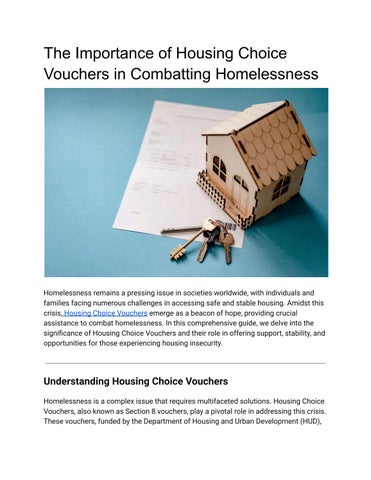
The Importance of Housing Choice
Vouchers in Combatting Homelessness

Homelessness remains a pressing issue in societies worldwide, with individuals and families facing numerous challenges in accessing safe and stable housing. Amidst this crisis, Housing Choice Vouchers emerge as a beacon of hope, providing crucial assistance to combat homelessness. In this comprehensive guide, we delve into the significance of Housing Choice Vouchers and their role in offering support, stability, and opportunities for those experiencing housing insecurity.
Understanding Housing Choice Vouchers
Homelessness is a complex issue that requires multifaceted solutions. Housing Choice Vouchers, also known as Section 8 vouchers, play a pivotal role in addressing this crisis. These vouchers, funded by the Department of Housing and Urban Development (HUD),
provide rental assistance to low-income individuals and families, enabling them to secure housing in the private rental market.
Navigating the Application Process
Obtaining a Housing Choice Voucher involves a structured application process. Prospective applicants must meet certain eligibility criteria, including income limits set by HUD. Additionally, applicants may need to provide documentation such as proof of income, identification, and references.
Securing Stable Housing
Once approved, recipients of Housing Choice Vouchers gain access to a wider range of housing options. By subsidizing rental payments, these vouchers make housing more affordable, reducing the risk of eviction and homelessness. This stability is essential for individuals and families striving to rebuild their lives and pursue opportunities for economic advancement.
Empowering Individuals and Families
Beyond providing shelter, Housing Choice Vouchers empower recipients by fostering independence and self-sufficiency. With housing stability secured, individuals can focus on other aspects of their lives, such as employment, education, and healthcare. This holistic approach helps break the cycle of poverty and homelessness, offering a path towards long-term stability and success.
Supporting Vulnerable Populations
Housing Choice Vouchers are particularly beneficial for vulnerable populations, including veterans, individuals with disabilities, and survivors of domestic violence. By ensuring access to safe and stable housing, these vouchers address the unique needs and challenges faced by these groups, promoting dignity, security, and well-being.
Promoting Community Integration
Stable housing is not only a fundamental human need but also a catalyst for community integration. Housing Choice Vouchers enable individuals and families to live in diverse
neighborhoods, fostering social connections and economic opportunities. This integration contributes to vibrant and inclusive communities where everyone can thrive.
Overcoming Housing Discrimination
Despite their benefits, Housing Choice Vouchers are sometimes met with stigma and discrimination. Landlords may refuse to accept vouchers, limiting housing options for voucher holders. Addressing this discrimination is crucial for ensuring equal access to housing and combating homelessness effectively
Partnering for Impact
The success of Housing Choice Vouchers relies on collaboration between government agencies, housing authorities, landlords, and community organizations. By working together, these stakeholders can streamline the voucher program, expand housing options, and provide wraparound services to support voucher recipients.
FAQs (Frequently Asked Questions)
Q: How do Housing Choice Vouchers work?
A: Housing Choice Vouchers provide rental assistance to eligible individuals and families, enabling them to secure housing in the private rental market. Recipients typically pay 30% of their income towards rent, while the voucher covers the remainder, up to a certain limit.
Q: Who is eligible for Housing Choice Vouchers?
A: Eligibility for Housing Choice Vouchers is based on income level, with preference given to low-income individuals and families. Applicants must also meet other criteria, such as citizenship status and background checks.
Q: Can landlords refuse to accept Housing Choice Vouchers?
A: While landlords are not legally required to accept Housing Choice Vouchers, refusing to do so may constitute discrimination in some cases. It's important for landlords to understand the benefits of participating in the voucher program and the support available to them.
Q: How long does it take to receive a Housing Choice Voucher?
A: The timeline for receiving a Housing Choice Voucher can vary depending on factors such as funding availability, application volume, and local housing policies. Applicants should be prepared for potential delays and stay informed throughout the process.
Q: Are Housing Choice Vouchers only for urban areas?
A: No, Housing Choice Vouchers are available in both urban and rural areas, providing assistance to eligible individuals and families regardless of location. However, voucher availability and housing options may vary by region.
Q: How can I apply for a Housing Choice Voucher?
A: To apply for a Housing Choice Voucher, individuals should contact their local public housing agency (PHA) or visit the HUD website for more information. The application process typically involves completing forms, providing documentation, and attending interviews.
Conclusion:
In conclusion, Housing Choice Vouchers play a vital role in combatting homelessness and providing stability to individuals and families in need. By offering rental assistance, promoting independence, and fostering community integration, these vouchers serve as a cornerstone of efforts to address housing insecurity. As we strive for a more equitable and inclusive society, investing in programs like Housing Choice Vouchers is essential for building stronger, more resilient communities.