
Reconciliation Action Plan
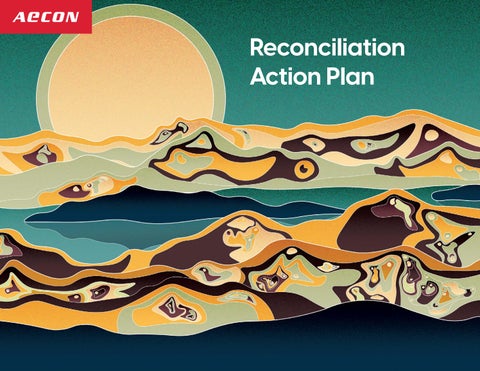
Artist Profile
“A lot of my recent works have been heavily inspired by our surroundings, whether they are natural or manmade. I have a fascination with the multitude of shapes and designs that can be found in both forms of objects and beings.
This piece is heavily inspired by McLean’s Lookout in Little Current on Manitoulin Island. This lookout specifically gives a marvellous view of the North Channel of Manitoulin Island. It’s a place that I’ve only been a handful of times, however it’s a place where I enjoy just sitting and staring out into the open waters and cascading landscape. To describe the feeling of being up so high and being able to see the land in its entirety is indescribable, rather similar to how dreams feel. Similar to how many of my projects are completed, and true to my current academic focus, this artistic rendition of the North Channel is done completely by memory and nostalgic value alone. In place of perfect copy, I rather focus on how the experience of the lookout makes me feel and the emotions that run through my mind when being there.”
Karly Cywink is an Objiwe Multidisciplinary Artist, originally from Manitoulin Island, and now based in Toronto. Cywink’s work ranges from filmmaking, communications and design, to traditional painting and digital illustration. As a recent graduate of the RTA program at Toronto Metropolitan University, Cywink honed in on her skills of documentary filmmaking, releasing two documentaries entitled Am I Indian Enough? (2019) and You’re Here Now (2020). After the release of these documentaries and in lieu of the ongoing pandemic, Cywink felt that there needed to be a shift in her career and is now honing her skills in digital illustration. Cywink is currently a Master of Arts student at TMU, focussing on the nostalgic experience and how this informs tangible creative art. She will be publishing an illustrative comic for her dissertation.
Cywink’s career so far includes works for and in collaboration with TMU Pow Wow (formally Ryerson University Pow Wow), Aecon, Metrolinx, The Moccasin Identifier Project, and Ted Rogers School of Management. As an artist, Cywink’s goal is simple: she wants to make people feel something and evoke emotions; whether it’s a sense of belonging, relatability, feeling heard, or even inspired. Cywink is still on her own journey to find her own community and help others do the same. She hopes to continue to create strong foundations as an emerging artist and creative leader while shaping the media landscape by sharing experiences and elevating the voices of others.


image Karly Cywink (she/her), MA in Media Production, Multidisciplinary Indigenous Artist (karlycywink.com)
Message from the CEO
True reconciliation with Indigenous peoples and communities is the responsibility of everyone. As we all continue to realize the painful truth of the residential school system and the inter-generational impacts that remain, reconciliation must be a pivotal priority for our country and our Company. There is still much more to do.
Developing and fostering long-lasting, respectful relationships and supporting economic development within Indigenous communities have long been a key focus for Aecon and are paramount to our reconciliation efforts. Aecon has recognized the importance of Indigenous inclusion in our operations and across Canada for many years, and we have been fortunate to develop sustainable and mutually beneficial relationships with many Indigenous communities while continuously learning. As a Canadian leader in construction and infrastructure development, we are in a unique position to effect lasting and positive change and are dedicated to playing a leading role in reconciliation with Indigenous peoples through our national operating footprint.
We are committed to collaboratively seeking meaningful ways to engage in reconciliation by continuously working in unison with Indigenous peoples –respecting the unique rights, cultures and lands where we work. With the release of the Truth and Reconciliation Commission’s Calls to Action in 2015,
we continued to build on this commitment with further action. The Truth and Reconciliation Commission outlined 94 Calls to Action urging all levels of government and nongovernmental organizations to work together to repair the harm caused by residential schools and to advance reconciliation. Call to Action #92 specifically calls on corporate Canada to help create a better future. Reflecting on our values and principles, we see many opportunities in the Commission’s Calls to Action that we can continue to apply to our business across the country.
Our steadfast commitment to reconciliation is outlined in our first Reconciliation Action Plan. Framed by five key pillars of Leadership, Respect, Recognition, Commitment and Empowerment, this Plan was developed in part by Indigenous changemakers across Canada, subject matter experts, operational leaders and employees, and is reflective of our past and current relationships with Indigenous peoples.
Our Reconciliation Action Plan serves as our blueprint for how we intend to continue to engage and partner with Indigenous peoples, communities, businesses, and organizations to advance reconciliation. We have set measurable targets for enhanced Indigenous procurement and environmental stewardship, increased Indigenous representation and inclusion across all areas of our organization, and improved insight into Indigenous ways of knowing.
It is important to recognize that transformative change takes time and resources, and we know that change is a lengthy process that requires extensive collaboration with Indigenous peoples. Led by our leadership team, we are eager to build on the extensive work and engagement initiatives we have undertaken to-date while ensuring the commitments in our Plan are put into action – advancing reconciliation across our operations by ensuring our employees, projects and initiatives are aligned with the priorities of Indigenous communities.
While we are proud of the progress Aecon has made in recent years, our Reconciliation Action Plan outlines our commitments for the future. Just as our work on some of the world’s most complex infrastructure projects has shaped Aecon’s roots, our reconciliation efforts today support the foundation of a resilient future for

Indigenous peoples to enable future generations to thrive.
We look forward to engaging and working transparently with Indigenous peoples and communities. We expect to continuously evolve our action plan in the coming years, as we measure and share our progress throughout this imperative journey. We are committed to listening to feedback from Indigenous partners and communities across Canada with the goal of true reconciliation and supporting the resiliency of Indigenous peoples.
As stated by the Truth and Reconciliation Commission: “For Canadians from all walks of life, reconciliation offers a new way of living together.”

Jean-Louis Servranckx President and Chief Executive Officer
Vision Statement
Aecon’s vision is to be an industry leader in advancing Reconciliation and co-creating opportunities that provide sustainable and beneficial relationships aligned with the priorities and objectives of Indigenous peoples. We will do this by continuously working in unison with Indigenous communities, respecting and recognizing the unique rights, culture, and lands where we work.
Mission Statement
Through the commitment of Leadership, it is Aecon’s mission to:
Respect the unique needs, cultures and rights of Indigenous peoples to foster an inclusive and equitable culture where Indigenous peoples feel supported and enabled to achieve career aspirations;
Recognize the truth of our shared history and the Indigenous lands that we work on through building awareness, developing allyship, and actively listening to the priorities and objectives of Indigenous peoples;
Commit sustainable resources and build collaborative relationships with Indigenous partners to foster positive change and create stronger communities; and
Empower Indigenous peoples to support economic advancement, wealth creation and a sustainable future.
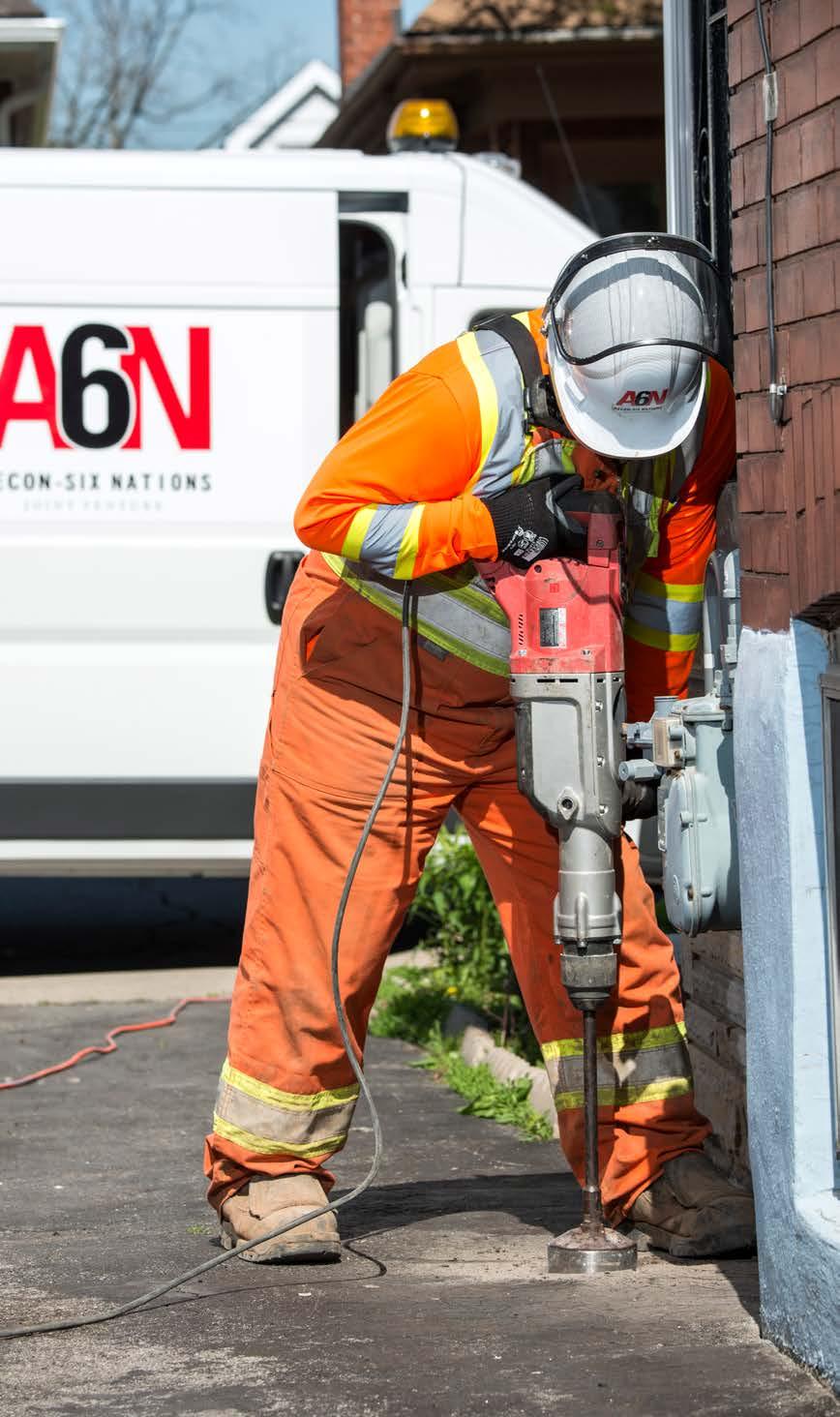
image Aecon-Six Nations (A6N) provides a broad range of utility-related work within the gas, fibre, forestry and hydro sectors.
Pillar 1 – Leadership
Lead and inspire the Aecon community to participate in the development, implementation and execution of tangible actions of the Reconciliation Action Plan (RAP).
Goals and Objectives
1. Transparency and Accountability
Continue our strong history of honesty, transparency and accountability through acknowledging our responsibility in advancing Reconciliation.
a) Ensure RAP goals and metrics are maintained and shared across the enterprise
i. Communicate the meaning, key areas of accountability for implementation, and goals of the RAP to leadership and staff: Completion Q2 2023
ii. Establish an Indigenous Advisory Committee (IAC) with members external to Aecon to review RAP goals, make suggestions for improvement, and verify ethical conduct and representation of information: Completion Q3 2023
iii. Dedicate resources and have the capacity and structures in place to set up Aecon’s RAP for success and to meet future commitments: Completion Q1 2023
2. Policies and Processes
1) Examine internal policies and processes with a critical lens to ensure barriers to achieving Reconciliation are minimized or resolved.
a) Ensure Aecon’s RAP is appropriately integrated and reflected in corporate policies and processes within three years of implementation
i. Complete a review of policies and processes within the context of the RAP goals: Completion Q4 2023
ii. Engage with impacted departments to revise and align policies and processes within the context of RAP goals: Completion Q4 2024
2) Be mindful in our actions, interactions and outcomes
a) Have a comprehensive approach to manage, capture feedback, and communicate goals, objectives and metrics of the RAP
i. Develop a system to track, store and report on the RAP goals:










Pillar 2 – Respect
Respect the unique needs, culture and rights of Indigenous peoples to foster a safe, inclusive and equitable environment to achieve career goals.
Goals and Objectives
1. Equitable and Inclusive Workplace
Continue to consciously create a culturally safe, equitable and inclusive workplace for Indigenous Employees.
a) Enhance support and resources for the Indigenous Employee Resource Group
i. Provide opportunities for Indigenous Employee Resource Group members to attend conferences and events focused on supporting Indigenous health and wellbeing in the workplace: Ongoing
b) Implement practices to create culturally meaningful workspaces
i. Increase the frequency and prominence of Indigenous artwork in office spaces: Completion Q1 2024
c) Identify relevant enhancements to Aecon’s wellness program that increases access to culturally relevant tools to support to Indigenous employees
i. Find opportunities with Indigenous Health providers to ensure our support systems respect the health and well-being of Indigenous
2. Recruitment, Advancement and Retention
Become the first-choice employer for Indigenous peoples in the infrastructure industry by ensuring Indigenous peoples have access to opportunities, are supported, can thrive, and can achieve career goals.
a) Develop recruitment strategies that offer diverse opportunities and increase Indigenous talent across all regions, departments and business units
i. Create Indigenous-specific internship or developmental opportunities and Aecon-led scholarships: Ongoing
ii. Engage with organizations focused on supporting Indigenous youth entering the workforce to provide awareness of the opportunities available in the infrastructure industry: Ongoing
iii. Continue to collaborate, partner, and promote employment opportunities with various Indigenous communities, organizations and educational institutions: Ongoing
b) Enhance the work environment for Indigenous peoples to succeed










Pillar 3 – Recognition
Recognize the truth of our shared history and the Indigenous lands that we operate on through building awareness, developing allyship and actively listening to the unique interests and priorities of Indigenous peoples.
Goals and Objectives
1. Education and Awareness
Motivate change and build allyship by educating and raising awareness of the truth, shared history, and the importance of advancing reconciliation in a way that engages employees to take ownership.
a) Increase awareness of Indigenous history, cultures and contemporary topics across the organization
i. Require all Aecon employees to complete an annual Indigenous Awareness Training Program: Yearly
ii. Continue to leverage the power of storytelling and cultural events to provide innovative and engaging learning sessions to expand the knowledge of our leadership team and team members: Ongoing





2. Engagement
Continue to grow sustainable partnerships through engagement with Indigenous communities and organizations through supporting, sponsoring and participating in initiatives and activities.
a) Enhance proactive and culturally appropriate Indigenous engagement processes
i. Facilitate opportunities for leadership to attend meetings or events with Indigenous communities and leaders: Ongoing
ii. Advance project-specific outcomes that can be built into a social impact framework, including skills development and/or capacity building: Ongoing




























































Pillar 4 – Commitment
Commit resources to build sustainable and mutually beneficial relationships with Indigenous peoples to foster positive change and create stronger communities.
Goals and Objectives
1. Social Impact
Continue to advance and support Indigenous communities, organizations and related initiatives by creating opportunities that enable economic empowerment, positive social impact and inclusion of Indigenous peoples.
a) Partner on collaborative initiatives targeted towards advancing the education of Indigenous youth
i. Identify and support organizations and charities that advance the education of Indigenous youth: Completion Q1 2024
2. Collaboration with Indigenous Organizations
Increase involvement and collaboration with Indigenous organizations to support programming and events.
a) Continue towards Progressive Aboriginal Relations Program (PAR) certification
i. Leverage the RAP framework to guide the implementation of the PAR certification: Completion Q4 2023

















Pillar 5 – Empowerment
Empower Indigenous peoples in supporting economic advancement, wealth creation and a sustainable future.
Goals and Objectives
1. Supply Chain
Increase Indigenous content and continuity in the Supply Chain processes as an industry leader in Indigenous procurement.
a) Increase awareness for Indigenous communities, organizations, businesses and industry peers as a leader in Indigenous procurement
i. Ensure Supply Chain processes for Indigenous procurement are aligned with RAP goals and integrated within Supply Chain best practices: Completion Q3 2023
2. Training and Mentorship
Formalize sustainable training and mentorship opportunities for Indigenous peoples to empower future Indigenous leaders.
a) Provide opportunities to develop and celebrate Indigenous business leaders
i. Create an Indigenous supplier development program to increase procurement: Completion Q4 2023
3. Partnerships
Continue to build lasting and impactful partnerships with Indigenous groups and organizations that share mutual values.
a) Actively pursue relationships with Indigenous communities, organizations and businesses
i. Continue to explore and develop partnerships with Indigenous businesses and communities: Ongoing



































Aecon Group Inc.
Vancouver 1055 Dunsmuir Street, Suite 2124
Vancouver, BC V7X 1G4 604 235 1398
Calgary
28 Quarry Park Blvd SE, Suite 310
Calgary, Alberta T2C 5P9
403 695 3085
Toronto
20 Carlson Court, Suite 105
Toronto, Ontario M9W 7K6
416 297 2600
Montreal
2015 rue Peel, Bureau 600
Montreal, Quebec H3A 1T8 514 352 0100
(Toll Free) 1 877 232 2677 aecon@aecon.com
Indigenous Relations Inquiries
John Bonin
Director Indigenous Relations 514 495 55105
jbonin@aecon.com
Ethics Hotline
(Toll Free) 1 844 980 2967 aecon.ethicspoint.com