ADVANCING THE ENERGY TRANSITION
2023 Sustainability Report
Aecon Group Inc. (TSX: ARE) is a North American construction and infrastructure development company with global experience. Aecon delivers integrated solutions to private and public sector clients through its Construction segment in the Civil, Urban Transportation, Nuclear, Utility and Industrial sectors, and provides project development, financing, investment, management, and operations and maintenance services through its Concessions segment.
This Sustainability Report is for Aecon Group Inc. and includes information regarding its subsidiaries and joint ventures. Unless otherwise noted: (i) all information in this report is presented as at, and for, the year ended December 31, 2023; and (ii) the data and analysis relates to Aecon and not its suppliers or clients. All dollar amounts are expressed in Canadian currency (CAD). References to “we,” “our,” “us,” “the Company” and “Aecon” mean Aecon Group Inc. and its subsidiaries.
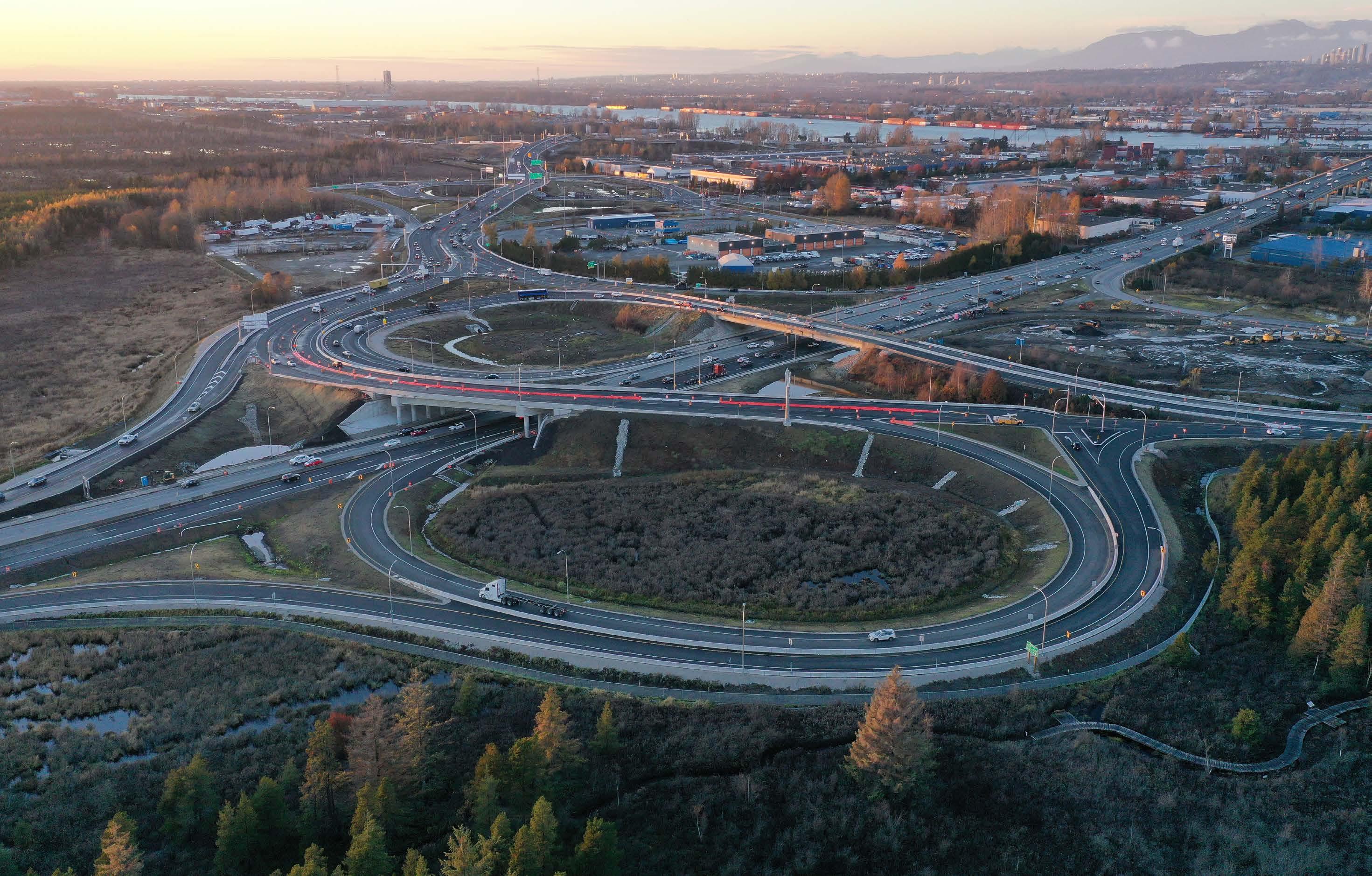
Aecon’s purpose is to build what matters to enable future generations to thrive. We build and operate infrastructure that meets today’s needs while addressing tomorrow’s complex challenges, including the imperative to rapidly advance the energy transition. As we do this essential work, we’re committed to acting responsibly in every area of our business.
From clean energy assets to sustainable transportation and water management infrastructure, Aecon is working with our clients to advance the energy transition and lay the foundations for thriving, sustainable communities.
Pages 11–16 describe our work with clients to accelerate the energy transition and support thriving communities.
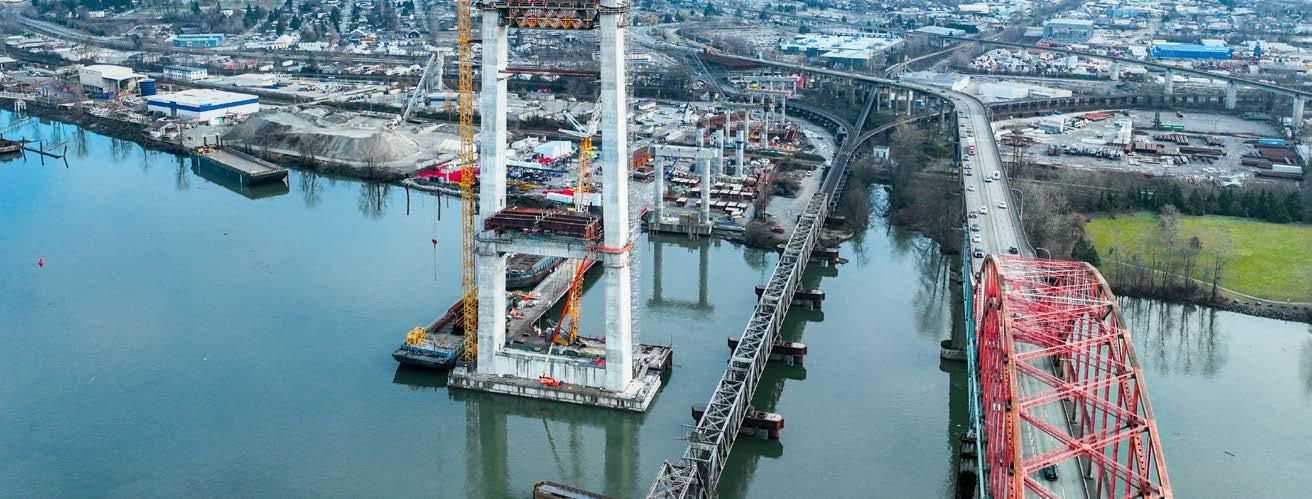
Aecon is working with researchers, innovators, suppliers, leading public and private sector clients, and local and Indigenous communities to drive progress in sustainable construction.
Pages 17–38 describe the environmental, social and governance practices that guide our business and operations.
2023 PERFORMANCE HIGHLIGHTS

$4.6B
Annual revenue
64%
2023 revenue tied to sustainability projects1
$275M
In procurement of goods and services from the Indigenous economy
5/5
Delivering all five of Canada’s largest infrastructure projects in 20232
157,474
Scope 1 and 2 greenhouse gas emissions
75% Share of backlog tied to sustainability projects1
0.89
Total Recordable Injury Frequency
20%
Cumulative reduction since 2020 in scope 1 and 2 emissions based on revenue intensity
30%
Women directors on our Board
Select Honours 2023
Silver Certification
for Progressive Aboriginal Relations
Canadian Council for Aboriginal Business
Sustainable Infrastructure Company of the Year
North American Business Awards
Canada’s Top Contractors
On-Site Magazine
Platinum Recognition
6 of Canada’s 10 largest infrastructure projects
ReNew Canada magazine
Best Canadian Human Resources
Team of the Year (over 500 employees)
2023 Canadian HR Awards – Human Resources Director and Canadian HR Reporter
Best ESG Reporting (small cap)
IR (Investor Relations) Magazine Awards –Canada
Gold Award for ESG – Gordie
Howe International Bridge Project
Canadian Council for Public-Private Partnerships
1 Sustainability projects help to preserve and protect the environment, but they also help to preserve society’s ability to sustain itself. They include, but are not limited to, projects that reduce emissions, support the transition to a net zero economy, support clean water use and conservation, and reduce/recycle waste. The definition of sustainability projects is based on the Sustainability Accounting Standards Board’s (SASB) definition of renewable energy projects and the federal government’s definition of green infrastructure under the Investing in Canada Infrastructure Program.
2 Based on confirmed project cost. Source: ReNew Canada magazine
GOVERNANCE
80%
of Board has skills and experience in ESG and Sustainability
QUARTERLY BOARD REPORTING from Sustainability Management Team
STRATEGY
PRELIMINARY QUALITATIVE CLIMATE-RELATED SCENARIO ANALYSIS CONDUCTED FOR CANADIAN OPERATIONS, including a 1.5-degree scenario (Net Zero 2050) and a current-policies scenario
AECON TRANSPORTATION EAST DIVESTMENT: increasing focus on opportunities expected to come from the transition to a net zero economy through decarbonization
U.S. EXPANSION: strong positioning to address industry growth in North American utility markets tied to ongoing energy transition and decarbonization
100%
of Board has skills and experience in Risk Management and Risk Mitigation
INTERNAL SUSTAINABILITY COMMITTEE
FOCUSED ON RISKS AND OPPORTUNITIES from the energy transition and climate change
20%
cumulative GHG emission reduction, since 20201
75%
share of backlog tied to sustainability projects
RISK MANAGEMENT
CONDUCTED A PRELIMINARY
SUSTAINABILITY-RISK ASSESSMENT in alignment with SASB Engineering & Construction Services Industry disclosures
INTEGRATION OF SUSTAINABILITY AND CLIMATE CHANGE RISKS into our Enterprise Risk Management (ERM) framework
GOVERNMENT OF CANADA
NET ZERO CHALLENGE and SBTi alignment ENVISION
Employee training and project alignment
1200+
employees trained in the Environment, Health and Safety Management System (EHSMS) program
Aecon is growing. Clients continue to choose Aecon, recognizing the value the Company provides as an agile, innovative project delivery partner committed to a meaningful purpose: building what matters to enable future generations to thrive.
In 2023, we extended our decades-long track record of delivering complex, large-scale infrastructure projects with excellence. We were at work on some of the largest projects ever undertaken in Canada –including the GO Rail expansion, the Gordie Howe International Bridge and the refurbishment of the Darlington Nuclear Station.
We also continue to build our reputation as an innovator ready to deliver projects that will accelerate the energy transition and lay the foundations for a net zero future in Canada and internationally. In 2023, Aecon began work with clients to help deliver the first Small Modular Reactor (SMR) in North America, build grid-scale battery energy storage capacity (see page 14) and adopt new energy technologies at the household and community levels.
Discussions at the COP28 summit – on topics ranging from nuclear energy to transportation electrification – emphasized a continued global commitment to investing in the energy transition. Our business is increasingly focused on the many opportunities associated with this transition.
We’re already responding to the growing demand for new nuclear power generation capacity, supporting the electrification of transportation systems, helping communities and households adopt low-carbon heating and cooling technologies, and driving innovative energy storage initiatives.
Both our business strategy and our years of innovation-oriented investments in people and technology have positioned us for success in this rapidly changing landscape.
As we help clients and communities navigate decarbonization, we’re also transforming our own operations in pursuit of our goal to achieve net zero emissions by 2050 (see page 22). Reaching this goal requires timely and prudent investments in new technology as well as ongoing collaboration and engagement with industry partners, governments, technical experts and others (see page 20).
In early 2024, we launched our renewed strategic plan, Forward Together 2024–2027, setting out a high-level vision of where to play and how to win Our plan for how to win called for continued focus on three key areas – Organizational Resource Capacity and Capability, Excellence in Execution and Integrated Risk Management – to reinforce our leadership position and deliver greater and more predictable profitability.
As for where to play, while Aecon’s growth within Canada remains our primary focus, the U.S. and international infrastructure development and construction markets provide an opportunity to continue to diversify the business over time. In 2023, we took an important step toward expanding our footprint in the United States, driven in part by a $150 million strategic investment in Aecon Utilities from Oaktree Capital Management LP.
The investment from Oaktree affirms the current value of our utilities business and allows us to seize new opportunities across North America through organic growth and acquisitions. Many of these opportunities are tied to climate change mitigation and adaptation as well as decarbonization of energy systems, including public investments associated with the U.S. federal government’s Inflation Reduction Act and Bipartisan Infrastructure Bill, and other investments at the state and local levels.
While a growing majority of our work is connected to sustainability and decarbonization, our project portfolio continues to maintain a healthy balance across sectors, geography, size and contract models.
Demand for our work increases as growing communities make investments in water, electricity, mobility solutions, communications connectivity and other enabling infrastructure. It’s these same growing communities where we look to engage the talent that will help to drive our success in the years ahead.
Aecon is proud to work with Indigenous communities, governments, educational institutions, union partners and community groups to ensure that communities are aware of – and have access to – opportunities in construction and the skilled trades.
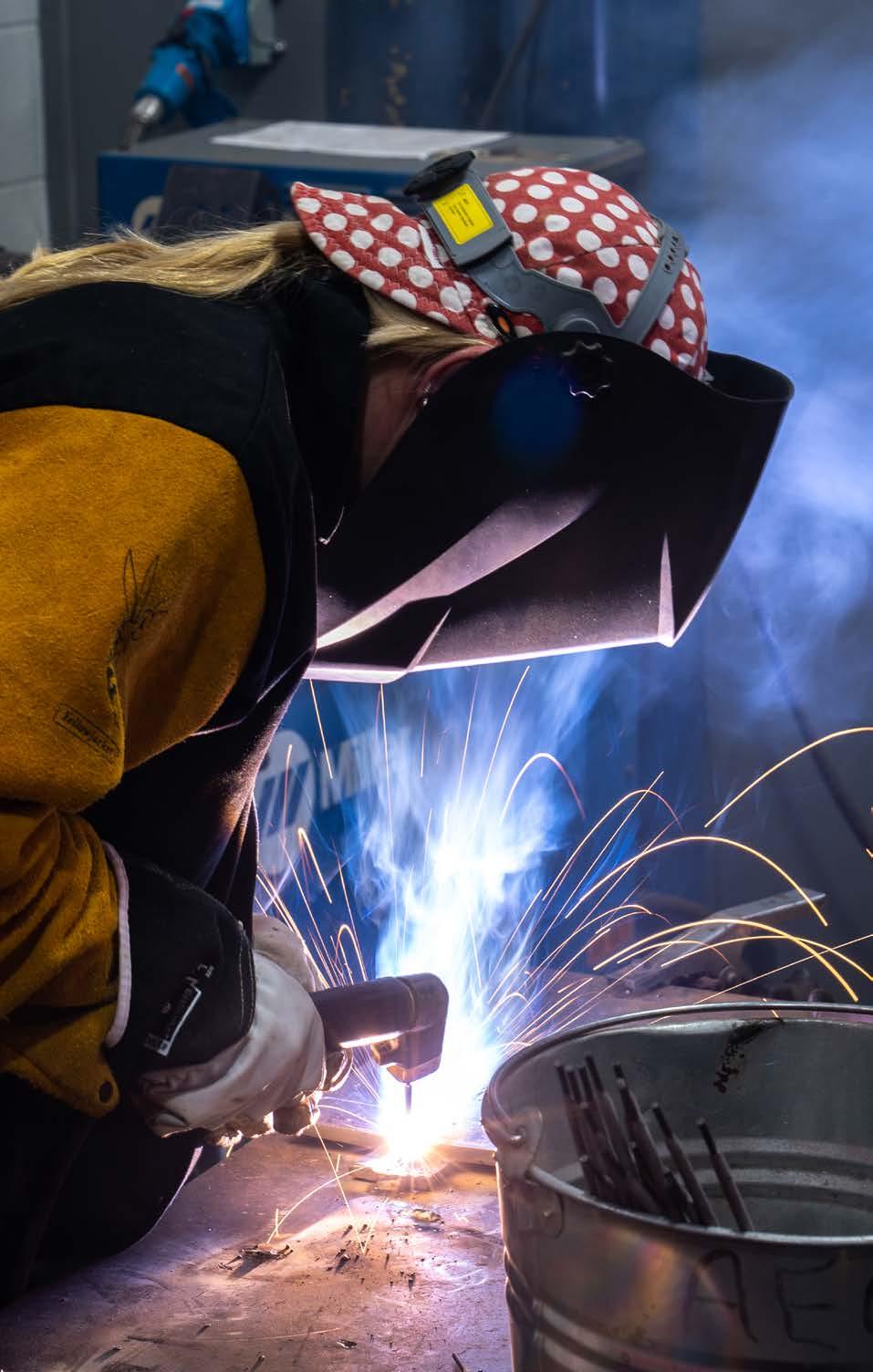
In 2023, our Aecon Women in Trades (AWIT) program marked its fifth consecutive year, welcoming a new cohort focused specifically on the nuclear industry. We’re also exploring the prospect of an AWIT offering at Six Nations Polytechnic. This program would complement several existing training and education initiatives Aecon supports at Six Nations of the Grand River and across other Indigenous communities.

These programs are just a few examples of Aecon’s commitment to achieving positive social impact in the communities where we work. Our goal is to build communities up in every sense: delivering the infrastructure they need to thrive, while expanding access to the learning and economic benefits connected to our work.
As we deliver projects that will help reduce emissions and build resilience to future climate impacts, our work continues to grow in meaning and significance. I extend my sincere thanks to everyone who has contributed to the business and sustainability achievements described in this report – and I look forward to another year of building what matters to enable future generations to thrive.
 Jean-Louis Servranckx President and Chief Executive Officer
As Aecon advances its business strategy and embraces new opportunities to deliver vital infrastructure in Canada, the United States and beyond, my Board colleagues and I are committed to upholding the governance and oversight practices that will ensure the Company maintains an excellent record of safety, compliance and responsible operations as well as effective stakeholder engagement.
Construction has always been an industry filled with complexity, with major projects requiring large skilled labour forces and rigorous management of schedules and supply chains. Today, this complexity is compounded as companies like Aecon work across borders, delivering technically sophisticated projects while advancing ambitious goals in areas such as responsible procurement and greenhouse gas (GHG) emissions reduction. Aecon has built a record of excellence in this highly demanding context; rigorous, engaged governance has been vital to this success.
The sustainability imperative ESG considerations are not only central to how we approach our work (see “How We Build,” page 17). They’re also fundamental to the infrastructure projects that clients trust Aecon to deliver (see “What We Build,” page 11).
Demand is growing across North America and beyond for infrastructure that will support health, prosperity and resilience while helping communities achieve a net zero future. Aecon’s business strategy is intently focused on delivering sustainable infrastructure projects using sustainable methods.
What we build is helping communities lay the foundations for net zero futures, and Aecon is working urgently to ensure how we build is consistent with our commitment to achieving net zero by 2050. Aecon is currently on track to achieve the near-term goal of reducing its emissions 30% by 2030 relative to a 2020 baseline. The leaders of Aecon’s sustainability program and business segments continue to work with partners and suppliers to identify, test and scale the innovations that will ultimately help us reach net zero. In 2023, as a step toward better quantifying Aecon’s scope 3 emissions, the Company increased the environmental information it gathers from suppliers (see page 23).
Aecon has been working internationally for years, delivering projects such as the L.F. Wade International Airport Redevelopment in Bermuda, the Gordie Howe International Bridge connecting Canada and the United States, and the Quito International Airport in Ecuador. As the Company’s international presence continues to grow, a mature suite of governance policies and tools guides our success and manages risk.
In 2023, for example, Aecon expanded its ESG screening tool for suppliers, gathering further information about the measures suppliers take to ensure that human rights are respected in their operations and across their own supply chains. As for Aecon’s due diligence on international projects, the Company’s compliance program extends across the entire project life cycle – from bid through delivery – and team members complete regular in-person compliance training to ensure they understand and are equipped to meet their responsibilities.
Against a backdrop of strong investor demand and more stringent regulation, there is a movement toward making sustainability reporting more transparent. Responding to these trends, Aecon continues to evolve our monitoring and reporting practices, working to ensure we support our sustainability claims with data and keep pace with leading international standards. In 2023, we have been working to integrate the new International Sustainability Standards Board (ISSB) Standards –IFRS S1 and IFRS S2 requirements – into our reporting. We’ve also been taking steps to align with the recommendations of the new Task Force on Nature-related Financial Disclosures (TNFD).
These practices and many others help ensure that wherever Aecon works, we demonstrate a consistent commitment to delivering projects responsibly. I want to thank my Board colleagues for their insight and diligence in their oversight of Aecon’s pursuit of its business strategy and progress against sustainability objectives.
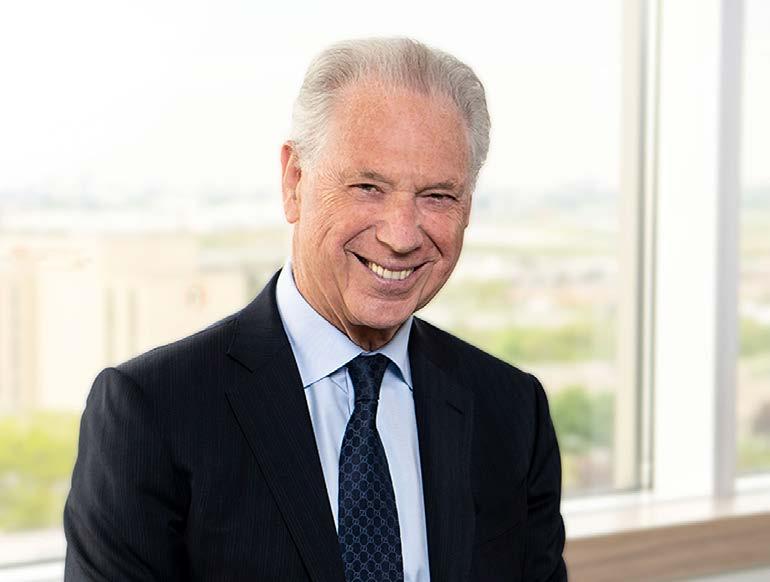
 John M. Beck Chairman of the Board
Aecon is always scanning the horizon for the major trends and events that will define our business context in the years ahead, shaping our clients’ needs and our stakeholders’ expectations. Our work is tied to some of society’s most urgent priorities – from advancing the energy transition and boosting the climate resilience of essential infrastructure to improving quality of life for the communities in which we work. Understanding the factors that drive major infrastructure investments helps us add the greatest possible value for our clients and communities.
In 2023, as Canada’s population surpassed 40 million, Aecon was at work on key infrastructure projects to help growing communities thrive.
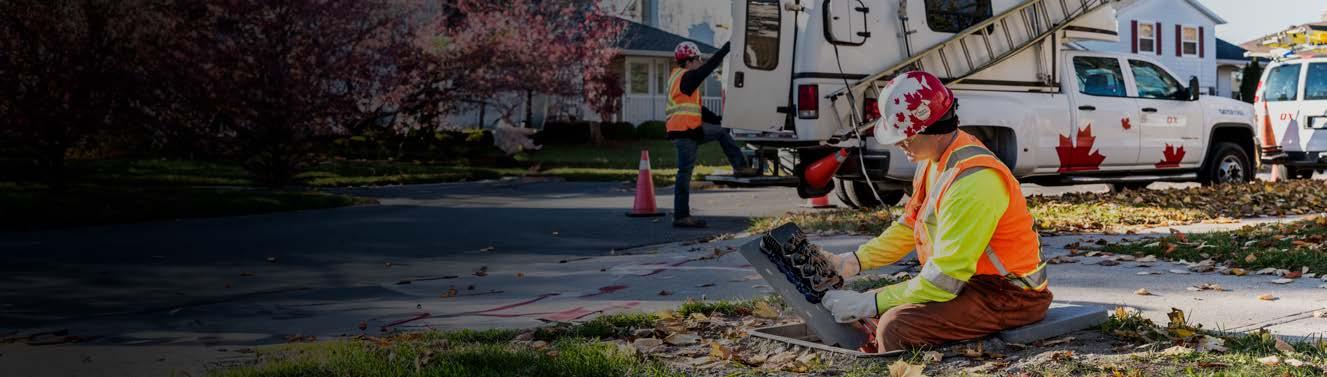
Aecon is advancing power generation projects and facility upgrades (see page 16) as population growth and electrification drive increased electricity demand.
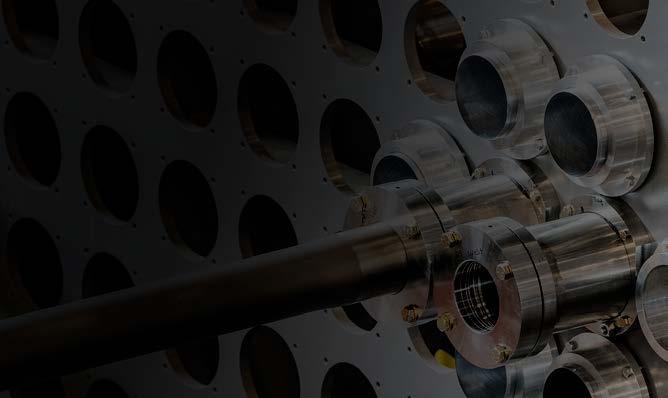
COP28 saw a pledge to triple global nuclear energy generation capacity by 2050. Aecon is refurbishing nuclear assets (see page 16) and partnering to build North America’s first gridscale Small Modular Reactor (see page 14).
A key priority of the energy transition is helping workers adapt and update their skills for success in a net zero economy. Aecon is working with clients to support training opportunities and economic inclusion (see pages 27 and 30).
Construction industry experts anticipate labour force challenges in the years ahead. Aecon is working to grow the pipeline of skilled workers in Canada through advocacy, partnerships and diversity initiatives (see page 30).
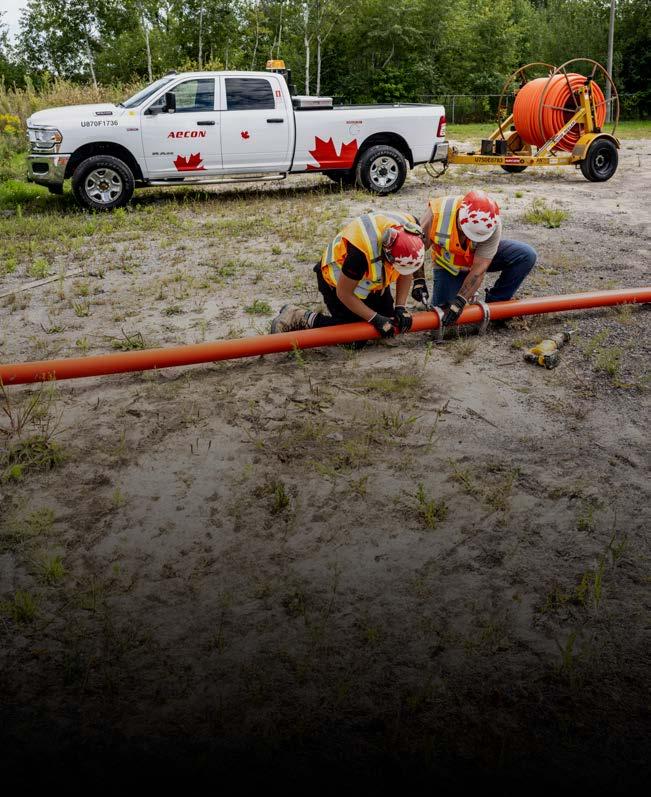
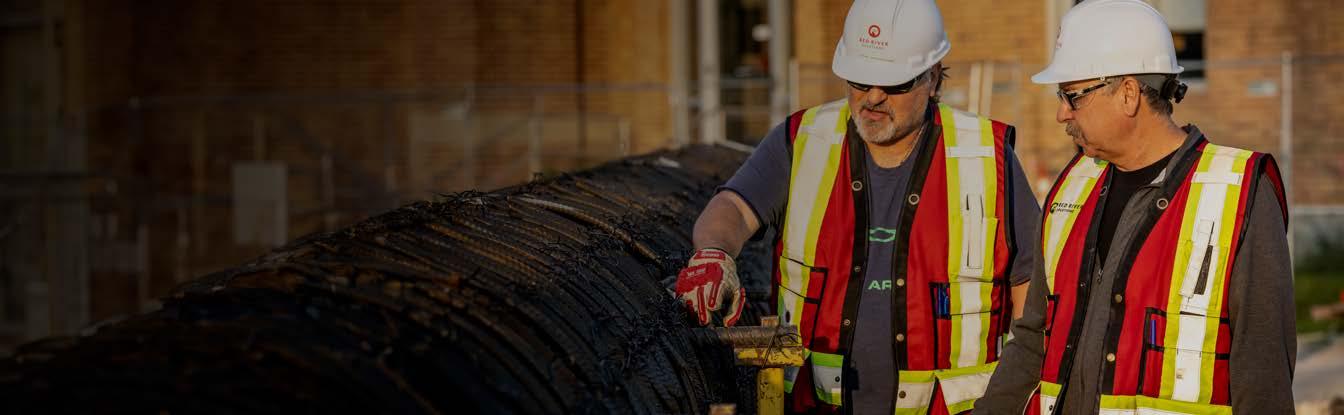
Indigenous Rights-holders and others are working to empower Indigenous Peoples economically. Aecon committed to our journey of Reconciliation and to a growing suite of Indigenous-led joint ventures (see pages 26–28).
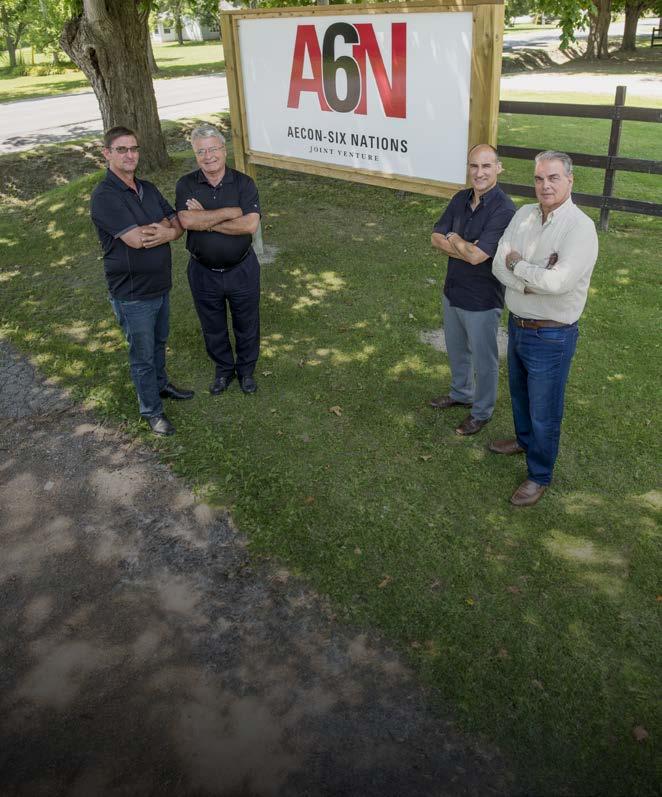
The Buildings Breakthrough, released at the COP28 summit, was a milestone in the movement toward sustainable construction – a movement Aecon has supported for years, steadily raising our ambitions in areas ranging from greenhouse gas emissions to habitat protection.
Engaging with stakeholders and understanding their perspectives is vital to our continued success. Aecon proactively engages, informs and solicits input from stakeholders.
Whether we’re sharing business information with investors through award-winning reports, working with unions to build a more diverse talent pipeline in the skilled trades, partnering with local and Indigenous communities or collaborating with vendors to deepen sustainability across our supply chain, we tailor our tools and approaches to each group – always aiming for clear, meaningful exchange.
Aecon engages Indigenous Rights-holders through joint ventures and other relationships and commitments set out in our Indigenous Reconciliation Action Plan. See pages 26–28
Guided by our Stakeholder Engagement Policy, we regularly and proactively engage with:
• Aecon employees
• Business partners
• Clients (private and public sector)
• Community groups
• Competitors
• Governments
• Insurers
• Investors and analysts
• Service providers
• Suppliers and vendors
• Union and association groups
This engagement work also supports our Disclosure Policy, which details our commitment to accurate and timely disclosure regarding our business and affairs, in compliance with relevant securities laws.
Aecon’s Investor Relations (IR) team is the main point of contact for shareholders, communicating through quarterly and annual reports, our annual information form, management information circular and quarterly earnings conference calls. Our IR team reports annually to the Board. This report summarizes stakeholder engagement activities, evaluates the team’s performance using internal and third-party input, and outlines future plans.
Our engagement work helps ensure that our sustainability strategy, targets and reporting align with the priorities of our stakeholders and of Indigenous Rights-holders. Building on a formal materiality assessment, in 2023 we conducted an internal review of our sustainability priority areas. The process was informed by organizational risk assessment, industry benchmarking, stakeholder valuation and trend analysis. Our 2023 Sustainability Report focuses on these five priority areas, among others.
Health and safety
Integrity and transparency
Sustainable infrastructure projects
Risk management
Responsible environmental management practices
See page 29
See page 34
See pages 11–16
See page 37
See pages 20, 21 and 35
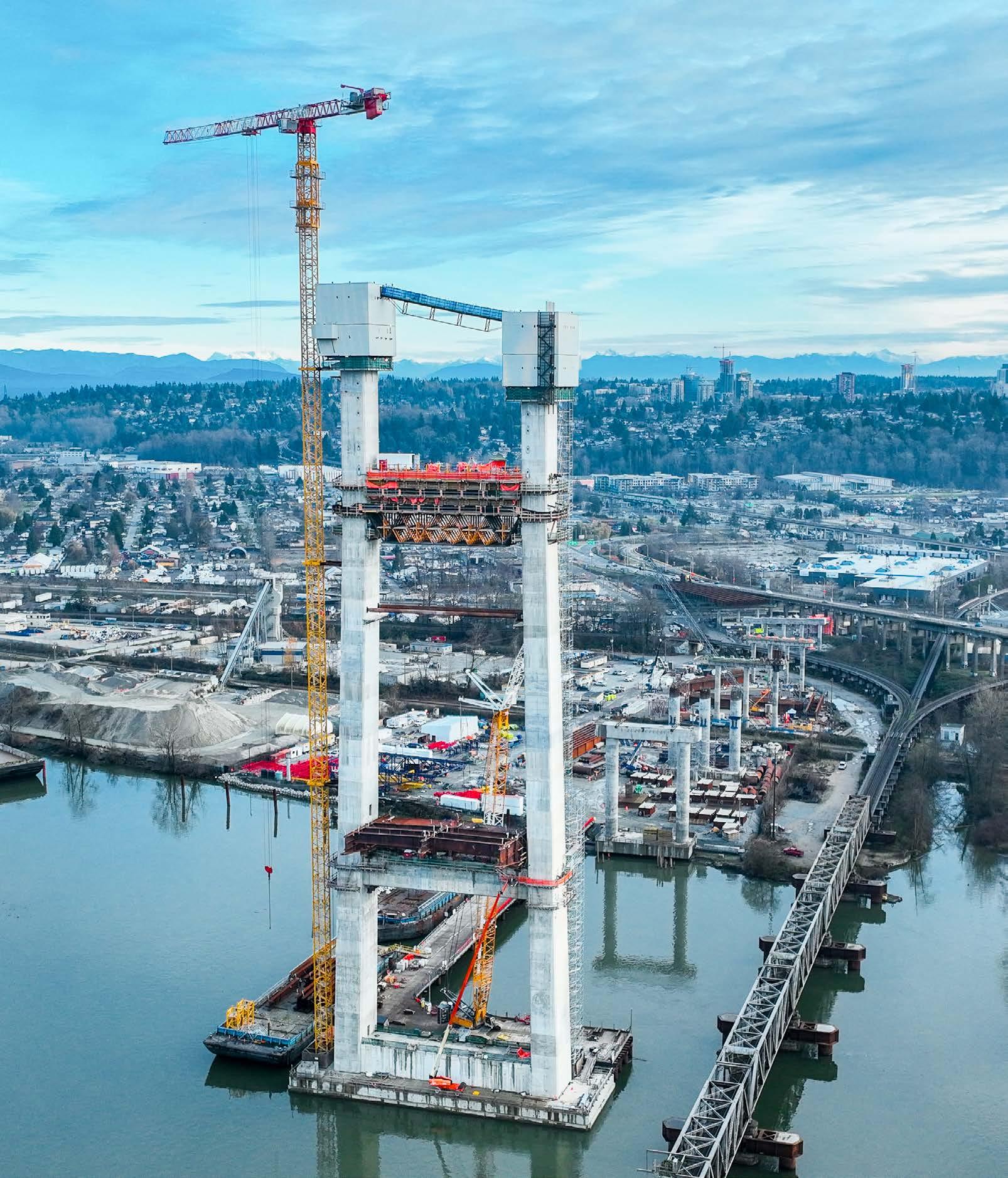
Aecon is working with clients and partners to deliver innovative infrastructure that’s driving the energy transition.
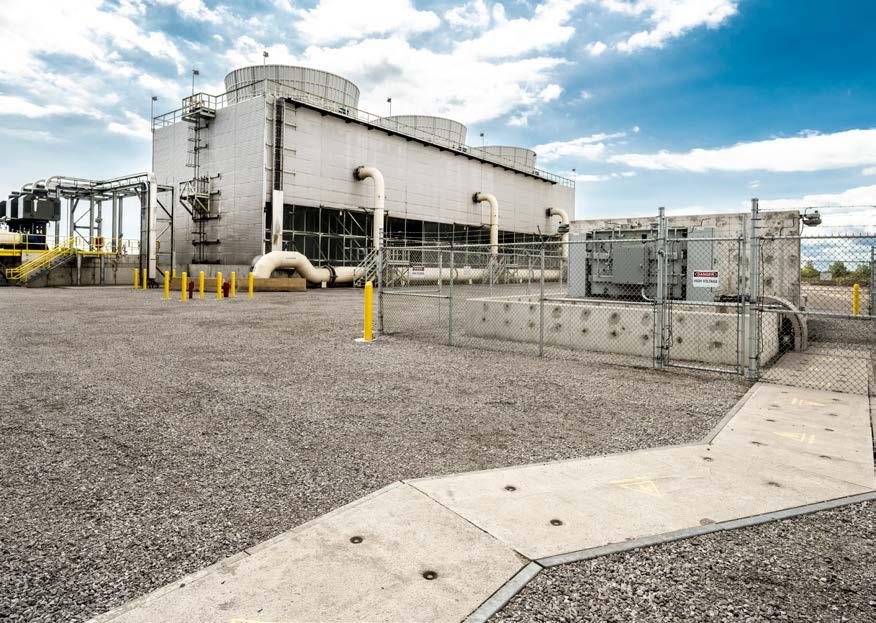
Project: Industrial facility, ON
Impact: Aecon supported the construction of this co-generation facility, which captures byproduct gas from industrial activities (previously flared off, causing emissions) and uses it to generate electricity for our client’s operations.
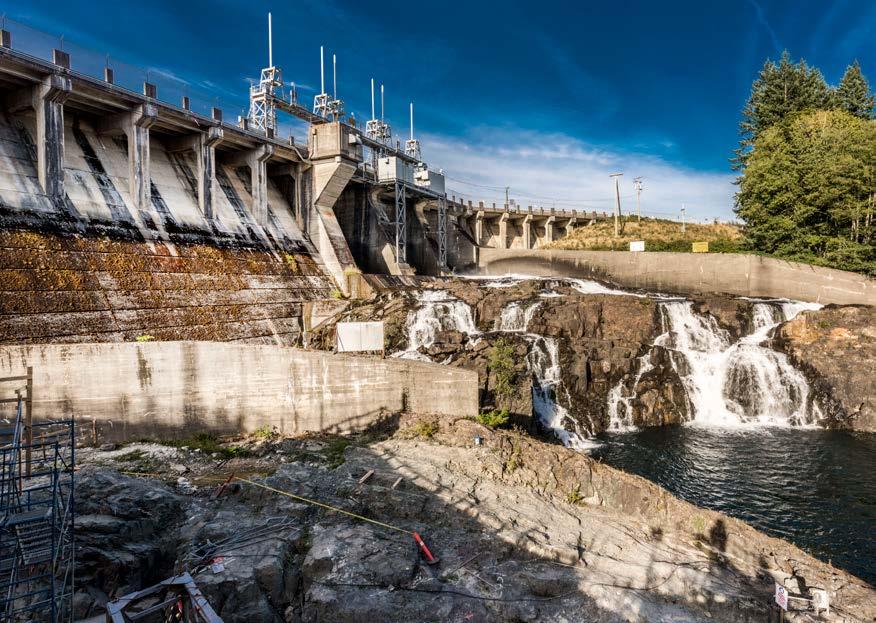
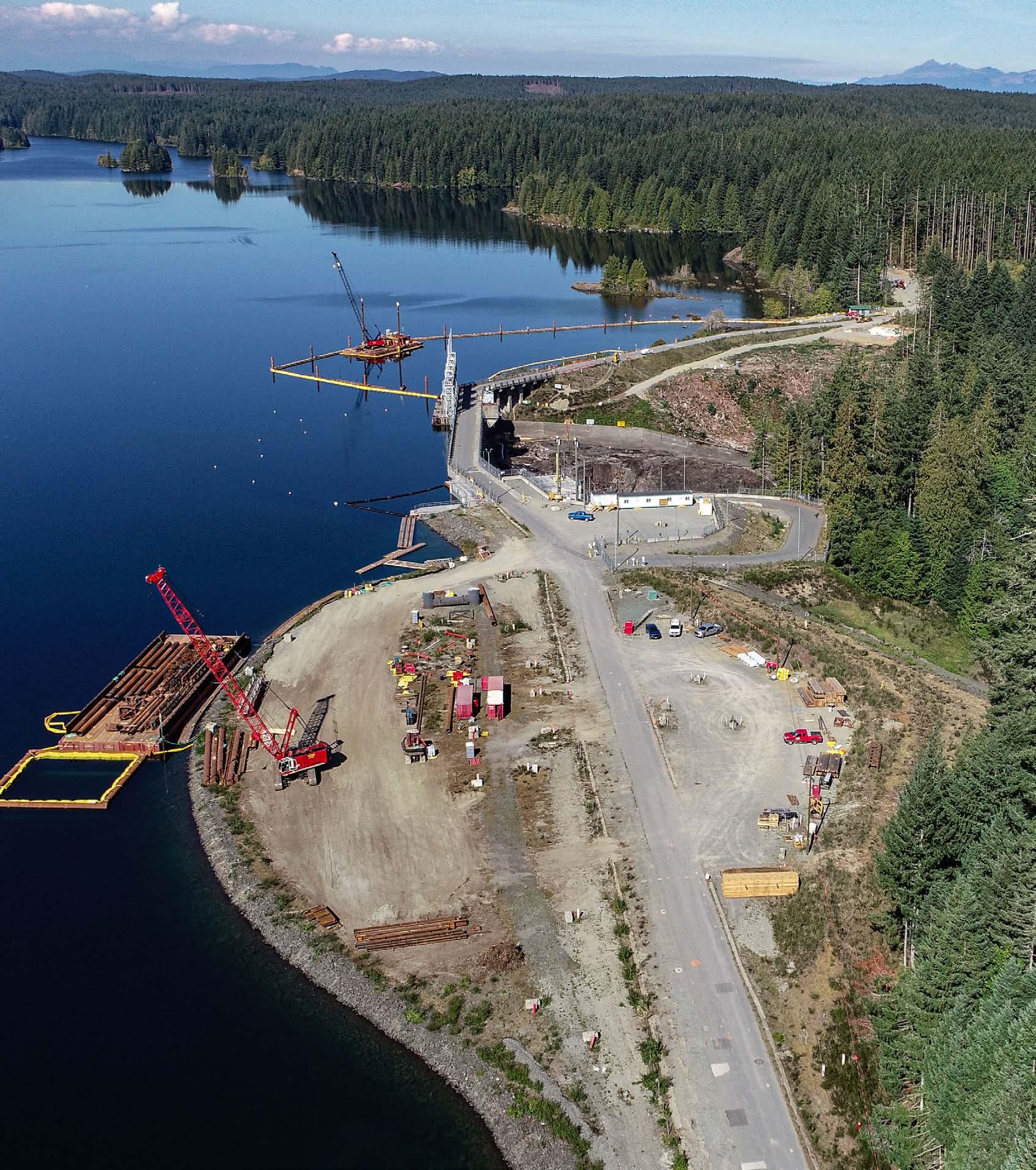
Project: John Hart Dam Seismic Upgrade, BC
Impact: As the lead consortium partner, Aecon is working to improve the seismic resiliency of this important dam, with the downstream powerhouse having the capacity to deliver about 132 MW of clean power.
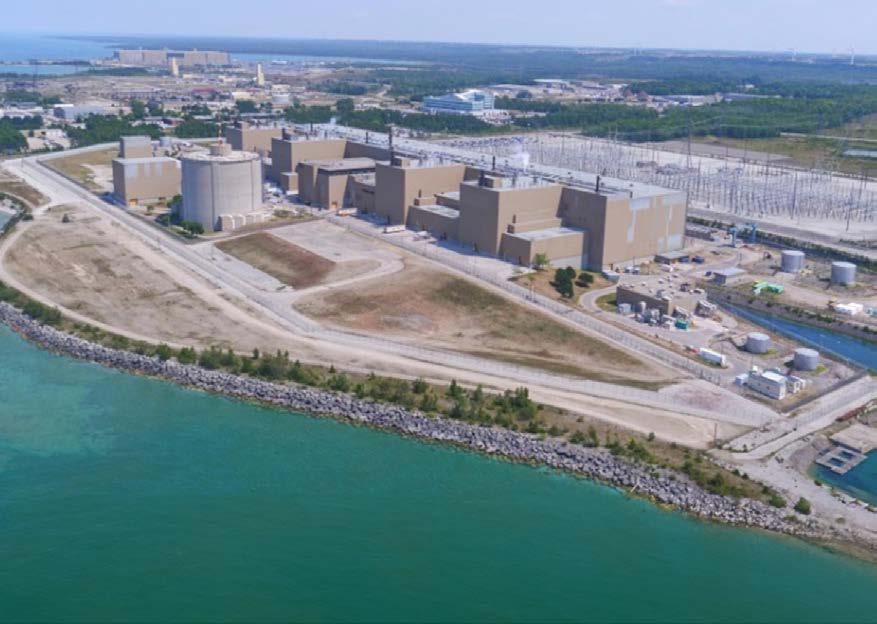
Project: Bruce Power Major Component Replacement, ON
Impact: Aecon is helping to extend the life of this nuclear generating station – which provides more than 30% of Ontario’s electricity – through 2064.

Project: Réseau express métropolitain (REM), QC
Impact: Aecon is helping to construct this 67-kilometre electric rail project, expected to dramatically reduce commute times and avoid 100,000 tonnes of emissions per year in the Greater Montreal Region.
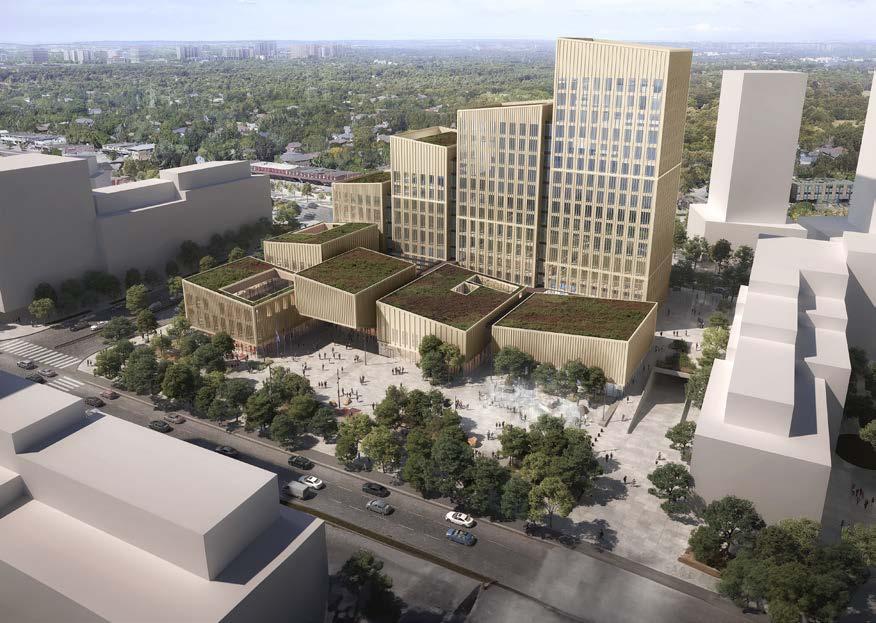
Project: Etobicoke Civic Centre Precinct, ON
Impact: Aecon GeoExchange Solutions and partner Enwave are delivering this net zero district energy system, the first of its kind in Ontario.
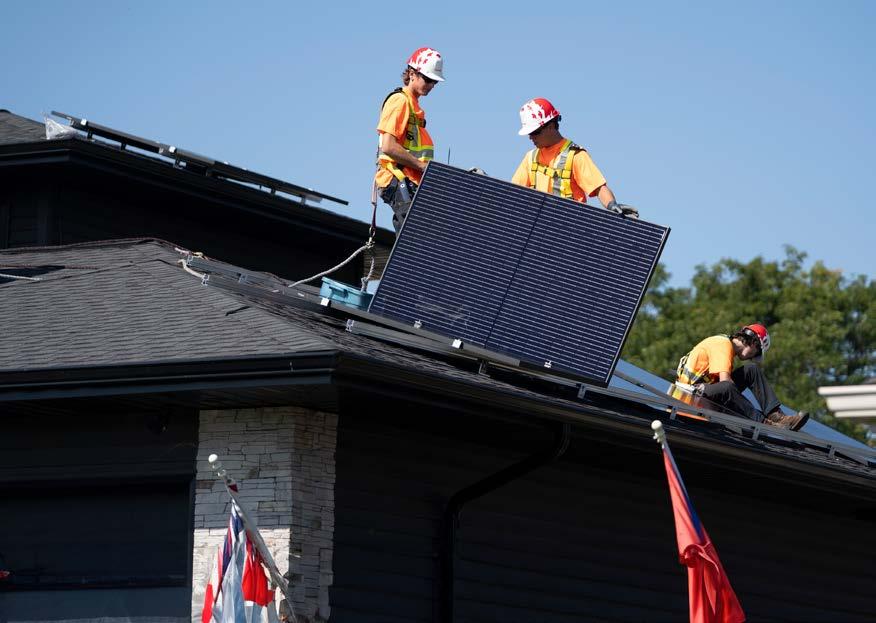
Project: Residential sustainability upgrades, ON
Impact: Aecon Green Energy Solutions supports homeowners in adopting more sustainable energy systems, helping to reduce the 30% of Ontario greenhouse gas emissions that come from homes.
Every part of our business is growing with the energy transition.
Aecon is poised for growth as a key delivery partner in the energy transition. We’re expanding our presence in the U.S. as we pursue new opportunities unlocked by the Inflation Reduction Act and the Bipartisan Infrastructure Bill. We also continue to work with leading public and private sector clients in Canada and beyond to build tomorrow’s sustainable infrastructure.
Our Utilities segment is helping communities build resilience and efficiency. We’re modernizing grids, adding electric vehicle charging infrastructure, building for district energy systems and delivering the landmark Oneida Energy Storage Project –a turning point in Ontario’s energy transition.
Aecon Civil brings over a century of experience delivering transportation networks, bridges and other essential infrastructure. In 2023, we sold Aecon Transportation East in Ontario, a strategic move aligned with our focus on energy transition opportunities, including hydroelectric projects, a long-standing strength of this segment.

Clients have long trusted Aecon Industrial with critical resource management infrastructure, including projects related to water treatment and oil and gas distribution. Today, clients are increasingly looking to Aecon to deploy our expertise to enable the distribution of lowercarbon fuels, such as hydrogen and renewable natural gas, and support infrastructure for renewable energy systems.
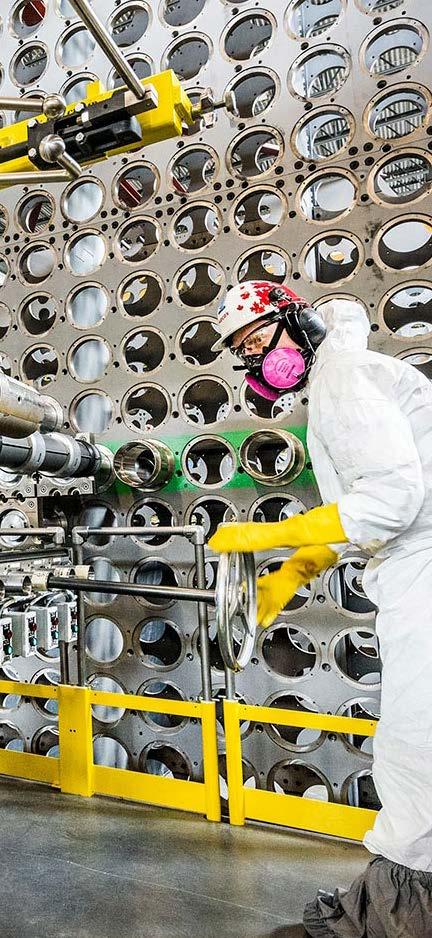
Aecon is refurbishing and extending the safe operating life of some of North America’s most important nuclear infrastructure, ensuring the longevity of these lowemission energy assets. We’re also preparing to deliver Small Modular Reactors, which are expected to play an important role in the future of nuclear power.

Aecon continues to deliver sustainable light rail transit and commuter rail. As we help to expand and electrify Ontario’s largest rail network while continuing to advance Montreal’s REM system, this segment is reaching new heights of sustainability.

Aecon Concessions is an investor in the Oneida Energy Storage Project, holds long-term investment and operation and maintenance contracts in four of Canada’s largest electrified (or to-be-electrified) rail projects, and holds the management contract and is the controlling shareholder of the L.F. Wade International Airport (Bermuda International Airport). This segment is building Aecon’s reputation for delivering not only renowned construction services but financial and business solutions that are accelerating the energy transition.
75%
of Aecon’s 2023 year-end backlog and 64% of our 2023 revenue were tied to sustainability projects.
Aecon is helping clients and communities increase the capacity, reliability and reach of their energy systems.
As countries decarbonize their energy grids, Canada is relatively well positioned, generating significant electricity from low-emissions sources such as hydro and nuclear. Aecon is delivering energy generation projects in both areas as well as essential transmission and storage infrastructure.
In partnership with Ontario Power Generation (OPG), we’re preparing to help deliver the first grid-scale Small Modular Reactor (SMR) in North America, working alongside project partners GE Hitachi Nuclear Energy and AtkinsRéalis. Under the partnership with OPG, Aecon will provide all construction services for the new SMR, including project management, construction planning and execution. This SMR, the first of a planned total of four, pending regulatory approvals, will provide approximately 300 MW of electricity, enough to power about 300,000 homes for Ontarians.
In 2023, Aecon began work for client Hydro One on a new transmission line, running 49 kilometres from the Chatham Switching Station to the Lakeshore Switching Station in

Ontario. The project includes extensive procurement from Indigenous subcontractors and will deliver 400 MW of energy to southwestern Ontario, supporting growth in the region by alleviating capacity constraints.
Aecon also began work on the Barrie Area Transmission Upgrade this year, through a joint venture with Métis Free Trader LP. Enhancing transmission lines and a transfer station will boost energy reliability and security in and around one of Canada’s fastest-growing cities – with 100% of the project spend being directed to a majority Indigenousowned enterprise.
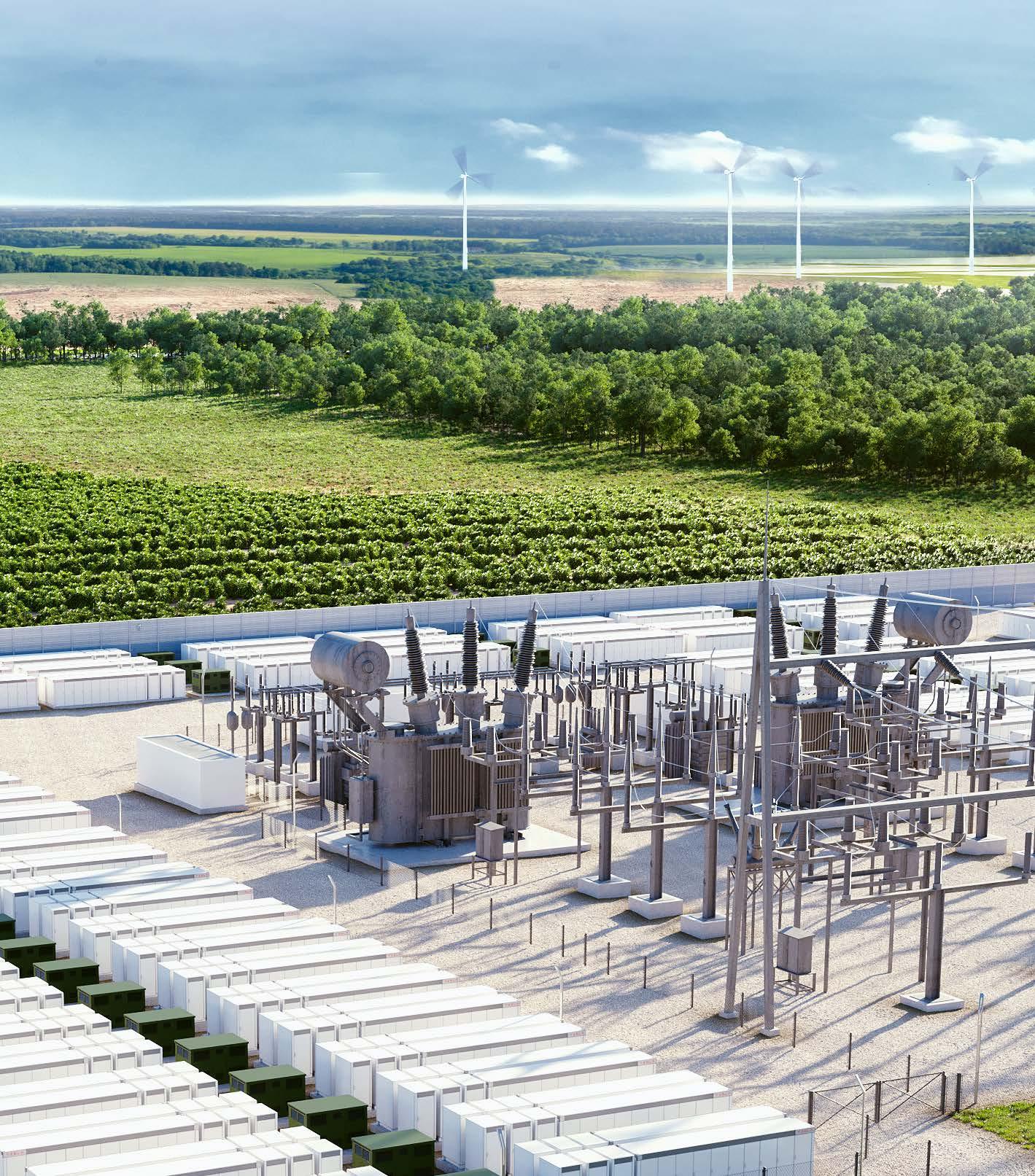
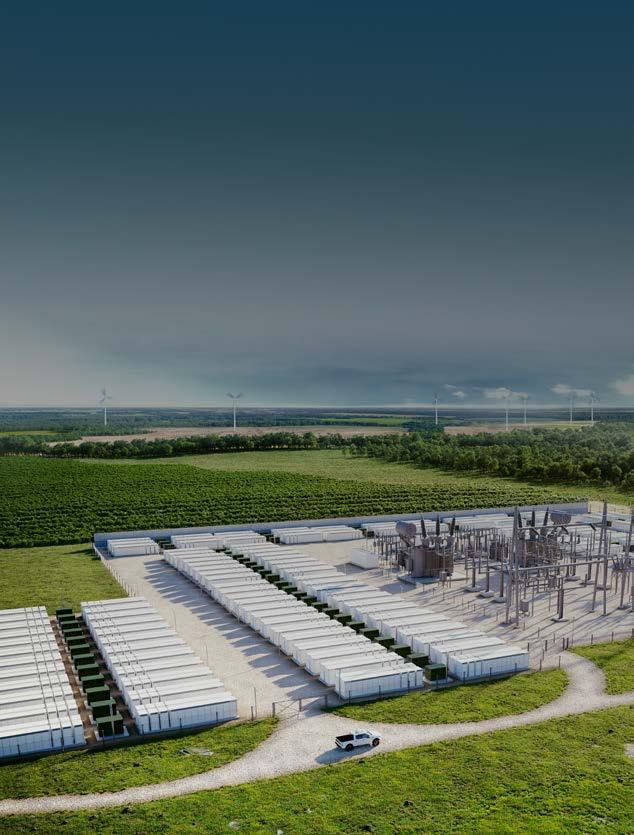
Energy storage solutions like battery systems are vital to decarbonizing energy grids because they support reliable supply when a community’s energy comes from variable sources such as wind and solar. This year, our work with partners continued on the Oneida Energy Storage Project, a 250 MW (1,000 MW/hour) facility in Ontario. Currently the largest battery storage project in Canada, this facility will provide a reliable source of capacity and energy-balancing services for Ontarians.
In 2023, Oaktree Capital Management LP made a $150 million convertible preferred equity investment in Aecon Utilities, acquiring a 27.5% ownership interest in the operating sector. The partnership reflects confidence in Aecon Utilities’ readiness to help clients across North America build infrastructure for the future.
“We’re excited to partner with Oaktree as we pursue opportunities for growth in Canada and the United States.”
Eric MacDonald, Executive Vice President, Aecon Utilities
“We see tremendous opportunity to leverage the capabilities of Aecon Utilities to expand with new and existing customers while maintaining the commitment to workforce safety and exceptional quality for which Aecon Utilities is known.”
Andrew Moir, Senior Vice President, Oaktree Power Opportunities Group
300,000 homes can be powered by Ontario’s new SMR
400 MW will flow to growing communities in southwestern Ontario via new transmission infrastructure
250 MW of battery energy storage capacity at Oneida will enhance grid reliability
Aecon successfully assembled transmission towers, enhancing reliability of the electrical grid for North BC.
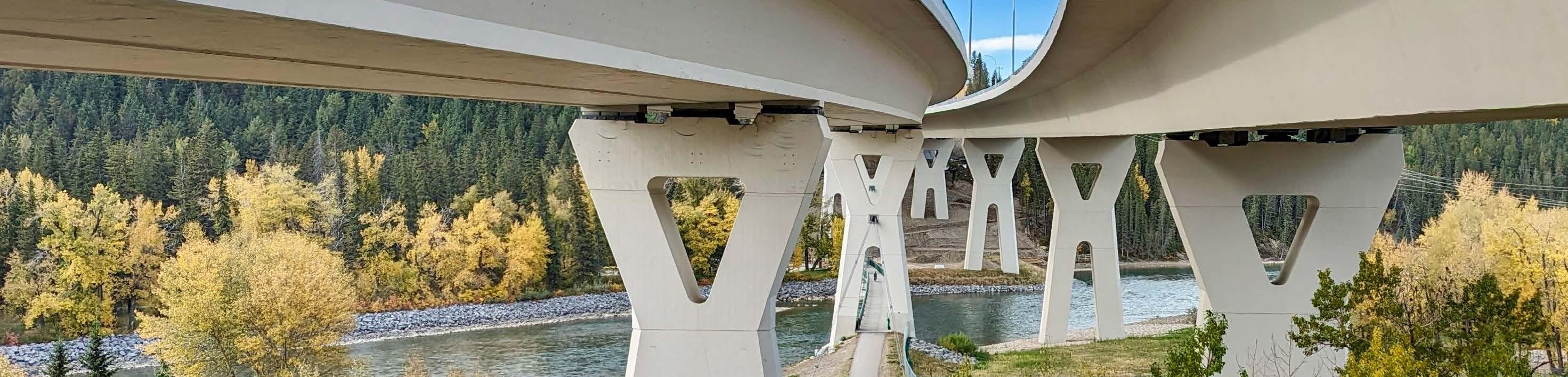
The largest transit project in Ontario’s history will transform mobility in the province’s most populous regions, dramatically reducing transportation emissions.
Toronto and nearby southern Ontario cities –forming a region called the Greater Golden Horseshoe – are growing quickly, driving increased demand for efficient mass transportation solutions. To support mobility across the region while reducing greenhouse gas emissions, the provincial transportation agency Metrolinx is working with Infrastructure Ontario to expand and electrify the existing GO Rail network.
In 2023, GO Rail delivered nearly 41 million trips. Officials expect ridership of the new electric system could more than double over the next few decades as the Greater Golden Horseshoe, already home to more than half of Ontario’s population, continues to grow. Enhancing the system will mean faster and more frequent two-way all-day service, with capacity for service every 15 minutes or better across core segments of the network.
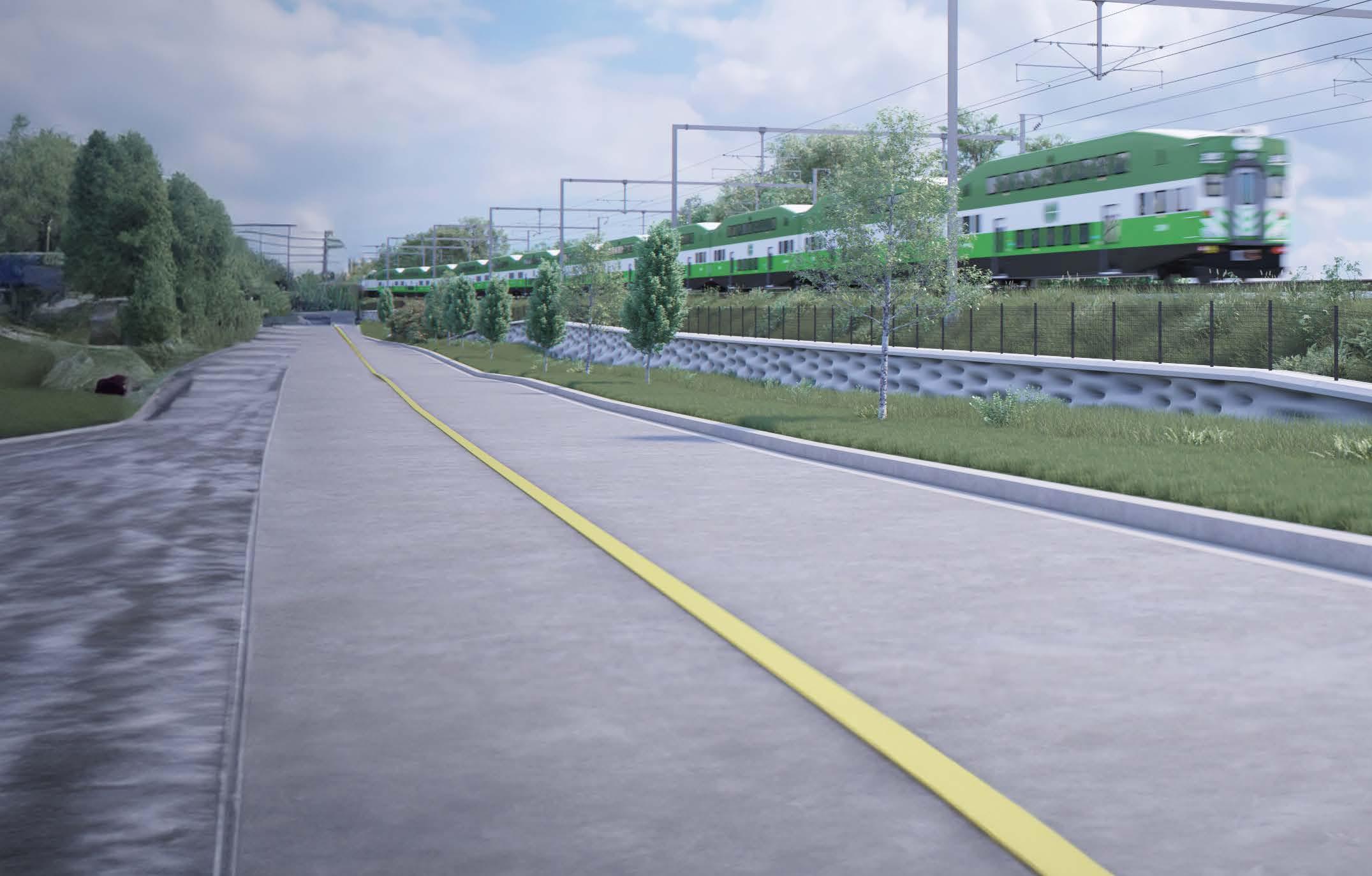
Aecon is part of the ONxpress Transportation Partners consortium (with FCC, Deutsche Bahn International Operations and Alstom), each entity holding a 25% interest, partnering to design, build, operate and maintain the expanded rail network and deliver related On-Corridor Works. In addition to rail expansion across five key rail corridors, the consortium will modify and enhance maintenance and storage facilities; install train control and signalling systems; construct new track and electrification infrastructure that will enable more frequent service; and undertake extensive construction work where the rail network intersects with other infrastructure such as bridges, level crossings and drainage systems. The consortium will also serve as the operations and maintenance (O&M) partner for the GO Transit system in the Greater Golden Horseshoe for a term of 20+ years beginning in 2025.
Aecon Concessions holds a 28% share in the O&M partnership. Aecon has a 50% share in the civil works through a joint venture with FCC.
In 2023, Metrolinx and ONxpress worked together to clarify the scope, design and cost of the project. Under this progressive and collaborative approach to project planning, participants complete an extended development phase, during which contractors learn about existing elements of infrastructure – in this case, the train fleet, track assets, civil infrastructure, facilities and stations – and all parties develop a detailed and realistic project plan, including schedules and costs.
This approach has proven effective in de-risking major infrastructure projects, as compared to a traditional fixed-price approach in which firms bid on projects with much less information and opportunity to engage the client. Importantly, this more integrated project planning approach also creates more opportunities to add sustainability features – compared to a standard process in which project proponents might risk being undercut by competitors using cheaper but less sustainable methods. With a collaborative development phase, clients and contractors can discuss the merits and costs of sustainable materials and practices, jointly determining which to adopt.
200+ km of new track
600+ km
rail network electrified
10,000+ weekly trips, up from 3,500 in 2019
145,000+ daily car trips eliminated by 2040
140 km/hr potential top speed for trains
200 M annual boardings projected by 2040
Ensuring the continued performance of existing assets is a vital – and sometimes overlooked –priority in the energy transition.
The Independent Electricity System Operator (IESO) estimates that Ontario’s electricity system will need to more than double its generating capacity by 2050 to meet expected demand (from 42,000 to 88,000 MW). The province is working to build capacity while simultaneously reducing greenhouse gas emissions.
Most experts agree that success will require many new assets as well as the deployment of renewables, Small Modular Reactors and cleaner fuels such as hydrogen and renewable natural gas. But another vital factor is sometimes overlooked in the race for innovation and expansion: existing assets.
“It’s critical that existing energy infrastructure be maintained so it lasts as long as it was intended to. The assets we have today need to be refurbished – and upgraded where possible – to extend their life,” says Thomas Clochard, Aecon’s Executive Vice President of Civil and Nuclear. This year, Aecon was at work on three major projects to support the continued performance of key energy facilities.
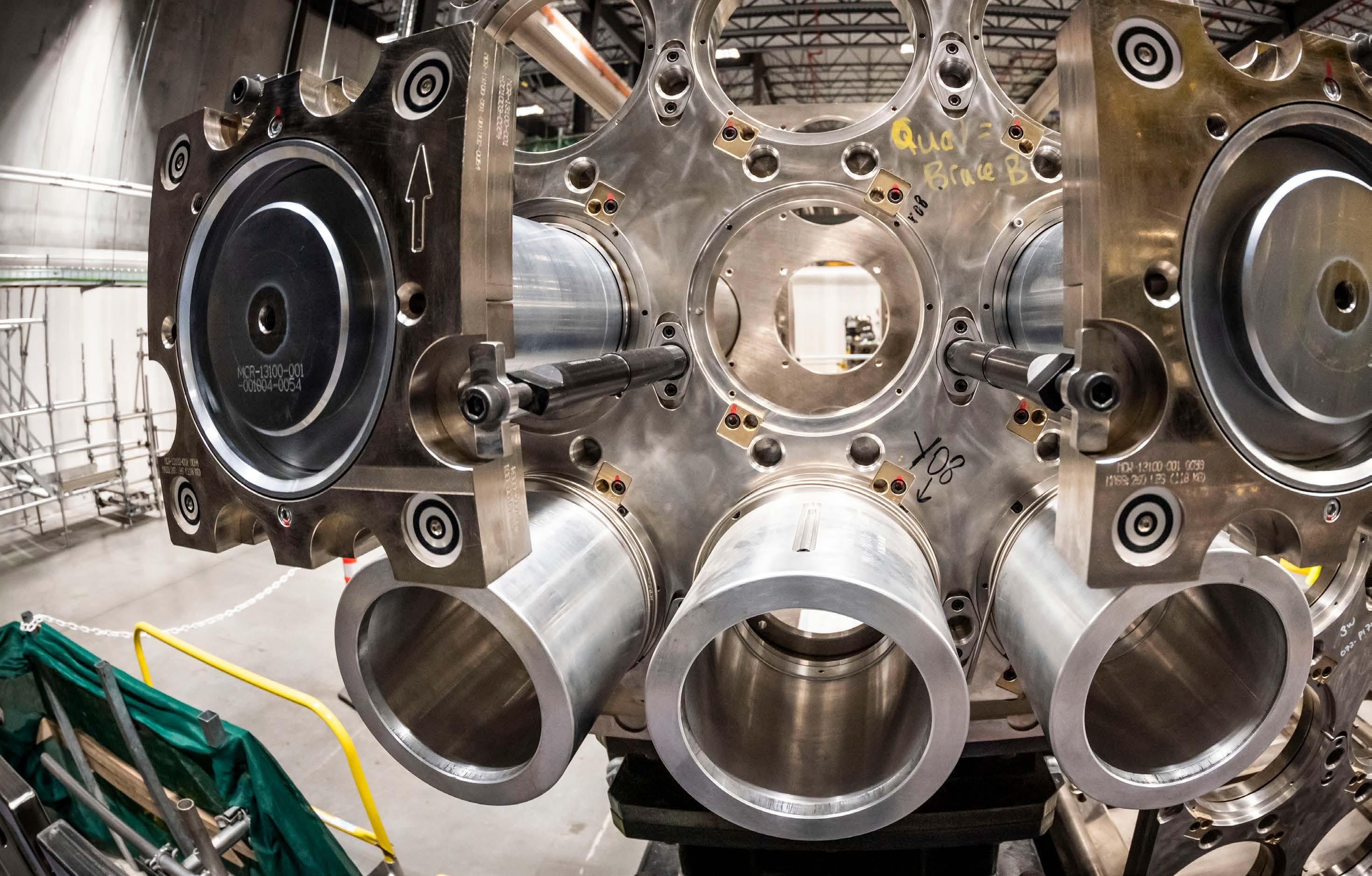
As part of a program that will see all the major components of this station replaced, Aecon continued working as part of a consortium this year to replace fuel channels and feeder tubes for Unit 3, among other tasks. We will complete similar work on Units 4, 5, 7 and 8 in future years. These efforts follow the successful refurbishment of Unit 6, in which Aecon was also heavily involved. Once completed, these combined efforts will extend the station’s life to 2064.
In July 2023, Unit 3 of the Darlington nuclear plant was connected to the grid at 100% capacity – 169 days ahead of schedule, safely and under budget. As part of a joint venture with AtkinsRéalis, Aecon helped to replace key components of the asset (fuel channels and feeder tubes) using innovative tools and methods developed during the project’s definition phase and informed by lessons learned during the Unit 2 refurbishment completed in June 2020. In addition to
contributing to work that will extend this vital asset’s life through 2055, Aecon has been proud to be part of Aecon CIPS Seven Generations (AC7G), our first nuclear-focused, Indigenousled joint venture.
John Hart Dam & Powerhouse
Harnessing hydroelectricity from B.C.’s Campbell River since 1947, the John Hart Dam & Powerhouse, one of three dams and powerhouses on the system, has a capacity to generate up to about 132 MW of clean power. The dam and generating facility are located in an earthquake-prone coastal region. When the seismic upgrade is complete in 2029, the facility will be able to withstand a 1-in-10,000 year earthquake and safely pass water downstream after the event. The upgrades are important to ensure ongoing downstream public safety. As the lead consortium partner, Aecon is working to upgrade earth-stabilizing infrastructure around the dam, including upstream and downstream berms, to increase its resilience to seismic activity.
60% of Ontario’s energy comes from nuclear
6,550 MW of generating capacity from Bruce
3,512 MW of generating capacity from Darlington
87% of BC’s energy comes from hydroelectric sources
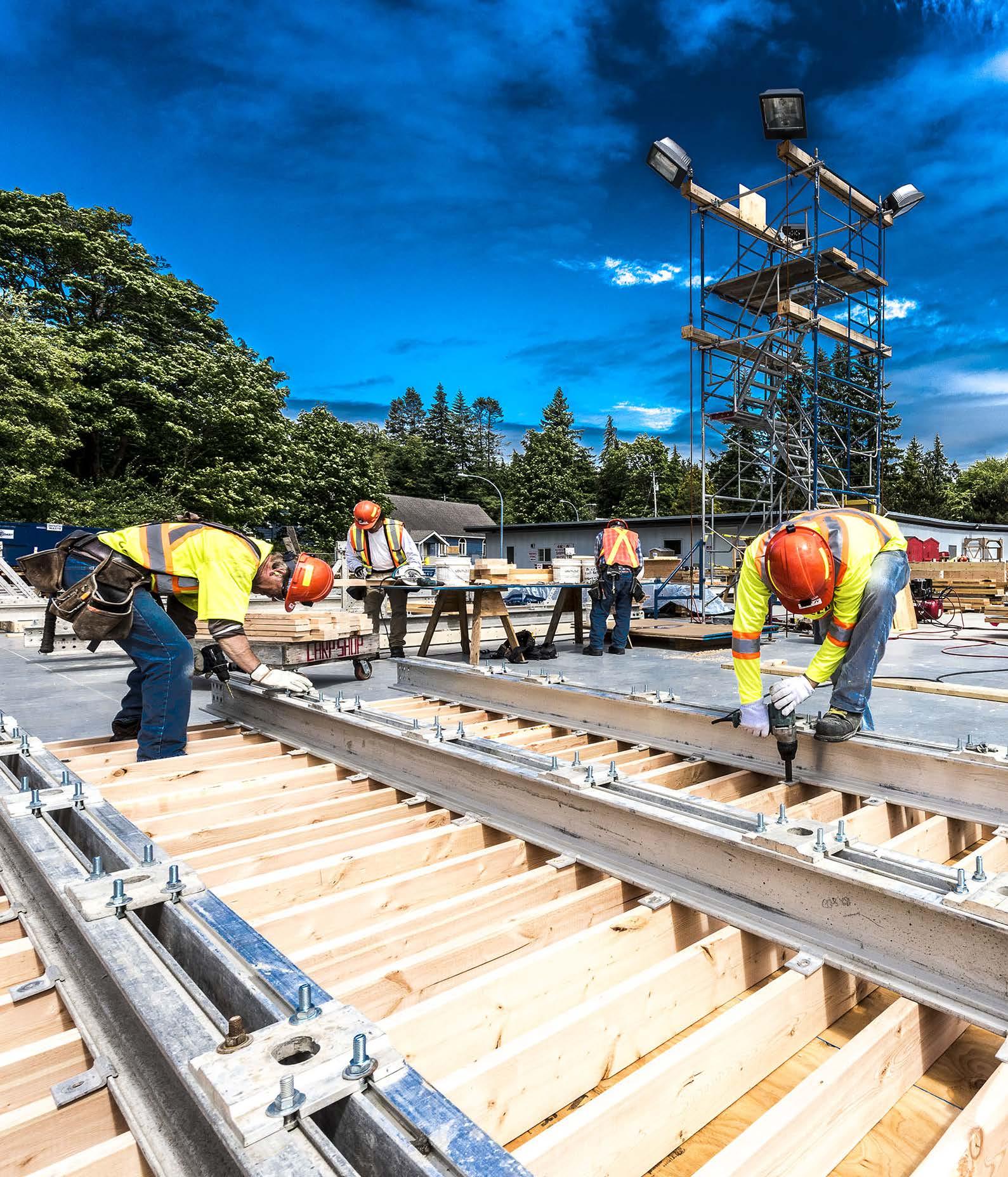
Aecon uses a wide range of policies and practices to support responsible project delivery and promote positive social and environmental impact in the communities where we work.
ENVIRONMENT: We use environmental management practices in alignment with ISO 14001 and low- or zero-emission equipment to minimize adverse environmental impacts of construction projects.
SOCIAL: We put safety first on every project every day, partner with Indigenous Rights-holders, invest in communities and work to build a diverse and inclusive team.
GOVERNANCE: We strive to achieve high levels of performance, transparency and accountability through governance, compliance, ethics and risk management.
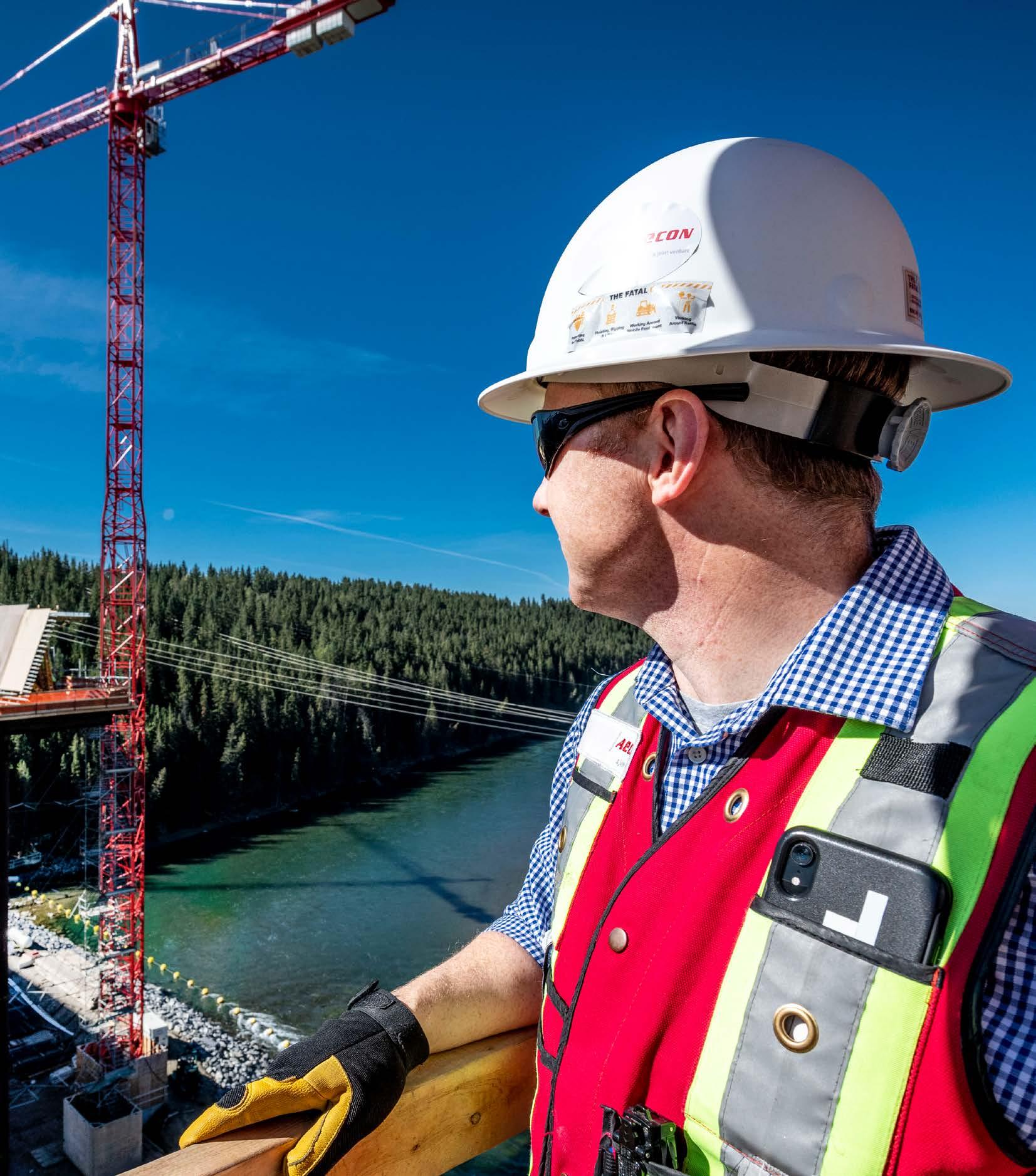
Our approach is characterized by:
• Close collaboration with our clients on environmental performance.
• An Environmental Policy and a Sustainability Policy that guide our work and confirm our commitments regarding Aecon’s significant environmental aspects, including:
• Spill Management and Reporting
• Air Quality and Emissions Management
• Soil Management
• Waste Management
• Water Quality and Effluent Management
• Erosion, Sediment and Surface Water Management
• Noise and Vibration Management
• Archaeology and Cultural Heritage Management
• Terrestrial and Aquatic Wildlife and Habitat Protection
• Compliance in all material respects with applicable standards and regulations under an Environment, Health and Safety Management System (EHSMS) aligned with ISO 14001 and 45001, emphasizing the identification and management of significant environmental aspects across the organization.
• Ongoing exploration of processes, materials and equipment innovations to reduce GHG emissions.
• A robust continuous improvement program called Building Smarter, focused on enhancing processes to reduce waste and support on-time, on-budget project delivery.
• The publication of consistent and credible sustainability reports that cover environmental topics most important to our stakeholders, including waste management and greenhouse gas emissions.
• Other environmental initiatives and resources, including:
• Delivery of environmental training to all Aecon employees, ensuring knowledge and understanding of environmental management aspects across all Aecon projects.
• The Aecon Environmental Network, which facilitates knowledge sharing and collaboration among employees connected to environmental teams.
• Development and maintenance of the environmental management resource site, which includes key governance documents, tools and forms.
• Internal publication of an EHS Environmental Management Guide for Project Management and Estimators.
• Support to ensure environmental management and aspects are considered throughout the project life cycle.
• Environmental management and aspect knowledge, uptake and implementation across Aecon sectors and projects through targeted internal audits and an environmental inspection-based assurance program.
• Progress against our goal of achieving a 30% reduction in direct carbon dioxide emissions by 2030 relative to our 2020 baseline.
• Completion rates for environmental training modules assigned to employees based on their specific roles and career progression (our target is 75%), as well as workshops focused on general environmental and sustainability awareness.
• An environmental performance dashboard that summarizes monthly results from across the organization.
Developing sustainable construction practices requires our industry to create and scale a wide range of solutions – from electrifying equipment to reducing waste and adopting sustainable building materials. As part of our quest to lead the way on net zero construction practices, Aecon is continuously learning, partnering and exploring new ideas that can change building practices for the better.
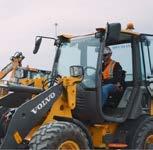
After successfully piloting the machine in 2021, this year we purchased a Volvo ECR25 electric mini-excavator and put it to use at our Training and Innovation Centre. Delivering impressive power with zero greenhouse gas emissions, the machine also operates more quietly than diesel excavators. Quieter operation not only reduces disruption to the communities in which we work, it also improves safety by making it easier for crews to communicate.
In 2023, Aecon became an Envision® Qualified company and member of the Institute for Sustainable Infrastructure (ISI). The ISI is dedicated to helping the development, construction and operation of sustainable, resilient and equitable civil infrastructure around the world. Envision® is a critical tool for delivering on this mission – a “holistic sustainability framework and rating system that enables a thorough examination of the sustainability and resiliency of all types of civil infrastructure.” To help our team members build familiarity with this framework, we created Envision® training modules, making them available on our online learning platform, Aecon University, and partnered with McMaster University to deliver certification training to Aecon employees. By the end of 2023, 56 employees had pursued the training and 35 had become ENV-SP (Envision Sustainability Professional) certified.
Many Aecon project teams proactively reduce waste on site, including by repurposing and recycling materials. Our Aecon Utilities team, for example, has implemented comprehensive waste management initiatives across multiple sites. On the Chatham to Lakeshore Transmission Line project, they’ve repurposed 120,000 tonnes of aggregate and recycled about 67,000 kg of steel from existing infrastructure. On the Barrie Area Transmission Upgrade project, the team has saved about 100 wood poles for reuse and recycled approximately 26,300 kg of wire. Meanwhile, the Calgary-area Balzac asphalt plant, operated by Aecon Transportation West, produced a total of 35,000 tonnes of reclaimed asphalt pavement and 80,000 tonnes of recycled concrete.
Innovations developed in the lab need to be tested by skilled constructors in real-world settings before they can be refined and scaled. We’ve been working with Concordia University’s Gina Cody School of Engineering and Computer Science as part of a research and innovation partnership focused on the design and trial of novel materials. As researchers in the university’s Civil Engineering laboratories, led by Professor A. Soliman, make advances – for example, in low-carbon construction materials – Aecon is proud to deploy our skilled teams and construction experience to help advance promising concepts toward industry adoption.
> 95%
Rate of waste diversion from landfill at the Montréal-Trudeau International Airport Réseau express métropolitain (REM) Station project
120,000
Tonnes of aggregate repurposed from a transmission line project in southwestern Ontario
35
Number of ENV-SP certified team members at Aecon
Plant
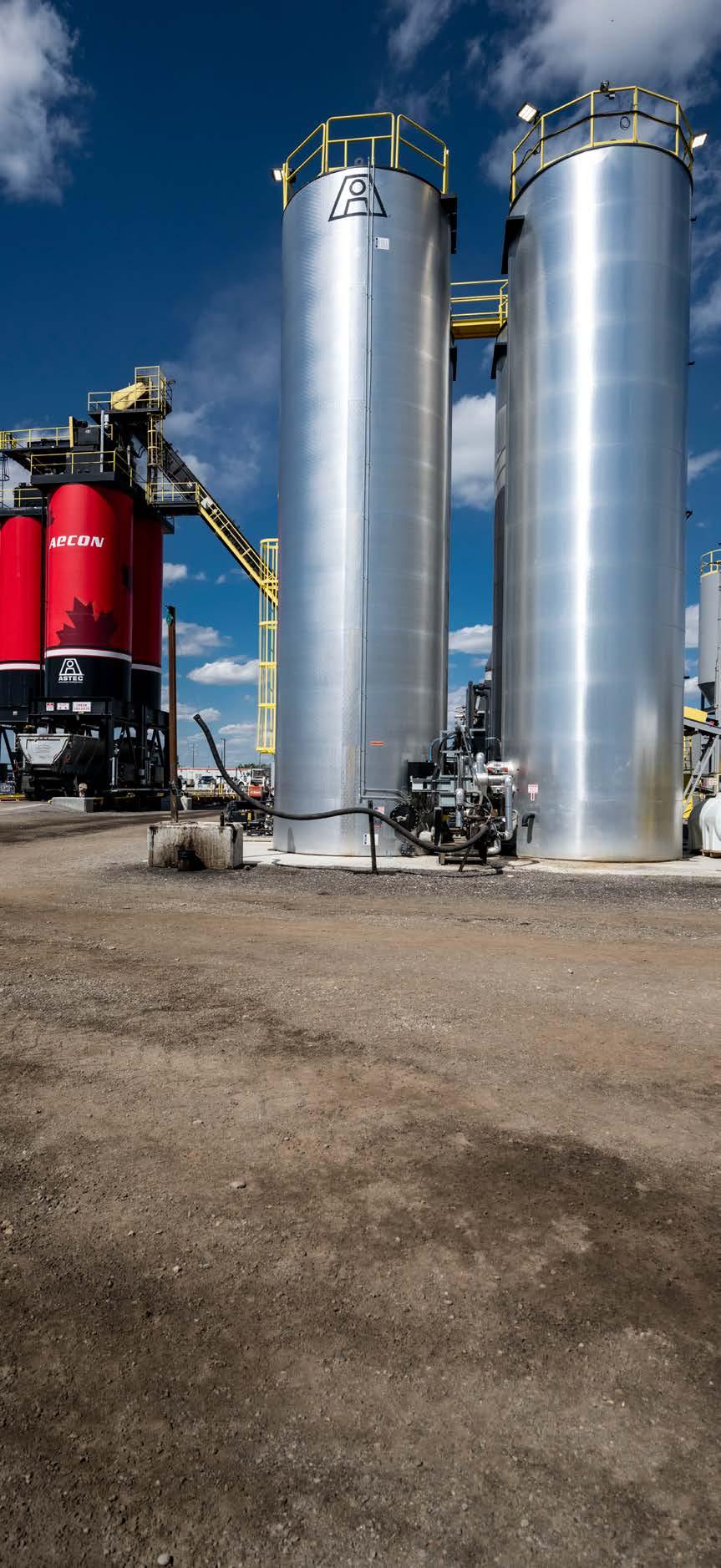
Alberta uses leading methods to capture dust and smoke emissions, and supports asphalt and aggregate recycling on site.
Aecon prioritizes sustainability at every stage of our work, from the projects we pursue to the equipment and processes we use to deliver results for clients.
Consistent with our sustainabilityfocused business strategy, a growing share of Aecon’s revenue is tied to sustainability projects, especially those advancing the energy transition. In many cases, we’re using our long-standing strengths in new ways – for example, applying our energy infrastructure construction capabilities to low-emissions power generation and storage assets.
75%
Share of backlog tied to sustainability or the energy transition
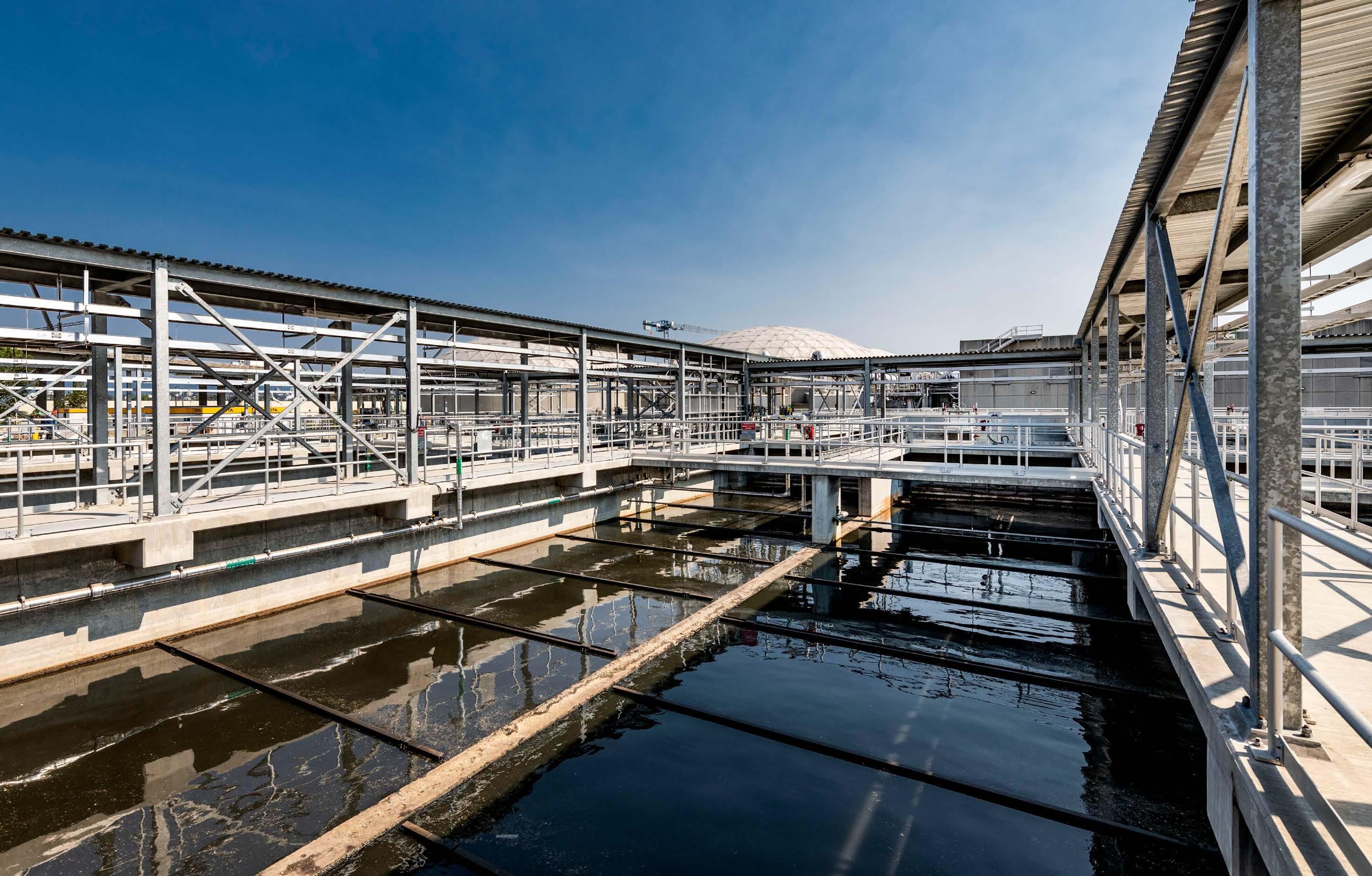
Aecon has embraced new bidding and project planning processes that have emerged for major infrastructure projects, whereby clients and project proponents work together to ensure they have a shared and realistic understanding of project scope. This includes identifying and managing applicable environmental aspects and opportunities for sustainability measures based on their costs and benefits. We also use leadingedge digital project management tools to maximize our efficiency.
6
Number of Envision-aligned Aecon projects (completed or in backlog)
Aecon uses procurement to advance our key sustainability objectives. In 2023, we further integrated sustainability into our supply chain by adding ESG questions to our existing supplier surveys. We posed sustainability questions to our top 500 vendors (by spend), representing about 80% of our upstream supply chain.
63% of preferred suppliers completed the ESG screening survey (exceeding our goal of 50%)
The expectations of clients and communities are steadily rising when it comes to environmental controls and overall sustainability performance. Aecon’s EHSMS includes a comprehensive set of governance documents and tools. By engaging and involving employees, we seek to build an active culture of safety and environmental excellence. In addition to further digitizing data collection under the EHSMS, we’ve been working to grow and develop a “best in industry” team of environmental specialists to ensure outstanding execution of every Aecon project.
460 environmental inspection checklists completed through our EHSMS
Aecon is at the midpoint of a five-year environmental, health and safety (EHS) strategy that’s moving our program beyond compliance toward proactively managing environmental risk. This work has included rolling out new training and management modules focused on environmental aspects, and the refinement of risk assessment tools (at the project, scope and task levels) to help teams identify and mitigate hazards.
62
updates to EHSMS governance documents in 2023
0 environmental infractions
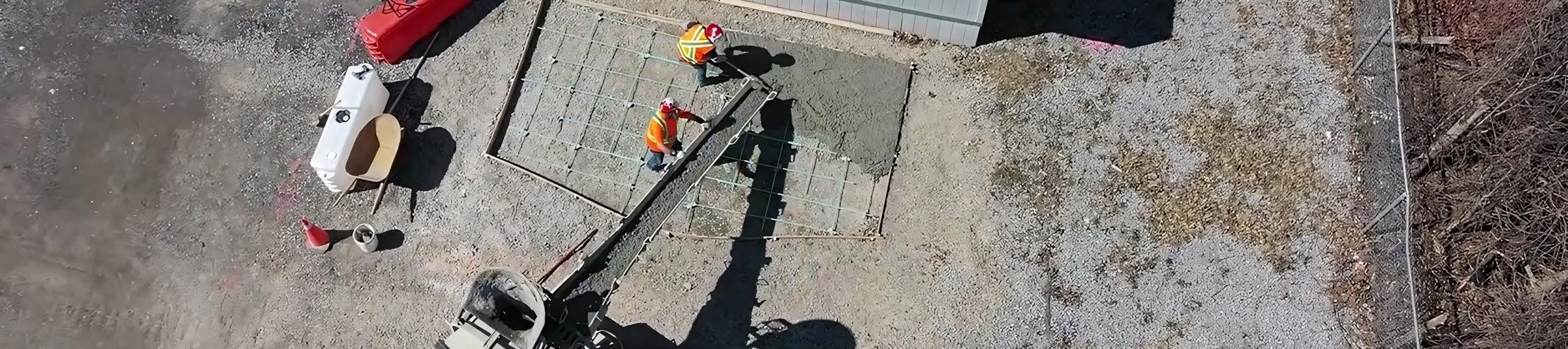
Aecon is working toward net zero by implementing initiatives across our operations. This is a summary of key initiatives we’re using to reduce emissions and work toward net zero construction.

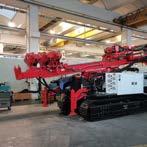
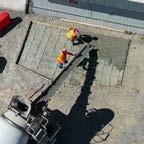
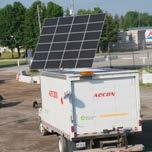
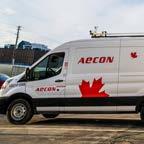

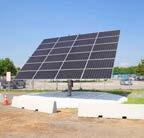
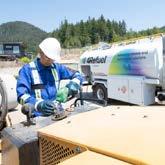
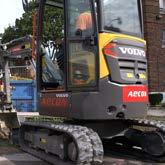
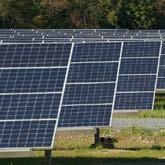
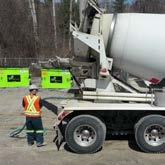
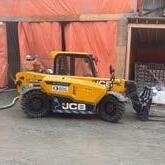
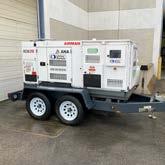
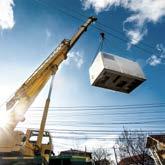
In 2020, Aecon committed to achieving a 30% intensity-based reduction in scope 1 and 2 emissions by 2030 (from a 2020 baseline) and reaching net zero by 2050. Since then, we have achieved a 20% reduction and remain on track to achieve our “#30by30” intensity-based target.
As we progress toward that interim goal, we’re preparing to go farther: reducing emissions from our own operations, collaborating to reduce emissions across our supply chain, and working to achieve net zero by 2050.
• In 2021, Aecon committed to setting a science-based target in line with the Paris Agreement’s climate goals. In 2023, these targets were officially submitted for independent validation by the Science Based Targets initiative (SBTi). Under this commitment, we are expanding the scope of our near-term targets to include material emissions from our supply chain (our scope 3 emissions).
• In 2023, we expanded our reporting to include scope 3, Category 1 (construction materials and other purchased goods and services) and Category 4 (upstream transportation).
• In 2023, we streamlined our data collection process, creating data collection templates for each of our projects. This change has improved the quality and granularity of our data, providing greater insight into opportunities to reduce emissions. We are now able to differentiate between various on-/off-site use cases for over a third of our scope 1 and 2 emissions.
• Extending our use of supplier ESG surveys, in 2023 we carried out a preliminary supplier activity analysis to continue improving the quality of our scope 3 emission calculations. Aecon has used this supplier-specific emissions data to quantify scope 3 Category 1 emissions. This approach enables us to have a more focused and impactful supply chain engagement process by targeting the largest emitters. Also in 2023, we began to collect material purchase data from our major projects, focusing on three emissions-intensive materials: concrete, bitumen and steel, allowing us to more accurately evaluate our scope 3 decarbonization strategy.
SCOPE 1:
154,680 tCO2e
SCOPE 2:
2,794 tCO2e
SCOPE 3:
534,245 tCO2e
Category 1 (Purchased goods and services), Category 4 (Upstream transportation and distribution) and Category 6 (Business travel)
For information on how we measure our greenhouse gas emissions and the key sources of our scope 1, 2 and 3 emissions – as well as biogenic emissions generated through the consumption of biofuels –see our website.
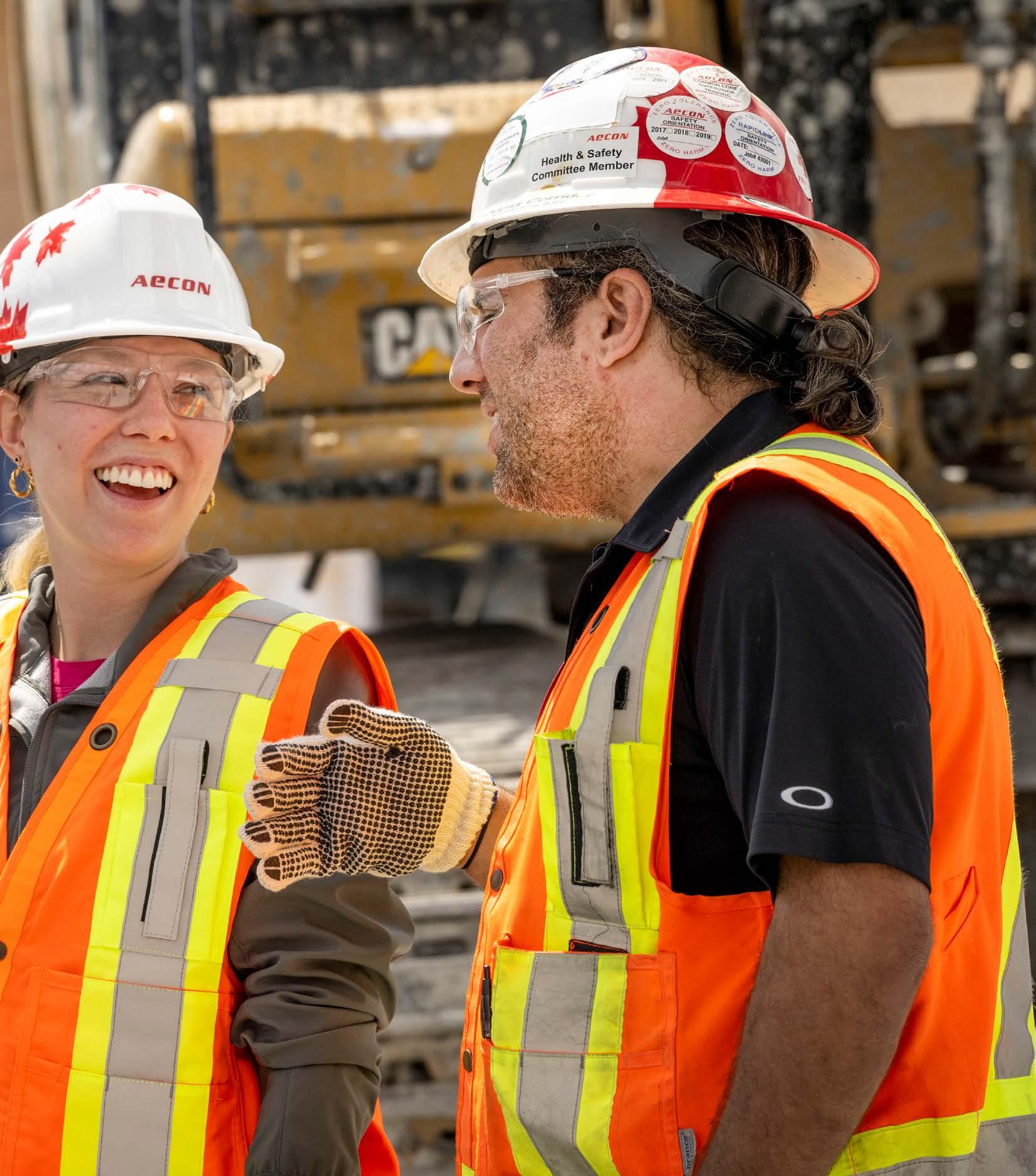
Our approach is characterized by:
• A recognition of our responsibility to the Truth and Reconciliation process.
• Efforts to build respectful, mutually beneficial, long-term relationships with Indigenous Rights-holders through joint ventures, community partnerships and other collaborations.
• Work to build strong relationships with employees, clients, suppliers and community members.
• The sharing of benefits and opportunities connected to our industry.
• A commitment to inclusive economic development, reflected in partnerships with communities and the creation of new pathways into the construction industry for traditionally underrepresented groups.
• Policies and processes designed to build and support healthy, engaged teams.
• The use of evidence to identify and correct bias in our hiring and management practices, such as educational requirements that may exclude qualified and knowledgeable diverse candidates.
• An unwavering commitment to safety, our number-one priority and core value.
To evaluate our success, we monitor:
• Staff engagement scores, which are measured through regular surveys and ad hoc engagement activities as appropriate.
• Internal mobility rates to ensure we are strategically investing in and developing our employees.
• The composition of our teams and how they’re changing. For example, our diversity census, now in its fourth year, helps us understand how the diversity of our teams compares to the diversity of available talent in the construction industry.
• Industry-standard safety measures as well as risk-based measures and other leading indicators designed to prevent incidents.
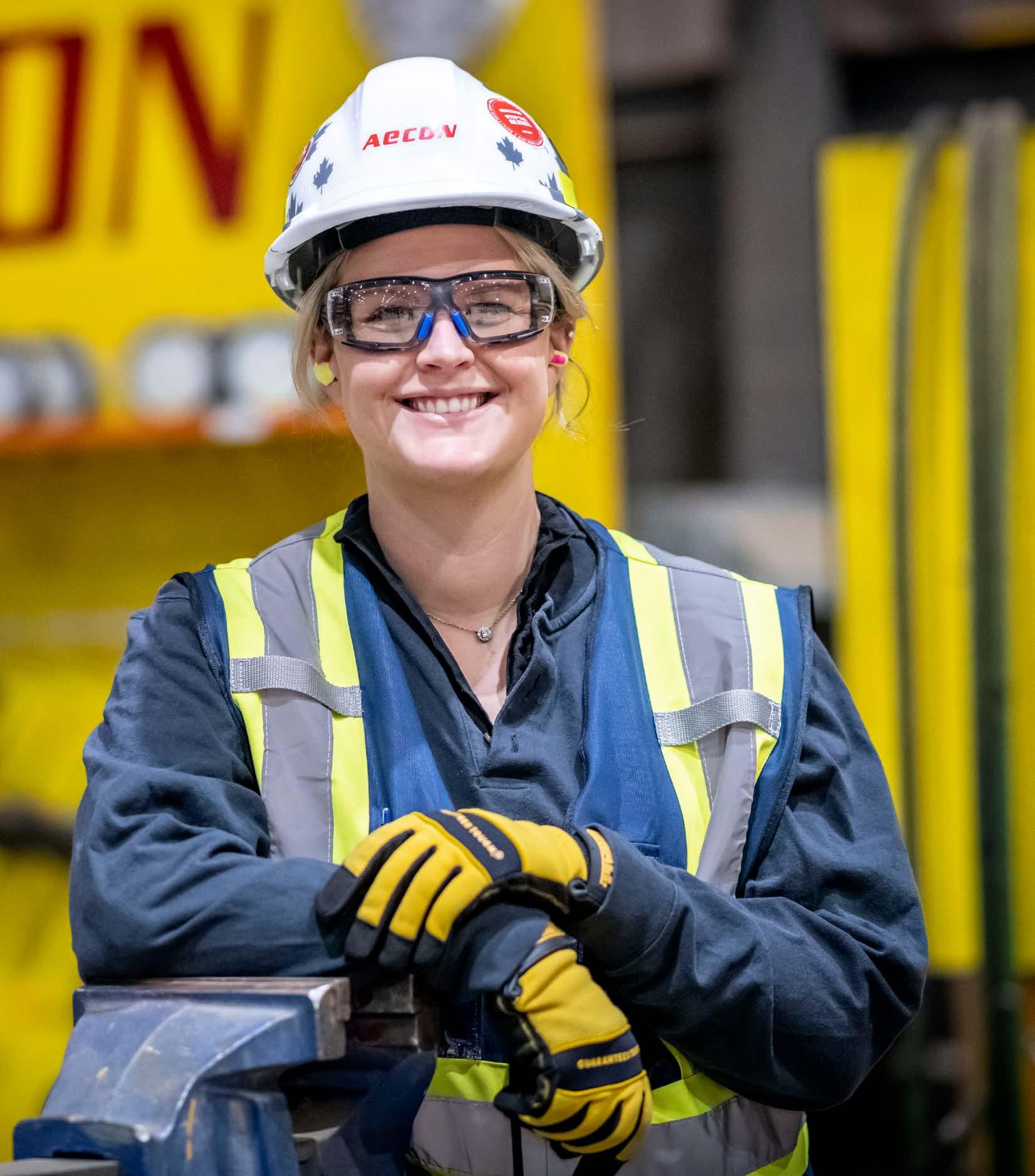
Aecon is committed to building respectful, mutually beneficial relationships with Indigenous Peoples. In September 2022, we reached an important milestone with the release of our first Reconciliation Action Plan, the blueprint for our ongoing work to engage and partner with Indigenous communities, businesses and organizations.
Pillars of our Reconciliation Action Plan
1. Lead and inspire the Aecon community to participate in the development, implementation and execution of tangible actions of the Reconciliation Action Plan.
2. Respect the unique needs, culture and rights of Indigenous Peoples to foster a safe, inclusive and equitable environment to achieve career goals.
3. Recognize the truth of our shared history and the Indigenous lands that we operate on through building awareness, developing allyship and actively listening to the unique interests and priorities of Indigenous Peoples.
4. Commit resources to build sustainable and mutually beneficial relationships with Indigenous Peoples to foster positive change and create stronger communities.
5. Empower Indigenous Peoples in supporting economic advancement, wealth creation and a sustainable future.
Each pillar includes targets and timelines to support accountability. The full Plan is available online.
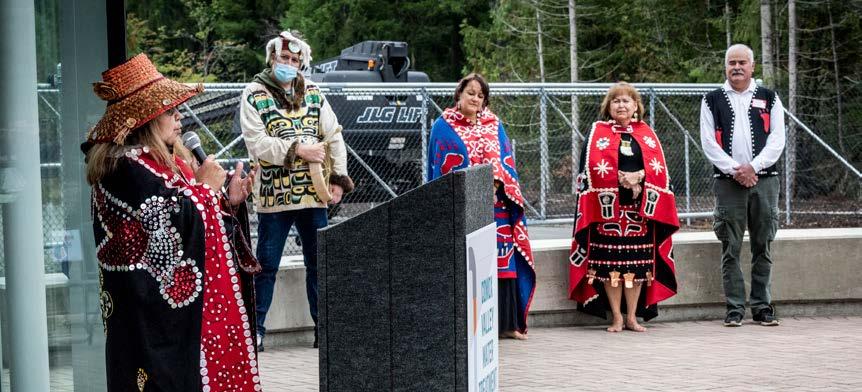
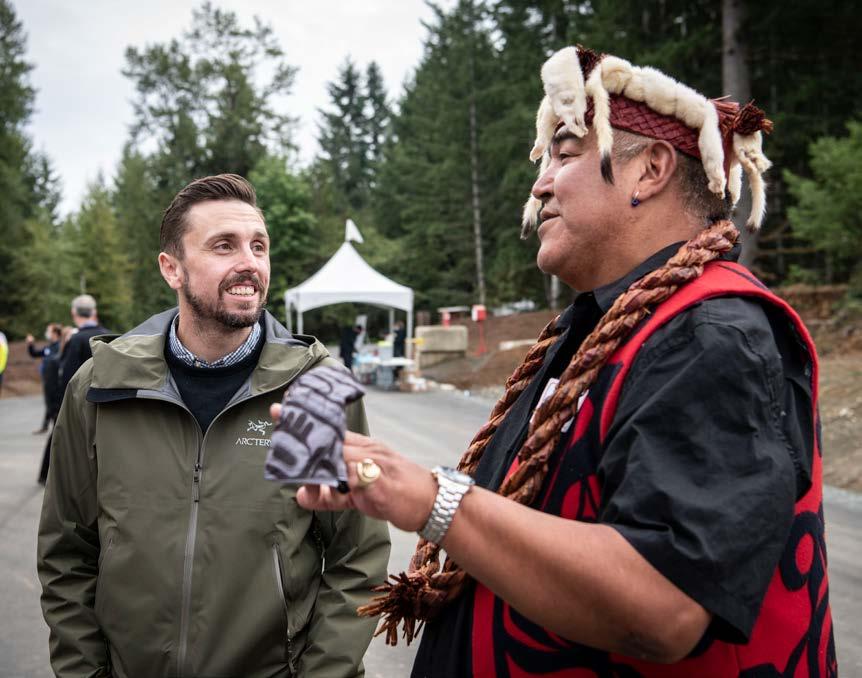
Our approach to Indigenous relationships
• Facilitating partnerships between Aecon and Indigenous organizations and businesses, including joint ventures and strategic alliances (see next page).
• Establishing employment, education, training and apprenticeship opportunities for Indigenous Peoples (see next page).
• Actively developing an awareness of Indigenous cultures across Aecon (see sidebar).
• Understanding the potential impact of Aecon’s business operations on Indigenous communities.

Aecon was proud to welcome Jennifer Campeau into her new role in October 2023. While Jennifer and the Indigenous Relations team bring specialized expertise and leadership, responsibility for Reconciliation is shared by everyone at Aecon. For example, all salaried employees are required to pursue Indigenous learning – including about our Reconciliation Action Plan – through our online learning platform, Aecon University.
“Building on Aecon’s record of creating economic partnerships and providing education supports, our Indigenous Relations team is now deepening relationships by helping communities thrive in a holistic way. We’re increasingly sponsoring community food sovereignty initiatives, youth programs and cultural projects – all forms of capacitybuilding that contribute to the autonomy, prosperity and well-being of Indigenous communities.”
Jennifer Campeau, Vice President, Indigenous RelationsIn September 2023, Aecon was proud to receive Silver certification through the Progressive Aboriginal Relations (PAR) program of the Canadian Council for Aboriginal Business. Jean-Louis Servranckx, Aecon’s President and CEO, responded to the recognition: “Aecon is proud to receive this certification, demonstrating our progress in continuously working collaboratively with Indigenous Peoples to advance reconciliation, economic development and wealth creation.”
In 2023, Aecon renewed its partnership with Indspire, committing $75,000 over three years to fund the Aecon Group Indigenous Bursary, to be awarded to students enrolled in engineering, business or technical trades programs at post-secondary institutions in Manitoba, Ontario or Québec. This program builds on the success of the Building Brighter Futures program (2020–2022), through which Aecon provided bursaries to 40 students, ultimately hiring two bursary recipients.
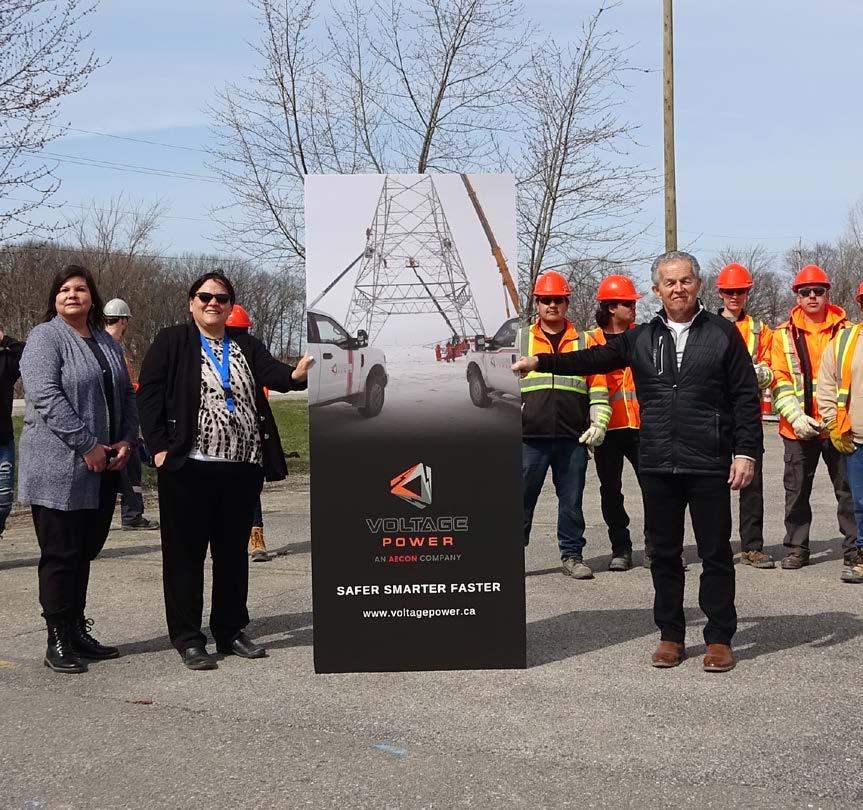
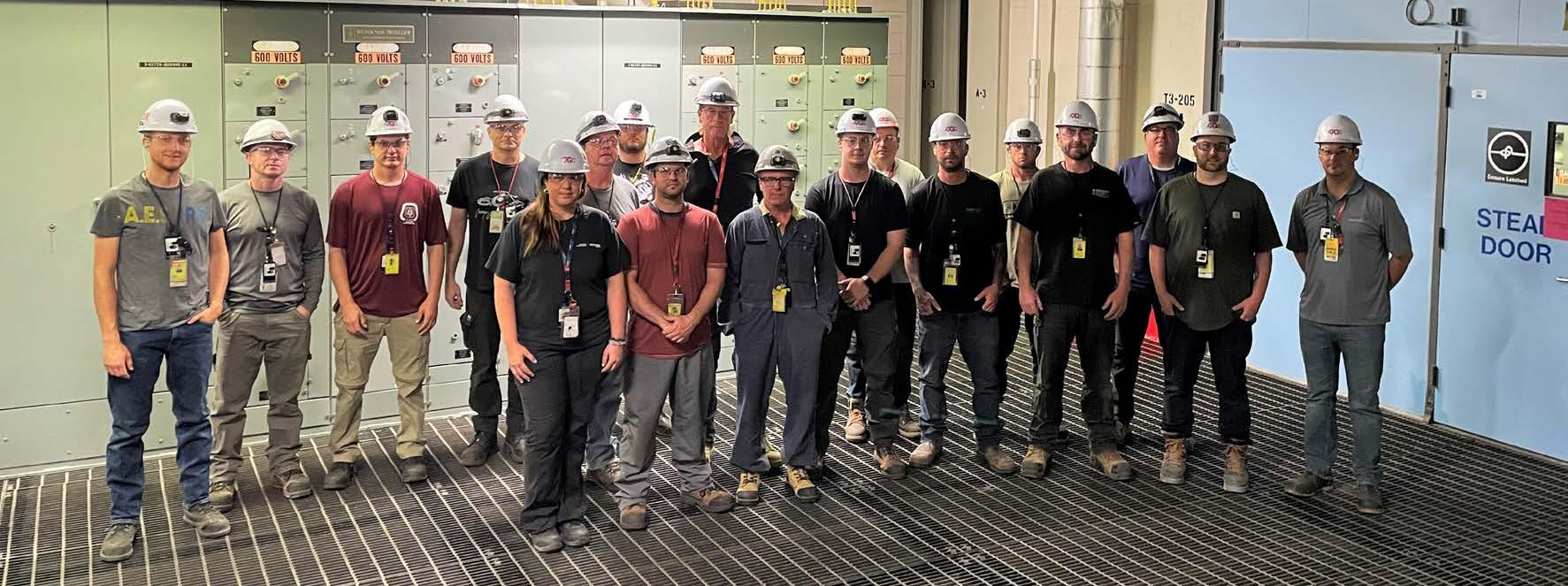
$275 M
Total procurement spending in the Indigenous economy
4
Aecon is one of just four companies to earn Silver-level certification from the Canadian Council for Aboriginal Business (see the first paragraph above).
216
We’ve proactively grown our list of Indigenous suppliers, and we seek ways to share opportunities with these trusted partners.
8
With the addition of Aecon Makhos Power Seven Generations (AMP7G), Aecon CIPS Seven Generations (AC7G) and Wicehtowak Industrial LP in 2023, Aecon is now a partner in eight majority Indigenous-owned partnerships.
An essential aspect of Aecon’s approach to Reconciliation is seeking ways to share opportunities – for learning, development and prosperity – with Indigenous Peoples. Since 2017, we have collaborated to build eight partnerships that are majority-owned by Indigenous partners. We also proactively build relationships with Indigenous vendors and suppliers, helping to grow the Indigenous economy by procuring goods and services from Indigenous-owned enterprises.
Aecon Six Nations (A6N) General Partnership
Partners: Six Nations of the Grand River Development Corporation
Focus: Delivering diverse infrastructure services from highway construction to fibre-optic cabling and directional drilling.
Enoch Aecon Joint Venture (EAJV)
Partners: Enoch Cree First Nation
Focus: Multi-trade industrial construction projects in Alberta’s industrial heartland.
Chipewyan Prairie Aecon Joint Venture
Partners: Chipewyan Prairie First Nation, represented by NOHA Group
Focus: Construction and maintenance for the industrial sector in the Wood Buffalo Region.
GSE Aecon
Partners: Ground Source Energy, a Métis owned and operated business
Focus: Engineering, detailed energy modelling and expert installation execution for GeoExchange projects in Canada.
Aecon Three Fires (A3F)
Partners: Chippewas of the Thames First Nation and Aamjiwnaang First Nation
Focus: Utility construction work and hydrovac services in southwestern Ontario.
Aecon CIPS Seven Generations (AC7G)
Partners: Cambium Indigenous Professional Services, an Indigenous owned and operated business from Curve Lake First Nation
Focus: Maintenance and scaffolding work on existing Aecon nuclear projects, with plans to offer a wider range of offerings to nuclear and non-nuclear facilities.
Aecon Makhos Power Seven Generations (AMP7G)
Partners: Makhos, an Indigenous-owned staffing, training, consulting and construction services company
Focus: Supporting Ontario’s utilities and nuclear sectors, including for high-voltage power transmission, distribution and substation work.
Wicehtowak Industrial LP
Partners: George Gordon First Nation
Focus: Work on large-scale industrial scopes for the mining and metals firm BHP at its new Jansen Mine in Saskatchewan.
Keeping every worker safe on every job is Aecon’s top priority. In order to achieve this outcome, in 2023 we continued to implement initiatives centred around our three EHS strategic pillars:
• Critical Risk Management
• Strengthening Systems
• Leadership, People and Engagement Culture
As we pursue ongoing improvement in safety performance, we collaborate with industry peers – and actively seek input from our team members – to ensure that we seize every opportunity to prevent incidents and optimize safety practices on every task, work site and project. Some of our key initiatives in 2023 included:
An Updated Risk Assessment Toolkit. We incorporated new critical risk elements into our improved EHS Risk Assessment Toolkit. To ensure that our enhancements to the toolkit were grounded in on-site experience, we carried out extended pilots on many sector projects throughout much of 2023 using the updated Job Assessment Risk Review, Job Hazard Analysis and Project-Level Risk Assessment tools.
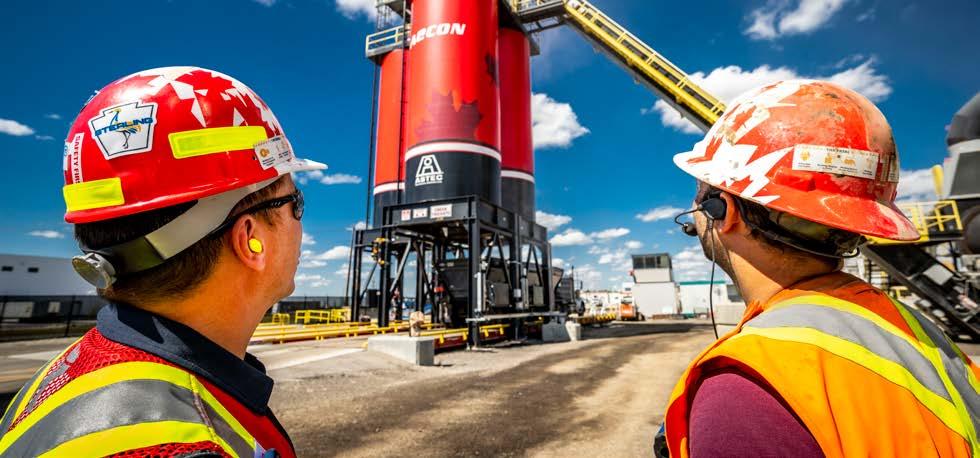
A Focus on Working Around Mobile Equipment. Based on an analysis of incidents over the last several years, we identified working around mobile equipment as a key focus area in 2023. We adopted new requirements relating to 360 Blind Spot Walks, the use and competency of spotters, the delineation and separation of people and mobile equipment, and safe methods of approach. Aecon’s Safety Week, in which more than 110 sites participated, reinforced an essential message: “Working Around Mobile Equipment: Be Seen. Be Smart. Stay Apart.”
New tools for better safety insights. In 2023, we continued our work to digitize the forms our teams use to submit worksite information. This year we deployed five key digital forms: Onsite Insight, Critical Control Verifications, General Workplace Inspection, EHS Opportunity and Environment Inspection. This digitization initiative is reducing administrative burden at the front line while creating new opportunities for data-driven insights.
Safe hands. Hand injuries were identified through a data review as being a significant contributor to recordable incidents over the past few years. In response, we launched a safety campaign focused on preventing injuries to workers’ hands and fingers. The campaign reduced recordable hand/ finger injuries by 30% overall in 2023 compared with 2022.
Promoting EHS Excellence. Aecon’s EHS Excellence program is designed to build and promote positive EHS culture. Each month, we share and celebrate examples of team members demonstrating safety excellence. For example, at our port modernization project in St. Vincent and the Grenadines, teams developed an innovative way to improve on-site worker safety. By engineering two separate bridge structures at a river crossing where both machines and workers needed to travel frequently, the designers prevented workers from entering the blind spots of mobile equipment and generally kept pedestrians away from areas where mobile equipment was operating.
0.01
Lost-Time Injury Frequency
0.89
Total Recordable Injury Frequency (TRIF)
0
Significant Incidents involving Aecon employees or subcontractors where Aecon was the Safety Lead
909
Site visits by senior leadership
10,471
Number of Critical Control Verifications undertaken
7
Number of internal EHS Audits undertaken
7,507 Safety Opportunities (incidents without injury or damage)
110+
Number of sites engaged in our annual Safety Week
As we respond to significant demand for infrastructure delivery and fulfil ever more exacting sustainability requirements, attracting and retaining outstanding talent – and nurturing the development of our existing team members – are critical priorities.
Canada needs more skilled tradespeople to drive the energy transition and build sustainable, resilient infrastructure for tomorrow. In 2023, Aecon continued to advance our Trades Pipeline Strategy, focused on:
1. Harnessing immigration. We engage governments and partner with settlement agencies and others to ensure that tradespeople are part of Canada’s policy planning and that newcomers have clear on-ramps to roles that harness their skills.
2. Welcoming diverse talent. Through our joint ventures with Indigenous Peoples (see pages 26–28), programs like Aecon Women in Trades, and a wide range of diversity-oriented partnerships, we’re expanding access to opportunities in our sector.
3. Encouraging young people in Canada. As builders, we know that the skilled trades provide opportunities for rewarding, meaningful careers. We’re partnering with educators and employment centres to make students and young workers aware of opportunities in our sector.
As Aecon delivers more projects in the United States, we’re working to ensure that we have policies, support systems and personnel in place to maintain excellent performance in areas ranging from health and safety to professional development and employee well-being.
This year, we laid the foundations for a progressive leadership development program designed to support new leaders in developing essential skills and contextual awareness of the wider company –equipping them to think strategically and collaborate creatively to achieve results. The new program covers topics such as business strategy, advanced problem-solving and leading a sustainable organization.
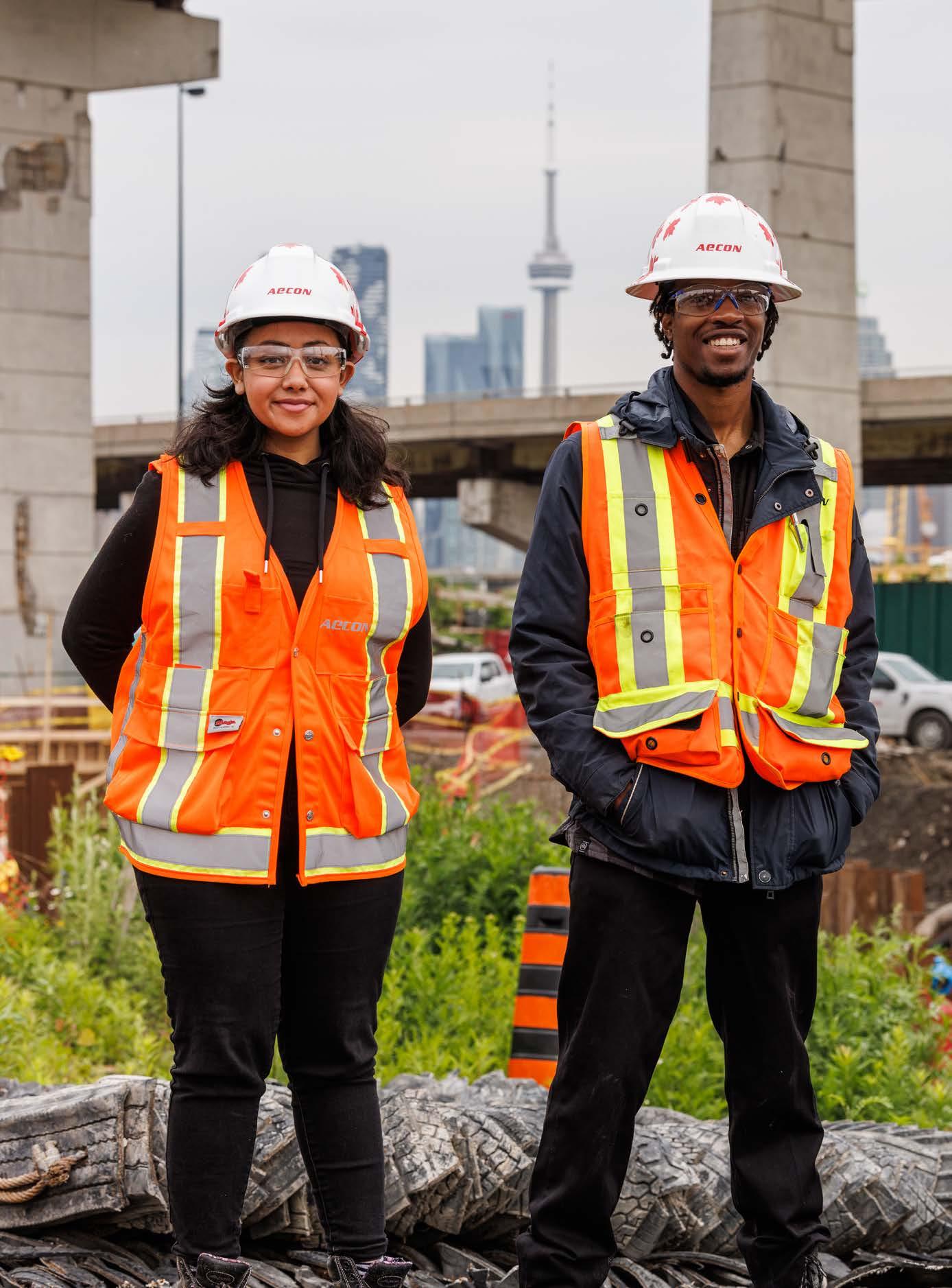
This year, we conducted our fourth annual diversity census. We use the data from this voluntary employee survey to track our success in building more diverse teams, increasing the diversity of people in leadership positions and evaluating how we compare to our industry peers in demonstrating progress on inclusion. While we’re working to improve overall internal mobility in our organization (we observed a down-tick this year), 2023 saw unprecedented representation of women as well as racialized and Indigenous leaders in executive positions, with 16% of executives being either Indigenous or racialized and 19% of executives identifying as women.
In 2023, we continued:
• Subsidizing employees’ green vehicle purchases and home upgrades through our benefits package.
• Expanding Aecon University’s learning offerings.
• Providing a range of health and wellness resources to support the well-being of employees and their families.
• Rolling out our updated workplace accommodation policy, whose design was led by our Employee Resource Group focused on employees with disabilities.
• Building partnerships with schools, unions and others to grow and diversify our sector.
3% decline in voluntary attrition
Canadian HR Awards, presented by Canadian HR Reporter Co-op
Recognized by the University of Victoria
16% of executives (VP-level and above) are Black, Indigenous or People of Colour
19% of executives (VP-level and above) are women
Aecon is proud to give back to the communities where we live and work through:
• Indigenous Peoples
• Young people
• Poverty
• Mental health
Aecon seeks to achieve positive social impact in the communities where we work. In addition to long-term economic benefits, the infrastructure we build often yields other benefits such as improved air quality and climate resilience. We also strive to deliver immediate benefits by emphasizing local hiring, training and economic development.
• Food sovereignty
Aecon’s philanthropic and volunteer activity focuses on: Aecon encourages and celebrates the grassroots fundraising and volunteer initiatives led by our dedicated teams. The Company often lends concrete support with matching funds or in other ways.
• The environment
Just a few of this year’s initiatives:
• Aecon entered into a three-year partnership with Durham College, committing to support the Ontario Power Generation (OPG) Centre for Skilled Trades and Technology. Located in Whitby, the centre will be developing industrial and construction-focused talent in the area of OPG’s Darlington Refurbishment and Darlington New Nuclear Project, where Aecon is engaged in multi-year projects (see page 16).
• Aecon teams proudly supported the Habitat for Humanity International build days in the community of the Chippewas of Saugeen First Nation, who form the Saugeen Ojibway Nation along with the Chippewas of Nawash Unceded First Nation. Our group of volunteer builders helped to build five single-dwelling homes.
• In memory of Brandon Alpine, a Ktunaxa citizen and valued member of the Aecon Industrial West team, Aecon was proud to join with the Construction Maintenance & Allied Workers Union and with Brandon’s mother Janice to support the Brandon Alpine Memorial Bursary. Offered in partnership with the College of the Rockies in BC, the bursary will help to support Indigenous students pursuing education in the trades.
• Aecon team members upheld a proud tradition of participation in the two-day Princess Margaret Cancer Foundation Ride to Conquer Cancer, a 200-kilometre cycling event. Aecon participants raised more than $75,000 in support of cancer research in Alberta and Ontario.
• Responding to an acute housing crisis facing newly arrived refugees in Toronto, Aecon’s HR team collaborated with Revivaltime Tabernacle –a church that stepped up to provide emergency shelter – to provide donations of essentials such as toiletries, baby supplies and clothing as well as gift cards.
• In late summer, Aecon employees in Montreal participated in Operation Backpack, a charitable initiative to reduce families’ back-toschool financial stress by providing students with free school supplies. Aecon teams filled an impressive 650 backpacks with supplies, helping the cause equip a total of 7,300+ kids for classroom success.
$759,671 in total corporate giving in 2023
In St. Vincent and the Grenadines, as we advance a major port modernization project, we’re investing to support the area’s economic future in other ways. We’re working alongside local leaders and educators to advance numerous learning initiatives, including several focused on connecting girls with opportunities in construction and infrastructure. In 2023, Aecon:
• Hosted a “Women in Construction” event and exhibition to encourage women and girls to consider construction as a career path. A separate panel discussion, “Meet the Professionals,” was designed specifically for women in post-secondary education.
• Held an infrastructure design contest for girls.
• Contributed to the “Future Fair” at the Girls’ Empowerment Summit, an event that convened dozens of teenaged girls to learn about possible future careers.
• Supported area schools in general with a range of in-kind contributions, including school supplies, refurbished computers and construction materials to support playground upgrades.
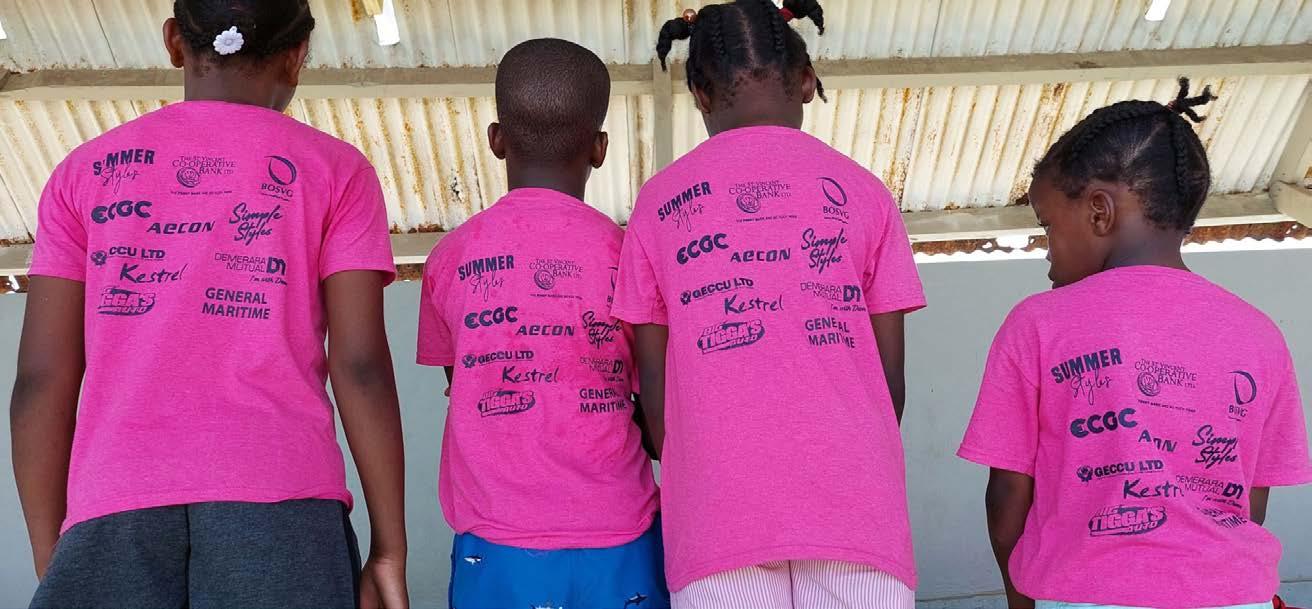
Aecon’s Kingstown Port Modernization Project team joined other businesses in St. Vincent and the Grenadines to partner with Playaz Youth Academy and sponsor the 2023 Summer Basketball Camp. Playaz Youth Academy is a nonprofit organization that aims to positively influence children and teens through basketball and leadership training.

Our approach is characterized by:
• Rigorous standards of oversight, ethics, compliance and risk management.
• Frequent updates to policies, protocols and training modules.
• Continuous work to align with leading practices (for example, on anti-corruption, risk management and diversity).
• Engagement, education and accountability across our organization and supply chain on ESG issues.
• Tools and training to help our teams understand how to mitigate risk individually and collectively.
• Ongoing monitoring of legal developments respecting bribery and corruption in our industry and in the jurisdictions where we operate.
To evaluate our success, we monitor:
• Complaints submitted to our anonymous, third-party-administered Ethics Hotline. Since activating the platform in 2021, we have promptly investigated all reports, applying appropriate governance mechanisms and controls, and have reported on those investigations to the Audit Committee of our Board.
• The compliance of our suppliers with our Supplier Code of Conduct and, since 2021, our ESG screening requirements. In 2023, we updated these requirements to more expressly address potential issues of forced and child labour in supply chains.
• The compliance of our employees, partners and external advisors with our requirements for international projects.
• The efficacy of our cybersecurity training and awareness program, #AeconSecure, as measured by employees’ responses to simulated cybersecurity threats.
• The composition of our Board and how it’s evolving regarding diversity dimensions and ESG capabilities.
• Monetary losses, if any, from anti-competitive practices or corruption-related penalties.
• Our team members’ completion of key training initiatives, such as anti-corruption programs.
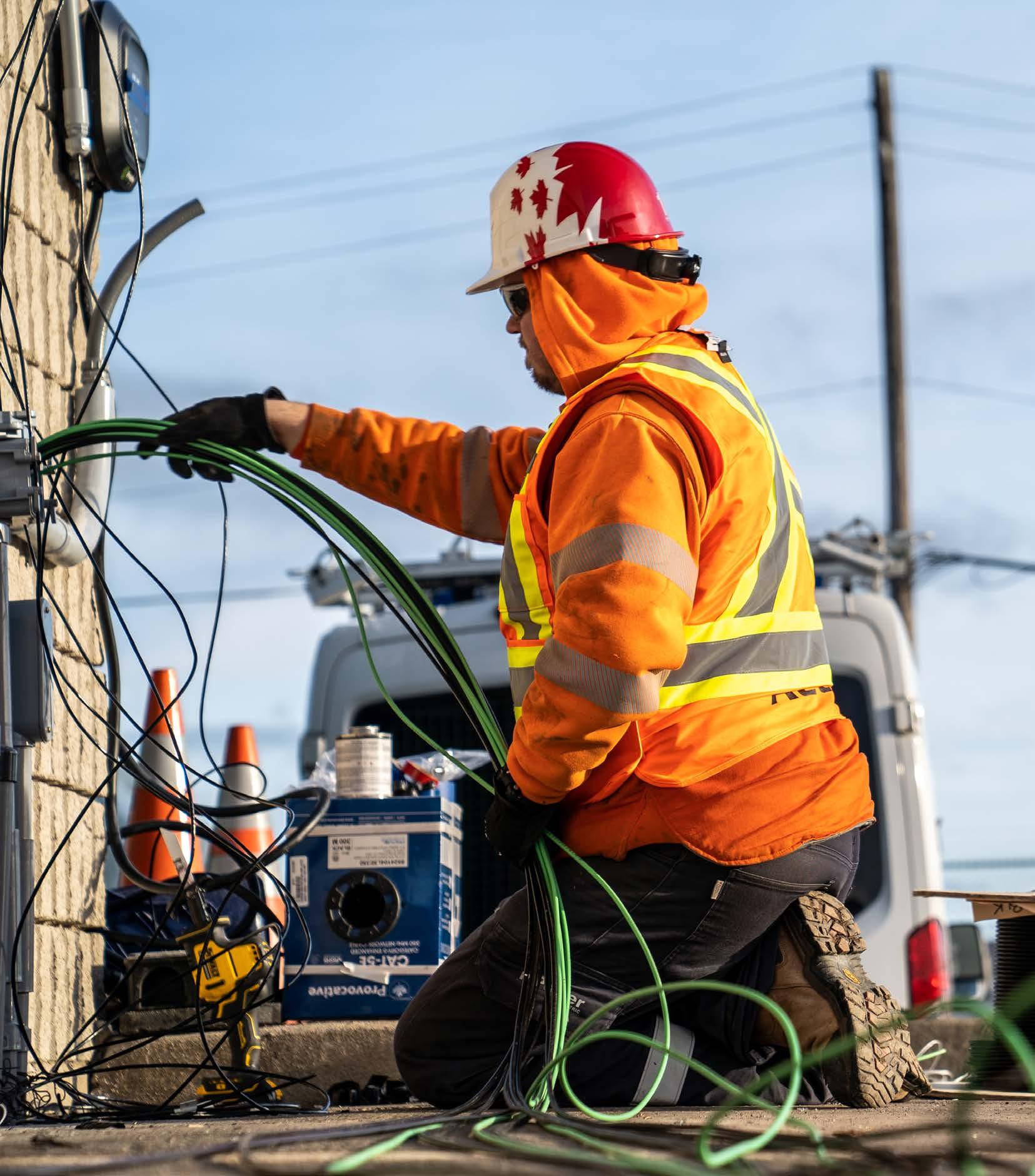
Aecon’s Continuous Improvement program is just one example of a wider commitment to process discipline that delivers value for clients and the environment.
Many of our projects are large and complex, involving hundreds of team members. In these conditions, it’s critical to have excellent tools and processes – as well as a strong culture – all focused on minimizing waste, mitigating environmental risk and promoting efficiency.
Expanding our use of the Last Planner System®. This project planning tool helps to create detailed and predictable workflows, enhancing coordination, efficiency and reliability in schedule and budget outcomes. Among other strengths, the system helps to identify potential sources of delay so they can be addressed in advance – an important measure since waiting (for materials to arrive or for other processes to be complete) is one of the top sources of waste on construction projects. Building on our success with the tool at Bruce Power Refurbishment (see page 16) and other projects, in 2024 we aim to implement Last Planner across all our work.
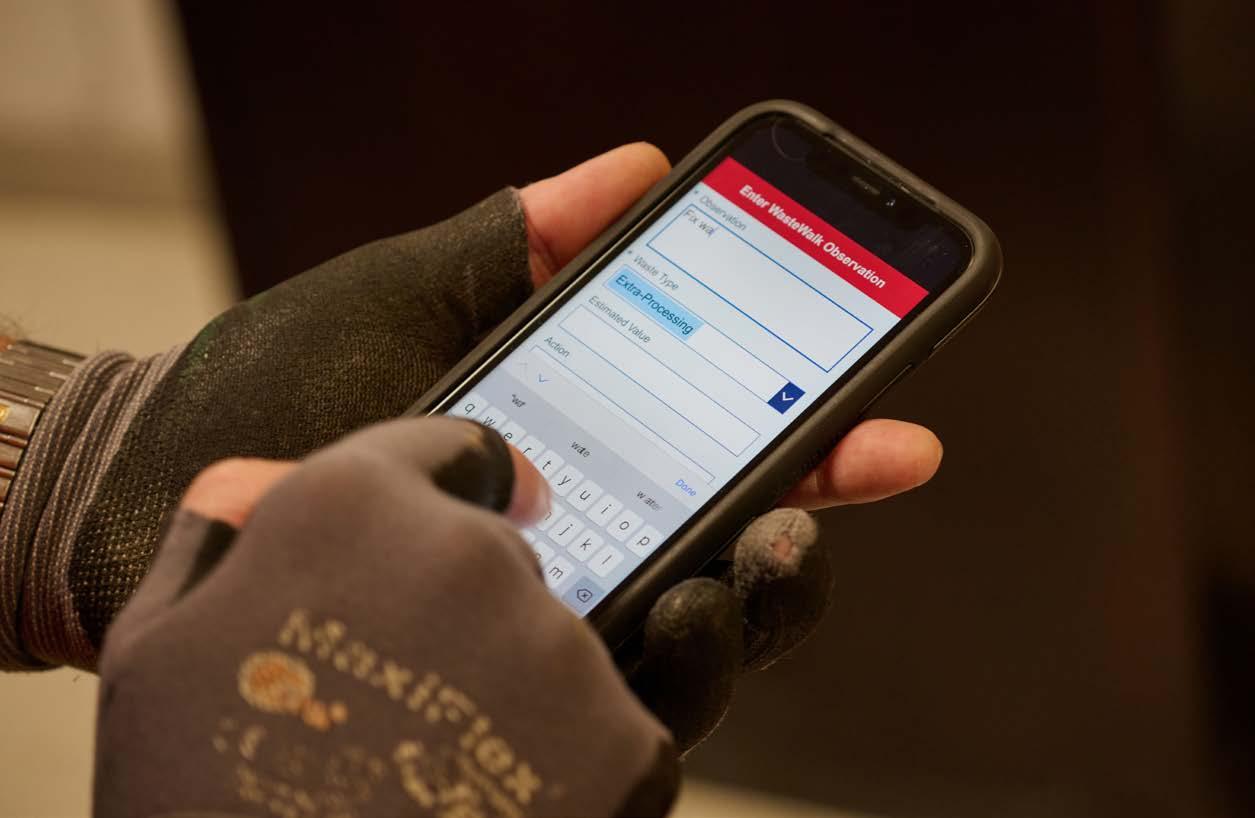
WasteWalks deliver unprecedented results. We continued to build our WasteWalk program, a leading Continuous Improvement practice in which operational teams walk their project sites to proactively identify process improvements, sharing them with colleagues through our dedicated
Building Smarter app and dashboard. The WasteWalks target eight primary forms of waste, including such factors as overproduction and wasted motion. We finished 2022 with over 480 observations of waste from WasteWalks across Aecon – a total we more than doubled in 2023 (see sidebar). WasteWalks are just one aspect of our Continuous Improvement program, which continues to grow across more operational areas and gain new champions.
Adding value with innovative approaches. In addition to maximizing the efficiency of our own operations, we also keep pace with innovations in construction processes and propose them to our clients and partners where we believe they can add value. At the new REM station connecting Montreal’s transit system to its international airport, we proposed the adoption of a novel water treatment technology called ECOMUD, which reduces sediment load in excavation waters, cuts the risk of harmful environmental releases and reduces the need for large equipment to clean sedimentation basins on site to protect the site’s water treatment system. Using ECOMUD enabled us to save up to 10 trips weekly by heavy vacuum pump trucks.
Enhancing value by tackling waste
1,210 employee observations of waste logged as of December 2023
$15M actualized savings based on waste observations to date
$100M estimated savings from wastereduction efforts in progress
2,900 Building Smarter training hours completed by Aecon employees
Aecon’s Board of Directors is composed of 10 experienced members. Apart from the Chairman and the President & CEO, the remaining eight directors are independent. Our Director Overboarding Policy ensures that all Board members possess the capacity for full and active engagement. Our Board is committed to a healthy governance culture of openness, candour and constructive dissent. To balance the advantages of experience and renewal, a Director Term Limit Policy sets a ceiling for the number of years directors may serve, with allowances for targeted, short-term renewals in exceptional circumstances. Our governance approach helps to drive effective management and sustainable business practices.
Corporate Governance, Nominating and Compensation Committee
Oversees the Corporation’s overall corporate policy related to executive compensation and incentive plan design; develops an effective governance system for the Corporation; and reviews and assesses the Corporation’s governance practices and public disclosure on an ongoing basis. Areas of oversight: Governance; Executive Compensation; Succession Planning; Diversity and Inclusion; Employee Engagement; Integrity and Transparency.
Audit Committee
Monitors the integrity of the Corporation’s financial statements and reporting, the Corporation’s compliance with applicable legal and regulatory requirements relating to audit and internal controls, the independence, qualifications and performance of the Corporation’s external auditors, and the Corporation’s internal controls and audit function. Areas of oversight: Financial Risk and Auditor Oversight; Compliance; Pension Plan Oversight; Integrity and Transparency.
Environmental, Health and Safety Committee
Supports continuous improvement of healthy and safe workplaces. Responsible for annual review and approval of the Corporation’s EHS Strategic Plan and quarterly review and assessment of the Corporation’s EHS performance. Areas of oversight: Health and Safety; Environmental Management.
Risk Committee
Oversees the framework for managing project risks arising from the Corporation’s operations and business. Reviews and monitors the Corporation’s Enterprise Risk Management program. Areas of oversight: Cybersecurity; Risk Management and Mitigation; Major Project Approvals; Project Performance.


Aecon upholds high ethical standards and actively seeks ways to detect and correct unethical conduct and non-compliance. Every aspect of our work is guided by our Core Values and our commitment to protecting the interests of our stakeholders.
We comply in all material respects with applicable lobbying laws and regulations, engaging with government officials and public representatives honestly, responsibly and transparently. Our lobbying activities are reported to the Audit Committee quarterly.
In 2021, we launched a third-party Ethics Hotline that allows anyone to report ethical concerns without fear of reprisal; the platform supports reporting anonymously online or via a 24/7/365 toll-free, multilingual support line.
We require vendors and subcontractors to adhere to our Supplier Code of Conduct, which sets clear expectations in areas such as safety and information security and prohibits workplace harassment, bullying and discrimination. In 2021, we added an ESG questionnaire, which includes Diversity and Inclusion dimensions, to our screening apparatus for preferred suppliers. In 2024, we will publish a standalone report on forced labour and child labour.
Aecon has a robust compliance program for international projects, starting at the bid or pursuit stage. Procedures are customized for each geographic location during the active construction and/or operations stages, and employees with a legal, finance, procurement or HR function who are operating in offices or project sites abroad receive in-person compliance training on an annual basis.
Aecon’s management team has developed a disciplined and integrated ERM process, which:
• Identifies potential events that may affect the Corporation.
• Manages risk in accordance with the Corporation’s risk appetite.
• Provides reasonable assurance regarding the achievement of the Corporation’s objectives.
Aecon has formal policies that address a range of potential sources of risk, from project selection and contract terms to third-party liability and regulatory matters. Aecon’s management team believes that everyone in the Corporation has a degree of responsibility for ERM; the specific activities associated with these shared responsibilities are articulated in detail in Aecon’s 2023 Management Information Circular.
Aecon takes a firm stand for human rights. Forced labour, child labour and human trafficking are issues of global concern, and we are committed to working proactively to prevent these abuses in our business and across our supply chain. In addition to mitigating risks that forced labour and other abuses might present to our business, we embrace our responsibility to protect our employees, our stakeholders and the communities in which we operate from the harms of these practices.
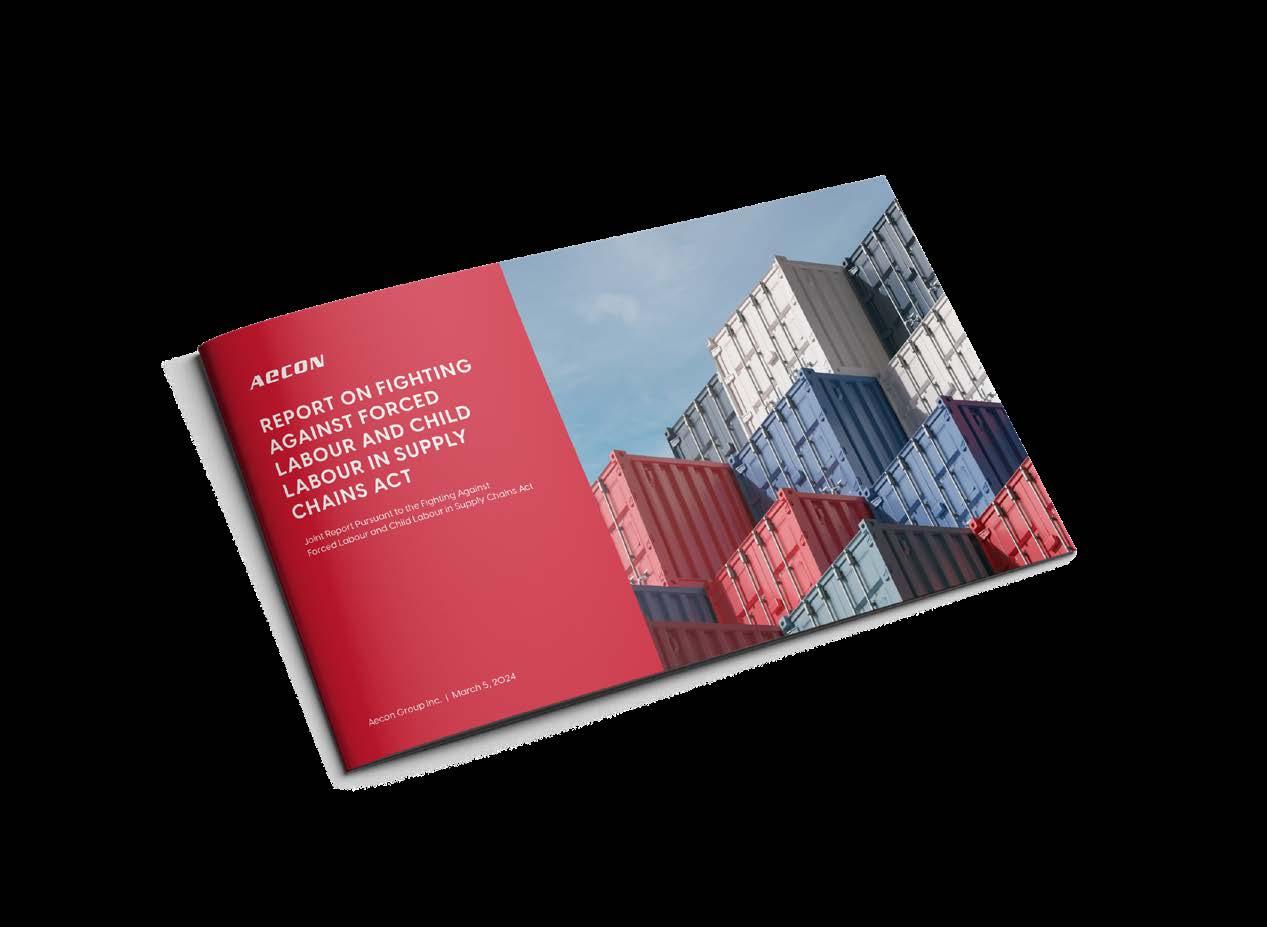
Guided by our core values, we commit to protecting our employees, contractors, partners and clients from any form of modern slavery. In March 2024, Aecon published our first formal report summarizing the steps we have taken to prevent and reduce the risk of forced labour or child labour. This report is an expression of our core values and is also pursuant to the Fighting Against Forced Labour and Child Labour in Supply Chains Act
As part of its oversight duties, the Board examines current conditions such as the macroeconomic environment, size, nature and unique characteristics of the construction and infrastructure development industry, geographic markets, and the basis, size and strength of the Corporation’s competition on an ongoing basis.
The Board, working closely with management, also identifies, categorizes, analyses and prioritizes risks. Management supports the Board in this work by providing a list of the material risks Aecon faces across 11 categories, including financial, hazard, strategic, operational, human resources, third-party liability, environmental health and safety, governance, information technology, policy and reputational, and climate change risks. Aecon’s management team has also developed a detailed colour-coded heat map to pictorially prioritize risks along the lines of severity, likelihood, and ability to mitigate. The heat map ranks
Additional information about our sustainability approach is available at: www.aecon.com/sustainability
Please direct questions to: Prabh K. Banga Vice President, Sustainability at sustainability@aecon.com.
Aecon supports and aligns to the Task Force on Climate-related Financial Disclosures (TCFD) recommendations, the Sustainability Accounting Standards Board (SASB) Engineering and Construction Services Standard and the United Nations Sustainable Development Goals (SDGs). Our TCFD and SASB compliance summaries are set out in the Reporting Appendices. We are currently working toward alignment with the International Sustainability Standards Board (ISSB) Sustainability Disclosure Standards, IFRS S1 and S2. We are also taking steps to align with the recommendations of the Task Force on Nature-related Financial Disclosures (TNFD); we plan to report against this framework in 2024.
Materiality, in the context of this Sustainability Report, refers only to the relative significance of environmental, social and governance (ESG) priorities and their potential impacts, both positive and negative, on our business and our stakeholders. Issues deemed material from an ESG perspective may or may not be material to Aecon’s business, operations, capital or market value. Details on our approach to materiality with respect to ESG can be found on pages 8–9 of our 2021 Sustainability Report, which describe a formal materiality assessment we undertook in 2021 based on the Global Reporting Initiative (GRI) guidance on materiality. In brief, we developed a list of key topics suggested by stakeholders, and fielded a survey inviting respondents to identify their relationship to Aecon and to indicate – through ranking – the relative importance they thought Aecon should assign to each topic.
The trademarks, designs and logos appearing in this Sustainability Report related to Aecon are owned by Aecon Group Inc. All other trademarks, designs and logos are owned by third parties which do not necessarily share the opinions expressed in this report or on our Sustainability website.
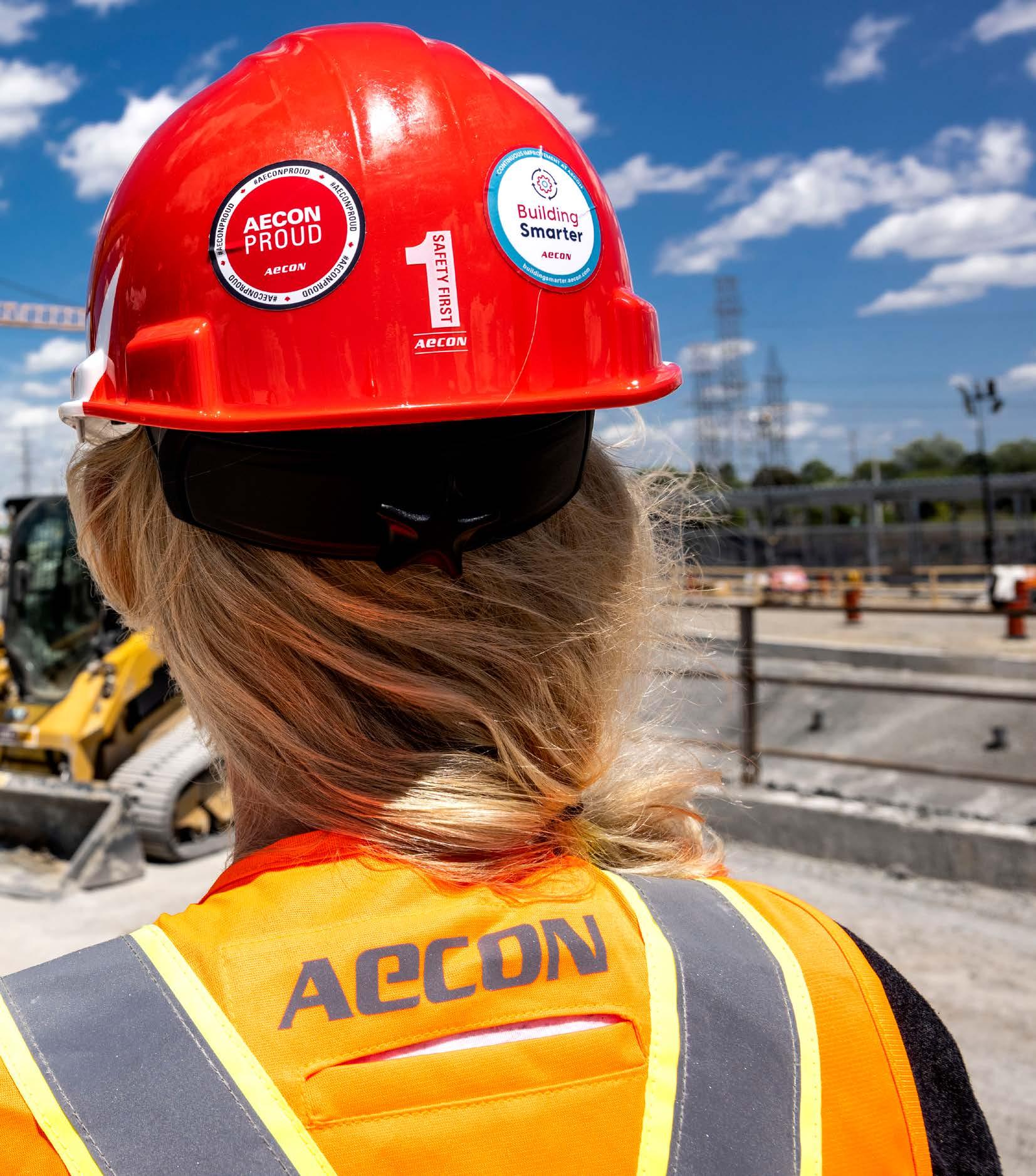
1 For all 2020 performance disclosures, excluding GHG emissions, please see our 2022 Sustainability Report.
2 2023 performance includes category 1, category 4 and category 6 scope 3 emissions. Previous years (2020-2022) scope 3 and total emissions only accounted for category 6.
3 Metric changed in 2021 to align with Aecon’s sustainability-linked loan.
4 Historical emissions have been restated to account for the 2023 divestment of Aecon Transportation East, in accordance with the GHG Protocol.
Below is a table of Aecon’s sustainability disclosures, aligned to International Financial Reporting Standards (IFRS) S1 and S2, Task Force on Nature-related Financial Disclosures (TNFD) and Task Force on Climate-related Financial Disclosures (TCFD).
Governance Governance body responsible for oversight of risks and opportunities and management’s role in assessing and managing sustainability risks and opportunities
Oversight of Aecon’s sustainability strategy is the responsibility of the Board of Directors, as indicated in Aecon’s Mandate of the Board. Aecon tracks Board skills and experience in categories important to Aecon’s business, including ESG and sustainability experience. Management delivers a climate change and sustainability update to the Board quarterly. Sustainability-related risks are integrated into Aecon’s Enterprise Risk Management (ERM) process, updated and overseen by both management and the Board.
Formal policies are in place for utilization of ERM resources in strategic decision-making, policies, budgets, business plans, and capital expenditures. Oversight, review and approval of management-created sustainability targets are duties of the Board. Sustainability performance, including progress toward targets and pursuit of sustainability opportunity, is considered by Aecon’s Corporate Governance, Nominating and Compensation Committee. For more information on Board skills and education, Aecon’s ERM process and sustainability oversight, see pages 20, 43, 59–60, 62 and 67–69 of the 2023 Management Information Circular (MIC).
The Sustainability Team oversees the alignment and integration of material sustainability-related risks and opportunities, collaborating with internal teams responsible for the management and monitoring of specific sustainability areas that are material to our organization and industry (in accordance with SASB). The Sustainability Team monitors emerging trends, utilizes stakeholder impact and conducts internal analysis (climate-related scenario analysis) to support risk and opportunity oversight.
Controls and procedures in place for oversight of sustainability-related risks and opportunities are dependent on the respective management team.
For a breakdown of the organizational structure in relation to sustainability issues, please see Governance – Board Skills and Experience
Climate-related risks and opportunities are managed by Aecon’s Sustainability Team. The Senior VP of Corporate Development and Investor Relations (IR) is responsible for assessing and managing climate-related issues and reporting quarterly to the Board. The Vice President, Sustainability, reports to the SVP of Corporate Development and IR, and is responsible for engaging with internal and external stakeholders to keep track of risks and opportunities related to climate change. Aecon’s 2024–2027 Strategic Plan focuses on sustainability-related opportunities, specifically related to climate change mitigation and adaptation and the energy transition.
Environmental risks and opportunities are managed, overseen and assessed by Aecon’s Executive Vice President and Chief Safety Officer, who is responsible for management of company-level EHS matters, including nature-related risks and opportunities, and development of tools and resources for risk assessment on a project and business unit level. Nature-related risks are also identified on a project/business unit level, which is the responsibility of operational executives and site management teams. The governance document that oversees environmental and nature risks is the Redbook. See pages 10–11 of the 2023 Annual Information Form (AIF) for more on Environmental Management.
Health and safety risks and opportunities are managed, overseen and assessed by Aecon’s Executive Vice President and Chief Safety Officer, who is responsible for management of company-level health and safety matters, including risks and opportunities, and development of tools and resources for risk assessment on a project and business unit level. See pages 10–11 of the 2023 AIF for more on Health and Safety Management.
Ethical and legal risks and opportunities are managed, overseen and assessed by Aecon’s General Counsel. See pages 60–61 of the 2023 MIC for more information on Ethics & Business Conduct Management.
Strategy Dependencies, impacts, risks and opportunities
The resilience of the organization’s strategy, taking into consideration different scenarios
For a description of climate-related and sustainability-related risks, and impacts of these risks, please see the risks in Appendix C. For a description of climate-related and sustainability-related opportunities, and impacts of these opportunities, please see the opportunities in Appendix D. Also see page 36 of our 2023 Management’s Discussion and Analysis of Operating Results and Financial Condition (MD&A)
Due to capabilities and resources, Aecon has considered financial impacts on a qualitative scale for the 2023 reporting year. Aecon is currently evaluating tools and approaches to quantify impacts of risks across various time scales, and those at risk of material adjustment. For risks linked to SASB metrics, financial impact was estimated as a part of integration with ERM, by the indicated risk manager.
Nature-related dependencies:
• Dependency on natural resources associated with procurement of construction materials, including water and raw materials for concrete, steel and bitumen
Nature-related impacts:
• Impact of land use, water, soil and waste generation, and GHG and air emissions during procurement and physical construction activity
• Impact of construction activities on water and soil quality
Nature-related physical risks and opportunities:
• Risks associated with increased intensity and frequency of severe weather events to upstream suppliers and business activity, specifically in high-risk/sensitive areas
Nature-related transition risks and opportunities:
• Risks to financial position due to increased costs/ decreased revenue associated with policy and regulatory changes
• Opportunity to integrate waste management practices (reuse and recycling) to reduce costs
• Opportunity to integrate land preservation/ restoration into projects (relevant to design-build)
Aecon conducted a preliminary climate-related scenario analysis in 2023 to further understand the dynamic interplay between physical climate development, client preferences and policy changes and how the interplay may impact future operations under potential future scenarios. We utilized existing internal and external resources, including materiality assessments, climate risk and opportunity assessments, and industry benchmarking to evaluate the potential organizational impact of future climate scenarios. For this preliminary analysis, we considered the transition and physical impacts of two scenarios: net zero by 2050 (limiting warming to 1.5 degrees through stringent climate policies and innovation, and a status quo or current policies scenario (assuming only currently implemented policies are preserved). We used data, inputs and assumptions from Climate Analytics, International Energy Agency, and the IPCC (Intergovernmental Panel on Climate Change) Sixth Assessment Report. For this preliminary analysis, we limited the scope to consider only our Canadian operations, as this represents a majority of our business activity. The results of this analysis will be used for organizational decisionmaking and corporate strategizing, as scenario analysis informs risk and opportunity analysis within our company-wide ERM system (see above).
See Climate-Related Scenario Analysis for further information on how Aecon’s current strategy aligns with these scenarios and how Aecon plans to consider the risks and opportunities of these scenarios in strategic decisions.
For the 2023 reporting period, this assessment was high-level and qualitative. In future disclosures, Aecon will work to increase the scope and improve granularity of reporting, by including broader operations as well as quantitative measures of resilience.
Risk Management The organization’s processes for identifying and assessing, managing and monitoring dependencies and impacts, risks and opportunities, and integration into risk management process
Management
a) Disclose the metrics and targets used by the organization to assess risks and opportunities in line with its strategy and risk management process, and those used to assess and manage dependencies and impacts on nature
Identification of sustainability-, nature- and climate-related risks is the responsibility of the Sustainability Team. Various internal and external resources and processes are used to identify and prioritize these risks, including materiality assessment, peer benchmarking, climate-related scenario analysis, industry publications, trends analysis and formal sustainability frameworks and standards. Materiality assessment, industry standards (SASB), climate-related scenario analysis and peer benchmarking are used to identify and prioritize the most material sustainability risks.
Oversight of the management and monitoring of dependencies and risks is the responsibility of the corresponding governance management team (see the Governance section on page 42).
Our initial climate impact assessment has been undertaken as part of our broader Enterprise Risk Management process and management risk assessment across 11 categories, including climate change. See page 59 of our 2023 MIC for more on Enterprise Risk Management.
In 2024, Aecon is planning to integrate sustainability risks and opportunities, guided by SASB industry standards, into this process. Read more on our climate and sustainabilityrelated risk management in our 2023 AIF (page 10) and 2023 MD&A (page 36).
Metrics and targets associated with risks and opportunities can be found in Appendix C and Appendix D. Tracking and calculation of metrics is the responsibility of the individual/ team that oversees the management of the specific risk/opportunity.
Aecon will be working to expand reporting on certain metrics including:
• Amount and percentage of assets/activities susceptible to climate-related risks and aligned with climate-related opportunities
• Amount of capital expenditure, financing or investment deployed toward climate-related risks and opportunities
• Internal carbon pricing
• Remuneration
• Metrics for the assessment and management of dependencies and impacts on nature
b) Disclose scope 1, scope 2 and, if appropriate, scope 3 greenhouse gas (GHG) emissions and the related risks
Please see page 41 in this Sustainability Report for our scope 1, scope 2 and scope 3 greenhouse gas emissions (GHG) for 2023. Please also see the transition risks on page 45 for more information on the risks associated with our GHG emissions.
Transition Policy and Legal Risk from existing and emerging policy regulation aimed at addressing climate change in an effort to transition to a lower-carbon economy, such as:
• Carbon pricing mechanisms
• Economic sector restrictions
• Standards for lower/ more efficient energy sources and solutions
• Enhanced reporting obligations
• Exposure to litigation
• Limits on license to operate
These risks may impact Aecon and stakeholders, including upstream suppliers (especially those in high-emitting industries such as concrete, steel and bitumen) and subcontractors and current or potential clients (specifically those operating in industries that extract, distribute and transport fossil fuels). This risk is amplified with the pressures that will be placed on industry decarbonization to reach net zero by 2050.
Aecon’s operations and supply chain in other countries, including the United States and the Caribbean, may be subject to varying regulations, meaning that our scope of work may be differentially impacted depending on geographic location.
Suits directed toward corporations, specifically in high-emitting industries, such as oil and gas and material extraction and production, may impact Aecon’s supply chain and current and future work with clients.
Under net zero scenarios, policy is a necessary lever for decarbonization and will likely increase in scale and scope, increasing these risks.
Aecon mitigates these risks through proactive engagement with governments, regulators and industry organizations; regular monitoring and board reporting of regulatory trends; and adequate compliance preparation.
Management engages climate change consultants and legal experts with extensive global experience in climate change, as required.
Aecon has set GHG emission reduction targets that align with net zero scenarios, and has established a preliminary climate transition plan, utilizing internal GHG data, in preparation for development of more strictly regulated and higher-ambition policy measures. (See page 23 for more information.)
Aecon has set targets for scope 3 emissions, and currently conducts ESG supplier surveys to understand our supplier’s ESG performance.
Increased operational costs (higher compliance costs and insurance premiums)
Decreased revenue from projects associated with fossil fuel extraction and distribution
Reduced revenue due to reduced demand resulting from fines and judgments
Increased costs associated with the purchasing of materials and equipment from upstream suppliers in high-emitting industries
Medium term (1–5 years)
GHG emissions:
• Scope 1, 2 and 3
Scope 1: 154,680 tCO2e
Scope 2: 2,794 tCO2e
Scope 3: 534,245 tCO2e (Categories 1, 4 and 6)
• Progress toward company-developed targets: 30% by 2030 intensity-based scope 1 and 2, net zero by 2050
Percentage of preferred and Tier A suppliers screened using an ESG questionnaire (cumulative):
• Target (100% cumulative by 2025 from a 2020 baseline)
20% reduction in scope 1 and 2 emissions (intensity-based)
63% (target of 50% for 2023)
1 Current and anticipated effects of climate-related risks and opportunities on business model and value chain
2 How we respond to/plan to respond to these risks
CLIMATE (CONTINUED)
Transition (continued)
Market Risk from shifting supply and demand as economies react to climate change:
• Changing client behaviour
• Uncertainty in market signals
• Increased cost of raw materials
• Uncertain subsidy landscape
*Climate Impacts of Business Mix (IF-EM-410b.1, IF-EM-410b.2 and IF-EM-410b.3)
Technology Risk from emerging technologies aimed at supporting carbon transition:
• Substitution of existing products and services with lower-emission options
• Unsuccessful investment in new technology
Aecon’s private and/or public sector clients may shift their infrastructure priorities due to changes in project funding or public perception of sustainable projects. Certain business lines such as Industrial, particularly work in non-renewable resources such as oil and gas, are at most significant risk.
Increased costs of raw materials impact Aecon’s upstream suppliers of materials and equipment, likely forcing them to increase the price of their goods and services.
Cost and subsidy uncertainty is higher under the status quo scenario, as resilience on fossil fuels and lack of widespread incentive for decarbonization increase risks.
This risk is mitigated by identifying changing market demands to reposition risks as opportunities, forming strategic partnerships and pursuing sustainable innovations. This risk is also mitigated to an extent by identifying changing market demands and evolving our business mix. Please refer to the Key Trends Shaping our Business Context section in our 2023 Sustainability Report for more information on how we are evolving our business to adapt to changing markets.
Reduced revenue from certain business lines
Increased costs, potentially reduced margin of rented and purchased goods and services associated with higher production costs incurred by our upstream suppliers
Long term (>5 years)
This may require Aecon to substitute existing products, including equipment purchases and rentals, with lower-carbon alternatives.
Implementation of alternatives may require employees to be trained on proper operation and maintenance.
This would most directly impact Aecon’s operations that utilize owned equipment and technology, where there is a risk of writeoffs of investments and early retirement of existing technologies.
Certain projects may have increased risks, due to varying sustainability-related client requests for on-site equipment usage.
Increased reliance on emerging technologies to support decarbonization under the net zero scenario increases this risk, with high cost of initial adoption. Lack of investment in research and development of these technologies under a status quo scenario increases this risk.
This risk is mitigated through our efforts in operational continuous improvement, sustainable innovation, planning and strategy.
Aecon has formed strategic partnerships with manufacturers and research partners to pilot and test new sustainability innovations –including low-carbon material and equipment, and sustainable fuels. This includes relationships with suppliers and universities. We look for and take advantage of funding and subsidization opportunities to supplement the currently high capital cost of these alternatives.
Please see page 21 for more information about how Aecon is working with its supply chain to encourage technological advancement.
Increased capital expenditure and costs of purchased and rented equipment
Increased costs associated with deploying/adopting new practices and processes and providing employee training
Writeoffs and early retirement of existing assets
Medium term (1–5 years)
Revenue and backlog linked to project type (SASB-defined):
• Amount of backlog for (1) hydrocarbonrelated projects and (2) renewable energy projects
• Amount of backlog cancellations associated with hydrocarbonrelated projects
• Amount of backlog for non-energy projects associated with climate change mitigation
(1): $132 million
(2): $314 million
$3.7 million
$867 million
CLIMATE (CONTINUED)
Transition (continued)
Reputation Risks of damage to brand value and loss of client base from shifting sentiment about climate change:
• Change in client demand
• Stigmatization of sector
• Increased stakeholder concern/negative stakeholder feedback
Aecon’s private and/or public sector clients may shift their infrastructure priorities due to changes in public perception of sustainability in the industry. Scrutiny of certain project types affiliated with negative sustainability consequence is a risk faced by Aecon. Clients and other stakeholders in Canada and worldwide are becoming more attuned to climate change action and sustainability matters, including the efforts made by issuers to reduce their carbon footprint. Aecon’s reputation may be harmed if it is not perceived by its stakeholders to be sincere in its sustainability commitment and its long-term results may be impacted as a result.
Increased focus on the climate-related impacts of the construction sector and supply chain, including the production of construction materials such as concrete and steel, catalyze these impacts within Aecon’s supply chain.
This risk is mitigated by seeking advice from expert consultants, adopting a formal ESG framework and committing to reporting on our emissions in an annual Sustainability Report. It is also mitigated through our efforts in operational continuous improvement, sustainable innovation, planning and strategy. Increased stakeholder dialogue – internal and external data sources including materiality assessment, and ESG rating results to evaluate our strategy.
Reduced revenue from decreased demand for project affiliated with certain business units/activities
Reduced revenue from decreased capacity (delayed approvals, supply chain interruptions)
Reduced revenue from negative workforce impacts (employee attraction and retention)
Reduction in available capital
Physical
Acute Risks resulting from climate change can be event-driven (acute physical risk) or from longer-term shifts in climatic patterns (chronic physical risk). Acute physical risks arise from weather-related events such as storms, floods, drought or heatwaves, which are increasing in severity and frequency.
This may impact Aecon through supply chain interruption, transportation difficulties, employee health and safety risks.
Projects, assets, infrastructure or supply chain operations could be materially disrupted or damaged by the increased frequency and intensity of extreme weather events, a change in the expected seasonal length and regional epidemics or global pandemics.
With global operations, the impact of weather events may differentially impact certain projects based on geographic location. Areas prone to flooding and cyclones are at most risk.
These risks are significantly higher under the status quo scenario, compared to net zero.
This risk is mitigated contractually whenever possible and with insurance to some extent, but extensions of time do not provide compensation for overhead under-recovery.
These risks can be mitigated to some extent by building in additional schedule time that considers the short-term impacts of weather, such as ice cover.
Reduced revenue from decreased production capacity (supply chain interruptions, transportation difficulties, operational stops)
Reduced revenue and higher costs from negative impacts on workforce
Writeoffs and early retirement of existing assets (damage to property and assets)
Increased capital costs (damage to facilities)
Increased operating costs (on-site climate and weather mitigation)
Increased insurance premiums and potential for reduced availability of insurance on assets in high-risk locations
Short term (<1 year)
CLIMATE (CONTINUED)
Physical Chronic Risk of longer-term changes in weather patterns:
• Changes in precipitation patterns and extreme variability in weather patterns
• Rising mean temperatures
• Rising sea levels
Increases in the severity and/or frequency of weather conditions due to climate change may cause interruptions in Aecon’s business. Severe weather events may also impact the availability and cost of raw materials and may impact the raw materials supply chain and disrupt key manufacturing facilities. Additionally, chronic shifts in climate influence the energy requirements of buildings and the suitability of locations for new development projects. With global operations, the impact of weather events may differentially impact certain projects based on geographic location. Particularly sensitive areas, and coastal areas, are at most risk.
These risks are significantly higher under a status quo scenario, where these impacts may differentially impact areas in northern hemisphere high-latitude and high-elevation regions, and coastal regions, all of which are areas where Aecon works. For example, work on Aecon’s Concessions projects in the Caribbean, as well as Civil and Industrial works in Canada, might be at significant risk.
The risk could be mitigated by incorporating energy efficiency and energy procurement considerations as part of due diligence for any new office location and by developing operational innovations.
Aecon is working to adapt to these risks by creating infrastructure that is resilient to climate change, and it is working to mitigate risks by reducing emissions throughout the construction and infrastructure value chain by supporting low-carbon materials and equipment and constructing infrastructure that supports the energy transition.
This risk is directly mitigated contractually to some extent, but extensions of time do not provide compensation for overhead under-recovery.
To mitigate the impact to employees, the Aecon Redbook Environmental Health and Safety Management System addresses severe weather conditions.
Reduced revenue from decreased production capacity (supply chain interruptions, transportation difficulties, operational stops)
Reduced revenue and higher costs from negative impacts on workforce
Writeoffs and early retirement of existing assets (damage to property and assets)
Increased capital costs (damage to facilities)
Increased operating costs (on-site climate and weather mitigation)
Increased insurance premiums and potential for reduced availability of insurance on assets in high-risk locations
Long term (>5 years)
Health and Safety Structural Integrity and Safety –
IF-EN-250a.1
and IF-EN-250a.2
Errors or inadequate quality in project design phase and construction of buildings or infrastructure resulting in poor structural integrity and safety of deliverable
Risks include significant personal injury, loss of property value and economic harm
Aecon has a professional responsibility to ensure the safety and integrity of work.
The risk associated with failure in quality is higher for projects in which Aecon is the Health and Safety lead.
This risk is also higher for projects in which Aecon is responsible for multiple project aspects including engineering, design, architectural, consulting, inspection, construction and/or maintenance services. For example, Aecon’s design-build projects are higher risk than when it provides construction services. Business lines, such as Concessions, where Aecon remains responsible for maintenance are also at higher risk.
Severity of risks may increase with increased frequency/severity of climate-related impacts on infrastructure.
Workforce Health and Safety –IF-EN-320a.1
The risk that the company is unable to maintain a high level of safety in the workplace
Workforce fatal accidents, life-changing injuries, and injuries and long-term ill health that reduce life expectancy or quality of life
All of Aecon’s construction, maintenance and repair services, and other on-site activities require substantial manual labour. This puts all employees at higher risk of workforce health and safety incidents because of exposure to power haulage and heavy machinery accidents, fall accidents, exposure to hazardous chemicals and other unique and potentially dangerous situation.
Aecon project where temporary workers are hired are at greater risk due to lack of training and/or industry experience.
This risk is also accelerated due to the increased impacts of chronic physical risks of climate change, under the status quo scenario, where there will be an increase of heat stress impacts.
Oversight: EVP and Chief Safety Officer and SVP, Finance
Aecon is subject to, and complies with, health and safety legislation in all of its operations in the jurisdictions in which it operates. The Company recognizes that it must conduct all of its business in such a manner as to ensure the protection of its workforce and the general public.
With increasing frequency and severity of climate change-related events, there may be greater need to not only meet but also exceed standards. This may also entail setting up internal control procedures to identify and fix issues resulting from climate risks. This is something that is on the radar of Aecon’s Sustainability and Health and Safety management teams.
Oversight: EVP and Chief Safety Officer and Operational Executives
Aecon has implemented rigorous safety controls, including establishing a prequalification system ensuring a robust safety staff and implementing a company-wide Critical Risk Management program. Dupont Safety Solutions has been secured to validate and enhance our focused program direction. High-risk activities are monitored by all levels of operations through project critical risk verifications. These are completed by senior leadership, project management and front-line supervision. In 2023, to address concerns regarding our Total Recordable Injury Frequency (TRIF), Aecon developed and implemented a hand and finger safety program.
Incremental costs associated with redesign or repair work and legal liabilities
Reputational damage
Termination of contracts and/or impact on future job awards
SASB-defined: Safety-related rework costs
Defect-related rework costs
Total amount of monetary losses as a result of legal proceedings associated with defect and safety-related incidents $953,000 $0 $0
Exposure to liability and fine, increased WCB costs, poor reputation leading to less work
Serious incidents may result in acute, one-time extraordinary expenses and contingent liabilities from legal/regulatory actions
Incidents may result in project delays and downtime, which increase project costs and decrease profitability
Evaluated impact with existing mitigation measures: moderate to high
Losses $5 million to $50 million, moderate injuries, doubt in competence and/or potential damage or corporate reputation
Environment Environmental Impacts of Project Development –IF-EN-160a.1 and IF-EN-160a.2
Risks posed to the local environment and surrounding communities due to:
• Major fuel, oil or hazardous substance spill
• Effluent limit exceedances
• Non-compliances
• Improper processes in place to assess and manage environmental risks associated with project design and construction
Due to the general nature of Aecon’s work, activity on projects have the potential to disrupt the local ecosystems where we are working, through biodiversity impacts, air emissions, water discharges, natural resource consumption, waste generation and hazardous chemical use.
Risks associated with non-compliance and environmental incidents is most significant on projects where Aecon is the Environmental lead.
This is particularly the case during the project phases, or those projects where clearing, grading and excavation activities are significant and there is increased likelihood of generation of harmful waste.
Aecon’s work in environmentally sensitive areas is subject to higher risk and scrutiny.
Increased demand for land-use conservancy practices under a net zero scenario may increase these risks.
Oversight: EVP and Chief Safety Officer/ Operational Executives/General Council, Operations
Aecon has comprehensive Risk Management protocol as a part of the Environment, Health and Safety Management System. This includes incorporation of environmental risk and controls into tools that were implemented across the organization in 2023.
Aecon has in place rigorous Environmental protocol on site, which includes:
• Safety prequal; environmental training (covering waste management; soil management; water and effluent quality; air quality; associated Best Management Practices/operational controls; erosion, sediment and surface water control; terrestrial and aquatic wildlife and habitat protection; archaeology and cultural resources; and noise and vibration); safety officers; procedures with protocol for discovery of historically contaminated soils; effective supervision; monitoring weather and anticipating potential adverse effects; soil, sediment and surface water management procedures and training; application of spill prevention; notification and response procedures
Aecon has in place a strong Environmental Management System to mitigate risk:
• Proper management of environmental risk to reduce regulatory oversight and/or community pushback, pre-construction environmental aspects screening, use of EHS Project Level Risk Assessment and development of EHS Management Plan, inclusion of environmental subject matter expertise when required depending on the scope of work, and risk profile and application of due diligence process during development stage
See Aecon’s page on the environment for more information, including policies.
Compliance failures with environmental regulations during construction may result in costly fines and remediation costs, and damage reputation. This can increase operational expenses and project capital costs, and reduce share price, earnings and overall net profitability.
Environmental concerns or local community pushback may result in project delays or cancellations, negatively impacting profitability and growth.
Evaluated impact with existing mitigation measures: low Losses less than $5 million, temporary doubt in management competence
Medium term (1–5 years)
Number of incidents of non-compliance with environmental permits, standards and regulations (SASB-defined):
• Environmental infractions (fines, warnings or citations from a regulator)
• Regulatory reportable environmental incidents 0 17
SUSTAINABILITY (CONTINUED)
Lifecycle Impacts of Projects and Business Mix Lifecycle Impacts of Building and Infrastructure –IF-EN-410a
Risks associated with the inability to integrate sustainable construction principles (sourcing of materials, construction methods), operation energy/water use in the development phases and aligning to sustainable construction standards
These risks pose a threat directly to Aecon for projects where Aecon is responsible for the project design phase (design-build).
This is a risk for Aecon indirectly, as clients may increase requirements for construction companies to adhere to these sustainable principles and standards.
Political and financial incentives for consideration and integration of efficient practices into projects will be accelerated under a net zero scenario, increasing these risks.
Oversight: SVP Corporate Development and IR/Operational Executives/Procurement
Aecon encourages the integration of sustainable construction principles and alignment to standards in projects.
Much of this risk is mitigated by means that these areas are not in the control of Aecon for many projects. More specifically, energy and water efficiency considerations are based on clients’ specifications and are incorporated into project planning and design per their requirements. The commitments associated with these requirements are incorporated into the project Environmental Management Plan approved by the client.
Aecon mitigates these risks through offering training to employees on sustainable construction frameworks used in infrastructure development.
Failure to mitigate these risks could result in loss of long-term market share and reputational impact, and could impact awarding of future jobs.
Evaluated impact with existing mitigation measures: low Result in losses generally not exceeding $5 million, temporary doubt in management competence
Long term (>5 years)
SASB-defined:
Number of commissioned projects certified to a third-party multi-attribute sustainability standard (Envision)
Number of active projects seeking certification of third-party multi-attribute sustainability standard (Envision)
Business Ethics Bribery/Illegal Payments
(SASB –Business Ethics –IF-EN-510a.1, IF-EN-510a.2 and IF-EN-510a.3
The risk that an employee violates the Code of Conduct and applicable law by authorizing bribes. This includes:
• Violation of anti-bribery laws
• Unethical bidding practices
Many elements of Aecon’s work directly increases this risk, including global operations, management of many local agents and subcontractors, complexity in project financing and permitting, contract magnitude for large projects, and the competitive process to secure contracts with public and private entities.
Aecon’s work on larger projects, as well as projects with many involved parties, are higher risk. The most significant exposure is in international jurisdictions outside of the United States, including the Caribbean and Latin America.
Oversight: General Counsel, Public Company and Corporate Secretary
Aecon conducts annual mandatory Code of Conduct training, and completes quarterly FCPOA certification process for international pursuits.
Aecon has numerous codes, policies and procedures in place to mitigate these risks. Anti-Corruption and Anti-Bribery Policy is in place along with procedures to mitigate exposure, including in-person annual training, quarterly compliance certificates, third-party due diligence of agents, consultants, partners, subcontractors and advisors. Aecon’s Code of Ethics and Business Conduct outlines our organization’s approach to anti-competitive behaviour. Aecon also has a Conflicts of Interest Declaration, which is required of all key individuals on major project pursuits.
Fines, settlement costs and damaged reputations associated with investigations due to ethical breaches
Poor track record may result in barring from future projects, resulting in lost revenue
Evaluated impact with existing mitigation measures: high Risk could result in losses exceeding $50 million and/or damage to corporate reputation
Medium term (1–5 years)
SASB-defined:
Monetary losses as a result of legal proceedings associated with charges of bribery or corruption
Monetary losses as a result of legal proceedings associated with charges of anti-competitive practices
Number of active projects and backlog in countries that have the 20 lowest rankings in Transparency International’s Corruption Perceptions Index
Aecon will see growth in demand for infrastructure projects that directly, or indirectly, support development of energy storage solutions. This follows a growing need for energy in communities, and necessary energy storage solutions to support this transition. Major industrial companies are beginning to explore the considerable potential for stationary energy storage, and we may see a rise in construction of such sites, thus increasing demand for our industrial capabilities.
Under a net zero scenario, the heavy reliance on a transition to net zero electricity will drive complementary investment in new grid management and storage solutions to ensure consistent and continued reliability. There will be a corresponding significant growth in projects that support the establishment of these systems.
Development of carbon capture and storage and carbon dioxide removal technology
Aecon will likely see demand growth for infrastructure projects that support carbon capture, utilization and storage for mitigating GHG emissions from power plants and industrial facilities.
Under a net zero scenario, there will be a significant investment in development of carbon capture and storage (CCS) and carbon dioxide removal (CDR) infrastructure for emission reduction of new and existing power generation plants and for compensation of emissions from hard-to-abate sectors.
Aecon is actively monitoring opportunities associated with the energy transition, and it is working with clients to support infrastructure projects that align with a low-carbon future.
This includes:
• Development of energy storage solutions
• Development of carbon capture and storage and carbon dioxide removal technology
• Delivery of resilient infrastructure
• Development/support of hydrogen technology
• Provision of renewable energy services
Aecon is leveraging existing expertise and workforce skills to apply to new projects aligned to energy transition, and it will pivot existing business operations to take advantage of these opportunities. Aecon has also seized these opportunities to create new business lines (Green Energy Solutions) to exclusively support the energy transition.
Increased revenue through demand for lower emissions products and services:
• Increased revenue through new solutions to adaptation needs (e.g., insurance risk transfer products and services)
• Better competitive position to reflect shifting consumer preferences, resulting in increased revenues
Many of Aecon’s existing clients will require support to improve the resiliency of constructed assets, specifically those at higher risk, such as hydro. Aecon will also likely see increased demand for integration of adaptation measures into new project design, and may need to take this into consideration for projects where they are responsible for design delivery. This may also include the development of infrastructure that supports community resilience and encourages sustainable growth, through provision of necessary resources and connection. This includes water construction projects, rail and transportation systems and transmission utilities.
The transition to a net zero carbon economy may bring significant commercial opportunities for companies that deliver resilient infrastructure –infrastructure that, together with its ecosystem and social system, is able to adapt to extreme weather, natural disasters and climate change impacts and still retain its basic function and structural capacity. Under a net zero scenario, the need for this type of infrastructure will be less than under a status quo scenario, where physical climate impacts pose higher risk.
Deployment of hydrogen technology
Due to the emergence of hydrogen technology and Aecon’s expertise in renewable energy and power generation with clients that are looking to transition into the hydrogen space, numerous opportunities exist. The drive to net zero emissions has pushed many jurisdictions, including Canada, to consider hydrogen technology as a low-carbon power source. For example, the Canadian government released its Hydrogen Strategy in 2021, which includes the use of hydrogen as a transportation fuel for power generation and storage, as a heating source and as a feedstock for industry.
Under a net zero scenario, reliance on alternative, low-carbon or net zero-carbon fuels, including hydrogen, will be necessary in circumstances where electrification is not possible. Increased investments and policy incentives will accelerate the opportunities.
Aecon is actively monitoring opportunities associated with the energy transition, and it is working with clients to support infrastructure projects that align with a low-carbon future.
This includes:
• Development of energy storage solutions
• Development of carbon capture and storage and carbon dioxide removal technology
• Delivery of resilient infrastructure
• Development/support of hydrogen technology
• Provision of renewable energy services
Aecon is leveraging existing expertise and workforce skills to apply to new projects aligned to energy transition, and it will pivot existing business operations to take advantage of these opportunities. Aecon has also seized these opportunities to create new business lines (Green Energy Solutions) to exclusively support the energy transition.
Increased revenue through demand for lower emissions products and services:
• Increased revenue through new solutions to adaptation needs (e.g., insurance risk transfer products and services)
• Better competitive position to reflect shifting consumer preferences, resulting in increased revenues
SASB-defined:
Climate change mitigation: $882.2 million
Includes:
Railway: $859.9 million
Sustainable transportation: $22.6 million
Non-SASB-defined:
Transmission: $181.8 million
Water construction: $172.7 million
Revenue by project type
Products and Services (continued)
Provision of renewable energy services
Opportunities associated with provision of renewable energy services are concentrated in our business units that primarily focus on this type of work. Namely, Aecon Green Energy Solutions, which works to improve energy efficiency and facilitate adoption of clean energy technologies. These opportunities will also be concentrated in areas where renewable energy is abundant, such as Canada, which has substantial renewable resources that can be used to produce energy, including water, wind, biomass, solar, geothermal and ocean energy.
Under a net zero scenario, increased demand for renewable energy services as well as need for jobs in this area, will accelerate opportunities for Aecon.
Aecon is actively monitoring opportunities associated with the energy transition, and it is working with clients to support infrastructure projects that align with a low-carbon future.
This includes:
• Development of energy storage solutions
• Development of carbon capture and storage and carbon dioxide removal technology
• Delivery of resilient infrastructure
• Development/support of hydrogen technology
• Provision of renewable energy services
Aecon is leveraging existing expertise and workforce skills to apply to new projects aligned to energy transition, and it will pivot existing business operations to take advantage of these opportunities. Aecon has also seized these opportunities to create new business lines (Green Energy Solutions) to exclusively support the energy transition.
Increased revenue through demand for lower emissions products and services:
• Increased revenue through new solutions to adaptation needs (e.g., insurance risk transfer products and services)
• Better competitive position to reflect shifting consumer preferences, resulting in increased revenues
Medium term (1–5 years)
Revenue by project type
SASB-defined:
Renewable: $341.7 million
Includes:
Co-generation: $11.0 million
Geothermal: $11.5 million
Hydro: $319.0 million
Solar: $0.2 million
Resource Efficiency Improved efficiency across operational processes, machinery and mobility, particularly in relation to energy efficiency
Opportunities associated with resource efficiency are concentrated within our on-site operational activities. Aecon has identified fuel efficiency measures to be the most significant area of opportunity in this category, due to our scope of operations. Another key area that Aecon has identified where there is opportunity to improve resource efficiency is waste management, particularly material reuse and recycling on project sites.
Under a net zero scenario, there will be high priority on research, development, deployment and demonstration of renewable energy technologies, such as battery and hydrogen. Increased adoption and production will also reduce the costs associated with these, increasing these opportunities.
Aecon has introduced a fleet telematics program, a monitoring initiative designed to optimize the use of vehicles and equipment. One way this can be utilized is for idling reduction. We have extended our fleet monitoring to partners and suppliers, collaborating to reduce total vehicle emissions. The telematics program is overseen by Aecon’s fleet group.
Aecon has also worked with suppliers to implement more efficient equipment and machinery on project sites. This includes electric, solar, hybrid, battery and hydrogen alternatives. This has been supported through pilots and trials conducted at various sites. See page 22 for more information on past initiatives.
Across numerous sites, Aecon has implemented recycling and reuse initiatives. Within Aecon’s western operations is a plant that recycles road base for project reuse. Please see the Innovation and Leadership in Green Construction section in our report for 2023 highlights. These initiatives are implemented by project teams, but are overseen by Aecon Sustainability. Sustainability has created an active resource for employees, containing information on local companies that accept traditionally non-recyclable materials.
Reduced operating costs (e.g., through efficiency gains and cost reductions)
Short term (<1 year)
Markets Access to new markets through collaboration, allowing for diversification of activities and better positioning for a transition to a lower-carbon economy
Resilience Development of adaptive capacity to respond to climate change to better manage risks and opportunities
With increased government pressure on the construction and infrastructure sector to decarbonize, there will be strong incentive and opportunity for Aecon to collaborate and access incentives.
Opportunities are set to increase under net zero scenarios.
Aecon’s efficiency opportunities are highlighted in the Resource Efficiency section. Opportunities linked to resilience are concentrated in Aecon’s upstream supply chain. Upstream suppliers of materials, such as concrete, steel and bitumen, will have opportunity to design new production processes and products, allowing for diversification. Electrification of industry, including for production of steel, cement and other industrial products, under a net zero scenario will increase opportunity for Aecon to take advantage of supply-chain collaborative opportunities.
Aecon is actively monitoring opportunities to collaborate and take advantage of new incentives. Aecon is currently receiving a sustainability-linked loan, based on the progress toward reaching certain sustainability targets.
Increased diversification of financial assets
Short term (<1 year)
Aecon actively works with upstream suppliers to support research and development into alternative processes and products that support decarbonization. For example, Aecon has worked with concrete suppliers to trial low-carbon concretes.
Increased reliability of supply chain and ability to operate under various conditions
Increased opportunities
Energy Source Opportunities associated with a shift in organizational energy to low emission sources
The most significant opportunities presented by the push to transition to low-emission energy transition are highlighted in the Products and Services sections. This includes projects that support (through capacity building) and create low-carbon energy.
Directly, Aecon has the opportunity to implement low-emission energy sources throughout our operations, both on projects as well as within our facilities. This is subject to availability of technologies as well as potential subsidization, and may vary based on location. Areas with high availability and subsidization will have greater opportunity. Due to a changing subsidization landscape, it is likely these opportunities will grow in scale and scope.
A net zero scenario suggests that increased carbon prices and increased investment in low-carbon energy will increase these opportunities.
See above for how Aecon has seized opportunities to diversify project mix by taking advantage of opportunities associated with decarbonization energy sources.
Operationally, Aecon has taken advantage of opportunities associated with shifting to low-emissions sources through two means.
Aecon has introduced biodiesels and renewable diesels on projects sites within Canada. This includes B5, B20, R50 and R100. This has been aided by fuel subsidization in certain provinces. Aecon has been working closely with fuel providers to ensure that we take advantage of new opportunities with existing suppliers and new projects.
Aecon has also utilized renewable energy sources for certain facilities, including the installation of geothermal and solar technologies.
Reduced operating costs (e.g., through efficiency gains and cost reductions)
Reduced exposure to fossil fuel price increase
Reduced exposure to GHG emissions (less sensitivity to changes in carbon cost)
Medium term (1–5 years)
Short term (<1 year)
Quantity of procured biodiesels and renewable diesels (by category)
Percentage of all fuels classified as renewable or bio
Percentage of wholesale fuels classified as renewable or bio
R100: 924,200 litres
R50: 369,800 litres
B20: 177,600 litres
3.69% of all fuels
4.91% of wholesale fuels
Environmental Impacts of Project Development Opportunities linked to comprehensive assessment of environmental considerations prior to project initiation, as well as continued evaluation during project development, engineering and construction
Structural Integrity and Safety Opportunities linked to the meeting or exceeding of industry quality standards and the establishment of internal control procedures to identify and fix potential design issues
Workforce Health and Safety Opportunities linked to a strong safety culture
There is significant opportunity for Aecon in this area, specifically on projects where Aecon is the Environmental lead, and projects with greater environmental risk.
See information under Environmental Impacts of Project Development risks on page 50 for a comprehensive breakdown of measures in place. This includes Risk Management protocol, EHS Management System, and Environmental protocol.
Mitigation of potential environmental issues and associated financial risks (see Environmental Impacts of Project Development risks on page 50 for more details)
Establishing a competitive advantage for obtaining new contracts with prospective clients
Medium term (1–5 years)
The opportunity for Aecon is concentrated on large projects where Aecon is the Health and Safety lead and/or is responsible for multiple project aspects including project design, construction and management.
See information under Structural Integrity and Safety risks on page 49 for a comprehensive breakdown of measures in place.
Mitigation of financial risks (see Structural Integrity and Safety risks on page 49 for more details)
This is an opportunity for Aecon across all operations, but it is specifically those projects where temporary workers are hired that pose a greater risk.
See information under Workforce Health and Safety risks on page 49 for a comprehensive breakdown of measures in place.
Mitigation of financial risks (see Workforce Health and Safety risks on page 49 for more details)
Potential competitive advantage in new project bids and proposals because of good workforce health and safety statistics
Medium term (1–5 years)
See the Risk section
Medium term (1–5 years)
Lifecycle Impacts of Building and Infrastructure Opportunities linked to provision of economically advantageous sustainable projects
Business Ethics Opportunities linked to development of an ethical culture through employee training, effective governance structures and internal controls
Client and regulatory pressures to develop a sustainably built environment will put increasing pressure on Aecon to respond accordingly to support these demands. Projects where Aecon can provide sustainability-oriented project design have the greatest opportunity.
Due to the nature of Aecon’s work and supply chain, business ethics is a high priority. Complex and large projects as well as international projects have higher opportunity to display strong ethical culture.
See information under Lifecycle Impacts of Building and Infrastructure risks on page 51 for a comprehensive breakdown of measures in place.
Mitigation of financial risks (see Lifecycle Impacts of Building and Infrastructure risks on page 51 for more details)
Potential competitive advantage and revenue growth opportunities
See information under Business Ethics risks on page 51 for a comprehensive breakdown of measures in place.
Mitigation of financial risks (see Business Ethics risks on page 51 for more details)
Improved reputation and competitive advantage
Long term (>5 years)
Medium term (1–5 years)
This scenario requires an ambitious transition across all economic sectors, with emphasis on decarbonization of electricity supply, with increased reliance on electricity use, increased energy efficiency and development of technologies for hard-to-abate emission sources. This would result in a minimization of physical risks, but increased transition risks from higher cost of emissions and changes to business and consumer preferences. Increased reliance on technologies for decarbonization create high risk in this area, and uncertainty in signals and subsidy landscape during the transition increases market risk. This scenario creates strong opportunities, namely with provision of products and services that support the transition to net zero. To mitigate risk and seize opportunities, Aecon will need to focus on the areas highlighted under the Risks and Opportunities columns, with more detail provided about these risks and opportunities located in Appendix C and Appendix D. See a detailed analysis below:
CATEGORY DESCRIPTION
Transition –Electricity and Power
Net zero electricity will replace coal, oil and gas. Decarbonization of the power sector will result in heavy reliance on, and significant investment in, the development and deployment of alternative energy sources including solar, wind, nuclear and hydro. There will be decreased investment in non-renewable sources. It will also require the development and deployment of carbon, capture and storage for new and existing plants, along with complementary investment in new grid management and storage solutions to ensure consistent and continued reliability. There will be a significant growth in the projects that support the establishment of these energy sources and increased need for jobs to supplement this.
RISKS OPPORTUNITIES
• Markets
• Reputation
Transition – Fuels
Transition – CO2 Management
When electrification is not possible, there will be a switch from fossil fuels to low-carbon or net zero-carbon fuels including hydrogen, biofuels and synthetic fuels. This will be supported with additional investments and policy incentives to bring these solutions to scale. Decrease in fossil fuel production, demand and fuel price.
Significant investment in the development of carbon capture and storage (CCS) and carbon dioxide removal (CDR) infrastructure. CCS will be used to reduce emissions of remaining fossil fuel-burning technology, and CDR technology will be used to compensate emissions from hard-to-abate sectors. There is uncertainty about the future of these solutions due to existing hurdles – specifically public acceptance.
Transition – Industry and Technology Technologies including electric vehicles, electric boilers and heat pumps will be required for a transition from conventional fossil fuel to a decarbonized, electrified future. There will also be new technologies to electrify the production of industrial products with significant carbon footprint, including steel and cement. Transition to innovative production processes will result in a gradual increase in conventional processes over time but will come at a cost premium in the near-term for innovation. Capital costs for hybrid and battery electric will decrease, along with the costs for hydrogen, fuel sale and utility-scale stationary batteries. High priority will be placed on research, development, deployment and demonstration of battery and hydrogen systems.
Transition –Behaviour
Transition – Land Use
A systemic transformation of social behaviour, with growth in shared mobility, and a switch from airplane to train travel.
Increased action toward improving land use through increased forest cover and other practices.
• Policy and Legal
• Markets
• Technology
• Technology
• Products and Services
• Resource Efficiency
• Markets
• Resilience
• Energy Source
• Energy Source
• Resource Efficiency
• Products and Services
• Products and Services
• Technology
• Markets
• Resilience
• Resource Efficiency
• Products and Services
• Markets
• Policy and Legal
• Reputation
• Markets
• Products and Services
Under this scenario, power generation relies on a combination of fossil fuel and renewables. Increased energy demand leads to increase in fuel production, with a general decrease in fuel prices. Carbon dioxide will be managed with a gradual price increase, but with minimal CCS and CDR. Innovative technologies and processes come at a high cost. This scenario is denoted by high physical climate risks, including damages from severe weather events, rainfall, temperature and sea-level rise. Uncertainty of climate change impacts on supply chains create a high level of market risk, while continued reliance on fossil fuels with little mitigation accelerates physical climate risk. Climate impacts pose risk to safety of both workforce and built infrastructure. Lack of investment in technology increases the risk of adoption. Little opportunity exists in this scenario, except for provision supporting clients to increase resiliency of infrastructure to withstand climate impacts.
Transition –Electricity and Power
Mix of fossil fuel and decarbonized energy sources. Continued reliance on fossil fuels, driven by high energy demand.
Transition – Fuel Increase in fuel production, primarily fossil fuels, in combination with a general decrease in fuel prices.
Transition – Carbon Dioxide Mitigation
Transition –Technology
Physical – Acute and Chronic ClimateRelated Impacts
Physical – Labour Productivity Impacts
No significant measures in place to capture or remove carbon dioxide. Slight, gradual increase in carbon pricing.
Conventional technology and industrial approaches remain at a consistent price, while innovative alternatives come at a significantly high cost. Gradual acceptance of battery and hydrogen technologies, with a slow decrease in the capital cost.
Increased frequency and intensity of heavy precipitation, increased risk of economic damages from tropical cyclones and sea-level rise.
Decrease in labour productivity due to heat stress.
OPPORTUNITIES
• Physical
• Markets
• Physical
• Markets
• Policy and Legal
• Physical
• Markets
• Technology
• Markets
• Structural Integrity and Safety
• Workforce Health and Safety
• Products and Services
Aecon believes our work and our priorities as an organization meaningfully contribute to the following eight SDGs.
SDG SDG TARGETS CONNECTED TO OUR WORK
4.4 Increase the number of youth and adults who have relevant skills, including technical and vocational skills, for employment, decent jobs and entrepreneurship
6.1 Universal and equitable access to safe and affordable drinking water
6.3 Improve water quality, wastewater treatment, recycling and safe reuse
OUR CONTRIBUTION
7.1 Universal access to affordable, reliable and modern energy
7.2 Increase global share of renewable energy
7.3 Double the global rate of improvement in energy efficiency

We support Indigenous learning through a range of school sponsorships, equipment donations and scholarships (see page 27). A central commitment of our Reconciliation Action Plan is “Establishing employment, education, training and apprenticeship opportunities for Indigenous Peoples.” Through our corporate philanthropy program, we also contribute to scholarship programs and other initiatives focused on non-Indigenous learners (see page 32). Aecon works to develop employee skills through diversity-oriented training programs, including our Aecon Women in Trades program and Champions for Diversity in Leadership program (see page 30).
Aecon has significant experience delivering innovative water and wastewater solutions for public and private sector clients. For example, in 2023, we worked on two major supply tunnels in BC, and new or expanded treatment plants in Saskatchewan and Manitoba. This work will ensure a sustainable, reliable supply of clean drinking water for growing communities. We were also at work in 2023, in collaboration with local Indigenous partners, on the reclamation of the Giant Mine in Yellowknife. This multifaceted project will reduce risks to local waterways by removing and better managing contaminants from past extraction activity, especially arsenic used in the processing of gold mined at the site.
We support private and public sector clients in delivering affordable, clean energy for residential use and at major infrastructure facilities. We continue to build our capabilities in renewable energy, battery storage and other progressive energy solutions (pages 12 and 13). We also support nuclear power clients in constructing and maintaining their facilities. We’re currently at work on refurbishing Ontario’s Darlington Nuclear Generating Station (see page 16) and are also supporting the addition of a Small Modular Reactor to the facility. On an operational level, we are working to incorporate low-emissions equipment and renewable energy into our facilities and processes (see page 22).
Aecon fosters a company culture that supports decent work. See page 29 for information on health and safety and page 31 for general employee support information. We support the Indigenous economy through our Indigenous-led joint ventures (see page 28). We are also working to diversify the construction industry through initiatives such as Aecon Women in Trades, Aecon Diversity in Trades, and Working Warriors.
Part of Aecon’s core business is to develop sustainable, resilient and inclusive infrastructure and to expand access to essential services. A growing number of our projects are achieving Envision certification (see page 21). We continue to build our capacity to deliver infrastructure that supports the energy transition (see page 13) and we collaborate to drive innovation in areas such as low-carbon construction practices and materials (see page 22). We strive for efficiency in production. We have an active continuous improvement program (see page 35) and seek to boost efficiency by operationalizing sustainability and pursuing innovation (see page 20). 11.2
Aecon delivers diverse infrastructure and transportation systems to support urban sustainability. We focus on infrastructure that provides essential services while minimizing adverse environmental impacts associated with construction and operations activities. This year, we’ve been at work on some of Canada’s largest mass transit projects, including the Eglinton Crosstown LRT (Toronto) and the Réseau express métropolitain (see page 12). As part of the ONxpress Transportation Partners consortium, we are delivering –under a progressive design, build, operate and maintain (DBOM) contract model – the largest infrastructure project in Ontario’s history: an expansion of the GO Rail network, involving extensive civil works and electrification (see page 15).
12.2 Sustainable management and efficient use of natural resources
12.5 Substantially reduce waste generation
12.6 Encourage companies to adopt sustainable practices and sustainability reporting
Aecon recognizes the importance of measuring and mitigating the environmental impacts of our operations. We strive to make responsible and conservative use of resources, assess and reduce our contributions to climate change (see page 22), and minimize waste (see page 20). Aligning our reporting to established sustainability frameworks including TCFD and SASB reflects our commitment to transparency and governance best practices.
13.2 Committed to indicator 13.2.2 – overall reduction of total GHG emissions per year Aecon is contributing to success on SDG 13 by pursuing our goal of 30% reduction in overall carbon footprint and direct CO2 emissions by 2030 with a number of initiatives. These include:
• Promoting energy efficiency in buildings by improving insulation across facilities.
• Purchasing and piloting low- and no-emission equipment and materials.
• Installing EV charging stations at Aecon facilities across Ontario.
• Subsidizing EV purchases for salaried Aecon employees.
• Offering free enrolment in Green Driving training for employees in Québec.
The mandates of the Aecon Board and its various committees allocate oversight of different aspects of the Company’s ESG performance. This structure provides a foundation for strong, IFRS-aligned sustainability reporting.
Board
Sustainability Report | Sustainability Policy | Environmental Targets + | Review of GHG Emissions, Sustainability-Related Risks and Opportunities and Third-Party Sustainability Assurance +
Audit Committee
Financial Reporting in Sustainability Report | Oversee Management’s Assessment of ESG-Related Financial Materiality | Review of Financial Statements | Ethical Risks and Whistleblower Monitoring
Corporate Governance, Nominating and Compensation Committee
Stakeholder Engagement | Indigenous Strategy | Diversity and Inclusion | Corporate Governance
Environmental, Health and Safety Committee
Health and Safety Performance | Health and Safety Policies and Programs | Environmental Management
Risk Committee
Climate-Related Risks and Opportunities | Review of Key Business Risks
Board capabilities
Since 2022, Aecon’s Board of Directors has been responsible for oversight of sustainability matters and Aecon’s Environmental, Social and Governance (ESG) program. We believe that a Board of Directors with a diverse set of skills is better able to oversee the wide range of issues that arise in a company of Aecon’s size and complexity, including sustainability matters. Nominees to the Board are selected for their integrity and character, sound and independent judgment, breadth of experience, insight and knowledge, and business acumen. The following matrix illustrates the overall experience of the current members of the Board in a variety of categories that are important to Aecon’s business.
John M. Beck
Anthony P. Franceschini J.D. Hole
Susan Wolburgh Jenah Stuart Lee Eric Rosenfeld Jean-Louis Servranckx Monica Sloan Deborah S. Stein Scott Thon
Managing or Leading Growth ✔ ✔ ✔ ✔ ✔ ✔ ✔ ✔ ✔
Financial Literacy ✔ ✔ ✔ ✔ ✔ ✔ ✔ ✔ ✔ ✔
C-Suite or Executive Leadership Experience ✔ ✔ ✔ ✔ ✔ ✔ ✔ ✔ ✔ ✔
Construction and/or Infrastructure Development Experience ✔ ✔ ✔ ✔ ✔ ✔
Strategic Development ✔ ✔ ✔ ✔ ✔ ✔ ✔ ✔ ✔
Government Affairs (Canada or U.S.) ✔ ✔ ✔ ✔ ✔ ✔ ✔
International Business ✔ ✔ ✔ ✔ ✔ ✔ ✔ ✔
Service on Public Company Boards ✔ ✔
Human Resources
Management and/or Executive Compensation
Capital Structuring and Capital Markets ✔
Corporate Governance
Stakeholder Relations
Information Technology and Cybersecurity ✔
Risk Management and Risk Mitigation ✔ ✔ ✔ ✔ ✔ ✔ ✔ ✔ ✔
ESG and Sustainability ✔ ✔ ✔ ✔ ✔ ✔
CPA, CFO or Controller ✔ ✔
Audit Financial Expert ✔ ✔
Board Tenure
0–5 years ✔ ✔
6–10 years
10+ years ✔
Retirement Date
The following table describes in greater detail the aforementioned skills which the Board would ideally possess, and which are considered when Aecon recruits new directors and proposes changes to the composition of the Board.
Managing or Leading Growth Experience driving strategic direction and leading growth of an organization.
Financial Literacy Experience with, or understanding of, financial accounting and reporting, including the ability to read and understand a set of financial statements that present a breadth and level of complexity of accounting issues that are generally comparable to the breadth and complexity of the issues that can reasonably be expected to be raised by Aecon’s financial statements.
CPA, CFO or Controller
Professional designation (CPA or CFO) or experience as a Controller of a large private or public company.
Audit Financial Expert Experience as one or more of the following: (i) a chartered accountant; (ii) a certified public accountant; (iii) a former or current CFO of a public company or corporate controller of similar experience; (iv) a current or former partner of an audit company; or (v) having similar demonstrably meaningful audit experience.
C-Suite or Executive Leadership Experience
Construction and/or Infrastructure Development Experience
Government Affairs
Executive experience, including leading a public or private organization similar in complexity to the Corporation, with a track record of success and value creation.
Senior executive experience in large-scale construction or infrastructure projects and a strong knowledge of the construction sector strategy, markets, competitors and operational issues.
Regulatory, political, legal and public policy experience, including government relations at the municipal, provincial or federal levels.
International Business Experience in managing global operations or background and executive experience outside of North America.
Service on Public Company Boards
Human Resources Management and/or Executive Compensation
Corporate Governance
Strategic Development
Capital Structuring (including M&A) and Capital Markets
Prior or current experience as a director of one or more companies (other than Aecon) whose securities are listed and freely traded on a stock exchange.
Experience with talent management, including diversity and inclusion initiatives, executive succession planning, compensation programs and management of compensation-related risks.
Specialized knowledge of corporate governance principles and practices as they relate to a publicly listed company.
Executive or management experience developing, evaluating and implementing a strategic plan.
Senior executive, consulting or legal experience in capital markets transactions, including financings, public offerings and mergers and acquisitions structuring.
Information Technology and Cybersecurity Experience with the oversight of enterprise-wide IT systems, digital infrastructure and digital transformation of business systems, privacy and cybersecurity strategy and policies.
Risk Management and Risk Mitigation
Environmental, Social and Governance (“ESG”) and Sustainability
Stakeholder Relations
Understanding and oversight of the various risks facing the Corporation and ensuring that appropriate policies and procedures are in place to effectively manage risk.
Demonstration of a high degree of sustainability literacy respecting the most material environmental and social trends, risks and opportunities for the Corporation, including climate change and experience overseeing an organization’s disclosure of those risks and opportunities.
Experience with stakeholder engagement, management and communications.
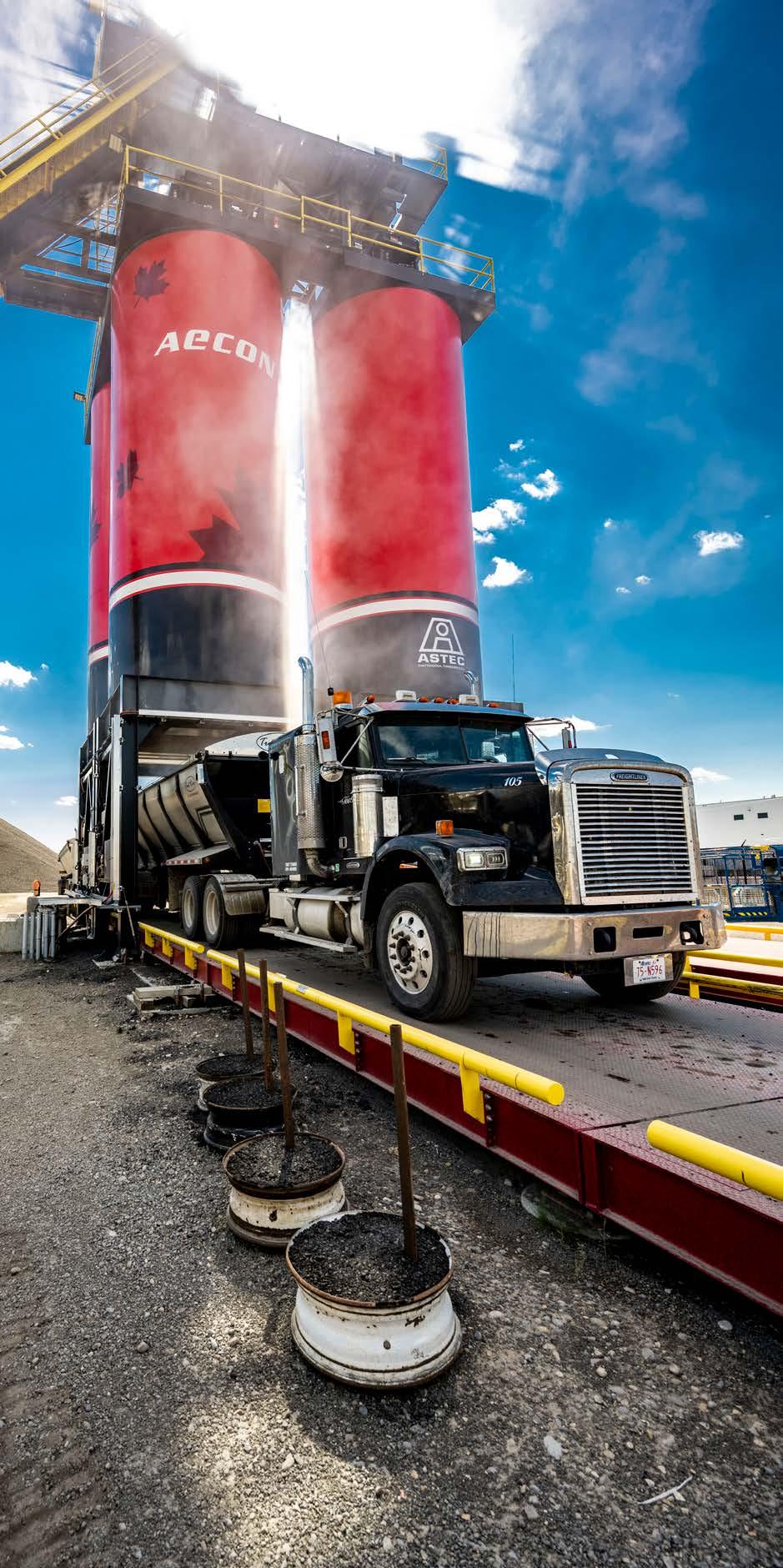
Toronto (Headquarters)
20 Carlson Court, Suite 105
Toronto, Ontario M9W 7K6
T. 416 297 2600
Sustainability Inquiries sustainability@aecon.com
Investor Relations Inquiries ir@aecon.com
Media Relations Inquiries corpaffairs@aecon.com
Registrar and Transfer Agent
Computershare
Investor Services Inc.
T. 514 982 7555 (Toll-Free) 1 800 564 6253 service@computershare.com
Ethics Hotline (Toll-Free) 1 844 980 2967 aecon.ethicspoint.com
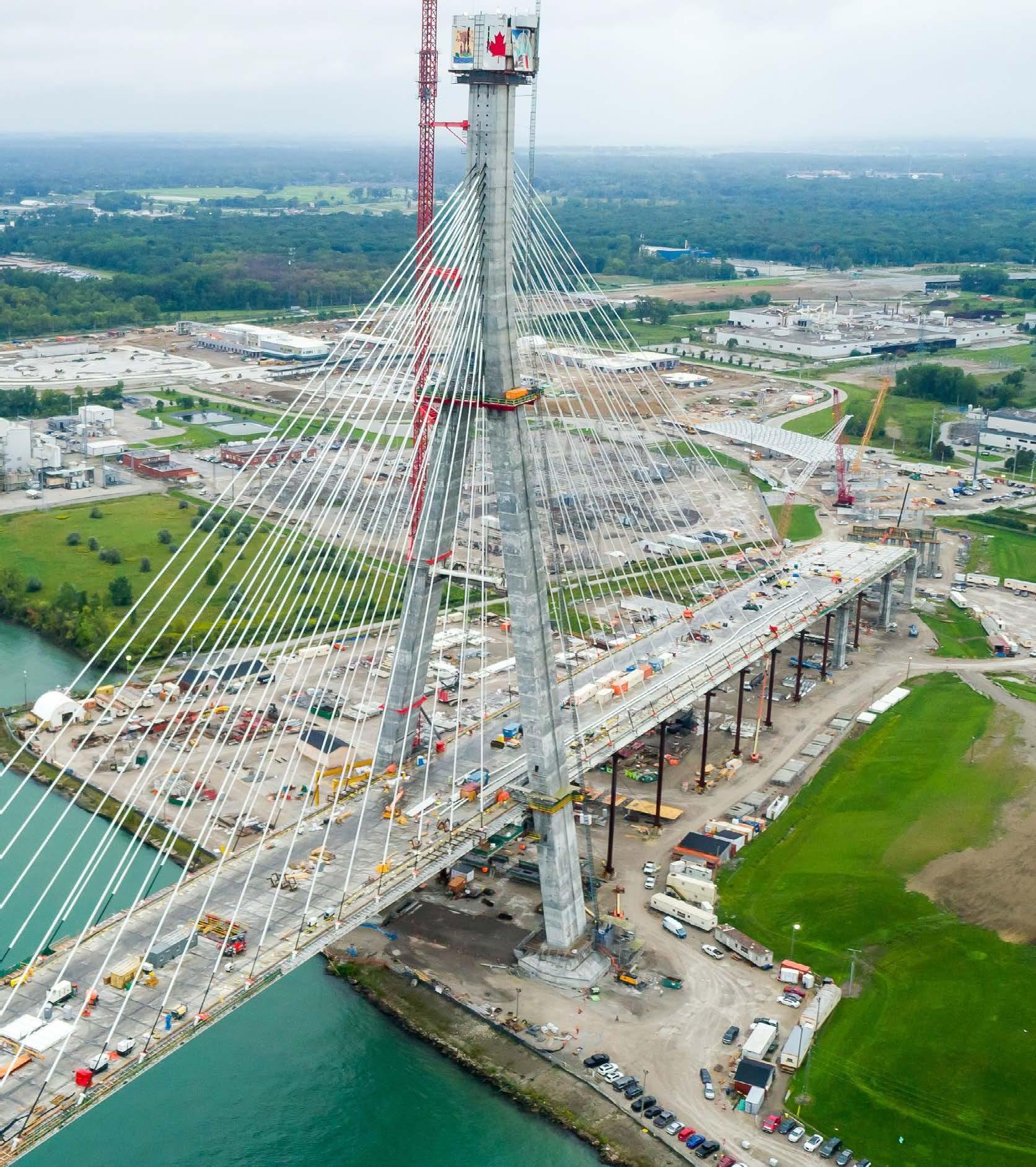 Gordie Howe International Bridge, Ontario