
CAMAS EVERYTHING CAMAS + A LITTLE BIT MORE! COMMUNITY ADVANTAGE MAGAZINE FEB/MAR 2023 NON PROFIT Clark Conservation District COMMUNITY Dog Paw Parks THE HISTORY OF The Tater Tot Be Amazed at the RESULTS of Softwashing! See Our Offers Inside












OPEN EVERYDAY 11am-9pm DAILY SPECIALS $999 Lunch $1599 Dinner DOWNTOWN CAMAS 231 NE 3rd Avenue (360) 834-5856 EAST VANCOUVER 1171 NE 99th St #940 (360) 883-6588 ~ Los Jalapenos Los Jalapenos MEXICAN RESTAURANT ~ With coupon. Not valid with other offers. Exp 4/15/23 $2 OFF Purchase of $10 or More With coupon. Not valid with other offers. Exp 4/15/23 $3 OFF Purchase of $15 or More With coupon. Not valid with other offers. Exp 4/15/23 $5 OFF Purchase of $25 or More VIEW OUR MENU ONLINE AT LosJalapenosMexican.com SWEETIES THIRSTIES TASTIES Fruit Bubble Waffle with Ice Cream Slice of Crepe Cake Matcha Green Tea Bubble Waffle Fruit Bubble Waffle Fruit Crepe Ice Cream Cone Ice Cream Waffle Cone Ice Cream Cup Crepe Cake Fresh Salad Rolls Crispy Egg Rolls Chicken Pot-stickers BBQ Pork Buns Vietnamese Chicken Wings Thai Sweet Wings Spam Musubi Takoyaki Balls Waffle Corn Dog Banh Mi Slider Thai Tamarind Sauce a la carte BBQ Pork or Roasted Pork BBQ Pork Vermicelli Rice Noodles +1 Egg Roll BBQ Pork or Roasted Pork Vegetarian Pho 500 SE 192nd Ave ste 200, Vancouver, Washington Vietnamese Iced Coffee Thia Iced Tea Milk Tea Iced Lemonade Fruit Smoothies Soy Milk tinytasties.smartonlineorder.com Closed: Monday Tuesday - Sunday: 11:00am to 8:00pm 2 To Advertise With Us, Call 503.825.2111








VANCOUVER 12306 NE Fourth Plain Blvd Orchards at corner of 124th Ave (360) 314-4972 2 GREAT LOCATIONS TO SERVE YOU! TO SERVE YOU! GreaseMonkeyAuto.com Grease Monkey - Vancouver #1115 Grease Monkey - Battle Ground #857 FREE Buy One Get One WIPER BLADE (front wiper blades only) Not valid with any other offers. Offer valid until 4/15/23 $ 249 55 BRAKE JOB Includes New Rotors & Pads (Per Axle) Not valid with any other offers. Offer valid until 4/15/23 $ 10 OFF Not valid with any other offers. Offer valid until 4/15/23 Conventional Full Service Oil Change $ 15 OFF Not valid with any other offers. Offer valid until 4/15/23 Havoline ProDS® Full Synthetic Full Service Oil Change BATTLE GROUND 105 NW 12th Ave Next to Fred Meyer Marketplace (360) 666-1533 Oil Changes & More A GREAT PLACE FOR BURGERS & BEER BRING THE FAMILY - WATCH THE GAME Never Frozen Half Pound Angus Beef Served with Fries or Tots All Burgers Available as Chicken, Bison, Turkey or Impossible Burger BURGERS & BEER BAR & GRILL · 1905 SE 192ND AVE STE 101 · CAMAS · (360)210-7136 $5 OFF ANY $30 PURCHASE Must present coupon. Not valid with any other offers. Coupons not valid during Happy Hour. Expires 4/15/23 HALF OFF BURGER Buy 1 Burger & Beverage, Get 2nd Burger of Equal or Lesser Value at Half Price Must present coupon. Not valid with any other offers. Coupons not valid during Happy Hour. Expires 4/15/23 HAPPY HOUR Half Off Appetizers Weekdays 2 -5pm & 9pm-Close Weekends 9pm-Close Visit CommunityAdvantageMagazines.com 3
NOT ALL PRP IS THE SAME
By Kolton Opdahl, Operations Manager Photos by Hayley Starkey
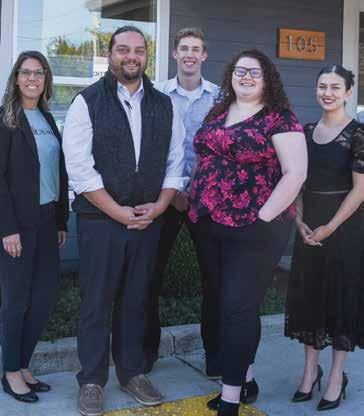
Hey Camas residents! Here at Joint and Arthritis Pain Relief, your pain is our priority! With 5 different locations, our providers are ready to help improve your quality of life using Regenerative Medicine. While there are many Regenerative Medicine therapies available, we want to highlight and educate you on the pain-relieving properties of PRP injections.
What is PRP?
PRP stands for Platelet Rich Plasma. This therapy can help a number of musculoskeletal conditions such as torn ligaments, muscle injuries, and painful or popping joints. The treatment involves taking a small amount of your blood, placing it in a centrifuge (which is a device that rapidly spins the sample), separating out the other components of the blood from the platelets and concentrating them within the plasma. The PRP is then injected back into the site of the problem area or injured ligament, kickstarting the healing process by decreasing pain and enabling movement.
Types of PRP/How JAAPR uses PRP: From prep techniques to your individual chemistry, there
to perform your PRP procedure, make sure they are able to get the correct platelet concentration for your condition. The next big difference is not all clinics use image guidance when performing the injections. This can result in the Doctor performing a blind injection not knowing for certain if the PRP is going in the right spot. All injections that we do are done under ultrasound guidance for precise needle placement.
PRP Recovery + Risks:

PRP injections may be a quick and easy fix for your joint and ligament issues. Each treatment takes about 45 minutes on average and there is no down or recovery time as this is an outpatient procedure. If you choose PRP, prepare to have your blood drawn; to ease this, make sure you drink plenty of water and eat beforehand. While rare, some risks of PRP may include bleeding from the injection site, tissue damage, infection, and nerve damage. Make sure you speak with your provider to see if PRP is the best fit for you.
What PRP Treats:
are several factors that can dramatically impact the PRP product, its concentration, and ultimately, whether or not it works in improving your pain and function. One of the greatest factors is that many clinics that use PRP for their patients can use different kits to obtain the PRP from their patients. This can result in a platelet concentration from 3-5x instead of a concentration level of up to 15x! When looking for a Doctor
PRP may treat a multitude of issues, from musculoskeletal injuries such as ligament tears to cosmetic procedures such as hair loss, to even post-surgical healing! PRP may also be used to help alleviate Arthritis pain by reducing inflammation, making your joints easier to move. The mechanism behind PRP injections is not completely understood; some studies show that the increased concentration of growth factors in plateletrich plasma may stimulate or speed up the healing process, shortening healing time for injuries, decreasing pain and even encouraging hair growth. This treatment is a great option for those who are in need of rapid joint and pain relief.
BUSINESS SPOTLIGHT JOINT & ARTHRITIS PAIN RELIEF
4 To Advertise With Us, Call 503.825.2111

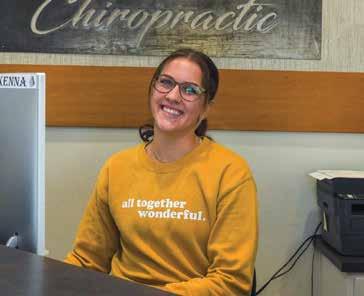

We hope this article helped you understand the benefits of PRP injections! As we mentioned earlier, your pain relief is our priority. Give us a call or come on in today to relieve your pain! Visit one of Joint and Arthritis Pain Relief four locations: Battle Ground, 105 N Parkway Ave.; East Vancouver -16904 se 1st ave: Vancouver, 318 NE 99th St. #L; Woodland 650 Goerig st. # A. Give them a call at 360-338-3029, email info@jointandarthritispainrelief. com, or visit their website at jointandarthritispainrelief.com Suffering from joint or arthritis pain? We provide advanced regenerative therapies to relieve your pain and increase the strength and mobility in your joints! Call our local office to schedule your appointment today! FREE CONSULTATION jointandarthritispainrelief.com 360.338.3029 16904 se 1st st Vancouver Visit CommunityAdvantageMagazines.com 5


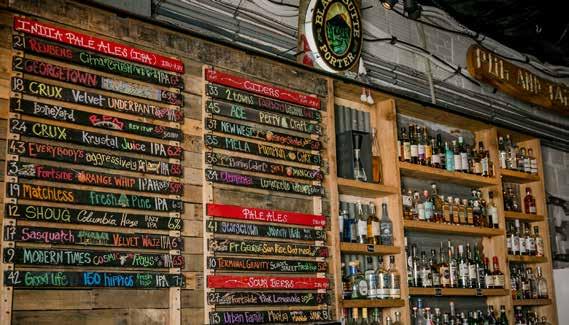




ALL I WANT TO DO IS DRINK BEER & PET MY DOG A BEER AT A TIME CRAFT BEER BAR & PUB 216 NE 3rd Ave Camas • 360.835.5200 • A-Beer-At-A-Time.Business.Site $5off Any $25 Purchase $5off Large Specialty Gourmet Pizza $3off Medium Specialty Pizza Fill Your Growlers & Enjoy Great Beer At Home Happy Hour Mon-Thur 2 - 6pm Open Mic Night Every Wednesday Comedy Nights Monthly Family Friendly Hand Tossed Gourmet Pizza • Hand Crafted Burgers • Fresh Salads • Kids menu Restrictions Apply. Call For Details. 360-835-5200 Expires 4/15/23 Restrictions Apply. Call For Details. 360-835-5200 Expires 4/15/23 Restrictions Apply. Call For Details. 360-835-5200 Expires 4/15/23 DOG FRIENDLY PUB! YOU’LL FIND SOMETHING TO LOVE HERE! 40+ Craft Beer & Ciders • Hand Crafted Pizzas • Wings • Sandwiches Board Games & Jenga Available • Live Music Every Friday & Saturday (No Cover!)


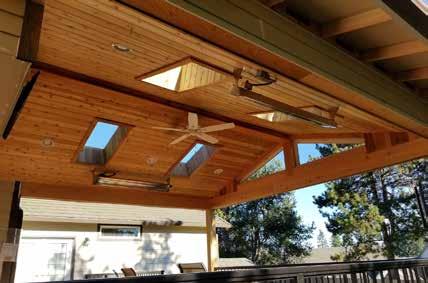
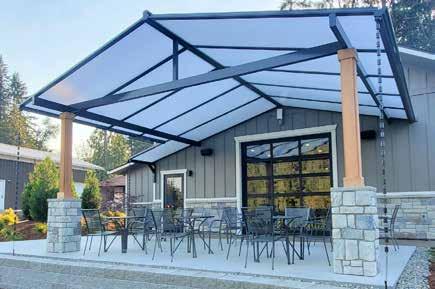
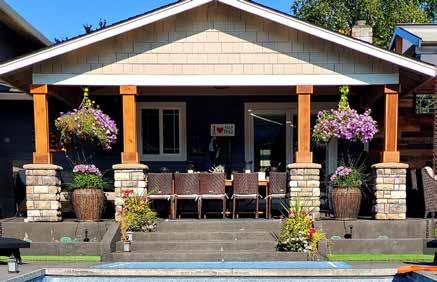
$500 OFF STICK BUILT PATIO COVER Restrictions apply. Call for details. Expires 4/15/23 OUTDOOR LIVING ALL YEAR LONG Your Expert Patio Cover Installer ACRYLITE® Patio Cover Systems // Custom Stick Built Patio Covers // Custom Decks Installing Over 28 Years // Family Owned & Operated Five-Year Warranty Included with ALL Installations PioneerPatioCovers.com Visit Our Showroom 11318 NE HWY 99 • Vancouver CALL FOR YOUR FREE ESTIMATE TODAY! 360-841-7876 licensed • bonded • insured WA# PIONEFC000NP SCHEDULE TODAY TO ENJOY THIS FALL! $300 OFF ACRYLITE® PATIO COVER
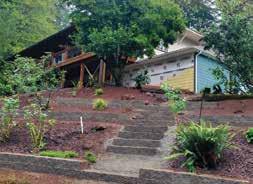
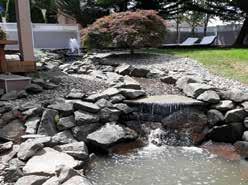



CALL RENALDO TODAY 10% OFF LCB# 9389 LCB# 9389 LCB# 9389 Any Complete Lansdcaping, RetainingWall Or Water Feature $500 OFF Must present coupon. Not valid with any other offer. Expires 4/15/23 Must present coupon. Not valid with any other offer. Expires 4/15/23 1 FREE MONTH LANDSCAPE SERVICE With A 12 Month Agreement Must present coupon. Not valid with any other offer. Expires 4/15/23 Tree Trimming Services CALL FOR DETAILS CALL FOR DETAILS CALL FOR DETAILS 360-998-0637 360-998-0637 360-998-0637 EXPERT SERVICE AND BETTER PRICING THAN THE COMPETITION ▸TREE TRIMMING ▸PAVER ▸RETAINING WALLS ▸POND & WATERFALL INSTALLATION R&J LANDSCAPING & TREE CARE 360-998-0637 360-998-0637 Closets byDesign® Imagine your home, totally organized! Custom Closets, Garage Cabinets, Home Offices, and more... 40% Off Plus Free Installation 15% Off PLUS TAKE AN EXTRA Terms and Conditions: 40% off any order of $1000 or more or 30% off any order of $700-$1000 on any complete custom closet, garage, or home office unit. Take an additional 15% off on any complete system order. Not valid with any other offer. Free installation with any complete unit order of $850 or more. With incoming order, at time of purchase only. Expires 2/28/23. Offer not valid in all regions. Call for a free in home design consultation 503-966-8021 AM closetsbydesign.com SPECIAL FINANCING FOR 12 MONTHS! With approved credit. Call or ask your Designer for details. Not available in all areas Follow us Licensed and Insured. OR CCB #235345 8 To Advertise With Us, Call 503.825.2111


Featuring Classic Fare & Housemade Milkshakes Thank You FOR YOUR SUPPORT Vancouver! OFF OFF OFF BREAKFAST LUNCH DINNER $ $ $ Buy 1 breakfast and get up to $3 off the 2nd with purchase of 2 drinks (excludes prime rib and baby back ribs). Dine in only. Cannot be combined with other offers. Not valid on holidays. Expires 4/15/23 Buy 1 lunch and get up to $3 off the 2nd with purchase of 2 drinks (excludes prime rib and baby back ribs). Dine in only. Cannot be combined with other offers. Not valid on holidays . Expires 4/15/23 Buy 1 dinner and get up to $4 off the 2nd with purchase of 2 drinks (excludes prime rib and baby back ribs). Dine in only. Cannot be combined with other offers. Not valid on holidays Expires 4/15/23 1110 SE 164th Ave • Vancouver • 360.828.1648 COMMUNITY ADVANTAGE MAGAZINE R1
The
Origins of the Tater Tot


A Tasty Oregon Invention
By Robert Matsumura, Contributing Writer
The Tater Tot. It’s hard to resist these crunchy golden-brown potato morsels piled high in a basket, or nestled on a plate accompanying our favorite burger or sandwich. For many of us, “Tater Tot” and “comfort food” go hand-in-hand. It’s ingrained in our culture—at least from a food perspective!
But did you know that these world famous potato nuggets were invented in Oregon, and that they were the creative byproduct of potato scraps originally used as cattle feed? The story of the Tater Tot traces back to two young Mormon entrepreneurs named Nephi and Golden Griggs who came of age during the Great Depression. Originally from Idaho, the Griggs brothers were potato farmers like most of their neighbors. Throughout the Great Depression and World War II, the Griggs survived by growing and selling potatoes, but during the postwar years as Americans increasingly turned to convenience foods—frozen foods in particular—the Nephi brothers were certain that their road to riches lay in servicing this growing demand.
Convinced that the future of produce resided in the frozen food section, the two brothers mortgaged their farms to purchase a flash-freezing plant in Northeastern Oregon for $500,000 (approximately $4.5 million today). As the factory was located on the border between Oregon and Idaho, they chose to name their new company Ore-Ida.
Corn and potatoes were Ore-Ida’s mainstay and the company soon became the largest distributor of sweet corn in the country, but the real profit lay in french fries. French fries, though immensely profitable, posed certain production problems. Nephi (the leader of the two brothers) described their challenge as follows: “We had a problem separating the fries from the slivers and small pieces of
potatoes that occurred when slicing the irregular shaped potatoes.” Instead of wasting the scrap pieces, the brothers had been feeding it to their cattle and other livestock.
Despite the fact that their potato scraps were being utilized as feed for farm animals, Nephi Griggs—always focused on efficiency and profit maximization—was bothered by their inability to derive any revenue from the constant flow of potato byproducts. In a letter to an OreIda colleague, Nephi vented his frustration at not putting to better use “product that has been purchased from the grower, stored for months, gone through the peeling process, gone through the specking lines and trimmed off defects, only to be eliminated into the cattle feed.”
An unexpected visit by a representative from an equipment manufacturing company, however, proved to be serendipitous. Although the company representative was there to demonstrate a prune sorter, Nephi and his plant superintendent envisioned utilizing the equipment in a different manner. Instead of sorting prunes, could the machinery be refashioned to sort irregular potato pieces from french fries? To their delight, it could.
It wasn’t long before the Griggs and their people at Ore-Ida devised a creative use for the supply of potato scraps. By smashing the bits together using new machinery, then blanching, forming the crushed potatoes into nuggets, and cooking them in oil, a completely new product was
HISTORY
R2 COMMUNITY ADVANTAGE MAGAZINE
created. These potato nuggets could subsequently be frozen, bagged, and distributed. Although the original idea was for the nuggets to be fried, it was soon discovered that baking them produced equally good results. According to Nephi, a man on their research committee who “traveled the markets playing a ukulele and demonstrating our product,” came up with the name. Unfortunately, the man’s name has been lost to history, though his talent for creative alliteration lives on. The name “Tater Tot” is iconic across the world for fun, palate-pleasing, potato goodness.
Nephi remarked in his notes (which are now housed at the J. Willard Marriott
“new product has about a three year
the “Tater Tot” name, purchased additional machinery, and began mass producing their tasty invention.

Despite the success of the Tater Tot, the process to create them was a bit of a sticky mess—literally. New equipment had to be fashioned to deal with the starchy potato product. Steel drums the diameter of a human torso rotated continuously filling tot-sized molds with potato. These molded potatoes would then be ejected onto a conveyor belt and sent down a line for seasoning and subsequent freezing.
Ore-Ida’s commitment to the Tater Tot, in spite of production difficulties, proved a gamble worth taking. The Griggs brothers’ promotion of their new product at the 1954 National Potato Convention was a huge hit, garnering interest in Tater Tots throughout the industry. The media was also quick to embrace Tater Tots as a convenient
new food for snacks and meals that was tasty and easy to prepare. So successful was the Tater Tot that Nephi referred to it as their “hero profit item,” and cited it as responsible for making Ore-Ida a household name. By the end of the 1950s, Ore-Ida had captured 25 percent of the domestic frozen potato market. A second plant was opened in 1960, and by 1961 Ore-Ida had gone public.
In 1964, despite generating an annual profit of $31 million, problems within the family necessitated the sale of Ore-Ida. The Griggs sold the company to H.J. Heinz in 1965 for $30 million. The Heinz purchase of Ore-Ida was the company’s first foray into the frozen food market. By the time Heinz merged with Kraft in 2015, the Tater Tot was so common of a product that few people realized the name was still trademarked to Ore-Ida. An advertising campaign was even created to differentiate OreIda tots from the competition. The campaign warned, “Don’t be fooled by Imi-taters,” because Ore-Ida Tater Tots were the “original and only.”
Today, as one of America’s cherished food items, Tater Tots have been incorporated in multitudes of home recipes and even elevated to culinary feature items at certain restaurants. There is no end of possibilities when it comes to something as versatile as the Tater Tot! So, next time you find yourself reaching for a crispy golden Tater Tot, think of the Griggs brothers and the Oregonian ingenuity that transformed cattle feed into a delectable treat enjoyed by millions.
COMMUNITY ADVANTAGE MAGAZINE R3
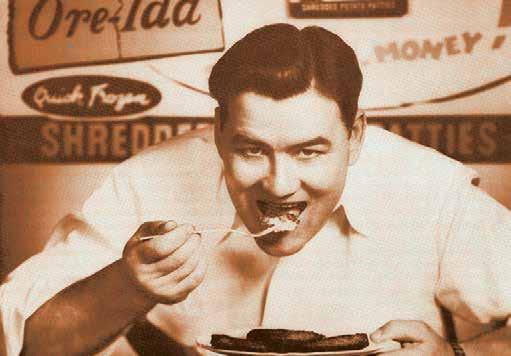
Nephi Grigg was the inventor of the Tater Tot
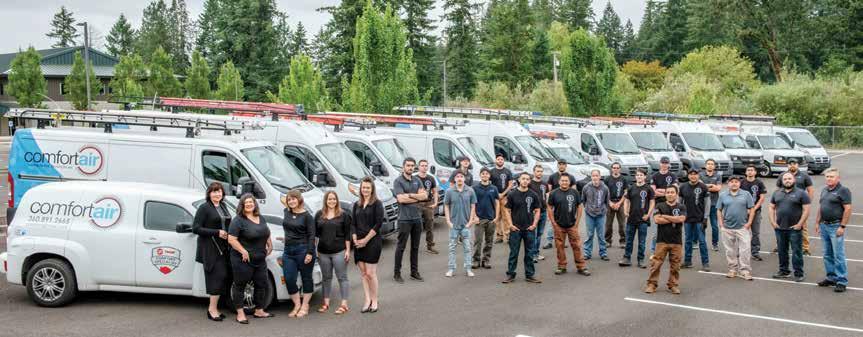



TRUSTED HVAC SERVICES IN VANCOUVER SINCE 1983 The comfort air team is passionate about serving our customers and community. We are proud to provide excellent service to everyone we encounter and we hope to work with you for years to come. 0% interest financing up to 72 months (OAC, see terms & agreement through WF) 7504 NE 182nd Ave. • Vancouver 360-836-4953 www.ComfortAirNow.com License #COMFOAI848BN Must present coupon. Not valid with any other offers. Expires 4/15/23 10 % off ALL DUCT CLEANING including a FREE dryer vent cleaning Must present coupon. Not valid with any other offers. Expires 4/15/23 $ 300 off Furnace Installation Must present coupon. Not valid with any other offers. Expires 4/15/23 TUNE UP SPECIAL Only $ 159 REG. PRICE $259 Must present coupon. Not valid with any other offers. Expires 4/15/23 $ 600 off Furnace and A/C or Heat Pump System






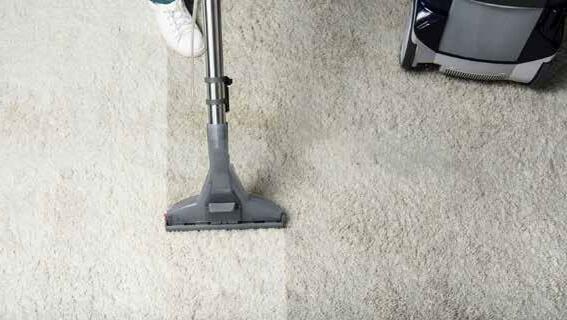



COMMUNITY ADVANTAGE MAGAZINE R5 8700 NE Vancouver Mall Dr. #236 - Vancouver (Inside the Vancouver Mall) buy one get one FREE fill your own bulk Valid At Vancouver Location only. Not valid with any other offer. Call Store For Details. 360-723-5032 Expires 4/15/23 360-723-5032 Our new & used LEGO selection is unmatched! Our new used Vancouver Vancouver Vancou ver Vancouver Vancou ver Valid At Vancouver Location only. Not valid with any other offer. Call Store For Details. 360-723-5032 Expires 4/15/23 Lego Sets, minifigures & Bulk pieces! buy. sell.trade new & used save $ 5 $ 10 off $ 50 off $ 100 Pre-owned sets or Carpet Cleaning & More 360-713-8070 www.DandHCarpetCleaning.com 3 ROOMS ADVANTAGE SPECIAL ONLY $125 Mention Advantage Magazine. Call for details. 360-713-8070 Restrictions may apply. Expires 4/15/23 4 ROOM ADVANTAGE SPECIAL ONLY $175 Mention Advantage Magazine. Call for details. 360-713-8070 Restrictions may apply. Expires 4/15/23 5 AREAS ADVANTAGE SPECIAL ONLY $200 Mention Advantage Magazine. Call for details. 360-713-8070 Restrictions may apply. Expires 4/15/23 Steam Cleaning Carpet Repair/Dying Carpet Stretching Pet Odor Removal Area Rug Cleaning Upholstery Cleaning Tile & Grout Cleaning Same Day Service Free Consultation ADVANTAGE SPECIALS II CRC Certified Carpet Cleaner Licensed, Bonded, & Insured Lic # DHCARHC90904 Ask About Our PET ODOR REMOVAL GUARANTEE It REALLY works! RESIDENTIAL & COMMERCIAL CLEANING SERVICES Quality Work Affordable Prices
Off-Leash Livin’
Dog parks a safe, natural space for dogs
 By Angie Helvey, Contributing Writer
Nothing beats a relaxing afternoon outside with your best furry friend, but it can be challenging to find a place to let your fur baby run free and have the opportunity to socialize with other canines in a safe space. This is precisely the experience DOGPAW Off-Leash Dog Parks strives to provide to dogs and their owners in the Clark County community.
DOGPAW, a nonprofit organization founded almost 20 years ago, boasts four off-leash dog parks. Ike Park was the first and is the largest of the four parks, featuring 10 acres of open fields and tree-lined hills, a 0.71-mile gravel and dirt trail, and a small dog area with a separate entrance.
“All the parks are big; there’s so much room for everyone to hang out, run, walk, and play fetch,” says vice president Jan Fogg. “Lucky Park is one of our smaller parks, but it’s next to a huge wilderness reserve, so you can leash your dog and walk on a nature trail that goes through the forest and is fun to explore. Dakota Park is our most popular park because of its convenient location directly off N.E. 164th in Vancouver.” Dakota also offers on-site restrooms, benches, shady areas, a dog rinse-off area, and seasonal drinking fountains.
DOGPAW Parks would be impossible to maintain without the help of volunteers dedicated to keeping the parks clean. “Many people who come to the dog parks have been coming for years and see it as an extension of their home,” explains Jan. “We call them our ‘poop angels’ because they walk around the park picking up poop without being asked. We go out to the parks several times a year to rally our volunteers. They scoop poop, mow the grass, weed, and pick up fallen branches.”
Park volunteer days are the third Saturday of every month, rotating through the parks. The next one will be held at Dakota Park on Saturday, March 18 at 10 a.m.
The funding for operations comes from business sponsorships, grants from the city and county, and $25 yearly memberships — not required to use the parks. This allows DOGPAW to provide waste bags and disposal stations at the parks, plus support the development of more dog parks and special events for dog owners. “We are helping the City of Washougal to set up a dog park in their new civic area, and we’d like to pursue a location within Battle Ground State Park,” says Jan. “Last year, we did a dog supply swap, and we’ve also held free educational programs with a certified dog trainer.”
DOGPAW is currently fundraising to complete a new fence for Ike Park. Originally made of posts and chicken wire, the fence has become worn and ineffective over the years. You can donate to the project on the DOGPAW website.
If you’re looking for a welcoming space to let your fourlegged friend run off-leash, stop at any of the DOGPAW Parks for a play date. Come walk at your own pace while your dog gets their “zoomies” out and has the chance to play with other dogs.
DOGPAW Parks in Vancouver: Dakota Memorial Dog Park (Pacific Community Park), 1515 N.E. 164th Ave. @ N.E. 18th St. (entrances on 164th and 172nd Ave); Ike Memorial Dog Park (Ross Park), 5167 N.E. 15th Ave.; Kane Memorial Dog Park (Hockinson Meadows Community Park), 10910 N.E. 172nd Ave. Brush Prairie: Lucky Memorial Dog Park, 10100 N.E. 149th St.
R6 COMMUNITY ADVANTAGE MAGAZINE
NONPROFIT SPOTLIGHT DOGPAW OFF-LEASH DOG PARKS
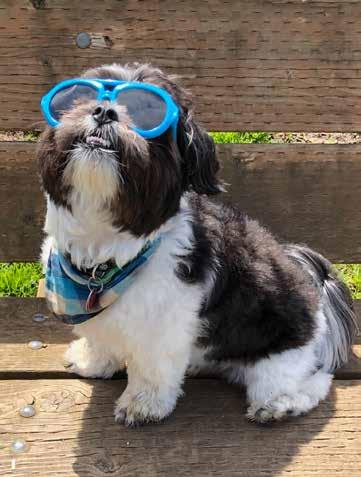
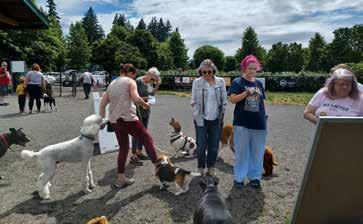
TOP LEFT: Tiberius at Ike Memorial Dog Park in Vancouver. ABOVE: A Paws Down Pets trainer rallies the dogs for lesson time.
PHOTO PROVIDED BY DOGPAW
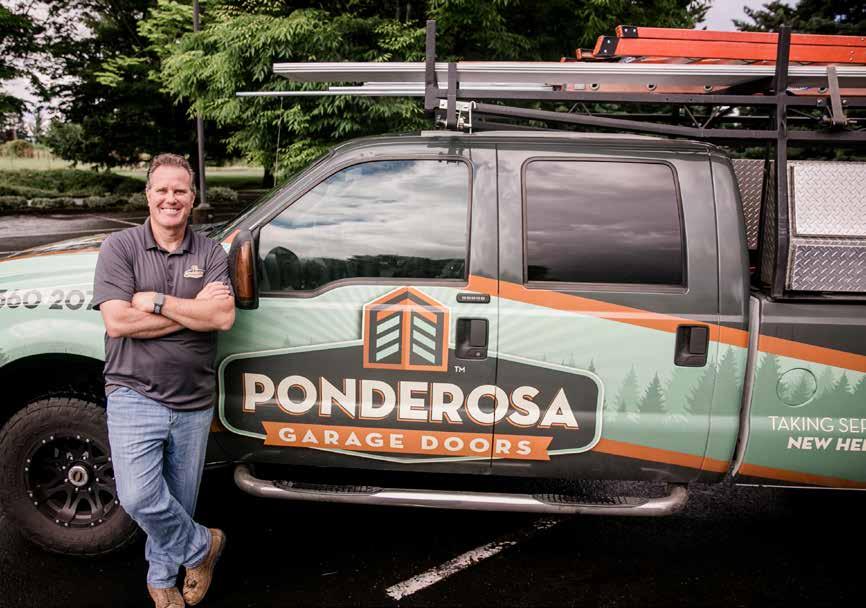


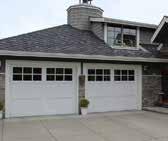
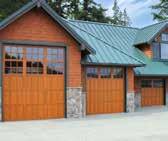
GARAGE DOOR INSTALLATION & REPAIR WE’RE THE TEAM TO TRUST FOR ALL OF YOUR GARAGE DOOR NEEDS $300 OFF Purchase of Door & Opener Call for details. Deal only valid with coupon. Cannot be combined with other deals. Expires 4/15/23 $75 OFF ANY SPRING REPLACEMENT Call for details. Deal only valid with coupon. Cannot be combined with other deals. Expires 4/15/23 $145 TUNE-UP SPECIAL Call for details. Deal only valid with coupon. Cannot be combined with other deals. Expires 4/15/23 • Garage Door Repair • Garage Door Installation & Replacement • Garage Door Panel Replacements • Garage Door Opener Installation, Replacement & Repair • Smart Garage Door Openers • Garage Door Tune-Ups & Maintenance SCAN TO SCHEDULE AN APPOINTMENT ONLINE LICENSED • BONDED • INSURED WA-PONDEGD90ORM • OR-192515 CALL US TODAY (360) 216-0105 ponderosagaragedoors.com
WINTER SALE!
Locally Owned & Operated
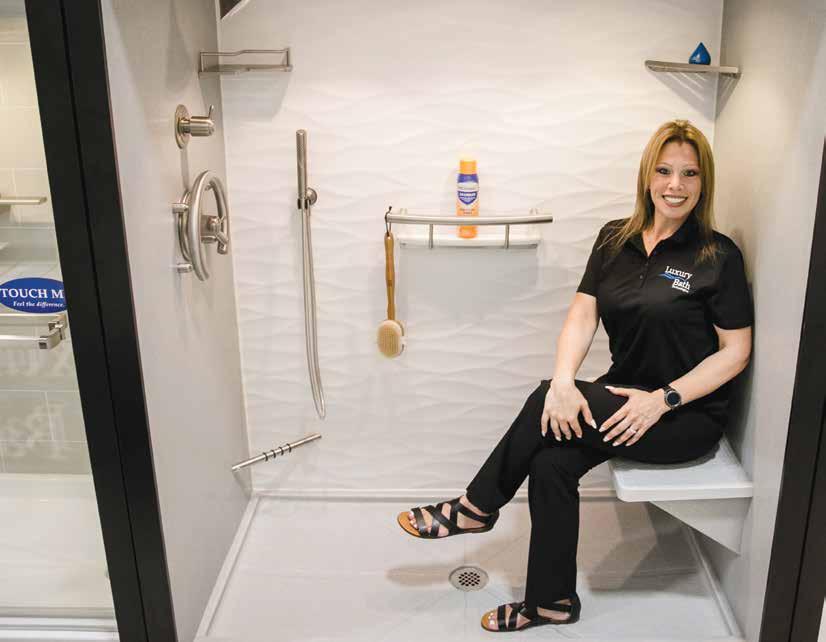
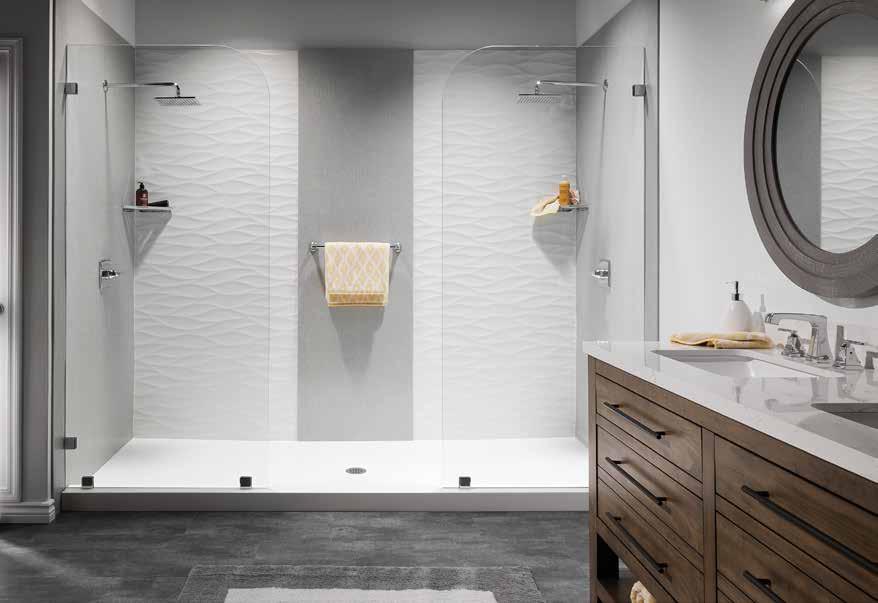
Acrylic Transformations
Done in as Little as One Day
Mold and Mildew Resistant


Installed in as Little as One Day
Lifetime Warranty & Transferable


Safety Features Available




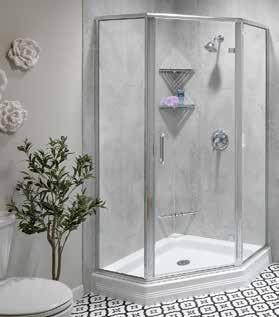
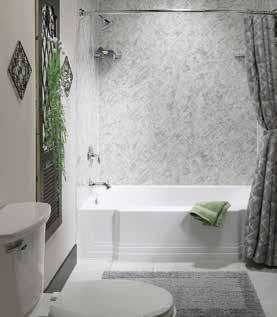
503-217-6711 | 360-342-9084 VISIT OUR SHOWROOM 13714 NE 28th Street A-1 Vancouver, WA 98682 $1,550 Off AND No Payments or Interest Until Summer 2024 Some restrictions apply. Call for details. Expires 4/15/23 We Specialize Exclusively In: Bath & Shower Replacements | Conversions | Walk-Ins ZERO GROUT ZERO TILE! 100% American Made


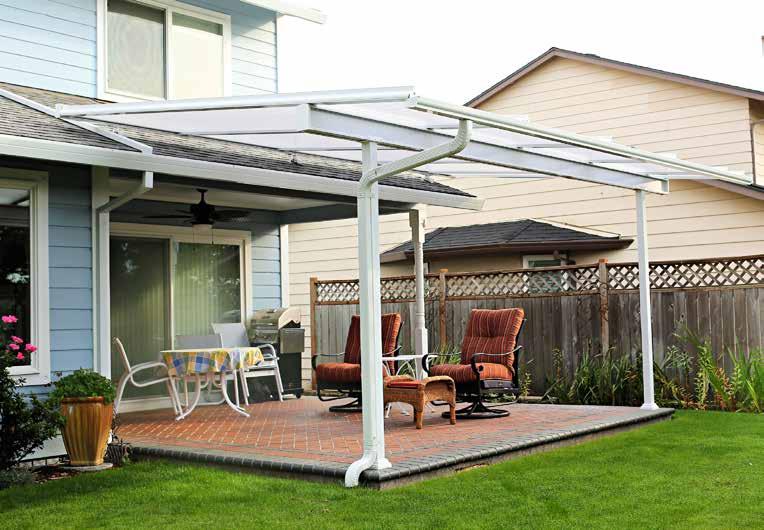


PATIO COVERS AND ROOMS Patio Cover People Are HAPPY PEOPLE! 503-744-6394 Licensed Bonded Insured OR CCB#236429 WA#DIRELSV795MB Call Pricing!For
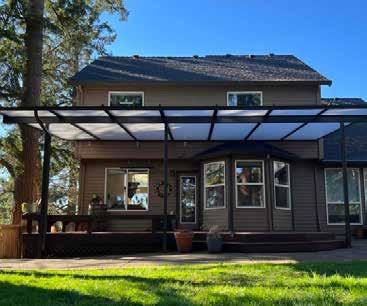
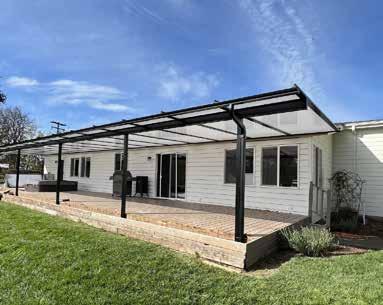
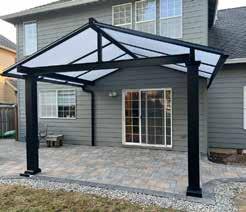
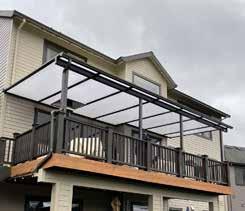
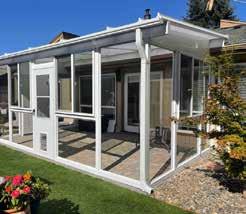


Fall in love with your patio! VISIT US ONLINE! $300 OFF PATIO COVERS Get our FREE Estimate Then Present Coupon For Real Savings $500 OFF PATIO ROOMS Get our FREE Estimate Then Present Coupon For Real Savings Mention Frog Coupons Magazine when calling. With this coupon. Not valid with other offers or prior purchases. Expires 4/15/23 Mention Frog Coupons Magazine when calling. With this coupon. Not valid with other offers or prior purchases. Expires 4/15/23
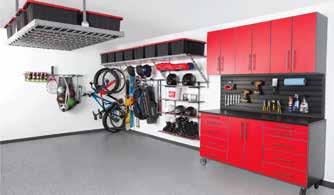
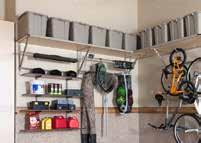



R12 COMMUNITY ADVANTAGE MAGAZINE Portland’s Custom Garage Experts Garage Shelving Garage Cabinets Garage Flooring Garage Slatwall Coordinated Design Overhead Storage 503-479-4953 • garagesolutionsportland.com It’s More Than Just GARAGE STORAGE. It’s Your Life! GARAGE SOLUTIONS NORTHWEST OR CCB# 199592 WA#GARAGSN805KA FREE With Any $1200 Purchase Call Today For A Free Consultation! 503-479-4953 Not Valid With Any Other Offers. Exp 4/15/23 TOOL RACK


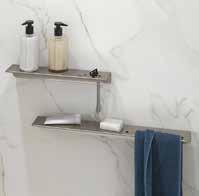

COMMUNITY ADVANTAGE MAGAZINE R13 Step into a shower enclosure that was designed for you and your routine. From the shower walls that reflect your style, to the showerhead that delivers an indulgent drench, your new custom walk-in shower design is ready and waiting. NEW YEAR OFFER $2023 Off! Escape The Ordinary With a LuxStone Shower Installed in just 2 days or less! CALL NOW FOR A FREE IN-HOME CONSULTATION 503-744-6544 *All offers expire 2/28/2023, Available on NEW orders only. Other Restrictions May Apply. Cannot be combined with any other offers. Visit Pacificbath.com for complete details. OR#213202 | WA#PACIFBC810JJ | NV#0086030 | AZ#334398 | RCE-59346
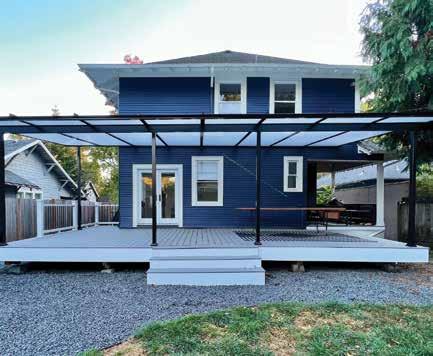
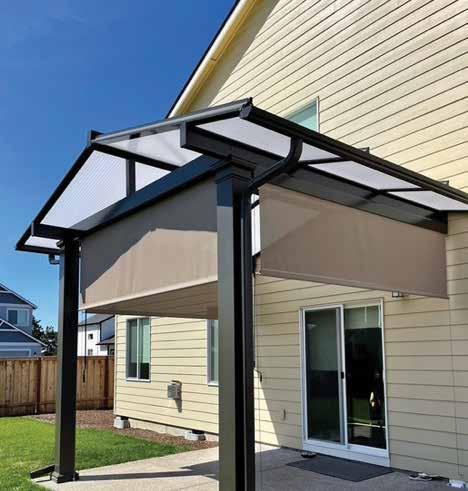













WINTER SPECIAL • OFF SEASON PRICING • QUICKER INSTALL TIMES Black Shed with Cool Blue Heatstop Panels
Shed
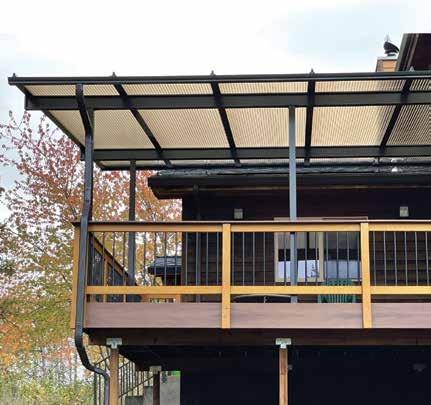
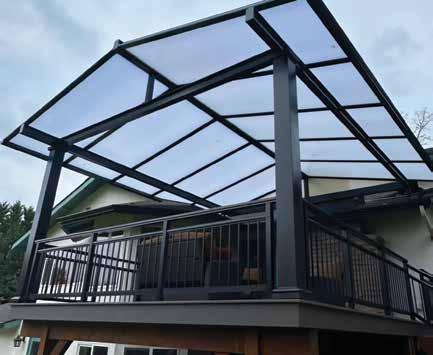
Bronze Panels Black Gable, Cool Blue Panels, Decorative Columns, & Custom Railing
Gable with Shades & Columns BRING THE INSIDE OUT PLAN AHEAD & INSTALL NOW! Only with magazine. Not valid with other offers. Exp. 2/28/23 CCB #239012 - WALIC #CROWNPC784C3 Only with magazine. Not valid with other offers. Exp. 2/28/23
Black
with
Brown





COMMUNITY ADVANTAGE MAGAZINE R15 CARPET CLEANING PROFESSIONALS HALLWAYS COUNT AS ONE ROOM STAIRS COUNT AS ONE ROOM $ 5 FEE WOW! WOW! ONLY $15 EXTRA per room for heavily soiled rooms no exceptions 1/2 OFF All Furniture WOW! 1/2 OFF Scotchgard® WOW! 1/2 OFF All Area Rugs WOW! Deep Steam Cleaning WOW! No Square Footage Limit! WOW! COUPON COUPON COUPON COUPON DEEP STEAM CLEANING DEEP STEAM CLEANING DEEP STEAM CLEANING $8995 $11995 24 hour cancellation or reschedule notice required. With this coupon. Not valid with any other offer. Expires 4/15/23. 24 hour cancellation or reschedule notice required. With this coupon. Not valid with any other offer. Expires 4/15/23. 24 hour cancellation or reschedule notice required. With this coupon. Not valid with any other offer. Expires 4/15/23. 24 hour cancellation or reschedule notice required. With this coupon. Not valid with any other offer. Expires 4/15/23. WOW! WOW! WOW! 3-4 ROOMS SPECIAL 5-6 ROOMS SPECIAL 7-8 ROOMS SPECIAL LUXURY 9-10 ROOMS SPECIAL $15995 $18995 DEEP STEAM CLEANING FREE Pre-Spotting FREE Oxi-Brighteners FREE Mild Deodorizers FREE Pre-Treatment 50% off Expert Pet Stain & Odor Removal ONLY $49 Covers Whole House Best Price BES TPRICE CARPET CARE 360.949.2286 IMPORTANT One Large Living/Dining Room & XXL Rooms Are Considered TWO Rooms - NO Exceptions Any 2nd Floor $20 Extra - NO Exceptions Any 3rd Floor $40 Extra - NO Exceptions $20 Battle Ground Trip Charge - NO Exceptions $10 FUEL TRIP CHARGE








STOP BY TODAY FOR TASTY RAMEN! 19215 SE 34TH Ste 100 • CAMAS • 360.597.3098 enjoy delicious bowls with fresh squid, mussels, shrimp, vegetables, pork, and chicken $3 OFF ANY PURCHASE of $15 or more Limit 1. Only with coupon. Not valid with other offers. Expires 4/15/23 $5 OFF ANY PURCHASE of $25 or more Limit 1. Only with coupon. Not valid with other offers. Expires 4/15/23 $10 OFF ANY PURCHASE of $50 or more Limit 1. Only with coupon. Not valid with other offers. Expires 4/15/23 360.254.1286 15606 SE MILL PLAIN BLVD WWW.JULIANOSPIZZA.COM $3 OFF Medium Pizza Serves 2-3 Adults Not valid with any other offer. Expires 4/15/23 $5 OFF XLarge Pizza Serves 4-5 Adults Not valid with any other offer. Expires 4/15/23 10 ROTATING BEERS ON TAP OVER 35 YEARS OF SERVING CLARK COUNTY GREAT PIZZA! OPEN EVERY DAY Great Pizza, Great Serivce Visit CommunityAdvantageMagazines.com 9



Call for details: 503.925.3155 Coupons can not be combined. Expires 4/15/23 FREE DRYER VENT CLEANING with purchase of our home air duct cleaning service ($149 value) Call for details: 503.925.3155 Coupons can not be combined. Expires 4/15/23 FREE SANITATION SPRAY with a purchase of a whole house duct cleaning ($119 value) CA LL TO DAY ! ! ☐ ☐ ☐ IS IT TIME TO REFRESH YOUR INDOOR AIR? ✓ Do you have pets that create dust and dander? ✓ Have you had construction done recently? ✓ Do you have a lot of dust in the home? CLEANING YOUR AIR DUCTS CAN HELP WITH ALL THIS! Callforyour FREEQuote! CLEANS 99% OFGERMS 5 03.925.3155 LICENSED BONDED INSURED
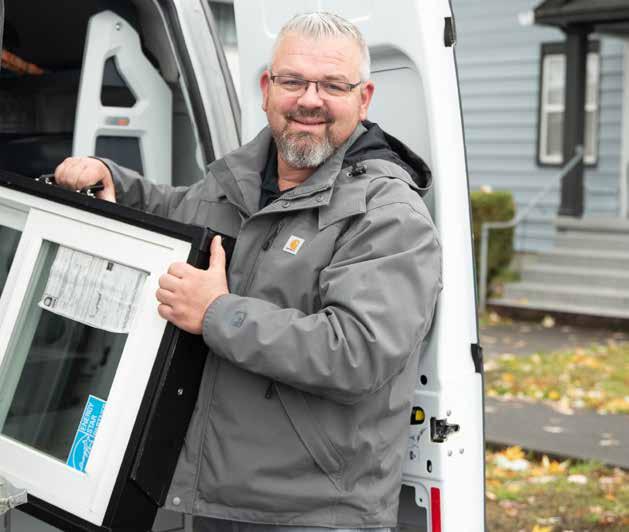




WINDOW & DOOR REPLACEMENT SALE Save additional $$$ with weatherization programs from ClarkPublic Utilities Limited Time $499 Any WindowStyleInstall Up to 86 UI Specials Specials Specials 10% OFF All EcoView Doors Not valid with any other offers. Some restrictions may apply. Exp 4/15/23 FREE Door Installation with the purchase of 3 or more windows Not valid with any other offers. Some restrictions may apply. Exp 4/15/23 10% OFF THE PURCHASE OF 10 WINDOWS OR MORE Not valid with any other offers. Some restrictions may apply. Exp 4/15/23 SAVE $490 Call Jordan Today! 360-727-0377 EcoViewVancouver.com
READY TO RESTORE YOUR PROPERTY?
By Dennis McNabb, Contributing Writer
Photos by Hayley Starkey
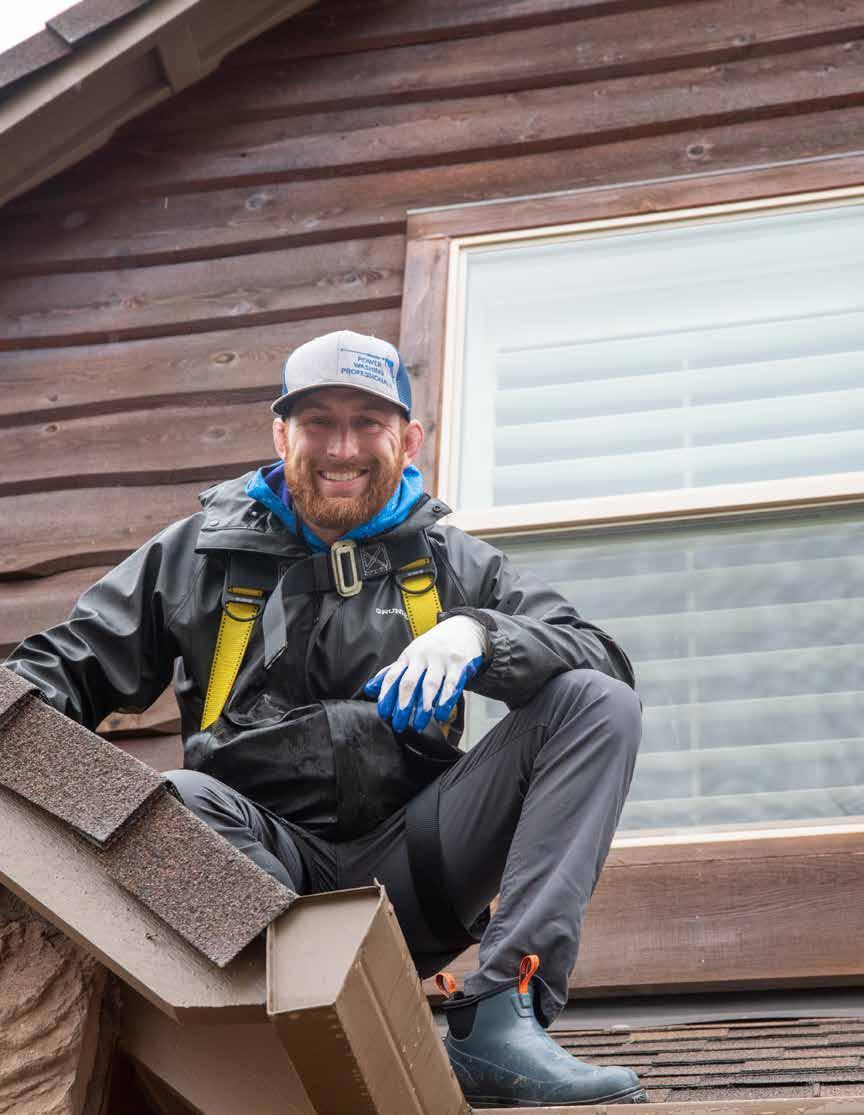
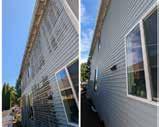
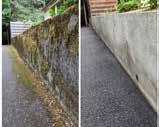
Bring back the natural beauty and luster of your home by employing the best pressure washing company in Vancouver: Power Washing Professionals!
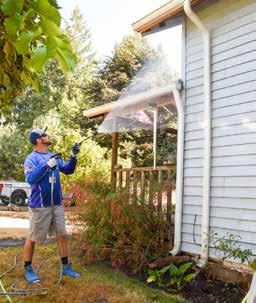
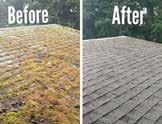
Living here in the Northwest, we are all too familiar with the constant battle against the elements. Homes nestled in cozy wooded areas lush with foliage and wildlife are the envy of people across the country, but they are also breeding grounds for moss and algae, elements which ultimately destroy those idyllic settings. Whether it’s to maintain the integrity of your home, roofs and driveways in particular, or to simply preserve its curb appeal, power washing is the only way to stay ahead of the game. That said, it requires a deft hand and years of expertise to do it right. Power Washing Professionals provide the best quality work in Clark County!
Founded in 2018 by Owner, Production Manager, and Lead Technician
Zach Roetker, Power Washing Professionals has grown steadily to become the number one business of its ilk in the region. They have done that, quite simply, by placing customer service at the top of their priority list. In speaking with him, it was immediately and abundantly clear that Zach genuinely cares about his customers. When he guarantees 100% satisfaction, he stands by it, and his reputation in the business is a testament to that fact! He was born and raised in the area. This is his home. Customers are his friends and neighbors. So providing anything but the absolute best service is just unacceptable.
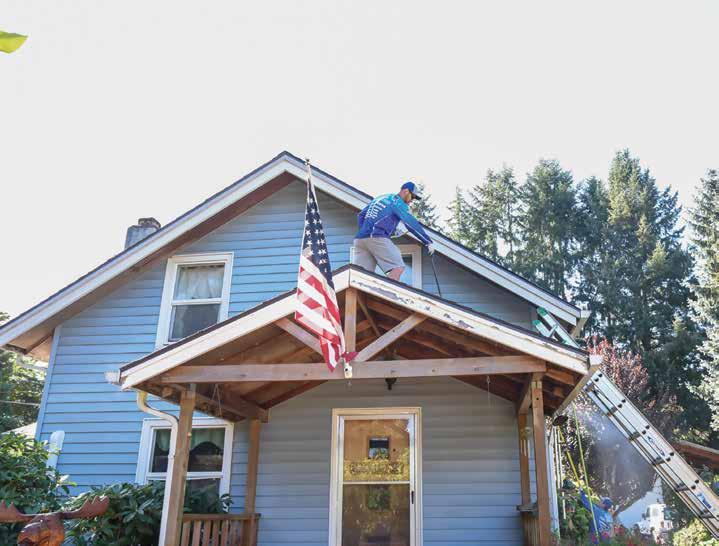
Power Washing Professionals is a one-stop destination for ALL of your residential or commercial property’s exterior cleaning needs. They follow all
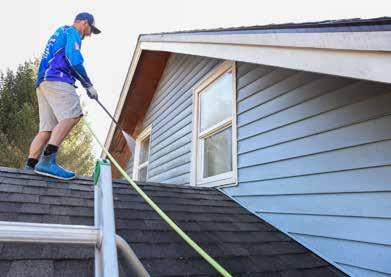
manufacturer-recommended methods and use eco-friendly detergents to ensure your house is as healthy as it is clean. They also employ the latest in soft washing techniques to avoid damaging delicate roofing tiles and asphalt. Driveways, fences, siding, roofs, windows; they do it all, and more! And they guarantee and warranty their work!
Power Washing
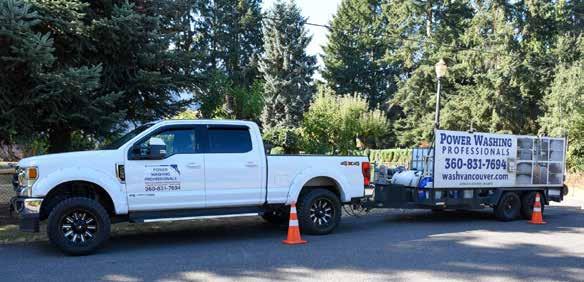
Professionals: locally-owned and operated, providing superior work, quick and friendly service, and competitive prices. There is no reason to call anyone else! Call 360-334-3588 or check out their website at washvancouver.com.
COVER FEATURE POWER WASHING PROFESSIONALS
12 To Advertise With Us, Call 503.825.2111


SOFT PRESSURE WASHING DONE RIGHT Save $1000s On Unnecessary Roof Jobs Call Power Washing Professionals Today 360-334-6234 $150 OFF ANY 3 SERVICES Restrictions may apply. Call for details. 360-334-6234 Expires 4/15/23 $100 OFF ANY 2 SERVICES Restrictions may apply. Call for details. 360-334-6234 Expires 4/15/23 Roof Cleaning • House Washing • Gutter Cleaning & Brightening Deck Cleaning • Concrete Cleaning • Fence Cleaning • And More! Family Owned & Operated We Provide The Highest Quality Pressure Washing In Clark County TOP RATED HOUSE WASHING SERVICES BeAmazed attheRESULTSof Softwashing! We have over 150+ Reviews Between Google, Facebook, HomeAdvisor and Angi
Poop Smart Clark
Clark Conservation District leads work to reduce waste in waterways
 By Angie Helvey, Contributing Writer
“Having so much bacteria in the water causes animals to get sick over time,” says Grace DeMeo, the community outreach coordinator with Clark Conservation District. “It causes people to get sick from the waterways. It puts stress on medical staff to have more people coming through their doors. It’s really the health of our community.”
So what can Poop Smart Clark do to help? The group connects residents to organizations offering a variety of technical and financial services to septic system owners and livestock farms, as well as education and environmental expertise throughout the community. Repairing or replacing a septic tank can be costly, and the program provides financial reimbursement for inspections, pumping, minor repairs, or even replacement up to $20,000 in certain areas and near specific water sources.
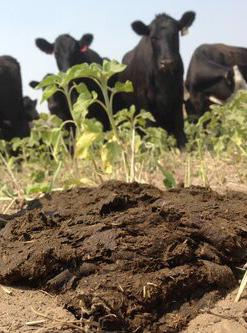
Managing livestock waste is challenging, and projects like manure storage systems can cost anywhere from $30,000 to $150,000. One cow alone can produce up to 60 pounds of manure per day. Clark Conservation District provides free and non-regulatory consultations with working land experts to help farmers problem-solve, as well as funds to cover up to 100% of projects like manure storage, fencing to keep livestock away from natural water sources, watering facilities, and more.
If there’s one thing we all have in common, it’s poop. Everyone poops. Humans poop, animals poop, and it has to go somewhere. Many people don’t realize the disposal of excrement can directly affect our water quality.
Water sampling in common waterways in Clark County has shown high levels of bacteria, including E. coli that comes directly from our waste. The poop gets into our water in several ways, such as a broken septic system, or livestock and family pets defecating in or near streams.
So, how do we fix this problem? How do we make sure our water is clean for the health of our community?
Enter Poop Smart Clark.
Poop Smart Clark, an outreach program backed by grants totaling more than $3 million, is dedicated to improving the quality of our water. The program is a partnership led by Clark Conservation District that includes Clark County, the Department of Ecology, USDA Natural Resources Conservation Service, WSU Extension Clark County, and others.
Educating the community about these issues remains key, and the program includes many free educational opportunities. “WSU Extension is one of our partners, and they have a small acreage program offering classes where you can learn to inspect your own septic tank, and they do lots of education work with livestock owners and small farms,” Grace explains. “We’re planning an open house in the East Fork Lewis River area so people can come and ask questions about the program and meet the people who are doing the work. Last year, we had a composting workshop where people came to learn how manure and fertilizer fit into the composting cycle and how to go about implementing it on their property.”
COMMUNITY SPOTLIGHT POOP SMART CLARK
14 To Advertise With Us, Call 503.825.2111
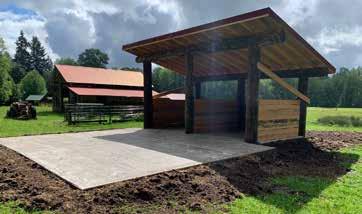
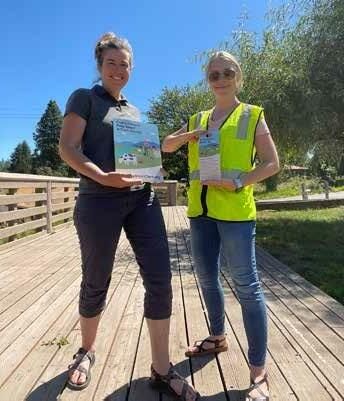
TOP LEFT: Workers pass out brochures explaining how Poop Smart Clark helps reduce waste in waterways. ABOVE: A manure storage facility used to cover and store manure to keep it from washing into the river when it rains.
Poop Smart Clark has so much to give to the community, and the funding available is impressive. “We know that livestock projects and septic tank repair are very expensive, and a lot of people look at those problems and would love to do something about it but simply can’t afford it,” says Grace.
“I would love for people to know that we have the money to help with those kinds of projects; it’s not impossible. That’s what we’re here for.”
The program is a collective effort, and every organization involved is passionate about improving the health and quality of life for the people and animals living in Clark County. “Clark County Public Health is helping with septic compliance, reaching out to people with broken septic tanks, and with swim beach monitoring, testing the water to make sure it’s safe for swimming,” says Grace. “Clark County Public Works does all of the water quality testing in the streams. Clark Conservation
District is leading the outreach effort and provides funds for on-farm projects and septic work. There are lots of people coming together to address this problem in our community. We know that people care about the health of our children and the legacy of the land, and we want to provide the resources and solutions to fix it.”
The program is funded through grants and partnership from the Washington State Conservation Commission, Washington State Department of Ecology, USDA Natural Resources Conservation Service, and the Lower Columbia Fish Recovery Board. Any opinions, findings, conclusions, or recommendations expressed in this publication do not necessarily reflect the views of the funding agencies.
To learn more about the Poop Smart Clark program, visit poopsmartclark.org.


Let Us Help You With Your #2!
If you live near certain rivers in Clark County we’ll pay you to get your septic system inspected, repaired, or even replaced!
• Inspections: Up To $130
• Routine Pumping & Small Repairs: Up To $1,000 Total
• Complete System Replacement Or Major Repairs: Up To $20,000
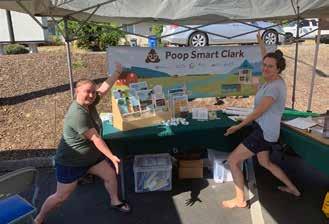
At a farmers market, Poop Smart Clark workers explain how it’s helping ensure cleaner water for the community of Clark County.
Livestock & Horses
•
•
Grazing Plans • Heavy-Use Area Protection • Gutters & Downspouts • Cross-Fencing • Watering Facilities •
Crossings • Riparian Plantings Anywhere In The County!
Maintenance & Repairs
We can work with you to fund manure- and mud-related projects, including: • Manure Storage Facilities
Exclusion Fencing To Keep Livestock Out Of The Water
Rotational & Prescribed
Stream
Septic
For more information or to apply for funding, contact Carolyn Rice, Project Coordinator crice@clarkcd.org | 360-859-4848 | PoopSmartClark.org Visit CommunityAdvantageMagazines.com 15

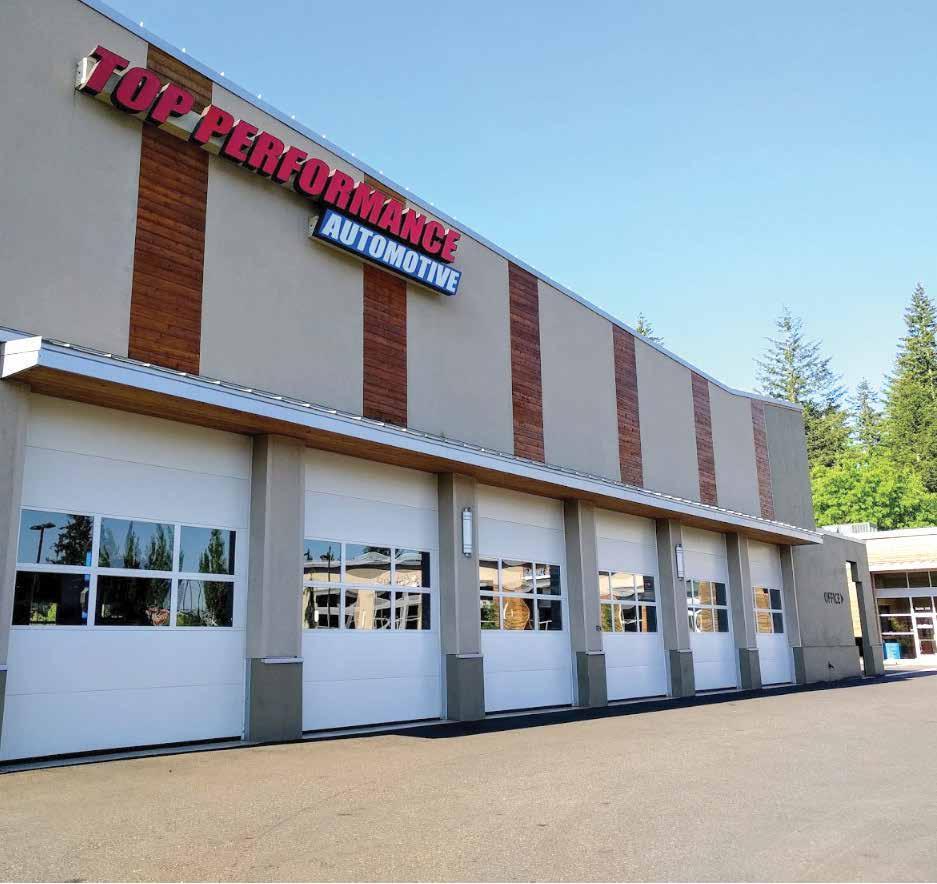


Advantage Magazine DIRECT MAIL • DIRECT RESULTS PO Box 672 ∙ Aurora, Oregon 97002 To Advertise, Call 503.825.2111 Postal Customer PRESORTED STANDARD US POSTAGE PAID ACTIVE MEDIA Mon-Fri 7:30-5 Complete Auto Repair & Service Complete Auto Repair & Service We service all makes & models: Domestic, Asian & European. We also service Diesel. We service all makes & models: Domestic, Asian & European. We also service Diesel. ALIGNMENT SPECIAL FUEL INJECTION SERVICE OIL CHANGE SPECIAL ANY K-SERVICE 4 Wheel Alignment $10995 Euro Cars $13995 $3495 $3998 Euro Cars Oil & Filter Change • Up to 8 qts synthetic blend oil • Engine oil filter • FREE tire rotation & set pressure • FREE brake inspection • No disposal fee or hidden fees (4x4s same price) $ 95 With this coupon. Most models. Not valid with any other offers. Expires 4/15/23 With this coupon. Most vehicles. Not valid with any other offers. Expires 4/15/23 With this coupon. Most vehicles. Not valid with any other offers. Expires 4/15/23 With this coupon. Most models. Not valid with any other offers. Expires 4/15/23 Free Shuttle With Repairs 360-833-2281 www.topperformanceauto.com 2119 SE 192nd Ave • Vancouver/Camas (20th & 192nd Ave. Right by Tapped Brew Pub) All Techs ASE Certified • We Strive To Have Your Vehicle Completed Same Day Improve Gas Mileage & Drivability! Top Rated Auto Repair Shop in Vancouver! 10% OFF (Parts & Labor) Manufacturer Recommended Services Combine One To All K-Services Per Visit
