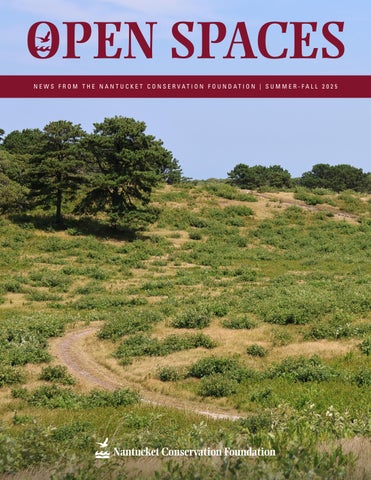
OPEN SPACES
Inside Open Spaces

As we transition to the cooler, quieter time, that is fall on Nantucket, we reflect on our successful summer season of scientific and educational programming and the ongoing efforts of our land management team to enhance the experience of visitors to our properties. On behalf of our staff and trustees, you have my sincere gratitude for your generosity and commitment, which have been instrumental in stewarding over 9000 acres of precious land, launching our new Milestone Center project, and ensuring that future generations can enjoy the natural splendor of Nantucket just as we do today. The summer of 2025 was filled with top-of-the-line research and the most expansive offerings of public education activities that we have ever achieved.
Back in May, we celebrated the announcement of our visionary Milestone Center, a new hub for ecological research, community engagement, environmental education, and land management. Located on previously disturbed land at the Milestone Bogs, the Center will be sited with respect and harmony to the surrounding environment. The Milestone Center is a critical catalyst to ensure the long-term success for the Conservation Foundation and our work on the island, by providing new laboratory and community education facilities and a renewed investment in housing for our employees. The Center will benefit not only NCF, but the entire community, our island partners, and visiting researchers as we continue to advance our stewardship of Nantucket’s critical natural resources.
In this issue of Open Spaces, we are excited to share the American Burying Beetle reintroduction project. For decades, a team from Roger Williams Park Zoo has been collaborating with NCF to establish and bolster a population of the Federally Endangered American Burying Beetle in Nantucket’s Middle Moors. This summer was a record year for successful wild abundance, sustaining our hope of helping this fascinating insect
maintain a foothold on island and serve as one of the most significant populations in the country.
In this issue you will also learn about our proactive forest management to combat the invasion of harmful non-native species such as the southern pine beetle. Further, our islandwide harmful algal bloom monitoring program collaborates with island partners to provide up to date information on algal blooms in ponds around Nantucket. Along the shorelines, our wildlife ecology staff have been monitoring and banding rare and endangered shorebirds so that we may better understand their migration patterns and steward our beaches to help aid in their survival.
Finally, we are excited to share the successes of our summer educational programming. These excursions, designed for all ages, offer a range of activities, including guided nature walks, kayak paddles, and educational talks by leading conservationists. New this summer, our Tidal Trek series provided a closer look into ecology and life at the water’s edge.
I want to sincerely recognize the tireless work and passion displayed by our dedicated staff, trustees, and volunteers. Please be sure to follow along with our future work through social media and our monthly e-newsletter updates. And don’t miss this year’s Batacular Bike Race and Fall Festival on October 26th! I look forward to seeing many of you at our upcoming events and out on the trails.
With appreciation,
Cormac Collier, President & CEO
President & CEO
Cormac Collier
Accounting & Administrative Manager
Korilynn Adams
Vice President of Science & Stewardship
Karen C. Beattie
Coastal Ecology Project Manager
Dr. Jennifer M. Karberg
Director of Research
Danielle O’Dell
Plant Research Ecologist/Botanist
Kelly A. Omand
Coastal Wetlands Research Ecologist
Dr. Emily N. Junkins
STAFF
Coastal Ecology Research
Technician
Jisun Reiner
Restoration & Stewardship Project
Manager
Coleman Miller
Native Plant Propagation Manager
Stacey Cooper
Director of Advancement
Whitney Dayton Brunet
Interpretive Education Coordinator/ Ecologist
Neil Foley
Development & Donor Relations
Manager
Mara Weiner
Environmental Educator
Isaac Hersh
Administrative Coordinator
MaryAnn Bartlett
Development Associate
Celia Cataldo
Director of Land Management
Nicholas J. Larrabee
Land Maintenance Manager
Donald J. Mack
Properties Maintenance
Richard H. Mack
Facility Maintenance & Land Stewardship Technician
Gregory St. Aubin
BOARD OF TRUSTEES
OFFICERS
Chair
John G. Macfarlane III
Vice Chair
Todd M. Knutson
Secretary
James Meehan
Treasurer
Charles K. Gifford, Jr.
Clerk
Marianne R. Stanton
TRUSTEES
Stephen Bartram
David A. Champoux
Colby Crenshaw
Charles K. Gifford, Jr.
Ande Grennan
Karen Grip
Lindsey Gund
Laura Hanson
Patrick Hehir
David Kaytes
Katie Keith
Todd M. Knutson
Isabelle Loring
John G. Macfarlane III
Jennifer Matthews
James Meehan
Daphne F. Mitchell
Sherwood Newell
Ann B. Oliver
Diane R. Pearl, MD
David Rattner
Bob Sommer
Marianne R. Stanton
Dr. Geoffrey C. Trussell
Rick Ulmer
Mary West
Land Use Manager
Gerry Holmes
Land Management Assistant
John Beattie
Land Management Assistant
Alden Lentz
Cranberry Bog Foreman
Eli French
Community Outreach Manager
Samantha Denette
ADVISORS
Richard L. Menschel
Susan Rein
Susan R. Shapiro
Patrick S. Wayland
Marcia Weber
EMERITUS
Nathan R. Allen, Jr.
John H. Davis
Arthur Gosnell
Kate Miller
David B. Poor
David Ross
Richard G. Verney
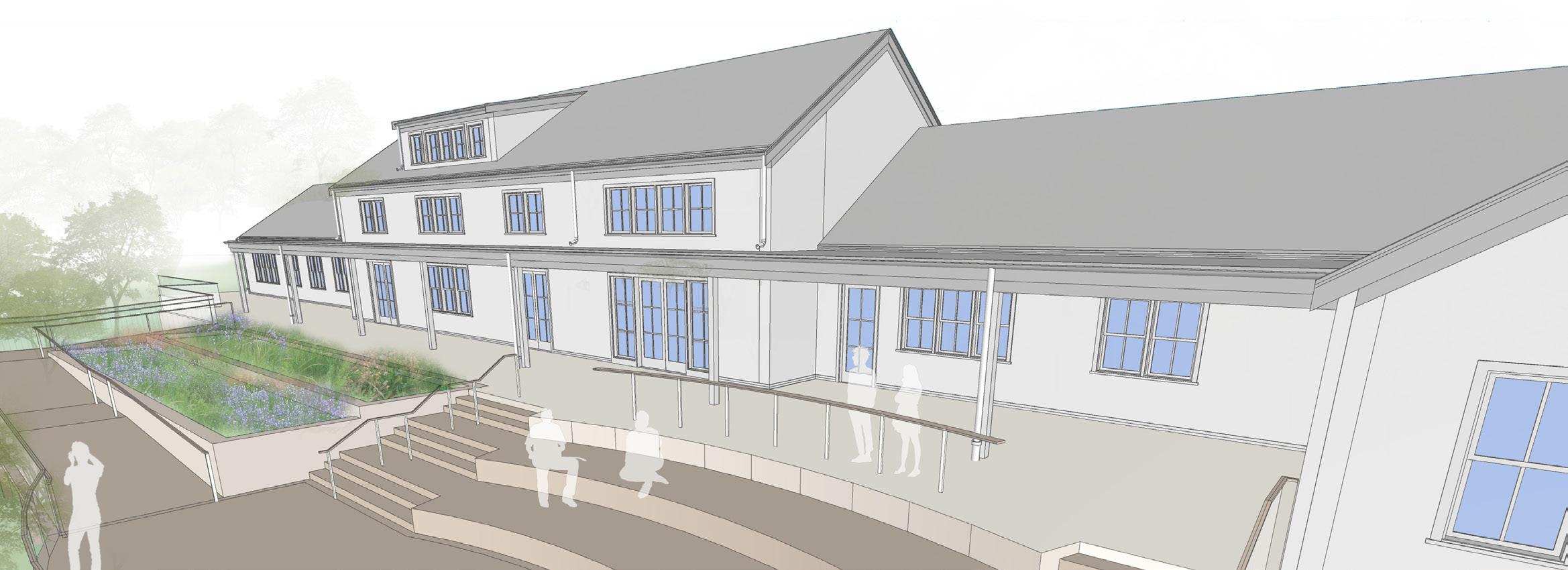
We’re excited to continue to share more details about our carefully planned Milestone Center which reflects NCF’s deep commitment to ecological research, land stewardship, and environmental education for the community.
The Center will directly support NCF’s core mission with two essential components: 1) a LEED, US Green Building Council certified, ecological research and education center that will advance our mission to leverage scientific research in support of land stewardship and environmental education, and 2) housing for NCF staff, which will be limited to relocating one existing house at the site and construction of three modest-sized, Nantucket-style homes.
The project is well outside of any wetlands and will include constructed wetlands for innovative wastewater treatment, nature-based stormwater management areas, and native plant demonstration landscaping. The site’s lighting will be minimal and “Dark Skies” compliant.
The Center’s indoor and outdoor spaces will provide environmental learning opportunities to benefit the Nantucket community. Staff and community partners will be able to host lectures, workshops, programs, and classes for year-round and seasonal residents, including students. Opportunities for K–12, undergraduate, and graduate students to engage in hands-on ecological research and land stewardship will be expanded, enhancing public understanding and deepening community connections to Nantucket’s natural systems.
The scientific staff and Center resources will provide on-island capacity to understand and address major environmental issues facing the island, including Harmful
Milestone Center
Algae Blooms, PFAS contamination, and carbon equestration. Use of the new facility will be strictly limited to NCF operations and to non-commercial use for educational purposes.
The Milestone Center will showcase NCF’s mission and agricultural history. The planned size of the research and education facility is ~10,000 square feet. To provide context, the size of the NCF’s current office, located within a residential neighborhood at 118 Cliff Road, is 5,500 square feet. NCF’s current facility is no longer able to support our existing staff and activities. Beyond these needs, NCF’s ecology program currently lacks the research infrastructure necessary to support its research and stewardship efforts that directly benefit the island.
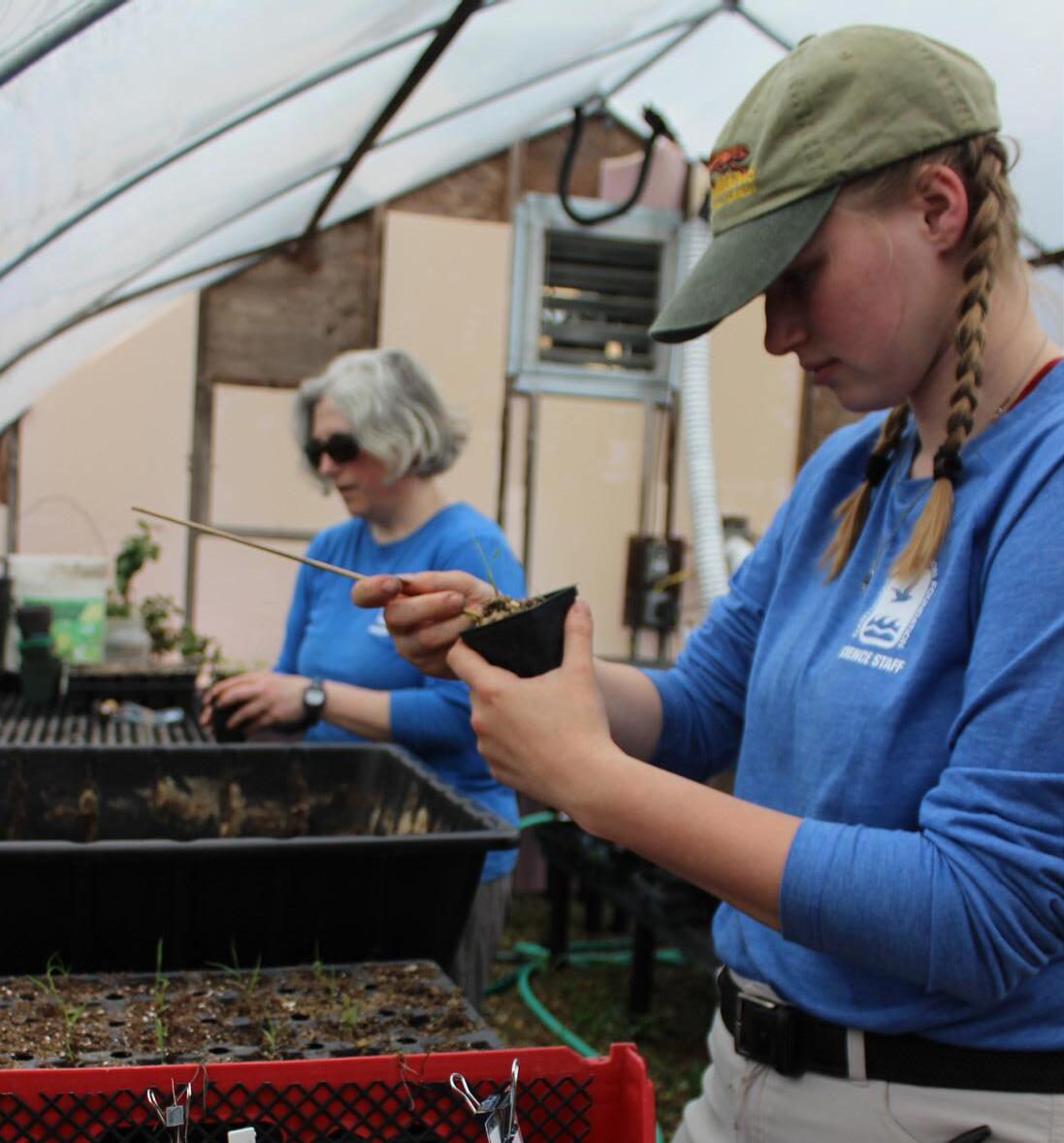
The Milestone Center will alleviate these constraints and enhance opportunities for collaborative scientific research and community engagement.
The housing component of this initiative responds to Nantucket’s ongoing affordable housing crisis. As the island’s largest landowner and conservation employer, we are committed to ensuring that our year-round staff have stable, affordable housing. Constructing three modestsized, two-family Nantucket-style homes (each with a ~1,200 sq. ft. footprint) will prioritize housing for six current, year-round employees and their families, while also freeing up critical housing for other year-round Nantucket residents in need.
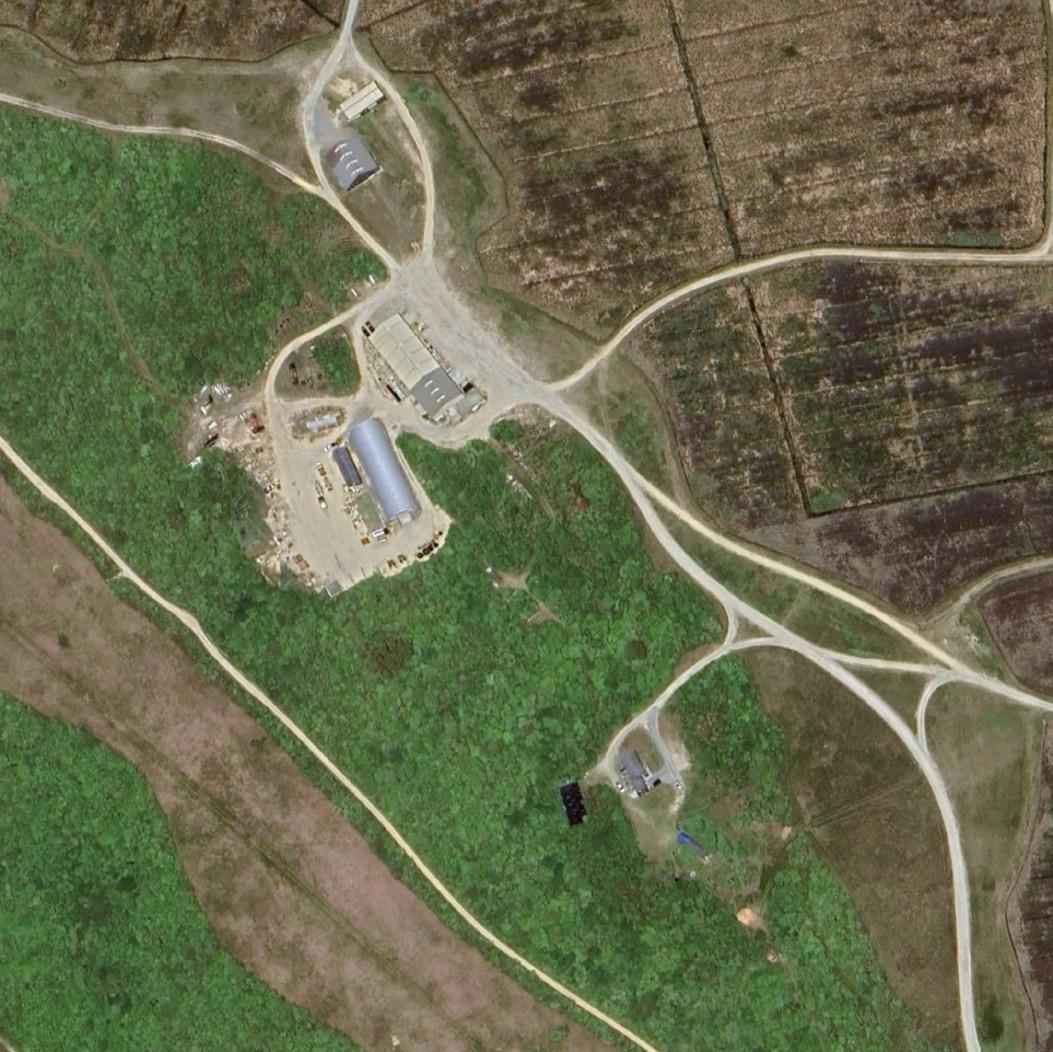
Most importantly, the new buildings will not be located within the Middle Moors – they are on land adjacent to the Milestone Cranberry Bog, carefully chosen to utilize sites with existing buildings that are already extensively disturbed and contain very little native vegetation. They will be against an existing hillside not visible from Milestone Road. Existing vegetation, as well as new native species plantings, will minimize the appearance of the building in the landscape.
We are pleased that the Milestone Center’s design and hardscape have been approved by the Nantucket Historic District Commission. We’re also grateful for the thoughtful feedback and support we’ve received from so many members of the community throughout this process. As we move forward, we’re excited to bring this vision to life, guided by a commitment to thoughtful design, environmental stewardship, and community connection.
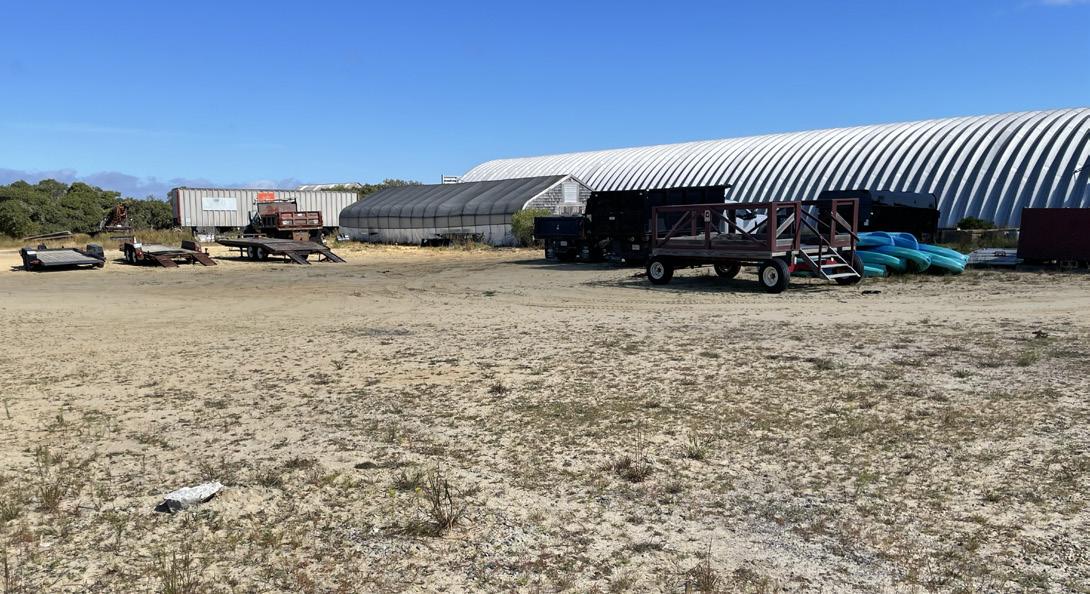
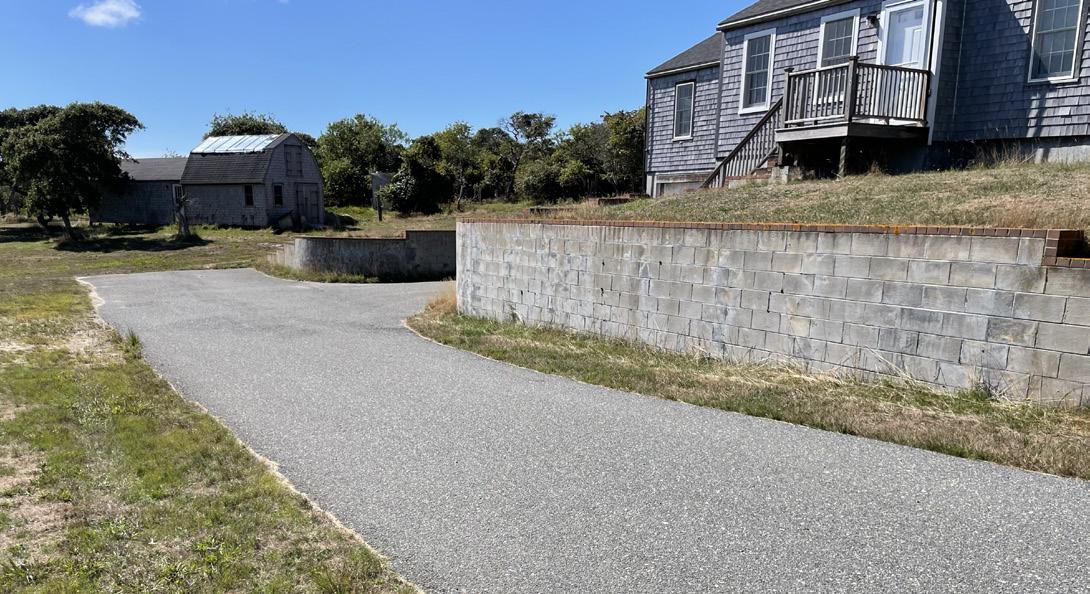
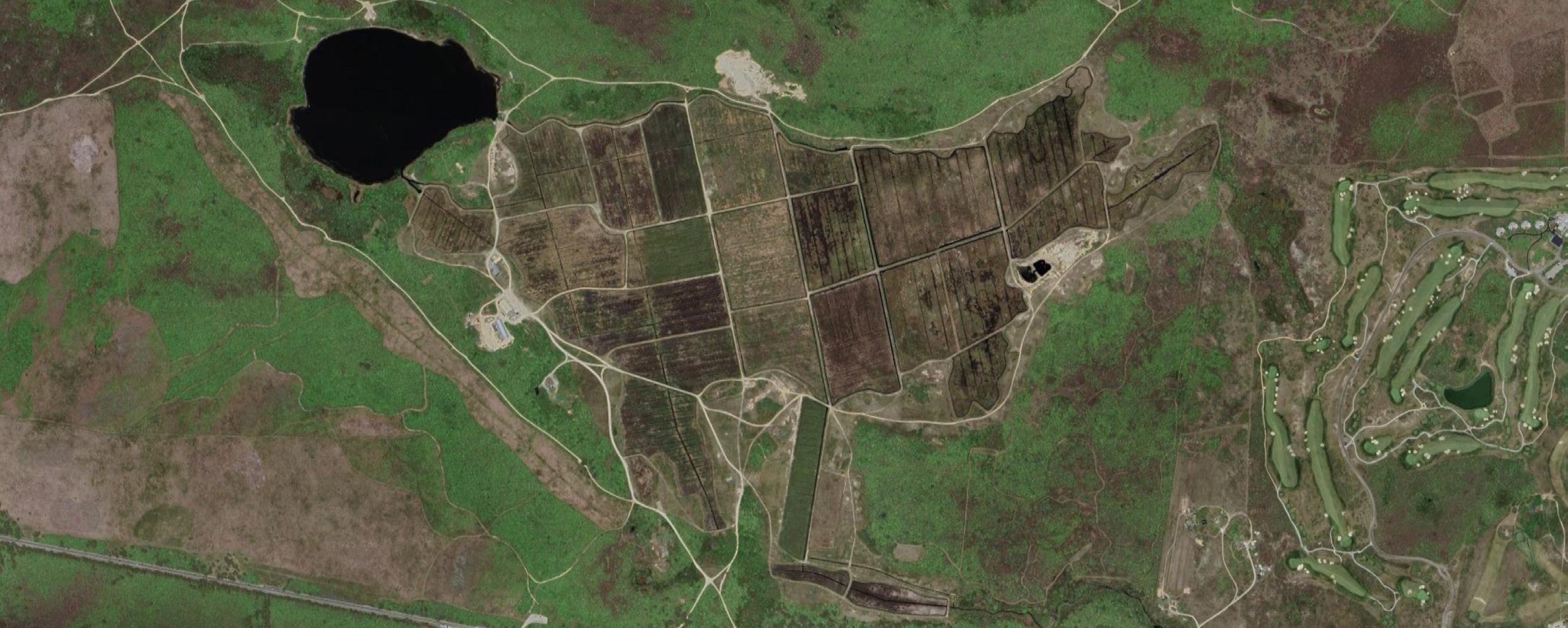

Current conditions at the proposed site for NCF Staff Housing, which will be limited to three modest-sized, Nantucket-style homes
Current conditions at the proposed site for the NCF Research & Education Center
NCF Staff Housing
Research & Education Center
American Burying Beetle Project
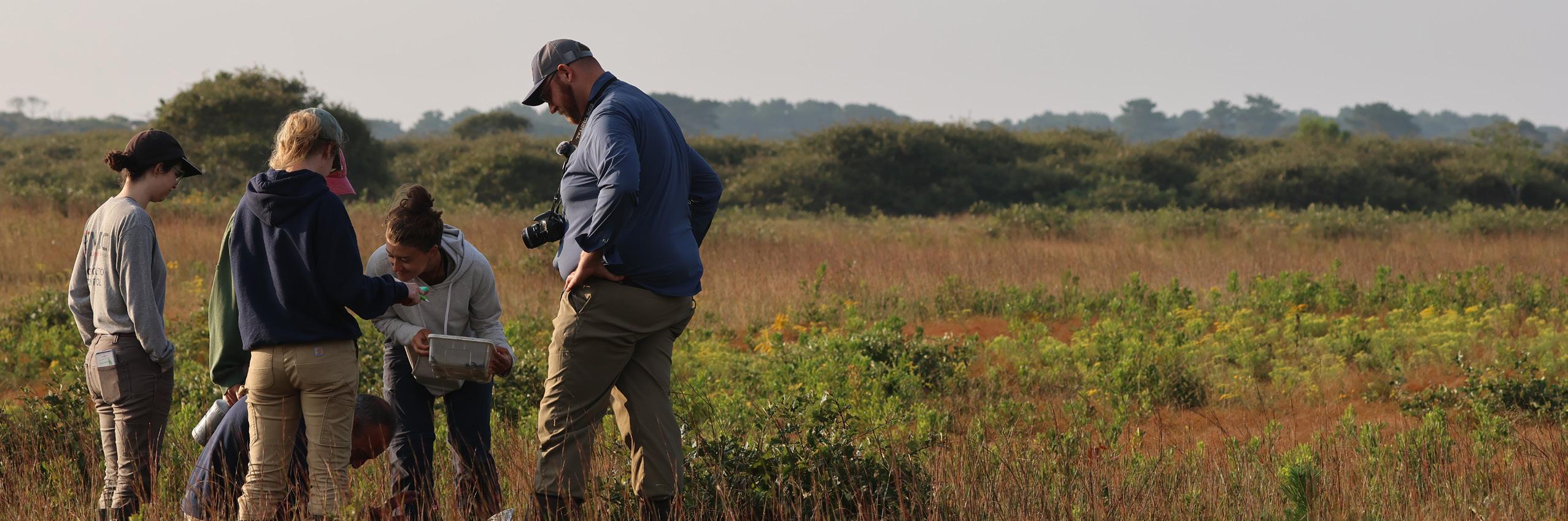
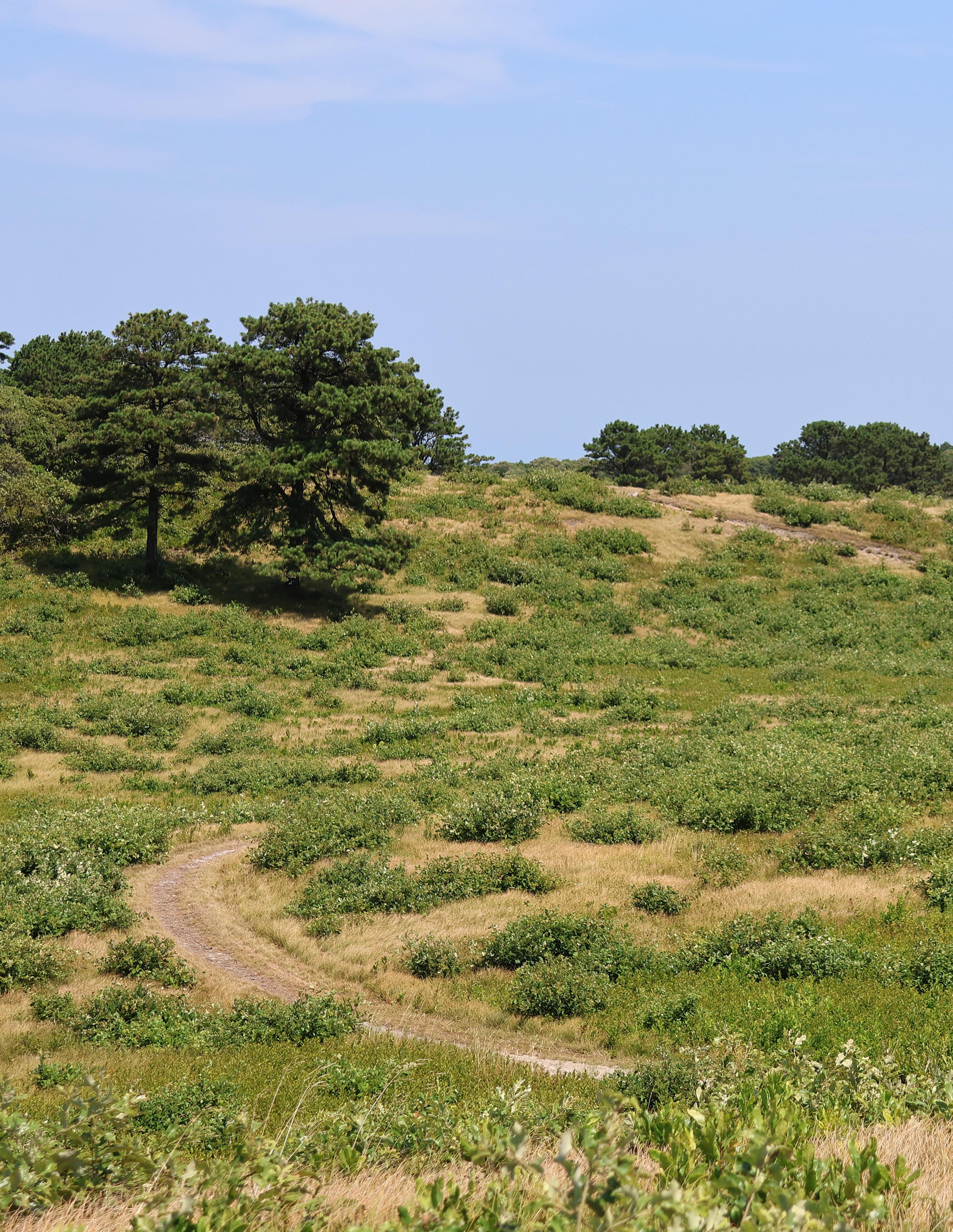
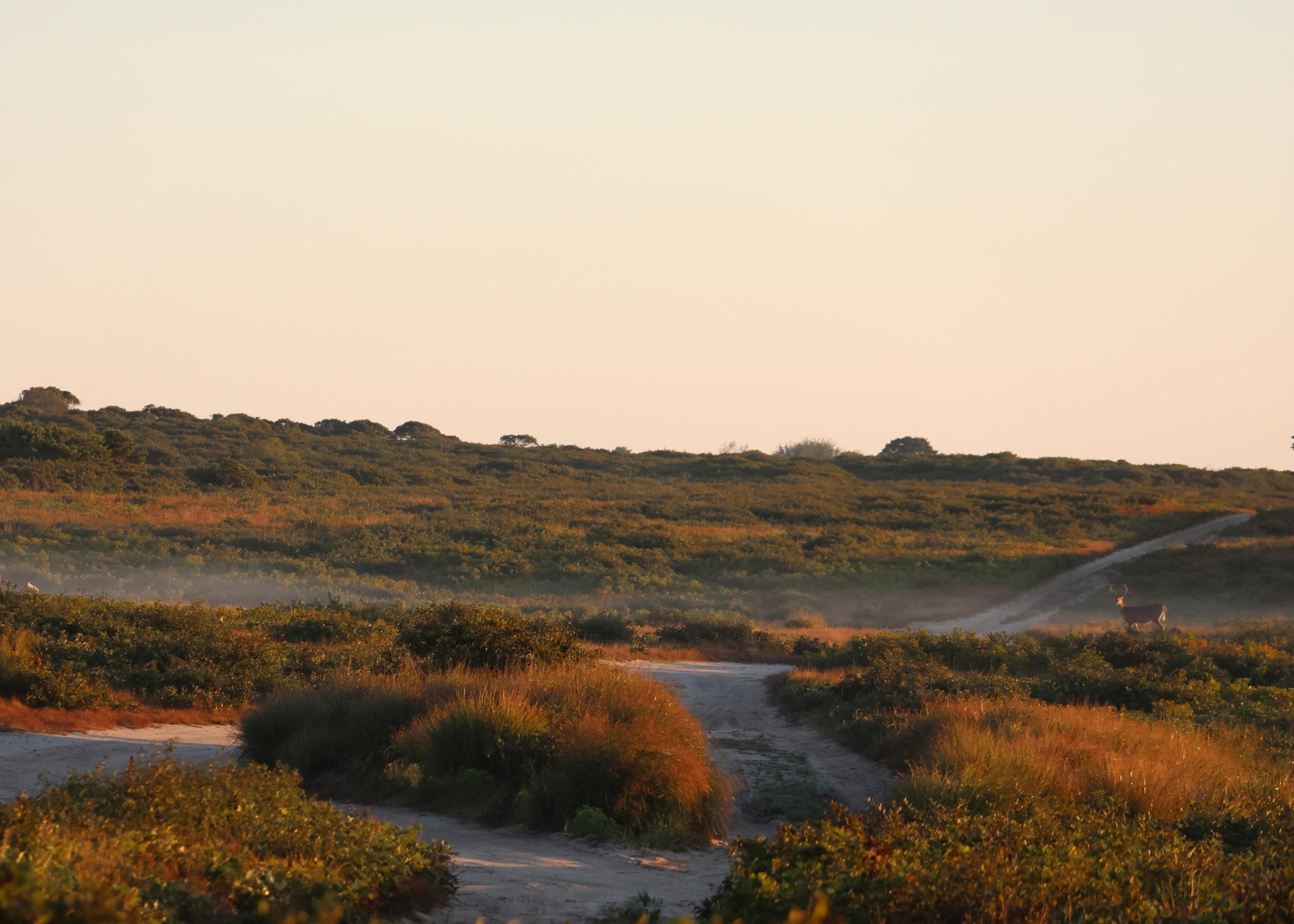
Afavorite place for many who live on or visit Nantucket is the Middle Moors – an expansive array of low growing scrub oak, coastal heathlands, and open sand-plain grasslands. This beautiful center of the island represents 3,220+ acres of contiguous conservation land and contains miles of trails for people to enjoy and boundless space for the rare plants and animals that call Nantucket home.
The oak savannahs and sandplain grasslands of the Middle Moors provide one of the only remaining refuges for the American Burying Beetle (Nicrophorus americanus). Along with other members of the family Silphidae, American Burying Beetles (ABB) consume and bury the carcasses of small animals like birds or rodents to leave as a food source for their larvae, simultaneously recycling nutrients for grassland plants to use. ABBs had sustaining populations in over 35 states but are now an IUCN critically endangered species having lost over 95% of its historic range. This drastic decline is due to a list of compounding factors which include elimination of food supply, habitat fragmentation, oil & natural gas development, broadcast pesticide usage, and climate change. These beetles now only exist in the wild in two locations east of the Mississippi River – Block Island and Nantucket.
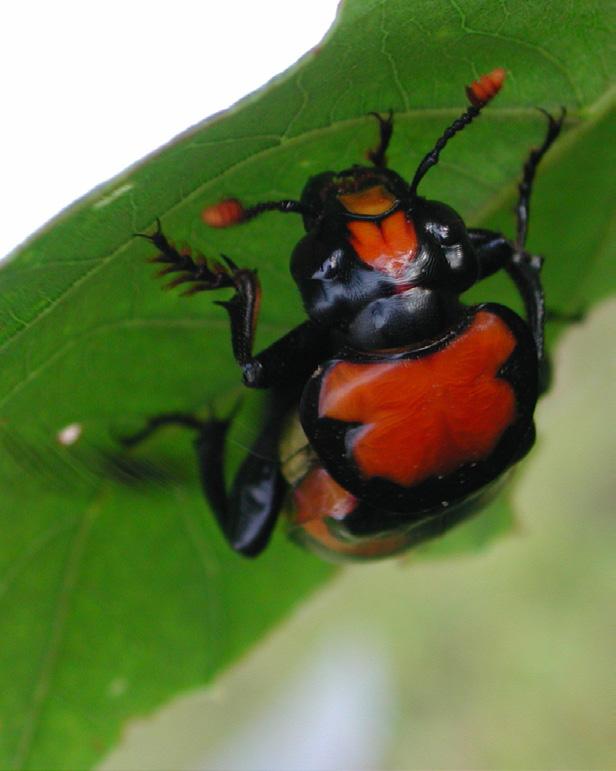
For the last 31 years on Nantucket, an effort has been made to re-introduce American Burying
Beetles to the island and create conditions for a stable and sustaining population. This project, led by Lou Perrotti and Hannah Petrarca from the conservation department of the Roger Williams Park Zoo, the Nature Conservancy, and US Fish and Wildlife, and facilitated by NCF and other island environmental groups, has been largely successful at establishing and sustaining a population of American burying beetles in the Middle Moors.
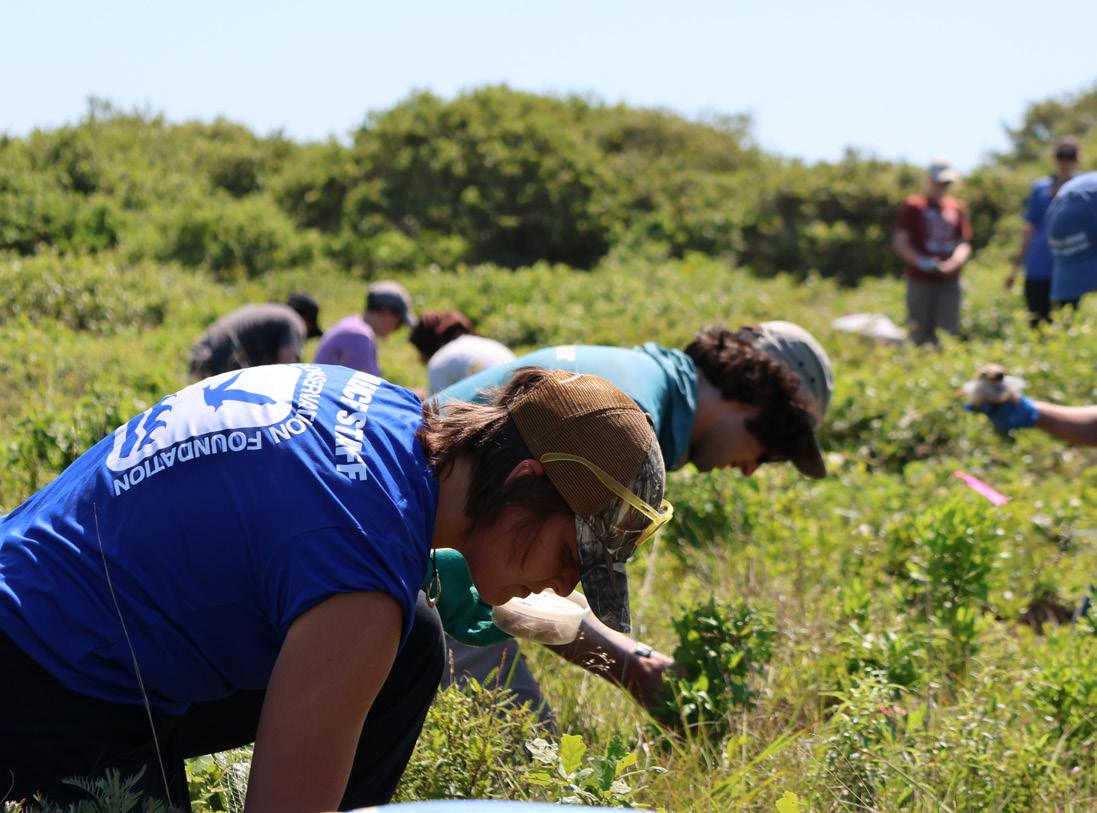
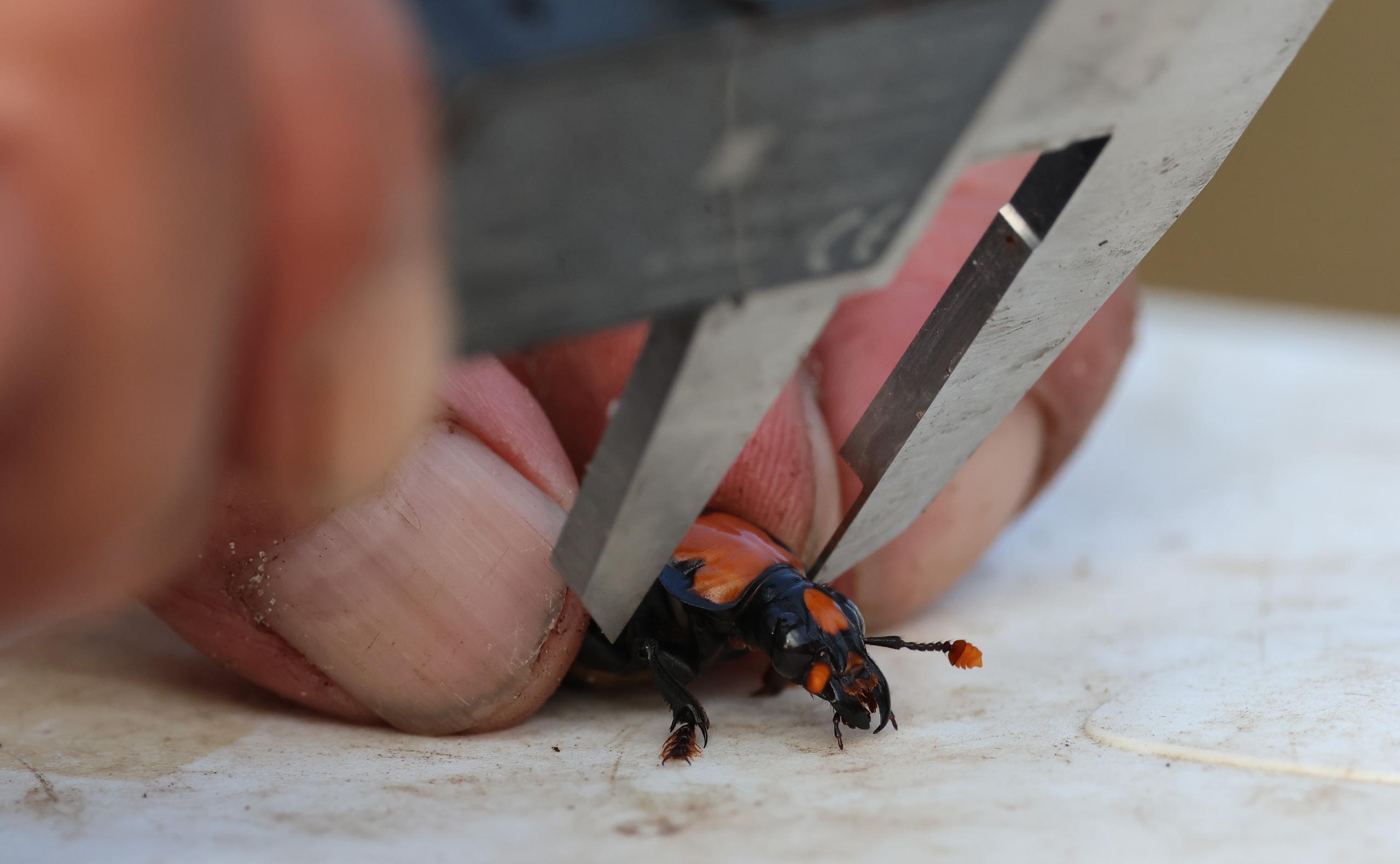
Each year the team brings captive-bred beetles from the zoo to release in the Moors along with wild beetles trapped on the island. The pairs of beetles are each given a dead quail for them to lay their eggs in and provide food for their young. 11 days after release, a portion of the broods are carefully dug up to determine success and stage of the larvae before being replaced to continue growing and pupating into adults. Finally, the new generation of adult beetles emerge and are trapped in the late summer where they are marked and released so we can identify them when we capture beetles the following spring.
This effort requires many hours digging in the hot sun of the Moors and it wouldn’t be possible without significant contributions and collaboration from our island partner organizations including the Nantucket Land Bank, Mass Audubon Nantucket, Maria Mitchell Association, Linda Loring Nature Foundation, The Trustees, and community volunteers. Their efforts have supported this reintroduction and will continue to drive our success into the future.
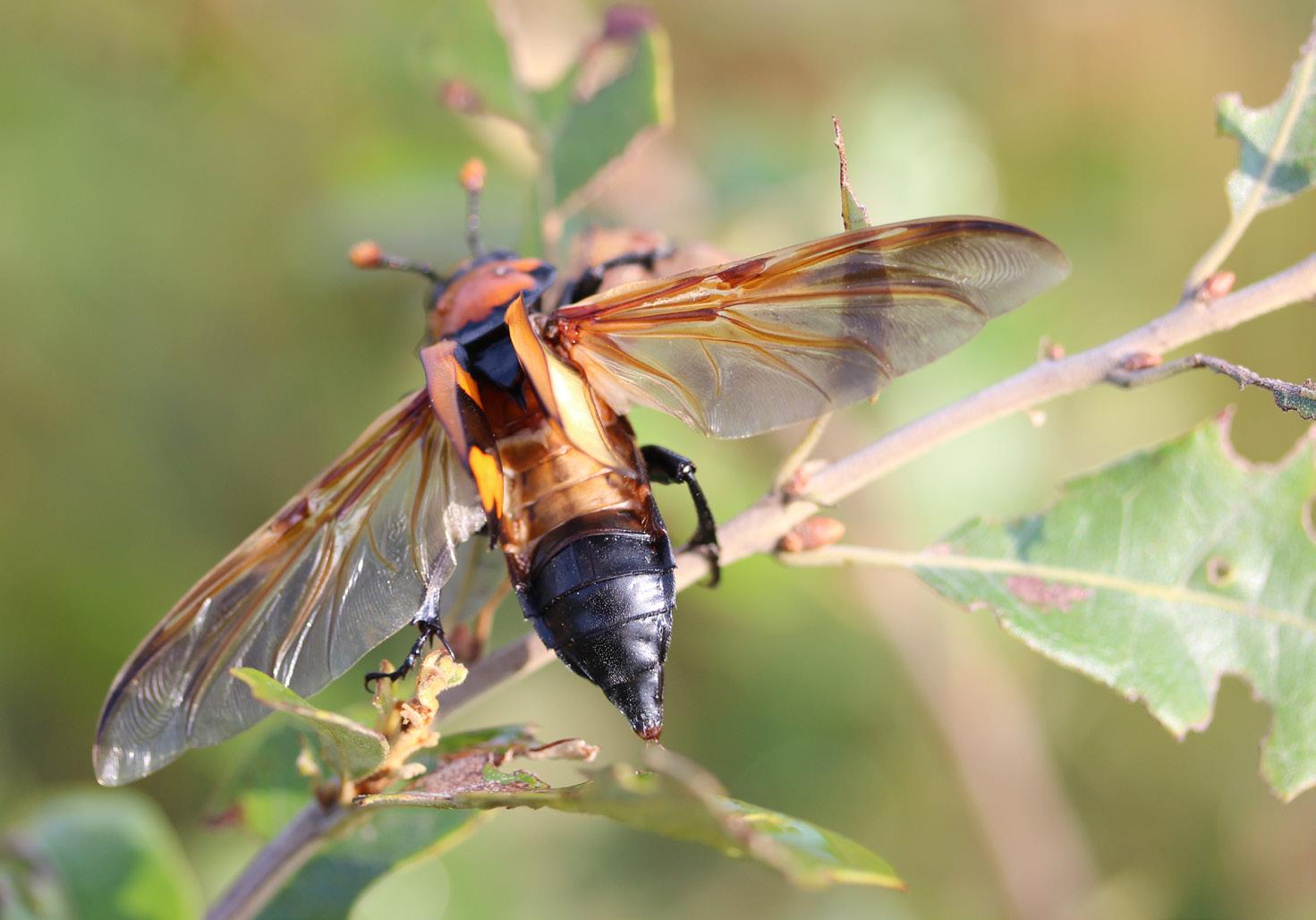
Beetle season in 2025 has been a resounding success for the overall project. In June we had the best spring
trapping session in decades, catching 93 wild beetles and matching them with captivebred zoo beetles to release 196 pairs back into the wild to start the next generation. Several weeks later we returned to the release site and found many successful broods, including some with new wild beetles we had not encountered yet. These broods continued to grow, pupate, and emerge into fully grown adults. In August we trapped again and caught 273 fresh new beetles. Hopefully many of these will survive the winter and be given the chance to breed again next spring!
Forest Management
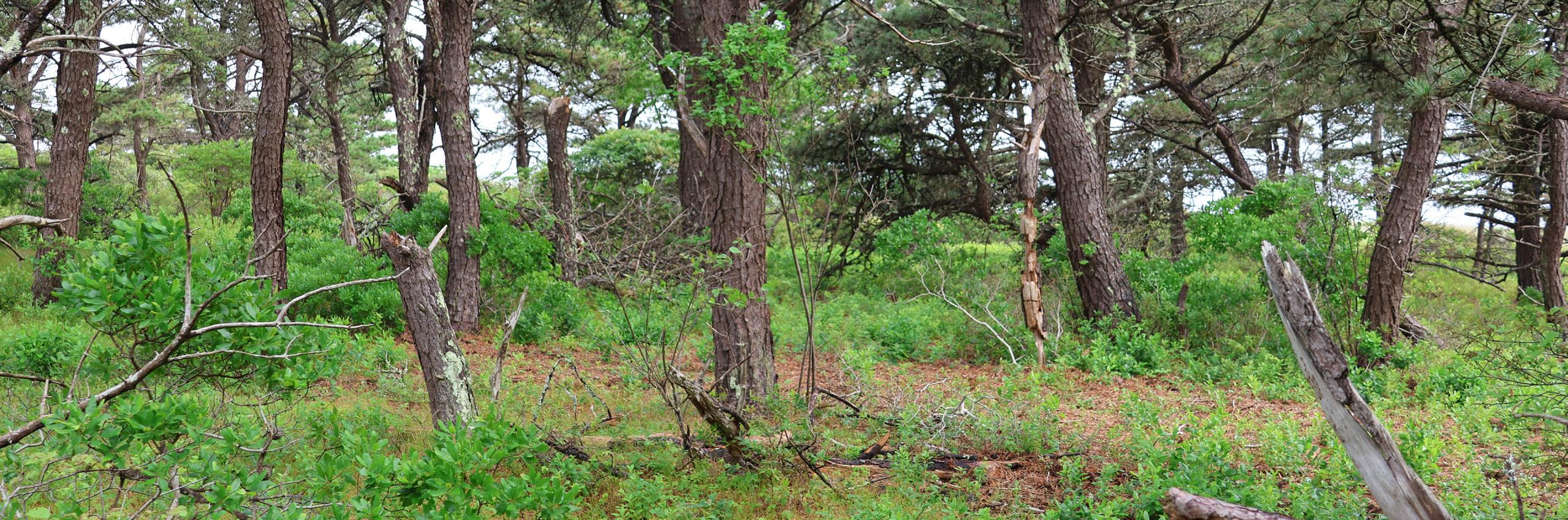
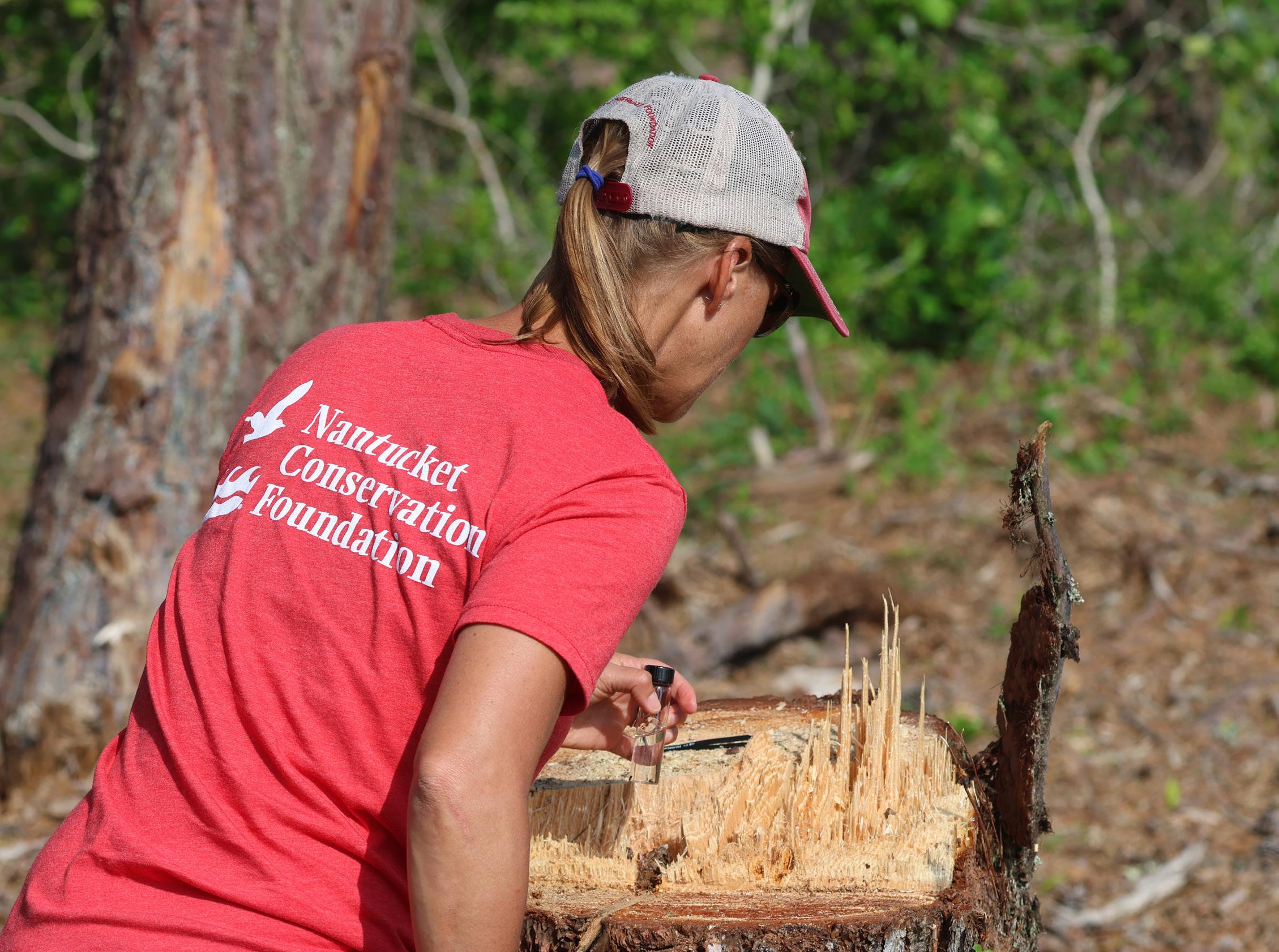
In the summer of 2023 Nantucket experienced an outbreak of Southern Pine Beetles at NCF’s Ram Pasture/West Gate property in the pitch pine stand there. To stop the outbreak, over 200 trees had to be cut down and now each summer conservation groups around Nantucket have to be vigilant to detect potential infested trees before a new outbreak begins. Southern Pine Beetles are a species of bark beetle which is native to the southeastern United States but has expanded its range due to climate change. Despite their tiny size, they bore into trees (usually Pitch Pine), overwhelming their defenses and ultimately killing them. The beetles lay their eggs in the bark which hatch and spread to the next tree, and the next. Infestations can quickly get out of control and spread throughout large areas of forest.
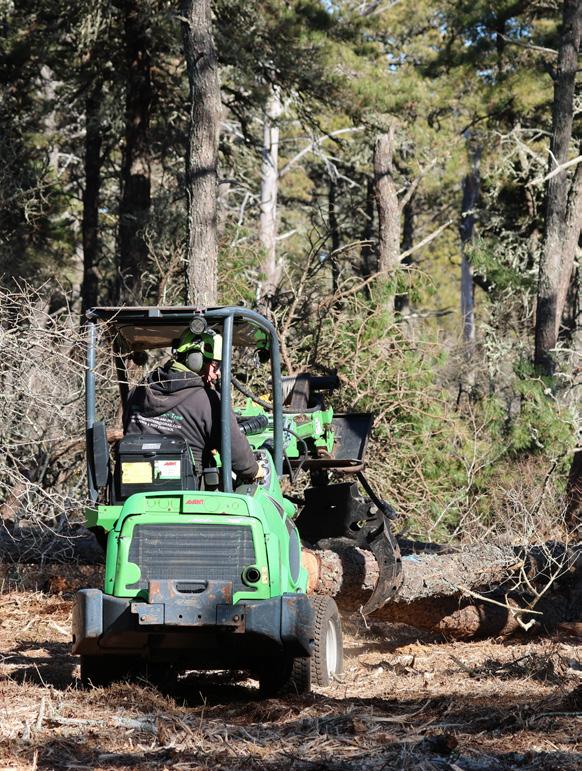
To suppress an infestation, the recommended course of action is to cut down all the affected and closely surrounding trees. However, since the first outbreak, NCF and other island conservation groups have begun preemptive management of their forests on Nantucket. This involves clearing out dense understory shrubs and thinning the trees. Some of the conditions that led the West Gate Pitch Pine stand to be so vulnerable were its extremely thick understory and densely spaced trees. This caused a lack of low airflow, unhealthy trees, and a lack of recruitment of young pines in the area for many years.
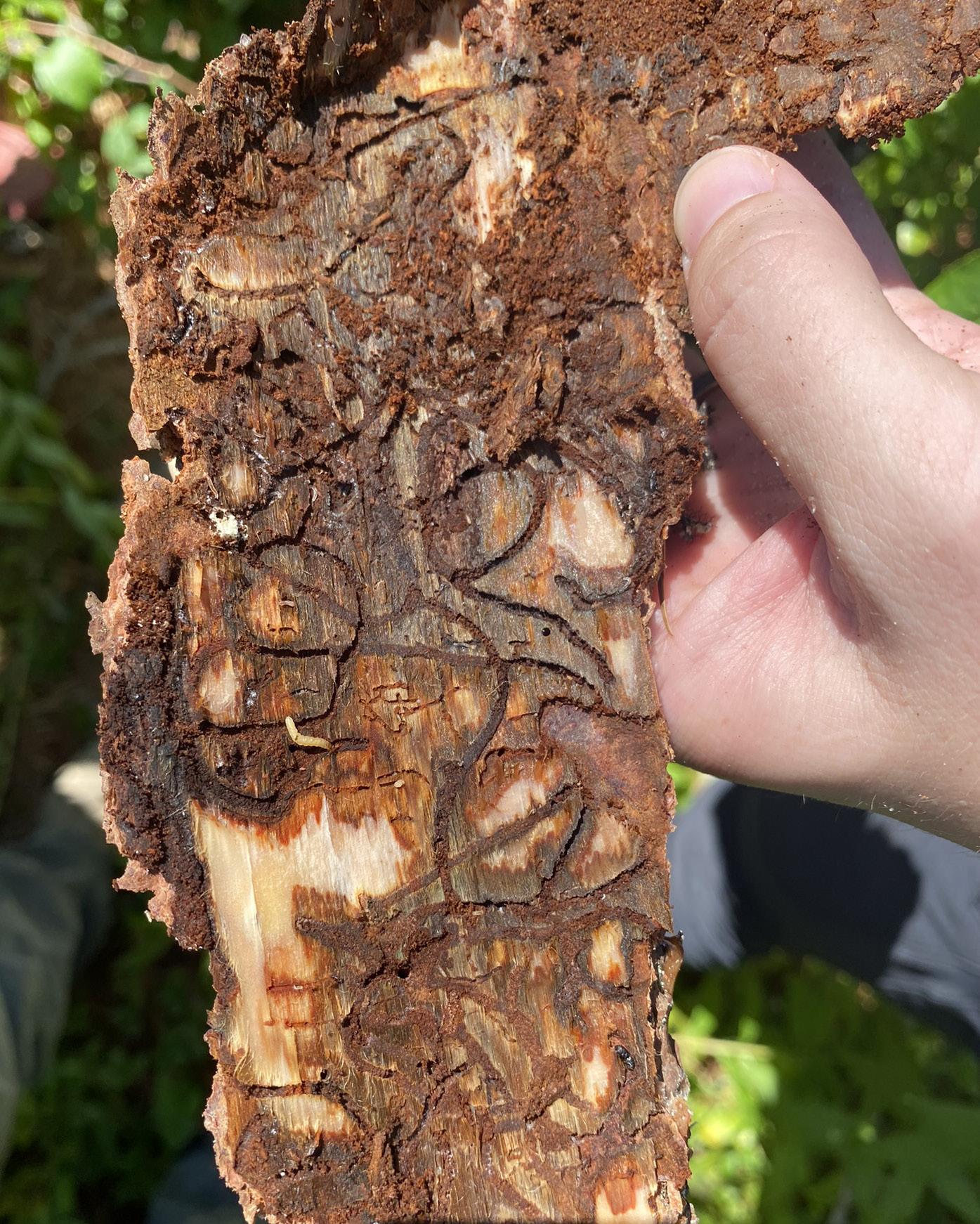
West Gate is now an extreme example of what happens when a southern pine beetle outbreak occurs, but in its post-outbreak state, things seem to be improving. Clearing out the area has allowed new growth of young pines and hopefully the forest will be able to re-populate itself in time.
Looking at our other pine forests, we have now begun acting before another outbreak occurs to improve the health and resilience of our forests. Two locations have undergone management so far: a section of Pitch Pine forest along Milestone Road and another at the Head
of the Plains. For both projects, we contracted the work out to KJP Land and Environment who have significant expertise in healthy forest management. At the Milestone Road site, they brought in smaller machines to do the work to protect the ground and roots from disturbance. Thinning out the understory and selectively removing some of the trees resulted in improved air flow and a healthier forest than there was before.
At the Head of the Plains site, the management happened in and around walking trails. The majority of the work involved clearing the dense understory to open up the forest and allow more airflow. Strolling through the trails now reveals the low growing mats of huckleberry instead of the former impenetrable thickets. The final step at this site, planned for this coming winter, is to thin out selected trees. Going forward, NCF will continue to similarly manage additional Pitch Pine stands on its properties in small sections as time and financial resources allow.
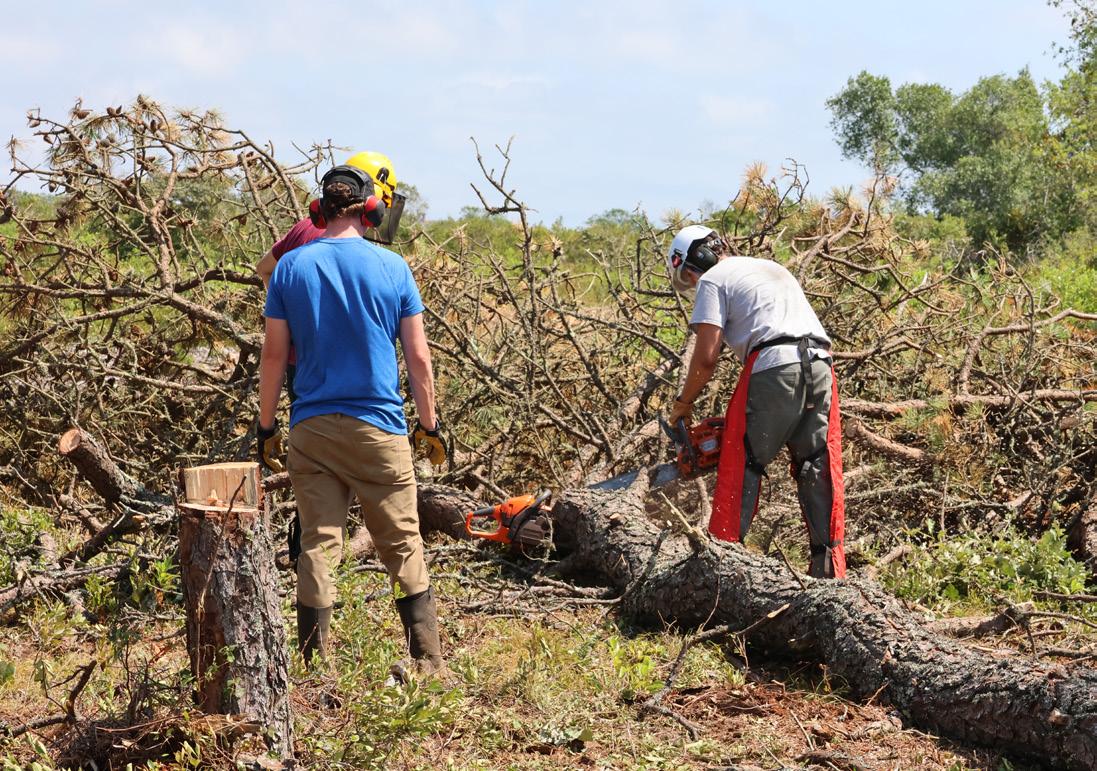
Through all this forest management, we hope to give our pitch pine forests the resilience they need to combat future attacks from southern pine beetles or any other invasive species. While some of the forests will have to undergo change, we prefer this alternative to losing our pitch pines all together.
Shorebird Spotlight: American Oystercatcher
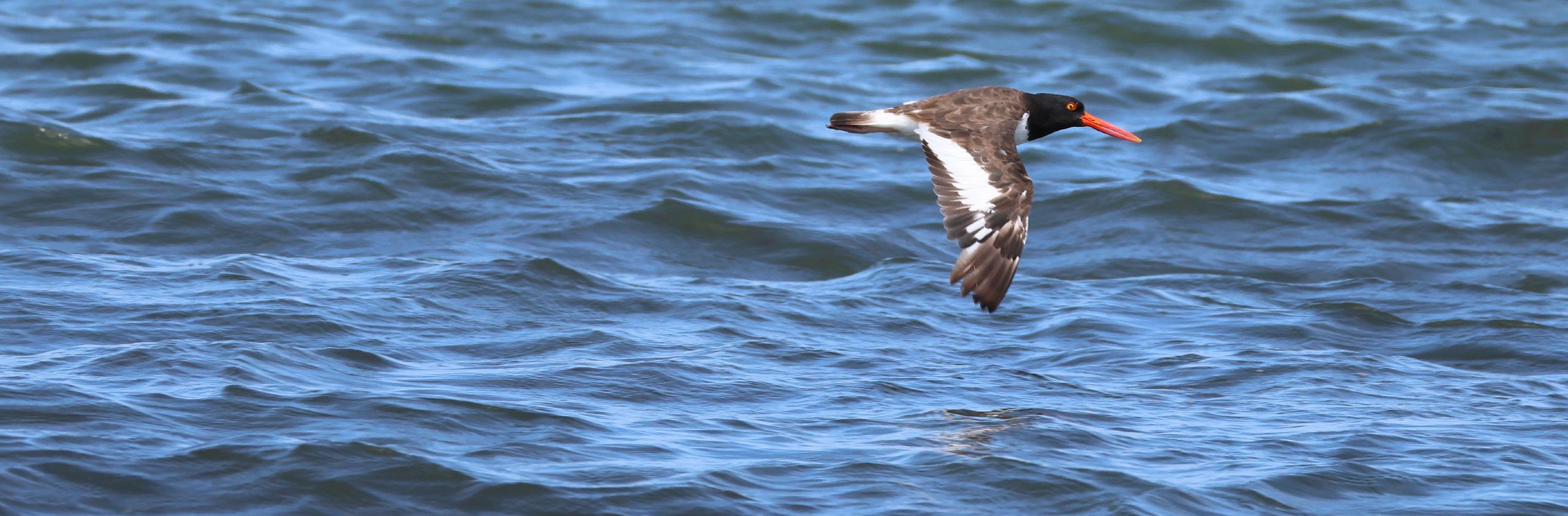
Each year Nantucket’s seasonal residents arrive for the summer, settle into their beach homes, enjoy life on the beautiful island coastlines, then fly off as fall approaches. These are, of course, the many species of shorebirds which flock to Nantucket to nest, rear young, then return to their winter homes. Nantucket sees an influx of terns, plovers, American Oystercatchers, and more each summer and it is the job of the Nantucket Conservation Foundation’s Wildlife Ecology Team to protect their nesting habitat and monitor their populations, health, and fledging successes and failures.
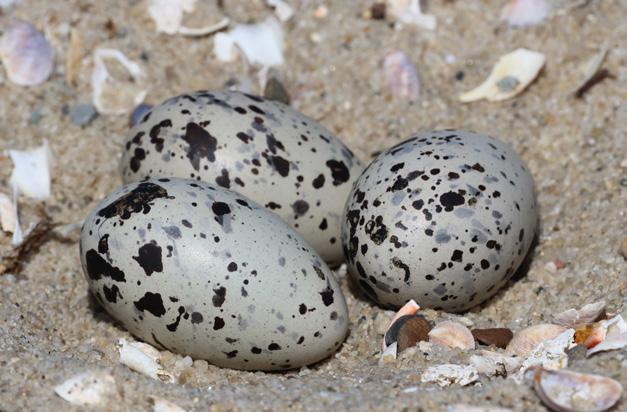
The greatest number of shorebirds on NCF beaches are found at Eel Point, along Coatue’s harbor and north shore beaches, and several marshes in Polpis Harbor. Monitoring these beaches makes up the bulk of the work for the shorebird team. Each day, our Wildlife & Shorebird Technician, Gracie Bell, heads out to known shorebird locations to track when and where they are laying nests, while Collin Jackson, our Coatue Ranger, does the same along the inside and outside beaches at Coatue. It is
important to know exactly when eggs are laid, and chicks are hatched so we can track their growth and success.
One of the main focuses of the shorebird monitoring team is the tracking and banding of American Oystercatchers as part of a collaborative project led by the American Oystercatcher Working Group (AMOYWG). This group, made up of numerous public and private organizations and individuals, manages a large-scale effort to research and promote conservation of American Oystercatchers and their habitats. Since 2001 members of the AMOYWG have banded and tracked thousands of oystercatchers during their summer breeding season and tracked them throughout North and South America. This effort has provided the working group with plentiful data on migration, nesting patterns, and survival
rate of these birds. The data can be used to inform habitat management plans along the whole east coast.
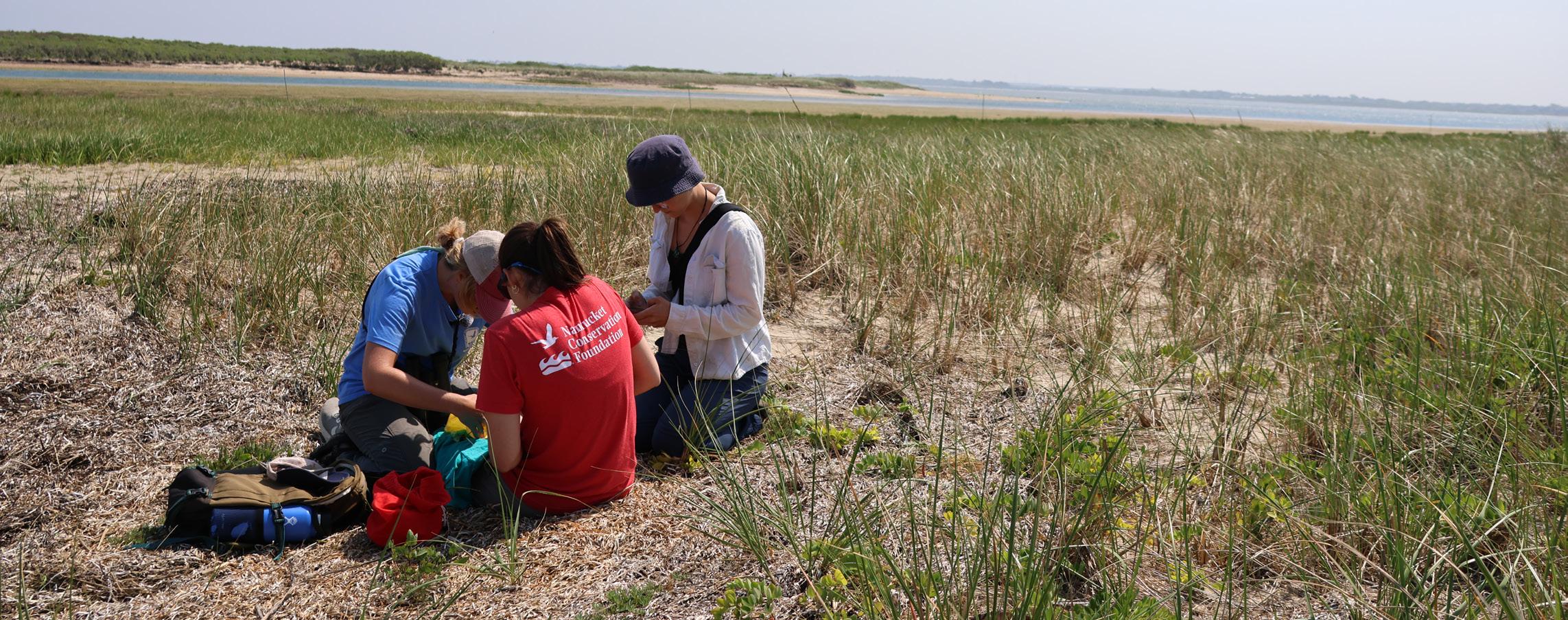
Banding American Oystercatchers is no easy feat and must be completed while the chicks are between 20 and 35 days old. Due to our teams diligent monitoring, they know exactly how old all the known chicks are and can pick the right days to head out for banding. On one banding day earlier this summer, Gracie and her team ventured out to Smith’s Point to collaborate with staff from the Town of Nantucket and Nantucket Land Bank and attempt to band chicks there. The adults and one chick had been monitored and tracked to a small area of dune nearby and inner marsh. Oystercatchers often choose this type of habitat because it provides plenty of shelter from predators and the elements, while giving them easy access to the shoreline to feed. The team approached slowly, managing to spot both adults and the chick through binoculars. The birds were relaxing on the sand nearby some dune grasses and shrubs. Approaching slowly so as not to spook the parents and chick, the team got closer only to find that their stealth hadn’t been successful and the adults had alerted the chick to run and hide. For the next half hour or so, Gracie and her team searched in and around all the grasses and shrubs looking for the chick, which had hunkered down to avoid detection. After failing to find the chick the team retreated to see if it would come out after some time away.
Oystercatcher parents are highly vigilant and communicate well with their chicks when they perceive danger. They alert their chicks with high pitched chirping then fly off to attempt to draw predators away. Once the coast is clear the chicks will re-emerge and continue foraging. After around 20 more minutes Gracie spotted the chick come out of its hiding place. This time the team changed tactics and sprinted over to where it was hiding. It quickly ducked back down between some grasses but this time they managed to find it.
After capturing the chick, the team sat down to carefully measure the weight and size of the bird. This data is collected for each banded bird to track the health of individuals in the population. The chick was then given federal metal bands as well as two colorful, field-readable bands made of a flexible plastic. These bands have statespecific colors and unique 2-to-3-character codes that can be read through binoculars, spotting scopes, or cameras.
This allows anyone to re-sight the banded birds after they have fledged and report them to the working group (amoywg.org). This community science aspect allows more data points to be collected, strengthening the results of the project. The chick was then quickly released near its hiding place where it continued on into the dune. This method is used across all banding sessions and has results in around 10-30 birds being banded each summer. All handling and banding is conducted under federal and state permits.
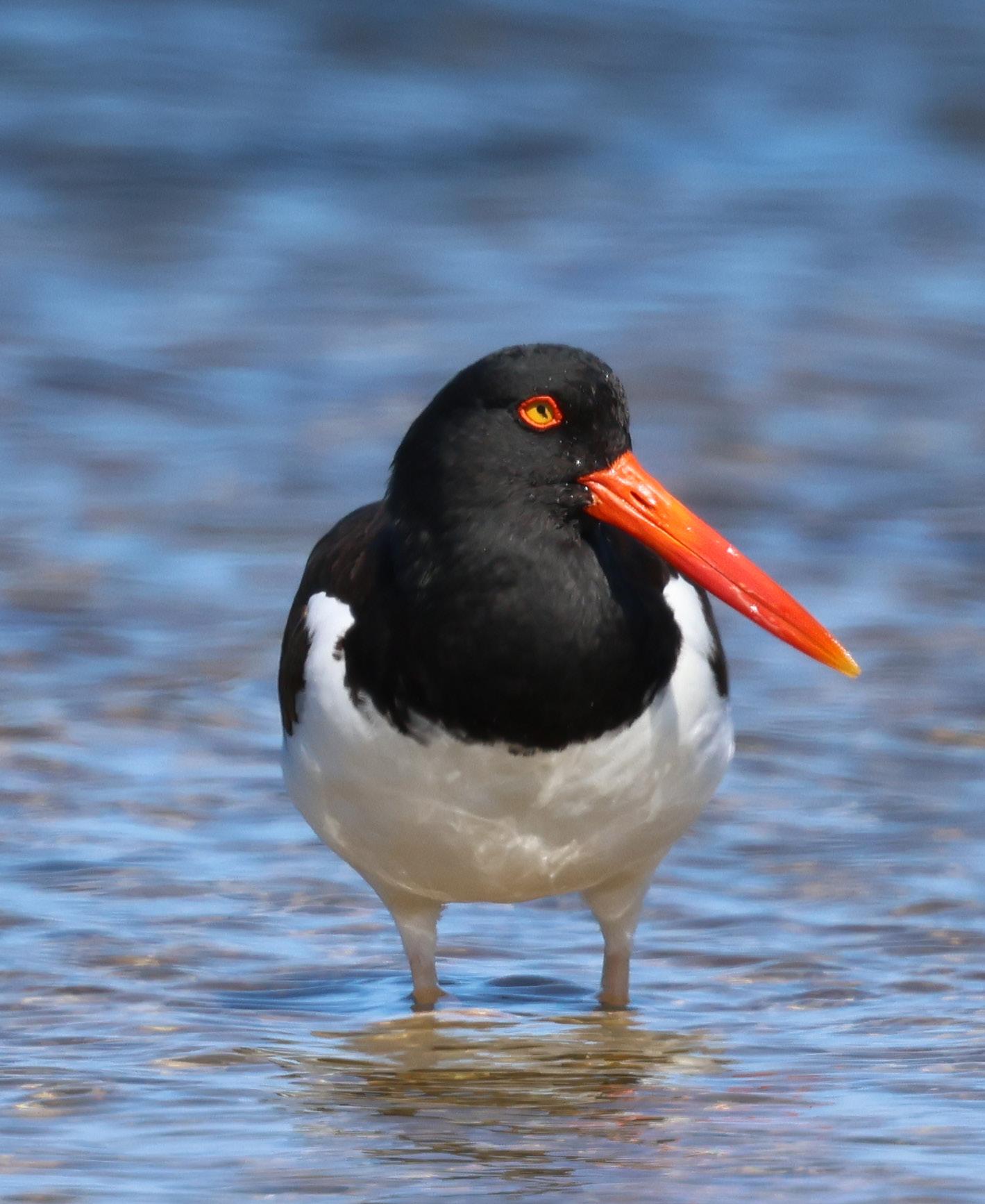
Year after year, NCF’s Wildlife Ecology Team continues to band as many chicks as they are able on Nantucket’s beaches. This data has shown us that American Oystercatchers have been trending positively over the years. Oystercatchers had been absent on the island until the 70s and their numbers have been steadily increasing ever since due to increased protection of other beach nesting birds. The efforts spearheaded by the AMOYWG and willingness by states to protect their nests has greatly increased the numbers in the northeast. This summer, a tough one for shorebirds on Nantucket due to bad weather early in the season, Gracie and her team banded 12 chicks and hopefully these young will pop up in their winter homes in Florida or central/South America this winter!
Harmful Algal Blooms
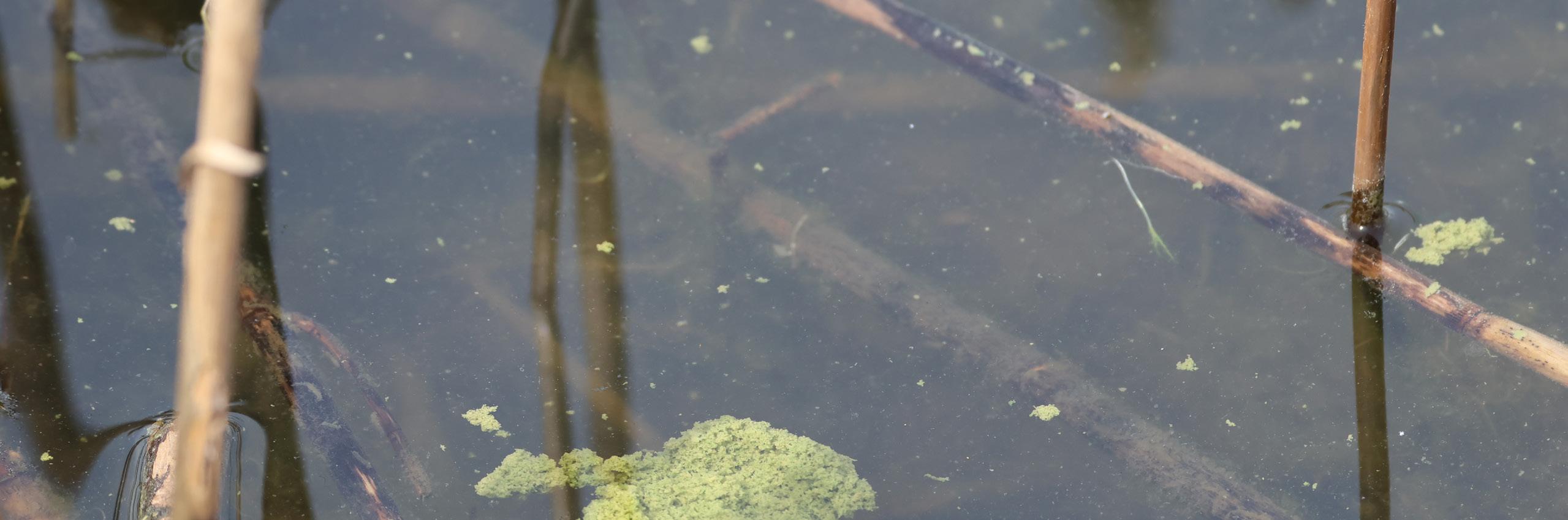
Summer on Nantucket sees a significant increase in the number of people here to work, live, and enjoy the island. As the island population increases, there is one organism that revels in the warm temperatures, sunlight, and additional fertilizer use and nutrients brought on by heavy island use: algae. Algal blooms have been an increasingly common occurrence throughout Nantucket’s ponds and harbors, and while not always dangerous, some can become harmful to people, dogs, fish, shellfish, marine mammals, and birds. These are
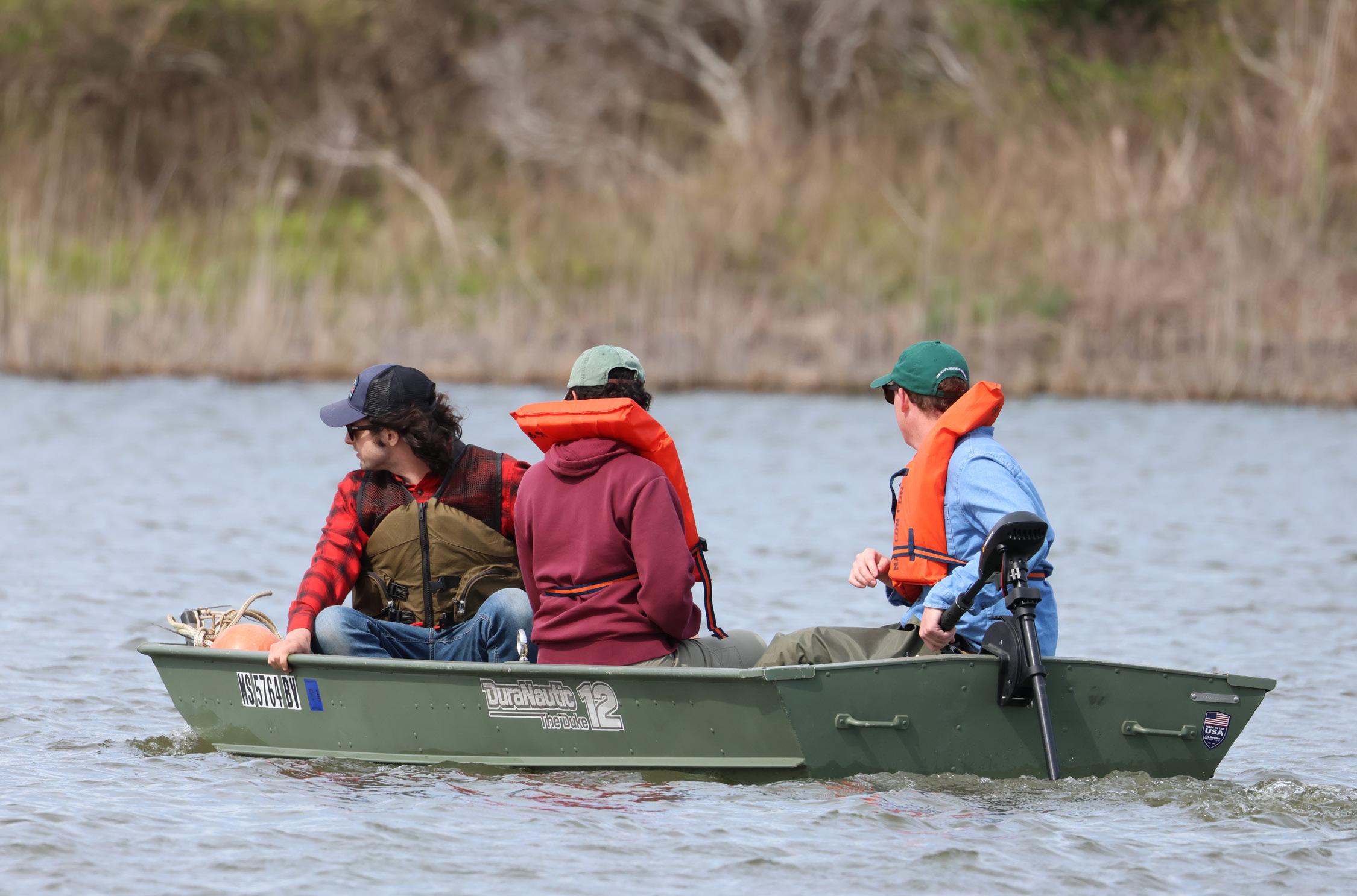
known as harmful algal blooms (HABs). NCF’s ecology staff work in collaboration with the Town of Nantucket’s Natural Resources Department and many other island conservation organizations to monitor HABs across the island. Beginning in June and running through October, NCF staff conduct weekly checks at Hummock Pond, Clark’s Cove, and Stump Pond. HAB reports are compiled by NRD staff and can be found each week on NRD’s Instagram and website.
What is a HAB?
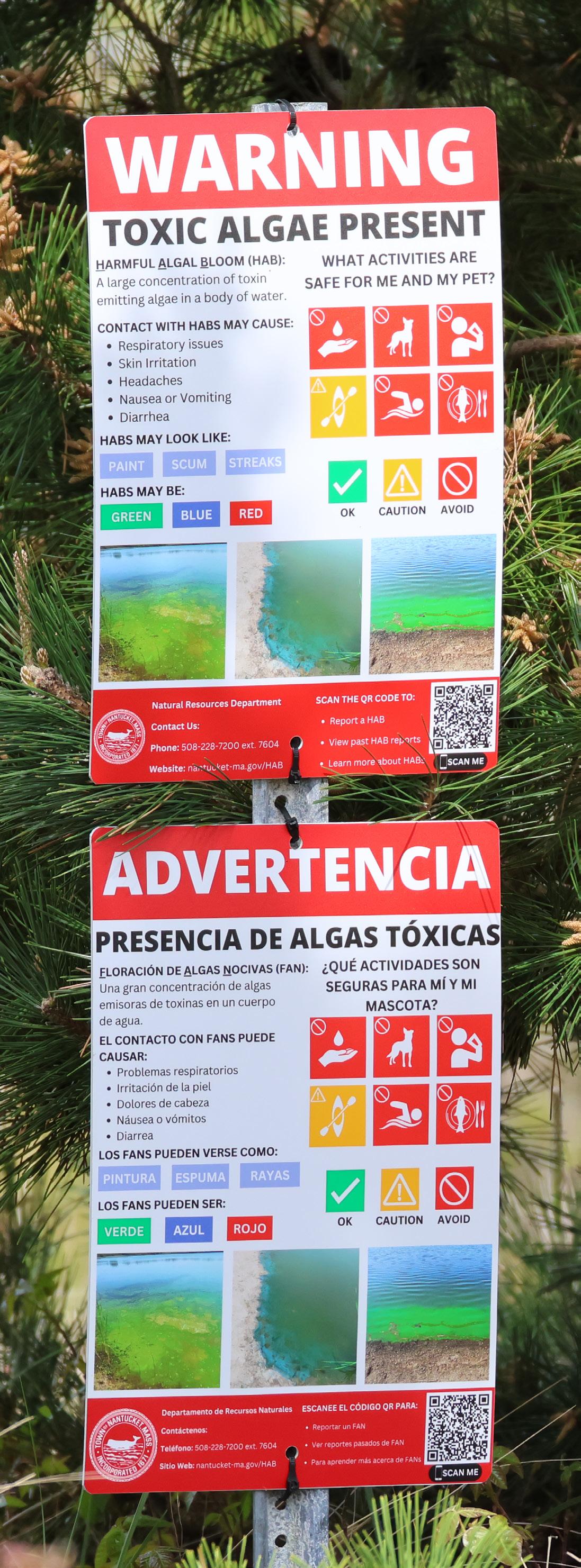
Algae is a natural part of the ecosystem and, when in balance, is vital for the health of aquatic food chains. Certain types of algae, however, thrive in nutrient-rich, warm water. In these conditions they multiply rapidly, creating harmful algal blooms. These blooms, consisting of cyanobacteria or blue-green algae, use up large amounts of oxygen in the water as the algae decompose which causes problems for fish and other aquatic organisms. Some also produce toxins that can be dangerous for humans and dogs. HABs can be found in both fresh and saltwater and are not always easy to detect.
HAB Checks.
Each week in the summer, staff from our coastal ecology program make their way to several points at Hummock Pond, Clark’s Cove, and Stump Pond. First, they conduct visual checks of the water to see if there are any obvious blooms. Not all blooms can be seen however, so the next step is to take a sample of the water. They do this carefully, with a long dipstick, to avoid touching the water themselves. The samples are brought to the Town’s Water Resource Specialist who analyzes the water to determine the presence of any harmful algae.
What should you do if you see a HAB?
At the various public entrances to ponds around Nantucket you will find HAB signs with information on how to detect HABs, whether HABs have been seen recently, and how to report a HAB. If you think you see a HAB in water anywhere around Nantucket, you can snap a pic and report your sighting to the Town’s Harmful Algal Bloom Monitoring Program. Importantly, if you think you see a HAB or if you see red signs, do not go in the water or let your pets go in the water!
2025 Excursions Recap
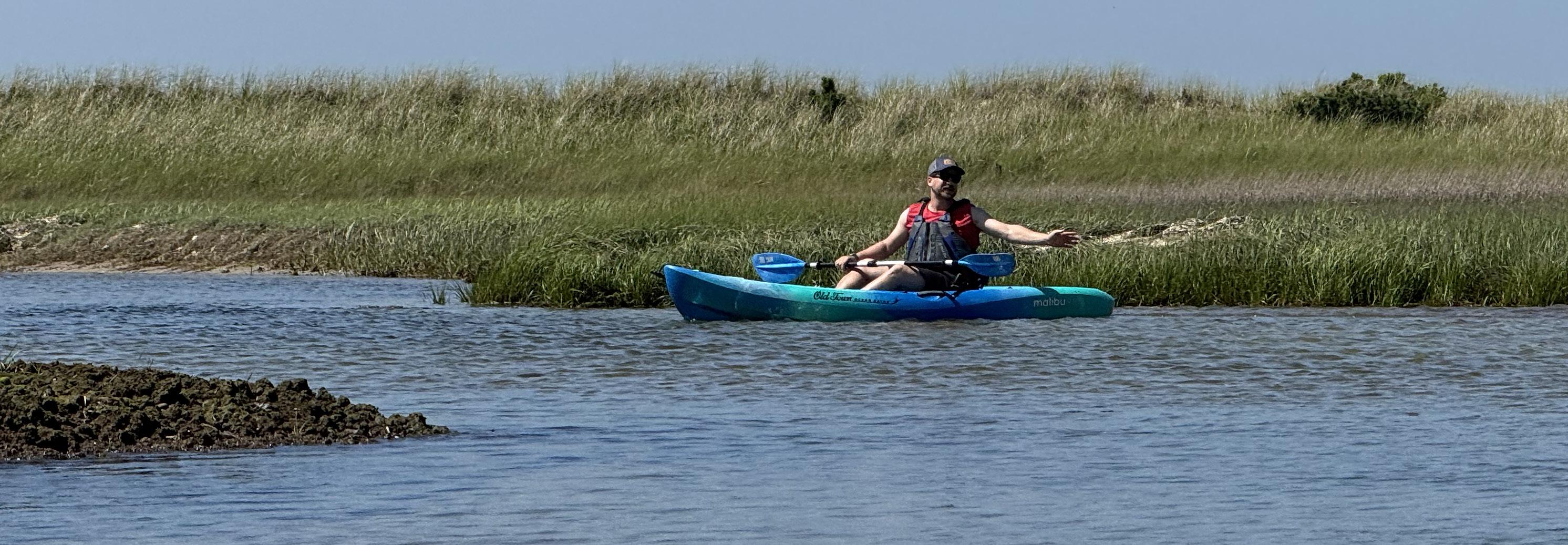
Through the summer of 2025, NCF has presented the widest breadth of summer excursions and public education in our 62-year history. Our new Tidal Treks series took attendees to the water’s edge to learn about the unique ecology and life found there. Walks led by our ecology staff revealed the research that takes place each summer on plants and animals, informing our property management. The Wellness Series offered weekend yoga and breathwork taught by experienced local instructors. Returning with a new name, our popular Weekly Walks showcased the ecology and history of our many trails and properties.
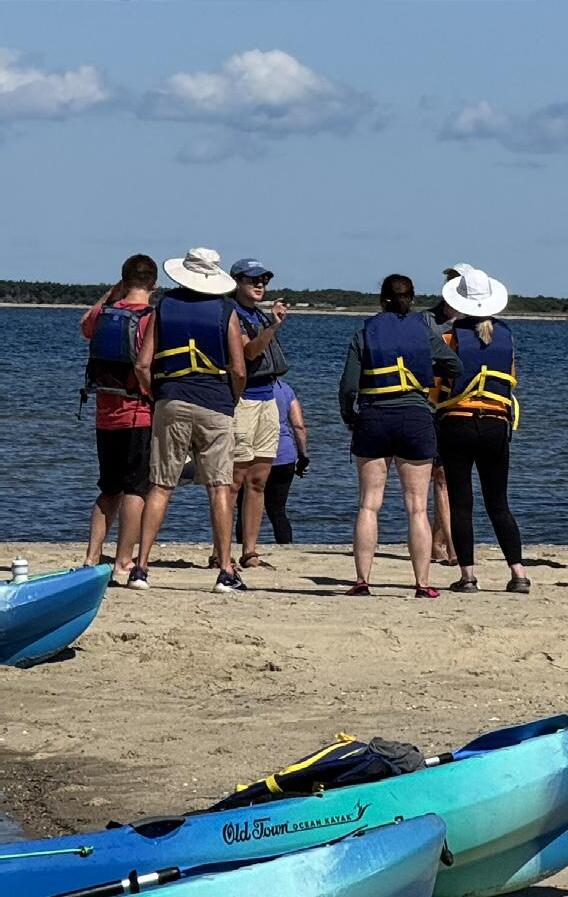
With the introduction of the Tidal Trek series, we were able to expand our public education opportunities to encompass the wide array of coastal habitats on NCF properties. Early on in the season we trekked out to the tip of Little Neck to see hundreds of horseshoe crabs at the height of their mating season. Kayak tours, led by Environmental Educator Isaac Hersh and Coastal Ecology Research Technician Jisun Reiner, at both Polpis Harbor and Folger’s Marsh in collaboration with Egan Maritime brought paddlers out into two of Nantucket’s special salt marshes where they learned about coastal resilience and the many species which rely on these ecosystems. In several of our walks Wildlife Technician Gracie Bell took people to explore Eel Point throughout
the season, revealing the lives of resident and migratory shorebirds. Attendees of the Tidal Treks were able to see new places on the island while learning about the impactful work of NCF in these critical areas.
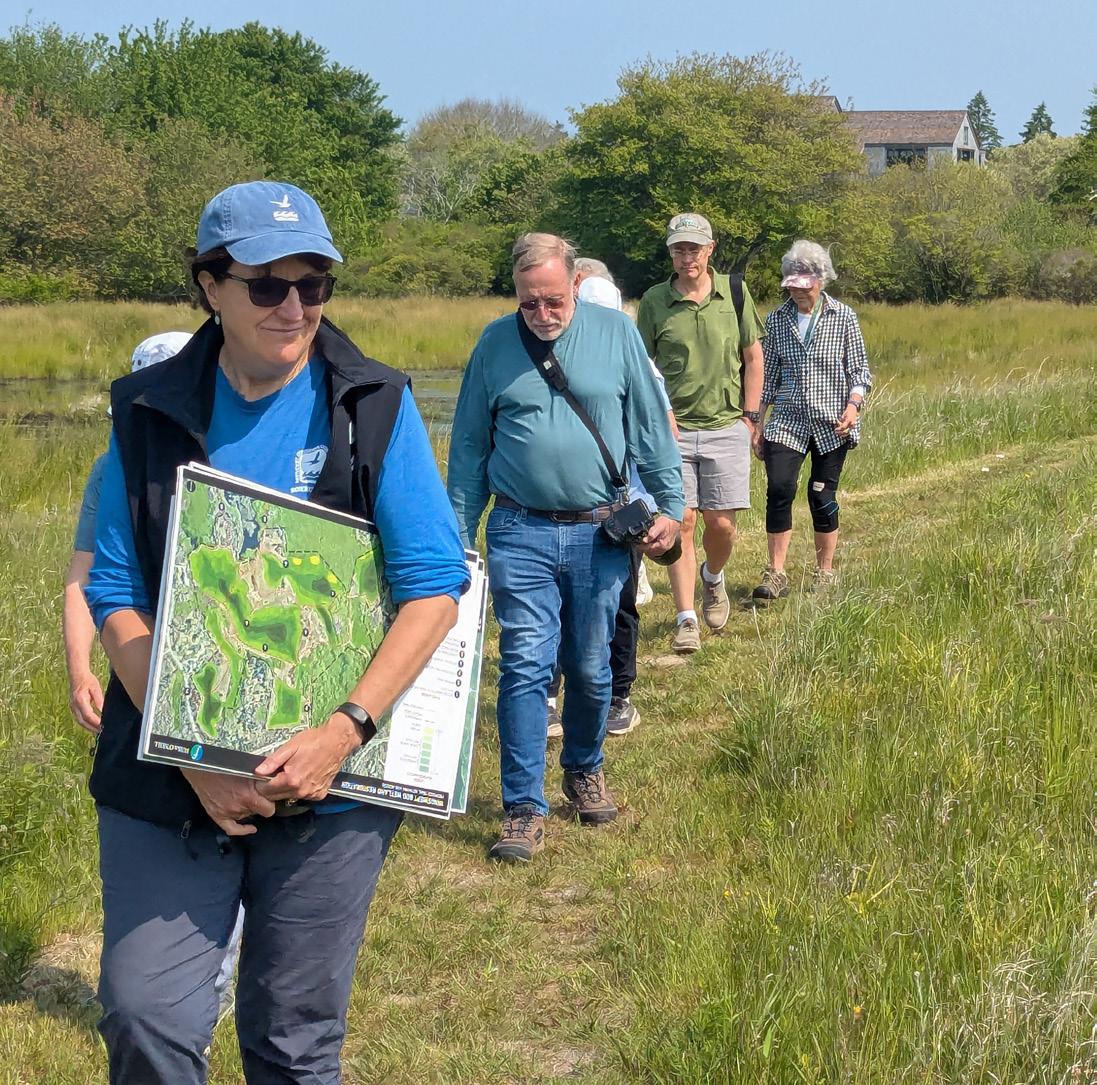
As always, our robust ecological research team took the time to showcase some of their research with dedicated Ecology Excursions. Kelly Omand and Stacey Cooper instructed on the benefits of using native plants in landscaping. Danielle O’Dell brought people up to speed on the recent southern pine beetle outbreak and the forest management work we have been doing to improve the health of our forest and prevent such an event from occurring again. NCF Trustee Woody Newell returned again to lead his guided Birding with Woody tour to showcase this island’s incredible birds and birding
community. Each month Karen Beattie led a tour of our recently completed Windswept Bog Restoration Project.
On weekends, talented wellness practitioners from 1111 Natucket, Supta Yoga, as well as freelance instructors Andrew Viselli & Ieva Aldins provided relaxing restorative, therapeutic yoga, and breathwork out on the beautiful Squam Farm yard or under the roof of our historic Screen House. NCF Trustee, Jim Meehan, also provided guided bike tours throughout the Middle Moors and Ram Pasture.
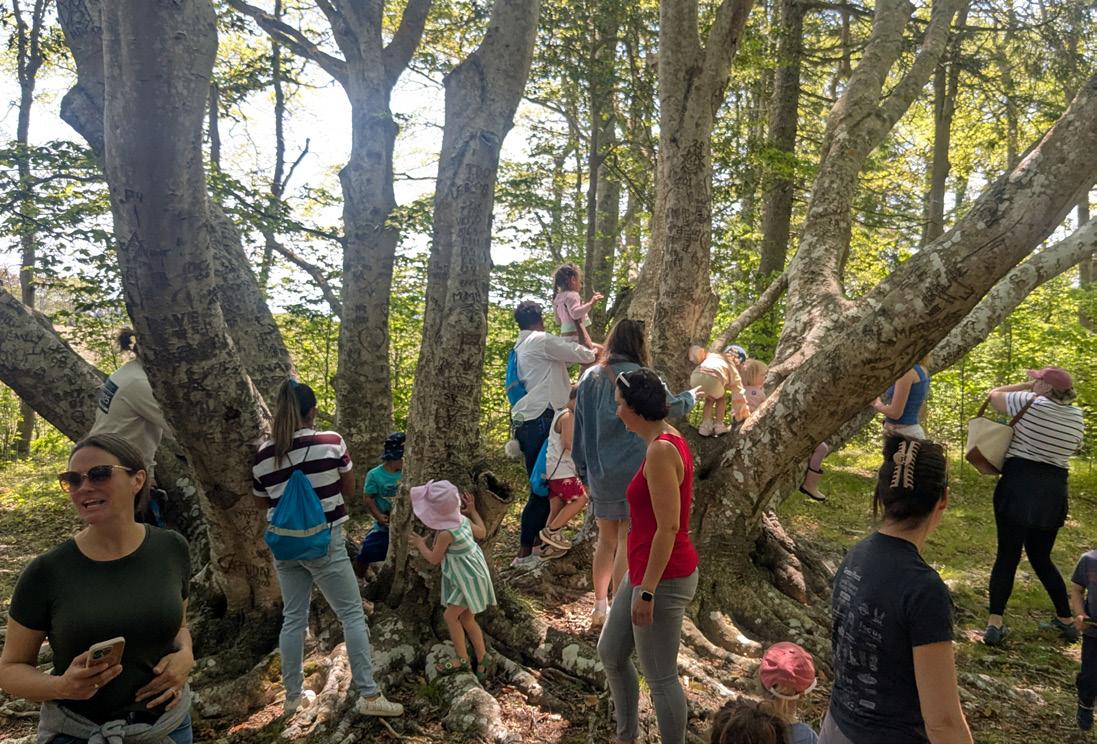
Ram Pasture. These beloved tours offer insight into Nantucket’s unique ecology and history. Attendees learned about management practices in the Serengeti, glacial formations in the Middle Moors, and countless plants and animals as they changed throughout the season. These walks offer unique perspectives on both familiar and lesser-known trails away from the busy bustle of the island’s town and beaches.
Long time NCF Education Coordinator, Neil Foley, continued the tradition of weekly guided walks throughout the Foundation’s many properties from Squam Farm to
We are proud to be able to offer this diverse array of excursions to Nantucket’s year-round and seasonal population and hope to expand even more in the coming years.
The day will be complete with a morning cycling race through the Moors, cranberries, hayrides, face painting, and more!



OPEN SPACES
Nantucket Conservation Foundation
Post Office Box 13
Nantucket, MA 02554-0013
Join us in protecting Nantucket’s open spaces!
The Nantucket Conservation Foundation owns, protects, and stewards over 9,000 acres of land and coastal shoreline, conserves Nantucket’s rare and significant natural resources, and engages in impactful ecological research to inform resource management and further our knowledge of Nantucket’s unique ecosystems and species. We share our environmental expertise with the wider community and provide educational and recreational opportunities to encourage respectful enjoyment and appreciation of our properties.

Open Spaces Summer-Fall 2025
Created by Isaac Hersh
Edited by Neil Foley, Danielle O’Dell, Gracie Bell, Jisun Reiner, Coleman Miller, Karen Beattie, Whitney Dayton Brunet and Cormac Collier
Photos from Isaac Hersh, Neil Foley, and Rene Soto
Graphic Design by Moor Studio